As certainly as Bill Murray’s character in Groundhog Day awakes to “I Got You Babe” every morning at 6 a.m., every year around this time, PETA calls for Punxsutawney Phil to be retired to a sanctuary and replaced by some perennially preposterous proxy.
This year the animal-rights organization has offered to replace Phil with “a giant, state-of-the-art, 3D projection hologram of a groundhog” like he was Tupac Shakur.
The best part of this proposal is that this year, PETA included an artistic rendering of its idea, which shows that if hologram Phil predicts six more weeks of winter, he will be blue and surrounded by snowflakes, and if he predicts an early spring, he will be pink and surrounded by flowers.
Either way, this would be one mammoth marmot. Hologram Phil’s paws appear to be about the size of a human head, which, if you’ve ever encountered a groundhog in real life, is both an adorable and terrifying prospect.
PETA even says the hologram would come “complete with vocal weather predictions,” which I also shudder to think about. Groundhogs sound like squeaky dog toys, which is perhaps not the best sound to rally a drunken crowd in a small Pennsylvania town at the crack of dawn.
In response to the proposal, Gov. Josh Shapiro — a noted fan of Phil who’s hosted the wondrous whistle-pig at the governor’s residence and has attended Groundhog Day celebrations in Punxsutawney — posted a photo of Phil on X this week with the words “DONT TREAD ON ME.”
I reached out to the Governor’s Office to see if Pennsylvania’s boss hog was serious about his support of the state’s famous groundhog.
“He is indeed very serious about his defense of Phil,” Alex Peterson, a spokesperson for the Governor’s Office, told me.
Prince or a pawn?
PETA’s position, as stated in a letter from founder Ingrid Newkirk to Tom Dunkel, president of the Punxsutawney Groundhog Club’s Inner Circle, is that groundhogs are timid prey animals who want to avoid humans at all costs.
“They dislike human smells, fear loud noises, abhor gatherings, and prefer to stay in their burrows,” Newkirk wrote. “Yet every year, this terrified little animal is subjected to loud announcers and noisy crowds and held up and waved around without any regard for his feelings, welfare, or instincts.”
I see their point — Phil never particularly looks happy to predict the weather. Mostly he just seems confused at why he’s being asked to do so and what this life is all about.
Punxsutawney Phil looks bewildered as he’s asked to predict the weather at Groundhog’s Day.
Plus, there are plenty of other Groundhog Day traditions that happen in Pennsylvania and across the country without a real animal. At the John Heinz Wildlife Refuge in Southwest Philly, a puppet named Tinicum Tim pops out of the ground to predict the weather. In Reading, a bucktooth groundhog mascot with a fancy pink bow gives her prognostication atop the Reading Pagoda. And in Quarryville, a mounted taxidermy groundhog gives predictions from the top of a manure spreader called the “Pinnacle of Prognostication.”
Michael Venos, who runs the website Countdown to Groundhog Day and has been to many of the alternative celebrations, said he considers the events “just as fun” and the “predictions just as valid.”
Tinicum Tim, a groundhog puppet, predicts the weather during Groundhog Day festivities at the John Heinz Wildlife Refuge in 2024.
Venos said he shares PETA’s concerns for Phil and all prognosticating animals.
“While I’m sure in the past, the animals’ welfare was not the primary concern for the people who organize these events, I believe, and am trusting, that nowadays, the utmost care is being taken to make sure that the animals are safe and well cared for,” he said. “Punxsutawney Phil in particular seems to live a very cushy life and appears to be well taken care of.”
The perks
Phil lives one of the bougiest lives of any Pennsylvania resident, and who’s to say he woodchuck it all away, if given the choice?
According to the Punxsutawney Groundhog Club, there’s only ever been one Phil. He drinks a special “elixir of life” every summer, which has kept him young for going on 140 years. He does not, however, share that elixir with his wife or two kids, a burrowed secret that’s shadier than seeing your shadow on a cloudy day.
When not predicting the weather, Phil lives with his family in a climate-controlled burrow in the town library, which is connected by underground tunnels to a brand-new home the Inner Circle had built for them last year at Gobbler’s Knob.
Two homes and a secret underground tunnel network — in this economy?!? Lucky.
I see both sides of the argument here, but given that our second-most famous groundhog in Pennsylvania is already computer-generated and heavily into gambling, I say we keep the real Phil around for now.
If you see a persistent pothole on your street or a raccoon in your attic, who are you going to call? In 2025, for over half a million requests, the answer was 311.
“311 is your connection to city services,” said Daniel Ramos, who works in community engagement and outreach for the call center. Philly311 helps city residents with non-emergencies by answering questions and transferring inquiries to the appropriate city department or community partner.
But there are some cases where 311 might not be the best number to call. Test your knowledge of whether you can 311 that or not.
Your neighbor is being unbearably loud.
CorrectIncorrect. XX% of other readers got this question right.
You can first try going over and asking them to keep it down, but if that doesn’t stop the awful din, Daniel Ramos says to call 911. Even if you do call 311 first, “noise complaints from an individual or a residential source would be transferred to 911,” he said.
Despite this, 311 received over 1,600 noise complaints in 2025. The Philadelphia Police Department, on the other hand, heard 10 times the number of grievances over loud music.
You just saw someone leave their dog’s poop in front of your stoop.
CorrectIncorrect. XX% of other readers got this question right.
You would hope this never happens, but in 2025, 311 received 66 information requests about dog waste on the curb.
That said, the Animal Care and Control team is the department to contact. ACCT handles local animal ordinance violations. According to a city ordinance on animal control enforcement, the dog’s owner is required to clean up after their pet. An ACCT control officer can follow up with an investigation as long as a location of the animal is included in the complaint.
You accidentally started a small fire in your kitchen.
CorrectIncorrect. XX% of other readers got this question right.
If it is a small stovetop fire and you decide to fight it, the National Fire Protection Agency recommends sliding a lid over the pan and turning off the burner, waiting until the pan has completely cooled before uncovering it.
Otherwise, get out, close the door behind you if you can to contain the fire, and call 911 from outside your home. Even a small fire can spread quickly.
Your smoke alarm needs replacing.
CorrectIncorrect. XX% of other readers got this question right.
You can request a new smoke alarm through 311.
In 2025, 311 processed 3,096 smoke detector requests, so if you live in a one- or two-family home that you own and want a free smoke alarm replacement, submit a request to 311 and the Philadelphia Fire Department can help you. Just know that it might take up to 90 days until PFD does the installation.
On the other hand, if you rent, your landlord is responsible for placing fire alarms on every level of the building. If they’ve failed to do that, you can also file a report with 311 as well.
story continues after advertisement
On your drive home, you get stuck behind a parked car on a single-lane road.
CorrectIncorrect. XX% of other readers got this question right.
A parked car blocking traffic is considered an immediate hazard. “We don’t dispatch,” said Daniel Ramos, so he recommends residents call 911 instead.
311 can help you report other nonemergency parking violations like double-parking or parking on a sidewalk to the Philadelphia Parking Authority or the Philadelphia Police Department. You can also use Laser Vision – an app developed by Philly Bike Action – to send a parking violation report directly to the PPA.
There’s a car on your block that’s been in the same parking spot for months and trash is starting to build up under and around it.
CorrectIncorrect. XX% of other readers got this question right.
311 can help, but it might take some time before you see the car moved. “Up to 120 business days,” said Daniela Ramos (no relation to Daniel Ramos), the city’s 311 contact center manager. “And that doesn't include holidays or weekends.”
In 2025, the center received nearly 28,000 abandoned vehicle complaints – the third most common service request – and over 3,400 questions about abandoned vehicles. According to state legislation, a car is considered abandoned if it has been sitting empty on public property for over 48 hours.
To process the request, Daniela Ramos said residents need to provide details such as the abandoned car’s make, model, color, tag number, and location in their 311 report. The Philadelphia Police Department will then determine if that car is in fact abandoned.
Your trash can went missing after pickup.
CorrectIncorrect. XX% of other readers got this question right.
If the missing trash can was a city-issued and city-owned Philacan, 311 can connect you with the Department of Sanitation to get you a new one.
Even if you start some beef with your neighbor by accusing them of stealing your trash can, 311 can offer resources. “We have the Philadelphia Human Relations Commission,” said Ramos, referencing the city’s free conflict resolution services. “If it's a neighbor dispute, we will give them the contact information for that organization.”
Your Results
You have skipped .
You scored XX out of 7.
The average reader scored XX out of 7
If you want to submit a 311 request, you can use the Philly311 app or website, or send an email to philly311@phila.gov. If you want to call them instead, their call center operates between 8 a.m. and 8 p.m. Monday through Friday.
Staff Contributors
Design, development, data, and reporting: Charmaine Runes
Editing: Sam Morris
Illustration: Brian “Box” Brown
Copy Editing: Brian Leighton
Subscribe to The Philadelphia Inquirer
Our reporting is directly supported by reader subscriptions. If you want more journalism like this story, please subscribe today
Conlen Booth doesn’t typically like to be in the spotlight.
Booth considers himself a “behind-the-scenes” guy who typically shies away from the limelight. Yet on Jan. 6, surrounded by friends, family, and colleagues, Booth was sworn in as Swarthmore’s mayor.
Booth, 42, brings more than two decades of emergency management experience to the job, including overseeing emergency services for major hospitals and governments. He’s also spent the past 25 years with Swarthmore’s fire department, most recently as chief. Booth is Delco-bred — a Nether Providence kid, a graduate of Strath Haven High School, and a cheerleader for his home borough of Swarthmore.
As the borough contends with the fallout of last year’s shuttering of Crozer-Chester Medical Center and Taylor Hospital, budget shortfalls, and potential fire department consolidation, Booth believes his background in emergency services and deep ties to Swarthmore make him the right guy for the job.
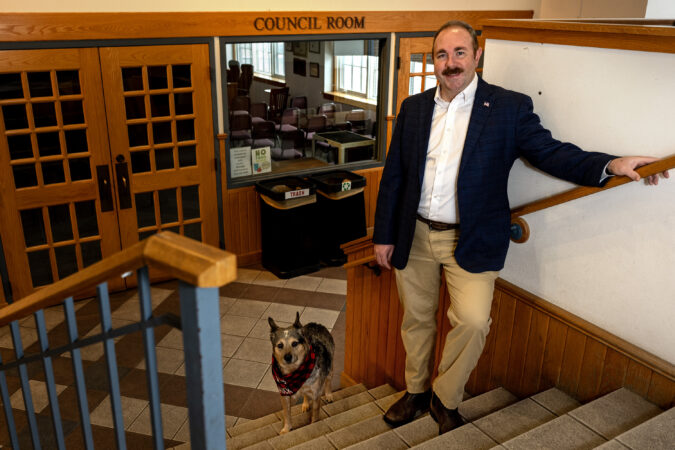
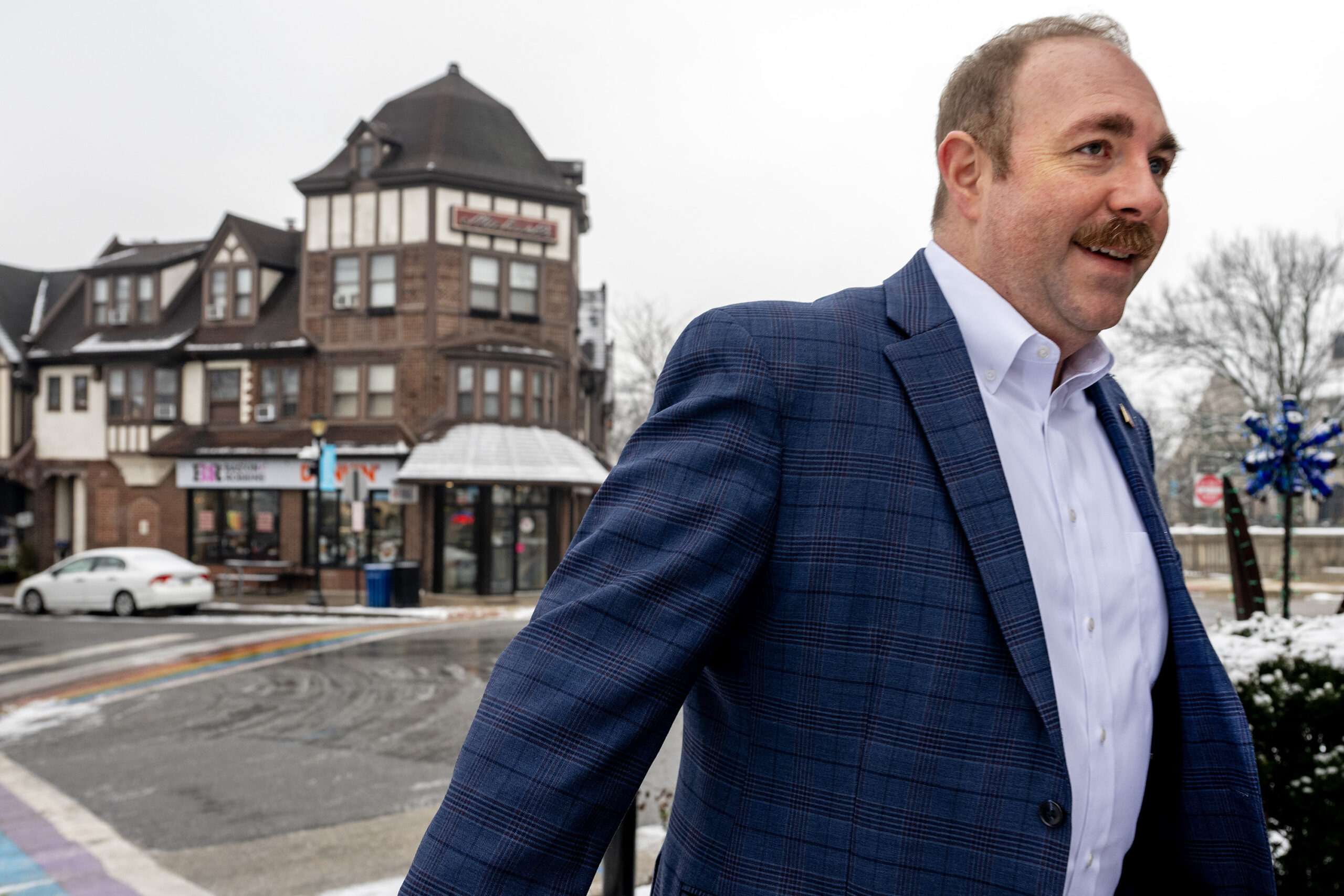
Mayor Conlen Booth in downtown Swarthmore on Sunday, Jan. 18, 2026.
‘If not me, then who?’
Booth got into local politics the way many do — reluctantly.
It took nudging from friends and family to step into the mayoral race. But the COVID-19 pandemic revealed a need for municipal leaders who understand emergency management and can govern in a crisis, Booth says.
An age-old phrase kept circulating in his mind: “If not me, then who?”
Booth competed against borough council members Kristen Seymore and David Boonin in the Democratic primary. Boonin dropped out of the race in January 2025. In February, the borough’s Democratic committee voted to endorse Booth’s candidacy 15-4, and Seymore dropped out.
The committee’s endorsement is powerful in Swarthmore. Democratic candidates who do not receive an endorsement are discouraged from running, and in the liberal-leaning town, there are seldom competitive general elections. Booth replaced Marty Spiegel, who had led the borough since 2019.
Who is Mayor Booth?
Booth was born in Harrisburg and moved to Delaware County at age 2. He grew up down the street from Nether Providence Elementary School and spent summers down the Shore with his close-knit extended family and collection of family dogs.
His maternal grandfather, Joseph Labrum, was a longtime judge and attorney in Media. Booth remembers visiting him in his chambers and watching him in the courtroom.
“I think seeing him in his role as a judge was always something that fascinated me,” he said.
Booth and his partner, Tracy, met working in healthcare and have been together for around 15 years. They live with Huckleberry, their Australian cattle dog.
Booth became interested in emergency services in high school. He set his sights on becoming a doctor and spent his teenageyears working on an ambulance.
Four days before he moved into his freshman dorm at the University of Pittsburgh, he watched a good friend die in front of him. The goal changed from enrolling in medical school to just making it through college.
“It just sort of rattled things,” he said.
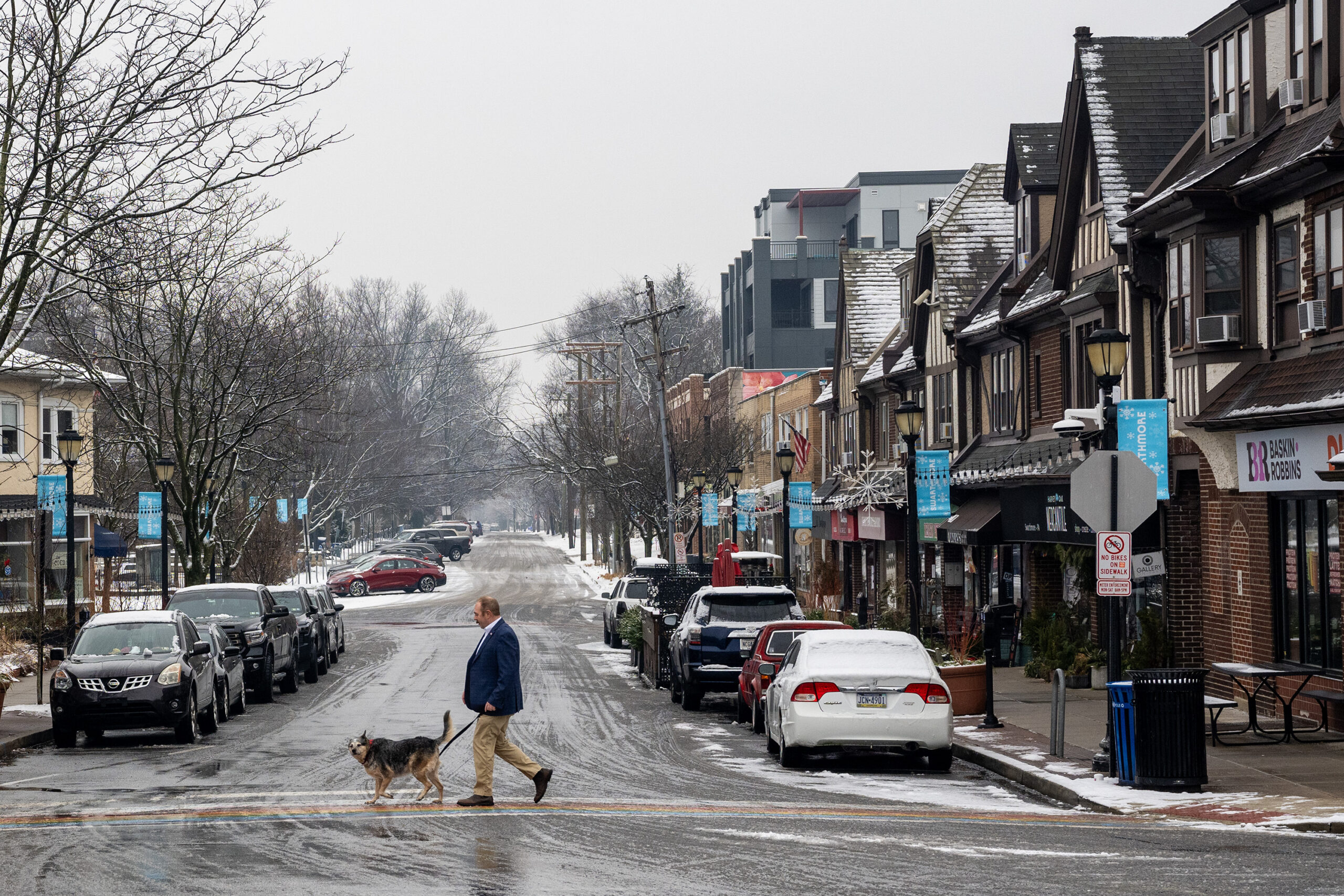
Mayor Conlen Booth with his dog, Huckleberry, in downtown Swarthmore on Sunday, Jan. 18, 2026.
Booth graduated from Pitt in 2005 with a bachelor’s degree in emergency medicine, an emerging field at the time. He earned his paramedic certification and learned the business-side of managing emergency medical teams.
He returned home and took a job with the now-shuttered Delaware County Memorial Hospital, his first role in what would become a long career in emergency medicine. In 2019, he was anemergency response shift supervisor at the Philadelphia Energy Solutions refinery during the massive explosion that left five people hurt and ended up shuttering the facility (Booth describes it as a “pretty insane period” in his life). Booth later spent four years as the senior director of emergency preparedness and emergency medical services at Crozer. He most recently worked as a consultant helping get supplies and meals to recently arrived refugees and asylum-seekers in New York City.
In tandem with his career in emergency management, Booth has served as a volunteer in Swarthmore’s fire department since 2000, working his way up from rookie firefighter to chief. Last year, hehelped developthe Advanced Life Support ambulance partnership with neighboring communitiesthat has filled gaps for residentsafter the Crozer closures.
Pat Francher, a longtime Swarthmore resident and community organizer, said Booth has the “awareness and perspective” that comes from a “real in-depth involvement in community welfare.”
“I’m terrible about saying no to people when they ask me to do something,” Booth joked.
This summer, Booth suffered a serious, non-work-related injury. He’s been in recovery since, and has come a long way.
“It could have been so much worse,” Booth said. “I have a lot to be thankful for.”
The SEPTA Regional Rail station in Swarthmore on Sunday, Jan. 18, 2026, during the second snowfall of the weekend. The station is between downtown Swarthmore and Swarthmore College and serves the Media/Wawa Line.
What’s next for Swarthmore?
Booth sees educating borough council about the community’s emergency medical needs as a large part of his job as mayor.
Jill Gaeski, borough council president, called Booth “the perfect guy” to help the 6,200-person borough navigate the challenges that lie ahead.
The shuttering of Crozer’s hospitals continues to impact access to medical care. At the same time, the Garden City (Nether Providence and Rose Valley), South Media, and Swarthmore fire companies are in discussions about a possible merger.
“[Booth] can really help us understand the pain points and where the sweet spots are,” Gaeski said.
Booth says he wants to be a cheerleader for the borough, bringing in tourism and economic growth in a way that maintains Swarthmore’s small-town feel.
He also hopes to reengage Swarthmore College’s student body, which he says has become less civically involvedas the years have passed.
“I already feel sentimental about this town,” Booth said, citing the people, restaurants, traditions, and community events that make his hometown special.
“How do we bolster all of these things and how do we engage more people?”
This suburban content is produced with support from the Leslie Miller and Richard Worley Foundation and The Lenfest Institute for Journalism. Editorial content is created independently of the project donors. Gifts to support The Inquirer’s high-impact journalism can be made at inquirer.com/donate. A list of Lenfest Institute donors can be found at lenfestinstitute.org/supporters.
President Donald Trump‘s plans for bringing homeownership within reach of more Americans involve pushing for lower interest rates on home loans and credit cards, and banning large institutional investors from buying single-family homes.
In his address Wednesday at the World Economic Forum in Davos, Switzerland, Trump outlined four policies his administration is pursuing in a bid to make homeownership more affordable. Each had been previously mentioned by him or his administration in recent weeks, part of a broader push to address affordability generally, a hot-button issue with voters heading into the midterms.
The U.S. housing market has been in a sales slump dating back to 2022, when mortgage rates began to climb from pandemic-era lows. The combination of higher mortgage rates, years of skyrocketing home prices and a chronic shortage of homes nationally following more than a decade of below-average home construction have left many aspiring homeowners priced out of the market. Sales of previously occupied U.S. homes remained stuck last year at 30-year lows.
In his remarks, Trump stressed the need to lower interest rates on home loans and credit cards in order to give aspiring homebuyers more financial flexibility to save up for a down payment on a home and more purchasing power when it comes time to buy.
“We can drop interest rates to a level, and that’s one thing we do want to do,” said Trump. “That’s natural. That’s good for everybody. You know, the dropping of the interest rate, we should be paying a much lower interest than we are.”
Trump noted that he has directed the federal government to buy $200 billion in mortgage bonds, a move he said would help reduce mortgage rates. Trump said earlier this month that Fannie Mae and Freddie Mac have $200 billion in cash that would be used to buy mortgage bonds. However, some economists have said such a move would likely have only a minimal impact on mortgage rates.
Trump, who spent much of last year demanding that the Federal Reserve lower interest rates, also reiterated that he will be announcing a new Fed chair soon to replace Jerome Powell, whose term as chair is due to end in May.
“I think they’ll do a very good job,” he said.
Still, Fed rate cuts don’t always translate into lower mortgage rates. That’s what happened in the fall of 2024 after the central bank cut its main rate for the first time in more than four years. Instead of falling, mortgage rates marched higher, eventually cresting above 7% in January this year. At that time, the 10-year Treasury yield was climbing toward 5%.
More recently, the average rate on a 30-year mortgage was at 6.06% last week, its lowest level in more than three years, according to mortgage buyer Freddie Mac.
While lower mortgage rates help boost homebuyers’ purchasing power, the biggest hurdle many aspiring homeowners face is being able to save up for a down payment.
To that end, Trump said he is asking Congress for legislation that would mandate credit card issuers cap interest rates at 10% for one year — after the industry ignored his demand earlier this month that they implement the cap by Jan. 20. The average rate on credit cards is around 21%, according to the Federal Reserve Bank of New York.
Trump also reiterated that he wants to block large institutional investors from buying single-family homes, so that Americans don’t have to compete with such well-funded rivals when they shop for a home.
“Homes are built for people, not for corporations, and America will not become a nation of renters,” he said.
While touting his plans to open up the housing market to more Americans, Trump stressed that he didn’t want to take any actions that would tip the housing market too far in favor of buyers at the expense of millions of homeowners who have benefited from strong home equity gains.
“Every time you make it more and more and more affordable for somebody to buy a house cheaply, you’re actually hurting the value of those houses, obviously, because the one thing works in tandem with the other,” he said, adding: “Now, if I want to really crush the housing market, I could do that so fast that people could buy houses, but you would destroy a lot of people that already have houses.”
Trump didn’t specify which policies would cause that to happen.
Trump issued an executive order late Tuesday directing his administration to review the laws that govern how big institutional investors make large purchases of single-family homes and determine whether such investors are engaging in anti-competitive practices.
The order, which exempts companies that build homes for rent, also includes provisions to give ordinary home shoppers the opportunity to buy foreclosed homes before investors do and bars government housing agencies from guaranteeing, insuring, or otherwise facilitating large institutional investors from buying single-family homes.
Still, it’s unclear how the administration will define a large investor. And while some metro areas, like Atlanta and Phoenix, have a larger share of corporate-owned single-family homes for rent, the vast majority of rental houses are owned by small individual investors, which wouldn’t be barred from buying more homes.
“It probably won’t make a noticeable impact on the housing market,” said Daryl Fairweather, chief economist at Redfin.
Trump was expected to give more details about his housing policy in the speech, but devoted most of it to other subjects. Kevin Hassett, director of Trump’s National Economic Council, told Bloomberg that Trump was just “foreshadowing” an upcoming policy announcement. The White House is reportedly considering a new way for Americans with a 401(k) retirement savings plan to fund the down payment on a home, among other policies.
Philadelphia City Council’s first meeting of 2026 on Thursday comes as tensions rise over President Donald Trump’s immigration crackdown and as Mayor Cherelle L. Parker continues to sidestep that conversation while focusing on advancing her signature housing initiative.
They will also tackle the city’s waste-disposal practices, a long-standing law requiring Council members to resign before campaigning for higher office, and the city budget.
Meanwhile, events largely outside Council’s control, including potential school closings and Philly’s role in the nation’s 250th birthday, are also expected to prompt responses from lawmakers.
Here’s what you need to know about Council’s 2026 agenda.
‘Stop Trashing Our Air’ bill up for vote
The first meeting of a new Council session rarely features high-profile votes, but this year could be different.
Currently, the city government sends about a third of the trash it collects to the Reworld trash incinerator in Chester, with the rest going to landfills. Those waste-disposal contracts expire June 30, and Gauthier is hoping to take incineration off the table when new deals are reached.
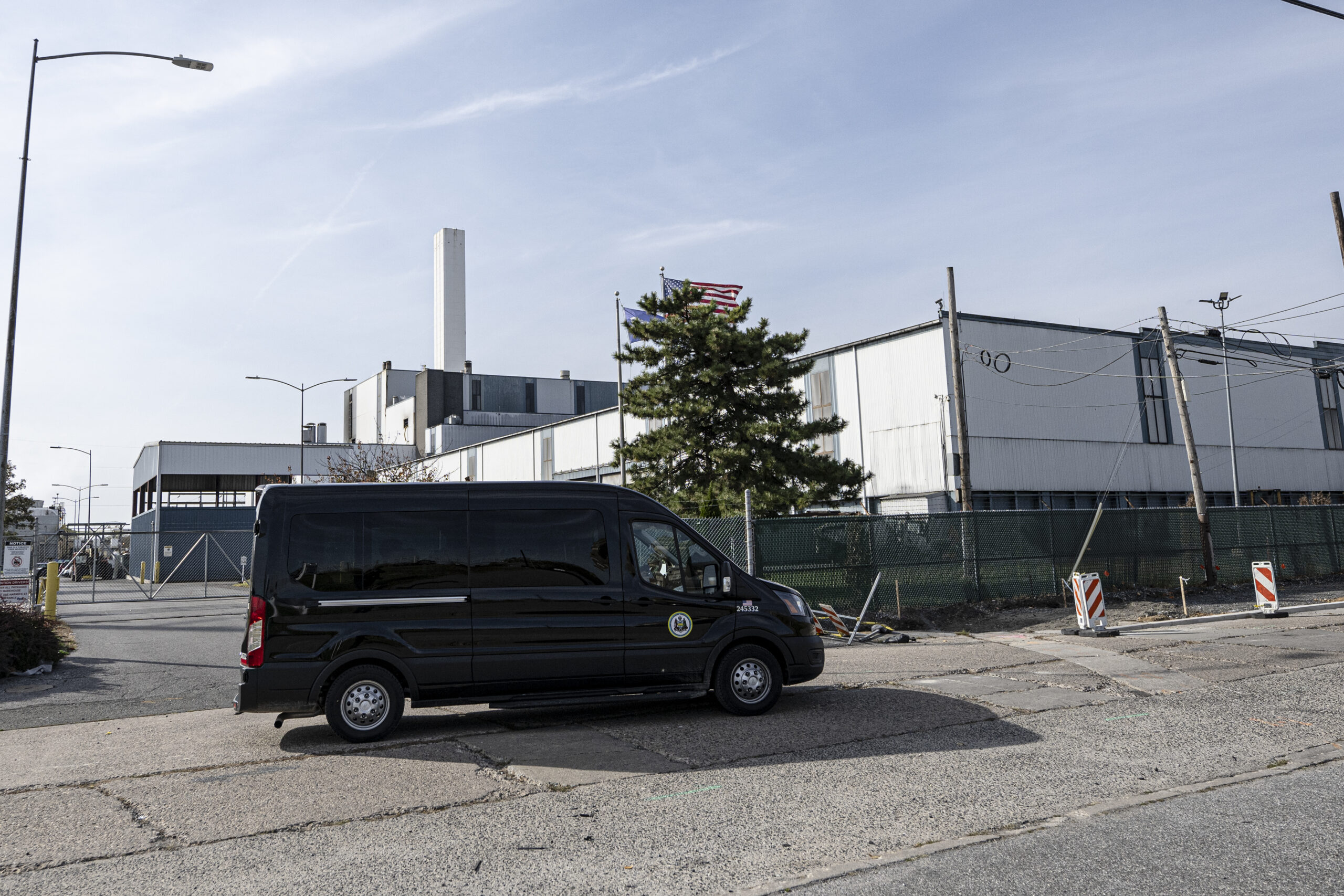
The Reworld incinerator in Chester, Pa., on Friday, Nov. 7, 2025.
“Burning Philadelphia’s trash is making Chester, Philadelphia, and other communities around our region sick,” Gauthier has said, pointing to elevated rates of asthma and other ailments and a legacy of “environmental racism” in Chester. The low-income and majority-Black city downriver from Philly has been home to numerous heavy industrial facilities.
Reworld has said its waste-to-energy facility, which produces some electricity from burning trash, is a “more sustainable alternative to landfilling.”
At a hearing last year, Parker administration officials said the city is including language in its request for proposals for the next contracts that will allow the city to consider environmental impacts. But they asked lawmakers not to vote for a blanket ban on incineration to allow the city to study the issue further.
Parker waiting for Council to reapprove $800 million in bonds for her H.O.M.E. plan
The biggest agenda item left hanging last month when lawmakers adjourned for the winter break was a bill to authorize the Parker administration to issue $800 million in city bonds to fund her H.O.M.E. initiative.
Parker had hoped to sell the bonds last fall, and Council in June initially authorized the administration to take out new debt. But lawmakers made significant changes to the initiative’s first-year budget, especially by lowering income thresholds for some programs funded by the H.O.M.E. bonds to prioritize the lowest-income residents.
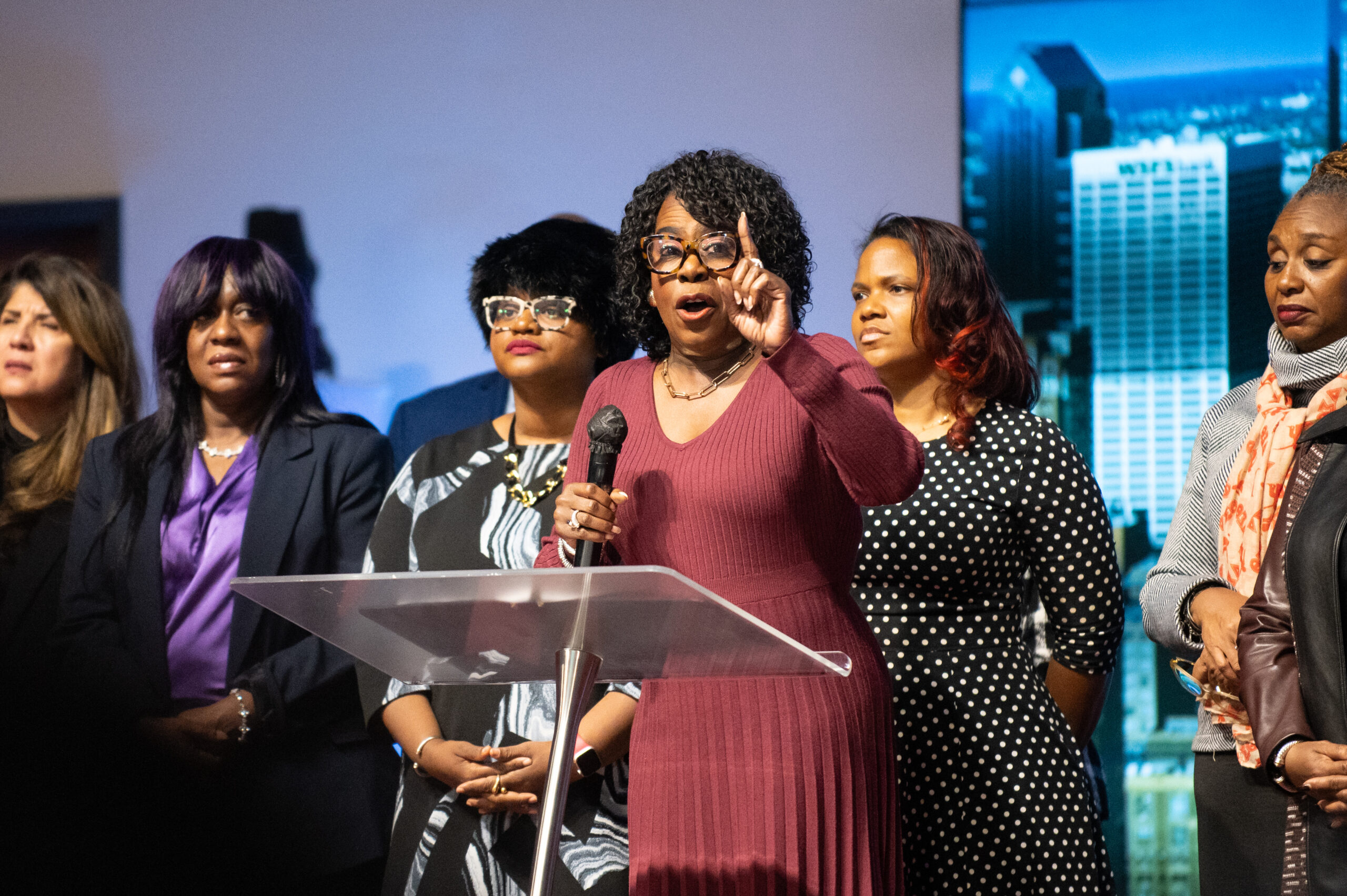
Mayor Cherelle L. Parker speaks to the crowd at The Church of Christian Compassion in the Cobbs Creek neighborhood of West Philadelphia on Sunday, Dec. 7, 2025. Parker visited 10 churches in Philadelphia on Sunday to share details about her H.O.M.E. housing plan.
“Council members have always been supportive of the H.O.M.E. initiative,” Johnson said. “H.O.M.E. advances City Council’s goals to expand access to affordable homeownership for Philadelphians … and to ensure that city housing investments deliver long-term benefits for families and neighborhoods alike.”
Currently, Council members and other city employees are required to quit their jobs to run for higher office. Lawmakers have tried several times over the last 20 years to repeal the law, but they have been unsuccessful. Changing the rule requires amending the city’s Home Rule Charter, which a majority of voters would have to approve through a ballot question.
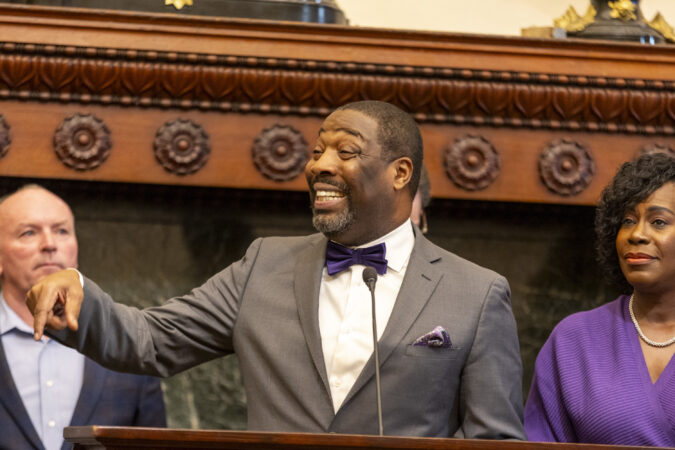
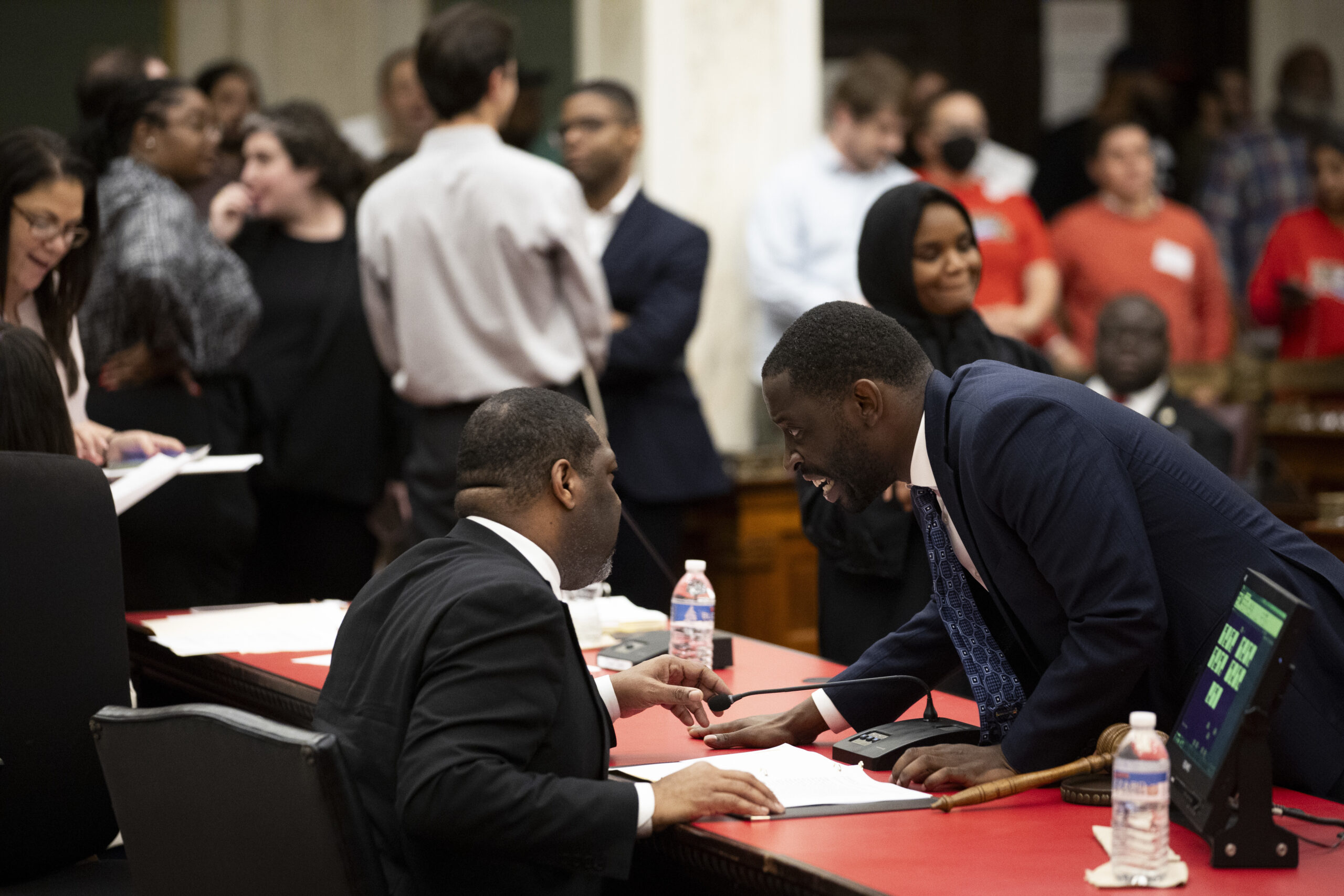
Council President Kenyatta Johnson talks with Councilmember Isaiah Thomas at City Hall on Wednesday, Dec. 11, 2024 in Philadelphia.
The latest attempt, spearheaded by Councilmember Isaiah Thomas, would not entirely repeal the resign-to-run law, but instead would narrow it to allow elected officials to keep their seats only if they are seeking state or federal office, such as in Congress or the state General Assembly. Council members who want to run for mayor would still have to resign.
Thomas, a Democrat who represents the city at-large and is rumored to have ambitions of running for higher office, plans to make minor amendments to the legislation this spring, a spokesperson said, before calling it up for a final vote. The goal, Thomas has said, is to pass the legislation in time for a question to appear on the May primary election ballot.
The mayor, however, cannot control what other local elected officials say about national politics, and Trump’s immigration crackdown appears to be stirring stronger local reaction heading into his second year in office.
Meanwhile, progressive Councilmembers Rue Landau and Kendra Brooks this year are expected to introduce legislation aimed at constricting ICE operations in Philadelphia.
Demonstrators from No ICE Philly gathered to protests outside the U.S. Immigration and Customs Enforcement, office at 8th and Cherry Street, Philadelphia, Tuesday, Jan. 20, 2026.
It is not yet clear what the lawmakers will propose. But Brooks, who has called on Parker to take a firmer stand against Trump, recently criticized the Philadelphia courts for allowing agents to seize suspects leaving the Criminal Justice Center. She said officials who in her view have failed to stand up to ICE are engaged in “complicity disguised as strategic silence,” and she vowed to force those who “cooperate with ICE in any way” to testify in Council.
“Cities across the country are stepping up and looking at every available option they have to get ICE out,” Brooks said at a news conference earlier this month. “In the coming days, you will hear about what my office is doing about city policy. These demands must be met or face the consequences in Council.”
Landau added Philly cannot allow “some masked, unnamed hooligans from out of town [to] come in here and attack Philadelphians.”
“We are saying, ‘ICE out of Philadelphia,’” she said.
Parker has said her administration has made no changes to the city’s immigrant-friendly policies, but she continues to be tight-lipped about the issue.
The Pennsylvania Office of Open Records last week ruled in favor of an Inquirer appeal seeking to force Parker’s administration to disclose a September letter it sent the U.S. Department of Justice regarding local policies related to immigration.
The administration still has not released the document. It has three more weeks to respond or appeal the decision in court.
South Philly arena proposal still in the works
After the 76ers abandoned their plan to build a new arena in Center City a year ago, the team announced it would partner with Comcast Spectacor, which owns the Flyers, to build a new home for both teams in the South Philadelphia stadium complex.
The teams announced last fall they have selected an architect for the new arena, which is scheduled to replace the Spectacor-owned Xfinity Mobile Arena, formerly the Wells Fargo Center, in 2031.
If the teams are still planning to open the new arena on their previously announced timeline, legislation to green-light the project could surface as soon as this spring. But so far, there has been no sign of movement on that front.
“There is currently no timeline for introducing legislation to build a new Sixers arena in South Philadelphia,” said Johnson, whose 2nd District includes the stadium complex. “At the appropriate time, my legislative team and I will actively collaborate with Mayor Cherelle L. Parker’s administration on drafting any legislation related to the Sixers arena before it is introduced in City Council.”
School closings and 2026 celebrations also on the horizon
In addition to its legislative agenda, Council this year will likely be drawn into discussions over school closings and the high-profile gatherings expected to bring international attention to Philly this summer.
Johnson said his agenda includes “making sure Philadelphia has a very successful celebration of America’s 250th Birthday that results in short and long-term benefits for Philadelphia.”
Staff writers Jake Blumgart, Jeff Gammage, and Kristen A. Graham contributed to this article.
To hear the Parker administration officials tell it, moving the Rocky statue from the bottom of the Philadelphia Art Museum steps to the top is a victory for the underdog.
The new location, which received a green light from the Art Commission on Jan. 14, will certainly create a dramatic, Instagrammable moment for tourists, and further elevate the Rocky brand (and value).
But it’s no victory for Philadelphia residents, who remain the true underdog in this saga. Allowing the old movie prop to dominate the Parkway’s iconic vista is simply the latest in a series of decisions that have privatized the Art Museum’s gorgeous, landscaped grounds.
If you walk to the back of the museum, you’ll find the most egregious example of Philadelphia’s zeal for monetizing public space: the sprawling Cescaphe banquet operation at the Fairmount Water Works.
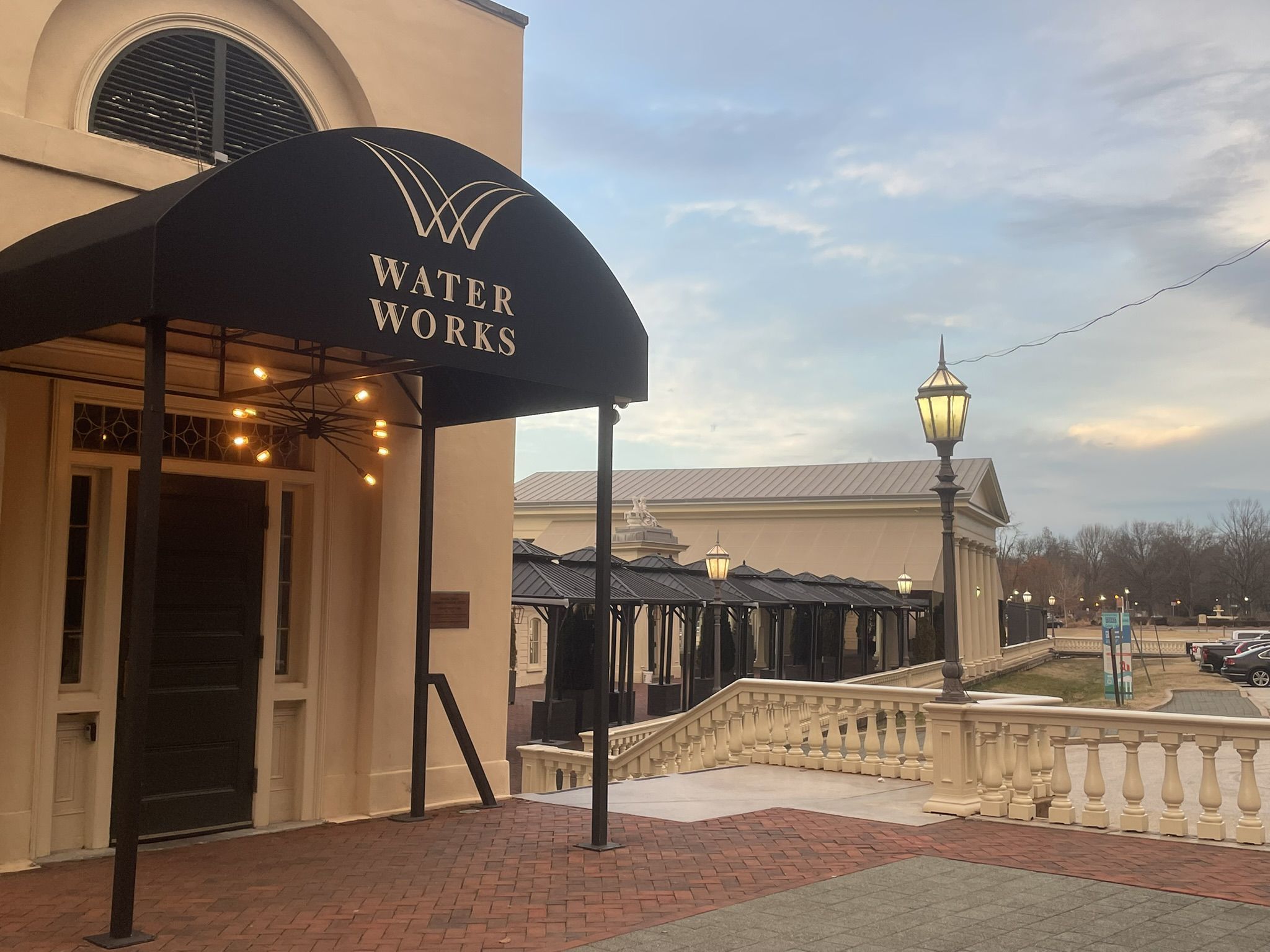
While the main Engine House had been used as a restaurant in the past, the city allowed Cescaphe to take over the entire complex in 2021. Today, the Water Works is surrounded with a cordon of server stations, portable restrooms, and covered walkways.
Since 2021, the historic Fairmount Water Works has been surrounded by a cordon of server stations and covered walkways. A glass party room prevents the public from enjoying the Mill House Deck, a pier overlooking the Schuylkill.
Cescaphe’s presence has drastically limited the public’s access to this historic landmark, a scenic spot where generations have come to stroll and take in views of the Schuylkill. Although visitors are permitted to wander though the Water Works’ classically inspired temples and colonnades when no events are going on, who would know that, given the messaging conveyed by Cescaphe’s formidable barricades?
Preparations for evening events often start in the afternoon, further limiting access. Every spring, Cescaphe installs an enormous glass party room on the pier known as the Mill House Deck. It remains in place until late fall, which means the public gets to use the overlook only during the coldest months of the year.
Rocky already has a good spot
Moving the Rocky statue to the top of the steps might seem like a modest imposition by comparison, but the new location will interfere considerably with the public’s enjoyment of the space.
Since people with mobility limitations will have trouble climbing the 72 steps to the top of the museum’s grand staircase, they’ll need transportation. The Philadelphia Visitor Center — the initial advocate for the new location — has offered to run a shuttle bus around the museum apron every 15 minutes. Better watch out when you’re taking that selfie!
During the recent Art Commission hearings, the city’s two top cultural officials, Valerie V. Gay and Marguerite Anglin, argued that the Rocky statue deserves a higher profile perch because it’s a unique tourist attraction. They noted that the statue has been the subject of books and podcasts and will soon be the focus of a major Art Museum exhibition, “Rising Up: Rocky and the Making of Monuments,” curated by Monument Lab’s Paul Farber.
Yet, given the added complications, it’s hard to understand what the city gains by changing the statue’s location.
Rocky’s current home — a shady grove at the bottom of the steps — has been a huge success. The statue was installed there in 2006, after years of shuttling around Philadelphia, from the museum to the sports complex and back. In a typical year, 4 million people make the pilgrimage to see Rocky, the same number who visit the Statue of Liberty annually.
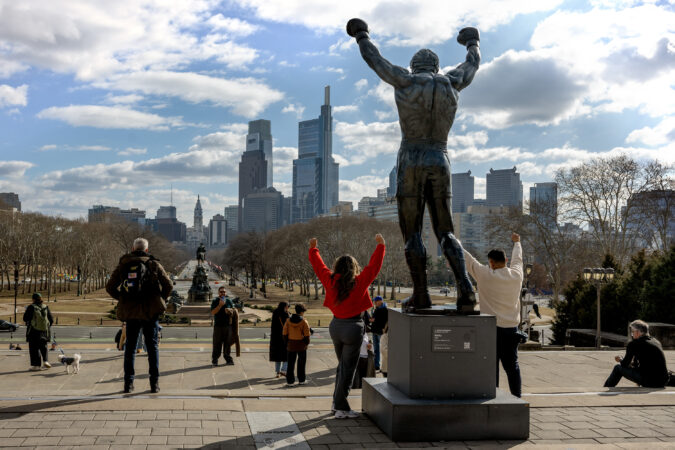
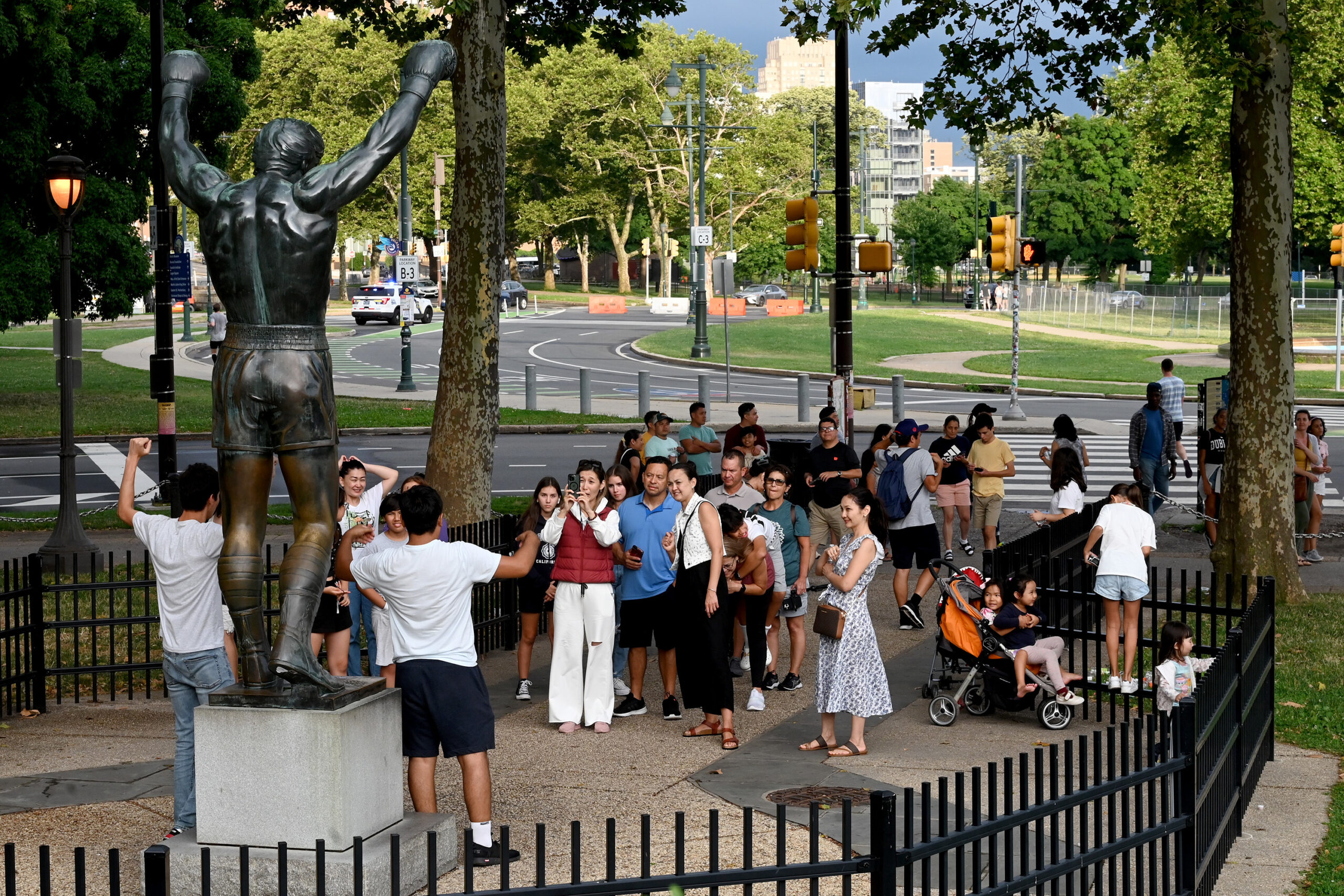
The Rocky statue, currently at the base of the Art Museum steps, is easily accessible to visitors and tour groups.
Because the grove is so close to the street, there are no accessibility issues. Tour buses and cars can pull up to the curb, allowing people to jump out for a quick selfie. Sometimes there’s a line for photos, but the mood is always festive, with visitors and locals mingling along the sidewalk. Anyone who wants to reenact the fictional boxer’s run up the museum stairs can do that, too.
Yes, this site occupies a piece of the museum’s grounds. But the intrusion is relatively discreet. Considering how well this location works, why change it? It’s not like there was a huge public clamor to give Rocky more prominence. When Inquirer columnist Stephanie Farr polled readers in September, most respondents said they were happy to keep the statue in its current location — or get rid of it entirely.
Only a single person testified at the Art Commission’s Jan. 14 hearing — and he argued against the move. Several civic organizations, including the Design Advocacy Group (DAG), sent written statements urging the city to reject the proposal.
“All we’re doing is glorifying Sylvester Stallone, who sells merchandise at bottom of the steps,” complained David Brownlee, a member of the DAG board and a renowned University of Pennsylvania art historian who has written a history of the Art Museum.
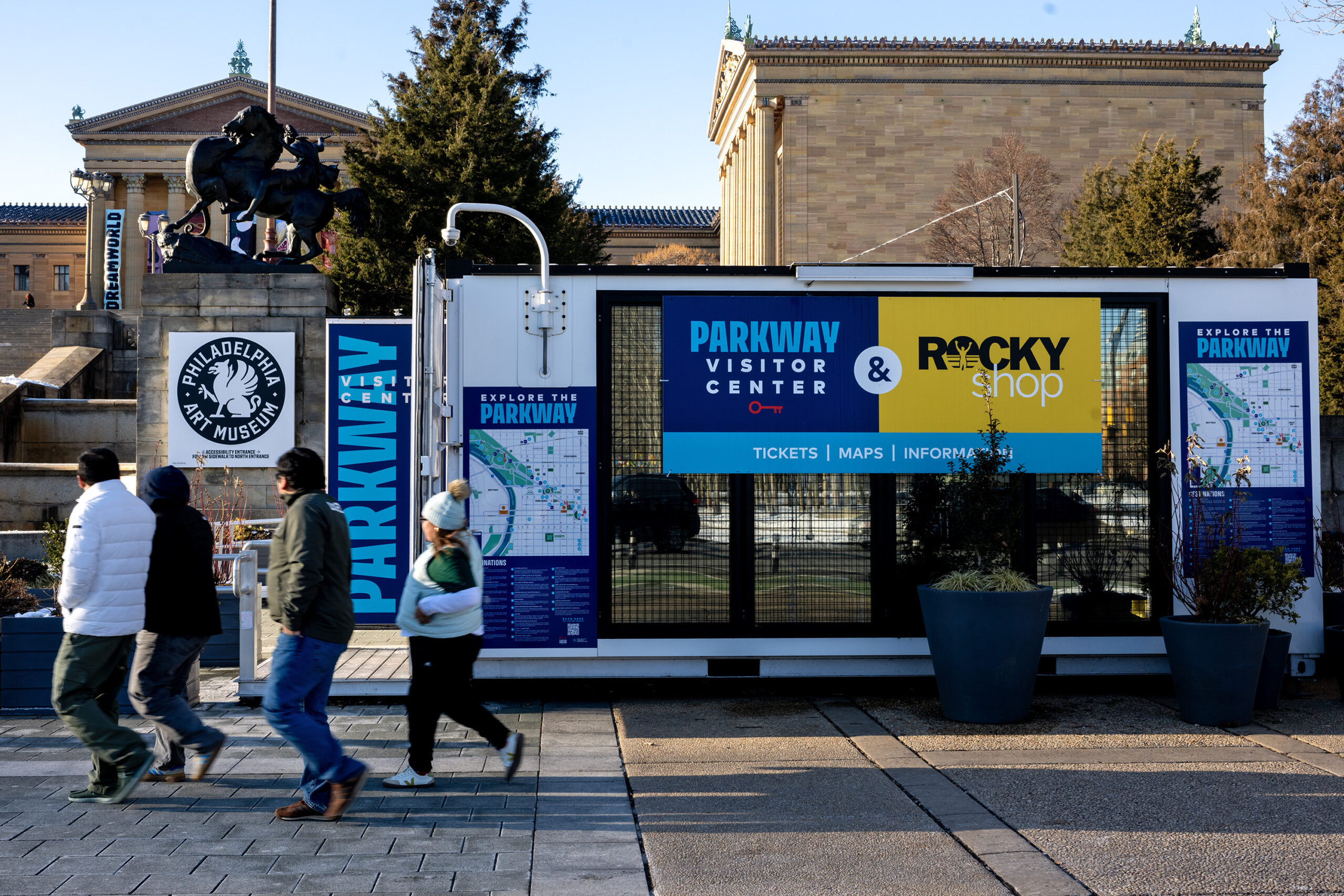
Those Stallone-licensed souvenirs are sold in the “Rocky Shop,” a metal shipping container that was allowed to encroach on the plaza at the base of the museum steps in 2023. Although the metal structure doesn’t take up as much public land as Cescaphe’s banquet operation, it clunks up the approach to the museum’s elegant stone staircase.
The Parkway Visitor Center & Rocky Shop at the base of the Philadelphia Art Museum steps Jan. 20, 2026. In 2023, the city allowed Sylvestor Stallone to set up the metal shipping container at the base of the Philadelphia Art Museum steps.
Initial reports said the Visitor Center, which pushed for the shop, would get a cut of the sales. Yet when I asked how much money that partnership had yielded, a spokesperson for the independent tourism agency declined to answer. The Visitor Center is now run by Kathryn Ott Lovell, who was parks commissioner when the department signed off on Cescaphe’s 2021 expansion at the Water Works.
The exorbitant cost of moving
What jumped out at me during the Art Commission hearing was the cost of moving the bronze sculpture and setting it up on a new base.
Creative Philadelphia, the city department overseeing the move, originally estimated the job would run about $150,000. Now it says the price could rise to $250,000. Those figures don’t include the cost of operating the shuttle, which will be borne by the Visitor Center.
To put those numbers in context, consider the basepayment the city receives from Cescaphe annually for operating a banquet hall at the Water Works: $290,000.
When Cescaphe was given permission to occupy the Water Works complex in 2021, the city said the arrangement was necessary because the parks department could no longer afford to adequately maintain the property. In addition to rent, the agreement generated about $187,000 annually in concession fees between 2015 and 2022 for the city.
That income isn’t peanuts, but is it really worth severely limiting public access to such an iconic Philadelphia landmark? What’s the point of monetizing our parks if the businesses prevent us from enjoying them?
Except for a few months during the winter, the Mill House Deck pier at the Fairmount Water Works is covered with Cescaphe’s glass party room, making it impossible for Philadelphians to enjoy the space.
The privatization of such beloved sites is the direct result of city government’s unwillingness to properly fund its parks. For years, Philadelphia has spent far less than peer cities on green space. Maintenance declined to the point where some parks became unusable.
Rather than devote more money to this basic public amenity, the city has increasingly outsourced its parks to private managers. Enormously popular destinations, such as Dilworth Park and Franklin Square, are run by independent groups.
Cescaphe, a banquet company, has surrounded the Fairmount Water Works with a cordon of arcades, server stations and portable restrooms since it began holding events there in 2021.
But there’s a crucial difference between those private managers and the likes of Cescaphe. First, they’re nonprofits, not businesses. They exist to serve the public. While it’s frustrating when they close their parks for private fundraising events, all the money they raise goes back into improving the parks for the public’s use.
With the Cescaphe deal, the city has crossed a line. Cescaphe is a money-making business that runs the Water Works for its own benefit. In theory, the rent and concession fees are supposed to be invested in the maintenance of the complex, which was considered one of the wonders of the world when it opened in 1815. But it’s Cescaphe, not the public, that benefits from the improvements.
It’s not even clear that Cescaphe is doing the promised maintenance. The Engine House suffered a serious fire in November, and the company still has several outstanding building code violations.
When asked about the citations, a spokesperson for Parks & Recreation described the infractions as minor. “Cescaphe has been a great partner,” Commissioner Sue Slawson said in a statement.
To be clear, there is a big difference between leasing a public building to a restaurant concession and privatizing public space for the sole use of a single business. Restaurants are open to everyone. They also provide services, such as restrooms, that the public can use. It’s a win-win: The city makes a little money on the deal, and the public gets a nice amenity.
The city had the right idea when it leased the Water Works’ Engine House to a restaurateur in the early 2000s. But instead of finding a replacement when that restaurant shut down in 2015, the city turned the complex over to Cescaphe. This April the banquet company’s lease will come up for renewal. It’s time to go back to the original model.
Wouldn’t it be great to grab a sandwich at a Water Works cafe after a long walk or bike ride along the Schuylkill River Trail? The trail, which just completed a spectacular extension, does not have a single cafe between its new Grays Ferry terminus and the museum, apart from a small snack bar at Lloyd Hall. Philadelphia has plenty of great restaurateurs who would jump at the chance to operate in a prime spot like the Water Works.
People have framed the Rocky discussion as a clash between elites, who object to the glorification of a movie prop as art, and the mass of fans who believe the statue embodies their aspirations.
The reality is, there’s nothing less democratic than turning over the public’s land to private companies driven by their own gain.
An earlier version of this column listed FDR Park as one of several city parks that are run by private managers. The Philadelphia Department of Parks & Recreation operates the park and provides workers to staff it.
This story has been updated to remove the Schuylkill River Trail from a list of private managers because the Schuylkill River Development Corp. has a different type of contractual agreement with Philadelphia’s Department of Parks & Recreation and does not lease the land it oversees.
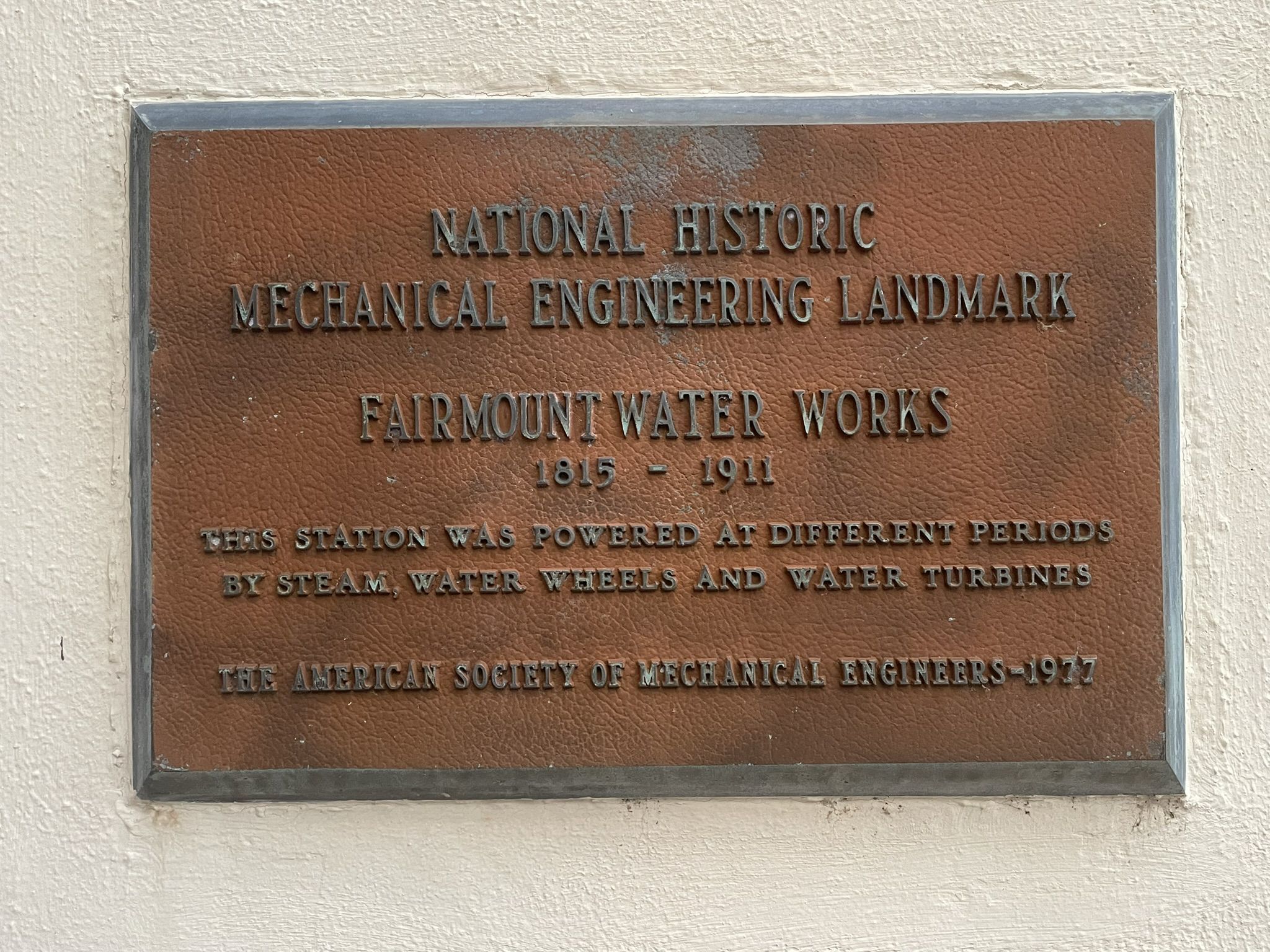
When it opened in 1815 to provide the growing city with a reliable supply of drinking water, the Fairmount Water Works was a major engineering advance and was considered one of the wonders of the world.
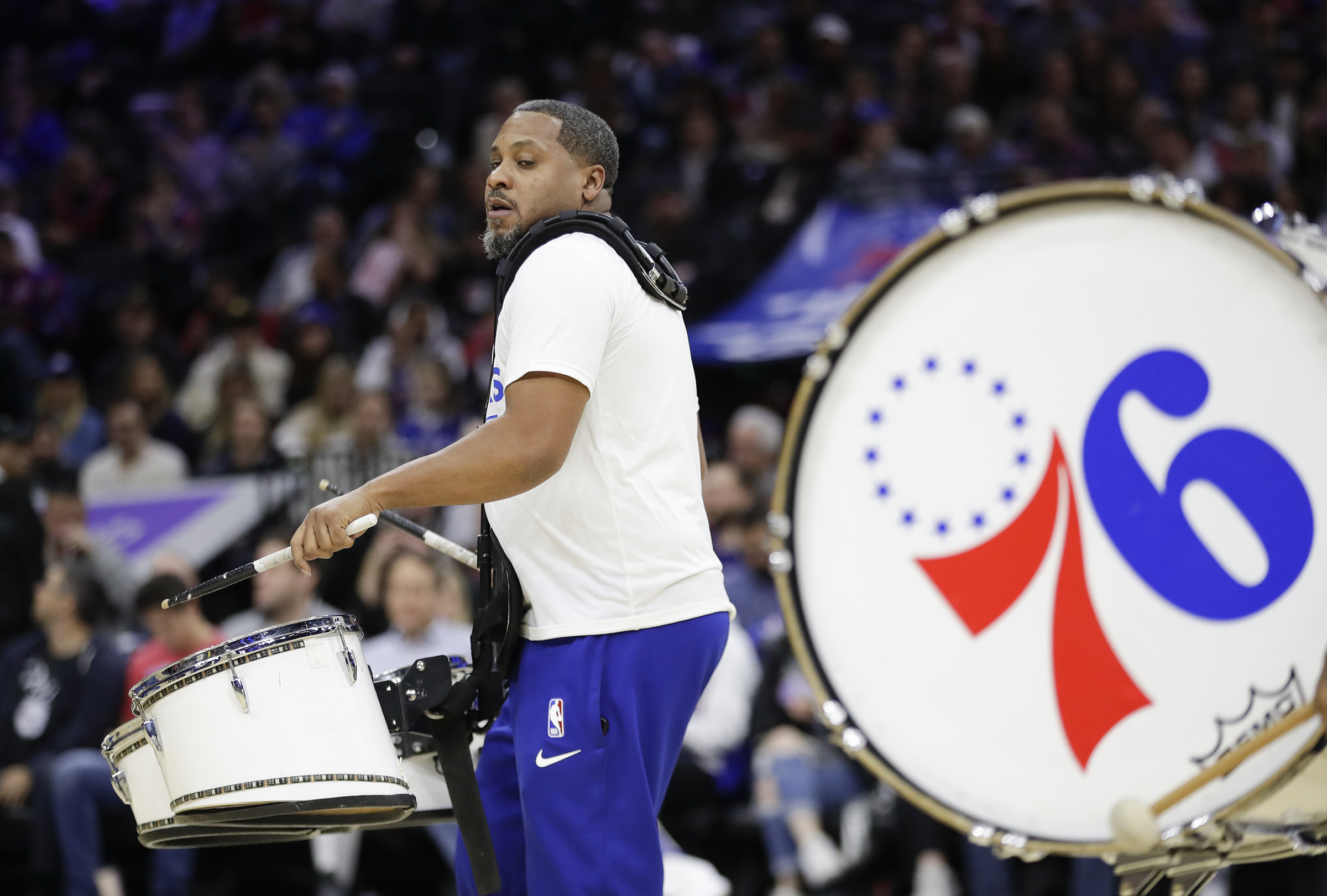
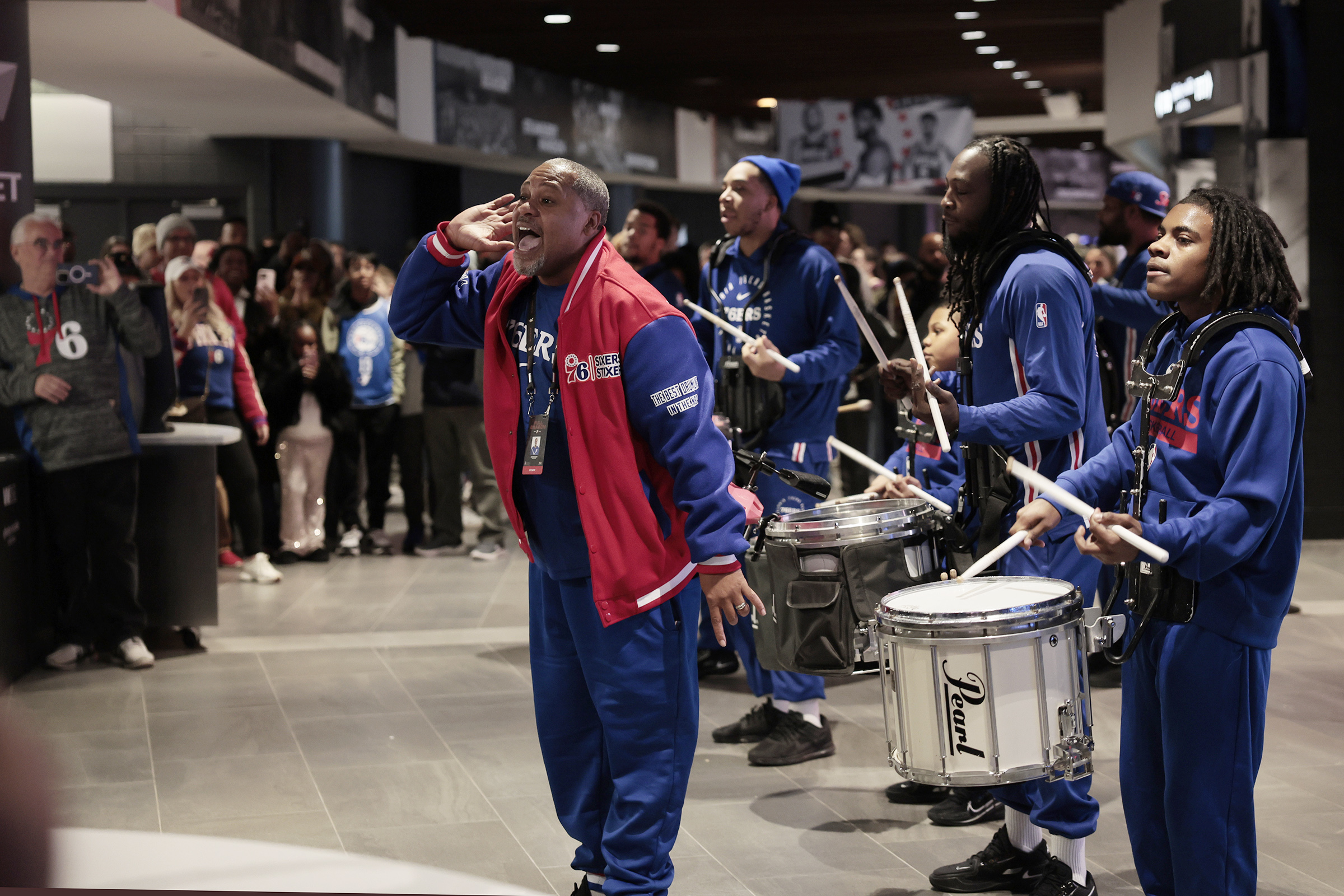
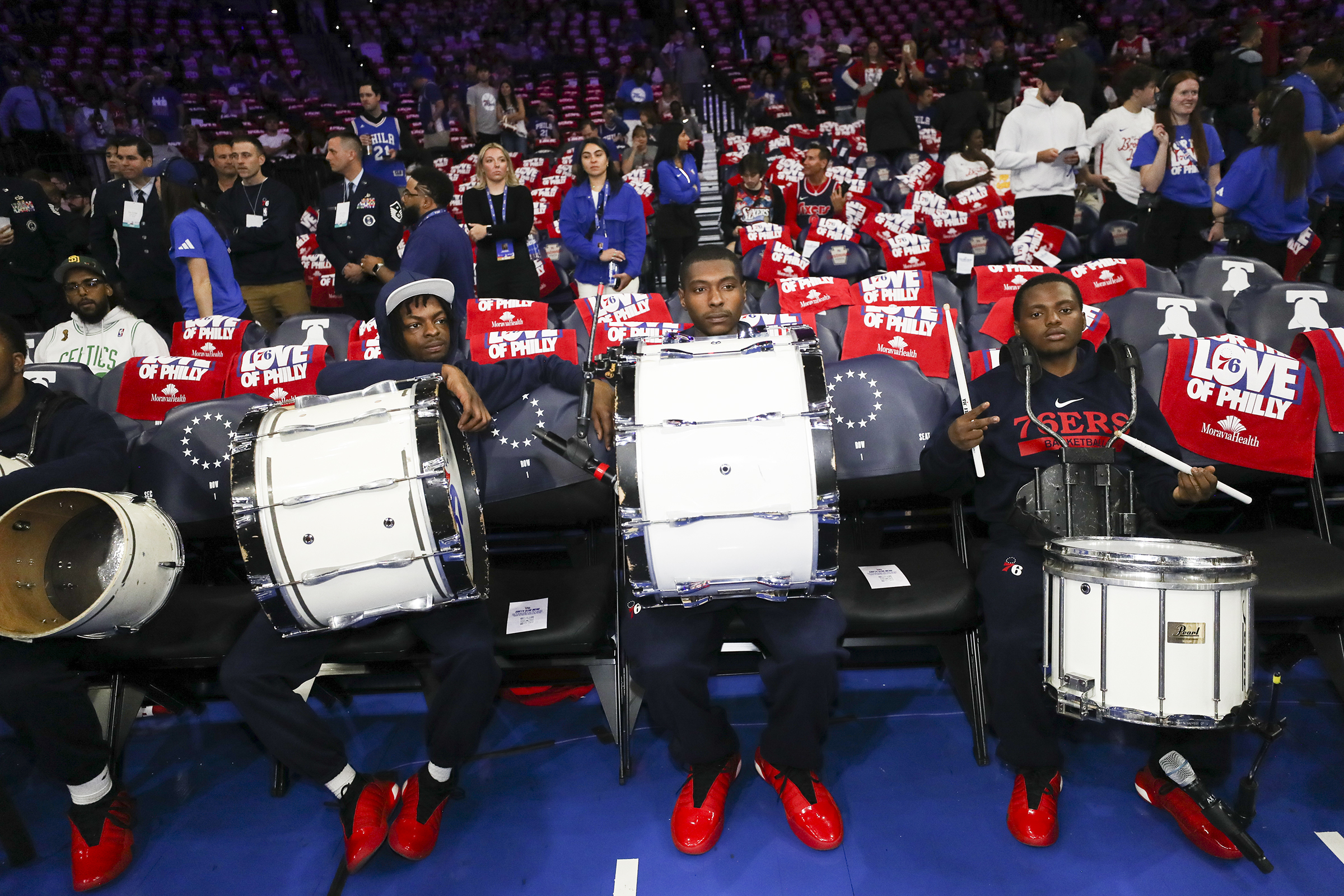
Walking through the main concourse of Xfinity Mobile Arena after a game, fans often hear the faint sounds of drums rattling in the distance. If one follows the high-pitched rhythm of the snare to the melody of the tenor and eventually to the deep pulse of the bass, they’ll find the Sixers Stixers.
The group has been the official drum line of the 76ers dating back to 2013. For over a decade, they’ve performed in perfect cohesion — relying on teamwork, discipline, and unity — building lifelong friendships deeply rooted in brotherhood, and providing life-changing opportunities for inner-city youth through the power of music.
“We have nothing else,” said 46-year-old Antoine Mapp Sr., the director of the Sixers Stixers. “Everyone don’t play sports, everyone don’t play basketball, everyone don’t play football, everyone don’t play baseball, everyone don’t bowl. However, music is universal. Music touches the soul.
“When you’re part of a team, you start feeling accepted. You start feeling like you belong to something, you start feeling important. All kids really need is love and affection. You don’t know what these kids go through at home. You don’t know what they go through in school, but when it comes to being a part of something like this, we all family, and we say before we leave, ‘I love you, bro,’ because I don’t know if he’s going to make it back tomorrow.”
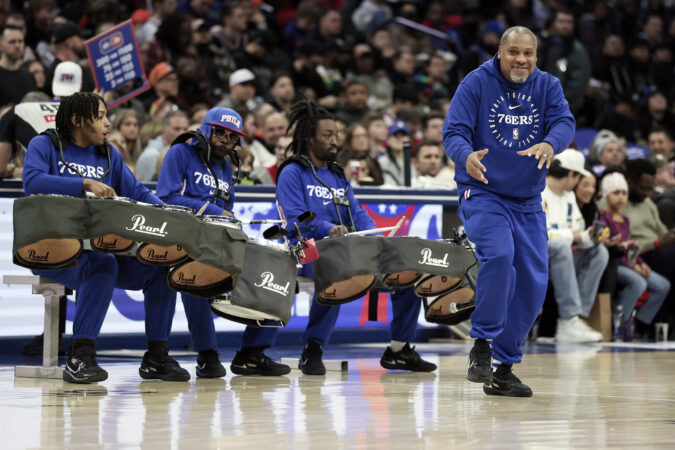
Antoine Mapp (front left) and the Sixers Stixers do more than just perform at games, like escorting Zyair Kendrick-Finney (back center), along with school and city officials, for his first day of 7th grade at Morgan Village Middle School in Camden in 2022.Mapp’s Stixers have been performing at Sixers games for over a decade.
‘Take these drum sticks, jail cell, or graveyard’
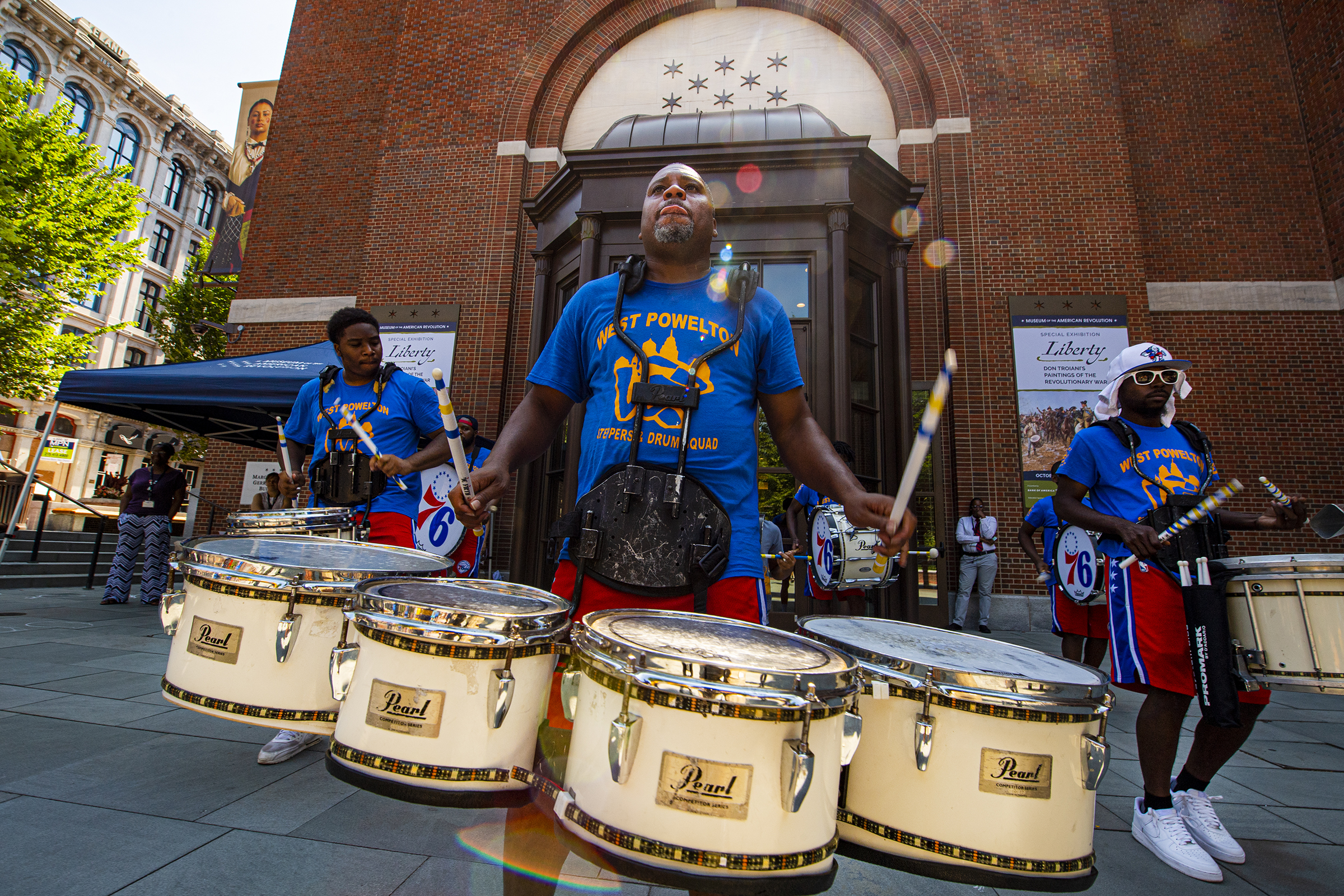
In 1991, Mapp was first introduced to drumming by his late grandmother, Elsie Wise. To keep young boys and girls out of trouble in the West Powelton neighborhood, Wise created a drum line and drill team known as the West Powelton Steppers and Drum Squad, which still practices today.
“My grandmom came to me and said, ‘Well, I’ll give you three options: take these drum sticks, jail cell, or graveyard,’” Mapp recalled. “I decided to pick the drumsticks. And I asked her what I’m supposed to do with these drumsticks. She said, ‘Figure it out.’”
At that time drum squads and drill teams weren’t as accepted. At 11 years old, Mapp remembers being called every name in the book.
“In the ’90s, drill team wasn’t accepted,” Mapp said. “They looked at us as being wimps, looked at us as being cowards, looked at us as being punks. They used to disrespect us, call us names, say vulgar things about our sexuality because they didn’t understand drumming, they didn’t understand the culture. They didn’t understand music and how it touches the soul and how it saves your life.”
However, that culture was on full display when Mapp attended Cheyney University, the nation’s first Historically Black College and University. He decided to attend Cheyney, on the border of Chester and Delaware Counties, to stay closer to home — giving him time to continue helping with the West Powelton Steppers and Drum Squad.
Antoine Mapp got his start with the West Powelton Steppers and Drum Squad, which helped turn into an opportunity with the Sixers.
In 2001, Mapp became the first person in his family to graduate college, with a major in accounting and minor in computer programming. And as he pursued his degree, he joined the Cheyney drum line.
“The band is the culture of the HBCU,” Mapp said. “The band is the heartbeat. The band is the lifeline. The band is what draws the attention. The sports team being good is a bonus when it comes to an HBCU.”
Not only was it the lifeline of the HBCU, but it was the lifeline for Mapp himself. The Philly native credits the drum line for saving his life.
“First of all, making it to 18 years old where I’m from, it’s like making it to 100,” Mapp said. “We used to make it to 18 and say, ‘OK, we have nothing to live for. We made it.’ That’s the mentality we used to have. Drumming saved my life. … The drill team and drum line raised me because the guys on the team became my brothers. The young ladies on the team became my sisters.”
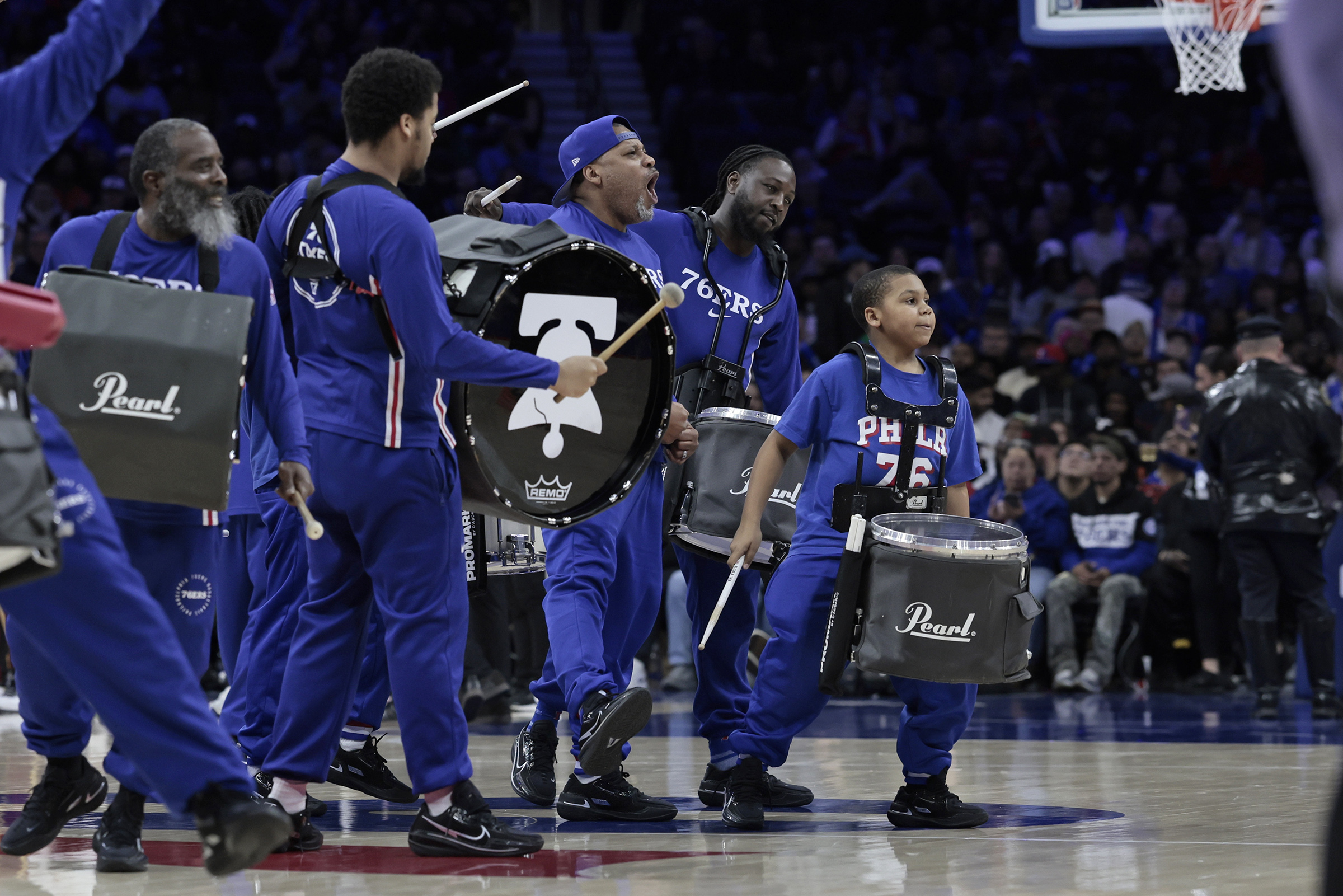
This year, Antoine Mapp Jr. (front) — the son of Sixers Stixers drumline director Antoine Mapp (center in hat) — has joined the team.
A family affair
“Break down!” Mapp yelled as the Stixers began to choreograph their routine for the halftime show of a recent game against the Wizards.
Listening to the order, the rest of the Stixers changed formation — closing in on one another as they drummed out the melody that was discussed on their ride to the stadium. Wearing matching Sixers gear, their black Nikes moved in perfect harmony — one pair looking rather smaller than the rest.
That pair belonged to 11-year-old Antoine Mapp Jr., the son of Mapp, who joined the Stixers at the start of the season. After their first performance together, Mapp sent out a message to another famous father-son NBA duo.
“When I seen LeBron [James], it was the best feeling in the world,” Mapp Sr. said. “I said to LeBron, ‘Hey Bron, you ain’t the only one on the court playing with your son. It was a beautiful moment. Just to be able to say that, I never thought in a million years that I would be on the Sixers floor in the NBA drumming alongside my son. It’s the best feeling in the world.”
If you would have told Mapp that he was going to be performing alongside his son on the Sixers court in 2014, he would have never believed it.
Antoine Mapp Jr. (far right), is the 11-year-old son of Sixers Stixers drumline director Antoine Mapp (wearing hat). The group performs throughout Sixers games and at other team functions.
“I just lost in 2014,” Mapp said. “I just lost my job. My son, Antoine, they told me to abort him. They told me that his stomach and his lungs were growing in his chest. They told me he wasn’t going to walk, talk, run, or do anything. My grandfather, the only father figure that I knew, was in the hospital passing away. I was losing my son and my grandfather.
“On Father’s Day, I lost my grandfather. My son was in the NICU for six months. He was the only baby that survived the NICU.”
Throughout all the struggles, drumming was one thing that helped him persevere. Mapp remembers sitting in the parking lot and praying for guidance.
“[The Lord] spoke to me,” Mapp said. “That same week, I got a phone call from [76ers director of game presentation] Derrick Hayes. When Derrick called me he said, ‘Well, we’re calling you about being a Sixers drum line.’ I said, ‘OK, I’ll do it for free.’ That’s what I’m used to with the after-school program. Drumming was my payment. My life being saved, that was payment enough.
“When he told me that he was going to pay me for doing the game, a light bulb went off in my head. What is one of the reasons why there’s so much crime in my neighborhood? Lack of funds. That’s one of the reasons. So, I said, ‘OK, if the Sixers are paying us, let me change my program to I pay you to save you.’”
Mapp (left) leads the drumline as they entertain fans on the main concourse during a recent game against the Washington Wizards.
‘Don’t ever stop’
In 2020, Mapp’s 29th season helping with the West Powelton Steppers and Drum Squad, he had his last conversation with his grandmother.
“Before she took her last breath, I asked her, ‘Why am I still here?’” Mapp said. “She said, ‘Because you still love it.’ The last thing she said to me, she said, ‘Don’t ever stop,’ and took her last breath.
“That’s been ingrained in my brain ever since — and I haven’t stopped.”
Mapp has spent over three decades with the West Powelton Steppers and over a decade with the Sixers Stixers, performing alongside children as young as 4 years old to grown men in their 40s.
The Stixers take part in off-court events like the Annual 76ers Summer Shore Tour.And there’s no rest in the postseason, as the Sixers Stixers prepare for their performance during Game 6 against the Boston Celtics in 2023.
“We have no age limit,” Mapp said. “We don’t cap out. We’re in your life for the rest of your life. It’s our 35th year, and we have so many people that are still part of this group and have kids who are part of the group.
“I can’t wait to see what my son does with it 20 years down. I can’t wait to say we’ve been with the Sixers for 50 years, I’ll probably be like 96. But, I’ll still be here. And I’ll still be out there leading my guys. I’m so honored to be a West Powelton drummer and to be a Sixer Stixer.”
Nathan’s Famous, which opened as a 5-cent hot dog stand in Coney Island more than a century ago, has been sold to packaged meat giant Smithfield Foods in an all-cash $450 million deal, the companies announced Wednesday.
Smithfield, which has held rights to produce and sell Nathan’s products in the U.S. and Canada and at Sam’s Clubs in Mexico since 2014, will acquire all of Nathan’s outstanding shares for $102 each.
Like almost every food company, Nathan’s has been under significant inflationary pressure. Nathan’s sales costs of branded products rose 27% compared with last year in its most recent quarter, the company said in a filing with the U.S. Securities and Exchange Commission. There was a 20% increase in the average cost per pound of hot dogs, it said.
Nathan Handwerker opened the first Nathan’s hot dog stand on Coney Island in 1916 with a $300 loan, according to the company. After opening a handful of other locations around New York over the years, the Handwerker family sold the Nathan’s Famous business to investors in 1987. The franchise has continued to expand.
Nathan’s has an outsized cultural presence in the U.S. both because of its history and the famous, or infamous, hot dog-eating contest held at its flagship Coney Island shop, where contestants from around the world gather every July 4 to see who can down the most hot dogs in 10 minutes.
The restaurant sits on the same lot where Handwerker opened his first hot dog stand.
American Joey Chestnut is the reigning Nathan’s hot dog-eating champion after eating 70.5 hot dogs and buns last year. Chestnut has won 17 of the last 19 events, setting a record in 2021 after wolfing down 76 hot dogs and buns.
While the first recorded hot dog-eating contest was held in 1972, Nathan’s says informal contests began the year the stand opened early in the 20th century. It says the 2025 contest was its 103rd.
Smithfield said Wednesday that the event, which has been televised on ESPN with a crowd estimated at 30,000 at Coney Island each year, will continue.
Smithfield said it expects to achieve annual savings of about $9 million within two years of closing the deal.
“As a long-time partner, Smithfield has demonstrated an outstanding commitment to investing in and growing our brand while maintaining the utmost quality and customer service standards,” said Nathan’s CEO Eric Gatoff.
Nathan’s board of directors, which own or control nearly 30% of the outstanding shares of Nathan’s Famous common stock, approved the buyout and agreed to recommend to its shareholders to vote in favor of the deal.
Smithfield, which also owns the Gwaltney bacon and Armour frozen meat brands, rang up more than a billion dollars in operating profit in 2024 on sales of $14.1 billion.
Smithfield shares closed down 1.1% Wednesday.
In fiscal 2025, Nathan’s reported profit of $24 million on revenue approaching $150 million. Its acquisition is expected to close in the first half of this year.
Jesús Luzardo trains in the offseason with dozens of major leaguers at a South Florida gym where the televisions are always tuned to MLB Network.
Even so, his father keeps him apprised of all baseball news.
“He makes sure to send me all the latest rumors,” Luzardo said in a guest appearance on Phillies Extra, The Inquirer’s baseball podcast. “I feel like I’m pretty connected.”
You can be sure, then, that Luzardo was paying attention last week when former Phillies teammate Ranger Suárez agreed to a five-year, $130 million contract with the Red Sox.
Because Luzardo could be in line for a similar deal a year from now — if not sooner.
Luzardo, a 28-year-old lefty, is eligible for free agency after this season. In a wide-ranging conversation on the podcast, he said he’s interested in discussing a contract extension with the Phillies during spring training. He also discussed his impressive first season with the team, J.T. Realmuto’s impact behind the plate, and more.
Watch the full interview below and subscribe to the Phillies Extra podcaston Spotify or Apple Podcasts.
Q: What was your takeaway from your first year with the Phillies?
A: I feel like I wasn’t sure what to expect, getting traded over to the Phillies, obviously coming to a new team, new organization, a little bit different from the places that I had been. I loved my time in Oakland and Miami. But obviously [the Phillies are] a little different organization. A lot more expectation, a lot more fans in the stands, the firepower in the clubhouse. But it was just great. The team was great, the organization was great, the fans are great. They obviously will let you know when you’re not doing well, [and] that’s not something that has ever bothered me. And I’ll let myself know before they let me know. So, I had a great time from top to bottom every day going to the field. I was looking forward to it.
I had a great time [with] the guys I worked with, the guys I spent time with. I had a great time going into the playoffs and making the run that we did, just building that camaraderie. And, yeah, I couldn’t have asked for a better first year in my eyes. Obviously, some up and down, obviously some tough moments throughout the year. But it’s a long season, and it’s a marathon, and you’re not going to be your best the whole time. So, I think it’s just a matter of weathering the storm. And I like to go by that saying of ‘bend, don’t break.’ So, I think I learned that about myself in the sense that, when times get tough, it’s just a matter of grinding through it and finding the way out, as opposed to kind of just withering away and being like, it’s over. So, I think that was something that I take away from this year.
Jesus Luzardo had a 3.92 ERA in a career-high 183⅔ innings in his first season with the Phillies.
Q: Can you describe or give an example of how J.T. Realmuto has such a big impact on the pitching staff?
A: There’s really not one specific thing. I think it’s just J.T. as a whole. I really respect the way he goes about his business. He’s a no-B.S. guy. He’s a family man. He is a hard worker. You see him, works hard in the weight room, works hard on the field; always is like, the first one to be out there ready to go. He’s not one to take a day off. They kind of have to pull his teeth out to take the day off. And you show up to the field, he’s already there, doing homework, going over scouting reports, watching video. So, when he goes up back there [behind the plate] and he tells us, ‘This is the plan that we’re going to do throughout the game,’ you have confidence that he knows what he’s talking about and that it’s not he’s just winging it. He has a plan. He understands what his plan is.
And he takes very good care of his body. He’s very mentally aware of the situations, and he’s got a lot of baseball IQ. So, in that sense, I think he’s a full, full-bodied catcher in the sense that he has all his bases covered. And I think that’s something I really respect. And not only me, obviously the whole rotation, bullpen, all these guys. And when he’s hitting, it’s the same way. You could just see all the work he puts in and how smart he is at the plate. And that’s something that we all appreciate.
Q: Your parents live in South Florida, where you grew up, but they’re from Venezuela. Do you have family there? Does everyone know that everyone’s OK after everything that’s happened down there? And are you interested in pitching for Venezuela again in the World Baseball Classic, like you did in 2023?
A: I have family down there, and thankfully everyone’s OK so far. And yeah, it’s been a scary situation down there at times, but thankfully everyone’s all right. And in terms of pitching in the Classic, yeah, I threw in there three years ago. Last year talking to [Team Venezuela], I promised that I would go and pitch. And did get a call from the U.S., and got offered to pitch [for them] as well.
But just this year, I think it’s going to be tough for me, going into a free-agency year [and] made the decision that, unfortunately, [I’m] not going to be able to pitch in the Classic and want to take my time. Take a slow spring training, fully get ready with the team, make sure my body bounced back after a career-high innings. And [it’s] a tough decision for me and my family, because it’s very important for my family, for me, to represent Venezuela. But just in terms of intelligent decision-making and a hard decision after a long last year and looking forward to a long this year, going into the playoffs, hopefully again pitching into maybe November, I think the correct decision would be to take a slow spring training and make sure everything’s along the right line to be prepared for the year.
As Joshua Weikert shared ground rules for quizzes in his early morning international relations class, he sought to put his students at ease.
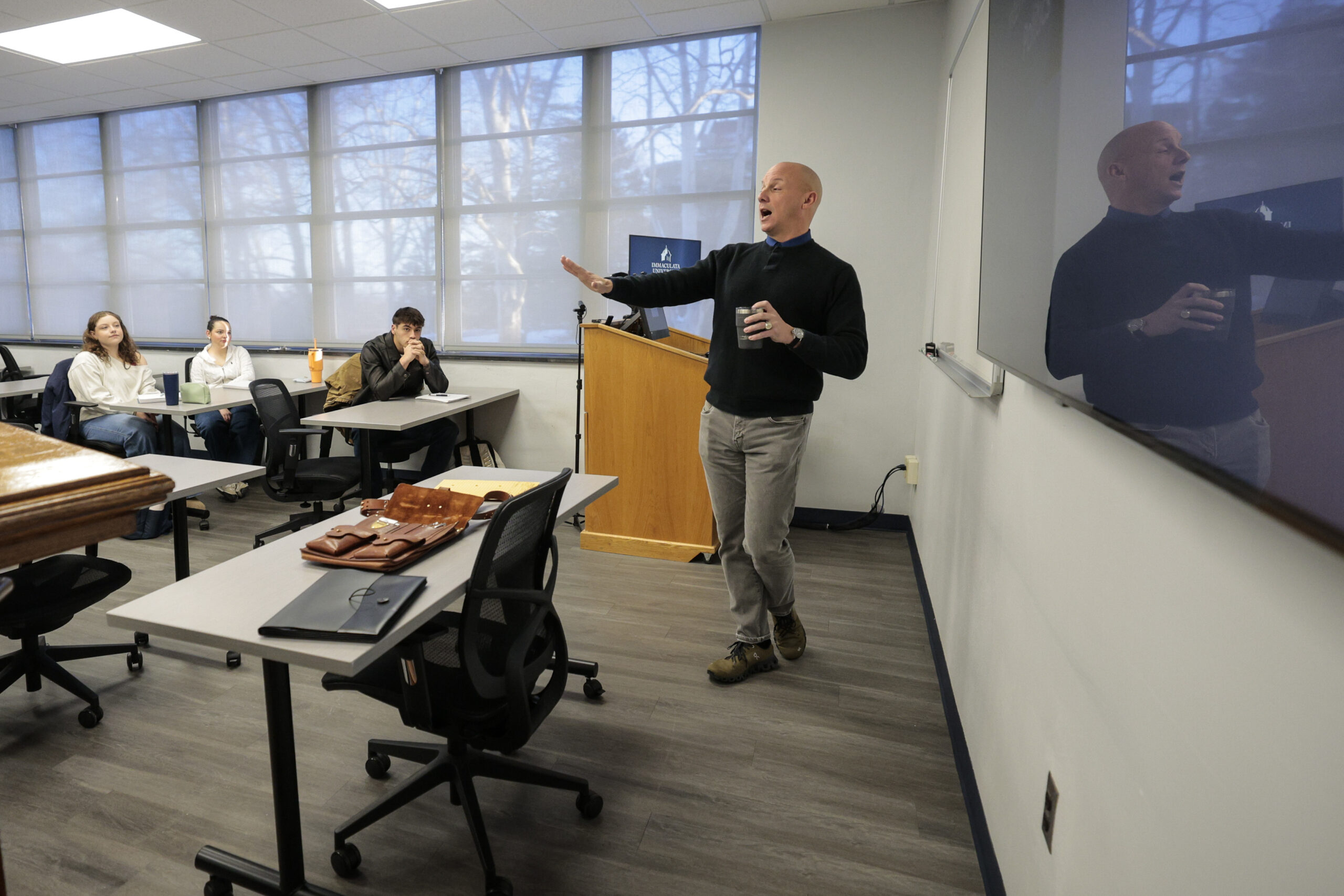
“I don’t want you stressing out about these,” he said Tuesday, as the new semester got underway at Immaculata University in Chester County.“I myself was a terrible student.”
Weikert, 47, of Collegeville, may not have been a star student, but he sure knows a lot.
The politics and public policy professor will compete onJeopardy! 2026 Tournament of Championsat 7 p.m. Friday on ABC, having won six games when he was on the show in March.
Joshua Weikert teaches a class in international relations at Immaculata University.
Over a couple weeks, Jeopardy! shows will feature him vying against 20 other champions, including Allegra Kuney, a doctoral student at Rutgers University’s New Brunswick campus, and Matt Massie, a Philadelphia lawyer who moved to the area in 2024, who also will appear on Friday’s show.
Friday’s match is a quarter-final, and if Weikert wins, he’ll advance to the semifinals. (Kuney won her quarter-final Tuesday.)
Weikert won about $103,000 when he competed last year, 10% of which he donated to a memorial scholarship fund named for his late friend, Jarrad Weikel, a Phoenixville man who died unexpectedly at age 40 in 2022. The winner of the champions tournament —which will conclude sometime in early February — will take home a grand prize of a quarter million.
Weikert will watch the show Friday among family and friends — including his fellow contestant Massie — at Troubles End Brewing in Collegeville, which named one of its beers after him. It’s an English Bitter, one of Weikert’s favorites, called “Who is Josh?”
At Immaculata, a Catholic college where Weikert has taught since 2016, students and staff are stoked. A campus watch party is planned, President Barbara Lettiere said.
His appearance last year, she said, has put a welcome spotlight on the school and brought an outpouring of enthusiasm from alumni. On tours, some prospective students and their parents who spot Weikert have recognized him, she said.
“I never knew that this show was as watched as it appears to be,” she said. “Win or lose, Immaculata wins.”
Student Ben Divens talks about his Jeopardy-star professor Joshua Weikert.
Ben Divens, 19, said it’s “jaw-dropping” and “surreal” to know his teacher will compete in the Jeopardy! champion tournament.
“I knew from the first time I met him he was a super, super smart person,” said Divens, a prelaw major from Souderton.
“He’s guided us so much in our major already,” added Bailey Kassis, 18, a political science major from Fort Washington.
“He’s guided us so much in our major already,” student Bailey Kassis said about her professor Joshua Weikert.
An early gamer
Weikert said he has watched Jeopardy! ever since he can remember, probably since 1984 when he was 6, and it came back on the air with Alex Trebek as host. He grew up just outside of Gettysburg in a family that loved to play games, he said.
“We took them very seriously, which is to say that they didn’t just let the kids win,” he said of his parents, both of whom had accounting degrees. “We were destroyed routinely in the games we played.”
About his performance as a student, he said he often skipped his homework.
“Just give me an exam,” he said, describing his attitude at the time. “I’ll pass it.”
He got his bachelor’s degree in international relations from West Chester University, master’s degrees from Villanova and Immaculata, and his doctorate from Temple. He also attended the Defense Language Institute Foreign Language Center, where he studied modern standard Arabic while serving in the U.S. Army.
Joshua Weikert sets expectations for students as a new semester gets underway at Immaculata University.
In addition to teaching, he also works as a policy adviser to the Pennsylvania House of Representatives under state Rep. Joe Webster, a Democrat serving part of Montgomery County. He vets legislators’ ideas and offers ideas of his own.
“The only thing they’ve ever told me no on was [when] I tried to abolish the Pennsylvania Senate,” he said.
So many bills pass one body, then die in the other, he explained. If there were one legislative body where all House and Senate members served, that might be different, he said.
Weikert’s office walls are lined with framed newspaper front pages highlighting major events: “Nixon Resigns,” “Nazis Surrender,” “Man Walks on Moon,” “Kennedy Shot to Death.”
“Every once in a while, I just get up and read one of the stories,” he said.
He got them from his mother-in-law’s basement and put them up after his wife told him his office needed some decor.
Weikert’s status as a Jeopardy! champion makes clear he’s a fast thinker. He’s also a fast talker.
“I don’t really drink caffeine. I just talk this fast,” he told his students.
His wife, he told the class, tells him to slow down.
“Keep up,” he tells her, he said.
The road to Jeopardy
Since his mid-20s, Weikert has been trying to get on Jeopardy!. Years ago, he got a call from the game show, but he put the caller on hold to get to a quiet place. They hung up.
“I was like, well, I guess I missed that opportunity,” he said.
But he kept trying and started taking the online tests, which typically draw 200,000 participants annually. In 2024, he got an email, inviting him to take the test again — and then again under Zoom surveillance.
Next came a virtual audition and practice game in August 2024. That earned him a place in a pool of about 3,000 people, of whom a few hundred eventually became contestants.
Weikert got the call last January and was invited to fly to California the next month to compete.
In reality, his varied interests and life path had already prepared him for the show. He reads a lot. He’s a fan of historical fiction, pop culture, and movies. His work as a public policy scholar helps, too.
But to try and up his game, he read plots of Shakespeare plays and a book on great operas. He flipped through lists of presidents and vice presidents. His wife, Barbara, a Norristown School District middle school music teacher, read questions to him from old Jeopardy! shows. He knew about 80% of the answers, he said.
That, however, didn’t stop him from having panic dreams of being on stage and knowing nothing.
The toughest category for him, he said, is popular music. Movies, history, and politics are his strongest.
But the hardest questions, he said, are the ones with four or five strong possible answers.
“Getting a Jeopardy! answer right is more about knowing what it’s not than what it is,” he said.
Ultimately, he said, it’s impossible to really study for the game show.
“The odds that something you study would come up is almost zero,” he said.
It was an intense experience on stage last March, but the staff put contestants at ease, he said. Host Ken Jennings, formerly one of the show’s most successful contestants, told them, according to Weikert: “I promise you something today is going to be a win for you, so just relax and have fun.”
He has a hard time remembering his winning answers. He readily recalls his dumbest, he said.
The answer was “sacred cow.” He uttered “holy cow.”
“Even as it was coming out of my mouth, I knew it was wrong,” he said.
He’s proud that he only froze on one answer involving lyrics from the B-52’s “Love Shack,” he said.
There was less pressure competing in the championship match last month, given he was already a winner, he said. But it was harder in that the contestants were the best of the best.
“During the regular season, it’s a little under a quarter of a second between when you can start to buzz in and when the buzz actually comes,” he said. “In the tournament of champions, that drops to 0.08 seconds.”
This time, he also prepped by reading children’s books on topics such as basic cell biology, a tip he got from another contestant.
“It’s the simplest language they can use to convey the information,” he said.
He also read the book, Timelines of Everything: From Woolly Mammoths to World Wars.
He most enjoyed the camaraderie among contestants, he said. When filming was over, they hung out in a bar and — watched Jeopardy!.