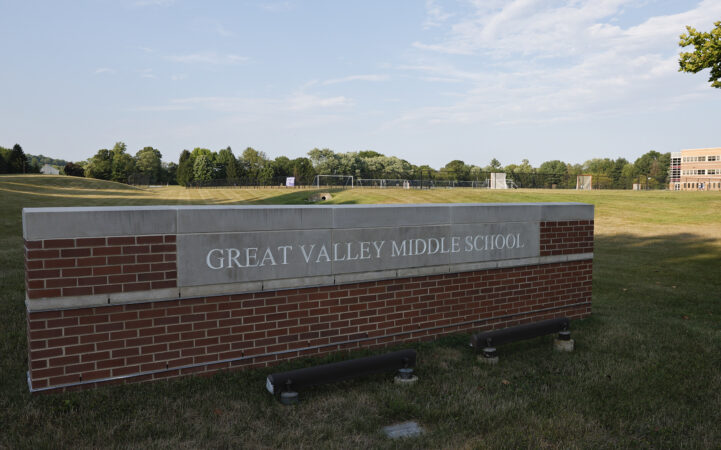
The U.S. Department of Education has opened a civil rights investigation into the Great Valley School District in Chester County for a policy allowing transgender girls to participate in girls’ sports teams.
The probe — one of 18 investigations announced last week into transgender sports policies in K-12 districts and colleges nationally — comes after President Donald Trump threatened last year to strip federal funding from schools that recognize transgender students.
“Time and again, the Trump Administration has made its position clear: violations of women’s rights, dignity, and fairness are unacceptable,” Assistant Secretary for Civil Rights Kimberly Richey said in a statement. “We will leave no stone unturned in these investigations to uphold women’s right to equal access in education programs — a fight that started over half a century ago and is far from finished.”
District officials said at a school board meeting Tuesday that they’re cooperating with the investigation and working with lawyers to prepare a response.
Numerous Philadelphia-area school districts have policies allowing transgender students to play on sports teams aligned with their gender identities, including Philadelphia. But Great Valley appears to be the first on the administration’s radar.
Great Valley was one of the first Pennsylvania school districts to pass a policy supporting the rights of transgender students in 2016 — seeking to provide those students “equal opportunity to achieve their maximum potential,” including by participating in sports “in a manner that is consistent with their consistently asserted gender identity.”
It was unclear whether any transgender girls currently play sports at Great Valley. A district spokesperson provided a statement Wednesday saying the district was “committed to serving all students in our community with dignity and respect” but declined to comment further.
After declaring the country would “recognize two sexes, male and female,” Trump issued an executive order in February seeking to end the participation of transgender women in women’s sports.
The president invoked Title IX, the landmark civil rights law prohibiting sex-based discrimination in programs that receive federal funding.
But how that law applies to transgender students and their rights has been hotly debated. The U.S. Supreme Court last week heard two cases challenging laws in West Virginia and Idaho requiring that participation on sports teams for girls be based on “biological sex.”
In Pennsylvania, meanwhile, the Human Relations Act specifies that discrimination based on gender identity is a form of prohibited sex-based discrimination.
Courts have also protected the rights of transgender students. In 2018, judges in the U.S. Third Circuit Court of Appeals ruled against students in the Boyertown Area School District who said their privacy rights were violated by sharing bathrooms with transgender students.
Last year, a U.S. District Court judge in Philadelphia rejected a lawsuit from a Quakertown student who said her equal protection rights were violated by having to race against a transgender female student in the Colonial School District.
Great Valley “takes its obligations under Title IX and all federal civil rights laws seriously,” the district’s school board president, Rachel Gallegos, said at a board meeting Tuesday. “We also take our responsibility to comply with the legal rulings from federal courts in this jurisdiction and to provide the protections afforded our students by Pennsylvania statutes just as seriously.”
Much of the Trump administration’s focus on transgender issues to date has been at the collegiate level. The NCAA last year announced it would ban transgender women from competing, and the University of Pennsylvania struck a deal with the administration over the past participation of transgender athlete Lia Thomas on its women’s swim team.
The Great Valley investigation appears to have been triggered by a former school board president, Bruce Chambers, who filed a complaint with the Office for Civil Rights last March, objecting to the policy.
Chambers, who served on the board from 2009 to 2012, said Wednesday that OCR notified him last week that his complaint was under investigation, the same day it made its public announcement.
The district’s policy “discriminates against girls, because the trans people can use whatever bathroom they want, use whatever locker room they want … join any team they want, or activity,” Chambers said. He said he “gave the board three chances” before filing the OCR complaint.
If the board rescinds the policy, “that will solve the whole thing,” Chambers said.
Kristina Moon, senior attorney with the Education Law Center, a Philadelphia-based group that advocates for transgender students, said the Trump administration appears to be trying “to intimidate school districts” into complying with its policy goals.
Moon pointed to a recent OCR investigation into gender neutral bathrooms that was criticized by Denver Public Schools, which said the office didn’t independently verify claims and “issued conclusions using an approach that departs from established investigative practice.”
“If they actually cared about protecting girls … they would not have dismantled the Department of Education and Office for Civil Rights,” Moon said.
In a letter this week to the Great Valley board, the LGBT Equality Alliance of Chester County said there was “no clear federal law or Supreme Court ruling that makes inclusive policies for transgender students unlawful.”
“Great Valley’s current policy reflects a reasonable, lawful approach that protects students from discrimination, aligns with local and state civil rights standards, and has been reviewed with legal counsel,” the alliance said in the letter. “Supporting students’ dignity and safety is not political. It is consistent with our legal obligations and the district’s duty of care to all students.”
Two residents who spoke at Tuesday’s meeting also urged the board to maintain the policy.
“I understand there is a need for all students and not just a minority to feel safe, but I feel assured the board can and will handle all concerns from parents and students with great care,” Christi Largent said. “I look forward to seeing the board stand up for all the students.”
Yvonne St Cyr strained her body against police barricades, crawled through a broken Senate window, and yelled “push, push, push” to fellow rioters in a tunnellike hallway where police officers suffered concussions and broken bones.
She insisted she did nothing wrong. A federal judge sentenced her to 30 months in prison and imposed $2,270 in financial penalties for her actions at the U.S. Capitol on Jan. 6, 2021, declaring: “You have little or no respect for the law, little or no respect for our democratic systems.”
St Cyr served only half her sentence before President Donald Trump’s January 2025 pardon set her and almost 1,600 others free.
But her story doesn’t end there. St Cyr headed back to court, seeking a refund of the $2,270. “It’s my money,” the Marine Corps veteran from Idaho said in an interview with the Washington Post. “They took my money.” In August, the same judge who sentenced her reluctantly agreed, pointing to a legal quirk in her case.
“Sometimes a judge is called upon to do what the law requires, even if it may seem at odds with what justice or one’s initial instincts might warrant. This is one such occasion,” U.S. District Judge John D. Bates wrote in an opinion authorizing the first refund to a Jan. 6 defendant.
The ruling revealed an overlooked consequence of Trump’s pardon for some Jan. 6 offenders: Not only did it free them from prison but it emboldened them to demand payback from the government.
At least eight Jan. 6 defendants are pursuing refunds of the financial penalties paid as part of their sentences, according to a Post review of court records; judges agreed that St Cyr and a Maryland couple should be reimbursed, while five more are appealing denials. (St Cyr and the couple are still waiting to receive their payments, however.) Others are filing lawsuits against the government seeking millions of dollars, alleging politically tainted prosecutions and violations of their constitutional rights. Hundreds more have filed claims accusing the Justice Department, the FBI and other law enforcement agencies of inflicting property damage and personal injuries, according to their lawyer.
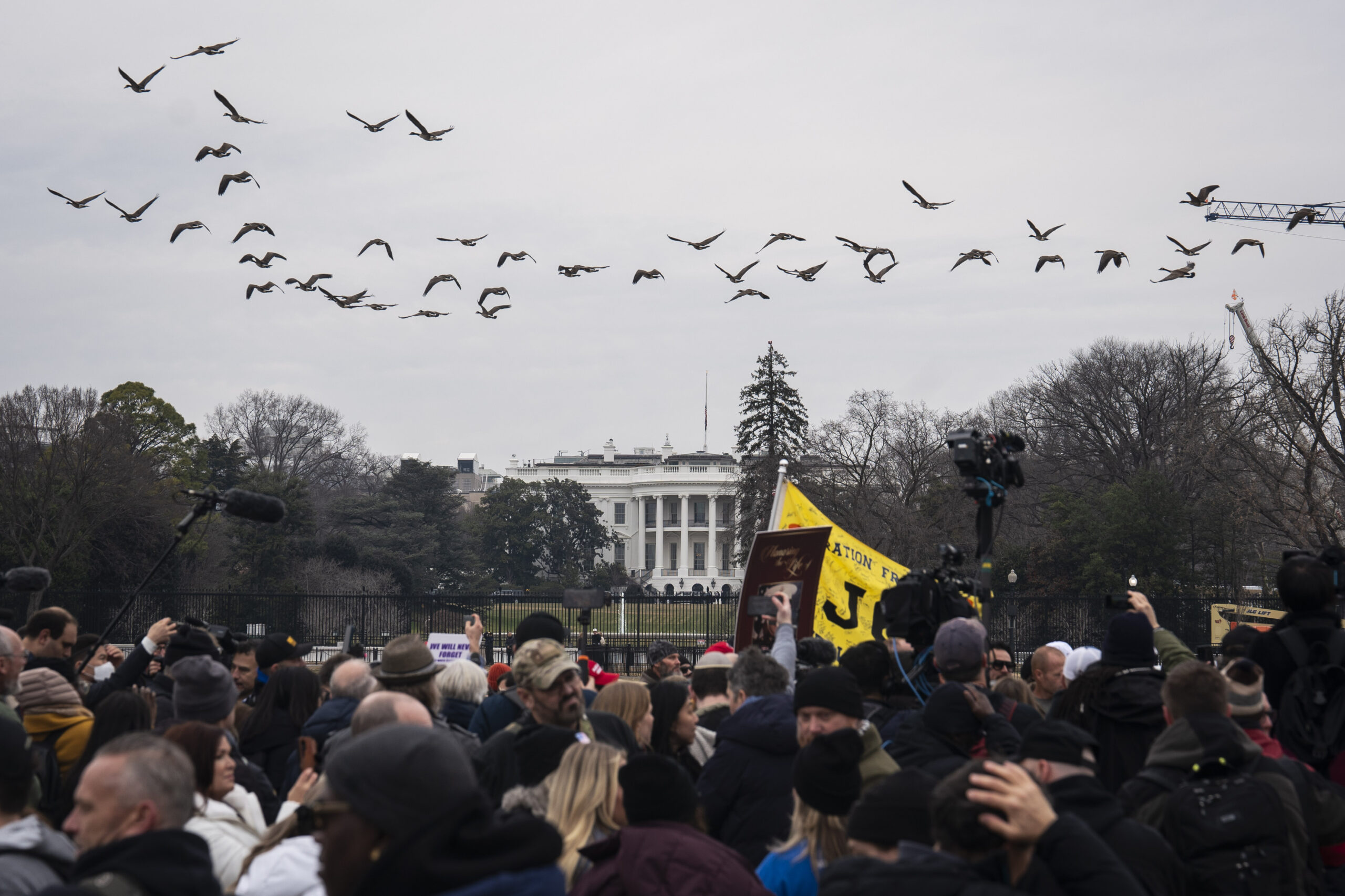
People walk from the Ellipse to the Capitol Building in Washington, D.C., last Jan. 6, the fifth anniversary of the Capitol attack.
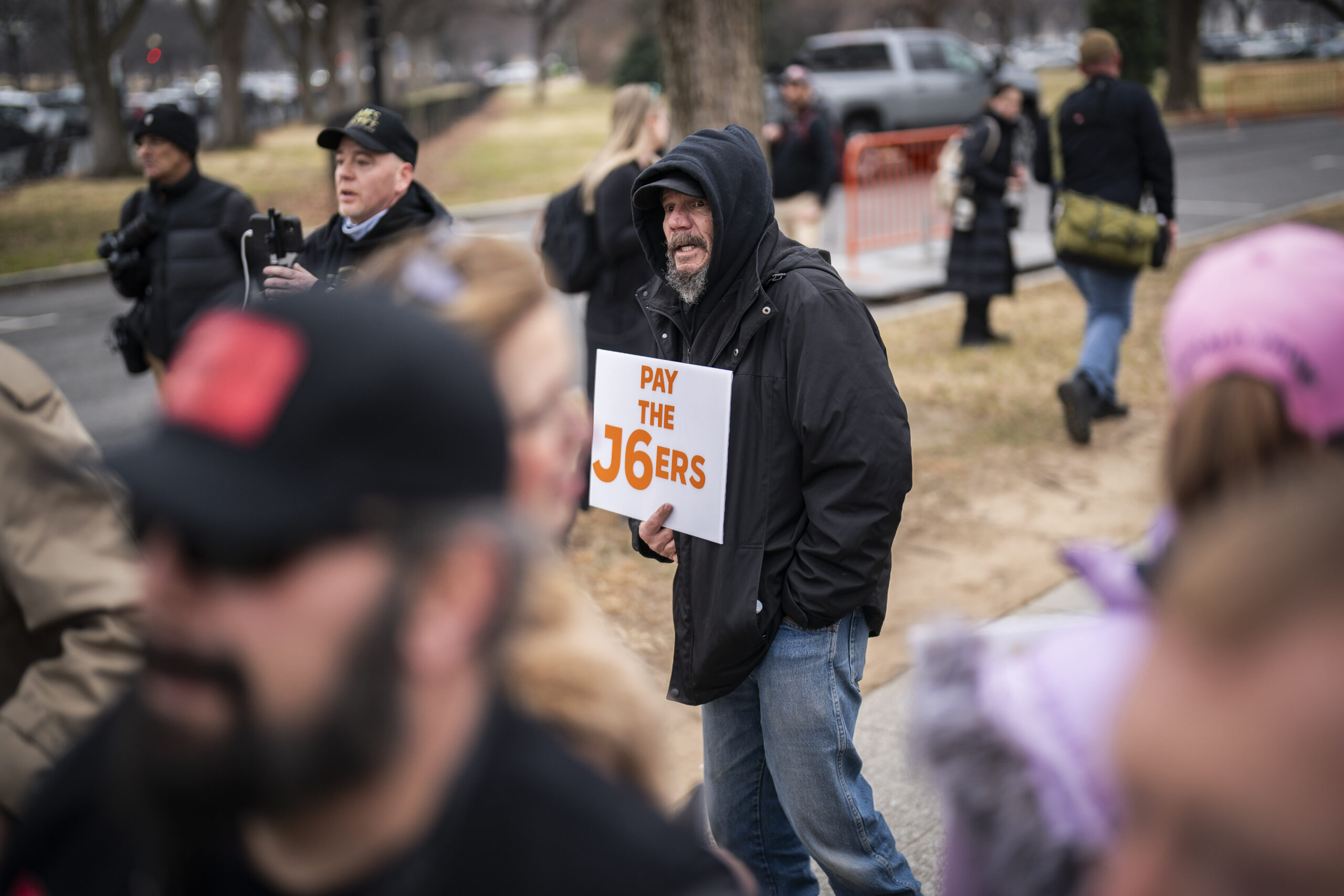
The efforts are the latest chapter in an extraordinary rewriting of history by the president and his allies to bury the facts of what happened at the Capitol, sustain the false claim thatthe 2020 election was rigged, and recast the Jan. 6 offenders as victims entitled to taxpayer-funded compensation.
“Donald Trump and the DOJ want taxpayers to reimburse a violent mob for the destruction of the U.S. Capitol. The Jan. 6 nightmare continues,” said Rep. Joe Morelle (D., N.Y.), the top Democrat on the House Administration Committee, which oversees the Capitol’s security and operations.
The pro-Trump mob that ransacked the Capitol caused almost $3 million in damage, according to a 2022 estimate by the Justice Department. The losses included smashed doors and windows, defaced artwork, damaged furniture, and residue from gas agents and fire extinguishers.Defendants were sentenced to more than $1.2 million in restitution and fines, according to a tally by the Post.
But the government recovered less than $665,000 of those court-ordered payments, according to a source with firsthand knowledge who spoke on the condition of anonymity because of fear of retaliation. Sen. Alex Padilla (D., Calif.) and Sen. Sheldon Whitehouse (D., R.I.) are pushing legislation — backed by some law enforcement officers who defended the Capitol on Jan. 6 — to block government payouts to rioters. Without any Republican cosponsors, the legislation is not expected to proceed.
“The audacity of them to think they didn’t do anything, or to think that they’re right and then get their money back,” said former Capitol police officer Harry Dunn, who attended the sentencing of St Cyr and other Jan. 6 offenders. “It’s frustrating and it should not happen. They should have to pay more.”
‘It’s a principle thing’
Stacy Hager, a 62-year-old former warehouse supervisor, made his first trip to Washington, D.C., for the Jan. 6 rally. The lifelong Texan wasn’t that interested in politics before, but he was certain that Donald Trump was the rightful winner of the 2020 election.
Wearing a Trump hat and waving the Texas flag, Hager took photos and videos of himself roaming through the Capitol. He was convicted on four misdemeanor charges related to disorderly conduct and trespassing; he paid $570 in penalties and served seven months in prison, a punishment he describes as totally unjust and “a living hell.”
Hager still believes, fervently, that fraud marred the 2020 vote and that Trump won, though no new evidence has surfaced to contradict the findings of Justice Department officials, cybersecurity experts, and dozens of judges appointed by Democrats and Republicans alike.
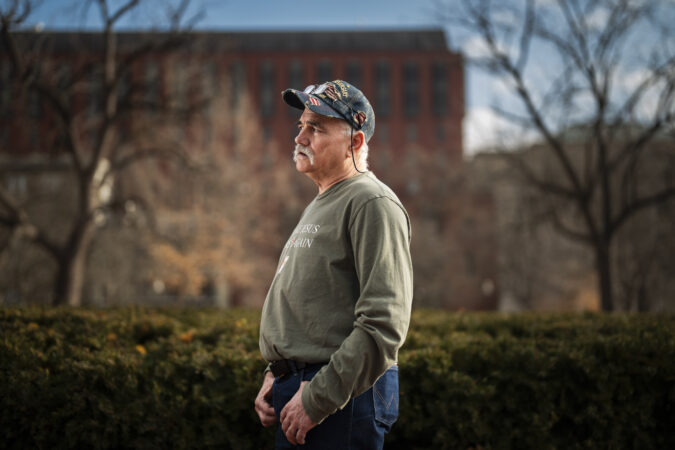
Hager spent seven months in prison for his role in the Jan. 6, 2021, attack. Now that he has been pardoned, he is seeking a refund of the $570 in court-ordered penalties he paid.
“You tell me why I shouldn’t be entitled to getting my money back,” Hager said. “The government took money from me for doing the right thing, for standing up for the people’s vote. That’s the reason we were there — for a free and fair election.”
About one month after Trump’s pardon in January 2025, Hager was the first of the Jan. 6 defendants to ask for his money back, court records show. “It’s a principle thing,” Hager said. Among the other defendants seeking refunds: A Utah man who forfeited almost $63,000he made from selling videos recording some of the worst violence at the Capitol. A Georgia teenager who paid $2,200 in fines after heshoved a police officer and sat in Vice President Mike Pence’s chair in the Senate chamber.
While the charges and punishments vary, the defendants seeking refunds share one legal quirk: All of them were appealing their convictions when Trump pardoned them on Jan. 20, 2025. After the pardon, courts vacated their convictions and dismissed their indictments following requests from federal prosecutors, as the Justice Department that once prosecuted the Jan. 6 defendants now takes their side.
It’s routine for a criminal defendant who has paid financial penalties to get the money back if the conviction is vacated and the case is dismissed. But the attack halting the peaceful transfer of power for the first time in American history pushed the criminal justice system into uncharted territory.
And now, the legal debate over whether certain Jan. 6 defendants should receive refunds is forcing courts to weigh two obscure Supreme Court decisions — 140 years apart — involving a pardoned Confederate sympathizer and a woman convicted but later acquitted of sexually assaulting her children.
Judges who have denied refunds have all referenceda case brought by John Knote, whose West Virginia property was confiscated and sold for $11,000 under a law empowering the Union to seize Confederate property. Citing President Andrew Johnson’s pardon of former Confederates on Christmas Day 1868, Knote asked the court to reimburse him $11,000. The Supreme Court ruled in 1877 that money deposited in the U.S. treasury could not be returned without an act of Congress.
People walk from the Ellipse to the Capitol Building in Washington, D.C., last Jan. 6, the fifth anniversary of the Capitol attack. The pro-Trump mob that ransacked the Capitol caused almost $3 million in damage, according to a 2022 estimate by the Justice Department.
Jan. 6 defendants, however, are looking to a much more recent Supreme Court opinion — written by liberal icon Ruth Bader Ginsburg — to bolster their argument that the government owes them money. In that 2017 case, Colorado resident Shannon Nelson paid about $700 in penalties before her sexual assault conviction was overturned on appeal. At a later trial, she was acquitted of the alleged crimes against her children. The high court said Nelson was now “presumed innocent” and entitled to a refund.
In approving St Cyr’s request for reimbursement, Bates referred to the Nelson case 39 times. The other D.C. District Court judge who has ruled in favor of refunds for Jan. 6 defendants, Chief Judge James E. Boasberg, also cited the Nelson case in December. “When a conviction is vacated, the Government must return any payments exacted because of it,” he wrote.
Hager returned to Washington this month to gather with other Trump supporters to mark the fifth anniversary. He and other Jan. 6 defendants stay in close touch online.
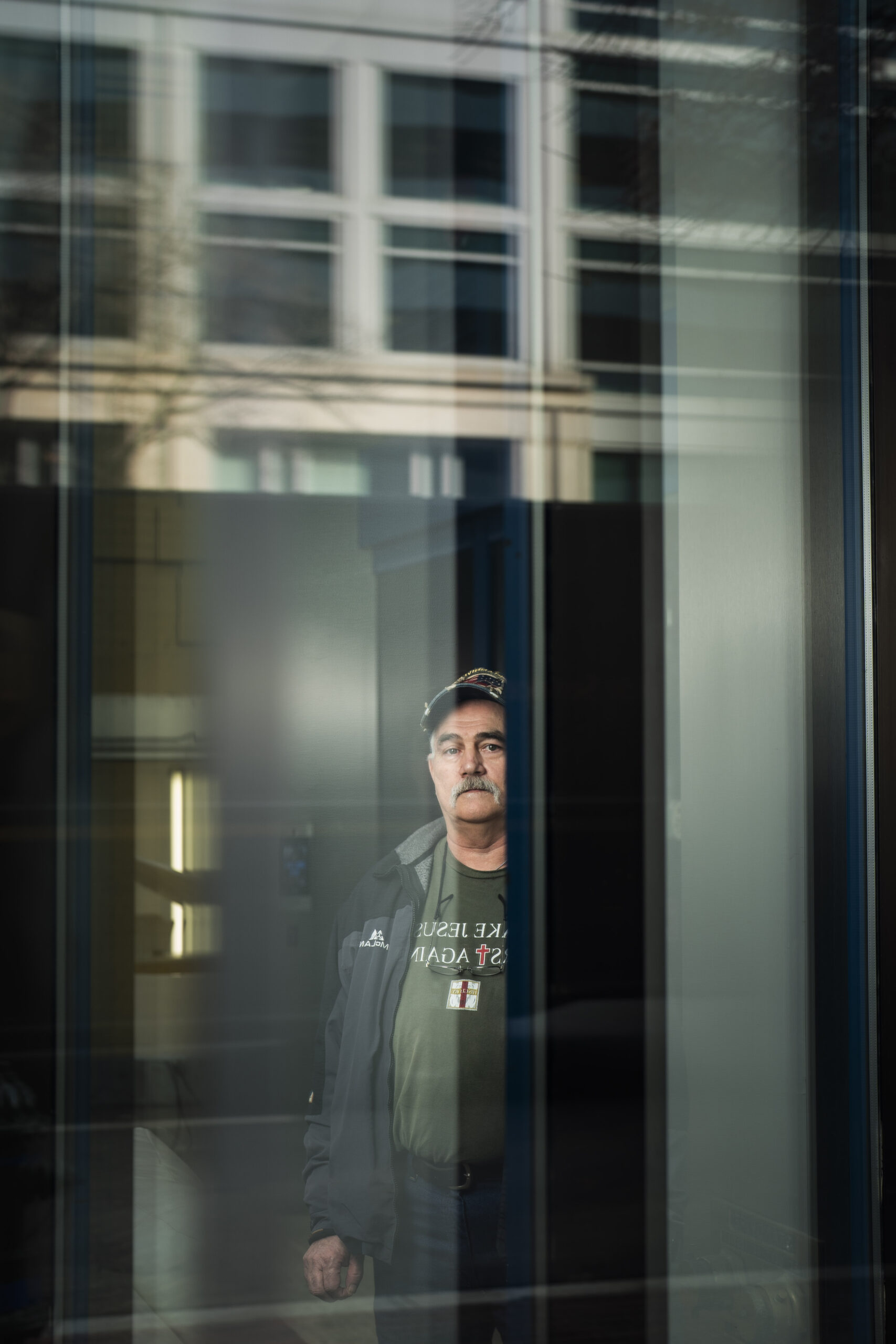
“We’re like a family,” Hager said, wearing a weathered baseball cap celebrating America’s 250th birthday and a T-shirt proclaiming his love for Jesus Christ. “We have a great bond, the kind that political persecution forms.”
Had gun, would travel
Andrew Taake’s journey through the criminal justice system illustrates one of the most dramatic twists in a Jan. 6 case. He attacked police officers with bear spray and a “whiplike weapon,” according to a plea agreement he signed in 2023. Now he is suing the federal government for $2.5 million, claiming his civil rights were violated by a wrongful prosecution and mistreatment in prison.
Taake was on pretrial release on a pending charge of online solicitation of a minor when he traveled from Houston to Washington, D.C., in January 2021. He attended the “Stop the Steal” rally headlined by Trump and was among the first to breach the restricted area around the Capitol. One of the police officers who said Taake assaulted him with bear spray, Nathan Tate, filed a statement in court that said the experience left “a lifelong scar.”
“He came to the Capitol with multiple weapons,” Tate wrote. “He was not there for peaceful protest. He was there to be violent. He should not be allowed to claim victimhood today.”
Taake pleaded guilty to one count of assaulting, resisting or impeding law enforcement officers using a dangerous weapon. He was sentenced in 2024 to 74 months in prison.
His prison time was cut short by Trump’s pardon. Two weeks later, he was taken into custody by Houston-area law enforcement on the 2016 child solicitation charge. He pleaded guilty to a second-degree felony, was sentenced to three years in prison and was ordered to register as a sex offender.
But because Taake had already served more than three years in the Jan. 6 case, he got credit for time served and did not return to prison, records show. In September, he filed a lawsuit against the federal government that tells a very different story than the plea deal.
In the suit filed in D.C. District Court, Taake claims he used the bear spray to protect a fellow protester and that another officer disfigured his hand by stomping on it. He accuses prosecutors of using false evidence and manipulating him into the plea deal. In prison, he said he was mistreated by medical staff and assaulted by other inmates. “He should be compensated for his pain and suffering because it doesn’t get much worse than that,” said Taake’s lawyer, Peter Ticktin, a longtime Trump ally.
Tate, who now who works as a social studies teacher in La Plata, Md., was shocked to hear about Taake’s lawsuit. “He can say my allegations are false but it’s documented, you can literally see what took place,” he said. “It was real for me.”
In the most far-reaching effort on behalf of Jan. 6 offenders, Missouri lawyer Mark McCloskey is trying to build support for a government-backed compensation panel, similar to the fund that has distributed billions of dollars to families of victims in the Sept. 11, 2001, attacks. McCloskey attracted national attention in 2020 when he and his wife pointed guns at Black Lives Matter protesters marching past their home; they pleaded guilty to firearms charges but were pardoned by the Missouri governor.
McCloskey said he has advocated for the Jan. 6 fund in four meetings with Justice Department officials, including Ed Martin, the director of a unit tasked with investigating Trump’s political opponents.
Martin, who helped plan and finance Trump’s rally that preceded the rampage through the Capitol, has said publicly that he supports “reparations” for Jan. 6 defendants.
Trump also has expressed support for government payouts. Asked about compensating Jan. 6 offenders in a March 2025 Newsmax interview, Trump said, “Well, there’s talk about that. … A lot of the people in government really like that group of people. They were patriots as far as I was concerned.”
But McCloskey is still waiting for the Justice Department to act. “We have had all positive responses but until President Trump pulls the trigger, it isn’t going to happen,” McCloskey said. “The president needs to take a position on it.”
In December, McCloskey sought to build momentum by posting a photo of himself on social media that he said showed him delivering claims to federal law enforcement agencies from about 400 Jan. 6 clients. The property damage and personal injury claims — a prerequisite to filing lawsuits against the government under the Federal Tort Claims Act — describe homes ransacked during arrests, lost jobs, and broken families, McCloskey said.
The White House and the Justice Department declined to comment on McCloskey’s efforts.
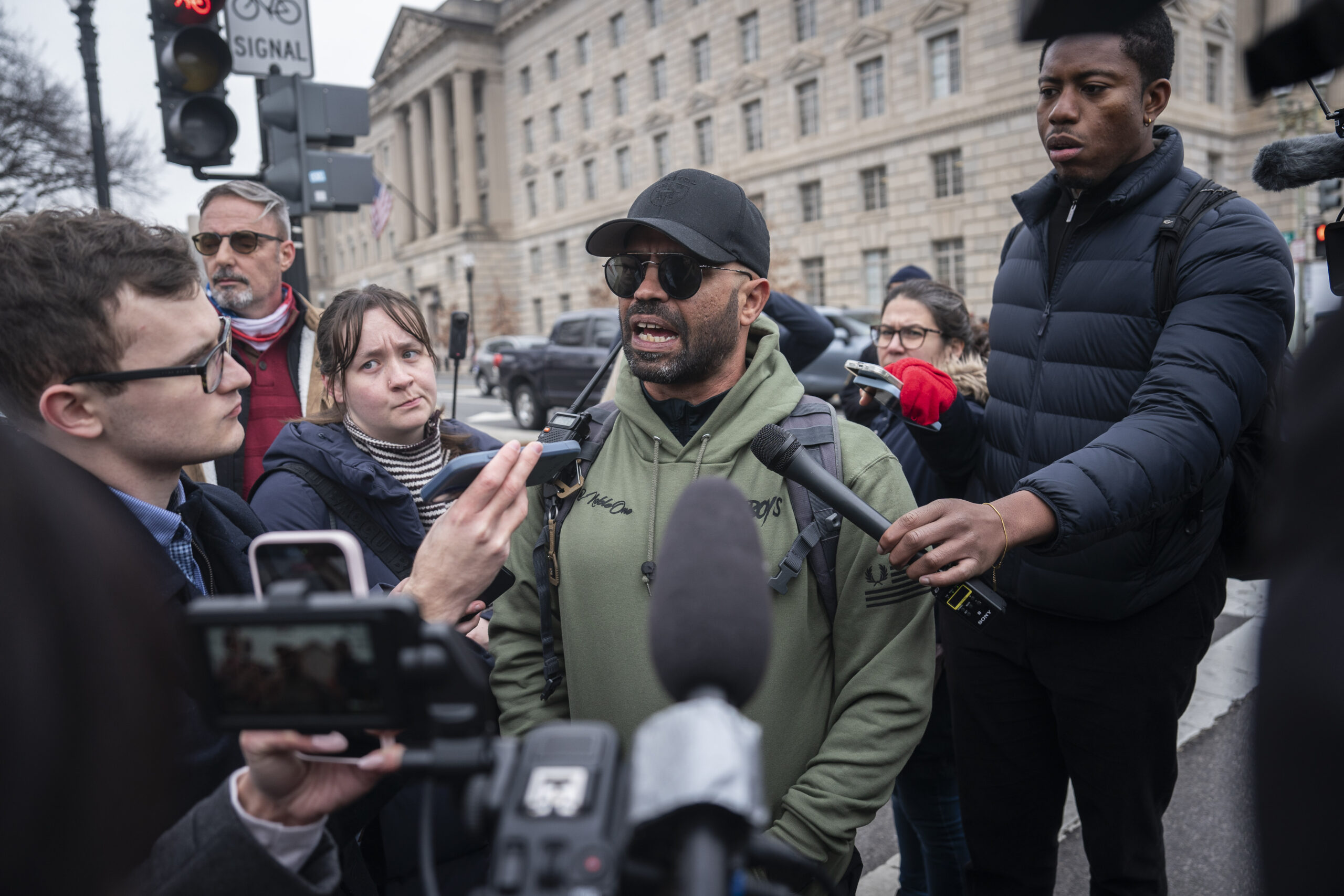
Another Jan. 6-related lawsuit against the federal government comes from several leaders of the Proud Boys who were found guilty of engaging in a seditious conspiracy to keep Trump in power despite his electoral defeat. The suit seeking $100 million, filed in federal court in Florida last year, echoes Trump’s claims that the investigation into the Jan. 6 attack was illegitimate and politically motivated.
Former Proud Boys leader Henry “Enrique” Tarrio speaks at the Jan. 6 anniversary rally this month.
The lead plaintiff, Henry “Enrique” Tarrio, called for charges against Jan. 6 prosecutors when he addressed the gathering in Washington, D.C., to mark the fifth anniversary this month. “The thing I am searching for,” Tarrio said, “is retribution, retaliation.”
Since Trump returned to office one year ago, many Jan. 6 prosecutors have been fired or resigned. Hager’s prosecutor, Adam Dreher, was demoted to Superior Court last year, he said, in retaliation for his work on Jan. 6 cases. He left the department a few months ago to return to his home state of Michigan and practice law. The Justice Department declined to comment on Dreher’s record.
Dreher was an administrative law judge in Detroit on Jan. 6, 2021. The riot at the Capitol inspired him to come to Washington as a federal prosecutor, he said, just as years earlier, the Sept. 11, 2001, terrorist attack moved him to join the military.
“It made me want to be part of trying to help things get back to normal, to hold people accountable and make sure the rule of law was something we could rely on,” he said. “That all we did is being unraveled has been very difficult to watch.”
This week in Philly music features a tribute to the late songwriter Jill Sobule, a 20th-celebration anniversary of Clap Your Hands Say Yeah’s debut, a two-night stand by funkateers Lettuce, a golden age of hip-hop rapper, and a host of rising stars. That includes power pop band the Sharp Pins, jazz musicians Kenyon Harrold and Isaiah Collier, and genre-blending maverick Sudan Archives.
Thursday, Jan. 22
Rakim
No list of the most influential rappers of all time is complete without Rakim. He is the golden age of hip-hop MC who set new standards for lyricism and internal rhyme schemes with deejay Eric B. on late 1980s albums like Paid in Full and Follow the Leader. His latest is last year’s The Re-Up. 8 p.m., City Winery, 900 Filbert St., citywinery.com/philadelphia
Gregory Alan Isakov
South Africa-born, Philadelphia-raised, and Boulder, Colo.-based indie folk singer Gregory Alan Isakov’s most recent album is 2023’s Appaloosa Bones. It is a moody evocative set of allusive songs on the Iron & Wine and Fleet Foxes continuum. His North Broad Street show is “an intimate acoustic evening.” 8 p.m., Met Philly, 858 N. Broad St., themetphilly.com
Lamp
In the Grateful Dead- and Phish-adjacent universe, Lamp has legitimate bona fides. Russ Lawton and Ray Paczkowski are the rhythm section in the Trey Anastasio Band and Scott Metzger plays in Joe Russo’s Almost Dead. 8 p.m., Ardmore Music Hall, 23 E. Lancaster Ave., Ardmore, ardmoremusichall.com
Friday, Jan. 23
Sharp Pins
Twenty-one-year-old power-pop wunderkind Kai Slater’s Sharp Pins is all the indie rage, with the kinetic Balloon Balloon Balloon drawing from Guided By Voices and the Byrds and sounding downright Beatles-like at times. The band plays two shows at Jerry’s on Front with Atlantic City’s Te Vista opening. 6:30 p.m. and 8:30 p.m., Jerry’s on Front, 2341 N. Front St., r5productions.com
Clap Your Hands Say Yeah
In 2006, Clap Your Hands Say Yeah’s self-titled debut’s music blog-fueled buzz helped reshape the indie music business. Singer Alec Ounsworth is marking the milestone with a “Piano & Voice” solo tour that kicks off with hometown Philly shows on Friday and Saturday. Noon, Free at Noon, World Cafe Live, 3025 Walnut St., xpn.org and 7 p.m., Philadelphia Ethical Society, 1906 Rittenhouse Square, r5productions.com
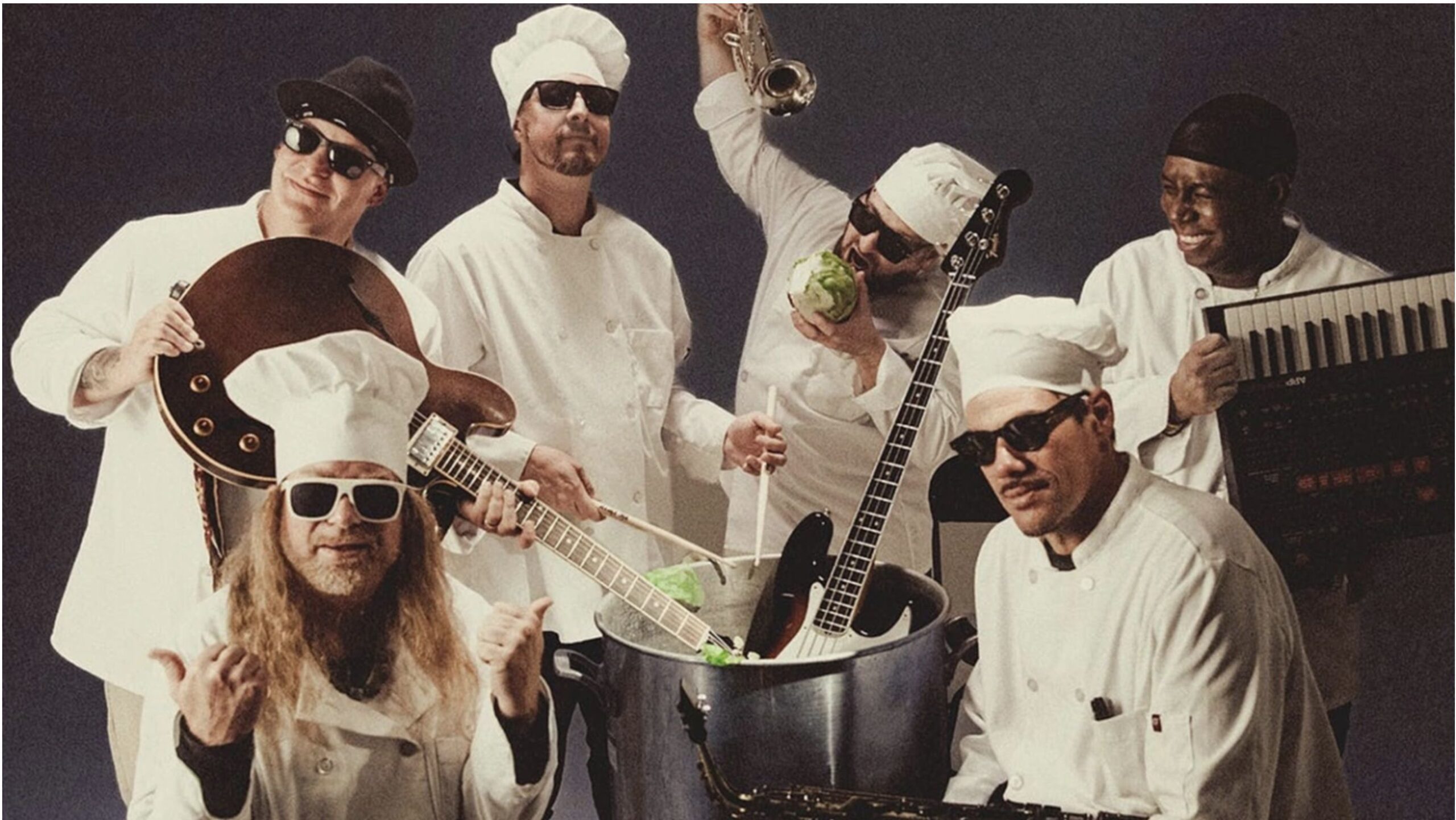
Lettuce, as pictured on their new album “Cook.” The Boston funk band plays two nights at Ardmore Music Hall, on Friday and Saturday.
Lettuce
The Boston funk sextet Lettuce has named its new album Cook, and the members all sport chef’s toques on the album cover. The band, whose musical stew pulls from horn-heavy influences like Tower of Power and James Brown, plays two shows this weekend. 8 p.m. Friday and Saturday, Ardmore Music Hall, 23 E. Lancaster Ave. Ardmore, ardmoremusichall.com
Saturday, Jan. 24
Isaiah Collier and Keyon Harrold
This Penn Live Arts show pairs two rising stars in the jazz world. They’re both Midwesterners. Ferguson, Mo., trumpeter Keyon Harrold has played with Jay-Z and Common, who guests on the opening track of his album. He has also played the trumpet parts in the Don Cheadle-starring Miles Davis biopic Miles Ahead. Isaiah Collier is a Chicago saxophonist whose The Story of 400 Years traces four centuries of Black American history. 7:30 p.m., Zellerbach Theatre, 3680 Walnut St., pennlivearts.org
Keyon Harrold plays the Zellerbach Theatre at the Annenberg Center on Saturday with Isaiah Collier.
Jillith Fair: Loving Jill Sobule
In May, singer-songwriter Jill Sobule tragically died in a house fire in Minnesota. A tribute show at the Fallser Club in East Falls will be co-hosted by Sobule’s friends Jim Boggia and Martykate O’Neill. The evening will feature Tracy Bonham, Jonathan Coulton, James Mastro, and author Tara Murtha. Expect an emotional evening. 8 p.m., the Fallser Club, 3721 Midvale Ave., thefallserclub.com
Daffo
Daffo, the indie pop singer born Gabi Greenberg, went viral with the 2024 single “P:or Madeline.” Their debut, Where the Earth Bends, was recorded with Elliott Smith producer Rob Schnapf. 8 p.m., PhilaMoca, 531 N. 12th St., philamoca.org
Winter Carnival
This package tour brings together several veteran alt-hip-hop luminaries, headlined by Twin Cities rap duo Atmosphere. It also includes Sage Francis and R.A. the Rugged Man and former Ultramagnetic MCs leader Kool Keith. 8 p.m., Brooklyn Bowl, 1009 Canal St. brooklynbowl.com/philadelphia.
Sunday, Jan. 25
On a Winter’s Night
In 1994, Christine Lavin produced a folk compilation called On a Winter’s Night, featuring John Gorka, Patty Larkin, Lucy Kaplansky, Bill Morrissey, and others. That album prompted many concert tours with folkies of various stripes, and this reunion features Gorka, Larkin, Kaplansky, and Cliff Eberhardt. 8 p.m., Sellersville Theater, 24 W. Temple Ave., Sellersville, st94.com
Josh Ritter
Josh Ritter is never short on new songs or stories to tell. Having completed a full band tour for his new album, I Believe in You, My Honeydew, he’s now out on a solo tour. On Sunday, it will take him to West Art, the new venue in an old church in Lancaster. 8 p.m., West Art, 816 Buchanon Ave., Lancaster, westartlanc.com.
Brittney Denise Parks, also known as Sudan Archives, plays Union Transfer on Tuesday.
Tuesday, Jan. 27
Sudan Archives
Brittney Denise Parks, who performs as Sudan Archives, is a singer, violinist, and electronic musician. She is at her most dance-floor directed on the excellent and creatively restless The BPM, the follow-up to 2022’s acclaimed Natural Brown Prom Queen. 8 p.m., Union Transfer, 1026 Spring Garden St., utphilly.com.
Greg Freeman
Put Greg Freeman in the category of RIYL MJ Lenderman, Ryan Davis, and Bob Dylan. The latter’s 1978 album Street Legal is the inspiration behind “Curtain” from Freeman’s 2025 album Burnover, which confirmed the buzz generated by the Vermont songwriter’s 2022 debut Looked Out. 8 p.m. Ukie Club, 847 N. Franklin St., 4333collective.net.
Concert announcements
It’s a busy week for tour announcements.
A$AP Rocky was musical guest on Saturday Night Live last weekend. The rapper, who also happens to be Rihanna’s boyfriend, used that appearance to announce a “Don’t Be Dumb” tour that comes to Xfinity Mobile Arena on June 4.
The Human League plays the Met Philly on June 28, joined by fellow 1980s British acts Soft Cell and Alison Moyet. And Tori Amos’ new album, In Time of Dragons, due May 1, will bring her to the Met on Aug. 1.
Snail Mail, the Baltimore indie rocker born Lindsey Jordan, has announced her new album, Ricochet, due in March, and a date at the Fillmore on April 16 with Swirlies and Hall Gallo. Ticket details at r5productions.com.
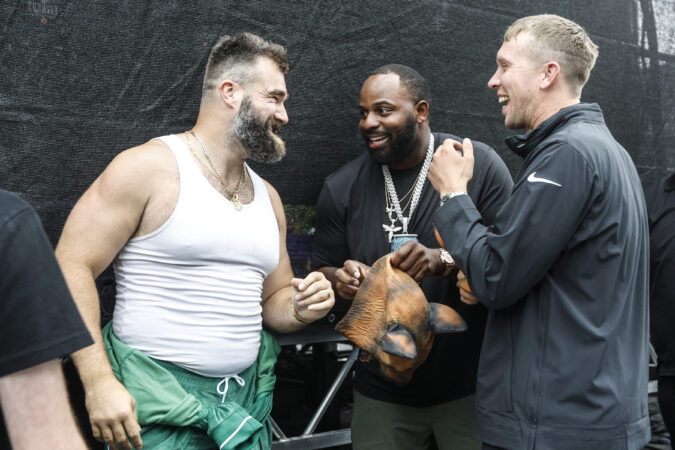
On Wednesday’s episode of New Heights, Jason and Travis Kelce offered their takes on the latest NFL news as the conference championships approach this Sunday.
The brothers brought in Greg Olsen, who reflected on Monday’s College Football Playoff championship as a former University of Miami tight end before his NFL and broadcasting careers. Olsen also joined the conversation about open coaching positions.
Olsen praises Sirianni
Although the Eagles season is over, former center Jason Kelce still brought up the Birds in this week’s episode. Olsen had some words of admiration for coach Nick Sirriani.
“I love Sirianni,” the Fox analyst said. “I actually texted him because I ran into his brother at the Miami game. I know he gets a lot of flack, and people want to come after him, but I love him, his energy, his edge, and I love the way he manages the game. I ended up fighting the entire universe on behalf of him a couple weeks ago. But that was a losing proposition.”
Olsen also emphasized the opportunity for the Eagles in hiring a new offensive coordinator.
“If I’m an offensive play-caller, I’m doing everything in my power to get that job,” Olsen said. “I want to call offensive plays in Philadelphia because you can do whatever you want. That’s a great job.”
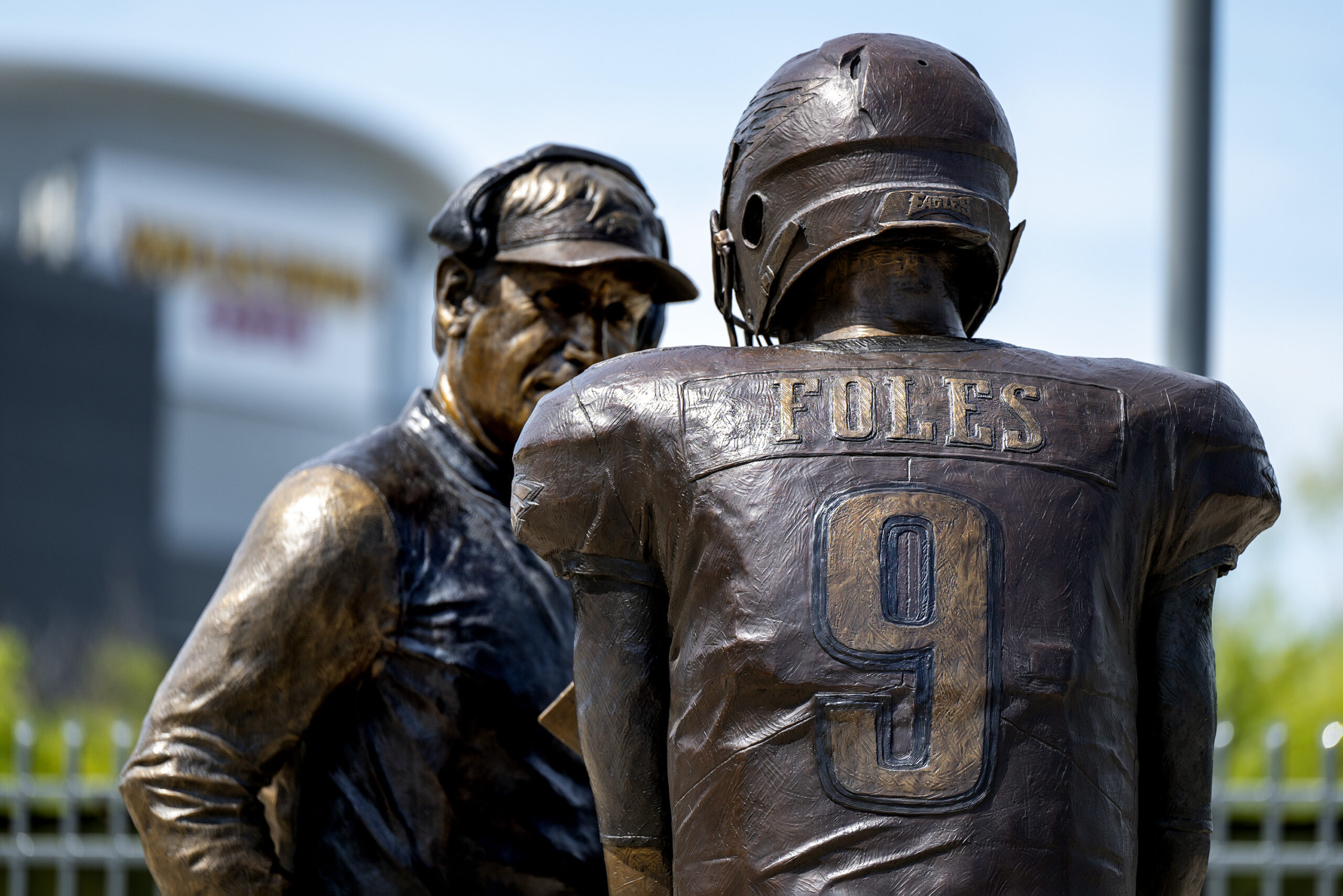
Could Jarrett Stidham play his way to his own statue in Denver, like Nick Foles did in Philly?
Foles in Twitter controversy
On the topic of the AFC championship game, the brothers discussed the Denver Broncos’ chances against the New England Patriots. With starting quarterback Bo Nix out with an ankle injury, backup Jarrett Stidham is expected to battle against Patriots signal caller Drake Maye. Stidham has not thrown a pass all season.
Travis Kelce joked about a viral tweet on Sunday from former Eagles backup Nick Foles, which received 17.4 million views. Foles referenced the 2018 Super Bowl, in which he led the Eagles to a 41-33 victory over New England as he subbed for injured starter Carson Wentz.
Note for the Broncos and their fans: I know it has been an emotional 24 hours. I feel for Bo and the team, and I'm sending prayers for a strong recovery.
A positive note going into the game versus the Patriots is that they struggle against backup QBs in championship-type games.
However, Jason Kelce wasn’t convinced that the Broncos quarterback predicament is anything similar to what he went through with the Eagles in 2018.
“I still remember when Wentz went down, and you could hear a pin drop in the locker room because we knew that his ACL was torn after the game,” Kelce said. “We were like, ‘We just lost our starting quarterback, how are we going to overcome this?’ It took a couple games. That’s the one thing that Stidham doesn’t have. We got the rest of the season and [Foles] warmed into that role. … It’ll be interesting to see what [Broncos coach] Sean Payton has [cooked up] this coming week against the Patriots.”
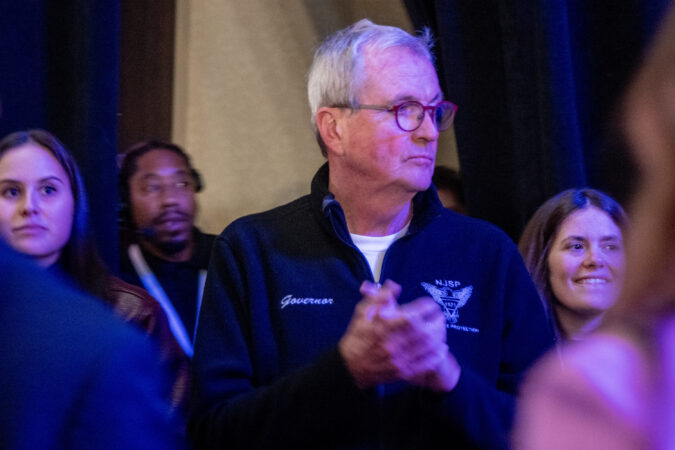
Hours before leaving office, New Jersey Gov. Phil Murphy on Tuesday signed legislation that could make it easier for commercial real estate projects in Camden to qualify for hundreds of millions of dollars in state tax incentives.
One planned development that could benefit is the Beacon Building, a proposed 25-story office tower downtown on the northwest corner of Broadway and Martin Luther King Boulevard, The Inquirer previously reported.
Murphy approved the bill and dozens of others on the final day of his second term, shortly before fellow Democrat Mikie Sherrill was sworn in as governor. Another newly signed law authorizes up to $300 million in tax breaks to renovate the Prudential Center in Newark, home of the New Jersey Devils. The hockey team is owned by Harris Blitzer Sports & Entertainment, which also owns the Philadelphia 76ers.
The Camden-focused law makes changes to the state’s gap-financing program, known as Aspire, which authorizes up to $400 million in corporate tax credits over 10 years for “transformative” redevelopment projects that have a total cost of $150 million and meet other requirements.
To qualify for the incentives, most commercial projects must generate a net positive benefit to the state, based on the Economic Development Authority’s economic modeling. The new law exempts certain projects from that “net benefit test.”
The law applies to redevelopment projects located in a “government-restricted municipality” — as described in the Aspire program’s statute — “which municipality is also designated as the county seat of a county of the second class.” In addition, the project must be located in “close proximity” to a “multimodal transportation hub,” an institution of higher education, and a licensed healthcare facility that “serves underrepresented populations.”
A rendering of the 25-story Beacon Building proposed for the northwest corner of Broadway and Martin Luther King Boulevard in Camden. It would be the tallest building ever constructed in the city.
The site of the proposed Beacon Building is across the street from the Walter Rand Transportation Center and Cooper University Hospital. Rutgers’ Camden campus is also nearby. Lawmakers said projects in New Brunswick and Trenton could also qualify for exemptions under the law.
Development firm Gilbane is leading the project with the Camden County Improvement Authority. Gilbane has yet to announce any commitments from tenants.
Assembly Majority Leader Louis Greenwald (D., Camden), who sponsored the legislation, has said it wasn’t written with a specific project in mind but rather to remove a barrier to investment in South Jersey.
Critics said that the law removes a key safeguard meant to protect taxpayers and that it represented an about-face for Murphy, who earlier in his tenure sought to reform corporate incentive programs.
“Just in terms of the governor signing the bill, this is a massive disappointment,” said Antoinette Miles, state director of the New Jersey Working Families Party.
“Broadly, if there’s a so-called transformative project that can’t pass the net benefit test, maybe it isn’t so transformative,” she said.
Murphy’s office announced the bill signing without commenting on it, though he has previously cheered state investment in Camden. Any Aspire tax incentives must be approved by the state’s Economic Development Authority.
This year’s list of James Beard Award semifinalists from the Philadelphia area reads like a who’s who of the local dining scene, with a few surprises mixed in. (A deli guy — Radin’s Russ Cowan — is a James Beard semifinalist? That ain’t chopped liver!)
The list of semifinalists will be culled, and finalists will be announced March 31. Winners will be announced at a gala June 15 at the Lyric Opera of Chicago.
Outstanding Restaurateur
Greg Vernick of Vernick Food & Drink, Vernick Fish, Vernick Coffee Bar, and the soon-to-open Emilia was the Beard’s Best Chef, Mid-Atlantic in 2017; Vernick Food & Drink is also recommended by Michelin.
Outstanding Restaurant
Kalaya, whose chef/owner Chutatip “Nok” Suntaranon won the Beard’s Best Chef, Mid-Atlantic in 2023; the restaurant is also recommended by Michelin.
Lovers Bar at Friday Saturday Sunday in Center City; the restaurant was awarded a Michelin star in November and was one of Inquirer critic Craig LaBan’s top restaurants for 2025 and is included on The 76.
• Jesse Ito, Royal Sushi & Izakaya, whose restaurant has a Michelin Bib Gourmand and is among LaBan’s top 10. This is his ninth time as a semifinalist.
• Randy Rucker, Little Water, whose restaurant is recommended by Michelin and was among LaBan’s top restaurants for 2025. (His other restaurant, River Twice, is on The 76.)
• Amanda Shulman, Her Place Supper Club, whose restaurant has a Michelin star and is on The 76 and has a spot on LaBan’s top 10.
• Omar Tate and Cybille St. Aude-Tate, Honeysuckle, whose restaurant is recommended by Michelin and is included in The Inquirer’s 76.
Farther afield
Chef Dwain Kalup of La Fia in Wilmington, Nathan Flaim of Lancaster’s Luca, and David Viana of Judy & Harry’s in Asbury Park, N.J., are also semifinalists for Best Chef Mid-Atlantic.
Andre Drummond prepares for each 76ers game with an identical routine. A weightlifting and running workout. A trip to the sauna. A meal of chicken and rice.
“The only thing that probably [will] change,” he told The Inquirer at his locker late Tuesday, “is I probably won’t take my warmup pants off some games.”
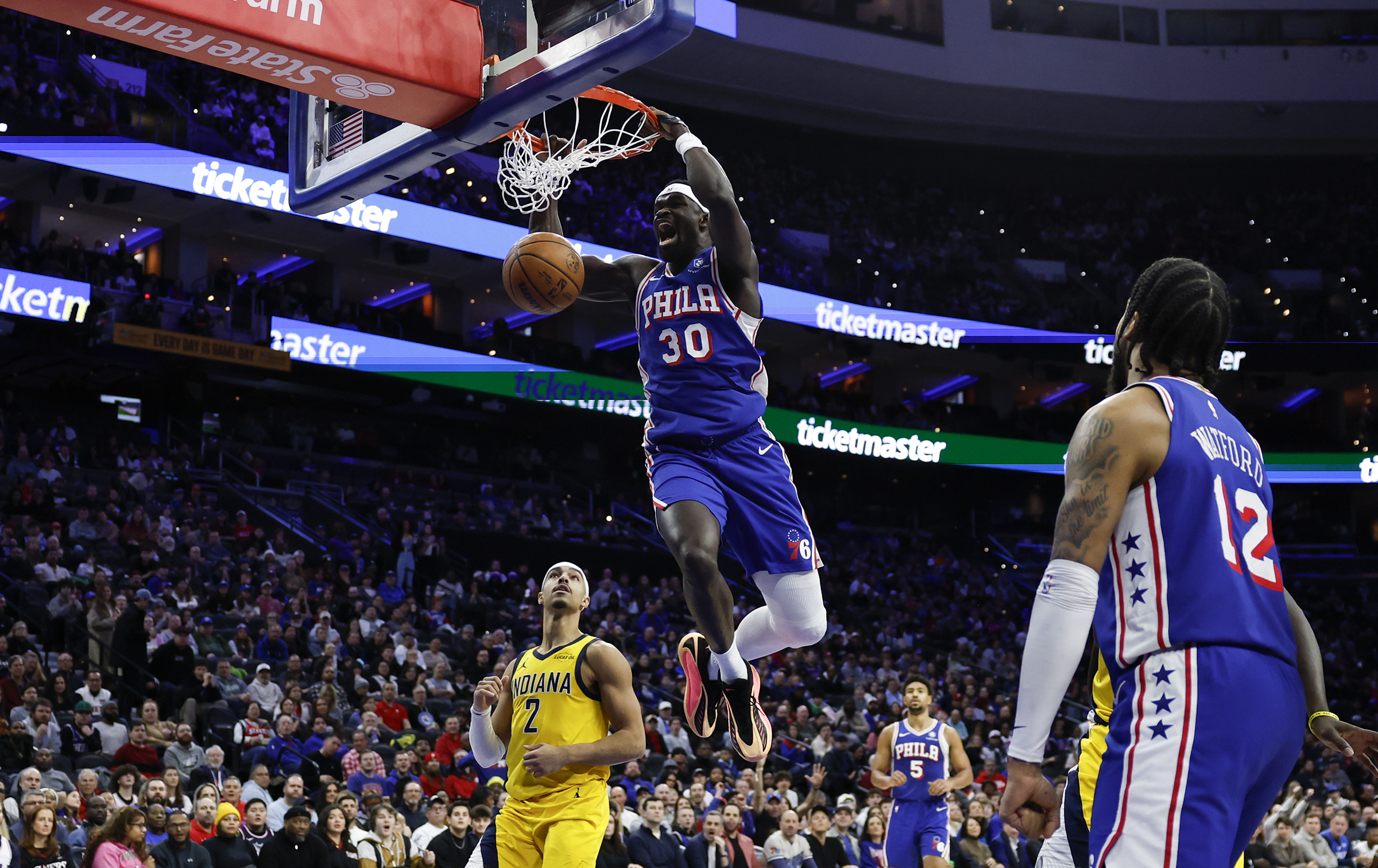
Such repetition is beneficial in situations like this week, when Drummond faced about as drastic of a role shift as a player can experience from one night to the next. The veteran center did not play in Monday’s 113-104 Sixers victory over the Indiana Pacers, then started Tuesday’s 116-110 loss to the Phoenix Suns in place of the injury-managing Joel Embiid. Teammate Adem Bona, meanwhile, was the backup center in both games but closed Tuesday’s matchup as the Sixers attempted a late rally against Phoenix.
Until that pecking order is more clear-cut, Sixers coach Nick Nurse said, those minutes and responsibilities for Drummond and Bona will continue to fluctuate from game to game, matchup to matchup, and, sometimes, “moment to moment.” Halfway through the regular season, both big men are used to the shifts.
“We’re both professionals at the end of the day,” Drummond said. “Whenever our number is called and whatever we’re needed for, I think we’ve both done a good job of being prepared and being ready for what’s to come.”
This back-to-back did come with some clarity in advance. Though Embiid has significantly progressed in his availability following multiple knee surgeries, he still will not play two consecutive nights. Nurse said last week that, in most cases, he prefers to start the 6-foot-11, 289-pound Drummond in the games Embiid misses. Opponents tend to go small with their backup big man, the coach concluded, which lends itself to a matchup with the athletic, 6-10 Bona.
That was how Tuesday unfolded. With a fresher body than teammates who played Monday, Drummond (eight points) said he attempted to set the tone with 15 rebounds — including six in the first quarter — that sometimes led to putbacks and kick-outs for three-pointers.
Bona, meanwhile, recorded his first double-double of the season, with 11 points and 10 rebounds. And after the Sixers fell behind by 17 points during a disastrous second-half stretch that was stamped with defensive and rebounding woes, Bona reentered. His block led to a Tyrese Maxey three-pointer to cut into Phoenix’s lead. He also recorded four rebounds during that stretch, including a putback off a VJ Edgecombe miss that got the Sixers within 112-105 with 3 minutes, 23 seconds remaining.
“We needed a little spark of energy,” Bona said, “so that was why Coach put me back in there.”
Added Nurse: “I probably wouldn’t do anything different there.”
Such pivots are helped by the fact that Drummond and Bona have been tight since they became teammates during the 2024 offseason.
They will double high-five like soccer players when they replace each other in the lineup. They can hear each other’s vocal support from the bench. Bona, who regularly unleashes a scream or flex after a high-flying dunk or block, said Drummond has helped him not get overly emotional about mistakes.
“Just having someone like that, making it easier for you to just step into the role,” said Bona, who is averaging 4.2 points, 4.0 rebounds, and 1.4 blocks in 17.1 minutes across 33 games this season, “you’re never worried about if the other person is [ticked] or anything.”
Added Drummond: “He’s been seizing the opportunity, and I’m really happy for him.”
Those players have taken vastly different paths to this platoon in their second season together.
The 32-year-old Drummond, a two-time All-Star and one of the best rebounders of all time, was plagued last season by turf toe that he still manages by stepping onto an acupressure mat with replica pebble stones that press into the bottoms of his feet. Bona began his rookie season as a deep reserve who spent time in the G League before impressing as a rim protector and lob threat while sliding into the starting job when the Sixers transitioned into tank mode.
Though Bona won the backup job out of this fall’s training camp, both players had appeared to take control of that spot at various points this season. Yet even when Nurse makes a switch in the middle of the game, Bona said he “never” worries about being replaced if he stumbles during one of his stints.
“I know Coach is going to do what’s best for the team,” he said. “I don’t think I’m going to play a certain type of way to please Coach so I stay on the floor. I just go out there and give my all-out effort all the time, and whatever fits the matchup or the game at the moment, I trust Coach is going to do that.”
Those players’ differing styles and strengths, though, change how teammates such as forward Jabari Walker play alongside them.
Walker drifts out to the perimeter more frequently when Drummond is on the floor, he said, because Drummond takes up more space underneath the basket and will never pop out of a pick-and-roll. Bona’s presence allows Walker to be more aggressive defensively because they can both switch on screens and Bona is a reliable rim protector.
“It’s never a bad thing,” Walker said last week. “… They’ve done such a great job of just staying engaged and knowing that they’re both important to what our team needs. That’s all we can ask from them.”
Another frontcourt personnel wrinkle? Nurse has experimented with sliding Bona into that power forward spot next to Embiid. That duo had a plus-17.5 net rating in 40 minutes across six games entering Wednesday. Bona said learning how to play consistently in that look, where offensive spacing is crucial and going for every blocked shot is not necessary with Embiid as a defensive anchor, is a personal goal.
“[A player] should just be trying to figure out any way possible to get on the floor,” Nurse said. “And I think that’s more [Bona’s] mindset of, ‘Listen, if Joel’s healthy, he’s probably going to play a lot at the 5 [center]. So what else can I do to get some more minutes?’ And playing alongside him is obviously the answer to that.”
Bona and Drummond, whose $5 million expiring contract also makes him a player to watch entering the Feb. 5 trade deadline, are not the only Sixers navigating uncertain playing time.
Justin Edwards on Tuesday returned to the first-half rotation before Trendon Watford received second-half minutes. Nurse said pregame that the coaching staff is considering inserting guard Quentin Grimes into the starting lineup to try to jump-start the guard. With Kelly Oubre Jr. rounding back into form following a knee injury, a decision could loom about starting him or Dominick Barlow. Jared McCain has completely slipped out of the rotation and was sent on a G League assignment over the weekend.
Sixers center Adem Bona has provided valuable minutes when Joel Embiid sits, including 11 points and 10 rebounds against the Suns.
And any time Drummond needs a mental boost throughout the uncertainty, he can glance at his right hand.
There, “DON’T QUIT” is tattooed in block letters. The placement is intentional, because “any time I put my head down, I normally see that first.” So is the message. After “doubting myself a little bit” during last season’s struggles to stay healthy and produce, Drummond decided to get the ink when he returned to Philly for the start of training camp.
“I needed to find a new way to get motivated again,” he said. “… That was my dedication to myself to not give up.”
No matter the role, which right now can shift drastically from one night to the next.
“I never take it personal,” Drummond said. “At the end of the day, I want to see everybody succeed …
“[I need to] continue to be the player that I am. Being a good locker room guy. Being ready when my number’s called. And being a great teammate.”
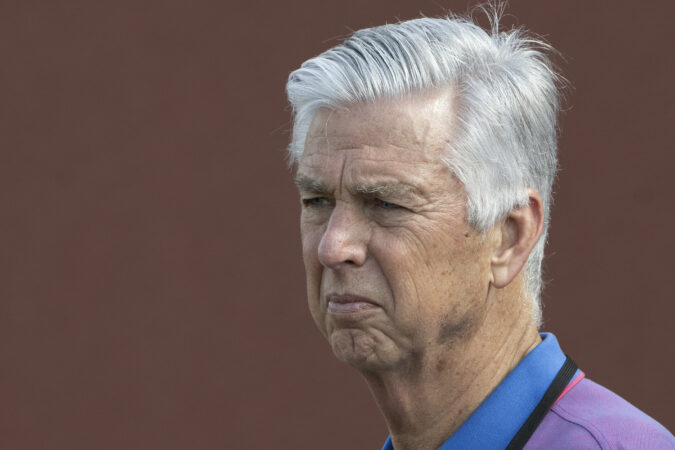
In October, in his season-ending news conference following a third consecutive playoff collapse, Phillies president Dave Dombrowski observed, correctly if not wisely, that Bryce Harper did not “have an elite season like he did in the past.”
Harper took offense. Phillies fans generally sided with Harper, who, on the day after Christmas, posted a video of himself on TikTok taking swings in a batting cage wearing a sweatshirt that said, “NOT ELITE.”
On Tuesday, in a hot-stove news conference after whiffing on top-level free agent Bo Bichette and instead re-signing J.T. Realmuto, Dombrowski observed, correctly if not wisely, “I think we’re content where we are at this point.”
This time, every Phillies fan took offense.
Dave Dombrowski on the potential of signing another marquee free agent: "We're content where we are.''
For days, the Phillies had the baseball world on their side. From Thursday at about 4 p.m. until midday Friday, they believed they’d come to a verbal agreement to land Bichette for seven years and $200 million. After Bichette backed out and signed with the New York Mets, the sports world sympathized with Dombrowski, who, in the middle of that same Zoom news conference Tuesday, said:
“It’s a gut punch. You feel it. You are very upset.” Another top Phillies official said he was “furious.” They were justified, and baseball commiserated.
But then, with free agents like Cody Bellinger and Framber Valdez still available, Dombrowski dropped “content” … and, well, Phillies nation, still stinging from playoff disasters, was not pleased.
With one simple sentence, Dombrowski and the Phillies went from being the victims of Bichette’s treachery to being the club that sat on its hands while its chief rivals, the Los Angeles Dodgers and Mets, spent ever more lavishly to pursue winning.
That’s mostly true. Still, context is important.
First, as it regards trade targets, Dombrowski can’t say he’s pursuing another team’s player. That’s tampering. Second, tipping his hand regarding any remaining free agents would be poor strategy. Third, he said, “I think.” The phone could ring at any time, be it a general manager proposing a trade or an agent proposing a deal.
Still, what Dombrowski said imparts a certain finality.
Or, if you’re a hopeful fan, a certain fatalism.
Which is fair.
The Phillies brought back Kyle Schwarber with a five-year, $150 million contract, their biggest move of the offseason to date.
By no stretch of the imagination are they better than they were this time last year, when Zack Wheeler was healthy and Ranger Suárez was on the team.
And no, they’re not better than they were after they lost Game 4 of the NLDS, when they had Suárez and center fielder Harrison Bader.
They’re not better. They’re different, but not better.
They will gamble on outfielder Adolis García, whom they gave a one-year, $10 million deal in the hopes that, at 33, he will improve his .675 OPS and 44 home runs over the last two seasons. Those numbers are chillingly similar to those of the player he will replace, Nick Castellanos, who is one year older (he will be 34 in March), and managed an OPS of .719 and 40 homers in the same time span.
They will gamble that speedy rookie Justin Crawford can handle center field after acknowledging last year that Crawford might be better served playing in left. They will gamble that hard-throwing rookie Andrew Painter will relocate the command he lost in the minors in 2025 after elbow surgery in 2023 cost him two full seasons.
Prospects don’t necessarily make teams better; several studies reveal that more than half of the top 100 bust, and of the other half, only a handful make a significant impact. That’s fine. Unless you’re the Dodgers, with their unlimited budget, homegrown talent is the most efficient method to fill the roster.
The Phillies’ bullpen might be the one unit that is better than it was at the beginning and end of 2025. José Alvarado, who lost time to a PED suspension and an injury, will be back, paired with 100-mph closer Jhoan Duran, Dombrowski’s best deadline addition in years.
But the Phillies’ starters? Hardly.
Wheeler is the best Phillies pitcher since Steve Carlton. Since 2021, Suárez ranks seventh in Wins Above Replacement, at 17.7, ahead of Gerrit Cole and Valdez, but still almost 10 behind Wheeler, the leader. Wheeler and Suárez will be replaced by Painter and Taijuan Walker.
The lineup won’t be better, just older. The principals — Realmuto, Trea Turner, Schwarber, and Harper — will all be at least 33 by the end of the season. Thirtysomethings seldom improve with age. They just age.
Would Bichette have made the Phillies elite? No. Not elite like the Dodgers, who signed Kyle Tucker to a four-year, $240 million deal. That deal is what spurred Bichette to back out of his agreement with the Phillies, who, in turn, refused to even consider the opt-out years the Mets gave Bichette — a structure that puts all the risk on the team and none on the player. Dombrowski did the right thing, even if he said the wrong thing.
Bichette wouldn’t have made the Phillies elite. But he would have made the Phillies better, and he’d have made Dombrowski’s offseason “elite.”
Computer models continue to insist with a rather uncharacteristic certainty that the Philadelphia region and much of the Mid-Atlantic can expect a significant snowstorm during the weekend.
On Wednesday, models were in general agreement that Philly had a high likelihood of a snowfall of at least 6 inches, the National Weather Service said, with the potential for substantially more.It listed Sunday’s snow probability at 80%, unusually high for an event at least four days away.
Whatever does or does not happen from here, the likes of Acme, Giant, Wegmans, Whole Foods, and Trader Joe’s thank you.
“All the tools we have are starting to point toward something is going to happen,” said Mike Lee, a lead meteorologist at the weather service office in Mount Holly.
“We know it’s going to get more people uneasy, but we want people to be aware.”
It’s too early to make a guess on snow totals, his colleague, Alex Staarmann said.
“We’re definitely going to get some snow. It could be a significant storm for most of the region. That’s all we can say at this point.”
He added that it wouldn’t melt quickly with temperatures remaining below freezing for several days. Wind chills Monday night could fall below zero, he said.
As for the chances that snow will snub the region this weekend (it’s been known to happen), Bob Oravec, lead forecaster with the National Oceanic and Atmospheric Administration’s Weather Prediction Center, said that’s highly unlikely. “Given the very good agreement in the numerical models, this has a very low chance of being a bust overall.”
Early estimates for snow amounts vary from the prodigious to the prosaic.
The big commercial services, AccuWeather Inc. and the Weather Channel, also are on board. In fact, although the storm remains a virtual concept, the Weather Channel already has affixed a name to it.
When might snow arrive in the Philly area?
Forecasters said the snow could begin as early as late Saturday, and continue into Monday.
The snow would spread south to north.
In the early going, it was uncertain which areas would receive the very heftiest amounts.
The snow machine would be set off by dry polar air interacting with copious moisture to the south, which is likely to encounter resistance to the north.
The big snows would occur between that dry wall to the north and a wall of ice and rain to the south, said Matt Benz, a senior meteorologist with AccuWeather.
Whatever does fall in Philly likely would all snow, but it’s possible sleet could mix in south of the city.
After temperatures moderate the next two days and climb into the mid-40s Thursday, the cold air is expected to pour into the region Friday. High temperatures Saturday through Monday may struggle to get past 20, with or without a snow cover.
Some of the key west-to-east moving features that will power the system have not yet made landfall, and thus have not been observed by land-based instruments.
One piece of energy is over the Pacific, and another somewhere over Siberia, Benz said.
“The pieces just aren’t moving that quickly,” he said. They may not make landfall over North America until Thursday, he added, and that could be present real issues for the machines and their human interpreters.
Said Oravec: “Historically, when these features can better be identified by the weather balloon network across North America, the models forecasts improve and converge on a common solution.”
Benz said it may take until Friday for computers to sort it all out with newly ingested data.
Recall that the snow forecasts last weekend bedeviled forecasters on both Saturday and Sunday.
Oravec said computer models are marvels and “do a great job at identifying large-scale patterns that are conducive for major winter storms.”
But “some of the smaller details that can enhance the impacts are harder to model.”
Perhaps the most important data point to consider: The prospective first flakes may not be in evidence until the very beginning of next week.
Jefferson Health’s Lehigh Valley Health Network will go out of network Monday for members of UnitedHealthcare’s Medicare Advantage plans.
That means about more than 20,000 people who get care at LVHN facilities could experience disruptions in their care. Two years of negotiations failed to result in a new contract, Jefferson said in a statement Wednesday.
Jefferson also said that United reduced payments to LVHN by nearly 40% since 2021, reducing the nonprofit health system’s revenue by more than $100 million over four years.
“When an insurer stops paying agreed‑upon rates and refuses to negotiate, patient access is put at risk. Jefferson and LVHN will not stand by while an insurer prioritizes its own margins over fair contracts and sustainable care,” said Jeffrey Price, a Jefferson senior vice president involved in managed care and payer relations.
LVHN patients who have UnitedHealthcare plans through their employers will remain in-network at the nonprofit system through most of April 25, Jefferson said.
United said that negotiations continue on those contracts, but noted that LVHN wanted a 20% price increase in the first year.
The dispute does not affect Philadelphia-area Jefferson patients with insurance from UnitedHealthcare, the nation’s largest health insurer.
Jefferson first warned in October that its LVHN facilities would startgoing out of network this month.
At the time, United suggested that Jefferson’s announcement during the Medicare Advantage annual enrollment period was a negotiating tactic designed to put pressure on United.
United said Wednesday that its “top priority is providing people continued access to the care they need through our broad network of providers who collaborate with us to provide quality, affordable care.”
The company noted that it recently signed a multiyear contract with LVHN’s biggest competitor, St. Luke’s University Health Network. That contract covers employer-sponsored plans as well as Medicare and Medicaid plans.
By going out of network with United Medicare Advantage plans, LVHN joins other well-known systems to have done so in the last year. They include Johns Hopkins Medicine and Mayo Clinic.
Last March, Jefferson went out of network with Cigna Health for a few weeks during a similar impasse in negotiations. Jefferson and Cigna quickly reached a deal after the termination.