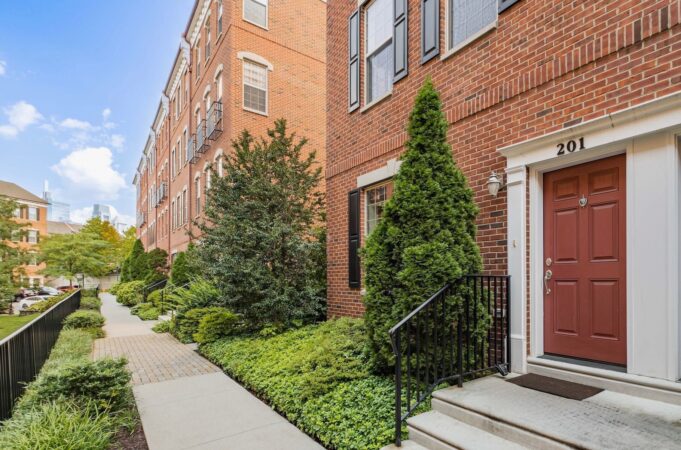
“It has a country feeling,” said Sruthi Selvam, “but if you walk out the gate, you’re downtown in 10 minutes. And the landscaping is beautiful.”
Selvam and her husband, Kamesh Arumuzam, spent three years in the three-bedroom, 2½-bathroom end-unit condo in the Naval Square community.
The couple bought the unit in 2022 while Selvam, a dentist, was in an international dental program at the University of Pennsylvania. Now the two, both natives of India, and their two young children have returned to California, where she is setting up a practice, and he is a software engineer.
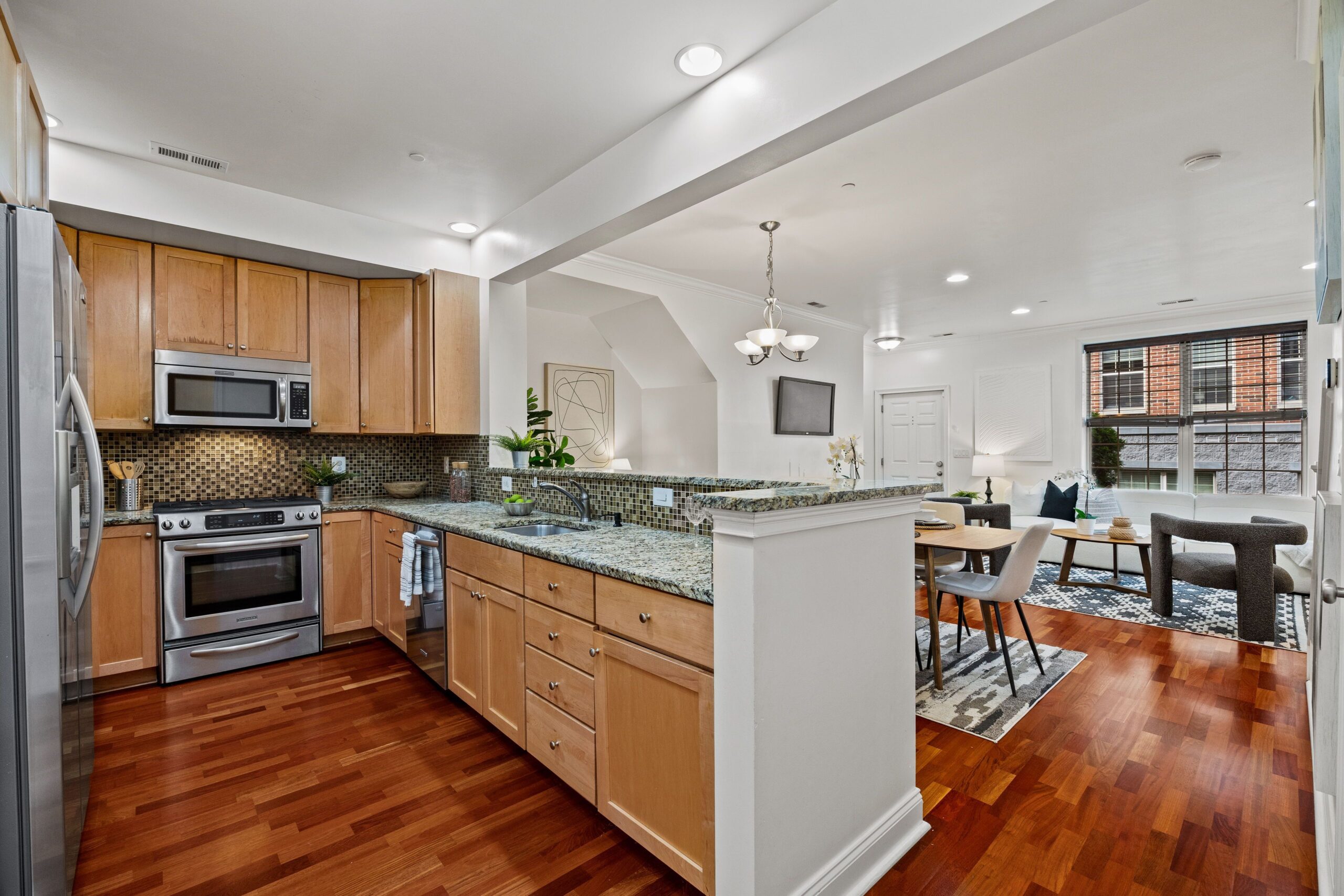
Kitchen
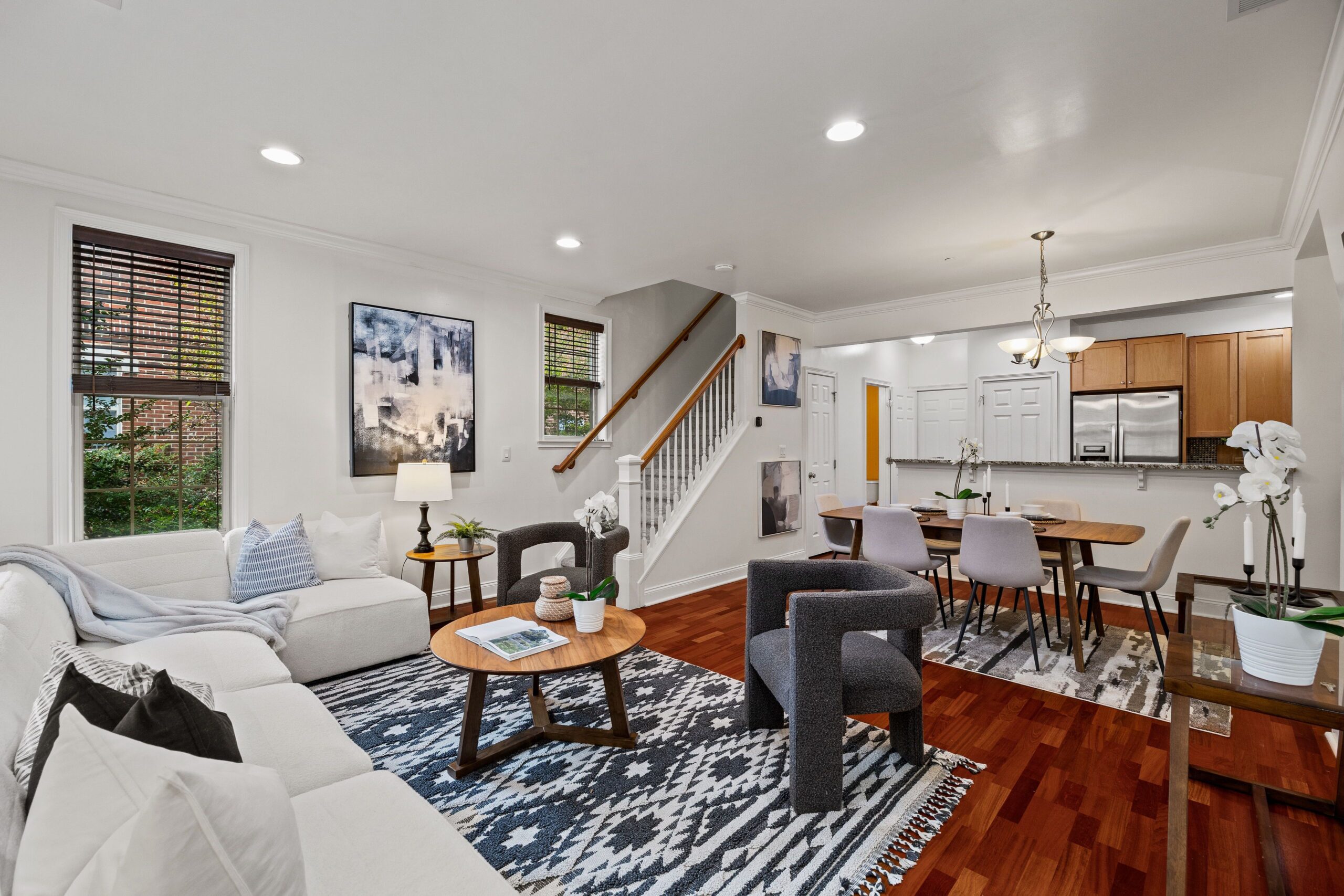
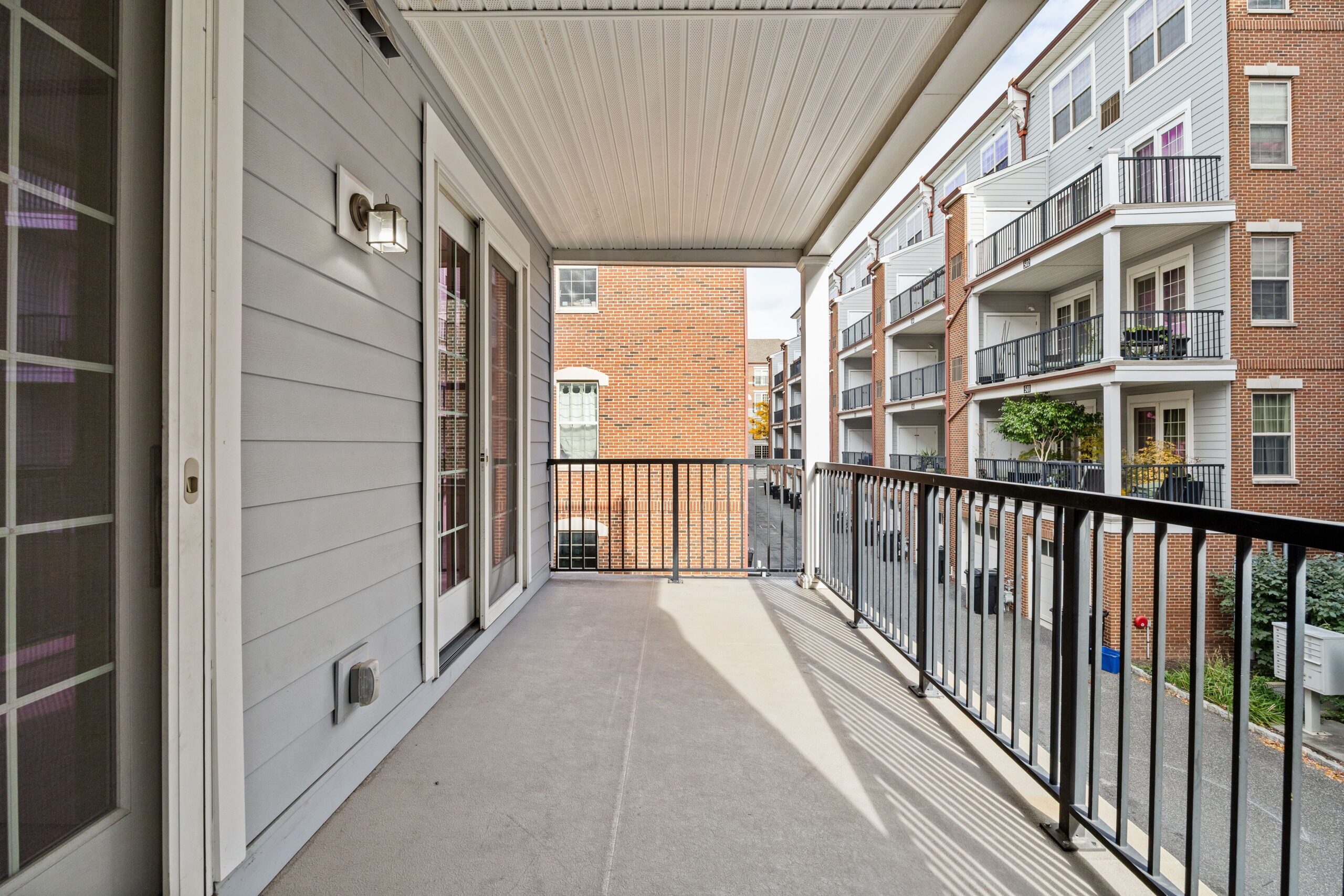
The unit features a private terrace spanning the width of the property. On the first level, it has an open-concept living and dining area and a kitchen with Shaker-style maple cabinetry, stone countertops, a glass tile backsplash, Brazilian cherry hardwood flooring, and a half bath.
There is also a coat closet tucked under the stairs.
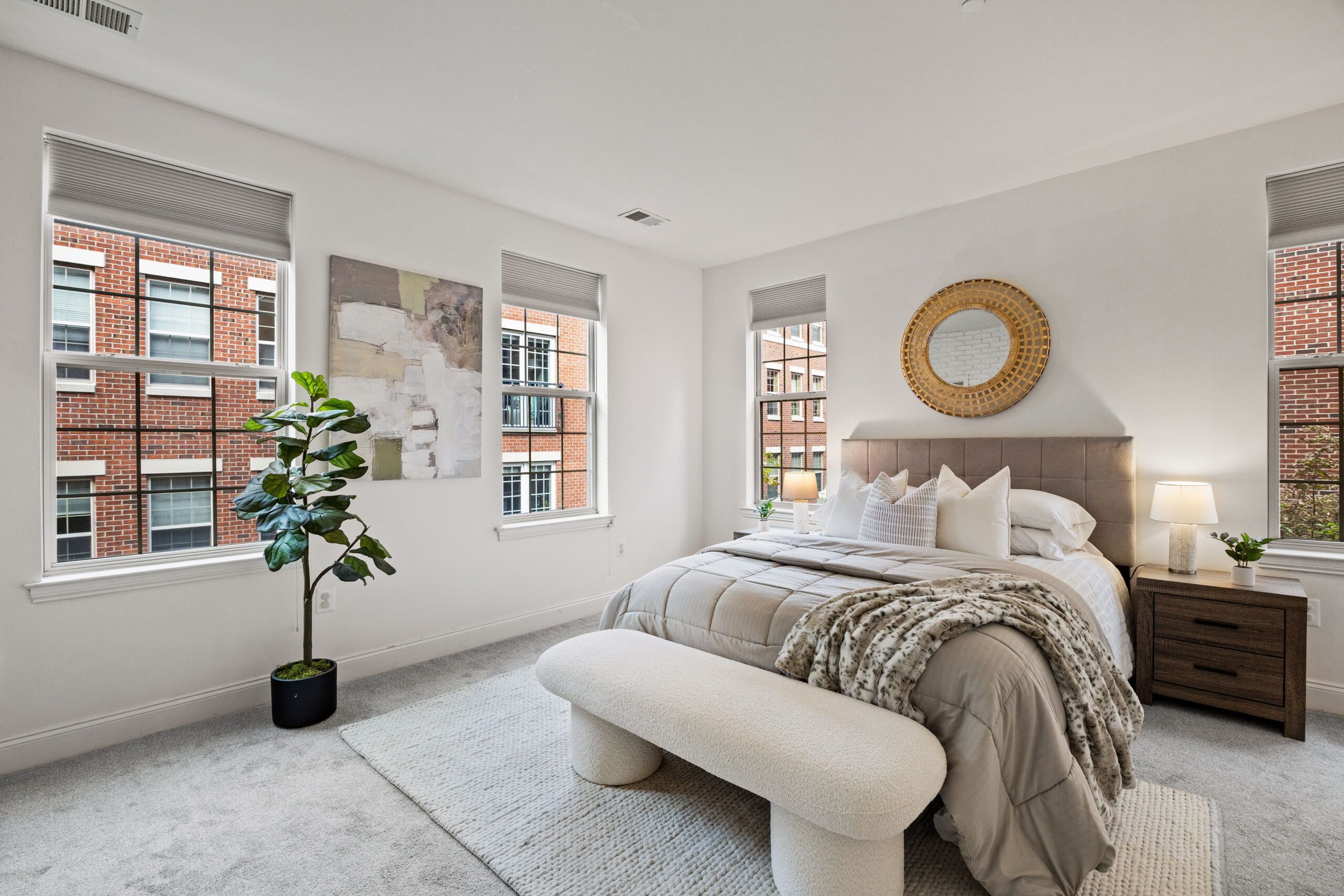
The second-floor primary suite includes an exposed brick wall, an oversized walk-in closet, dual sinks, a soaking tub, and a separate stall shower.
The open-concept living and dining area.
Two other bedrooms have French sliders that open to a covered terrace, a laundry area, front-loading washer/dryer, and shared hall bath.
The attached one-car garage has ample storage and an electric car charger, and there are dual thermostats and a Ring alarm system.
The primary bedroom.
The water heater was replaced in 2022, the HVAC system in 2024.
Community amenities include a pool and fitness center, picnic areas, guest parking and a community room.
A private terrace private spans the width of the property.
Naval Square is close to the South Street Bridge, the University of Pennsylvania, Rittenhouse Square, and Schuylkill River Park. It is also pet-friendly.
The unit is listed by Jocelyn Morris of Compass Realty for $749,000.
Just in time for what figures to be a monumental year for local tourism, the renowned Four Seasons Hotel Philadelphia at Comcast Center has introduced a new luxury floor dedicated to what it calls personalized, “residential-style” living.
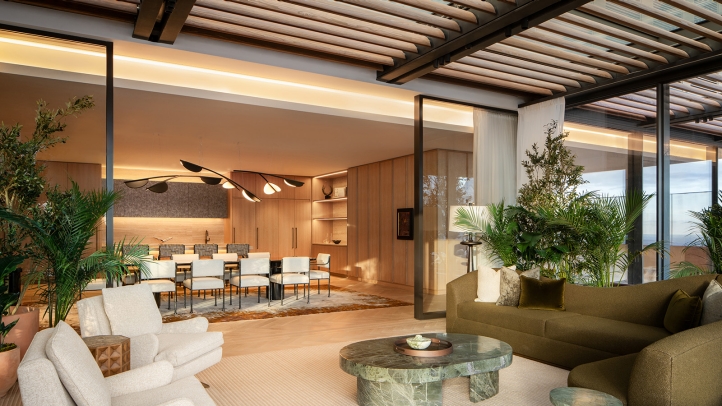
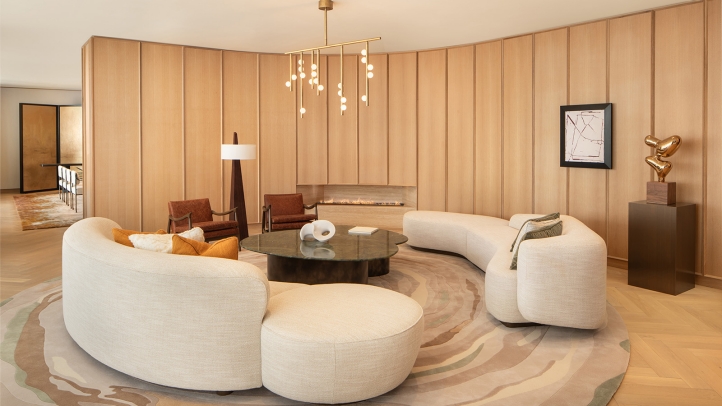
The crown jewel? A massive two-bedroom penthouse that offers countless amenities, sweeping city views, and a nightly price tag roughly equivalent to that of a new car.
A booking agent on Tuesday said the penthouse suite — which spans some 4,000 square feet and features a sizable outdoor terrace — is currently going for around $25,000 per night (plus tax).
Among the amenities included in the Four Seasons Hotel Philadelphia’s new Sky Garden floor is artwork curated by the firm Hanabi: Art and Artists.
As for what you get for that price: Guests have access to menus curated by Vernick Fish and Jean-Georges, the floor’s treatment and wellness room, and an art collection curated by the firm Hanabi: Art and Artists.
The penthouse is part of a new floor — located on the building’s 45th floor and dubbed “Sky Garden” — that features eight separate accommodations, including four guest rooms, two one-bedroom suites, and a two-bedroom suite, according to the hotel, along with the two-bedroom penthouse.
In a recent Instagram post, the hotel described the new floor as having “lush terraces and sweeping city views” that “create a true garden in the sky” — and indeed, the views included in marketing photos do appear to be sweeping.
Views from the Four Seasons Hotel Philadelphia’s new Sky Garden floor.
“This residential-style floor privileges calm over spectacle and intimacy over scale, inviting guests to experience luxury in a way that feels personal and unforced,” according to a press release announcing the new offerings.
In the off-chance the penthouse proves cost-prohibitive, the new Sky Garden level also offers other, not-quite-as-extravagant options.
The Sky Terrace Suite typically goes for around $10,000 per night, according to a booking agent, while the Sky Garden Suite goes for around $3,500, and the additional rooms go for around $1,300 to $1,400 a night.
With a flick of his pen, outgoing Gov. Phil Murphy signed a bill Monday that makes New Jersey one of the most restrictive states for e-bikes, much to the dismay of cycling enthusiasts within and beyond the Garden State’s borders.
Under the new regulations, all e-bikes must be registered and insured, whether they are low-speed e-bikes, which require pedaling and cannot exceed 20 mph, or high-speed bikes, called motorized bicycles or e-motos, that can go up to 28 mph.
Riders will need to be at least 15 years old and they will need a motorized bicycle license to ride. People 17 and older can ride an e-bike using a driver’s license.
The New Jersey law treats all e-bikes as the same, whereas most other states that regulate e-bikes tend to focus on e-motos when it comes to license and insurance requirements. The slower pedal-assist bikes face a patchwork of regulations across the country, with some restrictions on where they can go. By requiring insurance for the pedal-assist bikes people use for exercise and commuting, New Jersey now has some of the toughest regulations in the country for e-bikes, and cycling enthusiasts across the country fear their states might follow suit.
The new regulations mark a dramatic shift in how New Jersey sees e-bikes. It was only in 2019 that state leaders, including Murphy, touted them as an alternative to cars with the potential to cut emissions and congestion in the state, allowing them to operate on streets, highways, and bicycle paths.
Introduced in the legislature in November, the bill with e-bike restrictions traveled quickly across both chambers as lawmakers felt moved to action by fatalities in the state, including that of a Scotch Plains 13-year-old boy who collided with a landscaping truck while riding his e-bike in September and died.
“It is clear that we are in an age of increasing e-bike use that requires us to take action and update regulations that help prevent tragedies from occurring,” Murphy said Monday.
This is a point that even the most ardent critics of the new law have long agreed with. It had been six years since the last update to e-bike laws, and they agree that reckless riders abound.
If New Jersey Facebook groups are any indicator, the law has plenty of supporters, sick of fast e-bikes taking up sidewalk space and e-motos zipping through residential neighborhoods.
Ocean City Mayor Jay A. Gillian said in a statement Tuesday that the city had long called for the change.
“Nobody likes more red tape, but the benefits of the new law far outweigh the inconvenience of the new registration requirements,” he wrote.
Still, cycling advocates maintain the law is creating an unnecessary insurance requirement on a slew of people, such as tourists going down the Shore with their low-speed e-bikes, delivery drivers, and people who use pedal-assist bikes for exercise.
Critics worry the law is not addressing some of the main issues plaguing the industry, such as misleading advertisements marketing e-motos as e-bikes and the sale of modification hardware that makes bikes go faster.
State Sen. President Nicholas Scutari, a Democrat whose district includes Scotch Plains, introduced the bill in November, arguing that the increase in e-bikes created dangers for riders, motorists, and pedestrians.
“Requiring registration and licensing will improve their safe use, and having them insured will protect those injured in accidents,” he said Monday.
The 2019 e-bike laws did include insurance requirements for e-motos, which had to be registered and titled with the New Jersey Motor Vehicle Commission, but cycling advocates say these have never been enforced.
Debra Kagan, executive director of the New Jersey Bike Walk Coalition, said she has asked for state data on e-moto registration and there does not seem to be any.
The MVC did not immediately respond to a request asking for e-moto registration data.
A fiscal analysis by the New Jersey Office of Legislative Services anticipated an increase in administrative costs for the MVC to update its technology systems, for communications, and to prepare an annual registration report for all e-bike classes. It did not give an estimate of how much that could cost the state. The law comes with no money attached.
“Now this new legislation will require that all e-bikes, even the lowest speed e-bikes that don’t have throttles, would require licensing and registration, and there is no system and no funding to implement that across the state there,” Kagan said.
The new law, critics add, will also carry a negative economic impact for the state, despite the expected fees the OLS says will be collected through registrations and eventual penalties for violations.
While low-speed e-bikes can exceed $2,000, budget models can start at around $400, making them a suitable affordable transportation alternative.
Patrick Cunnane, who sits on the board of directors of the trade organization People for Bikes and is an adviser to a bike shop in Gloucester County, worries that may no longer be the case for many with the new added costs of registration and insurance.
Shore town boosters and small bike-rental businesses also feel threatened, Cunnane said. He said it was not out of the realm of possibility that the ability to travel on e-bikes could be what tips the scales between a stay in Ocean City, N.J., or one in Ocean City, Md., or at the Delaware beaches.
“It’s just crazy for New Jersey to isolate themselves from an activity that’s really a lot of fun and safe,” he said.
Niclas Elmer, owner of Tuckahoe Bike Shop, which has a handful of locations in Atlantic and Cape May Counties, said even as the threat of added regulation loomed, parents balked at buying their children low-speed e-bikes.
“It was hard for us because we couldn’t give a straight answer [regarding regulations],” said Elmer, who has been in the retail business for more than 20 years.
Further worrying Elmer is the status of bike rentals, a key part of his business model. He doesn’t know if these will be exempt from the new laws.
To Elmer and others, cycling advocates say the fight over e-bike regulations is not over.
Cunnane said People for Bikes has already been in touch with the administration of new Gov. Mikie Sherrill on the matter. The hope is that in the year the state has to set its new registration framework, advocates will be able to influence new legislation that walks back some of the restrictions.
Cunnane was encouraged by the comments of the legislators who supported the law. They clearly want to tackle what they perceive to be a large problem, he said. Cycling advocates are not against all regulation; they simply want more targeted ways to address safety concerns.
“We think we can really help make it better,” he said.
2026 Nissan Murano Platinum AWD vs. 2026 Volkswagen Atlas SEL Premium R-Line: Midsize SUV comparison
This week: Volkswagen Atlas
Price: $56,800 as tested
What others are saying: “Highs: Roomy interior with seating for seven, compliant ride, capable mid-size SUV tow rig. Lows: Leans too heavily on touch controls, interior quality falls short of rivals, lacks overall pizzazz,”says Car and Driver.
What Volkswagen is saying: “With three rows of seats, there’s room for all kinds of adventure.”
Reality: Kinda nice, but one overarching problem.
What’s new: The Atlas last received a major refresh in 2024, with a turbo and a new interior, and this version is all new to Mr. Driver’s Seat.
Up to speed: The 2-liter turbocharged four-cylinder engine — whose description sounds suspiciously identical to the Murano’s — creates 269 horsepower, 29 more than the Nissan SUV. Still, despite those extra steeds, it moves the vehicle to 60 mph in about the same time as the Murano, 7.3 seconds, according to Car and Driver. No winner in this department.
Shifty: The shifter is an ugly stepbrother of the Audi toggle, with a flip forward for Reverse, a pull for Drive, and a button for Park. Having the emergency brake button just behind the shifter and the start button just in front of it makes exiting a breeze — press P, pull the brake, and press the button to turn off, all in a neat row, definitely an improvement over the Murano’s console confusion.
On the road: We had a chance to travel hundreds of miles in the Atlas, thanks to a belated holiday visit to Best Friend 1.0’s mom up north.
The Atlas made the trip through Pennsylvania’s Schuylkill valley a pleasant one. It handles highways smoothly and secondary roads with great ease.
On old winding country roads it’s good for a three-row SUV, and you can feel it going where you point it. Six choices among drive modes should satisfy everyone, but sport mode did the job for Mr. Driver’s Seat. Strong advantage Atlas.
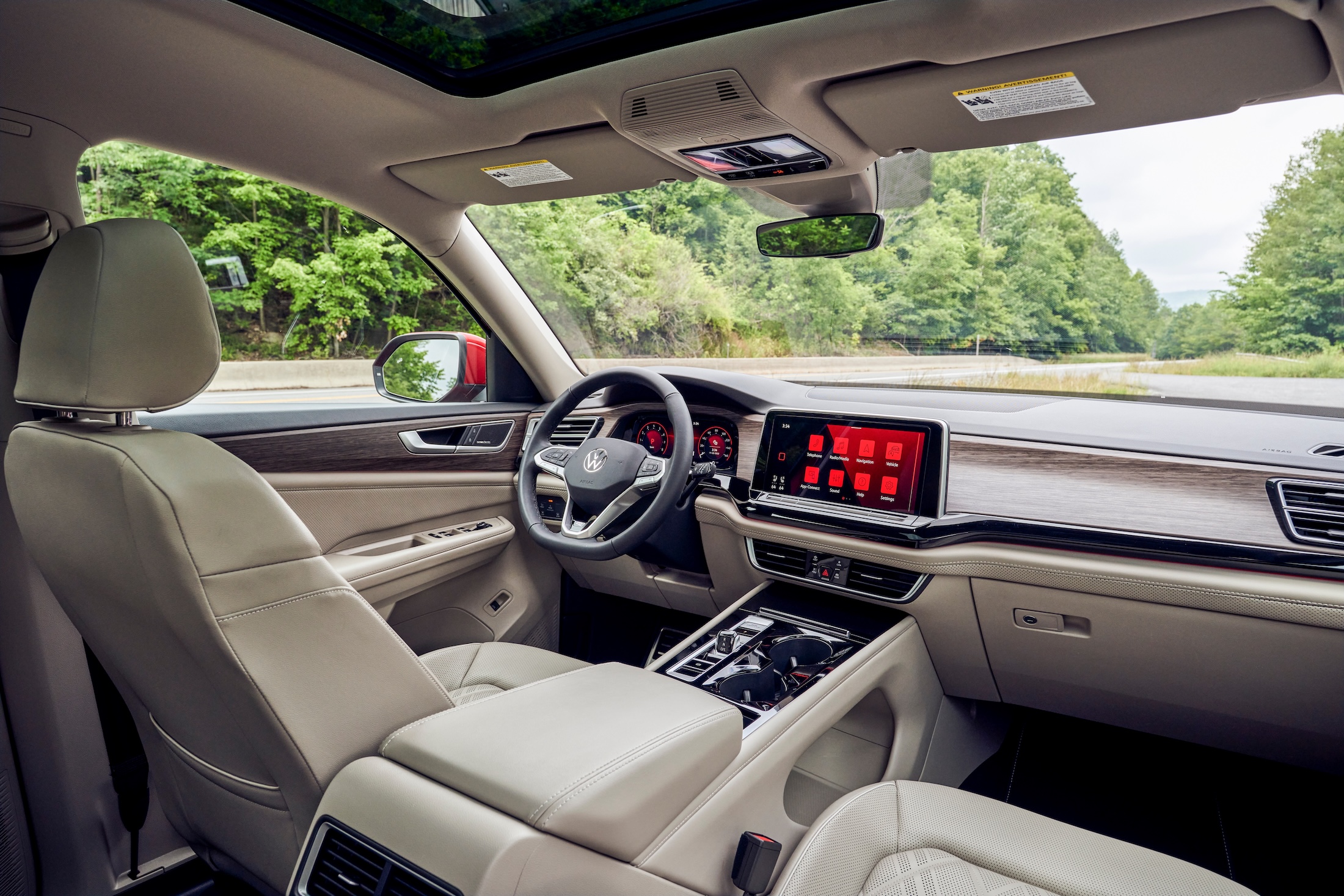
The interior of the 2026 Volkswagen Atlas starts out comfortably in the front, but then descends as one moves farther back. But that’s not the most frustrating part about the inside.
Driver’s Seat: The seat is comfortable, with a real sporty feel, not as wide as the Murano’s but grippy and supportive, and the material doesn’t feel cheap at all.
Volkswagen hangs on to its traditional steering wheel buttons, which makes setting the gauge menu info easy.
Friends and stuff: The middle-row captain’s chairs ($695, the only option) in the model tested provided excellent legroom, headroom, and foot room. The seats themselves were not as comfortable as the front and felt a little on the small side. When reclining, both the back and bottom move, and I couldn’t get them set up comfortably. Definitely the Murano wins on comfort and style.
The rear row is nice for a three-row SUV, with plenty of space all around, even for knees, but the seat was smallish and lacked the quality feel so endearing just two rows away.
Cargo space is a cavernous 96.6 cubic feet with everything folded; 20.6 in the back; and 55.5 with the rear row folded.
In and out: Getting in and out for the rear row was less tricky than in most three-row SUVs, allowing passengers to easily maneuver between the seats to the back. The door also opened wide but not so wide that cars next door are in grave danger.
The vehicle height also is good for bad knees and hips.
Play some tunes: The 12-inch infotainment screen handles all the functions, except for a slider control along the frame that “handles” volume, the same way AI “handles” searches, with some hits but many misses.
Sound from the Harman Kardon premium system is good, about an A-, but nothing earth shaking. Still, better than the Murano.
Keeping warm and cool: The Atlas HVAC controls featured ebony sliders with red for warmer and blue for colder worked into the infotainment’s frame. Unfortunately there is no illumination there, so when you hop in at night for an initial journey, you have no idea what to do. And it doesn’t really get better with time.
Fortunately, a couple of temperature numbers on the infotainment display open the full HVAC option screen, as does a button in front of the console. But the icons are so fussy and small I actually considered several times whether it was worth the bother to try switching off the seat heater or change some other setting. This is distressing.
Fuel economy: The Atlas averaged 19 mpg in the long-term average, so it wasn’t just me stomping around.
Where it’s built: Chattanooga, Tenn. The Atlas is made up of 61% parts from the U.S. and Canada, and 28% from Mexico.
How it’s built:Consumer Reports predicts the Atlas reliability to be a 3 out of 5, tying the Murano.
In the end: The Atlas was definitely a nice drive, zooming competently around Pennsylvania and sounding kinda cool doing it. But that HVAC system really killed the experience.
The Outback was going to be my slam-dunk choice, but its controls have gone too far into the touchscreen as well; watch here for a review of the redesigned 2026 model.
Weeks before she had made the team, South Jersey figure skater Isabeau Levito was confidently saying, “when I go to the Olympics …”
Levito, 18, who lives and trains in Mount Laurel, wasn’t being cocky. She knew; she had done the math.
Qualifying for the 2026 Milan Cortina Olympics was “definitely a realistic goal for me for the past three years,” said Levito, the 2023 U.S. champion and 2024 world silver medalist. “But I felt like I had to prove myself again after missing a bit of last season with an injury.
“But when the season was going the way it was going, score-wise, internationally, I just had to skate the way I can skate at nationals and have it solidified.”
Isabeau Levito performs during the women’s free skating competition at the U.S. Figure Skating Championships in St. Louis. She won the bronze medal.
Indeed, with two clean programs and the bronze medal at the 2026 U.S. Figure Skating Championships earlier this month, combined with strong results throughout the season and last year, that spot was hers.
So when she met with Justin Dillon, chief high performance officer for U.S. Figure Skating, who told her reality show-style that she was on the team, Levito seemed happy but not surprised. Her head coach, Yulia Kuznetsova, however, was flooded with tears.
Kuznetsova skated pairs while growing up in Russia and later in Disney on Ice, where she performed with her now-husband and another of Levito’s coaches, Slava Kuznetsov. But she never made it to that top frozen stage — until now as a coach.
Kuznetsova also knew it was within reach. But the duo knew what they needed to do.
Isabeau Levito performs during the women’s free skating competition at the U.S. Figure Skating Championships in St. Louis. She won the bronze medal.
They opted this season for a triple flip combination instead of a triple Lutz. They thought the flip had a better chance of being called clean. (This worked out, but her individual triple Lutz also has been getting better results lately.)
“Next season, I really want to switch things around and do new things and have more fun with it,” Levito said, “because this season it was a matter of doing all the skills that I honed, all the things that are the most comfortable and the most reliable. But next season, let’s just start risking things.”
She’s looking forward to being fully immersed in the Olympic experience and having her family see her skate. The opening ceremony is Feb. 6.
“I am going to run this [Olympic] village,” she said. “This is going to be so fun.”
She’s read about the village and watched TikToks from the Summer Games.
“But I really have no idea what the Olympic Village is going to look like. That’s why I’m so excited to get there and explore it,” she said.
Most of the ice sports, including figure skating, will be in Milan. The snow and sliding sports, plus curling, will be 250 miles away in Cortina and other mountain regions. This Olympics will be held in six villages across northern Italy.
Before nationals, Levito had a lot of obligations. There were days when film crews came into the rink and stayed all day, cutting into her training time.
The results were viral social media videos for sponsors such as Red Bull (she compares skills with a hockey player) and Everlane (she answers rapid-fire questions while getting ready to get on the ice at the Igloo Ice Rink in Mount Laurel).
Now she’s back to a more typical schedule of skating for hours every day.
“Everything’s exactly the same,” she said of her days on the ice. “What’s different, though, is how exciting it is going to the rink every day, being that I’m actually training for the Olympics right now.”
Does Olympic prep include getting a tattoo of the rings, as so many athletes do?
“I just don’t know if I would get a tattoo in general,” Levito said. “I think I’m going to start with the Olympic necklace,” which many Olympians sport.
“If I did get a tattoo, it would be in such a hidden place, and it would be so tiny and microscopic. And I’m thinking to myself, ‘If that’s the circumstances I would get a tattoo under, maybe I should think about it for a while.’”
Meanwhile, time is ticking, meaning she needs to shop for some formal dresses to wear at Olympic banquets and choose things to pack for any downtime.
Levito said she likely will bring a couple of books as well as her bedazzling kit. Besides all the sparkles she wears on the ice, she enjoys adding rhinestones to her various makeup cases and a comb.
“It’s so soothing,” she said.
Isabeau Levito skates her short program at the Grand Prix de France in October.
There is a lot of talk of extra bling: The three American women have a good chance of earning medals at the Olympics. But Levito isn’t thinking about that.
“The village is what I’m focused on,” she said. “And obviously skating my best, but I can already feel like I will.”
The pressure also is off a bit. With Glenn winning her third consecutive national title and Liu as the reigning world champion, Levito feels she’s less in the spotlight than she was a couple of years ago, when she won nationals and the silver medal at worlds.
But it’s all good.
“Honestly to me right now my life feels like perfect,” she said. “Dare I say I love everything that’s in my life, like personal life, and just like my goals that I’ve achieved, whether I’m under the radar or not?
“I’m just so happy right now. I feel like I really achieved my dream life that I had in mind maybe five or some years ago. I feel like I’m really living what I was wishing for or envisioning for myself, so I’m just beyond proud.”
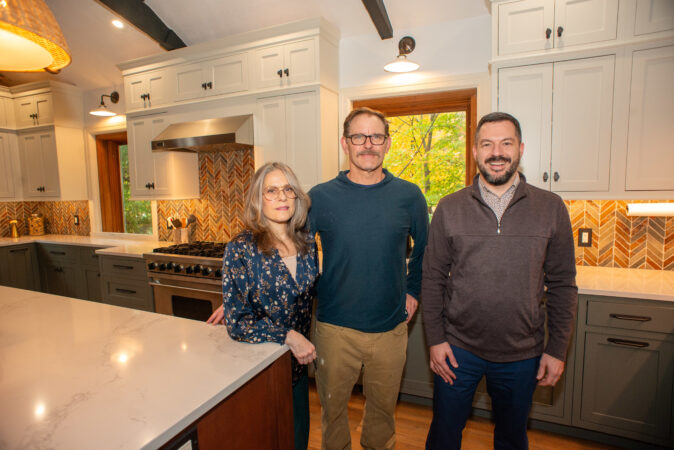
When Diane and Keith Reynolds moved back to the Philadelphia area from Austin, Texas, in 2023, and bought their house in Rydal, Montgomery County, they knew immediately that they wanted to remodel the kitchen.
But they also knew that project alone wouldn’t make a home they’d be satisfied with.
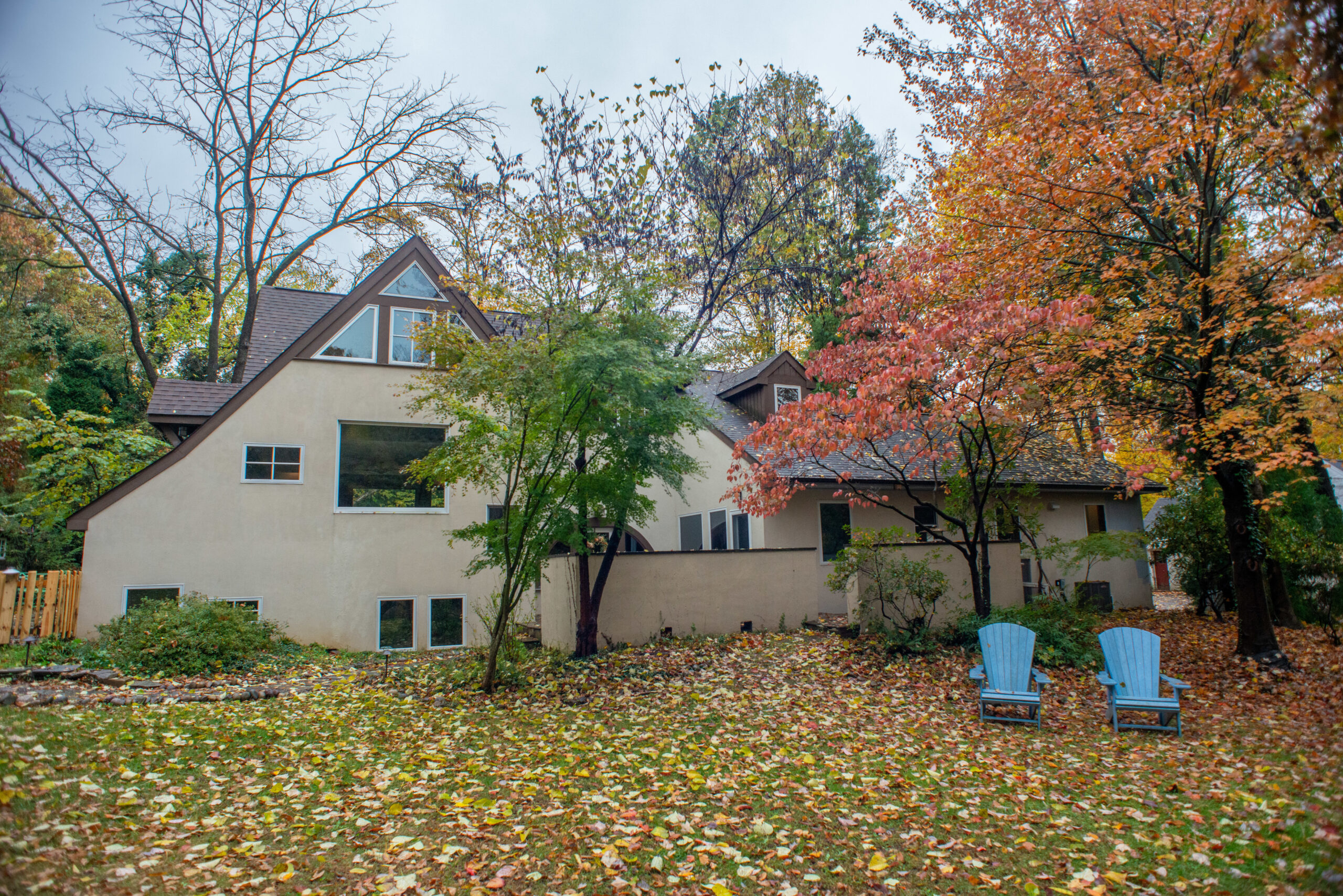
“We wanted to keep it craftsman style,” said Diane, referring to the arts and crafts movement of the late 19th century. The style is characterized by simplicity, emphasis on natural materials, and closeness to nature.
An exterior view of the Reynolds’ home. It was originally built as a Cape Cod, and a later addition brought in the craftsman style.
Keith, a software sales engineer for a technology company, said he specifically wanted to avoid a “cutesy” environment in the home. Diane, executive assistant for a trade association, called it “bringing nature inside.” It was the third house they’d lived in since they married.
Through an internet search, the couple found Philadelphia-based Airy Kitchens and designer Sean Lewis for the remodel.
“It was an interesting design dilemma,” Lewis said.
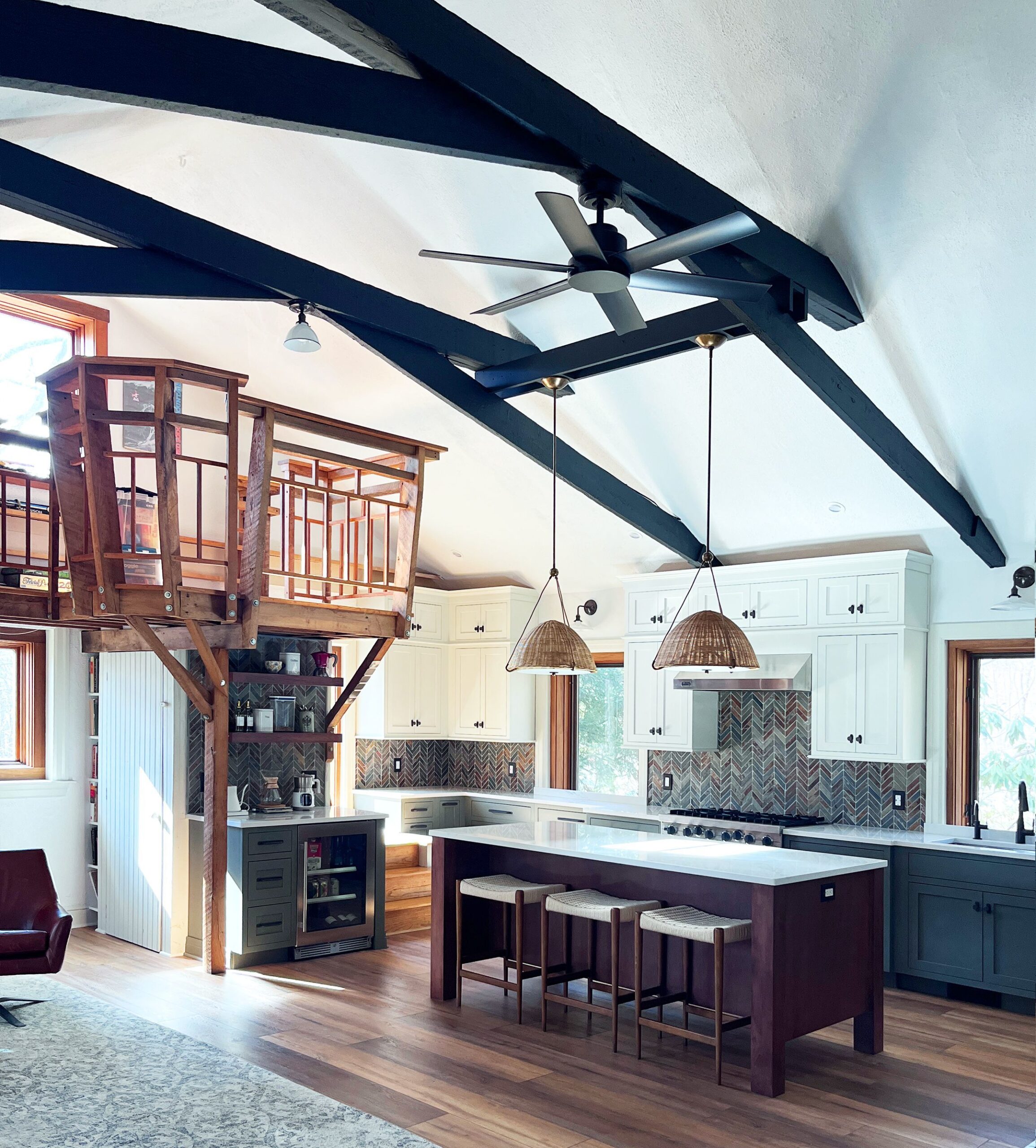
The house was originally built in the Cape Cod style in 1914, but when the previous owner added onto the home, he chose the craftsman style. By 2023, the kitchen needed significant updating for practical use. It had an unusual layout, opening up into a larger great room with high ceilings and a loft built from reclaimed wood towering over one side of the space.
The loft over the kitchen created a unique design task. The range had previously been placed underneath it, but it was relocated to another wall.
The loft was retained, but many other details were changed. “We changed a lot of the symmetry,” Lewis said.
For example, a full bathroom tucked behind the kitchen was made into a powder room, giving Lewis more kitchen space to play with.
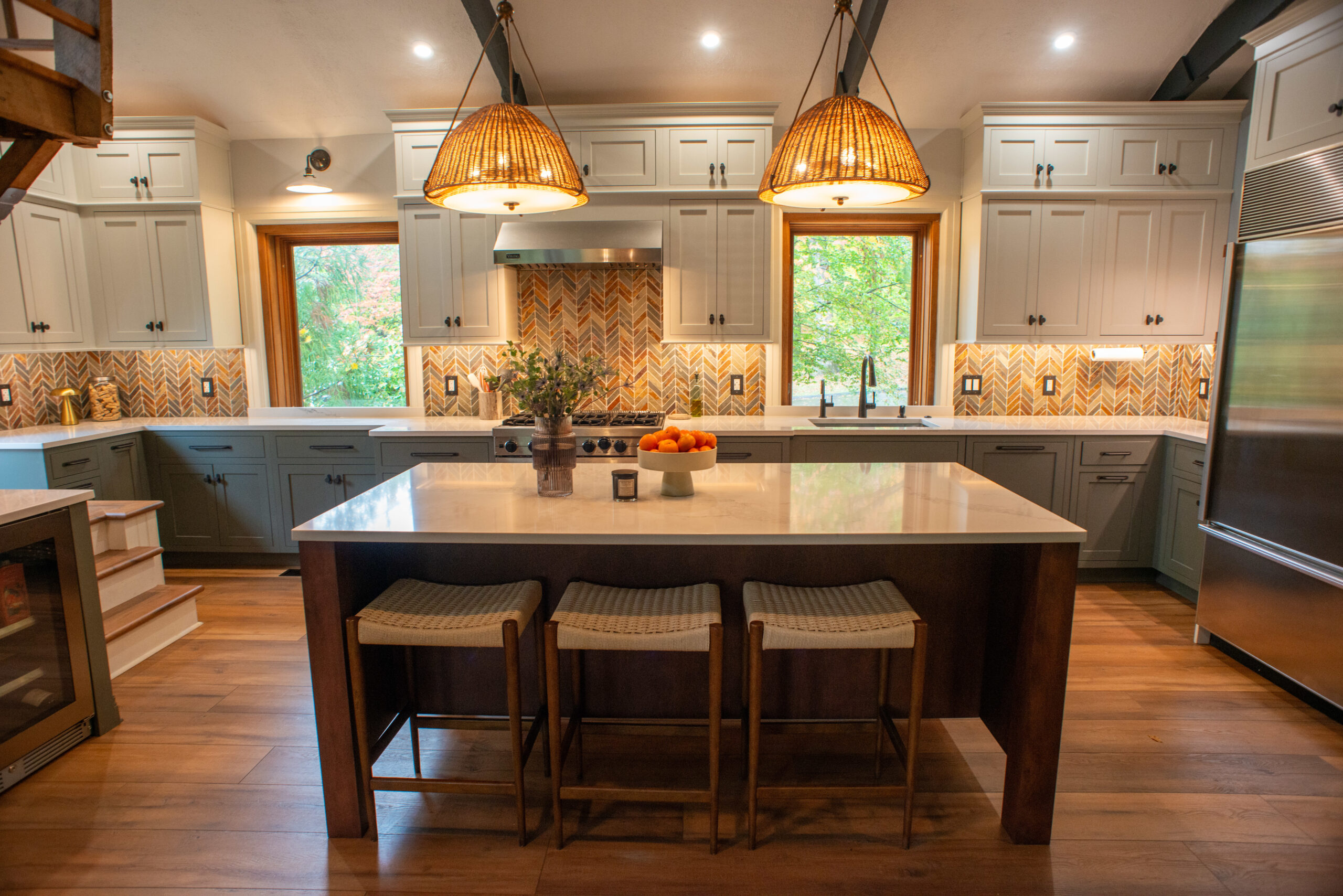
The home’s kitchen after renovations. At the upper left, the reclaimed wood loft remains.
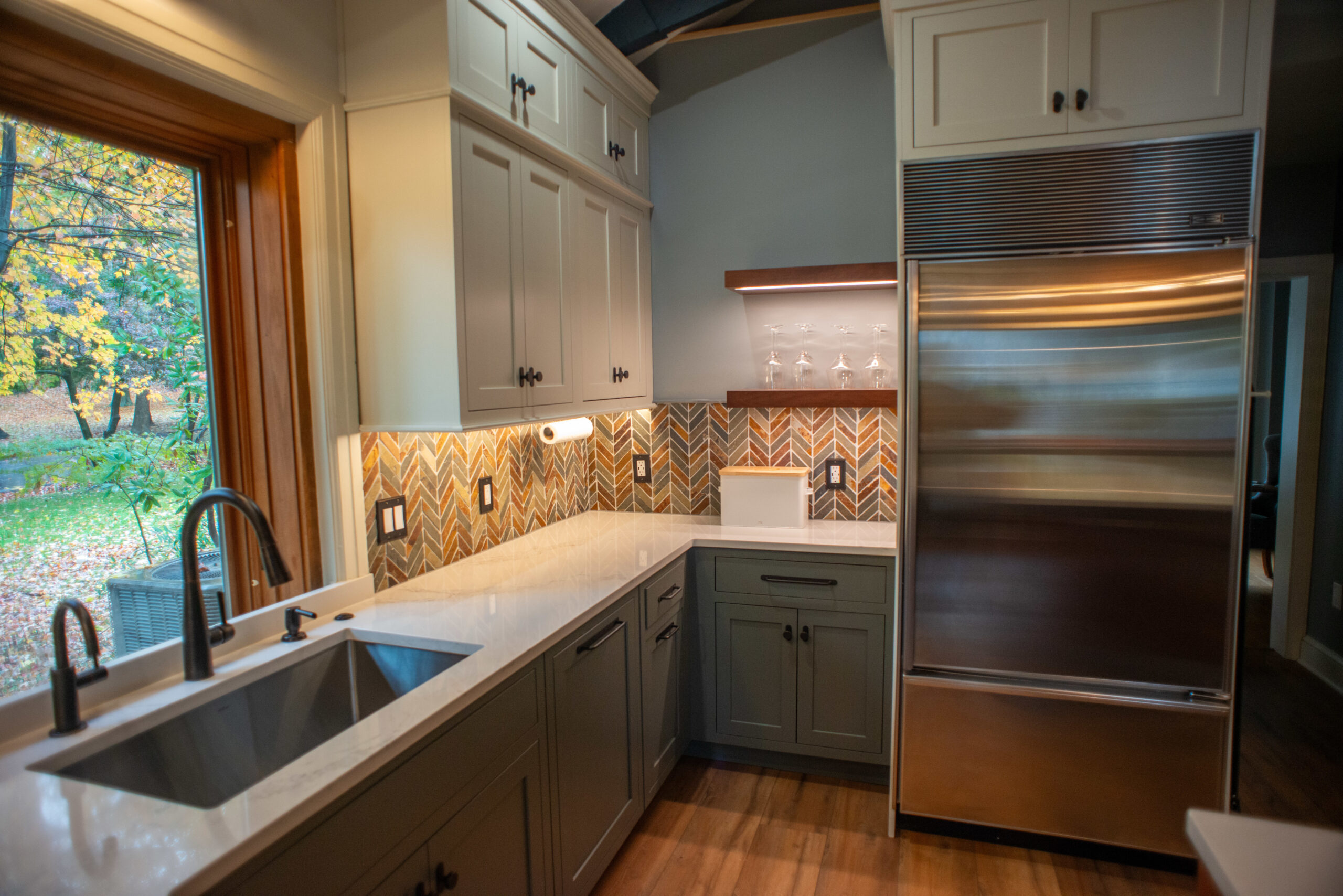
The refrigerator and gas range were reused. A new hood, dishwasher, and beverage refrigerator were added. The custom island — larger than its predecessor — is a stained cherry wood that was chosen to match the natural wood trim on the existing windows.
The backsplash is a multicolored earth-toned slate material in a chevron pattern, evoking the outdoors from within their kitchen.
“It’s the first time we’ve seen or used that material as a backsplash,” Lewis said, and it was the jumping-off point for choosing the colors in the kitchen.
“The assignment of rethinking a kitchen space is not unusual for us,” he said. But the home’s disparate styles and unique features, like the loft, beams, and open floor plan, created an “unusual design problem.”
“It’s quite unusual for a 100-year-old home to have a great-room layout with a vaulted ceiling,” Lewis said. “The reclaimed wood loft installed by the previous architect is something I’ve never seen before, and I’m sure will never see again.”
Maximizing storage was a no-brainer, and they accomplished that simply by adding cabinets.
One of the key challenges was providing counter space around the range. The range was previously located below the loft, but is now centered on the kitchen’s longest wall, between two windows, with the sink off to the right, just below a window. This allowed Lewis to add counter space around the range, for more practicality.
The backsplash tiles and wood stain were chosen to match colors from the surrounding yard.
The windows were left untreated in the Craftsman style.
Inside, woodwork was stained to match the outside.
The stove was relocated so it would be surrounded by counter space.The refrigerator was reused in the remodeled kitchen.
Diane said she and Keith looked at the house as a “homecoming” from their time in Austin, “a little bit like reclaiming our roots.” He grew up in the nearby neighborhood of Meadowbrook, and she is from King of Prussia.
“From the second we walked into the house it was so warm — we felt immediately connected. There’s something grounding about watching the seasons change,” she said. “It’s colors and leaves and movement. Every day it just restores me.”
Is your house a Haven? Nominate your home by email (and send some digital photographs) at properties@inquirer.com.
Regina Robinson isn’t used to being asked what she wants out of her home.
But for about a year, architects and designers had detailed discussions with her and other tenants at the Susquehanna Square subsidized apartment community in North Philadelphia about how to transform the look and feel of the development.
Robinson and her now 8-year-old daughter, Faith, went to every meeting. Residents talked about their love of graphic novels and the inspiration they found in superheroes — not just those who can fly, but real people they saw making a difference in their own families and communities.
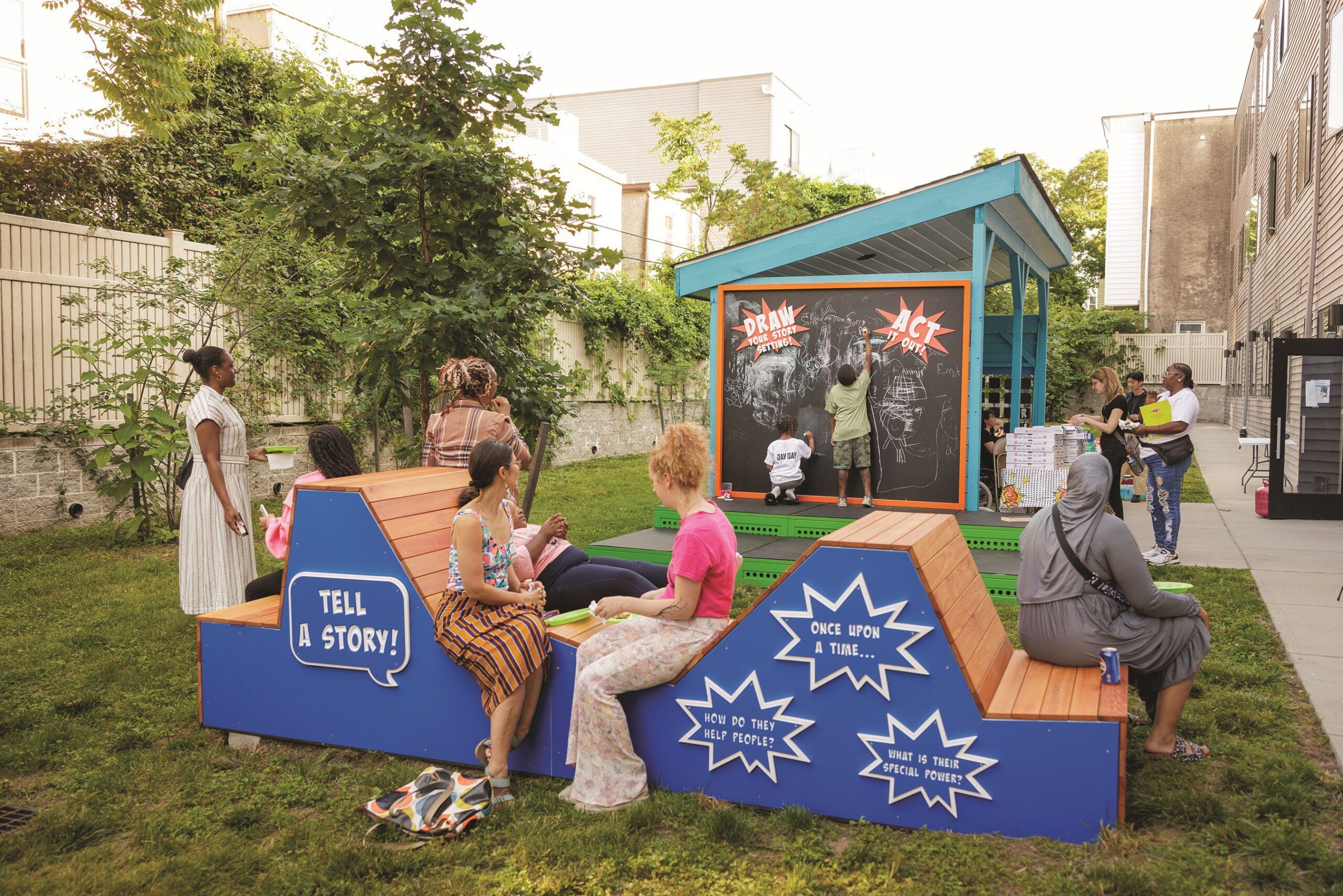
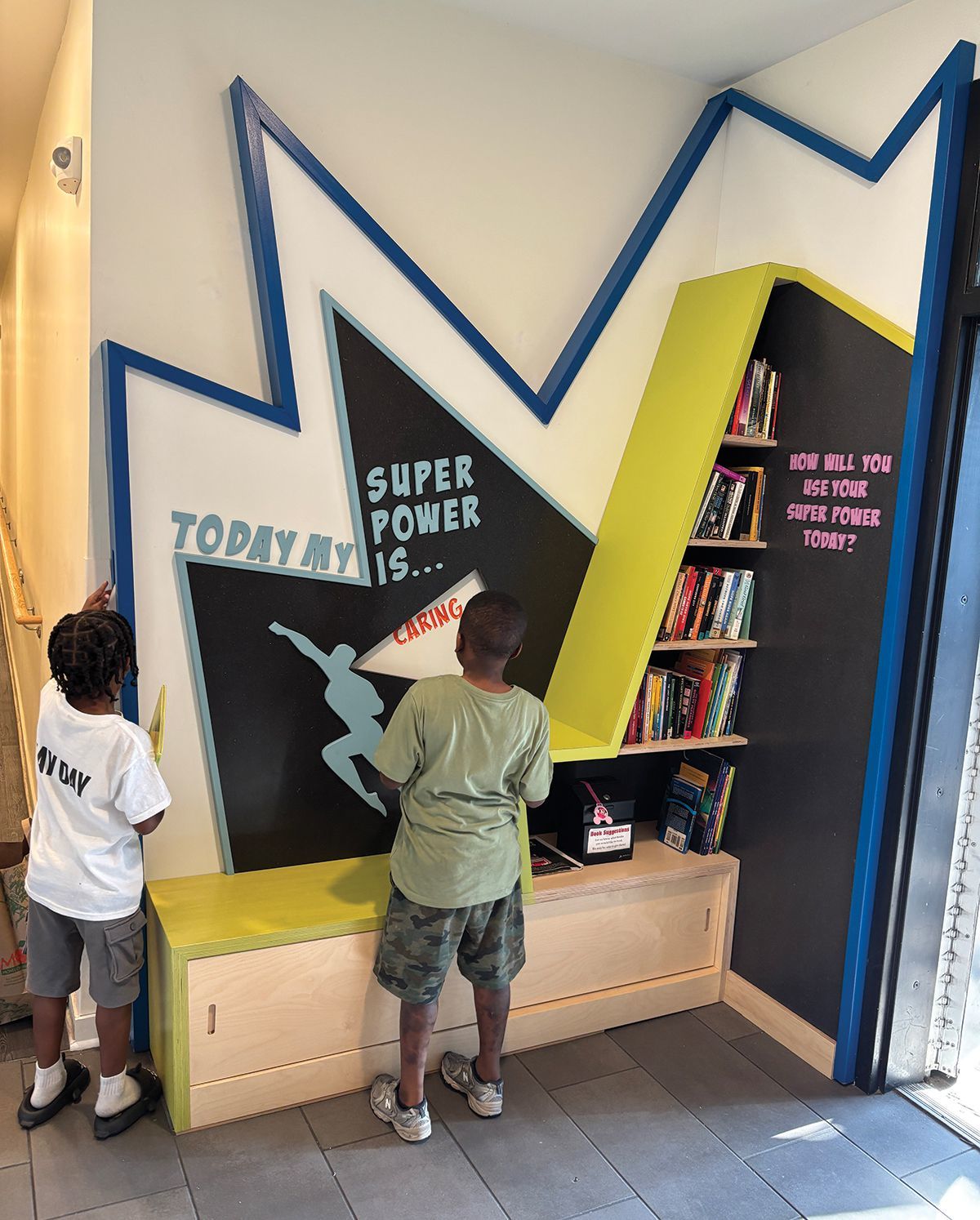
Blank white walls in apartment hallways became canvases for colorful murals of people in capesmeant to inspire children and adults to have self-confidence and set goals. A previously unused bike shed now stores bikes but is also a stage for acting out stories and a puzzle wall for spelling words. In courtyards, residents got new places to sit that double as little libraries. Prompts ask them to think about the books they read and create characters and stories of their own.
“They really listened to us. … They were taking our ideas and they actually brought it to life,” Robinson, 52, said. “It really brought tears to my eyes.”
A mural asks “What is your superpower?” in the hallway of an apartment building in the Susquehanna Square development in North Philadelphia.
The project was an initiative of Playful Learning Landscapes, cofounded in Philadelphia in 2009 by Temple University professor Kathy Hirsh-Pasek and University of Delaware professor Roberta Michnick Golinkoff. The organization has brought the concept of playful learning — engaging children and their caregivers in skill-building lessons through play — to spaces such as laundromats, parks, grocery stores, sidewalks, and subway stops.
But installations at two sites in North Philadelphia are the organization’s first that bring playful learning to subsidized housing. And the organization and its partners hope the Live and Learn pilot will lead to similar projects across the country that help vulnerable children catch up to peers who have access to more educational opportunities.
The goal is to incorporate playful learning into all subsidized housing developments, said architect Heidi Segall Levy, project manager of the Live and Learn initiative and an associate at Watchdog, a Philadelphia-based real estate consulting firm.
“We were really trying to increase educational equity,” she said. “And the way to do that is to really bring it into [people’s] homes.”
Architect Heidi Segall Levy, manager of the Live and Learn project, shows a mural by Linda Fernandez and Martha O’Connell from Amber Art & Design, at one of the educational play spaces at 2000 Ridge Ave.
About playful learning
Adults might not immediately understand what playful learning is until they’re reminded of childhood games.
Take Simon Says, for example. Children learn to retain information, evaluate the directions they’re given,and follow through. I Spy helps children learn how to describe their surroundings. Matching games strengthen memory and help kids recognize patterns.
Playful Learning Landscapes wants to transform any space where children and caregivers spend time into somewhere they can engage with each other. The organization has dozens of installations in Philadelphia and projects in about 30 U.S. cities and about 10 countries.
Now an activity hub, this transformed bike shed invites children and caregivers to draw, act, and tell stories together. Interactive puzzles, a chalkboard, and a small stage surround a multi-seat bench that doubles as a learning prompt and bookshelf.
One goal of the Live and Learn pilot was to train housing providers to continue the work.
“Our hope in the future is that developers and designers will be thinking about how to build playful learning into the architecture,” Segall Levy said. And eventually, “playful learning will just be included in public space design.”
Most of the pilot’s funding came from the William Penn Foundation, which contributed $647,250.
The foundation has invested about $26 million in playful learning projects in Philadelphia over the last decade and wants to see playful learning elements become standard in recreation centers, parks, libraries, and other places, said executive director Shawn McCaney.
“We believe every neighborhood should have access to high-quality public spaces” that can support community building, safety, and children’s development, McCaney said. “These kinds of spaces can become really important points of pride and engagement in communities.”
Super at Susquehanna Square
David La Fontaine, whorecently retiredasexecutive director of the nonprofit housing developer Community Ventures, was immediately interested when he was approached about adding playful learning to his Susquehanna Square apartment complex.
“A program that helps young kids in school was really what made me most interested,” La Fontaine, the son of a public schoolteacher, said.
Residents at Susquehanna Square spin the wheel to discover their superpower — a feature of the Book Nook. This custom Playful Learning installation is designed to create a sense of arrival while encouraging reading and social connection.
Community members’ vision came to life with the help of KSS Architects.
Susquehanna Square resident Merlyn DeJesus, 61, likes to sit in her building’s backyard and take in what the space has become. Young residents now have things to do when they go outside. They draw on a chalkboard, spin the letter tiles of a puzzle, and turn wheels to create their own superheroes.
DeJesus and her 8-year-old granddaughter read books together from the little library, where community members can take and leave titles. Her granddaughter also helped paint superhero murals, which are on each of her building’s three floors.
It all makes the space feel “more homey,” DeJesus said.
“I feel proud inviting people to come to my home,” she said.
Merlyn DeJesus, a resident of the Susquehanna Square subsidized housing development in North Philadelphia, points to one of the murals painted in her apartment building as part of the Live and Learn project.
Transforming community spaces
Playful Learning Landscapes focuses on tailoring projects for specific communities based on extensive outreach.
For example, residents in the Sharswood area of North Philadelphia noted that nearby Ridge Avenue has lots of fast-moving traffic. So they said they wanted their children to learn about street safety in the Live and Learn project that was focused on subsidized homes developed by Pennrose in partnership with the Philadelphia Housing Authority.
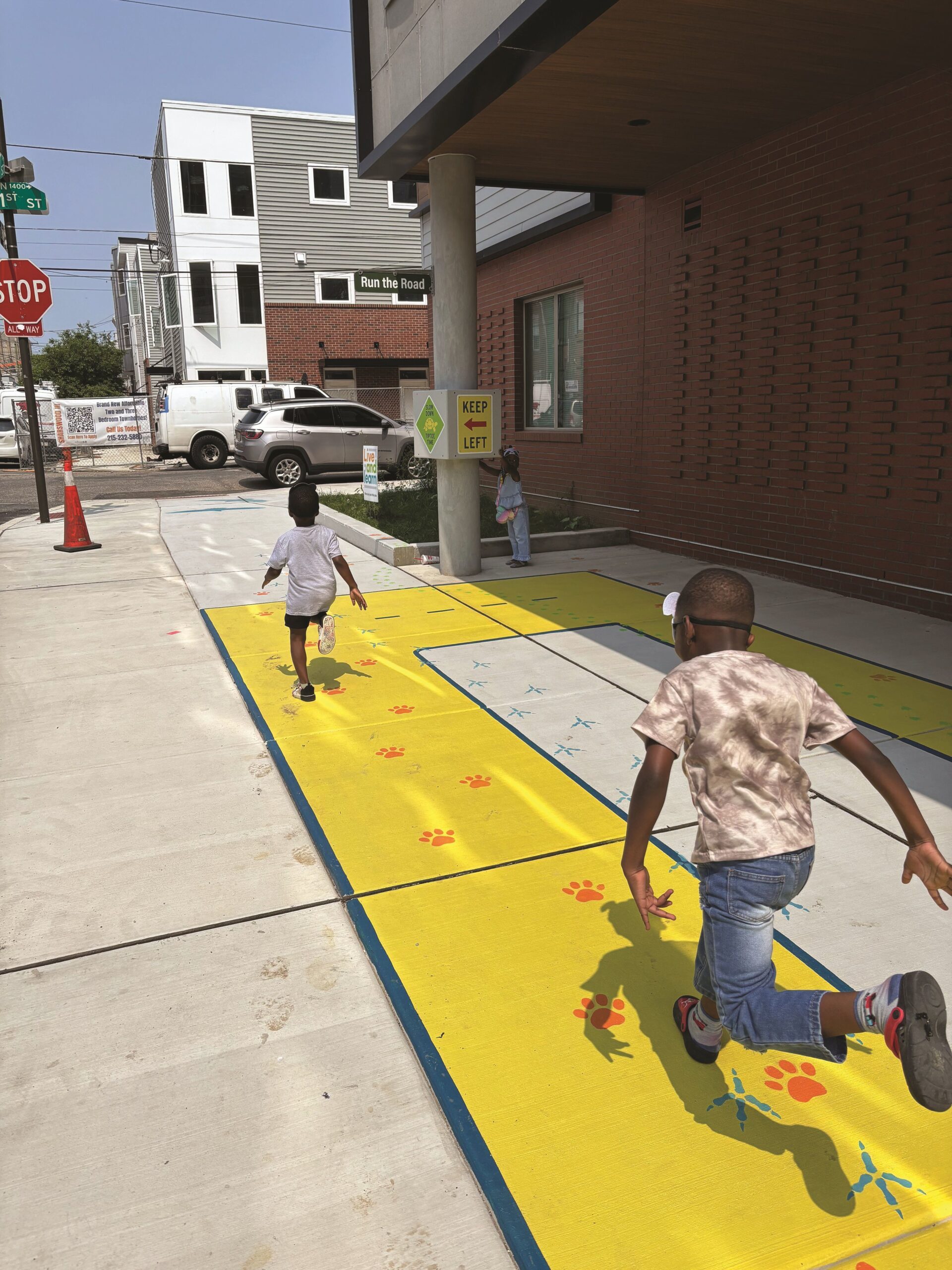
Children in Sharswood “run the road” along a new Playful Learning track painted on the sidewalk of a Pennrose housing development.
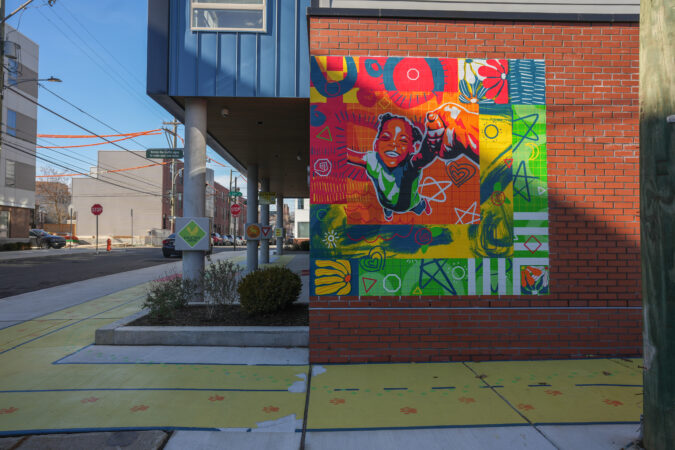
At the “Run the Road” installation, a colorful street is painted on a sidewalk. Children can spin traffic signs and learn what “yield,” “keep right,” and “one way” mean. They learn about crosswalks. They can step on animal prints and walk like the creatures.
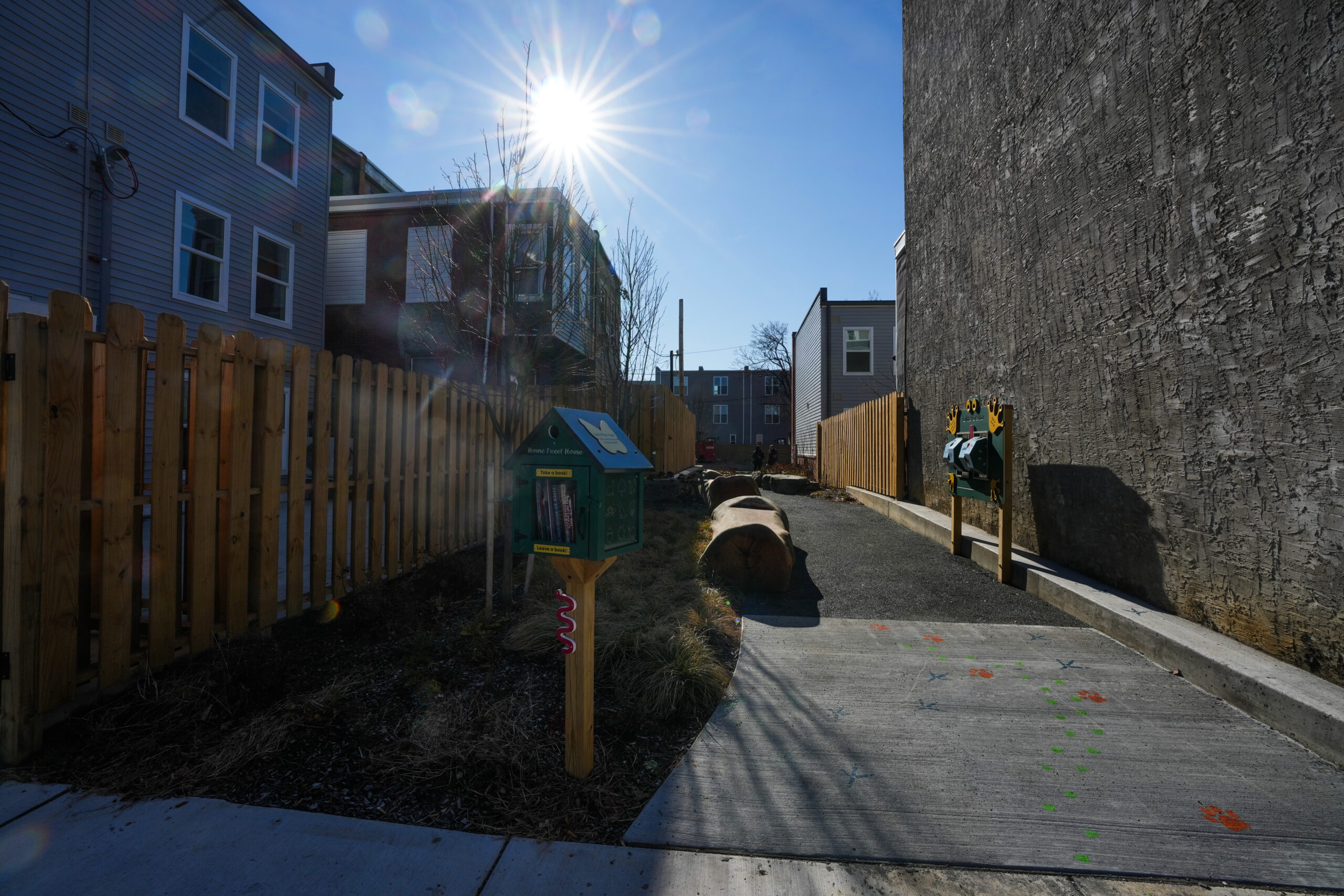
Residents also said they didn’t have open space they could enjoy. So the Live and Learn project transformed a small strip of unused land into a pocket park. It has seating anda little library. There’s a puzzle and matching game and wheels children can turn to create their own animals and tell stories based on their creations.
A pocket park is one of the educational play spaces that the Live and Learn initiative brought to a subsidized housing community in the Sharswood area of North Philadelphia.
“Anytime you take blighted property and change it into a beautiful play and sitting area, I think that’s great,” she said. “There is no longer an eyesore in this community.”
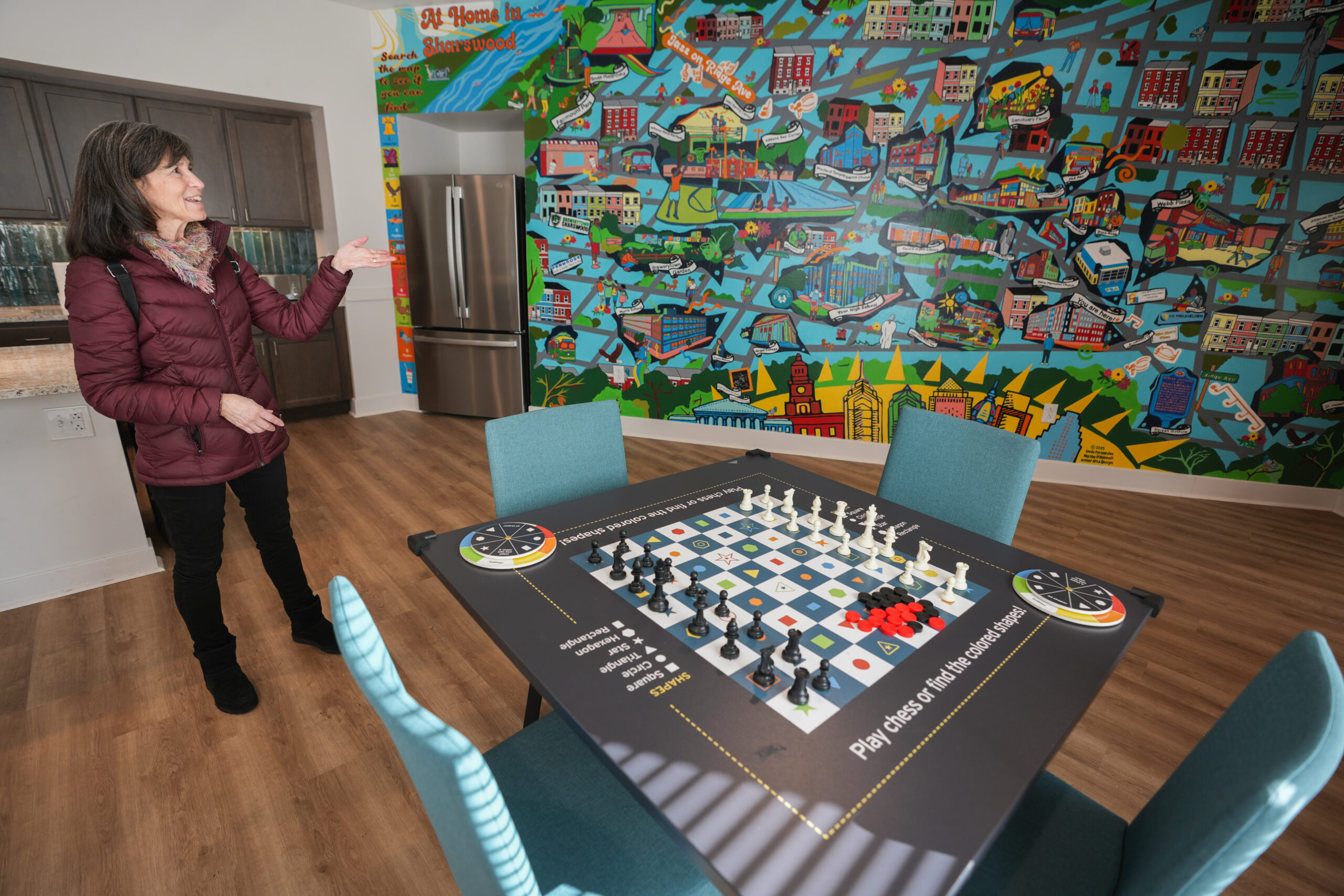
Inside the community room of a new subsidized apartment building at 2000 Ridge Ave., what was originally going to be a blank white wall became a mural featuringa map of the neighborhood with cultural landmarks. The room also features tabletops with activities, such as chess, matching games, word games, and storytelling prompts.
A young Sharswood resident explores a custom-designed Playful Learning chess table in the community room of a Pennrose housing development. The table is one of six navigation stations that help children build skills through play where they live.
Architecture firm WRT worked on the installations. Associate Lizzie Rothwell has been an architect for more than 15 years and said she doesn’t usually get so much breathing room to collaborate with community members.
“Within my professional career, it was a pretty unique opportunity,” Rothwell said. “It was one of the more rewarding experiences I’ve had working with a community on a design.”
A forgotten strip of land wedged between housing developments on 22nd Street between Ingersoll and Master Streets in Sharswood is now “The Backyard,” designed with Playful Learning installations, including this Critter Creator, two nature-themed standing puzzles, and a little library with a built-in I Spy game.
Looking ahead
Now, Playful Learning Landscapes wants to pursue public policies that support the expansion of playful learning projects and provide incentives for developers and architects to incorporate this work into their plans, said Sarah Lytle, the organization’s executive director.
Playful learning advocates briefed City Council members this fall about their work. In September, the city’s Department of Planning and Development issued a call for proposals to create or preserve affordable housing and encouraged developers to include art or design elements that foster children’s development.
“We’re starting to see some traction,” Lytle said.
More than seven months after the opening of the play spaces at Susquehanna Square, Robinson and her daughter now live in South Philadelphia, but they’ve come back to visit the murals they helped paint and the installations they helped develop.
“To see it and to know it’s going to always be there,” Robinson said, “it brings a lot of joy to me.”
The “Run the Road” installation on a sidewalk at 2045 Master St. teaches children in Sharswood about traffic rules.
An observation about the Eagles’ offensive coaching staff: 2025 was the first year Jalen Hurts wasn’t surrounded by former quarterbacks.
It’s something the Eagles should keep in mind, especially if Brian Daboll and Mike McDaniel both land head coaching jobs … or if they both opt for one of the other 73 coordinator positions currently open across the league. (ESPN reported Tuesday night that McDaniel is expected to be hired as the Los Angeles Chargers’ offensive coordinator.) Shane Steichen and Kellen Moore were both Division I starters in college. They both had assistants who were NFL backups. Under both, Hurts finished with a passer rating above 100 and went to a Super Bowl.
Correlation doesn’t equal causation. Nor should it equal a strike against Daboll or McDaniel as the Eagles look to hire an offensive coordinator who can revitalize their stagnant scheme. Neither man came up as a quarterback. Daboll played safety at Rochester. McDaniel was a wide receiver (at Yale), just like Kyle Shanahan and Sean McVay and Josh McDaniels and Joe Brady (and Nick Sirianni and Kevin Patullo). Andy Reid was an offensive lineman. Bright offensive minds come in all shapes and sizes.
But I’m not necessarily talking about scheme here. I’m talking about the other important parts of coaching: teaching, explaining, understanding, conveying. McVay and Shanahan are outliers, given their upbringing, which was so rich it barely needs introduction. (McVay, the grandson of 49ers executive John McVay, was once hired by Mike Shanahan, Kyle’s father.) Otherwise, it’s only natural that former quarterbacks would have an edge in understanding how a current quarterback sees the field. Ben Johnson, Liam Coen, Kevin O’Connell, Sean Payton … all former quarterbacks.
Former Dolphins coach Mike McDaniel is a candidate for the Eagles’ job at offensive coordinator, although they have not spoken to him yet.
Again, nothing against the wide receivers (or safeties). McDaniel is clearly the guy every team should have at the top of its list for lead play-calling duties. He went 31-24 with Tua Tagovailoa as his starting quarterback. Nobody schemes the running game better. The Eagles have yet to corral him for an interview, and maybe they won’t. But only because he has better opportunities.
As for Daboll, he would be an easy choice to snicker at. Hard Knocks did him no favors. But the former New York Giants head coach would make a lot of sense. He is still well-regarded in Buffalo, where he oversaw Josh Allen’s transformation from a raw, erratic bust-in-waiting to one of the most singularly impactful quarterbacks in the game. He also could be around for a while if he misses out on a head coaching gig in the current cycle.
Both Daboll and McDaniel bring with them the kind of experience that the Eagles lacked in 2023 and 2025 with first-time play-callers Patullo and Brian Johnson (the latter a former quarterback). The biggest weakness of this year’s coaching staff wasn’t just a lack of experience on Patullo’s part: It was a lack of experience behind him, particularly at the game’s most important position.
Eagles quarterbacks coach Scot Loeffler never took a snap in his four years at Michigan during the mid-’90s. Passing game coordinator Parks Frazier attempted 127 passes at Murray State. Quality control coach Montgomery VanGorder attempted 275 at Youngstown State. Combined, that’s a grand total of two seasons of lower-level collegiate starting experience and zero snaps at the FBS level.
Compare that to Hurts’ support system in the halcyon days of 2022.
Steichen played four years at UNLV (465 pass attempts). Johnson played four years at Utah (1,017 pass attempts). Alex Tanney spent nine years as an NFL backup after starring at Monmouth.
Two years later, the Eagles turned their offense over to Moore, a former Heisman Trophy finalist who starred at Boise State. Quarterbacks coach Doug Nussmeier spent five years as an NFL backup after winning the Walter Payton Award, as the most outstanding offensive player in what was then known as Division 1-AA, at Idaho.
Former Falcons offensive coordinator Zac Robinson is expected to have several offers.
The Eagles were behind the eight ball when Moore left to become the New Orleans Saints’ head coach and took Nussmeier with him as his offensive coordinator. Thanks to their Super Bowl run, Sirianni and Howie Roseman had a thin market in which to find their replacements. The same thing happened on the defensive side of the ball post-2022 when Jonathan Gannon left for Arizona. Underlying the cliché and mythical Super Bowl curse are some very real variables.
This time around, the world is the Eagles’ oyster. They’ve already interviewed Mike Kafka and Zac Robinson, both former NFL draft picks at quarterback. Neither has the sort of profile that fans are coveting, but Robinson in particular has an intriguing background. The Atlanta Falcons played some surprisingly competent football this season, scoring 24-plus points in nine games, two more than the Eagles. They finished ahead of the Eagles in yards per play and net yards per pass attempt in each of the last two seasons that Robinson spent as offensive coordinator after his stint on the staff of kingmaker McVay.
Robinson will presumably have multiple offers. There are plenty of intriguing situations out there: the Chargers under Jim Harbaugh and with Justin Herbert unless McDaniel has already taken that job, the Baltimore Ravens with Lamar Jackson, the Tampa Bay Bucs with Baker Mayfield and a deep offensive depth chart. Never before has the NFL seen this level of upheaval in a single offseason. Half of the league has an opening at offensive coordinator.
Which makes Matt Nagy a guy the Eagles should talk to.
He certainly wouldn’t win the headline battle. But he’s a former quarterback (Delaware) with plenty of experience who got a bit of a bum rap during his four-year stint as head coach of the Chicago Bears. Nagy went 25-13 in the 38 games that Mitch Trubisky started for him. That looks even more impressive in hindsight than it did at the time.
Whomever the Eagles hire, their top priority should be bolstering the experience of the staff beneath him. Coaching can overcome personnel issues only to a certain extent. But Hurts isn’t going anywhere, and we’ve seen way more out of him than we saw in 2025. The right guy for the job isn’t just a great schemer. He is a communicator and an edifier, and he’ll know how to build a support system that is heavy on both traits.
Restaurant week menus are generally built for speed and scale. In other words, they’re quick to put together and easily reproducible, designed to accommodate an influx of bargain-seeking guests.
I combed through 120 menus offered during the current Center City District Restaurant Week for truly special dishes. These 26 picks — including some from The Inquirer’s vaunted 76 restaurants — spotlight bigger-ticket proteins, slow braises, and labor-heavy pastas that rarely make prix-fixe lineups, as well as some Philly classics.
For the 2026 restaurant week, running through Jan. 31, some restaurants will offer $20 two-course lunches in addition to three-course dinners priced at $45 or $60.
All are offered for dinner unless otherwise noted. Not all restaurants serve the special menus every day. Menus were checked Jan. 19.
Amada ($45): Lamb albondigas (meatballs, with manchego, sherry, and foie gras cream) is a highlight of the second course of the tasting menu.
Ambrosia ($45): Squid ink spaghettini with calamari, crabmeat, Calabrian chili, and tomato is a stunning main on this Fitler Square BYOB’s dinner menu.
Bar Bombón ($20 lunch): Hearts of palm “fish” tacos, a creative, high-effort vegan main.
Barbuzzo ($45): Grilled branzino with celery root fregola, Sicilian tomato-almond pesto, and salmoriglio — one of the six main plates offered.
Bellini ($45): Veal saltimbocca — cutlets wrapped in prosciutto, then typically pan-fried with sage — is not common on restaurant week menus.
Bleu Sushi ($45): Start with soft-shell sliders, segue into Japanese bottarga spaghetti (dried mullet roe caviar sautéed with garlic, spaghetti, and furikake), then end with fried ice cream.
Bodega Bar ($45): Roast rack of lamb, offered with asparagus or rice, is a restaurant-week find.
Bolo($45): Seafood asopao — a stew with mahi-mahi, shrimp, scallops, and calamari — is a Puerto Rican treasure.
Bridget Foy’s ($45): Don’t think twice about ordering Bridget’s seafood pasta, topped with mussels, crab, and shrimp.
The “dip sum” doughnuts at Buddakan.
Buddakan ($45): For old times’ sake, there’s the miso black cod and the signature “dip sum” doughnuts.
Château Rouge ($45): The grilled fish offering is lagdo, a thick white-fleshed fish from Cameroon. Tip: Start with suya wings.
Del Frisco’s Double Eagle ($60): The crab cakes with Cajun lobster cream sauce alone usually sell for $56.
Estia ($60): Go for the arni paidakia (marinated lamb chops, served with roasted potatoes and tzatziki).
Fringe Bar ($45): Chef Kenny Bush’s West Philly shiro wat — the Ethiopian-spiced stew of ground chickpeas, mushrooms, sweet potatoes, and greens — comes served over rice.
Gran Caffe L’Aquila is known for its gelato.
Gran Caffè L’Aquila ($20 lunch): The Roman-themed menu includes a tasting of two signature Pecorino Romano cheeses as a starter; among mains is a slow-cooked coda alla vaccinara (oxtail stew). The dinner special ($45) includes the signature gelato.
High Street ($60): House-made spaccatelle on the second course includes royal trumpet mushrooms, black truffle butter, and egg. It’s vegetarian but can be made gluten-free or vegan.
La Nonna ($45): Pork osso buco — fork-tender braised pork in a rich tomato-ey sauce — is seldom found on restaurant week menus.
Chicken liver rigatoni at Osteria, 640 N. Broad St.
Osteria ($45): Don’t skip that old-time favorite: chicken liver rigatoni.
PJ Clarke’s ($45): Where can you get a lobster roll and Parmesan- and garlic-broiled oysters for 45 bucks?
P&K double cheeseburger at Pub & Kitchen, 1946 Lombard St.
Pub & Kitchen ($45): Start with chili and try one of Philly’s top double cheeseburgers; wrap with an apple hand pie.
Restaurant Aleksandar ($60): Balkan menu touches include tenderloin tartare mekik and ratatouille with roasted adjar.
Rex at the Royal ($45): Duck confit gumbo with Andouille sausage, okra, and Carolina Gold rice is a clear winner.
Rhythm & Spirits ($45): The comforting harissa cashew mafaldine is not only intriguing but also vegan. Start with zucchini fritters.
Barbacoa tapatia at Tequilas, 1602 Locust St.
Tequilas($45): Barbacoa tapatia is a fine-dining treatment of a rustic dish.
Vita ($60): Bring a friend or two to share the pasta course — a choice of rigatoni alla vodka, bottoni, or tagliatelle ragu Bolognese.
Wilder ($45): Mafaldine alla vodka with jumbo lump crab and breadcrumbs can’t disappoint.
Mafaldine alla vodka with jumbo lump crab, chili, basil, and bread crumbs at Wilder.
Donald Trump now believes he is the master of the universe, not just of the United States and the Americas. This is not hyperbole.
The president’s determination to seize Greenland from Denmark by bullying or force, his threats to NATO allies, his obsession with the Nobel Peace Prize, the ego-driven list goes on. His speeches and posts reveal a man convinced he is the world’s most brilliant leader, who can split control of the world with Vladimir Putin and Xi Jinping and best both.
The madness of King Donald has metastasized to the point where it threatens U.S. and global security — unless GOP members of Congress, sane business leaders, and five sober Supremes move to curb him.
Don’t take my word for how dangerous Trump has become. Take Trump’s.
“We are going to do something on Greenland whether they like it or not,” he told the press this month. “One way or the other, we’re going to have Greenland.” Never mind that taking Greenland would put the U.S. at war with its NATO allies, including the island’s owner, Denmark.
Trump has already pledged to slap new tariffs on Copenhagen and seven European allies who support the Danes.
This is nuts. A 1951 treaty basically lets the U.S. put as many troops and bases in Greenland as it wishes. The island’s government is eager for U.S. investment to mine rare minerals. Yet, the president is ready to destroy NATO, and possibly fight with our closest allies, whose help and Arctic experience are essential to protecting Greenland from Russia and China.
The only ones to benefit from Trump’s Greenland obsession are Putin and Xi, as they sit back and watch him destroy the NATO alliance they have been eager to shred for decades.
Indeed, Russian officials and talking heads are exulting over America’s self-destruction, which shifts attention away from Moscow’s ongoing, massive attacks on Ukraine’s urban centers, trying to destroy all electricity and heating during a brutal winter.
“It would have been difficult to imagine something like this happening before,” Russian Foreign Minister Sergey Lavrov told journalists this week, gloating that Trump’s actions diminished the “prospects of preserving NATO as a unified Western military-political bloc.”
In other words, Trump’s Greenland mania is undermining U.S. security at a rapid clip. His foolishness raises the possibility of NATO allies shooting at each other, rather than working together to block Russia’s desire for territorial expansion. The White House is putting America in league with Moscow as an aggressor willing to invade or coerce a neighbor into handing over territory.
And for what reason? So that Trump can boast he has made the best land grab since the Louisiana Purchase?
The president hints at this with a doctored photo on Truth Social, which shows European leaders in his office looking raptly at a map of Canada, Greenland, and Venezuela covered with American flags.
People protest against Donald Trump’s policy toward Greenland in front of the U.S. Consulate in Nuuk, Greenland, on Saturday.
Buoyed by the U.S. military’s kidnapping of Nicolás Maduro (a one-off extraction bearing no resemblance to seizing a NATO ally’s territory), Trump acts as if he believes he can grab anything he wants.
For the 79-year-old president, the signs of dementia — or an ego gone wild — are expanding.
Boiling with frustrated desire for the Nobel Peace Prize, Trump wrote the Norwegian foreign minister that Oslo’s decision “not to give me the Nobel Peace Prize for having stopped 8 Wars PLUS” was to blame for his aggression toward Denmark. Due to this insult, the president claimed, “I no longer feel an obligation to think purely of Peace … but can now think about what is good and proper for the United States of America.”
When the Norwegian leader replied that the Nobel was awarded by an independent committee, not the government, Trump insisted this was false. He appeared oblivious to how this churlish behavior makes him and our country look idiotic. All the more so because Trump’s repeated claim about stopping eight wars is a complete falsehood.
Trump achieved several temporary ceasefires in outbreaks of border violence in Africa, the Caucasus, and Asia, but ended no wars. And the best-known of those ceasefires, in Gaza, is already falling apart.
Sen. Lisa Murkowski (R., Alaska) arrives as members of the Danish Parliament and a Greenlandic committee meet with American members of Congress at the Danish Parliament in Copenhagen, Denmark, on Friday.
Yet, this week at the World Economic Forum in Davos, Switzerland, the president will unveil his putative “Board of Peace,” a proposed group of top global leaders who would preside over an unwieldy, as yet nonexistent series of subordinate structures tasked with rebuilding and setting up a government for Gaza.
This concept was endorsed by the U.N. Security Council specifically to deal with Gaza. But in a bait-and-switch, the White House has crafted a charter that ignores Gaza; instead, this aspirational board appears aimed at replacing the United Nations in dealing with global hot spots. At every turn, according to the charter, its players and committees would be subject to Trump’s final control.
The president has already invited Putin, that great Russian peacemaker, to join the board.
The top level of the group is supposed to consist “exclusively of heads of state and government” under Trump’s leadership. It’s unclear how many will join. Consider that the entrance fee for full membership is $1 billion, apparently creating a slush fund with no visible rules on whether it will be spent at Trump’s sole discretion.
What is clear is that Trump’s war on NATO allies and his embrace of Putin — along with his affection for the dog-eat-dog system that led to two world wars — are the work of a president who has lost all moorings. Add to that the economic blindness of a man who, when warned of the grave cost of subordinating the independent Federal Reserve Bank to his political will, responded, “I don’t care.”
Trump’s behavior is that of a self-appointed Sun King, who is not only convinced that “L’État, c’est moi” but “Le monde, c’est moi.” Unless this madness is checked soon by the other government branches, America may be reverting to the kind of world most of us never imagined we’d face.