Blog

  • These Chesco spots are the wealthiest in the region | Inquirer Chester County

    These Chesco spots are the wealthiest in the region | Inquirer Chester County

    Hi, Chester County! 👋

    Local communities dominate a new list looking at the Philadelphia region’s wealthiest areas by income. Also this week, East Vincent’s planning commission has voted against a proposed data center at Pennhurst, North Coventry Township officials headed off a different data center before it was even formally submitted, plus Tired Hands Brewing Company has closed its Kennett Square outpost.

    If someone forwarded you this email, sign up for free here.

    Chester County dominates a list of the region’s wealthiest spots
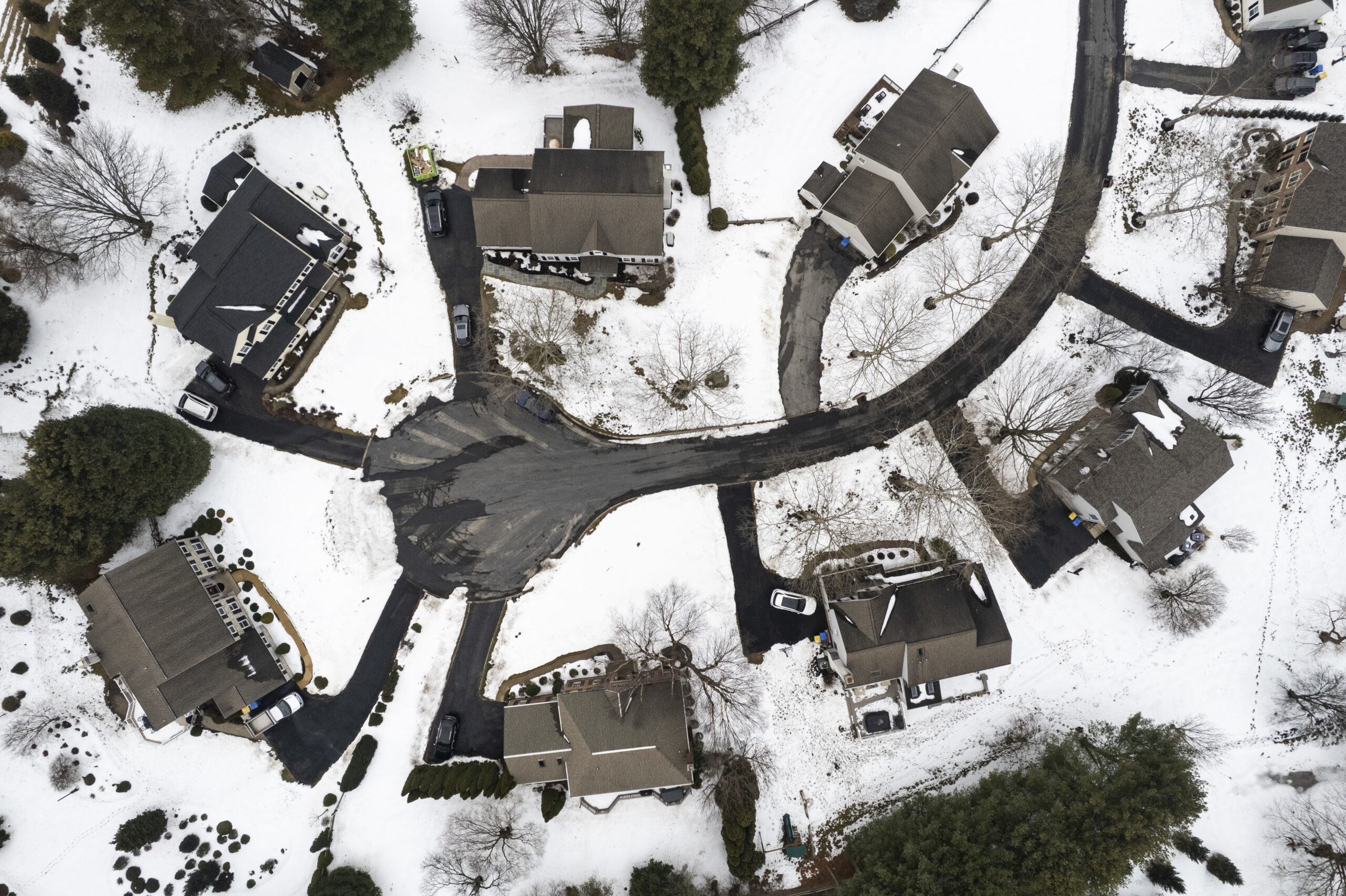
    Homes along Yorkshire Way in Birmingham Township, one of the wealthiest communities in the Philadelphia region.

    Chester County is home to six of the 10 wealthiest spots in the Philadelphia area, according to the latest U.S. Census American Community Survey, which compiles self-reported income data.

    Topping the list is Pocopson Township, which had a median annual household income of $230,000 during the five-year period ending in 2024. It’s followed by West Pikeland ($226,100), Birmingham ($215,000), and Easttown ($214,900). West Vincent ($202,600) and Charlestown ($202,200) were the other two Chesco spots in the top 10, ranking No. 7 and 8, respectively.

    The Inquirer’s Anthony R. Wood and John Duchneskie delve into the data and map the wealthiest pockets.

    📍 Countywide News

    • The county saw widely ranging snowfall totals from this week’s storm thanks to heavy banding. According to figures reported to the National Weather Service, Malvern saw the largest total in Chester County at 12.3 inches, while East Coventry came in at the lower end, with 5.5 inches. See a map of how much snow fell near you earlier this week. Keep an eye out for a bit more snow today.
    • Former Chester County detective Christine Bleiler, who was a technical adviser on HBO’s popular drama Mare of Easttown, is suing the county and her former supervisor over alleged sex discrimination. Bleiler was a police officer in Oxford Borough before becoming a county detective in 2015. She resigned from her post in September.

    💡 Community News

    • In case you missed it, East Vincent’s planning commission recommended last week that the township’s board of supervisors deny a proposed data center at the Pennhurst site when it comes in front of them next month. The commission said the proposal, which calls for five two-story data center buildings, a sixth building, an electrical substation, and a solar field, was not in compliance with the zoning ordinance. The board of supervisors is holding a public hearing on March 16 at 6:30 p.m. at East Vincent Elementary School.
    • Pennhurst isn’t the only data center proposed in the area that’s getting pushback from local officials and residents. Envision Land Use has decided to look elsewhere to develop what it’s calling a “boutique” data center after public outcry over its plans, which called for building a 120,000-square-foot, three-story center at 299 Schuylkill Rd. On Monday, North Coventry Township’s board of supervisors took a preemptive vote that they’d reject the proposal, before it was even formally submitted.
    • The developer looking to build a data center on a remediated Superfund site in East Whiteland Township has submitted updated plans following last month’s planning commission meeting. The applicant is expected to attend tonight’s planning commission meeting, which will begin at 7 p.m. at the township building, and will also be live streamed.
    • Last week, Constellation Energy Group withdrew its application for data center code amendments, which were set to come before the East Coventry Township board of supervisors next month. The energy company was seeking changes that would have allowed data centers on five properties.
    • The 300-year-old village of Cochranville is one step closer to getting its first public water line after West Fallowfield Township secured a $1 million grant to fund the project. It’s estimated to cost $5 to $6 million total and is still years away from a groundbreaking.
    • Lincoln University in Lower Oxford Township is planning to implement new safety measures for large events after a shooting at homecoming in October left one dead and six others injured. The university said it won’t host outdoor events after dusk, and events will be held within “a controlled environment” so visitors can be screened.
    • A group of residents is trying to save a deteriorating West Goshen fieldstone home from being demolished, with hopes of restoring it and converting it into an education center about the county’s Quaker history and involvement in the Underground Railroad. A judge will decide the fate of the property, which was built in 1900 and has been left to deteriorate for the past two decades.
    • John Michael Bontrager, founding head of investment-risk adviser Chatham Financial, is focused on revitalizing Kennett Square, including spaces like beer garden The Creamery. He recently sat down with The Inquirer’s Joseph N. DiStefano to talk about the projects he’s focusing on.
    • West Chester-based home shopping giant QVC Group, parent company to HSN, is being sued for $30 million by fashion designer and longtime former HSN host, Antthony Mark Hankins, who says he was abruptly and unjustifiably terminated last July.
    • Heads up for drivers: A monthslong Peco project to improve natural gas infrastructure in Willistown Township is set to get underway Monday. Work will take place on Paoli Pike between Frazer Avenue and South Cedar Hollow Road and on Fairview Road between Paoli Pike and Gable Road. Paoli Pike will be closed weekdays from 9 a.m. to 3 p.m. until the end of July. During the closures, drivers will be directed to use Devon and Darby Roads and Lancaster Avenue. The project is expected to wrap up by July 31. In Caln Township, Olive Street between South Caln Road and 13th Avenue will continue to be closed on weekdays from 8 a.m. to 4 p.m. for utility construction. Work is now expected to wrap up on April 30.
    • A new gating system at the Oxford Borough parking garage at 2nd Street and Octoraro Alley will go into effect Monday. The system will have 24-hour enforced payments, though free or reduced-cost parking may be implemented in the future.
    • Enrique Lopez-Gomez, 32, of West Grove, pleaded guilty this month to third-degree murder after allegedly punching a 9-month-old baby who was in his care in 2024 and not seeking medical attention for the child afterward. Lopez-Gomez will remain in prison while he awaits sentencing.
    • Uwchlan Township is seeking residents’ feedback as it prepares for a five-year strategic plan. Find the survey here.
    • A few pieces of early childhood education news: In Downingtown, a new Kiddie Academy is opening this weekend at 595 Bell Tavern Blvd. Also, The Learning Experience is planning to open two new Chester County locations. They will be at 715 Pike Springs Rd. in Phoenixville and 43 Lancaster Pike in Malvern. A timeline for opening hasn’t been announced yet. (Philadelphia Business Journal)

    🏫 Schools Briefing

    • Great Valley School District is discontinuing its use of the Bus Status app and will instead send communications through ParentSquare.
    • The Octorara Area School District is looking for a resident of Sadsbury or West Fallowfield Townships to fill an open board director seat. Applications are due Monday.
    • Tredyffrin/Easttown School District will open applications for a redistricting steering committee April 6 to 24. The committee will be comprised of 10 parents or guardians who will work with Wendy Towle, the district’s director of curriculum, instruction, staff development and planning, plus an external facilitator and “observers,” on a redistricting process in anticipation of the opening of the new Bear Hill Elementary School.

    🍽️ On our Plate

    • Tired Hands Brewing Company has closed its Kennett Square taproom and bottle shop at 201 E. State St. after its owner decided it no longer made sense to continue operating there. Tired Hands will continue to distribute its beers in the area.
    • Cup of Dreams Coffee and Tea in the Paoli Village Shoppes is closing on Saturday as its lease ends. The owner is looking for a new location.
    • Tasty Table Catering has opened a new storefront known as The Table: Kitchen + Market for private events for up to 40 people. It’s located at its headquarters at 10 Leopard Rd. in Berwyn.
    • West Chester Restaurant Week continues through Sunday. See all the participating restaurants here.

    🎳 Things to Do

    🎭 Twelfth Night: William Shakespeare’s comedy gets a modern twist. ⏰ Wednesday, Feb. 25-Sunday, March 29, times vary 💵 Prices vary 📍People’s Light, Malvern

    🍸 Hush: An Immersive Speakeasy Experience: The Franklin Follies will perform parlour noir-style music, while cocktails featuring Bluebird Distillery libations will be served. ⏰ Friday, Feb. 27, 8 p.m. 💵 $35 📍The Colonial Theatre, Phoenixville

    🍺 Kennett Winterfest: Over 60 craft breweries will be at this annual event, along with food trucks, live music, and vendors. ⏰ Saturday, Feb. 28, 12:30-4 p.m. 💵 $20.80 for non-alcoholic tickets, $62.40 for regular admission 📍South Broad Street, Kennett Square

    🪈 Family Concert with BVS Woodwind Quintet: This family-friendly and interactive performance features woodwind instruments. ⏰ Saturday, Feb. 28, 2-3 p.m. 💵 $10-$30 📍Kennett Library, Kennett Square

    🏡 On the Market

    A Chester Springs estate with two primary suites
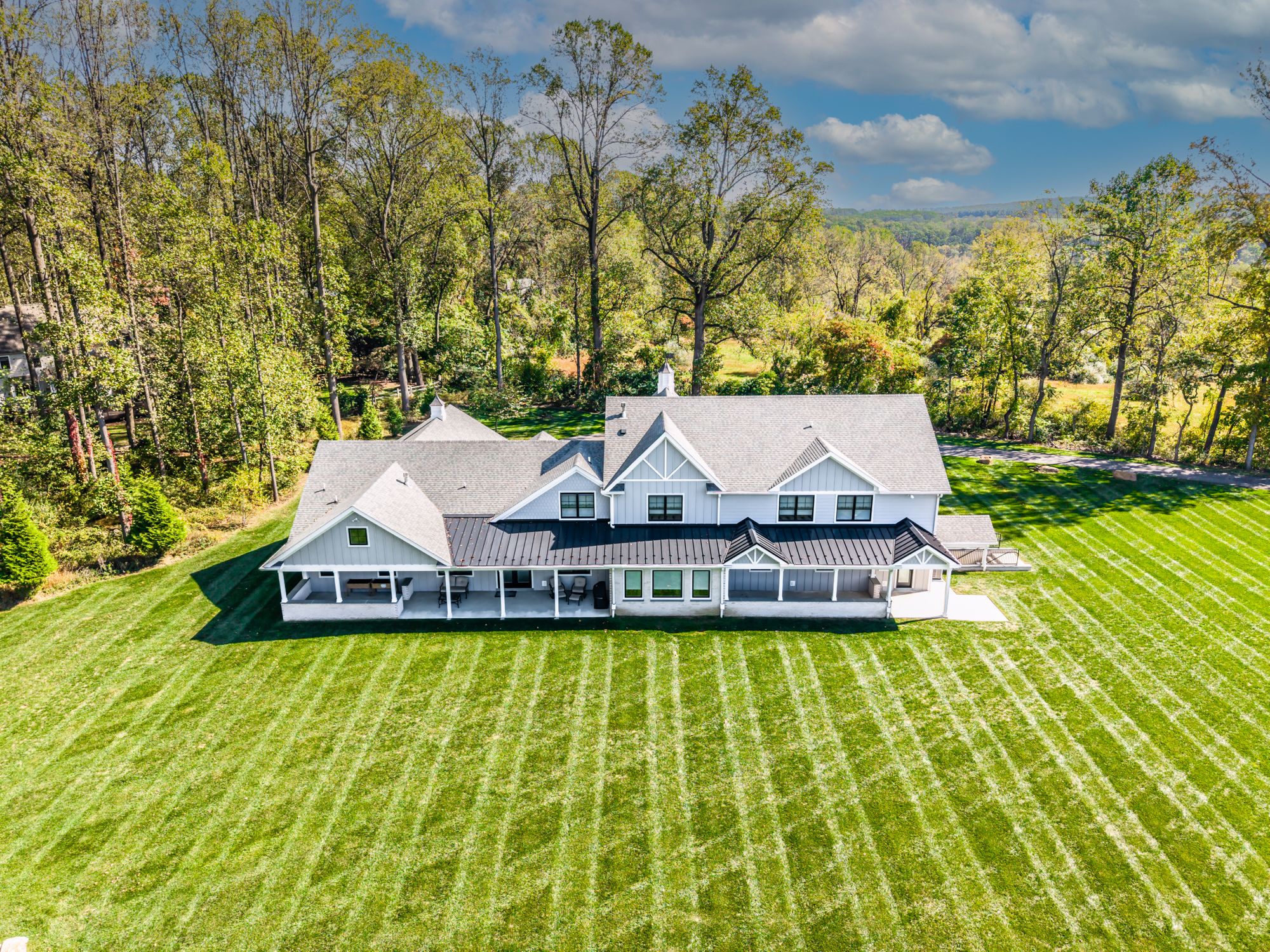
    The home has a covered porch that looks out on the surrounding property.

    Built in 2021, this sprawling Chester Springs estate has plenty of privacy thanks to both conservation land and surrounding pastures. The home features a two-tone kitchen with a quartz-topped island and a walk-in pantry that opens onto a dining and living room with a fireplace. Spanning six total bedrooms, the home has two primary suites, one on the first floor and another upstairs. The first-floor suite has a double vanity and a large walk-in shower, while the second-floor suite also has a soaking tub. Other features include a walk-out finished basement, a five-car garage, and a whole-house backup generator.

    See more photos of the property here.

    Price: $1.895M | Size: 9,130 SF | Acreage: 2.34

    🗞️ What other Chester County residents are reading this week:

    By submitting your written, visual, and/or audio contributions, you agree to The Inquirer’s Terms of Use, including the grant of rights in Section 10.

    This suburban content is produced with support from the Leslie Miller and Richard Worley Foundation and The Lenfest Institute for Journalism. Editorial content is created independently of the project donors. Gifts to support The Inquirer’s high-impact journalism can be made at inquirer.com/donate. A list of Lenfest Institute donors can be found at lenfestinstitute.org/supporters.

  • The real revolution is not giving up on democracy — or on each other

    The real revolution is not giving up on democracy — or on each other

    As the nation enters its 250th birthday at a moment when faith in democracy feels fragile, I have been thinking deeply about what it means to be American right now. This is not a season for rose-tinted nostalgia, nor is it a time to ignore the difficulties of the past year. The challenges we have faced have been real and impossible to dismiss.

    But cynicism is not a solution, and disengagement is not patriotism.

    I keep returning to what feels like a revolutionary idea right now: I am not giving up on democracy, and I am not giving up on my neighbor.

    American democracy is a glorious, unfinished experiment. Anchored in the radical idea that government derives its power from, and is created of, by, and for the people, it was new and unproven nearly 250 years ago.

    Rejecting rule by kings in favor of the will of the people, it was an idea that endured extraordinary challenges and helped shape one of the most successful societies in human history.

    But democracy does not sustain itself. It requires constant care, tension, participation, and belief.

    Because of that, I am choosing to engage.

    Staying in the game

    In everyday life, not giving up on democracy looks like staying in the game. It means talking openly with people in our communities, engaging across differences, and resisting the urge to judge or dismiss ideas before listening for understanding. At its core, it is a recommitment to respecting the human dignity of every person.

    I come to this work as the president and CEO of Eastern State Penitentiary Historic Site, a site founded on a Quaker belief in the “light within” every person, and a deep respect for our shared humanity. Today, Eastern State bears witness to nearly 200 years of evolving ideas about justice, liberty, and freedom in America. Walking its corridors and sitting with its stories reveals a powerful record of trauma and human resilience — and a nation still wrestling with the true meaning of those ideals.

    This perspective is also shaped by more than 20 years of studying the Constitution, a document woven with both brilliance and imperfection. At Eastern State, we recognize humans’ capacity for change. Like democracy itself, people are not a finished product. We are living beings who both require and deserve care to grow and evolve.

    When democracy is healthy, individuals and groups can express different viewpoints freely, with the goal of shaping public life. But those viewpoints must also be shaped by one another through engagement and dialogue. Civic ideas are meant to strengthen over time, not harden into absolutes. When trust erodes, that essential civic interplay breaks down.

    We see this erosion clearly. According to the General Social Survey, the share of Americans who believe “most people can be trusted” fell from 46% in 1972 to just 34% in 2024. Research shows social trust is rooted in personal experience. How we treat one another is inseparable from the health of our democracy.

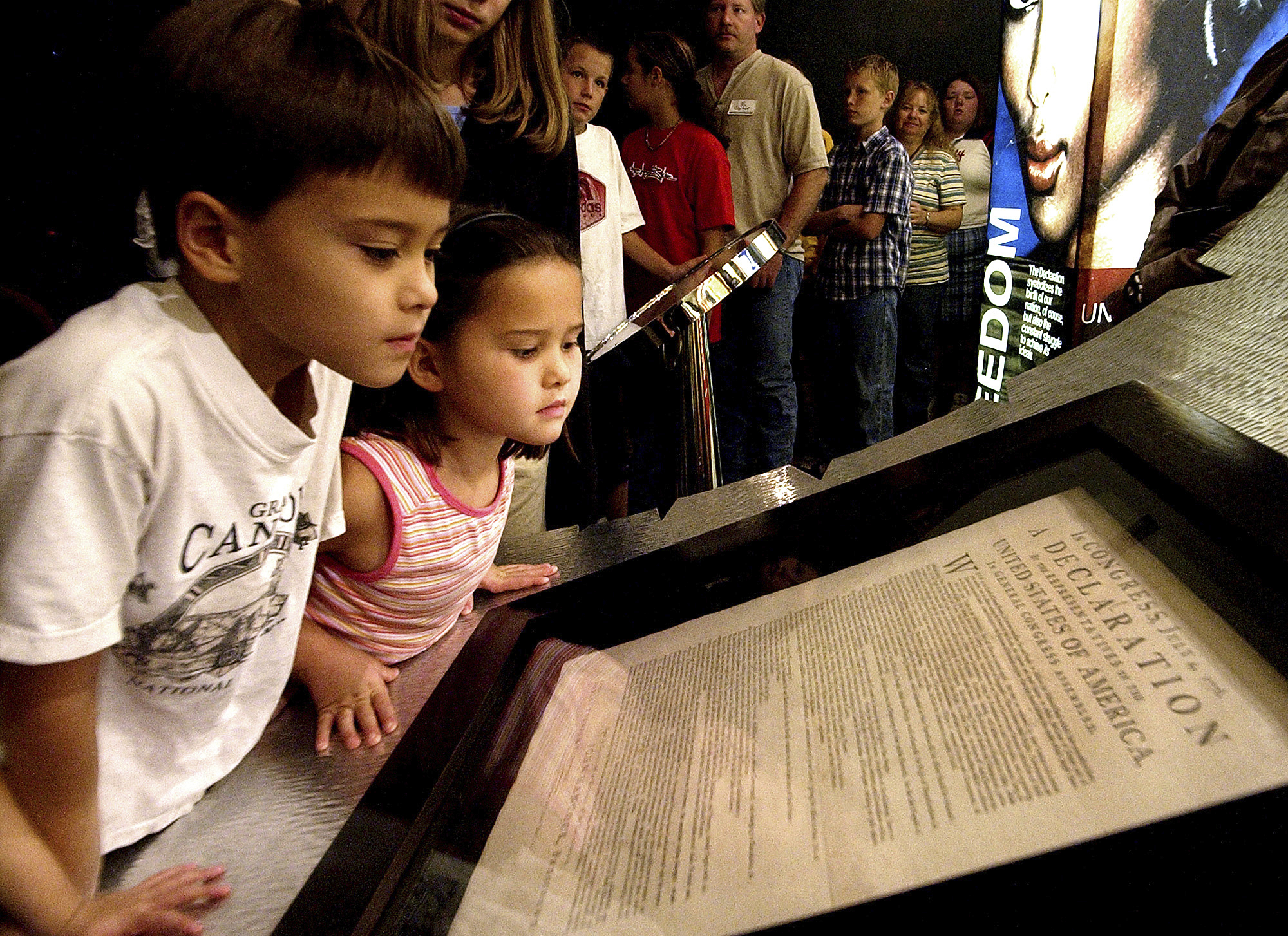
    Children look at an original printed version of the Declaration of Independence. The ideals that guided the founders are pertinent today.

    The American Revolution did not happen in a single summer in Philadelphia. John Adams wrote that the war was just one part of the revolution, stating: “The Revolution was in the Minds and Hearts of the People. … This radical Change in the Principles, Opinions Sentiments and Affection of the People, was the real American Revolution.”

    Likewise, Benjamin Rush, a framer of both the Declaration of Independence and of Eastern State, believed the real revolution was still unfolding, shaped over time by citizens’ morals and manners. He was right then, and he remains right now.

    Civic holidays give us a chance to come together, remember, commemorate, and celebrate. As we approach the Semiquincentennial, perhaps it is also time to reconnect and consider how those founding ideals can guide us forward.

    The real revolution is not behind us. It is happening now — in how we show up for one another, and in our refusal to give up on each other.

    Kerry Sautner is president and CEO of Eastern State Penitentiary.

  • Exploring Cherry Hill’s Underground Railroad stop | Inquirer Cherry Hill

    Exploring Cherry Hill’s Underground Railroad stop | Inquirer Cherry Hill

    Hello, Cherry Hill! 👋

    Archaeologists are digging at Croft Farm to learn more about the site’s stop on the Underground Railroad. Also this week, new public pickleball courts are in the works, plus several high school sports teams are making post-season runs.

    If someone forwarded you this email, sign up for free here.

    An archeological dig opens a window to the past at Croft Farm

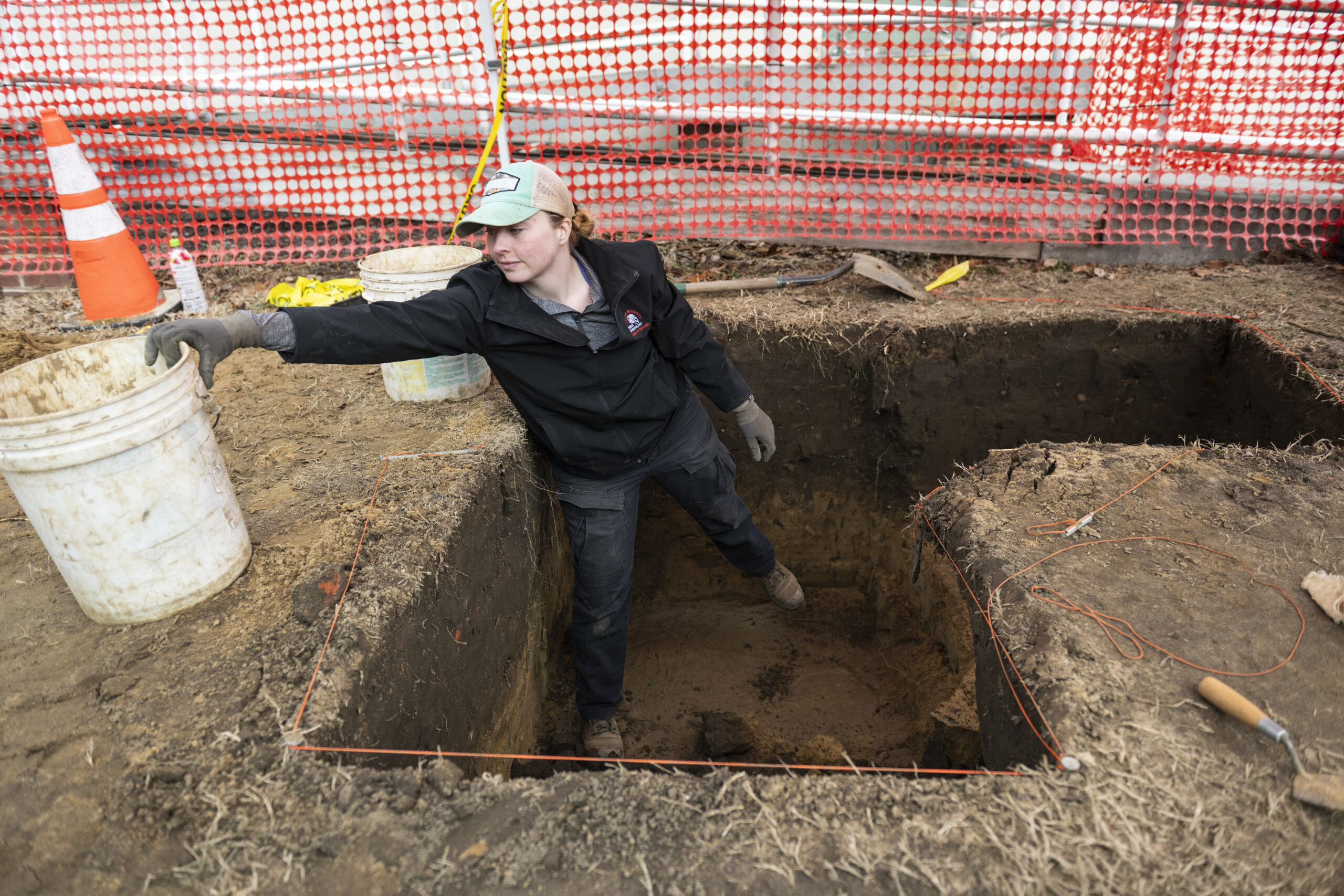
    Chelsea Carriere, archaeologist with PS&S, grabs for a bucket while digging at Croft Farm.

    Over the weekend, archaeologists unearthed pieces of the past as they excavated around the historic Croft Farm property. The dig, which was open to the public to view and part of a project to stop groundwater from entering the home’s basement, revealed artifacts dating back hundreds and thousands of years.

    They provide clues to the site’s past, including as a stop on the Underground Railroad, and before that, as a place where the Lenni-Lenape Indigenous people lived.

    Animal bones and pieces of pottery will help archaeologists better understand eating habits and traditions of those who lived there, The Inquirer’s Brett Sholtis reports.

    Read more about what the archaeologists unearthed.

    💡 Community News

    • This week’s storm brought a lot of snow to the region, with totals varying widely thanks to heavy banding. While the National Weather Service didn’t report an official total for Cherry Hill, surrounding towns reported 14 to 16.5 inches. The bad news (for those who don’t like snow): There’s the potential for a little bit more today. The good news is that it’s unlikely the snow will stick around as long as it did with last month’s storm thanks to the warmer temperatures and the extra daylight that late February brings.
    • Cherry Hill residents had a median household income of $121,500 between 2020 and 2024, according to the latest U.S. Census American Community Survey, which compiles self-reported income data over a five-year period. That’s up just about $2,000 from the last survey, looking at data from 2010 to 2014, and makes Cherry Hill the third-wealthiest town in Camden County.
    • Good news for pickleball players: Eight new public courts are in the works at two sites around town. The township is planning to build four courts with lights at Beechwood Avenue and Route 38. The goal is to start construction this summer and have the courts ready by early fall. Meanwhile, Camden County is building four courts at the nearly 18-acre John Adler Memorial Park at Challenge Grove at the corner of Bortons Mill and Caldwell Roads. Construction on those courts is also expected to begin this summer and will add to the park’s existing sports facilities, including a softball field, and basketball and bocce courts.
    • The planning board is meeting Monday evening to hear public comment about an amendment to the township’s Housing Element and Fair Share Plan, which would amend its overall master plan if adopted. One change would allow for the site of the six-story office building at 3 Executive Campus to be redeveloped into residential or mixed-used buildings with between 39 and 64 affordable units. It would also allow for part of the 28.2-acre site’s land to be developed. See a draft of the amendment here.
    • A Cherry Hill man who pleaded guilty to child molestation after having a sexual encounter with a 13-year-old girl in Indiana in 2021 was sentenced last week to three years in prison. Jonathan A. Trauger, 28, must also register as a sex offender for a decade after his release. (Courier Post)

    📸 Cherry Hill residents dig out after the storm

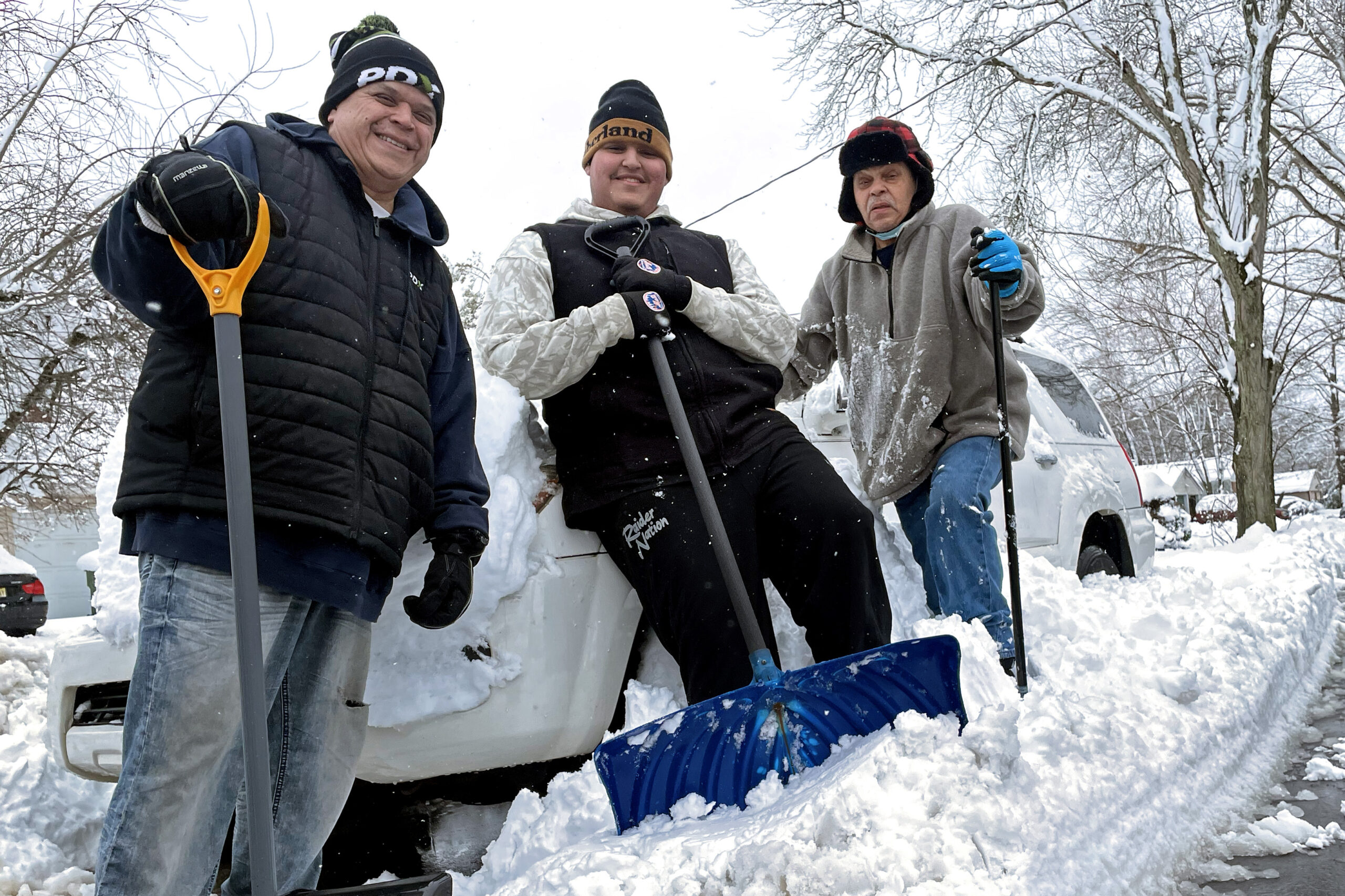
    Three generations of Cherry Hill residents, Julio Maldonado Sr., 79 (right), Julio Maldonado III, 19 (middle), and Julio Maldonado Jr., 49, (left), dug out the family’s car on Covered Bridge Road Monday. “We live together, play together, and work together,” Julio Maldonado Jr. said.

    🏫 Schools Briefing

    • There are several school board committee meetings on Monday evening, which are open to the public. See the district’s full calendar here.
    • East girls’ swimming will take on Bridgewater-Raritan Regional High School in the NJSIAA Team Swimming Championships this morning, after the event was postponed due to the weather. The meet will kickoff at 8:30 a.m. East defeated Passaic County Technical Institute 88-82 in group semifinals to claim its spot. As for the East boys’ swimming team, after making it to the semifinals, the Cougars fell to Hillsborough High 91.5-78.5. (NJ.com)
    • The NJSIAA girls’ basketball playoffs kick off this week, with both East and West competing. The West girls’ team will look to defend its state championship title in the first round of the Group 3 tournament on Friday at 3:45 p.m., hosting Cumberland Regional High School. Follow the results here and see the Lions’ full group bracket here. And East will take on Atlantic City High School tomorrow at 4:30 p.m. as part of the Group 4 tournament. See East’s full group bracket here.
    • East boys’ basketball also kicks off its NJSIAA playoff run this week, hosting Toms River High School North tomorrow at 4 p.m. The Group 4 top-seeded East went into the playoffs with a 21-3 regular season record. See the Cougars’ full Group 4 bracket here.
    • Camden Catholic High School’s boys’ wrestling team captured its 20th state title on Sunday, defeating Pope John XXIII Regional High School 53-19. It now has the third-highest number of state titles among public and non-public teams. (Courier Post)

    🍽️ On our Plate

    • Two Cherry Hill spots serve some of the best bagels in the state, according to a new ranking from NJ.com. Bagel Spot on Kings Highway landed at No. 18 on the list for its 24 types of bagels and 30 varieties of spreads, while K & A Bagel Cafe came in at No. 43. The Route 70 spot has 21 kinds of bagels and 18 spreads, including a honey cinnamon butter.

    🎳 Things to Do

    🎷 A Journey Through Jazz: Hear the Bradford Hayes Jazz Quartet perform. ⏰ Friday, Feb. 27, 7-8:30 p.m. 💵 $15 in advance, $20 at the door 📍Croft Farm Arts Center

    Bridgerton Handbuilding Workshop: Fans won’t want to miss this workshop, where you can make a teacup and saucer inspired by the popular Netflix show. ⏰ Saturday, Feb. 28, 10 a.m.-1 p.m. 💵 $150 📍Hugs Ceramics

    🍎 Holistic Health and Healing Expo: Learn about holistic wellness through lectures and workshops. You can also meet practitioners and shop for related goods. ⏰ Sunday, March 1, 11 a.m.-5 p.m. 💵 Free or $7.18 for VIP admission 📍DoubleTree by Hilton Cherry Hill Philadelphia

    ✡️ Purim Carnival: Kids are encouraged to dress in costume for this event celebrating the Jewish holiday. There will be face painting, games, crafts, food, and drinks. ⏰ Sunday, March 1, 11:30 a.m.-1:30 p.m. 💵 $20 per child 3 and older, free for adults and children under 3 📍Congregation Kol Ami

    🏡 On the Market

    A classic four-bedroom brick home in Short Hills

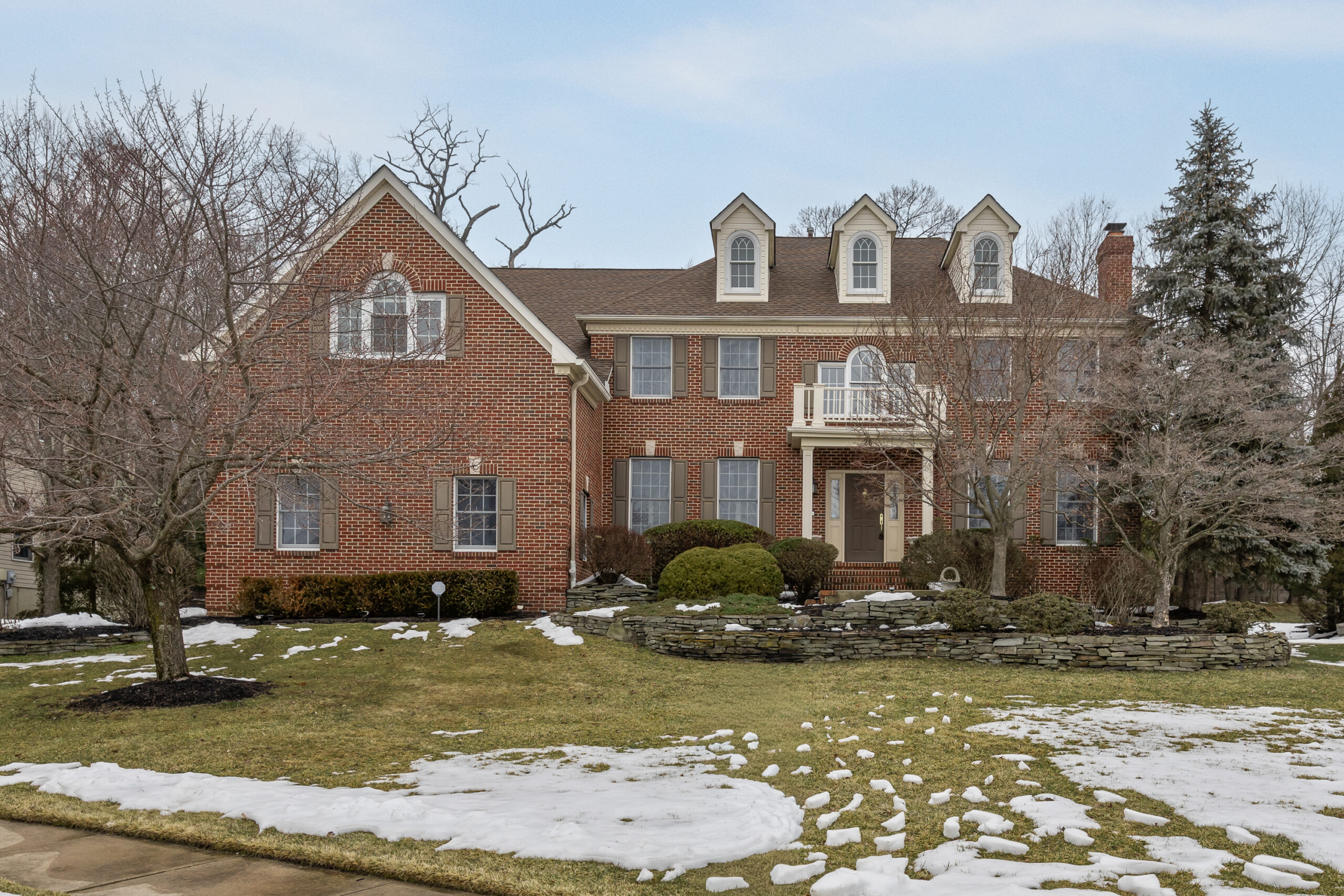
    The home has a classic brick facade, a portico, and dormers.

    Located in the Short Hills neighborhood, this brick-fronted home is full of classic elements, including a covered portico and dormers. Inside, there’s a two-story foyer, a formal living room with a gas fireplace, a formal dining room, a first-floor office, and a family room with a brick fireplace. The kitchen has a double oven, a separate bar area, and a dining area with vaulted ceilings and access to the deck. There are four bedrooms upstairs, including a primary suite with a separate sitting area, a large walk-in closet, a jacuzzi tub, and two vanities. Other features include a finished basement with a full bathroom, a three-car garage, and a patio.

    See more photos of the home here.

    Price: $1.05M | Size: 5,007 SF | Acreage: 0.46

    🗞️ What other Cherry Hill residents are reading this week:

    By submitting your written, visual, and/or audio contributions, you agree to The Inquirer’s Terms of Use, including the grant of rights in Section 10.

    This suburban content is produced with support from the Leslie Miller and Richard Worley Foundation and The Lenfest Institute for Journalism. Editorial content is created independently of the project donors. Gifts to support The Inquirer’s high-impact journalism can be made at inquirer.com/donate. A list of Lenfest Institute donors can be found at lenfestinstitute.org/supporters.

  • Philly has lots of trails. For the first time, it is hiring a full-time crew to maintain them.

    Philly has lots of trails. For the first time, it is hiring a full-time crew to maintain them.

    Philadelphia’s miles of trails draw a constant stream of runners, walkers, hikers, cyclists, and commuters.

    Yet for years, city officials have depended on residents calling in or logging in to the 311 system to report trail issues before a crew was sent out.

    Now, Philadelphia Parks and Recreation (PPR) is set to roll out the city’s first dedicated trail-maintenance crew, a pilot program funded by a $600,000 grant from the William Penn Foundation.

    The money will fund a six-person team tasked exclusively with monitoring and maintaining multiuse trails that thread through 10 watershed-protecting parks.

    Susan Buck, PPR’s deputy commissioner of operations, said the crew would launch this summer and resolve a long-standing logistical problem.

    “The focus has always been on building the trails,“ Buck said. ”However, in recent years we would go to community meetings and hear more about trail maintenance.”

    Right now, addressing a downed tree or a washed-out path means pulling staff away from recreation centers and neighborhood parks. A dedicated trail crew will ease that strain, she said, and position the city to address issues before they snowball into bigger problems.

    Now, PPR can be proactive, she said.

    Parks are priorities

    The crew’s immediate priority will be to rotate through 10 watershed parks, such as Wissahickon Valley, Pennypack, Tacony Creek, and Cobbs Creek. Crews will also monitor the Schuylkill River Trail, which recently saw major repairs to sinkholes and storm damage.

    Buck said the crew will initially be responsible for about 80 miles of trails.

    The city has 166 miles of trails or more depending on what’s being counted. Overall, PPR manages asphalt, gravel, and dirt trails that residents use not only for recreation but for commuting and walking neighborhood to neighborhood.

    The new crew will have skid-steer loaders, which are small versatile vehicles with mechanized arms and buckets used to clear, dig, grade, and lift. And they’ll have other equipment such as wood chippers and chainsaws.

    For the average park-goer, it should translate to a smoother weekend run, daily commute, or less frustrating bike ride, Buck said.

    “Overall, people will see safer trails and more enjoyable trails,” Buck added. “If you’re a runner or cyclist getting hit by overgrown brush, maybe we’ll be able to get to that faster. Ruts and divots should get filled in faster.”

    By having a mobile team that can move from the Wissahickon to East Fairmount Park, the city aims to create a uniform experience for all users.

    Buck has been working alongside Sarah Clark Stuart, the trails manager for the Streets Department.

    The two are working toward a cost-sharing agreement between the two departments to turn the pilot program into an annual part of the city budget.

    That way the crew can continue to clear overgrown brush, haul away downed trees, fix washouts, tackle soil erosion, eliminate tripping hazards, and clean graffiti off signs.

    The pilot program could use existing employees or result in new hires, she said.

    ‘Great cities have great parks’

    Sara Stevenson, executive director of Friends of the Wissahickon (FOW), said the dedicated crew represents a shift in the way the city has viewed its natural assets. The nonprofit FOW helps manage the city-owned Wissahickon Valley Park.

    The 2,000-acre park has more than 50 miles of paved and dirt trails. The new trail crew will be assigned to help with paved paths and major arteries like Forbidden Drive.

    “It’s a great program,” Stevenson said. “The more we can invest in Parks and Rec, the better our city will be. This is a good step forward and a recognition of how important the trail system is.”

    The Wissahickon relies on thousands of volunteers annually to pull invasive species, clear debris, and help with other maintenance. Stevenson said that the demands of maintaining sustainable trails requires a professional, daily presence.

    “Great cities have great parks,” Stevenson said. “I think what we’ll see is a new standard of care … It’s an illustration that the city understands the value of the trail across the entire city.”

  • This Philly-founded company is selling empanadas out of vending machines. Here’s where to find them.

    This Philly-founded company is selling empanadas out of vending machines. Here’s where to find them.

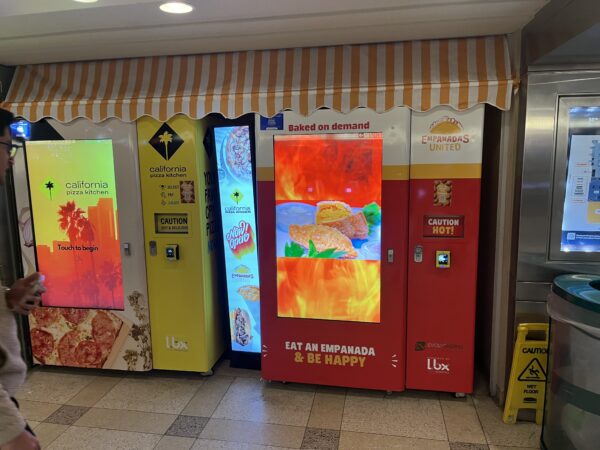
    The fire-engine-red Empanadas United machine arrived in Philadelphia last fall. It appeared in the lobby under the SEPTA Regional Rail tracks at 30th Street Station, where yearslong renovations have shut restaurants, leaving a gap for automation to fill.

    The empanada machine works like this: Tap your card. Choose one of four fillings. Whirr, beep, the ovens ignite, the rich smell rises. A minute passes. A pair of mottled, tan, crusted, half-moon-shaped empanadas, each bigger than a man’s hand, drop into a topless personal-pizza-sized box. The little plastic door opens, and your account is $8 lighter.

    That’s a premium price compared to what you pay in Philly’s corner stores; but it costs extra to eat in a transit hub. The empanada machine is one of several rival meal-vending machines at the station, such as the California Pizza Kitchen machine that charges $12 for a plain, 7-inch pizza.

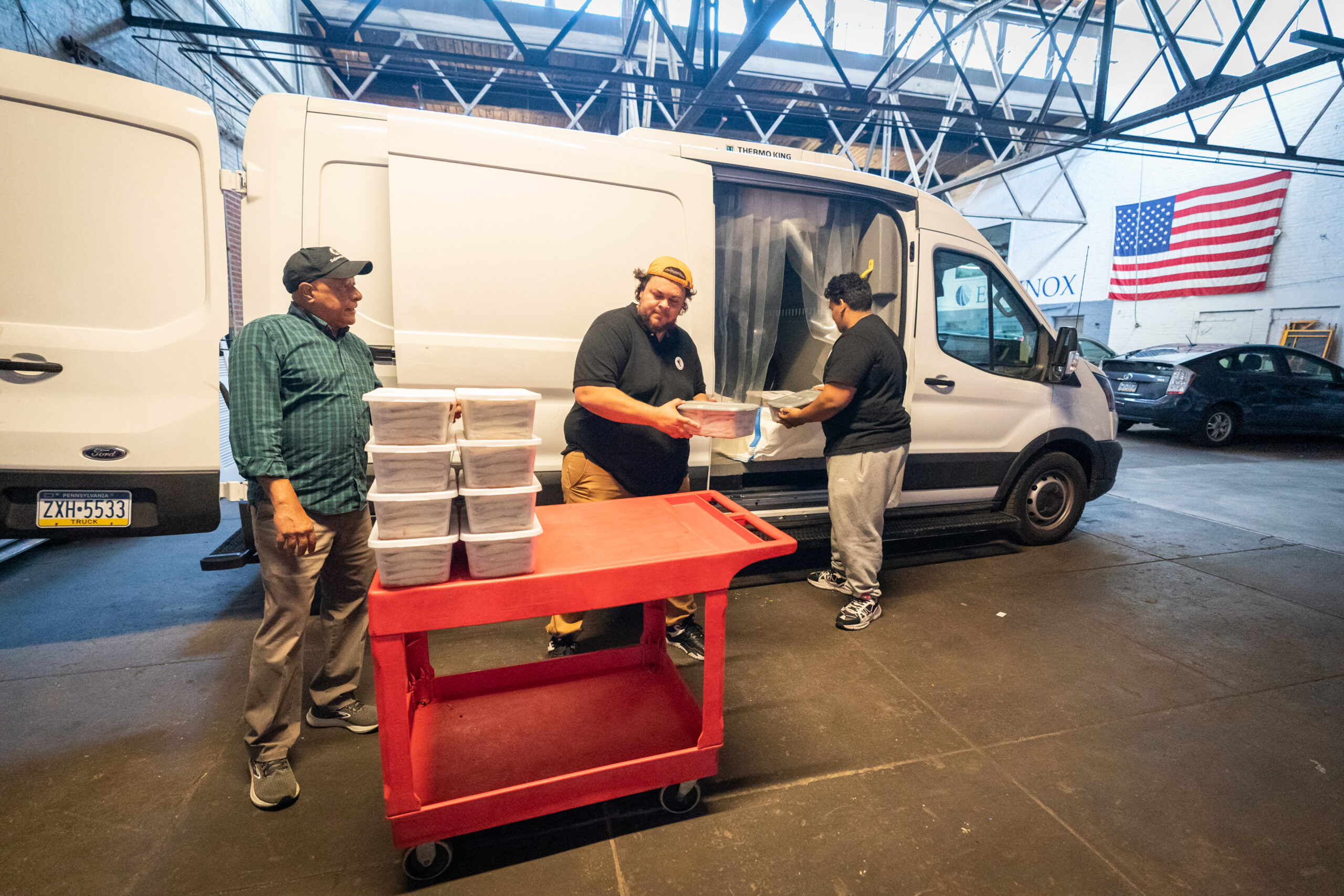
    These turnovers were formed — from flour and fat, chicken or beef, sazon and cebolla — last night or yesterday, at Empanadas United. The Philadelphia-based empanada bakery serves restaurants across the region, from its base 15 blocks north of the train station.

    Pedro Rodriguez (left) with Pedro Rodriguez (center) and his son, Yorby Rodriguez, load empanadas for delivery at Empanadas United in Philadelphia in 2024.

    The vending machine, assembled by LBX Food Robotics of Sunnyvale, Calif., used two ovens to finish the turnovers — convection for the crust, infrared for the fillings. It is also furnished with a microwave oven, for use with prepared foods, but the empanadas don’t need that. The machine sees steady use, say SEPTA staff who watch the busy lobby below the train platforms.

    The machine is profitable, says Victor Tejada, the former Comcast designer who started Empanadas United in 2023. The bakery, using order software including Tejada’s Dominican Food App, was supplying empanadas to takeout customers at 160 stores, Tejada says, when he and his partners sold it last year to Virtual Dining Concepts (VDC). The acquirer says it has taken the brand national and expanded service to more than 500 locations — plus a handful of vending machines, starting with the one at 30th Street Station. Tejada stayed on to run the brand.

    The Philadelphia empanada factory makes a fraction of the empanadas now sold under its name. In other cities they are made by local bakeries to Empanadas United specifications, according to Adam Robin, VDC’s chief operating officer.

    Taking brands national

    Florida-based VDC focuses on taking local and celebrity food brands national, contracting chain restaurants, food delivery services, and other food retailers. They aim to set standards so the products can be reproduced in local plants anywhere and mass-marketed fresh. Its other brands include Barstool Sports’ Pardon My Cheesesteak, MrBeast Burger, and MLB Ballpark Bites.

    VDC last year hired Evolvending, founded by former VDC executive Valentina Ellison, to deploy the Philly empanadas in machines at transit centers, as colorful working billboards for the brand.

    “Empanadas United has a really excellent concept, Victor Tejada has an entrepreneurial spirit that we love working with, and we are growing the brand all over the country,” said VDC’s Robin. He learned the restaurant business as a teenager, rising from busboy to chef, and joined VDC as chief operating officer in 2021.

    “We are a virtual dining company. We targeted this brand for acquisition, we bought it last year, we manage the online storefronts,” Robin added. The company has sold more than 2 million empanadas since the deal, and plans to sell six million this year, he said.

    The machines, a small part of total Empanadas United distribution, each have 60 slots, each of which holds two empanadas, filled on a two-day cycle, according to Robin. If they sell out, that’s more than 20,000 empanadas and $80,000 per machine per year.

    “They cover their costs. We are thinking of expanding them,” Robin says.

    Evolvending has also put Empanadas United machines at Boston Logan Airport and Hartsfield-Jackson Atlanta International Airport. But it’s not yet at Philadelphia International Airport.

    The company also hasn’t set up Empanadas United machines in its hometown of Miami yet, while it considers what flavors to offer in that large and diverse market, Robin said. Among empanada fans, “Some love Venezuelan, some Cuban, some Mexican, and some like fun flavors like apple pie.”

  • Philly’s Greyhound station is one step closer to finding a permanent home

    Philly’s Greyhound station is one step closer to finding a permanent home

    Lights shine from a window of the abandoned Greyhound intercity bus terminal on Filbert Street as construction crews demolish fixtures and begin renovations ahead of a May reopening.

    While the old depot is ready for crowds of travelers attending high-profile special events this year, the city Department of Planning and Development has identified three possible locations for a permanent intercity bus station.

    Officials sifted through 208 possible locations over the past two years before zeroing in on the three sites:

    • Eighth and Arch Streets: A pair of parking lots on Arch Street near Eighth Street next to the African American Museum. The lots, at 701-709 and 721-737 Arch St., are owned by the city and Parkway Corp.
    • 15th and Vine Streets: The Philadelphia Gateway Garage at 1540 Vine St. along with an adjoining parking lot. They are owned by the Pennsylvania Department of Transportation and the Philadelphia Parking Authority.
    • Near 30th Street Station: A parking lot just north of 30th Street Station, at 2931 Arch St., near the Cira Centre office tower.

    On Wednesday, the city Planning Commission is holding a public open house at Independence Visitors Center from 6 to 8 p.m. People can learn about the sites, share their ideas, and ask questions about the future home of an intercity bus facility.

    There’s also an online survey collecting opinions about what the intercity bus station needs and where it should go, due March 13.

    The former Greyhound terminal at 1001 Filbert St. “is not a long-term solution for the city’s intercity bus needs,” city officials say, though it will provide a safe and comfortable indoor station for travelers, as opposed to the current, haphazard outdoor curbside loading zones along Spring Garden Street near Columbus Boulevard.

    It is scheduled to reopen in plenty of time for events celebrating America’s 250th birthday and World Cup soccer tournament matches in the summer.

    That’s why the city turned to the old station as a stopgap solution. The Philadelphia Parking Authority will operate the facility under a 10-year renewable lease with the private group of New York investors that owns it.

    The city says its goal is a modern “transportation hub” with amenities for travelers and bus operators and, ideally, some development built around the facility. It would be owned by the city.

    “Public ownership means it won’t be closed down by a landlord or private bus company,” the planning department said in a statement. In addition, the forever depot “could be designed to have housing in the floors above the station or retail spaces within the station. These uses could help support … construction and operation.”

    Why was Philly’s Greyhound terminal moved?

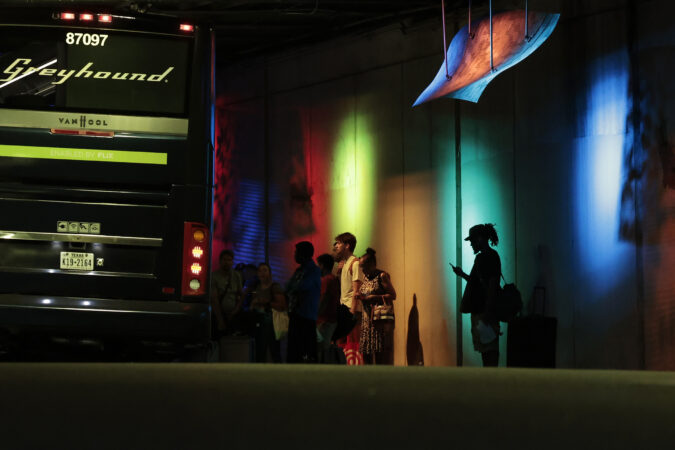
    Greyhound ran the terminal at 10th and Filbert for more than three decades but pulled out in June 2023, ending its lease with the owners amid the bus company’s push to cut costs by shedding real estate it owned or rented nationwide.

    Other intercity bus carriers have done the same, operating from curbsides in a number of cities.

    Greyhound may have had to leave the property anyway because the Philadelphia 76ers in 2022 proposed building a new arena on top of it and Filbert Street.

    When those plans fell through, the building was empty again, while Greyhound, its parent company FlixBus, and family-owned Peter Pan Bus Lines were operating at curbside on the 600 block of Market Street. That site, chosen by city officials, lacked benches, bathrooms, or shelter for customers.

    Traffic was a mess, and SEPTA had to reroute some of its metro bus routes for a time.

    In November 2023, Greyhound and the other carriers moved operations to a corner in Northern Liberties along Spring Garden Street with more space than the Market Street block. City officials promised it was temporary, but the “station” is still there, with attendant trash and disruptions to local business.

    Plans to move intercity bus operations elsewhere collapsed amid community opposition, notably to a proposal to use the first level of an Old City parking garage at Second and Walnut Streets as a temporary terminal.

    Consultants and city planners picked 35 potential sites for closer analysis. They were looking for places that could accommodate a multistory, mixed-used development in addition to a station and that were close to Center City or University City, transit, and highway ramps.

    They also preferred a publicly owned space not already marked for development, according to a document prepared for the public meeting.

    In the end, three places checked most boxes.

    (function() {
    var l2 = function() {
    new pym.Parent(‘GREYHOUNDMAP.html’,
    ‘https://media.inquirer.com/storage/inquirer/projects/innovation/arcgis_iframe/GREYHOUNDMAP.html’);
    };
    if (typeof(pym) === ‘undefined’) {
    var h = document.getElementsByTagName(‘head’)[0],
    s = document.createElement(‘script’);
    s.type = ‘text/javascript’;
    s.src = ‘https://pym.nprapps.org/pym.v1.min.js’;
    s.onload = l2;
    h.appendChild(s);
    } else {
    l2();
    }
    })();

    Site pros and cons

    Eighth and Arch Streets

    The Eighth and Arch site has room for 18 bus parking spots, the planning department said. It could fit a 113,000-square-foot station and an overall 640,000-square-foot development.

    Strengths: Proximity to several transit stops and to I-676 and I-95, as well as the potential to build public parking above the station and to use the African American Museum building when that entity moves to the Parkway.

    Challenges: The ownership, split between the city and a private corporation, could require coordinating with the Federal Detention Center there on the southwest corner, and buses may need to be routed through Chinatown.

    15th and Vine

    At 15th and Vine Streets, the Gateway garage could fit 16 bus slips, a 112,000-square-foot station, and a 1.37 million-square-foot development, planners say.

    Strengths: It’s next to I-676 and close to transit. Plus, it is owned by PennDot and operated by PPA.

    Challenges: The parcel is split in ways that could hinder bus circulation, and Spring Street nearby would need to be converted to one-way.

    Near 30th Street Station

    The site at 30th and Arch Streets could fit 12 bus slips as is, or the deck on which the lot sits could be expanded to fit 24 spaces.

    Strengths: The site has quick access to SEPTA and NJ Transit stops, Amtrak, and I-76. There are dining options in the area.

    Challenges: Amtrak owns the property, however, and the city would have to coordinate with the company to develop over the railroad tracks and the structural work needed to strengthen the lot and ramps for heavy bus traffic. PennDot also has said there would have to be substantial work to the entrance and exit ramps to the Schuylkill Expressway.

    What’s next?

    The city plans to consider the feedback it gets Wednesday, update the schematics, and then hold another public event later in the year. It hopes to have a final report by the end of 2026 that names the site.

    And then begins the long process of acquiring the site, designing the project, and figuring out how to pay for it.

  • See what roughly $765,000 can buy you in the Chestnut Hill, Riverton, and Upper Dublin housing markets | The Price Point

    See what roughly $765,000 can buy you in the Chestnut Hill, Riverton, and Upper Dublin housing markets | The Price Point

    The Price Point compares homes listed for similar sale prices across the region to help readers set expectations about house hunting.

    When homebuyers sit down to make their must-have lists, they usually have a property size in mind.

    Maybe they’re outgrowing their home and need something bigger. Maybe their home is too big and they need to downsize.

    A bigger home can mean a bigger price tag, but not always.

    The latest installment in the Price Point compares homes in the region that are listed for sale for about the same price but vary widely in size.

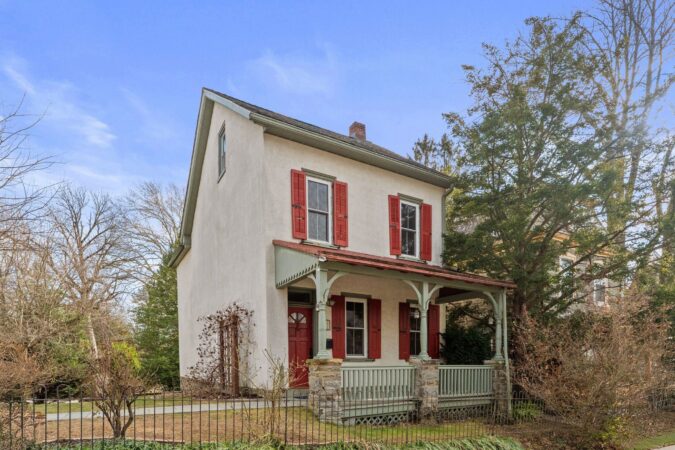
    The Upper Dublin Township home is about 1,000 square feet larger than the home in Riverton, Burlington County, which is about 1,000 larger than the home in Chestnut Hill.

    But they’re all for sale for between $765,000 and $770,000. That’s more than twice the typical price of a home sold in the Philadelphia metropolitan area last month — $380,000, according to the multiple listing service Bright MLS.

    Colonial in a special location

    What makes this house in Upper Dublin Township special is its location, said listing agent Frank Blumenthal with Keller Williams Real Estate Tri-County.

    It’s about three miles from Regional Rail’s Ambler and Fort Washington stations, close to the Pennsylvania Turnpike and other major roads, and not far from shops and restaurants.

    And the home is a few hundred yards from Mondauk Common, a public park that includes a one-mile walking track, sports fields, exercise equipment, playground equipment, basketball courts, and pavilions. The park also hosts community events throughout the year.

    The home has expansive side and rear yards.

    Inside, the large primary bedroom includes a sitting room. The kitchen flows into the great room, which has a fireplace and lots of windows. The home also has an unfinished basement.

    Within the last few years, the owner replaced the roof and heating and cooling systems. A buyer may want to update the kitchen and bathrooms, “but the big-ticket items are out of the way,” Blumenthal said.

    The property was originally listed for $834,000 in September. The price dropped to $828,000 in November and $769,000 in February.

    Fully renovated historical home

    This house is more than a hundred years old and part of a historic district.

    “Homes were just built differently back in the day than they are now, and they stand the test of time,” said listing agent Michelle Bishop with Real Broker LLC.

    Because the home is historically protected, the investor who is flipping the property was limited in the exterior changes he could make. But he installed a new roof and new windows and fixed the siding.

    The home’s interior was a gut job, Bishop said. The property was in rough shape before the renovations, which included tearing down walls and installing new mechanical systems.

    The owner built a one-car detached garage and fixed up the in-ground pool.

    The staircase and double-sided fireplace are original to the home. New features include an updated kitchen, striking light fixtures, and a soaking tub.

    “The perfect buyer for this property is somebody who really appreciates historical homes but enjoys living in modern-day comfort,” Bishop said.

    Bishop called Riverton “a cute little town” and said she’s seen families who like Moorestown but can’t afford to live there come over to the borough. The home is close to parks, the Riverton Country Club, the Delaware River, Routes 130 and 73, and a NJ Transit light rail station on the River Line.

    The property was originally listed in January for $799,999, but the price dropped to $769,999 in February.

    Detached house on a double lot

    This property isn’t one that a potential buyer would typically see in this twin-filled part of Philadelphia.

    “It’s a detached home in Chestnut Hill,” said listing agent Neil Dessecker with RE/MAX One Realty. And its double-wide lot offers large side and rear yards, which are fenced in.

    On tours, many prospective buyers said they liked the property because they were looking for more space, he said.

    The home also has more of the usual features of homes in the area, including a covered front porch and hardwood floors.

    The kitchen includes high-end Bosch appliances, including an induction range. The owners converted the home from oil heating to central air-conditioning and heating.

    The third floor is a flexible space that can be used as a bedroom, living space, or playroom.

    The home doesn’t include parking, which Dessecker noted “usually skyrockets the price.” But the sellers said they almost always parked their two vehicles on the street right in front of their home.

    “The sellers said it was an incredible block and they loved the people there,” Dessecker said.

    The home is not far from the shops and restaurants along Germantown Avenue and is near an Acme. The Wyndmoor station on Regional Rail is at the end of the street.

    “There’s just not a lot of inventory in Chestnut Hill,” Dessecker said. “So when something of quality becomes available, you have to seize the opportunity.”

    The property is listed for $765,000.

  • Five things to watch as Villanova plays its final four regular-season games before the Big East tournament

    Five things to watch as Villanova plays its final four regular-season games before the Big East tournament

    Inside a sold-out Xfinity Mobile Arena on Saturday night, Villanova endured a 40-16 UConn run over a 20-minute stretch that turned the biggest home game of the season into a blowout loss.

    The loss dropped the Wildcats to 21-6 and 12-4 in the Big East, and, barring the unforeseen, all but ensured them the No. 3 seed in the conference tournament, which begins in two weeks at Madison Square Garden.

    Just four games separate the Wildcats from the postseason, starting with a home game Wednesday night vs. Butler (15-13, 6-11). A trip to the NCAA Tournament, which would snap a three-season drought, is basically a foregone conclusion, but, as Saturday showed, there are things that need to be corrected if Villanova wants to finish the season strong and threaten to get to the second weekend.

    Here are five things to watch in the final four games of the regular season.

    The second unit

    It was a rough night all around vs. the fifth-ranked team in the country on Saturday, but it was especially difficult for much of Villanova’s second unit. Sophomore wing Malachi Palmer was minus-17 in 18 minutes. Devin Askew, who has provided a big boost as a veteran ball handler and scorer off the bench, was minus-16 in 18 minutes. Backup center Braden Pierce was minus-13 in 11 minutes.

    Plus-minus numbers never tell the whole story. But Villanova caused eight turnovers in the first half and couldn’t take advantage in part because the second unit struggled offensively. The two-man game with Askew and Pierce, for example, was ineffective.

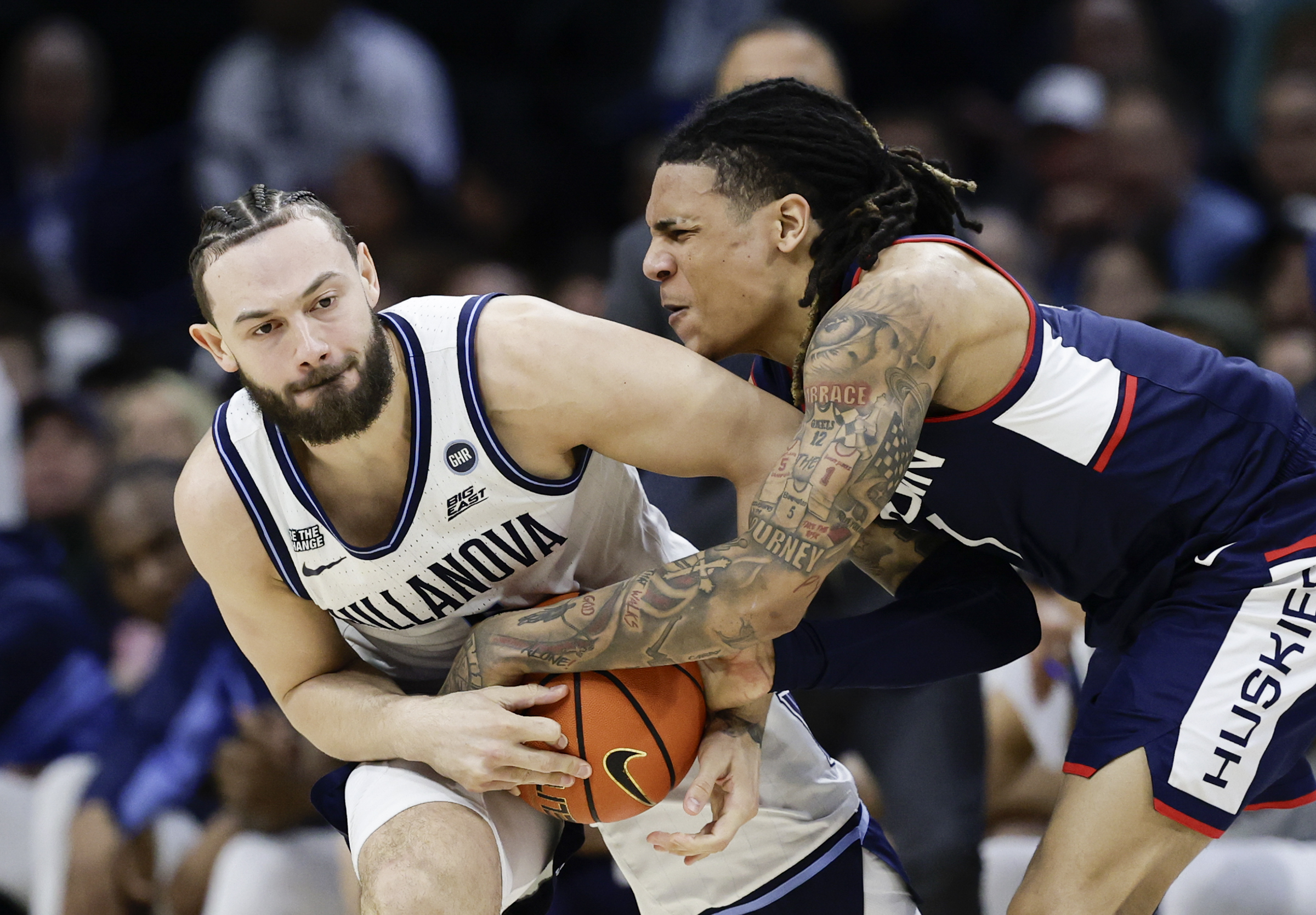
    Villanova guard Devin Askew and UConn’s Solo Ball fight for possession in Saturday’s matchup.

    Pierce has made some strides in recent weeks filling in for Duke Brennan when the starter needs rest. Palmer emerged in the second half of the season as a reliable reserve on both ends. Freshman Chris Jeffrey returned from injury and has occasionally provided a spark. Askew, meanwhile, has been the reason Villanova has won a few games. But the 23-year-old guard is 9-for-44 from the floor (20.4%) over the last five games and has not made up for it by creating efficient offense and generating assists.

    Villanova coach Kevin Willard talked recently about needing to figure out which lineups to get out there at the right times now that his team is healthier and the bench has expanded. Perhaps we’ll see some new wrinkles over the next two weeks.

    Bryce Lindsay’s shot

    Lindsay got the weight of the world off his shoulders when he made 4 of 8 three-point shots and scored 15 points during an overtime win at Xavier last week. Before that, Lindsay was 13-for-65 (20%) in the previous 11 games.

    Lindsay’s shooting prowess helped Villanova to a 9-2 start through nonconference play, but when his shot wasn’t falling, it wasn’t as easy to justify playing him 30-plus minutes, which Villanova asked of him when he had it going earlier in the season. Villanova’s offensive analytics are much better with Lindsay on the floor than off, even when his shot isn’t falling. But his perimeter defense can leave a little to be desired in critical moments of the game.

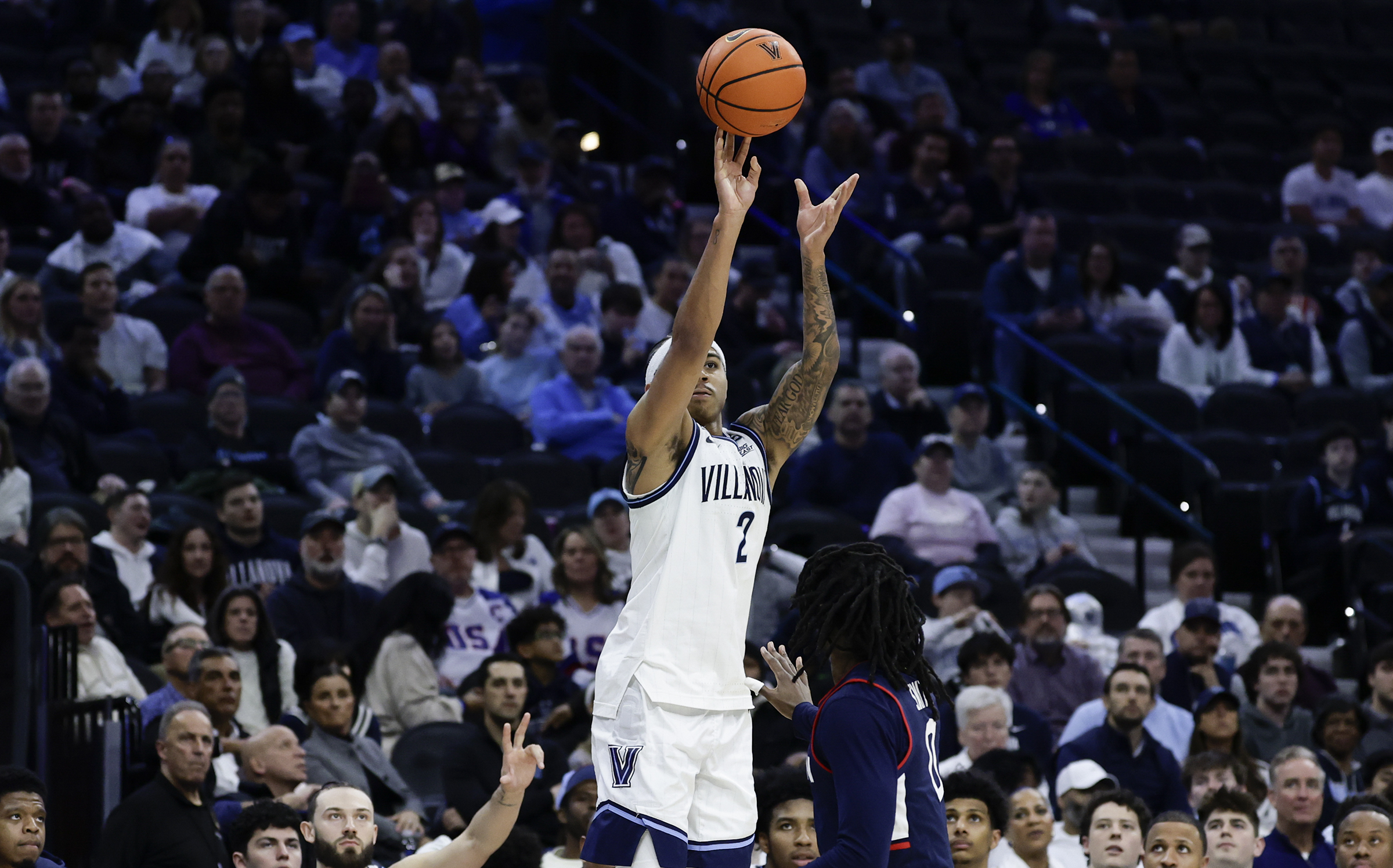
    Villanova guard Bryce Lindsay shoots the basketball over UConn’s Malachi Smith on Saturday.

    Everything is easier for Villanova when Lindsay’s shot is going in. Willard would probably be wise to try to get Lindsay going over the next four games. The coach said the redshirt sophomore guard was feeling the mental side of his slump but was confident that Lindsay would be a big boost going into the postseason.

    Free throw woes

    Villanova has missed at least five foul shots in each of its last 10 games. The Wildcats missed eight and almost lost to a Xavier team with five conference wins last week. They missed 13 on Feb. 10 and almost suffered a home loss to Marquette because of it.

    After that game, Willard pointed to a young team shooting important free throws in bigger college basketball games for the first time and needing to work its way through it.

    Two weeks from now, the lights get even brighter.

    Bouncing back

    Villanova “didn’t come out with enough urgency” after it left the locker room following halftime trailing UConn by just two, leading scorer Tyler Perkins said.

    It led to an embarrassing loss in front of the home crowd, and Willard said his team seems to have a better mentality on the road than it does at home.

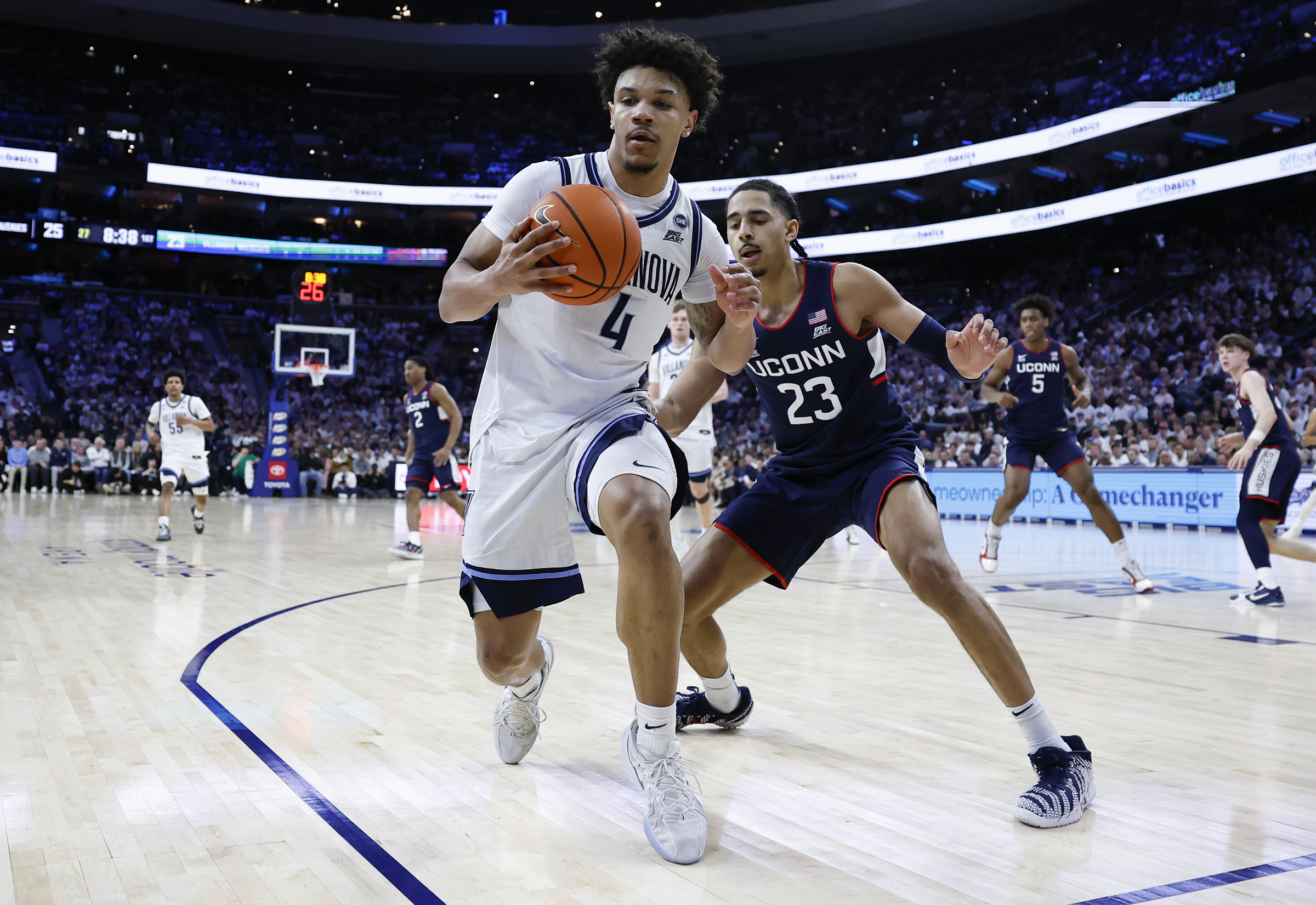
    Villanova guard Tyler Perkins grabs the basketball in front of UConn’s Jayden Ross on Saturday.

    “We’ve really struggled at home at times just playing well for good stretches,” he said. “Some of it is a little bit of youth. This is really only our second time in this building. The crowd was unbelievable. They were into it. I think some shots that we’ve been making, we were a little juiced up and missed some shots early.”

    He also said that “every once in a while you get your [butt] kicked.” That’s happened only once or twice (depending how you’d classify the home loss to St. John’s on Jan. 17), but the last time the Wildcats were blown out, an 89-61 loss to No. 3 Michigan on Dec. 9, they responded with a dominant home win over Pittsburgh and two tough road wins at Wisconsin and Seton Hall.

    “It’s not the end of the world,” Willard said.

    Bouncing back starts Wednesday, when the Wildcats have a chance to also play well in front of a home crowd.

    The seed line

    With a road game at St. John’s looming on Saturday, Wednesday night’s game vs. a Butler team that Villanova blew out on the road on Jan. 3 isn’t one to fool around with.

    Bracket Matrix, the website that tracks all of the NCAA Tournament bracket projections, shows Villanova as the top No. 7 seed in the bracket with an average seeding of 7.04. Losing to Butler at home would probably be a seed-line loss, and dropping back into the 8-9 range means the possibility of having to face a No. 1 seed on opening weekend.

    There’s some runway left, and moving up a seed line — or two, pending a big run at the Garden — is still possible. It’s just a bad time of year to fall backward.

  • Pennsylvania spent $397 million in overtime last year. Here’s why government workers are logging such long hours

    Pennsylvania spent $397 million in overtime last year. Here’s why government workers are logging such long hours

    Pennsylvania pays out hundreds of millions in overtime pay to its employees annually. For some agencies, overtime work is in the nature of the jobs, which involve responding to emergencies. But understaffing sometimes plays a role as well.

    Last year, Pennsylvania paid $397 million in overtime to roughly 56,000 employees, according to state data. The state plans to spend a similar amount this year.

    “Overtime is a necessary part of operating state government,” Daniel Egan, a spokesperson for the Pennsylvania Office of Administration, said via email in February. “Many Commonwealth agencies provide 24-7 services Pennsylvanians rely on, including plowing roads, responding to emergencies, staffing correctional facilities, and caring for patients in state hospitals and nursing homes.”

    In Pennsylvania, overtime spending has increased by nearly 50% since 2019. Some of the agencies that paid the most overtime were the Department of Corrections, Department of Transportation, Department of Human Services, and the State Police.

    Dolling out millions in overtime is not uncommon in state governments and it’s been increasing among some. New York spent 1.3 billion on overtime in 2024, a roughly 10% increase from the previous year. Maryland spent $404 million that year, up almost 38% from four years prior. In Delaware, overtime spending reached $84 million in 2025, about a 20% increase from 2023.

    While staffing shortages contribute to overtime needs, agencies say a variety of factors contribute to this spending.

    Top spenders on overtime in Pa.

    Overtime accounted for 3.9% of Pennsylvania’s personnel costs in 2025, says Egan, which last year ran up to over $10 billion.

    These costs include salaries, wages, employee benefits, and other personnel costs like overtime.

    window.addEventListener(“message”,function(a){if(void 0!==a.data[“datawrapper-height”]){var e=document.querySelectorAll(“iframe”);for(var t in a.data[“datawrapper-height”])for(var r,i=0;r=e[i];i++)if(r.contentWindow===a.source){var d=a.data[“datawrapper-height”][t]+”px”;r.style.height=d}}});

    Pennsylvania’s personnel costs have grown from $8.2 billion to $10 billion between 2019 and 2025, while overtime spending increased from $269 million to nearly $400 million last year.

    But the state’s other expenses have grown even more. Personnel was 9.4% of the budget in 2019, and dropped to 7.8% last year.

    window.addEventListener(“message”,function(a){if(void 0!==a.data[“datawrapper-height”]){var e=document.querySelectorAll(“iframe”);for(var t in a.data[“datawrapper-height”])for(var r,i=0;r=e[i];i++)if(r.contentWindow===a.source){var d=a.data[“datawrapper-height”][t]+”px”;r.style.height=d}}});

    Egan noted that state employee pay rates have increased by roughly 28% since 2019 “to keep up with the cost of living and ensure the commonwealth remains a competitive employer for high-quality employees,” and overtime is based on employees’ base rate of pay. He also noted that many state agencies must operate “around the clock.”

    Staffing shortages

    Corrections doled out roughly $163 million in overtime to 13,600 employees in 2025.

    “Overtime in corrections will always be a reality due to the 24/7 operation of essential security posts,” but the department has been working to curb its staffing shortages, said spokesperson Maria Bivens.

    State prisons have been plagued by staffing shortages across the country.

    In Pennsylvania, Corrections has looked to address the shortage in recent years by dropping the age requirement for trainees and allowing out-of-state applicants.

    “As corrections officer vacancies decrease, our facilities become safer, more cost-effective, and better equipped to meet the needs of the incarcerated population,” department secretary Laurel Harry said last year.

    Curbing the staffing shortage helps reduce the agency’s reliance on overtime, which in turn reduces employee burnout and saves taxpayers money, the department has noted.

    The officer vacancy rate fell from 11.3% in September 2022 to 6.4% in September 2025. Bivens said vacancy should continue to drop to roughly 3% in March once two facilities close and their staff are deployed to other positions.

    A Pennsylvania State Police vehicle parked in Center City Philadelphia.

    At the Pennsylvania State Police, “overtime is not determined solely by vacancy rates,” said spokesperson Logan Brouse. It can include responding to critical incidents and court appearances, Brouse noted.

    “As part of our public safety operations, overtime is sometimes necessary to uphold our mission by ensuring we can respond efficiently and effectively to emergencies, maintain adequate staffing levels, and meet operational demands,” said Brouse.

    The department paid roughly $55 million in overtime to about 5,700 employees last year.

    Pennsylvania’s State Police is among several police departments across the country that recently cut their college requirement. As of Feb. 19, the agency had 206 trooper vacancies and 110 open civilian positions.

    The governor’s budget proposal includes funds to add 380 troopers, and removes a cap on how many the state can hire, said Brouse.

    “The department continually reviews staffing levels, scheduling practices, and operational needs to manage overtime responsibly,” said Brouse. “We always strive to be good stewards of taxpayer money while ensuring that public safety services are delivered effectively and without interruption.”

    Agencies on call 24-7

    Some agencies say overtime is inevitable given the all-hours nature of their work.

    Last year, PennDot paid $70 million in overtime to roughly 12,100 employees. Their work includes emergency response during weather events, as well as roadway or bridge repairs, noted spokesperson Erin Waters-Trasatt.

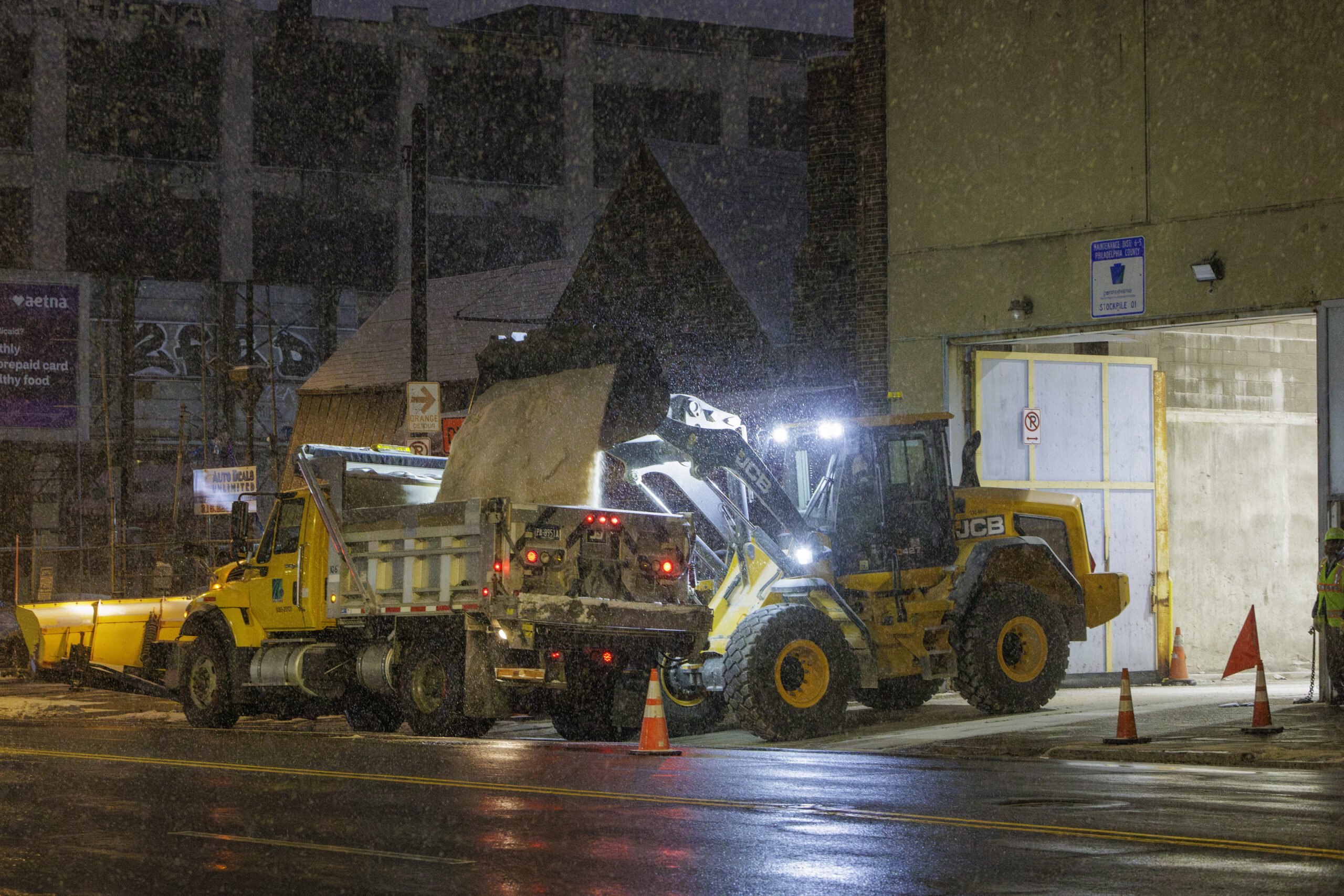
    “Pennsylvanians expect our employees to respond to emergencies 24-7 and during major events — like the January 2026 snowstorm,” said Waters-Trasatt. “Overtime is required to keep our roadways clear and safe for travel.”

    PennDot trucks load up on salt at their facility on Hunting Park Avenue on Friday morning Jan. 19, 2024.

    The Department of Human Services paid about $65 million in overtime to 8,513 employees last year.

    The department runs psychiatric hospitals and other residential care facilities that operate 24-7 and “must continue to function even when employees have reached the standard number of work hours per day or week,” said spokesperson Natalie Scott.

    The department has also been trying to fill vacancies, Scott noted, adding that Gov. Josh Shapiro’s administration has cut down the time it takes to hire state employees.

    “Progress made to increase staff will allow employees more time and resources to effectively do their work and reduce the amount of overtime spent,” said Scott.

  • Zack Wheeler’s outlook might be a mystery, but he says there’s no reason he can’t ‘be who I am’ in 2026

    Zack Wheeler’s outlook might be a mystery, but he says there’s no reason he can’t ‘be who I am’ in 2026

    CLEARWATER, Fla. — It’s a long, scary-sounding procedure — venous thoracic outlet decompression surgery — so let’s just ask Zack Wheeler to explain what it entailed on that Tuesday in September at a St. Louis hospital.

    OK, Zack, don’t spare any details.

    “Basically all they do,” the Phillies ace said Tuesday, “is go in, chop the bone, get rid of that [rib] because that’s what’s causing it, get rid of the blood clot, and then open up the vein. My vein closed back, I think two different times, so they had to go back and open it. If it happened again, I think they were just going to do a stent. But so far, so good.

    “And that’s really about it, honestly.”

    Oh, is that all?

    Five months later, there’s a matter-of-factness with which Wheeler talks about all of this, from the onset of symptoms on the eve of an Aug. 15 start in Washington to the tension-filled days and weeks that followed.

    Maybe it’s because the 35-year-old righty endured injury-related misery early in his major-league career. In the spring of 2015, he suffered a torn elbow ligament and had Tommy John surgery. Setbacks in his recovery led to a second procedure and caused him to miss two seasons.

    Compared to that, Wheeler says this is “not that bad.”

    “Knock on wood,” he added, tapping the side of his locker.

    Since he signed with the Phillies in 2020, Zack Wheeler leads all major-league pitchers with 28.6 wins above replacement, according to Fangraphs.

    Wheeler remains in the long-toss phase of his comeback, playing catch from as far as 120 feet. He’s inching closer to throwing from the mound. The standard buildup will follow: bullpen sessions, facing hitters in live batting practice, more bullpen sessions, and a few starts in the minor leagues.

    Although Wheeler won’t be ready in time for opening day, he and the Phillies believe he will pitch a lot of innings this season. But beneath the optimism is an underlying mystery raised the other day by none other than Bryce Harper.

    “We have no idea what Wheels is going to look like,” Harper said. “We all hope that Wheels comes back and is Zack Wheeler because there’s nobody better in baseball when he’s going good. But we have no idea.”

    In classic Wheeler fashion, he insists he isn’t worried.

    “I don’t think there’s any reason why I wouldn’t be who I am,” he said. “It’s not like a major surgery. I just got a rib taken out. It might sound like a crazy situation, or crazy surgery, or whatever, but mentally, I’m not really stressed about it. Physically, I’m not really stressed about it.”

    Not since that Friday night in D.C., at least, when a late-night consultation by the Nationals team physicians after a five-inning start led to the next-day diagnosis of a blood clot near his right shoulder.

    In detailing for the first time those few days in August, Wheeler said he felt “like a full feeling” as he went through arm exercises in the training room on Aug. 14. He chalked it up as “something wacky,” and went outside to play catch. The sensation didn’t subside.

    Phillies pitcher Zack Wheeler was diagnosed with a blood clot near his right shoulder after a start in Washington on Aug. 15 of last season.

    When they work out, Phillies pitchers often wear a cuff that partially restricts blood flow to help the arm recover. As Wheeler put it, “your veins start popping up.”

    “That’s literally what I felt like,” he said.

    Only he wasn’t wearing the cuff.

    Wheeler said he reported the issue to head athletic trainer Paul Buchheit, with whom he has developed a close relationship since both joined the Phillies in the 2019-20 offseason. He also told Buchheit about “a little bubble in my armpit” that looked like a lymph node.

    Everything checked out in the training room. Wheeler said the “full feeling” went away, then returned the next day in the bullpen before his start, then went away again. He held the Nationals to two runs in five innings, threw 97 pitches, and topped out at 95.7 mph, a 1.5-mph gain over his previous start.

    But the bubble was still there.

    “Paul was like, ‘Let’s just get it checked out,’” Wheeler said. “The D.C. doctors came over, and they’re like, ‘Uh, it’s not a lymph node. You need to go get that checked out tomorrow morning, first thing.’ And that was kind of what started the whole thing.”

    Doctors diagnosed the blood clot. Wheeler went back to Philadelphia and underwent a venogram, a test to detect blood flow in his veins. The conclusion: The clot was caused by a vein that got compressed between Wheeler’s rib cage and collarbone.

    If anything, Wheeler actually felt relieved.

    Phillies pitcher Aaron Nola (left) listens as Zack Wheeler jokes around during spring training in Clearwater, Fla.

    “Even though like the whole blood clot thing was pretty serious, I didn’t even find it that scary,” he said. “Maybe I’m just naive to it. But I didn’t get a blood clot because of my health or anything like that. It’s just two bones were pinching together. That’s why it happened. So, that kind of eased the thoughts in my head.”

    Wheeler underwent a thrombolysis on Aug. 18 at Thomas Jefferson University Hospital to remove the clot and open the vein. After taking blood thinners for five weeks, Wheeler had surgery Sept. 23 to remove the rib. The vein had closed again and a second clot was forming.

    It was “nothing out of the ordinary,” according to Wheeler, who said his St. Louis-based vascular surgeon, Robert W. Thompson, warned that the vein might not stay open until after they removed the rib.

    “Just from hearing what they were saying, if it stayed open, hooray. But I don’t think they really expected it to,” Wheeler said. “The rib was still there. The clavicle is obviously still there.”

    Before Wheeler left the hospital, doctors went in again to make sure the vein hadn’t closed again. It had not.

    Then came the hard part: weeks of physical therapy and rehab, including a strict diet of what Wheeler described as “small amounts and healthy stuff,” not easy for an unabashed fast-food and junk-food lover. He’s unsure how much weight he lost but said it was “a good bit.”

    “You can’t have fats or something like that,” said Wheeler, who rejoined the team Oct. 4 for pregame introductions before Game 1 of the division series against the Dodgers. “I lost a lot of weight doing that because I could barely eat, really.

    “It was pretty painful that first week. It was rough. But since then it’s been pretty smooth sailing.”

    Wheeler spent most of the winter in Philadelphia, rehabbing under Buchheit’s supervision. There’s a history of pitchers returning from this particular form of thoracic outlet syndrome. Among the success stories: Merrill Kelly, at age 31, had surgery in September 2020, made it back by April 2021, and is still going.

    So, while outsiders — and even some of his teammates — wonder if Wheeler will be Wheeler again after a procedure that he insists wasn’t as scary as it sounds, he puts in the work each day with his usual nonchalance.

    “I mean, it might be a little thought, but at the same time, you can’t worry about that kind of stuff,” Wheeler said. “There’s no hesitation at all.”