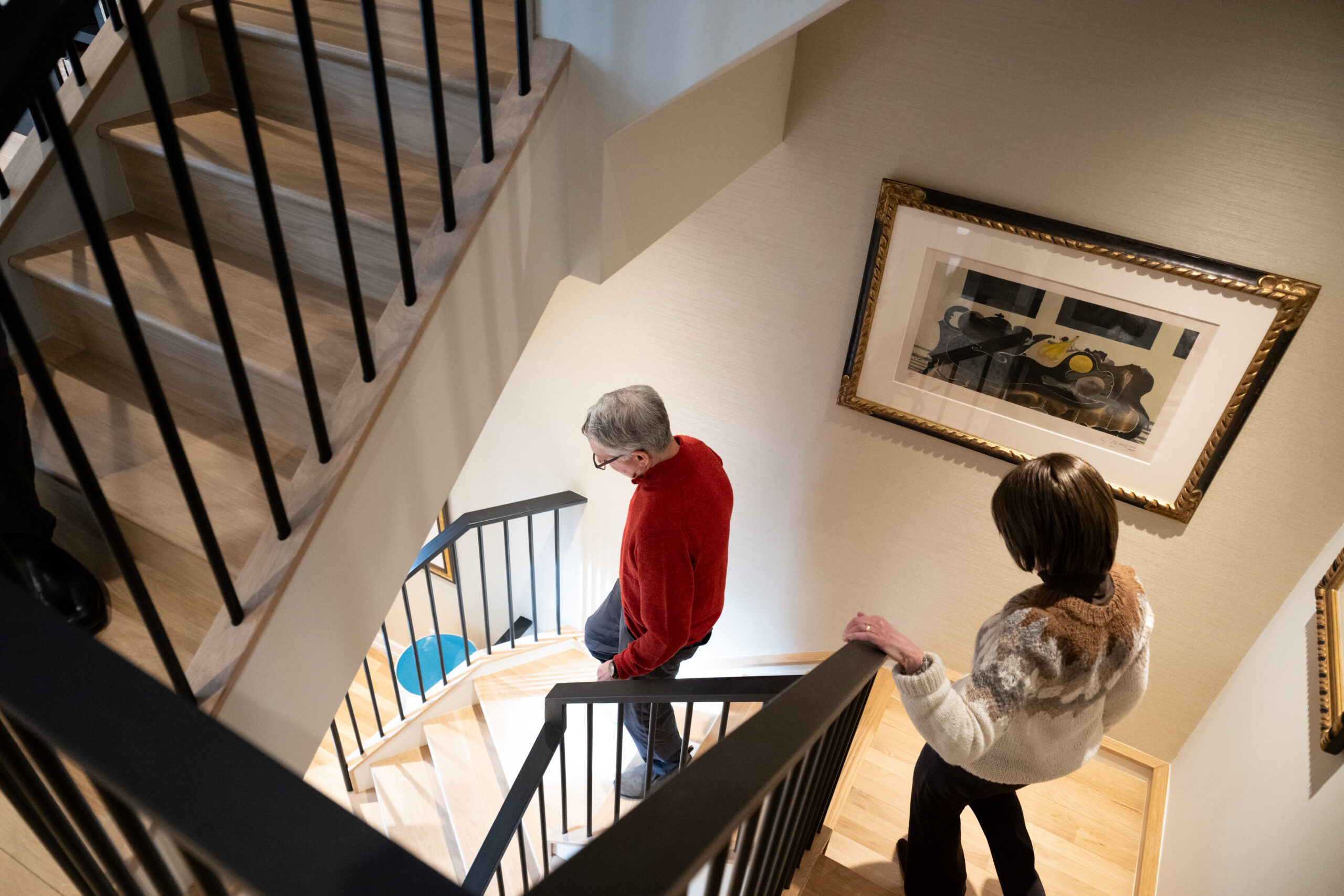
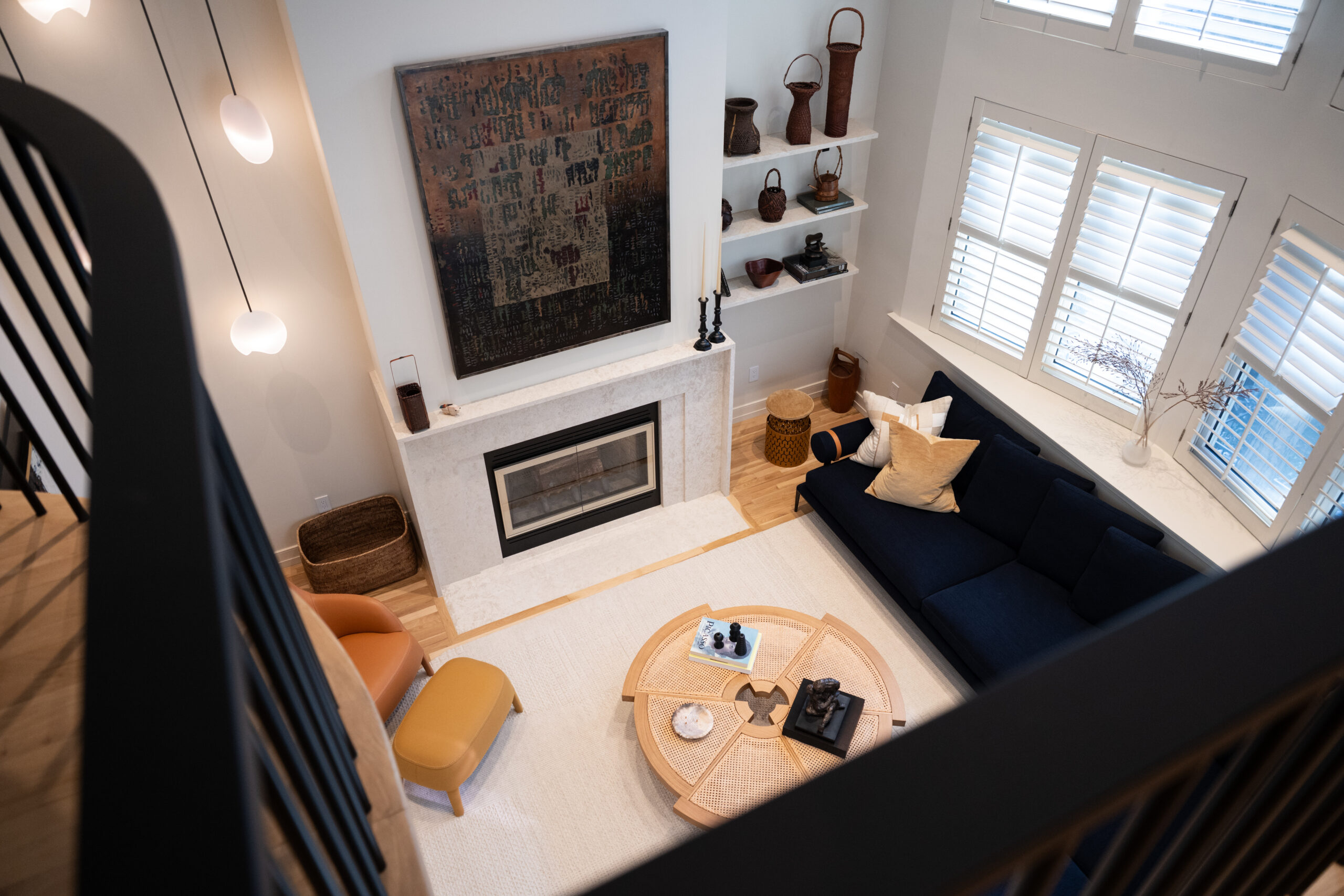
With its soft motion-sensor lights, bubble walls, beanbag chairs, and custom tactile artwork, the sensory room at Lincoln Financial Field showcases the Eagles Autism Foundation’s work to create an inclusive environment for those with autism.
There’s more work behind the scenes that many don’t get the chance to see. This year, the Eagles Autism Foundation is contributing $10.8 million in funding to 54 research and community projects specializing in autism research and care, the largest amount raised to date by the foundation.
“This was a huge milestone for us. It was the first year we raised over $10 million,” said Ryan Hammond, executive director of the Eagles Autism Foundation.
“The fact that we can be a model to an inclusive fan experience, inclusive recreation opportunities, inclusive employment, all of those things are just as important as the science,” she said. “We’re impacting people every day by feeling included — whether it’s a family seeing our mascot wearing headphones and their son wearing headphones, they feel seen.”
Eagles Jalen Hurts (right) takes a selfie with Aaron Greenfield of Plymouth Meeting at the eighth annual Eagles Autism Challenge in May.
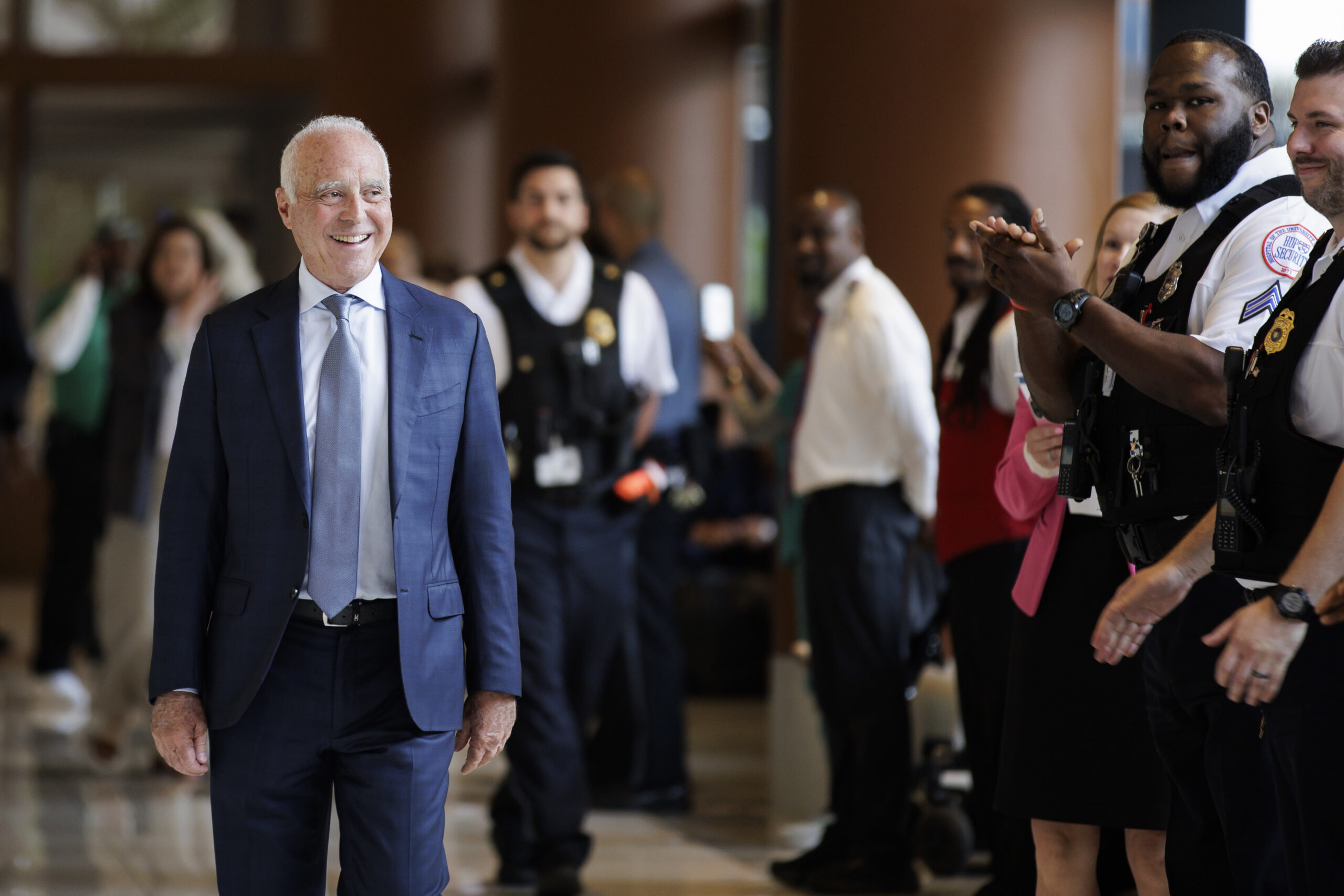
“It is rewarding to know that our financial investment this year will support the next generation of scientific researchers and leaders who are all working hard to accelerate treatment for the autism community,” Eagles owner Jeffrey Lurie said. “While we are proud to celebrate another record-setting year for the Eagles Autism Foundation, it comes at an unfortunate time where too many institutions are having their funding cut. Now more than ever, we need to invest in science and prioritize those who need our help.”
“To know that we were making [our] largest investment in science at a time that it’s the most needed is a point of not only pride, but motivation to continue to support and serve this community,” Hammond said. “Funding science is critical, and a lot of institutions are faced with challenges with losing funding from the federal government.”
As the foundation grows, so does the interest from potential research partners. This year, the Eagles Autism Foundation received a record 267 letters of intent for research grant funding. A scientific adviser helped review each letter, taking innovation and measurable outcomes into consideration to narrow the pool to 52 proposals.
Each proposal was assigned to an independent team of scientists for review. Then, Dr. Emanuel DiCicco-Bloom, who serves as the foundation’s scientific adviser and chairman of its review panel, and others participated in a two-day discussion at Lurie’s home to negotiate the strengths, weaknesses, and challenges of each project.
“Being able to go through this process that’s not only rigorous but also transparent makes me feel like we’re doing a service on behalf of every single person who agreed to support our mission,” Hammond said. “I’m filled with hope that these projects are really going to change someone’s life.”
Added Lurie: “We are beyond grateful for Dr. DiCicco-Bloom and his esteemed panel of colleagues for putting in the time, once again, to evaluate these projects and drive meaningful progress in autism research.”
Eagles owner Jeffery Lurie and his family donated $50 million to Children’s Hospital of Philadelphia and Penn Medicine to create the Lurie Autism Institute last year.
This year, the foundation will fund 13 pilot grants, four postdoctoral fellowships, and three translational grants that include a three-year investment for research. The four postdoctoral fellowships will support the work at the Children’s Hospital of Philadelphia and the University of Pennsylvania, both partners in the Lurie Autism Institute, which was founded last year after the Lurie family donated $50 million to CHOP and Penn Medicine.
In addition to funding autism research, grants were given to dozens of local projects that provide an immediate need in the community and align with the Eagles Autism Foundation’s mission.
Since 2018, the Eagles Autism Foundation has invested more than $40 million in 223 research projects and community grants. To Hammond, this is just the beginning.
“Honestly, the sky is really the limit,” Hammond said. “What we’ve been able to see in such a short time has been incredible. … We’re continuing to drive a more inclusive future for everyone.”
Savannah Laycock of Quakertown and Brennan Sim of Atco play in the Eagles’ sensory room at Lincoln Financial Field.
Where is all the money going?
The Eagles Autism Foundation will divide the $10.8 million in funds among 54 research and community projects:
Research institutions
Local: The A.J. Drexel Autism Institute, Children’s Hospital of Philadelphia (two postdoctoral fellowships and a translational grant), and the University of Pennsylvania (two postdoctoral fellowships).
National/global: Boston Children’s Hospital, Boston Children’s Hospital — Harvard Medical School, Children’s Hospital of Los Angeles, Children’s National, Cold Spring Harbor Laboratory, Icahn School of Medicine at Mount Sinai, Stanford University, Stony Brook University, University of California San Francisco, University of Geneva, University of Iowa, University of Minnesota Twin Cities, University of North Carolina at Chapel Hill, University of Wisconsin-Madison.
Community projects and initiatives
Local: KIPP Philadelphia Public Schools, A Step Up Academy, Common Space, Huddle Up for Autism, KultureCity Barefoot Country Music Fest, Coffee Closet with Barista Jake, Office for People with Disabilities (City of Philadelphia), Penn State Health, Philadelphia Orchestra, Philadelphia Zoo, Saint Joseph’s University, CASA Youth Advocates, Special Olympics Pennsylvania, SPIN, St. Christopher’s Hospital for Children, St. John of God Community Services, Stratford Friends School, TGR Learning Lab, Timothy School, Theatre Horizon, Thomas Jefferson University, and Variety — The Children’s Charity of the Delaware Valley, Comprehensive Learning Center, Devereux Advanced Behavioral Health, Elwyn Foundation, KultureCity Super Bowl LIX, Melmark, Neurodiversity Employment Network, No Limits Café, Pathway School, Potential Inc., Raise the Bar Family Services, Shore Medical Center, Special Equestrians.
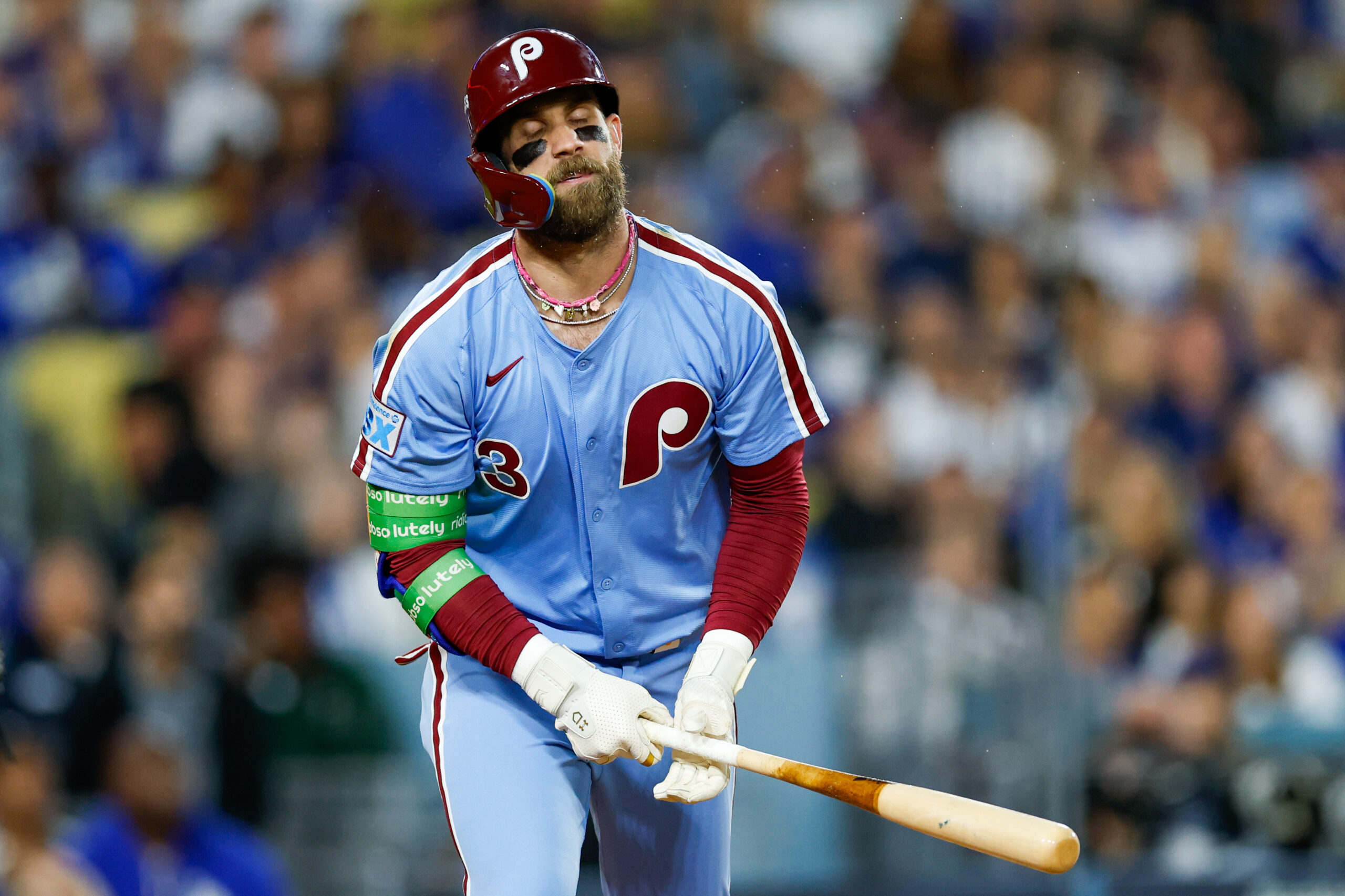
No man is an island. Unless that man is Bryce Harper and he has just reached base.
Last season, there wasn’t a lonelier lot in life than to be a Phillies superstar standing on first, second, or third. Only four players in the majors reached base as many times as Harper did and scored fewer runs. The 72 runs he did score were the fewest of his career in a season with at least 500 plate appearances. Only one player in the majors last year failed to score more than 72 runs while posting an OPS of at least .800 in 580-plus plate appearances. It was Harper. In fact, he was the only player to do it since 2023. That’s not some hocus-pocus bit of cherry-picked math. Fifty-nine players meet our criteria (.800 OPS, 580 PAs). Harper’s 2025 campaign ranked dead last in runs scored.
Not since E.T. have we seen someone with such otherworldly attributes struggle this hard to get home.
We’ve heard a lot of chatter about lineup protection this offseason. Scott Boras broached the topic back in October. Harper himself weighed in last week. Their focus was on pitchers pitching around Harper in order without the threat of reprisal from those due up next.
“I think the four spot has a huge impact,” Harper said when he arrived in Clearwater, Fla., for spring training. “I think the numbers in the four spot weren’t very good last year for our whole team. I think whoever’s in that four spot is going have a big job to do, depending on who’s hitting three or who’s hitting two.”
Neither Harper nor his agent spoke much about the issue of him rotting on base like an unsold ham on Easter Monday. But it’s just as important, if not more so.
Last season, Phillies hitters had 366 plate appearances when Harper was on base. That’s not including his home runs. We’re limiting ourselves to the plate appearances when Harper was physically standing on base, hoping for a teammate to drive him home. In those 366 plate appearances, the hitters behind Harper combined for a whopping .227 batting average, .290 on base percentage, and .342 slugging percentage. Of the 180 times he reached base without driving himself in (i.e., without hitting a home run), he ended up crossing home just 45 times.
In 366 plate appearances (not including home runs), the hitters behind Bryce Harper combined for a whopping .227 batting average, .290 on base percentage, and .342 slugging percentage.
That’s a remarkably low percentage. Three out of four times that Harper reached base, the inning ended with him jogging back to the dugout. That’s a remarkably low percentage compared to most other hitters of his ilk. Even more troublesome is the fact that Kyle Schwarber’s percentage wasn’t much better. But we’ll get to that in a second.
First, let’s remind ourselves of the real-world situations that these numbers tabulate. Harper didn’t have a great NLDS against the Dodgers. But he did reach base six times. That was tied for second on the team behind Alec Bohm. Bohm reached base 10 times and scored three runs. J.T. Realmuto reached base six times and scored three runs. Harper reached base six times and scored one run.
It’s an imperfect example. In the NLDS, Harper mostly expired on first base after arriving there with two outs. You could write it off to circumstance if not for the body of evidence. In the 2025 regular season, no player in the majors was stranded as often as Harper, once you account for where he hits in the order. His driven-in percentage (25%) ranked dead last among players who regularly hit in the top-third of the order (minimum 500 plate appearances).
The table below shows the 34 players who had at least 500 plate appearances in an average batting order position between the two-hole (2.0) and three-hole (3.0). Their run percentage is the number of times they reached base and later scored.
Just as concerning as Harper in dead last is Schwarber a mere two spots ahead of him. Of the 34 qualified hitters, Schwarber and Harper ranked 32nd and 34th in scoring percentage. Put another way, Schwarber and Harper’s teammates ranked dead last in their ability to drive them in.
Between Schwarber and Harper is Cal Raleigh, whose Mariners advanced to last year’s ALCS and put up a sporting effort. Meanwhile, Toronto’s Bo Bichette scored at a below-average rate. The Blue Jays made the World Series. It isn’t completely unheard of for upper-middle-of-the-order hitters to drive in more runs than they score, given the drop-off in quality behind them. But the Phillies have two players at the bottom of the list. We’re talking about the upper two-thirds of their order. And they aren’t just below-average. They are virtual outliers. The only other team that has two players in the bottom half of this list is the Angels. Nobody wants to be mentioned in the same breath as the Angels. If you are comparable to the Angels in a certain regard, it’s a sure sign the regard needs fixing.
If Harper sounds a little cranky this spring, think about how it feels to reach base and not score. And then think about the fact that the Phillies still don’t have a viable solution. Is it any wonder that Harper is acting like he woke up on the wrong side of the red-light therapy sleeping bag?
To listen to what he had to go through this offseason just to get back on the mound, it’s possible no Philly athlete has gone through more than Phillies ace Zack Wheeler.
Oh, you thought we forgot about Joel Embiid with that last statement? Come on now, you know we track his every move.
But today, we’re talking about Wheeler, who underwent thoracic outlet decompression surgery, which is as complex as it sounds, and for Wheeler wasn’t without complication.
However, he’s back, throwing, and although being on the mound for opening day looks unlikely, he says he’s not worried about the surgery or the setback it has caused in his return. In part because this isn’t his first rodeo with injuries derailing his time on the mound.
It’s what we’re leading off (pun intended) your Wednesday with, courtesy of our Phillies beat writer Scott Lauber.
Speaking of today, we might get some of this snow to melt a bit with temperatures expected to reach into the 40s across the region under partly cloudy skies.
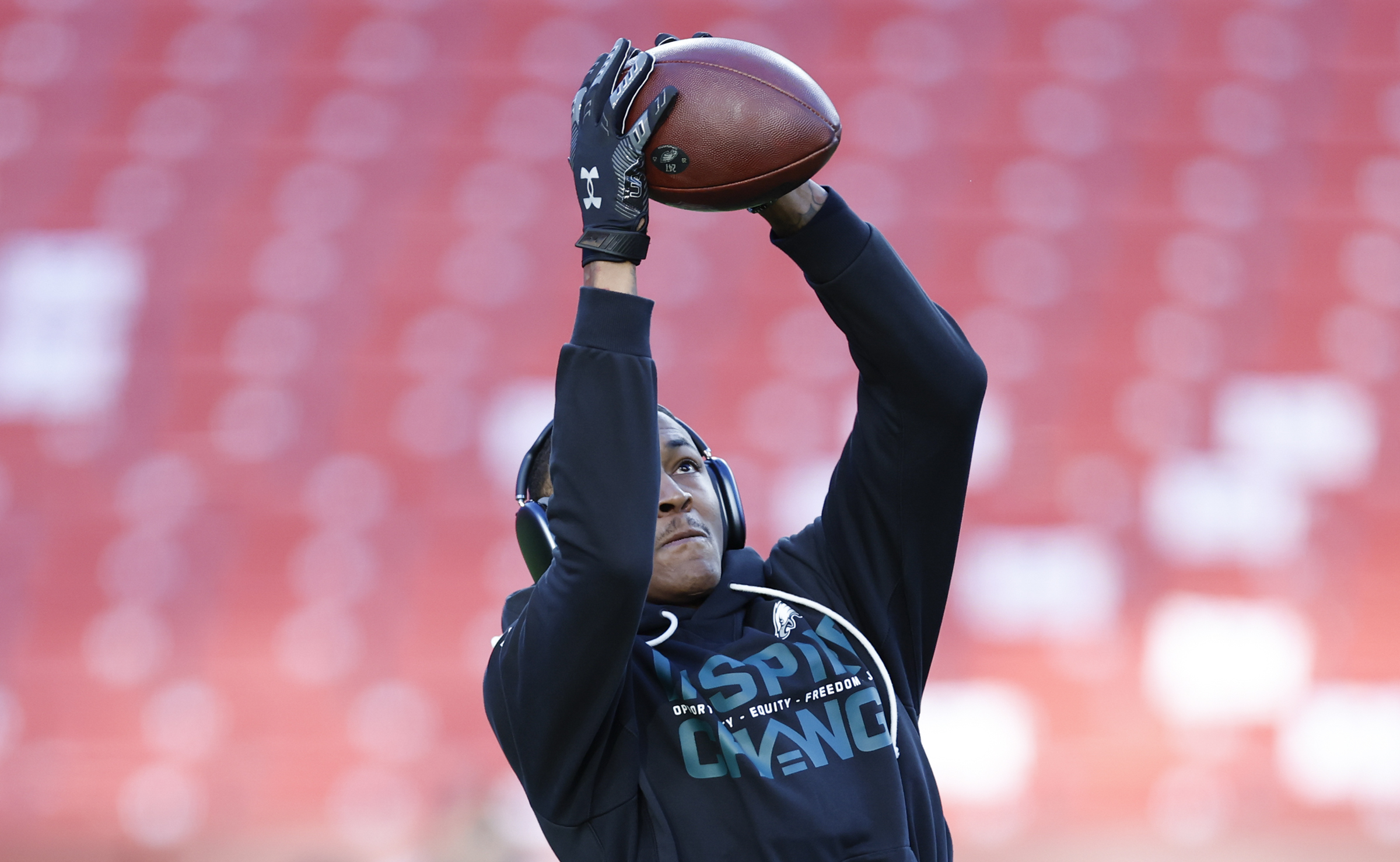
Eagles wide receiver DeVonta Smith is coming off a strong season, but there’s an opportunity for him to truly raise his profile in 2026.
As headlines continue to swirl around Sean Mannion’s plans for the offense and whether A.J. Brown fits in any of it, news around fellow Eagles wideout DeVonta Smith has been relatively obscure this offseason.
But that doesn’t mean there aren’t grand plans for the team’s other star receiver. Now five seasons into his time as an Eagle, Smith might be ready to take it up another notch.
“I think he continually gets better,” coach Nick Sirianni said. “I think you saw him have a great year this year. And even when a guy appears not to have as good a year, you’re always looking at it like, ‘Is his arrow on the rise? Is his arrow on the fall?’ And even if a guy doesn’t have his best year, he still can be on the rise. Well, I think we saw DeVonta have a great year, and I think you just continue to see him play better and better. ”
Inquirer writer Olivia Reiner dives into the intangibles that surround Smith and what the plans for him look like heading into this season.
What we’re …
🏐 Introducing: Meet Casey Burford, the new head coach of Rowan’s volleyball team, a program still reeling from the passing of previous coach Deana Jespersen, who died from breast cancer last year.
🎧 Listening: The latest Inquirer unCovering the Birds podcast, which teed up what to expect heading into this week’s scouting combine.
⚽ Sharing: The lessons learned by Delran native Carli Lloyd as she gets set for her second time as a lead studio analyst for Fox’s coverage of the FIFA World Cup later this summer.
🤔 Wondering: What’s the move for hosting FIFA playoff matches and games of the World Cup in Mexico, with civil unrest now unfolding?
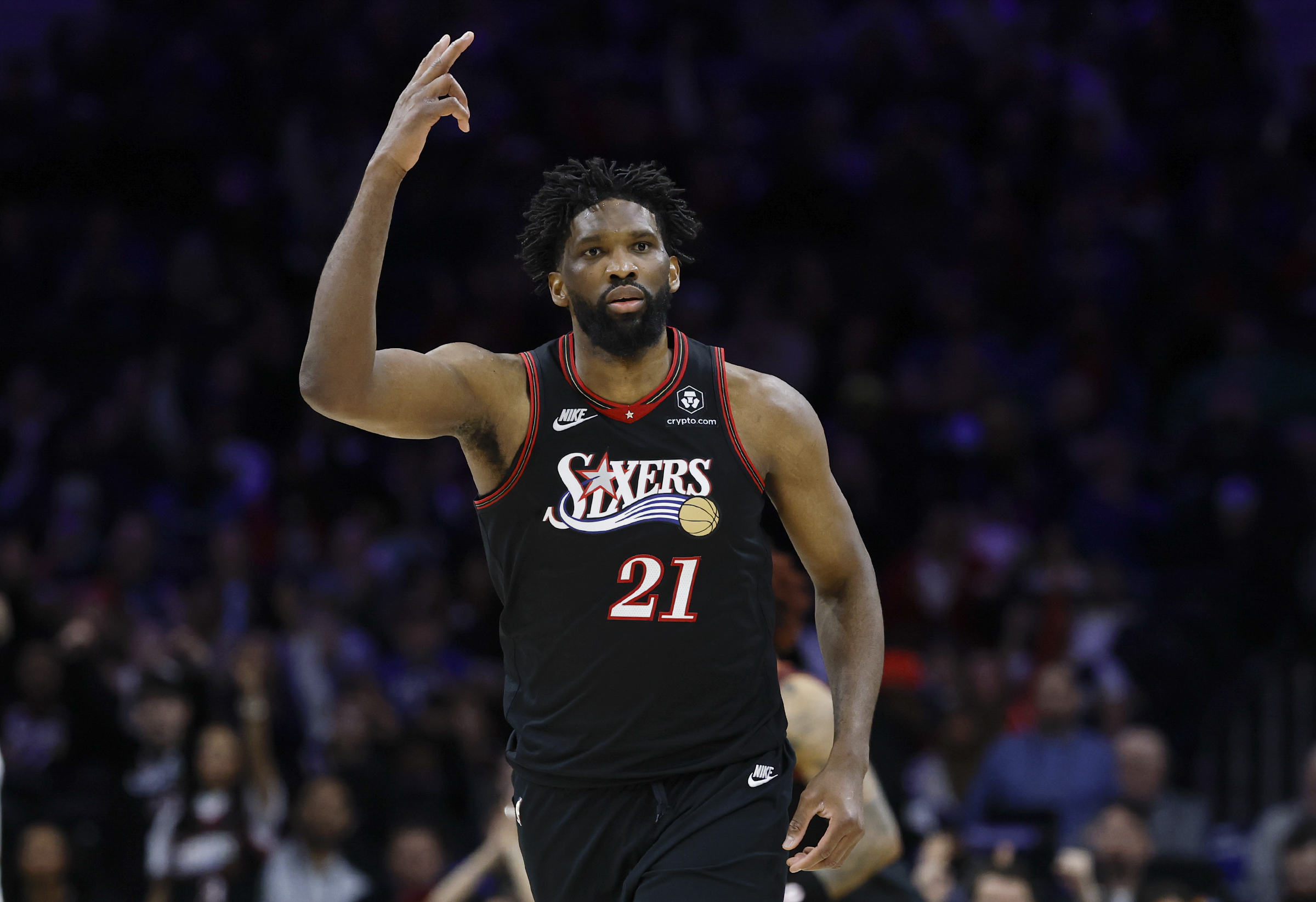
Joel Embiid returned to the Sixers lineup last night for the first time in five games after sitting out with shin soreness.
We brought up Joel Embiid earlier, and it was partly due to the fact that he returned to the floor for last night’s game against the Pacers in Indianapolis.
It was the star center’s return after missing five games with shin soreness, coupled with continued management of his right knee. He was a noticeable loss, considering that, preinjury, he averaged 30 points on 52.7% shooting, 8.0 rebounds, and 4.5 assists over his last 20 games from Dec. 23 through Feb. 7.
So how’d he do last night? Embiid scored 27 points in a Sixers blowout win over the Pacers to close out a three-game road trip.
Next up for Embiid and the Sixers are the Miami Heat at the Xfinity Mobile Arena on Thursday (7 p.m., NBCSP), followed by a road test against Boston on Sunday (8 p.m., NBCSP).
Flyers right wing Matvei Michkov says he feels “light on the ice” after taking in two-a-day training sessions during the Olympic break.
The NHL season reconvenes for the Flyers tonight in Washington, with one player ready to see whether all the work he put in during the Olympic break will pay off against the Capitals (7 p.m., ESPN).
On Tuesday, Matvei Michkov was adamant that the break wasn’t spent off the ice but on it, with two-a-day personal practices featuring strength and conditioning training coinciding with his ice time. But it wasn’t a Rocky IV training montage as some of that training took place in the Dominican Republic.
“I was training every day. Was not resting,” the winger said through team translator Slava Kuznetsov about how he spent his Olympic break.
Flyers writer Jackie Spiegel has more on Michkov and his plans for the second half of the season in a push for the playoffs.
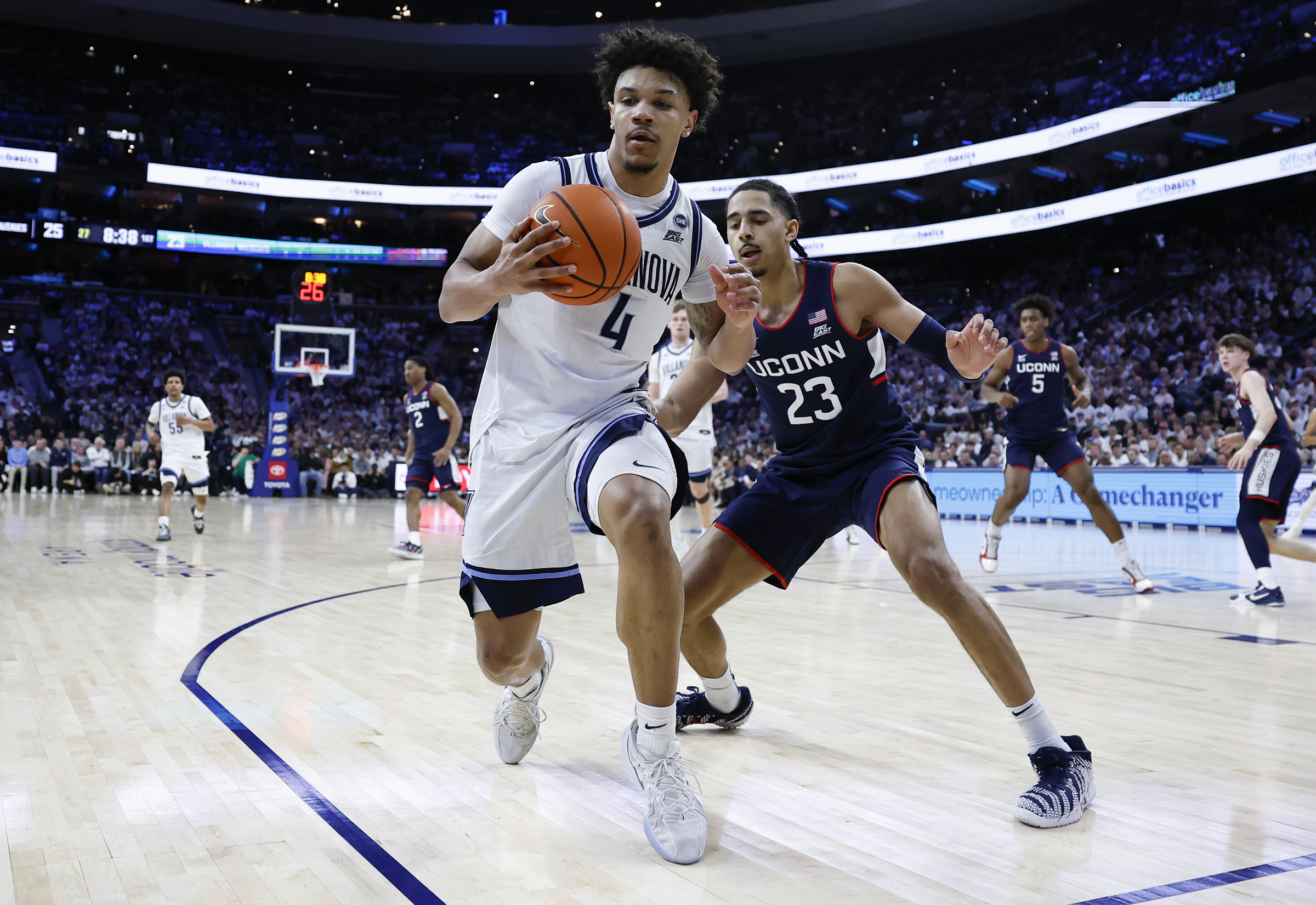
Villanova guard Tyler Perkins, seen here against UConn, will be a major player for the Wildcats down the stretch in a run to March Madness.
Right now, Villanova is in pretty solid shape.
Despite a weekend loss to now-No. 6 Connecticut, the Wildcats are 21-6, 12-4 in the Big East. Barring the unforeseen, they have all but ensured themselves the No. 3 seed in the conference tournament, which begins in two weeks at Madison Square Garden.
Just four regular-season games remain until then, and coupled with a strong showing in the Big East tournament, Villanova could find a return to the Big Dance for the first time since 2022. But these next few weeks are crucial, and Inquirer writer Jeff Neiburg examines five key things the Wildcats need to do to ensure they’ll be a part of the Madness this time next month.
It all gets started tonight as Villanova hosts Butler (15-13, 6-11) at the Finneran Pavilion (7 p.m., FS1).
On this date
Feb. 25, 1972: The Phillies benefited from a salary dispute between pitcher Steve Carlton and the St. Louis Cardinals, who traded Carlton to Philly for pitcher Rick Wise.
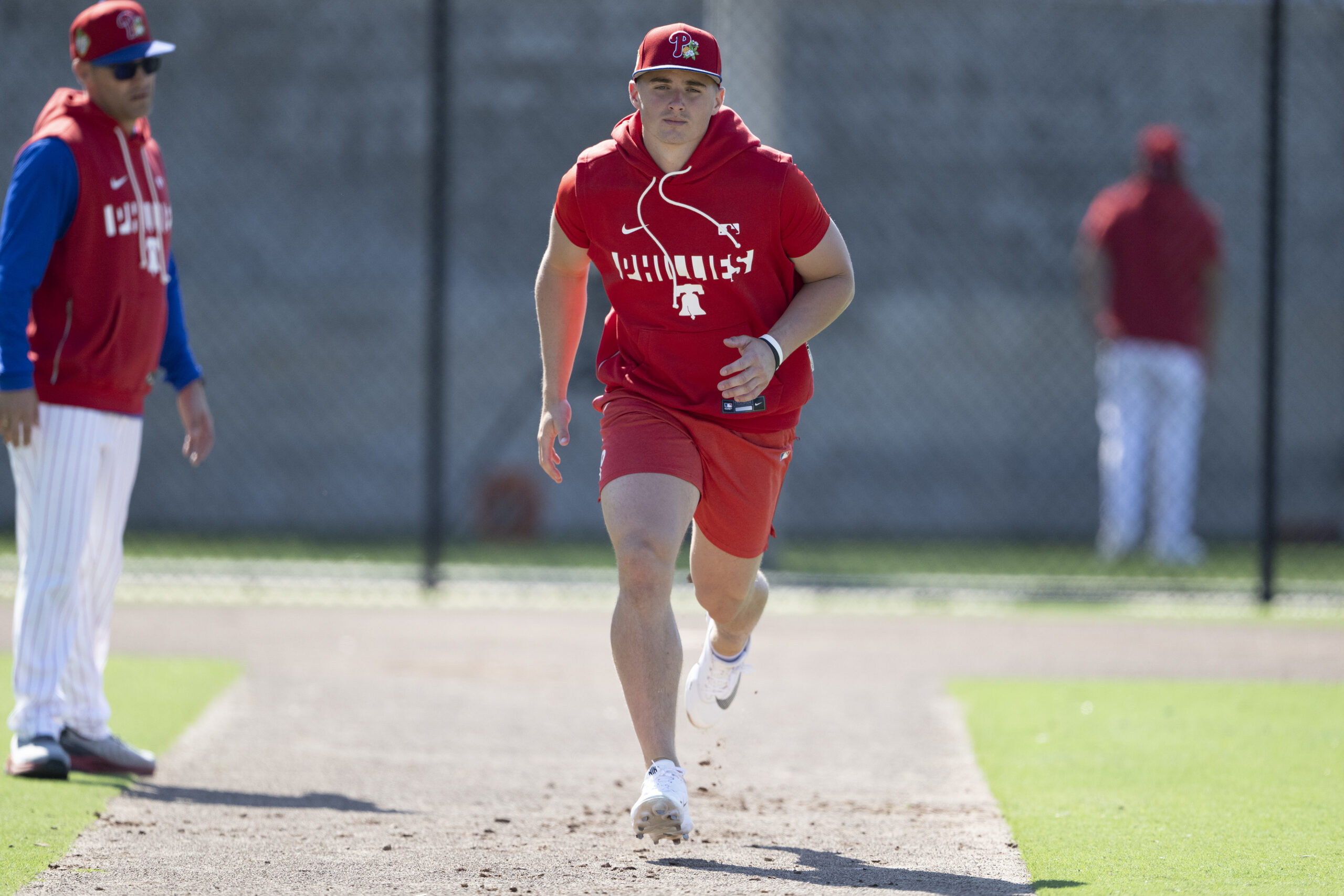
The Phillies continue to work closely with top prospect Aidan Miller during spring training in Clearwater.
“Two weeks into spring training, the Phillies aren’t going out of their way to disguise their hopes for their top prospect. The whole organization seems to understand that a certain degree of aggression is required in order to overtake the Dodgers in the National League and survive the Mets and Braves in the NL East.” — The latest from Inquirer columnist David Murphy takes a look at why the Phillies aren’t wasting time getting top prospect Aidan Miller up to speed.
🧩 Unscramble the anagram
LABE REKLDR
Which Phillies hurler said he’s come to grips with being a reliever, but one who’s ready to prove he isn’t a just one-year wonder? Think you know? Take a guess and click here to see if you’re correct.
🧠 Trivia time answer
We asked: Who was the first Phillie to homer from both sides of the plate in a game?
Answer: C: Steve “Jet” Jeltz was the first among the lot. And kudos to reader Carol B. for being the first to provide the answer.
What you’re saying about the Phillies
We asked: Which rookie will have the best season for the Phillies?
I think and hope Justin Crawford will be the most successful of our rookies. Center field has been an up-and-down position for quite a few years, with Marsh, Rojas, Bader, and others not quite looking like the next Richie Ashburn, Gary Maddox, or Victorino. And of course, look to Painter and maybe later in the season, Miller becoming a strong contributor. — Everett S.
Justin Crawford is well-positioned to shine in 2026. He anchors the outfield in center and has an opportunity to climb the batting order. His power was on display in the opening spring training game, going 2-for-3. His speed will energize the bottom portion of the lineup. — Bob C.
We compiled today’s newsletter using reporting from David Murphy, Kerith Gabriel, Owen Hewitt, Jeff McLane, Olivia Reiner, Jeff Neiburg, Jackie Spiegel, and Scott Lauber.
By submitting your written, visual, and/or audio contributions, you agree to The Inquirer’s Terms of Use, including the grant of rights in Section 10.
Thanks for allowing me to get your day started. Jim picks up the ball tomorrow to get your Thursday off to a running start.— Kerith
When a messy land dispute between Gov. Josh Shapiro and his backyard neighbor poured into public view via federal court filings earlier this month, it jolted his sleepy Montgomery County neighborhood.
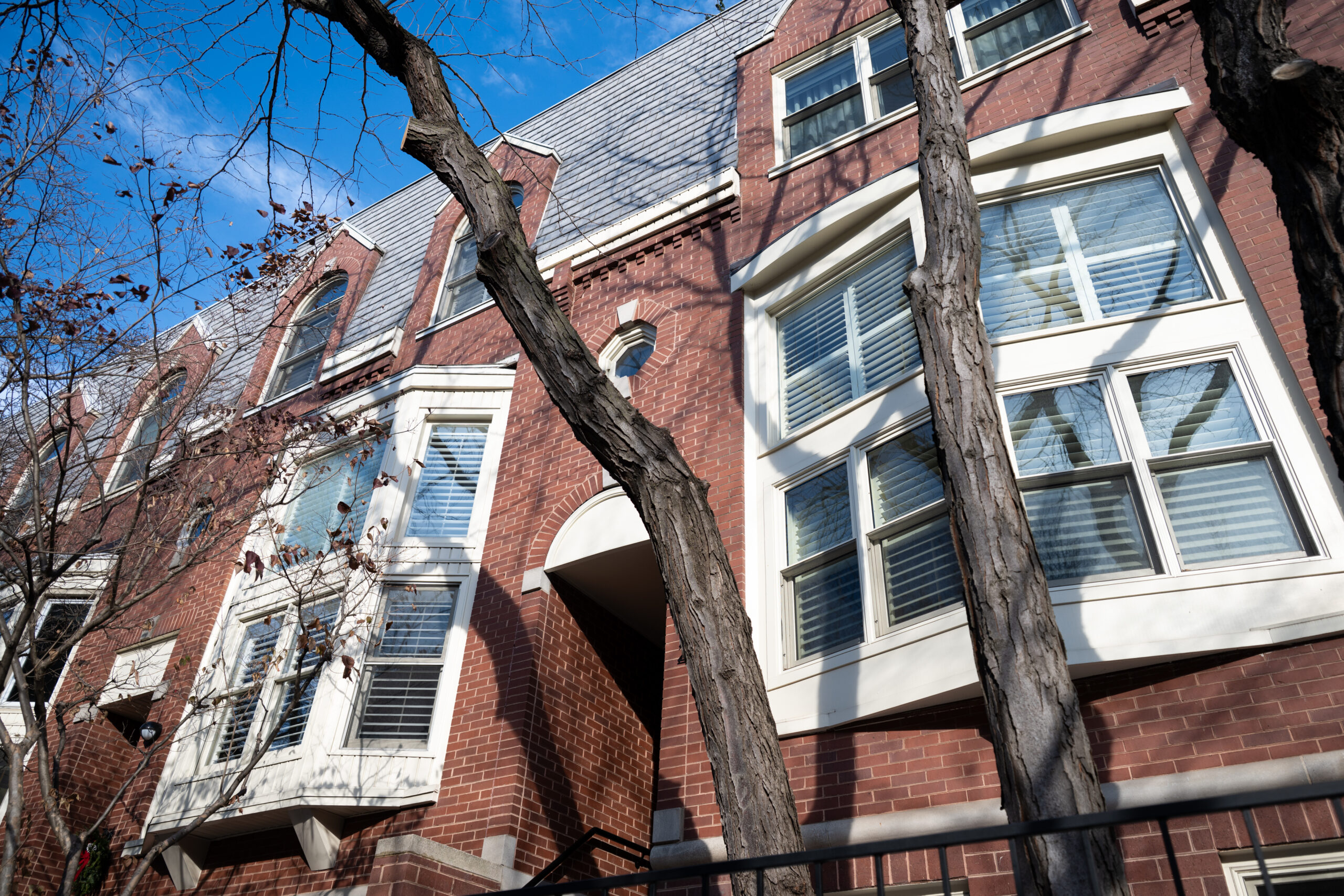
The picturesque suburban community tucked behind Penn State Abington is usually quiet and boring, current and former neighbors said, just the way they like it. It’s a great place to raise their kids, and where Shapiro’s four children have grown up. Among the biggest points of contention is when one neighbor fails to say hello to another. Many houses in the neighborhood sit a quarter-mile away from the main road, behind winding, tree-lined driveways. Some of the homes have been purchased in recent years for upward of $1 million. In many ways, the neighbors said, it’s the perfect picture of the suburban American dream.
But this month, the neighborhood also became the battleground for dueling lawsuits between Shapiro and his neighbors, Jeremy and SimoneMock, bringing tension to atranquil community.
What’s more: Shapiro’s office alleges the lawsuit against him is a political hit job to hurt him as he runs for reelection, citing the Mock family’s communications with the top Republican in the state Senate and his frequent sparring partner, President Pro Tempore Kim Ward. The family’s attorney in the lawsuit is also a local lawyer known to represent Republican causes, and whose former clients include the political campaigns of President Donald Trump and U.S. Sen. Dave McCormick.
The Mocks, meanwhile, argue in their lawsuit — filed in the U.S. District Court for the Eastern District of Pennsylvania — that Shapiro has used his powerful position as governor to infringe on their constitutional rights and take their land.
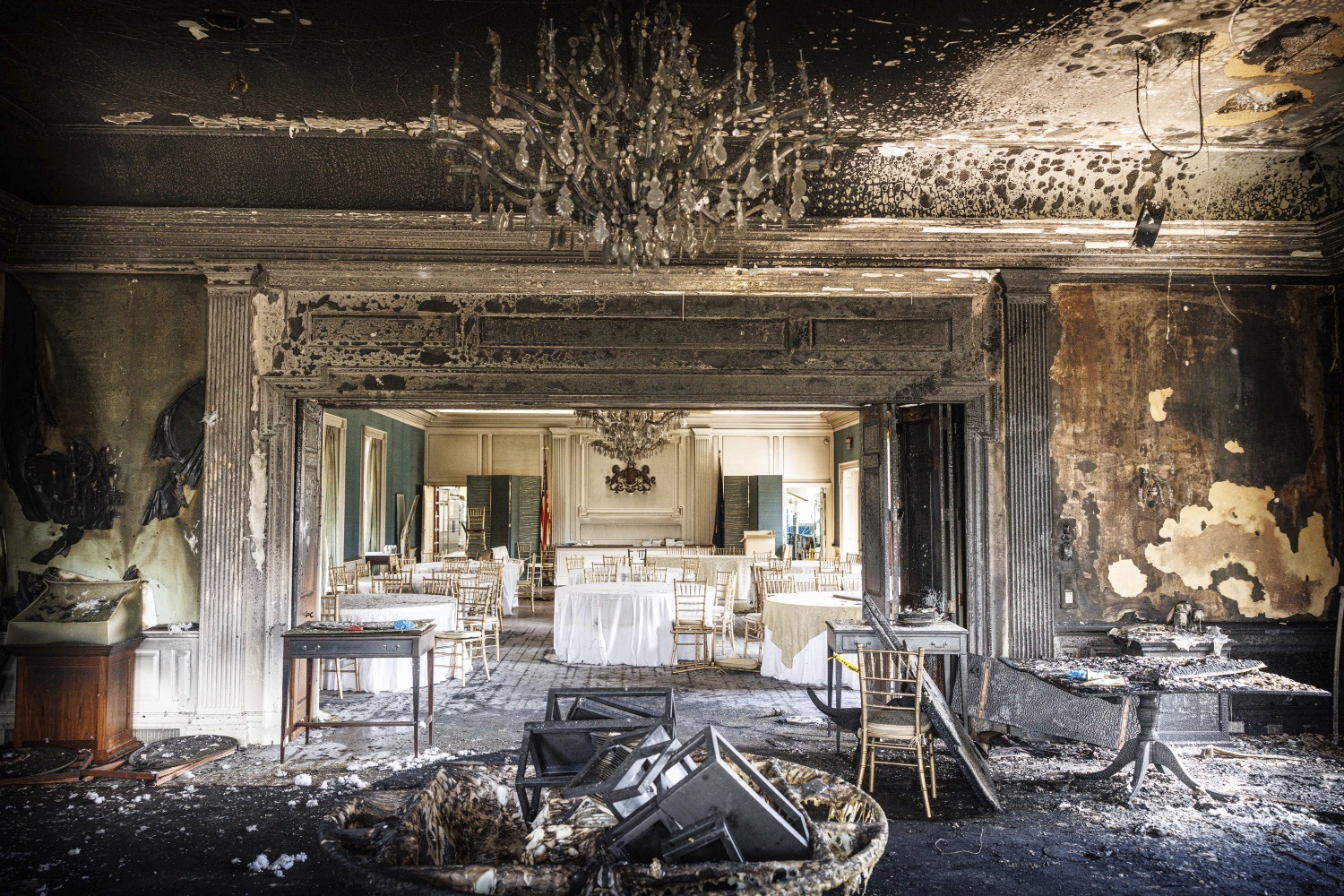
The disputed land — a 2,900-square-foot strip between Shapiro and his neighbor’s lawn — had not been an issue between them until security updates were proposed to Shapiro’s home after a Harrisburg man firebombed the state-owned governor’s residence last April while Shapiro and his family slept inside, both the Shapiros and Mocks said in court filings. The man, Cody Balmer, later pleaded guilty to attempted murder and related crimes for the attack, and was sentenced to 25 to 50 years in prison.
Afterward, state police proposed security upgrades to Shapiro’s personal residence and the state-owned governor’s mansion in Harrisburg, suggesting the installation of an eight-foot fence along the perimeter of Shapiro’s personal property, along with tree trimming, a new security system, and other landscaping efforts expected to cost more than $1 million, Spotlight PA reported. The proposed taxpayer-funded improvements to the Montgomery County home — criticized by the Republican-controlled state Senate — came in addition to the more than $32 million in repairs and security upgrades made to the governor’s mansion in Harrisburg, which included the replacement of an existing security fence there.
(function() { var l = function() { new pym.Parent( ‘shapiroyard__graphic’, ‘https://media.inquirer.com/storage/inquirer/ai2html/shapiroyard/index.html’); }; if(typeof(pym) === ‘undefined’) { var h = document.getElementsByTagName(‘head’)[0], s = document.createElement(‘script’); s.type = ‘text/javascript’; s.src = ‘https://pym.nprapps.org/pym.v1.min.js’; s.onload = l; h.appendChild(s); } else { l(); } })();
The Shapiros allege in a countersuit that they believed the disputed piece of lawn was theirs, and that they had maintained it for 22 years. When a land surveyor hired by the state to help with the security upgrade projects found that the Shapiros did not own the disputed part of the land, the Shapiros approached the Mocks in July to purchase or lease it.
Ultimately, the talks fell apart, as the neighbors blamed one another for being unwilling to make a deal.
Any resolution is now likely to be decided in court.
The Mocks in their lawsuit — represented by Delaware County attorney Wally Zimolong, who describes himself on his website as the “‘go-to’ lawyer in Pennsylvania for conservative causes and candidates” — accused Shapiro in his official capacity as governor of an “outrageous abuse of power” by illegally occupying a part of their yard that they pay taxes on. The Shapiro family quickly filed a countersuit in the Montgomery County Court of Common Pleas, arguing they have control of the land through adverse possession, a legal mechanism through which a person can gain ownership of a property they’ve actively used for at least 21 years.
The Mocks have asked a federal judge to find that Shapiro, as governor, violated their constitutional rights; as well as prohibit state officials from trespassing on their property moving forward; and to award them damages. Private attorneys representing Shapiro have asked the Common Pleas Court to find they are the owners of the disputed part of the yard and refund attorney fees.
‘Everybody got along’
Shapiro and his wife, Lori, have lived in the same home in the neighborhood for 22 years, purchasing the four bed, three-and-a-half bath property in June 2003 for $465,000 as the young couple wanted to move back to the Philadelphia suburbs after spending several years working as staffers on Capitol Hill. Shapiro ran for state House the following year and represented the area until 2011, in what was the beginning of his decades-long political career that has helped flip Montgomery County, the state’s third-most populous county, from red to blue.
Several current and former neighbors in the Philadelphia suburb raced to defend the Shapiros as great neighbors, adding they don’t mind the additional state police presence as his star rises as a top Democrat and after the governor and his family were victims of political violence. Others said they’ve had a good relationship with the Mocks so far.
“We had nothing but pleasant experiences with Josh. I have nothing that I can say negative in any way, shape, or form,” said Eileen Simon, who used to live next door to Shapiro until 2020. Simon lived in the neighborhood for 48 years. She hasn’t spoken to the Shapiro family in a few years, but recalled that her grandchildren would often play on the Shapiro’s backyard swing set.
“We were all neighbors together, and everybody got along,” Simon added. “I’m devastated that this has happened.”
Cathy Keim, who moved out of the neighborhood seven years ago and shared a boundary line with the Shapiros for some of the nearly 40 years she lived there, also recalled a neighborhood where everyone got along. Keim said she believes the current dispute is petty, and added thatwhen Shapiro first built his swing set behind her pool fence, he mistakenly put it on her property. When the Keims alerted him to it, Shapiro quickly moved it back onto his own backyard, she said.
“That area, it looked like it should be theirs because of the pool fence,” she said. “I had to tell them, ‘that’s our property,’ and they very quickly moved it.”
Stephanie Berrong, whose backyard also abuts the Shapiro’s property, said in a text message that after the arson attack, the Shapiros asked if they could remove a tree on her property to build the security fence. Berrong and her husband agreed, and said the Shapiros were “respectful of our time and our property” throughout the tree-removal process. She did not comment on the Mocks.
“We just felt it was the right thing to do, considering someone tried to burn down the governor’s mansion with them, and their kids, inside,” Berrong added.
This image provided by Commonwealth Media Services shows damage after a fire at the Pennsylvania governor’s mansion while Democratic Gov. Josh Shapiro and his family slept inside on April 13, 2025, in Harrisburg.
State police never built the security fence that started the land feud, instead opting to surround Shapiro’s home with updated landscaping. That escalated the conflict with the Mocks. In their lawsuit, the Mocks allege that despite ongoing negotiations over the strip of land, the Shapiros began planting arborvitae-type trees and other plants on the Mocks’ property, flying drones over it, and threatening to remove healthy trees. The lawsuit also accuses state police of “chasing away” contractors who came to work in the Mocks’ yard.
The Shapiros, meanwhile, argue in court filings that the Mocks’ alleged harassment is causing them irreparable harm and further threatening their safety. According to a source briefed on the conflict, the Mocks at one point posted a series of signs on the land and a tree that read “Hippity hoppity, stay off my property,” and “This is my property,” among other efforts to antagonize the Shapiros.
John Ginsberg grew up in the home now owned by the Mocks during the 1970s and ‘80s, and said he never thought of their property as stretching into the land now owned by the Shapiro family.
“It just wasn’t an area that was used,” said Ginsberg, who now works as an attorney in Washington. “It wasn’t maintained, and it was brambly.”
Another man, who requested anonymity to speak freely about his neighbors, said he lived next to the Shapiros for more than 21 years, and has for decades shared the upkeep on a portion of the property highlighted in the lawsuit with Shapiro, taking turns clearing and replanting the area.
“I don’t think either of us thought twice about that little strip of land,” he said.
The Shapiros have been great neighbors, he said, and the Mocks have been “good neighbors to us,” describing them as a “nice young family.”
Political allegations
Shapiro has faced ongoing scrutiny from the state Senate for implementing the $1 million in security upgrades to his personal home, in addition to $32 million in repairs and security upgrades to the governor’s mansion following the arson attack. All of the upgrades were implemented without legislative approval due to their urgent nature.
A Senate committee in December took the unprecedented step to subpoena Shapiro over the security upgrades to his personal home, arguing that his administration had not been transparent in previous inquiries about how state taxpayer dollars were being used to upgrade security at Shapiro’s personal home.
Ward, the top official in the state Senate, has been critical of the state spending on security upgrades, saying that taxpayer dollars should not be funding security upgrades to Shapiro’s private residence.
Shapiro’s office is quick to note that Ward has been in contact with the neighbors taking the governor to court — saying that helps show the land dispute lawsuit is politically motivated.
Ward, of Westmoreland County, told ABC27 earlier this month that she had had contact with the Mock family on two occasions. A person close to Ward said that the senator is an acquaintance of the Mocks, but that the family had already obtained legal counsel by the time Ward reached out to them, and that the lawmaker did not encourage Shapiro’s neighbors to take any legal action against him.
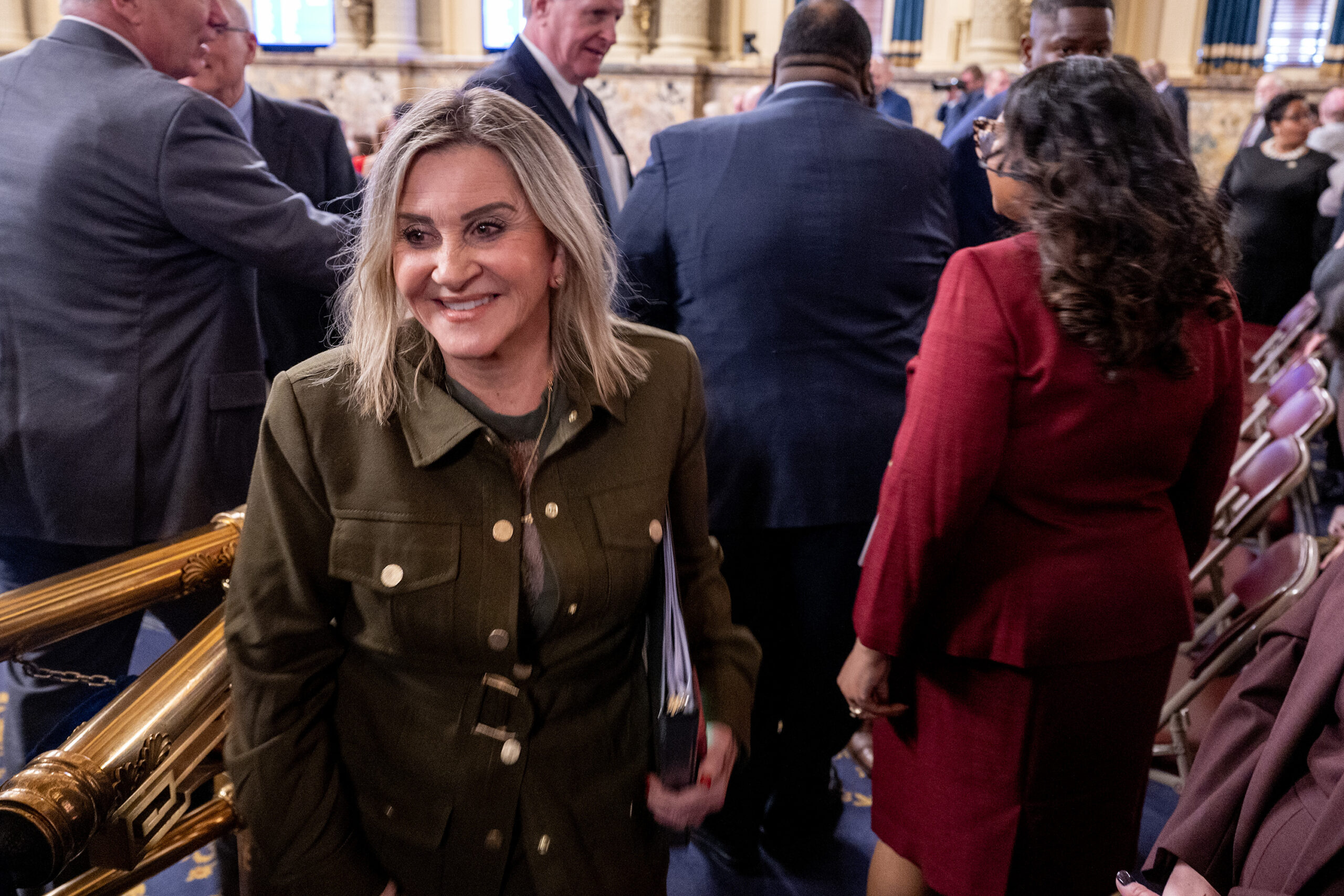
Senate President Pro Tempore Kim Ward leaves the House chamber Feb. 3 following Gov. Josh Shapiro annual budget proposal in Harrisburg.
Jeremy Mock has owned a small coffee business in Ward’s legislative district in western Pennsylvania since 2022, according to public business filings. He and his wife moved to the Abington Township neighborhood in 2017, and have had no issues with the Shapiros until the fence feud, according to both parties’ lawsuits.
“This dispute over a small piece of the Shapiros’ backyard has been turned into a shameless political stunt by their neighbors and members of the Republican State Senate, who are now harassing and exploiting the Shapiros,” said Rosie Lapowsky, a spokesperson for Shapiro, without directly naming Ward.
Zimolong, the Mocks’ attorney, said the fact that the couple was willing to work with the Shapiros to find a solution dispels any claim that their suit is politically motivated. The Mocks could have said “no” from the outset when the Shapiros approached them, he argued, but instead participated in negotiations.
“At base, this is a straightforward defense of the property rights of two innocent owners, who were living peacefully next to the Shapiros for over nine years,” Zimolong added in a statement.
“Even today, the Mocks remain open to resolving the dispute,” Zimolong said.
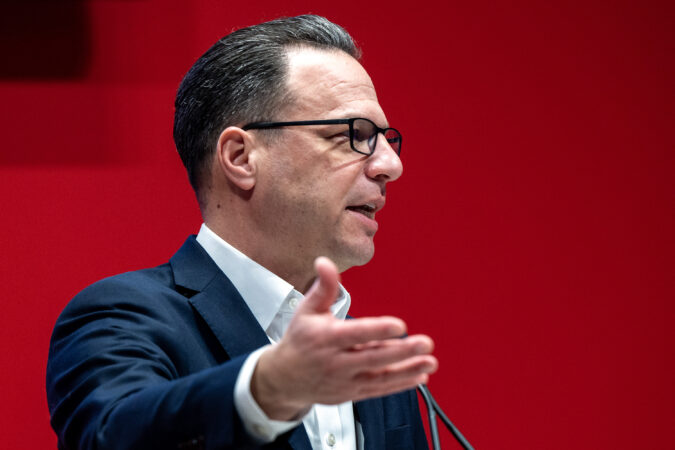
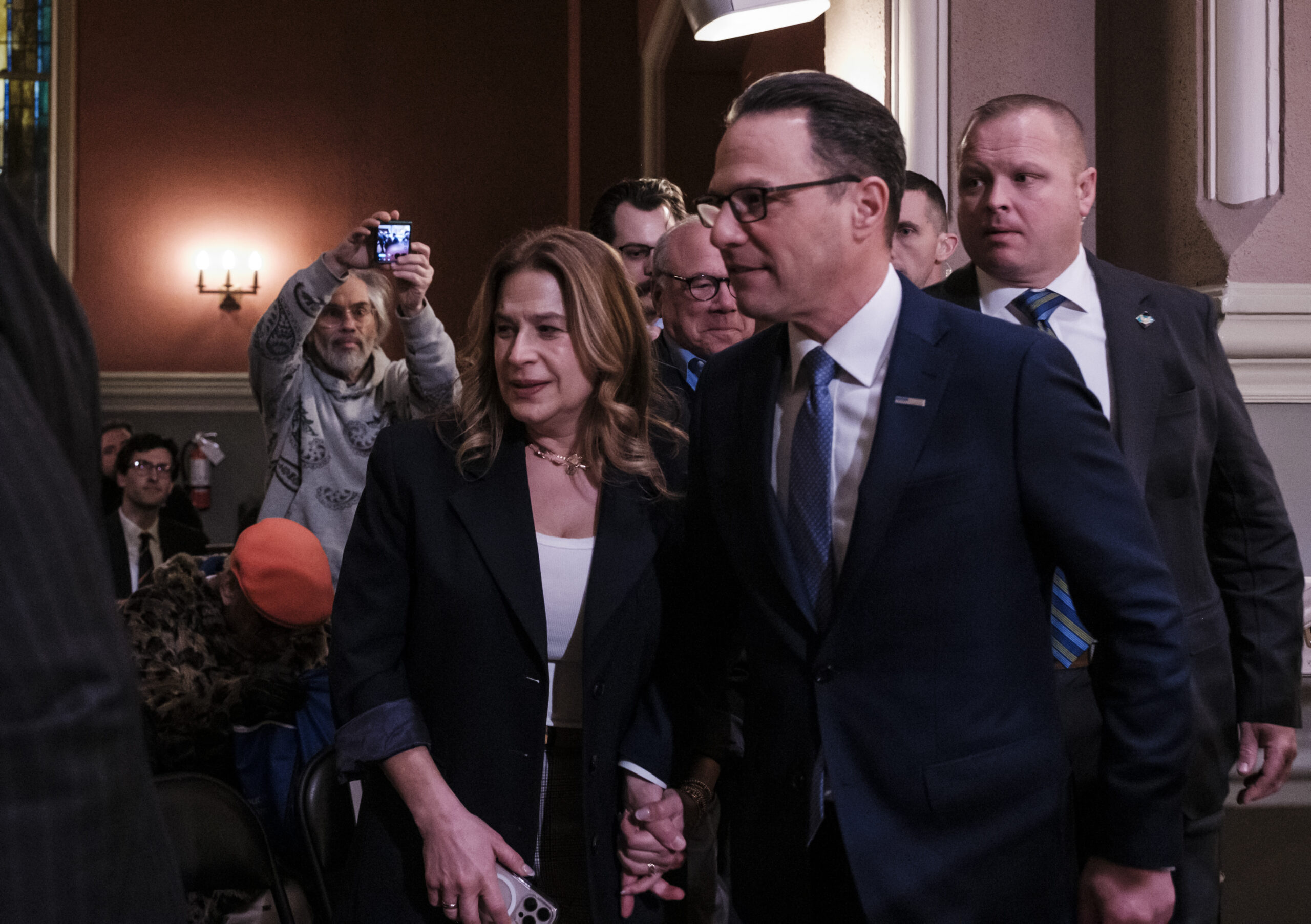
Gov. Josh Shapiro and his wife, Lori Shapiro, depart a talk for his new memoir “Where We Keep the Light” on Jan. 29 in Washington, D.C
Zimolong says he has never discussed the lawsuit with Ward or coordinated with her staff over the issue, “and I have no intention of doing so.”
He saidhe is one of few attorneys in southeastern Pennsylvania who is “not afraid to hold a powerful governor accountable” and does not have work before the state that would present an ethical conflict.
Erica Clayton Wright, a spokesperson for Ward, noted that taxpayer funds have now been used to pay for security upgrades to Shapiro’s personal residence and the property of his neighbors, and argued that it’s “not the first time Gov. Shapiro’s team has been put in the awkward position of pointing fingers to distract from Gov. Shapiro’s questionable methods of operation.”
“It is important not to lose sight of the need to ensure the governor and his family are safe while also safeguarding the processes in place to manage taxpayer funds,” Clayton Wright said.
“Absolutely no one but Gov. Shapiro himself is responsible for trying to take his neighbor’s property via squatter rights, which has resulted in federal and state lawsuits,” she said.
Staff writer Abraham Gutman contributed to this article.
About once a month, Brian Wanamaker drives toa cancer treatment center near his home in Crowley, Texas. He sits on a hospital bed as nurses inject needles into his arm and stomach; one for chemotherapy, the other to boost his immune system.
He can be there anywhere from one to four hours.Wanamaker is asleep throughout, but he doesn’t wake up rested. His stomach burns. His body feels fatigued.
After it’s over, he often goes straight to the gym at Texas WesleyanUniversity, where the North Philadelphia native coaches the NAIA men’s basketball program. Sometimes, he even beats his players to practice.
Since 2022, when Wanamaker was diagnosed with multiple myeloma, he has been balancing his job with the limitations of an incurable cancer. It is not easy. The head coach takes six pills a day to keep the disease in remission for as long as possible.
His doctors advise him not to engage in stressful activities (even if running a college basketball team is antithetical to this). Then, there is the matter of his schedule. Texas Wesleyan plays games mostly on Thursdays and Saturdays.
It doesn’t allow much time to undergo chemotherapy and fully recover. But the coach has an answer for that, too. He receives treatment early on Mondays, so he doesn’t feel sick later in the week.
If the Rams are on the road, he’ll reschedule.
“It’ll come back,” Wanamaker said of multiple myeloma. “But right now, I do maintenance.”
The 36-year-old doesn’t talk like someone who is worried about the future. If anything, his job has helped him stay grounded in the present. Coaching was a lifelong goal of Wanamaker’s, ever since he was a boy playing in the Sonny Hill League.
This is where he and his twin brother, Brad, first saw how basketball could change a life. Their coach, Rasool Hajj, was an alumnus of and former volunteer assistant coach at Roman Catholic High School. He helped the twins connect with the program, and they enrolled in 2003.
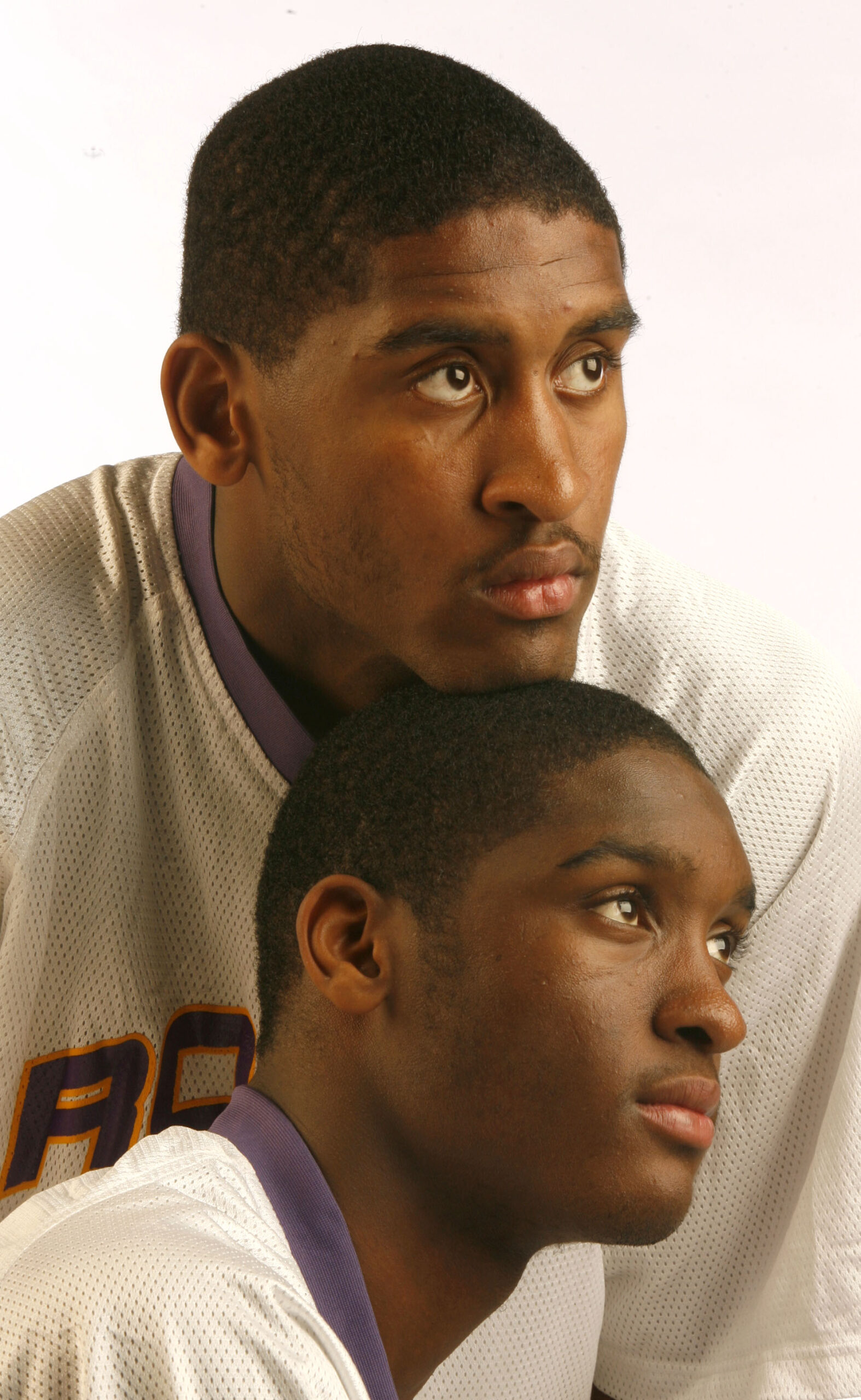
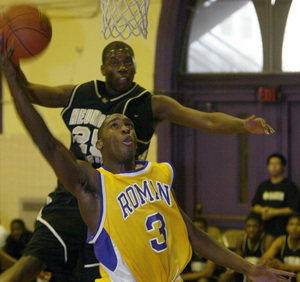
Brad and Brian Wanamaker (bottom) were stars at Roman Catholic High School and went on to play professional basketball.
The Wanamaker brothers quickly became standout players. In 2007, they led Roman to a Catholic League championship under coach Dennis Seddon. After that, their careers took divergent paths.
Brad starred in college at Pittsburgh en route to a seven-year stint in Europe, followed by a four-year stretch in the NBA. Brian struggled with injuries in college and bounced around, eventually finding a permanent home as a player at Texas Wesleyan.
He spent a few years playing overseas but returned to the school as an assistant coach in 2019. The Philadelphia native was named head coach in 2024 and has made an immediate impact, leading the Rams to a 38-20 record since taking over.
He models his approach after Hajj’s. He checks on players’ mental health before berating them for a mistake. He routinely asks how things are going at home and at school.
The team is encouraged to be vulnerable and learn from one another, rather than to react in real time. Wanamaker tells the players to focus on “the person,” because everyone is going through something.
“But I also talk to them about reality,” Wanamaker said. “Yes, everybody wakes up with an excuse they can use, and it’s real. But you can either use it or you can fight through it. You know?”
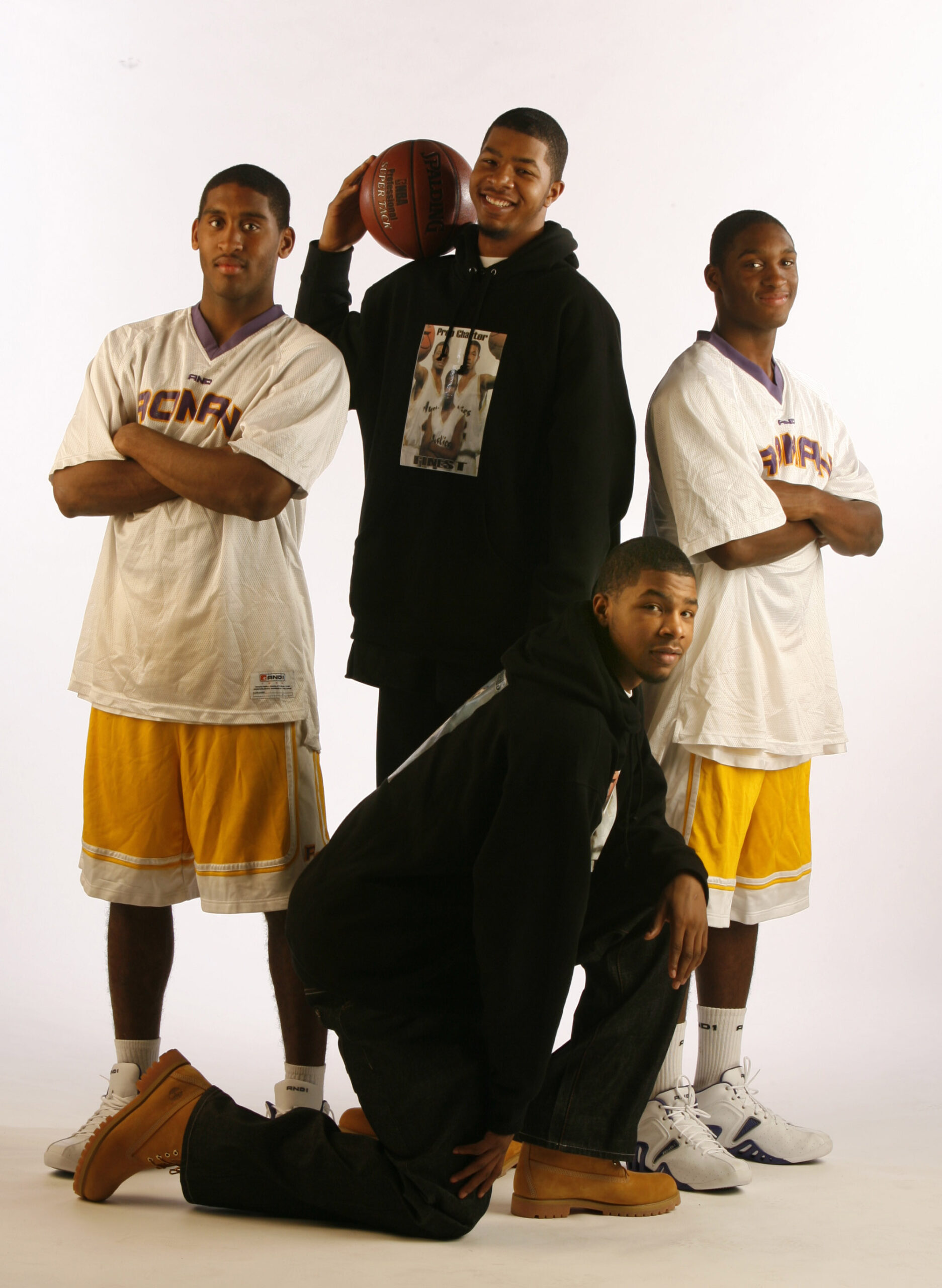
Brad (left) and Brian (right) Wanamaker with fellow basketball-playing twins, Markieff (top center) and Marcus Morris (kneeling) of Prep Charter in 2006.
A North Philly upbringing
Brian and Brad grew up in a three-story house on 19th Street between Norris and Diamond. They were the second and third of five siblings — Brad is 1 hour, 11 minutes older than Brian — and shared a bedroom on the top level.
This had its shortcomings. The roof had holes, so when it rained, the boys put pots on the floor. Their neighborhood was perilous at times, and from an early age, they became aware of the poverty, gun violence, and drug use around them.
But their childhood was still full of joy. Nineteenth Street was home to a lot of young kids, many of them Brian and Brad’s age. They rode bikes, played tag, and staged impromptu football games outside.
Basketball was their favorite sport. The twins ventured to courts all over the city in search of the fiercest pickup battle: 16th and Berks, 16th and Susquehanna, 25th and Diamond, 22nd and Norris.
They’d shoot hoops before and after school. Local elders would organize basketball tournaments between blocks with trophies for the winners. In seventh grade, a friend, Saleem Elam, asked if they played AAU basketball.
Neither brother knew what that was. But they soon attended a tryout, held their own against more experienced players, and made the team. Before long, they were playing in leagues throughout the area — Gustine Lake, Sonny Hill, Belfield.
The Sonny Hill League was where they met Hajj, who seemed to be part basketball coach, part social worker. He allowed the twins to reimagine the bounds of what a coach could do, a template they’d lean on later in their careers.
The Wanamaker Brothers looked to Rasool Hajj (center) as a coach and mentor.
“He helped a lot of kids, but also a lot of families,” Brian said. “He helped parents get jobs. He would give people money if they needed it for something. He was always there. He was almost like a big brother to us.”
Hajj became a mentor to the twins. At the time, they were attending Gillespie Junior High School, which closed in 2011. Brian and Brad seemed to learn all the wrong lessons, like how to cut class and replace it with extra gym time.
Teachers wouldn’t enforce the rules, so to the twins, there was no reason to follow them.
“There wasn’t a lot of learning,” Brad said. “Not a lot of structure. I’d go to one class — Ms. Brown, because she knew my dad. So, I’m like, ‘I got to make sure I go to her class.’
“I’d go to homeroom and get marked absent for the day. Then I’m in my brother’s class, I’m at his lunch, I’m playing cards [with him].”
Hajj, who recognized the twins’ untapped potential, introduced them to Seddon and the other Roman Catholic coaches. That break altered their lives.
The high school brought a level of discipline that the Wanamakers weren’t used to. And when they arrived as freshmen, it was a tough adjustment.
Brian walked through the doors in September 2003 and looked at the students around him.
“We wanted to leave because we didn’t know it was an all-boys school,” Brian said. “We was like, ‘What? There’s no girls in the school?’ We were so confused.”
Brian Wanamaker and his brother were standout AAU players who had to adjust to Roman Catholic on and off the court.
They racked up demerits for every conceivable offense, from untucked shirts to facial stubble. Both brothers failed a class in their first semester and were ruled ineligible for the first half of the basketball season.
Because they were on academic probation, they had to go to summer school, wearing slacks, long-sleeved collared shirts, and ties in the sweltering heat. The lesson stuck.
“It just was like, ‘We got to be doing the right thing,’” Brad said.
In sophomore year, Brad started on varsity, and Brian on JV (with some varsity appearances mixed in). They fed off each other in practice and in games.
The players had different strengths. Brian, a 6-foot-2 combo guard, was a better defender and three-point shooter. Brad, a 6-4 shooting guard, was a “laid-back killer” who could score from midrange.
Brian showed all of his emotion. He wasn’t above “mugging a player,” in Brad’s telling, and wasn’t afraid of getting a technical foul. He’d scream and yell. Brad, by contrast, was quiet.
But occasionally, he would give his brother some in-game feedback.
“He’d be like, ‘Hey, play your role!’” Brian said. “He’d be like, ‘Pass it to me. Pass me the ball, and you play defense!’”
Added Brad: “He’d go, ‘Shoot the ball!’ And I’d tell him, ‘Calm down! I need you out here!’ Because sometimes he gets too emotional. And I’m like, ‘Before you get a technical foul, I need you to calm down.’”
Brian Wanamaker helped Roman win the Catholic League title.
The brothers racked up accolades, especially in 2006-07, their senior season. Brian was named second-team All-Catholic and All-City, as well as Defensive Player of the Year. Brad was named the Daily News’ Player of the Year, and was first-team All-State, All-City and All-Catholic as well.
The Cahillites parlayed this success into a historic campaign. The twins led Roman Catholic to a 28-3 record and its first Catholic League championship since 2000.
Rival Neumann Goretti, the No. 1 seed from the Catholic League South, came into the final favored. And the game, played at the Palestra, was close until the very end.
Brad had to sit for a stretch midway through the third quarter after picking up his fourth foul. Without its best player, Roman was at a disadvantage. Brian made sure everyone knew their defensive assignments, so the undermanned Cahillites could stay within striking distance.
His brother returned early in the fourth quarter, and spurred his team to a 17-4 run. With just over a minute remaining in the game, Brian hit a layup to widen Roman’s lead to 58-54. It finished with a 59-56 comeback win.
“I think [Brian] pointed to our student section,” said Brad, now the head coach at Roman Catholic. “We still have the picture at my mom and dad’s house. It was in the newspaper. It was a moment.”
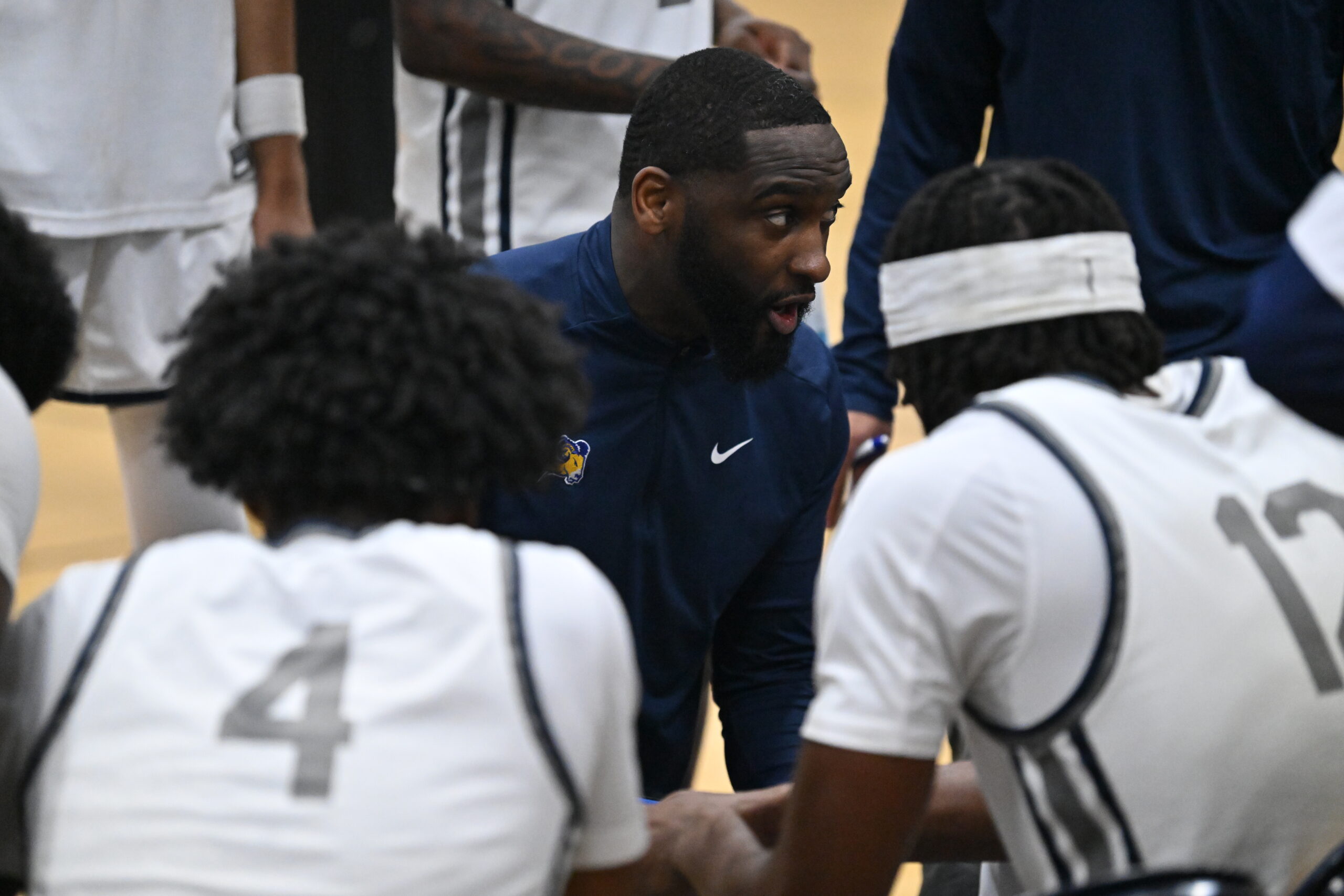
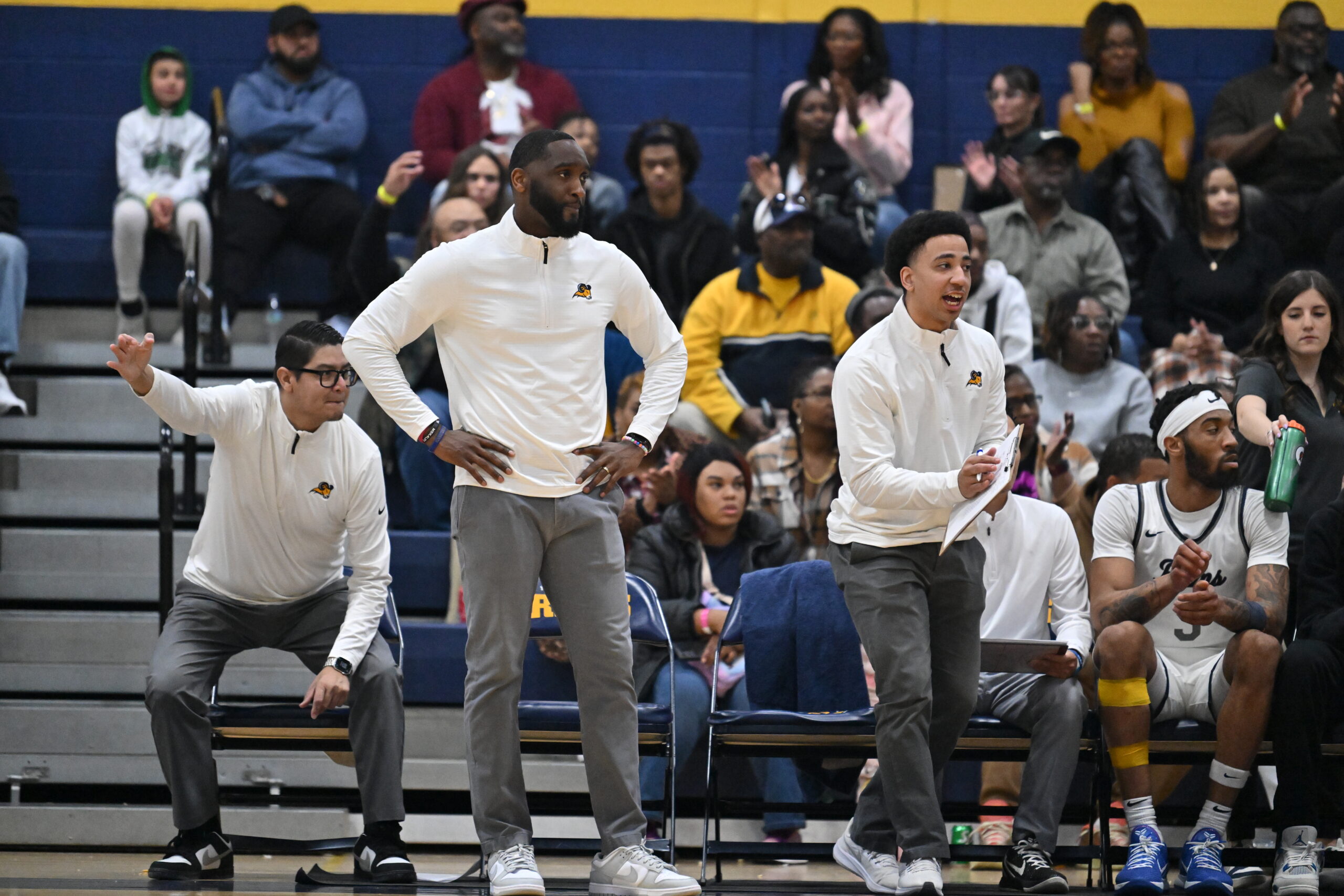
Brian Wanamaker coaching at Texas Wesleyan University.
Coaching through chemo
After graduating, Brad played for Pitt when it was one of the top men’s basketball programs in the country. Brian bounced around; first to Central Connecticut State, then to Lon Morris Junior College in Jacksonville, Texas, and, finally, to Texas Wesleyan in 2009.
He struggled with foot injuries almost every year of his college career. This made it difficult to get steady playing time. But at Wesleyan, he found a fit.
A former coach had recommended the school to him, and Wanamaker initially was skeptical. He’d never heard of it. The campus was in Fort Worth, Texas, about 1,500 miles away from home.
“I didn’t know what Texas Wesleyan was,” he said. “My first semester, I played basketball, stayed in my room, and didn’t talk to teammates, coaches, anyone. I was just like, ‘Why am I here?’”
By his second semester, he realized this would be his last opportunity to play in college. So he decided to embrace the program and was happy he did. Wanamaker felt he could be himself in a way he couldn’t at his previous two stops.
During the summer of 2010, Brian visited Brad at Pitt and trained with him and his teammates. He returned to campus in the fall more confident than ever.
That season, he was named a first-team NAIA All-American and Red River Athletic Conference Player of the Year, averaging 19.1 points, 5.7 rebounds, and 5.0 assists.
The combo guard was drafted into what then was the NBA D-League and ended up playing six seasons in Germany and Lithuania.He returned to Texas Wesleyan in 2019 to finish his degree and work as an assistant coach.
Brian Wanamaker returned to Texas Wesleyan as a coach and has endured a trying off-court experience while leading the Rams program.
In late 2021, during his second season coaching, Wanamaker started to feel back pain. At first, he thought it was workout-related. Maybe he’d pulled or strained a muscle.
But the pain worsened, to the point where he had to stop exercising. He couldn’t sleep in a bed anymore because it would hurt his back, so he would lie flat on the floor.
Wanamaker underwent all sorts of testing, but the doctors didn’t find anything. They hypothesized that his pain was stress-related.
“And I would tell them,” he said, “‘I’m not stressed.’”
In September, after a litany of visits, his primary care doctor received MRI results that showed tumors all over Wanamaker’s back. He went to the hospital for further testing, and was told he had multiple myeloma, a cancer formed in plasma cells that is treatable but has no known cure.
He was a statistical anomaly. The disease is predominantly diagnosed in people 65 years or older. According to the American Cancer Society, only 1% of cases are found in those younger than 35.
Wanamaker was 33.
“That was really hard,” he said. “Because, obviously, when you hear cancer, you think death. And then you hear, ‘No cure.’ It was hard for me to process.”
Brian Wanamaker will lead Texas Wesleyan in the Sooner Athletic Conference Tournament starting Wednesday.
The next day, the coach started seven months of chemotherapy. Many on the team assumed he would be out for the rest of the year.
But Wanamaker was back in the gym that week, helping at practice and eventually sitting on the bench during games.
He had little energy and often felt sick. His immune system was at a higher risk than usual. But Wanamaker felt he needed to do it. So every day, he’d drive to Texas Oncology for his treatment, and would head to Texas Wesleyan afterward.
“I was probably more than half-asleep,” he said. “I was going through what I was going through, but I knew as a coach, players are going through stuff, too. It was just being there for them.”
Guard Akili Vining had recently lost his father to cancer. Point guard Matthias Nero had gotten into a severe car accident, which led to the death of his close friend.
Wanamaker was acutely aware of their struggles and those of other players. He decided to pour himself into his team.
“Coach B would probably text me every day,” Nero said. “He would make sure I was in the right headspace, to see if I needed help. He’d pull me aside and just tell me, ‘If you need anything — this isn’t about basketball. This is about the future and your mental health.’”
Wanamaker received a blood transfusion in May 2023. His father and brother visited him in the hospital shortly after. Seeing him hooked up to a cluster of machines was difficult.
“It was like, ‘I can’t lose my brother,’” Brad said. “‘Not the person I came into this world with.’”
Brad Wanamaker (left) has had to monitor his twin brother’s condition from afar.
Eventually, Brian’s chemotherapy schedule was reduced from daily to monthly treatments. Through it all, he rarely missed a practice or a game, which became a source of inspiration for his team.
The players could see their coach had changed. He’d lost hair and weight, and his skin looked dull. Sometimes, he’d arrive with a bandage on his arm to cover a needle mark.
But he was showing up, just like they were.
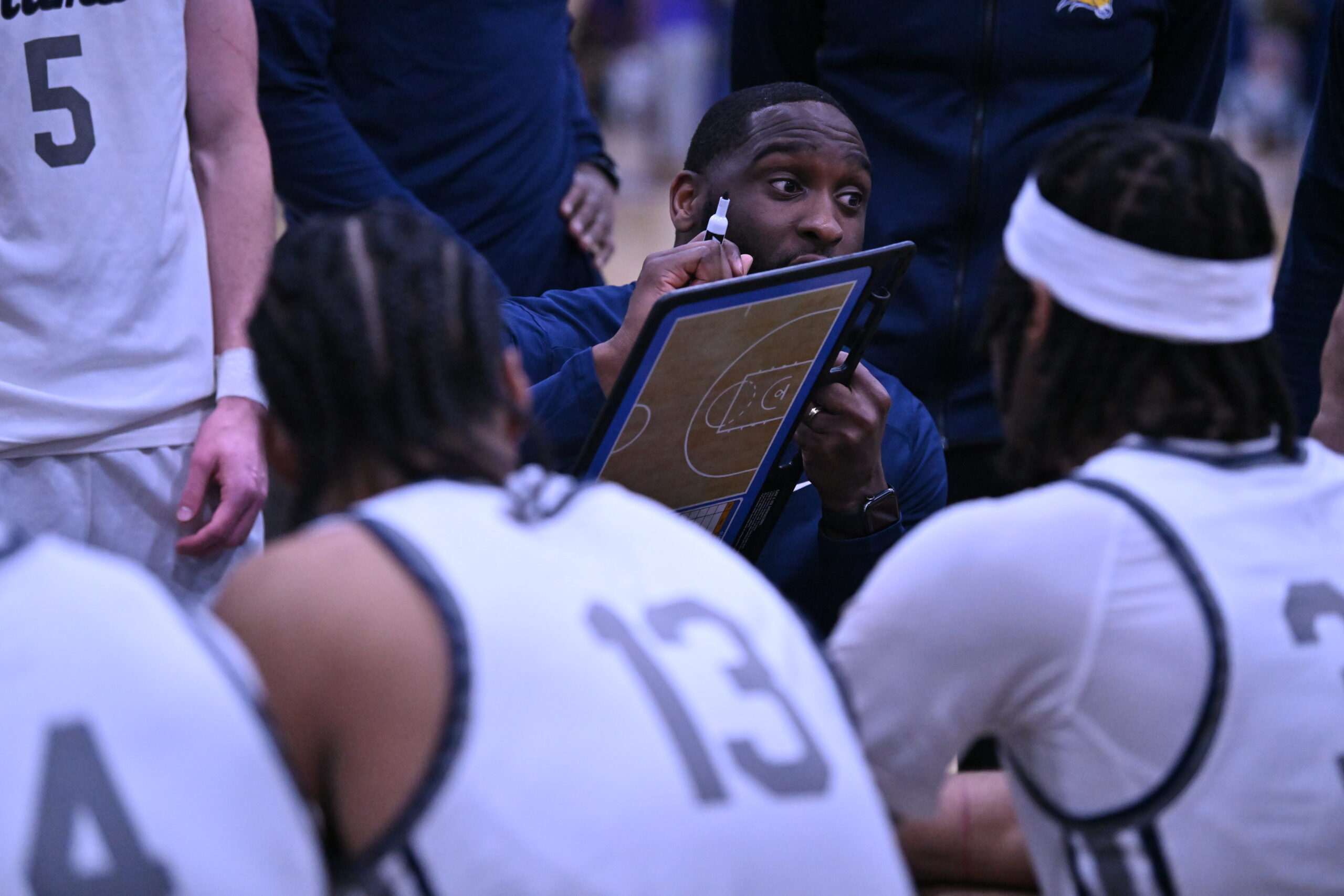
“If he can fight though chemo,” Vining told a local TV affiliate, “I can fight through practice.”
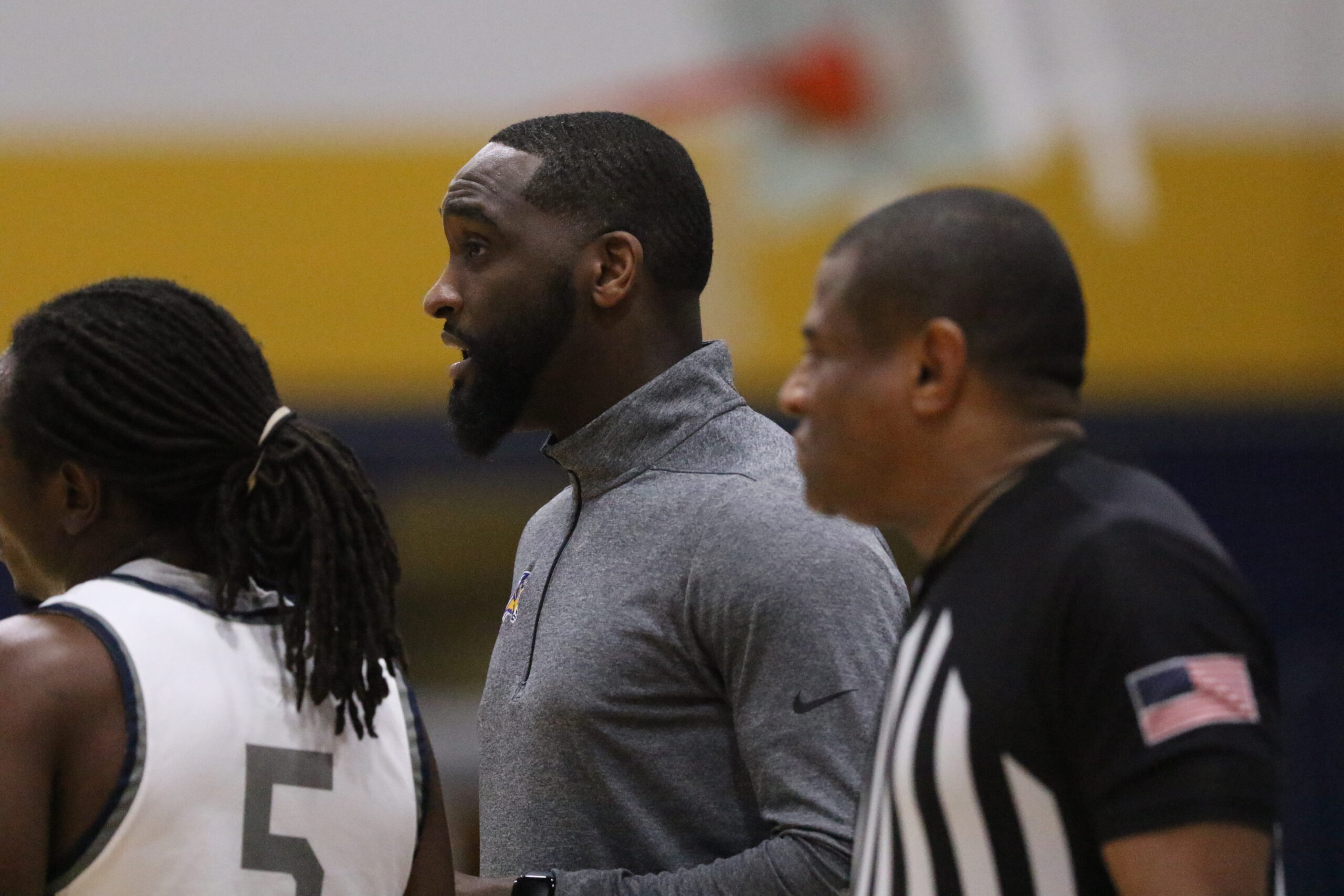
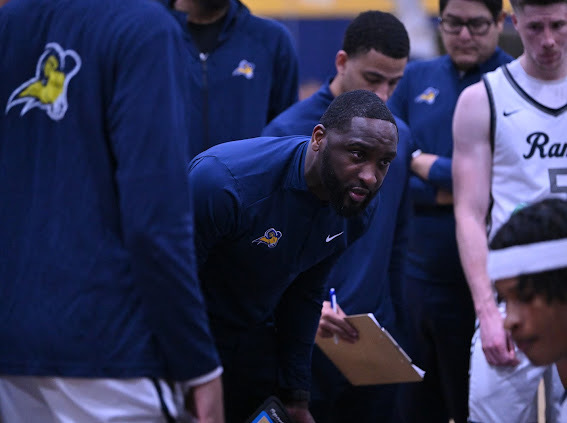
Brian Wanamaker has won the respect of his players by caring about them as players and people.
‘People are going to say I cared’
In April 2024, Wesleyan’s head coach, Brennen Shingleton, resigned to work for a business in Fort Worth. Wanamaker was named interim coach but also applied for the full-time job.
He wasn’t alone. Athletic director Ricky Dotson said he received “a ton” of applications, from former NBA assistants to former Division I head coaches. He narrowed it down to four finalists, interviewing them throughout the spring.
Despite the high caliber of candidates, Wanamaker still set himself apart. It wasn’t just that he was familiar with the team. It was that the players respected him, and looked to the Philadelphia native as a role model.
Dotson knew the coach’s character. He could see that this would not be a surface-level job for him. By the end of the interviews, he was convinced that Wanamaker was the best choice, even with the uncertainty about his health.
“I just never really doubted that he would be able to do it,” Dotson said. “And he’s moved right on through.”
That June, Wanamaker was officially named head coach. He immediately got to work, targeting bigger, more athletic players in hopes of building a hard-nosed, physical team.
One such player was Khalil Turner, a 6-8 guard from Northeast Philly who had shuffled through four colleges before taking a two-year hiatus. Like Wanamaker, Turner was a Hajj disciple in need of a new home.
The former Sonny Hill coach was confident that Wesleyan would be the right fit.
“Listen, man, I got a place for you,” Hajj told him. “It’s a Philly coach. He’s going to treat you like family. All you’ve got to do is just go out there and put the work in, and everything is going to fall into place.”
The two initially butted heads, usually over inconsequential things. Turner said that one day, in practice, they almost got into a physical fight. But Wanamaker never gave up on him. He didn’t suspend Turner or revoke his scholarship.
Brian Wanamaker connected with another former Philly star, Khalil Turner, who arrived in Fort Worth.
Eventually, the guard began to open up about his personal struggles. He had a family member who was sick at home. He told the coach that he needed a job to make some extra money. Wanamaker found him one at a local laundromat.
Now, Turner says they are “best buds.” Last year, when the incoming freshmen arrived on campus, the senior guard was the first to explain Wanamaker’s predicament.
“We told them, ‘Hey, Coach is dealing with this,’” Turner said. “‘So from time to time, he might be a little moody. But this is why he’s moody. He’s worried about his chemo. So don’t stress him out too much.’
“The vets feel like if Coach is giving his all, with his chemo, we should give it our all every day in practice,” Turner added, “and every day on the court. He’s going above and beyond for us, so we should do the same.”
After consecutive losing seasons, the Rams now look like a different team. They have adopted some of Wanamaker’s characteristics, playing a faster, tougher brand of basketball.
They set hard screens and make hard cuts. They dive on the floor for loose balls and swarm opposing offenses. And they are seeing results.
In 2024-25, Texas Wesleyan went 19-11, earning an NAIA National Tournament berth. This year, it is 19-9.
But Wanamaker isn’t just focused on the numbers.
He knows his players have changed as people, too. They are more emotionally available. They are better able to communicate their feelings. They are less reactionary than when they first arrived.
And to the Philadelphia native, that is more valuable than anything.
“It gives me my purpose,” he said. “And no matter what happens, I know that, when it’s all said and done, people are going to say I cared.”
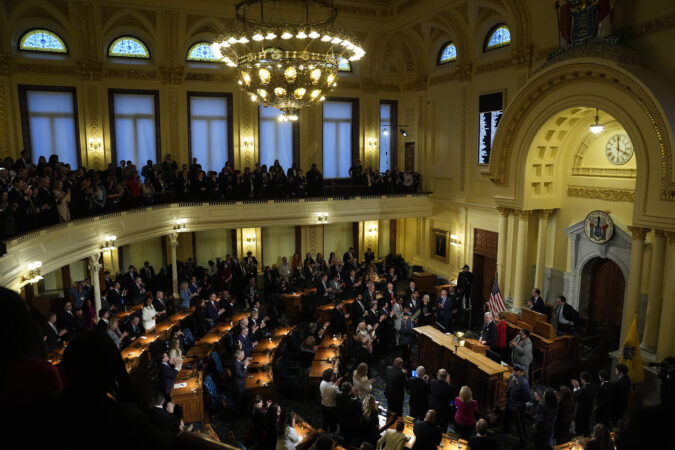
New Jersey lawmakers just got a nearly 70% raise when they took their oaths in January.
It’s their first pay bump in more than two decades. The state’s legislators had been paid a $49,000 salary since 2001, but this year they saw it jump to $82,000 under a law signed in 2024.
Despite the increase, their spending power isn’t any bigger than it was 25 years ago. But legislators giving themselves a raise is a politically fraught move.
Their new salaries fall below the state’s median household income of more than$100,000, though the legislature says most of its members have other employment. Garden State lawmakersare considered part-time, even though they meet throughout the year and some members say the job is a full-time commitment.
“They say it’s part-time but I would argue that people act like it’s full-time, and it really is a full-time job,” said Assemblymember Anthony Angelozzi, a newly elected Democrat who represents parts of Burlington and Atlantic Counties and also works as a Hammonton teacher and leads the Hammonton Education Association, the local teachers union.
“My term is two years, and I am in a swing district … so if I don’t work hard every day to do things in my district and to talk to people, build relationships, visit the 25 towns that I represent, I’m going to lose my seat,” he said.
window.addEventListener(“message”,function(a){if(void 0!==a.data[“datawrapper-height”]){var e=document.querySelectorAll(“iframe”);for(var t in a.data[“datawrapper-height”])for(var r,i=0;r=e[i];i++)if(r.contentWindow===a.source){var d=a.data[“datawrapper-height”][t]+”px”;r.style.height=d}}});
New Jersey legislators are now among the highest-paid in the country, but they’re still paid less than their counterparts in Harrisburg, whose salaries are more than $113,000, including per diems, above Pennsylvania’s median household income of roughly $78,000.
In New Jersey, each chamber was scheduled to meet for less than a dozen full sessions in 2025, but members met more frequently for committee meetings and quorums, in which lawmakers can conduct business if more than half are present.
Most New Jersey state lawmakers have other jobs, too
Along with Angelozzi, all of the other 19 state lawmakers who represent Camden, Burlington, and Gloucester Counties in the state House and Senate also received a paycheck from outside employment, according to 2024 financial disclosures. A handful of them also reported receiving Social Security or pension income.
Assemblymember Balvir Singh, a Burlington County Democrat who began his term last year, said he’s not sure he would have voted for the pay increase given the drastic jump at once, though he would have supported a formula with annual increases over time.
“I think not doing something for so many years and then doing it all of a sudden, definitely is a suspicion among people, and rightfully so,” he said.
Singh works as a public school curriculum and instruction supervisor, which gives him flexibility to plan his work hours around days he has to be in the legislature, though he still uses his time off for legislative matters and constituent services.
window.addEventListener(“message”,function(a){if(void 0!==a.data[“datawrapper-height”]){var e=document.querySelectorAll(“iframe”);for(var t in a.data[“datawrapper-height”])for(var r,i=0;r=e[i];i++)if(r.contentWindow===a.source){var d=a.data[“datawrapper-height”][t]+”px”;r.style.height=d}}});
Does better pay mean Trenton can better represent New Jerseyans?
Proponents of payingelectedofficials higher salaries argue thatitcan lead to a more diverse legislature that’s more representative of New Jerseyans, though the evidence is limited.
Anthony Campisi, a political consultant who works in both New Jersey and Pennsylvania, said higher legislative pay opens up the prospect of running for state office to those who aren’t independently wealthy or hold white-collar jobs, that come with the flexibility to go to Trenton regularly, like lawyers.
“I think it’s a good thing to pay legislators living wages,” he said. “They’re responsible for appropriating billions of dollars for overseeing important legislative work that impacts every aspect of our lives.”
But Peverill Squire, a national expert on legislative pay based at the University of Missouri, said pay increases lead to minimal changes in the makeup of legislatures because of the financial and time commitment that comes with running for office.
“It makes it more attractive for more people to think about, but it’s still a very difficult thing to run for office, and so in the final analysis, it doesn’t have as big an impact as one might have thought it would,” he said.
That being said, higher pay can incentivize legislators to remain in the job. Squire said state lawmakers who step down voluntarily often do so because of the financial impact on their families.
The average state legislator salary across the country hasn’t kept pace with inflation over the past few decades, according to the National Conference of State Legislatures(NCSL). In New Jersey, the old salary of $49,000 in 2001 had the buying power of roughly $90,000 today.
New Hampshire legislators receive the lowest annual salary of $100, which has not been changed since 1889. Meanwhile, New Mexico lawmakers do not receive a salary, but they receive per diems.
In 2025, only six states paid their lawmakers more than New Jersey lawmakers’ new salary of $82,000, while Pennsylvania lawmakers made the third most behind New York and California, according to NCSL data.
New Jersey Gov. Mikie Sherrill holds up a just signed executive order during her inauguration ceremony in Newark, N.J., Tuesday, Jan. 20, 2026. Sherrill will received a higher salary than her predecessor, former Gov. Phil Murphy, under a law taking effect this year.
Should New Jersey become a full-time legislature?
The 2024 law,which was signed by former Gov. Phil Murphy, also increased the salary for the governor and other public employees, including legislative staff, cabinet members, and judges.
Starting this year with Gov. Mikie Sherrill, the state’s top executive got a 20% pay increase from $175,000 to $210,000. For comparison, Pennsylvania Gov. Josh Shapiro’s salary has risen to nearly $254,000 this year.
The Office of Legislative Services estimated in 2024 that the increases altogether would bring a cost increase to the state of at least $9.8 million for 2026 and at least $12.4 million in 2027 and thereafter.
The bill faced opposition from some Republican lawmakers, including member Alex Sauickie, a Republican whose district includes parts of Burlington, Middlesex, Monmouth, and Ocean Counties. Sauickie said the billwas brought forward at a horrible time as New Jersey residents struggled with the high cost of living — an issue that persists as the law takes effect.
“We should fix the state for everybody else before we make adjustments for ourselves,” said Sauickie, whose district includes parts of Burlington, Middlesex, Monmouth, and Ocean Counties.
The GOP lawmaker said he does not believe higher wages lead to better legislators.
“Under the old salary we had questionable legislators, and out of the gate on the new salary I think we still have questions about certain legislators,” he added.
Antoinette Miles, the state director of the progressive Working Families Party, said New Jersey should have a full-time legislature with term limits, attractive pay, and limits on outside income.
“The real problem is that too many legislators are moonlighting as lawyers, lobbyists, or even at a second public job,” she said.
But even with a higher salary, the lack of job security as an elected official makes it a hard sell as an only source of employment, especially in a politically fickle district like Angelozzi’s.
“Nothing in politics is guaranteed … if I lose my job, I would have to be guaranteed to go back to my full-time day job, because, you know, I have bills to pay,” Angelozzi said.
It’s been three years since the Flyers fired Chuck Fletcher and replaced him with Danny Brière. Here’s a look back at everything that’s happened since.
Flyers president Keith Jones (left), governor Dan Hilferty (center), and GM Danny Brière (right) have been overseeing the team's years-long rebuild.Anton Klusener/ Staff illustration. Photos: Tyger Williams, Yong Kim/ Staff Photographers; Miguel Martinez
Wednesday marks exactly 1,083 days since Danny Brière grabbed the wheel of the rudderless ship that the Flyers had become under previous captain Chuck Fletcher, and a lot has happened since.
From Brière’s use of the previously taboo term “rebuild” at his introductory news conference to the dawning of “New Era of Orange” to the arrival of Matvei Michkov to the team’s ongoing search for a No. 1 center, where do the Flyers stand three years into their process — and are they close to turning the corner?
story continues after advertisement
Ahead of the upcoming March 6 trade deadline, here’s a look at all the key moments and moves from Brière’s first three years as general manager of the Flyers.
The Flyers fire general manager Chuck Fletcher less than a week after the NHL trade deadline and name Danny Brière as interim GM. At his introductory news conference, Brière notably uses the word “rebuild” to define the Flyers’ situation.
May 11-12, 2023
‘New Era of Orange’ begins
The Flyers make the Brière hire permanent and hire former Flyer Keith Jones, who was then covering the NHL on TV, as the team’s president of hockey operations. The moves are unveiled as part of the team’s “New Era of Orange” ceremony as the organization’s leaders lay out a broad vision and plan for the team’s future.
June 6, 2023
‘Trader Danny’ announces himself
MIGUEL MARTINEZ / For the Inquirer
Brière makes his first major move as GM, trading top defenseman Ivan Provorov to Columbus in a three-team deal. The Flyers land the No. 22 overall pick in 2023 (Oliver Bonk), defenseman Sean Walker, goalie Cal Petersen, defensive prospect Helge Grans, and two future second-round picks (from the Kings and Blue Jackets). The Flyers later traded the two second-rounders in deals to move up and select Carson Bjarnason and to acquire Trevor Zegras.
More on the Flyers
From trade bait to untouchables, here’s where the Flyers roster stands less than two weeks before the deadline
The Flyers haven't committed to being buyers or sellers, but they have some pieces they could move for the right price by March 6.
June 24, 2023
Sanheim trade falls through
Brière gets close on a trade involving defenseman Travis Sanheim and center Kevin Hayes, but it is nixed after St. Louis defenseman Torey Krug exercises his no-trade clause. Sanheim’s full no-trade kicks in the following week.
June 27, 2023
Offloading Hayes
After the larger trade with the Blues falls through, Brière ships the 31-year-old Hayes to St. Louis for a 2024 sixth-round pick. Hayes’ relationship with coach John Tortorella had deteriorated to the point where a trade seemed unavoidable.
story continues after advertisement
June 28-29, 2023
Michkov falls to the Flyers
With his first draft pick as Flyers GM, Brière takes winger Matvei Michkov with the seventh overall selection. The Flyers draft Bonk later in the first round (No. 22), as well as Bjarnason, Denver Barkey, and Yegor Zavragin on Day 2.
July 1, 2023
A quiet free agency
As expected, the Flyers are relatively quiet as free agency opens, with Brière signing only depth players Ryan Poehling and Garnet Hathaway. Later they add veteran blueliner Marc Staal.
More on the Flyers
Flyers hit the Olympic break at a crossroads. Will they sell for the future or try to push for the playoffs?
The Flyers are eight points out of a playoff spot but have games in hand with 26 remaining. Is it time to stick or twist for GM Danny Brière ahead of the March 6 trade deadline?
July 15, 2023
The subtraction continues
Brière continues to clean house as the Flyers place defenseman Tony DeAngelo, whom Fletcher traded three picks for the previous summer, on waivers for a buyout. The Sewell native had been benched by Tortorella to end the season.
Jan. 8, 2024
The Gauthier-Drysdale shocker
Yong Kim / Staff Photographer
Brière trades No. 2 prospect Cutter Gauthier, then playing at Boston College, to Anaheim for defenseman Jamie Drysdale and a 2025 second-round pick. Brière soon reveals that Gauthier’s camp had demanded a trade for unspecified reasons and that his camp had cut off all communication. Days earlier, Gauthier had been named the best forward at the World Junior Championship as Team USA won gold. Gauthier has never confirmed the exact reason he forced a trade, whether it was because of Tortorella, the team’s decision to send him back to college for a second year, or the Flyers’ overall direction.
Jan. 26, 2024
Tippett signs eight-year extension
The Flyers hand 24-year-old winger Owen Tippett a lucrative eight-year, $49.6 million contract extension ($6.2 average annual value). Tippett, who was acquired in the Claude Giroux trade, had 18 goals in 46 games at the time of the extension, and had tallied a career-high 27 the year before.
Jan. 30, 2024
Hart charged with sexual assault
Yong Kim / Staff Photographer
A week after taking a leave of absence, franchise goaltender Carter Hart is charged alongside four other professional hockey players in connection with an alleged sexual assault in 2014 in Canada. Hart is acquitted in July 2025 but never plays for the Flyers again.
March 6, 2024
Flyers land first-rounder for Walker
The Flyers flip Sean Walker, a salary dump by Los Angeles in the Provorov trade, to Colorado with a fifth-round pick, for a first-round pick and half of Ryan Johansen’s contract. The Flyers, who were in a playoff spot at the time of the trade, prioritize the long term in moving the thriving pending free-agent defenseman for future assets. On the same day, the Flyers extended veteran defenseman Nick Seeler, another potential trade chip, with a four-year, $10.8 million contract.
story continues after advertisement
March 23, 2024
A surprise playoff push
Having punched above their weight all season, the Flyers enter their final 11 games with a 36-26-9 record and four points above the playoff cut. According to hockey analytics company Stathletes, they have an 88% chance of making the postseason.
March 24-April 9, 2024
Colossal collapse
Steven M. Falk / Staff Photographer
The Flyers lose eight straight games to fall below the playoff cut, culminating with a 9-3 embarrassment in Montreal. They win their next two to push their slim playoff odds to their final day of the season, but are officially eliminated on April 16 with a 2-1 loss to Washington. They finish four points out of a playoff spot.
June 28, 2024
Jumping for Jett
The Flyers go off the board to select center Jett Luchanko with the No. 13 overall pick in the draft. Brière and the Flyers had moved back one pick in a trade with Minnesota that netted them an additional third-rounder. Minnesota selects defenseman Zeev Buium. The Flyers then trade their second first-rounder — Pick No. 32 from the Giroux trade — to Edmonton in exchange for a 2025 first-rounder. Edmonton selects Sam O’Reilly with the pick.
July 1, 2024
Michkov arrives early
After much speculation, the Flyers sign Michkov to his entry-level contract, after reports circulated in late June that he would come over to North America two years earlier than expected. He arrives in Philly on July 23.
July 25, 2024
Flyers keep Konency
The Flyers sign 27-year-old winger Travis Konecny to a massive eight-year, $70 million extension ($8.75 million AAV). Konecny, who was coming off career highs in goals (33) and points (68) and was the team’s most valuable asset, had one year remaining on his contract.
story continues after advertisement
Jan. 30, 2025
Bye-bye, Beezer
The Flyers continue to subtract as they move Morgan Frost and Joel Farabee to Calgary for Andrei Kuzmenko, Jakob Pelletier, a second-round pick (Shane Vansaghi), and a 2028 seventh-round pick. The Flyers are five points out of a wild-card spot at the time; Farabee has 3½ years left on his contract at a $5 million cap hit.
March 7, 2025
Laughton to the Leafs
Sitting five points out of a playoff spot with 19 games to play, the Flyers trade beloved glue guy Scott Laughton and two late-round picks to Toronto for a package that includes a protected 2027 first-round pick and forward prospect Nikita Grebenkin. Laughton has one year remaining on his deal. On the same day, the Flyers flip Kuzmenko, whom they acquired a month and a half earlier, to Los Angeles for a third-rounder.
March 27, 2025
Tortorella fired
Yong Kim / Staff Photographer
With the Flyers losing 11 of 12 games, Tortorella is fired after almost three seasons. The firing comes a day after the coach said, “I’m not really interested in learning how to coach in this type of season, where we’re at right now.” It later leaks out that Tortorella and Cam York had a heated verbal exchange during the Toronto game a night earlier. Tortorella, who was hired by the Fletcher regime, leaves with a 97-107-33 record with the Flyers.
April 17, 2025
Playing out the string
After winning five of interim coach Brad Shaw’s first six games in charge and seeing several young players thrive, the Flyers lose their final three games to ensure they will have the fourth-best draft lottery odds. They finish with a 33-39-10 record.
May 5, 2025
Bad bounce
The Flyers drop the maximum two spots in the lottery and learn they will pick sixth in June’s NHL draft.
May 14, 2025
Flyers name Tocchet head coach
Tyger Williams / Staff Photographer
Flyers Hall of Famer Rick Tocchet is named the 25th head coach in franchise history, becoming the sixth former Flyer to hold the post. The 61-year-old arrives with a 286-265-87 career record and is a year removed from winning the Jack Adams Award as Coach of the Year with Vancouver. Brière cites Tocchet’s passion for the Flyers and his communication and teaching skills as reasons he is the right fit to oversee the next stage of the rebuild.
More on the Flyers
The Flyers are in Rick Tocchet’s ‘blood.’ Now he’s tasked with returning the once-proud organization to prominence.
Tocchet, who was beloved as a player in Philly for his combination of toughness, heart, and goal-scoring ability, believes he can be "part of the solution of bringing the Flyers back to dominance."
May 29-June 3, 2025
Keeping the kids
Brière extends two homegrown pieces of the Flyers’ young core, signing winger Tyson Foerster to a two-year bridge deal ($3.75 million AAV) and center Noah Cates to a four-year contract ($4 million AAV).
June 10, 2025
Michkov Mania
Charles Fox / Staff Photographer
After leading all rookies with 26 goals and tying for second in points (63) with Macklin Celebrini, Michkov finishes fourth in Calder Trophy voting. Brière calls Michkov’s rookie campaign “exciting” and says the Russian surpassed all expectations.
June 23, 2025
‘Z’ is for Zegras
After years of speculation, the Flyers acquire Trevor Zegras from Anaheim in exchange for Ryan Poehling and second- and fourth-round draft picks. Zegras goes on to post 20 goals and 49 points in his first 56 games with the Flyers.
June 27-28, 2025
Porter’s house
The Flyers draft power forward Porter Martone with the sixth overall pick, then send their other two first-rounders (Nos. 22 and 31) to Pittsburgh, moving up to take center Jack Nesbitt with pick No 12. On Day 2, the Flyers select seven players, highlighted by second-rounders Carter Amico, Jack Murtagh, Vansaghi, and Matthew Gard.
Subscribe to The Philadelphia Inquirer
Our reporting is directly supported by reader subscriptions. If you want more in-depth stories like this, please subscribe today.
The Flyers sign goaltender Dan Vladař, depth center Christian Dvorak, and defenseman Noah Juulsen on the first day of free agency. Brière reiterates that the Flyers are focused on “flexibility” and “short-term” deals with an eye on the 2026 free-agent class. As expected, the star-studded 2026 class that included Connor McDavid, Jack Eichel, and Kirill Kaprizov dries up in the months that follow as all of the top players sign extensions.
July 7, 2025
York extended
The Flyers sign the 24-year-old York to a five-year extension that carries a $5.15 million cap hit. Brière says York has untapped potential and says the organization views him as “a main piece on our blue line.”
Sept. 10, 2025
‘Not moving back’
Jose F. Moreno / Staff Photographer
Jones and governor Dan Hilferty won’t commit to making the playoffs but tell the media that the Flyers are done making “changes in order to get better for the future,” adding that “now, it would be about staying on course, which is advancing. It’s not about moving back.” Jones says they owe it to the players to add to the team after years of subtracting.
Oct. 5, 2025
Exiting the Ellis contract
The Flyers get out of the final two years of the injured Ryan Ellis’ contract by trading it to San Jose. The blueliner, who played only four games in 4½ years for the Flyers, had a $6.25 million cap hit for this season and next. The move, which cost only a sixth-round pick, frees up significant cap space for the Flyers.
Jan. 5, 2026
Dvorak’s new deal
Months after they signed Dvorak to a one-year, $5.4 million deal, the Flyers extend the center for five years and $25.75 million ($5.15 million AAV). After citing “flexibility” and the importance of “short-term” deals in the summer, Brière reverses course by signing Dvorak through his 35-year-old season, while also handing him full trade protection in the first two years of the deal. Dvorak, who was having a career season and was on pace for 53 points at the time, would have been an attractive trade chip as a rental at the deadline.
More on the Flyers
Contract grades: Was signing Christian Dvorak for the long haul the right move for the Flyers?
Dvorak turns 30 next month and is now signed with the Flyers through age 35. Here's what our writers think of the team's decision to lock up the center, who is enjoying a career year.
Jan. 6, 2026
Flying high
The Flyers hit the halfway mark in style with a 5-2 beatdown of Gauthier and the Ducks at Xfinity Mobile Arena. Zegras scores two goals as the Flyers improve to 22-12-7 and climb to ninth overall in the league standings.
Jan. 8-Feb. 5, 2026
Hitting the wall
The Flyers win just three of their next 15 games entering the Olympic break and go from two points above the playoff cut line to eight points below it. Injuries also strike as Drysdale, Vladař, and Bobby Brink all miss time.
Feb. 3, 2026
Tocchet-Michkov saga comes to a head
Yong Kim / Staff Photographer
Days after Tocchet reiterates on several podcasts that Michkov came to camp out of shape, contributing to his sophomore slump, Brière calls a news conference, trying to quell speculation about the relationship between player and coach. Brière says the two “have a good relationship” and that “Matvei Michkov is not going anywhere. Let’s make that clear. … Matvei is going to be here for a long time.” He confirms that Michkov was out of shape and says this situation will be a learning moment for the young player.
Feb. 25, 2026
Stick or twist?
Sitting eight points out of a playoff spot, albeit with two games in hand, the Flyers return to game action against Washington. With just 10 days and five games until the March 6 trade deadline, the Flyers have one last chance to impress Brière. Will the Flyers be buyers, sellers, or stand pat? Defenseman Rasmus Ristolainen is among the players who could generate a significant return on the trade market.
So are the Flyers in a better place than they were three years ago when Brière took charge? In short, yes. The prospect pool is now top 10 leaguewide and much deeper than before, a product of several savvy long-term-view trades that netted a haul of first- and second-round draft picks. They have also added three star-level talents to the organization in Michkov, Martone, and Zegras, and may have finally solved their longstanding goalie riddle with Vladař.
On the other hand, the Flyers haven’t fully bottomed out and thus have missed out on landing top-5 picks — where teams usually land stars at premium positions like center and defense — and also were forced to trade a high-end prospect in Gauthier. With those gaping holes still to fill, Brière will need to get creative both in the draft and the trade market over the next six months if the Flyers are to truly shift their rebuild into the next gear in 2026-27.
Every generation eventually discovers whether it truly believes in the limits placed on power — or only supports those limits when they restrain political opponents. The moment we are living through now forces that question upon us.
The Founding Fathers of the United States did not design government for efficiency or speed. They designed it to restrain ambition. When they embedded the separation of powers into the Constitution, they were responding to centuries of human history that proved a simple truth: Unchecked power eventually silences the people.
They understood human nature’s tendency toward absolutism. Kings centralize authority. Leaders justify overreach. Governments expand unless they are deliberately restrained. The American republic was built differently. Authority was divided so that no single person could ever claim to speak fully for we the people.
That is why last Friday’s U.S. Supreme Court decision matters far beyond tariffs or commerce. The court reminded the executive branch of a basic constitutional principle: Decisions concerning commerce — especially taxation and tariffs — must originate in Congress.
Yes, the process is messy. Debate is slow. Compromise is imperfect. But the friction is intentional. The founders built resistance into the machinery of government so that sweeping economic power could never again be exercised by personal decree.
If tariffs are truly wise policy, then Congress should debate them openly. Legislators should defend them before voters. That is representation. That is accountability. That is self-government.
Our nation was born out of resistance to unilateral taxation. The Boston Tea Party of 1773 was not simply protest theater — it was a rejection of economic authority imposed without representation. The Constitution ensured such power would never again rest in one individual’s hands.
When one branch exceeds its authority, another branch must respond. That is not dysfunction; it is design. The judicial branch exists precisely to interpret the law and restore and remind us of the constitutional boundaries when political actors drift beyond them.
Courts have not always been right. History reminds us of poor decisions that took decades and courage to correct. Yet, judicial independence remains essential. Without it, constitutional limits become optional.
What should concern Americans today is not disagreement with the court’s ruling, but the reaction that followed.
Instead of accepting the decision, the executive branch responded with personal attacks against justices carrying out their constitutional duty. Even more troubling were the immediate efforts to search for ways around the ruling — to achieve the same outcome by different means.
That should unsettle every citizen, regardless of party affiliation.
I remember when one of my children was young, and my wife placed a forbidden toy on a high shelf for their safety. Determined to retrieve it anyway, the child stacked books and climbed upward, trying to bypass the boundary we had set. The creativity was impressive. The disobedience was undeniable.
A constitutional ruling is that high shelf.
Attempting to maneuver around it rather than respecting it undermines not only the court’s authority but the rule of law itself. The Constitution works only when leaders accept limits they dislike.
Equally troubling was the suggestion that a president could act militarily against another nation at will while being constrained economically. The Constitution says otherwise. The power to declare war rests with Congress. The president commands the military, but he does not possess unilateral authority to wage war or impose economic punishment without legislative participation.
The founders feared concentrated authority in every form — economic, military, and political. Their caution was wisdom born from history.
Republics rarely collapse in dramatic moments. They erode gradually — one ignored boundary at a time. One exception becomes precedent. One act of defiance becomes normalization.
The question before us now is not about one ruling or one administration. It is whether Americans still believe constitutional limits apply equally to those who govern and those who are governed.
The founders’ vision was never about strong personalities. It was about strong institutions accountable to a free people.
This feels like a dark chapter in the life of our republic. Yet, darkness often clarifies responsibility. Citizens must decide whether we will defend the structure that preserves our liberty, or remain silent as its guardrails are tested.
At the close of the Constitutional Convention in 1787, a woman asked Benjamin Franklin what kind of government had been created. Franklin replied with words that echo across generations: “A republic, if you can keep it.”
The question is no longer theoretical.
Now, we the people must decide whether we will.
The Rev. Dr. Michel J. Faulkner, a former NFL player, community leader, pastor, and registered Republican, is chair of the board of directors of the Philadelphia Council of Clergy.
In the spring of 2020, during the early days of the COVID-19 pandemic and related business shutdowns, the streets of Center City were practically deserted.
Two of the few people out and about were lawyers Amy Slater and Mark Silow, who were house-hunting — sort of.
They liked their neighborhood and the house where they had lived since 1989, and they preferred to remain there, but the house would need updating and modernizing. They didn’t know exactly what to do or, equally importantly, who should do it.
They did know that they didn’t want to do it piecemeal Silow said. Their solution: Walk the area until their “aha” moment came — the feeling that “whoever designed that is who we want to hire.”
The home’s exterior.Mark Silow and Amy Slater walk down the spiral staircase, which their architect redesigned.
Then they saw a home on Rittenhouse Square whose style they loved. So they slipped a note into the mail slot.
The original owners had moved on but the people living there knew who the architect was: Tim Kerner, principal architect at Terra Studio of Center City. They not only shared this information with Slater and Silow, but invited them over.
For Kerner, designing Slater and Silow’s home was an unusual challenge. Almost all his previous experience was with clients who were building from scratch, or at least moving into a house that was new to them.
Slater and Silow had been touring Scandinavia and Japan and envisioned a style that combined design inspiration from the two cultures: light, airy, and open.
The living room from above. Scandanavian and Japanese design ideas influenced the home’s remodel.
Primary goals, Kerner said, were “to increase natural light and a feeling of openness” and to “update the interiors with more modern and cleaner lines.”
As art collectors, the couple combined their own acquisitions and art from Slater’s family. The renovation period gave them a chance to reframe or clean up some of the pieces.
They had detailed talks about every part of the renovation, Kerner said.
“Their appreciation for the integration of functional and aesthetic solutions was always evident,” he said. “Their thoughtfulness in considering the interrelation of space, finishes, colors, furniture, and technology were key to the success of the project.”
The primary bedroom has a green accent wall, hardwood floors and ample light from large windows.The first-floor bathroom has gold hardware and details in the tiling.
The clients wanted a new kitchen and a new roof, this one with a deck. And they wanted to redo the first-floor powder room and replace the concrete front steps. The mechanicals also needed to be updated.
Throughout the project, Kerner worked with interior designer Carlo Fiammenghi; structural engineer Amy Rivera; Springboard Automation for home controls, sound, and technology; Urban Jungle for roof deck garden design and planting; and Joanne Hudson for kitchen cabinetry.
The house has four floors and 3,000 square feet, plus a two-car garage, and they did not change the basic configuration other than knocking down a wall between the kitchen and the dining area.
There are three bedrooms, three full bathrooms, and a powder room, with the primary bedroom and library on the third level.
The remodeled kitchen makes use of Calacatta marble.The dining area features a bold red table and chairs with modern lighting.
“We opened up and renovated the kitchen,” Kerner said, with new counters, cabinets, appliances and fixtures. The kitchen marble is Calacatta, which is quarried from the Apuan Alps near Carrara, Italy.
They installed a new roof deck with a pergola and some new plantings, and added new furnishings. They also replaced all windows and the entrance door, and opened the dining room to the exterior with a larger sliding glass door.
In the living room, they added a stone fireplace mantel and shelving.
The staircase was completely redesigned, with new railings from the basement to the roof deck, and was broken up by custom shelving on the mezzanine.
The view from Silow and Slater’s roof deck.
Bluestone treads and risers replaced the concrete front steps. And automated lighting and mechanical controls were installed, along with a new whole-house sound system.
Construction took nine months in 2022, with Slater and Silow living in a nearby apartment. Both Slater and Silow say they are delighted with the result.
“We call it our new old house,” Slater said.
Is your house a Haven? Nominate your home by email (and send some digital photographs) at properties@inquirer.com.
Is anyone surprised U.S. District Court Judge Aileen Cannon — young, inexperienced, and appointed by Donald Trump — has ruled that special counsel Jack Smith’s report on the president’s retention of classified documents may not be released, now or ever? Cannon has consistently acted as a Trump stooge, stalling proceedings against him, making rulings to his benefit, and playing a significant role in ensuring he would never be subjected to justice for any of the alleged crimes he committed.
No doubt Cannon’s deference to Trump will earn her a pat on the head, and that the president will speak of her “brilliance.” Perhaps she was auditioning to be Trump’s next selection if a vacancy were to open on the U.S. Supreme Court. I imagine that most, if not all, of the supine Republican U.S. senators would go along with the nomination of such a lightweight. Trump believes those whom he appoints should be loyal to him rather than to the country. He got what he wanted in Cannon.
Oren Spiegler,Peters Township
Health over politics
All this outrageous conversation of Israel and genocide and apartheid, rooted in a false narrative, denies the reality of Israel being “a light unto the nations.” Take pancreatic cancer. This pernicious affliction, a death sentence accompanied by hopelessness and horrific pain, has no boundaries; no ethnic, national, racial, or political favorites. The Food and Drug Administration has recently approved Israeli-founded company Novocure to market a wearable device for the treatment of advanced pancreatic cancer. The device, Optune Pax, uses high-frequency electric fields and is designed to be used in combination with standard chemotherapy drugs. The electrical treatment not only extends patients’ lives on average, but also delays the worsening of pain by about six months. This is the reality of Israel: cutting-edge medicine and discovery for all; living life, day by day, with its vulnerabilities, many challenges, and remarkable achievements.
Rabbi Charles S. Sherman, Elkins Park
Sowing mistrust
I appreciate The Inquirer setting the record straight in response to U.S. Sen. Dave McCormick’s inaccurate comments about the voting issue that occurred in Chester County. In comments on the Senate floor and in his weekly newsletter, he repeats the heavily investigated and thoroughly debunked claim that noneligible voters are casting ballots. He says people question the integrity of voting — if they do, it is because Donald Trump has spent years making this same false claim. I had been expecting our new senator, with his history of military and government service, would stand up for facts and democracy rather than join the forces sowing mistrust.
Karen Melton, Philadelphia
Protect democracy
My work as a therapist makes two concepts abundantly clear: There are parallel personality traits shared by destructive leaders in all walks of life and — for those who are enamored, empowered, or terrified by them — the defense mechanism of denialis extremely difficult to pierce. When it becomes clear that a leader of a household is a killer of either spirit or body or both, it is an uphill challenge to convey a warning to countless partners and many sons and daughters that, without their wake-up call, further destruction is both predictable and inevitable.
In like manner, warning signs clearly show our 47th president, raised to be a destroyer of all he cannot control, dominate, or seduce, never intends to leave office. For readers loyal to Donald Trump, I ask you to consider the futures of your sons, daughters, and theirs when you are no longer here to protect them, and they dare to have thoughts that lead to their imprisonment or death by an authoritarian leadership. If Trump ever intended to leave office, why has he sent a team of FBI agents armed with a search warrant to Fulton County to seize all available materials relating to the 2020 election? Do you think he will stop this behavior with Georgia?
Terrified his poll numbers are dropping, his intention is to alter evidence and once again lie — to tell the American people that evidence of voter fraud has, as he has always insisted, been found. Subsequently, he will tell us it will be too dangerous to hold elections. This takeover is our future if not stopped by a union of sane voices.
SaraKay Smullens, Philadelphia
Price on life
The article on making CPR more accessible missed one important factor: the cost of the training. CPR can double or even triple a cardiac arrest victim’s chance of survival, but to do that, proper training is necessary. When we explored CPR training in this area, the costs were over $80 per person. Some people need $80 for food and other essentials. If we all agree that CPR is critical, then provide a less expensive way to deliver it.
Anne Weisbord,Blue Bell
No justice
Nasrallah Abu Siyam, born in Philadelphia, was shot by Israeli settlers in a West Bank village last week, becoming at least the sixth American citizen killed by Israeli settlers or soldiers in the territory in the last two years. The Israeli Knesset voted last year to annex the Palestinian West Bank, which was supposed to be the land for a Palestinian state — something past American administrations have supported. Our American ambassador to Israel, Mike Huckabee, is an avowed Christian Zionist and supports Israel’s “biblical claim” to that area, and possibly further expansion, despite all international resolutions and laws saying it is illegal. Palestinian families have lived there for centuries and now face violence and ethnic cleansing. After supporting Israel in killing tens of thousands in Gaza, we should not continue to allow Israel to act with such impunity. We should also defend the right to life of an American born in Philadelphia.
Joan Hazbun,Media
Grim anniversary
As columnist Trudy Rubin recently reminded us, this week marks the fourth anniversary of Russia’s bloody invasion of Ukraine, a conflict that now counts two million casualties and nearly half a million deaths. Despite these losses and the threat of many more, the purpose and urgency of U.S. support for Ukraine have faded in the minds of many American leaders. So this is an appropriate moment to recall why Ukraine’s fate matters.
As the world’s model for democracy and freedom, the U.S. has long stood by those who align with those values. Invaded by a country whose population, wealth, and weaponry far exceed their own, the Ukrainian people have fought steadily with grim and unfailing endurance. Through commitment, grit, and bloodshed, they have shown themselves to be true partners in the pursuit of values we share. To abandon Ukraine today would be a betrayal of what we as Americans have long stood for.
To assure global peace and security, it is essential that this war ends in a way that assures Russia will not renew it. By procrastination and by insistence on impossible terms, Vladimir Putin has shown repeatedly that peace with Ukraine is not on his agenda. He will call a halt to the war only when its price becomes intolerable. A weak deal will only invite renewed aggression. On this anniversary, let’s broadcast our support for Ukraine. We urge our fellow Philadelphians to convey to our elected representatives that we want a just and enduring end to this conflict, one that will be possible only when the U.S. exerts the necessary economic, political, and military pressure on the invader.
Elaine Fultz and John Francis,Philadelphia
Join the conversation: Send letters to letters@inquirer.com. Limit length to 150 words and include home address and day and evening phone number. Letters run in The Inquirer six days a week on the editorial pages and online.