Blog

  • State Department orders nonessential U.S. diplomats to leave Lebanon as tensions with Iran soar

    State Department orders nonessential U.S. diplomats to leave Lebanon as tensions with Iran soar

    WASHINGTON — The United States has ordered nonessential diplomats and their family members at the U.S. Embassy in Beirut to leave Lebanon, the State Department said Monday, as tensions over Iran rise with the threat of a potentially imminent military strike.

    The department said in an updated travel alert for U.S. citizens in Lebanon that it “ordered the departure of non-emergency U.S. government personnel and family members of government personnel due to the security situation in Beirut.”

    The alert, which was formally released several hours after word began to circulate about the move, said U.S. personnel remaining in Lebanon would have their in-country travel restricted.

    A department official said earlier that a continuous assessment of the regional security environment determined it was “prudent” to draw down the U.S. Embassy Beirut’s footprint so that only essential personnel remain at their posts.

    The official, who spoke on the condition of anonymity before the move was formally announced, said that it is a temporary measure and that the embassy will remain operational.

    Lebanon has been the site of numerous Iran-related retaliatory attacks against U.S. facilities, interests, and personnel for decades given Tehran’s support for and influence with the Hezbollah militant group, which is held responsible for the deadly bombings of the Marine barracks in Beirut in 1983 and an embassy annex in 1984.

    As such, changes in the staffing status of the embassy in Beirut have often been seen as a bellwether for potential U.S. or Israeli military action in the region, particularly against Iran. A similar ordered departure was imposed for Beirut and other embassies in the region, including in Iraq, shortly before President Donald Trump ordered military strikes against Iranian nuclear facilities last June.

    It was unclear if other American embassies in the Middle East would implement similar orders.

    Tensions have escalated between the U.S. and Iran as Trump has built up the largest military presence in the Middle East in decades and repeatedly threatened action if Tehran does not negotiate a deal to constrain its nuclear program. A second aircraft carrier is heading to the region to join a surge of other American warships and aircraft, offering the Republican president several options for a potential strike even as talks may continue.

    Oman’s foreign minister, Badr al-Busaidi, said the U.S. and Iran plan to hold their next round of nuclear talks Thursday in Geneva. A U.S. official, who was not authorized to comment publicly and spoke on the condition of anonymity, confirmed the meeting.

    Iran’s top diplomat, Abbas Araghchi, told CBS on Sunday that he expected to meet U.S. envoy Steve Witkoff then and said a “good chance” remained for a diplomatic solution on the nuclear issue.

    Araghchi has said a proposed deal would be ready to share within days, and he told CBS that Iran was still working on it.

    Asked Friday whether the U.S. could take limited military action as the countries negotiate, Trump said, “I guess I can say I am considering that.” He also told reporters later that Iran “better negotiate a fair deal.”

    Indirect talks between the longtime adversaries in recent weeks have made little visible progress. Beyond the nuclear program, Iran has refused to discuss wider U.S. and Israeli demands that it scale back its missile program and sever ties to armed groups.

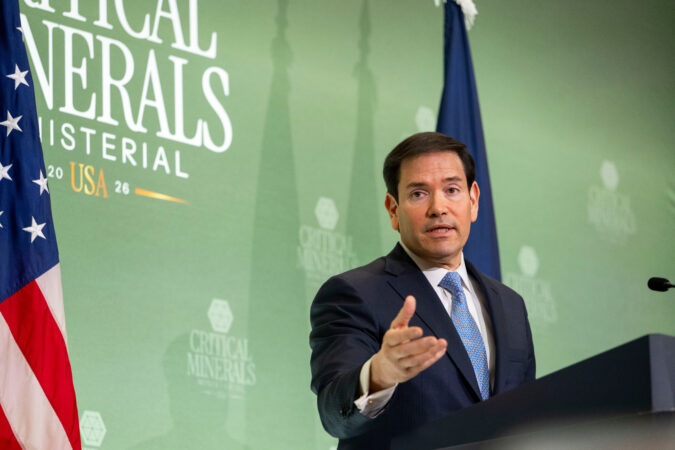
    A second State Department official, also speaking on the condition of anonymity to discuss plans that had not been formally announced, said Secretary of State Marco Rubio may delay his intended visit to Israel this weekend.


  • The Tush Push lives: NFL not anticipating an attempt to ban Eagles’ signature sneak this offseason

    The Tush Push lives: NFL not anticipating an attempt to ban Eagles’ signature sneak this offseason

    The Tush Push was the topic of discussion last offseason. Will the Eagles’ signature play get banned or will it live to see another season?

    The play seemed destined to be outlawed — of course, we know how that ended, thanks at least in part to an impassioned speech from Jason Kelce at the NFL owners meetings. But the drama continued into the regular season, as referees officiated the play differently, sparking new controversies that had little to do with the “player safety” concerns that almost eliminated the Birds’ quarterback sneak from the game.

    But now, for a variety of reasons, the discourse around the play has seemingly died down. And nobody is attempting to ban the play — at least not yet.

    Over the last several years, the Tush Push faced criticism from other teams around the league, but last year was the first time a formal proposal was made to ban the play. That proposal came from the Green Bay Packers, who mentioned player safety and pace of play as their reasons behind the attempted rule change.

    The proposal needed at least 24 votes from the 32 owners to ban the play, but it fell two votes short. Despite how close the vote came last season, NFL competition committee co-chairman Rich McKay said he’s not anticipating another team to pick up where Green Bay left off.

    “There’s no team proposal that I’ve seen from it,” McKay told ESPN. “So, I wouldn’t envision it. But you never know.”

    The Eagles ran the Tush Push half a dozen times against the Chiefs in their 20-17 win in Kansas City.

    Of course, there’s still time to file a proposal ahead of this year’s annual league meeting, which will take place at the end of March. But as of now, there has been no movement surrounding the play.

    “The reason no one’s talking about it is because the play wasn’t as successful this year,” Jason McCourty said Monday on ESPN’s Get Up. “Defenses caught up. They figured out ways to stop it. We watched Jalen Hurts lose a fumble on the Tush Push. So now going forward, there’s multiple teams that do it now, but defenses and teams, they aren’t as passionate about it because they’re like, ‘You know what? We’ve gone back, we’ve watched the film, and we’ve figured out different avenues to stop this play.’

    “So it no longer is all the nonsense that we’ve seen over the last few years where the Eagles were absolutely dominant at scoring with.”

    While the Eagles mastered the Tush Push for its first three years, making it look nearly unstoppable, they took a major step back in 2025.

    In 2022, with opposing defenses never having seen the play before, the Tush Push debuted to a 92.3% success rate. The following season, teams started to adjust, and the play’s success dipped to 83.3% as the Eagles rode it to a Super Bowl berth. That conversion rate stayed relatively consistent the following year, even without Kelce under center, with the play remaining successful 79.6% of the time, according to tushpush.fyi, a Tush Push tracking site run by an Eagles fan.

    However, the Eagles struggled with the Tush Push last season, converting 21 of their 33 attempts for a 63.6% success rate. That was well below the league average of 73.8%. And while the Eagles attempted the play more than any other team — they accounted for nearly 25% of all attempts last season — they converted at a lower rate than each of the other four teams that ran the Tush Push at least 10 times, all of which had voted to ban the play.

    * — Ran the play with a tight end, not a quarterback

    One of the reasons the Eagles converted at a lower rate in 2025 was that league officials raised their level of scrutiny on the play, calling more penalties against the Birds after slow-motion clips of the play appeared to show the Eagles offensive line moving before the ball was snapped.

    With the Eagles’ Tush Push no longer as dominant as it once was, and after years of offseason debate, it looks like the discussion surrounding the play is finally dead — for now.

  • A Philadelphia man who felt ‘disrespected’ by his wife fatally shot her in Rockledge on Saturday, officials say

    A Philadelphia man who felt ‘disrespected’ by his wife fatally shot her in Rockledge on Saturday, officials say

    A Philadelphia man was charged with first-degree murder and related crimes after he shot and killed his wife in Rockledge, Montgomery County, on Saturday evening, officials said Monday.

    Jose Antonio Luna, 59, was arrested shortly after the shooting, the Montgomery County District Attorney’s Office said.

    Prosecutors say Luna shot his wife, 48-year-old Alisett Schubert, multiple times, killing her, near the intersection of Huntington Pike and Filmore Street that night.

    The incident began when the couple started arguing as they drove home from a party in a silver Nissan, according to the affidavit of probable cause for in Luna’s arrest.

    Schubert was behind the wheel. After she told Luna to get out of the car and walk home, the two began to wrestle over Schubert’s purse, where she kept a .38 caliber revolver that was registered in her name, the affidavit said.

    Luna grabbed the weapon and shot his wife once, the document said. After Schubert yelled “Oh my God” and tried to flee the vehicle, the affidavit said, Luna shot her four more times.

    Luna later told investigators that Schubert had “disrespected him in front of others” at a banquet hall that afternoon, according to the document. He also told investigators he left one round in the gun’s chamber with the intent to later kill himself, the affidavit said.

    A SEPTA bus driver reported the shooting to police, according to the document.

    Around 10 p.m., authorities said, the driver came across the Nissan stalled in the road, and heard two to three gunshots before watching Luna exit the vehicle’s passenger side and pull open the driver’s side door.

    Schubert’s body “slouched” out of the car, the affidavit said.

    The driver watched as Luna fled the scene. Later, when Philadelphia police located him about a mile away near 1200 Rhawn Street, Luna put Schubert’s gun to his head and pulled the trigger, according to the affidavit.

    But the gun was out of ammunition and did not fire. Police arrested Luna without incident.

    Investigators later learned Luna had called Schubert’s mother after the shooting to tell her that her daughter had died, but he did not say how the death occurred, and he told the woman he wanted to kill himself.

    Meanwhile, Schubert was taken to Abington Hospital suffering from multiple gunshot wounds and was pronounced dead.

    Schubert had previously told a close friend that Luna was physically and mentally abusing her, the affidavit said. The friend told investigators that she had once seen Luna punch Schubert in the face.

    Prosecutors said Luna had an extensive criminal history and had been arrested “numerous” times for illegal entry into the United States and for reentry after deportation.

    In addition to first-degree murder, Luna was charged with third-degree murder and possessing an instrument of a crime.

    He is being held without bail at the Montgomery County Correctional Facility and is expected to appear in court for a preliminary hearing on March 5.

  • 4 years into Russia’s full-scale invasion of Ukraine, a look at the war by the numbers

    4 years into Russia’s full-scale invasion of Ukraine, a look at the war by the numbers

    Russia’s invasion of Ukraine four years ago launched Europe’s biggest conflict since World War II, causing immense suffering for civilians and harrowing ordeals for soldiers while rewriting the post-Cold War security order.

    The fighting entered its fifth year Tuesday, and it shows no signs of stopping anytime soon.

    The U.S. has brokered talks with delegations from Moscow and Kyiv as part of the Trump administration’s yearlong push for peace. But reconciling key differences, such as the future of Russian-occupied Ukrainian land and postwar security for Ukraine, has thwarted progress.

    Meanwhile, thousands of each countries’ troops have died on the battlefield, and Ukrainian civilians have been battered by Russian aerial strikes that have brought years of power outages and water cuts.

    Here’s a look at the conflict, by the numbers, since the full-scale invasion on Feb. 24, 2022.

    1.8 million

    The upper end of the estimated number of soldiers killed, wounded, or missing on both sides, according to a report last month by the Center for Strategic and International Studies, a think tank.

    It estimated that Russia has suffered 1.2 million casualties, including up to 325,000 troop deaths, between February 2022 and December 2025 — what it said was the largest number of troop deaths for any major power in any conflict since World War II.

    Russia has not released figures on battlefield deaths since January 2023, when it said more than 80 soldiers were killed in a Ukrainian strike, bringing the total military deaths Moscow has confirmed to just over 6,000.

    CSIS estimated that Ukraine has seen 500,000 to 600,000 military casualties, including up to 140,000 deaths.

    Ukrainian President Volodymyr Zelensky said earlier this month that 55,000 Ukrainian troops have died in the war. Many are missing, he said.

    Neither Moscow nor Kyiv gives timely data on military losses. Independent verification is not possible.

    14,999

    The U.N. Human Rights Monitoring Mission’s count for civilian deaths in Ukraine since Russia’s all-out invasion, though it says that is likely an underestimate. More than 40,600 civilians were injured over the same period, it said in a December report.

    The war has killed at least 763 children, according to the U.N.

    Last year was the deadliest for civilians in Ukraine since 2022. The conflict killed 2,514 civilians and injured 12,142 in the country in 2025 — a 31% increase in civilian casualties over 2024, it said.

    19.4%

    The percentage of Ukrainian land occupied by Russia, according to the Institute for the Study of War.

    Over the past year, Russia has gained just 0.79% of Ukraine’s territory in the grinding war of attrition, the Washington-based think tank said in calculations provided earlier this month to the Associated Press, underscoring the little progress Moscow’s forces have made despite huge costs in troops and armor.

    Before Russia’s all-out invasion, it controlled nearly 7% of Ukraine, including Crimea and parts of the Donetsk and Luhansk regions in the east, as Moscow-backed separatists fought the Ukrainian army, according to Ukrainian officials and Western analysts.

    13%

    The percentage drop in foreign military aid to Kyiv last year compared with the annual average between 2022 and 2024, according to Germany’s Kiel Institute, which tracks assistance to Kyiv.

    U.S. President Donald Trump stopped sending American weapons paid for by the U.S. to Ukraine after he took office just over a year ago. European countries, striving to make up the difference, increased their military aid last year by 67% compared with the 2022-2024 period, the institute said in a report this month.

    Foreign humanitarian and financial aid to Ukraine fell by 5% last year in comparison with the average in the previous three years, it said.

    5.9 million

    The number of Ukrainian civilians who have left their country.

    Some 5.3 million of those people have found refuge in Europe, according to a report this month from the U.N. office in Ukraine.

    Additionally, around 3.7 million Ukrainians forced out of their homes have moved elsewhere within the country, the U.N. said in December.

    Ukraine’s prewar population was more than 40 million.

    2,881

    The number of Russian attacks that affected the provision of medical care in Ukraine since the full-scale invasion, according to a report from the World Health Organization on Monday.

    There was a nearly 20% increase in such attacks last year compared with 2024, the U.N. agency said.

    A report earlier in the month from the WHO documented at least 2,347 strikes on healthcare facilities, in addition to others that damaged vehicles and the storage of medical supplies.

  • The 300-year-old Cochranville is moving toward its first public water line

    Cochranville is moving toward getting its first public water line, after West Fallowfield Township secured a grant to fund the project earlier this month.

    Installing public water in the 300-year-old village situated within the largely agricultural township in western Chester County has been more than a decade in the making, said Duane Hershey, the chairman of the board of supervisors.

    Residents told officials water was a concern in a survey a few years ago, and the township has a desire to bolster the commercial landscape of Cochranville, Hershey said. But leadership wants to accumulate as much funding as possible to limit the blow to residents.

    The $1 million federal grant is the springboard for the municipality to gather more funds for the project, which Hershey estimates could cost $5 million to $6 million. The township is still years out from breaking ground.

    West Fallowfield covers a relatively large geographic area, but a majority is composed of agricultural properties. Its town center — the village of Cochranville — boasts a population of roughly 500, with a small number of residences and businesses sitting around the major intersection of state Routes 41 and 10. The lots are relatively small, and have on-site well water and septic.

    “It’s difficult for anybody to drill a well, and it’s really difficult to put any kind of a septic system in, other than a tank that has to be pumped and hauled,” Hershey said.

    That can be challenging for new businesses to come in without existing public utilities, said Michael Crotty, the township’s solicitor.

    “We are hoping it strengthens our particular commercial core right there, at the main intersection, by giving them a much easier base to build and develop,” he said.

    But, Hershey cautioned, it’s not because they want to vastly expand Cochranville. Rather, it’s to improve quality of life for people already there, and to bring in businesses to expand the tax base. The community has high nitrates due to its water setup, he said, which can be dangerous, particularly for babies. Consuming too much nitrate can lead to negative long-term health for adults, too.

    “We’re not doing this because we want to develop Cochranville and build a whole bunch more houses,” Hershey said. “The reason we want to do it is just to improve the infrastructure that’s already there, that is struggling because of our water issues.”

    The township plans to connect a water line to Cedar Knoll Homes at Honeycroft Village, a 55-and older-community about a half mile away, which has public water through the Chester Water Authority, Hershey said. It’s cheaper than if the township were to build its own water system.

    They’ll connect most-needed areas first, and possibly expand in the future. Officials couldn’t say exactly how many households would be connected to the line. The project is in early development stages, Hershey said.

    It’s not unusual for new water lines to be installed; that’s pretty much what happens whenever a new development is being constructed. But it’s a bit more unusual for the houses to come before the water line. The homes in Cochranville that will connect to the line are “long existing,” Crotty said.

    “The way this might be handled elsewhere would be a big, huge residential development comes in, and that would bring public water, and maybe that only brings it for itself, or maybe it brings it part of the way, but that could often be at the expense of the agricultural land that we’re all seeking to preserve,” Crotty said.

  • Supreme Court to consider whether states can sue over greenhouse gas emissions

    Supreme Court to consider whether states can sue over greenhouse gas emissions

    The Supreme Court agreed Monday to take a case examining whether states and cities can sue fossil fuel companies over harms caused by climate change, a legal tactic modeled on the push to hold tobacco companies responsible for the health effects of smoking.

    The case is significant because dozens of municipalities are seeking billions in damages against oil and gas companies, often accusing them of misleading the public or hiding evidence about the links between greenhouse gases and climate risks. The companies deny any wrongdoing.

    The justices will hear an appeal by Suncor and ExxonMobil, which argue the city of Boulder’s legal action in state court is preempted by federal law. They say greenhouse gas emissions are inherently a federal issue because the pollution emanates from outside Colorado and drifts across state lines.

    “Boulder, Colorado, cannot make energy policy for the entire country,” the companies wrote in a petition to the Supreme Court.

    Boulder sued Suncor and ExxonMobil in 2018, alleging the company knowingly sold fossil fuels that would cause a range of harms in Colorado, including increased summer heat, more intense wildfires, and a greater concentration of ground-level ozone. The city sought to recoup damages for past and future harms. The companies denied the claims.

    After complicated legal wrangling, the Colorado Supreme Court eventually ruled that federal law did not preempt Boulder’s lawsuit in state court and that the suit could move forward. The companies then appealed to the Supreme Court.

    The Trump administration took the unusual step of asking the Supreme Court to take up the case, even though the federal government was not directly involved in it. Attorneys for Boulder urged against that.

    “There is no constitutional bar to states addressing in-state harms caused by out-of-state conduct, be it the negligent design of an automobile or sale of asbestos,” attorneys wrote in filings.

    The Supreme Court last year declined to take a similar case involving a lawsuit by Honolulu seeking to hold fossil fuel companies responsible for climate change damage in Hawaii. The Biden administration had urged the court not to take it up at the time.

    In 2023, the Supreme Court allowed lawsuits by a handful of municipalities seeking to hold businesses responsible for climate change.

    The high court last month heard arguments in a related case in which a Louisiana community is attempting to preserve a $745 million jury verdict against Chevron and keep the case and similar cases in state court. The case could have consequences for how communities rectify environmental damage allegedly caused by oil companies.

    In a major ruling in 2022, the Supreme Court curbed the ability of the Environmental Protection Agency to regulate greenhouse gases.

  • Temple’s new provost has an academic background in urban planning and comes from Arizona State University

    Temple’s new provost has an academic background in urban planning and comes from Arizona State University

    An Arizona State University vice provost and dean, who has degrees in mathematics and geography and has studied urban planning, will become Temple University’s next senior vice president and provost.

    Elizabeth “Libby” A. Wentz, 62, an Ohio native with a doctorate from Pennsylvania State University, will step into her new role at Temple July 1, subject to approval by the board of trustees, the school announced Monday.

    “My background in urban planning has kind of shaped who I am and shaped my thinking, and I just think that there’s so many great opportunities for recruiting students, for creating internships for students, for creating research experiences for students in an urban environment that the university’s rural counterparts don’t have in the same way,” Wentz said in an interview.

    Wentz has overseen Arizona State’s Graduate College since 2020 and previously was dean of social sciences, which included geography and urban planning. She will replace David Boardman, who has been Temple’s interim provost since July when Gregory Mandel left the job. Boardman was not a candidate for the job and will continue his role as dean of the college of media and communication.

    As Temple’s provost — essentially the university’s number two leader — she will oversee 17 schools and colleges, multiple campuses, and the school’s undergraduate, graduate, and professional programs.

    She is the first provost in at least more than a decade to come from outside the university and was selected through a national search, chaired by a faculty member and a dean.

    “Libby sort of stuck out for me after the hour I spent with her as being literally right on the same page relative to her ability to articulate the mission and the purpose of Temple and why that was so important,” Temple president John Fry said in an interview.

    He was struck by her commitment to student success, he said. “She obviously had time to interact with students and, I think took like really special care and interest in our students,” he said.

    And, Arizona State has grown tremendously in part because of its commitment to online programs, he said, which are a priority in Temple’s strategic plan. Temple has lost about a quarter of its enrollment over the last decade.

    “We don’t have the kind of online enrollment that you would expect a place like Temple to have,” Fry said. “One of the things Libby and I did speak about was her familiarity with the ASU online infrastructure. She’s taught in it. She obviously has led parts of it.”

    Temple remains amid searches for several other key positions, including chief operating officer and law and engineering school deans.

    Wentz said she was attracted to Temple because she wanted to remain at an urban university and has long admired the work of Fry, who has had a longstanding relationship with Arizona State president Michael M. Crow. Temple a year ago became part of the University Innovation Alliance, a small nonprofit sponsored through Arizona State that is aimed at finding innovations to improve learning and increase college attendance, retention, and graduation rates ― especially for low-income students ― then scaling those innovations.

    “They built a really strong rapport and have a very similar philosophy around higher education which also very much aligns with kind of my own interest and my own philosophy,” Wentz said.

    Both Temple and Arizona State, which has its main campus in Tempe, are major research institutions; Arizona is much bigger with over 194,000 students, compared to Temple with more than 33,000, including its international campuses.

    “Honestly the biggest difference [between the two] is the weather right now,” Wentz joked, noting that it was 81 and sunny in Tempe on Sunday as Philadelphia prepared for blizzard conditions.

    Arizona State does not have a faculty union, so learning to work with Temple’s faculty union will be new.

    “That’s going to be an exciting area for me to learn about,” she said.

    Urban planning background

    Fry has a reputation as an urban planner and in his prior leadership jobs at the University of Pennsylvania, Drexel, and Franklin and Marshall focused on development and improving the campuses and their neighborhoods. He has aspirations for Temple, too, including building an “innovation corridor” stretching from Temple’s recently acquired Terra Hall at Broad and Walnut Streets in Center City to the health campus, a little more than a mile north of main campus on Broad Street.

    Wentz said she and Fry had not talked about urban planning, but that she looks forward to working on the university’s new strategic plan, which includes more green spaces, a new 1,000-bed residence hall, a STEM complex, and an emphasis on more attractive and defined entrances to its North Philadelphia main campus. The three pillars of the plan are student success, research in action, and place-based impact.

    “Those are going to be some really exciting conversations that I look forward to having with John, as well as with the Temple planners to think about how do we make it a safe space for students and a great learning environment.” she said.

    During a 2022 talk at Arizona State, Wentz discussed how urban planning figured into her work.

    “Most of the work that I do applies to the urban environment and urban analytics, so trying to understand how it is that cities work and trying to make the physical urban environment a better place for people to live,” Wentz said during that talk.

    Building trust and collaboration

    In her new role at Temple, she said, early on she will focus on getting to know the community and the university’s financial model and make clear her commitment to shared governance and data-informed decision making.

    Wentz, who grew up near Cleveland and got her bachelor’s in mathematics and master’s in geography at Ohio State University, spent the last 30 years at Arizona State. She became a professor there in 1997.

    She helped the university launch its medical school and has grown graduate enrollment and graduate student funding.

    Wentz said she prides herself on building a culture of trust and collaboration and has worked with the local community. She said she’s looking forward to doing the same at Temple.

    She plans to come to Philadelphia in a couple weeks and look for a place to live, she said.

    “I’m going to come after the snowstorm, I think, instead of before,” she said Sunday.

  • Bill would restrict Trump administration’s push for ICE detention centers

    Bill would restrict Trump administration’s push for ICE detention centers

    Sens. Jeanne Shaheen (D., N.H.) and Maggie Hassan (D., N.H.) introduced a bill Monday that would bar the Department of Homeland Security from opening new immigration detention centers without state and local officials’ consent.

    The legislation is a response to the Trump administration’s plans to convert warehouses into new processing sites and detention centers across the country as part of President Donald Trump’s campaign to deport millions of undocumented immigrants. Reps. Chris Pappas (D., N.H.) and Maggie Goodlander (D., N.H.) plan to introduce a companion bill in the House.

    The legislation has little chance of passing the Republican-controlled Congress, but it reflects the qualms that some lawmakers in both parties have expressed about the administration’s push to set up facilities in their states and districts, some of which could house as many as 10,000 people.

    “Our new bill responds directly to the concerns we’ve heard from local officials in towns like Merrimack, New Hampshire, and across the country,” Shaheen said in a statement. “They were never consulted about ICE’s plans, and they don’t want the chaos of new detention facilities in their communities.”

    Shaheen and Hassan are introducing the bill as Democrats demand the Trump administration agree to new restrictions on DHS after federal agents last month shot and killed two U.S. citizens in Minneapolis. Much of DHS shut down earlier this month after the two sides failed to strike a deal to send more money to the agency.

    The bill would prohibit DHS from setting up new processing sites or detention centers unless local officials and the state’s governor sign off.

    At least one governor — Pennsylvania Gov. Josh Shapiro (D) — has said he opposes the administration’s plans to set up a new detention center in his state.

    “I don’t think this is helpful to have in our community,” Shapiro said this month. “I don’t want it here, and we’re exploring what options we have.”

    The bill would also require the administration to notify Congress and to accept public comment for at least 60 days before setting up new detention centers or processing sites.

    U.S. Immigration and Customs Enforcement has bought facilities in Maryland, Pennsylvania, New Jersey, Georgia, Michigan, Texas, and Arizona to detain undocumented immigrants, according to an ICE spokesperson. The administration undertook “community impact studies and a rigorous due diligence process to make sure there is no hardship on local utilities or infrastructure prior to purchase,” according to the spokesperson.

    Republicans in Congress largely support Trump’s deportation campaign, which they argue is necessary after the arrival of millions of undocumented immigrants under the Biden administration. Republicans included $45 billion for expanding immigration detention in the tax and spending law that Trump signed last year. But some Republican lawmakers have expressed concerns about the administration’s plans to set up new detention centers and processing sites in their states and districts.

    Sen. Roger Wicker (R., Miss.) relayed local officials’ concerns about a proposed facility in his state to Homeland Security Secretary Kristi L. Noem earlier this month. “I appreciate her for agreeing to look elsewhere,” Wicker wrote on X.

    Rep. Dan Meuser (R., Pa.) said he is working to set up a meeting between DHS officials and local leaders in his district, where DHS bought two facilities that it plans to convert into a processing site and detention center.

    “These recent developments have raised serious concerns, and I share many of the same questions being raised by local officials and residents,” Meuser said in a statement.

    Sen. Dave McCormick (R., Pa.) said in a statement that his team was also in touch with DHS officials and local leaders to assess the impact of the facilities, including the possibility of thousands of new jobs. ICE estimates the two facilities together would create more than 11,000 jobs.

    Rep. Mike Collins (R., Ga.) and his aides have been in frequent communication with ICE and local leaders about a planned detention center in his district that would hold up to 9,000 people, according to Emma Gibson, a Collins spokesperson. The district is a Republican stronghold, but the city manager of Social Circle — the small city where the detention center would open — and many residents oppose the project.

    Collins supports Trump’s efforts “to detain and deport criminal illegal aliens who flooded across our border under Joe Biden, but he also shares the concerns of the Social Circle community that the city may not have the infrastructure or capacity to support the demands of this facility,” Gibson wrote in an email to the Washington Post.

    Democrats appear to have had less success in pushing back on the administration’s plans to build new detention centers and processing sites. Hassan told Todd M. Lyons, the acting ICE director, in a hearing last week that DHS had failed to consult local leaders about its plans to open a facility in her state.

    “I would hope that I would get the same treatment to that Senator Wicker got — which is to say the town doesn’t want the dentition center, so please cancel it,” Hassan said. “And I would expect that my partisan affiliation shouldn’t make any difference to that determination.”

    Lyons said in the hearing that DHS officials had spoken with New Hampshire Gov. Kelly Ayotte (R) about the project’s economic impact. ICE did not say whether it plans to move forward with the facility.

    Sen. John Fetterman of Pennsylvania — the only Senate Democrat who voted for legislation this month to fund DHS — has come out against the proposed facilities in his state, warning that they would “do significant damage to these local tax bases, set back decades-long efforts to boost economic development, and place undue burdens on limited existing infrastructure in these communities.”

    Democrats from Georgia, New Jersey, and Arizona have also voiced concerns about proposed detention centers and processing sites.

    Sens. Ruben Gallego and Mark Kelly, both Democrats of Arizona, wrote to Noem and Lyons this month seeking more information by Feb. 17 about DHS’ purchase of a warehouse in Surprise, Ariz., that it plans to turn into a processing site.

    “Given the scale of this project, the total lack of community involvement, the concerns we have heard from local leaders, and the potential implications for the community and region, we urge the Department to immediately provide answers about this project before it moves forward,” Gallego and Kelly wrote.

    The Democrats have not heard back from DHS, according to Kelly’s office.

  • After Supreme Court rebuke, Democrats call for government to refund billions in Trump tariff money

    After Supreme Court rebuke, Democrats call for government to refund billions in Trump tariff money

    WASHINGTON — A trio of Senate Democrats is calling for the government to start refunding roughly $175 billion in tariff revenues that the Supreme Court ruled were collected because of an illegal set of orders by President Donald Trump.

    Sens. Ron Wyden of Oregon, Ed Markey of Massachusetts, and Jeanne Shaheen of New Hampshire unveiled a bill on Monday that would require U.S. Customs and Border Protection to issue refunds over the course of 180 days and pay interest on the refunded amount.

    The measure would prioritize refunds to small businesses and encourages importers, wholesalers, and large companies to pass the refunds on to their customers.

    “Trump’s illegal tax scheme has already done lasting damage to American families, small businesses, and manufacturers who have been hammered by wave after wave of new Trump tariffs,” said Wyden, stressing that the “crucial first step” to fixing the problem begins with “putting money back in the pockets of small businesses and manufacturers as soon as possible.”

    The bill is unlikely to become law, but it reveals how Democrats are starting to apply public pressure on a Trump administration that has shown little interest in trying to return tariff revenues after the Supreme Court announced its 6-3 ruling on Friday.

    Because of the ruling, going into November’s midterm elections for control of Congress, Democrats have begun telling the public that Trump illegally raised taxes and now refuses to repay the money to the American people.

    Shaheen said that repairing any of the damage caused by the tariffs in the form of higher prices starts with “President Trump refunding the illegally collected tariff taxes that Americans were forced to pay.” Markey stressed that small business tend to have ”little to no resources” and a “refund process can be extremely difficult and time consuming” for companies.

    The Trump administration has asserted that its hands are tied, because any refunds should be the responsibility of further litigation in court.

    That message could put Republicans on the defensive as they try to explain why the government isn’t proactively seeking to return the money. GOP lawmakers had planned to try to preserve their House and Senate majorities by running on the income tax cuts that Trump signed into law last year, saying that tax refunds this year would help families.

    Treasury Secretary Scott Bessent told CNN on Sunday that it’s “bad framing” to raise the question of refunds because the Supreme Court ruling did not address the issue. The administration’s position is that any refunds will be decided by lawsuits winding their way through the legal system, rather than by a president who has repeatedly stressed to voters that he has the ability to act with speed and resolve.

    “It is not up to the administration — it is up to the lower court,” Bessent said, stressing that rather than offer any guidance he would “wait” for a court opinion on refunds.

    Trump has defended his use of the 1977 International Emergency Economic Powers Act to impose broad tariffs on almost every U.S. trading partner, saying that his ability to levy taxes on imports had helped to end military conflicts, bring in new federal revenues, and apply pressure for negotiating trade frameworks.

    The University of Pennsylvania’s Penn Wharton Budget Model released estimates that the refunds would total $175 billion. That’s the equivalent of an average of $1,300 per U.S. household. But determining how to structure reimbursements would be tricky, as the costs of the tariffs flowed through the economy in the form of customers paying the taxes directly as well as importers passing along the cost either indirectly or absorbing them.

    The president has previously claimed that refunds would drive up U.S. government debt and hurt the economy. On Friday, he told reporters at a briefing that the refund process could be finished after he leaves the White House.

    “I guess it has to get litigated for the next two years,” Trump said, later amending his timeline by saying: “We’ll end up being in court for the next five years.”

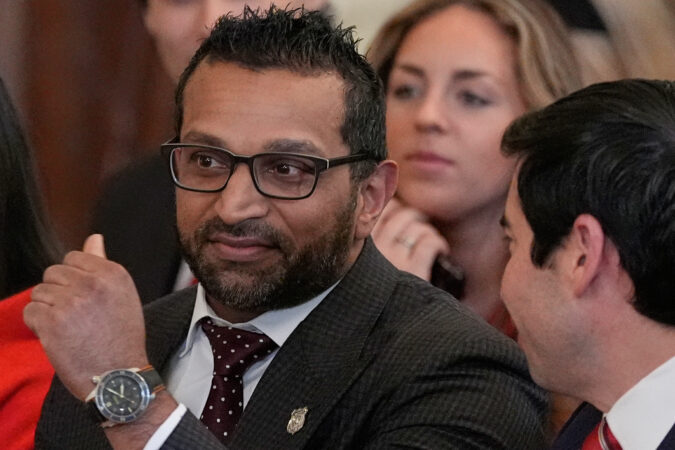
  • FBI Director Kash Patel defends partying with U.S. Olympic ice hockey team

    FBI Director Kash Patel defends partying with U.S. Olympic ice hockey team

    FBI Director Kash Patel is defending himself after videos showed him drinking and partying with the U.S. men’s hockey team at the Olympics on Sunday, during a weekend in which several emergencies unfolded for the law enforcement bureau.

    As clips of Patel raucously celebrating with Team USA went viral Sunday night, Patel took to social media to say the men’s hockey team had invited him into the locker room to celebrate with them after it had clinched the gold medal in an overtime victory over Canada.

    “For the very concerned media — yes, I love America and was extremely humbled when my friends, the newly minted Gold Medal winners on Team USA, invited me into the locker room to celebrate this historic moment with the boys — Greatest country on earth and greatest sport on earth,” Patel, an avid hockey fan, wrote on X.

    In one video shared by a ProPublica reporter, Patel appears to be chugging a beer, spraying the bottle’s contents about the locker room, and ecstatically pumping his fists, as the team breaks out in a rendition of “Courtesy of the Red, White and Blue (The Angry American),” a country anthem about American defiance written after the 9/11 terrorist attacks.

    Another video showed Patel flashing a shaka, or “hang ten,” sign next to team center Dylan Larkin as both mug for the camera. In yet another video — reshared by an FBI spokesperson — Patel holds a phone out as President Donald Trump, apparently on speakerphone, invites the team to the White House and says he will also have to invite the gold-medal-winning U.S. women’s hockey team or “be impeached.”

    “I’m on it,” Patel tells Trump. “I’m f—ing on it.”

    On Monday, NBC News reported that the U.S. women’s hockey team said it was declining Trump’s invitation.

    “We are sincerely grateful for the invitation extended to our gold medal–winning U.S. Women’s Hockey Team and deeply appreciate the recognition of their extraordinary achievement,” a USA Hockey spokesperson said. “Due to the timing and previously scheduled academic and professional commitments following the Games, the athletes are unable to participate.”

    “They were honored to be included and are grateful for the acknowledgment,” the spokesperson added.

    The White House did not immediately respond to a request for comment.

    The locker room videos prompted public criticism of Patel and questions about his judgment during a critical time for the bureau. Hours earlier, an armed man was fatally shot by U.S. Secret Service agents and a sheriff’s deputy after he breached the secure perimeter of Trump’s Mar-a-Lago estate. Patel had promised from his official X account that the FBI, the lead agency investigating the incident, was “dedicating all necessary resources” to the matter.

    The FBI is also still involved in a high-profile search for Nancy Guthrie, the mother of Today show anchor Savannah Guthrie, who remains missing after more than three weeks. U.S. intelligence agencies also warned American citizens in Mexico to shelter in place amid a wave of violence across that country after “El Mencho,” the head of the Jalisco New Generation Cartel, was killed by Mexican security forces Sunday.

    “There was a threat at the president’s residence at MAL, Americans in Mexico are facing major threats by cartel members, Nancy Guthrie is still missing, and our FBI Director thinks he’s a frat bro?!” Xochitl Hinojosa, a former Justice Department spokesperson under the Biden administration, wrote on X.

    Several others resurfaced a clip of Patel in 2023 criticizing then-FBI Director Christopher A. Wray for using a government jet for personal travel.

    “Maybe we ground that plane. [Or charge him] $15,000 every time it takes off. Just a thought,” Patel said then.

    FBI representatives have steadfastly defended Patel’s trip to Italy and denied he used the FBI’s taxpayer-funded Gulfstream jet for personal travel, for which Democrats have investigated him in the past. In the days leading up to the Olympics men’s hockey final, FBI spokesperson Ben Williamson clashed with several news outlets that had reported Patel had used the government jet to fly to Italy with plans to attend hockey games at the Olympics.

    Williamson said Thursday on X that Patel’s trip had been planned months ago and would include meetings with Italian law enforcement and other security officials.

    “The FBI also has a major role in Olympic security … so we have a U.S. consulate briefing on Olympic security and current FBI posture, as well as thanking FBI personnel on the ground,” Williamson added then.

    Williamson also said “any personal portion [of the trip] would be reimbursed,” according to an email to MS NOW that he posted Sunday.

    Representatives for the FBI did not immediately respond for a request for additional comment Monday morning, as well as questions about whether Patel’s attendance at Olympic events would be considered personal travel and, if so, how much Patel would reimburse the bureau.