Blog

  • Dr. Martin Luther King Jr.’s ‘I Have a Dream Speech’ wouldn’t be the same without a ‘bad dude’ from North Philly

    Dr. Martin Luther King Jr.’s ‘I Have a Dream Speech’ wouldn’t be the same without a ‘bad dude’ from North Philly

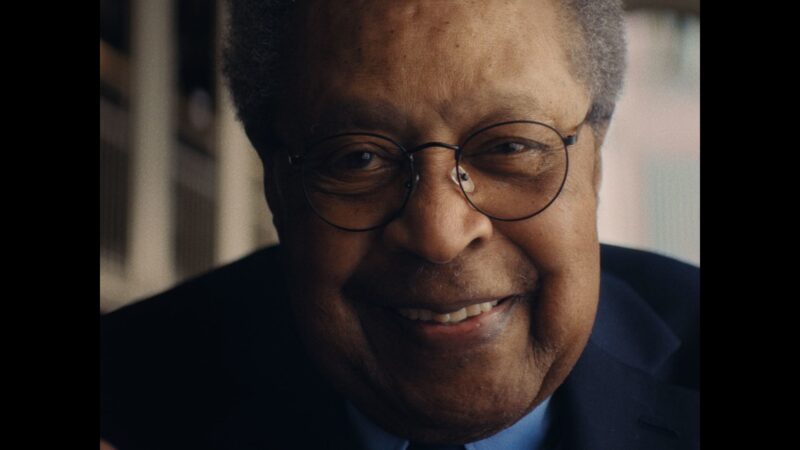
    It’s clear that the Rev. Dr. Martin Luther King Jr.’s nonviolence movement benefited from Clarence B. Jones’ North Philly swag.

    Jones’ gravelly voice narrates The Baddest Speechwriter of All, Steph Curry and Academy Award-winning director Ben Proudfoot’s 30-minute documentary, which won the Sundance Film Festival’s Grand Jury Prize for short films this year.

    It rises and falls to the crescendo of the film’s emotional jazz riffs, matching the gravity of the civil rights struggle.

    Proudfoot drops a cadre of never-before-seen black-and-white images of lawyer Jones’ backing King up, a display of Jones’ behind-the-scenes prowess. He was a speech writer and close friend of King’s.

    But it’s the directors’ deft use of watercolor animations by Brazilian artist Daniel Bruson’s (Autism Goes to College) that brings a tenderness to Jones’ sometimes cynical, always cut-to-the-chase personality.

    You see, Jones is that cat who, back in the day, stayed casket clean in sharp three-piece suits and sparkling Rolex watches. He’s that uncle who dared white men to tell him that he didn’t belong; that educated Black man who didn’t have time for racism. And it’s for that reason, King kept him in the background, but also in his ear.

    Clarence B. Jones in an animated scene from “The Baddest Speechwriter of All.”

    “I told Martin straight up,” Jones says in Baddest, answering Curry, who is making his directorial debut with the film. “Don’t put me near any demonstration. … If a white man puts his hands on me, they are going down.”

    Three thousand watercolor images move seamlessly through Baddest narrating Jones’ life in a slow, jazzy rhythm. We watch him develop civil rights strategies with King and a coalition of like-minded Jewish people.

    We are with Jones the night he matter-of-factly writes the first seven paragraphs of King’s “I Have a Dream” speech, arguably one of the world’s most important addresses. We watch King give the speech as Jones looks from the wings, surprised and in awe.

    “I didn’t know he was going to read my words word-for-word,” Jones, 95, told The Inquirer in a recent video chat.

    He closes his eyes often as he talks, punctuating his speech every so often with a well-placed, “You hear me?” or “You understand me?”

    His hair is a short white Afro. Soft and defiant.

    A wintertime soldier from North Philly

    Jones was the only child of domestic workers, born in the 1300 block of Master Street, where Temple University’s sports complex stands today. Shortly after, his parents found work as live-in help at the Riverton, Burlington County, country estate of Edgar and Eleanora Lippincott, a Quaker family and part owners of a prosperous 19th-century Philadelphia-based clothing firm.

    Clarence B. Jones before he received the American Jewish Congress’ “Isaiah Award,” on March 1, 2006, in New York.

    “I lived there [with the Lippincotts] until they sent me to a Catholic boarding school [the Sisters of the Blessed Sacrament],” Jones said. “I was raised by Catholic nuns who told me, ‘Master Jones, you are a good boy, Jesus loves you. You are beautiful.’”

    The positive reinforcement turned Jones into a force, at a time when Black people’s education and career options were limited by racism. He finished Palmyra High School in New Jersey, the current home of the Clarence B. Jones Institute of Social Advocacy, at the top of his class. He attended the summer program at the Juilliard School in Manhattan for two years and studied clarinet. There he fine-tuned the musical ear that, he said, aided him in writing King’s speeches.

    He graduated from Columbia University, did a brief stint in the Army, and graduated from Boston University Law School. By the late 1950s, he was working as an entertainment lawyer for Revue Studios, which was absorbed into what is now Universal.

    Clarence B. Jones in an animated scene in his living room in “The Baddest Speechwriter of All.”

    Jones was at home one evening in 1960 when his mentor and former New York judge Hubert T. Delany asked him to defend King, then a young preacher and budding Civil Rights Movement leader, against a tax evasion charge in Montgomery, Ala.

    Jones said no.

    “I wondered whether he [King] was real,” Jones said. “‘Cause I’m saying he [King] comes from a middle-class Black family. He didn’t have to do this. I come from the kitchen.”

    Yet, he agreed after hearing King preach at a church in neighboring Baldwin Hills. Jones was struck by his sermon imploring educated Black people not to turn their backs on the struggle.

    He joined the team of attorneys who successfully persuaded an Alabama jury to acquit King of tax evasion and perjuryand stayed on as his personal attorney.

    In 1963, King was jailed again. This time in for leading demonstrations, marches, and sit-ins against racial segregation in Birmingham, Ala. Jones smuggled out notes that King wrote to his fellow clergymen while incarcerated and compiled the missives into King’s “Letter from a Birmingham Jail.”

    That same year Jones worked with singer Harry Belafonte to secure $100,000 from the Rockefellers to bail Birmingham protesters out of jail. The Rockefellers asked him to sign a promissory note, that they later tore up. Jones references that promissory note in his draft of King’s speech.

    “I was sharing a room with King in Albany, Ga.,” Jones told The Inquirer. “And he said, ‘Anybody can walk with me in the warm sunlight of an August summer. But only a wintertime soldier walks with me at midnight in the alpine chill of winter. You, Clarence, are my wintertime soldier.’”

    How ‘Baddest’ came to be

    Proudfoot and Curry met through a mutual friend in the late 2010s. A few years later, Curry helped produce Proudfoot’s 2022 Oscar-winning documentary The Queen of Basketball, the story of women’s basketball pioneer Lusia Harris.

    Curry met Jones in 2022 when Golden State Warriors coach Steve Kerr invited Jones to speak to the team. Curry was intrigued with the elder statesmen’s stories and asked Proudfoot if he would be interested in working on a documentary about Jones’ life.

    Stephen Curry, Clarence B. Jones, and Ben Proudfoot on the set of “The Baddest Speechwriter of All.”

    “As a storyteller, I’m always interested in approaching well-known pieces of history through a fresh perspective,” said Proudfoot, a 35-year-old Nova Scotia native and two-time Academy Award winner. (Proudfoot’s credits also include the 2024 Netflix documentary The Turn Around, about Phillies superfan John McCann.)

    “Clarence wasn’t just sitting there waiting for Dr. King to call him,” Proudfoot said. “He was a reluctant participant. He made a decision to live in comfort or live with purpose.”

    Between Curry’s busy NBA schedule and detailed animation, it took three years to complete Baddest. In February, Netflix announced that the film will premiere on its streaming platform this year.

    A ‘bad man’

    Jones was King’s attorney until his assassination in 1968. In the late 1960s he became a partner at what is now Cogan, Berlind, Weill & Levitt, making him the first African American partner at a Wall Street investment banking firm. During that time he also became the first Black person to become an allied member of the New York Stock Exchange.

    During the 1970s, Jones served as the chairman of the New York-based Inner City Broadcasting, where he and Percy Sutton — once Malcolm X’s attorney — founded New York’s WBLS, the blueprint for today’s R&B radio stations. There, he also had a hand in developing the long-running variety show, . From 1971 to 1974, Jones was editor and publisher of the New York Amsterdam News.

    “I’m telling you,” Jones said as a sly grin crawled across his face. “I was a bad man.”

    In recent years, Jones has enjoyed a renewed spotlight.

    He was featured in a 2024 Super Bowl commercial paid for by the Foundation to Combat Antisemitism. “I’d remind people that all hate thrives on one thing, silence,” he says, urging viewers to stand up to Jewish hate. President Joe Biden awarded him the Presidential Medal of Freedom — the highest civilian honor — in May that same year.

    Clarence B. Jones visiting the Martin Luther King Jr. Memorial in Washington in an animated scene of “The Baddest Speechwriter of All.”

    Just days after the death of the Rev. Jesse Jackson, Jones remembered Jackson as a leader in the civil rights struggle. “I looked upon Jesse Jackson as someone who was a warrior in the battle who has fallen,” Jones said. “I regard him with great love and affection.”

    At a time when the historical civil rights language Jones had a hand in drafting is seen by this presidential administration as racist toward white Americans, Jones is reflective.

    If people would focus more on love, perhaps America would be a better place.

    “King’s work was about love,” he said. “The love he had for his work, for his people … the love he had for me.”


  • Mexican forces tracked slain cartel boss to secluded cabin, officials say

    Mexican forces tracked slain cartel boss to secluded cabin, officials say

    GUADALAJARA, Mexico — Mexican forces located the drug kingpin known as “El Mencho,” whom they killed in a major operation over the weekend, in part by tracking one of his girlfriends to a secluded cabin, Mexican officials said Monday.

    Officials canceled school in some states and warned communities to stay inside as reports spread of violent cartel reprisals, and authorities deployed thousands of troops to the western Mexican state of Jalisco. But Mexico’s president said Monday the country was under control and returning to normalcy.

    Security forces closed in on Nemesio Rubén Oseguera Cervantes, 59, at a cabin in Tapalpa, in Jalisco. He fled as his bodyguards opened fire. Eight cartel members were killed in the gun battle, Gen. Ricardo Trevilla Trejo, Mexico’s secretary of national defense, told reporters Monday.

    Authorities captured the cartel leader, wounded by gunfire, in nearby woodlands. They took him, two of his bodyguards, and a wounded soldier by helicopter to get medical treatment, but they died en route, Trevilla said. Officials decided to head for an airport in Michoacán to transport the bodies by air force plane to Mexico City.

    Mexican special forces and National Guard troops helped plan and execute the operation, with support from the Mexican Air Force, Trevilla said. Mexican troops “accomplished their mission,” he said, emotional and tearful, and demonstrated the “strength of the Mexican state, without a doubt.”

    The killing of Mexico’s most powerful drug lord provoked violence: Beginning Sunday, the cartel burned vehicles, blocked highways, attacked gas stations and banks, and set other fires, said Omar García Harfuch, Mexico’s top security official. The government registered 85 blockades across the country, with 18 in Jalisco alone, and 27 other acts of violence against authorities. Seventy people were detained in seven states. More than 25 security officials were killed in the operation, as was a 59-year-old woman. More than 30 “criminals” were also killed, García Harfuch said. He praised Mexican forces for “debilitating an organization with international reach.”

    Harfuch called Oseguera’s Jalisco New Generation Cartel the “principal” organization responsible for violence in the country, “including homicide, human trafficking, extortion, kidnapping, and armed attacks against authorities.”

    In an overnight statement, the U.S. Embassy issued alerts covering areas of 18 Mexican states — more than half the total. It warned Americans in eight cities, including popular tourist destinations such as Puerto Vallarta and Cancún, to shelter in place, citing dangers from blocked roads and criminal activity.

    In a late-night message, President Claudia Sheinbaum urged Mexicans to remain “informed and calm.”

    Guadalajara, the capital of Jalisco, was among the cities hit hardest in Sunday’s initial wave of violence. Pablo Lemus Navarro, Jalisco’s governor, said in a video on social media that he had declared a “code red” emergency, suspending public transportation, major events, and school on Monday.

    Photographs taken in the immediate aftermath of Oseguera’s killing showed the burned-out wreckage of cars and buses blocking Guadalajara street junctions and entrances to businesses, with surrounding neighborhood streets largely empty after residents were warned to stay inside.

    In Puerto Vallarta, a vacation resort on Jalisco’s Pacific coast, footage verified by Reuters showed black smoke billowing over the city and burning vehicles blocking a highway underpass.

    Oseguera was Mexico’s most dominant cartel leader, expanding the Jalisco New Generation Cartel into a major power that took control of lucrative drug routes into the United States. The cartel, which traffics large quantities of fentanyl, cocaine, heroin, and methamphetamine across the U.S.-Mexico border, eventually eclipsed the rival Sinaloa Cartel as Mexico’s most powerful group.

    According to a statement from Mexico’s Defense Ministry, security forces had intended to detain Oseguera, but a shootout forced them to return fire.

  • Little-used Nic Deslauriers faces an uncertain future with the Flyers: ‘I still think I have some in the gas tank’

    Little-used Nic Deslauriers faces an uncertain future with the Flyers: ‘I still think I have some in the gas tank’

    Last season, Nic Deslauriers played 31 games for the Flyers, mostly due to an upper-body injury that kept him out for almost three months. This season, across the Flyers’ 56 games, the veteran winger has suited up for just 21.

    “Not easy, that’s for sure,” he said Sunday after practice. “It’s where the young guys kind of step up and [I] just stay ready for when my name is called upon. It’s frustrating, but at the same time, I can’t control those things.”

    A fourth-liner when he does slot in, Deslauriers is a bit of a throwback. Although he was selected by the Los Angeles Kings in the third round of the 2009 NHL draft as a defenseman, the now 35-year-old — his birthday was Sunday — is a tough, grinding forward who is feared across the league for his fists.

    This season, he has one assist with a minus-3 rating while averaging 8 minutes, 18 seconds of ice time. He’s averaging the most minutes he’s played since his first year in Philly (10:06 in 80 games) after signing as a free agent in July 2022.

    Since joining the Flyers, the forward has dropped the gloves 32 times in the regular season — most notably against the New York Rangers’ Matt Rempe in what many called the “Fight of the Year” two years ago Tuesday. Twenty of his 26 penalty minutes this season are from fighting majors against Minnesota Wild forward Marcus Foligno, Montreal Canadiens forward Arber Xhekaj — he fought his brother, Florian, who is also on the Canadiens in the preseason — Tampa Bay Lightning tough guy Curtis Douglas, and Brennan Othmann of the Rangers.

    “It’s funny, there’s sometimes that I could see it kind of like disappearing, and then, it’s more when you watch the playoffs, and you see those guys, not enforcers technically, but the hardworking guys that hit, and, I wouldn’t say patrol, but if there’s something going wrong, they’re there,” he said.

    “I think you see them in some teams, and those are teams that have success. So I think it’s getting away, that’s for sure, but I think there’s still a place for it.”

    Flyers general manager Danny Brière is starting to build a reputation as a guy who does right by his veteran players. Last year, he traded Erik Johnson back to Colorado, where he had previously won a Stanley Cup, and Scott Laughton to his hometown Toronto Maple Leafs. With the trade deadline approaching on March 6, is the pending unrestricted free agent next?

    “I think I have maybe another year or two in me [but] those are things out of my power,” Deslauriers said. “I’ve always taken care of my body for the type of job that I do, and I’m always ready. I still think I have some in the gas tank.”

    Deslauriers feels like he came into camp in great shape, plus, as he noted, “I get bag-skated a lot, so I’m still in shape.” On the ice for every morning skate, whether optional or not, he spends extra time helping goalies work on their craft, does a hard skate if he’s not playing, and then hits the gym during the first period of the game. Sometimes he’ll head up to the press box afterward to check out the game.

    “The game’s easier when you guys watch from up top,” he noted. “Some games you want to feel a refresh and you go up there and kind of look at the games. But the main thing, of not playing, is just staying in shape and waiting for your turn.”

    Nic Deslauriers has played in just 31 of the Flyers’ 56 games this season. He might welcome a chance to play more elsewhere.

    Unfortunately, time catches up to us all, and there is only so much road left for the Quebec native who is two games shy of 700 in the NHL. He got a taste of post-career life when he was hurt last season, spending more time with his four children and taking them to soccer tournaments in between gym sessions during the recent Olympic break.

    But despite being the oldest player on the Flyers — he’s got nine months on linemate Garnet Hathaway — the respected and well-liked Deslauriers is not done yet.

    “I know it’s toward the end,” he said with a laugh, “but trying to kind of prove that I can be here.

    “If you look at my season this year, just 21 games, it’s not a lot, but I think I’m almost more in shape now than the last few years from all the skating.

    “So, no, I think the passion of the game is still there. The love of the game is still there. And we’ll see where that goes.”

    Breakaways

    The NHL trade freeze lifted at 11:59 p.m. on Sunday. … Several Flyers and NHL items are up for auction at www.classicauctions.net, including items from the personal collections of Ron Hextall and Bobby Taylor along with the late Bernie Parent’s “Ghost” mask. The auction closes on Tuesday. … On Saturday, Flyers forward Owen Tippett surprised more than 50 children, ages 5-9, by participating in the Flyers Learn to Play practice at the Skatium in Haverford. An ambassador for the program since 2023-24 with his wife, Taylor, Tippett ran the players through skating and stickhandling drills. Participants in the program, which takes place at 18 rinks across Pennsylvania, New Jersey, and Delaware, are supplied full head-to-toe hockey equipment, a personal welcome message from the Tippetts, a certificate of completion signed by Owen, and the chance for a postgame meet-and-greet at Xfinity Mobile Arena.

  • Philly snow totals: How much fell in the Philadelphia area?

    Philly snow totals: How much fell in the Philadelphia area?

    More than a foot of snow fell overnight across the Philadelphia region, though the Jersey Shore was hit hardest by a powerful winter storm and blizzard-like winds.

    “I don’t think we’ve seen anything like this since 1996,” New Jersey Gov. Mikie Sherrill said during an interview Monday morning, calling it the “storm of a generation.”

    Due to heavy snow bands, the totals varied widely. Ten inches of snow were recorded in Boothwyn Monday morning, while 22.1 inches came down in Langhorne, Bucks County.

    In Central Delaware, 20.5 inches fell in Woodside, while across the river 17 inches dropped overnight in Lindenwold, Camden County.

    Officially, 14 inches fell at Philadelphia International Airport.

    window.addEventListener(“message”,function(a){if(void 0!==a.data[“datawrapper-height”]){var e=document.querySelectorAll(“iframe”);for(var t in a.data[“datawrapper-height”])for(var r,i=0;r=e[i];i++)if(r.contentWindow===a.source){var d=a.data[“datawrapper-height”][t]+”px”;r.style.height=d}}});

    Here are the latest snowfall totals from the National Weather Service, measured by trained spotters or observed by the service itself:

    Pennsylvania

    Philadelphia

    • Fox Chase: 14.8 in (11 a.m.)    
    • Philadelphia International Airport: 14 in (1 p.m.)
    • Rockledge: 13.8 (7 a.m.)

    Delaware County

    • Swarthmore: 12 in (10:31 a.m.)
    • Chadds Ford: 11.5 in (10 a.m.)
    • Clifton Heights: 10.5 in (9:30 a.m.)
    • Boothwyn: 10.0 in (5:15 a.m.)
    • Chadds Ford Twp: 9.8 in (2 a.m.)
    • Lima: 8.8 in (5:35 a.m.)
    • Media: 7.8 in (10:15 a.m.)  

    Chester County

    • Paoli: 9.8 in (11:30 a.m.)
    • East Nantmeal Twp: 9.5 in (8 a.m.)   
    • West Chester: 8 (7:30 a.m.)   
    • East Nottingham Twp: 7.5 (7:55 a.m.)        
    • SE Exton: 7.0 in (12:39 a.m.)   
    • West Caln Twp: 6.5 in (8:30 a.m.)
    • Wickerton: 6 in (7:30 a.m.)
    • East Coventry Twp: 5.5 in (9:20 a.m.)

    Montgomery County

    • Norristown: 13.4 in (10:25 a.m.)
    • Willow Grove: 13.2 in (6:45 a.m.)
    • Skippack: 12.8 in (11:50 a.m.)
    • Fort Washington: 12 in (8 a.m.)
    • Green Lane: 11.4 in (9:15 a.m.)
    • Elkins Park: 10.5 in (9:15 a.m.)
    • Glenside: 10.5 in (7 a.m.)
    • Penn Wynne: 10.5 in (7 a.m.)
    • Willow Grove: 10 in (7 a.m.)
    • Gilbertsville: 9 in (8:30 a.m.)
    • Jenkintown: 8.5 in (8 a.m.)
    • Conshohocken: 8.4 in (8:42 a.m.)
    • Hatfield: 8 in (8:42 a.m.)
    • King of Prussia: 8 in (9 a.m.)
    • Royersford: 8 in (9 a.m.)
    • Collegeville: 7 in (9 a.m.)
    • Salford Twp: 6.8 in (9 a.m.)
    • Stowe: 4.1 in (9:18 a.m.)

    Bucks County

    • Langhorne: 22.1 in (9 a.m.)  
    • Richboro: 22 in (11 a.m.)  
    • Morrisville: 21 in (8 a.m.)            
    • Fairless Hills: 20.5 in (6:30 a.m.)
    • Croydon: 18 in (8 a.m.)                   
    • Levittown: 15.0 in (3:53 a.m.)  
    • Warminster: 13.5 in (5:40 a.m.)       
    • Fricks: 11.7 in (noon)      
    • Souderton:  9.2 in (7 a.m.)        
    • East Rockhill Twp: 8.5 in (6:30 a.m.)    
    • Chalfont: 7.3 in (6:50 a.m.) 

    New Jersey

    Atlantic County

    • Mays Landing: 19 in (12:55 p.m.)
    • Minotola: 17 in (11 a.m.)
    • Atlantic City International Airport: 16.9 in (1 p.m.)
    • Buena Vista Twp.: 16.5 in (12:30 p.m.)
    • Egg Harbor Twp: 14 in (11 a.m.)
    • Brigantine: 12.5 in (8 a.m.)
    • Estelle Manor: 10.5 in (8 a.m.)
    • Hammonton: 8.2 in (7:45 a.m)

    Burlington County

    • Mount Laurel: 20.6 in (1:05 p.m.)
    • Columbus: 20.5 in (12:45 p.m.)
    • Leisuretown: 20.3 in (10:07 a.m.)
    • Mount Holly: 20.3 in (1 p.m.)
    • South Jersey Regional Airport: 20.3 in (11:30 a.m.)
    • Pemberton: 20 inches (noon)
    • Moorestown: 19.5 in (11:20 a.m.)
    • Lake Pine: 19.2 in (9 a.m.)
    • Westampton: 19.2 in (7 a.m.)
    • Mansfield Twp: 19 in (7 a.m.)
    • Medford Twp: 18 in (5:20 a.m.)
    • Hainesport: 17.8 in (8 a.m.)
    • Rancocas: 17.4 in (8 a.m)
    • Burlington Twp: 17.0 in (7 a.m.)
    • Medford: 16.8 in (8:35 a.m.)
    • Moorestown Twp: 16.7 in (7:30 a.m.)
    • Delanco: 16.2 in (12:30 p.m.)
    • Maple Shade: 16 in (7:30 a.m.)
    • Evesham: 12.3 in (7 a.m.)

    Camden County

    • Lindenwold: 17 in (10 a.m.)
    • Barrington: 16.5 in (6:30 a.m.)
    • Haddon Heights: 15 in (12:02 p.m)
    • Mt. Ephraim: 15 in (7 a.m.)
    • Haddon Township: 14 in (10:15 a.m.)
    • Winslow Twp: 9.5 in (7 a.m.)

    Gloucester County

    • Pitman: 21.5 in (11:30 a.m.)
    • Monroe Twp: 19 in (9 a.m.)
    • Glassboro: 17 in (8:45 a.m.)
    • Washington Twp: 16 in (6 a.m.)
    • Franklin Twp: 14.3 in (7:30 a.m.)
    • East Greenwich Twp: 14 in (5:45 a.m.)
    • Williamstown: 10.3 in (8 a.m.)

    Monmouth County

    • Colts Neck: 24.1 in (1:15 p.m.)
    • Howell: 24 in (noon)
    • Manalapan Township: 21 in (10:30 a.m.)
    • Centerville: 20.5 in (8:30 a.m.)
    • Ocean Twp: 18 in (noon)
    • West Long Branch: 16 in (7:45 a.m.)
    • Red Bank: 14.3 in (7:30 a.m.)

    Ocean County

    • Jackson: 25.2 in (1 p.m.)
    • Toms River: 23.5 in (10:45 a.m.)
    • Manchester Twp: 18 in (6:30 a.m.)
    • Manahawkin: 18 in (10:30 a.m.)
    • Tuckerton: 16 in (8:30 a.m.)
    • Berkeley Twp: 14 in (7 a.m.)
    • Beachwood: 13.5 in (7:30 a.m.)
    • Point Pleasant Beach: 11.5 in (7 a.m.)
    • Barnegat Twp: 10.4 in (7:45 a.m.)

    Salem County

    • Monroeville: 18 in (8 a.m.)
    • Olivet: 16 in (11 a.m.)
    • Upper Pittsgrove Twp: 11.5 in (9:15 a.m.)

    Delaware

    New Castle County

    • Hockessin: 10 in (5:55 a.m.)
    • Holiday Hills: 8.3 in (2:10 a.m.)
    • New Castle County Airport: 8.3 in (7 a.m.)
    • Wilmington: 8 in (7 a.m.)
    • Newport: 7.2 in (7 a.m.)
    • Marshallton: 6.3 in (9:30 a.m.)
    • Newark: 5.5 in (7:30 a.m.)

    Staff writers Anthony R. Wood and Amy S. Rosenberg contributed to this report.

  • France moves to bar U.S. Ambassador Charles Kushner from direct government access

    France moves to bar U.S. Ambassador Charles Kushner from direct government access

    PARIS — France’s top diplomat Monday requested that U.S. Ambassador Charles Kushner no longer be allowed direct access to members of the French government after he skipped a meeting to discuss comments by the Trump administration over the beating death of a far-right activist.

    French authorities had summoned Kushner to the Quai d’Orsay, which houses the Foreign Affairs Ministry, on Monday evening but he did not show up, according to diplomatic sources.

    Jean-Noel Barrot, the foreign affairs minister, moved to restrict Kushner’s access “in light of this apparent misunderstanding of the basic expectations of the mission of an ambassador, who has the honor of representing his country.”

    The ministry, however, left the door open for reconciliation.

    “It remains, of course, possible for Ambassador Charles Kushner to carry out his duties and present himself at the Quai d’Orsay, so that we may hold the diplomatic discussions needed to smooth over the irritants that can inevitably arise in a friendship spanning 250 years,” it said.

    Kushner, who is the father of President Donald Trump’s son-in-law and special envoy Jared Kushner, had been summoned following a statement by the State Department’s Counterterrorism Bureau. It posted on X that “reports, corroborated by the French Minister of the Interior, that Quentin Deranque was killed by left-wing militants, should concern us all.” The U.S. Embassy had posted that statement on social media.

    Deranque, a far-right activist, died of brain injuries this month from a beating in the French city of Lyon. He was attacked during a fight on the margins of a student meeting where a far-left lawmaker was a keynote speaker.

    His killing highlighted a climate of deep political tension ahead of next year’s presidential vote.

    “We reject any instrumentalization of this tragedy, which has plunged a French family into mourning, for political ends,” Barrot said over the weekend. “We have no lessons to learn, particularly on the issue of violence, from the international reactionary movement.”

    The State Department said in its post that “violent radical leftism is on the rise and its role in Quentin Deranque’s death demonstrates the threat it poses to public safety. We will continue to monitor the situation and expect to see the perpetrators of violence brought to justice.”

    Kushner was summoned in August over his letter to French President Emmanuel Macron alleging the country did not do enough to combat antisemitism. France’s foreign officials met with a representative of the U.S. ambassador since the diplomat did not show up for that meeting.

  • How Trump will use his State of the Union address to sell skeptical midterm voters on his plans

    How Trump will use his State of the Union address to sell skeptical midterm voters on his plans

    WASHINGTON — President Donald Trump’s State of the Union address on Tuesday is likely to be a test run of the message Republicans will give to voters in November’s elections for control of the House and the Senate.

    The president and his party appear vulnerable, with polls showing much of America distrusts how Trump has managed the government in his first year back in office. In addition, the Supreme Court last week struck down one of the chief levers of his economic and foreign policy by ruling he lacked the power to impose many of his sweeping tariffs.

    Though Trump is expected to focus on domestic issues, his intensifying threats about launching military strikes on Iran over its nuclear program cast a shadow over the address.

    Here are a few things to watch as Trump tries to make his case:

    Economy, immigration are no longer strengths for Trump

    Trump swept back into the White House on promises to bring down prices and restore order to immigration in America. But on both issues, public sentiment has turned against him.

    Only 39% of U.S. adults approve of his economic leadership and just 38% support him on immigration, according to the latest Associated Press-NORC Center for Public Affairs Research survey. Those low numbers show the country is still fretting about the costs of groceries, housing, and utilities, a problem compounded by Trump’s whipsawing use of tariffs. They also show how the public was disturbed by videos of violent clashes with protesters, including two U.S. citizens killed by federal agents.

    Since his party passed a massive tax cut bill last year, Trump has yet to unveil major new policy ideas on the economy. In recent speeches, he has largely offered the public reruns about his tax cuts, plans to reduce mortgage rates, and a new government website for buying prescription drugs.

    The Supreme Court ruling against many of Trump’s far-reaching global tariffs on Friday and the president vowing to use other means to forge ahead with import taxes will only prolong the economic turmoil over trade and prices.

    “I think it makes it even more important that the speech really focus on the economy,” said Alex Conant, a Republican strategist.

    Conant said between the tariff ruling and a Commerce Department report on Friday that showed U.S. economic growth slowed in the final three months of last year, “the president needs to bolster his economic message.”

    Blame everything on Biden

    The administration is trying to make the case that despite Trump’s rewiring of global trade and tax cuts, the economy is still struggling because of choices made in 2021 and 2022 by his Democratic predecessor Joe Biden. But Trump is also seeking to take credit for positive signs in the current economy, such as recent stock market gains.

    “Watch the State of the Union. We’re going to be talking about the economy. We inherited a mess,” Trump said at the White House on Wednesday.

    Of course, Trump made the same kind of argument in his address to a joint session of Congress last year, invoking the Biden name 13 times.

    Trump’s focus on foreign policy has yet to resonate politically

    Despite Trump’s America First credo, his aggressive approach abroad over the past year has sparked concerns among some of his supporters about whether he should spend more time focusing on voters at home.

    Trump, who’s made it clear he covets a Nobel Peace Prize, is likely to use the speech to remind Americans of his attempts to try to broker peace accords in global conflicts.

    But in many respects, the president hasn’t been extending olive branches. Within the past year, his administration has launched strikes in Yemen, Nigeria, and Iran, along with an ongoing campaign of lethal military strikes on alleged drug-trafficking vessels near South America. Trump also shocked the world in January with a surprise raid to capture Venezuela’s then-leader, Nicolás Maduro, and floated the idea of using force to seize Greenland.

    In recent weeks, as he pressures Iran, Trump has bolstered the U.S. military’s presence in the Middle East. But he has yet to make a clear case to voters about what his actions overseas mean for their lives.

    He might even minimize foreign policy in his State of the Union despite his belief that it’s been a major success.

    “For as much as foreign policy has dominated his last year in office, this speech will mostly focus on the economy,” Conant predicted.

    Vice President JD Vance offered a similar prediction, saying in an interview Saturday on Fox News Channel that in the speech, “You’re going to hear a lot about the importance of bringing jobs back into our country, of reshoring manufacturing, of all these great factories that are being built.”

    He said Trump would also speak about lowering energy costs.

    Trump has made the State of the Union his own

    The State of the Union used to be about recapping accomplishments and seeking to unite the country, but it increasingly reflects divisions in society.

    “What you’re going to expect is some version of a campaign speech in which the Democrats are the villains, the Republicans he likes are the heroes, and he is the savior not only of the nation but of the globe,” said Kathleen Hall Jamieson, a communications professor at the University of Pennsylvania.

    Trump supporters might cherish the moment in 2020 when the president midspeech reunited a military family. He also bestowed the Presidential Medal of Freedom on Rush Limbaugh, the conservative radio host and author who died in 2021. But that moment turned off Democrats who saw Limbaugh as a destructive figure in political media.

    Reaction in the room could matter

    Trump is delivering the speech, but his audience sitting in the House chamber has a big role, too. When Trump delivered his 2020 State of the Union, then-House Speaker Nancy Pelosi theatrically ripped up a copy of the speech afterward, overshadowing much of what Trump said.

    House Democratic leader Hakeem Jeffries of New York has said in a letter to colleagues “it is important to have a strong, determined and dignified Democratic presence in the chamber,” indicating some members might choose not to attend in protest to Trump. But there’s also the possibility of Democrats razzing Trump as Rep. Al Green (D., Texas) did in 2025, leading him to be removed from the chamber.

    If Trump in his speech lays out a fuller case for why he’s using other mechanisms in federal law to continue his tariffs, Conant said it’ll be interesting to see the reaction from lawmakers.

    “I think that any House Republicans that don’t applaud his tariffs are going to be featured prominently on the telecast,” he said.

    State of the Unions have short shelf lives

    While some presidential phrases endure, much of the rhetoric in State of the Unions is forgettable. And with Trump — who’s known for veering off-script — there’s a good chance a stray comment or a social media post could step on his message.

    Matt Latimer, a former Republican speechwriter for then-President George W. Bush, noted in an email that people hear the president talk all of the time, so the State of the Union has lost much of its luster.

    A State of the Union “only matters in moments when the country is undergoing a great trauma — a war, an attack, a global crisis — and a president and Congress want to speak in a (mostly) united voice to the country,” he said. “That’s not what we are experiencing now.”

  • Panama orders occupation of 2 key canal ports after Supreme Court ruling

    Panama orders occupation of 2 key canal ports after Supreme Court ruling

    PANAMA CITY — The Panamanian government on Monday issued a decree ordering the occupation of two ports at the entrances of the Panama Canal, a move triggered by a final Supreme Court ruling that declared the operating concession held by Hong Kong-based company CK Hutchison unconstitutional.

    The decree authorizes the Panama Maritime Authority to occupy the ports for “reasons of urgent social interest.” The occupation includes all movable property within or outside the Balboa and Cristóbal terminals, specifically covering cranes, vehicles, computer systems, and software.

    The saga surrounding the two Panamanian ports is part of a broader rivalry between the United States and China, in which the Central American country became caught in the middle after U.S. President Donald Trump accused China last year of “running the Panama Canal.”

    CK Hutchison was slated to sell the two ports to a consortium that includes U.S. investment firm BlackRock, but this prompted swift intervention from the Chinese government, which halted the deal.

    In January, Panama’s Supreme Court struck down the law approving the concession contract for Panama Ports Company, or PPC, a subsidiary of CK Hutchison. The ruling also invalidated an extension granted in 2021, stripping the port operations of any legal basis.

    PPC has operated these terminals since 1997, when the state awarded it the concession to manage the ports located at the Pacific and Atlantic entrances to the Panama Canal.

    Panama’s government announced days ago that it will guarantee the continuity of port operations and job stability, and that APM Terminals, a subsidiary of the Danish group A.P. Moller-Maersk, would temporarily assume the administration of the terminals while a new contract is awarded.

    Meanwhile, CK Hutchison Holdings started arbitration proceedings against Panama under the rules of the International Chamber of Commerce. It’s unclear what the impact of the proceedings would be and how long they could take. It also threatened to sue APM Terminals, if it operates the concession. The Danish group responded that it’s not a party to the legal proceedings.

    A PPC spokesperson told local media last week that the company was seeking an agreement with the Panamanian government to continue operating.

  • Israelis brace for another war as Trump mulls strikes on Iran

    Israelis brace for another war as Trump mulls strikes on Iran

    TEL AVIV — In Ramat Aviv, a quiet and green neighborhood in northwest Tel Aviv, some of the buildings hit by Iranian missiles during the 12-day war between Israel and Iran last June still stand in ruins.

    Chen, 44, a resident of one of the damaged apartments still undergoing renovation, said that although he, his wife, and their children, age 10 and 7, were not in the apartment at the time, it was not easy to recover. “It took us a lot of time to stabilize,” said Chen, who spoke on the condition that he be identified only by first name out of concern for his family’s safety.

    Now, as the United States assembles a massive amount of war-fighting machinery in the Middle East, and U.S. officials say the Trump administration appears ready to undertake an extended military assault on Iran, Israelis are once again preparing for war. Such an attack risks Iranian retaliation not just against U.S. military targets but also against Israel.

    Similar anxiety is now gripping many Iranians and others throughout the region who could get caught in the prolonged conflict.

    “There is a sense of stress; it is a very unpleasant feeling,” Chen said. “If it starts — should we stay in Ramat Aviv? Should we leave?” He doesn’t want his children to experience an attack; the sirens and explosions caused them anxiety, he said, adding that evacuating poses its own challenges: “You don’t know when it will actually happen, and you also don’t want to get stuck.”

    The 12-day conflict between Israel and Iran in June killed at least 29 people in Israel, according to the Israel Defense Forces. In Iran, at least 610 people were killed, according to the country’s Health Ministry.

    “We are prepared for any scenario. And if the Ayatollahs make the mistake of attacking us, they will experience a response they cannot even imagine,” Prime Minister Benjamin Netanyahu said at an IDF officers’ graduation ceremony on Thursday.

    Soroka Medical Center in Beersheba, one of Israel’s largest hospitals, also sustained a direct hit from an Iranian missile in June, causing minor injuries and extensive damage.

    “It will take several more years until we finish rebuilding everything that was destroyed,” Shlomi Codish, the medical center’s director general, said. A quarter of the hospital’s beds and more than a third of its operating rooms have been unusable since the strike, Codish said.

    Now, the hospital is preparing for the possibility of another war. “Once the order is given, we’ll have to move 400 to 500 patients on very short notice, including premature babies and elderly patients on ventilators,” he said. They will be moved to the hospital’s protected spaces or discharged home.

    “This is our reality in the Middle East; unfortunately, we are a bit more skilled at this due to the circumstances,” Codish said. Beyond treating the population of southern Israel, he said the hospital must also focus on the staff’s resilience.

    There were 2,300 people there the day the missile hit, he said. “When things escalate, it’s a heavy emotional burden for a place that’s already been targeted, including the feeling that the Iranians know exactly how to target us,” he said. “We are working hard with the team to restore their sense of security.”

    After more than two years of Israel fighting on various fronts — from Gaza to Iran and Lebanon — many Israelis seem accustomed to military threats, at least on the surface.

    Amid the preparations, most Israelis continue their daily routines, going to work and school until sirens are heard or further instructions are issued by the Home Front Command.

    IDF spokesperson BG Effie Defrin said Friday that “the IDF remains vigilant in defense” and that there is there is “no change in the guidelines.”

    “It’s very weird to have different life-threatening things fill you with fear in different ways,said Amalya Liebermann, 27, a video director and editor from Tel Aviv. “But just trying to keep some sort of normalcy and continue with at least communal living in a way, I think that helps a lot.”

    While Israeli news anchors and commentators attempt to parse statements from President Donald Trump pointing to the possibility of a U.S. attack on Iran, Liebermann chose to spend Saturday afternoon in the warm late-winter sun with her friend Rani Assa Polansky, 26.

    They met in one of the city’s more crowded squares, which also became a memorial site for the victims of the Oct. 7 Hamas-led attack. “After the previous Iranian war, which was really tough and scary, even thinking about the possibility is so anxiety-inducing that it makes me freeze. So I prefer not to think about it,” Liebermann added.

    Assa Polansky also prefers not to think of the possibility, but said her boyfriend packed an emergency bag with passports and a bottle of water.

    Unlike the campaign in June, when Israel launched a surprise attack on Iran, current and former Israeli officials say that Israel now is not expected to strike first and will defer to the U.S., joining only if necessary. “The U.S. is leading, and Israel is playing second fiddle,” Energy Minister Eli Cohen, a member of Israel’s Security Cabinet, told Galatz Radio last week.

    “As for when Israel joins, we have made it clear: If anyone in Iran tries to divert the fire toward the State of Israel, we will exact a very heavy price,” Cohen added.

    “We need to continue to stay out of it, in coordination with the Americans, of course,” former national security adviser Tzachi Hanegbi told Channel 12. “When they need us, we know how to be there.”

    “The level of coordination and cooperation with the U.S., as well as the state of readiness within Israel, is at its peak,” Brig. Gen. (Res.) Ran Kochav, former Air and Missile Defense Commander and IDF spokesperson, told the Washington Post.

    “For 30 years, all Israeli governments tried to ensure that the Iranian problem would not just be an Israeli problem, and they succeeded,” Kochav added. “The Americans are now leading this effort, and we should be pleased with that, staying involved and coordinated — and perhaps even participating, if the Americans agree. There is an opportunity here that likely won’t return in the coming years.”

    Meanwhile, Iranian and U.S. officials have been engaged in talks that Washington hopes will secure limits on Tehran’s nuclear program. Trump said Thursday that Iranian leaders “must make a deal” or “bad things will happen.”

    Netanyahu told the annual conference of Presidents of Major American Jewish Organizations that any deal must ban all Iranian enrichment of uranium and dismantle “the equipment and the infrastructure that allows” for enrichment.

    “In Israel, there is a hope that the Americans will do the job for us,” said Danny Citrinowicz, senior researcher in the Iran and the Shi’ite Axis Program at the Institute for National Security Studies. “Netanyahu wants a broad campaign that will severely damage Iran’s strategic capabilities; for him, this is a dream come true.”

    While the U.S. can significantly weaken Iran, Citrinowicz saidI still don’t see any strategic goal that can be achieved in this campaign.”

    Some Israelis voiced exhaustion.

    “None of us really wants another war, we’re all really tired,” said Daniel, 29, a resident of Tel Aviv, who works in the tech industry, and spoke on the condition that he identified only by first name because he is still on active reserve duty. “We do understand that if America attacks Iran, obviously, there will be repercussions against us.”

    “In Israel, we have to hold these two emotions, right? One is that we want peace, and second, that understanding that maintaining it sometimes does come with a price,” Daniel said, adding that there is a “a theocratic regime over there that needs to be taken down, so we’re up for it,” because doing so will “do good for the whole region.”

    Perhaps with a more moderate regime in Iran, he said, he would be able to visit the country one day. “Iran is a beautiful place,” he said, “and historically, Persians and Jews got along very well.”

  • Charlotte Ann Albertson, cooking school founder and culinarian, has died at 90

    Charlotte Ann Albertson, cooking school founder and culinarian, has died at 90

    Charlotte Ann Albertson, 90, a pioneer in Philadelphia’s culinary scene through her long-running cooking school, died Sunday, Feb. 15, 2026, at her home in Harveys Lake, PA.

    For more than five decades, Mrs. Albertson, a longtime Wynnewood resident, ran Albertson Cooking School, which has introduced generations of home cooks and aspiring professionals to global cuisines, wine, and hospitality. In the years before round-the-clock food television, the school also helped to elevate the profiles of local chefs.

    Charlotte Ann Albertson in her element, leading a cooking class.

    Born in Chicago to Joseph and Veronica Sutula, she grew up in Scranton and attended Marywood Seminary and Marywood College, graduating in 1957. She earned a master’s degree in education from the University of Pennsylvania, where she met her husband, Dr. Richard P. Albertson, an anesthesiologist and president of the medical staff at Lankenau Hospital; he died in 2024.

    After their marriage in 1961, Mrs. Albertson taught fifth- and sixth-grade English at the former Wynnewood Road School in Lower Merion. In 1974, after taking classes with food writer/teacher Ethel Hoffman, she launched L’Epicure, later Albertson Cooking School.

    Mrs. Albertson proved adept at recruiting talent for the school, which relies on itinerant faculty. “Her term was always: ‘Be bullheaded — don’t ever take no for an answer,’” said her daughter Ann-Michelle.

    Charlotte Ann Albertson and her husband, Richard, toast at Christmas dinner in 2004.

    Mrs. Albertson’s classes, held at first in her condo kitchen and later at a variety of venues, ranged from the sublime to the whimsical. She booked a woman whom she saw teaching cake-decorating at a department store to share the secrets to the butter cookies of her native Scandinavia. She hired a baker from the Commissary (one of the most popular restaurants in town in the late ’70s) to demonstrate desserts, got a Japanese friend to teach sukiyaki and tempura, and landed a cheese artist to teach how to sculpt cheddar into footballs and pine cones.

    Lankenau Hospital was a rich recruiting ground. Her early instructors included the hospital’s chef, Bruce Cooper. “She was a tremendous supporter from the start, even investing in Jake’s [the landmark restaurant in Manayunk that opened in 1987] for its initial five years,” Cooper said last week.

    In 1977, she met Le Bec-Fin chef Georges Perrier at Lankenau after his teenage stepson required surgery and Dr. Albertson was the anesthesiologist. She persuaded Perrier to teach, and he led classes even as his and his restaurant’s international reputation grew.

    That same year, after reading about the impending closure of the Bellevue Stratford Hotel, Mrs. Albertson invited its executive chef to teach. “He said that he was too old, but he recommended a new guy in town, a master chef working at the Marriott,” Mrs. Albertson told The Inquirer for a 1994 profile.

    He was Tell Erhardt. Although he had a heavy German accent, she said, he was “a charmer” and led 16 classes for her. Chef Tell parlayed that into spots on local TV and, later, frequent appearances on Regis and Kathie Lee and Saturday Night Live. (Chef Tell also inspired the gibberish-speaking Swedish chef on The Muppet Show.)

    Charlotte Ann Albertson (left) with her family (from left): Daughters Ann-Michelle Albertson and Kristin Keifer, grandchildren Caroline and Cole Keifer, and her husband, Richard.

    Mrs. Albertson traveled and studied extensively, taking classes at La Varenne and Le Cordon Bleu in Paris. “She showed us the world — Vietnam, South Africa, Brazil, Chile, Argentina, Italy, China,” Ann-Michelle said. “Everywhere she went for culinary work, she took us with her.”

    She and her husband were also notably open about their choice to adopt. “I was adopted in 1967, when it was still pretty taboo,” Ann-Michelle said. “But from the beginning, the message was: ‘You were picked out special.’” The family maintained ties to St. Joseph’s Center in Scranton, from which Ann-Michelle and middle child Peter were adopted. Their third child, Kristin, was adopted privately in 1976.

    Kristin’s dearest memories of the cooking school were the hands-on birthday party classes for kids; children were taught how to bake and decorate a cake from scratch as well as make pizza using homemade dough. “Getting to meet Julia Child multiple times and dine with countless celebrity chefs are also at the top of the list of my fond memories,” all thanks to her mother, Kristin said.

    Beyond the classroom, Mrs. Albertson consulted for food and wine companies, libraries, and cultural institutions. She received the Delaware Valley Restaurant Association’s Panache Award in 1993 for promoting professional growth through education.

    Only later did Ann-Michelle — a pediatric speech pathologist who now runs the cooking school — fully grasp her influence. “People would stop me and say, ‘Your mom did so much for me. I wouldn’t be where I am without her,’” she said.

    As the business grew, Mrs. Albertson directed its success toward philanthropy, supporting causes including the Ronald McDonald House and Alex’s Lemonade Stand Foundation.

    Mrs. Albertson attended Our Lady of Lourdes Roman Catholic Church in Overbrook and Our Lady of Victory at Harveys Lake. “We went to church every Sunday,” Ann-Michelle said. “The perk at the lake was that I could water-ski to church — and ski back.”

    Mrs. Albertson was a charter member of the International Association of Culinary Professionals and belonged to the Confrérie de la Chaîne des Rôtisseurs, Les Dames d’Escoffier, Société Mondiale du Vin, the Philadelphia Culinary Guild, and the American Institute of Wine & Food.

    She is survived by her children, Ann-Michelle Albertson, Kristin Keifer, and Peter Albertson; seven grandchildren; and a great-grandchild.

    A funeral Mass will be celebrated at 11 a.m. Saturday, April 25, at Presentation B.V.M. Church, 204 Haverford Rd., Wynnewood. A celebration of life will follow at 12:30 p.m. at Savona, 100 Old Gulph Rd., Gulph Mills.

    In keeping with her spirit, her family asks attendees to wear bright colors in remembrance of her zest for life.

  • Temple Health reported a $50.5 million operating loss in the first half of fiscal 2026

    Temple Health reported a $50.5 million operating loss in the first half of fiscal 2026

    Temple University Health System had a $50.5 million operating loss in the six months that ended Dec. 31, the Philadelphia nonprofit told bond investors Monday. In the same period the year before, Temple reported a $13.5 million operating gain.

    Here are some details on Temple results:

    Revenue: Total revenue reached $1.64 billion, up 7.3% from the year before. Patient revenue rose 8% due mostly to increased outpatient revenue from Temple’s pharmacy business, infusions, and same-day surgeries. Two hits to revenue were a $14.3 million decrease in state funding and decline in the number of transplants, which bring in large amounts of revenue. Temple said it expects both of them to rebound in the remainer of fiscal 2026.

    Expenses: Temple attributed some of its loss in the first six months of fiscal 2026 to $20 million in extra expenses associated with the opening of its new Woman & Families Hospital, a $7.2 million increase in medical liability expenses, and a $6.4 million increase in losses under its Medicaid contract with Health Partners Plans.

    Notable: Despite its operating loss, even on a cash basis, Temple financial reserves increased to more than $1 billion as of Dec. 31. Most of the gain came from investments. The reserves equal the amount of money needed to keep the health system operating for 119 days if no more revenue came in. At the end of 2024, that figure was 113 days.