Blog

  • ‘Phillies Extra’ Q&A: Brad Keller on committing to being a reliever, advice for Andrew Painter, and more

    ‘Phillies Extra’ Q&A: Brad Keller on committing to being a reliever, advice for Andrew Painter, and more

    Brad Keller sat at a gate at Philadelphia International Airport, awaiting a flight home after signing with the Phillies, when his phone rang with an invitation to join the most talented American baseball roster ever assembled.

    And in that moment, on a cold day in December, it must have dawned on Keller how much his life had changed.

    A year ago, Keller was in spring training with the Cubs, trying to make the team as a nonroster invitee on a minor-league contract. But after a dominant 2025 season (2.07 ERA in 68 appearances), he’s one of the best setup relievers in the sport, earning a two-year, $22 million contract from the Phillies and a spot in Team USA’s bullpen for the upcoming World Baseball Classic.

    Keller, 30, sat down last week with Phillies Extra, The Inquirer’s baseball podcast, for a wide-ranging conversation about his first few weeks in Phillies camp, wearing the stars and stripes, why he believes he’s more than a one-year bullpen wonder, and more.

    Here are a few excerpts. Watch the full interview below and subscribe to the Phillies Extra podcast on Spotify or Apple Podcasts.

    Q: What makes you confident that you can take the terrific year you had in 2025 with the Cubs and build on it?

    A: I think that’s exactly it, just continuing to build on it. I have a good set of cues that I was using all year last year, kind of even when I went through some ruts and things like that, that kind of got me out of it pretty quickly. So, just trust the work that I put in, trust the process. I know the relieving lifestyle. It’s not always going to be perfect, but ultimately we’re just trying to do our job out there. And just try to put up a zero. It might be [with] some runners on, might have to battle through some traffic, but ultimately our job is to put a zero up and pass it on to the next guy. So, just building on what I did last year and continue to get better.

    Going into spring this year, we’re still working on some things. Last year, my sweeper at times was a little not as consistent as [I was] hoping it to be. So this year it has kind of been my point of emphasis, going through spring, just kind of nailing that in, really [homing] in, when I want it for a strike, when I want it for a ball, things like that. There’s always things to work on. And I’m not just trying to sit there and just be like, ‘OK, last year’s last year.’ There is still even things last year that I would like to get better at going into this year. And so there’s always work to be had.

    Brad Keller emerged as a key arm in the Cubs bullpen last season, posting a 2.07 ERA in 68 games.
    Q: From what I heard in the offseason, there were some teams that looked at you as a potential starter. What can you tell me about your free agent experience and why you chose to continue down the path as a reliever?

    A: … I had a couple of teams reach out this year that were like, ‘Hey, we think that there’s a chance that you could still do it, and we believe that you could still be a starter.’ And I told them, ‘Yeah, I’m down to start. That’s great.’ But I loved the bullpen last year. There was nothing like the adrenaline rush that you would get going into a game, big moment, big situation, like getting out of it, pitching in the playoffs, coming into big games like that. That gives me chills thinking about it, because it was just such a special experience.

    And so part of me was like, ‘I don’t want to give that up.’ And I know even when we were talking about the starter route, it was like, ‘There was always the fallback plan, and if it doesn’t work out, we’ll still just put you in the bullpen.’ But I had success with it last year. I had success with it in the past, beginning [of] my career, so maybe we should just dive full in because at the beginning of the last year, even when I was in the bullpen, I was still the two-inning guy, still the long guy. So it was still always like am I going to start?

    … So finally, when I felt like I put all those to the side and just commit to being in the bullpen, commit to being a reliever, that’s when I feel like my season kind of changed. Going into free agency I was like, let’s just commit to this. I really enjoyed it. It’s not like something that I was on the fence about. Once I was all in, I was like, this is a lot of fun. And I had a good group of guys last year that really kind of showed me the ropes, especially transitioning into just a completely different role, being able to be ready every single day vs. one every five days or so. So that helped out a ton.

    Andrew Painter, 22, is expected to crack the Phillies’ rotation in 2026.
    Q: You were 22 and you skipped over triple A when you made your major league debut in 2018 and you had a really good year for the Royals. The Phillies are most likely going to give a 22-year-old rookie, Andrew Painter, a spot in the rotation. What do you remember about being in his position, and what’s your advice for him?

    A: I think the most important thing is just don’t try to make it more than what it is. It’s still the same game. You’ve still got to throw the ball 60 feet, 6 inches. … The lights are brighter. Obviously you’re facing guys that you’ve seen on TV, or you’ve heard the name a million times, but it’s the same game. You’ve just got to put on that competitive hat and just go to work. And it’s obviously intimidating when you’re 22 and you’re facing a bunch of guys.

    But for me, I was just trying to be a sponge my rookie year. Just try to soak in as much information as I could. Good, bad, obviously, you got to filter out that stuff, but you just try to enjoy every moment. It’s such a short time in our lives. A career span is so short in the grand scheme of things. So just try to make the most of it. Try to make all the memories. Try to soak in all the information.

    We have a lot of veteran guys on our team, hitters, pitchers, especially in our starting staff. He’s got a lot of guys around him that he can lean on, which is really cool — [Aaron Nola], [Zack] Wheeler and [Jesús] Luzardo, and those guys. That’s just awesome to learn from and follow suit with those guys. But I think just enjoy it. It’s a once-in-a-lifetime opportunity. And like I said, it goes by fast. This is Year 9 for me, and I feel like I remember myself as a rookie walking into the clubhouse for the first time. So it’s fun, but … it’s still the same game.

    Watch the entire interview for Keller’s thoughts on the Phillies bullpen, playing for Team USA in the World Baseball Classic, and meeting new teammate Kyle Schwarber at the College Football Playoff national championship game in Miami.

  • It’s not too early to be thinking about your new deck | Expert Opinion

    It’s not too early to be thinking about your new deck | Expert Opinion

    Despite our region’s snowy winter, it’s not too soon to be thinking about outdoor entertaining in the spring. Build (or rebuild) a deck off your home, and you’ll have a spot for grilling or chilling.

    But it takes a lot of planning and money to create one, whether you hire a local business or — for the super-handy — put one in yourself. Here’s what to consider.

    What kind of deck?

    The size and type of your home often determine the type of deck you need. But for most homes, these outdoor spaces tend to be either the same width or slightly less wide than the structure they serve. You don’t want a deck that dwarfs your house — a 20,000-square-foot deck would look ridiculous on your 1,500-square-foot bungalow.

    If you already have an older deck with visible signs of rotting wood or sagging supports, you might need to replace it. “People don’t always understand that decks have a life cycle, like roofs,” said Michael Beaudry, executive vice president of the North American Deck and Railing Association, a nonprofit membership association offering education and credentialing to industry members. “It’s usually a question of repair or replace.”

    Decking materials range from pressure-treated lumber to pricier composites (recycled wood and plastic like Trex, Fiberon, and TimberTech) to expensive wood species like cedar, redwood, or teak. A decking contractor can show you samples and go over factors such as durability and cost.

    You can check out Consumer Reports’ ratings of decking materials to compare prices, features, and maintenance. The big advantage of going with composite materials is that they’re maintenance-free.

    Layout considerations

    Your yard’s size, elevation, drainage, and tree cover will greatly affect how you design your deck. If your outdoor space slopes, a multilevel deck can step down with your yard. If existing trees don’t shade your deck, you can add a pergola, awning, or other way of shielding yourself from the sun. If your neighbors can see into your yard, you might angle the deck differently or install a privacy hedge just off the deck.

    Most decks are rectangular or square, but they can be almost any shape you’d like, including triangular or round.

    Construction and permitting

    Building a new deck is as much an engineering job as a construction one. If you’re installing a new one, in most areas it’ll need to be permitted and inspected, and you might consider hiring an architect or landscape architect to help with the plans.

    It takes engineering and knowledge of load-bearing principles and building materials to create a safe, stable deck. The grade of the wood or composite material, the spacing of the joists, beams, and posts, and the overall design of the deck impacts how much weight it’ll hold.

    “It’s important to think about what you want on your deck — a hot tub, seating for a bunch of people,” Beaudry said. “A good deck builder tends to overbuild, using two-by-eight boards when the project only calls for two-by-sixes.”

    Most decks are designed to support 60 pounds per square foot including the weight of the deck (the “dead load”) as well as whatever people and things you put on it (the “live load”). Decks require adhering to local building and safety rules and regulations. These range from HOA size limits to setback distances or structural requirements set by your city, town, or even neighborhood. The height of railings and the placement of and pitch of stairs may also be dictated by local code.

    Don’t hire a deck builder unless the company will navigate the permitting process for you.

    How to find a deck builder

    Many general contractors, fence builders, and carpenters also build decks as part of larger projects. But if you need a new deck or a complete replacement of an existing one, you might as well go with a company that specializes in them. Until April 5, Inquirer readers can access Checkbook’s ratings of local deck builders at Checkbook.org/Inquirer/decks.

    Once you’ve identified some possible contractors, ask them lots of questions. Go over your plans and ideas with them, and ask about their experience with your type of job. These conversations will likely provide you with lots of new ideas.

    Get references and check them. Ask past customers if the company gave them money-saving solutions, if the work was as attractive and as well done as expected, whether it passed inspection on the first try, if the company stuck to its agreed-upon prices, and whether it minimized disruption to their lives.

    To protect your finances against big damage claims, ask companies for proof that they carry general liability and workers’ compensation insurance.

    Get a solid contract

    Get at least three fixed-price bids; it’s the only way to make sure you don’t overpay. Get a formal contract in writing specifying payment terms, deadlines, and who will be doing the work. It should include a detailed description of the work, including drawings of deck plans, and details on building products.

    The contract should include start and end dates, and a warranty on work and materials, preferably one lasting several years.

    Insist that the contract include requirements that the company obtain and pay for necessary permits, and arrange for government inspections, if required. The contractor also should obtain approvals by any homeowners’ association or historic district.

    Arrange to pay as little as possible until the work is finished and you are satisfied. If your job requires a lot of materials, it’s reasonable to pay a deposit against these expenses. But paying for everything or almost everything at the end gives you the most leverage to get the work done properly.

    Deal promptly with problems. Understand that no one can anticipate every possibility. If problems happen, work with your contractor to reach a solution.

    Delaware Valley Consumers’ Checkbook magazine and Checkbook.org is a nonprofit organization with a mission to help consumers get the best service and lowest prices. It is supported by consumers and takes no money from the service providers it evaluates.

  • House of the Week: A loft-style condo in Washington Square West for $625,000

    House of the Week: A loft-style condo in Washington Square West for $625,000

    Keith McGregor, a real estate appraiser, and his wife, Greta, are permanent residents of Pennington, N.J., but for the past five years they have enjoyed a second home in Philadelphia’s Washington Square West.

    Keith has enjoyed the vibe of the city and the architectural details of the 19th-century two-bedroom, two-bathroom loft-style condo, which they are now selling.

    “We liked that it was bi-level,” he said, with ceilings almost 18 feet high.

    “We liked the location, close to Reading Terminal [Market] and the Walnut Street Theatre,” as well as Thomas Jefferson University, he said.

    Primary bedroom of the condo.

    The McGregors redesigned the unit with an open-concept layout and added a second bedroom. Each bedroom has an en-suite bathroom.

    They kept the barrel-vaulted ceilings, plentiful exposed brick, and oversized windows. The renovation created a gallery-like space that the owners said would be ideal for displaying an art collection.

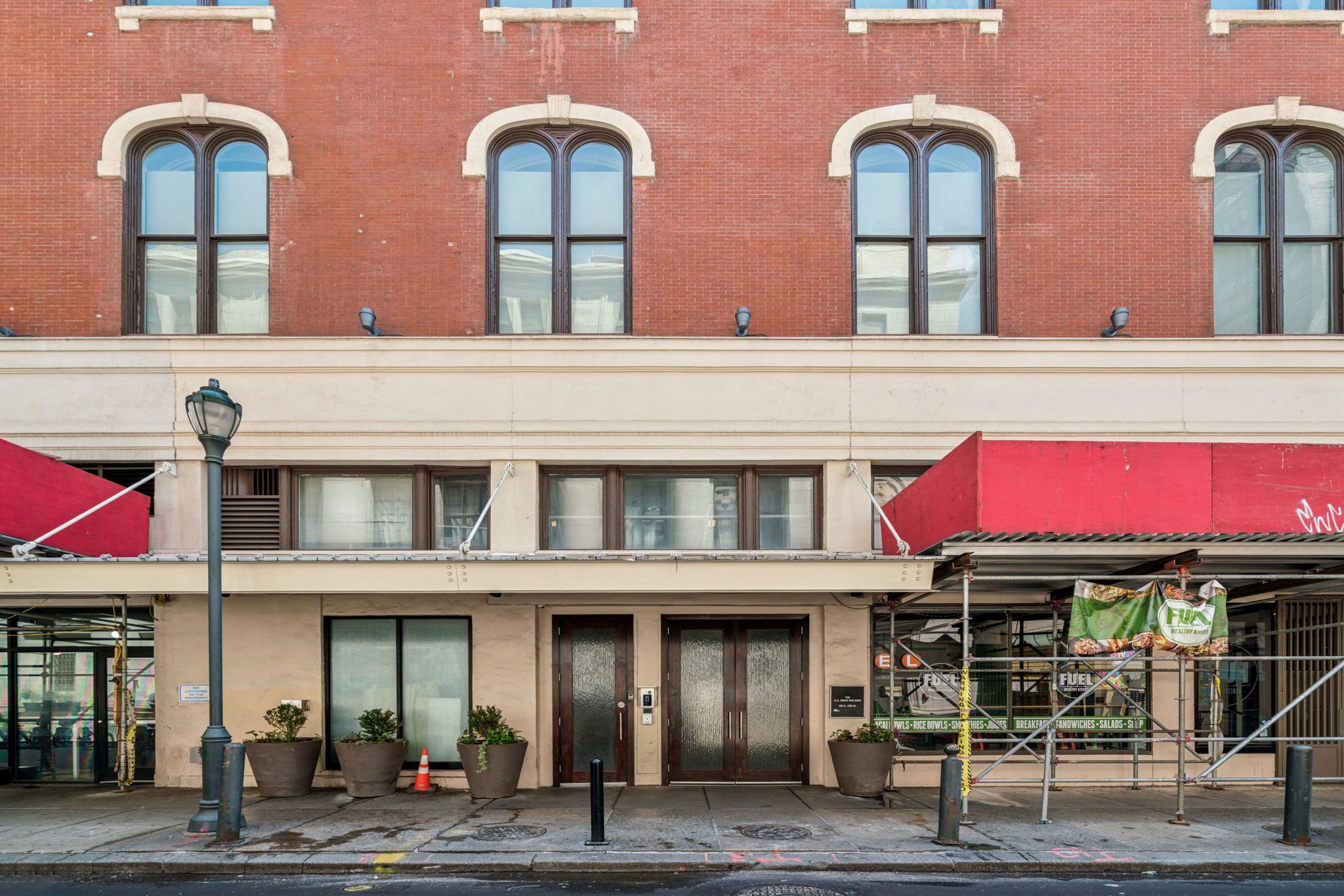
    The building, known as the White Building, was originally the SS White Dental manufacturing company. The McGregors’ unit has 1,334 square feet of living space.

    Exterior of the White Building.

    The building recently underwent facade restoration and upgrades to its hallways and common spaces.

    The condo for sale has new ceiling fans, new toilets, stainless steel appliances, a Sub-Zero refrigerator with built-in ice maker, a new cooktop, in-unit laundry, an on-site fitness center, and a fresh paint job.

    The kitchen has stainless steel appliances.

    Local restaurants include Sampan, El Vez, and Lolita.

    The unit is listed by Marc Silver of Compass Real Estate for $625,000.

  • Letters to the Editor | Feb. 24, 2026

    Letters to the Editor | Feb. 24, 2026

    Big Bro is watching

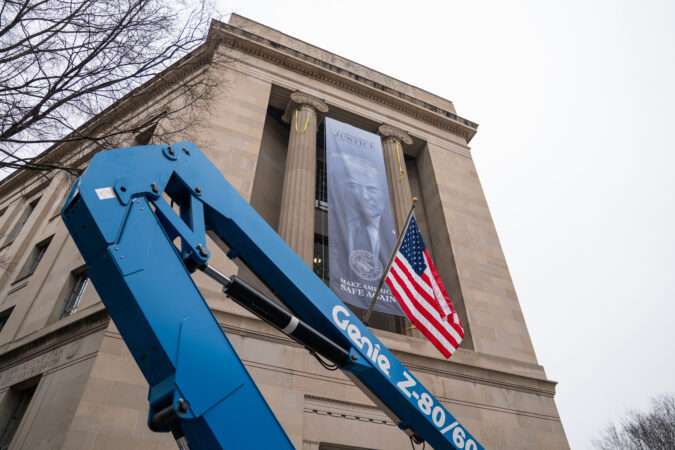
    The U.S. Supreme Court ruling that declared the Trump administration’s tariffs illegal may have pushed another front-page story to the inside of The Inquirer. The story that should have been out front described a large banner with a picture of Donald Trump unfurled and now hanging on the facade of the U.S. Department of Justice’s headquarters in Washington, D.C. It is a reminder that the department had been independent of the executive branch until Trump’s second term started last year.

    The banner of Big Brother hanging on the building clearly indicates the department has surrendered its independence. Cases against Don Lemon, James Comey, Letitia James, and the six Democratic members of Congress who discouraged service members from obeying illegal orders are examples of how the Justice Department now bows to the president’s commands.

    That banner must come down, and the Justice Department must recover its independence. To achieve this, we need a Congress that is also independent of the man on the banner.

    Joel Chinitz, Philadelphia

    Genocide scholars

    Sen. John Fetterman (D., Pa.) has rebuked Rep. Alexandria Ocasio-Cortez (D., N.Y.) for her criticism of Israel at the Munich Security Conference. Fetterman claims that “there was never any genocide in Gaza.” However, Israeli Holocaust and genocide researchers — Amos Goldberg, Omer Bartov, Daniel Blatman, Raz Segal, and Shmuel Lederman — have all identified Israel’s actions in Gaza as genocide.

    Goldberg writes: “What is happening in Gaza is genocide because the level and pace of indiscriminate killing, destruction, mass expulsions, displacement, famine, executions, the wiping out of cultural and religious institutions … and the sweeping dehumanization of the Palestinians — create an overall picture of genocide, of a deliberate, conscious crushing of Palestinian existence in Gaza.” Other genocide scholars, including Martin Shaw, author of the book What is Genocide? Melanie O’Brien, president of the International Association of Genocide Scholars, and Dirk Moses, senior editor of the Journal of Genocide Research, have drawn the same conclusion.

    The United Nations Genocide Convention placed prevention at the center of international law. By rejecting credible evidence of genocide, Fetterman is undermining the postwar promise of “never again.”

    Terry Hansen, Grafton, Wisc.

    Join the conversation: Send letters to letters@inquirer.com. Limit length to 150 words and include home address and day and evening phone number. Letters run in The Inquirer six days a week on the editorial pages and online.

  • Horoscopes: Tuesday, Feb. 24, 2026

    ARIES (March 21-April 19). Even when something is completely unfamiliar to you, you are still able to open your mind and heart to it because you’re constantly looking for points of connection and relatability. This curiosity and courage will be your creative thriving.

    TAURUS (April 20-May 20). You sense opportunity is here somewhere. Your intuition notices the signal — a conversation, a chance encounter, an emerging idea your conscious mind hasn’t fully processed yet. Your mind is already tuning into something lucky.

    GEMINI (May 21-June 21). Subtle energies in a room will affect the outcome. Invisible forces seal deals. Case in point: reputation. It’s just a story, perhaps unrecorded, but powerful, nonetheless. It affects trust, which is also invisible but will make all the difference.

    CANCER (June 22-July 22). The inner narration that helps you understand experiences can also interfere with your experience. When self-talk is repetitive and unhelpful, you may end up thinking about life more than being in it. You can quiet the noise with a calming practice.

    LEO (July 23-Aug. 22). In the adventure movies, the hero is cracking jokes while swinging over pits of vipers. It’s heroic to be lighthearted when the stakes are high. You’ve mastered the art of reading the room and sensing when to release the tension of a moment.

    VIRGO (Aug. 23-Sept. 22). You’ll be successful because you notice what matters. You assume nothing. You don’t underestimate the meek. You ask questions like, “What could go right or wrong?” You’re attuned to what others overlook, neglect or don’t detect at all.

    LIBRA (Sept. 23-Oct. 23). Today, your detailed observations will be more useful than big-picture theorizing, especially in matters of communication. Instead of asking, “What’s the story here?” try “What exactly was said? With what tone? What did I assume in response?”

    SCORPIO (Oct. 24-Nov. 21). Today features an easy pursuit. You hold on loosely and enjoy the process. You don’t care so much as to get your pride involved. You leave room for fortunate coincidences because you are relaxed.

    SAGITTARIUS (Nov. 22-Dec. 21). Giving a solid performance takes much more work than people realize. It will take dozens of hours to deliver what’s expected and dozens more to make it look effortless. You aim to please, and you’re right on target.

    CAPRICORN (Dec. 22-Jan. 19). You will limit your unintentional words or movements to render your intentional expressions more discernible and charismatic. Your tweaks of communication keep your message uncluttered, clear, powerful and easily understood.

    AQUARIUS (Jan. 20-Feb. 18). When you give your word, you’re good for it. You follow through on even the most casual of suggestions. The size of the commitment doesn’t matter. You deliver on it because you despise flakiness in anyone, yourself included.

    PISCES (Feb. 19-March 20). The sun smiles on you with an opportunity to strike up the band. Begin a project, launch what you’ve been working on or start the conversation that will mark the relationship’s beginning. Your confidence kicks in from the get-go.

    TODAY’S BIRTHDAY (Feb. 24). Step into your Year of the Fire Heart, when your passions burn with purpose and fuel truly remarkable endeavors and relationships. You’re able to create quickly, and you will bond with like minds to make the change you feel the world needs. Your kindness and insight attract your team. More highlights: Travel adventures, strong mentorship and a long-awaited financial breakthrough. Taurus and Libra adore you. Your lucky numbers are: 8, 11, 19, 26 and 40.

  • Dear Abby | Employee thinks loss of pet equates loss of child

    DEAR ABBY: I supervise a group of six mid-level professionals. Usually, we manage fine, but a current conflict may push me over the edge. “Lauren” lives alone with dogs that seem to be her only family. One of them (age 11) had been sick. She kept asking for sick leave to take him to the vet. I told her she had to use vacation time for that.

    Well, the dog died, and now Lauren wants to take bereavement leave. When I refused, she had a fit and started yelling about unequal treatment because another co-worker, “Jenny,” was allowed to take bereavement leave earlier this year.

    Jenny’s toddler son died in a drowning accident. It was a horrific tragedy. Jenny was traumatized and incapacitated for weeks. The situations are not comparable. But Jenny heard Lauren yelling and comparing Jenny’s child to her elderly basset hound. This is causing all sorts of interpersonal problems that HR has flatly refused to get involved with.

    I understand that Lauren loved her dog, but I also think she needs to get a grip, apologize to Jenny and take a vacation if she needs to. Is it unreasonable to expect an adult to know the difference between a human and a dog and act accordingly?

    — STRESSED SUPERVISOR IN CALIFORNIA

    DEAR SUPERVISOR: I think you already know the answer to your rather snarky question. HR at your firm may be reluctant to handle this hot potato because they do not have a policy in place that covers pet illness or bereavement for the loss of one. Please suggest it to your employer.

    ** ** **

    DEAR ABBY: My wife and I are seniors and live in a one-floor condominium. I am in good health, but she has several medical issues, including impaired balance and mobility. She refuses the recommended physical therapy and rarely uses the walker I bought for her. She hates cooking now and wants me to drive almost daily for takeout, which is expensive and time-consuming. Now, she’s talking about selling our condominium to move into a seniors’ complex with independent, assisted and continuing care phases. All meals are prepared there.

    I do not want this move and have told her so. When I do, she goes silent for days, telling me it’s time for the change. I disagree. We are at an impasse. I am so upset about this I am considering divorce after 55 years. What do you recommend we do?

    — STILL YOUNG IN NORTH CAROLINA

    DEAR STILL YOUNG: I recommend you discuss this with your CPA and your attorney before making any decisions. If you could afford it, an assisted living facility for her while you remain in the condo might be ideal. However, if that’s not possible, would you be willing to send her to the facility while you rent a one-bedroom apartment for yourself?

    One thing I am pretty sure of: Your wife is signaling that she’s shutting down. Her world is now smaller than it was. You haven’t aged at the same rate, and it may be time to do for her what you would like her to do for you if the situation were reversed.

  • Quakertown schools are planning counseling and police presence after student arrests at ICE protest

    Quakertown schools are planning counseling and police presence after student arrests at ICE protest

    The Quakertown Community School District is planning to offer counseling and has requested a police presence this week after a student walkout Friday to protest federal immigration enforcement ended in a clash with police and multiple student arrests.

    “Our responsibility is to focus on creating as safe and supportive a learning environment as possible for students and staff to return to school this week,” acting Superintendent Lisa Hoffman said in a statement Sunday night.

    Like districts across the region, Quakertown schools were closed Monday because of snow. But administrators are preparing to reopen amid continuing intense attention from Friday’s walkout, which involved about 35 students from Quakertown Senior High School. Unlike other walkouts at Philadelphia-area schools by students protesting U.S. Immigration and Customs Enforcement, Quakertown’s protest turned confrontational.

    Videos circulating online appear to show the Quakertown Borough police chief putting a teenage girl in a chokehold during the incident, which police said involved students entering traffic and damaging property and resulted in the arrests of five students and one adult.

    The status of the students who were arrested, including whether they were still in custody, wasn’t clear Monday. A spokesperson for the Bucks County District Attorney’s Office — which is investigating the police response to the protest — said state law barred the office from discussing the teenagers’ cases.

    The spokesperson, Manuel Gamiz, did not respond to questions about the charges, where the students were being held, or when they would be arraigned. While police had said one adult was arrested, Gamiz said that to his knowledge “no adult was ever charged” in connection with the incident.

    Community members organized by the group Upper Bucks United demanded the immediate suspension of the police chief, Scott McElree, at a borough council meeting Monday night. An online petition also calls for McElree’s resignation.

    McElree, who is also the borough manager, did not respond to requests for comment Monday.

    Reached by phone Monday afternoon, borough council vice president James Roberts Jr. hung up on a reporter. He did not answer a second call. Messages left for four other council members were not immediately returned Monday.

    Witold Walczak, legal director of the ACLU of Pennsylvania, said in a statement Monday that “by all accounts, including abundant video evidence, there were no issues at the demonstration until Quakertown police arrived and incited violence.”

    Walczak called for a “full and transparent investigation” and for Quakertown police and McElree “to be held accountable for their actions if the evidence confirms the apparent excessive force, retaliation and false arrest.”

    In response to a series of questions sent Monday, the police department sent a written statement, saying the borough and department were “fully cooperating with the Bucks County District Attorney’s Office concerning this investigation. Until this investigation is complete, neither the Borough nor its Police Department will be commenting on this matter.”

    Tensions led to walkout cancellation

    In her statement Sunday, Hoffman offered more context about Friday’s walkout, which the district had attempted to cancel that morning.

    In the week leading up to the walkout, Hoffman said, administrators met with student organizers “to discuss alternative ways to demonstrate their right to free speech that wouldn’t disrupt the school day.”

    Like “nearly every school district across the region,” Hoffman said, “it is our practice not to endorse or facilitate a student walkout during the school day for any reason. However, we also know it is our responsibility and duty to provide reasonable safety and security support for students and staff members who enter and exit our schools.”

    The district was concerned that students who planned to participate in the walkout reported they were being bullied and threatened, Hoffman said.

    At 9 p.m. Thursday, Hoffman said, “the district received what was deemed a new and concerning threat of violence.” A district spokesperson did not respond to questions Monday, including about the nature of the threat.

    Though the district issued a notice and met with student organizers before school Friday, attempting to cancel the protest, administrators gathered in front of the high school at 11:25 a.m. Friday, preparing for the “the possibility that students would proceed with their walkout despite the safety concerns shared with them,” Hoffman said.

    As students walked off campus — not following any previously discussed route, Hoffman said — district officials heard from community members that some students in town “were engaging in disruptive and unsafe behavior,” Hoffman said.

    At that point, students “were no longer under the district’s custodial control or supervision, and we have almost no legal ability to regulate or investigate their behavior,” she said.

    Hoffman said the district has no additional information on arrests or the investigation. She said administrators and “many of our staff members have been inundated with hateful messages and concerning physical threats to our personal safety via email, phone, and social media” since the walkout.

    “This is simply inexcusable,” Hoffman said. “We have and will continue to report these threats to the appropriate law enforcement agencies.”

    The district is working with the Bucks County Intermediate Unit to develop a “counseling support plan” for students and staff, Hoffman said. She also said it had “communicated with our law enforcement partners for police presence and support as we return to school.”

    Over the weekend, supporters created a GoFundMe campaign to raise money for the students’ legal fees, court costs, medical expenses, and other support services. By Monday afternoon, it had collected more than $28,000. The campaign’s organizer did not respond to a request for comment.

  • Philly got its biggest snow in 10 years. This time nature will help with the cleanup.

    Philly got its biggest snow in 10 years. This time nature will help with the cleanup.

    If it wasn’t an actual blizzard, Philly’s biggest snowfall in a decade sure acted like one, and the weather the rest of this week isn’t expected to be particularly pleasant.

    But in terms of disruption — not to mention aesthetics — this was in a wholly different category from the Jan. 25 siege of snow and ice. And the aftermath should not be anywhere near as punitive and burdensome.

    Although the 14 inches measured officially at Philadelphia International Airport, dwarfed the 9.3 inches of snow and sleet that accumulated in last month’s storm, Zach Schwartz, 33, was among those who found the picturesque snow more palatable than the attack of ice balls and an Arctic freeze.

    “The last snowstorm was a tough time for everyone,” said Schwartz, who was at a Point Breeze playground helping a friend build an igloo for their kids, “and I think the city was kind of in shock a little bit.”

    The most recent storm, which left as much as 20 inches of snow in parts of South Jersey and southeastern Bucks County, did cause some issues.

    More than 130,000 households lost power at some point. Scores of trees came down as the snow, heavy and wet at the start, glommed onto branches that took beatings from the winds that gusted past 40 mph.

    The storms closed schools to the chagrin of hundreds of thousands of learning-eager children, and museums on Monday. It disrupted SEPTA services and airport operations.

    At least 87 trees across the city were downed as a result of the storm as of Monday afternoon, and the city was working to determine which ones to prioritize clearing first, Parks and Recreation commissioner Susan Slawson said.

    Mayor Cherelle L. Parker advised Philadelphians to avoid unnecessary travel as crews worked to clear the streets.

    Yet early fears that the snowfall would reach what the National Weather Service called “potentially historic” levels didn’t quite materialize, and it was not known if the storm had met “blizzard” criteria. Stopping short of “historic,” New Jersey Gov. Mikie Sherrill called it “a generational storm.”

    This one likely won’t have the staying power of last month’s storm

    While the volume of snow is formidable, road crews throughout the region now have a tremendous ally — the late-February sun.

    The city did adjust its response after the prior storm cleanup left many residents chock-full of complaints. Director of Clean and Green Initiatives Carlton Williams said Monday instead of one snow melter, the city secured three, with two already on the road Monday, despite the much shorter notice of the storm.

    But the big melter is in the sky.

    The amount of solar energy beaming toward Philadelphia is more than 35% stronger than it was on Jan. 25, according to NASA’s figures, and blacktop is great absorber of sunlight. Plus the region now is getting an hour more of daylight.

    Plus, instead of an Arctic freeze, it is forecast to be moderately cold this week, with highs in the low 30s Tuesday, and in the 40s Wednesday and Thursday.

    A weak clipper could produce an inch or less of snow early Wednesday, but, sorry kids, that won’t be another school-closer. More light rain or snow or a mix is possible Thursday.

    Computer models on Monday were seeing a potential for more snow early next week, but they may well sober up come Tuesday.

    After the Jan. 25 storm, Philly had 18 consecutive days of at least 3 inches on the ground officially at the airport, the longest stretch in 65 years. That streak won’t be challenged this time around.

    One other huge difference: Those 14 inches didn’t include a speck of ice, which, as we learned, is amazingly melt-resistant.

    Why snow totals varied tremendously

    The nor’easter that generated the snow did qualify as a “bomb cyclone,” said Tom Kines, senior meteorologist with AccuWeather Inc. The technical criteria aside, a bomb cyclone is particularly powerful storm.

    In fact, the storm’s intensity, based on a measure of its central pressure, was equal to that of a Category 1 hurricane, he added.

    Fortunately, the Shore escaped major flooding, but the winds circulating around the storm’s center over the ocean hurled back snow far inland.

    window.addEventListener(“message”,function(a){if(void 0!==a.data[“datawrapper-height”]){var e=document.querySelectorAll(“iframe”);for(var t in a.data[“datawrapper-height”])for(var r,i=0;r=e[i];i++)if(r.contentWindow===a.source){var d=a.data[“datawrapper-height”][t]+”px”;r.style.height=d}}});

    South Jersey locations received the most, along with areas in southeastern Bucks County. However, totals backed off precipitously to the west.

    “There was a really tight gradient,” said Amanda Lee, a weather service meteorologist in Mount Holly. All areas in Philly’s neighboring Pennsylvania counties did report at least several inches of snow.

    Within that broad east-west divide, however, amounts varied considerably from place to place, due in part to “banding,” in which narrow corridors of snow, caused by rapidly rising air, migrate from place depositing rapidly accumulating snow to areas underneath.

    Conversely, areas on either side of the band are snow-deprived.

    As to whether this qualified as Philadelphia’s first blizzard in 33 years, that is a verdict deferred.

    By the National Oceanic and Atmospheric Administration’s decree, a blizzard requires “frequent winds of 35 mph or higher with considerable falling and/or blowing snow that frequently reduces visibility to 1/4 of a mile or less. These conditions are expected to prevail for a minimum of 3 hours.”

    That’s a lot to ask for a snowstorm, and it is going to take considerable forensic work of poring through observations to determine whether those conditions were met in Philadelphia or elsewhere in the region, said Nick Guzzo, a weather service meteorologist in Mount Holly.

    Another big difference between this and the January storm

    Whatever else it is called, this was the most spectacularly beautiful snowfall of the season, thanks to the snow’s remarkable adhesive power.

    On the morning of Jan. 26 the trees were bare, as though they wanted no part of the snow and ice-ball assault.

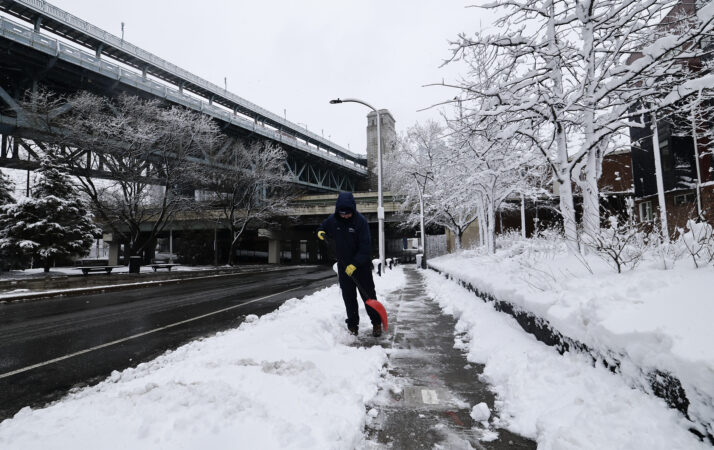
    On Monday this time around, snow enchanted the branches and uncannily worked its way into architectural details.

    Cape May Mayor Zack Mullock said his town, famous for its Victorian buildings, “looks beautiful” covered in the foot of snow that had fallen.

    Said Mullock, “It looks like a snow globe.”

    Staff writers Ximena Conde, Kristen A. Graham, Michelle Myers, Amy S. Rosenberg, Henry Savage, and Nick Vadala contributed to this article.

  • Pennsylvania leaders want to avoid another lengthy state budget impasse. But with a $4.3 billion budget shortfall on the horizon, can they?

    Pennsylvania leaders want to avoid another lengthy state budget impasse. But with a $4.3 billion budget shortfall on the horizon, can they?

    HARRISBURG — Pennsylvania’s top leaders want to avoid another ugly, monthslong budget standoff, showing resolve this year to begin negotiations much sooner in hopes of approving a spending deal by their June 30 deadline.

    But that doesn’t change the state’s financial predicaments: Pennsylvania is again on track to spend more than it brings in this fiscal year. Gov. Josh Shapiro has pitched spending at least $4.3 billion more than the state is projected to raise in revenue next fiscal year, part of his $53.2 billion budget proposal.

    Shapiro, who is up for reelection this year and is a rumored 2028 presidential contender, has struggled in budget negotiations since taking office to deliver on his national image as a moderate Democrat willing to work across the aisle while leading the state with a GOP-controlled Senate and narrow Democratic House majority.

    And after last year — when lawmakers couldn’t agree on a state budget deal for months, leading to a bitter impasse and negotiations stretching into November while schools and counties went unfunded — the governor is trying a new strategy.

    Shortly after unveiling his budget proposal to lawmakers last month, Shapiro called top legislative leaders in for a meeting in his office to discuss their spending priorities. Last year, the initial negotiation conversation took place just before the June budget deadline, taking months to arrive at an agreement. House Majority Leader Matt Bradford (D., Montgomery), Senate Majority Leader Joe Pittman (R., Indiana), House Minority Leader Jesse Topper (R., Bedford), and Senate Minority Leader Jay Costa (D., Allegheny) accepted Shapiro’s invitation.

    Rosie Lapowsky, a spokesperson for Shapiro, said in a statement that the early conversation was intended to “ensure they remain timely, constructive, and focused on results.”

    A $4.3 billion budget shortfall — and disagreement over how to fix it

    Both Pittman and Bradford, who control their chambers and are top architects to any final budget deal in closed-door negotiations with Shapiro, said the first talks were a good first step in opening negotiations much sooner than last year. But they acknowledged the tough fiscal realities facing the state, and disagreed on how to address them.

    “It just simply spends too much money. We can’t continue the spending trajectory,” Pittman said of Shapiro’s $53.2 billion budget proposal. “It’s only going to cause us to have conversations, as the Independent Fiscal Office pointed out about massive, broad-base tax increases.”

    The Independent Fiscal Office was created by the state legislature in 2010 and is required to produce revenue projections for current and future years. An IFO report this month found that the budget deficit could top $6 billion this year, and hit $8 billion by 2028-29, likely requiring broad tax increases to fill the gap.

    “Assuming he’s reelected, if he’s reelected, I can’t imagine he’s going to be wanting to deal with budgets in 2027 and 2028 that are going to have to call for broad-based tax increases,” added Pittman, who has endorsed Shapiro’s likely GOP gubernatorial challenger, State Treasurer Stacy Garrity.

    State Senate Majority Leader Joe Pittman (R., Indiana) during a Feb. 3 news conference at the Capitol in Harrisburg.

    Meanwhile, Bradford, a Democrat, believes the state should focus on the long game in addressing Pennsylvania’s budget shortfall, citing the state’s efforts to recruit new businesses and pass tax cuts to encourage economic growth, as well as Shapiro’s renewed push to create new revenue streams like the taxation and regulation of recreational marijuana and the slot-machine look-alikes know as skill games.

    Pennsylvania’s declining population has “put a lot of stress on our budget books,” Bradford said.

    “The best thing we can do is continue to grow this economy,” Bradford added.

    State Rep. Matt Bradford (D., Montgomery County) during a Feb. 3 news conference at the Capitol in Harrisburg.

    Even without increasing its spending over the 2025-26 fiscal year — an impossible feat due to growing Medicaid obligations — Pennsylvania would still be poised to spend $1.2 billion more than it is expected to bring in next fiscal year.

    To avoid raising taxes this year, leaders will need to raise new revenues and tap into its more than $7 billion in reserves. Republican leaders want to avoid tapping into the state’s Rainy Day Fund until an emergency arises, citing the state’s lackluster revenue projections in future years. However, it’s unclear what government programs or agencies they’d like to cut.

    Just as he did last year to no avail, Shapiro this month again proposed regulating and taxing recreational marijuana and skill games as a way to help fill the state’s budget shortfall. This time, however, his projections on how much revenue could be made has increased dramatically since last year, without changing much of the scope of the proposals.

    For example, last year he pitched a 20% tax on the sale of legal marijuana that he estimated would bring in $535.6 million in its first year. This year, he projected the same idea, but instead projected a marijuana tax would bring in $729.4 million in its initial year — a 36% increase. A Shapiro administration official said earlier this month that the projected increase is due to more interest from marijuana companies that want to do business in Pennsylvania.

    Gov. Josh Shapiro makes his annual budget proposal in the state House chamber on Feb. 3. House Speaker Joanna McClinton is seated behind him.

    State revenues are $362 million higher than expected so far this fiscal year, according to the IFO, offering some hope that the state may continue to grow its economy to fill some of the budget hole.

    Lapowsky, Shapiro’s spokesperson, said in a statement that Shapiro’s budget pitch shows “that government can be a force for good in people’s lives when leaders come together and put Pennsylvanians first.”

    Election year optimism and a preview of the fights to come

    Legislators on the powerful Senate and House appropriations committees, led by House Appropriations Chair Jordan Harris (D., Philadelphia) and Senate Appropriations Chair Scott Martin (R., Lancaster) will individually begin analyzing Shapiro’s budget proposal line-by-line in public hearings this week. Both committees were scheduled to begin their budget hearings on Monday, but were rescheduled to begin on Tuesday afternoon and Wednesday morning for the Senate and House, respectively, due to a snowstorm that blanketed the Philadelphia area.

    The weekslong series of hearings examine the budget needs for each state government agency and row office, as well as the spending from the previous year. Secretaries and elected officials from each office come before the committee to answer questions about their proposed spending.

    State Reps. Johanny Cepeda-Freyitz (left), a Berks County Democrat, and Carol Kazeem (D., Delaware) in the state House chamber Feb. 3 during Gov. Josh Shapiro’s annual budget proposal.

    Pittman said Senate Republicans are likely to zero in on Shapiro’s $1 billion proposed bonding initiative for a range of infrastructure projects relating to energy, housing, local governments, and schools that he largely billed as “a major investment in building new housing.” They’ll also likely question why the Department of Corrections is seeking a $150 million funding increase, after the closure of two state prisons last year.

    GOP members of the Senate committee will also likely question top officials in the Pennsylvania State Police and the Department of General Services over spending for security upgrades at Shapiro’s personal residence following an arson attack last year on the governor’s mansion in Harrisburg, and a mail vendor’s failure to deliver a month’s worth of state mail to residents.

    The state House chamber as Gov. Josh Shapiro makes his annual budget proposal Feb. 3 in Harrisburg.

    House Democrats, meanwhile, are likely to bring attention to the successes of the Working Pennsylvanians Tax Credit and additional increases to public education under the state’s new adequacy formula, Bradford said.

    “We’ve got real accomplishments and a real opportunity to prioritize funding education, affordability, and build on what we’ve done,” Bradford said.

    Unlike the last round of budget negotiations, mass transit funding for SEPTA and other transit agencies is unlikely to be a roadblock this year, as lawmakers have until next year to find a long-term funding solution.

    Despite the inevitable disagreements ahead, there is some cause for optimism heading into another year of Pennsylvania state budget negotiations: Midterm election years often produce much less contentious budget battles, as lawmakers are motivated to reach an agreement and bring home their accomplishments to their districts as they campaign for reelection in November.

    Both Bradford and Pittman expressed hope that the election year may bring an increased willingness among all parties to finish an on-time budget.

    But, “divided government creates all kinds of twists and turns,” Pittman added. “I certainly can’t predict what’s coming ahead here.”

  • Philly schools will remain virtual on Tuesday; other Pa. and N.J. districts are a mixed bag

    Philly schools will remain virtual on Tuesday; other Pa. and N.J. districts are a mixed bag

    School districts around the region made varying calls for how they’re handling classes Tuesday as the region continues to dig out from the massive snowstorm that dumped more than a foot of snow in many places — with some closed altogether, others fully open, and others open, but delayed.

    The Philadelphia School District opted for another day of virtual instruction.

    Superintendent Tony B. Watlington Sr. has said the nation’s eighth-largest school system favors in-person instruction, but places student and staff safety as its highest priority.

    In Upper Darby, Delaware County, Superintendent Dan McGarry made the call to bring students in on time.

    “The district transportation team and facilities team have been working hard all day to clear snow from our facilities for in-person instruction,” McGarry wrote in a message to families and staff. “We have been in communication with the township as well, and I want to thank them for their hard work getting roads clear for school tomorrow.”

    Districts including Council Rock and Pennridge, both in Bucks County, called two hour delays.

    In Montgomery County, Cheltenham and Lower Merion schools both announced a two-hour delay.

    “Buses are expected to arrive at bus stops two hours after their normal pickup times; however, please be patient as snow and ice on some streets may cause additional delays,” Lower Merion spokesperson Amy Buckman said in a message to families Monday evening.

    Cherry Hill and Moorestown, in Camden County, will also hold classes with a two-hour delay.

    Renewed debate over virtual instruction in New Jersey

    And while some Pennsylvania districts pivot to virtual instruction when significant snow falls, that’s not possible in New Jersey, where state law prevents it.

    A handful of New Jersey districts opted for total closures. Lenape Regional, Evesham, and Medford schools, all in Burlington County, cancelled classes altogether.

    Winslow schools in Camden County will remain closed Tuesday for a second consecutive day, said interim Superintendent Mark Pease. The district was shut down for three days during the last storm.

    Pease said the district would use two days from its spring in April to make up the missed days. The break will be cut to three days, he said.

    “If we get another storm, we will be extending the school year,” Pease said. “Let’s hope this is it for the winter.”

    The snow storm renewed calls among some New Jersey educators to the state to allow virtual and hybrid instruction to avoid closing schools due to inclement weather.

    In a social media post, Camden Education Association President Pam Clark said she was asking Gov. Mikie Shirrell to revisit the virtual option for traditional public schools. She used the hashtag “not fair.”

    New Jersey allowed virtual and hybrid instruction when the pandemic shut down schools.

    However, state law now strictly limits remote learning, according to the state Department of Education. Districts must meet a state requirement of 180 days.

    School districts may seek approval for virtual learning for school closures lasting more than three consecutive days because of a declared state of emergency or a declared public health emergency.

    There has been pushback against virtual learning because of concerns about learning loss suffered during the pandemic. There also are concerns that some schools don’t have enough Chromebooks or devices for students to log on.

    Timothy Purnell, executive director of the New Jersey School Boards Association, said districts should have the flexibility to pivot when circumstances warrant such as a snow day.

    Districts have invested in technology and training to successfully implement virtual instruction, he said.

    “Limiting virtual instruction days exclusively to public health emergencies is yesterday’s logic,“ Purnell said in a statement.