In the 1990s, before Michael Dennis was a filmmaker, screening host, or archivist, he worked at the Video Library, the fabled video store in Mount Airy. He remembers the 1989 film Riverbend being on the shelves, but he had never watched it.
Dennis, who founded the Philadelphia-based production company Reelblack in 1999, finally got around to watching the film in 2019. Charles Woods, Dennis’ mentor and podcast cohost, had asked him to transfer a VHS copy of the film to digital. He wanted to post the film on Reelblack TV’s YouTube channel.
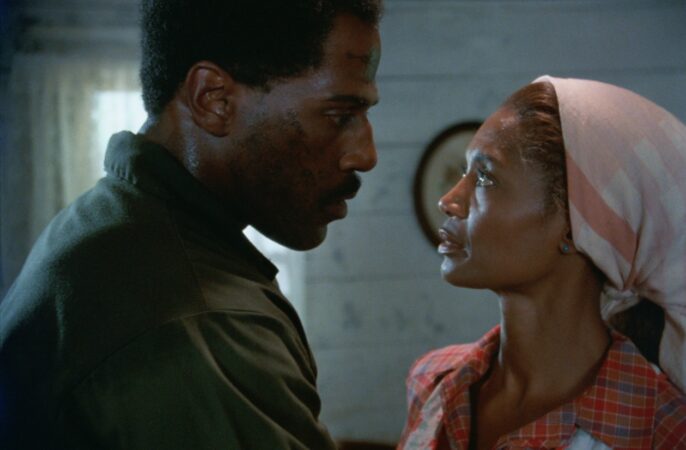
Riverbend, directed by Sam Firstenberg, is set in 1966 and tells the story of a group of Black Vietnam veterans who lead an uprising against a racist sheriff in a small Southern town. It’s an action-adventure film, in the tradition of the Rambo and Missing in Action series, firmly rooted in the B-movie style of the late 1980s — complete with a synthesizer-heavy musical score — but with much more of a social message than was typical of that time.
The film had only a perfunctory theatrical release and was released on VHS in 1990. In its brief run, the film opened only in New York, Texas, and Florida. But now, it has gotten an unlikely revival in Philadelphia, a city where it was never shown.
“The film itself is very revolutionary in some respects,” Dennis said. “I mean, it’s a genre picture, of course, but the theme is very revolutionary … and I was interested to talk to Sam about how the movie actually got made because it’s so different from most American films, nearly all American films.”
A few months after he posted the film on YouTube, Dennis received an email from Firstenberg, a B-movie stalwart whose credits also include American Ninja, American Samurai, and Breakin’ 2: Electric Boogaloo.
“I thought it was going to be a cease-and-desist letter, but instead he said, ‘No, you’re doing this movie a great service because it’s an orphan film and it was financed independently, and it’s basically lost,’” said Dennis, who teaches a course on race and ethnicity in American Cinema in Temple’s Film and Media Arts Department.
During the COVID-19 lockdown, Dennis saw a 35 mm print of Riverbend being sold on eBay by a seller in South Africa. He put in a winning bid for the print that’d take months to reach him.
Dennis considers himself an archivist, although he hadn’t previously mounted a full-scale restoration of a film before. But in keeping with Reelblack’s long-stated mission of encouraging the appreciation of Black film, especially rarer ones, he sought to restore Riverbend.
The eBay print, he said, had “every scratch known to mankind on it.” It was also missing seven minutes of material. Replacing the missing scenes with materials from the VHS, calling it a “sort of grindhouse cut,” Dennis gave the film its first public screening in decades at the Denton Black Film Festival in Texas in 2024. There, he met Valerie Vance, the widow of the film’s screenwriter and producer, Sam Vance.
“We were trying to find out where [Riverbend’s] negative was,” Dennis said, “And we had no luck because all the labs had closed and have become different companies.”
He got in touch with Dennis Doros, who runs the Missing Movies Instagram account and Milestone Films, a company known for rescuing “lost films.” Within days, the film assets were located at the film lab FotoKem, with Amazon/MGM paying the bills to host it.
Missing Movies, Vance, and Realblack worked out a deal to acquire the film’s negative and other assets.
The film then traveled to Norristown, where it was restored at Reel Revival, a company that provides scanning services. Austin Squitieri, its proprietor, started by scanning and digitizing the Riverbend negative. What followed was a painstaking process of digital repair, which included dirt removal, some Photoshopping, and final assembly of the edited footage.
Squitieri had not seen the film before working on the restoration, although he had heard of it.
“It’s a fun title,” he said. “It tackles something serious, and you can tell it was made passionately, as some of the more niche films tend to be.”
After premiering at the American Cinematheque Aero Theater in Los Angeles last October, the restored version of Riverbend is now headed to Philadelphia. The film will screen at Film Society East on Thursday and will be released on Blu-ray on June 27, through a new label called Reelblack Renaissance.
“There’s so many great Black independent films that are in danger of being lost or forgotten,” Dennis said. Reelblack Renaissance’s mission is “to restore them, reclaim them, and represent them in the Blu-ray and streaming market.”
Firstenberg, 76, will be on hand for the Philadelphia premiere.
“He tours the country supporting his body of work. And, this is like rescuing a lost child for him,” Dennis said.
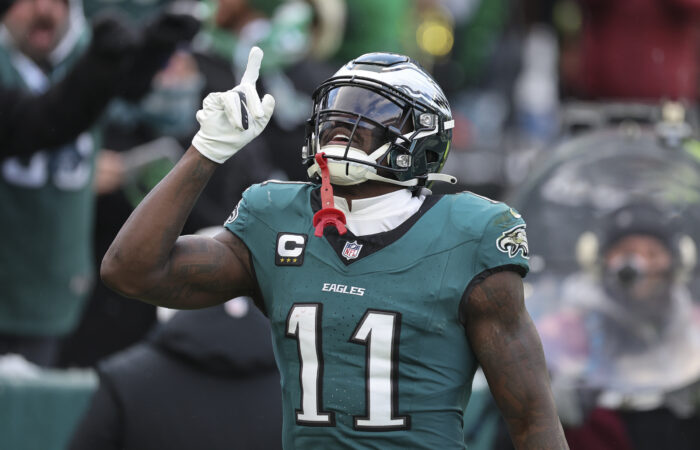
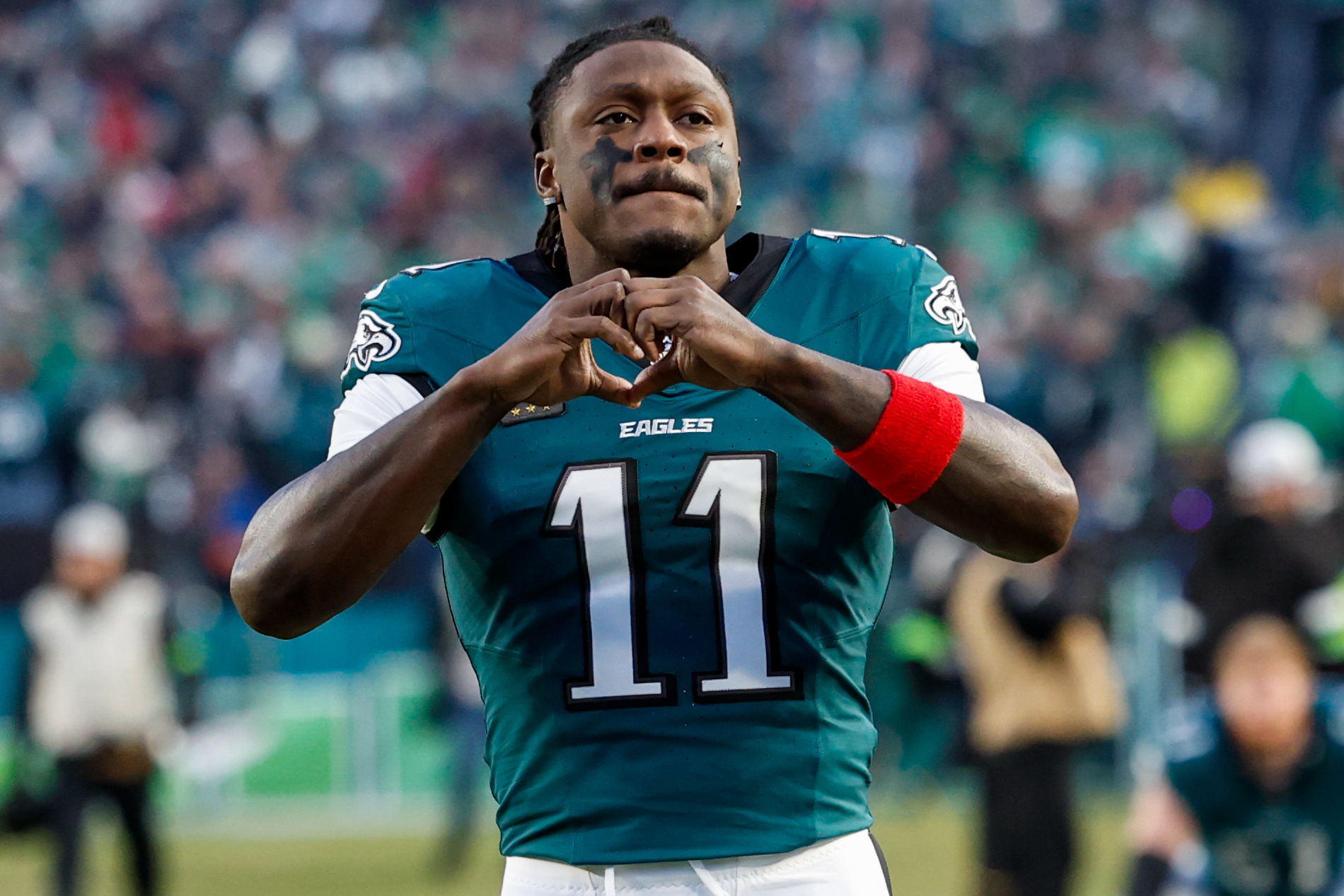
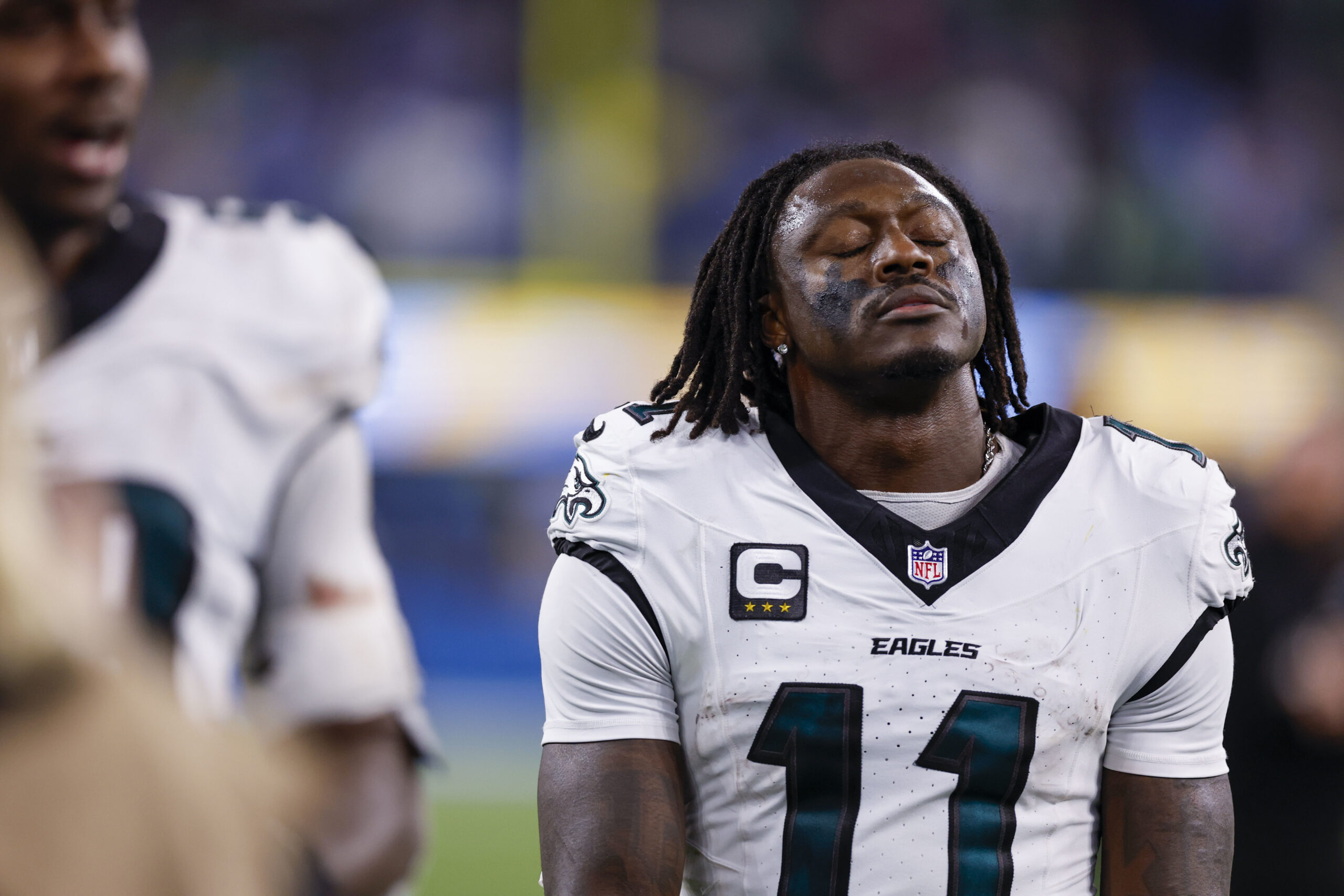
As he made the rounds at Super Bowl Radio Row two weeks ago, A.J. Brown didn’t sound like a player ready to demand a trade out of Philadelphia. But Nick Sirianni and Howie Roseman — even while praising Brown — don’t seem willing to shut the door on any possibilities surrounding the 28-year-old receiver.
At their annual pre-combine news conference with local writers on Friday, both Sirianni and Roseman were directly asked whether Brown would be back with the Eagles next season. While both expressed their affinity for Brown as a player and a person, neither outright said that he will definitely return.
“I can’t guarantee how anything’s going to play out into next season,” Sirianni said. “I can’t guarantee that, I mean, I’m thinking I’m going to be the head coach next season, but you can’t guarantee anything past tomorrow.”
Still, neither Sirianni nor Roseman indicated the Eagles were actively shopping Brown. After stating his inability to speak definitively about Brown’s future, Sirianni referenced the response given by Roseman in January following the team’s wild-card exit, when he was asked if he was open to trading Brown.
Roseman said at the time, “It is hard to find great players in the NFL and A.J.’s a great player. I think from my perspective, that’s what we’re going out and looking for when we go out here in free agency and in the draft is trying to find great players who love football, and he’s that guy.”
On Friday, Sirianni echoed Roseman’s remarks, calling Brown a “great player,” a “good teammate,” and a “good person.” The sixth-year Eagles head coach said he wants Brown in Philadelphia and he believes the receiver wants to stay, too.
Roseman also reiterated his January response, repeating that “it’s really hard to find great players” and “A.J. is a great player.”
“I think that from my perspective, we’re looking to improve in all areas, and you don’t do that by subtracting,” Roseman continued.
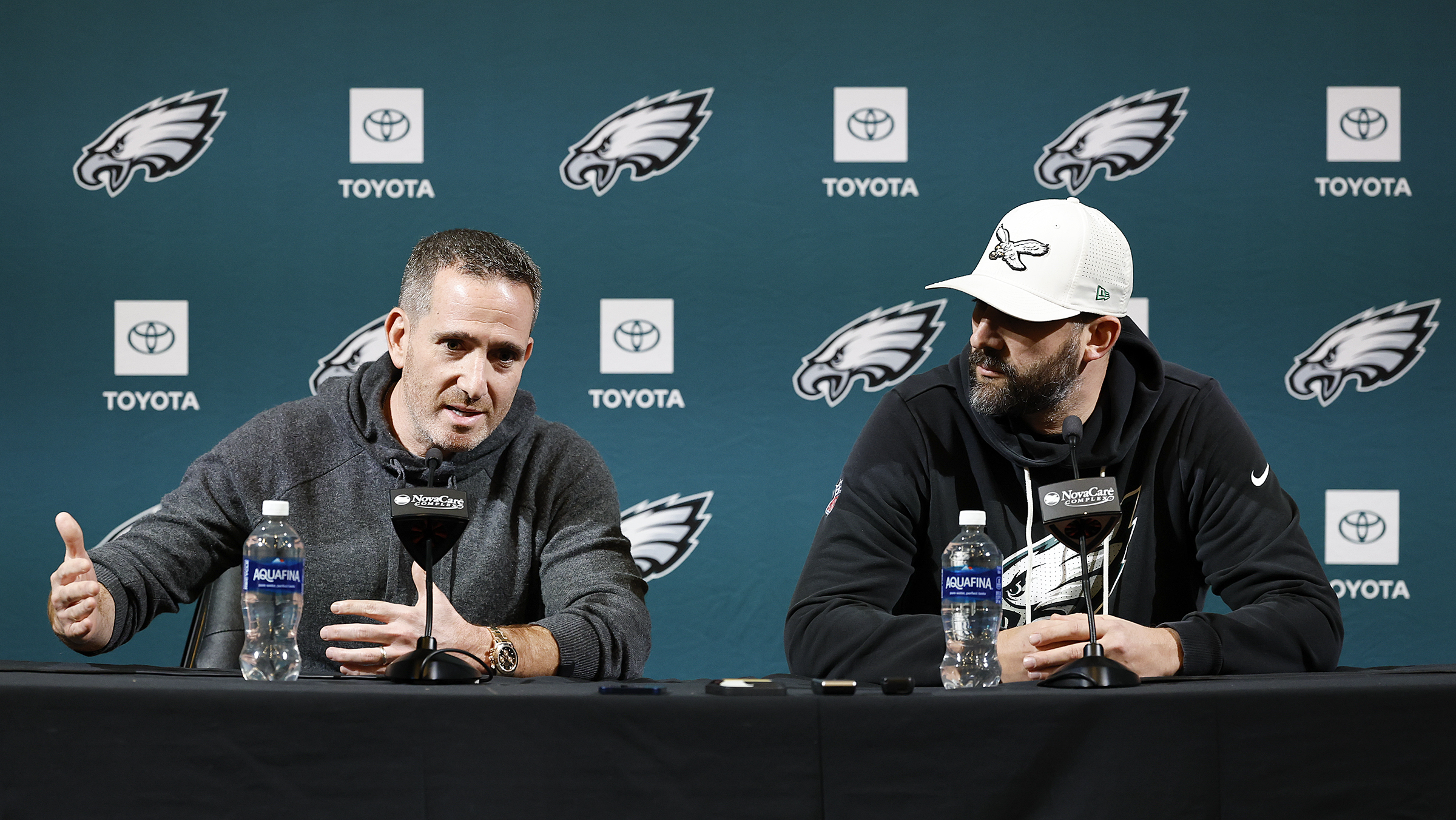
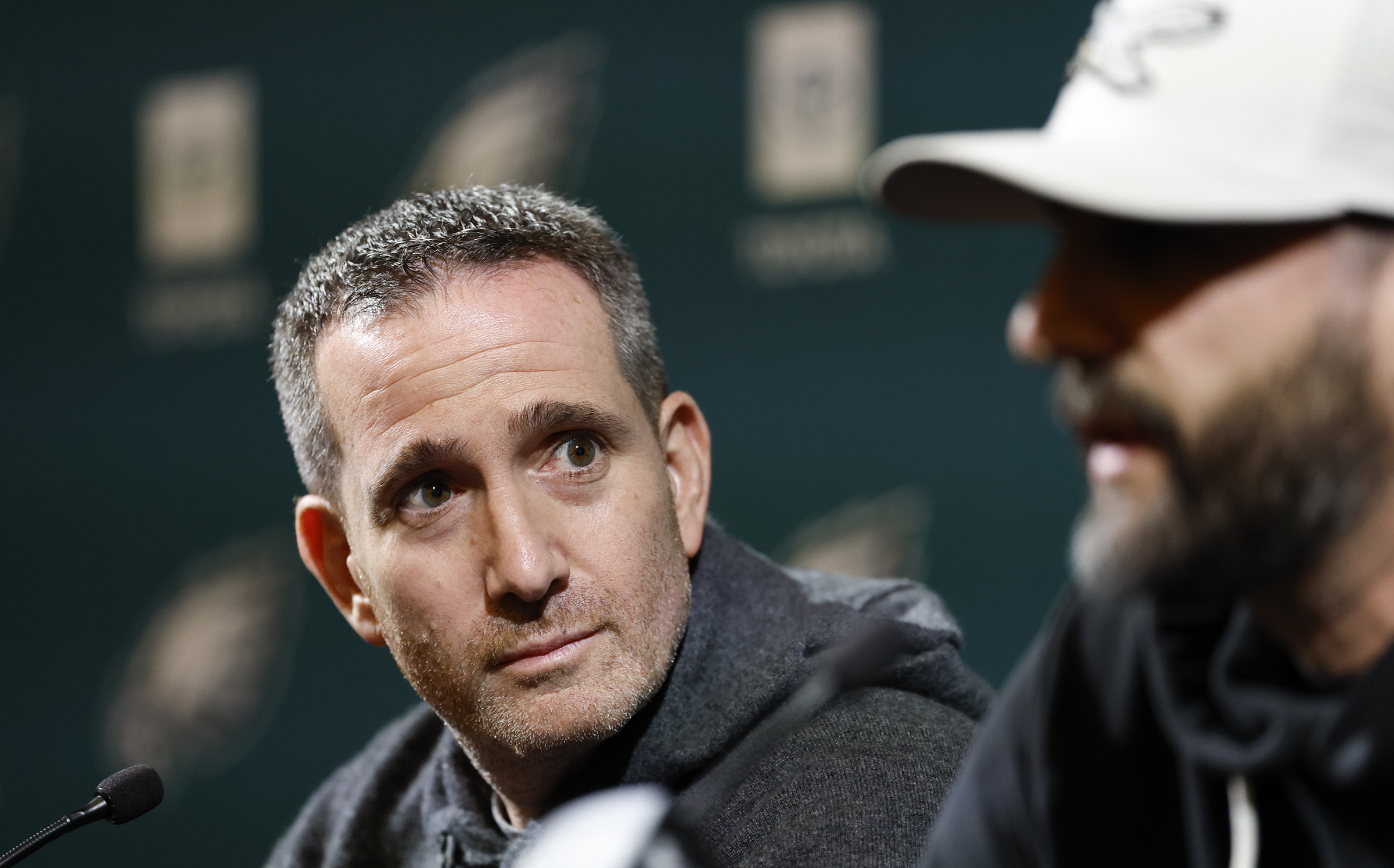
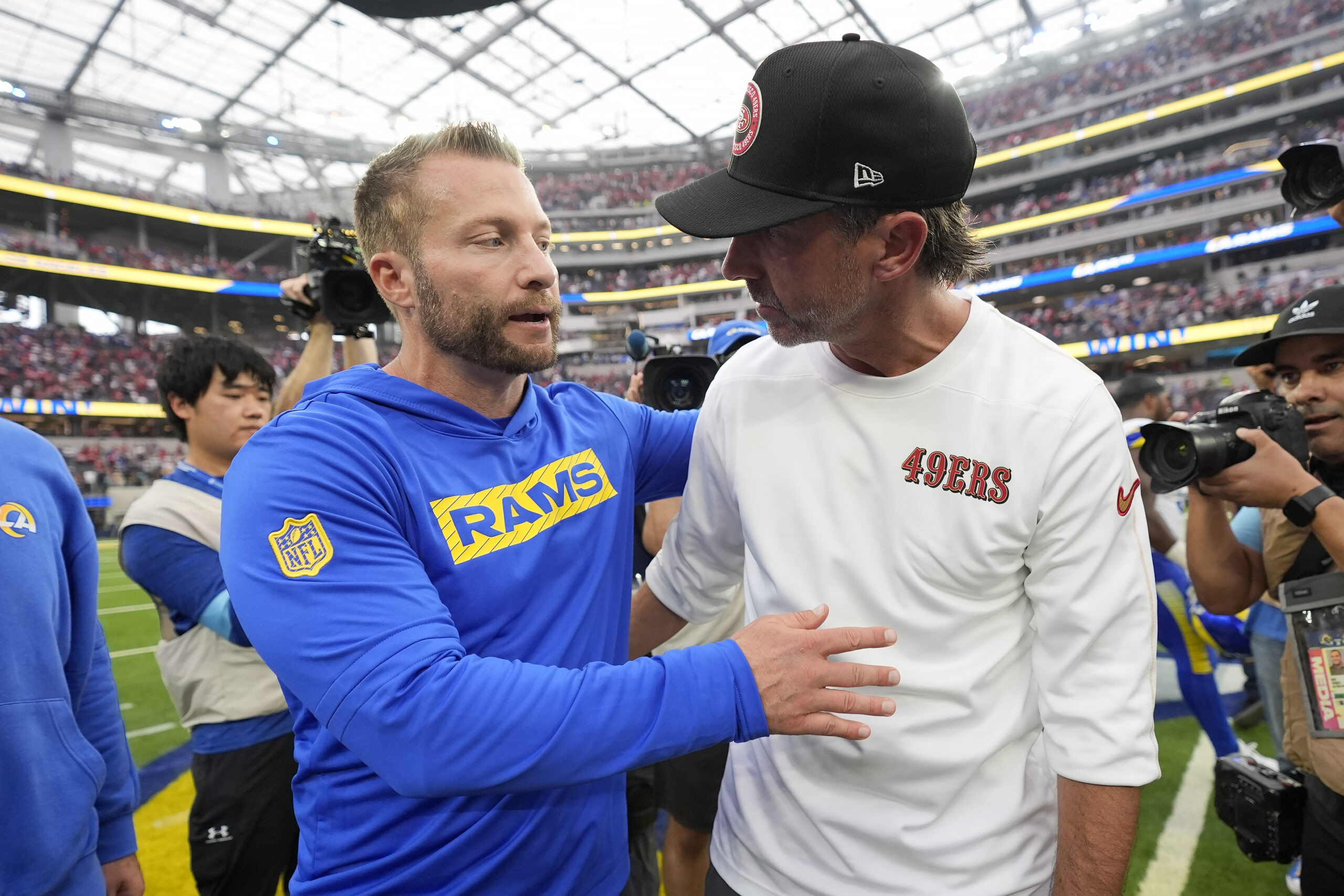
Howie Roseman (left) and Nick Sirianni did not shut the door on the possibility that A.J. Brown could be moved this offseason.
But the Eagles wouldn’t be giving up Brown — or any player under contract — without a return. The new league year begins March 11 at 4 p.m., marking the beginning of free agency and the trading period. In the next two weeks, prospective suitors could put together trade packages to persuade Roseman that he wouldn’t be subtracting from his roster by parting ways with any of his players, Brown included.
When asked if he would go into the new league year listening to offers on Brown specifically, Roseman gave a general response about all of his players, not just the star receiver.
“I think you go into the league year listening to offers for everything and anything,” Roseman said. “I don’t think that you can go into any conversation with anyone and just shoot things down without hearing what they have to say, because you never know. You never know on any player.
“If someone’s going to give you something that you didn’t anticipate and you won’t even have the conversation, I don’t think you’re necessarily doing your job or really servicing the team that you’re with. You never know what someone’s willing to do. Certainly, we’ve been in situations where there are guys that we didn’t anticipate trading, that we got an offer that was too good, and then you balance it with what you can get there.”
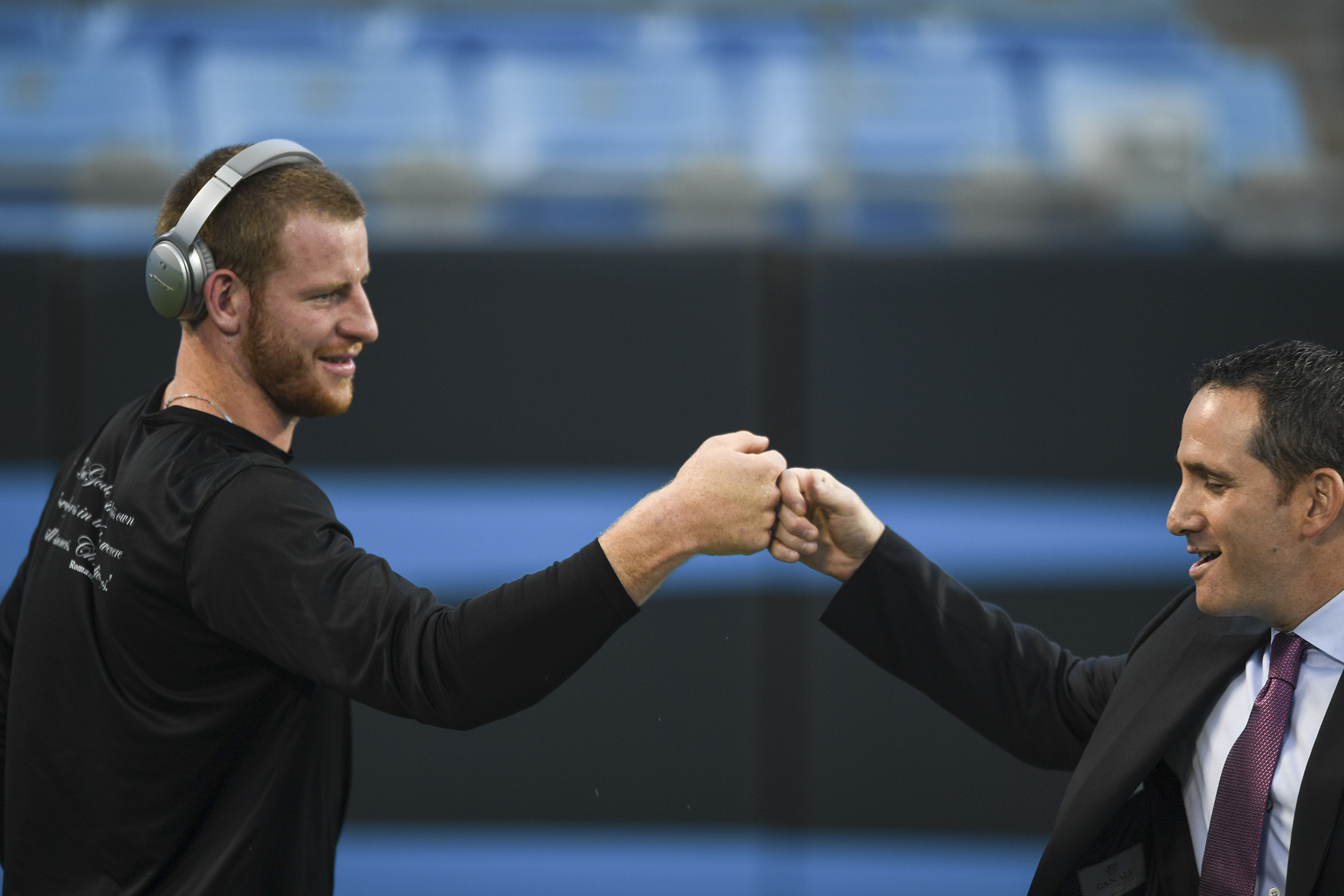
Howie Roseman dealt a disgruntled Carson Wentz (left) in 2021, offering some precedent for a Brown move.
Ultimately, Roseman wields the power to add or subtract personnel from the roster as he sees fit. How do player desires factor into the equation? The 50-year-old general manager previously jettisoned a highly-paid player with frustrations surrounding his role with the team when he traded Carson Wentz to the Indianapolis Colts in 2021.
Every situation is unique. Earlier in the season, Brown voiced his displeasure with the offense and his role within it on multiple occasions, both in conversations with the media and through various online forums, from his own social media accounts to a Twitch livestream.
Brown’s frustrations were seemingly validated to some extent, as the offense never reversed course from its season-long skid on the heels of a Super Bowl win the year before. But while speaking publicly for the first time in two months on Micah Parsons’ podcast during Super Bowl week, Brown appeared optimistic when asked about the new-look offensive coaching staff headlined by offensive coordinator Sean Mannion, saying, “I’m excited for the season. I’m excited for what’s to come.”
He noted that “sometimes change is not a bad thing.” Brown also reflected on his trade to the Eagles in 2022, saying that “Philly welcomed me with open arms” and calling the city his home.
Sirianni and Roseman were asked about Brown’s desire to remain with the Eagles. While Sirianni said his “expectation” is that Brown wants to be in Philadelphia, Roseman adhered to his standard protocol of declining to reveal the details of his conversations with any player.
Roseman also spoke generally when asked how a player’s personal wishes impact his decision to execute a trade.
“I think that any trade that we’ve made, we’ve done because we felt it was the right thing to do for the Philadelphia Eagles,” Roseman said. “I can’t remember any time that I’ve done anything that when I did it, I didn’t think was in the best interest of the team. It’s always going to be about the team. It’s always going to be about our players. If I start doing things that are about individuals as opposed to the team, I’m not doing my job.”
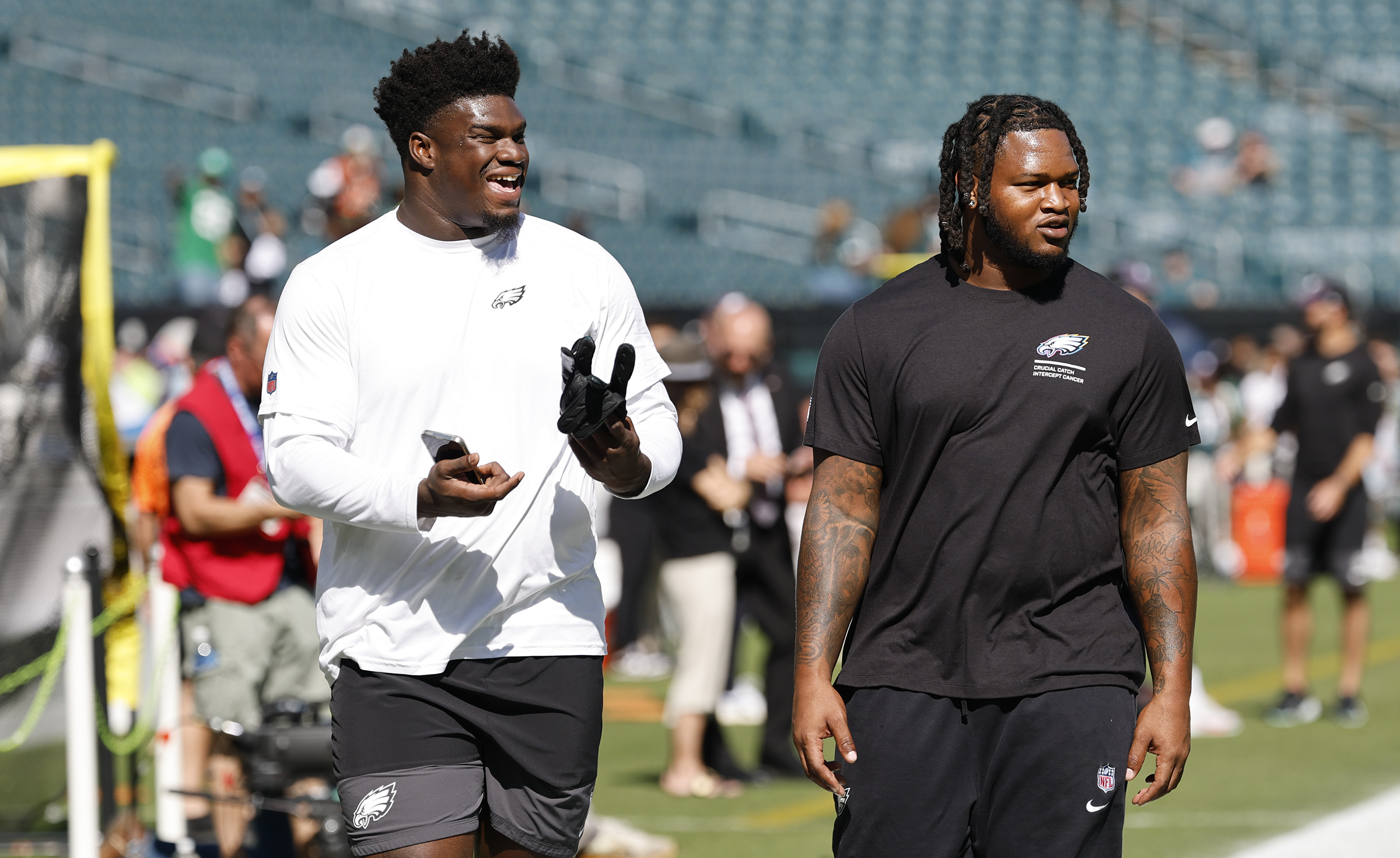
Jordan Davis (left) and Jalen Carter could both be candidates for extensions this offseason.
Extensions incoming?
Brown’s future is just one piece of the Eagles’ roster-building puzzle this offseason. Roseman also must decide which key players will be part of the Eagles’ long-term plan, especially as young defensive standouts such as Jordan Davis, Jalen Carter, Nolan Smith, and Moro Ojomo become eligible for extensions.
Davis, 26, and Ojomo, 24, are headed into the final years of their rookie contracts. Carter, 24, and Smith, 25, could have their fifth-year options exercised this offseason. Roseman could attempt to sign any of those players to team-friendly extensions early and prevent them from eventually testing the open market.
Additionally, Jalen Hurts could be a candidate for an extension. The 27-year-old quarterback is set to account for a team-high 10.1% of the Eagles’ salary cap in 2026, according to Over The Cap. An extension could lower that figure, giving Roseman more space to sign and extend others in the immediate future.
While Roseman declined to go into specifics about the contracts for all five players, he emphasized his longstanding philosophy of retaining homegrown players.
“Everything that we’re trying to do here is build sustained success,” Roseman said. “And how do you do that? … You’ve got to draft well, and then hopefully you’re re-signing and extending your own players, and you’re sprinkling on top additions. That’s going to be the priority for us.
“We have a lot of good players here that are going to come up this year, next year, and we’re going to try to keep as many as we can and continue to try to improve the team and understanding that there’s probably not a scenario where every single one of them can stay here.”
Linebacker Jaelan Phillips is a pending free agent who won praise from Howie Roseman after being obtained as a rental at the trade deadline last year.
Free-agent Phillips?
Jaelan Phillips isn’t one of those homegrown players. Roseman acquired him at the trade deadline from the Miami Dolphins at a premium for a player on an expiring contract, giving up a 2026 third-round pick.
Still, he is one of the major dominoes that could dictate the trajectory of the Eagles’ offseason moves. At 26 years old, Phillips is arguably the best edge rusher in the free-agent class and he is likely set for a hefty pay raise in the coming weeks.
Roseman has plenty of criteria to consider before deciding whether he would attempt to woo Phillips back to Philadelphia. With any player, Roseman said he factors in character, medical history, level of play, age, and scheme fit when considering a potential extension.
The trade of a third-round pick isn’t one of those factors. Roseman said he gave up what he thought was necessary to acquire a player to help the Eagles compete for a championship last season.
Even though the Eagles didn’t reach the pinnacle, their rental of Phillips gave them a positive, hands-on experience with a player they’ve held in high regard, which could influence their desire to try to retain him.
“Obviously, we do a lot of work on these players coming out, and we knew what kind of person Jaelan Phillips was from the time we spent with him in the pre-draft process, and it was confirmed throughout our time with him in Philadelphia,” Roseman said. “Unbelievable worker, unbelievable leader, incredibly talented player who cares desperately about winning.”
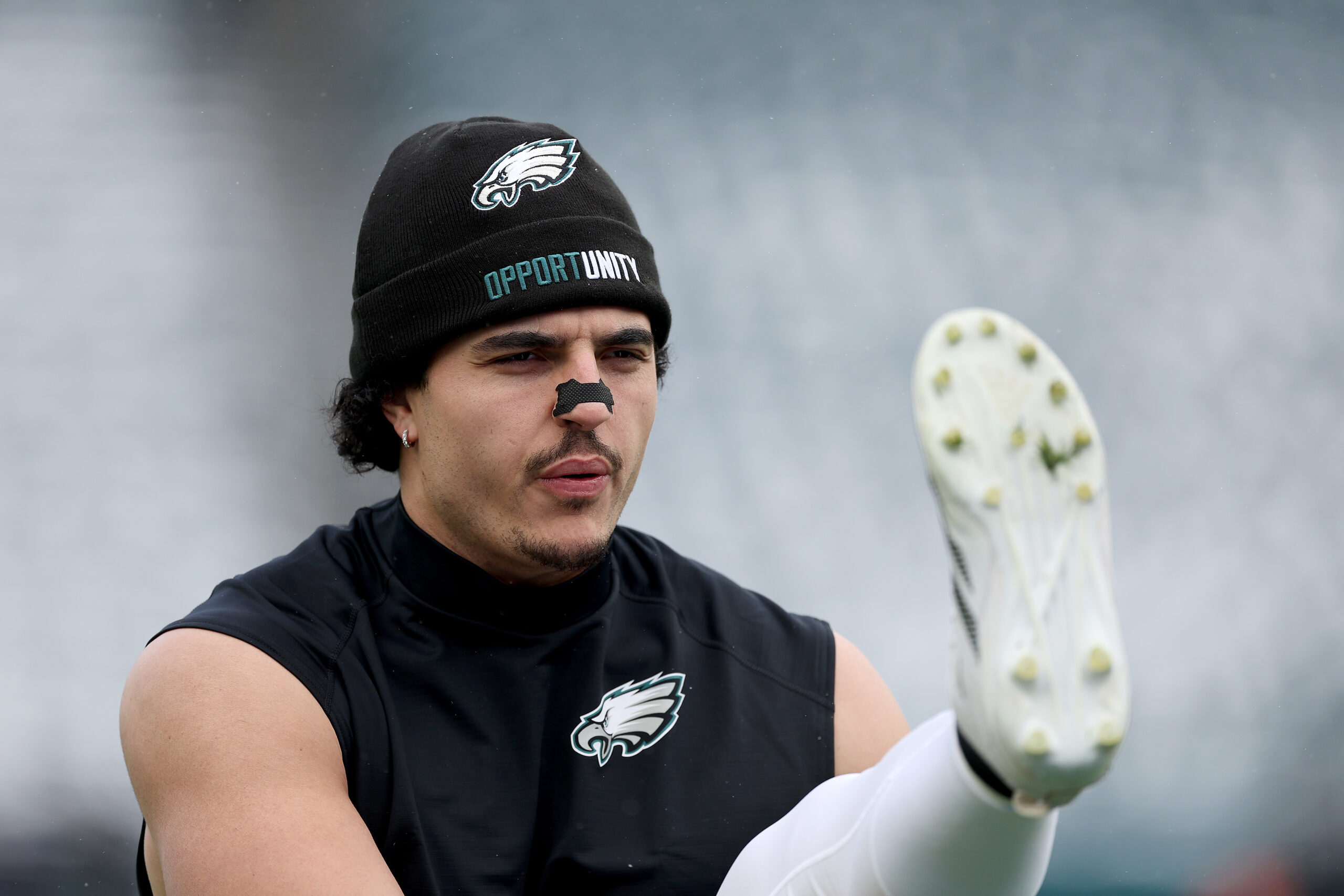
Howie Roseman acknowledged that his affinity for receiving tight ends, including Grant Calcaterra (left) and Dallas Goedert, might have limited the Eagles as a blocking team last season.
Transforming the tight end corps
Like Phillips, Dallas Goedert, Grant Calcaterra, and Kylen Granson are set to become free agents at the start of the new league year. With the offense charting a new course under Mannion, Roseman also could take a new direction with the team’s tight ends.
Last year’s group was deficient in blocking prowess. The 31-year-old Goedert has typically been a more well-rounded weapon, but he took a step back in the blocking game this past season. He was more effective as a red-zone threat, scoring 10 of his career-high 11 touchdowns inside the opponent’s 20-yard line. Calcaterra and Granson were most impactful when contributing as receivers, too.
Any of those players could theoretically return on new deals, but Roseman still expressed a need to expand the skill sets within the corps.
“I would say that the tight end position starts with me in evolving,” Roseman said. “I think that, from my perspective, I’ve always had an affinity for kind of the receiving tight ends. I think that’s shown in my work.
“You’ve got to be cognizant of the fact that at some levels, the game has changed. And so there’s certainly room for both of those spots. I think when you look at our room this year, probably needed more of a diverse skill set at that position.”
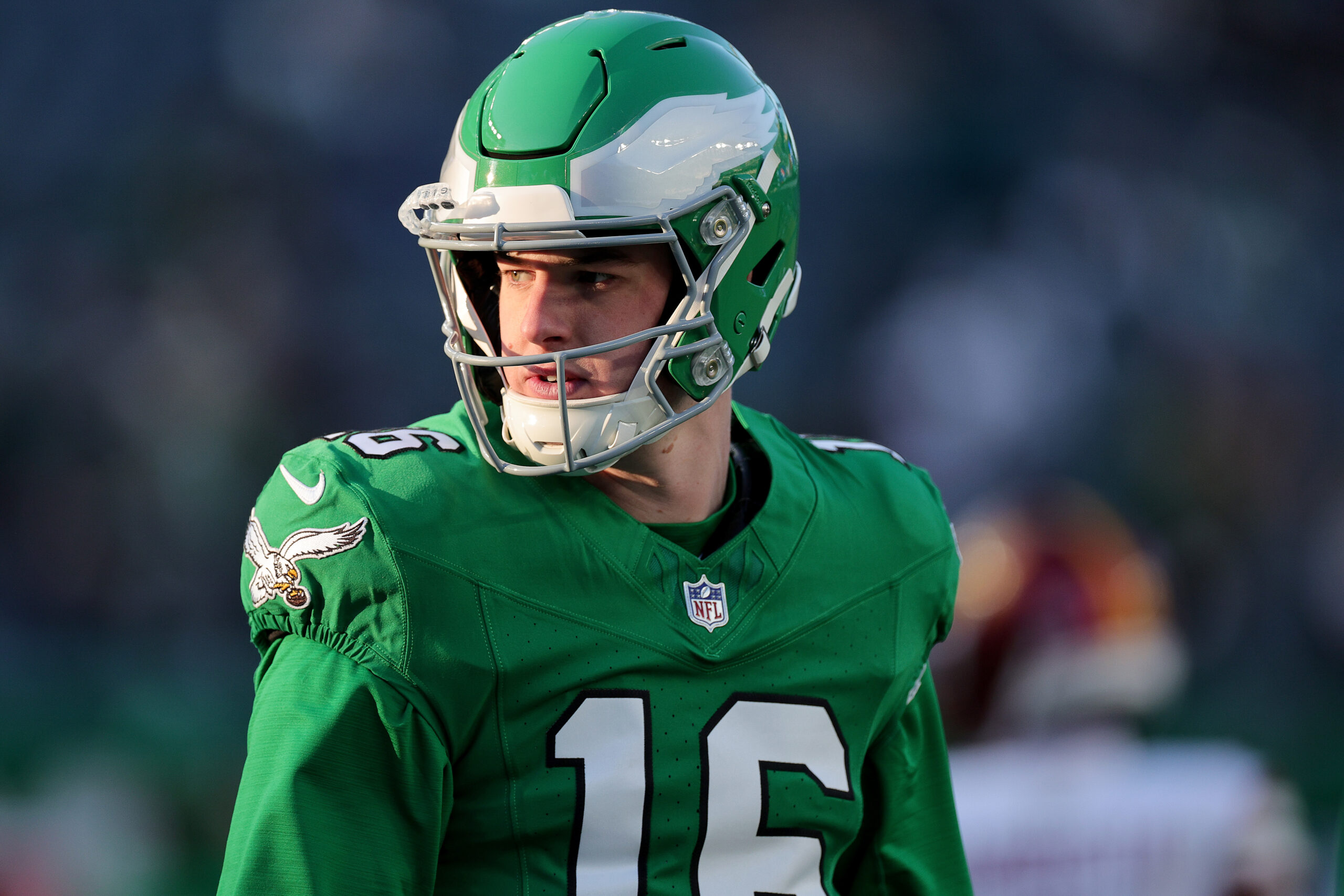
Could Tanner McKee be an attractive trade option for teams given the uninspiring draft and free-agent classes at QB?
McKee’s market
It’s a bad year to be a quarterback-needy team. This year’s draft class is relatively thin after Fernando Mendoza, the likely first overall pick by the Las Vegas Raiders. The top quarterback set to become a free agent is Malik Willis, the Green Bay Packers backup who has started six games over the course of his four-year career.
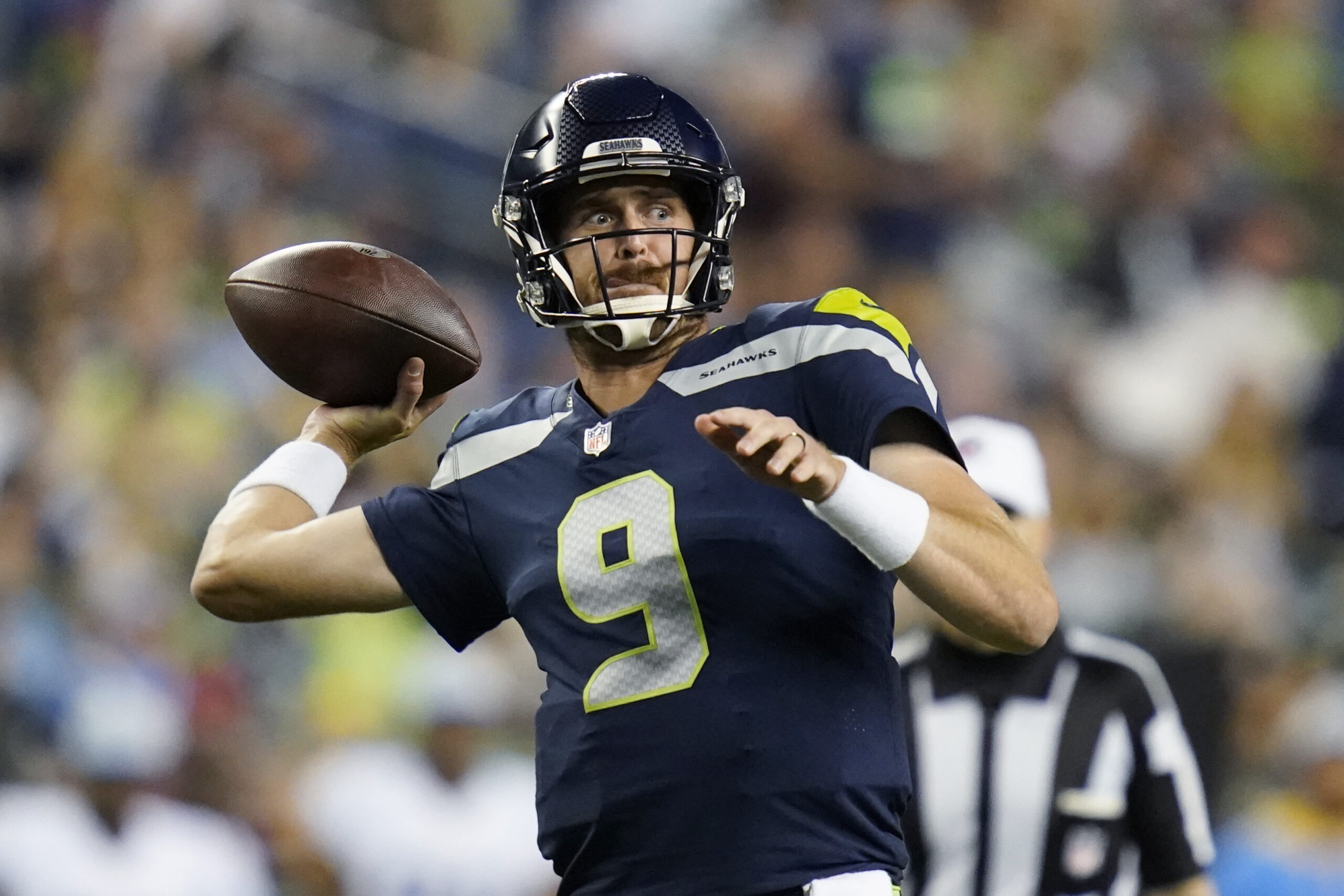
The trade market might be the most viable solution for teams to address their quarterback needs. Could Tanner McKee draw interest? The 25-year-old backup quarterback has one year left on his rookie deal.
McKee has had strong preseason outings and acquitted himself well in both Week 18 starts over the last two years. If teams believe he has QB1 potential, his market could materialize at the start of the new league year.
“I can’t speak to what everyone else thinks of our players,” Roseman said. “I know what we think of our players. That’s always been a position that we’ve put a great deal of priority on, to have a backup quarterback that we have a lot of confidence in, and we have a lot of confidence in him.”
Roseman reiterated the stance he took when asked about listening to offers for Brown.
“My job is to listen to anything about anyone,” Roseman said. “Whether I pull the trigger is a totally different story.”
The NFL has converged on Indianapolis for the scouting combine, when teams will get to kick the tires on the top prospects before the draft begins April 23 in Pittsburgh. For the Eagles, it is the next step as they try to reinvent themselves, especially on offense.
Before we get knee-deep in combine coverage this week, let’s take a look at where the Birds stand so far in their bid to become serious contenders again. It starts with the new offensive coordinator, Sean Mannion, and Jeff McLane offers an in-depth examination of how the Eagles landed on the 33-year-old coach. McLane provides 10 takeaways from the evolving offense so far.
While Mannion and other assistants entered, of course, the venerated Jeff Stoutland exited. How will the Eagles’ offensive line start anew after losing one of the most respected assistant coaches in the NFL? Jeff Neiburg reports on Stoutland’s replacement, Chris Kuper, the new offensive scheme, and the team’s immediate need for reinforcements on the line.
What are Howie Roseman and Nick Sirianni saying about A.J. Brown’s future in the new offense? Olivia Reiner reports on that, along with the possibility of contract extensions for star defensive players, a new direction for the team’s tight ends, and more.
Yes, it is Feb. 24, but the Eagles news cycle never shuts down for long. The new league year is just over two weeks away, meaning free agency and trades are almost here.
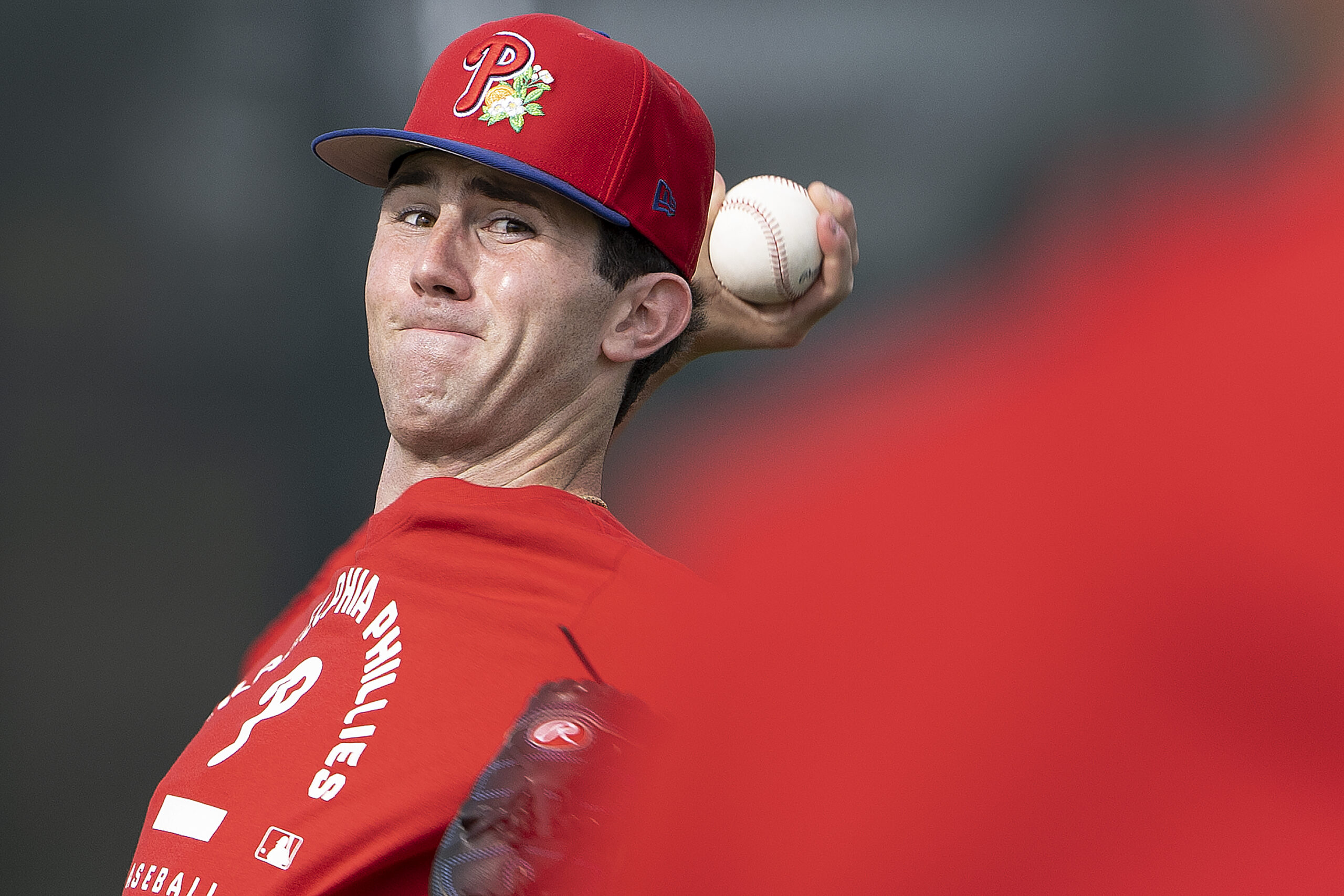
Phillies rookie pitcher Andrew Painter is a strong candidate to break camp with a spot in the starting rotation.
Before he reported to his first major league spring training camp in 2023, Andrew Painter met with his agent. “Ideally,” Scott Boras said, “I would love it if you didn’t throw your first pitch in the big leagues until you’re 22.”
Sure thing, Painter thought. One problem: He was 19, and the Phillies were dangling a spot in the season-opening starting rotation.
A torn ligament in his right elbow, two missed seasons, and three years later, Painter finds the whole thing to be oddly prophetic. Because if, as expected, he breaks camp with the Phillies, he will be 22 — a few days shy of his 23rd birthday on April 10 — when he makes his major league debut.
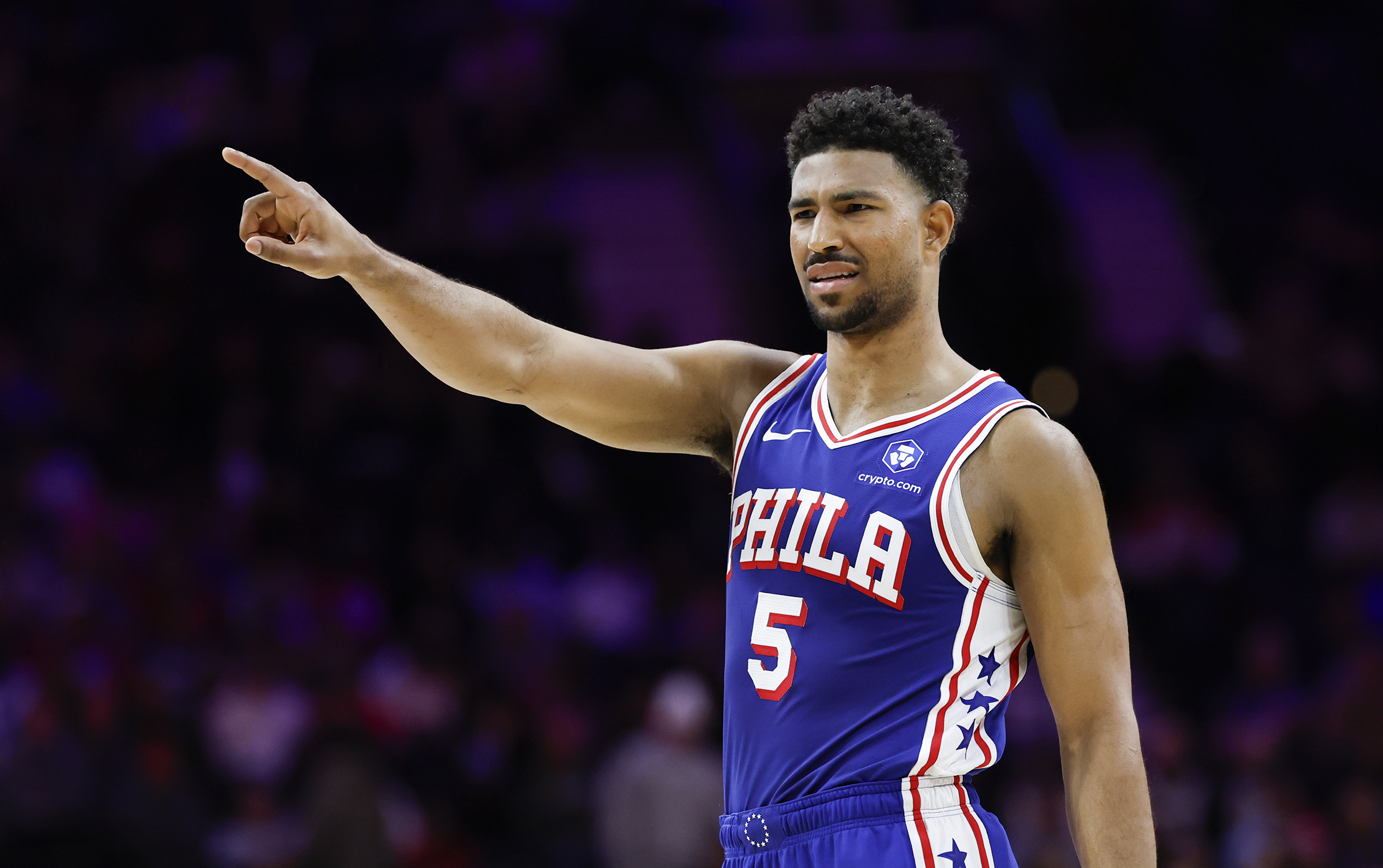
Guard Quentin Grimes wants to stay aggressive regardless of which players the Sixers put on the floor.
The 76ers have received mixed results from Quentin Grimes during his time in Philly. During a down season last year, Grimes stepped up and served as the focal point of the offense.
Even with the Sixers at full strength, Grimes emerged as a potential Sixth Man of the Year to start this season. He then slowly slipped into an inconsistent space, having nights when he went cold or didn’t shoot at all. Grimes has started to turn the corner lately, playing well before the All-Star break and dropping 19 points and seven assists in a win against the Minnesota Timberwolves. For his part, Grimes has vowed to stay in “attack mode.”
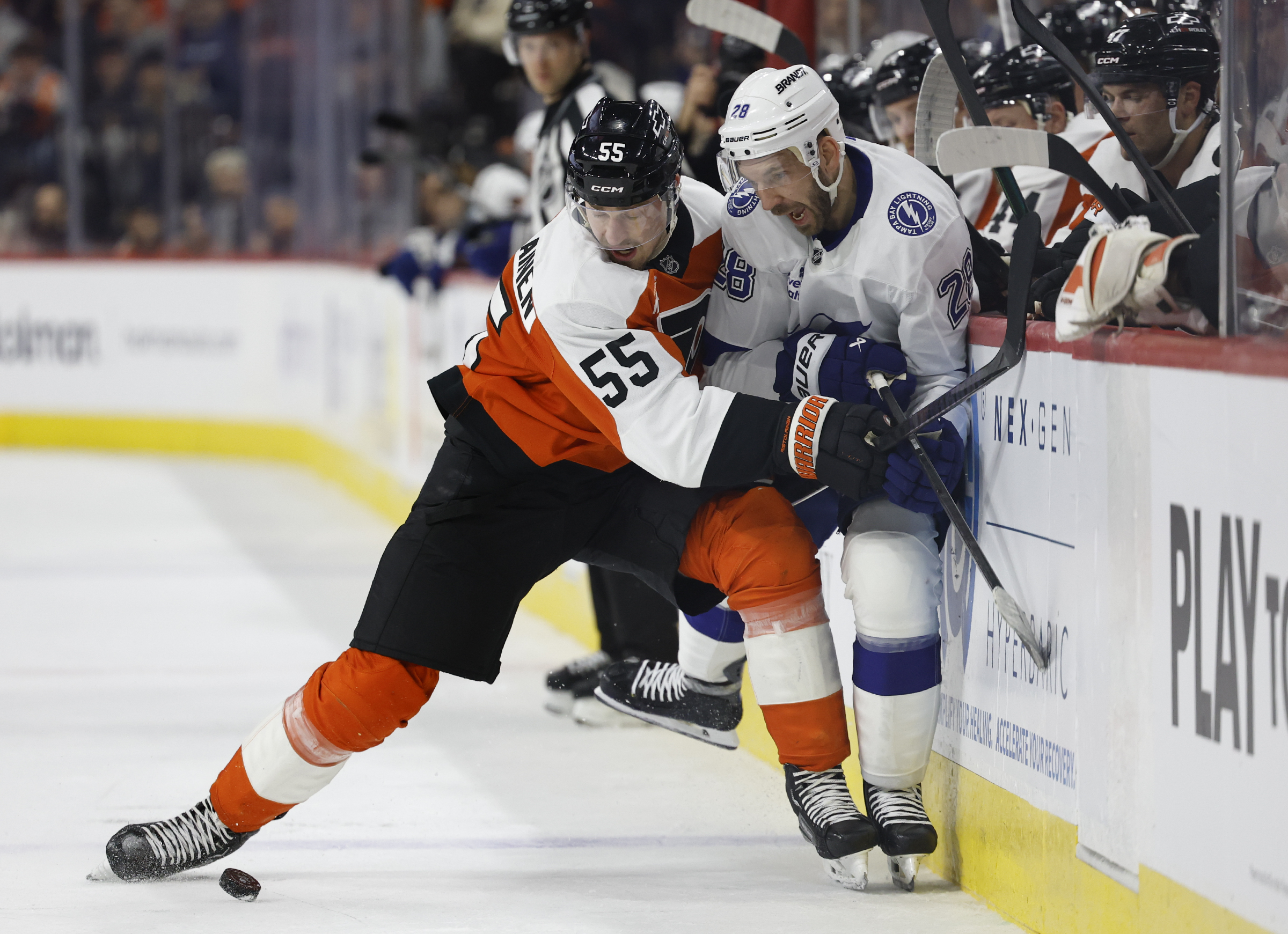
Flyers defenseman Rasmus Ristolainen could be in demand at the trade deadline given his combination of size, skating, and physicality.
With the Olympics over, all eyes will quickly turn to the sprint to the NHL trade deadline on March 6.
While Flyers general manager Danny Brière recently said he expects a quiet deadline for his team, that could be him trying to throw up a smoke screen. Rasmus Ristolainen’s strong Olympics should only help his trade value, while the Flyers have other pieces they could move for the right price.
Team USA star Matthew Tkachuk carries the late Johnny Gaudreau’s daughter Noa onto the ice in a touching scene after the gold medal victory at the Olympics.
Johnny Gaudreau’s family says that the NHL star yearned to play in the Olympics and that he was training with that goal in mind when he and his brother Matty were killed by alleged drunk driver in August 2024. So the decision to attend the Olympic hockey tournament in Milan was a bittersweet one for the South Jersey family.
The scene after the U.S. team beat Canada for the gold medal wound up touching the hearts of the Gaudreaus deeply. During the celebration, Johnny’s USA jersey was carried onto the ice in tribute, as were his two oldest children, Johnny Jr. and Noa.
“Every time I think, ‘All right, now it’s time to move on, we’re not going to have all this support’ — they don’t [move] on,” said Katie Gaudreau, the sister of Johnny and Matty. “This is a history book [moment] that there will be a movie about.” Alex Coffey has the story.
Sports snapshot
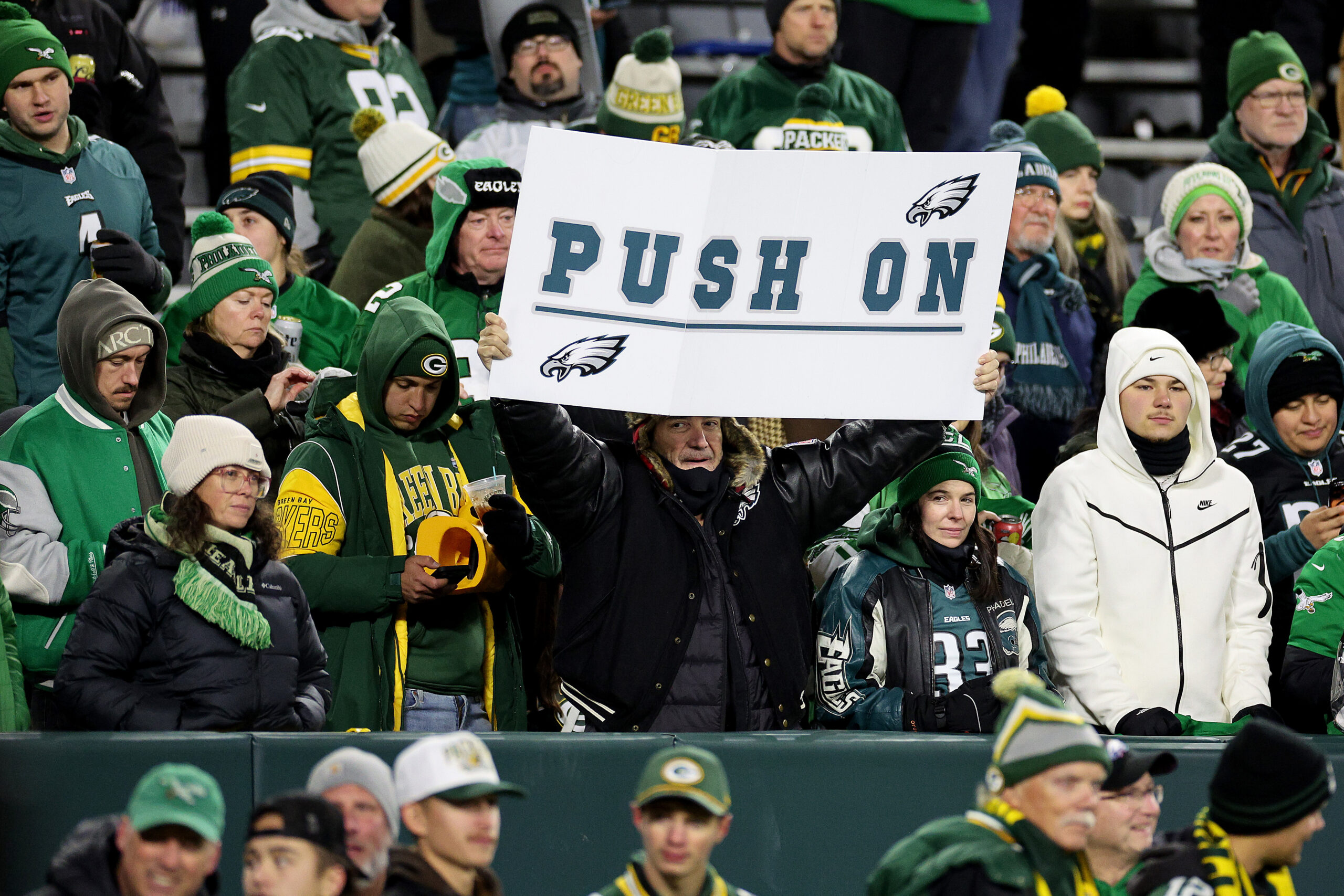
There hasn’t been a proposal to ban the Eagles’ Tush Push this offseason.
This wasn’t the first time Eagles wide receiver A.J. Brown has spoken about his own struggles.
In the wake of the untimely deaths of three young NFL players, A.J. Brown on Monday posted a 9-minute, 8-second testimonial on Instagram encouraging NFL athletes struggling with mental health issues to seek counseling and God rather than taking their own lives. It was poignant and it was beautiful.
We asked: What is your favorite Olympic moment, Summer or Winter Games? Among your responses:
Favorite moment! I was present at the Miracle On Ice in Lake Placid in 1980. I am presently 95 and love the Olympics for what it represents. — Pegg E.
For me the Olympics is all about track and field, but nothing ever has or probably ever will top the U.S. 4-3 win over the highly favored Soviet Union team at Lake Placid in 1980. “The Miracle on Ice,” how can you top it? My Philly friend Mike Pantalione was recently elected to the Jr. College Hall of Fame along with Jim Craig, who was the outstanding goalie of that team. I include myself among probably thousands who have forgotten that we still had to beat Finland to win the gold medal. — Everett S.
When Bob Beamon collapsed to his knees, overwhelmed by emotion while burying his face with his hands, after learning he broke the world record in the long jump by [almost two] feet at the 1968 Olympics in Mexico City. — Mike P.
For me, I’d tab the two latest great moments, similar ones, when the top-seeded women’s hockey team snatched victory from those jaws and tied the gold medal game with 2 minutes left and a goalie pulled to tie Canada and then to win in thrilling overtime. The NHL would consider that way of breaking ties. That was then equaled by the USA hockey men, who somehow held on to a tie in regulation when being dominated in play for almost all the game, and then winning with an overtime goal, also against Canada. Somehow, the joy of winning a tight hockey game stands out for me over other Olympic triumphs. — John W.
We compiled today’s newsletter using reporting from Jeff McLane, Olivia Reiner, Jeff Neiburg, Scott Lauber, Gina Mizell, Jackie Spiegel, Marcus Hayes, Alex Coffey, Ariel Simpson, Matt Breen, and Conor Smith.
By submitting your written, visual, and/or audio contributions, you agree to The Inquirer’s Terms of Use, including the grant of rights in Section 10.
Thanks for reading. Here’s hoping you’re counting the days till spring right along with me. Kerith will join you for Wednesday’s newsletter. — Jim
This storm likely won’t have the staying power of last month’s — and nature will help with the cleanup. Next up: Light snow is possible this week.
Fourteen inches fell at Philadelphia International Airport, Langhorne got 22, and parts of the Jersey Shore were hit with a whopping two feet. Compare more snow totals in the region.
Philly schools buildings will opt for another day of virtual learning. Other Pennsylvania and New Jersey districts will have the day off, virtual instruction, or operate on delays.
Want to escape the snowglobe-like conditions? Head to the Pennsylvania Convention Center, where starting this weekend you’ll find mulch, flowers, and floor-to-ceiling horticultural masterpieces.
Yes, the annual Philadelphia Flower Show has returned — despite Mother Nature’s best efforts at delaying setup.
It’s far from the first time inclement weather has threatened the nearly 200-year-old show, which is typically held in late winter or early spring.
Pennsylvania Republican gubernatorial candidate Stacy Garrity will be a guest at Tuesday night’s State of the Union address. Some Democrats are boycotting or bringing their own guests to send a message.
Pennsylvania leaders want to avoid another lengthy state budget impasse. But a $4.3 billion budget shortfall is expected, as is disagreement over how to fix it.
The Quakertown Community School District is planning to offer counseling and has requested a police presence this week after a student walkout Friday to protest federal immigration enforcement ended in a clash with police and multiple student arrests.
The former Chester County detective who served as a technical adviser for the HBO crime drama Mare of Easttown is suing her past employer and supervisor over alleged sex discrimination.
The Chinatown Stitch, which would cap the Vine Street Expressway, is in limbo after the Trump administration yanked funds. Planners are looking for ways to keep the project alive.
Students would transition from a closing North Philadelphia elementary school in a “very high risk” neighborhood to worse-performing ones, if the district’s plan is approved.
The Rev. Dr. Martin Luther King Jr.’s “I Have a Dream Speech” wouldn’t be the same without North Philly’s Clarence B. Jones. He’s now the subject of Steph Curry’s directorial debut coming soon to Netflix.
Quote of the day
Two weeks after the last big snowstorm, Saladine Sharad’s car was towed, and SEPTA was still unreliable. But the handyman had a job to get to in Roxborough. So, he bought an electric scooter and began traveling on Google Maps’ prescribed bike route. But after hitting a closed path, he ended up on one of the city’s most dangerous roads — and soon after, on social media.
🧠Trivia time
The former Mac’s Tavern in Old City will become a Celtic bar called the Monto in April. Two of its owners, Fergus Carey and Jim McNamara, also own which other Philly establishment?
Cheers to Harry Escarge, who solved Monday’s anagram: Tom Shirley. The longtime Thomas Jefferson women’s basketball coach will be inducted into Pennsylvania Sports Hall of Fame this year.
Photo of the day
A snowman stands along Martin Lane in Wallingford on Monday.
Stay cozy — or if you need to go outside, try to make some friends like the smiley guy above. I’ll be back with more news tomorrow morning.
By submitting your written, visual, and/or audio contributions, you agree to The Inquirer’s Terms of Use, including the grant of rights in Section 10.
Two months after the Eagles hired Jeff Stoutland, they drafted Lane Johnson with the fourth overall pick in the 2013 NFL draft. Howie Roseman had his cornerstone offensive lineman, one whom Stoutland helped develop into a future Hall of Fame right tackle.
Stoutland was in the room with — and in the ear of — Roseman in the years that followed, even after the coach who hired Stoutland, Chip Kelly, left town. Stoutland survived 13 seasons and three coaching staffs in large part because he was arguably the best offensive line coach in football, but he also shared similar philosophies with Roseman.
“In 13 years, I probably couldn’t get on one hand our disagreements,” Roseman said during a session with Eagles beat writers on Friday, a few weeks after Stoutland announced his departure from the Eagles. “We looked at offensive line play very similarly.”
The Eagles, with Stoutland as offensive line coach, consistently had one of the best units in the league, and the two Eagles teams that won Super Bowls did so behind dominant offensive line play. But change is on the way, not just along the offensive line but for the offense as a whole. The Eagles have a new coordinator, Sean Mannion, and multiple new coaches working under him, including new offensive line coach Chris Kuper.
The line, meanwhile, is at a somewhat critical juncture. Johnson, who missed half of last season, turns 36 in May and didn’t decide until last week to make his return for the 2026 season official. It’s unclear how much longer Landon Dickerson, a second-round pick in 2021 whom Stoutland developed into a three-time Pro Bowler, will play football. The 27-year-old has undergone multiple surgeries since college and played through an abundance of pain in 2025. Cam Jurgens, 26, whom the Eagles drafted in the second round in 2022 to replace Jason Kelce, recently flew to Colombia to receive stem cell treatments, apparently to help deal with the lingering impacts of a back injury and subsequent pain that limited his effectiveness in 2025.
The Eagles offensive line will enter 2026 with questions about its health and ability to adjust to a new coaching regime.
The offensive line, which took a step back in 2025 thanks to those injuries, has quickly gone from a position of strength and certainty to one that may soon need to be overhauled. The Eagles have been due to draft and develop Johnson’s eventual replacement, but now they may have big holes in the interior sooner than they anticipated. It’s a crucial offseason for Roseman to address multiple spots on the depth chart, not just the offensive line, and retooling the offensive front now comes without the help of Stoutland.
“I probably could have 50 stories on our draft process and how we went through them,” Roseman said. “I miss him. … We’ll continue to move on. I feel like we have a really good group of people here. I feel confident in our ability to evaluate, but at the same time understanding how important he was to the process of adding good players and then developing those good players.”
The interviews with Roseman and Nick Sirianni last week offered the general manager and head coach their first chances to comment publicly on Stoutland’s exit and respond to some of the reporting that happened surrounding it.
The Inquirer’s Jeff McLane reported that Stoutland, who was also the run game coordinator, had his influence on the running game lessened during the season last year. And while the Eagles wanted to keep Stoutland in the building as the offensive line coach, he likely wasn’t going to keep the run game coordinator title. Plus, Mannion is bringing with him a new scheme that would change some of the things Stoutland has been teaching.
Sirianni said he doesn’t “get too wrapped up into what’s reported.” The head coach was more involved in all phases of the offense throughout this past season as it sputtered under first-year coordinator Kevin Patullo, Sirianni said, including the running game.
“We still went about our process the same,” Sirianni said. “There was obviously different things that we did and a different process in the sense of we were all together doing it in there. … Stout still had a lot of ideas. It’s always been collaborative in everything that we’ve done here.”
Eagles center Cam Jurgens with offensive line coach Jeff Stoutland after the Eagles beat the Washington Commanders in December.
There was, perhaps, even more collaboration when Sirianni made changes last season. Rather than having separate pass pods and run pods, the units worked together, especially when the offense shifted to some more under-center looks and worked in play-action calls. Sirianni said he anticipates more of the same under Mannion.
It’s unclear what the Mannion offense will look like, but while the 33-year-old has never been a play-caller, he has tentacles of influence from offenses run by Sean McVay, Matt LaFleur, and Kyle Shanahan. As it relates to the running game, that means more outside zone concepts as opposed to the inside zone runs more prevalent with the Eagles in recent years.
The offensive coaching staff Sirianni assembled under Mannion comes from various backgrounds, and the scheme will likely be a mix of different ideas, all of which are still coming together as the Eagles begin assembling the 2026 roster in earnest. Sirianni noted that things like third-down offense, red-zone offense, and four-minute offense may look pretty similar. It’s the first- and second-down runs and play actions that may look a lot different.
For the offensive line, there will likely be big changes to blocking assignments and strategies.
“Good players can play and fit in many different schemes,” Sirianni said when asked how big of an adjustment the line will face. “I know how good of players we have there at the position, and I know if we asked them to do the Navy triple option they’d be good at that. I do think it translates there. Obviously there’s always going to be [a] learning curve of everything, but that’s what your OTAs are for, that’s what your offseason’s for, that’s what your training camp is for, to get yourself ready for that.”
All of it will come with a new voice, Kuper’s, in charge. Stoutland was revered in the offensive line room.
Chris Kuper will bring eight years of experience as an NFL offensive lineman to the Eagles coaching staff.
“Obviously we wanted him to stay and be involved in this … I don’t want to say rebuild … reclassification, however you want to say it,” Sirianni said of Stoutland. “At the end of the day, Stout got to where he was and I obviously wish him the best and am going to deeply miss him because he’s done so many things that have helped us throughout his time here.
“Just like you always want good players around, you always want good coaches around.”
Ultimately, it will be the players who decide the trajectory of the offensive line moving forward.
While Roseman and Stoutland’s success stories are plenty, there have been a few misses. The biggest success story, turning Jordan Mailata from a 2018 seventh-round rugby-playing project into an All-Pro, helped offset missing on Andre Dillard in the first round in 2019.
Dillard’s selection was the last time the Eagles used their first-round pick on an offensive lineman. That could change in April. Roseman expressed confidence that Johnson, Dickerson, and Jurgens still have “incredible ability to affect our football team going forward,” but the Eagles are surely planning for the future.
“Is it a priority position? Always,” Roseman said.
Eagles general manager Howie Roseman expressed that improving the offensive line is an ongoing priority.
As the roster stands, there are no obvious replacements for the injured and older trio of linemen. Johnson’s spot would be the obvious priority in the short-term future. Swing tackle Fred Johnson is a free agent. The only tackles on the roster behind Johnson and Mailata slated to be in camp this summer are last year’s sixth-round picks, Myles Hinton and Cameron Williams; Hollin Pierce, who was on the practice squad last season; and John Ojukwu, who went undrafted in 2023 and accumulated 428 offensive snaps with the Tennessee Titans over the last three seasons.
The interior isn’t much deeper. The Eagles drafted center Drew Kendall in the fifth round last season, then claimed Willie Lampkin off waivers after camp. Practice squad member Jake Majors was re-signed to a futures deal after the season. Kendall saw limited action as a rookie and Lampkin spent the season on injured reserve.
The Eagles need reinforcements. They also need to plan for 2027 and beyond.
“You’ve got to have continual depth at that position, good depth, guys who can play at a high level, and you’ve got to develop guys at that position,” Roseman said. “We’re always trying to balance that, what we have now and what we’re looking for going forward. When we’re building an offensive line, we’re not just saying, ‘We’ve got five starters, we’re good to go.’ We’re looking at the depth behind those guys, guys who can play, because in all our best years we’ve had to have guys step in and play for a long period of time.”
For the first time in 13 years, they’ll navigate it all without Stoutland.
Nick Sirianni sat back in a chair with his feet up in UGG slippers. The Eagles coach looked as relaxed as he has in over a year, and certainly since a tumultuous 2025 season ended with him having to oust consigliere Kevin Patullo as offensive coordinator last month.
Sirianni met with reporters at the newly named Jefferson Health Training Complex on the Friday before the scouting combine. He and general manager Howie Roseman normally answer questions with locals in Indianapolis before they hit the combine podium. But with so much change already — and more to come — the Eagles opted for the more familiar setting of their draft room to address pertinent matters about the team.
Sirianni and the more upright Roseman spoke separately, each for around 40 minutes. They tackled subjects ranging from wide receiver A.J. Brown’s uncertain future to longtime offensive line coach Jeff Stoutland’s departure. But a significant portion of their availability — especially the coach’s — was spent on new offensive coordinator Sean Mannion.
Why did Sirianni hire the inexperienced former Packers quarterbacks coach? Why was the search drawn out? How much did wanting the Shanahan-McVay offense factor into the decision? What did Sirianni like about the scheme? How much autonomy will Mannion have? How will quarterback Jalen Hurts and other returning players adapt to the new system? And how will the changes affect evaluations of Brown and future Eagles?
Sirianni was light on details — how could he not be with so many unknowns? — but he and Roseman did provide enough information to allow for informed perspective on Mannion, the new scheme, and what could be an inflection point for the coach, his quarterback, and the Eagles overall. Here are 10 takeaways about the offense from Friday’s interviews:
1. The Eagles pivoted in their approach to the OC search after it became obvious that Mike McDaniel and Brian Daboll wanted to explore other opportunities.
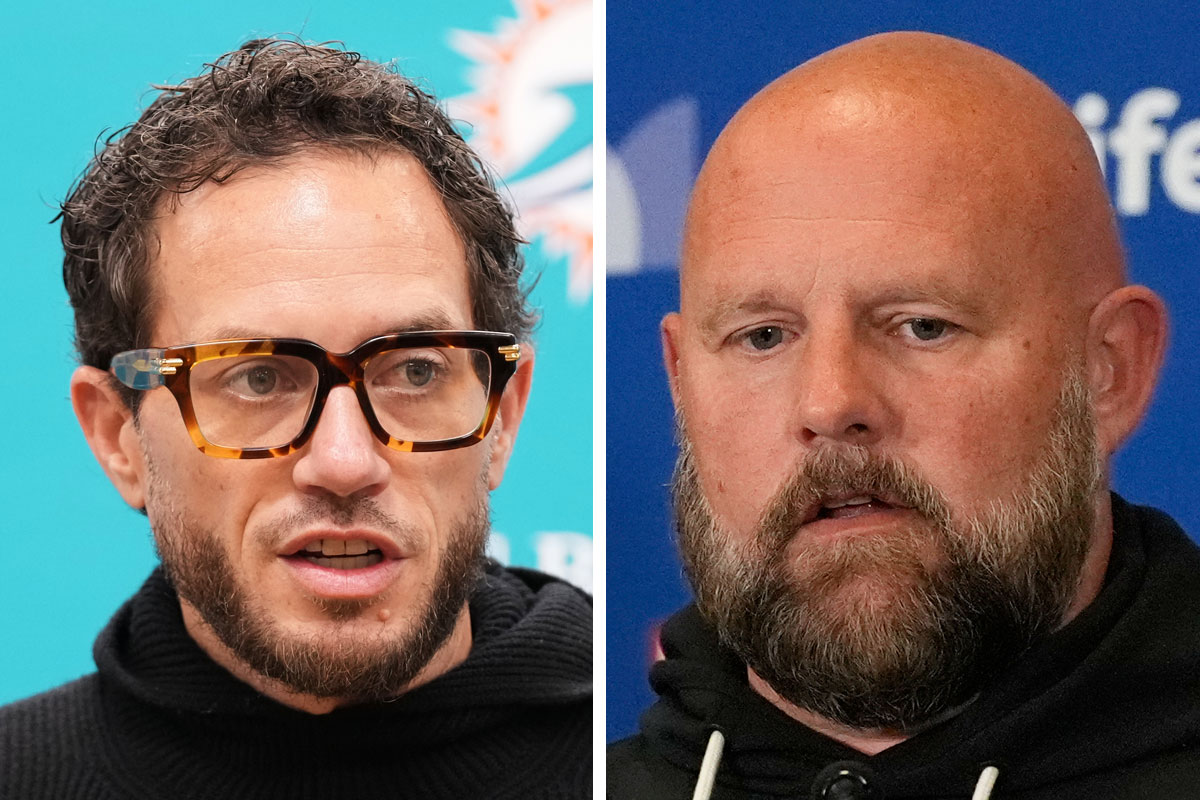
Former Dolphins coach Mike McDaniel (left) and former Giants coach Brian Daboll.
Sirianni didn’t confirm Inquirer reporting that McDaniel and Daboll were leading candidates, but he said he entered the offensive coordinator search looking for a veteran play-caller.
“I went into it … like I’d like for somebody to have some of the experience that’s done this,” Sirianni said. “Obviously, Sean has not had experience calling the plays. That, to me, was [secondary]. Like, we got into it and that kind of changed. I’m like, ‘No, this is the best guy for the job.’”
Sirianni also said he went into the process most interested in the Shanahan-McVay scheme, which would suggest that McDaniel was the primary target. Daboll comes from another system of offense, but he worked previously with Hurts at Alabama and would have checked other boxes. McDaniel went to the Chargers, while Daboll was hired by the Titans.
We’ll never know if the Eagles would have offered either McDaniel or Daboll the position, but clearly the search shifted into another phase. Sirianni said he interviewed a total of 17 candidates and that seven reached the second round. Only four of the final seven names — Josh Grizzard, Jim Bob Cooter, Jerrod Johnson, and Mannion — became public.
Mannion’s first interview was virtual, while the second was in person. Sirianni said that once he got him in the building, it confirmed his initial impression that the 33-year-old former quarterback was the guy for the job even though he had never called plays.
“What I was really looking for was the detail in which everything was explained to me, because the detail is so critical, conviction on what they believed and why they believed in it, and the vision and conviction of that how they went about it,” Sirianni said. “Like, OK, you haven’t called plays, but how do you go about thinking about calling plays in this particular area, like the vision for the offense, the vision and the conviction for how you would call it?”
2. Sirianni led the search and made the final decision — a fact that was made abundantly clear.
Eagles head coach Nick Sirianni listens to questions from media members with general manager Howie Roseman on Jan. 15.
Roseman, who touted Sirianni’s credentials as a CEO-type coach last month, made light of outside perception that he and owner Jeffrey Lurie hold strings over a powerless Sirianni when asked why he made those unprompted comments.
“Hold the strings, like during the games?” Roseman said. “Am I in his ear?”
Roseman, of course, remains one of the more entrenched figures in his position after two Super Bowl titles and 10 playoff appearances in 16 seasons as GM. He has final say over both the 90- and 53-man rosters and his influence with Lurie also can’t be overstated.
Roseman is also one of the most resourceful executives in the NFL. He helped Sirianni identify Mannion as a budding prospect.
“As you talk to people around the league, and they described him and his future, it became somebody that we really felt like we needed to talk to,” Roseman said. “It’s just his name kept coming up as we were doing things and as we were talking about the way that we were kind of moving from an offensive perspective.”
Sirianni, who spoke before Roseman, talked about a collaborative approach but identified himself as the “point man” in the search.
“The coaches that we bring in here always going to fall on me, right?” Sirianni said. “And I have to make those final decisions.”
Were the Eagles powers-that-be trying to empower their coach in giving him ownership over the coaching changes, or were they distancing themselves from the moves? Maybe only Lurie and Roseman can answer that question.
3. The Eagles are hoping Mannion will be the offensive coordinator version of Sirianni.
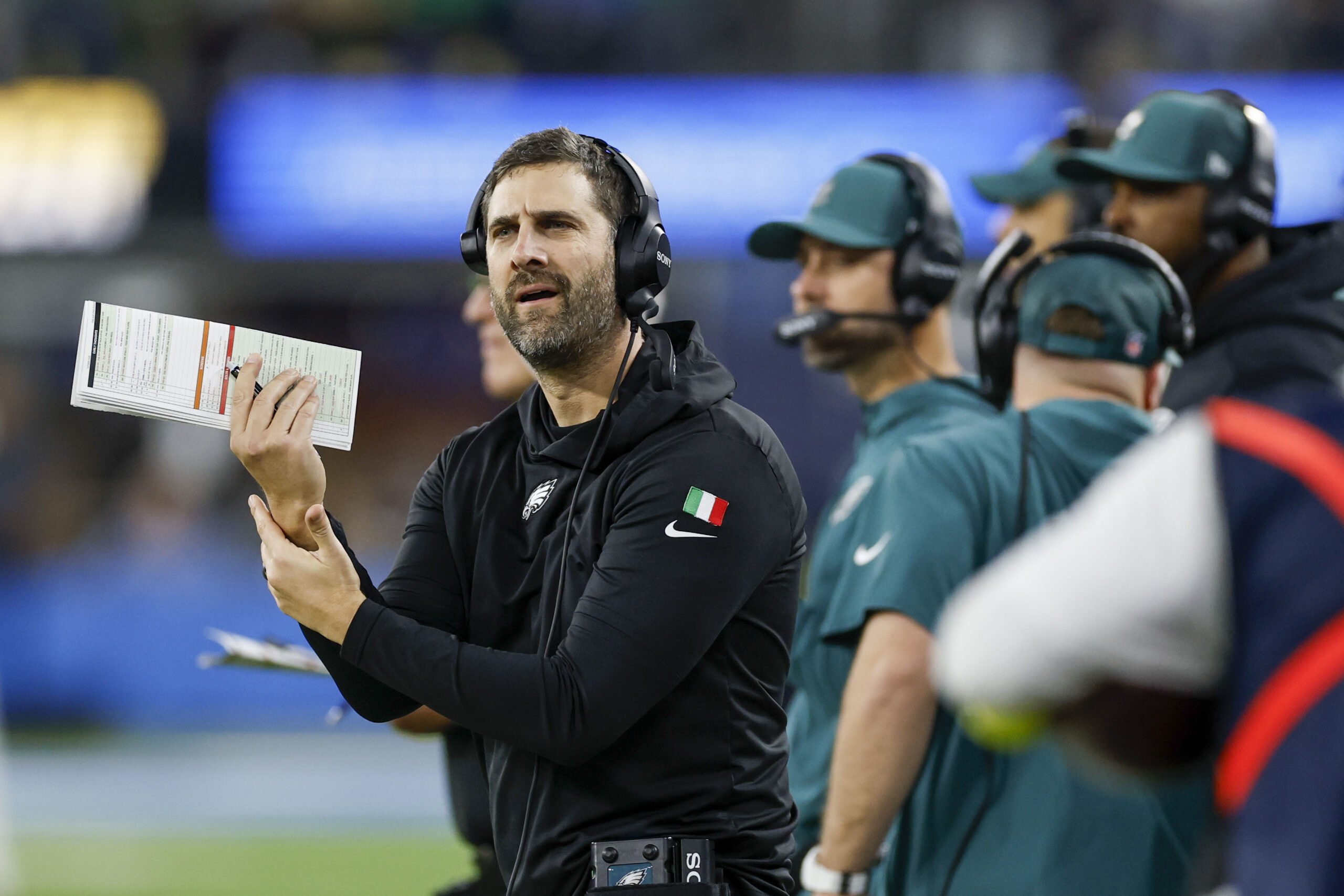
Nick Sirianni’s 2021 hire was an outside-the-box choice. Is Sean Mannion another diamond-in-the-rough choice?
The Eagles have had unprecedented success under Sirianni. They have a Super Bowl MVP in Hurts. They have Pro Bowl-caliber offensive players at multiple spots. And yet, there were rumblings that some OC candidates didn’t consider the job as desirable as other vacancies.
While previous coordinators Shane Steichen and Kellen Moore parlayed winning into promotions, Brian Johnson and Patullo were out after just one season at the helm. The position comes with both internal and external pressures. There’s also a question of Sirianni’s permanence in Philly and how Hurts has factored into coordinator turnover.
The Bears’ Declan Doyle, for instance, declined an interview request and reportedly told the Eagles he was staying in Chicago, even though he doesn’t call plays. Not long after, he took the offensive coordinator job with the Ravens, although it should be noted that he will work under defensive-minded coach Jesse Minter in Baltimore.
“All that really matters,” Sirianni said, “is the guy that you end up picking for the job and his excitement and willingness to be there.”
Sirianni might feel some kinship with Mannion, who didn’t interview for any of the other 14 coordinator openings this offseason. Sirianni, too, was an under-the-radar choice who surfaced late in the process when the Eagles tabbed him to be coach.
While Mannion had no other bites this offseason, like Sirianni five years ago, it doesn’t mean he won’t pan out.
4. It was the Shanahan-McVay scheme that led the Eagles to Mannion.
The schematic principles favored by Sean McVay (left) and Kyle Shanahan held increasing appeal for Nick Sirianni as he went through the OC process.
Sirianni interviewed coaches with backgrounds and experience in various offenses, but one scheme stood out more than others.
“It was in my forefront of my mind to say, ‘I’m interested in this,’” Sirianni said of the Kyle Shanahan-Sean McVay scheme. “But I didn’t necessarily say, ‘I have to have this.’ And then as the process went forward that’s where I kind of got to with that.”
The Shanahan-McVay system is often run-based that utilizes a wide-zone blocking scheme. It often marries the run with the pass through under-center play action. It features motion and misdirection. And it uses all the above to create space in the passing game for easy reads, yards after the catch, and explosive plays downfield.
While there were some commonalities between Sirianni’s and Moore’s schemes which allowed for a relatively easy transition, and maybe prevented the latter from fully implementing his offense, the Shanahan-McVay system is significantly different than Sirianni’s on early downs.
“Third down, red zone, backed up, four-minute [offenses] — a lot of those things are pretty similar in the thought process of people,” Sirianni said. “It’s the first- and second-down run, play action where people are a lot different and have different philosophies. And … that’s where I see just it’s going to be a little bit of a change there, but we’ve got good players.”
5. Improving the run game was paramount in choosing the new coordinator and scheme.
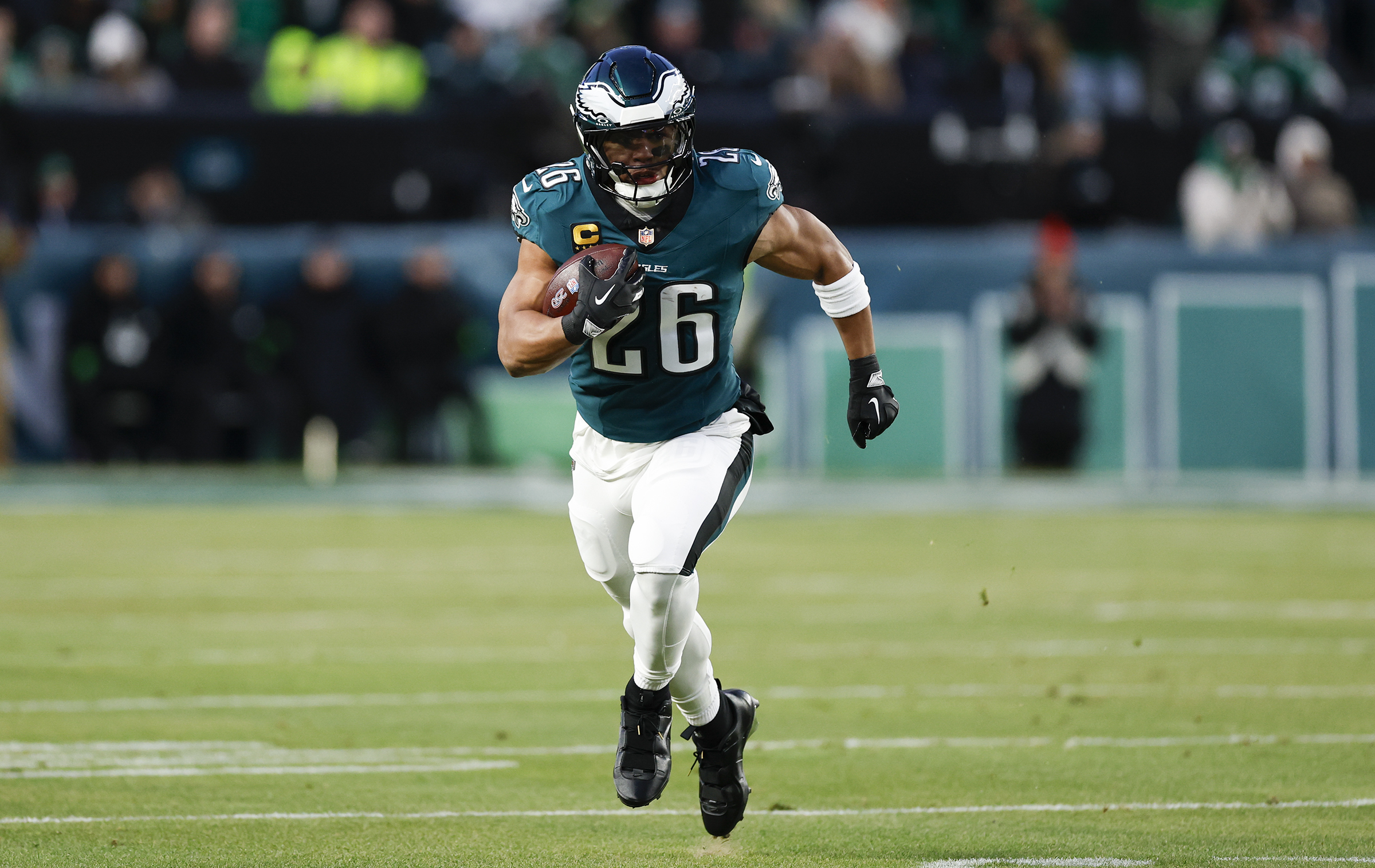
Could a Saquon Barkley renaissance be in store in the new Eagles offense?
There’s no question the Eagles’ passing offense was substandard and there needs to be more sophistication in the operation. But when Sirianni’s teams have had their greatest successes, it’s been behind a dominant running attack.
The Eagles were bound to face challenges after Saquon Barkley’s historic campaign in 2024. Injuries on the offensive line didn’t help matters. But when opponents devoted their efforts to stopping the run with increased numbers in the box, the Eagles struggled to adjust and make defenses pay through the air.
Sirianni equated how the Shanahan-McVay rushing offense handles defensive intricacies with how some passing offenses have adapted to modern coverages.
“You’ve seen a lot of teams that have done things where they’re reading pure progressions to handle all the junk that is being thrown at you by the defense,” he said. “This version of the run game is kind of in that mix, as well. It’s the run-game version of it.
“There’s a lot of junk that’s being thrown at you. This handles a lot of it.”
6. The run-blocking scheme changes were probably the chief reason Stoutland resigned.
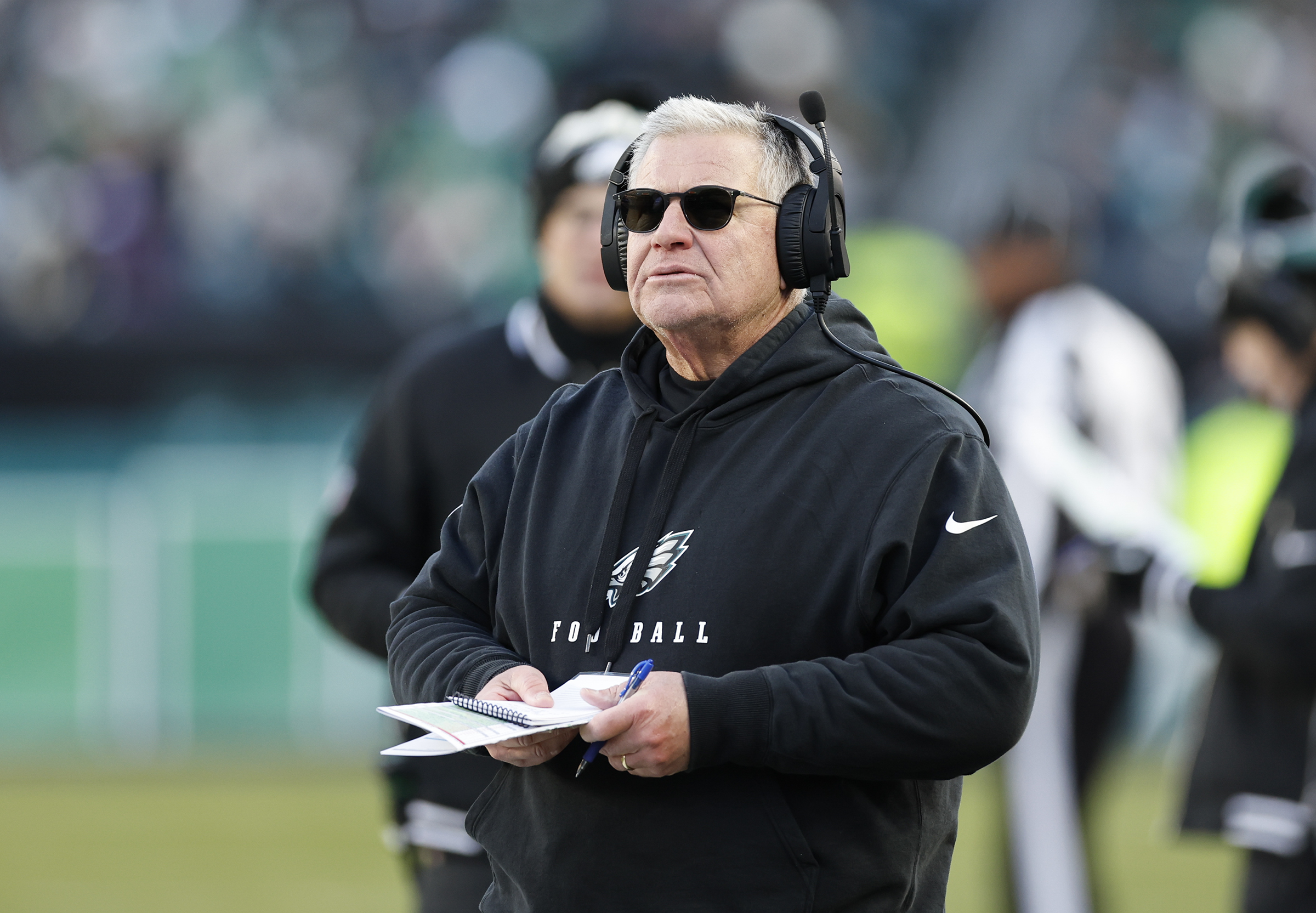
Jeff Stoutland’s O-line alignment principles would not have meshed easily with Sean Mannion’s scheme.
The most significant change in the running game will come with the offensive line. The preferred wide-zone blocking scheme of the Shanahan-McVay offense is much different than the mid-zone scheme Jeff Stoutland employed with the Eagles for 13 seasons.
Stoutland was also the run game coordinator since 2018, but the alteration meant that he wouldn’t have returned in that role. Sirianni confirmed that he wanted Stoutland back, although the 64-year-old assistant would have had to teach his O-linemen a new run-blocking technique.
At its most elemental, wide-zone blocking has offensive linemen fire off the ball and block at an angle to create cutback running lanes. Mid-zone blocking has O-linemen more under control, perhaps required to win more at the point of attack and shuffle in their assignments.
One is not better than the other, they’re just different. The Eagles think their returning O-lineman can block in any scheme, but there will be an adjustment. The change could benefit an athletic center like Cam Jurgens, or it could hinder a cinder block like left guard Landon Dickerson.
“Will there be maybe a little bit more emphasis on movement and athleticism?” Roseman said. “Maybe a click. Maybe.”
Roseman was talking about how the new scheme may affect his evaluations in the upcoming draft. Right tackle Lane Johnson is returning for a 14th season, but the Eagles could be searching for his successor.
Stoutland was as involved as any coach in the pre-draft process and through his prioritization of “critical factors” helped the Eagles land Johnson, Dickerson, Jurgens, and left tackle Jordan Mailata, a former rugby player.
“We’re looking for a lot of the same things,” Roseman said, “with a lot of the same — a shout-out to Stout — critical factors that we’ve always been looking for.”
7. Hurts may actually run even less in the new offense.
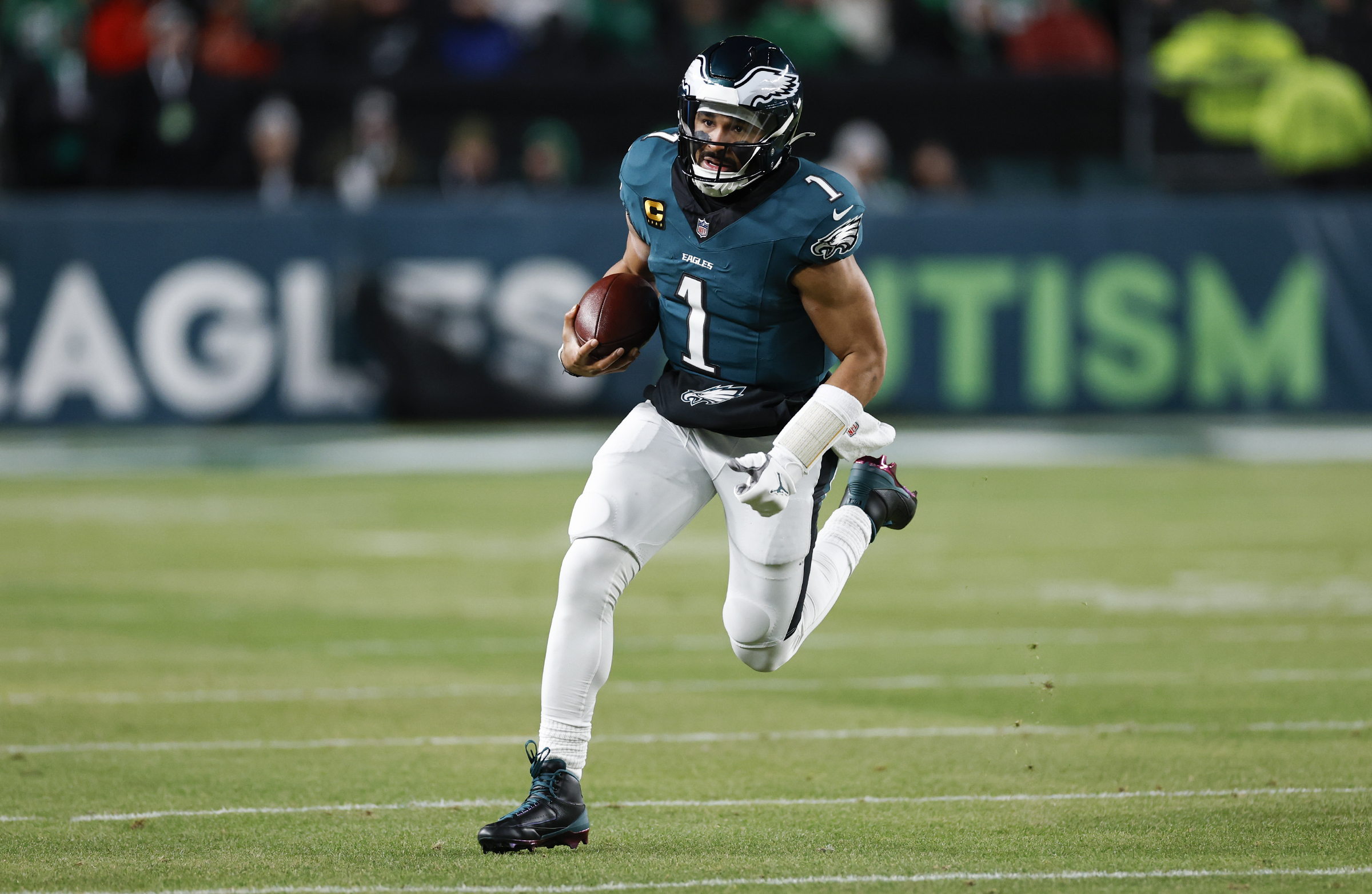
Jalen Hurts might run less in the Sean Mannion scheme.
Hurts’ history with different offensive coordinators and play callers dating back to college is a fact that has been repeated so frequently at this point it’s almost not worth mentioning, especially for a quarterback entering his seventh NFL season.
He has admitted that having first-year success with Moore should give the discourse less meaning. The scheme has also been relatively similar during the Sirianni-Hurts partnership. There has been a natural progression with his coaches asking him to do a little more under center, off play action, and with motion.
“He’s shown that he can do all these things,” Sirianni said. “I think what’s awesome about Jalen is he’s shown he can do a lot of things really well. … The great thing about great players is they can usually fit to any scheme.”
And yet, the Eagles have never majored in any of the above. Was that on Sirianni and his coordinators, or was it on Hurts? How much did Stoutland’s preferred run scheme prevent the offense from evolving? All of the above were likely factors.
Whatever the answer, change is coming. Hurts should be on board, especially if he wants to run less and desires more schemed-up layups in the passing game. With less shotgun, there won’t be as many designed quarterback run opportunities.
It remains to be seen whether less of Hurts on the ground is a good thing. It wasn’t last season. There are ways to incorporate some quarterback runs into the Shanahan-McVay scheme, but there will likely be fewer zone reads and run-pass option plays.
8. Sirianni left plenty of wiggle room for carryover from the previous offense.
Nick Sirianni will continue to have a voice on offense, as he has had in all previous iterations of the attack.
While some Sirianni critics may have short attention spans, he has presided over an offense that has often been among the best in the league. And in winning a Super Bowl last year he was able to retain some of the better parts of his scheme and incorporate it with Moore’s.
He said the same will happen with Mannion.
“I think that some of the things that you can sprinkle in from the things that we’ve done, it’ll just be a good mesh of different things,” Sirianni said. “You want to have something that you can [hang] your hat, which I think that we’ve always had, but then adapt that to different things that your players do well.”
The best coaches scheme to their players’ skill sets. In 2021 and 2024, the Eagles installed pass-based offenses before switching at midseason to feature the run. Some of that had to do with Hurts’ limitations as a dropback passer, but also to emphasize his mobility, a dominant O-line, and Barkley.
It would be foolish for Sirianni to commit to anything, although the Shanahan-McVay offense will initially be the scheme the Eagles hang their hats on. But there won’t be a complete whitewash.
“Its ever-evolving,” Sirianni said. “Shoot, you might end up saying, ‘Hey, I wanted to be an outside zone team, but it looks like we’re going to be a little bit more of a gap team, or vice versa, right?’ And it could be the same with, ‘Hey, I wanted to be a little bit more play action, but it looks like we’re going to be a little bit more naked and move the pocket and stuff like that.’”
Mannion won’t have autonomy like defensive coordinator Vic Fangio. How could he with no experience? The offensive-minded Sirianni will obviously be involved at some level. But he wants Mannion to ultimately be responsible for running the offense.
“I know that the most important thing that I need to do is be the head football coach of the football team, not the offensive coordinator for the Philadelphia Eagles,” Sirianni said. “I need to be the head football coach in charge of everything. It’s setting that vision, all the different things that go into it.
“But I’ve had a lot of experience in putting together an offense, so I’m here as a resource for him in that aspect.”
9. Mannion will work closely with Hurts.
Sean Mannion’s experience as an NFL quarterback could help ease communication with Jalen Hurts.
Mannion’s pedigree as a quarterback played some role in his hiring. Hurts had his best seasons under former quarterbacks in Steichen and Moore. Mannion has been credited with assisting the development of Packers starter Jordan Love and the reclamation of backup Malik Willis.
Hurts has a strong personality, so it’s no guarantee that Mannion’s playing experience or his relative youth will translate to a harmonious relationship. That could go in any direction. But Mannion’s former teammates and coaches have been unanimous in their praise of how he comports himself.
As for Hurts’ actual position coach, the Eagles opted to move pass game coordinator Parks Frazier to quarterbacks coach and let Scot Loeffler go. Sirianni said he wanted some continuity, but also pointed to Frazier’s one season working in the Shanahan-McVay scheme with the Dolphins under McDaniel.
Grizzard offered Sirianni the chance to keep a runner-up for the job who also has experience in the system and one year of play-calling under his belt. While he could be viewed as a backup if Mannion struggles, the Eagles were likely more focused on having an in-house replacement to guard against what happened after Steichen and Moore left.
New tight ends coach/run game coordinator Ryan Mahaffey and offensive line coach Chris Kuper were Mannion hires and will be instrumental in installing the new wide zone blocking scheme.
10. The new scheme probably won’t increase the likelihood that Brown wants to stay in Philly.
Change is coming to the Eagles offense, but it’s not necessarily the kind of change that will make A.J. Brown happier.
Roseman will ultimately do what’s best for the team even if Brown no longer wants to be an Eagle. Brown has expressed his love for Philly, but that doesn’t necessarily mean he wants to return if the passing game is going to remain secondary.
Brown could envision a scenario in which the Shanahan-McVay scheme improves Hurts as a thrower and gives the receiver opportunities to use his skills after the catch. But if the running game remains the focus, he may not get the targets he desires.
Replacing Brown wouldn’t be easy, even if receiver DeVonta Smith has a more prominent role. The free-agent market is light at the position. And while the draft is said to be deep, there are few Day 1 starters at receiver. The Eagles also have other needs.
Roseman may need to replace all three of his top tight ends with Dallas Goedert, Grant Calcaterra and Kylen Granson slated for free agency. The Shanahan-McVay scheme favors hybrid tight ends who can run-block.
“I would say that the tight-end position starts with me in evolving,” Roseman said. “I think that from my perspective, I’ve always had an affinity for kind of the receiving tight ends. I think that that’s shown in my work.”
It certainly showed this past season. Goedert, Calcaterra, and Granson were detrimental to the running game. They weren’t the only ones.
Philadelphia School District officials said they considered poverty rates and prior school closings in a neighborhood when weighing which schools to close.
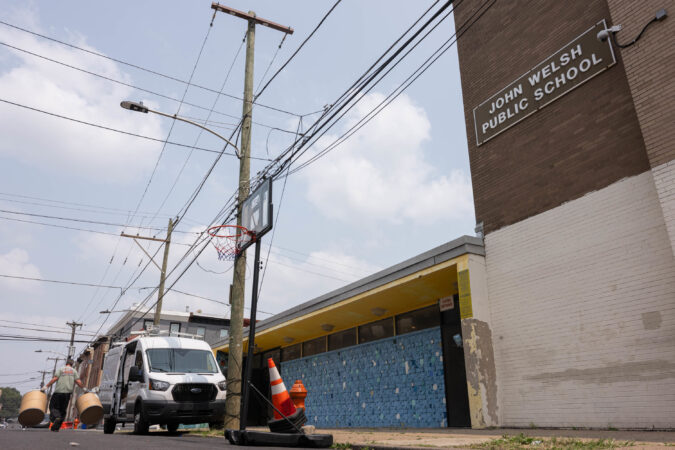
Each school had a score based on its surrounding neighborhood, and only one of 20 proposed closures is in a “very high risk” neighborhood: John Welsh Elementary.
Welsh, on the northern edge of the Norris Square neighborhood, has 185K-8 students and operates atunder a quarter of the building’s capacity. Enrollment has declined over the past several years and the school now holds an average of 20 students per grade, including only 9 second graders. About two-thirds of the students are Latino, and the other third are Black.
While it’s small and its building is not in good shape, it was not necessarily obvious that the district would target Welsh for closure — because so-called neighborhood vulnerability was a factor in officials’ decision-making.
But Welsh parents and studentsargue the school shouldn’t be closed because its students were performing well, despite the lack of investment from the district, as well as the condition of the building and its surrounding neighborhood.
Kareemia Boyd, the parent of a Welsh eighth grader, credited the school with helping her son turn around his grades after he came from a charter school. She transitioned her son to Welsh in fifth grade, when his grades were suffering and he experienced bullying. Now poised to graduate this year, she said he gets A’s and B’s.
“I didn’t expect he would actually grow in so many ways,” she said at a recent community meeting about the closure plan.
The district’s draft plan calls for the Welsh building to be upgraded andconverted into a new year-round high school which would open for the 2029-30 school year.
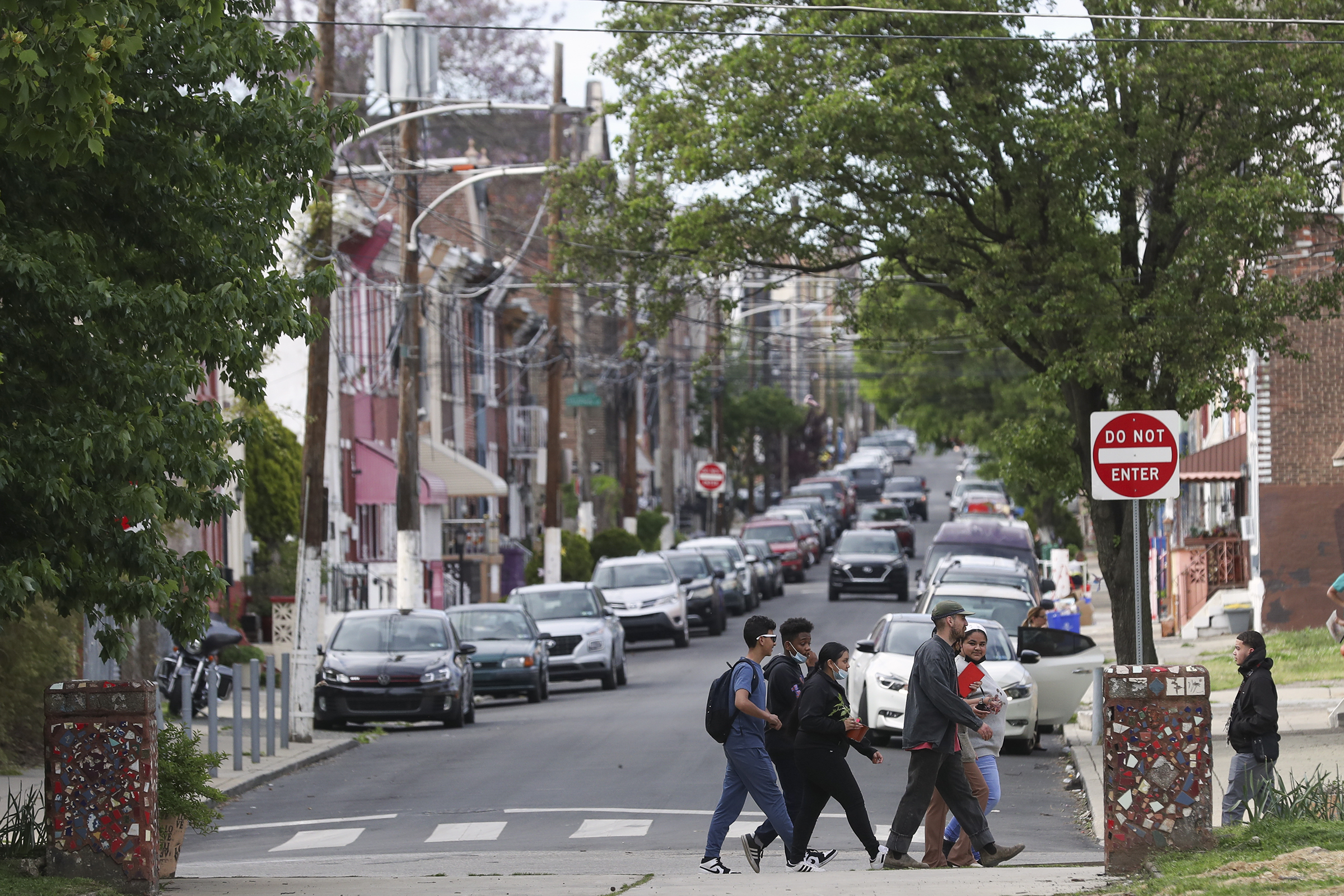
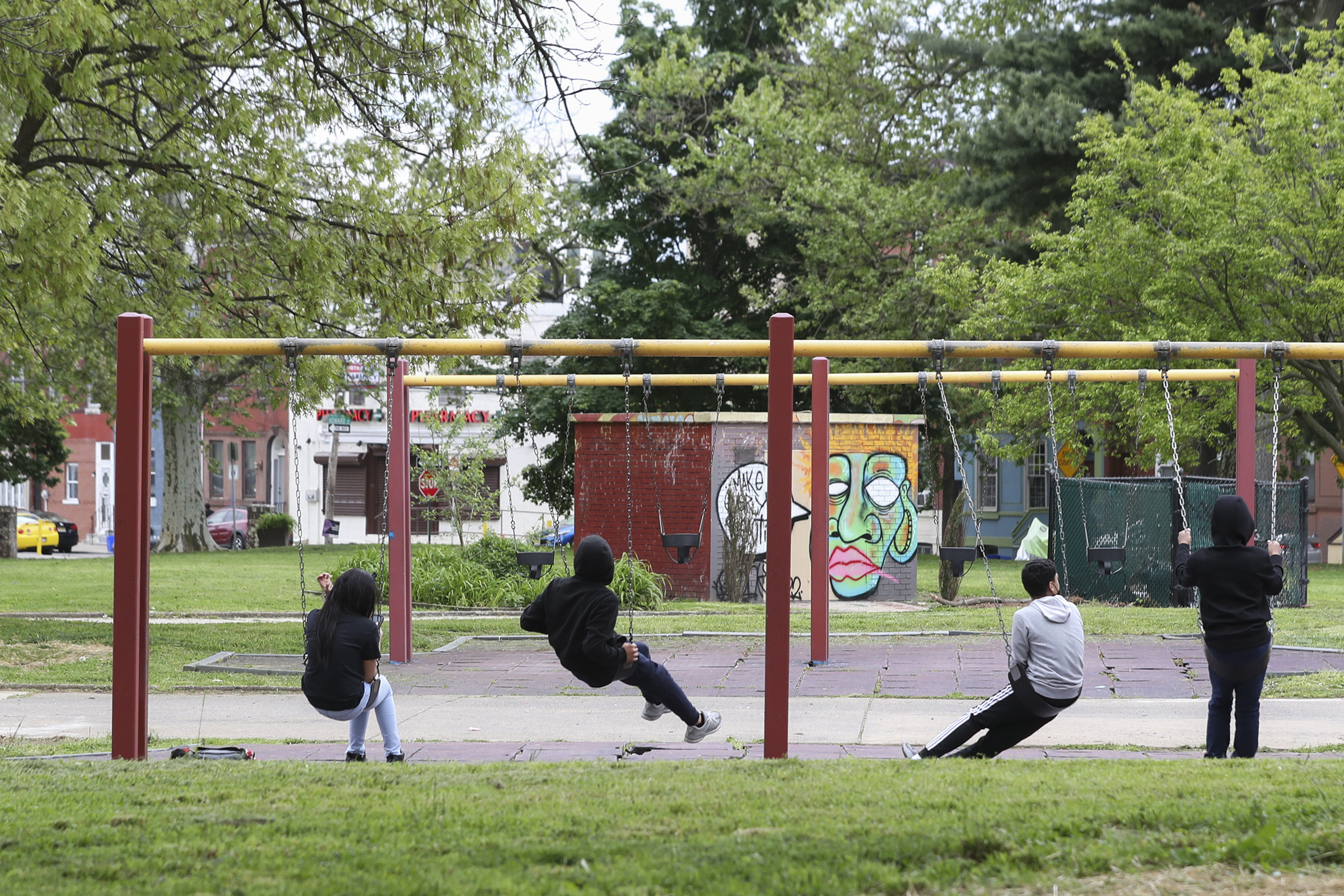
Pedestrians walk along Susquehanna Avenue in the Norris Square neighborhood in 2022.
Current Welsh students would transition to John F. Hartranft School or William McKinley School. Hartranft and McKinley would receive new ADA investments and other renovations, Algebra I instruction, and pre-K programming, officials said.
Several students asked district officials at the community meeting why they would be transitioned to Hartranft and McKinley, when those schools have performed worse academically than Welsh. About 14% of students at Hartranft and 10% of students at McKinley scored at least a proficient level on state English language arts exams last year, compared to 20% of Welsh students.
District representatives said they did not consider academic performance when deciding whether to close schools. Instead they focused ongetting proper resources to students and schools, they said,which will be more feasible once schools areconsolidated.
Boyd said her son’s teachers at Welsh pushed him to improve, and wouldn’t let him settle for less than what he was capable of. She appreciated how much they cared about him, and said they had “a big impact.”
“I want somebody to care about my kid as much as I do,” she said.
She said she believes the declining enrollment has to do with the school’s neighborhood. Boyd said people are concerned about crime and drugs, and don’t feel safe sending their kids to the school, particularly when school security is limited.
But for those who have stayed, Sary Rodriguez, a parent of current Welsh fifth and eighth graders, said it’s a community where everyone looks out for others.
“We all know each other. We all support each other. So it’s hurting a lot of people,” she said about the district’s plan.
Young people enjoy Norris Square Park in the Norris Square neighborhood, where Welsh Elementary School is slated to close under a proposal from the school district.
Rodriguez also has a 19-year-old daughter who graduated from Welshand works at the school. But Rodriguez said she’s considering moving her children to charter schools if the school closes, in part because of her concerns for the academics at McKinley and Hartranft. No matter where they go, transitions are difficult for all involved, she said, including parents.
“It’s not only the students that have to meet new people and new friends and new teachers, their parents have to start all over [with] a new relationship with teachers and students, the neighborhood … I don’t know nothing about those schools,” she said.
Rodriguez implored the districtofficials at the community meetingto genuinely consider pleas to keep the school open.
“I really have the feeling it doesn’t matter what we say or what we do. It’s just going to be a decision that they’re gonna make,” she said.
Rodriguez said she’s upset that the district hasn’t invested in Welsh, but plans to put resources into a new school at the same location.
“It bothers me that they’re going to spend the money to fix it for a high school and they can’t fix it for our kids,” she said.
Ava Huertas, a sixth grader at Welsh, planned to graduate from the school just like her grandmother, mother, and sister did. She’s been enrolled there since she was in kindergarten, and now would have to move to a new school for eighth grade before transitioning again for high school.
She asked several questions to district officials about why they were planning to close her school, reading off notecards and avoiding eye contact. As she wrapped up her final question, she thanked the officials for listening, but had to be honest about her feelings.
“I hope that the plan doesn’t go through, I’m not gonna lie,” she said.
The implication is clear. The United States economy is doing well, so nothing else matters. However, although an elevated Dow helps those with retirement accounts, what does it mean for the 40% of Americans who do not have a 401(k) or any other retirement savings account? How does that translate into affordability for basic items like food, clothing, shelter, and, perhaps most importantly, healthcare?
The latter is a huge problem, especially with the Medicaid and Medicare cuts in July, and the expiration of the Affordable Care Act (ACA) subsidies last month. The combination is expected to affect 15 million Americans by 2034. Consider also that 3.14 million Pennsylvanians, which translates to 24.1% of everyone in the commonwealth, were covered by Medicaid in 2024.
The facts are that health insurance has become increasingly unaffordable for most Americans, and that has a downstream effect. When health insurance premiums are prohibitive, people are more likely to go without insurance or opt for a plan that offers a lower premium but a much higher deductible. Those people are more likely to skip important preventive care, placing them at increased risk for adverse health consequences. This also applies to those whose Medicaid benefits were cut.
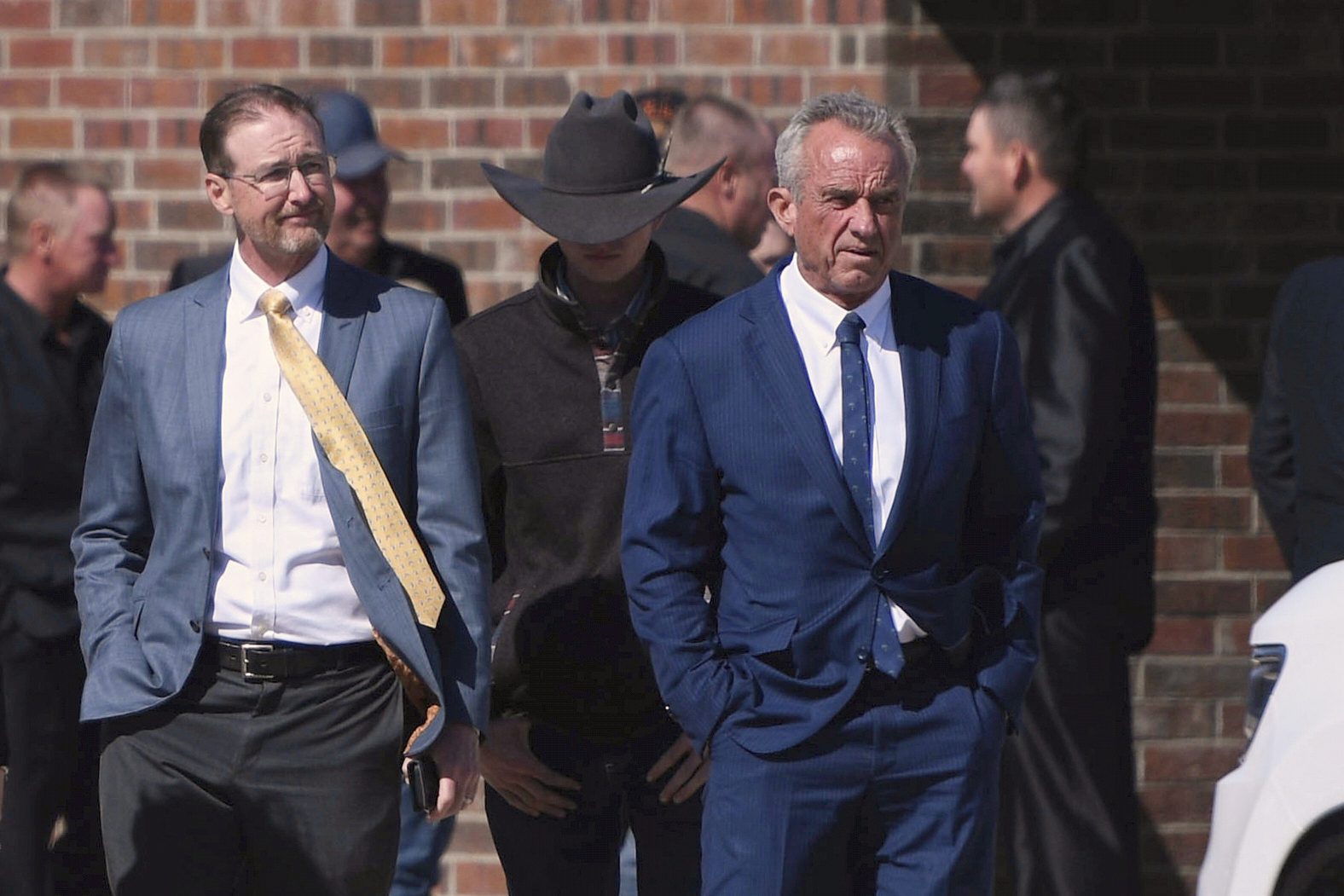
Under Health and Human Services Secretary Robert F. Kennedy Jr., the number of measles cases in the U.S. has skyrocketed.
President Donald Trump has promised to decrease the price of prescription drugs through the Trump Rx program, but in actuality, the differences will be much smaller than promised.
To his credit, his administration has tried to address the price of drugs by reining in pharmacy benefit managers, the middlemen whose practices serve to increase the cost of drugs. However, the success in that area pales in comparison with the overall detrimental effects of this administration on healthcare.
The most recent problem is the expiration of the federal subsidies under the ACA. Consider the case of Pennsylvania residents Tom and Carol Shaw, who saw their health insurance premiums jump from $1,090 a month to $3,505 a month, largely due to the loss of the ACA subsidies. That’s a 221% increase!
To put that in perspective, the average monthly mortgage payment in York County, where they live, is about $1,300, according to the U.S. Census. The Shaws can afford the increase, but what about those who can’t? The result is that about 85,000 Pennsylvanians have dropped their health insurance in 2026. That amounts to one in five enrollees terminating coverage, which is truly a stunning statistic.
On top of the financial effects, the dismantling of our vaccine infrastructure poses a significant risk to the health of the nation. The science of vaccines has not changed, but the politics have, such that Health and Human Services Secretary Robert F. Kennedy Jr. has been able to spew misinformation and take numerous actions designed to destroy trust in science and physicians without any accountability, no matter how much he mangles the facts and the science. As a result, in 2025, we saw 1,277 measles cases — the highest number since 1992.
Meanwhile, Kennedy continues to insult physicians by stating that the only reason physicians recommend vaccines is to make money. It is difficult enough to take proper care of patients in the limited time allotted without having to dispel the numerous lies coming from this administration.
It is not clear exactly what President Trump will say in his upcoming State of the Union address. We suspect he will address the affordability of healthcare. If he does, we are quite confident he will dismiss it as a nonissue, given his comments in December that the affordability crisis is a hoax.
We are convinced he will cite the Dow while ignoring the fact that 59% of Americans disapprove of his handling of their cost of living. We fully expect a speech that will be tone deaf to the financial plight of many Americans, including his own supporters.
There must be accountability for this administration. The midterm elections are approaching, and healthcare, yours and that of your neighbors, will be guided by your vote.
If we do not address this issue appropriately, we will pay the price, as will our children and loved ones. In fact, we already have.
Mark Lopatin is a physician and the author of “Rheum for Improvement,” a member of Ask Nurses and Doctors, and a coeditor for Doctors for America, a nonprofit that focuses on putting patients over politics. Jeffrey Lerner holds a doctorate in health policy and is the Pennsylvania coordinator of Ask Nurses and Doctors, a bipartisan organization whose mission is to help elect government officials who prioritize U.S. healthcare problems.
Wrangling a big transportation project takes deft timing: scheduling the planning and construction stages in proper order, obtaining environmental approvals, and lining up financing from local, state, and federal sources.
Now officials are trying to figure out how best to keep the project moving while replacing the lost $159 million federal grant.
“This is a pretty unprecedented situation,” said Jesse Buerk, associate director of capital programs and project development for the Delaware ValleyRegional Planning Commission (DVRPC).
“I’ve never seen it before, where a project is funded and it’s moving along through the process, and then the funds are completely rescinded,” he said, speaking at the recent committee meeting.
It wasn’t just Philadelphiaor the Chinatown Stitch project that got nixed. That legislation rescinded $3.2 billion that had been awarded but not yet spent through the Biden-era program, 55 projects across the nation aimed at mitigating the impact of highway projects on marginalized communities.
President Donald Trump’s administration targeted equity and access transportation projects as wasteful “DEI”-style spending.
But at a meeting earlier this month, the DVRPC’s Regional Technical Committee voted to table the city’s request to study it further.
Several suburban residents on the technical committee, composed of experts from the eight counties in the region and the state governments of Pennsylvania and New Jersey, had raised concerns about spending up to $12.5 million on the design work without having construction money locked up.
“This request is a significant gamble if you’re not able to recoup those reconnecting communities [funds],” said Brian E. Styche, a transportation planner for Chester County. “We would just like more time to discuss what the plan B is.”
DVRPC’s board of directors is scheduled to discuss the city proposal on Thursday.
Christopher Puchalsky, policy director for the city’s Office of Transportation and Infrastructure Systems, said he understood the concerns: “I don’t think there’s any arguing with the fact there’s some amount of risk.”
Alternative construction funding
The city was able to complete planning and engineering work with $8.4 million of the grant. It needs to secure final design funding before federal environmental review and approval, Puchalsky said.
Not being able to move forward would add additional delay to the project, he said.
The city is exploring alternatives for construction money, including the possibility of tax-increment financing for at least some of the funds, Puchalsky said.
That form of financing uses property tax revenue for development in a specific local district.
“There’s just enormous community support and political support for this project that a lot of the folks have been waiting 40 years for,” he said.
What is the Stitch?
The Chinatown Stitch project involves building a cap over I-676 from just east of 10th Street to 13th Street, allowing for a park as well as more developable land. It would reconnect the north and south sides of the neighborhood, which are split by the interstate.
Jay Timmons, president of the National Association of Manufacturers, says the factory revival Trump and his recent predecessors have championed has been aided by Trump’s business tax cuts and pro-fossil fuel agenda. But, he said, mass worker deportations or rapidly-changing import taxes are not helping.
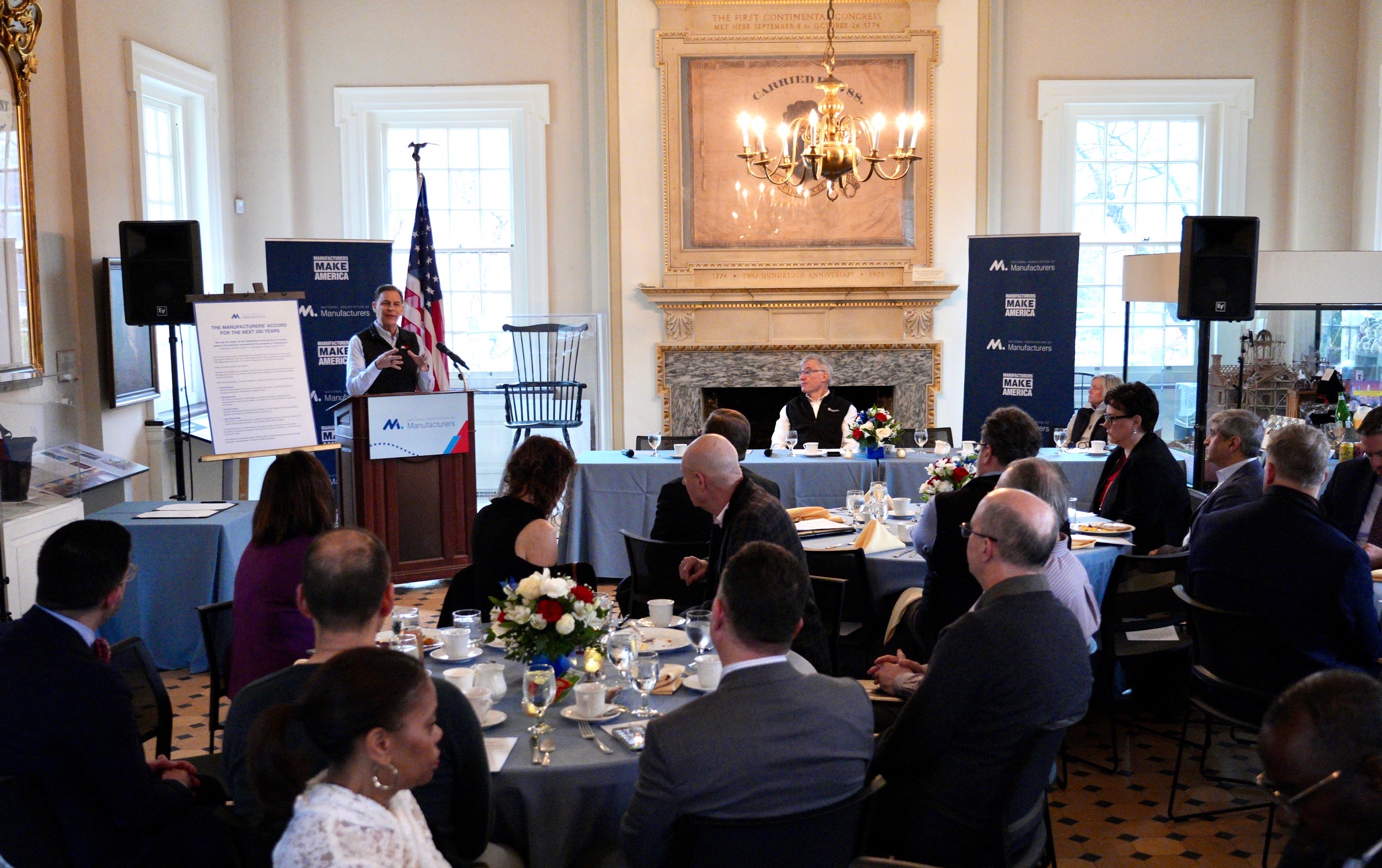
Timmons appealed to leaders of Philadelphia’s port, shipbuilders, regional Chamber of Commerce, and other industry group leaders to embrace his group’s pro-factory agenda at Carpenters Hall. He made a similar appeal at Cleveland’s Rock & Roll Hall of Fame earlier in the week, and heads to the Carolinas next week.
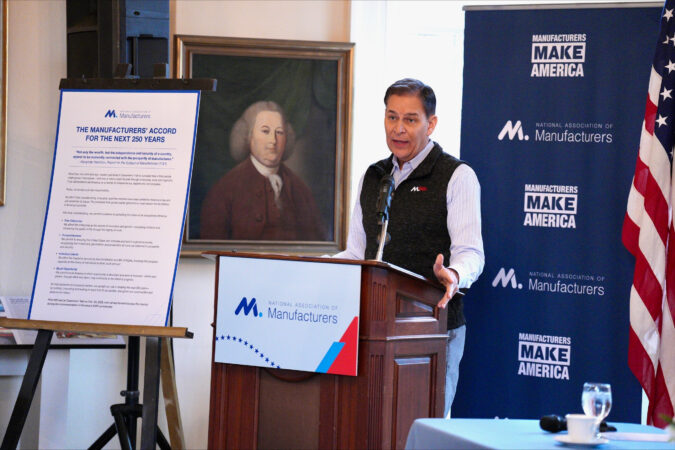
Jay Timmons, president of the National Association of Manufacturers, was at Carpenters’ Hall in Philadelphia with area business leaders on the day the U.S. Supreme Court announced its tariffs decision.
After the Supreme Court ruled against Trump, Timmons said in a statement that industry shares Trump’s goal of strengthening U.S. manufacturing, and wants to work with Congress and Trump on more “durable” ways to do that. While Trump had boosted tariffs on U.S. neighbors and longtime allies, Timmons said, NAM’s position is that “if tariffs are utilized as a tool, they should be targeted to countries engaged in specific unfair trading practices,” especially countries where government controls production, which would include China and Russia.
He agreed to take questions from The Inquirer.
The conversation has been edited for clarity and length.
U.S. Sen. Joe Grundy, the Bristol mill owner who founded the Pennsylvania Manufacturers’ Association, led the pro-tariff movement long before President Trump. Has your group always backed high tariffs?
No, ours was founded as a free-trade organization. Thomas Dolan, our first president, was a woolen manufacturer from Philadelphia. We wanted to open markets and sell our stuff in other countries.
The president is obviously a fan of tariffs; that is a tool he has chosen to use.
We’re on the launch pad, we are ready to go. We’re seeing success in terms of lowering the costs of doing business, in our tax code, in regulatory modernization, in energy development.
This year we are focused on other issues we would like to see addressed, hopefully in a bipartisan way. We want to see legal reform of the permitting process, so we are not constantly in court trying to reach a final decision on whether an industrial project can move forward.
Do you want the federal government to override state and local building limits on industry?
State and local need to have a say, but the process needs to be streamlined.
I served in Gov. George Allen’s administration in Virginia. His focus was on working together to attract jobs, communicating in a simultaneous manner. We attracted record investment and job creation [without damaging] air and water quality.
We need to [fix] the regulatory morass in Washington. Right now, several agencies have a say on a project. An agency reviews it, that takes months. Then another agency, and another.
Won’t you need more federal workers to do reviews all at once?
Whatever it takes. We aren’t saying we want a compromise on health and safety. We’re saying do it in an expeditious manner.
I don’t share this [concern], but there are folks concerned about the rising costs of electricity and putting that blame on AI data centers.
Demand will increase. You’ll have issues of local concern. But we have to supply more power, which means states have to step up and work with the utilities to improve transmission, the power grid; and the federal government should have a role.
What recent U.S. energy developments are you applauding?
Pennsylvania has led the way, with natural gas clearly helping the U.S., in terms of energy dominance and exports. Oil, also. Even nuclear is getting a kick start.
Southern Co. led the way with that, restarting a [uranium power] plant in Georgia. That is hard, it takes a long time. Also the small reactors, we don’t have a clue yet [if those will be deployed in large numbers] but it could be helpful.
What are your priorities to make manufacturing grow more rapidly?
First, to help us expedite investing in the U.S., which tax [cuts] have done.
Second is hiring and workforce development. We have 433,000 open jobs in the sector. Our goal is obviously to train more potential manufacturing workers. Apprenticeship programs — we have our own — need to expand dramatically.
And third, we want to see a reliable and consistent immigration policy that focuses on the needs of our country. We’ve endorsed the Dignity Act.
The Dignity Act, from Reps. Maria Elvira Salazar (R., Fla.) and Veronica Escobar (D., Texas), would let immigrant workers, who pay a fine and taxes, buy work permits; and mandate employers E-Verify job applicants. Is that like the Reagan reforms?
Reagan, directionally, was correct on immigration.
We are a nation of immigrants. We are a melting pot and that is what has made us successful.
Things are different today with public opinion. You have to focus on very narrow objectives that are directly related to the economic life of this country, because that’s what the president and Congress want to do.
What’s your goal for trade and tariffs?
To see certainty and predictability. The administration has been very focused on finding access to markets overseas, which is also one of NAM’s founding principles.
The U.S.-Mexico-Canada Agreement is up for renewal. [Negotiators] are dealing with transshipments from China through Canada and Mexico, which obviously was not our intent for the agreement. Getting another agreement is going to be really important for manufacturers who have used provisions to move manufacturing from China into the U.S.
When do you expect signs of increased factory investment and hiring in this second Trump term?
Rewind to 2017, we got tax cuts, regulatory modernization, and [faster] energy production. You saw three or four years later the highest employment growth in 21 years, the highest wage growth in 15 years. If you get the policies right it gives you an advantage. That’s our goal.
We have the rocket, but it needs fuel, and a clear sky. We need [to resolve] immigration, workforce development, and trade certainty.