Blog

  • The candidates vying to succeed Dwight Evans got a chance to ask each other questions. Things got tense.

    The candidates vying to succeed Dwight Evans got a chance to ask each other questions. Things got tense.

    With a crowded field of Democrats who largely agree on policy issues, it’s been difficult to differentiate the candidates in this year’s race for Philadelphia’s open congressional seat.

    But at a forum Monday night, the top candidates for the 3rd Congressional District, which is being vacated by retiring Democrat Dwight Evans, began to make clear where the battle lines are — by taking shots at one another.

    At the end of the event, the moderator, 21st Ward Leader Lou Agre, allowed the candidates to ask one another questions. Their choices offered hints as to which of their rivals the candidates view as most threatening.

    Dr. Ala Stanford, who appears to be the strongest candidate among the non-elected officials in the race, questioned the accomplishments of State Sen. Sharif Street, who is seen by many as a frontrunner after being endorsed by the Democratic City Committee and building trades unions.

    Street, in turn, fired a question about hate crime legislation at State Rep. Chris Rabb, a progressive who could counter Street’s hold on the Democratic establishment if he consolidates support from left-leaning organizations.

    Lastly, State Rep. Morgan Cephas came after Stanford, prompting a tense exchange about the physician’s government contracts.

    The 3rd District covers about half of Philadelphia and is, by some measures, the bluest seat in Congress. The Democratic primary is May 19.

    The forum was initially scheduled to be held in-person at the Polish Legion of American Veterans’ Adam Kowalski post in Roxborough, but it was moved to Zoom due to the blizzard on Sunday and Monday.

    Here are the issues the candidates debated Monday night.

    Stanford questions Street’s accomplishments

    Stanford, a pediatric surgeon, has been widely celebrated for founding the Black Doctors Consortium to help reach underserved communities during the COVID-19 pandemic.

    She began the candidate-on-candidate questioning on Monday by asking Street for instances in which his work has helped constituents in tangible ways, setting up a juxtaposition with her record.

    “In a time when the people are asking for new leadership, they’re asking for innovation, they’re asking for not the same politics as usual … can you tell the people a time when the seas were rough and you stepped up and delivered for them that they felt it?” Stanford asked, adding: “Can you share what you can do during the chaos that people can feel — and where was it during COVID?”
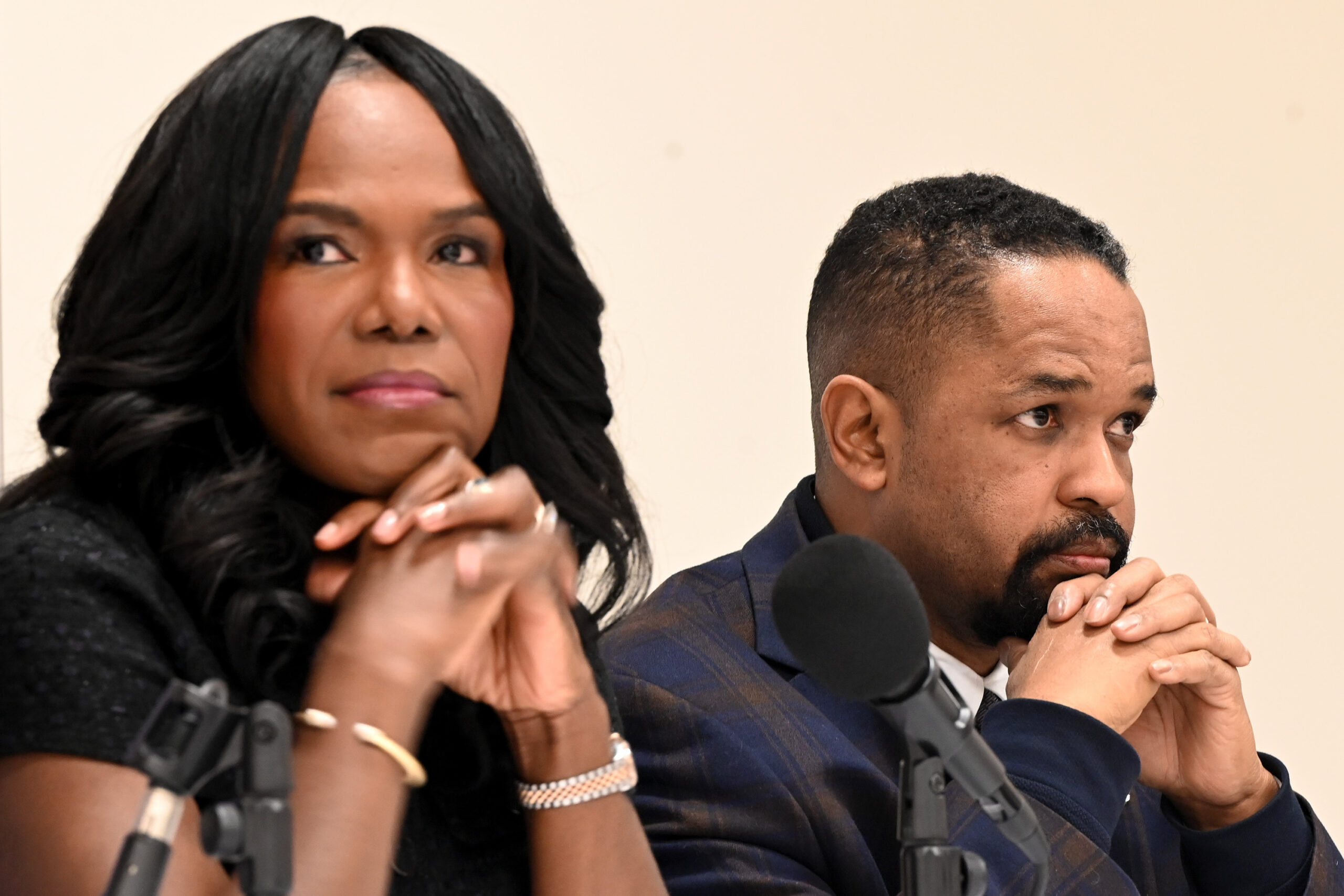
    Physician Ala Stanford (left) and State Sen. Sharif Street at a December forum hosted by the 9th Ward Democratic Committee.

    Street began by saying that, as the top Democrat on the Senate Banking & Insurance Committee in Harrisburg, he boosted Stanford’s work during the pandemic by pressuring insurance companies to reimburse her fledgling organization, which provided testing and vaccinations for thousands of Philadelphians in disadvantaged neighborhoods.

    “Independence Blue Cross was not moving forward with the reimbursement rates for the Black COVID Doctors Consortium,” Street said. “I spoke with you, and I helped, and I reached out to them to make sure that [the Medicaid plan] Keystone First would begin to pay the reimbursement in an immediate way.”

    He also said his office distributed food to constituents and helped process rent rebates during the pandemic.

    In the run-up to the 2020 election, Street, as chair of the Pennsylvania Democratic Party at the time, repeatedly fought in court against President Donald Trump’s campaign over election administration issues. In her question, Stanford asked Street to focus on what he delivered for his constituents — “not that you sued Donald Trump 20 times and won every time, because how do the people feel that?”

    But Street said those legal victories resulted in tangible results, as well.

    “Donald Trump wanted to challenge people’s ability to vote in some of the most vulnerable communities,” he said. “I went to court, I stopped him, and I made sure that they had the right to vote, and that was why we were able to pass the vote to remove him from office.”

    Street and Rabb clash over hate-crime legislation

    When it was his turn to pose a question, Street pressed Rabb on why the progressive was opposed to hate-crime legislation, an issue the two had sparred over at a forum last week.

    “You and I have worked to fight for regular folks, for disadvantaged people, for a long time. I was shocked that you … want to prevent hate-crimes legislation,” Street, a centrist Democrat, said to Rabb. “I’ve heard from so many trans women of color, who are most likely to be victims of hate crimes, and they don’t understand.”

    Rabb responded by saying that Street’s line of attack was “shameful and unnecessary.”

    “I know you want to win. I just thought you would do it with honor,” Rabb said. “I am an active member of the LGBTQ Equality Caucus. I am the father of a queer son. I represent an active queer community. … To use this as a political punching bag is just — man, it’s beneath you.”

    At the end of the forum, Street clarified that he has no doubts about Rabb’s commitment to the LGBTQ community.
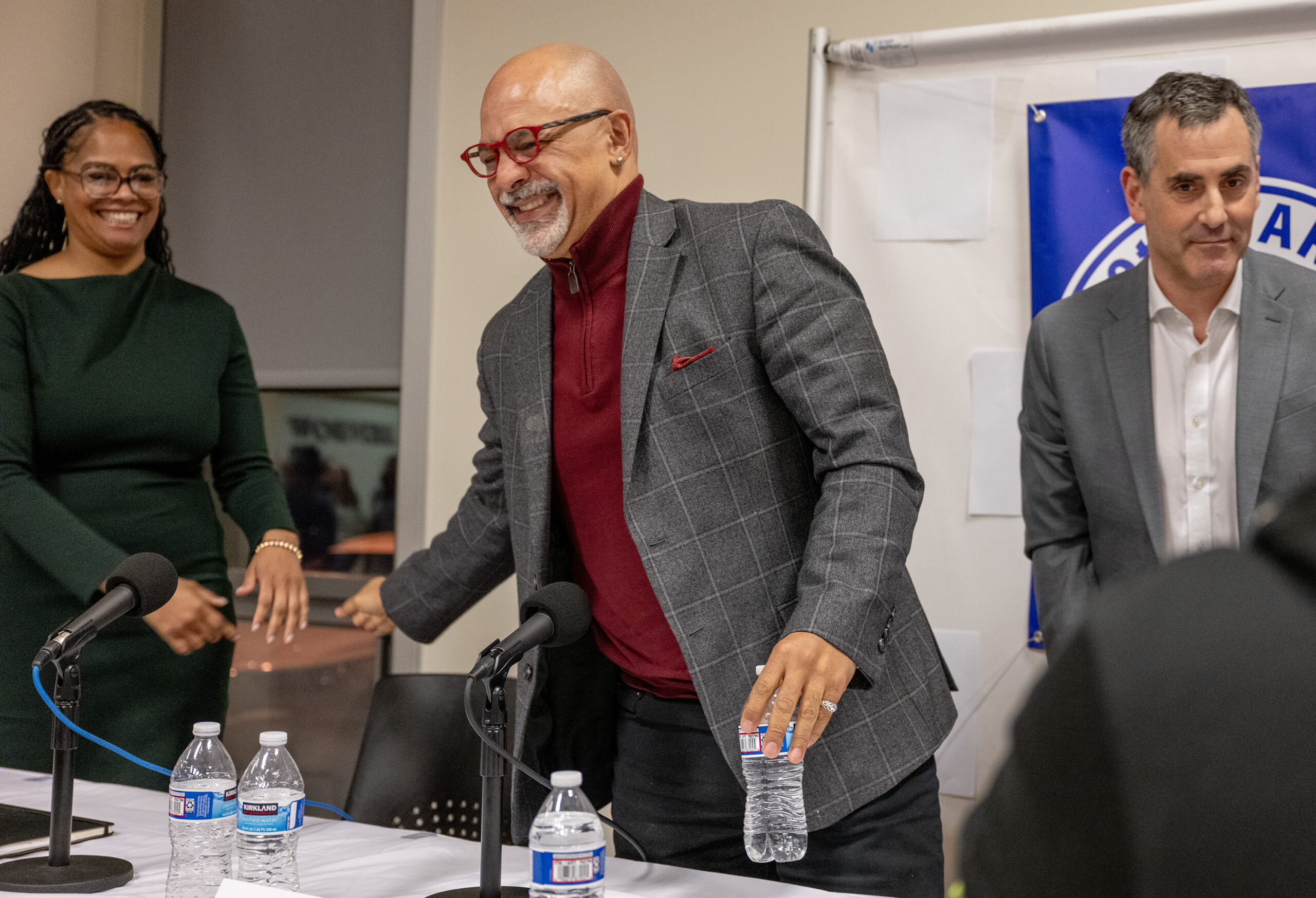
    At a December candidates forum in Mount Airy, (from left) State Reps. Morgan Cephas and Chris Rabb and physician David Oxman.

    “I had a policy dispute about hate crimes,” Street said. “I did not mean to question your commitment to the trans community or to your kid.”

    The dust-up got in the way of a meaningful debate over hate-crime laws, which increase sentences for people convicted of crimes that prosecutors prove were motivated by prejudice against particular groups.

    Such laws are common across the country, but they have long faced criticism from the libertarian right, which fears that such regulations could be used to target citizens for political views. The laws have also faced pushback from some on the progressive left, who contend that they contribute to mass incarceration.

    “Politicians tout hate-crime laws as proof they care about the marginalized,” Rabb wrote in an op-ed for PennLive last fall. “In reality, the main outcome is more policing, more prosecution, and more incarceration.”

    Street said last week that people who oppose hate-crime laws on the “far left … don’t want to address the antisemitism on the left or the right.”

    Rabb has been the 3rd District candidate most critical of Israel’s war in Gaza. Street has also been critical of Israeli Prime Minister Benjamin Netanyahu’s handling of the war, but holds a more centrist view on the conflict in the Middle East.

    The Pennsylvania House in 2023 approved a bill to expand the state’s law that criminalizes ethnic intimidation to include sexual orientation and disability status. Rabb voted for the bill, which ultimately died in the Senate amid GOP opposition, but said he had “considerable reservations.”

    “We should collectively focus on structural violence and hatred that has been cultivated by the very institutions that have been asked to address this legislation,” Rabb said at the time.

    Cephas presses Stanford about her government contracts

    Cephas, who represents a West Philadelphia district and chairs the Philadelphia delegation to the state House, questioned how much money Stanford’s nonprofit organization has made from government contracting since the onset of the pandemic.

    “You oftentimes quote that you, as a private citizen, came in and saved Philadelphia from COVID, and, you know, there are a number of people on this [Zoom] call that stepped up during COVID,” Cephas said, noting that she worked with Stanford to set up clinics in her district during the pandemic.

    “We all did it in our own individual capacity, and we didn’t receive government contracts for it. … How much in government contracts did you receive during the COVID-19 period?”

    Stanford noted that she initially launched the Black Doctors Consortium with her own financial resources to serve neighborhoods that were not being reached by existing healthcare and government institutions. She said her first $1 million city grant for testing came months after she began her work.

    In 2020 and 2021, Stanford’s groups received $2.5 million in grants and contracts from the city, state, and federal governments, according to Stanford campaign manager Janée Taft-Mack. That money covered costs including supplies, staff, mobile medical units, personal protective equipment, and facility rentals, Taft-Mack said.

    Since then, Stanford has continued partnering with government agencies to address healthcare inequality. She has opened the Dr. Ala Stanford Center for Health Equity in Swampoodle and secured a $5.38 million contract for the Black Doctors Consortium to work at Riverview Wellness Village, the city-owned drug recovery home.

    The total amount Stanford and her organizations have received for work since 2021 was not immediately clear.

    Cheesesteaks, of course

    Dr. David Oxman, an intensive care physician at Jefferson University Hospital who lives in South Philadelphia, closed the open question session by asking his fellow candidates what cheese they order on their cheesesteaks.

    Philly’s most famous culinary offering has proven politically hazardous over the years, such as when John Kerry catastrophically asked for Swiss cheese while visiting Pat’s King of Steaks during the 2004 presidential election.

    This year’s congressional hopefuls were better prepared than the Massachusetts senator.

    Agre, the moderator whose ward includes much of Roxborough, interjected to insist that Dalessandro’s served up the best steak sandwiches in the city.
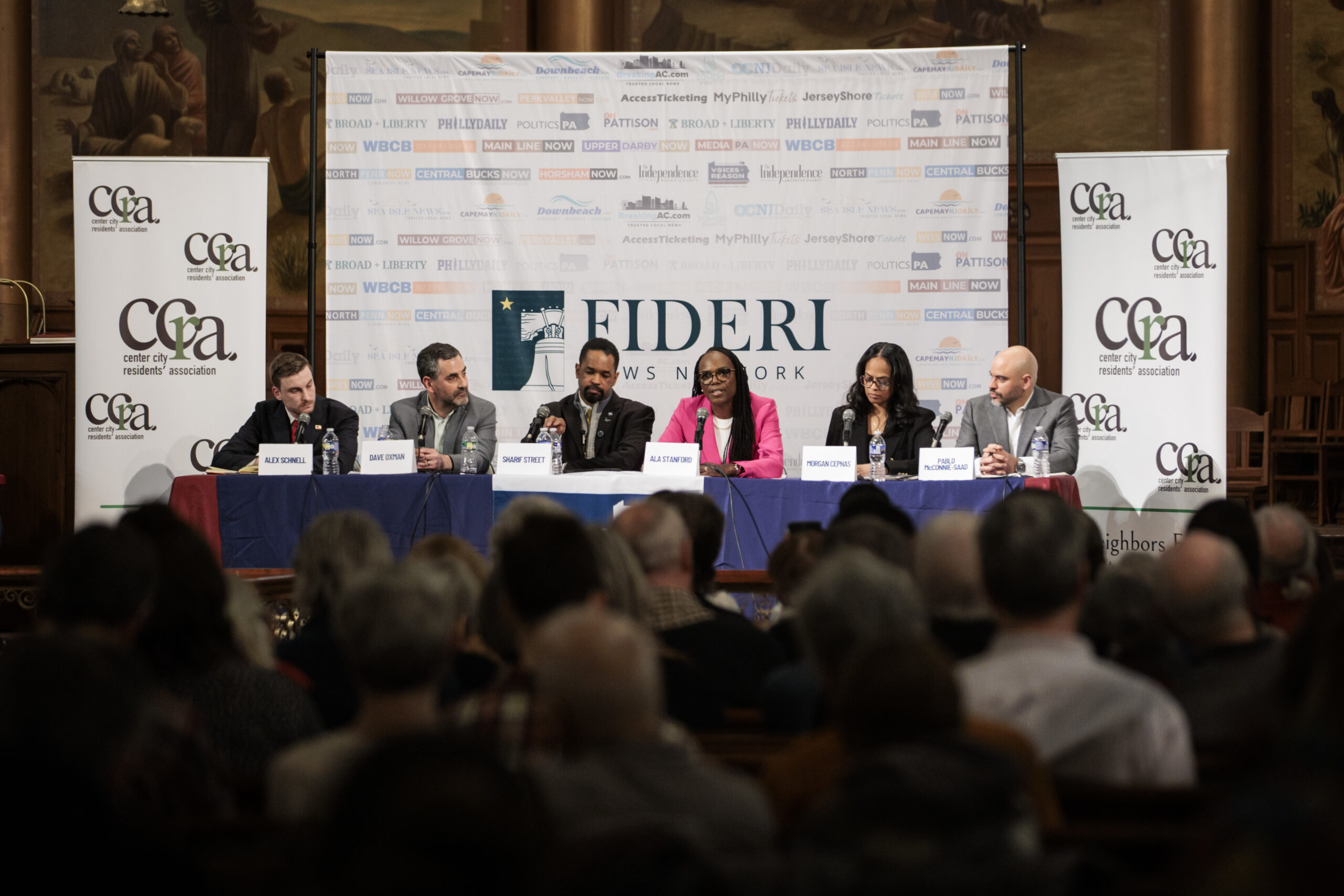
    At a candidate’s forum on Feb. 9 at the Church of the Holy Trinity, (left to right) Alex Schnell, physician Dave Oxman, State Sen. Sharif Street, physician Ala Stanford, State Rep. Morgan Cephas, and Pablo McConnie-Saad.

    Cephas said she orders Cooper Sharp at Angelo’s Pizzeria. Stanford’s go-to is American from Dalessandro’s. Street, a vegetarian, said he gets non-meat cheesesteaks from Hip City Veg and enjoys the cheese they use. (Mozzarella, per Hip City’s website.)

    And Rabb shouted out the cheesesteak egg rolls from Black Dragon, a West Philadelphia establishment offering a “unique fusion of Black American cuisine presented with the familiar aesthetics of classic Chinese American takeout,” according to its website.

    Still tense from the previous questions and perhaps a bit peckish, the candidates declined Agre’s offer to deliver closing remarks.

    Staff writers Max Marin and Ryan W. Briggs contributed to this article.

  • A legendary pizza family opens a ‘Philly’ cocktail bar in South Jersey

    A legendary pizza family opens a ‘Philly’ cocktail bar in South Jersey

    Vince Tacconelli didn’t set out to open another Tacconelli’s — or even a bar — in South Jersey. He saw a gap, and it wasn’t pizza.

    “If you’re in the Maple Shade area on a Thursday night at 8 o’clock, there’s nowhere to get a proper cocktail,” said Tacconelli, 33, a fifth-generation member of the pizzeria family. “We always end up going into Philly.”

    The repeated frustration has led Tacconelli to a new business venture. “I’m trying to build the cocktail bar I want to go to,” he said.

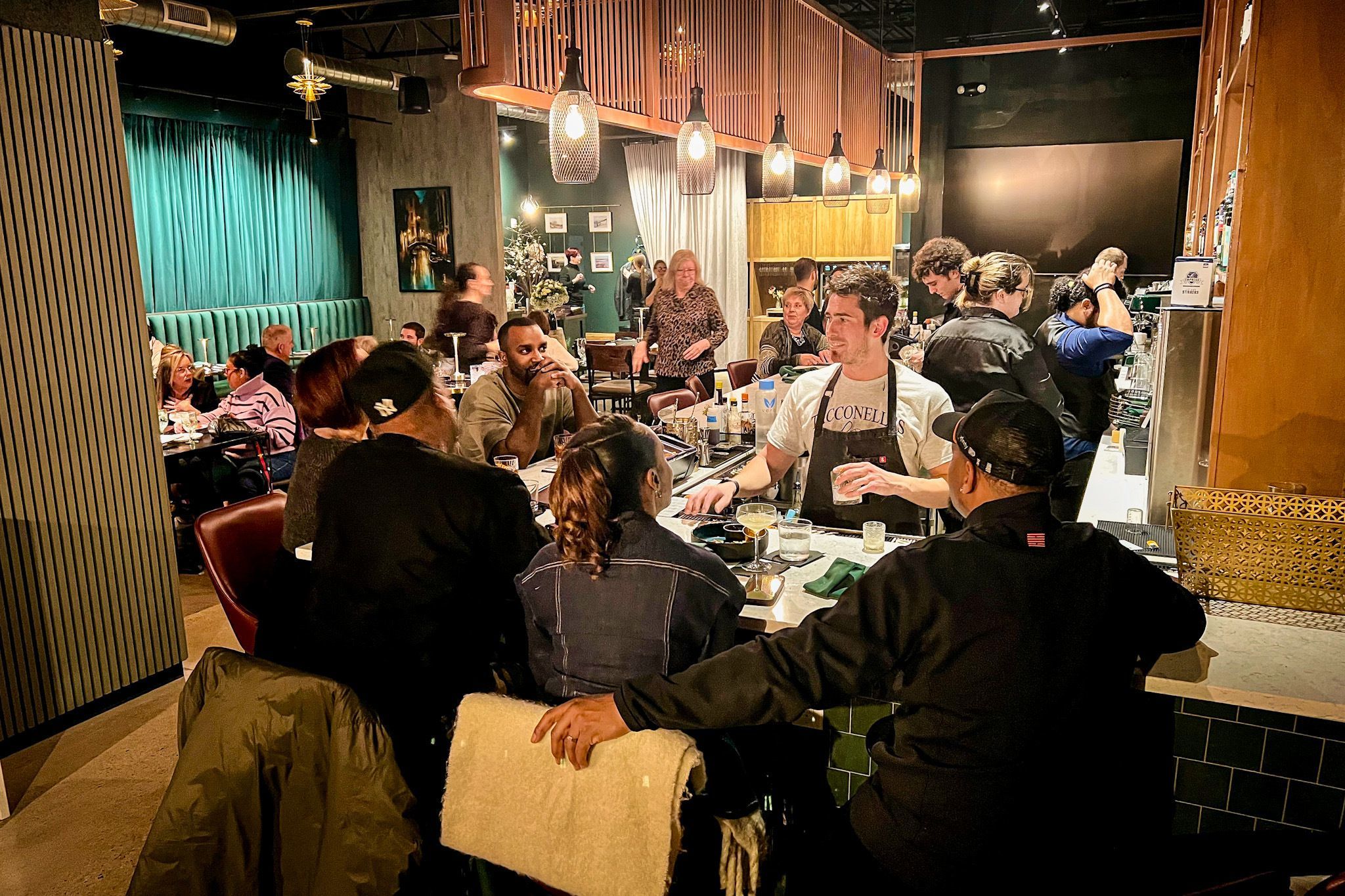
    Vince Tacconelli behind the bar at Bar Tacconelli, 461 Route 38, Maple Shade, on Feb. 21, 2026.

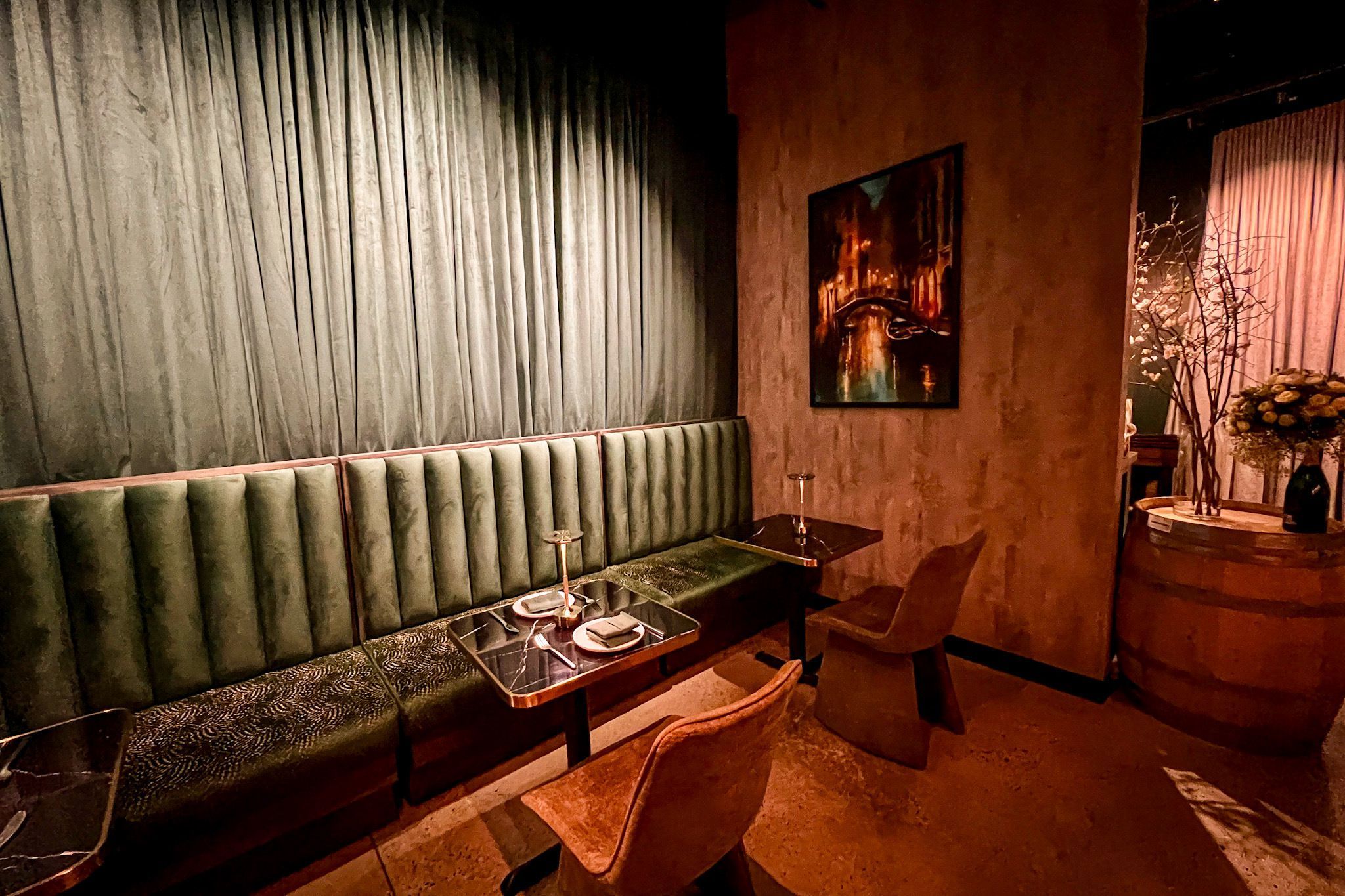
    Bar Tacconelli — an Italian-leaning cocktail lounge and bottle shop with late-night hours — opened in late February about four minutes from the Maple Shade pizzeria he owns with his father, Vince. The concept is aimed at locals who might otherwise cross the bridge.

    The opportunity, he said, came together “pretty organically.” Christine Zubris, a friend who owned Route 38’s Versi Vino, a strip-mall wine bar between the Cherry Hill and Moorestown Malls, told him that she was stepping away after five years.

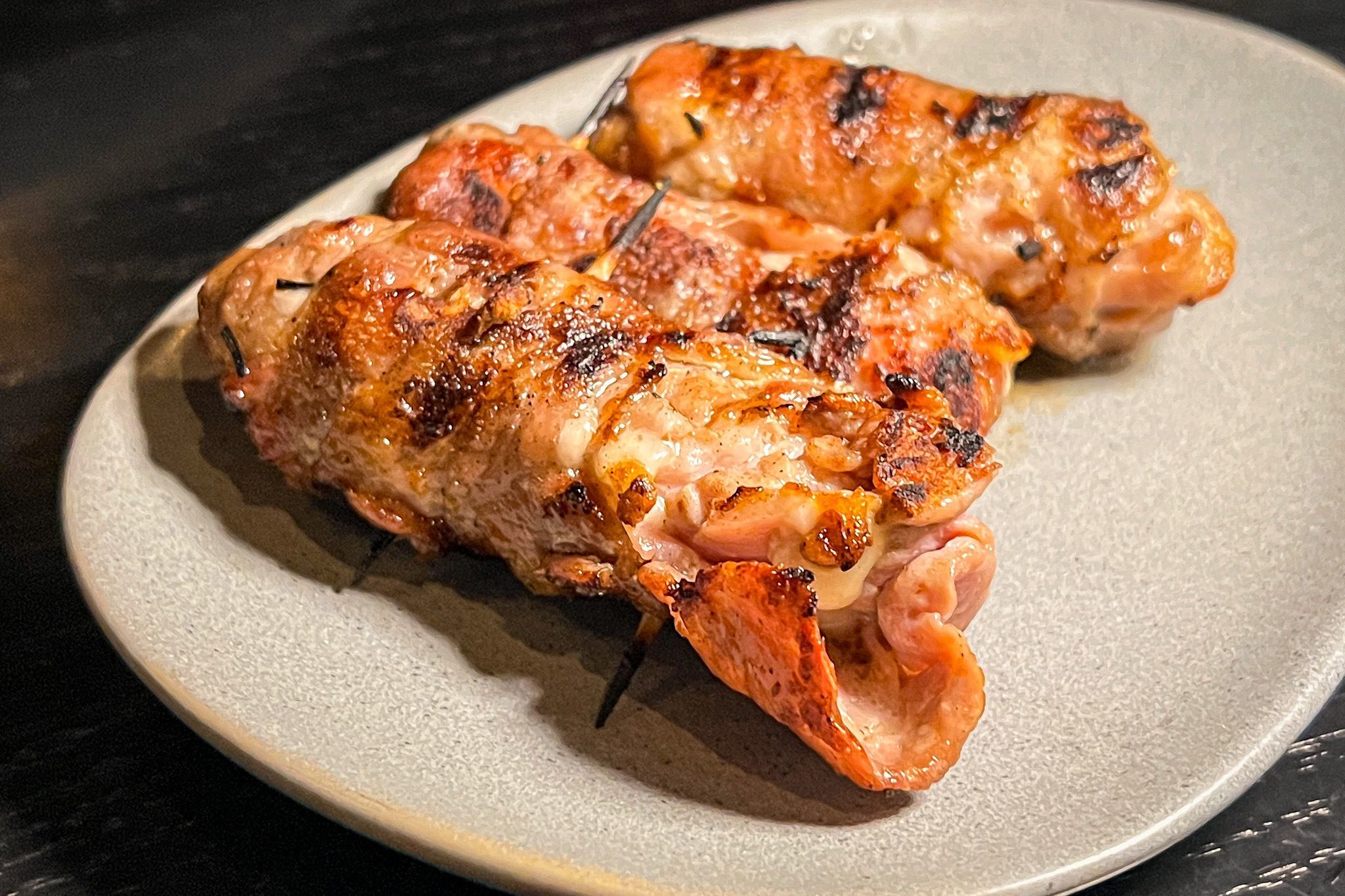
    Capocollo bombette at Bar Tacconelli, 461 Route 38, Maple Shade, on Feb. 21, 2026.

    “I kind of jokingly said to my father, ‘Let’s take it — let’s get our first liquor license,’” he said. “At first, we laughed. But I kept putting it out there. And sure enough, it fell onto my lap.”

    Tacconelli partnered with Greg Listino, whom he met through restaurant-equipment supplier Rosito Bisani, and Listino’s wife, Stacey Lyons, who operates Attico cocktail bar in Center City. The three of them had joked for years about opening a bar, Tacconelli said. “Next thing you know, they’re on board.”

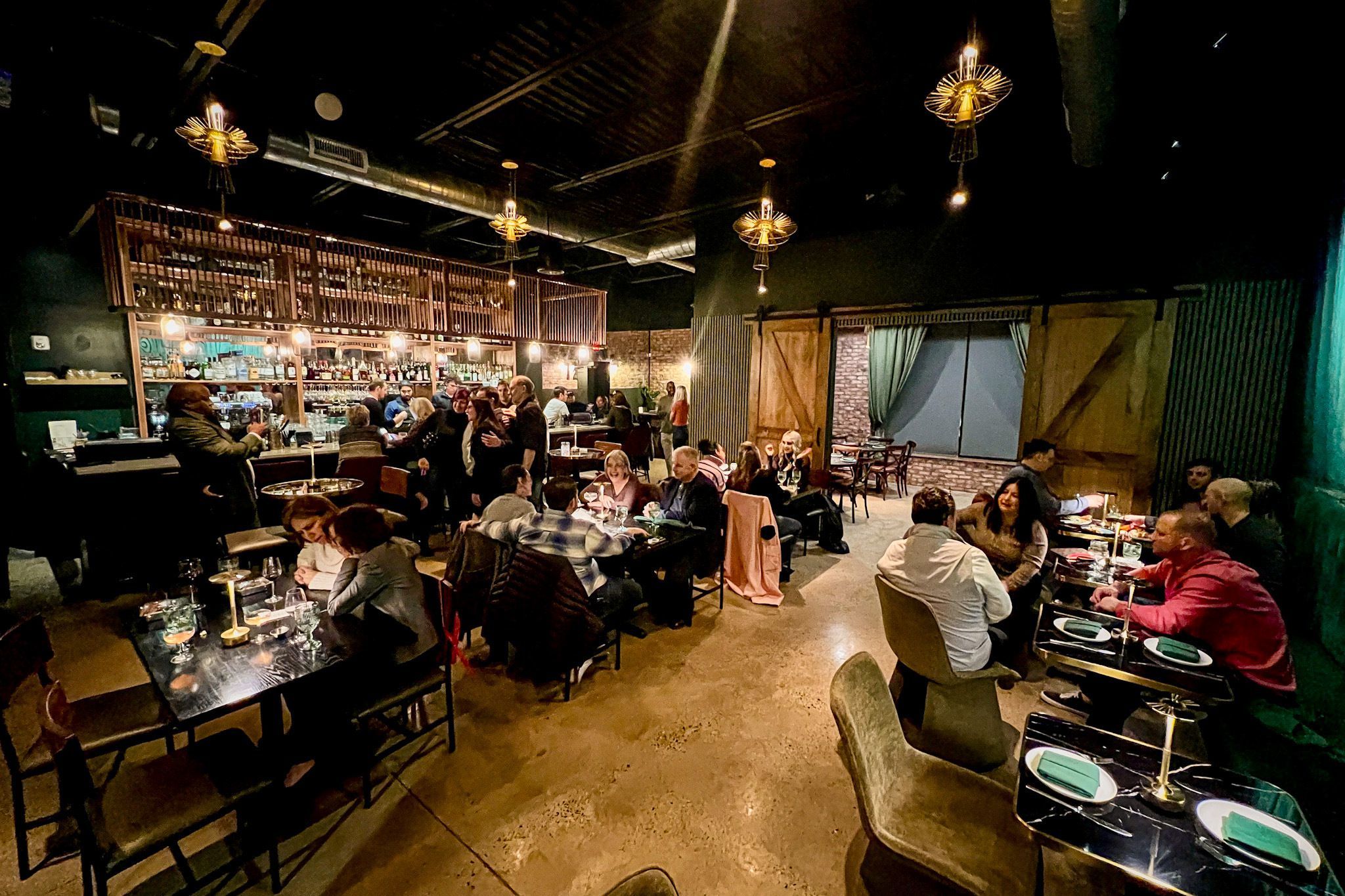
    Bar Tacconelli during a preview dinner on Feb. 21, 2026.

    They took over the 60-seat space this spring. Lyons designed it with a soft industrial look: an exposed black ceiling with visible ductwork warmed by sculptural pendant lights casting an amber glow. Along one wall, a run of plush, channel-tufted banquettes in muted green sits beneath heavy drapery, while sliding barn-style wood doors lead to a semiprivate room.

    The 12-seat bar has been expanded from the Versa Vino days and now includes a drink rail with room for eight.

    Lyons leads the extensive bar program. Italian wines join eight beers (including a pilsner created by Haddonfield’s Kings Road) and a cocktail list organized into four sections: “Essenziale” and “Frizzante” cover classics and easy, bubbly spritzes, while “Dal Giardino” introduces more culinary, Italian-inspired creations and “Rustico” leans into spirit-forward, amaro-driven cocktails. There’s also an eight-bottle wine dispenser next to the racks of wines for sale.

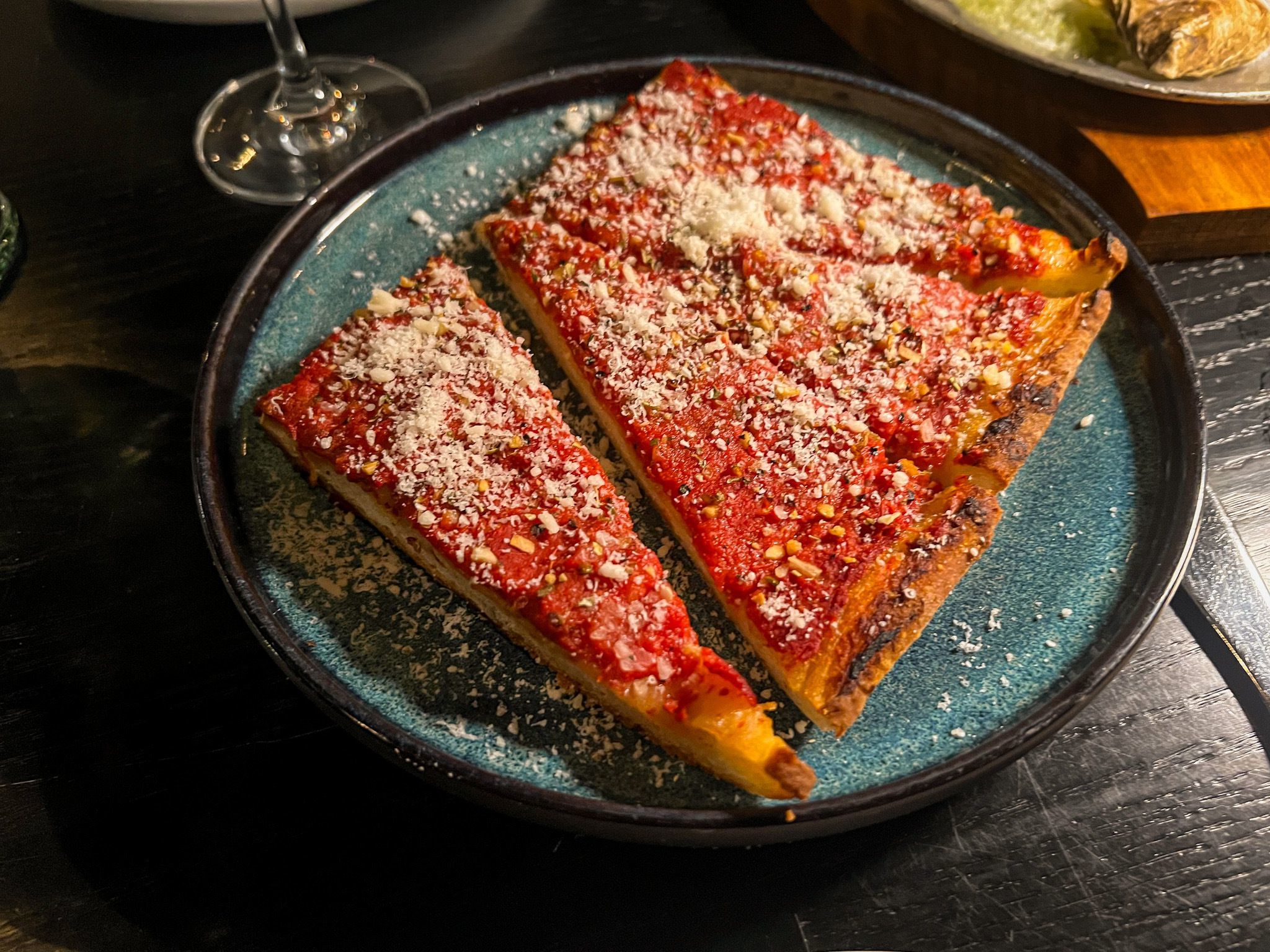
    Sicilian tomato pie at Bar Tacconelli, 461 Route 38, Maple Shade, on Feb. 21, 2026.

    Tacconelli runs the compact kitchen. There is no pizza, aside from wedges of Sicilian tomato pie — a deliberate choice given the proximity to the pizzeria. “I don’t want to take away from that,” he said. “It actually helps us. Instead of rushing people out, we can say, ‘Head over to the bar — we’ll call ahead, get you a drink.’”

    Tacconelli’s Maple Shade location opened in 2003 on Lenola Road, across from Moorestown Mall, and moved in 2014 to its current home on Main Street. Father and son — the fourth and fifth generations — opened a Haddon Township location in 2023. Those South Jersey restaurants are owned separately from the landmark Tacconelli’s, which began baking pizzas in 1948 in Philadelphia’s Port Richmond section.

    Chicken cutlet under a bed of arugula, roasted cherry tomatoes, and parmesan at Bar Tacconelli, 461 Route 38, Maple Shade, on Feb. 21, 2026.

    At Bar Tacconelli, the food skews small and shareable: baked oysters, chicken cutlet with lemon-parmesan arugula, meatballs, shrimp cannelloni, grilled prawns in salmoriglio, and capocollo bombette — the Pugliese fried meat roll stuffed with caciocavallo and pancetta. Most dishes land in the $14-to-$18 range; lamb chops, four for $24, are an outlier.

    The pricing is intentional. “I don’t want this to be an occasion place,” he said.

    Lounge seating at Bar Tacconelli, 461 Route 38, Maple Shade, on Feb. 21, 2026.

    It’s open from Wednesday through Sunday, with late-night service — potentially until 1:30 or 2 a.m. — aimed at another local shortfall.

    “When I get out of work at 9:30, I have nowhere to eat,” Tacconelli said. “I want a place you can come, hang out, have a Negroni, get something real to eat.”

    Live music, DJs, happy hour, and late-night menus are planned. Tacconelli also saw the liquor license as strategic — keeping it out of a chain’s hands — but the broader goal is to give South Jersey diners a reason to stay put.

    “There are a lot of young professionals around here who don’t want to go into Philly every time,” he said. “I want to be a destination for them.”

    Bar Tacconelli, 461 Route 38, Maple Shade. Hours: 4 to 11 p.m. Wednesday and Thursday, 4 p.m. to 2 a.m. Friday and Saturday, 2 to 10 p.m. Sunday.

  • Supreme Court rules the Postal Service can’t be sued, even when mail is intentionally not delivered

    Supreme Court rules the Postal Service can’t be sued, even when mail is intentionally not delivered

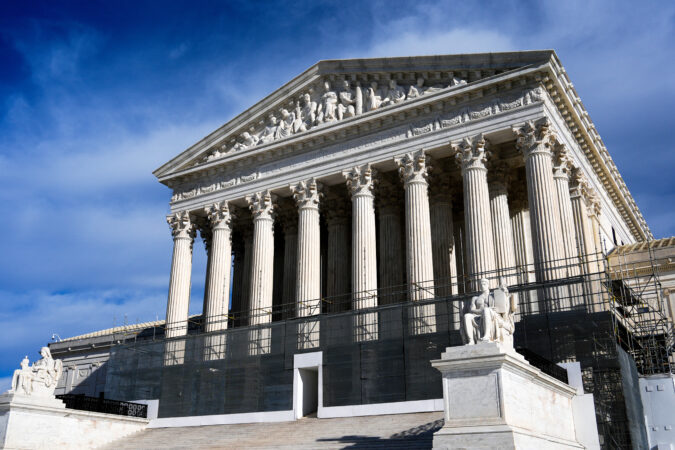
    WASHINGTON — A divided Supreme Court on Tuesday ruled that Americans can’t sue the U.S. Postal Service, even when employees deliberately refuse to deliver mail.

    By a 5-4 vote, the justices ruled against a Texas landlord, Lebene Konan, who alleges her mail was intentionally withheld for two years. Konan, who is Black, claims racial prejudice played a role in postal employees’ actions.

    Justice Clarence Thomas, writing for a majority of five conservative justices, said the federal law that generally shields the Postal Service from lawsuits over missing, lost, and undelivered mail includes “the intentional nondelivery of mail.”

    In dissent, Justice Sonia Sotomayor wrote that while the protection against lawsuits is broad, it does not extend to situations when the decision not to deliver mail “was driven by malicious reasons.” Justice Neil Gorsuch joined his three liberal colleagues in dissent.

    President Donald Trump’s Republican administration had warned that a ruling for Konan would have led to a flood of similar lawsuits against the cash-strapped Postal Service.

    Konan, who’s also a real estate agent and an insurance agent, claims two employees at a post office in Euless, Texas, part of the Dallas-Fort Worth metroplex, deliberately didn’t deliver mail belonging to her and her tenants because, she alleges, they didn’t like that she is Black and owns multiple properties.

    According to court documents, the dispute began when Konan discovered the mailbox key for one of her rental properties had been changed without her knowledge, preventing her from collecting and distributing tenants’ mail from the box. When she contacted the local post office, she was told she wouldn’t receive a new key or regular delivery until she proved she owned the property. She did so, the documents say, but the mail problems continued, despite the USPS inspector general instructing the mail to be delivered.

    Konan alleges the employees marked some of the mail as undeliverable or return to sender. Konan and her tenants failed to receive important mail such as bills, medications, and car titles, according to the lawsuit. Konan also claims she lost rental income because some tenants moved out due to the situation.

    After filing dozens of complaints with postal officials, Konan finally filed a lawsuit under the 1946 Federal Tort Claims Act, which allows some lawsuits against the government. The case focused on the reach of the special postal exemption to the law.

  • Raiders GM tamps down trade talk around Maxx Crosby, says he expects star edge rusher to stay with team

    Raiders GM tamps down trade talk around Maxx Crosby, says he expects star edge rusher to stay with team

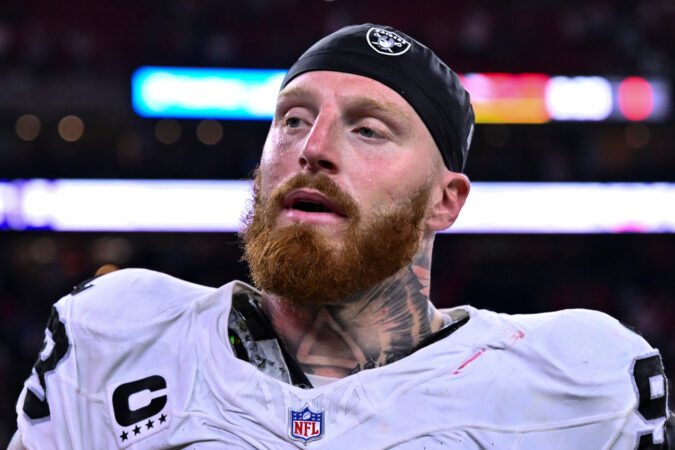
    INDIANAPOLIS — The Las Vegas Raiders are planning to keep star edge rusher Maxx Crosby despite the trade talk around the five-time Pro Bowl pick, general manager John Spytek said Tuesday.

    “Maxx is an elite player. I’ve been very upfront from the start since I got here, that we’re in the business of having really good players on the team, and we need a lot more of them,” Spytek said at the NFL scouting combine in Indianapolis.

    Crosby has been rehabilitating from left knee surgery he underwent three days after the regular season ended, as speculation about his status has persisted following an NFL-worst 3-14 record for the Raiders and the firing of coach Pete Carroll after just one year on the job.

    Crosby said earlier this month he doesn’t want out and that the unsubstantiated reports suggesting he does make him laugh. His future with the club that drafted him in the fourth round out of Eastern Michigan in 2019 became a subject when he was placed on injured reserve with two games left against his wish, preferring to play out the season. Crosby, who has 69½ sacks in seven years, had a career-high 28 tackles for loss in 2025.

  • Behind closed doors, GOP lawmaker questioned ‘disturbing’ East Wing demolition

    Behind closed doors, GOP lawmaker questioned ‘disturbing’ East Wing demolition

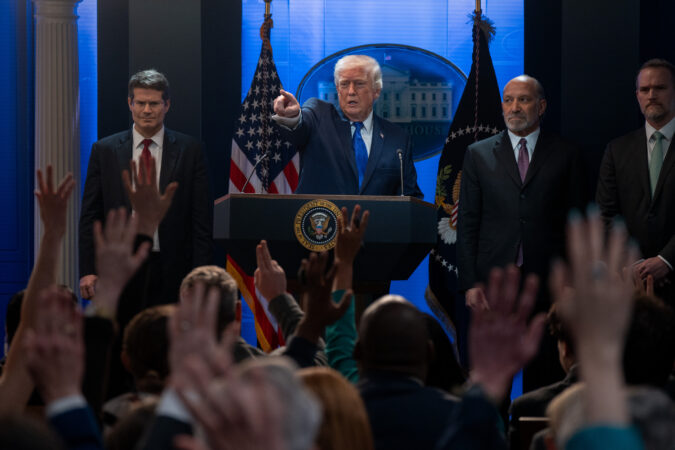
    As GOP leaders leaped to defend President Donald Trump’s decision to tear down the East Wing of the White House last year, one Republican lawmaker privately warned a senior White House aide that he had “substantial concerns” and demanded answers about how the decision was made.

    Administration officials had pledged the project would not “interfere” with existing structures, and the public had no warning about the demolition.

    “The stark images of the East Wing demolished in mere days were disturbing to Americans who cherish preservation of our nation’s history,” Rep. Michael R. Turner (R., Ohio), co-chair of the congressional Historic Preservation Caucus, wrote in an Oct. 24 letter obtained through a Freedom of Information Act request and shared with the Washington Post.

    Turner’s correspondence to Will Scharf, Trump’s staff secretary and chairman of the National Capital Planning Commission, the review committee with the power to approve or reject the ballroom project, raised questions about oversight, transparency, and process, including whether the White House had taken steps to preserve artifacts.

    The communication, obtained by the government watchdog group Public Citizen, adds to the public understanding of sweeping concerns voiced by members of Congress, preservationists and others over transparency and other issues with Trump’s project. A federal judge is weighing a legal challenge to the construction.

    Scharf responded more than seven weeks later, telling Turner that Trump administration officials did not consult with or get the approval of the commission before tearing down the East Wing. But, he added, they were not required to since the commission’s review process covers only “vertical” construction — not demolition or site preparation. Scharf has made the same argument several times since, a position critics have blasted as absurd because those three steps are so closely linked — and because part of the commission’s duty in reviewing projects is to consider the preservation of buildings that already exist.

    Turner declined, through a spokeswoman, to discuss the letter or his concerns, and none of the other 17 Republicans on the Historic Preservation Caucus responded to interview requests.

    The letter from Turner “revealed what people were really thinking,” said Jon Golinger, democracy advocate at Public Citizen. “I bet there’s a lot more high-ranking Republicans who feel the same.”

    Trump has cast the 90,000-square-foot, privately funded addition as a needed upgrade to the White House that taxpayers will not have to support. Administration officials have publicly identified about two dozen companies and about a dozen individual donors they say have already contributed hundreds of millions toward the $400 million project, including major corporations such as Amazon, Google, and Palantir that collectively have billions of dollars in contracts before the administration. (Amazon founder Jeff Bezos owns the Washington Post.)

    Americans oppose Trump’s demolition of the White House’s East Wing by a more than 2-to-1 ratio, according to an Economist/YouGov poll conducted this month.

    Given that, Golinger said, he’s not surprised by Republicans’ relative silence on the project in a midterm election year.

    “I certainly haven’t seen a lot of campaign ads saying, ‘Elect me for this reason,’” Golinger said. “No Republicans have had to … put their name behind this project and say, ‘This is what I stand for.’”

    Many liberal lawmakers and political groups, meanwhile, have invoked the ballroom in appeals to voters ahead of the midterms. Congressional Democrats have pressed the Trump administration and its allies to divulge more details, asking whether donors stand to gain for their contributions.

    “BLOCK Trump’s White House Ballroom,” said one fundraising email sent by Defend Democracy Now PAC last month. “Top Democrats are fighting TOOTH AND NAIL to stop this wasteful project in its tracks.”

    On Oct. 30, Rep. Teresa Leger Fernandez (D., N.M.), Turner’s fellow co-chair on the Historic Preservation Caucus, was among the 60 House Democrats who sent Trump a public letter asking for some of the same information Turner had requested privately less than a week before.

    U.S. District Judge Richard J. Leon is expected to rule soon on whether the project can proceed after criticizing the Trump administration for making an “end run” around congressional oversight by soliciting private donations for the project rather than seeking taxpayer money.

    At a court hearing last month, Leon expressed skepticism of Justice Department lawyers’ argument that Congress had authorized the White House to make changes to its grounds by setting aside several million dollars in funding and allowing the Interior Department to solicit gifts for national parks.

    Leon, a George W. Bush appointee, said the congressional authorization was narrow and limited to matters such as White House maintenance, not carte blanche to undertake one of the biggest changes in the White House’s history. Justice Department lawyers have argued that any pause on the project could pose a national security risk and said they will immediately appeal if Leon grants a stay on construction.

    If he rules that Congress must explicitly authorize the ballroom building, Trump could press congressional Republicans to deliver, which would commit Turner to a public up-or-down vote.

    “There will be nowhere to run,” Golinger said, “and nowhere to hide.”

  • Robert Carradine, ‘Revenge of the Nerds’ and ‘Lizzie McGuire’ star, has died at 71

    Robert Carradine, ‘Revenge of the Nerds’ and ‘Lizzie McGuire’ star, has died at 71

    Robert Carradine, the youngest of his prolific Hollywood family and whose biggest hit was the 1984 comedy Revenge of the Nerds, has died at 71.

    In a Tuesday statement, his family said he lived with bipolar disorder for two decades. His brother told Deadline that Mr. Carradine died by suicide.

    “We want people to know it, and there is no shame in it,” Keith Carradine told Deadline. “It is an illness that got the best of him, and I want to celebrate him for his struggle with it, and celebrate his beautiful soul. He was profoundly gifted, and we will miss him every day.”

    Known for both his film and television work, Robert Carradine worked steadily in the industry for over 40 years. Though he collaborated with some of the most respected directors of the day, he never gained the worldwide recognition of his more famous siblings Keith Carradine (also the father of Martha Plimpton) and half brother David Carradine, who died in 2009.

    Robert Carradine, a Los Angeles native and son to character actor John Carradine, was introduced to audiences with roles on the television series Bonanza in 1971 and in the John Wayne western The Cowboys in 1972.

    Despite his family background, acting wasn’t his first calling, though.

    “I always had a passion to be a race car driver, and that’s what I thought I was going to do, and at some penultimate moment … I think I was sitting with my brother David when The Cowboys was being cast, and they were interested in David as the bad guy, and he didn’t want to be the guy that shot John Wayne in the back,” Mr. Carradine recalled in a 2013 interview with Popdose. “But he said, ‘You know, it is called The Cowboys, and they’re meeting all these young guys. Why don’t you go in?’”

    In addition to starring in a short-lived television spinoff of The Cowboys, and appearing alongside David Carradine in his popular ABC series Kung Fu, he would go on to nab roles in Martin Scorsese’s Mean Streets, Hal Ashby’s Vietnam drama Coming Home, and Samuel Fuller’s World War II film The Big Red One.

    The heights of his brother David’s success eluded Robert Carradine, but the two could often be seen in the same projects, including in Walter Hill’s The Long Riders and Paul Bartel’s Cannonball.

    Robert Carradine’s biggest hit would come in 1984 with the off-color comedy Revenge of the Nerds, in which he played head nerd Lewis Skolnick, with his abrupt, infectious, and guttural laugh. He reprised the role for the big-screen sequel and two made-for-television follow-ups, and continued to pay homage to the beloved character with a guest role on the series Robot Chicken and as a co-host (with Revenge of the Nerds co-star Curtis Armstrong) of the pop culture competition show King of the Nerds, which aired for three seasons.

    In the late 1980s and 1990s, according to the family statement, Mr. Carradine realized his racing ambitions and was a driver for Lotus. In the 2000s, Mr. Carradine gained small-screen success in The Disney Channel’s Lizzie McGuire as the eponymous character’s father.

    “It’s really hard to face this reality about an old friend,” Hilary Duff, who played Lizzie McGuire, wrote on Instagram. “There was so much warmth in the McGuire family and I always felt so cared for by my on-screen parents. I’ll be forever grateful for that. I’m deeply sad to learn Bobby was suffering.”

    Work remained consistent even if the projects diminished in prestige and quality. Then Quentin Tarantino, ever the champion of fading character actors, cast Mr. Carradine in Django Unchained as one of the trackers in the 2012 film after seeing a “very furry” photograph, as Mr. Carradine told Popdose.

    In 2015, Mr. Carradine was cited for a Colorado crash that injured him and his wife, Edith Mani. They later divorced, after more than 25 years of marriage.

    Mr. Carradine’s survivors include his three children, actor Ever Carradine, Marika Reed Carradine, and Ian Alexander Carradine.

    “Whenever anyone asks me how I turned out so normal, I always tell them it’s because of my dad. I knew my dad loved me, I knew it deep in my bones, and I always knew he had my back,” Ever Carradine wrote on Instagram. “I think it’s partly because we basically grew up together. Twenty years age difference really isn’t that much, and while I never ever thought of him as a sibling, I did always think of him as my partner. We were in it together.”

    This story includes discussion of suicide. If you or someone you know needs help, the national suicide and crisis lifeline in the U.S. is available by calling or texting 988.

  • Trump’s newest tariffs could face legal challenge, though time is short

    Trump’s newest tariffs could face legal challenge, though time is short

    President Donald Trump’s new tariffs are not legally justified, according to several prominent economists and trade experts, who say there is no sign of the profound international financial problems that such measures were intended to remedy.

    Hours after the Supreme Court invalidated the emergency tariffs that he imposed last year, Trump on Friday invoked a 1974 law to announce a new 10% global import tax, later raising it to 15%. The president cited a provision known as Section 122 that authorizes temporary restrictions on imports to deal with “fundamental international payments problems.”

    In an official proclamation, the president said the nation’s “balance of payments,” a comprehensive account of Americans’ financial transactions with foreigners, was suffering “a large and serious deficit.” And he listed a number of metrics reflecting a deteriorating U.S. financial posture.

    The law does not define “balance-of-payments deficit,” and economists disagree about what should be included in the term. But several critics, including the International Monetary Fund’s former chief economist and a prominent conservative legal commentator, disputed the president’s claim. Trump wrongly conflated an alleged payments deficit with the merchandise trade deficit that he targeted last year with his first set of comprehensive tariffs under the International Emergency Economic Powers Act (IEEPA), they said.

    “The U.S. does not have a ‘payments’ problem. It can finance its trade deficits,” Gita Gopinath, the former IMF official, now teaching at Harvard University, wrote on X.

    Added Andrew McCarthy, a former federal prosecutor, writing in the conservative National Review: “These new tariffs are even more clearly illegal than Trump’s IEEPA tariffs.”

    Opposition to the new import taxes erupted even before they took effect at 12:01 a.m. on Tuesday. The outcry suggested that the president, still smarting from his 6-3 Supreme Court defeat, could face renewed legal jeopardy over the centerpiece of his economic agenda.

    “I do anticipate a lawsuit,” said Scott Lincicome, vice president of general economics for the Cato Institute and a former trade lawyer.

    U.S. importers would have the right to sue once they paid the tariffs. Liberty Justice Center, the nonprofit public-interest law firm that represented several small businesses in one of the tariff cases decided by the Supreme Court, said Monday that it is “closely monitoring” the president’s latest actions.

    “We will ensure that whatever authority the executive branch relies on, it follows the rules Congress actually wrote and the constitutional guardrails that protect our system of separated powers,” said Sara Albrecht, the center’s chairman.

    The debate over the Section 122 levies shows that questions of law and economics will continue to dog Trump’s bid to remake the global trading system. This time, there is no question that Congress has delegated to the president the power to levy tariffs — only under what circumstances. At issue are complex definitional questions of international economics and the legislative intent behind the wording of an untested provision in U.S. trade law.

    Time may also be a factor. The Section 122 tariffs expire after 150 days unless Congress votes to extend them, which is unlikely.

    Judges might be reluctant to “second guess” the president’s judgment on whether a balance-of-payments problem exists, said John Veroneau, a lawyer who served as deputy U.S. trade representative under President George W. Bush.

    Still, the administration’s newfound reliance upon Section 122 reverses the legal arguments it made last year. Defending the president’s emergency tariffs, Justice Department attorneys told an appeals court that Section 122 did not apply to Trump’s trade deficit concerns, which were “conceptually distinct from balance-of-payments deficits.”

    The White House declined to elaborate on the president’s Feb. 20 proclamation and fact sheet, which blamed a loss of domestic manufacturing for an excessive number of dollars leaving the country. Problems with the nation’s balance of payments can “endanger the ability of the United States to finance its spending, erode investor confidence in the economy, and distress the financial markets,” the proclamation said.

    Congress passed the Trade Act of 1974 when the United States was dealing with a distinctly different set of economic issues. In 1971, President Richard M. Nixon abruptly ended the convertibility of dollars into gold, marking the end of the Bretton Woods system of fixed exchange rates.

    At the time, foreign central banks were rushing to trade their unwanted dollars for gold, threatening to deplete U.S. financial reserves.

    There’s no sign of that sort of crisis today. The dollar has dropped about 10% over the past year, but it remains above its level for most of the decade leading to 2015. There’s certainly no sign of the “imminent and significant depreciation” that Section 122 requires.

    But even some Democrats say the administration is reacting to worrisome financial ailments.

    Economist Brad Setser, who served in the Treasury Department under President Barack Obama, said the global economy is characterized by dangerous imbalances.

    For years, the U.S. has run a deficit in its current account, the broadest measure of the nation’s trade balance, while China has run a mirror-image surplus. To keep running a large trade deficit, the U.S. must attract financing from abroad. So far, it’s been able to do that, which is why many analysts do not share the administration’s urgency.

    But the nation’s net international investment position — which balances the value of foreign stocks and bonds owned by Americans against what foreigners own in this country — is also deteriorating. That figure reached negative $26.7 trillion last year, down sharply in recent years.

    Some of that decline reflects foreigners’ large purchases of U.S. stocks, which have outperformed other markets, and thus is not a problem, Setser said. But the deterioration in the investment account also stems from the growth in the U.S. external debt, which carries a rising interest burden.

    “At this level of the current account [deficit], U.S. external debt will tend to rise. The external position will tend to weaken, which is one definition of a balance-of-payments problem,” he said. “The debt position does worry me.”

  • Temple women have turned things around as the American Conference Tournament looms

    Temple women have turned things around as the American Conference Tournament looms

    With four games remaining in the women’s basketball regular season, Temple is not where it envisioned it would be. The Owls were coming off consecutive 20-win seasons and picked to finish fourth in the American Conference this season.

    Instead, Temple stands at 12-14 with a 6-8 mark in conference play and finds itself fighting to make the tournament instead of battling for a top seed.

    The Owls slid as low as ninth in the standings and were one game away from falling out of the top 10, and only the top 10 teams make the conference tournament. Temple has righted the ship with back-to-back wins against Charlotte and Memphis to move to seventh place but is still looking to improve.

    “We have been up and down,” coach Diane Richardson said. “But I think we are playing better together. … Hopefully we are on the upswing. I know it’s going to be a tough hill to climb to get into the conference tournament and even if we are in the conference tournament, it’s going to be five games [in five days].”

    Temple’s remaining games offer a unique set of challenges and circumstances. It faces two of the top three teams in the conference in Rice on Wednesday and South Florida next Tuesday. It will face two teams below the Owls in the conference in Alabama-Birmingham on Saturday and Florida Atlantic on March 7.

    Kaylah Turner has been a key contributor for Temple this season.

    The Owls almost certainly will have to play five games in five days at the conference tournament in Birmingham. That will present a challenge for Temple since its depth has not progressed to the level Richardson desires.

    While the reserves have been improving — Temple had 14 bench points in its 65-62 win against Memphis on Sunday — their lack of production is why the Owls have fallen in the standings, and Richardson knows it will be a factor in March.

    “They’re starting to pick things up and not be so hesitant and be more confident in what they’re doing,” Richardson said. “Knowing how they have to help us. They have to. Seeing how we’ve done this season with going up and down, up and down, and not being able to really count on the bench as much. They kind of see that.”

    Without a strong bench, Richardson has relied on guards Kaylah Turner and Tristen Taylor and forwards Jaleesa Molina and Saniyah Craig.

    Craig has especially improved. She’s been a force in the paint for the Owls, scoring in double figures in the last seven games, and has hit double-digit points in every conference game beside two, while averaging 8 rebounds.

    “She’s been more of a leader, so she’s talking more,” Richardson said. “She’s more comfortable and talking, and that in turn has stepped up her game. That confidence is like, ‘OK, let’s go, let’s go.’ If you hear on defense, you can hear her talking the whole time.
And that also helps her teammates, kind of gets a little fire in everybody else.”

    Guard Savannah Curry has also increased her production. She missed the first four games of conference play with a facial injury and struggled to find her role upon returning. However, she scored career highs in points (18 and 21) in consecutive games against East Carolina and Charlotte.

    Curry’s emergence could be important in taking some of the burden off the Owls’ top four contributors. While Temple is no longer on the verge of missing the conference tournament, it wants to end its regular season on a high note.

    “We’re looking at one game at a time,” Richardson said. “If we make the tournament, that’ll be great. If we don’t, we’re still working on getting better and us playing together and cohesively. So, right now, we’re concentrating on one game at a time.”

  • Savannah Guthrie says her family is offering a $1 million reward for her mother Nancy’s recovery

    Savannah Guthrie says her family is offering a $1 million reward for her mother Nancy’s recovery

    Today show host Savannah Guthrie said her family is now offering a $1 million reward for information leading to the recovery of her mother, Nancy Guthrie, who went missing from her Arizona home more than three weeks ago.

    Savannah Guthrie said Tuesday that her family is still holding out for a miracle and hopes her mother will be found alive, but she also acknowledged that they realize it might be too late.

    “She may already be gone,” Savannah Guthrie said in an Instagram post. “She may already have gone home to the Lord that she loves and is dancing in heaven.”

    Nancy Guthrie, 84, was last seen at her home just outside Tucson, Ariz., on Jan. 31 and was reported missing the next day. Authorities believe she was kidnapped, and the FBI released surveillance videos of a masked man who was outside Guthrie’s front door on the night she vanished.

    Drops of her blood were found on the front porch, but authorities haven’t publicly revealed much evidence. Since the first days of her disappearance, authorities have expressed concern about Nancy Guthrie’s health because she needs vital daily medicine.

    Savannah Guthrie said her family needs to know where her mother is no matter what happened.

    “Someone out there knows something that can bring her home,” she said.

    Several hundred people are working the Guthrie investigation, and more than 20,000 tips have been received, the Pima County Sheriff’s Office has said. The FBI and other agencies are assisting.

    The porch camera footage released two weeks ago, which showed a man wearing a backpack and gloves outside Nancy Guthrie’s house, gave investigators their first major break. But it also has fueled intense speculation.

    The sheriff’s department said Monday that it’s aware of differences in the masked person’s clothing depicted in various images that were released, namely with and without a backpack.

    “There is no date or time stamp associated with these images,” the department said. “Therefore, any suggestion that the photographs were taken on different days is purely speculative.”

    Sheriff Chris Nanos said a week ago that members of Guthrie’s family, including siblings and spouses, are not suspects.

    Savannah Guthrie said Tuesday that her family also will donate $500,000 to the National Center for Missing and Exploited Children.

    “We are hoping that the attention that has been given to our mom and our family will extend to all the families like ours,” she said.

  • Chris Sale, Braves agree to one-year, $27 million deal for 2027

    Chris Sale, Braves agree to one-year, $27 million deal for 2027

    ATLANTA — Left-hander Chris Sale and the Atlanta Braves agreed Tuesday to a contract worth $27 million for the 2027 season.

    A 36-year-old, who won the 2024 NL Cy Young Award in his first season with Atlanta, Sale agreed to a deal that includes a $30 million team option for 2028.

    Atlanta acquired Sale from Boston in December 2023 and he agreed to a reworked $38 million, two-year contract that included an $18 million club option for 2026. The Braves exercised the option in November.

    Sale is 25-8 with a 2.46 ERA in 49 starts and one relief appearance with the Braves. He made the All-Star team twice, raising his total to nine.

    He is 145-88 with a 3.01 ERA is 15 major league seasons with the Chicago White Sox (2010-16), Boston (2017-23) and Atlanta, striking out 2,579 in 2,084 innings. His 11.1 strikeouts per nine innings are the most among pitchers with 1,500 or more innings.

    Sale has thrived with the Braves after making nine trips to the disabled and injured lists with the Red Sox, mostly with shoulder and elbow ailments. He had Tommy John surgery on March 30, 2020, and returned to a big league mound on Aug. 14, 2021.