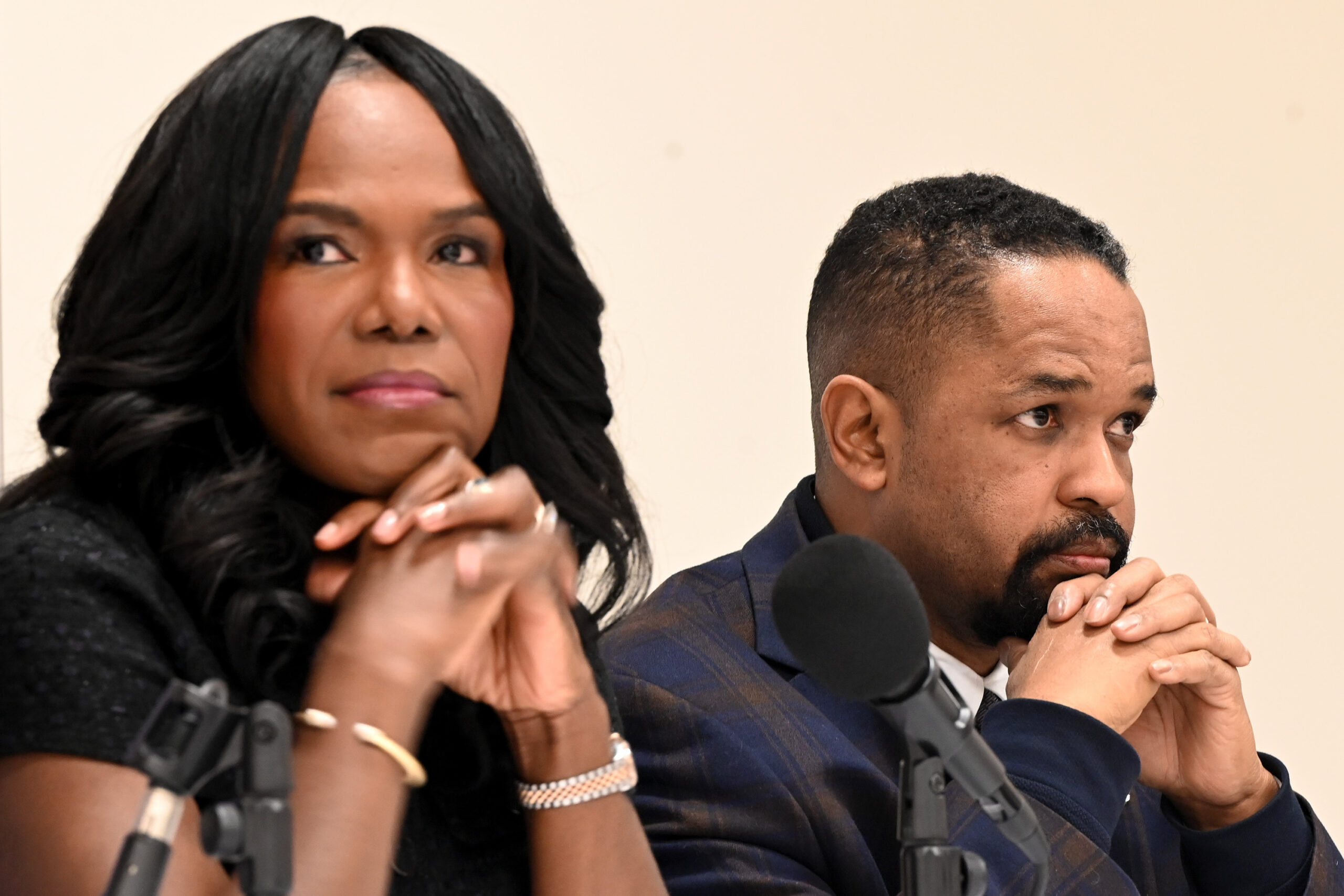
Burford (née Grasso) played volleyball at Rowan from 2010 to 2014 before entering coaching and spent the last two seasons as head coach at Catholic University. She previously held assistant coaching roles at Goucher College, Delaware State, and Frostburg State.
“This program has always meant so much to me because of my experience here as a student-athlete, alum, and student-assistant coach,” Burford said in a news release. “I’m truly excited by the work Deana did to shape Rowan volleyball into the culture and program it is today and feel so lucky to be a part of it again.
“Returning to my alma mater and being part of this program feels like a full-circle moment, and I’m excited to work with a group of strong, talented young women as we continue to grow together.”
The Profs were 25-6 and 7-1 in the New Jersey Athletic Conference last season. Rowan lost to Stockton in the semifinals of the NJAC tournament 11 days after Jespersen’s death.
“Coach [Jespersen] instituted a strong culture of family and togetherness, and I’m confident that Coach [Burford] will build upon that similar philosophy to lead our program to success on and off the court,” Rowan athletic director Shawn Tucker said in the release.
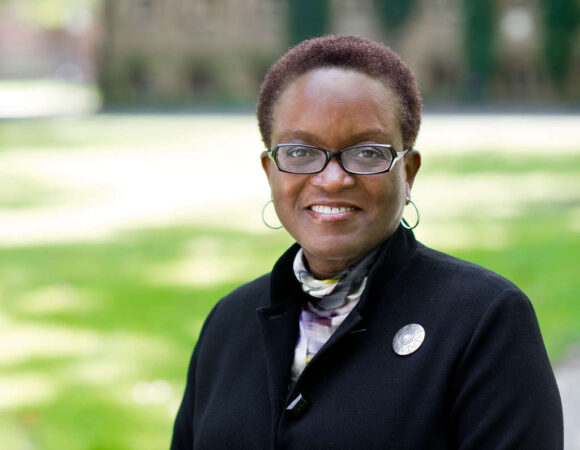
Swarthmore College President Valerie Smith will step down in June 2027 after concluding her 12th academic year in the job.
Smith, the highly selective liberal arts college’s first African American president, said in a message to campus that she decided to announce her decision now to give the school time for “a thoughtful, seamless transition.”
“Serving as Swarthmore’s 15th president has been one of the great privileges of my life,” she said.
Smith, 70, didn’t say specifically why she is choosing to leave the presidency, but it will be at the end of her current contract, which had been extended in 2024. An attempt to reach her for comment Tuesday was not successful.
“These are tumultuous times,” Smith wrote. “Like many institutions, we are navigating new pressures, including unprecedented threats to our very mission. We will continue to face these challenges together, thoughtfully and deliberately. In doing so, we reaffirm Swarthmore’s enduring value.”
The college said it would launch a search for Smith’s successor and already had chosen a search firm.
“This is a pivotal moment for the college and for higher education more broadly, and the board recognizes how consequential this search will be in shaping Swarthmore’s future,” said Harold “Koof” Kalkstein, a 1978 graduate and chair of the school’s board of managers.
A scholar of African American literature and culture, Smith came to Swarthmore in July 2015 from Princeton, where she had been dean of the college and a professor of literature and English.
Smith steered Swarthmore through COVID-19, various student protests — including a pro-Palestinian encampment that was erected on campus in 2024 — and more recently, funding threats from the federal government. Swarthmore had feared that the federal government would increase the excise tax on its endowment earnings, but the school actually ended up not having to pay at all under new rules announced last year.
In 2021, the college decided to stick with a plan to partner with an organization that places retired military personnel on campus as visiting faculty members despite pushback.
“I ultimately drew from the College’s mission and my fundamental belief that critical to the liberal arts is our ability to engage in the exchange of diverse and often opposing views, not to shut them out,” Smith wrote at the time.
When she arrived at Swarthmore, she said her plan for dealing with a student body known for its activism was to listen carefully, craft a careful and well-researched response, and communicate.
“It’s critically important to maintain open dialogue with students,” she said at the start of her presidency in 2015.
“She has modeled integrity, intellectual curiosity, compassion, and empathy, all in service of our shared mission,“ Kalkstein said. ”Swarthmore is forever stronger thanks to Val’s leadership.”
When my neighbor told me during last month’s snowstorm that I had to shovel the sidewalk around my house, I thought she was joking. It’s my first winter in the city. It didn’t snow much where I grew up, so the whole idea of shoveling snow was foreign to me. Call me naive, but I assumed the city would do it. Or my landlord. But no. Evidently, it was my responsibility. I guess that’s why there was a shovel in the shed. I remember seeing it when I moved in and wondering when, if ever, I had shoveled before.
Well, I was about to make up for lost time. My house sits on a corner lot, which means I pay for the great light it got with extra sidewalk that now had to be shoveled. I tried to convince myself and my partner, whom I forced to help me, that it would be a fun family adventure. A little bit of exercise in the fresh air. Honestly, how long could it take? 15 minutes, max, I thought to myself as I strapped my 4-month-old baby, who is basically an 18-pound kettlebell, to my chest and got to work.
Within minutes, my baby was asleep, the steady digging and chucking motion of shoveling lulling him even as it shredded back muscles I never knew I had. At least one of us was at peace. An hour into the job, with the end still nowhere in sight, my 11-year-old neighbor waddled over and asked if she could do my stairs for me. Was she acting out of goodwill, or had she heard me hacking up a lung through her double-pane bedroom window? I wasn’t sure. I didn’t care. “You sure can,” I said.
She knocked on my door to let me know she was done. She didn’t ask for any money, but I gave her $10 anyway. I probably would’ve given her $100 if she’d asked. That’s how desperate I was not to have to shovel anymore. This is what economists call demand.
And it was clear this past Monday, when it snowed again, that word had gotten out about me, because not one, not two, but three kids offered to shovel for me. Except this time, they wanted to be paid. And they already had a price in mind: $30 to do the remainder of my sidewalk.
Snow caps the roof of a birdhouse outside a home in Wallingford, Monday, Feb. 23, 2026, a day after a blizzard swept through the Philadelphia region.
But I had already spent two hours doing the majority of it. Between the three of them, it would probably take about six minutes to do the rest. That’s an hourly rate of $300. Were they shoveling my sidewalk or representing my company in court?
Obviously, that was an absurd amount of money for a small amount of work. I should’ve refused to pay, if only to teach these kids a lesson about hard work and economic fairness. On the other hand, I was sleepy. I’m a new parent. I didn’t want to shovel anymore.
So, yes, I paid them $30, and I would do it again. Was it highway robbery? Definitely. But the richest I ever felt in my life was the moment I tossed that stupid shovel back into the shed and locked the door.
KYIV, Ukraine — Ukrainian President Volodymyr Zelensky declared Tuesday that Russia has not “broken Ukrainians” nor triumphed in its war, four years after an invasion that has severely tested the resolve of Kyiv and its allies and fueled European fears about the scale of Moscow’s ambitions.
In a show of support, more than a dozen senior European officials headed to the Ukrainian capital to mark the grim anniversary of the conflict, which has killed tens of thousands of people, upended life for millions of Ukrainians, and created instability far beyond its borders.
Zelensky said his country has withstood the onslaught by Russia’s bigger and better equipped army, which over the past year of fighting captured just 0.79% of Ukraine’s territory, according to the Institute for the Study of War, a Washington-based think tank. Russia now holds nearly 20% of Ukraine.
“Looking back at the beginning of the invasion and reflecting on today, we have every right to say: We have defended our independence, we have not lost our statehood,” Zelensky said on social media, adding that Russian President Vladimir Putin has “not achieved his goals.”
“He has not broken Ukrainians; he has not won this war,” Zelensky said.
Despite the show of defiance, Ukraine has struggled to hold off Russia’s onslaught, and the war has brought widespread hardship for Ukrainian civilians. Russia’s aerial attacks have devastated families and denied civilians power and running water.
Putin made no mention of the anniversary nor did he say how the war was going when he spoke at a meeting in Moscow of top officials of the Federal Security Service, or FSB, on Tuesday.
However, he told them that the threat of Ukrainian attacks on Russian soil has grown. Ukraine has increasingly deployed long-range drones that it has developed to strike oil refineries, fuel depots and military logistics hubs more than 600 miles inside Russia.
U.N. calls for an immediate ceasefire
As the war of attrition enters its fifth year, a U.S.-led diplomatic push to end the largest conflict on the continent since World War II appears no closer to a peace deal.
Negotiations are stuck on what happens to the Donbas, eastern Ukraine’s industrial heartland that Russian forces mostly occupy but have failed to seize completely, and the terms of a postwar security arrangement that Kyiv is demanding to deter any future Russian invasion.
The U.N. General Assembly called Tuesday for an immediate ceasefire and a comprehensive peace in Ukraine, rejecting a U.S. attempt to eliminate language stressing the country’s sovereignty and territorial integrity.
Washington supports an immediate ceasefire, U.S. Deputy Ambassador Tammy Bruce said before the vote, but opposed language stressing Ukraine’s territorial unity because it would “distract” from the peace talks.
The 193-member General Assembly approved the original wording 107-12, with the United States among the 51 countries abstaining.
Zelensky urges Trump to visit
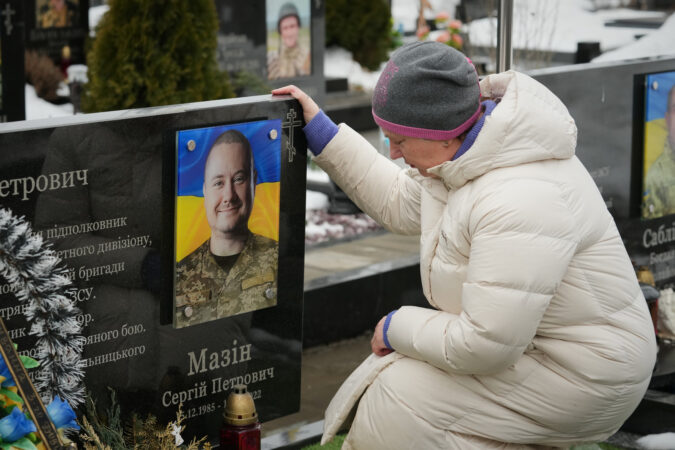
At a makeshift memorial in Kyiv’s central square, where thousands of small flags and portraits show photos of fallen soldiers, Zelensky said he would like President Donald Trump to visit and witness for himself Ukrainian suffering.
“Only then can one truly understand what this war is really about,” Zelensky said. When later asked how four years of war had changed him, Zelensky said, “I don’t have time for friends or friendships.”
Trump, who once vowed to end the war in a day, has repeatedly changed his tone toward Putin and Zelensky over the past year: sometimes criticizing the Ukrainian leader’s negotiating position while reaching out to the Russian leader and at others lashing out at Putin for heavy barrages and appearing more sympathetic to the Ukrainian predicament.
Kremlin spokesperson Dmitry Peskov said that the invasion would continue in pursuit of Moscow’s goals. They include a demand that Ukraine renounce its bid to join NATO, sharply cut its army, and cede vast swaths of territory.
Zelensky said he expected a fresh round of U.S.-brokered talks with Russia within the next 10 days.
A ‘nightmare’ for Ukrainians
The number of soldiers killed, injured or missing on both sides could reach 2 million by spring, with Russia sustaining the largest number of troop deaths for any major power in any conflict since World War II, a report last month from the Center for Strategic and International Studies estimated.
European leaders see their countries’ own security at stake in Ukraine amid concerns that Putin may target them next.
German Chancellor Friedrich Merz wrote on X that “for four years, every day and every night has been a nightmare for the Ukrainians — and not just for them, but for us all. Because war is back in Europe.”
“We will only end it by being strong together, because the fate of Ukraine is our fate,” he added.
Putin’s dangerous gamble
Putin believes that time is on the side of his bigger army, Western officials and analysts say — and that Western support will trail off and that Ukraine’s military resistance will eventually crumble. Already Trump has ended new military aid to Ukraine — though other NATO countries now buy American weapons and give them to Kyiv.
But French President Emmanuel Macron described the war as “a triple failure for Russia: military, economic, and strategic.” The war “has strengthened NATO — the very expansion Russia sought to prevent — galvanized Europeans it hoped to weaken, and laid bare the fragility of an imperialism from another age,” Macron said on X.
The European Union has also sent financial aid, but has sometimes met with reluctance from members Hungary and Slovakia.
While NATO countries have come to Ukraine’s aid, Russia has been helped by North Korea, which has sent thousands of troops and artillery shells; Iran, which has provided drone technology; and China, which the United States and analysts say has provided machine tools and chips.
A defining conflict
Among the European officials visiting Kyiv on Tuesday were President of the European Commission Ursula von der Leyen and Finnish President Alexander Stubb, as well as seven prime ministers and four foreign ministers.
Zelensky later said von der Leyen assured him that Ukraine would receive the first tranche of a 90 billion euro loan by the spring despite Hungary’s attempts to block it.
The only American listed among the official guests in Kyiv ceremonies was Lt. Gen. Curtis Buzzard, a U.S. officer who represents NATO in Ukraine.
British Armed Forces Minister Al Carns said Russia’s war on Ukraine was “the most defining conflict” in decades, bringing a “revolution in military affairs,” especially through the rapid development of drone technology. Drones now cause the vast majority of battlefield casualties, he said.
Both sides face challenges in finding enough troops and are increasingly turning to uncrewed aerial drones that can attack far from the front lines, the London-based International Institute for Strategic Studies said in its annual report on the global military situation.
“Given both sides’ reliance on external support for materiel, decisions taken in foreign capitals will play an important role in shaping the war’s trajectory,” the think tank added.
The United Kingdom on Tuesday announced a new package of military and humanitarian support for Ukraine, including sending teams of British military medics to instruct their Ukrainian counterparts.
The cost of rebuilding war-battered Ukraine would amount to almost $588 billion over the next decade, according to World Bank, the European Commission, the United Nations, and the Ukrainian government. That is nearly three times the estimated nominal GDP of Ukraine for last year, they said in a report Monday.
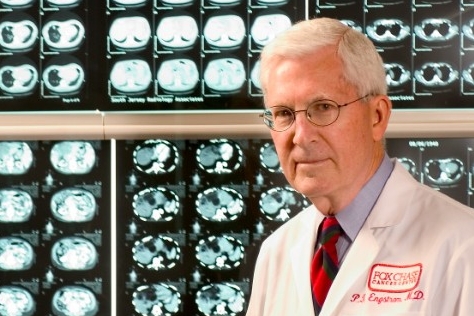
Paul F. Engstrom, 89, formerly of Ambler, Montgomery County, celebrated pioneer in cancer prevention, education, and treatment, former chair and professor emeritus of the hematology and oncology department at Fox Chase Cancer Center, retired vice president of cancer control and senior adviser to the president at Fox Chase, Army veteran, and mentor, died Friday, Dec. 26, of Parkinson’s disease at Normandy Farms Estates in Blue Bell.
The son of a small-town doctor, Dr. Engstrom accompanied his father on house calls in Minnesota when he was young and assisted sometimes on routine procedures. Later, after earning his medical degree at the University of Minnesota, he excelled at identifying cancer-related health problems and creating solutions.
Starting in the 1960s and ’70s, Dr. Engstrom noticed large gaps in cancer prevention programs and treatment strategies. So he compiled comprehensive clinical care guidelines for cancer doctors and hospitals around the world, forged sustainable oncology research networks and community education partnerships, and established one of the country’s first cancer prevention and control programs at Fox Chase.
“Most doctors and oncologists in the 1970s were training to treat cancer, not necessarily to prevent it,” former Fox Chase colleague Carolyn Fang said in a 2018 story for Fox Chase’s Forward magazine. “He was one of the first to recognize that prevention was important.”
In 1991, Dr. Engstrom told the Daily News: “Changing the behavior of the public is only part of my job. We must change the physicians, too.” In 2000, he told The Inquirer: “Nowadays, the trend is toward identifying high-risk individuals and treatments we can give to prevent cancer from ever starting.”
Dr. Engstrom was adept at organization and collaboration, former colleagues said in online tributes. He recruited other cancer experts to Fox Chase and established cutting-edge programs for cancer screening, smoking cessation, and education at hospitals, schools, private companies, and other organizations.
He taught clinical science classes, secured vital grants from the National Cancer Institute and other groups, and made seminal clinical trials available to many more patients. “He was really aware of the need to integrate the community into this work.” Fang said in 2018.
Dr. Engstrom joined the old American Oncologic Hospital in Philadelphia in 1970 and oversaw its merger with the Institute for Cancer Research in 1974 to become the Fox Chase Cancer Center. He was named vice president of cancer control and continuing education in 1984, and head of community cancer program activities in 1989.
Dr. Engstrom (center) earned many awards over his long career.
He was also vice president for population science and held the Samuel M.V. Hamilton endowed chair in cancer prevention. He specialized in treating gastrointestinal cancers and neuroendocrine tumors. Heretired in 2018 but continued as a special adviser to the Fox Chase president.
He cofounded the National Comprehensive Cancer Network and was a fellow of the American College of Physicians and longtime member of the American Association of Cancer Research and other groups. He served on many boards and earned a clinical care achievement award in 2013 from the Association of Community Cancer Centers.
Dr. Engstrom edited, wrote, or cowrote hundreds of research papers and lectured around the world. He was drafted into the Army in 1967, rose to the rank of major, and served three years as head of hematology and oncology at Tripler Army Hospital in Honolulu.
Dr. Engstrom (left in the photo) appeared in many print advertisements for the Fox Chase Cancer Center, such as this 1995 ad in The Inquirer.
“Medicine is a great career,” he said in 2018. “It is still the most satisfying and the best opportunity to do well, but most importantly to do good.”
Paul Frederick Engstrom was born May 28, 1936, in St. Cloud, Minn. He played football and basketball, ran track, played trombone in the high school band, and sang in the school chorus.
His father was the only doctor in Belgrade, Minn., and Dr. Engstrom knew early he was going to be a doctor, too. He earned a bachelor’s degree at St. Olaf College in Minnesota and completed a public health fellowship at the California Department of Health during medical school.
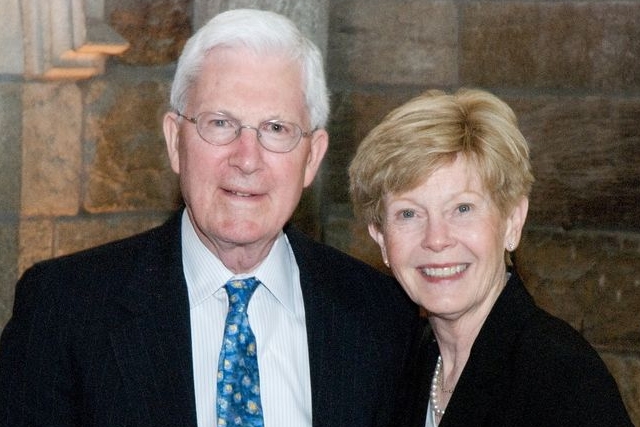
He met nurse Janet Johnson during a procedure in a Minnesota hospital in 1960, and they married in 1961. They lived in Hawaii while he served in the Army and in Ambler until recently, and had daughters Karin and Maria, and a son, David.
Dr. Engstrom met his wife, Janet, when she was an intensive care unit nurse.
Dr. Engstrom and his wife enjoyed the orchestra, ballet, and theater in Philadelphia. He liked to garden, read, and travel. He was thrifty, his wife said.
He followed many of the local college and professional sports teams, especially the Eagles, and sang in the choir at Christ’s Lutheran Church in Oreland. He survived prostate cancer and remained a lifelong learner.
HOUSTON — U.S. Rep. Tony Gonzales of Texas resisted growing calls Tuesday from fellow congressional Republicans to resign over a report of an alleged affair with a former staffer who later died after she set herself on fire.
Rep. Thomas Massie of Kentucky joined Reps. Lauren Boebert of Colorado, Anna Paulina Luna of Florida, and Nancy Mace of South Carolina in demanding that Gonzales step down immediately. Gonzales is in a tough race in Texas’ Republican primary on March 3, facing a challenger he narrowly defeated in a 2024 GOP runoff.
He told reporters he will not resign. A resignation would leave Republicans with a 217-214 majority until March, when the first of three special elections to fill vacancies is set in Georgia.
“There will be opportunities for all of the details and facts to come out,” he said. “What you’ve seen is not all the facts.”
House Speaker Mike Johnson said he would talk to Gonzales on Tuesday.
Johnson said Monday that the accusations against Gonzales “must be taken seriously,” but he added, “in every case like this, you have to allow the investigation to play out and all the facts to come out.”
“If the accusation of something is going to be the litmus for someone being able to continue to serve in the House, a lot of people would have to resign or be removed or expelled from Congress,” Johnson said.
Meanwhile, Mace announced that she has introduced a resolution to force the House Ethics Commission to publicly release its reports and records of allegations of sexual harassment against members of Congress.
Gonzales said in a social media post last week that he was being blackmailed and then suggested in another post Sunday that he is the target of “coordinated political attacks.”
His main primary opponent is Brandon Herrera, a gun manufacturer and gun rights influencer who calls himself “the AK Guy” on YouTube, where his channel has nearly 4.2 million subscribers. Gonzales defeated Herrera by fewer than 400 votes in their 2024 runoff.
President Donald Trump had endorsed Gonzales for reelection in December.
The San Antonio Express-News reported last week that it had obtained text messages in which the former staffer, Regina Ann Santos-Aviles, wrote to a colleague that she had an affair with the lawmaker.
The Associated Press has not independently obtained copies of the messages. An attorney for Adrian Aviles, Santos-Aviles’ husband, has said the husband found out about the affair before his wife’s death.
Regina Ann Santos-Aviles, 35, died in September 2025. The Bexar County Medical Examiner’s Office later ruled her death was a suicide by self-immolation.
“Where are the other men in the GOP?” Massie asked Tuesday in a post on X in calling for Gonzales to resign, adding that Trump should revoke his endorsement.
Gonzales, whose district stretches from San Antonio to El Paso and runs along the U.S.-Mexico border, has six children with his wife.
His allegation of blackmail is based on an email from the attorney for the staffer’s husband, Robert Barrera, discussing a possible lawsuit against the lawmaker and a potential settlement with a nondisclosure agreement. The email says that the maximum recoverable amount is $300,000.
Barrera has said he was not trying to blackmail Gonzales and called the accusation an attempt by the congressman to look like a political victim.
PARIS — The Louvre museum’s director resigned Tuesday after months of pressure following the October theft of the French crown jewels, as the world’s most visited museum faced widening scrutiny over security failures, labor unrest, and a suspected ticket fraud scheme.
Laurence des Cars quit after a punishing year for the former royal palace — the high-profile jewels heist from the Apollo Gallery, a mid-February burst pipe near the Mona Lisa, water leaks damaging priceless books, staff walkouts and a wildcat strike over overcrowding, and understaffing.
The landmark has faced a widening narrative of an institution spiraling out of control.
And that pressure deepened in recent weeks when French authorities revealed a suspected decadelong ticket fraud operation linked to the museum that investigators say may have cost the Louvre 10 million euros ($11.8 million).
President Emmanuel Macron accepted des Cars’ resignation as “an act of responsibility” at a moment when the Louvre needs “calm” and new momentum for security upgrades, modernization, and other major projects, according to a statement from his office.
Macron wants to give des Cars a new mission during France’s presidency of the Group of Seven leading industrialized nations, focused on cooperation among major museums, the statement said.
For many in France’s cultural world, the resignation answers months of head-scratching over why no top official had fallen after the heist: a daylight robbery that many in the country saw as the most humiliating breach of French heritage security in living memory.
It also came as lawmakers and cultural officials widened scrutiny of the museum’s leadership and security practices in the months since the breach.
Brazen theft
Thieves took less than eight minutes in October to steal crown jewels valued at 88 million euros ($102 million) from the Louvre, in a weekend operation that stunned visitors, exposed glaring vulnerabilities and left one of France’s most symbolically charged collections in criminal hands.
Several suspects were later arrested, but the stolen pieces remain missing.
Des Cars, one of the most prominent museum directors in Europe, had offered to resign on the day of the robbery, but it was initially refused by the culture minister.
In remarks after the theft, she described the moment as a “tragic, brutal, violent reality” for the Louvre and said that, as the person in charge, it had felt right to offer her resignation.
Lightning rod
In an interview published on Tuesday by daily newspaper Le Figaro, des Cars said that she had tried to steer the Louvre through the fallout from the heist, but had concluded that she could no longer carry out the museum’s transformation in the current institutional climate.
Staying on, she said, would have meant managing the status quo when the museum still needs deep reform.
“I was there to take the lightning” as museum director, she said.
Des Cars also said that the October break-in exposed problems that she had been warning about since taking office, including aging infrastructure, obsolete technical systems, and severe congestion.
She had led the Louvre since 2021, taking over one of the museum world’s most prestigious jobs as the institution emerged from the coronavirus pandemic and mass tourism returned.
Multifaceted crisis
In June, a wildcat strike by front-of-house staff and security workers forced the Louvre to halt operations, stranding thousands of visitors outside the glass pyramid and underscoring the depth of anger among employees over overcrowding, understaffing, and what unions called untenable working conditions.
Workers said that the pressure of daily visitor flows — particularly around the Mona Lisa — had become unmanageable and that promised reforms were arriving too slowly. There were growing complaints that the infrastructure and staffing of the crumbling medieval structure haven’t kept pace with the crowds pouring through its galleries.
The resignation came at an especially punishing moment, less than two weeks after French authorities revealed the separate ticket fraud scheme.
That case widened scrutiny beyond the jewels robbery and toward the museum’s day-to-day controls.
Fraud scheme
Prosecutors say tour guides are suspected of — up to 20 times a day — reusing the same tickets to bring in different visitor groups, at times allegedly with the help of Louvre employees, in a system investigators believe operated for a decade.
In a rare interview just days ago with the Associated Press after the fraud case was made public, the Louvre’s No. 2, general administrator Kim Pham, said that fraud at an institution the size of the Louvre was “statistically inevitable.”
He argued that the museum’s sheer scale — millions of visitors, multiple checkpoints, and a sprawling historic complex — makes it uniquely exposed.
But he also acknowledged shortcomings, and said that the museum had tightened validation checks and increased controls.
New Renaissance
The succession of crises has put new political weight on a project Macron has heavily championed: the Louvre’s sweeping overhaul plan, branded the “Louvre New Renaissance.”
Unveiled by Macron in January 2025, the renovation, which could take up to a decades, aims to modernize a museum widely seen as overstretched and physically worn down by mass tourism.
The plan includes a new entrance near the Seine River to ease pressure on I.M. Pei’s pyramid, new underground spaces and a dedicated room for the Mona Lisa with timed access — all intended to improve crowd flow and reduce the daily crush that has become a symbol of the Louvre’s success and its dysfunction.
The project is expected to cost roughly 700 million-800 million euros ($826 million-$944 million), with funding from ticket revenue, state support, donations, and Louvre Abu Dhabi-related income.
The scale and cost of that plan now loom over the search for des Cars’ successor.
Macron has framed the overhaul as a national priority, comparing its ambition to other landmark French restoration efforts and casting it as part of a broader defense of French cultural prestige.
TRENTON — The Trump administration is suing New Jersey over a state order that prohibits federal immigration agents from making arrests in nonpublic areas of state property, such as correctional facilities and courthouses.
The Justice Department lawsuit, filed Monday in federal court in Trenton, challenges Gov. Mikie Sherrill‘s Feb. 11 executive order, which also bars the use of state property as a staging or processing area for immigration enforcement.
Sherrill, a Democrat who took office Jan. 20, “insists on harboring criminal offenders from federal law enforcement,” the lawsuit said, accusing her of attempting to obstruct federal law enforcement and thwart President Donald Trump’s immigration crackdown.
Sherrill’s executive order “poses an intolerable obstacle” to immigration enforcement and “directly regulates and discriminates” against the federal government, said the lawsuit, which misspelled her name as “Sherill.”
Asked about the lawsuit Tuesday, Sherrill said: “What I think the federal government needs to be focused on right now, instead of attacking states like New Jersey working to keep people safe, is actually training their ICE agents.”
The state’s acting attorney general, Jennifer Davenport, said the Trump administration was “wasting its resources on a pointless legal challenge.” New Jersey will fight the lawsuit and “continue to ensure the safety of our state’s immigrant communities,” she said.
The lawsuit is the latest in the Trump administration’s fight against state and local level restrictions on immigration enforcement.
Last year, the Justice Department sued Minnesota and Colorado, as well as cities including New York, Chicago, Los Angeles, and Denver over so-called sanctuary laws, which are aimed at prohibiting police from cooperating with immigration agents.
Last May, the Trump administration sued four New Jersey cities — Newark, Jersey City, Paterson, and Hoboken — over such policies. That case is pending.
NEW YORK — New York City police are investigating after officers were pelted with snowballs while responding to a massive snowball fight at Washington Square Park in Manhattan as a winter storm blanketed the Northeast.
A video of the fracas shows two uniformed officers pacing a walkway in the park Monday as snowballs fly at them from all directions, hitting the officers and covering them in snow.
The officers, growing visibly frustrated, shoved at least two people to the ground as snowballs continued to whizz by. At one point, a person runs up behind an officer and mushes some snow onto his head. One of the officers can be seen rubbing his eye toward the end of the video.
In a statement Tuesday, the New York Police Department said multiple uniformed officers were struck in the face with snowballs and were “removed by EMS in stable condition” to a nearby hospital, but did not disclose additional information on their injuries. No arrests have been made.
Jessica Tisch, the city’s police commissioner, called the behavior “disgraceful” and “criminal” and said the department is investigating.
Several political figures in the city were quick to denounce the dustup, with many of New York Mayor Zohran Mamdani’s critics seizing on the incident as evidence that respect for law enforcement has declined under the new mayor, who faced attacks during his campaign over criticisms he made of the department in 2020. Mamdani has walked back those past remarks.
Mamdani, in a post on X on Tuesday, wrote: “Officers, like all city workers, have been out in a historic blizzard, keeping New Yorkers safe and cars moving. Treat them with respect. If anyone’s catching a snowball, it’s me.”
At a news conference later in the day, Mamdani was asked whether he thought anyone should be criminally charged over the snowballs and appeared to downplay the situation.
“From the videos that I’ve seen, it looks like a snowball fight,” he said.
The head of the city’s largest police union called Mamdani’s response a “complete failure of leadership.”
“This was not just a ‘snowball fight.’ This was an assault,” Police Benevolent Association president Patrick Hendry said in a statement, adding: “By ignoring their injuries and dismissing the incident, the mayor has sent a disgraceful message to every police officer who serves this city.”
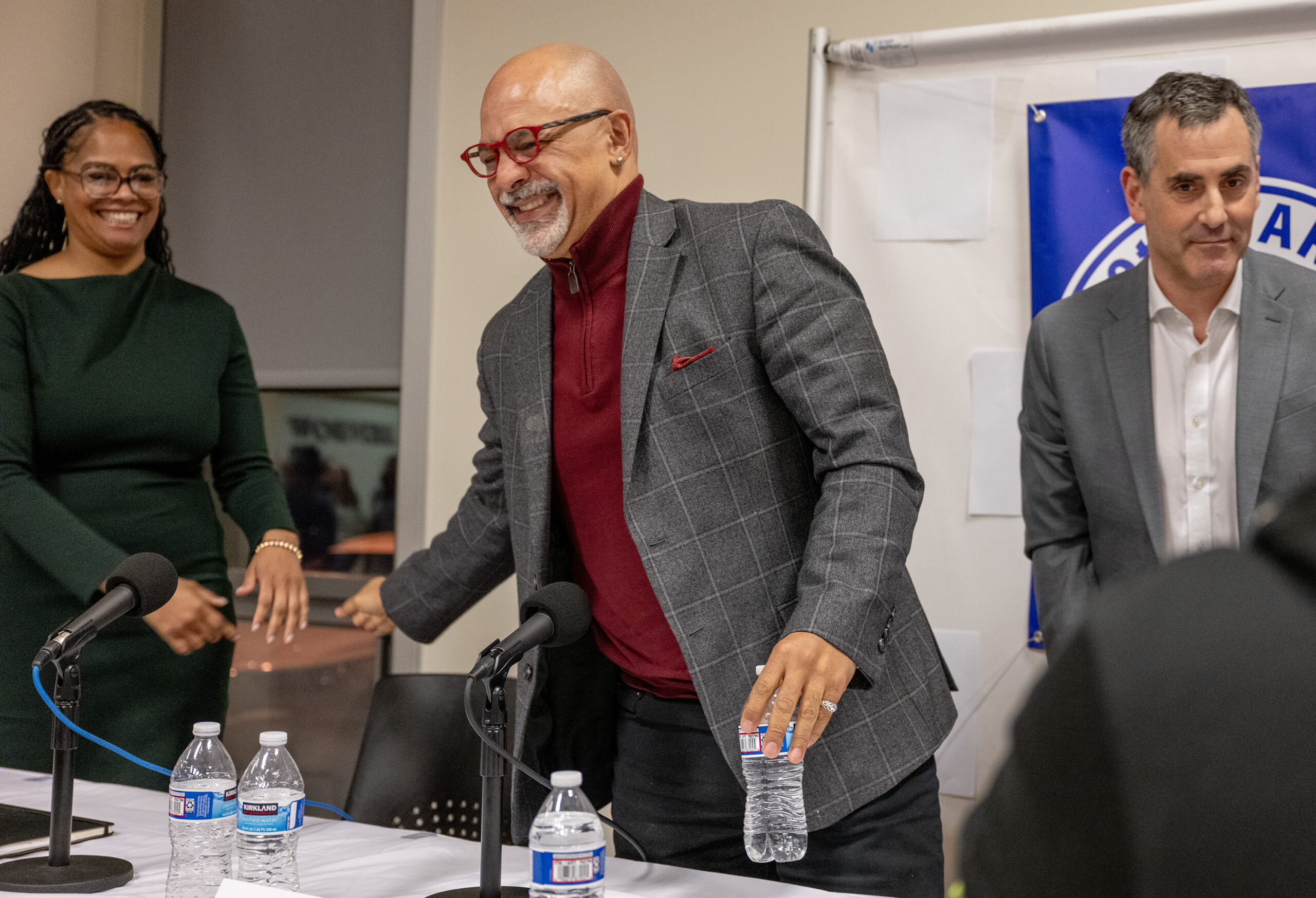
At the end of the event, the moderator, 21st Ward Leader Lou Agre, allowed the candidates to ask one another questions. Their choices offered hints as to which of their rivals the candidates view as most threatening.
Dr. Ala Stanford, who appears to be the strongest candidate among the non-elected officials in the race, questioned the accomplishments of State Sen. Sharif Street, who is seen by many as a frontrunner after being endorsed by the Democratic City Committee and building trades unions.
The 3rd District covers about half of Philadelphia and is, by some measures, the bluest seat in Congress. The Democratic primary is May 19.
The forum was initially scheduled to be held in-person at the Polish Legion of American Veterans’ Adam Kowalski post in Roxborough, but it was moved to Zoom due to the blizzard on Sunday and Monday.
Here are the issues the candidates debated Monday night.
She began the candidate-on-candidate questioning on Monday by asking Street for instances in which his work has helped constituents in tangible ways, setting up a juxtaposition with her record.
“In a time when the people are asking for new leadership, they’re asking for innovation, they’re asking for not the same politics as usual … can you tell the people a time when the seas were rough and you stepped up and delivered for them that they felt it?” Stanford asked, adding: “Can you share what you can do during the chaos that people can feel — and where was it during COVID?”
Physician Ala Stanford (left) and State Sen. Sharif Street at a December forum hosted by the 9th Ward Democratic Committee.
Street began by saying that, as the top Democrat on the Senate Banking & Insurance Committee in Harrisburg, he boosted Stanford’s work during the pandemic by pressuring insurance companies to reimburse her fledgling organization, which provided testing and vaccinations for thousands of Philadelphians in disadvantaged neighborhoods.
“Independence Blue Cross was not moving forward with the reimbursement rates for the Black COVID Doctors Consortium,” Street said. “I spoke with you, and I helped, and I reached out to them to make sure that [the Medicaid plan] Keystone First would begin to pay the reimbursement in an immediate way.”
He also said his office distributed food to constituents and helped process rent rebates during the pandemic.
In the run-up to the 2020 election, Street, as chair of the Pennsylvania Democratic Party at the time, repeatedly fought in court against President Donald Trump’s campaign over election administration issues. In her question, Stanford asked Street to focus on what he delivered for his constituents — “not that you sued Donald Trump 20 times and won every time, because how do the people feel that?”
“Donald Trump wanted to challenge people’s ability to vote in some of the most vulnerable communities,” he said. “I went to court, I stopped him, and I made sure that they had the right to vote, and that was why we were able to pass the vote to remove him from office.”
Street and Rabb clash over hate-crime legislation
When it was his turn to pose a question, Street pressed Rabb on why the progressive was opposed to hate-crime legislation, an issue the two had sparred over at a forum last week.
“You and I have worked to fight for regular folks, for disadvantaged people, for a long time. I was shocked that you … want to prevent hate-crimes legislation,” Street, a centrist Democrat, said to Rabb. “I’ve heard from so many trans women of color, who are most likely to be victims of hate crimes, and they don’t understand.”
Rabb responded by saying that Street’s line of attack was “shameful and unnecessary.”
“I know you want to win. I just thought you would do it with honor,” Rabb said. “I am an active member of the LGBTQ Equality Caucus. I am the father of a queer son. I represent an active queer community. … To use this as a political punching bag is just — man, it’s beneath you.”
At the end of the forum, Street clarified that he has no doubts about Rabb’s commitment to the LGBTQ community.
At a December candidates forum in Mount Airy, (from left) State Reps. Morgan Cephas and Chris Rabb and physician David Oxman.
“I had a policy dispute about hate crimes,” Street said. “I did not mean to question your commitment to the trans community or to your kid.”
The dust-up got in the way of a meaningful debate over hate-crime laws, which increase sentences for people convicted of crimes that prosecutors prove were motivated by prejudice against particular groups.
Such laws are common across the country, but they have long faced criticism from the libertarian right, which fears that such regulations could be used to target citizens for political views. The laws have also faced pushback from some on the progressive left, who contend that they contribute to mass incarceration.
“Politicians tout hate-crime laws as proof they care about the marginalized,” Rabb wrote in an op-ed for PennLive last fall. “In reality, the main outcome is more policing, more prosecution, and more incarceration.”
Street said last week that people who oppose hate-crime laws on the “far left … don’t want to address the antisemitism on the left or the right.”
The Pennsylvania House in 2023 approved a bill to expand the state’s law that criminalizes ethnic intimidation to include sexual orientation and disability status. Rabb voted for the bill, which ultimately died in the Senate amid GOP opposition, but said he had “considerable reservations.”
“We should collectively focus on structural violence and hatred that has been cultivated by the very institutions that have been asked to address this legislation,” Rabb said at the time.
Cephas presses Stanford about her government contracts
Cephas, who represents a West Philadelphia district and chairs the Philadelphia delegation to the state House, questioned how much money Stanford’s nonprofit organization has made from government contracting since the onset of the pandemic.
“You oftentimes quote that you, as a private citizen, came in and saved Philadelphia from COVID, and, you know, there are a number of people on this [Zoom] call that stepped up during COVID,” Cephas said, noting that she worked with Stanford to set up clinics in her district during the pandemic.
“We all did it in our own individual capacity, and we didn’t receive government contracts for it. … How much in government contracts did you receive during the COVID-19 period?”
Stanford noted that she initially launched the Black Doctors Consortium with her own financial resources to serve neighborhoods that were not being reached by existing healthcare and government institutions. She said her first $1 million city grant for testing came months after she began her work.
In 2020 and 2021, Stanford’s groups received $2.5 million in grants and contracts from the city, state, and federal governments, according to Stanford campaign manager Janée Taft-Mack. That money covered costs including supplies, staff, mobile medical units, personal protective equipment, and facility rentals, Taft-Mack said.
Since then, Stanford hascontinued partnering with government agencies to address healthcare inequality. She has opened the Dr. Ala Stanford Center for Health Equity in Swampoodle and secured a $5.38 millioncontract for the Black Doctors Consortium to work at Riverview Wellness Village, the city-owned drug recovery home.
The total amount Stanford and her organizations have received for work since 2021 was not immediately clear.
Philly’s most famous culinary offering has proven politically hazardous over the years, such as when John Kerry catastrophically asked for Swiss cheese while visiting Pat’s King of Steaks during the 2004 presidential election.
This year’s congressional hopefuls were better prepared than the Massachusetts senator.
Agre, the moderator whose ward includes much of Roxborough, interjected to insist that Dalessandro’s served up the best steak sandwiches in the city.
At a candidate’s forum on Feb. 9 at the Church of the Holy Trinity, (left to right) Alex Schnell, physician Dave Oxman, State Sen. Sharif Street, physician Ala Stanford, State Rep. Morgan Cephas, and Pablo McConnie-Saad.
Cephas said she orders Cooper Sharp at Angelo’s Pizzeria. Stanford’s go-to is American from Dalessandro’s. Street, a vegetarian, said he gets non-meat cheesesteaks from Hip City Veg and enjoys the cheese they use. (Mozzarella, per Hip City’s website.)
And Rabb shouted out the cheesesteak egg rolls from Black Dragon, a West Philadelphia establishment offering a “unique fusion of Black American cuisine presented with the familiar aesthetics of classic Chinese American takeout,” according to its website.
Still tense from the previous questions and perhaps a bit peckish, the candidates declined Agre’s offer to deliver closing remarks.
Staff writers Max Marin and Ryan W. Briggs contributed to this article.