As soon as De’Andre Hunter had dropped his bags at the Cleveland Cavaliers’ hotel in Philly on Tuesday, he headed to Dalessandro’s Steaks.
“That’s mandatory any time I’m here,” Hunter said of visiting the local cheesesteak giant.
Spoken like a true Philly native. And one who, because of unfortunate scheduling around an in-season trade, never played in his hometown in 2024-25.
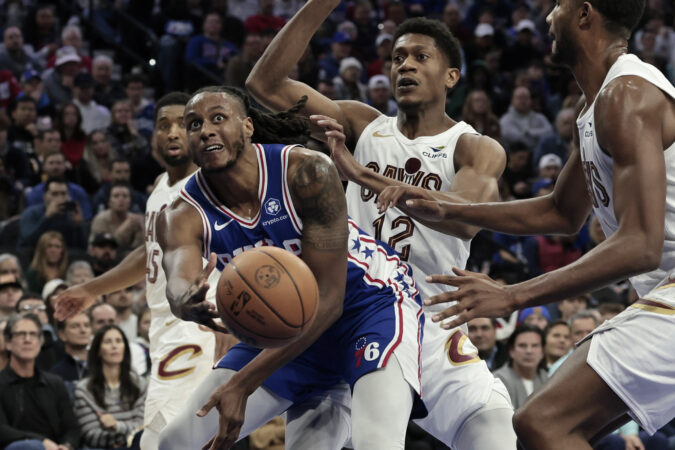
Hunter relished finally being back in front of family and friends inside Xfinity Mobile Arena Wednesday night. That “love in the air,” he said, powered his 17 points, four rebounds and four assists off the bench in the Cavaliers’ 133-107 thrashing of the 76ers. The performance also helped rebalance shooting struggles that have hindered Hunter’s first full season with Cleveland.
“When he plays like that,” Cavaliers coach Kenny Atkinson said of Hunter’s outing, “we’re tough to beat.”
Entering Wednesday, Hunter was shooting a career-worst 30.3% from three-point range, while his percentage from the floor (42.5%) was the lowest since his rookie year. Those dips somewhat mirror the disappointment so far surrounding the 23-19 Cavaliers. They were expected to be a Finals contender after boasting the Eastern Conference’s best regular-season record last season, but exited Wednesday as the seventh seed (a half-game behind the fifth-seeded Sixers, who are 22-17).
When the Cavaliers acquired Hunter, a Friends’ Central School graduate, from the Atlanta Hawks at last February’s trade deadline, they envisioned him as the final player needed to make a championship push. The 28-year-old wing possessed the 6-foot-7, 220-pound frame to guard multiple positions, and was thriving as an off-ball, catch-and-shoot offensive player.
Hunter’s initial transition was described in March by Atkinson as “seamless” and “as quickly as I’ve seen anybody acclimate.” As a key reserve, Hunter averaged 14.3 points on 48.5% shooting from the floor — and an eye-popping 42.6% from beyond the arc — in 27 regular-season games with the NBA’s most efficient offense, while adding 4.2 rebounds and 1.3 assists.
After Cleveland fizzled in a second-round playoff loss to the Indiana Pacers, however, Atkinson said he looked forward to getting to know Hunter better during offseason visits. Today, the coach says he has learned even more while Hunter has faced personal adversity through the regular season’s first half.
“It’s like your kid, right?” Atkinson said before Wednesday’s game. “One that’s struggling a little or things aren’t going perfect, you probably spend more time with him.”
Through those conversations, Atkinson said, Hunter has reiterated he cares most about winning. After Cleveland’s home loss to the Utah Jazz on Monday — which was part of a 2-for-10 shooting slump from Hunter — the coach said he needed to do a better job of putting Hunter in his comfort zone on the floor. And Atkinson appreciates that the struggles have not sent Hunter “into a shell” or affected the rest of the Cavaliers’ locker room.
“It’s been the opposite with him,” Atkinson said. “His body of work speaks for itself. He’s done it for a long time in this league, and it’ll come back.”
Hunter, meanwhile, has leaned into his work habits. To try to regain rhythm, he recently completed individual workouts that were deliberately intense — “despite how your body’s feeling” — and simulated game-like scenarios.
“Keep doing what I know how to do,” he said. “I’ve been shooting for years.”
It took multiple bounces on the rim for Hunter’s first three-point make to fall through the net Wednesday. But then he scored in the lane, and splashed another deep shot. Though a three-point try at the first-quarter buzzer rimmed out, he let the ball fly again just before halftime to give Cleveland a 60-47 advantage.
Hunter then helped cool the Sixers’ rally attempt in the third quarter, when twice he got free in transition for a layup and one-handed dunk. Shortly after hitting a turnaround jumper early in the final period, Hunter got to enjoy the rest of the night from the bench as the Cavaliers finished off a dominant victory.
“His aggression was the biggest thing,” star guard Donovan Mitchell said of Hunter’s impact after the game. “ … That’s the ‘Dre that we all know, and it’s great to see. He puts the time in. He puts the work in.
“So the biggest thing now is just keep going. Keep doing it. We believe in him.”
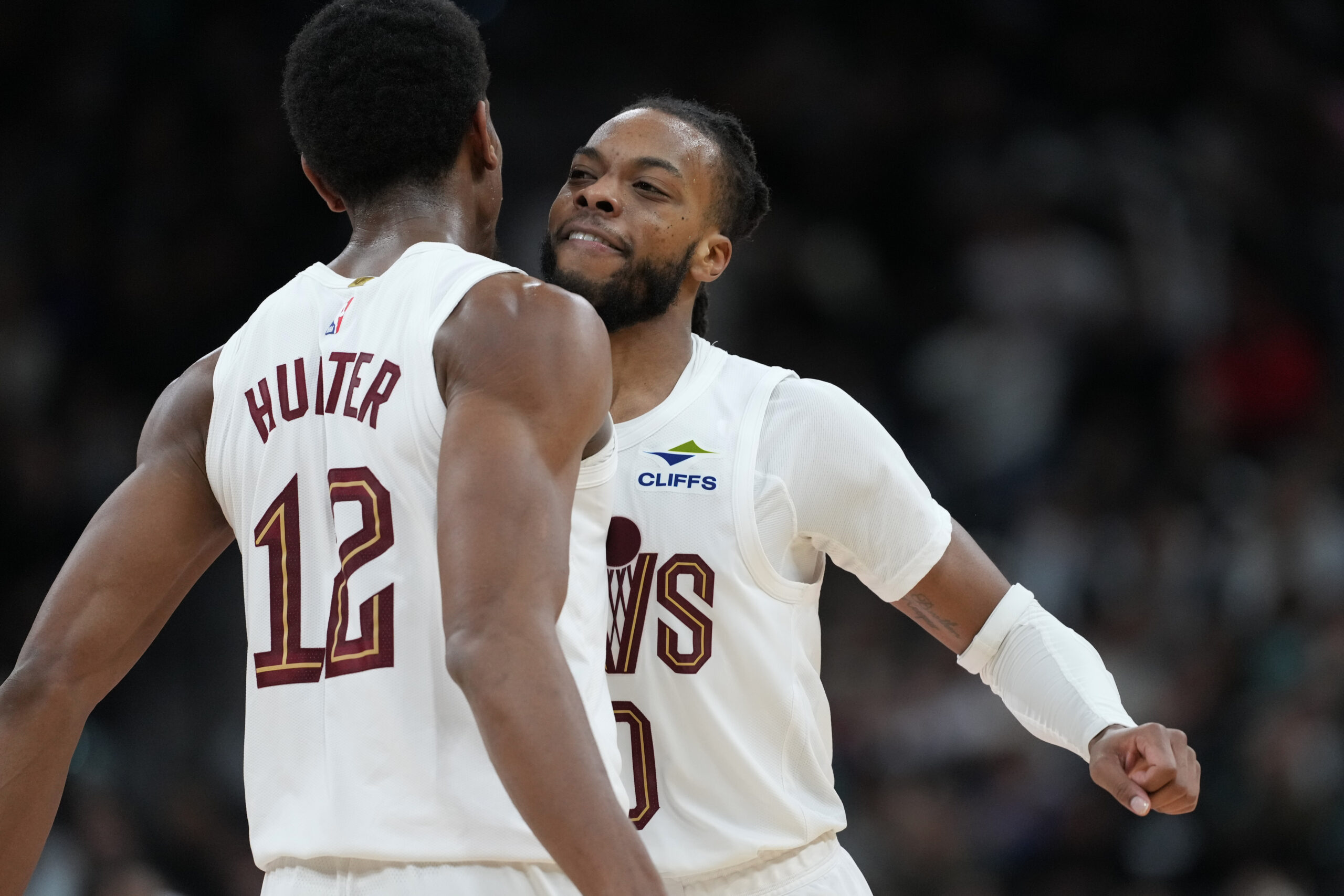
De’Andre Hunter (left) has struggled from the field to start his season, shooting a career-worst 30.3% from three-point range.
The Cavaliers and Sixers will square off again Friday, giving Hunter a longer-than-usual regular-season visit to Philly. That means there is time for another Dalessandro’s trip.
Then, he gets the opportunity to finally generate some on-court consistency in his first full season with the Cavaliers — while again playing in front of family and friends.
“That’s something I’m working on, and something I’m looking to do,” he said. “… What they expect from me, just providing that every night.”
The science: Detox cleanses are all over social media, with people claiming the diets remove toxins, help you lose weight, and supposedly reset your body using a strict regimen of juices, herbal teas, or other liquids; supplements; or fasting or eliminating certain foods.
But despite the hype, there is little evidence that these cleanses do what they claim,and they can be risky for people with eating disorders and other health issues such as heart and kidney diseases, experts said.
“This has become a multibillion-dollar industry because people are looking for quick fixes,” said Tinsay Woreta, an associate professor in gastroenterology and hepatology at Johns Hopkins University. “But a quick detox for three to seven days is not going to have the same benefits as a long-term healthy lifestyle.”
Detox cleanses are touted as a way to remove toxic substances in our bodies from sources such as ultra-processed foods, alcohol, microplastics, air pollution and household cleaners.
Some juice cleanses, often built around lemon juice or apple cider vinegar, claim to improve liver function, remove toxins, and boost metabolic function, among other things. Others may call for food restriction or a complete fast, herbal teas and supplements, even laxatives or what are known as colon cleanses. Depending on the detox, it may last a couple of days or up to three weeks or so. By the end, you’re told to expect more energy, glowing skin and stronger nails, and a smaller waist. But although you might see short-lived weight loss, you’re unlikely to get actual detoxification, experts said.
Your body already has a well-established filtration system. Your lungs trap and expel airborne toxins, your intestines remove foodborne organisms, and your kidneys filter your blood and eliminate waste through urine. Your body’s main detox center, however, is your liver, which processes blood from your digestive system and converts toxins such as alcohol into waste products that can be safely eliminated from your body, Woreta said.
“We don’t have any evidence that if you eat a well-balanced diet that these cleanses are adding anything” — and they can’t undo damage that already has been done to your body, she said.
A 2014 research review concluded that there was “very little evidence” to support the health claims of detox diets, and favorable studies of commercial ones were “hampered by flawed methodologies and small sample sizes.” In a 2022 review of fad diets, researchers found no clinical evidence proving or disproving weight loss effectiveness of commercial detox diets but noted that “the success rate of dieting, in general, is only 20%.”
In 2017, researchers reported that juicing or “detoxification” diets may lead to short-term weight loss because of low caloric intake, but the weight often returns once a normal diet is resumed.
For instance, the popular lemonade diet or lemon detox diet is usually done for a couple of days to a few weeks and excludes solid food. People begin their day with salt water; drink several glasses of a beverage made of lemon juice, maple syrup, water, and cayenne pepper throughout the day; and have a cup of herbal tea at night. This diet provides somewhere between 600 and 1,200 calories per day when adult women need 1,600 to 2,400 calories and men need 2,200 to 3,000 calories, according to the most recent government dietary guidelines.
More recently, in 2024, researchers analyzed TikTok videos promoting detoxes and other diets and found that the most popular posts frequently made unsubstantiated health claims, which the authors said posed potential risks to users, including disordered eating.
Juice cleanses can be risky for people who are vulnerable to eating disorders as they can trigger episodes of undereating or, on the flip side, severe overeating, said Rhonda Merwin, a professor in psychiatry and behavioral sciences at Duke University, who was not involved in the study. Cleanses may also lead to other behaviors to get rid of perceived toxins, such as using laxatives or diuretics, which can become frequent and dangerous, she said.
Fruit and vegetable juices do contain vitamins and minerals and can be a source of antioxidants, though they lack the fiber found in whole fruits and vegetables. But juice cleanses may lack protein, essential fats, soluble vitamins, and fiber, leading to electrolyte and blood sugar imbalances, which can cause lightheadedness, dizziness, and headaches, said Julia Zumpano, a registered dietitian with the Cleveland Clinic’s Center for Human Nutrition.
This is especially a concern for people with cardiovascular or kidney disease and taking medications for those conditions because imbalances of sodium and potassium electrolytes can lead to dangerous arrhythmias, said Wendy Weber, the acting deputy director of the National Center for Complementary and Integrative Health at the National Institutes of Health.
Additionally, juices high in certain vegetables may increase the risk of kidney stones for those who are prone to them. Spinach, for instance, can be high in oxalates, compounds that bind to minerals such as calcium and can exacerbate kidney stones, Weber said.
And although some fruit juices, such as most orange juice brands, don’t contain added sugars, high levels of natural sugars aren’t good for your health. Dietitians recommend one or two glasses of fruit juice a day, and not eight.
What else you should know
You may feel better after a cleanse because you’ve cut out processed foods, added sugars, and alcohol. But a cleanse is of short duration. A more sustainable long-term approach is to limit these items and eat healthy whole foods, Weber said.
Here are more tips from experts:
Eat a balanced diet. A balanced diet — such as the Mediterranean diet — of fruit, vegetables, nuts, grains, and lean protein such as fish and chicken and that avoids processed and fatty foods, added sugars, and artificial sweeteners can reduce your risk of liver disease and other health problems, Woreta said. Also, follow nutrition labels for proper portion sizes. Most people eat larger portions than recommended, Weber said, explaining that one serving size of protein should be no larger than the size of your palm.
Be physically active. Adults should get at least 150 minutes per week, or 30 minutes five days per week, of moderate-intensity aerobic activity, according to recommendations from the American Heart Association. “Being physically active as much as you’re able to do so, whether walking or taking up a new exercise routine — anything you can really sustain and stick to — that’s what’s going to have long-term benefit,” Weber said.
Limit alcohol intake. Even moderate drinking — defined as up to two drinks per day for men and one for women — is linked to a higher risk of developing certain cancers such as breast, colorectal, and esophageal cancers, as well as brain changes and dementia, heart problems, and sleep problems.
The bottom line: While some detox diets contain vitamins and minerals and can be a source of antioxidants, they don’t meet all your daily nutritional needs and don’t lead to the same long-term benefits as adopting a healthy diet and lifestyle.
Through the years, friends and family members have floated the idea of a group of us buying houses next to each other or in some kind of compound. It’s a nice dream, although it probably won’t become a reality.
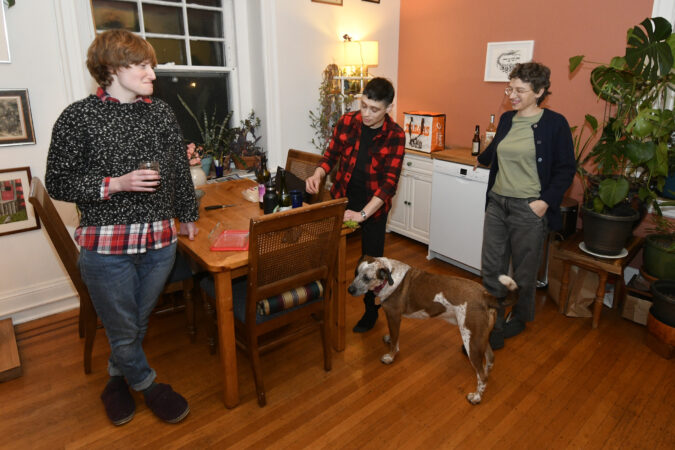
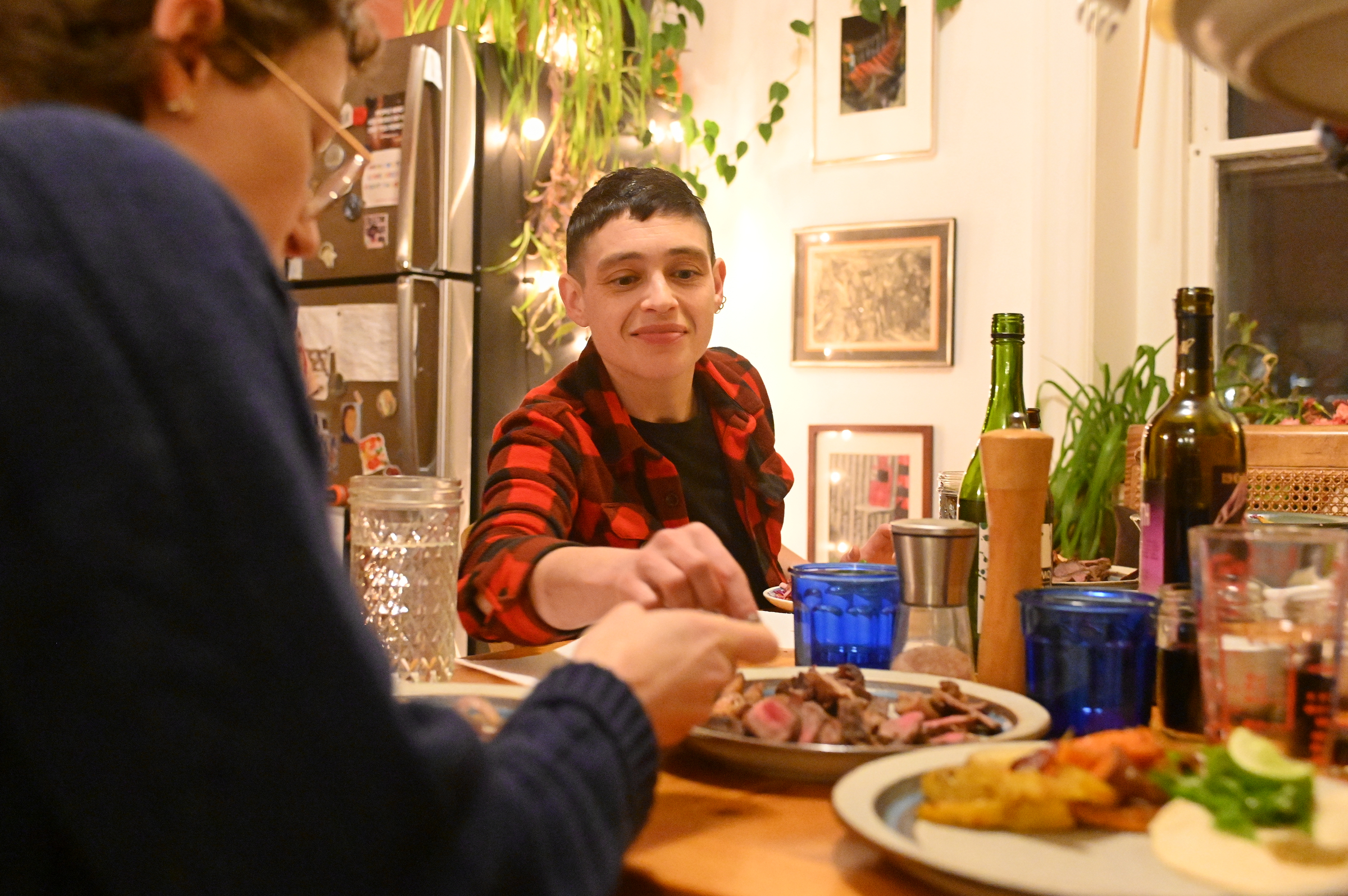
But three childhood friends have taken this dream a step further. The besties bought a communal house together in West Mount Airy.
Rachel Luban, Rachel Neuschatz, and Lizzy Seitel had always talked about living together. They ignored the haters who said it wouldn’t work.
The Rachels met when they were 5 and 6, and then Seitel became an honorary “Rachel” after they all met in middle school.
The friends lived apart as young adults, but when they were ready to settle down, they decided to do it together.
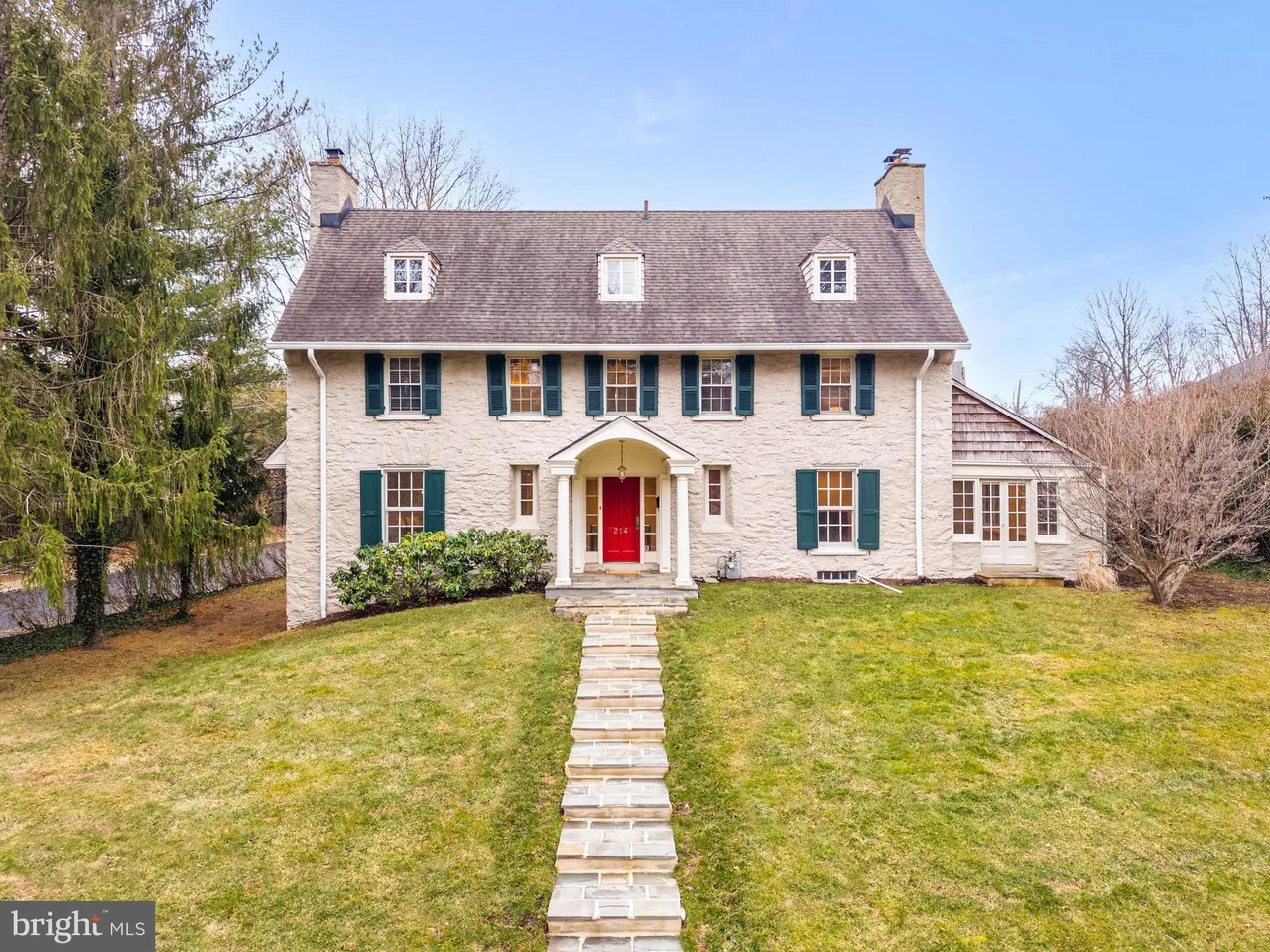
A few years ago, they and Seitel’s husband bought a 4,470-square-foot old stone house in West Mount Airy. Seitel was pregnant with her first child at the time.
One of the Rachels said, “A lot of people, including lawyers, told us not to do this.”
When Casey Lyons and her husband, James, bought their home in 2021, there was a lot to like.
The almost 5,000-square-foot house had oak floors, two fireplaces, and a beamed cathedral ceiling in the living room.
The basement included a sauna, gym, and full bathroom.
The home had a three-level deck with a hot tub and covered porch.
But Casey didn’t love the house. So she asked interior designers to help change that.
The homeowners got rid of dated features. They added a white marble island and new tiles and fixtures in the kitchen. They whitewashed the stone fireplace in the family room. They painted the deck so it blends better with the surrounding greenery.
Across the Mid-Atlantic last year, people who wanted to buy homes couldn’t afford to, and that held back the housing market. The total number of homes sold in 2025 — more than 235,000 — was only 0.1% higher than the number sold in 2024, according to the multiple listing service Bright MLS.
Lisa Sturtevant, chief economist at Bright MLS, said the market has “a lot of pent-up demand,” and buyers have more choices now because more homeowners are listing their properties for sale.
“But even with mortgage rates coming down, affordability is still a major challenge for many buyers, particularly first-time buyers,” Sturtevant said in a statement.
Still, our region had strong home sales last month. The number of closed sales was up 7.1% compared to last December.
In the Philadelphia metro area, according to Bright MLS:
🔺The number of closed home sales was up 1.3% in 2025 compared to 2024. Bucks and Chester Counties had the strongest sales increases — 7.7% and 5.3%, respectively.
🔺The number of new listings in 2025 was up 2% from the year before.
🔻But the number of homes for sale is still only about half — 54% — of the pre-pandemic number in 2019.
🔺The median sale price in 2025 was $390,000 — 4% higher than in 2024.
📷 Photo quiz
Do you know the location this photo shows?
📮 If you think you do, email me back. You and your memories of visiting this spot might be featured in the newsletter.
Props to Evan N., Ann B., and Timothy S. for getting that right. Ann told me she wants her ashes to rest in the Reading Room. I’ve walked by this building countless times, but this is what makes me want to go inside.
Enjoy the rest of your week.
By submitting your written, visual, and/or audio contributions, you agree to The Inquirer’s Terms of Use, including the grant of rights in Section 10.
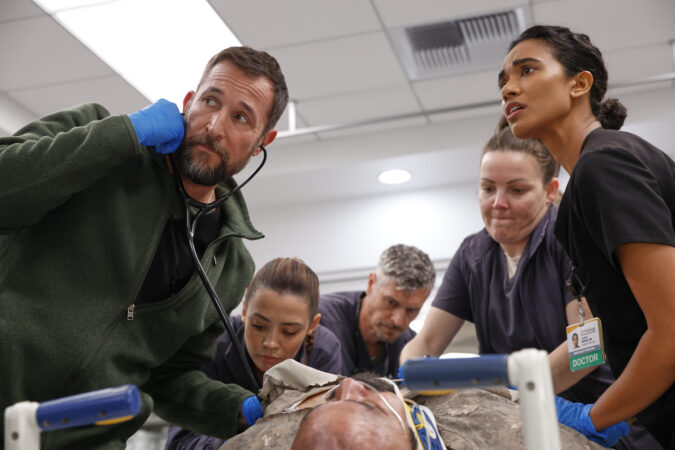
Television characters who experience cardiac arrest outside a hospital are more likely to receive CPR than people in real life. But the CPR on these shows often depicts outdated practices and inaccuracies about who is most likely to experience cardiac arrest and where, according to newly published research from my team at the University of Pittsburgh.
During the CPR training we held at Pittsburgh area middle schools and college athletic programs, participants frequently asked whether they should check for a pulse or give rescue breaths. Many mentioned seeing CPR on television shows like “Grey’s Anatomy.” While these are steps that medical professionals do when giving traditional CPR, hands-only CPR is an effective version recommended for untrained bystanders. After determining the person needs help and the scene is safe, hands-only CPR has just two steps: Calling 911 and giving hard and fast chest compressions.
As someone who researches how medical topics on screen influence viewers, this piqued my curiosity. I wondered whether participants asked about checking a pulse or giving breaths in part because they saw these practices on screen.
However, we hadn’t found any studies examining how seeing CPR on screen influences viewers. While previous studies on in-hospital cardiac arrest and CPR found inaccuracies with chest compression technique and survival rates in media, none had looked at portrayals of cardiac arrest that occur outside of hospitals and CPR conducted by a lay rescuer.
Performing CPR on TV
My team searched the internet Movie Database to identify episodes in American TV shows that depict out-of-hospital cardiac arrest or hands-only CPR. We limited our results to episodes released after 2008 — the year the American Heart Association first endorsed hands-only CPR. Of the 169 episodes that fit our criteria, we documented the sociodemographic characteristics of the character experiencing cardiac arrest and the primary witnesses, as well as whether, how, and where hands-only CPR was administered.
On a positive note, we found that over 58% of on-screen characters who experienced cardiac arrest outside a hospital had a layperson perform CPR. But in real life, fewer than 40% of people who suffer cardiac arrest outside a hospital receive CPR. Seeing such high rates of CPR being performed on screen could motivate viewers to act, as in the case of a 12-year-old boy who saved a life in 2023 using the CPR techniques he saw on “Stranger Things.”
However, fewer than 30% of episodes showed hands-only CPR being performed correctly. Almost 50% of episodes showed characters giving rescue breaths, and 43% of episodes had characters checking for a pulse. While we didn’t directly assess whether these episodes influence how viewers behave, based on our observations while conducting CPR training, it’s clear that these depictions may mislead viewers about how to administer hands-only CPR.
Who gets CPR and where on screen
Our findings also raise concern that how cardiac arrest is depicted on TV may mislead viewers about where cardiac emergencies happen and who may need CPR the most.
Of the on-screen cardiac arrests that didn’t occur at a hospital, we found that only 20% happened at home. In real life, over 80% of nonhospital-based cardiac arrests occur at home.
Additionally, those experiencing cardiac arrest on screen were younger than those in real life, with over 50% of characters under age 40. In real life, the average age is about 62.
Lastly, we found that almost 65% of the people receiving hands-only CPR and 73% of rescuers performing CPR were white and male. This is consistent with real-world statistics, where people of color and women who experience cardiac arrest outside the hospital are less likely to receive CPR from a layperson.
Accurate TV to save lives
The American Heart Association’s 2025 guidelines for CPR and emergency cardiovascular care emphasized the need to help the general public envision themselves performing hands-only CPR and improve CPR education to ensure all people who need CPR receive it.
Our team is working to understand what viewers take away from TV depictions of CPR, with the goal of collaborating with public health and medical professionals to improve how CPR is portrayed in Hollywood.
Previous research has shown that entertainment narratives have the power to inspire altruistic behavior, and news reports have documented instances of people who perform CPR after seeing it on screen. Similarly, I believe scripted, compelling television may be a powerful, cost-effective way to improve CPR education and ultimately save lives.
Beth Hoffman is an assistant professor of behavioral and community health sciences at the University of Pittsburgh.
In today’s main read, turning ordinary Phillyspeak into a relaxing sound has created an unlikely local celebrity. Get to know the comedian behind the viral Wawa whispers.
Some may find the Philadelphia accent “to be like nails on a chalkboard,” as Betsy Kenney put it. But with millions of views on social media, she has managed to make her hometown way of talking a comforting noise for the world to hear.
For the uninitiated: ASMR is a soothing sensation by way of soft sounds or repetitive patterns. Think soft tapping or scratching.
Where Kenney comes in: She records herself whispering in her native Philly tongue and combines it with sounds that some find relaxing, like a spoon scooping Rita’s water ice.
Like music to Philly’s ears: Kenney found success doing impression videos, and noticed viewers were vibing with her uniquely Philly voice. Even Kylie Kelce rated Kenney’s accent an 11.
Some elected city officials and community leaders on Wednesday called for ICE to get out of Philadelphia, saying agents had become a threat to safety and to the orderly administration of justice.
Federal prosecutors have reportedly requested documents and information tied to the 2011 case of Ellen Greenberg. Sources say the inquiry appears to involve the handling of her death investigation.
While the cause of last month’s fatal helicopter crash in South Jersey remains undetermined, investigators released a preliminary report piecing together a timeline detailing what happened before and after.
Pennsylvania Horticultural officials have billed the 2026 Flower Show — Philly’s first major event of its yearlong festivities planned for the 250th anniversary of America — as a celebration of the history of plants and gardening culture in the United States.
At local colleges with major sports programs, some student athletes are now getting paychecks — from their athletic departments. Here’s how it’s going so far at Penn State, Temple, and other schools.
The Art Museum steps will keep one Rocky statue — at the top. Another statue, which has not yet been determined, will be installed at the bottom of steps.
🧠Trivia time
After eight seasons with Philadelphia, Ranger Suárez is headed to the American League. Which team just signed the left-handed pitcher?
Cheers to Robin Connell, who solved Wednesday’s anagram: Pennsylvania Convention Center. The United Soccer Coaches Convention returns to Philly this week, with extra interest in a World Cup year.
Photo of the day
Pedestrian walk by shadows cast on a building along Market Street in Philadelphia.
👋🏽 Thanks for reading. The weekend is almost here. Take care, and I’ll catch up with you again tomorrow morning.
By submitting your written, visual, and/or audio contributions, you agree to The Inquirer’s Terms of Use, including the grant of rights in Section 10.
Let’s be clear: The primary reason to be vaccinated against shingles is that two shots provide at least 90% protection against a painful, blistering disease that a third of Americans will suffer in their lifetimes, one that can cause lingering nerve pain and other nasty long-term consequences.
The most important reason for older adults to be vaccinated against the respiratory infection RSV is that their risk of being hospitalized with it declines by almost 70% in the year they get the shot, and by nearly 60% over two years.
And the main reason to roll up a sleeve for an annual flu shot is that when people do get infected, it also reliably reduces the severity of illness, though its effectiveness varies by how well scientists have predicted which strain of influenza shows up.
But other reasons for older people to be vaccinated are emerging. They are known, in doctorspeak, as off-target benefits, meaning that the shots do good things beyond preventing the diseases they were designed to avert.
The list of off-target benefits is lengthening as “the research has accumulated and accelerated over the last 10 years,” said William Schaffner, an infectious disease specialist at Vanderbilt University Medical Center in Nashville, Tenn.
Some of these protections have been established by years of data; others are the subjects of more recent research, and the payoff is not yet as clear. The first RSV vaccines, for example, became available only in 2023.
Still, the findings “are really very consistent,” said Stefania Maggi, a geriatrician and senior fellow at the Institute of Neuroscience at the National Research Council in Padua, Italy.
She is the lead author of a recent meta-analysis, published in the British journal Age and Ageing, that found reduced risks of dementia after vaccination for an array of diseases. Given those “downstream effects,” she said, vaccines “are key tools to promote healthy aging and prevent physical and cognitive decline.”
Yet too many older adults, whose weakening immune systems and high rates of chronic illness put them at higher risk of infectious diseases, have not taken advantage of vaccination.
The Centers for Disease Control and Prevention reported last week that about 31% of older adults had not yet received a flu shot. Only about 41% of adults 75 and older had ever been vaccinated against RSV, or respiratory syncytial virus, and about a third of seniors had received the most recent COVID-19 vaccine.
The CDC recommends the one-and-done pneumococcal vaccine for adults 50 and older. An analysis in the American Journal of Preventive Medicine, however, estimated that from 2022, when new guidelines were issued, through 2024, only about 12% of those 67 to 74 received it, and about 8% of those 75 and older.
The strongest evidence for off-target benefits, dating back 25 years, shows reduced cardiovascular risk following flu shots.
Moreover, many of these studies predate the more potent flu vaccines now recommended for older adults.
Could the RSV vaccine, protective against another respiratory illness, have similar cardiovascular effects? A recent large Danish study of older adults found a nearly 10% decline in cardiorespiratory hospitalizations — involving the heart and lungs — among the vaccinated versus a control group, a significant decrease.
Lowered rates of cardiovascular hospitalizations and stroke did not reach statistical significance, however. That may reflect a short follow-up period or inadequate diagnostic testing, cautioned Helen Chu, an infectious disease specialist at the University of Washington and co-author of an accompanying editorial in JAMA.
“I don’t think RSV behaves differently from flu,” Chu said. “It’s just too early to have the information for RSV, but I think it will show the same effect, maybe even more so.”
Vaccination against still another dangerous respiratory disease, COVID, has been linked to a lower risk of developing long COVID, with its damaging effects on physical and mental health.
Probably the most provocative findings concern vaccination against shingles, aka herpes zoster. Researchers made headlines last year when they documented an association between shingles vaccination and lower rates of dementia — even with the less effective vaccine that has since been replaced by Shingrix, approved in 2017.
Nearly all studies of off-target benefits are observational, because scientists cannot ethically withhold a safe, effective vaccine from a control group whose members could then become infected with the disease.
That means such studies are subject to “healthy volunteer bias,” because vaccinated patients may also practice other healthy habits, differentiating them from those not vaccinated.
Although researchers try to control for a variety of potentially confounding differences, from age and sex to health and education, “we can only say there’s a strong association, not a cause and effect,” Maggi said.
But Stanford researchers seized on a natural experiment in Wales in 2013, when the first shingles vaccine, Zostavax, became available to older people who had not yet turned 80. Anyone who had was ineligible.
Over seven years, dementia rates in participants who had been eligible for vaccination declined by 20% — even though only half had actually received the vaccine — compared with those who narrowly missed the cutoff.
“There are no reasons people born one week before were different from those born a few days later,” Maggi said. Studies in Australia and the United States have also found reductions in the odds of dementia following shingles shots.
In fact, in the meta-analysis Maggi and her team published, several other childhood and adult vaccinations appeared to have such effects. “We now know that many infections are associated with the onset of dementia, both Alzheimer’s and vascular,” she said.
In 21 studies involving more than 104 million participants in Europe, Asia, and North America, vaccination against shingles was associated with a 24% reduction in the risk of developing dementia. Flu vaccination was linked to a 13% reduction. Those vaccinated against pneumococcal disease had a 36% reduction in Alzheimer’s risk.
The Tdap vaccine against tetanus, diphtheria, and pertussis (whooping cough) is recommended for adults every 10 years, with vaccination among older adults often prompted by the birth of a grandchild, who cannot be fully vaccinated for months. It was associated with a one-third decline in dementia.
What causes such vaccine bonuses? Most hypotheses focus on the inflammation that arises when the immune system mobilizes to fight off an infection. “You have damage to the surrounding environment” in the body, “and that takes time to calm down,” Chu said.
The effects of inflammation can far outlast the initial illness. It may allow other infections to take hold, or cause heart attacks and strokes when clots form in narrowed blood vessels. “If you prevent the infection, you prevent this other damage,” Chu said.
Hospitalization itself, during which older patients can become deconditioned or develop delirium, is a risk factor for dementia, among other health problems. Vaccines that reduce hospitalization might therefore delay or ward off cognitive decline.
Health officials in the Trump administration have assailed childhood vaccines more than adult ones, but their vocal opposition may be contributing to inadequate vaccination among older Americans, too.
Many will not only miss out on the emerging off-target benefits but will remain vulnerable to the diseases the vaccines prevent or diminish.
“The current national policy on vaccination is at best uncertain, and in instances appears anti-vaccine,” said Schaffner, a former member of the CDC’s Advisory Committee on Immunization Practices. “All of us in public health are very, very distressed.”
“The New Old Age” is produced through a partnership with The New York Times.
KFF Health News is a national newsroom that produces in-depth journalism about health issues and is one of the core operating programs at KFF — the independent source for health policy research, polling, and journalism.
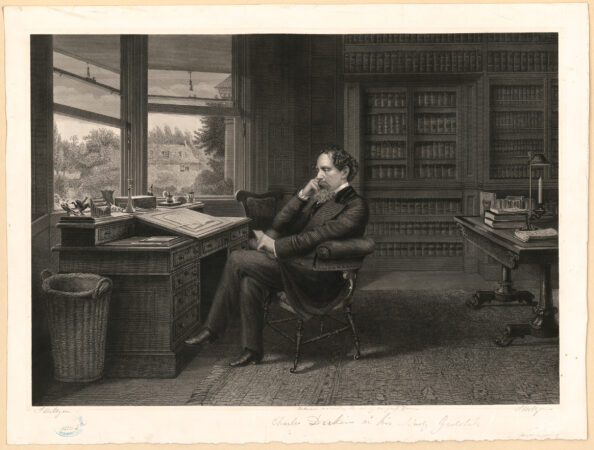
CharlesDickens, a few weeks away from his 56th birthday, arrived near midnight in Philadelphia on Jan. 12, 1868.
He would stay at the Continental Hotel, and most notably, would give readings at the Concert Hall on Chestnut Street to sold-out audiences.
His first visit here, in March 1842, Dickens had mixed feelings.
He was horrified of how prisoners were treated at the “solitary prison” Eastern State Penitentiary, but delighted at meeting Philly’s other literary hero, Edgar Allan Poe.
He also called Philly “distractingly regular” in his 1842 memoir, American Notes.
He also called the city “handsome,” and “What I saw of its society, I generally liked.”
In December 1843, he would publish his most seminal work, A Christmas Carol, in England. Philadelphia publisher Carey & Hart would publish the first notable U.S. edition of the story, which could help explain why the city fell in love with the author and his penchant for highlighting working-class and underdog characters.
Dickens’ second visit was most notable for his readings from A Christmas Carol and his first novel The Pickwick Papers to “unbounded enthusiasm and loud applause,” according to an Inquirer report from the time.
“The rude and boisterous mob which, with flaunting banners, tossing hats and loud cries, follows the horse of some victorious general,” The Inquirer wrote.
Dickens died in 1870, at age 58. And while the whole world mourned his death, the city he so enraptured would take it a step further.
In 1905, Philadelphia became the first city to build a statue of him, despite explicit wishes written into Dickens’ will against the honor.
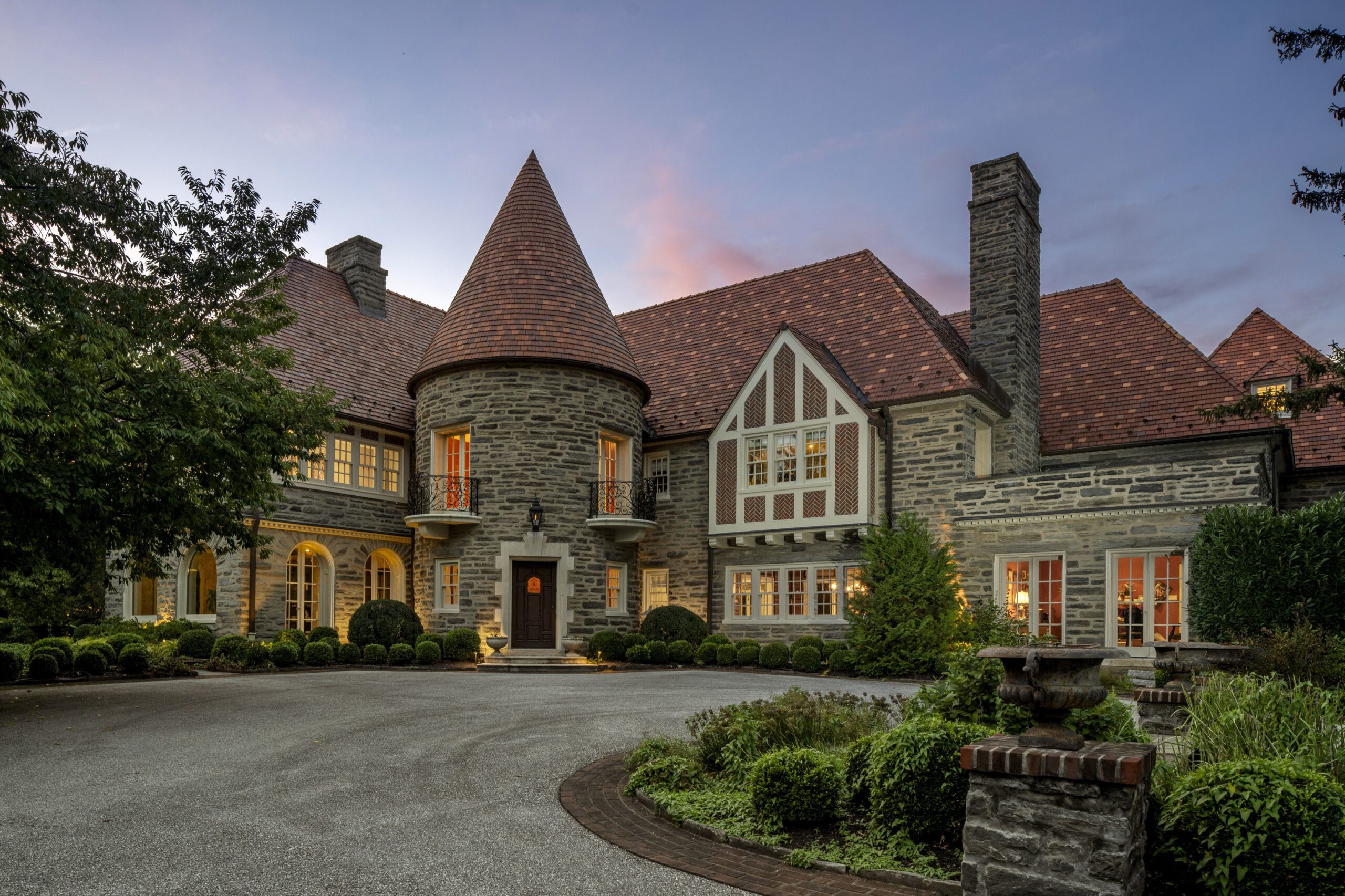
The listing includes the main fieldstone house, which spans over 11,000 square feet.
A 3.85-acre Villanova estate featuring a sprawling century-old, seven-bedroom home and a more modern carriage house have hit the market for a combined $9.9 million.
Located on Creighton Road, which the listing agent says has become known as the “estate street,” the properties are being sold together or separately, but with one caveat: If a buyer doesn’t want both, then the main home must sell first before the owners will entertain offers on the carriage house.
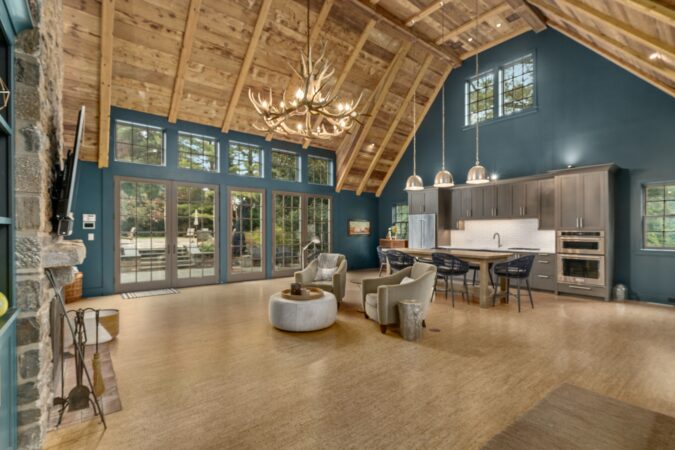
The main fieldstone house spans over 11,000 square feet and has a commercial kitchen, a solarium, a wine cellar, a movie room, and a gym, while the carriage house spans just over 1,000 square feet and has a heated saltwater pool.
Bart’s Bagels specializes in kettle-boiled bagels.
Bala Cynwyd brothers Brett and Kyle Frankel are coming home. Sort of. The duo behind West and South Philadelphia shop Bart’s Bagels is expanding to a third location, this time in their hometown of Bala Cynwyd.
The new shop is planned to open this summer at 273 Montgomery Ave. There, the Lower Merion High School alums will dish up kettle-boiled bagels — which patrons can watch being made — along with smoked meats, egg sandwiches, and unique schmears.
Barbara Thomas, 46, was sentenced this week in Montgomery County Court for her role in a $1.76 million Medicaid fraud scheme at Bala Cynwyd-based ComfortZone Home Health Care. From 2020 to 2023, when Thomas was the office manager and a case manager, the home care agency allegedly submitted fabricated Medicaid reimbursement claims. Thomas has been sentenced to serve nine to 23 months in prison and ordered to pay $1.39 million in restitution in part with her co-defendants. So far, 18 people have pleaded guilty to involvement in the scheme.
The final phase of Ardmore’s Suburban Square redevelopment is set to open later this month. Developers spent $100 million to create Coulter Place, which has 131 apartments and 20,000 square feet of retail space that has been leased to New Balance, Rhone, Sugared + Bronzed, Skin Laundry, and Barry’s. Two retail spaces remain. Rent for a one-bedroom unit in the five-story building, which has a fitness center and pool deck for residents, starts at around $3,000 per month. (Philadelphia Business Journal)
Heads up for drivers and pedestrians: With work underway on the mixed-use Piazza development in Ardmore, there will be sidewalk closures on Lancaster Avenue between Greenfield and Ardmore Avenues through its completion, which is projected for early 2028.
Part of Lancaster Avenue, between Indian Creek Lane and Woodcircle Drive, will also have a weekday lane closure in both directions from 9 a.m. to 3 p.m. as PennDot installs new lane departure signage. Installation will begin tomorrow and run through next Friday.
Part of Elmwood and South Narberth Avenues in Narberth will be closed to traffic starting Monday for bridge construction. Pedestrians and cyclists will have designated access.
Thinking about a home renovation? Inquirer contributor Terri Akman recently spoke with couples who overhauled parts of their home for tips on protecting their relationships through what can be a stressful process. Wynnewood couple Jena and Brandon Fisher, who updated all of their home’s bathrooms, recognized their different approaches to decision-making up front. Here’s how other couples approached renovations.
Speaking of home renovations, the founders of Gladwyne interior design firm Bergman Vass recently launched a new minimalist furniture collection. The duo is planning to open a showroom in Philadelphia’s Navy Yard early this year where buyers can see the items in person. (Philadelphia Magazine)
Ever have a question about the township you can’t answer? Submit it to Curious Lower Merion and one of our reporters might try to track down the answer.
🏫 Schools Briefing
In honor of Martin Luther King Jr. Day, the school district is hosting a “Junior Afternoon of Service” today from 4 to 6 p.m., when students and their families can help with various community projects.
The district is closed Monday for Martin Luther King Jr. Day. There are several concerts today and tonight and Black Rock eighth graders will pose for their class photo tomorrow. Tuesday begins the midyear experience for Lower Merion and Harriton High students. See the district’s full calendar here.
After new Pennsylvania School Code requirements went into effect at the start of the year, LMSD is reminding families about how it will communicate about weapons found on school property, offering a three-tiered approach. See it here.
🍽️ On our Plate
Lower Merion’s restaurant scene is set to boom in 2026, with nearly a dozen openings in the coming months, including Dim Sum Factory, EMei, and Malooga. A little further along the Main Line, Salt Korean Barbecue Steakhouse/Yugo is planning a late summer opening in Devon, while Testa Rossa, from the team behind White Dog Cafe, is slated to open in Radnor this spring. The Inquirer’s Michael Klein has rounded up the region’s anticipated openings. With so many new restaurants on the way, the Main Line has landed among Klein’s “hot neighborhoods” for dining this year.
Speaking of openings, Love & Honey Fried Chicken, which opened last month at 1111 W. Lancaster Ave., is hosting a grand opening for its Bryn Mawr location on Saturday from 11 a.m. to 2 p.m. There will be giveaways, discounted food, a ribbon cutting, and music.
And with openings come some closings. Belmont Hills BYOB Core de Roma, which specialized in Roman cuisine, has closed after five years. In a note on its website, the team behind the restaurant said it had decided not to buy the space or extend its lease at 201 Jefferson St. In September, the real estate hit the market with an asking price of $599,000.
🎳 Things to Do
🎸 The Ledbetters: Hear the Pearl Jam tribute perform some of the band’s biggest hits. ⏰ Friday, Jan. 16, 8 p.m. 💵 $33.38 📍 Ardmore Music Hall
🧸 Paddington 2: Catch a screening of the sequel to the beloved children’s movie. There’s another screening on Jan. 31. ⏰ Saturday, Jan. 17, 11 a.m. 💵 $6.75-$7.75 📍 Bryn Mawr Film Institute
🍹 Wallace Dry Goods x Home Appetit Moms Night Out: Geared toward moms, including those who are pregnant or nursing, sample non-alcoholic beverages and light bites. Registration is required. ⏰ Wednesday, Jan. 21, 5-7 p.m. 💵 Free 📍 Wallace Dry Goods
Built in 1900, this Ardmore Colonial blends classic design elements — like dormers and a portico — with modern living. There are a number of fireplaces throughout, including in the living room, dining room, and a bedroom. The five-bedroom home features original woodwork and crown moldings, has a sunroom leading to the patio, and a kitchen with granite countertops, including a large island. Its five bedrooms are spread across the second and third floors, including the second-floor primary suite which has a walk-in closet, a standalone tub, and a fireplace. Other features include a partially finished basement and a detached two-car garage with a studio apartment. There’s an open house Saturday from 1 to 3 p.m.
By submitting your written, visual, and/or audio contributions, you agree to The Inquirer’s Terms of Use, including the grant of rights in Section 10.
This suburban content is produced with support from the Leslie Miller and Richard Worley Foundation and The Lenfest Institute for Journalism. Editorial content is created independently of the project donors. Gifts to support The Inquirer’s high-impact journalism can be made at inquirer.com/donate. A list of Lenfest Institute donors can be found at lenfestinstitute.org/supporters.
There are plenty of spots to enjoy happy hour in Media this winter.
Looking for a spot to grab a light bite or drink during happy hour this winter? Media has plenty of options to choose from — and with special pricing — whether you’re looking for a classic cocktail, a specialty sip, or shareable bites like tandoori chicken dumplings, buck-a-shuck oysters, or arancini.
The Inquirer’s Denali Sagner has rounded up eight spots in Media with happy hour offerings, including relative newcomers like Departure or Maris Mediterranean and longtime favorites like Spasso Italian Grill or Stephen’s on State.
Scores of demonstrators protesting the killing of Renee Good by an ICE officer gathered across the region over the weekend, including in Media. Protesters ranging in age chanted “United we stand, divided we fall” outside the Delaware County Courthouse on Sunday, while some children carried crayon-drawn signs with messages like “ICE Cream, not ICE.” One Wallingford woman brought her 8-year-old daughter and said she came out because “I want to show them it’s important to stand up to a bully.”
Could popular HBO series Mare of Easttown return for a second season? Kate Winslet seems to be ready for the Delaware County-set show, created by Berwyn native Brad Ingelsby, to return, and recently indicated filming could start as early as 2027. While the award-winning actor is on board, nothing official has been announced yet.
The offerings at the Promenade at Granite Run are growing. Retailer Nordstrom Rack plans to open a 30,000-square-foot shop there this fall, and SweatHouz, which specializes in contrast therapy, opened yesterday. Located in the ground floor retail section of apartment building eleven33, SweatHouz offers infrared sauna and cold plunge therapy in private suites. The Promenade is also adding a small-format Ikea this year and recently welcomed food hall Wonder.
Media Borough has been awarded nearly $600,000 in state grants to support the purchase of a new ambulance, pedestrian enhancements, and the Barrall Park Field and tennis courts project.
Heart & Soul’d, the nonprofit thrift store that supports foster care and adoption services, is now open at its new location at 407 Dartmouth Ave. in Swarthmore. It moved there from its previous home at 14 Park Ave., also in Swarthmore.
Kandy Kids Toys and Gifts, located at 5 S. Chester Rd. in Swarthmore, announced last week that it will close at the end of February after 10 years in business.
The GameStop at Marple Cross Roads in Springfield shuttered last week as part of a mass closure by the gaming retail store.
The rehab hospital at the site of the former Concordville Inn in Glen Mills is getting closer to opening. Encompass Health plans to open the 50-bed inpatient facility in May. It will offer care to patients recovering from strokes, brain and spinal cord injuries, amputations, and other orthopedic conditions. (Philadelphia Business Journal)
Certified Laughter Yoga Master Trainer Alexa Fong Drubay is helping area residents discover a lesser-known form of yoga that is intended to help with stress relief. Based in Media, Fong Drubay offers individual and group classes on laughter yoga, which focuses on poses that hone in on yogic breathing. Laughter yoga is credited to a doctor in India, who started it in 1995. “Don’t we all deserve a little bit more laughter in our life?” Fong Drubay told 6abc in a recent segment.
🏫 Schools Briefing
There are no classes tomorrow for Wallingford-Swarthmore School District, which has a teacher in-service day. The district is then closed Monday for Martin Luther King Jr. Day. See the full calendar here.
Rose Tree Media School District is closed Monday for Martin Luther King Jr. Day. There’s a winter talent show tomorrow evening, and next week is Springton Lake’s spirit week. See the district’s full calendar here.
🍽️ On our Plate
Terrain Cafe, which has a location in Glen Mills, is hosting a “bonus restaurant week” from Jan. 26 through Feb. 8, featuring prix fixe brunch and dinner menus for $30 and $45 per person, respectively. Both meals include a starter, half salad, and an entrée.
🎳 Things to Do
🩰 Ballet of Lights: Sleeping Beauty: Tickets are going fast for this ballet performance of the classic fairytale, where dancers will wear glow-in-the-dark costumes. ⏰ Friday, Jan. 16, 6:30 and 8:30 p.m. 💵 $44-$69 📍The Media Theatre
🎵 A Proud Monkey: Hear tunes from the Dave Matthews Band tribute. ⏰ Saturday, Jan. 17, 8-11:30 p.m. 💵 Pay as you go 📍Shere-E-Punjab, Media
🥾 Martin Luther King Jr. Day Mini-Adventure Camp: Kids in kindergarten through third grade will explore the arboretum, go hiking, play games, and make crafts. ⏰ Monday, Jan. 19, 9 a.m.-4 p.m. 💵 $30-$113 📍Tyler Arboretum
🎭 Draw the Circle: This one-person show by Mashuq Mushtaq Deenexplores the courage it takes to live as your authentic self. ⏰ Wednesday, Jan. 21-Sunday, Feb. 1, times vary 💵 $20-$35 📍Hedgerow Theatre, Rose Valley
The home was built in the Dutch Colonial style and sits on a hill.
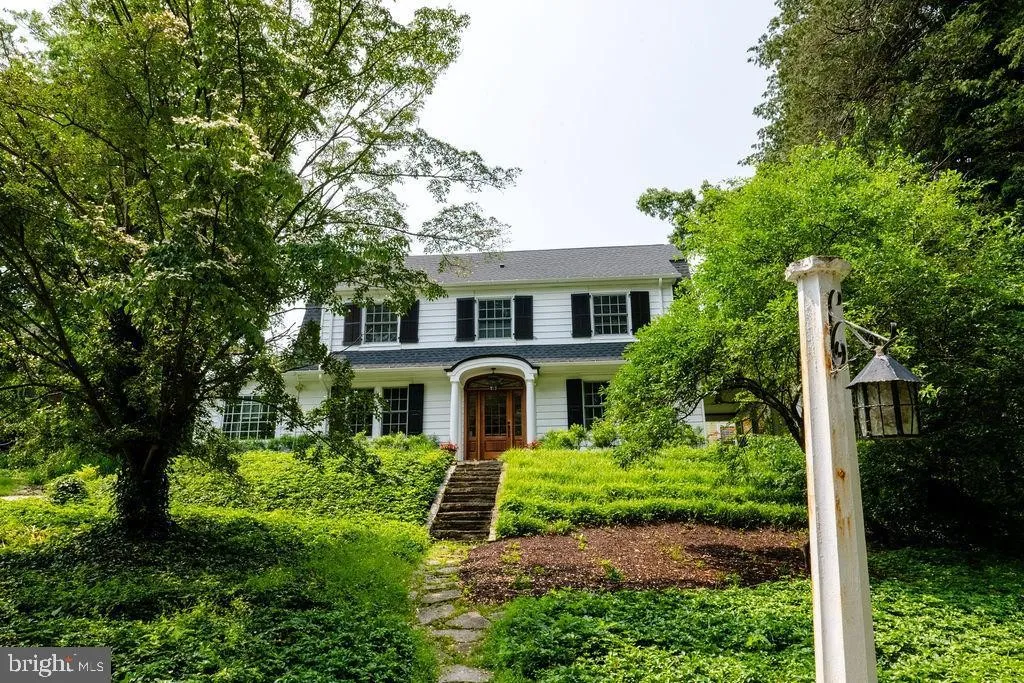
This stately and historic home is just a short walk to the heart of downtown Media. Built in 1926, the Dutch Colonial has an updated interior, including living, dining, and family rooms, as well as a kitchen with granite countertops, an island, and double wall ovens. There are three bedrooms, including a primary suite with a walk-in closet on the second floor, and a fourth ensuite bedroom on the third floor. There’s plenty of living space outside, too, thanks to a covered side porch and a slate patio with a stone fireplace and built-in pizza oven.
By submitting your written, visual, and/or audio contributions, you agree to The Inquirer’s Terms of Use, including the grant of rights in Section 10.
This suburban content is produced with support from the Leslie Miller and Richard Worley Foundation and The Lenfest Institute for Journalism. Editorial content is created independently of the project donors. Gifts to support The Inquirer’s high-impact journalism can be made at inquirer.com/donate. A list of Lenfest Institute donors can be found at lenfestinstitute.org/supporters.
John Linehan and Kobe Bryant used to talk. A lot. This would not have been unusual for other AAU teammates, but these two were fierce high school rivals.
Linehan was a scrappy point guard for Chester. Bryant was a relentless shooting guard for Lower Merion. Both were competitive, almost to a fault, and in the days leading up to big games, they’d get chippy.
The week before the 1996 PIAA Class AAAA District 1 title game, for example, the players talked every day on bulky landline phones, with Bryant often calling Linehan at his home in Chester.
“I just said, ‘You know, John, I haven’t won a championship yet, and you have,’” Bryant told The Inquirer in 1996.
Linehan knew what his friend was doing. The future NBA star did the same thing a few weeks later, on March 19, a day before the teams met again in the state semifinal.
“He was trying to get me to trash talk,” Linehan said. “I think he needed a little edge. I didn’t want to give him too much. I was like, ‘Man, you crazy.’”
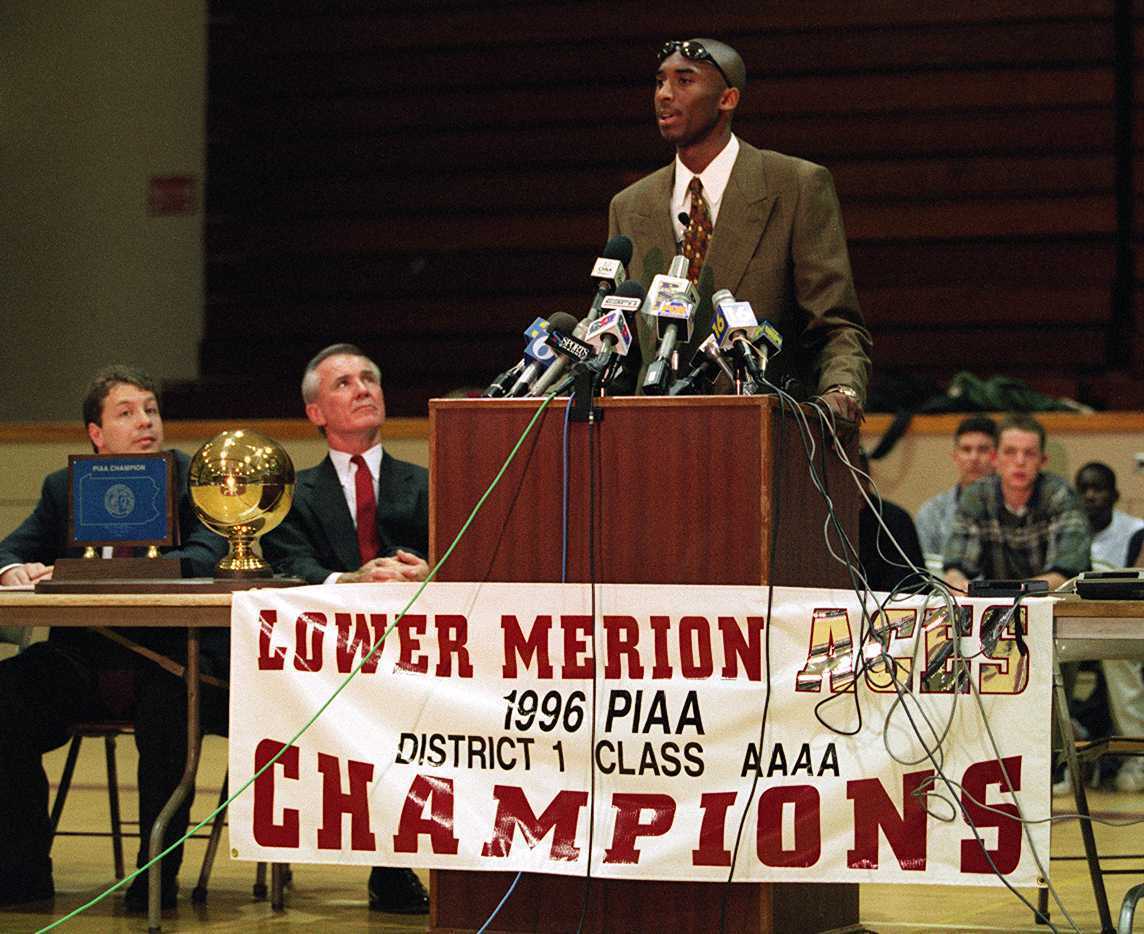
The late Kobe Bryant, a former Lower Merion basketball star, announcing he will go directly into the NBA draft out of high school.
Lower Merion wasn’t a basketball school when Bryant arrived in the fallof 1992. It paled in comparison to the local powerhouses like Simon Gratz, Coatesville, and Chester.
But Bryant changed that. Even in his freshman year, a season in which the Aces went 4-20, he brought a new standard, working out before class and introducing a level of toughness that was foreign to his teammates.
Bythe mid-1990s, Lower Merion was among the best high school teams in the Philadelphia area. Its players were more confident, celebrating after big shots, and talking loud on the court.
The Aces didn’t play as many games against Coatesville, a rising power led by Rip Hamilton. They couldn’t consistently measure themselves against Gratz, which didn’t participate in the PIAA playoffs untilthe 2004-05 season.
But they could against Chester. And so, a decades-long rivalry was born.
From 1996 through the mid-2010s, Chester and Lower Merion put on some of the greatest high school basketball games in the area. They’d often sell out venues like the Palestra and Villanova’s Pavilion. Some fans would even scalp tickets.
Their communities were almost diametrically opposed. Chester was predominantly Black; Lower Merion was predominantly white. Chester was plaguedby poverty; Lower Merion was considered affluent.
Chester, with its Biddy League, had a legacy of basketball greatness, and a steady pipeline of talent. Lower Merion had nothing comparable. But these differences melted away on the court.
And while the rivalry is not what it once was, it lives on today.
“The pride and the intensity and the history will never fade,” said Lower Merion coach Gregg Downer. “I mean, if we played them tomorrow night, that would be an intense game.”
The Bryant-Linehan era
When Downer was named head coach in 1990, he already was well-aware of Chester’s tradition. He’d played youth basketball growing up in Media and had heard about the stars who’d come out of the Biddy League.
It was obvious that his team would have to go through the Clippers to win any sort of accolade. But it wasn’t until Bryant’s arrival that Downer’s aspirations became a real possibility.
The shooting guard, who was the son of former 76er Joe “Jelly Bean” Bryant, was mature for his age. He’d demand more, mentally and physically, of older teammates. Doug Young, a former Lower Merion forward, remembered seeing Bryant leaving the locker room at 7 o’clock one September morning in 1993.
He’d been at the high school gym since 5 a.m., working out by himself. To the Lower Merion basketball team, this was a “crazy” concept, so Young and his cohorts decided to join him.
In the District 1 championship game against Chester, Kobe Bryant goes to the hoop over the Clippers’ John Linehan.
They arrived the next day at 5:06 a.m. The players knocked on the door. Bryant didn’t answer.
“He wouldn’t open it,” said Young, who graduated in 1995. “You’re either there or you’re not. We were six minutes late.”
His teammates waited outside until 6:30 a.m., when the school opened. They made sure to show up before 5 a.m. from that day on.
Downer was wired the same way. The coach — and his NBA-bound pupil — would push the team in practice. Losses were particularly tough. The players would go through endless sprints and rebounding drills that sent them running to the trash can.
It wasn’t fun. But over time, the method created a newfound tenacity.
“No one walked into high school saying, ‘Oh, yeah, I want to win a state championship,’” Young said. “But [Kobe] knew what that was. He was like, ‘I don’t know any other way. If we’re not going to win a championship, what the heck are we playing for?’”
Chester was always going to be an obstacle, so Downer tried to play into the battle. He’d use analogies for the tough, hard-nosed team, comparing it to an animal stalking its prey.
The coach began to screen movies to underscore this point. Together, in a Lower Merion classroom, Downer’s players watched Jaws and other tales of survival, like The Edge, a 1997 thriller about a plane that crashes in the Alaskan wilderness.
“This bear is stalking them, and the couple is saying, ’What are we going to do about this bear?’” Downer said. “And one of them says, ‘The only thing we can do is kill the bear.’
“And I remember being like, ‘We can do this.’ But the only solution is to — not to be overly graphic — but to kill them.”
(The bear in this analogy was Chester.)
He added: “We tried everything humanly possible to get through to this team.”
The first few games were ugly. In 1995, Lower Merion met the Clippers in the District 1 championship, only to lose by 27 points. But they came back with a renewed focus the following year, in 1995-96, going 25-3 in the regular season to earn a district final rematch against Chester.
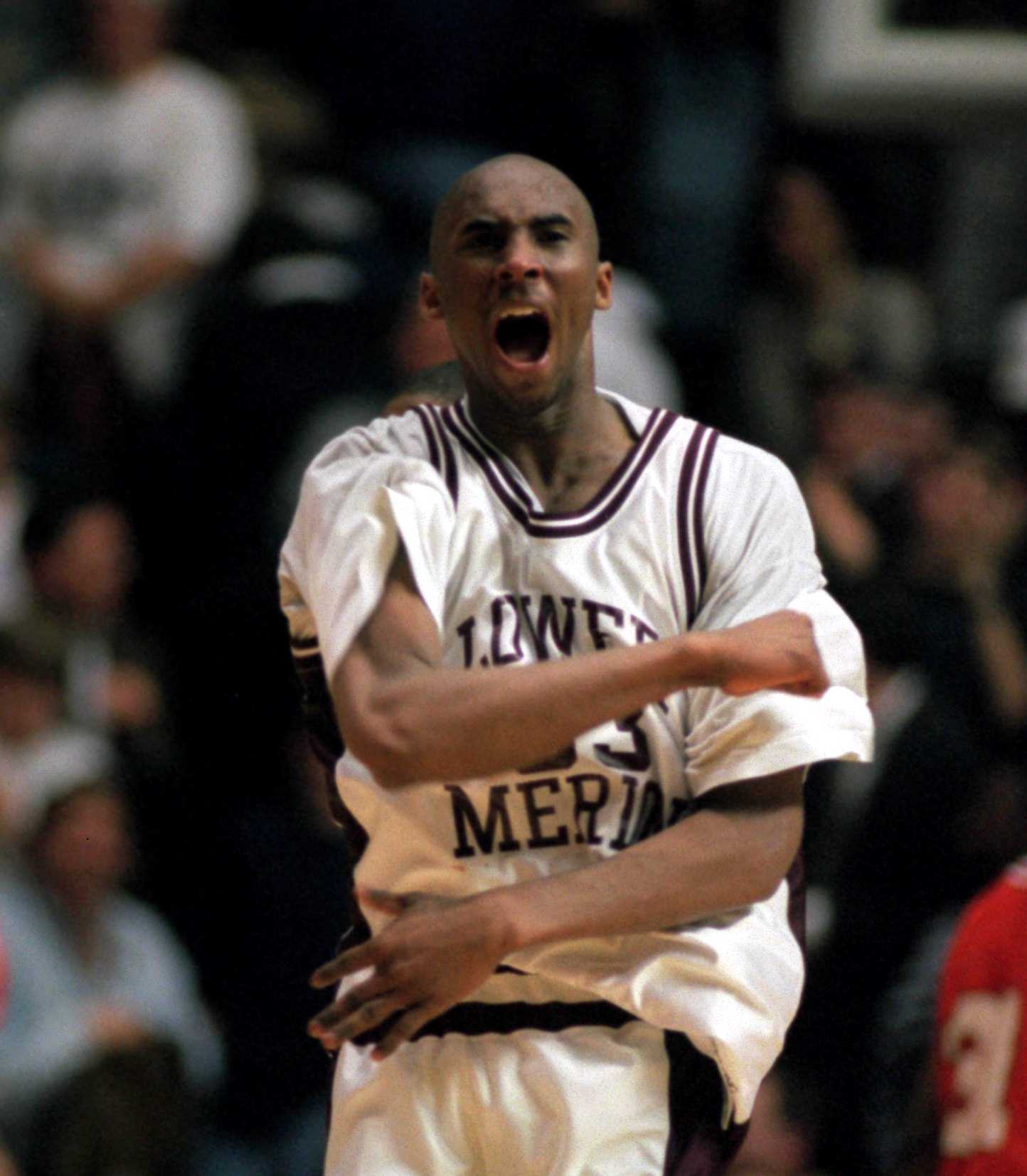
The Aces showed up at the arena with “27″ printed on their warmup shirts. Bryant, armed with fresh bulletin board material from Linehan, dropped 34 points against the Clippers en route to a 60-53 Aces win.
The shooting guard scored 39 points later that month — with a broken nose — in a 77-69 state semifinal win over Chester. Lower Merion went on to beat Erie Cathedral Prep, 48-43, to win its first state championship since 1943.
Kobe Bryant celebrates after defeating Chester at the Palestra in 1996 to advance to the state final.
To Linehan, the difference Bryant made was obvious. He joked that he’d “never heard of Lower Merion” before his friend arrived. But once he did, Chester realized it would have to go to great lengths to prepare for the phenom.
Ahead of a big game against Lower Merion in the mid-1990s, the coaching staff reached out to Clippers alumnus Zain Shaw. He played at West Virginia and in Europe and possessed some of the same characteristics as Bryant — a tall frame and an athletic build with strong ballhandling skills.
The Clippers invited Shaw to practice, where he played the role of Bryant (to the best of his ability).
“Kobe was so special, we had to bring in a pro to help us prepare,” said Linehan, who later starred at Providence.
But there was another impact the future Lakers star had, one that had nothing to do with his own prowess. Linehan noticed that Bryant’s Lower Merion teammates started to take on some of his qualities. Suddenly, they were playing brash, confident basketball.
“We didn’t have reason to believe, until Kobe got there, that we belonged on the court with Chester,” Young said. “The fear was real. Teams were afraid of Chester because they’d run you out of the building.
“The idea of Lower Merion being on the court in a meaningful game against [them] was such a crazy thought. But then, you started to believe.”
The buzzer-beater heard ’round Chester
Bryant never got over the rivalry, even after he embarked on his Hall of Fame NBA career in 1996. Sometimes, he’d call the coaching staff before big games against Chester, leaving expletive-laden voicemails to use as motivation.
The Lakers shooting guard also created an incentive structure for his former team.
“You couldn’t get a pair of Nike sneakers unless you qualified for the playoffs,” Young said. “If you don’t earn it, you don’t get it.”
He became especially involved in 2005-06. After a lull in the early 2000s, Chester and Lower Merion found themselves neck-and-neck again. The Aces were led by the duo of Ryan Brooks and Garrett Williamson, and the Clippers boasted a deep roster, headlined by Darrin Govens. All of them eventually played in the Big 5.
(Chester was so stacked that it brought a 1,000-point scorer off the bench in Noel Wilmore.)
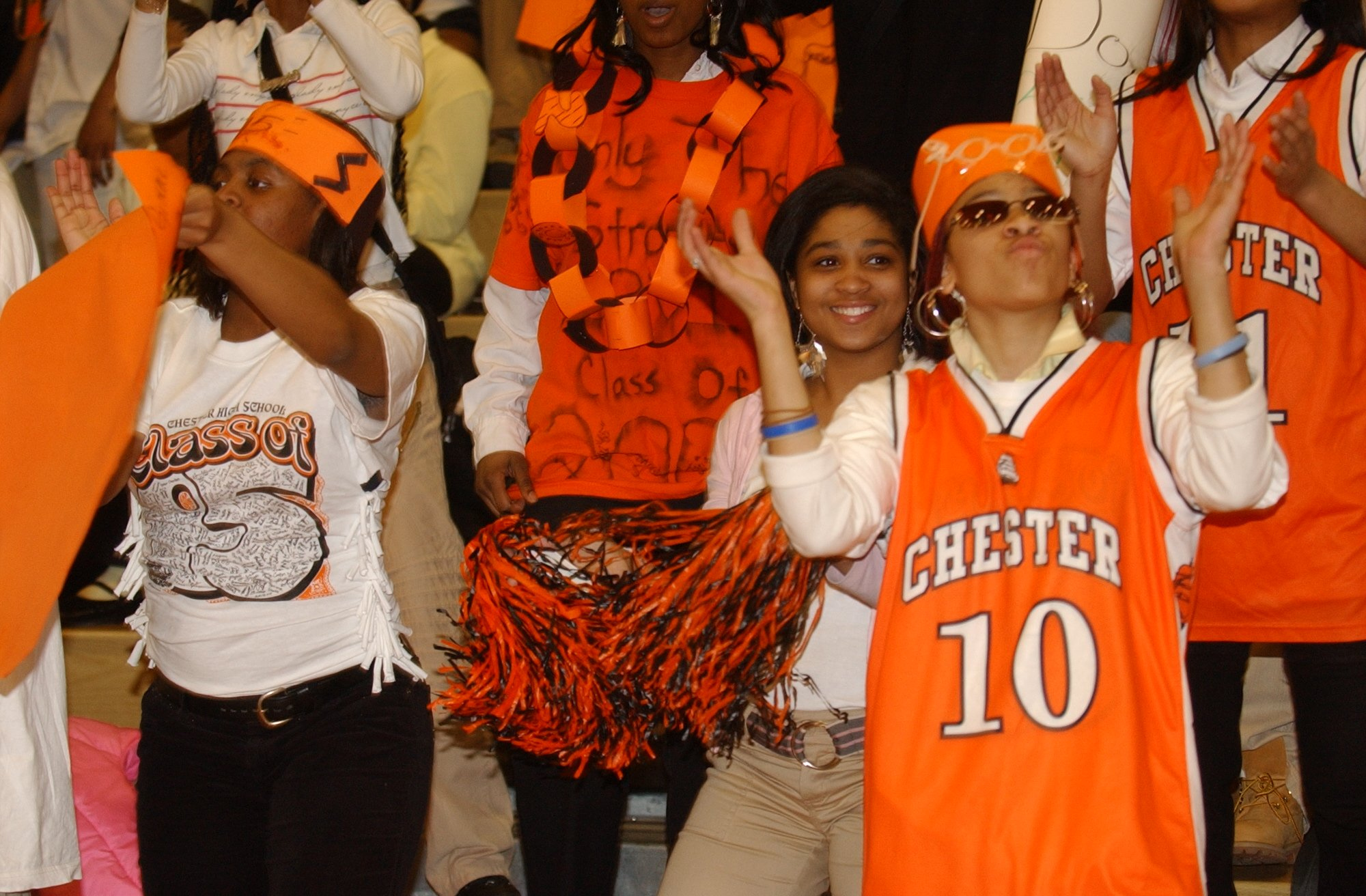
Students from the class of 2005 show their support as Chester and Lower Merion play in the state final.
The rivals met in the state championship on March 19, 2005. Despite strong performances from Williamson and Brooks, the Clippers pulled away in the second half thanks to a dominant third quarter from Govens. Chester won, 74-61.
The teams reconvened the following season with their competitive spark fully reignited. They faced each other three times that year. Chester took Round 1, a one-point regular-season victory on Dec. 27.
Round 2 was in the district final on March 3. Before the game, in front of a packed crowd at the Pavilion, Chester sophomore Karon Burton walked up to the layup line.
Lower Merion’s student section caught his ear with a chant about coach Fred Pickett’s stout stature.
The dig didn’t intimidate Burton. If anything, it fueled him. He grew up playing street ball in Chester and always loved trash talk.
Instead of cowering, like the crowd hoped, the sophomore delivered an unforgettable outing. The game went into overtime, and was tied at 80 with only a few seconds remaining.During a timeout, assistant coach Keith Taylor pulled Burton aside.
“He was like, ‘Hey, listen,’” Burton said. “They’re going to double Darrin. If you get that ball, do your thing.’”
Taylor’s words proved prescient. As Lower Merion’s defenders swarmed Govens, the Clippers inbounded the ball to Burton.
He took a pull-up jumper from beyond the arc and drilled it for an 83-80 win. The Chester fans stormed the court. Burton, who later joined Wilmore in the 1,000-point club, said he felt like a celebrity in his hometown.
“It was like watching a buzzer-beater in the NBA,” he said. “I just ran to my teammates, they picked me up. It was a crazy feeling.
“I’m a big Kobe fan, too. Kobe’s my favorite player ever. So when I came and I hit the game-winner on that team …”
Round 3 took place a few weeks later, in a state semifinal rematch at the Palestra on March 22. Bryant called Lower Merion’s coaches before the game.
“I don’t remember specifically what he said, but I’m sure there were a lot of [expletives] dropped,” said Young. “Like, ‘Don’t call me back if you don’t beat those [expletives].’ That was a line we heard from him a couple times.”
This one didn’t go Chester’s way. After trailing the Clippers, 47-37, at the end of the third quarter, the Aces came roaring back in the fourth and put up 33 points to eke out a 70-65 win.
The celebration in the locker room was cathartic. Water sprayed into the air. Players sat atop each other’s shoulders and turned the showers into a slip ‘n slide. Bryant called in, again, as other members of the 1996 team filtered through.
Darrin Govens scored his 1,000th point for Chester against Lower Merion in the state championship in 2005.
This was not how Govens wanted to end his high school career. And a few months later, when he arrived at St. Joseph’s on a basketball scholarship, he saw a familiar foe.
It was Williamson, his new Hawks teammate.
“We were sitting on the opposite side of the bench,” Govens said. “I didn’t want to sit next to him; he didn’t want to sit next to me. We’d kind of avoid each other and just head nod.
“Even in running drills, it was a competition. He looked to the left. I looked to the right. We tried to beat each other in sprints. But then we realized, ‘All right bro, we’re teammates now.’”
‘Hero status’
Chester had always rallied around its high school basketball team. Linehan said it was akin to playing for the Sixers. The teenagers were treated like professional athletes — especially those who had been a part of big wins.
The Clippers’ public address announcer, James Howard, called this “hero status.”
“All of a sudden, your money’s no good,” he said. “Barbers take care of you, make sure your hair looks nice before games. Free food. Little kids look up to you and ask for your autograph. That’s how it is.”
In Chester, there were plenty of heroes to draw from. There was Linehan, but also Jameer Nelson, who met a young Burton in the late 1990s. Nelson, a friend of Burton’s cousin, gave the aspiring basketball player a gift before he left for St. Joe’s: his MVP medal from the Chester summer league.
“He was one of the biggest guys in our city,” Burton said, “so it’s definitely something that I’ll always remember.”
By the early 2010s, when the rivalry was reignited for a third time, Lower Merion had built more of a basketball tradition. Aces guard Justin McFadden said he’d get stopped in Wawa before big games against the Clippers.
Chester celebrates its win over Lower Merion for the state championship in 2012.
“It became a community thing,” he said. “People would be asking, ‘What do you guys think about Chester? Do you think we can get it done?’”
In 2012, the schools met in the state championship for the first time since 2005. Junior forward and future NBA starter Rondae Hollis-Jefferson put up a double-double to lead the Clippers to a resounding 59-33 win over the Aces. It was their second straight title and their 58th straight victory.
A year later, after going 17-0 in the Central League, the Aces met the Clippers in the state final again. Chester had won 78 straight games against in-state opponents. Snapping that streak would be daunting, but Downer had a plethora of motivational tactics at his disposal.
Just as they had in the 1990s, The Aces again spent pockets of the season watching Jaws, The Edge, as well as an addition: Al Pacino’s “Inch by Inch” speech in Any Given Sunday.
“He would have that fired up on YouTube, ready to go,” McFadden said. “Looking back, [your reaction] is a chuckle, but in the moment, it worked. We knew that this was the hill that needed to be climbed.
“And every time they played that speech, we got goose bumps. We were ready to fire.”
Chester got out to an early lead, but Lower Merion rallied behind a 22-point, 11-rebound performance from B.J. Johnson, who later starred at La Salle. The Aces snapped the streak and won their seventh state title with a 63-47 victory.
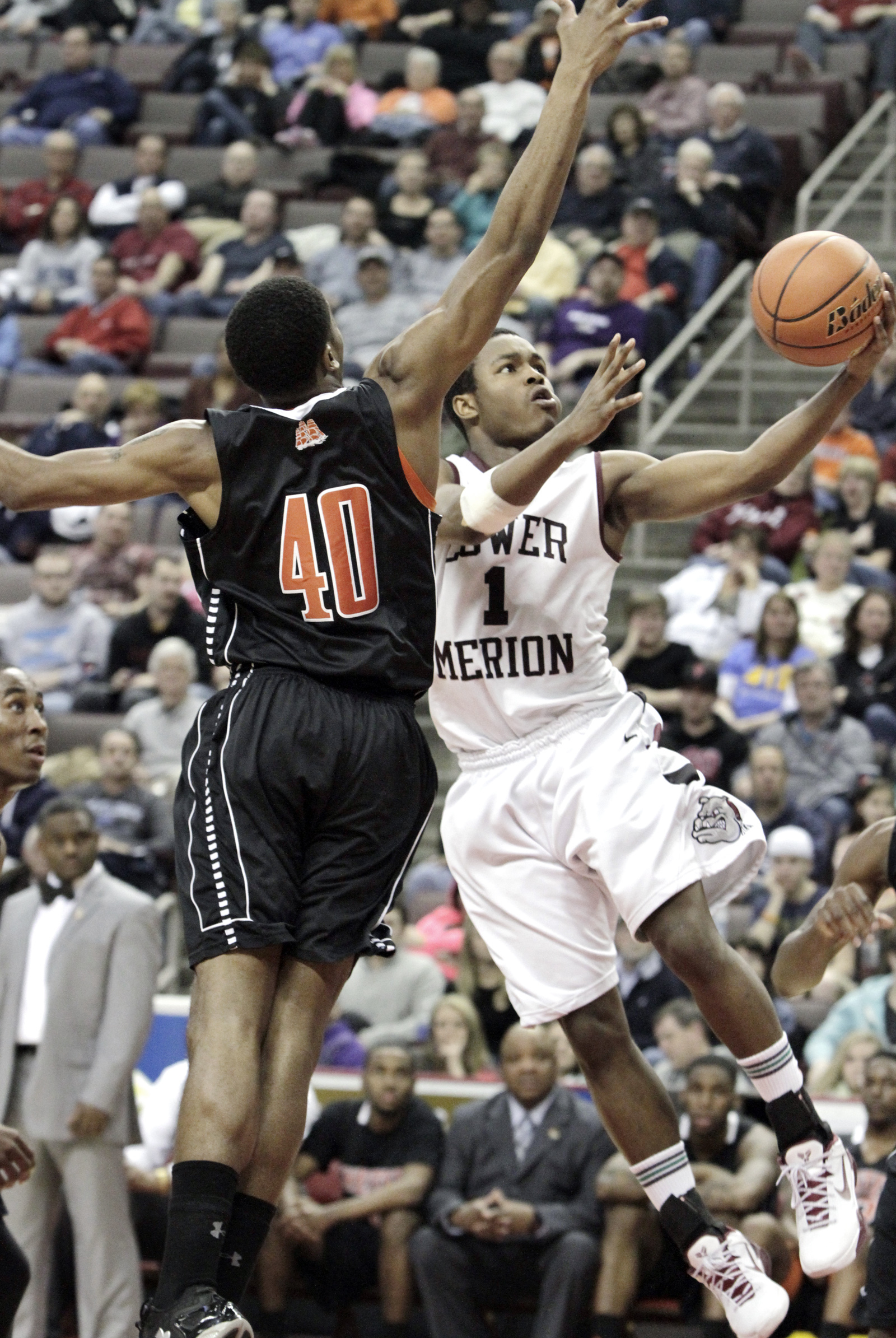
Lower Merion’s Jaquan Johnson goes to the net as Diamonte Reason guards him in the Chester-Lower Merion state championship game in 2013.
The Clippers then were coached by Larry Yarbray. Pickett, who was diagnosed with cancer in2010, was in declining health. Just before he died in 2014, Downer decided to say goodbye.
He and his former assistant coach Jeremy Treatman drove out to Pickett’s home in Chester. They went to his bedside.
“And we talked,” Downer said. “And we held hands. It was a really touching moment for me. This is a man that carried Chester on his back. That tried to carry Lower Merion on his back. And I knew it was the last time I was going to see Fred.
“We walked out the door, and we told each other that we loved each other. And I never thought he would say that to me, or vice versa. But it was just kind of like, ‘You know what? We’ve had some amazing battles, and there’s a lot of respect there.’”
Keeping the tradition alive
In recent years, the Chester-Lower Merion rivalry has diminished.
There was a brief period when the teams were in different classifications. Both programs have lost players to private schools that can recruit, and the addition of the Philadelphia Catholic League to the PIAA has made the state playoffs more competitive.
One place the Aces and Clippers could meet is in the district tournament, where they reunited in 2024. But they haven’t played each other since. And Howard says the contests don’t have the same feel.
“Both teams have lost D-I talent,” he said. “It’s not as high-flying, above the rim, as it was in the past. But still a great game. Sold out at Lower Merion, and at Chester, same thing.”
The history will always be there, though, and Burton is doing his best to keep it alive. His 8-year-old son, Karon Burton Jr., is playing in the Biddy League. His father is his coach.
Sometimes, they go on YouTube and watch old Clippers games. Junior’s favorite, of course, is the 2006 district final.
Burton believes that his son has a promising future, but isn’t sure of where he’ll go to high school yet. He doesn’t want Karon Jr. to feel obligated to follow his father’s path.
But if it worked out that way, what a story that would be.
“I’d love to be the first father and son to have 1,000 points,” Burton said. “With the same name? That would be crazy.”