Blog

  • Temple, Villanova, and Penn State are among local schools beginning to pay athletes. Here’s how it’s going so far.

    Temple, Villanova, and Penn State are among local schools beginning to pay athletes. Here’s how it’s going so far.

    At local colleges with major sports programs, some student athletes are now getting paychecks — from their athletic departments.

    Pennsylvania State University, Temple, Villanova, St. Joseph’s, Drexel, and La Salle are among the Pennsylvania schools that have begun to directly pay athletes following a settlement last year in federal class-action lawsuits over student athlete compensation.

    The move arguably ends college athletes’ status as amateurs and begins to address long-standing concerns that players haven’t fairly profited from the lucrative business of some college sports.

    It also raises questions about how schools will fund the athletes’ pay and whether equity complaints will arise if all athletes are not comparably awarded. Some also question how it will impact sports that are not big revenue makers.

    Locally, most colleges have been mum on how much they are paying athletes, and some have also declined to say which teams’ athletes are getting money through revenue sharing, citing competitive and student privacy concerns. Villanova, a basketball powerhouse that has 623 athletes across 24 sports, said it will provide money primarily to its men’s and women’s basketball teams.
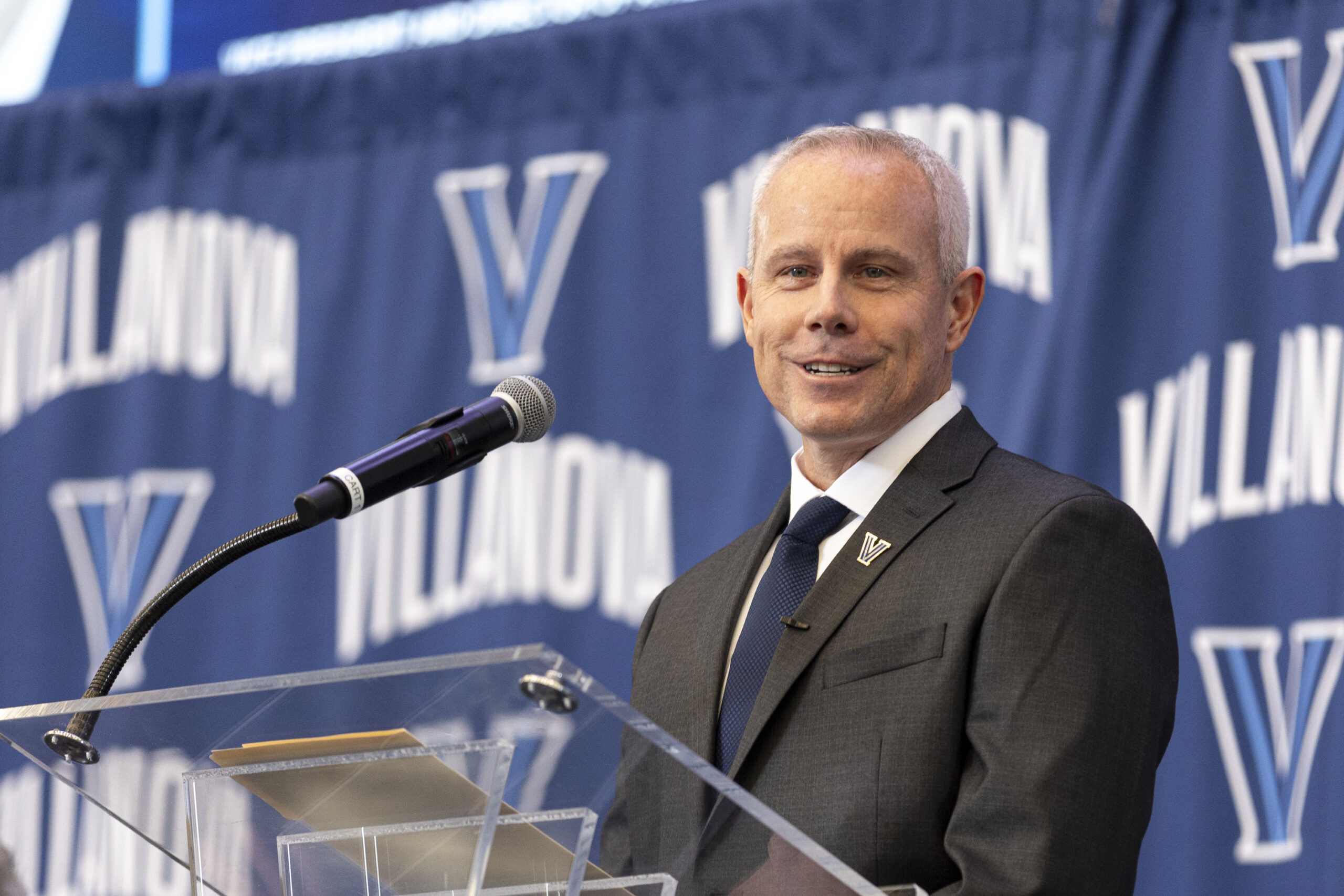
    Erica Roedl, Villanova’s vice president and athletic director, speaks during a news conference at the school’s Finneran Pavilion in 2024.

    “Our objective is to share revenue at levels which will keep our basketball rosters funded among the top schools in the Big East [Conference] and nationally,” Eric Roedl, Villanova’s vice president and director of athletics, said in a June message after the court settlement.

    St. Joe’s, another basketball standout, said its arrangement is also with men’s and women’s basketball athletes, like its peers in the Atlantic 10 Conference.

    Temple University established Competitive Excellence Funds that allow all of its 19 teams to raise money for revenue sharing, but declined to say which teams are currently distributing money to athletes.

    “Donors could, if they wanted to, make sure their money went to a certain sport,” said Arthur Johnson, Temple’s vice president and director of athletics. “They have that ability.”

    Other local colleges, including St. Joseph’s and Villanova, also launched funds to help raise money for revenue sharing. And all three schools also plan to use athletic revenue.

    Under the revenue-sharing framework established by the court settlement, each college can pay its athletes up to a total of $20.5 million this academic year. Football powerhouse Penn State, which has about 800 athletes, has said it intends to reach the cap, according to a June 7 statement from athletic director Pat Kraft.

    “This is a rapidly evolving environment that we are monitoring closely to ensure our approach remains consistent with applicable rules, while supporting the well-being and academic success of our student-athletes,” said Leah Beasley, Penn State’s deputy athletic director for strategic engagement and brand advancement.
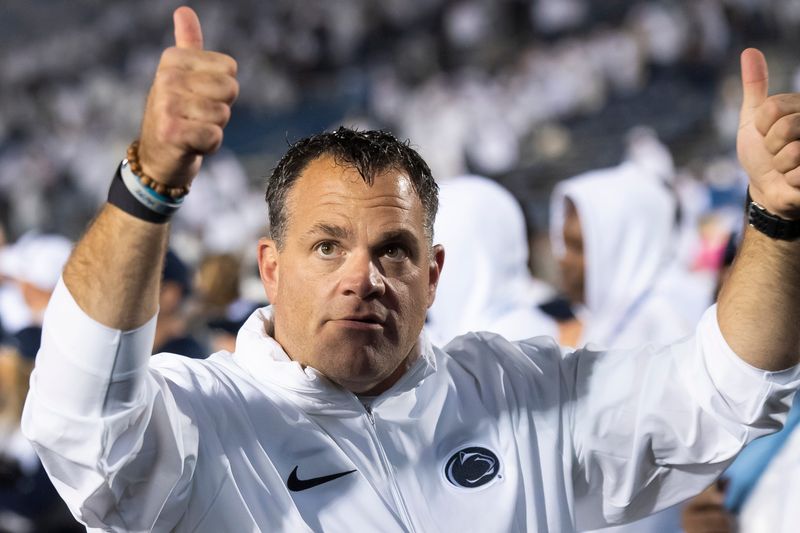
    Penn State athletic director Pat Kraft gives two thumbs up to the student section following a 31-0 win in a football game against Iowa in 2023.

    ‘It’s a job’

    To athletes, revenue sharing seems only fair, given many are so busy practicing and playing through summers and other breaks that they don’t have time to work.

    “It is a job at the end of the day,” said former Villanova University basketball player Eric Dixon, who holds the Wildcats’ record as all-time leading scorer. “You put a lot of time into it every single day, every single week.”

    Players get hurt and can see their sports careers harmed or halted, said Dixon, who grew up in Abington and played at Villanova from 2020 to 2025. College may be their only time to earn money for their sports prowess.
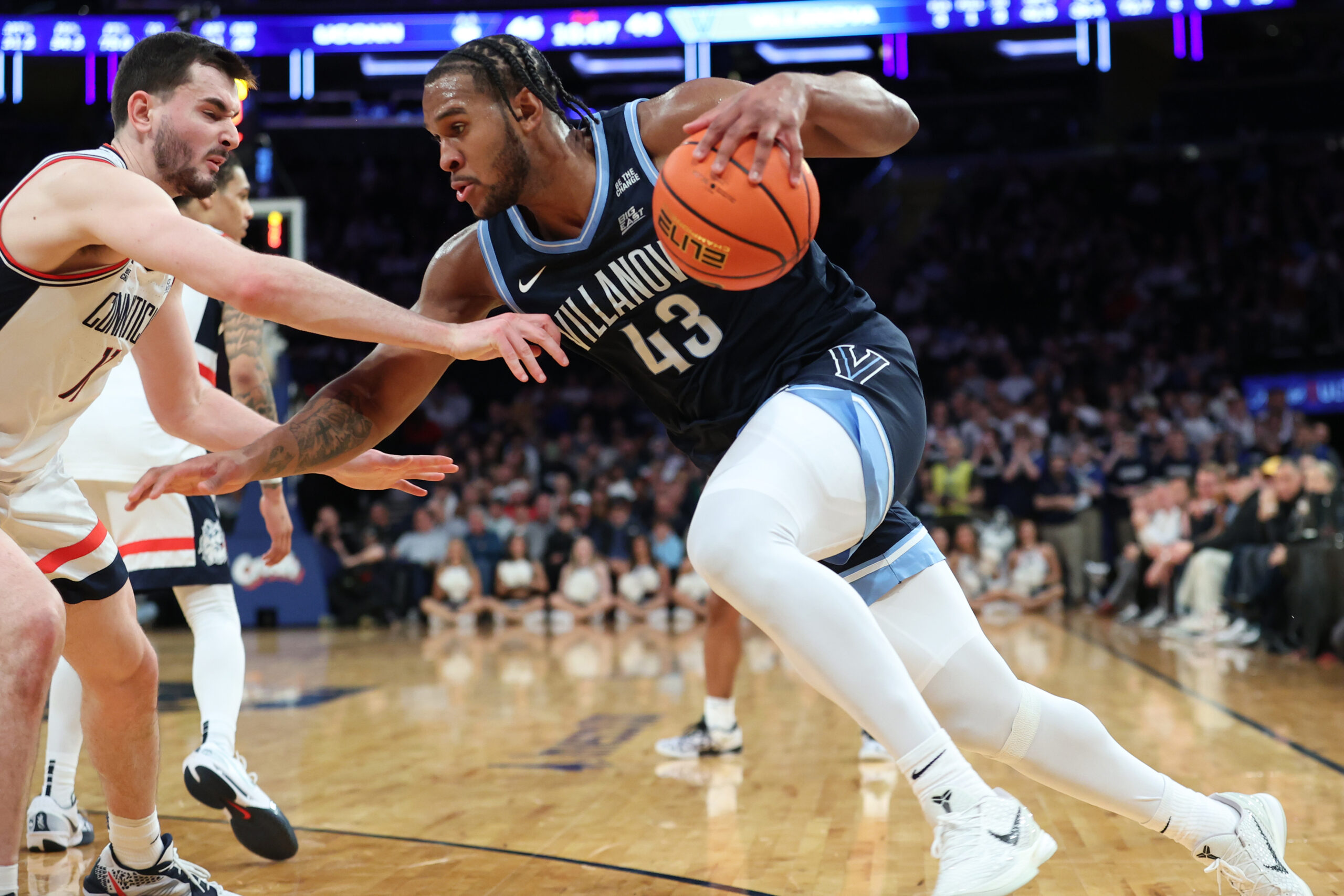
    Villanova’s Eric Dixon drives against Alex Karaban of UConn during the 2025 Big East Tournament at Madison Square Garden in New York.

    Dixon didn’t benefit from revenue sharing. But he got money through external name, image, and likeness (NIL) endorsements and sponsorships that the NCAA began allowing in 2021. Dixon declined to specify how much he received, but said it was “seven figures” over four years and allowed him to help his family.

    Like some other schools, Villanova, he said, provided players with financial guidance so they could make wise decisions on how to use their money.

    External NIL arrangements, though, he said, were a little “like the Wild West.” (NIL compensation is allowed to continue under the lawsuit settlement, but deals of more than $600 have to be reported.) Revenue sharing from colleges will offer athletes more predictable income, said Dixon, who now plays for the Charlotte Hornets’ affiliated team in the G League.

    Tyler Perkins, a Villanova junior from Virginia, currently plays for the Wildcats, who won national championships in 1985, 2016, and 2018. While he declined to say how much he is receiving, he said revenue sharing is helping him prepare for his future and “set up for the rest of my life.”

    Maddy Siegrist, also a former Villanova basketball player who now plays for the Dallas Wings in the WNBA, is pleased universities are able to share revenue directly with athletes.

    “It will be interesting to see how it all plays out,” said Siegrist, the Big East’s all-time leading scorer in women’s basketball and Villanova’s overall highest scorer, of men’s and women’s basketball.
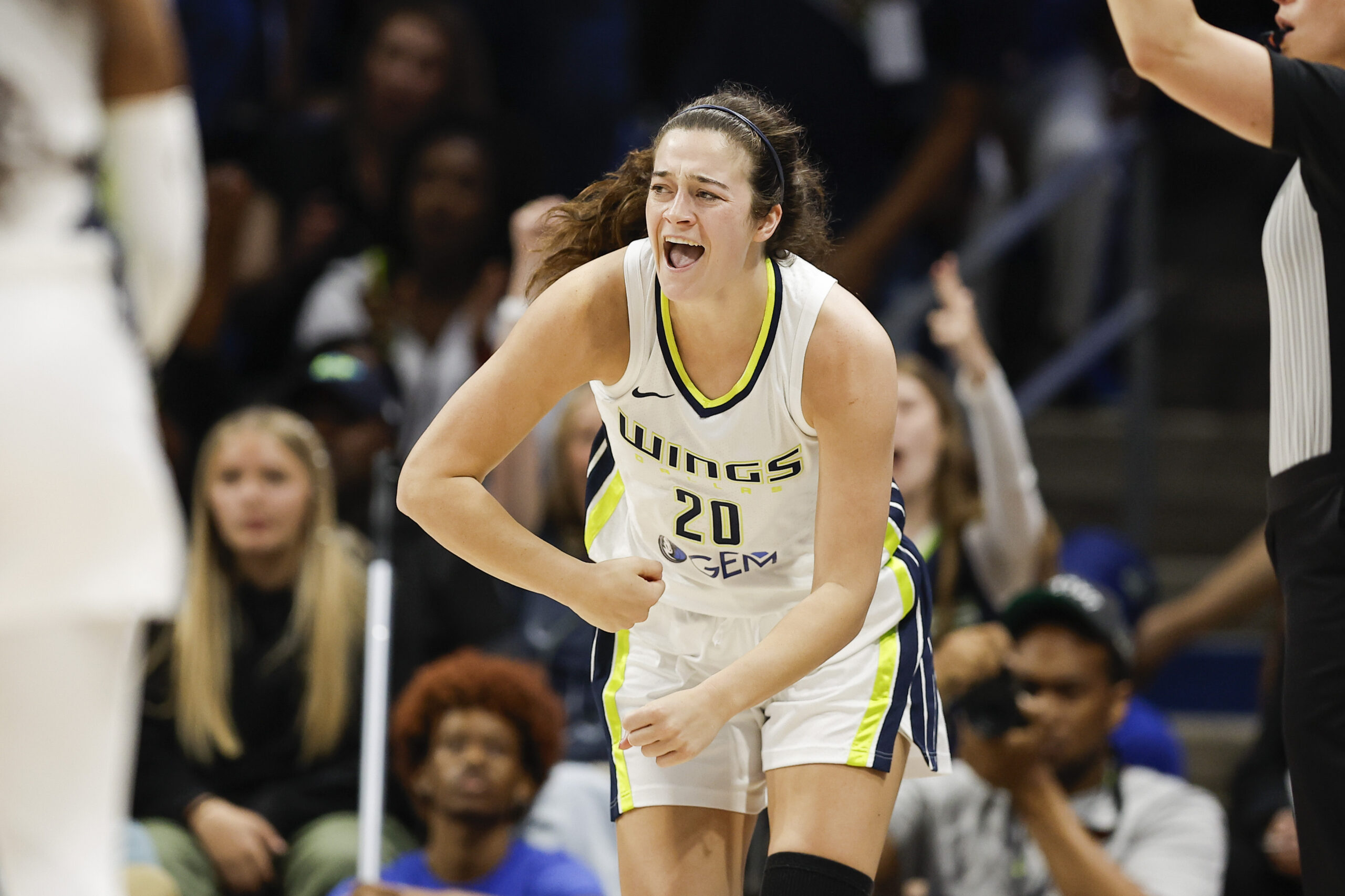
    Dallas Wings forward Maddy Siegrist celebrates a three-point shot during a WNBA basketball game against the Chicago Sky in 2024 in Arlington, Texas.

    While the big revenue sports are likely to see the money first, she said, “I would hope there will be a trickle-down effect where almost every sport is able to benefit.“

    A lawsuit spurs changes

    For years, there have been growing concerns that athletes were not getting their fair share of the profits from college sports, which make money on broadcast rights, ticket sales, and sponsorships. Meanwhile, coaches can be among the highest paid in a university’s budget.

    In 2020, former Arizona State swimmer Grant House became the lead plaintiff in House vs. NCAA, a class-action antitrust lawsuit that argued athletes should be able to profit from the use of their name, likeness, and image and schools should not be barred from paying them directly.

    The settlement approved in June of that suit and two others against the NCAA requires the NCAA and its major conferences to pay $2.8 billion in damages to current and former Division 1 athletes. Another provision gave rise to the revenue sharing.

    It initially applied to the major sports conferences: the Big Ten, Atlantic Coast Conference, Southeastern Conference, and the Big 12. Penn State belongs to the Big Ten and the University of Pittsburgh to the Atlantic Coast.

    But other athletic conferences, along with many of their members, decided to opt in to the agreement to remain competitive in select sports. St. Joseph’s, La Salle, Villanova, Drexel, and Temple all are part of conferences participating in revenue sharing with athletes this year.

    “We support student-athletes’ ability to pursue value among their peers and to leverage commercial opportunities that may benefit them or the institution,” said Maisha Kelly, Drexel’s vice president and director of athletics and recreation.

    Temple belongs to the American Athletic Conference, which said its members must agree to pay at least $10 million over three years to its athletes. Johnson, Temple’s athletic director, noted that total also includes new scholarships, not just pay.

    No tuition, state dollars to be used

    Pitt alumnus J. Byron Fleck has called on the Pennsylvania State Board of Higher Education to advise three state-related colleges — Penn State, Temple, and Pitt — not to use tuition dollars, student fees, or state appropriations to fund athlete payments. He also asked lawmakers to take action.

    “It doesn’t relate to any educational or academic purpose,” said Fleck, a 1976 Pitt alumnus and lawyer in California.

    Fleck said he was especially concerned about how Pitt could afford it. Pitt had a $45 million deficit in its athletics department budget in 2023-24, according to Pittsburgh’s Public Source.

    Karen Weaver, an expert on college athletics, higher education leadership, and public policy, said the same concerns about public funds being used to pay athletes have risen in other states, including Michigan and Washington.

    But Penn State, Temple, and Pitt all said in statements that they would not use tuition, student fees, or state appropriations to fund revenue sharing with athletes.

    “Penn State Intercollegiate Athletics is a self-sustaining unit of the university,” said Beasley, Penn State’s deputy athletic director.

    Pitt said it would use athletic revenues.

    In addition to donations, Temple, too, is using athletic department revenues, such as ticket sales, but it is also looking at other “nontraditional ways” to raise money, Johnson said.

    “We’re turning over every stone,” he said.

    Weaver, an adjunct professor at the University of Pennsylvania, said she worries that as the caps on revenue sharing get higher and costs grow, schools, especially those tight for cash, may start raising recreation and other student fees. The University of Tennessee added a 10% student talent fee for season ticket renewals, according to the Associated Press, while Clemson is charging a $150 per semester student athletic fee, according to ESPN.

    Roedl, the Villanova athletic director, said in a statement that it had launched the Villanova Athletics Strategic Excellence (VASE) Fund to raise money for the payments.

    “Additionally, we are looking for other ways to maximize revenue through ticketing, sponsorships, and events, and identifying cost efficiencies throughout our department,” he said.

    St. Joe’s, which has about 450 student athletes, said that it started a Basketball Excellence Fund to raise revenue and that payments also are funded by the basketball program. Athletes that receive funds “serve as brand ambassadors for the university,” the school said in a statement. “… These efforts have included community engagement — particularly with youth in the community — and marketing initiatives that directly support the Saint Joseph’s University brand.”

    La Salle declined to say how much student athletes receive or in what proportion.

    “We can share that any funds provided to students come from external sources and not tuition dollars,” said Greg Nayor, vice president for enrollment management and marketing.

    Weaver, author of a forthcoming book, Understanding College Athletics: What Campus Leaders Need to Know About College Sports, said plans that call for the bulk of revenue sharing to go to football and basketball players would lead to legal action, charging that female athletes are not being treated equally.

    “Any day now I expect we’ll see a huge Title IX lawsuit,” she said.
  • She moved home and started whispering about Wawa. Then she went viral.

    She moved home and started whispering about Wawa. Then she went viral.

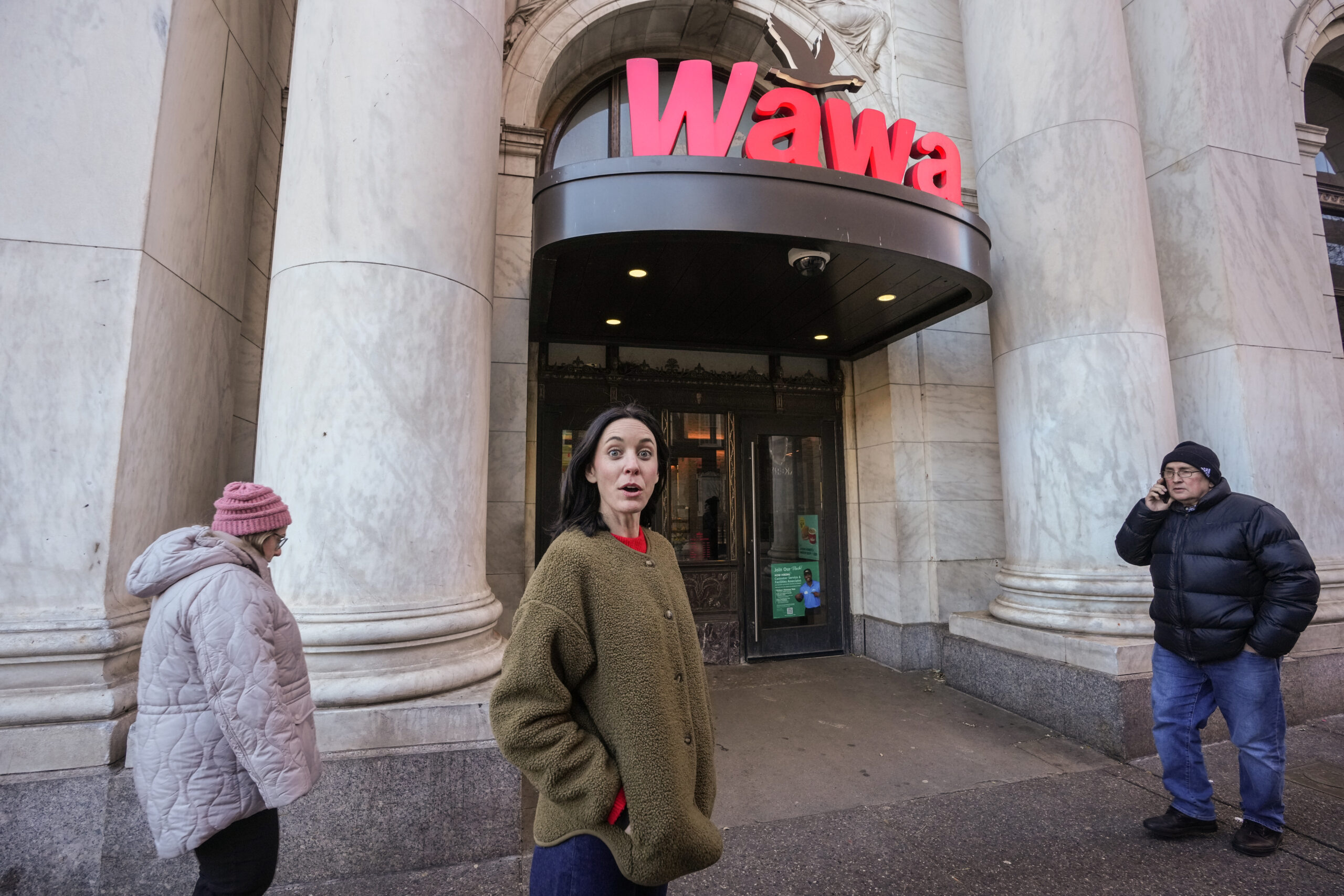
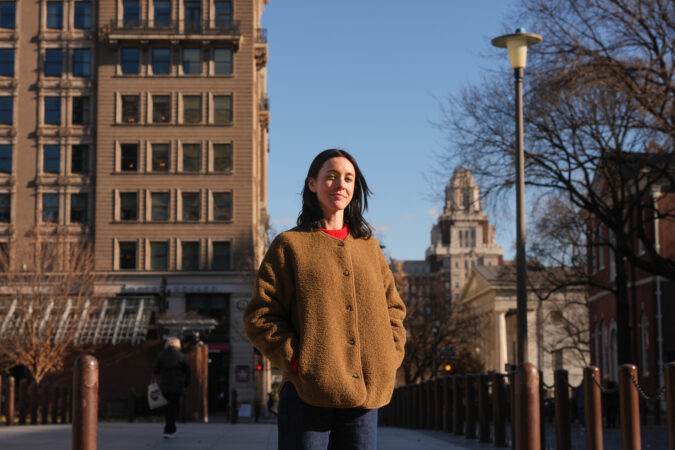
    Of all the things Betsy Kenney thought she might go viral for, whispering about Wawa wasn’t one of them. But the 38-year-old comedian’s Philly “ASMR” videos have taken off on TikTok and Instagram, turning Kenney — who spent more than a decade pursuing a comedy career in New York City — into an unlikely local celebrity.

    If you aren’t familiar with ASMR, which stands for Autonomous Sensory Meridian Response, it’s a relaxing sensation triggered by soft sounds or repetitive patterns. People watch ASMR videos of soft tapping, scratching, whispering, or crinkling to unwind. A video of someone getting a scalp massage? Pure bliss. A video of someone with a strong Philly accent asking if you know their cousin while scraping a spoonful of Rita’s water ice? Less so. And therein lies the joke. “People find the Philly accent to be like nails on a chalkboard,” Kenney said. “And I thought it would be funny to combine the two.” The contrast clicked immediately.

    Kenney’s videos have racked up millions of views, circulating through group chats and comment sections thick with recognition and debate. They’ve drawn fans far beyond the region and even earned an endorsement from Kylie Kelce, who rated Kenney’s Philly accent an 11. For Kenney, the sudden attention has been somewhat surreal, considering it only arrived after she stopped chasing it.

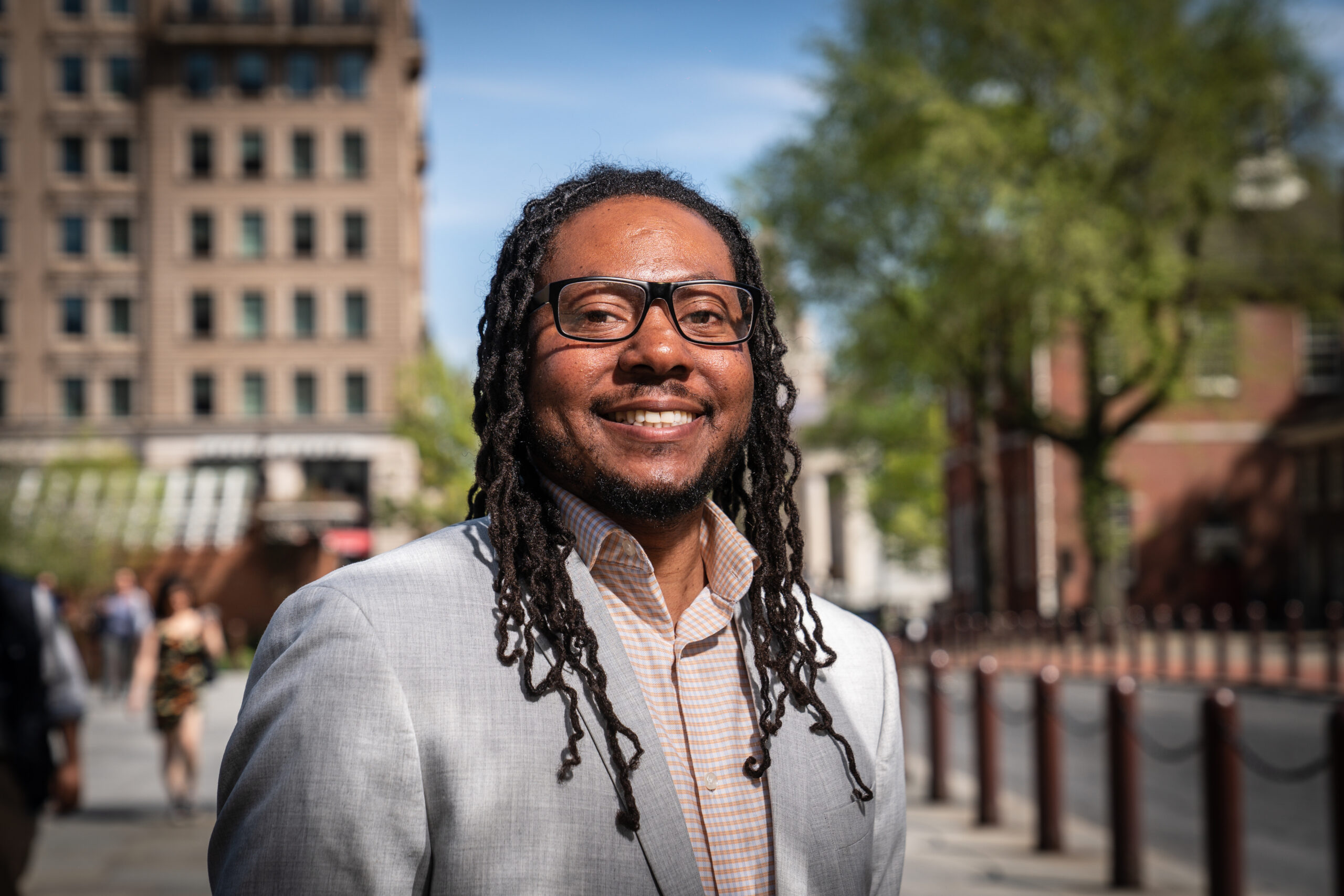
    Betsy Kenney, the woman behind Philly ASMR, in Philadelphia, December 11, 2025.

    For years, she had been grinding through the familiar comedy circuit in New York. She took improv classes at the Upright Citizens Brigade, acted in commercials to stay afloat, and wrote constantly. “I really wanted to do comedy as a living,” Kenney said. “And it turns out it’s really hard.” There were moments of traction. Kenney and her writing partner had a short film debut at the Tribeca Film Festival. They created a web series that was acquired by IFC. They hosted a podcast that found a sizable audience. “That was big,” she said. But none of it added up to stability. Then came COVID, two babies, and a move to Kenney’s hometown of Philadelphia, a return that quietly reshaped how she worked.

    Back home, the pressure shifted. Kenney was no longer measuring every idea against an imagined career outcome. She was tired, busy, and short on time, and that looseness made room for something new. In September, she posted her first TikTok: an impression of “Phillies Karen,” aka the lady who stole a baseball from a kid at a Phillies game. It went viral. Before that, she said, she’d always been too self-conscious to post comedy online. Now, with less to prove and less time to overthink, she kept going.

    She began posting whenever inspiration struck. Ideas surfaced in the slivers of time she had to herself, like in her car after school drop-off, or before pickup. Some of her best brainstorming happens in the shower, which is why her hair is often still wet in her videos. “I’m not trying to do a soaking wet Kim K thing,” Kenney said. “It’s literally the only time I have.” (Kenney is a full-time parent.)

    A few days after “Phillies Karen” took off, she posted her first Philly ASMR video. Then came her impression of Ms. Rachel if she were from Philly. She tried non-Philly bits, too, but they didn’t land the same way. Viewers were clearly responding to the specificity of her hometown voice.

    Betsy Kenney, the woman behind Philly ASMR, in Philadelphia, December 11, 2025.

    Kenney isn’t the only creator to build a fan base on the back of the Philly accent. There’s also Olivia Herman, whose no-nonsense impression of a Philly mom has attracted over 200,000 followers and a brand deal with Burlington Coat Factory. But where Herman leans into parody, Kenney aims for recognition. The humor doesn’t come from exaggerating the accent, but from treating it as ordinary. That’s no small task considering how difficult the Philly accent is to fake. “It has one of the most complex vowel systems of American English dialects,” said Betsy Sneller, a professor of linguistics at Michigan State University, which makes it difficult to imitate if you didn’t grow up with it.

    Kenney did. She was born and raised in Northeast Philadelphia by two parents from the area. “Philly is all I knew,” she said. Sneller said that familiarity is evident in Kenney’s use of Philly-specific phrasing — “it’s so expensive anymore,” “youse” — and regional slang and cultural references like Mom-moms, bo-bos, and the Roosevelt Mall. “There’s such an identifiable feeling of place,” Sneller said. “It feels so specific.”

    In fact, Kenney has found that the more specific she is, the more people connect with her work. In the comments section of a video where she asks which parish “Father John ended up at,” viewers pile on with recognition. “Wow, so we all had a Father John then, lol,” wrote one. “We all Father John in eastern PA,” wrote another. Even the Eagles chimed in: “My kinda ASMR.”

    Now that she’s back in Philadelphia, the specific details her audience loves are easier to access. Kenney improvises most of her videos, following associations as they surface. So a trip to Franklin Mills might trigger a memory about a childhood birthday, which turns into a video about Stock’s pound cake. Her family is another steady source of material, especially her father, who works in a Philly courtroom as a stenographer and comes over every week with fresh stories. “If I ever need inspiration,” Kenney said, “there it is.”

    Back home, surrounded by the people and places that fuel the work, Kenney isn’t in a hurry to turn her TikTok success into something bigger. She isn’t chasing the next step the way she once did in New York. “This is the first time in my comedy career that I’m just having fun,” she said. “And now that I’m back in Philly, and that’s what’s blowing up, I’m just really happy.”

  • Trump won’t create safeguards for AI, so Pa. legislators must

    Trump won’t create safeguards for AI, so Pa. legislators must

    Artificial intelligence is here to stay, and its influence across nearly every industry and aspect of society is expanding at a breathtaking pace.

    While AI offers clear benefits for business, government, and personal life, there is currently a troubling lack of safety protocols and consumer protections. Our country has learned hard lessons from allowing business and industry to regulate themselves. We cannot afford to take a wait-and-see approach when it comes to the absence of meaningful guardrails for AI technology.

    The revolutionary potential of AI and its impact on business, government, and society is undeniable. This is a transformation on the scale of the automobile or refrigeration, and comparable to the technological revolutions brought by the internet and social media.

    These innovations have delivered remarkable benefits: fresh strawberries in January in wintry Pennsylvania were once unimaginable before refrigerated trucks; today, virtual business presentations save both time and money by eliminating hours of travel for participants.

    On the flip side, we have building safety codes, automobile seat belt laws, and prohibitions on using cell phones while driving for very good reasons. Similarly, with social media, it has taken two decades for society to reckon with the lessons we wish had been taken more seriously from the start.

    Just because we can do something doesn’t always mean we should. This is precisely why safety regulations are critical.

    To put the scale of AI companionship technology — commonly referred to as chatbots — into perspective, a comprehensive study conducted by the Wheatley Institute found that nearly one in three young adult men and nearly one in four young adult women have interacted with an AI companion, with 29% of those young men and 17% of those young women saying they prefer these digital relationships to human ones.

    A recent Pew Research study found that 16 in 25 teens use chatbots, with 16% reporting they interact with them several times a day. Another study, by Common Sense Media, revealed that 17% of teens (approximately 2.94 million) use AI programs for romantic relationships or friendships, while 12% (about 2.08 million) turn to them for emotional and mental support.

    In today’s digital age, people are seeking companionship in new places. Many are turning to chatbots to fill an emotional void, but no amount of programming can replace genuine human interaction and intervention. AI chatbots currently operate without adequate safety guardrails, a gap that has tragically contributed to several deaths. Wrongful death lawsuits claim these AI systems failed to prevent harm and, in some cases, may have even encouraged it.

    Examples of intentional government oversight and consumer protections exist across every industry and innovation. We’ve learned painful lessons from lead in paint, the importance of smoke alarms in public buildings, and toxic chemicals in our food and water supply.

    Thanks to regulations, substances like chalk and embalming fluids are no longer found in the milk at your local grocery store. As AI technology continues to advance, society is reaching a bipartisan consensus: Government must step up to protect citizens.

    President Donald Trump signed an “AI initiative” on Dec. 11 that would limit states’ ability to regulate artificial intelligence.

    Last month, President Donald Trump issued an executive order attempting to prevent states from enacting their own AI regulations. While he claims state-level oversight will stifle innovation, this raises the question of whether his priority is American citizens or big corporations. Innovation and consumer protection are not mutually exclusive; we can and must achieve both.

    Yet, the president is ignoring the urgent need for commonsense federal safeguards in what some are calling the “Wild West” of AI. In the absence of federal action, state legislators must step in to fill the gap. We have heard the call. And we are taking action.

    For my part, I’m currently working in the Pennsylvania House of Representatives on three AI technology bills:

    While many people are finding helpful ways to incorporate AI companionship chatbots into their daily routines, far too many children and adults are forming unhealthy emotional attachments and experiencing alarming interactions.

    My proposed safety protocols would require, among other measures, referrals to mental health and suicide resources, and clear reminders that AI companions are not real humans.

    My bill on AI and mental health will ensure AI cannot be used as a substitute for professional therapy. Regarding consumer protections, I am committed to guaranteeing that residents of our commonwealth benefit from transparency and strong privacy safeguards for their data.

    Pennsylvania has long been a leader in state-level consumer financial protection and technological innovation. Now, as AI rapidly advances, I am determined to step up and provide commonsense safety guardrails. I urge my fellow state legislators to join me — our residents are counting on us.

    Melissa L. Shusterman is a Democratic member of the Pennsylvania House of Representatives for the 157th District, located in Chester County. She was elected in 2018.

  • 2026 Nissan Murano: I’ll probably forget I drove it this time, too

    2026 Nissan Murano: I’ll probably forget I drove it this time, too

    2026 Nissan Murano Platinum AWD vs. Volkswagen Atlas SEL Premium R-Line: Midsize SUV comparison.

    This week: Nissan Murano

    Price: $53,950 as tested

    What others are saying: “Highs: Comfortable front seats; short stopping distances. Lows: Rough-shifting transmission, uneven power delivery, stiff ride, unintuitive controls,” says Consumer Reports.

    What Nissan is saying: “Energetic elegance.”

    Reality: I promise I checked Consumer Reports after I wrote the column.

    What’s new: I was excited to have a Murano in my lineup because after all these years of columnizing, I would finally get to review one.

    (Googles “Scott Sturgis” “Inquirer” “Murano.”) Well, huh. I drove 2015 and 2018 models.

    Memorable, evidently.

    This is not the same Murano, naturally. A redesign for 2025 gives the awkward old two-row, midsize SUV an awkward new look, along with a new engine and transmission.

    Competition: In addition to the Volkswagen Atlas, there are the Chevrolet Blazer, Honda Passport, Jeep Grand Cherokee, Mazda CX-70, Subaru Outback, and Toyota Crown Signia.

    Shifty: Hooray! A Nissan without a CVT! The Murano came with a 9-speed automatic, so I should be this delighted. But read on.

    Up to speed: Gone is the V-6 that powered the old model. The 2.0-liter turbocharged engine creates 241 horses, which is not a ton for this size of vehicle. It gets the vehicle to 60 mph in 7.2 seconds, according to Car and Driver.

    But the acceleration story has many more chapters. When I first pulled out of my neighborhood, the Murano seemed to alternate between lag and lurch. “OK, it’s cold,” I thought, offering the benefit of the doubt even while it was probably 85 degrees outside. “I’ll give it some time.”

    But the unsteadiness continued. Sometimes SUVs and minivans can have an awkward accelerator-foot interface, so I looked into that. But, no, it felt comfortable.

    “Aha! Here’s a drive mode selector,” I cried. “I’ll try that.” When I shifted to sport mode, it got sporty all right — in the way that your eighth-grade gym teacher forced you to run laps around the gym at 8 a.m. until you felt like throwing up. It was even rougher than before, although the roughness came at you faster.

    “All right, I never do this,” I sighed and shifted into eco. Surprisingly, the power didn’t completely die out. The Murano felt smooth. Sure, it took a lot of foot stomping to get the Murano on highways and such, but the SUV delivered power much better.

    On the road: Mode, schmode, driving the Murano was never more than OK. Country roads are blah; highways are a faster blah. There are just so many more enjoyable competitors to get around in.

    The lane-keeping system drove me nuts for a few days, and the menus to adjust it are inscrutable. Press one of two little dotted lines on the steering wheel to change them. The screen says “OK Menu,” and there’s a tiny OK button next to a microphone/button, and that seemed to function at somewhat regular intervals. I’d need practice to do it again.

    The interior of the 2026 Nissan Murano is elegant, as are many of Nissan’s offerings. Unfortunately its user-friendliness is lacking.

    Driver’s Seat: The seat itself is on the plush side, roomy and wide. Nissan has long offered classy interiors even down to the Sentra (sorry, Versa, not you). Silver buttons and trim with nice colored material add to the upscale feel.

    But here’s a better place to complain about the transmission controls. Why did some designer think a row of buttons at the front of the console would be a great idea? My phone and other items forever covered them. Also, they’re just not intuitive, so when you’re in a tight spot and have to maneuver forward and back to get out, it requires far more concentration than it should.

    Friends and stuff: The rear seat is roomy, comfortable, nicely appointed, and well positioned. Heads, legs, and feet have no shortage of space, even in the middle seat.

    Cargo space is 32.9 cubic feet in the back, and 63.5 with the rear seat folded.

    In and out: The Murano rides at a height perfect for entry and exit without leg stretches.

    Play some tunes: A single large volume knob is available outside the touchscreen. The 12.3-inch screen sounds like a good size, but it’s very short and wide, and a row of icons along the side and HVAC display along the bottom eat into the space.

    Sound from the Bose Premium system is OK, about a B+ or so, and leaves me wondering what the not-premium system sounds like.

    Keeping warm and cool: Going one better (or worse) than the popular ebony touch pads, which Mr. Driver’s Seat doesn’t love, the Murano offers a cheap-looking black plastic controller pad with temperature, fan speed, and source, and it requires a forceful push to engage your choices.

    While you’re fighting with that, a teeny tiny display at the bottom of the touchscreen shows the changes. Let’s all say it in unison: “Eyes on the road!”

    Fuel economy: I couldn’t get the trip display to do more than show me how each individual trip went, and the car said the best fuel economy was 22.8 mpg. So, the rest were worse. Let’s call it 20.

    Where it’s built: Smyrna, Tenn. Half the parts come from the U.S. and Canada, including the transmission. The engine hails from Japan.

    How it’s built: The Murano gets a predicted reliability of 3 out of 5 from Consumer Reports.

    In the end: Nissan has a comfortable, roomy, attractive (on the inside) SUV here. If they can tweak the engine and suspension and start over with infotainment and HVAC controls, this could be a winner.

    Next week: 2026 Volkswagen Atlas

  • Founding Father Ben Franklin also founded America’s first volunteer fire department

    Founding Father Ben Franklin also founded America’s first volunteer fire department

    Colonial Philadelphia — a community of wooden dwellings and businesses along the Delaware River back in the 1700s — was under constant threat of burning to the ground. Fires could and did start from the haphazard fling of a cigarette, or burning the soot out of chimneys, or sometimes the accidental drop of a lantern.

    By 1730, the city had just one fire engine — a steam-powered box car — and dozens of buckets for carrying water to extinguish flames. When a fire that year on Fishbourne Wharf nearly destroyed the city, causing 5,000 pounds in property damage, Ben Franklin took notice.

    The incident prompted him to advocate for fire prevention in his newspaper, The Pennsylvania Gazette, coining the still-used fire safety mantra, “An ounce of prevention is worth a pound of cure.”

    On Dec. 7, 1736, Franklin and 24 other prominent Philadelphians established the Union Fire Company.

    The formation of the Union Fire Company will be remembered Saturday at the Firstival to be held at Fireman’s Hall Museum. Firstivals are the Philadelphia Historic District’s weekly day parties celebrating historic events that happened in Philadelphia before anywhere else in America, and often the world. They are part of a yearlong celebration of America’s 250th birthday.

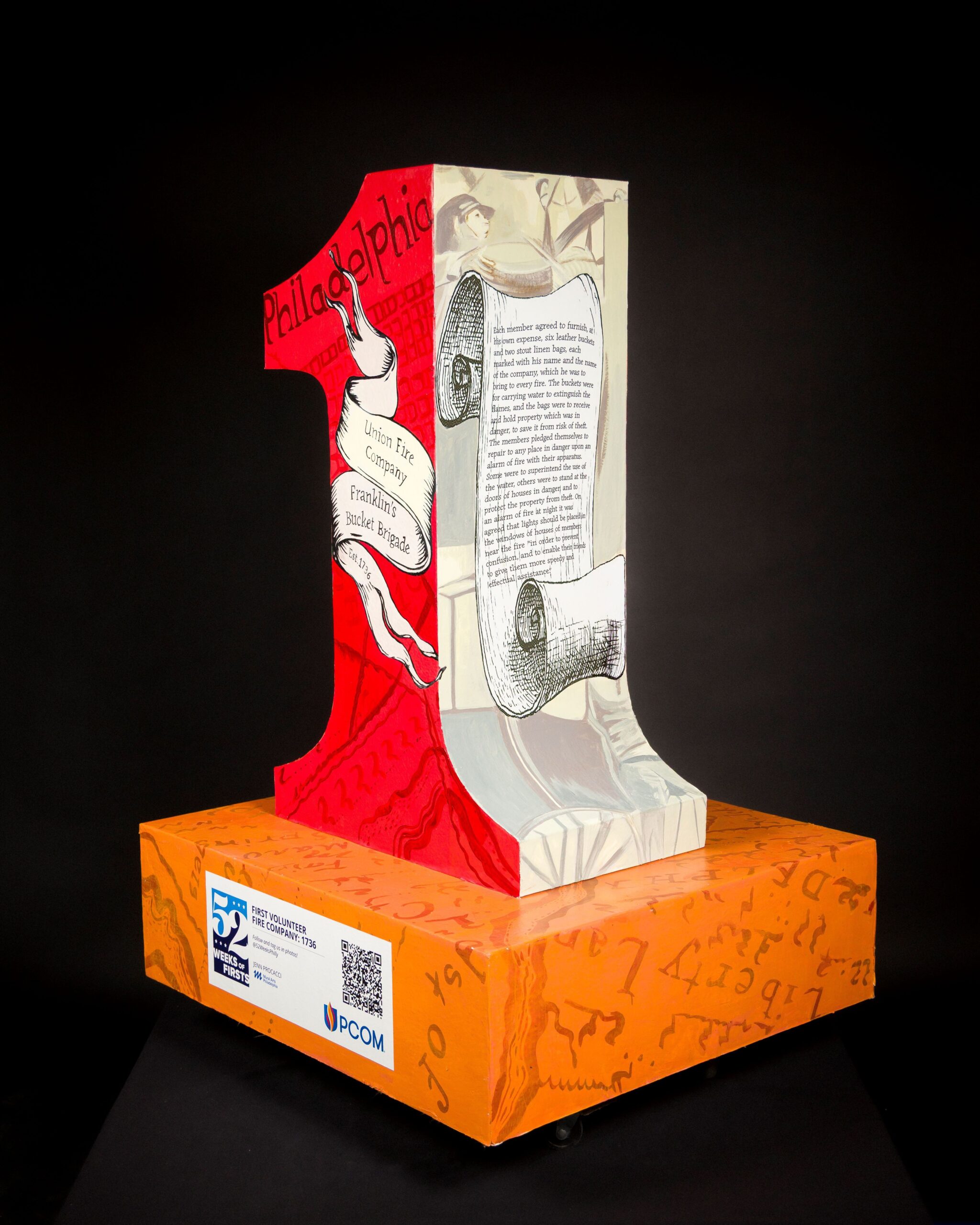
    Artist Jenn Procacci’s sculpture incorporates maps of 1700s Philadelphia highlighting routes volunteer firefighters would take to extinguish blazes.

    The Union Fire Company, also called the Bucket Brigade, was modeled after mutual aid firefighting organizations in Boston. In its early years, the company only helped its members put out fires in their homes or properties.

    In 1742, the members voted to help any Philadelphian whose home or property was ablaze. The fact that they helped all Philadelphians, not just members, made the company America’s first volunteer fire department.

    Within the decade, Philadelphia had eight volunteer fire companies.

    These early volunteer fire companies were elite organizations that capped their memberships at about 30, explained Carol Smith, curator and archivist at Fireman’s Hall Museum. Members provided their own equipment: buckets for carrying water to put out fires and bags to salvage items from being destroyed. Companies had several meetings a year and members were fined for absence or tardiness.

    As the home of the country’s first volunteer firefighting outfit, Philadelphia was progressive when it came to fighting fires — they were among the first companies in the country to experiment with innovative hoses. The city also was unique in establishing ways to support Philadelphia residents impacted by fire.

    In 1752, Franklin started the nation’s first property insurance company, the Philadelphia Contributionship for the Insurance of Houses from Loss by Fire, still operating today.

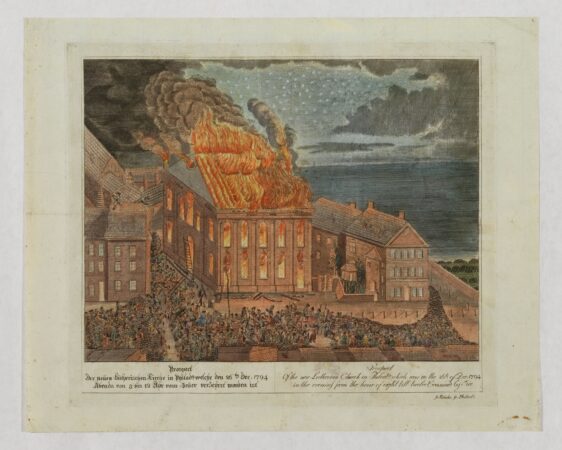
    Philadelphia’s early network of volunteer firefighters stopped major fires, like the 1794 burning of Zion Lutheran Church, and prevented extensive fire damage to the city.

    “A lot of it was because of the advances in firefighting technology like updated hoses,” Smith said. “Our volunteer fire departments were very proactive.”

    Today’s fire houses are descendants of Ben Franklin’s Union Fire Company.

    The Union Fire Company housed its equipment on Old City’s Grindstone Alley and was active through the early 1800s, disbanding in 1843. Its remaining members joined the Vigilant Engine Company, that, in 1871 became Engine 8, one of the city’s first municipal fire stations.

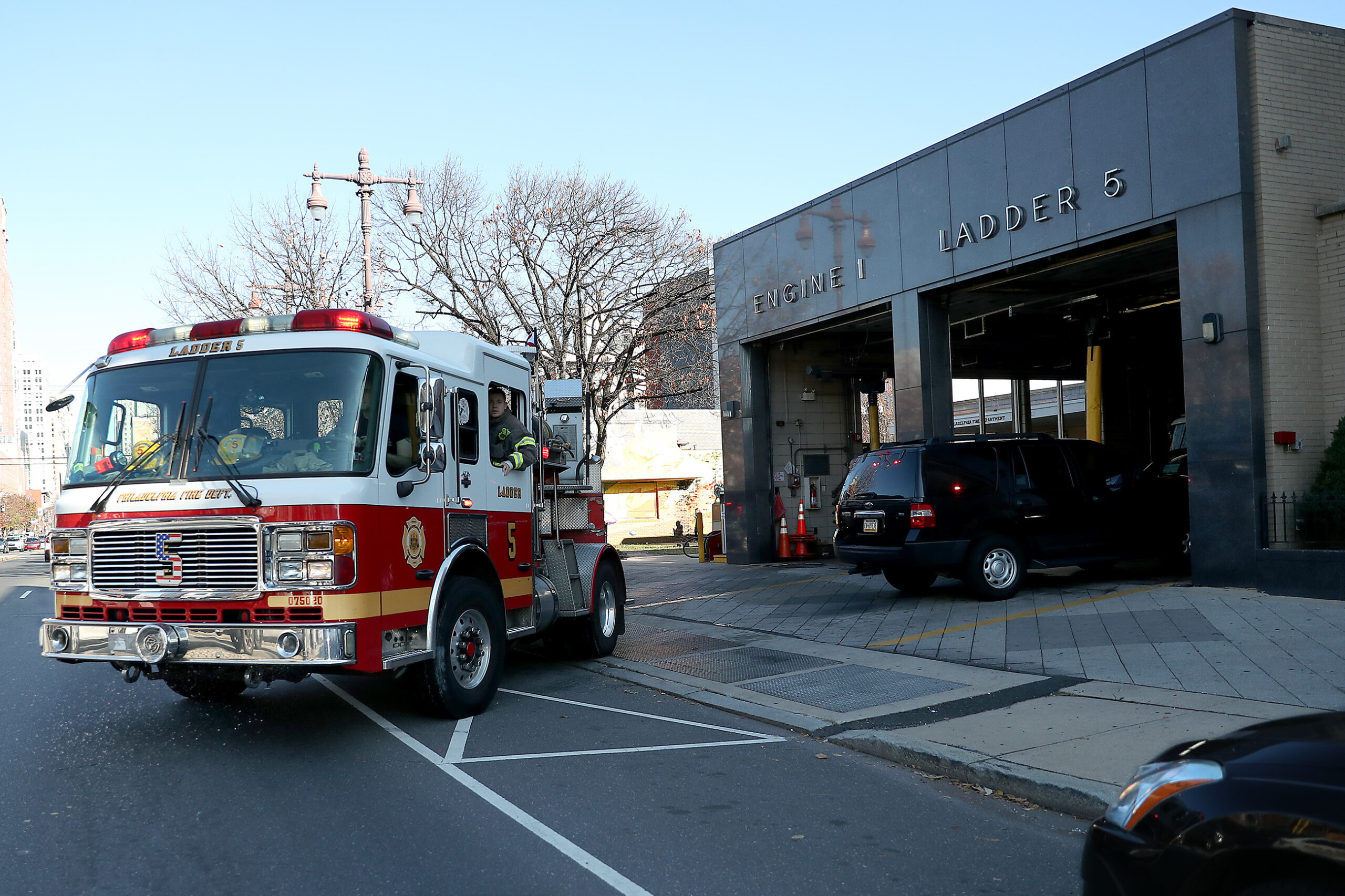
    It remains open.

    This week’s Firstival is Saturday, Jan. 17, 11 a.m. — 1 p.m., Fireman’s Hall Museum, 147 N. Second St. The Inquirer will highlight a “first” from Philadelphia Historic District’s 52 Weeks of Firsts program every week.

  • Hahnemann redevelopment may be another victim of councilmanic prerogative | Editorial

    Hahnemann redevelopment may be another victim of councilmanic prerogative | Editorial

    Since his 2023 election, 5th District Councilmember Jeffery “Jay” Young has earned a reputation as City Council’s quarrelsome contrarian. His penchant for swooping in and obstructing projects at the last minute has upset everyone from progressive community activists to affected developers.

    Young is a single vote on Philadelphia’s 17-member legislative body, but thanks to the tradition of councilmanic prerogative — where the rest of Council yields to district representatives regarding land-use decisions — he wields absolute power over an area that includes Rittenhouse Square and City Hall to the south, Strawberry Mansion to the west, part of Northern Liberties and Fishtown to the east, and Hunting Park to the north.

    Projects impacted by his objections include a long-standing proposal to build senior housing in Strawberry Mansion, a plan to protect students with speed cameras in school zones, and the renovation of the Cecil B. Moore Library.

    Young’s latest disruptive gambit — ill-conceived and misguided — is a bill that targets the proposed redevelopment of the former Hahnemann University Hospital patient towers in Center City into hundreds of apartments.

    Established in 1885, the hospital healed generations of Philadelphians, and its south tower was the first skyscraper teaching hospital in America. Beyond the loss of medical services, when Hahnemann closed six years ago, it left a gaping hole in the heart of the city.

    Located along a stretch of North Broad Street that is heavily underutilized, the vacant buildings are begging for a new lease. Dwight City Group has proposed refilling the campus with housing. The plan would add hundreds of new residents right next to Center City and the Broad Street Line, and within walking distance of Suburban Station.

    To most housing, development, and planning experts, the idea is perfectly sound. Philadelphia would add workforce housing (around 1% of Mayor Cherelle L. Parker’s goal) in a location that already has the infrastructure and amenities residents require, and the city would not have to spend any taxpayer money to make it happen.

    And yet, Young is opposed.

    Jeffery “Jay” Young represents Philadelphia’s 5th District.

    In a statement to the Editorial Board last year, Young defended the move as being motivated by a desire to grow jobs in the city by limiting development in the area to commercial use. That’s an admirable goal. But who is going to buy the goods and services these hypothetical new businesses would offer? The redevelopment of Hahnemann into an apartment building would only increase local entrepreneurial opportunities.

    Thankfully, in this case, it looks like Young’s obstructive desires may be a moot point — at least when it comes to his proposed legislation.

    Because Council adjourned for its winter break without voting Young’s bill out of committee, the developer was able to secure zoning permits to build 361 apartments, with space for commercial use in the building’s ground floor.

    While the Dwight City Group did not want to comment, CEO Judah Angster earlier told Inquirer reporter Jake Blumgart they remain in negotiations with Young. Given the fact that the developer may have to deal with the councilmember in the future, there is a chance the Hahnemann project may be curtailed to avoid Young’s ire elsewhere.

    Were that to happen, it would mark another missed opportunity for positive growth in the city, thanks to councilmanic prerogative.

    For decades, Philadelphia has trailed peer cities in job growth and economic activity. While high business taxes, deep poverty, and other factors play a role, prerogative stands out as an impediment that is entirely self-inflicted.

    The practice — no matter how strongly it is defended by Young and his colleagues — is a constant detriment to the city. While there is merit in giving district representatives a strong voice to protect their constituents from unwanted development, councilmanic prerogative too often allows the whims of a single person to override the will of the people.

    The only thing Philadelphia would lose by eliminating councilmanic prerogative is the opportunity for Council members to grandstand and feed their egos.

  • In the lottery of life, I got lucky

    In the lottery of life, I got lucky

    Many years ago, when I was a college student, a philosophy professor told me that life was a great cosmic lottery. None of us chooses the parents we have. Instead, they choose to have us.

    I’ve been thinking about his comment because my mother died last week, after a long and fruitful life. Of course, it’s always sad to lose a loved one. But since she passed, I’ve felt more serendipity than sorrow.

    In the great cosmic lottery, I got lucky.

    I got lucky because Mom taught me that men and women are — or should be — equal, in all the ways that matter. She never sat me down and said that, but she didn’t have to. It permeated everything she did.

    Mom devoted her career to international family planning and maternal health. She fought for women to have access to contraceptive information and services, no matter where they lived. She thought they should be able to make their own choices about reproduction and everything else.

    So “Women’s Lib” wasn’t just a saying where I grew up, in the 1960s and 1970s. It was a fundamental truth. I never questioned whether women should enjoy the same rights as men.

    Margot Lurie Zimmerman taught her son to raise his voice when he had something to say.

    That’s been an enormous boon to me, as a spouse and a parent and a teacher. My wife and I have two daughters, and, because I teach about education, most of my students have been female. I would be much worse at what I do if I believed they were lesser, in any sense. And they would be worse for it, too.

    I also got lucky because Mom taught me to raise my voice when I had something to say. As an educator, I am constantly trying to get students to do the same. Sadly, some of them don’t believe they have anything to say that would be worth hearing. And others are simply afraid to say what they think.

    I never was. That’s because of Mom, too. If you want to write for newspapers, you need a thick skin. And she gave me one.

    The third way I got lucky was by watching Mom work. And I mean work. Hard. To succeed at anything, she taught me, you need effort. It’s not about your inherent abilities. It’s about what you do with them.

    Psychologists call that a “growth mindset.” I didn’t know the term when I was younger, but again, I didn’t need to. It was drilled into me, over and over again. If you want something, work for it. And if you don’t get it right away, keep at it. Keep going.

    That’s been a hugely useful lesson in my life. Of course, you can take it too far. Mom insisted that you could achieve anything if you tried hard enough.

    And that’s not true. We are all finite beings, in what we can imagine and create and accomplish. It’s good to keep trying, but you also have to accept your own limitations. (I keep trying to do that.)

    Last, I got lucky by being exposed to the inestimable value of friendship in everything we do. My parents spent their lives traveling the world, and they collected friends at every stop. Those are the people who will nurture and replenish you until your own journey comes to an end.

    When Mom died, I was overwhelmed by the expressions of love from her friends. And it came on the heels of the death of my dear friend Mark, who lived in Oregon. I went to be with Mark’s family when he died, and I was on my way home when Mom passed on.

    The novelist Wallace Stegner described friendship as something you needed to create and recreate, over and over again. It is “a relationship that has no formal shape, there are no rules or obligations or bonds as in marriage or the family,” Stegner wrote. “It is held together neither by law nor property nor blood, there is no glue in it but mutual liking. It is therefore rare.”

    Jonathan Zimmerman writes that his mother taught him about the inestimable value of friendship.

    But where I grew up, it was as common as sunshine. As a kid, I don’t think I appreciated what my Mom did to sustain her friendships. Now I do. And I am lucky — again, for her example.

    Mom was not perfect by any means. She could be prickly, judgmental, and blunt. She didn’t know how to read a room, and she also didn’t feel like she needed to. Whatever she thought, she said. And sometimes — actually, lots of times — you didn’t want to hear it.

    But in the great cosmic lottery, I got a pretty darned good ticket. Thanks, Mom, for the mark you left on me. I was lucky to be your son.

    Jonathan Zimmerman teaches education and history at the University of Pennsylvania. He is the author of “Whose America?: Culture Wars in the Public Schools” (University of Chicago Press).

  • Letters to the Editor | Jan. 15, 2026

    Letters to the Editor | Jan. 15, 2026

    Missed warning

    President Donald Trump issued a warning to Iranian officials that there better not be any shooting of protesters. I’m waiting for him to issue the same warning to U.S. Immigration and Customs Enforcement officials in the good ol’ USA. Or we could deport all the ICE officials to countries where you leave your conscience at home in order to earn your paycheck. I’ll help them pack.

    Carol Rhodes, Barnsboro

    Direct line

    I call on all people of good conscience to unite. Let’s stop allowing the mass media to put us into different camps. Let our goodness unite us across party lines. Please consider this seriously. I see a direct line from the president of the United States pointing a finger at a female reporter exercising her First Amendment rights and saying, “Quiet piggy” to a U.S. Immigration and Customs Enforcement agent pointing his gun and firing three shots to the head of an unarmed mother exercising her First Amendment rights. This is not the American way. All good people must unite to save America’s core principles. Liberals, conservatives, libertarians, independents all share a basic human sense of right and wrong. We must unite on those principles and stop allowing the media to pit us against each other. Start now: Declare the killing of Renee Good unacceptable, not just unfortunate.

    Patrick Shanahan, Philadelphia

    House of contradictions

    The president is a master of contradictions. While claiming to make cities safer by removing criminal immigrants, he is fomenting discord and violence. He promised lower prices and economic security, and instead, many businesses are forced to raise prices due to tariffs. While the stock market has rallied, the roller-coaster ride of wild ups and downs has undermined economic security and slowed hiring by wary corporations. He pledged to avoid foreign entanglements, yet unashamedly engages in saber-rattling over Venezuela and Greenland. While claiming to be fighting a drug war by blowing up alleged drug boats, he pardons convicted drug lords like Juan Orlando Hernández of Honduras and Ross Ulbricht of the online Silk Road drug marketplace. He accuses Joe Biden of having done nothing, yet fentanyl deaths dropped almost 30% in Biden’s final year in office due to addiction programs. Insisting he is fighting radical left decadence by imposing “objective” Christian values, he spews hateful, racist remarks, claiming his “morality” dictates his actions. Promising to reduce waste, fraud, and abuse, he pushes plans to build Versailles in place of the East Wing. And Truth Social? Anything but.

    John Groch, West Chester

    Fraud and abuse

    In answering a reporter’s question about how long the U.S. will be in Venezuela (Months? A year? Longer?), President Donald Trump said, “I would say much longer.” The implication is that U.S. resources, financial and otherwise, will go to Venezuela. It would be naive to think that some of those dollars won’t find their way into the wrong pockets, never achieve the intended purpose, or duplicate other efforts. These hints of waste, fraud, or abuse will not likely cause the administration to pause any of this work the way it did when it terminated programs funded by the U.S. Agency for International Development while it looked for waste, fraud, and abuse. None was ever reported, but children were deprived of food, medicine, and education, and communities saw life-sustaining projects ended, leading to starvation, suffering, and death. In Venezuela, it’s the illusion of an imperial U.S. that must be preserved, not the lives of human beings.

    Carol Olivieri, Pennington

    Stay tuned

    I turned on my TV yesterday in the middle of a news broadcast, and the announcer was saying that “the supreme leader vows to continue the crackdown on protesters.” I honestly wasn’t sure if they were talking about America or Iran.

    Stefan Keller, Huntingdon Valley

    Join the conversation: Send letters to letters@inquirer.com. Limit length to 150 words and include home address and day and evening phone number. Letters run in The Inquirer six days a week on the editorial pages and online.

  • Horoscopes: Thursday, Jan. 15, 2026

    ARIES (March 21-April 19). You keep wondering if there’s a talent inside you waiting to show itself. The wondering is truth trying to get your attention. Follow the instinct to experiment. Believe the inner voice that says, “This seems like something I should be doing more of.”

    TAURUS (April 20-May 20). It’s a day to shore up discrepancies, pay debts, collect on favors and generally find ways to restore the balance inside of relationships. The dynamics that are well balanced today will be fruitful tomorrow.

    GEMINI (May 21-June 21). Relationships are shoes. A lot of them don’t fit right away, but the quality shoes will form to your feet over time, and you can walk many miles in them. The cheap ones cut and chafe and don’t change much until they break.

    CANCER (June 22-July 22). You’re so aware of the rules today, and even more than that, the restrictions of your role. It may feel like too much is keeping you in place, limiting your options, preventing you from the destiny you have dreamed for yourself. But no. There are still dozens of paths to try. You got this.

    LEO (July 23-Aug. 22). Approach interactions with trust and curiosity. Not every action hides an agenda. Most people are just moving according to their nature. Trust first, analyze later. Give yourself the gift of openness.

    VIRGO (Aug. 23-Sept. 22). Like refined sugar, some people are so sweet that when they leave, they take your blood sugar down with them, causing an inevitable crash. You are not deterred, though you may pace yourself. Intermittency is what makes it a treat.

    LIBRA (Sept. 23-Oct. 23). People respond best to leaders who are humble and diligent. Today, you’re in charge in a low-key way. Working alongside your team creates mutual respect and encourages collaboration. This is also how you learn what’s really going on in the group culture.

    SCORPIO (Oct. 24-Nov. 21). You’ll navigate nuance very well, deciding what to wear, say and do to blend into a particular environment. This isn’t about people-pleasing or being a chameleon; it’s about reducing friction and getting rid of anything that might keep you from connecting.

    SAGITTARIUS (Nov. 22-Dec. 21). You’re so encouraging to others that sometimes people forget that you, too, need encouragement. Then again, it might be time to seek more supportive energy. Take a moment to notice who helps you and who doesn’t. Once you focus on your allies, momentum returns naturally.

    CAPRICORN (Dec. 22-Jan. 19). So many things that happened in the past were beyond your control. Now you have the wisdom and maturity to realize there’s no blame to be taken or given for it, just respect for what you’ve made of it.

    AQUARIUS (Jan. 20-Feb. 18). You are simply excellent at reading certain social cues, especially the ones that indicate discomfort or disapproval. You are less adept at recognizing when someone is crazy about you, but if you tune in, you’ll see it very clearly today.

    PISCES (Feb. 19-March 20). It’s easy to push, but it takes wisdom to let the natural current pull you. Like water, you’ll find the path of least resistance. Your gentle ways will open the opportunities that were once beyond reach.

    TODAY’S BIRTHDAY (Jan. 15). This is your Year of Exceptional Attunement in which you master details, seize opportunities, sense feelings and generally sync up to the world around you. Awareness is not always easy, but it’s always worth it. More highlights: You’ll be appointed to a position and entrusted with treasures. You’ll get the wonderful news you’ve waited for. And you’ll find a lucrative outlet that brings abundance in more ways than one. Virgo and Taurus adore you. Your lucky numbers are: 4, 2, 19, 30 and 28.

  • Dear Abby | Brother-in-law’s new squeeze is a familiar face

    DEAR ABBY: Please help me move forward. My brother-in-law is dating a woman my husband was intimate with once before we were married. It makes family functions very awkward for me, but most of the family sees it as the past. It was the past, but it is now in our faces. My husband feels the same way.

    Do we just keep the peace and stay away from functions as she seems to be more accepted than I am? We have been married 37 years. Are we being unreasonable??

    — CONFUSED IN THE EAST

    DEAR CONFUSED: Oh, my. It seems like “who goes around comes around.” It’s a shame that you can’t leave the past — a one-night stand more than 37 years ago — in the past and find the humor in this. I suspect it happens more often than you think. Please quit regarding this as a competition between you and your brother-in-law’s girlfriend. Your husband chose YOU. End of contest. If there is cause for embarrassment, it should be hers, not yours.

    ** ** **

    DEAR ABBY: My wife, “Muriel,” and I have been together for 10 years and married for seven. She has worked in animal rescue for much of her life. Muriel thinks she has to save them all. No amount of explaining the financial and other consequences gets through to her.

    We currently have 21 pets living in our house. I have tried searching for support groups that might help, but to no avail. Even if I found such a group, my wife won’t admit there is a problem. Can you help?

    — STUMPED IN THE MIDWEST

    DEAR STUMPED: I’ll try. I will also venture to say that 21 animals living in a house may not be healthy for all concerned. Because your wife is unable to listen to reason, contact animal control services in your city or county and explain what’s going on. (I’m surprised one of your neighbors hasn’t already tipped them off.) Your wife may have a heart of gold, but those creatures deserve a better standard of care than what your wife can give them.

    ** ** **

    DEAR ABBY: I delivered mail for 36 years. For 25 of those years, my route was in a retirement community. I’m retired now, and it upsets me when I am not contacted when someone I was friendly with for 25 years passes away. This is happening more and more.

    Yes, I was their mail lady, but I was also their friend. I got to know and love all my customers. Their children knew who I was. The ones I was closest to are the ones whose deaths upset me the most because I wasn’t notified. I know I’m not a relative, but still it hurts. If they read this, they will know who they are. I’m not angry. I’m just hurt. Do you understand?

    — RETIRED MAIL LADY IN ARIZONA

    DEAR MAIL LADY: Yes, I understand, and I also empathize with you. However, the “children” you describe may not have notified you about their parents’ deaths because, unless they had your contact information, they didn’t know how to reach you.