St. Christopher’s Hospital for Children, a key safety-net provider in North Philadelphia, on Wednesday announced its third leadership change in less than two years.
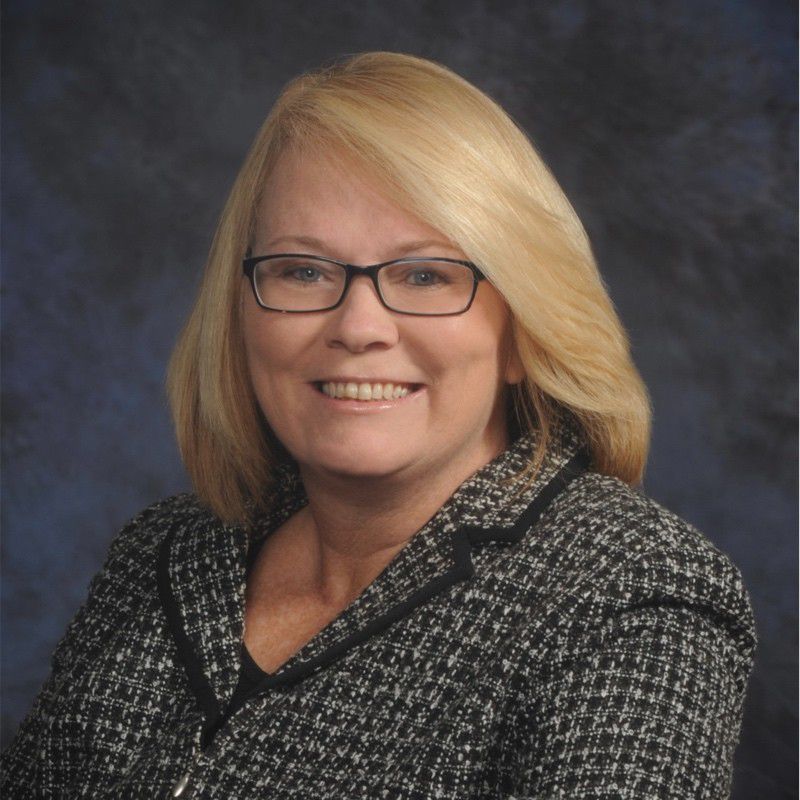
Claire Alminde, the hospital’s chief nursing officer and a 37-year veteran of the institution, is St. Chris’ new acting president.
She is the third interim or acting executive appointed to the top management position at the nonprofit hospital since February 2024 and its fourth leader since 2020. Drexel University and Tower Health have owned St. Chris in a 50-50 joint venture since 2019.
“Claire is firmly committed to St. Christopher’s mission and exemplifies the compassion, expertise and steadfast commitment that define this hospital and the care we provide to children and families across our region,” St. Chris said in an e-mailed statement.
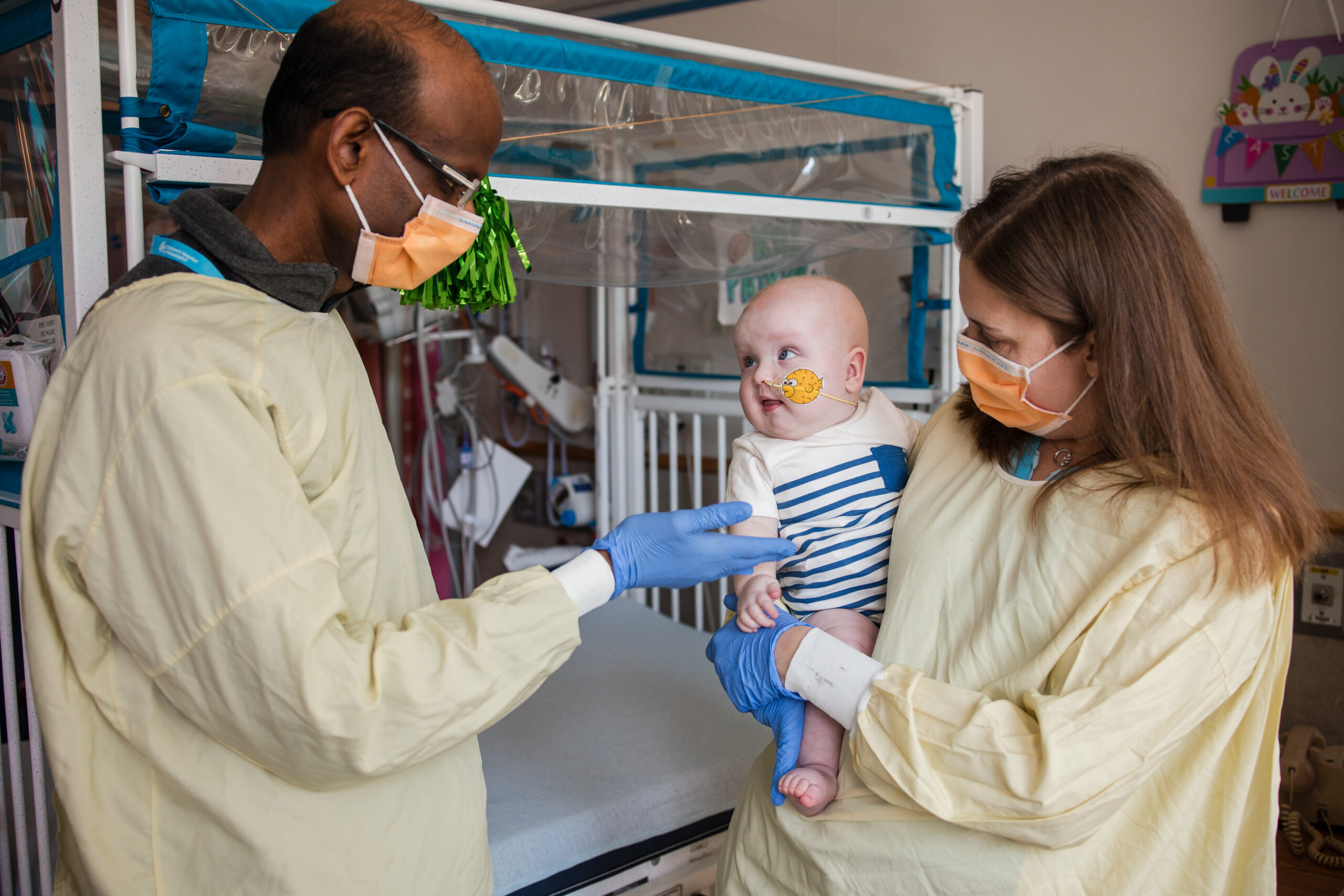
St. Chris’ chief nursing officer Claire Alminde has been named acting president of the North Philadelphia safety-net provider.
There are no immediate plans for a national CEO search. “Right now, Tower’s focus is on helping Claire onboard successfully and lead the organization forward. We are grateful that Claire has committed to serving in this position as long as necessary,” Tower said.
Alminde is replacing Jodi Coombs, who was appointed interim president and CEO last April. Coombs’ previous position was executive vice president at Children’s Mercy Kansas City, in Missouri. Before that, she worked in Massachusetts.
Mueller took the job at St. Christopher’s in the summer of 2020, about seven months after Tower and Drexel University bought the facility, but did not permanently move to Philadelphia.
Tower oversees day-to-day management of the facility, where about 85% of patients have Medicaid insurance for low-income people. That’s an extremely high rate.
St. Chris, which has received significant financial support from other local healthcare institutions in recent years, has not published its financial results for the year that ended June 30, 2025. In fiscal 2024, St. Chris had a $31.6 million operating loss.
The group helping to revitalize Kennett Square’s Birch Street has two new projects in the works, including a restaurant and cocktail lounge. Also this week, a vacant office building in Exton has been converted to a new use, a Coatesville native is appearing on the new season of a reality TV show alongside Donna Kelce, plus why The Inquirer’s Craig LaBan says this West Chester restaurant is one to watch.
A rendering depicts the proposed exterior of Opus, a new restaurant and cocktail lounge slated to open in the summer.
A new restaurant and cocktail lounge is coming to Kennett Square this summer. Opus will take over the two-story space at 201 Birch St., which is adjoined to 14-room boutique hotel Artelo. The restaurant space was most recently occupied by Hank’s Place while the Chadds Ford institution rebuilt its longtime home, which was flooded by Hurricane Ida in 2021.
The 6,000-square-foot building will have a two-story terrace with outdoor dining and serve New American cuisine.
Opus is the latest development from Square Roots Collective, which has been helping to revitalize Birch Street for the past decade, including through projects like The Creamery, the former dairy turned family-friendly beer garden.Another of its nearby projects, The Francis, is set to open this year. The boutique hotel at 205 S. Union St., also in Kennett Square, will have eight rooms in a reimagined 18th-century home.
Scores of demonstrators protesting the killing of Renee Good by an ICE officer gathered across the region over the weekend, including a rally in West Chester on Sunday that drew about 1,000 attendees. (Daily Local News)
County officials are reviewing findings from an investigation into an error that excluded independent voters from poll books during the November election. Officials said they will develop a plan following their review so that similar errors don’t happen again. The county will present findings and its response at the Board of Elections meeting on Jan. 27 at 7 p.m.
PennDot is hosting two public meetings in the next week regarding plans for what it’s dubbed the U.S. 30 Eastern Project Area, which includes alternative routes for the Route 30 mainline and the Reeceville Road, Route 340, and Route 322 interchanges, as well as revised alternatives for the Norwood Road and Route 113 interchanges. The construction is part of a larger project to upgrade 14.5 miles of the Coatesville-Downingtown Bypass to reduce traffic congestion, improve safety, and accommodate future development. The first meeting will be held virtually tomorrow at 6 p.m. There’s a second in-person meeting on Tuesday from 6:30 to 8:30 p.m. at Pope John Paul II Regional Catholic Elementary School in West Brandywine Township.
Four police officers were injured last week when responding to a call on the 400 block of Main Street in Atglen Borough. The officers detained Jon Marcos Muniz, who allegedly fired a handgun into two occupied apartments and barricaded his front door. No other injuries were reported. Muniz is facing a number of felony and misdemeanor charges.
M. Patricia Muller was selected as chair of Kennett Township’s Board of Supervisors last week, making her the first woman in the township’s history to hold the role.
Heads up for drivers: Newark Road in West Marlborough Township will be closed Monday through Friday next week from 9 a.m. to 3 p.m. for tree removal. Norwood Road in EastCaln Township will be operating as a single lane with flaggers next Monday through Friday for sewer line work. Peco will be doing electrical work along Happy Creek Lane and Copeland School Road in West Bradford Township as part of a $450,000 infrastructure project to improve reliability and reduce outages, including from storms. Work is scheduled to take place January through April and will impact both roads and some residential yards.
A vacant office building at 319 N. Pottstown Pike in Exton has been transformed into “hotel-apartments” with 24 studio and eight one-bedroom units. The group behind it plans to market The Flats On 100 to consultants and visitors of nearby employers, such as Vanguard and QVC, and sees it as a potential model for the region’s empty office buildings.
Also in Exton, retailer Nordstrom Rack plans to open a 30,000-square-foot shop at Main Street at Exton this fall.
Could popular HBO series Mare of Easttown return for a second season? Kate Winslet seems to be ready for the Delaware County-set show, created by Berwyn native Brad Ingelsby, to return, and recently indicated filming could start as early as 2027. While the award-winning actor is on board, nothing official has been announced yet.
Coatesville native and figure skating icon Johnny Weir made his debut on the fourth season of Peacock reality TV show The Traitors last week. Weir is joined on this season of challenge-meets-eliminations-style show — hosted by Alan Cumming at his castle in Scotland — by Donna Kelce, Tara Lipinski, and a slew of reality TV personalities. The first three episodes dropped last week. Catch up on what happened here. (Warning: Spoilers!)
The GameStop at 1115 West Chester Pike in West Chester shuttered last week as part of a mass closure by the gaming retailer.
🏫 Schools Briefing
Reminder for families: There are no classes Monday for Martin Luther King Jr. Day.
Avon Grove School District is considering adopting a new textbook, myPerspectives, from Savvas Learning Company for sixth through eighth grade English Language Arts students next school year. The public can review the textbook, which was put to the school’s education committee for consideration earlier this month, and provide feedback during a 30-day period through early February. The proposed change comes as part of the district’s regular curriculum review cycle, said Jason Kotch, assistant superintendent for teaching and learning.
Tredyffrin/Easttown School District has released its 2026-27 preliminary budget proposal, which includes a $14.9 million operational deficit. The district’s board and administration say they plan to close the gap through “a combination of increases in the property tax rate, expenditure reductions, or the use of existing reserves.” It will host budget workshops on March 9 and April 13, with plans to adopt the budget in June. The board will not vote on a tax rate before June 8. See the preliminary budget here. The district is also hosting a special school board meeting tomorrow at 6:30 p.m. at Conestoga High School to discuss the school board director vacancy. And from Jan. 20 to 26, there will be an open registration period for all new kindergarten and first grade students planning to start school in September.
Octorara Area School District is hosting a “kindergarten readiness” event tomorrow from 6:30 to 7:30 p.m. at the Octorara Primary Learning Center in Atglen for families with children eligible for kindergarten next school year.
West Chester Area School Districtstudent registration for the 2026-27 school year is open.
The Boardroom Restaurant & Bottle Shop in Phoenixville recently underwent an update and reopened Monday after a more than weeklong closure.
🎳 Things to Do
👭 Steel Magnolias: Tickets are going fast for this adaptation of the popular 1989 film taking center stage for its monthlong run at People’s Light. ⏰ Wednesday, Jan. 14-Sunday, Feb. 15, days and times vary 💵 Prices vary 📍 People’s Light, Malvern
🍔 Taste of Phoenixville: Now in its 24th year, the annual fundraiser will bring together over 20 food and drink vendors. There will also be live music and a silent auction. ⏰ Thursday, Jan. 15, 6 p.m. 💵 $150 📍 Franklin Commons, Phoenixville
🌿 Winter Wonder: While Christmas may get most of the attention, Longwood Gardens’ conservatories will be filled with colorful plants throughout the remainder of winter. The gardens are open daily except Tuesdays. ⏰ Friday, Jan. 16-Sunday, March 22 💵 $17-$32 for non-members, free to members 📍 Longwood Gardens, Kennett Square
🎭 Broadway at the Colonial Theatre: Several Broadway stars, including area native Amanda Jane Cooper, who played Glinda in the North American tour of Wicked, will perform. ⏰ Sunday, Jan. 18, 7 p.m. 💵 $30-$65 📍 The Colonial Theatre, Phoenixville
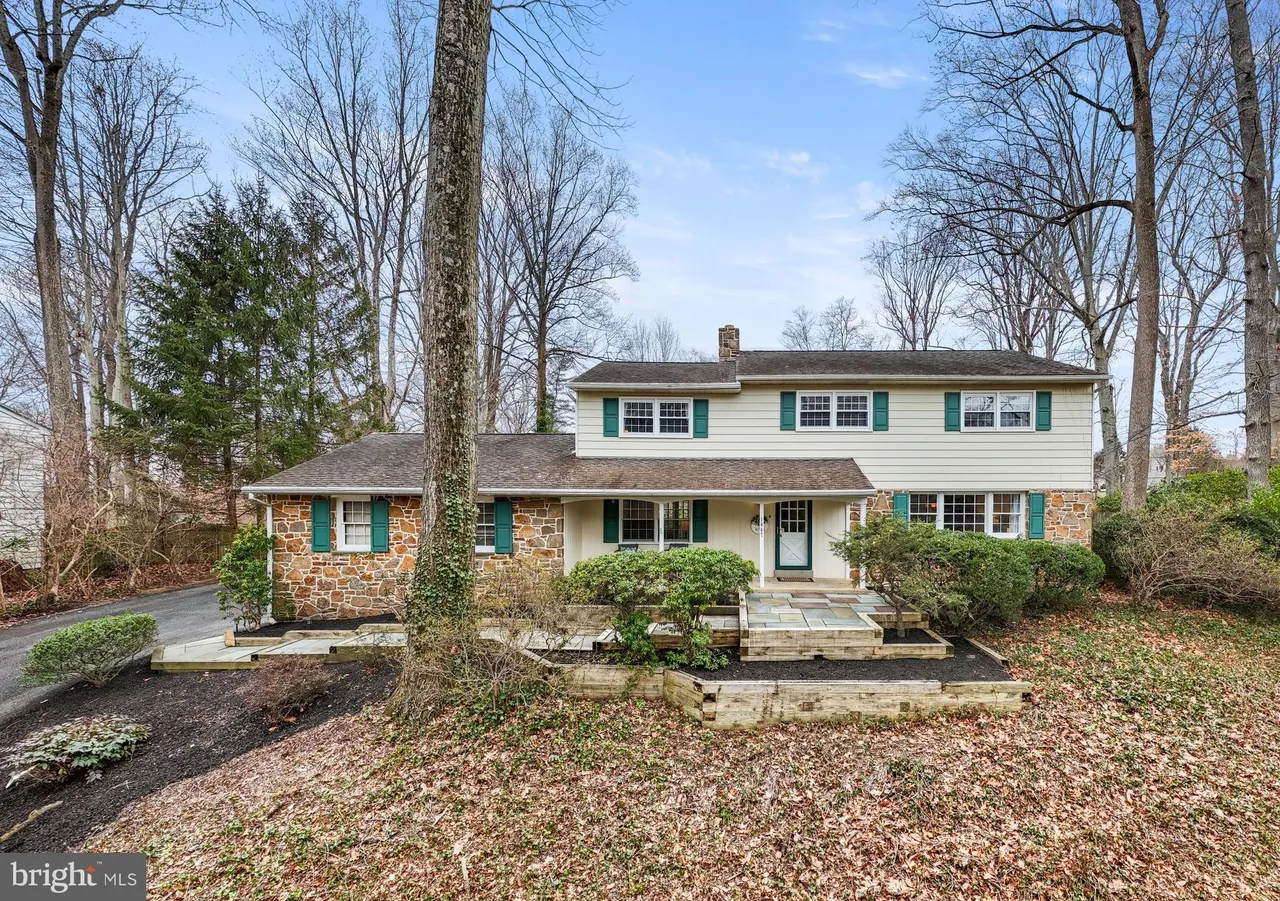
Situated in a wooded stretch of East Goshen, this Colonial, along with several others in its cul-de-sac, has a unique access point: Locksley Covered Bridge, which was erected in the 1960s. The four-bedroom, two-and-half-bath home features a family room, living room, dining room, and eat-in kitchen, which has granite countertops and a wood-burning fireplace. There’s a screened-in porch off the dining room, with skylights and brick flooring, which leads to the backyard, where there’s a patio and play set.
By submitting your written, visual, and/or audio contributions, you agree to The Inquirer’s Terms of Use, including the grant of rights in Section 10.
This suburban content is produced with support from the Leslie Miller and Richard Worley Foundation and The Lenfest Institute for Journalism. Editorial content is created independently of the project donors. Gifts to support The Inquirer’s high-impact journalism can be made at inquirer.com/donate. A list of Lenfest Institute donors can be found at lenfestinstitute.org/supporters.
Federal investigators pieced together a timeline for the deadly helicopter crash that killed two longtime friends in Hammonton, N.J., last month.
The National Transportation Safety Board released a preliminary report on Wednesday detailing the helicopter crash that led to the deaths ofpilots Kenneth Kirsch, 65, from Carneys Point, and Michael Greenberg, 71, of Sewell. Their aircrafts collided midair on Dec. 29. The two had been known to enjoy their flights together for years.
According to preliminary data, Kirsch and Greenberg started their flight session at the Vineland-Downstown Airport, departing at 9:48 a.m. The pilots, in separate aircrafts, flew in parallel paths to Hammonton Municipal Airport, arriving 10 minutes later.
Investigators are still trying to determine what happened next;there is no preliminary real-time GPS data on their subsequent flight out of Hammonton Municipal Airport.
The preliminary report confirmed Kirsch and Greenberg flew out of the Hammonton airport and collided at 11:24 a.m., almost an hour-and-a-half after they arrived at the airport.
During that time before their final flight, the two men stopped by Apron Cafe, a breakfast spot overlooking Hammonton Municipal Airport’s runway, the owner told The Inquirer. Minutes after they left, Apron Cafe patrons and staff could see one of the helicopters spiraling, engulfed in flames in the distance.
“I looked up, and I could see in the distance the one spiraling down, and then I see the other one coming down,” said the cafe’s owner, Sal Silipino. “It was hard to believe that they were crashing.”
While no data from the aircraft is available, surveillance video captured the fatal crash as it happened, according to the NTSB. The helicopters flew close together shortly before the accident.
Slightly staggered from one another, and heading in the same direction in what investigators liken to a “formation flight,” the helicopters “converged until they contacted each other.”
Investigators say one helicopter immediately began a tumbling descent to the ground, while the other pitched up sharply before leveling out. However, shortly after leveling off, the helicopter began spinning clockwise before descending rapidly to the terrain.
Kirsch was flying an Enstrom F-28A helicopter, and Greenberg, an Enstrom 280C. Both were operating the aircraft for personal flights.
The crash site was 1.5 miles southwest of Hammonton Municipal Airport and included a 1,211-foot debris path, with paint chips, main rotor blades, and the tail cone of one of the helicopters.
Kirsch’s aircraft was found split in half with the tail cone only held together by one tail rotor control cable, according to the report. There were no signs of fire in Kirsch’s helicopter. Major sections of Greenberg’s aircraft were destroyed by a post-impact fire, with the tail cone relatively intact.
The wreckage was recovered and retained for further examination by the NTSB. Investigators noted these were preliminary details, and the cause of the crash is yet to be determined.
A typical NTSB investigation can last one to two years.
As the September evening inched along, the line of residents waiting their turn for the microphone held steady. Filing down the auditorium aisles at the Indiana University of Pennsylvania, they were armed with questions about a new gas plant slated for their community.
Sitting quietly in the audience was John Dudash. For decades he’s lived in Homer City, a southwestern Pennsylvania town that was once home to the largest coal-fired power plant in the state. The plant, which shares its name with the town, closed nearly three years ago after years of financial distress.
Dudash, 89, has lived in the shadow of its smokestacks — said to be the tallest in the country before they were demolished — for much of his life. At its peak, the Homer City power plant employed hundreds of people and could deploy about 2 gigawatts of energy, enough to power 2 million homes.
It was also a major source of air pollution, spewing sulfur dioxide and mercury, both of which pose serious health risks. Today, Dudash wonders if the pollution might have exacerbated the lung issues that claimed his wife’s life six years ago.
The proposed gas plant, expected to be up and running in 2027, will replace the old coal-fired power station, but with more than double the energy output — 4.5 gigawatts of energy. The new plant also will have the potential to emit 17.5 million tons of planet-heating greenhouse gasses per year, the equivalent of putting millions of cars on the road.
And it will serve a new purpose: Rather than primarily sending electrons to the regional grid to power homes or businesses, the new power plant will exist mainly to feed data centers planned on the site.
As the hearing wore on that September night, Dudash, a conservationist, did not stand to speak; instead, he sat quietly, taking mental notes. The next morning, he emailed two staffers at the Pennsylvania Department of Environmental Protection.
“First of all, the project will not be stopped,” he began, with resignation. He went on to offer a few caveats — among them, advice about air monitoring.
His letter reached the agency alongside more than 550 comments on a key air permit for the proposed plant, a testament to the project’s complexity. After the permit was approved Nov. 18, Dudash’s prediction began to look remarkably accurate — though the Homer City plant still has about a dozen additional permits awaiting approval before the project can be completed, including one that would impact several acres of wetlands and hundreds of feet of a local stream.
Though it is among many energy sites popping up to power the artificial-intelligence boom across Pennsylvania, the Homer City facility is unique for its size, its advertised economic potential — the owners have promised the project will generate more than 10,000 construction-related jobs — and for its likely environmental impact. It has earned the backing of President Donald Trump, who called it “the largest plant of its kind in the world,” a distinction its owners could not verify. There was a buzz in town in late October when Jared Kushner, Trump’s son-in-law, visited, though it was unclear what drew him to Homer City.
“I don’t really trust the people who are coming in to build and run the place,” Dudash said. “I do not agree with the artificial-intelligence portion of it.”
“They’re going to have to sacrifice the environment for these jobs,” he added. “In Appalachia, we’ve been doing that for years.”
The Homer City proposal
When the old plant sputtered to a close in 2023, it left the surrounding community — which was built on the local abundance of coal — in search of an economic lifeline. Now, the data center boom sweeping the country brings promise of such a rebirth for communities like Homer City — though this promise is one that some experts say may be less than billed. And, it comes with risks.
The new power plant will be much larger than its predecessor and is permitted to emit more than twice as much of some pollutants as its predecessor did. The data center, or centers, it powers would also consume a tremendous amount of water — perhaps more than its host townships can spare, some fear.
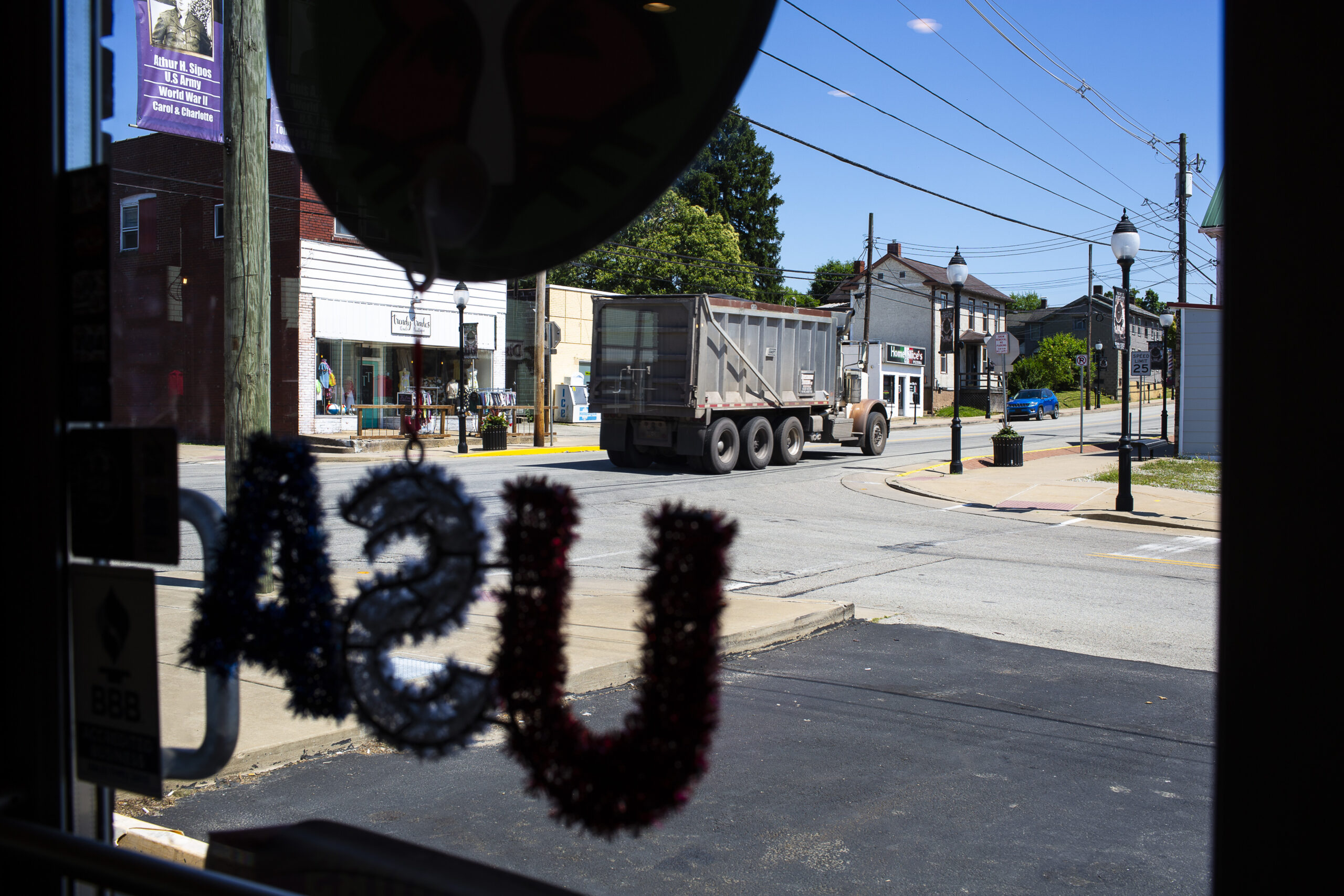
Homer City, Pa., once a vibrant thoroughfare during coal’s heyday, was completely empty of pedestrians on an afternoon in 2024.
Artificial intelligence requires vast amounts of electricity and has the potential to offer a lifeline to the fossil fuel industry. Though some in the community are sanguine about the promise of jobs, expertssay the reality for many living around data centers may fall short. Some are left wondering exactly who the new plant is for — them or some faraway tech companies.
The Homer City project is far from alone in its emergence: The nonprofit Fractracker has identified 39 planned data centers in the works across Pennsylvania. Tech companies like Microsoft and Amazon are moving in, alongside others intrigued by the state’s rich legacy of power production, deep natural gas reserves, and generous subsidies. In July, Republican U.S. Sen. Dave McCormick, from eastern Pennsylvania, held a conference in Pittsburgh during which companies announced more than $90 billion in data center investments and related energy infrastructure.
This tech boom largely has bipartisan support, including from Gov. Josh Shapiro, a Democrat who said at a June press conference that he is committed to “ensuring the future of AI runs right through Pennsylvania.” Legislators in Harrisburg, meanwhile, are introducing bills that would both spur the burgeoning industry and give it guardrails.
The extent to which the Homer City facility’s owners have lobbied for supportive legislation is not clear. The company’s lobbying registration with the Pennsylvania Department of State goes back only to January 2025. It has, however, spent at the local level. In November, for instance, the company gave a community nonprofit $25,000 for a holiday food drive. It also urged state utility regulators, who are drafting a policy on data centers, to issue one that does not saddle data centers with costs that might “push” them out of state.
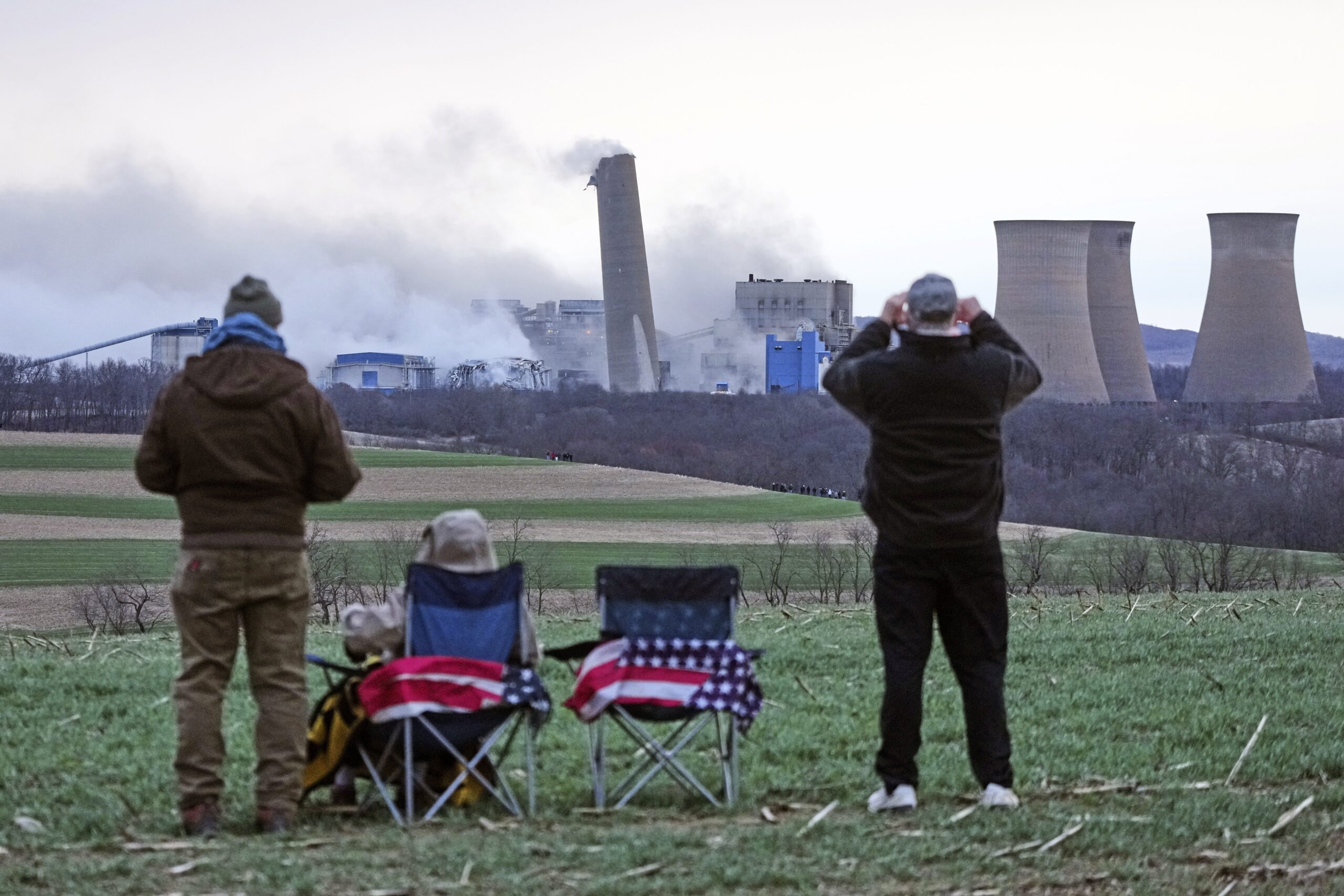
The Homer City proposal is the brainchild of the same private equity owners that closed the plant in 2023 — after years of financial difficulty and two bankruptcies. Two firms own close to 90% of the plant, with New York City-based Knighthead Capital Management holding the vast majority of that. It’s part of a wave of private equity investment in the data center industry. In March, the owners, operating under an LLC called Homer City Redevelopment, toppled the plant’s signature smokestacks. A few weeks later, they announced that the plant would reopen with a data center customer, or suite of customers, to be announced as soon as 2026.
Critics fear the new plant will require a lot more water than its predecessor. The supercomputers that data centers house whirr away around the clock, and need to be routinely cooled down. Some data center companies have introduced recycled water into their systems. Homer City Redevelopment has not said if their data center clients will be among them.
How to handle the water
In 2014, U.S. data centers used 21.2 billion liters of water, enough to fill nearly 9,000 Olympic-size swimming pools. That number tripled by 2023, with the vast majority of the water consumed by “hyperscale,” or large, facilities like Homer City. In states like Colorado, where water use has, for decades, been meticulously planned and negotiated, data centers are threatening to strain such finely tuned systems.
Dudash, the longtime Homer City resident, is concerned about a similar fate. “I’m not sure how they’re going to handle the water,” he told Capital & Main after the September hearing.
The power plant has, since 1968, been allotted an uncapped amount of water from Two Lick Reservoir, a 5 billion gallon, dammed-off portion of a creek that the plant’s former owners built explicitly for its use.
The power plant shares the water with a utility that serves two local communities — Indiana Borough and the broader White Township — as part of a 1988 drought management plan to prevent and respond to catastrophic weather conditions. The borough of Homer City gets its water from Yellow Creek, a tributary of Two Lick Creek, which serves the reservoir and picks up the slack in the event of a drought.
“Should the Two Lick Creek Reservoir be emptied, [the water utility] would not be able to provide sufficient water to protect public health and safety in their service area,” the drought management plan reads.
In 1985, the delicate system between Two Lick and Yellow Creek was strained when the then-Homer City plant drew so much water from the reservoir that it led to a drought. “Had a significant rainfall not occurred … the reservoir may have faced total depletion,” the drought management plan reads.
A report from the Pennsylvania Department of Environmental Protection shows that the water utility drawing from Two Lick has, in recent years, routinely used nearly half its allotted amount. But critics fear that allocation could be at risk once a data center opens and starts drawing water.
Robin Gorman, a spokesperson for Homer City Redevelopment, told Capital & Main that it plans to leave cooling and water-use decisions to its data center clients, making it unclear how much water will be needed to keep all the computers running, or where that water would come from.
Rob Nymick, Homer City’s former borough manager, who serves as manager of the Central Indiana County Water Authority, told Capital & Main that he is confident local municipalities can share water resources with the planned gas plant. But the data centers could be a different story.
“I do know that data centers do require a tremendous amount of water,” Nymick said. “That’s something we probably cannot provide.”
Nymick said that community officials are operating with “limited knowledge,” and that during the handful of meetings they have held with Homer City Redevelopment, “The only thing that they wanted to discuss is the actual power plant.”
Eric Barker, who grew up in Homer City, attended the September hearing with restrained optimism. “The power plant was a source of pride and is a source of pride for the community,” he said. “There’s not too many large employers in Indiana County,” he added.
But he found little comfort at the September hearing.
The Department of Environmental Protection “seemed woefully, woefully, comically underprepared,” Barker said, citing a response he received to a question about the types of pollutants that would increase under the new Homer City proposal, compared to what was emitted by the old plant. Barker was told the agency would look into it and get back to him.
“Some questions and concerns were raised at the public meeting regarding the plan approval about matters beyond the limited scope of the meeting,” said Pennsylvania Department of Environmental Protection spokesperson Tom Decker in a statement. “Interested parties are encouraged to look to the DEP’s extensive website, including its community page dedicated to the Homer City project, for resources addressing such questions and concerns.”
Despite the questions that followed, the department, on the whole, signaled satisfaction with the Homer City plant’s air permit application at the hearing. “What’s being proposed is what we consider state-of-the-art emission controls,” said Dave Balog, environmental engineering manager at the department’s northwest regional office.
Environmental nonprofits Citizens for Pennsylvania’s Future, Clean Air Council, the Sierra Club, and Earthjustice countered in a 44-page comment on a draft of the key air permit that the application does not incorporate the best tools for mitigating pollutants such as ammonia, which is known to cause respiratory issues and other health risks. The Department of Environmental Protection agreed with Homer City Redevelopment’s analyses of its best available technology, and the permit was granted.
‘We’re fighting for our survival’
As Homer City’s smokestacks imploded and fell to the ground last March, leaving only a gray cloud, Dudash wondered what particulates might be in the dusty mix. While there were rumors in town that asbestos might be among them, the Department of Environmental Protection told Capital & Main that the site was inspected for the substance before it was demolished and none was found.
Still, coal dust, fly ash, and silica particulates are all possible during such implosions, an agency representative said. In the months since, residents have complained of repeated blasts from the site rattling their houses. As of January, the blasts occurred daily.
But the particulates that drift from the old plant during the blasts may pale in comparison to the carbon dioxide emissions the new power plant is predicted to release. The key air permit the Department of Environmental Protection issued to the facility allows it to release up to 17.5 million tons of the heat-trapping gas per year — the equivalent of putting 3.6 million gas-powered vehicles on the road annually. In 2010, according to federal data, the plant emitted just over 11 million tons of greenhouse gasses. In 2023, when it was operating at a fraction of its capacity, it emitted 1.3 million.
In their comment to regulators, the nonprofit environmental groups said that the carbon dioxide emissions would be triple those of any polluting facility in the state, representing 6% of Pennsylvania’s total emissions. The new plant will also emit sulfur oxides and nitrogen oxides, two classes of respiratory irritants, but at rates lower than the old plant. The nonprofit Clean Air Council condemned regulators’ issuance of the air permit, calling it a “death sentence.” Along with PennFuture and the Sierra Club, the council appealed the permit in December.
The owners said the emissions from the new plant will result in a 35%-40% reduction in carbon dioxide compared to the old plant, but the calculation does not account for the new plant’s larger size. Instead, it is per-megawatt hour, meaning per unit of energy generated. Natural gas is less emissions-intensive than coal when burned, but because the Homer City plant will generate more than double the energy of its predecessor, its overall emissions profile is expected to be higher.
As the state grapples with extreme weather events such as flooding due to global warming, locking in carbon emissions is the wrong direction to go, the environmental nonprofits argue. On an annual basis, the plant will be permitted to emit hundreds of tons of respiratory irritants like particulate matter and nitrogen oxides, and dozens of tons of formaldehyde, a carcinogen. It will also emit health-harming compounds like toluene, xylene, and ethylbenzene.
Additional emissions are likely to come from the natural gas drilling that will be required to power the site.
In 2024, Nymick told Capital & Main that the borough was struggling to find a new economic engine. “We’re fighting for our survival,” he said at the time. Data center industry advocates contend that the data center gold rush will be a boon for communities like Homer City, where boarded-up storefronts line the main street.
“For every one job in a data center, six jobs are supported elsewhere in the economy,” said Dan Diorio, vice president of state policy for the Data Center Coalition, an industry trade group, at a hearing in the state Capitol in October.
The smokestacks of the former coal-fired Homer City Generating Station crumble in a planned demolition to make way for a new natural gas-fired power plant in Homer City, Pa., in early 2025.
Sean O’Leary, senior researcher at nonprofit think tank the Ohio River Valley Institute, said the reality isn’t that rosy. The average data center employs as few as 10 people and as many as 110, per his own calculations based in part on data from the Bureau of Labor Statistics. The computers inside them can generally run on their own with limited maintenance.
Even in a rural county like Indiana, O’Leary said, “One hundred is a rounding error. It just doesn’t matter. It doesn’t matter if they’re paid $200,000 a year. It’s not enough to make a significant change in the status of the local economy.”
In a recent report on the data center boom in natural gas economies in Appalachia, O’Leary said gas-powered data centers represent the combination of “three non-labor-intensive industries” — fracking, power plants, and data centers. “Stacking [them] on top of each other does not alter the underlying dynamic which ties them together.”
Ron Airhart, a former coal miner and executive assistant to the secretary-treasurer of the United Mine Workers of America, is more optimistic about the economic potential of the new Homer City facility.
Still, he concedes that it will never be what the old plant was. “Yes, building a gas-fired power plant is going to create a lot of construction jobs, there’s no doubt about that,” he said. “But once it’s done, how many actual employees are you going to have working there?”
He quickly added, “But, I’m glad they are doing something with the old power plant there.”
Gorman told Capital & Main that Homer City Redevelopment and its construction partner, Kiewit, are planning to hire from local unions and building trades. They foresee 10,000 construction jobs. They also anticipate the site will create 1,000 “direct and indirect” permanent jobs, including those hired at the facility itself and those brought aboard for supportive positions, such as suppliers.
“From start to finish, the Homer City Energy Campus will be developed in partnership with skilled local craftsmen and will bring quality, good-paying jobs back to the Homer City community,” Gorman said.
O’Leary said the jobs numbers such as those projected by the Data Center Coalition are inflated, similar to the employment projections made before the fracking boom in rural Appalachia. He said such projections are a detriment to communities, in part because taxpayers shoulder the cost of subsidies to attract the industry to the state, such as a sales and use tax exemption for data centers that Pennsylvania codified in 2021. Gov. Shapiro has estimated that the credit will expand to about $50 million per year for the next five years.
Local residents are also burdened with rising utility bills. The surging demand for electricity is straining the region’s power supplies, increasing what utilities pay for electricity. New power plants coming onto the grid must install transmission equipment, the costs of which they share with consumers. These economic factors, in sum, could outweigh the benefits of the new jobs the data center creates, O’Leary said.
Earlier this year, the grid operator for the region that encompasses Pennsylvania, PJM, saw electricity prices surge by roughly 1,000% from two years ago. Some of that cost is expected to be passed onto customers.
“We have a problem, and that problem is real, and it is exponential electricity load growth causing exponential price increases for consumers,” said Patrick Cicero, former consumer advocate for the state of Pennsylvania and now an attorney for the Pennsylvania Utility Law Project, at the October hearing in Harrisburg.
“In the context of Grandma vs. Google,” Cicero said, referring to older residents faced with high bills, “Grandma should win every day. That should be the policy statement of the Commonwealth of Pennsylvania.”
Federal and state lawmakers are still determining how and whether to regulate the additional costs that data centers pass onto consumers, including for fees associated with transmission throughout the grid. A bill that would create such a process while establishing renewable energy mandates for data centers is now being weighed by Pennsylvania representatives.
Dennis Wamsted, energy analyst at the Institute for Energy Economics and Financial Analysis, predicts such costs add complications for data centers, and has argued that their demand as a whole is overblown. Supply chain delays spurred by surging demand for turbines, including those that Homer City will be using, could also create additional costs and lag times, he said.
“If there is an AI bubble and it bursts,” he said, “you would have built all this capacity that wasn’t needed.”
Homer City’s owners said the plant is better positioned than others in the industry since it isn’t starting from scratch.
“Much of the critical infrastructure for the project is already in place from the legacy Homer City coal plant, including transmission lines connected to the PJM and NYISO power grids, substations, and water access,” Gorman, the spokesperson, said.
Communities on the front lines of these projects would be the first hurt by a project that fails to materialize.
But in Homer City, it’s clear that there’s an appetite for the promise of a new, job-producing industry, regardless of hurdles.
At the September hearing, many in the crowd wore neon shirts with union logos — a signal of the region’s fierce pride in its industrial past, and deep thirst for an economic boon. After an evening peppered with skepticism over the plant, Shawn Steffee, a business agent at the International Brotherhood of Boilermakers, stepped to the microphone.
“Everybody speaking about jobs,” he cried, “there will be jobs, and there will be local jobs.”
As he walked away, the room filled with applause — the loudest of the night.
President Donald Trump said Tuesday that starting Feb. 1 he will deny federal funding to any states that are home to local governments resisting his administration’s immigration policies, expanding on previous threats to cut off resources to the so-called sanctuary cities themselves.
Such an action could have far-reaching impacts across the U.S., potentially even in places that aren’t particularly friendly to noncitizens.
Two previous efforts by Trump to cut off some funding for sanctuary jurisdictions were shut down by courts.
Trump unveiled the concept this time late in a speech Tuesday at the Detroit Economic Club, without offering specifics.
“Starting Feb. 1, we’re not making any payments to sanctuary cities or states having sanctuary cities, because they do everything possible to protect criminals at the expense of American citizens and it breeds fraud and crime and all of the other problems that come,” he said. “So we’re not making any payment to anybody that supports sanctuary cities.”
Back in Washington, Trump was asked by reporters what kind of funding would be affected on Feb. 1: “You’ll see,” he said. “It’ll be significant.”
There is no strict definition for sanctuary policies or sanctuary cities, but the terms generally describe limited cooperation with Immigration and Customs Enforcement.
Courts have rejected the idea before
In an executive orders last year, the president directed federal officials to withhold money from sanctuary jurisdictions that seek to shield people in the country illegally from deportation.
A California-based federal judge struck it down despite government lawyers saying it was too early to stop the plan when no action had been taken and no specific conditions had been laid out.
In Trump’s first term in office, in 2017, courts struck down his effort to cut funding to the cities.
Some of the details are tricky
The Justice Department last year published a list of three dozen states, cities and counties that it considers to be sanctuary jurisdictions.
The list is overwhelmingly made up of places where the governments are controlled by Democrats, including the states of California, Connecticut and New York, cities such as Boston and New York and counties including Baltimore County, Maryland, and Cook County, Illinois.
That list replaced an earlier, longer one that was met with pushback from officials who said it wasn’t clear why their jurisdictions were on it.
The administration has been threatening funding in specific places
The federal government has moved to halt funding for a variety of programs in recent weeks and is already facing legal challenges.
The U.S. Department of Agriculture has warned states that have refused to provide data on recipients of Supplemental Nutrition Assistance Program money that they’ll be docked administrative funds. A court fight over the request for information was already underway before the threat came. Money hasn’t been stopped yet.
The U.S. Department of Health and Social Services said last week that it was halting money from five Democratic-led states for daycare subsidies and other aid to low-income families with children over unspecified suspicions about fraud. A court put that on hold
The administration has tried to use additional financial pressure against Minnesota, a state where it has also sent a wave of federal officers in an immigration crackdown. The Agriculture Department has said it’s freezing funding in the state — but without laying out many details.
The Centers for Medicare and Medicaid Services also told Minnesota last week that it intends to withhold $515 million every three months from 14 Medicaid programs that were deemed “high risk” after rejecting a corrective action plan it demanded because of fraud allegations. The amount is equivalent to one-fourth of the federal money for those programs. State officials said Tuesday that they’re appealing.
With early sunsets persisting for the next few weeks, the 4 to 6 p.m. hour can feel pretty grim. If you’re looking for a drink-sized pick-me-up or a discount on some tasty bites, there are plenty of places in and around Media to choose from. Here are eight restaurants in the Media area doing happy hours right now.
Internationally inspired restaurant Departure is serving hits from around the globe. Their happy hour includes select wines for $7, beers for $4 to $6, house martinis for $9, mixed drinks for $7, and featured specialty cocktails for $11. Small bites also abound. Think tandoori chicken dumplings for $8, jerk shrimp for $10, or hummus for $5. Happy hour is available Monday through Friday from 4 to 6 p.m.
Maris is the new kid on the block in Media’s dining scene. The Mediterranean restaurant opened on State Street in November and has been serving up fresh seafood and Greek-style dishes since. Maris’ happy hour deal includes buck-a-shuck oysters, half-priced calamari, and half-priced spreads. Drink options include $4 Miller Lites, $10 glasses of wine, and $10 “bartender’s choice” cocktails. Happy hour is Monday through Friday from 4 to 6 p.m.
Buck-a-shuck oysters at Maris Mediterranean Seafood in Media, Pa. Maris offers happy hour Monday through Friday from 4 to 6 p.m.
Spasso Italian Grill is a Media icon. The beloved restaurant serves up Italian comfort classics, from wood-fired pizzas to homemade pastas and hearty salads. Spasso’s happy hour menu features a wide-ranging list of beers for $4 to 5, wine by the glass for $8, mixed drinks for $7, and martinis for $8. Pick from the $8 small plates menu, including arancini, meatballs, and tomato bruschetta, or try a pizza or heartier dish, like eggplant parmesan or steamed mussels, for $13. Happy hour is Monday through Friday from 4 to 6 p.m.
Ariano is a cocktail bar and restaurant in downtown Media specializing in Southern Italian cuisine. The restaurant is offering both an early and late happy hour through Jan. 18. Every day from 4 to 6 p.m., enjoy $4 off wines, cocktails, pizza, and appetizers and $2 off draft beers. On Friday and Saturday, get the happy hour deal from 8 to 9 p.m.
The Old State Tavern has taken the moniker “Media’s best neighborhood bar.” The laid-back bar is a local favorite, complete with darts, a pool table, bar food, and lots of beer. Take 50 cents off domestic beers and $1 off craft beers during happy hour, which takes place Monday through Friday from 4:30 to 6:30 p.m.
Media’s la Padella is home to comforting Italian dishes, steaks, chops, and desserts. Their happy hour menu features $7 starters, from mussels to fried ravioli and truffle fries. House wines and cocktails like the Tuscan Sunrise or Penn Martini are also $7, and a rotating selection of draft beers is $1 off. Happy hour runs from 3 to 5 p.m., Tuesday through Sunday.
Stephen’s on State prides itself on high-quality, fresh steaks and an “exquisite” ambiance. Looking for something more casual than a full steak dinner? Pull up a seat at the bar for happy hour, Monday through Friday from 4 to 6 p.m. Get your first two drinks half-off (excluding top shelf liquor), and try some bites like the cheesesteak nachos for $7, jumbo wings for $8, or margherita flatbread for $8.
Located off Middletown Road, La Porta Ristorante is a family-owned restaurant serving wood-fired pizzas, pastas, and Italian-inspired small plates and mains. Happy hour is available at the bar, Monday through Friday from 4 to 6 p.m. Order a Stella Artois for $3.50, liquor drinks for $4, or wine by the glass for $5.50. Small bite options include scotch eggs for $5, mussels for $8, bacon-wrapped bleu cheese-stuffed dates for $6, and deviled eggs for $5.
This suburban content is produced with support from the Leslie Miller and Richard Worley Foundation and The Lenfest Institute for Journalism. Editorial content is created independently of the project donors. Gifts to support The Inquirer’s high-impact journalism can be made at inquirer.com/donate. A list of Lenfest Institute donors can be found at lenfestinstitute.org/supporters.
Nearly eight years after retiring, former Eagles tight end Brent Celek is finding ways to educate the community. The Super Bowl champion is speaking out to raise awareness about men’s health.
“I think it’s important for men to talk more about their health,” Celek, 40, said. “I think it’s actually happening more. Like, I see it with athletes. I think historically, it’s just been something where men are supposed to be tough and you’re not supposed to talk about your problems and issues.
“And I think more and more people are starting to do that. And it’s good because it shows other men that they’re not alone. Other people are out here dealing with the same issues. And it’s OK, there’s ways to get through it. There’s therapy and there’s solutions to some of the problems.”
Celek is partnering up with the incontinence brand TENA for a video series touring the streets of Philadelphia.
In the series, Celek challenged men to put their sporting mettle to the test. With a football, basketball, and a court on hand, Celek and TENA tested how confident each man would be in catching a pass in a professional football game and shooting a three-pointer in a pro basketball game. Afterward, they engaged in a conversation about their health.
In a recent TENA survey, 46.71% of men said they were confident they could catch a pass in a professional football game and 41.92% said they could make a three in a pro basketball game. Celek hopes they can bring that same confidence when it comes to talking about their health.
Former Eagles tight end Brent Celek challenged Philadelphia men to put their sporting mettle to the test as a way to promote awareness for men’s health.
“Seeing others [talking about their health] allows them to be more comfortable talking about it,” Celek said. “If you see your peers talking about things that may be uncomfortable for them, but it works out, you think in your own mind, ‘I can do the same thing.’”
Celek battled a number of injuries in his 11-season NFL career, including torn labrums, ankle sprains, torn thumb ligaments, a torn medial collateral ligament in his right knee, a torn right biceps, a double sports hernia, and a torn posterior cruciate ligament in his right knee. Since then, he’s taken a more hands-on approach when it comes to his health.
“I’m definitely more proactive,” Celek said. “When I was younger I relied on experts and doctors — and I still do now. But I would say as I’m getting older and we have access to everything at our fingertips with our phone, I’m more proactive in my own health. … And nobody knows you more than you know yourself. So I think it’s important for people to be proactive and to continue to look for things that will work for them.”
Third culture bakeries have seen a meteoric rise recently and are a significant part of the bakery boom fueled by the “little treat culture” that has swept cities from New York to London to Philly.
The linked story of Mexican conchas and Chinese bo lo bao predates “little treat culture” by hundreds of years.
Crackled, cookie-like crusts sit on top of round, fluffy milk bread, sometimes filled with cream, jam, or custard, or char siu, a vibrant red Cantonese roast pork.
At dim sum and in Chinese bakeries, they’re the other mainstay classic, along with egg tarts. At first glance, the bo lo bao and the concha might not seem to have that much in common, aside from both being buns. Conchas are staples of the Mexican bakery, bo la bao are popular at dim sum houses.
A side-by-side comparison of the “pineapple” bun and the Mexican bun at Bread Top House in Chinatown.
This popular item at East Asian-leaning bakeries, both new wave and old school, shares its origins with traditional Mexican bakeries. While in Spanish it’s the concha, named for its shell that resembles the outside of the seashell (though it also can be manipulated with crosshatching to look more like tic tac toe), in Chinese, it’s “bo lo bao,” which translates to “pineapple bun,” though the bun never contains any pineapple. Rather, its namesake gives the bun a way to describe its crusty, often cross-hatched texture.
It’s a narrative that has been trending on social media, as people of Chinese heritage dig into the origins of their favorite foods.
One theory on how these buns evolved in separate cultures is that after Chinese immigrants built railroads in Mexico in the early 1900s and returned to China, they brought conchas with them. Chinese bakeries are also heavily influenced by the Portuguese, who ruled Macao and also introduced egg tarts to Chinese cuisine.
There’s another bread narrative that has been simultaneously making waves on social media. British baker Richard Hart, co-owner and founder of the lauded Copenhagen bakery Hart Bageri and the Green Rhino bakery in Mexico City, insulted the entirety of Mexican bread culture on a podcast, dismissing it as nonexistent. His words incensed the internet. And you’ll find that by tasting through even the Mexican breads available in Philly, he’s quite incorrect.
At Tequilas, an airy concha, flavored with hoja santa and filled with avocado whipped cream, is a coda to dinners of teeming molcajetes and similarly light tamales. At the adjacent La Jefa, you can pick up jam-filled concha, made by the same kitchen, to pair with your morning cappuccino. They’re the work of pastry chef Jessica Delgado, who comes from a baking family in Mexico City; the first taste of them nearly brought Tequilas founder David Suro to tears. “She said when she was a little kid, she helped her uncle deliver bread in big baskets and her pay was a concha,” he said.
In Mexico City, conchas abound. At traditional bakeries, grab a pair of tongs and heap them onto a plastic tray to bring them to a cashier. Repeat the process at any traditional bakery in Philly’s Chinatown, whether it’s Mayflower or Bread Top House (where you can get both bo lo bao and a “Mexican bun.” Dodo Bakery also makes them, though its diminutive footprint means you order from a counter).
In each case, a layer of fat (butter, shortening, or lard) is mixed with flour and sugar, and placed over a bun prior to baking. The Chinese versions are also brushed with egg yolk for a lacquered finish. The coating splits apart in the oven, sometimes eased along by delicate cuts made on it, to create the buns’ unique crusts.
The “pineapple” buns at Grand Palace Restaurant.
Some of Philly’s best versions are found at dim sum parlors like Grand Palace on Washington Ave and China Gourmet in Northeast. Go easy on the siu mai and congee during dim sum so you can save some room for bo lo bao.
This past spring, a biotech company announced the first use of a new gene-editing technology in people to fix an errant gene that causes a severe immune disorder. In June, a baby born with a life-threatening metabolic disorder was allowed to leave the hospital after a six-month sprint by scientists to create a bespoke treatment for him. And increasingly, a generation of “bubble babies” born without immune defenses are nearing their teenage years after receiving a one-time experimental gene therapy in early childhood.
Therapies that target genetic illnesses at their root are no longer on the horizon. They are here. More are coming. But even as a growing suite of gene therapy tools are changing individual patients’ lives, manyare getting stuck in a medical purgatory becausethey don’t fit the model for turning breakthroughs into accessible treatments.
Donald Kohn, a pediatric bone marrow transplant physician at the University of California at Los Angeles, has successfully rebuilt children’s immune systems with gene therapy in the clinic for over a decade, but it has not yet become a medicine.
“There are several dozen rare diseases in a similar situation, where there is a therapy that looks good in academic clinical trials. But getting to the end zone of an approved drug is very challenging,” Kohn said.
The potential public health impact may appear small individually, but it is massive collectively. Rare diseases are estimated to afflict 300 million people globally, and around 70% of them trace to genetic causes.
Typically, drug development is a relay race. Academic labs, backed by federal funding, often do the early, basic research. Companies run the next leg to turn those insights into drugs. Whilescientists can now utilize an expanding arsenal of gene therapy technologies to start the race against potentially thousands of diseases, finding someone to pick up the baton is challenging whenany individual therapy may help a handful of patients ― or even just one.
That limbo has led scientists to experiment with new business models and more efficient ways of testing new therapies to fill a market gap. They are building biotech companies that don’t rely on maximizing profits, launching nonprofits, and fashioning new kinds of clinical trials. The Trump administration has also weighed in to help.
In November, the Food and Drug Administration outlined a path forward for getting certain treatments of rare diseases with a clear biological cause to market.
“Unfortunately, FDA has heard from patients, parents, researchers, clinicians, and developers, that current regulations are onerous, unnecessarily demanding, provide unclear patient protection, and stifle innovation. We share this view,” top FDA officials wrote in the New England Journal of Medicine. “Nearly 30 years after the sequencing of the human genome, bespoke therapies are close to reality.”
Lifesaving cures that ‘ebb and flow’
For several decades, scientists have tried to use cell and gene therapies to fix illnesses at their roots. A few dozen have been approved for diseases, such as sickle cell anemia and spinal muscular atrophy. Even as new tools have expanded this potentialover the last decade, risks also exist. Patients have died after receiving gene therapies, showing the tension between encouraging innovation and guarding patient safety.
Perhaps no case highlights the opportunity — and the challenge — better than an experimental gene therapy designed to rebuild the immune systems of babies who were born without one. The disease, called severe combined immunodeficiency (SCID), has more than a dozen different genetic causes, but the same result: Babies are born without immune defenses.
The condition is rare, affecting 40 to 80 children in the United States each year, but was popularized by the story of David Vetter, featured in the 1976 movie The Boy in the Plastic Bubble.
In 2014, Jeffrey and Caroline Nachem’s newborn daughter, Eliana, developed a cough that wouldn’t go away. A blood test delivered a shocking result — a white blood cell count so low that the doctor ordered it to be run again, thinking it might be a fluke.
It wasn’t. The Nachems learned their daughter had a subtype called adenosine deaminase deficiency-SCID (ADA-SCID). They lived in Fredericksburg, Va., near the woods, but couldn’t open the windows because mold spores could float in. They found new homes for their pets. They wiped down every surface and changed clothes after coming home from the outside world, to protect Eliana from germs.
With a matched bone marrow transplant, the disease can be effectively treated, but the best option is from a sibling, and Eliana was the Nachem’s first child. Scientists had been developing gene therapies that turn a patient’s own cells into a possible cure, requiring a lower dose of chemotherapy and fewer immune-related complications.
Researchers remove bone marrow cells, use a harmless virus to insert a corrected version of the ADA gene, and then reinfuse the cells. At 10 months old, Elianareceived an experimental gene therapy — and it worked. As her immune system rebuilt itself, doctors gave her parents the clearance to give her a kiss or bring her outside. When she was 18 months, the Nachems pushed her around in a shopping cart at the grocery store.
In a recent study in the New England Journal of Medicine, Kohn and colleagues reported the long-term follow-up of 62 children with ADA-SCID who were treated with a one-time gene therapy, including Eliana. Nearly all of them have had their immune systems fully rebuilt, going strong after an average of nearly eight years.
Eliana is now in sixth grade. “She is incredible. She has attitude, she is artistic, she is the commander of the world. Nothing gets in her way,” Caroline Nachem said.
The therapy, however, has been stuck.
A biotechnology company, Orchard Therapeutics launched a plan to develop the therapy in 2016, but stopped investing in it a few years later. Orchard returned the therapy to its academic inventors in 2022.
Researchers in Kohn’s lab spun out Rarity Public Benefit Corporation to turn it into a medicine. Now the bottleneck is developing the commercial manufacturing.
“I saw the ebb and flow of this therapy,” said Paul Ayoub, chief executive of Rarity. “The therapies work, but they stop at this academic stage … We wanted to put it in our own hands — take the proven science to the finish line.”
Meanwhile, families are waiting. Maria Thianthong, who lives in Los Angeles, is one of them. Her 3-year-old daughter, Eliyah, has been on the waiting list for the therapy since birth. Children with this form of SCID can live with injections of a replacement enzyme therapy, though it is considered a stopgap.
“Three years is a lot of time for them to figure out something with the funding,” Maria said. “We’re just a little impatient.”
A new era of ‘genetic surgery’
For scientists, the SCID example is a gold standard, but also a cautionary tale.
Cardiologist Kiran Musunuru and pediatric geneticist Rebecca Ahrens-Nicklas hold KJ Muldoon after he received an infusion of a drug custom-made for him. MUST CREDIT: Children’s Hospital of Philadelphia
Running a trial with dozens of patients for a decade is a “Herculean effort” said Kiran Musunuru, a cardiologist at the University of Pennsylvania’s Perelman School of Medicine. He hopes that federal rules can be streamlined to speed up the process. Otherwise, many cures may never be made.
The beauty of modern gene-editing tools, many of which build off the Nobel Prize-winning CRISPR technology, is that cures become programmable. Instead of inventing a new medicine for each disease, scientists in theory can write a bit of code to address a patient’s unique mutation for multiple diseases.
David Liu, a biochemist at the Broad Institute and one of the field’s leaders,recently showed that a one-size-fits-all therapy could, with a single edit, treat multiple diseases in human cell and mouse models of disease. He’s alsoworking with colleagues to create a nonprofit Center for Genetic Surgery to advance cures “that are not likely to be served by industry anytime soon, because their disease is so rare.”
A company he co-founded, Prime Medicine, announced promising early results last year in treating two patients with a rare, inherited immune deficiency called chronic granulomatous disease. But it announced that it would deprioritize the program to focus on other diseases.
The company is continuing to explore possible paths to federal approval with the current data set, rather than treating more patients.
Paving the way for the future is the case of “Baby KJ” Muldoon, an infant who received a custom gene-editing therapy for a rare metabolic disorder last year at Children’s Hospital of Philadelphia.
KJ celebrated his first birthday at home this summer, is learning to walk and is meeting developmental milestones. But he is one patient. Other children also suffer from similar disorders, called urea cycle disorders, that are caused by different mutations in multiple different genes. KJ’s treatment team is working on an “umbrella” clinical trial, in which five other children will be treated. They’ll use the same basic approach they used for KJ, but tailor the treatment to different genes and mutations.
The hope is the evidence, pooled together, could be used to support the treatment’s approval. Musunuru’s team recently published a step-by-step guide to their interactions with regulators in the American Journal of Human Genetics. He and other researchers, who have been encouraged by the FDA’s recent announcement about a new pathway, await more specific guidance on how it would operate.
“We’re kind of taking the stance, there are many patients like KJ who need therapies now,” Musunuru said. “The clock is ticking and we know we can do it now.”
It doesn’t look like Aaron Rodgers will be back with the Steelers
Steelers owner Art Rooney on how Mike Tomlin leaving could impact Aaron Rodgers' retirement decision: "Aaron came here to play for Mike, so I think it'll most likely effect his decision."
Cowboys request to interview Eagles’ defensive coach: reports
Christian Parker, Eagles passing game coordinator and defensive backs coach, seen here ahead of last year’s Super Bowl.
The Dallas Cowboys are on the market for a new defensive coordinator, and it looks like one of their candidates is right here in Philly.
According to multiple reports, the Cowboys have requested permission to interview Christian Parker, the Birds’ passing game coordinator and defensive backs coach. It’s unclear if the Eagles will grant a divisional rival permission to interview one of their coaches.
Parker, who just finished his second season with the Eagles, has been credited with helping improve the Birds’ secondary and the development of Cooper DeJean and Quinyon Mitchell, both of whom were named All-Pros this season.
Teams were told Mike Tomlin isn’t coaching next season: NFL Network
In the hours after Mike Tomlin told the #Steelers he was stepping downs, teams have contacted Tomlin to express their interest, sources say.
PIT has his rights and draft compensation would be necessary. That said, teams were told Tomlin does not plan to coach next year. pic.twitter.com/Gx1a7grjg7
Kevin Stefanski has completed coaching interviews with three different teams
Kevin Stefanski has now interviewed for three head coaching jobs.
The Miami Dolphins have completed their interview with former Cleveland Browns head coach and Philadelphia native Kevin Stefanski, the team announced Wednesday morning.
Stefanski, among those mentioned as a possible Eagles offensive coordinator candidate, was fired by the Browns after six seasons (45-46) and two NFL Coach of the Year awards. Stefanski’s three playoff games was the most for the franchise since Marty Schottenheimer’s tenure during the mid-1980s.
Stefanski interviewed with the Atlanta Falcons (and new team president Matt Ryan) Sunday. He also had an interview with the Tennessee Titans.
On the NFL Network Wednesday morning, Ian Rapoport didn’t mention any specific candidates to replace offensive coordinator Kevin Patullo. But the long-time NFL insider did offer a somewhat cryptic clue about the direction the Eagles could take in their coaching search.
“I would expect the Eagles to swing big,” Rapoport said. “I would also expect them to maybe not go with something that Sirianni has done before, something of a clean break there.”
A “big swing” would be going for an established playcaller, someone like former Giants head coach Brian Daboll, former Cleveland Browns head coach (and Philly native) Kevin Stefanski, or former Miami Dolphins head coach Mike McDaniel (whom columnist David Murphy prefers).
It could also mean someone who has experience calling plays, like former Washington Commanders offensive coordinator Kliff Kingsbury or current Baltimore Ravens offensive coordinator Todd Monken.
Nick Foles breakdown of final Eagles’ play of the season is worth listening to
Super Bowl LII MVP Nick Foles knows a thing or two about running a successful offense, and the former Birds quarterback had a few interesting observations about the Eagles’ widely-criticized final play during their wild-card loss to the San Francisco 49ers.
This 4 minute breakdown of the Eagles final play from Nick Foles is the best I’ve heard & is absolutely worth a listen.
Potential candidates for Eagles offensive coordinator opening
Former Dolphins Mike McDaniel is among the potential candidates to replace Kevin Patullo.
Jalen Hurts will begin his sixth season as the Eagles’ starting quarterback in September. He is about to have his seventh play-caller.
Kevin Patullo, the 44-year-old, first-time offensive coordinator, was removed from his position on Tuesday in the aftermath of the Eagles’ wild-card exit. Now, Nick Sirianni and the Eagles will be tasked with hiring the team’s next offensive play-caller. The team’s last two internal promotions — Patullo and Brian Johnson — were finished after one season.
If the team decides to fill the vacancy with an outside voice, here are some candidates they could consider:
Brian Daboll, former Giants head coach
Kliff Kingsbury, former Commanders offensive coordinator
McDaniel is one of three coaches on this list have been vetted by the team as far back as the the last regime, according to Jeff McLane: McDaniel, Kingsbury, and Monken.
“Doesn’t mean they’ll interview or even be under consideration — and may not even be available — but would expect the list to be heavily tilted toward proven commodities,” McLane wrote on social media.
Which free agents will the Eagles focus on keeping?
Tight end Dallas Goedert is among a group of high-profile free agents.
As Reed Blankenship noted Sunday in the locker room: “It’s not going to be the same.”
“Who knows where we all end up?” the safety said. “That’s just part of the business side of it. They can’t keep us all. I wish they could.”
Blankenship is one of the Eagles’ nearly two dozen free agents. Like Blankenship, a few are notable players who may not be back.
Let’s start with Dallas Goedert, who had a career year — the most prolific touchdown season in the history of Eagles tight ends. There are zero tight ends on next season’s roster as it stands. Along the offensive line, reserves Fred Johnson, Brett Toth, and Matt Pryor are free agents. So is wide receiver Jahan Dotson. Deeper reserves like running back AJ Dillon, quarterback Sam Howell, and injured fullback Ben VanSumeren are set to hit the market, too.
Blankenship, linebacker Nakobe Dean, and edge rusher Jaelan Phillips are the marquee names among the defensive free agents. Two more starters from Sunday’s game are also scheduled to be free agents: safety Marcus Epps and cornerback Adoree’ Jackson. Other free agents include edge rushers Brandon Graham, Joshua Uche, Azeez Ojulari, and Ogbo Okoronkwo. Punter Braden Mann’s contract also is up.
As for which players the Eagles will prioritize, it’s not hard to imagine them wanting to rework something with Goedert before they look elsewhere for a tight end. Phillips will be at or near the top of the priority list, too. The Eagles are thin at edge rusher and could use an impact player like Phillips at the top of the depth chart to pair with Jalyx Hunt and Nolan Smith. Blankenship’s position is a priority, but it remains to be seen what his market looks like and what the Eagles decide to do at safety. Rookie Drew Mukuba will be coming off a season-ending injury at one of the safety spots.
As for Dean, he may be the most expendable among the top free-agents-to-be with Jihaad Campbell waiting in the wings.