Blog

  • Wawa is closing another Philly store after its new format fell flat

    Wawa is closing another Philly store after its new format fell flat

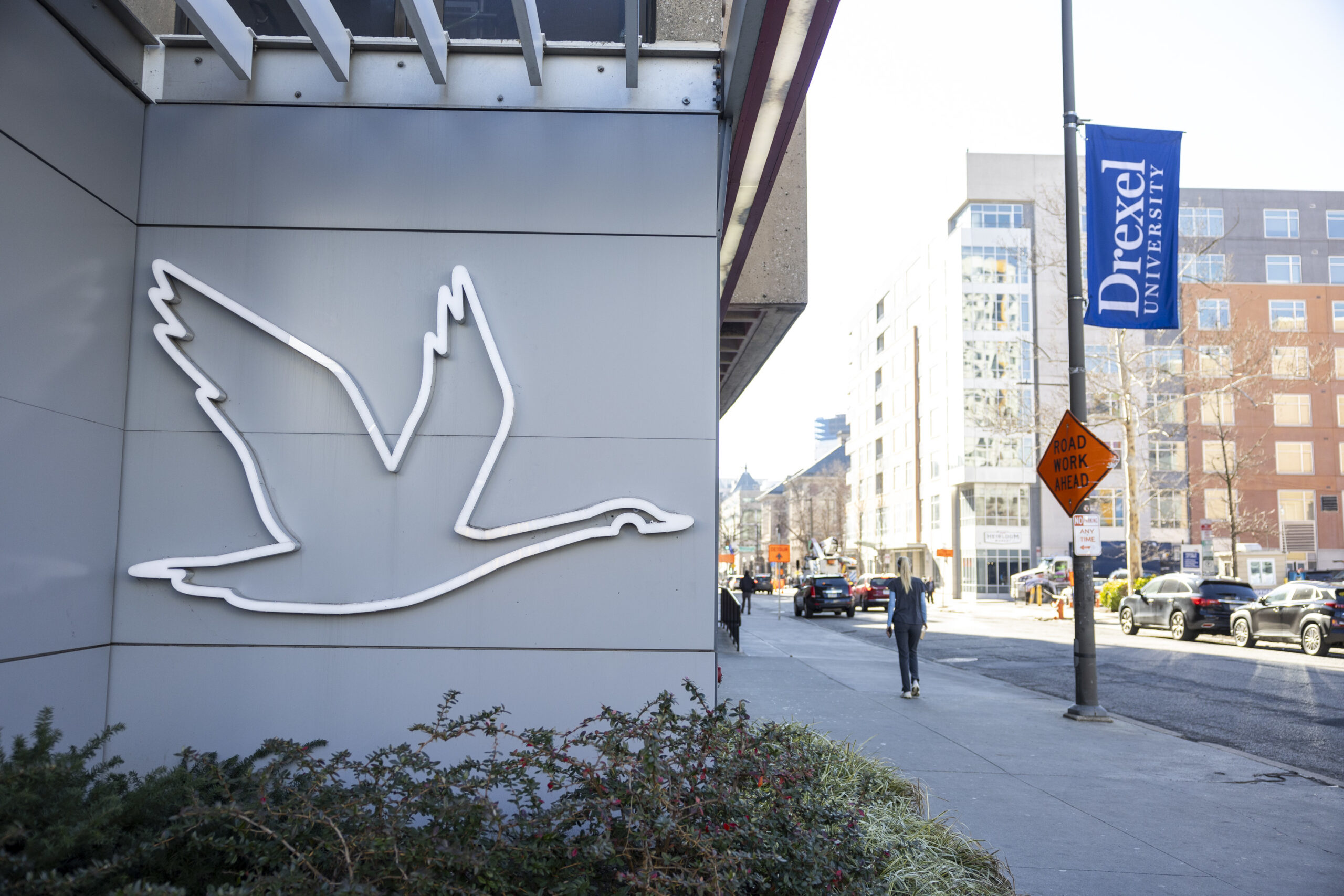
    Wawa is closing a store on Drexel University’s campus, nearly three years after remodeling to a digital-order-only concept with no products on shelves.

    The 3300 Market St. location, which has been open since 2018, is set to close Jan. 21.

    It was remodeled in 2023 to test the new store format, which required customers to order all items on a touch screen, with no shelves of product to browse. The pilot was not a success, leading to the store’s planned closure, said a company statement shared by Wawa spokesperson Lori Bruce Tuesday.

    Prior to the pandemic, this store saw more food-service than any other Wawa, CEO Chris Gheysens previously told the Philadelphia Business Journal.

    “Over the years, we have made several attempts to address business and operational challenges at this location,” said the company statement shared by Bruce, which did not provide details about those challenges.

    That effort “includes partnering with property owner, Drexel University, in an attempt to address some of these issues, and most recently making investments in our store design to test a fully digital format. Unfortunately, this test did not adequately improve performance or deliver an enhanced customer experience, which ultimately led to the decision to close the store‚” Wawa’s statement said.

    Wawa had informed Drexel about its plans to close the location, university spokesperson Niki Gianakaris confirmed Tuesday in a statement from the university. Drexel did not respond to a question about what will occupy the space going forward.

    Employees will be offered positions at other nearby Wawas. Nearby stores include those at 36th and Chestnut Streets, and 38th and Spruce Streets.

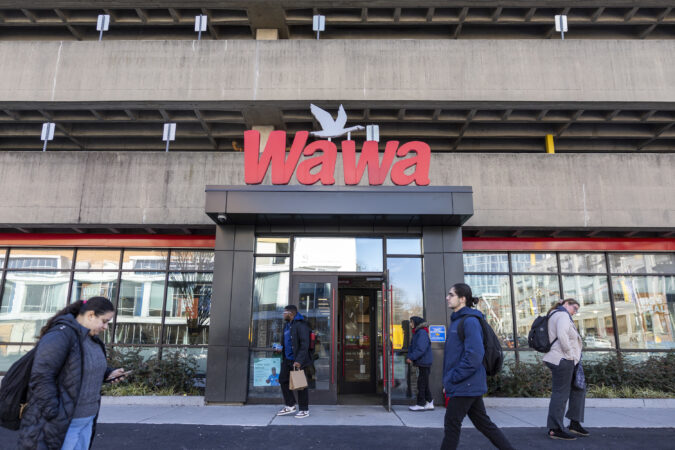
    The Wawa at the corner of 34th and Market Streets near Drexel University will close this month.

    Wawa has closed a number of stores in the city in recent years.

    Wawa closed two locations in the Northeast last year.

    In 2024, the company closed a Port Richmond store that was one of its oldest, a Cherry Hill location that had been operating for 51 years, and a store near the Philadelphia Art Museum, as well as a Center City location at 16th and Ranstead Streets that had been testing a small-store concept.

    Meanwhile, Wawa competitor Sheetz recently announced it will open its first Philadelphia-area outpost, in Montgomery County, next month.

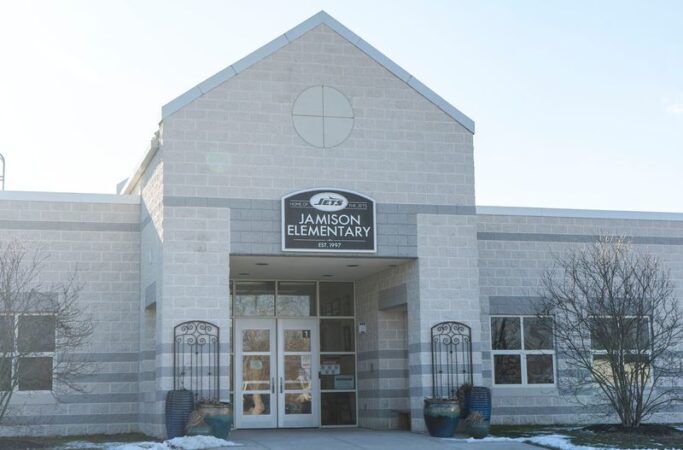
  • A disability rights watchdog group closes investigation into child abuse at Jamison Elementary, citing improvements

    A disability rights watchdog group closes investigation into child abuse at Jamison Elementary, citing improvements

    A disability watchdog group has closed its investigation into child abuse in the autistic support program at a Central Bucks elementary school.

    The group, Disability Rights PA, published an April 2025 report finding that students were abused at Jamison Elementary School and administrators failed to adequately investigate, setting off a firestorm of district investigations, terminations, and lawsuits. The group visited the elementary school in November and noticed improvements to district practices, policies, and personnel, according to a Dec. 19 letter from Andrew Favini, the organization’s staff attorney, to Central Bucks officials. They then closed the investigation.

    In the wake of the initial Disability Rights report, Central Bucks fired former Superintendent Steven Yanni and former Jamison principal David Heineman. Gabrielle McDaniel and Rachel Aussprung, the teacher and education assistant in the classroom who allegedly abused students, have also been terminated, the district said.

    During the November visit, Disability Rights PA found “no new reports of abuse and neglect” after conducting interviews with district staff that teach in or provide support to autistic support classrooms, according to the letter.

    The organization also interviewed new Jamison principal Lauren Dowd and assistant principal Dave Filson, who, according to Favini, appeared “earnest and sincere.” The administrators shared that they spent “significant time” in the autistic support classrooms and that there is new training on mandatory reporting for child abuse and using restraints in classrooms.

    “The changes presented to DRP during the November 21, 2025, visit were substantial and emphasized a focus and dedication to improving the autistic support programs,” Favini wrote in the letter.

    A spokesperson for Central Bucks also said the district’s pupil services program will be audited by the Center for Applied Research and Educational Improvement at the University of Minnesota.

    The evaluation will, among other things, identify areas for improvement and will focus on staffing, student outcomes, and conformity with state regulations, the spokesperson said.

    “The district and school board are committed to continuous improvement and pursuing and implementing multiple strategies to support this effort in all areas,” interim Superintendent Charles Malone said in a statement Monday.

    The April Disability Rights PA report found that McDaniel and Aussprung illegally restrained students in an autistic support classroom and did not report the use of restraints to the Pennsylvania Department of Education. They noted that students also observed or experienced demeaning treatment, nudity, and neglect.

    Room 119, the center of Disability Rights PA’s investigation, is no longer being used as an autistic support classroom at Jamison, Favini wrote in his letter. The class that would typically be in 119 has been relocated to another nearby room that administrators can more directly access.

    While the disability rights watchdog has closed its investigation, Favini noted in the letter that the district must continue to amend necessary policies and “support its staff with heightened awareness of the District’s history.”

    “As always, even though the investigation is closed, DRP will remain vigilant regarding reports of abuse within Central Bucks School District; we anticipate the District will do the same,” Favini wrote.

    Both Yanni and Heineman have appealed their terminations. Alyssa Wright, the district’s former director of pupil services whom Yanni and Heineman pointed fingers at during their public termination hearing in August, has sued the district and eight school board members, alleging that she was a whistleblower who was scapegoated.

    Yanni’s appeal in Bucks County Court of Common Pleas and Wright’s federal lawsuit are still pending, while the state Department of Education has not yet made a decision in Heineman’s appeal.

    Staff writer Abraham Gutman contributed to this report.

  • A New Jersey town wants to import out-of-state woodchucks for Groundhog Day celebrations. Gov. Phil Murphy vetoed it.

    A New Jersey town wants to import out-of-state woodchucks for Groundhog Day celebrations. Gov. Phil Murphy vetoed it.

    A New Jersey town’s hopes of celebrating Groundhog Day their way may have been dashed once again.

    For years, Milltown, a borough in central New Jersey with about 7,000 residents, did its own version of the classic Punxsutawney festivities with a live groundhog front and center.

    But their access to the hero rodent is dwindling, leaving organizers groundhog-less in the town’s most crucial hour.

    State laws ban importing wild animals that could potentially carry rabies.

    A bill first introduced in 2024 and later passed by New Jersey legislators, intended to carve out an exception to the rule, allowing out-of-state woodchucks (yes, woodchuck and groundhog are interchangeable terms) to be brought in for the sake of the holiday tradition.

    But on Monday, Gov. Phil Murphy vetoed that bill, citing public safety, sending the Groundhog Day enthusiasts of Milltown back to the drawing board.

    It wasn’t always this way.

    Milltown’s Groundhog Day and the beginning of Milltown Mel

    Milltown’s Groundhog Day dates back to 2009 (much more recent than Punxsutawney‘s, which started in the 1880s).

    Jerry and Cathy Guthlein, who owned a funeral home together in Milltown, were inspired by the official celebrations one state over after they made the five-hour drive to see the hubbub for themselves.

    They were hooked.

    “Jeez, if they can do it,” Jerry Guthlein recalled to NJ Advance Media, “I can do it.” He paid about $300 for a baby groundhog from a Sunbury, Pa., breeder and raised him.

    That little groundhog grew into the role of Milltown Mel, a beloved local icon who made Groundhog Day predictions for the small town for five years before dying in 2015. That’s when Mel 2.0 stepped up to the plate in 2016; a younger, larger, and “friskier” groundhog, according to Jerry Guthlein at the time. And then, you guessed it, he was succeeded by Mel 3.0 until he died in 2021 at the age of about 3.

    The average life span of groundhogs varies. Wild groundhogs live an average of two to three years, but can get up to six years, according to PBS. In captivity, they can live as long as 14 years.

    In the years since founding Milltown’s Groundhog Day celebrations, the Guthleins stepped back, and the event would go on to be organized by a group of volunteers known as the Milltown Wranglers, who would tend to the sitting groundhog. During their version of events, they’ll hoist an iteration of Mel into the air, while doughnuts and coffee are served to attendees and local bands play.

    After Mel 3.0’s death in 2021, Russell Einbinder, one of the Milltown Wranglers, drove to Tennessee to pick up a newborn replacement groundhog. But state officials seized the chuckling (the real and adorable phrase baby woodchucks/groundhogs are called) months later, the New York Times reported. Officials cited concerns for public health and wildlife disease, including rabies.

    Those concerns aren’t just groundhog-focused.

    Importing groundhogs and other wild animals is part of a longstanding state ban dating back decades to help prevent rabies and other diseases. Notably, you can’t test an animal for rabies unless it’s dead, according to the CDC.

    Still, the seizure rubbed Einbinder and other groundhog enthusiasts the wrong way.

    “He never actually got to be the Mel,” Einbinder told the Times. The Inquirer reached out to Einbinder for comment but did not hear back as of publication time.

    Wranglers attempted for years to find a legal groundhog, but the original Pennsylvania breeder who brought on Mel the first had died. Other reputable breeders were gone. Einbinder’s calls to zoos and wildlife rescues were fruitless.

    And just like that, Milltown’s Groundhog Day went dormant.

    Local lawmakers seek a carveout

    In 2024, legislators worked on and passed a bill that would create a special exception to New Jersey’s general ban on importing wild animals. The carveout would allow towns and counties to import woodchucks for their Groundhog Day celebrations if their local groundhog died.

    The bill included guardrails, including that the municipality would need to prioritize finding a New Jersey groundhog before looking elsewhere. There was also a provision that the Division of Fish and Wildlife would be involved and set up a procedure to help relocate and import woodchucks, and create rules for how they should be housed and cared for.

    Sterley S. Stanley (D., Middlesex) was a primary sponsor of the bill. He’s better known for his work on healthcare reform, but got involved with the local bill after meeting Einbinder and becoming “fascinated by the backstory,” according to NJ Advance Media.

    “While I am disappointed that we could not establish a new pathway for Milltown to procure a new groundhog, I look forward to continuing to work with state and community partners to find a creative solution to this issue that allows Milltown to resume this cherished tradition within the current regulatory framework set forth by relevant authorities,” Stanley told The Inquirer on Tuesday.

    Initially, the bill earned a lot of giggles at meetings, but received near-unanimous lawmaker support and moved through both legislative houses between 2024 and 2025 with ultimate approval. The legislature ultimately passed the bill, but too late for a Milltown Groundhog Day to be organized for 2025.

    “We have been working very hard to get that statute changed, but it has not happened yet,” the wranglers wrote on their Facebook page at the time last January. “Until that change occurs, we cannot continue our annual celebration. Hopefully the necessary legislation will be done in time for us to resume Groundhog Day next year.”

    Now, with less than a month until Groundhog Day 2026, Murphy has vetoed the bill entirely, leaving Milltown’s Groundhog Day at risk of being canceled for the sixth year in a row.

    “Defending these State interests can pose obstacles to obtaining a permit to import wildlife from outside New Jersey, which may understandably frustrate communities that engage in celebrations traditionally involving wildlife,” Gov. Murphy said in a statement included in his veto notice. “However, the State must uphold its obligation to protect the people and animals of New Jersey.”

    The Governor’s Office declined to comment further.

    It’s unclear what’s next for Milltown’s Groundhog Day.

    In his statement, Gov. Murphy said he didn’t think vetoing the loophole meant Milltown should abandon its festivities. Instead, he encouraged organizers to work with the New Jersey Division of Fish and Wildlife to find some sort of alternative opportunity, though he didn’t elaborate on what that might look like.

    Years back, after one of the Mel’s deaths, People for the Ethical Treatment of Animals (PETA) wrote to Milltown organizers, encouraging them to opt for an animatronic groundhog or a costume instead of a live animal. But organizers brushed off concerns and continued to buy the chucklings when they could source them.

    Organizers haven’t posted an update on their Facebook page since last February and could not be reached for comment as of publication time.
  • ‘He snapped’: Lawyers offer differing accounts of fatal stabbing of Bucks woman

    ‘He snapped’: Lawyers offer differing accounts of fatal stabbing of Bucks woman

    The trial of a 25-year-old Bucks County man charged with stabbing his former girlfriend to death in front of a police officer last year began Tuesday with differing accounts from lawyers about what happened on that February day.

    Prosecutors say Trevor Christopher Weigel, of Churchville, broke into the Yardley home of 19-year-old Jaden Battista in February 2024 with the goal of stabbing the young woman to death.

    The couple had broken up months before, prosecutors said, and Weigel became enraged after learning that Battista had blocked his phone number.

    In all, prosecutors say Weigel stabbed Battista 13 times throughout her upper body, leaving her bleeding outside the home just as police arrived.

    “If he couldn’t have her, nobody was going to have her — and he made sure of it,” Assistant District Attorney A.J. Garabedian told jurors Tuesday in a Bucks County courtroom.

    Garabedian said prosecutors have a variety of evidence showing Weigel broke into the house, where Battista was on a FaceTime call with her friend at the time. The friend called 911, spurring Lower Makefield police to respond while Weigel led Battista to his car, prosecutors said. With the passenger door open, prosecutors said, Weigel began chasing Battista and stabbed her repeatedly.

    A police officer captured Battista’s final breaths on a body-worn camera, they said.

    Meanwhile, Weigel ran away, and another officer chased him on foot to the nearby Interstate 295 freeway as the young man repeatedly stabbed himself in the neck. Police used a Taser to subdue and apprehend him.

    Prosecutors later charged Weigel with first-degree murder, burglary, attempted kidnapping, and related crimes.

    Weigel’s defense lawyers, meanwhile, disputed the prosecution contention that the couple had split. Lead defense attorney Brian McBeth told jurors Weigel had not left his house that morning planning to kill Battista. Rather, he said, Weigel had acted in response to the “soul-crushing” realization that the young woman had cheated on him.

    McBeth said that did not excuse Weigel’s actions. But he urged jurors to question prosecutors’ suggestion that the crime was premeditated and consider whether Weigel had committed involuntary manslaughter, a lesser crime that does not carry the same penalties as first-degree murder.

    In prosecutors’ telling, Weigel had left his job at a Warminster manufacturing plant that afternoon with a clear intent to kill.

    They said Battista, still on a video call with her friend when Weigel arrived, became distressed as he banged on the door and demanded to be let inside. The friend told Battista to run and hide, prosecutors said.

    Weigel lied to Battista, prosecutors continued, telling her he wanted to come inside to collect belongings he had left there after their two-month relationship ended late in 2023.

    Once inside, Weigel forcefully led Battista outside to his red Ford Mustang, prosecutors said. Garabedian told jurors they would hear from a neighbor who described Battista as barefoot and not wearing clothing suited for winter.

    “She’s not going willingly,” Garabedian said.

    Defense attorneys strongly disputed that account.

    McBeth said Weigel and Battista had gotten back together in early February, even going out to dinner together on Valentine’s Day.

    Over the following days, however, Battista stopped responding to Weigel’s calls and texts in which he asked whether she was OK, McBeth said.

    McBeth said Weigel left work early because he was worried about Battista, who he said had previously struggled with depression and self-harm. The young woman let Weigel inside the home willingly, he said, and an argument began when Weigel noticed hickeys on the girl’s neck.

    “She told him she cheated, and he snapped,” McBeth said.

    Proceedings are set to continue in the courtroom of Bucks County Judge Charissa J. Liller over the next week.

  • A historic Black church was vandalized with racist graffiti over the weekend

    A historic Black church was vandalized with racist graffiti over the weekend

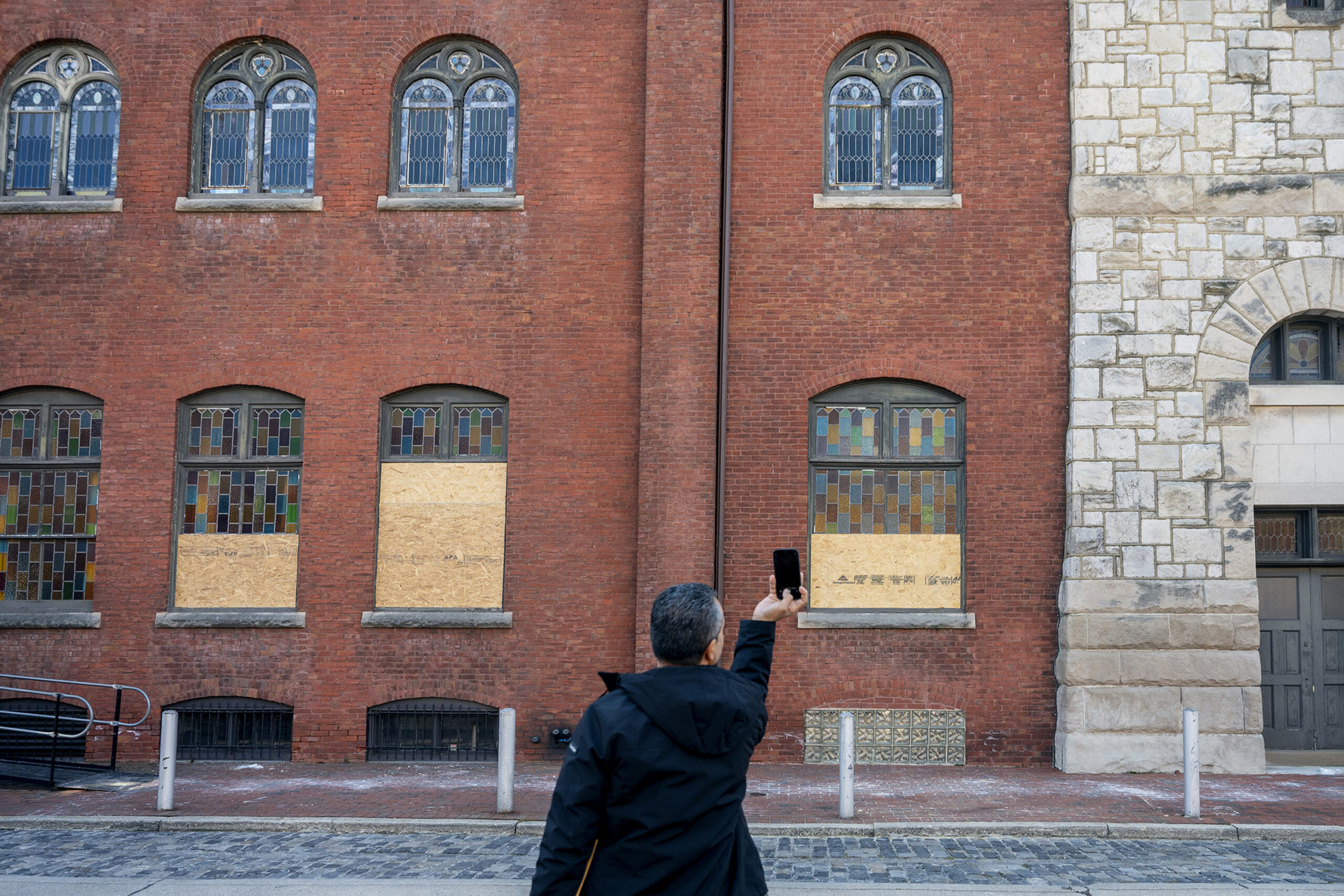
    Union Trinity AME Church, one of Philadelphia’s historic Black religious institutions and known as “The Friendly Church,” was vandalized with racist graffiti over the weekend.

    Pastor Tianda Smart-Heath was informed of the vandalism shortly after Sunday service, where she found racist slogans invoking the name of God and enslaved people sprayed onto the exterior walls of the more than 200-year-old church, according to the Philadelphia Police Department.

    The newly merged church, Union Trinity AME in North Philadelphia, hasn’t welcomed congregants inside the historic building since 2020, and it is currently under construction, according to Fox 29. In that time, church service has been held at the Beckett Life Center next door.

    Smart-Heath told local media that the church has been vandalized before, including trespassing and theft, but never with racist hate speech. Police responded to the vandalism on Sunday to photograph the scene and conduct a follow-up investigation. The case is overseen by PPD Central Detectives.

    A police officer photographs damaged stained glass at Mother Bethel AME Church on Feb. 20, 2024.

    African Methodist Episcopal (AME) churches are part of a vast network of independent Black Christian churches that was started in Philadelphia two centuries ago, when Richard Allen founded Mother Bethel AME in 1787.

    In a separate incident, which was not a hate crime, a vandal broke three windows at Mother Bethel AME almost two years ago, including precious stained-glass windows. More than 400 donors stepped in to fund repairs.

    The vandalism at Union Trinity AME closely follows a separate hate crime at Roxborough High School, where a masked vandal spray-painted racist and antisemitic epithets across the school building. Police have released a description and video of the suspect in the hate crime.

    A screenshot of a surveillance video captures the suspect in a recent vandalism incident, where an unknown white male painted racist and antisemitic slogans on the exterior walls of Roxborough High School on Jan. 4, 2026. Police describe the suspect as a white male, wearing an orange scarf/wrap, green and black winter hat, gray hooded jacket, gray pants, and a gray and black backpack.

    Hate crimes have more than tripled in Pennsylvania since 2020, according to the most recent “No Hate in Our State” report from the Pennsylvania Human Relations Commission (PHRC). The most prevalent form of hate crime in Pennsylvania, according to FBI reports, is anti-Black or anti-African American hate crimes, accounting for more than one out of every four hate crimes committed in the state in the last five years.

    “Any attack on the Black Church as one of the historical foundations of the African American community needs to be condemned and looked at through the lens of a potential hate crime,” said PHRC executive director Chad Dion Lassiter. “We can no longer be silent in this moment of outward hatred and rage toward any institution of faith.”

  • Fewer Americans sign up for Affordable Care Act health insurance as costs spike

    Fewer Americans sign up for Affordable Care Act health insurance as costs spike

    NEW YORK — Fewer Americans are signing up for Affordable Care Act health insurance plans this year, new federal data shows, as expiring subsidies and other factors push health expenses too high for many to manage.

    Nationally, around 800,000 fewer people have selected plans compared to a similar time last year, marking a 3.5% drop in total enrollment so far. That includes a decrease in both new consumers signing up for ACA plans and existing enrollees re-upping them.

    The new data released Monday evening by the Centers for Medicare and Medicaid Services is only a snapshot of a continuously changing pool of enrollees. It includes sign-ups through Jan. 3 in states that use Healthcare.gov for ACA plans and through Dec. 27 for states that have their own ACA marketplaces. In most states, the period for shopping for plans continues through Jan. 15 for plans that start in February.

    But even though it’s early, the data builds on fears that expiring enhanced tax credits could cause a dip in enrollment and force many Americans to make tough decisions to delay buying health insurance, look for alternatives or forgo it entirely.

    Experts warn that the number of people who have signed up for plans may still drop even further, as enrollees get their first bill in January and some choose to cancel.

    Healthcare costs at the center of a fight in Congress

    The declining enrollment comes as Congress has been locked in a partisan battle over what to do about the subsidies that expired at the start of the new year. For months, Democrats have fought for a straight extension of the tax credits, while Republicans have insisted larger reforms are a better way to root out fraud and abuse and keep costs down overall. Last week, in a remarkable rebuke of Republican leadership, the House passed legislation to extend the subsidies for three years. The bill now sits in the Senate, where pressure is building for a bipartisan compromise.

    Up until this year, President Barack Obama’s landmark health insurance program had been an increasingly popular option for Americans who don’t get health coverage through their jobs, including small business owners, gig workers, farmers, ranchers and others.

    For the 2021 plan year, about 12 million people selected an Affordable Care Act plan. Enhanced tax credits were introduced the following year and four years later enrollment had doubled to over 24 million.

    This year’s sinking sign-ups — sitting at about 22.8 million so far — mark the first time in the past four years that enrollment has been down from the previous year at this point in the shopping window.

    The loss of enhanced subsidies means annual premium costs will more than double for the average ACA enrollee who had them, according to the healthcare research nonprofit KFF. But extending the subsidies would also be expensive for the country. Ahead of last week’s House vote, the nonpartisan Congressional Budget Office estimated that extending the subsidies for three years would increase the nation’s deficit by about $80.6 billion over the decade.

    Americans begin looking for other options

    Robert Kaestner, a health economist at the University of Chicago, said some of those who abandon ACA plans may have other options, such as going on a partner’s employer health plan or changing their income to qualify for Medicaid. Others will go without insurance at least temporarily while they look for alternatives.

    “My prediction is 2 million more people will lack health insurance for a while,” Kaestner said. ”That’s a serious issue, but Republicans would argue we’re using government money more efficiently, we’re targeting people who really need it and we’re saving $35 billion a year.”

    Several Americans interviewed by The Associated Press have said they’re dropping coverage altogether for 2026 and will pay out of pocket for needed appointments. Many said they are crossing their fingers that they aren’t affected by a costly injury or diagnosis.

    “I’m pretty much going to be going without health insurance unless they do something,” said 52-year-old Felicia Persaud, a Florida entrepreneur who dropped coverage when she saw her monthly ACA costs were set to increase by about $200 per month. “It’s sort of like playing poker and hoping the chips fall and try the best that you can.”

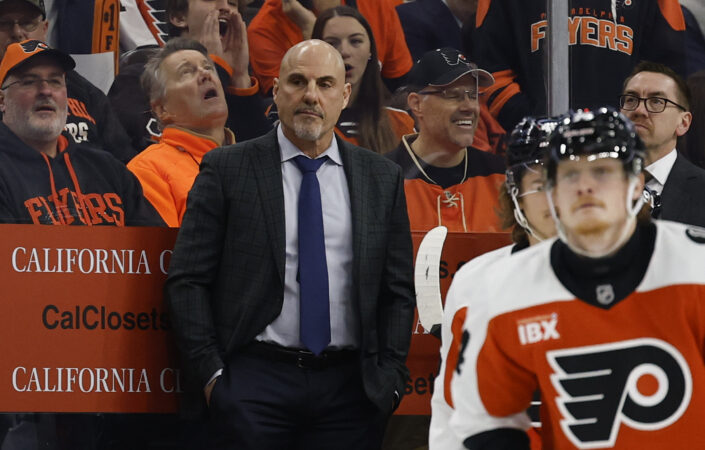
  • Rick Tocchet wants the scuffling Flyers to simplify: ‘We’re going to have to really dummy it down a little bit’

    Rick Tocchet wants the scuffling Flyers to simplify: ‘We’re going to have to really dummy it down a little bit’

    The Flyers are the fourth-youngest team in the NHL, with an average age of just under 27. Just 11 of the Flyers’ 23 roster players have played in the NHL playoffs. Of those 11, only six have played more than six postseason games.

    The Eastern Conference and Metropolitan Division standings are extremely tight. The Flyers currently sit third in the division with 52 points in 44 games. The last-place Columbus Blue Jackets are just seven points back, with 45 points, which is why it’s key for the Flyers not to let their three-game losing streak snowball further on their upcoming road trip.

    The back-to-back against Buffalo and Pittsburgh pits them against two teams that are right on their heels in the fight for a playoff spot. Coach Rick Tocchet said Tuesday after an optional practice that he thinks guys are “squeezing their sticks a little bit,” and it’s contributing to their lack of success on the power play and over the last three games.

    “Early on, [Tampa Bay’s] first goal [in the Lightning’s 5-1 win on Monday] … there’s four or five mistakes,” he said. “You can’t have four or five mistakes on a shift, and it’s in the net, then you’re behind the eight ball, then guys squeeze the stick, and then they get frustrated.”

    Tocchet pointed to the success of players like Tampa Bay superstar Nikita Kucherov, who cuts to the middle of the ice on the power play instead of sticking along the boards, as someone he wants players like Matvei Michkov and Trevor Zegras to emulate.

    But right now, the Flyers are not making the right reads, and it’s preventing them from loosening up and being aggressive. Tocchet mentioned Brandon Hagel’s power-play goal in Monday’s loss as an example of something he wants to see more from the Flyers, instead of deferring to find the perfect one-timer opportunity with the man advantage.

    “He tried to cross ice pass, doesn’t connect, the puck comes right back up, he sees an opening to shoot it, scores a goal,” Tocchet said. “We get it, we see an opening, but for some reason, we have a tough time pulling that trigger.”

    Travis Sanheim credited the Flyers’ lack of power play success to poor communication, leading to players being out of sync on their reads away from the puck.

    The Flyers’ power play is tied for second worst in the NHL this season, converting on just 15.3% of opportunities.

    Rick Tocchet mentioned Nikita Kucherov as someone Matvei Michkov and Trevor Zegras should emulate when it comes to getting to the middle of the ice.

    “The stuff that I get frustrated with is how [do] you not retain it,” Tocchet said. “We have to think of a way for players to retain some of the information we give them, because we’re not giving them a lot. Maybe early in the season we did, which wasn’t bad, but now we’re going to have to really dummy it down a little bit.”

    As one of the more experienced players in the locker room, Sanheim is trying to lead by example as the Flyers enter this pivotal stretch, to keep everyone on the same page and moving in the right direction.

    “Games are going to continue to get harder as we go along here,” Sanheim said. “It doesn’t get any easier. The race gets tighter, it already is tight, and just understanding that every play matters, and every battle matters, and it’s just a lot harder to win hockey games. You have to do the hard things to be successful in this league, and you have to do it on a consistent basis.”

    Breakaways

    Rasmus Ristolainen, Bobby Brink, Adam Ginning, Nic Deslauriers, and Sam Ersson took the ice for the optional skate on Tuesday. … Brink and Jamie Drysdale are both a “possibility” to play on the road trip, Tocchet said. After practice, the Flyers loaned Ginning back to Lehigh Valley in a move that might hint that Drysdale is good to go on Wednesday. … The Colorado Avalanche’s ECHL affiliate will move from Utah to Trenton, and be renamed the Trenton Ironhawks, starting in the 2026-27 season.

  • Mike Tomlin steps down after 19 seasons as Steelers coach

    Mike Tomlin steps down after 19 seasons as Steelers coach

    PITTSBURGH — The Mike Tomlin era in Pittsburgh is over.

    The longest-tenured head coach in major American professional sports stepped down from his job leading the Steelers on Tuesday after yet another quick playoff exit.

    The announcement came a day after the end of his 19th season in Pittsburgh, where he was a relative unknown when he was hired to replace Bill Cowher in early 2007.

    “Obviously, I am extremely grateful to Mike for all the hard work, dedication and success we have shared over the last 19 years. It is hard for me to put into words the level of respect and appreciation I have for Coach Tomlin,” Steelers president Art Rooney II said in a statement. “He guided the franchise to our sixth Super Bowl championship and made the playoffs 13 times during his tenure, including winning the AFC North eight times in his career. His track record of never having a losing season in 19 years will likely never be duplicated.”

    Tomlin won one Super Bowl and went to another during his first four seasons in Pittsburgh before the club settled into a pattern of solid if not always spectacular play followed by a playoff cameo that ended with the Steelers on the wrong side of a blowout.

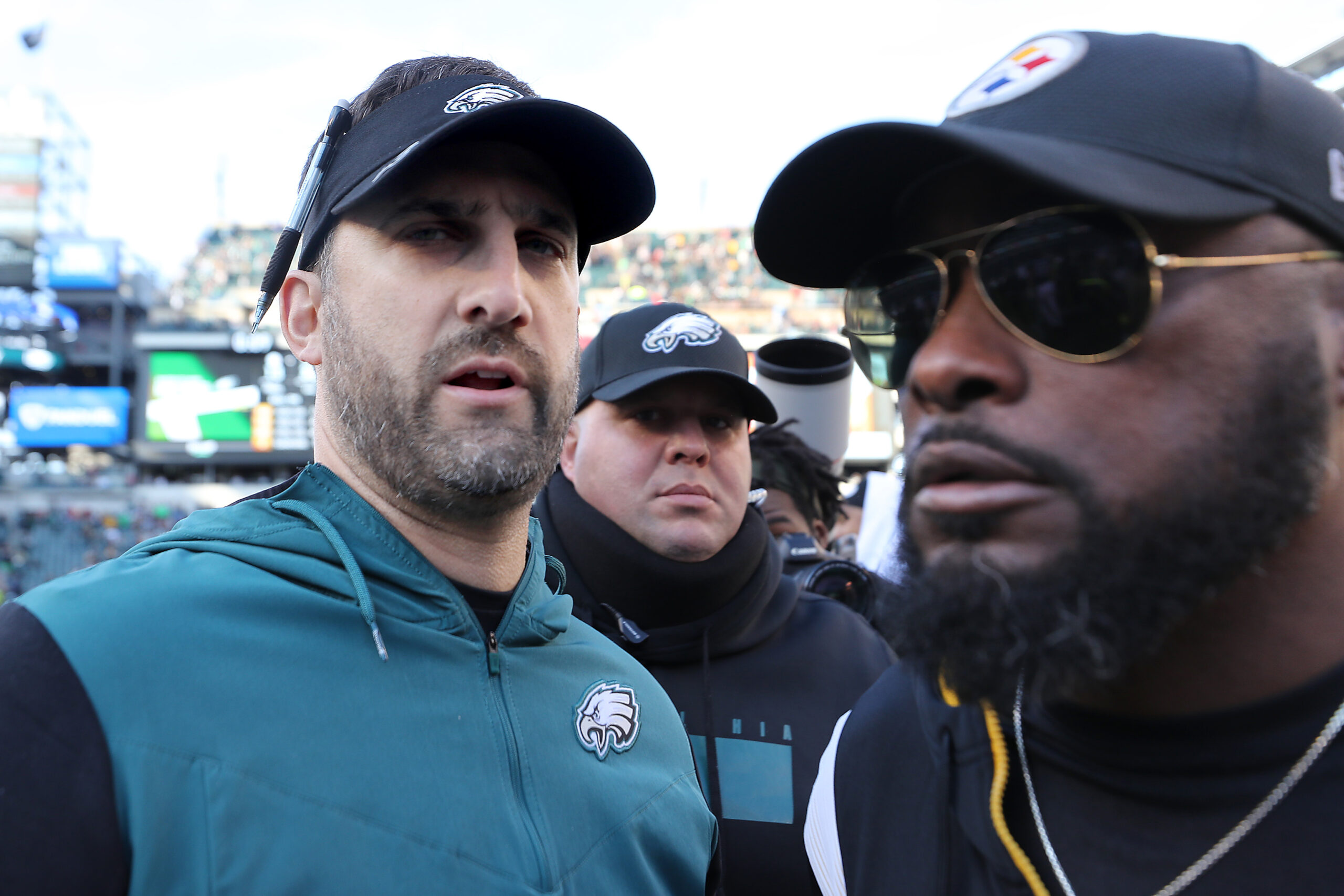
    Eagles coach Nick Sirianni (left) and Steelers coach Mike Tomlin meet on the field after an Eagles win on Oct. 30, 2022.

    The 53-year-old Tomlin won 193 regular-season games in Pittsburgh, tied with Hall of Famer Chuck Noll for the most victories in franchise history. But their resumés diverged when it comes to the playoffs. While Noll won four Super Bowls in the 1970s, Tomlin went just 8-12 in the postseason, losing each of his last seven playoff games, all by double-digit margins.

    The last came on Monday night, when the AFC North champions squandered some early momentum before getting blown out, 30-6, by Houston, the most lopsided home playoff loss in team history.

    There were chants of “Fire Tomlin!” as the clock kicked toward zero, though they weren’t nearly as impassioned as they were in late November while the Steelers were getting pushed around by Buffalo in a loss that dropped their record to 6-6.

    Tomlin, as is his way, did his best to tune out the noise and his team responded, the way it seemingly always did during his tenure. Pittsburgh won four of its final five games, including a sweep of Baltimore that gave the club its first AFC North title since 2020.

    The optimism, however, dimmed once the Texans asserted themselves. The NFL’s top-ranked defense suffocated Aaron Rodgers and Pittsburgh’s offense while the league’s highest-paid defense wilted late.

    It was a familiar and frustrating pattern for a place where, as Tomlin noted not long after his introduction, “the standard is the standard.”

    And while that remains the case for a team whose members walk by six Lombardi Trophies every day on their way to work, the results had plateaued. The Steelers finished with nine or 10 wins in each of Tomlin’s final five seasons, often doing just enough to squeak into the playoffs before being exposed by a more talented opponent.

    Tomlin had two years left on the contract extension he signed in 2024, with the club holding the option for 2027.

    His departure leaves the Steelers looking for a head coach for just the third time since they hired Noll in 1969.

  • Democrats seek answers on donor access tied to Trump’s White House ballroom

    Democrats seek answers on donor access tied to Trump’s White House ballroom

    Senate Democrats are asking the nonprofit group that is managing donations to the White House ballroom to explain how much money has been raised and whether donors have been promised any special access or influence in exchange for supporting the estimated $400 million project, a top priority of President Donald Trump.

    “You owe Congress and the public answers about your role in managing funds for President Trump’s ballroom,” Sen. Elizabeth Warren (D., Mass.) and colleagues wrote in a letter Tuesday to the Trust for the National Mall that was shared with the Washington Post. The lawmakers gave the group two weeks to respond.

    Democrats say limited public disclosure has made it impossible to assess whether safeguards are in place to prevent donors from gaining access or influence through the project. The concerns are heightened, they argue, by Trump’s personal involvement in both the project’s design and fundraising.

    The White House has said private donors will entirely cover the ballroom addition’s cost but has declined to share basic details about the value of those gifts, or whether donors were offered meetings, access or other consideration in return. Publicly identified donors, such as Amazon, Google and Lockheed Martin, collectively have billions of dollars in contracts before the administration. (Amazon founder Jeff Bezos owns the Washington Post.)

    The Trust for the National Mall, which has managed past fundraising campaigns to restore the Washington Monument and other projects, has largely referred questions to the White House and the National Park Service since its role in the ballroom project was announced last year. The group also is expected to retain a small percentage — about 2.5% — of donations to the ballroom project for its own use, Democrats wrote. The Trust did not immediately respond to a request for comment.

    Administration officials have said the Trust could receive hundreds of millions of dollars in donations tied to the ballroom project, placing the group at the center of a fundraising effort unlike any it has previously managed.

    Trump administration officials have shared few details about the project, the most significant change to the White House grounds in decades, including the building’s final design. The lack of disclosure has also drawn legal scrutiny. Historic preservationists last month sued the Trump administration, arguing that the ballroom construction is illegal because the project did not undergo required review by two federal panels and Congress did not appropriate funding. The White House has denied the allegations. A hearing in the case is tentatively scheduled for Jan. 29 in U.S. District Court in Washington.

    Trump administration officials made their first public presentation on the ballroom Thursday, justifying their rapid teardown of the White House’s East Wing annex last fall as a financial decision.

    “The cost analysis proved that demolition and reconstruction provided the lowest total cost ownership and most effective long-term strategy,” Joshua Fisher, a senior White House official who is helping manage the project, said at a meeting of the National Capital Planning Commission, a review board set to weigh in on the ballroom’s design.

    Trump has also steadily increased the project’s planned seating capacity and estimated cost since announcing the ballroom in July. Officials now say the ballroom will seat about 1,000 people.

    “I started off with a building half of the seats … and then it just kept growing and growing, and the money kept pouring in and pouring in,” the president told the New York Times last week, adding that he would make the ballroom “bigger” if he could.

    Shalom Baranes, the architect Trump tapped to lead the project, told the National Capital Planning Commission last week that the ballroom would not grow further.

    In their letter to the Trust for the National Mall, Warren and her colleagues asked the group to explain whether it has internal controls or has undertaken other steps to ensure that donors are not given preferential treatment by the Trump administration.

    “This leaves open the question of whether the Trust is being misused to facilitate special-interest access and influence,” the senators wrote. They also asked whether Meredith O’Rourke, a longtime Trump fundraiser who has been coordinating donations, is employed by the Trust or otherwise affiliated with the group. O’Rourke referred questions about her role with the Trust to the White House, which did not immediately respond.

    Warren’s office also shared letters the senator received from companies that have donated to the project, which offered varied explanations for how they expected their gift to be used. Comcast, for instance, said its donation “included no specific limitations or conditions,” while Microsoft said its gift would go toward construction. Trump has also said several companies have pledged to cover specific aspects of the project, such as Carrier offering to cover an estimated $17 million in air-conditioning and heating costs.

  • Penn State and Temple swing big in the college football transfer portal. Here’s what to know.

    Penn State and Temple swing big in the college football transfer portal. Here’s what to know.

    Some are calling Penn State the Nittany Cyclones. Take one look at the Nittany Lions’ transfer portal additions and it is easy to see why.

    Since the portal opened on Jan. 2, Penn State reportedly has added 35 players, and 22 of them are from Iowa State, following their former head coach Matt Campbell to Happy Valley.

    That list includes Iowa State’s top passer (Rocco Becht), top rusher (Carson Hansen), three of its top receiving targets (Chase Sowell, Benjamin Brahmer, and Brett Eskildsen), two of the three top tacklers (Marcus Neal and Caleb Bacon), and two of the three top interception leaders (Neal and Jamison Patton).

    In addition, Penn State brought in Becht’s backup, Alex Manske, to be the potential future quarterback after 2026. Brahmer’s backups at tight end, Greg Burkle and Cooper Alexander, are also joining the Nittany Lions.

    However, 50 players from Penn State’s roster in 2025 had entered the portal as of Monday night, meaning Campbell and his staff have their work cut out for them to continue to build up the roster for next season and beyond. Among those key departures include Chaz Coleman, Zuriah Fisher, Ethan Grunkemeyer, Amare Campbell, Dejuan Lane, King Mack, A.J. Harris, and Luke Reynolds.

    But the staff has also retained 33 players from last season’s roster, including starters Anthony Donkoh, Tony Rojas, Audavion Collins, Ryan Barker, and Zion Tracy, along with several other key contributors like Max Granville, Andrew Rappleyea, Cooper Cousins, and prized freshmen Koby Howard and Daryus Dixson.

    Outside of Becht and some key starters who transferred in from Iowa State, Penn State added potential key contributors in UCLA defensive tackles Keanu Williams and Siale Taupaki, both of whom worked closely with new defensive line coach Ikaika Malloe, and Ohio State running back James Peoples, who scored three touchdowns this season.

    Ohio State’s James Peoples hurdles UCLA Bruins defensive back Cole Martin on his way to scoring a touchdown on Nov. 15.

    The Nittany Lions also made additions along the offensive line, which is losing four of its five starters from last year. Brock Riker, a redshirt freshman who started at center for Texas State last season, is transferring to Penn State, and allowed just six pressures over 800 snaps in 2025, according to Pro Football Focus. Along with Riker, Iowa State transfer offensive lineman Trevor Buhr brings in starting experience at left guard, while several offensive linemen from the Cyclones’ roster, including Will Tompkins, Vaea Ikakoula, and Kuol Kuol II, figure to be part of the future.

    Since the portal opened, Penn State ranks third in 247Sports’ transfer portal rankings and is up to 49th in the site’s overall team rankings.

    Temple making additions

    After pulling in the largest high school recruiting class in school history in December, Temple isn’t done adding to its roster for next season and beyond, utilizing the transfer portal to pick up some key players.

    The school had added 20 players through the portal as of Monday, with 11 of them coming from Power Four schools. Two of the additions were quarterbacks who could compete for the starting quarterback position next season.

    Among the transfers is running back Samuel Brown V, who played at La Salle College High School and spent four seasons at Rutgers. Brown burst on the scene as freshman for the Scarlet Knights, posting a 101-yard rushing game before suffering a season-ending injury seven games into the campaign. He was buried on the depth chart behind Kyle Monangai and Antwon Raymond the next three seasons and totaled 828 yards and eight touchdowns in 28 games.

    Samuel Brown scores a receiving touchdown against Howard on Aug 29, 2024.

    A few other players from the area or New Jersey are also transferring to Temple. Illinois safety Saboor Karriem (West Orange, N.J.), Albany defensive lineman Deshon Dodson (Neumann Goretti), and Central Florida defensive back Jaeden Gould (Somerset, N.J.) join Brown as players with ties to the region.

    Temple also is bringing in former Penn State quarterback Jaxon Smolik and Washington State signal caller Ajani Sheppard, neither of whom has starting experience.

    Sheppard began his career at Rutgers, where he intersected with Evan Simon, and played 37 snaps, attempted two passes, and had four rushes for 34 yards in two seasons. He did not see the field at Washington State in 2025.

    Smolik was buried on Penn State’s depth chart behind Drew Allar and Beau Pribula in 2023, was out for the season with an injury in 2024, and appeared in just three games in 2025 after losing the backup role to Grunkemeyer in the preseason. He has never attempted a pass in a college game and rushed four times in a loss to Iowa earlier this season before leaving that game with a wrist injury.

    Jaxon Smolik scrambles during the first quarter against Iowa on Oct 18.

    The duo joins a quarterback corps full of young, inexperienced players, including rising sophomore Camren Boykin along with incoming recruits Lamar Best, Brody Norman, and Brady Palmer. Boykin did not appear in a game in 2025, and the program lost Simon, Gevani McCoy, and Anthony Chiccitt to graduation while Tyler Douglas and Patrick Keller entered the portal. Smolik and Sheppard will likely have the chance to compete for the starting role during the spring and potentially summer camp, as McCoy and Simon did last year.

    K.C. Keeler and the Owls pulled in four players from Penn State (Smolik, Kaleb Artis, Kolin Dinkins, and Joey Schlaffer) and three from Rutgers (Brown, John Stone, and Zach Aamland).

    Of the positions the Owls restocked the most, the line, secondary, and wide receiver seem to be a heavy focus. All three offensive linemen (Stone, Aamland, Louisville’s Ransom McDermott) and safeties (Karriem, Gould, Dinkins) came from Power Four schools, while just one of the four defensive linemen and wide receiver transfers was a Power Four addition.

    The portal additions included players from the Football Championship Subdivision (Lafayette DL Jaylon Joseph, Stony Brook WR Jayce Freeman, Albany’s Dodson) and Division II (Midwestern State WR Demonte Greene, Tiffin DL Kevin Hornbeak).