But bills proposed in the House by U.S. Rep. Chuck Fleischmann (R., Tenn.) and in the Senate by U.S. Sen. John Kennedy (R., La.) appear to still fall woefully short of what is needed, a coastal advocacy group says. U.S. House Rep. Jeff Van Drew, however, believes there will be adequate funding.
Dan Ginolfi, executive director of the American Coastal Coalition, an advocacy group for coastal communities and beaches, said the current best case would be the Senate bill, which proposes to spend $62.2 million. The House bill proposes $23 million.
However, both proposals fall short of the approximately $200 million needed to fund approved projects in various states that received no money last year, he said.
Any approvedmoney would go to the U.S. Army Corps of Engineers, which would choose which beach erosion projects to manage.
In New Jersey, projects set for Cape May, Stone Harbor, Avalon, Sea Isle, Strathmere, Ocean City, and Long Beach Island have been stalled because of the lack of funding. So, too, have projects in Maryland, Delaware, Georgia, and Florida.
That means “the level of risk in New Jersey right now is unacceptable,” Ginolfi said.
He noted that it’s not only beaches at risk, but homes, businesses, public property, and infrastructure.
“It really is imperative that the federal and state government work together to achieve a solution,” he said.
Ginolfi noted that coastal communities in the U.S. generate $36 billion in federal and state tax revenue. So he sees $200 million as a good return on investment.
He said his numbers for potential beach replenishment projects in the bills were confirmed with appropriations committees in both the House and Senate.
However, the office of Van Drew, a Republican who represents many New Jersey beach communities, said the coalition’s numbers “misrepresent the true amount of funding available.”
Paxton Antonucci, a spokesperson for Van Drew, said there is actually $166 million available in the House bill “for costs associated with shore protection like beach replenishment, which is the typical amount.”
He said that number will come close to $200 million “after we compromise with the Senate.”
In reality, Van Drew said, most beach replenishment funding comes from outside the regular budget process. He has actively sought such money.
In October, Van Drew wrote to the Army Corps, requesting that it “activate disaster recovery authorities … to repair shore protection projects at the Jersey Shore, in response to damages caused by Hurricane Erin and by the recent nor’easter over the weekend of Oct. 10-12.”
And he wrote to Gov. Phil Murphy and Gov.-elect Mikie Sherrill this week urging that New Jersey declare a state of emergency to secure federal money “for the severe coastal erosion and storm damage affecting the Jersey Shore.”
Van Drew said the Shore has been battered since July by “intense wind, wave, and water impacts from storm events including Hurricane Erin, Hurricane Imelda, offshore Hurricane Humberto, and a succession of destructive nor’easters.”
He said the result has been “significant dune loss, beach profile collapse, and damage to public infrastructure in multiple municipalities.”
The American Coastal Coalition has faulted Murphy’s office for failing to request disaster repair projects from the Army Corps in the wake of the storms.
However, Murphy’s office said the storms this year did not meet financial thresholds needed to qualify for major federal disaster declarations.
In addition, the office said that, even if they did, replenishment projects at Army Corps-engineered beaches are not routinely eligible for Federal Emergency Management Agency reimbursement.
Rather, the office blamed Congress for putting forth a budget that cut beach replenishment projects, and said that blue states are a target of the Trump administration.
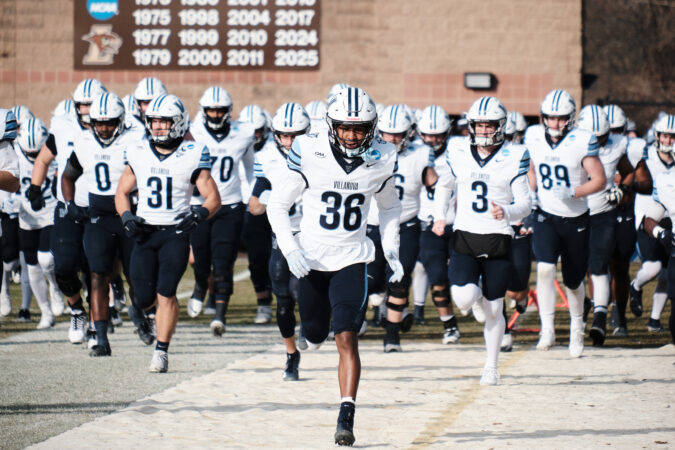
Throughout the season, coach Mark Ferrante has aimed for Villanova to play “complementary football.”
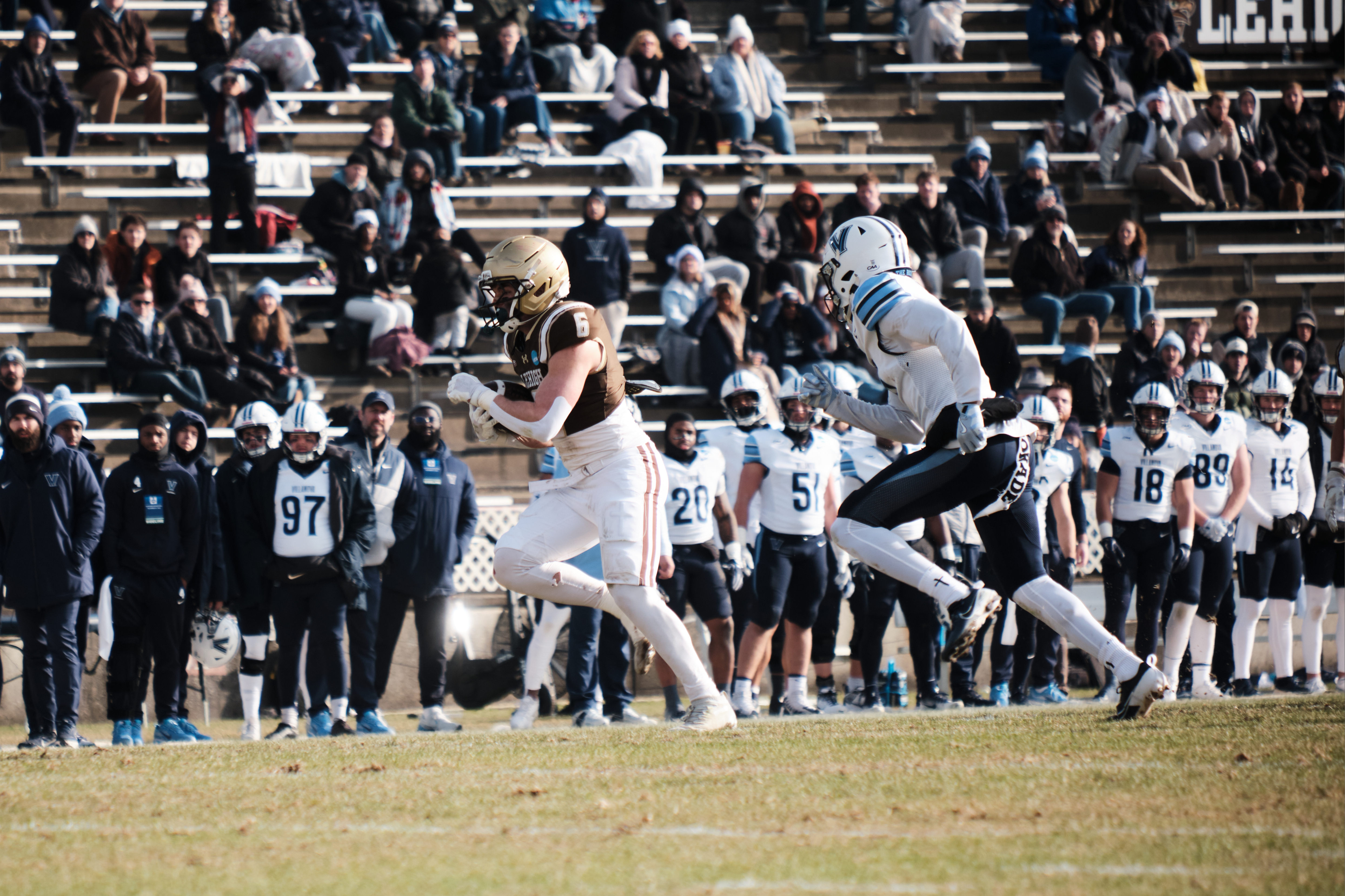
He saw that concept come to fruition in the final three minutes of Villanova’s 14-7 victory over host Lehigh last Saturday in the second round of the FCS playoffs.
It started with Lehigh going three-and-out late in the fourth quarter. On the next drive, Villanova freshman wide receiver Braden Reed scored a 28-yard touchdown. The energy transferred back to Villanova’s defense, as graduate defensive lineman Obinna Nwobodo forced a fumble in the red zone during Lehigh’s final possession.
“[Lehigh] shut us down for a good portion of the game, but our defense showed up,” said graduate quarterback Pat McQuaide. “Our defense picked us up when we were down and gave us short fields. We were fortunate that both our touchdowns came off of huge stops and turnovers. Those guys have been incredible all year.”
When graduate linebacker Shane Hartzell recovered the fumble, the Wildcats’ sideline erupted. It was ultimately the game-winning moment for Villanova as it escaped Lehigh.
“It’s not just the defense getting excited, the whole sideline is getting excited,” Ferrante said. “I think the team is doing a great job of playing together, playing for each other, and playing complementary football. That’s what needs to continue.”
No. 12 seed Villanova (11-2) looks to carry its momentum of a 10-game winning streak into its Football Championship Subdivision quarterfinal against fourth-seeded Tarleton State in Stephenville, Texas, on Saturday (noon, ESPN).
‘Let’s do this together’
Graduate players like Nwobodo and Hartzell form the backbone of Villanova’s defense, guiding the team through one of its most successful seasons in recent history.
Ferrante credited the team’s level-headed leadership with generating a thrilling finish against Lehigh.
“When we went into the locker room at halftime in past years, sometimes the defensive guys would complain about how we haven’t scored. But there was none of that,” Ferrante said. “There was no blame. There was no finger-pointing. It was all, ‘Let’s do this together and play a better second half collectively.’ Fortunately, we were able to do that.”
Villanova and Lehigh faced off in the second round of the FCS playoffs on Dec. 6.
Villanova’s defense relied on its veteran players early in the season, but the secondary is made up of primarily underclassmen. Heading deeper into the playoffs, Ferrante no longer sees the youth of the unit as a potential weakness.
“[The secondary] is where we’ve made some of the biggest growth this year, because that was what everyone was worried about,” Ferrante said. “They don’t lack confidence; they just lacked experience.”
Some of the graduate players spearheading the offense are newcomers this season.
McQuaide took over the starting position as a transfer from Nicholls State, and wide receiver Luke Colella, a Princeton transfer, is averaging a team-high 72.5 receiving yards a game.
“We have a good nucleus of guys who have been here for five or six years,” Ferrante said. “But [McQuaide and Colella] just add a different level of maturity. Even though they’re first-year guys with our program, they bring different perspectives because they’ve been somewhere else.”
Underdog mentality
The Wildcats enter their third game of the playoffs as the underdog.
In the first round, Villanova trounced Harvard, 52-7, despite some predictions saying the Crimson would win. The victory over Lehigh in Bethlehem, Pa., gave Villanova a further confidence boost.
“We’ve been an underdog every week so far,” McQuaide said. “So we kind of embrace it. It doesn’t really matter. Once the ball is kicked off on Saturday, it’s a four-quarter fight, and we’ll be ready to go.”
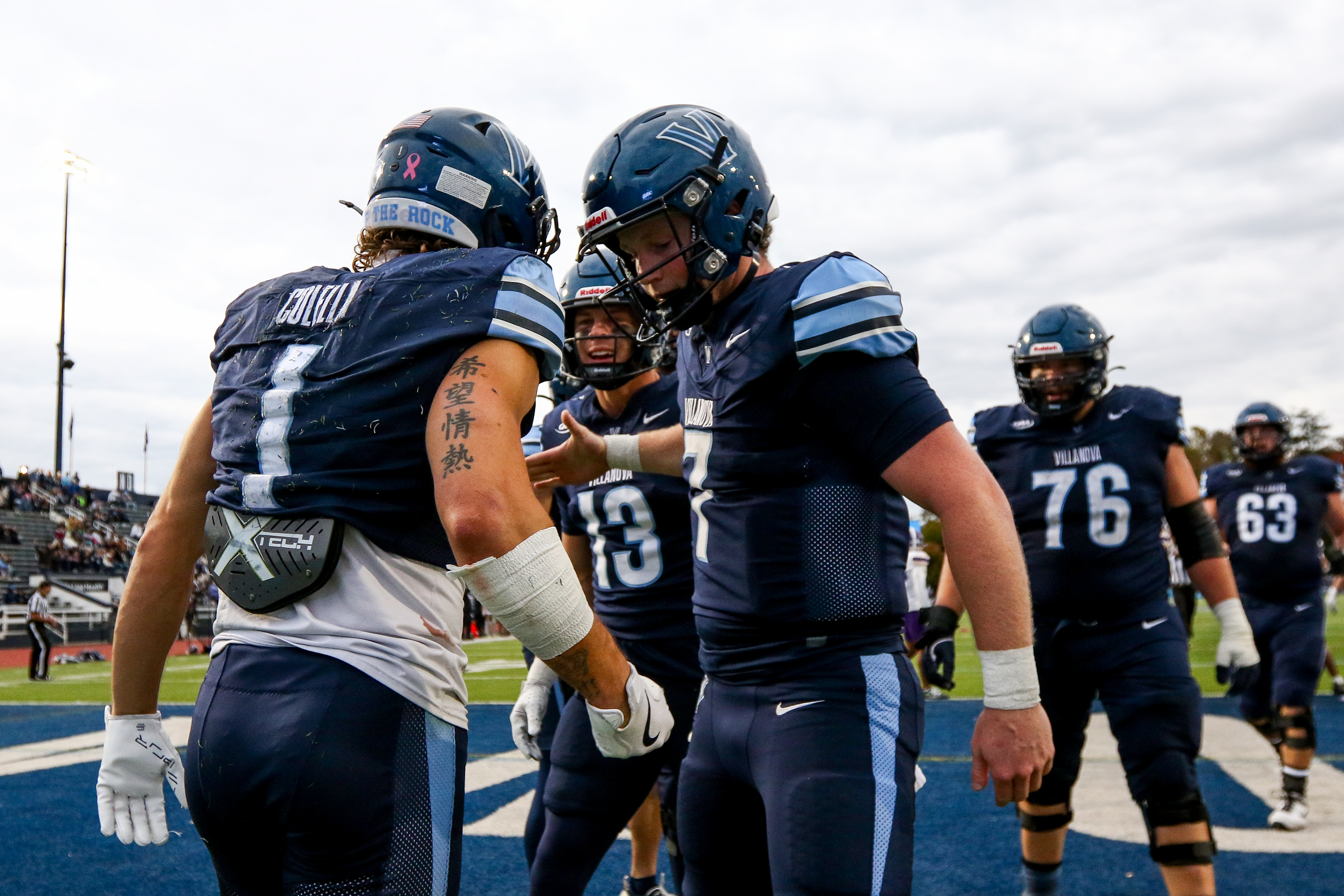
Villanova quarterback Pat McQuaide (7) celebrates with wide receiver Luke Colella (1) after scoring a touchdown against Albany on Oct. 25.
Villanova is up against its toughest challenge yet in Tarleton State (12-1), which has the most productive scoring offense in the nation, averaging 44.1 points per game.
“I don’t really see too many weaknesses in [Tarleton],” Ferrante said. “They score a lot of points, they play great defense, and they’re very opportunistic. They create a lot of turnovers.
“So I think what the keys to the game comes down to is who’s going to make the fewest mistakes, who’s going to hang on to the football, and not give the other team extra possessions.”
Varios padres me pidieron mi opinión cuando la Administración de Alimentos y Medicamentos (FDA) anunció recientemente una advertencia sobre el acetaminofén por su supuesto vínculo con el autismo, y cuando la agencia apoyó el uso de leucovorina como tratamiento para el autismo pese a la falta de evidencia científica. Y estoy segura de que recibiré preguntas sobre la nueva afirmación en la página web de los Centros para el Control y la Prevención de Enfermedades (CDC) de que no se puede “descartar” un vínculo entre las vacunas y el autismo.
Como pediatra del desarrollo y del comportamiento quien atiende a muchos niños dentro del espectro autista, me gusta conversar con las familias sobre lo que escuchan.
Las familias con niños en el espectro pueden sentirse desorientadas por los “influencers” del internet quienes promocionan diferentes teorías, productos y tratamientos alternativos. Estas familias quieren hacer todo lo posible para apoyar a sus hijos, por lo tanto buscan información en todas partes.
Las familias buscan alternativas porque muchos de nuestros tratamientos actuales no son efectivos para todos los niños, y aquellos que funcionan bien pueden requerir un esfuerzo intenso por parte de maestros, terapeutas y cuidadores. Como doctora, intento compartir con las familias la evidencia disponible para que puedan tomar decisiones informadas.
La promoción de tratamientos y teorías sobre el supuesto aumento en autismo no es nueva. Pero cuando los funcionarios del gobierno hablan mucho sobre el autismo y el internet está lleno de “información” desconectada de la prueba científica, es más importante que nunca que los clínicos y los funcionarios de salud pública se acerquen a los padres con compasión, honestidad y evidencia.
En el Hospital de Niños de Filadelphia (CHOP), El Pediatric Health Chat está rastreando mitos y rumores médicos, incluyendo aquellos relacionados al autismo. Basado en esos datos y en conversaciones con padres, aquí están las cinco cosas principales que desearía que mis familias supieran:
1. El autismo no es una epidemia
Aunque es cierto que el número de niños con trastorno del espectro autista sigue aumentando en todos los grupos sociodemográficos, no hay evidencia de que un único tóxico ambiental u otro factor sea la causa. De hecho, los estudios más sólidos muestran que gran parte del aumento del autismo durante los últimos 20 años se debe a una mayor detección de la condición, lo que ha permitido dejar de lado diagnósticos incorrectos establecidos antes; y al hecho de que ahora se conocen más características y conductas como señales de autismo. Así que, aunque los diagnósticos de autismo estén en alza, no hay evidencia de una epidemia: el autismo está aumentando, pero no es un brote de enfermedad repentino como COVID.
2. Las vacunas no causan autismo
El mito de que las vacunas causan autismo se originó en un estudio británico de los años 90 con apenas 12 niños que resultó ser tan fraudulento que la revista científica que lo publicó terminó retrayéndolo. Algunas personas insisten en que, dado que el autismo ha seguido en aumento —y se han desarrollado vacunas nuevas— debe existir algún tipo de vínculo. Pero que dos cosas ocurran al mismo tiempo, no significa que una cause la otra. (Un ejemplo clásico es que tanto las ventas de helado como los ahogamientos aumentan en verano, pero nadie afirma que el helado cause ahogamientos).
Como explica el Centro de Educación de Vacunas de CHOP, han habido varios estudios bien realizados que no han encontrado vínculo entre las vacunas y el autismo. Las vacunas salvan vidas, y la evidencia sobre su seguridad en relación con el autismo es extensiva. Animo a todas las familias de mis pacientes a vacunar a sus hijos. Me enorgullece decir que vacuno a mis propios hijos siguiendo los calendarios recomendados, para protegerlos de infecciones prevenibles.
3. El acetaminofén no causa autismo
Aunque algunos estudios pequeños han encontrado una asociación entre el uso prenatal de acetaminofén y el autismo, los estudios más grandes y sólidos no han encontrado esa asociación. Estudios que no consideran factores como el motivo por el que la persona embarazada toma acetaminofén o si hay hermanos en el espectro autista pueden concluir de manera inexacta que el acetaminofén es una causa cuando no lo es. La verdad es que las fiebres altas durante el embarazo son peligrosas, y el acetaminofén, el ingrediente activo de Tylenol, es el medicamento más seguro que tenemos para combatir la fiebre. No dudaría en recomendar acetaminofén durante el embarazo cuando sea necesario.
4. La leucovorina no es un tratamiento probado para el autismo
La primavera pasada apareció una noticia sobre un niño que se volvió más verbal tras tomar leucovorina (también conocida como ácido folínico, un medicamento usado en pacientes con cáncere quereciben quimioterapia). Desde entonces, las solicitudes para empezar leucovorina de parte de familias en la comunidad del autismo han aumentado. Sin embargo, la evidencia sobre la efectividad de la leucovorina es extremadamente limitada. Por ejemplo, niños en grupos con placebo —los que no recibieron leucovorina— mostraron mejoramientos similares a los que la recibieron. Algunas familias abandonaron el tratamiento porque sus hijos se volvieron más agresivos al recibir leucovorina. Necesitamos ensayos controlados aleatorizados más grandes y bien diseñados antes de sentirme cómoda recomendando leucovorina a mis pacientes.
5. La suspuesta “comunicación facilitada” no ayuda a los niños con autismo
Hace varias décadas, la comunicación facilitada (en la cual un facilitador toca al paciente para “ayudarle a deletrear” en un teclado o tablero de letras) fue completamente desacreditada por estudios que demostraron que el facilitador guiaba las respuestas y no ayudaba a la persona a comunicar sus propios pensamientos.
Sin embargo, la comunicación facilitada (CF) ha reaparecido en forma de otras “terapias” como la mecanografía apoyada y a través del podcast “Telepathy Tapes”. No son más que CF con otro nombre y tampoco llevan evidencia.
Por otra parte, la comunicación aumentativa o alternativa, mediante la cual los individuos usan por sí mismos estrategias alternativas o dispositivos “hablantes” para expresarse (en lugar de que un facilitador les ayude físicamente), está fuertemente respaldada por la evidencia. Entiendo por qué las familias quieren brindar a sus hijos todas las oportunidades para expresarse; por eso les insto a optar por los métodos que han demostrado ayudarles a alcanzar sus objetivos.
Lo que más me preocupa es que, entrelazado en todos estos mitos y desinformación, esté la creencia implícita de que las personas con autismo no tienen valor o no pueden llevar vidas felices y exitosas. Si bien algunas personas del espectro autista tienen dificultades para vivir de forma independiente y pueden presentar conductas desafiantes, todas estas personas merecen dignidad y respeto. Seguir encontrando maneras de apoyar mejor a las personas con autismo y a sus familias, para permitirles alcanzar su máximo potencial, debe ser la prioridad.
Gracias a Dra. Gloria Gutierrez por su ayuda con la traducción.
Nota del editor: El Pediatric Health Chat es una iniciativa en el internet del Hospital de Niños de Filadelphia (CHOP) que investiga a los mitos y conceptos erróneos más recientes sobre la salud infantil. Kate E. Wallis, MD, MPH, es una pediatra del desarrollo y del comportamiento en la División de Pediatría del Desarrollo y del Comportamiento del Hospital de Niños de Filadelphia (CHOP).
Taylor Swift is someone who can chill but will never be a chill person. Also, “All to Well,” the 10-minute version, tops the list of her favorite songs from her catalog.
These were among the many other revelations that Swift dropped during her first interview on Stephen Colbert’s The Late Show, Wednesday night.
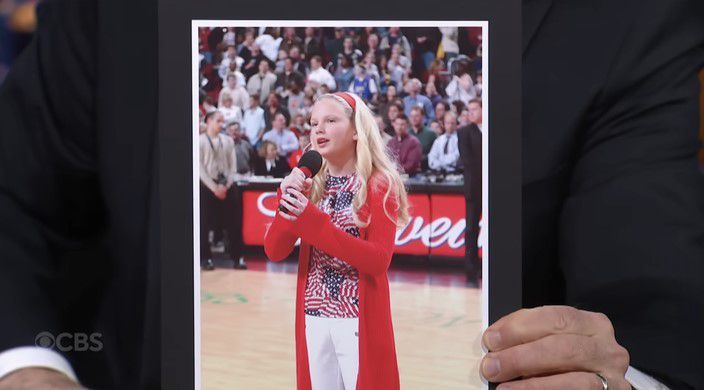
Philadelphia fans will most appreciate the 2001 flashback photograph of a tween Taylor singing the national anthem at a Sixers game in her very patriotic outfit: a red duster, an American flag top, and white pants.
On “The Late Show with Stephen Colbert,” Taylor Swift talks about her national anthem outfit: a red duster, white pants, and sparkly shirt for a performance of the national anthem at a Sixers game in 2001.
“You know when you are like 11 and you have that one outfit that you just know … goes so hard … when you just put this on and it’s like I’m sorry. I’m unstoppable today,” the Berks County native said on the talk show. She was dressed in a precariously fitting burgundy velvet mini with an off-the-shoulder Bardot neckline with winged sleeves giving early-Christmas-present energy to her fans.
Today, that unstoppable outfit for her is a sparkling Versace bodysuit, one of her many outfit changes on “The Eras Tour.”
“Anytime I put it on … I could be like coughing from a horrible virus. I could be aching,” Swift said. “When I put that on, I’m like, ‘This is popping.’ I’m doing it.”
The interview was light-hearted, fun, and thorough. Swift talked about her friendship with Stevie Nicks — we are jealous! — the excitement of her engagement to Kansas City Chiefs’ Travis Kelce, and the thrill of getting the master recordings of her first six albums back in May.
She had no idea of the impact of her tour on her fans until she learned they were passing out from joy.
Literally, passing out from joy.
“When I read articles that medical professionals are diagnosing fans who came to the Eras tour with post concert amnesia and joy blackouts, I was like, ‘Oh man, this is different,’” Swift said “The fans … People connecting to what we created made the Eras Tour what it was.”
For that, the Southwest Philadelphia woman was sentenced Friday to 10 to 20 years in state prison.
“I am not God. I can’t decide who lives and who dies,” Williams, 31, told Judge Kevin F. Kelly. “This is the biggest mistake of my life, and I hate myself for it.”
Williams pleaded guilty in August to third-degree murder and third-degree murder of an unborn child for fatally shooting Latoya Davis in the parking lot of a Wawa store in Collingdale last year.
At the time, Davis, 32, was six months pregnant, something Williams said she did not know when she pulled the trigger of her Ruger .380 handgun on that night in October 2024.
“Not a day goes by where I don’t cry my eyes out,” Williams said. “I am sorry for the Davis family for the pain I have caused. I took something so precious, and I’m embarrassed, ashamed, remorseful, shattered.”
Davis, who left behind two young daughters, was shot once in the back during the dispute, which prosecutors said began inside the Wawa and continued in the store’s parking lot, where the two women had parked next to each other.
Latoya Davis, a mother of two, was killed outside of a Wawa in Glenolden. Davis was six months pregnant at the time.
As Williams went to drive away, Davis continued to argue with her and, at one point, threw a beverage at her. In response, Williams shot her with the gun she was licensed to carry.
Williams’ attorney, Anna Hinchman, said a lifetime of trauma, including sexual abuse as a teen and violent domestic assaults by her ex-husband, left Williams with a severe case of PTSD that was triggered when Davis confronted her.
Assistant District Attorney Dan Kerley called the shooting a “senseless act of violence” and said that, despite Williams’ perception that she was defending herself, her actions forever ruined two families.
“It’s undisputed that Ms. Williams had a license to carry her gun, but that did not give her a license to kill,” he said. “It does not give you the ability to shoot someone during an argument.”
Still, Kerley credited Williams for remaining at the scene, performing CPR on the grievously wounded Davis, and cooperating with police.
Gabou Jean Pierre Toure, Davis’ longtime boyfriend and the father of her unborn son, said no amount of remorse or accountability can heal the pain he feels.
“I want to forgive you so bad. I’m trying to forgive you,” he said. “But I still feel this is a nightmare that I want to wake up from.”
Toure said he and Davis were soulmates, and were both eagerly awaiting the birth of their son after struggling with fertility issues. The two shared a birthday and celebrated together every year.
This year, he said, all he could do on that day was weep for his lost love.
“You are a mom. You can imagine how it feels to lose your child,” he said to Williams. “I hope you regret what you’ve done.”
WASHINGTON — House Democrats released a selection of photos from the estate of Jeffrey Epstein on Friday, including some of Donald Trump, Bill Clinton, and the former Prince Andrew.
The 19 photos initially released by Democratic lawmakers on the House Oversight Committee were a small part of more than 95,000 they received from the estate of Epstein, who died in a New York jail cell in 2019 while awaiting trial on sex trafficking charges. They released roughly 70 more photos later Friday, including images of his home, Epstein taking a bath, a photo of him with a swollen lip, and a photo of him posing with a book about the scandal.
The photos released Friday were separate from the case files that the Department of Justice is now under compulsion to release, but anticipation is growing as the Trump administration faces a deadline next week to produce the Epstein files that have been the source of conspiracy theories and speculation for years.
The photos were released without captions or context and included a black-and-white image of Trump alongside six women whose faces were blacked out.
This undated, redacted photo released by Democrats on the House Oversight Committee shows Donald Trump standing with a group of women.
Rep. Robert Garcia, the top Democrat on the House Oversight Committee, did not say whether any of the women in the photos was a victim of abuse, but he added, “Our commitment from day one has been to redact any photo, any information that could lead to any sort of harm to any of the victims.”
White House spokesperson Abigail Jackson accused Democrats of “selectively releasing cherry-picked photos with random redactions to try and create a false narrative” and called it part of a “Democrat hoax against President Trump.”
Many of the photos have already circulated in the public. Democrats pledged to continue to release photos in the days and weeks ahead, as they look to pressure Trump over his Republican administration’s earlier refusal to release documents in the Epstein probe. Garcia said his staff had looked through about a quarter of the images it had received from Epstein’s estate, which included photos that were sent to him or that he had in his possession.
“Donald Trump right now needs to release the files to the American public so that the truth can come out and we can actually get some sense of justice for the survivors,” Garcia added.
This undated, redacted photo released by Democrats on the House Oversight Committee shows Steve Bannon (left) talking with Jeffrey Epstein.
Trump, once a close friend of Epstein, has said that he parted ways with him long before he faced the sex trafficking charges. Clinton, too, has minimized his relationship with Epstein, acknowledging that he traveled on Epstein’s private jet but saying through a spokesperson that he had no knowledge of the late financier’s crimes. Clinton also has never been accused of misconduct by Epstein’s known victims. However, Republicans on the House committee are pushing him and Hillary Clinton to testify in their investigation.
A spokesperson for the Republican-controlled committee also said that nothing in the documents the committee has received shows “any wrongdoing” by Trump.
The photo release also included images of the right-wing political operative Steve Bannon, billionaires Richard Branson and Bill Gates, filmmaker Woody Allen, former Treasury Secretary Larry Summers, and law professor Alan Dershowitz. The men have denied any wrongdoing in their associations with Epstein, who kept many high-profile figures in his circle of friends.
Amid an earlier release of emails between Summers and Epstein, Summers stepped away from his teaching position at Harvard University and faced other fallout to his standing in academic circles.
Allen has faced allegations from his adopted daughter, Dylan Farrow, of molesting her as a child. He has denied the allegations.
Some lawmakers, however, believe that other high-powered figures could be implicated in Epstein’s abuse if the full case files from the Justice Department are released.
Rep. Thomas Massie, a Kentucky Republican who was instrumental in passing a bill to require the public release of the files, said it was a good sign that the Department of Justice has sought to have grand jury material released from several courts.
“The grand jury material is just a small fraction of what the DOJ needs to release, because the FBI and DOJ probably has evidence that they chose not to take to the grand jury because the evidence they’re in possession of would implicate other people, not Epstein or Maxwell,” he said.
Rick Tocchet’s news conference after the Flyers’ 3-2 overtime loss to the Vegas Golden Knights on Thursday wasn’t short like his predecessor was known for — in fact, he told the team’s media relations staff he was OK to keep answering questions — but for the first time since becoming the Flyers’ head coach, he sounded very frustrated.
“I can name 10 guys that didn’t do anything,” he said during one of his answers. “You guys can write whatever story.”
Tocchet tried to remain positive as his squad hung with a perennial Stanley Cup contender at Xfinity Mobile Arena. But 29 games in, it’s clear the coach wants to see improvements and implementation of his systems.
Two reasons Tocchet wasn’t frustrated
Five-on-five
Tocchet did say he thought that Flyers played played a good game and executed the game plan at five-on-five — and they did.
According to Natural Stat Trick, the Flyers had 54.84% of the chances in the first period and 51.85% in the third period. Vegas had the advantage in the middle frame, but also by a slim margin of 52.17%.
The Flyers outshot the Golden Knights by one, and while they did allow two more high-danger chances to the opposition, the Flyers outscored Vegas 2-1.
The Flyers had a pretty even match-up with the highly-skilled and heavy Vegas Golden Knights as teams traded chances.
Four players he liked
For defenseman Noah Juulsen, the season started a little iffy, and there were questions about whether he was ready to play steady minutes after missing a considerable amount of time following sports hernia surgery in February.
But the rust has worn off, and he has become the perfect seventh defenseman — someone who can be inserted into the lineup and play well when there are injuries, as there has been since the start of the season with Rasmus Ristolainen, who is inching his way back from his own surgery.
On Thursday night, Juulsen was rewarded with his first goal in Philly, a tally that Tocchet, who coached him in Vancouver, too, called “a great shot.”
“I think when someone puts in the perfect spot, like [Christian Dvorak] did, and you pound it, it comes off pretty hot usually for most guys in the league,” Juulsen said of his one-timer from the left face-off circle.
Speaking of Dvorak, when asked about his response after his turnover led to the opening goal by Zach Whitecloud, Tocchet liked how he battled back.
“He was disappointed in that. We talked about that,” Tocchet said with a frustrating pause and sigh about the turnover just inside the Vegas blue line, “this morning. When there’s no speed, you’ve got to get it deep. … That’s responsible all year, something bad happens, and we come back.”
Carl Grundström, in his third game with the Flyers, was moved up in the lineup. By the third period, he was solidly on a line with Noah Cates and Bobby Brink.
“I liked his game,” Tocchet said of the Swede, who finished with a season high 12:41 and got an assist on Juulsen’s goal. “I thought he’d be better on that kind of matchup” against the Jack Eichel line or Mitch Marner, who Brink and Cates were assigned to for most of the night.
It says a lot when a kid playing in his second NHL game has his name brought up unprompted by the head coach. Tocchet said of Ty Murchison “for a young kid again, he looked poised out there.” And he did. Skating 13:41, he was on the ice for Zegras’ backdoor goal to tie the game at 1, and just 1:43 into the game, he laid a monster hit on Kaedan Korczak to set the tone.
“It’s a little disappointing how it ended, sour taste,” he said of the overtime winner by Mark Stone after Travis Konecny fanned on the puck and Eichel was able to maintain possession and find Stone backdoor.
But Tocchet wasn’t happy with the overtime session as a whole. Despite having time in the offensive zone, the Flyers did not register a single shot across the extra session that lasted almost three minutes. Vegas had one blocked shot and two shots on goal.
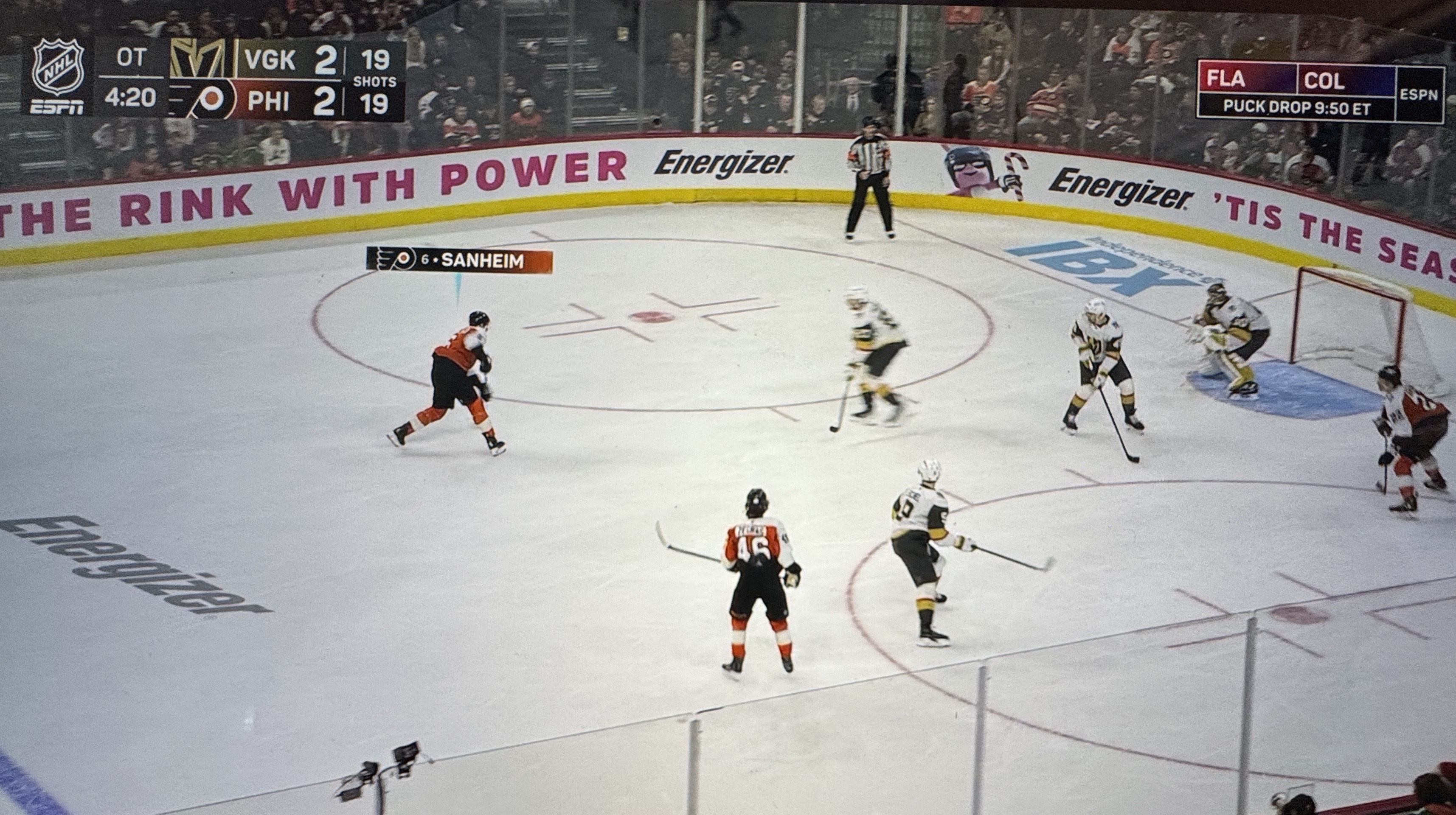
“[Travis Sanheim] right in the middle of the ice and we pass it like, those are the things you just can’t do,” Tocchet said. “You’ve got to take the shot. It’s right there. He’s got a hell of a shot. We’re looking maybe too cute, I don’t know, but we’ve got to put our finger on it.”
The Flyers are 2-4 in overtime while knowing that, if the game gets there, a perfect 5-0 is on the horizon in the shootout. Asked if the Flyers weren’t playing aggressively enough because they know that if they get it to a shootout, there’s a good chance they win: “I don’t know, maybe in the subconscious of their mind, but not for us,” he said of the coaches.
Travis Sanheim had a lane and a screen on the goal, but opted to pass the puck to Christian Dvorak by the net. It looks like a good play when paused, but in reality, Dvorak was gliding back and did not get the puck until he was almost up against the boards leaving no angle to shoot.
The power play
“Did you see the first two power plays?” Tocchet retorted when asked about the change in the units in the third period that saw Cates and Brink on the top unit with Zegras, Konecny, and Jamie Drysdale, who made a return to the power play in the game.
Earlier in the night, that unit was Owen Tippett, Drysdale, Zegras, Konecny, and Michkov. Emil Andrae and Sanheim also saw power play time on the point with them across the night.
“What would you have done?” Tocchet added with a shrug and a “There you go.”
Tocchet did continue saying that he didn’t want to get negative because they had a good game, but it sure feels like the former NHLer hit a rite of passage as a Flyers coach.
As he said, “I know the coaches are a little frustrated because [we sound] like a broken record.”
So, is everyone else starting to have flashbacks, too?
The power play is 23rd in the NHL (17.9%). Through 29 games and 81 power-play opportunities, the Flyers have 14 goals. It’s not the fewest in the NHL — it’s the third fewest. (One positive is they are tied with the Carolina Hurricanes, whom they play in a home-and-home this weekend.)
The Flyers had three power plays on Thursday, but could muster only one shot on goal, three shots that missed the net, and two that were blocked. That’s six shot attempts across six minutes of action — or a lack of action.
Tocchet said the flanks, which are the players in the circles, aside from Zegras, struggled, and they weren’t getting shots from the middle of the ice. The coach is obviously frustrated that “we’ve practiced it, but for some reason when under pressure we kind of lose our bearings.”
And it has to be even more frustrating for the bench boss to watch Vegas score like that on one of their two power plays. After getting a shot from the middle of the ice by Pavel Dorofeyev, who put the puck on goal from just above the slot, Stone had two chances atop the crease, with the second going in for his first goal of the night.
WASHINGTON — President Donald Trump said Friday that Thai and Cambodian leaders have agreed to renew a truce after days of deadly clashes had threatened to undo a ceasefire the U.S. administration had helped broker earlier this year.
Trump announced the agreement to restart the ceasefire in a social media posting following calls with Thai Prime Minister Anutin Charnvirakul and Cambodian Prime Minister Hun Manet.
“They have agreed to CEASE all shooting effective this evening, and go back to the original Peace Accord made with me, and them, with the help of the Great Prime Minister of Malaysia, Anwar Ibrahim,” Trump said in his Truth Social posting.
Thai and Cambodian officials offered no immediate comment following Trump’s announcement. Anutin, after speaking with Trump but before the U.S. president’s social media posting, said he reiterated to Trump that Thailand’s position was to keep fighting until Cambodia no longer poses a threat to its sovereignty.
Trump, a Republican, said that Ibrahim played an important role in helping him push Thailand and Cambodia to once again agree to stop fighting.
“It is my Honor to work with Anutin and Hun in resolving what could have evolved into a major War between two otherwise wonderful and prosperous Countries!” Trump added.
The original ceasefire in July was brokered by Malaysia and pushed through by pressure from Trump, who threatened to withhold trade privileges unless Thailand and Cambodia agreed. It was formalized in more detail in October at a regional meeting in Malaysia that Trump attended.
Despite the deal, the two countries carried on a bitter propaganda war and minor cross-border violence continued.
The roots of the Thai-Cambodian border conflict lie in a history of enmity over competing territorial claims. These claims largely stem from a 1907 map created while Cambodia was under French colonial rule, which Thailand maintains is inaccurate. Tensions were exacerbated by a 1962 International Court of Justice ruling that awarded sovereignty to Cambodia, which still riles many Thais.
Thailand has deployed jet fighters to carry out airstrikes on what it says are military targets. Cambodia has deployed BM-21 rocket launchers with a range of 19-25 miles.
According to data collected by public broadcaster ThaiPBS, at least six of the Thai soldiers who were killed were hit by rocket shrapnel.
The Thai army’s northeastern regional command said Thursday that some residential areas and homes near the border were damaged by BM-21 rocket launchers from Cambodian forces.
The Thai army also said it destroyed a tall crane atop a hill held by Cambodia where the centuries-old Preah Vihear temple is located, because it allegedly held electronic and optical devices used for military command and control purposes.
Trump has repeatedly made the exaggerated claim that he has helped solve eight conflicts, including the one between Thailand and Cambodia, since returning to office in January, as evidence of his negotiating prowess. And he’s not been shy about his desire to be recognized with a Nobel Peace Prize.
In an exchange with reporters later Friday, Trump credited his administration with doing a “a very good job” with its push to stem the renewed fighting.
“And we got it, I think, straightened out today,” Trump said as he hosted members of the 1980 U.S. men’s hockey team in the Oval Office. “So Thailand and Cambodia is in good shape.”
Another ceasefire that Trump takes credit for working out, between the Democratic Republic of Congo and Rwanda, is also under strain — just after the leaders of the African nations traveled to Washington to sign a peace deal.
A joint statement released by the International Contact Group for the Great Lakes expressed “profound concern” over the situation in Congo’s South Kivu region, where new deadly violence blamed on the Rwandan-backed M23 militia group has exploded in recent days.
The Great Lakes contact group — which includes Belgium, Britain, Denmark, France, Germany, the Netherlands, Sweden, Switzerland, the United States, and the European Union — has urged all sides “to uphold their commitments” under the deal signed last week and “immediately de-escalate the situation.”
SYRACUSE, N.Y. — On a cold, snowy Thursday night, St. Joseph’s battled till the final minutes, but fell to Syracuse, 71-63.
“I think [Syracuse] is physical,” said St. Joe’s coach Steve Donahue. “They do a good job of making the game a grind. It takes a lot of energy to guard them for 30 seconds, and then it kind of takes the wind out of your sails to push it.”
Thursday marked the Hawks’ second game against an Atlantic Coast Conference team. They fell to Virginia Tech on Nov. 12.
Next up, St. Joe’s (6-4) will host Delaware State on Thursday in its first of three final non-conference games.
A tale of two first halves
A fastbreak layup from Deuce Jones II, who scored 12 of his game-high 18 points in the first half, extended the Hawks’ run to 7-0 and gave them a 14-7 lead at the 13:58 mark in the first half.
During those opening minutes, St. Joe’s made 6 of 9 shots from the field. Getting out in transition played a large part in the Hawks’ early success, but the final thirteen minutes of the half were a different story.
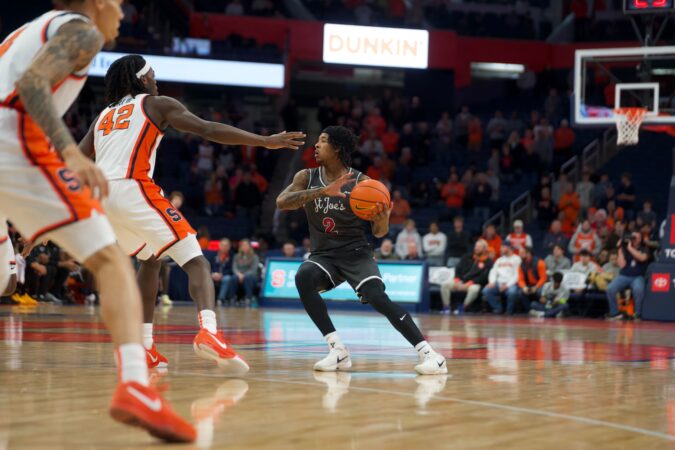
Justice with the rim rocker as the Hawks have climbed back to a point
The Hawks made 5 of 18 attempts throughout the rest of the first, while Syracuse put together a 12-4 run.
St. Joe’s finished the half shooting 11 of 27 from the field, making 3 of 16 three-pointers. Still, the Hawks entered halftime down 34-30.
Shooting woes
The Hawks entered Thursday tied for first in the NCAA in free-throw percentage (at 81.28%), while the Orange were shooting56.8%.
Syracuse had yet another poor shooting night at the line (15 of 28), but St. Joe’s was right there with them. The Hawks made 18 of 27 free-throws (66.7%), which tied their season-low against Penn.
“If we shot fouls like we’ve been shooting, we may have won this game,” Donahue said.
Meanwhile, three-point shooting has been an ongoing issue for St. Joe’s, who’s shooting 27.3%, which ranks last in the Atlantic 10.
The Hawks made just 5 of 26 attempts from deep on Thursday.
“I don’t think [our] strength is ever going to be our three-point shooting,” Donahue said. “However, I do think if we make good decisions around the basket and kick out, and we get more in rhythm and catch and shoot threes, I think we’ll hit a good share of ours.”
Clutch rebounding not enough
St. Joe’s dominated the glass.
The Hawks gave up just six offensive rebounds, which tied their lowest allowed this season. They also had 14 offensive rebounds, leading to 13 second-chance points, and grabbed 44 rebounds total.
Despite being within reach to reclaim the lead, the Hawks could not get over the hump.
Syracuse went on a 6-0 run twice in the second half, which looked to be the difference maker, and with under three-minutes remaining, the Orange opened their lead to 10 points.
If you’re feeling world-weary this holiday season, why not skip the homemade feast and take an easier, if more indulgent route? Dine-in or takeout. The options in the Philly area are plenty, from chopped liver to high-end sushi.
Here are 14 local options for Hanukkah, Christmas Day, and New Year’s Eve. Note that some restaurants have menus for more than one of these holidays.
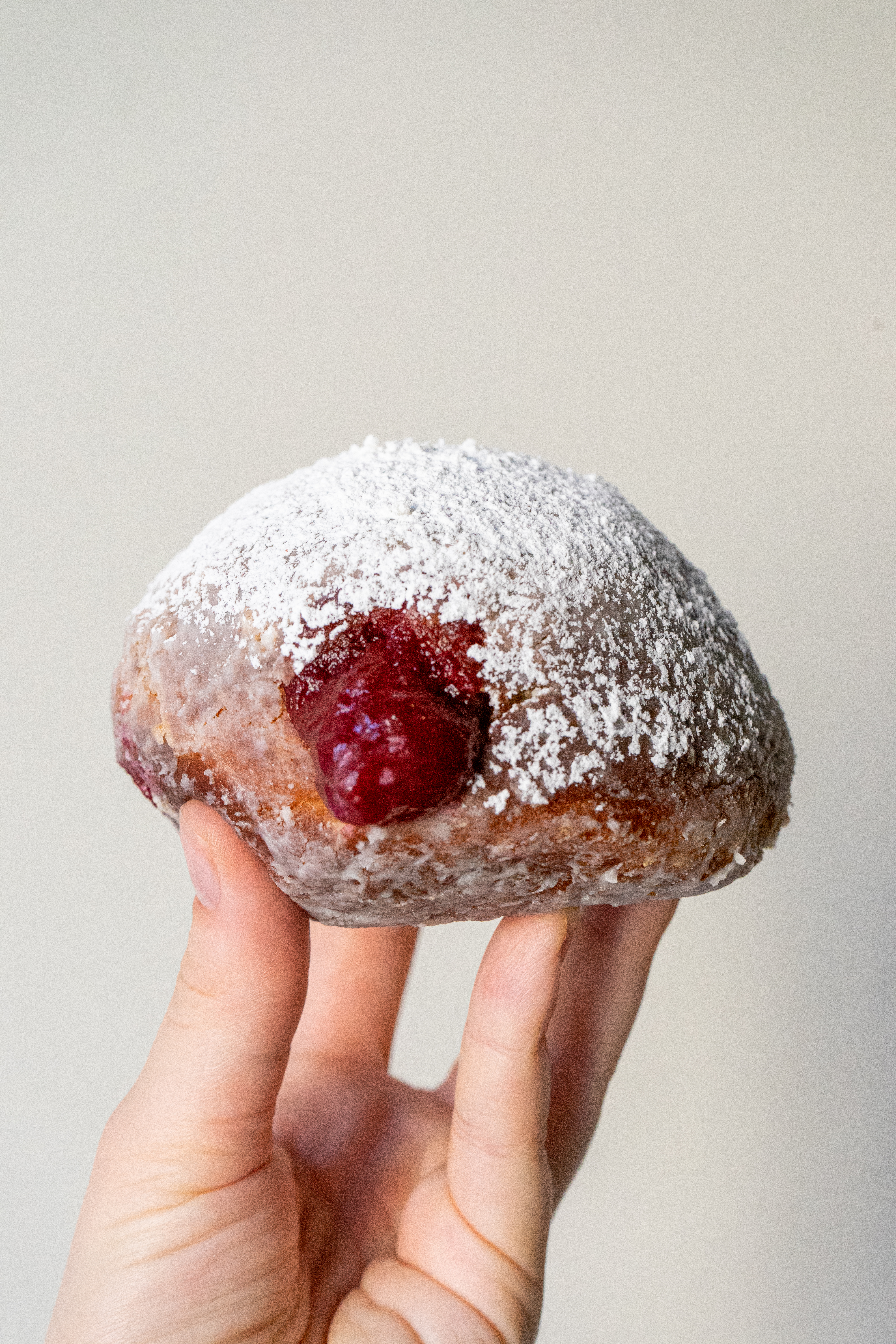
Get Hanukkah doughnuts at High Street Bakery.
Hanukkah
Biederman’s Specialty Foods
Order a Hanukkah brunch board, complete with gelt, bagels, and all the fixings, for $150. Add a latkes package for $20 with caviar supplements for an additional $85 to $165. You can also opt for Christmas Eve brunch boards ($150 to $200). Pick up orders from Dec. 13 to 31.
Get four-packs of sufganiyot (filled with either strawberry-pink peppercorn jam or chocolate-chestnut cream) for $24 this Hanukkah from High Street. Preorder online. Pickups run Saturday, Dec. 13, to Monday, Dec. 22, between noon and 4 p.m. The restaurant and bakery will also host a luxe, three-course New Year’s Eve supper in its private dining room. Tickets are $100, plus $50 for a wine pairing on OpenTable.
Also check out High Street’s Ever Eve holiday pop-up bar, open Saturdays in December from 6 to 10 p.m., for boozy hot chocolate and other holiday cocktails, plus bar bites like crispy fried oysters. Enjoy live jazz from Dave Brodie and a rotating lineup of local artisans, too. Walk-ins are welcome, but reservations are strongly encouraged to guarantee a spot.
Consider Famous 4th’s Hanukkah prix fixe takeaway or dine-in dinner. Order noshes of chopped liver, herb-roasted chicken, and braised beef brisket served with potato pancakes and challah stuffing, and desserts like assorted rugelach and sufganiyot. Expect $39 per person for dine-in and $155 per kit, which serves four people. The Hanukkah menu runs Dec. 13 to Jan. 2. Reserve online.
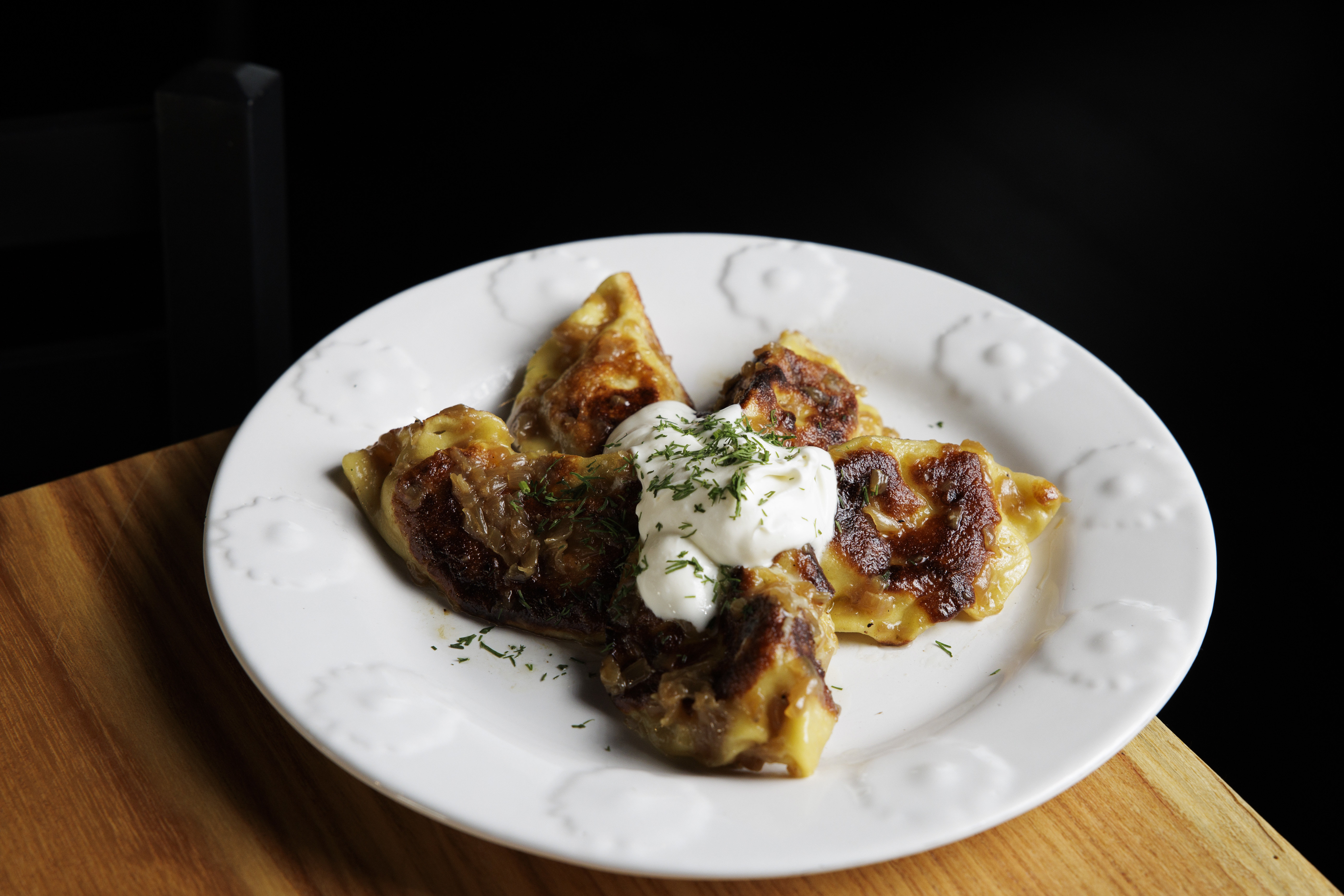
The pierogi ruskie at Little Walter’s in Philadelphia on Wednesday, Sept. 4, 2024.
Christmas Day
Urban Farmer
Inside the Logan Hotel, enjoy dine-in or takeout options for Christmas Eve and Christmas Day. On Dec. 24 and 25, specials include maple-glazed ham ($34) and rib-eye ($53), with a selection of sides and desserts. For takeout, pick up a holiday dinner on Christmas Eve or Day from noon to 2:30 p.m. The $280 package serves four to six people and includes a choice of maple-mustard-glazed ham or rib eye and three different pies.
The Northern Liberties Tex-Mex bar nods to tradition with its Christmas and New Year’s Eve dinner to-go packages ($110 to $300), which offer choices like rib-eye roast, brisket, and turkey. Scale your menu’s size for two to 10 people. Christmas orders must be picked up on Dec. 24, and New Year’s orders on Dec. 31. Purchase online.
The splashy new Rittenhouse sushi restaurant, which comes by way of Austin, is offering a holiday omakase at home special for takeout or delivery all month long. For $120, feast on 12 pieces nigiri, two makimono rolls, hama chili crudo, chicken karaage, Brussels sprouts, and house-made fried milk ice cream. Order online up to Dec. 30.
Recently opened next to the Cambria Hotel on South Broad Street, Kitchen + Kocktails will be open for regular dinner service on Christmas Eve. There are also plenty of takeout options: Consider a pan of candied yams, cornbread dressing, collard greens, and other sides for $79 to $115. Entrees include lamb chop, smoked turkey leg, catfish, and blackened salmon pans for $79 to $185, and desserts like peach cobbler and sweet potato pie are $79 each. Orders can be made online.
Chef Michael Brenfleck is serving handmade kielbasa, holiday breads and baked goods, pantry staples, and a selection of frozen pierogi this Christmas. On Dec. 20 and 21, pick up kielbasa at $10 per pound. Bakery options including babka and poppy seed rolls are priced at$12, while pantry items like ogórki konserwowe(pickles) and smalec (whipped lard with crunchy pork skin) will go for $8 each. A selection of frozen pierogi can be purchased for $25 per dozen. Orders can be placed via Toast.
Square 1682, located at 17th and Sansom Streets, is serving up a Christmas menu featuring squash soup, deviled eggs, lobster risotto, Thai fried red snapper, crème brûlée, and more. The three-course meal, including a side, will be offered from 4 to 8:30 p.m. on Dec. 24 and 25, and 5 to 10 p.m. on Dec. 26 and 27. Book on OpenTable.
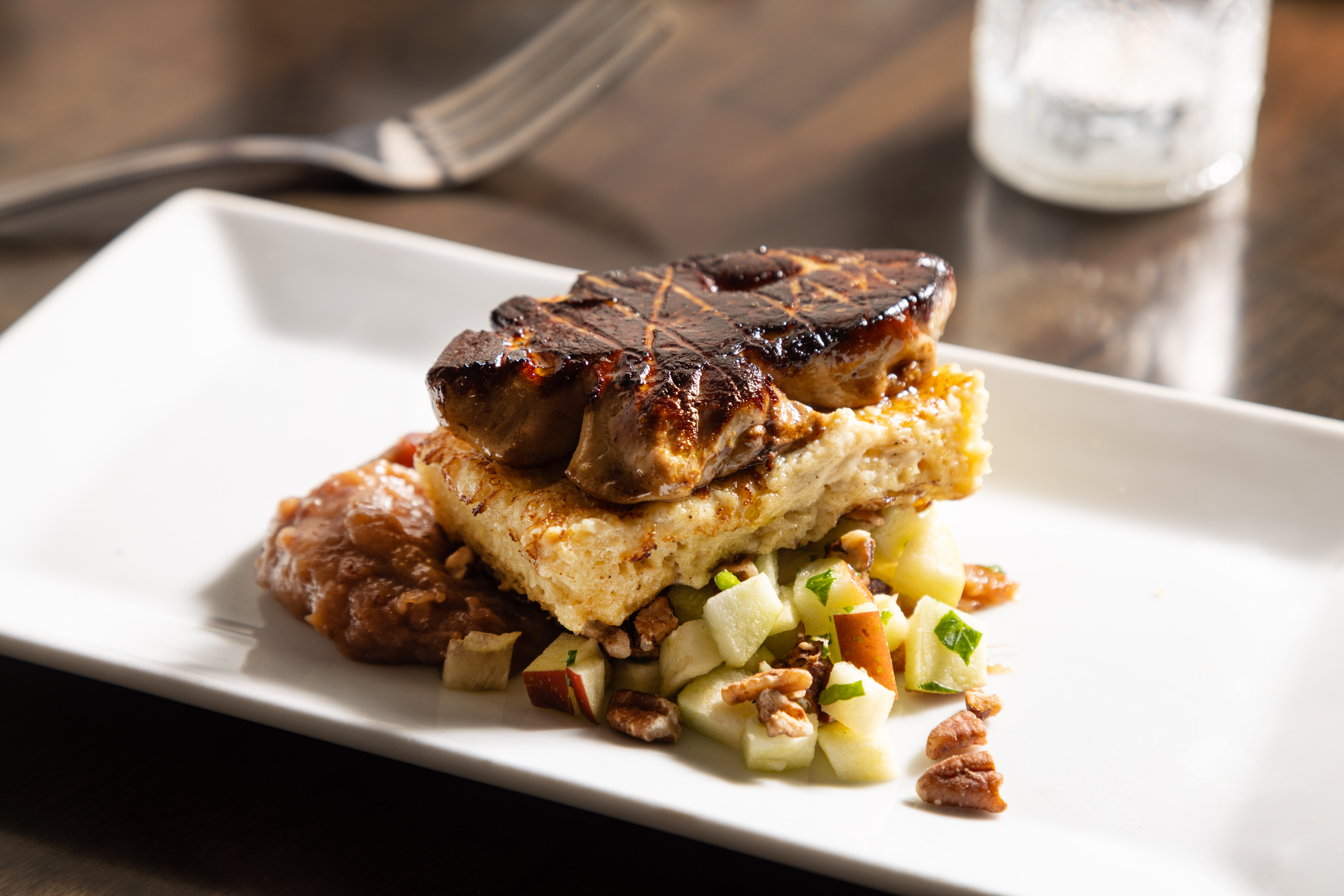
Enjoy seared foie gras at Fond this New Year’s Eve.
New Year’s Eve
Fond
Chefs Lee Styer and Jesse Prawlucki-Styer are ringing in New Year’s Eve with afive-course dinner for$135 per person. Takers will be in for a feast starting with a half-dozen oysters followed by grilled radicchio salad; tuna tartare; seared foie gras; scallops with braised fennel and endive; pork bellywith Okinawan sweet potato, escarole, and Dijon jus; and hazelnut chocolate mousse with vanilla tangerine, toffee cannoli, and sour cherry coulis. Reservations are encouraged at the Wallingford BYOB; book on Resy.
21 N. Providence Rd., Wallingford, 484-445-2108, fondbyob.com
Forsythia
Chef Chris Kearse’s Old City boîte is offering a four-course dinner for New Year’s Eve. The meal features fluke crudo, beef short rib, and mousse au chocolat noir for$150. Seatings will be from 4:45 to 9:45 p.m. Reserve a spot on Resy.
Ring in the new year at River Twice on East Passyunk with a seven-course tasting menu and a Champagne toast. The New Year’s Eve lineup includes raw aged beef seasoned with golden ossetra caviar and oyster emulsion, halibut from the gulf of Maine with shimeji mushrooms and shellfish gumbo, and more. Dinner is $150 per person at a table or $175 at the chefs counter, with optional beverage pairings available. Guests will also receive a complimentary glass of Champagne at midnight. Book a reservation on Resy for seatings from 5 to 10 p.m.
Ring in 2026 at Almyra’s New Year’s Eve dinner. For $95 per person, dig into mezzes like spanakopita manti and Wagyu dumplings, entrees like filet mignon kebab and chicken kofta, and assorted Greek desserts. NYE reservations can be made for seatings from 4 to 7 p.m. After 9:30 p.m., reservations are $95 per guest with a sparkling wine toast and DJ starting at 9 p.m. Book on Resy.
Get loose on New Year’s Eve: Instead of prix fixe menus, Mish Mish will serve whatever dishes chef Zev Flores feels during this “dinner party of your dreams.” There will be plenty of bottles of Champagne. Pick a seating between 5 to 8:45 p.m. and book on Resy.
There two ways to celebrate New Year’s Eve at Aqimero inside the lobby of the Ritz-Carlton. From 6 to 8 p.m., enjoy a curated four-course dinner with chilled seafood tower, caviar service, and lack of lamb by Chef Richard Sandoval. Optional wine or beverage pairings are available, too. After dessert, move directly into the New Year’s Eve celebration, from 8 p.m. to midnight, with no additional ticket. Or head directly into the holiday party, which features an open bar, appetizers and desserts, and live music by DJ Eddie Tully. There will be a champagne toast and a standout balloon drop at midnight. Tickets for dinner and party combo are $295 per guest, and party entry is $175 per guest. Book online.
In Kensington, Fleur’s is hosting a New Year’s Eve prix-fixe dinner featuring a six-course menu. Devour dry-aged hamachi crudo with golden Osetra caviar, grilled sweet potatoes with hazelnut, kombu-cured egg yolk, and black truffle, and lamb loin torchon. Dessert includes a dark chocolate mousse cake. There are two beverage pairings available, including a zero-proof beverage pairing, both with five drinks, plus a Champagne toast at midnight. Tickets are $125 per person; book on Resy.
Another Kensington restaurant is hosting a night of complimentary Champagne and caviar for New Year’s Eve. Emmett is offering a one-night only four-course menu with signature Emmett riffs: think venison tartar, grilled dorade, and winter citrus trifle. It’s $175 per person to reserve on OpenTable.