The Eagles’ season has taken a drastic turn in a matter of weeks. The Birds are on a three-game losing streak after losing to the Los Angeles Chargers in overtime Monday night.
However, a matchup against the Las Vegas Raiders may be the perfect remedy to the skid.
The Raiders (2-11) have not won a game in two months and are on a seven-game losing streak. The Eagles enter Sunday’s game as 11½-point favorites.
When the Las Vegas Raiders roll into town on Sunday, they’ll be led by an old friend — former Eagles backup quarterback Kenny Pickett, who’s set to start in place of the injured Geno Smith.
Here’s what Pickett and the rest of the Raiders had to say about the Eagles ahead of Sunday’s game …
‘They have a hell of a team’
The Birds, losers of three straight, will be desperate for a get-right game against the 2-11 Raiders.
Pickett, in his first start of the year, is expecting the Eagles to be ready.
“They’ll be ready to go,” Pickett said. “They have a hell of a team, there’s not a ton of new faces on that team, there’s a lot of really good players, I know the coaching staff, and how prepared they’re going to be for the game, so it’s a great opportunity.
“Seeing what it looks like to be world champions, the dedication, the commitment from every position group, it was really player-led, that was a really cool thing,” Pickett added. “I think we had a great veteran leadership and a lot of those guys are still there.”
With the weather set to reach below-freezing temperatures and snow on the horizon, the Raiders, out in sunny Las Vegas, are preparing for their coldest game of the season so far.
But for Pickett, who spent his college and most of his NFL career in Pennsylvania, he’s used to it.
“I’m a Northeast guy, so this is new to me, going out and practicing in December and it’s 60 degrees every day,” he said. “It’s unbelievable here, but I’m more used to when it hits November, December for it to be more like what it’ll be on gameday, so I’m pretty familiar with it.”
Las Vegas Raiders head coach Pete Carroll shown during a game against the Chargers on Nov. 30.
Carroll on the Tush Push
Despite the never-ending discourse, the Eagles haven’t been nearly as successful on the Tush Push in 2025 as they have in years past.
That hasn’t stopped the play from being a lightning rod of controversy and a point of focus for opposing coaches, including Raiders head coach Pete Carroll.
“If you notice it’s the surge, and the defense does everything they can to throw their bodies at that thing, and then it’s the second surge that usually gets the first down,” Carroll said. “ … It’s the initial, and then it’s the second push that makes the difference.”
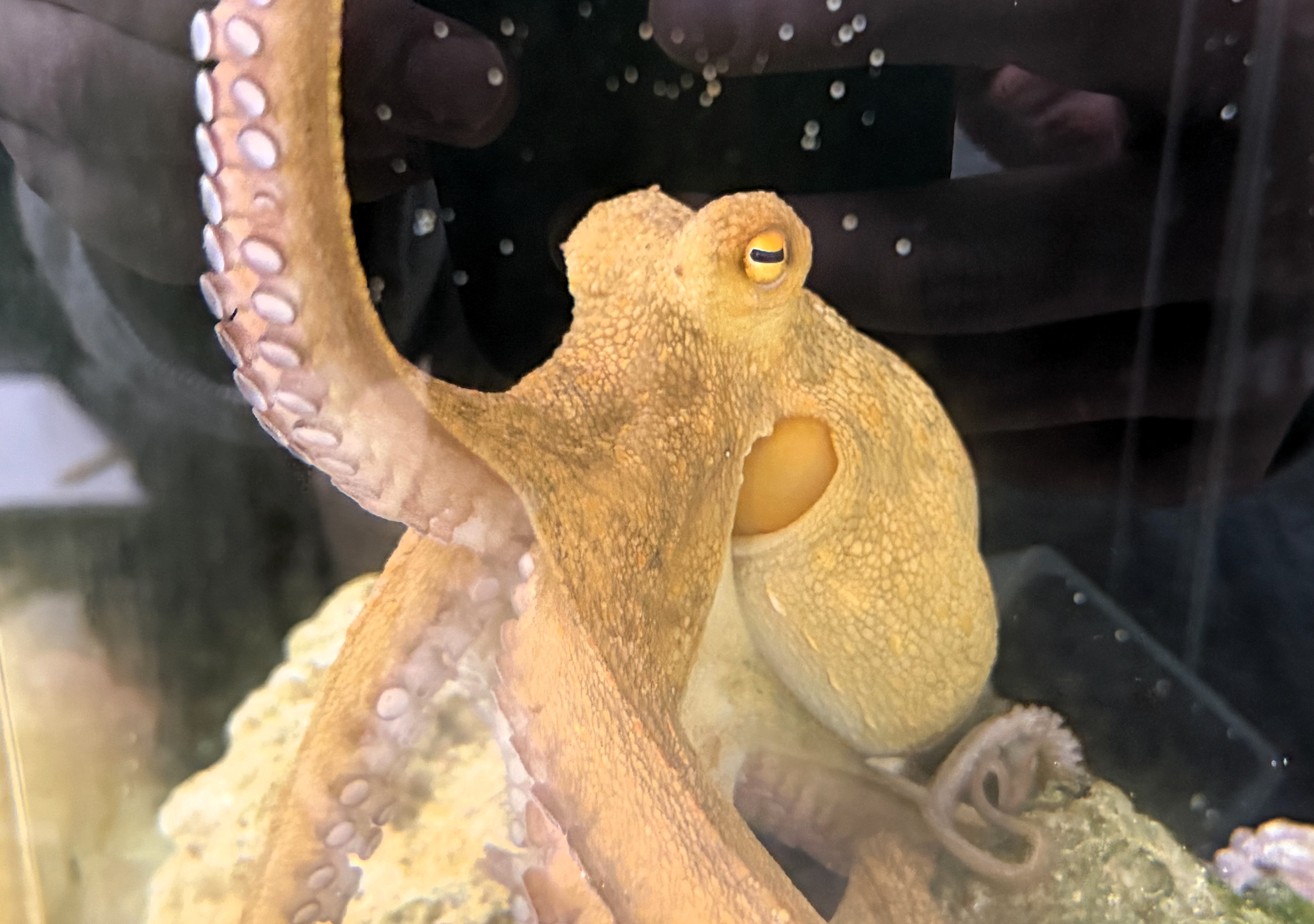
The white package that arrived at Mattias Krantz’s home in Sweden after a five-hour flight contained an octopus that Krantz saved from becoming someone’s meal.
Krantz’s hopes for the octopus, which he named Takoyaki, were high — maybe unreasonably so. Within about six months, Krantz wanted Takoyaki to play the piano so well that the animal could perform “Under the Sea” and the theme from the movie Jaws.
Krantz, who typically makes YouTube videos playing instruments he modifies, had long wanted to teach piano to an animal. Krantz said octopuses, whose eight arms can each act somewhat independently because of the neurons inside them, had the most potential.
But the task proved more difficult — and fulfilling — than Krantz imagined, requiring hundreds of hours and a wealth of patience. His YouTube video detailing the teaching process has more than 6 million views.
“It was probably the worst thing I’ve ever done, and maybe the coolest thing, but also the worst ever,” Krantz, 28, told the Washington Post. “I never pushed myself to such limits.”
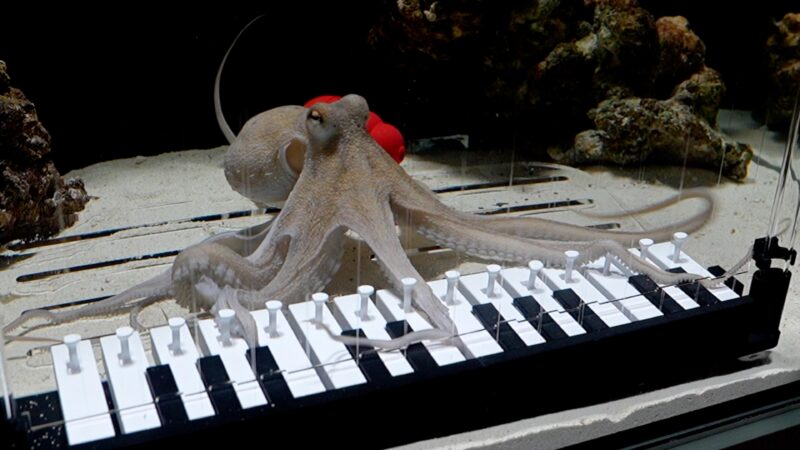
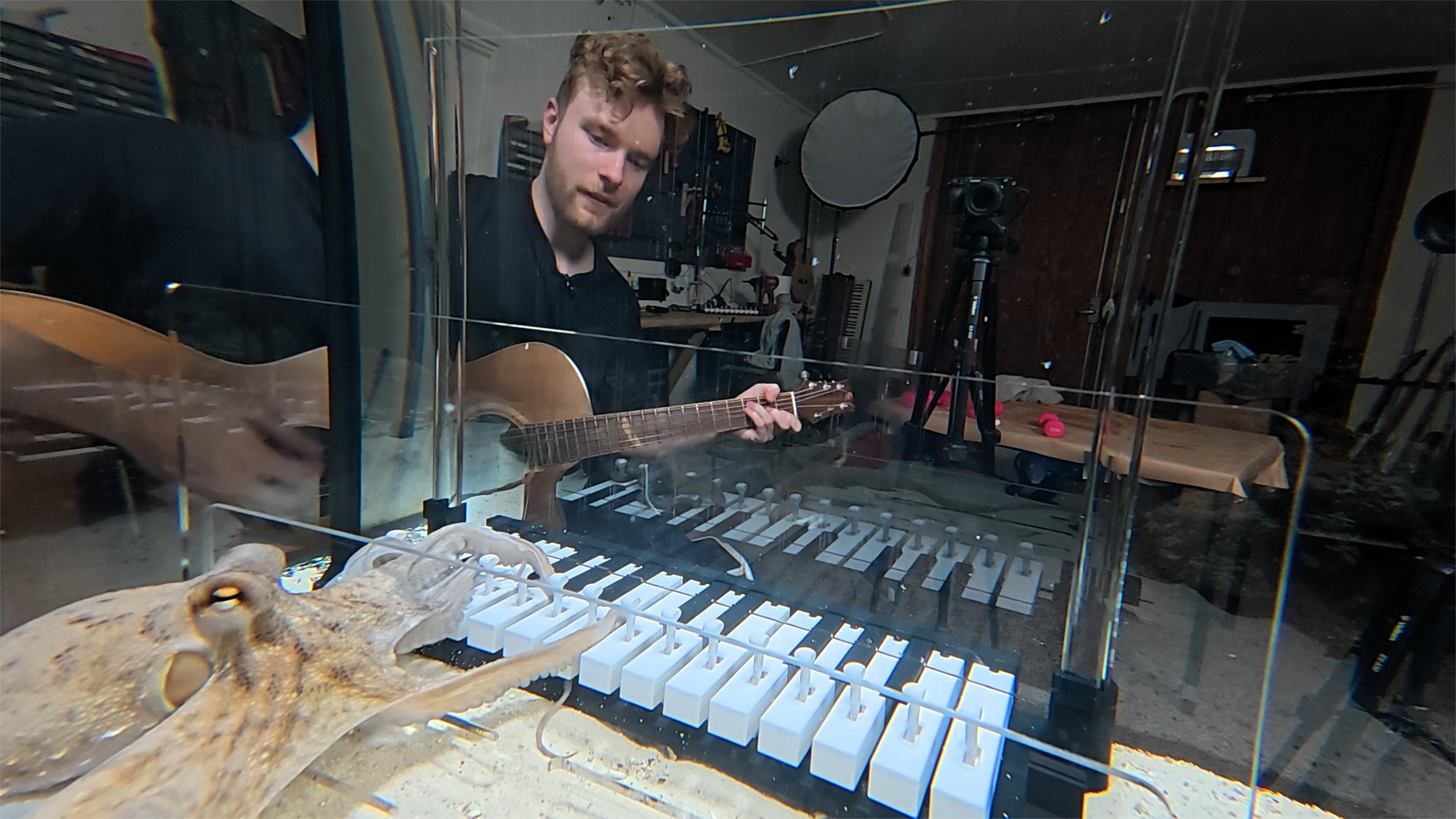
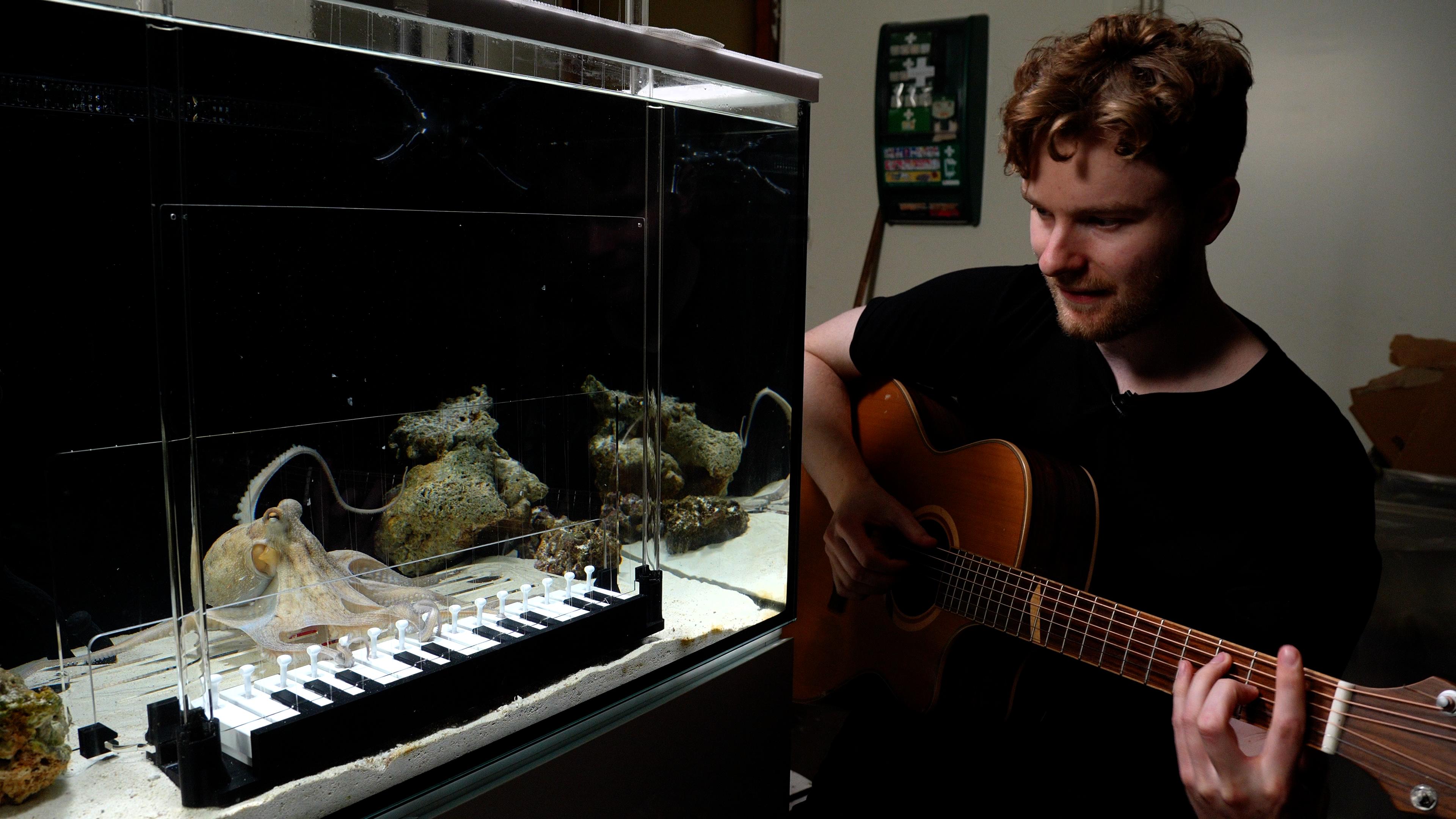
Takoyaki, an octopus, played piano keys while Mattias Krantz played an acoustic guitar.
Krantz purchased Takoyaki from a Portuguese fishery in March; he did not buy the octopus from a Korean market as is depicted in his YouTube video. Once Krantz got the octopus into his home, he dumped the creature into a roughly 110-gallon tank containing rocks, sand, and dog toys. The tank was connected to machines that filtered water and removed octopus waste.
“You’re going to be the greatest pianist the sea has ever known,” Krantz told Takoyaki, which he nicknamed Tako.
Mattias Krantz bought Takoyaki, an octopus, from a Portuguese fishery in March.
But first, Krantz had to earn Tako’s trust.
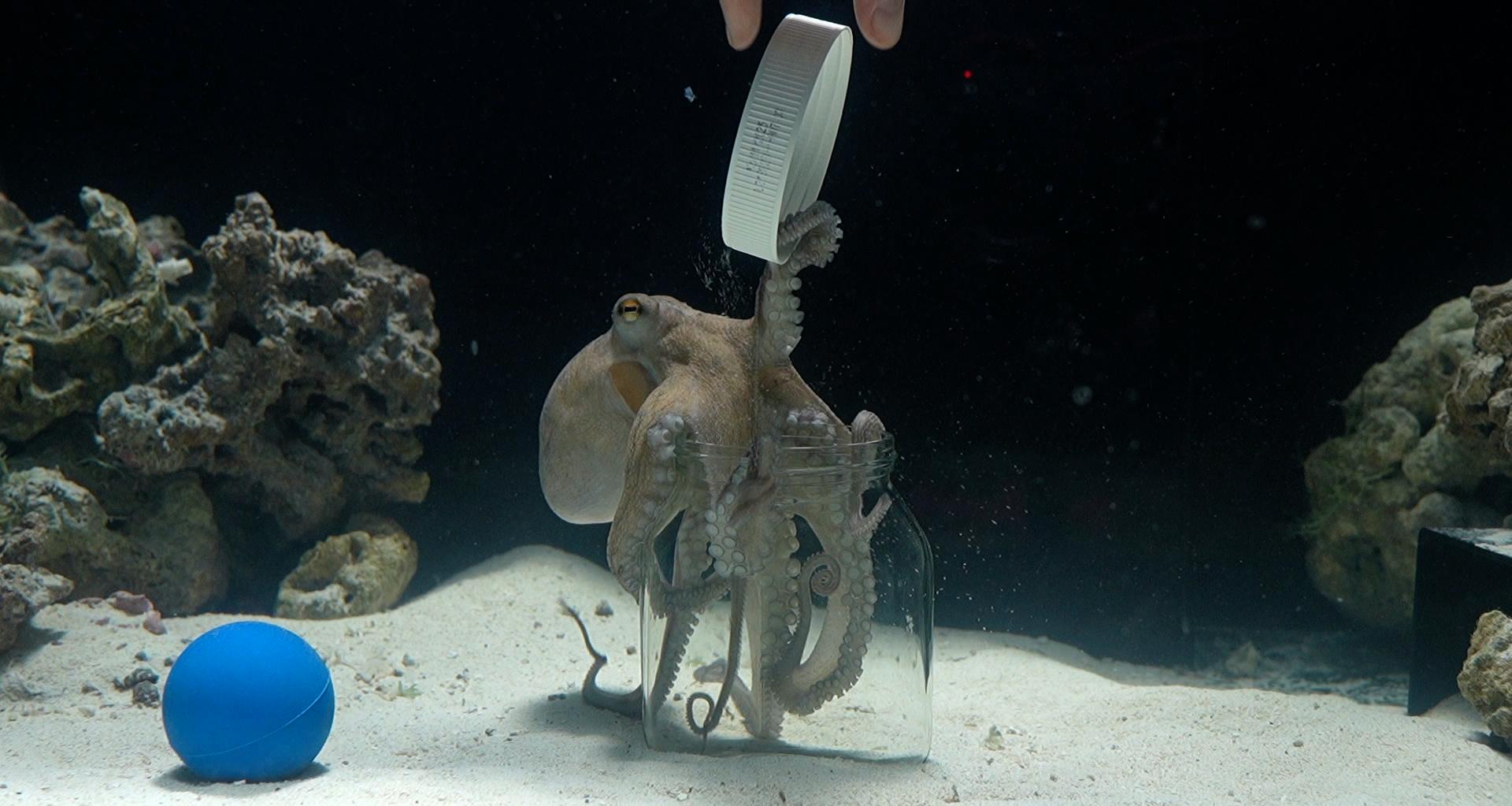
On the first day in its tank, Tako hid behind rocks and didn’t eat the small crabs and mussels Krantz had fished off Sweden’s southern coast. Tako began eating on the second day, and soon Krantz gave Tako a simple task to judge whether the octopus was up for the piano challenge: Take a plastic lid off a glass jar containing crab and shrimp. Tako passed the test after about three days.
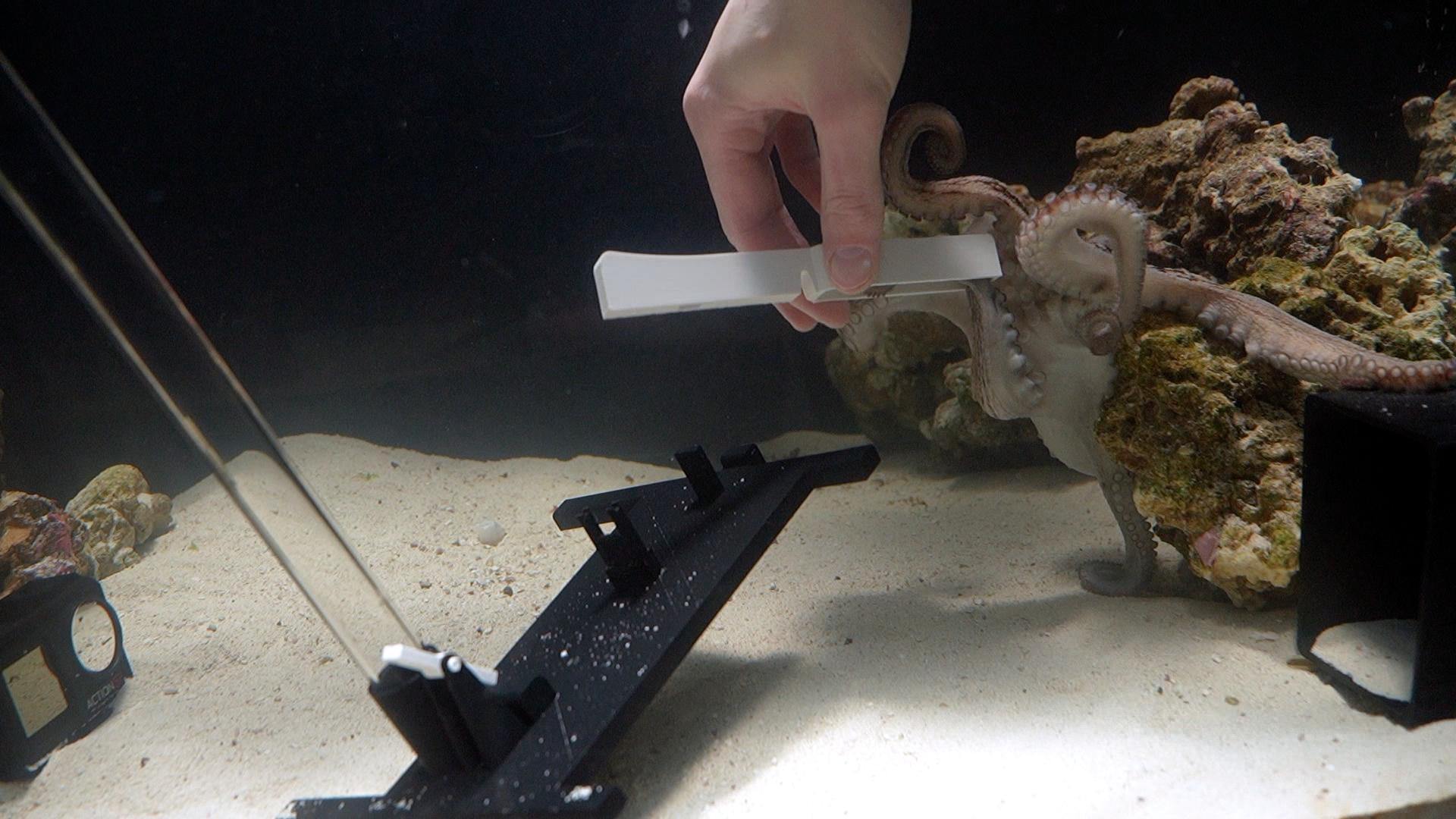
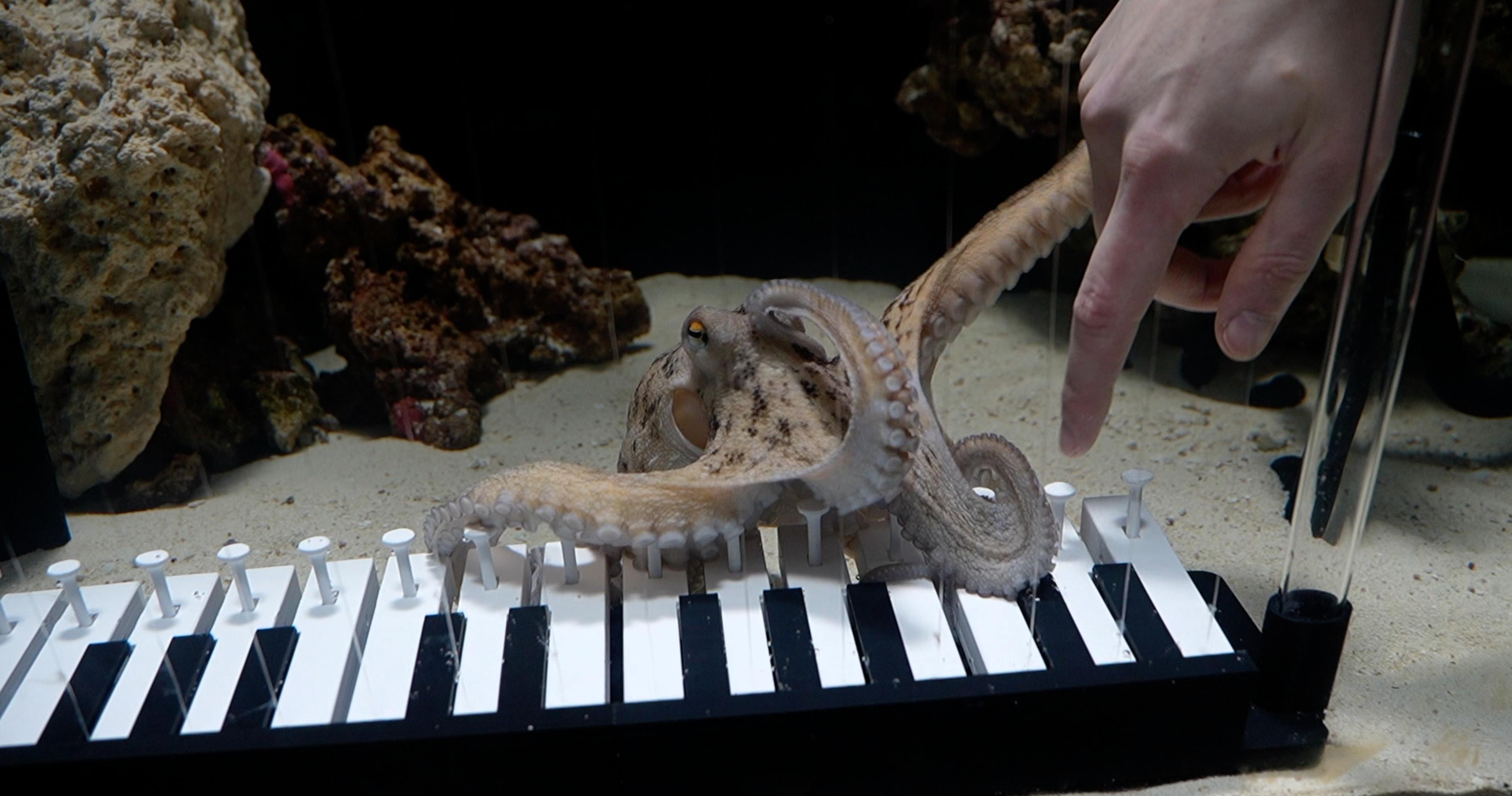
Krantz then designed a piano key on his computer, 3D-printed it and set it down in the tank. When Tako touched the key on the second day, Krantz gave the octopus a treat. But Krantz wanted Tako to push the key to play a note, so he added a white lever that Tako wrapped its arms around and pulled to make a sound (Tako also broke the key off its mount a few times and hid it under rocks).
After that first success, Krantz built Tako a 15-key piano — a process Tako seemed to watch closely by pressing its body against the glass. But when Krantz placed the piano in the tank, Tako sat on it instead of playing it.
One of Takoyaki’s first tasks was to open a plastic lid off a glass jar.
So Krantz tried different approaches.
First, he added a blue underwater speaker that allowed Tako — whose species has poor hearing — to feel a vibration when the octopus played a key. Tako began playing random notes, Krantz said, but he wanted Tako to play particular keys to form a melody.
Krantz added symbols to the keys he wanted Tako to play — circles, crosses, and stripes — which Tako didn’t respond to. Krantz even added pictures of an orange crab to the keys. The octopus was interested in the pictures but not in playing the keys.
Takoyaki took the piano key Mattias Krantz made.
But one thing seemed to grab Tako’s attention: movement. When a bubble formed in the tank, Tako chased it.
So, with fishing wire, Krantz wiggled the lever on the keys he wanted Tako to play. It worked — despite Tako also spending time playing the wires like a harp. (Marine scientist Jenny Hofmeister said octopuses are attracted to movement because it might signal prey.)
After a week, Tako played two notes in a row. After two weeks, Tako played a pair of notes simultaneously.
After Mattias Krantz built Takoyaki a 15-key piano, the octopus seemed to resist Krantz pointing to the keys from inside the tank.
But in the following weeks — after about four months of training — Tako plateaued.
Plus — as expected from an octopus — Tako wasn’t focused on learning the instrument. Tako wrapped its arms around the GoPro camera in its tank, squirted water at Krantz, and, once, escaped the tank and hid in a cupboard.
Krantz lost hope that Tako could learn to play.
Takoyaki sometimes squirted water outside of the tank.
But Tako stared at the piano, which sat on the ground beside the tank, throughout the day, appearing to want to play at the usual 6 p.m. training time, Krantz said. So Krantz experimented with a new strategy.
“The one thing I’m really good at is insane stubbornness,” Krantz said.
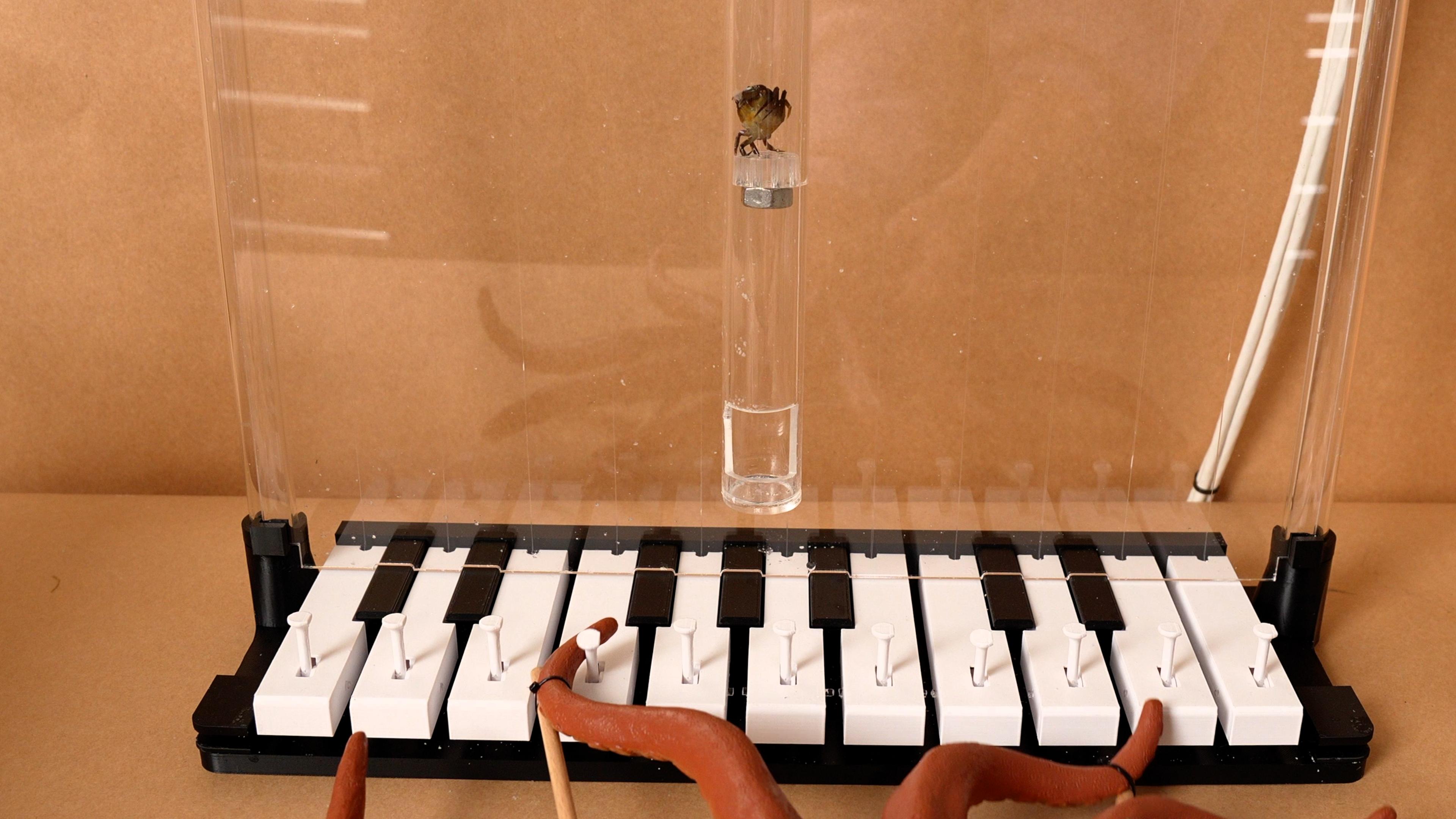
In early August, he placed an acrylic tube inside the tank and inserted a crab —Tako’s favorite treat — at the top. When Tako played a key, Krantz lowered the crab closer to the bottom of the tube. Krantz called his device the “crab elevator.”
Mattias Krantz built a “crab elevator” for his octopus, Takoyaki.
Tako initially tried to retrieve the crab by swimming into the tube and attempting to pull the crab down. But once Tako saw the crab inch closer after playing a note, the octopus became more motivated to play. After a few weeks, Krantz gave Tako the crab once the octopus played seven or eight keys.
In mid-August, Krantz began playing chord progressions on his acoustic guitar and simultaneously wiggled keys for Tako to play so they could perform together. Krantz fed Tako after each recital.
Krantz never taught Tako to consistently play the right keys at the right times. Sometimes the piano sounded good; other times, not so much. Tako played the keys to “Baby Shark” — even if it was off tempo, Krantz said.
“I can’t believe I sit here and play with an octopus,” Mattias Krantz said.
But the fact that Tako could play keys at all was like a “fever dream,” Krantz said.
Hofmeister, the marine scientist, said Tako probably didn’t know he was playing the piano; he was motivated by food.
Octopuses are smart in their own ways: They change colors based on their surroundings, build dens with stones, use makeshift weapons, throw objects at targets, and eject ink clouds when they’re in danger.
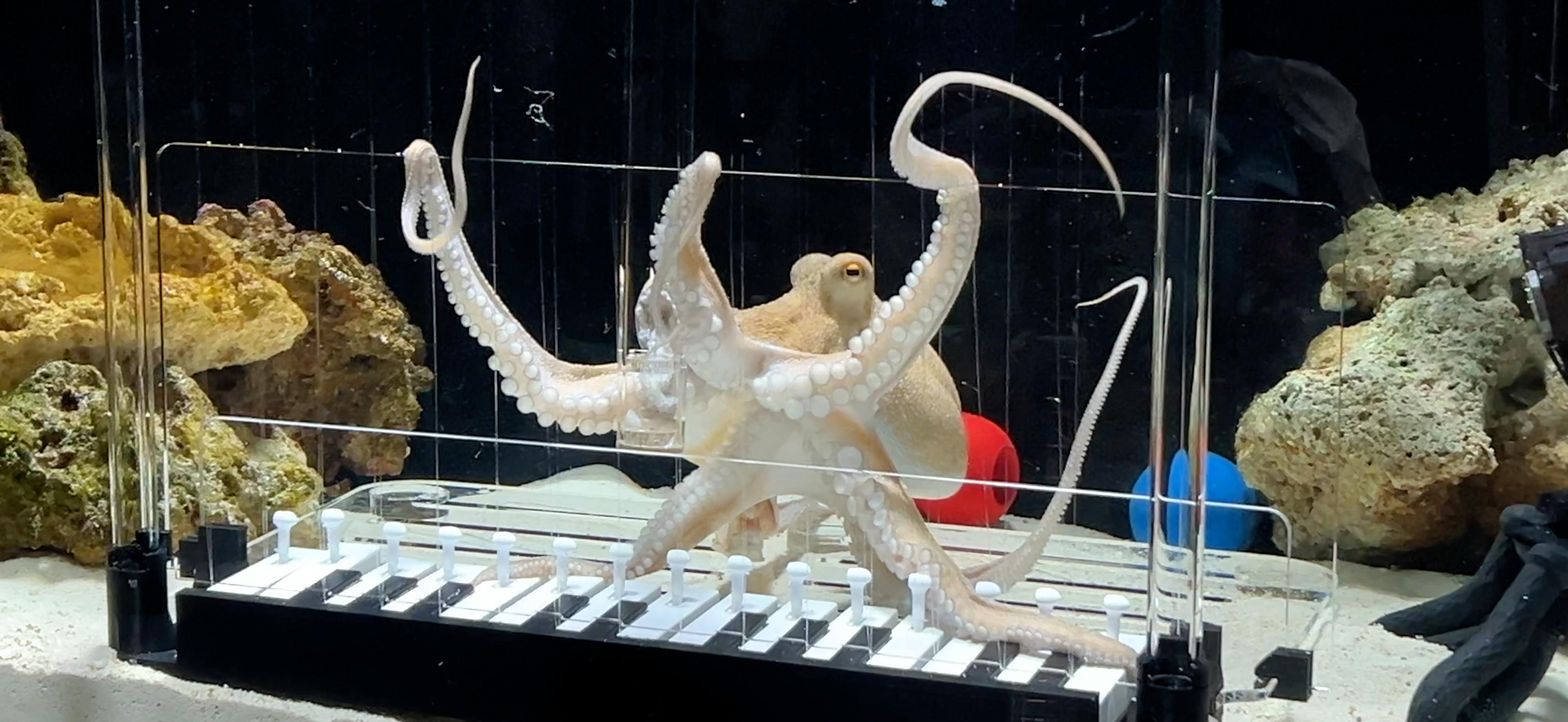
Takoyaki, an octopus, seemed to enjoy playing piano keys.
“The octopus is not perceiving rhythm,” Hofmeister said. “It’s not perceiving, you know, tempo. It wants to do the steps it has to do to get the crab.”
She said teaching an octopus to play the piano perfectly is nearly impossible.
But in addition to creating music, Krantz received another benefit from the process: a friend. He has kept Takoyaki — the name means grilled octopus — as a pet.
Takoyaki still plays the piano about every other day.
Octopuses typically live for a year or two, and Krantz said Tako,which he estimated to be about 14 months old, now sleeps most of the day. But that hasn’t stopped Tako from continuing to practice its unique skill; the octopus plays piano about every other day.
The recitals still leave Krantz in awe.
“I can’t believe I sit here,” Krantz said last week, “and play with an octopus.”
BALTIMORE — A federal judge blocked U.S. immigration authorities on Friday from re-detaining Kilmar Abrego Garcia, saying she feared they might take him into custody again just hours after she had ordered his release from a detention center.
The order came as Abrego Garcia appeared at a scheduled appointment at an Immigration and Customs Enforcement field office roughly 14 hours after he walked out of immigration detention facility in Pennsylvania.
His lawyers had sent an urgent request to the judge, warning that ICE officials could immediately place him back into custody. Instead, Abrego Garcia exited the building after a short appointment, emerging to cheers from supporters who had gathered outside.
Speaking briefly to the crowd, he urged others to “stand tall” against what he described as injustices carried out by the government.
Officials cannot re-detain him until the court conducts a hearing on the motion for the temporary restraining order, U.S. District Judge Paula Xinis in Maryland said. She wrote that Abrego Garcia is likely to succeed on the merits of any further request for relief from ICE detention.
“For the public to have any faith in the orderly administration of justice, the Court’s narrowly crafted remedy cannot be so quickly and easily upended without further briefing and consideration,” she wrote.
Abrego Garcia on Friday stopped at a news conference outside the building, escorted by a group of supporters chanting “We are all Kilmar!”
“I stand before you a free man and I want you to remember me this way, with my head held up high,” Abrego Garcia said through a translator. “I come here today with so much hope and I thank God who has been with me since the start with my family.”
He urged people to keep fighting.
After Abrego Garcia spoke, he went through security at the field office, escorted by supporters.
When Abrego Garcia’s attorney, Simon Sandoval-Moshenberg, announced to the crowd assembled outside that his client would walk back out the field office’s doors again, he stressed that the legal fight was not over.
“Yesterday’s order from Judge Xinis and now the temporary restraining order this morning represent a victory of law over power,” Sandoval-Moshenberg said.
The agency freed him just before 5 p.m. on Thursday in response to a ruling from Xinis, who wrote federal authorities detained him after his return to the United States without any legal basis.
Kilmar Abrego Garcia waits with Lydia Walther-Rodriguez of Casa in Maryland, left, to enter the building for a mandatory check at the Immigration and Customs Enforcement office in Baltimore, Friday, Dec. 12, 2025, after he was released from detention on Thursday under a judge’s order. (AP Photo/Stephanie Scarbrough)
Mistakenly deported and then returned
Abrego Garcia is a Salvadoran citizen with an American wife and child who has lived in Maryland for years. He immigrated to the U.S. illegally as a teenager to join his brother, who had become a U.S. citizen. In 2019, an immigration judge granted him protection from being deported back to his home country, where he faces danger from a gang that targeted his family.
While he was allowed to live and work in the U.S. under ICE supervision, he was not given residency status. Earlier this year, he was mistakenly deported and held in a notoriously brutal Salvadoran prison despite having no criminal record.
Facing mounting public pressure and a court order, President Donald Trump’s Republican administration brought him back to the U.S. in June, but only after issuing an arrest warrant on human smuggling charges in Tennessee. He has pleaded not guilty to those charges and asked a federal judge there to dismiss them.
A lawsuit to block removal from the U.S.
The 2019 settlement found he had a “well founded fear” of danger in El Salvador if he was deported there. So instead ICE has been seeking to deport him to a series of African countries. Abrego Garcia has sued, claiming the Trump administration is illegally using the removal process to punish him for the public embarrassment caused by his deportation.
In her order releasing Abrego Garcia, Xinis wrote that federal authorities “did not just stonewall” the court, “They affirmatively misled the tribunal.” Xinis also rejected the government’s argument that she lacked jurisdiction to intervene on a final removal order for Abrego Garcia, because she found no final order had been filed.
ICE freed Abrego Garcia from Moshannon Valley Processing Center, about 115 miles northeast of Pittsburgh, on Thursday just before the deadline Xinis gave the government to provide an update on Abrego Garcia’s release.
He returned home to Maryland a few hours later.
Immigration check-in
Check-ins are how ICE keeps track of some people who are released by the government to pursue asylum or other immigration cases as they make their way through a backlogged court system. The appointments were once routine but many people have been detained at their check-ins since the start of Trump’s second term.
The Department of Homeland Security sharply criticized Xinis’ order and vowed to appeal, calling the ruling “naked judicial activism” by a judge appointed during the Obama administration.
“This order lacks any valid legal basis, and we will continue to fight this tooth and nail in the courts,” said Tricia McLaughlin, the department’s assistant secretary.
Sandoval-Moshenberg said the judge made it clear that the government can’t detain someone indefinitely without legal authority.
Abrego Garcia has also applied for asylum in the U.S. in immigration court.
Charges in Tennessee
Abrego Garcia was hit with human smuggling and conspiracy to commit human smuggling charges when the U.S. government brought him back from El Salvador. Prosecutors alleged he accepted money to transport within the United States people who were in the country illegally.
The charges stem from a 2022 traffic stop in Tennessee for speeding. Body camera footage from a Tennessee Highway Patrol officer shows a calm exchange with Abrego Garcia. There were nine passengers in the car, and the officers discussed among themselves their suspicions of smuggling. However, Abrego Garcia was eventually allowed to continue driving with only a warning.
A Department of Homeland Security agent testified at an earlier hearing that he did not begin investigating the traffic stop until after the U.S. Supreme Court said in April that the Trump administration must work to bring back Abrego Garcia.
Facing one of the NHL’s perennial Stanley Cup contenders, the Flyers hung tough but ultimately fell 3-2 to the Vegas Golden Knights in overtime.
The Flyers are now 2-4 in games decided in the extra session. Philly has also lost three of its past five games.
Travis Konecny fanned on the puck in the Flyers’ zone during the extra period, and Vegas’ Jack Eichel got it before ultimately finding Mark Stone crashing backdoor for the overtime game-winner.
Vegas took a 1-0 lead 6 minutes, 7 seconds into the game on a goal by Zach Whitecloud. The play started when Golden Knights defenseman Noah Hanifin poked the puck away from Christian Dvorak as he skated down on a two-on-two with Konecny, and it went right to Eichel. Vegas’ center, who has already been named to the U.S. Olympic squad, got the puck and sent a stretch pass up to Braeden Bowman at the Flyers’ blue line.
A former teammate of Jett Luchanko’s at Guelph of the Ontario Hockey League, Bowman pulled Emil Andrae out of position and dished the puck to Ivan Barbashev. The Russian winger found Whitecloud splitting Konecny and Jamie Drysdale, and the defenseman flipped the backhand past Dan Vladař.
But, as it usually happens, the line that gave up the goal tied it.
Travis Sanheim knocked away an Eichel pass attempt in the neutral zone, and the Flyers got to work. They got the puck deep and kept it in the offensive zone for the next 38 seconds. It ended with Sanheim skating to the top of the left face-off circle and threading the needle to Trevor Zegras at the right post for the goal.
Flyers center Trevor Zegras scored his team-leading 11th goal on Thursday night.
Zegras now leads the Flyers with 11 goals. He is one off his total from last season, when he scored 12 in 57 regular-season games with the Anaheim Ducks.
Vegas retook the lead in the second period on a power-play goal by Stone. The Golden Knights’ captain scored on his second rebound attempt after Pavel Dorofeyev put a shot from the high slot on goal off the rush.
But the never-quit Flyers tied it again. Carl Grundström put pressure on defenseman Brayden McNabb, creating a turnover along the boards in the Vegas zone. Dvorak scooped up the puck and skated around the right circle and up in the zone before feeding Noah Juulsen for the one-timer from the left face-off dot. The goal is Juulsen’s first with the franchise and registered at 92 miles per hour.
Breakaways
Former Phillies pitcher Cole Hamels, who was the World Series MVP in 2008, was at the game in a Tocchet jersey; however, Tocchet was misspelled as Tochett. … Actor David Boreanaz, who grew up in the Philly area and is a noted Flyers fan, and Phillies general manager Preston Mattingly were also in attendance. … The Flyers did not have a tribute video for former goalie Carter Hart, who returned to Philly for the first time. Contrary to what was reported on the ESPN broadcast, a source told The Inquirer there was no extra security behind the Vegas bench. It was the normal NHL-required security.
The Flyers play a home-and-home with the Carolina Hurricanes beginning on Saturday at Xfinity Mobile Arena (7 p.m., NBCSP). Sunday’s game is at the Lenovo Center (5 p.m., NBCSP).
Doylestown Hospital was not cited by the Pennsylvania Department of Health for any safety violations between November 2024 and October of this year.
Here’s a look at the publicly available details:
Nov. 6, 2024: Inspectors came to investigate a complaint but found the hospital was in compliance. Complaint details are not made public when inspectors determine it was unfounded.
Nov. 14: Inspectors followed up on an October 2024 complaint and found the hospital was in compliance. The hospital had been cited for not following protocol for admitting mental health patients.
Nov. 20: Inspectors followed up on a July 2024 complaint and found the hospital was in compliance. The hospital had been cited for not following protocol for identifying patients prior to surgery.
Jan. 10, 2025: Inspectors visited for a special monitoring survey and found the hospital was in compliance.
July 24: Inspectors came to investigate a complaint but found the hospital was in compliance.
The semiquincentennial year in Philadelphia is set to start off with a bang.
The city’s celebration of the 250th anniversary of America will begin on New Year’s Eve with a free concert in front of the Philadelphia Art Museum steps.
The lineup includes LL Cool J, DJ Jazzy Jeff, bassist and bandleader Adam Blackstone, and Los Angeles rock band Dorothy. Technician the DJ, who has toured with the likes of the L.O.X. and Ghostface Killah, is also on the bill.
Afterwards — at midnight — there will be fireworks.
“Philadelphia is thrilled to welcome everyone to our vibrant city as we celebrate New Year’s Eve and kick off the 250th anniversary of our nation’s independence,” Mayor Cherelle L. Parker said in a statement.
“This free concert and fireworks showcases the incredible spirit of our community and the cultural legacy that Philadelphia embodies … Join us for Philly’s first ever New Year’s Eve outdoor concert as we kick off 2026 in America’s Birthplace — this is truly the place to start our celebration of this historic anniversary!,” she said.
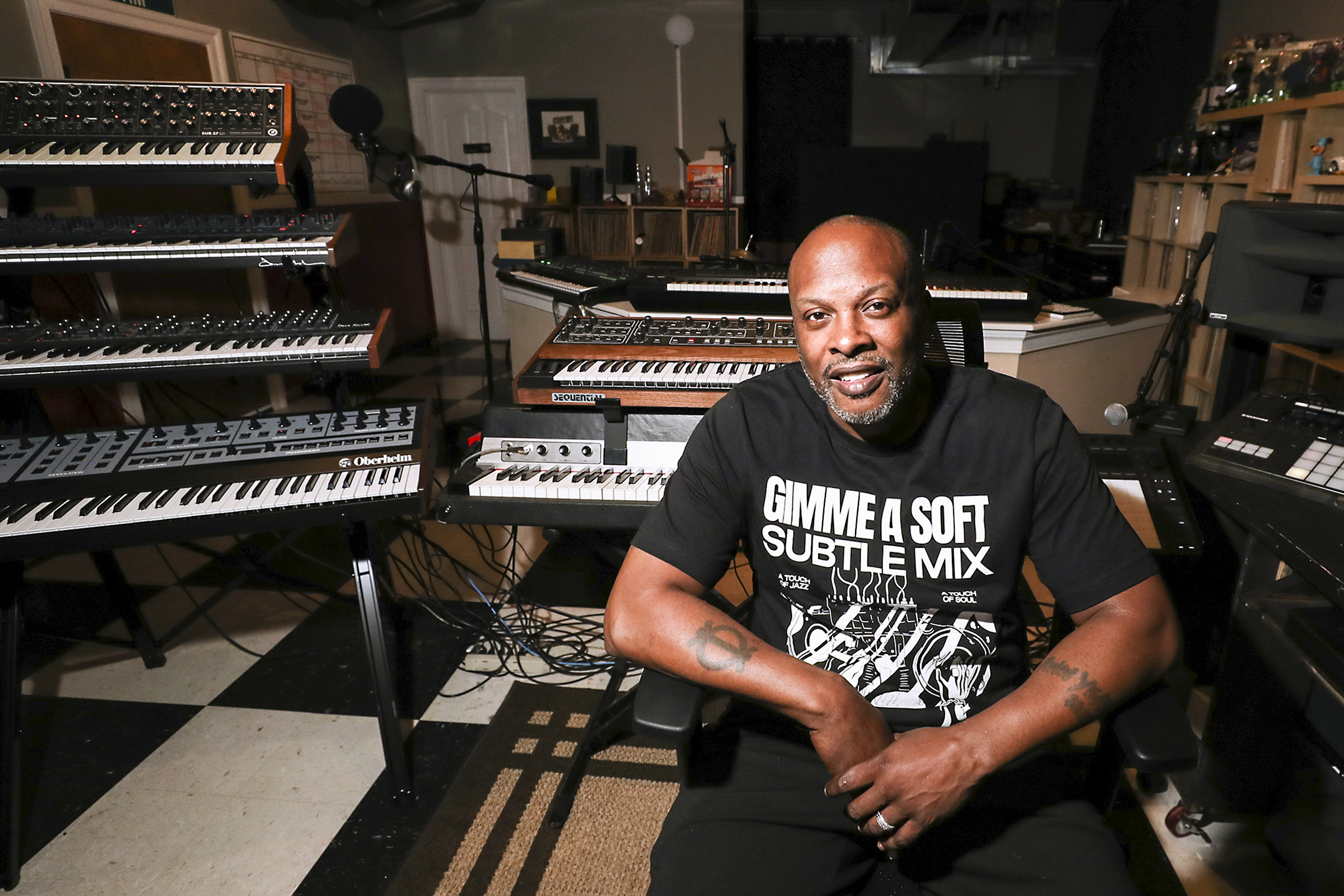
Jeffrey Allen Townes, better known as DJ Jazzy Jeff, poses for a photo in the recording studio section of his home in Bear, Del. in 2023. He’ll perform on New Year’s Eve on the Ben Franklin Parkway as part of the free concert and fireworks dispaly.
For LL Cool J, the New Year’s Eve concert will be a makeup show.
The “Mama Said Knock You Out” and “I Can’t Live Without My Radio” rapper, actor, and Rock and Roll Hall of Fame inductee was scheduled to play on the Parkway along with Jazmine Sullivan as part of the city’s July 4 celebration this year, but canceled in solidarity with striking municipal workers.
“Philly, don’t call it a comeback,” he said in a statement. “We’ve got unfinished business. Shout out to the Mayor for the invitation! Meet me on the Oval this New Year’s Eve as we bring in 2026 — live.”
Blackstone, who won a best musical theater album Grammy last year for his work on Alicia Keys’ Hell’s Kitchen, plans to debut “Brotherly Love,” a song he’s written with Curtis Mayfield’s cousin Cedric Mayfield, at the New Year’s Eve show.
Gates for the free concert open at 6 p.m., and the music starts at 8 p.m.
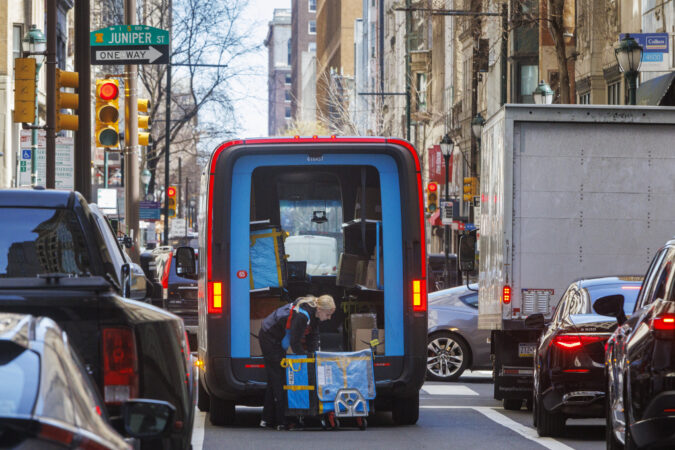
Porch pirates are expected to be particularly active as gifts and other goodies pile up outside your house this month.
With this in mind, we looked into Philadelphia Police Department data to gauge the severity of the problem.
📦 Reported thefts are up 6% from January to November, compared with the same time period last year, according to an Inquirer analysis of police data.
📦 Reports spike every December, coinciding with a flurry of purchases over the holidays. Still, some incidents go unreported to law enforcement. These factors can make it difficult to project end-of-year totals.
📦 The crime goes beyond Philly, as suburban residents frequently vent about the issue on local Facebook groups.
A veteran lawyer in the Philadelphia District Attorney’s Office has been disbarred in the region’s federal courts after a panel of judges concluded he “lied repeatedly” while seeking to overturn the death sentence of Robert Wharton, who killed a Mount Airy couple and left their infant behind to die.
With the region in the grip of bitter cold, New Jersey Gov. Phil Murphy declared a state of emergency Thursday due to a service disruption at a Delaware County propane distribution facility.
A Warminster man who fled to his native El Salvador last year after he was charged with sex crimes against children was extradited to Bucks County on Thursday to face trial for sexually assaulting three girls.
A Penn State faculty group has taken the next step to form a union across the system’s campuses, which eventually could represent about 6,000 faculty. And employees of a West Philly mental healthcare provider have formed a union, citing increased workloads and business changes that diminished patient care.
Voters in Shamong handily rejected a $25 million school bond question that would have raised property taxes, while a referendum in Mantua was too close to call, officials said Wednesday.
Hours-long wait times. Fans lined up around the block. Patrons dressed to the nines.
You’d think these excited partygoers were posted up for a Center City club, but we’re talking about the TGI Fridays on City Avenue.
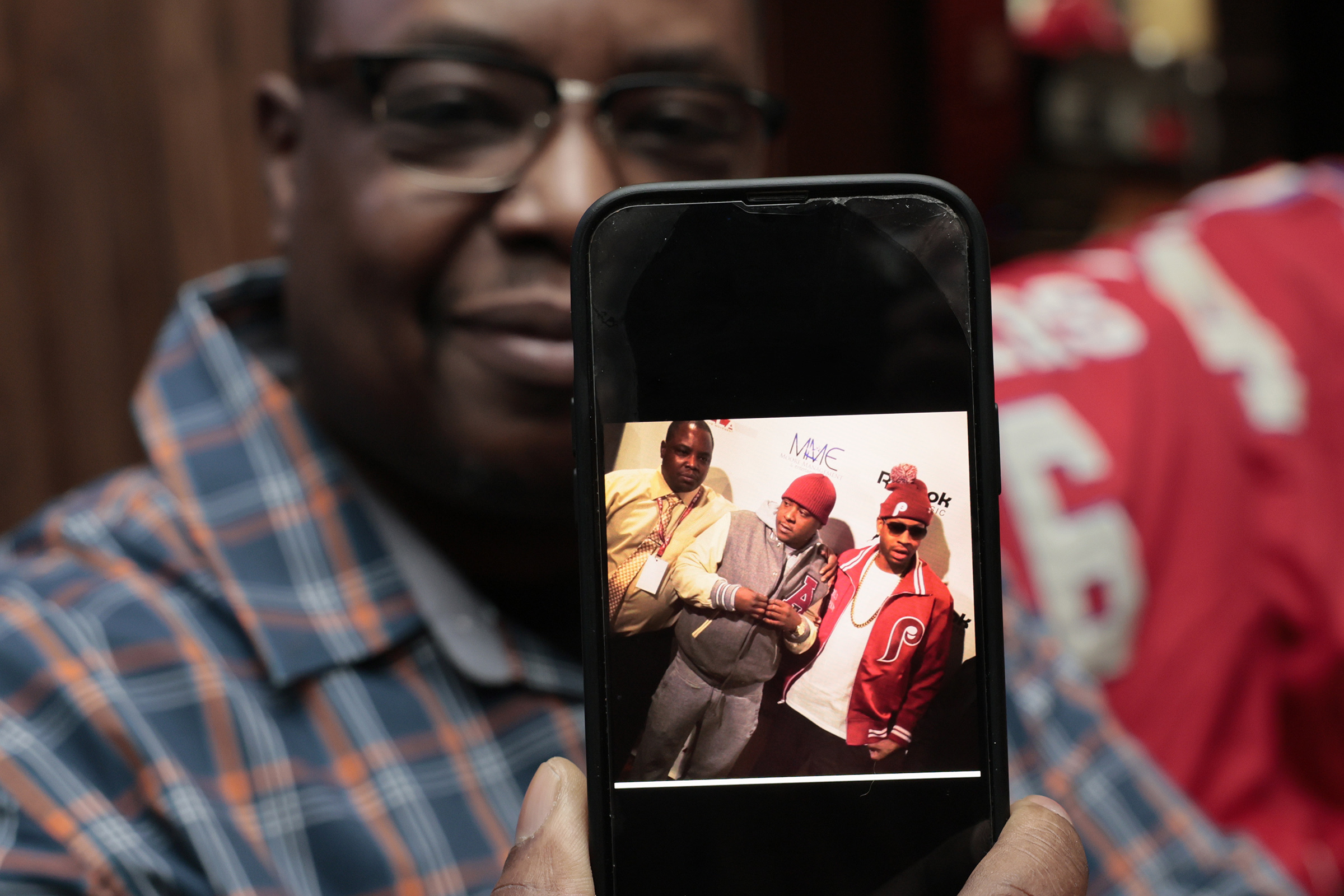
Over the years, the chain restaurant was incorporated into the city’s nightlife scene with the help of Sixers legends like Allen Iverson, who transformed the spot into a destination.
It was the team’s unofficial hangout due to its proximity to where the Sixers practiced. But everything changed when Iverson, a rookie at the time, came to town.
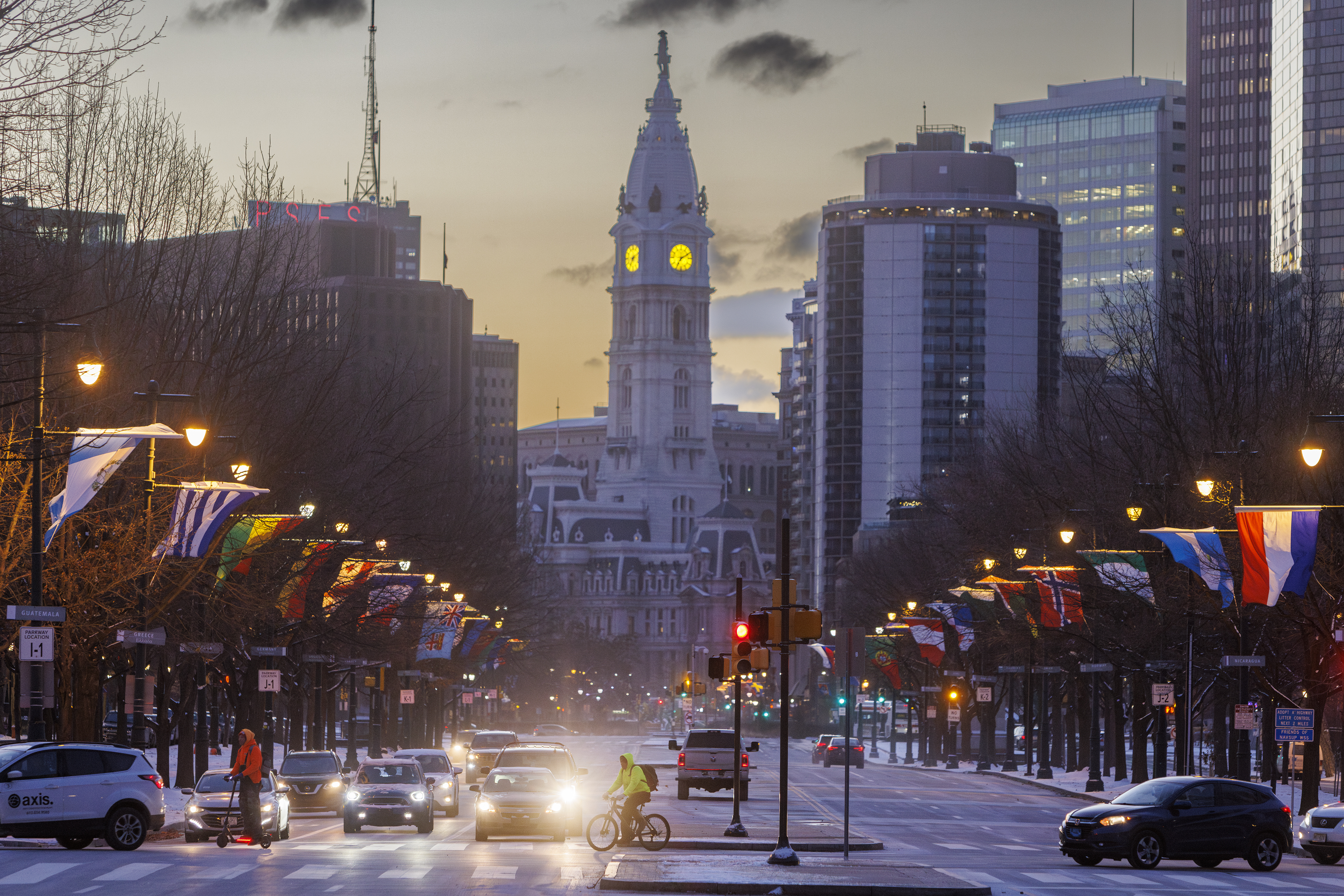
This week, we have an explainer from reporter Nate File on how the city maintains the 109 flags that line the Benjamin Franklin Parkway, which were first installed in 1976 as part of the United States’ Bicentennial celebration.
The city’s department of public property aims to replace them twice a year, or as needed when a flag gets damaged. Here’s the full story.
Cheers to Sandy Homel, who solved Thursday’s anagram: Austin Davis. Several hospital-based anti-violence programs in the area received $3 million in state funding, as announced Wednesday by Pennsylvania’s lieutenant governor.
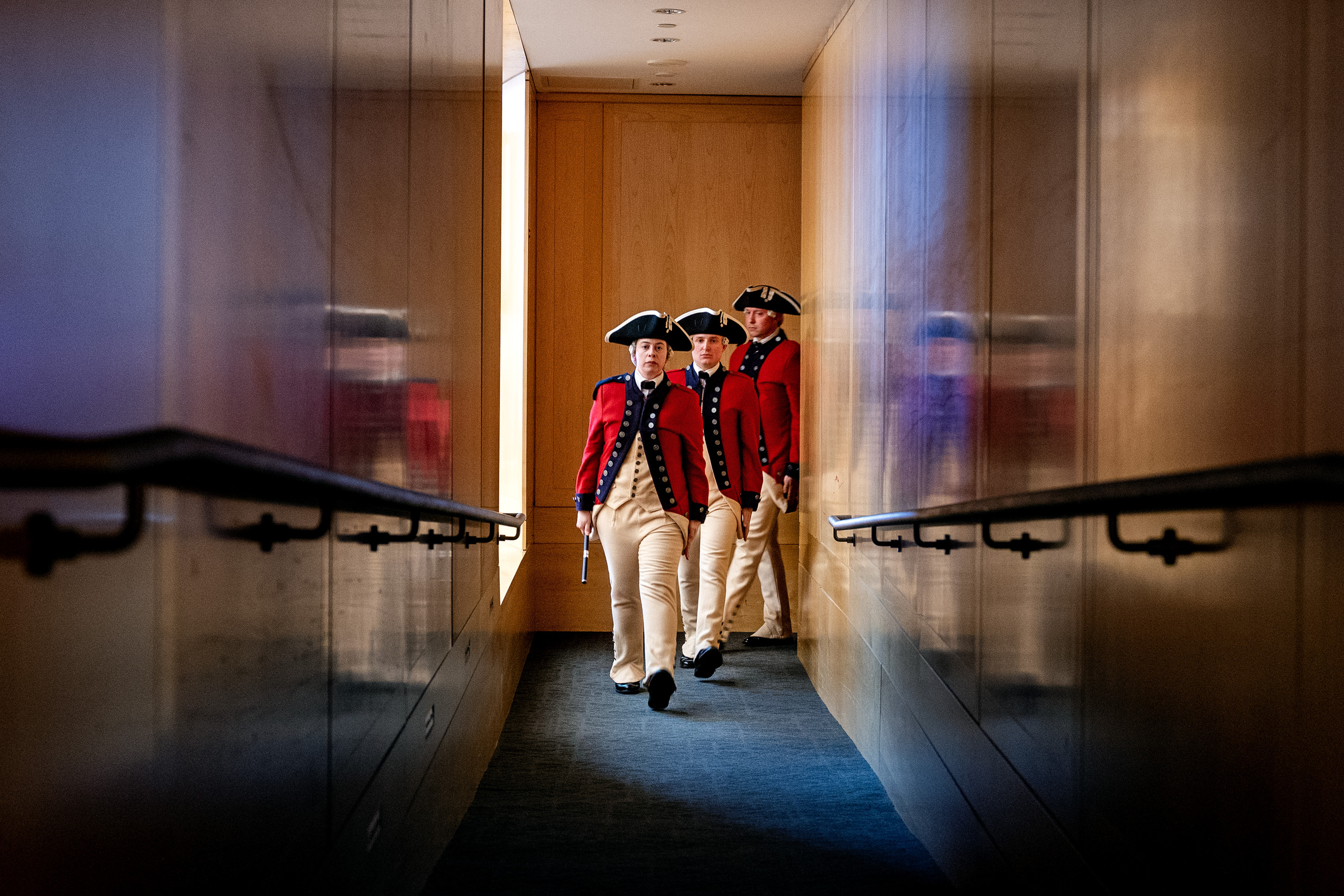
Members of the United States Army Old Guard Fife and Drum Corps leave the stage following a performance as the U.S. Mint unveils new coins for the Semiquincentennial at the National Constitution Center.
Thanks for stopping by this morning. Have a great weekend.
By submitting your written, visual, and/or audio contributions, you agree to The Inquirer’s Terms of Use, including the grant of rights in Section 10.
Around 2 p.m. Gold spoke with police by phone, and demanded President Ronald Reagan — who first ran on the Make America Great Again campaign slogan — resign from office.
And turn over leadership of the country to Gold,who said he wanted to be called the Antichrist.
In a statement that was read to the press, Gold wrote:
“Either choose my leadership, or accept the death of America.”
Back then, the Catholic high school was separated into two segregated schools: the boys’ school in the south wing, and the girls’ school in the north wing.
Gold took the hostages in the boys’ wing. Shortly afterward, the 1,950 male students were dismissed. They walked out just as the 2,150 female students were leaving for the day on a shortened schedule. Together, boys and girls filed calmly out of the massive, three-story school building at Academy Road and Chalfont Drive.
About an hour into the standoff, Gold let the secretary go after learning she was a mother of four. Shortly afterward, he traded the assistant dean for a food order, leaving only three male students as hostages.
Around 7 p.m., a police negotiator briefly entered the disciplinarian’s office.
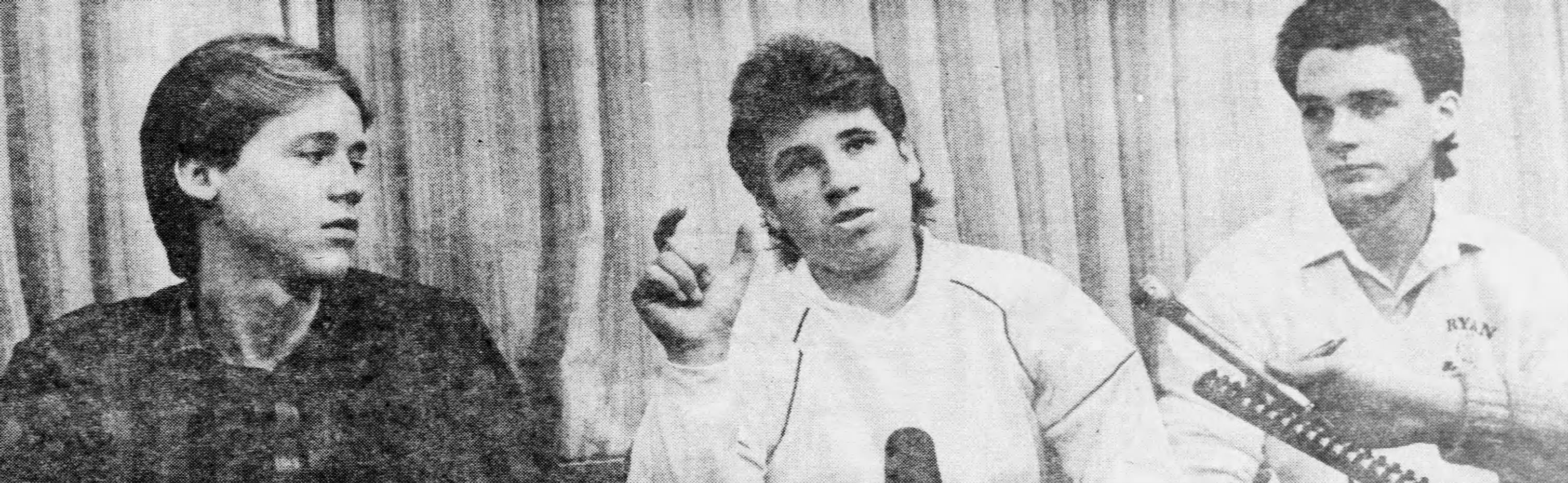
As student hostages (from left) Patrick Hood, 15, Raymond Smith, 16, and Mike Wissman, 17, meet the press, Smith estimates the size of the captor’s knife.
Gold told the negotiator on the phone that he would let two of the students go, and then the officer heard “a commotion and a lot of screaming” on the other end of the phone.
The students decided the gun Gold was brandishing was a fake.
So in good, old-fashioned Northeast Philly fashion, they jumped him. And it turned out they were right: The gun was a starter’s pistol, and it was loaded with blanks.
The students overpowered Gold, and held him down until the stakeout officers rushed in and put an end to the more than seven-hour standoff.
Eating at over 20 Middle Eastern restaurants as a scout for The Inquirer’s 76 list may seem like a daunting task (and in some ways it was). But when your search includes eating falafel over six weeks, the quest becomes a delightful lesson in texture and taste.
My beat included Lebanese, Yemeni, Afghan, Palestinian, Jordanian, Turkish, Egyptian, Syrian, and Moroccan restaurants, which meant I became a falafel obsessive, tasting over two dozen falafels. At every restaurant I went to I would ask my dining companions to evaluate the dish. And I would ask:
Could I feel the crispiness of the exterior by tapping on it? Was there a soft, herb-hued mush inside when I tore it in half? Did the earthy, nutty flavors of warming spices like cumin, coriander come through with each bite?
No matter how it’s made — legumes soaked overnight, blended (with spices, herbs, and sometimes flour), and fried — falafel is about the herbs, spices, and legumes that come together to make the palm-sized rounds that are perfect on platters, in a sandwich, or as a snack by themselves.
While falafel originates from Egypt, there are various techniques used throughout the Middle East to create this popular dish. Growing up with many Arab friends, I knew falafel looked and tasted a bit different depending on the chef’s country of origin — after all, Middle Eastern cuisine is not a monolith.
What was fascinating to learn were the specific differences in technique and ingredients within Philly restaurants. Palestinian falafel, like those served at Al-Baik Shawarma, tend to have bronze exteriors with slightly spicy, earthy, light-green interiors. Egyptian falafels use fava bean and chickpea mixes fried to perfection for the most satisfying crunch at Cilantro near South Street. Fluffy Lebanese falafels are made gluten-free and with baking soda in Collingswood at Li Beirut.
My journey revealed the rich tapestry of falafels that make up this city. After a summer of munching, Cilantro, Al-Baik, and Apricot Stone falafels live rent-free in my head.
But most importantly, these palm-sized legume balls were a clear reflection of just how expansive and diverse the Middle Eastern dining landscape is in Philadelphia. One that only takes sinking your teeth into super-satisfying falafels to experience.