ROME — Pope Leo XIV met with Venezuelan opposition leader and Nobel Peace Prize winner María Corina Machado in a private audience at the Vatican on Monday, during which the Venezuelan leader asked him to intercede for the release of hundreds of political prisoners held in the Latin American country.
The meeting, which hadn’t been previously included in the list of Leo’s planned appointments, was later listed by the Vatican in its daily bulletin, without adding details.
Machado is touring Europe and the United States after she reemerged in December after 11 months in hiding to accept her Nobel Peace Prize in Norway.
“Today I had the blessing and honor of being able to share with His Holiness and express our gratitude for his continued support of what is happening in our country,” Machado said in a statement following the meeting.
“I also conveyed to him the strength of the Venezuelan people who remain steadfast and in prayer for the freedom of Venezuela, and I asked him to intercede for all Venezuelans who remain kidnapped and disappeared,” she added.
Machado also held talks with Vatican Secretary of State Pietro Parolin, who was Nuncio in Venezuela from 2009 to 2013.
Pope Leo has called for Venezuela to remain an independent country after U.S. forces captured former President Nicolás Maduro in his compound in Caracas and took him to New York to face federal charges of drug-trafficking.
Leo had said he was following the developments in Venezuela with “deep concern,” and urged the protection of human and civil rights in the Latin American country.
Venezuela’s opposition, backed by consecutive Republican and Democratic administrations in the U.S., had vowed for years to immediately replace Maduro with one of their own and restore democracy to the oil-rich country. But U.S. President Donald Trump delivered them a heavy blow by allowing Maduro’s vice president, Delcy Rodríguez, to assume control.
Meanwhile, most opposition leaders, including Machado, are in exile or prison.
After winning the 2025 Nobel Prize for Peace, Machado said she’d like to give it to or share with Trump.
Machado dedicated the prize to Trump, along with the people of Venezuela, shortly after it was announced. Trump has coveted and openly campaigned for winning the Nobel Prize himself since his return to office in January 2025.
The organization that oversees the Nobel Peace Prize — the Norwegian Nobel Institute — said, however, that once it’s announced, the prize can’t be revoked, transferred, or shared with others.
“The decision is final and stands for all time,” it said in a short statement last week.
Harry A. Spivak, 66, a veteran caterer and connector in the city’s hospitality sector, died of natural causes on Dec. 31 after a short illness.
Over the decades in catering, event production, and consulting, he was known as the person who knew whom to call, how to staff a last-minute job, where to source the right equipment, and how to make complicated events run smoothly.
“He was a sage when it came to organization and bartending and everything that goes into making an event work,” said Jon Spivak, a brother who was his partner at the now-closed Max & Me Catering. “But his real gift was connecting people. He had what I call ‘a Rolodex brain.’ That was his true genius.”
Harry Spivak (left) with his uncle Herb Spivak and his brother Jon.
Mr. Spivak, the oldest of Joseph “Jerry” and Sally Spivak’s five children, grew up immersed in hospitality and music through the family’s businesses.
In 1968, Jerry Spivak and brothers Herb and Allen were among the founders of the Electric Factory, the pioneering music venue that grew into the industry’s largest concert-promotions company, Live Nation. In 1972, the Spivak brothers opened H.A. Winston & Co., a casual restaurant that grew to 22 locations on the East Coast.
Mr. Spivak himself only dabbled in the restaurant business — opening the short-lived Bala Rouge in Bala Cynwyd in 1985 with his brother Jon and cousin Adam Spivak after his graduation from the University of Colorado in Boulder. He later spent eight years in the San Francisco Bay Area before returning to the Philadelphia area to raise his daughter, Katie.
Friends say Mr. Spivak possessed a rare mix of business instinct and personal warmth. He could talk logistics one minute and relationships the next.
“He had this incredible memory,” said Jon Spivak, who is a chef. “You could mention someone you worked with 20 years ago in Colorado or New York, and Harry would remember where they went to school, who they worked for, and who they might know that could help you now.”
It also would take only one move to play the 1990s parlor game “Six Degrees of Kevin Bacon” with Mr. Spivak.
“Harry was my first friend,” Bacon said Monday, describing him as a “kind, gentle, big-hearted man.” The Spivaks moved onto Van Pelt Street in Center City in 1967, around the corner from the Bacon family’s house on Locust Street. “I was immediately taken in by the Spivak family, and their house became my second home,” Bacon said.
Three decades ago, Mr. Spivak’s talents as a social bridge created a chapter in music history when he suggested that Bacon and his older brother Michael perform together as the Bacon Brothers. Kevin Bacon confirmed that Mr. Spivak also arranged their area debut at the TLA on South Street, then owned by Electric Factory.
“Harry and I shared countless adventures through the years on the Philly streets, the Electric Factory, the Spectrum, Northern California, and Bucks County,” Bacon said.
Mr. Spivak also was his family’s historian, a daunting role given that his grandfather — taproom owner Harry “Speedie” Spivak — was one of 13 children. “Anyone in the family could call him and say, ‘I just met someone named Susan — how are we related?’” Jon Spivak said. “Harry would immediately say, ‘She’s your grandfather’s third sister’s daughter’s kid.’”
Mr. Spivak was happiest when he was in motion — building teams, solving problems, and making sure everyone had what they needed.
“He was a jack of all trades,” said Jon Spivak. “But more than that — he was the guy you wanted in your corner.”
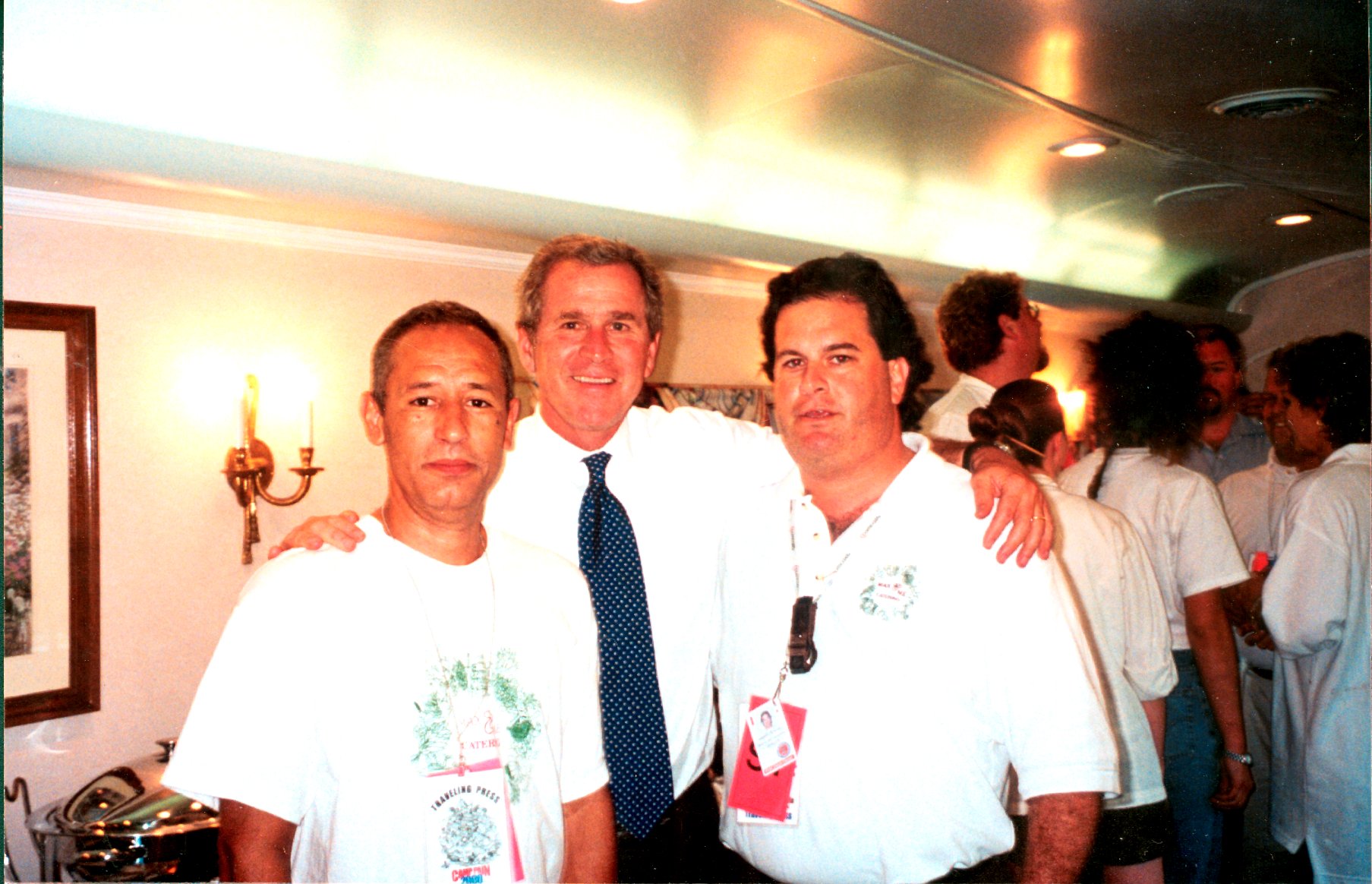
Jon Spivak and his Max & Me business partner Max Hansen relied on him in 2000 for catering jobs at the Republican National Convention in Philadelphia. After the convention, Max & Me was hired to cater aboard the Bush-Cheney campaign’s train for a three-day whistle-stop tour through the Midwest.
Harry Spivak (right) with then-presidential candidate George W. Bush and Max & Me Catering colleague Ariel Alejandro on a train after the Republican National Convention on Aug. 31, 2000.
Assigned to oversee beverages for the media, Secret Service agents, campaign staffers, and railroad employees, Mr. Spivak loaded 15 cases of beer, 21 cases of bottled water, 22 cases of sodas, and eight cases of juices, plus wines and spirits.
The baggage car used for storage, however, was separated from the kitchen and dining car by four 100-foot cars. Rather than navigate the narrow aisle, Mr. Spivak waited for station stops, unloaded the boxes onto the platform, transferred them by hand truck, and reloaded them onto the train. “My body didn’t stop hurting for weeks,” he told The Inquirer later.
Friends and relatives also remembered him for his role as the family’s fun uncle, who took nieces and nephews for ice cream, bent the rules, and encouraged adventure. “What I’ll remember most is his love of fun,” his brother said. “He didn’t take life too seriously.”
During the COVID-19 pandemic, Mr. Spivak became an advocate for feeding homeless people and worked to direct meals and resources to those most affected by shutdowns. “He didn’t live inside a box,” his brother said. “He did his own thing. People loved him because he had a huge heart and would do anything for anybody.”
In addition to his daughter and brother, Mr. Spivak is survived by siblings Jenny, Betsy, and Josh, and dozens of cousins, nieces, and nephews.
A celebration of Mr. Spivak’s life will begin at 1 p.m. Jan. 25 at Underground Arts, 1200 Callowhill St., Philadelphia. Memorial contributions may be made to Chosen 300 Ministries, Box 95, Ardmore, Pa. 19003.
Reporters spent more than an hour inside the Eagles’ locker room at the NovaCare Complex on Monday afternoon before the team closed the doors to media for the day.
During that span, A.J. Brown was not seen in the room. The wide receiver’s locker had not been cleaned out, but Brown was not made available to talk to reporters. He declined to be interviewed after the game Sunday and left the locker room shortly after it opened to the media.
It was an interesting year for Brown with the Eagles. The receiver wasn’t shy about his feelings on the direction of the offense, especially early in the season. He expressed himself in the form of cryptic social media posts and postgame interviews, like when he pleaded for the Eagles to “let their killers do their thing” after a Week 3 win over the Los Angeles Rams.
Brown finished the season with 78 catches for 1,003 yards and seven touchdowns.
A.J. Brown’s happiness within the offense and his relationship with Jalen Hurts were subject to scrutiny throughout the season.
What happens next with Brown will certainly be the subject of much speculation in the coming days and weeks and even months. Brown remains under contract through the 2029 season and has $113 million remaining on his deal. Trading him would be costly for the Eagles, who would be on the hook for $43.5 million in dead salary cap space if they traded him before June 1, according to Spotrac.
Waiting until after June 1 would free up $7 million in cap space. But any trade of Brown would have the Eagles taking on the fourth-largest single-season dead cap hit in NFL history, according to Spotrac.
Brown’s relationship with Jalen Hurts also has been the subject of speculation.
“A.J. and I will talk,” Hurts said Monday. “We’re in a good, great place. Maybe y’all can talk to him and ask.”
U.S. women’s soccer team captain Lindsey Heaps will join NWSL expansion team Denver Summit in June, ending a four-year tenure at France’s OL Lyonnes to move to her hometown’s new club.
The move had been speculated about on both sides of the Atlantic for some time, but was not finalized until now. Heaps will depart OL at the end of the ongoing European season, in which she will almost certainly win a fourth French league title and could add a second Champions League crown.
From the moment the Denver team was announced last January, the Golden, Colo., native knew she wanted to play there someday.
“One thing I wanted to do was kind of take the Denver aspect out of it, and really look at it from a football perspective — what the ownership was doing and what we were trying to create here at Denver Summit,” Heaps said Monday. “As hard as it was to to take the Denver and the home aspect out, it was something that was very intriguing to me. And it aligned with everything that I wanted to do, and I wanted it to be the right move for my career.”
Once Heaps was satisfied with that, the emotional part was easy. Along with being closer to her husband, San Diego FC sporting director Tyler Heaps, she’ll get to play in front of her parents, the rest of her family, and many friends in Denver far more often than she can now.
“It was amazing once it finally became real,” she said. “The feeling of going and being able to play in my home state, and for such an incredible community, and also a club that just wants to do things in the right way — I’m very, very thankful and I’m just excited to get going.”
She later added: “Knowing that I could play in my home state with my family and friends close by, obviously closer to my husband as well, it is really hard to pass up that opportunity with everything being said.”
‘Always seek a new challenge’
She previously played in the NWSL from 2016 to 2021 with the Portland Thorns, after starting her career with Paris Saint-Germain in 2012 — famously becoming the first major American women’s soccer prospect to spurn college as a teen.
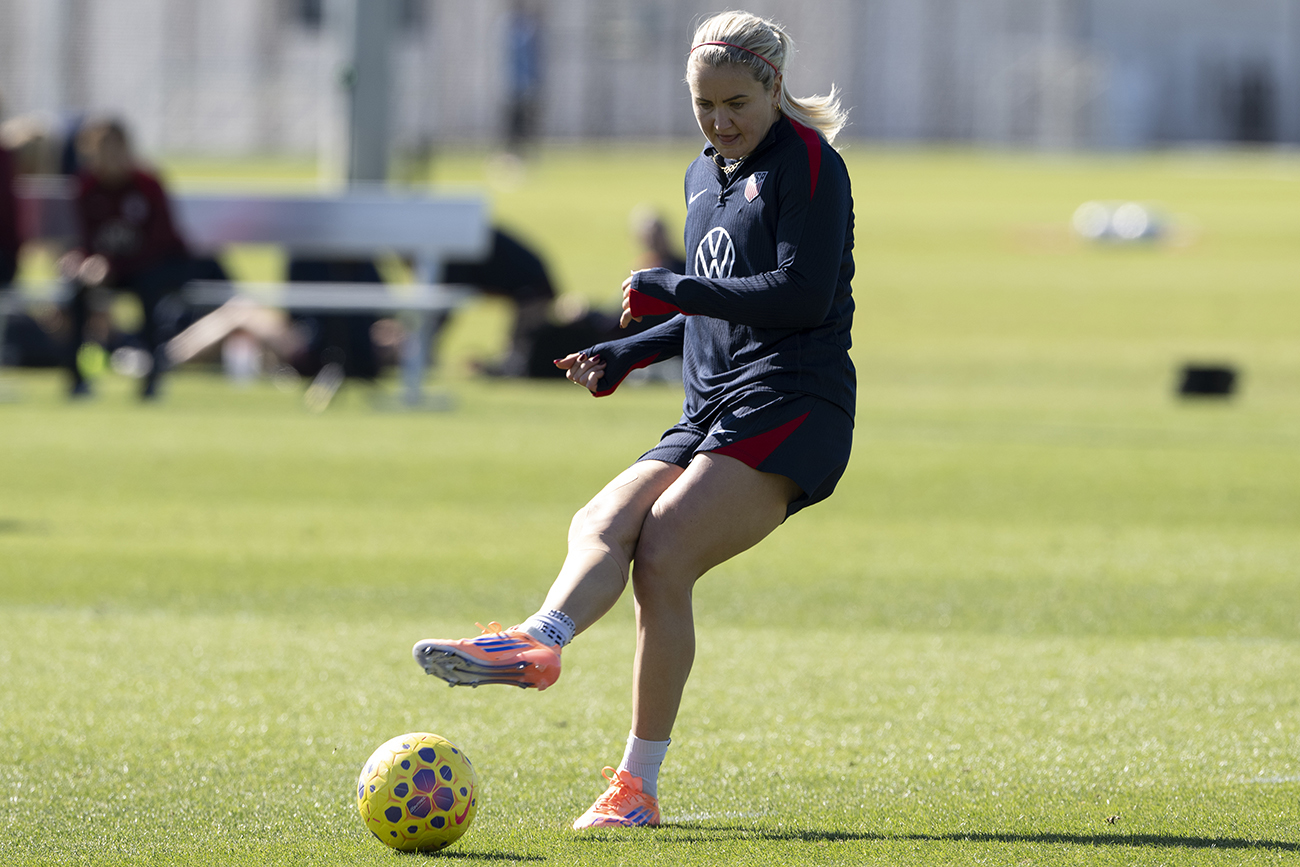
Lindsey Heaps, a native of suburban Denver, will come home to join Denver Summit FC.
Heaps won the 2017 NWSL championship and two regular-season titles with the Thorns, and with the U.S. won the 2019 World Cup and 2024 Olympics. Her 170 U.S. caps rank 19th all-time, tied with Carla Overbeck.
The timing of the announcement will be noted by fans who have a close eye on the battle between the NWSL and European clubs for U.S. stars. Sam Coffey still seems to be on the cusp of moving to Manchester City, and the former Penn State star was at the team’s home game Sunday.
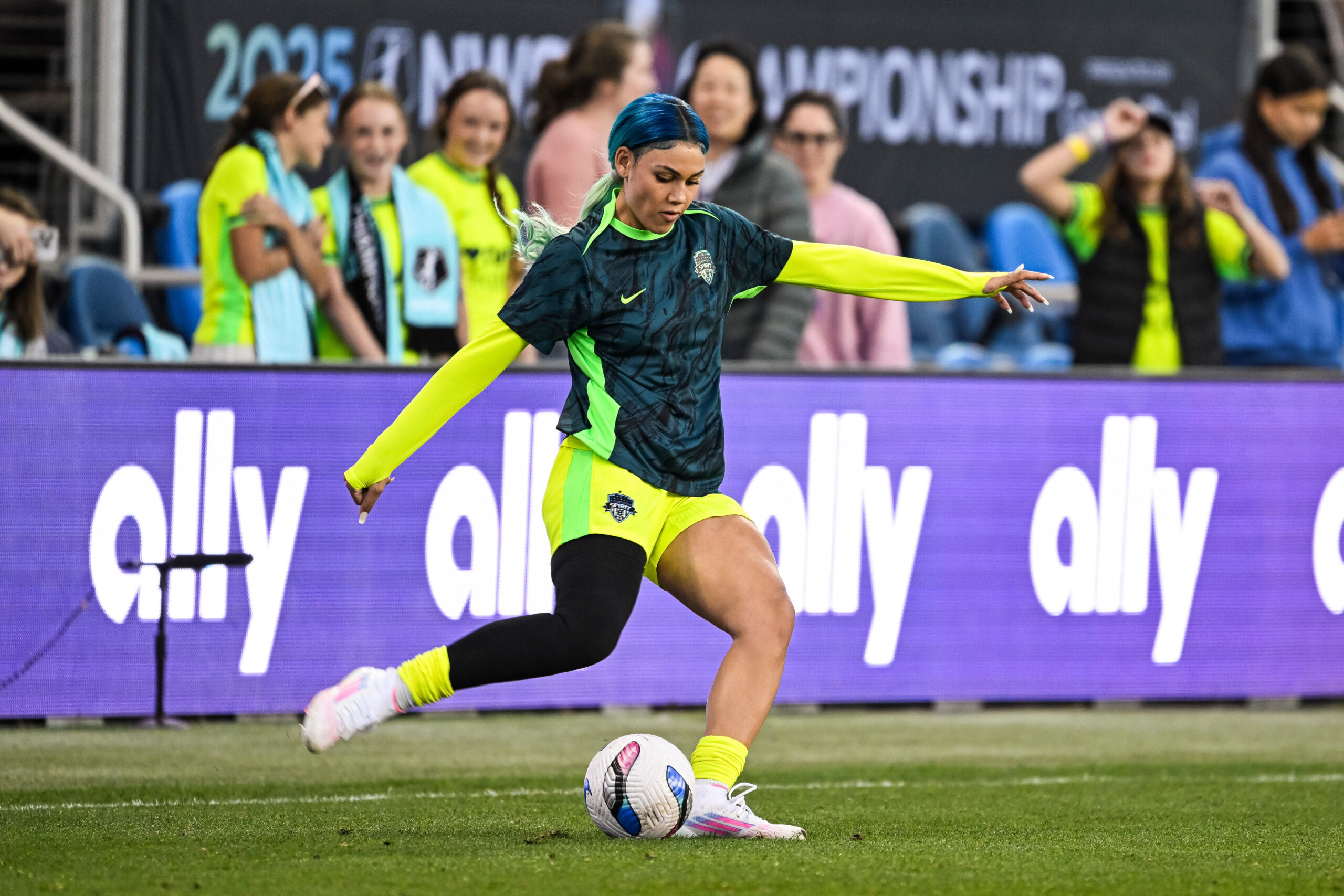
Trinity Rodman’s future, meanwhile, remains undecided. The NWSL’s “High Impact Player” (HIP) provision designed to keep her in the league remains contentious, and the NWSL Players Association wants to take the league to arbitration over it.
It was no surprise that the subject came up again Monday.
Trinity Rodman’s uncertain future is the biggest story in the women’s soccer world right now.
“I think the most important thing I want to put out there is, with other national team players, younger players, my message is always: one, you want to do the right thing for you,” Heaps said. “But also, that you should always seek a new challenge. I always give the advice that I think it is so special to go play in a different environment, in a different culture.”
She also applied the principle to players from European nations who’ve come to the NWSL, such as the San Diego Wave’s French veterans Kenza Dali and Delphine Cascarino. Heaps has played with both over the years.
“I think it is so special to see how they’re thriving and doing so well,” she said.
The HIP controversy
Heaps qualifies for HIP status, which means she can be paid beyond the league’s salary limits. Denver GM Curt Johnson said the team had wanted to sign Heaps no matter what and for some time, but will use the status on Heaps’ contract if it stays in place.
Lindsey Heaps at work with the U.S. women’s national team when it came to Chester in October.
“This was something that predated the HIP rule,” he said. “Our intention was to sign Lindsey, then the HIP rule came along.”
The rule doesn’t take effect until July 1, which puts teams in the awkward position of having to sign contracts now that are backloaded to incorporate the status — while also waiting to see how the arbitration plays out.
Each team will have a pot of $1 million to spend beyond the salary cap on players who qualify. There is no limit on how many players per team can be given the status, but there is a natural limit on how many ways it makes sense to divide the cash.
“When a player is assigned the HIP category, the salary cap charge is in the salary cap, and then there’s a pool of money outside the salary cap, is how it works,” Johnson said. “But we’re moving forward with the assumption that this will fall in the HIP category, and hopefully we’re moving on to finding our next player that fits that category.”
He deferred the rest to the league. A spokesperson there confirmed how Johnson described things, and declined further comment.
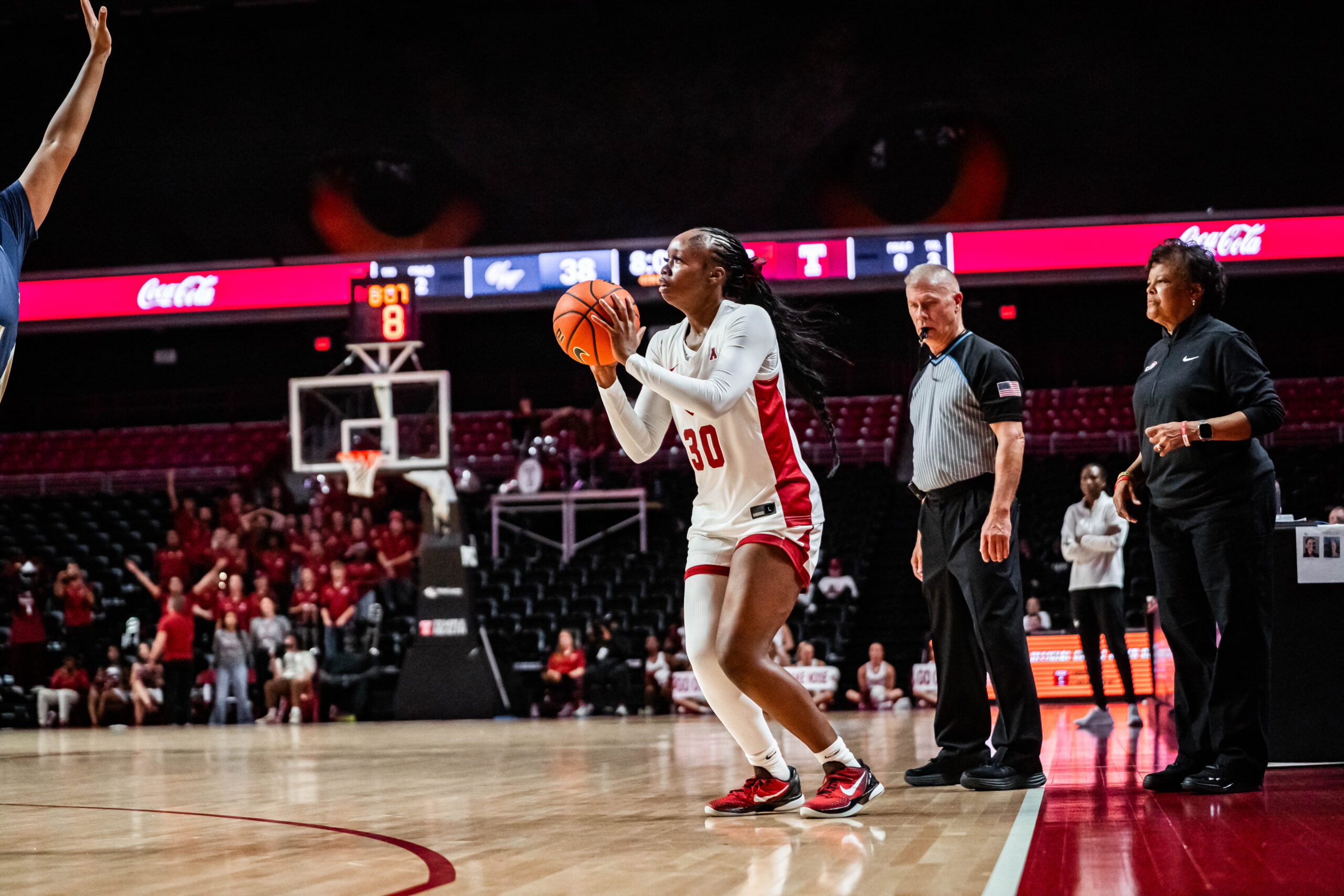
Temple sought to regain momentum with a two-game road trip after an ugly 50-47 loss to Texas-San Antonio in its American Conference women’s basketball opener on Jan. 3. It was successful at first.
The Owls cruised by Wichita State, 70-50, on Jan. 6 for their first conference victory. However, against a potential contender in Tulsa on Friday, Temple faltered in a 94-82 loss, allowing the most points in a conference game since the 2018-19 season.
Temple (7-8) is 1-2 in the American, but both losses have come to unbeaten teams in conference play. The Owls offense seems to be trending in the right direction, but questions remain about their depth.
Next, the Owls will host Tulane (6-10, 1-3) on Tuesday (7 p.m., ESPN+).
Offense gets on track
Offensive inconsistency defined Temple’s nonconference slate. The Owls struggled to knock down open shots and had turnover problems. They started games slowly, forcing quick shots and not letting the offense come to them.
The struggles reached a pinnacle against UTSA, when Temple shot just 20.5% through three quarters and scored just 47 points.
But the offense improved on the road trip. The Owls scored 70 and 82 points against Wichita State and Tulsa, respectively, and shot better than 40% from the field in both matchups. Temple used a strong offensive second half against Wichita State to turn a nine-point halftime lead into a comfortable 20-point win.
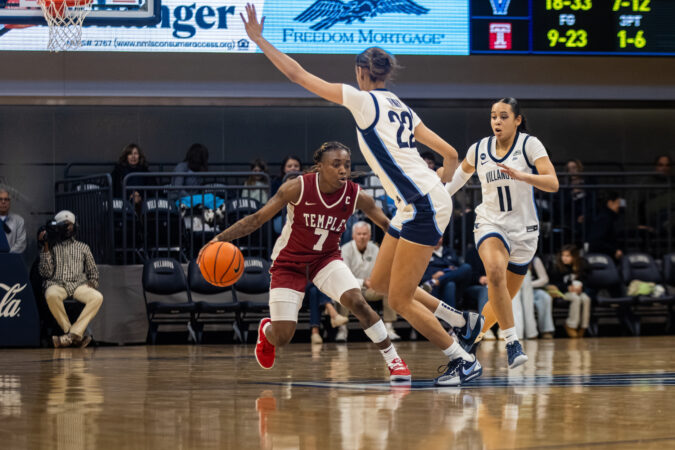
Drew Alexander scored 27 points for Temple in the loss to Tulsa.
Against Tulsa, the Owls sank 10 threes and put up 80 points for the first time in four games. Guard Kaylah Turner scored 31 points and made five triples, but the efforts on offense were spoiled by poor defense.
Defensive setbacks
Against Wichita State, Temple forced 25 turnovers and held the Shockers to just 50 points. That defense took a big step backward against Tulsa, the top-scoring offense in the conference.
The Golden Hurricane led by as many as 21 points in the first half, thanks to their 60% shooting clip from the field and an even better 81.8% from beyond the arc. Tulsa scored 53 first-half points.
The defense improved slightly for the Owls in the second half as they trimmed their deficit to six points in the fourth quarter. But Temple could not come up with enough stops as Tulsa made eight of its final nine shots to pull away.
Despite the Owls’ 19 forced turnovers, they allowed the hosts to shoot 58.9% from the field and 76.5% from three. Tulsa guard Mady Cartwright scored a career-high 31 points on 5-for-5 shooting from three.
Help from the bench?
Last season, Temple had strong bench production from Turner, who was named the conference’s Sixth Player of the Year, and forward Anissa Rivera. Turner moved to the starting lineup and Rivera graduated, leaving coach Diane Richardson needing a new spark off the bench.
That need is still apparent. In the Owls’ loss to Tulsa, their reserves scored just one point.
Guard Drew Alexander seemed to be that spark early in the season, but she has moved into the starting lineup, initially replacing Tristen Taylor and now in place of Savannah Curry, who is out with an undisclosed injury.
Alexander poured in 27 points against Tulsa. Now Temple needs someone to step up in reserve. No bench player is averaging more than four points.
With Curry expected to be out for the foreseeable future, Temple is going to need better production out of players like Kelian Cedano or Brianna Mead.
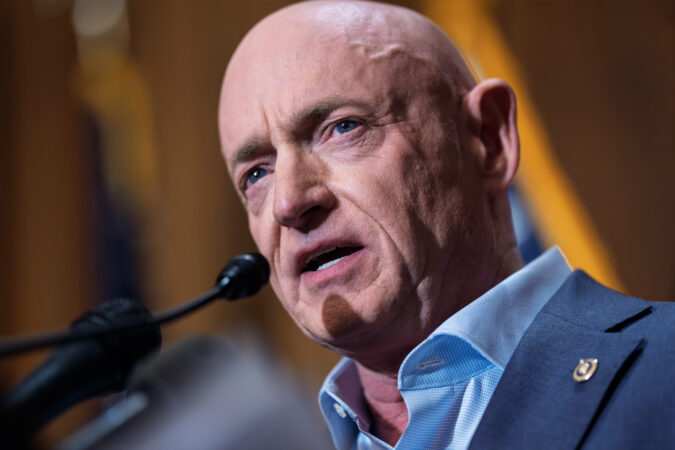
WASHINGTON — Sen. Mark Kelly filed a lawsuit Monday seeking to reverse Defense Secretary Pete Hegseth’s letter of censure and effort to potentially demote the retired Navy officer — sharply escalating a confrontation between the Arizona Democrat and President Donald Trump’s Pentagon chief over a controversial video reminding U.S. service members they can refuse illegal orders.
In the lawsuit filed in federal court in D.C., Kelly’s lawyers argued that the Pentagon’s inquiry, and formal reprimand, unlawfully punished the senator for his speech and violated his due process.
“It appears that never in our nation’s history has the Executive Branch imposed military sanctions on a Member of Congress for engaging in disfavored political speech,” the lawsuit states.
The Pentagon did not immediately respond to a request for comment.
Last week, Hegseth sent a letter of censure to Kelly, criticizing what he called the senator’s “reckless misconduct” for joining five other Democratic lawmakers who had served in the U.S. military or intelligence community in filming a video that reminded service members of their duty to disobey illegal orders.
The lawmakers have said they filmed the video in response to some of the Trump administration’s legally controversial uses of the military, such as attacking alleged drug trafficking boats in Latin America and deploying troops to major American cities.
Hegseth also said the Pentagon was opening a proceeding into whether Kelly’s last military rank and his pension should be reduced.
The administrative punishment fell short of the Pentagon’s most aggressive option: recalling Kelly to active duty and charging him under the Uniform Code of Military Justice. But Hegseth’s letter warned that criminal charges were possible if Kelly continued to “engage in conduct prejudicial to good order and discipline.”
The FBI also is involved in the matter.
Democrats, some Republicans, and many legal experts have criticized the inquiry as a specious attack on an outspoken critic of the Trump administration, who also oversees the Pentagon as a member of the Senate Armed Services Committee.
In a statement Monday, Kelly said Hegseth’s actions would saddle other veterans with the “constant threat that they could be deprived of their rank and pay years or even decades after they leave the military just because he or another Secretary of Defense doesn’t like what they’ve said.”
Kelly retired from the military in 2011 after serving 24 years on active duty. His career included flying fighter jets over Iraq during the Persian Gulf War and becoming an astronaut. He left the Navy several months after his wife, then-Rep. Gabrielle Giffords (D., Ariz.), was shot in the head during a constituent event and survived.
The lawsuit filed Monday notes that Trump — and later Hegseth — publicly labeled Kelly’s remarks “seditious” even as the defense secretary directed a board of military officers to independently determine whether Kelly should face a reduction in rank. The public comments essentially denied Kelly any chance for fair treatment and due process, the lawyers argued.
More importantly, they said in the filing, the Pentagon’s unprecedented disciplinary action would undermine an equal branch of government — where criticism from the political party out of power is essential to how American democracy functions.
Kelly, as a retired service member drawing a military pension, has been Hegseth’s top target in response to the video, organized by Sen. Elissa Slotkin (Mich.), a former CIA analyst and political appointee in the Obama administration.
The video also featured Reps. Jason Crow (Colo.), a former Army Ranger; Chrissy Houlahan (Pa.), a former Air Force officer; Chris Deluzio (Pa.), a former Navy officer; and Maggie Goodlander (N.H.), a Navy veteran. Goodlander is married to Jake Sullivan, the White House national security adviser under President Joe Biden.
Eugene Fidell, a senior research scholar and military law expert at Yale Law School, said that Trump’s and Hegseth’s statements made it almost impossible for Kelly to get a fair review by other military officers, and he expected Kelly would prevail in the case.
“The president is already on record calling Sen. Kelly a traitor; Secretary Hegseth has already shown he has prejudged this matter,” Fidell said. “I expect this will move quickly.”
Immediately following the Eagles’ loss to the San Francisco 49ers, a somber feeling started to take over the Golf Place. Those gathered at the Bucks County golf simulator facility to watch the Eagles while working on their swings began to pack up and go home, and co-owners Justin Hepler and Killian Lennon began to close up shop.
But in a brief moment, an idea was developed to help Birds fans release their anger after a disappointing loss: letting them hit golf balls at offensive coordinator Kevin Patullo’s face — or at least an image of it.
Earlier in the season, some fans broke the law by egging Patullo’s Moorestown home after the Eagles’ Black Friday loss to the Bears. The Golf Place’s idea keeps the flying objects far from the real Patullo, and within legal bounds.
“It was a fun way to let off some steam, but also make it fun for everybody involved,” Hepler, 24, said. “And obviously Killian in the video is a diehard Eagles fan, so he was pretty upset. But, everybody in here has gotten a kick out it.”
The Golf Place, located in Langhorne, has been open for a brief two-and-a-half months but is now getting more attention after the video of Lennon, 29, went viral overnight, accumulating over 200,000 views on social media and over 10,000 likes.
“We knew it had some potential because this was eight minutes after the game ended,” Hepler said. “So we thought it was pretty hilarious.”
So why the face of the first-year coordinator? To them, the answer is simple.
“No one’s happy with the offense this year, obviously,” Hepler said. “I’m sure you can see all the Eagles fans that related to it. You can see all the comments saying, ‘This could have been recorded any month of the year.’ We could have had this for not just a today type of deal.”
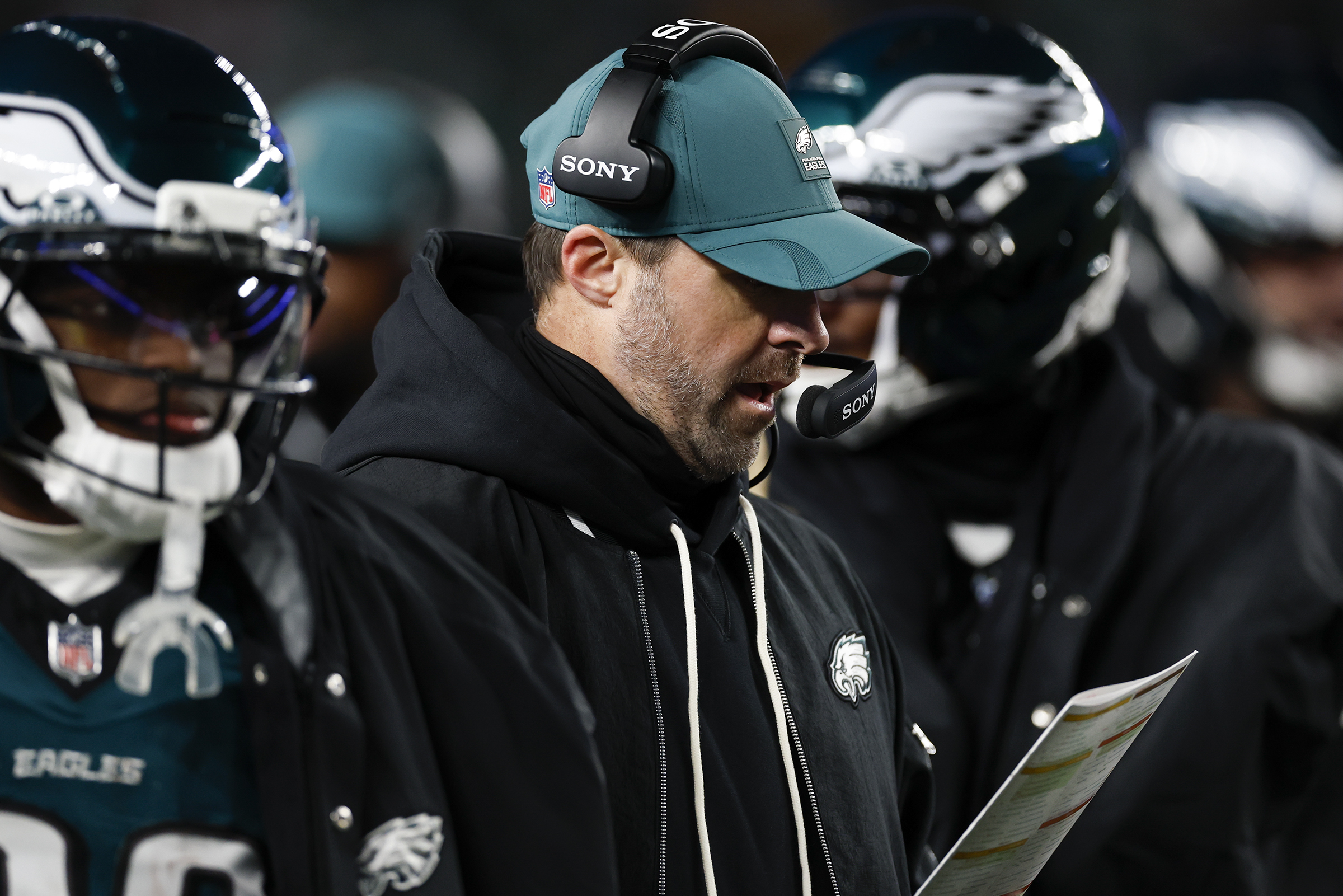
The Eagles offense took a major step back under first-year coordinator Kevin Patullo.
As of Monday afternoon, one person had already entered the store asking to take them up on their offer of hitting golf balls at Patullo. They said all fans are welcomed to request the same thing.
And although Hepler isn’t an Eagles fan, he knows there’s a glaring change that needs to be made by the team this offseason.
“Fire Patullo,” Hepler said. “That’s the answer for them. I mean, that’s what everyone says. That’s what Killian’s first response was, and I think that’s the overall message.”
KUALA LUMPUR, Malaysia — Malaysia and Indonesia have become the first countries to block Grok, the artificial intelligence chatbot developed by Elon Musk’s company xAI, as concerns grow among global authorities that it is being misused to generate sexually explicit and nonconsensual images.
There is growing scrutiny of generative AI tools that can produce realistic images, sound, and text, and concern that existing safeguards are failing to prevent their abuse. The Grok chatbot, accessed through Musk’s social media platform X, has been criticized for generating manipulated images, including depictions of women in bikinis or sexually explicit poses, as well as images involving children.
“The government sees nonconsensual sexual deepfakes as a serious violation of human rights, dignity and the safety of citizens in the digital space,” Indonesian Communication and Digital Affairs Minister Meutya Hafid said in a statement.
Scrutiny of Grok is growing, including in the European Union, India, France, and the United Kingdom, which said Monday it was moving to criminalize “nudification apps.” Britain’s media regulator also launched an investigation into whether Grok broke the law by allowing users to share sexualized images of children.
An emailed request for comment by the Associated Press to xAI resulted in an automated reply from the media support address which stated, “Legacy Media Lies.” This was the same message received from a different address when asked for comment regarding the global backlash.
Asian action aimed at Grok
Regulators in the two Southeast Asian nations said existing controls weren’t preventing the creation and spread of fake pornographic content, particularly involving women and minors. Indonesia’s government temporarily blocked access to Grok on Saturday, followed by Malaysia on Sunday.
Initial findings showed Grok lacks effective safeguards to stop users from creating and distributing pornographic content based on real photos of Indonesian residents, Alexander Sabar, director-general of digital space supervision, said in a statement. He said such practices risk violating privacy and image rights when photos are manipulated or shared without consent.
The Malaysian Communications and Multimedia Commission noted “repeated misuse” of the tool to generate obscene, sexually explicit, and nonconsensual manipulated images, including content involving women and minors.
The regulator said notices were issued this month to X Corp. and xAI demanding stronger safeguards.
“The restriction is imposed as a preventive and proportionate measure while legal and regulatory processes are ongoing,” it said, adding that access will remain blocked until effective safeguards are put in place.
Investigation launched in U.K.
Launched in 2023, Grok is free to use on X. An image generator feature, Grok Imagine, was added last year and included a so-called spicy mode that can generate adult content.
The U.K.’s media regulator said it launched an investigation into whether Grok violated its duty to protect people from illegal content. The regulator, Ofcom, said Grok-generated images of children being sexualized or people being undressed may amount to pornography or child sexual abuse material.
Technology Secretary Liz Kendall called the AI-generated images “weapons of abuse” and said the center-left Labour government would target the source of the problem by making it a crime for companies to supply tools to create nude images without consent.
Kendall said X could face a possible Ofcom fine of up to 10% of its qualifying global revenue depending on the investigation’s outcome and a possible court order blocking access to the site.
“They can choose to act sooner to ensure this abhorrent and illegal material cannot be shared on their platform,” Kendall said in Parliament.
Musk over the weekend called the British government “fascist” and said it is trying stifle free speech.
One of the family leaders of the Santucci’s Original Square Pizza empire was sentenced Monday to one day in jail and 18 months of supervised release for significantly understating the business’ earnings over the course of several years, causing him and other company officials to underpay taxes by nearly $1.4 million.
Frank Santucci Sr., 67, who had taken over the family business from his parents nearly 50 years ago, said he was “embarrassed” and “deeply sorry” for his actions, which federal prosecutors described as a long-running cash skimming operation. He pleaded guilty last year to charges of tax evasion and filing false tax returns.
“I spent my life trying to be an honest man,” Santucci said Monday during his sentencing hearing in federal court, “and knowing I fell short of those values is something I deeply regret.”
Prosecutors said in court documents that Santucci was a company patriarch who had “informal bookkeeping responsibilities” at the family’s pizza shops in South Philadelphia, Roxborough, and on North Broad Street. The restaurants are well-known for offering square, thick-crust pies with layers of sauce and toppings piled on top of cheese.
Although the business had for years employed a cash-only policy, prosecutors said, Santucci began keeping two sets of books as the company began using an electronic point-of-sale system in 2017. One of the sets of records included details for issues like payroll and expenses, which Santucci showed to his tax accountants, prosecutors said, and the other — which Santucci concealed from his accountants — is where he deposited some of the restaurants’ cash earnings.
As a result, prosecutors said, Santucci understated the shops’ earnings by about $5 million between 2015 and 2018. And that caused him to underpay his personal taxes by nearly $400,000, they said, while his co-owners underpaid theirs by about $700,000, and the business underpaid employment taxes by about $300,000.
Santucci — who was the only person charged in the case — has already repaid his personal tax bill, said his attorney, Richard J. Fuschino Jr. And Fuschino said Santucci was a man whose life had otherwise been defined by his hard work at his namesake shops, and an unerring dedication to his family and community.
“Mr Santucci is, on the whole of it, as good as [people] get,” Fuschino said.
Assistant U.S. Attorney Patrick Murray did not disagree that Santucci supported his family, and said it was notable that he had accepted responsibility for his crimes. But he said Santucci nonetheless engaged in a long-running scheme that deprived the IRS of revenue and, by extension, allowed Santucci’s business and relatives to keep more money than they were entitled to.
U.S. District Judge Karen S. Marston did not discount the seriousness of the crimes, but said Santucci’s age, health concerns — he suffered two strokes in recent years — and his role as a grandfather who is actively involved in caring for his young grandchildren all factored into her sentencing decision. She said his day in custody would be Monday and also ordered him to perform 300 hours of community service.
“I do believe that Mr. Santucci has shown the remorse that’s necessary in this particular case,” she said.
The Santucci’s pizzerias and their many franchise locations remain in operation and were not impacted by the case, Fuschino said.
WASHINGTON — Americans are increasingly rejecting the two major political parties, according to new polling.
Just under half, 45%, of U.S. adults now identify as independents, a new Gallup survey found. That’s a substantial shift from 20 years ago, when closer to one-third of Americans said they didn’t identify with the Democrats or Republicans.
This group appears, increasingly, to be driven by their unhappiness with the party in power, according to Gallup’s analysis. That’s a dynamic that could be good for Democrats in this year’s midterm elections, but doesn’t promise lasting loyalty. Independents have gravitated toward the Democrats over the past year when asked which party they lean toward, Gallup found, but attitudes toward the party haven’t gotten warmer. That suggests that the Democrats’ gains are probably more related to independents’ increasingly sour views of President Donald Trump.
Younger people, in particular, are rejecting the parties at much higher rates than older generations. More than half of Generation Z and Millennials identify as political independents, while a majority of older generations side with a party. That’s different from the past, when more young adults identified with the Democrats or the Republicans. And it’s part of the reason why frequent, dramatic swings in political power may become increasingly normal.
Democrats regain the edge with independents
Independents have long been the largest political group in the U.S., and their numbers have increased over the last 15 years. But often, they’re more inclined to side with one of the parties over the other.
This year, the Democratic Party gained the partisanship edge when independents were asked whether they lean more toward the Democratic or Republican Party. Nearly half, 47%, of U.S. adults now identify as Democrats or lean toward the Democratic Party, while 42% are Republicans or lean Republican. This is an indication of how Americans are feeling about their political affiliations, and it may not be reflected in voters’ actual registration.
This shifted the 3-year party affiliation advantage that the Republican Party held while President Joe Biden was in office, reverting to where the Democrats stood during Trump’s first term.
While that’s certainly not bad news for Democrats as they look to regain one or both houses of Congress in November, it’s likelier that they’re benefiting from independents’ unhappiness with Trump, rather than building lasting goodwill for themselves. Trump’s approval among independents has fallen steadily over the year, while Democrats’ favorability remains historically low.
Young people drive independents’ strength
Younger Americans are driving the recent rise in U.S. adults identifying as independents.
The Gallup polling found majorities of Gen Z and Millennial adults — who were born between 1981 and 2007 — now identify as independents. Independent identity is softer in older generations, where only about 4 in 10 in Gen X currently call themselves independents and roughly 3 in 10 older adults do.
Young adults today are more likely than previous generations to identify outside of the Democratic and Republican Party. While 56% of Gen Z adults call themselves independents, that’s higher than in 2012, when 47% of Millennials said they were independents, and 1992, when 40% of Gen X adults identified that way, according to the Gallup analysis.
That means that this trend isn’t likely to shift, unless the parties are able to change the way younger people see them.
Independent Americans are increasingly the moderates
Americans who identify as moderates increasingly don’t see themselves in either party, Gallup’s polling shows.
More independents have described their political views as “moderate” over the last decade, while Democrats and Republicans have grown less likely to identity as moderates.
About half of independents, 47%, called themselves moderates in 2025, compared to about 3 in 10 Democrats and about 2 in 10 Republicans.
At the same time, Democrats and Republicans have become increasingly polarized in their ideology. About 6 in 10 Democrats now call themselves liberal, while the share that consider themselves moderate is among the lowest it’s ever been. Among Republicans, 77% consider themselves conservative, and moderate identity is also at a low point.
That creates another challenge for the parties to contend with, since appeals to the center to win the growing pool of independents could risk alienating the most committed people in their base.