Blog

  • Trump’s tax stimulus set to keep U.S. economy on track in 2026

    Trump’s tax stimulus set to keep U.S. economy on track in 2026

    After a year of rolling policy shocks, the U.S. economy is set to get a lift from President Donald Trump’s tax-cuts package to keep the expansion on track in 2026.

    American taxpayers will get bigger refunds in the first half of this year as a result of Trump’s signature bill, economists say, with estimates for the aggregate boost ranging from $30 billion to $100 billion. Incentives for companies to invest in plants and equipment are also likely to bolster growth while lower borrowing costs, and steadier trade policy should help too.

    Still, forecasters see grounds for caution. Any burst of consumer spending from Trump’s fiscal stimulus is expected to fade as the year goes on, while tariffs will continue to weigh on small businesses especially. Unemployment is on the rise, as are concerns about affordability and inequality. The AI boom may not deliver the kind of broad-based growth its advocates promise, and the U.S. attack on Venezuela shows the potential for geopolitical instability.

    Adding it all up, economists surveyed by Bloomberg in mid-December expected growth of 2% in 2026 — the same as their forecast for 2025. That would likely be enough to extend America’s streak of outperforming its developed-world peers, though it’s a modest pace by past U.S. standards.

    “2026 is shaping up to be a decent year — not a boom, not a bust, just solid trend growth,” said Olu Sonola, head of U.S. economic research at Fitch Ratings.

    Federal Reserve officials were slightly more optimistic than Wall Street at their meeting last month, penciling in an increase of 2.3% in gross domestic product this year. The central bank’s economic staff cited fiscal policy, easier financial conditions, and a dissipation of the tariff impact as growth drivers through 2028, minutes of the meeting released recently show.

    The world’s largest economy weathered the shocks of 2025 better than most pundits predicted. After an initial slump driven by tariff front-running, growth bounced right back — and unexpectedly accelerated to 4.3% in the third quarter, according to numbers eventually published on Dec. 23 after a long delay due to the government shutdown.

    “President Trump’s economic agenda unleashed historic job, wage, and economic growth in his first term,” White House spokesperson Kush Desai said in a statement. “The Trump administration is implementing this same agenda of rapid deregulation, working-class tax cuts, full equipment expensing, and energy abundance — accelerating GDP growth and trillions in investment commitments are proof that the best is yet to come in President Trump’s second term.”

    ‘Helps us invest’

    Trump’s legislation extended income-tax reductions and added new exemptions for tips and overtime pay. Refunds will average $300 to $1,000 more than in a typical year, according to the Tax Foundation. In aggregate, economists at Goldman Sachs Group Inc. anticipate an extra $100 billion for consumers in the first half, while Citigroup Inc. put the figure at $30 billion to $50 billion.

    A longer-lasting impact will likely come from business incentives, some economists say.

    Gregory Daco, chief economist at EY-Parthenon, expects the fiscal package to lift GDP by 0.3% this year. He says some elements of the bill, like cuts in Medicaid and food-aid programs, will be a drag on growth — but reckons they’ll be outweighed by others including higher defense and border-enforcement spending, and measures to help businesses deduct the cost of investments.

    Among those anticipating a boost is Gat Caperton, who runs furniture-maker Gat Creek in West Virginia.

    “It helps us invest in our business,” Caperton said. “There’s really good high-end technology equipment that’s very competitive and very productive for us. And we will spend aggressively to buy that type of material.”

    ‘Faster gear’

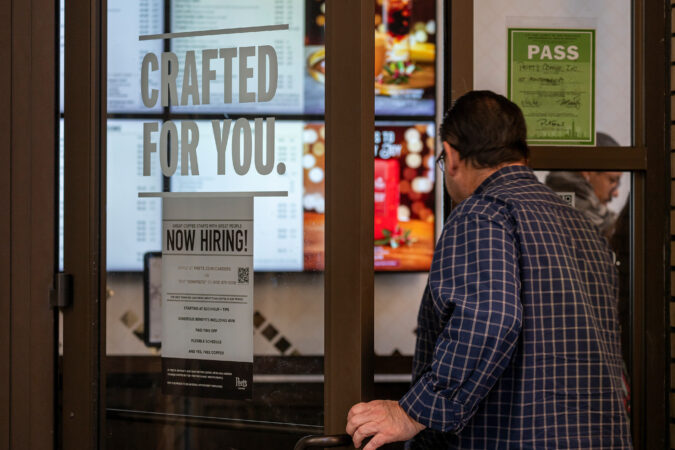
    Investments like these and the Fed’s easing of monetary policy will cushion a slowing job market, according to Kathy Bostjancic, chief economist at Nationwide Mutual Insurance Co. The unemployment rate rose to 4.6% in November, the highest in more than four years, and economists predict it will average 4.5% this year.

    “Labor demand should shift into a faster gear by mid-year as businesses increase investment in response to lower interest rates and tax incentives,” Bostjancic said.

    Fed policymakers including Chair Jerome Powell have said inflation linked to higher tariffs will likely be a one-off and eventually fade. Still, the cost of living was a major issue in November’s off-year elections, where Trump’s Republicans suffered losses. Companies remain concerned about tariffs and are projecting price increases of more than 3% in 2026, according to one recent survey.

    Jonathan Echeverry’s coffee business in Montclair, N.J., had to pay out an additional $150,000 in tariffs on beans, packaging, and other imports — just as his customers are becoming choosier in their spending.

    “People are opting to buy beans to brew at home rather than to buy beverages,” said Echeverry, who co-owns Paper Plane Coffee Co. “I doubt this year will be better.”

    Most forecasters anticipate a quieter year on the trade policy front compared with the chaos of 2025 — but there’s plenty of uncertainty still. The Supreme Court is expected to rule soon on the legitimacy of some of Trump’s import taxes. The president has floated the prospect of $2,000 tariff rebate checks, which would offer another boost to growth — and further pressure on the U.S. budget deficit.

    AI spillovers

    Another unknown is artificial intelligence. The rush to build and equip data centers helped lift business investment in 2025, and the AI-led equity boom amplified the purchasing power of wealthier Americans, but there’s also concern that the technology will replace human workers.

    There’s a disconnect between multibillion-dollar announcements of new data centers and the amount of hiring they generate, according to Michael Feroli, chief U.S. economist at JPMorgan Chase & Co.

    “It’s not creating as many jobs as the big nominal numbers might imply and that’s in contrast to past capex booms,” he said. “Labor demand continues to look soft, and that leaves us worried about downside risks.”


  • A Scranton neighborhood group put up a ‘hometown hero’ banner for Joe Biden outside his childhood home. Controversy ensued.

    A Scranton neighborhood group put up a ‘hometown hero’ banner for Joe Biden outside his childhood home. Controversy ensued.

    When a Scranton neighborhood group decided to honor Joe Biden with a “hometown hero” banner outside the 46th president’s childhood home recently, they expected a little bit of blowback.

    But members of the Green Ridge Neighborhood Association say they’re dumbfounded by the number of complaints and even threats, both locally and abroad.

    “Someone in Guam has been very vocal,” Roberta Jadick, the association’s secretary, said beneath the banner on North Washington Avenue on a recent snowy weekday.

    “Hometown Heroes” banners first appeared in Harrisburg in 2006, according to the program’s website, and they’ve become ubiquitous in small-town and suburban Pennsylvania. Most appear as black-and-white photos of men and women in uniform, thousands of veterans honored in nearly every corner of the Commonwealth.

    While most of the banners honor veterans, no rule prohibits municipalities, civic groups, or veterans’ groups from honoring others, said Laura Agostini, president of the Green Ridge group. Some towns have put up banners of high school athletes or law enforcement officials.

    “I mean, teachers are heroes, aren’t they?” Jadick said.

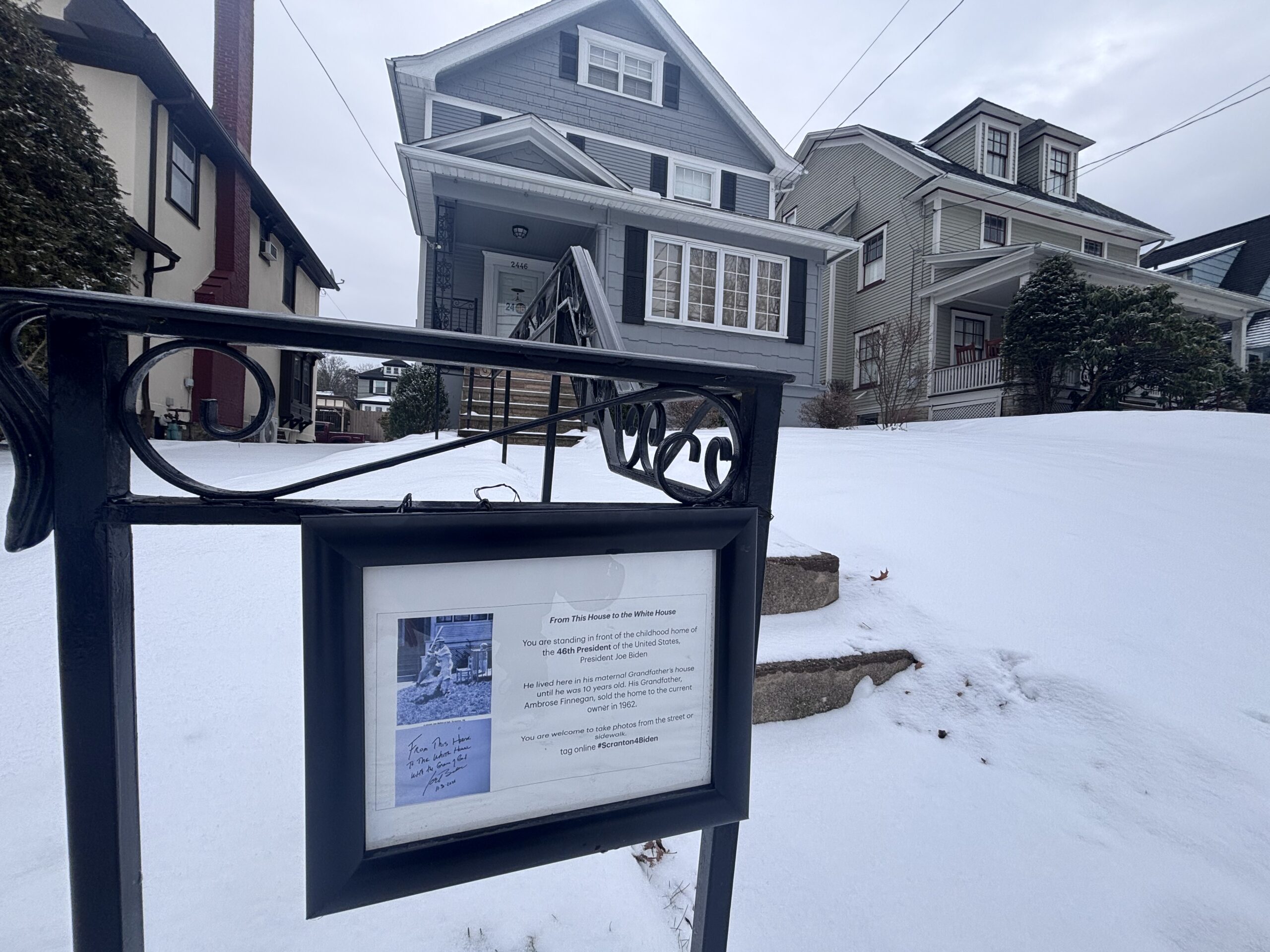
    The banner on North Washington Avenue near Biden Street depicts the former president in a suit, with the title “Commander in Chief, U.S. Armed Forces, 2021-2025″ written beneath it. Agostini said the group was aware that “Commander in Chief” was a civilian title.

    A banner featuring former president Joe Biden as a “hometown hero” has sparked controversy in Scranton. The neighborhood group that put it up plans to vote on its future Monday after getting criticism from veterans.

    Agostini said the initial blowback was political but that the issue “morphed” into a veterans’ issue.

    “We never intended to portray him as a veteran,” Agostini said. “There’s only been 46 presidents in the United States, and each one had a hometown, and we thought this is a unique honor.”

    A Dec. 21 Facebook post about the banner by the Green Ridge Neighborhood Association received nearly 250 comments, ranging from supportive to critical to crude.

    “He’s an embarrassment!” one commenter wrote.

    A similar controversy erupted in 2021, when a four-lane highway in Scranton was renamed President Joe Biden Expressway.

    Biden was born in Scranton in 1942 and lived there on and off, and he repeatedly mentioned Scranton as a formative place. A plaque outside the home where Biden lived with his maternal grandfather, Ambrose Finnegan, said he moved out when he was 10 years old.

    A Hometown Heroes banner honoring the Finnegans is just one light pole down from Biden’s. No one from the Hometown Heroes Banner Program returned requests for comment on Wednesday.

    One local veteran, Andy Chomko, said he doesn’t have a problem with Biden being honored in Scranton, but his banner should not look like veterans’ banners.

    “It’s a great thing that he lived here and had roots here,” Chomko said. “But the banner makes it look like he’s a veteran, and every one of those people on those other banners put their lives at risk for their country.”

    Navy veteran Harold Nudelman told WNEP-16 that Biden “didn’t put his life on the line.”

    “Don’t portray him as a veteran. He didn’t serve. He didn’t take that oath to serve as we did,” he told the news station.

    Chomko, who served in Iraq and Afghanistan with the Army, believes the Green Ridge group should remove the banner and “rethink it.”

    That could happen after Monday, the group will vote on the future of the banner at a public meeting.

    “I would say the vast majority of people support it or really don’t care,” Agostini said. “I don’t take any of this lightly, though, and while we were hoping it would be dying down, we’ll have an open discussion about it.”

    Jadick said the banner was never meant to divide the public even more than it is.

    “If Trump was from here, he’d have a banner up after he was out of office,” she said. “This is where Joe Biden is from. Those are his uncles on the other banner.”

    A banner featuring former president Joe Biden as a “hometown hero” has sparked controversy in Scranton. The neighborhood group that put it up plans to vote on its future Monday after getting criticism from veterans.
  • How student loans and financial aid are changing in 2026

    How student loans and financial aid are changing in 2026

    The landscape for financial aid is about to change.

    In 2026, the federal government will curb access to billions of dollars in student loans, reconfigure how borrowers repay their debt, and provide new grant money for short-term career training programs.

    All of these changes are slated to take effect in July and are the result of the One Big Beautiful Bill signed into law in summer. The financial aid provisions in the law, which extend tax cuts from President Donald Trump’s first term, will affect how families pay for higher education. Since November, the Education Department has been negotiating the terms of the policies with a panel of experts, as required by Congress. Terms for the new rules will be finalized early this year, with few anticipated changes.

    While some higher-education experts say the changes will deliver commonsense reforms, others worry they could discourage college enrollment and persistence. Either way, students entering college in fall 2026 will encounter a very different federal financial aid system.

    Here’s what you need to know.

    Student loan limits

    In one of the largest revisions to federal student loan policy in decades, the Education Department will impose new caps on the amount of money graduate students and parents can borrow from the government.

    The Grad Plus program, which lets students borrow up to the full cost of attendance to pay for graduate degrees, will sunset on July 1 for new borrowers. At the same time, people pursuing a master’s degree will have their borrowing capped at $20,500 a year and $100,000 over a lifetime. Those working toward a professional degree — say, an aspiring doctor or lawyer — will be capped at $50,000 a year and $200,000 in total from the federal government.

    In all, students will now face a lifetime maximum borrowing limit of $257,500 for undergraduate and graduate school federal loans combined. If those amounts are not enough to cover costs, students will have to pay the rest themselves or turn to private lenders.

    The distinction between graduate and professional degree programs has been a lightning rod for controversy. Nurses and others have railed against the Education Department’s proposal to exclude their fields from the higher loan limits. They worry the agency’s move to restrict the professional degree classification to 11 fields will discourage people from enrolling in other advanced degree programs.

    The proposal must still be published for public comment before it can be finalized, which allows its detractors to fight for a broader classification.

    Researchers say a substantial number of students pursuing master’s degrees will be affected by the new limits. An analysis by the Federal Reserve Bank of Philadelphia found that one-third of graduate students with federal loans have borrowed more than the new limits will allow. Research from the Postsecondary Education & Economics Research at American University found that students in professional programs are more likely to borrow in excess of the new limit.

    Beth Akers, a senior fellow at the conservative American Enterprise Institute, said she suspects that many people will be caught off guard by the new constraints on graduate borrowing, and she said colleges are not doing enough to prepare.

    “There could be a private-sector solution that covers the gap,” Akers said. “But I suspect that the coordination that’s necessary for that to happen by next fall will probably not happen.”

    There have been a lot of conversations among schools about offering institutional loans to help graduate students in need, said Scott Z. Goldschmidt, a partner at the law firm Thompson Coburn who works with higher-education clients. He said colleges are also exploring private loan alternatives and trying to identify scholarship opportunities.

    Limits on parents

    While the tax bill left undergraduate loan limits intact, it will affect how much parents can borrow to support students working toward an associate’s or bachelor’s degree.

    Parents and caregivers could previously take out as much as their child needed to attend college through the Parent Plus program, which is designed as a supplement when other types of student aid have been exhausted. Starting July 1, the program will set new limits of $20,000 a year, or a total of $65,000 per student.

    Because relatively few families use Parent Plus loans, researchers at the think tank Urban Institute estimate that the new limits will affect just 2% of students. Still, among families who rely on the loans, nearly a third will be affected by the annual cap, and 17% will run up against the $65,000-per-child total cap.

    “It will have a significant impact on a small number of people, and it will be people who we’re particularly concerned about, like disadvantaged populations who tend to use those resources the most,” Akers said.

    She hopes that colleges will provide more financial aid to lower the cost for students.

    Current borrowers are exempt from both of the new caps for three years.

    Fewer repayment plans

    The federal student loan repayment system is notoriously complex, with a multitude of options and terms that can be difficult to navigate. Instead of having seven repayment plans, new borrowers will have just two options after July 1: one standard plan and one new income-driven repayment (IDR) plan, called the Repayment Assistance Plan.

    The new standard plan will stretch monthly payments out from 10 to 25 years. The larger the debt, the longer the repayment term. Someone with an outstanding principal of less than $25,000 will repay the debt for no more than 10 years, while a borrower with more than $100,000 in federal loans will be in repayment for up to 25 years.

    Payments on the new income-driven plan will be based on a borrower’s total adjusted gross income, ranging from 1% to 10% depending on earnings. The plan cancels the remaining balance after 30 years of payments, instead of the current 20 or 25 years.

    Borrowers have to make a minimum monthly payment of $10. Those who make timely monthly payments will have their unpaid interest waived to prevent negative amortization, which happens when payments are not enough to cover the principal and interest. The plan also provides a monthly subsidy of up to $50 to ensure borrowers pay down their principal balance by at least that amount.

    An analysis from American University suggests that the principal subsidy could result in faster loan forgiveness for low-income, low-balance borrowers. Still, researchers said they worry that higher payments and a longer time before forgiveness for many low-income borrowers is likely to increase the rate of loan defaults.

    People who are currently repaying their loans can remain in any of the three existing plans that are not tied to income. Current borrowers on an income-driven plan can stay put until July 1, 2028, at which time they can switch to RAP or the original Income Based option. That income-based plan will give Parent Plus borrowers, who are barred from the new IDR plan, a repayment option tied to their earnings.

    There are some complications in consolidating the repayment plans. Congress gave borrowers enrolled in the Saving on a Valuable Education plan three years to exit, but a proposed settlement could speed up the timeline. The Education Department struck a deal in December with seven states to resolve a lawsuit challenging the legality of the Biden-era repayment plan. The agency stressed that enrollees would have a limited time to find another option to repay their debt, but it has not provided an explicit timeline.

    “Given what we’ve seen with folks not being able to enroll in plans and being stuck in a backlog … I’m really concerned there’s going to be even more chaos and confusion,” said Michele Zampini, associate vice president of federal policy and advocacy at the Institute for College Access & Success.

    Other student advocates worry about whether the Education Department will have revamped the repayment system to reflect all of the changes in time for the graduating class of 2026.

    People entering repayment for the first time will need an updated loan simulator, for instance, to select the best repayment plan, said Melanie Storey, president and chief executive of the National Association of Student Financial Aid Administrators. Although newly minted graduates have a six-month grace period before repayment kicks in, she said colleges need to start communicating to students about their options long before then.

    “We need information and we need clarity,” Storey said. “My members are the people on the ground who have to answer questions for students, and I’m concerned that given the schedule, we won’t have answers until well into the spring.”

    Pell Grant eligibility

    There are some significant changes ahead for the Pell Grant, the largest federal grant program for low- and middle-income college students. Chief among them is the expansion of the program to include students enrolling in career training programs that range from eight to 15 weeks in duration. Those programs, which are mainly offered at community and technical colleges, must provide at least 600 hours of instruction.

    In December, the Education Department reached a consensus with negotiators on the framework of the policy, dubbed Workforce Pell. The proposal must still be published and finalized, but higher-education experts expect few, if any, changes. It calls for governors to work with state advisory boards to determine program eligibility, with a focus on courses that are in high-demand fields such as nursing aides or emergency medical technicians.

    Other new policies could change the number of students eligible for Pell Grants. This summer, the Education Department will exclude assets from family farms, small businesses, and family-owned commercial fisheries from the calculation of the Student Aid Index, or SAI — a figure used to determine a student’s ability to pay for college and the amount of aid they receive.

    And some people may no longer be able to get a Pell Grant. The Education Department will begin including foreign income in the calculation of a student’s Pell eligibility, which could reduce eligibility. Furthermore, anyone who receives enough scholarship dollars to cover their full cost of attendance will no longer be eligible to receive Pell.

    Students will also be ineligible if their families have lots of assets but appear to have little income in the calculation of SAI. A student previously could qualify for Pell despite their family having a lot of assets if their parents generated business losses that lowered their adjusted gross income. Starting July 1, an SAI that is equal to or exceeds twice the amount of the maximum Pell award will be disqualifying.

  • Good intentions don’t build housing in Philly, and mediocre campaigns don’t win races in Pa. | Shackamaxon

    Good intentions don’t build housing in Philly, and mediocre campaigns don’t win races in Pa. | Shackamaxon

    This week’s column looks into what happens when City Council members try to use a bad practice to serve the public good, and the beginning of Pennsylvania’s gubernatorial race.

    Good intentions

    In the first few months of this column, much of the toughest criticism has been leveled at Councilmembers Jeffrey “Jay” Young and Cindy Bass. While every district legislator participates in the tradition to some degree, these two have been the most egregious practitioners of councilmanic prerogative, which gives district Council members absolute discretion over land use and transportation questions within their districts.

    Even worse, Young and Bass often struggle to offer coherent explanations for their actions. Over the past few years, I have spoken with a range of community members, local politicos, and development experts who have expressed total bewilderment about what exactly it is the pair is seeking to accomplish.

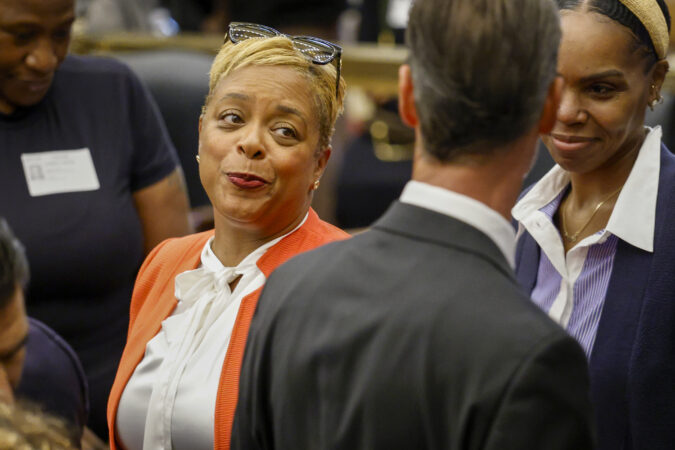
    That’s not the case with 3rd District Councilmember Jamie Gauthier. Her values are clear. When Gauthier leans into prerogative, she’s not seeking to micromanage minor decisions. She even went as far as creating an exemption for her entire district that removes the need to secure a city ordinance for outdoor dining. Gauthier legislates because she wants to produce more affordable housing and prevent displacement. In many ways, it is a bold and admirable approach.

    Still, when it comes to public policy, good intentions are not enough.

    University Place Associates is planning a 495-spot parking garage in Councilmember Jamie Gauthier’s district in West Philadelphia.

    Middling MIN

    Gauthier’s signature policy is her push for what she’s called the Mixed Income Neighborhoods overlay, or MIN. The policy, enacted in parts of both Gauthier and Councilmember Quetcy Lozada’s 7th District, builds off an existing city program, the Mixed Income Housing Bonus. Under the bonus program, developers could exceed current zoning limits in exchange for supporting affordable housing. This could be done either by building affordable units or by making a payment to the city’s housing trust fund.

    MIN, however, is mandatory. It also does not come with any bonuses. For larger development projects (10 or more units), builders are required to set aside 20% of the units for low-income households. The idea is to increase the city’s stock of statutorily affordable housing, promote income integration, and allow poorer households to move to and remain in high-opportunity areas, all without costing the city a dime.

    All of that sounds wonderful … in theory.

    In practice, things have not panned out the way advocates had hoped. Instead of producing significant amounts of affordable housing, the zoning requirements have stifled development overall. Of the 18 major projects considered by the city’s Civic Design Review Board, only two are located within the boundaries restricted by the policy. One of those projects doesn’t include any housing at all, instead supplying nearly 500 parking spots adjacent to the Market-Frankford Line.

    In an interview with Gauthier last fall, she told me she would stand by the results of MIN against the voluntary program or any other zoning program in the city of Philadelphia. Planning Commission data, however, tells a different story. In 2024, the most recent year studied, the MIN resulted in the completion of just five affordable units. The bonus program, on the other hand, created 63 affordable units and generates millions of dollars in bonus payments.

    This, of course, only looks at one factor, which is the impact on affordable housing programs. It doesn’t answer the question of how many market-rate units would have been built without the requirement. Housing costs no longer affect just the poorest, as 90% of Americans live in counties where home prices and rents rose faster than income. For most people, whether they are University of Pennsylvania students or longtime residents, this private market is where they will find housing. Without enough construction to meet demand, prices will continue to rise.

    The experience of cities like Austin, Texas, where rents are falling despite a surging population, demonstrates that new construction can help alleviate that pressure.

    There’s also the economic impact. Development projects employ skilled workers and provide money for the city’s affordable housing programs. Without more research, we have no idea how much MIN has impacted city coffers. Before Gauthier’s program expands to more communities, the city should undertake a comprehensive investigation.

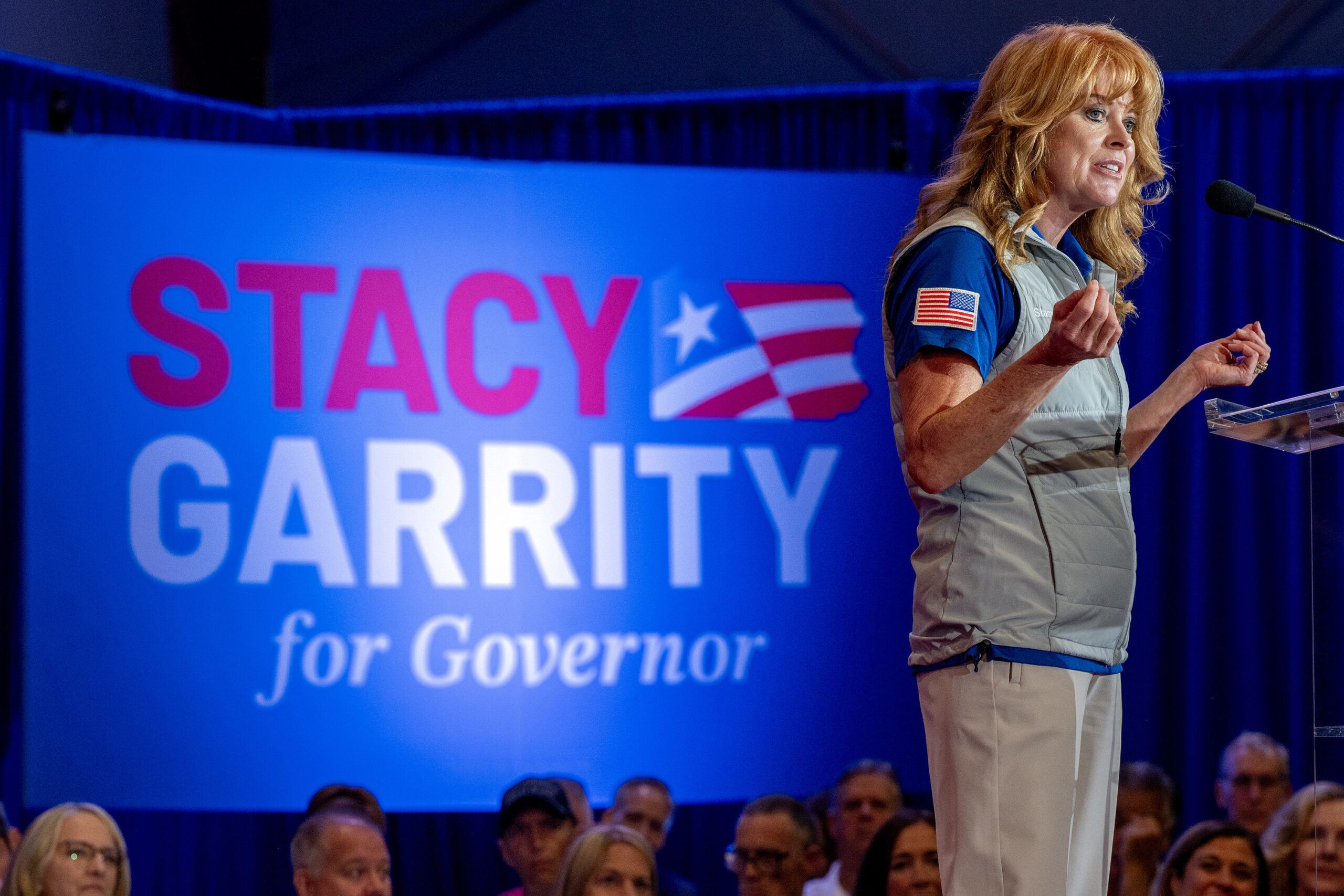
    State Treasurer and Republican candidate for governor Stacy Garrity holds a rally in Bucks County at the Newtown Sports and Events Center in September.

    Maximum meh

    With State Sen. Doug Mastriano officially out and Gov. Josh Shapiro officially in, the Pennsylvania governor’s race has begun. With no other Republicans or Democrats expressing an interest in the position, a November matchup between Shapiro and State Treasurer Stacy Garrity looks certain.

    Shapiro’s campaign launch video begins as you’d expect, with the rapid reconstruction of I-95 after a fire damaged several lanes in 2023 — a reminder of how the governor gets, uh, stuff done.

    Garrity, who announced all the way back in August, has a steep challenge on her hands. Besides Tom Corbett, no Pennsylvania governor has lost a reelection bid since the ban on consecutive terms was dropped from the state constitution in 1967. Shapiro has a record $30 million on hand for his reelection bid, three times more than what he started with four years ago, the previous record. He also has a 3-0 record in statewide elections and a 60% approval rating.

    This means Garrity will need to sell voters on her own ideas, rather than just banking on people souring on Shapiro. So far, it is worth asking what those ideas are.

    As treasurer, Garrity’s main job is to manage the commonwealth’s bank accounts, not exactly the kind of thing that stirs the electorate. Garrity’s campaign video focuses on her biography, which notes her service in Iraq. It also lines up multiple hits on Shapiro, including on his not-entirely subtle pining for the presidency. But when it comes to the biggest issues facing Pennsylvanians, Garrity has yet to supply any answers.

    Instead, the challenger used an interview with CBS 21 in Harrisburg to declare that Pennsylvania is “mediocre.” So far, that label seems more appropriate for Garrity’s campaign consultants than the commonwealth.

  • AI will drive the economy in 2026, for better or worse, economist says

    AI will drive the economy in 2026, for better or worse, economist says

    It seems like it is déjà vu all over again. The economy is growing, people are getting rich, and we are assuming the next great economic engine of growth, AI, will keep on keeping on.

    Unfortunately, history has shown us that growth, when it is not well diversified, can meet an untimely and difficult end.

    In the 1980s to early 1990s, savings and loan institutions teetered on the edge of failure. Many crashed and burned and so did the economy.

    In the second half of the 1990s, the dot.com mania spurred enormous investment — until the bubble burst, taking the economy with it.

    The mid-2000s gave us the housing bubble and the over-leveraging of the financial sector. The resulting near-total-meltdown of the world’s financial system led to the Great Recession.

    And now the economy has become dependent on artificial intelligence (AI), which has exploded with the creation of generative AI programs, new chip technologies, rapidly advancing robot technology, and the need for data centers.

    Will AI lead to an extended period of growth, or will we discover it was just another bubble?

    AI turned tepid growth into decent growth in 2025

    The economy grew moderately last year, but it needed significant help from the rush to cash in on AI.

    Spending on new data centers, servers, software, infrastructure, chip production, and everything else that goes into creating and supporting the AI computing capacity is estimated to have accounted for roughly 25% of GDP growth in the first half of 2025.

    When you account for the secondary expenditures by the public sector on things such as roads, utilities, and energy capacity, the AI capital expenditure binge impact on growth was even greater, as much as 30%.

    But there is more.

    AI-driven labor productivity gains are just starting to appear. It is hard to estimate how much AI has or will add to output per worker. But it will.

    Essentially, AI likely boosted 2025 growth from a tepid 1.5% to about 2%.

    This year, AI-related activity could be the most important driver of growth.

    Has the AI exuberance reached bubble status?

    AI has kicked the nation’s competitive spirits into high gear, pulling in capital similar to the way dot.coms did during the high-tech bubble.

    Every major tech company is spending or planning to spend at levels not seen before. The approach is simple: Spend big or pack it in.

    The problem is, we have no idea who or if there will be any big winners in the race to the top of the AI world.

    And we don’t know how long the winners can stay at the top of the mountain. The pace of innovation has accelerated to the point where leaders could be taken down in a much shorter time period than previously.

    Until then, the racers are being rewarded royally. And that is a worry.

    The Morningstar US Market Index measures most of the stocks traded. Last year, the tech and communication services sectors accounted for almost 60% of the index’s rise. Chipmaker Nvidia by itself accounted for about 12% of the total market’s gains.

    When it comes to the equity markets, it has been all about AI and its associated industries.

    That raises the question: Are the equity markets suffering from what former Fed Chair Alan Greenspan called “irrational exuberance?”

    The answer to that question will not be known for a while. As Greenspan noted, it is really difficult to determine whether a bubble exists or has reached a dangerous level until it has actually burst.

    He also recognized that slowly letting the air out of the bubble is exceedingly difficult without causing a recession. Greenspan’s successor, Ben Bernanke, learned that lesson all too well when he thought the housing market was headed for a soft-landing. Whoops.

    That’s the fear. The dot.com bubble was not a problem until it was a really big problem. Housing was not a problem until it was an even bigger problem and nearly took down the world economy.

    Now, few believe the concentration of growth in AI is a problem.

    What does this all mean?

    There are some lessons we can learn from the tech collapse.

    Dot.coms were going to change the world and guess what, they did! It’s just that there were too many of them and some were too far ahead of the times. Some had brilliant ideas that didn’t survive the competitive meat grinder. Some just ran out of money, especially when the bubble started to burst.

    And some just had products or services that were readily reproducible by competitors. Being first in or early leaders didn’t ensure survival. Remember BlackBerry, AOL, Netscape, and Myspace?

    Will we wind up with so many competitors that the demand cannot support all of them?

    Unlike the tech bubble, the other bust periods don’t tell us much.

    The S&L crisis was due to regulatory changes that essentially made those financial institutions zombies. That is not the case now.

    The housing bubble bursting caused a financial crisis because the sector became way overleveraged. The regulators were asleep at the switch. It’s not clear how regulation fits into today’s situation.

    Most of the companies fighting the AI survival of the fittest test are massive and at least for now financially capable of carrying on the fight for an extended period.

    But there is a problem that the Federal Reserve faced when the financial crisis reached its peak: Are there companies that are too big to fail?

    Few thought the biggest banks could be taken down so easily, but almost all needed bailout funding to survive.

    And that is my concern. The tech behemoths need to show the value of AI to the economy as a whole. They need to start generating real earnings this year. And they need to show that having a data center on every corner is a sustainable business model.

    AI holds out great hopes for the economy, but significant risks as well. Those hopes will be confirmed if at the end of the year we are saying “AI that” instead of “Google that.”

  • Letters to the Editor | Jan. 9, 2026

    Letters to the Editor | Jan. 9, 2026

    ICE fatal shooting

    As a former city councilwoman in Easton, Pa., I believe moments of national crisis require serious reflection on how policy choices at every level of government contribute to real-world outcomes.

    The killing of a woman, who was a U.S. citizen, during a U.S. Immigration and Customs Enforcement operation in Minneapolis has prompted renewed scrutiny of the White House’s policies toward migrants nationwide. That scrutiny should extend to state legislatures that expanded ICE’s authority without sufficient accountability.

    In Pennsylvania, this expansion was not limited to one vote or one year. In 2018, lawmakers advanced bills aimed at penalizing municipalities labeled as “sanctuary cities” by withholding state funding unless they cooperated with ICE. Despite warnings from civil rights advocates and law enforcement leaders that such measures would erode public safety, State Sen. Lisa Boscola was among a small number of Democrats who voted with Republicans to support them.

    That pattern persisted. In 2024 and again in 2025, the legislature passed bills expanding cooperation with federal immigration authorities, including a measure requiring district attorneys to notify ICE when they encounter someone without legal status, even in nonviolent cases. Only four Democrats supported the 2025 bill. State Sen. Boscola was one of them.

    These decisions matter. Expanded enforcement fuels detention systems now planning warehouse-style facilities in Pennsylvania, while public investment in wages, housing, and healthcare lags behind.

    Public safety should be rooted in accountability, dignity, and community trust, not unchecked enforcement.

    Taiba Sultana, former city councilwoman, Easton, Pa.

    Share the wealth

    So the Affordable Care Act subsidies have officially expired. Here’s what I don’t understand: Congress gets subsidies from the federal government (in other words, you and me) up to 75% of the cost of their “gold” plan health insurance. Why won’t Republican lawmakers provide the same for their fellow Americans?

    Penny Stanger, Phoenixville

    Join the conversation: Send letters to letters@inquirer.com. Limit length to 150 words and include home address and day and evening phone number. Letters run in The Inquirer six days a week on the editorial pages and online.

  • Horoscopes: Friday, Jan. 9, 2026

    ARIES (March 21-April 19). Family dynamics are in play. This could feel complicated, political, inconvenient or even dramatic. But it also feels expected. There are no surprises here, so make your move in full awareness of the familiar pattern.

    TAURUS (April 20-May 20). Choose stability. Work with what you know and can control. Unpredictable elements are exciting but could derail you from making real progress. You just can’t risk it today. In predictable conditions, you’ll build brilliant systems and quickly move ahead.

    GEMINI (May 21-June 21). Fences can keep people apart or bring people together. When people feel like their boundaries are being respected and protected, they let down their guard and are more inclined to connect in their preferred ways.

    CANCER (June 22-July 22). Every decision offers a lesson, no matter how it turns out. When things go your way, you learn. When they don’t, you learn something different, and often more valuable. So as long as you stay engaged and aware, you’re winning.

    LEO (July 23-Aug. 22). You may finish a mountain of work only to notice an entire mountain range still ahead. That’s why the cycle can’t be just “work, work, work.” Try: work, pause, celebrate. The pause restores you; the celebration fuels you. All steps are essential.

    VIRGO (Aug. 23-Sept. 22). Each relationship is distinct. Let each connection serve its natural purpose. Some are only built for a shared laugh or a passing hug. Don’t try to get deep with someone who can only meet you on the surface of life.

    LIBRA (Sept. 23-Oct. 23). Your environment seeps into your imagination, your imagination fuels your behavior and your behavior shapes the environment right back. It’s a loop you can use to your advantage now by putting yourself somewhere beautiful, and the rest will follow.

    SCORPIO (Oct. 24-Nov. 21). Real allies help you succeed, whether by boosting you up or giving you honest critique. Today they’ll give you what you need — a confidence boost if you’re wavering, or a clear-eyed critique when something just needs a bit of tightening.

    SAGITTARIUS (Nov. 22-Dec. 21). You have a gift for prioritizing the right things today. You’ll figure out what’s actionable, handle what’s relevant and ask for what’s necessary. You’ll create order, and it will be so attractive to people who need that anchor in their lives and work.

    CAPRICORN (Dec. 22-Jan. 19). You have great timing today, mainly because you’re early. Giving yourself wide margins for not only error but for creativity, peace and preparation simply gets you into the groovy vibe from which the day’s loveliness unfolds.

    AQUARIUS (Jan. 20-Feb. 18). Today the “good guys” have quirks, and the “bad guys” have charm, and the same person can fall into either category as the days and deals progress. Stay tuned to nuance. Most truths will live in a gray area.

    PISCES (Feb. 19-March 20). Don’t demand brilliance from yourself on command. Lower the bar to “something, anything.” A scribble becomes a sketch becomes a draft… you just have to start and trust that the work will develop from there.

    TODAY’S BIRTHDAY (Jan. 9). Welcome to your Year of Bright Opportunities. Invitations find you — to travel, to collaborate and to be a part of something epic and possibly romantic. You’ll get access to places or people you once thought out of reach. Your optimism returns in full color. More highlights: A family milestone brings joy, wins in games, and you’ll balance ambition and affection like a pro. Aquarius and Cancer adore you. Your lucky numbers are: 8, 1, 3, 22 and 37.

  • Dear Abby | Boyfriend is in no hurry to make a commitment

    DEAR ABBY: I have been in a relationship for almost two years with an incredible man who makes my heart sing. We are both in our mid-30s. I have three children. He has one whom, for lack of better words, his own parents co-parent.

    We are at the point in our relationship where I want to marry, move in together and do the whole family thing. He often says he wants to marry me and wants that life, but “not yet.” When I ask him why, he says, “I wish I knew why. I wish I could snap my fingers and make it something I want to do now.”

    His parents are amazing, but they always come before anyone else. If he had to choose right now, it would be his parents over me or any of the kids. I feel like I’m in a never-ending cycle of “Is he going to?” or “When will he get there?” What should I do? We’ve had long and extensive conversations, but I don’t feel he is actually trying to “get there.”

    — WANNABE WIFEY

    DEAR WANNABE WIFEY: Your boyfriend clearly likes the status quo. After two years, it’s time to offer him the option of couples counseling. If he refuses and you still want to take the relationship to a higher level, you will have to recognize that nothing is likely to change and act accordingly.

    ** ** **

    DEAR ABBY: I’ve been with my boyfriend for 12 years. We have two children and a third on the way. Three years ago, we got our family a dog, “Astro,” the love of our lives. She passed away three months ago from heat exhaustion. She was only 2 years old. I was driving while my boyfriend held her as we drove to the vet. She died before we got there.

    I am now in grief therapy. I expressed my grief to my boyfriend, and he has expressed his to me. I’m adamant about not wanting another dog. He told me he wanted another one, but that I had nothing to worry about for a while — more than likely, a year. I was OK with it because I felt it would give me time to grieve.

    Well, this past weekend, my boyfriend came home with a new dog. He didn’t warn me. The new dog looks exactly like Astro, the same breed and color. I am heartbroken. I feel like my trust has been betrayed. I’ve been a wreck ever since, and I don’t think I can compromise.

    This is a no-win situation because one of us will end up unhappy. I’m thinking about ending our relationship over this. Am I being unreasonable or selfish?

    — OVERWHELMED IN KANSAS

    DEAR OVERWHELMED: You are neither unreasonable nor selfish. What your boyfriend did was inconsiderate and underhanded and showed disregard for your feelings. At the very least, you deserve an apology. That dog should be returned to the breeder or rescue from which it came. However, while I don’t blame you for having second thoughts about the relationship after this man’s display of insensitivity, after 12 years (and three kids), ending the relationship may be impractical.

  • Donna Kelce instilled the fear of Swifties into her ‘Traitors’ competitors, but was still a ‘sacrificial lamb’

    Donna Kelce instilled the fear of Swifties into her ‘Traitors’ competitors, but was still a ‘sacrificial lamb’

    Donna Kelce made her reality television debut on Peacock’s The Traitors, with Thursday’s premiere including the first three episodes of the fourth season.

    “People think I’m this sweet little old lady,” Kelce said to start the first episode. “They’re not going to know what’s coming.”

    If you’ve never seen the show, which features reality stars, actors, comedians, and other celebrities, here’s our write-up of the rules and background. And here’s a recap of each episode from Week 1 …

    Episode 1

    On the way to Alan Cumming’s famous Scottish castle, Survivor’s Rob Cesternino asked Kelce what her two sons, Travis and Jason, thought of her being on the show.

    “They’re so excited,” Kelce said. “They’re huge fans. Jason is the one that got me involved. We just literally, one weekend, during playoffs, we binged it. It was great.”

    Immediately, her fellow contestants were worried about the potential for “murdering” — or eliminating — Kelce, “America’s mom.”

    “No one’s going to murder her. The Swifties will kill you,” The Real Housewives of New York City’s Dorinda Medley said.

    The show’s first twist was to name a secret Traitor, a position that comes with a certain set of extra powers. In the first episode, Cumming asked each contestant to come up and take a look inside a box with their name on it. One box had a card in it, and the person who got that box was the secret Traitor, identified in plain sight, kept secret from the other Traitors. The secret Traitor then wrote a shortlist of people from which the other three Traitors could choose a murder victim. That secret Traitor was Kelce — but you don’t find that out until the third episode.

    Episode 2

    During the first challenge, the contestants had to collect coffins to add money to the prize pot and determine who earned a shield, or immunity, and who was eligible for murder.

    Contestants on one of the boats debated whether to put a coffin in Kelce’s casket and put her up for murder. Most of the Faithfuls, or non-Traitors, didn’t want to, but Traitor Candiace Dillard Bassett urged the group to do so. “I think it would shake this castle if we murdered Donna,” Dillard Bassett said.

    “I know I’m going to see you tomorrow, because nobody would do that,” Big Brother’s Tiffany Mitchell said.

    However, Kelce was not on the secret Traitor’s shortlist and was not murder-eligible — because she wrote the list. One person who was on it? Traitor Rob Rausch, who immediately put his sights on finding out who the secret Traitor was.

    If that wasn’t bad enough, Kelce quickly drew suspicion from others across the castle due to her behavior.

    “Only someone who feels safe doesn’t feel like they need to make connections,” Mitchell said.

    Donna Kelce made her reality TV debut Thursday night on Peacock’s “The Traitors.”

    This is a bit unfair. Most of the contestants have some previous knowledge of one another or even active friendships from previous shows. Kelce is not a reality star and only knew Ron Funches, who she said worked with Travis on a show before. Of course she was quiet!

    “Looking around the breakfast table, I have so many suspicions, but also I am fangirling right now. It is so amazing to be in a situation with all these celebrities. I’m so happy to be here. Any extra day in the castle is bonus,” Kelce said.

    Ultimately, the first murder victim was Big Brother‘s Ian Terry — he didn’t even make it to the first breakfast.

    After the challenge, Kelce roused up more suspicion from Monét X Change after she didn’t have a person to name as a potential Traitor. She suspected The Real Housewives of Atlanta‘s Porsha Williams with Funches earlier. Kelce said she wanted to keep her strategy close to the chest, but on a show like this with so many big personalities, that just draws suspicion.

    At the first Roundtable, where contestants vote to eliminate another player, Survivor’s Natalie Anderson tossed Kelce’ name out first, and Donna defended herself by saying she’s alone so of course she’s more quiet. Ron laid out the case for Williams, but Dillard Bassett, who knew her from Housewives, defended her, and threw the heat back on Kelce, saying she’d make a great Traitor. Kelce replied that Dillard Bassett would also make a great Traitor, because she’s put together and articulate.

    Actor Michael Rapaport got so worked up about a shield issue from earlier, that he used “we” when referring to the previous night’s murder. His use of “we” immediately turned the conversation to him being a potential Traitor. Most of the table seemed pretty confident he was not actually a Traitor, but they found him so annoying and distracting — Anderson called him a “bad Faithful” — that they considered voting for him anyway, which would absolutely have been the right call in this situation for the viewers at home, who would no longer have to listen to him speak.

    Episode 3

    Kelce narrowly survived the first Roundtable, with Williams receiving the most votes and being eliminated. But Williams confirmed that she was a Faithful in the truth circle, so Kelce was not out of the woods.

    She clearly learned from her mistakes, because she said in a confessional she needed to put herself out there more, and made an effort to talk to everyone afterward and at breakfast and share her ideas.

    It was too little too late though, because immediately after the next murder in the morning before the challenge — this time it was Cesternino — the contestants went back to the Roundtable. And with minimal new evidence to draw from, Kelce was the obvious candidate. Kelce tried to pin the evidence back on Rapaport, who everyone already didn’t like, by saying that “92% of the time” the Traitors try to go for shields, to provide a convenient excuse for why they haven’t been murdered.

    Michael Rapaport is one of the contestants on “The Traitors.”

    But ultimately, Kelce was doomed from the end of the last Roundtable, received the most votes, and was sent home midway through the third episode.

    “I know that I’m the sacrificial lamb, and I know that I had a blast meeting every single one of you,” Kelce said in the circle of truth. “On that note, I think I’m going to go, but you got yourself a Traitor!”

    Honestly, she was set up to fail. The secret Traitor was an interesting idea to mix up the game, but the other Traitors were annoyed by the concept of a secret Traitor who had control over their decisions, and Rausch actively wanted to identify and eliminate that person. Dillard Bassett and Rausch were both very vocal at the Roundtable against Kelce, but if they’d all four been Traitors together from the start, there likely would have been more teamwork.

  • ICE shooting reinforces Minnesota’s grim role as Trump’s target

    ICE shooting reinforces Minnesota’s grim role as Trump’s target

    MINNEAPOLIS — Federal officers have encountered opposition in nearly all of the cities targeted by President Donald Trump’s immigration enforcement campaign. But it was in Minnesota — a state in daily conflict with the Trump administration this year — that a 37-year-old woman was shot and killed by an immigration officer.

    Trump has focused on several blue states in the divide-and-conquer campaign that has characterized his second term, and now he has turned to Minnesota, where the killing of George Floyd and the protests it sparked stained his first presidency.

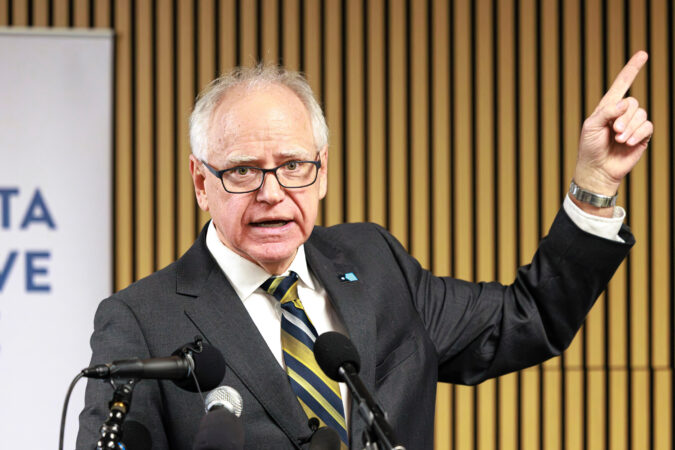
    Trump last month called the state’s Somali population “garbage” in the wake of a massive federal investigation into COVID-19 and medical aid fraud tied to organizations serving Somali immigrants, among others. The fraud cases led Minnesota’s Democratic governor, Tim Walz — former Vice President Kamala Harris’ 2024 running mate — to announce this week he will not run for reelection.

    In June, a Democratic state lawmaker and her husband were assassinated by a Trump supporter, although conservatives insist the gunman was actually a leftist working at Walz’s behest. On Sunday, the victims’ family begged Trump to take down a social media post echoing those conspiracy theories.

    Memories of the chaos that followed the killing of George Floyd

    Amid that mounting tension, the Trump administration announced Tuesday that it was sending more than 2,000 federal officers to the Twin Cities of Minneapolis and St. Paul in what it claimed would be the biggest immigration enforcement operation in history.

    The Immigration and Customs Enforcement officer who killed Renee Good during a protest Wednesday against the immigration raids opened fire just blocks from where, in 2020, a Minneapolis police officer killed George Floyd. The parallels were painful and frightening for many in the area, including Stephanie Abel, a 56-year-old Minneapolis nurse, who is keeping her gas tank full and cash handy in memory of the chaos that followed that slaying.

    “I thought the federal government would realize that now is not the time to be toying with people,” Abel said. “What are they going to try to do to get Minneapolis to ignite?”

    Floyd’s death sparked the biggest protests of Trump’s first term. The president, who is still publicly bitter about the unrest, contends it should have been met with a stronger show of force.

    That’s the approach Trump has adopted in his second term, trying to cow blue states by surging military and immigration agents into their cities and insisting that anyone who doesn’t comply with federal demands will face severe consequences.

    Immigration operations that started last summer in liberal strongholds such as Chicago,Los Angeles and Portland also generated large protests. Good is at least the fifth person killed during ICE enforcement efforts.

    On Thursday, Vice President JD Vance said Good’s death was “a tragedy of her own making,” blamed “leftist ideology” and said the media had encouraged protests against Trump’s immigration crackdown. Vance spoke at the White House to announce a new assistant attorney general position to prosecute the abuse of government assistance programs that will focus on Minnesota.

    Federal investigators have Somalis in their sights

    The Twin Cities operation is intertwined with a conservative effort to make Minnesota the poster child for government fraud. Though prosecutions for the fraudulent use of hundreds of millions of dollars of federal COVID-19 and health aid by social service groups began in the Biden administration, Trump and conservatives have seized on the scandal in recent weeks.

    In November, Trump called Minnesota “a hub of fraudulent money laundering activity” after a report by a conservative news site, City Journal, claimed federal money was fraudulently flowing to the militant group al-Shabab. There has been little, if any, evidence, proving such a link. Nevertheless, the president said he would end Temporary Protected Status for Somalis in Minnesota.

    The allegations got a new charge late last month when conservative influencer Nick Shirley posted an unconfirmed video claiming that day care centers in Minneapolis run by Somalis had fraudulently collected over $100 million in government aid.

    Jamal Osman, a Somali immigrant and Minneapolis city councilman who lives just a few blocks from the location of the ICE shooting, said he and other prominent Somalis in the area have been swamped with angry calls and messages since Trump made his statements. The vitriol, he said, mainly comes from out of state.

    “We have whole groups of people who’ve never been to Minnesota,” Osman said in an interview. “Minnesota is probably one of the nicest places to live. It’s a beautiful area with very nice people and we blended in, it’s all very nice. We don’t really see bad things happening here normally.”

    The Trump administration on Tuesday said is withholding funding for programs that support needy families with children, including day care funding, in five Democratic-led states over concerns about fraud. Joining Minnesota on the list were California, Colorado, Illinois and New York.

    ‘Leave our state alone’

    Minnesota’s place on a list of targeted blue states is not unexpected.

    Under Walz, Minnesota has become something of a beacon for liberals as an example of a state that expanded the public safety net even as the nation swung to the right. Since Trump’s first election, the state has seen large increases in education spending, free school breakfasts and lunches, and improved protection of abortion rights.

    Trump lost Minnesota by only 4 percentage points in 2024, making it significantly less liberal than California and New York. Still, it has been reliably Democratic throughout the Trump years, a rarity in the swingy upper Midwest.

    The state’s political tilt reflects the size of the Twin Cities metro area and its robust population of college-educated liberals, which overwhelm the state’s more conservative rural reaches.

    It’s the sort of cleavage that has defined national politics during Trump’s years in office.

    “Minnesota is a microcosm of a lot of the tensions we have in our society,” said David Schultz, a political scientist at Hamline University in St. Paul. “We’re a country that’s hugely polarized, Democrats-Republicans, urban-rural.”

    On Thursday, Minnesota was an ominous indicator of the damage those divisions can inflict. Minneapolis schools remained closed after immigration agents clashed with high school students at one campus on Wednesday. The state’s National Guard remained on standby at Walz’s directive.

    Walz begged Trump to ease up, saying Minnesota’s residents are “exhausted” by the president’s “relentless assault on Minnesota.”

    “So please, just give us a break,” Walz said during a news conference Thursday. “And if it’s me, you’re already getting what you want, but leave my people alone. Leave our state alone.”