Blog

  • The Charlie Kirk purge: How 600 Americans were punished in a pro-Trump crackdown

    The Charlie Kirk purge: How 600 Americans were punished in a pro-Trump crackdown

    When Lauren Vaughn, a kindergarten assistant in South Carolina, saw reports that right-wing influencer Charlie Kirk had been shot at an event in Utah, she opened Facebook and typed out a quote from Kirk himself.

    Gun deaths, Kirk said in 2023, were unfortunate but “worth it” if they preserved “the Second Amendment to protect our other God-given Rights.” Following the quote, Vaughn added: “Thoughts and prayers.”

    Vaughn, a 37-year-old Christian who has taken missionary trips to Guatemala, said her call for prayer was sincere. She said she hoped reading Kirk’s words in the context of the shooting might prompt her friends to rethink their opposition to gun control.

    “Maybe now they’ll listen,” she recalled thinking.

    A few days later, Vaughn lost her job. She was one of more than 600 Americans fired, suspended, placed under investigation or disciplined by employers for comments about Kirk’s September 10 assassination, according to a Reuters review of court records, public statements, local media reports and interviews with two dozen people who were fired or otherwise disciplined.

    Some were dismissed after celebrating or mocking Kirk’s death. At least 15 people were punished for allegedly invoking “karma” or “divine justice,” and at least nine others were disciplined for variations on “Good riddance.” Other offending posts appeared to exult in the killing or express hope that other Republican figures would be next. “One down, plenty to go,” one said.

    Others, like Vaughn, say they simply criticized Kirk’s politics.

    In the pro-Kirk camp, at least one academic was put on administrative leave after threatening to “hunt down” those celebrating the assassination.

    This account is the most comprehensive to date of the backlash against Kirk’s critics, tracing how senior officials in President Donald Trump’s administration, local Republican lawmakers and allied influencers mobilized to enforce the Trump movement’s views. The story maps the pro-Trump machinery of retaliation now reshaping American political life, detailing its scale and tactics, ranging from shaming on social media to public pressure on employers and threats to defund institutions. Earlier reports by Reuters have documented how Trump has purged the federal government of employees deemed opponents of his agenda and cracked down on law firms defending people in the administration’s crosshairs.

    Americans sometimes lose their jobs after speaking out in heated political moments. Twenty-two academics were dismissed in 2020, the year George Floyd was murdered by a Minneapolis police officer, most for comments deemed insensitive, according to the Foundation for Individual Rights and Expression, a free-speech advocacy group. In 2024, the first full year following the outbreak of the latest Israel-Gaza war, more than 160 people were fired in connection with their pro-Palestinian advocacy, according to Palestine Legal, an organization that protects the civil rights of American supporters of the Palestinian cause.

    The backlash over comments about Kirk’s shooting stands apart because of its reach and its public backing from Trump, Vice President JD Vance and other top government officials. It represents a striking about-face for Republicans, who for years castigated the left for what they called “cancel culture” — the ostracism or punishment of those whose views were deemed unacceptable.

    Supporters of the firings say that freedom of speech is not freedom from consequence. Standards of behavior should be high for people like doctors, lawyers, teachers or emergency workers who are in positions of public trust, they said.

    In a statement, White House spokesperson Abigail Jackson said: “President Trump and the entire Administration will not hesitate to speak the truth – for years, radical leftists have slandered their political opponents as Nazis and Fascists, inspiring left-wing violence. It must end.” She added: “no one understands the dangers of political violence more than President Trump” after he survived two assassination attempts.

    Turning Point USA, the youth movement Kirk founded in 2012, said in a statement that it supported the right to free speech, “including that of private employers to determine when a bright line has been crossed and an employee deserves to be terminated.” The organization, however, cautioned that while celebrating or gloating over Kirk’s death was “evil and disqualifying behavior, respectfully disagreeing with his ideas, statements, or values is every American’s right.”

    Vaughn is challenging her dismissal in a federal lawsuit filed September 18, seeking reinstatement. As part of the case, she submitted a letter she received from the Spartanburg County School District superintendent that described her remarks as “inflammatory, unprofessional, and inappropriate.” Responding to the lawsuit, the district said Vaughn’ s post “appeared to endorse Mr. Kirk’s murder or indicate that it was ‘worth’ him losing his life to protect Americans’ constitutional rights.”

    The district declined further comment.

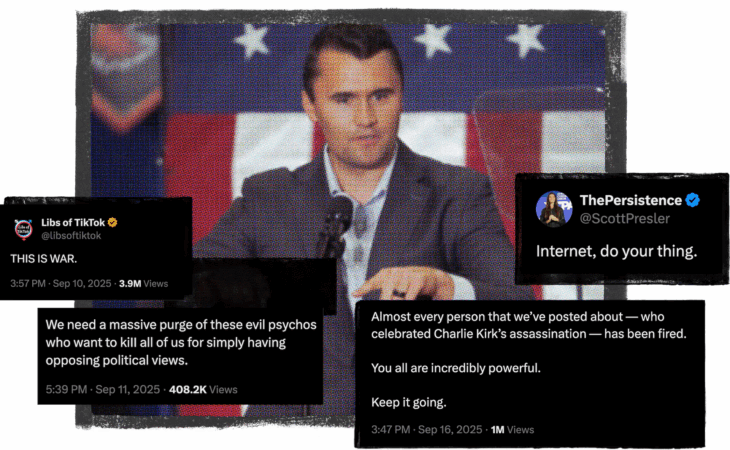
    The punishments have often been driven by social media campaigns that circulate screenshots of the offending remarks, along with the names and phone numbers of employers, and appeals such as, “Internet, do your thing.” What typically follows are hundreds of angry or threatening messages, Reuters found. Several individuals who were targeted said in interviews they were inundated with phone calls. One recalled receiving a call every minute for an entire day. At least two said the harassment was so intense they plan to sell their homes.

    Julie Strebe, a sheriff’s deputy in Salem, Missouri, lost her job after posting comments on Facebook about the shooting, including “Empathy is not owed to oppressors.” She later said she viewed Kirk as an oppressor because, in her words, he sought to marginalize vulnerable groups and used his platform to rally conservative white Christians behind “racist, sexist, hateful views.” She said her bosses were besieged with calls for her dismissal and that, at one point, a hand-drawn sign appeared across from her home reading, “Julie Strebe Supports the Assassination of Charles Kirk.”

    Strebe said she installed five surveillance cameras at her home and now fuels her car only at night to avoid neighbors. Moving from Salem would mean leaving extended family, but she said the small city has grown too hostile to stay. “I just don’t feel like I could ever let my guard down,” she said in an interview. Strebe’s former employer, the Dent County Sheriff’s Office, declined to comment.

    Many Republican officials have embraced the punitive campaign. Some have proposed extraordinary measures, including lifetime bans from social media for those deemed to be reveling in Kirk’s death. The U.S. State Department revoked visas for six foreigners who the agency said “celebrated the heinous assassination of Charlie Kirk.”

    Speaking on a special episode of Kirk’s podcast on September 15, Vice President JD Vance urged his listeners to inflict consequences on those celebrating Kirk’s death.

    “Call them out, and, hell, call their employer,” Vance said. Vance’s office pointed Reuters to comments made earlier this year in which the vice president said, “where I draw the line is encouraging violence against political opponents.”

    Some academics compared the backlash to the “Red Scare,” the anti-Communist purge that peaked in the 1950s, when officials, labor leaders and Hollywood figures were accused of Communist ties. Thousands were investigated in a climate of fear that shaped U.S. politics and culture for a generation. There are “very disturbing parallels,” said Landon Storrs, a University of Iowa history professor.

    Several prominent Republicans have voiced unease at the clampdown, especially after the Federal Communications Commission openly pressured broadcaster ABC to suspend talk show host Jimmy Kimmel following a monolog in which he suggested that Kirk’s assassin hailed from the political right. Police haven’t fully detailed the findings of their investigation into suspect Tyler Robinson and his motives. Robinson hasn’t entered a plea to the murder and other charges against him.

    Republican Senator Ted Cruz warned on his podcast that letting government decide “what speech we like and what we don’t” sets a dangerous precedent. Silencing voices like Kimmel’s might feel good, he said, but “when it’s used to silence every conservative in America, we will regret it.” His spokesperson declined further comment.
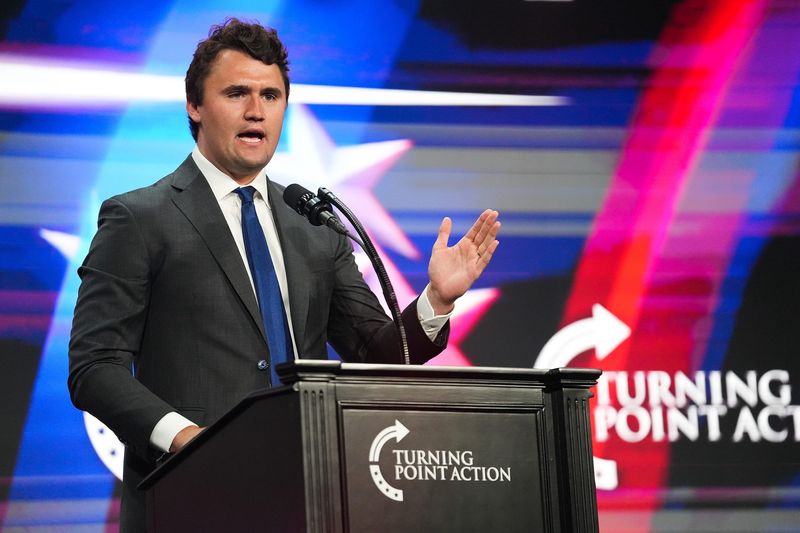
    Charlie Kirk, founder of Turning Point USA, speaks in 2022.

    ‘Massive purge of these evil psychos’

    The campaign to punish Kirk’s critics began almost immediately.

    About 30 minutes after Trump’s announcement that Kirk had died, right-wing influencers mobilized. Among the first was Chaya Raichik, operator of the widely followed Libs of TikTok account, which had posted on X, “THIS IS WAR,” before highlighting a Massachusetts teacher who had written: “Just a reminder, We’re NOT offering sympathy.”

    By night’s end, Libs of TikTok had published or reposted the professional details of 37 individuals, often accompanied by commentary such as “absolutely vile,” “Your tax dollars pay her salary,” or “Would you want him teaching your kids?”

    “It’s actually terrifying how many of them are teachers, doctors and military members,” Libs of TikTok wrote the next day. “We need a massive purge of these evil psychos who want to kiII all of us for simply having opposing political views.”

    In the week after the shooting, Libs of TikTok shared the names and profiles of at least 134 people accused of celebrating violence or mocking Kirk’s memory, frequently tagging Trump administration officials including Defense Secretary Pete Hegseth and Attorney General Pam Bondi. At times, the influencer posted disciplinary actions taken against specific government employees.

    “BREAKING: This marine was fired,” Libs of TikTok posted on September 12, a day after calling out a Marine Corps captain. The officer had responded to Kirk’s death by posting an emoji of clinking beer mugs, according to a screenshot the influencer shared with followers. Reuters could not verify the authenticity of the beer-mug post; the captain declined to comment. Libs of TikTok also reported similar disciplinary actions involving an Army Reserve officer and an Army colonel who had commented on the death on social media.

    The Pentagon and the Justice Department issued statements condemning celebrations of Kirk’s death but did not address questions about their relationship with Libs of TikTok.

    Right-wing influencer Scott Presler began posting screenshots of Kirk commentary, too.

    “Take a screenshot of EVERY single person celebrating today,” he told his followers on September 10. “You bet your behind we will make them infamous.” Over the next week, Presler shared posts on X about 70 people who had commented on the killing, and wrote in one message: “Almost every person we’ve posted about — who celebrated Charlie Kirk’s assassination — has been fired.” Presler didn’t respond to requests for comment.

    For many on the right, outraged by celebratory reactions from the left, the wave of firings became a form of catharsis.

    “It’s good that they are shamed and humiliated and must live with the repercussions for the rest of their lives,” right-wing podcaster Matt Walsh told his audience as he discussed the firings. “It’s good if they wake up every day until they die wishing they had not said what they said.” Asked for comment, Walsh emailed back: “f**k off.”

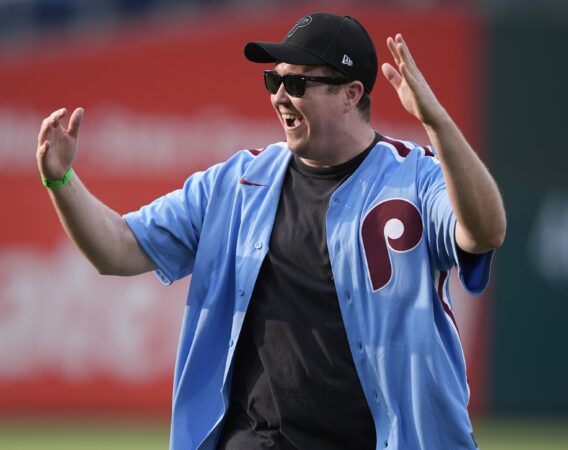
    On YouTube, video blogger and recovery coach JD Delay expressed glee as he read aloud names of those who had lost their jobs over their remarks.

    “I’m having fun! This is so much fun!” he shouted, raising his hands in excitement. Delay told Reuters that he believes in “accountability and consequences” and that “if you publicly say abhorrent things and get fired from your job, I’m going to laugh at you.”

    The punishment campaign sometimes veered off course. In at least five cases, people were wrongly blamed for comments made by others. In another case, a website that drew up a blacklist called “Expose Charlie’s Murderers” vanished after taking in tens of thousands of dollars in cryptocurrency donations. Attempts to identify and seek comment from the site’s creators were unsuccessful.

    President Donald Trump takes the stage during a memorial service honoring conservative activist Charlie Kirk in Glendale, Arizona, on Sept. 21, 2025.

    Several online influencers said they received hundreds — sometimes thousands — of tips from individuals seeking to get Kirk’s detractors fired. Reuters was unable to verify those figures. But at various points, Presler, Libs of TikTok and other right-wing personalities publicly urged tipsters to be patient as they worked through the volume of submissions.

    “Can’t keep up with all of you,” Presler wrote on X on September 12. “Post your submissions below & I’ll go through them as I can.”

    A day later, the post had drawn more than 2,700 replies.

    The tally of more than 600 people punished for criticizing Kirk is likely an undercount. Many companies and government organizations haven’t publicly disclosed terminations or suspensions.

    Those punished came from at least 45 states and represented a cross-section of society, from soldiers and pilots to doctors, nurses and police officers.

    In Michigan, an Office Depot employee was fired after being filmed refusing to print a poster memorializing Kirk. In Ohio, a Starbucks barista lost her job after she was accused of writing an anti-Kirk message on a cup of mint tea.

    Reuters couldn’t determine the identities of the Office Depot worker or the barista. Office Depot and Kroger — the grocery store chain that runs the Ohio Starbucks — condemned the anti-Kirk incidents and said the people involved were no longer employees.

    Requests to 21 federal agencies — including Homeland Security, Veterans Affairs and the Defense Department — for the number of suspensions or dismissals tied to the Kirk assassination were either ignored or declined. When the Office of the Director of National Intelligence was contacted, its deputy chief of staff responded on social media, accusing Reuters of trying to generate sympathy “for the ghouls who celebrate his death.”

    Educators among the main targets

    Teachers, academics and university administrators were among those most frequently punished for criticizing Kirk. More than 350 education workers were fired, suspended or investigated in the days following the assassination, including 50 academics and senior university administrators, three high school principals, two cheerleading coaches and a theology instructor.

    The prominence of educators in the backlash may stem from several factors. As leaders tasked with shaping young minds, teachers have long been cast by some conservatives as ideologues who aim to pull their students left. Their status as taxpayer-funded employees made any perceived partisan commentary especially combustible.

    In interviews and public statements, at least six teachers cited another reason for speaking out: concern over the frequency of gun violence at schools nationwide — and anger at those, like Kirk, who have championed widespread access to firearms.

    Vaughn, the South Carolina kindergarten assistant, said that was front of mind when she went to Facebook to quote Kirk’s 2023 remark dismissing some fatal shootings as the price to pay to protect gun rights. Like other teachers across the country, she said she regularly practiced active-shooter drills at her elementary school and saw fear on her five-year-olds’ faces as they learned how to hide from a gunman.

    As she defended her post on the day of Kirk’s death, she told a Facebook friend that she felt “no satisfaction” at the assassination. “Just heartbreak for everyone and anyone affected by gun violence and the hope that one day, enough will be enough.” Speaking to Reuters later, she said, “The one thing I want people to know is that my message was out of concern for the kids.”

    Many educators did celebrate Kirk’s death, including a Virginia teacher who wrote, “I hope he suffered through all of it,” and a Texas middle school intern who said the shooting “made me giggle.” Screenshots of both posts were circulated by right-wing influencers. Reuters could not locate the original posts, which may have been deleted or made private. The Virginia teacher was suspended and the Texas intern was fired. Neither could be reached for comment.

    While schools that suspended or fired educators cited disruptions to the learning environment, some private employers pointed to a violation of company values or safety concerns as the basis for terminations. Corporations caught up in the backlash gave a variety of explanations: Delta Air Lines CEO Ed Bastian said in a statement some employees’ comments were in “stark contrast” to the company’s values and violated its social media policy, while a United Airlines statement said the company had “zero tolerance for politically motivated violence or any attempt to justify it.”

    At least a dozen Kirk critics who took pains to condemn the shooting also found themselves out of jobs or suspended, sometimes after Republican lawmakers got involved.

    In the wake of Kirk’s death, Joshua Bregy, a climate scientist at Clemson University in South Carolina, shared another user’s Facebook post that read, in part: “No one should be gunned down — not a school child, not an influencer, not a politician — no one. But am I going to allow people to make a martyr out of a flawed human being whose rhetoric caused notable damage? Not a chance.”

    The Clemson College Republicans reposted part of his message, labeling him “ANOTHER leftist professor” and calling for his termination. The post was amplified by right-wing influencers and Republican state lawmakers who threatened to defund the public university unless Bregy was fired.

    Clemson initially pledged in a September 12 statement to “stand firmly on the principles of the U.S. Constitution, including the protection of free speech.”

    The next day, Trump himself reposted a state lawmaker’s call to “Defund Clemson.” On September 16, after South Carolina’s House speaker and Senate president sent a letter to Clemson’s trustees demanding they “take immediate and appropriate action,” the school fired Bregy. Bregy’s Facebook post was “blatantly unprofessional” and “seriously prejudicial to the university,” Clemson said in a letter informing Bregy he had been dismissed.

    Bregy is suing Clemson in a South Carolina federal court in a bid to be reinstated. His lawyer, Allen Chaney, said the academic would have kept his job “but for the really aggressive, coercive tactics of elected officials in South Carolina.”

    Clemson, State House Speaker Murrell Smith and Senate President Thomas Alexander did not respond to requests for comment. Clemson has yet to file a response to Bregy’s suit.

    In at least six other cases, Republican officials publicly threatened to deprive universities and schools of taxpayer funds unless specific critics of Kirk were fired.

    Chaney, who serves as legal director of the South Carolina chapter of the American Civil Liberties Union, said the threats to defund Clemson and others crossed a constitutional line. “The government can’t police speech by pressuring third parties,” he said. Last year, the Supreme Court unanimously held that government officials cannot use their authority to “attempt to coerce” private parties into punishing or suppressing speech they dislike.

    The threats to defund schools that resist firing Kirk’s critics were “stunning,” said Paul McGreal, a constitutional law professor at Creighton University Law School in Nebraska. “Government officials are threatening speakers with punishment because they disagree with what they’re saying. These are core First Amendment protections that they’re violating.”

    Kirk praised as Christ’s ‘13th disciple’

    Since Kirk’s assassination, many Republicans have cast him as a saintly champion of free expression. Evangelical figures have likened him to Saint Stephen, revered as Christianity’s first martyr. One Republican lawmaker told Congress “he’d have been the 13th disciple” had he lived in Biblical times. Trump compared Kirk to the ancient Greek philosopher Socrates, slain President Abraham Lincoln and assassinated civil rights icon Martin Luther King Jr. when posthumously awarding him the Presidential Medal of Freedom.

    Kirk’s legacy is complicated, however. He gained fame for debating college students as part of his work with Turning Point. Kirk also advocated criminalizing expression – such as pornography – that clashed with his Christian views. When Black football players started kneeling during the national anthem in protest at police brutality, he backed Trump’s call to strip the National Football League of taxpayer subsidies. The White House later said Trump was making a statement, not a proposal.

    Kirk repeatedly denigrated minorities, calling transgender people an “abomination,” warning of “prowling Blacks” in cities, accusing wealthy Jews of stoking “hatred against Whites,” and declaring Islam incompatible with Western civilization. He also dismissed Pope Francis as a Marxist.

    Some of those who spoke out against Kirk after his death said they were disturbed by the hagiography.

    “I just felt compelled to remind people who he was and what he stood for,” Kimberly Hunt, a human resources worker in Arizona, said in an interview. She had posted a video captioned, “Save your tears for his victims, not him.”

    In the video, Hunt cited Kirk’s record of using derogatory language about transgender people and Muslims, before adding that his children “are better off without him.” Hunt was fired soon after. Her employer, an Arizona construction firm, did not respond to requests for comment.

    Hunt told Reuters she understood her words sounded harsh but stood by them. She said they reflected Kirk’s stance in a debate last year that if he had a 10-year-old daughter who was impregnated through rape, “the baby would be delivered.”

    The retaliation has silenced many voices. Scores of people who posted anti-Kirk comments have since scrubbed or locked their accounts, Reuters found. Others said in interviews that they are pushing back.

    Hunt said she has raised more than $88,000 from a GoFundMe campaign titled, “Doxxed, Fired, but Not Silenced.” She said she wants to use the money to further her education, become a content creator, and keep calling out people like Kirk.

    “It’s definitely just emboldened me,” she said.

    At least 19 lawsuits have been filed against employers who punished Kirk critics, state and federal court records show. At least two plaintiffs have succeeded, including an academic in South Dakota who got his teaching job back.

    Karen Leader, an associate professor at Florida Atlantic University, took to social media after Kirk’s death to protest a narrative that he “was a shining inspiration to youth and a noncontroversial figure who just wanted to have open and civil dialog,” she said. “Anyone who’s in higher education knows that it’s not that simple.”

    She noted that Turning Point rose to prominence through its Professor Watchlist, a site that encouraged students to report faculty for allegedly holding “radical left” views or being a “terror supporter.”

    Kirk had described the Watchlist as an awareness tool, not a blacklist. Those on it have said in interviews, social media posts and public forums that it fostered harassment and intimidation. In 2023, a Turning Point reporter was accused of assaulting an Arizona professor who was on the watchlist after confronting him on camera about his sexuality and shoving him to the ground. The reporter admitted to harassment, assault and disorderly conduct and was ordered to complete a diversion program. A Turning Point cameraman admitted to harassment in the case.

    On September 10, Leader began posting Kirk’s past statements on X. She said she made a mistake by incorrectly accusing Kirk of having uttered an ethnic slur and then deleted it. The rest of her posts she said she stands behind, including one highlighting Kirk’s claim that Black Americans were “better” during Jim Crow.

    “None of it was me encouraging violence,” Leader said. “I was sharing evidence.”

    Jordan Chamberlain, a former staffer of Florida Governor Ron DeSantis, shared screenshots of several of Leader’s posts and tagged her university, asking if it approved of the content. Libs of TikTok shared Leader’s faculty headshot. The university’s president announced she had been put on administrative leave. Her address and phone number appeared online, and menacing messages followed.

    In one voicemail reviewed by Reuters, the caller said: “We’re coming to get you. Karen Leader, we know where you work. We’re gonna come to your home as soon as we have your location.” Leader said she has rarely left her apartment since.

    She reported the threats to Boca Raton police, which referred the case to campus officers, according to a police report. Florida Atlantic University police said their report could not be released because of an active criminal investigation.

    Florida Atlantic University confirmed Leader was one of three academics who were on leave pending investigations. It declined further comment. Chamberlain also didn’t return an email seeking comment.

    “Whether my career is over or not, I don’t know,” Leader said. “But my life has changed.”
  • Travis Sanheim scores game-winner to cement Flyers’ 3-2 OT comeback victory vs. Blues

    Travis Sanheim scores game-winner to cement Flyers’ 3-2 OT comeback victory vs. Blues

    You’ve heard this all before: Another slow start. Another early deficit. Another comeback.

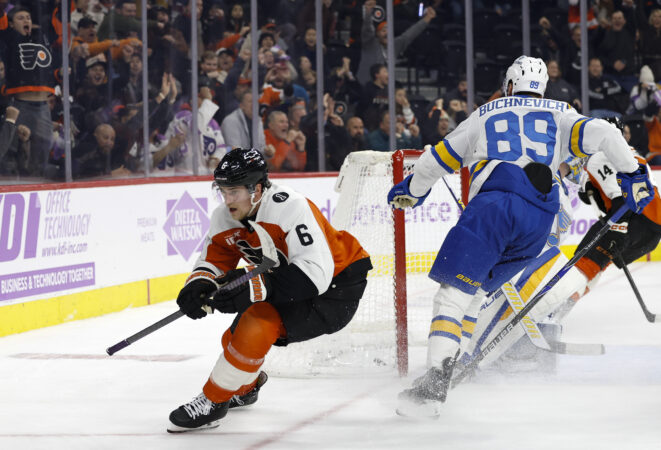
    The Flyers trailed 2-0 and tied things up before Travis Sanheim scored the game-winner in overtime to give the Flyers a 3-2 win. It is the Flyers’ second win in five games.

    Travis Konecny, who missed his shot on an open net in the last minute of regulation, chipped the puck to Sanheim in the Flyers’ end. The defenseman, in front of several members of Hockey Canada’s Olympic staff, skated the puck down the ice and ripped it past Blues goalie Joel Hofer. It was Sanheim’s third goal of the season and fourth career overtime winner.

    Despite having 28 chances in the first period, with six coming from high-danger spots, according to Natural Stat Trick, the Flyers trailed after 20 minutes. It is the sixth straight game Philly allowed the opposition to get on the board and the 13th time this season. They also tied the New York Islanders with their ninth comeback win.

    The comeback started late in the second period.

    Rodrigo Ābols scored his first goal of the season to cut into the Blues’ 2-0 lead.

    Trevor Zegras pulled up at the half-wall in the Blues’ end and carried the puck deep, chipping it to Owen Tippett. Despite being pinned by Blues defenseman Matthew Kessel along the end boards, Tippett sent a backhand pass to Ābols, who hopped in after Christian Dvorak went for the change, following the play for the goal.

    It was Ābols’ third of his career. He spent the night centering the fourth line between Nic Deslauriers and Garnet Hathaway. Ābols and coach Rick Tocchet said postgame the line focused on being more predictable, and it worked. Natural Stat Trick had the line down for 13 chances to two for St. Louis at five-on-five; they had seven scoring chances to zero for the Blues.

    Everyone thought the Flyers tied the game at 2-2 with 11 minutes, 45 seconds left in regulation. On a power play, Bobby Brink sent a cross-crease pass through the legs of Blues defenseman Tyler Tucker to Zegras near the right post. Zegras sent the one-timer off the bottom of the glove of Hofer and then saw the puck bounce off the ice and the right post.

    And then they did tie it up on Tyson Foerster’s fifth goal of the season.

    Blues forward Robert Thomas tried to clear the puck, but Emil Andrae tracked down the puck inside St. Louis’ blueline. Moved up to the second pairing with Jamie Drysdale, the puck-moving defenseman fed Foerster for the one-timer from the top of the left face-off circle.

    Andrae saved a sure goal with three minutes left in regulation when he blocked a shot by Dalibor Dvorský after Pavel Buchnevich got robbed on the doorstep by Dan Vladař.

    It was the Justin Faulk show in the first period. The St. Louis defenseman, who also scored last Friday in the Flyers’ 6-5 shootout win in Missouri, notched two goals in a 6:37 span to put the Flyers in an early hole.

    His first goal of the night was a seeing-eye one-timer from the point that found the top left corner. Vladař, who stands 6-foot-5, could be seen popping his head over the 5-9 Nathan Walker of the Blues in front and Flyers teammate Dvorak, who is 6-1. Andrae was tying up St. Louis’ Alexey Toropchenko in front, too, and the puck squeaked through everyone.

    Faulk’s second of the night was a power-play goal. Standing at the goal line, Jake Neighbours fed Faulk across the ice in the left face-off circle for the one-timer. The Flyers entered the game with the third-best penalty kill in the NHL (87.5%), but allowed a tally for the second straight game.

    Breakaways

    The Flyers held their annual Hockey Fights Cancer Night. Jason Myrtetus, a Flyers broadcaster and host of the “Flyers Daily” podcast, dropped the ceremonial puck alongside his Penn care team, which included his oncologist, Dr. Daniel Altman, Heather Levinsky, CRNP, and his surgeon, Dr. Erica Pettke. The players also wore special SkateSkins in warmups, with seven skaters wearing ones they designed with children ages 8-19 who are battling cancer. The goalies also wore masks designed with children, too.

    Flyers center Sean Couturier wears his Hockey Fights Cancer skates designed with children ages 8-19 who are battling cancer.

    Up next

    The Flyers practice on Friday at noon in Voorhees before honoring Bernie Parent with a public celebration of life at Xfinity Mobile Arena at 6 p.m. They then host the New Jersey Devils on Saturday (7 p.m., NBCSP). New Jersey is without Jack Hughes, who underwent surgery on his finger a week ago after a “freak accident” when he got cut by glass at a team dinner.

  • As Pa. and other states go all-in on sports betting, expect wagers — and cheating scandals — to keep coming

    As Pa. and other states go all-in on sports betting, expect wagers — and cheating scandals — to keep coming

    News item: The NBA asked several teams to hand over cellphones, documents and other property as part of its investigation into illegal sports gambling.

    The Athletic, Nov. 15

    The latest investigation into sports gambling is not the first and won’t be the last. Nor is it a shock since the heedless race into legalized sports gambling is ruining the games — and some lives — all in the name of money.

    Betting on sports has become so pervasive that the integrity of the games can no longer be trusted.

    Just last month, 34 people — including an NBA Hall of Famer, a current star, and a former player — were indicted as part of an elaborate betting scheme that included one player who pleaded guilty in July to faking injuries to leave games early so gamblers could win prop bets on his performances.

    The same gambling ring was also tied to suspicious wagers on college basketball, including games played by Temple University. A gambling watchdog flagged suspicious betting activity in a game last year between Temple and the University of Alabama at Birmingham, where UAB went from a two-point favorite to an eight-point favorite in a matter of hours. UAB ended up winning 100-72.

    Portland Trail Blazers head coach Chauncey Billups, who was indicted in a federal sports betting investigation, leaves a federal courthouse in Portland, Ore., after an appearance last month.

    Separately, three college basketball players from Fresno State were banned last month for betting on their own games and “manipulating” their performances to alter outcomes, according to the NCAA.

    Gambling is not just undermining basketball games.

    The NFL suspended 10 players in 2023 for violating its league gambling policy. The same year, the NHL suspended Ottawa Senators forward Shane Pinto for 41 games, making him the first modern-day hockey player banned for sports gambling.

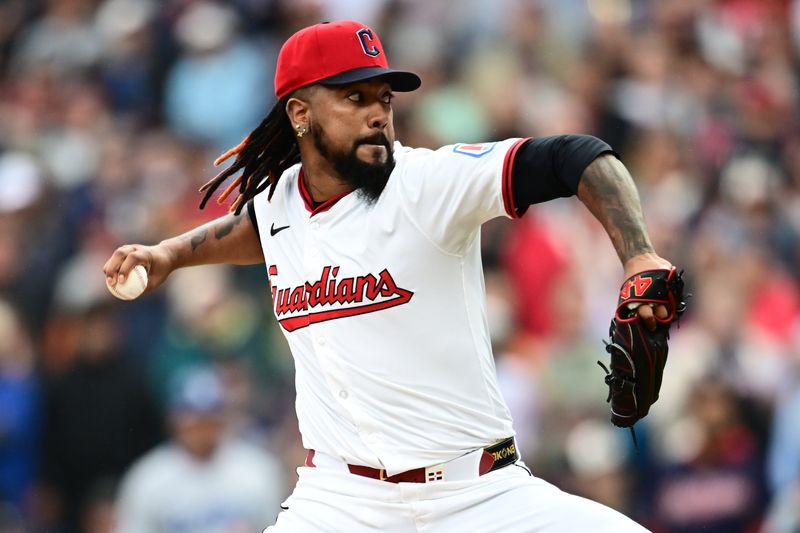
    Two Cleveland Guardians pitchers, Emmanuel Clase and Luis Ortiz, were indicted last week for rigging pitches in certain situations to benefit tipped-off bettors.

    For the uninitiated, bettors can wager on just about anything during games, including whether the batter will make an out or hit a home run, or whether the next shot in a basketball game will be for two points or three. These micro-bets create opportunities for players to do what is called “spot fixing.” The in-game betting also explains why sports announcers give updated odds during games.

    The Guardians pitchers are not the first to raise concerns about betting on baseball. Last year, San Diego Padres infielder Tucupita Marcano was banned for life, and four others received one-year suspensions for gambling, including Phillies minor league infielder José Rodríguez.

    Cleveland Guardians closer Emmanuel Clase was indicted earlier this month on charges that he tipped off bettors to some of his pitches.

    Baseball has battled past betting scandals, from the 1919 World Series to Pete Rose betting on games he managed. Last week, a Senate committee sent a letter to Major League Baseball commissioner Rob Manfred raising concern over a “new integrity crisis” in American sports.

    Fans are losing trust. Six in 10 now worry about games being fixed.

    Even for those who don’t bet, the barrage of TV commercials and promotion of sports gambling inside the arenas is ruining the fan experience.

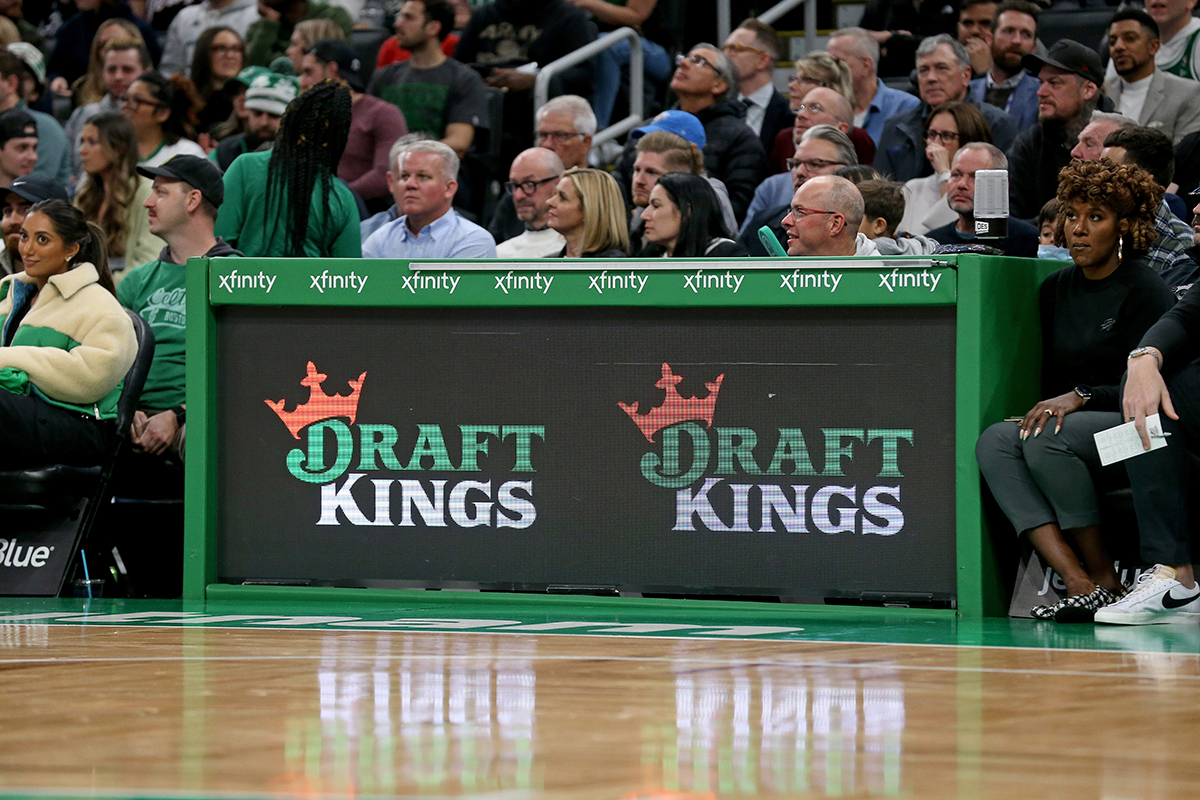
    Many celebrities and former athletes, including former Sixers greats Allen Iverson and Charles Barkley, appear in commercials that make gambling seem cool. All the incessant advertising helps normalize something that is addictive. One study found that during broadcasts of the Stanley Cup finals, hockey fans were exposed to gambling logos and ads an average of 3.5 times per minute.

    The upshot: Many young men and boys are getting addicted to sports gambling, upending their lives and their families.

    At a Phillies game last year, my son and I listened to three young guys behind us talk nonstop about in-game bets while they tried to complete a challenge of drinking nine beers in nine innings.

    An ad for the sports betting site Draft Kings appears courtside at an NBA game at the TD Garden in Boston in November 2022. One study found that hockey fans were exposed to gambling logos and ads an average of 3.5 times per minute during broadcasts of the Stanley Cup finals.

    For some, the addiction comes quickly. Rob Minnick started betting on Philadelphia sports teams at age 18. Within days, he was placing bets on the West Coast games using a pair of online sports betting sites, FanDuel and DraftKings.

    Then Minnick got hooked on playing slots on his phone. Eventually, the South Jersey native told me he was gambling for up to eight hours a day, running up credit card debt and borrowing money from friends and family to maintain his habit.

    Minnick went in and out of debt over six years. After a gambling binge that ended at a casino, he decided to seek treatment. He now helps others recover from gambling addiction.

    “It was all fueled by seeing the commercials for FanDuel and other sports betting apps,” Minnick said.

    Minnick is not alone. There has been a surge in people seeking help for gambling addiction, especially in states like New Jersey and Pennsylvania, where sports betting is legal.

    Gambling results in other social ills. Gambling addiction has long been associated with increased risk of depression and suicide. Some early research has found an increase in debt and bankruptcy in states with legalized sports betting.

    An undated photo of “Shoeless” Joe Jackson, of the Chicago White Sox, who admitted accepting $5,000 to throw the 1919 World Series in one of baseball’s past betting scandals.

    Blame the explosion in sports gambling — and the subsequent problems — on elected officials and the gambling lobby.

    Illegal sports gambling has long operated in the shadows. Yes, it was unregulated and untaxed, but it was not ubiquitous.

    Then, former New Jersey Gov. Chris Christie challenged the federal ban on sports betting in most states in an effort to help the still-struggling casinos in Atlantic City. In 2018, the U.S. Supreme Court struck down the ban, opening the floodgates to betting on sports.

    States rushed to open sportsbooks, including Pennsylvania and Delaware. Online gambling apps made it easy for anyone with a mobile phone to gamble anytime and anywhere.

    Last year, Americans bet nearly $150 billion on sports, according to the American Gaming Association.

    Today, more than one in five Americans bet on sports. More alarmingly, nearly half of men between the ages of 18 and 49 have an active online sports betting account.

    More gambling has translated into more debt. One quarter of sports gamblers said they have been unable to pay a bill — including their rent — because of debts from wagers. And 15% said they have taken out a loan to fund their sports gambling habit.

    Most elected officials ignore the social costs of problem gambling because of the easy tax revenues that roll in.

    Harrisburg lawmakers may be the worst gambling addicts.

    Since 2004, Pennsylvania has legalized slots, table games, sports gambling, and online betting, while adding pricier lottery games with little concern for the economic harm and increased addiction. The influential gambling lobby successfully blocked efforts in Harrisburg this year to increase the tax on sports betting.

    The sports leagues once opposed legalized gambling. But now, the leagues are partners with the major online betting sites.

    Not long ago, NFL commissioner Roger Goodell opposed legalized gambling before going all in. In 2017, he said, “The integrity of our game is No. 1.”

    Don’t bet on it.

  • Eagles vs. Cowboys predictions: Rounding up the experts’ picks for Week 12

    Eagles vs. Cowboys predictions: Rounding up the experts’ picks for Week 12

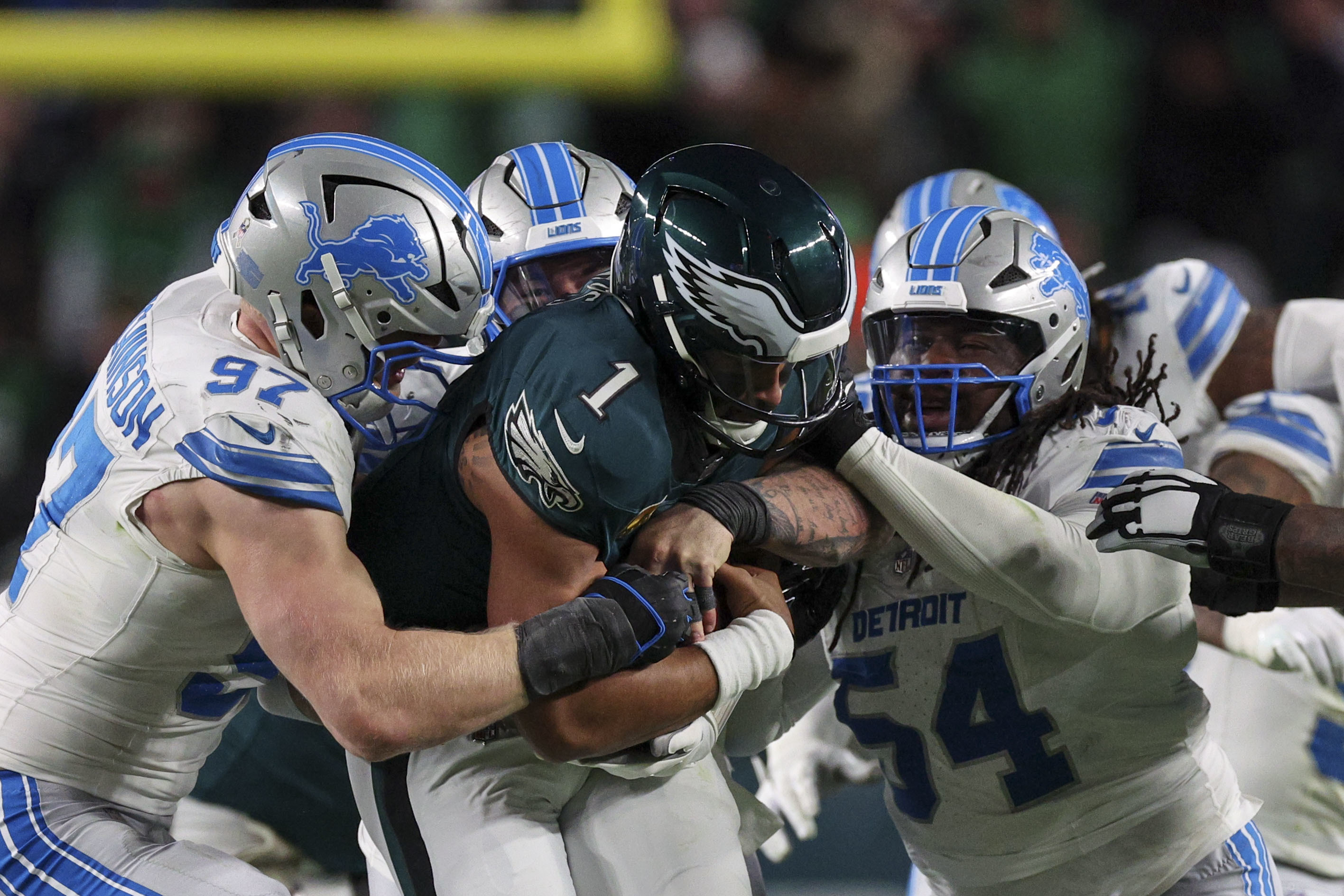
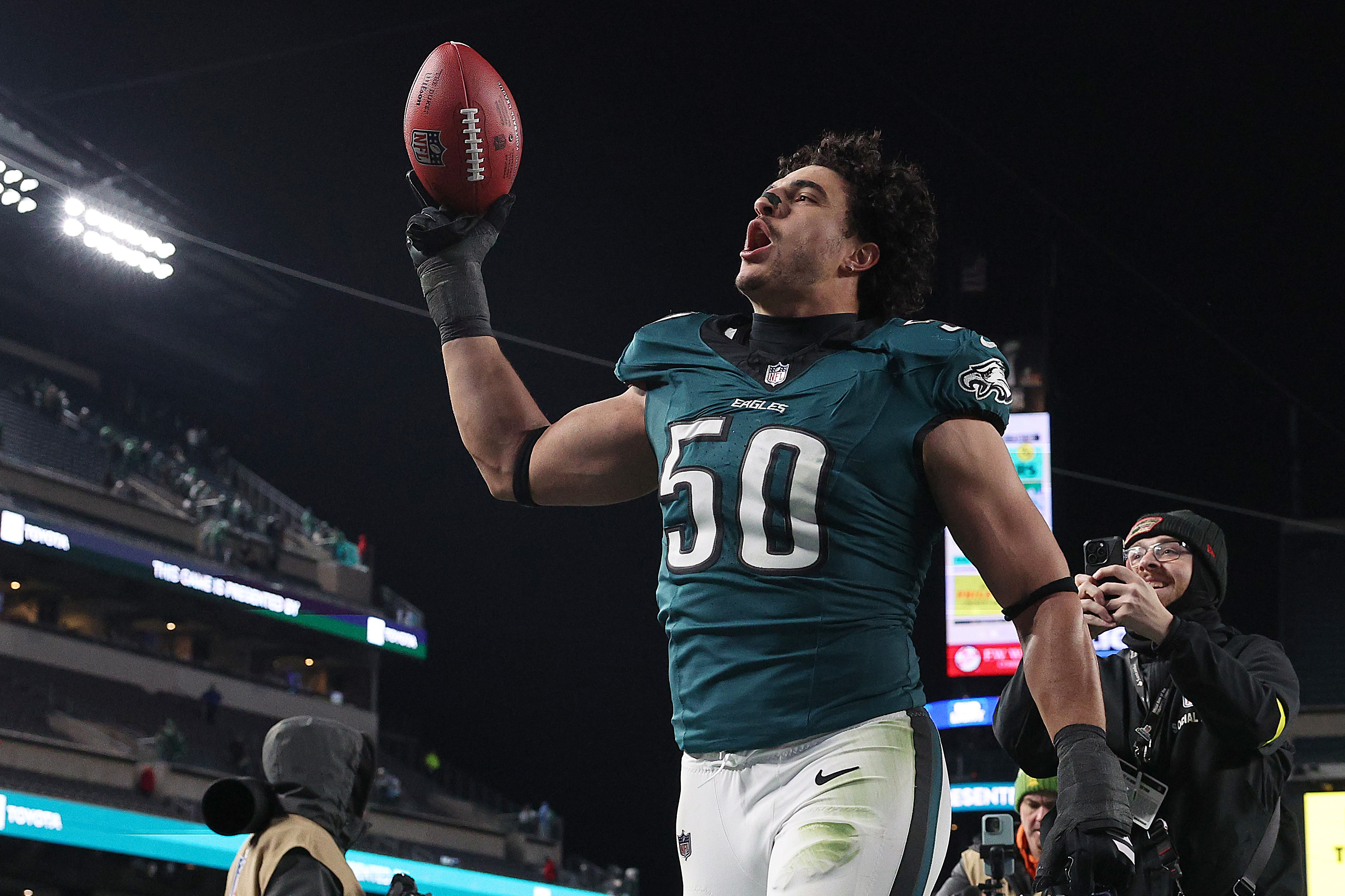
    After a strong defensive showing over the Detroit Lions — limiting the team to just nine points — the Eagles now turn their attention toward the Dallas Cowboys on Sunday at AT&T Stadium.

    The Eagles (8-2) are 3.5-point favorites ahead of the Week 12 matchup against the division rival Cowboys (4-5-1), and beat them, 24-20, in the season opener at Lincoln Financial Field. Here’s how experts in the local and national media are predicting Sunday’s game …

    Inquirer predictions

    We start with our own Eagles writers. Here’s an excerpt from Jeff Neiburg’s prediction …

    To read more of Neiburg’s take, plus how our other beat writers are predicting this one, check out our full predictions here.

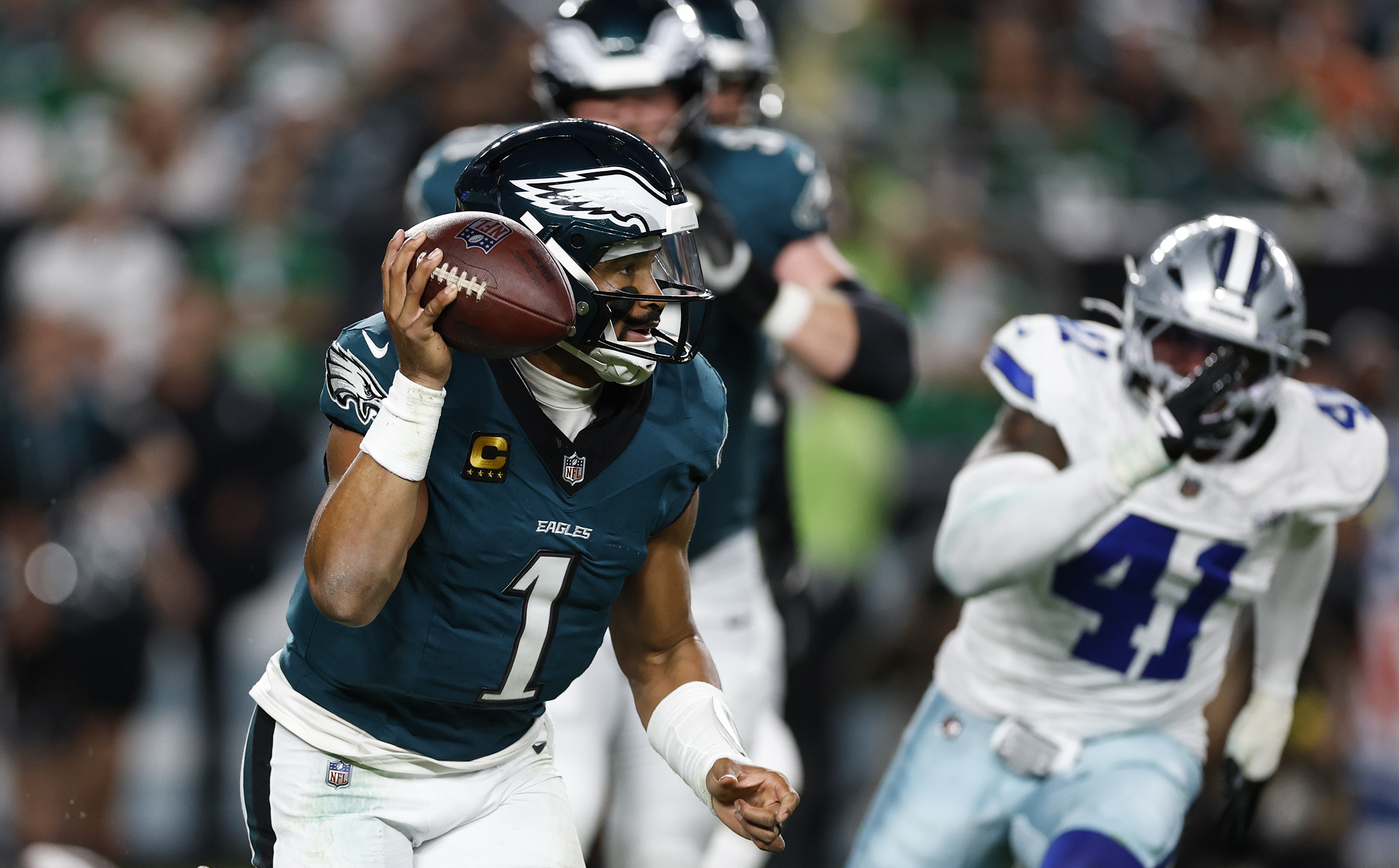
    Eagles quarterback Jalen Hurts runs with the football against the Dallas Cowboys on Thursday, September 4, 2025 in Philadelphia.

    National media predictions

    Now, here’s a look at how the national media feel about Sunday’s matchup …

    • ESPN: ESPN is leaning toward the Eagles. Six of their 10 NFL analysts picked the Eagles.
    • NFL.com: In a near sweep, four of five panelists are taking the Birds this week.
    • CBS Sports: Similarly, six of eight CBS panelists are choosing the Eagles over the Cowboys.
    • Sports Illustrated: Sports Illustrated is leaning toward the Eagles, with four of six writers taking the Eagles.
    • USA Today: It’s the same at USA Today, with four of six liking the Eagles this week.
    • Bleacher Report: Bleacher Report’s panelists pick against the spread, and only three of seven think the Eagles will cover the 3.5 points.
    • Sporting News: Vinnie Iyer has the Eagles winning, 27-24. But, like others, he also doesn’t think they’ll beat the spread.

    Local media predictions

    Here’s what the media in Philadelphia think will happen on Sunday.

  • The CEO Shaping the Health of Greater Philadelphia

    The CEO Shaping the Health of Greater Philadelphia

    “I grew up admiring my father,” Kelly Munson, the president and CEO of Independence Health Group, parent company of Independence Blue Cross (IBX), said. Thurman Munson was a major league baseball star and captain of the New York Yankees in the 1970s, and Munson said he taught her the importance of hard work, humility, and giving back: “What I loved most was his resilience.”

    Now, Munson is bringing those lessons to her own leadership position. This October, she became the first woman to lead Independence Health Group in its 87-year history. The organization, which has 14,000 employees and serves more than 7.1 million people across 32 states, including the District of Columbia, plays a vital role in shaping the health of communities across the region and nationally.

    Previously, Munson served as president and CEO of AmeriHealth Caritas, an Independence Health Group company that provides national leadership for vulnerable populations. She was named CEO of the parent company after an extensive national search for the position. Here, she reflects on the moments that shaped her career, her admiration for Philadelphia, and her vision for the future of the company.

    Why did you choose to dedicate your career to health care?

    When I was in college, I was studying political science and happened to take a nutrition class. That’s where I learned that the [national] school lunch program was, at one point, counting ketchup as a fruit. I remember being stunned by that. Around the same time, I read an article about the impact of inadequate nutrition on schoolchildren, the way missing something as simple as breakfast could lower test scores and hold kids back.

    It struck me deeply that through no fault of their own, children were starting the day at a disadvantage, unable to focus and thrive, simply because of what food they had access to. That realization lit a fire in me. I knew then that I wanted to dedicate my life to health care, to helping address these inequities.

    What excites you most about being part of Philadelphia and its surrounding communities?

    I’ve been here for two years now, and what’s struck me most is how misunderstood Philadelphia can be from the outside. People often see the passionate sports fans, or some of the stereotypes, and miss what the city is truly about. Once you’re here, you realize it’s one of the most soulful, passionate places you could imagine. There’s an energy and pride that runs through everything, from the sports teams to the neighborhoods to the people who call it home.

    Independence Blue Cross has been woven into that fabric for generations. It’s not just an employer; it’s part of the lifeblood of the region, serving police officers, teachers, families, and communities across the area. In fact, IBX was the city of Philadelphia’s first health insurer! To lead an organization so deeply rooted here, in a city that’s so alive, is incredibly exciting.

    Previously, you were CEO of AmeriHealth Caritas, a Medicaid health plan that is a subsidiary of Independence Health Group. When it comes to AmeriHealth Caritas, what are you the most proud of and what is your vision for the company’s future?

    Honestly, what I’m most proud of are the associates at AmeriHealth Caritas. They are extraordinary: mission-driven, compassionate, and deeply committed to serving vulnerable populations. That mission is exactly why I joined the company. At our core, what we do is care for those who need it most.

    All our teams go beyond traditional health care. They bring high-touch, community-centered support, with care management programs that truly change lives. For those at highest risk, we assign dedicated care managers who ensure people get the extra help they need. That hands-on approach translates directly into healthier outcomes.


    Is there a member story that has made a lasting impression?

    There are a few that stay with me, but one comes to mind immediately. I received an email from a man thanking us because, for the first time in 15 years, his elderly mother was able to enjoy a family barbeque with his brother, who had been living with serious mental illness, and they got through the event without a behavioral episode. It was a simple moment, but it meant the world to them as a family.

    Through our programs, we helped the man’s brother secure consistent therapy, proper medication management, safe housing, which he had not had, and even a job. Over the next two years, he was able to reconnect with his family, get engaged, and spend meaningful time with his mother. Sadly, he passed away from cancer two years later, but for the first time, he was healthier, happier, and able to be fully present with his loved ones.

    That experience reminded me that when we help a member, we’re often impacting an entire family. Health is rarely just one issue; it’s intertwined with many layers of social and medical needs. We consider the whole person and their loved ones.

    Independence Health Group has a history of community involvement, including employee volunteer work. How will you carry that forward in your role?

    Community engagement is at the heart of who we are. Across IBX and the AmeriHealth brand, employees have contributed more than 122,000 volunteer hours, with hundreds of nonprofits nationwide, not only to support the communities we serve but also to build trust and strengthen the networks that help our members.

    We help organizations with technology, infrastructure, and funding to ensure they can thrive. I’m committed to continuing this legacy and empowering our teams to make an even greater difference in the communities we serve.

    How is Independence Health Group addressing disparities in social determinants of health?

    Social and environmental factors often shape health outcomes even more than medical care itself, especially in Medicaid populations. Many of our members face multiple challenges at once: food insecurity, housing instability, utility needs, limited health literacy. Our goal is to identify those gaps early, connect members with the right resources, and measure whether those interventions truly make a difference. When social gaps are closed, members are up to 7% more likely to get preventive care, and hospitalizations can drop by a third. That’s powerful.

    I’m especially proud of our partnerships driving equity at a systemic level. Through the Regional Coalition to Eliminate Race-Based Medicine, IBX worked with 12 health systems to remove bias from clinical algorithms, resulting in more than 1,100 patients moving onto or up the kidney transplant list. By the end of 2024, 188 received kidney transplants. Our Accelerate Health Equity initiative brings hospitals, insurers, and community organizations together to tackle inequities across Philadelphia.

    Rising drug costs continue to be a concern for consumers. What strategies are effective for addressing affordability?

    It’s a serious challenge. Pharmacy costs have risen more than 230% over the past two decades, driven largely by high-priced specialty drugs. Many of these medications bring real value to patients, but the costs can be overwhelming.

    We’re focused on evidence-based strategies that maintain quality while improving affordability. That includes expanding access to biosimilar drugs, which offer the same effectiveness at a lower cost; ensuring members try proven, lower-cost options before moving to more expensive treatments; and helping members receive infusions or medications in lower-cost care settings when appropriate.

    We also work closely with providers to ensure members understand their options, like choosing between generics and brand names depending on what’s clinically appropriate. It’s about empowering people with choices that protect both their health and their wallet, without compromising quality of care.

    Who do you admire in your personal life or family?

    I grew up admiring my father, Thurman Munson. He was captain of the New York Yankees in the ’70s; what I loved most was his resilience. He came from very humble beginnings. They were so poor growing up that sometimes he had to go without shoes or resources, but he performed at the highest level anyway. In high school and college, he would have to mow seven lawns before showing up at the ball park for practice. Yet he achieved something extraordinarily rare while staying grounded, valuing family, and teaching us the importance of hard work and humility.

    And my mom was equally remarkable. When he passed [at the age of 32], she carried through those values. She picked right up with that same approach to raising us to be hard-working kids. Having both of them as role models shaped who I am, and I don’t take for granted the lessons they gave me about resilience, humility, and having an impact.

    What do you do with a few free hours?

    The number one way that I recharge is to do anything with any one of my kids, or all three and my husband, preferably. My favorite thing is to go hiking. So when I can, I get them to go hiking with me.

    Do you have a mantra? Any words you live by, or sayings that resonate with you?

    Actually I do. I was trying to make a big work decision one time, and I was struggling with it. A gentleman came by my office and he could tell that I had been struggling, and he just leaned in and shared a quote by Goethe: “Things that matter most must never be at the mercy of things that matter least.”

    These words helped me decide. It really boils down to knowing what matters most to you.


    PHILLY QUICK ROUND

    Favorite food: Jim’s Steaks. It’s absolutely fantastic.

    Which sports team’s shirt do you wear most often? The Yankees. I’m sorry, but no other baseball hat goes on my head. I’m the daughter of a former captain. It’s family.

    What do you love about Philadelphia? Well, of course it’s the fans. You come here, and everyone is passionate, and it’s so much fun.

    Who is the greatest Philadelphian of all time? Everyone who fought for freedom and human rights.

    I feel most Philadelphian when …. I’m in a sports bar watching an Eagles game.


    Lucy Danziger is a journalist, an author, and the former editor-in-chief of Self Magazine, Women’s Sports & Fitness, and The Beet.

  • 3 are killed in a crash after fleeing from Pennsylvania State Police in Chester County

    3 are killed in a crash after fleeing from Pennsylvania State Police in Chester County

    Pennsylvania State Police say three people are dead after a vehicle fled from a traffic stop and crashed in Chester County early Friday.

    Around 1:20 a.m., state police troopers saw the silver Toyota sedan violate traffic laws near East Third Street and Garner Drive in New Garden Township, according to police.

    When officers tried to conduct a traffic stop, “the vehicle failed to stop and a pursuit ensued,” police said.

    “Soon after the pursuit ensued, the fleeing vehicle crashed, and the three occupants of the fleeing vehicle are deceased,” state police said in a news release.

    No police officers were injured. State police were working to identify the deceased and notify their families.

    Early-morning TV news reports showed a mangled car next to a tree and a fence. The crash happened in Avondale on Gap Newport Pike between Sharp Road and Limestone Road, according to news reports.

  • Shane Gillis mocks Trump’s ‘piggy’ insult hurled at former Philly Daily News reporter

    Shane Gillis mocks Trump’s ‘piggy’ insult hurled at former Philly Daily News reporter

    President Donald Trump may no longer be a fan of Shane Gillis after listening to the comedian’s most-recent podcast.

    Gillis, a Mechanicsburg, Pa., native, joked about the possibility 79-year-old Trump is beginning to show signs of mental decline on the most-recent episode of Matt and Shane’s Secret Podcast, which he co-hosts with fellow comedian Matt McCuster.

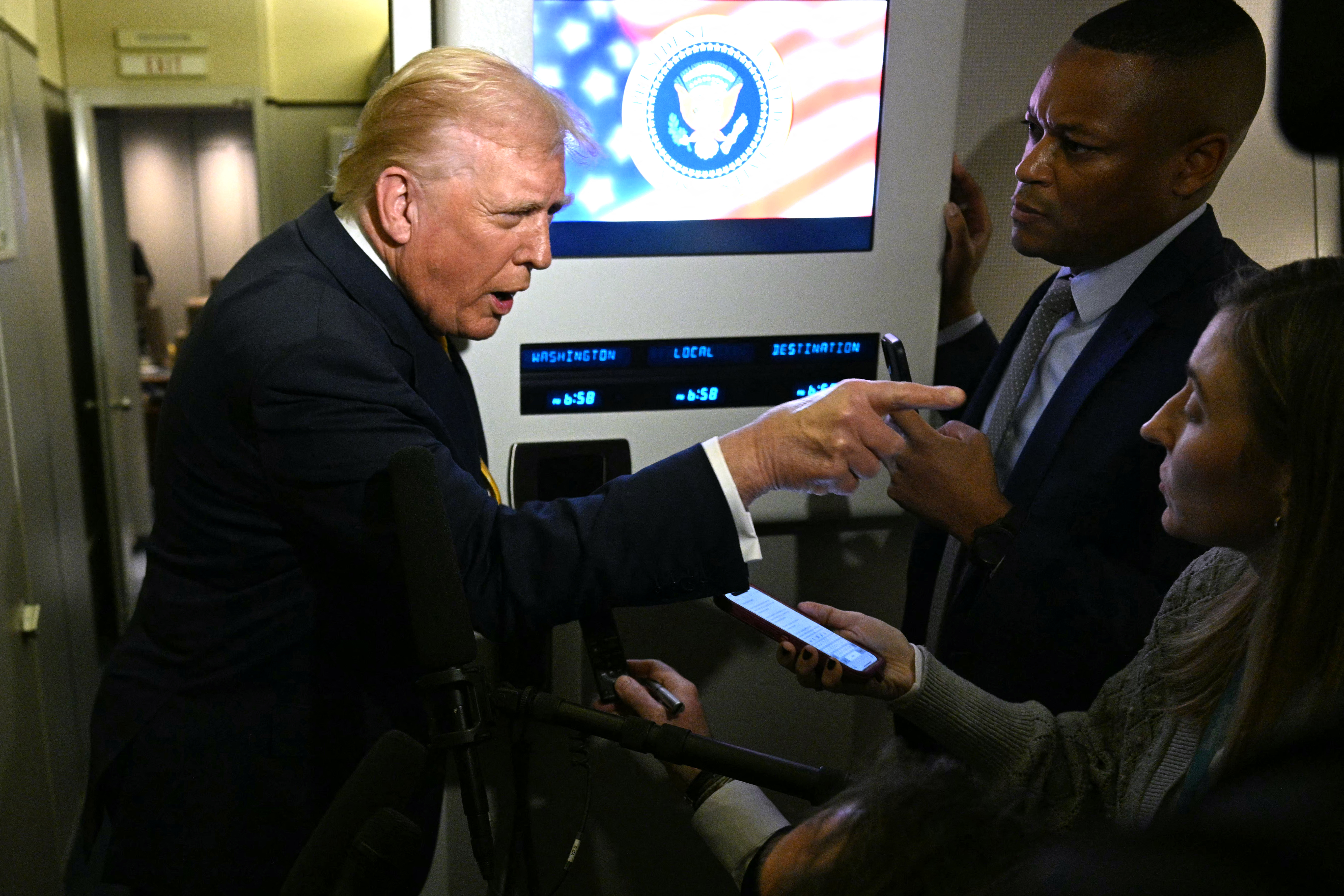
    Last week, Trump lashed out at Bloomberg White House correspondent and former Philadelphia Daily News reporter Catherine Lucey after she pressed him for information about files related to Jeffrey Epstein.

    “Quiet, quiet, piggy,” an angry Trump shot back, an insult Gillis jokingly referenced while interrupting guest Nate Marshall.

    President Donald Trump lashes out at Bloomberg’s Catherine Lucey aboard Air Force One en route to Palm Beach, Florida, on Friday.

    “Do you think he’s getting dementia?” McCuster asked Gillis.

    “I don’t know,” Gillis responded. “I don’t think … he just seems a little slower than usual.”

    “He’s definitely not at Biden brains yet, but he’s circling the drain,” Gillis added, a reference to the perceived decline of former President Joe Biden, who ended his reelection campaign following his poor performance during a debate against Trump.

    While Gillis expressed some sympathy for Lucey, he also joked about whether she deserved to be corrected by Trump and how awkward the plane flight must have been following the exchange.

    “Think if you were next to her and hated her,” Gillis said.

    Watch (caution: strong language):

    Lucey, who has not spoken publicly about the matter, spent 12 years as a reporter at the Philadelphia Daily News covering everything from police corruption to local news. She left in 2012 and spent time reporting for the Associated Press and the Wall Street Journal before joining Bloomberg in March.

    “Our White House journalists perform a vital public service, asking questions without fear or favor,” a Bloomberg News spokesperson told the Guardian. “We remain focused on reporting issues of public interest fairly and accurately.”

    White House press secretary Karoline Leavitt defended Trump’s insult of Lucey, telling reporters Thursday the president “calls out fake news when he sees it and gets frustrated with reporters who spread false information.”

    There’s no indication Lucey was spreading false information while asking Trump about the Epstein files.

    After being fired by Saturday Night Live in 2019, Gillis has risen to fame in part thanks to his unflattering yet sympathetic portrayal of Trump. Gillis has amassed a huge audience of MAGA fans, including the president himself.

    Gillis, an Eagles fan, met with Trump at the Super Bowl in New Orleans alongside country music star Zach Bryan.

    “Well, he’s a very good … I mean, on our side, right?” Trump later said in an interview with the Spector editor Ben Domenech, with the president adding he was a fan of Gillis and likes “everybody that’s on my side.”

    Gillis recalled the meeting during an episode of his podcast, describing the room as “intense” thanks to the heavy presence of Secret Service agents.

    “I finally had the moment — quick handshake,” Gillis said, though adding that Trump “has no idea who I am.”

    Joe Rogan and Theo Von not-so-quietly cooling their support of Trump

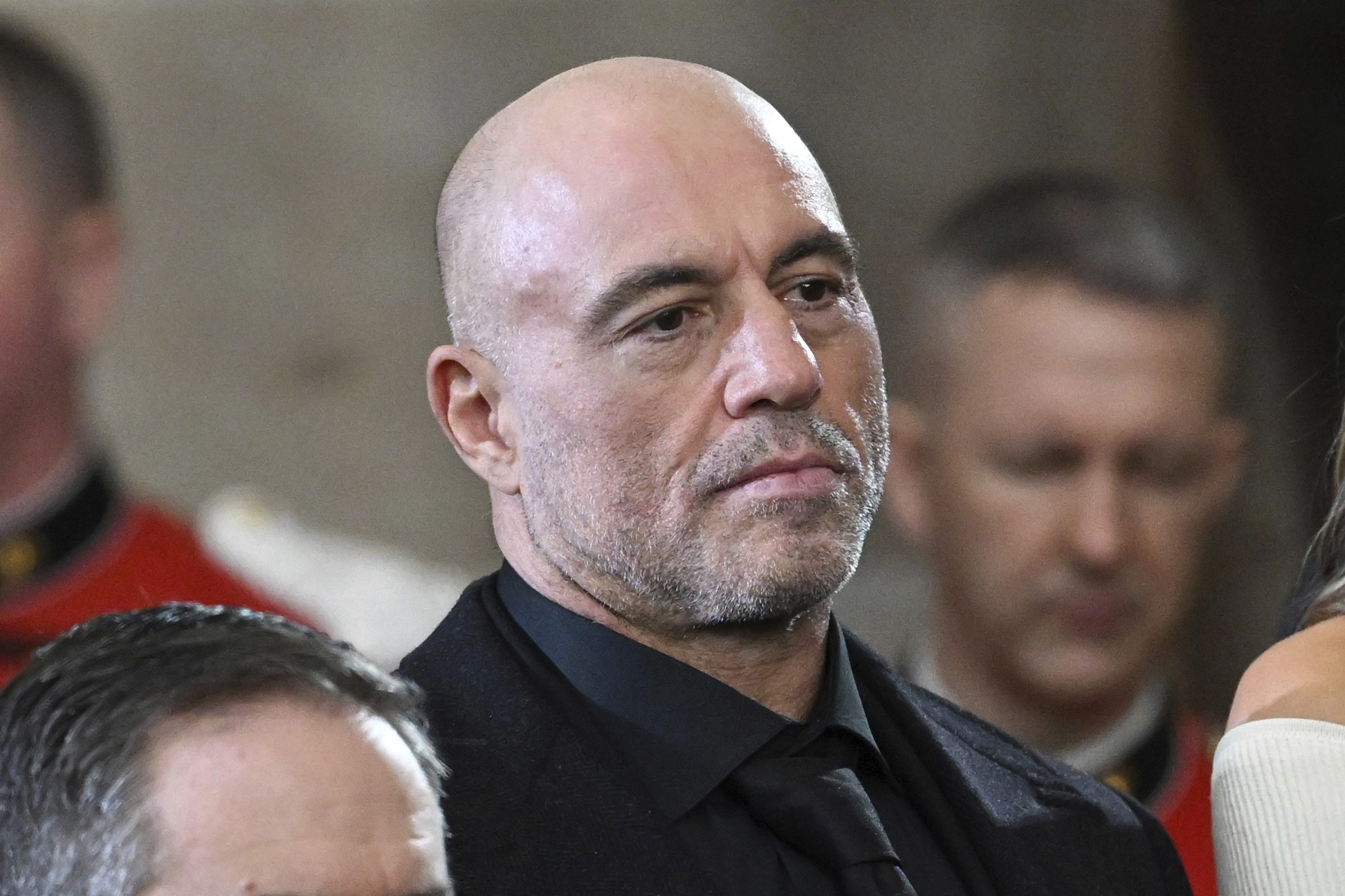
    Joe Rogan at President Donald Trump’s inauguration in January.

    Gillis is just the latest comedian within the so-called “manosphere” to begin to peel back their support of Trump.

    Joe Rogan, host of the popular The Joe Rogan Experience podcast, mocked Trump over his handling of the Epstein files.

    “I heard ‘there’s no files,’ I heard ‘it’s a hoax,’ ” Rogan said on the most-recent episode of his podcast. “And then all of a sudden, he’s going to release the files. Well, I thought there was not files.”

    Rogan famously endorsed and interviewed Trump ahead of the 2024 election, with the episode reportedly drawing over 40 million listeners. He also attended Trump’s inauguration but recently has been criticizing the president over everything from U.S. Immigration and Customs Enforcement raids and mass deportations to his continued lies about the 2020 election.

    “I feel like if you say that, you’ve got to have some, like, really good evidence that you could give out,” Rogan said on his podcast earlier this month about the 2020 election. “Either you don’t have any evidence that they stole the election, or you have evidence and you’re not telling me. Why would you not tell me? Why would you not tell me?”

    Theo Von at Trump’s inauguration.

    Theo Von, host of the This Past Weekend podcast, also interviewed Trump and attended his inauguration, but called out his administration after the Department of Homeland Security took a joke out-of-context and used it in a pro-deportation social media video that was later deleted.

    “My father immigrated here from Nicaragua. One of my prized possessions is I have his immigration papers from when he came here. I have them in a frame,” Von said on his podcast last month.

  • The Big Picture: A dominant Eagles defense, Michelin star chefs, and our best sports photos of the week

    The Big Picture: A dominant Eagles defense, Michelin star chefs, and our best sports photos of the week

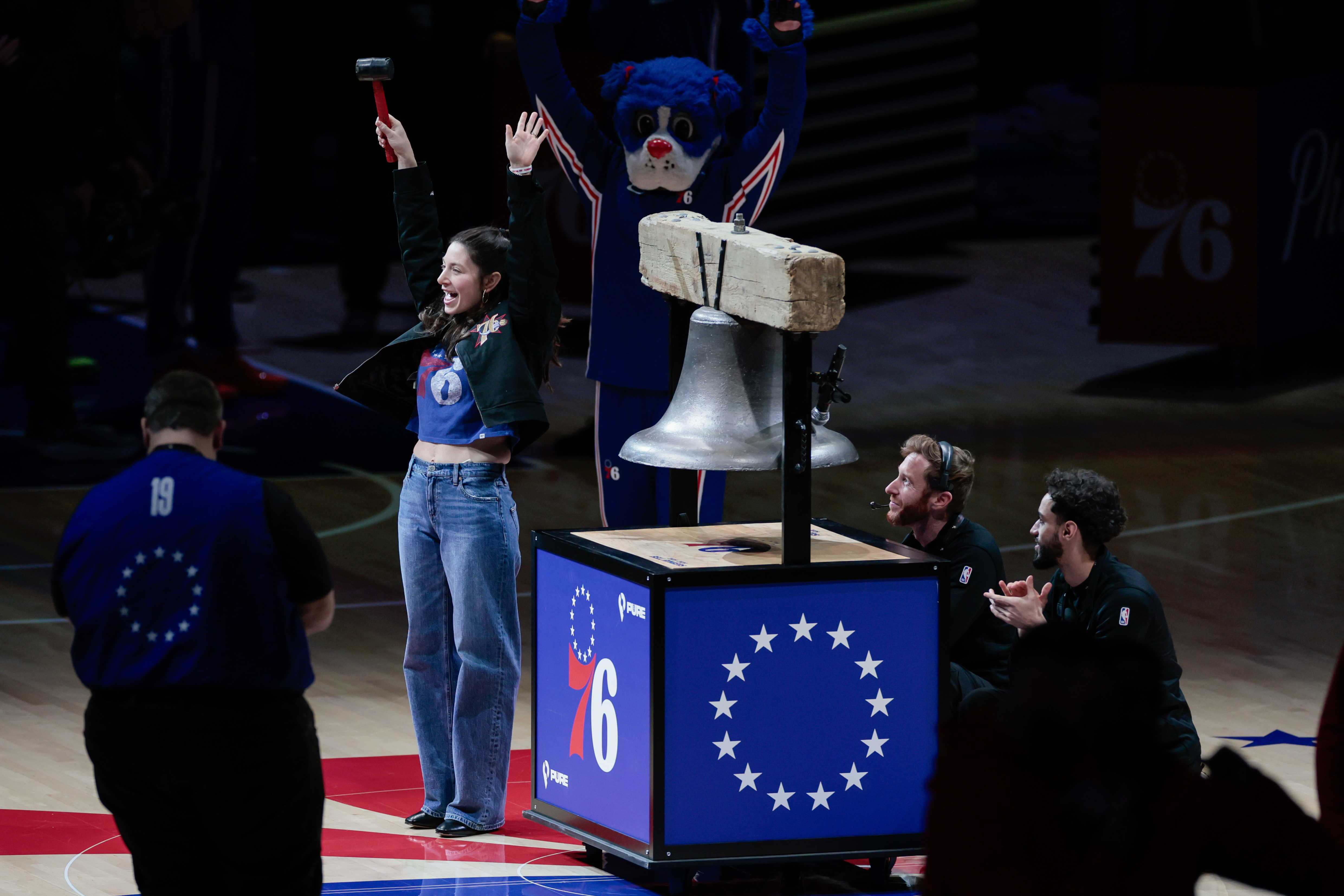
    Each Friday, Inquirer photo editors pick the best Philly sports images from the last seven days. This week, we’ll take another look at the latest big night from the Eagles defense, the return of Paul George against the Los Angeles Clippers, and the U.S. men’s national soccer team’s friendly in Chester. We’ve even got one of Philly’s three new Michelin star chefs, Amanda Shulman of Her Place Supper Club, ringing the bell before a Sixers game …

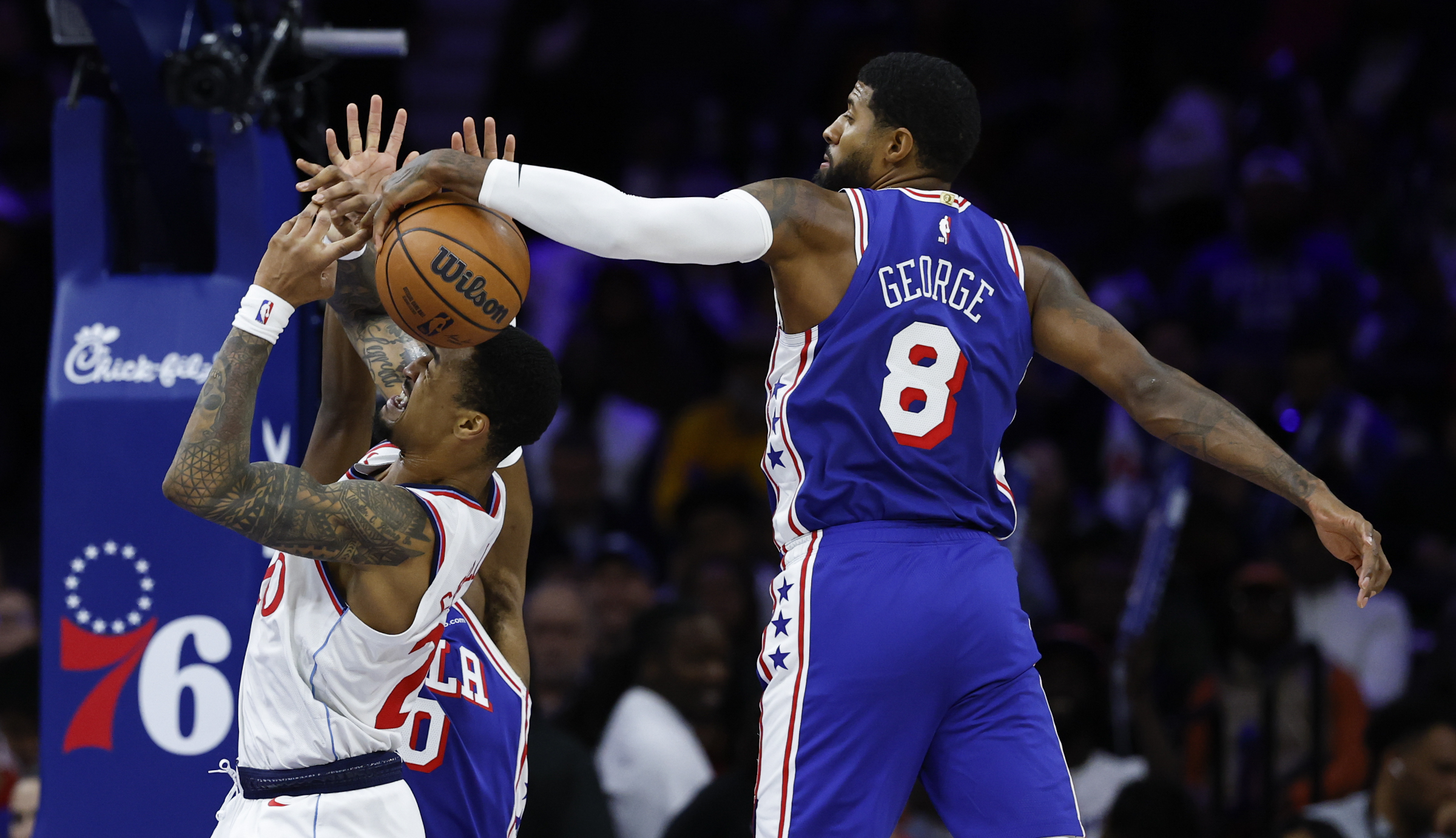
    Sixers forward Paul George made his season debut Monday against the Clippers. He played 21 minutes, but finished with just 9 points (on 2-of-9 shooting), 7 rebounds, and 3 assists, in 21 minutes. After the game, George admitted he was “rusty.”
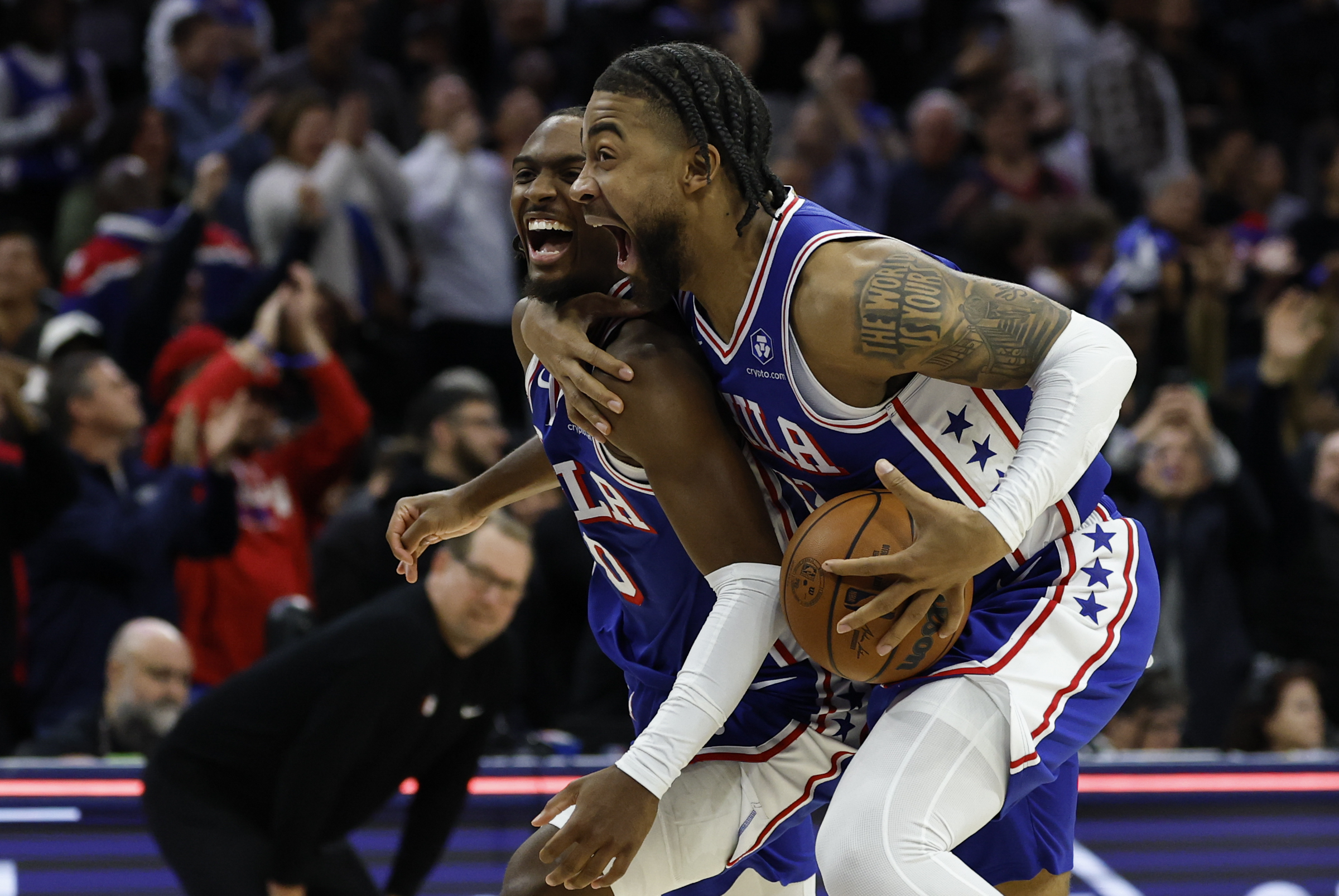
    Sixers guard Tyrese Maxey and and forward Trendon Watford were all smiles celebrating their 110-108 victory over James Harden and the Clippers.
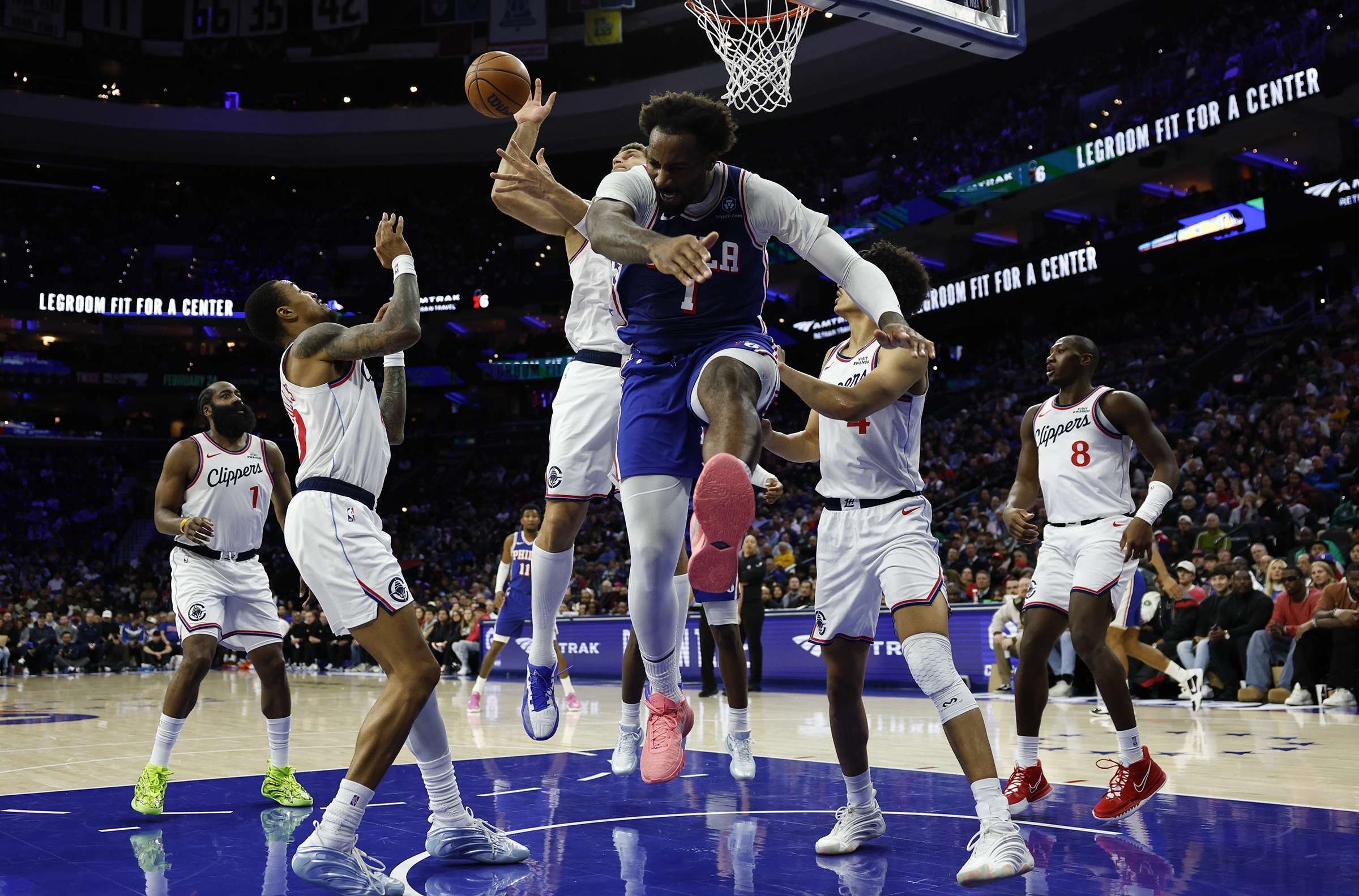
    Sixers center Andre Drummond, seen here getting fouled on a rebound against the Clippers, has been starting in place of Joel Embiid, who missed his sixth straight game Thursday night as he deals with a knee injury.
    Her Place Supper Club chef-owner Amanda Shulman rings the ceremony bell at the Sixers game on Wednesday. A night earlier, her restaurant became one of three in Philly to earn the city’s first Michelin stars.
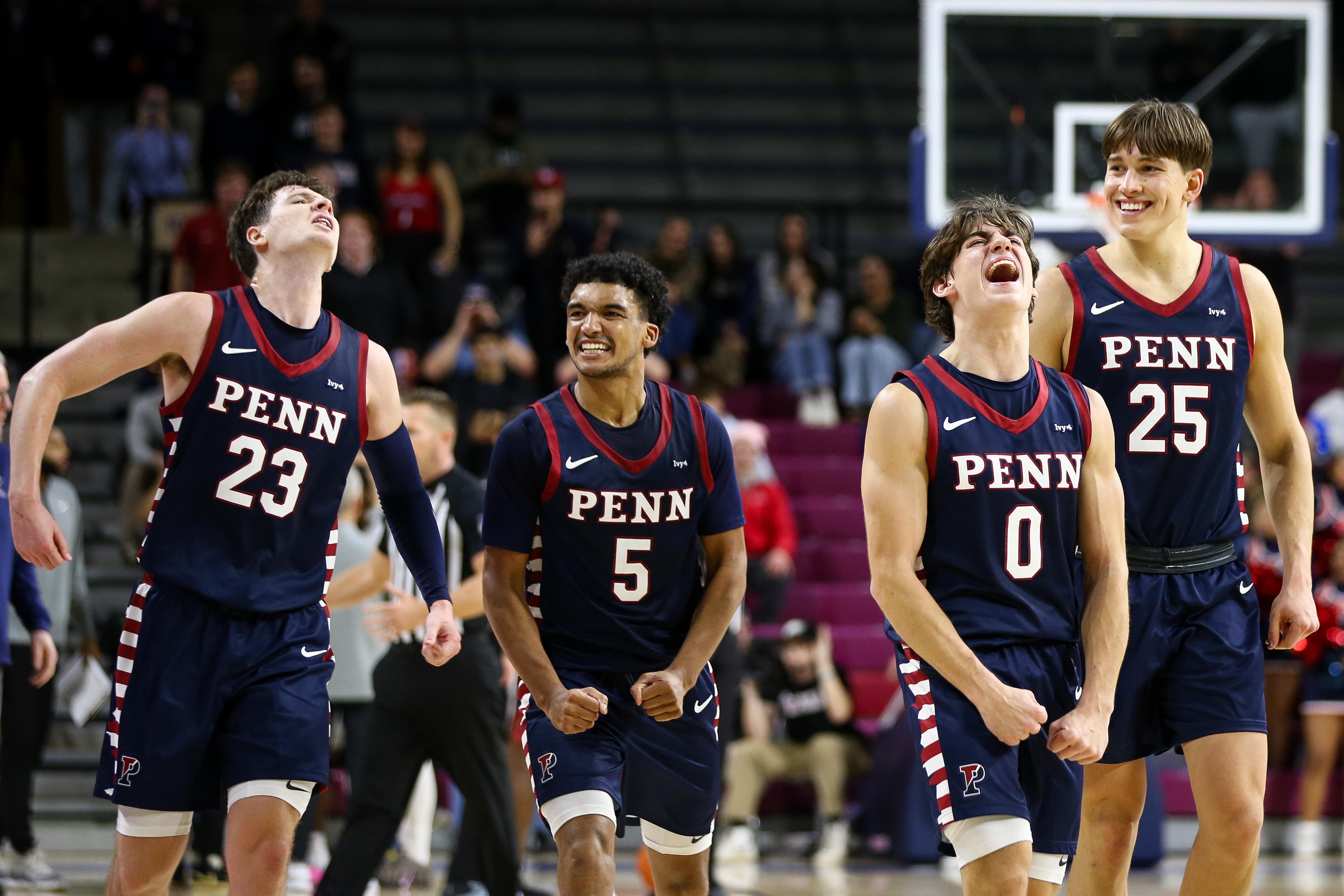
    Members of the Penn Quakers — Ethan Roberts (23), Cam Thrower (5), AJ Levine (0), and Augustus Gerhart (25) — react in the final minutes of their 83-74 win over the Saint Joseph’s Hawks at The Palestra on Monday.
    USA midfielder Tanner Tessmann (center) beats Paraguay’s Julio Enciso (left) and Alex Arce (right) to the ball during the United States’ 2-1 win over Paraguay at Chester’s Subaru Park on Saturday.
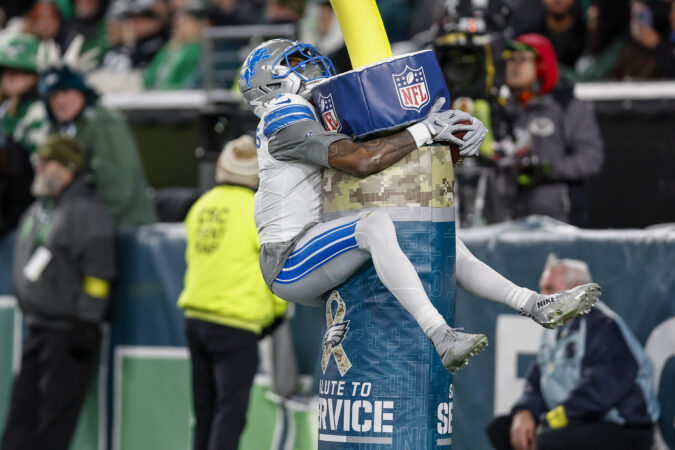
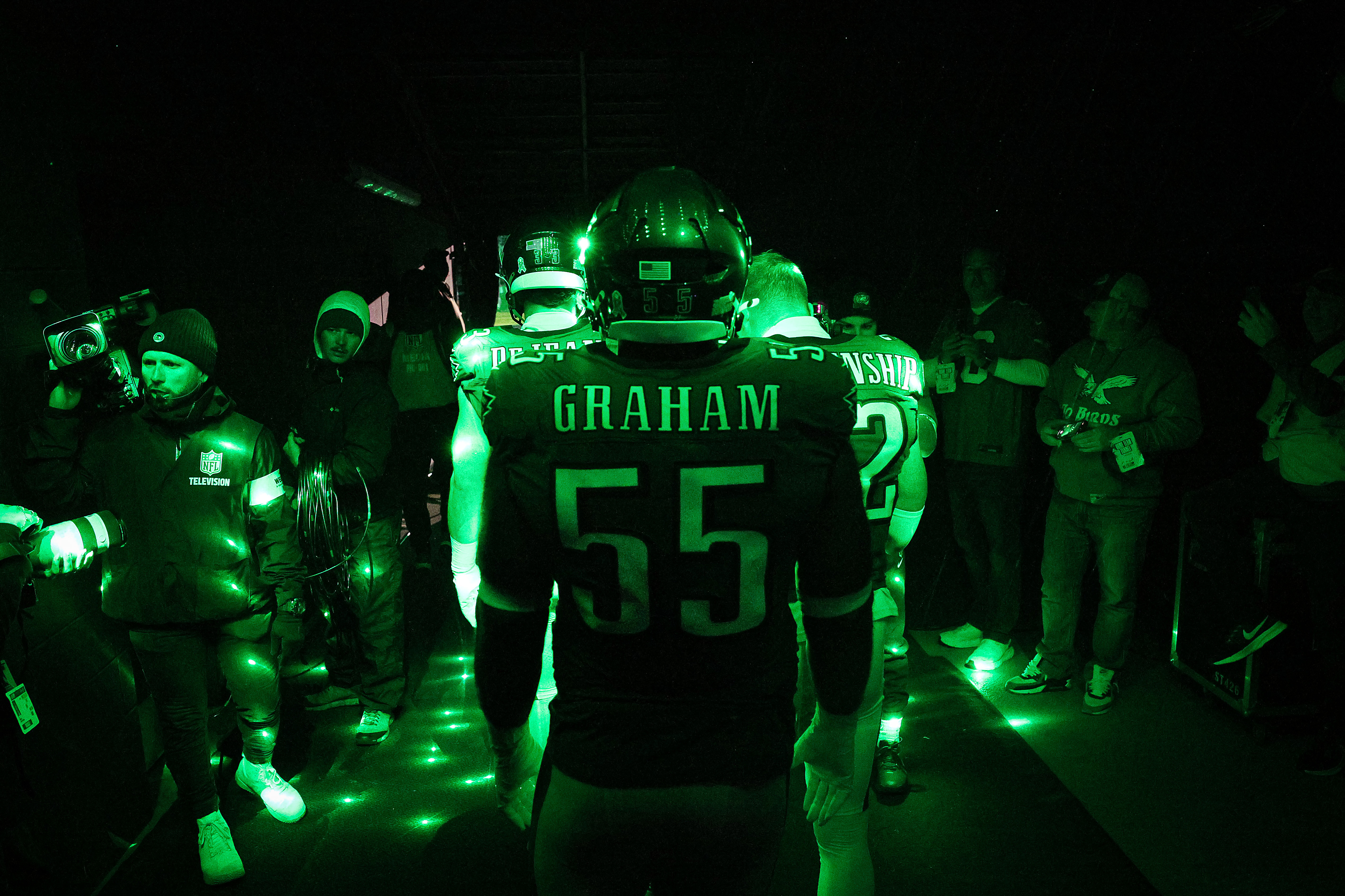
    Eagles defensive end Brandon Graham waits to be introduced before the team’s game against the Detroit Lions. Graham came out of retirement earlier this year to rejoin the team he helped win a pair of Super Bowls.
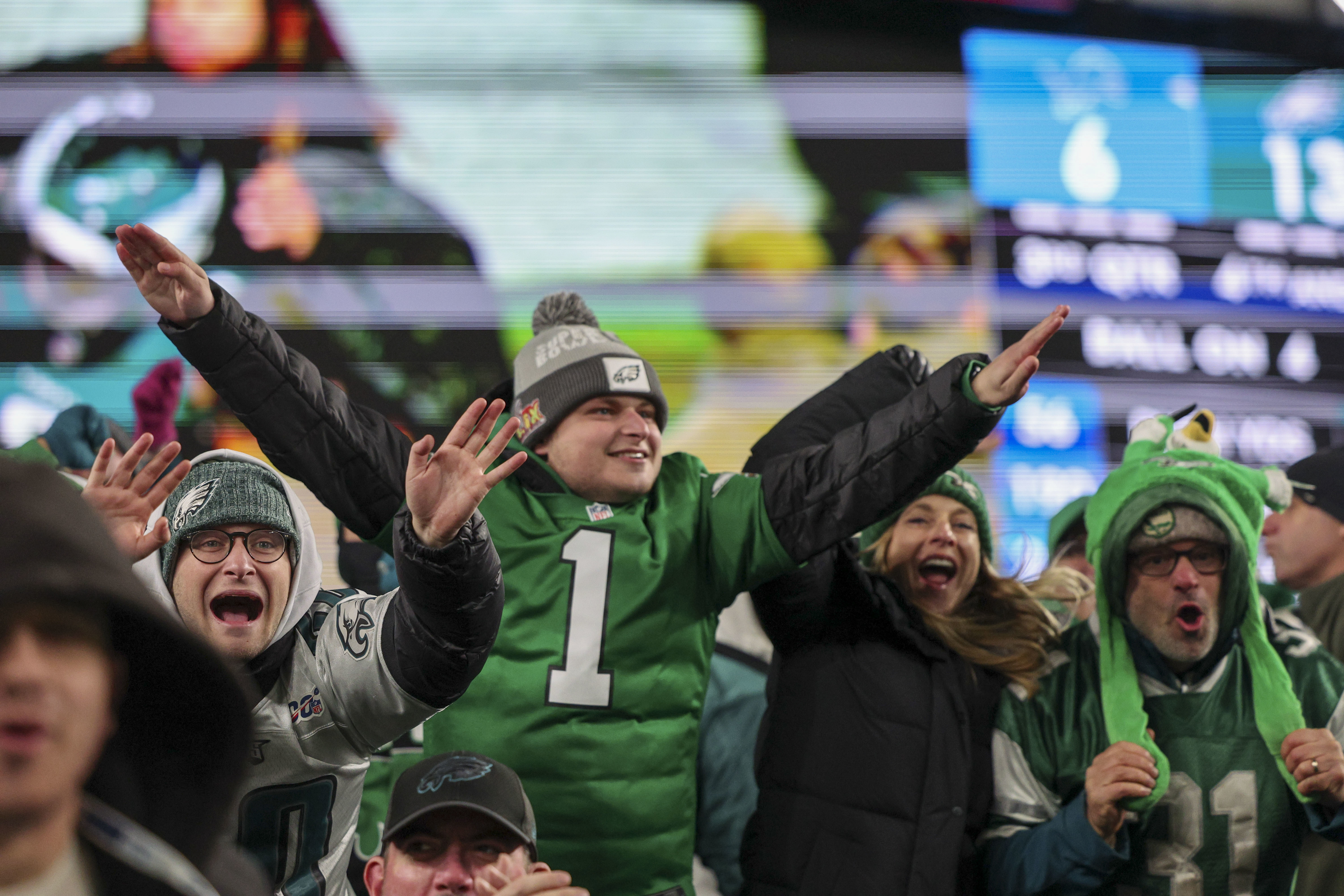
    Eagles fans celebrate after the defense stops the Lions on fourth-and-goal in the third quarter of Sunday’s win. The defense has allowed just 16 points in its last two games.
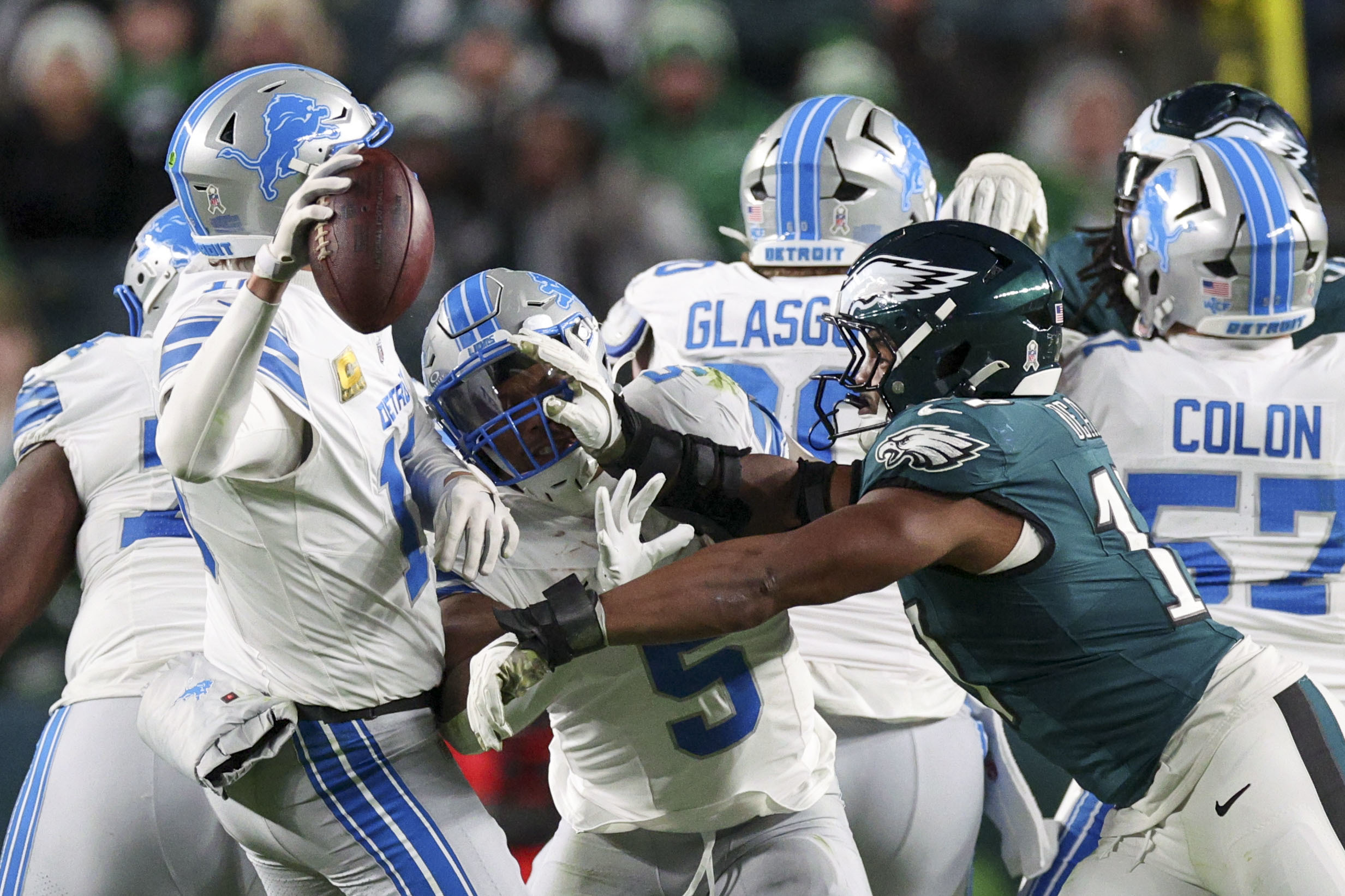
    Eagles linebacker Nakobe Dean hits Lions quarterback Jared Goff, causing him to fumble. Vic Fangio’s defense has allowed just 14.5 points per game during the Eagles’ current four-game win streak.
    While the Eagles defense has soared, the offense has soured. They’ve scored just 26 points in their two games since the bye, and earlier this week a report said there was internal frustration with Jalen Hurts.
    One of the difference in the Eagles defense over the last few weeks has been edge rusher Jaelan Phillips, who was acquired at the trade deadline.
  • Patients’ use of AI chatbots makes sense, but tread carefully

    Patients’ use of AI chatbots makes sense, but tread carefully

    It finally happened this week.

    One of my patients, a woman in her 40s with chronic abdominal pain, told me that she had a new companion named Astrid joining her during an office visit. But she was alone in the exam room. It took me a few awkward seconds to realize that Astrid was a chatbot.

    She went on to explain that Astrid helps her remember what to ask me about and alerts her to worrisome causes of her symptoms. She often has difficulty scheduling an office appointment and gets a quicker response to simple questions from Astrid than from our patient portal. I felt an odd combination of humbled, curious, and dismayed. And I was relieved that my patient still showed up for her visit, albeit with Astrid’s advice visible on her iPhone screen.

    Many of my patients have long consulted the internet about their symptoms; some even apologize for doing it. I reassure them that Googling is normal these days, and often preempt their fears by asking up front, “Is there anything you researched about your symptoms that has you worried?” But Astrid seemed different, like I was in a brave new world of truly sharing my space in a medical clinic with something (or someone) that I am not sure if I can trust.

    And this is only the beginning. Companies like Counsel Health have developed “AI-first” platforms that promise to take the first run at triaging a patient’s medical needs, then escalate cases needing further review to a human clinician. Similarly, Massachusetts General Hospital has launched “Care Connect,” an AI chatbot app for patients without a primary care doctor.

    I’ve been reading everything I am able to find about AI chatbots, but I still felt unprepared to face this in my own clinic. I think part of the reason is that doctors generally assume that bedside skills are squarely in our wheelhouse. In fact, it is these abilities — rather than medical diagnostic and therapeutic capabilities — that many of us cite when discussing the most profound moments in our careers. In my specialty of primary care, relational skills — empathy, presence, communication, patient education — are quintessential, almost like what performing an operation is to a surgeon. As much as personal connection is a high priority for patients, it is also a vital source of meaning and purpose for many doctors.

    So it stands to reason that the idea of AI chatbots at the bedside provokes a variety of emotions in doctors like me, including disbelief, worry, anger, anxiety, sadness, or outright denial. Many of us prefer to dismiss the idea that they could be our competition for patients’ loyalty. We prefer to discuss ways in which we can define how AI tools streamline processes, improve efficiency, and relieve task overload.

    That said, what are patients with a time-sensitive medical concern supposed to do if they are told there are no appointments available for two weeks? People lead busy and complex lives. They may get in quickly at Urgent Care or on a telemedicine service, but will likely receive a transactional visit with a clinician who does not know them, with no continuity if things don’t go as expected.

    Even for those fortunate enough to get an appointment at the office for a new concern, these visits can be quite short, and a patient may find that their true concerns compete with your primary care doctor’s agenda to address preventive health, and other issues for which they have a financial incentive through healthcare’s complex payment systems.

    And patients see doctors’ human limitations. We get tired and impatient; we are biased; we interrupt; we take cognitive short cuts; it takes time for us to learn. The rates of harmful human medical errors and inaccurate diagnoses is still intolerably high.

    So now there is Astrid and her brethren — tireless, always available, prepared to share vast knowledge in seconds, apparently non-judgmental, and even empathic. There are studies that describe how patients often lie to their doctors and are sometimes more at ease being vulnerable and sharing emotionally difficult matters with chatbots.

    Generative AI is truly remarkable, and maybe someday chatbots will best doctors at our craft. But before you fully give over to AI temptation, consider a few words of caution.

    Technology developers do not uphold any long-held tradition, or take an oath to act in your best interest. They simply aspire to create the most useful and marketable tools possible. Chatbots can “hallucinate,” and provide information that is false or unsubstantiated. They are designed to please you and can be seductively sycophantic. They cannot form long-term, honest, collaborative relationships with you — like committed primary care doctors can — nor can they coordinate the complex, overlapping array of concurrent medical, social, emotional, and financial issues that characterize a journey through illness.

    The promise of AI chatbots speaks loudly, and the message is being received with interest and concern. Many physicians and healthcare leaders are replacing our apprehension with curiosity, endeavoring to better understand the allure. It implores us to overcome decades-long inertia and deliver primary care that is accessible, efficient, and prioritizes patients’ stories, needs and concerns above all else. Practicing this version of primary care also stands a better chance of keeping more primary care doctors in the workforce and attracting more new medical graduates to the specialty.

    Doctors are working with developers to help make medical AI better, safer, equitable, and ethically sound. Chatbots have far greater potential as doctor-patient partners, rather than as alternatives. My request of my patients: Use them carefully, keep your appointments. And share your learnings — my colleagues and I need to hear what Astrid is recommending.

    Jeffrey Millstein is an internist and regional medical director for Penn Primary and Specialty Care.

  • 🎽 Running for a second chance | Morning Newsletter

    🎽 Running for a second chance | Morning Newsletter

    At last, it’s Friday. The weather forecast for Philadelphia Marathon Weekend is cloudy with a chance of sweat.

    Teens from juvenile diversion program MileUp will be among the thousands of athletes participating in this weekend’s races. They’re running for more than accolades.

    And President Donald Trump accused six Democrats in Congress, all of whom are either veterans or members of the intelligence community, of sedition “punishable by death.” We spoke to the two Pennsylvania lawmakers who were targeted.

    — Julie Zeglen (morningnewsletter@inquirer.com)

    P.S. Friday means trivia. Scroll to find The Inquirer’s weekly news quiz in a new spot.

    If someone forwarded you this email, sign up for free here.

    Miles for expungement

    A group of teenagers will take the final steps toward getting their criminal records expunged by running the 13.1 miles of the Philadelphia Half Marathon this Saturday.

    🎽 They’re students of MileUp, a juvenile diversion program that gives young people who are charged with certain offenses, such as auto theft and vandalism, the chance to clear their records.

    🎽 Mentors help them practice accountability and responsibility while developing distance running. For the fall cohort, the Philly Half follows their completion of a 5K and the All-City 10 Miler.

    🎽 Data from the District Attorney’s Office show the program is keeping teens out of the criminal justice system. Participants say they’re grateful for the opportunity to start fresh as they approach adulthood: “Everyone deserves a second chance,” one 16-year-old told The Inquirer.

    Reporter Nate File has the story.

    Pa. lawmakers react to Trump threat

    🎤 I’m passing the mic to politics reporters Aliya Schneider and Julia Terruso.

    U.S. Rep. Chrissy Houlahan was in her Washington office when she saw attacks directed at her and other military veteran members of Congress from President Donald Trump, days after they urged members of the military and intelligence community to “refuse illegal orders.”

    Trump called the Democrats “traitors” in a Thursday post on Truth Social and, in a second post, accused them of sedition that he said is “punishable by DEATH.”

    Houlahan, a Chester County Democrat and an Air Force veteran, was one of six Democratic members of Congress who released a video Tuesday contending that Trump’s administration is “pitting” service members and intelligence professionals against American citizens and urging them not to “give up the ship.”

    “The idea that the most powerful man on the planet, who wields the power of the United States military and should be emblematic of all the things we value in this republic, would call for the death and murder of six duly elected members of the House of Representatives and the Senate — I’m speechless and I’m devastated,” Houlahan told The Inquirer on Thursday afternoon. — Aliya Schneider and Julia Terruso

    Read more on how Houlahan and U.S. Rep. Chris Deluzio, the second Pennsylvania lawmaker featured in the video, reacted to the president’s statements, and their goals for their message.

    In other federal government news: The Trump administration said it wants to “completely deconstruct” the Supplemental Nutrition Assistance Program. Here’s what’s actually happening. Plus, the U.S. Department of Energy will loan $1 billion to help finance the reopening of Three Mile Island, a nuclear power plant near Harrisburg.

    What you should know today

    Plus: Why is the Apollo-era lunar module leaving the Franklin Institute?

    Welcome back to Curious Philly Friday. We’ll feature both new and timeless stories from our forum for readers to ask about the city’s quirks.

    This week, we have an explainer on the lunar module that’s been on display outside the Franklin Institute for nearly half a century. The engineering prototype served to test how parts and pieces would fit together in preparation for the real Apollo 11 lunar module that took Neil Armstrong to the moon.

    But now, it’s headed back to the Smithsonian’s National Air and Space Museum in D.C. Here’s the full story.

    Have your own burning question about Philadelphia, its local oddities, or how the region works? Submit it here and you might find the answer featured in this space.

    🧠 Trivia time

    Task, the HBO show set in Delco, has been renewed for a second season. Season 1 starred Tom Pelphrey and which actor?

    A) Mark Ruffalo

    B) Cillian Murphy

    C) Noah Centineo

    D) Bradley Cooper

    Test your local news know-how with our weekly quiz and check your answer.

    What we’re …

    📬 Remembering: That time somebody from New Jersey mailed a fake bomb to the office of Dick Clark.

    🍻 Learning: How the boozy business of the American Revolution went down in Philly bars.

    🎙️ Following: The latest developments at the embattled World Cafe Live.

    🦃 Welcoming: Gobbler season, courtesy of these Philly eateries.

    📝 Considering: This call for creative resistance in the city and beyond.

    🧩 Unscramble the anagram

    Hint: _ Meeting

    HOT LUMPY

    Email us if you know the answer. We’ll select a reader at random to shout out here.

    Cheers to Veronica Herzog, who solved Thursday’s anagram: Bellwether District.

    Officials for the project, which will bring industrial and life sciences campuses to the 1,300-acre former refinery site in South Philadelphia, said they could soon announce its first tenants. (Plus: Eli Lilly & Co. is opening a biotech incubator at 2300 Market St.)

    Photo of the day

    A small dog pokes into view in a car’s driver-side rearview mirror during a traffic jam during a rainy day in Center City.

    It’s time to put the week in the rearview and look forward to the weekend. Have a good one.

    By submitting your written, visual, and/or audio contributions, you agree to The Inquirer’s Terms of Use, including the grant of rights in Section 10.