Blog

  • Shane Gillis’ hit Netflix series ‘Tires’ receives $6 million in tax credits to film its third season

    Shane Gillis’ hit Netflix series ‘Tires’ receives $6 million in tax credits to film its third season

    The hit Netflix series Tires is returning to the Philadelphia area, with more than a few extra dollars to spare.

    The show, starring Mechanicsburg, Pa. native and former Mantua resident comedian Shane Gillis was approved for a $6 million tax credit for its forthcoming production in the Philly region.

    The $6 million tax credit was issued through the state’s Film Production Tax Credit Program, which is overseen by the Pennsylvania Department of Community and Economic Development.
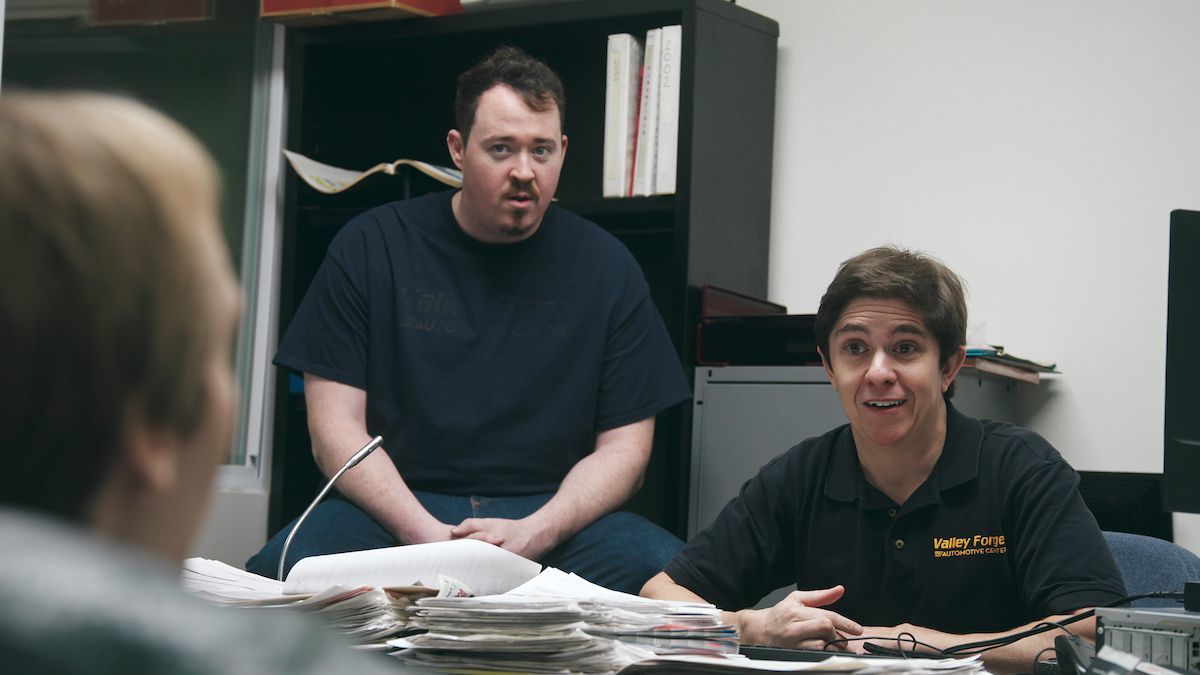
    A still from Mechanicsburg native Shane Gillis’ Netflix comedy “Tires.” Season two is currently being produced in Philadelphia and will premiere on Netflix in 2025.

    The program offers a 25—30% tax credit to productions that spent at least 60% of their total operational budget in the state.

    Nicole Shiner, co-executive director of the Greater Philadelphia Film Office alongside Erin Wagner, said incentives like these are vital for large-scale productions like Tires to land and remain in the region..

    “The tax credit program is the primary economic development tool that allows Pennsylvania, and Philadelphia specifically, to compete nationally and internationally for projects the tax credit supports,” Shiner said.

    “Film and TV production is very mobile, and production companies compare states based on infrastructure, financial competitiveness, workforce in the area, and overall reliability,” she said. “Without a strong incentive program, we simply wouldn’t be competitive in attracting major episodic TV or studio features.”

    Tires is created by Gillis and his longtime collaborators Steven Gerben and John McKeever, the show is set and filmed in West Chester. It premiered on Netflix in May 2024 and was soon renewed for a second season. In July 2025, the West Chester, Pa.-set show was renewed for a third season.

    “When a series returns for additional seasons, that signals the area has stability,” Shiner said. “That consistency is what allows businesses and workers to grow with our industry. People can stay, create families, make plans, and pay mortgages.”

    The Greater Philadelphia Film Commission co-executive directors Erin Wagner (left) and Nicole Shiner (right) pose for a portrait outside Philadelphia’s City Hall on Wednesday, Oct. 29, 2025.

    She is glad the show is shooting on location. “When you see stuff on location, it gives you a Pennsylvania authentic feel that you really can’t make up. We love that,” she said.

    Pennsylvania Film Office officials expect the forthcoming production to generate an estimated $24 million to the local economy in return, including 1,709 jobs.

    Based on the local film office’s own projections, Shiner said the show’s total economic impact could reach as much as $50 million across the region.

    The estimate is based on additional professional services, goods, and production costs linked to shows of this magnitude. These operational costs include local cast and crew wages, equipment rentals, construction, transportation, catering, security, lodging, and other expenses accrued, which are then injected into the regional economy.

    The state film office also awarded $28 million to the Pittsburgh-set and shot series Mayor of Kingstown starring actors Jeremy Renner, Dianne Wiest, and Edie Falco.

    Combined, Pennsylvania Film Office officials said the two productions are expect to inject more than $131 million into the economy in direct expenditures, creating and supporting nearly 3,500 state jobs.

    Shane Gillis as Shane in the second season of “Tires”

    Since the beginning of Gov. Josh Shapiro’s administration, the state’s Film Office has approved 135 new productions through the tax credit program.

    These productions are projected to inject over $1.34 billion in direct spend in over 34 countries in the Commonwealth, while supporting nearly 40,000 jobs and $505.3 million in state resident wages.

    Shiner said this commitment is one of many reasons more TV and film studios are turning to the Commonwealth.

    “We are sandwiched between New York and New Jersey, and the tax credit program has been increasing astronomically over the last few years,“ she said. ”It’s really important that Pennsylvania pays attention to this, if we’re going to remain competitive.”

  • Trump says change in power in Iran ‘would be the best thing that could happen’

    Trump says change in power in Iran ‘would be the best thing that could happen’

    WASHINGTON — President Donald Trump said Friday that a change in power in Iran “would be the best thing that could happen” as the U.S. administration weighs whether to take military action against Tehran.

    Trump made the comments shortly after visiting with troops in Fort Bragg, N.C., and after he confirmed earlier in the day that he’s deploying a second aircraft carrier group to the Mideast for potential military action against Iran.

    “It seems like that would be the best thing that could happen,” Trump said in an exchange with reporters when asked about pressing for the ouster of the Islamic clerical rule in Iran. “For 47 years, they’ve been talking and talking and talking.”

    The president has suggested in recent weeks that his top priority is for Iran to further scale back its nuclear program, but on Friday he suggested that’s only one aspect of concessions the U.S. needs Iran to make.

    Israeli Prime Minister Benjamin Netanyahu, who traveled to Washington this week for talks with Trump, has been pressing for any deal to include steps to neutralize Iran’s ballistic missile program and end its funding for proxy groups such as Hamas and Hezbollah.

    “If we do it, that would be the least of the mission,” Trump said of targeting Tehran’s nuclear program, which suffered significant setbacks in U.S. military strikes last year.

    Iran has insisted its nuclear program is for peaceful purposes. Before the June war, Iran had been enriching uranium up to 60% purity, a short, technical step away from weapons-grade levels.

    Trump’s comments advocating for a potential end to Ayatollah Ali Khamenei’s rule come just weeks after Secretary of State Marco Rubio said a potential change in power in Iran would be “far more complex” than the administration’s recent effort to oust Venezuelan President Nicolás Maduro from power.

    Rubio, during a Senate hearing last month, noted that with Iran “you’re talking about a regime that’s in place for a very long time.”

    “So that’s going to require a lot of careful thinking, if that eventuality ever presents itself,” Rubio said.

    Trump said the USS Gerald R. Ford, the world’s largest aircraft carrier, is being sent from the Caribbean Sea to the Mideast to join other warships and military assets the U.S. has built up in the region.

    The planned deployment comes just days after Trump suggested another round of talks with the Iranians was at hand. Those negotiations didn’t materialize as one of Tehran’s top security officials visited Oman and Qatar this week and exchanged messages with U.S. intermediaries.

    “In case we don’t make a deal, we’ll need it,” Trump told reporters about the second carrier. He added, “It’ll be leaving very soon.”

    Already, Gulf Arab nations have warned any attack could spiral into another regional conflict in a Mideast still reeling from the Israel-Hamas war in the Gaza Strip. Meanwhile, Iranians are beginning to hold 40-day mourning ceremonies for the thousands killed in Tehran’s bloody crackdown on nationwide protests last month, adding to the internal pressure faced by the sanctions-battered Islamic Republic.

    The Ford, whose new deployment was first reported by the New York Times, will join the USS Abraham Lincoln and its accompanying guided-missile destroyers, which have been in the region for over two weeks. U.S. forces already have shot down an Iranian drone that approached the Lincoln on the same day last week that Iran tried to stop a U.S.-flagged ship in the Strait of Hormuz.

    Trump in exchanges with reporters on Friday still offered measured hope that a deal can be struck with Iran.

    “Give us the deal that they should have given us the first time,” Trump said about how U.S. military action can be avoided. ”If they give us the right deal, we won’t do that.”

    Ford had been part of Venezuela strike force

    It would be a quick turnaround for the Ford, which Trump sent from the Mediterranean Sea to the Caribbean last October as the administration built up a huge military presence in the lead-up to the surprise raid last month that captured then-Venezuelan President Nicolás Maduro.

    It also appears to be at odds with the Trump administration’s national security and defense strategies, which put an emphasis on the Western Hemisphere over other parts of the world.

    In response to questions about the movement of the Ford, U.S. Southern Command said U.S. forces in Latin America will continue to “counter illicit activities and malign actors in the Western Hemisphere.”

    “While force posture evolves, our operational capability does not,” Col. Emanuel Ortiz, spokesperson for Southern Command, said in a statement. U.S. “forces remain fully ready to project power, defend themselves, and protect U.S. interests in the region.”

    The Ford strike group will bring more than 5,000 additional troops to the Middle East but few capabilities or weapons that don’t already exist within the Lincoln group. Having two carriers will double the number of aircraft and munitions that are available to military planners and Trump.

    Given the Ford’s current position in the Caribbean, it will likely be weeks before it is off the coast of Iran.

    Trump has repeatedly threatened to use force to compel Iran to agree to constrain its nuclear program and earlier over Tehran’s bloody crackdown on nationwide protests.

    Iran and the United States held indirect talks in Oman a week ago, and Trump later warned Tehran that failure to reach an agreement with his administration would be “very traumatic.” Similar talks last year ultimately broke down in June as Israel launched what became a 12-day war on Iran that included the U.S. bombing Iranian nuclear sites.

    Asked by a reporter about the new negotiations, Trump said Friday that “I think they’ll be successful. And if they’re not, it’s going to be a bad day for Iran, very bad.”

    Long carrier deployments affect crews and ships

    The USS Ford, meanwhile, first set sail in late June 2025, which means the crew will soon have been deployed for eight months. While it is unclear how long the ship will remain in the Middle East, the move sets the crew up for an unusually long deployment.

    The Navy’s top officer, Adm. Daryl Caudle, told reporters last month that keeping the Ford longer at sea would be “highly disruptive” and that he was “a big nonfan of extensions.”

    Carriers are typically deployed for six or seven months. “When it goes past that, that disrupts lives, it disrupts things … funerals that were planned, marriages that were planned, babies that were planned,” Caudle said.

    He said extending the Ford would complicate its maintenance and upkeep by throwing off the schedule of repairs, adding more wear and tear, and increasing the equipment that will need attention.

    For comparison, the aircraft carrier USS Dwight D. Eisenhower had a nine-month deployment to the Middle East in 2023 and 2024, when it spent much of its time engaged with the Iran-backed Houthi rebels in Yemen. The ship entered maintenance in early 2025 as scheduled, but it blew past its planned completion date of July and remains in the shipyard to this day.

    Caudle told the Associated Press in a recent interview that his vision is to deploy smaller, newer ships when possible instead of consistently turning to huge aircraft carriers.

  • ICE operation causes students at Lindenwold bus stop to flee in panic, school district says

    ICE operation causes students at Lindenwold bus stop to flee in panic, school district says

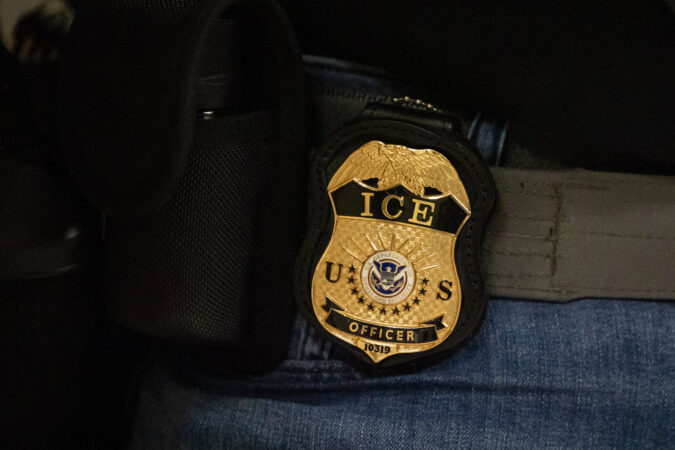
    The Lindenwold School District reported Thursday that fourth- and fifth-grade students waiting at a bus stop ran away in a panic when a U.S. Customs and Immigration Enforcement operation occurred nearby.

    The incident happened in the morning as the students were waiting to take a bus to school from the Woodland Village Apartments, the district said in a statement.

    Superintendent Kristin O’Neil said about 44 students were waiting at the bus when unmarked vehicles arrived at the complex. Officers in tactical gear and wearing masks fanned out, she said.

    (function() {
    var l2 = function() {
    new pym.Parent(‘lindenwold’,
    ‘https://media.inquirer.com/storage/inquirer/projects/innovation/arcgis_iframe/lindenwold.html’);
    };
    if (typeof(pym) === ‘undefined’) {
    var h = document.getElementsByTagName(‘head’)[0],
    s = document.createElement(‘script’);
    s.type = ‘text/javascript’;
    s.src = ‘https://pym.nprapps.org/pym.v1.min.js’;
    s.onload = l2;
    h.appendChild(s);
    } else {
    l2();
    }
    })();

    “The presence of multiple enforcement vehicles caused significant fear and confusion, and several students ran from the bus stop. Our bus driver acted quickly and responsibly, circling back multiple times to ensure as many children as possible were safely transported to school,” the district said, also thanking the bus driver.

    A Ring video from the apartment complex provided to some news outlets shows the children running with some shouting: “ICE! ICE!”

    “Upon arrival to school, many children were understandably upset and emotional,” the district said.

    “All students currently in school are safe,” the district said. “ICE Agents are NOT at the Lindenwold School District.”

    O’Neil said the students attend the district’s school No. 5. About 20 students didn’t show up Thursday, she said. The district will work with families of students who will be marked absent, she said.

    “To us, these are our children,” O’Neil said.

    About 60% of the district’s 3,100 students are Hispanic, according to its latest school performance report. O’Neil said it is not unusual for parents to keep their children home when there are reports of ICE activity in the area.

    <iframe src="https://www.facebook.com/plugins/post.php?href=https%3A%2F%2Fwww.facebook.com%2FLindenwoldPublicSchoolDistrict%2Fposts%2Fpfbid0FnuXsFoCwr7uSvAwW9NPs4XcL4BgVQHwTVxycWvdUc5KWKJF76j389k8VMpVcsL8l&show_text=true&width=500" width="500" height="679" style="border:none;overflow:hidden" scrolling="no" frameborder="0" allowfullscreen="true" allow="autoplay; clipboard-write; encrypted-media; picture-in-picture; web-share"></iframe>

    A district leader reached out to county and state representatives to alert them about the incident and to advocate for protocols that prioritize the safety of children during any future ICE operations, the district said.

    “Our students deserve to feel safe while waiting for their school bus and while attending school each day,” the district said.

    A spokesperson for ICE could not be reached for comment Thursday night.

    U.S. Rep. Donald Norcross, (D., NJ), who represents the district, was among several dozen people who showed up Friday at an “ICE Out of Lindenwold” protest at Lindenwold Borough Hall. The protest was announced before the bus stop incident.

    “Schoolchildren are not criminals, and enforcement actions must reflect that,” Norcross said in a statement. “… Our community will not be terrorized, and we will keep fighting to protect our neighborhoods.”

    Lindenwold, located about 16 miles southeast of Philadelphia, has been among several communities in Camden County that have been subject to ICE operations.

    County Commissioner Director Louis Cappelli Jr. said in a statement Thursday night that “the absolute chaos sowed by this ICE operation in Lindenwold this morning was appalling.”

    Cappelli added that “we are short on facts and details about the intentions of ICE,” however at some point ICE called 911 to request local police assistance.

    “That said, the impact and fear that struck the children of our county was painful to watch, and I can’t imagine the anxiety and trauma that came from this incident,” Cappelli said.

    He added, “As a community, segments of our population are being terrorized and scared to leave their homes. This is no way for any of us to live.”

    County Commissioner Jonathan Young said in a statement: “As a former Lindenwold resident, I’m disgusted to watch the videos of children running in absolute terror along a busy county thoroughfare.”

    Young said that “no one wants criminals in their community,” but added that, “under Trump, ICE has been inhumane in how it conducts its operations. We’ve seen that firsthand throughout other cities in the country, and now it’s happening here.”

  • Jefferson Health reported a $201 million operating loss in the first half of fiscal 2026

    Jefferson Health reported a $201 million operating loss in the first half of fiscal 2026

    Jefferson Health had an operating loss of $201 million in the six months that ended Dec. 31, compared to a $55 million loss the year before, the nonprofit health system said in a notice to bondholders Friday.

    The $201 million loss included a $64.7 million restructuring charge related to severance for 600 to 700 people laid off in October and other changes designed to improve efficiency in the 32-hospital system that stretches from South Jersey to Scranton.

    Excluding the restructuring expenses, Jefferson’s operating loss was $136.3 million in the first half of fiscal 2026.

    Jefferson said in a statement that it continues facing significant financial headwinds, like health systems nationwide, citing rising pharmaceutical costs.

    “We remain focused on driving efficiency, advocating for reimbursement rates that better reflect the true cost of care in Pennsylvania, and advancing the long-term stability of our academic health system,” the health system’s chief financial officer Michael Harrington said.

    Here are some details:

    Revenue: Patient revenue reached nearly $6 billion in the first half of fiscal 2026. The figure for the previous year is not comparable because it does not include Lehigh Valley Health Network for the full six months. Jefferson acquired the system on Aug. 1, 2024.

    Jefferson’s total revenue of $8.6 billion included $145.9 million of investment income that directly boosted operating income. Competitors who use heath-system reporting rules do not include investment income in revenue. Jefferson, by contrast, follows rules for higher-education reporting.

    Insurance business: Jefferson noted improvement in its health insurance arm. Jefferson Health Plans’ loss in the six months ended Dec. 31 was $90.7 million, compared to a $118.5 million loss in the same period the year before. The number of people insured in the plans climbed to 371,005 from 359,662. Medicaid recipients account for most of that enrollment.

    Notable: Both Moody’s Ratings and Standard & Poor’s Ratings Service in December and January revised their outlooks on Jefferson to negative, which means the agencies could downgrade the organization’s credit rating if Jefferson’s finances don’t improve over the next two years.

    “The negative outlook reflects the magnitude of current operating losses as well as anticipated difficulties in returning to or near operating profitability for several years,” Standard & Poor’s said.

  • Chris Rabb says he’s reported his treasurer for ‘unauthorized withdrawals’ from his campaign for Congress

    Chris Rabb says he’s reported his treasurer for ‘unauthorized withdrawals’ from his campaign for Congress

    State Rep. Chris Rabb, who is running in a competitive primary for Philadelphia’s open congressional seat, said that his now-former campaign treasurer made unauthorized withdrawals and that he has reported her to federal authorities for “misconduct.”

    The treasurer, Yolanda Brown, is a Fort Lauderdale, Fla.-based campaign consultant who was accused last month of embezzling six figures’ worth of campaign dollars from another Democrat.

    Rabb said in an interview Friday that he would not speculate on the amount of money that may have been stolen, citing a pending review. He said he reported the matter to the Federal Election Commission.

    “My team and I remain committed to this campaign toward a collective victory on May 19,” said Rabb, who is running to succeed retiring Democratic U.S. Rep. Dwight Evans.

    Brown, who manages the firm Brown Financial Consulting Services Group LLC, did not respond to calls and emails seeking comment.

    A campaign treasurer is generally responsible for a political action committee’s bank account and is often tasked with ensuring legal compliance. Rabb on Monday filed paperwork with the FEC to list himself as his campaign’s treasurer, replacing Brown.

    Last month, Ken Welch, the mayor of St. Petersburg, Fla., accused Brown of embezzling $207,000 from his campaign committee. Attorneys for Welch’s campaign told a local Fox television station that they had discovered Brown made “improper transactions” and that they had “demanded the return of funds.” When the money was not sent back, Welch’s campaign notified state and federal law enforcement, the station reported.

    Campaign finance reports showed that Welch’s PAC had made several transactions, including one for $100,000, to a business that Brown controlled.

    The developments came as the race for Pennsylvania’s 3rd Congressional District, which covers about half of Philadelphia, was just heating up. Rabb is considered among a handful of front-runners seeking the Democratic nomination to represent the district, which is one of the most Democratic-leaning in the country.

    Rabb was not in attendance at several events this week — including two community forums — citing an emergency.

    A progressive and a five-term lawmaker who represents Northwest Philadelphia in the state House, Rabb is amassing support from some of the city’s left-leaning organizations.

    But he was already struggling to keep up with other front-runners financially.

    State Sen. Sharif Street, the former head of the state Democratic Party, had more than half a million dollars in the bank as of Jan. 1, according to his most recently filed campaign finance report. Ala Stanford, a pediatric surgeon, had nearly $400,000 on hand after lending her campaign $250,000 of her own money.

    Rabb, by comparison, had just shy of $100,000 in the bank. That came after a lackluster fundraising quarter — he raised $127,000 in the final three months of 2025, significantly less than the $257,000 he raised in the previous reporting period.

  • Quakertown’s superintendent goes on leave

    Quakertown’s superintendent goes on leave

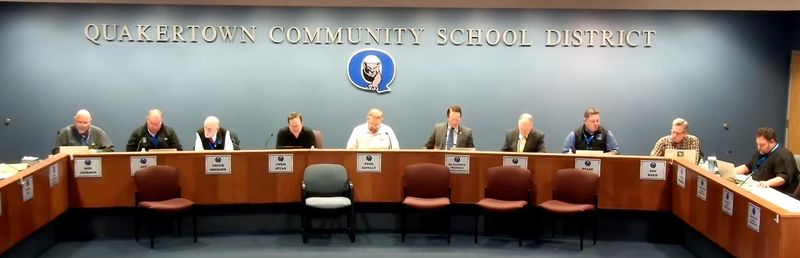
    Quakertown Community School District Superintendent Matthew Friedman is on leave effective immediately, a district spokesperson said Friday.

    The spokesperson, Melissa Hartney, said the district’s school board could not comment further.

    “Because this is a personnel matter, the board is limited in the amount of information it can share at this time,” Hartney said in a statement.

    Friedman did not return a request for comment.

    Friedman took over the 4,600-student district in Upper Bucks County in 2023, after serving as superintendent of the Ocean City School District in New Jersey.

    The Quakertown school board in November granted him a $10,000 raise, bringing his salary to $233,000, and extended his contract until June 30, 2028.

    Assistant Superintendent Lisa Hoffman is taking over day-to-day operations of the district, Hartney said.

    “The board is confident that district operations, instructional programs, and student services will continue without interruption,” Hartney said, adding that it “remains committed to transparency, accountability, and maintaining the trust of our students, staff, families, and community.”

  • A cannonball was found in the backyard of a Cherry Hill home

    A cannonball was found buried in a Cherry Hill home’s backyard Friday morning, prompting street closures and evacuations.

    The Cherry Hill Police Department responded to the 200 block of Woodstock Drive South just before noon, after residents found a very old cannonball buried in their yard, said Capt. Sheldon Bryant.

    The Camden County Sheriff’s Department Bomb Unit was called in to handle the situation. The police temporarily evacuated neighboring homes and closed down surrounding streets.

    Cannonballs have been discovered in New Jersey yards before.

    In June 2015, an old cannonball mysteriously appeared in Madison in North Jersey, and was turned over to the U.S. Army, according to NBC New York.

    A month later, a couple found what turned out to be an active cannonball while landscaping their backyard in Lower Township in Cape May County. It was later detonated in an unpopulated area, 6abc reported.

    As for the Cherry Hill cannonball, it was unknown where the cannonball came from, how old it was, exactly how it was discovered, or how long it had been in the yard. The bomb unit took the cannonball for proper disposal, and the area was cleared in less than an hour, Bryant said. Streets were open soon afterward.

    “We treat every situation like this with care and caution to ensure the safety of our residents,” Bryant said. “We are thankful for the swift response of the Camden County Sheriff’s Department Bomb Unit and for the cooperation of the neighborhood while we worked to resolve this safely.”

  • Philly’s snowpack reaches a 65-year milestone, and here’s when it finally may disappear

    Philly’s snowpack reaches a 65-year milestone, and here’s when it finally may disappear

    You may not have noticed, but that endless snowpack has developed a slow leak — in this case historically slow.

    Its endurance continues to climb the charts among the snowpacks of yesteryear — and in at least one way may well be unprecedented in the period of record dating to the late 19th century.

    As of 7 a.m. Friday, officially at Philadelphia International Airport, three inches of the snowy and icy remnants of what fell on the region on Jan. 25 had survived.

    That made this the most-enduring snowpack of at least three inches in 65 years, said Alex Staarmann, a meteorologist at the National Weather Service in Mount Holly, the office’s climate specialist.

    That earlier one, which lasted from Jan. 20 to Feb. 14, 1961, was replenished by multiple significant snowfalls, as did others at the top of the endurance list; the 2026 version was basically one-and-done after 9.3 inches were measured at the airport.

    This one — and it still has its sparkle where it hasn’t mutated into frozen sludge — even has bested the snow cover attending the 44 inches that accumulated in a six-day period in February 2010, when at least four inches survived for 17 days.

    The latest batch was at four inches for 18 days, good for fourth place all-time.

    Not that it hasn’t had some aesthetic benefits. It can be like light therapy in the morning, and a spectacular screen for the tree shadows. It has beautifully entombed all that unfinished yard work.

    Snow and ice debris is piled along the Camden waterfront in Camden, N.J., framing the Philadelphia skyline across the Delaware River, Thursday, Feb. 5, 2026.

    But it’s also been a royal pain throughout the region and begged the question: When it will go away?

    When will bare ground emerge in the Philly region?

    A farewell tour is likely next week as a snow threat for the holiday weekend remains a remote one, with accumulations only between “wet flakes” and “a dusting” possible, said Staarmann.

    And you might keep an eye on Tuesday for a melt watch. Temperatures are forecast to fall below freezing Monday morning, and then stay above 32, even at night, through the workweek.

    Highs are expected in the 40s Saturday through Monday, and then 50 or better the next three days.

    More significantly for melting, the air will become noticeably more moist on Tuesday, and that should accelerate the melting. Your skin might even notice the difference.

    Why has the snowpack been so enduring in Philly?

    Since the precipitation ended on Jan. 25, the air has been remarkably dry, an underrated factor in the persistence of the ground cover, along with what happened after the snow stopped that day.

    After more than seven inches of snow had fallen, it was topped with several hours of accumulating sleet.

    Those miniature ice balls turned out to be a mighty additive: Ice may be way slower to accumulate, but it is also way slower to melt, giving the snowpack staying power.

    “If we hadn’t had this much sleet, we might have some evidence of it, but it wouldn’t be this deep or persistent,” said Staarmann.

    The Arctic freeze that followed and the consistently arid air have been the ideal preservatives.

    Moist air, an efficient melter, has been absent.

    When enough invisible water vapor comes in contact with snow and ice, it condenses and gives off latent heat that can liquefy the pack in a hurry.

    After Philadelphia’s record 30.7-inch snowfall of Jan. 7-8, 1996, it was a moisture surge 11 days after the snow stopped that had a whole lot to do with erasing the snowpack even before the modest rains that followed, recalled David Robinson, the longtime New Jersey state climatologist.

    The melt set off disruptive flooding, but even though rain is in the forecast for midweek, anything resembling a repeat is unlikely this time around.

    Is that all there is for the winter of 2025-26?

    NOAA’s Climate Prediction Center on Friday had odds favoring above-normal temperatures through Feb. 23, followed by a possible cool down.

    Regarding any potential for snow, “We still have a few weeks left of opportunities,” said Staarmann.

    As long as computers are operating, snow chances will never die.

    However, the February sun is getting stronger by the day and lasting longer. If it does snow again, it’s a near certainty that it won’t match this one for staying power.

  • Phil Sumpter, celebrated sculptor, artist, and teacher, has died at 95

    Phil Sumpter, celebrated sculptor, artist, and teacher, has died at 95

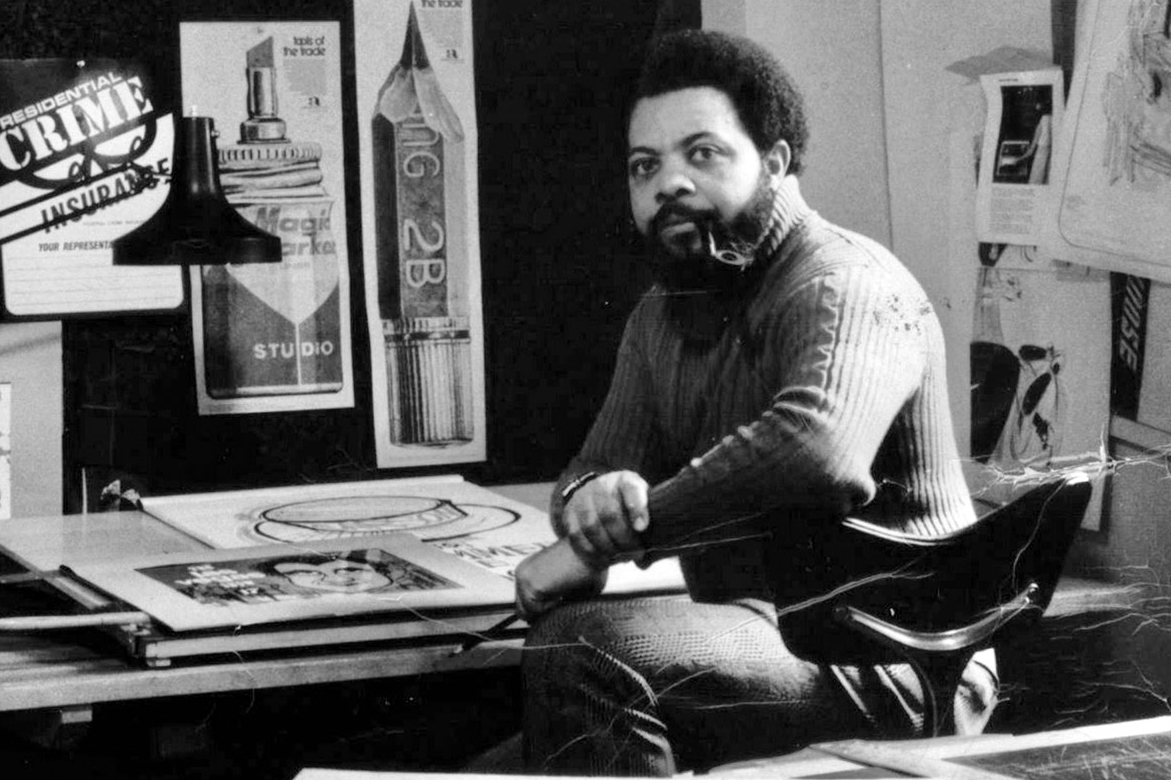
    Phil Sumpter, 95, formerly of Philadelphia, celebrated sculptor, artist, art teacher, TV station art director, veteran, mentor, urban cowboy, and revered raconteur, died Thursday, Jan. 1, of age-associated decline at his home in San Juan, Puerto Rico.

    A graduate of John Bartram High School and the old Philadelphia College of Art, Mr. Sumpter taught art, both its history and application, to middle and high school students in Philadelphia for 27 years. He was an engaging teacher, former students said, and a founding faculty member at the Philadelphia High School for the Creative and Performing Arts in 1978.

    He started teaching in 1955 and, after a break in the 1960s and ’70s, finally retired in 1992. “You are very lucky to have a teacher in your life that believed in you, nurtured you, challenged you, and loved you,” a former student said on Facebook. “Mr. Sumpter did all that and more.”

    Other former students called him their “father” and a “legend.” One said: “You did a lot of good here on earth, especially for a bunch of feral artist teenagers.”

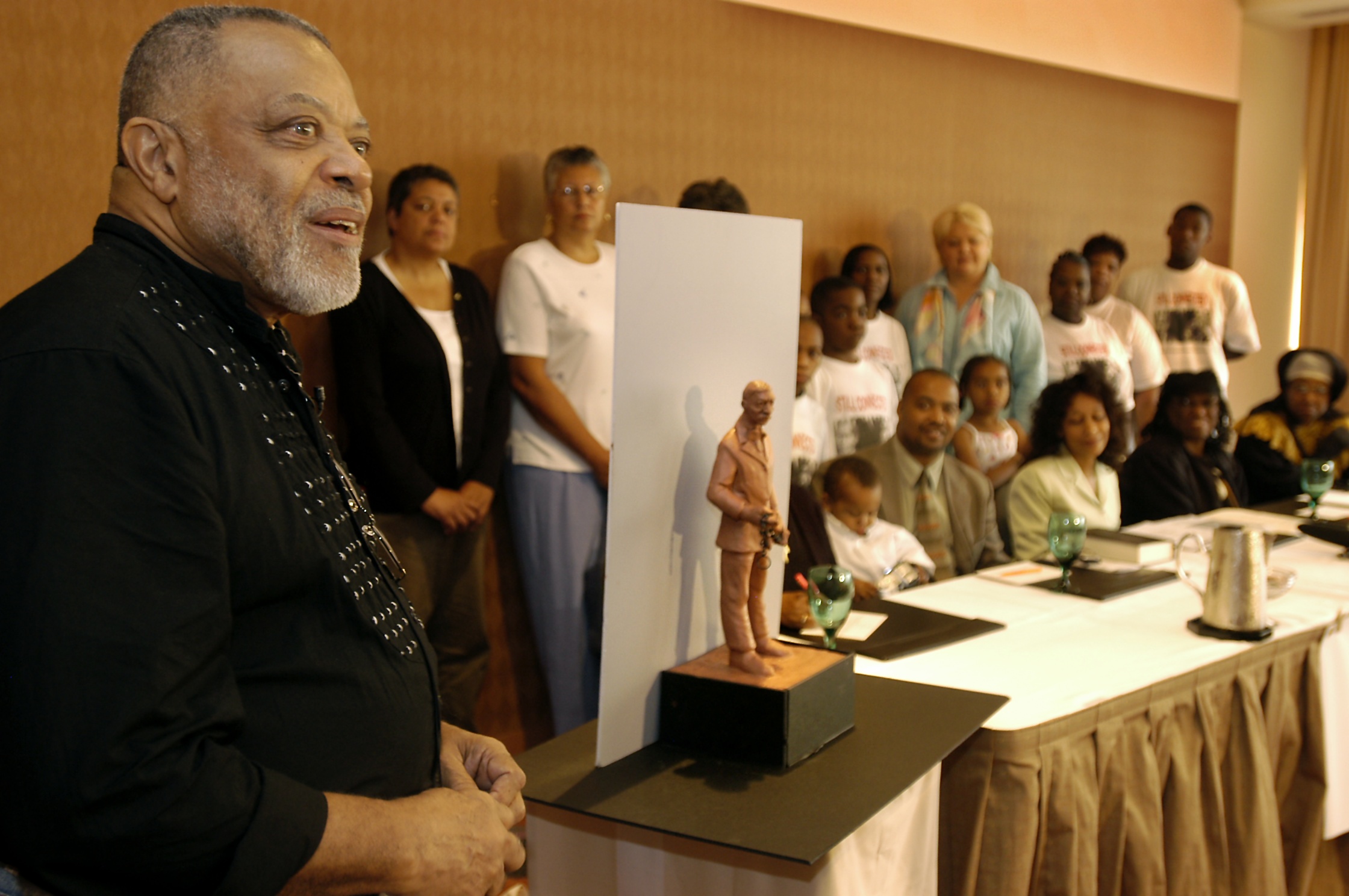
    Mr. Sumpter (left) talks about his sculpture of Underground Railroad organizer William Still in 2003.

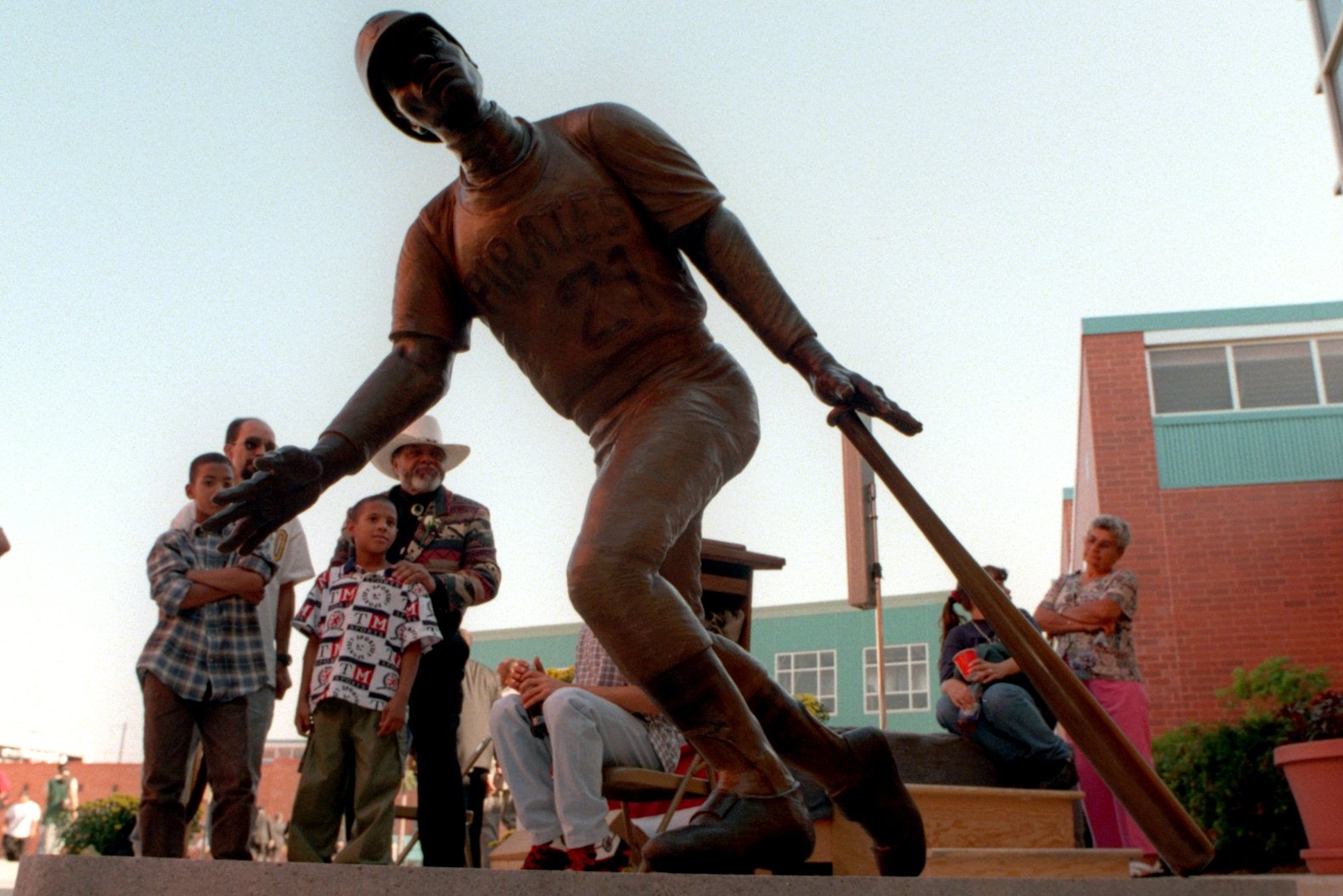
    Outside the classroom, Mr. Sumpter sculpted hundreds of pieces and painted and sketched thousands of pictures in his South Philadelphia stable-turned-studio on Hicks Street. Prominent examples of his dozens of commissions and wide-ranging public art presence include the bas-relief sculpture of Black Revolutionary War soldiers at Valley Forge National Historical Park in Montgomery County, the action statue of baseball star Roberto Clemente in North Philadelphia, the Negro Leagues baseball monument in West Parkside, and the Judy Johnson and Helen Chambers statues in Wilmington.

    He worked often in clay and paper, made murals, and designed commemorative coins and medals. He especially enjoyed illustrating cowboys, pirates, Puerto Rican jibaros, and landscapes.

    His statue of Clemente was unveiled at Roberto Clemente Middle School in 1997, and Mr. Sumpter told The Inquirer: “I think I’ve captured a heroic image, an action figure depicting strength plus determination.”

    He was among the most popular contributors to the Off the Wall Gallery at Dirty Franks bar, and his many exhibitions drew crowds and parties at the Bacchanal Gallery, the Free Library of Philadelphia, the Plastic Club, and elsewhere in the region and Puerto Rico. He hung out with other notable artists and community leaders, and collaborated on projects with his son, Philip III, and daughter, Elisabeth.

    Mr. Sumpter worked often in clay and paper, made murals, and designed commemorative coins and medals.

    He even marketed a homemade barbecue sauce with his wife, Carmen. His family said: “He is remembered for mentorship, cultural fluency, and presence as much as for material works.”

    He founded Phil Sumpter Design Associates in the 1960s and worked on design and branding projects for a decade with institutions, educational organizations, and other clients. He was art director for WKBS-TV, WPHL-TV, and the Pyramid Club.

    “The word for him,” his son said, “is expansive.”

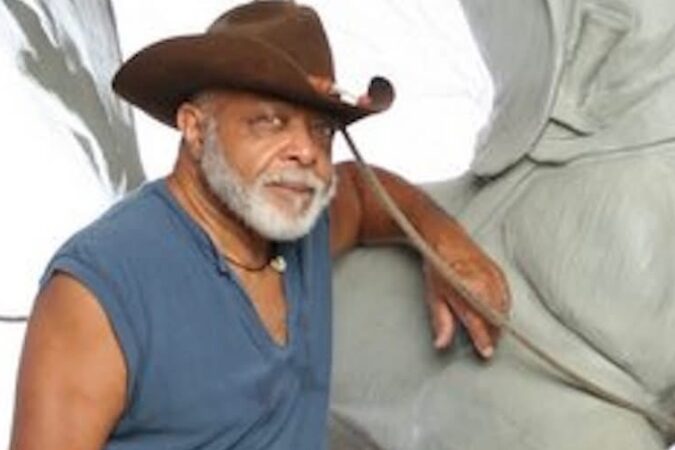
    Mr. Sumpter was friendly and gregarious. He became enamored with Black cowboys and Western life as a boy and went on to ride horses around town, dress daily in Western wear, and depict Black cowboys from around the world in his art. His viewpoints and exhibits were featured often in The Inquirer, the Philadelphia Tribune, Philadelphia Magazine, Dosage Magazine, and other publications.

    Mr. Sumpter (in white cowboy hat) views his statue of Roberto Clemente in 1997.

    He was an air observer for the Air Force during the Korean War and later, while stationed in England, studied sculpture, ceramics, and drawing at Cambridge Technical Institute. His daughter said: “He taught me how to open the portal to the infinite multiverse of my own imagination, where every mind, every soul can be free.”

    Philip Harold Sumpter Jr. was born March 12, 1930, in Erie. His family moved to segregated West Philadelphia when he was young, and he earned a bachelor’s degree in art education at PCA.

    He married and divorced when he was young, and then married Florence Reasner. They had a son, Philip III, and a daughter, Elisabeth, and lived in Abington. They divorced later, and he moved to Hicks Street in South Philadelphia.

    He met Carmen Guzman in Philadelphia, and they married in 2001 and moved to San Juan for good in 2003. He built a studio at his new home and never really retired from creating.

    Mr. Sumpter (second from left) enjoyed time with his family.

    Mr. Sumpter enjoyed singing, road trips to visit family in Pittsburgh, and bomba dancing in San Juan. He was a creative cook, and what he called his “trail chili” won cook-offs and many admirers.

    “He was a larger-than-life person,” his son said. “He was fearless in his frontier spirit.” His wife said: “His joy for life was contagious, as was his laughter.”

    In addition to his wife, children, and former wife, Mr. Sumpter is survived by other relatives.

    A celebration of his life was held earlier in Puerto Rico. Celebrations in Philadelphia are to be from 2 to 5 p.m. Saturday, March 14, at Dirty Franks, 347 S. 13th St., Philadelphia, Pa. 19107, and from 2:30 to 4:30 p.m. Sunday, March 15, at the Plastic Club, 247 S. Camac St., Philadelphia, Pa. 19107.

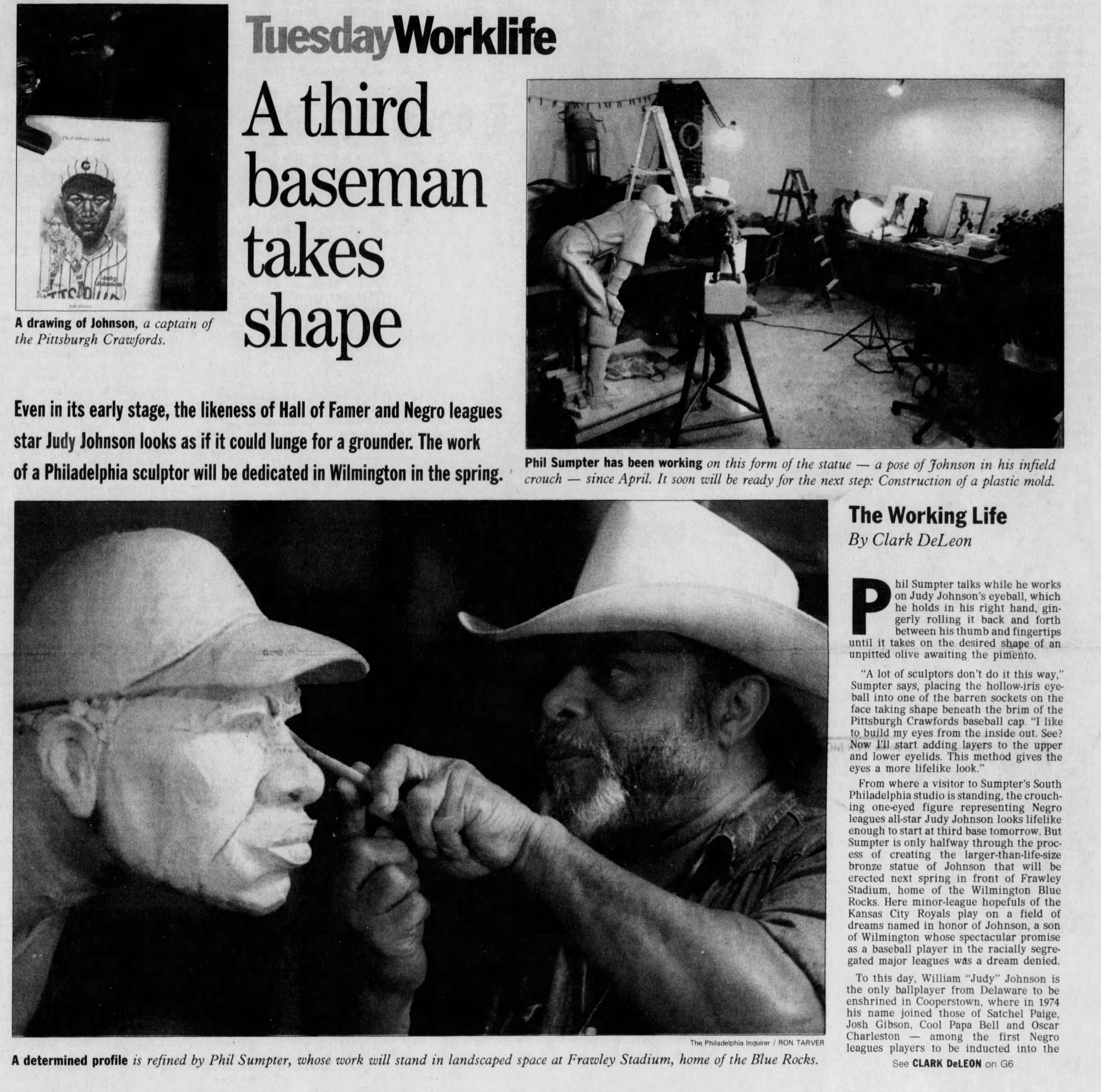
    Mr. Sumpter’s work was featured in The Inquirer in 1994.
  • J&J’s baby powder caused a woman’s fatal cancer, a Philly jury finds, awarding her family $250,000

    J&J’s baby powder caused a woman’s fatal cancer, a Philly jury finds, awarding her family $250,000

    A Philadelphia jury ordered pharmaceutical and cosmetics giant Johnson & Johnson to pay $250,000 to the family of a York County woman after finding the company’s baby powder product led her to develop cancer.

    Gayle Emerson sued Johnson & Johnson in 2019 as part of a nationwide wave of litigation accusing the company’s talc-based baby powder of causing ovarian cancer. Emerson, who was diagnosed with cancer in 2015, died at age 68, months after filing the complaint.

    The complaint accused the New Jersey-based company of selling a defective product and failing to warn about its risks.

    After a three-week trial, which Common Pleas Judge Sean F. Kennedy presided over, the jury began deliberating Tuesday afternoon and reached its verdict Friday around 2 p.m. During deliberations, jurors asked the judge questions that suggested they grappled with how strongly the evidence showed that external use of baby powder could allow a cancer-causing substance to reach the ovaries.

    The verdict was comprised of $50,000 in compensatory damages and $200,000 in punitive damages.

    “This token verdict reflects the jury’s appreciation that the claims were meritless and divorced from the science,” Erik Haas, Johnson & Johnson’s worldwide vice president of litigation, said in a statement.

    The company plans to appeal the verdict, Haas said.

    Johnson & Johnson specifically advertised the product for women, the suit says, stating on the bottle: “For you, use every day to help feel soft, fresh, and comfortable.”

    Studies have connected talc to ovarian cancer since the early 1970s, according to the complaint. The mineral is excavated from the mines that also contain asbestos, risking contamination from the cancer-causing substance.

    The Federal Drug Administration asked condom manufacturers in the 1990s to stop dusting their product with talc because of the risk to women.

    Johnson & Johnson stopped selling its talc-based baby powder in the United States and Canada in 2020.

    The company was aware of the research about the increased risk of cancer for women who use the powder on their genital area, the suit says, based on internal documents and public statements.

    “Gayle Emerson trusted Johnson & Johnson, and Johnson & Johnson betrayed that trust,” Leigh O’Dell, a Beasley Allen attorney representing Emerson’s family, said in her opening statement.

    Attorneys in Pennsylvania aren’t allowed to advise jurors on how much to award in damages, but O’Dell noted in her closing argument that Johnson & Johnson’s net worth is $72.3 billion and a verdict should be “enough” to get the attention of the company’s boardroom.

    Emerson didn’t rely on any false statement or misrepresentation by Johnson & Johnson before purchasing the baby powder, the company said in court filings. Further, the FDA considered and rejected requests to add a cancer warning to talc powders in the 1990s.

    During the trial, attorneys for Johnson & Johnson said the baby powder, which Emerson used externally, wasn’t responsible for the cancer. Other parts of her feminine care routine, such as douching, are also associated with increased risk of ovarian cancer, the attorneys said, and Emerson had other risk factors such as family history, obesity, and age.

    Emerson’s attorneys ignored those risk factors because they have “talc blinders” on, Shaila Diwan, a Kirkland Ellis attorney representing the company, said to the jurors at the outset of the trial.

    “Ms. Emerson would have still developed cancer if she never used Johnson’s baby powder,” Diwan said in closing.

    It’s important that the jury found that Johnson & Johnson was directly responsibe for Emerson’s cancer but the award is “significantly less than the amount necessary to punish J&J,” O’Dell said in a statement.

    Friday’s verdict follows a $40 million December verdict out of Los Angeles for two women who similarly claimed the talc-based powder caused their cancer.

    While the Philadelphia trial was proceeding, a three-judge panel of a New Jersey appeals court disqualified Beasley Allen from the baby powder litigation in the state for ethical violations. The Alabama-based firm has been accused of receiving privileged information from an attorney who previously represented Johnson & Johnson. The firm said it would appeal the decision.

    It’s unclear if the ruling will impact the Pennsylvania verdict, or future Beasley Allen cases outside New Jersey.

    Emerson’s is the second talc-related lawsuit to reach a verdict in Philadelphia, after a 2021 trial concluded with the jury siding with Johnson & Johnson.

    There are 176 lawsuits similar to Emerson’s pending in the Philadelphia court, and thousands across the nation. Another trial against Johnson & Johnson in a City Hall courtroom is scheduled for April.

    The city has a significant and dark place in the history of talc.

    Records from a 2021 case in California revealed that Johnson & Johnson hired in the 1960s a University of Pennsylvania dermatologist to study talc on the bodies of people incarcerated in Philadelphia’s now-defunct Holmesburg Prison.

    In 1971, Albert Kligman injected asbestos, talc, and other substances into the backs of incarcerated Black men for payments as low as $10 a shot. The study was one of hundreds of human experiments conducted by Kligman, with funding by entities such as Dow Chemicals and the U.S. government.