Just one game separates the Eagles from their playoff opener in what will be their fifth consecutive postseason appearance.
Sunday’s game vs. Washington has potential for both intrigue and boredom with the Eagles resting most of their starters and the NFC’s second or third seed in play.
The Eagles may just be looking ahead to the playoffs, so we’ll follow that path and focus our weekly glance at the numbers on what’s ahead.
The confounding Eagles season continued with a 13-12 win against the Bills in Western New York. The Eagles seem simultaneously good enough to win it all and bad enough to score 11 points in a home loss in the wild-card round.
There is reason to be confident the Eagles can make a run, and reason to believe this playoff appearance will be short-lived. Here are a few reassuring stats, and some concerning stats ahead of the postseason.
Let’s start with the good stuff. It’s the holiday season …
4
That’s the amount of rushers the Eagles sent at Josh Allen each of the five times they sacked him Sunday at Highmark Stadium. This has been a trend of late. Sunday marked the third game in the last four that the Eagles had at least four sacks with a four-man rush.
The Eagles, according to Next Gen Stats, have 18 sacks over their last four games utilizing four rushers. That was seven more than any other team in the NFL at the time Sunday’s game ended.
Let’s couch the excitement a little bit and add the context that two of those games were against the Raiders and Commanders, and the previous contest came against a good Chargers team with a really bad offensive line. But doing what the Eagles did against the Bills with four rushers is remarkable. Only five teams allow pressure to the quarterback at a lower clip than the Bills’ 29.4% for the season.
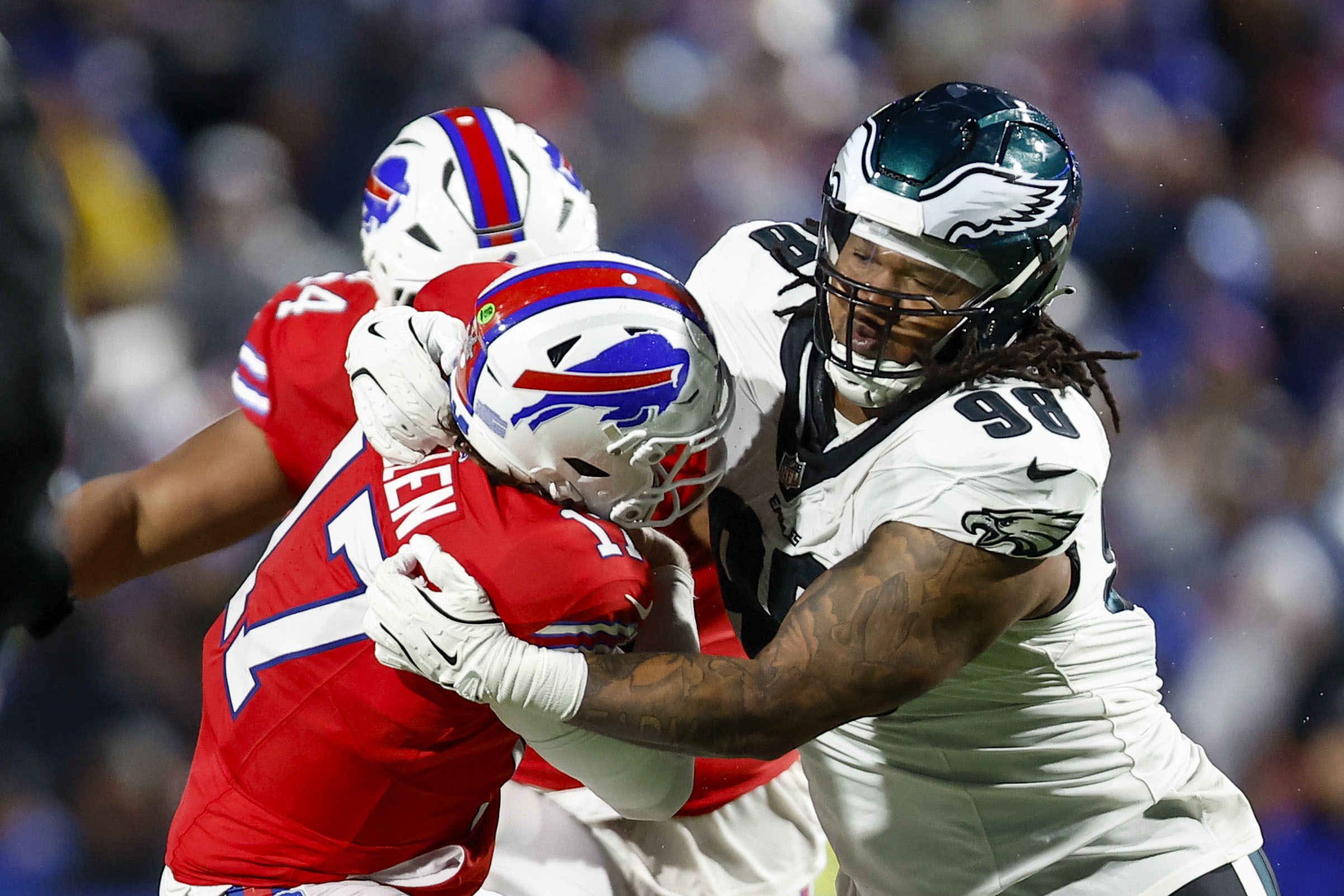
Eagles defensive tackle Jalen Carter sacks Bills quarterback Josh Allen on Sunday.
The Eagles’ success with four is a big deal, as we saw last year. Vic Fangio doesn’t dial up blitzes. The Eagles send extra rushers on just 19.5% of their defensive plays, the third-lowest rate in the NFL.
If Jalen Carter is back back from his shoulder injuries, the Eagles, with the deadline acquisition of Jaelan Phillips, might just have a versatile pass-rushing front that can take them pretty far. The Eagles have one of the best outside corners in the league in Quinyon Mitchell, one of the best nickel players in Cooper DeJean, linebackers who can cover, and adequate safeties.
This type of success rate with four gives the Eagles a numbers advantage beyond the line of scrimmage that works in their favor.
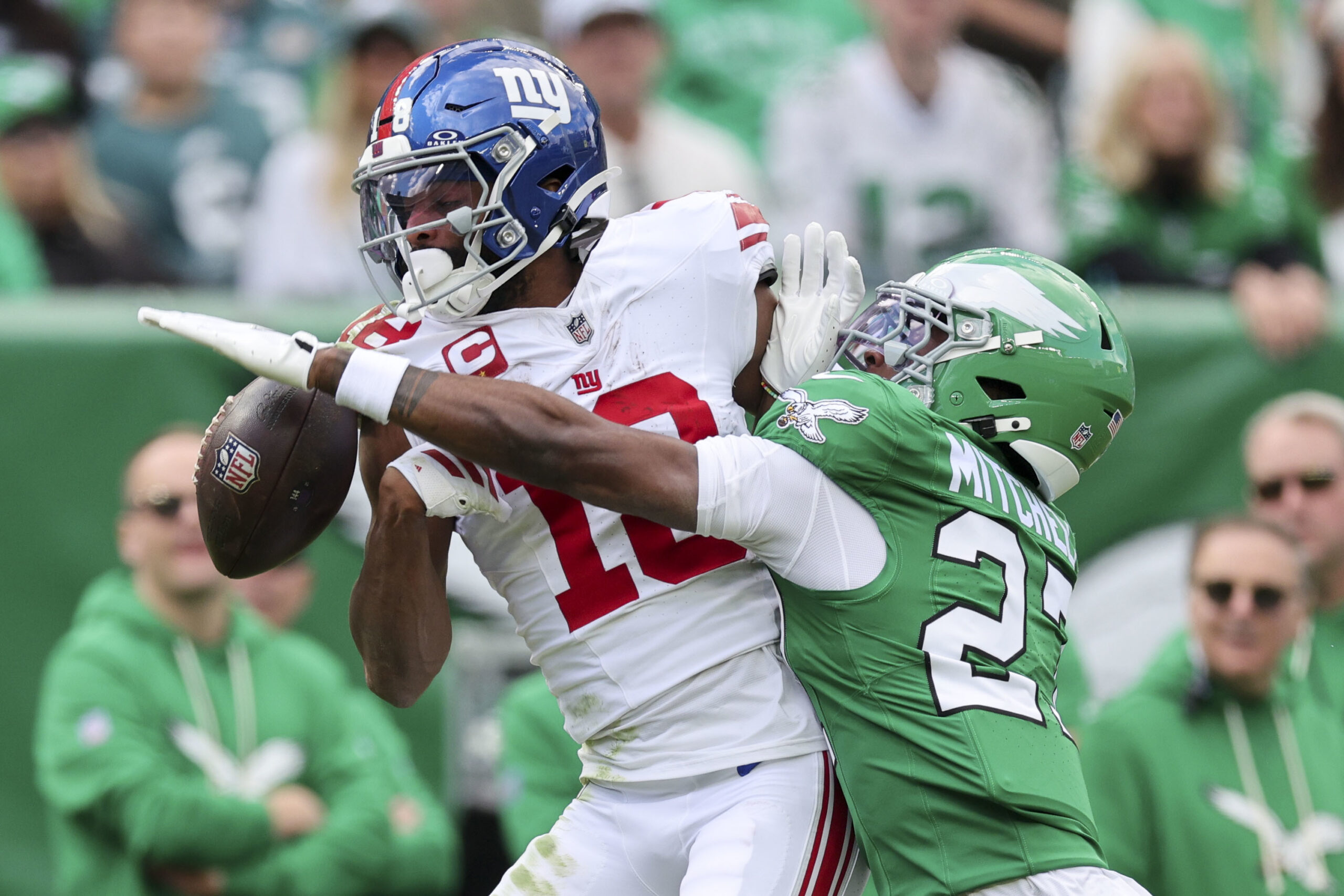
Quinyon Mitchell breaks up a pass intended for New York Giants wide receiver Darius Slayton during the second quarter against the Giants on Oct. 26.
42.4%
So, the Eagles are humming up front, but let’s focus on the aforementioned Mitchell, who is having one heck of a second NFL season. He deserves his own section here because he will have the ability to take opposing receivers out of the game throughout the playoffs, and his coverage chops help the guys up front, too.
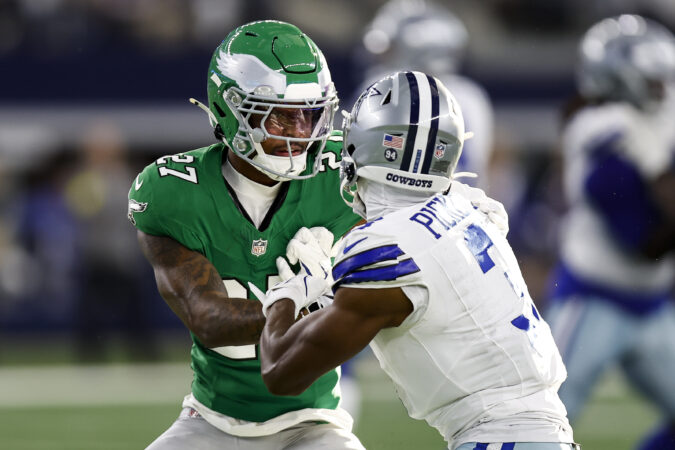
Among all defensive backs with at least 10 games played, Mitchell leads the NFL in catch rate allowed (42.4%). According to Next Gen, Mitchell has been in coverage on 576 defensive snaps and has allowed just 36 catches on 85 targets for 451 yards. He has allowed one touchdown.
Mitchell also leads qualified players in average target separation (1.8 yards).
A dangerous Rams passing attack could be up first next week, and Mitchell and the Eagles front will be waiting.
8-0
There was one turnover in the game Sunday, a crucial and controversial fumble by Allen that flipped the field and led to an Eagles touchdown.
That helped the Eagles improve to a league-best 8-0 when they win the turnover margin. They’re now 42-2 in the Nick Sirianni era when the turnover margin is in their favor.
This is one way of sneaking an offensive stat in here from a unit that hasn’t provided a lot of reassurance this season. But even in doing so, it’s a stat the offense shares with the defense. The Eagles have forced a turnover in eight consecutive games and are tied with Chicago for the longest active streak.
Jalen Hurts, meanwhile, has recovered nicely from his five-turnover disaster vs. the Chargers. He has six touchdown passes and no interceptions since that game.
The offense lacks an identity, but taking care of the ball is one it can hang its helmet on. That’s not nothing when the defense is playing like it is.
Reasons to worry
We’re not going to sneak a defensive stat in here.
40.1%
The Eagles were shut out by the Bills in the second half. They ran 17 plays and netted 17 yards before Hurts took a knee to end the game. It wasn’t pretty.
For the second time this season, Hurts didn’t complete a pass (in seven attempts) in the second half, and somehow the Eagles are 2-0 in those games. No other team has failed to complete a pass in the second half this season.
The Eagles were often in third-and-long because they again couldn’t get their running game going — this time against one of the worst run defenses in the NFL. Saquon Barkley barely had space to move thanks to missed assignments from the offensive line and tight ends. The Eagles often ran into stacked boxes (they face the fourth-highest stacked-box rate in the league). Dallas Goedert playing fullback was an experiment that failed. Barkley had just 1.75 yards per carry in the second half.
The Eagles’ success rate on the ground is 40.1%, which ranks 24th in the NFL. It’s been the root of the offense’s issues all season.
Saquon Barkley is stopped by Bills outside linebacker Shaq Thompson in Week 17.
Barkley had encouraging performances recently vs. the Commanders and Chargers, but Sunday was a step back, and considering there’s a real chance the starters rest Sunday, it’s a sour taste to enter the postseason with.
The Eagles are probably going to need to be able to run the ball to win in the playoffs, and the lack of a running game makes them so much easier to defend.
Since their Week 9 bye, the Eagles have scored more than 21 points just twice in eight games, and those were against two of the worst teams in football (Commanders and Raiders).
This isn’t a high-powered offense, and it’s one that particularly has trouble scoring in the second half. Sunday wasn’t an outlier. The Eagles average just 9.9 second-half points. That’s good for 25th in the NFL. The combined record of the teams below them: 32-80.
Scoring in the second half might come in handy in the postseason.
73.1%
Jake Elliott went 2-for-2 Sunday, with field goal makes from 28 and 47 yards. He also made his lone point-after attempt.
It was a nice rebound performance in bad weather from Elliott after a game against the Commanders in which he missed two field goals (plus a third that was negated by a penalty).
But saying it’s been a shaky season from Elliott is probably putting it mildly. His conversion rate of 73.1% on field goals is the lowest of his nine-season NFL career. This, on the heels of a 77.8% campaign in 2024.
An inept offense will make the margins slim, and the Eagles’ playoff life could at some point come down to a single kick.
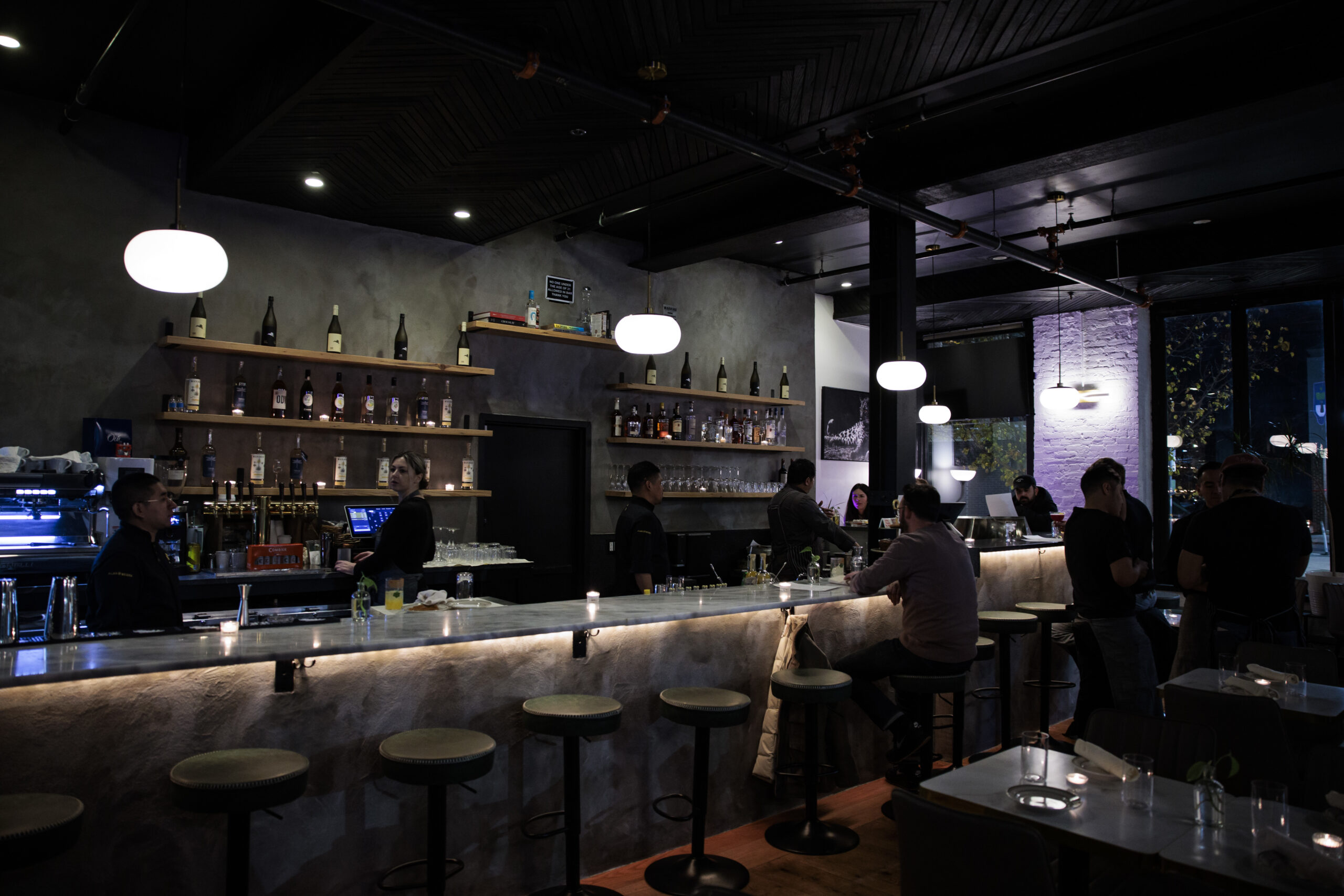
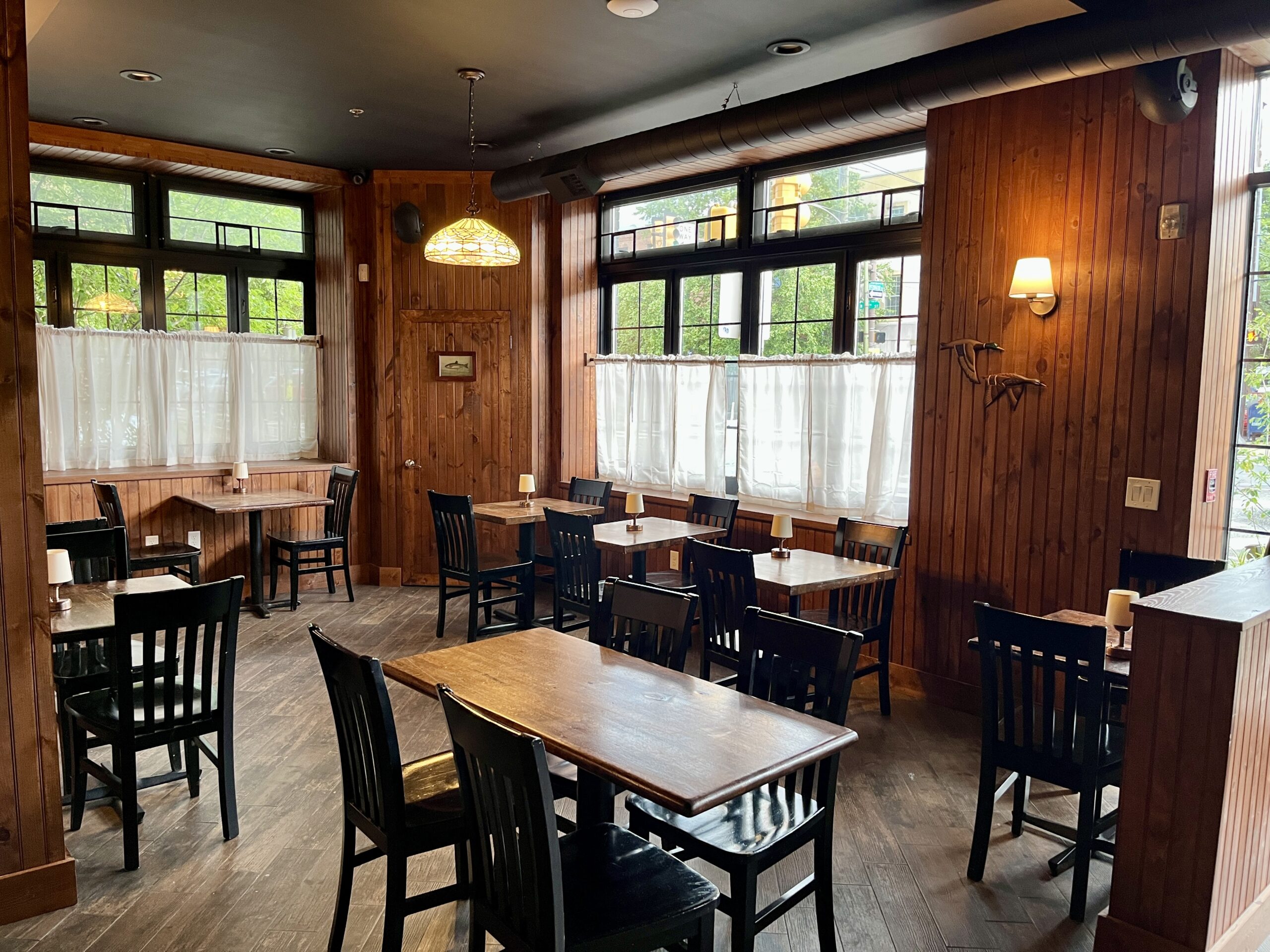
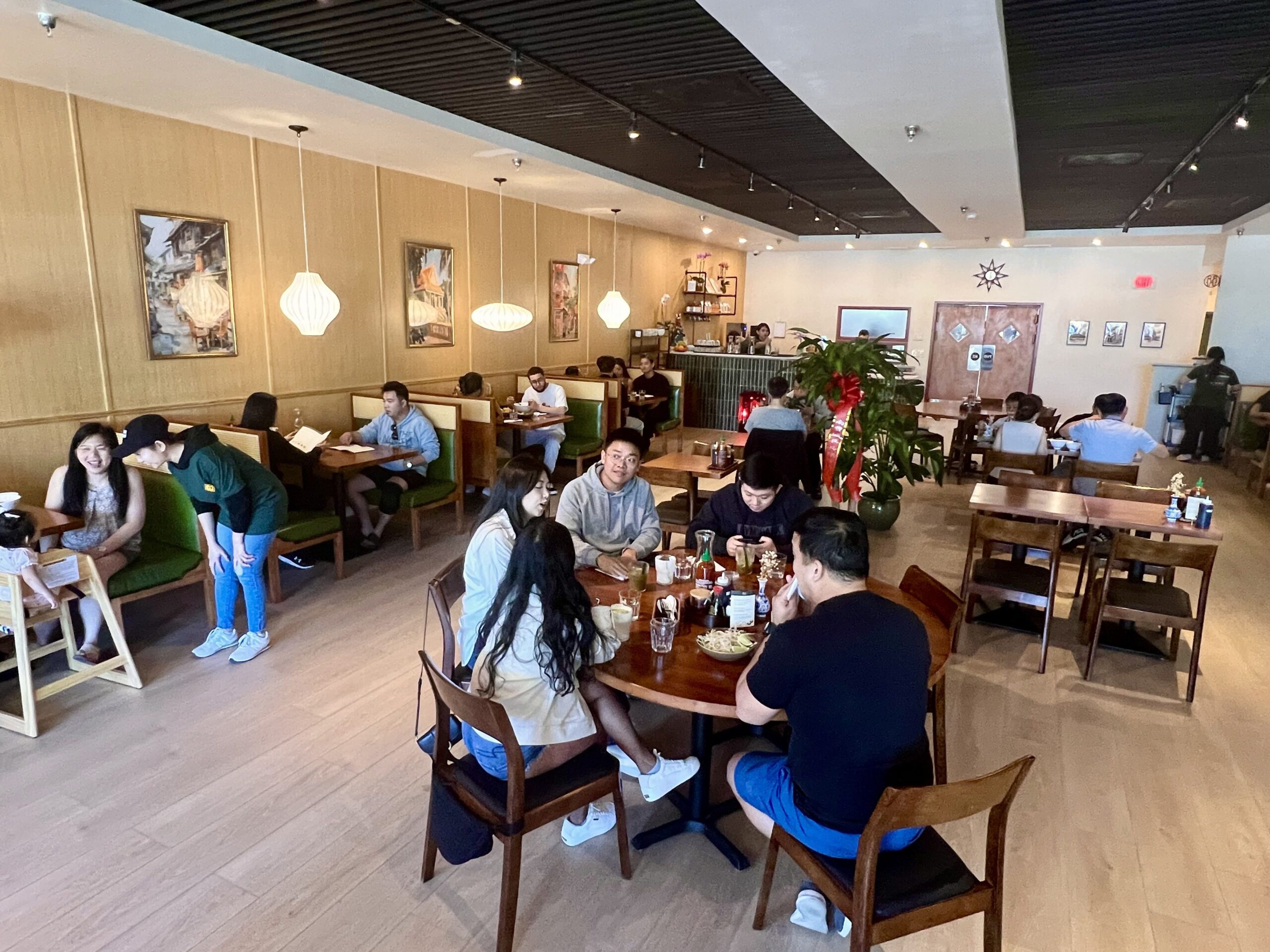
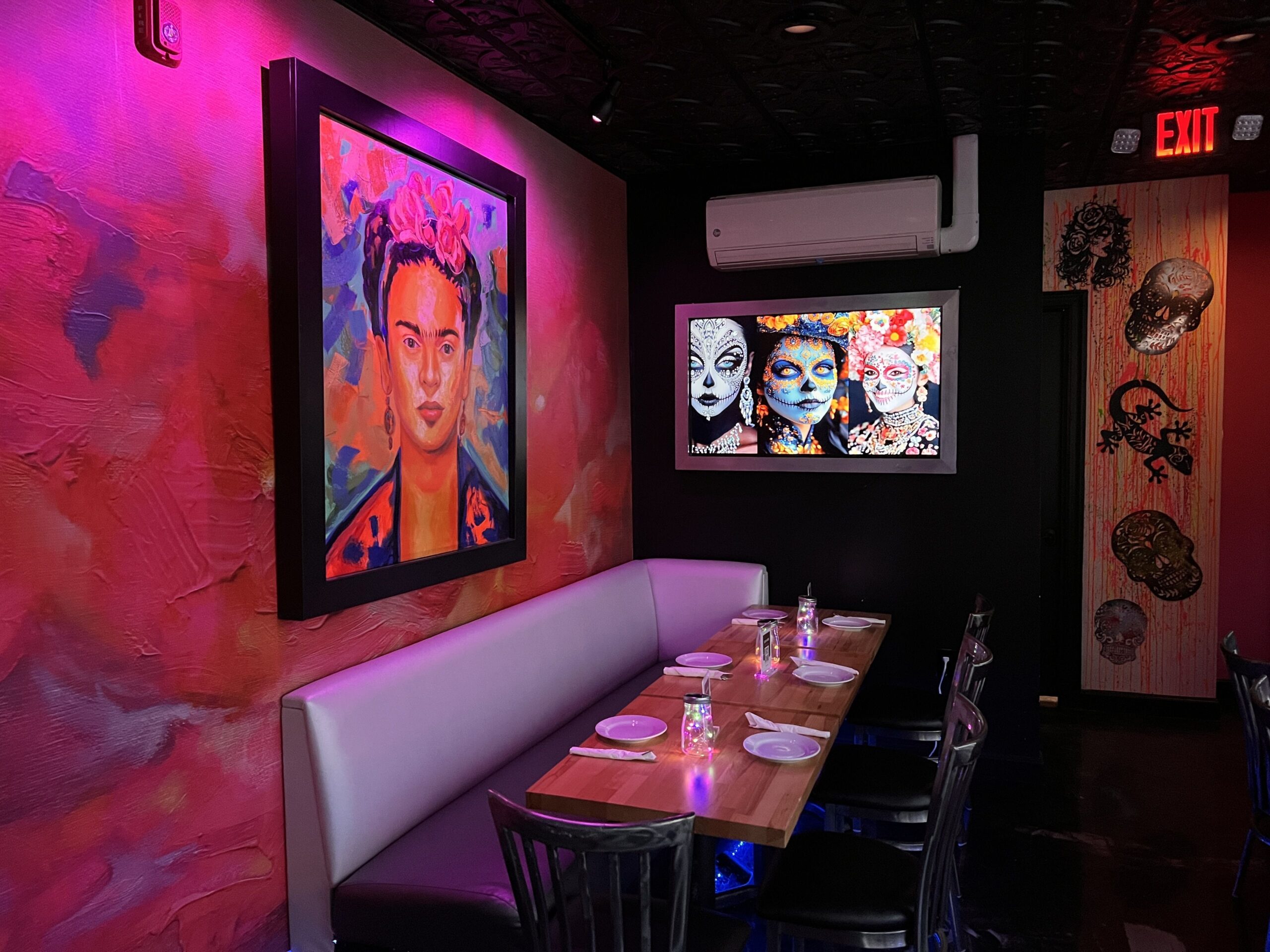
Philadelphia’s restaurant landscape in 2025 was shaped by a combination of ambition and depth: large, market-moving openings at the top end (Borromini, Dancerobot, Uchi, Honeysuckle, Tequilas/La Jefa); suburban newcomers that mattered (Michael, Neos Americana, Salt & Stone); and dozens of smaller additions that boosted neighborhood options.
All told, I count more than 125 newcomers, not including the ubiquitous Wonder locations and multiunit bakery franchises like Paris Baguette and Tous les Jours.
The hottest areas were Rittenhouse and Kensington in the city, and Conshohocken in the suburbs.
Top Openings: Philadelphia
Center City / Rittenhouse / Fitler Square / North Philadelphia
Amma: The polished South Indian restaurant has relocated about two blocks away into more sumptuous quarters at 15th and Walnut, picking up a glassed-in bar.
The Bread Room: A bakery-cafe hybrid from High Street Hospitality on Chestnut Street, around the corner from High Street and Jefferson Hospital, that focuses on laminated pastries, breads, and other daytime fare.
Dancerobot: Chefs Jesse Ito and Justin Bacharach’s sequel to Royal Izakaya is a sultry hideaway on Sansom Street in Rittenhouse.
The dining room at Honeysuckle.
Honeysuckle: Chefs Omar Tate and Cybille St. Aude-Tate have a new stage for Southern cooking rooted in Black culinary traditions on North Broad Street, building on what they started with West Philly’s Honeysuckle Provisions.
Kissho House: Chef Jeff Chen’s refined, two-level Japanese experience in Rittenhouse offers omakase downstairs and an izakaya on street level on Locust.
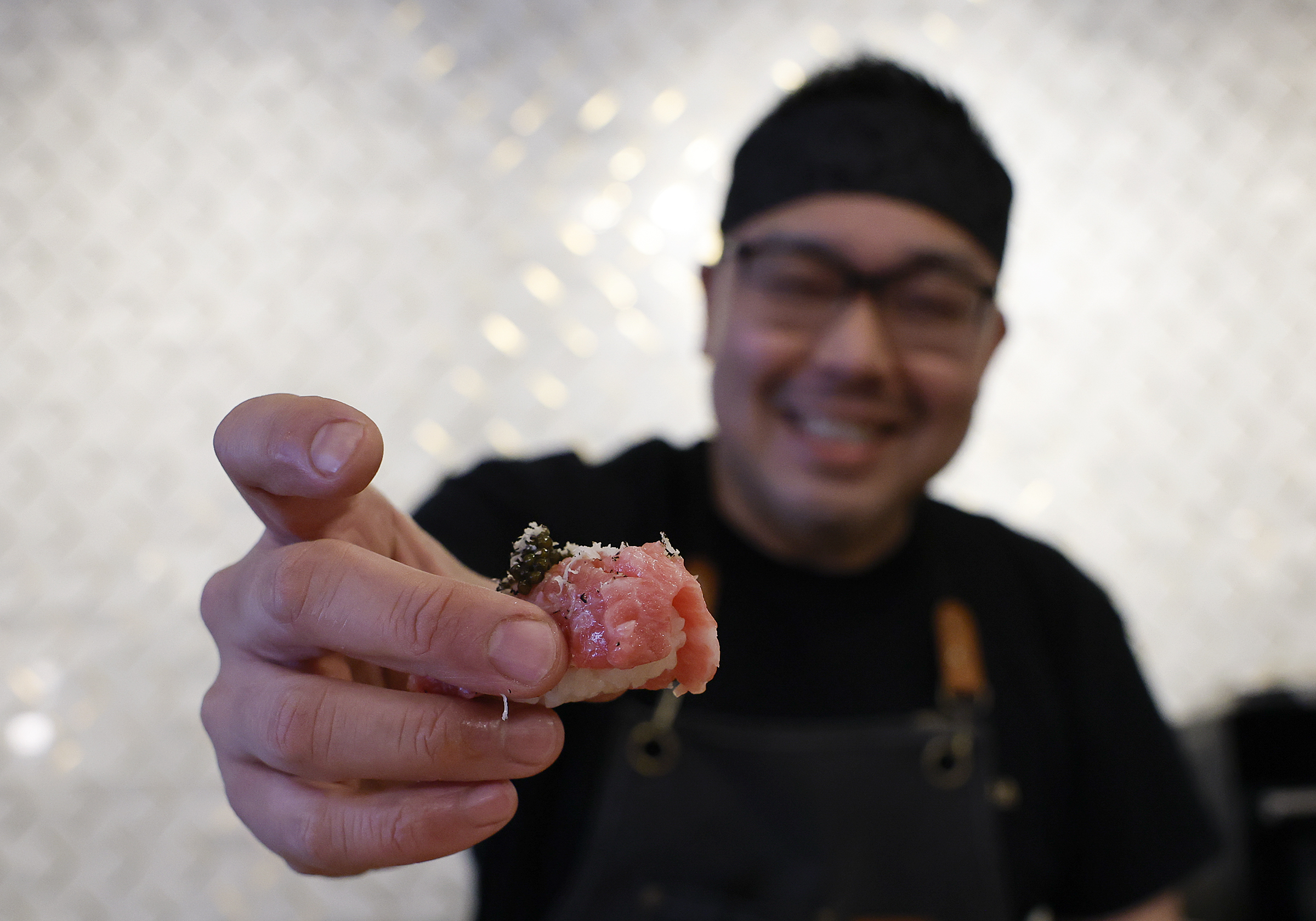
Uchi Philadelphia: The national Japanese restaurant raises the bar for luxury sushi on Sansom Street in Rittenhouse.
Fishtown/Kensington/Northern Liberties
Amá: Chef Frankie Ramirez’s modern Mexican restaurant on Front Street showcases regional cooking with a serious mezcal and tequila program.
El Chingón Fishtown: Chef Carlos Aparicio’s second location of his acclaimed South Philadelphia taqueria is a beer-garden setting on Frankford Avenue.
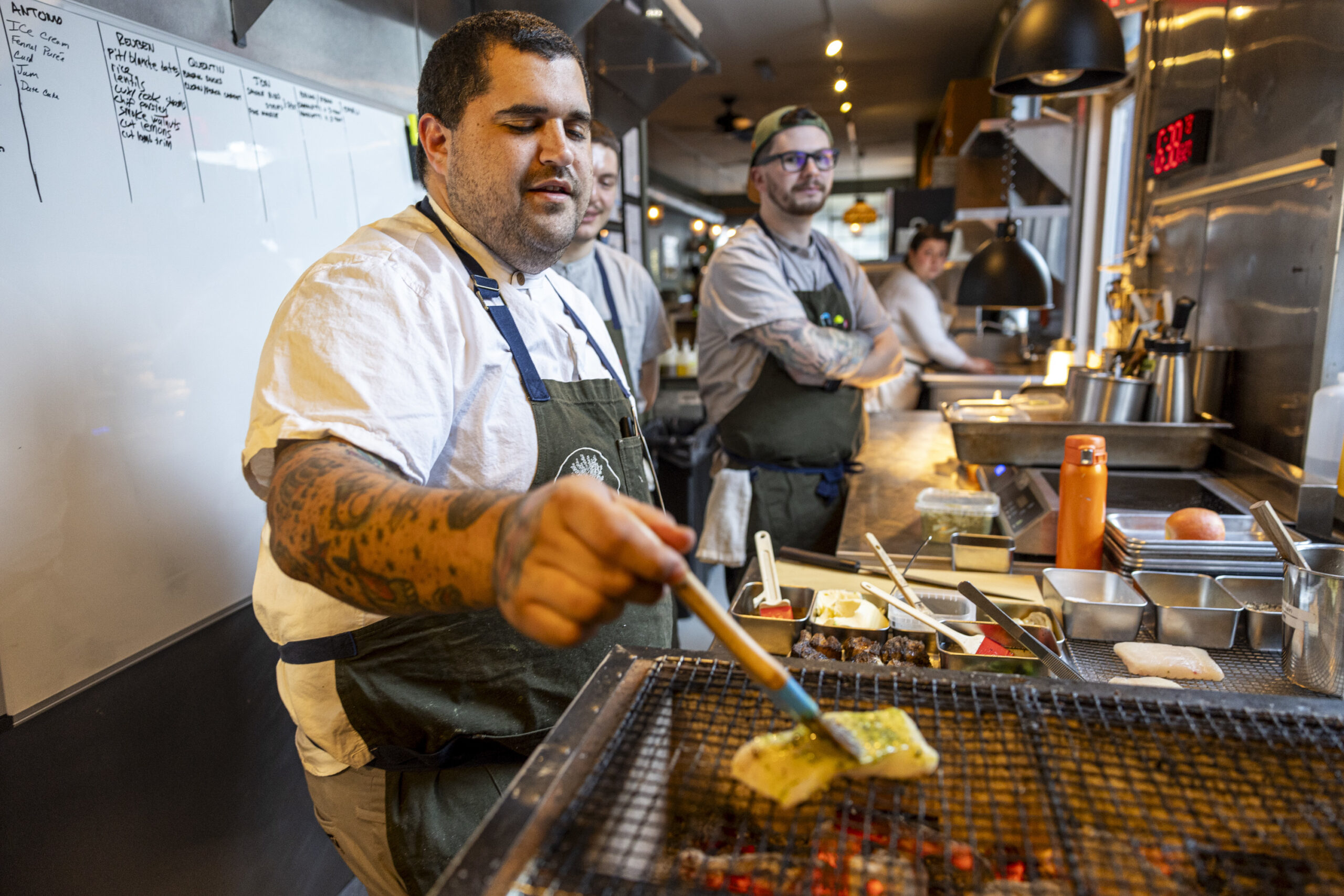
Evan Snyder grilling a halibut at Emmett.
Emmett: Chef Evan Snyder is winning plaudits for his Levantine-inspired cooking at the former Modo Mio/Cadence/Primary Plant Based space on Girard Avenue.
Fleur’s: Chef George Sabatino cooks French dishes in an intimate setting in a former furniture store on Front Street.
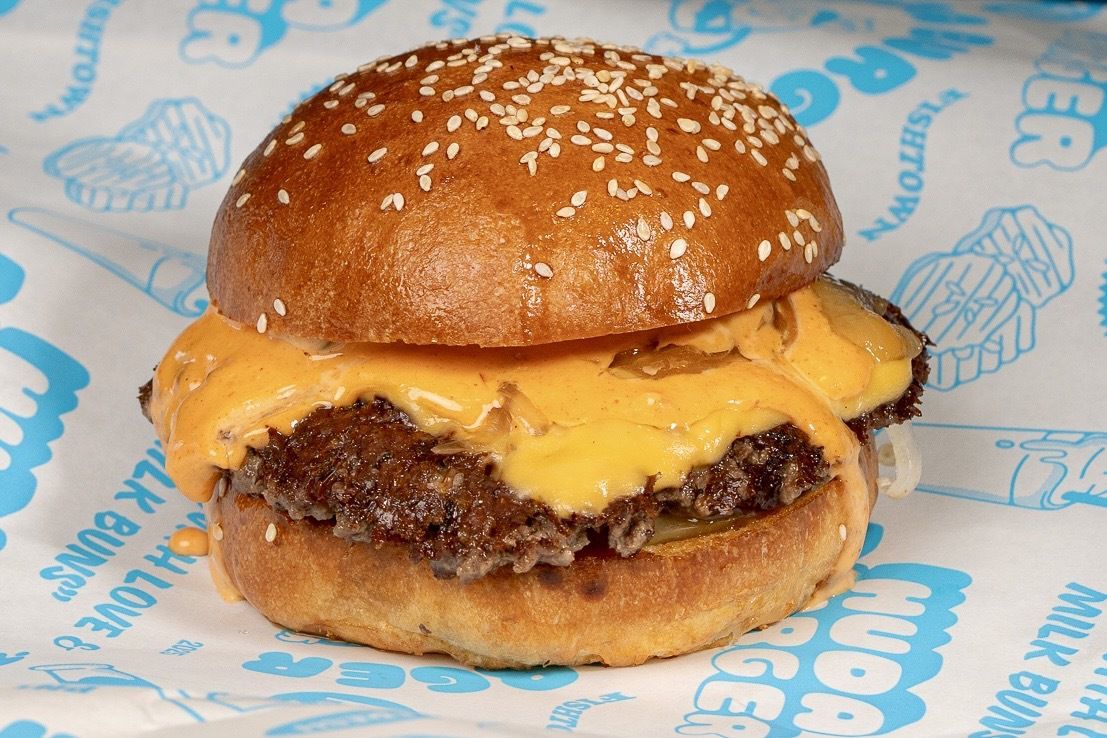
Forest & Main Fishtown: The Ambler brewery’s first city tasting room, in the former Cheu Fishtown on Frankford, features creative bar food from chef Dane DeMarco (Gass & Main).
Mana Modern Chinese: Modern Chinese BYOB on Second Street in Northern Liberties blends playful dim sum and inventive takes on classics in a mod setting.
Fairmount / Francisville
Javelin: This low-key Fairmount Avenue sushi bar offers a full cocktail bar.
Stephen’s Cafe: This kosher dairy cafe attached to the Chabad of Fairmount, in the former Rembrandt’s, features baking by Shevy Sputz, who also sells her babka, knishes, and other Eastern European baked goods at the local farmer’s market.
South Philadelphia / East Passyunk / Graduate Hospital
Bomb Bomb Bar: Zeppoli/Palizzi chef Joey Baldino revived a classic South Philly corner bar, infusing it with an Italian seafood menu and plenty of downtown energy.
Sao: Chef Phila Lorn and his wife, Rachel, are behind this snug Cambodian-inspired seafood bar on East Passyunk, a sequel to their hit no-rules noodle spot, Mawn.
Supérette: This chill European-style wine bar/cafe/bottle shop on East Passyunk from Chloé Grigri, Vincent Stipo, and Owen Kamihira emphasizes simple plates and easy elegance.
Namaste Indian Bistro: This Indian-Himalayan bistro at 46th and Lancaster is an offshoot of the original in Warminster; there’s also a new location in Collingswood.
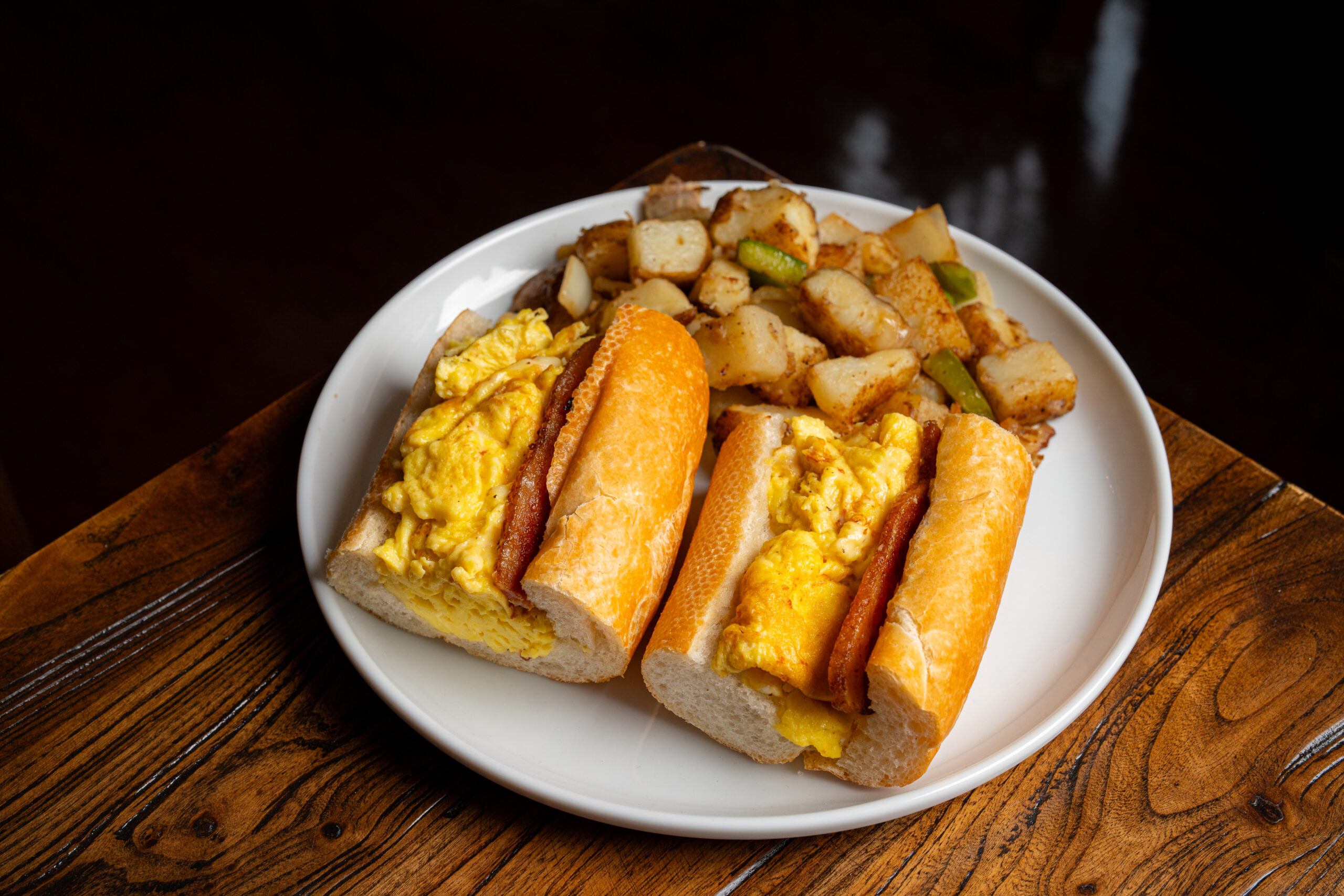
Out West: Down North Pizza’s sequel at 52nd and Walnut combines an ambitious coffee program with breakfast and lunch sandwiches in a community-friendly space.
Northwest Philadelphia
The Borscht Belt: The Bucks Jewish deli has opened a counter at Chestnut Hill’s Market at the Fareway.
Burtons Grill & Bar (Wayne): This polished, New England-rooted American grill features a long cocktail list and an unusually thorough gluten-free/allergy-friendly playbook.
Eataly (King of Prussia Mall): The giant Italian marketplace combines multiple restaurants, retail counters, and specialty grocery under one roof.
Hank’s Place (Chadds Ford): Rebuilt after a devastating 2021 flood, this Brandywine mainstay is a cozy diner known for old-school favorites and Wyeth sightings.
Michael Coastal Italian Grille (Collingswood): Chef Michael DeLone leans harder into coastal Italian cuisine after rebranding the upscale Nunzio’s and freshening the environs with new hardwood.
Neos Americana (Conshohocken): Kurt Benkurt and Annalise Long have upgraded their Daniel’s into a refined Mediterranean-leaning dinner destination and bar focusing on mezze, grilled meats, and seafood.
Peter Chang (King of Prussia): Peter Chang, once chef for the Chinese Embassy in Washington, D.C., offers Sichuan classics.
Revell Hall (Burlington): Chef Joey Sergentakis is behind this modern restaurant on the Delaware riverfront, the former Cafe Gallery, billed as “semifine dining.”
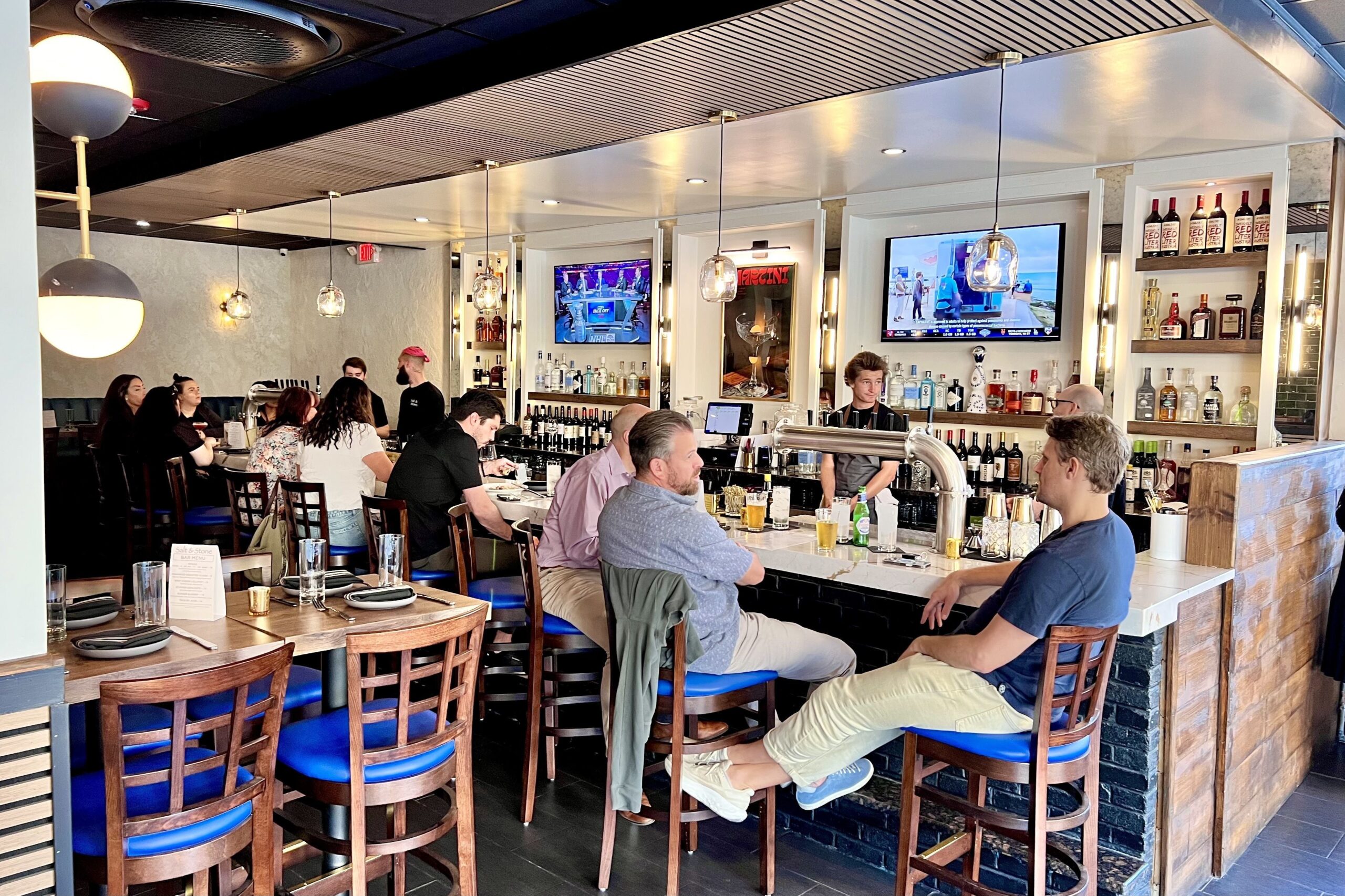
Salt & Stone (Conshohocken): Demetrios Pappas is behind this polished restaurant emphasizing seasonal Greek-American cooking and craft cocktails.
Thymari Mediterranean Gastro-Taverna(Swedesboro): This Greek-inspired BYOB offers taverna-style dishes, with a wine list sourced through Kennedy Cellars.
Triple Crown (Radnor): Fearless Restaurants has gone with an equestrian theme for its restaurant/event space at the Radnor Hotel.
Other Noteworthy Openings
Philadelphia
Amina (Northern Liberties): Felicia Wilson and chef Darryl Harmon moved their West African-inspired Southern spot from Old City into the former SIN.
Avana (Center City): Comfort food and American classics from Felicia Wilson and chef Darryl Harmon at Park Towne Place on the Parkway.
Casa Borinqueña(Kensington): Lourdes “Lulu” Marquez-Nau owns this casual Puerto Rican spot serving plant-based versions of classics like pinchos, arroz con gandules, and maduros.
Casa Oui in Queen Village.
Casa Oui(Queen Village): Chef Isabel Nocelo and C.J. Cheyne’s all-day café-restaurant blends French pastry energy with a nighttime menu that leans Mexican, plus a full bar.
Céline(Center City): It’s a cocktail lounge and nightlife-focused venue built around DJ-driven vibes and a reservation-led bar program; a Korean barbecue restaurant counterpart, HYO, is on the way upstairs.
Cerveau (North Philadelphia): Pizza Brain cofounder Joe Hunter created this roomy space at the 990 Spring Garden building to focus on sourdough pizza, handmade pastas, and small plates, with a full bar.
Cormorant (Kensington): This corner bar from the partners behind Vintage and Garage offers an amaro-leaning cocktail list, classic drafts, and no-proof options.
DaVinci & Yu (South Philadelphia): Marc Grika offers a playful mashup of Italian American and Chinese American comfort food on East Passyunk.
The bar at Doho in Mount Airy.
Doho(Mount Airy): This cozy bistro, inside Catering by Design, fuses Latin American and East Asian flavors, with a full bar.
Fetch (Manayunk): A dog park with a bar and a light food menu has succeeded Bark Social on Main Street.
First Daughter Oyster & Co. (Old City): Felicia Wilson and chef Darryl Harmon offer New England-style seafood at the Renaissance Philadelphia Downtown Hotel.
Good Hatch Eatery (West Philadelphia): The popular South Philly bruncherie has expanded to 48th and Pine.
Newsroom Philadelphia (Northern Liberties): A bar-restaurant concept blends media themes with late-night energy, tucked behind an ersatz soda machine.
Olive Roots Cafe (Queen Village): A Mediterranean cafe emphasizes coffee/matcha drinks and croissant sandwiches.
Percy (Kensington): The team behind Forîn Cafe runs this unfussy but stylish diner with a bar and late-night lounge under the El.
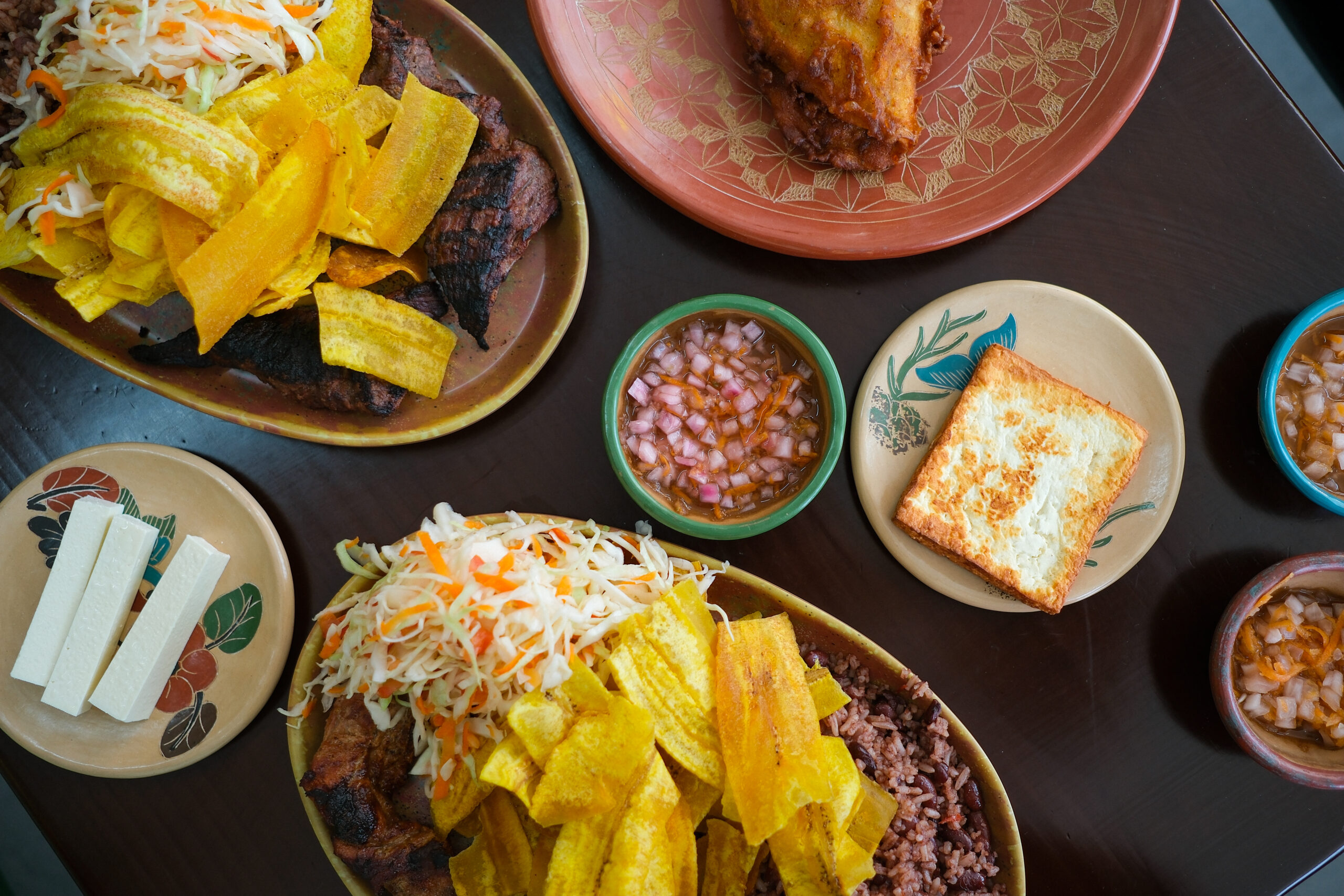
A feast at Pinolero.
Pinolero (Kensington): Lilliam Orozco and daughter Sarah are behind this stylish Nicaraguan restaurant in Harrowgate highlighting wood-fire cooking and Central American beverages.
Rhythm & Spirits (Center City): This music-theme bar and restaurant combines cocktails and Spanish-Italian food at One Penn Center (aka Suburban Station).
Rival Bros Coffee(Washington Square West): The Philly coffee chain debuted a swank spot in the Jessup House.
Rockwell & Rose (Center City): This stylish steakhouse has taken half of P.J. Clarke’s footprint in the Curtis Building, across from Washington Square.
Say She Ate Cafe (Center City): There’s great name wordplay and Mumbai-influenced, vegan food on the menu at this fast-casual cafe on South Street just off Broad, carrying on the Govinda’s tradition.
Scusi Pizza (Northern Liberties): Chef Laurent Tournodel’s colorful pizzeria/cocktail spot opened at the Piazza Alta, in advance of a luxe concept called Terra Grill.
The Fulton(Conshohocken): This contemporary Irish tavern serves hearty classics at the former Old Mansion House.
Kaede Sushi & Noodle Co. (Conshohocken): “Sushi speakeasy” is the theme of this stylish room upstairs from Guppy’s Good Times, with food from the team behind Kooma.
The Local (Phoenixville): A breakfast-and-lunch newcomer from the Lock 29 team leans into scratch-made classics and rotating specials.
Maison Lotus (Wayne): This refined Vietnamese coffee bar/restaurant from Win Signature Restaurants (Azie, the Blue Elephant, Teikoku, Mikado Thai Pepper, Mama-San) subsumed the former Margaret Kuo.
Mama Chang(Colmar): A family-style Chinese dining room from chef Peter Chang features Sichuan heat.
Tommy’s Tavern & Tap(King of Prussia): The New Jersey sports bar has set up an outpost outside the mall.
Toastique (Newtown Square): This all-day cafe turns “gourmet toast” into the main event, backed by juices and grab-and-go bowls.
Vanilla Café (New Hope): A sweets-forward cafe does coffee, pastries, and desserts with Instagram-friendly polish.
New Jersey Suburbs
Feed Mill Eatery (Medford): Five brands — Crumb Sandwich Joint, Casa Blanca Taqueria, Davey Stacks Burgers & Cheesesteaks, Mattarello Pizza, and Walterhaus German Fare — have set up at the historic Feed Mill complex, per early word from South Jersey Food Scene.
Flying Pig Tavern & Tap (Riverside): This new outpost of the Bordentown sports bar replaces Towne Tavern.
Julio’s Casa de la Birria (Sewell): The family behind Vineland’s Julio’s on Main has opened a sequel in Echo Plaza: a quick-service taqueria.
Lula’s Empanadas (Haddon Heights): Yaslyn Lora has made the leap from takeout window to full storefront dining room.
Magnify Brewing (Medford): An Essex County craft brewery has opened a laid-back taproom with a beer garden.
Main Street Tacos (Maple Shade): This strip-mall taqueria from David and Israel Morales emphasizes bold flavors.
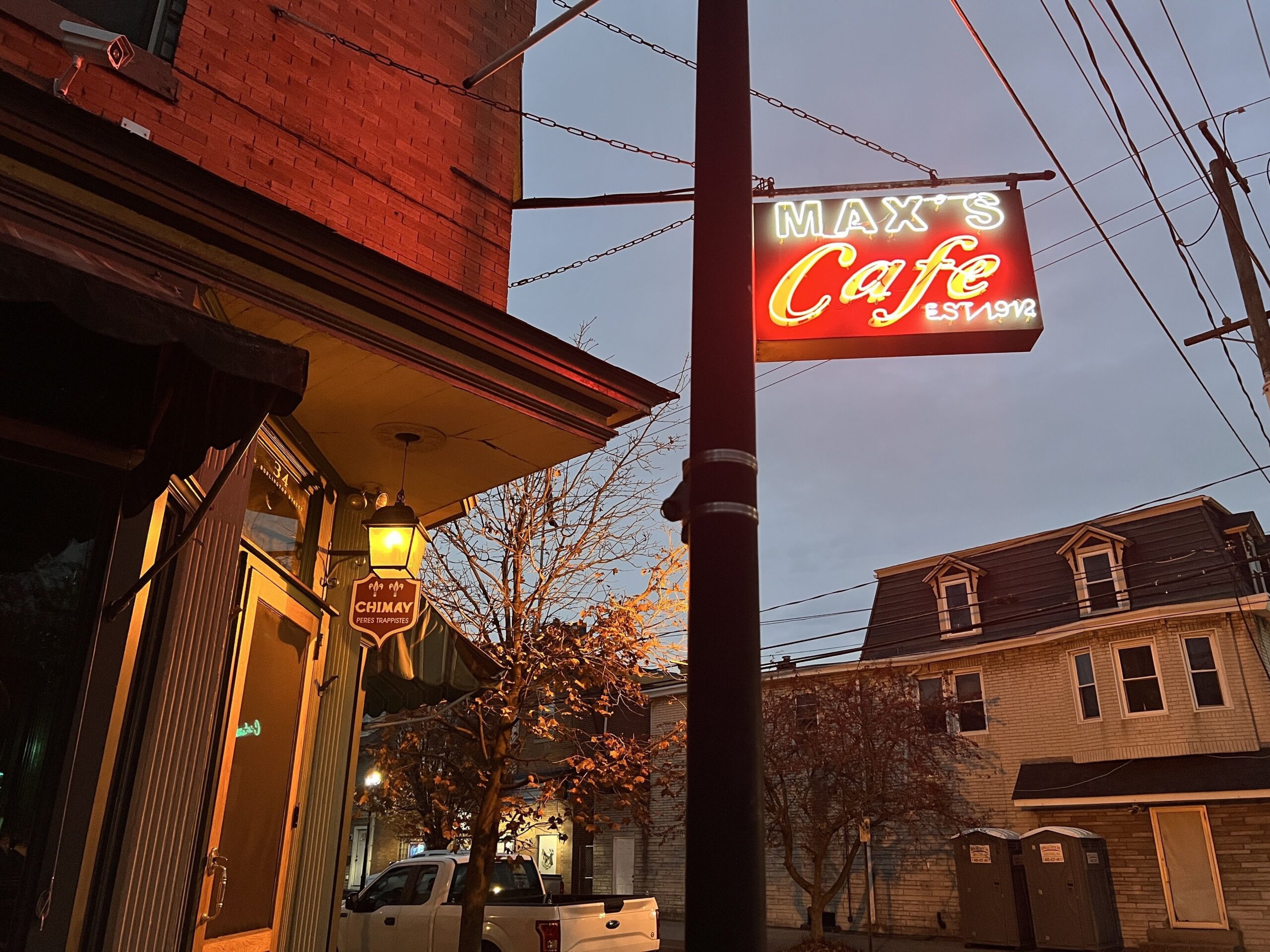
Max’s Cafe’s neon sign still shines over Pudge’s Pub in Gloucester City.
Pudge’s Pub (Gloucester City): The former Max’s Seafood Cafe has been reconceptualized as an everyday tavern featuring cheesesteaks inspired by Pudge’s Steaks of suburban Philadelphia renown.
The decision was abrupt, apparently made without advanced input from Sen. Dave McCormick (R., Pa.), who’d set up a commission to identify candidates to serve as the region’s top federal prosecutor.
Metcalf was 39 and, unlike many of his predecessors, didn’t have deep roots in the region — but did have some reported ties to officials who’d sought to help Trump adviser Roger Stone years earlier.
And the appointment was announced as Trump was openly pledging to “clean house” in the Justice Department and pull the agency more directly in line with the White House.
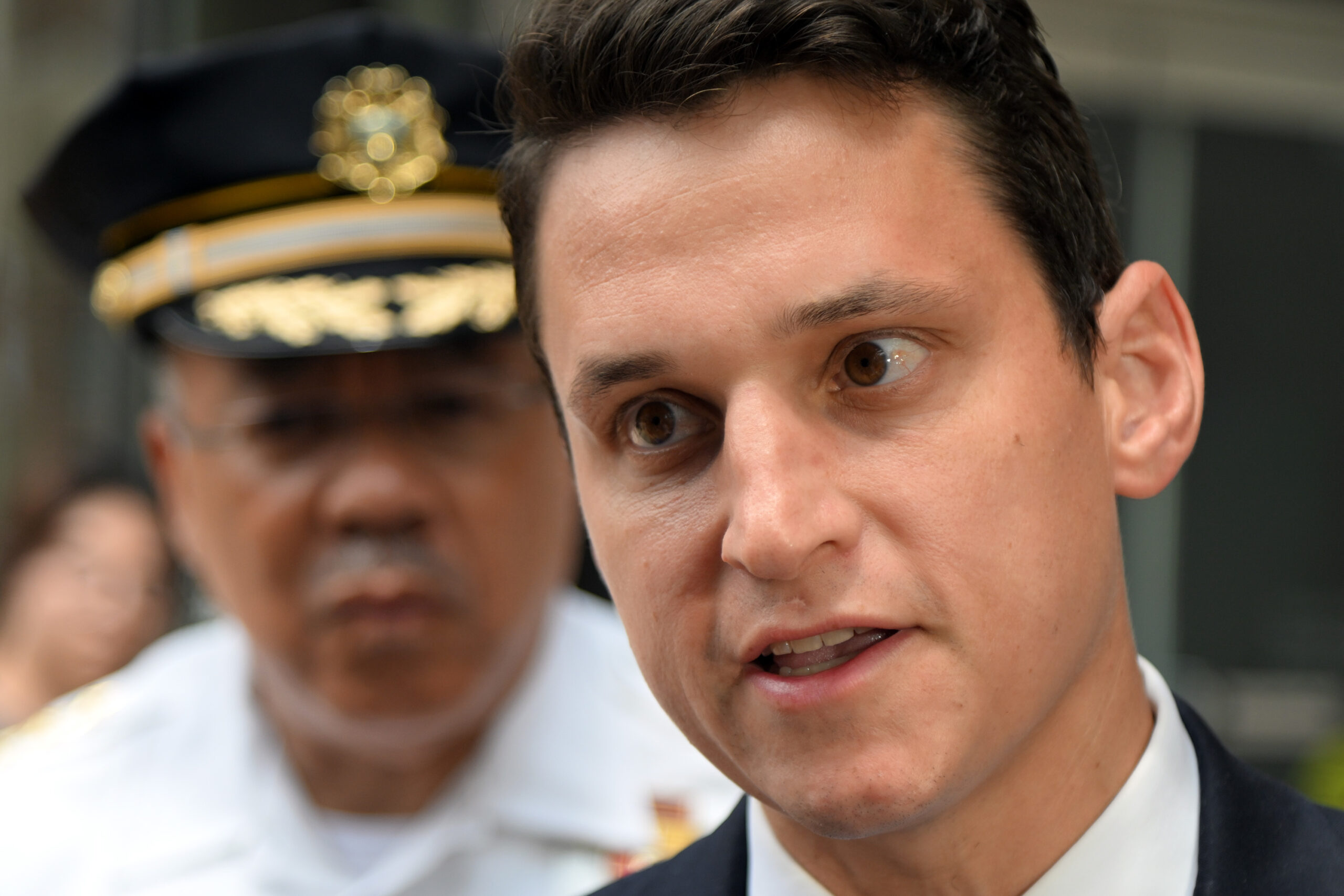
But in the months since Metcalf has assumed control over the office and its 140 lawyers, what has stood out so far has been the serious temperament the veteran prosecutor has brought to the role, and the relative lack of drama he’s overseen — particularly in comparison to nearby jurisdictions, where U.S. Attorney’s Offices have been embroiled in controversies over leadership appointments and whether to indict Trump critics.
During a recent interview with The Inquirer at his Center City office, his first since being appointed in March, Metcalf said his deliberate approach toward his first few months in the job has been influenced by his decade-plus career as a Justice Department lawyer — one that included stints in Baltimore, Philadelphia, and Washington, D.C.
He has met with a host of other local stakeholders since taking over — including Police Commissioner Kevin J. Bethel, District Attorney Larry Krasner, and federal judges — and has avoided ushering in drastic upheaval within his office.
U.S. Attorney David Metcalf outside the federal courthouse in July, with Police Commissioner Kevin Bethel standing behind him.
Instead, he said, a key focus has been to encourage his prosecutors to pursue large, ambitious, complex investigations targeting violent crime, synthetic opioid abuse, and healthcare fraud — subjects he said were critical to public safety in the Philadelphia region.
“I do not feel some personal impulse to burn my brand on this office by restructuring and reorganizing it,” he said, later adding: “The greatest offices and the greatest cases come from prosecutors who are hunting them down and competing for them … and that’s the breed of prosecutor we’re trying to create here.”
Composed and self-assured, Metcalf was uninterested in commenting on the broader political landscape surrounding his job. He instead concentrated on the work of his office, whose lawyers prosecute matters including drug trafficking, political corruption, and terrorism across nine counties from Philadelphia to Allentown and west past Reading. They also litigate civil matters on behalf of the federal government.
“I don’t want to say that I’m … bound by precedent or a devotee to the status quo,” he said. “But I do believe in stability, and I’m certainly not going to change things just for the sake of changing them.”
Even Krasner — an outspoken progressive Democrat who rarely misses an opportunity to criticize Trump, and who was engaged in a long-running feud with a Trump-appointed U.S. attorney four years ago — said he had a “professional and pleasant lunch” with Metcalf earlier this year.
“We have always worked well with the career prosecutors at the U.S. Attorney’s Office, and our teams seem to be continuing to work well together,” Krasner said in an interview.
Rod Rosenstein, who was the deputy attorney general during Trump’s first term, said in an interview that he hired Metcalf a decade ago, when Rosenstein was the U.S. attorney in Maryland. And their paths continued to intersect over the years as their careers wound through the Justice Department.
Rosenstein said Metcalf had “superb legal skills” and “excellent judgment” — two qualities he views as critical for leading a U.S. attorney’s office.
“I think people recognize he’s got the right qualifications,” Rosenstein said.
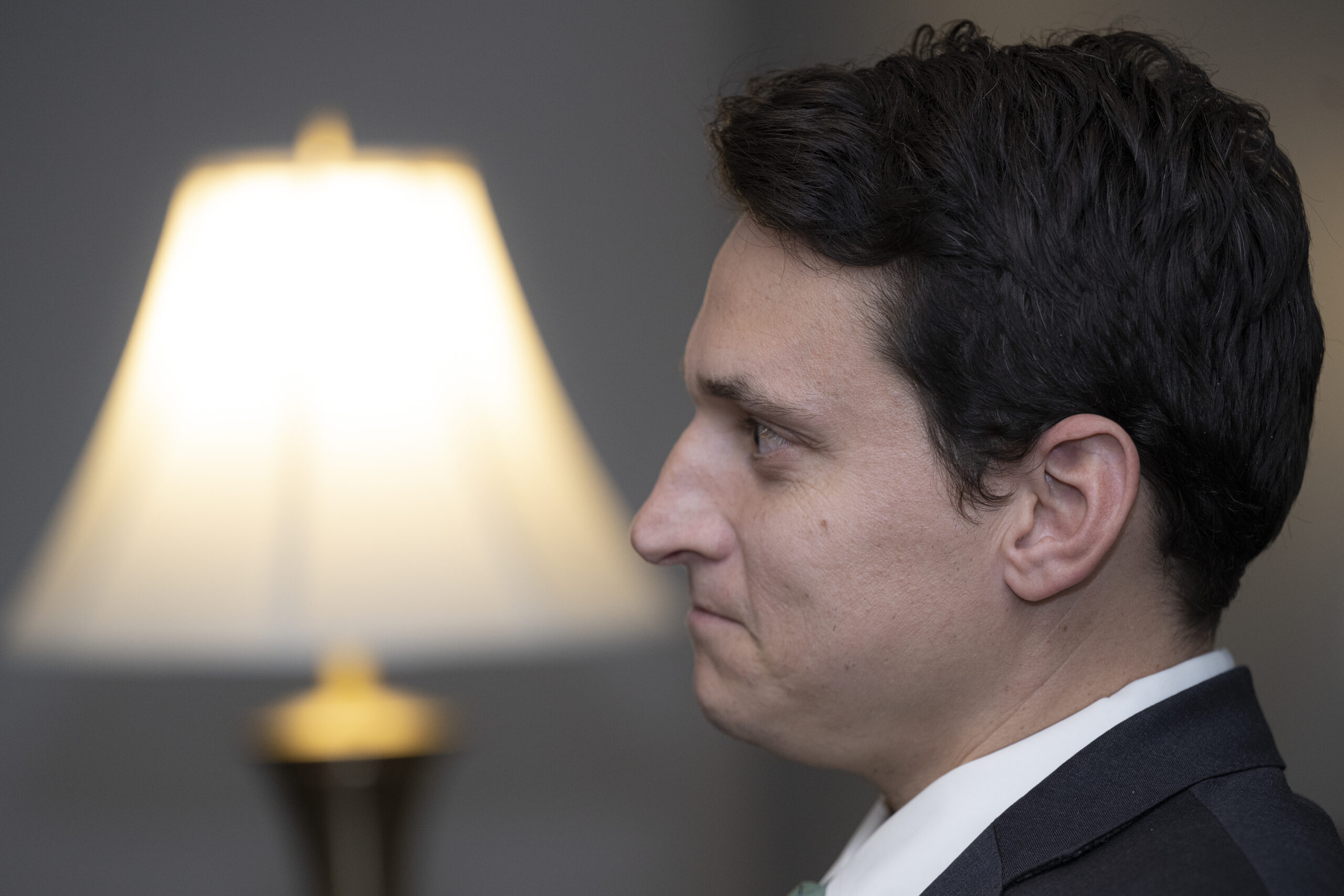
U.S. Attorney David Metcalf in his Center City office.
‘An exhilarating vocation’
Metcalf grew up in northern Virginia and graduated from The Wakefield School, a private prep school about an hour west of Washington, D.C. His father was once an Army colonel, he said, and his grandfather was Joseph Metcalf III, the Navy vice admiral who led the 1983 invasion of Grenada.
Metcalf was a standout soccer player in high school, and was recruited to play by more than 80 college teams, the Washington Post reported in 2003. He used the situation to his advantage, the paper reported — making a deal with his mother that he could let his hair grow down past his shoulders once Division I colleges started sending him letters.
He ended up attending Princeton — playing soccer all four years — and then went on to graduate from the University of Virginia’s law school.
After clerking for U.S. Circuit Judge Albert Diaz, Metcalf spent a few years in private practice before becoming an assistant U.S. attorney in Maryland under Rosenstein.
Metcalf said he didn’t have a single epiphany that made him realize he wanted to become a prosecutor. But he said he was quickly drawn to the work, which he found more interesting and important than other legal jobs.
“I thought it was really just an exhilarating vocation in a profession that doesn’t always have the most glamorous applications,” he said.
High-profile connections
From 2015 through 2022, Metcalf worked as a line prosecutor in Baltimore and, later, in Philadelphia — the office he now leads. The two years he spent here were unusual, he said, because they unfolded during the peak of the pandemic, when many aspects of the court system were disrupted and most people were working from home.
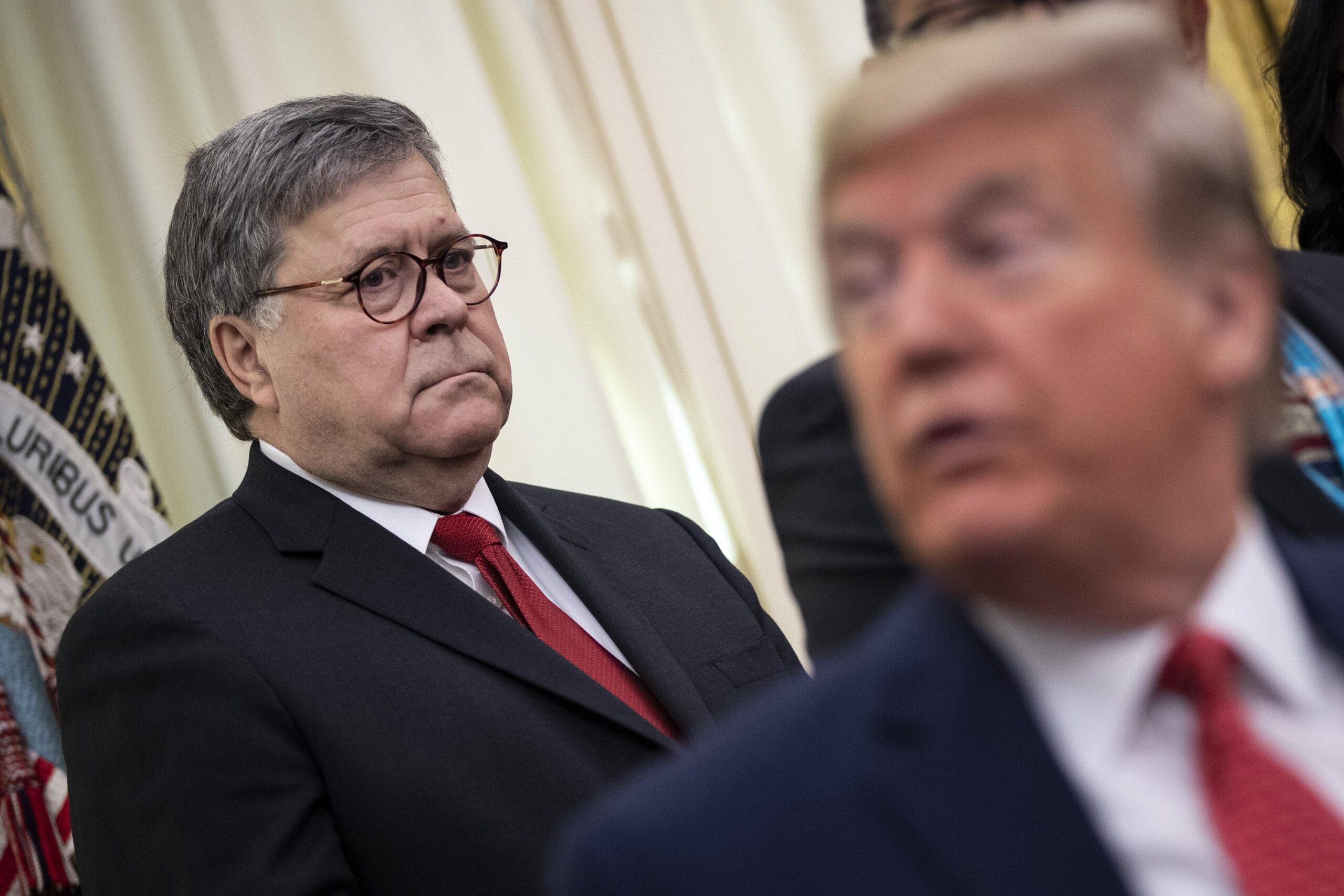
Metcalf also spent time during the first Trump administration in Washington, D.C. While there, he worked closely with prominent Justice Department officials including Rosenstein; Deputy Attorney General Jeffrey A. Rosen; Timothy Shea, the onetime U.S. Attorney for Washington, D.C.; and then-Attorney General William Barr.
Attorney General William Barr and President Donald Trump in the Oval Office of the White House on Nov. 26, 2019.
In 2022, Metcalf left the public sector and went to work as a corporate counsel for Amazon. But this March — after Trump was reelected for a second term — Metcalf was suddenly thrust back into the Justice Department, as the White House announced it was nominating him to be Philadelphia’s U.S. attorney.
From nominee to confirmation
The decision came as something of a surprise.
McCormick, Pennsylvania’s newly elected GOP senator, had made a point of publicly announcing that he’d formed a committee to review and vet potential candidates for federal law enforcement positions across the state. And other GOP-connected lawyers in the region had been jockeying for months to try to figure out who might be able carve a path toward the coveted position.
When the White House named Metcalf its permanent nominee, the process was effectively short-circuited.
Metcalf said he couldn’t speak to how or why the process played out the way it did. He said he applied for the job, and “had relationships with folks in the Trump administration” due to his time in Washington during Trump’s first term.
He didn’t specify who those people were. And some of his former bosses — particularly Barr — had fallen out of favor with Trump after his first term.
But Rosenstein said “it’s a mistake to think that people are the people they work for. It’s a big government, and not everyone agrees all the time.”
And in any case, Rosenstein said, he believed Metcalf was nominated “on merit, not on connections.”
Rod Rosenstein, deputy attorney general during President Donald Trump’s first term, says Metcalf has “superb legal skills” and “excellent judgment.”
William McSwain, who served as U.S. attorney during Trump’s first term, said he believed Metcalf was “extremely well-qualified for the position.”
It took the U.S. Senate six months to vote to confirm Metcalf along with a host of other Trump nominees, but by then, the Philadelphia region’s federal judges had already voted to extend Metcalf’s appointment indefinitely while the process played out.
That move stood in contrast to several other jurisdictions, including New Jersey, where the judiciary declined to extend the tenure of Trump’s nominee, Alina Habba. For months afterward, that office was thrust into turmoil as questions swirled about who could legally serve as its leader.
Pursuing notable cases
During his tenure so far, Metcalf said, he’s been seeking to focus his prosecutors on finding what he called “nationally significant” cases, particularly those targeting violence, drugs, and healthcare fraud, which he views as priorities for the region.
One of the first big indictments he announced was in October when FBI Director Kash Patel visited Philadelphia to help reveal that 33 people had been charged with being part of a Kensington-based drug gang. Metcalf said the case was the largest single prosecution in the region in at least two decades.
FBI Director Kash Patel helping announce the arrest of dozens of suspects in a Kensington drug case.
He also helped create a new program dubbed PSN Recon, an initiative designed to help Philadelphia Police more readily share intelligence with state and federal agencies about which groups or suspects should be investigated.
Prosecutions overall have increased on his watch, according to the Transactional Records Access Clearinghouse (TRAC), a research organization that collects federal courts records.
So far this fiscal year, prosecutions in the Eastern District of Pennsylvania were up 32% compared to last year, TRAC found, and were on their highest pace since 2019. The most common types of cases charged this year were immigration violations, drug offenses, and illegal firearm possession, according to TRAC.
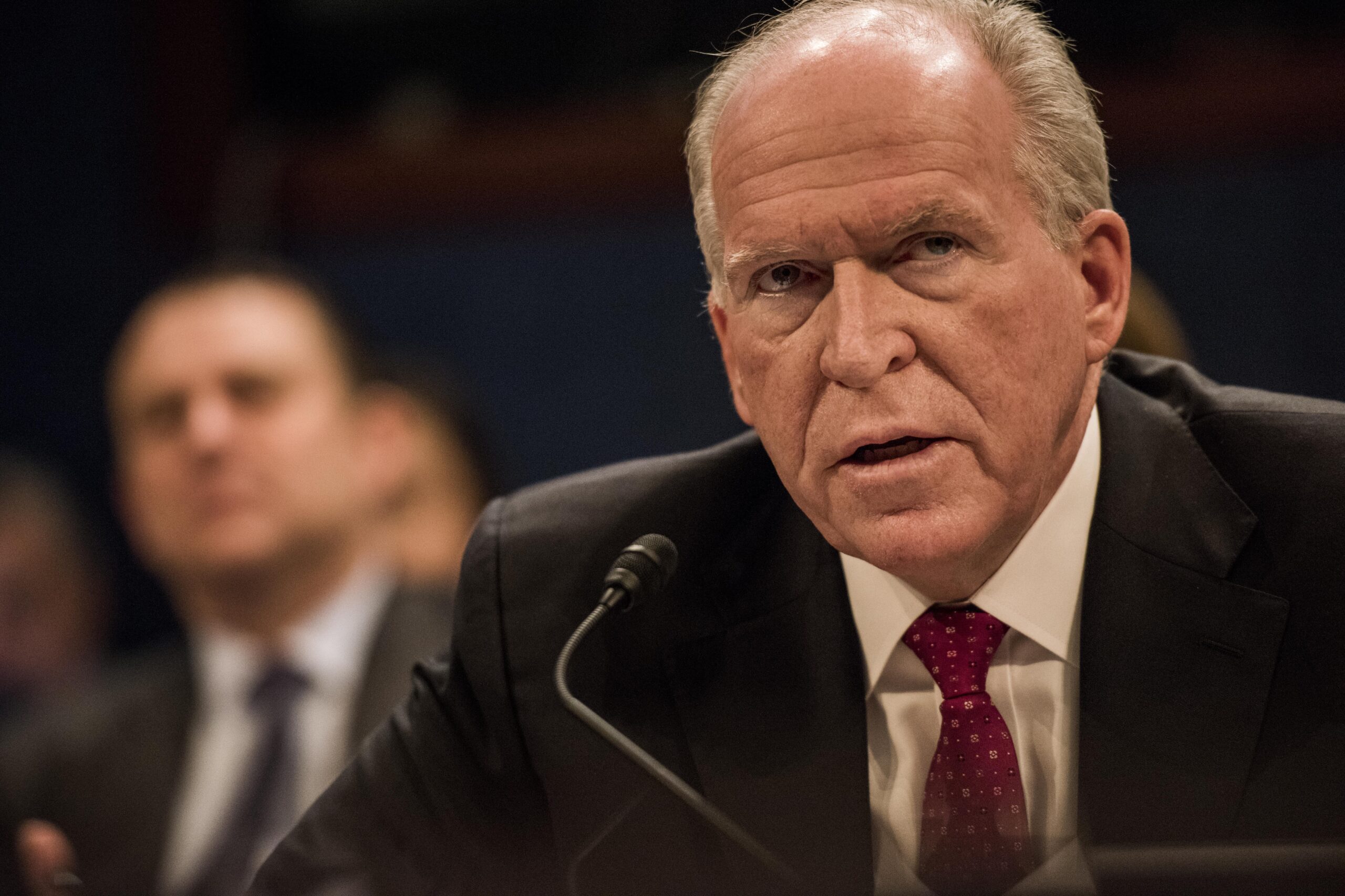
Earlier this year, Metcalf was reportedly involved in one particularly significant case: an investigation into former CIA Director John Brennan and his role in producing an intelligence assessment about Russian interference in the 2016 election. Brennan went on to become a prominent Trump critic.
Former CIA director John Brennan testifies before the House Intelligence Committee in 2017.
Metcalf never commented publicly on his purported involvement in the Brennan case, and declined to do so again during his interview with The Inquirer. The investigation is now reportedly being handled by federal prosecutors in Florida.
Metcalf did allow a short peek into his professional mindset when he was asked more broadly if he’d ever felt pressure from Washington to sign off on a decision he didn’t agree with.
After declining to comment on any discussions he may or may not have had with Justice Department leaders, he paused for a moment and added one final point.
“I will also say that I would be very surprised if that ever happened to me,” he said. “I don’t see it as a problem here.”
My husband, Phil, a New Jersey native, father of three children under 7, and former Penn State University football receiver, needs a kidney.
According to the National Kidney Registry, more than 90,000 people in the United States are currently waiting for a donor kidney. In the Philadelphia metropolitan area, that number hovers around 5,000.
My husband suffered an acute kidney injury in December 2023 caused by liver rejection medicine, a complication that affects 4% of transplant recipients.
Chronic kidney disease is common in the U.S., affecting one in seven adults. Most people don’t feel symptoms at first, but if it gets worse, it can lead to kidney failure and serious health problems. Dialysis is a lifesaving treatment for kidney failure, but requires the patient to be hooked to a dialysis machine for hours at a time, often for several days each week.
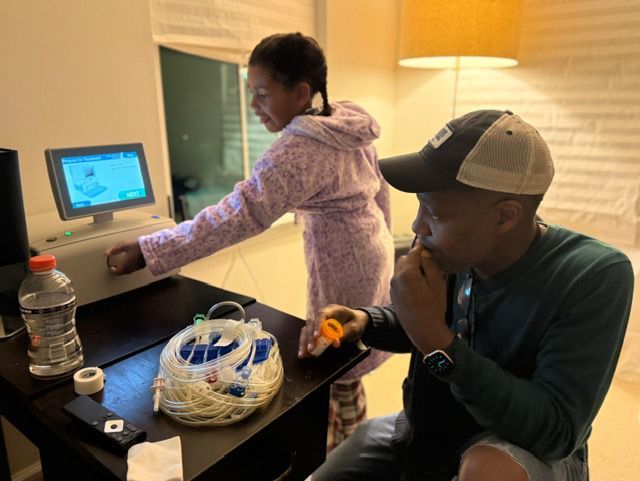
Phil Collins and his daughter, Charlie, set up the dialysis machine.
The small joys and normalcy of daily life quickly shift around dialysis schedules and doctors’ appointments.
It’s been nearly two years since we were placed on the transplant list, and our three small children rely on us to keep their world from being turned upside down even more than it already is.
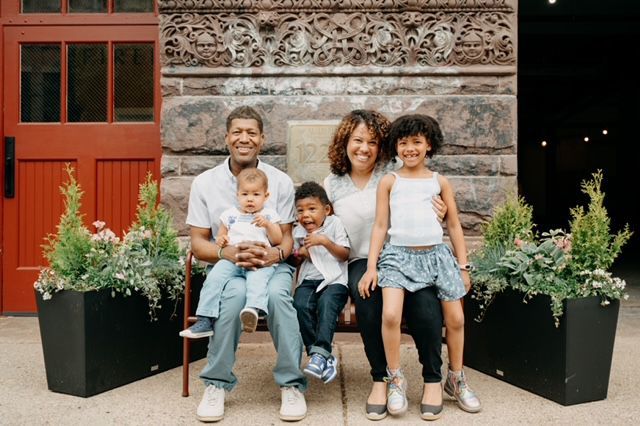
Phil Collins and Morgen Perdue-Collins with their children. Collins has been waiting for a donor kidney for two years.
They see the dialysis boxes stacked taller than they are in the front room, the catheter that we have to be careful of during playtime with their dad, and the frequent hospital visits because of a weakened immune system. Our daughter is even able to set up the peritoneal dialysis machine with help from Phil.
As a partner of someone on the transplant list, my grief is silent and omnipresent. I find myself torn between supporting my sick husband, bringing my best self to the classroom each day, and ensuring our three little ones can simply be kids.
When I drive to work, I see the billboards off I-95 for others who need a kidney; the wives and husbands and grandchildren and parents who are feeling just as overwhelmed and hopeful as I am. Maybe there is a match out there; perhaps someone will see their billboard, car magnet, or transplant profile and respond.
Like so many other families with someone on the transplant list, I help the best way I can. I work to know what the weekly lab numbers mean, whether my husband’s sluggishness is due to low iron and blood count, and if there are early signs of an infection.
Each December, his weakened immune system seems to lead him to the hospital, where he spends more time than our family would like. There is also guilt in not being able to know everything, and how best to help him in every critical time of need.
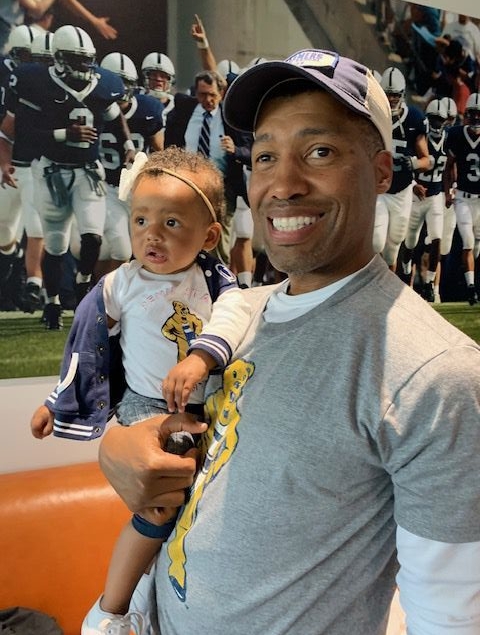
Phil Collins with his daughter, Charlie, at a Penn State game after his liver transplant, but before he suffered an acute kidney injury in 2023 caused by the liver rejection medicine. According to his wife, Morgen Perdue-Collins, it is a complication that affects 4% of transplant recipients.
Throughout this journey, Phil remains ever the optimist. Always looking on the positive side, while struggling to stay awake or suffering from terrible headaches and exhaustion. He remains diligently waiting and hoping things will turn around.
But it has been two years, and we are still waiting.
There are ways to help; for example, getting a donor match screening, as my friend, Meredith, did. She donated with extraordinary grace to a stranger last April, and this year, her family member received a kidney thanks to her advanced donation.
To become an organ donor, you have a few options:
Join your state’s registry. Visit the Donate Life America website to sign up for your state’s online donation registry.
Use your driver’s license. Declare your intentions to be an organ donor on your driver’s license.
Start the donor screening process. On the Donate Life America website, you can also scroll down to “Start the donor screening process.”
Donate through the National Kidney Registry. If you want to donate a kidney to someone in need, you can visit the National Kidney Registry.
Hesitation about organ donation, whether during life or after death, can stem from cultural beliefs, religious views, or medical mistrust. Many common myths about organ donation have long been disproven, but becoming a living organ donor is a demanding process, with a full return to normal taking eight weeks.
According to the United Network for Organ Sharing, 11 people die every day waiting for a kidney.
The truth remains simple: You have the power to save a life, to restore a family, and to give someone like Phil the most extraordinary gift of all.
Morgen Perdue-Collins is a Philadelphia teacher, and her husband, Phil, is still looking for a match. You can visit his kidney donation page here. And visit the National Kidney Donation site here.
Whether the Eagles rest their starters or not this week, they’re headed for the playoffs with a downright nasty defense and an offense that has lost its mojo.
The positive side, thanks to Vic Fangio’s group: The Eagles have 18 sacks utilizing just four rushers over their last four games. And their shutdown cornerback, Quinyon Mitchell, has allowed only one touchdown in pass coverage all season.
The downside, thanks to that offense: The Eagles’ success rate running the ball is a measly 40.1%, which ranks 25th in the league. Saquon Barkley’s 2,005-yard season seems like long ago. They have scored more than 21 points just twice in the last eight games, and those were against two of the worst teams in football (the Commanders and Raiders).
Offensive coordinator Kevin Patullo is still trying to figure this thing out, of course. The offense fell apart in the second half against Buffalo in part because the running game went nowhere on first down and the Eagles kept finding themselves in second-and-long and third-and-long situations.
“When you’re doing that, when that’s happening, it’s going to be very hard to move the ball,” Patullo said. It was indeed.
The win on Sunday was a relief for the Eagles, and Nick Sirianni let off some steam afterward in a back-and-forth with Bills fans. The coach has come under fire for his exchanges with fans before.
“Football is fun,” Sirianni said on 94 WIP when he was asked about it. “It’s OK to show emotion. It’s fun to show emotion. Like, it’s OK to be excited.”
We at Sports Daily wish you a very happy new year. The newsletter will be taking Thursday and Friday off. Sports Daily will return to your inbox on Monday.
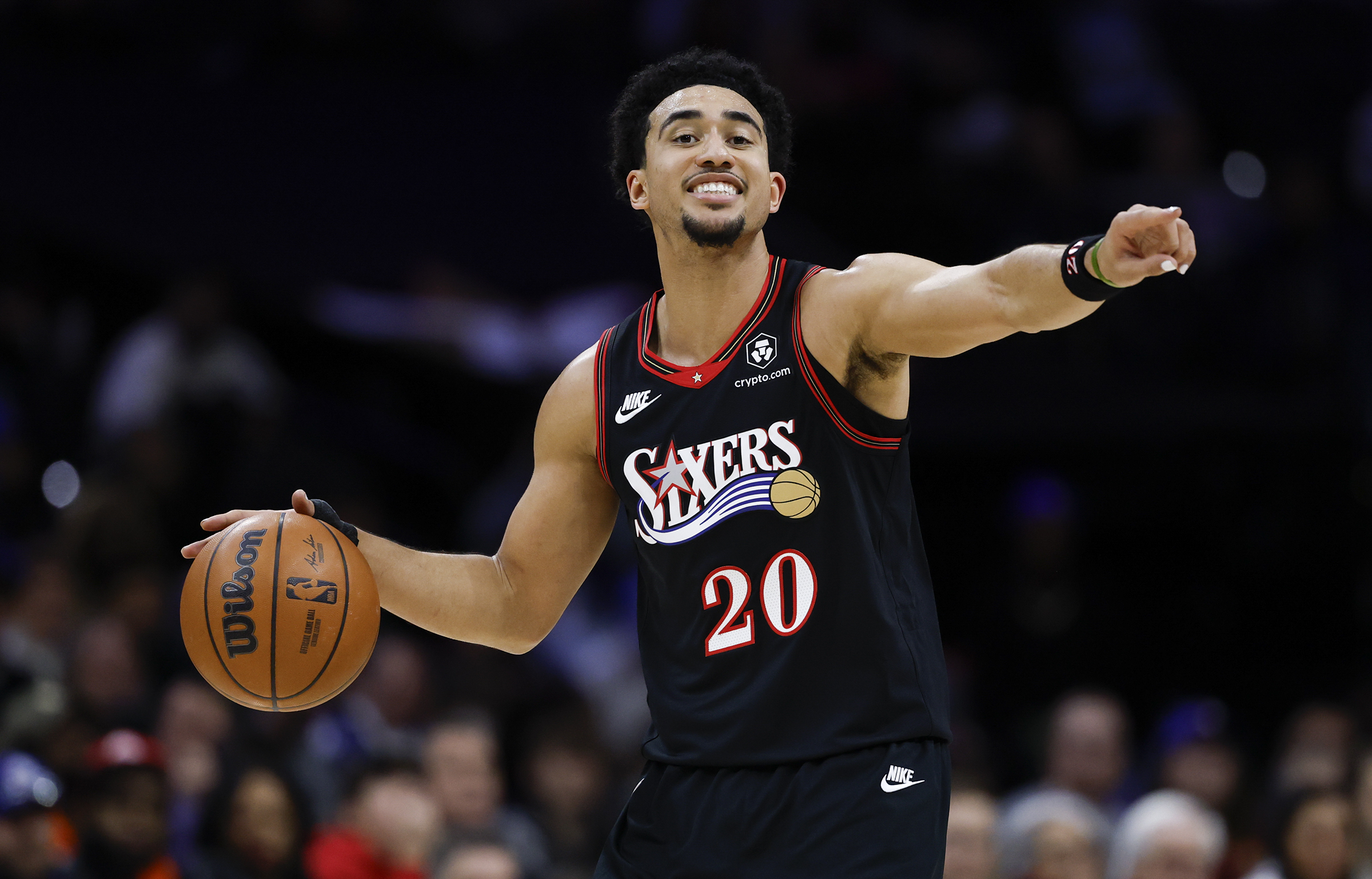
Sixers guard Jared McCain has overcome the mental aspects of dealing with a knee injury.
Jared McCain has spent an entire year away from the basketball court, first for a torn meniscus suffered in December 2024 and then for a torn ligament in his right thumb in September. He’s now physically healed, so how is the 76ers’ second-year guard dealing with the mental aspects of those injuries, particularly the left knee?
“I’m doing great, probably the last step for me,” McCain said. “A lot of it is I like to rebound, and I have to jump as high as I can … when I’m trying to rebound. And you know, the past few games, I’ve been able to do that. I feel comfortable doing that.
“But mentally, I’m great. I’m just trying to figure it out, still figuring it out, and it’s still a process.”
Tyrese Maxey and Ja Morant put on a show in Memphis on Tuesday, but it was VJ Edgecombe who shined the brightest in a Sixers overtime win over the Grizzlies. Edgecombe hit the game-winning three-pointer to help the Sixers snap a three-game losing streak.
Flyers center Christian Dvorak does a lot of his work in and around the crease. Rick Tocchet hopes that translates to the power play.
The Flyers’ struggles on the power play are nothing new, as the team has finished dead last with the man advantage in three of the last four seasons. This season has been better — slightly anyway — as the Flyers rank 25th of 32 teams with a 16.3% success rate.
But while Rick Tocchet likes some of his team’s puck movement, he believes the Flyers are leaving meat on the bone, particularly due to a lack of action in front of the net. His attempt at a solution? Adding Christian Dvorak to one of the team’s power-play units. Jackie Spiegel has more.
The Flyers picked up a 6-3 win in Tocchet’s return to his old stomping grounds late Tuesday night. Six different Flyers scored to pick up a third win over their last four games.
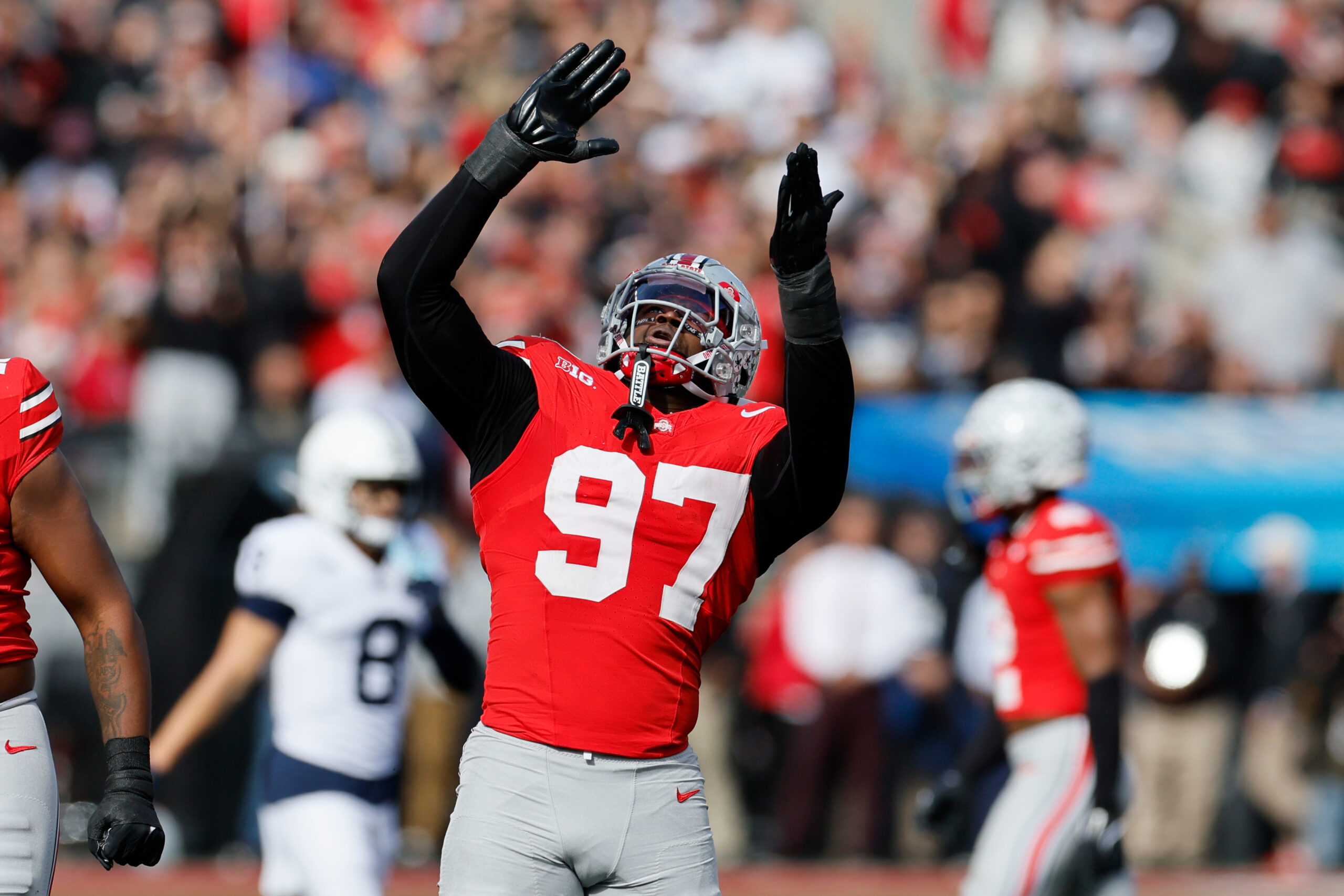
Ohio State defensive lineman Kenyatta Jackson celebrating a sack against Penn State on Nov. 1. How would he look on the Eagles?
The College Football Playoff quarterfinals get underway tonight as Ohio State faces Miami in the Cotton Bowl (7:30, ESPN). The eight remaining playoff teams are filled with NFL prospects, and Devin Jackson provides scouting reports on several players who could interest the Eagles. There’s a player from the Eagles’ favorite source of talent, Georgia, in the mix.
The Union announced the addition of 19-year-old defender Finn Sundstrom to their roster on Tuesday.
The Union’s season feels as if it just ended, but the team will start up again Jan. 17 with a trip to Marbella, Spain, in advance of preseason camp in Florida. A newcomer will join the group after the Union acquired 19-year-old defender Finn Sundstrom in a trade with D.C. United.
Join us before kickoff
Gameday Central
Live from Lincoln Financial Field: Beat writers Jeff McLane and Olivia Reiner will preview the Eagles game against the Washington Commanders at 2:55 p.m. Sunday. Tune in to Gameday Central.
Sports snapshot
The U.S. Soccer Foundation has committed $2 million to install soccer mini-fields like this one at Swenson Arts and Technology High School in Northeast Philly ahead of the 2026 FIFA World Cup.
If you build it … Mini-pitches are sprouting around Philadelphia in advance of the World Cup, but growing soccer in the city will take more than that. Kerith Gabriel reports on what it will take.
Who was the MVP of Super Bowl XV when the Oakland Raiders beat the Eagles in 1981?
Answer: A: Jim Plunkett. Steve O. was first with the correct answer.
What you’re saying about the Eagles
We asked: Should the Eagles play their starters on Sunday or rest them for the playoffs? Among your responses:
Go for it. Keep the momentum. Get the win and keep moving forward. Only rest those who are playing with injuries. Play like the “Bringing the Heat” Eagles. — Everett S.
Those who are healthy should play at least a half. Those who aren’t should take the week off. — Bill M.
The Eagles should definitely have the starters playing on Sunday. The #2 seed has too many advantages this year. Also, this offense needs to continue to try and work out the inefficiency that is dragging it down. However, I would be watching the out of town scoreboard and if the Bears get up big on the Lions then I would start sitting stars for next week. — John P.
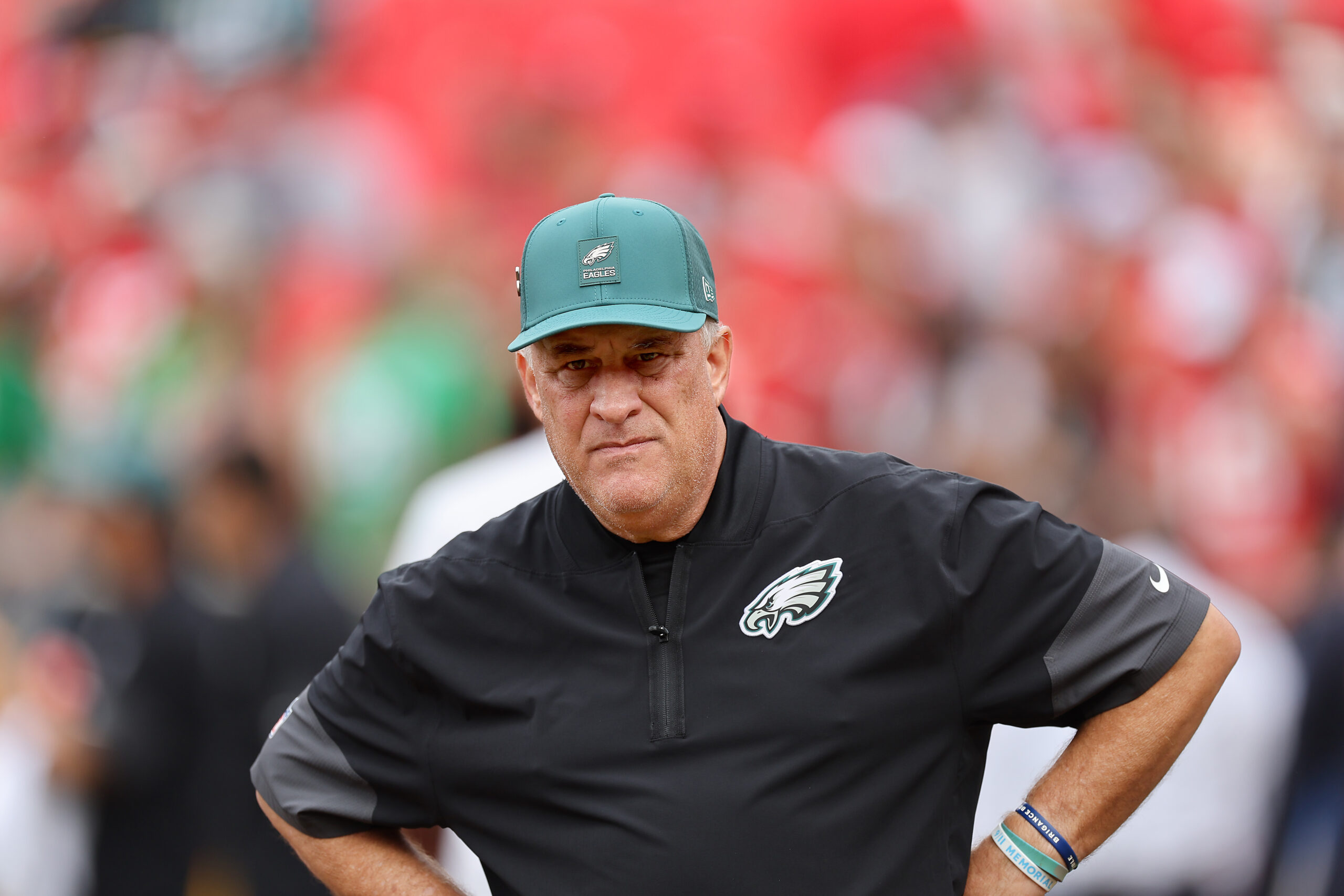
Coordinator Vic Fangio’s Eagles defense looks primed for another playoff run.
Shame the Bears game isn’t at 1 p.m. Just follow the money! Guaranteed, if there’s any chance of playing a divisional home game, probably worth millions and millions of dollars against maybe someone will get hurt what would you do? At 1600 hours it’ll be ALL HANDS ON DECK! — Ronald R.
Yes and no. Play the healthy starters and rest those with nagging injuries. I believe it’s important to play and build confidence and momentum for the playoffs but it’s also good to give nagging injuries some time to heal. — Bob A.
I don’t see any benefit to playing the starters any longer than a warmup. Doubtful that the Bears will lose to a defeated Lions team. We are who we are offensively and one more game won’t change that fact. — Bill B.
I would like to see some starters get some rest, whether by sitting out the entire game or just playing for some of the game. Injuries are a major factor in late-season and postseason play — need to keep the Birds healthy first and foremost! — V.C.B.
We compiled today’s newsletter using reporting from Jeff Neiburg, Olivia Reiner, Rob Tornoe, Keith Pompey, Jackie Spiegel, Devin Jackson, and Kerith Gabriel.
By submitting your written, visual, and/or audio contributions, you agree to The Inquirer’s Terms of Use, including the grant of rights in Section 10.
Thanks for reading Sports Daily today and all year long. I’ll see you in Monday’s newsletter, when we’ll know the Eagles’ first step in the playoffs. — Jim
Chef Chutatip “Nok” Suntaranon — the culinary genius behind the James Beard Award-winning restaurant Kalaya — is known for her delicious Thai cuisine and trotting her adorable Pomeranians, Titi and Ginji, around her Queen Village neighborhood.
That’s how Suntaranon caught the eye of sustainable fashion designer and Lobo Mau boutique founder Nicole Haddad.
“To me, she was the lady with the restaurant and the Pomeranians,” Haddad said. “I would see her walking around Fourth Street and she’d have her Pomeranians with her. I have an obsession with Pomeranians. They are the most adorable creatures on the planet.”
Nicole Haddad stands in front of her boutique, Lobo Mau, in Philadelphia before it closed in 2024.
So when a mutual acquaintance of Haddad and Suntaranon’s suggested the two entrepreneurs work together on a Philly fashion collaboration, Haddad jumped at the opportunity. She had the perfect project, a reimagining of Lobo Mau’s top-selling women’s swing coat, the Pom Jacket, named after Haddad’s favorite breed of dog.
“It felt like kismet from the beginning,” Haddad said.
The original
About 15 years ago, Haddad was in Venice visiting the Peggy Guggenheim Museum when she chanced upon a black-and-white photo of the New York heiress and art collector surrounded by her beloved Lhasa apsos.
“She was wearing a voluminous swing coat surrounded by five little dogs that reminded me of Pomeranians and I immediately thought, ‘I want to design something like this.’”
Back in Philly, Haddad made a black-and-white swing coat just like the ones popularized in the 1930s by jazz musicians. These coats were designed by the likes of Elsa Schiaparelli and Balenciaga and sold in the world’s top specialty stores, including Philadelphia’s Nan Duskin.
Haddad’s swing coat, the Pom Jacket, was tapered at the shoulders and flared at the waist, featuring a wide shawl collar and three-quarter-length cuffed sleeves. Priced at $398, it became a bestseller within weeks; finding a cult following, including NPR host Terry Gross, in the city.
Model Khalil Abner wears Nicole Haddad’s original Lobo Mau Pom Jacket.
In 2022, the Pom caught the eye of a buyer at New York’s Guggenheim Museum where it sold in the museum’s gift shop through 2024.
On a winter afternoon in 2019, Suntaranon stopped on a dime in front Lobo Mau’s then-Bainbridge Street boutique. She had to have the original black-and-white Pom Jacket in the window.
“Within two seconds, we sold her the jacket and she left,” Haddad said.
Suntaranon loved her jacket and has since been a supporter of Lobo Mau. It was Jesionka, a longtime Lobo Mau client who owned several iterations of the Pom, who suggested Suntaranon and Haddad collaborate.
Haddad knew Suntaranon gravitated toward bold-hued pieces that appeared architectural but flowed like liquid over women’s curves. She also knew that Suntaranon collected origami-inspired pieces by Japanese womenswear designer Issey Miyake.
“I’ve been collecting [Miyake] since I was 22,” Suntaranon, 57, said, mentioning the pleated teal, limited-edition Issey Miyake gown she wore to the 2025 James Beard Awards dinner in Chicago. “It’s timeless and beautiful.”
Suntaranon arrived at Haddad’s Bok Building studio in September 2025 — she closed her Bainbridge Street store in 2024 after landlords tripled the rent — with a clear idea of her dream Nok Pom.
She wanted a fuller silhouette that was longer in the back and had a button closure.
“I wanted a more dramatic look,” Suntaranon said.
Haddad created a print featuring a trompe-l’oeil 3D-effect that gave the illusion of Issey Miyake-style pleats. She had it digitally printed on cobalt blue sweatshirt material.
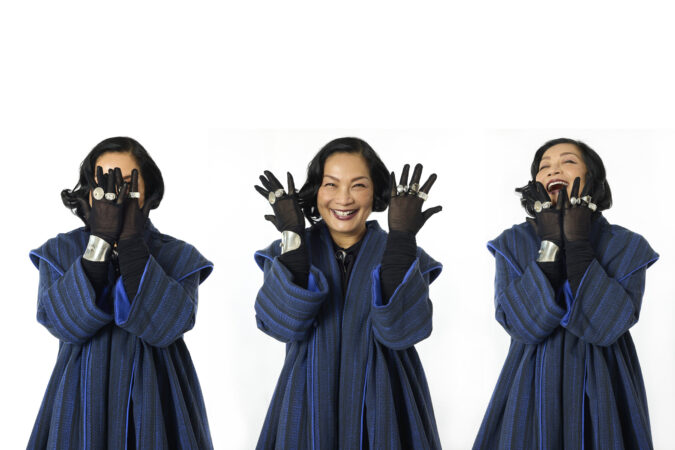
Kalaya’s chef Chutatip “Nok” Suntaranon poses in Lobo Mau’s exclusive Pom jacket. The acclaimed chef collaborated with local designer Nicole Haddad for an updated version of Hadddad’s original Pom Jacket. Styled by Nicole Haddad and Miranda Martel; jewelry by Feast and Forge and Finish; shoes by Elena Brennan; Hair and makeup by Tarah Yoder.
She added a box pleat in the jacket’s center back to create volume and drama, piping along the outer edge of the collar, and pockets on the inside and outside of the jacket. As a final touch, she put a big black button under the bustline.
The Nok Pom was ready.
“It’s beautiful,” Suntaranon said of her eponymous fashion piece. “It’s exactly how I envisioned it.”
The Nok Pom, priced at $450, is a limited-edition item and is available to order through Jan. 10.
In February , Haddad got a Pomeranian of her own that she named Johnny. She designed matching hoodies for Johnny, Titi, and Ginji, that are also for sale.
Suntaranon is flattered that she — and her pooches — are a part of the city’s food and fashion scene.
“Fashion — just like food — is a big part of my life,” Suntaranon said. “Fashion and food are an art. When the fashion industry is thriving and the food industry is thriving, the city is thriving.”
With the election behind him and the top law enforcement job in Bucks County ahead, Joe Khan says he’s ready for his next challenge.
In January, Khan, a former federal prosecutor and onetime Bucks County solicitor, will become the first Democrat to serve as district attorney in the county since the end of the Civil War. (That’s not counting Ward Clark, a Republican who switched parties to run as a Democrat in 1965 and immediately switched back to his GOP roots after he won.)
Khan, 50, is also the first candidate from outside the district attorney’s office to win the top post after several decades in which voters routinely replaced outgoing district attorneys with successors from among inside the ranks of the office.
To claim that mantle, Khan decisively beat Jen Schorn, the Republican incumbent and a career prosecutor in the district attorney’s office, winning 54% of the vote in the November election, which broke a 20-year record for voter turnout.
County political leaders say Khan’s victory signals voters’ desire for regime change in the once GOP-dominated suburb.
“Democrats came out because they felt like it was necessary to push back on what Trump was doing,” said State Sen. Steve Santarsiero, the chair of the Bucks County Democratic Party. “And in the case of Joe, they recognized him as someone who is going to stand up to an administration that has shown it’s willing to flout the law.”
Khan, for his part, says politics is in the rearview mirror as he prepares for his new job.
“I don’t care what political party you’re from, I don’t care who you voted for president or for district attorney,” he said in a recent interview. “What I care about is that you’re here to support the mission of keeping Bucks County safe and seeking justice every day.”
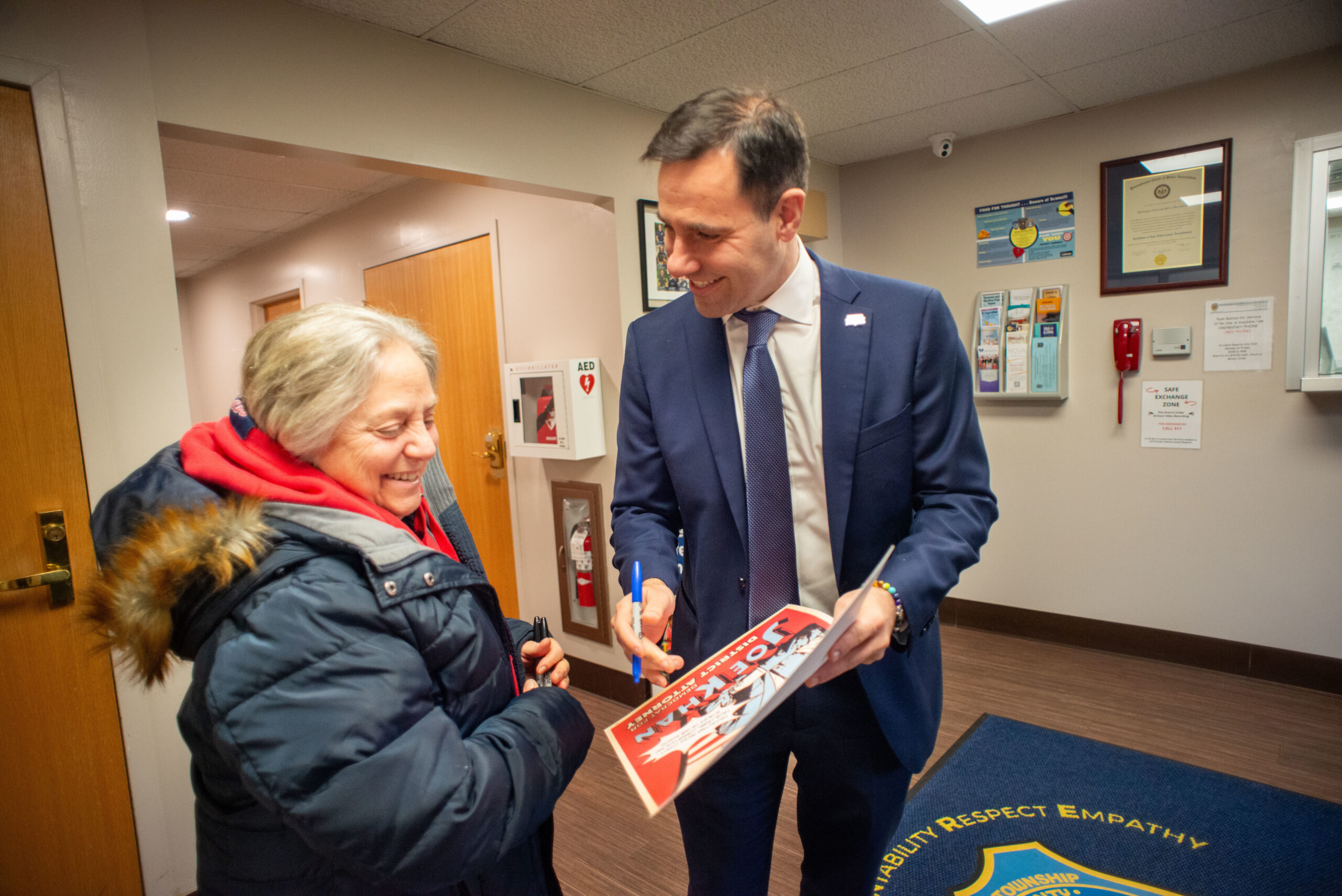
Joe Khan greets and signs a poster for supporter Phyllis Rubin-Arnold as he waits for a meeting with the Buckingham Township Police chief. Khan says that politics has no role in his plans for the district attorney’s office.
And he said he would expand that work — Khan tapped Kristin McElroy, one of Schorn’s top deputies, to serve as his first assistant.
Drawing on his experience in the U.S. Attorney’s Office in Philadelphia, Khan said he would pursue environmental crimes and prosecute cases involving violations of workers’ rights.
“We have seen all kinds of advances in terms of the powers that DAs have in Pennsylvania, so I think it’s great to have an opportunity to look at things with fresh eyes,” he said.
Khan grew up in Northeast Philadelphia, where his father settled after emigrating from Pakistan. Like his brother, State Rep. Tarik Khan (D, Philadelphia), he took an early interest in public service. He followed those aspirations to Swarthmore College and, later, the University of Chicago Law School.
Khan said he was drawn to Bucks County later in his career, and has made it his home in the 14 years he has lived with his sons, Sam, 14 and Nathan, 11, in Doylestown Township. He and the boys’ mother are divorced but co-parent amicably, he said, and live a few doors down from each other.
After stints in the Philadelphia District Attorney’s Office and the U.S. Attorney’s Office — where he specialized in prosecuting gun crimes and locking up child predators — Khan ran for the top prosecutor’s job in Philadelphia in 2017, losing the race to Larry Krasner.
Joe Khan (center) is seen here in March 2023 alongside County Commissioners Diane M. Ellis-Marseglia and Robert J. Harvie Jr. as they announced a lawsuit filed against multiple social media companies for “fueling a mental health crisis among young people.”
Three years later, Khan took over as Bucks County solicitor. He developed an interest in local politics, he said, after watching the culture-war debates over library books and allegations of abuse that embroiled the Central Bucks School District, where his kids are enrolled.
“It’s really central to my view of what parents need from their government,” he said. “They need people in roles like this that are going to make life easier, not harder, and that are going to help them with the challenges that they’re facing.”
Not long after taking over the office, Khan challenged Trump’s efforts to dismiss mail-in ballots during the 2020 election. He also waged legal battles, taking on companies including 3M, DuPont, and Tyco by filing lawsuits over the “forever chemicals” that had leached their way into residents’ water supplies.
And he made headlines for joining a national lawsuit against social media giants like TikTok, bidding them to address the mental health of their young users.
When now-Gov. Josh Shapiro left the state attorney general’s office, Khan stepped down to join a crowded primary to replace him, running in 2023 on a platform to “continue what has been a lifelong fight to keep people safe.”
After losing that race, Khan set his sights on the top law enforcement job in his new home, challenging the long-standing Republican machine that had controlled it for decades.
“I think that if you do a good job and you let people know why you’re doing the things that you’re doing, whether or not they agree with you on every political position, if they know that you’re honest, you got a pretty good shot at earning their vote,” he said.
“And I think that’s a big part of how we won this election.”
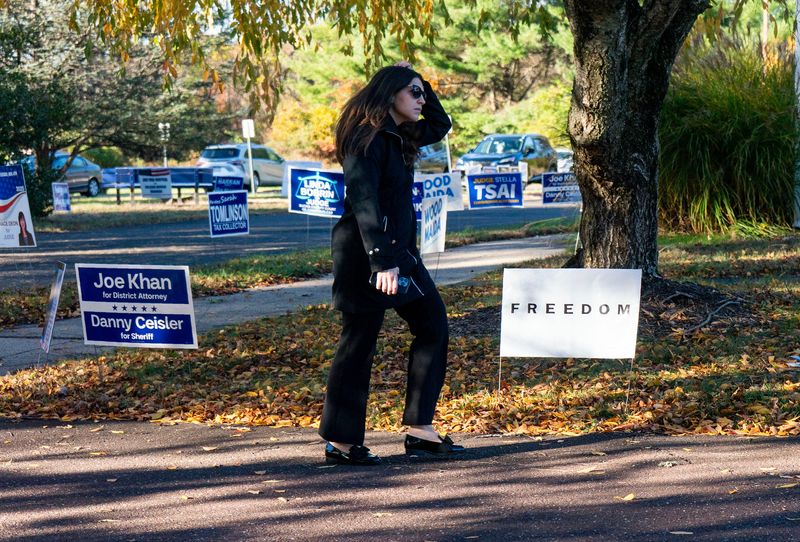
A voter walks past the election lawn signs, including one for Joe Khan and his running mate, Danny Ceisler, outside the Bucks County Senior Citizens polling location in Doylestown on Nov. 4.
Santarsiero, the county Democratic Party chair, said he was confident that Khan would make a fine district attorney.
Winning the post required political prowess, of course, but he said that is a dichotomy unique to the office: Politics are required every four years to secure a position that is apolitical.
Party affiliation aside, he said, Khan would work for the good of the county.
Khan, for his part, says he is ready to give it his all.
“We are here to keep people safe, and we’re going to do that in new and exciting ways,” he said. “I have my values, I wear them on my sleeve, and I’m very clear about the direction that we’re going to go to make sure that people who deserve a healthy environment for their families are getting a higher level of service than they’re used to.”
For decades, Congress has been the land of the permanent incumbent. Nearly nine in 10 Americans support congressional term limits, yet every attempt to impose them has failed because Washington won’t limit itself. But Pennsylvania has the power to change that.
As I previously argued in the Hill, there’s a path forward that doesn’t require Congress to vote against its own interests, or the near-impossible task of a constitutional amendment. The answer lies in coordinated state action that could force the U.S. Supreme Court to reconsider its 1995 decision in U.S. Term Limits v. Thornton.
In Thornton, the Supreme Court ruled that states cannot add qualifications for federal office beyond those in the Constitution. That decision effectively shut down state-led reform, even though the people overwhelmingly support it.
But landmark Supreme Court reversals often emerge when multiple states pass laws that force the court to reexamine old precedents. From Brown v. Board of Education to Dobbs v. Jackson Women’s Health Organization, coordinated state action has repeatedly succeeded in prompting judicial reconsideration.
The strategy is straightforward: Pennsylvania, along with states like Texas, Florida, and Tennessee, would pass identical laws establishing term limits for their members of Congress. Each law would face legal challenges and be struck down under Thornton, as expected. But with multiple states acting simultaneously, the issue would surface across several federal circuits, creating pressure for the Supreme Court to revisit the question.
Under the Articles of Confederation, delegates were not permitted to serve more than three of any six years, a clear endorsement of rotation in office. The founders never intended public service to become a lifelong career.
If term limits are enacted, they should apply prospectively, with current members grandfathered in and everyone’s “term clock” beginning at zero. This avoids endless lawsuits while setting a new standard for the future.
Pennsylvania is uniquely positioned to lead this effort. While the commonwealth has a divided legislature, with Republicans controlling the Senate and Democrats holding a narrow House majority, term limits have historically drawn bipartisan support. This is precisely the kind of reform that could bridge partisan divides and demonstrate that Pennsylvania can lead on issues that matter to voters across the political spectrum.
Schmidt emphasized that, in America, states run elections, not the federal government. This bipartisan defense of state sovereignty, supported by officials across party lines, demonstrates Pennsylvania’s willingness to assert its constitutional authority when necessary.
Pennsylvania voters overwhelmingly support this reform. A January poll found that 78% of Pennsylvania voters support term limits on Congress, including 79% of Republicans, 78% of Democrats, and 80% of independents. This rare consensus across party lines makes term limits legislation an opportunity for Pennsylvania’s divided government to demonstrate it can work together on reforms that voters clearly want.
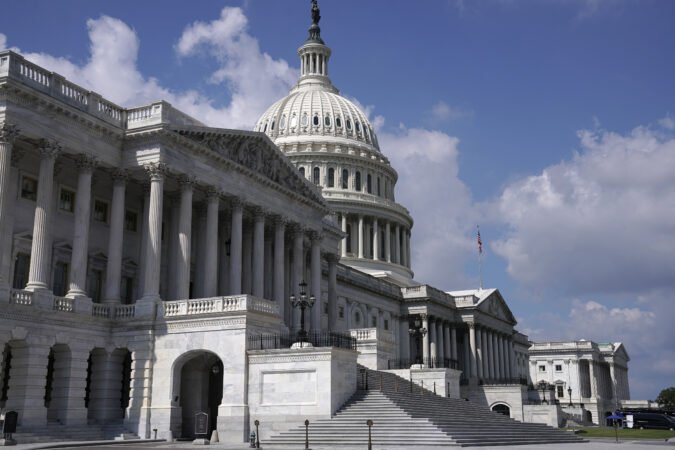
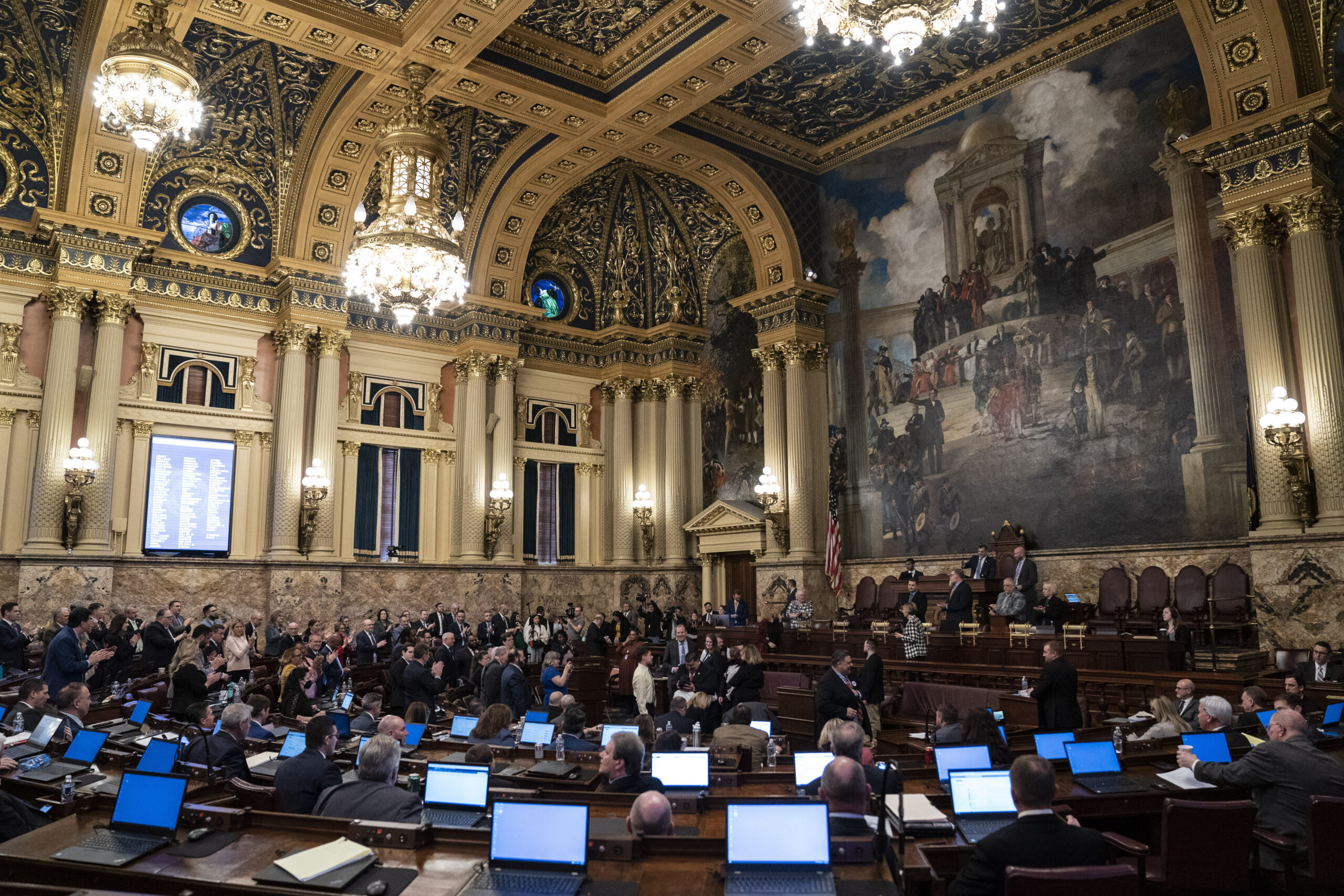
Working to pass term limits legislation would be consistent with the Pennsylvania General Assembly’s history of defending state authority against federal intrusion, writes Tanner Willis.
The Pennsylvania legislature has shown it can take principled stands on constitutional questions when there’s sufficient public support. Passing term limits legislation, knowing it will be challenged under Thornton, would be consistent with Pennsylvania’s history of defending state authority against federal intrusion. If Pennsylvania acts alongside states like Utah, Arizona, and Kentucky, the combined pressure could succeed where individual efforts have failed.
If Congress won’t act, and the people can’t amend the Constitution directly, Pennsylvania still has one powerful tool: coordinated challenge.
The path forward is simple. Pass the law, invite the challenge, and let the Supreme Court decide. The only question is whether Pennsylvania has the courage to lead.
Despite being one of the rockiest years yet for science — marked by millions of dollars in funding cuts and controversial shake-ups to the federal infrastructure — Philadelphia scientists still managed to celebrate many wins in 2025.
They also won national and international honors for work in physics, cancer research, and drug repurposing. And although no local scientists won a Nobel Prize this year, two at Monell Chemical Senses Center were recognized by its satirical counterpart, the Ig Nobel Prize.
Here are five notable Philly science wins from 2025:
1. Baby KJ is successfully treated with personalized gene editing therapy
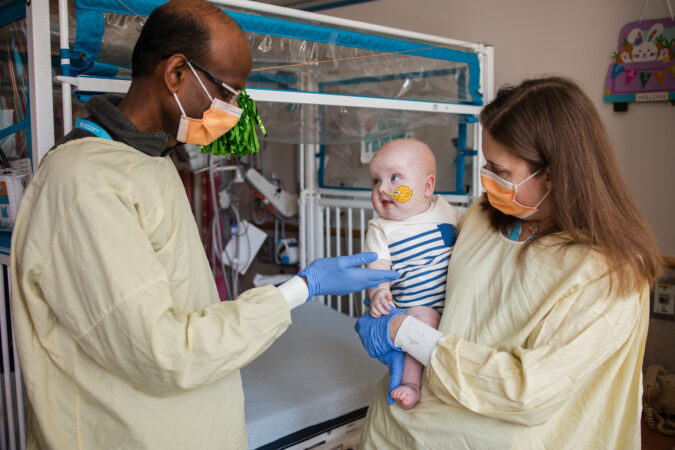
Philadelphia-area child KJ Muldoon,now 16 months old, has already been called a “trailblazing baby” by the top scientific journalNature and recognized by the publicationas one of 10 people who helped shape science in 2025.
This international recognition came after his life-threatening genetic condition was successfully treated with a personalized gene editing therapy earlier this year by doctors at Children’s Hospital of Philadelphia and the Hospital of the University of Pennsylvania.
Baby KJ was born in August 2024 with a metabolic disorder that prevented his liver from being able to process protein. Called severe carbamoyl phosphate synthetase 1 (CPS1) deficiency, the disorder puts babies at risk of severe brain damage and is fatal more than half the time.
With few options to treat him, the CHOP and Penn team — led by doctors Kiran Musunuru and Rebecca Ahrens-Nicklas — opted for a gene-editing technology known as CRISPR to create a customized drug for KJ that would fix the genetic mutation that was driving his disease.
After receiving three doses, KJ was able to return home in June — ending his 307-day-long stay at the hospital. Though not a cure, the medication has dramatically improved his liver function and made the effects of his disease milder, doctors say.
2. Penn physicists share the Breakthrough Prize in Fundamental Physics
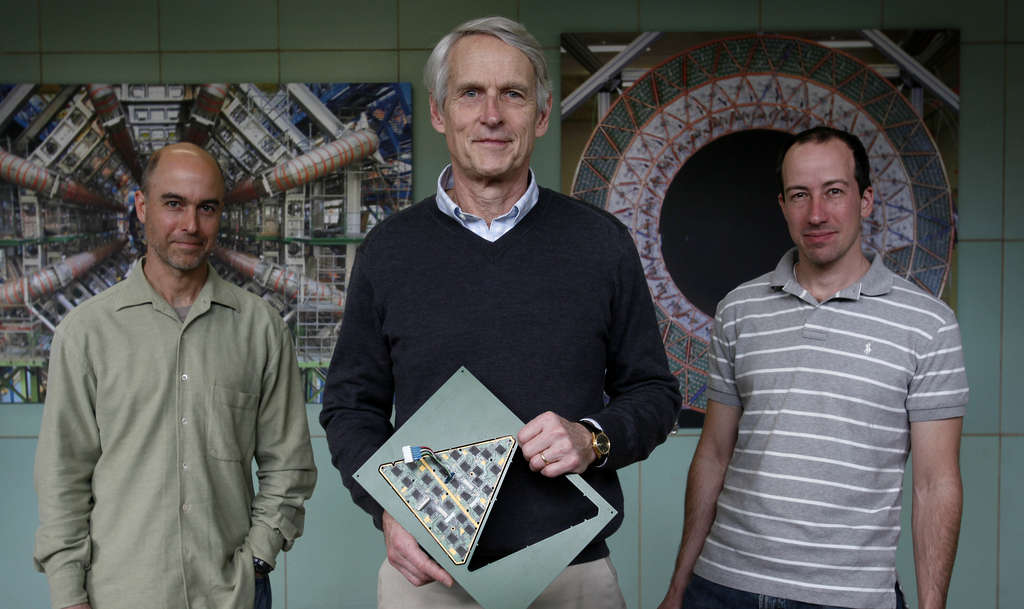
Penn particle physicists (from left) Joseph Kroll, Brig Williams, and Elliot Lipeles, pictured in 2011. They are part of the ATLAS research team that helped discover the Higgs boson, an elementary particle, and were honored with the 2025 Breakthrough Prize for their ongoing Higgs research.
This year, Penn physicists shared one of science’s biggest honors: the Breakthrough Prize.
They were among 13,000 scientists across more than 70 countries to be recognized for their involvement in particle physics experiments at the European Organization for Nuclear Research, known as CERN, in Switzerland.
These decades-long research collaborations have explored the fundamental structure of particles that make up the universe, using CERN’s Large Hadron Collider, a 17-mile-long particle accelerator.
The Penn team — consisting of more than two dozen scientists, including Joseph Kroll, Evelyn Thomson, Elliot Lipeles, Dylan Rankin, and Brig Williams — was specifically part of the ATLAS Experiment, which played a key role in the discovery of the Higgs boson particle, a critical particle in modern particle physics theory. The Higgs discovery helped confirm how fundamental particles acquire mass.
3. David Fajgenbaum honored for drug repurposing research
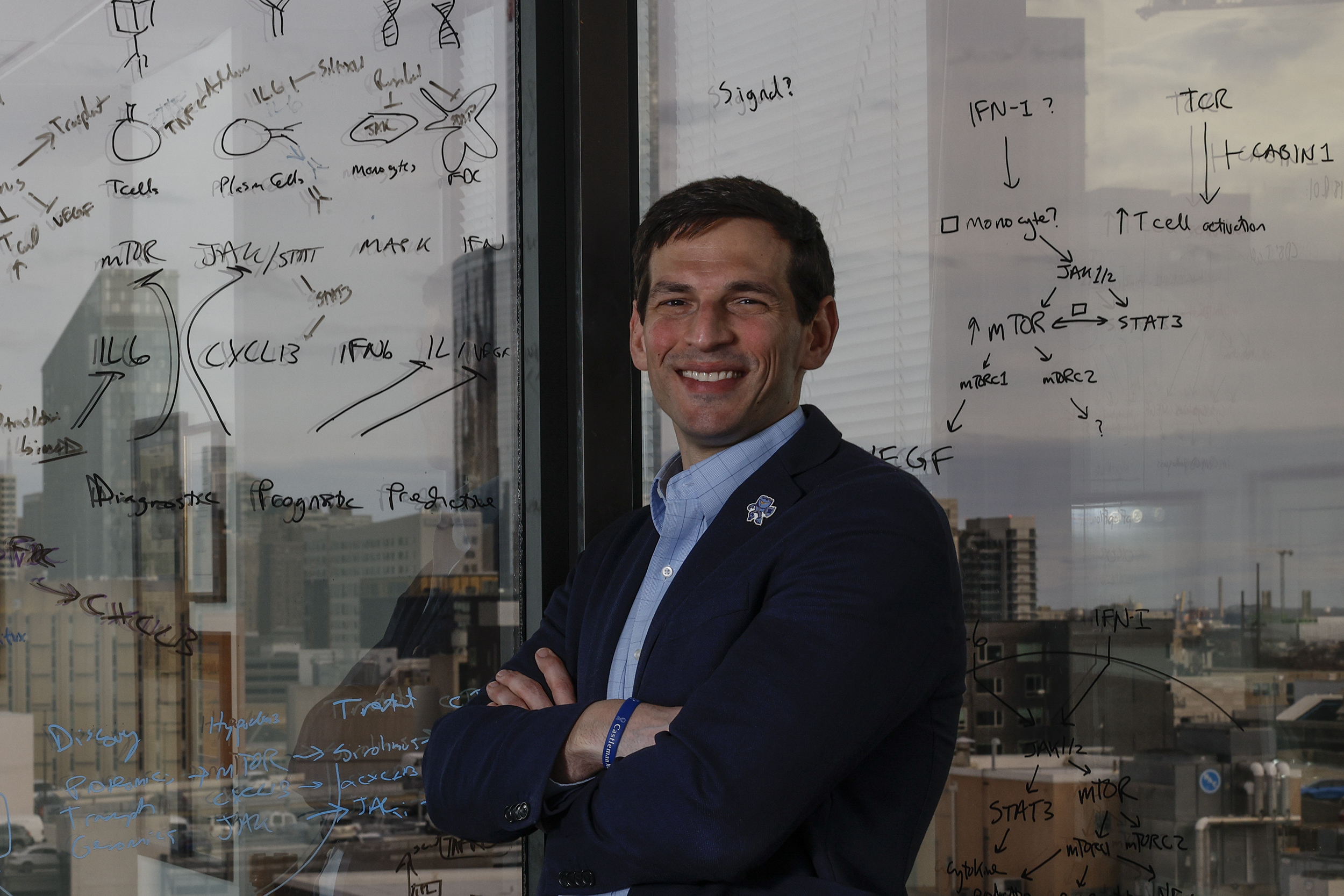
David Fajgenbaum was diagnosed with Castleman disease, a rare lymph node disorder with limited treatment options. When chemotherapy didn’t work, the third-year medical student worked with his doctors to discover that a medication approved for preventing organ rejection in transplant patients could help him, too.
Penn immunologist David Fajgenbaum received one of the nation’s oldest science prizes, the John Scott Award, this year for his pioneering work repurposing existing drugs for new uses.
He entered this field 15 years ago after a rare and deadly diagnosis of idiopathic multicentric Castleman disease nearly killed him. The disease had no approved treatment nor any treatment guidelines at the time.
Then a medical student at Penn, Fajgenbaum started collecting samples of his blood to test for abnormalities. The data helped him identify an existing drug called sirolimus — primarily given to organ transplant recipients — which has put him in remission for the last decade.
Now through his nonprofit Every Cure, Fajgenbaum has made it his mission to use AI technology to match available medications with rare, hard-to-treat diseases.
He published a case study in the New England Journal of Medicine in February, where his AI tool helped identify an off-label treatment for another patient with Castleman disease who, at the time, was entering hospice care after all available treatments had failed. As of that study’s publication, the patient has been in a yearslong remission.
4. Lilly Gateway Labs biotech incubator coming to Philly
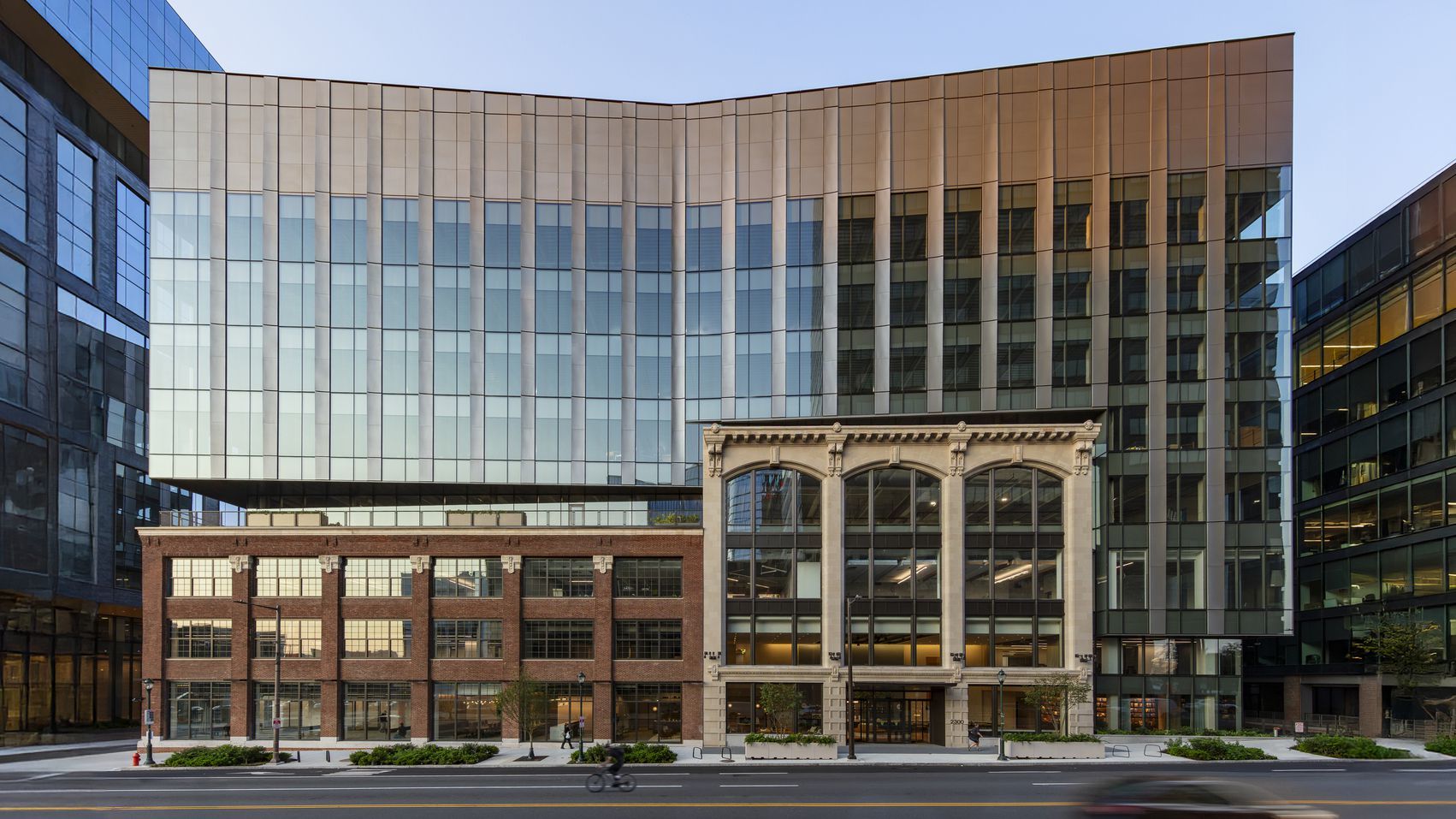
Eli Lilly is opening a branch of Lilly Gateway Labs, an incubator for developing biotech companies, in Philadelphia, the Indianapolis company announced Wednesday. The site, in a new life sciences building at 2300 Market St. in Philadelphia, is the fifth in the United States for the pharmaceutical giant.
Pharmaceutical giant Eli Lilly & Co announced in November its plans to open a Lilly Gateway Labs site — an incubator for early-stage biotech companies — in Center City.
The incubator, which will be Lilly’s fifth in the United States, will span 44,000 square feet on the first two levels of 2300 Market St. Since the program’s launch in 2019, companies at the other locations (in Boston, South San Francisco, and San Diego) have raised more than $3 billion from investors toward more than 50 therapeutic programs, according to Lilly.
Lilly plans to house six to eight companies at the Philadelphia location, with the goal of welcoming the first startups in the first quarter of 2026.
5. Carl June wins international honors for CAR-T research
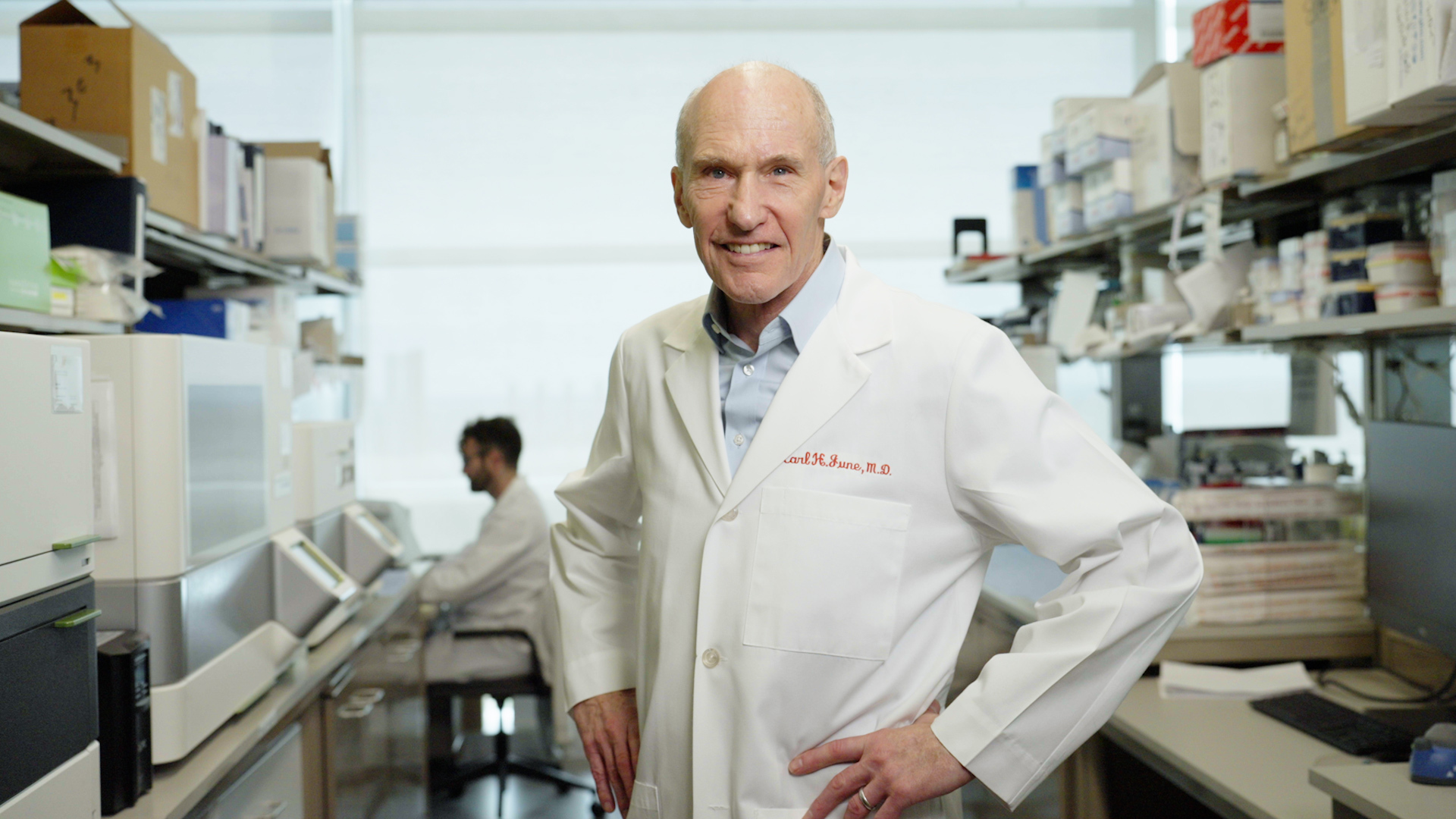
Carl June won international prizes for his cancer research at the University of Pennsylvania.
Penn cancer scientist Carl June added two more international prizes to his trophy case in September for his pioneering work engineering the body’s immune system to fight cancer.
June is known for developing the first FDA-approved CAR-T therapy, an immunotherapy in which regular immune cells are genetically modified to become cancer-killing super soldiers. It has revolutionized treatment for blood cancers, saving tens of thousands of lives since its first use in a 2010 clinical trial he co-led at Penn.
Though his past work is what won him the inaugural Broermann Medical Innovation Award and the 2025 Balzan Prize for Gene and Gene-Modified Cell Therapy this year, his lab has remained busy, working on ways to apply CAR-T to solid cancers, enhance the therapy for lymphoma, and even re-engineer cells inside the body.
June has also made moves on the biotech front: A company he co-founded with the purpose of applying CAR-T to autoimmune diseases, Capstan Therapeutics, was bought by AbbVie this summer for $2.1 billion.
The quiet removal of the 60 Minutes segment on the CECOT prison in El Salvador further erodes the credibility of both CBS News and Donald Trump. If there is nothing to hide — if the actions taken are defensible, lawful, and aligned with American values — then secrecy makes no sense. Transparency is not a threat to principled leadership; it is its proof.
CBS’s explanation that the story “was not ready” strains credulity. The piece had already undergone multiple reviews and revisions. Pulling it at the last moment suggests not editorial caution, but external pressure. When a respected news organization appears to yield to political influence, it compromises the very role a free press is meant to serve.
That role, notably, was upheld by Canada, which aired the segment in full. Americans have since circulated it widely across political lines. And in watching it, many of us — Republicans and Democrats alike — can agree on one fundamental point: Sending migrants, not terrorists, to third-country detention sites where abuse is likely or inevitable is not an American value. Suppressing that reality does not make it less true; it only makes the suppression more troubling.
President Trump’s actions in this matter are disgraceful. CBS’s acquiescence, if that is what occurred, is deeply disappointing. A free press is not measured by comfort or convenience, but by its willingness to report what those in power would prefer remain unseen.
Credit is due to the 60 Minutes journalists who continue to pursue rigorous, balanced reporting. An informed public is essential to democracy — and dangerous only to autocracy.
Karan E. Guyon,Kennett Square
Strategic gerrymandering
A Dec. 22 letter to the editor from Larry Senour acknowledged the justifiable criticism of the Republican Party for gerrymandering congressional districts to give candidates favored by Donald Trump an advantage, but decried the Democratic response of gerrymandering some blue states that should equally be called out, according to the letter writer. Unfortunately, these are not normal times, and we have the members of one corporate-dominated political party whose lack of concern for ordinary citizens allowed Donald Trump to take power, and another now-fascist party that must be stopped at all costs. Whataboutism does not apply here.
Bob Jantzen, retired professor, Radnor
. . .
Larry Senour’s recent letter purports to be “objective criticism,” but is either subjective, or Mr. Senour doesn’t understand the context when he criticizes early gerrymandering by Democrats. Customarily, any redistricting is done about every 10 years based on census results. Donald Trump implored the governors of Texas and other red states to redistrict early, in order to gain more Republican representation in Congress. Texas Gov. Greg Abbott did so almost immediately to assist in reducing the chance of Democrats becoming the majority party in the midterm elections and/or those of 2028.
The writer criticizes the efforts by blue states responding in kind, in an effort to level the playing field. Though Mr. Senour frames the issue as one of failed bipartisanship, unbiased readers would see the efforts of Democrats as justified. Mr. Senour failed to mention that Democrats’ efforts were a direct response to Texas’ prior efforts to unfairly alter the electorate in specific districts.
Harry Nydick, Maple Shade
Join the conversation: Send letters to letters@inquirer.com. Limit length to 150 words and include home address and day and evening phone number. Letters run in The Inquirer six days a week on the editorial pages and online.