Blog

  • The owners of Surfside, Philly’s homegrown canned cocktail heavyweight, are suing Anheuser-Busch

    The owners of Surfside, Philly’s homegrown canned cocktail heavyweight, are suing Anheuser-Busch

    It’s a bad day to be a vaguely beach-y can of vodka iced tea with a sun on it.

    Local vodka distiller Stateside Brands, best known for its top-selling Surfside hard iced teas and lemonades, is suing Anheuser-Busch InBev, alleging that the beverage conglomerate ripped off Surfside’s can design when creating Skimmers — a recently launched line of competing vodka-based hard teas and lemonades — according to a federal lawsuit filed in Philadelphia on Tuesday.

    The suit centers on “strikingly similar” packaging used by Surfside and Skimmers, which debuted in April. Both cans use the same central design elements to give off a vibe of causal debauchery, the lawsuit alleges, which could dupe consumers into believing that Skimmers is associated with Stateside.

    Stateside is seeking a permanent injunction that would force Anheuser-Busch to change Skimmers’ packaging. They are also suing for an unspecified amount of damages, including “any and all profits” that Anheuser-Busch has earned from selling cans of Skimmers. (For context, the spirit-based ready-to-drink cocktail market is valued at more than $2.7 billion, more than double its valuation in 2021.)

    “Anheuser-Busch could have selected from a vast universe of design elements to create a can that stood on its own,” the lawsuit states. “Instead, it opted to mimic Stateside and freeride off its popular and successful Surfside design, product, reputation and goodwill to gain an unfair marketplace boost.”

    Image included in complaint of a direct comparison between Stateside Brand’s Surfside hard teas and Anheuser-Busch’s recently launched Skimmers line.

    Stateside is represented in the suit by Center City law firm Reilly, McDevitt & Henrich.

    “Every element — from our design and packaging to the way we show up in the world — has been intentionally crafted to reflect who we are, our values and what we stand for,” a Stateside representative said in an emailed statement. “We are dedicated to … ensuring our brand and the trust our customers place in it remain clear, recognizable, and uniquely ours.”

    Anheuser-Busch “will vigorously defend” against the accusations, a spokesperson said over email. “We believe this lawsuit is without merit.”

    Copying Philly’s favorite canned cocktail

    Surfside is the canned cocktail-de-résistance for Stateside, a distillery cofounded in Kensington in 2013 by area natives Clement Pappas and Matthew Quigley and their brothers. The company initially specialized in “craft vodka” and later hard seltzers, but struck gold in 2021 when it launched Surfside, a 4.5% ABV, 100-calorie cocktail of vodka mixed with various teas (and later lemonades).

    In 2022, Stateside sold 200,000 cans of Surfside. In 2024, the company sold over 4.9 million cans, according to the lawsuit. This summer, Forbes hailed Surfside “the fastest growing alcohol brand in America” after Stateside said it was on track to sell 12 million cans this year alone.

    The sunshine-y cans are as prevalent nationwide as they are in Philly. Surfsides have been the best-selling spirit in Citizens Bank Park three years running, and the distiller entered a 15-year licensing deal to turn Xfinity Live! into Stateside Live! this fall.

    Surfside, the canned cocktail brand from Kensington-based vodka distiller Stateside Brands, has become a national player in the spirits-based RTD scene.

    Stateside’s lawsuit contends that Skimmers’ packaging borrows three elements to create an indistinguishable identity:

    • a gradient of different colors of bands covering the lower third of the can,
    • A white background overlaid by a sun and each brand’s name,
    • A rim color that pulls from the lower third’s color scheme.

    “Anheuser-Busch obtained a substantial unfair competitive advantage by forgoing the effort required to develop its own brand identity and is instead freeriding on Stateside’s significant investments of time and money,” the suit reads.

    Anheuser-Busch is one of the biggest brewers in the world, responsible for Budweiser and Bud Light and foreign brews, such as Stella Artois and Modelo. The company entered the canned cocktail market with Cutwater, a line of drinks with ABVs as high as 13%. At only 4.5% ABV, Skimmers is meant to be a chiller alternative.

    A hawker carries drinks, including Surfside canned cocktails, around Citizens Bank Park during a Philadelphia Phillies game in 2024. Surfside canned cocktails lead the stadium’s alcoholic drink sales.

    Does Stateside have a case?

    Yes, according to some legal experts.

    Anheuser-Busch “flew too close to the sun,” said Josh Gerben, a D.C-based (and Main Line-bred) trademark lawyer.

    “We live in a culture where dupes are everywhere, and normally it’s the smaller companies knocking off the big guys with a cheaper product. This is a big guy knocking off a smaller one.”

    This isn’t the first time Anheuser-Busch has been called out for jacking some beverage swag: Outdoor apparel brand Patagonia sued the beverage producer for copyright infringement in 2019 after it launched a beer called Patagonia and began selling it at ski lodges. Both parties settled out of court in 2021.

    Still, said Gerben, the lawsuit may not be a slam dunk for Stateside. The beverage upstart never filed a trademark to protect the Surfside product design, based on records from the United States Patent and Trademark Office.

    It’s common for some beverage companies to trademark the designs of their bottles, said Gerben. Jack Daniels has one for the distinctive square shape of its whiskey handles, while Maker’s Mark has one to protect its iconic drippy red wax seals.

    That level of granularity is typically reserved for more sophisticated companies, explained Gerben.

    “Surfside really only took off in 2022,” he said. “They were probably only focused on how to meet demand.”

  • Pew Charitable Trusts chief to step down

    Pew Charitable Trusts chief to step down

    The head of the Pew Charitable Trusts is stepping down.

    Susan K. Urahn, president and CEO, is expected to retire in early 2027 after a search for a successor is completed and the new leader has begun working at the organization, a Pew spokesperson said.

    Urahn, 72, began at Pew in 1994 and took the top job in 2020 following the retirement of longtime chief Rebecca W. Rimel.

    Neither Urahn nor board chair Christopher Jones were made available for interviews. But, in a statement posted on Pew’s website, Urahn said she was fortunate to work with colleagues and a board “all dedicated to finding common ground and using facts as the foundation for discussion and action.”

    “Under Sue’s leadership, Pew has become even better and stronger,” read a statement attributed to Jones.

    Pew — which has offices in Philadelphia, Washington, D.C., and other cities — is a combination foundation/think tank, conducting research and disbursing grants to nonprofit organizations.

    In Philadelphia, it awards money to arts groups through the Pew Center for Arts and Heritage. Its D. C-based Pew Research Center provides research on demographic trends and social issues, as well as polling on matters like politics, religion, climate change, and the role of technology in daily life.

    Pew’s work is funded through seven charitable trusts established between 1948 and 1979 by the children of Sun Oil Co. founder Joseph Newton Pew and his wife, Mary Anderson Pew. As of June 2024, the collective value of the trusts was $6.1 billion, a spokesperson said.

    In addition to funding Philadelphia arts groups and individual artists, Pew has sometimes taken a more activist role by partnering with other philanthropists on large civic projects costing tens of millions of dollars, such as the 2012 move by the Barnes Foundation from Merion to the Ben Franklin Parkway. In 2008, Pew contributed millions toward a bailout of the Kimmel Center that relieved it of debt left over from the arts center’s construction phase.

    In 2023, it announced the award of $4 million for Esperanza Health Center in North Philadelphia to expand services.

    Urahn, most recently based in D.C., worked her way through several posts — including director of Pew’s planning and evaluation division; director of the Pew Center on the States; and executive vice president for Pew’s work on state policy, economics and healthcare.

    A search for a new president is expected to begin in January.

  • William B. Starks, pastor emeritus at Community Baptist Church and Montford Point Marine, has died at 96

    William B. Starks, pastor emeritus at Community Baptist Church and Montford Point Marine, has died at 96

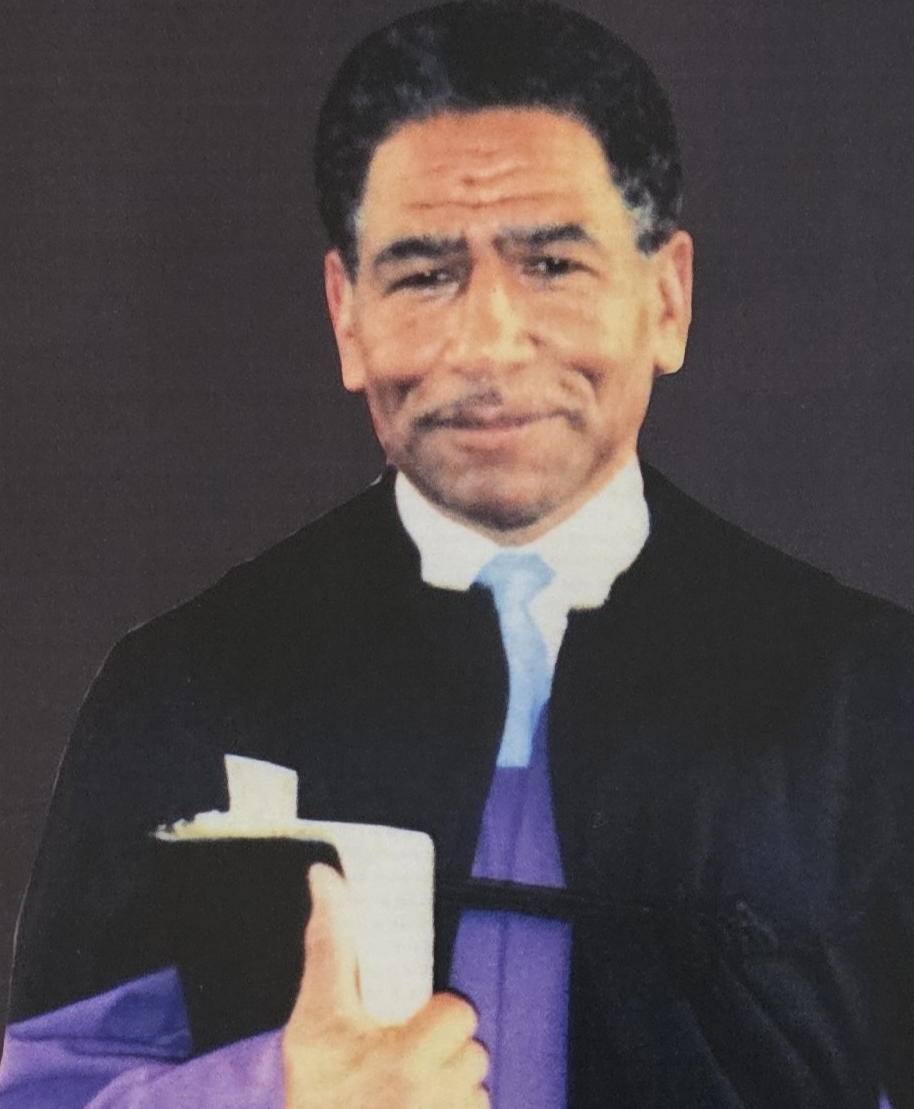
    William B. Starks, 96, of Philadelphia, pastor emeritus at Community Baptist Church in Chester, former associate pastor at Greater Ebenezer Baptist Church in Philadelphia, retired supervisor for the Philadelphia Parks and Recreation Department, Montford Point Marine, lifelong singer, and volunteer, died Saturday, Oct. 4, of age-associated decline at Germantown Home rehabilitation center.

    Born and reared in Nashville, Tenn., the Rev. Starks grew up singing in church every Sunday. So his wife and two daughters were not surprised that he was ordained in 1966, served 31 years as pastor at Community Baptist, and continued to sing in choirs and elsewhere for the rest of his life.

    He was energetic and empathetic, they said, and he became so effective as a spiritual and practical mentor in Chester that city and church officials dedicated part of West Seventh Street in his honor on June 1. They renamed a segment of the street as Rev. William B. Starks Way, installed a sign at Fulton and West Seventh Streets, and called it “a lasting tribute to his selfless service and deep impact on our community.”

    The Rev. Starks was recruited from Greater Ebenezer Baptist by Community Baptist in 1978 and commuted every Sunday, and sometimes three nights a week, from his home in West Oak Lane to the church in Chester. His family said he never missed a Sunday service.

    Rev. Starks ministered at Community Baptist Church in Chester from 1978 to 2009.

    “His love for the Word of God encouraged him,” his family said in a tribute.

    The Rev. Starks was direct and serious in the pulpit, and willing to “roll up his sleeves and fight your fight,” his daughter Rhonda said. He created a Presidents Council to better organize church affairs, celebrated when the church paid off the mortgage, and encouraged its use as a satellite location for the Manna Bible Institute.

    He invited women and young pastors to preach, and induced the Rev. Jesse Jackson, Gov. Ed Rendell, Rep. Robert Brady, and other notables to address his congregation. His outreach and ministry were recognized in awards and honors from the Four Chaplains Memorial Foundation and other church groups.

    In the community, he monitored schools and families for discord, and confronted street-corner problems he encountered. He spoke out often against violence, injustice, crime, and drug abuse.

    Rev. Starks (front center) is honored by the Philadelphia chapter of the National Montford Point Marine Association.

    “He truly believed in the church being involved spiritually, socially, and politically,” his family said. “He truly had a heart for the people.” Earlier, he attended Tenth Memorial Baptist Church and studied theology at what is now Cairn University in Langhorne.

    The Rev. Starks worked at Philco and Whitman’s Chocolates in Philadelphia after he left the Marines in 1952. He spent 25 years with the Philadelphia Parks and Recreation Department, earned service commendations from the Fairmount Park Commission, and left when he became pastor at Community Baptist. He retired from the church in 2009.

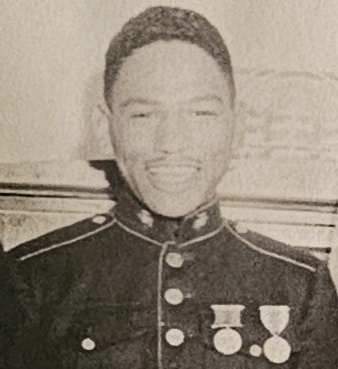
    He enlisted in the Marines after high school in 1948 and became one of the celebrated Montford Point Marines in North Carolina. He spent four years in the Corps, sang with the Marine choir, rose to corporal, and was transferred to Philadelphia. He never left.

    In 2012, he and other Montford Point Marines were awarded the Congressional Gold Medal for enduring racism, segregation, and discrimination during their military tours and still serving with honor and distinction.

    Rev. Starks joined the Marines in 1948.

    His mother’s cousin was a church pianist and singer, and she regularly took him along to sing at church in Nashville when he was young. Later, he took music classes in high school and studied voice with professor John W. Work III at nearby Fisk University.

    In retirement, he volunteered at Eleanor C. Emlen Elementary School and elsewhere in the community. “He was very humble, generous, loving, and caring,” his daughter Rhonda said.

    William Barton Starks was born Nov. 2, 1928. He grew up with two brothers, and it was obvious early that his singing voice was exceptional.

    He met fellow singer Inez Baldwin at a recital, and they married in 1951. They had daughters Cheryl and Rhonda, and lived in North Philadelphia and West Oak Lane.

    Rev. Starks (fifth from right) “would give you anything,” his daughter Cheryl said.

    The Rev. Starks and his wife enjoyed annual summer cruises to the Bahamas. He was known as Big Daddy, his family said, “because he was like a father to so many people.” His wife died in 2016.

    “He meant the world to me,” said his daughter Cheryl. “He would give you anything.”

    His daughter Rhonda said: “He always told us he would do anything and everything for his family, and he did.”

    In addition to his daughters, the Rev. Starks is survived by four grandchildren, five great-grandchildren, and other relatives. His brothers died earlier.

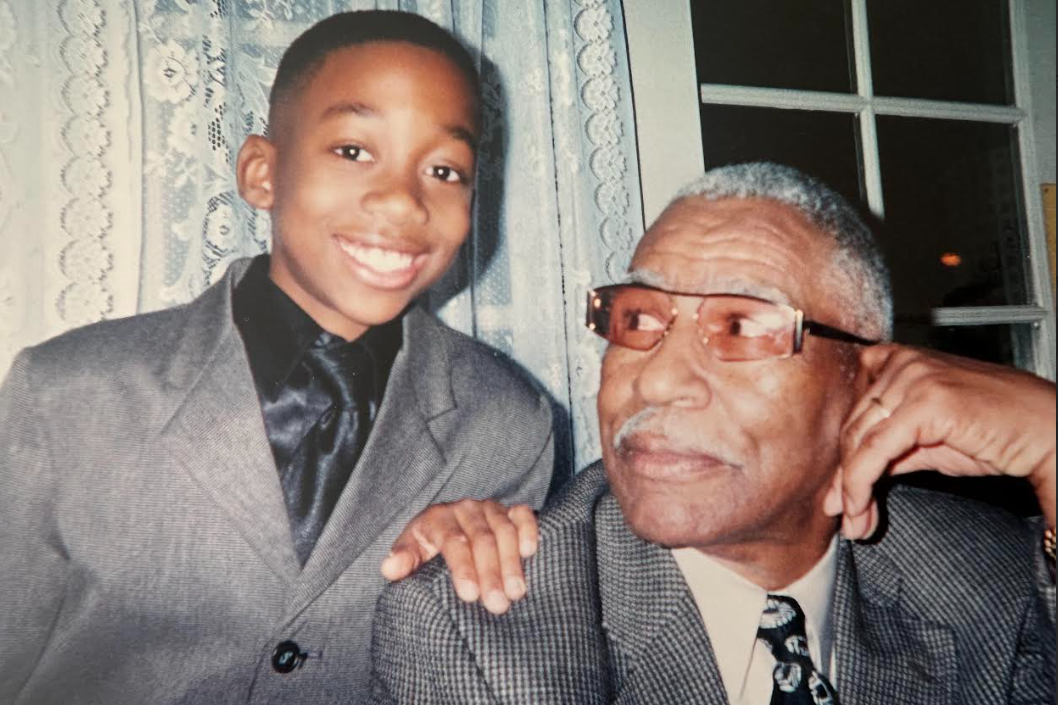
    Rev. Starks (right) doted on his daughters and grandchildren.

    Services were held on Oct. 17 and 18. Interment was Oct. 23 at Washington Crossing National Cemetery.

    Donations in his name may be made to the Scholarship Initiative of the Philadelphia chapter of the National Montford Point Marine Association, 27 Red Tail Court, Limerick, Pa. 19468.

  • Jersey Kebab is moving to downtown Collingswood

    Jersey Kebab is moving to downtown Collingswood

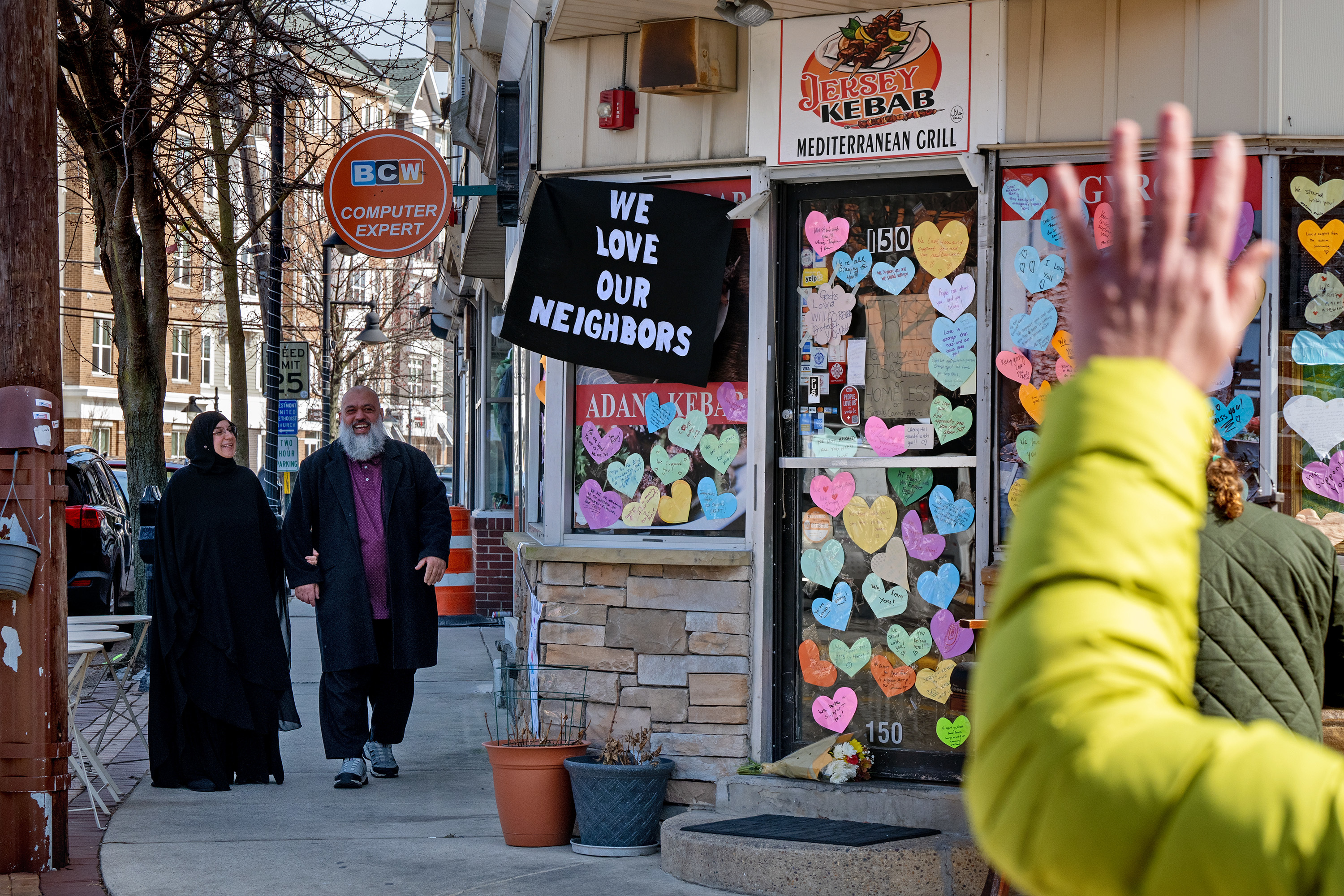
    Jersey Kebab — the Haddon Township restaurant that made headlines earlier this year after its owners were arrested, and eventually released, by ICE — is moving.

    On Sunday, Muhammed Emanet and his parents, Celal and Emine, will close their small Turkish restaurant, where colorful sweets line the display case up front and platters of kebabs sizzle in the back. It’s the second time this year the business has shuttered.

    This time, the restaurant will relocate just a mile down the street, to 729 Haddon Ave., in Collingswood. The family hopes to reopen by the second week of November.

    The Emanet family hadn’t planned to relocate until recently, after their lease expired on their current space at 150 Haddon Ave.

    According to Muhammed, the Emanets’ landlord informed the family he was not interested in renewing the contract at the end of their five-year lease in August. The landlord suggested using his apartment upstairs to expand the restaurant — if the family agreed to a 50/50 split in the business, Muhammed told The Inquirer.

    The Emanets’ landlord could not immediately be reached for comment.

    “As soon as [the landlord] said that, it sent us into a frenzy where we had to hurry up and figure out where we’re going to move to,” Muhammed said. The family paid to use the Haddon Avenue storefront for two more months and began looking for a new space elsewhere.

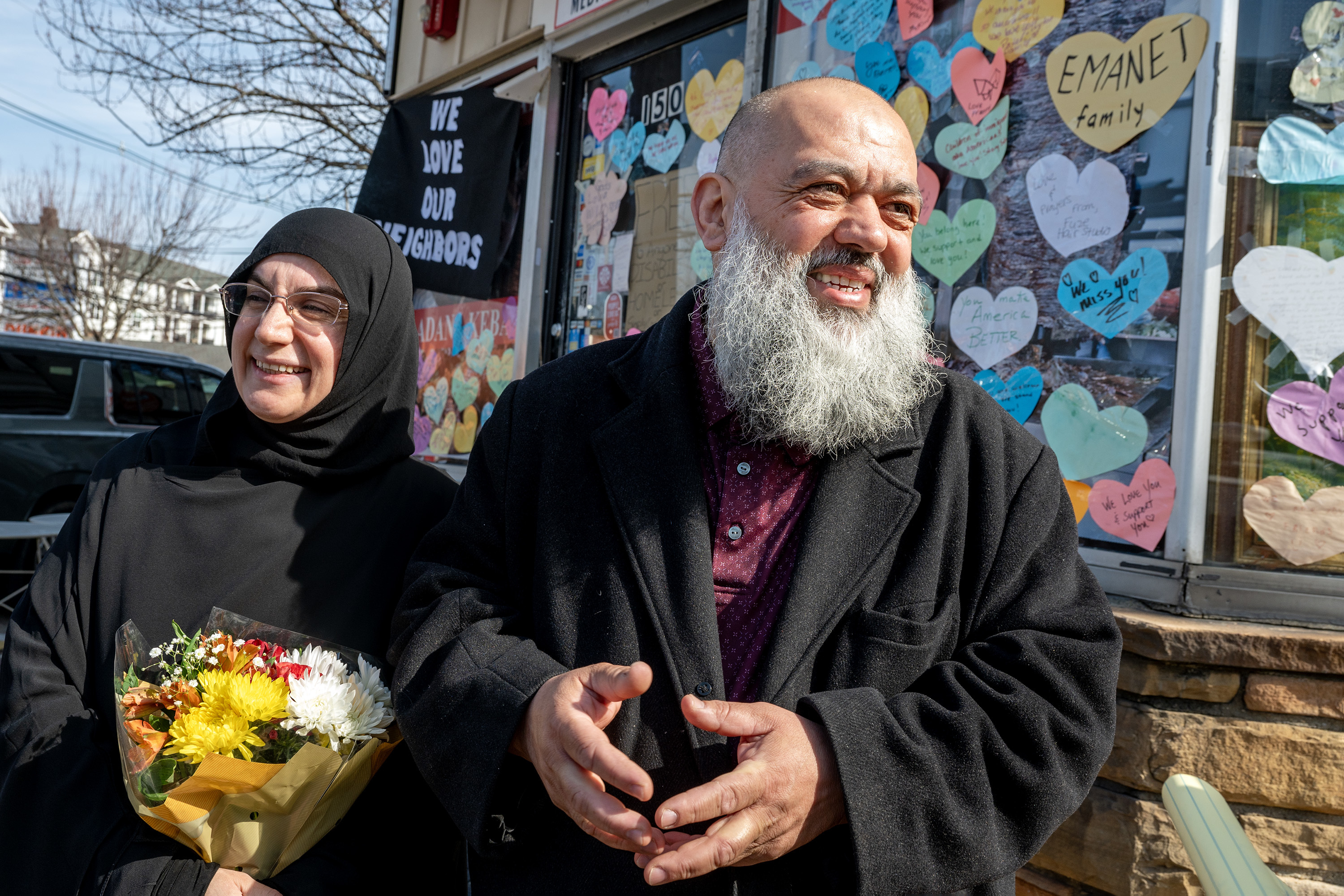
    Emine and Celal Emanet at their Jersey Kebab in Haddon Township in March, after Emine’s release from ICE detention.

    Muhammed and his father, Celal, supplement their earnings from Jersey Kebab by running a delivery business that transports Del Buono’s Bakery’s bread to other South Jersey diners and restaurants, including Stardust Cafe, the current occupant of 729 Haddon Ave.

    Stardust’s owners, Jerry Goksun and Jennifer Vincent, recently transformed the long-lived, retro-themed Pop Shop diner into a more modern all-day eatery. The couple opened the restaurant in July, but upon hearing that the Emanets were searching for a new home for Jersey Kebab, offered the space on Collingswood’s main shopping street. (Goksun and Vincent did not immediately respond to The Inquirer’s request for comment.)

    The Emanet family plans to move into the restaurant as is, adding Turkish decor and music to replicate the ambiance of their former space. The restaurant’s menu will expand beyond platters of iskender, adana, and shish kebabs. New items planned include a traditional Turkish breakfast spread (think homemade jams, cheeses, bread, and omelets) and Turkish ice cream made with goat’s milk.

    Muhammed Emanet (rear) greets patrons as his mother, Emine Emanet ,(fourth from left) and family and friends serve serve food inside their Jersey Kebab restaurant on Sunday, March 30, 2025. The party – part welcome home, part thank you, part end of Ramadan – was to thank their neighbors who helped them through the terror of ICE arrests and detention.

    Celal and Emine Emanet were detained by ICE in February, forcing the restaurant to close. The couple emigrated legally to the United States from Turkey in 2008 but fell out of status when their visas expired. In 2016, they applied for legal permanent residency and have been awaiting the government’s decision on their application since.

    Celal was released a few days after his initial arrest, but Emine was held in an immigrant detention center in Elizabeth, N.J., for a little over two weeks. The South Jersey community lobbied for her release, writing letters, holding rallies, and raising funds. Emine was released in mid-March, and when the restaurant reopened later that month, it was flooded with well-wishers and neighbors.

    The couple has been navigating deportation proceedings since March. Celal’s first deportation hearing took place in May, with another set for March 2026. Emine’s first hearing was scheduled for this month but was recently postponed to 2027.

    Emine and Celal Emanet at their Jersey Kebab restaurant on March 13, 2025, the day after Emine’s release from ICE detention.

    Given their situation, Muhammed’s parents have not had time to process the change in their business, he said.

    “They aren’t even really thinking about it — they’re just pushing through it,“ Muhammed said. ”My mom is trying to see how she’s gonna decorate the entire place. My dad is trying to get all the paperwork done. I’m trying to get all the people hired and the management worked on. So, everybody just locked in.“

    Despite the challenges, what keeps the Emanet family going is being “God-believing, God-fearing people,” Muhammed said. “It doesn’t really matter what we go through — we know our faith is going to lead us exactly where we need to be anyway.”

    And Haddon Avenue is a prime location for the restaurant’s loyal clientele, he said. “Jersey Kebab in Collingswood is a big turning point for us, for our name and legacy to grow.”

  • A Delco man trolled a Philly Mag writer on Facebook. Now, a judge has ordered him to pay $160,000.

    A Delco man trolled a Philly Mag writer on Facebook. Now, a judge has ordered him to pay $160,000.

    A Philadelphia judge ordered a Delaware County man to pay Philadelphia Magazine senior reporter Victor Fiorillo $160,000 over a series of Facebook comments falsely labeling the journalist a pedophile.

    In an order issued Tuesday, Common Pleas Court Judge Vincent Johnson awarded Fiorillo $35,000 in compensatory damages and $125,000 in punitive damages. The ruling follows a hearing at which the defendant, Ryan Nelson, did not show up.

    “It feels great,” Fiorillo said. “Part of what I said at the beginning is that I would like to support some LGBTQ causes that the defendant very much would dislike his money going to, and I intend to pursue the matter.”

    The libelous comments by Nelson were aimed at Fiorillo not for his journalism, but for his off-the-clock performances as a keyboard player for a band led by drag queen Martha Graham Cracker.

    Nelson never responded to the lawsuit, which was filed in April, and no attorney is listed for him on the court docket. James Beasley, the journalist’s lawyer, did receive a threatening email in June from a person identifying as “RN” that included an expletive aimed at Fiorillo in the subject line.

    “Tell him to unblock me and stop hiding behind facebook,” said the message, which was presented to the judge. “If not i guess i can go to his house and ask him.”

    That email is no longer active, and The Inquirer was unable to reach Nelson through publicly available contact information.

    The focus of the complaint was a series of comments Nelson made in response to a January post by Fiorillo in the Citizens of Delco public Facebook group, in which the reporter shared his article about a racial discrimination lawsuit against a country club restaurant.

    “The only person to agree with you likes seeing dudes in dresses dance with kids,” Nelson wrote.

    Fiorillo asked if the suggestion was that he was a pedophile because he performs with a drag queen.

    “Yes victoria, corruption of a minor. Same as pedophile,” Nelson wrote, adding, “or do you prefer groomer.”

    In another comment, Nelson said he’d “bet” that if a drag queen molested children, Victor would “prob write how the kids are homophobic.”

    The lawsuit said others on the Facebook group had read Nelson’s comments, and provided an example of another person repeating them.

    “There is nothing in the First Amendment that says you can call me a pedophile and a child molester,” Fiorillo previously told The Inquirer.

    Fiorillo was the only witness at the Oct. 8 hearing. Johnson interrupted the lawyer’s line of questioning to ask questions of his own, the reporter said. The judge asked over and over how many times Nelson made the comments.

    The Philly Mag writer recalled thinking from the stand that the hearing was not going in his favor, but felt a great sense of moral victory when the judge issued his decision.

    He said he hopes the ruling sends a message to all the “keyboard warriors out there, in their mother’s basement.”

    “That’s a very big part of why I went down this road to begin with. Part of defending free speech is standing against things that aren’t covered by that.”

  • From autism to beards, the Trump regime wages war on ‘the different’

    From autism to beards, the Trump regime wages war on ‘the different’

    Donald Trump had the nation’s somber attention last month as he delivered the Arizona football stadium eulogy for assassinated right-wing provocateur Charlie Kirk, and — as the 47th president is wont to do — took an unexpected detour to promise a scientific breakthrough for a condition his regime has called a national tragedy.

    “I think you’re going to find it to be amazing,” Trump said of a pending White House announcement. “I think we found an answer to autism.” With typical bravado, he suggested that a total end to a neurodevelopment order was at hand, that “we’re not going to let it happen anymore.”

    What was actually announced in the coming days — a debunked claim that autism is linked to pregnant women taking the pain reliever Tylenol, as well as a suggestion of a connection to circumcisionwas attacked by many experts as a gross misreading of the existing scientific data, and nothing like the breakthrough that Trump had promised in Glendale.

    But what was even more telling was the reaction from families or adults who’ve been living for years with a diagnosis of neurodivergence, who aren’t realistically asking for a “cure” — especially not one cloaked in alleged quackery — but simply a more compassionate approach from a government they feel is stigmatizing a community that wants support.

    They don’t see life on the autism spectrum — a mix of communication and emotional struggles with passionate interests and insight, varying greatly from person to person — as a disease, but as a difference, to be better understood and nurtured.

    In this photo provided by Ana Fiero, Kelly Sue Milano holds her 6-year-old son, who is on the autism spectrum, at an outdoor party in Irvine, Calif., on Monday.

    “My daughter’s an amazing person that contributes to society and contributes to our family, and she’s not a crisis,” Jenny Shank of St. Louis told the local NPR affiliate. She said that what the autism community really needs from the government “is awareness, acceptance and opportunities in our communities, and funding for schools for help to meet their maximum potential.”

    Studies have shown higher rates of autism — more than 3% of 8-year-olds, according to recent research by the Centers for Disease Control and Prevention — than was once believed. But experts theorize this may be more from greater awareness than the conspiracy theories around Tylenol or vaccines that are an obsession with Trump’s contrarian U.S. Department of Health and Human Services secretary, Robert F. Kennedy Jr.

    RFK Jr. has said that “autism destroys families,” while Trump has called it “a horrible, horrible crisis,” but statements like those have deeply dismayed many of the households for which the Trump regime seems to want a gold star for trying to help. Ashley Kline, whose 5-year-old son has been diagnosed with autism, told the Washington Post, “I don’t want it to get to a point where inclusion is just thrown out the window, and people start insisting that the best thing for autistic children and adults is to be hidden behind walls once again.”

    The Trump regime’s misguided obsession with faulty research in seeking a magic bullet “cure” for autism has been portrayed as one more example of science under siege in America, and it is that. But it’s also a window into something deeper, and arguably even more disturbing.

    Whether it’s an autism community it pretends to be helping or the transgender community it openly seeks to destroy, our authoritarian government is waging war to flatten any differences, to make America great again with a forced monochrome lens.

    Protesters for and against gender-affirming care for transgender minors demonstrate outside the U.S. Supreme Court Building in December.

    You see it almost every day with Trump and his MAGA administration. Often it’s big and obvious, like the president’s Day One executive order that targeted America’s nearly three million transgender people by declaring the government would only recognize two unchangeable sexes, male and female, and end any policies that aided the transgender community.

    But Trump’s war on the different also permeates the smaller stuff, like his “Secretary of War” Pete Hegseth’s much-ballyhooed and much-ridiculed “warrior ethos” lecture to 800 appalled-looking generals and admirals. Hegseth included in his vision a mandate that would ban soldiers with facial hair, declaring “no beardos,” and adding, “The age of rampant and ridiculous shaving profiles is done.”

    Hegseth also declared an end to “fat” generals and overweight troops (apparently the Texas National Guard didn’t get the memo), and, OK, maybe that’s required for certain types of combat soldiers. But the broader message from the Pentagon is clear: that the new regime wants a sea of troops who look alike. Beardless, slimmed down, and, evidently — given the ouster of so many women and Black top commanders — as white and male as possible in 2025 America.

    I think we vastly underrate how central this contempt for anyone who looks or acts differently from an idealized pre-1960 vision of America is to the entire fascist enterprise that we have too kindly branded “Trumpism.”

    The idea of a new type of personal freedom — a quest for individual fulfillment, aided by post-World War II prosperity, shattering the artificial constraints of conformity — was birthed in a New Left philosophy spelled out in texts like 1962’s “Port Huron Statement.”

    This outlook, rooted in the upheavals of the 1960s and ‘70s, is celebrated by many as the birth of everything from the LGBTQ+ rights movement, to efforts to replace stigma with empathy and treatment for conditions such as mental illness, to “letting your freak flag fly” by growing long hair or a beard. And this is also the thing that a reactionary far-right — deeply insecure and desperate for a cocoon of white privileged patriarchy — has ceaselessly sought to destroy for 60 years.

    While Trump himself has relished one aspect of 1960s freedom — the sexual revolution, as he once called the threat of STDs “my personal Vietnam” — in his political reinvention, he has recoiled at many others, wanting even a return to the Willowbrook-style warehousing of the mentally ill. As president, he is the perfect point man for the right’s revanchist project — clearly believing in the worst kinds of debunked eugenics theory.

    A classic example occurred the other day in the Oval Office with a rant that belonged to 1925’s The Great Gatsby and its racist millionaire Tom Buchanan, and not 100 years later. Trump bemoaned his bad relationship with Boston’s Asian American mayor, Michelle Wu, despite her “reasonable IQ,” in contrast with his war with Chicago’s “low IQ” leader, Brandon Johnson. The Windy City mayor happens to be Black, just like almost every other figure — like Reps. Maxine Waters or Jasmine Crockett — branded “low IQ” in the most thinly disguised racism possible.

    Trump’s 21st-century eugenics — from ending diversity programs in colleges or the workplace to the obsession with finding the pill or shot or whatever that has made some kids “not normal” — is the unifying force of his dictatorship. It’s why what was sold to 2024’s voters as an effort to remove undocumented criminals from America turned out to be members of a masked secret police force chasing hardworking family men across the Home Depot parking lot because they have brown skin or speak Spanish.

    You know. Different.

    True, Trump’s rage toward immigrants or programs aimed to recruit more Black and brown kids into colleges was no secret, but what’s been more surprising has been the broader sense of hostility toward any government program that offers aid and empathy to those born with real challenges. Few predicted that Trump would seek to decimate the special education office in the U.S. Department of Education, or work more broadly to undermine the rights of the disabled.

    You may have noticed that some of these slashed federal programs would help children diagnosed with autism. But putting these children on a path toward happier and more fulfilling lives isn’t the goal of the Trump-RFK Jr. focus on autism, but rather making sure the next generation conforms to their constricted definition of normal.

    We need to understand Trump’s war on the different because we need to defeat it. Boomers of my generation were born into the world of stigmatization and conformity that Trump wants to bring back, erasing the liberation movements that have been the victory of our lifetime. Sure, I want the next president to care about affordable healthcare and lowering egg prices, but America also needs leaders who will celebrate and defend our fundamental human right simply to be different.

  • Carousel House will be Philly’s ‘flagship’ rec center. But people with disabilities will have to wait until 2028 to reunite.

    Carousel House will be Philly’s ‘flagship’ rec center. But people with disabilities will have to wait until 2028 to reunite.

    In March 2023, Kathryn Ott Lovell, then Philadelphia’s parks and recreation commissioner, announced that the plan to build a new Carousel House in West Philly was finally coming together.

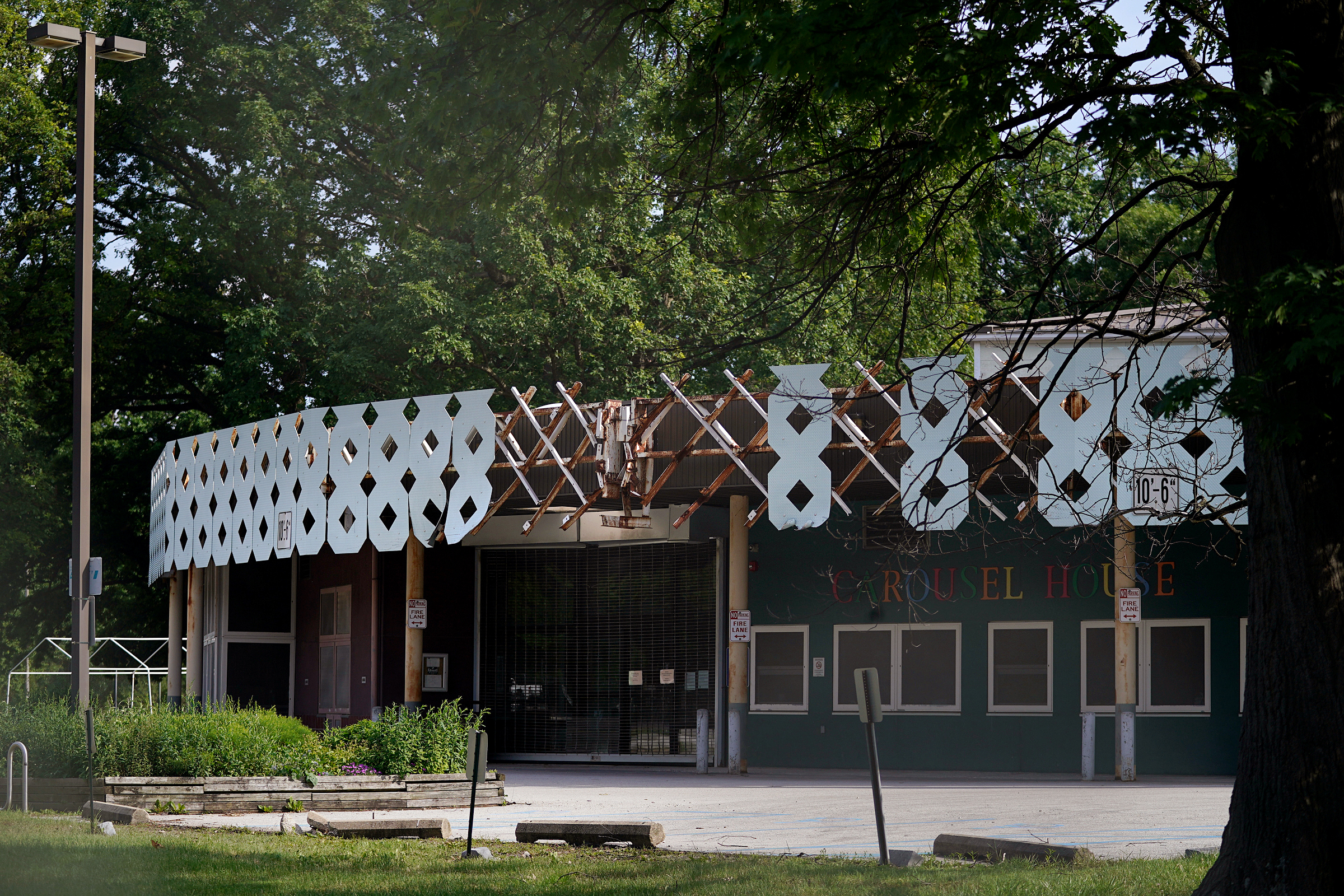
    The city’s only recreation center dedicated to people with disabilities had closed its doors temporarily in 2020 during the coronavirus pandemic, then permanently in 2021. City officials said years of deferred maintenance had made it unsafe.

    “I’m excited to stop talking and start doing,” Ott Lovell said during the 2023 presentation at the Please Touch Museum.

    The city’s disability community was also excited to reunite at Carousel House. To many, the rec center on Belmont Avenue had become like a second home, with dances, movies, swimming, arts and crafts, and summer camp.

    The city’s youth wheelchair basketball team was looking forward to returning to its home base. Since the rec center closed, the squad has been practicing in New Jersey.

    Two and a half years later, however, Ott Lovell has moved on to a new job, Mayor Cherelle L. Parker has replaced Jim Kenney, and the Carousel House plan is still in the design phase.

    The new ribbon-cutting date: summer 2028.

    “I know this is a point of pain for many people, the timeline associated with this project,” Aparna Palantino, a deputy city managing director, acknowledged at a meeting Tuesday night announcing the “relaunch” of the project.

    The previous plan called for Carousel House to reopen this year.

    Palantino, who heads the city’s capital program office, said the expected cost of the project had risen from $35 million to $40 million. The work will still be funded primarily with beverage-tax proceeds, but the city had to line up grants to cover the difference, as well as conduct additional environmental and structural analyses.

    “The result of all that is this amazing space that will provide so many more opportunities than the former one did,” Palantino told an audience of several dozen.

    Aparna Palantino, deputy managing director of Capital Program Office, speaks with attendees during the Carousel House Rebuild Community Relaunch at the Please Touch Museum on Tuesday, Oct. 21, 2025, in Philadelphia. The Carousel House project is estimated to be completed in Summer 2028.

    The state-of-the-art rec center will preserve some parts of the iconic Carousel House building and include two basketball courts, a heated lap pool and an activity pool with a zero-entry sloping entrance, a computer lab, a gym, a sensory room, and other amenities.

    That all sounds great to people like Mike Martin, who has used a wheelchair for the last 30 years and has been going to Carousel House since the late 1990s. Such a place is needed in Philadelphia, where an estimated 17% of residents have a disability.

    But the lengthy delays in the project have Martin, 74, questioning whether he will ever see the vision become a reality.

    Martin and others would have preferred for the city to fix the existing building four years ago, when rec centers were reopening after the COVID-19 shutdown. A 2021 “Save the Carousel House” protest failed to sway city leaders.

    “The design is way more than I think we expected, not that we’re complaining at all,” said Martin, who serves on the Carousel House advisory committee. “We’ll see what kind of political will there is to push this through. I just don’t want to get my hopes up is what it comes down to.”

    Once a model

    Carousel House was considered a milestone when it opened in 1987: a city-funded rec center, specifically for people with physical and cognitive limitations, three years before the Americans with Disabilities Act would be signed into law.

    The Carousel House is pictured in Philadelphia’s West Fairmount Park on Wednesday, June 2, 2021. The city said it was permanently closing the recreation center for disabled people due to the facility’s deterioration.

    But in recent years, disability-rights advocates, both locally and nationally, have come to view that approach as outdated and even discriminatory. How is telling people with disabilities to go to one center, they ask, any different from designating centers for Black people, LGBTQ+ people, or other identity groups?

    “People with disabilities shouldn’t have to go to one place. That’s segregation, no matter how you look at it,” Fran Fulton, the late Philadelphia disability-rights activist, told The Inquirer in 2022. “There is no doubt having people who know how to work with children and adults with different types of disabilities is an advantage. But it doesn’t have to be just Carousel House.”

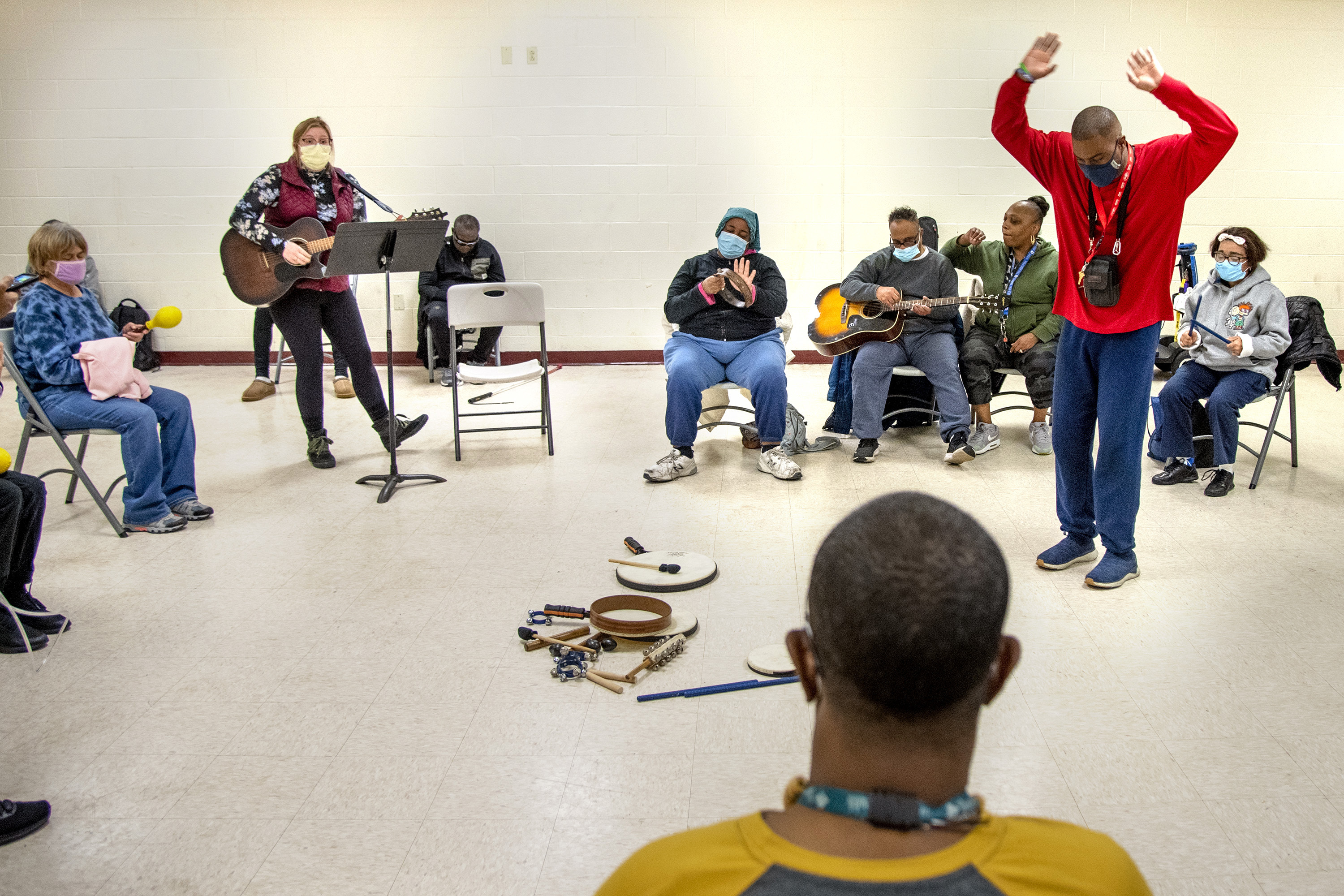
    Sadiki Smith (right) stands to dance as music therapist Madison Frank (left) with her guitar leads a music therapy session at Gustine Recreation Center Tuesday, November 29, 2022. Since the closing of the Carousel House, the city’s only rec center for people with physical and intellectual disabilities, many of the programs have moved to Gustine.

    The city was already moving in that direction before the pandemic with its long-term Rec for All inclusion plan. The goal is to eventually make the city’s 150 rec centers accessible to all residents. The new Carousel House will be open to all people in the surrounding neighborhoods, not just those with disabilities.

    That is welcome news for Lucinda Hudson, president of the Parkside Association of Philadelphia, who attended Tuesday’s meeting.

    “It’s well needed, and I think the community is pleased with how it’s coming together,” Hudson said. “We need a facility to be inclusive for all, and to support the handicapped community.”

    Worth the wait?

    Palantino said that while the Carousel House project has faced significant delays, city officials have continued to work behind the scenes. It is the largest project in the city’s beverage-tax funded Rebuild program, which has so far committed or spent $470 million.

    She believes the new building will be worth the wait.

    “It will be a universal space, so an entire family can come here and enjoy the amenities. The former Carousel House was a little more restrictive in the population it served,” Palantino said in an interview. “This will be the flagship rec center in the city when it’s completed.”

    Attendees look at blueprints during the Carousel House Rebuild Community Relaunch at the Please Touch Museum on Oct. 21.

    Families that frequented the Carousel House, however, are running out of patience.

    The Gustine Recreation Center in East Falls has continued some of the programs for people with disabilities, including music therapy, basketball, and social groups. But that center doesn’t have the space and amenities that Carousel House provided.

    “It’s just not the same,” said Tamar Riley, whose 43-year-old son had been going to Carousel House since he was 12.

    “Hopefully we can get this off the ground,” Riley, president of the advisory council for Carousel House, said of the plans presented this week. “It’s been a really long time. I know it’s going to be a beautiful place once the city gets it up and running.”

    The closure of Carousel House also forced Katie’s Komets, Philadelphia’s team in the National Wheelchair Basketball Association, to move its weekly practices to RiverWinds Community Center in West Deptford, Gloucester County.

    As a result, there is only one Philly player on the team, according to Joe Kirlin, who with his wife, Roseann, created a fund to support the team. The team is named after their late daughter.

    “The problem is city kids just can’t get over there,” Joe Kirlin said.

    Caroline Fitzpatrick (right), 14, of South Jersey, talks with friends during the Philadelphia Parks & Recreation’s 24th Annual Katie Kirlin Junior Wheelchair Basketball Tournament in Philadelphia on Sunday, Jan. 23, 2022. Fitzpatrick plays on Katie’s Komets team from Philadelphia.

    He said wheelchair athletes in the city are missing out on potential college opportunities. This year, all three high school graduates on Katie’s Komets received scholarships to play college wheelchair basketball.

    “That wouldn’t have happened if they didn’t start as kids playing wheelchair basketball,” Roseann Kirlin said.

    Lorraine Gomez, a community activist and president of the Viola Street Residents Association in East Parkside, said after Tuesday’s meeting that she appreciated the city’s efforts to keep the surrounding neighborhoods informed about the project.

    Gomez is looking forward to being able to use the indoor pool and walking track in the winter, and said people with disabilities also deserve “to have their space back.”

    “This is what the community needs,” Gomez said. “It’ll be a place where we can stay in touch with each other.”

    For Hudson, of the Parkside association, the most important thing now is to break ground.

    “So many things get put on the books, but don’t happen,” Hudson said. “This has got to be built.”

  • Frost advisories are posted as Philly has its chilliest spell in six months

    Frost advisories are posted as Philly has its chilliest spell in six months

    Frost advisories are up for Friday morning for areas just outside Philadelphia on both sides of the Delaware River as the region is about to experience its chilliest spell in more than six months.

    While the urban hotplate areas of Philly and Delaware County were not included in the National Weather Service advisory zones, cooler areas of the city and Delco could see some patchy white.

    “It is certainly possible,” said Zachary Cooper, a meteorologist at the agency’s Mount Holly office.

    Conditions conducive to frost — relatively clear skies, temperatures in the 30s, and light winds — may whiten the pumpkins in the region through the weekend.

    As per standard procedure, the weather service will be issuing frost advisories until the end of the growing season, defined as the first time temperatures reach 32 degrees or lower in a given area.

    It won’t be freezing, just frosty

    Philly’s first freezing reading typically doesn’t occur until mid-November, but frost can form with temperatures above 32.

    The air temperatures are measured about six feet off the ground, but they can be several degrees lower on the ground and on cooler surfaces.

    When winds are calm, they keep the air from mixing, and that allows thin layers of colder air to develop at ground level.

    The winds won’t be completely calm Friday morning, but “they should be light enough for favorable” frost conditions, the weather service said.

    The dry spell in the Philly region continues

    Temperatures should be several degrees below normal into next week, with highs mostly in the 50s and lows 35 to 40 degrees, the weather service says.

    Notably absent from the extended outlook is precipitation. Officially, at Philadelphia International Airport, only 0.81 inches of rain have fallen this month. That’s less than a third of normal.

    Most of the region is in “moderate drought,” and remaining areas are “abnormally dry,” according to the U.S. Drought Monitor’s Thursday update.

    That could change the middle of next week, as computer models have been hinting at an active pattern.

    However, this should be a splendid weekend to get out and enjoy the burgeoning foliage show.

  • Giants prepare Jaxson Dart for playing in Philly: ‘He’s about to get introduced to all [of his haters]’

    Giants prepare Jaxson Dart for playing in Philly: ‘He’s about to get introduced to all [of his haters]’

    Rookie quarterback Jaxson Dart has quickly become a fan favorite in New York, leading the Giants to a 34-17 win over the Eagles in Week 6 and flashing potential for the future.

    But he will get his first experience with the environment in Philadelphia on Sunday. Here’s what the Giants are saying about their second matchup in three weeks with the Birds:

    ‘It’s going to be intense’

    Dart and the Giants are 2-1 at home, including that win over the Eagles, but haven’t won a road game this season (0-4).

    Lincoln Financial Field is one of the toughest stadiums for a road team to play at in the NFL — especially for division rivals.

    “It’s going to be intense, for sure,” said Dart, a first-round pick out of Mississippi. “I can’t wait to go out there and compete and feel the hostility in the air and the rivalry between the two organizations. I kind of compare it to an SEC rivalry.”

    Former Ole Miss quarterback Jaxson Dart is anticipating the environment at Lincoln Financial Field being similar to an SEC rivalry game.

    ‘Stick close to your brothers’

    Dart’s teammates are trying to prepare him for the environment at the Linc. Eagles fans certainly will be out to give Dart and fellow rookie Cam Skattebo a warm Philly welcome.

    “I mean, if he didn’t have any haters, he’ll find out where they all live,” Giants receiver Darius Slayton said Wednesday. “He’s about to get introduced to all of them.”

    “You’ve got to stick close to your brothers in the locker room, just stay tight as one group, because that team and that fan base, they’re going to get a little gritty on the sidelines,” tight end Daniel Bellinger told the New York Post. “I would tell him, ‘Listen, focus on you, focus on the team, and stick together and not worry about the outside noise.’”

    Facing Dart again

    The Eagles and Giants played just two weeks ago. Before that Thursday night showdown, Dart had started just two games, so the Birds had minimal NFL tape on which to evaluate him.

    The Eagles and Vic Fangio now have firsthand experience. Dart said this is the first time in his career that he’s played the same team twice in such a small window of time. How will the Giants respond to that challenge?

    “[Fangio’s] done a great job in this league for a long time,” Giants coach Brian Daboll said. “I can’t answer what he would do or what he wouldn’t do. You watch your game, you see how they played you. [Jalen] Carter’s back. Does that make a difference relative to the scheme and what they want to do? I don’t know.

    “I just know that Vic’s a challenging coordinator to game plan against. Again, Jaxson’s played a good amount of football in his career. These last four weeks, he’s got a routine down, and we do everything we can do to get him ready to play.”

  • Penn faculty group says faculty, students facing ‘unfounded accusations of antisemitism’ from the university

    Penn faculty group says faculty, students facing ‘unfounded accusations of antisemitism’ from the university

    One University of Pennsylvania faculty member was called into a university office to answer for assigning “a pedagogically-relevant reading about conflict in Palestine,” others for political posts on personal social media accounts.

    One faced questions for wearing a stole with the Palestinian flag at an off-campus event.

    These are among “unfounded accusations of antisemitism” that Penn’s chapter of the American Association of University Professors said faculty and students have endured in the last year. Chapter representatives accompanied faculty to meetings at Penn’s Office of Religious and Ethnic Interests, which called the faculty in for questioning, according to a statement the group released Wednesday.

    The religious and ethnic interests office oversees the implementation of Title VI of the Civil Rights Act, which prohibits discrimination based on race, color, national origin, or shared ancestry. It was formed following accusations of antisemitism on campus in the aftermath of Hamas’ Oct. 7, 2023, attack on Israel, when Penn was roiled by dueling complaints of unfairly treating Jewish and pro-Palestinian members of its community.

    Then-Penn president Liz Magill resigned in December 2023 following a bipartisan backlash over her congressional committee testimony regarding antisemitism complaints, and the following spring, pro-Palestinian protesters erected an encampment on the College Green that ultimately was dismantled by police.

    Since January, President Donald Trump’s administration has targeted universities that it asserts have failed to respond adequately to antisemitism complaints, and the group of Penn professors said they are worried that the university is following the president’s lead.

    “We are concerned that Penn’s own Title VI office may be responding to these external pressures in a manner that risks chilling faculty speech and potentially discriminating against faculty in violation of the law,” the group asserted in a statement published on its website Wednesday. “… Faculty members, who in some cases had already been subject to targeted harassment, felt that they were expected to take unsubstantiated accusations of antisemitism at face value and to express contrition or offer some concession to their unidentified accuser, or face the possibility of disciplinary action.”

    Penn did not respond to a request for comment. Neither did the religious and ethnic interests office.

    Penn announced the creation of the office in September 2024, noting it was the first of its kind nationally and saying it would ensure a consistent response across all of its schools.

    “Over the past year, our campus and our country witnessed a disquieting surge in antisemitism, Islamophobia, and other forms of religious and ethnic intolerance,” J. Larry Jameson, who was then interim president and was named president six months later, said at the time. “The Office of Religious and Ethnic Inclusion (Title VI) is being formed to confront this deeply troubling trend, and to serve as a stand-alone center for education and complaint resolution.”

    The office formally opened in December with the foundational goals of educating, investigating, mediating, and evaluating. Its codirectors are Steve Ginsburg, who had served over a decade as an executive of the Anti-Defamation League, and Majid Alsayegh, founder of Alta Management Services LLC, which helped clients with criminal justice reform. The office’s chief investigator is Deborah Frey, who previously served as an assistant U.S. attorney in the Eastern District of Pennsylvania, working on discrimination complaints.

    “Because of our own lived experiences as targets of bigotry, we know this work is not going to be easy,” Ginsburg had told Penn Today. “These issues are complex and require deep thought and sensitivity for those who are impacted.”

    Faculty and students were not named in Wednesday’s statement and declined to comment through an AAUP executive committee member out of fear of retribution or harassment. The AAUP did not disclose the number of faculty and students involved.

    But the reports “come almost exclusively from faculty who are Palestinian, Arab, Muslim, and/or Black,” the group said, giving rise to concerns about potential discrimination.

    The faculty and students referred to in the letter were not sanctioned or punished for their activities, but the mere act of being called in and questioned has “a chilling effect” on research, teaching, and speech, said the AAUP executive committee member, who asked not to be identified because the chapter wanted to speak with one voice.

    “For instance, in one meeting, a faculty member whose peer-reviewed research was subject to a complaint was pressured to make a modification to the presentation of that research, although their work had the support of their colleagues and dean,” the AAUP chapter said.

    In that case, the faculty member had been called in because the research “referenced a third-party resource that a complainant claimed, without evidence, promoted hatred of Israel and of Jews in the United States,” the letter stated.

    The chapter called on the office to “clarify and modify its procedures to ensure the transparency, consistency, and fairness essential to carrying out the office’s mission.”

    And it asked the office to respond to a series of questions, including about the criteria it uses to decide whether to pursue a complaint.