Blog

  • Heritage staffers walk out amid latest strife at MAGA institution

    Heritage staffers walk out amid latest strife at MAGA institution

    More than a dozen employees of the Heritage Foundation walked away from their jobs over the weekend as the right-wing think tank struggles with allegations of antisemitism and as the conservative movement grapples with its post-Trump future.

    “This weekend, most of our staff, from our legal and economic centers, are departing immediately,” Heritage President Kevin Roberts wrote in a Sunday night email to staff obtained by the Washington Post. “We wish them well, though the manner of their departures speaks volumes.”

    Heritage has been wrapped in controversy for more than a month after Roberts defended former Fox News host Tucker Carlson’s interview of Nick Fuentes, a white supremacist who routinely espouses antisemitic views.

    Roberts has explained that he was trying to appeal to Fuentes’s followers, who might be open to adopting Heritage’s worldview. After several apologies last month, he said the foundation would cut ties with Carlson, though he said the podcaster remains a personal friend.

    The Wall Street Journal first reported the departures.

    In a statement, Heritage Foundation chief advancement officer Andy Olivastro said the departing staff members were disloyal. He said two of the departing employees had been terminated for “conduct inconsistent with Heritage’s mission and standards.”

    “Heritage has always welcomed debate, but alignment on mission and loyalty to the institution are nonnegotiable,” Olivastro said. “Their departures clear the way for a stronger, more focused team.”

    Three board members, including two last week, have also resigned in protest.

    It’s unclear how many staffers left the organization over the weekend. Thirteen former employees, including three in leadership posts, were hired at Advancing American Freedom, a competing policy and advocacy group founded by former Vice President Mike Pence. The group said it raised more than $10 million to fund the hires.

    Pence’s group defines its ideological tenets as free markets, limited government, and the rule of law — staking out a claim to ground that the Heritage Foundation once occupied.

    Historically, institutions such as Heritage and the American Conservative Union served to guard the party’s flank against extremists and fringe figures who could undermine electoral appeals to middle-of-the-road Americans.

    But in the Trump era, those groups have transformed to more closely match the nationalism, isolationism, and economic populism of the MAGA movement, sparking new controversies over what views that banner should or should not tolerate.

    John Malcolm was Heritage’s vice president at its Institute for Constitutional Government and led the think tank’s Meese Center for Legal and Judicial Studies. Former attorney general Edwin Meese III said in a news release that his eponymous center would relocate to Advancing American Freedom.

    Richard Stern ran Heritage’s economic policy group, and Kevin Dayaratna was Heritage’s chief statistician; both also departed for Pence’s group.

    Advancing American Freedom announced that 10 additional policy associates had joined the organization from Heritage.

    Pence, in a statement, called the newcomers “principled” and said they bring “a love of country, and a deep commitment to the Constitution and Conservative Movement.” But Roberts, in his all-staff email, emphasized obedience.

    “Heritage has always been home to voices within the conservative movement, but alignment on mission and loyalty to senior leadership are nonnegotiable,” he wrote.

    Josh Blackman, who edited the Heritage Guide to the Constitution, also resigned Sunday. In his resignation letter published by the libertarian magazine Reason, Blackman said Roberts made the think tank’s brand “toxic” and caused judges to say they would no longer speak at Heritage events or recommend their clerks to its programs.

  • Trump administration suspends 5 wind projects off East Coast

    Trump administration suspends 5 wind projects off East Coast

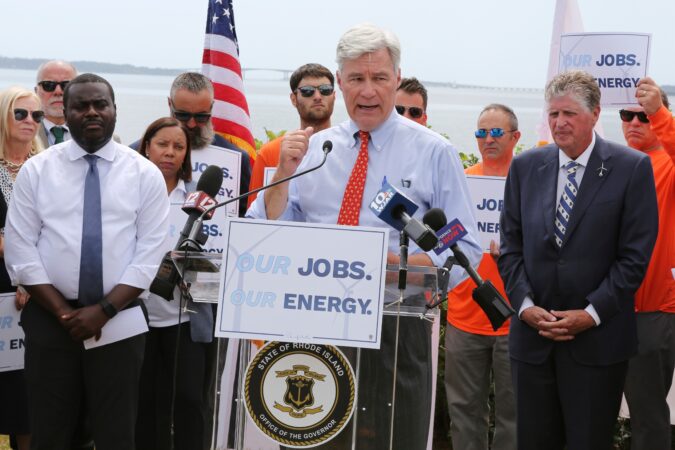
    WASHINGTON — The Trump administration on Monday suspended leases for five large-scale offshore wind projects under construction along the East Coast due to what it said were national security risks identified by the Pentagon.

    The suspension, effective immediately, is the latest step by the administration to hobble offshore wind in its push against renewable energy sources. It comes two weeks after a federal judge struck down President Donald Trump’s executive order blocking wind energy projects, calling it unlawful.

    The administration said the pause will give the Interior Department, which oversees offshore wind, time to work with the Defense Department and other agencies to assess the possible ways to mitigate any security risks posed by the projects. The statement did not detail the national security risks. It called the move a pause, but did not specify an end date.

    “The prime duty of the United States government is to protect the American people,” Interior Secretary Doug Burgum said in a statement. “Today’s action addresses emerging national security risks, including the rapid evolution of the relevant adversary technologies, and the vulnerabilities created by large-scale offshore wind projects with proximity near our east coast population centers.”

    Wind proponents slammed the move, saying it was another blow in an ongoing attack by the administration against clean energy. The administration’s decision to cite potential national security risks could complicate legal challenges to the move, although wind supporters say those arguments are overstated.

    Paused over national security concerns

    The administration said leases are paused for the Vineyard Wind project under construction in Massachusetts, Revolution Wind in Rhode Island and Connecticut, Coastal Virginia Offshore Wind, and two projects in New York: Sunrise Wind and Empire Wind.

    The Interior Department said unclassified reports from the U.S. government have long found that the movement of massive turbine blades and the highly reflective towers create radar interference called “clutter.” The clutter caused by offshore wind projects can obscure legitimate moving targets and generate false targets in the vicinity of wind projects, the Interior Department said.

    National security expert and former commander of the USS Cole Kirk Lippold disputed the administration’s national security argument. The offshore projects were awarded permits “following years of review by state and federal agencies,” including the Coast Guard, the Naval Undersea Warfare Center, the Air Force, and more, he said.

    “The record of decisions all show that the Department of Defense was consulted at every stage of the permitting process,” Lippold said, arguing that the projects would benefit national security because they would diversify the country’s energy supply.

    Sen. Sheldon Whitehouse (D., R.I) said Revolution Wind was thoroughly vetted and fully permitted by the federal government, “and that review included any potential national security questions.” Burgum’s action “looks more like the kind of vindictive harassment we have come to expect from the Trump administration than anything legitimate,’’ he said.

    A judge ruled blocking wind projects was unlawful

    The administration’s action comes two weeks after a federal judge struck down Trump’s executive order blocking wind energy projects, saying the effort to halt virtually all leasing of wind farms on federal lands and waters was “arbitrary and capricious” and violates U.S. law.

    Judge Patti Saris of the U.S. District Court for the District of Massachusetts vacated Trump’s Jan. 20 executive order blocking wind energy projects and declared it unlawful.

    Saris ruled in favor of a coalition of state attorneys general from 17 states and Washington, D.C., led by New York Attorney General Letitia James, that challenged Trump’s Day One order that paused leasing and permitting for wind energy projects.

    Trump has been hostile to renewable energy, particularly offshore wind, and prioritizes fossil fuels to produce electricity. Trump has said wind turbines are ugly, expensive, and pose a threat to birds and other wildlife.

    Wind proponents slam the move

    Wind supporters called the administration’s actions illegal and said offshore wind provides some of the most affordable, reliable electric power to the grid.

    “For nearly a year, the Trump administration has recklessly obstructed the build-out of clean, affordable power for millions of Americans, just as the country’s need for electricity is surging,” said Ted Kelly of the Environmental Defense Fund.

    “Now the administration is again illegally blocking clean, affordable energy,” Kelly said. “We should not be kneecapping America’s largest source of renewable power, especially when we need more cheap, homegrown electricity.’’

    The administration’s actions are especially egregious because, at the same time, it is propping up aging, expensive coal plants “that barely work and pollute our air,” Kelly said.

    Connecticut Attorney General William Tong called the lease suspension a “lawless and erratic stop-work order” that revives an earlier, failed attempt to halt construction of Revolution Wind.

    “Every day this project is stalled is another day of lost work, another day of unaffordable energy costs, and other day burning fossil fuels when American-made clean energy is within reach,” Tong said. “We are evaluating all legal options, and this will be stopped just like last time.”

    Suspension praised by anti-wind group

    A New Jersey group that opposes offshore wind hailed the administration’s actions.

    “Today, the president and his administration put America first,’’ said Robin Shaffer, president of Protect Our Coast New Jersey, a nonprofit advocacy group.

    “Placing largely foreign-owned wind turbines along our coastlines was never acceptable,” he said, arguing that Empire Wind, in particular, poses a threat because of its close proximity to major airports, including Newark Liberty, LaGuardia, and JFK.

    Offshore wind projects also pose a threat to commercial and recreational fishing industries, Shaffer and other critics say.

    Dominion Energy, which is developing Coastal Virginia Offshore Wind, said the project is essential for national security and meeting Virginia’s dramatically growing energy needs, driven by dozens of new data centers.

    “Stopping CVOW for any length of time will threaten grid reliability … lead to energy inflation and threaten thousands of jobs,” the company said in a statement.

    The Conservation Law Foundation, a Boston-based environmental group, called the pause “a desperate rerun of the Trump administration’s failed attempt to kill offshore wind,’’ noting that courts have already rejected the administration’s arguments.

    “Trying again to halt these projects tramples on the rule of law, threatens jobs and deliberately sabotages a critical industry that strengthens — not weakens — America’s energy security,” said Kate Sinding Daly, senior vice president for law and policy at the law foundation.

  • A fair, a UFC fight, a prayer event: Trump’s plans for nation’s 250th

    A fair, a UFC fight, a prayer event: Trump’s plans for nation’s 250th

    The Trump administration has begun to detail events to mark the 250th anniversary of the nation’s founding next year, including a competitive youth athletic event, a fair, and a UFC fight on the grounds of the White House.

    In a video Thursday, President Donald Trump announced the creation of a new national, nonpartisan organization called Freedom 250 that will work with a White House task force and a congressionally mandated United States Semiquincentennial Commission to help carry out his vision for “the most spectacular birthday the world has ever seen.”

    “Already, we’ve had big celebrations to commemorate the 250th birthdays of the Army, the Navy, and the United States Marines, but there is much, much more to come,” Trump said in the video.

    The celebration will begin on New Year’s Eve. The Washington Monument will be lit with “festive birthday lights to honor the start of this historic anniversary year,” Trump said. Freedom 250 said the monument will be lit through Jan. 5.

    That will be followed by a “major prayer event” on the National Mall in the spring, said Trump, “to rededicate our country as one nation under God.”

    As written in the Constitution, the government does not have the power to establish an official religion. But the move is indicative of the president’s alignment with his evangelical supporters and comes at a time when the separation of church and state is being litigated in courts across the country, even in the Supreme Court.

    An Ultimate Fighting Championship event is set to take place at the White House on June 14, which is Flag Day and Trump’s 80th birthday. Dana White, the chief executive of UFC and a longtime Trump supporter, is set to host the occasion.

    A two-week fair will take place on the National Mall from June 25 to July 10. The Great American State Fair, as Trump called it, will feature exhibits from all 50 states on American history, culture, and innovations.

    “Frankly, you’ll never see anything like it, and you’ll never see anything like it again,” said the president, who has had a long interest in fairs.

    In 1996, he opened the Trump World’s Fair Casino in Atlantic City, with an event that included jugglers and stilt walkers, plus artifacts from and murals of past U.S. World’s Fairs. The casino was closed three years later and eventually demolished after losing about $10 million a year.

    During his first run for president, Trump visited the Iowa State Fair in Des Moines — known for a life-size cow sculpture carved from 600 pounds of butter and appearances from presidential candidates — in a black helicopter embellished with bold letters spelling out his name.

    Originally, the semiquincentennial fair was to be hosted on the Iowa State fairgrounds, calling “millions and millions of visitors from around the world to the heartland of America for this special, one-time festival,” the president said when he returned to the fair this summer. But the event grew into a more sprawling celebration, the Washington Post reported, and was moved to D.C.

    In the fall, high school athletes will participate in a four-day event called the Patriot Games, said Trump, bringing “one young man and one young woman from each state and territory” to the nation’s capital. Transgender athletes, a group that has faced criticism over their participation in sports, will not be allowed to play in groups that match their identity, he said.

    “I promise there will be no men playing in women’s sports. You’re not going to see that. You’ll see everything but that,” Trump said.

    During his remarks at the Iowa State Fair earlier this year, the president said the athletic competition would be televised and overseen by Health and Human Services Secretary Robert F. Kennedy Jr.

    In addition to the marquee events, the president described two developments to commemorate the country’s anniversary year, including the previously announced National Garden of American Heroes. The project will feature sculptures of notable Americans and is set to open next July. Construction of Washington’s own “triumphal arch” — similar to the Arc de Triomphe in Paris — will begin soon, Trump said.

    “We’re the only major city. We’re the only major capital. We’re the only major place without a triumphal arch,” Trump said, though there are similar structures in other U.S. urban centers, including New York City and Atlanta.

    Trump said in the video that the monthslong birthday bash “will be a time like you’ve never had in your lives.”

  • Trump removes nearly 30 career diplomats from ambassadorial positions

    Trump removes nearly 30 career diplomats from ambassadorial positions

    WASHINGTON — The Trump administration is recalling nearly 30 career diplomats from ambassadorial and other senior embassy posts as it moves to reshape the U.S. diplomatic posture abroad with personnel deemed fully supportive of President Donald Trump’s “America First” priorities.

    The chiefs of mission in at least 29 countries were informed last week that their tenures would end in January, according to two State Department officials, who spoke on condition of anonymity to discuss internal personnel moves.

    All of them had taken up their posts in the Biden administration but had survived an initial purge in the early months of Trump’s second term that targeted mainly political appointees. That changed on Wednesday when they began to receive notices from officials in Washington about their imminent departures.

    Ambassadors serve at the pleasure of the president although they typically remain at their posts for three to four years. Those affected by the shake-up are not losing their foreign service jobs but will be returning to Washington for other assignments should they wish to take them, the officials said.

    The State Department declined to comment on specific numbers or ambassadors affected, but defended the changes, calling them “a standard process in any administration.” It noted that an ambassador is “a personal representative of the president and it is the president’s right to ensure that he has individuals in these countries who advance the America First agenda.”

    Africa is the continent most affected by the removals, with ambassadors from 13 countries being removed: Burundi, Cameroon, Cape Verde, Gabon, Ivory Coast, Madagascar, Mauritius, Niger, Nigeria, Rwanda, Senegal, Somalia, and Uganda.

    Second is Asia, with ambassadorial changes coming to six countries: Fiji, Laos, the Marshall Islands, Papua New Guinea, the Philippines, and Vietnam.

    Four countries in Europe (Armenia, Macedonia, Montenegro, and Slovakia) are affected; as are two each in the Middle East (Algeria and Egypt); South and Central Asia (Nepal and Sri Lanka); and the Western Hemisphere (Guatemala and Suriname).

    Politico was the first to report on the ambassadorial recalls, which have drawn concern from some lawmakers and the union representing American diplomats.

  • Trump’s appointment of envoy to Greenland sparks new tension with Denmark

    Trump’s appointment of envoy to Greenland sparks new tension with Denmark

    The leaders of Denmark and Greenland insisted Monday that the United States won’t take over Greenland and demanded respect for their territorial integrity after President Donald Trump ‍​announced ​the appointment of a ‌special envoy to the semi-autonomous territory.

    Trump’s announcement on Sunday that Louisiana Gov. Jeff Landry would be the envoy prompted a new flare-up of tensions over Washington’s interest in the vast territory of Denmark, a NATO ally. Denmark’s foreign minister told Danish broadcasters that he would summon the U.S. ambassador to his ministry.

    “We have said it before. Now, we say it again. National borders and the sovereignty of states are rooted in international law,” Danish Prime Minister Mette Frederiksen and her Greenlandic counterpart, Jens-Frederik Nielsen, said in a joint statement. “They are fundamental principles. You cannot annex another country. Not even with an argument about international security.”

    “Greenland belongs to the Greenlanders and the U.S. shall not take over Greenland,” they added in the statement emailed by Frederiksen’s office. “We expect respect for our joint territorial integrity.”

    Trump called repeatedly during his presidential transition and the early months of his second term for U.S. jurisdiction over Greenland, and has not ruled out military force to take control of the mineral-rich, strategically located Arctic island. In March, Vice President JD Vance visited a remote U.S. military base in Greenland and accused Denmark of underinvesting there.

    The issue gradually drifted out of the headlines, but in August, Danish officials summoned the top U.S. diplomat in Copenhagen following a report that at least three people with connections to Trump had carried out covert influence operations in Greenland.

    On Sunday, Trump announced Landry’s appointment, saying on social media that “Jeff understands how essential Greenland is to our National Security, and will strongly advance our Country’s Interests for the Safety, Security, and Survival of our Allies, and indeed, the World.”

    Landry wrote in a post on social media that “it’s an honor to serve you in this volunteer position to make Greenland a part of the U.S.”

    The Trump administration did not offer any warning ahead of the announcement, according to a Danish government official, who spoke on condition of anonymity to discuss internal deliberations.

    The official also said Danish officials had expected Trump to signal an aggressive approach to Greenland and the Arctic in the U.S. administration’s new national security strategy and were surprised when the document included no mention of either.

    Deputy White House press secretary Anna Kelly said Monday that Trump decided to create the special envoy role because the administration views Greenland as “a strategically important location in the Arctic for maintaining peace through strength.”

    Danish broadcasters TV2 and DR reported that in comments from the Faroe Islands Monday, Danish Foreign Minister Lars Løkke Rasmussen said he would summon the U.S. ambassador in Copenhagen, Kenneth Howery, to his ministry.

    Greenland’s prime minister wrote in a separate statement that Greenland had again woken up to a new announcement from the U.S. president, and that “it may sound significant. But it changes nothing for us here at home.”

    Nielsen noted that Greenland has its own democracy and said that “we are happy to cooperate with other countries, including the United States, but this must always take place with respect for us and for our values and wishes.”

    Earlier this month, the Danish Defense Intelligence Service said in an annual report that the U.S. is using its economic power to “assert its will” and threaten military force against friend and foe alike.

    Denmark is a member of the European Union as well as NATO.

    The president of the EU’s executive commission, Ursula von der Leyen, said on social media that Arctic security is a “key priority” for the bloc and one on which it seeks to work with allies and partners. She also said that “territorial integrity and sovereignty are fundamental principles of international law.”

    “We stand in full solidarity with Denmark and the people of Greenland,” she wrote.

  • As a legal battle looms, Philadelphia Art Museum staffers head into the new year with tentative hope

    As a legal battle looms, Philadelphia Art Museum staffers head into the new year with tentative hope

    As Philadelphia’s largest visual arts institution heads into the new year, it does so shaken by disorder and strife — reeling under a drama as extraordinary in substance as the public nature with which it is playing out.

    On Nov. 4, Philadelphia Art Museum director and CEO Sasha Suda was abruptly fired, and she subsequently sued the museum for wrongful dismissal. Two weeks later, the museum accused her of theft in a public filing. A day later, news broke that a former HR director had been charged with theft by the City of Philadelphia earlier in the year, and the museum announced its new director and CEO, museum veteran Daniel H. Weiss.

    In a recent court filing from Suda’s legal team, the ousted director was described as a “visionary leader” recruited to “save a struggling museum.” Her efforts, the filing reads, “collided with a small, corrupt Board faction determined to preserve the status quo.”

    Earlier this month, Suda argued for a trial instead of arbitration.

    Daniel H. Weiss, director and CEO of the Philadelphia Art Museum

    All this comes after three years of organizational turbulence that has left staff angry and bewildered.

    “There’s a lot of nervousness about what’s to come now,” said one longtime staffer. “It’s been so chaotic for so long. Nobody feels steady. We’re supposed to be just chugging along like business as usual, but nothing feels stable.”

    Though Weiss started at the museum this month, he will also maintain his position as an art history professor at Johns Hopkins University though May 2026.

    Among the challenges facing Weiss: depressed attendance, an operating deficit, low staff morale, deferred maintenance on existing buildings, and questions about how to prioritize stalled expansion plans.

    This account is based on interviews with former and current staffers, both union and nonunion, ranging from curatorial affairs to finance and operations. All of them spoke on condition they not be named.

    Visitors services staff member Tiago Segundo works the admissions counter at the west entrance of the Philadelphia Art Museum, Oct. 6, 2025.

    Staff shortage

    Weiss will have to contend with a shortage of staff — which has dropped from 500 in 2019 to 375 today — following years of significant employee turnover.

    During Suda’s tenure, at least 60 employees — many from the senior executive team — were fired, laid off, or pressured to leave across departments. These include human resources, curatorial, digital content, communications, facilities, conservation, the library, visitor services, and more, according to museum insiders.

    Suddenly gone in the fall of 2024 without explanation to the staff was Carlos Basualdo, earlier promoted by Suda to deputy director and the museum’s first-ever chief curator; he was highly respected and held several important relationships with collectors and top international artists like Jasper Johns and Bruce Nauman.

    Basualdo was named director of the Nasher Sculpture Center in Dallas in April.

    Curator Kathryn B. Hiesinger, who had been with the museum for 53 years, had talked to Suda in the summer of 2023 about her desire to retire at some point, and discussed ideas about winding down her tenure.

    “She said it all sounded very reasonable,” said Hiesinger, 82, in a recent interview.

    Several months later, Hiesinger said her computer stopped working and she was called into Suda’s office. A woman Hiesinger didn’t know — who turned out to be from human resources — and Suda handed her a sheath of papers, which she was asked to sign.

    “I didn’t realize I was being fired,” Hiesinger said. “I was actually quite shocked by the whole way it was handled. It was so unnecessary. All she needed to do was say, ‘I think it’s time for you to retire; let’s see how we can make it work.’ But it was just like that — shut down the computer, call me into the office, and sign the papers, and that was it.”

    A few weeks later, Suda called Hiesinger to apologize after museum leaders intervened. She was given the title of senior curator emeritus of European decorative arts and was told she would be allowed to complete her pending projects for the museum.

    Hiesinger has had no official contact with the museum since.

    Among others who stopped working at the museum during Suda’s tenure, several were made to sign nondisclosure agreements and could not speak to the media.

    At the museum’s “Head to Toe: African and Asian Wearables” display, Oct. 6, 2025

    A declining reputation

    For staffers who have remained, there is a sense of internal disorganization.

    “We’ve had three reorganizations within three years, and we were only given an org chart [and] an understanding of it in the last couple months,” said a longtime staffer.

    Ultimately, the staffers The Inquirer interviewed believe the reputation of the museum has diminished over the years. Colleagues in the larger museum world, another staffer said, “look at me sideways, because this place has gotten such a bad rap … we’ve become a joke.”

    Low morale has been a longstanding issue.

    In her lawsuit, Suda detailed two instances of board members allegedly “yelling and berating staff.”

    At one event, an unnamed board member “verbally assaulted a Museum employee,” the suit said, leading to a formal complaint. The board member later apologized to the staffer.

    The second incident reportedly happened in the winter of 2024 when the museum hosted two simultaneous events for major donor Bank of America and a group invited by Philadelphia City Council President Kenyatta Johnson.

    According to the lawsuit, board member Melissa Heller was allegedly “berating staff, cursing, and shouting that the team was unprepared.” Suda alleged that a Bank of America representative “witnessed this awful altercation” and called her to discuss it. Board chair Ellen T. Caplan spoke to Heller about it and “declared the matter closed.”

    Suda’s lawsuit also recounted an incident when former board chair Leslie Anne Miller allegedly screamed and cursed at Suda.

    Miller declined to comment and Heller did not respond to The Inquirer’s request for comment.

    Several employees said Suda regularly engaged in similar behavior herself.

    Sasha Suda, former director of the Philadelphia Art Museum, at the museum on Jan. 30, 2024.

    “Sasha has done the same thing, [being] verbally abusive to staff, yelling at them, telling them that nobody likes them and people don’t want to work with them,” said the longtime staffer who spoke to the museum’s recent reorganizations.

    The staffer worried about the museum’s diminishing reputation also claimed that the programming team became less autonomous and more risk-averse under Suda.

    Managers, the staffer said, use threats of dismissal and public humiliation, leading curators and others to feel that their jobs depend solely on the success or failure of an exhibit. Staff members are wary of Suda’s executives continuing this culture of insecurity.

    “People are afraid to do their work. Curators are afraid to put on exhibitions. They’re afraid to spend money,” the staffer said. “I feel like my work has ground to a near halt. I do a fraction of what I used to do, just in a very dysfunctional way now.”

    The museum now puts on fewer of its own shows, a departure from previous administrations. Some of the biggest exhibits in recent years, like “The Time Is Always Now” and “Dreamworld: Surrealism at 100,” have been touring shows organized elsewhere and adapted for the museum.

    A forthcoming programmatic highlight is the show “A Nation of Artists.” Featuring art from the family collection of Phillies managing partner John Middleton, the show is scheduled to run at the museum April 12, 2026, to July 5, 2027. It was conceived before Suda’s time at the museum.

    Tourists pose with “Rocky” statue on the steps of the Philadelphia Art Museum, Thursday, September 11, 2025.

    Ongoing financial struggles

    Over the last several years, the nearly 150-year-old museum has operated with a persistent deficit.

    In 2025, that number was forecast as around $2 million on a budget of $62 million. The fiscal year ending June 30, 2023, was the museum’s last period with no deficit. Suda began her tenure as director and CEO in September 2022.

    Attendance has not rebounded to pre-pandemic levels. As of Nov. 30, the museum was still falling short of its goal for the fiscal year, clocking 266,282 visitors against a to-date goal of 306,750. Its total goal for the fiscal year — which goes through June 30 — is 731,000. (All of these numbers include not just visitors, but also school groups and people attending special events.)

    And even that goal is a considerable downgrade from previous ambitions. A decade ago, the museum in its strategic plan stated the goal of increasing attendance to a million visitors per year within five years.

    The museum’s widely panned rebrand and name change in October has proven divisive externally and internally. The campaign unveiled a new logo and changed the name of the institution from Philadelphia Museum of Art to Philadelphia Art Museum. Its cost totaled more than $1 million, according to two sources familiar with the details who spoke on the condition of not being named. Leaders hoped the rebrand would drive up attendance and cut down current operating deficits; the impact remains to be seen.

    Suda’s lawsuit, staff worry, could worsen the financial outlook.

    “We’re already broke as an institution. We could have a messy lawsuit that really takes a lot of funding away,” said the longtime staffer.

    Adam Rizzo, former president of the Art Museum union, an affiliate of AFSCME DC47, waving to a honking supporter on the morning museum employees returned to work after a strike in 2022.

    Unresolved labor grievances

    The Philadelphia Museum of Art Union has seen five years of disputes with management over wage increases, remote work, and dozens of labor grievances.

    A new contract ratified in July 2025 ensured 3% annual pay raises and increased parental leave from four weeks to eight. But a number of grievances remain unresolved. The PMA Union, part of AFSCME Local 397, which represents Philadelphia culture workers, did not comment for this story.

    After their boss was fired earlier this year, a staffer said, they were expected to take on extra responsibilities, with the promise of an hourly wage increase. Eight months later, the employee has not received that compensation and has been working with the union to address the problem.

    “What they would rather do is have me go to the union, grieve it, and get the lawyers involved, and that way they can drag it out for another like six to eight months and not have to pay me,” the staffer said. “But they would still have to pay me all the back pay. It’s just them dragging their feet and penalizing people. To be honest, if they get me the higher end of [the raise], it’s only 90 cents extra.”

    A museum spokesperson could not respond to this claim, deeming it “a personnel matter.”

    Several other staffers have had similar experiences. Under the new leadership, they hope to have these disputes resolved amicably without the need of a grievance process.

    A 2013 photo of then-Swarthmore College president Rebecca Chopp showing off a copy of “Remaking College” at the inauguration of president Daniel H. Weiss at Haverford College, who is now director and CEO of the Philadelphia Art Museum.

    What comes next

    Weiss declined to be interviewed about specifics of his tasks and priorities, but the museum released a general statement:

    “Daniel Weiss was appointed for his extensive leadership experience at major educational and cultural institutions. He began his tenure only weeks ago, and he is focused on learning the nuances of the museum’s ongoing operations regarding its programming, education initiatives, fundraising, and strategic planning. Mr. Weiss is currently working with senior staff to review key priorities and will address updates in the new year.”

    Amid the leadership crisis and transition, staff has been kept mostly in the dark with little communication. The staffer seeking a raise shared that during the interim they received invitations for hot chocolate and parfait socials from human resources.

    “It’s what the senior management do. That’s their usual MO, like, ‘Oh, well, have a cupcake,’” they said. “They treat us all like children, or like we’re all dumb. It’s pretty insulting.”

    Weiss officially began his tenure on Dec. 1 but held an all-staff meeting before Thanksgiving. One staffer who attended said Weiss “said all the right things” so they are feeling “cautiously optimistic.”

    “Everything he’s doing, he’s doing with such integrity. It’s heartwarming,” said a member of the curatorial affairs division.

    But, they cautioned, “he’s going to lose people’s optimism if he doesn’t make any moves soon.”

  • Many renters say they’ll never buy a home, according to a national survey

    Many renters say they’ll never buy a home, according to a national survey

    This year, renters were burdened by housing costs, pessimistic about the economy, and less likely to say homeownership is part of the American dream, according to a survey by the national rental listing platform Zumper.

    Zumper surveyed more than 6,000 renters across the country as part of its annual report about the state of renting. The report gets at renters’ feelings and behaviors and evolving trends.

    Affordability remains a challenge for renters, even as more apartments flooded markets in recent years, giving renters more options and negotiating power and cooling rent growth. In Philadelphia, the median asking rent in December for a one-bedroom home — $1,490 — was down about 2% from the same time last year, according to Zumper.

    The report also gives insights into what renters want. Almost one in five renters who were surveyed said access to outdoor space is a top-three priority when choosing a home. About one in four renters said eco-friendly features were important.

    And almost half of renters — 45% — said they have pets, from cats and dogs to lizards and iguanas. In an analysis published last year, Zillow found that landlords who allow pets rent their homes faster.

    Here are three takeaways from Zumper’s report on the state of renting in 2025.

    Renters are struggling

    Roughly three in five surveyed renters are cost burdened. That means they spend more than 30% of their income on rent. But the average renter said they spend 40%.

    Renters don’t feel great about the economy. Four in five said they are uncertain or not confident about it, and about two-thirds said they think the country is in a recession.

    One in five renters said they moved to lower their cost of living.

    Almost three in four renters said they save 15% of their income or less every month. About one in four have student loans, and almost half have credit card debt. That all makes it difficult to cover emergencies or save for future plans, such as homeownership.

    Three in four renters said 2025 was not a good time to buy a home.

    Fewer renters dream of homeownership

    In 2021, 27% of surveyed renters said homeownership was not part of the American dream. That share has grown to 34% this year.

    And now 60% of renters say the new American dream means being “untethered” from homeownership, Zumper’s report said. And 30% of renters said they do not ever plan to buy a home.

    These shifts “reflect both economic pressures and changing cultural values,” according to Zumper’s report.

    The older that surveyed renters were, the less likely they were to say they would ever buy a home. Baby boomers also were the generation least likely to say that homeownership is part of the American dream.

    People aged 65 and older are the fastest-growing population of renters in the Philadelphia region, according to Point2Homes, a national rental home listing portal.

    These rental destinations were popular

    The top five cities that renters said they were moving to include one in the Northeast and two in California.

    The most popular city for a move was Los Angeles. Zumper cited the city’s climate and residents’ lifestyles.

    Next on the list was Atlanta, followed by New York City, San Francisco, and Charlotte, N.C.

    The report said Atlanta and Charlotte offer growing job markets and affordability compared to other coastal cities. It said New York’s high rents were probably why the city wasn’t higher on renters’ list.

    And renters were attracted to San Francisco in part because of its tech scene.

    After a shift to remote work during the pandemic, more workers now need to go into an office at least some of the time. In 2021, Zumper’s survey found that about 25% of renters only worked from home. That share is down to 12%.

    So it’s not a surprise that renters said they were moving to cities that are major job centers. A commute was the third-most-cited deciding factor for renters’ locations.

  • ‘60 Minutes’ pulls story about Trump deportations from its lineup

    ‘60 Minutes’ pulls story about Trump deportations from its lineup

    CBS News abruptly pulled an investigative 60 Minutes segment on the Trump administration’s deportations of Venezuelan migrants to El Salvador’s CECOT prison after the administration refused to grant an interview, according to a correspondent who shared her concerns in an email obtained by the Washington Post.

    The decision came directly from the network’s editor in chief, Bari Weiss, according to an internal email sent to producers from the segment’s correspondent, Sharyn Alfonsi, who called the decision tantamount to handing the White House a “kill switch.”

    “If the administration’s refusal to participate becomes a valid reason to spike a story, we have effectively handed them a ‘kill switch’ for any reporting they find inconvenient,” Alfonsi wrote.

    Weiss defended the decision in a Monday morning editorial meeting.

    “As of course you all have seen, I held a 60 Minutes story, and I held that story because it wasn’t ready,” Weiss told staffers, according to a person who attended the meeting and spoke on the condition of anonymity to share nonpublic comments. “The story presented very powerful testimony of abuse at CECOT, but that testimony has already been reported on by places like the Times. The public knows that Venezuelans have been subjected to horrific treatment in this prison. So to run a story on this subject, two months later, we simply need to do more.”

    She continued: “And this is 60 Minutes. We need to be able to make every effort to get the principals on the record and on camera. To me, our viewers come first, not a listing schedule or anything else, and that is my North Star, and I hope it’s the North Star of every person in this newsroom.”

    The segment’s production team had sent questions and requested comment from the White House, the State Department, and the Department of Homeland Security for the story, according to the email. But the administration declined to grant the journalists an interview.

    “Government silence is a statement, not a VETO,” Alfonsi wrote. “Their refusal to be interviewed is a tactical maneuver designed to kill the story.”

    “The 60 Minutes report on ‘Inside CECOT’ will air in a future broadcast,” a CBS News spokesperson said in a statement. “We determined it needed additional reporting.” Alfonsi did not respond to a request for comment.

    The segment, titled “Inside CECOT,” was set to cover the Trump administration’s deportations of Venezuelan migrants to Centro de Confinamiento del Terrorismo (CECOT), one of El Salvador’s most notorious prisons. The network had teased the segment for days, but by Sunday the trailer and promotional materials had been removed from CBS News’ website.

    The original preview said that Alfonsi spoke with released prisoners, who describe “brutal and torturous conditions” inside the prison.

    Hundreds of Venezuelans who have been deported to El Salvador under President Donald Trump’s immigration crackdown have endured systematic torture and abuse — including sexual assault — during their detention, according to a November report by Human Rights Watch. The report said conditions at CECOT breached the United Nations’ minimal rules for the treatment of prisoners.

    In the email to her team, Alfonsi wrote that she learned Saturday that Weiss killed the story, which she says was screened five times and cleared by both the standards department and the network’s attorneys.

    Weiss was named CBS’s top editor this fall after David Ellison’s newly formed Paramount Skydance bought the Free Press, the opinion website she founded, for $150 million. While the two properties are still technically separate, Weiss runs both. Her early days at the network have been marked by rapid changes, including restructuring and layoffs. Weiss launched a town hall series including an interview with Erika Kirk, the widow of conservative activist Charlie Kirk. Earlier in December, CBS promoted Tony Dokoupil, who has co-anchored CBS Mornings since 2019, to anchor CBS Evening News, one of the most prominent jobs in television journalism. Ellison is the son of Oracle co-founder Larry Ellison, one of the world’s richest people and a Trump political ally.

    In the email, Alfonsi said the sources in the segment “risked their lives to speak with us.” She added: “We have a moral and professional obligation to the sources who entrusted us with their stories.”

    “If the standard for airing a story becomes ‘the government must agree to be interviewed,’ then the government effectively gains control over the 60 Minutes broadcast. We go from an investigative powerhouse to a stenographer for the state,” Alfonsi wrote.

    “It is factually correct,” she added. “In my view, pulling it now — after every rigorous internal check has been met — is not an editorial decision, it is a political one.”

    Democratic critics of Weiss were swift to condemn what they characterized as censoring a story to appease the Trump administration.

    “What is happening to CBS is a terrible embarrassment and if executives think they can build shareholder value by avoiding journalism that might offend the Mad King they are about to learn a tough lesson,” Sen. Brian Schatz (D., Hawaii) wrote on X. “This is still America and we don’t enjoy bullshit like this.”

    Sen. Edward J. Markey (D., Mass.) said in a social media post that it’s a “sad day for 60 Minutes and journalism,” and said that the Trump administration’s involvement in approving Skydance’s $8 billion deal to buy Paramount led to this. Skydance agreed to concessions to get the deal approved by the Republican-controlled Federal Communications Commission, chaired by Brendan Carr.

    The company promised a review of CBS content, appointed an ombudsman with Republican Party ties to interrogate claims of bias, and said it would refrain from diversity initiatives. Carr had previously threatened to block any mergers for companies engaged in diversity, equity, and inclusion practices.

    “This is what government censorship looks like,” Markey wrote. “Trump approved the Paramount-Skydance merger. A few months later, CBS’s new editor in chief kills a deeply reported story critical of Trump.”

  • What to know about the NYE concert in Philly

    What to know about the NYE concert in Philly

    Philadelphia, get ready to party in 2026.

    City officials want New Year’s Eve to set the tone for what’s slated to be a year of blockbuster celebrations for the country’s 250th birthday.

    “We want the city to feel the excitement, and quite frankly, the potential of 2026 from the very beginning,” said Mayor Cherelle L. Parker in a Monday news conference that laid out the details of the New Year’s festivities and hyped up the public for other events such as the FIFA World Cup and the 2026 Major League Baseball All-Star Game.

    The city will host its first-ever New Year’s Eve concert featuring LL Cool J, DJ Jazzy Jeff, Los Angeles rock band Dorothy, and Philadelphia High School for Creative and Performing Arts graduate Adam Blackstone — no tickets required and free.

    An image of New Year’s Eve concert headliner LL Cool J is under portraits of former mayors in the Mayor’s Reception Room at City Hall.

    The Ben Franklin Parkway will open at 6 p.m. so people can have enough time to get through security scanners before the concert kicks off at 8 p.m. In all, some 25,000 people are expected to fit in the secure perimeter, according to event planners.

    Blackstone will premiere his new song, “Brotherly Love,” and the music will keep going until the countdown and fireworks.

    The Delaware River Waterfront Corp., which has operated a barge full of fireworks for approximately 30 years, will be kicking up the pyrotechnics a notch with three barges. As usual, there will be two fireworks shows along the river, one at 6 p.m. and another at midnight.

    “From Spruce Street Harbor Park to Cherry Street Pier, from Pennsport to Port Richmond, from the Parkway to the waterfront, we are going to light up the Philly sky for 2026,” said DRWC president and CEO Joseph Forkin.

    People can take part in an assortment of family-friendly activities at Cherry Street Pier and Independence Blue Cross RiverRink Winterfest, which are ticketed experiences. A replica of the Liberty Bell will leave the National Liberty Museum for the night to ring in the new year at the pier.

    Police Commissioner Kevin Bethel said police will be out in full force — as is the norm, specific numbers of officers deployed were not disclosed — and reminded the public to celebrate safely, and leave the weapons at home if they’re going to the concert. Bethel also encouraged people to ditch the dangerous tradition of celebratory gunfire.

    Bethel noted the 1999 case of Joe Jaskolka, only 11 years old at the time, who was struck in the head by so-called celebratory fire.

    “Get your pots and pans and bang the pans,” Bethel said, reminding residents that what goes up must come down.

    Fire Commissioner Jeffrey Thompson offered a similar safety warning regarding fireworks: Leave it to the professionals. Even sparklers aren’t safe, he said. Though often seen as a safe alternative for young people, Thompson said they are not, burning at 1,500 degrees.

    Still, officials feel confident that New Year’s Eve celebrations will be a boon for Philadelphia’s spirits and ideally the economy, though Parker said the final price tag was not yet available — a report on the cost and return on investment will be available after the event is done, she said.

    Yet New Year’s Eve is only the beginning and a bit of a test run for the rest of the year.

    The very next day, the Mummers strut on Broad Street with plumes and satin with a brass accompaniment.

    After that, it’ll be a spate of sporting events and conventions, on top of already scheduled events like Wawa Welcome America.

    Jennifer Nagle, with the Philadelphia Convention and Visitors Bureau, said the year is already looking to be a busy one for hotels and that new traditions, such as the New Year’s Eve concert, along with external recognition from places like the Michelin Guide, are placing the city on the “national and global stage.”

    Nagle said 1.5 million room nights are set to be booked in Philadelphia. Visitors are additionally projected to spend $950 million, which will result in $1 billion in economic impact.

    The Quaker City String Band performs before a news conference where city officials shared details on how Philadelphians and visitors can ring in the New Year and celebrate the official kickoff of the nation’s 250th anniversary,
  • Betty Reid Soskin, 104, oldest U.S. park ranger, has died

    Betty Reid Soskin, 104, oldest U.S. park ranger, has died

    Betty Reid Soskin, who served as the nation’s oldest park ranger and relayed firsthand accounts of segregation as a Black woman on the World War II home front, died Sunday at her home in Richmond, Calif. She was 104.

    Her death was confirmed by her son Bob Reid, who did not know the exact cause but said she had been in declining health.

    “She led a fully packed life and was ready to leave,” her family said in a statement on social media.

    Ms. Soskin, who joined the National Park Service at 85 and retired when she turned 100, used her role as the nation’s oldest park ranger to share the untold stories of Black women, including herself, who served on the home front during World War II.

    At that time, she worked as a file clerk at Boilermakers Local Auxiliary 36, a segregated union for Black workers. According to the union, Ms. Soskin worked at the sprawling Kaiser Shipyards, where thousands of women helped construct some 700 Liberty and Victory ships.

    While many were familiar with tales of the women who worked in factories as men went off to fight — known as “Rosie the Riveters” — a key detail was often omitted from those histories.

    “That was always a white women’s story,” Ms. Soskin said in an interview with the Washington Post in 2015. For most of the war, she said, Black women were not permitted to be “Rosies” until 1944, when some began to be trained as welders.

    In 2016, the union apologized to Ms. Soskin for the way she and other Black workers were relegated by the union to an auxiliary segregated lodge during the war. “On behalf of my organization, I offer Betty and all former Boilermakers who at one time belonged to an auxiliary local, an apology for what must have been a demeaning life experience,” said union leader IP Jones.

    “I’m not trained as a historian. My presentations are based on my oral history,” Ms. Soskin said. “A bottomless well of memories come up depending on questions the public asks. [The memories] are always on tap for me,” she added.

    The ranger spent her days sharing her experiences with visitors to the Rosie the Riveter WWII Home Front National Historical Park in Richmond. “Black women were not freed or emancipated in the workforce,” she told the Post. “Unions were not racially integrated and wouldn’t be for a decade. They created auxiliaries that all Blacks were dumped into. We paid dues, but didn’t have power or votes.”

    Ms. Soskin was born Betty Charbonnet in Detroit on Sept. 22, 1921, and grew up in a Cajun-Creole, African American family in New Orleans. In 1927, after a devastating flood hit the city, her family relocated to Oakland, Calif., according to a Park Service biography.

    In 1945, Ms. Soskin and her husband at the time, Mel Reid, opened one of the country’s first Black-owned music stores, Reid’s Records, which operated until 2019. In 1972, Ms. Soskin and Reid divorced, and four years later, she married William Soskin, to whom she remained married until his death in 1988.

    According to her former employer, she later went into local and state politics, working as an aide to a Berkeley City Council member and for State Assembly members.

    Ms. Soskin was working in Richmond as a field representative for a California assemblyman when she met with Park Service planners to discuss the development of an urban park paying tribute to World War II home front workers. In 2003, she left her state job to become a consultant to the Rosie the Riveter WWII Home Front National Historical Park and four years later, at the age of 85, became a park ranger.

    In a statement on social media, the park paid tribute to Ms. Soskin’s time as a ranger: “She was a powerful voice for sharing her personal experiences, highlighting untold stories, and honoring the contributions of women from diverse backgrounds who worked on the World War II Home Front.”

    In addition to her son, Bob, survivors include two daughters, Diara and Dorian; five grandchildren; and a great-grandchild.