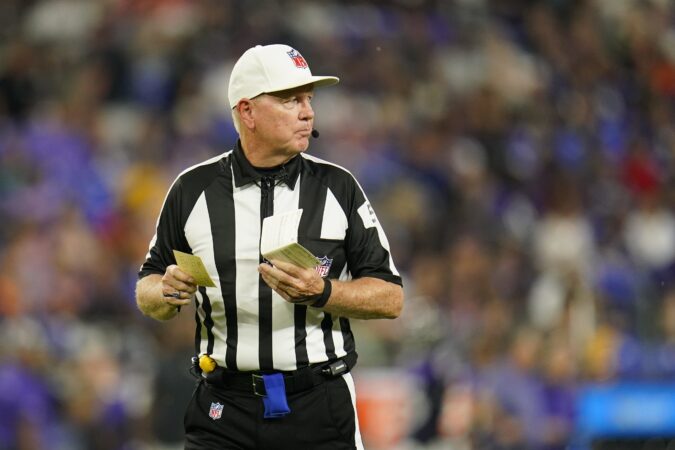
It’s easy to criticize the refs, but this weekend NFL officials really gave fans and announcers a few things to complain about.
One was a key late play during the New England Patriots’ win over the Baltimore Ravens Sunday night.
With a little more than three minutes remaining, Ravens cornerback Marlon Humphrey appeared to outright tackle Patriots wide receiver Kayshon Boutte on a deep pass. Despite an official watching just yards away, no flags were thrown, to the surprise of everyone on NBC’s Sunday Night Football broadcast.
“It’s not really hard — that’s pass interference,” NBC rules analyst and former official Terry McAulay said.
Mike Tirico, Cris Collinsworth, and Terry McAulay voice their shock about pass interference not being called against the Ravens on a Patriots deep ball. 🏈🦓🎙️ #NFL#SNFpic.twitter.com/CEGfOgTVA5
Earlier on Sunday, during the Carolina Panthers’ win against the Tampa Bay Buccaneers, officials missed what appeared to be a blatant fourth-down penalty.
With a little under five minutes remaining and the game tied, Panthers defender Princely Umanmielen hit punter Riley Dixon after he kicked the ball, which should have resulted in a penalty and a first down. Instead, officials called holding on the Buccaneers and missed the running-into-the-kicker penalty altogether.
“I think when you fixate watching the hold, maybe you miss that contact on the punter,” Fox rules analyst and former official Mike Pereria said during the broadcast. “It is contact to the body. I would have had running into the kicker.”
Fox rules analyst Mike Pereira points out that officials in Bucs-Panthers missed a running into the kicker penalty due to their focus on a holding call. pic.twitter.com/pfZJfEG3dL
Then there’s the controversial ending of the Pittsburgh Steelers-Detroit Lions game, in which Lions receiver Amon-Ra St. Brown lateraled to quarterback Jared Goff for what would have been the game-winning touchdown.
On the play, St. Brown was called for pass interference, negating the touchdown. But both head official Carl Cheffers and CBS announcers Jim Nantz and Tony Romo did a poor job explaining why the Lions didn’t get another play
“By rule, that penalty is not enforced and there is no replay. The game is over,” Cheffers said.
Lions almost just had the craziest walk-off touchdown in recent memory
Instead the referees called an offensive pass inference on Amon-Ra St. Brown and the Steelers survive pic.twitter.com/KbHFFsnRlr
NFL rules stipulate if the offense commits a foul with no time remaining, “there shall be no extension of the period. If the foul occurs on the last play of the half, a score by the offense is not counted.”
Goff appeared to cross the goal line with no time on the clock, but the play wasn’t reviewable. If Goff had run into the end zone with time remaining, the Lions could have been given another shot.
After the game, Cheffers called it “a pretty complex play.”
“We have the original player who had the ball lose possession of the ball. So, we had to decide if that was a fumble or a backward pass because of course we have restrictions on the recovery of a fumble inside of two minutes,” Cheffers told pool reporter Nolan Bianch. “We ruled that it was a backward pass, so the recovering player was able to advance it and that recovering player advanced it for a touchdown.”
“We had to rule on that and then because of the offensive pass interference, it negates the touchdown. Because it is an offensive foul, we did not extend the half. Therefore, there is no score and there is no replay of the down,” Cheffers added. “That’s the way the rule is written.”
It also wasn’t the only controversial call to end the game. With 22 seconds left, Goff hit St. Brown on a one-yard touchdown pass, which would have won the game. But officials called pass interference on Lions receiver Isaac TeSlaa, negating the go-ahead score.
“The reporting official on that play told me that the offending player picked one of the defenders, creating an opportunity for the offensive player to make the catch,” Cheffers said.
An internal CBS News battle over a “60 Minutes” story critical of the Trump administration has exploded publicly, with a correspondent charging it was kept off the air for political reasons and news chief Bari Weiss saying Monday the story did not “advance the ball.”
Two hours before airtime Sunday, CBS announced that the story where correspondent Sharyn Alfonsi spoke to deportees who had been sent to El Salvador’s notorious CECOT prison, would not be a part of the show. Weiss, the Free Press founder named CBS News editor-in-chief in October, said it was her decision.
The dispute puts one of journalism’s most respected brands — and a frequent target of President Donald Trump — back in the spotlight and amplifies questions about whether Weiss’ appointment was a signal that CBS News was headed in a more Trump-friendly direction.
Alfonsi, in an email sent to fellow “60 Minutes” correspondents said the story was factually correct and had been cleared by CBS lawyers and its standards division. But the Trump administration had refused to comment for the story, and Weiss wanted a greater effort made to get their point of view.
“In my view, pulling it now after every rigorous internal check has been met is not an editorial decision, it is a political one,” Alfonsi wrote in the email. She did not immediately respond to requests for comment from The Associated Press.
Alfonsi said in the email that interviews were sought with or questions directed to — sometimes both — the White House, State Department and Department of Homeland Security.
“Government silence is a statement, not a VETO,” Alfonsi wrote. “Their refusal to be interviewed is a tactical maneuver designed to kill the story. If the administration’s refusal to participate becomes a valid reason to spike a story, we have effectively handed them a ‘kill switch’ for any reporting they find inconvenient.”
“Spike” is a journalist’s term for killing a story. But Weiss, in a statement, said that she looked forward to airing Alfonsi’s piece “when it’s ready.”
Speaking Monday at the daily CBS News internal editorial call, Weiss was clearly angered by Alfonsi’s memo. A transcript of Weiss’ message was provided by CBS News.
“The only newsroom I’m interested in running is one in which we are able to have contentious disagreements about the thorniest editorial matters with respect and, crucially, where we assume the best intent of our colleagues,” Weiss said. “Anything else is completely unacceptable.”
She said that while Alfonsi’s story presented powerful testimony about torture at the CECOT prison, The New York Times and other outlets had already done similar work. “To run a story on this subject two months later, we need to do more,” she said. “And this is ‘60 Minutes.’ We need to be able to get the principals on the record and on camera.”
It wasn’t clear whether Weiss’ involvement in seeking administration comment was sought. She reportedly helped the newscast arrange interviews with Jared Kushner and Steve Witkoff this past fall to discuss Trump’s Middle East peace efforts. Trump himself was interviewed by Norah O’Donnell on a “60 Minutes” telecast that aired on Nov. 2.
Trump has been sharply critical of “60 Minutes.” He refused to grant the show an interview prior to last fall’s election, then sued the network over how it handled an interview with election opponent Kamala Harris. CBS’ parent Paramount Global agreed to settle the lawsuit by paying Trump $16 million this past summer. More recently, Trump angrily reacted to correspondent Lesley Stahl’s interview with Trump former ally turned critic Marjorie Taylor Greene.
“60 Minutes” was notably tough on Trump during the first months of his second term, particularly in stories done by correspondent Scott Pelley. In accepting an award from USC Annenberg earlier this month for his journalism, Pelley noted that the stories were aired last spring “with an absolute minimum of interference.”
Pelley said that people at “60 Minutes” were concerned about what new ownership installed at Paramount this summer would mean for the broadcast. “It’s early yet, but what I can tell you is we are doing the same kinds of stories with the same kind of rigor, and we have experienced no corporate interference of any kind,” Pelley said then, according to deadline.com.
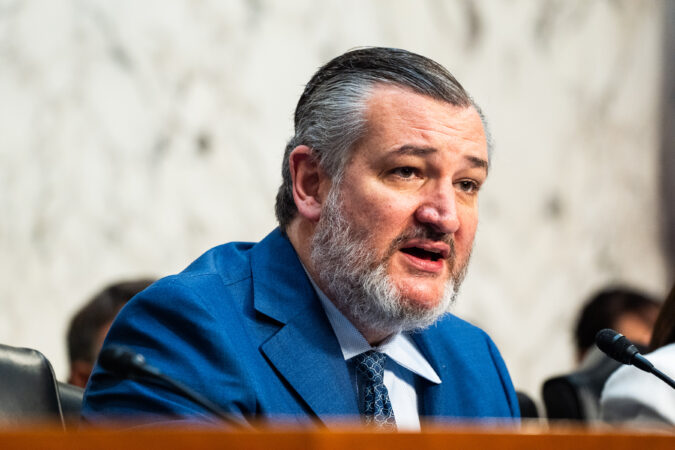
Sen. Ted Cruz sat down with a longtime ally in November at an office near D.C.’s Union Station to discuss the future of the Republican Party. Before long, the discussion touched on his own future.
His friend Morton Klein, president of the Zionist Organization for America, told Cruz he believed that “Jew hatred and Israel bashing” was on the rise on the right — and that something had to be done about it. Cruz, who had begun a series of speeches decrying antisemitism in the GOP, told Klein he had been fielding requests from people urging him to run for president in 2028.
Cruz came across as someone “seriously” considering such a run, Klein recalled.
With the future of the party up for grabs in a Donald Trump-less 2028 primary, Cruz has in recent months positioned himself as a loud voice for a more traditional, hawkish Republican foreign policy. He’s also urging the GOP to rid itself of popular MAGA pundit Tucker Carlson, whom he argues is injecting the “poison” of antisemitism into the movement with his broadsides against Israel. Carlson has rejected that characterization.
As he feuds with Carlson, Cruz is weighing a second presidential bid, according to a person close to the senator and another briefed on his thinking, who spoke like others on the condition of anonymity to disclose internal conversations. A White House run would be politically risky for Cruz, 55, putting him on course to collide with Vice President JD Vance, who many Republicans expect to enter the 2028 race.
Friction is already evident behind the scenes: Cruz has criticized Vance, a close ally of Carlson, to Republican donors, according to two people familiar with the comments. The senator has warned that Vance’s foreign policy views are dangerously isolationist, the people said.(Vance has been one of the GOP’s most prominent skeptics of U.S. intervention abroad.)
The emerging rivalry shows how much the party has changed under Trump’s leadership since Cruz arrived in the Senate in 2013. After rising to prominence as a rebel against the establishment, Cruz is now a vocal champion of some longtime orthodox GOP positions, as a new generation of conservatives is ascending with a different vision.
Some political observers are skeptical that another Cruz run would gain much traction. He can no longer run as an outsider and alienated some conservatives with his fight against Trump in the 2016 campaign. Still, Cruz has built name recognition and relationships with plenty of activists and donors across the country in recent years, and it’s far from clear what will animate the base in the next GOP primary.
“Can Ted help craft or meld together the traditional Republican approach with the new reality of what the Republican Party is now?” asked Daron Shaw, a political science professor at the University of Texas who overlapped with Cruz as a staffer on George W. Bush’s presidentialcampaign. “It’s a heavy lift.”
The day after his chat with Klein, Cruz called Carlson “a coward” during a speech before a group supporting Jewish conservatives in Las Vegas, again denouncing the “poisonous lies” of antisemitism. He said they were “blessed” to have Trump, who “loves the Jewish people,” in the White House right now.
“When Trump is not in the White House, what then?” he asked in his booming voice.
“Ted Cruz!” an audience member shouted.
The senator just smiled, then continued his speech.
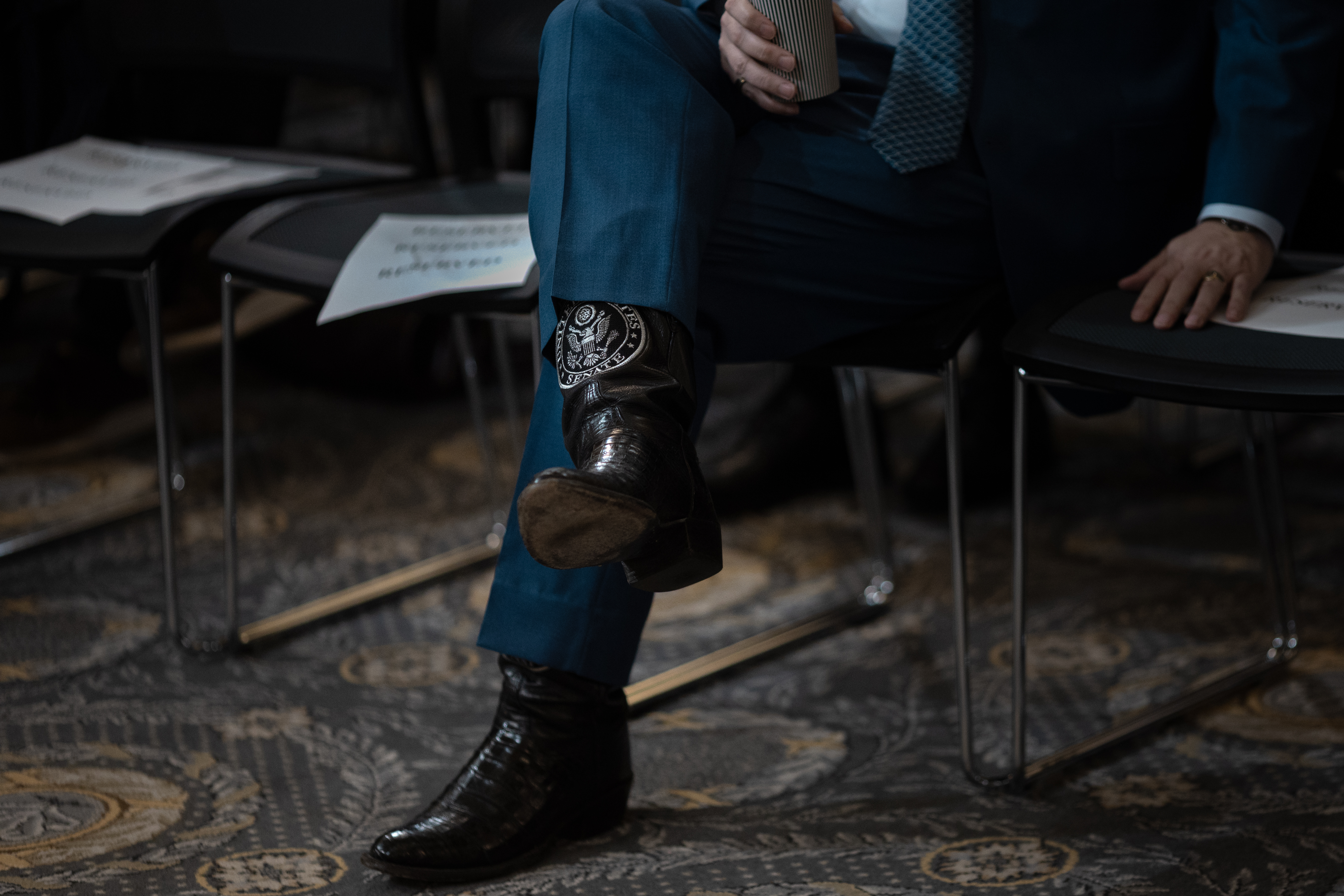
Sen. Ted Cruz (Texas) wears Senate-themed boots in May at the Capitol.
‘All of us hate Ted Cruz’
Anyone considering a run for the GOP nomination in 2028 faces a big obstacle: Vance.
The 41-year-old vice president leads early polls and is seen as a loyal lieutenant to Trump, who maintains high support from the party base even as the president’s approval ratings have plummeted.
But Trump has been noncommittal about endorsing his running mate as heir to his Make America Great Again movement, leaving an opening for an ambitious conservative with a different vision for the party.
“The Republicans will be fighting for their identity,” Rep. Marjorie Taylor Greene (R-Georgia) said of the 2028 primary. Greene, a close ally of Carlson who represents the populist and isolationist wing of the party, added: “There’ll be Ted Cruz, I’m sure, running against JD Vance. All of us hate Ted Cruz.”
Cruz has adapted to changes in his party over several decades in politics. Following a stretch in the establishment during Bush’s 2000 campaign, he became solicitor general of Texas in 2003 and launched a Senate campaign in 2011 as a tea-party-infused change agent, defeating the lieutenant governor in the GOP primary.
“The best thing to happen to the Republican Party was to get its teeth kicked in in 2008,” Cruz said during a 2012 campaign event with the libertarian Ron Paul.
When he arrived in Washington, Cruz picked fights over spending and President Barack Obama’s health care law, sparking a government shutdown in 2013. Not everyone in his party liked his style. “If you killed Ted Cruz on the floor of the Senate, and the trial was in the Senate, nobody could convict you,” Sen. Lindsey Graham (R-South Carolina) joked at a 2016 press dinner.
Cruz brought his insurgent pitch into the 2016 presidential race, but Trump caught fire with an antiestablishment campaign that dramatically eclipsed the senator’s. After bowing out of the GOP race as the last major Trump opponent standing, Cruz told delegates at the Republican National Convention that year to “vote your conscience,” instead of throwing his support behind Trump, who had branded him as “Lyin’ Ted.” He returned to the Senate, where he is now chair of the Commerce Committee and has refashioned himself into a bipartisan dealmaker on aviation safety and other issues.
The Texas senator, who has called himself a “noninterventionist hawk” and has long been a vocal ally of Israel, argues that an anti-Israel foreign policy could embolden terrorists. And he is a defender of the benefits of traditional capitalism at a time when some in the “New Right” are calling for a more populist turn.
“Those who are anti-Israel quickly become anti-capitalist and anti-American,” Cruz said in a brief interview about his decision to speak out against Carlson. “Tucker’s obsession is unhealthy and dangerous.”
By targeting Carlson and growing anti-Israel sentiment within the party, Cruz has hit upon a division within the GOP base that some believe could animate the 2028 primaries. Carlson is closely allied with Vance, a onetime Trump critic who is now an “America First” populist, embracing skepticism of some big-business interests and rejecting the U.S. foreign policy status quo.
Cruz is staking out positions against isolationism and antisemitism at a time when explicitly antisemitic figures such as white supremacist commentator Nick Fuentes are gaining an audience on the right.
Vance, by contrast,has rejected the suggestion that the right has a problem with antisemitism afterCarlson hosted Fuentes for a friendly interview. (The vice president disavowed Fuentes months before the interview and has not explicitly weighed in on Carlson hosting him.)
It’s “kind of slanderous to say that the Republican Party, the conservative movement, is extremely antisemitic,”Vancesaid in a recent interview with NBC News. In a social media postlast week, Vance criticized a news article claiming antisemitism was rising among young people.
“I would say there’s a difference between not liking Israel (or disagreeing with a given Israeli policy) and antisemitism,” he replied to one user.
Asked to respond to Vance’s comment, Cruz said he is not in agreement with “people who are anti-Israel or people who are antisemitic.”
“Every Hamas or Hezbollah or IRGC terrorist that Israel took out makes Americans safer,” Cruzsaid, referencing militants in Gaza, Lebanon and Iran that the United States designates as terrorist groups. “And those who don’t see that are not acting in accordance with American national security interests.”
The feud
In early July, Cruz sat down in Washington with Israel’s prime minister and delivered a dire warning. Over cigars at Blair House, Cruz told Benjamin Netanyahu that antisemitism on the right was rising to a level he had never seen before.
“No, Ted,” Netanyahu responded, according to Cruz, who recounted the conversation in a speech. “That’s Qatar, that’s Iran, that’s astroturf, that’s paid for.”
But Cruz said he was not placated. Replies to his social media posts were flooded with anti-Jewish bigotry from what looked to him like ordinary, real people. He began to fear that what he saw as antisemitism on the left was beginning to infect the right, he said.
In June, Cruz sat for an interview with Carlson that grew heated over the topic of Israel. Cruz suggested that Carlson criticizes Israel more than other countries because of bigotry toward Jews. Carlson said he has many Jewish friends who have the same questions as him and grilled Cruz with factual questions on the Middle East. In an uncharacteristic lapse, Cruz failed to identify the population of Iran. “You don’t know the population of the country you seek to topple?” Carlson asked.
Since then, the two have savaged each other in increasingly personal terms. Carlson has called Cruz “vulgar and dumb and reckless” for connecting U.S. military support for Israel to a biblical responsibility to defend the Holy Land and God’s chosen people. After Carlson hosted Fuentes on his podcast this fall, Cruz called on Republicans to repudiate the pundit.
Carlson “decided Jews are the source of all evil in the world,” Cruz said in a recent podcast. The senator also posted a digitally altered sexually suggestive photo of Carlson to critique his friendly stance toward Qatar, a U.S. ally with which Israel has clashed.
Since the killing of conservative influencer Charlie Kirk, internal battles about the future of the GOP have spilled into the open, many centering on the true meaning of “America First” as Trump spends time and political capital on Ukraine, Israel and Venezuela. Carlson criticized Trump’s decision to strike Iran’s nuclear sites in June and has warned the president against pursuing regime change in Venezuela, a goal Cruz shares.
“What Ted is trying to do is say, this is where our voters are,” said one person close to the senator. “Trump and Ted are much more aligned on foreign policy than Trump and Tucker are.”
Few Republicans have publicly rallied to Cruz’s side.
“I can tell you, my colleagues, almost to a person, think what is happening is horrifying,” Cruz said in one speech on Carlson. “But a great many of them are frightened because he has one hell of a big megaphone.”
Rep. Dan Crenshaw (R-Texas) said he “applauds” Cruz for speaking out against Carlson. But others declined to weigh in.
Sen. Tommy Tuberville (R-Alabama), a close Trump ally, said he believes the back-and-forth is personal. “Sometimes when you get embarrassed, you get mad, get your feelings hurt,” he said.
Sen. Richard Blumenthal (D-Connecticut) said he is surprised but happy that Cruz has the “courage” to challenge such a powerful figure on the right. “To give Senator Cruz due credit, it requires some guts and gumption to stand up against Tucker Carlson,” he said.
As Carlson and Cruz have attacked each other, Trump has declined to take sides, calling Carlson a “nice guy” and Cruz a “good friend” in recent months.
Carlson has said he thinks “antisemitism is immoral, and I am against it.” He argues the feud is just politics. “All [Cruz] wants is to be president. That’s all he’s ever wanted,” Carlson said in an interview. “As a political matter, he somehow thinks that calling me a Nazi is going to get him the nomination because it’s going to hurt JD Vance.” (Cruz has not publicly used that word to described Carlson.)
Rep. Ryan Zinke (R-Montana), who argued that Cruz damaged his credibility with conservatives after spurning Trump in 2016 but later recovered his standing, said Cruz “always has an eye on running.”
“Ted stakes out his position pretty well, and so were he to run, we know where he is,” Zinke said.
So far, there are few signs that Cruz is gaining an advantage. Hal Lambert, a major GOP donor who helped organize a super PAC to support Cruz when he ran for president in 2016, said he thinks a 2028 bid would be tricky for the senator.
“If JD Vance is running, I’m going to be supporting JD Vance,” Lambert said.
“I just don’t understand what the platform would be,” he said of Cruz’s potential run. “The platform would be, I’m Ted, and that’s JD?”
Kadia Goba and Sarah Ellison contributed to this report.
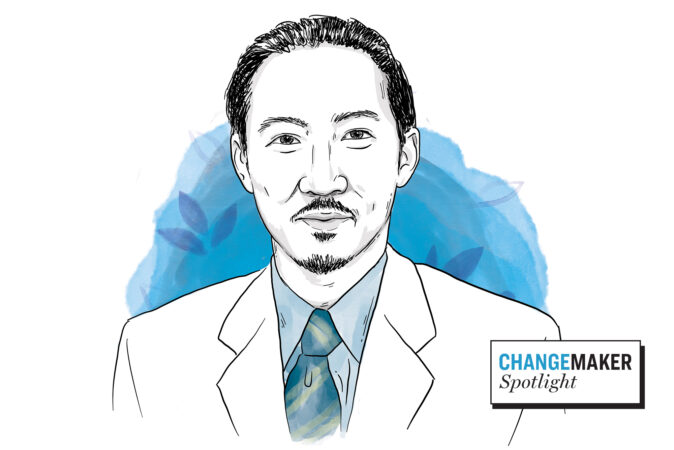
“My path from being a 9-year-old boy, a refugee from Vietnam in a family resettled in South Philadelphia, to becoming CEO of SEAMAAC [Southeast Asian Mutual Assistance Association Coalition], just seems perfectly fitting for a story of America,” Thoai Nguyen said. “But when I think more deeply upon my life and other people who faced very similar challenges, it could have gone in many different ways.” Nguyen’s sensitivity to the potential outcomes of immigrants is informed both by his personal experiences as well as his leadership of SEAMAAC. The organization’s services, which include education, health care, and community development, are crucial in this moment: In 2023, immigrants comprised 14.3% of U.S. residents, up from 11.19% in 2000. In 2024, Philadelphia’s immigrant population reached an 80-year high. And while poverty in the city is at a 25-year low, housing remains unaffordable and more people are experiencing homelessness than ever before.
The nonprofit is also invested in changing the cultural discourse around immigration. On Jan. 22, 2026, the organization will launch “Indivisible,” a video storytelling project in collaboration with the American Swedish Historical Museum and funded by the William Penn Foundation. “Indivisible” invites Philadelphians to share their family’s immigration experience, connecting their roots to today’s political discourse. “I want people to discover themselves as they’re telling their story,” Nguyen said. “And then in doing so, inspire others to look at their own roots.”
Here, Nguyen shares his roots as a Vietnamese refugee in Philadelphia in the 1970s, and his unique perspective on community outreach, organizing, and where SEAMAAC is headed.
Tell me about your family’s experience coming to the United States. How does that shape the work you do now?
My family was resettled to South Philadelphia in 1975 after uprooting everything we’d known for generations. It really shaped my very early understanding of the world around me.
Because my father worked for the U.S. government for many years while he was in Vietnam, we were prioritized to be airlifted out. We were the first family to land in South Philly in the Seventh Street business corridor, which, at that time, was still a thriving, vibrant business district, primarily for Jewish businesses owned by Jewish families who had survived the Holocaust and I believe that experience made them more compassionate to my family’s plight. At first we were the only Asian family in the midst of working-class Irish, Polish, and Italian immigrants. So for the first four to five years, that was what I knew.
From the late ’70s up until 1985, more Vietnamese refugees began to be resettled there, and then Cambodian, Laotian, ethnic Hmong, ethnic Chinese followed. That caused a lot of racial tension. Being one family, we may not have been a threat, but when you have hundreds of different families speaking six or seven different languages, wearing different clothing, eating different food, practicing different customs, you’re going to push up against the nativist sense of entitlement and turf.
It impacted my understanding of who I am in the context of everything. For the first five years as a refugee, I had a very diverse friend group. I remember playing hockey, soccer, and American football, and our team was really representative of the neighborhood. My older brother and I were the only Asian guys on the team, but we were kind of embraced by the neighborhood. I should say that (and this is not a pat on the back or anything) my dad’s family was fairly wealthy and he was very well-educated and very sophisticated. He spoke four languages — Vietnamese, English, Japanese, and French — fluently. As a result, our upbringing in Vietnam was very urbane.
But the new refugees coming in were not coming from that same sort of social environment. A lot of them came from more agrarian areas, and they had a more difficult time adjusting to the urban neighborhood in South Philly. And while I was accepted into a group of Italian- and Irish-American kids, the reality of identity really hit me. They may not have seen me as different, but I was very much an immigrant. I felt this deep sense of connection with the new refugees, and about the same time, my dad started working for one of the refugee resettlement agencies to help the new refugees entering the neighborhood. When I was 15 or 16 years old, I would start advocating for some of the new refugees when my father was busy at work. They would knock on the door, and I would go out and help them facilitate a discussion with the landlord or the neighbor to get around some sort of cultural misunderstanding.
How would you describe what SEAMAAC does and why it matters?
We describe the people that we serve as economically, socially, and politically vulnerable communities. The name singles out the Southeast Asian immigrants and refugees because they were part of our original mission. And while we still serve Asian communities, today, our mission statement is really an economic, social, and political-class statement. Depending on the year, 50% of the communities we serve are Black families or families with African ancestry. There have also been a lot of Ukrainians entering Philadelphia in the past five years. So we serve economically- and historically-disenfranchised or vulnerable families of all races and ethnicities. It doesn’t matter who they are, if we have programs or services they need, then they are welcomed.
We also do advocacy, education and organizing work, which is something that was not there before I came to SEAMAAC. I would argue that the quality of our services today is a hundred times better than 20 years ago because our work today is deeply informed by a radical analysis of poverty.
Can you tell me more about that? How do you define radical?
When we say “radical,” we don’t mean people running around arguing to defund the police. We mean “radical” in the sense of its Latin origin, which means “root.” To me, if you boil down the problems faced by the family or community today, the cause of the problems is usually poverty. Debilitating generational poverty. Some of our services are just a band-aid on certain issues. We’re plugging leaks here and there. But to get to the root cause of these issues, we need to get people to think and act strategically, to really think more about who they’re voting for.
How does SEAMAAC engage in community empowerment?
I would say that we don’t do any “empowerment” work because that creates a presumption that we have power to give to people. We really try, instead, to build an environment in which people can find their own voice and agency, then have self-determination in their future. To me that is less about traditional social services than it is about movement building and community organizing. And we’re trying to build really slowly, but steadily.
I’ll give you an example: I sometimes guest lecture at Penn, Jefferson, or Temple. And students are generally really interested in my organizing background and what I did prior to SEAMAAC. And on the surface, that’s the sexy stuff. I was organizing against the police brutality, getting arrested for civil disobedience, and taking over buildings, taking over bridges and tunnels in New York City. But a lot of students will say, “Oh, Mr. Thoai, tell us the most radical thing that you’ve ever done.” And they think that I’m going to talk about the time that I scaled this building to drop a protest banner.
But in reality, the most radical thing that I’ve ever done is finding livable wage jobs for 20 families at one time, where mom and dad got jobs at a hospital system in Philadelphia. And they are now getting paid better than minimum wage and receiving health care coverage for their family from a 40-hour work week. What more radical way can you change a person’s life than doing that? Mom and dad now don’t have to work two jobs, 12 hours a day. They have Saturdays and Sundays free to spend with their family. What is fundamentally better than that?
What gives you hope about the work? What keeps you up at night?
What keeps me up at night is the crisis that’s been building in our democracy over the last 10 months and the fact that working-class Americans are being disenfranchised through the defunding of our public benefits. I’m concerned specifically with how defunding impacts the families SEAMAAC serves. We’ve already taken an $800,000 loss over the previous nine to 12 months. And that affects the lives of the people whom we serve but also the livelihood of our team. In that period, we also lost 15 staff members. So we went from a team of 50 to now 35. Clearly we need more people because requests for service have increased, not decreased.
Our ability to meet the demand is stable for now, but that requires the remaining 35 staffers to work extra hard. And as the CEO, I have to be really careful about them burning out, or worse, for them to say, “I’m done. I can’t do this anymore.” So it’s a real fine line for the nonprofit sector. That’s what keeps me up at night, thinking about the 12 people that I had to lay off over the last six months, I feel terrible. But you can’t sustain this work without hope. I’m sure you’re familiar with Mariame Kaba’s concept that hope is a discipline?
Actually, I’m not.
Her concept is that hope has to be an active verb. When you only hope for something, it does not mean that it will automatically happen, you have to take action day by day to make that hope into a reality.
After more than 20 years leading this organization, what are you most proud of?
I’ve been here long enough, 21 years now, that people are asking me about my legacy. Is my legacy going to be the Wyss Wellness Center that we opened up in collaboration with Jefferson Health? Or is it going to be the South Philly East Community Center that’s scheduled to open in December of 2026? I would say that it’s nothing structural like that, even though I love talking about tangibility.
I think the legacy that I leave for SEAMAAC is the dozens of young activists and organizers that I have the honor of mentoring right now and the dozens that I’ve mentored in the past. If I can instill a sense of compassion and integrity in a quarter of the people who we’ve developed at SEAMAAC, the things that I’ve done in life will have been worth it. Over the past 40 years, I’ve mentored a lot of great people and some have started their own organizations. Some are still doing anti-prison work, anti-death penalty work. I was mentored by some great community organizers, so I am just passing on their knowledge to the next generation of organizers.
PHILLY QUICK ROUND
What’s your favorite Philly food splurge? The pizza steak at Lazaro’s Pizza.
Favorite Philly small business? I always have to say Stina Pizzeria. It is not just the pizza — it’s the owner and their mission. And he named the restaurant after his wife, Christina. I mean, that’s just lovely.
What do you wish people knew about the people who call Philly home? We are rough around the edges, but we’re for real.
Who’s the greatest Philadelphian of all time? John Coltrane, a genius musician, an amazing civil rights leader. A jazz icon.
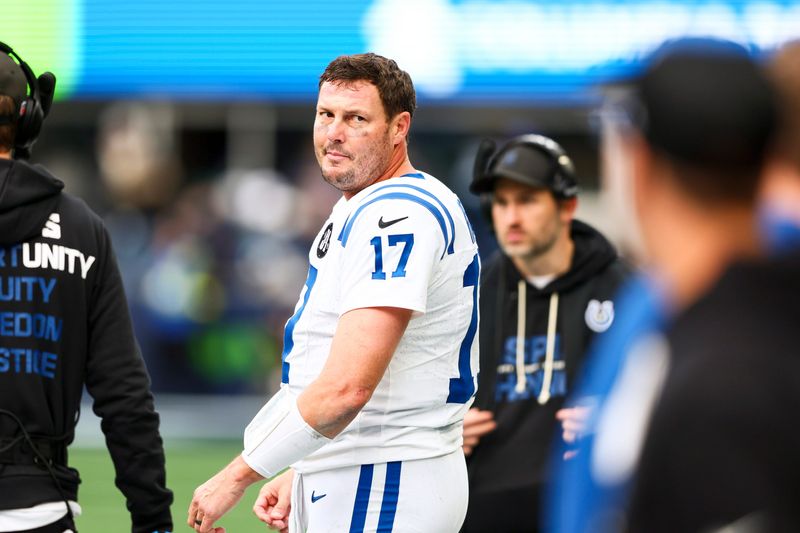
Eagles fans will be rooting for Philip Rivers and the Colts tonight.
Fans across the Delaware Valley will be rooting for 44-year-old Philip Rivers to lead the Indianapolis Colts to victory tonight against Brock Purdy and the San Francisco 49ers.
Why? A Colts win preserves the Eagles’ slim hopes of ending the season as the NFC’s No. 1 seed and securing a first-round bye.
The Eagles aren’t the only team that has a stake in tonight’s outcome. Here’s a rundown.
If the Colts win:
The Eagles will remain alive in the hunt for the NFC’s No. 1 seed
The Colts will remain alive in the hunt for the AFC South title
If the 49ers win:
The Bills, Jaguars, and Chargers will all clinch playoff berths
The 49ers will still be on track to land the No. 1 seed by winning their final two games against the Bears and Seahawks
If the Colts do win tonight, here’s what needs to happen in Week 17 for the Eagles to enter Week 18 with a shot at landing the No. 1 seed and home field advantage throughout the playoffs:
Eagles win vs. Bills
Bears win vs. 49ers
Panthers win vs. Seahawks
A Los Angeles Rams loss to the Atlanta Falcons would also help the Eagles, but the Birds just need the Rams to lose one of their final two games.
Essentially, the Eagles would need to finish the season with a 12-5 record in a three-way tiebreaker with the Bears and Seahawks to nab the top playoff seed. Unlikely? Yes, but crazier things have happened.
Despite recent struggles, Eagles sticking with Jake Elliott
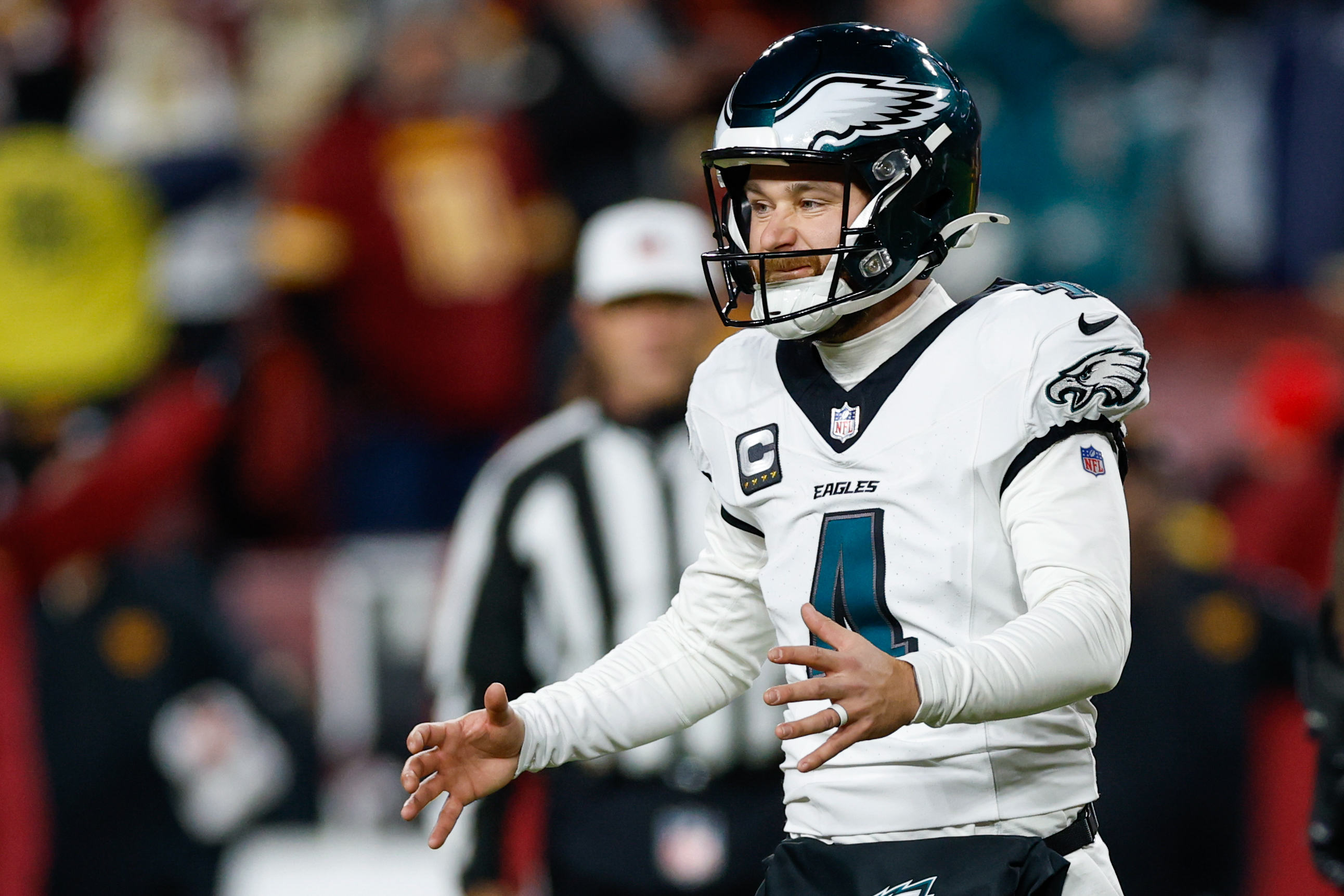
Jake Elliott has made just 70% of his field goals this season.
Eagles coach Nick Sirianni said the Eagles will not be bringing in competition for Jake Elliott as the longtime kicker has hit a rough patch late in the season.
Sirianni on Monday reiterated his confidence that Elliott will bounce back.
Elliott’s 70.8% success rate (17-for-24) on field goals is the lowest of his career. He missed a 43-yard field goal and a 52-yard try (as well as a 57-yard kick that was negated by a penalty) during Saturday’s win over Washington.
Elliott has missed five field goal attempts over the last five games. He also has a missed extra point during that stretch.
“I understand it’s a production-based business,” Elliott said Saturday when asked if he was worried the Eagles could bring in a new kicker. “You see it all the time. That’s out of my hands, that’s out of my control, all I can do is kind of put my head down and keep pushing.
“I just got to put the ball through the uprights. That’s my job, man. That’s it. It’s not any deeper than that.”
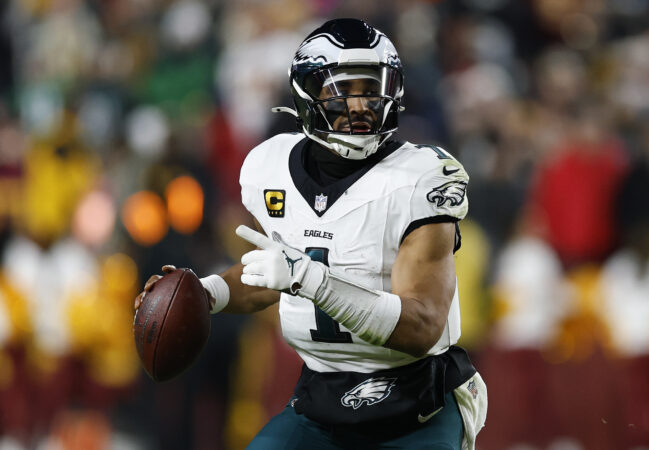
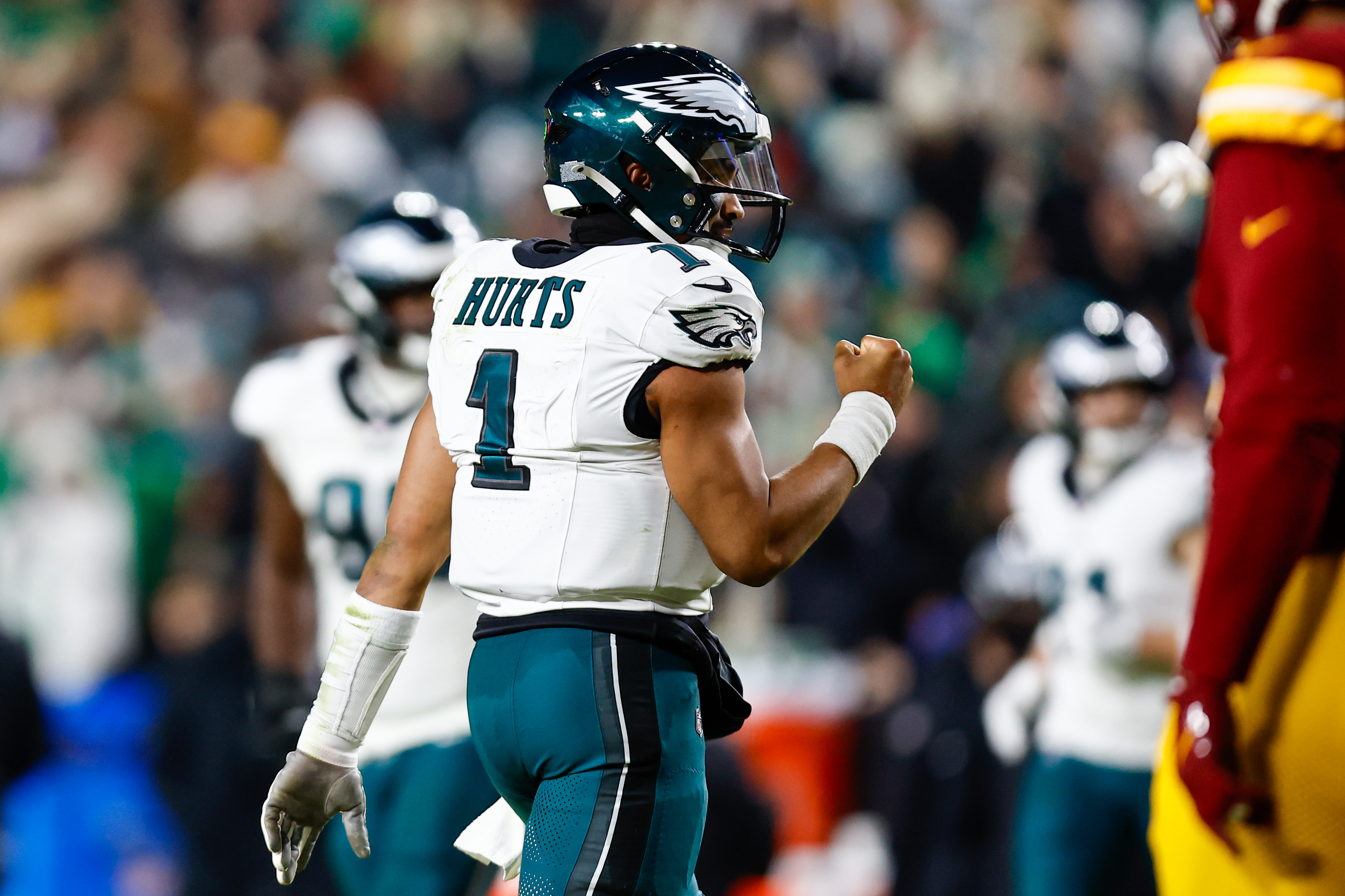
Jalen Hurts and the Eagles are positioned for a long playoff run.
On The Speakeasy podcast, former Eagles running back LeSean McCoy and former Eagles linebacker Emmanuel Acho were asked the question: Are the Eagles the best team in the NFC?
“When did we let it go,” McCoy said. “We were the defending champs last year. We were the NFC champs. See, y’all forget a lot though. I don’t forget. Last year, we won the whole NFC East. Last year we won the whole NFC. Last year we won the whole league, the Super Bowl. Why y’all forgot? Because we had a couple bad games. Because our Super Bowl quarterback had a couple of bad moments. We’re still the Eagles and we still put on a show. And the championship runs through Philly.”
To Acho, Saturday’s game showed the complete package of what the Eagles could be. Jalen Hurts completed 22 of 30 throws for 185 yards with A.J. Brown as his favorite target, and gained 40 rushing yards on seven carries. Meanwhile, Saquon Barkley finished with 132 yards on 21 carries to contribute to the team’s 207 total rushing yards.
“I think the Eagles are who we thought they were supposed to be all season,” Acho said. “Saquon [Barkley] really got active today. And then on top of that, A.J. Brown, he finally got active today. … This was maybe one of two or three complete games the Eagles have played all season. … The Eagles checked every single box you could hope and expect that they check.”
After a three-game skid, the Eagles have managed to bounce back with two consecutive wins over the 2-13 Las Vegas Raiders and the 4-11 Commanders, two teams that have struggled throughout the season.
“These games are momentum,” McCoy said. “It’s not about the opponent. It’s about getting us back in that groove. Getting us back with that motivation. Because when we get to the playoffs, we’re going to be rolling baby. … Résumés matter, playoff experience matters. And the way the offense is kind of clicking, the defense is making plays. I’m ready to roll.”
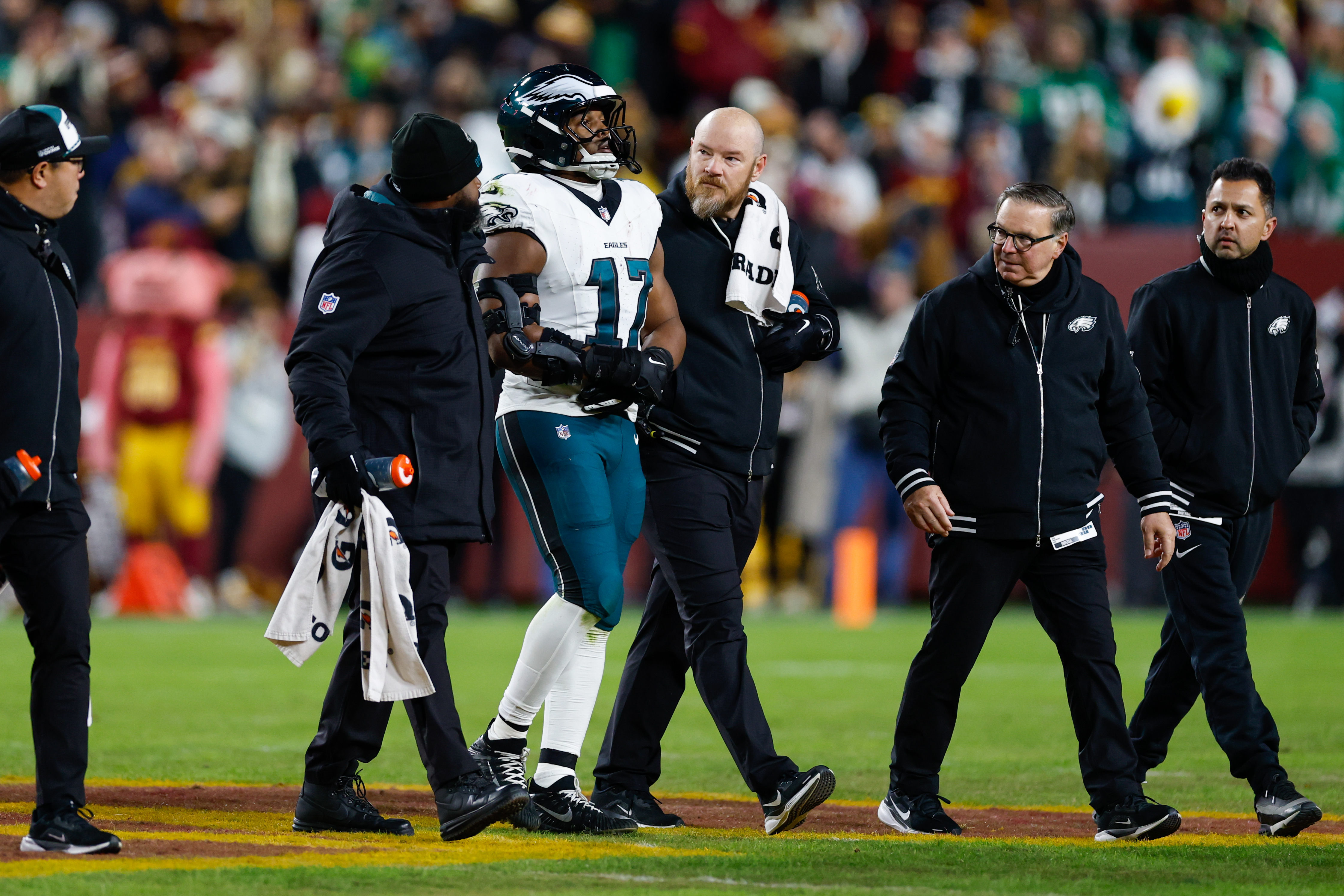
Nakobe Dean left Saturday’s game with a hamstring injury
During Saturday’s win against the Commanders, Eagles linebacker Nakobe Dean left the game with a hamstring injury halfway through the first quarter and didn’t return.
After the game, teammate Jordan Davis told 94.1 WIP’s Devan Kaney Dean’s injury was minor. And on Sunday, while hosting a toy drive in Cherry Hill, Dean confirmed to fans he was doing “just fine” and only tweaked his hamstring, according to NBC Sports Philadelphia’s Ashlyn Sullivan.
Nakobe Dean is here hosting a toy drive in Cherry Hill – he will also be taking students shopping in Philadelphia after this.
Nakobe said he is doing “just fine” and his hamstring injury was just a tweak. pic.twitter.com/PsL7ISA956
Merrill Reese: Commanders are being ‘cranky’ losers
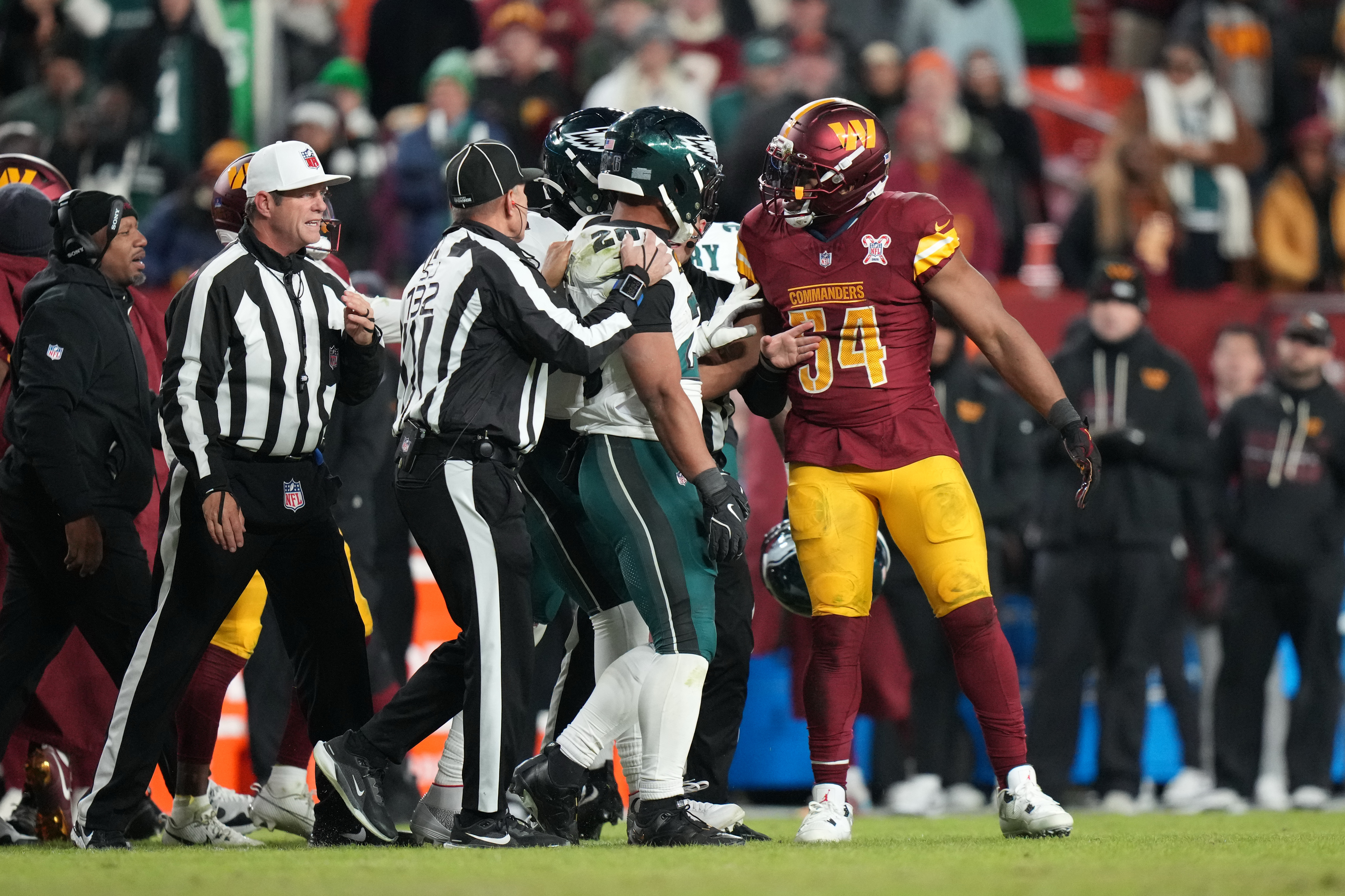
Commanders linebacker Bobby Wagner and Eagles running back Saquon Barkley exchange words during Saturday’s game.
Washington Commanders coaches and players were upset following Saturday’s loss to the Eagles, stemming from a two-point try they viewed as the Birds running up the score.
The conversion led to a melee, resulting in three players — including Eagles offensive lineman Tyler Steen — being booted from the game.
“I can only answer for my side, what I would do,” Commanders head coach Dan Quinn told reporters following the game. “Hey man, if that’s how they want to get down, then all good. We’ll play them again in two weeks.”
Eagles head coach Nick Sirianni told reporters he thought the extra point gave the Eagles a better shot at winning the game, and wasn’t because kicker Jake Elliott missed two field goal attempts.
Regardless, Eagles announcer Merrill Reese didn’t think the Birds were trying to run up the score, pointing in part to the team’s decision to stop throwing the ball and playing their backups on defense.
“If you’re playing at the rate the Commanders are playing, and you’re down to your third quarterback, anything’s going to make you irritable. You’re going to be angry about everything,” Reese said during an interview on 94.1 WIP Monday. “That was not running up the score. They’re just being cranky.”
Eagles running back Saquon Barkley summed up the feelings of both teams to reporters following the game.
“This team don’t like us, and that’s just the truth,” Barkley said. “And we don’t like them, either.”
Guess this is the moment Saquon Barkley was referring to when he said "we got a little fired up on the sideline," that led to the #Eagles RB "running angry" on his 12-yard TD.
Detroit Lions head coach Dan Campbell talks with officials after the final playof their loss to the Pittsburgh Steelers.
It’s easy to criticize the refs, but this weekend NFL officials really gave fans and announcers a few things to complain about.
First up is key late play during the New England Patriots’ win over the Baltimore Ravens Sunday night.
With a little more than three minutes remaining, Ravens cornerback Marlon Humphrey appeared to outright tackle Patriots wide receiver Kayshon Boutte on a deep pass. Despite an official watching from yards away, no flags were thrown, to the surprise of everyone on NBC’s Sunday Night Football broadcast.
“It’s not really hard — that’s pass interference,” NBC rules analyst and former official Terry McAulay said.
Mike Tirico, Cris Collinsworth, and Terry McAulay voice their shock about pass interference not being called against the Ravens on a Patriots deep ball. 🏈🦓🎙️ #NFL#SNFpic.twitter.com/CEGfOgTVA5
Earlier on Sunday, during the Carolina Panthers’ win against the Tampa Bay Buccaneers, officials missed what appeared to be a blatant fourth-down penalty.
With a little under five minutes remaining and the game tied, Panthers defender Princely Umanmielen hit punter Riley Dixon after he kicked the ball, which should have resulted in a penalty and a first down. Instead, officials called holding on the Buccaneers and missed the running-into-the-kicker penalty all together.
“It’s contact to the body. I would have had running into the kicker,” Fox rules analyst and former official Mike Pereria said during the broadcast.
That missed call proved pivotal, as the Panthers marched down the field and kicked what ultimately became the game-winning field goal.
Fox rules analyst Mike Pereira points out that officials in Bucs-Panthers missed a running into the kicker penalty due to their focus on a holding call. pic.twitter.com/pfZJfEG3dL
Then there’s the controversial ending of the Pittsburgh Steelers-Detroit Lions game, where Lions receiver Amon-Ra St. Brown lateraled to quarterback Jared Goff for what would have been the game-winning touchdown.
On the play, St. Brown was called for pass interference, negating the touchdown. But both head official Carl Cheffers and CBS announcers Jim Nantz and Tony Romo did a poor job explaining why the Lions didn’t get another play
“By rule, that penalty is not enforced and there is no replay. The game is over,” Cheffers said.
absolute chaos at the end of Lions-Steelers. Amon-Ra St. Brown stopped short of the goal line. flips to Jared Goff at the last second. he dives in for a game-winning touchdown… but! flags! offensive pass interference! Steelers win pic.twitter.com/Rg3Zy4SrQU
NFL rules stipulate if the offense commits a foul with no time remaining, “there shall be no extension of the period. If the foul occurs on the last play of the half, a score by the offense is not counted.”
If Goff had run into the end zone with time remaining on the clock, the Lions would have been given another play. Because of the penalty, the Lions weren’t able to review whether Goff crossed the plane of the goal line with one second remaining.
It also wasn’t the only controversial call to end the game. With 22 seconds left, Goff hit St. Brown on a one-yard touchdown pass, which would have won the game. But officials called pass interference on Lions receiver Isaac TeSlaa, negating the go-ahead score.
“The reporting official on that play told me that the offending player picked one of the defenders, creating an opportunity for the offensive player to make the catch,” Cheffers told pool reporter Nolan Bianch following the game.
Philip Rivers and the Colts can help the Eagles tonight.
The Eagles have already clinched the NFC East and will host a wild-card game at the Linc, but the Birds still have an unlikely shot at landing the No. 1 seed.
Here’s how the NFC playoff picture looks after Sunday’s games, with five teams having already clinched a postseason spot:
NFC playoff picture
window.addEventListener(“message”,function(a){if(void 0!==a.data[“datawrapper-height”]){var e=document.querySelectorAll(“iframe”);for(var t in a.data[“datawrapper-height”])for(var r,i=0;r=e[i];i++)if(r.contentWindow===a.source){var d=a.data[“datawrapper-height”][t]+”px”;r.style.height=d}}});
To land the No. 1 seed, Philly would need to win their final two games against the Buffalo Bills and Washington Commanders and get a lot of help, beginning with tonight’s Monday Night Football matchup between the San Francisco 49ers and Indianapolis Colts.
The Eagles need the Colts and 44-year-old Philip Rivers to win tonight to have any hope of landing the No. 1 seed.
Here’s everything that needs to happen over the final two weeks of the season for the Eagles to end up with the top seed and secure a first-round bye:
Eagles win their final two games against the Buffalo Bills and Washington Commanders
San Francisco 49ers lose to the Indianapolis Colts Monday and the Bears in Week 17
Seattle Seahawks lose their final two games against the Carolina Panthers and 49ers
Chicago Bears win against the 49ers in Week 16 and lose to the Detroit Lions in Week 17
Los Angeles Rams lose one of their final two games against the Atlanta Falcons or Arizona Cardinals
If all that happens, the Eagles would finish the season with a 12-5 record and would win a three-way tiebreaker with the Bears and Seahawks.
The path to the No. 2 seed is more realistic. If the Eagles win out, all they would need is for the Bears to lose their final two games to move up to the No. 2 seed. In that case, they’d host a wild card game against the No. 7 seed, currently the Green Bay Packers.
Josh Allen injured ahead of Sunday’s game against Eagles
Josh Allen injured his ankle but finished Sunday’s game for the Bills.
There’s snow in the forecast Sunday in Buffalo, where the Eagles will take on the Bills with playoff seeding on the line for both teams.
The Bills will officially clinch a playoff spot if the Indianapolis Colts lose tonight to the San Francisco 49ers, and they’ll enter Week 17 still in the hunt for their sixth-straight AFC East title.
Reigning NFL MVP Josh Allen injured his ankle during Sunday’s win against the Cleveland Browns, but X-rays taken at halftime were reportedly negative and he finished the game for the Bills.
Allen didn’t seem too concerned following the game.
“We’re gravy, baby,” Allen told CBS sideline reporter Evan Washburn following the game.
The last time the Eagles faced the Bills was 2023 at the Linc, with the Birds rallying to win in overtime. The celebrations didn’t last long, as the Eagles went on to lose five of their final six games and suffer an early playoff exit.
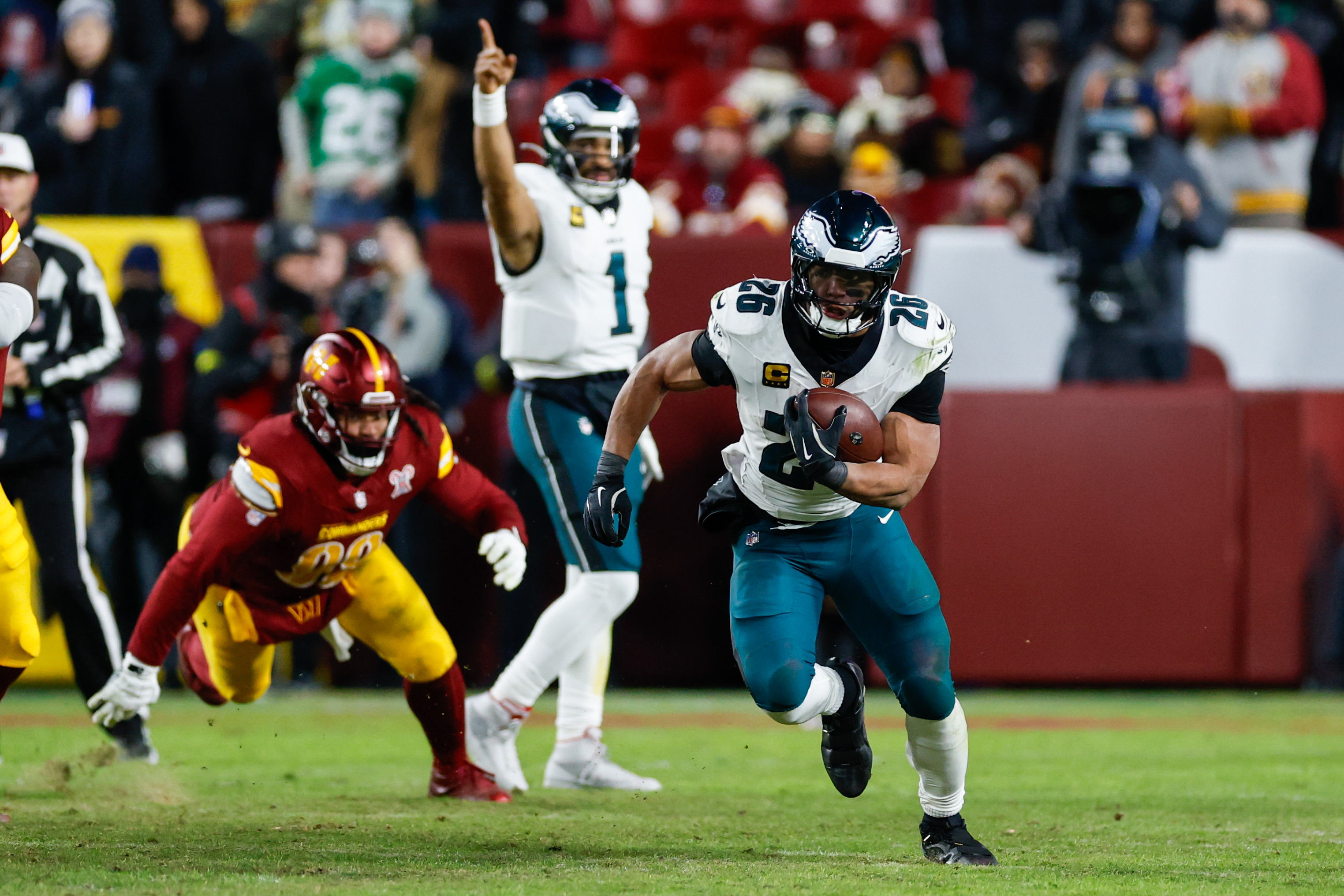
Saquon Barkley rushed for 132 yards and a touchdown Saturday.
Saquon Barkley had rushed for just 52 yards on 14 carries when he came to the sideline late in the third quarter. The Eagles had taken a 14-10 lead after a 17-play, touchdown-scoring drive, but they did so in spite of the struggles in the running game.
It’s been a season-long slog on the ground, but there have been glimpses of hope in recent weeks. And Barkley, who’s had to run into more stacked boxes than ever in his eighth year, felt that he wasn’t taking advantage of opportunities against a weakened Commanders defense.
“We got a little fired up on the sideline, but it was good,” Barkley said. “It’s all out of love, let’s say that. We want to do what’s best for the team when we’re winning games and hold each other accountable. But thank God it happened for me, to be honest, because it put me in my bag, as people would say.”
It was a 12-yard touchdown run off left tackle. The stat sheet account of the play doesn’t do Barkley’s seventh rushing score of the season justice. Jordan Mailata gave perhaps the best description.
“That was an angry run by Say,” the Eagles left tackle said. “Kind of expected that from him by the way he was acting on the sideline. He was just very adamant, being very positive, like, ‘Hey, we’re gonna get it.’”
Barkley’s touchdown wasn’t exactly the final nail. But he drove the last spike with a dazzling 48-yard run two drives later. And backup Tank Bigsby buried the Commanders with a 22-yard bolt into the end zone of the Eagles’ eventual 29-18 win at Northwest Stadium on Saturday.
It may be no coincidence that the offensive improvement came after Sirianni asserted more of his authority on that side of the ball three games ago. There were bright moments in the overtime loss to the Chargers, but Hurts had five turnovers.
Actually, there were improvements in run design the week before against the Bears. But the Eagles defense didn’t meet its usual standard and the offense couldn’t compensate. The numbers in the last four games, though, suggest that Barkley and Co. are doing something better.
The Eagles have averaged 4.96 yards per carry over that span. In their first 11 games, they averaged only 3.91 yards.
Former Imhotep Charter star’s catch propels Bears into the playoffs
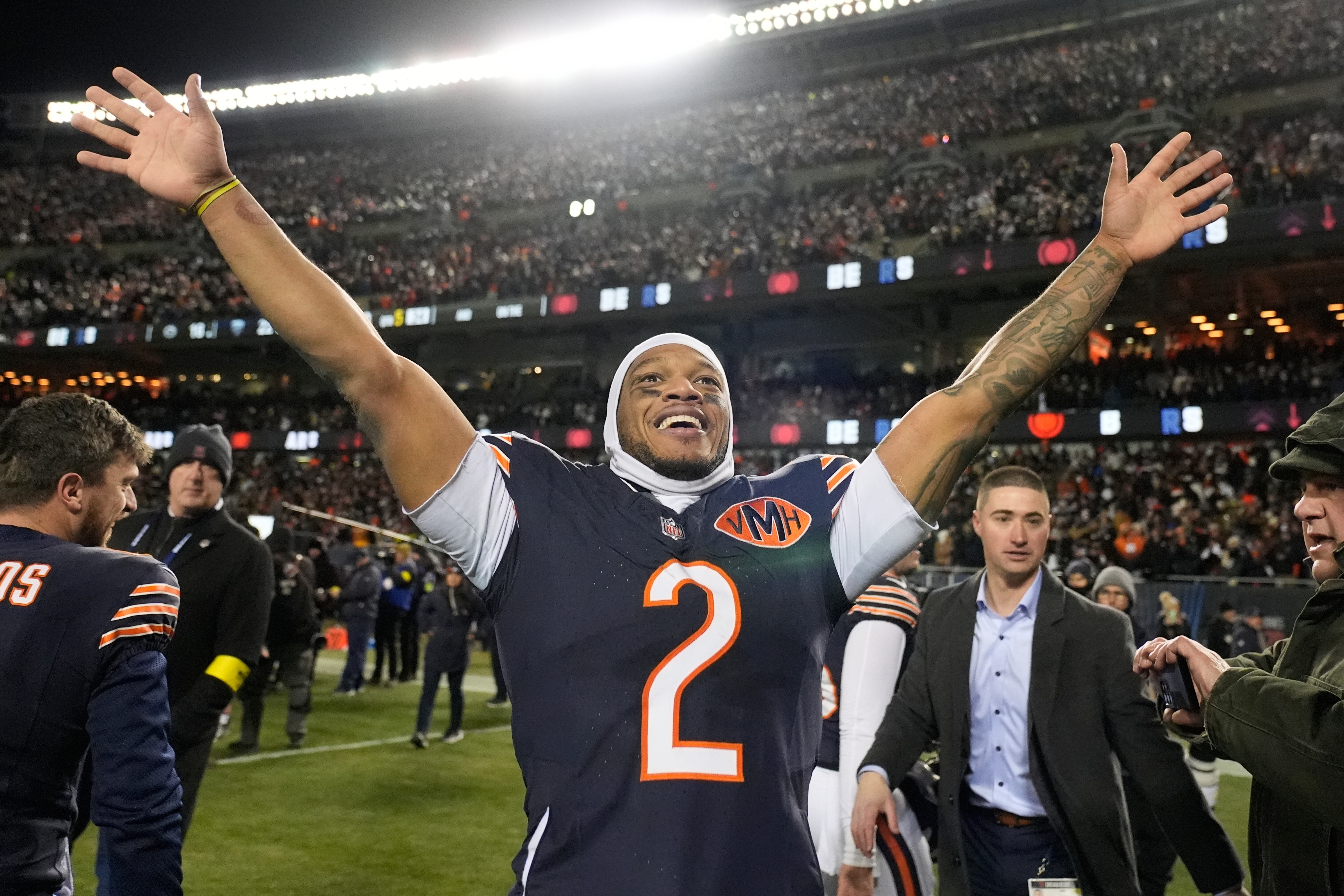
The Bears’ DJ Moore celebrates after his 46-yard TD catch in overtime beats the Green Bay Packers.
After overcoming a 16-6 deficit late in the fourth quarter Saturday night, the Chicago Bears beat the Green Bay Packers, in overtime, 22-16, thanks to a 46-yard touchdown reception from Philly native DJ Moore.
Three plays after the Bears stopped Green Bay on its drive in overtime, quarterback Caleb Williams found Moore, an Imhotep Charter graduate, off a play-action post route to score the walk-off touchdown, his sixth touchdown reception of the season.
“I just had to run, run like I did in practice and connect like we did at practice,” Moore said of his winning reception. ”It was really a practice rep but we did it in a game. Like I said, it was just amazing that we did it against the Packers.”
The victory moved Chicago to the NFC’s No. 2 seed and put the Bears in the driver’s seat to win the NFC North for the first time since 2018. The Bears haven’t made the playoffs since 2020.
Moore is the Bears’ leading receiver this year with 664 yards and is tied for the team lead in touchdowns with Rome Odunze.
Now in his eighth season in the NFL after a standout career at Maryland, Moore has scored three of his touchdowns in the last two games. This is his third year in Chicago after getting traded from the Carolina Panthers after the 2022 season and he has led the team in receiving each of the last three years.
The countdown to 2026 is on, and there’s no shortage of ways to celebrate the end of one year and the start of another. From New Year’s Eve dinner specials to adults-only celebrations and family-friendly gatherings, here are some waysto ring in the new year in and around Cherry Hill.
New Year’s Eve Events for Adults
Andy Cooney is performing for two nights in Cherry Hill.
The New York performer, known for his Irish musical renditions, will bring his band to the DoubleTree by Hilton Cherry Hill for two nights ahead of the new year. Packages with overnight accommodations are available and include dinner, a champagne toast, and breakfast.
⏰ Tuesday, Dec. 30, and Wednesday, Dec. 31, times vary 💵 $185-$282 📍2349 Marlton Pike West, Cherry Hill
This year, Vera will transform into a winter wonderland, complete with twinkling lights and snowflakes to ring in the new year. There will be a photo booth, ice sculptures, and a champagne toast at midnight.
The salon and spa geared toward kids is hosting a morning glam event, where kids can get their hair, makeup, or nails done. There will also be crafts, games, and dancing, followed by a balloon drop at noon.
Hot Wheelz is throwing several themed parties on New Year’s Eve, starting with its Bluey Year’s Eve Celebration. Taking place from 10 a.m. to noon, it includes a meet-and-greet with the character, ICEEs, and a scavenger hunt. At 12:30 p.m., Before Bedtime with Mickey and Minnie gets underway, featuring the popular Disney characters. Attendees are encouraged to wear their pajamas. At 4 p.m., New Year’s Eve Glow 2026 Countdown begins, complete with pizza, neon lights, and glow necklaces. And at 7:30 p.m., the final party of the night kicks off. Skate Into 2026 Skate Party includes pizza, a DJ, and attendees are encouraged to wear festive threads.
Bowling alley Lucky Strike is offering three ways to celebrate the end of 2025 and the start of 2026. Packages include two hours of daytime bowling, a two-hour “Sunset Bash” in the evening, or a four-hour “Ball Drop Premium” package, with options for food and a champagne or cider toast.
Hop aboard this historic vessel for views of the annual fireworks display. There are two shows: one at 6 p.m. geared toward families with little ones, and the midnight fireworks.
⏰ Wednesday, Dec. 31, 4 p.m. and 10 p.m. 💵 $10-$125 📍100 Clinton St., Camden
Try your luck at casino-style games, listen to live music from Neo Kyma, plus tunes from DJ Makis, and hit the dance floor at this family-friendly party that’s open to the community.
The à la carte menu for New Year’s Eve includes starters like prawns, burrata, potato croquette, and oysters, while entrées include Dover sole, herb-crusted lamb, lobster risotto, and filet mignon.
⏰ Wednesday, Dec. 31, last seating at 8 p.m. 💵 Prices vary 📍300 E. Evesham Rd., Cherry Hill
The Italian restaurant has a special menu for New Year’s Eve that includes jumbo lump crab cakes, penne vodka, chicken, veal, or eggplant parmigiana, a rib eye steak, and Asiago gnocchi. The children’s menu has a cheese pizza, chicken fingers, penne with butter, ravioli, and chicken parmigiana.
⏰ Wednesday, Dec. 31, last seating at 8:15 p.m. 💵 Prices vary 📍1491 Brace Rd., Cherry Hill
The Old World Italian eatery is serving a three-course prix fixe dinner on New Year’s Eve of a starter, entrée, and dessert for $95 per person, plus tax and gratuity. Diners can also choose to order à la carte. Entrées include Chilean sea bass, filet mignon, and seafood risotto. Signature drinks, wines, and bottles of bubbly will also be available.
⏰ Wednesday, Dec. 31, open until 9:30 p.m. 💵 Prices vary 📍211 Berlin Rd., Cherry Hill
The Mediterranean restaurant will have a prix fixe menu and a DJ to ring in 2026.
⏰ Wednesday, Dec. 31, open until 1 a.m. 💵 Prices vary 📍 2000 Route 38 #1160, Cherry Hill
This suburban content is produced with support from the Leslie Miller and Richard Worley Foundation and The Lenfest Institute for Journalism. Editorial content is created independently of the project donors. Gifts to support The Inquirer’s high-impact journalism can be made at inquirer.com/donate. A list of Lenfest Institute donors can be found at lenfestinstitute.org/supporters.
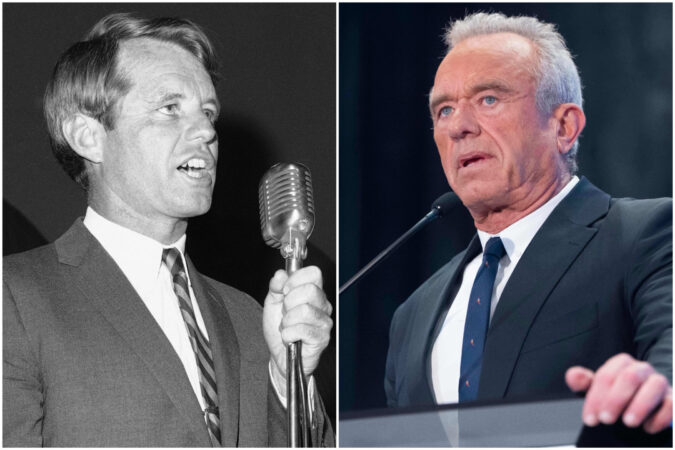
I find it impossible, like many my age, to think of Robert F. Kennedy Jr. without thinking about his father.
It isn’t easy. Considering the late Attorney General Robert Kennedy and his son together requires a leap of memory but a far larger one of faith.
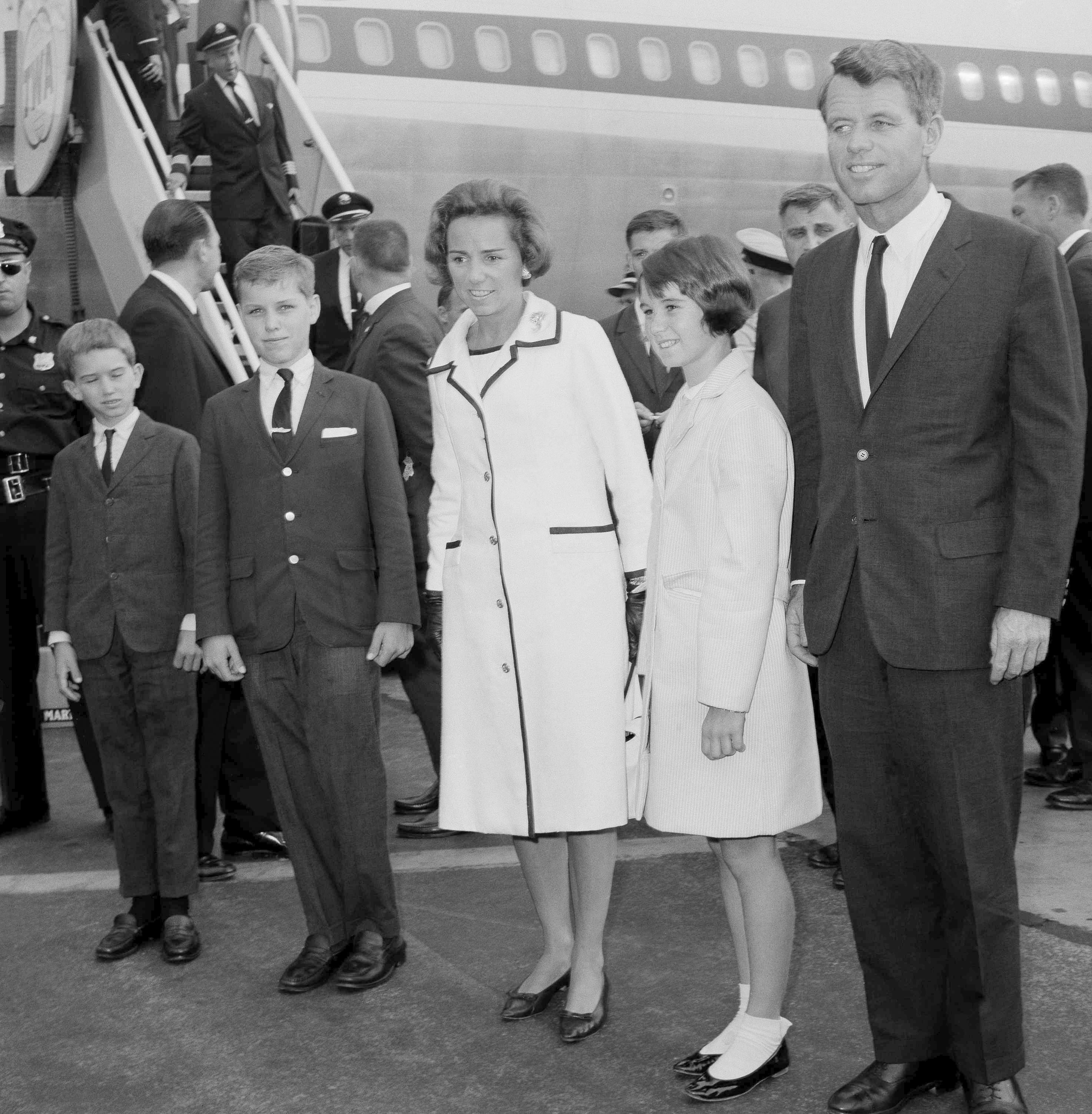
Attorney General Robert F. Kennedy, right, wife Ethel Kennedy, and children, from left, Bobby, Joseph, and Kathleen, second right, at Kennedy International Airport in New York, July 1, 1964, shortly after they returned from a one-week trip to West Germany and Poland.
Bobby Kennedy sought unity. His son, the secretary of Health and Human Services, is part of the same Donald Trump team that sells national division on every possible front.
Americans of an older generation recall watching the funeral train back in 1968 that carried Sen. Robert F. Kennedy’s body from New York’s St. Patrick’s Cathedral to Washington, where he would join his brother already interred in Arlington Cemetery.
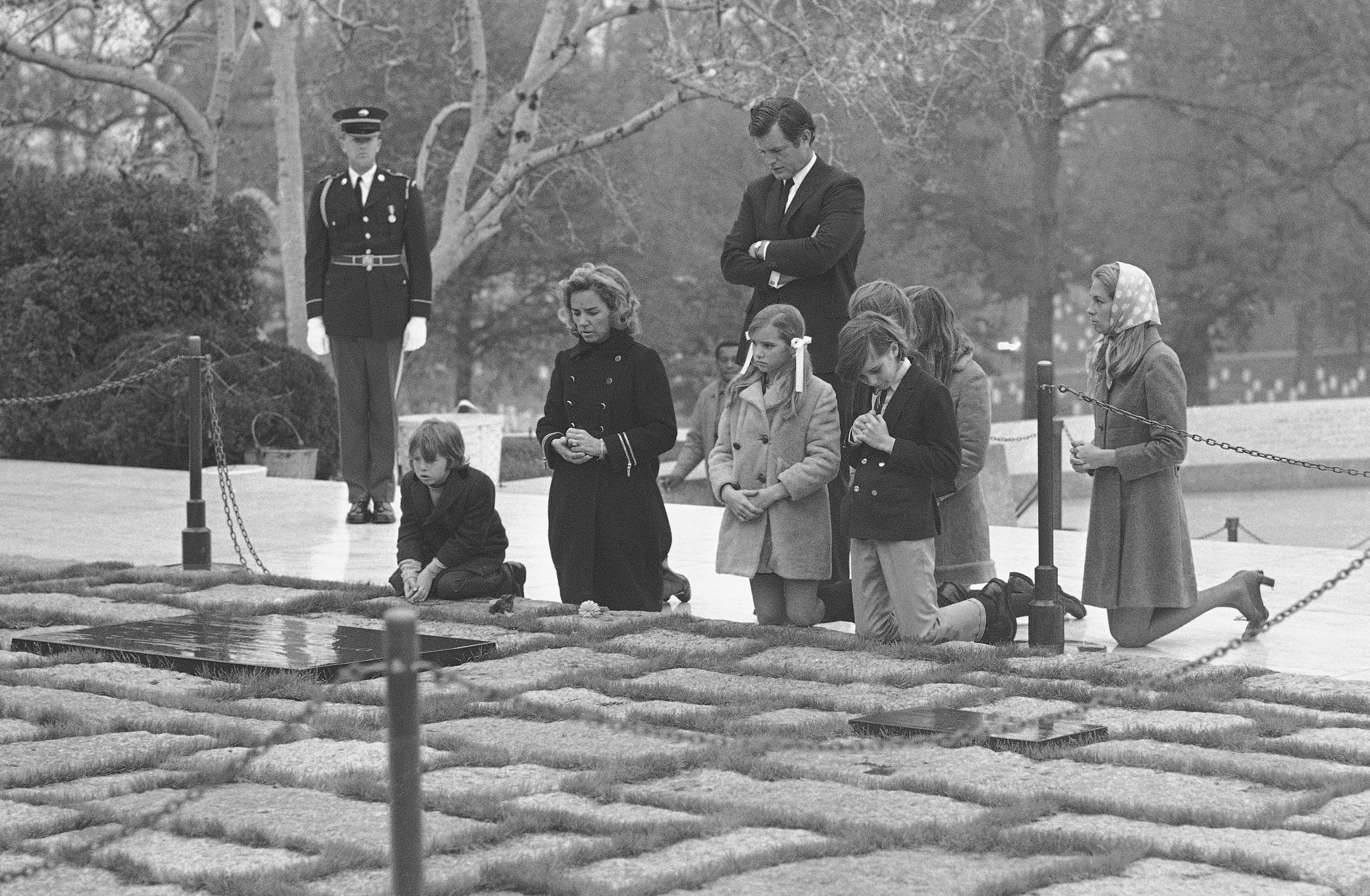
Sen. Edward Kennedy, back, pauses at the grave of assassinated President John F. Kennedy in Arlington National Cemetery, Nov. 20, 1970, with his wife Joan, right. With them are the widow of former Sen. Robert F. Kennedy, Ethel Kennedy, and her five children.
All along the tracks we saw the faces, white and Black, of working people for whom Bobby Kennedy held such promise. His presidential candidacy in 1968 meant an end to the brutal American conflict in Vietnam, an economic shift in our country’s wealth from the war in Southeast Asia to the dire needs of our major cities.
That June Saturday offered none of the pageantry of President Kennedy’s death five years earlier. There were no marching bands, no riderless cavalry horse, no President Charles de Gaulle or Haile Selassie, no heroic “Day of Drums.”
“Senator Robert Kennedy died at 1:44 this morning … June 6, 1968 … He was 42 years old.”
Kennedy had made his name as a U.S. attorney general fighting for civil rights. He took on Deep South governors to desegregate Ole Miss and the University of Alabama. He pushed his brother behind the scenes, to give the historic Civil Rights speech of 1963.
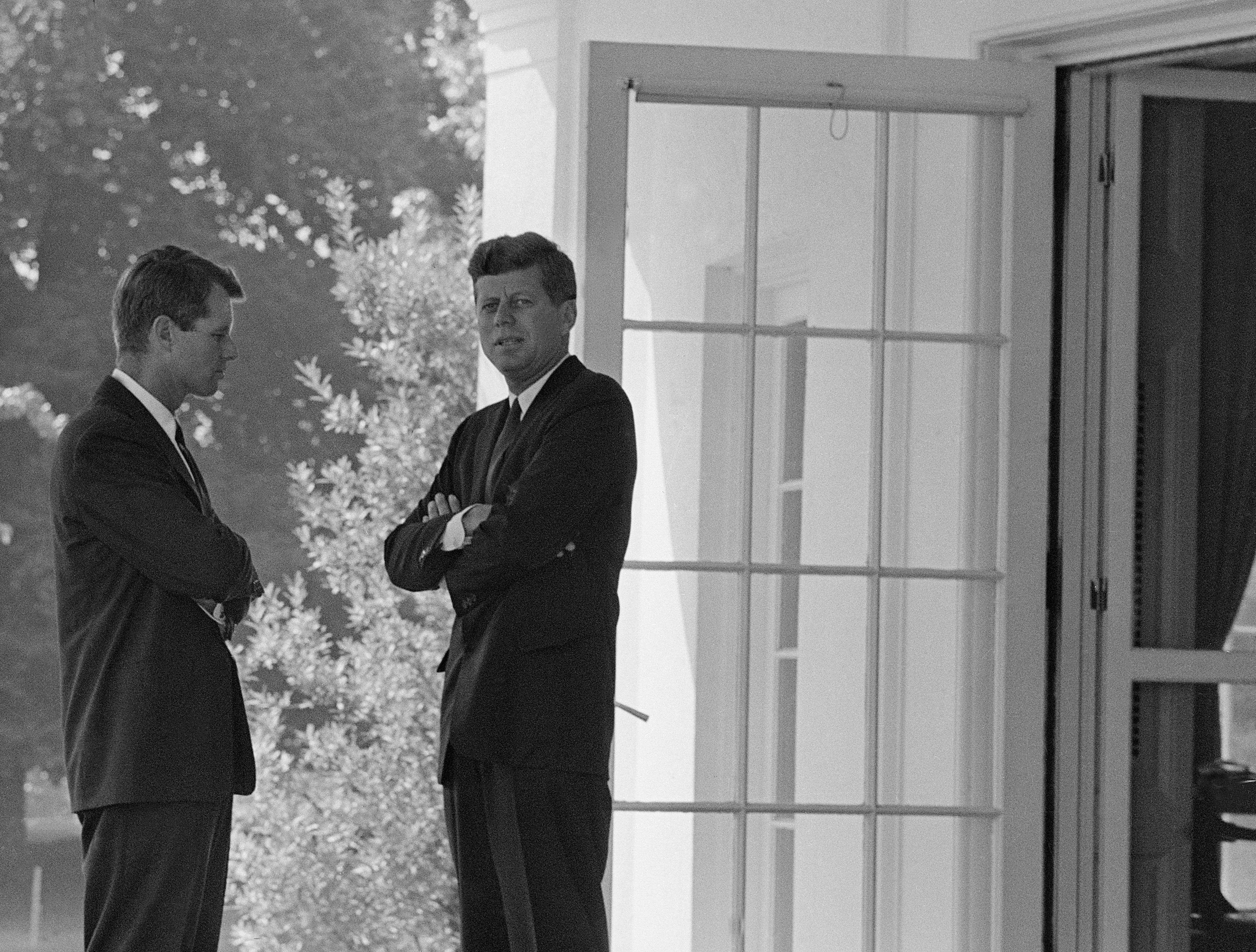
U.S. President John F. Kennedy, right, confers with his brother Attorney General Robert F. Kennedy at the White House in Washington, D.C., on Oct. 1, 1962, during the buildup of military tensions between the U.S. and the Soviet Union that became the Cuban missile crisis later that month.
But what made him unique, as New York columnist Jack Newfield once wrote, was that he “felt the same empathy for white working men and women that he felt for Black, Latino, and Native American working men and women. He thought of police officers, waitresses, construction workers, and firefighters as his people.”
Bobby made a call for racial unity a part of his 1968 presidential campaign.
In the Indiana primary, he rode through the streets of Gary in an open convertible, Richard Hatcher (the city’s first African American mayor) on one side, Tony Zale, the middleweight boxing champ, so popular with the city’s white working people, on the other.
“I have an association with those who are less well off, where perhaps we can accomplish something: bringing the country together.
“I think we can end the divisions within the United States — whether it’s between Blacks and whites, between the poor and the more affluent, or between groups on the war in Vietnam. We can start to work together. We are a great country, an unselfish country. I intend to make that my basis for running,” Robert Kennedy said after winning the California Democratic Primary in 1968, minutes before his assassination.
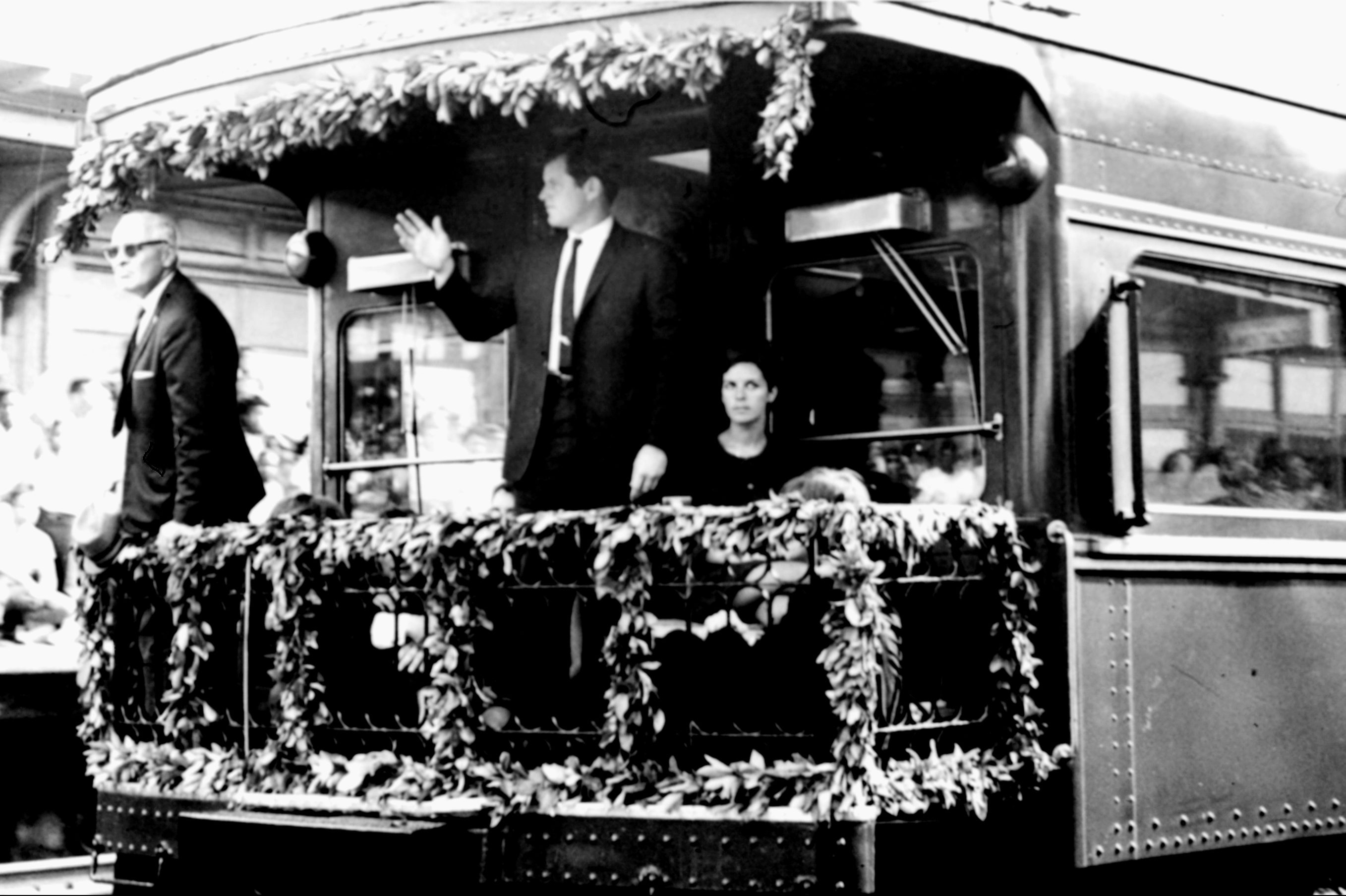
Sen. Edward M. Kennedy waves from the rear platform of the observation car bearing the remains of his slain brother, Sen. Robert F. Kennedy, as the funeral train passed through North Philadelphia Station, June 8, 1968. Others on the platform are unidentified.
And these were the very people who showed up for Bobby when his funeral train passed through Newark and Trenton and Philadelphia and Baltimore that grim Saturday in June.
Years ago, I took my kindergartener with attention-deficit/hyperactivity disorder (ADHD) to a pediatric specialist for advice. She suggested we try the Feingold diet, an elimination diet that requires avoiding artificial dyes, sweeteners, and salicylates, naturally occurring substances found in many fruits and vegetables. With an already picky eater, I worried about how much I would need to eliminate and found the list included foods such as apples, berries, cucumbers, and tomatoes.
I wondered, was diet the best way to manage ADHD?
As a pediatrician, I often get this question from parents as they look for alternatives to stimulant medications for ADHD. The Feingold diet our pediatrician mentioned has been around since 1973. If it were a miracle cure, the parents of 7 million children with ADHD would have popularized it. However, the research on this diet is mixed, with the benefits being modest and not universal for all children with ADHD.
Whenever confronting medical myths or treatments with limited, but potential benefits, I ask myself: is there harm in trying it?
Elimination diets can cause some harm, especially if a child already has a limited palate, and further cuts may not meet their nutritional needs. In addition, as any parent of a child with food allergies knows, a restrictive diet requires strict adherence, meaning holidays, birthday parties, and traveling become extra challenging.
Top federal health officials have presented a plan to phase out petroleum-based synthetic dyes from the food supply by 2028. Artificial dyes, especially Red No. 40, have been highlighted as triggers of hyperactivity, yet research indicates that only 8% of children with ADHD are sensitive to artificial dyes. Given that so few children are in this group, rather than focusing on elimination, a better approach may be emphasizing a healthy diet overall.
Lately, rather than elimination diets, social media has popularized adding foods like saffron to the diet to manage hyperactivity symptoms. The research on saffron seems promising, with a similar effect on hyperactivity to methylphenidate, a popular stimulant medication for managing ADHD. However, the studies that exist are small and short- term, and the dosing needed is much more than would typically be used in cooking. Saffron is not regulated like medications are, so purity can’t be certain. This makes it hard to recommend saffron as a standard treatment at this time.
Social media, which we scrutinize for accuracy on the Pediatric Health Chat website, seems to prefer addressing ADHD through diet rather than medication. This sends the message that medications are bad or to be avoided. Yet we know stimulants have been used for ADHD for over 85 years and are well tolerated by most children with a success rate of 70-90%. This success is measured through improvements in academic performance and lower risk of injuries. I have seen the use of stimulant medications provide life-changing benefits for some of my patients and their families.
So, for my family, the Feingold diet’s cons outweighed the potential benefits, but to others it may not. We try to avoid artificial dyes and sweeteners, but also emphasize exercise, sleep hygiene, and screen time limits.
ADHD management is more than nutrition or medication management, but includes important interventions like behavior training for parents, school-based supports, organizational skills training, and helping children learn to regulate their emotions. There’s no one-size-fits-all approach. A child’s treatment may evolve over time, as they develop and their ADHD symptoms change. Children with ADHD are much more varied than social media portrays, and families deserve the facts and freedom to make decisions that fit their child.
Katie Lockwood MD, MEd is a primary care pediatrician at Children’s Hospital of Philadelphia. She and CHOP neonatologist Joanna Parga-Belinkie, MD, are co-founders of Pediatric Health Chat, (chop.edu/pediatric-health-chat), an online initiative providing resources for families looking for good information on the latest myths and misconceptions about children’s health.
Philadelphia’s 100th mayor has counted political hits and misses in 2025, from the 76ers’ abandoned Center City arena plans to the unveiling of her signature housing initiative to a bitter municipal workers strike.
Among the takeaways from Parker’s second year in office:
A focus on public safety: Violence is down, and there appears to be progress in tackling Kensington’s open-air drug market. Though some improvement began before her tenure, the mayor can tie recent success to her own policies.
Avoiding Trump: Unlike many of her peers, Parker has rarely in public discussed the president’s threats to Democrat-led cities. The approach has yielded praise from supporters who say she’s saved Philadelphia from Trump’s wrath, and criticism from those who want to see a more forceful rebuke.
The Trump administration announced the launch of a U.S. Department of Veterans Affairs’ task force that will investigate what it calls “anti-Christian bias” within federal agencies.
The creation of the task force was inspired in part by backlash to a sermon given by an Army Reserve chaplain at the Coatesville VA Medical Center in 2024.
Russell Trubey says he was temporarily removed from his position after he preached to a congregation of veterans from a Bible passage that refers to same-sex relationships as “shameful.” His lawyers took his case to the White House this February, arguing the chaplain had been subject to prejudice against Christians.
Noticeably absent from the VA task force, critics say, is any effort to explore instances of discrimination against other faiths within federal agencies.
In other federal news: Activists, historians, and officials on Sunday commemorated the 15th anniversary of the President’s House Site on Independence Mall and mobilized resistance amid its uncertain future.
Two workers who make Pennsylvania’s minimum wage would each have to work 96 hours per week to afford the area’s median asking rent, a Realtor.com analysis found.
Journalists from 11 college news publications have joined the new Philadelphia Student Press Association, which aims to provide support and attract funding for their work.
An unexpected Birds fan emerged on social media this weekend: Nobel Peace Prize laureate Malala Yousafzai, who shared a photo of herself in an Eagles T-shirt.
Quote of the day
We asked Philly-area grocery workers what it’s really like to work during the holiday season. They say it can be hectic and requires patience to manage both stressed customers and the incessant playing of “This Christmas.”
🧠Trivia time
What is the name of the popular New Year’s Day activity that takes place outdoors and is marked this year by local events from Marsh Creek to the Pine Barrens?
Cheers to Catherine Konopka, who solved Sunday’s anagram: Emily Chelsea Jewelry. Emily Phillippy, the name and face behind the popular Philadelphia-based company, showed us how she spends her idea of a perfect day in the city.
Photo of the day
Megan Scott of Mount Airy is with her kids Simon, 3, and Nigel, 6, roasting some marshmallows over a fire during the Decemberfest in Mount Airy on Saturday.
📬 Your ‘only in Philly’ story
Think back to the night that changed your life that could only happen in Philly, a true example of the Philly spirit, the time you finally felt like you belonged in Philly if you’re not a lifer, something that made you fall in love with Philly all over again — or proud to be from here if you are. Then email it to us for a chance to be featured in the Monday edition of this newsletter.
This “only in Philly” story comes from reader Michael Thomas Leibrandt, who describes a historically significant Christmas:
There is absolutely nothing like Christmas in Philly. Think ice skating and lighting a giant tree at Dilworth Park, the Wanamaker Light Show and Dickens Village, holiday lights from the Schuylkill to the Delaware and seemingly everywhere in between. Not bad for America’s oldest metropolis whose founder didn’t even celebrate Christmas.
The holiday is significant around the Philadelphia region for another reason. Each Christmas Day, my family attended the annual reenactment of General George Washington’s crossing of the Delaware River.
Washington’s Continental Army would represent much more that just a surprise attack on unsuspecting British and Hessian forces. His daring military maneuver on Christmas night in 1776 — a plan that included Philadelphia militia units — would lead to patriot triumphs at the Battle of Trenton and the Battle of Princeton.
The Americans’ nighttime voyage was a major turning point in the war and proved they could defeat their opponents, though Philadelphia would fall to the British 10 months later. Seeing reenactors capture the details of that powerful, daring, secret military operation was awe-striking even nearly three centuries later.
Thanks for starting your week with The Inquirer. Happily, I’ll be back with you tomorrow.
By submitting your written, visual, and/or audio contributions, you agree to The Inquirer’s Terms of Use, including the grant of rights in Section 10.
NEWARK, N.J. — As the Prudential Center’s public address announcer rolled through Arkansas’ starting lineup introductions, two players remained on the bench.
Then Darius Acuff, the Razorbacks’ leading scorer and a projected NBA lottery draft pick, was announced. D.J. Wagner was last, a distinction often reserved for a respected team leader.
It might seem unfathomable that Wagner, the former Camden High School star and once the nation’s top-rated recruit, is now in his third college basketball season. The 6-foot-4 combo guard continues to be an interesting case study in expectations put on high school athletes, this era of name, image, and likeness in college sports, and how one defines success.
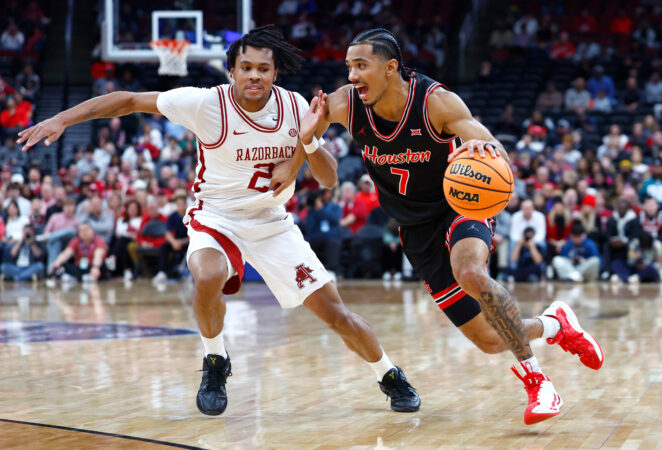
But Wagner has embraced his role as a veteran for a Razorbacks team — which also includes fellow former Camden star Billy Richmond — that was ranked 14th in the Associated Press poll before Arkansas lost to No. 8 Houston, 94-85, Saturday night in the Never Forget Tribute Classic.
“You could say I take a lot of pride in it,” Wagner said earlier in the week. “It’s just an honor. It’s a blessing to be able to be playing under Coach [John Calipari] for three years. …
“I’m just happy to be here. Whatever I can do to help my teammates out, I’m happy to do it.”
When asked before Saturday’s game how many family members and friends would be inside the arena about 80 miles from Camden, he said, “I couldn’t even tell you. I know it’s going to be a lot.” He finished the game with 11 points on 4-of-10 shooting and two assists in a season-high 34 minutes, flashing what made him an intriguing recruit who now possesses an inconsistent college body of work.
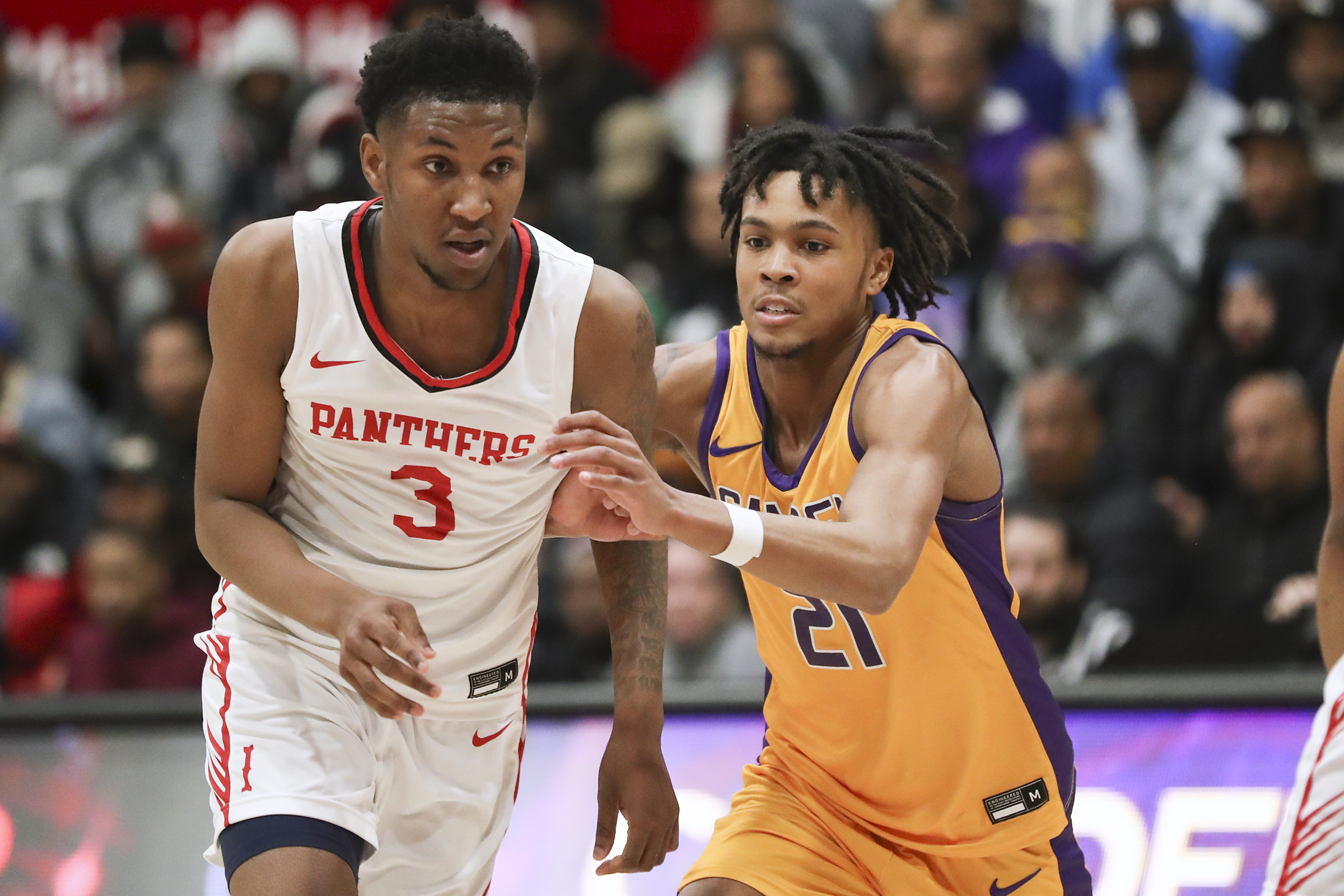
Camden’s DJ Wagner guarding Imhotep’s Justin Edwards, now with the Sixers, during a game in 2023.
He got past his defender for a crafty layup for Arkansas’ second bucket, then splashed a three-pointer to tie the score at 11. Early in the second half, Wagner dished a pass to Acuff for a three-pointer that cut what had been a 21-point Houston lead to 51-44. But after those two early buckets, Wagner did not score again until hitting two late three-pointers, when the game had all but been decided.
“Even D.J.’s got to play better, make better plays,” Calipari told one local reporter in the hallway after the game. Arkansas did not hold its scheduled postgame news conference, preventing The Inquirer from asking additional questions about Wagner and Richmond.
Wagner, who played his freshman season at Kentucky before following Calipari to Arkansas, is averaging a career-low 8.4 points this season. But he has improved his shooting from the floor (41.5%) and three-point range (34.9%). He also has totaled 33 assists against 10 turnovers while shifting more to an off-the-ball role. He is one of two players to start all 12 games, a sign of trust from Calipari as a steady presence with deep familial ties. Wagner’s father, Dajuan, played for Calipari at Memphis before being selected sixth overall in the 2002 NBA draft.
“A lot of these kids get ranked, then they’re trying to live up to rankings,” Calipari told the Fort Smith (Ark.) Southwest Times Record before the season. “What does the ranking mean? You’ve got to go in and compete and take what you want, but it could be a burden.
“I think with [Wagner], he needed to shed that and just be the player he is. Let’s see your best version. I believe his best version is being more aggressive, less dribbles, more attack. The things that he’s doing, the way he leads; he’s just matured.”
Wagner’s Razorbacks team gained national prominence in March with a surprise run to the NCAA Tournament’s Sweet 16 as a No. 10 seed. Arkansas upset No. 7 Kansas and second-seeded St. John’s before losing an overtime heartbreaker to third-seeded Texas Tech. Wagner acknowledged he “didn’t really watch” much of the tournament after the Razorbacks were knocked out, but called Arkansas’ Dec. 13 rematch victory over Texas Tech, which was ranked 16th at the time, “definitely personal.”
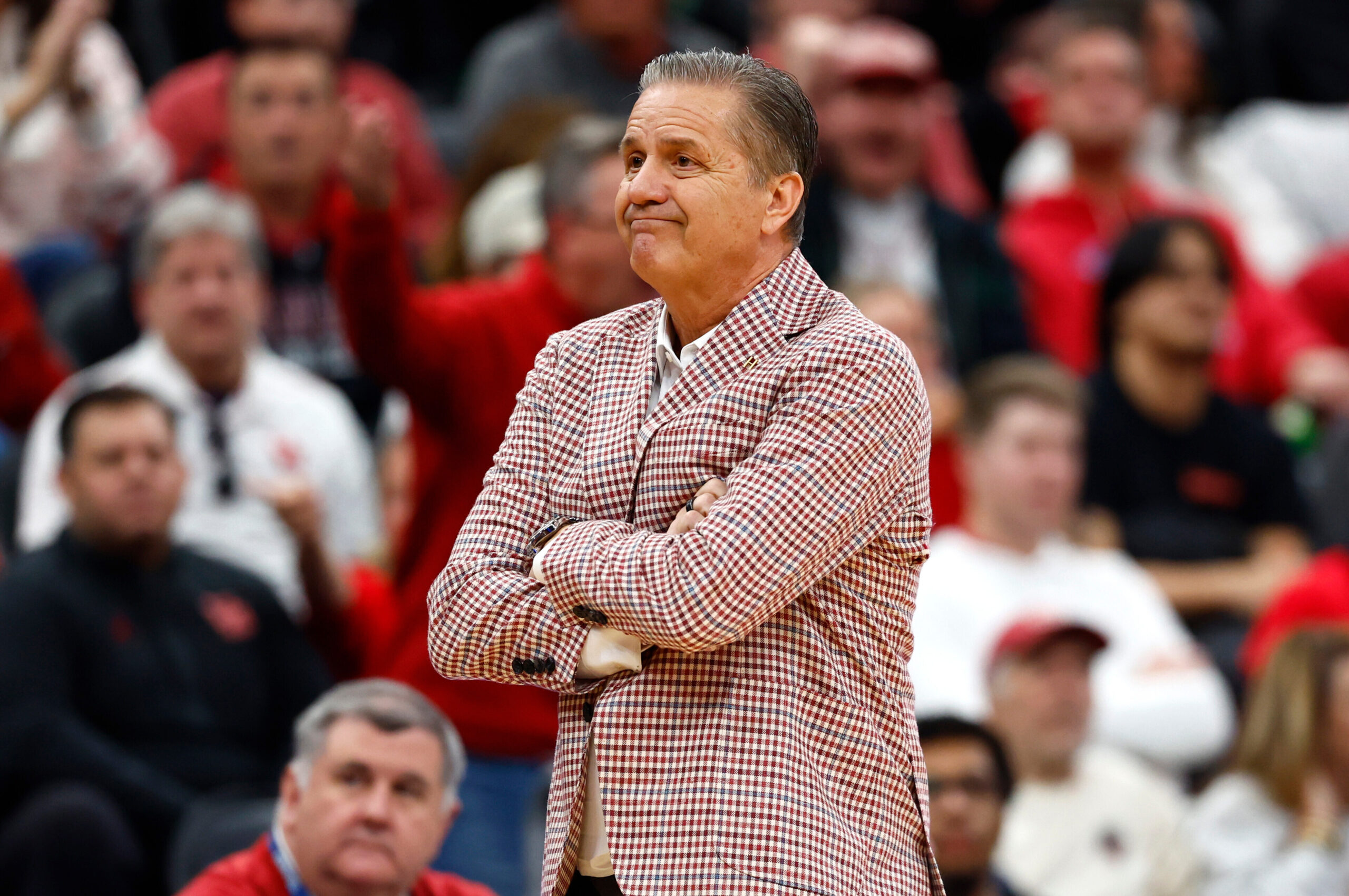
Arkansas coach John Calipari on the sideline during the second half against Houston in Newark, N.J.
That win was part of Arkansas’ 9-3 start against an intentionally difficult schedule. The Razorbacks also already have a victory against No. 11 Louisville. Their other two losses are to No. 9 Michigan State by three points — when Wagner had 13 points on 4-of-6 shooting, three assists, and three steals in perhaps his most impressive performance of the season — and to No. 3 Duke by nine points.
That is why Houston coach Kelvin Sampson called Arkansas the best opponent his Cougars, who advanced to the national title game last season, had faced so far. Sampson added he believes Arkansas has “as good [of] a chance as anybody” to win the loaded SEC, which included six other ranked teams in the most recent AP poll.
The marquee nonconference, neutral-site matchup against the Cougars added to Wagner’s growing list of college experiences in “crazy games in crazy atmospheres,” he said. He played Kansas at Chicago’s United Center as a Kentucky freshman. Last season, he faced Michigan at the legendary Madison Square Garden. And “every game in the SEC, you know you’re going to fight,” he said.
Wagner’s calming leadership was on display Saturday when he approached Malique Ewin to say, “You got this” as Ewin uncharacteristically struggled at the free-throw line. Wagner’s biggest advice to the high-profile youngsters who enter the program is to remember that the uber-demanding Calipari “might be hard on you, but he’s just coaching you because he cares about you.” And with Acuff as the primary point guard, Wagner said he gets more opportunities to read and react to the defense.
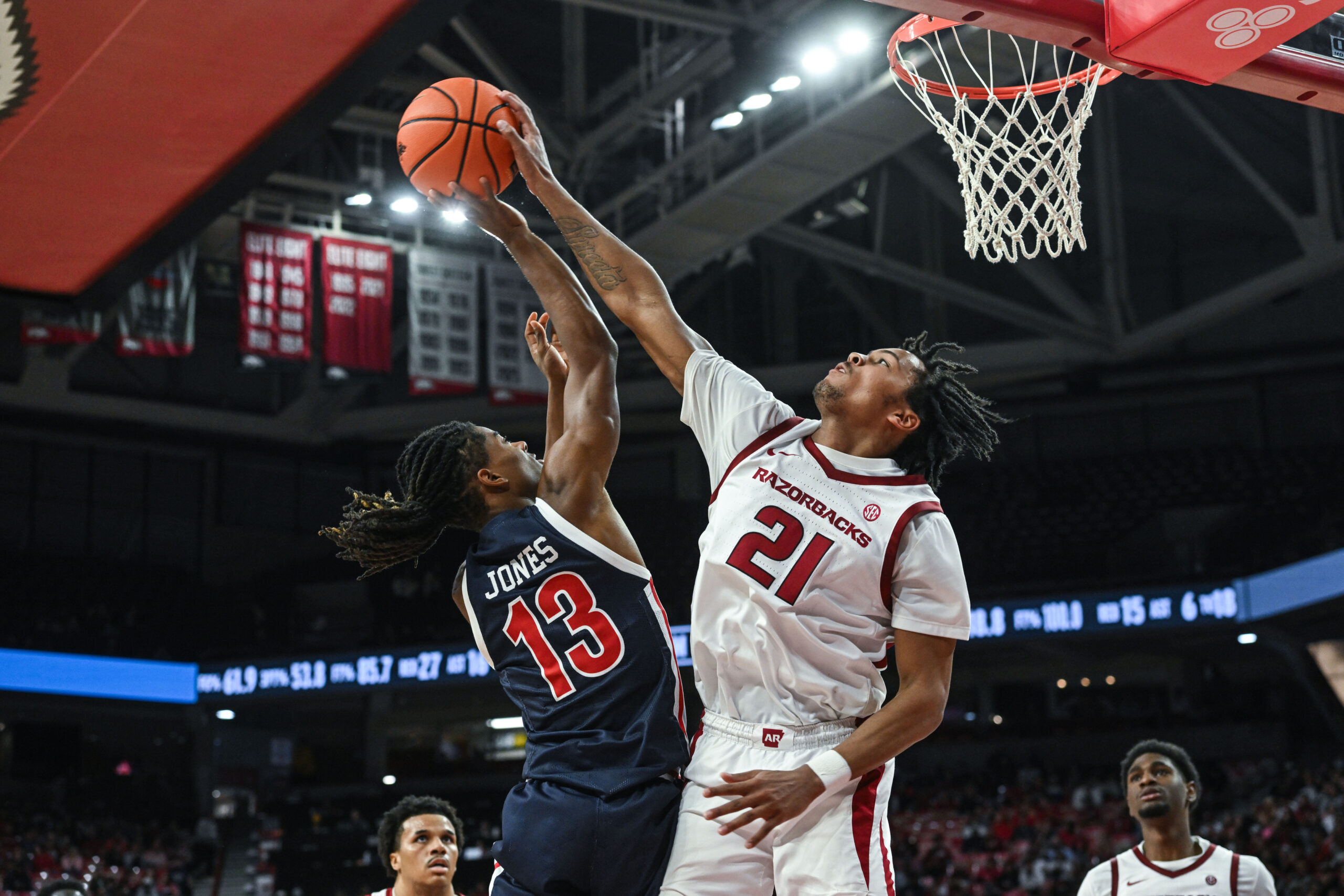
Arkansas guard D.J. Wagner blocks a shot by Jackson State’s Cael Jones on Nov. 21.
“It kind of gives you more time to see what’s happening,” Wagner said. “More time to see a play before it even happens. You could be more aggressive, like attacking more, just from getting passes and not having the ball in your hands all the time.”
Yet the former Camden star whom Sampson singled out as “dynamic” was Richmond, who totaled 12 points on 5-of-6 shooting, two rebounds, and two steals off the bench. It was a sentiment echoed by a spectator behind the basket, who hollered, “Billy Ball!” when Richmond first entered the game.
The sophomore’s versatility fueled the Razorbacks’ rally to cut a 40-19 deficit to eight points at the break. Richmond immediately hit a baseline jumper, a skill Wagner said his teammate has refined while connecting on 57% of his shots. Then Richmond sank a three-pointer. He drove baseline for a dunk that got Razorbacks supporters on their feet, then mean-mugged after swiping a steal underneath the opposite basket and lofting a pass to Ewin for the alley-oop slam.
Added Wagner: “He gets in the game, the energy [is] going to shift, because that’s just the type of player he is.”
Acuff, meanwhile, amassed 27 points, seven assists, and five rebounds. He will likely join Adou Thiero, Reed Sheppard, Rob Dillingham, and the 76ers’ Justin Edwards as former teammates whom Wagner will watch reach the NBA before him.
It is unclear whether Wagner will ever be regarded as a legitimate draft candidate again. He was not listed on last week’s top 100 prospects by ESPN, where teammates Acuff (No. 15), Maleek Thomas (No. 28), Karter Knox (No. 56), and Trevon Brazile (No. 82) were all included.
And without a defined path to the pros, it is far more practical (and lucrative) for Wagner to stay in college. He was one of the first high schoolers to sign an NIL deal with Nike, and has also landed partnerships with Express clothing and Marathon fuel during his college career. One of the Arkansas men’s basketball program’s biggest boosters is John H. Tyson, the chairman of Tyson Foods.
So Wagner’s third college season brought him back to his home state, where he was introduced last in Arkansas’ starting lineup. And he has embraced this unexpected role as the veteran for a Razorbacks team with aspirations of another deep March run.
“Really just taking it one day at a time,” Wagner said. “Just stay in the gym. Just trying to get better at everything.”