Blog

  • How the fallout from a Chester County chaplain’s sermon inspired the Trump admin to investigate ‘anti-Christian bias’

    How the fallout from a Chester County chaplain’s sermon inspired the Trump admin to investigate ‘anti-Christian bias’

    Russell “Rusty” Trubey said he was compelled by God to preach the words that helped set off a national battle over religion at the U.S. Department of Veterans Affairs.

    Reading from a sermon titled “When Culture Excludes God,” Trubey, an Army Reserve chaplain, sermonized to a congregation of veterans at the Coatesville VA Medical Center from a Bible passage — Romans 1:23-32 — that refers to same-sex relationships as “shameful.”

    Some congregants, upset by the sermon, walked out of the June 2024 service at the Chester County facility, where Trubey has been employed for roughly 10 years. Soon after, Trubey’s lawyers said he was temporarily pulled from his assignment — and transferred to stocking supply shelves — while his supervisors investigated his conduct.

    Speaking to Truth and Liberty, a Christian group that advocates for the church to play a greater role in the public sphere, Trubey said he knows that reading the Bible verses about same-sex relationships is “100%” the reason he got in trouble.

    “Our VA celebrates — up until at least recently anyway — celebrated and expected us to fully tolerate the LGBTQ lifestyle,” Trubey, who belongs to the Assemblies of God, a Pentecostal denomination, said in March. “It’s that part of the text, obviously, that folks took issue with.”

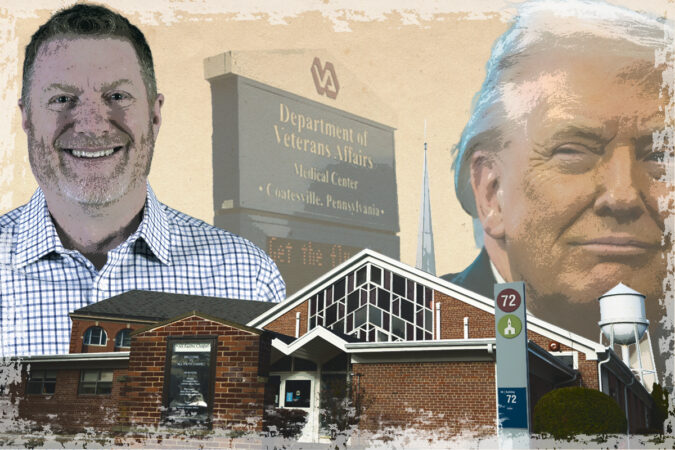
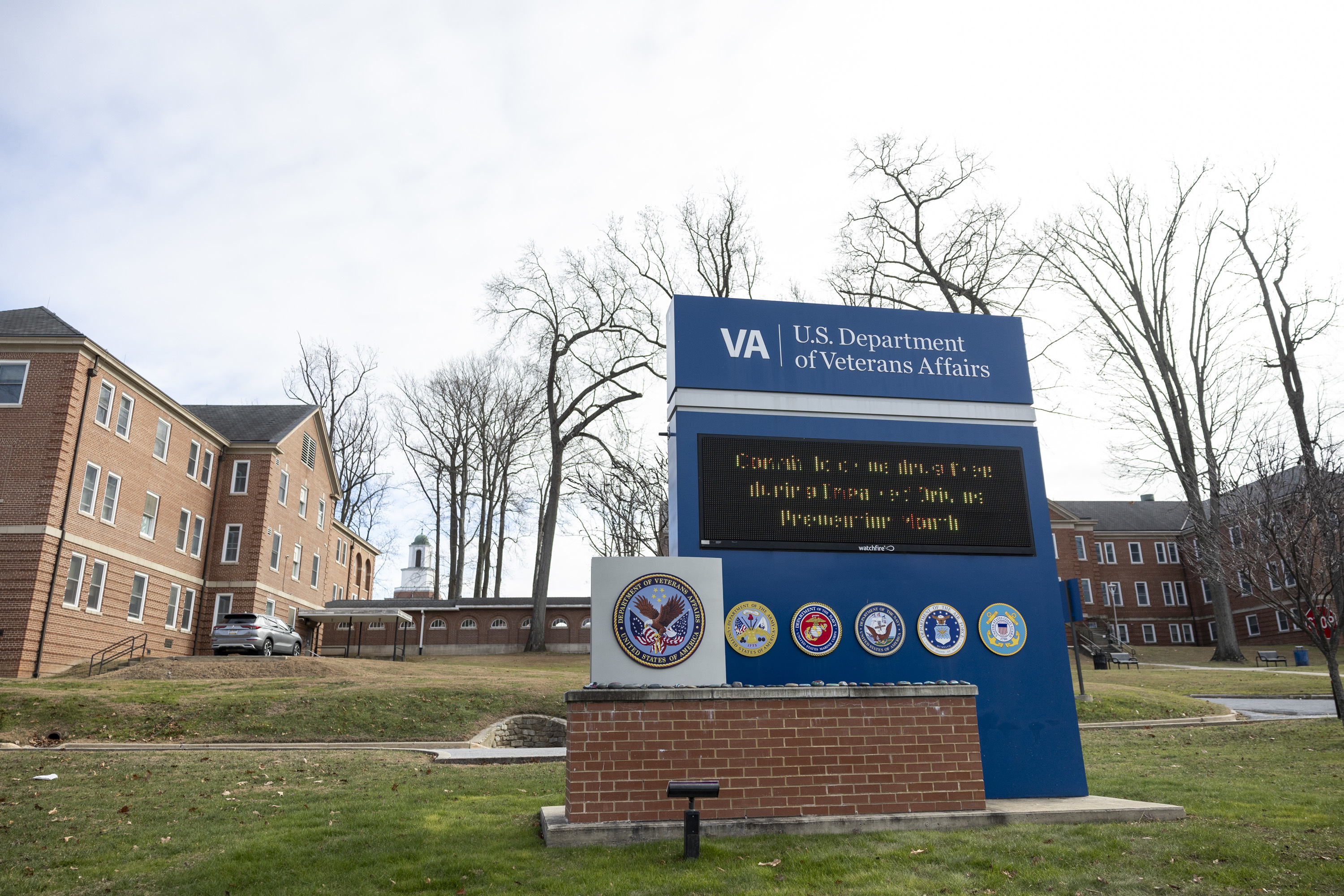
    One of the entrances leading into Coatesville VA Medical Center.

    A month earlier, Trubey’s lawyers had taken his case to the White House. In a letter sent a few weeks after President Donald Trump’s inauguration, Trubey’s lawyers asked Trump’s VA secretary, Doug Collins, to intervene on Trubey’s behalf in regard to repercussions for the sermon.

    Trubey had delivered the talk during former President Joe Biden’s administration — an environment that Trump officials allege was hostile to Christians.

    In the letter, the chaplain’s lawyers from the First Liberty Institute and Independence Law Center accused Trubey’s supervisor of wanting sermons to be screened ahead of time for pre-approval and stated that Trubey received a letter of reprimand, which would later go on to be rescinded by Coatesville VA Medical Center officials.

    Soon after the lawyers’ letter reached the new administration, the VA, one of the largest federal employers in Pennsylvania, reinstated Trubey to his position and Collins reaffirmed that chaplains’ sermons would not be censored.

    But the fallout from this incident — paired with Trump’s ongoing campaign to root out perceived prejudice against Christians and dismantle diversity, equity, and inclusion — left an undeniable mark on the VA, helping to inspire an agencywide “Anti-Christian Bias Task Force.”

    Announced to employees in April 2025, the task force asks employees to report offenses such as “reprimand issued in response to displays of Christian imagery or symbols,” per a department email reviewed by The Inquirer.

    And the VA wants names.

    In the email, the VA encouraged employees to identify colleagues and workplace practices that violate the policy and send information about the alleged offenses to a dedicated email address. The announcement was in accordance with a Trump executive order from February that ordered federal agencies to “eradicate” anti-Christian bias and create a larger White House task force composed of cabinet secretaries and chaired by Attorney General Pam Bondi.

    As of this summer, the VA received more than 1,000 reports of anti-Christian bias and reviewed 500, according to task force documents. Another report is expected in February.

    Some of the offenses the VA is on the watch for could be especially pertinent during the holiday season when workers may want their faith represented at their desks.

    One union leader at the Veterans Benefits Administration office in Philadelphia called the task force, which does not extend to biases against other religions, “McCarthyism for Christians.”

    “What they’re really doing is they’re trying to create a hostile work environment where you’re now afraid to say something because you may be reported,” said the union representative weeks after the VA’s task force announcement. The representative asked to speak anonymously out of fear of workplace retaliation.

    The VA said in a statement that the department is “grateful” for Trump’s executive order. The VA did not answer The Inquirer’s questions on an updated number of reports received through the task force, what happens to people or practices that are reported, and next steps of the task force.

    “As the EO stated, the prior administration ‘engaged in an egregious pattern of targeting peaceful Christians, while ignoring violent, anti-Christian offenses,’” said VA press secretary Pete Kasperowicz in the statement. “Under President Trump, VA will never discriminate against Veterans, families, caregivers or survivors who practice the Christian faith.”

    One of those offenses, as outlined by the VA, is “informal policies, procedures, or unofficial understandings hostile to Christian views.” Another is retaliation against chaplains’ sermons, which appears to be in response to the Trubey incident from June 2024.

    Erin Smith, associate counsel at the First Liberty Institute, who helped represent Trubey said: “If Chaplain Trubey’s story serves as inspiration to help protect the rights of all chaplains in the VA, then that is a wonderful thing to come out of a terrible situation.”

    But some VA employees disagree.

    Ira Kedson, president of AFGE Local 310, which represents employees at the Coatesville VA Medical Center, said in an interview in June that he heard some employees were “deeply troubled” by the incident with Trubey, especially those who worked in clinical settings with patients who were in attendance of the controversial sermon.

    “I was told that some of the residents were deeply hurt and deeply troubled by the situation and it took a long time for them to be able to move past it,” Kedson said.

    Religion takes center stage in the Trump administration

    Trump is leading what is arguably one of the most nonsecular presidencies in modern United States history with his embrace of a loyal, conservative Christian base.

    “We’re bringing back religion in our country,” Trump said at the Rose Garden during the National Day of Prayer in May.

    At a rally in the Poconos this month, the president declared he’s the reason people are saying “merry Christmas.”

    And efforts to elevate religion in the public sphere have gone beyond Trump’s rhetoric. For instance, the Office of Personnel Management, the federal government’s human resources agency, issued guidance that aims to protect religious expression in the workplace for all religions.

    Trump also established a 16-person religious liberty commission in May that appears to include all faiths. The Department of Justice also announced a task force to address antisemitism.

    Yet, some Christian leaders are concerned that the task force excluding biases against non-Christian faiths will actually exacerbate threats against religious freedoms.

    Most of the reports submitted to the VA focused on “denying religious accommodations for vaccines and provision of abortion services; mandating trainings inconsistent with Christian views; concealing Christian imagery; and Chaplain program and protections for Chaplains,” according to task force documents.

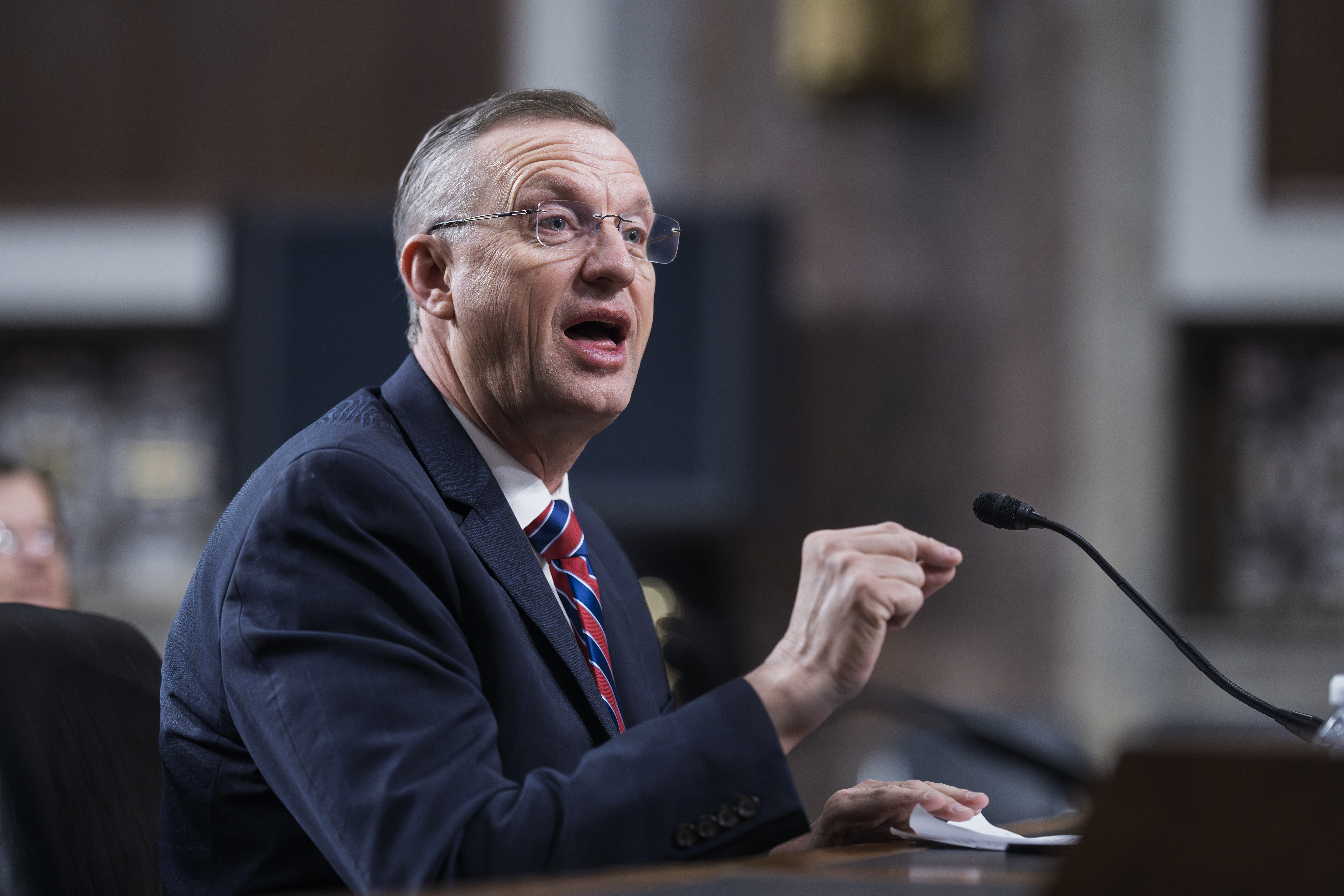
    Doug Collins at his Jan. 21 confirmation hearing before the Senate Veterans’ Affairs Committee, at the Capitol in Washington.

    Charles Haynes, senior fellow for religious liberty at the Freedom Forum, a nonpartisan organization based in Washington that promotes First Amendment rights, said while it’s not unconstitutional or unprecedented to create a faith-specific task force, “the appearance of [the Christian-bias task force], to many people, is a favoritism of the government for one group over another.”

    The White House, in a statement, said Trump has a record of defending religious liberty regardless of faith.

    “President Trump has taken unprecedented action to fight anti-Christian, anti-Semitic, and other forms of anti-religious bias while ending the weaponization of government against all people of faith,” said White House spokesperson Taylor Rogers in an email to The Inquirer.

    Furthermore, she added, that the media is doing “insane mental gymnastics to peddle a false and negative narrative about the President’s efforts on behalf of nearly 200 million Christians across the country.”

    Identifying anti-Christian bias or chasing a ‘unicorn’?

    The Trump administration has shared few details about the operations and goals of the anti-Christian bias task force, raising questions from lawmakers and other stakeholders.

    Rep. Mark Takano, the ranking member of the House Committee on Veterans’ Affairs, was in a monthslong back-and-forth with VA Secretary Collins, trying to get answers to an extensive list of questions he initially sent in May, with the California Democrat particularly concerned that the scope of the initiative is limited to bias against Christians.

    “To preserve this right to religious freedom, the Department cannot prioritize one faith over others, nor can it allow religious considerations to shape its policies in ways that may conflict with the First Amendment,” Takano wrote in May. “Further, the vagueness of the task force’s mission raises significant concerns about how it will be used and whether it is compatible with the mission of the Department.”

    Collins responded in June and did not answer most of Takano’s questions, though he did say that the task force, which reports to the secretary, will identify, strategize, and potentially alter any policies that discriminate against Christians or religious liberty.

    The lawmaker followed up a week later. Roughly four months later, in October, Collins’ responses were vague once again. Most recently, Takano is asking for both Democratic and Republican members of the House and Senate’s Veterans’ Affairs Committees to be looped in on future correspondence regarding the task force.

    The VA, according to a statement from Takano, has not fully answered their questions and has refused to host a bipartisan briefing.

    “The lack of transparency and accountability of this task force leaves me with numerous concerns for the due process and privacy of hardworking VA employees,” Takano said. “VA’s silence won’t stop us from asking the questions we are constitutionally obligated to ask.”

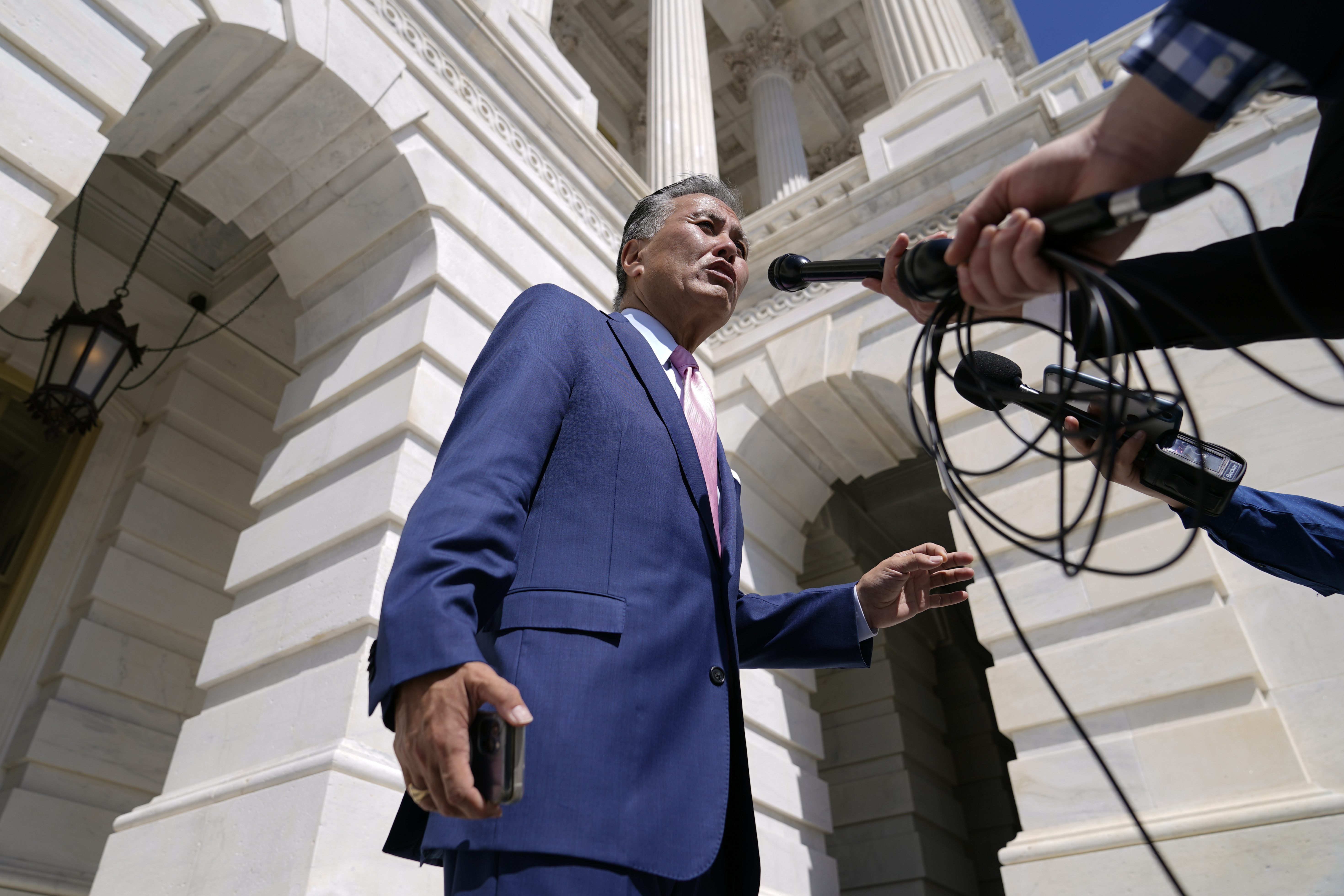
    Rep. Mark Takano (D., Calif.) in August 2022, on Capitol Hill in Washington. Takano, ranking member of the House Committee on Veterans’ Affairs, has been trying to get answers from the VA on the Anti-Christian Bias Task Force.

    Michael L. “Mikey” Weinstein, former counsel for the Reagan administration turned founder and president of the Military Religious Freedom Foundation, said his group is looking for a plaintiff to sue the government over the task force. The group has been receiving calls from VA employees concerned about it, one of whom, he said, was a senior physician at the VA Medical Center in Philadelphia.

    The physician, Weinstein said, was distraught to receive the memo about the task force. He had family in town and noted the irony of showing his family around all the historical sites that signified the birthplace of American freedoms while being asked by the federal government to partake in such a project.

    “It was like a dagger in his heart,” Weinstein said.

    Weinstein is adamant that anti-Christian bias in the federal workforce is nonexistent, like looking for a “unicorn.”

    Noticeably absent from the task force, critics say, is any effort to explore instances of discrimination against other faiths within federal agencies.

    Trump has historically espoused hateful rhetoric against Muslims, including enacting a travel ban on individuals from predominantly Muslim countries during his first term. The president has issued an executive order this term to combat antisemitism on college campuses, but he also has a history of engaging with antisemites on the political right.

    Ahmet Selim Tekelioglu, executive director of CAIR-Philadelphia, a nonprofit that aims to protect the civil rights of Muslims in the U.S., said he believes all forms of discrimination should be stamped out, but he’s concerned the task force isn’t affording those protections to everyone.

    “It focuses exclusively on alleged anti-Christian conduct within the federal agencies, and in our opinion of this, risks then entrenching preferential treatment and signaling the protections that should exist for everyone is conditional, right?” Tekelioglu said.

    There is hope, however, that this task force could lead to other future initiatives to root out hate, said Jason Holtzman, chief of Jewish Community Relations Council at the Jewish Federation of Greater Philadelphia.

    “My hope is that hopefully they’re starting with the task force on Christian bias, and then maybe they’ll initiate one on antisemitism, Islamophobia, because I think task forces need to exist on all of these different forms of hate,” said Holtzman, noting that both Trump and Biden have taken action to combat antisemitism.

    Haynes, the religious liberty expert, said anti-Christian bias is a “matter of perspective.”

    “How you see it for the conservative Christian, what others would say is just creating an inclusive, safe workplace for everyone, they see, in some respects, as being anti-Christian,” Haynes said.

    Haynes said that “anecdotal sort of stories” about prejudice against Christians pushed by conservative groups do not appear to be based in any kind of research into a widespread trend. But it only takes one story — as seen in Trubey’s case — to set off a firestorm.

    “It doesn’t take much,” Haynes said.

  • Combatting Islamophobia through days filled with ordinary decency

    Combatting Islamophobia through days filled with ordinary decency

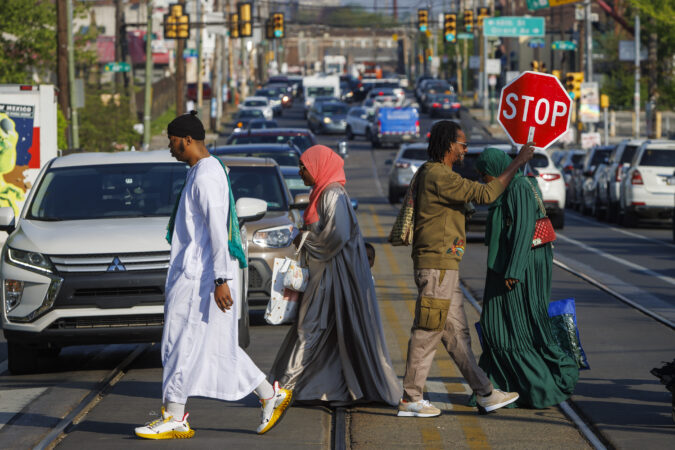
    Stepping out of my apartment building, a neighbor stopped me to say he was sorry for the Islamophobia he felt circulating lately in Donald Trump’s America.

    At the post office, the man behind the counter asked if I could write “Happy Holidays” in Arabic for a sign he wanted to hang. I wrote it carefully, conscious of my uneven hand. He thanked me and taped it up. I hope the small sign does its modest work, easing someone without calling attention to itself, doing what such gestures often do best when they pass quietly.

    At the bus station, a large man asked to borrow my phone. When he handed it back, he asked where I was from. I said Egypt. He swore, laughed, and spoke with me for a few minutes about the world, about worry, about what people owe one another. Before boarding, he offered a blessing.

    These moments remind me how relatively easy my passage as an immigrant has been.

    I have not encountered violence directly. What I have met, mostly, is ignorance, and even that only recently.

    I have rarely felt compelled to take it personally. I tend to think that most people would not speak as they do if their lives had widened just enough to complicate what they take for granted, if familiarity had been allowed to interrogate fear.

    That belief comes from observation over decades and across cultures. People are rarely changed by argument alone. They are altered by proximity, by repeated exposure to what does not confirm the story they have been told about others or about themselves. Knowledge and kindness work slowly. They loosen bias and false certainty by degrees.

    I carry sorrow for the violent pain and murderous ignorance that continue to surface where I come from, and far beyond it. The point is not to rank suffering or distribute blame. The point is recognition: We are capable of living far better than we do.

    After the recent mass shooting at a Hanukkah celebration at Bondi Beach in Sydney, where 15 people were killed, a Muslim man, Ahmed al Ahmed, intervened by tackling and disarming one of the attackers. He was shot twice in the process and is credited with saving lives. Past narrow religious allegiances, this was a human refusal to stand aside.

    In this photo released by the Prime Minister’s office, Australian Prime Minister Anthony Albanese meets Ahmed al Ahmed at St George Hospital in Sydney on Dec. 16.

    That matters, because it interrupts the story we are encouraged to believe about what people inevitably are.

    In recent months, reported incidents of anti-Muslim harassment and threats have risen across the country, echoing what many Americans are experiencing in daily life.

    Living in the United States for nearly two decades, I am well aware that this country has inflicted violence both inside its borders and far from its shores, for generations, often while renaming it, often while insisting on its necessity.

    Any serious reckoning with this asks more of us than explanations shaped for a news cycle.

    It asks for patience, attention, and the willingness to trace continuities rather than isolated events. It asks us to notice how harms travel, and how language perpetuates those harms. It asks us to notice how easily whole communities are reduced to headlines, faiths are flattened into caricature, and violence becomes explanatory shorthand.

    When we make others suffer, we do not escape the damage. We carry it, often without knowing how it has narrowed us.

    But none of this survives sustained attention. What does endure are the small acts that refuse the terms we are handed and the gestures that loosen suspicion.

    Goodness is practiced. It appears in ordinary exchanges.

    In the traditions that have shaped my thinking, love is not postponed until some imagined future. Mercy is learned here, among people who misunderstand one another, who arrive carrying inherited fear, who fail but try again.

    Decency is possible. I encountered it on the street, from ordinary people who spoke plainly and put distance between the human being and the headlines.

    As a discipline of perception, it is worth the effort to try to see the Divine in everyone. Much depends on the effort, repeated daily, without witnesses.

    Yahia Lababidi is an Egyptian-American writer and poet, the author of 12 books, including Palestine Wail: Poems. His work has appeared in World Literature Today, The New Arab, NPR, and PBS.

  • A Philly charter just laid off 17 employees. Students, staff, and parents say it’s a sign of troubling changes at the school

    A Philly charter just laid off 17 employees. Students, staff, and parents say it’s a sign of troubling changes at the school

    Esperanza Academy Charter School laid off 17 employees this month — a move that officials say was necessary amid a challenging financial climate.

    But some Esperanza Academy veterans say the 4% reduction in the workforce — which came with no notice a few weeks before the holidays — is emblematic of troubling recent changes at the Hunting Park charter.

    Ten Esperanza Academy staffers, students, and parents spoke with The Inquirer and detailed concerns about changes at the school in the last year.

    Teachers say morale is low, particularly at the high school, where staff have filed paperwork to form a union for the first time in the school’s history. Student frustration bubbled over recently, with hundreds walking out to express their anger over the loss of teachers, a counselor, an administrator, and more.

    “Students are protesting,” Jarely Cruz-Ruiz, an Esperanza Academy ninth grader, wrote in a letter to the charter’s board of trustees, “because even we see the wrong being done.”

    School officials declined to be interviewed, but in a statement, CEO Evelyn Nuñez said: “Like many academic institutions across the commonwealth and nation, Esperanza Academy is navigating a challenging economic environment.”

    But, Nuñez said, the board and leadership team will ensure “the school will be a source of hope in this neighborhood for years to come.”

    An anchor, changing

    Esperanza has operated a charter school in North Philadelphia since 2000; the school has expanded to encompass grades K-12, and now serves more than 2,000 students in multiple buildings.

    The charter is part of the Nueva Esperanza organization, a sprawling nonprofit “opportunity community,” as its founder, the Rev. Luis Cortés Jr., has described it, a one-stop shop for neighborhood revitalization work, job training, legal services, and more.

    Esperanza opened a brand-new, 73,000-square-foot elementary building on the nonprofit’s campus at the beginning of this school year. Officials, in a statement released after the student walkout, said the project was planned for many years and noted that the broader organization, not the charter school, pays for campus improvements.

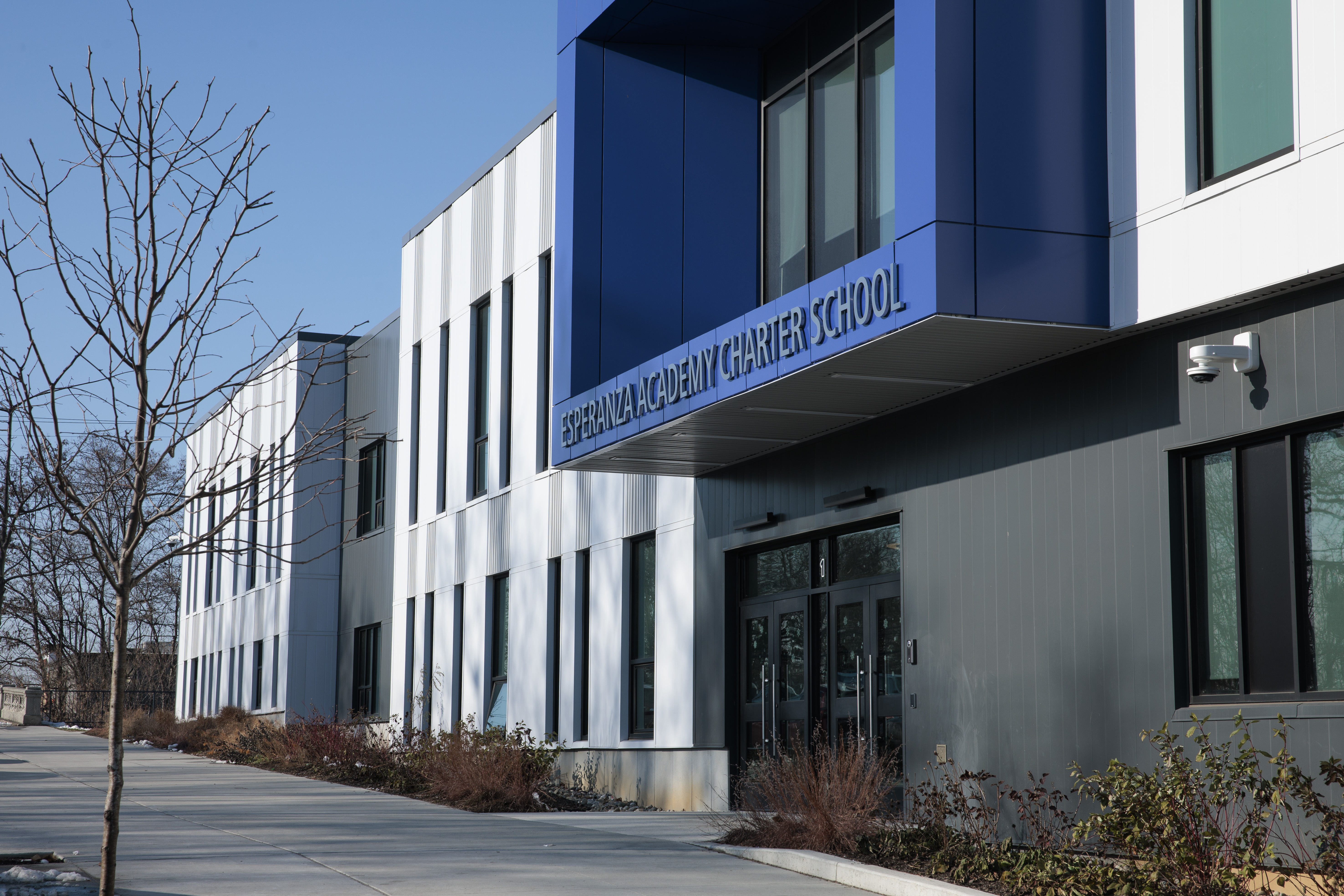
    The exterior of the new Esperanza Academy Charter elementary building at 201 West Hunting Park Ave.

    Esperanza has long been an anchor in the neighborhood and the larger Latino community, a place with a one-big-family feel.

    But Daniel Montes, who came to the school as a climate control officer in 2017 and worked his way up to be a teacher, said shifts began happening about a year ago. Montes was among those staffers laid off recently.

    Nuñez came to the school from the Philadelphia School District last year to become its CEO.

    “Things started to change when we got the new CEO,” Montes said. “I don’t know if it’s when you get a new broom, it sweeps clean.”

    At a staff retreat just before the start of this school year, Cortes, Esperanza’s founder, alluded to coming financial difficulties, said one staffer, who asked not to be named for fear of reprisal.

    “He said, ‘Stuff’s happening, you have to buy in or get out,’” said another staffer, who asked not to be identified because they did not want to be targeted by leaders. “He said it was politically driven [at the national level], and that funds would be tight.”

    ‘Three strikes’

    Tensions began to simmer among high school staff.

    “There are very unilateral changes being put into effect extremely quickly,” said another teacher, who also asked not to be named for fear or reprisal. “We’ve had major changes go into effect on a Monday after a meeting on a Friday. They said, ‘We don’t have subs and you’re going to be covering classes for free.’”

    Montes and others said teachers were frustrated over new schedules, lost prep time, and the order to cover classes without compensation — Esperanza Academy had, in the past, paid teachers for covering classes.

    “It was three strikes,” said Montes.

    “We just did not feel heard,” a third teacher, who also asked not to be named for fear of retribution, said. “We’re out of paper towels, and staples for the printer. The printer’s broken, but they hired six-figure administrators.”

    Most charter schools do not have unionized staff; in October, a majority of Esperanza Academy’s high school teachers signed union authorization cards and chose to affiliate with the American Federation of Teachers.

    Layoffs came Dec. 4, a Thursday, with no warning — some of the affected staff were pulled out midclass and given notice.

    Students weren’t told what was happening, but something seemed off that day, they said. And a basketball game was canceled.

    Those who remained at Esperanza Academy’s high school were told they would be absorbing the job responsibilities of the laid-off workers, including classes, coverages, and special-education caseloads.

    Some teachers got extra classes added to their schedules — with no extra pay. Other classes were combined, with class sizes growing.

    Interventionists — those charged with working with the neediest students — were laid off, and staffers said no plan has been articulated about who will do that work.

    In every staff meeting, teachers said they are reminded that the school’s focus is increasing attendance, boosting the number of students who meet state standards, and decreasing the number of students who score at the lowest levels.

    “How are we doing that if we don’t have any interventionists?” the second teacher said.

    Student protest

    The layoffs stunned students. They mobilized and held a walkout a few days later.

    Hundreds showed up, voicing their displeasure with the cuts and their support for the lost staff. They carried homemade signs and chanted.

    Nuñez acknowledged the walkout in an email to students and families the next day, saying students demonstrated “thoughtful advocacy and respect as they honored the staff members affected by the recent reductions, and we are proud of the way they used their voices to support their school community. School leadership will continue working closely with the [student government] on how we can best support our students as we move through this transition together.”

    Cruz-Ruiz, the Esperanza Academy ninth grader, said the school no longer felt like a family.

    “In this building,” Cruz-Ruiz wrote in her letter to the board, “data matters more than people. You named this school Esperanza. Hope. But hope doesn’t live here, scores do. Reputation does. Those graphs and percentages you stare at do.”

    ‘It’s affected so many of the kids’

    Francesca Castro, mother of an Esperanza Academy 10th grader, said she’s been very pleased with the education her daughter has received since middle school.

    But the layoffs were deeply unsettling, she said.

    “It’s affected so many of the kids,” said Castro. “I’m in the corporate world — I understand sometimes you need to make cuts. But there was no preparation, and it was right around the holidays. Couldn’t we find a different way, see what else we could cut?”

    Montes and other laid-off staff were some of the most important people in the building in terms of relationships with students, Castro said.

    “What worries my daughter and some of the students and parents is: If these changes were made all of a sudden, what other changes could happen?” she said. “Are the athletes going to get less? Are the after-school programs being cut? Are they going to start cutting academics?”

    Officials said in a statement that the layoff decision was not made lightly, and “our priority throughout this process has been to preserve the high-quality learning environment and supportive services that our students and families rely on. We remain fully committed to ensuring that the school year continues with minimal disruption to classrooms, instruction, or student support.”

    Students are aware of the larger changes at the school, said teachers, parents, and staff. They can’t understand why those closest to the students were taken away.

    “We’re broke, but we have all these new administrators, and we just built a new building? Students are savvy to that stuff — they’re angry,” said the third teacher.

    What’s next?

    Wendy G. Coleman, president of the American Federation of Teachers-PA, sent Nuñez a letter Dec. 10 asking Esperanza to formally recognize an AFT-affiliated union at the school.

    The staff wants a salary scale and a voice on working conditions and class sizes, Coleman said.

    “The overwhelming majority of the staff has signed cards,” said Coleman. “That is something I hope the administration of Esperanza will voluntarily recognize so that we can collaboratively bargain their first contract.”

    Esperanza Academy leaders on Friday told the AFT they will not voluntarily recognize the union; Coleman said she will soon file paperwork with the National Labor Relations Board seeking certification.

    “I would hope that we can work together to do this as amicably as possible,” Coleman said. “The staff has spoken, and the likelihood of Esperanza avoiding a union coming is pretty slim.”

  • The best restaurants in Philadelphia this year

    The best restaurants in Philadelphia this year

    When you’re building a list of great restaurants to represent a major metropolitan dining scene, the number you pick defines your roster’s ambitions and has implications. In The 76, The Inquirer’s annual dining guide that’s built around a very Philly number, we can paint a broad picture of what moves a city’s appetites. That landscape spans from the coveted seasonal tasting menus of Her Place Supper Club to the Poblano cemitas of El Chingón and the Tibetan momos of White Yak, three personal favorites I got to scout for this year’s guide alongside a hungry cohort of 17 Inquirer eaters.

    My annual Top 10 list asks a different question: Which places are producing meals that capture the most special energy in Philly restaurants right now? This list reflects singular dining experiences that can only happen here, the kinds of magical flavors and hospitality that resonate in my mind after I leave the table and linger in my imagination for days to come. The sparks came when I least expected them: a seemingly simple dish of grilled mushrooms painted in porcini miso over sweet corn at Pietramala that was, in fact, a profound rumination on the shifting seasons; the snap of a tawny crepe perched over Mawn’s banh chow salad, hiding the electric funk and joyful zing of herbal Khmer greens; the mind-expanding creativity of the pasta omakase at Vetri Cucina, where a one-bite Wagyu cheesesteak wrapped inside a grilled pasta coin showed one of the city’s kitchen godfathers still pushing limits, setting standards, and having fun. (For the first time in six years, Vetri is back on my end-of-year list of favorites.)

    This year may go down as Philadelphia’s best ever for ambitious new restaurants — including a couple, Little Water and Tequilas/La Jefa, that are first-timers on this list. But I was heartened to see over the course of several hundred meals that excellence is still being served at several long-standing stars, from the ever-dazzling tasting menu and bar program at Friday Saturday Sunday to the Southern Thai fireworks at Kalaya and to Royal Sushi & Izakaya, where the omakase may be next-to-impossible to book, but every morsel sends a sushi shiver down my spine.

    Each restaurant on this list represents a unique snapshot of what makes Philly a world-class restaurant city. And since I love a succulent lamb kebab as much as a whipped sturgeon doughnut piled high with caviar, here’s another important fact about the number on this list: My Top 10 remains unranked.

    Friday Saturday Sunday

    I rarely use the word “perfection” to describe any meal, let alone a pricey tasting menu with a dozen intricate creations. But the moment I bit into the warm beignet stuffed with tender oxtail and smoked yam purée, I hungrily began scanning our table at Friday Saturday Sunday for the next treasure to devour. A thimble-sized nori pastry stuffed with a tartare of tuna, veal, and caviar? Gone like a Scooby snack. Sweet Hokkaido scallops and long hot pepper jam hiding in a fluted shell beneath a creamy mist of smoked coconut sabayon? Sluurrrp!

    Chad and Hanna Williams haven’t rested on their accolades — a Michelin star, a No. 16 ranking in North America by World’s 50 Best, and a run of James Beard kudos. Their townhouse tasting-menu oasis off Rittenhouse Square has gotten better every year since the couple bought this now 52-year-old landmark a decade ago. That’s true whether you are seated in the plush upstairs dining room or the leopard-print ground-floor Lovers Bar, where walk-in regulars dine a la carte on irresistible FSS classics (smoked herring spaghetti, octopus and beans) and sip brilliantly original cocktails while Aretha Franklin and Herbie Hancock play in the background.

    I marvel at how Williams and his team, including chef de cuisine India Rodriguez, continuously reinvent the tasting menu with globe-hopping inspirations that never feel contrived. Somehow fusilli noodles darkened with allium ash and glossed in luxurious lobster stock seem like the ideal prelude to the next dish, a pairing of sweetbreads and plantains in a buttery vin blanc froth. A deeply savory grilled short rib is slow-poached sous vide for days in lemongrass and shrimp paste before it’s grilled and served with the spark of a chili crunch. I’m still dreaming of the unexpected rice course — a soulful cup of koshikari grains cooked in duck stock with Filipino adobo, studded with smoky bacon, and draped with a rosy, honey-glazed slice of duck breast.

    Pastry chef Amanda Rafalski enters the picture with a palate-cleansing cashew custard topped with pretzel crumbles and a rose-scented granita, and then delivers the tart to end all tarts: an almond pastry shell filled with duck egg semifreddo, strawberry jam, fresh berries, and tangy strawberry top tea. Perfection? This tart — and this whole meal — was it.

    Kalaya

    Philadelphians know Chutatip “Nok” Suntaranon as an underdog success story: the former Thai flight attendant who launched her cooking career in a Bella Vista BYOB, then soared to fame on the wings of hand-pinched, bird-shaped dumplings and the uncompromising fire of her towering tom yum.

    Now the rest of the world knows Suntaranon, too. She was recently crowned “best female chef in North America” by North America’s 50 Best Restaurants, which also named Kalaya the seventh best restaurant on the continent. It’s the latest in a string of awards since her 2022 move to the airy, palm-fringed space of a former Fishtown warehouse for a much grander Kalaya 2.0. The James Beard Foundation, Netflix’s Chef’s Table, and Time100 innovators list have all chimed in.

    Kalaya still delivers spectacularly because Suntaranon is America’s most passionate ambassador for the bold flavors of her native Southern Thailand. Earthy goat and lamb curries. Majestic wok-fried river prawns in shrimp paste and brown butter. Crispy squid with a turmeric-fried crust that unleashes waves of curry, lime, and long hot pepper spice. Those are just a few dishes that make Kalaya so singular.

    Now three years into its current location and Suntaranon’s partnership with the team behind Suraya and Pizzeria Beddia, Kalaya as an operation is in fine-polishing mode, assuring the family recipes are consistent every time, and refining its format so servers can more easily convey a menu of regional specialties unfamiliar to many Americans. The tasting menu option, a three-course feast for $75 that’s the default on weekends, is designed to help guide diners toward a meal of balanced flavors. (Too spicy? There are tropical cocktails and fun shaved-ice desserts to quench the heat.)

    I would start with the crispy chive dumplings and blue flower-shaped shaw muang dumplings. Try the sour fish curry tart with pineapples for a taste of Suntaranon’s mother’s favorite dish (the restaurant, after all, is named for her). There are other favorites I don’t want to miss: the grilled chicken glazed in tamarind, coconut milk, and soy; the whole branzino in fish sauce and lime; the tangy-sweet Mangalitsa pork chop. But Suntaranon is always working new dishes into the mix, like the fisherman’s pot of squid ink-blackened rice jeweled with colossal crab, shrimp, and calamari that tastes like the Andaman Sea. One day, Nok may even get Philadelphians to go for the rustic punch of the fish-innard curry she craves whenever she visits home. If history is any indicator of Nok’s magic touch, we’re going to love that, too.

    Little Water

    At Little Water, where the shrimp cocktail comes beneath stripes of smoked catsup piled high with fresh-shaved horseradish, the swordfish Milanese cutlets are encrusted in potato chips, and the “Caesar-like” salad is dusted with nori, Philadelphia’s once-grand fish house tradition has gotten the modern update it deserves.

    This restaurant, launched a year ago from chef Randy and Amanda Rucker, the married couple behind River Twice, has re-energized a corner bar near Rittenhouse Square. Wrapped in glass cafe walls and pressed tin ceilings, Little Water rides the fine line between neighborhood haunt and destination splurge. You can pop by the bar (always reserved for walk-ins) for the “Low Tide” happy hour of $2 Sweet Amalia oysters splashed in Alabama white sauce and a kombu-infused martini for $10. Or you can dive deep into one of the most innovative raw bars in town — scarlet crab claws dabbed with black walnut mustard, little toasts with tuna ’nduja, a tin of caviar with hush puppies and ricotta — and then embark on a considerable feast.

    If River Twice has remained Randy’s intimate atelier for modernist experimentation, the 78-seat Little Water is geared to be a bit more accessible, with a menu that taps the couple’s residence in coastal regions from Texas to New England. Two recent hits: a bowl of creamy pencil cob grits topped with luscious chunks of lobster and caramelized cippolini onions, and a steak tartare riff on oysters Rockefeller dressed with a Pernod reduction and topped with cornmeal-fried oysters. A massive fried bass over Sea Island peas remains one of my favorite whole fish of the year. And hash browns topped with Jonah crab salad and Maine uni are a must when it’s urchin season, ideal with a glass of sparkling Crémant de Bourgogne or a Müller dry riesling from the concise but smart Euro wine list.

    I go for the turmeric sparkle of the nonalcoholic Golden Hour during Little Water’s mellow lunch service. The midday menu is as ambitious as ever, whether one of Rucker’s peerless gumbos, a meaty Texas redfish roasted “on the half shell” with its char-roasted scales still on, or a juicy chicken-fried chicken on toast. Its tawny crust is drizzled in a buttermilk dressing beaded with smoked trout roe then spiked with a toothpick stack of bread-and-butter pickles. All you need to complete the coastal-picnic vibe is the snappy tang of Little Water’s key lime tart for dessert.

    Mawn

    The Cambodian-inspired flavors are so electric at Mawn, where the funky spice of wild boar prahok dip sometimes comes atop Khmer chili dogs and the fried head-on shrimp are glazed in fish sauce caramel, it can be hard to know where to start.

    That’s when it’s time to go “puck & see,” the Cambodian expression for “eat and drink.” That’s also your cue to skip Mawn’s a la carte menu and let the kitchen produce a family-style feast of multiple dishes that, for $65 a person, is an incredible value.

    “It’s a way for us to create a mixtape for you, so you can understand our music,” says chef Phila Lorn, who co-owns this 28-seat BYOB sensation with wife, Rachel Lorn.

    Just as the restaurant’s own soundtrack bounces from classic Khmer crooners like Sinn Sisamouth to Cambodian rapper VannDa, Mawn’s cuisine is dynamic, ranging from traditional flavors that echo the Southeast Asian Market in FDR Park (amazing lemongrass-marinated beef skewers) to multicultural influences gleaned from Phila’s time in Japanese restaurants and beyond, from Zama and CoZara to Stock.

    Mawn calls itself a “noodle house with no rules,” and there are noodle-based highlights, including the signature schmaltz-enriched chicken soup spiked with chili jam. But I think about Mawn’s salads even more, especially the sour and spicy papaya salad made famous on a Food & Wine cover in September, when Phila was named one of America’s “Best New Chefs” following a similar nod from the James Beard Foundation. Other irresistible salads include a Burmese melon salad dusted with lime leaf powder and crispy shallots, and the banh chow, a crispy half-moon crepe that recalls a Southeast Asian tuile inlaid with ground chicken and shrimp, placed atop a tangle of lettuce and minty backyard herbs lashed in Phila’s mom’s galangal vinaigrette.

    And then the free-flowing tasting menu brings pristine raw scallops in chili jam dusted with peanuts, a glimpse of what’s popping at their new oyster bar, Sao. More scallops — seared this time — arrive over a red curry infused with shrimp paste and Japanese chocolate, inspired by a mole lunch at nearby Casa Mexico in the Italian Market. We happily clear space for the “all-star fried rice,” topped with a treasure chest of seafood that’s been wok-fried with crab fat butter. And then my dream steak: a 20-ounce rib-eye piled high with a salad of Thai eggplants and turmeric-roasted tomatoes splashed in lime juice punchy with fermented prahok fish paste.

    Mawn is so bold, boisterous, and tinged with nostalgia for Phila’s South Philly childhood that it’s no wonder Philadelphians cannot get enough of it. Neither can I.

    My Loup

    My Loup burst onto the scene in 2023 with its epic côte de boeuf and jars of pickled shrimp, already primed as the hotly anticipated sequel to Her Place Supper Club from star chef Amanda Shulman and her husband, chef Alex Kemp. The emergence of the Montréal-born Kemp as the kitchen’s driving force, however, has shaped My Loup into the rollicking French-Canadian bistro of my dreams, where the garlic knots explode with escargot, the summer cherry and peach tarts harbor a savory custard of foie gras, and Philly’s farm market seasonality informs every move, down to the cocktails.

    The bar, presided over by gregarious beverage manager Jillian Moore, is one of my preferred places to dine at My Loup. I’ll order her lemon-honeyed Bees Knees, anise-scented fall sangria, or mezcal bijou while devouring the slender razor clam stuffed with the salami-and-olive muffuletta fixings, or Maine sea urchins tucked into their bristly shell cups beneath an orange cloud of sweet potato mousse tart with apple cider vinegar.

    Kemp, who worked at Montréal’s Mon Lapin as well as Manhattan’s Eleven Madison Park, pairs elite culinary chops with a sense of whimsy that brings a welcome touch of levity to French cuisine. “Caviar and donuts” is a revelation of unexpected indulgence that offers a tin of ossetra alongside incredibly airy fritters made with smoked sturgeon, accompanied by a sour cream dip with seaweed and chive that builds layers of oceanic savor into every bite. Kemp’s team debones whole rabbits then reassembles them into bacon-wrapped saddles with garlic sausage and peaches. Juicy roasted chickens appear over mustardy spaetzle beneath truffles and fistfuls of chanterelles.

    In a town once dominated by French chefs, Kemp is one of the few remaining standout sauciers in that genre, with a knack for lightweight-yet-flavorful updates of classics like a silky white blanquette sauce for an osso bucco with sweet baby turnips, or an orchard-bright Calvados brandy reduction that illuminates the novel surf-and-turf pairing of seared scallops with blood sausage.

    My Loup’s menu can lean rich, but the servers are as adept at helping guests order with balance as they are at guiding them through the deep French cellar. Desserts are so straightforward the right answers are self-evident: a stunning bittersweet chocolate layer cake with a polished ganache mirror glaze, and a soft-serve sundae whose flavor combos swirl with the season’s spirit. There was corn and cherry in summer, a fall pairing of caramel apple and graham, and now? I’ve got My Loup on frequent repeat, because I want to try them all.

    Pietramala

    Ian Graye has figured out one of the secrets of becoming a great chef: focusing his energy on polishing one essential combination rather than cluttering plates with too many flourishes. And it has allowed him to unlock greater depths of flavor from vegetables at Pietramala than most chefs can tap from a wide-open world of meats and animal products. But don’t let the minimalist look fool you. The creations at this cutting-edge vegan kitchen in Northern Liberties are almost always the result of days, if not months, of labor — fermenting, dehydrating, smoking over the coals.

    This is the case with his game-changing veggie burger, a special made from smoked mushrooms, heirloom beans, house-made tamari, and miso that has triggered monthly lines down Second Street. Another stunning dish this year essentially paired two ingredients: sweet corn and oyster mushrooms. But Graye teased out a rare complexity by cooking each ingredient within different versions of themselves, simmering whole kernels of Lancaster corn inside their creamy corn puree, then topping the result with a grilled mushroom painted in mushroom miso that’s fermented for months. This duo captured the poetry of shifting seasons: the fleeting sweetness of summer and autumnal umami united onto one haunting plate.

    That sense of wonder here is common. A smoked eggplant in au poivre sauce (with Dad’s Hat rye and creamy onion soubise) will make you forget it’s inspired by the classic steak dish, though it is every bit as satisfying. A corno di toro pepper glazed in orange Jimmy Nardello pepper romesco sauce and stuffed with smoked walnuts, local rice, and foraged lobster mushrooms elevated a potentially frumpy stuffed pepper to a special event.

    Graye’s growth in the three years since Pietramala opened has been impressive. He’s refined his craft and cultivated a vast larder of condiments for maximum flavor control. The intimate restaurant has also evolved, with a steady team in the open kitchen as well as a gracious front-of-house staff. The addition of a winery license for this former BYOB through Northeast Philly’s Camuna Cellars has also allowed Pietramala to add natural wines made from local grapes (the “Let’s Go Swimming” orange wine and blaufrankisch were my favorites) and cocktails with Pennsylvania spirits, lively nonalcoholic shrubs, and ingredients like fresh wormwood, summer plum, and birch bark. The license has also given a 20% revenue boost to this intimate 36-seat gem, which, of course, addresses one of the other key secrets of becoming a great chef: a sustainable business model.

    Royal Sushi & Izakaya

    There’s a practical case to be made for the Royal Sushi part of Royal Sushi & Izakaya to be left off this list. It is as close to a private club as a public restaurant can be. While a handful of newcomers do, in fact, make it off of Resy’s daunting waiting list each week — snagging one of the 16 seats at Jesse Ito’s coveted omakase counter — you otherwise need to persuade a regular to loan you their standing reservation.

    But there’s a reason to keep singing its praises. This is one of the most magical dining experiences Philadelphia has to offer. Ito’s toro-carving artistry is one of the reasons he sets Philadelphia’s omakase gold standard.

    On a recent visit, I took a bite of glistening pink mackerel belly (a gloriously extra-extra-fatty toro sawara) and its fruity tang and buttery richness flooded my body with a pleasure wave of omega-3s. (“Oh yeah…right?!” said a friendly stranger at the counter beside me, as we shared a mackerel moment.) There was the alabaster-smooth scallop dusted with yuzu zest cradling a nub of perfect nigiri rice, each warm grain distinct and full of flavor. A scarlet carabinero prawn melted away like sweet ocean butter.

    Royal Izakaya, the low-lit tavern that occupies the front of this Queen Village building, is a destination on its own, with seating for walk-ins only, serving “tuna-guac,” fish collars, chirashi buns, and Japanese-themed cocktails. Ito’s latest, dancerobot, a playful Rittenhouse Square collaboration with chef-partner Justin Bacharach, is pure Japanese comfort-food fun. But Royal Sushi’s $355-per-head sushi counter (gratuity included), where Ito handcrafts every morsel in tandem with exceptional sake pairings, resides on its own level. Ito’s style is ever-evolving, having graduated beyond the “bro-makase” cliché of pile-it-high luxuries to a more personal, nuanced style.

    His latest creative riff on bibimbap, a nod to his Korean mother, is a treasure hunt through buttered seaweed rice, uni, and cured Jidori egg yolk down to a hidden bottom layer of bluefin, sea bream, and king salmon. The tangy dashi dressing for lusciously thick slices of buri (adult hamachi) exuded a savory whiff of fish sauce, an ode to Ito’s Thai best friend. And then came the A5 Wagyu rib-eye, marinated galbi-style before it’s torched — an extraordinarily beefy add-on that prompted my new counter friend and I to share another knowing glance. “Don’t tell my mother,” he told me, noting his own Korean heritage, “but it’s better than hers.”

    Tequilas/La Jefa

    The Tequilas legacy could have disappeared altogether after a 2023 kitchen fire closed the restaurant for two years. Instead, the Suro family has blazed back to glory this spring with a remarkable vision for an all-day modern Mexican oasis fueled by agave spirits and the aroma of heirloom corn. The realization of this plan honors the traditions of a Philly pioneer, but also celebrates the present and future of one of the city’s most vibrant dining categories with contemporary creativity.

    From fresh-baked hibiscus conchas and morning lattes dusted with tortilla salt to artful ceviches, tequila-splashed langostinos, and cutting-edge cocktails at night, the range of delights here is vast. ¡Bienvenidos a Guadaladelphia! But first, understand how much the institution launched by David Suro Sr. 40 years ago has evolved. As noted in my colleague Kiki Aranita’s review, the revitalized Tequilas is now three places in one: A dining room, an all-day cafe, and a hidden mezcal bar inside that cafe. This Locust Street mansion’s gorgeous dining room, with its 19th-century Baccarat chandelier shimmering over a teal floor of handmade Mexican tile, has been largely preserved. This is where longtime patrons will find some of the restaurant’s classics (the cochinita and a lava rock molcajete bubbling with beef tenderloin and cheese in a chile-fired stew) deftly updated by consulting chef Fabián Delgado Padilla of Guadalajara’s palReal, and executed beautifully here by chefs and cousins Eduardo Moreno Sanchez and Jessica Sandoval.

    Tequilas’ former rear dining room, meanwhile, has been transformed by Suro’s children — David Jr., Elisa, and Dan — into La Jefa, an airy all-day cafe accessed from Latimer Street, offering single-origin Mexican coffees and inventive brunches. Tucked in the back of La Jefa is a moody cocktail lounge called Milpa, which has a modern Mexican menu all its own, aside from its tightly curated (and world-class) mezcal collection, avocado soda, and fascinating drinks (try the shaved ice Raspado or the $27 “Agave Cocktail,” a not-margarita made from premium Cascahuín tequila, Colima salt, lime, and house-made roasted agave syrup).

    Delgado has brought elegant updates to much of Tequilas’ original menu, including a crackling-edged pork belly shingled over sweet mole dulce, an airy guacamole cloud hiding raw tuna at the bottom of a bowl, and an incredibly delicious Tapatía barbacoa made with brisket and dried chilies.

    But La Jefa and Milpa are where the contemporary Mexican flavors really shine. The guacamole comes with house-dried cecina beef jerky instead of chips. A stunning quesadilla made from inky black masa harbors tender squid inside molten quesillo cheese. A soft tetela, or triangular masa pastry, showcases the mind-blowing subtlety of a sweet plantain stuffing against the nutty spice of a pipián verde sauce. La Jefa’s spiced lengua pastrami sandwich is my Mexi-Jewish deli fantasy come true, and the soft huevos verdes are what I crave for brunch.

    Tequilas is part of a wave of thrilling Mexican projects that landed in Philly this year, but its exceptional veteran service team — many with three decades of service — sets it apart. They all returned after two years away because the Tequilas experience is really about them, too, especially as this institution strides into an even more exciting future.

    Vetri Cucina

    “Hug the noodle” has become Marc Vetri’s new favorite slogan. It’s a cooking directive, of sorts, to describe the magic moment when sauce suddenly thickens around pasta just enough to cling to each morsel, forming a creamy halo of cacio e pepe or zesty duck-and-olive ragù.

    But the saying also describes a life’s calling for Vetri, whose nationally acclaimed career has revolved around his passionate embrace of noodlecraft. Vetri radiated pure joy behind the chef’s counter recently as he dazzled a handful of lucky diners with his coveted monthly “pasta omakase,” a 15-course parade of exquisite pasta creations inspired by the sushi tasting format of Japan, where Vetri owns a restaurant in Kyoto. Snappy tagliolini strands arrive in sake butter beneath creamy sea urchin and caviar. Gnocchi clouds come stuffed with lobster mousse. A culurgione of carob dough wrapped around an X.O.-spiked stuffing of duck confit in a citrusy meat reduction sauce was essentially duck à l’orange as a dumpling. Finally, a pasta coin arrived cinched around grilled wagyu beef and Cooper Sharp for a whimsical one-bite wonder that redefined the fancy cheesesteak.

    Even if the limited omakase isn’t accessible to a wide audience, it’s become an essential creative outlet for the chef and his crew at Vetri Cucina to keep evolving after 27 years in this elegant Spruce Street townhouse. It has also helped refresh and inspire Vetri’s regular menu, which is still very much worth your time — and perhaps even more so of late.

    It’s been six years since this Philly fine-dining classic made my end-of-year favorites list. But a pair of recent visits, including for the standard $165 four-course menu, convinced me Vetri is once again having a buzzy moment — hugging the noodle, if you will — as the team’s best new ideas (sweet potato cavatelli with crab and apple) rise seamlessly alongside time-tested standards (melt-away spinach gnocchi).

    With one of Philadelphia’s most gracious service staff drawing from an exceptional collection of Italian wines, the complete experience here goes well beyond pasta. There’s housemade salumi to start the meal, along with a savory pear tarte Tatin with radicchio and Gorgonzola. The kitchen can produce alta cucina at its most precise, with lobster mousse dumplings wrapped in mustard greens or a rosy-hued venison glossed in raisiny Amarone sauce. It can also deliver rustic satisfaction with perhaps my all-time Vetri favorite: smoked baby goat over house-milled polenta. Revived recently after years off the menu, the goat’s crispy-skinned tenderness and earthy simplicity has been a revelation for the latest generation of line cooks. Yes, the cutting-edge pastas are still a major draw. But at Vetri, what’s old is new and beautiful again, too.

    Zahav

    There’s always something new to savor at Zahav, the shimmering glass box in Society Hill Towers whose live-fire interpretations of modern Israeli flavors have transfixed Philadelphians for 17 years and earned national destination status.

    Its standards are still so superb its 100 seats remain among Philly’s toughest to book. But the more co-owners Steven Cook and Michael Solomonov grow their company — now with 14 restaurants in three states (plus 10 Federal Donuts) — the more committed they remain to maintaining their crown jewel as a living, breathing project. Some of that involves constantly improving ingredients, like the newly acquired “oyster cut” of lamb that has taken Zahav’s iconic pomegranate-braised and smoked lamb shoulder to another level of earthy tenderness. Or the vividly fresh Turkish sumac, unavailable when Zahav first opened, that lends a tangy lift Solomonov likens to “sour cherry pink lemonade” for the juicy chicken shishlik with stone fruit amba and crispy chicken skin.

    The prime energy boost, though, flows from a steady infusion of kitchen talent, including cochefs Natasha Sabanina and newly arrived Aiden McGuiggin, formerly of D.C.’s Tail Up Goat. McGuiggin’s talent for preservation contributed to recent memorable bites, including a poppy-encrusted cobia crudo, whose firm white flesh crunched against snappy tiles of locally grown Asian pears compressed with turmeric and fruity yellow jalapeños. Some lusciously rare lamb carpaccio, meanwhile, was elevated by dried, cured, and smoked summer tomatoes dusted in the green chili-cilantro zing of Shabazi spice. And just when I thought the kebabs here couldn’t be more delicious, I forked into a juicy new ground lamb skewer tinted green with crushed pistachios, almost fluffy from the leavening sparkle of ginger beer, alongside a black garlic toum.

    Zahav’s dining room has also gotten a gentle makeover, with a second bar to speed the arrival of za’atar-dusted gin and tonics and sesame-infused bourbon drinks into thirsty diners’ hands, but also to add a few extra seats where lucky walk-ins can order a la carte (even if the four-course mesibah tasting menu remains a great value for $90). A new wooden structure in the central dining room has also added linen-draped cubbies for a touch more intimacy in this boisterous space lined with Jerusalem limestone. There’s even the promise of new acoustic treatments to finally allow easier conversation over the high-energy classic-rock soundtrack. What might people be saying? At my table it was this: Zahav is somehow still exciting and aging gracefully at the same time.
  • Letters to the Editor | Dec. 22, 2025

    Letters to the Editor | Dec. 22, 2025

    Government healthcare

    Why is the federal government involved in healthcare at all? Private industry does most of the medical research, invents new drugs, and develops medical procedures. Private industry can deny coverage to anyone they choose; deny payment of any and all medical claims they choose; charge whatever they want for drugs, hospital stays, and treatment; withhold reimbursements to doctors; and lobby politicians to keep their hold on a healthcare industry that earns them millions of dollars every year.

    Following World War II, President Harry S. Truman tried to pass universal healthcare legislation. During the war, companies began offering healthcare benefits to workers as an incentive. Guess what the pharmaceutical, hospital associations, doctors’ associations, and healthcare insurance companies did? Big money to politicians’ campaigns guaranteed that no government plan would be adopted.

    Almost every president since has tried some form of legislation to help the American people, with the same results. President Barack Obama’s Affordable Care Act began as a dream of universal healthcare, but big money to politicians and negative advertising forced the final version to be a weak version of the original proposal.

    Tell your members of Congress and senators that Health Saving Accounts (HSAs) are not healthcare — they are your money being saved for specific medical events. Associations of small companies, trying to obtain better insurance premiums for their members, are at the mercy of the healthcare insurance companies.

    Why do the politicians not put pressure on the pharmaceutical companies, pharmacy benefit managers (middlemen who take a cut of every drug purchased), hospital associations, especially privately owned hospitals, doctors’ associations, and healthcare insurance companies? You guessed it. Political contributions and lobbying.

    Dave Savage, (ret.) Lieutenant Junior Grade, U.S. Navy, Collingswood

    Weaponizing lies

    President Donald Trump signed an executive order declaring fentanyl as a “weapon of mass destruction.”

    “No bomb does what this is doing,” he said of the drug. “200,000 to 300,000 people die each year.”

    Did he forget America’s bomb dropped on Hiroshima in 1945 killed between 90,000 to 166,000 people?

    No.

    Trump lies to us almost daily.

    The Centers for Disease Control and Prevention (CDC) reports approximately 80,000 Americans died in 2024 from fentanyl usage, not “200,000 to 300,000.” Far deadlier, according to the CDC, are annual addiction deaths from American-made alcohol, which total about 180,000; and, from tobacco usage, 480,000.

    Trump’s lies are a “weapon of mass delusion” that will only be defused when responsible news media and brave Democratic politicians fact-check him with evidence — immediately — after every lie he spews.

    Reggie Regrut, Phillipsburg

    Objective criticism

    I appreciate and respect the passionate letters to the editor from Inquirer readers, including a recent submission calling out Republican lawmakers for seeking to corrupt the electoral process through manipulative gerrymandering. The criticism of Republicans is certainly warranted, but unless we can objectively call out equally damaging manipulation by Democratic lawmakers, including efforts in Illinois, New York, California. and other blue states, we will continue to dig our partisan holes deeper. Politicians respond to voter voices and behaviors. As long as they think a voting bloc is OK with gerrymandering that helps their party gain or stay in power while opposing the same actions by the other party, we will continue to get more of the same from Republicans and Democrats. Behavior like that should be an embarrassment to all American citizens.

    Larry Senour, Doylestown

    Join the conversation: Send letters to letters@inquirer.com. Limit length to 150 words and include home address and day and evening phone number. Letters run in The Inquirer six days a week on the editorial pages and online.

  • Dear Abby | Parents running in circles trying to land son a wife

    DEAR ABBY: My son has completely given up on dating. Whether it’s blind dates, casual meetings with members from our church or dating events I pay for and make him go to, he still hasn’t found a wife. At 36, he should already have children and a partner, but despite the best efforts of my wife and me, he remains unmarried.

    Our son is 6 feet tall, athletic and godly, and he has his own apartment and clears $100k a year. Despite all this, he still doesn’t have a wife. It’s even reached the point that he gets angry at my wife and me for pressuring him. During a few of the blind dates we set up for him, I watched from afar, and each time he was stood up! How can I ensure my son gets a wife before I grow too old?

    — DAD LOSING HOPE IN NEW YORK

    DEAR DAD: If you are sincere about this question, STOP EVERYTHING YOU HAVE BEEN DOING. Your son’s chances of finding a wife will increase the further you step back. Has your tall, athletic, successful and godly son told you he even WANTS to be married? As many of the women whose letters I publish express, not all men do.

    ** ** **

    DEAR ABBY: I’m hoping you can provide some advice on a sensitive subject. Our family of four adult siblings was once very close but, since our parents passed away, has fractured. A brother has moved to another state, and we rarely see him. A sister has a partner nobody can stand whom she talks about incessantly. She took advantage of our parents by taking money and items from their house before and after they passed that were intended for their long-term care.

    My younger brother and I, despite all this, miss our family. My sister has not been invited to the out-of-state brother’s daughter’s wedding, and, I admit, I feel bad. Am I being silly, or is there something I should say about this action that might further fracture our family?

    — DISTANCED IN NORTH CAROLINA

    DEAR DISTANCED: You are not being silly. What you are missing is the fantasy of what your family “should” be like. However, the wedding is not something you should chime in on. This is your niece’s big day, and if you make waves, you will only further alienate yourself from that branch of the family.

    ** ** **

    DEAR ABBY: I have a male friend who texts me every morning (“Good morning, beautiful lady”) and sends flower emojis (“Beautiful flowers for a beautiful lady”). Do you think he has feelings for me? I’m a widow, and he was a good friend of my husband’s. He was the best man at our wedding.

    It has been so long since I dated that I am out of touch. He asked me to go to a nude campground overnight. I don’t know what to think. Help!

    — A LITTLE LOST IN KENTUCKY

    DEAR LOST: Oh, he’s definitely interested. But if the first time he has invited you out is to a nude event, be sure to ascertain exactly WHAT he’s interested in before accepting the invitation.

  • Horoscopes: Monday, Dec. 22, 2025

    ARIES (March 21-April 19). You can say no warmly, strangely, lightly, whimsically and without anyone feeling hurt: “I don’t think my spirit wants to go.” “My energy’s being weird today.” It’s really acceptable for you to do — or not do — what you want.

    TAURUS (April 20-May 20). There’s intelligence in what your attention gravitates toward, especially when you’re not stressed. So take care of your nervous system first. Then, from the calm place, let intuition choose the order of activities, and you’ll be golden.

    GEMINI (May 21-June 21). There are changes that occur without awareness or effort, but those aren’t the sort you’re interested in now. You want to steer your life. That’s why you’re educating yourself about all options, and as you do this, more options open up.

    CANCER (June 22-July 22). You’re in that awkward phase where it feels like your past efforts didn’t matter because you can’t yet see results. But the seeds you’ve planted are maturing underground. You can relax today in the knowledge that your day is approaching.

    LEO (July 23-Aug. 22). Thinking about something in the abstract creates internal conflict. You can imagine so many possibilities, risks, meanings, interpretations — it all gets quite dizzying. This doesn’t have to be complicated. Just act. When you actually do the thing, the ambiguity dissolves.

    VIRGO (Aug. 23-Sept. 22). This new habit you’re building is still a struggle, but it will get easier. Soon you’ll notice this is no longer any effort at all for you, and after that, you’ll be the proud owner of a new identity. It’s not even a habit. It’s just who you are.

    LIBRA (Sept. 23-Oct. 23). You’re caught between two things, and neither option feels quite right. It’s OK to let it be uncomfortable for a minute. Because that’s better than letting fear push you into a choice you’re not ready to make.

    SCORPIO (Oct. 24-Nov. 21). Your presence is a gift, not a guarantee. People need to learn not to assume access to you. You’re not being aloof; you’re just asserting your right to your own time and experience. Follow your own rules today.

    SAGITTARIUS (Nov. 22-Dec. 21). Your confidence grows because of the action you take. Even when it is not immediately rewarded or even noticed, you witness yourself. Your body knows the truth, and the mind stretches its idea of what you’re capable of.

    CAPRICORN (Dec. 22-Jan. 19). You have values you don’t think about until they surface, as they will spontaneously today. You’re not afraid to notice and wonder at your own behavior, some of which will surprise you in the best way.

    AQUARIUS (Jan. 20-Feb. 18). You don’t have to worry about what people think — their opinions are already shifting. If you tried to manage them now, you’d have the influence of a sandcastle builder 10 minutes before high tide.

    PISCES (Feb. 19-March 20). Energetic mismatches are just a dud. Avoid! Work alongside people who match your intensity, and together you’ll find ideas you couldn’t reach alone. Shared effort makes progress easier, victories sweeter and the whole journey far more fun.

    TODAY’S BIRTHDAY (Dec. 22). Welcome to your Year of Graceful Mastery. You’ll refine what you already do well into something extraordinary. People notice; opportunities follow. Money flows more steadily, and you spend it on things that genuinely bring joy. More highlights: tickets to sold-out shows, professional accolades and a deepening relationship that makes you believe in partnership again. Capricorn and Cancer adore you. Your lucky numbers are: 4, 39, 1, 11 and 17.

  • NFL playoff picture: Eagles scenarios, two   more teams clinch

    NFL playoff picture: Eagles scenarios, two more teams clinch

    Despite Google jumping the gun, the Eagles (10-5) clinched the NFC East and a playoffs spot thanks to their 29-18 win against the Washington Commanders (4-10) Saturday night.

    That means the Birds will host at least one playoff game at the Linc, where the Eagles haven’t lost a postseason game since the 2019 playoffs.

    It’s the first time a team has won the NFC East in back-to-back seasons since the Birds won four straight division titles from 2001 to 2004. It will also be the fifth straight postseason appearance under Birds head coach Nick Sirianni.

    Another fun fact: Since being named the Birds’ starting quarterback in 2021, Jalen Hurts has never taken a snap in a game where the Eagles have been mathematically eliminated from the playoffs. He did start four games after replacing Carson Wentz at the end of the dreadful 2020 season, where the Eagles finished 4-11-1.

    Now that the Birds locked up the division, the focus shifts to playoff seeding. The Eagles are currently the NFC’s No. 3 seed, and odds are good that’s where they’ll end the season. That would mean hosting a wild-card game against the No. 6 team, currently the San Francisco 49ers (10-4).

    The Eagles missed out on a chance to clinch No. 3 seed or better because the Carolina Panthers (8-7) defeated the Tampa Bay Buccaneers (7-8) Sunday.

    If the Eagles and Panthers both end the season with a 10-7 record, Carolina would win the tiebreaker with a better record among common opponents. That would force the Birds down to the No. 4 seed.

    The good news is a win next week against the Buffalo Bills (11-4) or just one more Panthers loss will lock the Eagles into the No. 3 seed or better heading into the playoffs.

    Here’s a look at the current playoff picture for the Eagles and the rest of the NFL:

    NFC East standings, Cowboys eliminated

    !function(){“use strict”;window.addEventListener(“message”,function(a){if(void 0!==a.data[“datawrapper-height”]){var e=document.querySelectorAll(“iframe”);for(var t in a.data[“datawrapper-height”])for(var r,i=0;r=e[i];i++)if(r.contentWindow===a.source){var d=a.data[“datawrapper-height”][t]+”px”;r.style.height=d}}})}();

    The Eagles’ win officially eliminated the Dallas Cowboys (6-7-1) from the playoffs, since winning the NFC East was their only remaining path to the postseason.

    It’s the second-straight season Dak Prescott and company have failed to advance to the postseason. Cowboys owner Jerry Jones took responsibility for the failed season earlier this week on Dallas sports talk radio.

    “I take it real serious,” Jones said, according to The Athletic. “I’ve got to live with when we’re out of money and we want to sign a player and we don’t have any money left under the [salary] cap. I have to live with that.”

    Both the Commanders and New York Giants (2-13) have been eliminated from the playoffs for weeks.

    NFC playoff picture

    window.addEventListener(“message”,function(a){if(void 0!==a.data[“datawrapper-height”]){var e=document.querySelectorAll(“iframe”);for(var t in a.data[“datawrapper-height”])for(var r,i=0;r=e[i];i++)if(r.contentWindow===a.source){var d=a.data[“datawrapper-height”][t]+”px”;r.style.height=d}}});

    The Seattle Seahawks (12-3) clinched a playoff spot and moved into the No. 1 seed Thursday night, thanks to their thrilling overtime win against the Los Angeles Rams (11-4), who dropped down to No. 5.

    The Seahawks now control their own playoff destiny. If they win out, they’ll end the season with the No. 1 seed and home-field advantage throughout the playoffs.

    The same goes for the 49ers, who clinched a playoff spot Sunday thanks to the Detroit Lions (8-7) wild loss to the Pittsburgh Steelers.

    Despite being one game back, San Francisco and Seattle face off in Week 18. The 49ers defeated the Vikings way back in Week 1, so a win in Week 18 would clinch a tiebreaker and send the NFC playoffs through Santa Clara, where this year’s Super Bowl is being held.

    The Lions loss also benefited the Chicago Bears (11-4), who clinched their first playoff spot since the 2020 season.

    Then there’s the NFC South, where the Panthers took over sole possession of first place thanks to their 23-20 win against the Buccaneers. Both teams will play again in Week 18 in Tampa Bay.

    AFC playoff picture

    window.addEventListener(“message”,function(a){if(void 0!==a.data[“datawrapper-height”]){var e=document.querySelectorAll(“iframe”);for(var t in a.data[“datawrapper-height”])for(var r,i=0;r=e[i];i++)if(r.contentWindow===a.source){var d=a.data[“datawrapper-height”][t]+”px”;r.style.height=d}}});

    Bo Nix and the Denver Broncos (12-3) had a chance to clinch the AFC West, but lost to the surprising Jaguars (11-4), who have a decent chance of ending the season as the AFC’s No. 1 seed.

    The New England Patriots (12-3) clinched a playoff spot Sunday night, defeating the Baltimore Ravens (7-8) and decreasing their already-slim playoff hopes.

    Three teams will clinch a playoff spot if the Colts lose to the 49ers Monday night — the Jaguars, Chargers, and Bills.

    Can the Eagles still end up with the NFC’s No. 1 seed?

    Yes, but you’d have better odds buying a Powerball ticket.

    The Eagles have less than a 1% chance of ending the season with the NFC’s No. 1 playoff seed, according to the New York Times, but weird things have happened before.

    In 2018, the Eagles needed a host of things to happen to secure a wild-card spot down the stretch, and they all did, pushing the Birds to the postseason.

    Same thing happened in 2008, with the Chicago Bears and Tampa Bay Buccaneers losing to give the Eagles a shot at the playoffs if they defeated the Dallas Cowboys in the final game of the season, which they did in a 44-6 blowout.

    So while it is highly unlikely the Eagles get all the help they need to move up to the top playoff seed, here what would need to happen, according to Wharton professor Deniz Selman:

    • Eagles win their final two games against the Bills and Commanders
    • 49ers lose to the Colts Monday and the Bears in Week 17
    • Seahawks lose their final two games against the Panthers and 49ers
    • Bears win against the 49ers in Week 16 and lose to the Lions in Week 17
    • Rams lose one of their final two games against the Falcons or Cardinals

    If all that happens, the Eagles would finish the season with a 12-5 record and would win a three-way tiebreaker with the Bears and Seahawks.

    The path to the No. 2 seed is more realistic. If the Eagles win out, all they would need is for the Bears to lose their final two games to move up to the No. 2 seed. In that case, they’d host a wild card game against the No. 7 seed, currently the Green Bay Packers.

    When do the NFL playoffs start?

    The first playoff game will take place on wild-card weekend, beginning Jan. 10.

    Six games will take place in the first round of the playoffs, airing across Fox, CBS, NBC, and ESPN/ABC. Amazon will also exclusively stream a wild-card game on Prime Video for the second straight season.

    Full 2025 NFL playoff schedule:

    • Wild-card round: Saturday, Jan. 10, to Monday, Jan. 12
    • Divisional round: Saturday, Jan. 17, to Sunday, Jan. 18
    • AFC and NFC championship games: Sunday, Jan. 25
    • Super Bowl LX: Sunday, Feb. 8

    Where is this year’s Super Bowl?

    Super Bowl LX (or 60, for those who don’t like Roman numerals) is being held at Levi’s Stadium in Santa Clara, Calif., home of the San Francisco 49ers. NBC will broadcast this year’s Super Bowl.

    Here are the sites announced for future Super Bowls:

    • Super Bowl LXI: Feb. 14., 2027, SoFi Stadium, Inglewood, Calif. (ESPN, ABC)
    • Super Bowl LXII: Feb. 2028, Mercedes-Benz Stadium, Atlanta, Ga. (CBS)
  • There’s a chance of snow late Monday night into Tuesday, turning to rain

    There’s a chance of snow late Monday night into Tuesday, turning to rain

    There’s a chance of snow for the Philadelphia region late Monday night into Tuesday, turning to rain by Tuesday morning, according to forecasters.

    It will come at the end of what is forecast to be a relatively tranquil day on Monday, according to Zack Cooper, a meteorologist with the National Weather Service.

    The weather service forecast cool weather with highs in the upper 30s to lower 40s, with an increase in clouds late in the day, Cooper said Sunday evening.

    Cooper said the precipitation could move in around 1 a.m. Tuesday. It may start as snow, but by daybreak, it’s would turn into a mix of rain and snow before ending as rain later in the morning ending by around 1 p.m. Tuesday.

    Any snow may not stick much.

    “It’s possible we can see basically a coating but under an inch expected areawide,” Cooper said.

    That may affect some drivers Tuesday morning, but the weather service didn’t forecast widespread problems as of Sunday evening.

    “It’s possible for sure that we have overnight lows that are below freezing,” Cooper said. “So if we were to get a period of snow, there could be a few slippery spots out there, but overall it looks to be relatively minor event.”

  • Report: Camden native Elijah Robinson returning to Texas A&M as defensive line coach

    Report: Camden native Elijah Robinson returning to Texas A&M as defensive line coach

    After two seasons working on Camden native Fran Brown’s staff at Syracuse, Elijah Robinson is returning to Texas A&M as defensive line coach, according to a report from CBS Sports.

    Robinson, also a Camden native, spent the last two seasons at Syracuse as the defensive coordinator and assistant head coach, but after a 3-9 season in 2025 in which the defense struggled, he was demoted to co-defensive coordinator. He was still listed on Syracuse athletics’ official website as of Sunday evening.

    Before he followed Brown to Syracuse, Robinson served as the Aggies’ defensive line coach from 2018-23, and added the title of assistant head coach and co-defensive coordinator in 2023. He was hired for Jimbo Fisher’s staff and worked under current head coach Mike Elko from 2018-21, when the Penn graduate was the program’s defensive coordinator. Elko left to be Duke’s head coach after the 2021 season and returned to the Aggies as head coach three seasons later. Now the pair will reunite in College Station.

    Robinson took over as interim coach in 2023 after Fisher was fired and went 1-2. At Syracuse, Robinson’s defense ranked 96th in scoring defense (29.2 points per game) and 78th in total defense (377.5 yards) nationally in 2024 for a team that went 10-3. Those numbers worsened in 2025 to 130th in scoring defense (34.9 points) and 127th in total defense (427.7 yards).

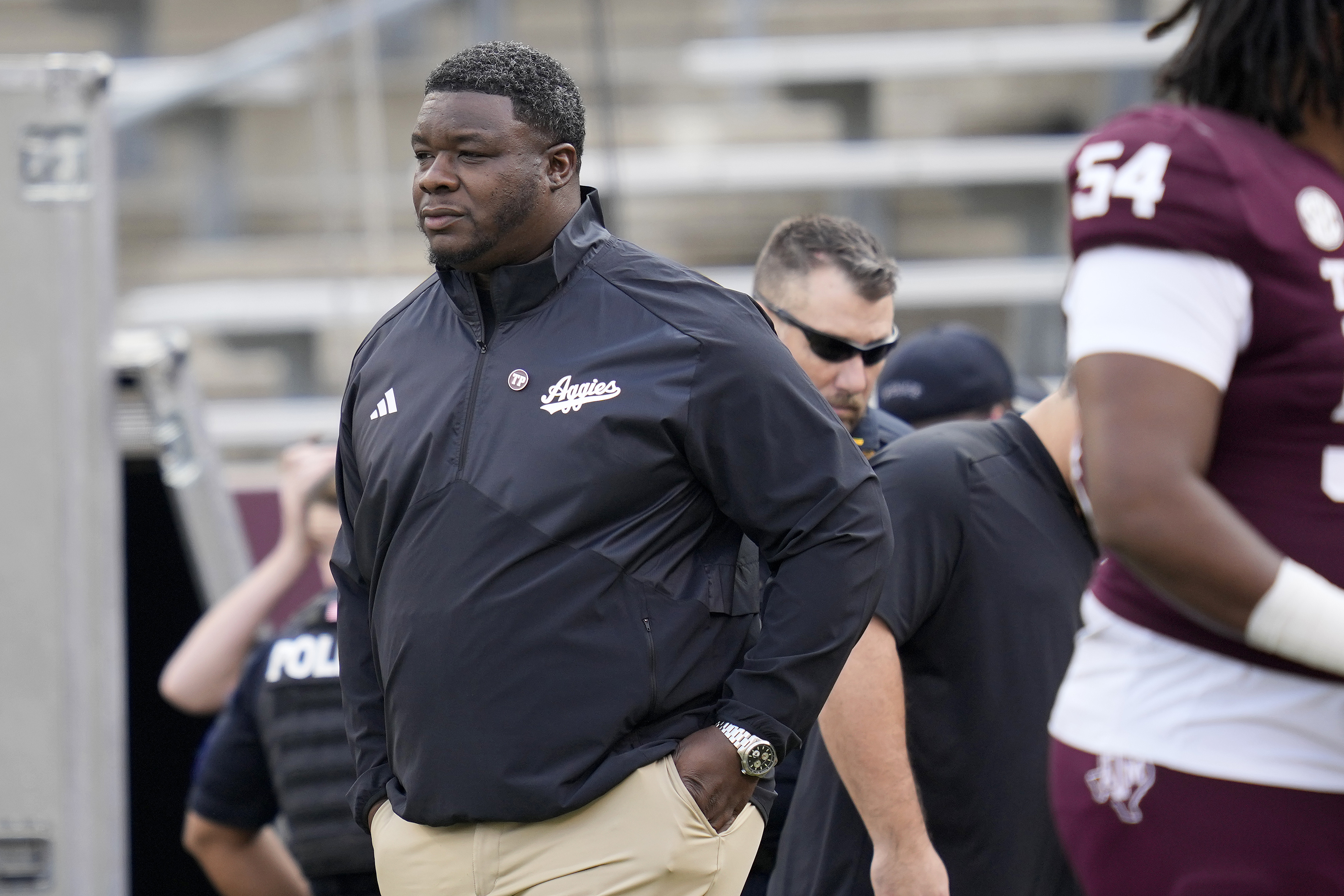
    Elijah Robinson during his time as Texas A&M’s interim head coach in 2023.

    The 40-year-old coach had other suitors in recent weeks, including LSU and Matt Rhule’s Nebraska. Robinson worked with Rhule at Temple (2014-16) and Baylor (2017).

    Texas A&M saw its season end in the first round of the College Football Playoff on Saturday with a 10-3 loss to Miami.