Blog

  • Trump will use military housing money for $1,776 Pentagon bonuses

    Trump will use military housing money for $1,776 Pentagon bonuses

    The Trump administration will repurpose $2.6 billion in military housing assistance to pay $1,776 “warrior dividend” bonuses to service members, according to a senior administration official.

    In a prime-time address Wednesday night, President Donald Trump announced the Christmastime bonuses “in honor of our nation’s founding in 1776.”

    “Nobody deserves it more than our military. And I say congratulations to everybody,” Trump said.

    The president said the money for the bonuses came from revenue from import taxes he’s imposed on trading partners worldwide. That was incorrect, however, and Trump does not have the authority to spend the money from tariffs without authorization from Congress.

    But lawmakers this summer did approve $2.9 billion to supplement the military’s basic allowance for housing as part of Trump and the GOP’s mammoth tax and immigration law, the One Big Beautiful Bill.

    Defense Secretary Pete Hegseth ordered the Pentagon to spend most of that money as a one-time payout on the bonuses, said the senior administration official, who spoke on the condition of anonymity because they were not authorized to speak publicly on the matter.

    The use of the housing funds to pay the bonuses was reported earlier by Defense One.

    Roughly 1.45 million service members, including 174,000 reservists, will receive the bonuses, which Hegseth said in a video Thursday would be tax-free.

    “This warrior dividend serves as yet another example of how the War Department is working to improve the quality of life for our military personnel and their families,” Hegseth said.

    Trump renamed the Department of Defense as the Department of War in September, designating that as the department’s “secondary title” and authorizing its use. It’s unclear whether Trump has the authority to permanently rename cabinet departments without congressional approval.

    “I can think of no better Americans to receive this check right before Christmas, whether it’s for pay, housing, faith, support, all elements of what we’re doing are to rebuild our military,” Hegseth said.

    The defense secretary called the payment “a direct investment in the brave men and women who carry on the legacy of our armed forces every single day,” and said military members in pay grades E-1 to O-6 would be eligible. The top pay grade eligible includes the ranks of colonel in the Air Force, Army, Marines and Space Force, and captain in the Navy and Coast Guard.

    Speaking in the Oval Office on Thursday, Trump said his staff originally presented him with a plan for $1,775 bonuses.

    “And I said, ‘Wow, I think we can afford one more dollar,’” Trump said.

    In Congress, reaction to the bonuses was mixed, largely along party lines. Sen. Roger Wicker (Mississippi), the Republican chairman of the Armed Services Committee, said in an interview that the payments were “quite appropriate.”

    He added in a statement that the bonuses would “put real money in the pockets of our service members and their families, helping provide greater stability and improved housing options as they manage the unique demands of military life.”

    Sen. Jack Reed (Rhode Island), the top Democrat on the panel, said he was concerned that pulling the money for the bonuses from the housing assistance program would prevent the Defense Department from improving housing for service members and conducting overdue maintenance.

    “There has been a real fundamental need for housing improvements and maintenance,” Reed said. “I think they could find a better source for the funds.”

    Sen. Chris Coons (Delaware), the top Democrat on the Senate Appropriations Defense Subcommittee, was more blunt — both about the purpose of the checks and Trump’s authority to issue them.

    “Read the Constitution! You can’t just sprinkle the country with checks just because you came up with it late at night,” Coons said.

    The National Defense Authorization Act, which Trump is set to sign into law Thursday evening, approves pay increases for troops, and the annual appropriations bill — which Congress has yet to pass — funds it, he said.

    “That’s how we do this, not game-show checks. Not last minute whimsy by a president,” Coons said. “This is a classic campaign stunt that does not serve our warfighters, our Constitution, or our republic well.”

    The Trump administration has a track record of aggressively shifting resources around the Pentagon to goose service members’ compensation.

    During the government shutdown, the administration twice moved money from other parts of the Pentagon budget to keep paying troops. Doing so without the approval of lawmakers — who normally have a say over large changes in federal spending — was controversial in Congress, where aides from both parties acknowledged that the move was probably illegal.


  • Jake Shane spotted having ‘the best meal I’ve ever had in my life’ in this Philly restaurant

    Jake Shane spotted having ‘the best meal I’ve ever had in my life’ in this Philly restaurant

    Jake Shane was spotted dining at one of Philly’s Michelin star restaurants on Tuesday night.

    “The best meal I’ve ever had in my life at her place in Philly,” Shane told his TikTok fans.

    @octopusslover8

    best meal I’ve ever had in my life at her place in Philly

    ♬ cinnamon girl ୨୧ – 🐚🪷🫧

    Before making an appearance at the UberEats “Unwrap the Holidays” pop-up at Dilworth Park, the “Therapuss” podcast host and comedian popped by Amanda Shulman’s Her Place Supper Club for lobster and celery remoulade zeppole, tete de moines citrus salad, black trumpet boudin blanc, and more.

    And Philadelphians couldn’t get enough of Shane’s Philly content.

    Jake Shane with Danielle Sikaffy and Amanda Shulman at Her Place.

    “jake shane was in philly when i was in philly today im dead,” one person commented.

    “I actually cannot believe you were at my favorite restaurant,” another commented.

    “Yay! People are starting to recognize the absolutely goated Philly food scene,” another person said.

    Shulman’s Rittenhouse restaurant received a Michelin star back in November for its “warm and welcoming supper club vibe” with “a real communal feel at play.”

    Her Place Supper Club, one of 76 best restaurants in Philadelphia, began with Shulman cooking for friends in her Penn campus apartment. Now, it’s the hotspot on Sansom Street with ever-changing menus showcasing “a pitch-perfect collaboration of an all-female kitchen locked in sync,” as Inquirer’s Craig LaBan put it.

    And that’s just the beginning of Shulman’s footprint. She and partner Alex Kemp, My Loup, opened their new Pine Street Grill in Fitler Square this week. (Perhaps it can coax Shane back for a repeat visit.)

    Along with a post of him seated at Her Place, Shane also took photos with Shulman and chef Danielle Sikaffy that the team posted on the restaurant’s Instagram.

    “Live pic of me realizing I listened to a song for the first time in ten years the other day and it just came on again at the restaurant I’m at,” Shane wrote on Instagram.

  • Can the Brown University tragedy bring the left and the right together?

    Can the Brown University tragedy bring the left and the right together?

    Let’s start with the easy part. There is absolutely no evidence so far to suggest that the shooter at Brown University targeted Alabama native Ella Cook — one of two students who died in the massacre last Saturday — because of her political opinions.

    That’s what several right-wing commentators said, noting that Cook had been vice president of the College Republicans at Brown. Cook “was targeted for her conservative beliefs, hunted, and killed in cold blood,” the national chairman of the College Republicans wrote in a post on X, which has garnered nearly two million views.

    Please. We still don’t know who opened fire in a classroom building at Brown, or why. It’s reckless — and cynical — to pretend that we do.

    But behind every crazed conspiracy theory lies a small grain of truth. Conservative students are not in danger for their lives, but they do experience ostracism and discrimination. People who claim otherwise are like climate change deniers, except in this case the naysayers are on the left.

    I’m on the left, too. And it’s time for us to come clean about the biased environments we have created.

    I feel that every time I hear a colleague say all Trump voters are white supremacists or fascists. I feel it when students email me to complain about the left-wing groupthink in their classes.

    And I feel it, most of all, when they come out to me as Trump supporters in my office, with the door closed. I plead with them to share their views with others, which is the only way we learn anything. But they tell me the cost would be too high: They’d be vilified and canceled.

    A poster seeking information about the shooting suspect is seen on the campus of Brown University on Wednesday.

    That’s why so many Republicans disdain higher education. They know that we abhor their views, and they return the favor.

    Now they’re trying to impose their will upon us. Start with President Donald Trump’s “compact,“ which is really just an act of extortion: Do what we say, or we’ll cut off your funding. I’m glad that Brown — like Penn — rejected it, but schools with smaller endowments might face a more difficult choice when deciding whether to do so.

    Then there are state measures restricting instruction about race and gender. The logic goes like this: You taught things we didn’t like, so we’re going to prevent you from teaching about them at all.

    Remember the adage about two wrongs? We seem to have forgotten it. Liberals created an intolerant atmosphere on our campuses. In response, conservatives are taking political measures to silence us.

    It’s time to end this madness. And perhaps we can use the Brown tragedy to do just that.

    The other student who was murdered was a naturalized U.S. citizen from Uzbekistan, Mukhammad Aziz Umurzokov. He survived a serious childhood illness and wanted to become a doctor, so he could assist other people who had suffered like he did.

    You haven’t heard a lot about Umurzokov in right-wing media, which has been busy memorializing Ella Cook. But neither have my fellow liberals made much mention of Cook; instead, they have been commemorating the remarkable life of Mukhammad Umurzokov.

    Imagine a national day of mourning, where we switched all of that up. In Congress and in statehouses, Democratic leaders would hoist large blow-up pictures of Cook — the kind you see in sports stadiums — to memorialize her. And GOP officials would do the same for Umurzokov.

    That would require courage on both sides, which is in short supply these days.

    Democrats would need to celebrate a brave churchgoing conservative who bucked the dominant liberal consensus on campus. And Republicans would need to challenge their party’s nativist and anti-Islamic rhetoric by praising a young Muslim immigrant who wanted to do good in and for America.

    They would also have to call out the conspiracy theorists in their midst. Political violence is real, but there’s no evidence that Ella Cook was killed because of her politics. Honest Republicans know that. They need to say it.

    And maybe, just maybe, that can begin the healing that our battered nation so desperately needs. We simply cannot make anything better by hating on each other.

    At our schools and universities, we’ll resolve to welcome all points of view. Instead of maligning the other side — or trying to censor it — we’ll bring different sides together.

    And we will educate a new generation of citizens, who have both the will and the skill to converse across their differences. That will be a great way to remember Ella Cook and Mukhammad Umurzokov. And it will make America great, too. For all of us.

    Jonathan Zimmerman teaches education and history at the University of Pennsylvania. He is the author of “Whose America? Culture Wars in the Public Schools”.

  • Brian Walshe is sentenced to life in prison for the murder of his wife, whose body was never found

    Brian Walshe is sentenced to life in prison for the murder of his wife, whose body was never found

    BOSTON — A Boston-area man was sentenced Thursday to life in prison for the grisly murder of his wife, who disappeared nearly three years ago and whose body has never been found.

    Brian Walshe, 50, was convicted Monday of first-degree murder in the killing of Ana Walshe, 39. The sentence carries no possibility of parole.

    He pleaded guilty in November to misleading police and illegally disposing of a body after admitting he had dismembered her body and disposed of it in a dumpster. He said he did so only after panicking when he found she had died in bed.

    Judge Diane Freniere called Walshe’s crimes “barbaric and incomprehensible” and she chastised him for “deceitful and manipulative behavior.”

    Walshe showed no emotion as the sentence was read.

    Children ‘without their mother’s hand to hold’

    Before the sentencing, Ana Walshe’s sister Aleksandra Dimitrijevic told the court how the death has devastated her family, especially because they have no body to bury.

    “I struggle with the grief that comes without warning, hoping every morning that this is just a terrible dream,” she said. “The most painful part of this loss is knowing her children must now grow up without their mother’s hand to hold. They now face a lifetime of milestones, big and small, where her absence will be deeply and painfully felt.”

    The Walshe’s were married for about six years, and their three children are in state custody.

    No chance to properly grieve

    Walshe was also sentenced to 19 to 25 years for witness intimidation and two to three years for improper disposal of a body. Those sentences are to run consecutive to his life sentence, the judge ruled.

    Walshe’s lawyer, Kelli Porges, described the consecutive sentencing — which prosecutors requested due to the severity of the crimes — as “excessive.” Freniere disagreed.

    “You had no regard for the lifelong mental harm that your criminal acts inflicted on your then two, four and six year old sons, not only in taking their mother, but also, as is specific to this charge, and never being able to properly grieve that loss, to say goodbye to their mom,” Freniere said to Walsh during sentencing.

    Assistant District Attorney Gregory Connor defended the sentence.

    “When I looked behind me after the closing arguments, I realized that was the closest day that those people had come to a wake, because they never got together to mourn her. And that happened three years later,” Connor said.

    “We recognize it’s harsh,” he said of the sentencing recommendation, ”but we think it’s appropriate based on the facts.”

    Online searches reveal dismemberment and disposal plan

    Ana Walshe, a real estate agent who immigrated from Serbia, was last seen early Jan. 1, 2023, after a New Year’s Eve dinner at the couple’s home.

    When initially questioned by investigators, Walshe said his wife had been called to Washington, D.C., for a work emergency. But witnesses testified there was no evidence she took a ride service to the airport or boarded a flight. Walshe didn’t contact her employer until Jan. 4.

    During the trial, prosecutors leaned heavily on digital evidence found on devices connected to Walshe, including online searches for “dismemberment and best ways to dispose of a body,” “how long before a body starts to smell,” and “hacksaw best tool to dismember.”

    Investigators also found searches on a laptop that included “how long for someone missing to inherit,” “how long missing to be dead,” and “can you throw away body parts,” prosecutors told the jury.

    Surveillance video also showed a man resembling Walshe throwing what appeared to be heavy trash bags into a dumpster not far from the couple’s home. A subsequent search of a trash processing facility near his mother’s home uncovered bags containing a hatchet, hammer, shears, hacksaw, towels, and a protective Tyvek suit, cleaning agents, a Prada purse, boots like the ones Ana Walshe was last seen wearing and a COVID-19 vaccination card with her name.

    Prosecutors told the jury that the Massachusetts State Crime Laboratory examined some of the items and found Ana and Brian Walshe’s DNA on the Tyvek suit and Ana Walshe’s DNA on the hatchet, hacksaw and other items.

    A failing marriage and a life insurance policy

    Prosecutors floated several possible motives for the killing.

    An insurance executive testified that Brian Walshe was the sole beneficiary of Ana Walshe’s $1 million life insurance policy, suggesting a financial motive. But prosecutors also portrayed a marriage that was falling apart; Brian Walshe was confined at their home in the affluent coastal community of Cohasset, about 15 miles southeast of Boston, awaiting sentencing on an art fraud case. Ana Walshe meanwhile commuted from their home to Washington, D.C., where she worked.

    The year before she died, his wife had started an affair, details of which were shared in court by her boyfriend William Fastow. Brian Walshe’s attorney denied that his client knew about the affair.

    In his opening, Walshe’s attorney, Larry Tipton, argued it was not a murder case but what he called a “sudden unexplained death.” He said the couple loved each other and were planning for the future.

    But Walshe’s defense never called a witness and Brian Walshe declined to testify.

    During the trial, prosecutors did an excellent job of introducing circumstantial evidence and providing the breadcrumbs that led the jury down the path toward finding premeditation, said Daniel Medwed, a law professor at Northeastern University.

    “Here, the evidence about dismemberment and improper disposal of a body was overwhelming, so I suspect the defense goal was to concede that through the guilty pleas, and make the case all about the murder and the absence of direct evidence about intent and cause of death,” Medwed said.

  • Penn State adds two Iowa State offensive coaches to Matt Campbell’s staff

    Penn State adds two Iowa State offensive coaches to Matt Campbell’s staff

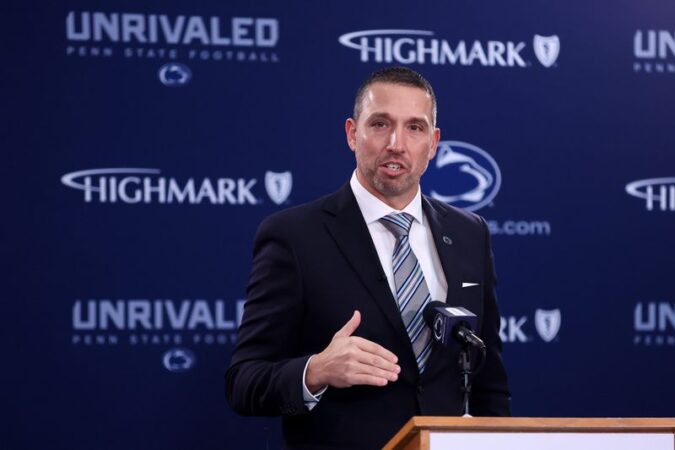
    STATE COLLEGE, Pa. — Penn State announced Thursday the addition of two offensive coaches who will join Matt Campbell in Happy Valley.

    Noah Pauley will serve as wide receivers coach and Jake Waters will be the quarterbacks coach. Both held the same titles at Iowa State this past season.

    Noah Pauley, wide receivers coach

    Pauley spent the last three seasons as the Cyclones’ wide receivers coach and added passing game coordinator duties in 2025. The 36-year-old started as a receivers coach with Minnesota Duluth in 2016 before stops at North Dakota State and Iowa State in the same position.

    Pauley is known for his player development skills. At North Dakota State, he coached the Green Bay Packers’ Christian Watson from a two-star wide receiver to a second-round NFL draft pick.

    In 2024, Pauley developed the Texans’ Jayden Higgins, a two-star receiver, and Jaylin Noel, a three-star receiver, into second-and third-round picks, respectively. Under Pauley’s tutelage, Noel and Higgins became the first duo in Cyclones history to have 1,000-yard seasons in the same campaign.

    Pauley won the 2024 FootballScoop.com National Wide Receivers Coach of the Year for his work with Noel, Higgins, among others.

    Now, he joins a Penn State receiver room that has not produced an NFL draft pick since 2023.

    Jake Waters, quarterbacks coach

    Waters, an All-Big 12 quarterback at Kansas State in 2014, spent the last two seasons as Iowa State’s quarterbacks coach after serving the previous three as the Cyclones offensive quality control coach.

    In the 33-year-old’s first campaign as quarterbacks coach, the Cyclones scored the most offensive touchdowns (52) in a single season.

    Waters spent the last two seasons coaching Rocco Becht, QB who passed for more than 6,000 yards and 41 touchdowns under Waters’ tutelage. Becht, who has an additional year of eligibility, is considered a potential target for Penn State, should he enter the transfer portal.

    Waters replaces Danny O’Brien, who served as the Nittany Lions’ quarterbacks coach since 2021 before joining James Franklin’s staff at Virginia Tech in the same role. Trace McSorley, who played quarterback at Penn State from 2014-18 and was on Franklin’s staff as the assistant QBs coach in 2025, is expected to remain on Campbell’s staff, according to On3.

  • What to know about Illinois State, Villanova’s FCS semifinal opponent

    What to know about Illinois State, Villanova’s FCS semifinal opponent

    By advancing to the FCS semifinals for the first time since 2010, Villanova gets to continue a successful 2025 season on its home turf as it hosts Illinois State on Saturday (7:30 p.m., ESPN2).

    The No. 12 seed Wildcats and unseeded Redbirds have piled up upset victories to find themselves with a national championship game appearance on the line.

    Villanova (12-2) is coming off a 26-21 road win over No. 4 seed Tarleton State. Villanova’s defense slowed down Tarleton, the top scoring offense in the FCS. The Wildcats rallied from a 14-0 deficit as graduate quarterback Pat McQuaide passed for 180 yards and one touchdown. Freshman wide receiver Braden Reed threw a touchdown pass of his own and had the game-winning touchdown catch in the fourth quarter.

    Meanwhile, Illinois State (11-4) headed to the West Coast and took down No. 8 seed UC Davis, 42-31. Senior quarterback Tommy Rittenhouse led the way with 266 passing yards and three touchdowns.

    Illinois State running back Victor Dawson (5) has posted back-to-back 100-yard rushing games.

    Get to know Illinois State

    Illinois State will be making its first FCS semifinal appearance since 2014 and its third in program history. It has been a historic playoff run for the Redbirds, from upset wins to school records broken, under head coach Brock Spack, who’s in his 17th season.

    Illinois State finished third in the Missouri Valley Football Conference and lost, 37-7, to Southern Illinois to end the season. But the Redbirds bounced back, starting with a 21-3 victory over No. 16 seed Southeastern Louisiana in the first round of the playoffs.

    Illinois State’s most impressive victory of the season came as it slid by defending champ and No. 1 seed North Dakota State, 29-28, in the second round. The Redbirds secured the comeback win over the 10-time FCS champions by means of a two-point conversion with a minute left.

    The Redbirds have been unfazed when playing in enemy territory, as each of their three playoff wins have been on the road. Illinois State has won eight consecutive away games against FCS opponents.

    Pat McQuaide (7) will try to deliver Villanova to the FCS final playoff round for the first time since the Wildcats won it all in 2009.

    Quarterback battle

    Rittenhouse has been playing some of his best football of the season during the playoffs. With his performance last weekend, Rittenhouse surpassed 3,000 passing yards this season. In his second season as Illinois State’s starter, Rittenhouse is averaging 200.4 passing yards per game, with a 66% completion rate.

    Rittenhouse and senior wide receiver Daniel Sobkowicz have become a dangerous duo, connecting on a 93-yard touchdown at UC Davis. Sobkowicz now holds school records for career receptions (250) and for touchdowns in a single season (16).

    In his first season as Villanova’s quarterback, McQuaide, a Nicholls State transfer, is averaging 208.9 passing yards per game with a 60% completion rate. While McQuaide has rushed for just 10 yards this season, Villanova has leaned on its powerful run game and experienced offensive line.

    Sophomore running back Ja’briel Mace has been McQuaide’s primary option, running for 151 yards and one touchdown at Tarleton State. He leads the team with 887 rushing yards this season.

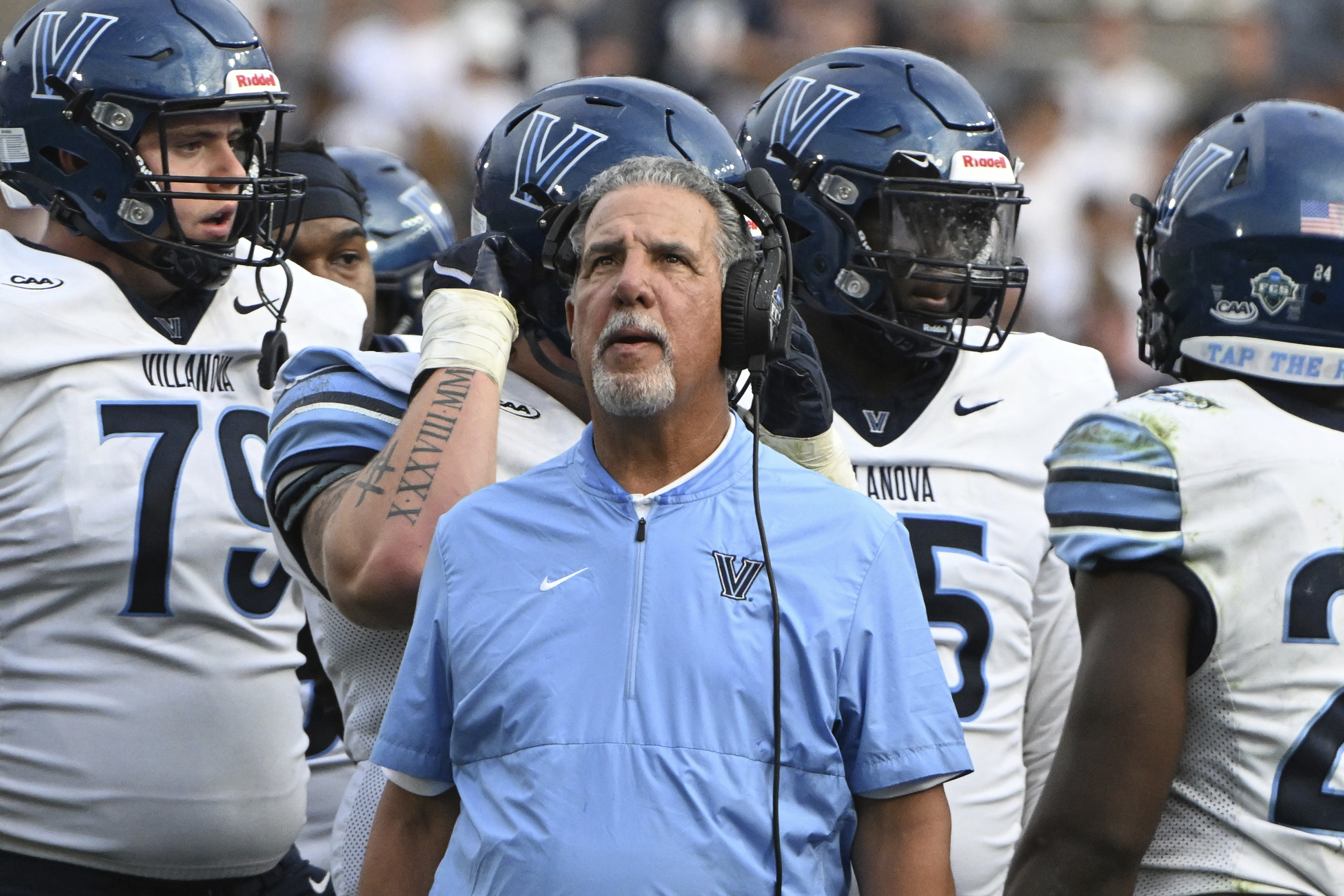
    Mark Ferrante’s team has shown discipline in avoiding turnovers this season.

    Limiting miscues

    Avoiding preventable errors will be crucial in Saturday’s matchup.

    Last Saturday’s win over Tarleton State was uncharacteristically messy for Villanova. McQuaide threw a costly interception in the opening drive, and the Wildcats nearly gave the game away because of defensive penalties in the fourth quarter. Holding and unsportsmanlike conduct charges on the same play advanced Tarleton 25 yards to the Villanova 27. Fortune struck for Villanova as Tarleton’s apparent touchdown pass on fourth down was overturned and ruled out of bounds.

    Villanova’s offense has overall been effective at protecting the football this season. The Wildcats have conceded just six turnovers, the fewest in the FCS.

    Flags have rarely been an issue for Illinois State, which ranks sixth in the FCS for fewest penalties per game (4.27).

    However, the Redbirds have at times struggled with turnovers this season, committing 19 total. Rittenhouse threw five interceptions at North Dakota State, and one at UC Davis.

  • Trump administration moves to cut off transgender care for children

    Trump administration moves to cut off transgender care for children

    WASHINGTON — The U.S. Department of Health and Human Services on Thursday unveiled a series of regulatory actions designed to effectively ban gender-affirming care for minors, building on broader Trump administration restrictions on transgender Americans.

    The sweeping proposals — the most significant moves this administration has taken so far to restrict the use of puberty blockers, hormone therapy, and surgical interventions for transgender children — include cutting off federal Medicaid and Medicare funding from hospitals that provide gender-affirming care to children and prohibiting federal Medicaid dollars from being used to fund such procedures.

    “This is not medicine, it is malpractice,” Health Secretary Robert F. Kennedy Jr. said of gender-affirming procedures on children in a news conference on Thursday. “Sex-rejecting procedures rob children of their futures.”

    Kennedy also announced Thursday that the HHS Office of Civil Rights will propose a rule excluding gender dysphoria from the definition of a disability.

    In a related move, the Food and Drug Administration issued warning letters to a dozen companies that market chest-binding vests and other equipment used by people with gender dysphoria. Manufacturers include GenderBender LLC of Carson, Calif., and TomboyX of Seattle. The FDA letters state that chest binders can only be legally marketed for FDA-approved medical uses, such as recovery after mastectomy surgery.

    Proposed rules would threaten youth gender-affirming care in states where it remains legal

    Medicaid programs in slightly less than half of states currently cover gender-affirming care. At least 27 states have adopted laws restricting or banning the care. The Supreme Court’s recent decision upholding Tennessee’s ban means most other state laws are likely to remain in place.

    Thursday’s announcements would imperil access in nearly two dozen states where drug treatments and surgical procedures remain legal and funded by Medicaid, which includes federal and state dollars.

    The proposals announced by Kennedy and his deputies are not final or legally binding. The federal government must go through a lengthy rulemaking process, including periods of public comment and document rewrites, before the restrictions becoming permanent. They are also likely to face legal challenges.

    But the proposed rules will likely further intimidate healthcare providers from offering gender-affirming care to children and many hospitals have already ceased such care in anticipation of federal action.

    Children’s Hospital of Philadelphia recently went to court to prevent the Trump administration from obtaining the private medical records of youth who sought gender-affirming care.

    Nearly all U.S. hospitals participate in the Medicare and Medicaid programs, the federal government’s largest health plans that cover seniors, the disabled and low-income Americans. Losing access to those payments would imperil most U.S. hospitals and medical providers.

    The same funding restrictions would apply to a smaller health program when it comes to care for people under the age of 19, the State Children’s Health Insurance Program, according to a federal notice posted Thursday morning.

    Moves contradict advice from medical organizations and transgender advocates

    Mehmet Oz, the administrator of the Centers for Medicare and Medicaid Services, on Thursday called transgender treatments “a Band-Aid on a much deeper pathology,” and suggested children with gender dysphoria are “confused, lost, and need help.”

    Polling shows many Americans agree with the administration’s view of the issue. An Associated Press-NORC Center for Public Affairs Research survey conducted earlier this year found that about half of U.S. adults approved of how Trump was handling transgender issues.

    Chloe Cole, a conservative activist known for speaking about her gender-transition reversal, spoke at the news conference to express appreciation. She said cries for help from her and others in her situation, “have finally been heard.”

    But the approach contradicts the recommendations of most major U.S. medical organizations, including the American Medical Association, which has urged states not to restrict care for gender dysphoria.

    Advocates for transgender children strongly refuted the administration’s claims about gender-affirming care and said Thursday’s moves would put lives at risk.

    “In an effort to strongarm hospitals into participating in the administration’s anti-LGBTQ agenda, the Trump Administration is forcing health care systems to choose between providing lifesaving care for LGBTQ+ young people and accepting crucial federal funding,” Jamila Perritt, a Washington-based OB/GYN and president and CEO of Physicians for Reproductive Health, said in a statement. “This is a lose-lose situation where lives are inevitably on the line. “

    Rodrigo Heng-Lehtinen, senior vice president at The Trevor Project, a nonprofit suicide prevention organization for LBGTQ+ youth, called the changes a “one-size-fits-all mandate from the federal government” on a decision that should be between a doctor and patient.

    “The multitude of efforts we are seeing from federal legislators to strip transgender and nonbinary youth of the health care they need is deeply troubling,” he said.

    Actions build on a larger effort to restrict transgender rights

    The announcements build on a wave of actions President Donald Trump, his administration and Republicans in Congress have taken to target the rights of transgender people nationwide.

    On his first day in office, Trump signed an executive order that declared the federal government would recognize only two immutable sexes: male and female. He also has signed orders aimed at cutting off federal support for gender transitions for people under age 19 and barring transgender athletes from participating in girls’ and women’s sports.

    On Wednesday, a bill that would open transgender health care providers to prison time if they treat people under the age of 18 passed the U.S. House and heads to the Senate. Another bill under consideration in the House on Thursday aims to ban Medicaid coverage for gender-affirming care for children.

    Young people who persistently identify as a gender that differs from their sex assigned at birth are first evaluated by a team of professionals. Some may try a social transition, involving changing a hairstyle or pronouns. Some may later also receive hormone-blocking drugs that delay puberty, followed by testosterone or estrogen to bring about the desired physical changes in patients. Surgery is rare for minors.

  • To replace New York’s archbishop, Chicago-born pope looks to home turf

    To replace New York’s archbishop, Chicago-born pope looks to home turf

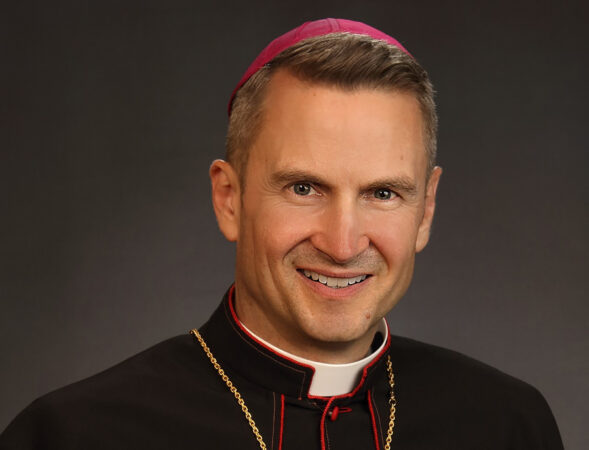
    ROME — In his highest-profile move to direct the U.S. church since becoming pope, Leo XIV accepted the resignation of Cardinal Timothy Dolan, the prominent archbishop of New York, replacing him with a 58-year-old Illinois native who “played in the same parks, went swimming in the same pools [and] liked the same pizza places” as the Chicago-born pope.

    Ronald A. Hicks, currently bishop of the Diocese of Joliet, southwest of Chicago, is viewed as cut from the same theological cloth — as well as nearly the same streets — as the new pontiff. He will take over one of the most visible archdioceses in the Catholic world at a time when it is grappling with the serious financial fallout of the clerical abuse scandals.

    The product and protégé of influential figures in the Chicago church, including Cardinal Blase Cupich, Hicks is widely seen as a mild-mannered moderate, observers say, who rarely delves into the world of divisive politics. That is likely to mark a tonal shift from Dolan, a charismatic conservative who delivered blessings at both of President Donald Trump’s inaugurations and compared slain activist Charlie Kirk to a saint, and whom the U.S. leader has described as a “great friend.”

    “I believe the message from Leo is that he wants an archbishop of New York who can be less identified with one political party, with one platform, with one trench in this situation of polarization,” said Massimo Faggioli, a professor in ecclesiology at Trinity College Dublin.

    “Hicks is not a woke liberal for sure, but I believe he is very different from Dolan, whose instincts were to very openly justify and excuse President Trump,” Faggioli said. “I don’t think that’s going to continue, honestly. This is a sign of change.”

    At St. Patrick’s Cathedral in Manhattan on Thursday, Dolan introduced Hicks to the media as an “early Christmas gift.” Hicks thanked him and Leo and reassured New Yorkers that while he was a Chicago Cubs and deep-dish fan, he loved their pizza and would root for their teams.

    He said he understood that these were “complex and challenging days.”

    “I feel the hope that so many who came to our shores … came through this very harbor here in New York, including my own family” carried, he said. “I am committed to working … to make real the promise of the golden door by acting in mutual respect and working to uphold human dignity.”

    Switching to Spanish, Hicks, who, like Leo, spent years serving the church in Latin America, expressed deep love of the “Latino culture” and “Hispanic people.”

    In a telephone interview with the Washington Post, Cupich compared Hicks in some respects to a fellow Chicagoan: the pope.

    Both men, he said, emphasize “listening.”

    Hicks would not hesitate to “speak out” when warranted, but “he’s not going to come at things in terms of an ideology,” he added.

    “So he’s an individual who’s going to look at what the facts are and, and focus on how people’s lives can hear the truth of the Gospel. And walk with people in a very patient way.”

    “I think he’s a balanced individual who knows and accepts the tradition of the church, but also is one who realizes, as Pope Francis put it, that realities are greater than ideas,” Cupich said of Hicks.

    The decision — announced Thursday by the Vatican but widely rumored for days — places Hicks atop the Archdiocese of New York, second in size only to Los Angeles’ in the United States, at an age that is one year younger than Dolan when Pope Benedict XVI named him to the job in 2009.

    In the Catholic Church, bishops and cardinals are expected to offer resignations upon turning 75 — an age Dolan reached in February. Acceptance is at the prerogative of the pope, and cardinals can and do serve longer. Leo has said he would like to make retirement at 75 the norm for the Catholic hierarchy, but he has also spelled out room for exceptions for some cardinals, who, he has said, could serve for up to an additional two years.

    “We must all cultivate the inner attitude that Pope Francis has defined as ‘learning to say goodbye,’ a valuable attitude when preparing to leave one’s position,” Leo said in an address last month.

    The appointment elevates an apprentice of Cupich — one of Leo’s staunchest allies and a cleric who has been criticized by some conservatives for showing leniency to politicians who support abortion rights and welcoming LGBTQ+ Catholics.

    Both Leo and Hicks were Chicago Catholics influenced by one of the most important figures in the 20th-century American church — Joseph Bernardin, a former cardinal and archbishop of Chicago. Bernardin, who ordained Hicks, defended the changes of Vatican II in the 1960s and promoted the “consistent ethic of life” that sought to link views against abortion to opposition to the death penalty and nuclear weapons.

    Some ultraconservative Catholics noted that Leo had appeared to seize an opportunity to replace Dolan, rather than permit him — as frequently happens — to serve beyond age 75. Some noted that Leo this week also elevated Bishop Ramón Bejarano, who has publicly apologized to LGBTQ+ Catholics for the “pain” caused to them by the church, to head the Diocese of Monterey, California.

    In recent weeks, Leo — who has repeatedly said he does not want to exacerbate political divisions — has grown bolder about criticizing the policies of the Trump administration, describing its migrant crackdown as “inhuman” and taking aim at U.S. attacks against alleged drug boats off the Venezuelan coast.

    Perhaps the highest-profile American Catholic cleric, Dolan is a media-savvy traditionalist who, ahead of the 2024 election, praised Trump — who is not Catholic — for taking “his Christian faith seriously.”

    During a September appearance on Fox & Friends, Dolan called Kirk “a modern-day Saint Paul.”

    “He was a missionary, he’s an evangelist, he’s a hero,” Dolan said. “He’s one, I think, that knew what Jesus meant when he said, ‘The truth will set you free.’”

    As frequently happens with Catholic clerics, however, Dolan was not always easy to label — and was criticized by some archconservatives for permitting celebrations for LGBTQ+ Catholics in his archdiocese.

    Some saw Hicks’s selection by Leo as one of balance. He is seen, for instance, as less “liberal” than, say, Cardinal Robert McElroy, who was named archbishop of Washington in January by Francis.

    “I think that Hicks will be less vocal on political issues than Dolan and McElroy,” said the Rev. Thomas Reese, a senior analyst at the Religious News Service. “I think, especially at the beginning, he will focus on the pastoral. For example, on immigration, he simply endorsed and repeated what the [U.S. bishops conference] had said.”

    Hicks mixes pastoral outreach with a more traditional focus on the Holy Eucharist and the role of Christ at Mass. His appointment comes after U.S. bishops named a noted conservative — Oklahoma City Archbishop Paul Coakley — to head their conference last month.

    “Here we see the road map of Leo — which is to overcome polarization,” Marco Politi, a longtime Rome-based Vatican watcher, said of Hicks’ appointment.

    Born in Harvey, Ill., Hicks was ordained to the priesthood in Chicago in 1994. Like Leo, he served the church for years in Latin America, in Hicks’ case, as director of an orphanage in El Salvador. Cupich appointed him vicar general of the Archdiocese of Chicago in 2015 and an auxiliary bishop in 2018. Pope Francis elevated him in 2020 to serve as bishop of Joliet.

    Asked about Leo by Chicago station WGNTV after the pope’s May selection to replace Francis, Hicks said: “I recognize a lot of similarities between him and me. So we grew up literally in the same radius, in the same neighborhood together. We played in the same parks, went swimming in the same pools, liked the same pizza places to go to. I mean, it’s that real.”

    That doesn’t mean they see eye-to-eye on everything.

    Leo “is and always will be a [White] Sox fan,” Hicks said. “And, I grew up a Cub fan. I’m a Cubs fan because my father is a die-hard Cubs fan. He wanted us to know we were loved, but that we’d stay Catholic and Cubs fans. In my family, there was not getting around either of those things.”

  • European cargo ships are rerouting to Philadelphia as Baltimore struggles to replace Key Bridge

    European cargo ships are rerouting to Philadelphia as Baltimore struggles to replace Key Bridge

    Two top trans-Atlantic shippers are moving their cargoes to Philadelphia-area terminals, boosting longshore and trucking jobs, and ending Baltimore port calls as work drags on replacing the Key Bridge, whose collapse 21 months ago crippled ship traffic to that city’s harbor.

    A.P. Moller-Maersk, based in Denmark, and German-based Hapag-Lloyd AG, which each rank among the top five global container companies and operate hundreds of ships carrying millions of trailers, have switched a major route for their Gemini joint venture to the PhilaPort’s Packer Avenue Marine Terminal, effective Jan. 4, Philadelphia-based Holt Logistics told customers in a note Wednesday.

    “Rising tide lifts all boats, and that includes the waterfront labor, plus all the other ancillary support folks that run freight, handle it, and store it,” said Leo Holt, whose family operates Holt Logistics. “It’s a big win for Philadelphia, and a harbinger of good things to come.”

    Holt, based in Gloucester City, is expanding its container operations in the Port of Philadelphia on land acquired by state port agency PhilaPort in South Philly. That includes a new cold-storage warehouse. Plans are still in the works for 152 acres bought with state funds for more container and automotive storage.

    Philadelphia’s port handles wine, meat, furniture, car parts, drugs, and many other container goods. The region also exports drugs, steel, and machine and vehicle parts. Singaporean-owned Penn Terminals in Delaware County and the Port of Wilmington, Del., also handle containers.

    Philadelphia recorded the equivalent of 841,000 20-foot trailer equivalents (TEUs) through area ports last year and expects to report more for 2025, even before the new service and additional lines to Australia and New Zealand start next year. The agency’s goal is to boost that to more than 2 million a year with the planned expansion, said spokesperson Sean Mahoney.

    Philadelphia-area container shipping has nearly doubled since Jeff Theobold took over as PhilaPort executive director in 2016, while overall U.S. container volume has risen about 30%. Theobold plans to retire in June, two months after PhilaPort’s new cruise ship terminal is scheduled to open in Delaware County near Philadelphia International Airport. The agency is searching for a successor.

    Philadelphia “will replace Baltimore” on a major trans-Atlantic route used by Hapag-Lloyd and Maersk, according to a report in Freightwaves, which noted Baltimore container traffic fell from 1.3 million 20-foot-trailer equivalents in 2023 to around 700,000 last year, even before the switch. Each ship on the route carries 5,000 to 6,500 TEUs.

    The new route also moves container ships between Newark, N.J., terminals that handle New York cargoes; Norfolk, Va.; St. John in Canada; the British port of Southampton; the Netherlands’ giant Rotterdam port at the mouth of the Rhine; and the German ports of Wilhelmshaven and Hamburg.

    That adds Germany to the list of countries with direct service to Philadelphia, Mahoney said. There’s no guarantee that all the Baltimore cargoes will shift to Philadelphia.

    Philadelphia also expects more ships from Australia and New Zealand ports as two lines that service those countries via the Panama Canal have recently added Philadelphia as their Northern U.S. port, Mahoney said. Already those countries and other South Pacific ports make up close to one-quarter of the Philadelphia area’s container cargoes, making it the leading East Coast port for shipments from that region. PhilaPort expects the lines will attract cargoes now shipped to Baltimore, New York, or Norfolk.

    Newark is the largest port complex in the Northeast. Philadelphia competes with Baltimore and southern ports for container and automotive cargoes.

    Philadelphia has the fastest arrival-to-departure time of any North American port, reducing shipping costs, according to a recent report by a World Bank subsidiary. Holt attributes that to cooperation between unions including International Longshoreman’s Association, and Teamsters locals, port agencies, and owners such as PhilaPort, and his own organization.

    Next year Holt plans to add two more tall cranes to the small forest of ship unloading equipment it maintains in South Philly and Gloucester City.

  • Braden Reed makes a name for himself in Year 1 with Villanova: ‘He’s not a freshman anymore’

    Braden Reed makes a name for himself in Year 1 with Villanova: ‘He’s not a freshman anymore’

    Villanova receiver Braden Reed motioned to the backfield and awaited the snap against Tarleton State last Saturday in the FCS quarterfinals. He took a handoff and ran in the opposite direction, but instead of heading downfield, he threw a 27-yard pass toward the end zone.

    The pass landed directly over the shoulder and into the hands of Villanova receiver Lucas Kopecky for a touchdown in the Wildcats’ 26-21 victory. Reed became the first Villanova receiver to throw a touchdown pass since Jaaron Hayek in 2019.

    “It was cool,” Reed said. “I was appreciative that the coaches had so much trust in me as a freshman to throw a ball in the quarterfinals of the playoffs. I think that’s something really special that they were able to trust me with that.”

    Reed has been a standout on Villanova’s special teams and recently on offense. For a majority of the season, he led the FCS in average punt return yards. In the last two games, he has caught game-winning touchdowns against Lehigh and Tarleton State.

    Now, Reed and Villanova are gearing up to host an FCS semifinal game on Saturday for the first time since 2009 (7:30 p.m., ESPN2). No. 12 Villanova will face unseeded Illinois State with a trip to the FCS championship on the line.

    “He’s not a freshman anymore,” Villanova coach Mark Ferrante said after the Tarleton State game. “I don’t even know what our overall record is, to be honest, but he’s got that many games under his belt now. So he’s pretty much moved up to be a sophomore, as far as playing time. He’s been able to come in and pick the system up really well. So you’re seeing the fruits of his labor. He works really hard, and the results are now showing up on the field.”

    The freshman is one of the first guys on the field for practice and the last one to leave. After morning practice, Reed will return in the afternoon to catch passes from one of the quarterbacks or the JUGS machine.

    Recently, Reed was named to the Stats Perform FCS Freshman All-America team and the 2025 FCS Football Central Freshman All-America team. He has tallied 31 receptions for 462 receiving yards and three touchdowns. On special teams, he has returned 20 punts for 298 yards, which currently ranks No. 6 in the FCS.

    In high school, the Pope John Paul II graduate was first-team all-state, was a three-time first-team all-conference honoree, and Pioneer Athletic Conference Player of the Year.

    Reed grew up around football. His father, Scott Reed, played the sport at West Chester and was his son’s head coach for three years at Pope John Paul II.

    “It’s been huge for me,” Reed said of having his father as a coach. “I wouldn’t be where I am without him. He’s one of my biggest fans and biggest haters. He’ll be the first one to humble me. He calls it the honest report. He tells me how it is. He’s very good at just keeping me grounded, keeping me humble and hungry, and just always wanting to strive for more.”

    In his senior year at Pope John Paul II, Reed helped his team reach the PIAA Class 4A quarterfinals. While he has experience playing games late into the season, Reed says he is not thinking too much about what’s at stake.

    As of now, he still gets to do what he loves for another week.

    “I’ve always kind of subscribed to the idea that every game is kind of the same,” Reed said. “At the end of the day, we’re playing a kid’s game, and we just happen to take it really serious. I try to not look at any of the outside stuff and just enjoy the fact that I get to play a game in December. I think that’s one of the coolest things ever. Really, the reward of the playoffs is getting to play more football. As much as championships are cool, getting to do what you love longer is something that drives me.”

    Reed describes himself as “a big family guy,” and when making his college decision, he wanted to stay close to home. After every home game, he goes home to spend time with his family.

    Braden Reed runs with the ball against Albany.

    Reed’s family will be in the stands this weekend as usual, but this time, a larger crowd will be supporting him. His former high school teammates will be home from college for winter break, and some will be there in support. Reed’s uncle Tom, who has not missed a game since his freshman year of high school, also will be in the stands.

    While the game this Saturday isn’t average, Reed and the team are treating it like it is any other week of the season.

    “I think [we] keep everything the same as any other week,” Reed said. “Go 1-0. It’s about the guys in our locker room, and one of the big things that we’ve harped on all year is to protect the brand, protect the ‘V.’”