Blog

  • ChristianaCare and Virtua Health have ended merger talks

    ChristianaCare and Virtua Health have ended merger talks

    ChristianaCare and Virtua Health have ended merger negotiations that would have created a healthcare system with more than $6 billion in annual revenue and business in four states, the two nonprofits announced Thursday.

    The nonprofits, the largest in South Jersey and the largest in Delaware, had disclosed a preliminary agreement to join forces in July. ChristianaCare and Virtua did not share specific reasons for dropping the idea.

    They issued identical statements: “After thoughtful evaluation, both organizations have determined that they can best fulfill their missions to serve their communities by continuing to operate independently.”

    It wasn’t obvious to industry insiders what advantages combining the two systems would have brought other than more revenue and the potential for some relatively small savings from greater scale.

    Both systems are financially solid. Virtua has a AA- credit rating from Standard & Poor’s. The S&P rating for ChristianaCare is two notches higher, at AA+.

    They have been expanding on their own.

    Virtua acquired Lourdes Health System in New Jersey in 2019, and is now spending hundreds of millions to renovate two of its hospitals.

    ChristianaCare explored an acquisition of Crozer Health in 2022, but decided not to go through with the deal. It won a May bankruptcy auction with a $50.3 million bid to assume Crozer leases at five outpatient locations in Delaware County. It has since opened 15 medical practices at those locations.

    ChristianaCare previously acquired the shuttered Jennersville Hospital in Chester County and turned it into a micro-hospital. It plans two more micro-hospitals for Delaware County.

    The five-hospital Virtua system had $3.24 billion in revenue last year. ChristianaCare, with three full-scale hospitals, had $3.3 billion in revenue in the year that ended June 30, 2025.

  • Temple pledges to boost police patrol officers by 58% over five years following staffing study

    Temple pledges to boost police patrol officers by 58% over five years following staffing study

    Temple University plans to increase its patrol officer ranks by 58% over five years after a study assessing staffing levels showed the school was below the middle tier of a framework that rates law enforcement agencies.

    The university currently has 77 sworn officers — 50 of them patrol officers — and president John Fry pledged to add 29 patrol officers, one detective, six sergeants, and one lieutenant. That would increase the overall number of sworn officers to 114.

    Temple president John Fry said safety was his first priority. Now he plans to increase patrol officers by 58% over five years.

    No target has been set for how many officers will be hired per year, but those discussions are underway, said Fry, who named public safety a top priority when he started in November 2024.

    The university’s declaration comes amid a particularly difficult time for police hiring, with departments nationally — including the Philadelphia Police Department — continuing to face shortages. Temple has been working for several years to attract more officers, including increasing salaries and benefits, adding signing and retention bonuses and higher contributions to retirement accounts, and hiring an associate director to focus solely on hiring, recruitment, retention, and training. The department also moved to 12-hour shifts to give officers more days off.

    Yet, the number of sworn officers has decreased from 81 in March 2024 to the current 77, despite additional hires being made, including four new officers from the Temple University Municipal Police Academy in October.

    “We must, and we will, deploy ever more compelling and creative incentives to make Temple’s Department of Public Safety a destination employer for law enforcement in our region,” Fry said. “Our plan is to look closely at what we are doing in the areas of recruitment and retention over the next several months and see what improvements can be made.”

    Temple plans to hire former Philadelphia Police Commissioner Charles H. Ramsey’s 21CP Solutions company to assist, including with how best to recruit and retain more officers, Fry said. The university had hired Ramsey to assess safety following the shooting death of student Samuel Collington in November 2021 and has implemented almost all of the 68 recommendations from his report released in April 2023.

    The staffing study was one of the final recommendations that Temple had to complete.

    Former Philadelphia Police Commissioner Charles Ramsey speaks at a press conference on the Temple safety audit his firm completed in April 2023.

    New bike patrol officers

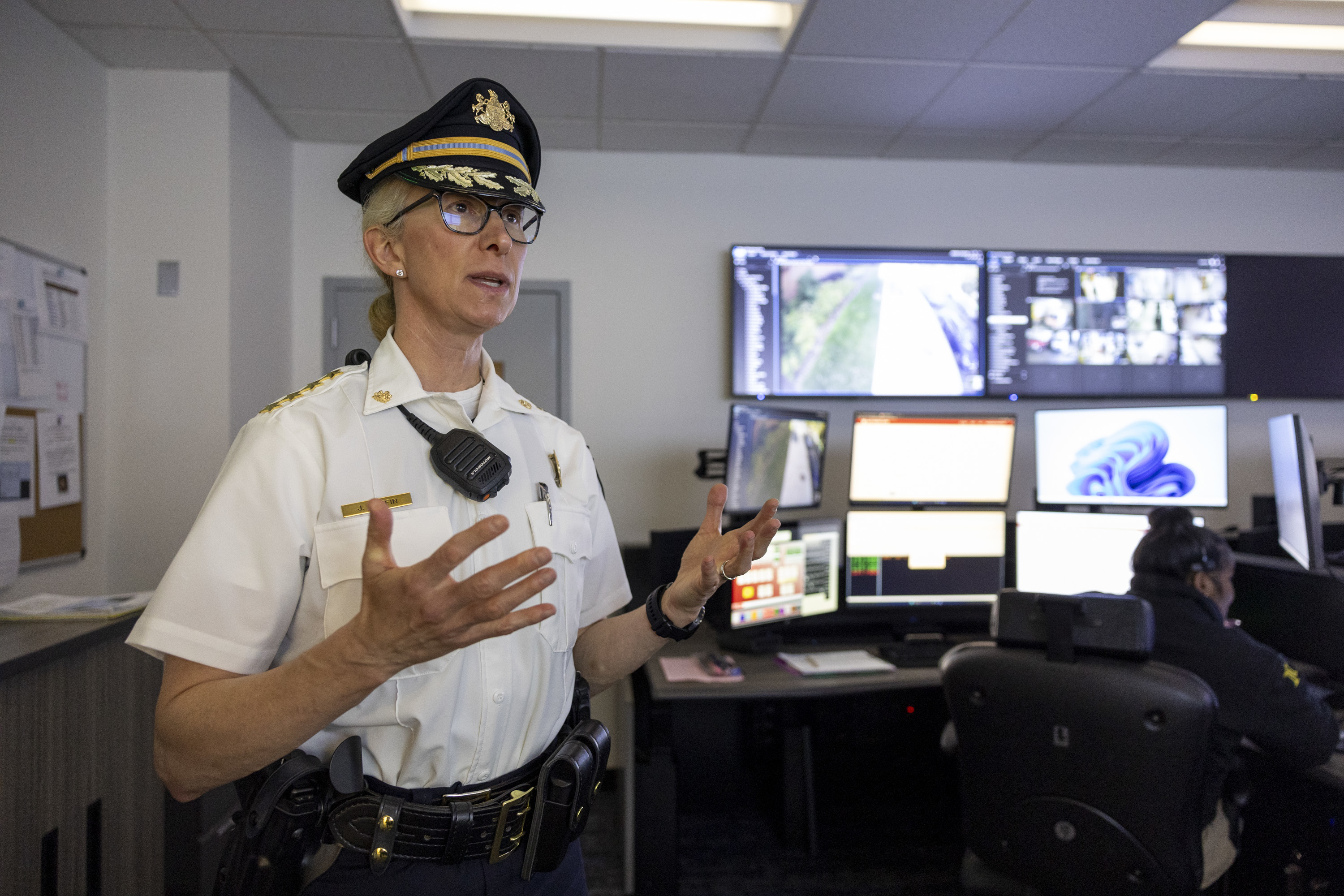
    In addition, Philadelphia Police Commissioner Kevin Bethel has committed to providing six bike patrol officers and a sergeant assigned to Temple, beginning Jan. 5. That’s up from the current four officers and supervisor, who were not always the same personnel.

    “The ability to have relationships and collaborations … will be better because it’ll be a consistent group,” said Jennifer Griffin, Temple’s vice president for public safety.

    “The ability to have relationships and collaborations … will be better because it’ll be a consistent group,” Jennifer Griffin, vice president for public safety at Temple University, said about the city’s six bike patrol officers that will be dedicated to Temple.

    Members of the Temple University Police Association, the officers union, have complained for years of inadequate staffing. In a social media post about a year ago, the union said the department had lost more than 50 officers since 2022.

    But Andrew Lanetti, president of the union, said he is pleased with the direction outlined by Fry.

    “From our talks here in the past few days, I am happy with where we’re going in the future,“ he said. ”I believe this is going to be a very positive experience and it’s going to help our community a lot.”

    University and union officials already have been discussing ways to recruit and retain more officers, and a more positive working relationship between the union and the university could help move the needle on hiring and retention.

    “We’re going to work together and our goal is all the same,” Griffin said. “We want a safer Temple and a safer community.”

    Budget woes

    The move also comes as the university attempts to close a budget deficit, made worse this fall when the school missed enrollment projections for its main campus that translated to about $10 million in lost revenue.

    “It will be a challenge,” Fry said of the new police officer hiring, “but it’s a priority, so we will meet that challenge.“

    He said money for the new staffing will be built into the university’s five-year budget plan.

    Temple last February hired safety and security consulting companies Healy+ and COSECURE, ancillary businesses of the Cozen O’Connor law firm, to conduct the staffing study. They used a tiered framework “to assess the capacity and effectiveness of law enforcement agencies,” Temple said. The university declined to release the full report, citing its proprietary information.

    “Temple is positioned below the middle tier of the framework, meaning the department is presently staffed to meet the essential public safety and emergency response needs of our community,” Fry said. “However, additional personnel would allow the department to organize and coordinate its activities to focus on additional proactive and community engagement activities that would position it higher in the consultant’s framework.”

    With the additional police officers that Temple plans to hire, the school would rise from just below the third of five tiers in the consultant’s rating system to the second tier, Fry said. The second tier, he said, connotes “higher levels of proactive enforcement, more presence, more mitigation strategies, and then more outreach, more community engagement.”

    Public safety is extremely important as the university plans to release its strategic plan and campus development plan early next year and as Fry seeks to spur economic development along the Broad Street corridor, from Temple’s new Terra Hall location in Center City to the health campus in North Philadelphia.

    “There’s going be a campus development plan, which clearly is going to put more activity on this campus, which means we’re going to have to support our police,” Fry said.

    Potential investors, he said, are watching.

    “When they’re about to commit significant investment, they want to know the area is safe,” he said.

    ‘Hold ourselves accountable’

    Former Temple president Jason Wingard pledged to increase the police force by 50% the month that Collington was killed, and those numbers never materialized. In fact, the number of officers dropped.

    Fry said what is different this time is that he has specified the exact numbers that will be added over a distinct time frame.

    “This is not something we’re just sort of speculating about,” he said. “This is based on a professional study. … We’ll be able to hold ourselves accountable.”

    The university already has made a host of changes that were recommended by Ramsey in the 2023 report. They include more foot patrols and security cameras and increased technology in the communications center.

    The university in 2024 touted a decrease in aggravated assaults, robberies, and thefts in its patrol zone. Despite improvements, Temple has continued to face safety challenges in its North Philadelphia neighborhood, including large groups of juveniles that sometimes gather on or near campus — a challenge in other areas of the city, too.

    And a student was shot and killed by another student near off-campus housing in February.

    Griffin said she stands behind the efforts to grow the department and make further improvements in training and operations.

    “I truly believe it will help position us as one of the highest-performing university police departments in the country,” Griffin said.

    Fry said once the university reaches its five-year hiring target, it will reevaluate its needs and figure out next steps.

  • Jared McCain opens up about protecting his mental health with students at Level Up Philly: ‘It humbles you’

    Jared McCain opens up about protecting his mental health with students at Level Up Philly: ‘It humbles you’

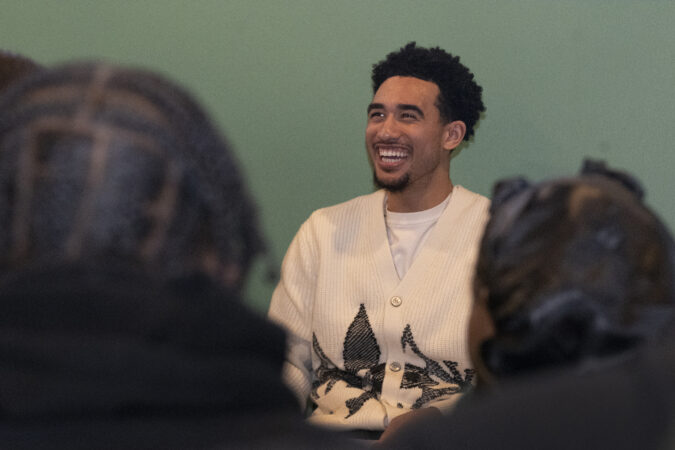
    Since high school, Jared McCain has shared his life on TikTok for his fans. He didn’t expect just how many haters also would come his way.

    On Wednesday, McCain, in partnership with Penn Medicine and the Sixers’ Assists for Safe Communities initiative, spoke with students at Level Up Philly about protecting his own mental health.

    “Putting myself in different positions helps me with my mental health, and helps me understand what people can go through,” McCain told The Inquirer. “Now, when I go through it, I understand what to do or what not to do. Being in the league is amazing, and now that I’m in, I guess, my real profession, it’s cool that I get to help out around the city, people around me, and people in my DMs, whoever it is, that I can just help out and try and direct them in the best way possible.”

    Since entering the NBA in 2024, McCain has experienced the highs of a successful debut and the lows of his season-ending meniscus tear and his season-opening finger injury this year.

    As he worked his way back into the lineup, McCain said there’s a huge mental aspect to his recovery that fans may not see. He relies on his friends and family and also works with a psychologist to process those struggles.

    “The expectation is, you come back right away, first game, and play exactly how you are. But for me, I was just trying to get out there and feel comfortable enough to jump again and jump off my left leg again,” McCain said. “You’ve done it a million times in training and to be prepared for a game, but it’s never going to replicate actually going and subbing into a game and going full speed.”

    “That’s where I’ve got to get off social media sometimes, in the first few games. Even when I’m not playing the best right now, I know it’s going to come back to me, but I always just stay true to myself. I know it’s going to click and I know it’s going to come back as long as I continue to work hard.”

    McCain doesn’t run his own Instagram anymore, and he’s never on X, which he believes is “the worst” platform. But he still loves TikTok and tries to keep basketball off his For You page.

    But he told the students at Level Up Philly that despite the hate he can get for his TikTok videos, he wants to keep it going to make a positive impact. Negative comments often can overshadow the positive ones, so McCain learned to refocus on the good he was doing instead of falling into the negative.

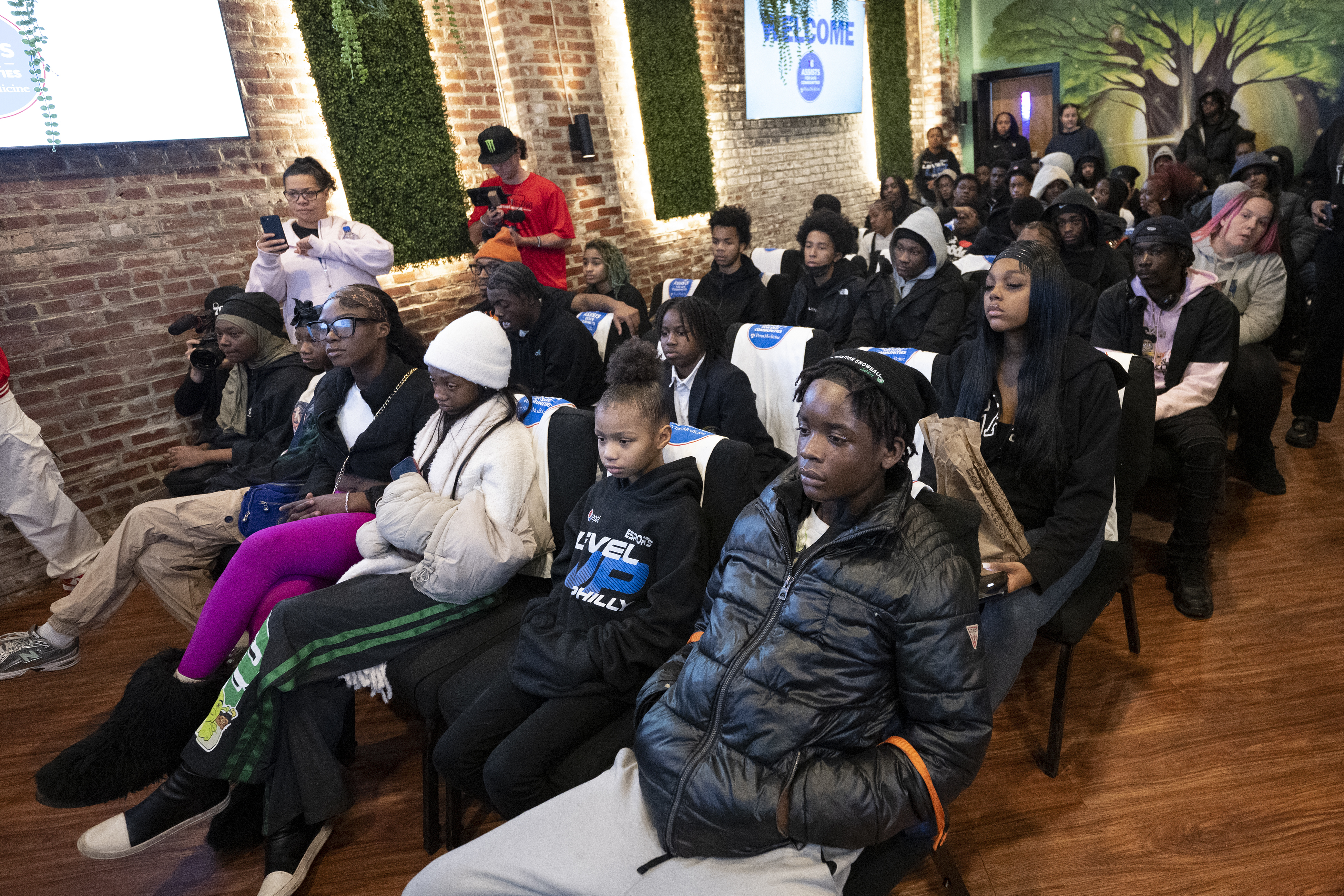
    Students at Level Up Philly listened to Sixers guard Jared McCain talk about his about mental health during an event partnership between Penn Medicine and the Sixers’ Assists for Safe Communities initiative.

    Level Up Philly is a youth community center in West Philadelphia that serves as a home base for hundreds of students across the city to work on homework, learn new skills, or hang out with friends.

    Pastor Aaron Campbell, affectionately called “Unc” and even “Dad” by the students, is the executive director of the center. Level Up Philly supports students from 10 to 25 years old.

    More than 40 students came to hear McCain, Campbell, and Penn Medicine emergency doctor Malik Sams talk about mental health. A number of students at Level Up Philly have witnessed gun violence, and Campbell said 15 students at Level Up have been killed in the last three years.

    “There is arguably a human rights crisis in Philadelphia,” Campbell said. “We have seen a significant drop in homicides. We’ve seen solutions for the violence, but now there’s another element. The elephant in the room is the PTSD, the psychological impact, and that is also part of what I will call a human rights crisis in Philadelphia, so we have to talk about mental health.”

    Students eagerly shared their stories and asked McCain questions, and Campbell loved that the collaboration between the Sixers and Level Up could help the students feel more empowered to speak up about their mental health.

    McCain said one of the biggest lessons he’s learned is not to judge, because everyone is going through something that he might not see. Getting to meet the students at Level Up was another way for McCain to gain perspective that he can take with him.

    “I was privileged, and I was able to grow up in an environment where a lot of this stuff didn’t happen that these kids go through,” McCain said. “To be able to hear stories of people, of what they’re going through, and people passing in their family, it definitely it humbles you, and you can understand more of what people go through on a day to day, and what they can be projecting at you when something happened at home. Just hearing it has helped me, and it can literally help me in my mental health struggles.”

  • Tonight’s Rams-Seahawks game has huge playoff implications and could impact the Eagles

    Tonight’s Rams-Seahawks game has huge playoff implications and could impact the Eagles

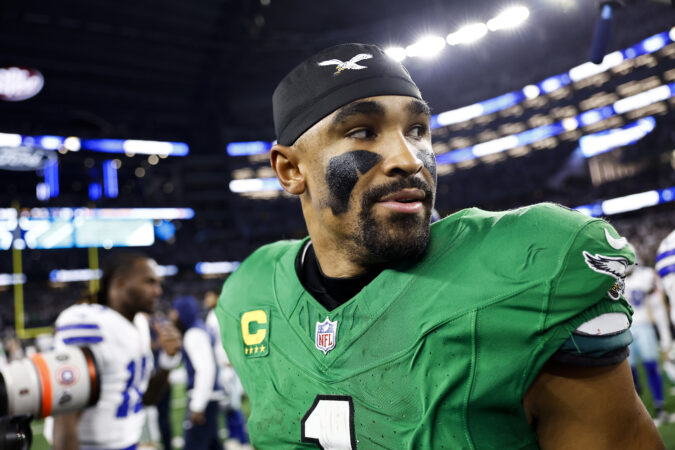
    The Los Angeles Rams (11-3) take on the Seattle Seahawks (11-3) tonight on Amazon’s Thursday Night Football in a game likely to have a huge impact on the NFC playoff race, but might not matter much to the Eagles (9-5).

    The Rams enter the game as the NFC’s No. 1 seed and in first place in the NFC West because they defeated the Seahawks in Week 11. The San Francisco 49ers (10-4) are close behind both teams and still have a fair shot of winning the division.

    The Eagles, who play the Washington Commanders (4-10) Saturday night, enter Week 16 as the No. 3 seed. A lot would have to happen for the Birds to either move up or down before the season ends. So tonight’s Rams-Seahawks game will have more impact on the team the Eagles could face in the first round of the playoffs than whether the Birds could sneak back into the No. 1 spot.

    How unlikely are the Eagles’ chances of landing the top playoff seed? Less than 1%, according to the New York Times playoff simulator.

    Here are all the various playoff implications of tonight’s game, and how it could impact the Eagles:

    NFC playoff picture

    window.addEventListener(“message”,function(a){if(void 0!==a.data[“datawrapper-height”]){var e=document.querySelectorAll(“iframe”);for(var t in a.data[“datawrapper-height”])for(var r,i=0;r=e[i];i++)if(r.contentWindow===a.source){var d=a.data[“datawrapper-height”][t]+”px”;r.style.height=d}}});

    A Rams win all but clinches the No. 1 seed

    If the Rams win tonight, they’ll have a 90% chance of clinching both the NFC West and the No. 1 seed, according to the New York Times.

    A win means the Seahawks would need to completely overtake the Rams in the standings. That would require the Seahawks winning their final two games (against the Carolina Panthers and San Francisco 49ers) and the Rams losing their final two (against the Atlanta Falcons and Arizona Cardinals).

    The only other team with a realistic chance to overtake the Rams as the No. 1 seed would be the Chicago Bears (10-4). The Bears defeated the Rams back in September, so Chicago would come out on top if the two teams are tied when the season ends.

    There’s also the 49ers, who face Philip Rivers and the Indianapolis Colts Monday night. The 49ers split their two games against the Rams this season, but San Francisco would currently win a tiebreaker with a better divisional record.

    A Seahawks win would also benefit the 49ers

    The Seahawks will clinch a playoff berth with a win tonight and Seattle would immediately become the NFC’s top playoff seed, at least for now. The Rams would drop to the No. 5 seed.

    Waiting in the wings are the 49ers, who defeated the Seahawks back in September and would be in position to steal the division and the No. 1 seed.

    The Seahawks and 49ers are scheduled to face off in Week 18 at Levi’s Stadium, and a Seattle win tonight makes it more likely that game will end up deciding both the NFC West and the No. 1 seed.

    Eagles could face the loser of tonight’s game first in the playoffs

    If the Eagles do end up the NFC’s No. 3 seed, they’ll host the No. 6 seed at the Linc during the wild card round of the playoffs.

    It’s looking likely the No. 6 seed will be the team that finishes third place in the NFC West, which is currently the 49ers. But the division is so tight, anything can happen over the next three games, so whichever team loses tonight increases their chances of facing the Birds on the road in a wild card game.

    Of the three teams, the Eagles have only played the Rams, a game the Birds narrowly won on a blocked field goal returned for a touchdown in Week 3.

    The Eagles basically have no shot at the No. 1 seed. What about No. 2?

    While it remains mathematically possible for the Eagles to still end the season as the NFC’s No. 1 playoff seed, the odds are not in the Birds’ favor.

    But what about the No. 2 seed? That’s how the Eagles entered the playoffs last season, and their postseason run ended with a Super Bowl victory.

    The current No. 2 seed is the Chicago Bears (10-4), who are essentially two games up on the Eagles because of the Birds’ loss to Chicago last month on Black Friday. So there are two main scenarios where the Eagles can overtake the Bears:

    • Eagles end the season 12-5 (winning their final three games), Bears end the season 11-6 (losing two of their final three).
    • Eagles end the season 11-6 (winning two of their final three games), Bears end the season 10-7 (losing their final three).

    There are some less-likely scenarios where the Eagles could win a tiebreaker in the event of a three-way tie also involving the Rams or Seahawks, which Wharton professor Deniz Selman breaks down here:

    If the Packers end up winning the NFC North, the Eagles would need to end the season a half-game up to secure the No. 2 seed, thanks to Green Bay’s tie against the Dallas Cowboys earlier this season (Unless the Eagles tie one of their final three games, but we won’t worry about that until it happens).

    In the unlikely event the Lions overtake both and win the division (the New York Times gives them a 5% chance), the Eagles hold the tiebreaker thanks to their Week 11 win at the Linc.

    The good news is the only way the Eagles would drop to the No. 4 seed is if they lost their final three games and either the Tampa Bay Buccaneers (7-7) or the Carolina Panthers (7-7) won out, since they face each other twice in the final three weeks of the season.

    NFC East standings

    !function(){“use strict”;window.addEventListener(“message”,function(a){if(void 0!==a.data[“datawrapper-height”]){var e=document.querySelectorAll(“iframe”);for(var t in a.data[“datawrapper-height”])for(var r,i=0;r=e[i];i++)if(r.contentWindow===a.source){var d=a.data[“datawrapper-height”][t]+”px”;r.style.height=d}}})}();

    The Eagles will officially clinch the NFC East and a playoff spot with a win Sunday or a Cowboys’ loss to the Los Angeles Chargers (10-4). But there’s still a long-shot chance Dallas could still overtake the Eagles in the division.

    Even if the Cowboys manage to win their final three games — at home against the Chargers and on the road against the Commanders and New York Giants (2-12) — they would still need the Eagles to lose out to overtake the Birds in the standings.

    Good luck.

  • A state store-stocked Napa Valley cabernet splurge that makes for a great gift

    A state store-stocked Napa Valley cabernet splurge that makes for a great gift

    Even for dedicated bargain shopper, there are times where a splurge makes perfect sense. In the wine world, one of these occasions is holiday gifting, so this week we are taking a break from our usual recommendations of wines under $25 to flag this Napa Valley cabernet sauvignon as a prestige wine suitable for high-end gifting.

    There are a number of reasons why wines make great presents. Fine wines are beautiful objects that are easy to wrap and just as appropriate for wine-loving colleagues or clients as for family and friends. They also have a special resonance at this time of year, in that each bottle offers the promise of a memorable experience that is best shared and can spread the warmth and conviviality of the season.

    Not every wine store will carry a wealth of options over $50 per bottle suitable for someone very special, but most have at least a handful to choose from. These tend to cluster in the two most giftable of wine categories — big reds and bubbles — due to their reputations for excellence. Many wine styles can come in such a wide range of prices that no one can be sure what price was paid. Then there are “blue chip” categories, which have a special cachet and always cost more, especially when they come from a top-of-the-line winery.

    Napa Valley cabernet sauvignon has the most gravitas of all American wines and is rarely found under $50. Dark, rich, and velvety, top-notch wines like this example make the quality of their ingredients and craftsmanship known with decadent flavors of black cherries and touches of both vanilla and chocolate. What distinguishes the fine craftsmanship of wines like this one, though, is not a specific taste per se — it’s the way the flavors and textures reverberate on the palate for minutes after each sip. Wines like this one, from a steakhouse-famous winery, make a perfect gift for red wine lovers who deserve a little touch of luxury in their lives.

    Caymus Napa Valley Cabernet Sauvignon

    Caymus cabernet sauvignon

    Napa Valley, California; 14.6% ABV

    PLCB Item #87541, on sale for $79.99 through Jan. 4 (regularly $89.99)

    Also available at: Total Wine in Wilmington and Claymont, Del. ($74.97; totalwine.com), Canal’s in Berlin, N.J. ($85.99; canalsofberlin.com), and Total Wine in Cherry Hill ($86.97)

  • 🥶 Winter solstice report card from the Shore | Down the Shore

    🥶 Winter solstice report card from the Shore | Down the Shore

    Hello from the Shore, currently the land of icy sidewalks, snow-dipped dunes, and pink sunsets. The December snow brought a couple of beautiful inches to most beach towns, where out-of-town homeowners rarely, if ever, think to get someone to shovel their sidewalks. Ah well. As a griper on Facebook noted, Ventnor doesn’t hesitate to cite you if your grass needs mowing (or, I might add, if you run with your dog on the boardwalk), but everyone’s looking the other way for the shoveling. It adds to the atmospheric beauty, maybe, and the roughing-it feel, but those sidewalks can be treacherous, especially for the mail carriers and dog walkers.

    Down the Shore is back for its solstice edition, in which we check in with your favorite beach towns and score how they’re doing.

    Atlantic City is top of mind, with its lovely holiday traditions like the elaborately decorated and festive iconic spots, from the Irish Pub to the Knife & Fork Inn, its new skate park and casino giveaways. But behind the salt air tinsel, A.C. is juggling some drama: Its mayor is on trial for alleged child abuse that could cause him to forfeit his office, three New York City casinos have been green lit, the state is moving to increase its authority over the city. A recent casino revenue report had good news for only three of the city’s nine casinos. A+ for its holiday sparkle and sunsets, C+ for the drama.

    In Ocean City, meanwhile, the identity crisis continues. The town did a complete turnaround earlier this month with respect to the former Wonderland Pier site, voting to ask the planning board whether the site is in need of rehabilitation as requested by developer Eustace Mita, who wants to build a luxury hotel. Meanwhile, its mayor declared bankruptcy and got sued by his stepmother. The iconic McDonald’s in town abruptly closed. Still, Playland’s Castaway Cove is offering its half-price ticket sale through New Year’s Day. B-

    Ventnor and Longport have both begun rebuilding work on their iconic spots, with a big chunk of Ventnor’s boardwalk, and Longport’s beautiful Point, a place of magical sunsets and long winter shadows, closed for construction. I knocked those places down to a B and let’s hope work is done by spring.

    Avalon, which came in for some summer criticism for its off-the-charts exclusivity, gets an A+ from me for its sensible and family-friendly 5:30 p.m. New Year’s Eve fireworks plan.

    My full Jersey Shore offseason report card, including Stone Harbor, Brigantine, LBI and Cape May, is here.

    📮 Should second-home owners be responsible for shoveling their sidewalks down the Shore? Let me know what you think by replying to this email.

    🤔 Have ideas or news tips about the Shore or this newsletter? Send them to me here.

    ☀️ Look for a warming trend which I hope lasts until New Year’s Day’s polar bear plunges. But then more snow please.

    — Amy S. Rosenberg (Find me at @amysrosenberg. 📷 Follow me on Instagram at @amysrosenberg. 📧 Email me here.)

    If someone forwarded you this email, sign up for free here.

    Shore talk

    🚨 El Pueblo Unido of Atlantic City reported the presence of federal immigration agents in both Atlantic City and Ventnor. The group was also collecting donations for an expectant mother whose husband was detained.

    🏠 Selling the family Shore house can be traumatic.

    🍔 The McDonald’s in Ocean City is closing, stunning its customers and employees alike. Here’s how you can help.

    🌬️ The land-based wind turbines in Atlantic City, which once vexed a casino owner who went on to become president, turned 20.

    ⚖️ The jury in the Mayor Marty Small trial was deliberating.

    🚭 Atlantic City casino workers asked a judge to ban smoking in casinos.

    🎡 Diplo mused about filming the massive “Heartless” video with Morgan Wallen in Atlantic City for $10,000.

    🏖️ Shore erosion funding was left out of the federal budget, then put back in. But is it enough? Here’s Frank Kummer’s analysis.

    🚨 Congressman Jeff Van Drew, meanwhile, called on Gov. Phil Murphy to declare a state of emergency for the state’s eroding beaches, which Murphy has declined to do. Brigantine, on its own, declared its own state of eroding emergency.

    What to eat/What to do

    💸 Buy a luxury condo in the heart of Atlantic City.

    🐻‍❄️ Polar bear plunge on New Year’s Day at an ocean near you! Or, watch from this beach cam.

    🐟 Order your seven fishes from Atlantic City’s Barbera Fish Market.

    🕯️ Take a candlelight house tour in Cape May.

    🎰 Win a million dollars at the slots, like this guy.

    🎰 New Year’s Eve is a great time to hit up Atlantic City.

    🎣 Wildwood’s Fishing and Boating Expo beings Jan. 9.

    Shore snapshot

    The beach in Ventnor, N.J., after the snowfall on Dec. 14.

    🧠 Trivia time

    Its announced closing shook employees and customers alike. Just how long has the landmark McDonald’s in Ocean City been at 900 West Ave.?

    A. 47 years.

    B. 60 years.

    C. 25 years

    D. Since the town’s founding

    If you think you know the answer, click on this story to find out.

    Ask Down the Shore

    If we come visit in the winter, does this count against our time in the summer?

    Visitors in the offseason are most-welcome! It gets lonely down here. We get to show off how actually great it is to live here year-round, and sometimes how amazing the beach looks with snow on it. And listen, after entertaining guests in the winter, pulling out the board games, stoking the fire, hoping the heat actually works, a summer visit where everyone just goes to the beach all day is a snap. Come on down.

    Have a Shore etiquette question or sticky situation? Email us here.

    📖 Shore slam book: PJ Hondros

    PJ Hondros 23, lives in North Wildwood, and runs the North Wildwood Coastal Processes Facebook page that documents the erosion and sea level rise along the shore town’s fragile coast. Hondros is in grad school studying coastal zone management, and works part-time in the coastal sedimentology field. He says his research includes, “sea level rise/ coastal flooding risk, sediment (sand) fluxes along our coastline, and mapping suitable habitat along our back bays.” PJ answered our rapid-fire questions.

    Favorite beach/beach town: North Wildwood.

    Favorite Shore breakfast: Aloha bacon egg and cheese sandwich — nothing even comes close.

    Perfect beach day: A searing 90 degrees with minimal wind.

    Perfect night at the Shore: Hit the bars!

    Best season to be down the Shore? Late summer to early fall.

    Surfing or fishing or … Bodyboarding and swimming.

    Sunrise or sunset? Sunset.

    What’s the best Wildwood? All offer something unique.

    What’s one thing you wish people knew about the Shore? There’s more than the beach (e.g. zoos, campgrounds, state parks).

    What is the most critical issue facing Shore towns? Short-term: the lack of beach replenishment funds allocated for FY25 and 26. Long-term: accelerating coastal flooding.

    Your Shore memory

    Tom McCourt gave up the Shore for sunny Florida and Las Vegas. But the memories linger.

    Despite currently living in the desert, I am a Philly native. I grew up going to the shore. As a small child I went with family, then Senior Week, and later fishing as often as I possibly could. As a young adult, that morphed into an annual week in the Wildwoods, fishing nearly every day, spending some time on the beach, and enjoying life at the shore.

    Then the greed happened.

    Mom-and-Pop houses, apartments, and motels were bulldozed in favor of massive cookie-cutter condos, all of which have the character and personality of a trash bag. The owners now had large mortgages and construction bills to pay, and greed. They all had greed.

    As a solo fisherman, the Jersey Shore, as much as I loved it, priced itself out of my range. It was less expensive to fly to Fort Lauderdale, rent a convertible for the week (just because), stay along A1A, and enjoy the week than it was to drive to Wildwood for a week.

    Send us your Shore memory! In 200 words, tell us how the Shore taps into something deep for you, and we will publish them in this space.

    By submitting your written, visual, and/or audio contributions, you agree to The Inquirer’s Terms of Use, including the grant of rights in Section 10.

  • The nursing crisis has a cure — and it begins in the classroom | Expert Opinion

    The nursing crisis has a cure — and it begins in the classroom | Expert Opinion

    The nation’s nursing shortage is straining hospitals, clinics, and long-term care facilities. Yet as this well-known crisis reaches a critical point, a quieter one threatens to make it worse: the growing shortage of nursing faculty. Without enough educators to train the next generation of nurses, efforts to expand the nursing workforce will fall short.

    A survey by the American Association of Colleges of Nursing last year found nearly 1,700 faculty vacancies in 808 schools nationwide. As a result, thousands of capable and motivated future nurses are turned away each year — not for lack of talent or drive, but because nursing schools do not have enough faculty to educate them. In 2024, more than 65,000 qualified applicants were not accepted into entry-level undergraduate nursing programs nationally. Expanding the educator pipeline is a critical piece of the solution to issues such as understaffing at hospitals and burnout among nurses facing increasing workloads.

    But building up the nursing faculty ranks involves challenges unique to academia. Many nurses pursue the doctoral education needed to become professors later in their careers, after years of clinical work. Those who do pursue doctoral degrees often have to reduce work hours, resulting in less income, and they have limited access to financial support for their education or loan repayment programs.

    Then nurses who go into teaching typically earn significantly less. Practicing nurses can earn up to $40,000 to $50,000 more annually than those in academia. Given this pay gap, and heavy teaching loads and administrative duties for faculty at nursing schools, it is no surprise that many nurses choose the bedside over the classroom.

    The Bureau of Labor Statistics predicts a steady 6% annual growth in nursing jobs through 2033 — meaning nearly 200,000 new nurses will be needed each year. We simply can’t graduate enough new nurses if there aren’t enough qualified faculty to educate them.

    Another growing challenge is the shortage of clinical placements — essential hands-on experiences through which nursing students train. Today, healthcare systems are accepting fewer nursing students for clinical training than they did a decade ago, when educating the next generation was seen as an institutional responsibility. One reason is that healthcare organizations now employ many nurses who are new to practice themselves and may not feel prepared to precept students. There’s also more pressure on healthcare organizations to focus on financial efficiency, with providers caring for more patients to generate more revenue.

    This has left hospital nurses and physicians increasingly reluctant to serve as preceptors — mentors who guide nursing students during clinical rotations. Facing intense pressure to meet productivity targets, they worry that mentoring students will slow down patient care, impacting them financially. This shortage of preceptors makes it challenging for students to complete the clinical hours required to graduate.

    To address this concern, several Philadelphia-area nursing deans, including myself, are advocating for policy changes that could attract more physicians and nurses to serve as clinical preceptors. We’re meeting with Pennsylvania state leaders in Harrisburg to lobby for tax incentives adopted successfully in several states, such as to provide $2,000 to $3,000 in annual tax relief directly to the nurses, and sometimes the institution, as an incentive to address preceptor shortages.

    Simulation learning centers offer another promising strategy to give nursing students hands-on experience without always needing bedside placements. But to truly move the needle on the nursing shortage, universities must also support and invest in educators. At Villanova University, we’re trying to innovate with programs such as the Conway Scholars Program — an accelerated PHD program in which scholars are prepared for and commit to nursing education positions upon completion. This program is unique because students are supported financially to complete the training within three years, in contrast with the typical four-to six-year trajectory.

    To patients, the nursing shortage may mean longer time spent in the waiting room and slower care at the bedside. But for those of us in healthcare education, it signals a looming crisis that threatens patient outcomes. We must act now.

    Donna S. Havens, PhD, RN, FAAN is the Connelly Endowed Dean and Professor at Villanova University’s M. Louise Fitzpatrick College of Nursing. She is a registered nurse and health services researcher focusing on nurse workforce issues.

  • What happened when Dr. Oz took charge of a wonky health agency

    What happened when Dr. Oz took charge of a wonky health agency

    BALTIMORE — Dr. Oz, mouth full of quinoa, paused midbite.

    He motioned a nearby videographer to a spot behind the tent where he and celebrity chef Geoffrey Zakarian sat tasting entries in a staff cooking competition. It was a better angle to capture dozens of employees watching them in the Centers for Medicare and Medicaid Services headquarters parking lot that August day.

    The famous television doctor Mehmet Oz hasn’t left the stage. He has found a new one as he runs the federal agency that spends $1.5 trillion a year and oversees health insurance for almost half of all Americans. Instead of a New York City studio, Oz spends his time in drab government buildings. But Oz says his ability to reach people is why President Donald Trump wanted him for the job.

    “He’ll say, ‘Oz, he was good on TV. It’s a good sign if you’re on TV because it means people can listen to you and you’re making sense to them,’” he said in his first wide-ranging interview as CMS administrator.

    Oz’s ability to reach an audience is undisputed. But he now faces a test of whether showmanship and affability can win over public support as he guides major Medicaid changes, oversees soaring costs of Affordable Care Act plans, and contends with the nation’s chronic malady: paying exorbitant prices for mediocre results.

    The issues Oz confronts are among the wonkiest in the federal government, with the lives of millions of Americans at stake. His ability to communicate and charm has earned him praise, even from critics skeptical of a man once summoned before senators for hawking “magic” weight loss from a coffee bean extract. Some of his predecessors under Democratic presidents, with whom he regularly consults, and many at the CMS and in the health industry say he has displayed policy expertise and been effective at boosting morale at his agency.

    “I’ve been impressed,” said Andy Slavitt, who was CMS acting administrator under President Barack Obama. “He’s taken it very seriously.”

    Oz’s name still provokes eye rolls among some health advocates and Democrats. “Nobody who’s serious in this country takes Dr. Oz seriously,” House Minority Leader Hakeem Jeffries (D-N.Y.) recently said.

    Critics also say Oz brings with him concerns about his investments into companies that could be regulated by the agency he leads, such as those offering drug discounts, supplements, and AI health technology.

    The renowned heart surgeon is better known for his pageantry during 13 seasons of “The Dr. Oz Show,” where he told viewers how to eat more protein or handle menopause. He’s the only administrator since CMS was established in 1977 with no experience in health policy or economics. His only foray into politics was a failed Pennsylvania Senate bid in 2022.

    Oz acknowledges that his ascent from television star to the head of a highly technical government agency is surprising. “Of all people, what?” Oz said.

    Oz’s central role in implementing cuts to public insurance programs and defending his polarizing boss, Health Secretary Robert F. Kennedy Jr., has drawn sharp criticism.

    “Maybe he makes funny jokes and he’s a good hang,” said Sen. Chris Murphy (D-Conn.), a longtime member of the Senate Health, Education, Labor, and Pensions Committee. “That doesn’t mean that what he’s doing isn’t pure evil.”

    Yet some policy experts said that compared to the tumultuous layoffs, leadership turmoil, and infighting at the Centers for Disease Control and Prevention, the Food and Drug Administration, and the National Institutes of Health, Oz’s agency appears less chaotic — at least so far.

    “Out of all of those agency leaders, I think Oz is probably doing the best,” said a former Biden administration health official, who spoke on the condition of anonymity to speak candidly.

    From surgeon to celebrity to CMS

    Oz is used to career makeovers.

    The pioneering cardiac surgeon launched his eponymous show in 2009. On it, he sometimes leaned into the sensational, undergoing a colonoscopy on-screen and entertaining unproven ideas, including that cellphones cause cancer and zodiac signs influence health traits.

    But Oz centered the show on the notion that people should control their health through diet and exercise — a precursor to Kennedy’s Make America Healthy Again movement. He explored how poor gut health and chronic inflammation could cause disease, an idea affirmed in peer-reviewed studies. He urged viewers to stop eating processed foods and promoted bone broth and Greek yogurt.

    “The MAHA movement was that on steroids,” he said.

    In 2016, Trump went on Oz’s show during his presidential campaign to release a letter from his doctor attesting to his health. Six years later, Trump’s endorsement helped Oz win the Republican nomination to run for an open Senate seat in Pennsylvania, though he lost to Democrat John Fetterman.

    Oz’s connection to Kennedy goes back even further to a 2010 clean water event in Utah where they skied together. He interviewed Kennedy in 2014 on his show about potential dangers from the vaccine preservative thimerosal, which scientists have deemed safe. During the segment, Oz told pregnant women to take a thimerosal-free nasal flu shot instead.

    After Kennedy ended his independent presidential bid to endorse Trump last year, he and Oz threw Trump a fundraiser at Oz’s Pennsylvania home. Oz regularly hosted Kennedy at his Palm Beach, Fla., home as they awaited Senate confirmation.

    As Oz tells it, health insurance is “a bit of an away game” for Kennedy. Shortly after the November election, Oz recalls Kennedy saying he was really excited about every part of running HHS — except for the highly technical health insurance programs under CMS’s purview.

    ‘That crazy guy from TV’

    After Oz took the helm of CMS, some questioned whether he would be up for learning its soporific machinery — a job that requires drilling into such doze-inducing terminology as medical loss ratio and bundled payments.

    “There was a fair amount of skepticism among people in the beginning, like, Dr. Oz, he’s that crazy guy from TV,” said CMS deputy administrator Kim Brandt, a Trump appointee who worked at the agency during his first term.

    Oz, who has medical and business degrees from the University of Pennsylvania, said he has “always been a bit of a wonk” on health policy and enjoys thinking about how the health system works as a whole.

    “He’ll sit and talk to you about something like surety bonds for 30 minutes,” said Brandt, whom Oz has dubbed “Kimba.”

    He said he started compiling a health policy “bible” for himself as soon as he learned he would be nominated, calling past CMS leaders to learn how the agency works. He has talked many times to Slavitt and Chiquita Brooks-LaSure, who was CMS administrator under President Joe Biden.

    And he surrounded himself with deeply experienced senior staff and worked to prevent infighting.

    “Don’t waste time on battles that drain you of chi,” he said.

    He has been steering the agency in its own wonky way toward Kennedy’s goals of reducing chronic illness, finalizing a Medicare payment rule in October aimed at nudging doctors away from surgeries and toward prevention.

    Rep. Richard E. Neal (Massachusetts), the Democratic leader on a committee overseeing health agencies, said he viewed Oz as a moderating force after lawmakers on his panel met with the administrator over the summer.

    “He didn’t come across as being radical,” Neal said. “Largely because he’s a real scientist, a real doctor.”

    Oz is also by far the richest person in recent history to run CMS, with a net worth between $100 million and $300 million, according to a review of his financial disclosures and previous administrators’ backgrounds. His past financial ties — and the millions he has invested in health insurers, pharmaceutical companies, and other health firms — raise questions about how deeply he has profited from industries he now regulates.

    He previously advised Eko Health, a company whose AI-enabled heart monitoring device CMS recently approved for funding amid a broader embrace of AI health technology. A CMS spokesperson didn’t explicitly answer whether Oz recused himself from the decision but said he “abided by all of his recusal obligations.”

    Last year he co-founded ZorroRX with his son, Oliver, which aims to profit from a drug discount program overseen by a separate branch of HHS — but which could move to CMS under a pending restructuring plan.

    Oz said he has divested all of his holdings in healthcare. “There’s not a single thing left in my portfolio which I have any involvement in,” he said.

    But Oz also said he transferred his holdings in ZorroRX to a trust managed by Oliver, who is still involved in the company.

    Oz also held millions of dollars of stock in iHerb, a wellness company that sells direct-to-consumer folinic acid supplements and other products. At a news conference on autism in September, Oz, along with Trump and Kennedy, praised leucovorin, a highly concentrated folinic acid medication requiring a prescription, as an effective treatment. HHS stressed in an X post that they are different products, after critics questioned on social media whether Oz stood to profit.

    CMS spokesman Christopher Krepich said Oz complied with government ethics rules in divesting his ZorroRX and iHerb holdings, but Krepich did not answer whether he transferred his iHerb stock to his son or another relative.

    Selling GOP policies

    Establishing new Medicaid rules under Trump’s sweeping domestic policy law and selling them to the public poses one of Oz’s steepest challenges. The law, estimated to cut Medicaid spending by $911 billion over a decade, has alarmed Democrats and healthcare advocates, who say millions will be harmed by its work requirements, cuts to states’ funding. and new barriers to enrolling.

    Oz emerged as one of the Trump administration’s top advocates for the changes, repeatedly dismissing projections by the nonpartisan Congressional Budget Office that 10 million more people will be uninsured under it.

    He has been assuring states that tapping into better health technology will help limit coverage losses, touting plans for a CMS app for Medicaid beneficiaries to quickly report to states how many hours they worked, volunteered, or attended school in a given week to qualify for the insurance.

    Oz rarely gives a speech without championing health technology, painting a picture of how it can improve care. He revealed in July that CMS would partner with Google and other tech companies in a “digital health ecosystem” to ease sharing of health information.

    Slavitt, the CMS administrator under Obama, said in their conversations Oz tells him about leveling the playing field for “insurgent” smaller tech innovators to compete with “incumbent” healthcare giants such as Epic or UnitedHealthcare.

    Oz has also played defense on another hot-button issue vexing Democrats: the expiration of pandemic-era enhanced subsidies for insurance plans sold through the Affordable Care Act, which sparked the longest government shutdown in history. Millions of Americans will have to pay hundreds or thousands more for monthly premiums after the extra subsidies expire Dec. 31.

    Oz has stressed the subsidies were always meant to be temporary and noted they prompted more fraud in the marketplaces.

    “It’s hard to disentangle Oz with the actions of the Trump administration broadly,” said Anthony Wright, executive director of Families USA, a consumer healthcare advocacy organization. “He is a main point person for many of the policy changes to make it harder to get on and stay on coverage.”

    Oz has walked a fine line, supporting Trump and Kennedy but sometimes smoothing over controversial things they say.

    Oz said it’s unfair to call Kennedy, the founder of an anti-vaccine group, “anti-vax” because he questions vaccine safety. He shares Kennedy’s view that the medical establishment has been too reticent to adjust to new evidence.

    “That’s one of the hardest things to do in medicine: change your mind,” he said.

    But as Kennedy built a career around vaccine skepticism, Oz hewed more closely to the experts. As Kennedy slammed the coronavirus shots, Oz told his viewers to get them. Unlike its sister agencies, CMS hasn’t pulled back on vaccines other than lifting a requirement that hospitals report COVID vaccinations among staff.

    When Trump claimed an unproven link between Tylenol and autism, Oz adopted a more measured tone.

    After the president repeatedly told pregnant women to avoid Tylenol, Oz told Newsmax that “of course” pregnant women should take Tylenol for a high fever if a doctor tells them to. On “TMZ Live,” he said Tylenol may be the “best option” for fighting lower-grade fevers during pregnancy.

    Charming his audience

    But Oz has a more basic goal than playing defense for his bosses. He said his chief aim is to improve outreach to people enrolled in Medicare and Medicaid.

    “The most important accomplishment at CMS — if I can pull it off — is to talk to our customers,” Oz said.

    He finds the Medicare enrollment booklets “dense” and wants to reach more seniors with an email newsletter instead. He made videos with Martha Stewart and Tony Robbins discussing aging. He pretended to call the Medicare hotline to enroll the day after his 65th birthday.

    A team of photographers and videographers often tails him, ready if he has a spontaneous idea for a social media post.

    Several hours after the cooking competition, Oz trekked to a roomy basement studio on the CMS campus to record videos promoting Medicare and marketplace enrollment.

    Standing in front of a green screen, he launched into the first line as though introducing his show: “Medicare open enrollment is coming in hot.”

    For a final video, he removed his jacket to demonstrate yoga moves for seniors.

    Oz wants his staff to embrace this camera-ready strategy too. Medicare director Chris Klomp recounted running late at night when Oz called him to coach him on a media appearance.

    “He believes in the ‘Fox & Friends’ model,” Klomp said, referring to the morning TV show that regularly features three hosts. “It shouldn’t just be the Oz show.”

    Four CMS career staffers said he has been good for morale and more visible than past administrators, although some of them have misgivings about Kennedy and Trump.

    He attended an employee Zumba class. Last spring, he was “mobbed” by staff during a lunchtime walk around the Baltimore campus, according to Dora Hughes, a career staffer who directs the CMS Center for Clinical Standards & Quality. Oz held a competition over the summer to see who could clock the most steps. He offered tips for “crushing cubicle cravings” during the holiday season as part of a regular agency update e-mailed to staff. “You don’t have to try every cookie on the cookie table,” he wrote.

    As he browsed a farmers market in the CMS parking lot in August, a woman giggled as he donned her bright red glasses and posed with her for a photo. Born to Turkish immigrants, he spoke to another woman in Turkish.

    Oz is “hard not to like,” said one CMS career employee who spoke on the condition of anonymity because they were not authorized to speak to reporters.

    “Part of me thinks it’s a facade,” the employee said. “And part of me thinks it’s a little reassuring.”

    Rebecca Adams contributed to this report.
  • Philly buildings to watch in 2026 | Real Estate Newsletter

    Philly buildings to watch in 2026 | Real Estate Newsletter

    In Philadelphia, developers who want to build big development projects need to submit their plans for public input.

    A board made up of architects, planners, and other experts give their two cents about projects that can change the look and feel of neighborhoods.

    The group is advisory only. But meetings of the Civic Design Review committee give neighbors a chance to voice their opinions and require developers to publicly answer questions.

    And the process offers a look at what’s coming down the pipeline.

    Learn about the 18 big projects across Philadelphia that came before the committee this year.

    Keep scrolling for that story and more in this week’s edition:

    — Michaelle Bond

    P.S. We’re taking a break next week for Christmas. The newsletter will return on Jan. 1.

    If someone forwarded you this email, sign up for free here.

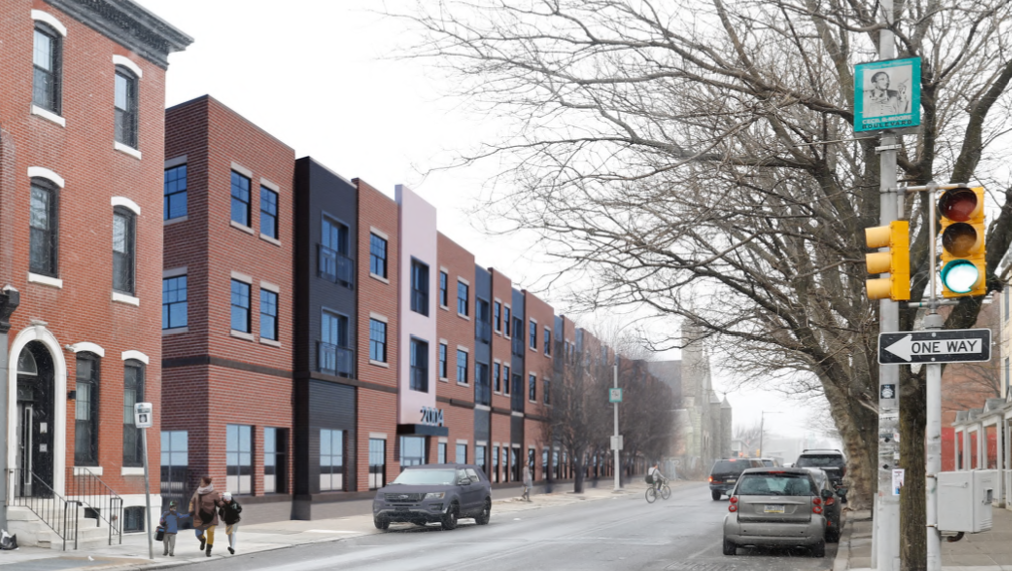
    18 big development projects planned

    This year, Philly’s Civic Design Review committee considered 18 projects that developers want to build across the city. Plans call for new homes, garages, a self-storage facility, and a hotel.

    We looked at the projects and laid out what’s coming where and from which developers. So when someone asks you what’s being built on some corner near you, you have an answer.

    Below is a taste of what’s to come.

    Senior housing in Sharswood

    • This development of 65 apartments is one of the last pieces of the Philadelphia Housing Authority’s 10-year plan to redevelop the North Philly neighborhood.

    Mount Airy apartment building

    • This five-story building will have 81 apartments and space for retail. The developer plans to offer all the homes for below-market-rate rents.

    Largest apartment building in recent memory in Roxborough

    • This building will have 384 apartments and almost as many parking spots.

    Keep reading to learn more about these and other projects and where they all stand.

    Selling for double

    Owners of rental properties around Temple University have been struggling. A bunch of apartments were built for students, but then enrollment dropped. Vacancies are up, and rents are down.

    In spite of this rough real estate environment, some properties in the area have sold for about double their original listing price.

    And these sales are tied to one local real estate agent.

    In one example, an eight-bedroom rowhouse that was listed for $475,000 — $40,000 less than the owner paid for it two years before — sat on the market for a year.

    After Patrick C. Fay got involved as the buyer’s agent, the rowhouse was re-listed for $875,000 this April and went under contract the same day.

    My colleagues Ryan W. Briggs and William Bender looked at almost three dozen other sales that Fay handled over the last year and found a similar pattern.

    A small group of repeat buyers are involved in transactions. And some of them have been linked to a mortgage fraud scheme from the 2000s.

    Keep reading to learn more about these mysterious sales and see how they could affect the broader North Philly area around Temple.

    The latest news to pay attention to

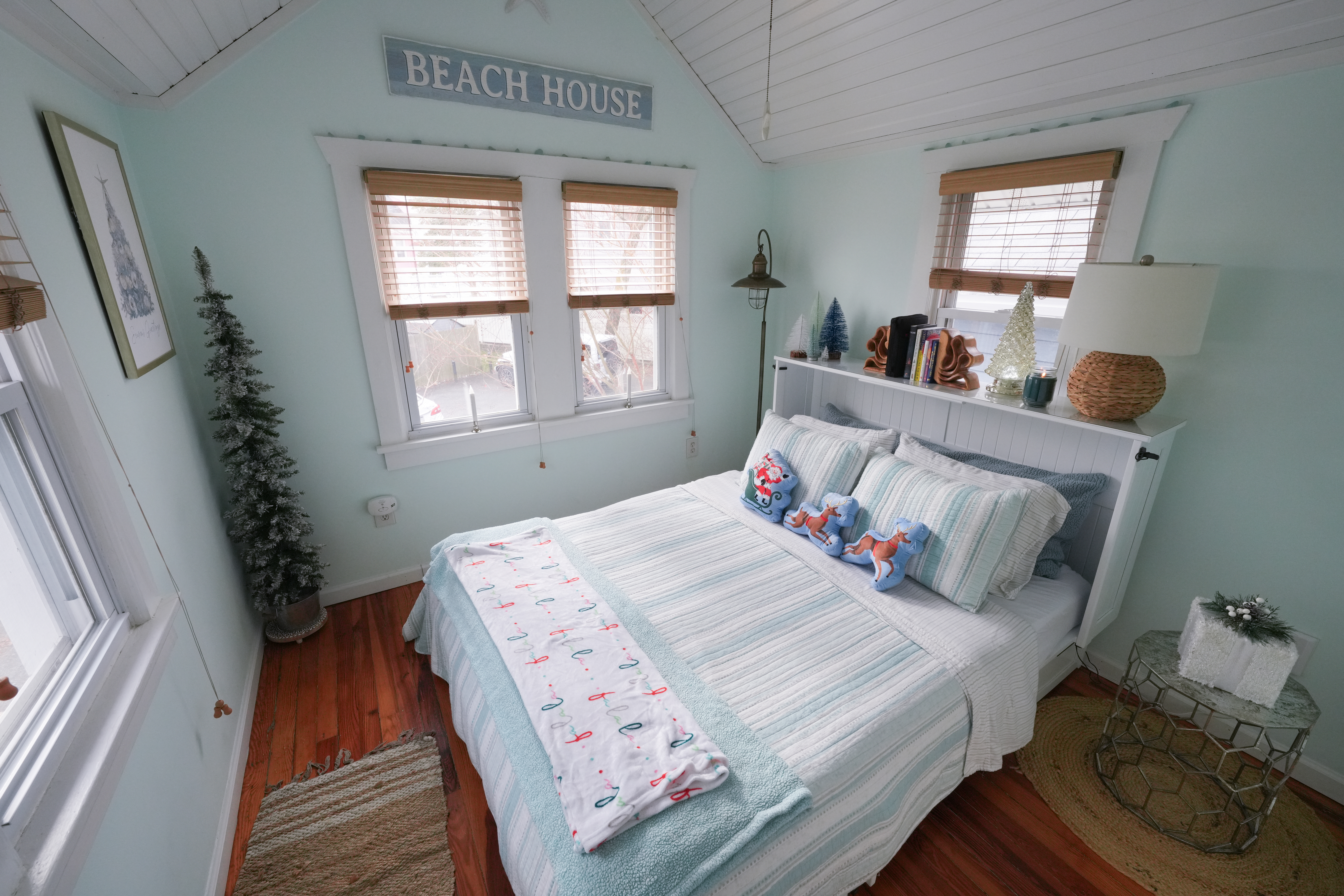
    Home tour: Christmastime in Ocean City

    Ginny Chappell owns a century-old house on an Ocean City road known as Dollhouse Row.

    She’d been dreaming of owning a home on the road for years, but her real estate agent gave her a reality check: the properties stay within families and almost never sell.

    But five years after Chappell settled for another home in Ocean City, she got the call that a Dollhouse Row house was going on the market.

    Her home is now one of the stops on a holiday tour of houses in the city. Earlier this month, folks came through to see her blue and white decorations.

    Chappell has a white, pre-lit artificial tree in her front window and two mini versions on her front porch. She’s got a coffee and hot chocolate station with Christmas-themed mugs. Ornaments and little Christmas trees of blue, white, silver, and gray fill shelves above her fireplace.

    Peek inside Chappell’s home and find out why her street is nicknamed Dollhouse Row.

    📮Did you set your sights on a home or neighborhood that you thought you couldn’t have but ended up being able to live in? Give your fellow newsletter readers some hope by emailing me.

    📷 Photo quiz

    Do you know the location this photo shows?

    📮 If you think you do, email me back.

    Last week’s quiz featured a photo taken at FDR Park in South Philly.

    Shout-out to Ron P. and Ralph Z. for getting that right.

    This September, I had two firsts at FDR Park: I took a kayak out onto the lake, and I stuffed my face at the Southeast Asian Market.

    I love kayaking and eating, so that was one of my favorite days of 2025.

    Enjoy the rest of your week. And see you in your inbox next year.

    By submitting your written, visual, and/or audio contributions, you agree to The Inquirer’s Terms of Use, including the grant of rights in Section 10.

  • FDA panelists questioned antidepressants in pregnancy. But doctors call them a lifeline.

    FDA panelists questioned antidepressants in pregnancy. But doctors call them a lifeline.

    If you are pregnant or a new mother who is struggling with depression or anxiety, you can call or text the National Maternal Mental Health Hotline, 24/7: 833-TLC-MAMA (833-852-6262). Postpartum Support International can help connect you with a local mental health provider at 800-944-4773 or psidirectory.com.

    Before giving birth to her second child, Heidi DiLorenzo was anxious. She worried about her blood pressure, and the preeclampsia that prompted her to be hospitalized twice during the pregnancy. She worried that some terrible, unnamed harm would come to her 3-year-old daughter. She worried about her ability to love another baby as much as she loved her first.

    But DiLorenzo, an attorney in Birmingham, Ala., did not worry about taking Zoloft. She had used the medication to treat anxiety before she had her first child, and she continued it throughout that pregnancy and this latest one.

    And since having her second daughter, in September, she credits an increased dosage with pulling her out of the “dark hole” of sadness she felt postpartum. “I wouldn’t be as good of a mom to my girls if I didn’t take it,” DiLorenzo said. “I wouldn’t have the energy.”

    She is among the estimated 20% of women in the U.S. who have depression or anxiety during or after pregnancy. Yet only half of those mothers receive adequate treatment, according to Kay Roussos-Ross, who runs the perinatal mood disorders program at the University of Florida. And just 5% take a selective serotonin reuptake inhibitor, a class of medications commonly used to treat both conditions.

    Now medical experts are concerned that a July panel discussion convened by the Food and Drug Administration could lead to more cases of untreated depression. Many of the 10 members of the panel expressed concern about the use of SSRIs, such as Zoloft, during pregnancy. They included Josef Witt-Doerring, a psychiatrist who owns clinics aimed at helping people wean themselves off antidepressants, and Adam Urato, an OB-GYN who recently petitioned the FDA to put stronger warnings on SSRIs.

    While the discussion did not represent any official FDA guidance, the panelists — in claims the American College of Obstetricians and Gynecologists called “outlandish and unfounded” — linked the drugs to increased risks of miscarriage, birth defects, and autism in children exposed to them in utero. The Society for Maternal-Fetal Medicine said its members were “alarmed by the unsubstantiated and inaccurate claims made by FDA panelists.”

    Antidepressants are a safe, “lifesaving” tool, given that mental health issues such as suicide and overdoses are the leading cause of maternal death in the country, ACOG President Steven Fleischman said in a statement on the group’s website.

    Christena Raines, a nurse-practitioner who in 2011 helped found the nation’s first inpatient perinatal psychiatric unit, in North Carolina, said SSRIs are “probably the most well-studied medicine in pregnancy.” In long-term studies of children exposed to the drugs in utero, she said, researchers haven’t seen problems.

    It’s too soon to know whether the panel discussion has affected prescribing rates — or whether those who are pregnant are avoiding the drugs more. But Raines, who teaches at the University of North Carolina-Chapel Hill School of Medicine, said she’s already fielding questions from patients. She said the misinformation the panelists spread — along with President Donald Trump’s distorted claims about taking Tylenol during pregnancy — is making her job harder.

    Dorothy DeGuzman is a family medicine physician who treats high-risk pregnancies in California. “There’s already so much stigma around taking antidepressants in pregnancy,” she said. “This will just add to the fear.”

    The panel

    The July panel discussion was one of four the FDA has convened since May. In the past, the agency vetted members of advisory committees to avoid conflicts of interest. Yet these panels were chosen in private and the events were held with scant public notice. In a July investigative report by MedPage Today, researchers and consultants raised questions about the events’ ethics and legality.

    Department of Health and Human Services spokesperson Emily Hilliard did not directly answer when asked about the panelist selection process. She called the panel events “roundtable discussions” in which experts review the latest scientific evidence, evaluate potential health risks, and “explore safer alternatives.”

    The July panel appeared to be following an executive order Trump issued in February establishing the Make America Healthy Again Commission and directing it to “assess the prevalence of and threat posed by the prescription of selective serotonin reuptake inhibitors” and other medications.

    Health and Human Services Secretary Robert F. Kennedy Jr., who oversees the FDA, is a frequent critic of such drugs. He has claimed, without evidence, that they might be contributing to school shootings.

    In opening remarks at the July panel discussion, FDA Commissioner Marty Makary also voiced concerns about the medications. “From a national standpoint, the more antidepressants we prescribe, the more depression there is,” he said.

    ‘Not a luxury’

    The sole member of the panel who was both a board-certified psychiatrist and an OB-GYN — the University of Florida’s Roussos-Ross — raised a different concern. “Research shows that in women who stop their medications in pregnancy, they are five times more likely to experience a relapse,” she said.

    Mothers with moderate to severe depression and anxiety during pregnancy are more likely to give birth early and have low-birth-weight infants, she added. If they don’t receive treatment, she said, they are more likely to misuse drugs or alcohol and are at risk of suicide. They can have trouble bonding with their babies, Roussos-Ross said, and those children are at higher risk for problems such as attention-deficit/hyperactivity disorder, depression, or anxiety — due to their mother’s mental health challenges, not the SSRIs.

    “I want to stress that treating mental illness in pregnancy is not a luxury,” she told the panel. “It’s a necessity.”

    Overall, about 19% of U.S. women in their 20s and 30s experience depression, according to the latest data from the Centers for Disease Control and Prevention, and roughly 10% take SSRIs. But studies show that half of women decide to stop taking antidepressants before or during their pregnancies.

    One reason so few expectant mothers receive depression treatment, doctors say, is that they are already afraid to take any medications during pregnancy. The majority of DeGuzman’s patients rely on Medicaid, the government health coverage for those with low incomes or disabilities. Half are Latina. She often prescribes SSRIs, she said, but her patients rarely take them.

    The issue is especially urgent for Black and Latina mothers, who experience higher rates of depression and anxiety than white, non-Latina mothers but are less likely to receive adequate treatment. Many factors contribute to this disparity, including systemic racism, exposure to violence, misdiagnosis, and a lack of access to care.

    Shanna Williams, a perinatal mental health therapist who treats African American mothers in Philadelphia, said many of her clients were already more likely to trust friends and family over their doctors when it comes to whether antidepressants are safe to take while pregnant or breastfeeding. The FDA panel is “one other voice that’s saying you shouldn’t do this,” Williams said. “And that does not help.”

    Judite Blanc, who studies perinatal mental health in women of color, said universal childcare and paid parental leave would help. “My research showed that the most important thing we can offer is social support,” said Blanc, an assistant professor of psychiatry at the University of Miami Miller School of Medicine. “We need the village to step up.”

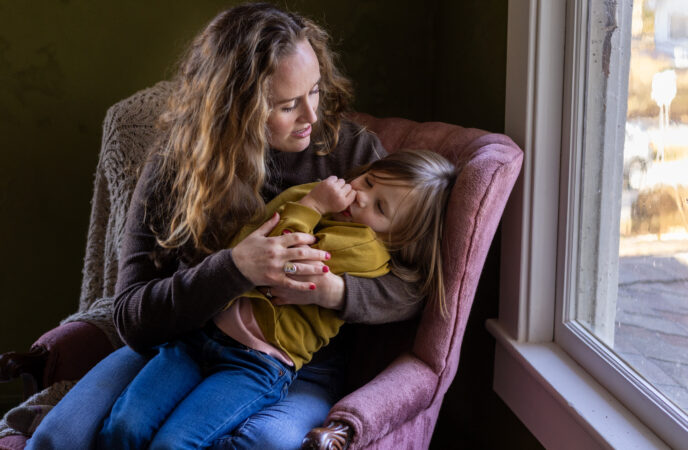
    Kellyn Haight and her daughter at their home in Brevard, N.C. Kellyn experienced debilitating depression when her daughter was younger. Now she’s trying to have another child — and plans to keep taking Zoloft throughout the pregnancy. “I’m OK with assuming the risk, because I know what the alternative looks like, and I’m not going there,” she says. (Katie Shaw for KFF Health News)

    Kellyn Haight experienced debilitating depression after she moved to the mountain town of Brevard, N.C. The former labor and delivery nurse had no childcare for her then-2-year-old daughter and no family or friends nearby as her husband was traveling for work.

    Her doctor prescribed Prozac — it didn’t help. She called her husband to return home, but her insomnia just got worse. One morning, she begged him to end her suffering. He took her to the emergency room, and staffers sent her to the psychiatric unit of a local hospital. She said she was stripped of her clothing and put in a locked room. “I felt like a creature, like an animal,” said Haight, now 37. “One of my biggest fears is that happening again.”

    After she was released, Haight found a psychiatrist and started taking Zoloft. She built a community of friends and began to feel stable.

    Now that her daughter is 5, she’s trying to have another child — and plans to keep taking Zoloft throughout the pregnancy. “I would rather be safe and present for my child,” she said. “I’m OK with assuming the risk, because I know what the alternative looks like, and I’m not going there.”

    KFF Health News is a national newsroom that produces in-depth journalism about health issues and is one of the core operating programs at KFF — the independent source for health policy research, polling, and journalism.