Blog

  • The Flyers are playing well for the first time in what seems like forever. Let’s enjoy them and stop complaining.

    The Flyers are playing well for the first time in what seems like forever. Let’s enjoy them and stop complaining.

    It’s the time of the year to be thankful and Flyers fans have several reasons to be overflowing with gratitude.

    Or at least you would think so …

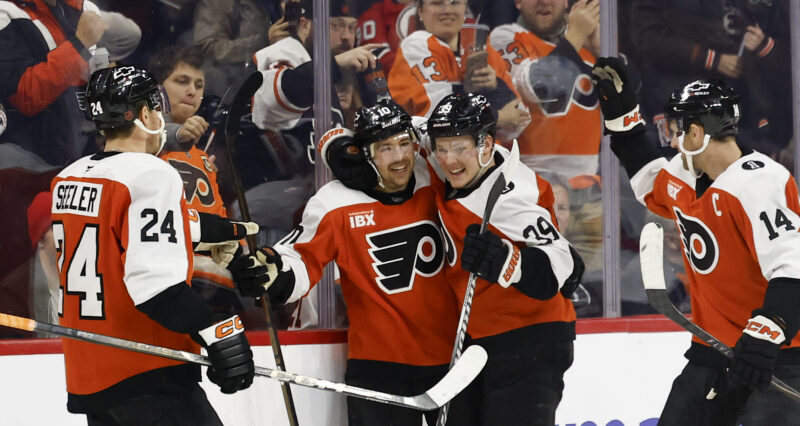
    The Flyers, whose front office made clear its desire for the team to take a positive step forward in its rebuild this year and be more competitive, are 15-8-3 under new coach Rick Tocchet, and have the seventh-most points and the seventh-best points percentage in the NHL. If the season ended Thursday morning, the Flyers would occupy the third spot in the Metropolitan Division based on points percentage and be in the playoffs for the first time in five seasons.

    “We expect more of a fight internally, and we hope that it’s going to make us better, it’s going to hopefully make us more competitive throughout the season, and maybe push to get closer to the playoffs,” general manager Danny Brière said in September. “At the end of the day, we want to make the playoffs.”

    The Flyers might be on course to do that.

    Beyond their record, the Flyers have struck gold with inexpensive offseason acquisitions Trevor Zegras and Dan Vladař, the former flashing his puck handling wizardry and superstar potential, and the latter playing like a bona fide Vezina Trophy candidate over the first third of the season. The Flyers’ checkered history between the pipes is well documented, but maybe, just maybe, Vladař, who is 28 and signed through next year, can bring some consistency to the position for the next few seasons. And in the 24-year-old Zegras, a restricted free agent at season’s end who leads the team with 26 points, the Flyers hope they have identified part of their long-term solution down the middle.

    The positives don’t end there. Zegras’ close friends Cam York (24) and Jamie Drysdale (23) have leveled up after surviving John Tortorella’s wrath, and so had fellow first-rounder Tyson Foerster (23), who had 19 goals in his last 30 games dating back to last season before suffering an upper-body injury on Monday that will sideline him for two to three months. York was banged up on Wednesday but is listed as “day-to-day.”

    Owen Tippett, 26, has had more good moments than bad this season as he strives for consistency, while Matvei Michkov, who is still just 20, is coming on strong after a slow start. Noah Cates (26) and Bobby Brink (24) have also picked up where they left off last season, while the exciting Emil Andrae (23) looks to have made himself into an everyday NHL defenseman. In other words, the kids are getting better.
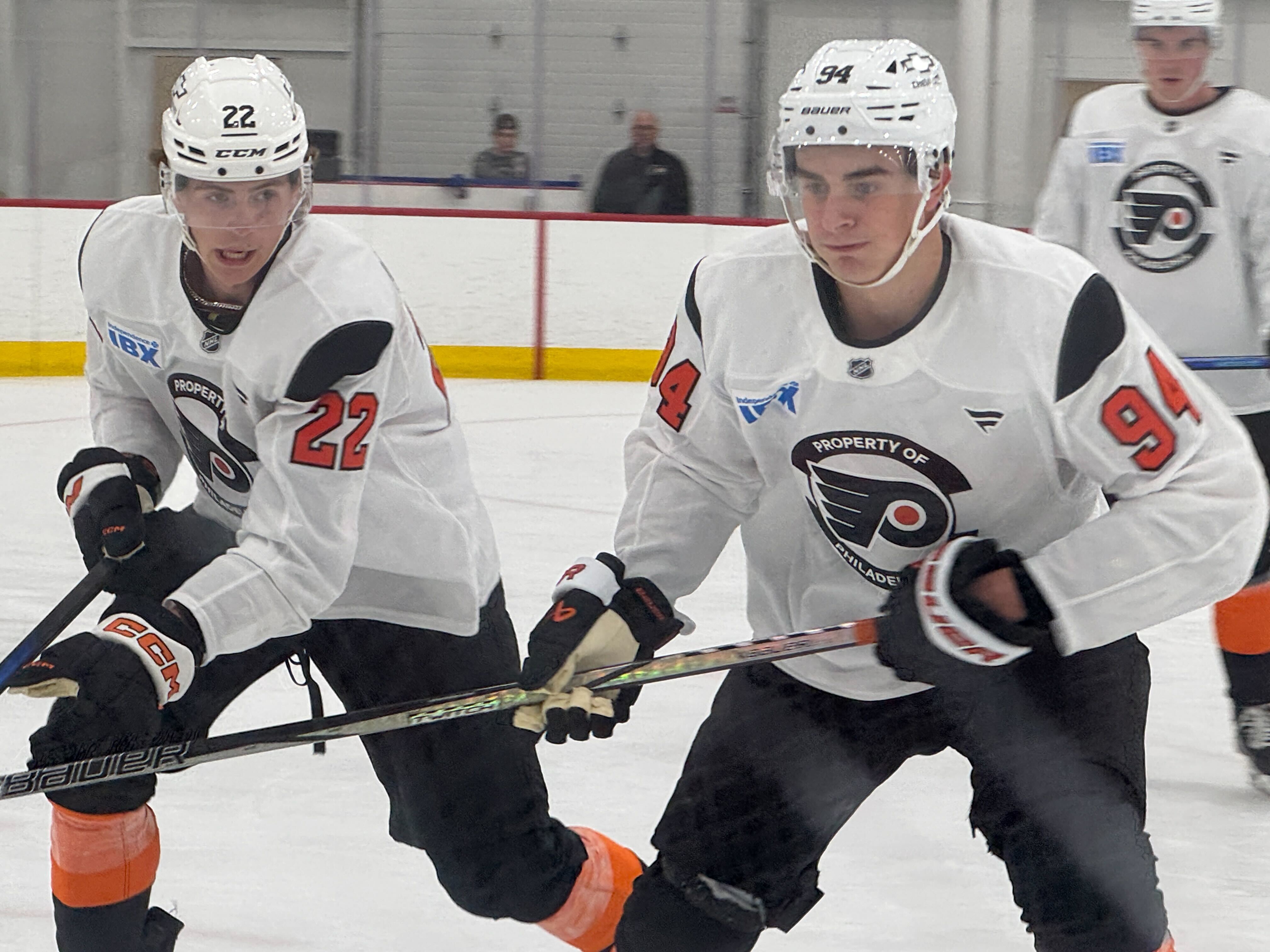
    The Flyers have high hopes for 2025 first-round picks Porter Martone (right) and Jack Nesbitt (left).

    The Flyers have more on the way as they boast a top-10 prospect pool in hockey and probably couldn’t have dreamed up better starts for their potential future stars. Porter Martone, the No. 6 overall pick in June, is dominating college hockey with Michigan State; Alex Bump and Denver Barkey are off to fast starts in their first full pro seasons with Lehigh Valley; and Egor Zavragin continues to put up historic numbers for a 20-year-old goalie in Russia. Even Jett Luchanko got the trade many felt he needed to further his development in the Ontario Hockey League. Martone, Bump, and Luchanko will all be expected to break camp with the Flyers next season.

    So all is good in Flyers land, right?

    Not if you scroll through X or find yourself wading through the ever dark and gloomy depths of Flyers Twitter:

    “I hate Rick Tocchet hockey man…,“ tweeted @aftern_alex earlier this month.

    or

    “I DO NOT LIKE TOCCHET AT ALL. IF BREIRE AND JONES R ON BOARD WITH MICHKOV GETTING 13 MINUTES A GAME. FIRE THEM ALL,” wrote @Philly4everrr.

    So why is a large portion of the fan base so unhappy amid the team’s surprising start? Well, it largely boils down to three things: (1) Tocchet’s style of play; (2) Michkov’s usage under Tocchet; and (3) the Flyers not tanking for a No. 1 center or No. 1 defenseman. Let’s explore those three points further.

    Boring hockey = winning hockey?

    Tocchet’s teams will never be confused with the ‘80s Edmonton Oilers, the ‘90s Pittsburgh Penguins, which he played on, or the Detroit Red Wings around the turn of the century. He’s a defensive coach first and has said as much. The Flyers are 25th in the NHL in scoring (2.85 goals per game) and are fourth-to-last in shots per game (25.2), which matches with previous Tocchet teams’ low volume of shots.

    On the other hand, the Flyers are much improved defensively and have taken a lot of the “risk” out of their game. Some of that is thanks to better goaltending from Vladař, who has saved almost 11 goals above expected, per Money Puck. But the Flyers are also conceding fewer shots, high-danger chances, and rush attempts. They have allowed the eighth-fewest shots per game (26) and have surrendered the 13th-fewest high-danger shots at five-on-five (64), per Money Puck. They also rank 10th in the league in fewest expected goals against at five-on-five (54.9).
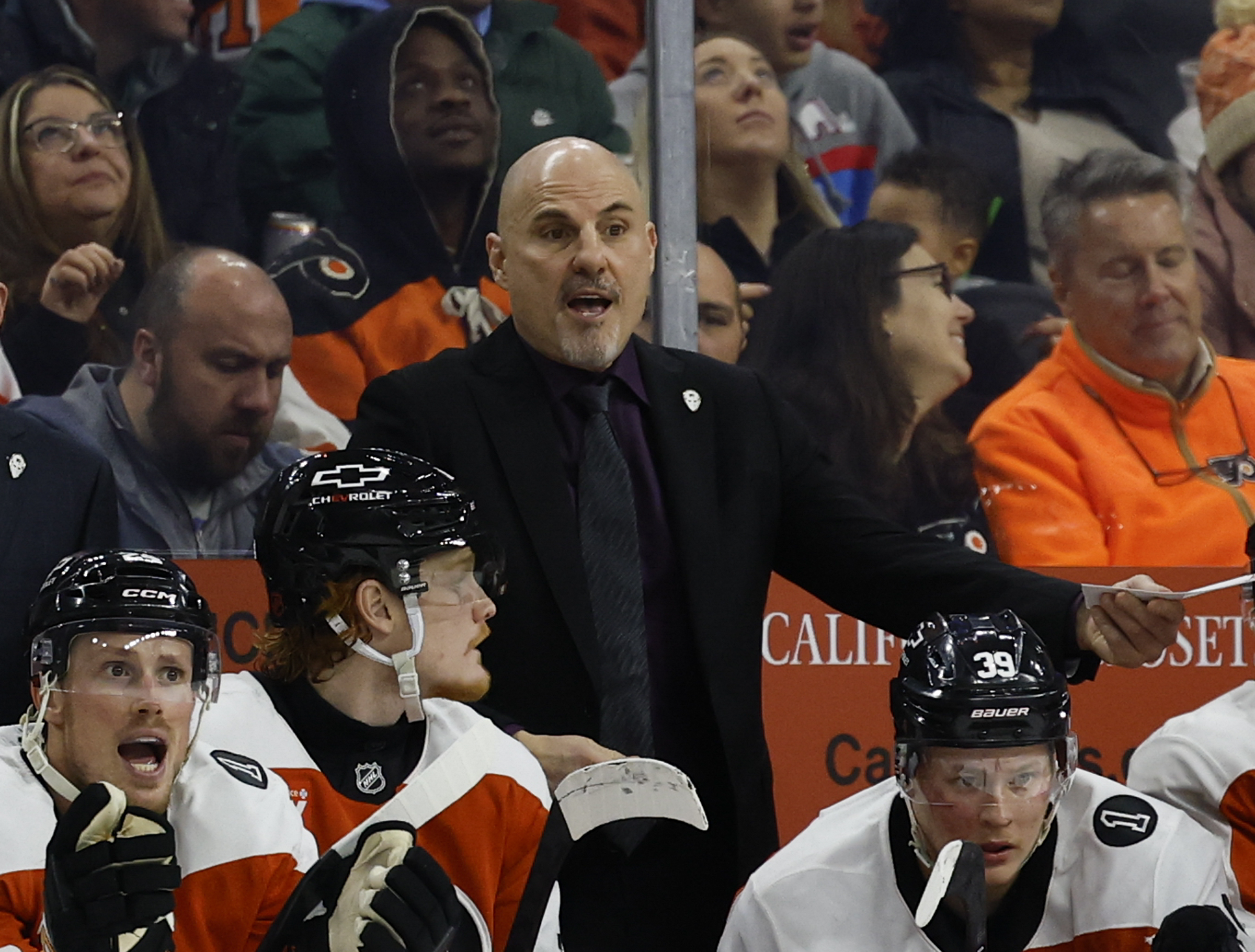
    Flyers head coach Rick Tocchet has helped bring defensive stability to Broad Street.

    Sure, everyone would love for the Flyers to score a few more goals and shoot a little more, but there also has to be an expected tradeoff there, as the Flyers last season were historically bad at keeping the puck out of their net (28th in goals against), and partly due to bad goalie environments had the league’s worst save percentage (.879). Tocchet’s philosophy centers around keeping opponents to the outside and allowing his goalies to see the initial shot, and the Flyers have largely executed that plan.

    New coaches also tend to focus on laying a defensive foundation first and then building out from there. The Flyers, while improved, are far from a finished product offensively and weren’t this high-flying team that scored a ton of goals last year either — they averaged 2.83 goals per game. Making permanent judgments or broad assertions about Tocchet and the Flyers’ future after 26 games and where the roster stands hardly seems fair.

    Anti-Michkov bias?

    The Michkov dilemma is probably the biggest criticism of Tocchet, as the Russian winger is ninth among Flyers in average ice time at 14 minutes, 51 seconds per game. There’s no way around saying Michkov started the season slowly — one goal in his first 13 games — as his conditioning was not up to par after an offseason ankle injury, and he made several ill-advised decisions with and without the puck. So it was hardly surprising to see him play less than other forwards.

    Tocchet clearly wants the youngster to earn his ice time and kick some of his bad habits. He also wants to win games and, at times, has felt that he couldn’t trust Michkov in tight games when the team is protecting a lead. While it’s easy for fans to yell “Play Michkov more!” Tocchet has a responsibility to the rest of his players to hold everyone accountable and look out for the best interests of his team.

    “I know he’s the lightning rod for everybody around here. He’s got to relax,” Tocchet said in mid-October. “He’s got to get himself into shape. He’s got to be in positions … you can’t just leave the zone. And it’s OK, he’s gotten better at it.”
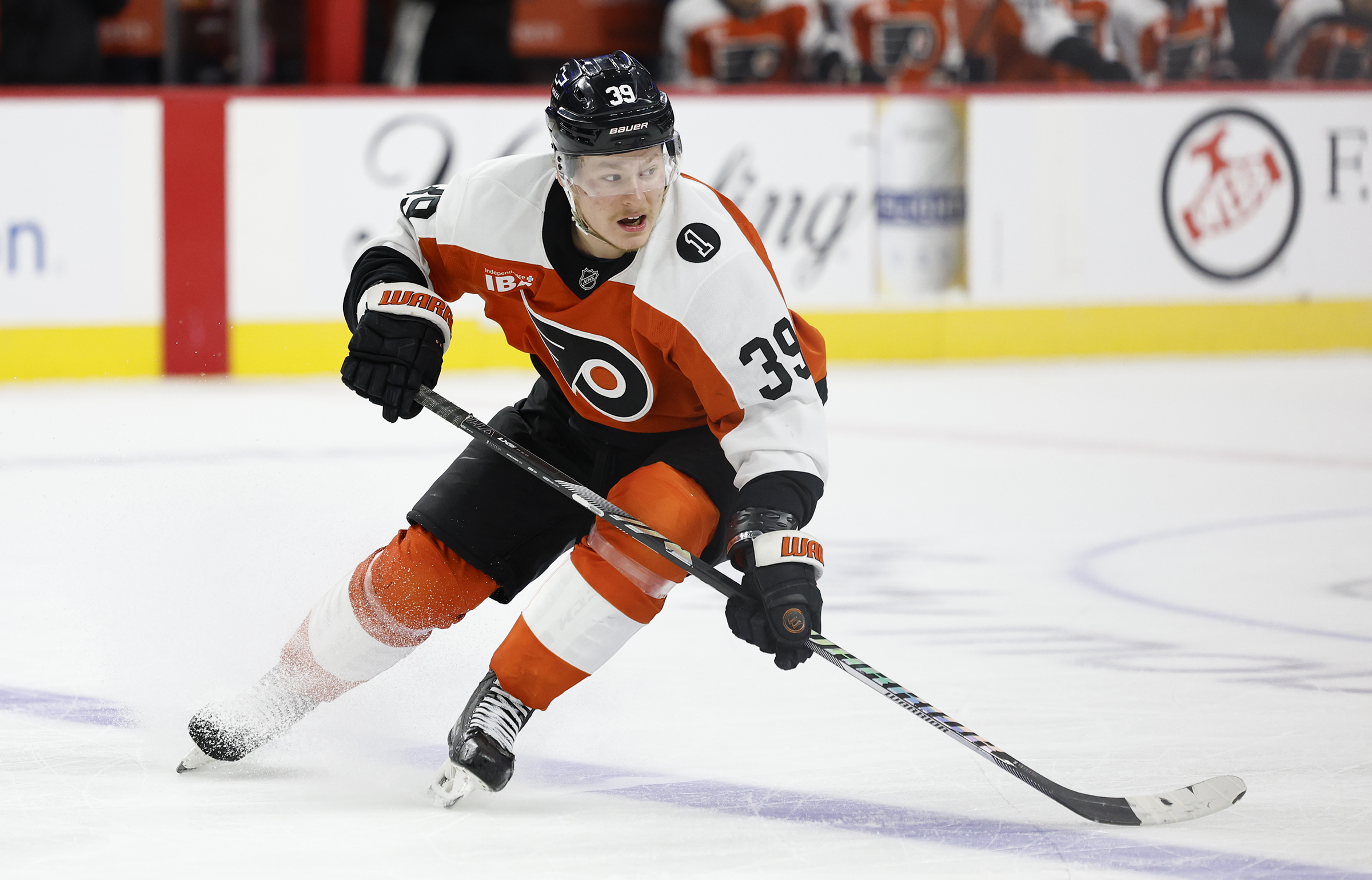
    Flyers right wing Matvei Michkov is coming on strong after a slow start.

    Michkov has “gotten better at it” of late and has seen more ice time as a result. His better decisions with the puck and cheating less has coincided with his offensive uptick; he has four goals and seven points in his last seven games and is playing his best hockey of the season. Tocchet is rewarding Michkov’s improved play, as the Russian winger has skated at least 15:37 in three of his last four games.

    While it can be frustrating to see a talent like Michkov playing less, it looks as if the message has been received and the winger will likely be better in the long run for it. That said, there needs to be a balance and Tocchet has to teach Michkov good habits without curbing his creativity or reprogramming such a talented player.

    Despite what you may read online, Tocchet has no personal vendetta against Michkov or desire to see him fail. He simply wants him to play winning hockey and learn from his mistakes. While this relationship, language barrier included, remains a work in progress, don’t be surprised to see Michkov continue to get more ice time as the season wears on and for this to eventually become a whole lot of nothing.

    Why aren’t they tanking?

    Should the Flyers have tanked more and kept rebuilding for at least one more season, especially without obvious solutions for their future No. 1 center and No. 1 defenseman holes? This is a completely reasonable take, if not the most feasible one, considering how the roster is and was constructed.

    Could the Flyers have bottomed out more and stripped their roster thinner over the past years to get more/better bites at the draft apple? I guess so, but they did largely do the latter.

    Brière inherited many of the team’s salary cap problems and actually did some impressive work to get out from players like Ivan Provorov, Kevin Hayes, and Tony DeAngelo, and net high-end drafts picks and prospects in deals for Provorov, Sean Walker, Scott Laughton, Morgan Frost, Joel Farabee, and Andrei Kuzmenko. The only other three obvious and needle-moving subtractions would have been to trade well-paid veterans Sean Couturier, Travis Konecny, and Travis Sanheim. Rasmus Ristolainen is another player they might have moved, but bad injury timing has largely tied Brière’s hands there, not to mention the GM could still move him.
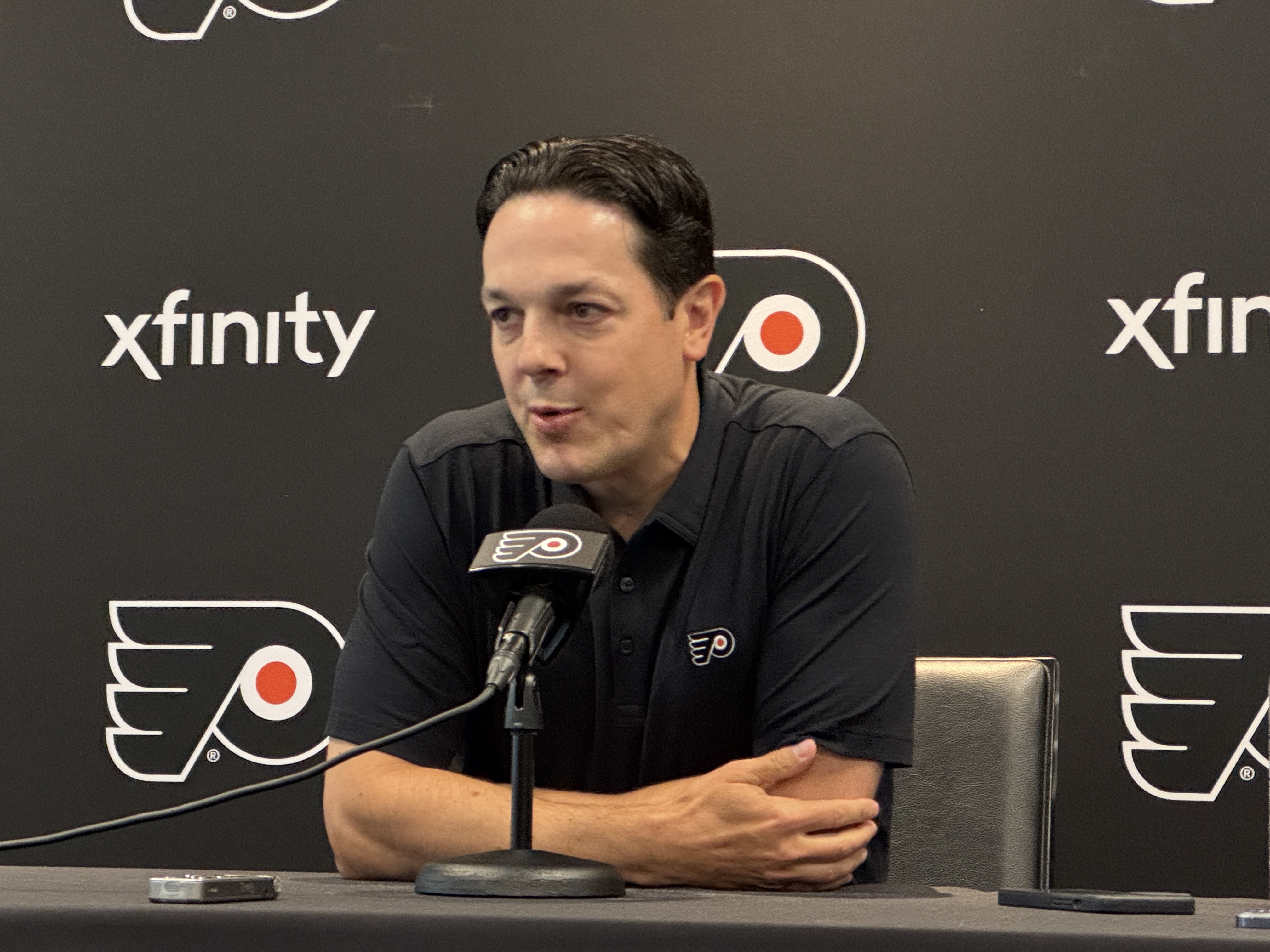
    Flyers general manager Danny Briere has taken a patient and measured approach to rebuilding. Now, he wants the Flyers to take a step forward.

    Given Couturier’s contract, which still has 4½ seasons remaining at a $7.75 million average annual value, he was and remains all but impossible to trade. Regarding Sanheim, Brière DID try to move him before his new deal kicked in but that move was nixed due to a St. Louis player opting not to waive his no-move clause. That nontrade might be the best move Brière didn’t make, as Sanheim has blossomed into a top-pairing defenseman and the Flyers’ leader on the backend. Whether the Flyers should have traded Konecny before extending him can be debated, but most teams usually try to hold onto 30-goal, almost-point-per-game players who are in their mid-20s and on an upward trajectory.

    In other words, the Flyers largely carried out their rebuild the right way, they subtracted when it made sense, stockpiled assets, and didn’t jeopardize their long-term vision for short-term success, a la trading Walker amid pushing for the playoffs in 2023-24. But what about landing that all-important 1C and a 1D?

    Those problems are not isolated to the Flyers, as those two holes, along with the starting goalie, are the three hardest to find. There is a shortage of true No. 1 centers across the league, and the teams that have them don’t usually like to give them up. The Flyers have also drafted centers in the top half of the past two drafts in Luchanko and Jack Nesbitt to try and address the position, and also have several young defensemen — York, Drysdale, Oliver Bonk, Spencer Gill — they believe could one day play in their top four.

    Listening to Brière and president Keith Jones, the Flyers were prepared to pay up and probably envisioned finding that No. 1 center in what was once a rich 2026 free agent class. That crop has since dried up, but that doesn’t mean all hope has.

    Armed with a deep prospect pool, future draft picks, including Toronto’s first in 2027, and a plethora of young wingers and defensemen, the Flyers have valuable pieces to package in a deal for a top-end center when one becomes available. Wouldn’t Tage Thompson look nice in burnt orange? Could things between William Nylander and Toronto turn sour? Might St. Louis be blown away to move on from Robert Thomas and tear it down? Is Quinton Byfield untouchable? The Flyers can bide their time for now and can feel good that they have the type of assets to compete with most offers.

    Or on the backend, Norris Trophy winner Quinn Hughes, a huge fan of Tocchet from their time together in Vancouver, could soon be available. As could younger options like Bowen Byram, Brandt Clarke, and Šimon Nemec, for the right price.

    The Flyers are set up well for the long term, whether they make the playoffs this season or not, so let’s just enjoy them for a while and see where this season goes. It’s been a long time since this city has had a hockey team it could be proud of. The complaining can wait.


    Could Buffalo Sabres center Tage Thompson be the answer to the Flyers’ 1C conundrum?
  • Penn’s Landing cap over I-95 is 30% complete, with completion hoped in 2029

    Penn’s Landing cap over I-95 is 30% complete, with completion hoped in 2029

    The cap over I-95 between Walnut and Chestnut Streets, which will host the 12-acre Penn’s Landing Park, is about 30% complete.

    After almost six years of engineering, design, and COVID-related delays, construction began in 2023, and now a lattice of steel beams extends over the southbound portion of I-95.

    The cap project is anticipated to be completed in 2029, with the park installed the following year.

    Construction of the cap itself is the work of the Pennsylvania Department of Transportation. When it is completed, the Delaware River Waterfront Corp. (DRWC) will build the park and its amenities on top.

    Plans call for it to include a water feature, skating rink, amphitheater, sprawling playground with custom equipment, and a mass timber building designed by architect Kieran Timberlake.

    “The vast majority of the park is open green space, but there is a building we call it right now, the pavilion and cafe,” said Lizzie Woods, senior vice president of planning and development at DRWC.

    A rendering of the mass timber building planned for the Penn’s Landing park.

    “It’ll be a net zero carbon building … [and it evokes] the natural systems that we know and love along the waterfront and that warm and welcoming spirit that we want the whole park to have,” Woods said at a meeting of the Center City District on Thursday.

    Woods said that some of the features planned for the park are influenced by Center City District’s success at Dilworth Park at City Hall, which offers a water feature in the summer and an ice skating rink in the winter.

    But when the new Penn’s Landing park is completed, it will be far larger and offer more unplanned space.

    “You see those beautiful gardens there, too, with little nooks for gathering and community programming,” Woods said.

    “Those nooks actually came out of a lot of our community engagement process where people were looking for spaces that were not the giant amphitheater for programming, but smaller ones that community groups could use and talk with,” Woods said.

    The park’s completion is still many years in the future. Next year, in addition to PennDot’s continuing progress on the cap, a new bridge will go up over South Street as part of this project.

    It will be built in a parking lot this spring, and then Columbus Boulevard will be closed for one night and it will be swung into place with plans for opening it at the end of next year.

    A rendering of the new South Street bridge, which is set to open a year from now.

    Over the seven years of the project, PennDot has been doing most of the heavy lifting — spending a year and a half relocating utilities alone— and that will continue to be the case for the near term.

    Project costs have shot up since it was originally proposed in 2017, as the first sustained bout of inflation in a generation took hold. Construction costs have soared.

    Original cost estimates for Penndot’s portion of the project were $229 million, which increased to $329 million two years ago at the groundbreaking. DRWC’s portion of the project has so far gone up less, and is estimated at $130 million including $20 million for the Delaware River trail.

    Planners and political leaders see the project as transformative and project that it will boost investment and valuation along the Delaware Riverfront by at least three times the cost.

    “The opportunity of Penn’s Landing is really the proof of a concept that redevelopment of the waterfront, which is an old idea, can be done in such a way that puts the public and the civic resource of the waterfront at the forefront,” Woods said.

    “Then that yields the opportunity for high-quality private investment rather than relying on those private areas to set the tone,” Woods said.

    Editor’s note: This story has been updated to clarify the total cost of the project.

  • Rollouts have ‘twisted the knife’ at Big 5 games for 70 years, but can the tradition endure?

    Rollouts have ‘twisted the knife’ at Big 5 games for 70 years, but can the tradition endure?

    The banner made its way to the bottom of the student section, and a crew of security guards soon was hovering. Everyone had to go, they said.

    “We were like ‘What?,’” said Luke Butler, who led the crew of Temple students that night at La Salle.

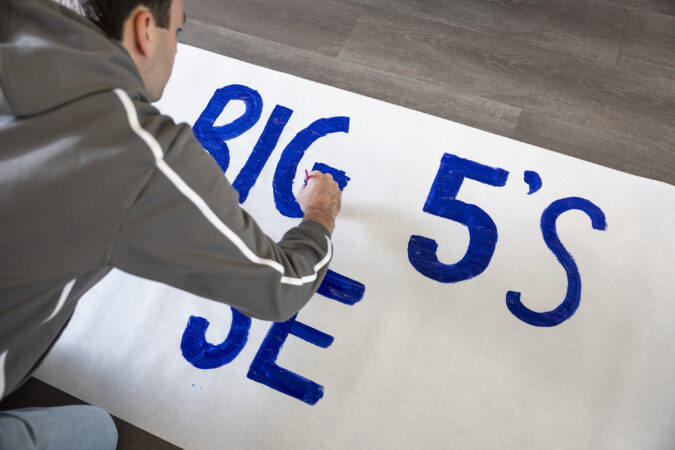
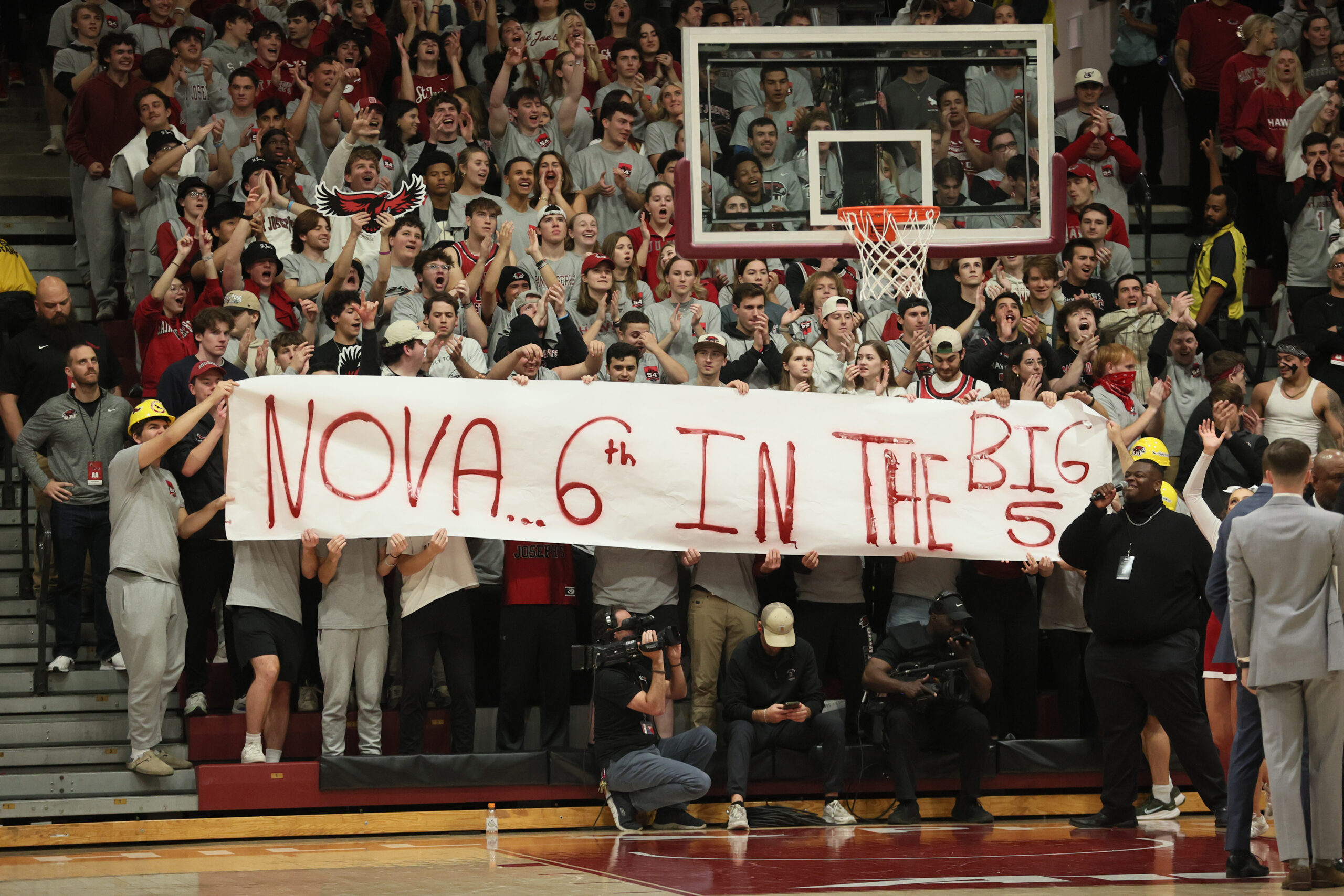
    The fans — the Cherry Crusade — spent a few days crafting one-liners to paint onto 30-foot banners that would be rolled out during the Temple-La Salle basketball game. The “rollouts” have been a Big 5 tradition since the 1950s, even surviving a brief ban when the schools thought the messages had become too racy.

    The rollouts often are a play on words or innuendoes that make light of the opposing school. You roll out your banner and then hold your breath while the other school shows theirs. Each student body takes turns dissing each other like kids in a schoolyard. The best rollouts, Butler said, are the ones that “twist the knife” just a little.

    St. Joe’s students unveil a banner referring to Villanova finishing last in the Big 5 Classic last year.

    But this one, Butler learned, twisted a little too much.

    The Explorers entered that game in February 2010 on a seven-game losing streak, and Ash Wednesday had been two weeks earlier. Temple, down a point at halftime, raced away in the second half. And here came the rollout: “LA SALLE GAVE UP WINNING FOR LENT.”

    The Temple students — the same crew who held a “funeral” a year later for the St. Joe’s Hawk — thought it was good banter. But a priest was offended, and security had instructions.

    “They were like ‘Father is pissed. You basically affronted their faith, and they don’t want you in the building,’” Butler said. “That was a good example of a rollout where we said ‘This will get a good reaction.’ It did. It just wasn’t the reaction we were thinking of.”

    70 years of rollouts

    The rollouts trace back to the Palestra, when the building was the home of the Big 5 and basketball doubleheaders. The bleachers were filled, the basketball was good, and the crowds were lively. Philly was the center of the college basketball universe, and the Palestra was a scene.

    The “rooters” who sat behind the baskets would roll out banners during the games about opposing schools. The messages were a chance for a student body to take a shot at their rivals from across the court. When La Salle students hung a dummy of their coach in the early 1960s from a campus flagpole, St. Joe’s rolled out a banner a week later that said “We Fly Flags on our Flagpole.”

    The messages became more pointed, as the Daily News wrote in January 1966 that “the rollouts wandered from the realm of good taste.” The Big 5 athletic directors agreed to ban them, saying that “certain rollout subject matter has been offensive and detrimental to the best interests and continued success of the Palestra program.”

    The president of the St. Joe’s student section protested the decision at the Big 5’s weekly luncheon, telling the athletic directors that they were ruining “the greatest spectator participation event in sports” and the rollouts were part of the “spectacular” that was basketball at the Palestra.

    “It’s not a spectacular,” said Jack Ramsay, then the coach and athletic director for St. Joe’s. “We’re down there to play basketball. If the students want to join in, that’s fine.”

    No longer allowed to roll out their messages, students at the Palestra began to shout what they would have written. Banner Ball gave way to Chorus Ball, the Daily News wrote. A year later, the students won, and rollouts were welcomed back to the Palestra as long as messaging was preapproved by the school’s athletic office.

    The banners became as integral to a Big 5 game as a soft pretzel from the Palestra concession stand. You didn’t miss a basket during a doubleheader, but you also made sure you caught the dig the opposing students made during a timeout about your school.

    The banners were the game within the game as the student sections planned their rollouts like a comedian preparing a stand-up skit. The jokes had to be fresh. How many times can you call the other coach ugly before it’s no longer funny? They had to be timely and tap into current events. That scandal involving a prominent alumni from the other school? Fair game. The football team stinks? That’ll work. A basketball player got arrested? There’s a rollout to be made.

    And they had to be timed just right. You can’t come out swinging with your best bit. You have to build up the crowd with a few decent banners and then roll out the one you know will hit.

    “You could tell from the other alumni if they were like, ‘Whatever,’ or if it really pissed them off,” Butler said. “Ultimately, that’s what you’re looking for. From brainstorming, to the making of them, to rolling them out, you’re looking for that reaction of them saying ‘Ugh.’”

    A fading tradition

    The rollouts, just like the Big 5, seem to be waning. Student attendance at local games is no longer what it was. The basketball programs have been down, the transfer portal has made players hard to identify, and conference realignment has introduced games with unfamiliar opponents.

    Villanova — the lone Big 5 school to make an NCAA Tournament in the last five years — is the only team that regularly draws a large swath of students. Most schools fill up a student section for the marquee games but attract just a small group on most nights. Attracting students to a once-integral aspect of campus life has become a challenge.

    Each school is trying to confront the decline of student participation, and Temple decided last year to revamp its student section. The Cherry Crusade does not have a student president, and the rollouts are made by athletic department staffers.

    A banner made by the Olney Outlaw’s La Salle Student Section on Thursday.

    They sold out their tickets two years ago when they reached the final of the Big 5 Classic and still fill the student section for a big game. The challenge has been to build a consistent presence.

    “We want to find those passionate fans to bring back what the Cherry Crusade was,” said Katie Colbridge Ganzelli, Temple athletics’ marketing coordinator for on-campus initiatives. “They’re still there. We’re just trying to find those passionate students who want to be in charge of the student section like it used to be.”

    Villanova’s rollouts earlier this week vs. Temple — “Rocky would’ve gone to Villanova,” one said — didn’t twist the knife. Penn’s student section is dormant, forcing the band to provide rollouts. The tradition seems to be fading across the Big 5, but credit La Salle for trying to keep the edge.

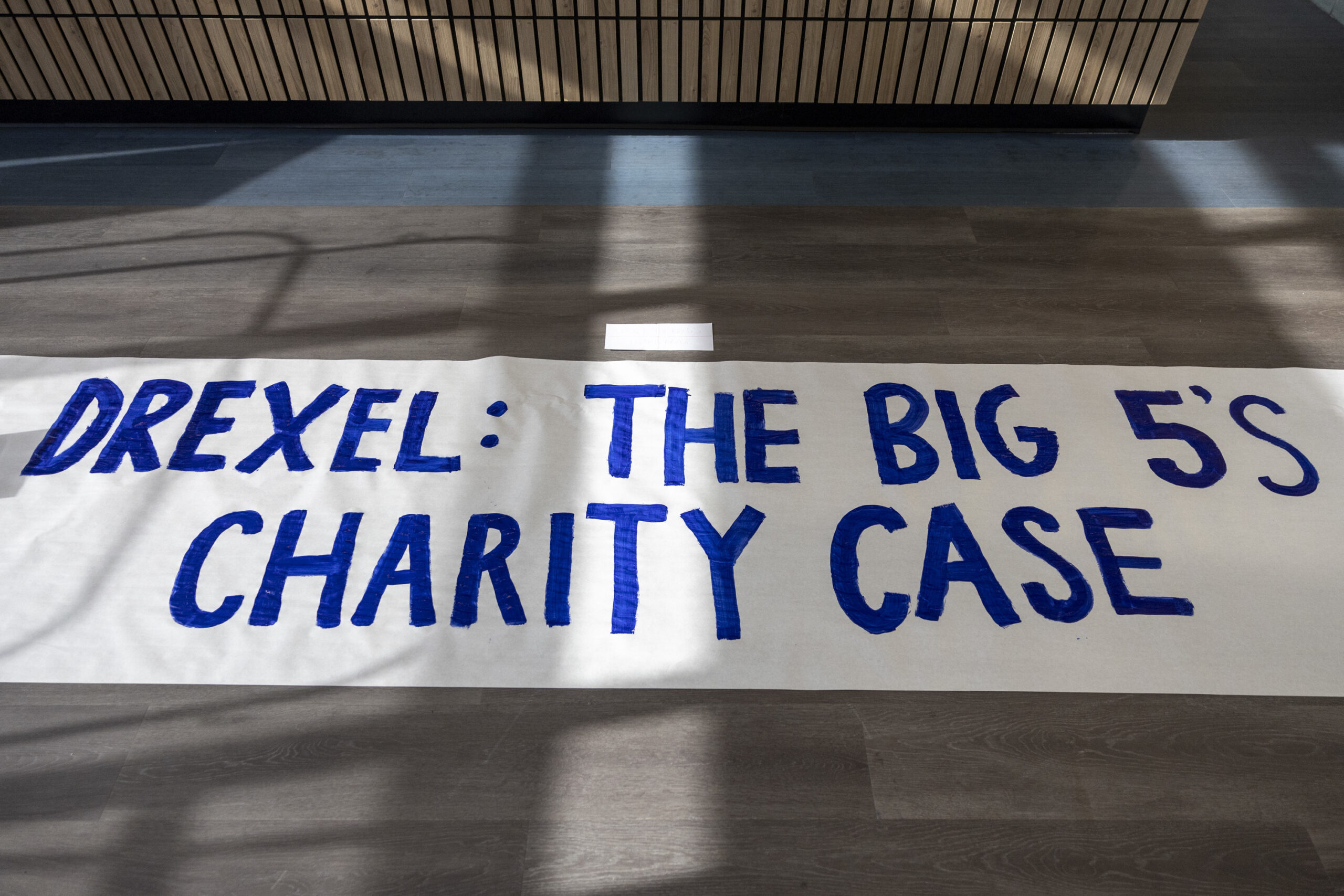
    The school revived its student section this season, and the Olney Outlaws took aim at a Big 5 coach for being follically challenged and used another rollout to dunk on Villanova and St. Joe’s. They’re twisting the knife in Olney.

    “We had noticed a lack of student engagement and thought this would be a fun way to get kids involved,” said Paige Mitchell, a senior marketing major who founded the Olney Outlaws. “I was working in the athletic department, and my boss at the time gave me a project to come up with something that would get everyone more engaged. It’s grown from there.”

    The group of students — “I have a couple guys in the group who are pretty clever,” Mitchell said — brainstorm ideas for the rollout before they meet to paint their signs. They’re ready for Saturday, when La Salle plays Drexel in the Big 5 Classic.

    “It’s stressful making sure they get rolled out at the right time,” said Mitchell, who’s also a center forward on the Explorers’ water polo team. “But I love seeing the way the students react. I have a couple friends who were sitting behind the rollout, and they’re blowing up my phone like, ‘What did it say?’ It’s just exciting.”

    Perfectly Philly

    Butler asked the La Salle security guard if he could talk to the priest, hoping he could ask for absolution. The priest was still steaming as Butler told him it was a misunderstanding. It was just some college kids making a joke, he said. The priest offered Butler penance: the Temple students could stay, but they had to hand over the rest of their banners.

    But the Owls were going to clinch the Big 5 title that night, and the Cherry Crusade brought a rollout to celebrate it. Butler pleaded with the priest to allow them to keep that sign. He rolled it out to show the priest and security guard what it said. “Fine,” said the priest. The rollouts, once again, would not be banned. A perfectly Philly tradition lived on.

    “There’s something in the Philly culture that rollouts hit a perfect vein,” Butler said. “The thing about people from here is that there is respect if you can dish it and you can take it. People love to twist that knife. When people did good rollouts against us, you were angry, but there was respect there.

    “It’s making fun of people who appreciate it, but also hate it, and it gives you an opportunity to be a little bit of an a—. At the end of day, it’s all love. We all love Philly basketball, even though I’ll never root for St. Joe’s and I’ll never root for Villanova. But I still want them around. I want everyone to do well, so then the hate means something.”

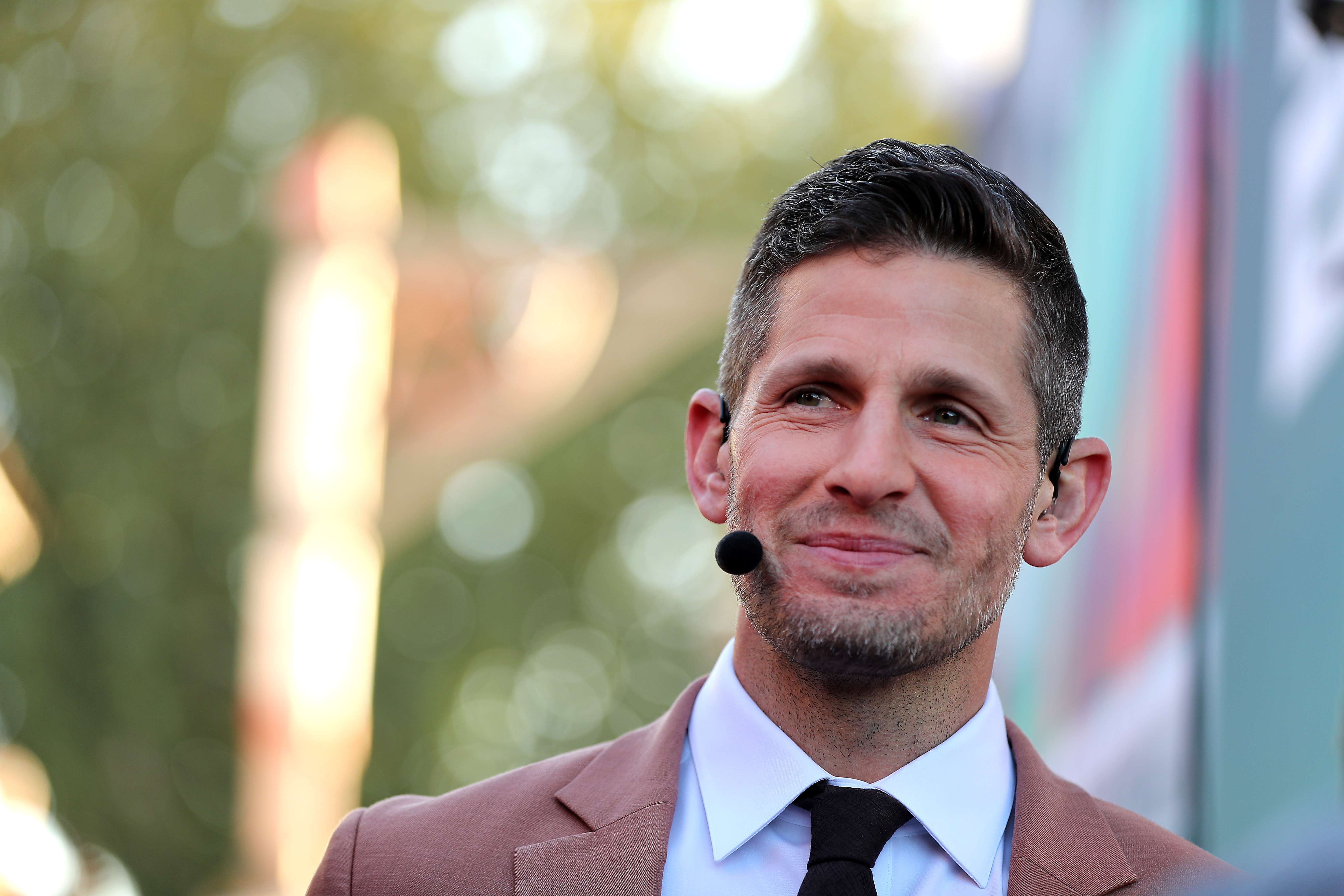
  • Dan Orlovsky hasn’t been shy about the Eagles’ struggles. But he still believes they can be contenders.

    Dan Orlovsky hasn’t been shy about the Eagles’ struggles. But he still believes they can be contenders.

    After losing back-to-back games to the Dallas Cowboys and Chicago Bears, the 8-4 Eagles have been under scrutiny from national media, including ESPN’s Dan Orlovsky, who thrashed the Eagles’ offense in advance of their Monday Night Football matchup with the 8-4 Los Angeles Chargers.

    “They don’t do one thing well offensively,” Orlovsky said on Thursday morning’s edition of Get Up. “If I had to use the words and give you adjectives to describe this offense over the course of the season: predictable, boring, stale, self-inflicting, uncreative, and unexplosive.”

    Orlovsky has been studying the Eagles more closely this week, as he will be on the call of ESPN’s Monsters, Inc.-themed alternate broadcast, the network’s third animated Funday Football (ESPN2/Disney+). A few hours after ripping the Eagles on air, Orlovsky spoke with The Inquirer and raised many of the same concerns he did on Get Up about the Eagles’ offense, which has been struggling in Kevin Patullo’s first season as coordinator.

    “They’re not what they were last year on offense,” Orlovsky said. “Last year, they were historically great when it came to running the football. That’s not reality. Their tailback was historically great. He just hasn’t had the same impact.”

    The Eagles’ rushing attack, spearheaded by Saquon Barkley, ranks 22nd in rushing yards through the first 12 games of the season. Last year, the team ranked second in rushing yards and Barkley became the ninth NFL running back to record 2,000 yards in a season.

    Dan Orlovsky, once a Jalen Hurts critic, says the Eagles offensive line has been one of the biggest reason’s behind the team’s offensive struggles.

    Orlovsky says the key difference between last year’s offense and this year’s is the play of the offensive line.

    “If you aren’t good up front, it’s really hard to consistently be good,” Orlovsky said. “Their offensive line has to play better.”

    The Eagles have been without Lane Johnson for their last two games, as the two-time All-Pro tackle is recovering from a Lisfranc injury in his foot suffered in the team’s Week 11 win over Detroit.

    But the Eagles’ struggles on the ground predate Johnson’s absence. The Eagles have rushed for more than 100 yards in five games this season and recorded more than 150 yards just twice. In 2024, the Eagles eclipsed 150-plus yards on the ground in 11 regular season games.

    The inability to pick up yards on the ground on first down leads to longer yardage on second and third downs. The Eagles are converting 34.5% of their third-down plays, which is the fifth-worst conversion rate in the league.

    “If you struggle as an offense on first down, it makes second down much harder, and then therefore third down much harder,” Orlovsky said. “Until they play better as an offensive line and play better offensively on first down, that’s not going to get fixed.”

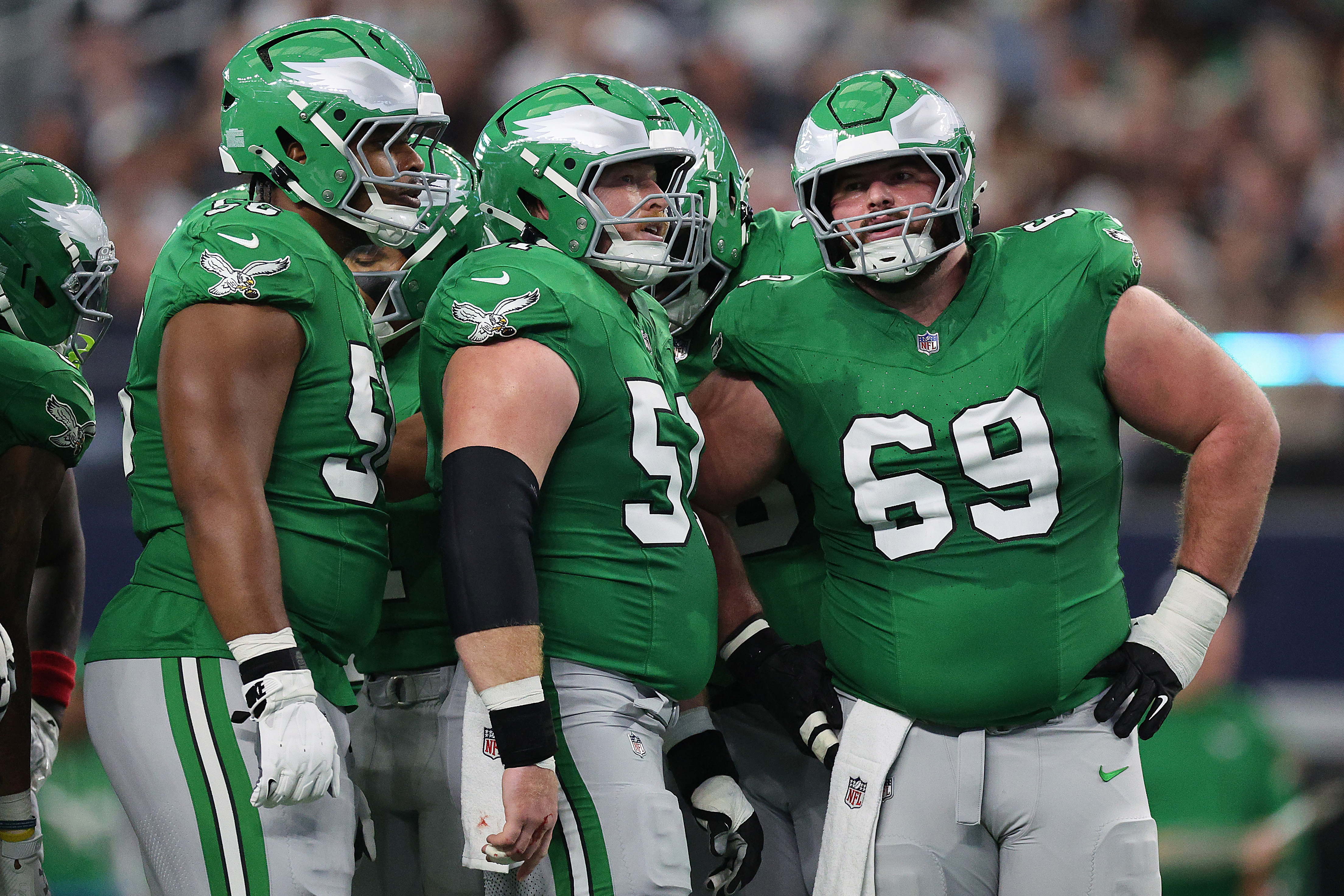
    Eagles guard Tyler Steen, left, center Cam Jurgens, middle, and guard Landon Dickerson make up 60% of the Eagles starting offensive line.

    With five games left in the regular season, the Eagles hold a 1½ game lead over the 6-5-1 Cowboys in the NFC East. If the Eagles can hang onto their divisional lead and earn a playoff spot, Orlovsky says the team needs to be able to “control the game” to be considered as a contender to repeat as Super Bowl champions.

    “[If] they can dictate to a defense what they want to do, then there’s no question,” Orlovsky said. “The group isn’t all that different than what it was last year.”

    The struggles on offense, including down years from Barkley and Jalen Hurts, loom large over the final five games of the regular season. The talent remains largely the same, but 12 games into the season, Orlovsky doesn’t see the current version of the Eagles as a team with an identity.

    “There’s a lot more question marks about their offense and why they’re struggling in comparison to what it was last year,” Orlovsky said. “But, they still are a talented group, and I think that they’re trying to figure out who they are.”

  • In 2025, Philadelphians couldn’t stop googling DeVonta Smith, 6-7, and Taylor Swift

    In 2025, Philadelphians couldn’t stop googling DeVonta Smith, 6-7, and Taylor Swift

    Google’s 2025 “Year in Search” report offered its annual glimpse into Philly’s proudly weird psyche. Compiled annually, the data lists trending searches that experienced a high spike in traffic from the year before.

    Philly didn’t disappoint.

    In 2025, Philadelphians couldn’t get enough DeVonta Smith and Cooper DeJean Eagles jerseys. Both players are fan favorites. Like Smith, a star wide receiver known for his elite game-day fashions, Philadelphians displayed a touch of their own sartorial splendor, overwhelmingly searching for the players’ kelly green-colored game shirts, the data showed.

    Amid a year of traumatic news and deepening divides, top national searches included the assassination of Charlie Kirk, the government shutdown, and President Donald Trump’s One Big Beautiful Bill Act.

    Philadelphians had other interests.

    The nebulously alluring origin behind the “6-7” meme — a lyric lifted from a song by Kensington-based rapper Skrilla — topped Philly slang searches. Philadelphians were also busy googling phrases like “Clock It,” the report showed.

    Rap concerts by NBA YoungBoy and Chris Brown, a UFC fight, A Minecraft Movie, and FIFA World Cup matches were among Philly’s top ticket searches. Two Taylor Swift songs — “Wood” and “Father Figure” — made the list of Philly’s most googled songs.

    A full list of national search trends are available on Google’s trends landing page.

    Here’s what topped Philly’s Google searches this year:

    Philadelphia’s top Google searches in 2025

    Slang Search:

    1. 6-7
    2. PMO
    3. Sharking
    4. Clock it
    5. Slime

    Jersey search:

    1. DeVonta Smith
    2. Cooper DeJean, kelly green color
    3. Pittsburgh Steelers
    4. Jeff Teague
    5. Drake Maye

    Tickets Search:

    1. Make America Slime Again Tour, NBA YoungBoy
    2. Breezy Bowl XX, Chris Brown
    3. A Minecraft Movie
    4. UFC 316: Dvalishvili vs. O’Malley 2
    5. FIFA Club World Cup

    Songs Search:

    1. “Wood” — Taylor Swift
    2. “Ordinary” — Alex Warren
    3. “Soda Pop” — Saja Boys
    4. “Your Idol” — Saja Boys
    5. “Father Figure” — Taylor Swift
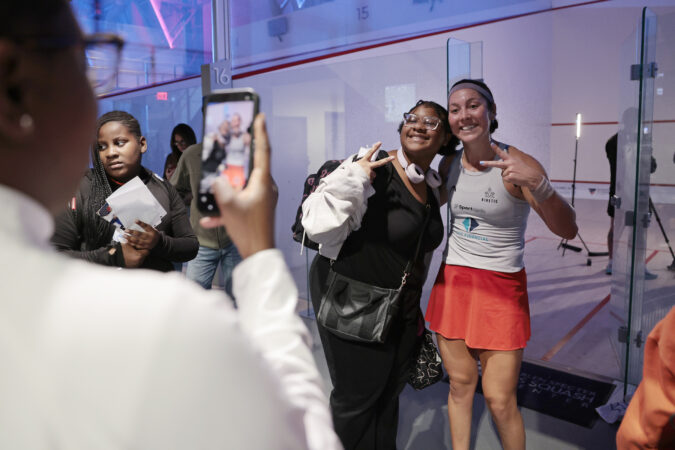
  • Squash players like Amanda Sobhy gambling on more attention for the sport in U.S.

    Squash players like Amanda Sobhy gambling on more attention for the sport in U.S.

    Before the 2018 Supreme Court ruling that legalized sports betting, professional squash player Amanda Sobhy said players were allowed to have their cellphones during matches to communicate with coaches.

    After that landmark decision, the rules changed. Not that squash boasts a large betting handle (the amount of money wagered by sports bettors).

    “I have never encountered anything remotely close to betting,” Sobhy said. “We’re too nice of a sport.”

    Yes, U.S. gamblers probably aren’t scrambling online to lay down a wager on squash matches that feature Sobhy — No. 11 in the women’s squash world rankings — and another elite opponent. Even if a bettor wagers on a squash event, there are limited types of bets an individual can place. Predicting the match winner is the simplest bet.

    But Sobhy said she hopes the tide changes, and that betting enthusiasts will turn their attention to the squash court, too.

    “[Squash officials] know that’s a huge avenue to get more eyeballs onto the sport and get more people invested in it,” said Sobhy, 32. “I always say, to make a successful event, you basically need booze and betting. In a lot of events, we don’t have either. It’s a great sport, but when you don’t have people who know about the sport, and they’re trying to get into it, you need something else.”

    Unlike some of her peers in other sports, Sobhy said squash affords a comfortable living — for men’s and women’s players — and that pro squash athletes would not be tempted to earn separate income through illicit gambling schemes, as was the case in the federal indictments unsealed in October, which involved illegal poker games and a prop betting scheme, and which named NBA coaches and current and former players as defendants.

    “We’re very lucky as a sport. We are big enough where top players can make a living, and that’s their sole job,” said Sobhy, who resides in Florida after living in Philadelphia for several years after the pandemic. “We get sponsorships, and players can be OK financially. Our association [U.S. Squash] has been adamant for equal prize money in majors. Men and women have an equal amount of tournaments and opportunities. In order for the sport to grow, we need to work together and elevate as equals, rather than profiling only the men.”

    Sobhy, a Harvard graduate who has won six national titles, said her sport is popular with bettors around the globe, but that interest hasn’t yet translated to the U.S. market, where the gaming industry has partnered with many pro sports leagues in multimillion dollar deals.

    “You don’t have big American betting platforms engaged in squash,” Sobhy said. “Europeans and Brits bet on squash. I’m all for betting. You can’t be a cookie-cutter, safe sport but want the sport to be bigger at the same time. You have to be bold, take risks, be a bit more controversial. You have to elevate the platform to get more eyeballs. If we want squash to become bigger, we definitely need to get betting included.”

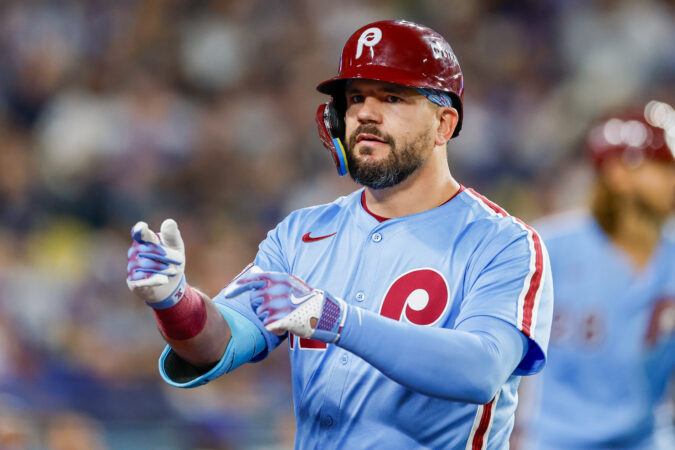
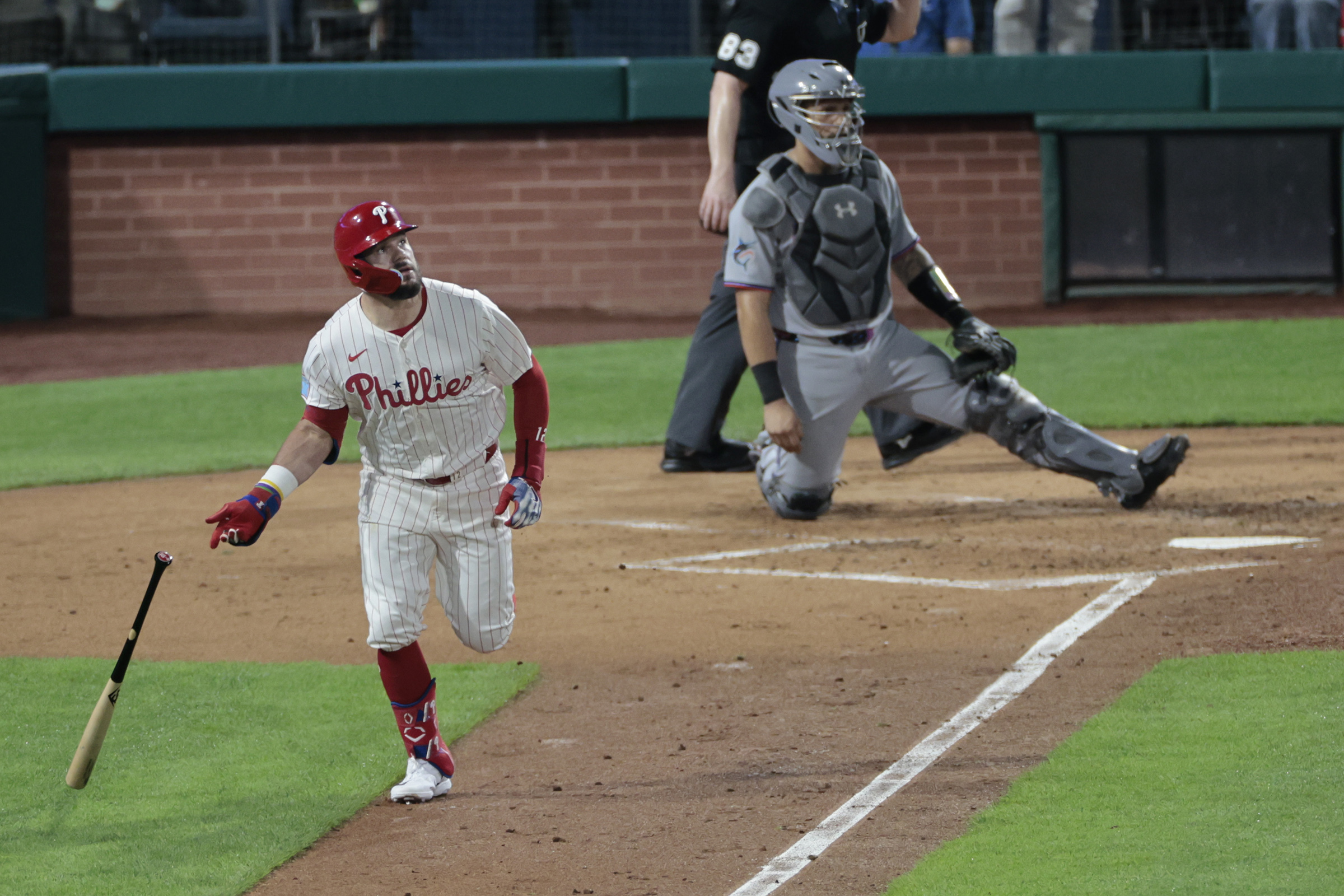
  • The Phillies can’t afford not to re-sign Kyle Schwarber

    The Phillies can’t afford not to re-sign Kyle Schwarber

    What would it mean to keep Kyle Schwarber in a Phillies uniform?

    Just look at the names he is likely to pass on the franchise’s all-time home runs list by the end of 2026, his age-33 season.

    Sitting at 187 dingers since joining the Phillies, Schwarber likely will pass Bobby Abreu (195) and Dick Allen (204) before the All-Star break. A month or two later, he could pass Jimmy Rollins (216) and Cy Williams (217).

    By then, Schwarber will be in striking distance of three of the heaviest hitters in Phillies history, literally and figuratively.

    • Greg Luzinski, 223
    • Chase Utley, 233
    • Chuck Klein, 243

    A repeat of Schwarber’s 56 homers in 2025 would leave him in a tie with Klein for fifth place all-time. Only Del Ennis (259) and Pat Burrell (251) would stand between him and Mike Schmidt (548) and Ryan Howard (382).

    You can’t let a guy like that walk away. We know it. The Phillies know it. And, yeah, Schwarber’s agent knows it. Which is why we are here, in early December, on the eve of baseball’s annual winter meetings, still waiting for confirmation that the last of the Schwarbombs has yet to fall on South Philadelphia.

    Do not fret, sweet children. Save your angst for the Eagles. The baseball offseason is in its opening laps. The pace car is still on the track. The top of the market has barely begun to percolate. Kyle Tucker, Bo Bichette, Alex Bregman, Cody Bellinger … all have yet to agree to terms. All will remain free agents for the foreseeable future. Exactly one position player has signed a multiyear contract. Schwarber and the Phillies are right where we should have expected them to be.

    The one big deal to date actually bodes well for the Phillies. Josh Naylor’s five-year, $92.5 million contract with the Mariners suggests that the market won’t grow too outlandish for sluggers at nonpremium positions.

    Kyle Schwarber will enter his age-33 season coming off a 56-homer campaign in 2025.

    You can argue that Naylor barely qualifies as a slugger, with 88 home runs over the last four seasons. Whatever the semantics, he clearly is in a different power class. But there is some comparability here. Naylor’s 124 OPS+ from 2022 to 2025 is in a similar tier to Schwarber’s 134. He is also four years younger than Schwarber and has a good glove at first base.

    The logic goes something like this: The same types of teams that would have interest in a hitter like Schwarber probably would have interest in a hitter like Naylor. If Naylor had signed for six years and $120 million or five years and $110 million, we might be sitting here wondering if it really would be wise for the Phillies to shell out the stupid money it would take to retain Schwarber. The answer probably still would be yes. But it’s nice not to have to consider it.

    It’s fair to assume that the market will look as it has the past several seasons. There is a pretty hard limit on the amount teams are willing to spend on players who don’t add significant value on defense. Besides Juan Soto, the only hitters to sign for more than $95 million over the last three offseasons have played shortstop, center field, or starting pitcher (Shohei Ohtani). The last first baseman or designated hitter to sign for more than five years and $100 million was Freddie Freeman, who landed six years and $162 million from the Dodgers in 2022.

    Schwarber can — and should — argue that he is a different case. A typical designated hitter doesn’t finish second in MVP voting. Schwarber’s power and consistency are transcendent enough to disregard positional archetypes. The only hitter with more home runs than his 187 over the last four seasons is Aaron Judge (210). He, Judge, and Ohtani (also at 187) stand alone. In terms of impact on a contender, Schwarber is much closer to Freeman than he is to Naylor. Six years and $150 million is a defensible ask.

    The Phillies can argue that Schwarber’s age and positional limitations are legitimate factors. Just look at Pete Alonso, who is pretty close to a carbon copy of Schwarber at the plate. The Mets’ first baseman had to settle for a two-year, $54 million contract last offseason. Not only that, Alonso is on the market again after opting out of his deal. Or, consider Teoscar Hernández, who signed with the Dodgers for three years and $69 million last year. Schwarber is better than Hernández. But is he better than two Hernándezes? For the Phillies, four years and $100 million is a justifiable offer.

    Hopefully, we’re just waiting for the two sides to split the difference. Five years and $125 million would be a steep price to pay to lock up the designated hitter position through Schwarber’s age-37 season. But then, Schwarber will be bigger than a 37-year-old designated hitter when that time comes. He will be one of the defining players of an era, one of the franchise’s all-time greats, a fixture in the community and a potential Hall of Famer. He may have passed Howard for second on the franchise home run list. He may be closing in on 500 for his career.

    Can the Phillies afford to sign Schwarber?

    The better question is whether they can afford not to.

  • One year of inspections at Riddle Hospital: November 2024 – October 2025

    One year of inspections at Riddle Hospital: November 2024 – October 2025

    Riddle Hospital was cited by the Pennsylvania Department of Health for failing to properly monitor a patient’s vital signs in the emergency department earlier this year.

    The incident was among six times inspectors visited the Media hospital, which is owned by Main Line Health, to investigate potential safety problems.

    Here’s a look at the publicly available details:

    • Jan. 10, 2025: Inspectors came to investigate a complaint but found the hospital was in compliance. Complaint details are not made public when inspectors determine it was unfounded.
    • June 30: Inspectors cited the hospital for failing to properly monitor a patient’s vital signs while waiting for care in the emergency department. Inspectors found that a patient was evaluated in the emergency department as a triage level 3, meaning their vital signs should be checked every four hours. Records show the patient’s vital signs were documented at 12:40 a.m., and not again until almost seven hours later. Administrators reviewed the hospital’s emergency triage policies and retrained staff.
    • Aug. 13: Inspectors came to investigate a complaint but found the hospital was in compliance.
    • Sept. 15: Inspectors came to investigate a complaint but found the hospital was in compliance.
    • Sept. 18: Inspectors visited for a special monitoring survey and found the hospital was in compliance.
    • Sept. 18: Inspectors followed up on the June citation regarding vital sign monitoring and found the hospital was in compliance.
  • The WNBA’s rapid growth means a rise in gambling, and it’s affecting the players

    The WNBA’s rapid growth means a rise in gambling, and it’s affecting the players

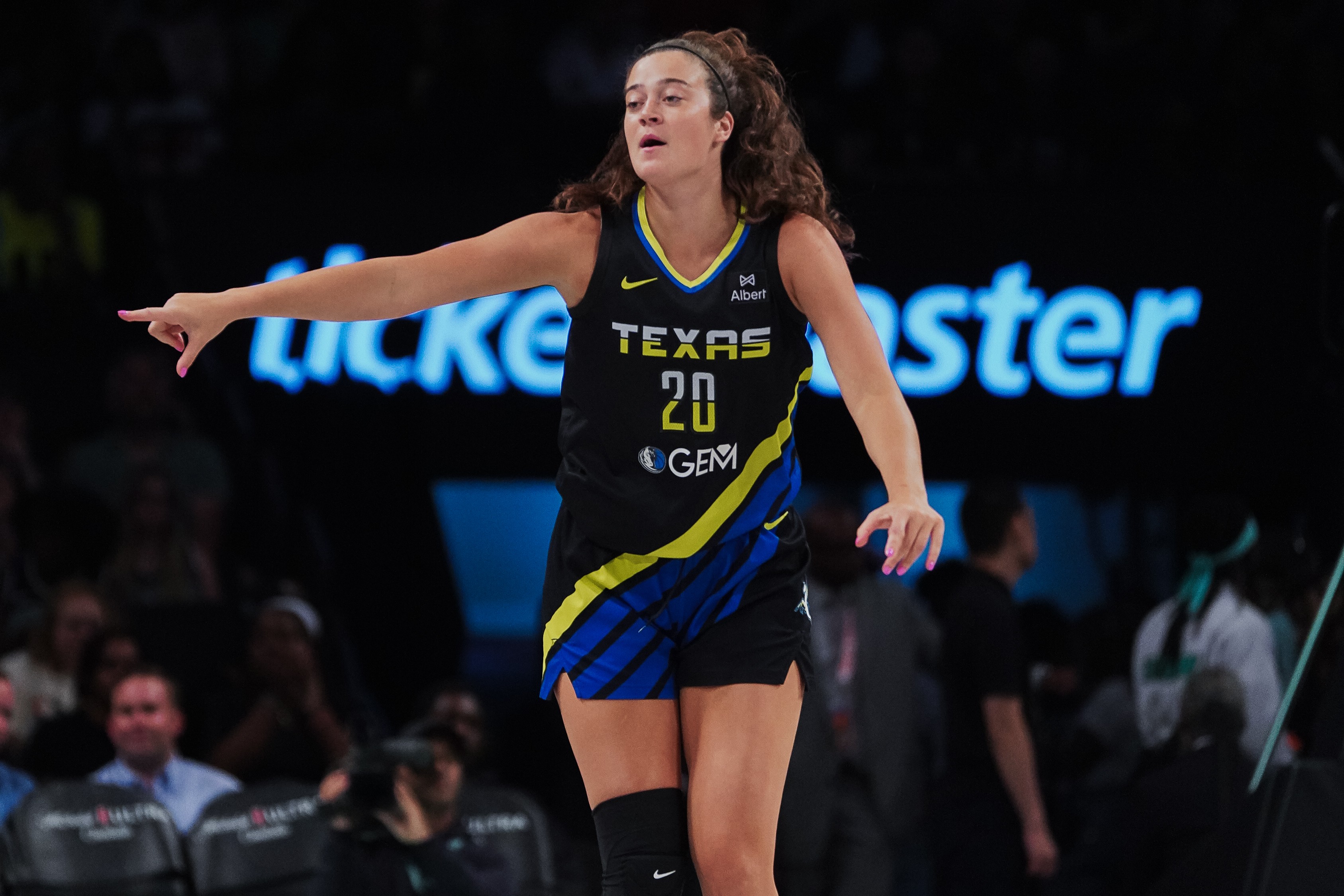
    Growing up in a family of six in Poughkeepsie, N.Y., former Villanova women’s basketball star Maddy Siegrist said the closest thing she witnessed to a sports bet was when the Super Bowl rolled around. And even then, it was friendly wagers.

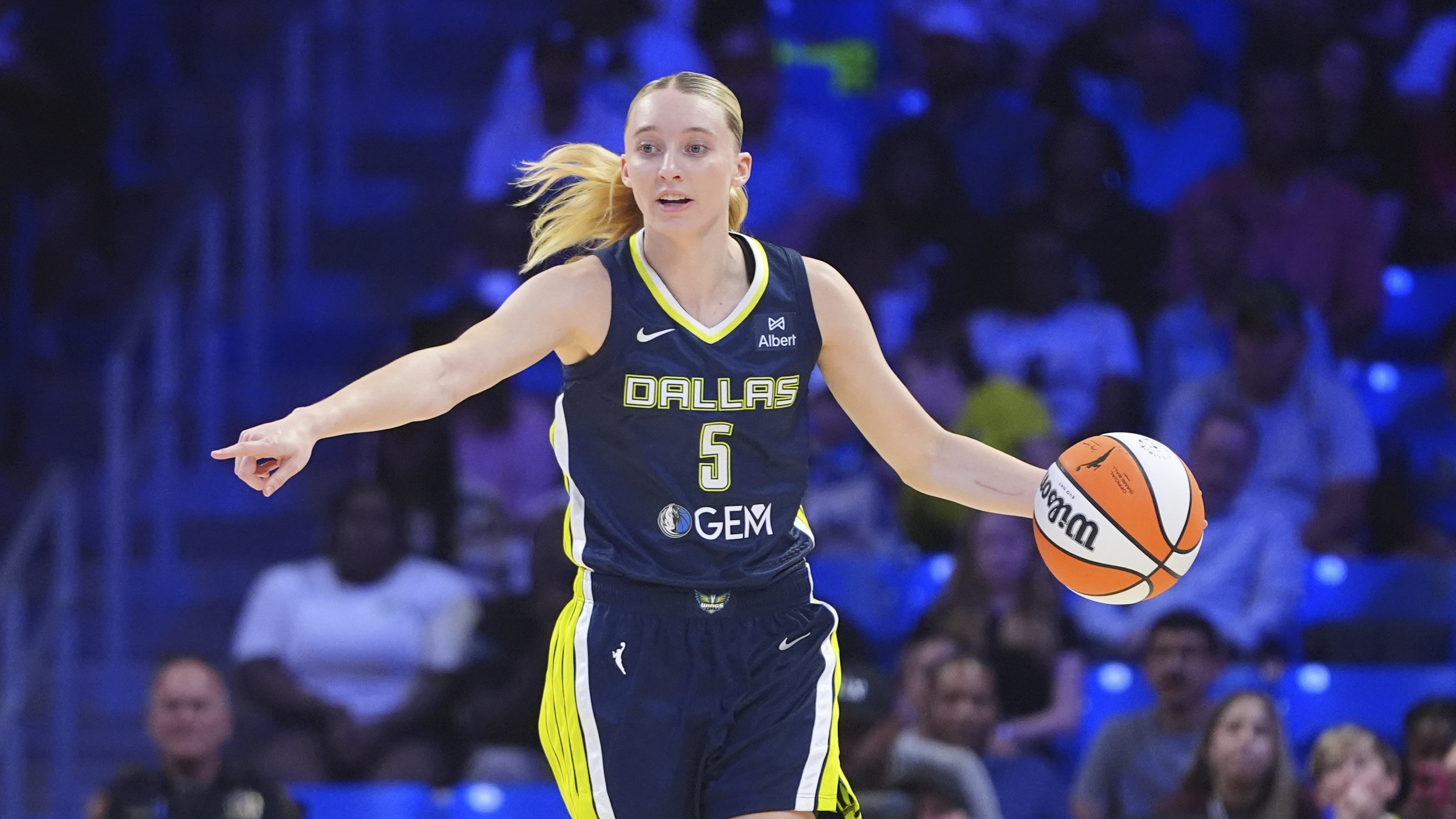
    “It just wasn’t a thing in our house,” said Siegrist, who now plays for the WNBA’s Dallas Wings. “I didn’t grow up with people who bet. Plus, there were no apps or anything. I knew people that did boxes on the Super Bowl. That was the extent of my knowledge.”

    Maddy Siegrist didn’t grow up around sports betting, but it’s now inextricably tied to her profession.

    Since Siegrist went pro in 2023, however, legalized sports betting has infiltrated virtually every corner of sports. Siegrist said the WNBA benefits from the sports gambling population laying bets on games. That translates to more eyes watching women’s professional basketball, which generates a bigger fan base, which spurs continued growth of the sport and its brand.

    But Siegrist, 25, is quick to point out a darker side to the sports-gambling intersection, “one of the rougher parts that people don’t think about,” she said.

    Public vitriol directed at athletes is nothing new. But add the sports gambling component and a bettor’s ability to wager on virtually any aspect of a game or performance at the click of an app, and the result can be toxic. Often, negative fan reaction is the result of a losing bet, and social media has exacerbated the issue.

    “Any pro athlete will kind of give you the same [story]: These are people betting from their house that you’re going to go under [a projected stat total] or your team’s going to win,” Siegrist said. “With the world of social media, just how much hate people get is truly amazing. I’m not a super controversial player. I don’t have the spotlight like some of my other teammates. But if you have a bad game or a good game, you can get anywhere from 50 to 100 [direct messages] or comments on your social media that are crazy.”

    Dallas Wings guard Paige Bueckers, a teammate of Maddy Siegrist, is one of the WNBA’s brightest young stars.

    Betting burden

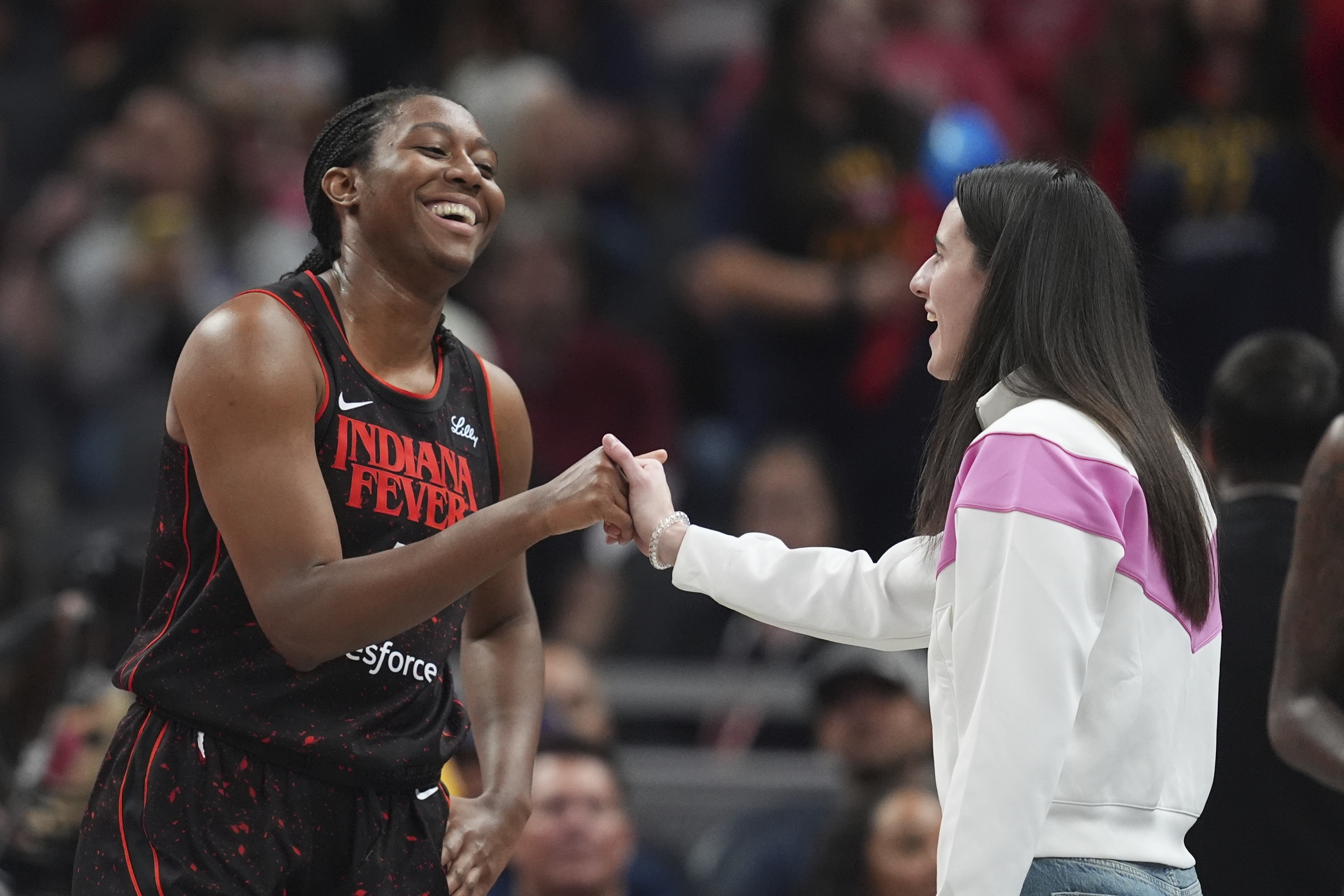
    No longer are the WNBA and college women’s basketball considered unattractive markets for sports gamblers. Players like Indiana Fever star Caitlin Clark and Paige Bueckers, Siegrist’s teammate on the Wings, are among the stars generating buzz, and, by extension, causing a spike in gambling activity on the sport.

    Female athletes, professional and amateur, shoulder many challenges beyond maintaining elite performance on the court or field. That includes playing in the age of the ever-growing legalized sports betting industry — especially the proliferation of multimillion-dollar business partnerships between pro sports leagues like the WNBA and gaming companies like BetMGM.

    And sports remain corrupted by the underworld of illegal gambling, where pro athletes can turn to a side hustle to try to score millions illicitly. The recent unsealing of the federal indictments that involve illegal gambling schemes, the NBA, and purported organized crime members is one such example, and Siegrist said she had followed those recent announcements.

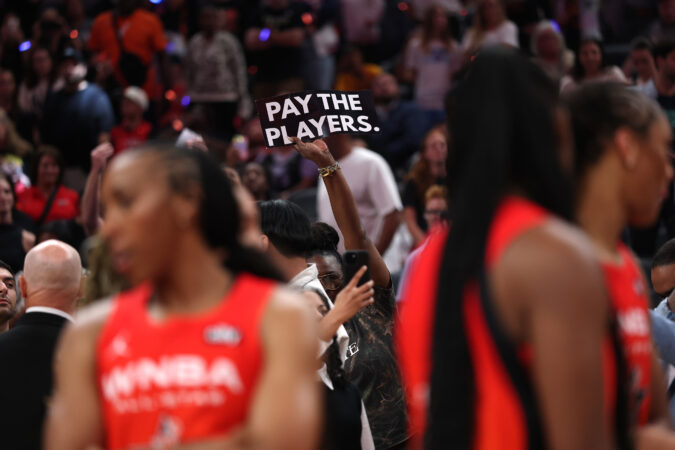
    While the WNBA and the players’ union continue collective bargaining negotiations, there are developments regarding salary structure in the league’s latest proposal. The changes could temper a longstanding gripe by professional women’s basketball players: that their compensation is not commensurate with the gargantuan salaries made by male pro hoops players — as they shoulder the shared burden of scrutiny from bettors and fans alike.

    According to a source with knowledge of the situation, the league’s latest proposal includes language that defines a maximum salary structure with a guaranteed $1 million base for 2026 and projected revenue sharing pushing total earnings for max-salary players to more than $1.2 million. This follows an agreement to extend the current labor agreement to Jan. 9

    The average player’s salary is projected to exceed $500,000 in 2026, while the minimum salary is projected to be more than $225,000 — up from approximately $102,000 and $66,000, respectively, in 2025.

    Institutional support

    Once the WNBA season starts, Siegrist said she drastically reduces her social media use to keep her mind clear of clutter and keep the focus on basketball.

    “You have to take it for what it is. Obviously, social media helps you build your brand, stay connected,” she said. “From that perspective, it’s great. It’s really allowed athletes to monetize off of themselves, and it gives fans a unique perspective into seeing these people’s lives, which I think is great.

    “Twitter [now known as X] is the worst. I definitely try to not go on at all during the season. … Sometimes I like to scroll on TikTok, take my mind off stuff. But I don’t ‘like’ anything that has to do with the WNBA on TikTok. I think for me, it’s definitely a balance.”

    The WNBA has taken steps to combat hate and negative fan behavior directed at the league’s players and personnel. Earlier this year, the league launched the “No Space for Hate” initiative, a “multidimensional platform designed to combat hate and promote respect across all WNBA spaces — from online discourse to in-arena behavior.”

    One of the campaign’s goals is the use of artificial intelligence to safeguard the players’ and teams’ social media pages and to automatically detect, report, and delete hate speech and harassment.

    “As interest in sports betting grows around the WNBA, we are taking clear, concrete steps to protect players and safeguard the integrity of the game. Player safety remains our highest priority,” the WNBA said in a statement. “We’ve enhanced security, expanded monitoring of online threats, and increased fan education. We are also working closely with our gaming partners to monitor betting activity and ensure our systems protect the game. These safeguards are constantly being reviewed and strengthened to ensure we keep the players safe and our game secure.”

    Around the time the WNBA launched “No Space for Hate,” sportsbook behemoth BetMGM announced its partnership with the reigning champion Las Vegas Aces. BetMGM also is an authorized gaming partner with the league.

    Even while injured, Caitlin Clark (right), here with another former top overall pick in Aliyah Boston, generates a ton of buzz around the WNBA.

    “The NBA and WNBA are very different in terms of scale and seasonality — the NBA is a much bigger league, but both have shown strong year-over-year growth,” said BetMGM trading manager Christian Cipollini. “The WNBA benefits from its summer schedule when there’s less competition for attention, and star power like Caitlin Clark has driven a major uptick in engagement. Even after Clark’s injury this [2025] season, handle remained well above pre-Clark levels, which speaks to the league’s momentum.”

    Cipollini said BetMGM — and the gaming industry as a whole — is committed to sports integrity.

    “That includes athlete harassment, and we’re working with the leagues on this issue from several angles,” he said.

    Historical perspective

    During his 42 years (1978-2020) as head coach of the Villanova women’s basketball team, Harry Perretta said gambling on women’s college basketball was never an issue for him and his players, simply because the interest wasn’t there. Of course, the bulk of Perretta’s Villanova coaching career unfolded before the 2018 Supreme Court ruling that legalized sports betting state to state.

    “I guess you always might have bookies on campus. But I used to tell [players], ‘You really don’t want to get involved,’” said Perretta, 70. “People who get themselves in trouble are people who make bets without putting money down. Next thing you know, they’re behind the eight ball.”

    There was that 1998 ’Nova-UConn women’s game, though. Nykesha Sales was on the cusp of becoming Connecticut’s career scoring leader before she sustained a devastating Achilles injury. But before UConn’s game against Villanova, Perretta and longtime UConn women’s coach Geno Auriemma agreed to let Sales score an uncontested basket after tipoff to reach the milestone. Villanova then was allowed to score its uncontested basket, before the “real” game began. Then-Big East commissioner Mike Tranghese also had agreed to the gesture.

    “We let Sales score a basket, and I checked to see if there was an over/under on that game,” Perretta said. “I checked out of curiosity. When we let her score the two [points], and then Connecticut let us score two, I didn’t want anybody saying something crazy. There was no betting on that game, but I checked. That did go through my mind when that whole sequence occurred.”

    In the final two years of Perretta’s Villanova tenure — during which he coached Siegrist, Perretta said he started to see a lot more betting lines on women’s college basketball games, particularly around the start of the NCAA Tournament. The dual salvos of legalized sports betting and amateur athletes securing name, image, and likeness deals had reshaped the sports landscape.

    Siegrist — who married Perretta’s son Stephen, a Drexel assistant women’s basketball coach, in late October — said that going back to her ’Nova playing days, players were consistently educated on the dangers of associating with any illegal gambling operation or people within that culture.

    “I have it ingrained from college and the NCAA, ‘No gambling ever, or else you’re not going to be able to play.’ I’ve tried to keep that mentality,” Siegrist said.

    The bigger challenge, she said, is now balancing her career in the online sports wagering fishbowl.

    “People are crazy. They’ll post something from five years ago and comment a hundred times, ‘You suck.’ It’s a pain to go through and delete it all,” Siegrist said. “The Wings pay a company to manage social media, the outside comments, and take them down right away if they’re threatening or hate[-related]. We’re going to see more and more of that, which I think is great.

    “These leagues and organizations are just trying to protect their players. At the end of the day, everyone is just trying to play the game they love to the best of their abilities. When you try and focus on that, these are all ways to keep the main thing the main thing.”

  • Jalen Hurts running more might be the best thing for the Eagles. Is it also hazardous to his career?

    Jalen Hurts running more might be the best thing for the Eagles. Is it also hazardous to his career?

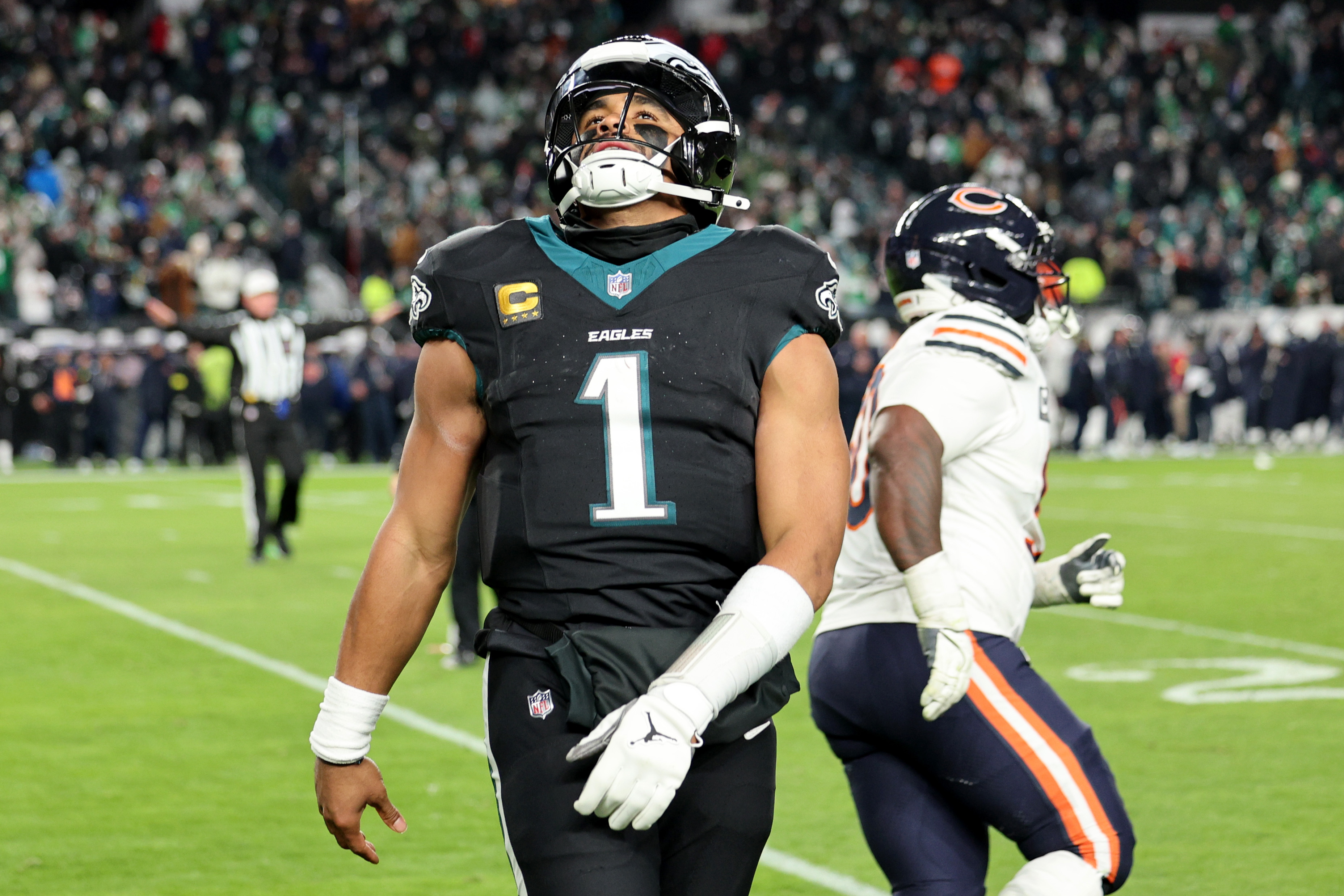
    For one play during an otherwise dismal Black Friday loss to the Chicago Bears, Jalen Hurts gave the Eagles’ offense a jolt. The ball never even left his control.

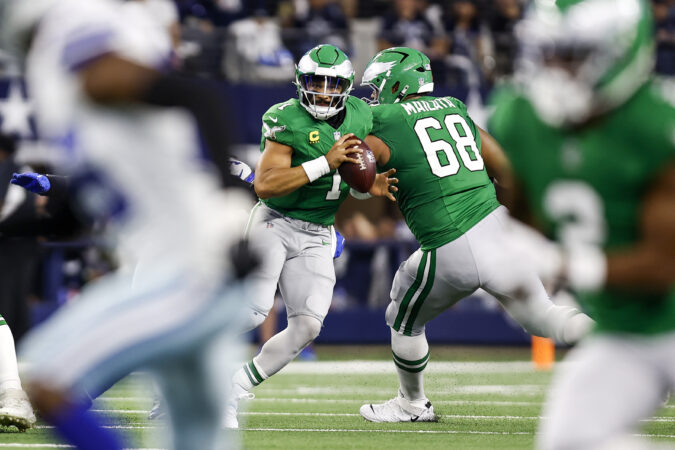
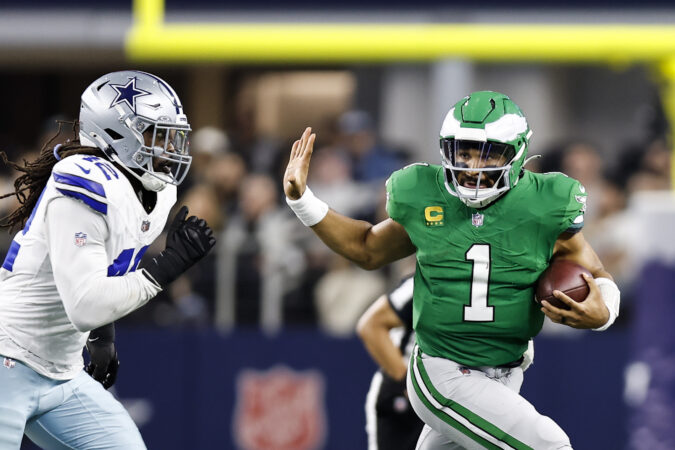
    Rather, he tucked it into the crook of his left arm and dashed through a lane created on the left side of the offensive line by a pulling Cam Jurgens and Jordan Mailata. With neither linebacker in the picture — one was picked up by Jurgens on a blitz and the other ran with Saquon Barkley as he motioned out wide before the snap — Hurts dashed upfield unabated for 23 yards, the Eagles’ most explosive rushing play of the day.

    It set up A.J. Brown’s 33-yard touchdown reception on the ensuing play, capping off the Eagles’ longest drive of the afternoon: 92net yards.

    It was also like seeing a unicorn.

    Designed runs have become rarities for Hurts in his fifth season as the Eagles’ starting quarterback. After averaging 3.6 designed runs per game in his first four seasons as the starter, Hurts has dropped to 1.1 designed runs per game in 2025, according to Pro Football Focus. Hurts has gone without a single designed run in six of this season’s 12 games.

    On one hand, that drop-off should come as a surprise, seeing as Hurts once proclaimed himself a “triple threat” capable of dissecting defenses with his arm, his legs, and his mind. Among quarterbacks from 2021-2025, only Lamar Jackson boasts more rushing yards (3,531) than Hurts (3,108).

    On the other, though, there is plenty of precedent for quarterbacks who rush less as they progress in their careers, either by choice or by physical limitation. Those examples include Hurts’ contemporaries such as Jackson (6.6 designed attempts per game before Year 5; 4.0 after) and Josh Allen (2.0; 1.6).

    As evidenced by that 23-yard run on Friday, the 27-year-old Hurts can still burn defenders on the ground. His ability to serve as a run threat has historically forced opponents to defend all 11 players on the field, creating more opportunities in the run game as a whole.

    Could the Eagles lean into the quarterback run game as one fix to help revitalize Kevin Patullo’s floundering offense that is running out of time to achieve consistency?

    Hurts was asked after the Bears loss whether he would do anything different during the extended break before the Chargers game to help improve the offense. He was then asked whether he needed to use his legs more to fuel that improvement.

    Flashing a slight smile, Hurts offered the same three-word answer to both questions.

    “I’ll be working,” he said.

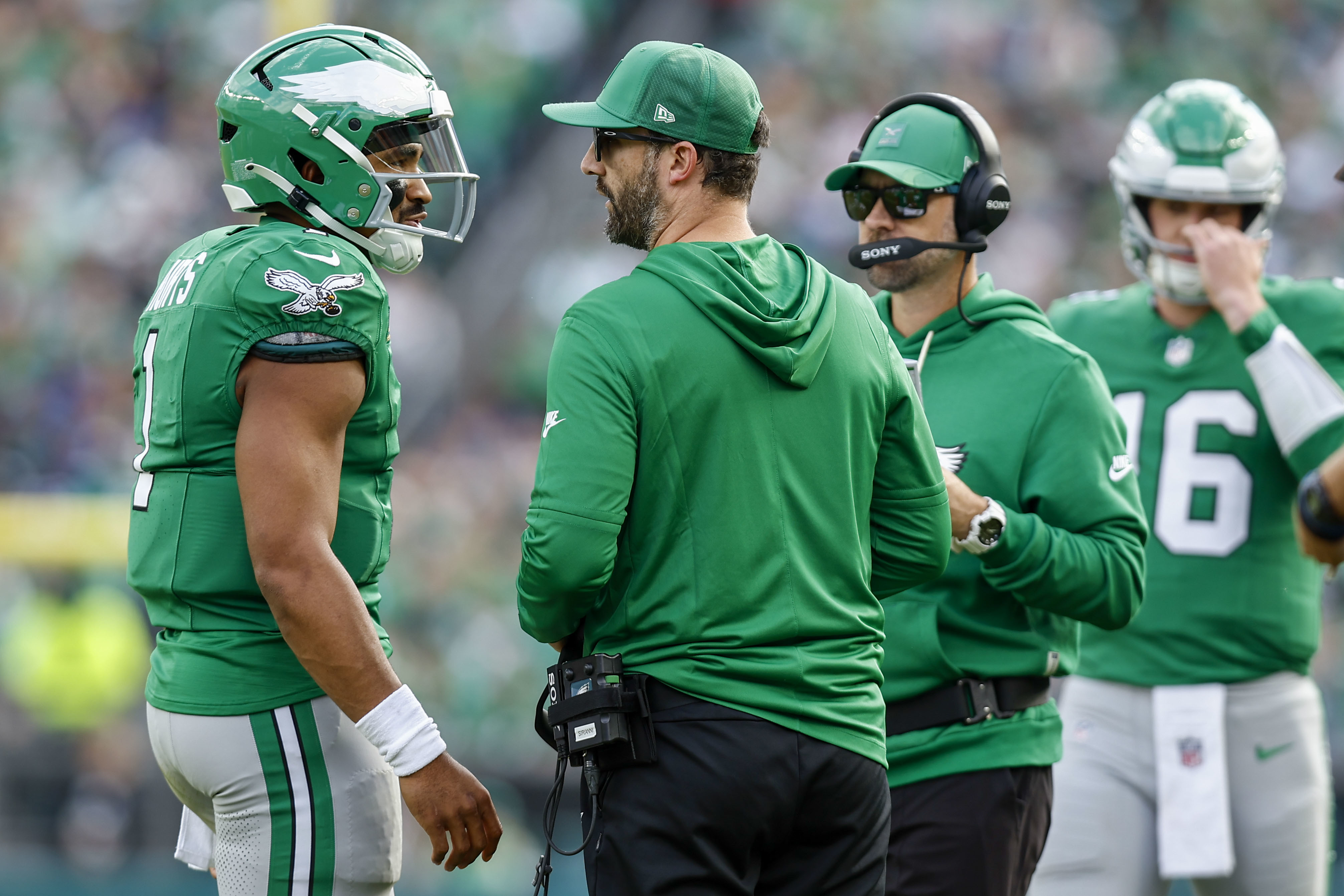
    Nick Sirianni and Kevin Patullo must consider the risk to Jalen Hurts when the quarterback carries the football.

    Why is Hurts rushing less?

    Hurts is a full-time quarterback, part-time philosopher. His penchant for dropping philosophical sayings at the podium has become part of his brand, according to Mailata.

    One of the sayings that Hurts helped popularize, “Keep the main thing the main thing,” offers a window into his approach. Winning, regardless of how it looks, is the most important facet of the game. Everything else is secondary.

    So, when asked the week before the Bears game if he was open to more designed runs, Hurts emphasized that he is “open to doing whatever it takes to win.” Similarly, days later after the loss, Nick Sirianni seemed to refute the notion that Hurts wanted to run less this season by suggesting self-preservation is a factor in the decision to call fewer designed runs.

    “We’re always thinking about how to protect Jalen and make sure that he is healthy for the long haul,” Sirianni explained.

    It isn’t hard to fathom why the Eagles would want to protect their investment. Hurts is the highest-paid player on the team at $51 million on an average annual basis. As the offensive player with the ball in his hands on every down, he’s arguably the team’s most important player, too.

    But Hurts has injured himself both in and out of the pocket throughout his NFL career, which has caused him to miss games. In 2021, he sprained his ankle when he was sacked in the Week 12 loss to the New York Giants. The injury forced him to sit out the following week’s game against the New York Jets and required offseason surgery.

    His other two serious injuries occurred on designed runs. Hurts sprained his throwing shoulder in 2022 after getting tackled on a 3-yard zone-read keeper in Week 15 against the Chicago Bears. Hurts had plenty of wear-and-tear in that game, running the ball on 17 occasions on a frigid day at Soldier Field. While he finished (and won) that contest, he missed the next two.

    Hurts also suffered a concussion in Week 16 in 2024 against the Washington Commanders on a play very similar to his 23-yard gain on Black Friday. After Hurts exited in the first quarter, the Eagles went on to lose their first game in roughly three months. He missed the final two games of the regular season in concussion protocol, though he likely wouldn’t have played in the season finale against the Giants anyway.

    But the lack of carries for Hurts isn’t always in the Eagles’ control. Sometimes, that can be dictated by the defense.

    While the Eagles run fewer run-pass options (7.4 per game, per Pro Football Reference) than they did in the past — especially compared to 2022, when they led the league with 10.9 — it was a substantial part of the game plan in the Week 5 loss to the Denver Broncos. More often than not, though, Hurts opted to throw. Sirianni explained in the aftermath that on those plays, “when you have that ability to get that to a playmaker in the flat, you take it.”

    At the time, that game marked Hurts’ lowest rushing total of his career as the starter (one scramble, one kneel-down for a total of three yards).

    “Sometimes when you’re calling those plays, he can run it, Saquon can run it, or we can throw it, so it’s kind of a three-way monster right there,” Patullo said. “It’s kind of a dealer’s choice, so it is just kind of a different kind of style, and it worked in that moment.”

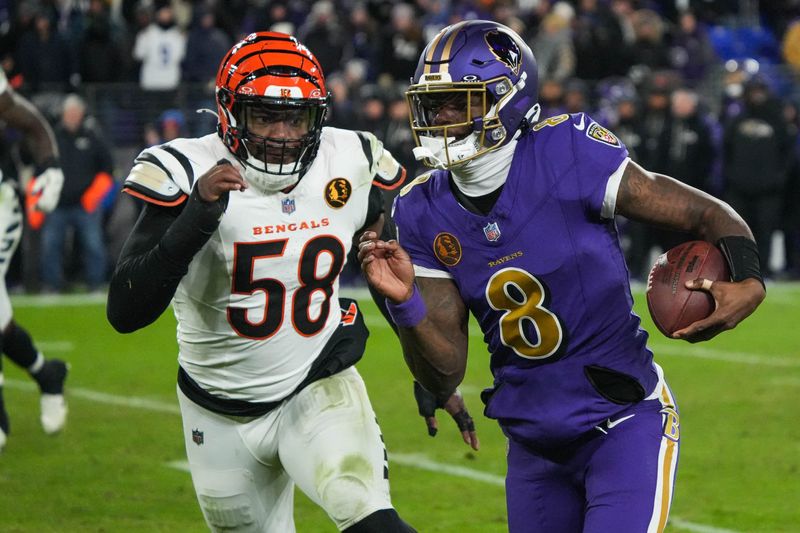
    Lamar Jackson remains elusive, but has spent time in 2025 battling a myriad of injuries.

    Hurts isn’t alone

    Hurts is far from the only quarterback who has experienced a dip in runs as he has progressed in his career. Jackson is perhaps the best case study among active quarterbacks this season in his seventh full year as the Baltimore Ravens’ starting quarterback.

    Jackson, 28, is averaging 4.7 carries per game, according to PFF (2.1 designed runs, 2.6 scrambles). He had already been on a downward trajectory after his first few seasons in the league, but this year is a new low for the two-time MVP quarterback.

    Injuries have held Jackson back this year. He missed three games from Weeks 5-8 with a hamstring issue. He’s been active since Week 9, but over the past month, he has dealt with injuries to his knee, toe, and now his ankle. He has not participated in a full week of practice in a month.

    Carson Wentz, the Eagles’ starter from 2016-20, was heralded for his athleticism, especially in 2017 when he was briefly the Eagles’ leading rusher through the first two weeks of the season. His asset became an issue, though, when he scrambled his way into an ACL tear later that season, marking the beginning of the end of his Eagles tenure. While his play style didn’t change upon his return in 2018, his efficacy deteriorated.

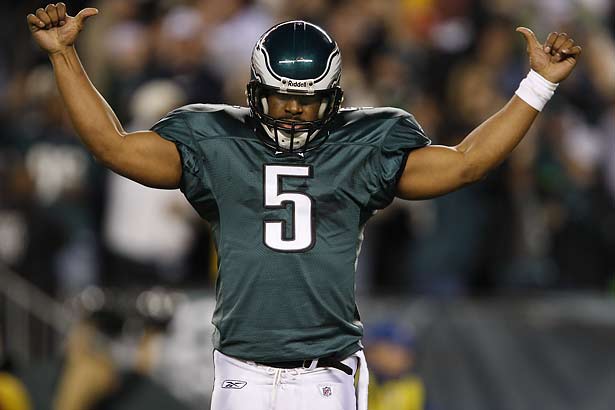
    Donovan McNabb was celebrated as a runner early in his career but evolved into one of the NFL’s top pocket passers.

    But injuries — and the threat of incurring them — aren’t the only factors at hand when it comes to the frequency of the quarterback run game. Donovan McNabb experienced a shift in his playing style throughout his 11-year tenure with the Eagles from 1999-2009. After posting 5.2 carries per game in his first four years as the full-time starter, McNabb averaged 2.9 over his final six in Philadelphia.

    McNabb came up in an era when the “dual-threat” label on Black quarterbacks often came with racist undertones. Regardless of his detractors, McNabb’s emphasis on the passing game seemed to be more of a personal preference.

    Even early in his career, before he leaned more into the passing game with the arrival of Terrell Owens in 2004, McNabb responded “no” when asked if he enjoys running.

    “When I hear ‘running quarterback,’ that sort of upsets me,” McNabb said in 2000. “That takes away from my drop-back ability, my play-action ability and my ability to get the ball downfield. Any time that you talk about how athletic a quarterback is, and you continue to talk about his running ability, you sort of forget about him passing the ball.”

    McNabb and Hurts aren’t one-for-one comparisons from a rushing perspective. McNabb was more of a scrambler, while Hurts has demonstrated a proficiency both in scrambles and designed runs. As passers, McNabb is arguably the best in franchise history. Hurts has had excellent games — including both Super Bowl performances — but is still working to find a sense of consistency in the passing game this season.

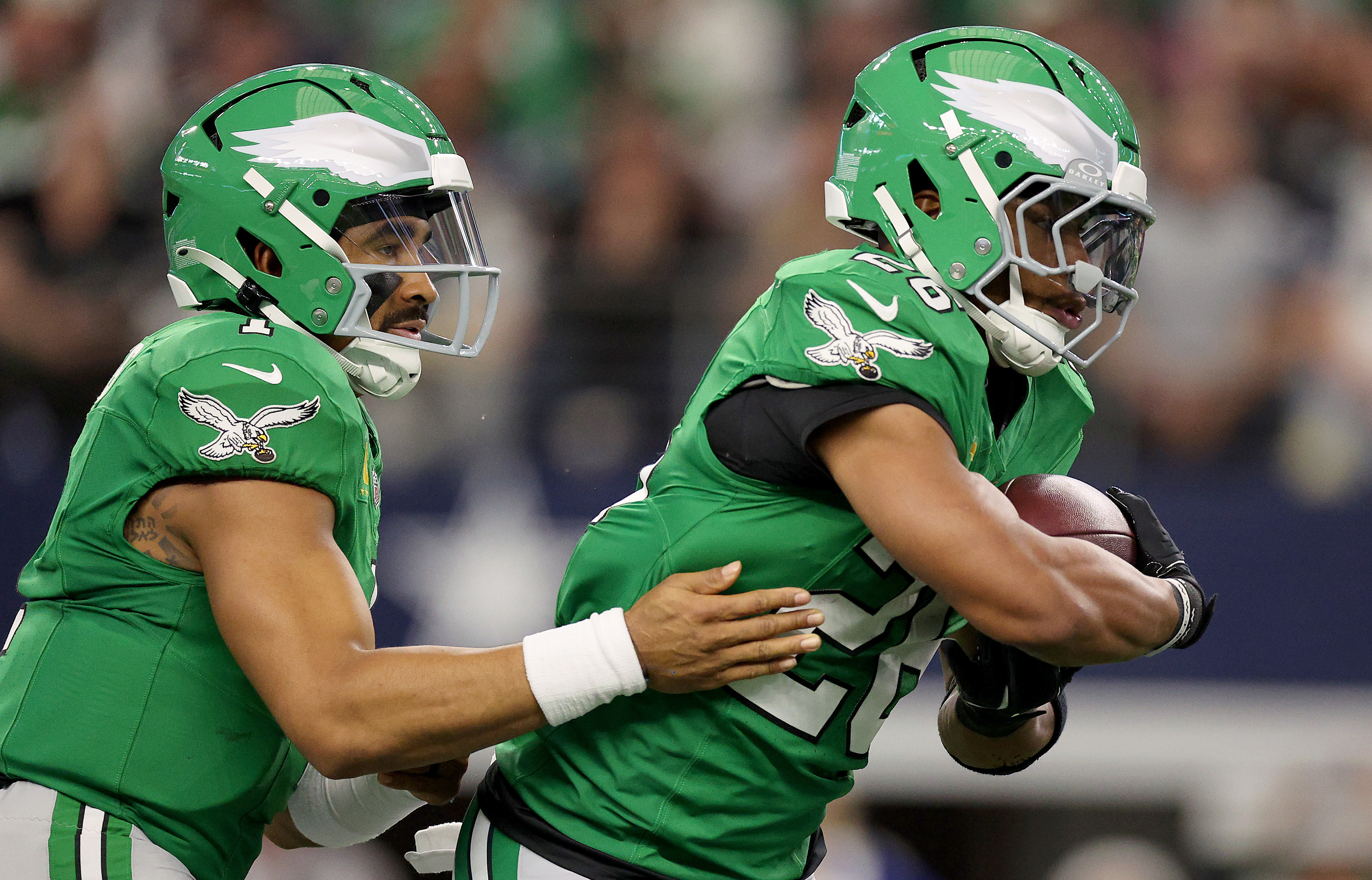
    Jalen Hurts could help free things up for Saquon Barkley … and vice versa.

    Uptick on the way?

    Can the Eagles achieve some sort of middle ground, aiming to protect their quarterback while also injecting life into a listless offense, specifically the run game?

    It’s been a tough season for Barkley and the Eagles’ rushing attack as a whole. The 2024 offensive player of the year has averaged 3.7 yards per attempt, a decrease of more than two full yards per carry from last season. His run blockers haven’t been doing him any favors, leaving him with 2.3 yards before contact per attempt (down from 3.8 last year).

    Hurts could help through the use of his legs, according to Dan Orlovsky, the former NFL quarterback and ESPN analyst. Orlovsky said he expects to see more designed runs for Hurts in the last five games of the season. That increase is imperative if the offense wants to continue to live out of the shotgun, he explained.

    According to Next Gen Stats, approximately 70% of the Eagles’ offensive plays occur when Hurts is lined up in the shotgun. That alignment can make a run game too predictable if the quarterback isn’t a threat on the ground, too.

    “If you don’t, there’s really no reason for you to be in the shotgun, because the defense can see constantly what’s going on in the run,” Orlovsky said. “So their lack of running the quarterback this year … defenses fly to Saquon a lot more. They’re much less disciplined. They can constantly see the football. Those giveaways with Saquon’s alignment of what kind of run and when they’re running. And a lot of times, there’s 3 yards that aren’t taken advantage of from the quarterback run. So it’s had a negative impact on their ability to run the football.”

    The Eagles broke that tendency briefly against the Bears. Hurts opted to keep the ball on a zone-read play that gained 3 yards. He read the unblocked defensive end who began to crash down hard on Barkley before pulling the ball and turning upfield. Instead of a handoff to Barkley for likely no gain or negative yards, Hurts created a positive play.

    According to Smael Mondon, the Eagles’ fifth-round linebacker out of Georgia, an offense that runs out of the shotgun and boasts a quarterback who poses a threat on the ground “opens up the menu a lot.”

    “If you don’t really have a running quarterback, like he’s not really a threat in the run game, then the menu kind of simplifies for what set you see in the backfield for what runs you could get,” Mondon said. “But if you got a quarterback that can run, then that menu of options of plays they could run kind of opens up even more. So it’s more things you’ve got to potentially have to defend. So it’s more stuff for a defense to think about.”

    A quarterback run threat can also help with the offense’s “numbers disadvantage,” as backup Tanner McKee puts it. On a typical run play in which the quarterback hands the ball off to the running back, the offense has nine players that can block for the ball carrier. The defense has 11 who can tackle, putting the offense at a mathematical disadvantage.

    There are different ways for quarterbacks to “get your block,” according to McKee, and keep defenses honest, including the use of play action and bootlegs. But a quarterback who keeps the ball for himself gains an actual blocker in the running back, minimizing the numbers disadvantage and, in theory, giving the offense a chance to rack up extra yardage.

    Jalen Hurts vowed “I’ll be working” when asked about his methods to help fix the offense in the lead-up to the Chargers game.

    An extra blocker means two extra gaps — the space between each blocker — for a linebacker like Mondon to fill.

    “It just kind of makes it harder,” Mondon said. “Everybody has to fit perfect with QB designed runs, just ‘cause they’ve got that extra hat and extra two gaps in the game.”

    Time is running out for the offense to hit its stride before heading into the playoffs. Still, Sirianni expressed an understanding that there’s a fine balance between keeping Hurts healthy and doing what it takes to win.

    “You’re always thinking first about what the players do well, especially with your quarterback, how do you make sure that you’re keeping them safe on those?” Sirianni said. “Even when you think about those, there are quarterback runs you can run that are a little [safer] than another quarterback run. But it’s still football and you still [face] a risk with every snap that you take, and that’s on a drop back, too.

    “But again, you look at the defenses, how you want to attack, you look at what you do well, how to protect the guys, and you’re just looking for the best way to go about that. I don’t think anybody wants to come out of a game with Jalen having 15 carries, designed carries. But again, we’re looking at everything, and we’ll see how that looks going forward.”