THC-infused beverages, sold at smoke shops across the Philadelphia region, will soon be illegal. Companies are now mobilizing to save the billion-dollar industry, while officials say reforms could avert a public health crisis.
THC drinks, found for sale on shelves in Philadelphia and beyond, could soon be illegal after Congress banned intoxicating hemp products.
Catch up quick: Hemp-derived THC seltzers, teas, and sodas are widely available at gas stations and liquor stores. This unregulated market, made possible through a legal loophole that will close as soon as 2027, has exploded into a billion-dollar business.
The industry responds: As companies brace for impact, leaders are fighting for changes and extended grace periods for the legislation, warning the ban could hurt distribution lines and sales. Meanwhile, consumers say demand will remain even if the beverages are prohibited.
Concerns remain: Philly-area prosecutors stress the public health is at risk and are pushing for sweeping reforms and regulations, similar to those on alcohol and tobacco. And while some industry stakeholders also support more oversight, some small-business owners worry about the effects of “overcorrection.”
SEPTA had until Friday to finish equipping all 223 Silverliner IV Regional Rail cars with a new safety feature, but the transit agency didn’t make the deadline.
It blames a shortage of thermal wire, necessary for the heat-detection system required by the Federal Railroad Administration.
To outfit the entire fleet, SEPTA needed about 39,000 feet of wire. It’s short by about 7,000.
The Philadelphia School Board reelected its president and vice president and approved a new contract for principals that, for the first time, includes paid parental leave.
President Donald Trump will visit Northeast Pennsylvania on Tuesday to promote his economic agenda, including efforts to lower inflation, the White House confirmed to The Inquirer on Thursday.
Immigration activists rallied at Philadelphia’s Criminal Justice Center Thursday to demand Sheriff Rochelle Bilal bar ICE from the courthouse, while Bilal supporters said she’s been unfairly blamed. Meanwhile in Montgomery County, advocates urged local towns and municipalities to enact policies that would limit police and local government cooperation with ICE.
The family of a man accused of killing his wife is suing Montgomery County and two medical companies, saying they denied him crucial healthcare while in the county jail, leading to his untimely death.
Paul Staico, owner of the South Philly bar dedicated to the Kansas City Chiefs, has died at 59. Many of the people who packed Big Charlie’s Saloon every Sunday said they were mostly “there for Paul.”
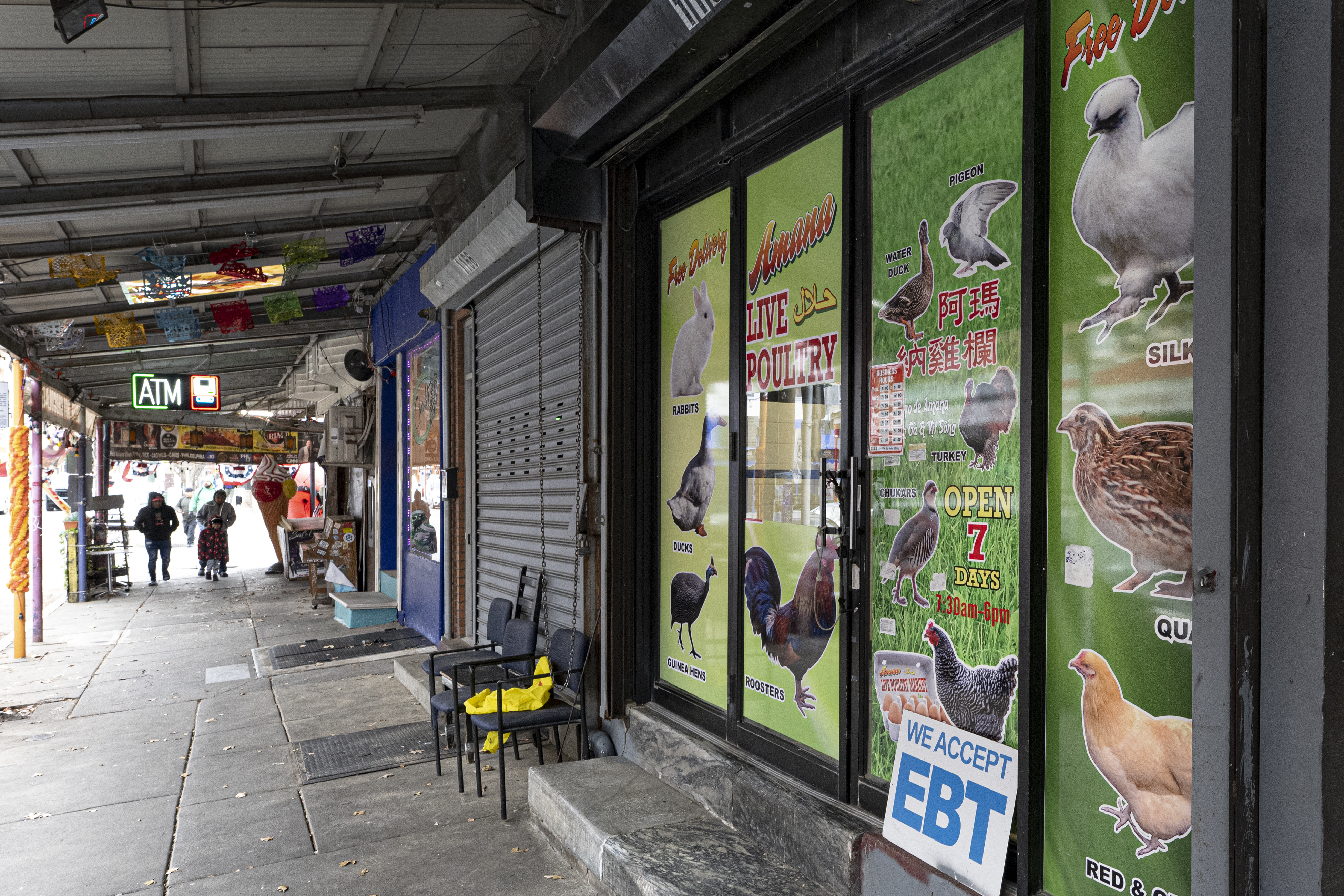
This week, we have an explainer from reporter Michelle Myers on the dynamics of the live poultry business in the Philadelphia region.
Every week, about 500,000 birds are sent to live poultry stores across Pennsylvania, New York, and New Jersey. These markets are more common in areas like Philadelphia with significant and growing immigrant populations. Here’s the full story.
Cheers to Morgan Flores, who solved Thursday’s anagram: RuPaul’s Drag Race. Philly drag queen Mandy Mango will compete in the show’s 18th season, premiering in January.
Photo of the day
Christmas Village, open now through Dec. 24, features a new 30-foot “Christmas Pyramid” at LOVE Park.
Thanks for stopping by. Have a wonderful weekend.
By submitting your written, visual, and/or audio contributions, you agree to The Inquirer’s Terms of Use, including the grant of rights in Section 10.
How can I organize my day so I can feel as good as possible?
The morning routines and “biohacks” you see on social media can seem extreme and often oversell the science. But consistent daily routines do matter.
Routines are linked to better health, academic success, and even resilience. We can all take simple steps to synchronize our activities with our circadian rhythms and biology. Small tweaks in the timing of things can pay off.
I analyzed dozens of studies to separate hype from science, and here’s my straightforward advice for a healthier day: Maximize your efforts in the morning — that’s when much of the magic can happen for your health and productivity. And be consistent with your nighttime rituals. The quality of your sleep, and your subsequent day, depend on it.
Here’s a science-backed daily schedule to try. Think of it as a template to help you plan a healthier day.
Early morning
Goal:Get sunlight or light exposure early, engage in physical activity, and fuel up with protein and fiber. It may not be possible to pull all these off each morning — like if you’re a caregiver or have a long commute — but try to check as many of these boxes as possible.
7 a.m.: Outdoor exercise then shower. If getting outside for an early walk or run is a nonstarter for you, think about investing in a light box to boost sunlike exposure and trying a quick and easy routine indoors to get your blood moving, like the 7-minute workout.
8 a.m.: Eat a high-fiber, high-protein breakfast (aim for 25-30 grams of protein). Studies have found that when people pump up the protein at breakfast — think eggs, yogurt, and whole grains — they feel fuller and snack less later in the day. And getting in your daily coffee in the morning, before noon, is linked to a 16% lower risk of dying from all causes compared with people who sip throughout the day.
8:30-9 a.m.: Morning commute or settle in for the day if you work from home.
Why this works: Going outside first thing is key. Exposuretoblue light halts melatonin production (the sleep hormone) and has been shown in randomized controlled trials to improve alertness, productivity, and depression.
You’ll get bonus points if you exercise with a friend: A workout buddy boosts accountability, and social connectedness is an underappreciated key to longevity and happiness.
And about those cold showers that are all the hype on social media: If you enjoy them, sure. But the data on cold water immersion isn’t slam dunk, and cold plunges may actually undo the benefits of strength training.
Late morning
Goal: This is the most productive window of your day, so tackle activities requiring greatest focus.
9 a.m.-noon: Write the essay, read the stack of scientific papers piled on your desk, or finish working on that budget you’ve been procrastinating. Personally, this is when I leave my smartphone in another room and nix notifications.
Why this works: Our alertness and intellectual performance peak as we approach midday. Riding the high of your early morning cortisol (and your first coffee), this is the window when you’re bringing your A-game.
While you’re working, set a 50/10 timer for micro-breaks. A meta-analysis showed that a 10-minute or less break every hour — to stretch, stroll around the cubicles, or do a brief meditation exercise — can enhance, not hurt, performance.
Afternoon
Goal: Counter that post-lunch inertia with a brisk walk — not more caffeine. Then tackle simple tasks.
Noon: Eat with a friend, family member, or colleague if you can, then take a 15-30-minute walk.
1-4 p.m.: Now’s the time to get those mindless errands (or worse, mind-numbing meetings) out of the way.
Why this works: Decision fatigue builds as the day goes on. We’re all susceptible: A 2019 study published in JAMA Network Open found that as the afternoon wears on, primary care doctors are less likely to order breast and colorectal cancer screening tests for their patients than in the morning — and perhaps more interestingly, patients are also less likely to follow through with future screenings if that first appointment is in the afternoon.
High-stakes moments are better scheduled earlier, but you can help counter the fatigue with a post-lunch walk outdoors. Pro-tip: If the weather is bad, a 10-minute walk inside will help control your blood sugar after the meal, so still prioritize movement.
Evening
Goal: Eat early and start winding down.
5 p.m.: Pick up the kids, drive home, prep dinner, and pair your evening grind with a joy snack. I enjoy a fun podcast, calling my mom, or even just doing random acts of kindness for my fellow commuters like pausing to allow someone to cut in.
5:30 p.m.: Aim to eat within an 8 to 10-hour window each day, so chow down on the earlier side. If this time frame isn’t doable, try to eat ideally at least two hours before bedtime.
8 p.m.: Think of this as your digital sunset — minimize screens and dim household lights, which can suppress melatonin.
Why this works: Evidence for intermittent fasting is most promising when we’re talking about an eating window of 8-10 hours within a day. The exact same meal can raise your blood sugar more at night than if you ate it early in the morning due to circadian effects.
Bedtime
Goal: Avoid alcohol and vigorous exercise, and build in a nightly ritual to quiet the mind.
9 p.m.: Take a warm bath one hour before bed or slip on some cozy socks.
9:30 p.m.: Engage in a short mindfulness or journaling exercise.
10 p.m.: Lights out. The next seven to nine hours are for you and your pillow.Nighty-night.
Why this works: In my ideal schedule, I would have showered after my morning workout, so if you already bathed once, no need to repeat. Instead, wear some warmer clothes to start getting your body ready to sleep. This trick can be as effective as melatonin to help you fall asleep quicker by helping your core temperature drop.
A randomized controlled trial found that mindfulness exercises — even starting with just five minutes daily — helped improve sleep quality compared with standard sleep hygiene education offering tips such as dimming lights and avoiding alcohol or caffeine at night. Journaling can also help the mind unwind: Studies have found that actually writing a gratitude letter to someone specific (regardless of whether you send it) is more effective than making a simple gratitude list.
I also love to write a specific to-do list about the coming days. It helps alleviate nighttime worry, and a 2018 study found that people who do this fall asleep faster.
What I want my patients to know
New routines don’t stick overnight. A classic study found that it takes on average 66 days of practicing a new dietary or physical behavior each day before it becomes a habit. This routine is a great goal. But some days, with my two toddlers in the mix, work deadlines, and ruthless Boston traffic, I don’t nail it.
You need to make it easy to make it last. So choose one habit and list every barrier that will keep you from hitting the mark. Then presolve each one. Is it too cold to go for a jog early in the morning? Find a good 30-minute cardio routine on YouTube that you can do in your bedroom.
Don’t have time for a 15-minute walk after lunch? Turn one of your afternoon calls into a walking-and-talking meeting (a personal favorite), or take a smaller win with a 5-minute lap around the building.
Playing music, dancing, creating art — and even playing some types of video games — aren’t just immersive and emotionally rewarding. They may actually slow down brain aging, a new study suggests. By analyzing brain activity data, the researchers found that engaging in creative pursuits of all kinds is linked to a younger-looking brain. The study was published by Nature Communications in October.
“This is not just a solution for the da Vincis of the world. Anyone can benefit from having a creative hobby, not just geniuses or professional artists,” said study author Agustín Ibáñez, director of the Latin American Brain Health Institute at Universidad Adolfo Ibáñez. “We are living in a world full of stress, uncertainty, and despair. Creating a little bubble through art or music can have a positive impact on your brain health.”
Delayed aging
The researchers analyzed imaging data of brain activity taken from 1,467 healthy participants from around the world, including tango dancers, musicians, visual artists, and strategy video game players. To quantify brain aging, they used brain clocks, which are computational models that can estimate the difference between a person’s chronological age and their brain’s biological age.
“We use brain connectivity metrics to predict your brain age, and there is a gap between this estimated age and your real age,” Ibáñez said. “This gap is informative for assessing accelerated or delayed brain aging.”
Accelerated aging of the brain, as indicated by a person’s brain appearing older than their actual age, has been observed in some people with psychiatric and neurological conditions. In the current study, Ibáñez and his colleagues wanted to investigate what other factors are associated with delayed brain aging.
The researchers found that all four creative and challenging pursuits they looked at — dance, music, visual art, and strategy video games — were associated with delayed brain aging. And greater expertise and performance level seemed to help. Experts with years of practice had younger brains compared with hobbyists. Out of all participants, highly skilled tango dancers seemed to have the most youthful brains — an average of seven years younger than their chronological age.
However, even participants who learned a creative skill managed to reap some antiaging benefits. The researchers trained 24 people to play “StarCraft II,” a video game that requires strategic thinking and imagination. A control group was trained in “Hearthstone,” a rule-based video game with limited improvisation and creative play. After 30 hours of training, spread over three to four weeks, the “StarCraft II” group showed slower brain aging compared to the “Hearthstone” group.
The study used strong, well-validated methods, and its findings align with previous research showing that participation in the arts is related to younger biological age, said Daisy Fancourt, a professor of psychobiology and epidemiology at University College London.
“There have been increasing studies identifying associations between arts engagement and both cognitive preservation and delayed time to dementia onset,” said Fancourt, who was not involved in the research. “So while replication of the findings in this new paper in other data sets will be important, they overall reinforce the importance of continued research on the health benefits of the arts.”
Protective effects even from passive activities
Even taking in art made by others — such as going to a concert or play — may have protective effects that help buffer against age-related cognitive decline. Other research suggests such receptive arts engagement may help preserve cognitive function in later life.
In a 2022 study, Jill Sonke, a research professor in the Center for Arts in Medicine at the University of Florida, and her colleagues analyzed data from 4,344 older adults based on six cognitive tests given in 2004 and 2011. While test performance slightly declined overall in the seven years from baseline to follow-up, engaging in receptive arts activities (such as going to a concert, play, or museum) for up to three hours a week was associated with better subsequent memory.
A more recent study published in 2025 found that engaging in cognitively stimulating activities has a wide array of cognitive benefits, such as improved memory, better language ability, and improved executive functioning.
The findings originate from the Long Life Family Study, a research project focused on families that have multiple people living into their 90s to uncover the biological, environmental, and behavioral factors that contribute to healthy aging. Older adults without a history of family longevity who frequently participated in hobbies such as reading and attending concerts, plays and musicals were able to match the same level of good cognitive functioning as those with familial longevity.
“Even if you don’t have exceptional longevity in your family, what our results show is that you still can improve your chances for cognitive health by taking part in cognitively stimulating activities,” said Stacy Andersen, an assistant professor of medicine at Boston University’s Chobanian & Avedisian School of Medicine, and lead author of the September study. “There’s no time like the present to learn something new — like photography or how to play guitar — that can also help protect your future brain.”
How to benefit from creative arts
Here are some tips from experts on nurturing a creative activity:
Cultivate your flow state. Ibáñez thinks creativity’s power comes from entering the flow state, where stress and time fade away. Lean into activities and experiences that keep you fully engaged and deeply focused. “To truly have a creative experience demands focus, attention, and practice,” he said.
Participate in a hobby club or group. Having strong social connections is also linked to healthy aging, and a shared creative activity is one way to bond with others in your community.
Combine creativity with movement. “Some hobbies such as dance not only engage the mind but also engage the body,” Andersen said. “Anything that keeps your heart healthy is going to also help keep your brain healthy.”
Know that it’s never too late. Being excited to work on a creative project or hobby can provide a strong sense of purpose and fulfillment, particularly in retirement. At age 54, Sonke learned how to sing and play guitar. “It was just amazing taking up a new art form in midlife,” said Sonke, now 59. “I don’t strive to be a professional musician, but it is a huge part of my life now.”
“The arts are phenomenally multimodal, in that they give us so many different kinds of benefits at the same time,” Sonke said. “They can engage us with information, physical movement, and uplifting activities that contribute to reduction of stress and improvement in mental health.”
JUÁREZ, Mexico — Carolina was living in Colombia as a refugee when her 15-year-old son disappeared. Almost a year after her boy went missing and she mourned his loss, she got a call from an international number.
Her son was alive 3,000 miles away in this historic Mexican city once known as “the Pass of the North,” nestled along the Texas border.
“I was so happy, but I didn’t know how to get here, without knowing anything, without money, with nothing,” she told me when I met with her recently at an immigrant shelter in Juárez. “I sold my house and came here alone.”
After a harrowing three-month journey during which she made her way across seven countries, survived two kidnappings, and endured beatings and sexual assault, she reunited with her son on Jan. 10.
They tried to get an appointment to cross the border through U.S. Customs and Border Protection’s CBP One app — part of a program launched by the Biden administration to allow people to come to the U.S. legally while they waited for their asylum or other immigration case to be processed.
Carolina and her son were still trying when President Donald Trump ended the program the day of his inauguration.
They’ve been stuck in shelters ever since.
Speak to immigrants at the border, and what happened to Carolina is sadly common. Some people are luckier, some less so, but no one comes out unscathed from their journey. And while some are willing to see their dreams deferred, there are and will continue to be more people who see coming to the United States as the only way out of a desperate situation.
Visiting the border nearly 10 months after Trump took office and essentially ended the ability to seek asylum in the United States, you see what many Americans — even some begrudging critics — credit the president with doing.
Trump has been brutally effective at limiting border crossings. The quiet downtown streets and plazas, the nearly empty shelters in both El Paso, Texas, and its sister city of Juárez in Mexico, are a testament to that fact. Only a few years ago, thousands of immigrants crowded sidewalks and shelters here, straining the region’s spirit of hospitality.
Today, the immigrants left behind are the vulnerable among the vulnerable, advocates said. People who are unable to move out or move on, stuck in shelters with the hope that Trump’s “hard heart will soften,” as one woman told me.
My own heart was not hard enough to dash her dream. Perhaps it should have been.
The last thing immigrants need is for some well-meaning dope to ignore the facts for short-term comfort. They had enough of that during the Biden administration.
A large “Welcome to Mexico” sign hung over the Bridge of the Americas is visible as President Joe Biden talks with U.S. Customs and Border Protection officers in El Paso, Texas, in 2023.
Good intentions
Under President Joe Biden, about six million people were allowed entry to pursue asylum applications and other immigration cases, according to the Migration Policy Institute.
I believe that all things being equal, the U.S. has no trouble absorbing these immigrants. Call me cynical (I prefer pragmatic), but our economy runs on cheap labor and consumer spending — six million people give you both. It gives you adults who are willing to do the work Americans won’t, and kids who will go to school and graduate for the jobs there aren’t enough Americans for.
But the problem is the president can only do so much. The executive can allow people to remain in the country under some sort of limited parole, it can direct enforcement toward higher priority targets, such as immigrants with criminal records, but it cannot grant legal status.
Only Congress can do that, and legislators have decided there is no major issue they can’t shrug off as intractable and call it a day.
So the Biden administration opted to let people in — regardless of whether they had a good asylum case — knowing full well that just as one president could open the door for immigrants, another could slam it in their faces.
Biden himself shut that door halfway as the 2024 presidential election neared, but the political damage had already been done, because the administration at no point made the argument for why it was doing what it was doing.
As desperate people who wanted a better life clustered at the border — partly because of the pent-up demand that grew under pandemic restrictions Trump put in place — Bidencould have made a moral argument, or laid out the economic benefits of immigration. He could have done more than introduce immigration reform shortly after taking office, and then just as quickly give up on it.
Instead, it was never clear what Biden wanted other than not to be seen as the bad guy.
His administration’s humanitarian intentions, coupled with incessant fear-mongering on the right, paved the way to where we are today.
Flags from North, South, and Central America line the left side of the chapel inside the Casa del Migrante in Juárez, Mexico, in November.
All for nothing
It took Helen, her husband, and their 3-month-old baby three months to travel from Ecuador to the Casa del Migrante shelter in Juárez, which is run by the Roman Catholic Diocese of Ciudad Juárez.
Like Carolina, Helen — who remains concerned about the status of her potential immigration case — would speak with me only on the condition that her last name not be used.
Helen and her husband, both in their early 20s, arrived in October of last year after leaving their home because of growing gang violence. “You couldn’t have any peace anymore,” Helen said.
The family crossed the dangerous jungle and rode through Mexico on the freight train known as “the beast.” She saw a man die, falling under the wheels of the cars.
While her husband goes out to work odd jobs, she takes care of their daughter. The routine gets to her, she said. Once a month, they’re able to go out and splurge on a meal, even as they’re afraid to walk the city’s streets.
Her daughter has now lived most of her life inside a shelter, but Helen told me they will continue to sacrifice.
“We are waiting to cross. Whatever it takes,” she said.
Across town at the Vida shelter,Carolina, 53, is torn aboutwhat to do.
Her journey to Juárez began 14 months ago. Distraught over her son’s disappearance, she went back to her native Venezuela to be with her mother.
When Mexican officials informed Carolina that her son was alive, she left Venezuela on Oct. 20, 2024, and traveled across Central America. She was kidnapped twice, Carolina said. Once when she crossed the Guatemalan border into Mexico, and again when she got to Juárez in December.
“The one here was the worst. The one here was rape, beatings. I still can’t fully touch myself here,” she said, grimacing as she moved her hand along her left breast. “They left me with nothing.”
Although she’s grateful for all the help she’s received, she said, it’s coming up on a year of living in shelters,and the uncertainty is becoming overwhelming.
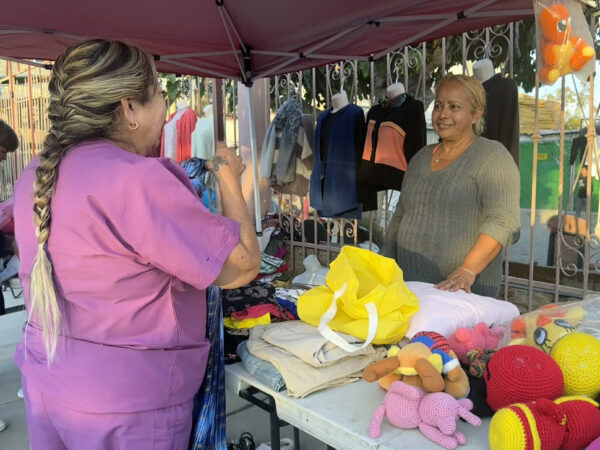
Her son is going to high school, and sometimes works with a handyman. She sells donated used clothing in front of the shelter and cleans houses, but work is sporadic.
“I tell my son we should go back,” Carolina said. “He says he came here for a future.”
Her mother calls and tells her she doesn’t have food, she said. She trusts that God has a plan and things will work out accordingly — even if it means returning home to struggle there — but there must be a point to her journey.
“You go hungry, you grow tired, it’s raining, you see corpses. You spend sleepless nights, running from people who want to rob you, kill you,” she said.
“Do you know what it’s like to go through what I went through and not be able to cross?”
President Donald Trump during a July tour of “Alligator Alcatraz,” a migrant detention facility at Dade-Collier Training and Transition facility in Ochopee, Fla.
No turning back
Many immigrants who are still in shelters, and those who have decided to remain in Mexico, are in a state of flux, waiting for the opportunity to cross the border.
Trump may have succeeded in curtailing illegal immigration through a mix of enforcement, deterrence, and cruelty, but it is unsustainable. While he may be able to delay the inevitable — especially if he manages to crash the economy and there are fewer jobs for immigrants to fill — eventually, people will return.
“Listening to people’s stories, we’re really at a critical moment,” said Alejandra Corona, who heads Jesuit Refugee Services in Juárez, a nonprofit that serves the migrant community. “The world is broken, and there are no options.”
You see it in the eyes of parents who are deeply wounded because they cannot provide for their families even in the most basic ways, Corona told me, and the reasons why are far from simple.
“It’s not just, ‘Oh, I lost my job,’” she said. “It’s, ‘I had a job, but couldn’t afford to pay off the gang member or the cartel. I stopped paying for protection and had to flee. I was discriminated against, I’ve never had a passport, I’ve never been to school, I’ve never had access to my rights. I do not exist, and no one wants to see that I don’t exist.’”
The lesson to be drawn from the border today is that immigrants may not be as visible, but they haven’t gone away.
If Democrats capture the presidency in 2028, they will likely not follow the Trump administration’s amoral ruthlessness, but they cannot repeat the Biden administration’s aimless permissiveness, either.
Everyone suffers under the current seesaw approach to immigration, where an immigrant can come here “the right way” under one administration, only to see things turn out wrong under the next. Trump has tried — successfully and unsuccessfully — to kill programs for immigrants established under Presidents George H.W. Bush, Barack Obama, and Biden.
Whether or not you support immigration, the whims of an individual — even if it’s the president — are no substitute for the legislative process.
The United States is a nation of immigrants. America has thrived economically and culturally thanks to this fact. On immigration, it’s Congress, as representatives of the people, who must determine the who and how, the when and where, that makes the most sense for the country.
Until then, immigrants will be ready and waiting — and prayingfor a softer heart in the White House.
After surrendering 281 yards on the ground last week in a boo-filled Black Friday loss to the Chicago Bears, the Eagles’ defensive line was always going to be under the microscope.
That microscope lens will be zoomed in even further with Thursday’s news that star defensive tackle Jalen Carter will miss Monday’s game against the Los Angeles Chargers (8:15 p.m., ESPN) after undergoing a procedure on both of his shoulders.
The injury, which first popped up in training camp, is the latest setback in what has been a stop-start season for the third-year defensive tackle who many expected to ascend among the league’s best defensive players.
How will the Eagles cope without Carter in the middle of their defense? A lot of that responsibility will fall upon Jordan Davis, Moro Ojomo, and Byron Young. It could also mean a role for rookie Ty Robinson, a fourth-round pick out of Nebraska.
But Ojomo believes whoever is out there will be up to the challenge and that the Eagles will bounce back.
“As a defense, we just have to have accountability,” he said. “Everybody look themselves in the mirror and realize, ‘OK, we have to be more accountable. I’m not going to mess up here, take this chance here,’ and get back to the defense we know we can play.”
The World Cup draw will take place on Friday at the Kennedy Center in Washington.
The 2026 World Cup in the United States is still seven months away but things will ramp up and get real on Friday with the World Cup draw when the United States and the 41 other already-qualified teams will learn their fates.
Here’s a reminder of how things will work from the Kennedy Center in Washington (11:30 a.m., FOX). And on Saturday, we’ll find out which teams are bound for Philadelphia.
Ahead of the draw, some other major topics surrounding the tournament, including video review and weather, were addressed on Thursday.
What we’re …
⏱️ Waiting on: What’s taking Penn State so long to hire a coach?
🔍 Investigating: Sports gambling has made its way to the WNBA. But that’s brought unexpected consequences for players.
🦉 Excited about: Temple’s recruiting class. K.C. Keeler has the Owls trending in the right direction and might have a “hidden gem” in Roman Catholic wide receiver Ash Roberts.
Eagles quarterback Jalen Hurts is running less. Should the Eagles dial up more such plays?
With the Eagles offense in a season-long funk, many armchair offensive coordinators have called for more designed runs for Jalen Hurts to try and open up the passing game.
But the designed run is approaching extinction in the Eagles playbook, as Hurts is averaging just over one designed run per game, down from 3.6 a year ago. So why is Hurts running less? And could things change over the final five games of the season? Olivia Reiner takes a look at the dilemma facing the Eagles and how much they utilize their quarterback’s legs.
The Flyers have been playing well but not everyone is happy about it.
The Flyers are 15-8-3 and playing some of the best hockey this city has seen in five years.
But not everyone is happy, particularly when it comes to new head coach Rick Tocchet, if you take a gander at Flyers Twitter. Why? Many fans aren’t enthused by Tocchet’s style of play or the way he’s deployed Matvei Michkov thus far. Gustav Elvin writes that Flyers fans’ hate is misguided and that they should just enjoy having a competitive team again — for however long it lasts.
Speaking of Michkov, the Russian winger spoke on Thursday about his recent improvements and acknowledged his offseason training could have been better.
Lastly, the Flyers will be hoping for good news on Cam York, who is listed as day-to-day with an upper-body injury after leaving Wednesday’s game early.
Sixers forward Kelly Oubre Jr., has missed nine games with a ligament sprain in his left knee.
Kelly Oubre Jr. entered the final season of his two-year, $16.3 million deal with a lot on the line. An 11-year veteran who revamped his career in Philly, Oubre was staring down one of his last opportunities at a big payday. He started out the season like a player the Sixers would have a hard time keeping this summer, averaging 16.8 points and 5.1 rebounds and providing stability for a team that has struggled with injuries.
But a ligament sprain in his left knee brought that to a halt, and Oubre has been out for nine straight games. Oubre, who is progressing well and will be re-evaluated soon, said it’s been tough on the sidelines.
”It [stinks],” Oubre said. “Listen, man, I’m trying to stay above water, keep my head about it. Trying to fight the depression and all that stuff that comes with not being able to do your job and fulfill your purpose. So it’s a different challenge, and I’m up for the challenge.”
Our best sports 📸 of the week
Philadelphia Eagles head coach Nick Sirianni reacts as he walks off the field after the loss to the Chicago Bears at Lincoln Financial Field in Philadelphia on Friday, Nov. 28, 2025. Eagles lose 24-15.
Each Friday, Inquirer photo editors will pick our best shots from the last seven days and share them with you, our readers. This week, photos include some Eagles disappointment, more happy times for the Flyers, and a Joel Embiid sighting. Click here for the full slideshow.
Free agent Kyle Schwarber has hit 187 home runs in four seasons with the Phillies.
Hopefully, we’re just waiting for the two sides to split the difference. Five years and $125 million would be a steep price to pay to lock up the designated hitter position through Schwarber’s age-37 season. But then, Schwarber will be bigger than a 37-year-old designated hitter when that time comes. He will be one of the defining players of an era, one of the franchise’s all-time greats, a fixture in the community, and a potential Hall of Famer. He may have passed [Ryan] Howard for second on the franchise home run list. He may be closing in on 500 for his career.
Can the Phillies afford to sign Schwarber?
The better question is whether they can afford not to.
We asked: What change are you hoping to see in Monday’s Eagles-Chargers matchup? Among your responses:
What I hope to see this Monday night is AJ Brown and Jalen Hurts on the sideline between series reading “The Subtle Art of Not Giving a [Dam].” Despite its title, the book does not encourage being apathetic and selfish, but rather stresses creating joy in the moment for yourself and your teammates, by embracing life’s struggles and finding meaning in adversity rather than mindless positivity. —Stephen T.
Like to use Tank Bigsby to spell Saquon unless he is having a great night. More run plays in general including Jalen. More plays over the middle using tight ends or receivers. Not sure why the Eagles aren’t using them. – Bill M.
For Monday night in Inglewood and for the rest of the season I want to see the offense, the defense, the quarterback, and the coaches perform like the Super Bowl Champions they are supposed to be.
And please remember to use Goedert in the offense and ditch the Tush-Push.-Everett S.
We compiled today’s newsletter using reporting from Jeff Neiburg, Jonathan Tannenwald, Olivia Reiner, Jackie Spiegel, Gustav Elvin, Keith Pompey, Christian Red, Devin Jackson, Joe Santoliquito, Matt Breen, David Murphy, Owen Hewitt, and Inquirer Staff Photographers.
By submitting your written, visual, and/or audio contributions, you agree to The Inquirer’s Terms of Use, including the grant of rights in Section 10.
That closes out Sports Daily for the week. Have a good weekend, Philly. — Gus
Right now, any Philadelphian 21 or older can go online or walk into a regional smoke shop and buy a THC-infused drink as potent as products in legal dispensaries.
But soon, that might all change.
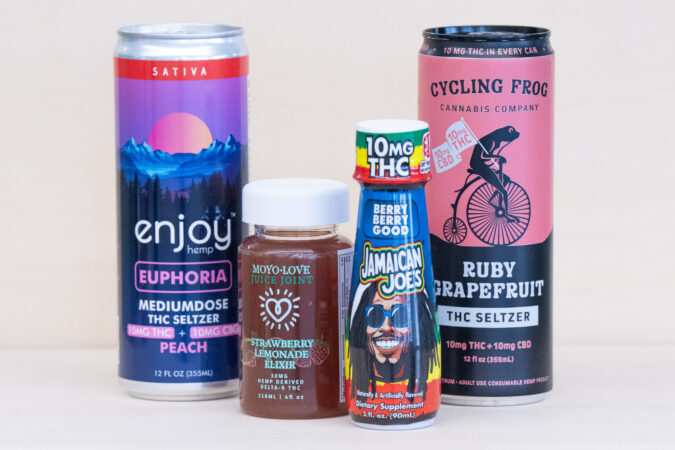
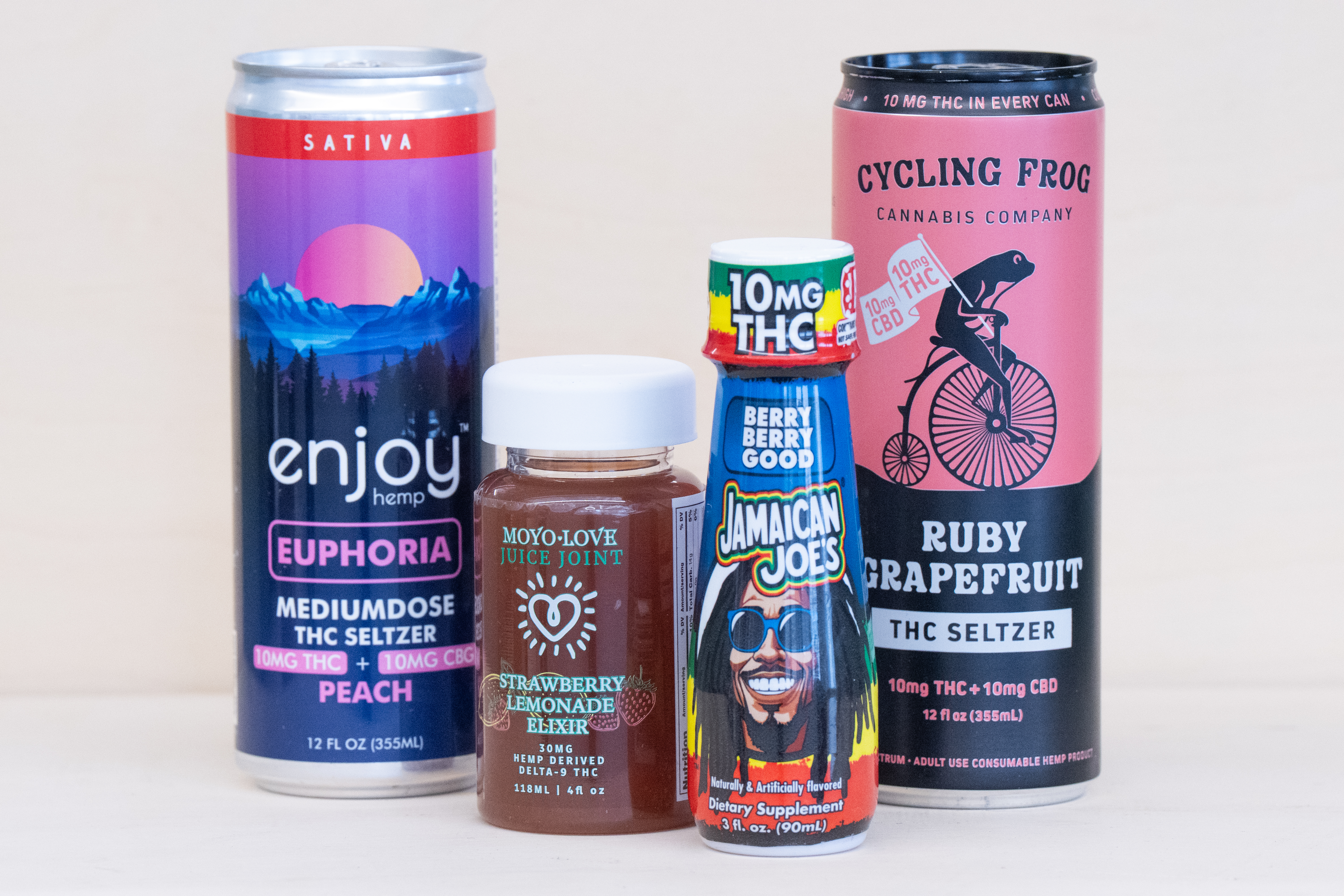
The billion-dollar intoxicating beverage industry exploded in recent years, with THC-infused seltzers, lemonades, and teas that resemble popular products like Surfsides or White Claws. Sold in local gas stations, smoke shops, and liquor stores outside of Pennsylvania, these weed drinks deliver a cannabis high that is infused into bubbly, sweet canned beverages.
While marijuana is still federally illegal, the hemp industry had found a way to manufacture and sell hemp-derived THC drinks across the country through a legal loophole that is soon closing.
Last month, Congress banned all intoxicating hemp products, a slew of THC-infused smokeable, vape-able, and edible products that are derived from hemp plants but could be mistaken for actual marijuana. In many cases, the drinks are just as potent as conventional weed.
Starting in 2027, almost all of them will be illegal, spurring a nationwide movement within the industry to save the burgeoning market.
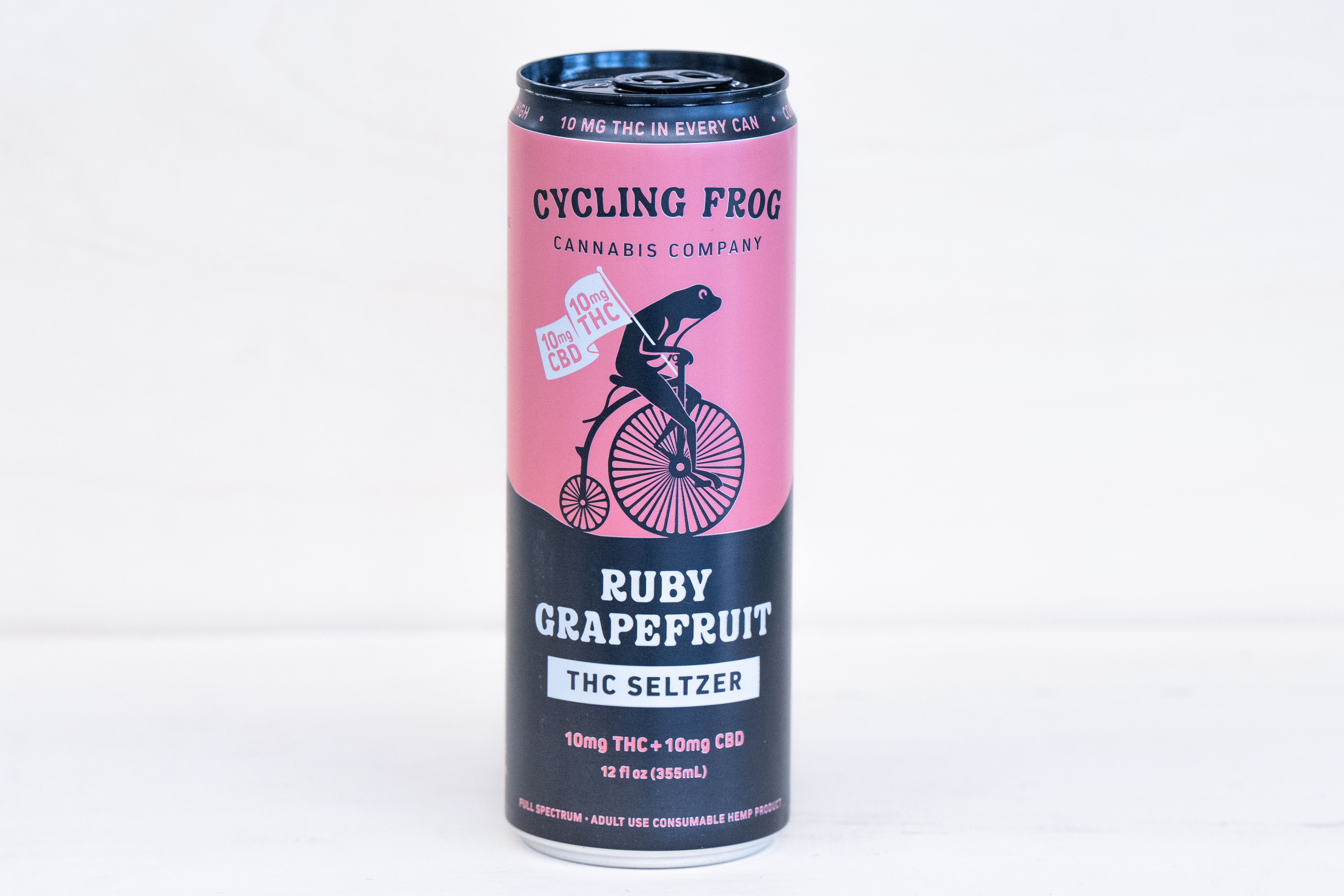
Arthur Massolo, the vice president of national THC beverage brand Cycling Frog, which sells its wares locally, saidthese restrictions will have devastating effects on the producers of thousands of hemp-derived products, like THC, but also CBD, the non-intoxicating cannabinoid popular for treating anxiety, sleep, and pain.
Will Angelos, whose Ardmore smoke shop and wellness store, Free Will Collective, relies on THC drinks for nearly 40% of its business, is hoping for some saving grace. “We’re either looking to pivot or we’re disappearing,” he said.
Adults share Cycling Frog canned THC drinks in this marketing photo provided by Cycling Frog.
What are THC-infused drinks?
Seltzers, sodas, teas, mocktails, and lemonades all infused with THC — and sometimes non-intoxicating CBD — exploded onto the scene a few years ago and grew into a billion-dollar business, said hemp market analyst Beau Whitney.
“These drinks have transformed the hemp industry into this low-dose intoxicating health and wellness, alcohol-adjacent product,” said Massolo, who is also the president of U.S. Hemp Roundtable, a hemp business advocacy organization.
The THC-infused drinks sold in gas stations, smoke shops, and liquor stores are supposedly formulated using legally grown hemp, which is allowed to be grown under the 2018 Farm Bill that opened the door to hemp farming in the U.S.
Lawmakers carved out an exemption from federal drug laws for cannabis plants containing 0.3% or less of THC. These low-THC plants are considered “hemp” and are legal to grow. Cannabis plants over that THC threshold are considered marijuana and can carry felony charges if the plant is not being grown by state-licensed growers in places where adult use or medicinal marijuana is legal, like New Jersey and Pennsylvania.
While intoxicating hemp products have enjoyed consistent growth in the past years, these THC-infused drinks have increasingly appeared in aisles of liquor stores and supermarkets in some states, allowing adults who normally don’t visit dispensaries to pick up a bottle of infused wine in the same place they grab groceries, said New Jersey cannabis lawyer Steve Schain.
Hemp products photographed at the Philadelphia Inquirer, November 21, 2025.
The ease of access to THC drinks allowed the national market to grow to $1.3 billion in annual sales, and if access continues, Whitney said, that figure could reach $15 billion in the coming years.
This is all thanks to what Whitney calls the “FPS,” or “Female Power Shopper.” These women, ages 29 to 45, are the ones who are likely shopping for a household in grocery and liquor stores, and may jump at the chance to try cannabis products without diving headfirst into dispensaries, Whitney said.
Mary Ellen, 55, of Bucks County, who asked to not to be identified by her last name over concerns for her cannabis use and employment, said these THC drinks are the perfect way to unwind after a long day, especially for adults like her who choose not to drink alcohol. As a medical marijuana patient, she uses regulated cannabis for a variety of ailments, but also enjoys THC drinks like Nowadays’ infused mocktails that she buys at Angelos’ Ardmore store.
“I’d rather come home and have a glass of Nowadays. That’s a lot better than having a glass of vodka or a benzodiazepine,” she said. “I’m not going to forget what I did the night before, and I’m not going to wake up feeling crappy the next morning.”
City smoke shop exterior in the 1000 block of Chestnut Street Monday, July 21, 2025.
What are the concerns over THC drinks?
As the money started to roll in for THC drinks, fear among local communities and law enforcement began to grow. In the Philadelphia suburbs, the Bucks, Chester, and Montgomery County district attorneys’ offices finished a 10-month investigation into intoxicating hemp products and the local stores that sell them.
The 107-page grand jury report speaks of a public health crisis unfolding in “plain sight” across Pennsylvania, where retailers have little to no oversight, in some cases selling actual marijuana.
Montgomery County District Attorney Kevin Steele said the industry created a “Wild West situation” and urged state lawmakers to regulate the industry similarly to alcohol and tobacco, including age requirements, licensing, and mandatory lab testing.
Stakeholders in the industry support regulation of some kind. While hemp-derived THC companies fear the economic collapse of their industry, Massolo and Angelos say there is concern that these products will leave overt brick-and-mortar operations known by local officials for more covert, illicit operations, similar to how these products were purchased before the 2018 Farm Bill.
“We’ve basically traveled back to 10 seconds before the Farm Bill of 2018 was signed,” Schain said.
Mary Ellen says the lack of regulation is a major sticking point for consumers who flock to these products, but would like some reassurance on the drinks they are ingesting.
But, even if the ban goes into effect, she said, “people will just figure out another way for us to get it. It’ll be like a prohibition that we’ve seen in this country with alcohol and marijuana.”
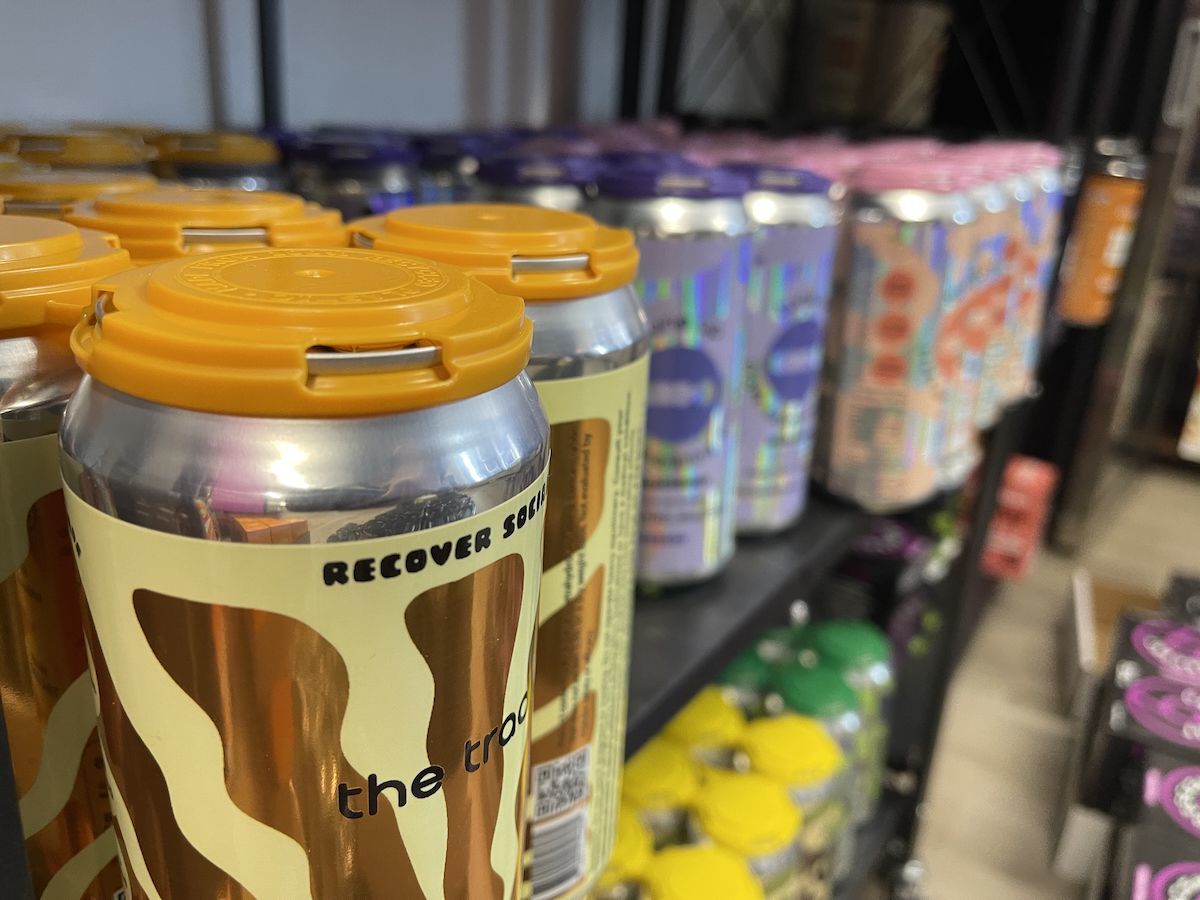
THC and CBD-infused beverages on the shelves of Free Will Collective, an Ardmore smoke shop and wellness store owned by Will Angelos. As Congress moves to ban most intoxicating hemp products, business owners like Angelos aren’t sure they will be able to keep the doors open long past 2027 if current regulations go into effect.
Will THC-infused drinks be banned or saved by 2027?
Now, as the industry’s yearlong grace period begins before the ban takes effect, companies are scrambling.
The intoxicating hemp manufacturers and retailers who spoke to The Inquirer said the game plan is to offload all of the intoxicating hemp products in stock, including THC-infused drinks, flower, vapes, and even CBD products.
Some companies will see almost their entire product catalog become illegal, in some cases dwindling from 45 products on offer down to two, Whitney said of the firms he works with. The far-reaching impact will also hurt industrial hemp products, cannabis tourism, alcohol distributors, and even the legal cannabis industry, as some of their products, including CBD, will now have to contend with these new regulations, Schain and Whitney said.
At the U.S. Hemp Roundtable, Massolo is having daily board meetings, including on weekends, to coordinate a response to federal lawmakers. It’s now a race against the clock to remedy or claw back some of the new regulations before damage is done to the industry’s distribution pipelines, Massolo said. The group hopes to rally other industries, like traditional beverages, wellness products, and supplements, to bolster its case.
Among the U.S. Hemp Roundtable’s recommendations to lawmakers are an extension of the hemp ban grace period to two years, raising the limit on hemp-derived THC products, and allowing states to regulate these products as they see fit, to name a few.
Stakeholders say they want regulations to help legitimize this billion-dollar endeavor and save it from annihilation, but smaller operators like Angelos hope it’s not at the expense of small independent businesses.
While precautions like rigorous age verification systems and lab testing are necessary, Angelos said, if regulators “overtax, or over gate-keep,” many of the smaller retailers — who he said enjoy the benefit of knowing their local government officials and community — won’t be able to compete in the market.
“There obviously has to be standards, but I’m scared of an overcorrection,” Angelos said of the hemp ban. “It’s not just a singular choice. If you want your kids to be safe, have a mechanism where you can keep your eyes on the product.”
A second woman is accusingPhiladelphia doctor John Smyth Michel, the medical director and owner of Excel Medical Center, of sexual abuse. She said Michel touched her inappropriately when she worked for him several years ago, according to a recent court filing by the Philadelphia District Attorney’s Office.
Prosecutors charged Michel with felony rape and sexual assault earlier this yearafter a female patient said he raped her during an October 2024 office visit.
Michel, 55,of Jenkintown, told police and state medical licensing authorities that he had sex with the 39-year-old patient, but he claimed it was consensual, criminal and state licensing records show.
The new accusations involve a former female employee who worked for Michel as a medical assistant from 2015 to 2019 at his East Mount Airy office on Stenton Avenue and at another location in Germantown on Chelten Avenue.
She recently told law enforcement authorities that beginning in 2018 Michel touched her breasts over her clothing on multiple occasions while she was working in the office. He additionally groped her vagina over her clothing before she quit in 2019.
The accusations have not resulted in new charges at this time, but the investigation remains ongoing, according to Marisa Palmer, a spokesperson for the DA’s office.
Prosecutors are seeking to introduce the groping accusations as evidence to bolster its sexual assault case against Michel, given there were no witnesses to the alleged rape.
“The incidents reveal a common plan, scheme or design on the part of the defendant to engage in unlawful and similar nonconsensual sexual conduct with vulnerable women in his medical offices,” Assistant District Attorney Eamon Kenny wrote in a Nov. 24 court motion.
The judge presiding over the criminal case must decide whether to grant Kenny’s motion and put the 34-year-old former employee’s accusations before jurors at trial.
The Inquirer does not identify alleged victims of sexual assaultwithout their permission.
Michel did not return phone calls and emails from The Inquirer this week. His criminal defense lawyer, Andrew Gay Jr., declined to comment Wednesday.
Michel founded Excel Medical Center, whichgrew to more than a dozen medical clinics located throughout the city, with about 20,000 patients and 200 employees.
Last month, Excel’s general manager wrote a letter to patients informing them the practice “will be ceasing operations” as of Dec. 1. “We truly value the trust you have placed in us for your care,” the manager stated in the Nov. 11 letter obtained by The Inquirer.
A woman who answered the phone at Excel’s main location in West Mount Airy on Thursday said the practice was not taking any new patients in preparation of closing. She said the practice might resume operations and accept new patients after the new year. Michel’s lawyer declined to comment when asked about the practice’s status.
The criminal case, which is pending in Common Pleas Court, involves a then-38-year-old patient.
According to police and court records, she accused Michel of kissing her during a May 2024 exam at his East Mount Airy location.
She told him “no,” left the office, and did not report the kissing incident.
About five months later, she went to an appointment at Michel’s North Philadelphia office on West Diamond Street. During the Oct. 14, 2024, visit, she says Michel raped her with such force that her head banged twice against the exam room wall.
The exterior of Excel Medical Center at 2124 Diamond Street in Philadelphia.
In early November 2024, she told her husband what had happened and subsequently filed a police report. Michel was arrested and charged about three months later.
Michel’s trial was initially slated for Dec. 9, but during a hearing on Monday, a judge postponed it until Feb. 17 after the DA’s office asked for more time to investigate, court records show.
Michel’s suspension nears end
In June, the State Board of Osteopathic Medicine, which regulates and oversees licensure of osteopathic doctors like Michel, disciplined him for having sex with a patient — a violation of state regulations.
He apologized to the board in a letter, saying, “I fully acknowledge that I crossed a professional boundary” and is “profoundly contrite.”
The board suspended his medical license for six months, followed by 18 months of supervised probation, and fined him $4,000. Michel’s suspension is set to end on Dec. 11.
If convicted in the criminal case, Michel could permanently lose his medical license.
In an e-mailed statement on Thursday, the Pennsylvania Department of State, which oversees professional licensing boards, said its prosecution division “continues to closely monitor Dr. Michel’s criminal charges and review his compliance with the terms of the consent agreement.”
Abuse in office hallways
The accusations outlined in Kenny’s motion include new details of sexual misconduct. The former employee said Michel approached her from behind to “grab her breast over her shirt.”
She was stunned and “hated the feeling,” but she feared losing her job so she didn’t say anything to him.
Once, he simultaneously “cupped” her breast and vagina over her clothes with his hands. She turned around and screamed at him to stop touching her, according to the motion. He replied, “`You know you want it and you know you like it,’” she recounted.
She said she couldn’t quit because she needed the income and told her co-workers about the abuse. Those colleagues helped her “avoid him” while at work. She also told her husband, though she persuaded him not to confront Michel.
She resigned in 2019 after landing a new job. They had no contact until this year when he texted her.
When she asked why he wanted to talk to her after so much time had passed, Michel texted nevermind, the former medical assistant told prosecutors. She then wrote back, “explaining how she felt about his abuse all these years later, that the thoughts of it still traumatized her.”
Inquirer staff writer Chris Palmer contributed to this article.
In March of 2013, La Salle pulled off the improbable. The Explorers hadn’t been to the NCAA Tournament since 1992. They hadn’t advanced past the Round of 64 since 1990.
But here they were, on a chilly night in Kansas City, edging out Kansas State, 63-61, to earn a spot in the Round of 32.
As players danced in the middle of the locker room, with the music blaring, an unlikely figure emerged.
Donning a black suit with a blue dress shirt, the visitor walked through the chaos, straight to La Salle’s head coach, John Giannini.
It was Jay Wright.
His team had a game in a few hours, against North Carolina, but the Villanova head coach wanted to congratulate his dear friend.
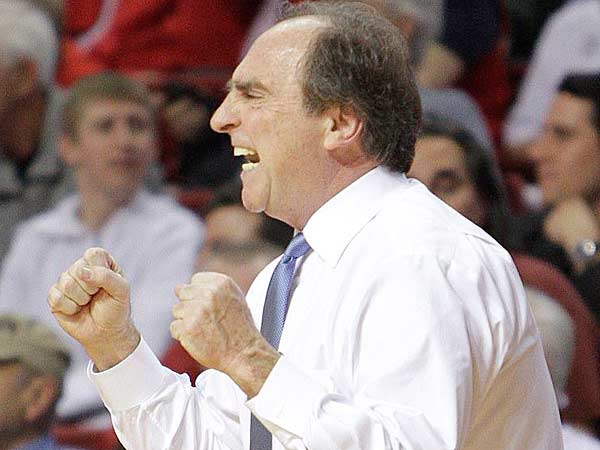
Former La Salle head coach John Giannini during a game against Butler on Jan. 23, 2013.
“Once we got to the tournament, we were always rooting for each other,” Wright said of the Big 5 programs. “It was always about Philadelphia basketball.”
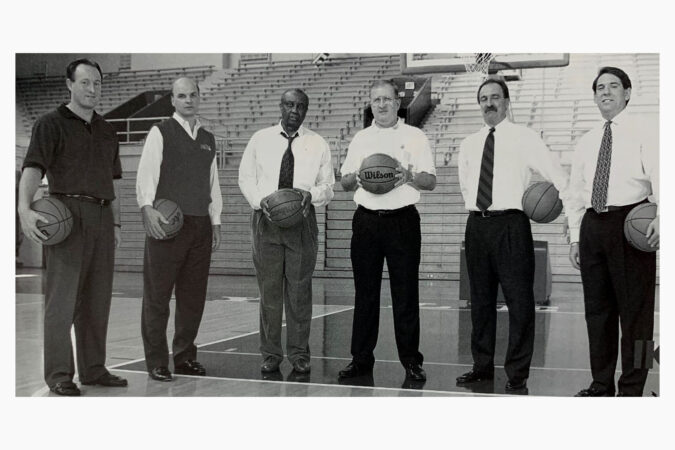
This was the way he and his Big 5 counterparts had been taught. When Wright was an assistant at Villanova in the late 1980s and early 1990s, he watched as head coach Rollie Massimino battled with Temple’s John Chaney.
The games were intense, and often heated, but they always showed each other respect. Sometimes, Big 5 coaches would go to dinner afterwards. It wasn’t uncommon for them to get together during the offseason.
The coaches would celebrate each other’s wins, even though they were technically competitors. Every time Wright advanced in the NCAA Tournament, he’d get a call from Chaney.
When Martelli reached the Elite Eight in 2004, he heard from Wright and longtime La Salle coach Speedy Morris.
The men who preceded them practiced the same habits, from Temple’s Harry Litwack, to Villanova’s Al Severance, to St. Joseph’s Dr. Jack Ramsay.
“The initial [Big 5] group was so together, and so tight, that when the rest of us joined, it was just the way it was done,” said Fran Dunphy, who spent a combined 33 seasons at the helm of Penn, Temple, and La Salle. “The culture was already set.”
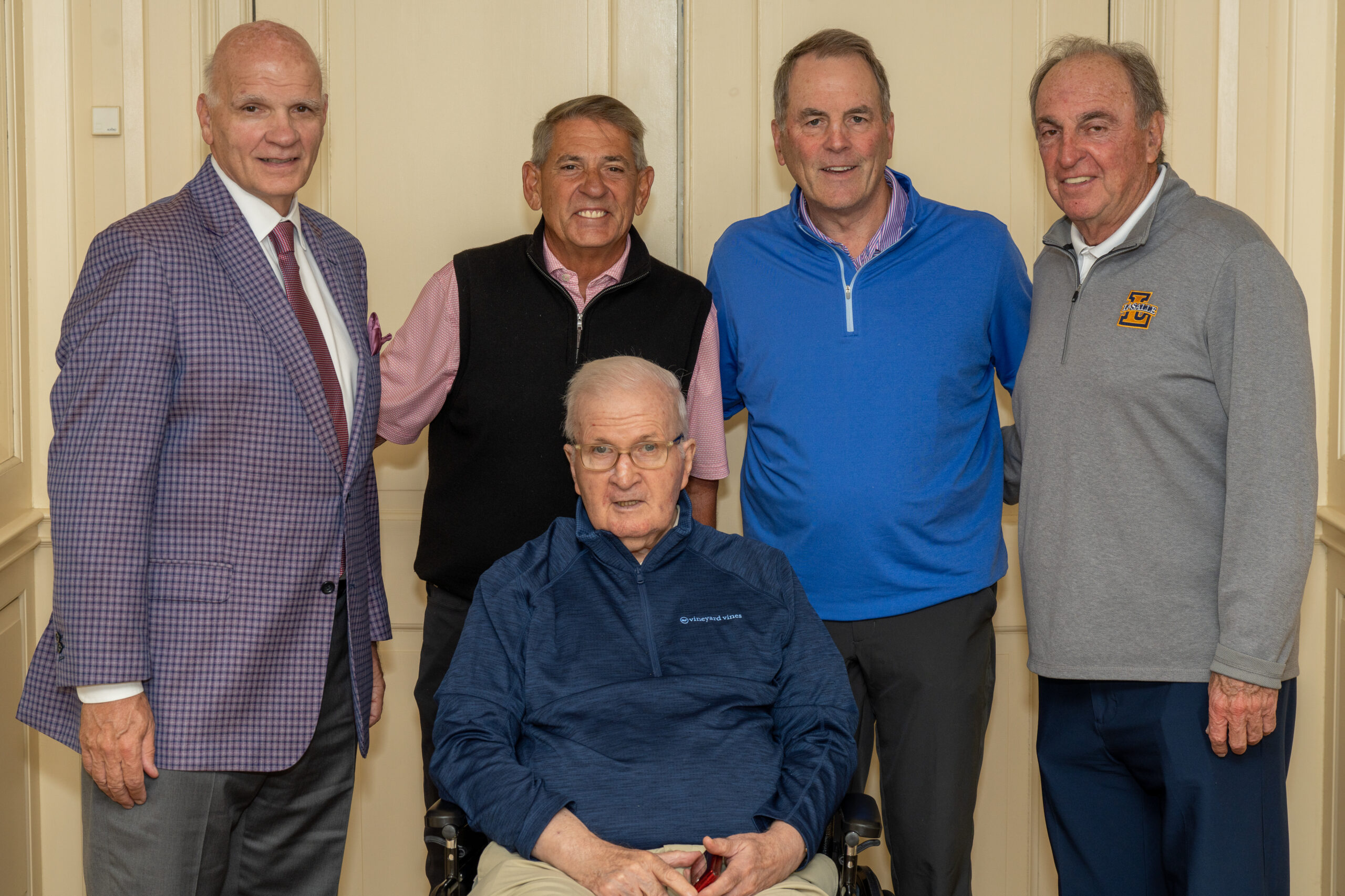
Former Big 5 coaches Phil Martelli, Steve Lappas, John Griffin, Speedy Morris, and Fran Dunphy.
For former Big 5 coaches in the area, that culture is still intact. Martelli, Dunphy, and Wright remain good friends. They visit with Morris, and are in regular contact with other former colleagues, like Giannini, Steve Lappas, and John Griffin.
The coaches believe this brotherhood is unique to Philadelphia, a city rich with basketball lore.
“On the court, you wanted to kill each other,” Wright said, “and off the court you were like brothers.”
A ‘different’ kind of bond
Dunphy was born and raised in Drexel Hill, only a few years before the founding of the Big 5 in 1955.
Back then, it was an association of five Division I schools: Villanova, Penn, St. Joe’s, Temple, and La Salle (Drexel was added in 2023).
The future coach rooted for them all, without prejudice. He’d often spend his Wednesdays, Fridays, and Saturdays at the Palestra, watching Big 5 teams square off.
“There were three nights of doubleheaders,” Dunphy said. “It was an amazing experience.”
When he was hired as the head coach of Penn in 1989, Dunphy felt a deep sense of pride. He also felt respect for his peers, many of whom had toiled through the same high school and assistant coaching ranks.
Their connections went far back. In 1976, when Wright was in the ninth grade, he attended a basketball camp in the Poconos. His camp counselor was a young Martelli.
A few years later, Martelli coached his first high school game for Bishop Kenrick in Norristown, which closed in 2010. His opponent was Dunphy, who was leading Malvern Prep at the time.
Morris and Chaney were introduced during their tenures at Roman Catholic and Simon Gratz in the late 1960s and 1970s. Lappas was an assistant at Villanova when Martelli assisted at St. Joe’s in the 1980s.
All of this only fortified the “brotherhood.”
Fran Dunphy spent a combined 33 seasons at the helm of Penn, Temple, and La Salle.
“It was different than going to an ACC school or a Big Ten school or whatever the major conferences are,” Dunphy said. “Let’s say we went to Orlando for an AAU tournament. There might be three or four of us sitting together as Philly coaches, because that’s what we did. And we might be recruiting the same guy.
“And there would be coaches from other leagues, and they’d say, ‘What are you guys doing?’ Well, that was just the way it was.”
Added Martelli: “You never said, ‘I’m going to talk bad about this guy or that guy, just so we can get a recruit.’ Because you knew [the other coaches] weren’t doing it. So we were not going to do it.
“People from the outside marveled at it. They’d say, ‘Seriously, this is what you guys do?’ And I’m like, ‘Yeah.’”
Despite this unspoken pact, the coaches were not thrilled when a Big 5 rival would scoop up a promising player. Martelli, for example, was very frustrated when Dunphy earned local star Lavoy Allen’s commitment in late 2006.
“I would say that in a complimentary way,” Martelli said. “I was like, ‘I can’t believe we didn’t get him. And to make matters worse, Temple got him. We’ve got to deal with him for four years?’”
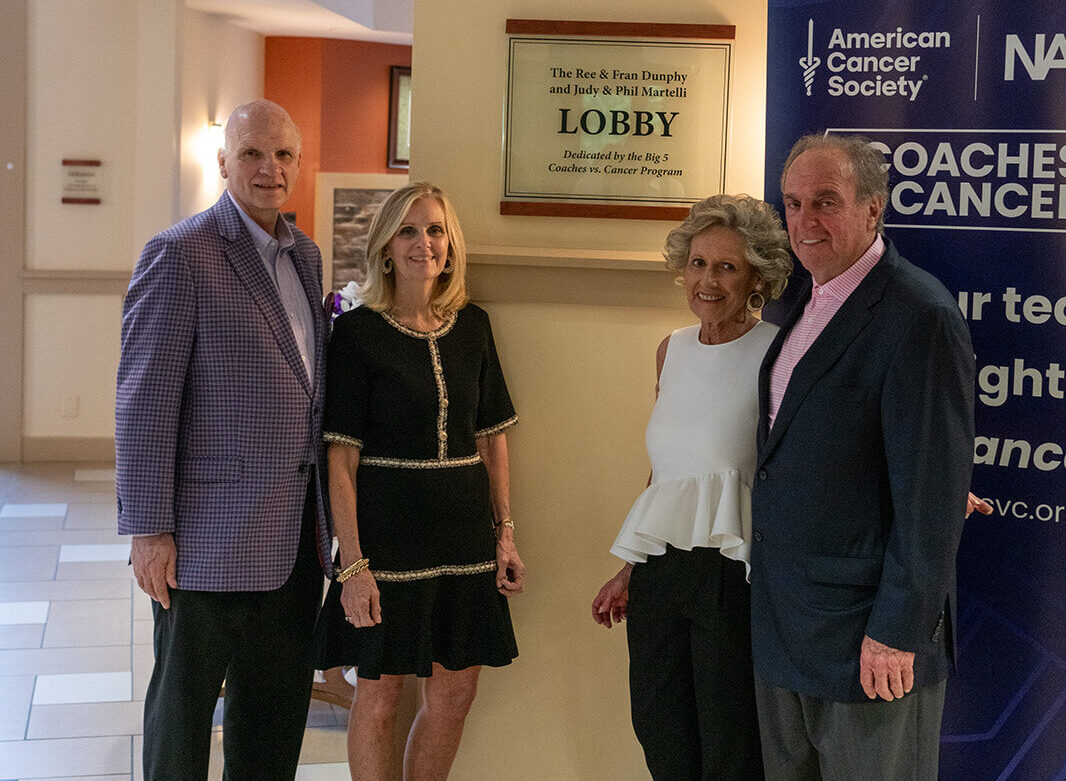
Even at the height of their competitive prowess, the coaches would band together for the betterment of the sport and the world around them. In 1996, Martelli and Dunphy started the Philadelphia chapter of Coaches Vs. Cancer, a nonprofit that raises awareness and funds for cancer research.
They looped in their fellow Big 5 coaches: Lappas, Morris, Chaney and Bill Herrion (who was at Drexel). Not long after Wright was hired as head coach of Villanova in 2001, he accompanied Martelli and Dunphy to meet the CEO of Blue Cross/Blue Shield, Fred DiBona, for lunch in Center City.
Former Big 5 coaches Phil Martelli and Fran Dunphy with their wives at a Coaches Vs. Cancer event.
The insurance company offered them $50,000, and became the group’s first corporate sponsor. That donation helped lift the chapter off the ground.
“The three of us were really competing against each other, right then,” Wright said. “And we all went together during basketball season, up to his office, and got that thing spearheaded.”
Wright, Martelli, and Dunphy are still very involved with Coaches vs. Cancer. The Philly chapter has since become the most successful in the country, raising over $22 million.
It is not the only legacy they’ve left behind. Over recurring breakfasts at Overbrook Golf Club, the coaches would talk about everything from scheduling to the format of the Big 5 round-robin.
Some of those ideas will be implemented on Saturday, in the third-annual Big 5 classic. Wright said that the triple-header format was discussed as far back as “15-20 years ago.”
He and peers wanted to put on a big event, one that didn’t cause scheduling conflicts.
“It was healthy, because we were from different leagues,” Martelli said. “Fran was in the Ivy League, I was in the Atlantic 10, and Jay was in the Big East.
“It was always for the greater good. It wasn’t about, ‘What’s best for St Joe’s? It was, ‘What’s best for college basketball?’”
‘The elder statesmen’
Wright, Dunphy, and Martelli have a reverence for Morris and the late Chaney, “the elder statesmen” of the group.
Chaney took special interest in Dunphy, who replaced him at Temple in 2006. The former head coach liked to share his thoughts after games. This was especially true if Temple had too many turnovers.
The next day, Dunphy’s phone would ring. He always knew who was calling.
“The conversation would go, ‘Franny, what the hell is going on out there?’” he recalled. “‘Why are we turning the ball over?’
“‘I know, Coach. We’re working on it. We’ve gotta get better.’”
Speedy Morris and John Chaney developed a friendship while serving as Big 5 coaches.
Like their younger counterparts, Morris and Chaney were contemporaries. They both grew up in the city; Morris in Roxborough and Chaney in North Philly.
The coaches also shared a flair for the dramatic. Neither man was above throwing his coat, or screaming at a referee, or stomping up and down the court.
They found kindred spirits in each other.
“He was tough,” Morris said of Chaney. “But I enjoyed him, very much.”
One day, in the late 1990s, the La Salle coach came up with an idea. The Temple coach was known for his expensive clothes, especially his ties. He’d often give them away as gifts.
So, Morris decided to pay it forward. He grabbed a few dozen of the ugliest 70s-era ties he could find, and asked his wife, Mimi, to wrap them up in a box. She sent it to Temple, with a note.
“It read, ‘You’ve been so kind to share some of your beautiful ties with me,’” Morris’s son, Keith, recalled. “‘I’d like to share a few of mine with you.’
“Chaney opened it up, and he was like, ‘What is this [expletive]?’”
After Chaney retired from coaching in March of 2006, he became an occasional attendee at Morris’ practices and games at St. Joe’s Prep. There was one, in particular, that stuck out in Morris’s mind.
It was 2006, and the two coaches had just paid a visit to Tom Gola, who was dealing with a health scare. They headed back to the Prep, where they’d parked their cars. As Morris said goodbye, Chaney made an impromptu announcement.
He would be coming to practice, too.
John Chaney, Speedy Morris, and Fran Dunphy.
Morris was thrilled. The high school coach asked his friend if he wanted to take the lead. Chaney insisted he didn’t. But once Morris started running a defensive drill, that quickly changed.
It was a 2-3 matchup zone, and a Prep player missed a weak-side box-out. Chaney jumped out of his chair, as if he was still at Temple.
He ran from midcourt to the paint.
“He said, ‘No!’” Morris recalled. “‘That’s not how we do it!’”
Chaney proceeded to give the student a 10-minute, expletive-laden lesson on rebounding and positioning. Keith Morris, an assistant coach at the time, nervously looked around to make sure there weren’t any Jesuit priests in the gym.
The two coaches stayed close until Chaney died in 2021. They’d talk on the phone at least once a week. They’d get lunch together in Manayunk, discussing basketball and life.
“They called each other brothers,” Keith said.
‘The caretakers’
This level of camaraderie is more challenging in today’s game. When Wright, Dunphy, and Martelli were coaching, the idea of having a player transfer from one Big 5 school to another was unfathomable.
Now, it is commonplace, with much more relaxed rules. The advent of NIL has pushed programs to generate more revenue, so they can remain competitive and pay their players. It has led to a corporate, less familial environment.
But despite these challenges, the coaches still believe that upholding the Big 5 brotherhood is worth the effort.
“Because the guys who are coaching now, they didn’t create the Big 5,” Martelli said. “They don’t own the Big 5. But they are the caretakers. And the same goes for all of us.”
Think you know your news? There’s only one way to find out. Welcome back to our weekly News Quiz — a quick way to see if your reading habits are sinking in and to put your local news knowledge to the test.
Question 1 of 10
This nearly 100-year-old pizzeria, considered Philadelphia’s oldest, closed on Sunday:
CorrectIncorrect. XX% of other readers got this question right.
The Marra family says they’re exploring a new location for Marra’s — one with better parking. The building, which the Marras bought in 1927, has been sold after being on the market for several years.
Question 2 of 10
There’s already a plan for what will replace Marra’s in its original Passyunk Ave. location. What kind of cuisine is it expected to be?
CorrectIncorrect. XX% of other readers got this question right.
EMei, arguably Philly’s most acclaimed Sichuan restaurant, is taking over the building occupied by Marra’s for the last 98 years. The East Passyunk EMei would roll out in phases, with takeout and delivery launching in February during renovations and full dine-in service targeted for summer 2026.
Subscribe to The Philadelphia Inquirer
Our reporting is directly supported by reader subscriptions. If you want more journalism like this story, please subscribe today.
This musician with Pennsylvania roots slammed the Trump administration this week for using their song without permission in a video promoting ICE.
CorrectIncorrect. XX% of other readers got this question right.
On Tuesday, Sabrina Carpenter condemned the White House for posting a video featuring ICE arresting protesters and undocumented immigrants to one of her songs. The Bucks County native replied to the post, “this video is evil and disgusting. Do not ever involve me or my music to benefit your inhumane agenda.”
Question 4 of 10
Quinta Brunson of Abbott Elementary has started a new fund in partnership with the Philadelphia School District to provide free ____ for students.
CorrectIncorrect. XX% of other readers got this question right.
Through the Quinta Brunson Field Trip Fund, district teachers and administrators will be able to apply for money for field trips by completing a short application subject to evaluation by an independent, internal group of educators. Field trip grants will be made twice a year. Brunson said she recalls her class selling hoagies to pay for field trips and that the trips played a seminal part in her Philly education.
Question 5 of 10
The Rittenhouse estate sale of the late lawyer Bill Roberts opened to the public this week. The house is said to be filled with 100,000 of this object:
CorrectIncorrect. XX% of other readers got this question right.
Roberts, a longtime lawyer at Blank Rome LLP, was a bibliophile whose interests — and library — spanned genres and eras, touching on microeconomic theory, beekeeping, botany, classical music, poetry, and much else.
story continues after advertisement
Question 6 of 10
Eagles offensive coordinator Kevin Patullo's Moorestown house was pelted with what after the Eagles' Black Friday loss to the Bears?
CorrectIncorrect. XX% of other readers got this question right.
According to the Moorestown Police Department, Patullo’s home was vandalized with multiple eggs at about 2:50 a.m. Saturday, hours after the Eagles lost. Patullo, the first-year Eagles offensive coordinator, has shouldered the brunt of the blame for the Eagles’ struggles on offense. A website calling for his firing surfaced. Fans chanted for him to be fired during the game Friday. Police are still investigating.
Question 7 of 10
Philadelphia scientists won an Ig Nobel prize for studying this flavor of breast milk:
CorrectIncorrect. XX% of other readers got this question right.
Julie Mennella was one of two scientists at Monell Chemical Senses Center to win a 2025 Ig Nobel Prize, the satirical counterpart to the Nobel Prize for her work illuminating how babies respond to garlic-flavored breast milk.
Question 8 of 10
What did N.J. Senator Cory Booker notably do over the Thanksgiving holiday weekend?
CorrectIncorrect. XX% of other readers got this question right.
After a brief engagement, New Jersey U.S. Sen. Cory Booker and real estate executive Alexis Lewis celebrated their nuptials Saturday in Washington, after a courthouse wedding last Monday.
Question 9 of 10
Punk icon Patti Smith recently told The Inquirer that she was formed by her time in Philadelphia and rural South Jersey. Where did she grow up in Philly?
CorrectIncorrect. XX% of other readers got this question right.
Smith calls Philadelphia a formative force in her life. “Culturally, it was the city that helped form me,” she said. “It was where I discovered rock and roll.” Smith grew up in Germantown with stops in Upper Darby and South Philly peppered in.
Question 10 of 10
Sixers’ Joel Embiid’s latest signature shoe has dropped. What brand is making the new sneaker?
CorrectIncorrect. XX% of other readers got this question right.
The SKX JE1 marks Skechers’ first foray into signature basketball shoes. For years, Embiid was signed to and developed signature kicks with Under Armour. Embiid entered a partnership with Skechers in 2024. “I’m excited to share it with the world,” Embiid said. The shoes will retail for $130.
Your Results
You have skipped .
You scored XX out of 10.
The average reader scored XX out of 10
Seems like you’ve been skimming more than reading there, buddy. There’s always next week.
You’ve read some articles (or made some educated guesses) but we wouldn’t come to you first for our local news recaps. Better luck next week!
Do you work here? You’re a local news stan with the latest updates on Philly happenings. Your friends definitely ask you for summaries on what’s going on and it shows.
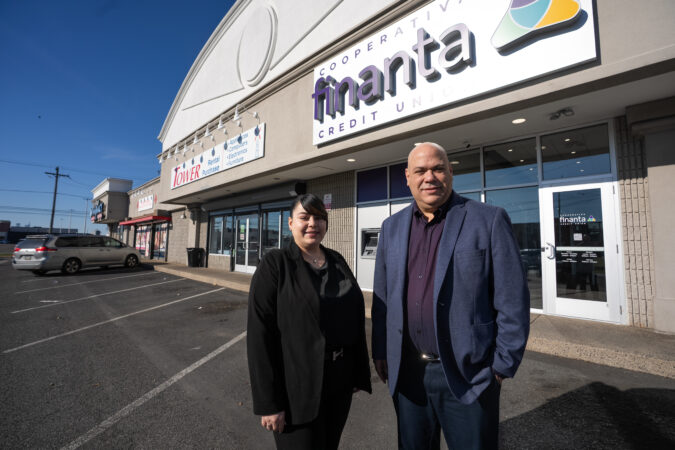
At a former restaurant in a drive-up shopping strip on the edge of Port Richmond, a bilingual credit union has joined the neighborhood.
The newest branch of federally-chartered Finanta credit union, which also calls itself Cooperativa Finanta, “is not just a banking place,” says Pedro A. Rivera II, Finanta’s board chair, president of Thaddeus Stevens College of Technology in Lancaster, and a graduate of Kensington High School.
“We are focused on people that are unbanked: small business owners and workers who go to check-cashing agencies and use money orders and sometimes predatory [high-rate private] lenders,” said Daniel Betancourt, the credit union’s president and CEO.
Finanta Federal Credit Union offers mortgages, personal and small business loans, Visa debit cards, and interest on deposits.And credit union staff help customers learn to use these products — in English and Spanish.
Branchmanager Iris Santiago signed off on one of its first home mortgages to cleaning-service co-owner Libra Rivera, on Wednesday. The credit union office at 2313 E. Venango St. officially opened Friday but began accepting deposits and booking loans earlier.
Iris Santiago, branch manager, and Bart Rivera, assistant branch manager, at Finanta Federal Credit Union, in Philadelphia.
Rivera said the concept takes him back to his North Philly youth, when he banked both the funds of the Amigos de Roberto Clemente youth track and field association and his newly minted teacher’s pay at the former Borinquen Federal Credit Union at Front and Allegheny, which shut in 2011.
“It was the size of a rowhouse. You’d go in and connect to the tellers in a space where you could catch up what was going through the community and ask questions about percent yield, about how to leverage dollars in a place that was trusted,” Rivera said.
He got that same feeling when he visited Finanta’s pilot branch in Lancaster after it opened in 2023. Rivera agreed to serve as Finanta’s chairman and went to work lining up support to speed its growth.
Now, bolstered by private foundations and a state investment, Finanta is opening what it expects to be its largest branch in Port Richmond, with others to follow in Reading, Northeast Philly, Allentown, and other communities with large English-and-Spanish-speaking populations.
The Lancaster branch signed up 2,000 members in three years. Betancourt expects as many in Philadelphia by next fall.
This growth is not yet organic. Mackenzie Scott’s Yield Giving foundation in 2023 pledged $2 million a year for seven years to help finance loans. Santander Bank and M&T Bank each invested $1 million as part of their community-banking mandates.
State House Appropriations Committee chair Jordan Harris, at the recommendation of state Rep. Jose Giral and state Sen. Tina Tartaglione, all Philadelphia Democrats, granted $4 million to build the Reading and Port Richmond branches.
The credit union made its first mortgage this summer and offers home loans up to $400,000, enough to purchase homes in many but not all Philadelphia neighborhoods.
The credit union also has made business loans to local firms like Puerto Rican bakery and restaurantEl Coqui in Kensington. El Coqui had previously borrowed from the Finanta loan fund, which Betancourt also leads.
The fund’s Philadelphia clients include developers such as HACE, projects such as Charles Lomax’s Village Square on Haverford in West Philly, and family-owned stores such as Silvia’s Bakery and Mucho Perú.
Alicia Placeres, member sales representative, working at Finanta Federal Credit Union.
A new credit union, open to everyone but anchored in the Latino communities, “is very much needed,” said Pedro Rodriguez, cofounder of Café Don Pedro coffee roasters in Brewerytown.
He’s worried about loan volume amid the Trump administration’s push to arrest and deport immigrants. “They have people scared of their shadow,” he added.
Others call the credit union a lifeline for people under pressure.
“Our immigrants are very brave. A lot of the people who come to us are pursuing mortgages, pursuing small business loans, they say what’s going on is not unusual for them, and they are persisting” in building lives here, said Will Gonzalez, head of Ceiba, a Philadelphia-based economic-development advocacy coalition.
Gonzalez has noted a drop this year — from almost one a day to less than two a month — in noncitizens filing for the first time to pay their income taxes with help from his agency, but those who have already been assigned IRS numbers have returned to file again even if their own immigration status is unresolved.
“People are paying taxes because it’s the right thing to do,” Gonzalez added. “And because they want to borrow to put their kids in college and to buy a house. To do that, they know they need to show the lenders they have paid their taxes.” It’s a sign they see their long-term future in Philadelphia.
He said the former Borinquen credit union was badly needed but was underfunded — “a little tree in a desert.” It operated from 1974 to 2011 until it was taken over by regulators and closed after suffering losses. A manager was sentenced to 7½years in federal prison for stealing from the institution and members from 2006 to 2009.
The Finanta credit union board Rivera heads, which oversees Betancourt and his growing staff, includes Mennonite Church USA moderator Elizabeth Soto Albrecht, Amalgamated Bank first vice president and 2016 Democratic National Convention CFO Jason O’Malley, and other professionals based in cities with large bilingual populations.
For all his experience overseeing institutional budgets, Rivera said he and the other directors have had to learn banking in accordance with National Credit Union Administration guidelines.
“I take my fiduciary responsibility seriously. We are now facing the regulatory expectations and demands of the banking world,” he said. “We know what is expected of us.”
Gonzalez said Finanta’s focus on Pennsylvania cities with large and growing Latino populations makes it a natural support network.
”They are helping these communities build political and economic power,” he said. “They are in the right place at the right time.”