Blog

  • Sabrina Carpenter slams Trump administration for using her music in ‘disgusting’ ICE video

    Sabrina Carpenter slams Trump administration for using her music in ‘disgusting’ ICE video

    Sabrina Carpenter’s not mincing words when it comes to the Trump administration using one of her songs in a video promoting ICE and the Department of Homeland Security.

    On Tuesday, the pop princess condemned the White House for posting a video featuring ICE arresting protesters and undocumented immigrants to one of her songs. The video, which was published on the White House’s X account one day earlier, was captioned “Have you ever tried this one?“ alongside the hearteye emoji and was paired with Carpenter’s track ”Juno.”

    It’s a nod to a scene in Carpenter’s just-wrapped “Short n’ Sweet” tour, where she would playfully “arrest” someone in the crowd “for being so hot,” giving them a souvenir pair of fuzzy pink cuffs before performing “Juno.”

    Carpenter, a Bucks County native, replied to the post, “this video is evil and disgusting. Do not ever involve me or my music to benefit your inhumane agenda.” Her response has been viewed more than 2 million times.

    It’s the latest in a series of similar incidents, where artists ranging from Beyoncé to the Rolling Stones have objected to the White House using their music in videos promoting the Trump administration’s agenda without their consent.

    Last month, Olivia Rodrigo had a similar exchange in the comments of a White House Instagram video demanding that undocumented immigrants self-deport over the singer’s track “All-American Bitch.” Rodrigo, who is Filipino American, commented at the time, “Don’t ever use my songs to promote your racist, hateful propaganda.”

    The White House also used a song by Carpenter’s friend and musical collaborator, Berks County’s Taylor Swift, last month. Fans of Swift’s called out the use of “The Fate of Ophelia” in a video celebrating President Donald Trump, despite the president’s repeated slights toward the pop star. Swift herself did not comment on the video, but she has previously criticized Trump for posting AI photos of her on his social platforms.

    Carpenter, 26, worked with HeadCount on her “Short n’ Sweet” tour, registering 35,814 voters — more than any other artist the nonpartisan voter registration group worked with in 2024. She’s been vocal about her support for LGBTQ+ rights and has publicly donated to the National Immigration Law Center.

    When Trump won last year, she took a moment during her concert to say “I’m sorry about our country and to the women here, I love you so, so, so much.”

    “Here’s a Short n’ Sweet message for Sabrina Carpenter: We won’t apologize for deporting dangerous criminal illegal murderers, rapists and pedophiles from our country,” White House spokesperson Abigail Jackson told the New York Times. “Anyone who would defend these sick monsters must be stupid, or is it slow?”

  • Gov. Phil Murphy asks the Indian government for help in bringing accused killer of Maple Shade mother and son to trial

    Gov. Phil Murphy asks the Indian government for help in bringing accused killer of Maple Shade mother and son to trial

    New Jersey Gov. Phil Murphy has asked the Indian government to extradite an accused murderer to South Jersey to face criminal charges in the death of a woman and her son in Maple Shade.

    Nazeer Hameed, 38, was charged last month with killing Sasikala Narra and her 6-year-old son, Anish, in a crime that shocked the community because of its brutality.

    Narra and her son were found stabbed to death inside their home at the Fox Meadow Apartments in March 2017. The two suffered violent stab and slice wounds to their head and hands, and Anish was nearly decapitated in the attack, prosecutors said.

    Hanumantha Rao Narra, Narra’s husband and the boy’s father, found the bodies, prosecutors said.

    Investigators said Hameed waited until the woman and child were alone in the house before attacking them. Afterward, prosecutors said, Hameed fled to his native India and has remained there ever since.

    In a letter to Vinay Kwatra, the Indian ambassador to America, Murphy said it was important that Hameed face justice.

    “This heinous crime shocked our state, and for eight years investigators pursued every available lead,” the governor said.

    “This request reflects not only the seriousness of the alleged offenses, but also the enduring spirit of cooperation between India and the United States in upholding the rule of law and combating violent crime.”

    Sasikala Narra, 38, and her son, Anish, 6, were stabbed to death inside their apartment in Maple Shade in 2017.

    In announcing the charges last month, Burlington County LaChia Bradshaw said Hameed worked at the same company as Hanumantha Rao Narra, and lived near the family in their apartment complex. For weeks before the killings, Bradshaw said, Hameed “stalked” the family and took measures to hide his movements.

    She declined to describe the potential motive for the slayings.

    Local, state, and federal investigators worked the case for nearly a decade, and ultimately connected Hameed to the crime through a single drop of blood they say he left at the crime scene.

    Last year, a sample of Hameed’s DNA was finally obtained when the company Hameed works for shipped his personal laptop to South Jersey. DNA found on the computer matched the blood found at the crime scene in 2017, according to investigators.

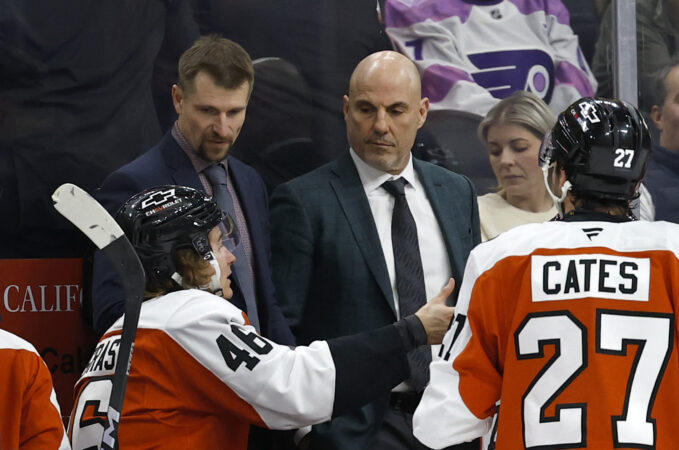
  • Rick Tocchet jumbles up his forward lines in the wake of Tyson Foerster’s injury

    Rick Tocchet jumbles up his forward lines in the wake of Tyson Foerster’s injury

    The Flyers will be without Tyson Foerster, the team’s leading goal scorer, for the next two to three months after he suffered an upper-body injury in Monday night’s loss to the Pittsburgh Penguins and was placed on injured reserve Wednesday.

    It is a major blow to a team that is averaging 2.76 goals this season, the seventh-lowest total in the NHL. But as coach Rick Tocchet said, “The poor-is-me stuff, that can’t linger in that room.”

    And with that, the bench boss whipped up some new line combinations at Wednesday’s morning skate. Tocchet likes to keep pairs together, and Trevor Zegras and Christian Dvorak are a duo that is working well. They will now have Travis Konecny on their wing. According to Natural Stat Trick, they’ve played as a line for just 97 seconds at five-on-five this season.

    The fourth line remained somewhat the same, with Rodrigo Ābols, Garnet Hathaway, and Nic Deslauriers skating together. Deslauriers, who started his career with Wednesday’s opponent, the Buffalo Sabres, last played Nov. 24 in Tampa Bay. Carl Grundström was recalled on Tuesday from Lehigh Valley of the American Hockey League, but it looks like he will be a healthy scratch against the Sabres (7:30 p.m., TNT).

    Speedy winger Owen Tippett was moved alongside Matvei Michkov and Sean Couturier. The trio has not played together this season, but did last year, skating almost 125 minutes together. With that line on the ice, the Flyers had a 52.57% Corsi For, 56.36% of the scoring chances, 60% of the high-danger chances, outshot opponents, 76-51, and outscored their opponents, 10-8.

    Not too shabby. However, there is one difference now: Tippett will be on the right wing, with Tocchet liking the speed and north-south game Michkov plays on the left.

    “The last two or three years I’ve played left more consistently, so obviously I’ve gotten more comfortable with it,” Tippett said about playing the right side. “But again, I’ve played right my whole life, and even now, there’s been some shifts or some periods where I’ve had to go back to the left. I think I’m ready for it whenever it happens.”

    And of course, the biggest move of the day involves Nikita Grebenkin, who — some would say, finally — has been moved into the top nine. He is playing with Bobby Brink and Noah Cates.

    “Tyson [has an] injury now. It’s bad for the team [because] Tyson, big guy for Flyers. It’s bad, but now I have maybe more time [and it] is good for me,” Grebenkin said. “It’s a big chance for me, and I want to help the team every time. Let’s go Flyers.”

    Acquired in the deal that sent Scott Laughton to the Toronto Maple Leafs, Grebenkin has played in 16 of the Flyers’ 25 games, mostly on the fourth line. He has one goal and three points while averaging 9 minutes, 52 seconds.

    Nikita Grebenkin, 22, will get first crack at trying to replace Tyson Foerster in the Flyers’ top nine.

    Some of the critiques from Tocchet have focused on Grebenkin’s decision-making. He wants him to be “sticky” and stay in piles. On Wednesday, Tocchet wants to see the 22-year-old make good decisions, play mind free — he’s mentioned in the past the Russian has told him he’s overthinking — and move his feet more.

    “In practice, when he has two-on-ones, he slows down, and he tries to pass the puck. So against Pittsburgh [on Monday night], he had all day to go in and fire the puck, but he waited, and he tried to make the pass, and it got picked off,” Tocchet said.

    “So we talked about it, and today his two-on-ones were outstanding. Hopefully, he can apply that in a real game. To be an NHL player, you’ve got to take that information, so hopefully he gets a two-on-one tonight and he moves his feet. I think he will because he did it today in practice.”

    Grebenkin has not officially been on a line with Brink this season, but according to Natural Stat Trick, he has skated more than 25 minutes on Cates’ wing during five-on-five action this season.

    It has worked well.

    Without Cates as his center, Grebenkin has been on the ice for seven goals against, to just his first career NHL goal, scored against the Montreal Canadiens in early November. But when they’re on the ice together, the Flyers have outshot opponents 16-7 and outscored them 2-1.

    “Obviously, a ton of skill and some speed from him. He’s been working at his game and getting a lot of good looks,” Cates said.

    “I think we can work with each other and make some good give-and-go plays or cycle plays,” said Cates, who, like Grebenkin, excels below the hash marks. “I’ll get to the net, I think that’s the biggest thing. So he makes really good plays down there, and I just have to create some space when we’re getting to the net because he’ll find me.”

    Grebenkin agrees that he’s been overthinking at times during games, but he has been working at it. He is looking forward to more minutes, helping the team excel, and wants to play better consistently.

    But Tocchet knows it takes time for players to develop.

    “He’s got to do the process. But do I feel like he’s ready for it? Yeah, I do,” Tocchet said when asked about Grebenkin being in the top nine. “I think he’s ready for it, but there’s a process to it, the way you practice, the way you take information, that’s the way it is.”

    Breakaways

    Sam Ersson (4-2-2, .859 save percentage) will start against the Sabres. He is 3-1-0 with a 1.83 goals-against average, .913 save percentage, and one shutout against the Sabres in four career games. … Defenseman Egor Zamula will play in place of Noah Juulsen. … Defenseman Rasmus Ristolainen was on the ice in a non-contact jersey for morning skate. It is the first time he has skated with the group since he suffered an elbow injury in March. He underwent surgery on a right triceps tendon rupture later that month. In 2024, Ristolainen underwent two surgeries, including a repair to a ruptured triceps tendon. According to Flyers general manager Danny Brière in April 2025, the injury was similar, although he wouldn’t confirm whether he tore the tendon again. Tocchet wouldn’t put a timeline on his return to game action but said, “It’s not a month, it’s not a week. What’s that sweet spot? I don’t know.”

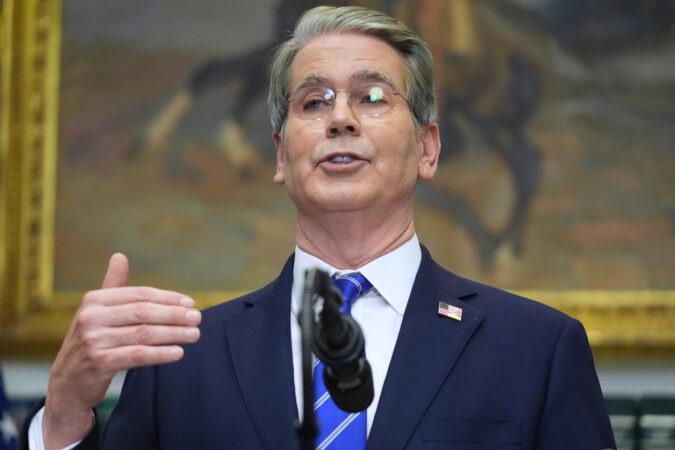
  • Bessent says Federal Reserve Board could ‘veto’ future regional presidents

    Bessent says Federal Reserve Board could ‘veto’ future regional presidents

    WASHINGTON — Treasury Secretary Scott Bessent said Wednesday he would push a new requirement that the Federal Reserve’s regional bank presidents live in their districts for at least three years before taking office, a move that could give the White House more power over the independent agency.

    In comments at the New York Times’ DealBook Summit, Bessent criticized several presidents of the Fed’s regional banks, saying that they were not from the districts that they now represent, “a disconnect from the original framing” of the Fed.

    Bessent said that three of the 12 regional presidents have ties to New York: Two previously worked at the New York Federal Reserve, while a third worked at a New York investment bank.

    “So, do they represent their district?” he asked. “I am going to start advocating, going forward, not retroactively, that regional Fed presidents must have lived in their district for at least three years.”

    Bessent added that he wasn’t sure if Congress would need to weigh in on such a change. Under current law, the Fed’s Washington, D.C.-based board can block the appointment of regional Fed presidents.

    “I believe that you would just say, unless someone’s lived in the district for three years, we’re going to veto them,” Bessent said.

    Bessent has stepped up his criticism of the Fed’s 12 regional bank presidents in recent weeks after several of them made clear in a series of speeches that they opposed cutting the Fed’s key rate at its next meeting in December. President Donald Trump has sharply criticized the Fed for not lowering its short-term interest rate more quickly. When the Fed reduces its rate it can over time lower borrowing costs for mortgages, auto loans, and credit cards.

    The prospect of the administration “vetoing” regional bank presidents would represent another effort by the White House to exert more control over the Fed, an institution that has traditionally been independent from day-to-day politics.

    The Federal Reserve seeks to keep prices in check and support hiring by setting a short-term interest rate that influences borrowing costs across the economy. It has a complicated structure that includes a seven-member board of governors based in Washington as well as 12 regional banks that cover specific districts across the United States.

    The seven governors and the president of the New York Fed vote on every interest-rate decision, while four of the remaining 11 presidents vote on a rotating basis. But all the presidents participate in meetings of the Fed’s interest-rate setting committee.

    The regional Fed presidents are appointed by boards made up of local and business community leaders.

    Three of the seven members of the Fed’s board were appointed by Trump, and the president is seeking to fire Governor Lisa Cook, which would give him a fourth seat and a majority. Yet Cook has sued to keep her job, and the Supreme Court has ruled she can stay in her seat as the court battle plays out.

    Trump is also weighing a pick to replace Chair Jerome Powell when he finishes his term in May. Trump said over the weekend that “I know who I am going to pick,” but at a Cabinet meeting Tuesday said he wouldn’t announce his choice until early next year. Kevin Hassett, a top economic adviser to Trump, is widely considered Trump’s most likely choice.

    The three regional presidents cited by Bessent are all relatively recent appointees. Lorie Logan was named president of the Dallas Fed in August 2022, after holding a senior position at the New York Fed as the manager of the Fed’s multitrillion dollar portfolio of mostly government securities. Alberto Musalem became president of the St. Louis Fed in April 2024, and from 2014-2017 was an executive vice president at the New York Fed.

    Beth Hammack was appointed president of the Cleveland Fed in August 2024, after an extended career at Goldman Sachs.

    Musalem is the only one of the three that currently votes on policy and he supported the Fed’s rate cuts in September and October. But last month he suggested that with inflation elevated, the Fed likely wouldn’t be able to cut much more.

    Logan has said she would have voted against October’s rate cut if she had a vote, while Hammack has said that the Fed’s key rate should remain high to combat inflation. Both Hammack and Logan will vote on rate decisions next year.

    Bessent argued last month in an interview on CNBC that the reason for the regional Fed banks was to bring the perspective of their districts to the Fed’s interest rate decisions and “break the New York hold” on the setting of interest rates.

    __

    Associated Press Writer Fatima Hussein contributed to this report.

  • What to know about the hepatitis B vaccine schedule debate

    What to know about the hepatitis B vaccine schedule debate

    The nation’s top vaccine advisory panel is expected to debate whether to delay the first dose of the hepatitis B shot on Thursday.

    The immunization, developed in Philadelphia and long recommended for all U.S. infants at birth, protects against a disease that can do permanent damage to the liver, and for which there is no cure.

    The shot is widely considered safe and effective, but who should receive it, and when, has come under scrutiny by President Donald Trump’s administration.

    The Advisory Committee on Immunization Practices (ACIP), an independent panel of experts reconstituted this past summer to include several vaccine skeptics, had tabled a vote on this topic in September. It is now scheduled to spend Thursday discussing the vaccine, according to a draft agenda of the group’s two-day December meeting.

    Vaccine experts and patient advocates have previously advocated against delaying the birth dose, citing concerns that unvaccinated children could be at risk of contracting the highly contagious virus.

    Here’s what to know about the vaccine.

    It’s recommended for all newborns at birth.

    Starting in 1991, the first dose of the hepatitis B vaccine has been universally recommended for all newborns within 24 hours of birth. Rates of infection among children and teens have since dropped by 99%.

    Prior to the universal birth dose recommendation, about half of infections in children were acquired from mothers infected with the virus, the Centers for Disease Control and Prevention found.

    The virus spreads through contact with blood and other body fluids.

    The virus can be transmitted from mother to baby, as well as through a variety of household sources, such as personal items like toothbrushes and razors that become contaminated with blood.

    The virus cannot be spread through casual contact such as hugging, touching, or sharing utensils, but it can be spread through open wounds.

    The disease is incurable.

    Hepatitis B is the most common chronic viral infection in the world. Over time, the disease can cause cirrhosis or severe scarring of the liver, liver failure, and liver cancer.

    Patients can take antiviral treatments to help control the virus, but there is no cure.

    The panel has previously considered delaying the birth dose until one month of age.

    ACIP previously debated delaying the first dose of the vaccine until one month of age for most babies.

    Some members had suggested the dose for newborns should instead be given only to the populations most at risk.

    The ACIP considered recommending doctors vaccinate only those newborns whose mothers test positive for the virus, and having the other babies wait a month for their first dose.

    Trump separately stated in a news conference, without citing scientific evidence, that he thinks newborns should no longer universally receive the shot and children should wait until age 12. Experts criticized Trump for incorrectly suggesting that hepatitis B is only transmitted sexually.

    Experts are concerned about a potential change to the guidelines.

    Leading medical societies and infectious-disease experts say there is no scientific evidence for changing the current guidelines.

    Experts worry that delaying the vaccine could affect its ability to prevent transmission of the virus from mother to baby. “If you wait longer than 24 hours, then the vaccine doesn’t work as well,” Chari Cohen, president of the Hepatitis B Foundation, told The Inquirer in an interview earlier this fall.

    Even if the ACIP were to recommend vaccinating only babies whose mothers have the virus, some cases could be missed. Universal testing for the virus has been recommended since the 1990s, but 15% to 16% of women still do not get tested.

    Such a policy also would not account for other exposures. Su Wang, a New Jersey physician who treats patients with hepatitis B and herself has the disease, told The Inquirer earlier this year that she likely caught hepatitis B as a child living with her grandparents. Her parents tested negative. “There are a lot of exposures that we aren’t testing for,” she said.

    The vaccine is a Philadelphia success story.

    The hepatitis B virus was first discovered by Baruch Blumberg, a scientist at Fox Chase Cancer Center, in 1967.

    He went on to win a Nobel Prize for that work, and later cocreated and developed the vaccine, which continues to be manufactured in and around the region.

    The Hepatitis B Foundation is also locally based, in Doylestown.

  • Federal judge limits warrantless immigration arrests in D.C.

    Federal judge limits warrantless immigration arrests in D.C.

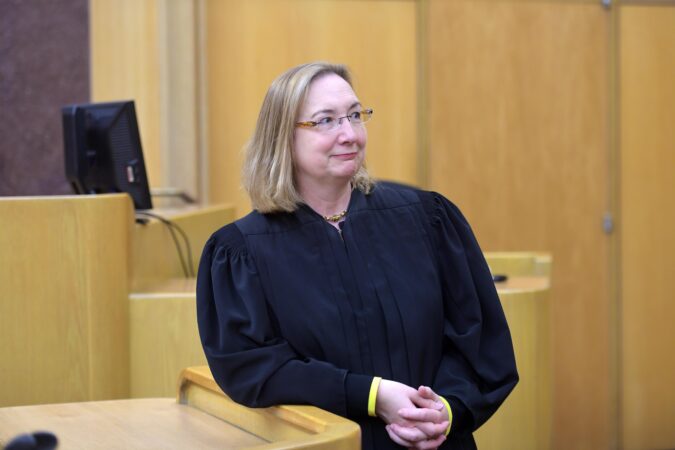
    The Trump administration’s escalating use of warrantless immigration arrests in D.C. this year probably violated federal law, a judge ruled Tuesday in a decision that prohibits such arrests for all migrants in the city except those at risk of escaping.

    U.S. District Judge Beryl A. Howell granted a preliminary injunction sought by the immigrant-rights group CASA Inc. and four migrants who were arrested without administrative warrants in August amid President Donald Trump’s law enforcement surge in the capital. All four had pending immigration applications at the time of their arrests and were eventually released after spending time in detention facilities.

    “They were arrested while going about unavoidable, lawful activities of daily life,” Howell said.

    The judge, in an 88-page opinion, took Trump administration officials to task for depriving migrants of their rights and basic necessities as they languished in cramped detention facilities before being released. She criticized immigration authorities’ “systemic failure” to follow the law and said top administration officials, including Chief Border Patrol Agent Gregory Bovino, had repeatedly misstated the legal requirements for warrantless arrests in public comments.

    Bovino and a spokesperson for the Department of Homeland Security had asserted that officers needed “reasonable suspicion” to conduct such arrests, but Howell said the legal standard was more stringent: probable cause. Homeland Security officials did not immediately respond to a request for comment Wednesday.

    Trump ordered a renewed crackdown on illegal immigration this year, and top administration officials set targets as high as 3,000 daily arrests of migrants. Attorneys for CASA and the four plaintiffs in the case argued that authorities began to work under an “arrest first, ask questions later” policy to comply with the high daily quotas — and began ignoring a section of the Immigration and Nationality Act that authorizes warrantless arrests only when a migrant “is likely to escape before a warrant can be obtained.”

    One of the plaintiffs, Jose Escobar Molina, a scaffolder from El Salvador, described in a court filing how he was picked up at 6 a.m. as he headed to work one morning by a group of plainclothes officers who shoved him into a black SUV, making him think he was being kidnapped. Another plaintiff, from Venezuela, said he showed his arresting officers his driver’s license, work permit and asylum application paperwork, which they disregarded.

    Warrantless arrests have skyrocketed since Trump’s surge began in August, Howell found. By one count, she said, officials conducted 943 immigration arrests over a month-long period that ended Sept. 9, which represented 40 percent of all D.C. arrests. The judge noted that being present in the country without legal authorization is not a criminal offense, but a civil violation. Entering the United States without legal authorization is a misdemeanor under federal law, and a felony for repeat offenders.

    “Viewing all immigrants potentially subject to removal as criminals is, as a legal matter, plain wrong,” Howell said, before quoting a Supreme Court ruling from 2012: “Perceived mistreatment of aliens in the United States may lead to harmful reciprocal treatment of American citizens abroad.”

    At a court hearing last month, an assistant U.S. attorney argued that an injunction would slow the Trump administration’s deportation efforts by allowing the court to micromanage arrests. As part of her ruling Tuesday, Howell ordered that immigration authorities document every warrantless immigration arrest in D.C. with “specific, particularized facts” establishing probable cause “that the person is likely to escape before a warrant can be obtained.”

    The Justice Department in a legal filing denied that immigration authorities had instituted a new policy of warrantless arrests and argued that the court did not have jurisdiction to rule on the case.

    “Plaintiffs identify no written policy authorizing the arrests that they complain of because there is none,” Assistant U.S. Attorney John Bardo said. Howell said approximately 40 migrants had submitted court declarations attesting to the warrantless arrests and said Bovino’s comments defending those arrests with inaccurate information proved that the policy existed.

    “This is a victory for the rule of law and for the people across the city, who have avoided going to work, to church, to school, to grocery stores — out of fear of being unlawfully arrested, detained, and deported,” said Joanne Lin, an official with the Washington Lawyer’s Committee, one of the groups representing the plaintiffs.

    The ruling describes some circumstances in which immigration agents can establish a migrant’s likelihood of escaping before a warrant may be obtained, but Howell said those factors could vary.

    “Some courts have found the likelihood of escape to be higher when, for example, the noncitizen presented ‘conflicting documents,’ ‘had been “picked up before,” ’ admitted that he had previously been removed, or appeared ‘extremely nervous’ as if ‘looking for an opportunity to run,’” the judge wrote. “Courts have also made the self-evident finding that the likelihood of escape is lower when the individual has resided in the country for a lengthy period of time and has strong community ties.”

    Aditi Shah, an attorney involved in the case from the American Civil Liberties Union of D.C., welcomed those conditions.

    “This requires the government to take some extra steps that it’s required to under the law before it can just grab people off the streets and lock them away in detention centers,” she said.

    Ama Frimpong, CASA’s legal director, said the ruling was a powerful memorial to one of the migrants who described his warrantless arrest and detention in a legal filing, using a pseudonym, Elias Doe. He died last week, Frimpong said. His health had worsened after he missed a dialysis treatment while detained, she said.

    “This is now part of his legacy,” Frimpong said. “It is important for impacted community members to lead this fight and show that they are not afraid.”

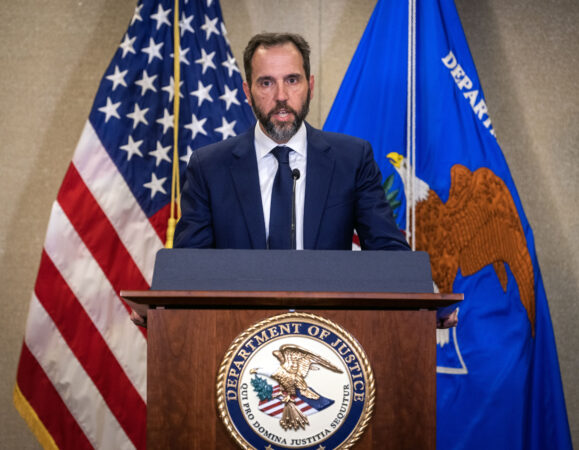
  • House Judiciary issues subpoena to force Jack Smith to testify in private

    House Judiciary issues subpoena to force Jack Smith to testify in private

    House Republicans have upped their demands for Jack Smith to testify behind closed doors, issuing a subpoena on Wednesday to the former special counsel that calls on him to meet with members of the House Judiciary Committee and answer questions about his two federal prosecutions of President Donald Trump.

    Rep. Jim Jordan (R., Ohio), who chairs the House Judiciary Committee, said in his letter to Smith — which he posted on social media — that Smith would be deposed on Dec. 17. Smith must hand over materials related to the investigations by Dec. 12, he said.

    The demand is the latest in a string from Republican lawmakers aimed at getting Smith to testify privately and hand over materials related to the probes. In October, Jordan wrote Smith requesting that he sit for a private interview with lawmakers about the investigations, though did not issue a subpoena.

    “Due to your service as special counsel, the Committee believes that you possess information that is vital to its oversight of this matter,” the letter from Jordan reads.

    Smith repeatedly has said he would sit for an interview with lawmakers in a public setting, but does not want to do it behind closed doors. His supporters have expressed concern that a private interview would be subject to selective leaks by committee members.

    Public testimony, however, could put Republicans and the Trump administration in a tricky position. Smith has said he collected ample evidence showing that Trump committed the alleged crimes for which he was indicted. By calling Smith to testify, Republicans risk giving him a platform to air the evidence he collected against the president and failing to elicit testimony that would portray him as a corrupt prosecutor out to get Republicans.

    The former special counsel has also said that, under long-standing protocol, he needs Justice Department guidance to tell him what he is allowed to testify about and what materials he is allowed to hand over. Smith, who is now a private citizen, says he does not have access to the investigatory materials, which are now in the Justice Department’s possession.

    The Justice Department did not immediately respond to a request asking if it had provided Smith with that guidance.

    “Nearly six weeks ago Jack offered to voluntarily appear before the House Judiciary committee in an open hearing to answer any questions lawmakers have about his investigation,” Smith’s attorney, Peter Koski, said in a statement.

    “We are disappointed that offer was rejected, and that the American people will be denied the opportunity to hear directly from Jack on these topics. Jack looks forward to meeting with the committee later this month to discuss his work and clarify the various misconceptions about his investigation.”

    If Smith failed to comply with the subpoena, he could risk prosecution. If a person defies a congressional subpoena, lawmakers could refer that person to the Justice Department for prosecution.

    The back-and-forth over the terms of Smith’s testimony highlights the Trump administration’s contentious relationship with Smith and the large team of agents and prosecutors involved in investigating the president. The administration has fired multiple prosecutors and agents who worked on the cases and has portrayed Smith and his team as corrupt and politicized. The committee has also called some of Smith’s deputies on the special counsel team for testimony.

    Smith oversaw two federal investigations into Trump during the Biden administration. One examined Trump’s alleged mishandling of classified materials after he left office, and the other probed his alleged attempts to overturn the 2020 election results.

    Neither case made it to trial, and both were dismissed before Trump took office in January. Smith has said that he did nothing wrong and that he followed all investigatory protocols when overseeing the cases.

  • A Philly tax loophole allows refunds for people who steal homes. A Council bill would direct that money to victims.

    A Philly tax loophole allows refunds for people who steal homes. A Council bill would direct that money to victims.

    City officials and housing advocates want Philadelphia to close a loophole in its tax code that allows people who forge deeds and steal homes to get a refund for taxes they paid to commit their crimes.

    Thieves commit deed fraud when they illegally transfer a property’s ownership and record a fraudulent deed with the city.

    This fraud often occurs after a homeowner dies but remains the legal owner of a property. Thieves use deceptive means, such as posing as fake heirs and forging documents, to take and sell properties, often flipping them to developers for large profits.

    To record a deed, property owners — including fraudsters — need to pay a realty transfer tax. If a judge later determines that a sale was fraudulent, the person who paid the tax can request a refund from the city. That includes thieves.

    A bill introduced by City Council Majority Leader Katherine Gilmore Richardson would allow the city to give refund money to deed fraud victims, who can spend thousands of dollars fighting to regain ownership of their properties.

    “It’s a nightmare for victims of deed fraud, and while we can’t necessarily improve the situation, we can help to ease some of their financial burden,” Gilmore Richardson said during a Council hearing Wednesday.

    Philadelphia’s portion of the realty transfer tax is 3.578% of the value of a home sold. So for a stolen $100,000 home, a victim could receive a refund of about $3,500.

    A longstanding issue

    Deed fraud is a persistent problem in Philadelphia. The city’s records department received about 130 reports of deed fraud in 2023 and about 110 reports in 2024.

    Investigations by The Inquirer have shown that deed theft grew alongside gentrification in Philadelphia, as property values rose in neighborhoods that became more desirable. Victims of deed fraud disproportionately are people of color and seniors.

    City officials earlier this year launched a system that checks whether a home seller is dead in order to prevent deed thieves from stealing homes legally owned by dead people. Philadelphia was the first local government to roll out such a system, according to Mayor Cherelle L. Parker.

    James Leonard, commissioner of the Philadelphia Department of Records, said the Parker administration supports the Council bill, which “addresses a gap in how we help victims of deed fraud.”

    “We see these cases regularly,” he said. “They devastate families, they undermine confidence in our property system, and they impose significant costs on victims, who must fight in court to reclaim what was always rightfully theirs.”

    Victims face a long legal battle in which they must prove that a deed is fraudulent and often must pay attorney fees. And they have to keep paying mortgages while they fight to reclaim properties.

    “When they finally win, they get their property back. But they’re often financially and emotionally devastated by the process,” Leonard said.

    The new Council legislation allows a victim who gets a court order that voids a fraudulent deed to request a refund of the realty transfer taxes that a thief paid. Leonard estimates the city will see at most 25 to 50 cases per year, a “modest” fiscal impact for the city.

    And under current law, the city keeps tax payments that it never would have received if not for the deed fraud, he said, so the city has been benefiting from fraudsters’ payments.

    “From an equity standpoint, this bill is the right thing to do,” he said.

    Vincent Gilliam and his family were victims of deed fraud when his deceased mother’s home in North Philadelphia was stolen. Between the belongings that deed thieves took and the fight to reclaim the home, he estimates that the ordeal cost his family at least $5,000.

    He told Council members that getting some money back from the city through a realty transfer tax refund “would be a tremendous help.”

    Kate Dugan, a divisional supervising attorney at the legal aid nonprofit Community Legal Services of Philadelphia, said the problem of deed theft “is expensive and complicated to fix.”

    “Even when free representation is available, which is normally not the case, victims are stuck paying for costs like repairs, changing locks, filing fees … out of their own pockets,” she said. “It’s rare for a deed fraud victim to collect any meaningful money damages or restitution.”

    On Wednesday, Council’s Finance Committee sent the bill to the full Council for consideration.

  • The Union’s latest signing offers insight into who’s making decisions in absence of sporting director Ernst Tanner

    The Union’s latest signing offers insight into who’s making decisions in absence of sporting director Ernst Tanner

    After he rattled off a slew of regular-season accomplishments, it was time for Union manager Bradley Carnell to get down to the prevailing question in the room:

    Who is making player decisions now in the absence of sporting director Ernst Tanner, who remains embroiled in multiple allegations of misconduct?

    And for how long?

    In many ways, it appeared Carnell knew that would be the question on everyone’s minds before the Union’s final news conference of 2025 on Wednesday.

    Union manager Bradley Carnell had his first season with the club end with the Supporters’ Shield and MLS Coach of the Year honors.

    It’s why he chose to lead with a statement that divulged the plan of attack before reiterating highlights like the club winning the Supporters’ Shield for the second time or the fact that defenders Jakob Glesnes and Kai Wagner were named to Major League Soccer’s Best XI.

    All great reminders, just not what anyone in the room was feverishly writing down.

    It’s clear the Union already knew that, too, as Jon Scheer, the club’s director of academy and professional development sat alongside Carnell. Carnell revealed that alongside himself, Scheer, scouting director Chris Zitterbart, and assistant sporting director Matt Ratajczak will be the brain trust on player comings and goings for “the foreseeable future.”

    “We’ve established an internal structure that brings together myself, Jon Scheer, Matt Ratajczak, [and] Chris Zitterbart all working in close collaboration with our ownership group,” Carnell said as part of his opening statement. “This is a collective and collaborative effort … to remain prepared, deliberate, and focused on making the strongest possible decisions for the club.”

    How long this setup will continue remains a mystery, as neither the club nor the league has offered any clarity regarding Tanner as an investigation continues into his alleged racial, homophobic, and sexist behavior over seven years with the Union.

    Scheer noted that decisions on players have always been a “collaborative and data-driven” effort by the club, which is known for being more of a developmental franchise than one ready to spend cash on high-value talent.

    “I would say having worked in the club for seven years, I’ve seen the day-to-day and how that’s evolved,” said Scheer, who noted that the new group doesn’t change much in the process of how things work, despite Tanner being the architect of multiple player brokerages. “Every decision that’s been made over the last several years has been a collaborative effort with multiple people involved.

    Jon Scheer (far right) has been with the club for seven seasons, playing a key role in pipelining players from the club’s youth academy to the professional ranks.

    “We’re a very data-driven club, I think that’s been well documented. I think we’ve done a really good job of empowering our people across different domains. And that’s something that’s not going to change. We’re looking to take a step forward as a club and [continue] the on-field success. However, there’s a lot that’s going to remain the same in terms of decision-making and what that process looks like across the board.”

    A high-value transaction made waves in Wednesday’s proceedings, as earlier that morning, the Union confirmed that they secured Ghanaian forward Ekeziel Alladoh via transfer from Brommapojkarna of Sweden’s top flight for a club-record $4.5 million fee, with incentives. Alladoh, 20, is locked up through the 2028 season with option years in 2029 and 2030.

    Alladoh had been rumored to be joining the club for weeks and it’s believed that before his leave of absence, Tanner played a major part in bringing Alladoh to Chester.

    “He really suits and fits our style of play,” Carnell said. ”He’s very aggressive, runs very vertical in transition, and with our game model intact, [I think he] shows exactly what type of striker we were looking for to complement [forwards] Tai [Baribo] and Bruno [Damiani] at this stage.”

    Ezekiel Alladoh holds up his new Union jersey at the team’s practice facility in Chester.

    It’s unknown how long the Union’s decentralized approach to player decisions will last. Despite the comments from Scheer and Carnell about the group effort, someone ultimately makes the final decision in the role of sporting director — a role currently unfilled.

    “We were all involved in these decisions and processes to begin with, and this is just a look at how collaborative we need to be as a club,” Scheer said. “We are a development club, and we’re always looking from within first … so there’s so much natural overlap already.”

    When it came to any insight into the impact of Tanner’s absence, Scheer deflected.

    “No comments as it relates to an ongoing investigation that our club is collaborating with, so we’re just focusing on day-to-day and doing the best job that we can in terms of our decision-making process and the path forward,” he said.

    More on Alladoh

    “I think being proactive in the market is always a sign of intent, especially coming off of a successful season where we look to continue to maintain those standards,” Carnell said of Alladoh’s signing.

    Said Scheer: “It shows the ambition of our club and our ownership group.”

    Though Alladoh’s transfer fee qualifies him as a designated player, his age means he can be classified as an under-22 signing and not count as a DP. The Union’s announcement didn’t give him a label, and Scheer said the team would not pick one until the league’s 2026 roster compliance deadline in February.

    The Union announced they will return to Marbella, Spain, for training camp in January.

    Preseason news

    The Union’s preseason will begin Jan. 17, with plans for a trip to Spain, which the team took last year. Carnell said they’ll play two scrimmages there, then make their annual trip to Clearwater, Fla., where they are expected to play FC Cincinnati and CF Montréal.

    The Union return to the Concacaf Champions Cup in mid-February, and the regular season begins Feb. 21 at D.C. United.

    The Union’s Mikael Uhre (left) and Jovan Lukic celebrate Uhre’s goal against New York City FC on Oct. 4.

    Other notables

    Carnell reiterated that the club is in negotiations with forward Mikael Uhre about a new deal, but he was coy about the team’s desired outcome.

    “There’s no denying the fact that Mikael, within the game model, has a certain quality, right?” Carnell said. “So I think one [factor] of that is family, what do his family want; what does Mikael want; and what does the club want? And I think if all of those come together and find the best possible solution for player, family, and club — ‘Mika’ had a good end to the season and showed exactly what made him so strong here over the years.”

    Carnell said that form “sparks a lot of interest” to consider a deal. He also paid the Danish striker what felt like a notable compliment.

    “Mikael was one of the nicest teammates you could ever imagine, and we have had a good working relationship,” Carnell said. “So we’ll see what happens over the next due course.”

    Union academy director Jon Scheer says the club still is high on young defender Neil Pierre.

    There also was talk about Neil Pierre, the 18-year-old centerback with a high ceiling. He played regularly for the Union’s reserve squad this year but hasn’t yet reached the physical maturity he needs for the top level.

    “We’re really high on the potential of Neil Pierre, but we’re also going to make sure that he’s in the best possible environment to reach and maximize that potential,” Scheer said. “I think you’ll see here soon we’re still looking at other centerback options. But Neil, for the future, is one we still have a lot of belief in, and we’re looking forward to seeing what the best environment to continue to develop him in will be.”

  • How Share Food Program is Leveling the Playing Field

    How Share Food Program is Leveling the Playing Field

    George Matysik, executive director of Share Food Program, paced behind a standing desk in his North Philadelphia office. In the background, the hunger relief program’s warehouse was visible through a window. “There are two slogans that we have around here. One is that food is a human right, and the other is that hunger is solvable,” he said. “It should not be a political question whether or not to feed the hungry.”

    Founded nearly 40 years ago, Share Food Program provides access to food, education, and advocacy through a partner network of community-based organizations and school districts. A native and current resident of North Philadelphia, Matysik has a long history of service in the area. Here, he talks about his roots in the city, being part of a community, and being called to service.

    Walk me through your career journey from Philabundance to the Philadelphia Parks Alliance and now, Share Food Program. What connects all of these roles for you?

    As a high school student [at Mercy Career and Technical High School], I would come over and volunteer here at Share Food, and that’s where I got to know my predecessor, Steveanna Wynn. When I graduated with a degree to be an electrician, I also graduated with a much deeper understanding of service.

    After graduation, I ended up getting a job at University of Pennsylvania as a janitor. Once I got there, I found out that I could go to school in the evenings … and get my degree in urban studies. I wanted to learn more about how cities work, what nonprofits do in that space, and politics — all of that blending together.

    After a chance meeting while cleaning a professor’s office at 6 a.m., I went to work on a congressional campaign [for Joe Sestak]. I worked for him for a couple years when he was a congressman. From there, I met the then-CEO of Philabundance and I started their government affairs department.

    I was doing that up through 2014 and then went to work at the Philadelphia Parks Alliance until my predecessor here at Share Food (a mentor from my childhood days) announced that, after 31 years, she was going to be retiring. My first [thought] when I found out was, “God bless a sucker that tries to fill her shoes.” But as I thought more about what Share Food Program means to the community, I [felt] invested in making sure it was able to move forward in an important way. [I] ended up reaching out and getting the job.

    How did these experiences shape how you approach food insecurity and your work at Share Food Program?

    I’d say I come at this work with the lens of, “How do we alleviate poverty in our city?” But using food as the gateway to be able to do that. It was so important to me to figure out how we, in the richest country in the history of the world, help relieve the poverty that we have. Not only here in Philadelphia, but across the country.

    Is it easier to bring people to the political table through food?

    Yes, but I would say that it’s bigger than that. It’s about equity and how we can close the gaps between the haves and the have nots. There are so many societal challenges that we deal with — addiction or crime or things like that — where there isn’t one single easy answer. But with our work, it’s actually really easy, and that’s the frustrating part. It’s literally just getting the resources and food to the folks who need it, and that should be an easy thing to do.

    But sadly, we are living in a time where the incredible greed within this country has prevented that from happening. And so we have this widening gulf between the haves and the have nots.

    Food is one of the great uniters of cultures and people. It’s also a gateway to communicate all of the other services we can use to help pull people out of poverty. So with many of the organizations that we provide our food to, it’s not just, “Here’s your bag of food, see you next week.” It’s more like, “Here’s your bag of food, and here’s an array of other services, education, programming.”

    Since you took over in March 2019, Share Food’s staff and cold-storage capacity has grown five-fold. What made that possible?

    It wouldn’t have happened without the foundation that my predecessors built here and within the city. In the time that I’ve been here, it’s really been about engaging the broader Share Food community, whether that’s our volunteers, our board, or our staff, who have been the ones to lead all of this. My goal is to bring some of the resources together so that we can do all of that work, but they’re the ones who really have been able to execute it.

    There have been setbacks along the way. Some of those have been external threats, like the pandemic or what we’re seeing right now with the federal government pulling resources away from aid organizations.


    Talk to me about how the pandemic changed the way Share helped the community.

    The food insecurity rate just exploded in that early part of the pandemic. There were many folks who wouldn’t present as food insecure but felt that way for the first time in their lives because they went to the grocery store and they couldn’t get exactly what they wanted. So many of the folks that we serve live that life every day. The food might be on the shelves, but they can’t afford what’s there.

    We were fortunate here at Share. We’d done a $1.5 million food buy in late February in preparation for the pandemic. So while some folks were going to the grocery store and finding empty shelves, our warehouse was bursting at the seams.

    And we were really able to quickly react to all of the logistical challenges. In normal times we served about 7,000 seniors in senior centers or senior-only high rises, but by March 2020, many of them closed their doors to the public. So we called those seniors at home, and we said, “Hey, what if we got you a home delivery?” We had our volunteers step forward and start delivering groceries. It grew so much in such a short period of time that we eventually brought DoorDash in as a partner. Now our location here at Share Food is the largest single DoorDash distribution location in the country. That really rapid scaling happened with government support.

    How did you see government support evolve?

    Throughout the early part of the shutdown, Washington started to handle the health and economic crisis in a bipartisan way: extending unemployment benefits, additional SNAP benefits, and the child tax credit. It was an inspiring example of what can happen when government and nonprofits work together toward the common goal of helping to close that gap again between the haves and the have nots. You had all of these resources go to the folks who we serve and folks that need it the most. By late 2020 and early 2021, we saw the biggest one-year reduction in poverty since 1964, when Lyndon B. Johnson launched the war on poverty.

    Sadly, just as this bipartisan unity was helping us get to the root of hunger, it was clear that the economic crisis was staying with us. Washington pulled back so many of those resources. By January 2022, we started to see [poverty] pick up again. It was maybe just a percentage or two [increase] in the first month, but now we’ve seen about 120% increase from 2022 to 2025, because many of those resources have been pulled from folks.

    And now on top of that, this year has brought additional cuts to our organization and by extension, the folks we serve. We had about $8.5 million of food and funding eliminated in March from our organization by the USDA under the Trump administration. On top of that, the so-called One Big Beautiful Bill pulled additional resources from SNAP benefits, Medicaid, and other programs. And [the] government shutdown [earlier this year] impacted WIC and SNAP. All of those compounding challenges are really what keep us from being able to do the work in the way that we know it needs to be done. And that’s why we rely so heavily on our community, on our donors to step forward to help fill those gaps at a time when the government’s investment in the working class is receding.

    Is there anything you wish people would take away from this collective experience?

    When people are using the working class as a political football, ultimately that means that our fellow humans aren’t getting food. And I do wish that we didn’t look at folks as red voters or blue voters, but as human beings. So many in every political spectrum need basic assistance to put food on their table, to put a roof over their heads.

    What do you find important about living in the community you serve?

    I live within a mile of Share Food. For me, the work that I do here in this neighborhood is all about this community and my home. It matters when one community can come together and show other communities how it can be done.

    Change doesn’t happen in Washington — it comes to Washington: it comes from Selma, it comes from Stonewall, it comes from Ferguson, it comes from small communities that folks might not have even known about until they organized.


    PHILLY QUICK ROUND

    What’s your favorite Philly food splurge, and where do you get it? Georgian Bread up in the Northeast. When I go there, I order everything on the menu.

    Favorite Philly small business? Uncle Bobbie’s is the bookshop that I frequent the most.

    What sports team do you root for? I would say the Sixers are my “live and die.” The Phillies are a very close second.

    What do you wish people knew about the people who call Philly home? I think we get a rap for being a little tough; we are actually, deep down, kindhearted people that care.

    Who’s the greatest Philadelphian of all time? I’m reading a lot about the Reconstruction Era in Philadelphia right now, and Octavius Cato was a young Black man who was an incredible athlete and political organizer who was murdered on Election Day in mid-October 1871 for [his] organizing work.

    Who is your favorite Philadelphia born artist or performer? Ram Squad was my [favorite] hip hop group growing up. They were North Philly, and that was just raw ’90s Philly hip hop, and I loved them.

    What do you do for fun around Philly? I eat a lot of food and then I try to run off the calories.

    Do you have a mental health run recommendation? Forbidden Drive in Wissahickon Trail.

    What is one place in or around Philadelphia you wish everyone would visit at least once? Independence Hall. I’m going to get emotional if I elaborate too much. I think that the two founding documents that were written in Independence Hall are more important now than they ever have been. And I think it is a wonderful opportunity for a reminder for all Americans of what this country truly was founded on.