
It’s well-known by now that the Union have a big reputation for player development, perhaps the best of any American soccer club at the moment.
So it shouldn’t be too surprising that a lot of people in that world would like to know how they’ve done it.
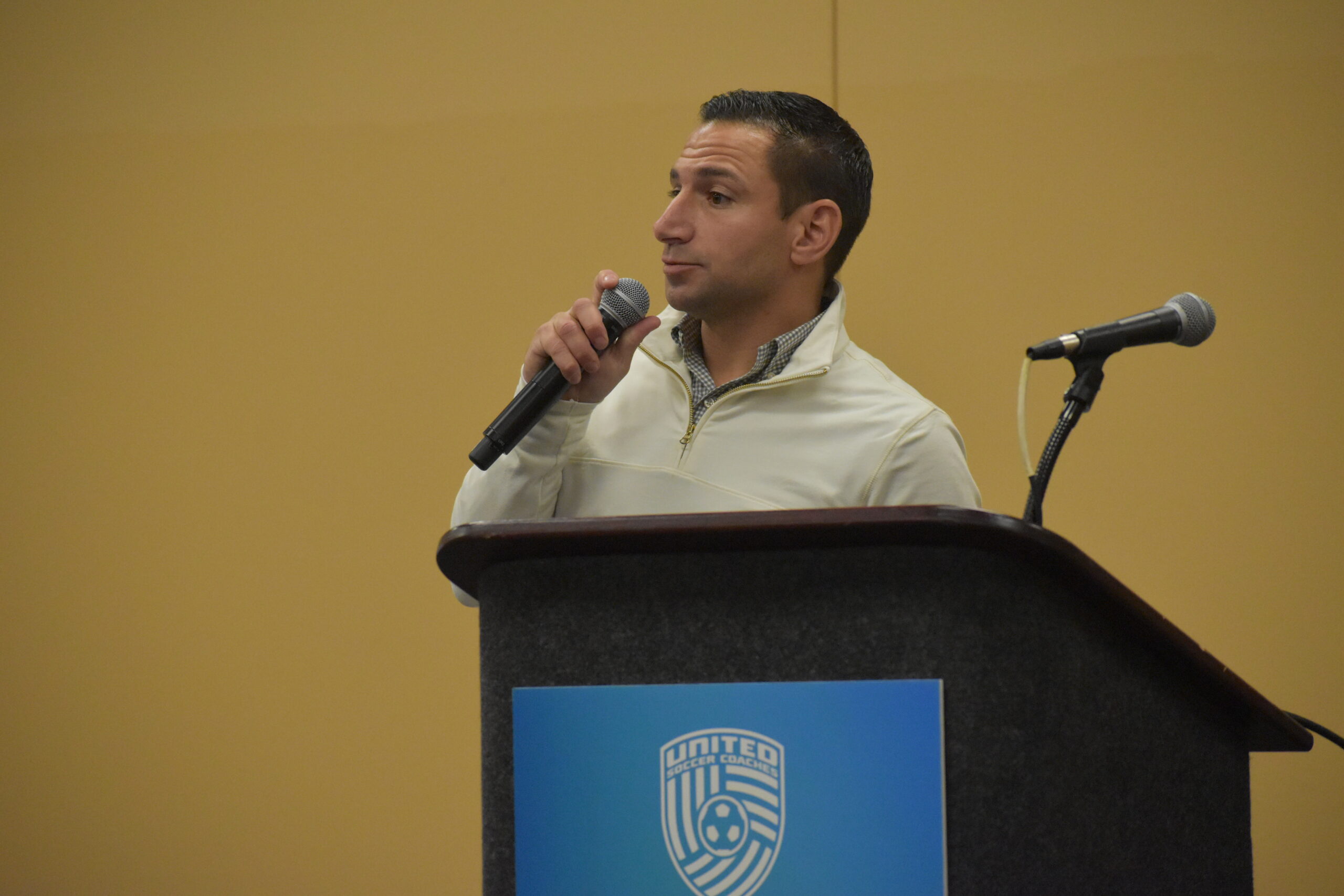
At the United Soccer Coaches convention earlier this month in Philadelphia, a presentation by Jon Scheer, the Union’s head of academy and professional development, drew a healthy crowd that hoped to learn the club’s secret sauce.
Scheer didn’t give up all the recipes, but he was happy to take the attendees into the kitchen.
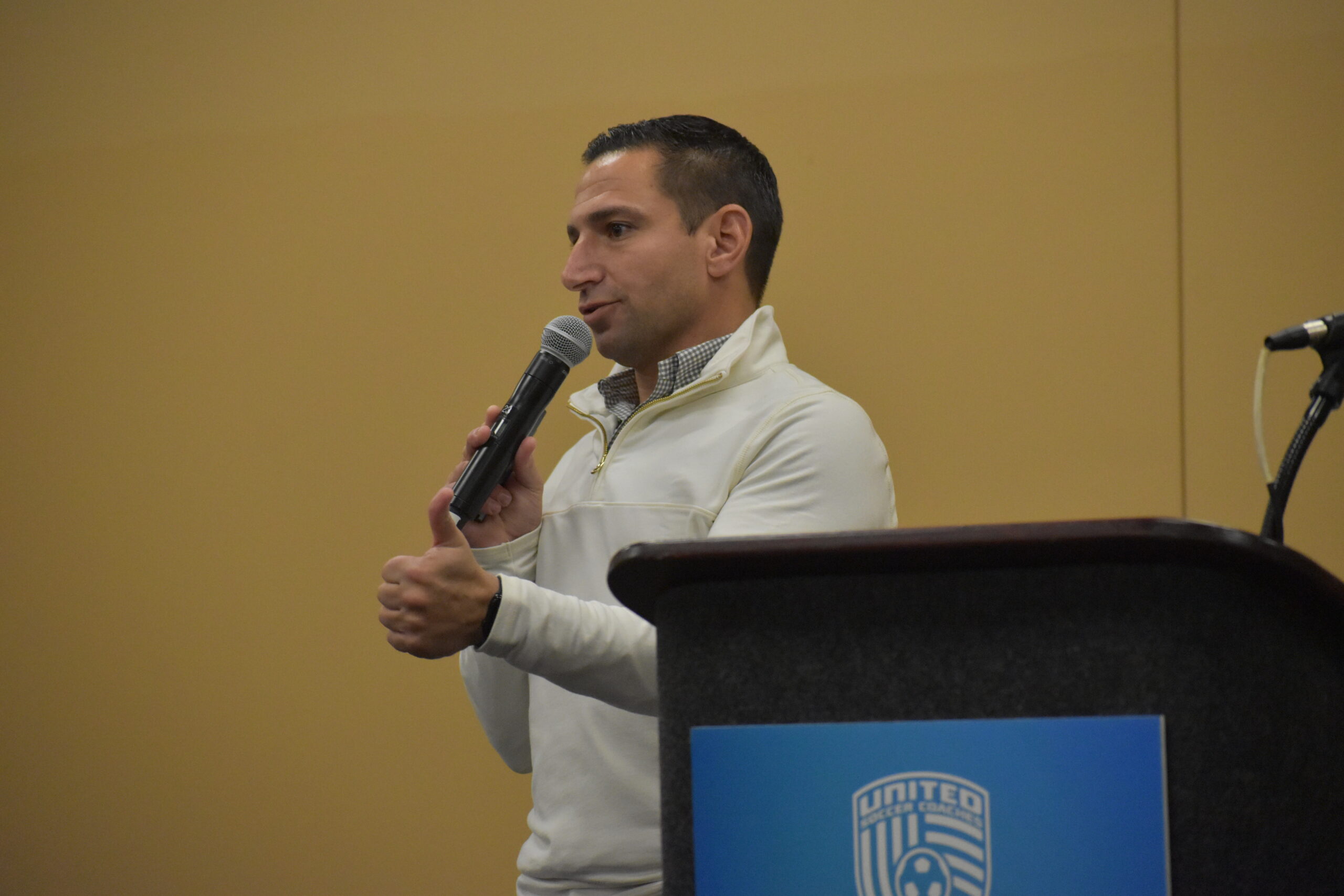
He claimed that the Union “invests more in our academy than any MLS club in the country.” That hasn’t been independently confirmed for a few years, but there’s no question that the Union spend a lot.
Along with youth teams in many age groups, there’s a full-time high school, YSC Academy, across the parking lot from the training facilities in Chester. Those facilities were expanded significantly last year, to much acclaim.
“The value of the young players being able to see the stadium every day, but also being able to look through the fence at the grass on Field One where the first team trains — they can feel it every single day,” Scheer said.

There’s high tech all over the campus, from the “Striker Lab” that tracks a player’s kicking technique to a medical scanner called SonicBone that measures a person’s biological age.
“If they’re two years advanced [compared] to their peers and having success only because of their physique, that gives us information,” Scheer said. “Potential for our academy is more important than performance level.”
The recruiting sales pitch
Scheer echoed a longtime Union talking point when he spoke of “looking for marginal gains that will allow us to have sustainable success in MLS.”
“We think that if we invest in data, we’re not going to have to try to outcompete and outspend the LAFCs, the Torontos, the Atlanta Uniteds of the world,” he said.
Those words did not prompt the kinds of boos from this crowd that they would have from the River End stands. But Scheer, who has become the public face of the front office with sporting director Ernst Tanner on administrative leave, isn’t ignorant of that, either. He’s a West Windsor, N.J., native who played and coached at the University of Delaware, and scouted for U.S. Soccer before joining the Union’s staff eight years ago.
Trophies count most for measuring the club, of course, but below that is another way to measure success. The Union now aren’t just viewed as the top American club for developing U.S. national team talent; they can put numbers behind it.
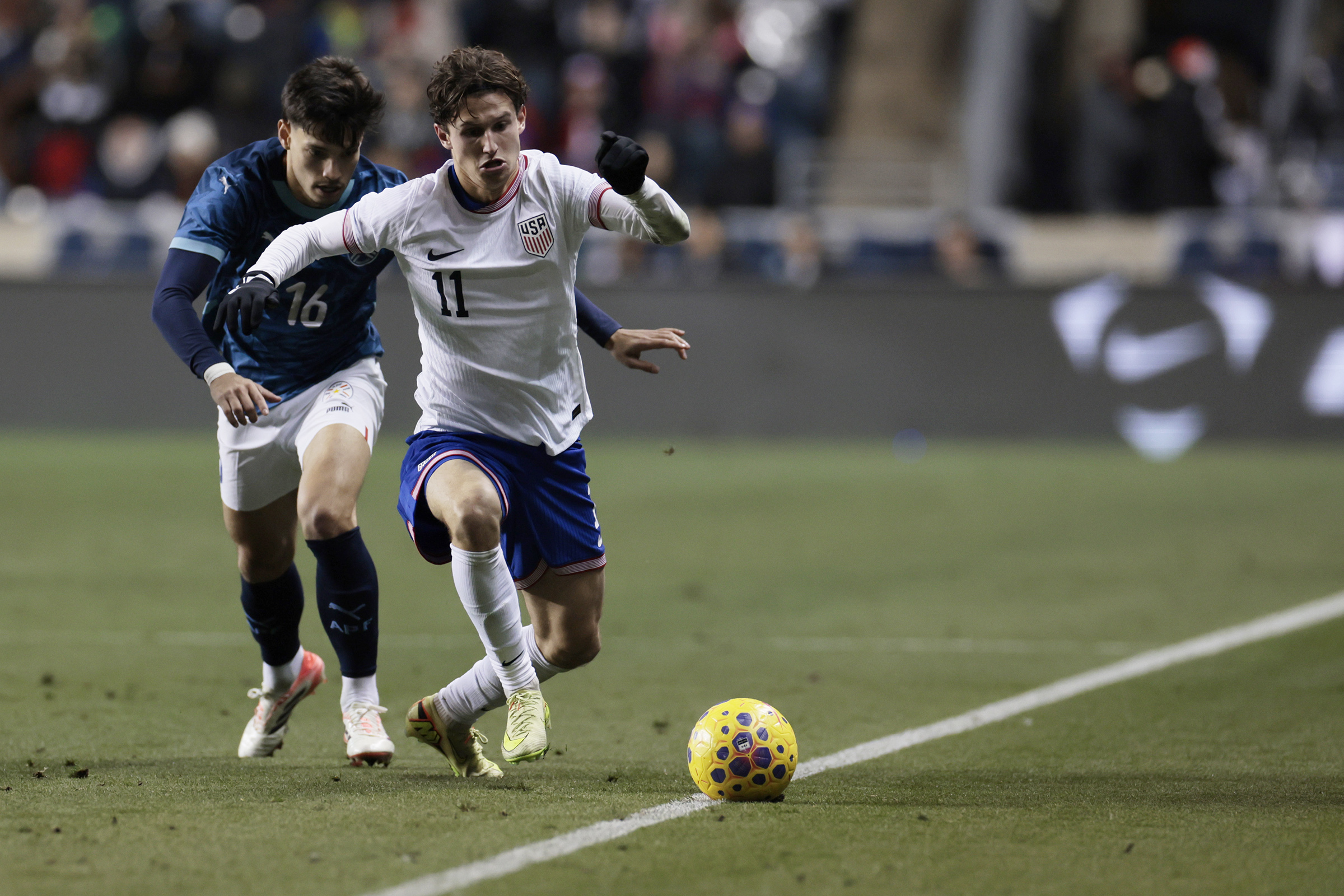
Last year, a total of 57 Union players and prospects were called up to U.S. youth national teams. That is easily the best of any MLS club, with the Los Angeles Galaxy second at 52 and the Chicago Fire third at 40. It’s also a long way past the league’s former standard-bearers, FC Dallas (32) and the New York Red Bulls (24).
The peak moment came in the early summer, when eight current or former Union players made the senior U.S. squad for the Gold Cup.
“We want to use that as a recruitment tool for the next wave of kids to say if you come here, we’ll be able to push you on to a higher level — whether that be for the national team or beyond,” Scheer said.
“Ultimately, if we have a bunch of kids in youth national teams and nobody in the senior national team, then that’s good, but our goal is to get them into the senior squad,” he said.
‘Everybody has a plan’
It’s also, of course, a goal to have them play for the Union. And yes, it’s another goal to sell players on to European clubs, ideally for big sums.
“If our goal was just for our academy teams to win [youth tournament] championships, that would shape how we would build our rosters week after week,” Scheer said. “But [we’re] knowing that we need to, for our strategy, develop players, place them in the first team, showcase them to the world, transition them on to bigger clubs, and then use those resources to reinvest.
“Not just in the academy, also into player scouting and recruitment for the first team.”
Scheer went deep on how the high school works. He talked about the philosophy of the place, the teachers, and how they educate kids on a combination of soccer and serious academics. Some of the graduates who haven’t turned pro have gone on to major colleges, including Ivy League ones.
He showed a slide with the students’ typical daily schedule, with blocks of training and blocks of classes. He also detailed the residency aspect, for which the Union bought a house in South Jersey not far from the Commodore Barry Bridge. Twelve players and two adults who oversee them now live there.
“About 80% of our academy is from the Greater Philadelphia region,” Scheer said. “We never see it becoming 50-50.”

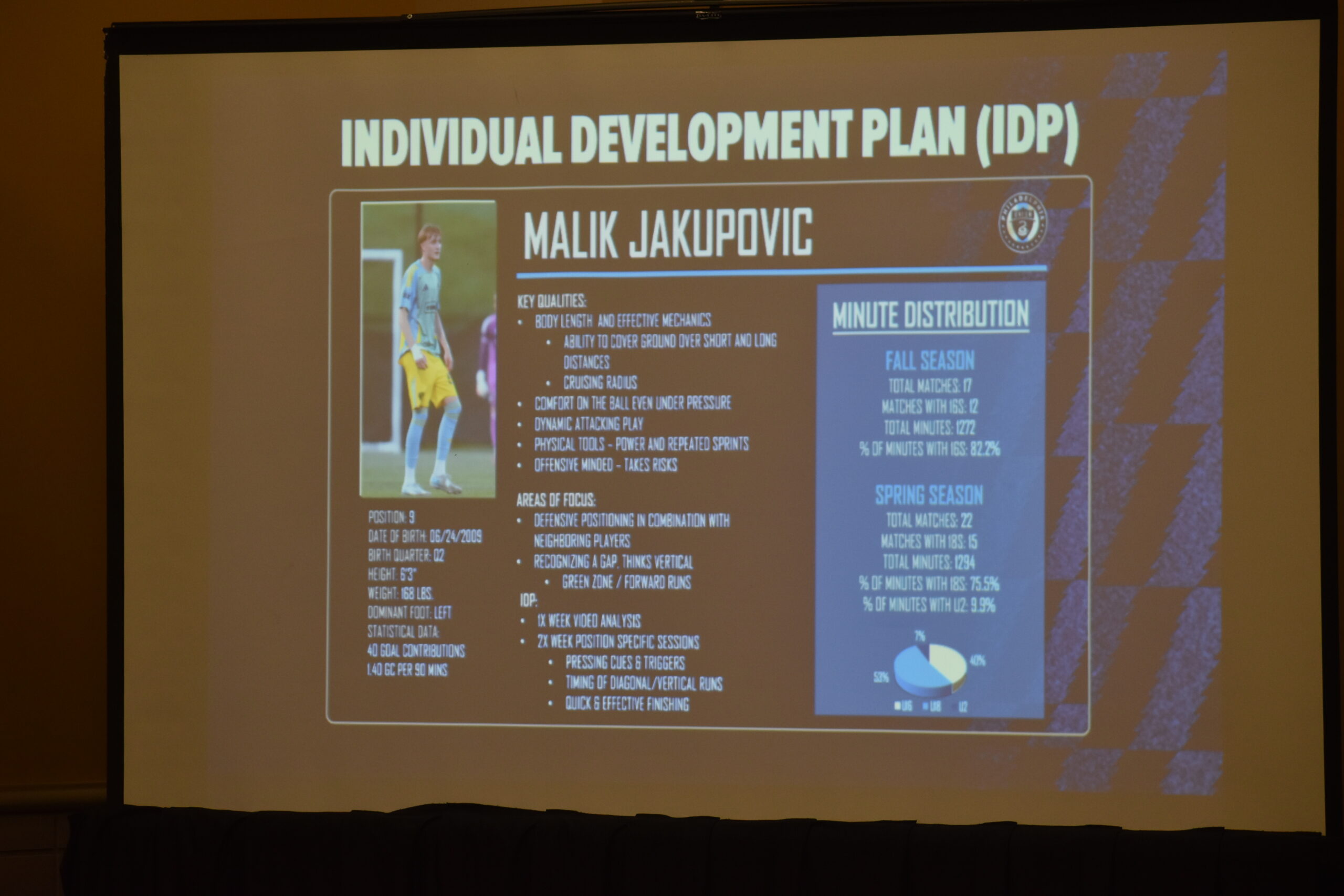
Later in the presentation, he posted a detailed slide showing an example of an Individual Development Plan. The player on the slide happened to be 16-year-old striker Malik Jakupovic, the team’s second-most-hyped prospect right now after Cavan Sullivan.
“Yes, our top talents have a little bit more of an advanced plan, and a little bit more focus — of course, because that’s our goal, to push players into the first team,” Scheer said. “But everybody has a plan, and this is something we’re trying to improve.”
The value of a ‘special weapon’
He talked about Sullivan, too, after an audience member asked.
“At the end of the day, Cavan has to do well here in order to play, in order to maximize his opportunity to try to play in the Premier League for Manchester City, and that’s what we all want,” Scheer said, a rare instance of the Union directly mentioning the future move.
“There’s things that we do, that we talk about, that they’ve taken; and there’s things that they do that selfishly we can take and maybe apply to our environment.”
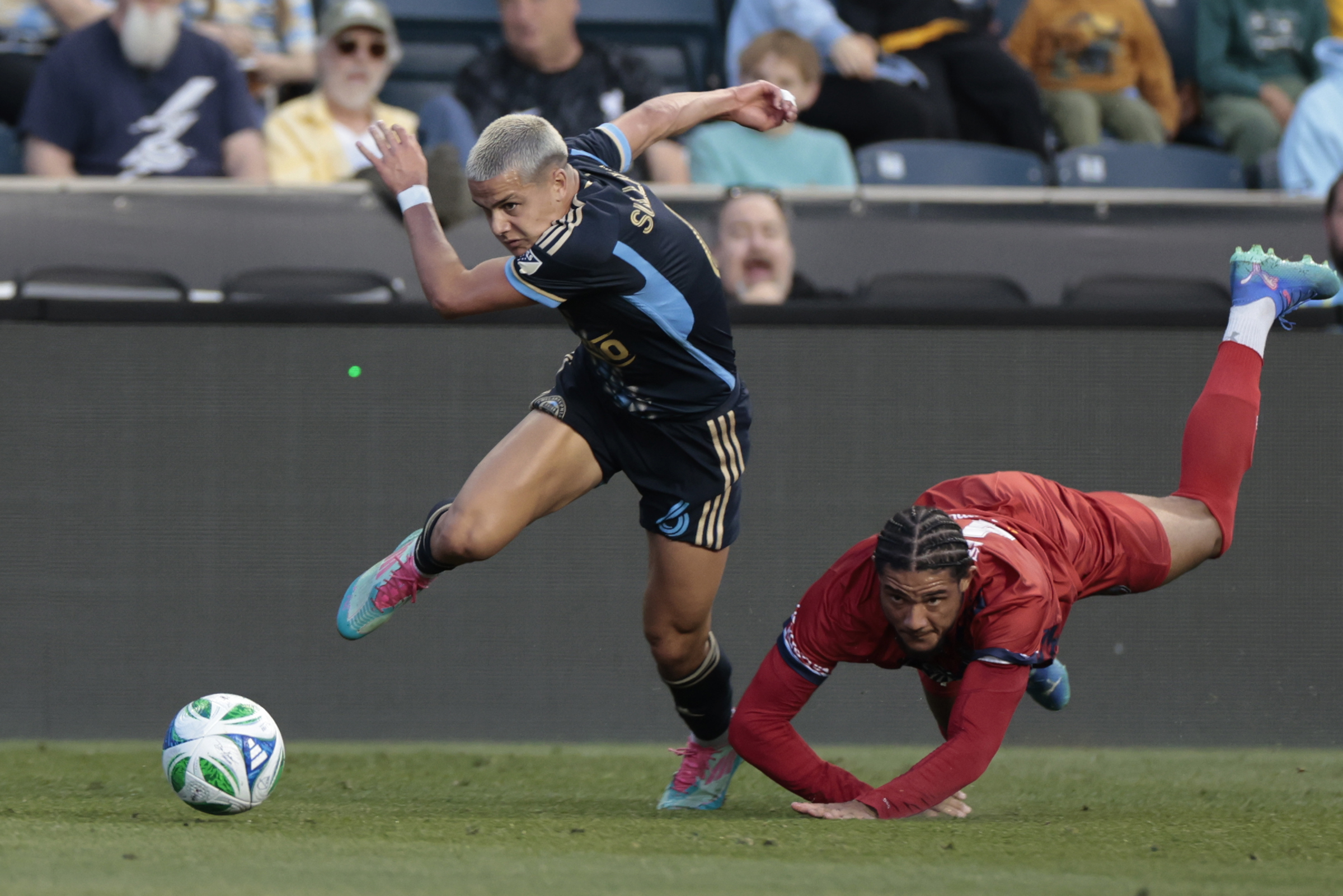
And for as much as the Union “want to develop him individually really, really well,” Scheer also made a clear point about the present.
“Cavan’s got to focus on every day,” he said, “and be a good teammate, and be competitive, and play in a great way, to be playing in MLS.”
Some of the coaches in the room surely wanted insight on the Union’s tactics and playing style. Scheer gave it to them, with slide headlines like Active vs. Reactive, Forward First, and Synchronized Sprinting.
Another slide listed six key qualities for a prospect, aligned in a circle: Comfort On The Ball, Psychosocial Characteristics, Game Understanding & Decision Making, Ball Recovery, and Physical Qualities.
Then, over in the corner, there was another: Special Weapon. Scheer stopped there for a moment.
“We value a special skill set [with] talent that might be innate — something that differentiates a player from their peers,” he said. “We think that might give them a better chance to get them through the door of MLS.”
And if that one skill comes with deficiencies elsewhere?
“We’d rather invest time in that player, because that one characteristic is so unique, to then see how they develop in the other areas,” Scheer said. “And we approach our scouting overseas for our first team in the same way as well.”
‘There’s no magic pill’
Those words might have turned on a light in some Union fans’ heads, because they seemed to match the fates of Jack McGlynn and David Vazquez. Both are wonderfully skilled players, but their tenures in Chester were cut short for not ultimately fitting what the first team’s manager wanted.
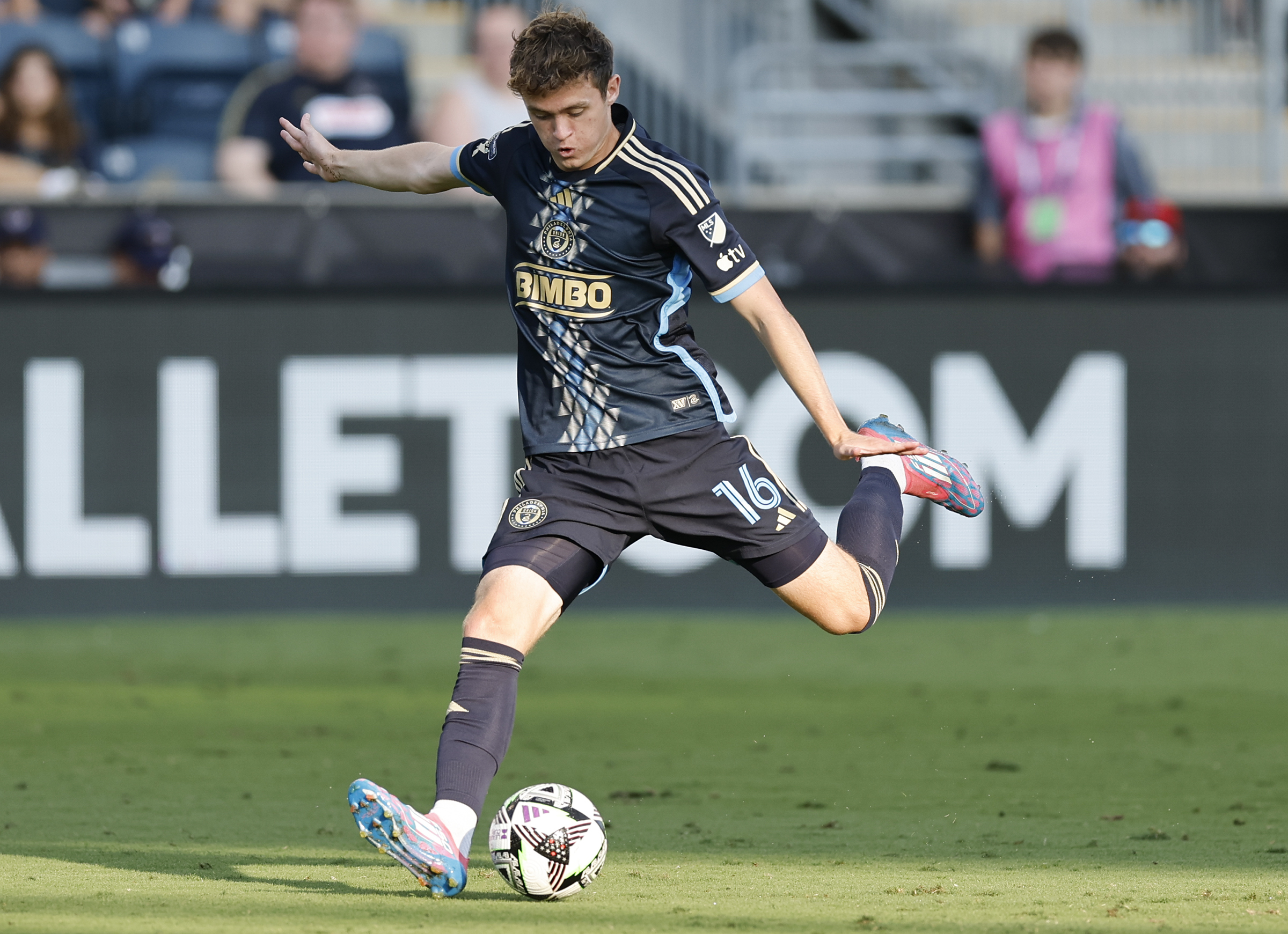
“It doesn’t mean that special weapon is just going to guarantee playing time,” Scheer said. “But a lot of times we’ll interact with the first team manager, they’ll see the player, they’ll provide opinion on the player for years to come, and then they’ll work with the player.”
He added that the coaching staff and front office are doing their best “to try and maximize and make sure we’re aligned on the player pool. If things aren’t working, “it’s about just evaluating each individual and trying to make the best decision.”
At every level of the Union, there’s a balance to strike between the system and the individual. It’s Scheer’s job to find it every day.
“You don’t want the individual to feel like they’re always dispensable, and it’s only the game model that’s valuable,” he said. “You also want players that have personality and that can make mistakes. If we’re going to play forward first, you have to be brave in order to be able to do that.”
The same goes for coaches.
“If we’re screaming at our kids every session and game, or we’re always being deliberate and explicit in terms of the information we give them, that is going to stifle creativity and decision-making, that will affect development,” Scheer said.
“So how we go about teaching, how we go about running our sessions, how we can carry ourselves on the sideline, how we educate ourselves in the ages and stages of development, that’s really, really important.”
He concluded his point on a philosophical note, one that might make sense well beyond soccer.
“There’s no magic pill,” he said. “There’s no magic answer.”
Leave a Reply