Millions of dollars in federal funding for homeless services are at risk after the Trump administration on Friday moved forward with a plan to cut support for most long-term housing programs that serve people otherwise without stable shelter, according to officials in Bucks and Montgomery Counties.
The plan, which is still being fought in court after the Department of Housing and Urban Development released an earlier iteration of the policy shift in November, seeks to upend the way communities across the nation, including Philadelphia, treat people experiencing homelessness and would reroute the spending of $3.9 billion in grants for a program called Continuum of Care that localities rely on to fund housing programs.
The latestdevelopment came Friday night, when HUD appeared to respond to a judge’s ruling in the legal battle by issuing a new set of rules to apply for the federal awards. The new HUD document reduced the amount of funding available for permanent housing by two-thirds, a drastic decrease, said Kayleigh Silver, administrator of the Montgomery County Office of Housing and Community Development.
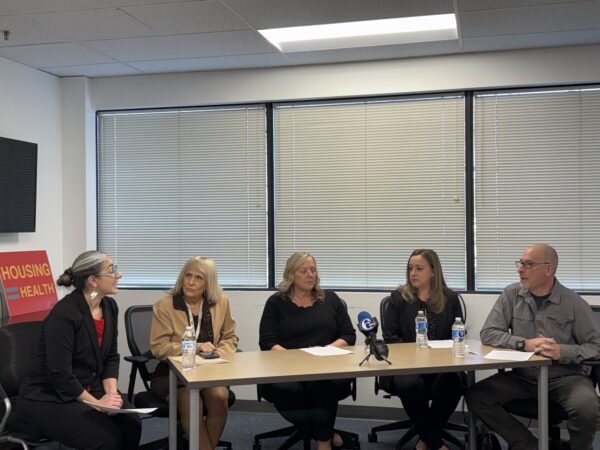
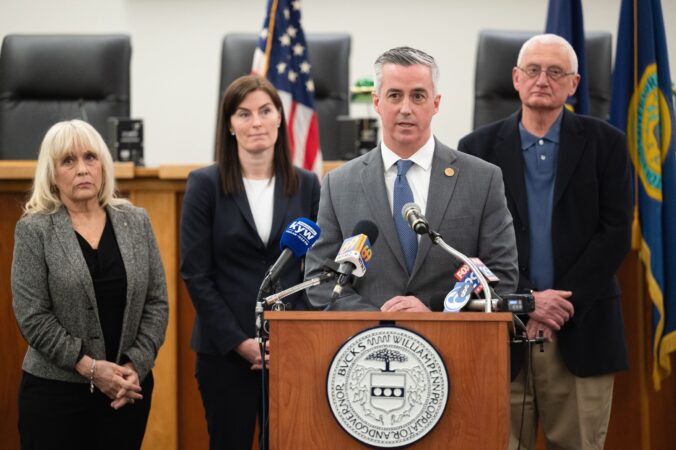
The new plan “we believe will worsen homelessness and destabilize communities, not improve them,” said Kristyn DiDominick, executive director of the Bucks-Mont Collaborative, at a news conference Monday in Warminster. The nonprofit fosters resource sharing between the two counties.
Officials said hundreds of people in the counties, including families, veterans, and people with disabilities, could lose access to housing as a result of the funding shift. Nationwide, the HUD plan could displace 170,000 people by cutting two-thirds of the aid designated for permanent housing, advocates say. In Philadelphia, tens of millions of dollars used to fund the city’s 2,330 units of permanent supportive housing are at risk, city officials said in November
Bucks County Commissioner Diane Ellis-Marseglia, a social worker by trade, said HUD broke its “promise” to continue providing support to programs.
“If we can’t trust HUD, how are we supposed to get the people we work with to trust us?” said Ellis-Marseglia, a Democrat.
Secretary of Housing and Urban Development Scott Turner in the Oval Office on May 5.
The HUD announcement followed two lawsuits, including one from Pennsylvania Gov. Josh Shapiro and 20 other states’ attorneys general and governors, against President Donald Trump’s administration over the cuts included in the November draft of the plan.
The earlier plan gave HUD the authority to restrict funding for groups that recognize the existence of transgender and nonbinary people, populations that face greater risks for homelessness. County officials are still seeking clarification on whether that provision remains in the new plan.
HUD temporarily rescinded the controversial plan on Dec. 8, just hours before a hearing on the lawsuits, citing an intent to revise it. On Friday, U.S. District Judge Mary S. McElroy, who presided over the hearing, issued a preliminary injunction blocking HUD’s efforts until a new funding notice is issued. It remained unclear to local advocates and service providers the differences between the new plan posted later that night and the original.
“HUD will continue working to provide homelessness assistance funding to grantees nationwide. The Department remains committed to program reforms intended to assist our nation’s most vulnerable citizens and will continue to do so in accordance with court orders,” a spokesperson for the department said in a statement to The Inquirer.
The confusing standoff marks the latest obstacle that nonprofits have had to endure after a lengthy federal government shutdown and Pennsylvania’s state budget impasse, both of which contributed to funding delays and instability.
Bucks and Montgomery County service providers and advocates at Monday’s news conference handed out literature that said“Chaos isn’t a strategy” and called on Congress to step in, noting that the funding process is months behind.
The impacts “land on real people,” DiDominick said.
Housing is also an important resource for survivors of domestic violence, said Stacy Dougherty, executive director of Laurel House, a domestic violence organization in Montgomery County.
“For victims of domestic violence, access to safe housing can be the difference between staying in an abusive relationship and being able to leave, and sometimes even the difference between life and death,” Dougherty said.
Erin Lukoss, CEO of the Bucks County Opportunity Council, added that “housing is the foundation,” a backbone for the entire system that tries to address poverty and food insecurity. A lack of clarity on this funding is another stressor for service providers and those who benefit from the resources
“What makes this moment especially concerning is not just the potential reduction in funding, it’s the instability of the rules themselves,” Lukoss said.
Christina Gallo and Daniel Zehnder came to McPherson Square in the Kensington neighborhood looking for a fix, as they did almost every day.
But on this day in late April, an SUV pulled up. A woman bounded out with an offer that sounded like a miracle: an all-expenses-paid trip for free treatment at a luxury rehab center in California.
Gallo and Zehnder, both then37, hoped their lives were finally about to turn around after two decades strugglingwith addiction.
“We wanted to get clean,” Gallo said.
Christina Gallo and Daniel Zehnder, pictured here in Kensington’s McPherson Square in June, were recruited to what they thought would be a luxury rehab in California.
Within days, they were in a Lyft from their Bucks County trailer to the Philadelphia airport. Everything — the Lyft, the flight, the rehab — had been paid for, by whom they did not know.
They landed at a treatment facility in Los Angeles with a gleaming swimming pool, but said they did not see doctors or nurses and were offered little medical treatment to ease their agonizing withdrawal symptoms.Within a few days,the couple had left the clinic, relapsed, and the life-changing trip they envisioned ended in an ambulance rushing to a nearby hospital, where Gallo was admitted to intensive care.
Their California dreams were dashed. But the trip notchedanotherrecruitmentfor The Rehab Specialist, a year-old operation that makes money by scouting the streets for people in addiction to send to independently run rehab centers across the country.
Rehab Specialist recruiters working in Philadelphia offered free plane tickets, housing, and medical care — and at times cash, cell phones, cigarettes, and clothes — to entice people into recovery homes, Inquirer reporters found in interviews with seven people who had firsthand knowledge of the recruiting tactics.
With a single conversation in Kensington, recruiters alsogot willingpatients enrolled in private health insurance that could pay higher rates, often without the patients understanding what they had signed up for — until bills started to arrive.
Businesses like The Rehab Specialist operate as middlemen inan industry where one person’s recovery can be cashed in for hundreds of thousands of dollars in insurance payments.
Some referral and marketing services in the addiction treatment industry are legal. But the business is also notoriously rife with insurance fraud and patient brokering — a term that describes referrals to specific clinics in exchange for illegal kickbacks or bribes.
Rehab Specialist brochure, advertising a Spanish-Colonial style mansion with a pool in the backyard.
Pennsylvania is seeing a resurgence of patient brokering, according to tracking in 2023 by Highmark Health, a Pittsburgh-based Blue Cross Blue Shield affiliate. Such schemes are especially a concern in Kensington, home to one of the nation’s largest open-air drug markets.
Federal laws and a patchwork of state laws are supposed to protect vulnerable people. Prosecutors have limited resources, however, and rarely investigate low-level players.
Pennsylvania considered stronger laws after a major scandal.In 2019, federal and state prosecutors uncovered a multimillion-dollar insurance fraud scheme at Liberation Way, a Bucks County recovery home. The abuses spurred Pennsylvania lawmakers to introducelegislation that would have made it a felony to use money or services to lure patients into addiction rehabs and other healthcare facilities. The measure died without advancing to a vote.
“People get pretty brazen when nobody’s looking,” said Alan Johnson,chief assistant state attorney in Palm Beach County and a national expert on fraud in the industry.
Johnson called a description of The Rehab Specialist’s practices “classic patient brokering.”
For months, Philadelphiaadvocates for people in addictioncirculated warnings about the business and posted photos of its recruiters on Facebook. They tried to alert police, but never heard back.
Screenshot of text messages between Christina Gallo and a Rehab Specialist recruiter, saying that Gallo and Zehnder got approved for private insurance that would pay for their treatment in California.
The Philadelphia Police Department did not respond to requests for comment, and the Philadelphia District Attorney’s Office said it has not opened an investigation and declined to comment on The Rehab Specialist’s practices.The Pennsylvania Attorney General’s Office also declined comment.
On social media, The Rehab Specialist’s director and founder, Gus Tarrant, strongly disputed critics who accused his business of patient brokering.
“I have never and would never give a client money to go to rehab or encourage them to cycle in and out of programs,” Tarrant wrote in a March post to a Facebook group that monitors addiction treatment.
Tarrant, in a June interview with The Inquirer, reiterated that he and his business havedone nothing wrong.
Tarrant said that his operation has a national focus and came to Philadelphia this spring because the city has “the worst drug epidemic in the country.”
Tarrant said his recruiters send patients out of their home state to avoid triggers for relapse, a practice he strongly believes in, having gone through his own recovery from addiction about five years ago. (Though popular in some recovery circles, some research suggests that it can be less effective than getting treatment closer to home, where people have established support networks.)
“Our goal is to help as many people as we can,” Tarrant said. Now based in Myrtle Beach, S.C., Tarrant has channeled his experience into starting at least two businesses in the past five years focused on people in addiction.
He said rehab centers payhis business a flat fee to arrange for people from Kensington to receive treatment in California, but declined to share details. Two Los Angeles treatment centers told The Inquirer they had paid Tarrant and his operation a flat fee for “marketing,” but both also declined to give specific details of the arrangement.
On business cards, Tarrant’s title is listed as The Rehab Specialist’s founding partner; his LinkedIn profile says he started working there in 2024.
The Inquirer was unable to find any documentation indicating the business was formally incorporated in a search of state corporate registries where its recruiters and Tarrant have operated. The Inquirer also did not identify any lawsuits filed against The Rehab Specialist.
The Inquirer interviewed Tarrant by phone this summer. He did not return multiple calls, texts, and emails this month requesting additional comment.
Reporters interviewed five people who were approached by The Rehab Specialist’s recruiters on the street, and another two whose relatives were recruited.
All shared similar stories about how the process worked. Two said they enjoyed eating chef-made meals and benefited from group therapy and daily outings in Los Angeles.
One mother said her son ultimately decided not to board the plane to California, though he continued to receive frequent calls from Rehab Specialist recruiters urging him to travel for treatment. In another case, a woman said her brother did not get the care he needed in California and ended up in the ICU.
Gallo and Zehnder were among the three people interviewed who said the medical care they received in California did not meet their expectations for a luxury rehab facility. The couple blames The Rehab Specialist for launching them on a journey that ended with them worse off than before.
“I don’t know if they have the intention of trying to help people,” Gallo said, “but they’re going about it totally the wrong way.”
Christina Gallo and Daniel Zehnder in June, sitting in the spot where they were first approached by The Rehab Specialist recruiters in McPherson Square Park.
Lofty promises and dire warnings
The fliers that The Rehab Specialist recruiters passed out in Kensington featured photos of a Spanish Colonial-style mansion surrounded by palm trees, with a pool in the backyard. They advertised “holistic treatment” including equine therapy, medical detox, and an intensive outpatient program.
All that, in sunny California.
The pitch has particular appeal in Philadelphia, where people have struggled through long waits to access medical detox programs that allow patients to withdraw under the supervision of a doctor or nurse. These programs typically offer medications to help ease intense withdrawal symptoms like nausea, vomiting, and agitation, all of which have become more dangerous as potent animal tranquilizers and industrial chemicals contaminate the local drug supply.
Despite often lofty promises, the addiction treatment industry has long seen high-profile prosecutions over exploitative practices.
In the Philadelphia area, the Liberation Way prosecution sent the company’s CEO and medical director to federal prison. Prosecutors said the center had signed patients up for private insurance plans and paid their premiums. It then charged insurers for shoddy or unnecessary treatment that resulted in excessive insurance payouts.
California and Florida in particularhave emerged as hot spots for addiction treatment fraud. In South Florida, a 2022 federal prosecution of a$112-million scheme led to prison sentences foreight people accused of using cash bribes and free rides, flights, drugs, and alcohol toattract patients to a rehab center.The payments were distributed via anetwork of lower-level street recruiters, purportedly hired for “marketing,” according to an affidavit from the case.
But addiction treatment scams are often ignored because they involve sprawling national investigations that require significant resources. State prosecutors can’t justify the expense and federal prosecutors won’t take on low-level fraudsters, according to Johnson. Palm Beach County prosecutors stepped up enforcement after the state passed stricter laws in 2017.
“You have to prioritize cases. This is not high on their hit list, unless it’s going to make a big splash,” said Deb Herzog, a former federal prosecutor turned fraud investigator at Anthem Blue Cross.
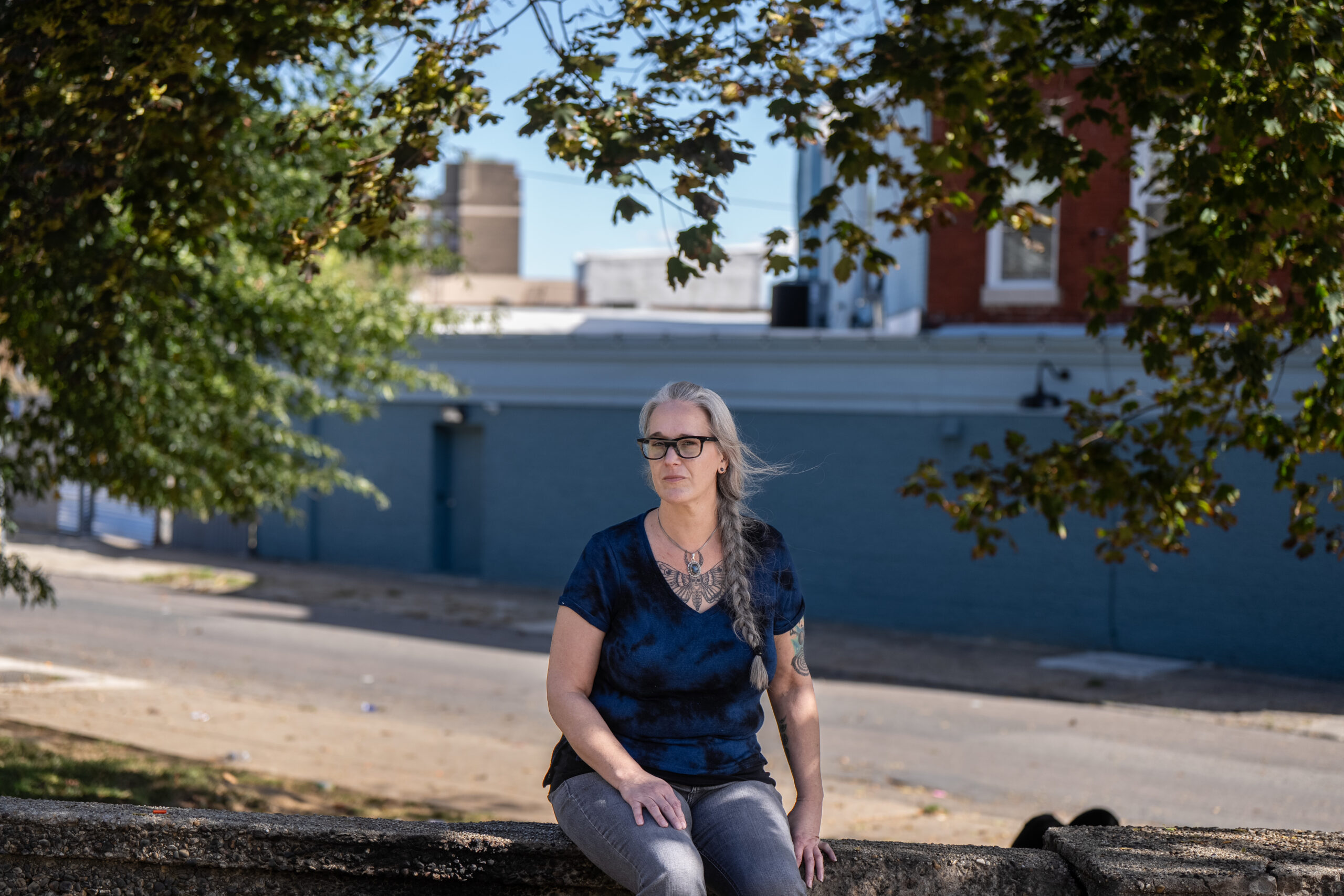
Melissa Ruby, an activist who runs a national Facebook group to monitor patient brokering, in Philadelphia in October.
Warnings about The Rehab Specialist instead came from Melissa Ruby, 46, and other local advocates. Ruby runs a Facebook group dedicated to monitoring patient brokering nationwide, and started sharing photos on social media as soon as the recruiters showed up in Kensington. She did the same when they were reportedly spotted in Pittsburgh.
She said she also alerted aPhiladelphia police officer who runs an independent nonprofitto help people in addiction, but never heard back.
For Ruby,the issue is personal: She has a relative who was a victim of patient brokering.
“BEWARE!!” she wrote in a March post about The Rehab Specialist, punctuated with red stop sign emojis. “No good will come from any of this!!”
Tarrant, the Rehab Specialist director, was a member of Ruby’s Facebook group at the time and wrote that the vast majority of the negative information Ruby had posted about him was “completely wrong.”
“I am not paid by the client or any ‘referral fees’ based on clients sent,” Tarrant wrote.
When asked in the Facebook group why The Rehab Specialist was sending patients out of state on free flights, he declined to answer, writing that he believed the questions were in bad faith. He encouraged people to reach out to him directly so he could explain.
After a few weeks, Ruby kicked him out of the group. “Adios, Gus!” she wrote.
A sunny pitch in Kensington
One day in April, two female Rehab Specialist recruiters introduced themselves to Samuel Rosato, 47 at the time, as he got off the El near Kensington. He was immediately intrigued.
“They were just real pretty and tan,” Rosato said.
They later said all they needed were a few identifying details, and they would be able to set him up with private insurance that would pay for everything at a luxury rehab out west.
Rosato scribbled down his Social Security number and handed over his ID card. Within 10 minutes, he said, the recruiters told him they had secured him Blue Cross Blue Shield insurance. Rosato, like others interviewed by The Inquirer, did not know who was paying for his insurance or lodging.
The Rehab Specialist recruiters, whose names he shared with The Inquirer, are not licensed insurance brokers or healthcare navigators in Pennsylvania.
Allison Hoffman, a health law professor at the University of Pennsylvania, said that without more information on how patients were signed up for insurance plans, it isdifficult to say definitively whether insurance laws were violated. But, she added, “it sounds potentially illegal.”
Tarrant said his employees “don’t deal with any of the insurance.” He said they do not directly enroll clients in insurance, but rather direct recruitsto independent, licensed insurance brokers.
Patients “sign up for the insurance themselves,” he said. Hedeclinedto say more, citing patient confidentiality.
A week later, Rosato said an Uber picked himup at his mother’s home in Northeast Philadelphia for his flight to California. He said he was joined by three other people from Kensington who told him they had also been recruited by The Rehab Specialist.
“I love it out here,” Rosato said in June, several months into his recovery in California. “I’m trying to rebuild my life now, starting at the bottom.” (Rosato stopped responding to calls and texts from The Inquirer in the fall; his mother said this month that he’s back in Philadelphia, but she is not sure where.)
Jerome Hayward, 48 at the time, and his girlfriend, Megan McDonald, 39 at the time, also didn’t ask too many questions when they were recruited in front of a Kensington soup kitchen and traveled separately to California in the spring.
Told only that she had been “approved” for treatment, McDonald said she didn’t realize she had been signed up for a Blue Cross Blue Shield plan until she received paperwork at a hospital.
“How would we pay for it?” McDonald asked. “Because we’re broke. We got no money.”
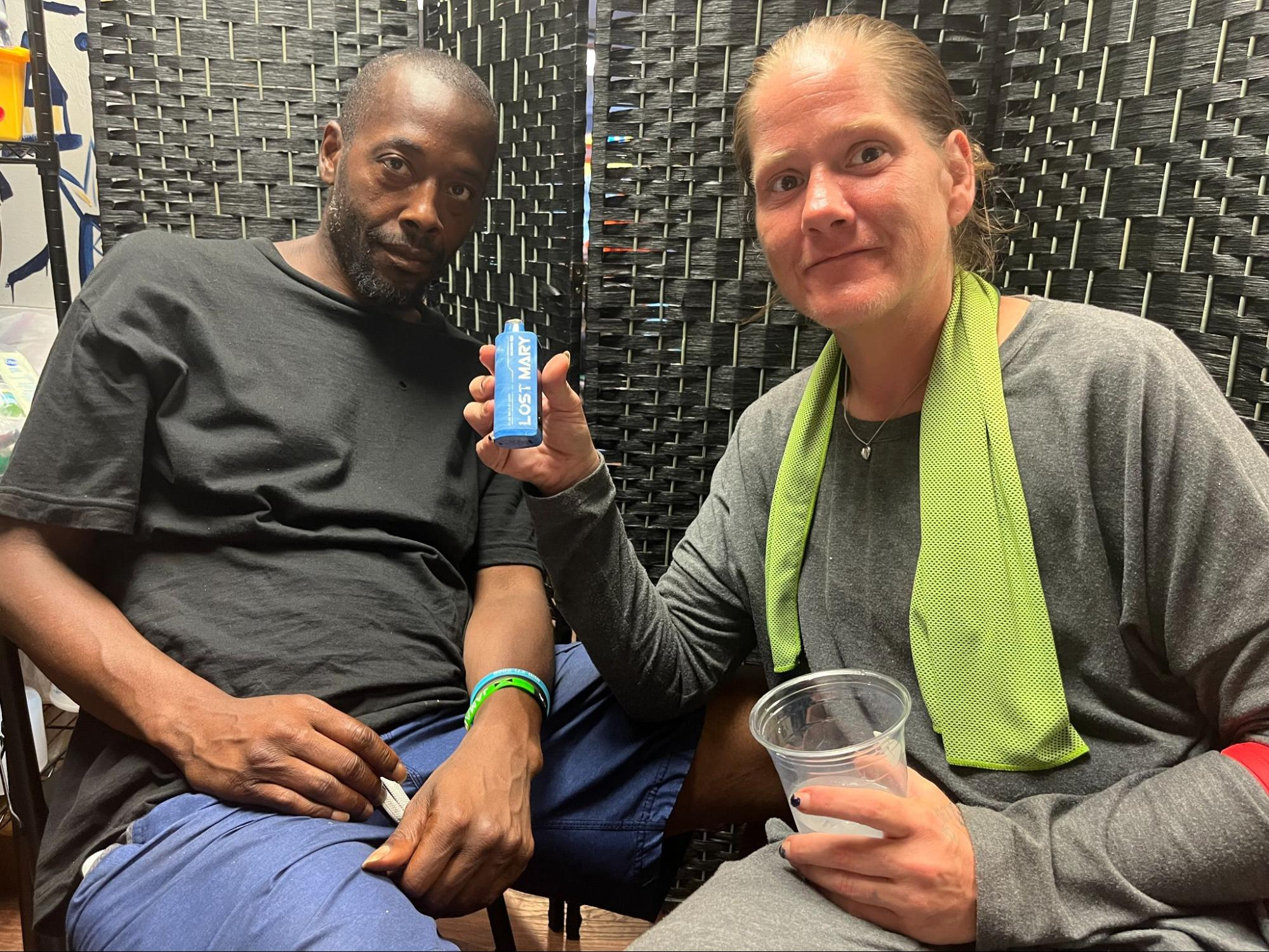
Megan McDonald and Jerome Hayward at a drop-in center in Philadelphia’s Kensington neighborhood.
A rising entrepreneur
Tarrant rose in the rehab industry after getting his start vacuuming floors at a rehab company run by LaMitchell Person, a mentor who Tarrant credited for giving him “the opportunity to get sober and clean,” in an interview with a local news station in California. The two later became business partners.
They were working together at a California rehab company in 2021 when a 22-year-old named Dean Rea died of a fentanyl overdose after leaving an associated sober home.
Rea’s mother later accused Tarrant, Person, and other employees ofcontributing to the death in a lawsuit filed against the facility,Ken Seeley Communities. Neither Tarrant nor Person, then the facility’s executive director, was named as a defendant in the case.
In court records, Rea’s mother claimed Tarrant falsely told Rea that his insurance wouldn’t cover more intensive treatment elsewhere.
“Gus is, essentially, a salesman whose goal is to admit as many patients to KSC as possible,” their legal complaint said. The rehab company denied the allegations, and Rea’s suit was settled in a confidential agreement in 2023 for an undisclosed amount.
In an interview this month, Person called the lawsuit’s claims inaccurate. “Fentanyl killed her son. Not Gus, not me, and not the organization,” Person said.
By the time the suit was settled, Tarrant and Person had both left the business.
In 2022, they filed paperwork to incorporate a company called Origin Addiction Services, based in Idaho, according to state corporate records. An official address on the website is a P.O. box in a Boise strip mall.
The company’s website said it offered addiction recovery services such as interventions, sober companionship, counseling, and transportation.
The company’s website featured an ‘about’ page with professional headshots of a nine-member executive team. All but three of those headshots appearedto be drawn from stock photo services,and The Inquirer was unable to trace the individualsto authentic social media or LinkedIn accounts.
After The Inquirer contacted Personabout the photos in September, all of them– except his own — were removed overnight. Person later said in a phone interview that the stock photos and some of the employee names were “placeholders,” but insisted that the staffers were real.
The company filed paperwork to dissolve a year later; Person said it had never done business, and he and Tarrant went on to pursue separate endeavors.
Person was in Philadelphiarecruiting people at the intersection of Kensington and Allegheny Avenues in March, according to acity employee there to help people in addiction. Person handed him a business card identifying himself as a “regional director” of The Rehab Specialist, said the employee,whom The Inquirer is not naming because he was not authorized to speak to the media and feared losing his job.
Person answered the phone this summer when The Inquirer called the Rehab Specialist’s general number, but he said he did not work there.
In a follow-up interview this month, he said that Tarrant had hired him to build a call center for a California rehab, saying that was his only involvement with The Rehab Specialist.
He said he hadnot come to Kensington and was not responsible for business cards that listed him as the regional director.
“Gus wanted me to work for him, because we are friends,” Person said.
Christina Gallo and Daniel Zehnder in McPherson Square Park in June.
A dream dashed in California
Desperate to get clean, Christina Gallo and Daniel Zehnder accepted the offer to fly to California after being recruited in Kensington earlier this year. A luxury van picked the couple up when they arrived at Los Angeles International Airport on May 3, they said.
The driver took the couple to Gevs Recovery, a large gated house in a residential neighborhood in Northridge. Gevs has been licensed as a drug abuse recovery home since 2024. State records show that as of early August, no complaints about its care have beenfiled with the California Department of Public Health.
Gallo and Zehnder said the Gevs house was dark and empty when they arrived, aside from a handful of employees. Gallo began to panic as drug withdrawal left her shaking and sweating, with a bloody nose and headache pangs that felt like she had stuck her finger in an electrical outlet.
“I said, ‘What’s going on here? Where’s any of the nurses or the doctors?’” she recalled. “‘Who’s going to be taking care of us, medically?’”
“We don’t do that here,” she remembers them saying. The Gevs employees told Gallo they could send her to a hospital, or give her some Tylenol, she said.
Alarmed, Gallo and Zehnder decided to leave. On their way out, they said a woman descending the stairs told them she had just left the hospital after a month there.
“Are you guys from Philadelphia, too?” Gallo recalled the woman asking.
She and Zehnder headed to a cheap motel, but they didn’t feel they could stand the withdrawal effects and decided to buy drugs nearby. By the morning, their symptoms had grown worse, and they returned to Gevs to demand plane tickets home.
Kristine Kesh, an operations manager at Gevs, told The Inquirer the center does have medical staff on site and does offer medication treatment for withdrawal.
“These clients have been addicts for most of their lives, and they come in expecting this glorious detox,” Kesh said. “Whatever they’re expecting is not realistic. I mean, you can’t help everybody.”
At the airport, Gallo vomited on herself before collapsing to the ground in pain. Zehnder defecated and vomited on himself. An ambulance took them to the emergency room, where Gallo was placed in intensive care.
After two days in the emergency room and the intensive care unit, Gallo and Zehnder were released.Zehnder’s mother paid for their flights home.
While Zehnder was away, bills from Highmark started arriving at his mother’s house — even though he had been promised free treatment.
The bill, which misspelled his last name, said he owed a $267 premium for the month of May. He said he also received a $700 bill for the ambulance ride from the LA airport to the emergency room, which he threw away.
Six months after their disastrous trip, recovery feels as far away as when their return flight from California landed. At the Philadelphia airport, they hailed a cab and went straight to Kensington. They wanted to inject heroin, right away.
A former longtime teacher at a Catholic grade school in Bucks County pleaded guilty Monday in federal court in Philadelphia to receiving and possessing child pornography, U.S. Attorney David Metcalf said.
Richard Adamsky, 66, taught seventh and eighth grades and also served as a sports coach at Nativity of Our Lord Catholic School in Warminster. He had worked at the school for 38 years.
His sentencing is set for April 14.
Christopher J. Serpico, a lawyer representing Adamsky, said his client faces a mandatory minimum of five years in prison for downloading child pornography.
Serpico said he intends to present mitigating evidence in hopes of keeping the final sentence not far beyond that minimum.
Serpico said Adamsky had “developed an addiction” to child pornography that destroyed his career.
However, Serpico said, “there’s no evidence that he molested any children.”
Adamsky was arrested in June and charged in state court, then was indicted in federal court in September. His state case was withdrawn in October.
The prosecution’s memorandum for Adamsky’s plea deal said his crimes involved images in which at least one child was a prepubescent minor or a minor under the age of 12.
His crimes also involved more than 2,100 child pornography images, the memo said.
When asked how long he had been engaging in his criminal conduct, he replied, “too long,” the memo said. When asked how many images he had downloaded, he stated, “too many.”
“He was adamant that he never touched any of his students or any minors — stating that touching children was ‘a line you do not cross,’” the memo said.
Philadelphia might have mild weather this holiday week, with light rain showers and likely no snow on Christmas. However, more people will be on the roads and in the sky, traveling to holiday destinations, than in recent years.
Holiday weather should be much milder this week, despite earlier forecasts calling for snow Monday evening, said Ray Martin, a meteorologist at the National Weather Service in Mount Holly. Monday and Tuesday have a chance for light rain showers, and if temperatures drop, maybe snow, but there should be little to no snow accumulation.
Christmas Eve and Christmas Day in the Northeast will be warmer, drier days for travel, according to AccuWeather. Millions across the South and Midwest will experience the warmest holiday on record, though.
Whether it’s the expected good weather or people getting their post-COVID travel confidence back, roads and airports are expected to be packed this week, according to data from Philadelphia International Airport and INRIX, a national travel analytics firm.
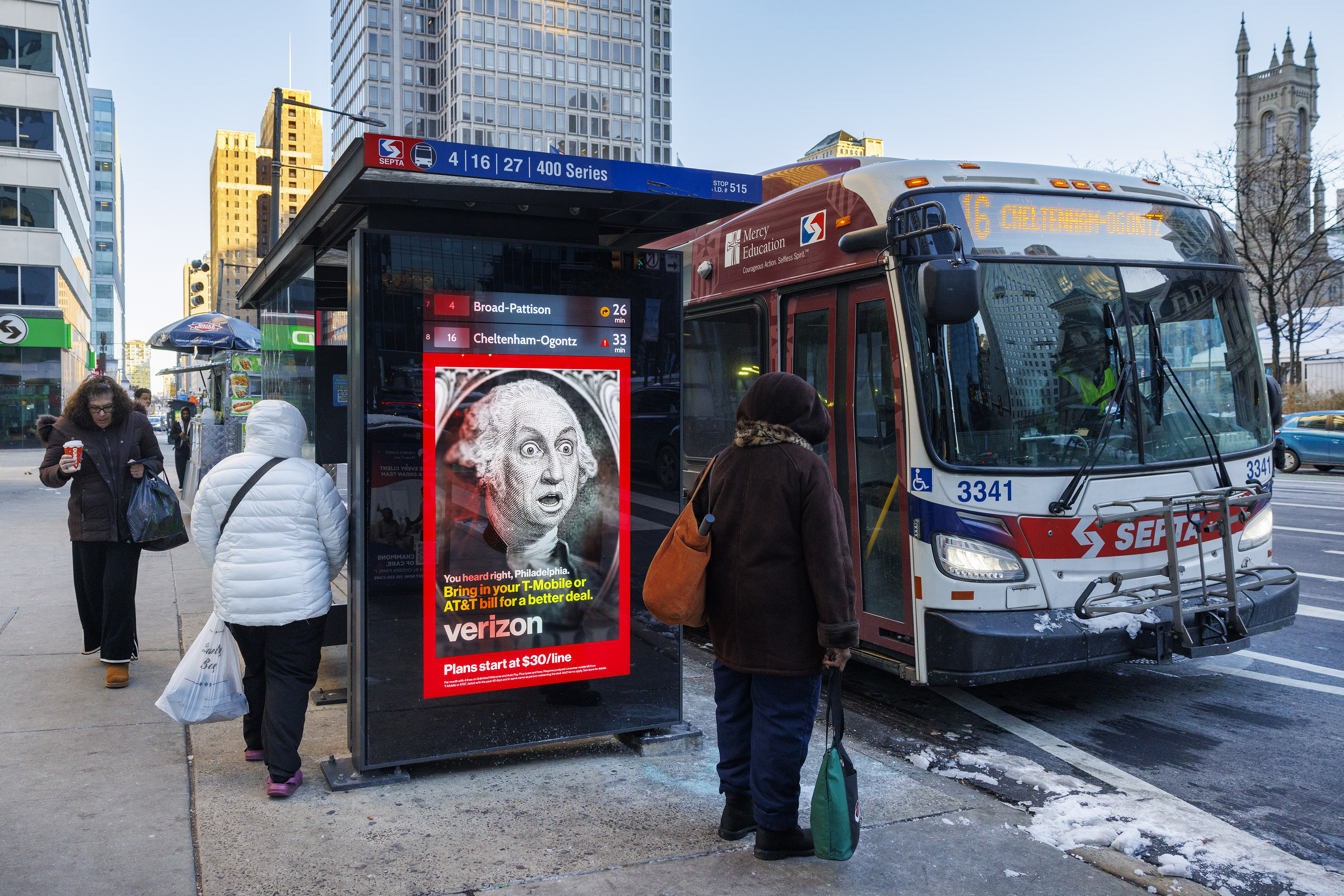
Winter coats are out on a cold morning at a bus stop at 15th and Market Streets on Dec. 15.
Holiday weather this week in Philadelphia
While no snow will likely fall on Christmas Eve or Christmas Day in the Philadelphia region, Tuesday and Friday have chances for precipitation that could bring rain and ice to Philadelphia, and possibly snow north of the city, said AccuWeather senior meteorologist Tyler Roys.
Monday: The best weather this week. Warmer, drier, and less windy.
Tuesday: Rain showers in Philadelphia during the morning commute, but no snow. Possible rain, sleet, or snow in Montgomery and Bucks Counties. Lehigh Valley could receive an inch or more of snow.
Wednesday: No precipitation, but expect wind gusts up to 30 mph. The evening is expected to bring lots of cloud coverage. “Rudolph will definitely need his red nose out and about,” Roys said.
Thursday: Misty weather or light rain scattered across the region throughout the day.
Friday: Stormy weather with precipitation. Philadelphia has a chance for rain and possible ice, but Upper Bucks County and the Lehigh Valley could get snow.
The weekend: On Saturday and Sunday temperatures are forecast to range from the mid-30s to 50 degrees, with a slight wind. Rain is possible Sunday.
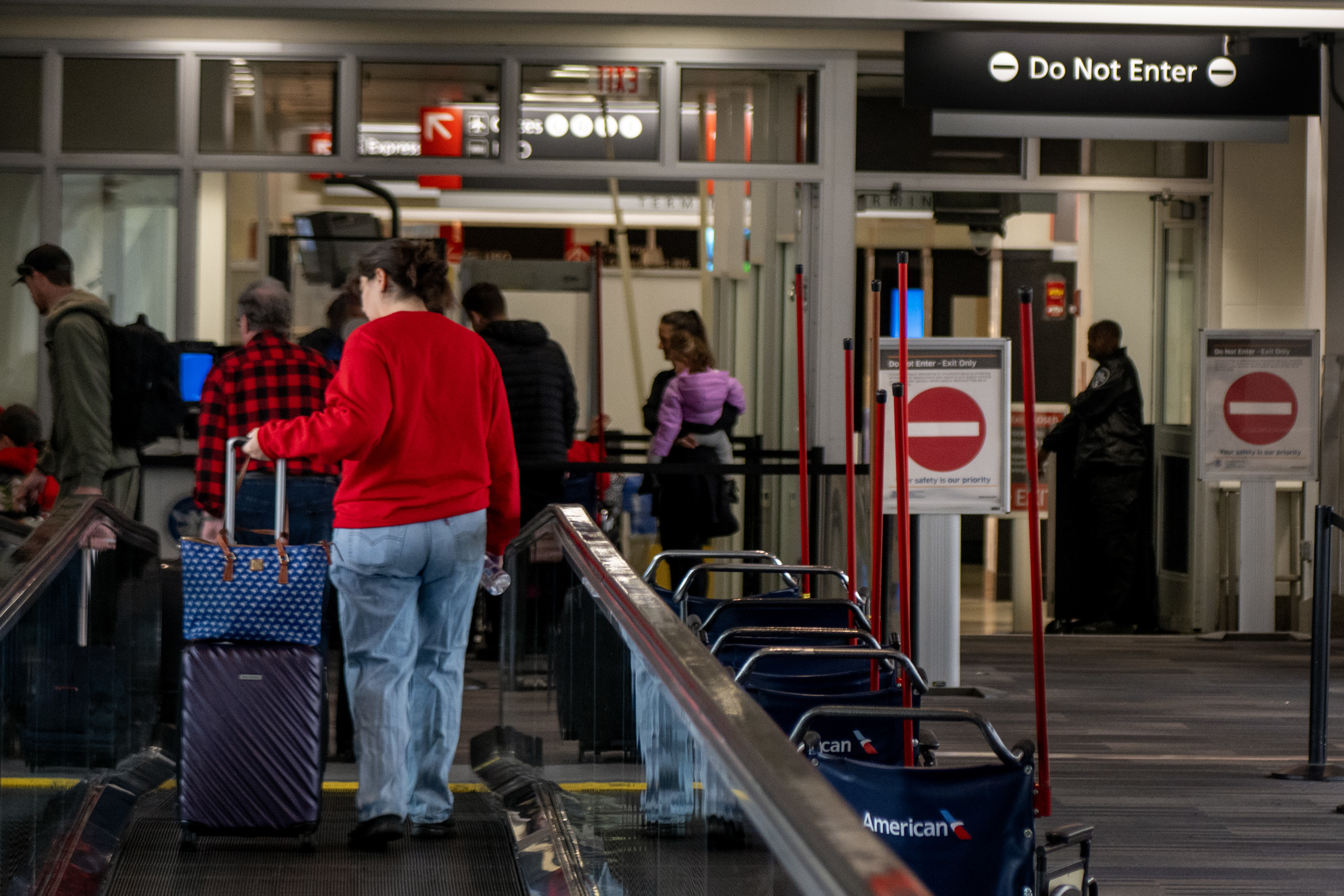
The scene at the TSA checkpoint line in Terminal B at Philadelphia International Airport on Nov. 9.
Holiday travel in the Philadelphia region
Expect longer travel times this year as more people hit the road and sky to get to their holiday destinations.
Airports and flying
Philadelphia International Airport will see a 5% increase in the number of travelers this week compared to the same period last year, with more than 1 million people expected to come through the airport from Wednesday to Sunday, Jan. 4.
PHL’s heaviest traveling days:
Friday, Dec. 26: 94,028 expected passengers
Monday, Dec. 29: 93,096 expected passengers
Saturday, Dec. 27: 92,954 expected passengers
Travelers should arrive two hours before their flight to ensure they get to their gate on time, said Heather Redfern, an airport spokesperson. PHL also has an online travel tips guide for more guidance on easier travel.
The Inquirer operates a year-end PHL tracker for up-to-date information on airport delays and airline performance.
Traffic on the Schuylkill Expressway on Oct. 26.
Driving and peak travel times
A large portion of the holiday travel already occurred this past weekend, but the increased holiday traffic continues.
Christmas Day, Christmas Eve, and New Year’s Eve historically see lower vehicle traffic as people have reached their holiday destinations, according to INRIX. However, Friday is expected to be busy as travelers make their post-Christmas Day moves. “But, remember, crashes or severe weather could create unexpected delays,“ their year-end report warns.
Best travel times for driving in Philadelphia
Most of the traffic congestion this week will come after Christmas Day, with Friday being the busiest, INRIX reports.
To avoid peak traffic, drivers should steer clear of the roads on Monday and Tuesday, from 1 p.m. to 7 p.m. The best time to travel on those days is before 10 a.m.
Wednesday, Christmas Eve, and Christmas Day will have minimal traffic impact, according to INRIX.
The following days will have some of the busiest roads all year: From Friday to Sunday, the worst travel times will be from 11 a.m. to 8 p.m. To avoid congestion, drivers should leave for their destinations before 11 a.m.
With First Day hikes surging in popularity, Pennsylvania and New Jersey are rolling out a full slate of outings to welcome 2026 — from daybreak rambles to sunset treks, and nearly every hour in between for those easing into the new year.
Many of the guided hikes require advance registration and fill quickly.
The Jan. 1 hikes are offered through the Pennsylvania Department of Conservation and Natural Resources (DCNR) and the New Jersey Department of Environmental Protection (DEP). Some are guided by rangers, others by volunteers.
Another option: Join the Friends of Ridley Creek State Park in Media, Delaware County, for a 3.5-mile loop featuring creek views and a stop at historic hilltop Russell Cemetery.
Or, for a spectacular bird’s-eye view of the Pinelands at daybreak, you can tackle a 2.5-mile round trip, starting at 6 a.m., to Apple Pie Hill in Wharton State Forest, where hikers climb the 79 steps of the fire tower at sunrise. The only drawback: The hike has become so popular that the DEP holds a lottery at 1 p.m. on Dec. 31 to select participants.
Apple Pie Hill Tower offers a dramatic view of the Pinelands.
First Day Hikes began in Massachusetts in 1992, and went nationwide in 2012 under an effort by the National Association of State Park Directors.
Ian Kindle, environmental education regional program coordinator for DCNR’s Bureau of State Parks, said the hikes in Pennsylvania started not long after that. But, he said, they have become increasingly popular since the pandemic, when many people took to the outdoors.
“I think people have really taken to the idea of making getting outdoors on the first day of the year a tradition.” Kindle said. “I know that some of the first ones I led at Delaware Canal State Park, we could have 100, 150, and upward of 200 people, which is a challenge to lead.”
Last New Year’s Day, 2,488 people — and 224 dogs — participatedin Pennsylvania. They gathered for 74 hikes at 47 state parks and one state forest, accumulating 6,478 miles.
Cheryl and Gary Moore, of Bucks County, ride their horses over the Schofield Ford covered bridge in Tyler State Park in Newtown, Bucks County in this 2021 file photo.
The two most attended hikes were at Beltzville State Park in Carbon County in the Poconos (175 people) and Tyler State Park in Bucks County (170 people).
This year, DCNR has organized 60 free guided hikes in 49 state parks and three forest districts, choosing to make the walks more focused.
Kindle said an “almost full moon” hike is set for Delaware Canal State Park in Yardley, Bucks County, at 4 p.m. He noted a two-mile hike around Militia Hill at Fort Washington State Park in Montgomery County.
The hikes include: walks at 10 a.m., noon, and 2 p.m. through historic Revolutionary-era Batsto Village in Wharton State Forest; a more rigorous six-mile hike at Brendan T. Byrne State Forest on the Cranberry Trail that includes Pinelands cedar swamps and Pakim Pond; and a two-mile hike at Washington Crossing State Park in Mercer County where you can learn about the famed feat by the Continental Army that routed the Hessians at Trenton.
Back in September 1873, the New York Herald announced that the Hudson River School painter Jasper Francis Cropsey had a new painting. Autumn in the Ramapo Valley, Erie Railway, which would be open to public viewing for “only a day or two longer” at the Wall Street office of Charles Day, the article said.
The painting was commissioned by investor James McHenry, who, with Day, was director of Erie Railway. McHenry, who had been a director of the Atlantic and Great Western Railway before that, had his eye set on the Erie Railway, which was founded in 1832.
In 1872, in what is best described as a corporate coup, McHenry ousted the railroad magnate Jay Gould and took full control over Erie Railway. In celebration, he commissioned the Cropsey painting, which, after those few days on Wall Street, made its way to McHenry’s home in London and remained in private collections, away from the public eye since.
Until now.
In 2024, philanthropists J. Jeffrey and Ann Marie Fox, who live in Bucks County, bought the painting and brought it back to the United States. It is on view at the Brandywine Museum of Art, some 150 miles away from the original setting of the painting, where flatlands west of the Hudson River meet steep hills near the town of Sloatsburg, N.Y.
Here, it can be seen by an American audience for the first time in 152 years.
The Foxes and American art
J. Jeffrey Fox has built a successful career in finance and education and his wife, Ann Marie, has worked with several nonprofits, often focusing on children with special needs. Together, in 2024, they made a $20 million gift to endow the J. Jeffrey and Ann Marie Fox Graduate School at Pennsylvania State University.
The couple, said Jeffrey Fox, have always been interested in American history.
“We used to collect art as souvenirs. We would go to estate sales and garage sales and sometimes buy a piece of art,” he said. “It wasn’t a collection that was of any significance. So once we got a little bit more money, we wanted to buy one painting that’ll be the centerpiece for the rest of our collection.”
They bought Frederick Childe Hassam’s The Cove, Isles of Shoals (1901) at an auction in 2015.
The discerning eye in the couple has always been Ann Marie’s. She spent 15 years volunteering at the Walters Art Museum in Baltimore, and when the couple lived in Annapolis, Md., she took classes under Matt Herban, a retired professor of art from Ohio State University.
After that first Hassam, the couple wanted a Cropsey. But not just any Cropsey.
“We went to the National Gallery and they had a fabulous Cropsey [Autumn — On the Hudson River (1860)]. It just took our breath away. And we were like, ‘Wow, how could we ever get something that good.’ That’s why it took us this long,” said Ann Marie.
“We were very picky. Every artist has great days, and every artist has OK days. We wanted Cropsey on a great day,” her husband said.
Finding Cropsey on a great day
Last year, the Foxes’ art adviser came to know from a friend in Europe that Autumn in the Ramapo Valley was coming up for auction in London in September. Believing that the painting was best sold to an American buyer, this friend approached the adviser before the painting went under the hammer.
The Foxes had 48 hours to make a decision to buy, never having seen the painting, aided only by a high-quality photograph and a condition report.
Cropsey’s catalog raisonné, put together by the Newington Cropsey Foundation in Hastings-on-Hudson, N.Y., says the painting left the country in September 1873. Documents said the painting has been in an undisclosed buyer’s family since the 1950s.
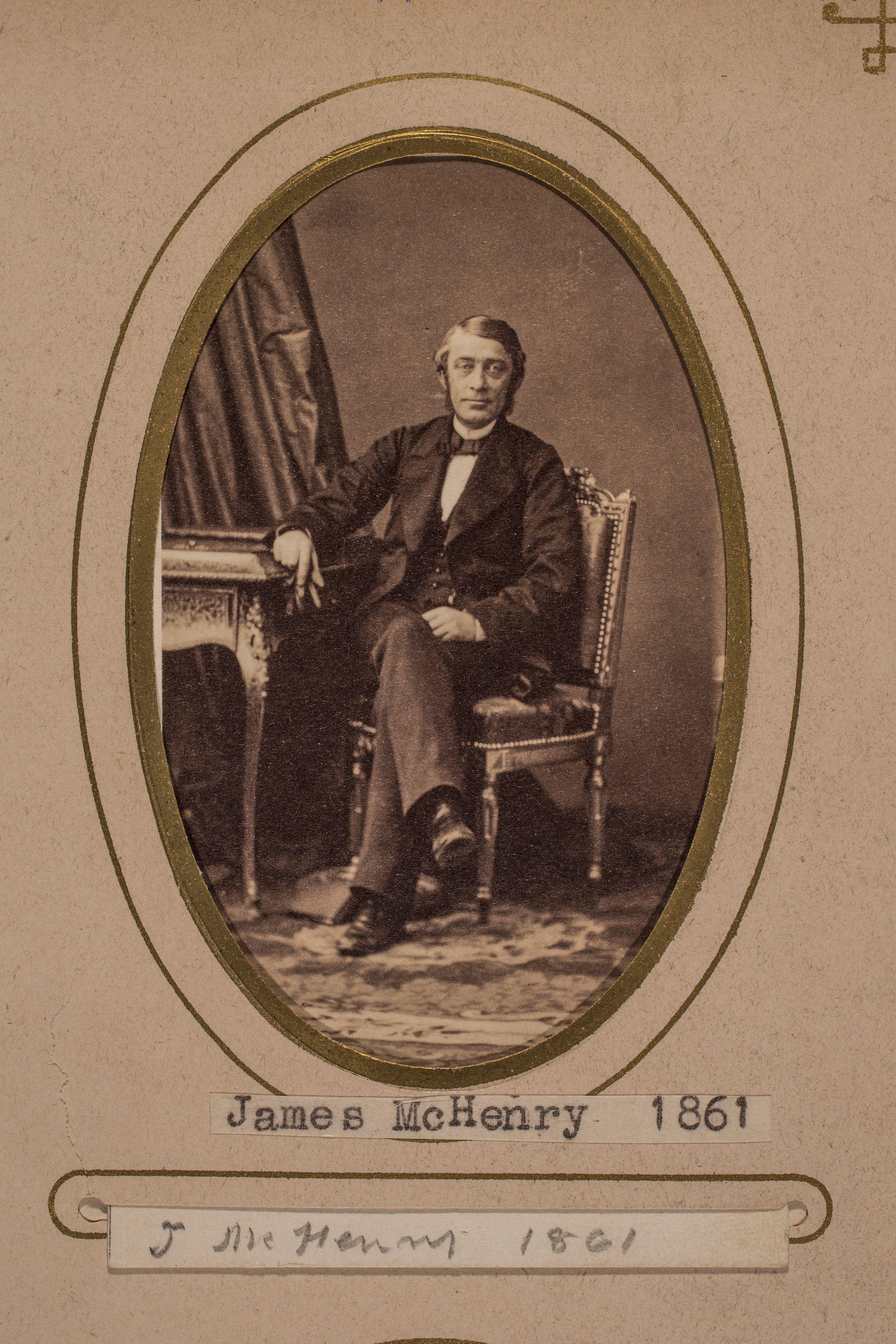
James McHenry’s carte-de-visite,
1861.
McHenry died in 1891 and “we don’t really know what happened from 1891 to the mid-’50s, but we do know that it never left England,” Jeffrey said. “And we don’t think it was ever shown in England. There are no records that we were able to find.”
Ann Marie said yes, and the couple wrote up a letter of intent.
“We were a bit concerned,” said Jeffrey. Another Cropsey — Richmond Hill in summer of 1862, also owned by McHenry — that came up in an auction in 2013 was deemed a “national treasure” by the U.K. and was not allowed to leave the country.
The clearance for Autumn in Ramapo to leave England took a little over three months.
“The English let that out of England because it was an American artist, and an American scene,” Jeffrey said.
The couple bought the painting in January 2025. Once the artwork arrived in the United States, a restorer found it to be in exceptional condition, exactly as advertised. In March, the conservator finished assessing the painting, and the Foxes traveled to New York to see it in real life.
“It just displayed so much grandeur. I thought it was wonderful,” Anne Marie said. “The autumn colors … just stunning. And the size of it is amazing. The first thing I said when I saw it was, ‘It can’t come to my house. It’s going to tear down my wall.”
Including the frame, the artwork measures 4.75 feet by 7.16 feet.
“Our house isn’t that big, we probably couldn’t get through the door,” Jeffrey said.
The couple couldn’t ship it to their foundation office, either. “We needed a museum that would be willing to show it and buy into the story, because it’s a phenomenal story,” Jeffrey said.
The “Cropsey, Wyeth, and the American Landscape Tradition” exhibition runs through May 31 at the Brandywine Museum of Art.
The painting and the painter
It’s easy to miss the “Erie Railway” part in Autumn in the Ramapo Valley, Erie Railway. Cropsey paints an idyllic fall scene with the Ramapo Valley bathed in yellow, red, and, orange foliage. Bits of green peep out, the sky is clear and a light blue, a waterfall flows gently on the left, the Ramapo River sits still.
The smoke-billowing train chugs through the valley in the distance, but in the center of the painting. Black rails of the railway bridge run parallel to the river and disappear into the leaves.
The setting of the painting falls between what is New York’s Orange and Rockland County, on the western side of the Hudson River, and north of Suffern.
“This painting … really helps in telling a fuller story of the history of American art, and particularly, this brief moment, in the third quarter of the 19th century, when huge sums were being spent on huge paintings,” said William L. Coleman, curator at the Wyeth Foundation and director of the Andrew & Betsy Wyeth Study Center.
“This is part of a larger story with artists like Frederic Church, Albert Bierstadt, and Thomas Moran.”
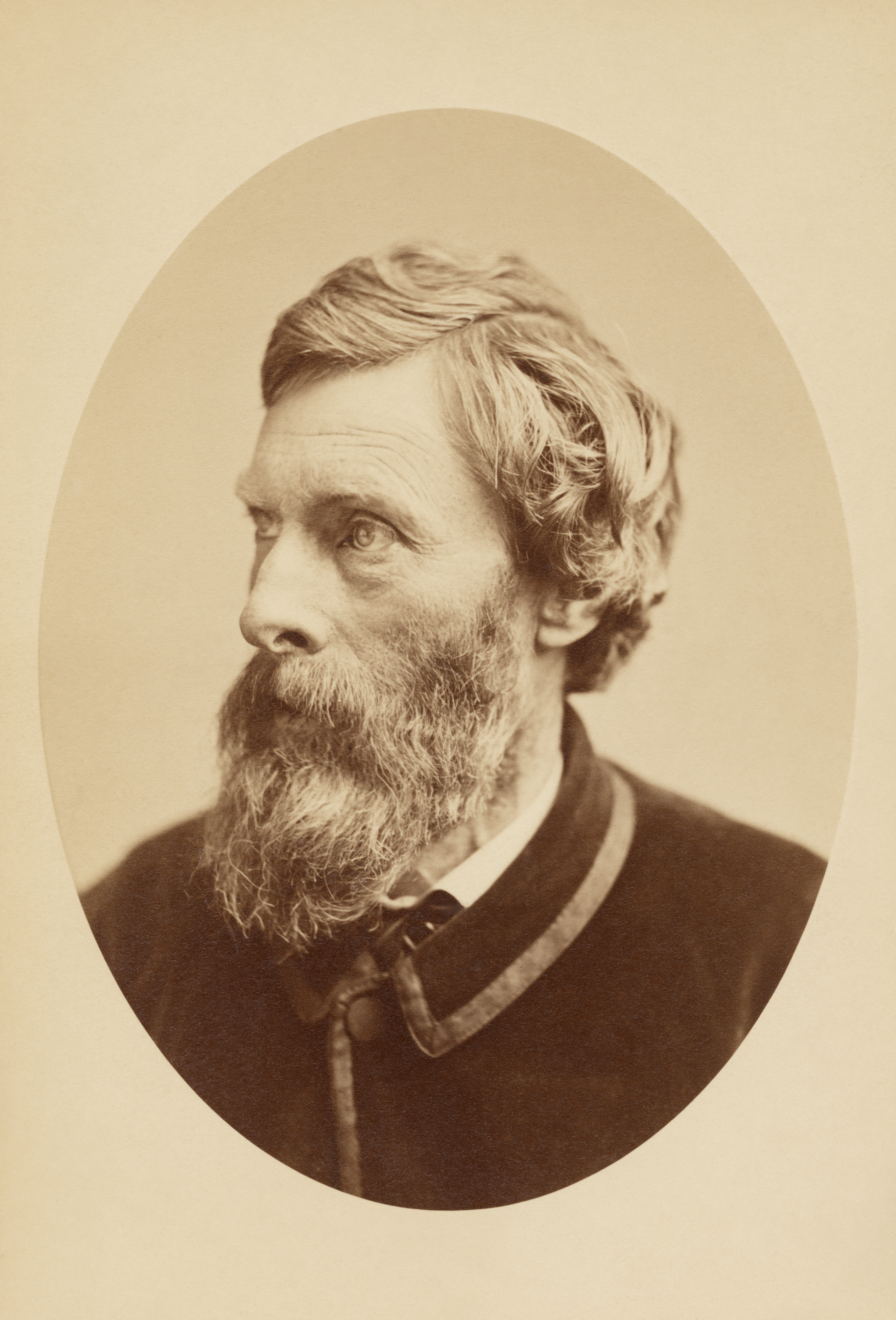
Jasper Francis Cropsey by Napoleon Sarony, circa 1870.
Cropsey, an architect who had designed several railway stations himself, was part of a line of artists who “engaged with the new fortunes being made from the transportation industry, making images of new railroads traveling through the landscapes,” Coleman said.
The artists enjoyed generous patronage and lived well. Cropsey lived in a mansion he built, called Aladdin, less than 10 miles away from the site of the painting. Here he built himself a studio that doubled as a gallery and art marketplace.
The Philadelphia story
Cropsey’s patron James McHenry was born in Ireland in 1817 and was raised in Philadelphia. He moved back to England, living primarily in London, where he made a fortune raising money and investing it in developing railways in America.
His sister remained in Philadelphia until her death.
Jeffrey Fox calls McHenry “notorious,” adding that he often worked against other equally infamous “robber barons” like Cornelius Vanderbilt and Gould.
“He paid $25,000 on a Bierstadt painting in 1865, so he was quite an art collector himself,” Jeffrey said. McHenry, who already owned Richmond Hill in Summerof 1862, perhaps had gotten acquainted with Cropsey when the artist visited England in 1856.
Cropsey had already made a name for himself painting Starrucca Viaduct, Pennsylvania (1865) —where, too, a distant train almost merges into the green slopes of the mountain behind it — when McHenry wanted an artist to commemorate his pushing Gould out of the Erie Railroad directorship in 1873.
“He had already gotten a national reputation for painting part of this exact railroad, and so James McHenry went to the railroad guy,” said Coleman, “and commissioned Autumn in Ramapo.”
Artists like Bierstadt and Sanford Robinson Gifford were also working on similar railroad commissions at the time.
“Most of their stock and trade are images that make use of the aesthetic value of the sublime, the power of the natural world against the small scale of human existence. So they give us that feeling of awe, of wonder,” Coleman said.
Landscape paintings, he said, “tell stories about belonging, about ownership, about your place in a wider society. … And they often risk being underestimated. These are pleasant, old pictures that we see on calendars and postage stamps, but they have a lot to tell us about how we became the nation we are today.”
The model train at Brandywine Museum’s holiday showcase in 2018.
An irrelevant cost
At Brandywine, Cropsey’s train speaks to the museum’s beloved holiday train display, posing questions of tradition and modernity as the nation enters its 250th year.
It will stay at the museum through May and then travel to the Dixon Museum in Memphis, Tenn. Then it heads to the Seed Art Museum in Louisville, Ky.;, Rockwell Museum in Corning, N.Y,; University of Georgia Museum of Art in Athens, Ga.; and the Newington Cropsey Foundation.
The Foxes wanted this piece of American history to be witnessed by Americans.
What they paid for it, Jeffrey Fox said, is irrelevant.
“If you put a value to it, that’s what you’re going to talk about, as opposed to the painting,” he said. “We’re a foundation and at the end of the day, we’re not going to sell it. So it doesn’t matter what we paid.”
“Cropsey, Wyeth, and the American Landscape Tradition,” continues through May 31 at the Brandywine Museum of Art, U.S. Route 1 at Hoffmans Mill Road in Chadds Ford, Chester County. Information: brandywine.org or 610-388-2700.
This article has been updated with the correct year of James McHenry gaining control of the Erie Railway. It was 1872.
Four moderate Republicans — including three who are in the hot seat for reelection in swing districts in Pennsylvania — joined Democrats to sign a discharge petition Wednesday to force a vote on a proposal to extend pandemic-era expanded Obamacare subsidies.
While the move may not save the subsidies from expiring, given that Republican-controlled Senate has indicated resistance to the plan, the votes mark the sharpest rebuke of party leadership from within the GOP since President Donald Trump started his second term.
U.S. Rep. Brian Fitzpatrick, who has represented Bucks County since 2017, and two GOP freshmen from elsewhere in the state, U.S. Reps. Rob Bresnahan and Ryan Mackenzie, joined New York moderate Mike Lawler to give Democrats the votes they needed to push a vote on a clean extension of the subsidies to the floor.
The move comes on the heels of other high-profile examples of rank-and-file Republicans bucking Trump and House Speaker Mike Johnson, including last month’s bipartisan vote to release the Jeffrey Epstein files, following a discharge petition after Johnson had slow-walked the legislation.
The “dam is breaking,” U.S. Rep. Marjorie Taylor Greene (R., Ga.) told CNN on Tuesday in reference to the string of incidents in which members of the party had defied the president and speaker ahead of next year’s midterms.
The Republicans who defected on the healthcare bill had favored a compromise that they hoped might have a chance of passing Congress, but that was rejected by Johnson (R., La.), who sided with conservatives against expanding the subsidies, on Tuesday night.
That left them supporting a vote on a bill that extends the program as is, with far fewer restrictions and concessions than the compromise bills included.
“Despite our months-long call for action, leadership on both sides of the aisle failed to work together to advance any bipartisan compromise, leaving this as the only way to protect the 28,000 people in my district from higher costs,” Bresnahan said in a statement posted on X.
“Families in NEPA cannot afford to have the rug pulled out from under them. Doing nothing was not an option, and although this is not a bill I ever intended to support, it is the only option remaining. I urge my colleagues to set politics aside, put people first, and come together around a bipartisan deal.”
Later Wednesday, House Republican leaders pushed to passage a healthcare bill that does not address the soaring monthly premiums that millions of people will soon endure. The bill passed on a mostly party-line vote of 216-211. U.S. Rep. Thomas Massie (R., Ky.) joined with Democrats in voting against the measure.
Fitzpatrick and Lawler tried to add a temporary extension of the subsidies to the bill, but were denied.
“Our only request was a floor vote on this compromise, so that the American People’s voice could be heard on this issue. That request was rejected. Then, at the request of House leadership I, along with my colleagues, filed multiple amendments, and testified at length to those amendments,” Fitzpatrick said in a statement. “House leadership then decided to reject every single one of these amendments.
“As I’ve stated many times before, the only policy that is worse than a clean three-year extension without any reforms, is a policy of complete expiration without any bridge,” Fitzpatrick said.
Bresnahan’s vote for the discharge petition came a little more than a week after he welcomed Trump to his Northeast Pennsylvania district for a rally, which was meant to address voter concerns about affordability ahead of next year’s midterms.
Bresnahan won his election last year by about 1 percentage point. He was also one of just 20 House Republicans to sign a successful discharge petition earlier this month to force a vote for collective bargaining to be restored for federal workers.
“At the end of the day that might have been going against party leadership, but it was what’s right for northeastern Pennsylvania,” he told The Inquirer of the vote at the Pennsylvania Society last weekend.
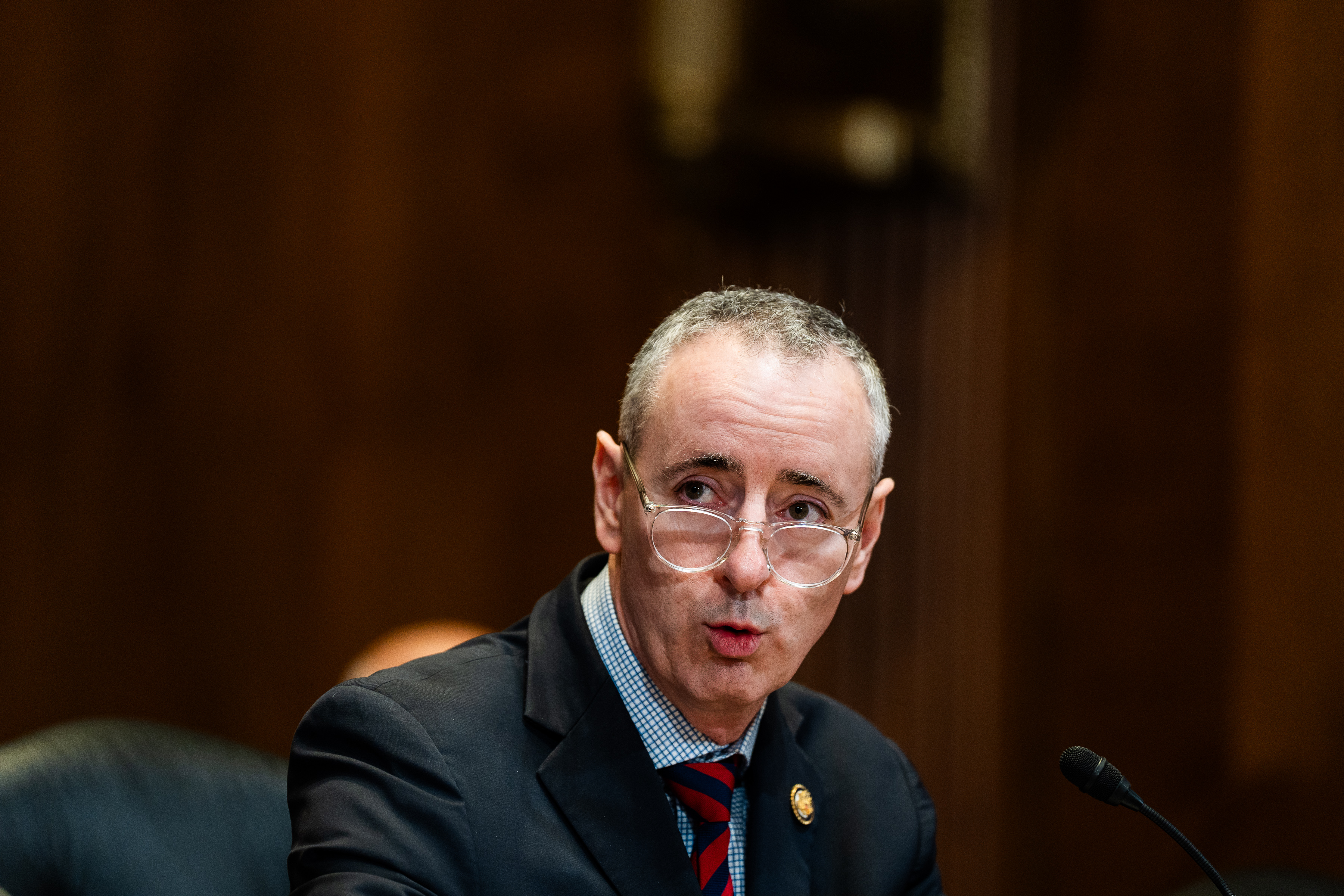
Rep. Brian Fitzpatrick (R-Pennsylvania) speaks at a hearing on Capitol Hill on Dec. 3.
Mackenzie, in an interview with The Inquirer, blamed Democrats for not signing on to one of the compromise proposals, leaving him and the other three Republicans with no alternative but to sign onto a discharge for a plan he doubts will pass.
“But if you send the Senate anything at this point, I’m of the opinion it will continue the conversation and they’ll consider what their options are,” Mackenzie said. “If they would like to do additional reforms, I welcome those.”
While Republicans who have opposed the extension argue the subsidies were meant to be temporary and affect only about 7% of Americans, Mackenzie said he has been hearing from constituents constantly.
“Healthcare and the current system is unaffordable for many people,” he said. “We recognize the current system is broken for millions of Americans, so to actually get to some kind of better position, you need both short-term and long-term solutions.”
He called the Affordable Care Act subsidy extension a needed short-term solution “to do something for people struggling right now.”
Like Bresnahan, Mackenzie won his Lehigh Valley seat by 1 percentage point last year. And the district will be a top priority for both parties in next year’s election — as shown by Vice President JD Vance’s visit there Tuesday.
U.S. Rep. Scott Perry, a staunch Trump ally, represents a swing district in Central Pennsylvania but voted against the discharge petition. Janelle Stelson, a Democrat seeking Perry’s seat, called him “extreme” for voting against the measure.
“While other Republicans are working across party lines to lower costs, Perry is yet again refusing to do anything to make life more affordable,” said Stelson, who narrowly lost to Perry last year.
Some Republicans do not want to extend the credits at all, while others want abortion restrictions included.
Democrats hoping to unseat Fitzpatrick argue he has a record of pushing back on Trump and GOP leaders only in ways that do not actually damage the party or its priorities. In this case, though, the three Pennsylvanians were critical in getting the petition through, even if the future of ACA tax credits remains uncertain.
“The only thing Brian Fitzpatrick has perfected in his 9 years in Congress is the art of completely meaningless gesture, designed to protect his political future not the people he serves,” his Democratic challenger, Bucks County Commissioner Bob Harvie, wrote on X.
Harvie had previously called on Fitzpatrick to sign the Democrats’ discharge petition.
Not all ACA tax credits are under threat. Under the ACA, people who earn less than 400% of the federal poverty level — about $60,000 — are eligible for tax credits on a sliding scale, based on their income, to help offset the monthly cost of an insurance premium.
That tax credit is part of the law, and therefore not expiring. But what will expire is an expansion passed in 2021 when Congress increased financial assistance so that those buying coverage through an Obamacare marketplace do not pay more than 8.5% of their income.
This article includes information from the Associated Press.
County staff had requested a 7.2% tax increase to fill the budget hole, but Democratic Commissioners Bob Harvie and Diane Ellis-Marseglia voted to increase that hike to 8%, citing inflation and uncertainty in state and federal dollars.
“It’s leaving us with a very, very small surplus in a very uncertain time,” Harvie, a candidate for Congress, said of the original request.
Republican Commissioner Gene DiGirolamo voted against the tax increase but did not say why.
The tax boost will translate to an increase of around $72 annually for the owner of a home assessed at the Bucks County average, county officials said.
Chester County’s commissioners voted Wednesday to approve a budget without a tax increase. Bucks County was the only one of Philly’s collar counties not to raise property taxes in 2025.
In this year’s budget, Bucks County committed additional funds to the local community college and library systems, officials said. And, Ellis-Marseglia said, the cost of providing services to county residents had only increased.
“It’s reasonable to think that it costs more to take care of the people in our nursing home, the people in our jail,” she said.
As a result, Ellis-Marseglia and Harvie argued for a slightly larger tax increase this year to provide a cushion for the county to lean on.
“I see things as getting really dark in the future in terms of money,” Ellis-Marseglia said.
William Ingram, 51, entered a plea to third-degree murder and related crimes for killing his 82-year-old mother, Dolores, as well as drug crimes for running a sizable marijuana and psilocybin mushroom-distribution business out of the condo they shared.
In a deal negotiated with Bucks County prosecutors, Ingram avoided a trial on charges of first-degree murder, and the potential it carries for life in prison.
Chief Deputy District Attorney Marc Furber said that negotiation included an agreed-upon sentence of 26 to 54 years in state prison for murder, abuse of corpse, and related crimes. But Ingram’s sentencing for the drug crimes will be up to the discretion of Common Pleas Judge Stephen Corr at a hearing in February.
Ingram’s attorney, Riley Downs, said Ingram suffers from a schizoaffective disorder, which is being treated and managed through medication while he’s incarcerated.
During his plea before Corr, Ingram admitted to the murder but initially seemed confused about some of the details.
Investigators said that after beating his mother in the head on June 16, 2024, Ingram left behind a chaotic and gruesome crime scene, with blood spattered throughout the home’s living room.
Ingram buried her body under a mountain of detritus, including a shattered aquarium that once housed his two pet lizards, which police found dead nearby.
Police found $53,000 among the items piled on top of the victim, as well as six pounds of marijuana and packaged psylocibin mushrooms. More drugs and paraphernalia, including cases of marijuana vapes, hash, and edibles, were found in Ingram’s bedroom.
A handwritten note advertised the prices for each item, according to Furber, the prosecutor.
Ingram stole his mother’s Honda Civic and fled Bucks County, driving four hours south to Washington, D.C.
Just before 1 a.m. the next day, police said, Ingram, wearing no clothes, approached a police officer sitting in a patrol car and used a skateboard to smash the car’s front passenger window. When the officer confronted him, he grabbed the officer, according to police. The officer pushed Ingram away, and he ran off.
Other officers caught up to Ingram about a half-mile away and took him into custody. He was charged with assaulting a police officer and destruction of property and was taken into custody.
While being questioned by police, Ingram admitted to killing his mother hours earlier after he said she hit him in the face, Furber said Monday.
He told the officers he left her body in their home.
“There’s tons of stuff thrown all over the place, I don’t know what the [expletive] I threw. … there’s blood, just a big mess,” Ingram said, according to court filings.
According to the new survey, 38% of all Pennsylvanians support data centers being built in the Commonwealth, while 35% oppose, and 27% are neutral or have no opinion. But when asked about data centers being built in their area, residents’ opposition grows: 34% support, 42% oppose, and 24% are neutral or have no opinion about centers being built in or near their communities.
And opposition to close-to-home data center construction is among the strongest in the southeast part of Pennsylvania, second only to opposition in the northeast, a hot spot for data center construction. In Southeast Pennsylvania, 45% of respondents strongly or somewhat oppose data centers, while 54% strongly or somewhat oppose them in the northeast.
Among Pennsylvanians’ worries about data centers, 70% are concerned about the amount of water data centers use, and 71% are concerned about the amount of electricity data centers use.
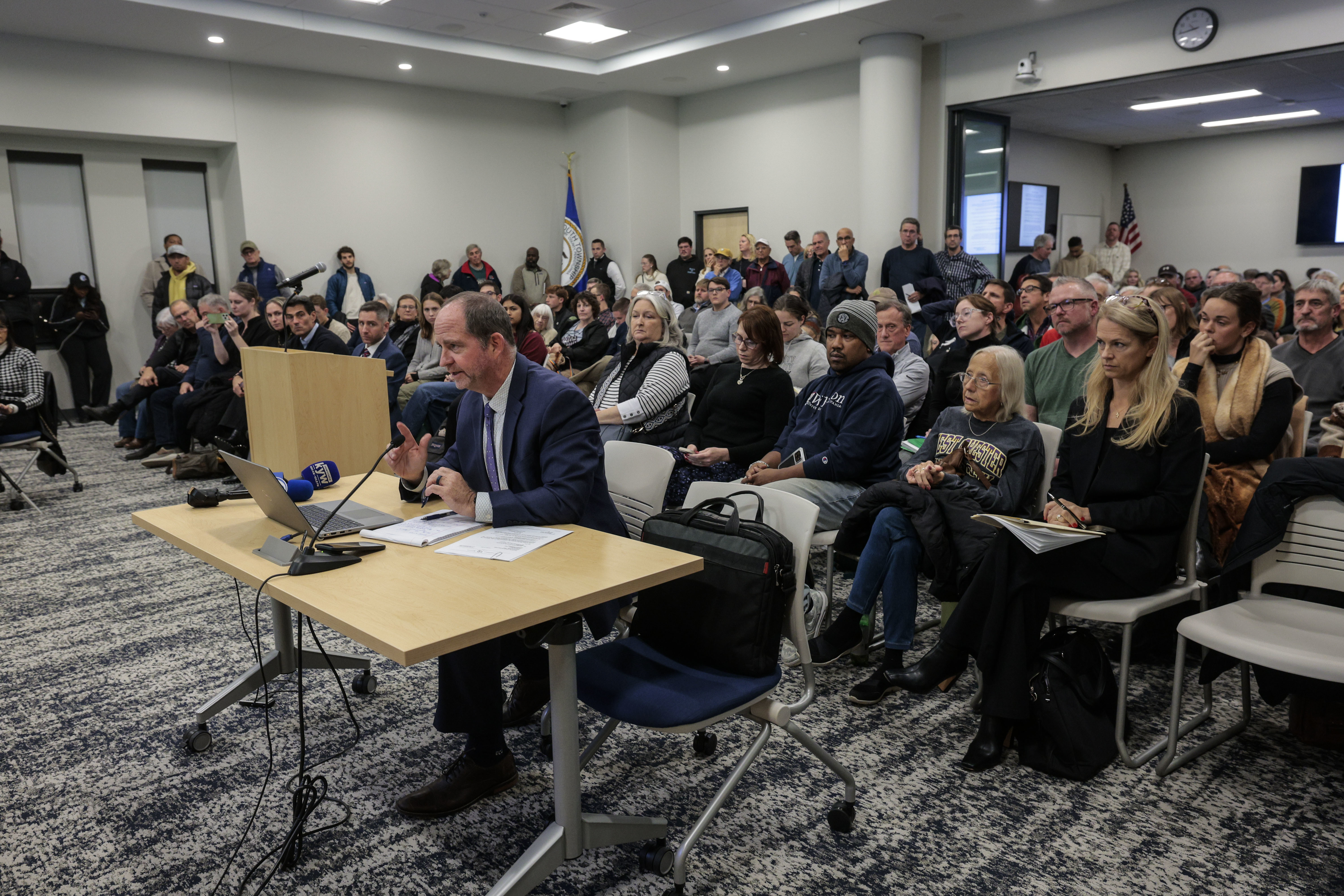
Edmund J. Campbell, attorney for developer Brian O’Neill, spoke to the Plymouth Township zoning board in November before abruptly withdrawing the application for a Conshohocken-area data center over legal issues. Residents, some of whom had rallied against the proposal, packed the room.
Seventy percent of Pennsylvanians strongly or somewhat support requiring data centers to provide their own energy generation, rather than get electricity from the grid.
When it comes to AI more broadly, just over half of Pennsylvanians told pollsters they believe AI will decrease the number of available jobs in their industry, while 16% said they think it will increase the number of jobs (29% said they thought it would have no impact).
Nearly twice as many residents think AI will have a net negative impact on the economy compared to how many think it will have a positive impact (48% said negative, 25% said positive). When respondents were asked about the environment, the results were similar (46% vs. 21%).
The survey of 2,000 Pennsylvania adults was conducted online and via text between Nov. 19 and 23.