Philadelphia is the newest destination forLilly Gateway Labs, an incubator for early-stage biotech companies backed by pharmaceutical giant Eli Lilly & Co., the companyannounced Wednesday.
The Center City incubator will be Lilly’s fifth in the United States. Biotech hotbeds Boston, South San Francisco, and San Diego already have them. (South San Francisco has two.) Companies at those locations have raised more than $3 billion from investors since the program started in 2019, Lilly said.
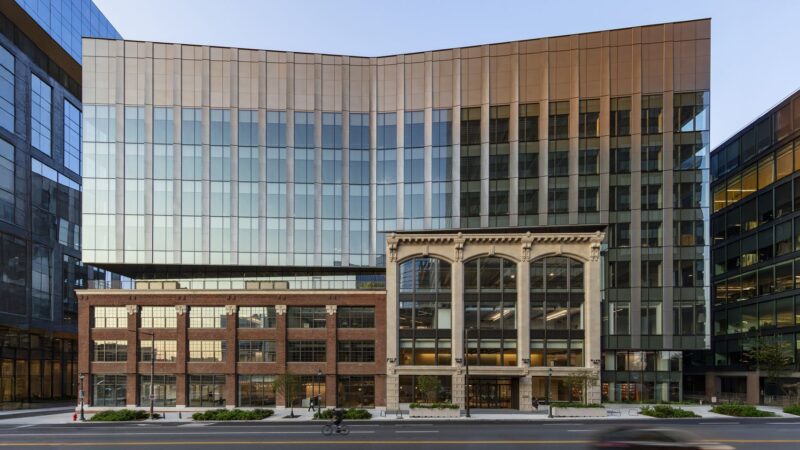
Lilly’s Philadelphia operation will occupy 44,000 square feet on the first two levels of 2300 Market St. in Center City.
Lilly expects to house six to eight companies there, aiming to welcome the first startups to the site in the first quarter of next year, said Julie Gilmore, global head of Lilly Gateway Labs. She did not identify prospects.
Typically, Gateway Labs residents are at the stage of raising their first significant round of capital from investors, called Series A, and are two or three years from clinical testing, she said.
The arrival of high-profile Lilly, which has seen resounding success with its GLP-1 drugs for diabetes and weight loss, could turn out to be a shot in the arm for a local biotech scene. Philadelphia has a growing biotech sector but has lagged places like Boston, despite the presence of world-class scientists atlocal research universities.Their work has fueled groundbreaking discoveries in cell and gene therapy, as well as vaccines.
But Lilly is interested in supporting ideas that go beyond the city’s cell and gene therapy strengths, said Gilmore. Gateway labs is part of Lilly’s Catalyze360 Portfolio Management unit, which provides broad support to fledgling biotech firms, including venture capital.
“What we like is to go after innovative science. Who are the companies trying to solve really hard problems?” Gilmore said. “And we do know that Philadelphia has had a ton of success in gene therapy and CAR-T and I hope we can find some great companies in that space, but we’re going to be open to other types of innovative science as well.”
Expanding Philly’s life sciences footprint
Indianapolis-basedLilly already has a small presence in Philadelphia with Avid Radiopharmaceuticals Inc., a company it acquired in 2010. Avid still operates in University City. Lilly’s chief scientific officer, Daniel Skovronsky, founded Avid in 2004 after receiving a doctorate in neuroscience and a medical degree from the University of Pennsylvania.
Lilly is interviewing people to lead Philadelphia’s Gateway Labs location. They like to hire people who are familiar with the local universities and venture funds for those jobs, but that’s not all that matters. “We’re also looking for somebody who’s got deep drug development expertise,” Gilmore said.
Lilly’s incubator adds to the life sciences activity at 23rd and Market Streets.
Breakthrough Properties, a Los-Angeles-based joint venture of Tishman Speyer and Bellco Capital, announced plans for the eight-story, 225,000 square-foot building in 2022. Last week, Legend Biotech, which is headquartered in Somerset, N.J., celebrated the opening of a new cell therapy research center on the building’s third floor.
Lilly Gateway Labs companies agree to stay for at least two years, and they can apply for up to another two years, Gilmore said.
“The goal is, a company moves in and they can just worry about their science, worry about their team, and moving their mission forward, and we try to take care of everything else,” she said.
Tower Health’s preliminary financial report in August for fiscal 2025 showed a $5.9 million operating profit, a gain that came thanks for the sale of a shuttered hospital in Chester County.
But that apparent annual profit, the Berks County nonprofit’s first since 2017, turned into a $20.6 million loss when Tower released its annual audit.
Auditors from KPMG decided that Tower should boost medical malpractice reserves and give up on collecting millions owed by patients, Tower said in a statement.
“As part of our standard accounting process, the audited financials for the full year reflect increased malpractice insurance reserves and final adjustments to accounts receivable,” Tower said.
Most of the $26 million swing to a loss came from medical malpractice, but Tower also reduced what is called patient accounts receivable, representing unpaid bills, to $236.6 million from $251.6 million in August’s preliminary results, according to Tower’s audited financial statements that were published Friday.
Separately, Tower reported a $15.9 million operating loss for the three months that ended Sept. 30. That loss was a bit bigger than the $14.2 million loss in the same period last year. Tower’s revenue for the quarter was $501 million, up 4% from $479.8 million last year.
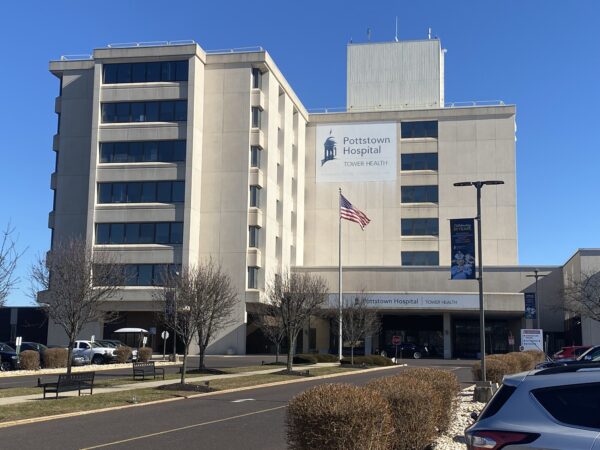
The results for the first quarter of 2026 did not include expenses for Tower’s layoff of 350 employees, or about 3% of its workforce, earlier this month. The cuts hit Pottstown Hospital particularly hard. Tower is eliminating 131 jobs there and eliminating some services.
The closures include the combined intensive care/critical care unit, the Pottstown location of the McGlinn Cancer Institute, and the hospital’s endoscopy center.
Two unions that represent Pottstown employees, the Pennsylvania Association of Staff Nurses and Allied Professionals and SEIU Healthcare Pennsylvania have decried the cuts and called on management to engage in discussions on how to preserve jobs and services.
Jefferson Health says it will terminate Lehigh Valley Health Network’s contracts with UnitedHealthcare next year, stating United, the nation’s largest health insurer, is paying less than their negotiated rates, Jefferson said Monday.
The contracts will remain in effect until Jan. 26 for Medicare Advantage patients and until April 25 for patients with commercial insurance through their employer. In the last 18 months, Lehigh Valley Health facilities treated 70,000 people with United insurance, Jefferson said.
“Like all health systems, we are facing significant headwinds as costs rise faster than reimbursement,” Mark Whalen, Jefferson’s chief strategy and transformation officer, said in an email.
“When reimbursement falls substantially below negotiated levels, it threatens our ability to fulfill our mission of providing exceptional care to all patients.”
Whalen said Jefferson will continue working to secure a better deal with United, as it has for more than two years.
United said in a statement that its most recent proposal went to Lehigh Valley in April. “We have yet to receive a counter proposal from the health system, whose last proposal was provided in December 2024 and included a near 30% price hike in the first year of our contract,” the statement said.
Jefferson countered with a statement saying that its dealings with United are not part of a normal contract renegotiation. “This ongoing dispute is caused by United Healthcare’s implementation of a multiyear 30% price decrease that was not agreed to, not accepted and is not sustainable, Whalen said.
The timing of the United announcement is noteworthy. Medicare Advantage open enrollment is underway until Dec. 7 for plans that take effect Jan. 1.
The potential termination of United’s Medicare plans on Jan. 26 puts United’s customers who depend on Lehigh Valley for health services in a quandary. Should they stick with United or switch to another plan, such as those offered by Jefferson’s insurance arm?
United said Jefferson’s decision to make its announcement during open enrollment looked like “a negotiating tactic.”
The Minnesota company has about 27,500 Medicare Advantage enrollees in the main counties served by Lehigh Valley Health doctors, according to federal data from September.
The impasse does not affect Philadelphia-area Jefferson patients with insurance from UnitedHealthcare.
Insurance regulations require notice to patients before contracts end.
In March, Jefferson went out-of-network with Cigna Health for a few weeks during a similar impasse in negotiations. Jefferson and Cigna quickly reached a deal after the termination.
The worst of the coronavirus pandemic that started nearly six years ago is well in the past, but Philadelphia’s biggest nonprofit health systems are still contending with the financial disruption unleashed by the virus that led to thousands of deaths in the area.
Operating conditions for hospitals started improving in 2023, but “the slope of the recovery is a bit more shallow than a lot of health systems had planned for,” said Mark Pascaris, a senior director at Fitch Ratings, one of three major credit ratings agencies.
Patients have returned, but the pandemic led to a resetting of expensesfor labor and supplies at a higher level, Pascaris said. “That’s been the challenge over the last two or three or four years now, trying to manage through a very challenging expense situation,” he said.
To show how the financial landscape has changed, The Inquirer compiled financial data for the region’s six biggest health systems that have fiscal years ending June 30 each year. The analysis compared average operating profits in three years before the pandemic (fiscal years 2017-19) to the results in most recent three years (fiscal years 2023-25).
All six systems showed a substantial drop in a measure of earnings that excludes certain accounting expenses and interest costs. This slice of financial results is known as earnings before interest, depreciation, and amortization. Abbreviated as EBIDA, it’s a primary indicator watched by influential credit ratings agencies.
window.addEventListener(“message”,function(a){if(void 0!==a.data[“datawrapper-height”]){var e=document.querySelectorAll(“iframe”);for(var t in a.data[“datawrapper-height”])for(var r,i=0;r=e[i];i++)if(r.contentWindow===a.source){var d=a.data[“datawrapper-height”][t]+”px”;r.style.height=d}}});
The experience of Children’s Hospital of Philadelphia clearly illustrates what has happened: The organization’s aggregate revenue in the most recent three fiscal years was 58% higher than it was in the three years that ended June 30, 2019, but its EBIDA climbed only by half a percentage point.
“Hospitals and healthcare systems across the country continue to face significant headwinds, driven by reimbursement challenges, increased supply and labor costs, uncertain governmental pressures, and the continued ripple effect of the pandemic,” CHOP said in a statement.
Officials at ChristianaCare, Main Line Health, and Temple University Health System echoed CHOP’s remark.
“Margins were far better prior to the pandemic, largely due to lower supply and labor costs,” Main Line’s chief financial officer Leigh Ehrlich said. “Those costs rose sharply during the pandemic and continue to rise.”
ChristianaCare’s CFO Rob McMurray noted: Not only have Medicare and Medicaid rates not kept up with inflation, but more people have those government forms of insurance for people 65 and older and for low-income people.
The nonprofit is expanding from its base in northern Delaware to Southeastern Pennsylvania and is expanding alternative formats, such as hospital-care-at-home and micro hospitals, to reduce costs, McMurray said.
A significant worry for Temple University Health System is the impact of the 2025 budget reconciliation bill, sometimes called the One Big Beautiful Bill Act. The North Philadelphia nonprofit estimates that Medicaid cuts in that law will cost it $519 million over the next 10 years, said Jerry Oetzel, the system’s CFO.
Amid persistently higher costs, three Philadelphia-area health systems have cut expenses over the last two years by changing how they account for investments in facilities and equipment. The change significantly boosted operating income in all three cases.
ChristianaCare and Main Line Health are now spreading the cost of buildings and building improvements over as many as 80 years, they said in their fiscal 2025 audited financial statements. That is double the maximum number of years they previously used to calculate what accountants call depreciation expense. Thomas Jefferson University made a similar change last year.
All three health systems use PricewaterhouseCoopers LLP as their auditor. The firm, which did not respond to a request for comment, also has Philadelphia health-system clients that have not extended their depreciation schedules.
The term depreciation expense refers to the way hospitals and other businesses allocate the cost of a building, a piece of equipment such as an MRI machine, or even software to manage patient records across the number of years the asset is likely to be used.
It’s a noncash expense because the money used to make the purchase is recorded elsewhere in the financial statements. Several financial and accounting experts said the change could be seen as cosmetic.
“It’s not affecting operations. It’s not increasing their revenues. It’s not decreasing their cash expenditures. It is purely a bookkeeping entry,” said Steven Balsam, a professor of accounting at Temple University’s Fox School of Business.
Main Line Health
At Main Line, the extended depreciation schedule reduced the expense by an estimated $37.5 million. That helped the system achieve a small, $4 million operating profit for the first time since fiscal 2021, when federal COVID-19 aid buoyed hospitals.
Without the depreciation savings, Main Line would have had an operating loss of $33.5 million in the year that ended June 30, compared to a $61 million operating loss in fiscal 2024.
Asked for comment, Main Line’s chief financial officer Leigh Ehrlich noted that the system’s financial performance had improved, thanks to “increased patient volumes and continued focus on expense management.”
Excluding noncash depreciation and amortization in each of the last two years, Main Line’s operating income improved to $127.8 million from $96.7 million.
ChristianaCare
ChristianaCare reviewed the depreciation schedules of fixed assets “as part of our ongoing commitment to maintain accurate and reliable financial reporting,” the nonprofit’s chief financial officer Rob McMurray said in an email. The result was a $24.4 million reduction in depreciation expense.
The review also resulted in a $9 million write-off of unspecified assets, which meant that in fiscal 2025 the benefit to operating income was $15 million, McMurray said.
ChristianaCare’s operating income in the year that ended June 30 was $35.5 million, or $20.5 million without the accounting change. The organization had $126.2 million in operating income in fiscal 2024.
Thomas Jefferson University
Last year, Thomas Jefferson University opened its $762 million Honickman Center in Philadelphia. Normally, taking a building like that into service would increase depreciation expense.
Instead, Jefferson’s depreciation expense fell by $68 million, according to its audited financial statement for the year that ended June 30, 2024. The decline happened after Jefferson opted to spread the cost of all buildings and building improvements over as many as 70 years, according to the depreciation schedule in its financial statement.
Even with the depreciation change, Jefferson’s operating income in fiscal 2024 was extremely narrow, at $1.34 million on nearly $10 billion in revenue that year.
The benefit of lower depreciation expense continued in fiscal 2025, as it will in future years for ChristianaCare and Main Line.
Depreciation expense at other local systems
Most Philadelphia-area health systems use a schedule for depreciating buildings and building improvements that maxes out at 40 years, an Inquirer review of financial statements found.
“You’re constantly modernizing your facilities to allow for the delivery of medicine based on current times,” Temple University Health System chief financial officer Jerry Oetzel said in an interview. “Who knows 15 years from now? We don’t have clear insight, but it’s probably going to be more home care.”
That’s why Temple hasn’t adopted a longer depreciation schedule. “It’s just a savings in operating expenses without the benefit of any cash behind it,” Oetzel said.
Editor’s note: This article has been updated to remove a reference to American Hospital Association guidelines.
The University of Pennsylvania Health System, the Philadelphia region’s biggest provider of cancer care and a national leader in developing new treatments, is spending more than $500 million on two new cancer facilities in Philadelphia and central New Jersey to keep growing.
“What we’ve seen pretty consistently is that demand is there to meet any capacity increases,” Julia Puchtler, the health system’s chief financial officer, said in an interview about fiscal 2025 financial results.
Penn is not alone in its push to expand cancer services. Jefferson’s Sidney Kimmel Cancer Center, Temple’s Fox Chase Cancer Center, and the MD Anderson Cancer Center at Cooper are pushing into the suburbs to reach more patients.
The same thing is happening nationally as financially pressured health systems are looking for ways to increase revenue in a growing and lucrative market for cancer care.
Penn stands out locally for the scale of its investment in a strategy to deliver cancer care seamlessly across its seven hospitals and a growing network of outpatient clinics, with the expectation that patients will keep coming back for their ongoing health needs.
Penn sees an opportunity to expand its market share even more, as cancer diagnoses rise. The U.S. is expected to see a nearly 40% increase in cancer diagnoses between 2025 and 2050, according to the Philadelphia-based American Association of Cancer Research.
Experts attribute the rise to a wide variety of factors, from better early detection, to longer life spans, and to environmental exposures that are poorly understood.
Much of Penn’s investment is in outpatient facilities, including a $270 million center being built in Montgomeryville that will have radiation oncology and an infusion center. “More and more patients want to receive care closer to home,” according to Lisa Martin, a senior vice president at Moody’s Rating. “All of that is really what’s behind all of this investment.”
Cancer treatment overall is profitable. At Penn, cancer services account for up to 60% of the system’s operating margin by one simple measure that subtracts direct costs from direct revenue and excludes back-office expenses and other centralized costs.
Puchtler attributed the profitability of cancer care to the prevalence of drugs, such as chemotherapy, that Penn can buy at a discount, while getting the full price from insurers, and the higher percentage of younger cancer patients with better-paying private insurance than is typical for many healthcare services.
The expansion efforts are expensive in an industry where the consumers both benefit from advances and pay ever-rising healthcare costs. Proton therapy, in particular, costs more, but has not yet been proven to have better outcomes across a wide range of cancers.
The intensifying competitive landscape
Penn treats about one-third of adults with cancer in its market area, which stretches from central New Jersey to the Susquehanna, according to Robert Vonderheide, who is director of Penn’s Abramson Cancer Center and leads all of Penn’s efforts in oncology treatment and research.
Penn counted 47,053 new cancer patients in the 12 months that ended June 30, up 40% from five years ago, according to Penn. The system has 14 locations where patients can receive chemotherapy and even more radiation oncology sites.
Competitors are also trying to expand their reach, and Temple’s Fox Chase Cancer Center is succeeding.
window.addEventListener(“message”,function(a){if(void 0!==a.data[“datawrapper-height”]){var e=document.querySelectorAll(“iframe”);for(var t in a.data[“datawrapper-height”])for(var r,i=0;r=e[i];i++)if(r.contentWindow===a.source){var d=a.data[“datawrapper-height”][t]+”px”;r.style.height=d}}});
Fox Chase had 21,442 new patients in fiscal 2025, up 148% from 2020, the nonprofit said. Fox Chase has added suburban offices in Voorhees and Buckingham, Bucks County, and is expanding its infusion capacity at its main campus on Cottman Avenue. Fox Chase has a significantly smaller footprint than Penn, with six locations for infusions and four for radiation.
The MD Anderson Cancer Center at Cooper said it had 4,326 new patients last year, up 27% over the last five years. Cooper has taken the MD Anderson Cancer Center brand to the former Cape Regional Medical Center, which it acquired last year and which used to be part of the Penn Cancer Network. Cooper also offers cancer services at its new Moorestown location.
Jefferson Health’s Sidney Kimmel Cancer Center did not respond to requests for patient data, but has in recent years opened cancer center locations at its Torresdale and Bucks County Hospitals. Jefferson’s cancer center also attained the highest designation from the National Cancer Institute last year — the Philadelphia region’s third comprehensive cancer center, matching Penn and Fox Chase.
Lancaster County resident Susan Reese, 56, said she experienced smooth cooperation between her doctor at Penn’s Lancaster General Hospital and the team at HUP during her treatment for non-Hodgkin lymphoma.
“I never had any question in my mind that one doctor didn’t know what the other doctor was doing,” said Reese, who received CAR-T therapy at HUP in September 2022. Penn has since started offering CAR-T at Lancaster General.
After she relapsed in early 2023, she came back to HUP for a stem cell transplant. She could have gone to Penn State Health’s Hershey Medical Center for that. It’s significantly closer to her home in Willow Street, but she wanted to stay within the Penn system.
Reese’s experience of integration of services at HUP and Lancaster General is what Penn is aiming for in a territory that stretches from central New Jersey to central Pennsylvania.
Oncologist Robert Vonderheide, director of Penn Medicine’s Abramson Cancer Center, oversees all Penn’s cancer services and research.
Electronic medical records help with the integration needed to ensure the thousands of cancer patients Penn physicians treat annually get the most advanced care possible, according to Vonderheide, whose research focuses on cellular immunotherapies.
“We treat patients’ cancers now in a very precise way; the precise mutation, the precise type of chemotherapy, the precise dose” are the focus for doctors, Vonderheide said. “This is no longer appropriate for the telephone game. This has to be data-driven.”
Reese’s decision to stay within Penn is part of a broader trend of patients tending to receive all their care within one health system, according to Rick Gundling, a healthcare expert at the Healthcare Financial Management Association in Washington, D.C.
That’s particularly important in oncology, which typically involves multiple specialties, such as medical oncology, radiation oncology, and surgical oncology, he said.
“Seamless coordination across all those disciplines really makes it a better patient experience and clinical experience because it reduces delay, improves access,” Gundling said.
Taking advanced treatments from HUP to the network
Part of Penn’s strategy is to begin offering advanced services at locations beyond HUP. That’s where Penn pioneered CAR-T cell therapy, which harnesses the immune system to attack cancer, and for years that was the only place Penn offered it.
HUP still performed the bulk of the CAR-T treatments for blood cancers, 123 inpatient cases and 14 outpatient cases last year, but now CAR-T is also available at Lancaster General and at Penn’s Pennsylvania Hospital in Center City.
Fox Chase was the next biggest center in the region for the relatively new treatment that Penn scientist Carl June and his research teams helped develop. For the fiscal year that ended June 30, 2025, Fox Chase had 21 inpatient cases and 67 outpatient cases, the center said.
In the Penn system, certain kinds of bone marrow transplants also used to be available only at HUP. “Now we do them at HUP and Pennsylvania Hospital,” Vonderheide said.
Even the most complicated pancreatic surgeries are going to be done at Princeton, in conjunction with experts at HUP, Vonderheide said. Penn held a ceremonial groundbreaking Monday for the hospital’s $295 million cancer center.
Remaining only at HUP are bone marrow transplants that use another person’s cells to treat blood cancers, Vonderheide said. HUP performed 118 of those so-called allogeneic bone marrow transplants on the top floor of its $1.6 billion patient pavilion, now known as the Clifton Center.
Pennsylvania’s next-biggest provider of the treatment was Hershey Medical Center, near Harrisburg, with 71, according to state data.
window.addEventListener(“message”,function(a){if(void 0!==a.data[“datawrapper-height”]){var e=document.querySelectorAll(“iframe”);for(var t in a.data[“datawrapper-height”])for(var r,i=0;r=e[i];i++)if(r.contentWindow===a.source){var d=a.data[“datawrapper-height”][t]+”px”;r.style.height=d}}});
Penn started offering proton therapy at HUP in 2010, and expanded its availability in the last three years to Lancaster General and Voorhees, through a joint venture with Virtua Health. Those two centers only have one proton machine each, compared to five at HUP.
It’s a type of radiation that is designed to precisely target tumors and do less damage to surrounding tissues. That makes the treatment, which costs more, particularly helpful for children, and it is proving beneficial for treating certain neck and throat cancers.The use of proton therapy for the more common prostate cancer has been more controversial.
Penn’s fourth proton center, with two machines, is under construction and is expected to open at Presbyterian in late 2027. When that $224 million center opens, Penn will have more proton treatment rooms than the entire West Coast, said Jim Metz, chair of radiation oncology at Penn.
Currently about 10% of Penn’s roughly 10,000 annual radiation oncology patients are treated with protons, though it’s a higher percentage at locations with proton machines, Penn said.
Penn officials have noted that some cancer patients come to Penn for proton therapy. Even when it’s not appropriate for them, they tend to stay within Penn. “We have seen, when we build protons, our market share increases, ” Metz said.
Editor’s note: This article has been updated with more recent Fox Chase data.