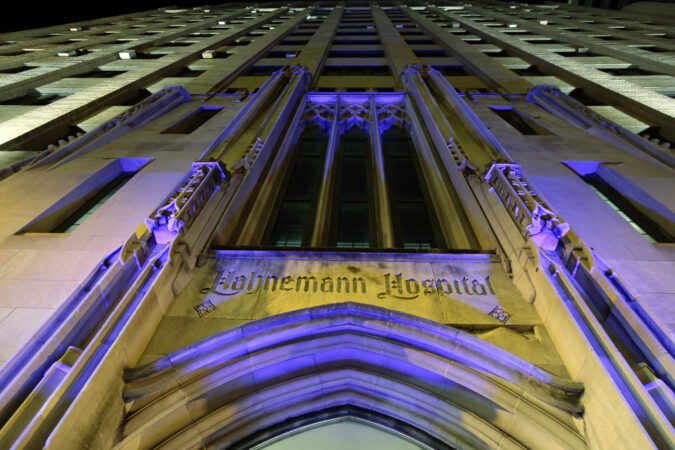
Philadelphia Councilmember Jeffery “Jay” Young introduced a bill at the last City Council meeting of 2025 to ban residential development from the area around former Hahnemann University Hospital.
The proposal covers properties near Broad and Race Streets with owners that include Drexel University, Iron Stone Real Estate Partners, and Brandywine Realty Trust.
But only one known residential project slated for the area is covered by the bill: Dwight City Group’s proposal to redevelop the Hahnemann Hospital patient towers into hundreds of apartments.
If enacted by City Council, which returns on Jan. 22, the bill could have stopped that redevelopment.
But on Dec. 24, Dwight City Group secured a zoning permit for 222-48 N. Broad St. to builda 361-unit apartment building — far larger than the original plan — with space for commercial use on the first floor.
With that permit secured, the project could move forward regardless of whetherYoung’sbill is enacted.
Dwight City Group, however, says they are concentrating on ongoing conversations with Young.
“We are working along with Councilman Young and the community to ensure that this project meets the needs and goals of the district,” said Judah Angster, CEO of Dwight City Group.
The permits show some changes to the original plan. In interviews last year, the developer said the plan contained 288 units and that ground-floor commercial was unlikely.
Young said the proposed housing ban is about preserving jobs by allowing only commercial development at the former hospital site.
“As the city continues to look for ways to incentivize development, we need to ensure jobs and economic opportunities are at the forefront, with engagement from all stakeholders,” Young said in an email. “We look forward to working [with] all stakeholders as this legislation moves through the process.”
Young’s bill confused and outraged manyobservers as a blatant example of spot zoning, in which legislation is used to help or hurt a particular project.
But the tradition of “councilmanic prerogative” would likely guarantee its passage because other Council members are unlikely to vote against a bill that affects only one district.
Nevertheless, the housing and transit advocacy group 5th Square has begun a campaign against the legislation and issued a petition earlier this week calling for its withdrawal.
“The site on Broad and Race Street lies on top of an express subway stop and benefits from proximity to Center City jobs, shops, and cultural amenities,” the petition reads. “Since the shuttering of Hahnemann in 2019, the site currently provides little value to Philadelphians or tax dollars to the city despite its central location.”
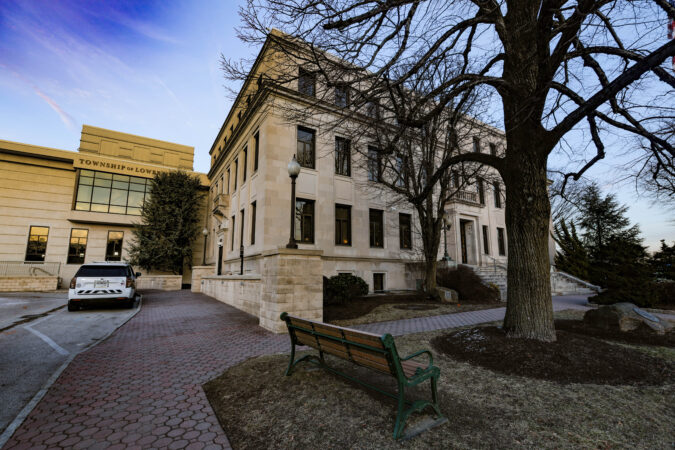
Lower Merion swore in five new commissioners on Monday, kicking off the board’s 126th year of governing the Montgomery County township.
Between rounds of applause and family photos, commissioners outlined the major challenges, and opportunities, the body will face in 2026. Board members highlighted recent accomplishments — creating a process for establishing board priorities, restricting gas-powered leaf blowers and plastic bags, advancing capital projects, hiring a police superintendent, supporting the development of affordable housing, and reversing the post-pandemic decline in police staffing levels.
“We’re solving problems, we’re moving forward, and we’re even having a little fun,” said commissioner V. Scott Zelov, who was sworn in for his sixth term.
Zelov on Monday night became the eighth commissioner in Lower Merion history to serve for at least 20 years, board President Todd Sinai said.
Sinai, who was first elected to the board in 2017, was unanimously reelected board president. Incumbent commissioner Sean Whalen called Sinai a “stalwart leader of this board,” praising Sinai’s leadership througheconomic ups and downs.
Jeremiah Woodring, also an incumbent commissioner, was unanimously elected vice president. Sinai described Woodring as “thoughtful and inquisitive,” “balanced,” and “diplomatic.”
Jana Lunger was sworn in as Lower Merion tax collector.
Here’s a who’s who of the five newly elected Lower Merion commissioners, all of whom replaced outgoing commissioners who chose not to run again in 2025.
Michael Daly, an attorney and the former president of the Gladwyne Civic Association, was sworn in to represent Ward 2, which includes Gladwyne and Penn Valley. Daly has lived in Lower Merion for around 15 years with his wife and three children, all of whom are products of the Lower Merion School District. In his law practice, he focuses on defending class action lawsuits and complex litigation. In a candidate interview earlier this fall, Daly said he’s focused on quality of life issues, including walkability, public parks, and safe streets. He replaced outgoing commissioner Joshua Grimes.
Charles Gregory, a longtime township employee, will represent Ward 4, which encompasses Ardmore and Haverford. Gregory, who was born and raised in Ardmore, worked for Lower Merion Township for 23 years until 2024. He’s the former president of the Lower Merion Workers Association and a Boy Scout troop leader. During a candidate forum, Gregory said he believed he could “make a difference from a blue collar aspect.” Gregory replaced outgoing commissioner Anthony Stevenson.
Christine McGuire is a forensic psychologist and business owner who will serve Rosemont and Villanova in Ward 6. McGuire lived in Gladwyne for nine years before moving to Villanova around three years ago. In a candidate forum, McGuire said she has been active in the Gladwyne Civic Association and in the parent group that studied Lower Merion’s school start time change. As the owner of a psychology practice, she said she understands “what a budget is and that you have to work within the budget and not look at it like a blank check.” She replaced outgoing commissioner Andrew Gavrin.
Craig Timberlake, an Ardmore resident who was instrumental in the 2025 redevelopment at Schauffele Plaza, will represent Ward 8’s South Wynnewood and East Ardmore. Timberlake moved to Ardmore around 15 years ago from Maine. He says he was drawn to Ardmore’s high-quality schools, walkable neighborhoods, and transit options. He believes the township should incentivize “smaller,” “incremental,” and locally funded development and decrease speed limits to protect pedestrians. Timberlake is a project manager at OnCourse, an education technology platform. He replaced Shawn Kraemer, the board’s outgoing vice president.
Shelby Sparrow, the former president of the Penn Wynne Civic Association and a longtime community organizer, will represent Penn Wynne and Wynnewood in Ward 14. Sparrow’s priorities include ensuring the community is engaged in Main Line Health’s redevelopment of the St. Charles Borromeo Seminary property; addressing pedestrian safety; and encouraging sustainability and park stewardship. She was previously the director of development for St. Peter’s Independent School in Center City. She replaced outgoing commissioner Rick Churchill.
Sinai and Zelov, who were reelected in November, were sworn in, and sitting commissioners Woodring, Whalen, Daniel Bernheim, Louis Rossman, Ray Courtney, Maggie Harper Epstein, and Gilda Kramer were welcomed back.
This suburban content is produced with support from the Leslie Miller and Richard Worley Foundation and The Lenfest Institute for Journalism. Editorial content is created independently of the project donors. Gifts to support The Inquirer’s high-impact journalism can be made at inquirer.com/donate. A list of Lenfest Institute donors can be found at lenfestinstitute.org/supporters.
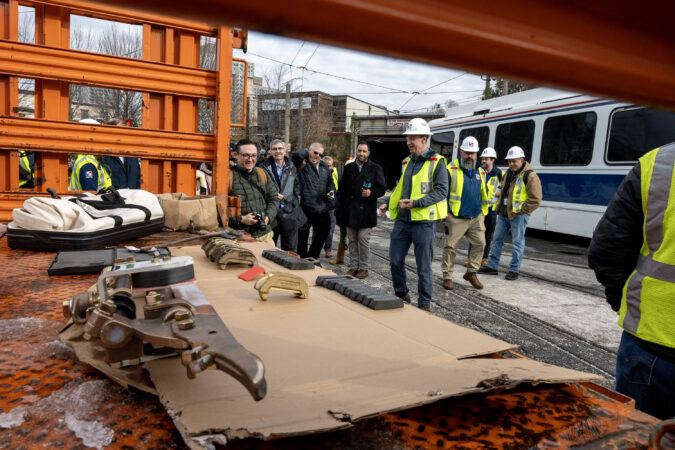
Philadelphia’s trolley tunnel has been closed for two months, but SEPTA now is saying that it has completed most necessary repairs and could reopen the connection between Center City and West Philadelphia soon.
Crews currently are running trolleys through the tunnel to test fixes for damaged overhead wires and other equipment and to decide when it is safe for normal service to resume.
“We’re pretty close,” SEPTA spokesperson Andrew Busch said Tuesday.
About 60,000 riders traveled daily through the tunnel between 13th Street and its West Philadelphia portal at 40th Street before SEPTA closed it in early November.
At issue is a U-shaped brass part called a slider that carries carbon, which acts as a lubricant on the copper wires above the tracks that carry the electricity that powers the trolleys.
There were two major incidents when trolleys were stranded in the tunnels. On Oct. 14, 150 passengers were evacuated from one vehicle and 300 were evacuated from a stalled trolley on Oct. 21.
The Federal Transit Administration on Oct. 31 ordered SEPTA to inspect the overhead catenary system along all its trolley routes.
SEPTA has had to replace about 5,000 feet of damaged wire and make other repairs. It also switched back to 3-inch sliders.
On Nov. 7, SEPTA shut down the tunnel to deal with the issue, which had cropped up again, then reopened it on the morning of Nov. 13, thinking it was solved. But it discovered further damage to the catenary system and the tunnel was closed at the end of the day.
Other potential reopening dates were announced but postponed.
This story has been updated to correct the amount of wire replaced in the tunnel.
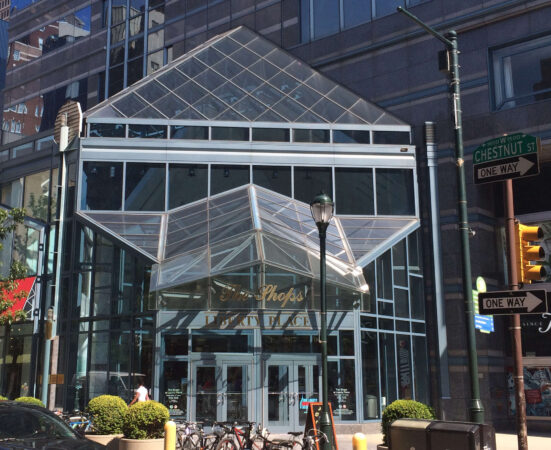
The 147,201-square-foot mall between the Liberty Place towers, two of Philadelphia’s most iconic skyscrapers, is up for sale.
Chicago-based Metropolis Investment Holdings sees a sale of the Shops at Liberty Place as a way to put the property in the hands of a company that specializes in retail.
“With the property established as a leading retail destination in Center City, we believe it is at a natural point for a new owner to build on this foundation with additional investment and fresh ideas,” Tom Dempsey, head of asset management for Metropolis, said in an email.
Metropolis is focused on office real estate and owns the 61-story One Liberty Place. The company purchased both properties in 1999.
The sale of the Shops at Liberty Place is not an indication that Metropolis is planning to sell the skyscraper, too.
“We are focused on our office portfolio, and One Liberty Place will continue to be a cornerstone asset for Metropolis,” Dempsey said. “It has demonstrated strong and consistent performance, benefits from a loyal tenant base, and remains one of Philadelphia’s most iconic and competitive office buildings.”
There is no listed price, but a source familiar with Metropolis’ thinking says they are hoping to sell the Shops for $20 million.
The shops at 1625 Chestnut St. are 77.7% occupied and include tenants like Jos. A. Bank, Victoria’s Secret, and Bloomingdale’s. The food court proved especially popular and has long been a draw for office workers.
In 2024 indoor minigolf facility Puttshack opened as part of a wave of experiential retail in Center City.
“The venue is particularly strong in group sales, hosting corporate events, social gatherings, and celebrations, which reinforces its role as a destination — its mix of entertainment, dining, and social interaction helps drive consistent foot traffic and contributes to the overall vibrancy of The Shops,” Dempsey said.
Real estate brokerage Jones Lang LaSalle (JLL) is handling the sale of the Shops at Liberty Place.
The company’s listing for the Shops at Liberty Place describes it as an “established in-fill urban location with significant population density and economic demand drivers” and boasts its “irreplaceable location along highly trafficked Chestnut Street within Philadelphia’s premier shopping district.”
JLL says that it attracts 5.1 million visitors a year.
An aerial view of One Liberty Place, the Shops at Liberty Place, and Two Liberty Place taken during 1990.
The Shops at Liberty Place opened in 1990, three years after One Liberty, which famously broke the gentleman’s agreement that no building in Philadelphia be taller than William Penn’s hat atop City Hall. Two Liberty Place also opened in 1990.
The Shops at Liberty Place proved a bright spot on Chestnut Street, which has long been overshadowed by Walnut Street as Center City’s premier shopping destination.
The Inquirer’s architecture critic, Inga Saffron, praised the design of the building’s entrance, which seeks to echo its sister skyscrapers that soar above.
“The glass structure sits a generous distance back from the hectic corner, providing plenty of elbow room for harried pedestrians,” she wrote in 2016. “The best detail is the batwing canopy over the doors. … The canopy’s angles recall the tiered chevrons that distinguish the crowns on Liberty Place’s towers.”
The Shops at Liberty Place’s occupancy suffered a blow following the COVID-19 pandemic, but its general neighborhood is looking healthy. Both the Liberty Place skyscrapers have strong occupancy, and Center City’s residential population is climbing.
“We’ve managed the asset carefully through challenging times,” Dempsey said. “Today, the property is well-positioned with a diverse mix of tenants, including strong experiential and destination offerings, and continues to attract interest from retailers and visitors alike. We see solid potential for continued growth and momentum under new ownership.”
Custardy egg tarts are wiggly, lightly gelatinous conveyors of joy. The finest ones are not too sweet, but beyond that, they have variable compelling qualities, be it their lightly torched tops or innovative whole-fruit or vegetal flavors. There are three styles of egg tarts covered in this map: Portuguese pasteis de nata, flaky Chinese egg tarts, and cookie-style shortcrust egg tarts. They are all magnificent, whether you pick them up from a bakery by the dozen or nibble on them from a dim sum parlor’s lazy Susan.
Beijing Duck Seafood Restaurant
By night, this Race Street restaurant becomes a Peking duck emporium, with white-toqued chefs wheeling roasted ducks through the dining room, announcing their arrival at tables by striking a gong. But by day, Beijing Duck Seafood serves a menu filled with dim sum classics like char siu bao, turnip cakes, spring rolls, and, of course, delightfully and thoroughly classic dim sum-style egg tarts. These are some of the best egg tarts you can get in Chinatown. They’re served piping hot (as all the best egg tarts are), and they have molten, deep yellow custard centers encased by a flaky pastry crust that dissolves in your mouth with a slight chew. They’re small — but not the tiniest you’ll see — and come three to an order.
The pateis de nata at Gilda in Philadelphia on Thursday, Aug. 29, 2024.
Gilda
The flavors of pasteis de nata at Gilda rotate according to whims and seasons. All of the Portuguese tarts have a creamy, cinnamon-flecked egg-yolk custard base that is looser, jammier, and almost whipped compared to the harder-set centers of their Chinese-style counterparts. Baked at high heat, Gilda’s natas naturally develop bruleed brown leopard spots. The tarts themselves have firm, flaky crusts that get filled with core custards like lemon-raspberry and dark chocolate with sea salt. In summer, look for natas flavored with corn, passion fruit, and strawberry. The staff here even makes a sweet nata latte to mimic the three-bite treats, using a house syrup infused with vanilla, cinnamon, and a squeeze of lemon juice. All the egg whites the natas generate get fried and stuffed into a soft but crusty mealhada roll with cheese, avocado, and aioli, resulting in the Sammy, one of the city’s best breakfast sandwiches.
These are the Platonic ideal of dim sum-style egg tarts, which means they’re small — two perfect bites each — with pastry that flakes apart in crisp petals in your mouth. They’re filled with even, yolky custard that balances lightness and richness. These are the perfect mildly gelatinous coda to stuffing yourself with all the other goodies wheeled past your table during dim sum at China Gourmet, and no dim sum experience here is complete without them.
A dim sum cart with full-size dishes at Grand Palace restaurant, 600 Washington Ave.
Grand Palace
This Washington Avenue establishment’s name is not delusional — it truly is grand. This is where you want to bring your 10 best friends for dim sum or brunch, and shout engagingly back and forth with the ladies pushing carts piled high with bamboo steamer baskets. As a bonus, it’s a stone’s throw from Center City and there is parking. Grand Palace has absolutely mastered both steamed buns (its char siu bao is positively fluffy) and egg tarts. The tarts are larger than the average dim sum rendition, coming two to an order (vs. the usual three). The pastry shell crust is incredibly flaky, with a thinner layer of custard than typical Cantonese tarts. The filling is soft, barely sweet, and one of the highlights of a raucous dim sum experience.
Occupying a cheerful, cartoon-muraled, bright blue corner in deep South Philly, Dodo Bakery peddles an impressive variety of Chinese-inflected baked goods, tea-based beverages, and smoothies. The kitchen makes two types of egg tarts: one in a traditional flaky pastry shell, and another whose egg yolk custard is spiked with pandan for a hint of grassy, coconutty flavor and a neon-green hue. Pop them in the toaster oven at home to revive their jiggly freshness. Dodo also churns out enormous renditions of classic Hong Kong pastries, like the staple Canto-British chicken pot pie and triangles stuffed with chopped, bright red char siu roast pork. Their red bean pastries are also excellent and extremely flaky.
Jena and Brandon Fisher know they have very different decision-making styles. It was important to keep that in mind when they renovated three full bathrooms in their Wynnewood home — all at the same time.
When making a decision, “I think about it, I look at my options, and then I decide and move on,” said Jena.
Conversely, Brandon’s style “is very deliberate,” he said. “I want to know every single option, I want to weigh them, and take time with my decisions.”
The home renovation project they started planning in late December 2024 involved taking each bathroom — one for Jena, one for Brandon, and one for their kids Audrey, 15, and Charlie, 11 — down to the studs. The bathrooms were out of commission for about 3½ months, with the work staggered slightly to ensure they always had a working toilet and shower.
Jena took the lead on her bathroom and, true to her personality, she made quick decisions. Brandon’s was more of a slog, with Jena pushing him for answers.
A photo of Brandon Fisher’s bathroom after the renovations were complete. He was resistant to the project, he says, but he loved the result.
“My bathroom was in bad shape but it took 10 years of me saying we didn’t need to do it yet,” he recalled, until finally the plumbing started leaking and the grout was crumbling.
Recognizing their differing styles, the Fishers managed to complete their projects with minor stress, which happened mostly when she had to push him to meet deadlines. They are both thrilled with the finished bathrooms.
But 4% said they considered separating or divorcing during renovations, Houzz reported. That share jumps to 12% for couples together five years or less, compared with 2% for couples in relationships of 30 years or more.
Common sources of conflict include staying on budget; deciding on products, materials, or finishes; and agreeing on the project’s scope or design, the study found.
Planning ahead is key
To keep the process positive, set expectations before the project starts and keep communicating throughout, said Anna Nicholaides, owner of Philadelphia Couples Therapy in Center City. Understanding how your partner makes decisions and what causes each of you stress can help guide you.
“A renovation is a stressor, and the list of things that can trigger people during a renovation is very long,” she said.
Perhaps you or your spouse is triggered by disruptions to your routine or having strangers coming in your home. And timelines may be exceeded, which can be difficult if your house is constantly filled with dust or if you need to extend the amount of time you must be out of your home.
Renovations can be riddled with anxieties, starting with budget concerns. Agree on a budget, and divide your project into affordable stages. For example, perhaps you can change the kitchen cabinets this year and wait until next year to replace the countertops.
If possible, divide responsibilities. For example, if you care deeply about the layout of the kitchen but your spouse is more concerned with the brand of appliances, divvy up those tasks.
“Maybe one person is highly focused on beauty and the other person is focused on how things work,” Nicholaides said.
Taking on unforeseen challenges
As builders, Tim Ernst and Jake Taylor of Ernst Brothers have helped clients navigate many building and renovation projects. But when it came to their own venture, they got a taste of the challenges their customers face.
In 2014, the couple bought the old Moose Lodge in Doylestown, gutted it to the studs, and created two 4,500-square-foot condos, one above the other, each with three bedrooms and three bathrooms. Taylor and Ernst live in the top unit, featuring 10½-foot ceilings and 7-foot windows.
The living room of Jake Taylor and Tim Ernst’s home.
“There’s got to be division of labor,” said Taylor, managing partner for the Spring House-based building company. He took charge of the financial matters and deadlines while Ernst managed the construction.
The pair agreed on the budget, scope, and timeline, but as with most projects, there were unforeseen obstacles. Originally built in 1916, the building had water coming through the foundation. They also discovered grading issues, and that their neighbor’s deck was partially built on Taylor and Ernst’s property.
“When you’re building, you’re selecting different finishes and tile and plumbing fixtures, and deciding to put in heated floors or not,” said Taylor. “But our biggest challenges weren’t things that were nice to have. They were things you have to fix or you’ll have a major problem.”
No matter how complete your plan is, it’s difficult to understand all of the nuances on paper, added Ernst.
“You have to see it in real life at times,” said Ernst, who serves as the building company’s principal project manager. “It’s inevitable that you’re going to want to make changes.”
The added costs in both dollars and time to fix those unforeseen problems meant making sacrifices elsewhere. Though the couple wanted a heated bathroom floor, it was ultimately cut from the budget.
The bathroom with tub and shower at the home of Jake Taylor and Tim Ernst. They ultimately had to forego plans for a heated floor due to budget constraints.
Include a mediator
To help settle disagreements on design elements, Ernst and Taylor brought in John Levitties, principal at JAGR Projects in Glenside.
“Not only are you getting someone who is professionally trained, but they can also play referee between you and your spouse and offer a sounding board,” Taylor said.
Amy Cuker, owner of down 2 earth interior design in Elkins Park, who worked with the Fishers, often plays that role for clients.
“Design isn’t just about taste, it’s also about meeting functional outcomes, proportion, color theory, and other foundational areas of knowledge the design is based on,” Cuker said. “I will reference back to those things when I’m trying to convince a hesitant partner. Sometimes they want that third voice in the room.”
In her initial meeting with a couple, she will talk to them about function and aesthetics to understand their goals.
She has them create an inspiration album with pictures of rooms or pieces with the feel they want for their space.
“If she likes modern and he likes traditional, here are a few images that are comfortable enough for both of them,” Cuker said. “It gets us quickly to a place of understanding where the middle ground is.”
She finds the biggest challenges come with gaps in budget, neatness, and how much change each partner wants.
In the end, most couples learn more about themselves and their partners through the process, and most are happy with the finished product. That is certainly true for the Fishers.
“I resisted it up to the end and now I would probably live in my bathroom,” said Brandon.
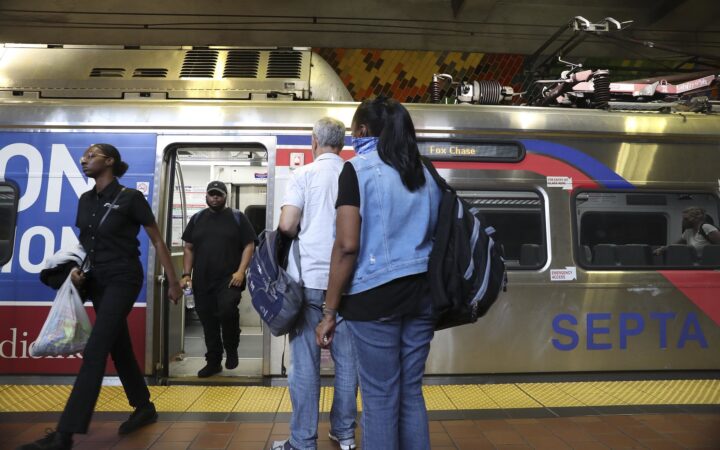
On weekdays from 9 a.m. until 2:30 p.m., buses will serve Fox Chase, Ryers, Cheltenham, Lawndale, and Olney stations. Trains will run to and from Center City between Wayne Junction Station and 30th Street Station.
Passengers headed inbound should plan on an additional 30 to 35 minutes of travel time.
An outbound trip toward Fox Chase Station will take an extra 35 to 40 minutes during the midday hours, SEPTA advises. The connecting shuttle bus is scheduled to depart Wayne Junction Station five minutes after a train arrives.
Scott Sauer would like nothing better than to make SEPTA an afterthought.
He doesn’t mean that the Philadelphia region’s mass transit agency should be neglected, but rather that it will come to do its job so seamlessly that its nearly 800,000 daily customers can rely on the service without worrying about breakdowns, delays and disruptions.
Given the cascading crises that hit SEPTA in 2025, many people wondered if the place was hexed.
“I hope not, because I don’t know how to get the curse off me,” Sauer said in a recent interview. “But listen, truth be told, there were days when I scratched my head and thought, ‘Oh, my goodness, what is going on?’”
“We just couldn’t seem to get more than a day or two of relief before something else was causing a headache,” said Sauer.
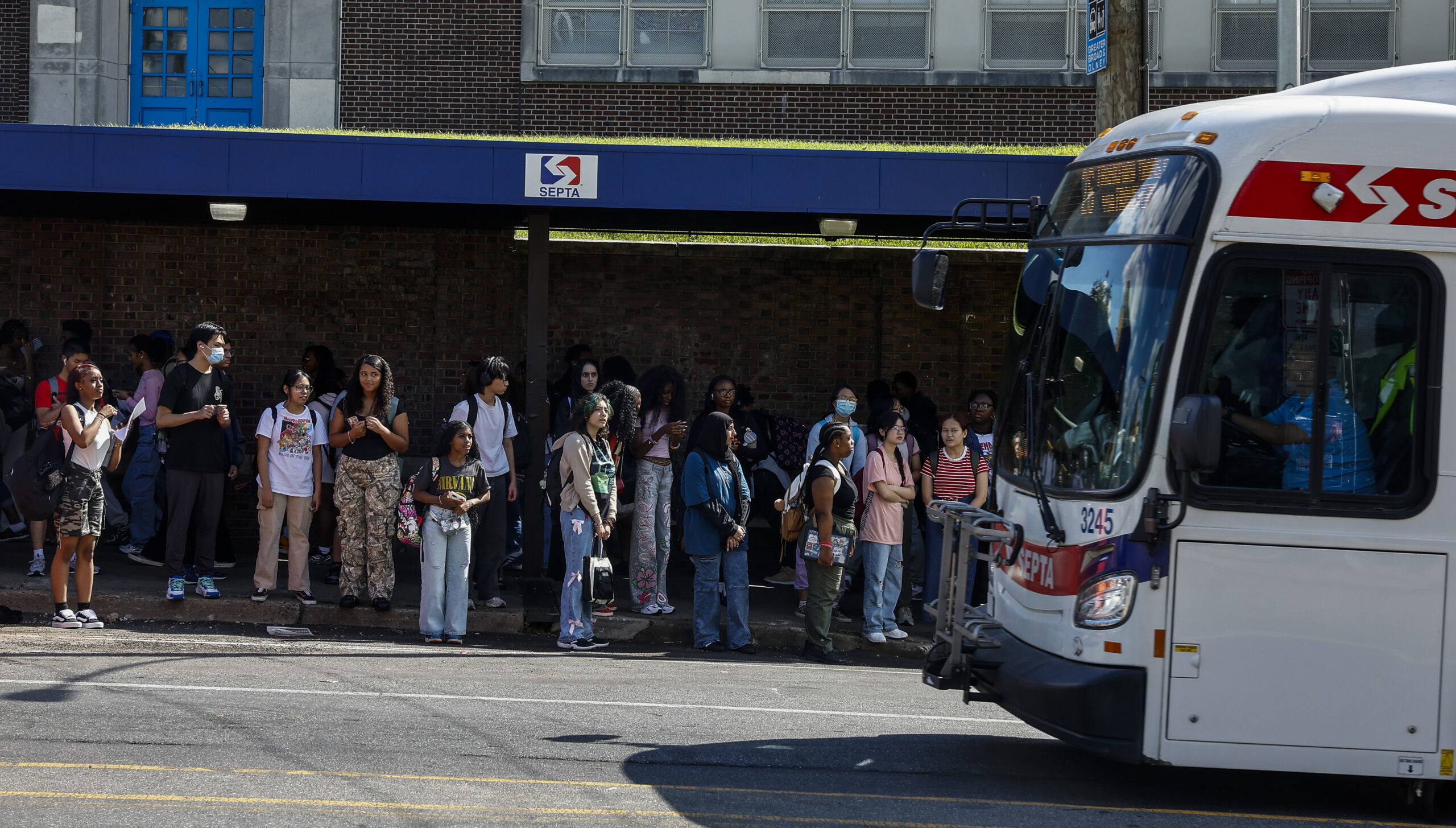
A bus passes the stop near Girls High at Broad and Olney Streets on Monday, Aug. 25, 2025. Thirty two SEPTA bus routes were cut and 16 were shortened, forced by massive budget deficits.
Back to basics in 2026
In the end, help from above and a new labor contract bought SEPTA at least two years to recover from its annus horribilis and stabilize operations.
When the Pennsylvania legislature couldn’t get a transit funding deal done, Gov. Josh Shapiro shifted $394 million in state-allocated funds for infrastructure projects to use for operations — the third temporary solution in as many years. The administration also later sent $220 million in emergency money in November for the Regional Rail fleet and the trolley tunnel.
And, early in December, SEPTA reached agreement on a new, two-year contract with its largest bargaining unit, Transport Workers Union Local 234.
Scott Sauer, general manager of SEPTA, admits that 2025 was an extremely challenging year.
Sauer compared SEPTA’s position to football refs. When they are doing their jobs right, fans don’t have to think about them when watching the game. And when things are going well on the transit system, it becomes part of the background.
“Let’s make sure we do the basics, and we do them really well, because at the end of the day, people want SEPTA to move them from one place to the other, right?” he said.
The test of the focus on fundamentals comes soon, with millions of visitors expected in the region for the 250th anniversary of the Declaration of Independence, World Cup soccer, and other big events.
Sauer, 54, began his career as a trolley operator more than 30 years ago. He had no political experience, though, and would quickly be thrown headfirst into those murky waters to swim with sharks.
Storm clouds were already rolling in. Weeks before Sauer took the reins, Shapiro had flexed $153 million in state highway funds for SEPTA operations after a broader deal failed amid Senate GOP opposition.
It’s a legal move, but often controversial, and Shapiro’s opponents were furious.
Richards and her leadership team had been warning of a looming fiscal “doomsday scenario” for months. Officials were drafting a budget with service cuts and fare increases.
On Feb. 6, a Wilmington-bound Regional Rail train caught fire as it was leaving Crum Lynne Station in Delaware County. It was worrisome, but at the time, nobody knew it would get worse.
More than 300 passengers were safely evacuated after a SEPTA Regional Rail train caught fire near Crum Lynne Station in February.
Familiar battle lines were drawn. Senate Republicans, in the majority in the chamber, opposed Shapiro’s proposal to generate $1.5 billion for transit operations over five years by increasing its share of state sales tax income.
They preferred a new source of income for the state’s transit aid and said SEPTA was mismanaged, citing high-profile crimes, rampant fare evasion, and lax enforcement.
On a mid-August night, the Senate GOP came up with a proposal that would take money from the Public Transportation Trust Fund, a source for transit capital projects, and split it evenly between transit operations subsidies and rural state highway repairs.
Senate Majority Leader Joe Pittman, a Republican from Indiana County, was a key player in budget negotiations, which ultimately did not yield additional funding for mass transit.
“It was kind of quiet … and then we got alerted that a proposal was coming within minutes. And so everybody was scrambling to try to read through it,” Sauer said.
In a quick news conference with Shapiro, Sauer opposed the idea of taking capital dollars for transit operations, as did the governor. Then he spoke with Senate Republicans and told reporters it could be worth considering, but he had questions. And by the end of the night, he walked that back and opposed the measure.
“I guess if there was a lesson to be learned for me in August, it was I should have taken some [more] time reading through that proposal,” he said.
There was not much time to reflect on what happened, though, because the hits kept on comingas the federal government ordered SEPTA to inspect all 223 Regional Rail cars.
SEPTA’s Regional Rail fleet is the oldest operating commuter fleet in the country, and the fires highlighted the difficulty of keeping them maintained while needing to stretch limited capital funds to address multiple problems.
The Market-Frankford El cars, though younger than the Silverliner IVs, have been beat up and unreliable. SEPTA is moving forward with replacing them, as well as the Kawasaki trolleys that are more than 40 years old.
SEPTA had ordered new Regional Rail coaches from a Chinese-government-related manufacturer, but canceled the contract after the first few models, built during the pandemic, showed flaws. Now the agency is advertising for bids on a new fleet of Regional Rail workhorses — but it has to make them sturdier to last for at least seven more years before new cars would be on the way.
Officials plan to use $220 million received from the state on that effort.
Some of the money, about $48 million, is slated to help fix the trolley-tunnel issue. SEPTA is contending with glitches in the connection between the overhead catenary wires and the pole that conducts electricity to the vehicle.
What SEPTA got done
SEPTA has made some progress on some of its persistent issues, officials say, though the accomplishments understandably have been largely overlooked amid the urgent, existential crises of 2025.
For instance, serious crimes on the SEPTA system dropped 10% through Sept. 30 compared to the same period in 2024, according to Transit Police metrics.
And there had already been a sharp improvement. Serious crimes in 2024 dropped 33% compared to 2023 — from 1,063 to 711, year over year.
SEPTA transit police police patrol officers Brendan Dougherty (left) and Nicholas Epps (right) with the Fare Evasion Unit ride the 21 bus.
“If you think back to where we were in 2021 and 2022, the perception was bad things were happening on SEPTA, and you should steer clear of them,” Sauer said.
The Transit Police have been hiring new officers, including a recently graduated academy class of nine, and has about 250 officers.
SEPTA also installed 42 full-length gates designed to thwart fare evasion on seven platforms in five stations during 2025, spokesperson Andrew Busch said.Another 48 gates are coming in the first quarter of the year.
Police are also issuing citations with an enhanced penalty of up to $300 for fare evasion.
Prepare for déjà vu
Andyet, in 2027, it will be time to start the old SEPTA-funding dance once again, as transit agency advocates and supportive lawmakers work at getting a stable state funding stream for transit operations.
State Democrats have said the transit issue could help them take control of the Senate from Republicans — a longtime goal but one that is difficult to achieve. One wild card is whether President Donald Trump’s slumping popularity will cause GOP congressional candidates to get swamped in the 2026 midterms, and whether that will translate into voters’ local senators.
It likely would have to be a huge wave, and it’s a closely divided state.
By 2027, Shapiro is expected to be running for president (if he is reelected next year), and it’s anyone’s guess how that could affect budget politics.
“Not everybody wants to see us. I didn’t make a lot of friends,” Sauer joked after the TWU settlement.
Despite being one of the rockiest years yet for science — marked by millions of dollars in funding cuts and controversial shake-ups to the federal infrastructure — Philadelphia scientists still managed to celebrate many wins in 2025.
They also won national and international honors for work in physics, cancer research, and drug repurposing. And although no local scientists won a Nobel Prize this year, two at Monell Chemical Senses Center were recognized by its satirical counterpart, the Ig Nobel Prize.
Here are five notable Philly science wins from 2025:
1. Baby KJ is successfully treated with personalized gene editing therapy
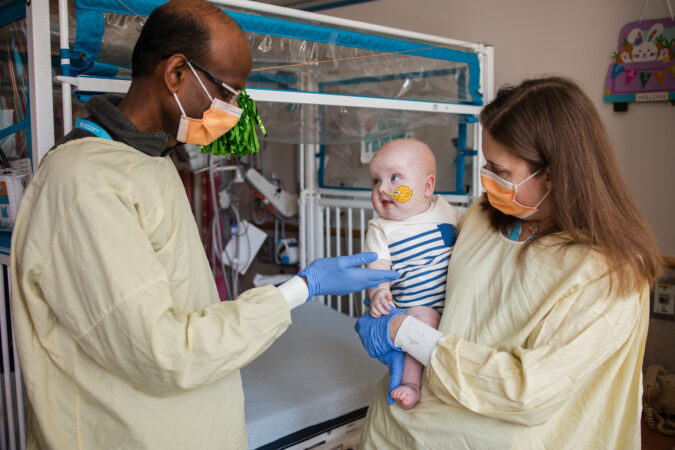
Philadelphia-area child KJ Muldoon,now 16 months old, has already been called a “trailblazing baby” by the top scientific journalNature and recognized by the publicationas one of 10 people who helped shape science in 2025.
This international recognition came after his life-threatening genetic condition was successfully treated with a personalized gene editing therapy earlier this year by doctors at Children’s Hospital of Philadelphia and the Hospital of the University of Pennsylvania.
Baby KJ was born in August 2024 with a metabolic disorder that prevented his liver from being able to process protein. Called severe carbamoyl phosphate synthetase 1 (CPS1) deficiency, the disorder puts babies at risk of severe brain damage and is fatal more than half the time.
With few options to treat him, the CHOP and Penn team — led by doctors Kiran Musunuru and Rebecca Ahrens-Nicklas — opted for a gene-editing technology known as CRISPR to create a customized drug for KJ that would fix the genetic mutation that was driving his disease.
After receiving three doses, KJ was able to return home in June — ending his 307-day-long stay at the hospital. Though not a cure, the medication has dramatically improved his liver function and made the effects of his disease milder, doctors say.
2. Penn physicists share the Breakthrough Prize in Fundamental Physics
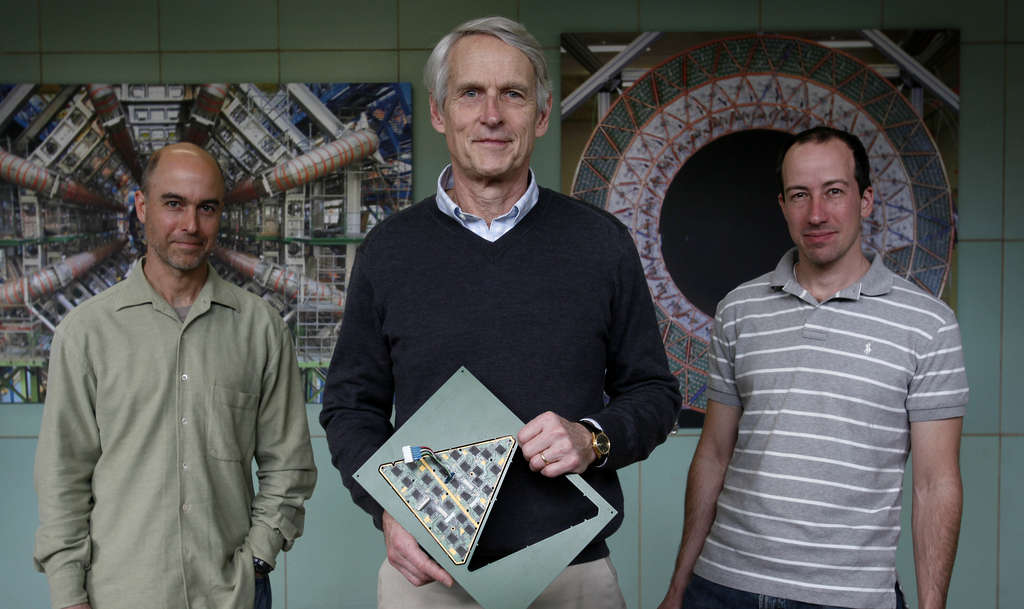
Penn particle physicists (from left) Joseph Kroll, Brig Williams, and Elliot Lipeles, pictured in 2011. They are part of the ATLAS research team that helped discover the Higgs boson, an elementary particle, and were honored with the 2025 Breakthrough Prize for their ongoing Higgs research.
This year, Penn physicists shared one of science’s biggest honors: the Breakthrough Prize.
They were among 13,000 scientists across more than 70 countries to be recognized for their involvement in particle physics experiments at the European Organization for Nuclear Research, known as CERN, in Switzerland.
These decades-long research collaborations have explored the fundamental structure of particles that make up the universe, using CERN’s Large Hadron Collider, a 17-mile-long particle accelerator.
The Penn team — consisting of more than two dozen scientists, including Joseph Kroll, Evelyn Thomson, Elliot Lipeles, Dylan Rankin, and Brig Williams — was specifically part of the ATLAS Experiment, which played a key role in the discovery of the Higgs boson particle, a critical particle in modern particle physics theory. The Higgs discovery helped confirm how fundamental particles acquire mass.
3. David Fajgenbaum honored for drug repurposing research
David Fajgenbaum was diagnosed with Castleman disease, a rare lymph node disorder with limited treatment options. When chemotherapy didn’t work, the third-year medical student worked with his doctors to discover that a medication approved for preventing organ rejection in transplant patients could help him, too.
Penn immunologist David Fajgenbaum received one of the nation’s oldest science prizes, the John Scott Award, this year for his pioneering work repurposing existing drugs for new uses.
He entered this field 15 years ago after a rare and deadly diagnosis of idiopathic multicentric Castleman disease nearly killed him. The disease had no approved treatment nor any treatment guidelines at the time.
Then a medical student at Penn, Fajgenbaum started collecting samples of his blood to test for abnormalities. The data helped him identify an existing drug called sirolimus — primarily given to organ transplant recipients — which has put him in remission for the last decade.
Now through his nonprofit Every Cure, Fajgenbaum has made it his mission to use AI technology to match available medications with rare, hard-to-treat diseases.
He published a case study in the New England Journal of Medicine in February, where his AI tool helped identify an off-label treatment for another patient with Castleman disease who, at the time, was entering hospice care after all available treatments had failed. As of that study’s publication, the patient has been in a yearslong remission.
4. Lilly Gateway Labs biotech incubator coming to Philly
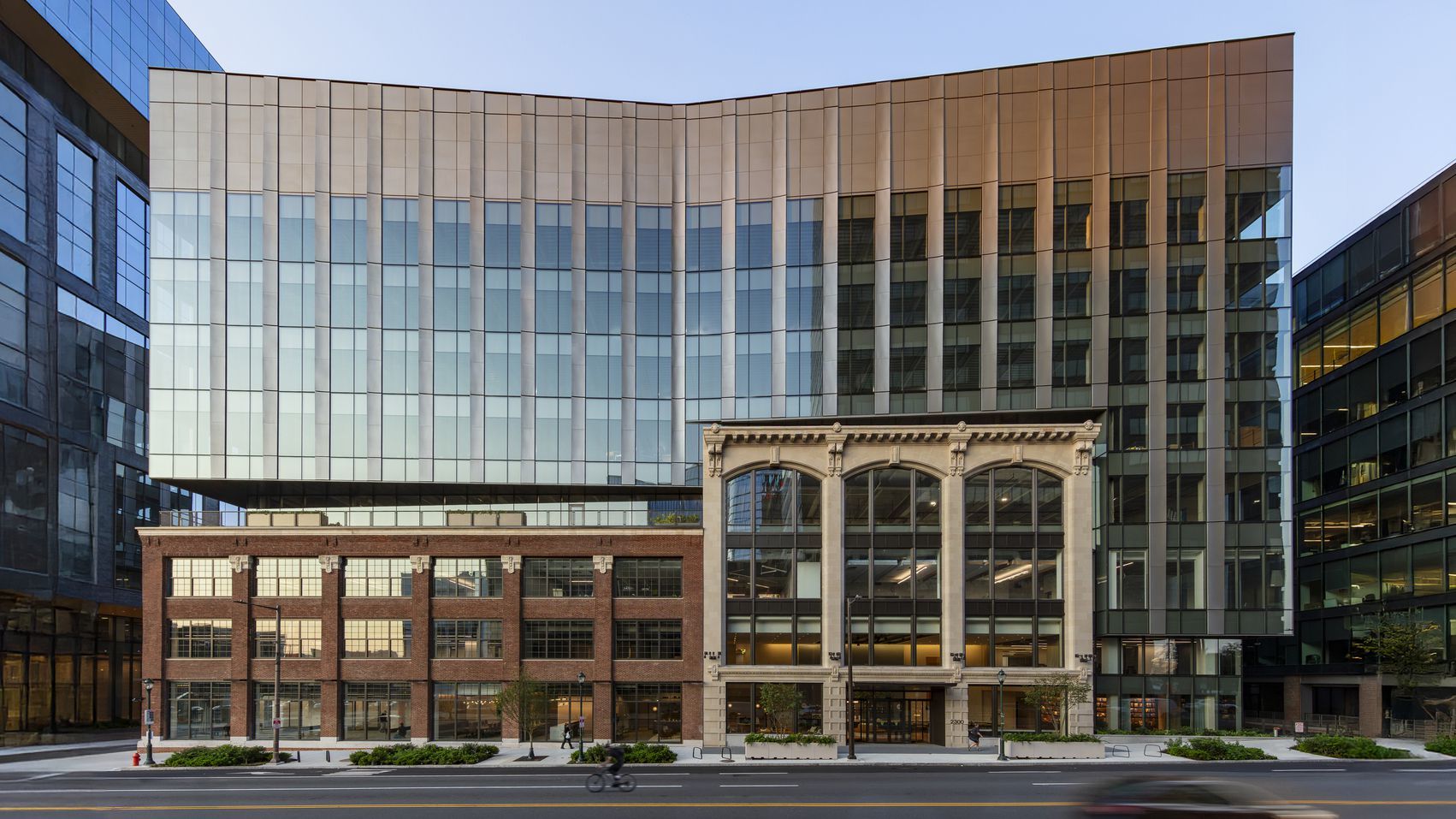
Eli Lilly is opening a branch of Lilly Gateway Labs, an incubator for developing biotech companies, in Philadelphia, the Indianapolis company announced Wednesday. The site, in a new life sciences building at 2300 Market St. in Philadelphia, is the fifth in the United States for the pharmaceutical giant.
Pharmaceutical giant Eli Lilly & Co announced in November its plans to open a Lilly Gateway Labs site — an incubator for early-stage biotech companies — in Center City.
The incubator, which will be Lilly’s fifth in the United States, will span 44,000 square feet on the first two levels of 2300 Market St. Since the program’s launch in 2019, companies at the other locations (in Boston, South San Francisco, and San Diego) have raised more than $3 billion from investors toward more than 50 therapeutic programs, according to Lilly.
Lilly plans to house six to eight companies at the Philadelphia location, with the goal of welcoming the first startups in the first quarter of 2026.
5. Carl June wins international honors for CAR-T research
Carl June won international prizes for his cancer research at the University of Pennsylvania.
Penn cancer scientist Carl June added two more international prizes to his trophy case in September for his pioneering work engineering the body’s immune system to fight cancer.
June is known for developing the first FDA-approved CAR-T therapy, an immunotherapy in which regular immune cells are genetically modified to become cancer-killing super soldiers. It has revolutionized treatment for blood cancers, saving tens of thousands of lives since its first use in a 2010 clinical trial he co-led at Penn.
Though his past work is what won him the inaugural Broermann Medical Innovation Award and the 2025 Balzan Prize for Gene and Gene-Modified Cell Therapy this year, his lab has remained busy, working on ways to apply CAR-T to solid cancers, enhance the therapy for lymphoma, and even re-engineer cells inside the body.
June has also made moves on the biotech front: A company he co-founded with the purpose of applying CAR-T to autoimmune diseases, Capstan Therapeutics, was bought by AbbVie this summer for $2.1 billion.
The decision was abrupt, apparently made without advanced input from Sen. Dave McCormick (R., Pa.), who’d set up a commission to identify candidates to serve as the region’s top federal prosecutor.
Metcalf was 39 and, unlike many of his predecessors, didn’t have deep roots in the region — but did have some reported ties to officials who’d sought to help Trump adviser Roger Stone years earlier.
And the appointment was announced as Trump was openly pledging to “clean house” in the Justice Department and pull the agency more directly in line with the White House.
But in the months since Metcalf has assumed control over the office and its 140 lawyers, what has stood out so far has been the serious temperament the veteran prosecutor has brought to the role, and the relative lack of drama he’s overseen — particularly in comparison to nearby jurisdictions, where U.S. Attorney’s Offices have been embroiled in controversies over leadership appointments and whether to indict Trump critics.
During a recent interview with The Inquirer at his Center City office, his first since being appointed in March, Metcalf said his deliberate approach toward his first few months in the job has been influenced by his decade-plus career as a Justice Department lawyer — one that included stints in Baltimore, Philadelphia, and Washington, D.C.
He has met with a host of other local stakeholders since taking over — including Police Commissioner Kevin J. Bethel, District Attorney Larry Krasner, and federal judges — and has avoided ushering in drastic upheaval within his office.
U.S. Attorney David Metcalf outside the federal courthouse in July, with Police Commissioner Kevin Bethel standing behind him.
Instead, he said, a key focus has been to encourage his prosecutors to pursue large, ambitious, complex investigations targeting violent crime, synthetic opioid abuse, and healthcare fraud — subjects he said were critical to public safety in the Philadelphia region.
“I do not feel some personal impulse to burn my brand on this office by restructuring and reorganizing it,” he said, later adding: “The greatest offices and the greatest cases come from prosecutors who are hunting them down and competing for them … and that’s the breed of prosecutor we’re trying to create here.”
Composed and self-assured, Metcalf was uninterested in commenting on the broader political landscape surrounding his job. He instead concentrated on the work of his office, whose lawyers prosecute matters including drug trafficking, political corruption, and terrorism across nine counties from Philadelphia to Allentown and west past Reading. They also litigate civil matters on behalf of the federal government.
“I don’t want to say that I’m … bound by precedent or a devotee to the status quo,” he said. “But I do believe in stability, and I’m certainly not going to change things just for the sake of changing them.”
Even Krasner — an outspoken progressive Democrat who rarely misses an opportunity to criticize Trump, and who was engaged in a long-running feud with a Trump-appointed U.S. attorney four years ago — said he had a “professional and pleasant lunch” with Metcalf earlier this year.
“We have always worked well with the career prosecutors at the U.S. Attorney’s Office, and our teams seem to be continuing to work well together,” Krasner said in an interview.
Rod Rosenstein, who was the deputy attorney general during Trump’s first term, said in an interview that he hired Metcalf a decade ago, when Rosenstein was the U.S. attorney in Maryland. And their paths continued to intersect over the years as their careers wound through the Justice Department.
Rosenstein said Metcalf had “superb legal skills” and “excellent judgment” — two qualities he views as critical for leading a U.S. attorney’s office.
“I think people recognize he’s got the right qualifications,” Rosenstein said.
U.S. Attorney David Metcalf in his Center City office.
‘An exhilarating vocation’
Metcalf grew up in northern Virginia and graduated from The Wakefield School, a private prep school about an hour west of Washington, D.C. His father was once an Army colonel, he said, and his grandfather was Joseph Metcalf III, the Navy vice admiral who led the 1983 invasion of Grenada.
Metcalf was a standout soccer player in high school, and was recruited to play by more than 80 college teams, the Washington Post reported in 2003. He used the situation to his advantage, the paper reported — making a deal with his mother that he could let his hair grow down past his shoulders once Division I colleges started sending him letters.
He ended up attending Princeton — playing soccer all four years — and then went on to graduate from the University of Virginia’s law school.
After clerking for U.S. Circuit Judge Albert Diaz, Metcalf spent a few years in private practice before becoming an assistant U.S. attorney in Maryland under Rosenstein.
Metcalf said he didn’t have a single epiphany that made him realize he wanted to become a prosecutor. But he said he was quickly drawn to the work, which he found more interesting and important than other legal jobs.
“I thought it was really just an exhilarating vocation in a profession that doesn’t always have the most glamorous applications,” he said.
High-profile connections
From 2015 through 2022, Metcalf worked as a line prosecutor in Baltimore and, later, in Philadelphia — the office he now leads. The two years he spent here were unusual, he said, because they unfolded during the peak of the pandemic, when many aspects of the court system were disrupted and most people were working from home.
Metcalf also spent time during the first Trump administration in Washington, D.C. While there, he worked closely with prominent Justice Department officials including Rosenstein; Deputy Attorney General Jeffrey A. Rosen; Timothy Shea, the onetime U.S. Attorney for Washington, D.C.; and then-Attorney General William Barr.
Attorney General William Barr and President Donald Trump in the Oval Office of the White House on Nov. 26, 2019.
In 2022, Metcalf left the public sector and went to work as a corporate counsel for Amazon. But this March — after Trump was reelected for a second term — Metcalf was suddenly thrust back into the Justice Department, as the White House announced it was nominating him to be Philadelphia’s U.S. attorney.
From nominee to confirmation
The decision came as something of a surprise.
McCormick, Pennsylvania’s newly elected GOP senator, had made a point of publicly announcing that he’d formed a committee to review and vet potential candidates for federal law enforcement positions across the state. And other GOP-connected lawyers in the region had been jockeying for months to try to figure out who might be able carve a path toward the coveted position.
When the White House named Metcalf its permanent nominee, the process was effectively short-circuited.
Metcalf said he couldn’t speak to how or why the process played out the way it did. He said he applied for the job, and “had relationships with folks in the Trump administration” due to his time in Washington during Trump’s first term.
He didn’t specify who those people were. And some of his former bosses — particularly Barr — had fallen out of favor with Trump after his first term.
But Rosenstein said “it’s a mistake to think that people are the people they work for. It’s a big government, and not everyone agrees all the time.”
And in any case, Rosenstein said, he believed Metcalf was nominated “on merit, not on connections.”
Rod Rosenstein, deputy attorney general during President Donald Trump’s first term, says Metcalf has “superb legal skills” and “excellent judgment.”
William McSwain, who served as U.S. attorney during Trump’s first term, said he believed Metcalf was “extremely well-qualified for the position.”
It took the U.S. Senate six months to vote to confirm Metcalf along with a host of other Trump nominees, but by then, the Philadelphia region’s federal judges had already voted to extend Metcalf’s appointment indefinitely while the process played out.
That move stood in contrast to several other jurisdictions, including New Jersey, where the judiciary declined to extend the tenure of Trump’s nominee, Alina Habba. For months afterward, that office was thrust into turmoil as questions swirled about who could legally serve as its leader.
Pursuing notable cases
During his tenure so far, Metcalf said, he’s been seeking to focus his prosecutors on finding what he called “nationally significant” cases, particularly those targeting violence, drugs, and healthcare fraud, which he views as priorities for the region.
One of the first big indictments he announced was in October when FBI Director Kash Patel visited Philadelphia to help reveal that 33 people had been charged with being part of a Kensington-based drug gang. Metcalf said the case was the largest single prosecution in the region in at least two decades.
FBI Director Kash Patel helping announce the arrest of dozens of suspects in a Kensington drug case.
He also helped create a new program dubbed PSN Recon, an initiative designed to help Philadelphia Police more readily share intelligence with state and federal agencies about which groups or suspects should be investigated.
Prosecutions overall have increased on his watch, according to the Transactional Records Access Clearinghouse (TRAC), a research organization that collects federal courts records.
So far this fiscal year, prosecutions in the Eastern District of Pennsylvania were up 32% compared to last year, TRAC found, and were on their highest pace since 2019. The most common types of cases charged this year were immigration violations, drug offenses, and illegal firearm possession, according to TRAC.
Earlier this year, Metcalf was reportedly involved in one particularly significant case: an investigation into former CIA Director John Brennan and his role in producing an intelligence assessment about Russian interference in the 2016 election. Brennan went on to become a prominent Trump critic.
Former CIA director John Brennan testifies before the House Intelligence Committee in 2017.
Metcalf never commented publicly on his purported involvement in the Brennan case, and declined to do so again during his interview with The Inquirer. The investigation is now reportedly being handled by federal prosecutors in Florida.
Metcalf did allow a short peek into his professional mindset when he was asked more broadly if he’d ever felt pressure from Washington to sign off on a decision he didn’t agree with.
After declining to comment on any discussions he may or may not have had with Justice Department leaders, he paused for a moment and added one final point.
“I will also say that I would be very surprised if that ever happened to me,” he said. “I don’t see it as a problem here.”