Tag: Center City

  • New Philadelphia-area cardiovascular surgery centers are pulling profitable procedures from hospitals and charging less

    New Philadelphia-area cardiovascular surgery centers are pulling profitable procedures from hospitals and charging less

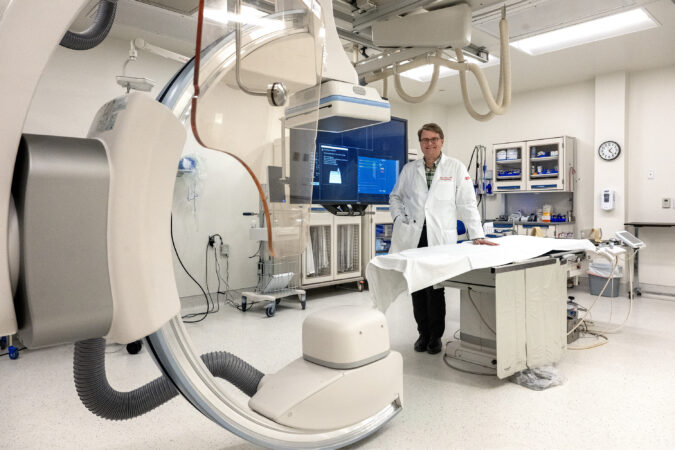
    At AMS Surgery Center in suburban Montgomery County, patients can park right in front of the entrance, walk through just a few doors, and undergo cardiac procedures in a sterile operating room with equipment as high-tech as in any hospital procedure room.

    In the year and a half since its first patient underwent a cardiac catheterization, the center has performed more than 1,000 cardiac procedures that previously required patients to go to full-service hospitals.

    The Horsham center showcases a new front as sophisticated healthcare procedures move to freestanding outpatient medical facilities, promising to save patients money. The shift also adds to the financial pressures facing the region’s hospital-centered health systems.

    Four centers have opened or are in the final stages of approvals in Southeastern Pennsylvania. Their arrival comes after state lawmakers in 2022 broadly expanded the types of procedures allowed outside hospitals to include cardiac catheterizations, pacemaker implants, and other treatments that until then had to be done in a hospital.

    Pennsylvania is the first Northeastern state to allow the minimally invasive procedures in freestanding surgery centers, but Southern states like Florida, Louisiana, and Texas have permitted the practice for decades, experts said. Research has found surgery centers generally are as safe as outpatient departments in hospitals.

    An independent physicians group, Bryn Mawr Medical Specialists Association, opened Heart & Vascular Center of the Main Line — the Philadelphia region’s first such center — in late 2022. in Bryn Mawr. AMS Surgery Center in Horsham performed its first procedure in the fall of 2024, initially treating only Medicare patients. It added patients with private insurance last summer.

    The market has continued to rapidly expand: ReVaMP Heart & Vascular Surgery Center in Center City started treating Medicare patients last fall. The Ambulatory Cardiovascular Center of Pennsylvania, near King of Prussia, expects to perform its first procedures on patients next month.

    Medicare pays the centers about a third less than hospital outpatient departments for the same procedures, but the centers have significantly lower costs, allowing them to be profitable. Medicare pays physicians the same wherever procedures are done.

    Independent cardiology groups traditionally have performed interventional procedures, such as implanting stents and pacemakers, in hospitals. Some are jumping at the opportunity to expand through the surgery centers, where they can have a financial stake in the entire operation.

    “We’ve always been very fiercely independent, fiercely entrepreneurial, and patient-centered,” said Richard Borge, an AMS interventional cardiologist who is medical director for the group’s surgery center.

    How much cardiac care — among the most profitable business lines for hospitals — will move out of hospital outpatient departments remains unknown. But cardiac surgical clinics will not take over heart care to the extent seen when outpatient orthopedic centers began offering hip and joint replacements, predicted Lauren Clementi, a senior vice president at Kaufman Hall, a Chicago consulting firm.

    “This one’s a little trickier because the acuity of patients,” she said.

    Cardiologists will continue treating many patients with complex medical needs in hospitals, which remain the only option for riskier procedures such as open-heart surgeries.

    Gregory Schmitt went to AMS Surgery Center to undergo procedures for a heart stent and stents in both legs. The retired machine-shop owner, who lives in Ivyland, called such centers great for patients.

    “I highly recommend it. It’s much easier than trying to navigate a hospital,” Schmitt said.

    How we got here

    Healthcare has been shifting away from requiring overnight hospital stays, even for common procedures like cataract surgery. The trend started decades ago with same-day procedures in hospitals, followed by the rise of freestanding surgery centers.

    In cardiology, people now commonly receive stents and pacemakers as outpatient care. But until recently, doctors had to implant the devices in a hospital.

    “Once upon a time, every patient we cathed had to spend the night in the hospital,” said veteran cardiologist Mark Victor, referring to cardiac catheterization.

    With the rise of outpatient procedures, Victor said, the question for many clinicians became: “If they’re hospital ambulatory, why do they have to be in the hospital at all?”

    Victor has long advocated for the adoption of outpatient cardiology procedures as the CEO of Cardiology Consultants of Philadelphia. The large cardiology practice joined last year a national private-equity backed group, Cardiovascular Logistics, and will soon start performing surgical procedures at the center opening near King of Prussia.

    In 2020, Medicare started paying for outpatient cardiac catheterizations — which entail running a catheter through a blood vessel in the thigh or wrist to examine the heart and install devices like stents.
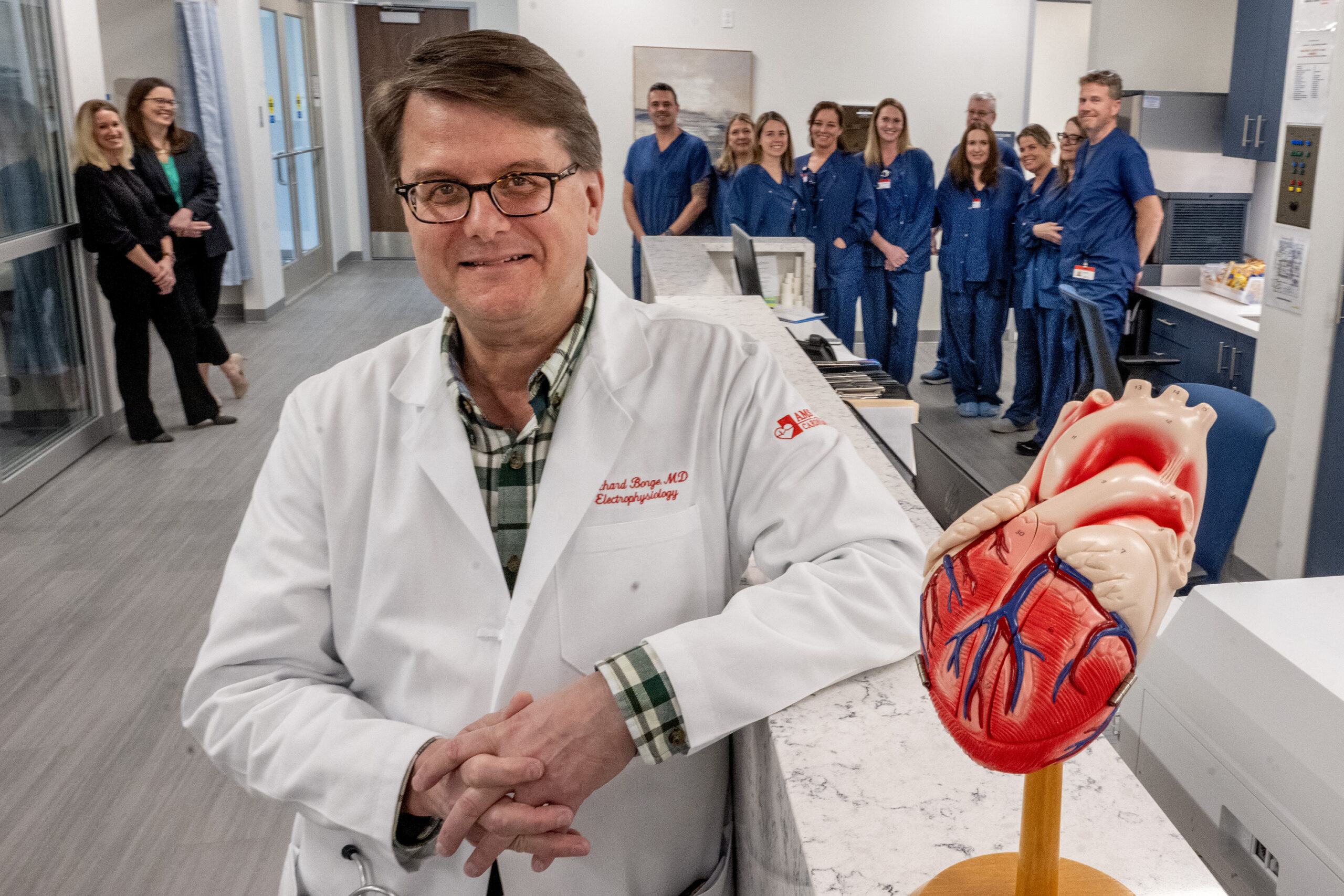
    Richard Borge is medical director of AMS Cardiology Surgery Center in Horsham, whose arrival is moving advanced cardiac care from hospitals to outpatient clinics.

    Even then, Pennsylvania rules required cardiac catheterizations to occur in an acute-care hospital, according to Stephen Abresch, director of government affairs for the Ambulatory Surgery Center Association, a national trade group in Alexandria, Va.

    Pennsylvania lawmakers cleared the way for expansion by eliminating that restriction in 2022 as part of a broad expansion of what the state’s surgery centers were allowed to do. “It had been a quarter century since the state had gone in and reviewed that,” he said.

    Beginning this year, Medicare started paying surgery centers to perform treatments for irregular heartbeats, known as cardiac ablations.

    The Heart & Vascular Center of the Main Line has scheduled its first cardiac ablations this week. Horsham’s AMS aims to start offering those procedures in June. Victor’s King of Prussia group expects to add ablations in the future as well.

    Impact on hospitals

    It is too soon to know how the new surgery centers will impact the region’s existing health systems. In some cases, independent cardiologists generate significant patient numbers for hospitals’ cath labs.

    After Bryn Mawr Medical Specialists opened its cardiovascular surgery center near Main Line Health’s Bryn Mawr Hospital, the private group performed fewer procedures on low-risk patients at the hospital.

    To sustain patient volumes, Main Line has increased collaboration with other physician practices, while continuing to treat an “older patient population, whose more complex health conditions require the advanced expertise and emergency support only a hospital setting can provide,” officials said in a statement.

    In Horsham, most of the patients coming to AMS would have gone to Jefferson Abington Hospital before the surgery center opened in partnership with Atria Health, a private-equity backed group, Borge said.

    Jefferson declined to comment.

    King of Prussia’s Ambulatory Cardiovascular Center of Pennsylvania is opening through an unusual four-way partnership involving Cardiology Consultants of Philadelphia, Cardiovascular Logistics, SCA (a unit of UnitedHealth’s Optum), and the University of Pennsylvania Health System.

    “Ours is not going to seriously impact any one hospital system, which they’re all relieved about,” said Victor, who is also president of the Mid-Atlantic region for Cardiovascular Logistics. He said other health systems were invited to invest in the surgery center, but only Penn did so.

    Penn declined to comment for this article. On the Alvarez & Marsal What’s Your Moonshot podcast, the health system’s chief operating officer, Michele Volpe, recently said the system needs ”to move a bit faster in taking much of the work that we are doing in inpatient ORs and moving them into outpatient or ambulatory freestanding ORs.”
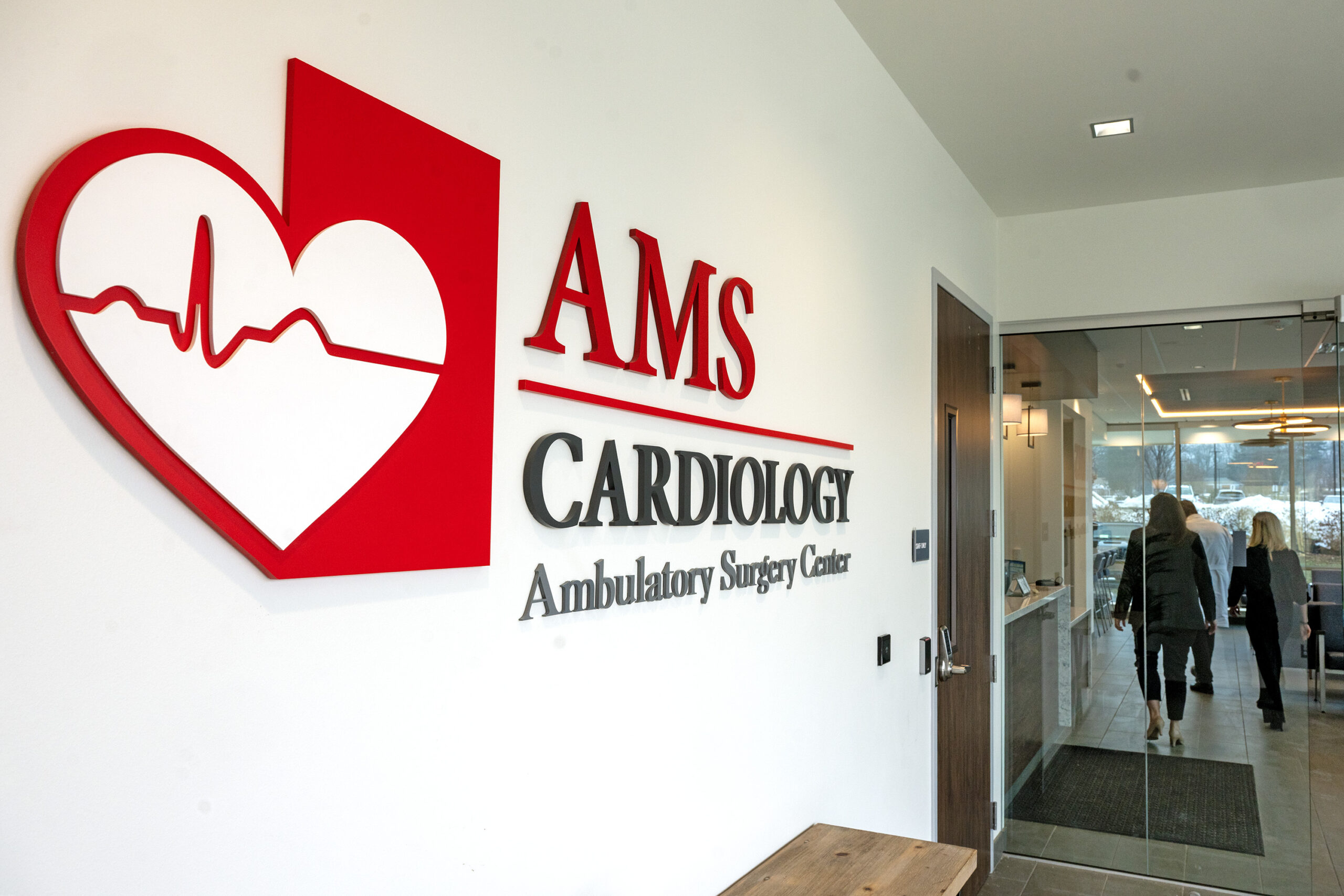
    AMS Cardiology’s ambulatory surgery center in Horsham is one of four new cardiovascular surgery centers in Southeastern Pennsylvania.

    Center City’s ReVaMP Health & Vascular Surgery Center wants to bring in cardiologists from nonaffiliated practices, and even the city’s big health systems. The facility opened last year, spearheaded by Re-Vasc Med Professionals’ two interventional cardiologists in partnership with Surgery Partners, a publicly traded manager of surgery centers nationwide.

    “I’m 100% sure this is going to be the trend of the future,” Re-Vasc CEO and founder Jon George said.

    A health insurer’s perspective

    Richard Snyder, a top executive at Independence Blue Cross, the largest health insurer in Southeastern Pennsylvania, has for years watched joint replacements and other procedures shift from hospitals to lower-cost surgery centers.

    The financial impact goes beyond the lower prices at surgery centers, he said, expecting that hospitals will not simply cede these patients to new competitors.

    Some hospitals might decide to take a lower payment for outpatient procedures. “Traditionally, that happens when we have capacity in lower-cost settings,” he said.

    At the same time, Medicare is pushing to pay the same price for services, wherever they are performed. “Hospitals, by necessity, will need to move some things to lower-cost settings in order to not lose money on them,” Snyder said.
  • ‘Clothespin building’ is slated to become a hotel and up to 500 apartments after office vacancy crisis tanked the price

    ‘Clothespin building’ is slated to become a hotel and up to 500 apartments after office vacancy crisis tanked the price

    When it opened in 1974, the connected concrete towers of Centre Square boasted the most office space in Philadelphia, at over 1.7 million square feet.

    Over 51 years later, the Brutalist behemoth still holds that title.

    But probably not for much longer.

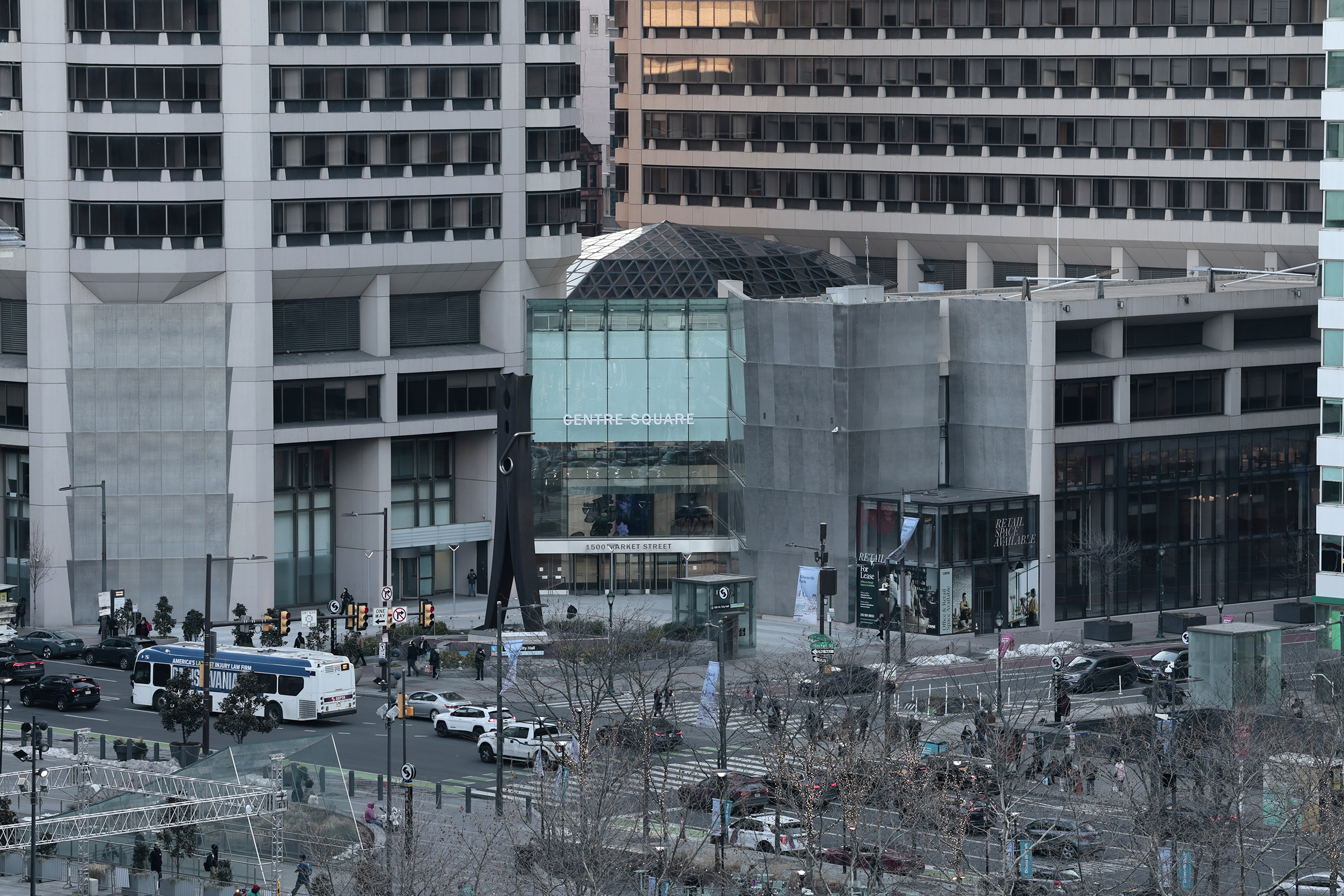
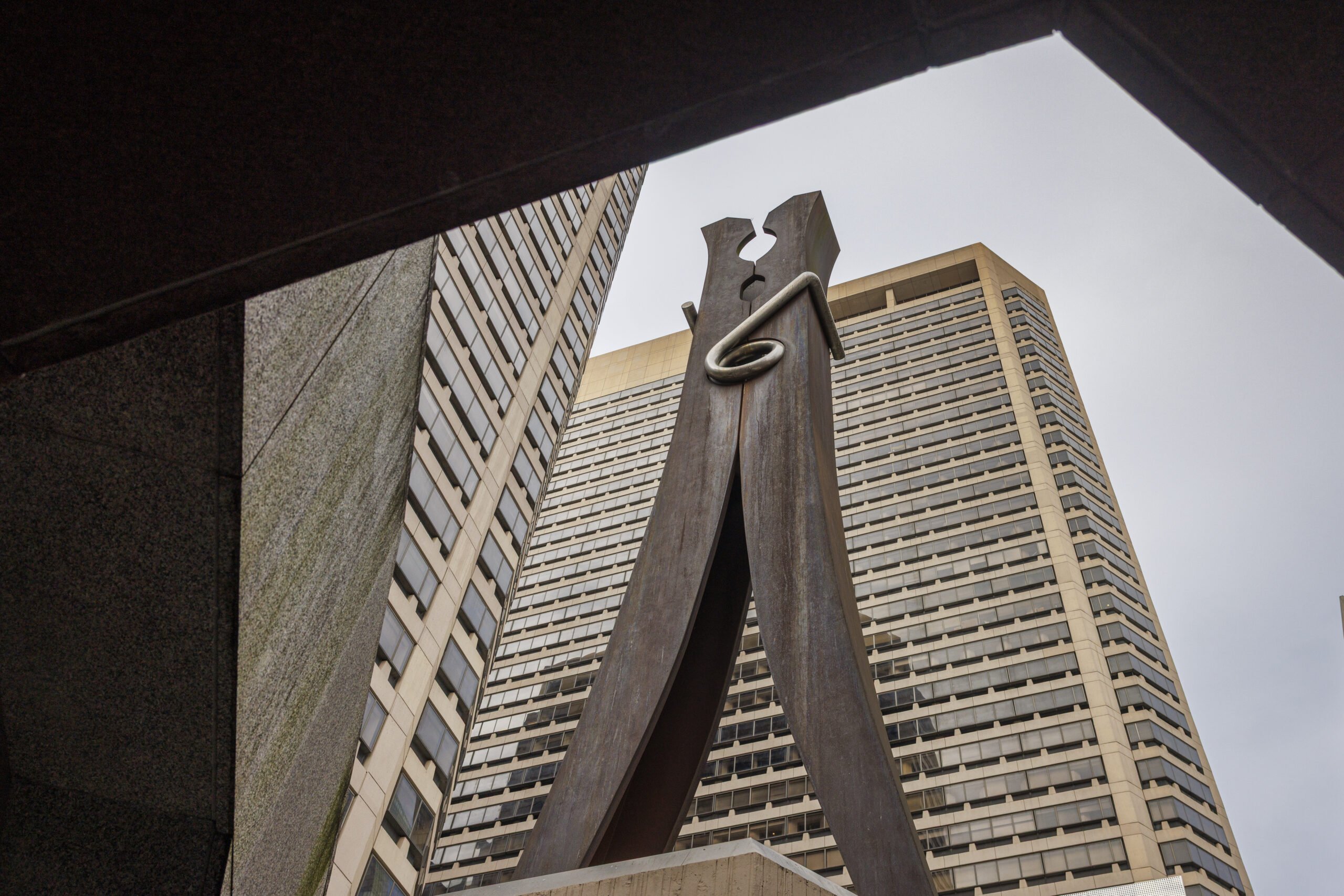
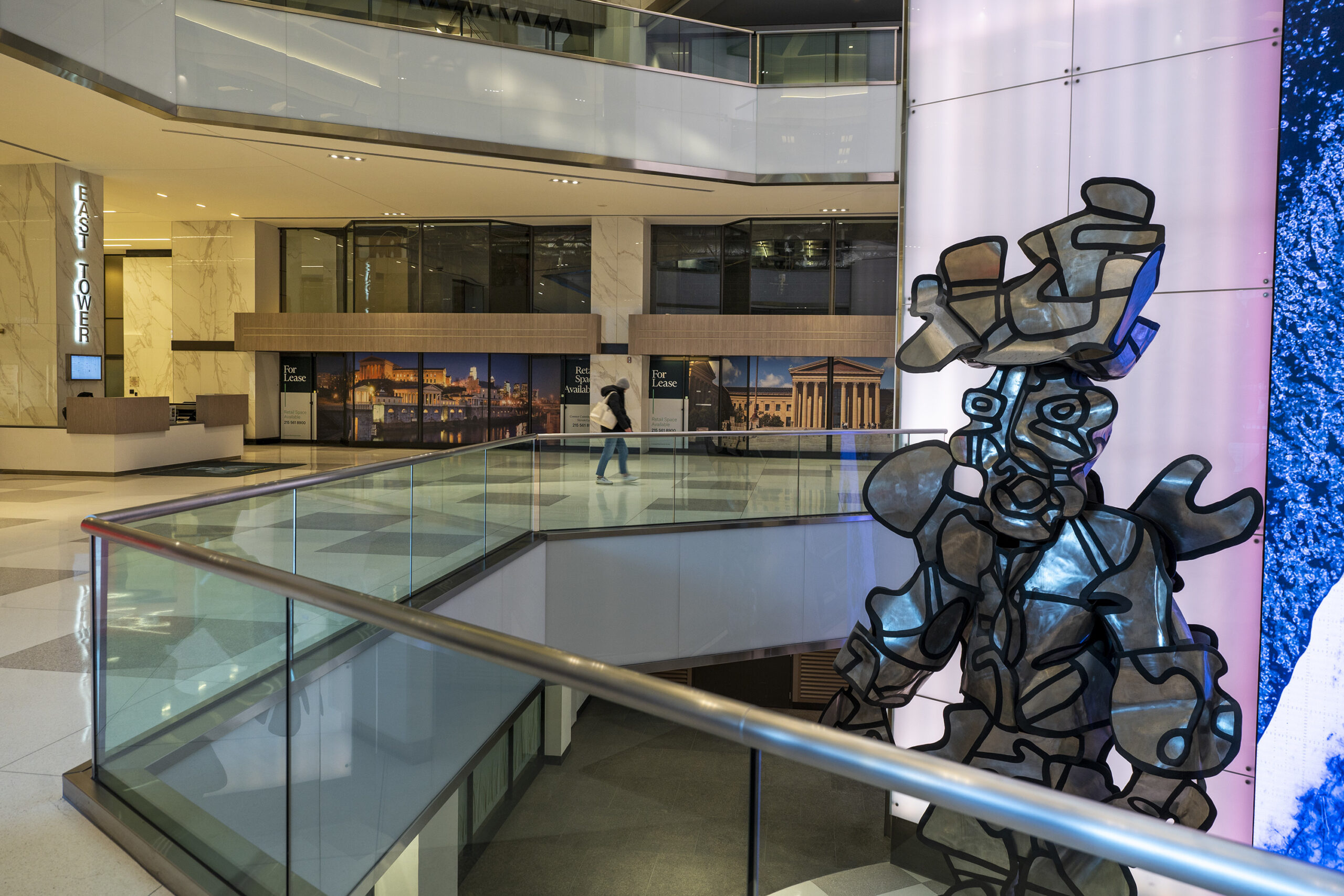
    Centre Square — also known as the “Clothespin building” for its four-story pop art sculpture — is slated for mixed-use redevelopment by PMC Property Group and investor and developer Dean Adler, with much of the complex being devoted to hotel rooms and apartments.

    “That corner of West Market is the best corner in the city,” Adler said. “You get …all the visibility going around the circle. When you look at City Hall, it may not be so nice inside, but outside, it’s a 1904 Beaux Arts building.”

    Centre Square’s fortunes sank when COVID-19 struck and have never recovered. At the end of 2025, occupancy stood at 37.6%, giving it the highest vacancy rate in Center City, according to Morningstar Credit.

    In 2017, when Centre Square last sold, it went for $328 million. Last July, the complex was appraised at $104.4 million and is now under agreement of sale to PMC and Adler for less than $94 million, according to Adler.

    He says the plan is to retain 500,000 square feet of office space, enough to house the remaining tenants. Then there will be between 250 and 500 apartments spread between the building’s two towers. Three hundred luxury hotel rooms will be built on the upper floors of the east tower, facing City Hall.

    “William Penn is in your bedroom,” Adler said of the hotel.

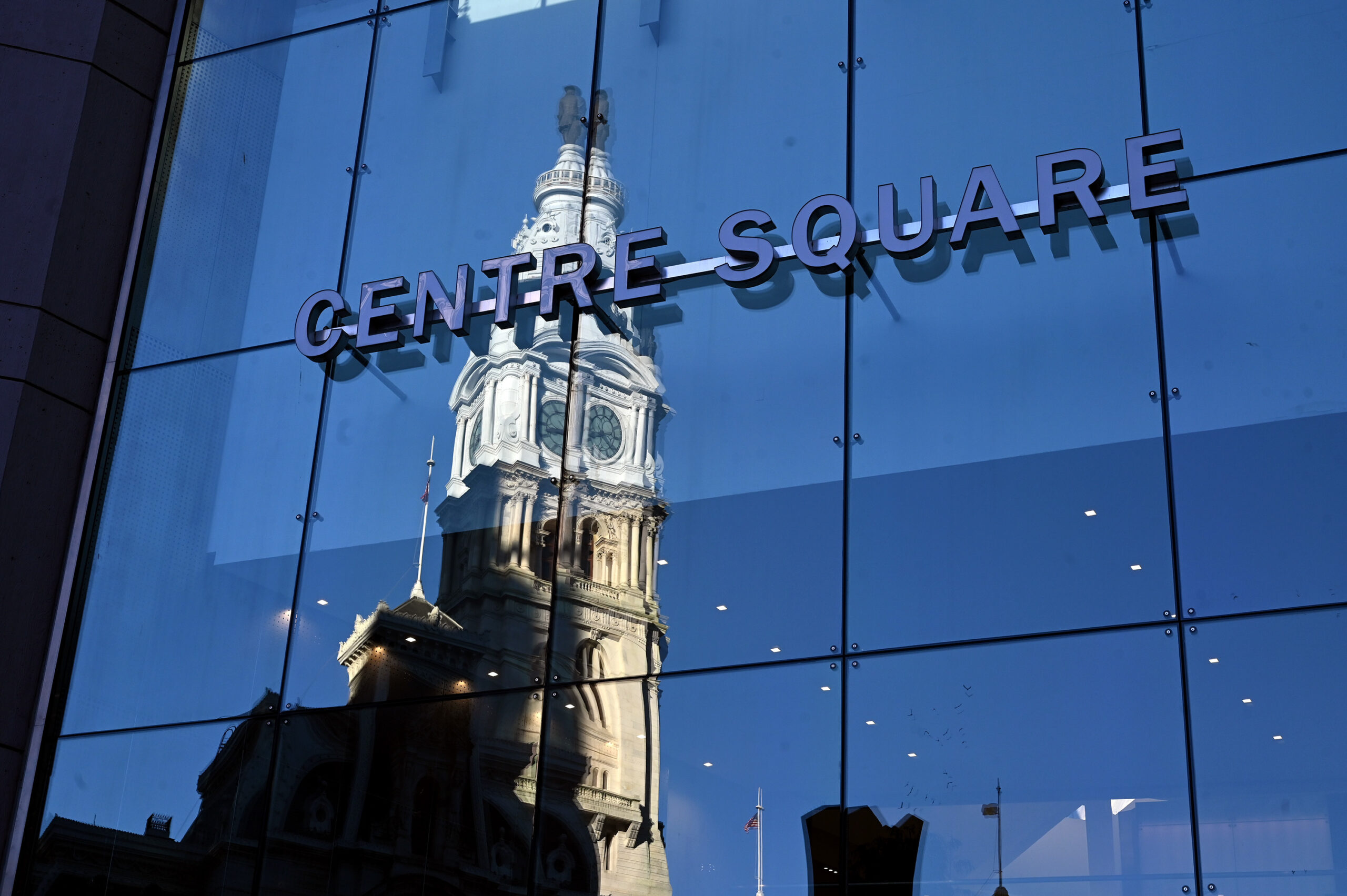
    Centre Square is located across from City Hall on what investor Dean Adler calls “the best corner in the city.”

    On the lower levels of Centre Square, Adler says there will also be a spa and a 50-meter pool — amenities that he says the building previously had.

    The acquisition of Centre Square is part of a wave of high-profile redevelopments between Adler and PMC, led by its president, Ron Caplan.

    In recent years, the partners have purchased and redeveloped the Bellevue on South Broad Street, the Battery on the Delaware River, and the Bourse on Independence Mall.

    “In today’s environment, there’s a real estate crisis, and we are buying these buildings for 20 cents on the dollar,” Adler said. “We …are rejuvenating architectural gems that are functionally obsolete.”

    PMC declined to comment. News of Centre Square’s acquisition was first reported by the Philadelphia Business Journal.

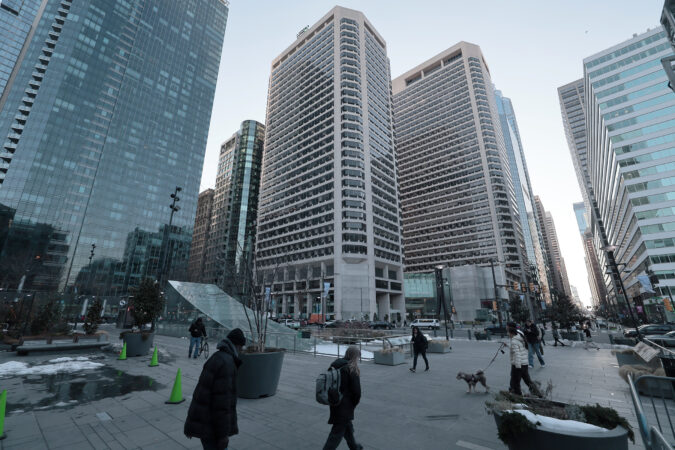
    Centre Square (center) at 1500 Market Street in Philadelphia on Friday, Feb. 27, 2026

    More than ‘an office district’

    The new Centre Square is part of a trend in which struggling office buildings have sold for less than half their previous prices with plans to convert the spaces into homes.

    Centre Square’s discount was even deeper: The reported sale price is almost half what it sold for in 2002, not even adjusting for inflation.

    The Wanamaker Building, which had over 1.4 million square feet of office space, is another example. Previously one of Philadelphia’s largest office buildings, it is being turned into apartments by TF Cornerstone and Alterra Property Group. Only a small number of offices will be preserved.

    Supporters say that taking huge blocks of empty office space off the market will mean good things for Center City, as apartment leasing remains healthy.

    “The office district isn’t only an office district anymore,” said Prema Katari Gupta, president of the Center City District.

    “There’s hospitality; there’s increasing residential. What makes a city great is when you have these layered neighborhoods with a lot of different types of demand drivers,” Gupta said.

    The partners in Centre Square’s redevelopment have worked together for decades, including on the new Aramark headquarters on the Schuylkill and 2040 Market St.

    Adler‘s longtime business partner, Ira Lubert, with whom he founded real estate investment group Lubert-Adler, is not involved in the project. Instead, the Centre Square project partnership with PMC is being done under the auspices of a new venture, Adler & Co.

    Philadelphia’s No. 1 business address

    Centre Square spans two towers because it dates to an era when developers would not build taller than the William Penn statue atop City Hall, an unofficial agreement with the city that lasted until the 1980s when the Liberty Place skyscrapers were erected.

    Planning for Centre Square began in the mid-1960s, signaling a shift, along with the construction of Penn Center, for Philadelphia’s office district from the Art Deco South Broad Street to West Market Street.

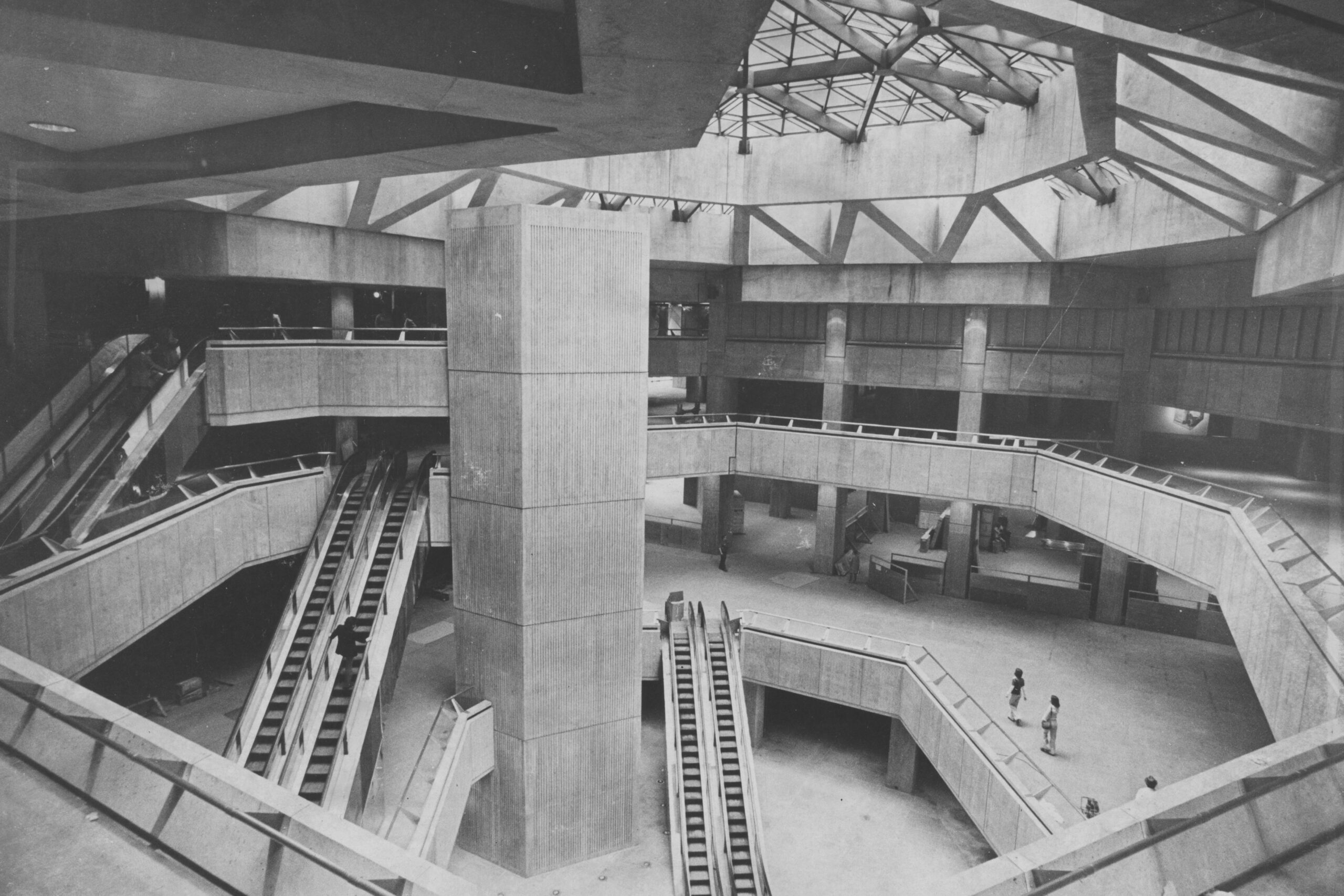
    Centre Square’s atrium and retail space in in 1974.

    “Those buildings created the momentum,” said Bill Hankowsky, former CEO of Liberty Property Trust, which developed neighboring office skyscrapers like Liberty Place and the Comcast towers. “It was the biggest single project that said we’re going down Market West.”

    Designed by architect Vincent Kling and developer Jack Wolgin, it was seen as a revolutionary project and hailed as Philadelphia’s No. 1 business address in ads in The Inquirer.

    Centre Square also bears the architectural hallmarks of the 1960s, like its poured concrete building materials that — along with its respect for the old height limit — set it apart from the steel skyscrapers built farther down West Market later in the decade.

    The building’s Brutalist architecture — often a polarizing style — has bedeviled many of its subsequent owners, who pumped millions of dollars into Centre Square nearly every decade since the 1970s to keep it competitive.

    “It is structurally built differently than other buildings on Market West,” Hankowsky said. “It’s a substantial building, but also it is a tougher building to deal with. The walls are thick, the floors are thick. It’s a big challenge.”

    That’s part of what deterred many other developers who considered buying the building.

    The sheer scale is a challenge, too. Some interested parties were put off by the percentage of the building that would have to remain office, as a full residential conversion is unlikely.

    “The buildings don’t particularly lend themselves to a complete conversion to apartments,” said John Grady, who used to lead the Philadelphia Industrial Development Corp. and studied the building for its prior ownership. “They’re too big, and the floor plates don’t work as well as other buildings.”

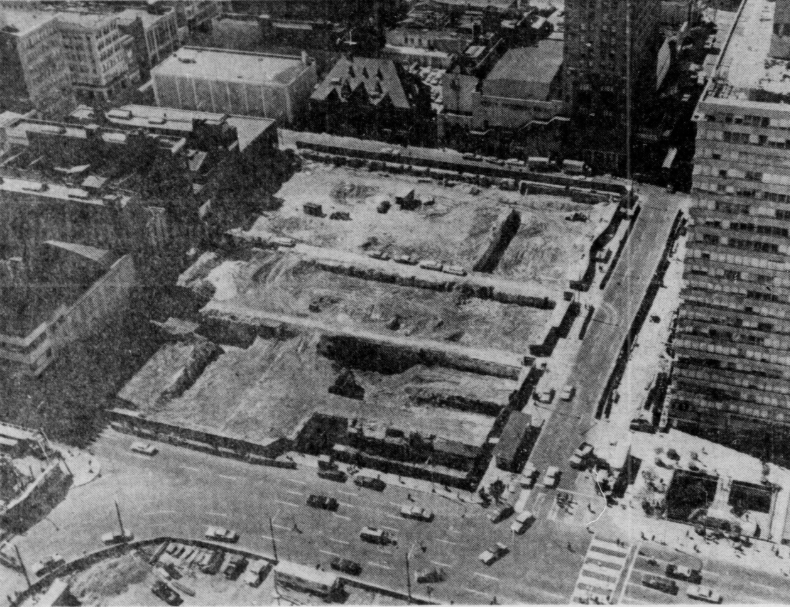
    A photo of the long vacant lot while Centre Square went through its fiscal and legal trials during construction.

    Born in drama, considered for Comcast HQ

    Centre Square’s birth was not easy. Its planning and construction took almost 10 years, with legal and financial delays that included an investigation of the project by then-District Attorney Arlen Specter. (Wolgin told reporters that the Republican politician was “out to get” him.)

    The delays left a yawning vacant lot just west of City Hall, which led Mayor James Tate to describe Centre Square as “doomed” in 1969.

    When Wolgin eventually began construction, he then faced blowback from powerful critics of Claes Oldenburg’s Clothespin sculpture that he wanted to place in front of his towers.

    “It was a disaster!” Jack Wolgin told The Inquirer in 2001. “They said, ‘How can you take something like this pop art and put it in front of City Hall? It’s a monstrosity! It’s a disgrace!’”

    Despite the building’s polarizing beginnings, it became a mainstay of the office market, attracting one-time corporate giants like CoreStates bank and Towers Perrin consultants.

    Claes Oldenburg’s pop art Clothespin sculpture stands in front of Centre Square.

    It snagged Comcast as a tenant in the early 1990s, after the company was forced out of its first urban home by the fire that destroyed One Meridian Plaza.

    Comcast studied the building as a possible headquarters for the company before eventually turning to Liberty Property Trust to build their skyline-defining towers.

    Still, many of its 1960s-era flourishes proved difficult to adapt to the modern era. By the 1980s, the atrium that connects the two towers and houses its inward-facing retail received its first renovation.

    Centre Square’s atrium has undergone renovations almost every decade since.

    The lobby of Centre Square in 2024.

    Looking ahead

    Inquirer architecture critic Inga Saffron wrote about Centre Square‘s latest update in January 2020.

    “Fortunately for Philadelphia, the city’s biggest, baddest Brutalist complex, Centre Square, has always been too big to fail,” she wrote just before COVID-19 struck and emptied office towers around the country.

    Now, six years later, Adler and PMC Property Group believe they can bring it back as something new.

  • All charges dropped against personal injury attorney Leonard Hill in Center City shooting case

    All charges dropped against personal injury attorney Leonard Hill in Center City shooting case

    All charges were dropped against Leonard Hill, a prominent personal injury attorney accused of aggravated assault and related crimes for shooting and injuring a man during an altercation outside a Center City cigar bar in 2023.

    Prosecutors dropped the charges Friday morning shortly before Hill, 56, was set to go to a bench trial before Common Pleas Judge J. Scott O’Keefe.

    In addition to aggravated assault, Hill will not face charges of possessing an instrument of a crime, simple assault, recklessly endangering another person, and tampering with evidence.

    Aggravated assault, a felony and the most serious of those offenses, carries a sentence of up to 20 years in prison if convicted.

    Hill’s attorney, Fortunato N. Perri, declined to comment on the decision.

    The outcome marks a victory for Hill, who had previously hoped to resolve his case through the city’s diversion program rather than a courtroom.

    Last year, in a highly unusual move in an aggravated assault case, the District Attorney’s Office offered to admit Hill to the diversion program instead of going to trial.

    Had Hill participated, his case would have been expunged after completing a period of probation and community service, surrendering the legally owned firearm police recovered from his Bala Cynwyd home, and donating $25,000 to an anti-violence group.

    District Attorney Larry Krasner said in an interview at the time that request was “specifically my decision.” The district attorney called information about the case, some of it revealed after Hill’s arrest, both unique and highly unusual, though he declined to elaborate.

    A spokesperson for the District Attorney’s Office declined to comment Friday.

    After prosecutors sought diversion last February, Municipal Court Judge William Austin Meehan Jr. denied prosecutors’ request.

    The judge said Hill’s case was not appropriate for diversion, which is typically reserved for cases involving relatively minor offenses, and urged prosecutors to resolve the case through different means.

    It’s rare for those accused of shootings to be offered diversion, otherwise known as the Accelerated Rehabilitative Disposition. Several nonfatal shooting cases have ended with diversion since 2011: participants usually include those charged with nonviolent offenses such as DUIs, petty theft, or drug possession.

    Attorneys for Hill — whose billboards advertising his legal services feature prominently on Philadelphia’s freeway system — maintained their client acted in self-defense when firing twice at a man outside the Ashton Cigar Bar on the 1500 block of Walnut Street.

    The episode began when Hill and a bar manager tried to separate a woman and another man she said was intoxicated and accosting her, according to court documents.

    The confrontation spilled outside, where Hill and the man began to argue. Hill drew a firearm and fired once during the argument, the court documents said. Hill fired again as the man ran away, striking the 38-year-old in the calf.

    Hill left the scene and changed his clothes before returning, and did not tell officers who responded to the bar that he had fired shots, according to the documents. Investigators recovered video of the shooting and interviewed the bar manager, who identified Hill as the shooter but said he had fired in self-defense.

    Perri, Hill’s attorney, later said the man who Hill shot had been wielding a knife — a detail not included in his arrest paperwork — and said his client made a “split-second decision” to defend himself and others in a dangerous situation.

    Prosecutors’ decision to offer Hill diversion last year did not come without criticism.

    Keisha Hudson, head of the Defender Association of Philadelphia, told the Inquirer in February 2025 that she could not recall a single instance in which one of the organization’s clients was offered diversion after shooting someone.

    She said the case’s handling was emblematic of a justice system that treats poor defendants and those with money differently. She did not immediately respond to a request for comment Friday.

    Staff writer Ellie Rushing contributed to this article.

  • Aramark is out as food provider for new South Philly arena slated for 2030

    Aramark is out as food provider for new South Philly arena slated for 2030

    Aramark will not be the official food, beverage, and hospitality provider at the new South Philadelphia arena where the 76ers, Flyers, and the city’s new WNBA team are expected to play.

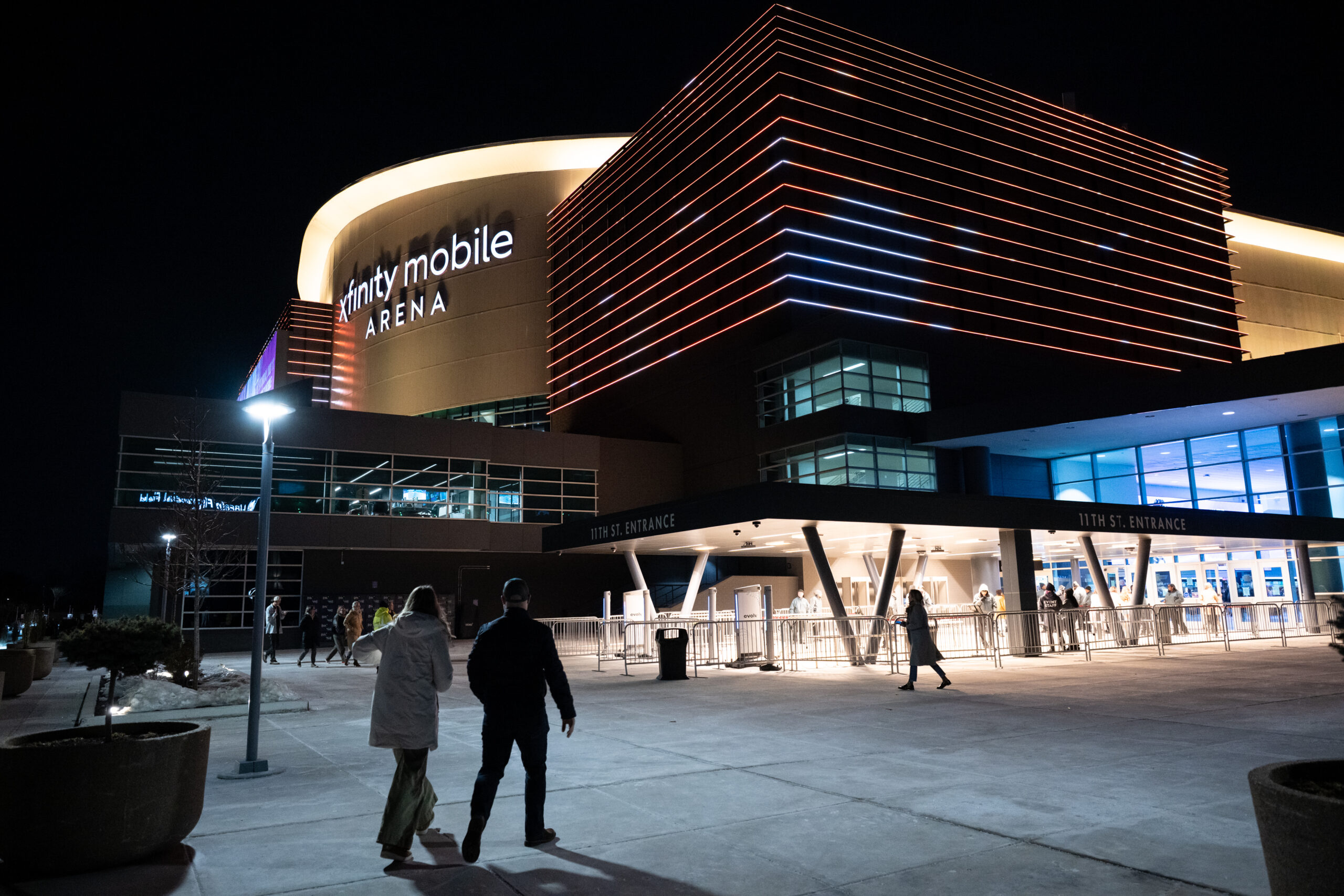
    Harris Blitzer Sports & Entertainment, which owns the Sixers, and Comcast Spectacor, which owns the Flyers and Xfinity Mobile Arena, announced that Levy Restaurants will take over food and beverage duties in the new arena, which is slated to open by 2030.

    “Very few cities are as devoted to their teams as Philadelphia, the loyalty and passion are part of the DNA that make the community so special. It’s both an honor and an invigorating opportunity to help amplify the best of Philadelphia,” Levy CEO Andy Lansing said in a statement.

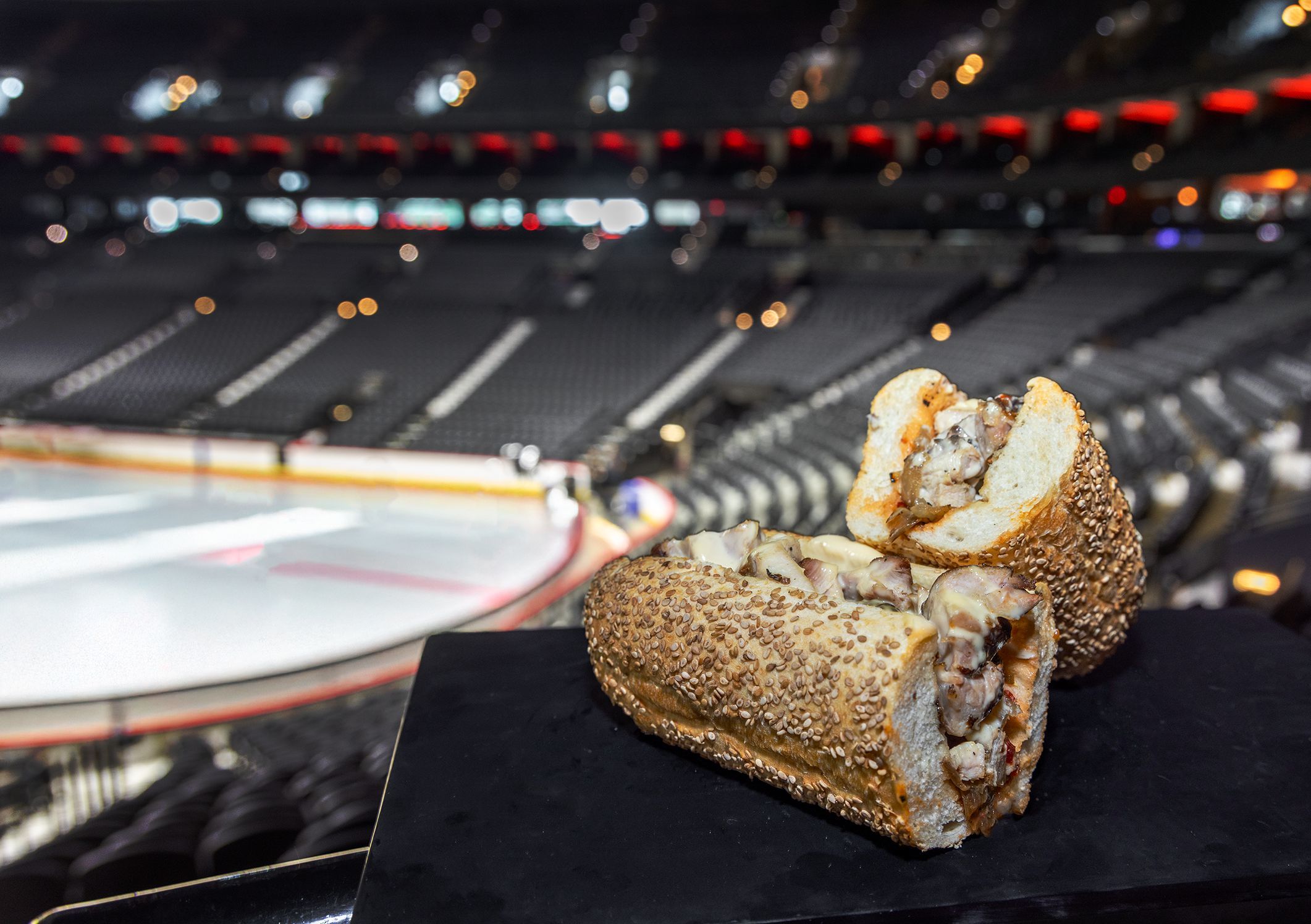
    Smoked chicken cheesesteak is on the 2025-26 menu at the Xfinity Mobile Arena.

    Aramark has overseen hospitality at the Sixers’ and Flyers’ arena since it opened in 1996. Lincoln Financial Field and Citizens Bank Park hospitality services are still operated by the Philadelphia-based food services provider.

    A spokesperson for the arena said that the decision to go with a new provider was not based on Aramark’s performance, but was the result of a standard pitch process.

    “We have a great relationship with our friends at Aramark,” Comcast Spectacor chairman and CEO Dan Hilferty told SportsBusinessJournal. “We have, on both sides, committed that while Xfinity Mobile Arena is still in operation, we’re going to deliver the best possible product.”

    Aramark will continue its tenure at Xfinity Mobile Arena until the new arena opens. The new arena was announced last year after plans to build a Center City arena for the Sixers were abandoned in favor of a new building at the South Philly sports complex.

    Xfinity Mobile Arena used to be known as the Wells Fargo Arena, from 2010 into August 2025.

    “Our team is fully committed to delivering memorable game day experiences, and we are grateful for the many decades spent fueling the passion and energy of the fans,” an Aramark spokesperson said in a statement.

    The hometown food service provider has come under fire in recent years over labor disputes with the thousands of people who work in the stadiums. Before Unite Here Local 274 won its latest contract, fewer than 100 workers represented by the union had year-round healthcare. The contract, signed last March, increased wages and brought hundreds of workers onto the union healthcare plan.

    Levy’s portfolio includes nearly half the NBA/NHL shared arenas, such as Los Angeles’ Crypto.com Arena, according to a Sixers spokesperson. Levy, which has headquarters in Chicago, also provides services for such large events as the Kentucky Derby and the Grammys.

  • What we know and what we don’t know about Philly school closings

    What we know and what we don’t know about Philly school closings

    Superintendent Tony B. Watlington Sr. on Thursday presented the Philadelphia School District’s long-awaited facilities master plan to board members, with revisions leaving two fewer schools slated to close than initially proposed.

    Plans now included 18 closures and six other co-locations, as well as one new school building and other investments.

    Here’s what we know so far:

    What’s happening to the district’s buildings?

    Of the district’s 307 buildings, most schools — 159 in all — would be modernized under the proposed plan. The district in January pointed to Frankford High, which closed for two years because of asbestos issues and just reopened in the fall with $30 million worth of work to spruce it up, as an example of modernization.

    An additional 122 schools would fall into a “maintain” category, meaning they would receive regular upkeep. And six facilities would be co-located, meaning two separate schools would be housed under one roof, each with its own principal and team.

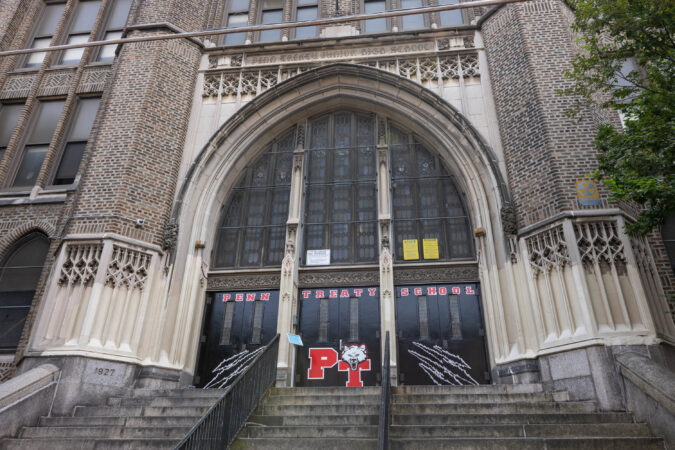
    Finally, 18 schools would be recommended for closure. Among them is Penn Treaty, now a 6-12 school, which would close in its current form, but go on to house the current Bodine High School, a magnet in Northern Liberties. Bodine’s building would become the home of Constitution High, which now occupies a rented space in Center City.

    As proposed, Watlington’s plan would cost $2.8 billion over 10 years. The district would put up $1 billion via capital borrowing during that time — leaving $1.8 billion unaccounted for that the superintendent said would need to be covered by state money or philanthropic support. If the district doesn’t get all or some of that amount, the plan would have to be amended.

    Will some schools definitely close? Which ones?

    Right now, the closures are just a proposal, and the school board is slated to have the final say. They could adopt all, some, or none of Watlington’s recommendations.

    If the closures are approved, no school would be shuttered before the 2027-28 school year. And should some schools close, no job losses are expected, Watlington said last month.

    Initially targeted for closure were Conwell Middle School in Kensington and Motivation High in Southwest Philadelphia, but both have since been spared. Both magnet schools accept students citywide, and their proposed closures saw opposition from powerful allies including several City Council members and Pennsylvania House Speaker Joanna McClinton.

    That change, Watlington said, was not due to politics, and came after the district “poured through thousands of feedback loops from a number of Philadelphians.”

    The board, meanwhile, is expected to vote in the coming weeks, though no date has been set.

    What will happen to students who attend closing schools?

    Every affected student would be routed to a new school. A new transition office would work closely with impacted communities to make sure academics, attendance, and social-emotional needs don’t suffer, Watlington said.

    “These families will get gold-standard, red-carpet treatment directly from the superintendent’s office,” he pledged.

    Why are these changes necessary?

    The district hasn’t had a facilities master plan in more than a decade. It has 70,000 empty seats citywide, with some schools overcrowded and others with entire unused floors. It’s also got a lot of aging buildings — the average district school is nearly 75 years old — and many have environmental and/or significant systems issues.

    Officials said they want to solve district-wide disparities: Some schools have art, music, and ample space for physical education, plus extracurricular activities, and some have few of those things.

    How were school buildings’ fates determined?

    Watlington said there was no formula to determine his recommendations. But four factors entered into the decision: building condition, utilization, the school’s ability to offer robust programming, and neighborhood vulnerability — a new measure that considers things like poverty and whether the area has lived through prior school closings.

    The district formally launched the final phase of its facilities master planning process in late 2024. Since then, officials have hosted 47 community conversations and received 13,700 survey responses from people in every zip code in the city. Officials heard from a project team of 30 members and received feedback from nine advisory groups composed of more than 170 members.

    However, some of those members, and others, are skeptical of the process, saying they feel like their input was performative. In the fall, a grassroots coalition urged the district to pause the process, focus more on investments, and promise no closures.

    Community conversations took place throughout February. Officials are also accepting input via the facilities planning process website.

    How long did it take officials to get to this point?

    The draft plan has been years in the making, and comes following a previous attempt to make one that ended before it went anywhere.

    Watlington launched this final phase of the planning process in the fall of 2024. Decisions were originally promised by the end of 2025, but that was pushed off when officials said they needed more time to gather feedback.

    The district later launched surveys to gain more input, with the topline result being that Philadelphians didn’t want their local schools closed. Many respondents outlined fears about potential hardships that closing schools could create, such as longer walks to school or tough bus rides in unfamiliar or unsafe areas.

    And they flagged worries about merging schools and having large grade spans in a single building.

    When did the district last close schools?

    Mass school closures last happened in 2012 and 2013, when 30 schools shut.

    That process hit economically disadvantaged neighborhoods disproportionately, did not yield substantial savings, and generally led to worse academic outcomes and attendance for students.

    The mistakes of 2012 informed this go-round, officials said. They have promised better services for schools, students and families affected by any coming transitions.

  • Oyster House wins James Beard Foundation 2026 America’s Classics Award

    Oyster House wins James Beard Foundation 2026 America’s Classics Award

    Oyster House is a great, storied fish house of Philly’s seafood glory days. And now it’s a James Beard 2026 America’s Classics Award winner.

    On Wednesday, the James Beard Foundation announced six recipients of the award in the Restaurant and Chef category. The “America’s Classics” designation is given to local restaurants with “timeless appeal that serve quality food and are beloved by their communities” and “sustain and contribute to American food culture,” according to the foundation’s statement.

    For the mid-Atlantic category, Oyster House was selected for its three-generation commitment to serving seafood traditions in Philadelphia. The foundation praised owner Sam Mink and his family for straddling multiple eras of Philadelphia’s restaurant history with specialties like sherried snapper soup and combinations like fried oysters and chicken salad, along with its willingness to evolve with creative modern seafood cookery like executive chef Joe Campoli’s crudos, grilled fish, and halibut glazed in black garlic over dashi.

    “Oyster House is not just a venerable ambassador of Philadelphia food history — it remains one of the city’s most rewarding places to eat,” the statement noted.

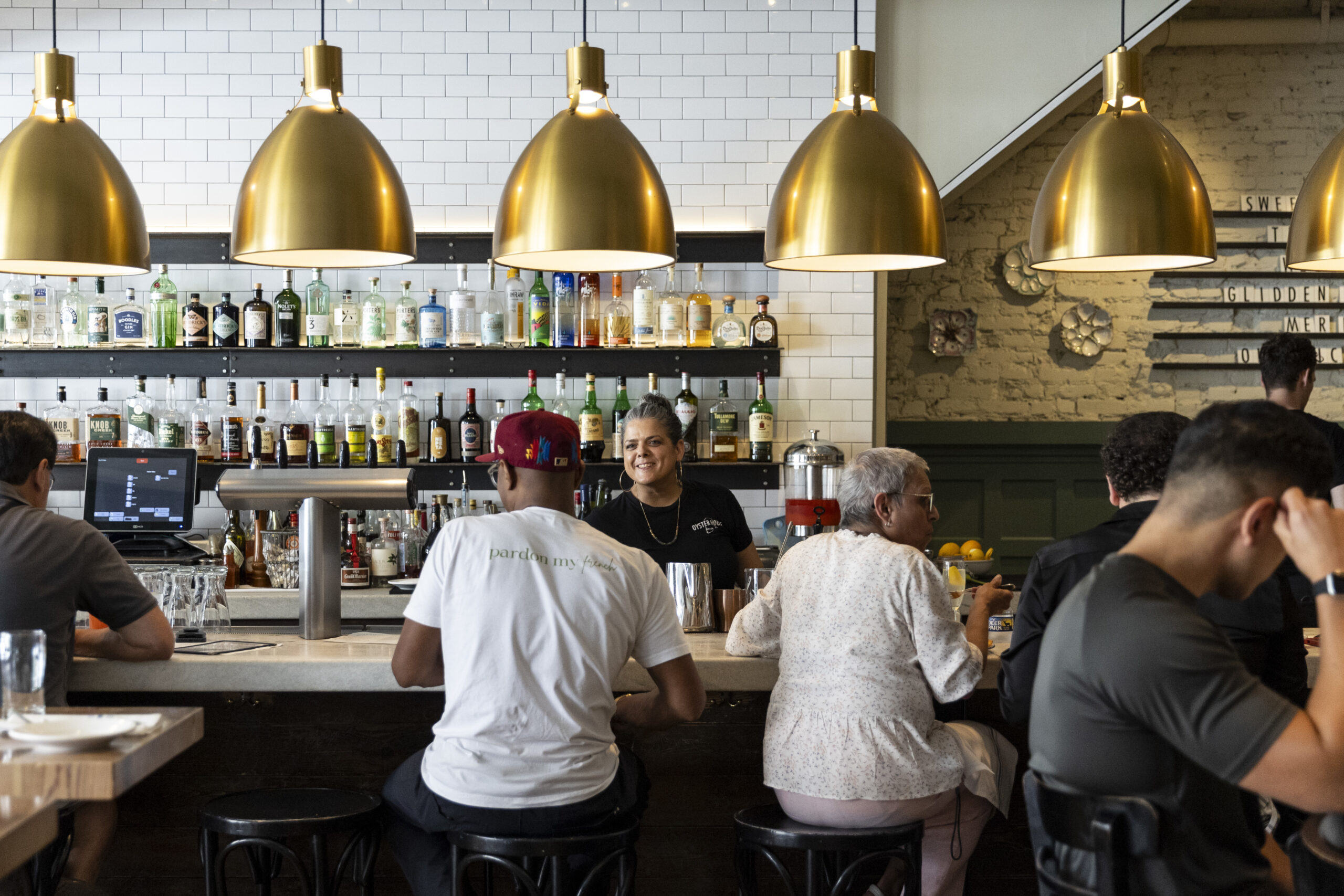
    People fill the bar during happy hour at Oyster House in Philadelphia on Thursday, July 11, 2024.

    When Mink received the email announcing the restaurant’s win a week ago, he was surprised “because I really wanted this award.”

    “I feel like we are such a classic institution for Philadelphia,” he said. “But to be honored on a national level … people in Philly know about us — we’ve been around for 50 years … that recognition means so much [and] just validates what we do day in and day out. We come to work trying to give Philadelphia the best seafood possible.”

    The restaurant staff was abuzz with congratulations and excitement Wednesday morning. “I’ve got a great staff here, the managers, the chefs on down to the servers, bartenders, cooks — everyone just has a real smile on their face today and is really excited to be here.”

    While Mink hasn’t had time to think about an immediate celebration for the good news, the Center City restaurant will celebrate its 50th anniversary with a big block party in the spring.

    The Oyster House is one of The Inquirer’s 76 most vital restaurants in Philadelphia. This year’s other winners are the Serving Spoon in Inglewood, Calif., Johnny’s Cafe in Omaha, Neb., Eng’s in Kingston, N.Y., Figaretti’s Italian Restaurant in Wheeling, W.V., and Bob Taylor’s Ranch House in Las Vegas.

    Gary McCready prepares a seafood tower at Oyster House in Philadelphia on Thursday, July 11, 2024.

    Restaurants are recommended by the Restaurant and Chef Awards voting body and the public during an open call period from October to November, then considered and selected by the subcommittee. America’s Classics restaurants must be open for at least a decade to be eligible.

    The winners will be celebrated at the James Beard Restaurant and Chef Awards ceremony on June 15 at the Lyric Opera of Chicago.

    “Behind each of these cherished restaurants are people who show up day after day to nourish their communities — their powerful stories are ones of creativity, resilience, and tradition,” said Lauren Saria and Erinn Tucker-Oluwole, Restaurant and Chef Awards subcommittee cochairs. “On behalf of the Restaurant and Chef Awards subcommittee, we are honored to celebrate these unsung heroes of American food culture. We hope this recognition opens new doors for their continued success.”

  • Hair stylist Artur Kirsh to open Narberth and Center City studios following Bala Cynwyd Saks closure

    Hair stylist Artur Kirsh to open Narberth and Center City studios following Bala Cynwyd Saks closure

    Hair stylist Artur Kirsh, who has long served clients out of his Saks Fifth Avenue salon in Bala Cynwyd, will be relocating to Narberth in April as Saks prepares to close. Kirsh will open a second salon at Boyds in Center City this fall.

    Kirsh’s relocation comes after Saks Global, the owner of Saks Fifth Avenue and Neiman Marcus, announced the closure of numerous department stores, including the Bala Cynwyd Saks, in February. Saks Global filed for bankruptcy in January.

    Kirsh said he was surprised to hear about the closure, but decided to take the opportunity to “do something huge” and open two new studios, expanding his presence in the region.

    Kirsh will open Artur Kirsh Hair Studio, his new Narberth location, in April at 948 Montgomery Ave. He described the studio as “very artsy” and “very hip.” The Narberth outpost will have ample parking, a “fun and intimate” vibe, and will allow clients to move beyond traditional salon hours and schedule based on their availability, according to a news release. Kirsh called the Narberth studio a “boutique concierge salon concept.”

    The hair stylist will continue to see clients at Saks through March to ensure a “seamless transition” ahead of the department store’s closure in April.

    Kirsh said he chose Narberth because it’s minutes from his old Saks studio and would allow him to maintain some continuity for Main Line clients.

    Kirsh will also expand his footprint in Center City in September, where he plans to open Artur Kirsh Salon on the fourth floor of Boyds department store at 1818 Chestnut St.

    “I’ll have best of both worlds,” he said. “I’ll have the suburbs and the city.”

    Though the changes happened quickly, Kirsh said he’s ultimately looking forward to the next chapter.

    “When you’re in an old place, you kind of get stale,” he said. “Things happen for a reason.”

    Kirsh was born and raised in Russia and moved to New York in the mid-1990s. After training at a Manhattan salon, Kirsh relocated to the Philadelphia area. He has worked out of the Bala Cynwyd Saks for six years. Kirsh specializes in coloring and “dry cutting” and describes himself as the ”go-to stylist for models and local celebrities.”

    In addition to his Bala Cynwyd salon, Kirsh sees clients at the Rittenhouse Spa & Club in Center City, John Barrett Salon in New York City, and Oasis Salon & Med Spa in Boca Raton, Fla. Over the years, Kirsh has styled a number of celebrity clients, including Dorinda Medley, Betsey Johnson, Carolina Herrera, Celine Dion, Kathy Griffin, and Ken Downing.

    This suburban content is produced with support from the Leslie Miller and Richard Worley Foundation and The Lenfest Institute for Journalism. Editorial content is created independently of the project donors. Gifts to support The Inquirer’s high-impact journalism can be made at inquirer.com/donate. A list of Lenfest Institute donors can be found at lenfestinstitute.org/supporters.

  • Philly’s Greyhound station is one step closer to finding a permanent home

    Philly’s Greyhound station is one step closer to finding a permanent home

    Lights shine from a window of the abandoned Greyhound intercity bus terminal on Filbert Street as construction crews demolish fixtures and begin renovations ahead of a May reopening.

    While the old depot is ready for crowds of travelers attending high-profile special events this year, the city Department of Planning and Development has identified three possible locations for a permanent intercity bus station.

    Officials sifted through 208 possible locations over the past two years before zeroing in on the three sites:

    • Eighth and Arch Streets: A pair of parking lots on Arch Street near Eighth Street next to the African American Museum. The lots, at 701-709 and 721-737 Arch St., are owned by the city and Parkway Corp.
    • 15th and Vine Streets: The Philadelphia Gateway Garage at 1540 Vine St. along with an adjoining parking lot. They are owned by the Pennsylvania Department of Transportation and the Philadelphia Parking Authority.
    • Near 30th Street Station: A parking lot just north of 30th Street Station, at 2931 Arch St., near the Cira Centre office tower.

    On Wednesday, the city Planning Commission is holding a public open house at Independence Visitors Center from 6 to 8 p.m. People can learn about the sites, share their ideas, and ask questions about the future home of an intercity bus facility.

    There’s also an online survey collecting opinions about what the intercity bus station needs and where it should go, due March 13.

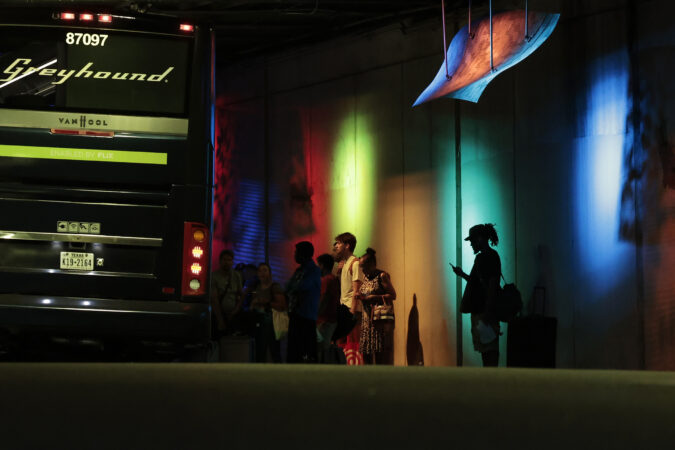
    The former Greyhound terminal at 1001 Filbert St. “is not a long-term solution for the city’s intercity bus needs,” city officials say, though it will provide a safe and comfortable indoor station for travelers, as opposed to the current, haphazard outdoor curbside loading zones along Spring Garden Street near Columbus Boulevard.

    It is scheduled to reopen in plenty of time for events celebrating America’s 250th birthday and World Cup soccer tournament matches in the summer.

    That’s why the city turned to the old station as a stopgap solution. The Philadelphia Parking Authority will operate the facility under a 10-year renewable lease with the private group of New York investors that owns it.

    The city says its goal is a modern “transportation hub” with amenities for travelers and bus operators and, ideally, some development built around the facility. It would be owned by the city.

    “Public ownership means it won’t be closed down by a landlord or private bus company,” the planning department said in a statement. In addition, the forever depot “could be designed to have housing in the floors above the station or retail spaces within the station. These uses could help support … construction and operation.”

    Why was Philly’s Greyhound terminal moved?

    Greyhound ran the terminal at 10th and Filbert for more than three decades but pulled out in June 2023, ending its lease with the owners amid the bus company’s push to cut costs by shedding real estate it owned or rented nationwide.

    Other intercity bus carriers have done the same, operating from curbsides in a number of cities.

    Greyhound may have had to leave the property anyway because the Philadelphia 76ers in 2022 proposed building a new arena on top of it and Filbert Street.

    When those plans fell through, the building was empty again, while Greyhound, its parent company FlixBus, and family-owned Peter Pan Bus Lines were operating at curbside on the 600 block of Market Street. That site, chosen by city officials, lacked benches, bathrooms, or shelter for customers.

    Traffic was a mess, and SEPTA had to reroute some of its metro bus routes for a time.

    In November 2023, Greyhound and the other carriers moved operations to a corner in Northern Liberties along Spring Garden Street with more space than the Market Street block. City officials promised it was temporary, but the “station” is still there, with attendant trash and disruptions to local business.

    Plans to move intercity bus operations elsewhere collapsed amid community opposition, notably to a proposal to use the first level of an Old City parking garage at Second and Walnut Streets as a temporary terminal.

    Consultants and city planners picked 35 potential sites for closer analysis. They were looking for places that could accommodate a multistory, mixed-used development in addition to a station and that were close to Center City or University City, transit, and highway ramps.

    They also preferred a publicly owned space not already marked for development, according to a document prepared for the public meeting.

    In the end, three places checked most boxes.

    (function() {
    var l2 = function() {
    new pym.Parent(‘GREYHOUNDMAP.html’,
    ‘https://media.inquirer.com/storage/inquirer/projects/innovation/arcgis_iframe/GREYHOUNDMAP.html’);
    };
    if (typeof(pym) === ‘undefined’) {
    var h = document.getElementsByTagName(‘head’)[0],
    s = document.createElement(‘script’);
    s.type = ‘text/javascript’;
    s.src = ‘https://pym.nprapps.org/pym.v1.min.js’;
    s.onload = l2;
    h.appendChild(s);
    } else {
    l2();
    }
    })();

    Site pros and cons

    Eighth and Arch Streets

    The Eighth and Arch site has room for 18 bus parking spots, the planning department said. It could fit a 113,000-square-foot station and an overall 640,000-square-foot development.

    Strengths: Proximity to several transit stops and to I-676 and I-95, as well as the potential to build public parking above the station and to use the African American Museum building when that entity moves to the Parkway.

    Challenges: The ownership, split between the city and a private corporation, could require coordinating with the Federal Detention Center there on the southwest corner, and buses may need to be routed through Chinatown.

    15th and Vine

    At 15th and Vine Streets, the Gateway garage could fit 16 bus slips, a 112,000-square-foot station, and a 1.37 million-square-foot development, planners say.

    Strengths: It’s next to I-676 and close to transit. Plus, it is owned by PennDot and operated by PPA.

    Challenges: The parcel is split in ways that could hinder bus circulation, and Spring Street nearby would need to be converted to one-way.

    Near 30th Street Station

    The site at 30th and Arch Streets could fit 12 bus slips as is, or the deck on which the lot sits could be expanded to fit 24 spaces.

    Strengths: The site has quick access to SEPTA and NJ Transit stops, Amtrak, and I-76. There are dining options in the area.

    Challenges: Amtrak owns the property, however, and the city would have to coordinate with the company to develop over the railroad tracks and the structural work needed to strengthen the lot and ramps for heavy bus traffic. PennDot also has said there would have to be substantial work to the entrance and exit ramps to the Schuylkill Expressway.

    What’s next?

    The city plans to consider the feedback it gets Wednesday, update the schematics, and then hold another public event later in the year. It hopes to have a final report by the end of 2026 that names the site.

    And then begins the long process of acquiring the site, designing the project, and figuring out how to pay for it.

  • They looked for the ideal Center City house, then hired the architect to remake their own

    They looked for the ideal Center City house, then hired the architect to remake their own

    In the spring of 2020, during the early days of the COVID-19 pandemic and related business shutdowns, the streets of Center City were practically deserted.

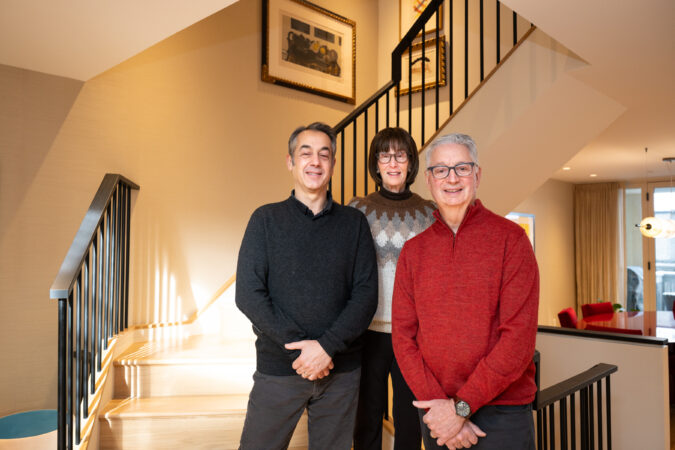
    Two of the few people out and about were lawyers Amy Slater and Mark Silow, who were house-hunting — sort of.

    They liked their neighborhood and the house where they had lived since 1989, and they preferred to remain there, but the house would need updating and modernizing. They didn’t know exactly what to do or, equally importantly, who should do it.

    They did know that they didn’t want to do it piecemeal Silow said. Their solution: Walk the area until their “aha” moment came — the feeling that “whoever designed that is who we want to hire.”

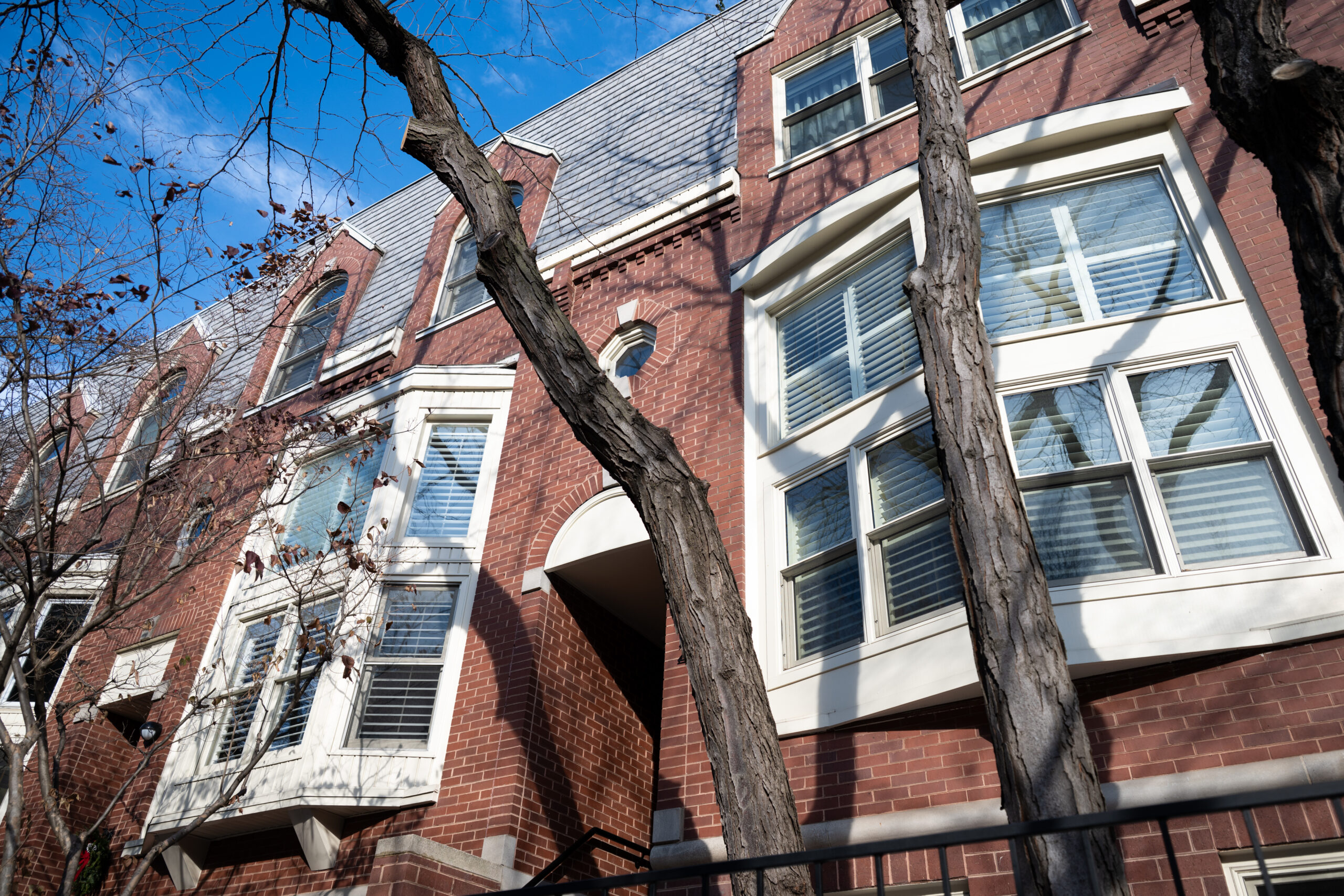
    The home’s exterior.
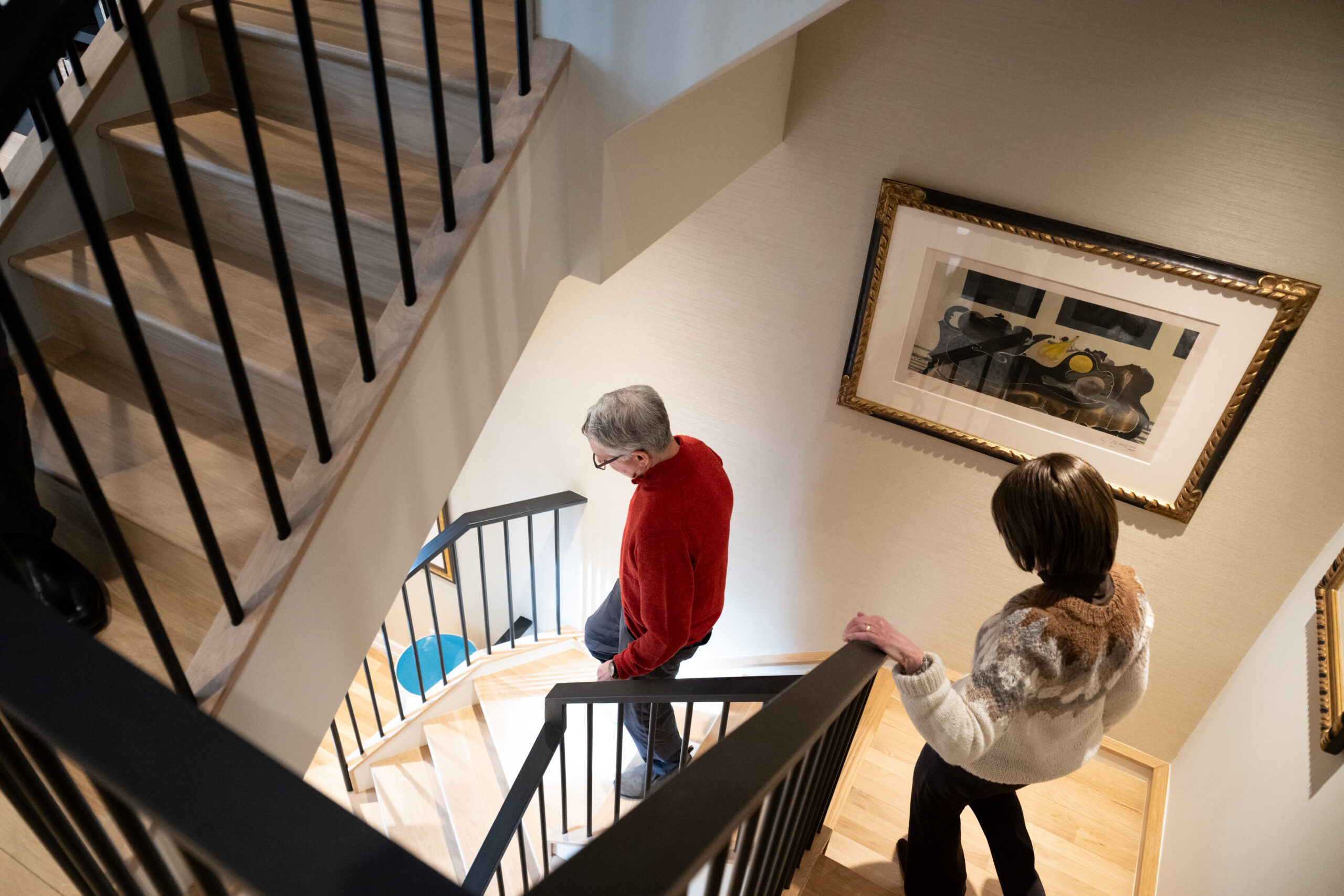
    Mark Silow and Amy Slater walk down the spiral staircase, which their architect redesigned.

    Then they saw a home on Rittenhouse Square whose style they loved. So they slipped a note into the mail slot.

    The original owners had moved on but the people living there knew who the architect was: Tim Kerner, principal architect at Terra Studio of Center City. They not only shared this information with Slater and Silow, but invited them over.

    For Kerner, designing Slater and Silow’s home was an unusual challenge. Almost all his previous experience was with clients who were building from scratch, or at least moving into a house that was new to them.

    Slater and Silow had been touring Scandinavia and Japan and envisioned a style that combined design inspiration from the two cultures: light, airy, and open.

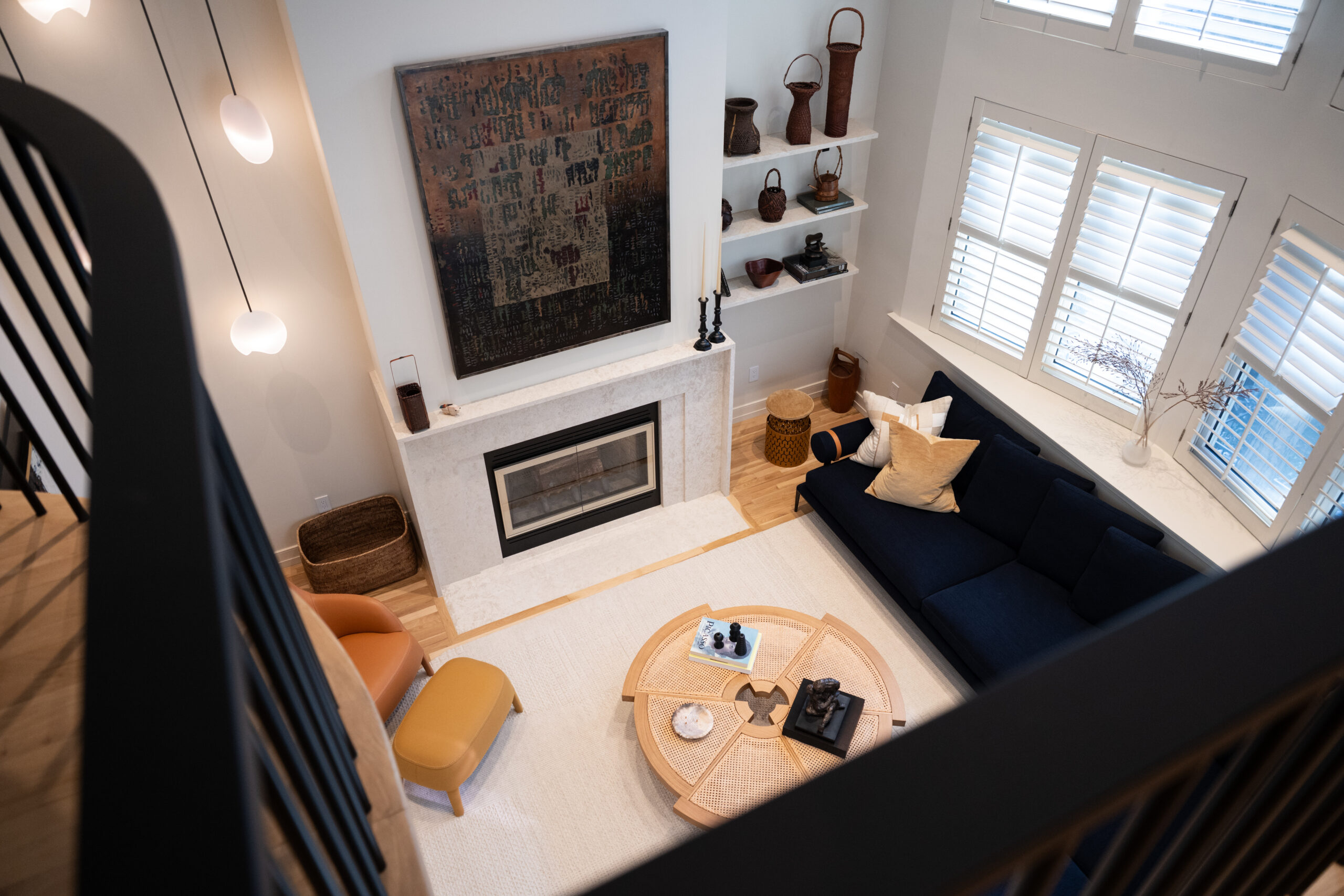
    The living room from above. Scandanavian and Japanese design ideas influenced the home’s remodel.

    Primary goals, Kerner said, were “to increase natural light and a feeling of openness” and to “update the interiors with more modern and cleaner lines.”

    As art collectors, the couple combined their own acquisitions and art from Slater’s family. The renovation period gave them a chance to reframe or clean up some of the pieces.

    They had detailed talks about every part of the renovation, Kerner said.

    “Their appreciation for the integration of functional and aesthetic solutions was always evident,” he said. “Their thoughtfulness in considering the interrelation of space, finishes, colors, furniture, and technology were key to the success of the project.”

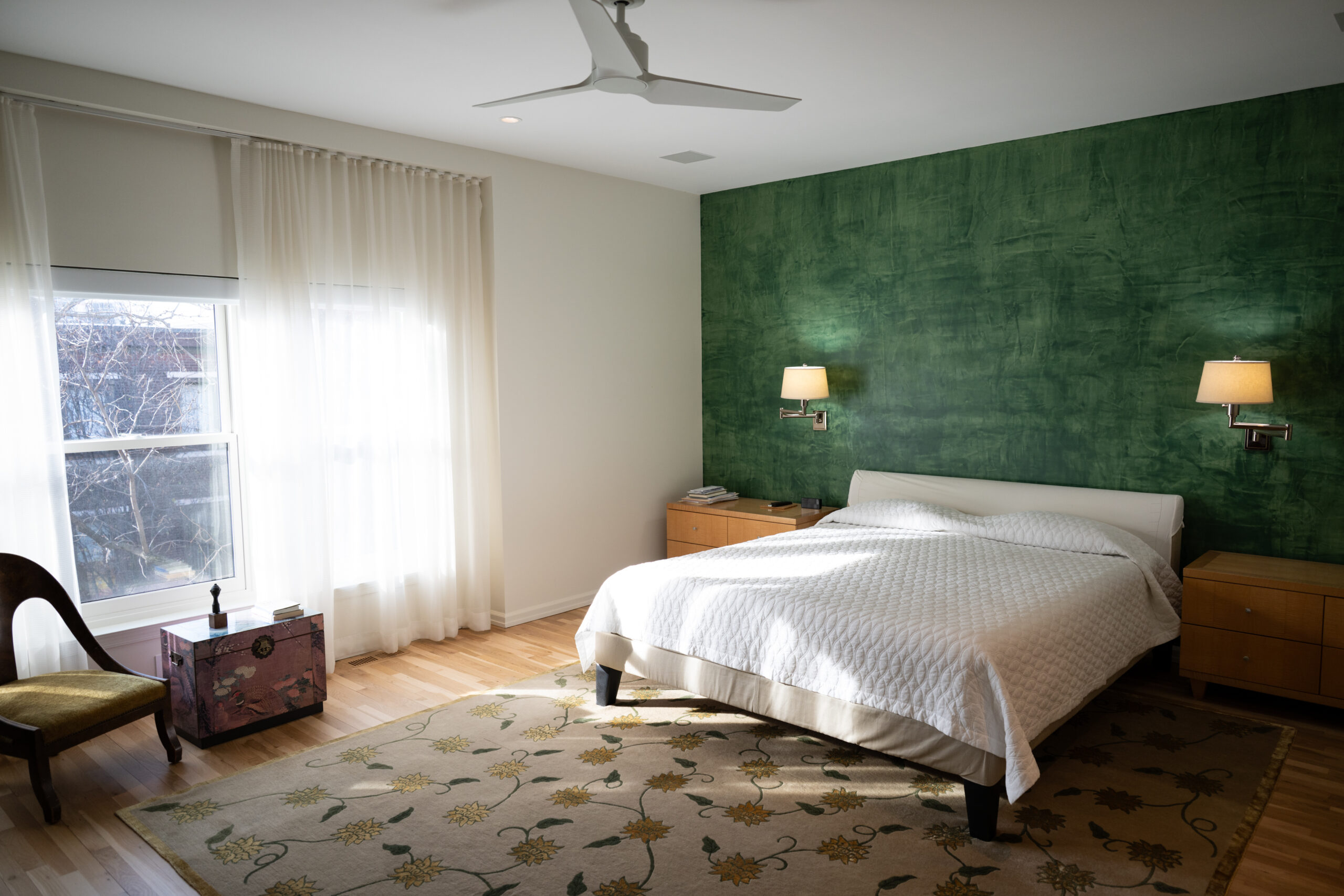
    The primary bedroom has a green accent wall, hardwood floors and ample light from large windows.
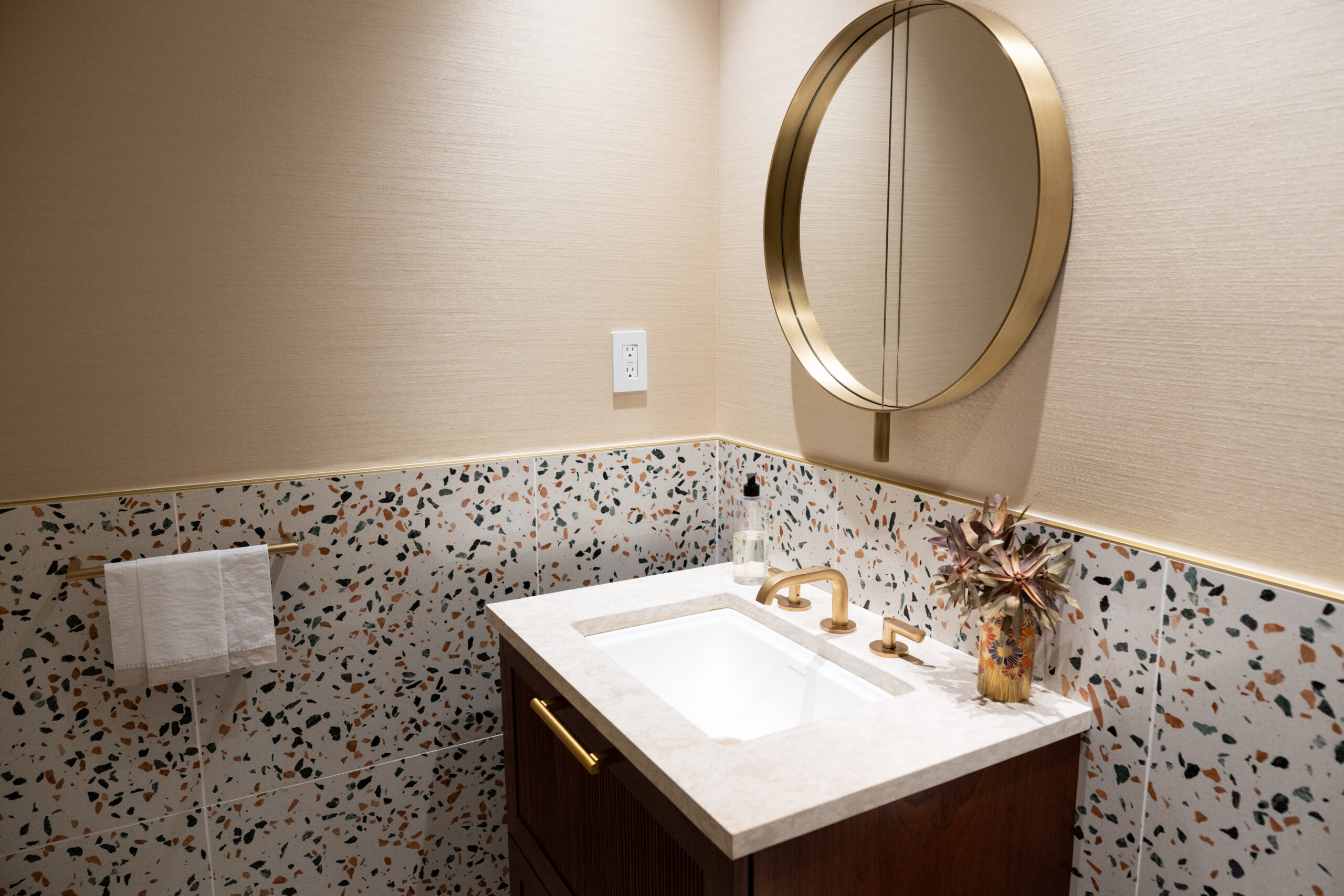
    The first-floor bathroom has gold hardware and details in the tiling.

    The clients wanted a new kitchen and a new roof, this one with a deck. And they wanted to redo the first-floor powder room and replace the concrete front steps. The mechanicals also needed to be updated.

    Throughout the project, Kerner worked with interior designer Carlo Fiammenghi; structural engineer Amy Rivera; Springboard Automation for home controls, sound, and technology; Urban Jungle for roof deck garden design and planting; and Joanne Hudson for kitchen cabinetry.

    The house has four floors and 3,000 square feet, plus a two-car garage, and they did not change the basic configuration other than knocking down a wall between the kitchen and the dining area.

    There are three bedrooms, three full bathrooms, and a powder room, with the primary bedroom and library on the third level.

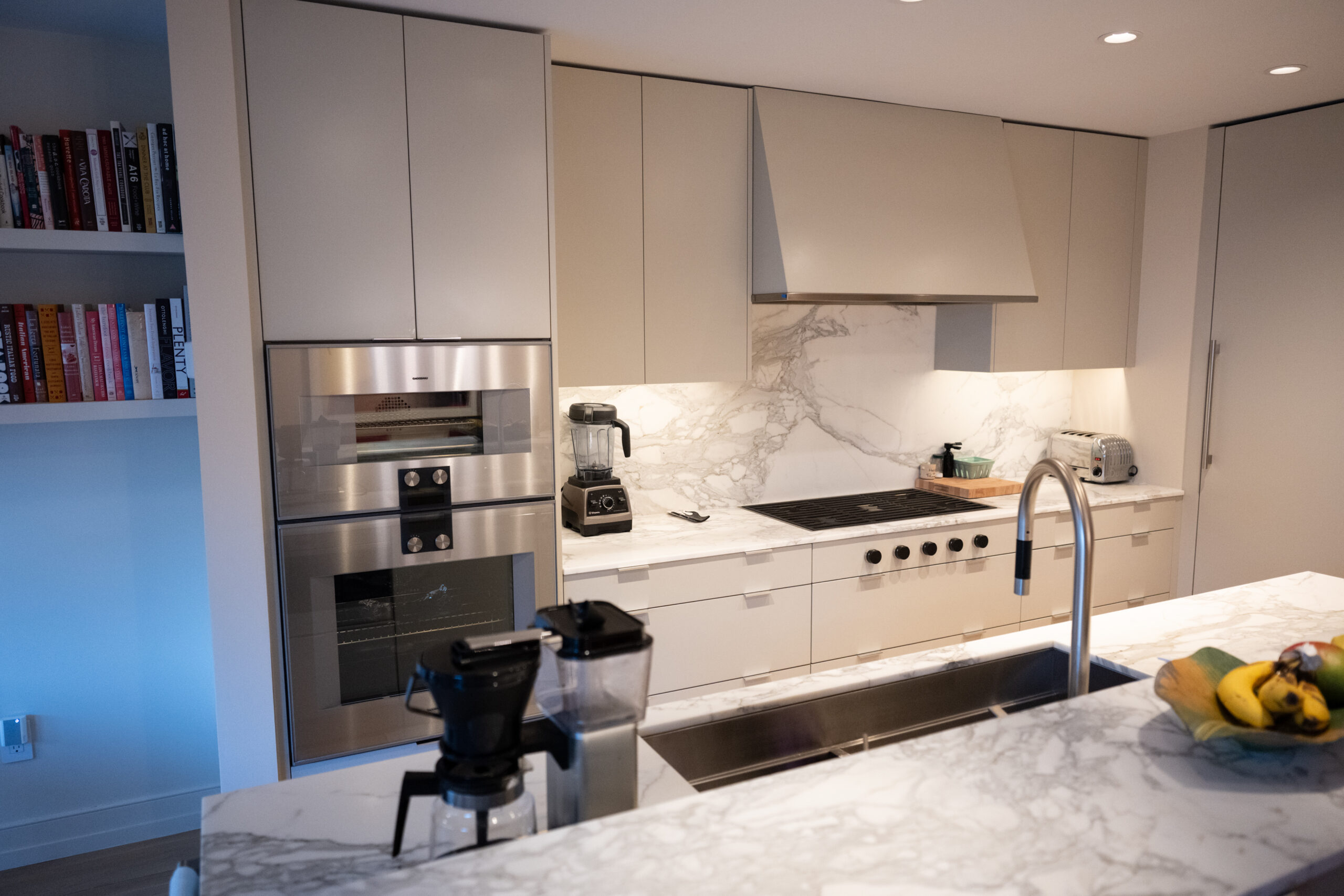
    The remodeled kitchen makes use of Calacatta marble.
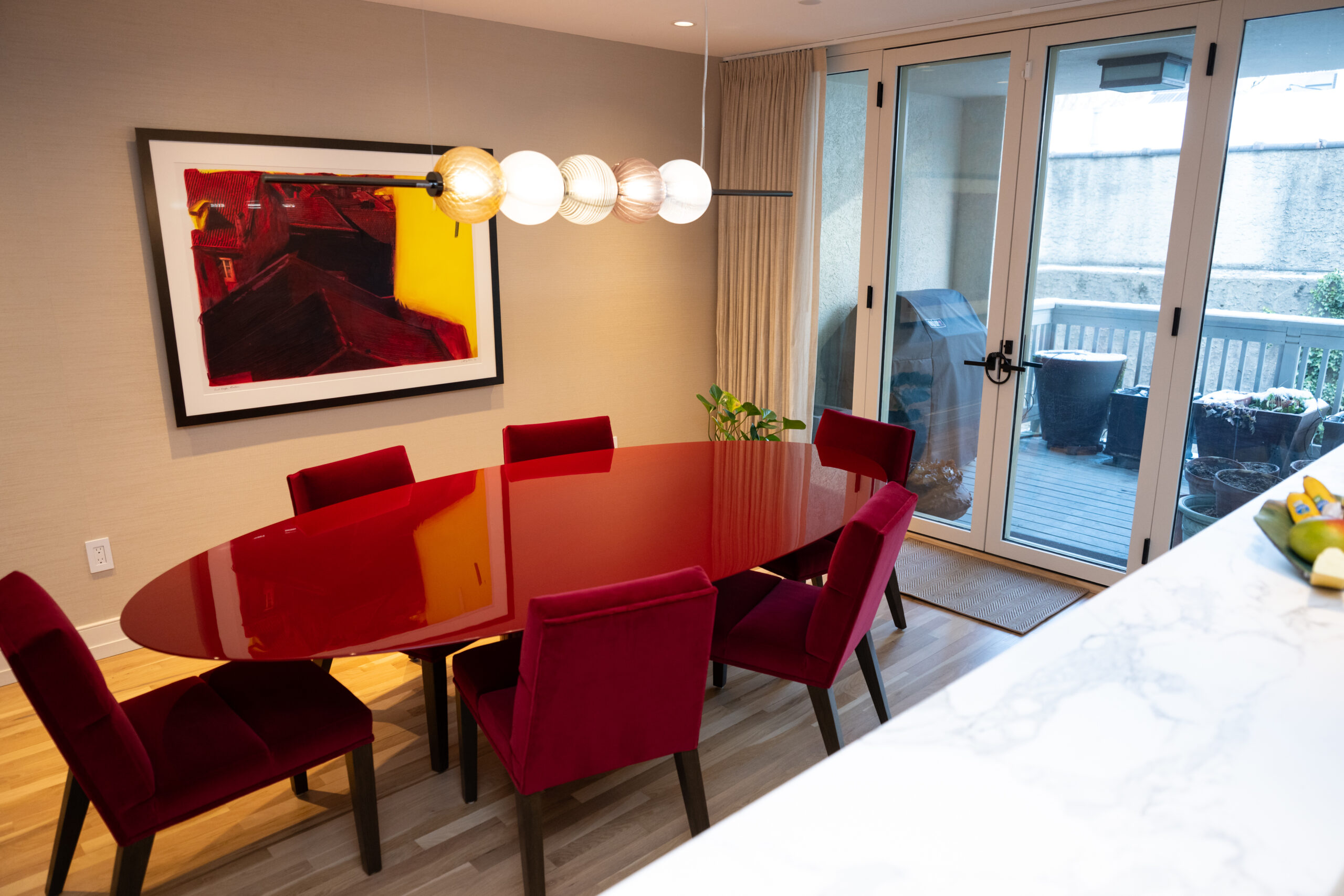
    The dining area features a bold red table and chairs with modern lighting.

    “We opened up and renovated the kitchen,” Kerner said, with new counters, cabinets, appliances and fixtures. The kitchen marble is Calacatta, which is quarried from the Apuan Alps near Carrara, Italy.

    They installed a new roof deck with a pergola and some new plantings, and added new furnishings. They also replaced all windows and the entrance door, and opened the dining room to the exterior with a larger sliding glass door.

    In the living room, they added a stone fireplace mantel and shelving.

    The staircase was completely redesigned, with new railings from the basement to the roof deck, and was broken up by custom shelving on the mezzanine.

    The view from Silow and Slater’s roof deck.

    Bluestone treads and risers replaced the concrete front steps. And automated lighting and mechanical controls were installed, along with a new whole-house sound system.

    Construction took nine months in 2022, with Slater and Silow living in a nearby apartment. Both Slater and Silow say they are delighted with the result.

    “We call it our new old house,” Slater said.

    Is your house a Haven? Nominate your home by email (and send some digital photographs) at properties@inquirer.com.

  • Temple’s new provost has an academic background in urban planning and comes from Arizona State University

    Temple’s new provost has an academic background in urban planning and comes from Arizona State University

    An Arizona State University vice provost and dean, who has degrees in mathematics and geography and has studied urban planning, will become Temple University’s next senior vice president and provost.

    Elizabeth “Libby” A. Wentz, 62, an Ohio native with a doctorate from Pennsylvania State University, will step into her new role at Temple July 1, subject to approval by the board of trustees, the school announced Monday.

    “My background in urban planning has kind of shaped who I am and shaped my thinking, and I just think that there’s so many great opportunities for recruiting students, for creating internships for students, for creating research experiences for students in an urban environment that the university’s rural counterparts don’t have in the same way,” Wentz said in an interview.

    Wentz has overseen Arizona State’s Graduate College since 2020 and previously was dean of social sciences, which included geography and urban planning. She will replace David Boardman, who has been Temple’s interim provost since July when Gregory Mandel left the job. Boardman was not a candidate for the job and will continue his role as dean of the college of media and communication.

    As Temple’s provost — essentially the university’s number two leader — she will oversee 17 schools and colleges, multiple campuses, and the school’s undergraduate, graduate, and professional programs.

    She is the first provost in at least more than a decade to come from outside the university and was selected through a national search, chaired by a faculty member and a dean.

    “Libby sort of stuck out for me after the hour I spent with her as being literally right on the same page relative to her ability to articulate the mission and the purpose of Temple and why that was so important,” Temple president John Fry said in an interview.

    He was struck by her commitment to student success, he said. “She obviously had time to interact with students and, I think took like really special care and interest in our students,” he said.

    And, Arizona State has grown tremendously in part because of its commitment to online programs, he said, which are a priority in Temple’s strategic plan. Temple has lost about a quarter of its enrollment over the last decade.

    “We don’t have the kind of online enrollment that you would expect a place like Temple to have,” Fry said. “One of the things Libby and I did speak about was her familiarity with the ASU online infrastructure. She’s taught in it. She obviously has led parts of it.”

    Temple remains amid searches for several other key positions, including chief operating officer and law and engineering school deans.

    Wentz said she was attracted to Temple because she wanted to remain at an urban university and has long admired the work of Fry, who has had a longstanding relationship with Arizona State president Michael M. Crow. Temple a year ago became part of the University Innovation Alliance, a small nonprofit sponsored through Arizona State that is aimed at finding innovations to improve learning and increase college attendance, retention, and graduation rates ― especially for low-income students ― then scaling those innovations.

    “They built a really strong rapport and have a very similar philosophy around higher education which also very much aligns with kind of my own interest and my own philosophy,” Wentz said.

    Both Temple and Arizona State, which has its main campus in Tempe, are major research institutions; Arizona is much bigger with over 194,000 students, compared to Temple with more than 33,000, including its international campuses.

    “Honestly the biggest difference [between the two] is the weather right now,” Wentz joked, noting that it was 81 and sunny in Tempe on Sunday as Philadelphia prepared for blizzard conditions.

    Arizona State does not have a faculty union, so learning to work with Temple’s faculty union will be new.

    “That’s going to be an exciting area for me to learn about,” she said.

    Urban planning background

    Fry has a reputation as an urban planner and in his prior leadership jobs at the University of Pennsylvania, Drexel, and Franklin and Marshall focused on development and improving the campuses and their neighborhoods. He has aspirations for Temple, too, including building an “innovation corridor” stretching from Temple’s recently acquired Terra Hall at Broad and Walnut Streets in Center City to the health campus, a little more than a mile north of main campus on Broad Street.

    Wentz said she and Fry had not talked about urban planning, but that she looks forward to working on the university’s new strategic plan, which includes more green spaces, a new 1,000-bed residence hall, a STEM complex, and an emphasis on more attractive and defined entrances to its North Philadelphia main campus. The three pillars of the plan are student success, research in action, and place-based impact.

    “Those are going to be some really exciting conversations that I look forward to having with John, as well as with the Temple planners to think about how do we make it a safe space for students and a great learning environment.” she said.

    During a 2022 talk at Arizona State, Wentz discussed how urban planning figured into her work.

    “Most of the work that I do applies to the urban environment and urban analytics, so trying to understand how it is that cities work and trying to make the physical urban environment a better place for people to live,” Wentz said during that talk.

    Building trust and collaboration

    In her new role at Temple, she said, early on she will focus on getting to know the community and the university’s financial model and make clear her commitment to shared governance and data-informed decision making.

    Wentz, who grew up near Cleveland and got her bachelor’s in mathematics and master’s in geography at Ohio State University, spent the last 30 years at Arizona State. She became a professor there in 1997.

    She helped the university launch its medical school and has grown graduate enrollment and graduate student funding.

    Wentz said she prides herself on building a culture of trust and collaboration and has worked with the local community. She said she’s looking forward to doing the same at Temple.

    She plans to come to Philadelphia in a couple weeks and look for a place to live, she said.

    “I’m going to come after the snowstorm, I think, instead of before,” she said Sunday.