We take paper for granted now. But in the late 1600s, when Pennsylvania’s founder William Penn recruited German papermaker and preacher William Rittenhouse to manufacture the writing parchment in the New World, paper was a luxury.
England’s King William III made it difficult for his subjects — at home and in the Americas — to have it. Like many monarchs of his day, he believed it was the Crown’s duty to record history.
The English imported paper from other European countries. So, to make matters worse, colonists who managed to appeal to the king for paper were double and triple taxed. They got fed up and went about securing their own paper to document the goings on in the government, inform citizens, record history, and ultimately plan a revolution.
Artist Ava Haitz’s No. 1 honors the country’s first paper mill, celebrating the invention and craftsmanship that made widespread written communication possible.
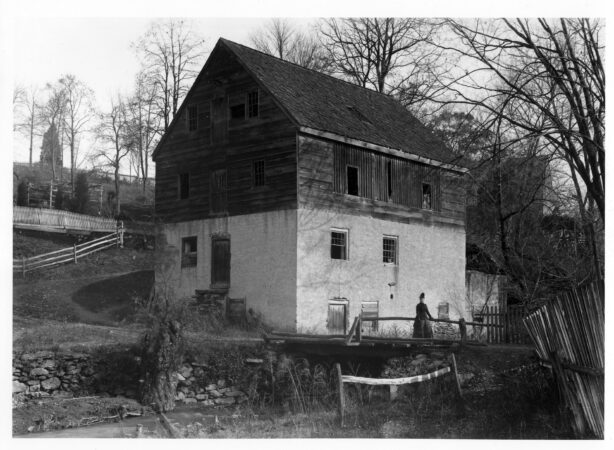
In 1690, Rittenhouse partnered with Philadelphia’s first printer, William Bradford, to build America’s first paper mill, situated in northwest Philadelphia and powered by the Monoshone Creek, a tributary of the Schuylkill.
The paper mill will be celebrated this Saturday at Historic RittenhouseTown, part of a series of weekly “Firstival” celebrations. Firstivals are the Philadelphia Historic District’s yearlong birthday nod to places and events with Philadelphia roots. The day parties are a hallmark of this year’s Semiquincentennial fetes.
At the Rittenhouse mill, paper was made from linen rags fashioned from flax grown in Germantown, that were broken down and shaped into sheets. The mill grew quickly as Rittenhouse, America’s first Mennonite bishop, provided paper for Bibles and Quaker and Mennonite texts in German.
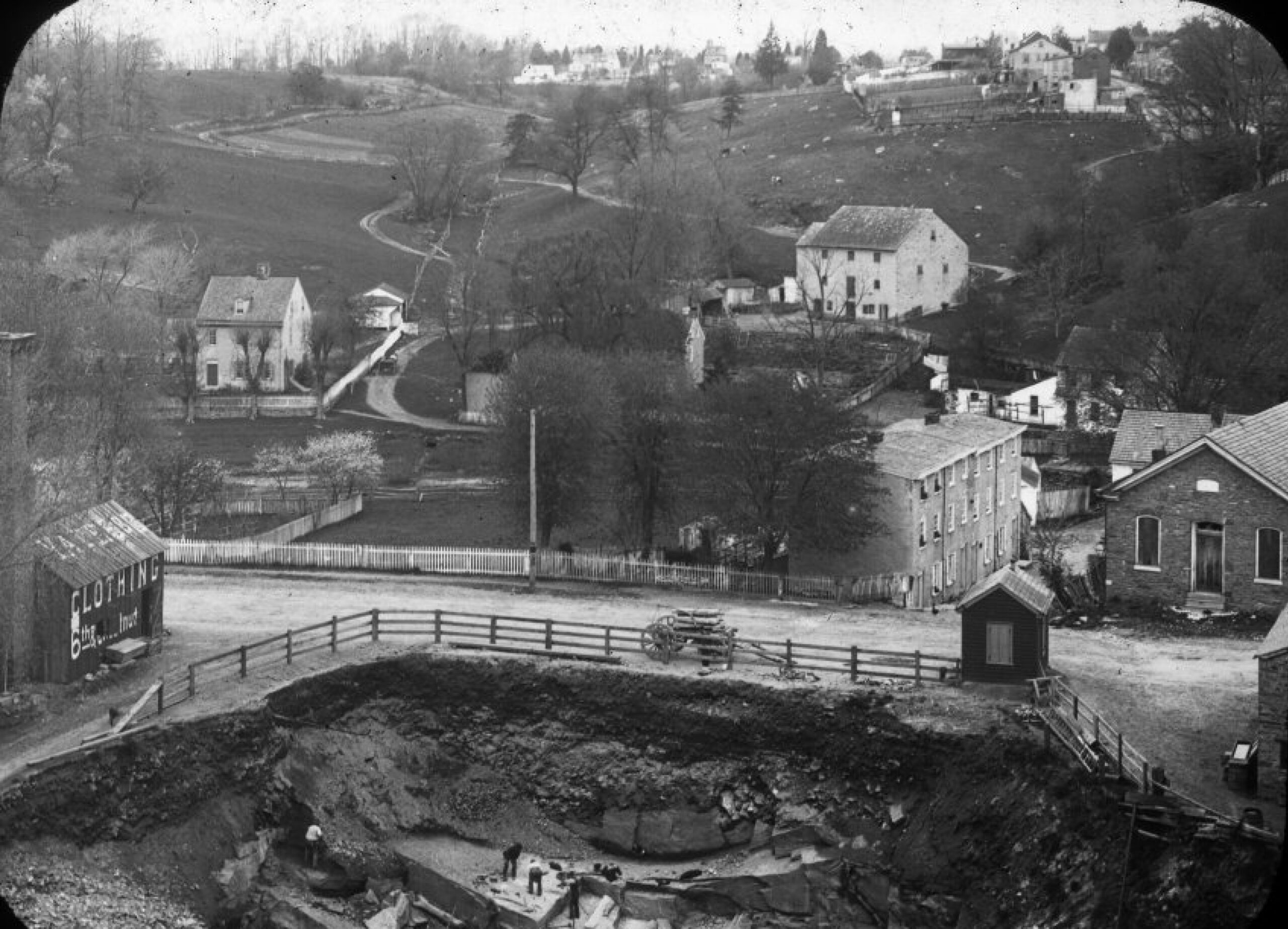
An aerial view of RittenhouseTown circa 1840-1860. The site eventually grew to more than 200 acres.
Rittenhouse’s first paper mill was destroyed by a flood, said Alexander Jones, preservation and education manager at Historic RittenhouseTown.
Then “Rittenhouse rebuilds and he buys out his partner,” Jones said. “The paper mill becomes his sole enterprise. Instead of hiring workers, he recruits his family and it becomes a giant company town. There is a church, a blacksmith, stone houses, a bake house, and more than 40 buildings with five or six of them under what is now Lincoln Drive.”
RittenhouseTown’s paper mill was the only source of paper in America for more than 40 years, Jones said. It would grow to more than 200 acres.
David Rittenhouse — Rittenhouse’s great-grandson and the astrologer, clockmaker, and first director of the U.S. Mint after whom Rittenhouse Square is named — was born in his family’s RittenhouseTown homestead in 1732.
The town thrived for more than a century.
By the mid-1800s, the paper mill began to slow down as dyes from textile and carpet manufacturers and chemicals from blacksmithing started to pollute the Schuylkill. The filthy water made it nearly impossible to produce good quality paper at the mill.
The Fairmount Park Commission began acquiring parts of RittenhouseTown through a series of purchases and donations from 1890 to 1917. The city demolished many of the town’s buildings, including a barn that, Jones said, was razed and rebuilt within a year.
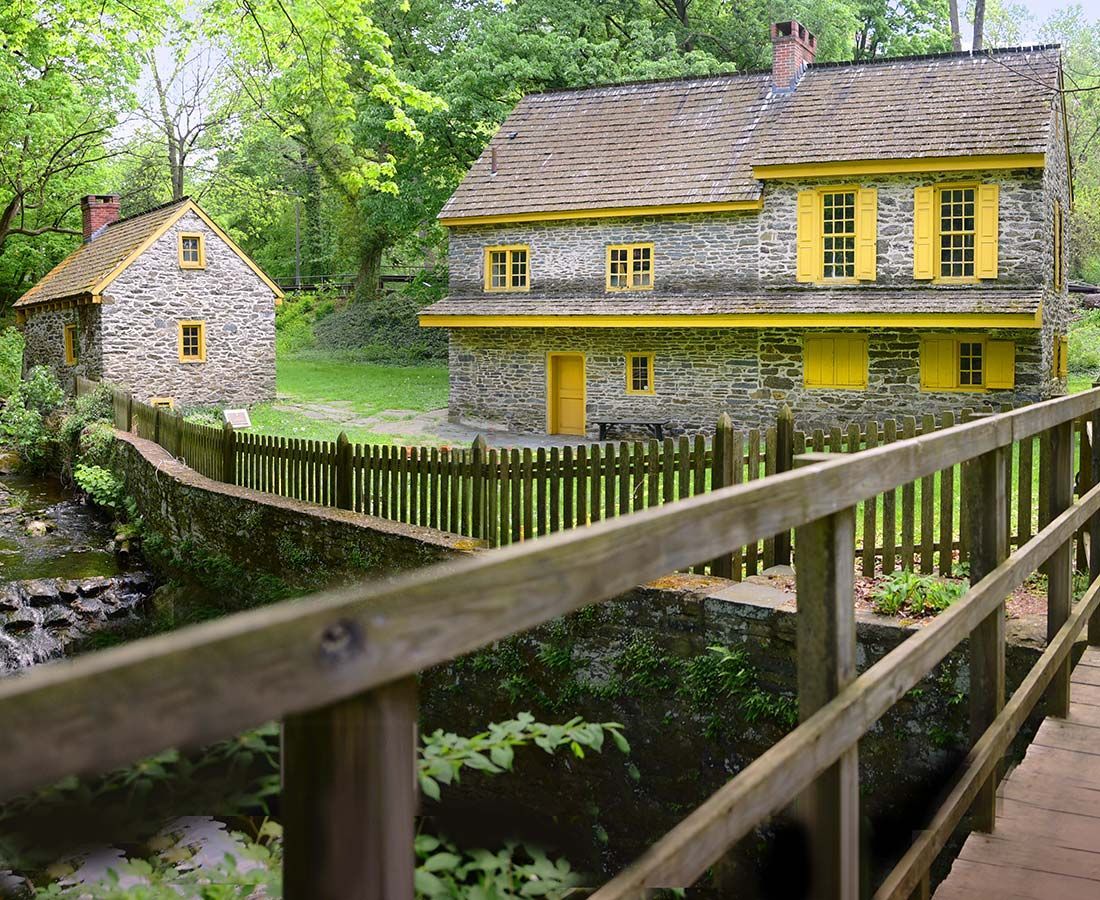
RittenhouseTown’s homestead and bakehouse. The first permanent home for the Rittenhouse family and birthplace of David Rittenhouse, great-grandson of William Rittenhouse for whom Center City’s Rittenhouse Square is named.
By that time, however, the Rittenhouse family had spread throughout the Philadelphia region from Center City to Blue Bell, Jones said.
Today, RittenhouseTown spans 20 acres nestled in Fairmount Park right behind Lincoln Drive. Six of the original buildings remain, serving as a reminder that RittenhouseTown was the first building block of American industry.
“The paper mill really got the ball rolling for Philadelphia,” Jones said. “And from that first came so many other American firsts in Philadelphia: the first Mennonite bishop, the first company town, and America’s first director of the U.S. Mint.”
This week’s Firstival is Saturday, June 27, 11 a.m.-1 p.m., at Historic RittenhouseTown, 208 Lincoln Drive.
In the post-pandemic hybrid-work environment, Philadelphia office space remains cheaper than most other major metro areas, according to a new report from the online real estate platform Commercial Cafe.
Asking rents for Philly offices were $31.26 per square foot on average as of May, the report found. That makes Philadelphia the only major market in the Northeast below the national average of $33.61 per square foot.
Relative to other major U.S. markets, only Chicago, Houston, and Phoenix recorded lower average asking rents.
Elsewhere in the Northeast, Manhattan averaged the most expensive asking rents at more than $69 per square foot, according to the report. Boston’s asking rents were around $44 and New Jersey’s were more than $35.
Philadelphia’s 18.4% office vacancy rate, meanwhile, was slightly higher than the other Northeast markets, as well as the national average of 17.6%, according to the report.
The analysis, released last week, reflected the broader challenges that all office markets are up against. In Philadelphia and elsewhere, the office landscape has shrunk since the pandemic, with many employers downsizing their space amid the rise of hybrid work.
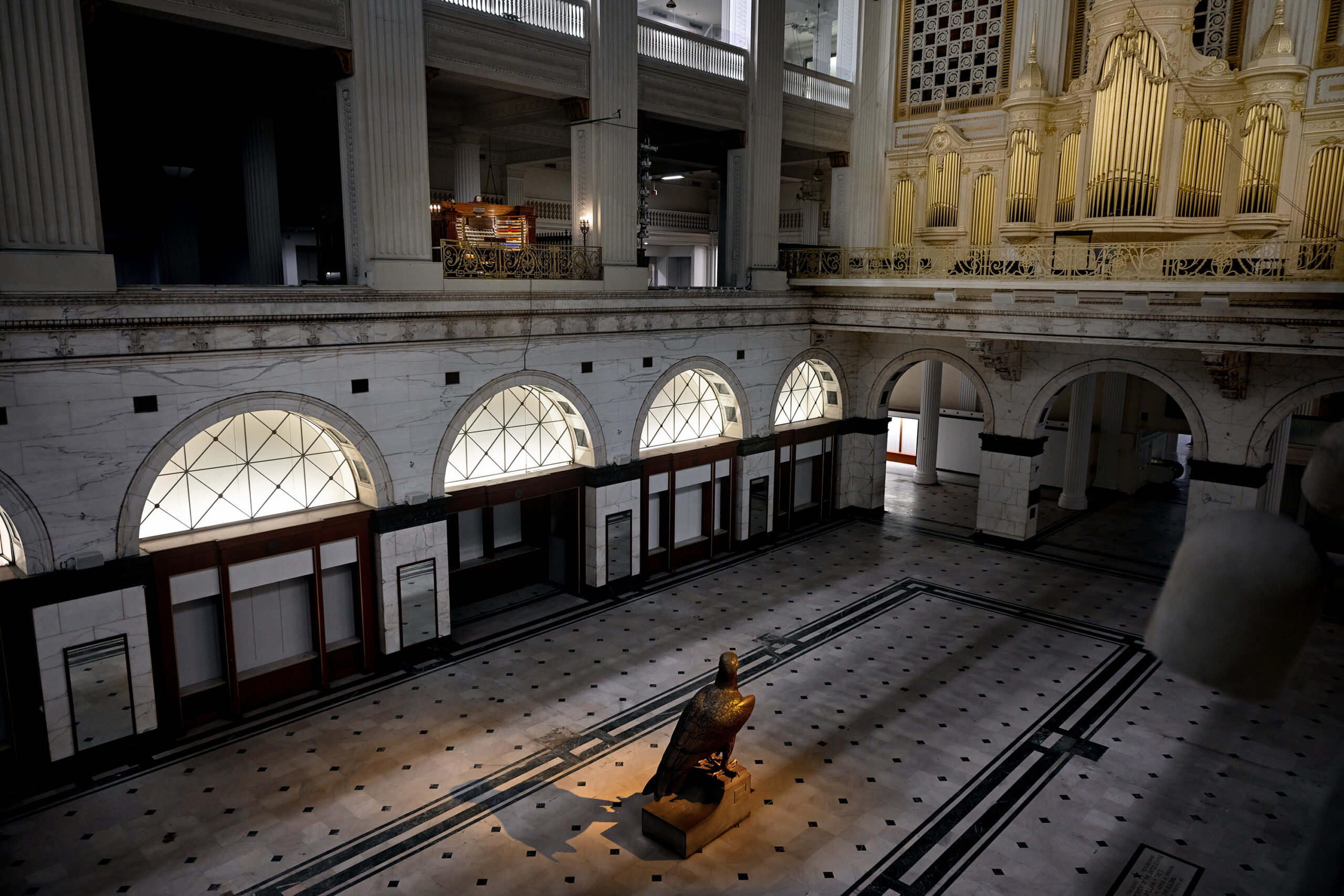
Some Center City office buildings have plummeted in value and are now becoming apartment complexes. Among them: The iconic Wanamaker Building and Centre Square, better known as the “Clothespin building” for the sculpture outside it.
Between January and May, $220 million in office sales were recorded in Philadelphia, according to the Commercial Cafe report, and $387 million in New Jersey. In the Garden State, 630,000 square feet of offices were under construction, found the report, which did not have under-construction data for Philadelphia.
Peter Kolaczynski, the director of Yardi Research, helped compile the report, and noted the trend toward office reuse.
“The destruction of value that we have discussed for years is showing through in the sales data,” Kolaczynski said in a statement. “With this decrease cost in acquisition comes opportunity — whether that is conversions to apartments, repositioning to best-in-class office and coworking, or full-on redevelopment and revitalization projects.”
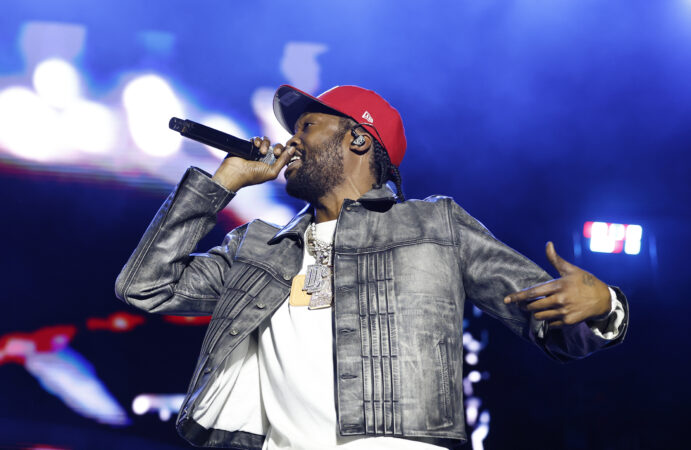
Meek Mill will join headliners Christina Aguilera, Jill Scott, and The Roots to perform at the “One Philly: Unity Concert for America” on July 4 on the Benjamin Franklin Parkway.
ESM Productions and Live Nation Urban announced the addition of the Dreams and Nightmares rapper to the Parkway bill on Tuesday morning, hot off his Saturday night performance at “Lit in AC,” a hip-hop festival featuring early 2000s bling-era rappers T.I., Eve, Shyne, Havoc, and Ms. Jade.
Will Smith & DJ Jazzy Jeff; Kathy Sledge, lead singer of ’70s R&B girl group Sister Sledge; and State Property, the Philly hip-hop collective that includes Beanie Sigel, Freeway, Peedi Crakk, and Chris and Neef, are also scheduled to perform.
While the bill includes mostly Philadelphia-area musicians — Aguilera grew up outside Pittsburgh — performers also include Seal, the Brit whose hit “Kiss From a Rose” still stops music fans in their tracks; Infinity Song, the Detroit-born soft rock and soul family; and Jordan Davis, the Louisiana-born country music singer.
Comedian and part-time Media resident Wanda Sykes is hosting. Gillie da Kid and Wallo267 are also slated to make an appearance.
The nearly seven-hour show will start at 5 p.m. and end just before midnight, with a fireworks finale to follow. Admission to the concert starts at 3 p.m.
The “One Philly: Unity Concert for America” is presented by the City of Philadelphia and produced by Center City-based ESM Productions with executive producers Scott Mirkin, Shawn Gee (The Roots’ manager and head of Live Nation Urban), and Roots frontman Ahmir “Questlove” Thompson.
Wawa is a sponsor of the concert, but the show is not part of Wawa Welcome America, the series of events leading up to the July 4 holiday, which this year will include concerts with Queen Latifah, Eve, Idina Menzel, and Pink Sweat$, among others.
The “One Philly: Unity Concert for America,” according to the news release announcing the event, is “designed as a non-partisan celebration of unity, diversity, and democracy” that brings together “voices, perspectives, and performances that reflect the richness of the American experience across generations and genres.”
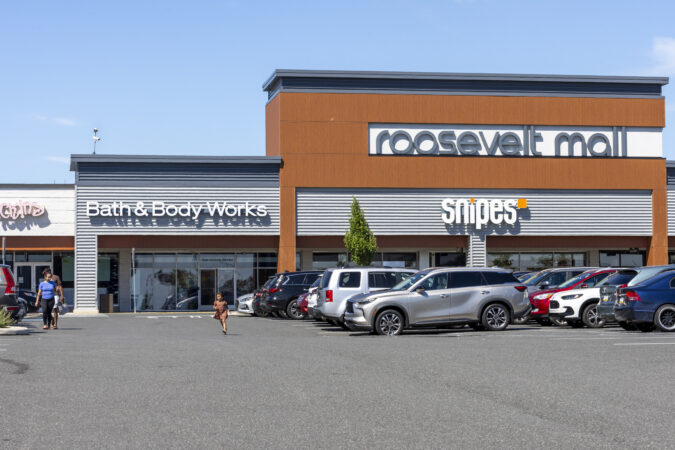
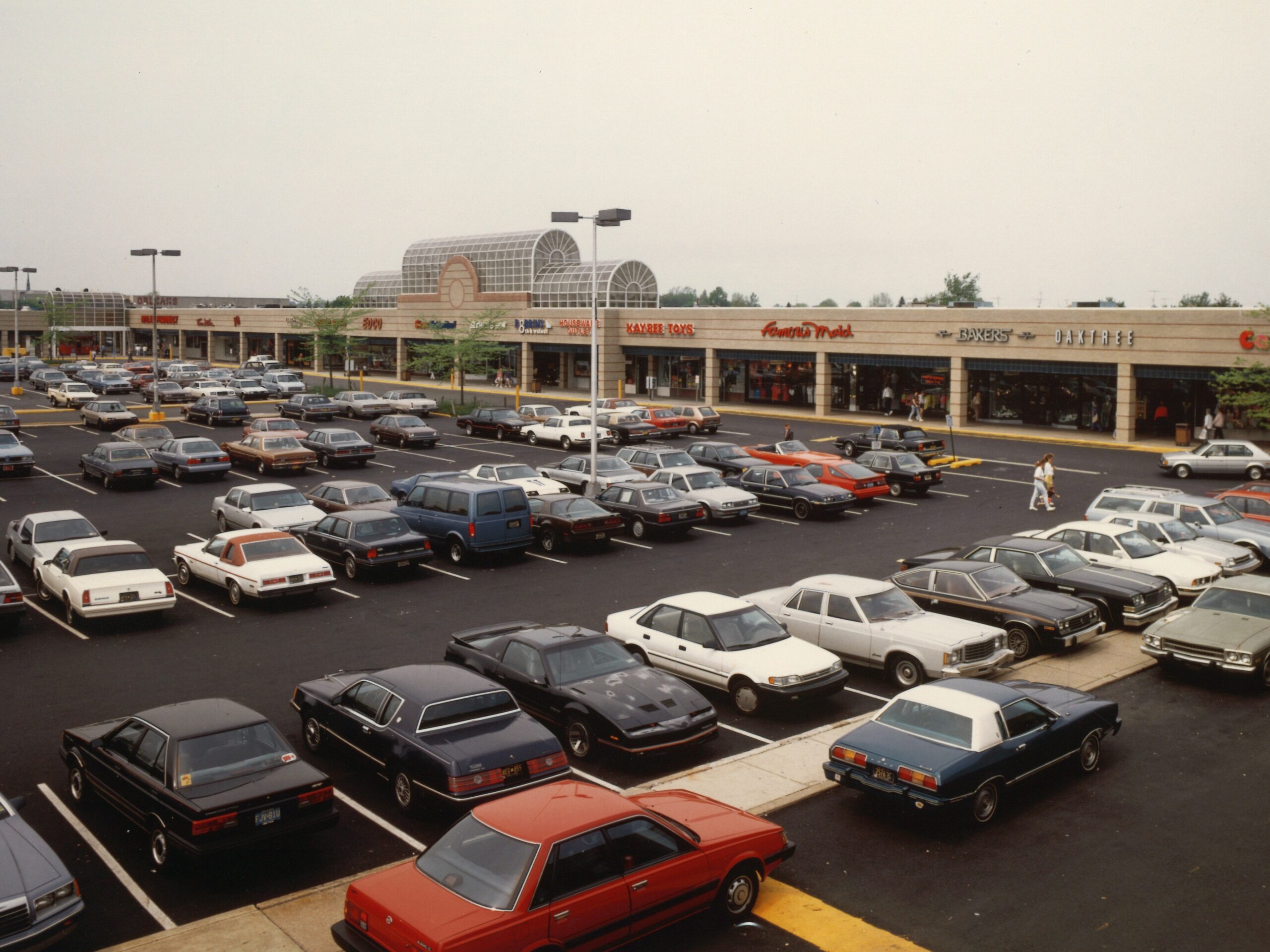
As Brixmor Property Group executives began transforming the Roosevelt Mall, they briefly debated whether to change the name.
After all, the 60-year-old Northeast Philly shopping center is undergoing a more than $70 million makeover that promises to bring it into the modern age with new tenants, upgraded facades, and a better layout.
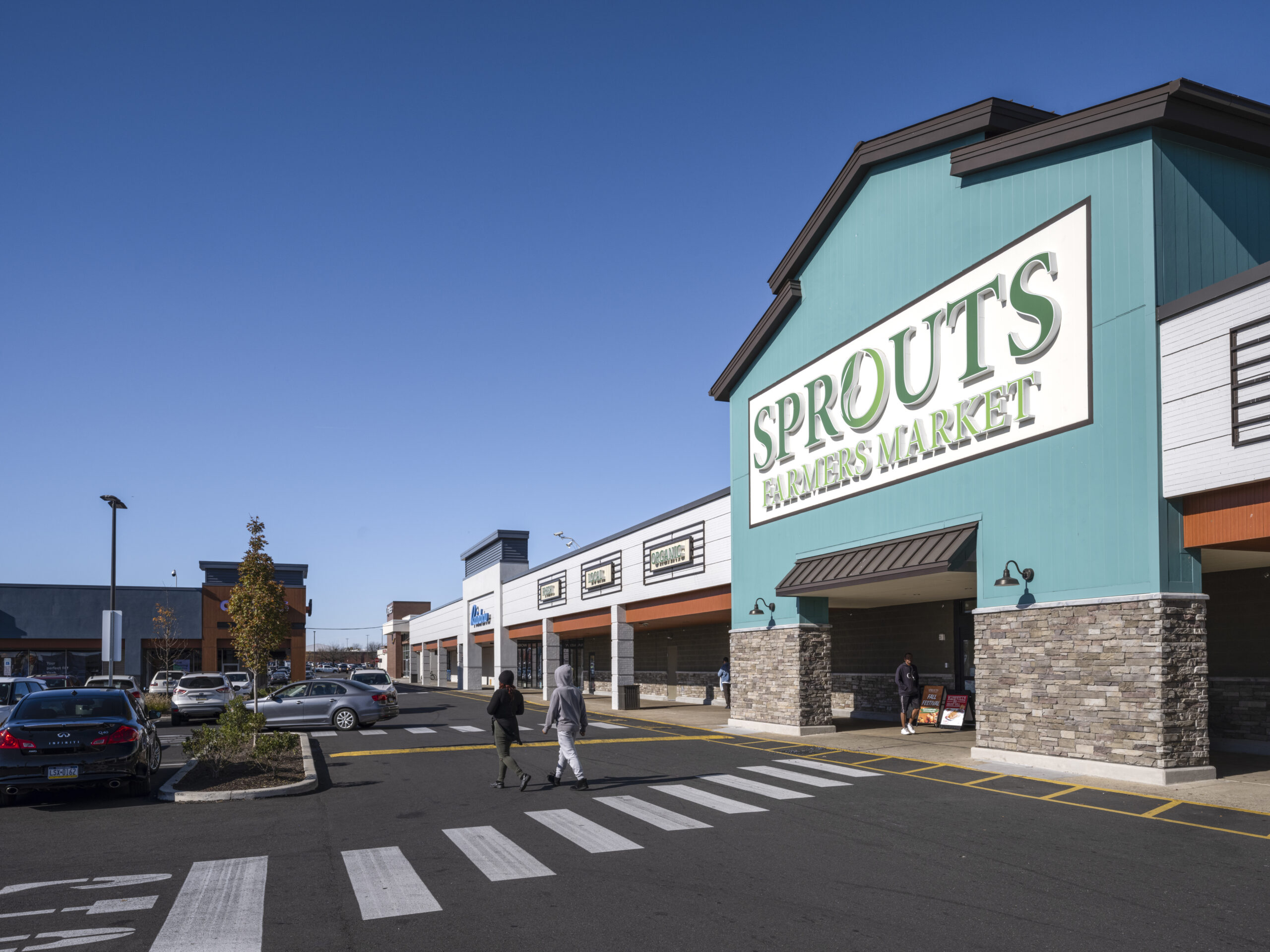
As Brixmor executives walked around the 620,000-square-foot complex on a recent day, they said they already see the outdoor mall becoming a community hub — with a gym, an organic grocer, and new fast-casual dining options.
Despite these changes, they have decided the Roosevelt Mall should not be rebranded.
“It’s an iconic name,” said David Vender, Brixmor Property Group’s executive vice president for the north region, who is based in Conshohocken. “People know it as a landmark.”
Brixmor operates about 350 shopping centers nationwide, but some of its top executives — including new CEO Brian Finnegan, who grew up in Roxborough — have soft spots for Philly, forged by personal or family connections to the region.
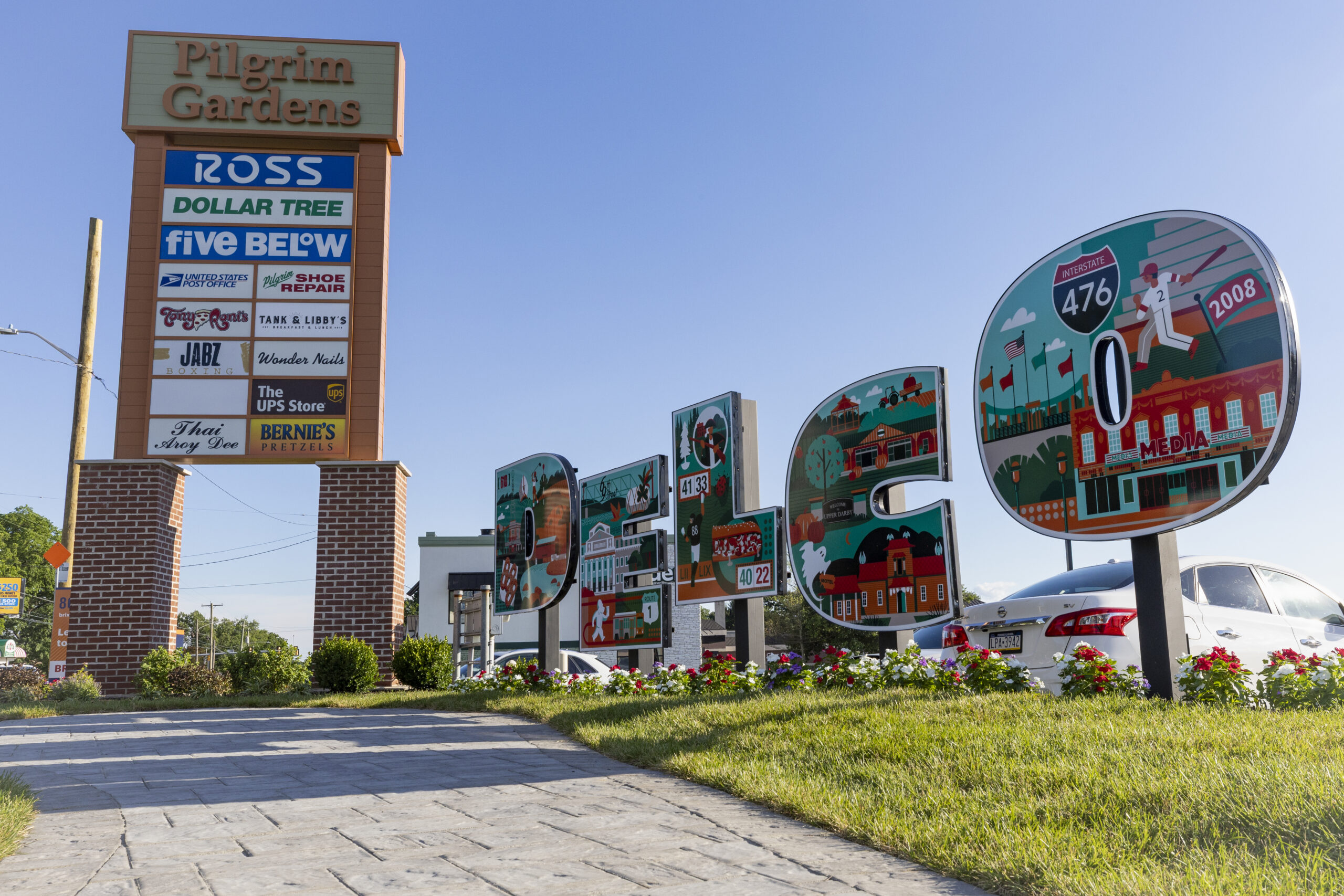
A new Delco sign is shown at Pilgrim Gardens in Drexel Hill on June 16.
And they said their connection to the community around the Roosevelt Mall has only grown stronger since last year’s plane crash, which killed eight people, injured two dozen, damaged nearby homes, and left an 8-foot-deep crater in front of the mall.
Even before the tragedy, they said, they considered how their local redevelopments affected the Philly-area residents who shop, eat, and drive by their centers every day.
At the Roosevelt Mall — which sits on 36 acres between Cottman Avenue, Roosevelt Boulevard, and Bustleton Avenue — these decisions have begun to pay off.
In the last year, the center logged 6.3 million visits, a 5% year-over-year increase and a 19% jump when compared with the 12 months before Sprouts Farmers Market’s 2024 opening, according to company executives.
Occupancy was over 98% this spring, they said, and customers spend about 35 minutes there on average, on par with the national average for all Brixmor complexes.
When you’re able to bring together “higher-quality food and beverage, fitness, service … then you’re also able to attract more elevated retail” stores, said Finnegan, noting that Ulta Beauty and Victoria’s Secret are among the tenants signed on for the next phase of the Roosevelt Mall’s redevelopment.
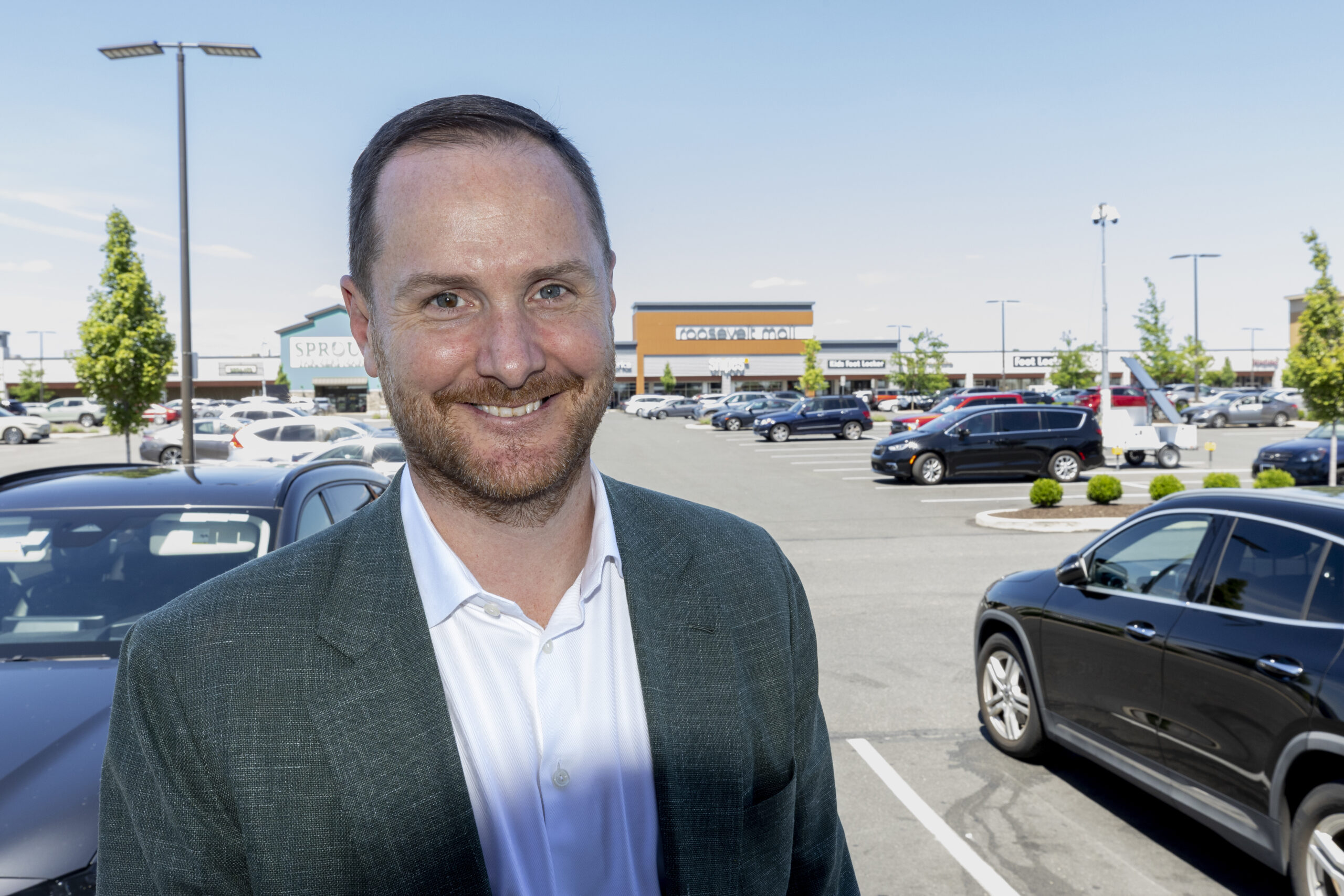
Brian Finnegan, CEO and president, at Brixmor Property Group, at the Roosevelt Mall in Northeast Philadelphia.
Achieving the tenant mix of a modern shopping center
When the Roosevelt Mall opened in 1964, its main promenade was referred to as “Chestnut Street Northeast,” with several outposts of Center City clothing stores, according to an Inquirer article from the time.
The shopping center had apparel shops, such as Baker Shoes and Famous Maid, as well as “the Cavalier, a cafeteria-style restaurant with a game room and a retail bakery,” The Inquirer reported. It was anchored by an S. Klein’s discount department store.
The Roosevelt Mall was built as part of the Roosevelt Boulevard shopping complex, bordered by Cottman and Castor Avenues. The larger development — which also had Gimbels and Lit Bros. department stores — was called the country’s largest “in-town” shopping center at the time.
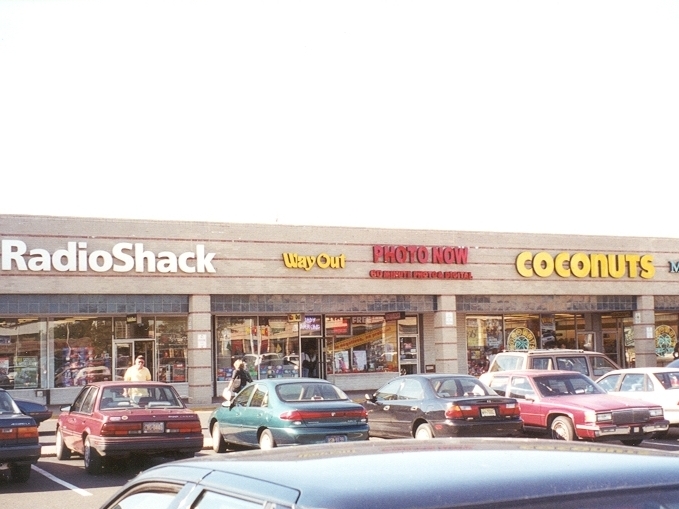
Roosevelt Mall in Northeast Philadelphia is shown in earlier days, long before Brixmor Property Group remodeled the property.
They said they have intentionally brought in tenants that customers may visit multiple times a week and added more pedestrian walkways, open-air plazas, and outdoor seating.
“Historically, shopping centers were very utilitarian, and now they’re really becoming more community assets, so we’re really careful about our merchandising mix,” said Ryan Guheen, Brixmor’s senior vice president of development.
Roosevelt Mall in Northeast Philadelphia is shown in earlier days, long before Brixmor Property Group remodeled the property.
The latest redevelopment push began around 2020, when Brixmor opened an LA Fitness outpost on the site of a former Turf Club off-track betting venue, near a new Oak Street Health clinic.
Since then, the company has constructed buildings in underused sections of the parking lot and filled them with popular chain eateries like Raising Cane’s chicken; the American-Chinese food spot Panda Express; and Tous les Jours, a Korean-French bakery and coffee shop.
Annual customer visits to Roosvelt Mall have increased 13% since Sprouts organic grocer opened there in 2024.
The 37,000-square-foot under-construction building, set to house a Victoria’s Secret and an Ulta, will also include fast-casual staples like Shake Shack and Cava, which serves Mediterranean bowls and pitas.
Tenants like these, Guheen said, provide “multiple opportunities for people to stay on property to shop retail, get their workout in, go to the bakery, get a coffee.”
Some mall retailers have found homes in shopping centers
As Brixmor executives diversify the tenant mix at their shopping centers, they say they do not see retail stores going extinct.
Elsewhere in the Northeast, the Franklin Mall, formerly Franklin Mills, has been in decline for years and was recently listed for sale. Real estate investor Dean Adler has said he wants to buy the 137-acre mall and turn it into a youth sports complex with a hotel and Margaritaville-themed water park.
Seven miles away, the Roosevelt Mall is home to several shops that were once found almost exclusively in enclosed malls, such as Bath & Body Works, Foot Locker, and the forthcoming Victoria’s Secret. These companies’ higher-ups have pivoted in recent years, adding more locations in open-air centers.
“It’s not like retailers are leaving malls en masse … at least in the best malls,” Finnegan said. But “as they open stores in open-air shopping centers with grocery stores, with fitness uses, with elevated food and beverage, they’re seeing the sales performance” — and then want to keep investing in shopping centers.
Longer-standing retail tenants are continuing to see success, too. Finnegan said the Roosevelt Mall’s 300,000-square-foot standalone Macy’s is among the company’s top-performing locations in the region, rivaling the King of Prussia Mall store.
The department store is the center’s largest driver of traffic, recording more than 900,000 annual visits, said Brixmor executives, who are not worried about the department store closing as the Center City store did last year.
As seen in September, the Macy’s in the Wanamaker Building in Center City now sits empty. It closed last year.
Company executives said they are optimistic this momentum will continue. Along with the under-construction section, redevelopment plans also include another standalone building that has yet to break ground — and the cost of which is not included in the current price tag.
Finnegan put it simply: “Opportunity begets opportunity.”
David Tudor was born in West Philly in 1926 and, at least for a musical prodigy, his career started out conventionally enough.
He began studying the piano at age 6 before switching his focus to the pipe organ at 11. By his mid-teens he was working regularly at places where you’d expect to find an organist — churches like St. Mark’s in Center City and Trinity Episcopal in Swarthmore, or playing the famed midday concerts at John Wanamaker’s department store.
But as exemplified by a recent concert of works associated with Tudor, presented by Bowerbird earlier this month at the Community Education Center, Tudor’s music became extremely unconventional over the course of his lifetime.
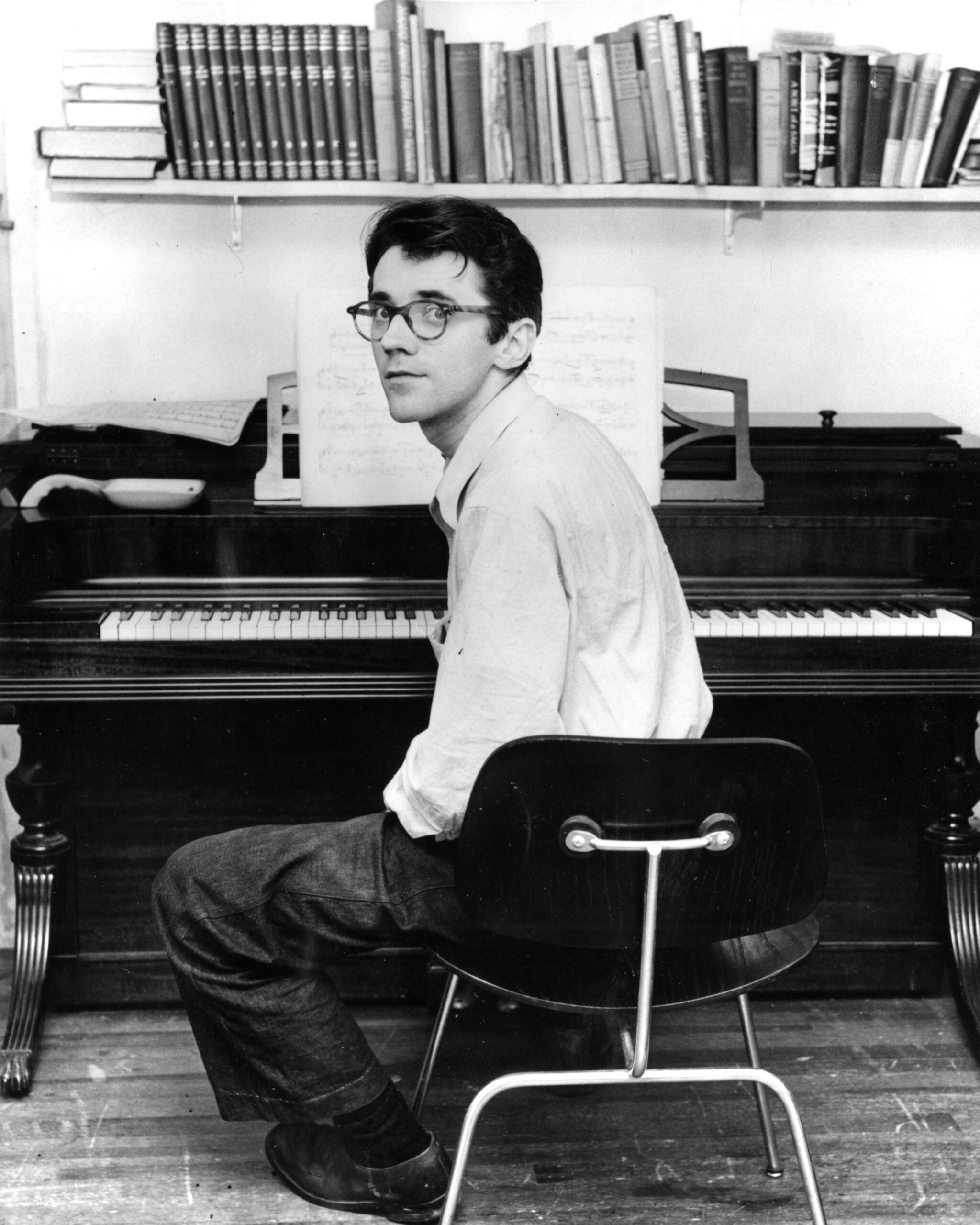
David Tudor at the piano in 1953.
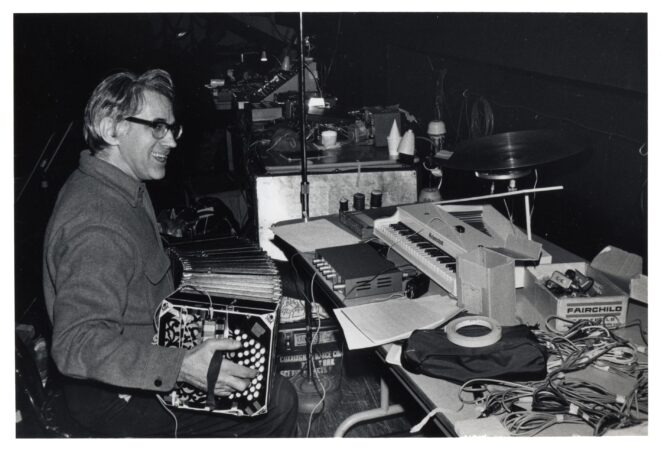
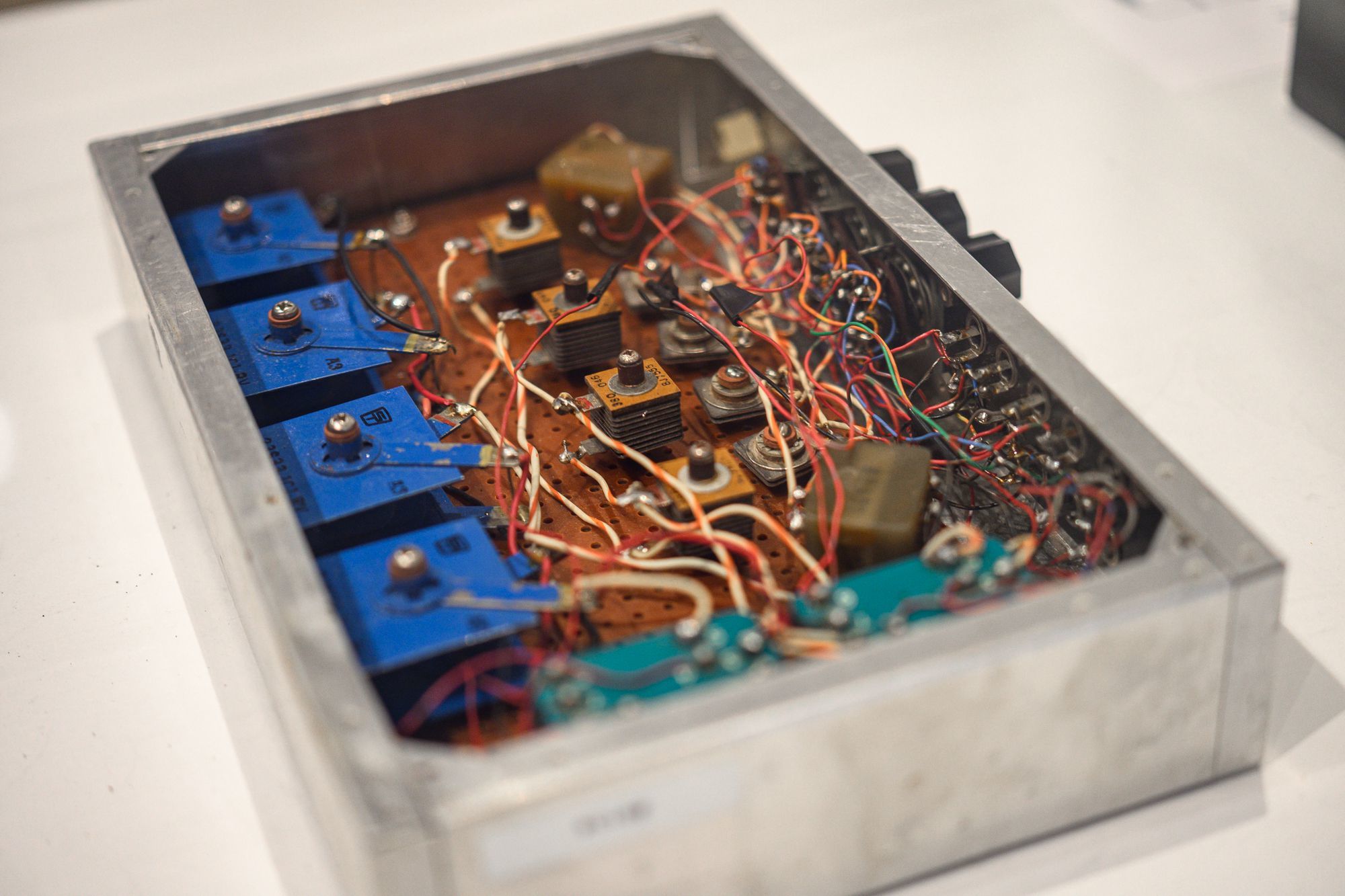
Just a few miles from the composer’s alma mater, Overbrook High, a half dozen musicians were seated emulating Tudor’s music making process, behind tables piled high with an impenetrable tangle of boxes, wires, knobs, and switches; electronic tendrils snaked from these sources to a bewildering array of objects: glass bowls, a suspended box fan, an oversized die, a copper pot still, even a tree. Each was connected to transducers that took advantage of their resonant properties, turning them into natural amplifiers.
A century after his birth and three decades since his death in August 1996, David Tudor’s music still seems like something created in a distant, if more analog, future.
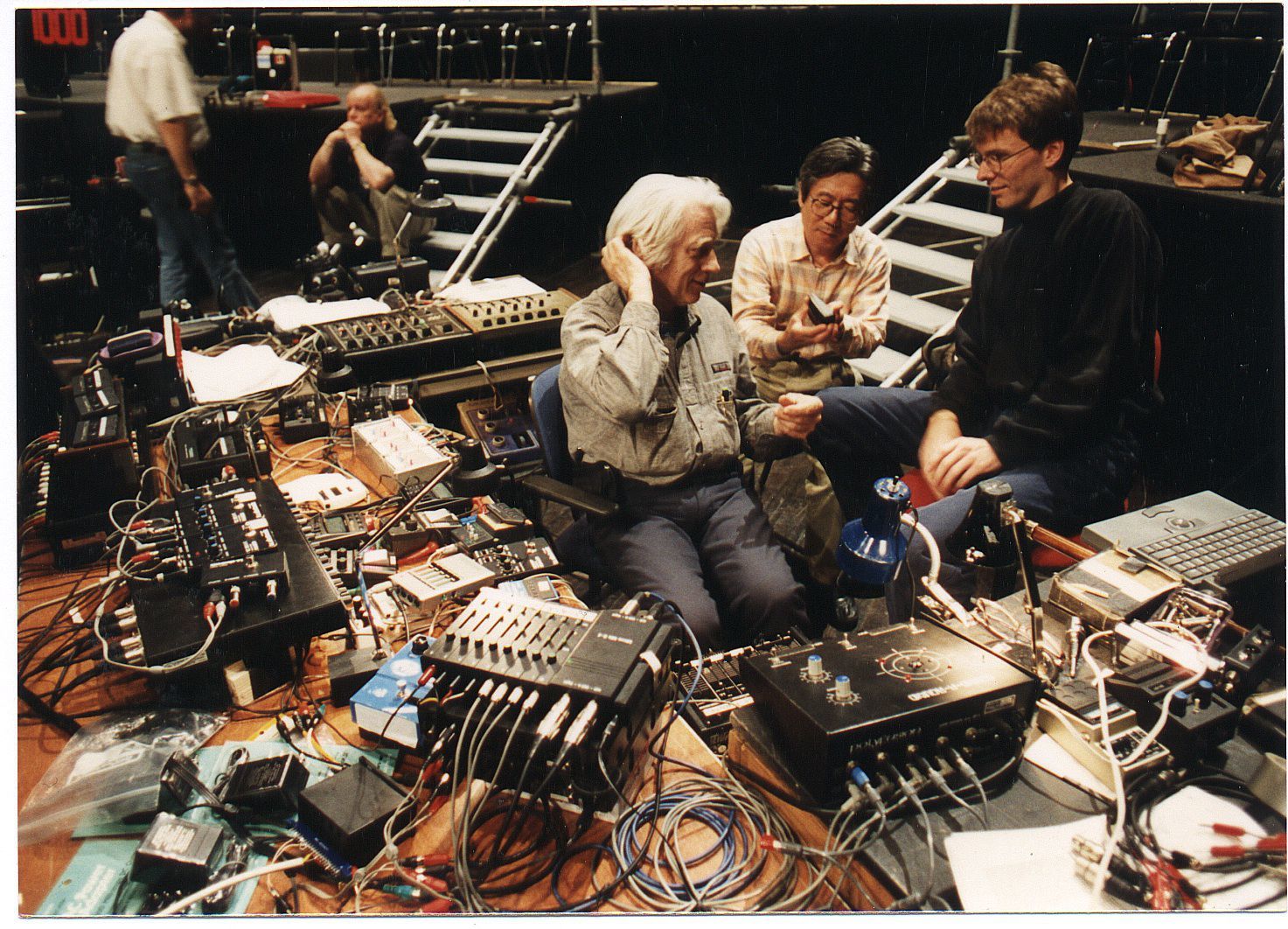
David Tudor with composer Takehisa Kosugi and musician/engineer John D.S. Adams on the set of Ocean, a collaboration with the Merce Cunningham Dance Company
Years before, the AI-generated “band” Velvet Sundown grabbed headlines by chalking up more than 1 million subscribers on streaming services and fooling journalists, Tudor was experimenting with machine-learning systems in the early ‘90s, working with engineers from Intel on a project called the Neural Network Synthesizer.
Those experiments evolved from Tudor’s work with the generation of contemporary classical composers that emerged in the decades after World War II, when he became the pianist and collaborator of choice for such groundbreaking artists as John Cage, Morton Feldman, Earle Brown, Merce Cunningham, and Robert Rauschenberg.
He was a particularly vital collaborator with Cage, who found in Tudor the ideal vehicle for the use of chance operations in his compositions.
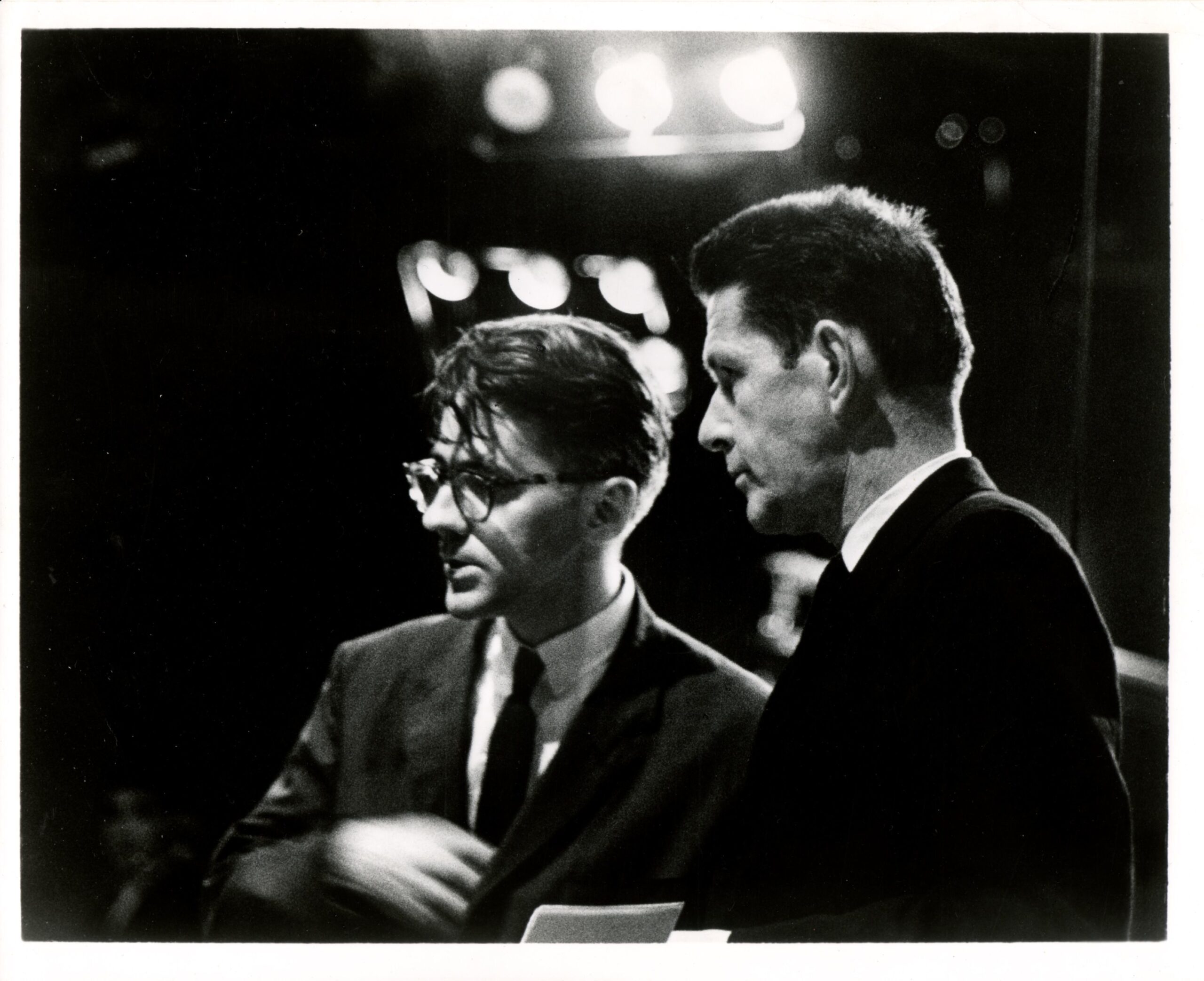
David Tudor with composer John Cage.
The turning point for Tudor came at Settlement Music School in South Philly, where he studied with the pianist Irma Wolpe. The young pianist became close with Wolpe and her husband, the modernist composer Stefan Wolpe, and the couple introduced Tudor to new developments in modern music at the time.
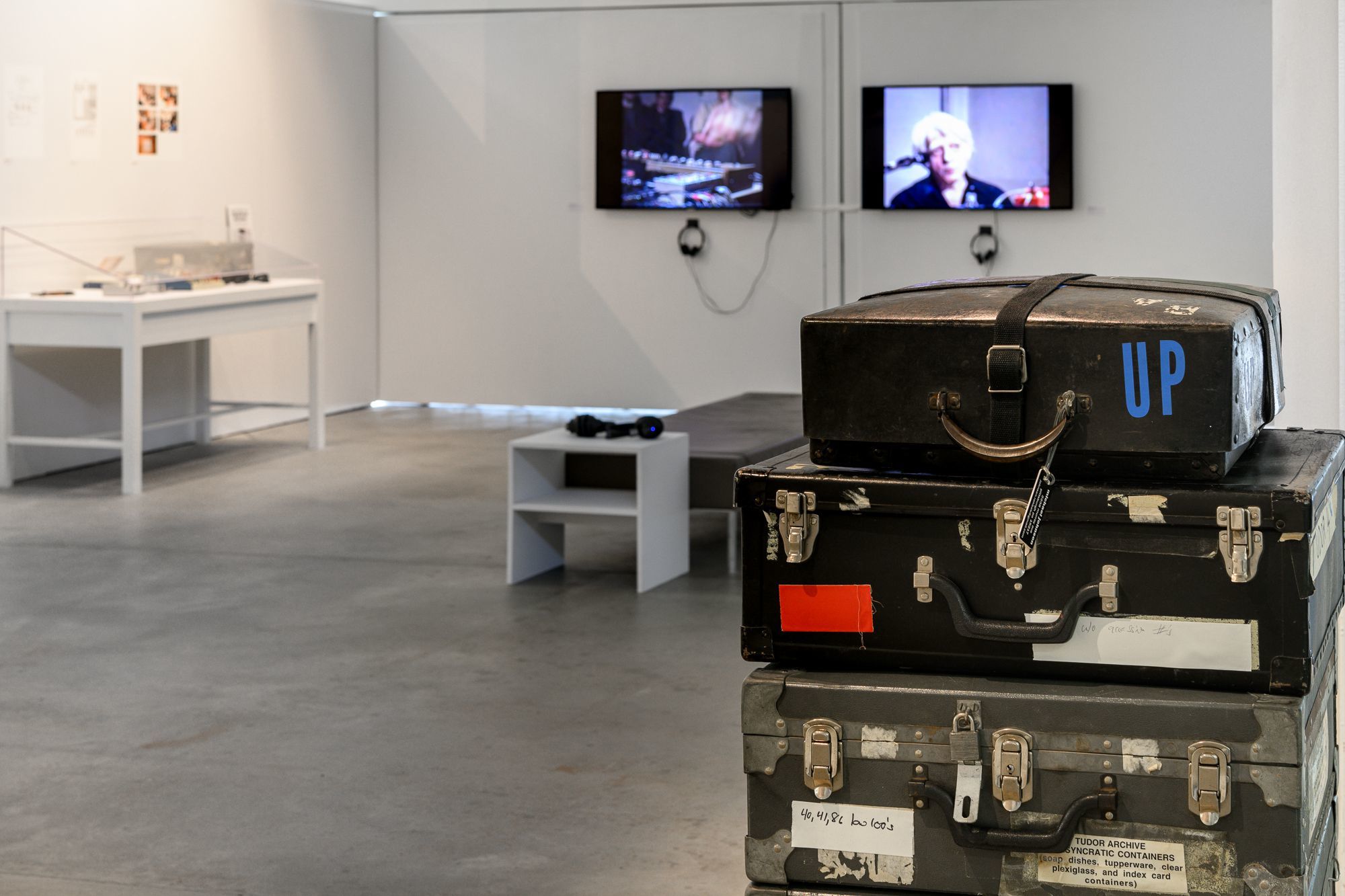
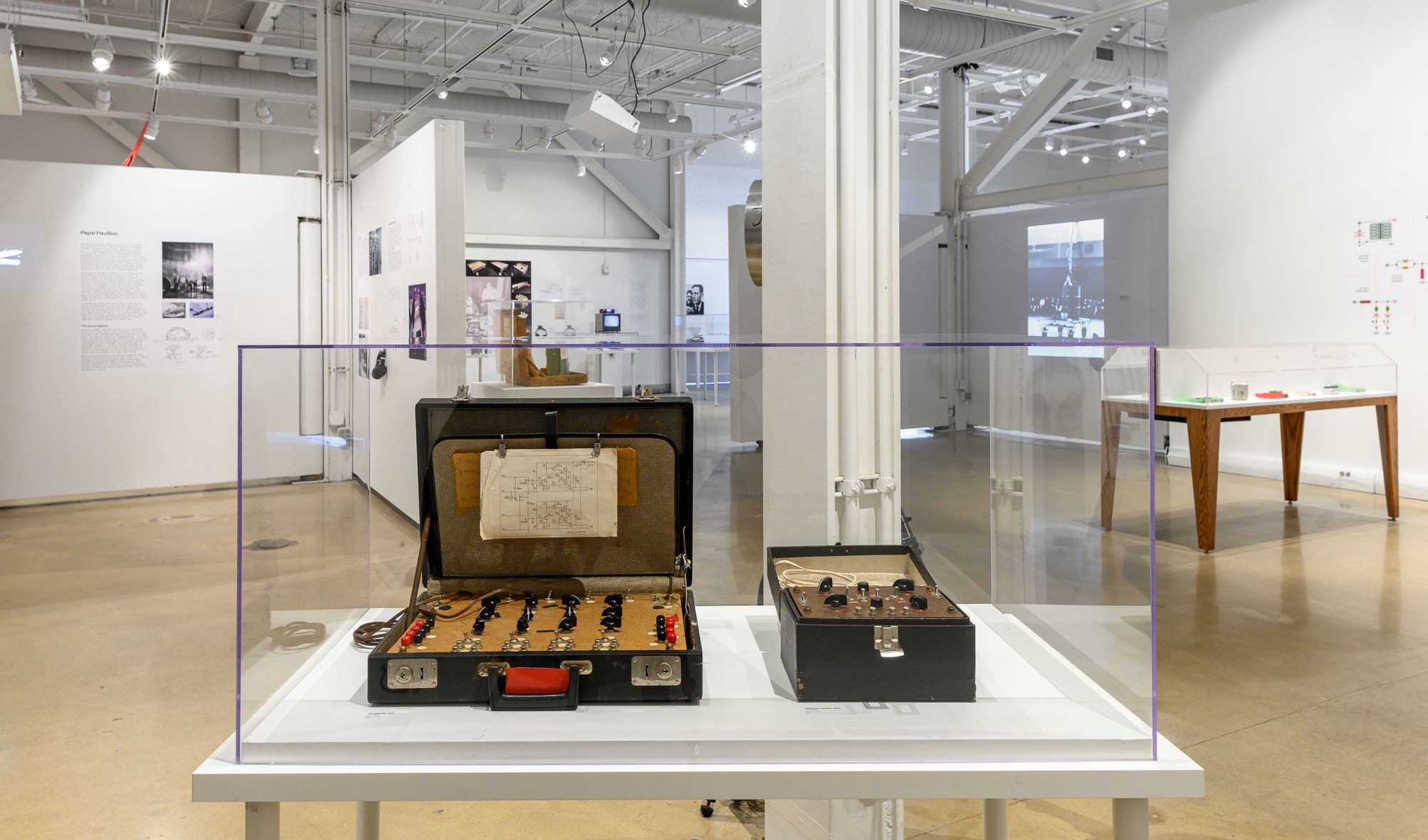
An ongoing exhibition at Drexel University’s Pearlstein Gallery, “David Tudor: A View From Inside,” traces the roots of his iconoclastic approach to performance and composition back to his early days in Philly.
The pipe organ — an instrument that literally surrounds the performer, and that they play from within — proved to be a foundational influence on Tudor’s musical philosophy for the rest of his life, said Dustin Hurt, co-curator and director of Philly presenting organization Bowerbird.
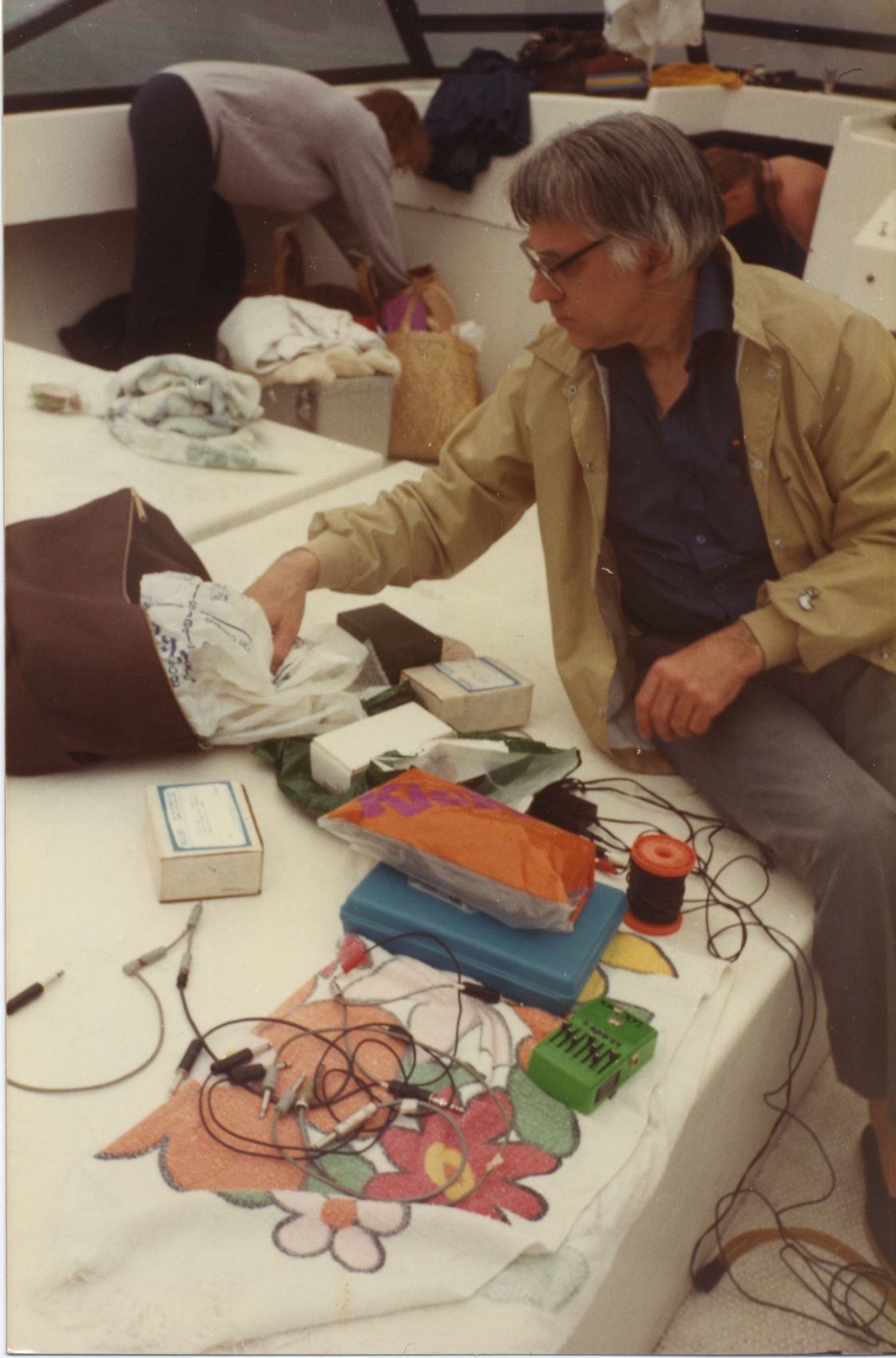
David Tudor in the Bahamas during the filming of Sea Tails, a project that included sounds collected underwater.
“That led to the more metaphorical angle of David’s music, which involved discovering what the instruments do on their own,” said Hurt. “That’s the ‘View From Inside.’ He’s not saying, ‘I want to make this music, let me find the instruments that do it.’ He’s saying, ‘This is the stuff that I have. Let’s see what it does.’”
Discovering Tudor’s fascination with puzzles, composers presented him with scores that offered problems to solve rather than music to play. The exhibition includes mind-boggling lists of calculations and measurements that the pianist meticulously assembled in preparation of performing certain pieces.
By the 1960s, he started to abandon the piano altogether, modifying small electronic devices to craft unpredictable music from feedback.
“David Tudor: A View From Inside” is on view at Drexel University’s Pearlstein Gallery through March 21
“Tudor was such a skilled virtuoso on the piano, but he showed no interest in performing the classical repertoire,” said co-curator You Nakai, a professor at the University of Tokyo and author of Reminded By the Instruments: David Tudor’s Music.
“He would only perform scores that challenged him to solve them and produce music that the composer never really thought of,” said Nakai. “So when he started making his own instruments, he strongly focused on ways to implement indeterminacy within the workings of the instruments themselves.”
Composer Stanley Lunetta includes the following instructions in his “Piece for Bandoneon and Strings”: “If you are already David Tudor, you will have no problem performing this piece; if you are not David Tudor, you must study hard, for you must be him during this performance.”
“David Tudor: A View From Inside” is on view at Drexel University’s Pearlstein Gallery through March 21.
The strings in the piece were not the expected violins and cellos, but tethers from Tudor’s limbs to a group of puppeteers who triggered him to play sections of Lunetta’s score.
Gradually, Tudor’s vision of an instrument that could be inhabited grew in scale far beyond even a department store-sized pipe organ. For Expo ‘70, the 1970 world’s fair in Osaka, Japan, he transformed an entire building into an instrument by mounting loudspeakers in the dome of the Pepsi Pavilion. A few years later, he drew up plans to convert an entire island into an instrument by recording the natural sounds of the space, manipulating them, and playing them back via speakers scattered throughout the island.
That project wasn’t realized until 2024, long after his passing, off the coasts of Japan and Norway via a collaborative project spearheaded by Nakai.
“David Tudor: A View From Inside” is on view at Drexel University’s Pearlstein Gallery through March 21.
Tudor’s pioneering experiments with electronic music seemed to make him an apt collaborator for the Intel engineers and their new neural network chip, but his interest in the technology was diametrically opposed to theirs.
For all his love of puzzles, “Tudor showed no interest in repeating his past,” said Nakai.
“He opened it up, went inside the circuitry and figured out how to let the instrument speak for itself. He didn’t understand everything, but he didn’t need to because he was making music that he liked.”
“David Tudor: A View From Inside” runs through March 21, Pearlstein Gallery in Drexel University’s URBN Annex, 3401 Filbert St. bowerbird.org
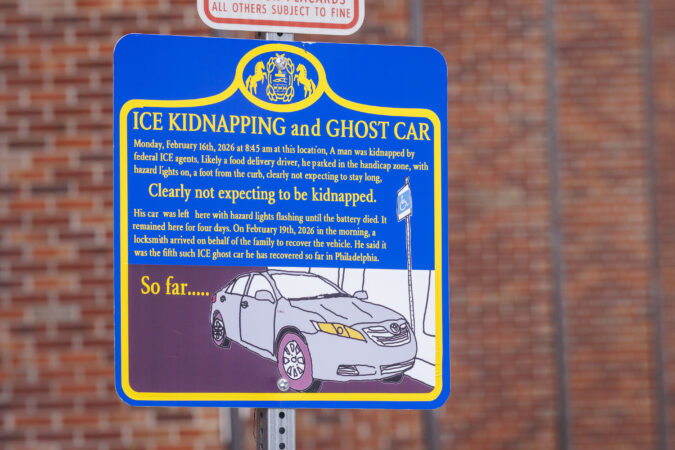
The fake but authentic-looking Pennsylvania historic marker, erected by two artists who sought to ruefully commemorate a local immigration arrest, disappeared from its post in Philadelphia sometime Monday.
Huston West, one of the artists, said he was walking his dog around 1 p.m. when he noticed that the sign was absent from its spot on Fairmount Avenue near Fifth Street. A neighbor told him the plaque had been there earlier in the day.
“It’s lame,” West said of the sign being removed. “But it got a lot of coverage while it was up.”
West said he could only speculate on who may have taken the marker ― he suspected conservative opponents, people who had criticized the sign on social media, or maybe even the city government.
A city spokesperson said he would check.
This particular, familiar-looking blue-and-yellow marker, similar to the ones that commemorate important people, places, and events in communities across Pennsylvania, was put up at the site of a Feb. 16 ICE arrest.
That morning, masked agents descended on a Gopuff delivery driver who had pulled over to make a quick drop-off in Northern Liberties. After he was taken into custody, the car remained behind for days, set two feet from the curb in an accessible parking space, its hazard lights blinking until the battery died.
West and a fellow artist who goes by the name Emeyewhisky wondered what had happened to the driver, and created a plaque bearing the header “ICE Kidnapping and Ghost Car.”
The ghost car terminology borrows from ghost bikes, the roadside memorials where a bicycle is painted white and placed at the site where a cyclist was hit and killed by a motorist.
Federal immigration authorities say the use of such terms as kidnapping is inaccurate and unfair, that they lawfully arrest migrants who have no permission to be in the United States and who in some cases have committed criminal and even violent offenses.
Immigration and Customs Enforcement officials in Philadelphia said that on Feb. 16, officers conducted a targeted action and arrested Abdulasen Nazarkhudoev. They said he was unlawfully in the U.S., and told them that he was a Russian citizen.
He was taken to the Federal Detention Center in Center City and later released by order of a judge, pending further immigration proceedings, records show.
ICE earlier referred questions about the sign to city officials.
As word of the art project spread on social media, some disapproved. Some suggested on a Northern Liberties Facebook group that the delivery driver was rightfully arrested.
West said Monday that he and his art partner had conferred about what to do next. Emeyewhisky is known for projects that place signs with fake wording on Philadelphia streets, and some have been removed.
Don’t be too surprised, Huston said, if an ICE marker should reappear.
Two prominent Jewish day schools in the Philadelphia suburbs are set to merge, a decision school leaders say will keep the institutions competitive in the region’s strong educational market.
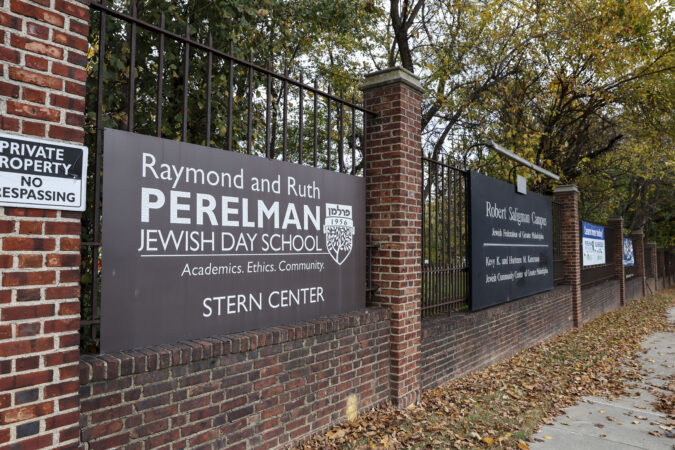
Perelman Jewish Day School, a private Jewish pre-K and elementary school located in Melrose Park and Wynnewood, and Jack M. Barrack Hebrew Academy, a Jewish middle and high school located in Bryn Mawr, will merge next year to become the only unified pre-K through twelfth-grade Jewish day school in the Philadelphia area.
Perelman and Barrack will maintain their current operations for the 2026-27 school year, while beginning to combine their admissions and development programs. Faculty, staff, and students will come under the unified school umbrella beginning in fall 2027. Perelman and Barrack will continue to operate on all three campuses.
School officials say the merger will help streamline curriculum development and strategic planning while bringing more families into the Jewish day school system by offering a consistent, pre-K-through-high-school experience.
Perelman Jewish Day School was founded in 1956 as the Solomon Schechter Day School of Greater Philadelphia. The school operates across two campuses, one in Melrose Park, which serves parts of Philadelphia County, eastern and northern Montgomery County, and Bucks County, and another in Wynnewood, which serves Center City and Philadelphia’s western suburbs.
Jack M. Barrack Hebrew Academy, originally Akiba Hebrew Academy, was the nation’s first pluralistic Jewish secondary day school when it opened in Center City in 1946. The school moved to Merion Station in 1956, then Bryn Mawr in 2008. Barrack boasts numerous notable alumni, including Gov. Josh Shapiro and CNN anchor Jake Tapper.
Perelman and Barrack completed a partial merger in 2012, when the schools combined their middle schools into a single sixth-through-eighth-grade program on Barrack’s campus.
Tuition at Perelman ranges from $21,500 to $32,300 per year, and tuition at Barrack ranges from $34,900 to $42,700. Both schools offer tuition assistance. Perelman says it awards over $3 million in tuition assistance each year to families earning up to $500,000.
School leaders say the merger will ensure Perelman and Barrack are an attractive option for families in Philadelphia’s rich educational ecosystem, where parents can choose from dozens of strong public and private schools. Often, families choosing private education are looking for continuity from pre-K through high school, something that Perelman and Barrack have not been able to provide until this point.
The ability to have students “become part of an educational system from their earliest years and grow within that system” will be academically and socially “deeper and more impactful,” said Rabbi Marshall Lesack, Barrack’s head of school and a Barrack alumnus. Lesack will lead the unified school beginning in 2027.
Daniel Eisenstadt, a member of the Perelman board of directors who will chair the new, combined board, said the merger will also allow for more cohesive planning. The schools will be able to align their vacation calendars, external messaging, and curriculum plans.
Though the overwhelming majority of Perelman students already matriculate to Barrack, bringing the schools under one system will allow for more parity in what to teach and when to teach it. Elementary, middle, and high school teachers will be able to sit in the same room and plan best practices for everything from math to art to Jewish studies, considering the arc of a student from ages 5 to 18, Eisenstadt said.
Both schools’ enrollment has been “stable to growing” in the past few years, said Eisenstadt. Both he and Lesack were clear that the merger is not in response to a souring financial outlook, as can be the case when educational institutions merge.
“We’re both coming from a place of strength,” Lesack said.
Barrack reported revenue of $20.9 million in 2024, an increase of $3.4 million over 2023, according to tax records. Perelman reported a revenue of $13.4 million in 2024, up $400,000 from 2023.
However, Eisenstadt said, “there is a recognition that we operate in an environment where there are excellent other independent schools, and excellent public schools. Rather than waiting for a moment where we see a dip in enrollment or where there are challenges, I think the general feeling from a leadership point of view was, ‘Let’s be proactive.’”
When it comes to growing enrollment at Barrack and Perelman, however, Eisenstadt said there’s no one cause. He is “a little bit skeptical about the generic narrative” that the Israel-Hamas war and rising antisemitism have solely drivenincreased interest in Jewish education. He says Perelman and Barrack can’t rest on the assumption that larger forces will inevitably push families toward the Jewish day school experience. In a “dynamic world,” the schools need to continue to evolve, he said.
In Eisenstadt’s words, Barrack and Perelman can’t “assume that any one thing that’s occurred, any one event, or any one trend is the future.”
Lesack and Eisenstadt said many of the merger’s details are still up in the air and will be decided by the board. However they noted that there are plans for major investments across all of Perelman and Barrack’s facilities. Plans have long been in the works to find a new home for Perelman’s Melrose Park campus. School leaders say they are committed to having a continued presence in Philly’s northern suburbs.
Lesack and Eisenstadt acknowledged the challenges of merging two schools with different campuses and cultures. Yet there’s “an unbelievably strong foundation” upon which to build, Lesack said, citing the many families, values, and traditions that the schools already share.
This suburban content is produced with support from the Leslie Miller and Richard Worley Foundation and The Lenfest Institute for Journalism. Editorial content is created independently of the project donors. Gifts to support The Inquirer’s high-impact journalism can be made at inquirer.com/donate. A list of Lenfest Institute donors can be found at lenfestinstitute.org/supporters.
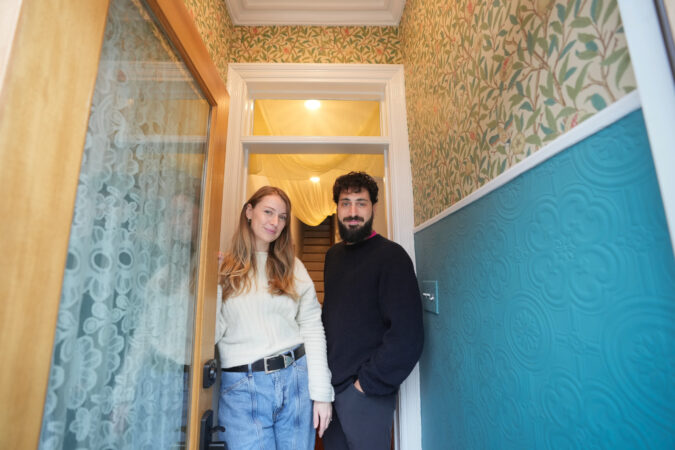
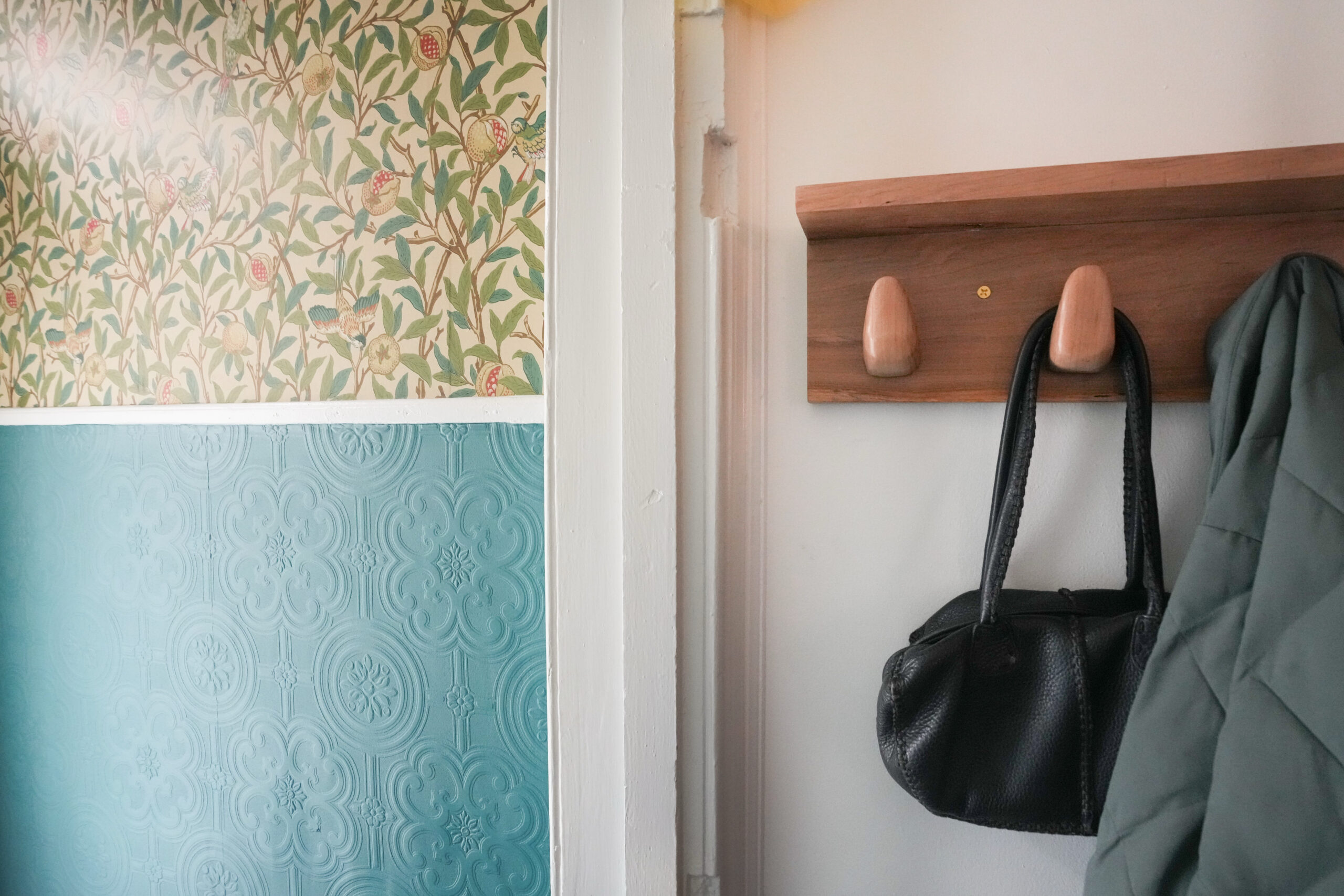
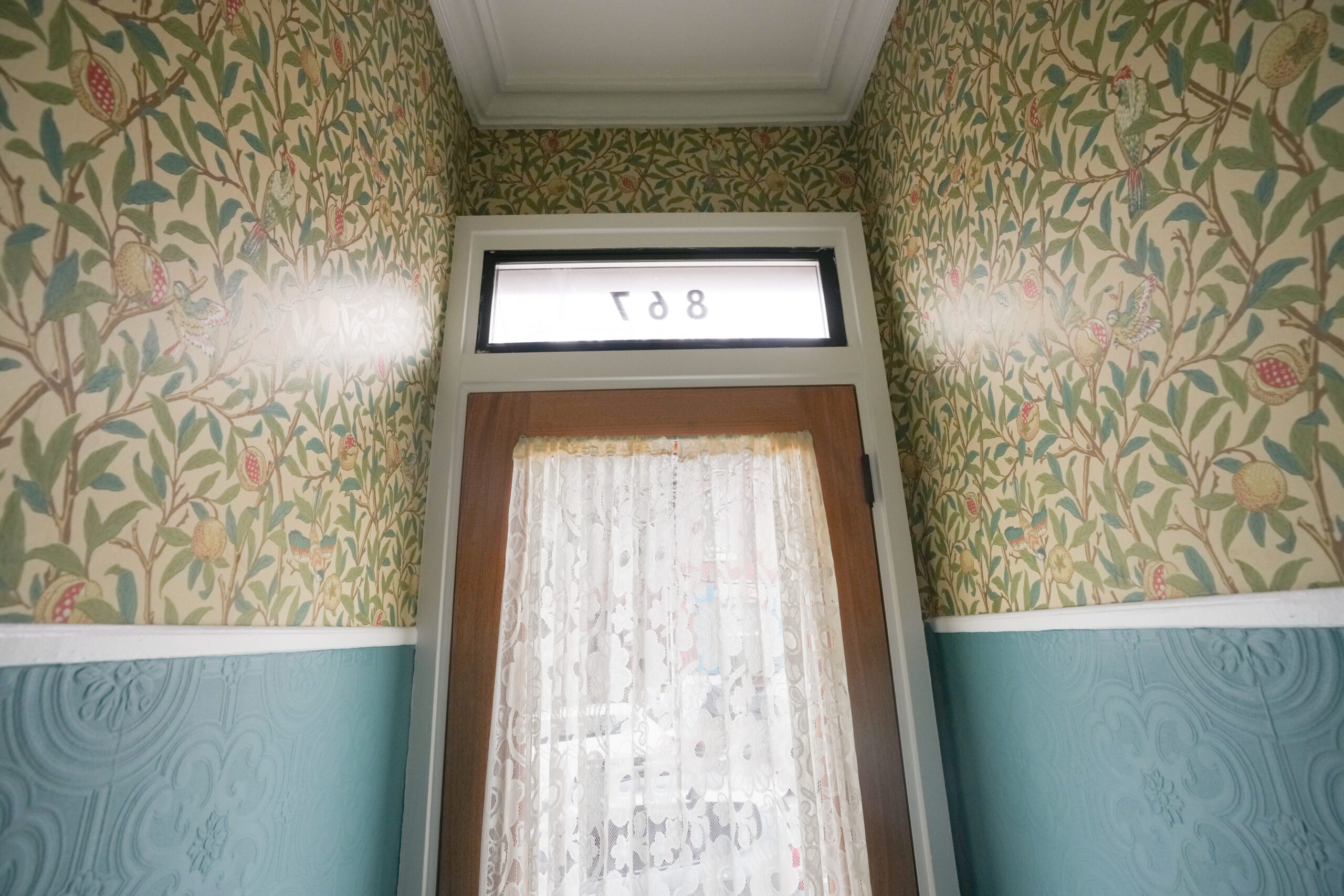
When decorating their circa-1920 townhouse, Eli Steiker-Ginzberg and Sarah Schrading wanted their vestibule to represent the home’s history. They chose a classic William Morris wallpaper called Bird and Pomegranate for above the chair rail and a textured Anaglypta paper painted in Benjamin Moore Baltic Sea below.
“Colonial Wallcoverings had so many options it was overwhelming,” recalled Steiker-Ginzberg, who lives in the Fairmount area. “The leaves and birds and colors of this one really jumped out.”
The William Morris paper was a splurge, so to stay on budget, they matched it with a less expensive paintable wallpaper. In total they spent about $2,000 on the materials and installation “for the smallest room in my house,” he joked.
Wallpaper is showing up in unique ways and in new places. Bold patterns on the ceiling, colorful oversized florals on an accent wall, custom murals in the living room, and funky patterns in the closet and mudroom that add pizzazz and make a statement.
The wallpapered vestibule in Eli Steiker-Ginzberg and Sarah Schrading’s home leads to a painted wall on the home’s first floor.
More homeowners are embracing bold wall coverings, according to the 2026 U.S. Houzz Fall Design Trends Report. The shift reflects a move toward deeply personal designs, with homeowners opting for vivid, expressive details that make their spaces feel unique and emotionally resonant, the report found.
“Wallpaper has character and brings out the life and beauty of a room,” said Paul Sperling, owner of Colonial Wallcoverings in Queen Village. “It shows off your personality.”
Modern wallpapers are also easier to hang and strip than older versions, with paste-the-wall and self-adhesive DIY options.
“A lot of people are afraid of wallpaper because it used to be a nightmare to take off,” Sperling said. “But most wallpapers now are easier to remove because of changes in how the papers are printed.”
Making a statement
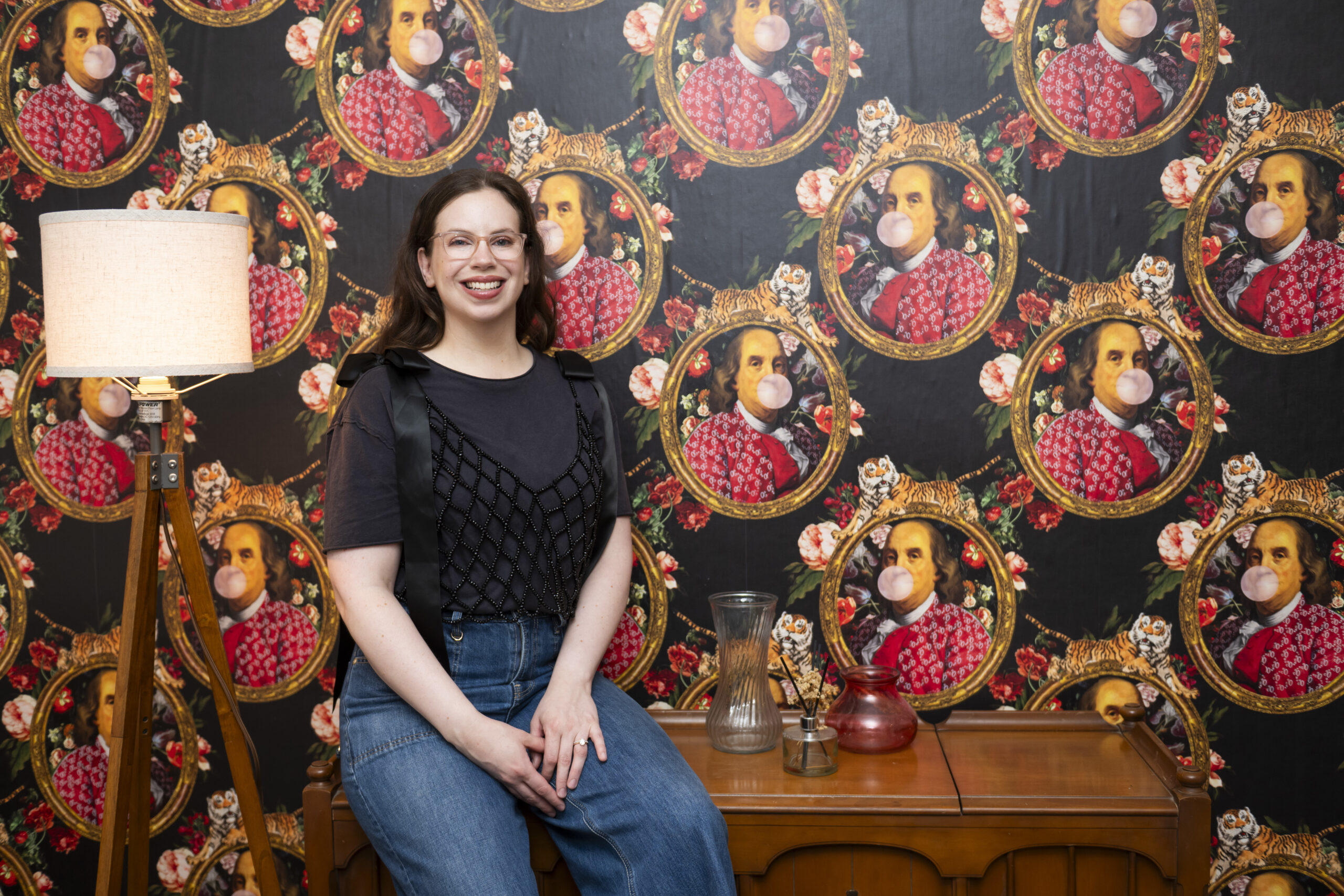
When Jessica Maiuro moved into her Rittenhouse apartment in 2024, she wanted a wow factor as soon as she came through the front door. After a couple months of searching, she discovered a bold patterned wallpaper featuring Ben Franklin within a gilded picture frame blowing a bubble gum bubble, surrounded by a tiger and flowers.
“I wanted something that would really make a bold statement and be a conversation starter when I hosted,” she recalled. “I had never seen any design like this, and I was instantly sold and in love. What could be more Philly?”
Jessica Maiuro was delighted to find this Benjamin Franklin wallpaper for her home in Center City.
Maiuro spent about $500 on the peel-and-stick wallpaper from the online seller Spoonflower and corralled her husband, John Jeong, and a friend to help her hang it. Her apartment is a rental, but she tested the paper and knows it will easily strip off when it’s time to take it down.
When investing in wallpaper, consider where and how it will make the most impact. Wallpapers with small, repeating patterns work best in a smaller space, such as a powder room or vestibule.
For larger spaces, wallpaper murals can serve as a focal point on the wall behind the bed or sofa, or continuing across several walls. They often feature grand designs or landscapes, including big, bold flowers and jungle scenes. Murals are more popular than ever, said Sperling, with brands like Rebel Walls and Glamora that specialize in custom sizes.
For a more personal design, Rich Art Graphics in Center City will take your artwork and create a custom wallpaper to fit your dimensions.
“Most of the time, a designer or artist will come to us with a fine art interpretation to be printed and installed in homes,” said Michael Antner, the print shop’s owner. “It’s something personal that they are very passionate about.”
For example, a client may have a favorite painting or photograph they want to reimagine on an entire wall. Cityscapes and naturescapes are especially popular. Rich Art will create a digital file with the picture and manipulate it to the exact size of the wall.
They offer traditional wallpaper adhered with paste or peel-and-stick adhesive. The average cost is $8 per square foot to create the paper, plus installation.
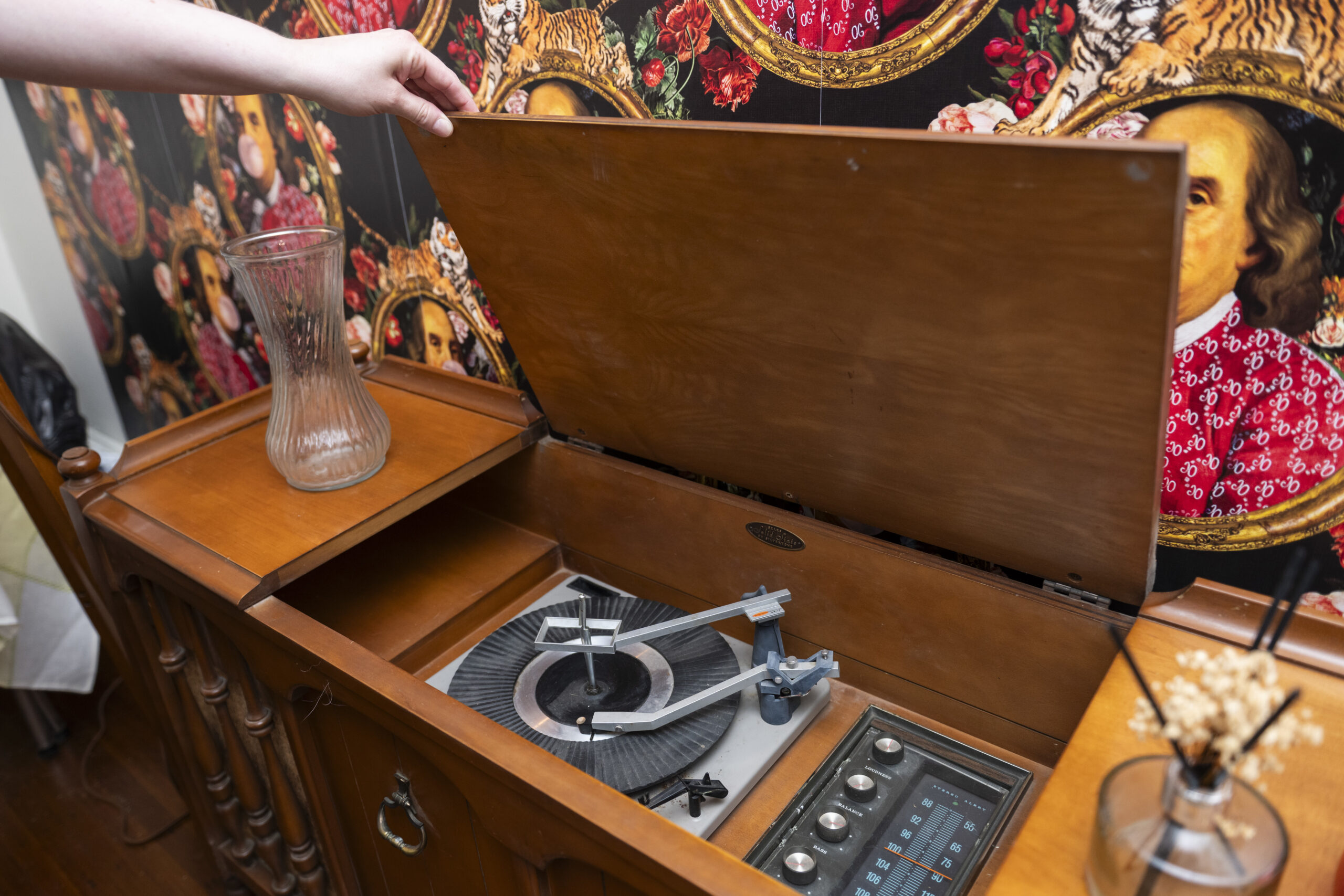
A record player dating to the 1960s sits in Maiuro’s home under the gaze of bubble-gum-chewing Ben Franklin.
The fifth wall
The ceiling has become the fifth wall of the room, where wallpaper can make a bold statement and add a new dimension. Options include very intricate designs where viewers can spot new details to simpler patterns like clouds or green tree canopies.
“It’s much more dramatic and brings more attention to the room,” Sperling said. “It takes vision.”
Parents are even wallpapering nursery ceilings as a stimulating focal point for their babies.
“Wallpapered ceilings have been a design staple for centuries in Europe, especially in homes where pattern and ornamentation played an important role in creating atmosphere and storytelling,” said Krystal Reinhard, founder and principal designer at Old Soul Design Studio in downtown West Chester.
She’s seen a noticeable uptick in the past five years as homeowners look for more expressive, layered interiors. Papered ceilings work in smaller, contained spaces like powder rooms, nurseries, and offices. But they can also make sense on larger ceilings in bedrooms, dining rooms, and kitchens.
When papering the ceiling, it’s important to consider the scale of the pattern — motifs or tonal textures often work beautifully overhead, Reinhard said. It’s best to hire an experienced installer because ceilings require precision and strong adhesive knowledge. Before committing to a pattern, one should test how it interacts with overhead lighting — fixtures can cast shadows that change the effect.
“A wallpapered ceiling is one of the most effective ways to give a room soul,” Reinhard said. “It’s a detail that feels thoughtful and intentional.”
Especially in the Philadelphia region, where so many homes have architectural character worth celebrating, treating the ceiling as a design opportunity can elevate the entire space, she said.
It’s a way to honor historic craftsmanship while embracing a very current, expressive design moment.
Steiker-Ginzberg and Schrading chose the wallpaper in their vestibule to represent the home’s history.
How much does wallpapering cost?
Wallpaper costs vary widely, starting at about $40 per 50-square-foot roll for peel-and-stick options from online sellers such as Wayfair. Textured materials from brands like Arte or historical luxury design houses like de Gourney or Zuber can reach several hundred dollars per individual square foot, Sperling said.
Many companies provide a measuring calculator to determine exactly how much is needed for your project. It’s essential to take pattern repeat into account and add an extra 10% for mistakes and future repairs.
Most companies sell samples. It’s helpful to hang those in various spots and observe over a few days to see how the pattern looks in the light at different times of day and night.
For Steiker-Ginzberg, the wallpaper investment was worthwhile.
“There’s something important and meaningful about the portal into your house and there being an intentional transition,” he said. “It makes a difference in the impression people get.”
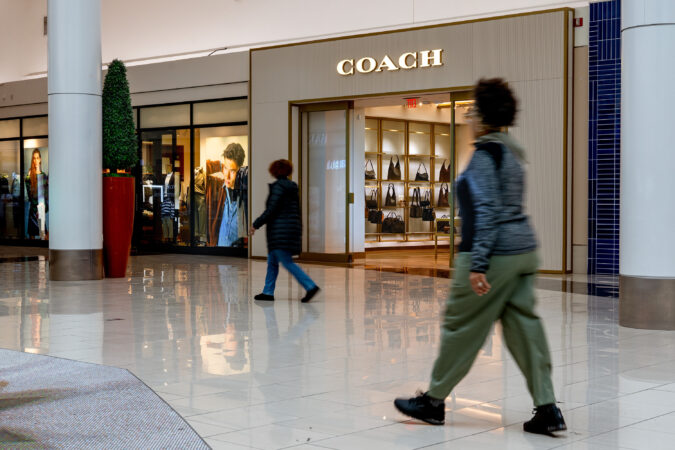
When Coach opened a store at the Cherry Hill Mall in November, mall executives were ecstatic — even though it’s been 85 years since the high-end retailer was founded.
Coach is as hot as ever. And its new shop in Cherry Hill is just another sign of the South Jersey mall’s success, according to leaders with Pennsylvania Real Estate Investment Trust (PREIT), which owns the complex.
“Cherry Hill is clearly a dominant fashion property,” Paula Charles, PREIT’S first vice president of leasing, said in a recent interview.
In the competitive Philadelphia market, “the better retailers have gravitated toward the better assets,” including Cherry Hill, added Joe Aristone, PREIT’s chief revenue officer.
They noted that top-tier retailers increasingly include legacy brands — long-established companies like Coach, Zara, and Levi’s, that are making a nostalgic, social media-fueled comeback with younger consumers.
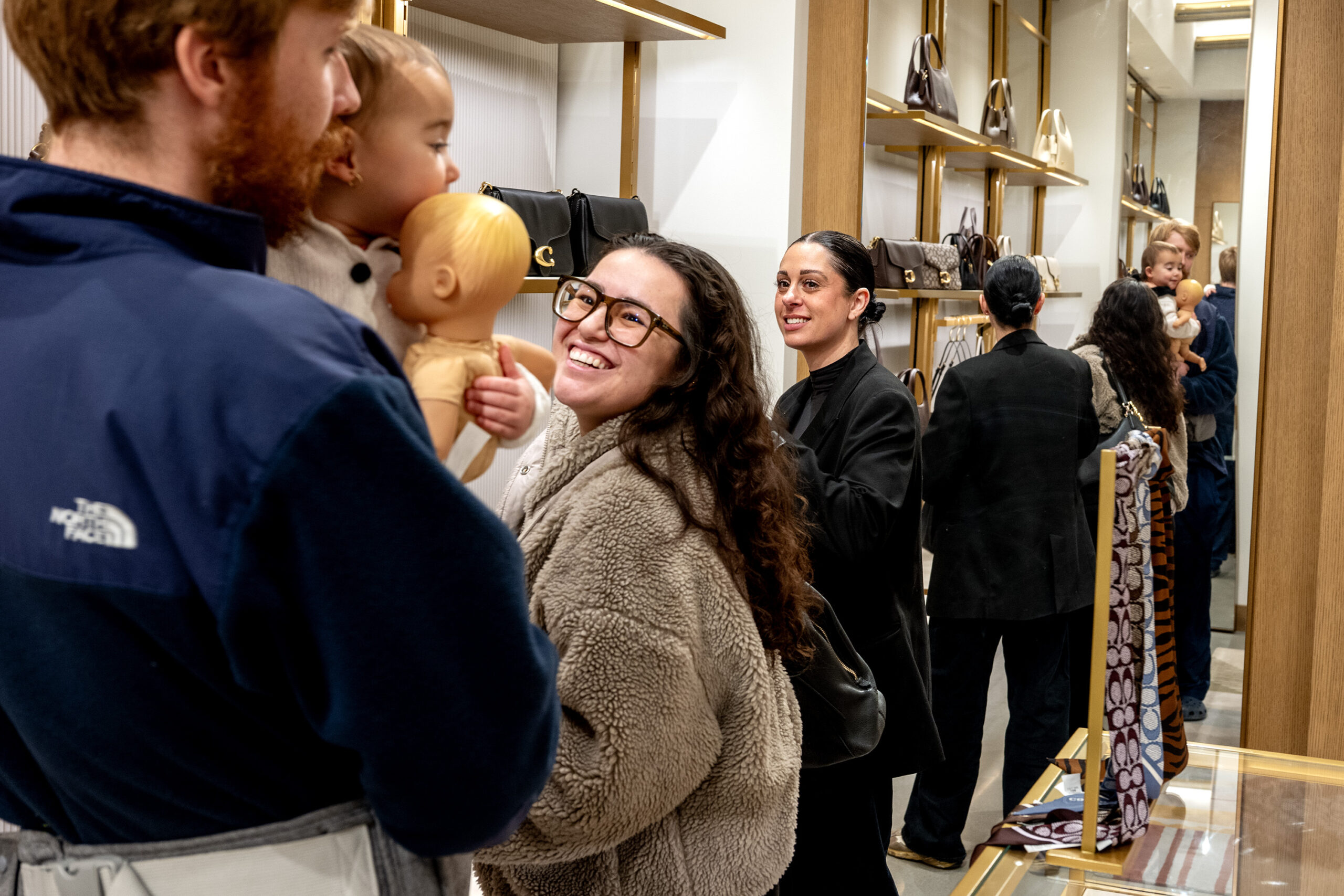
Employee Alex Costa (right) assists Alessandra Bruno as she shops for purses with husband, Luke Baur, and their 20-month-old daughter, Rosalina, at the Coach store at the Cherry Hill Mall.
In the Philadelphia area, these retailers have maintained a presence along shopping corridors in Center City and at higher-performing malls like Cherry Hill and King of Prussia, which is owned by Simon Property Group.
Prior to the Cherry Hill opening, Coach operated shops in King of Prussia and Marlton, as well as off-price locations at the Philadelphia Premium Outlets near Pottstown, the Gloucester Premium Outlets in Blackwood, and the Tanger Outlets in Atlantic City. The brand also has an outpost at the Philadelphia International Airport.
Coach spokespeople did not return requests for comment about their investment in the region.
PREIT executives declined to comment on sales so far at their new Coach store, but said brand and mall executives are pleased with how the store is doing — and what that means going forward.
“Coach has had a strategy to make sure that they capture Gen Z,” a demographic that PREIT executives also want to attract and retain as they age, Charles said.
Why Gen Z and millennials love Coach
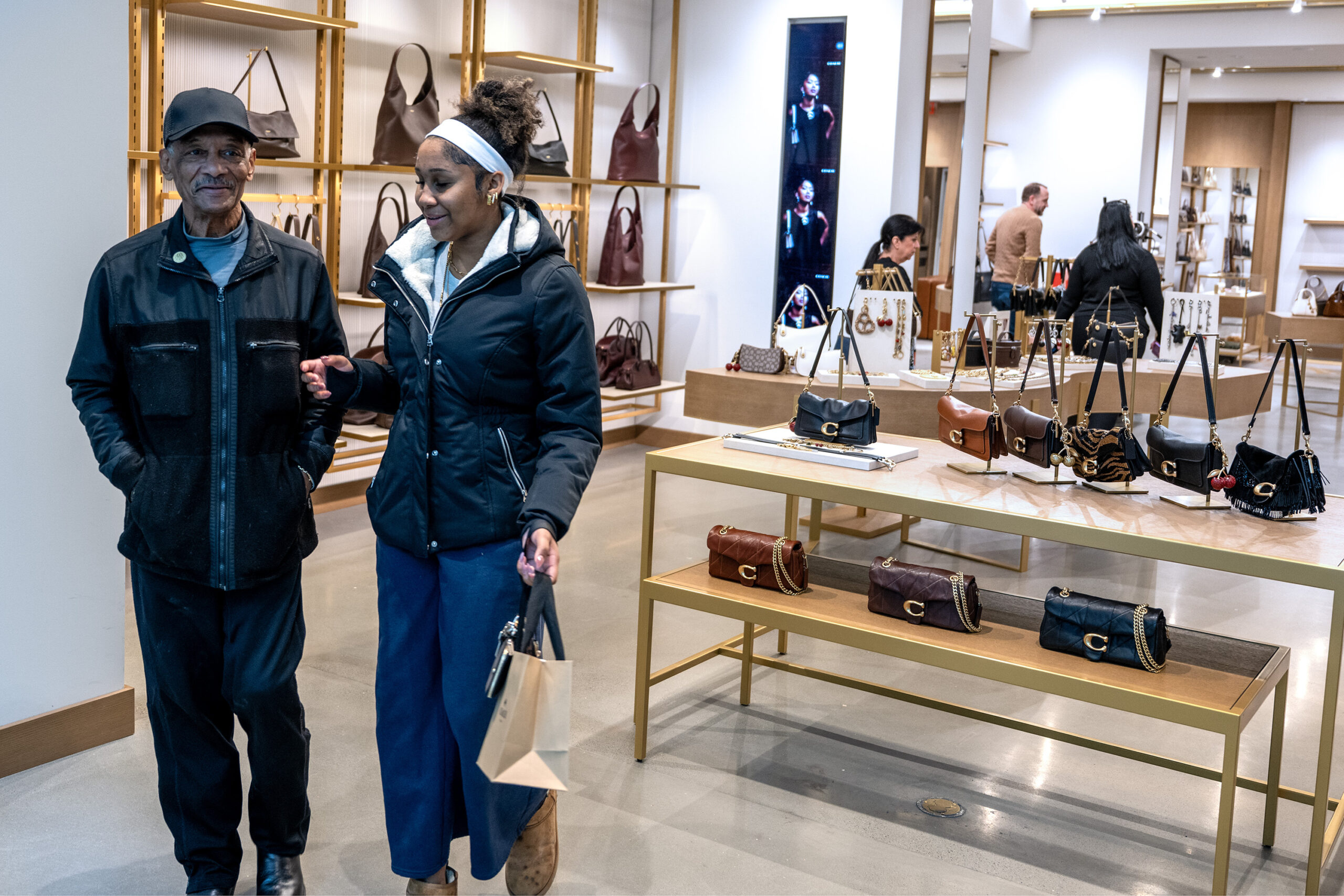
Joe Williams, of Magnolia, N.J., buys a handbag for his daughter, Samantha Williams, at the Coach store at the Cherry Hill Mall.
About two years ago, Breana Stringer, now 26, noticed that many of her friends were going out with Coach bags. And when she’d open TikTok, she said, the platform’s algorithm showed her videos of other users’ Coach collections.
Up until that point, the Fishtown resident had been an accessory minimalist: “I was very much an ‘if it doesn’t fit in my pocket, I’m not bringing it’” type of person.
But Stringer said she was influenced by her friends and TikTok to start buying Coach bags, mostly secondhand (though she has received new Coach bags as gifts). She has come to enjoy styling them with her outfits.
To Stringer, Coach’s appeal to Gen Z consumers is simple, she said: “They’re affordable in terms of a luxury name brand, and they’re vintage styles.”
New Coach bags start at $95 for a short shoulder bag, while larger purses can cost $500 or more. At outlet stores and secondhand shops, prices are lower.
In South Philly, Stephanie Gonzalez, 33, has restored and resold dozens of vintage Coach bags, mostly to Gen Z and millennial women.
She said these women see the Coach brand as “timeless.”
For Gen Z, “what is happening is they are really into Y2K, late-’90s, early-’90s nostalgia,” Gonzalez said. “TikTok has been a big hub for people” to share their love of Coach and brands that were popular in those years.
As for other legacy brands, Stringer said some of her Gen Z friends have also started wearing Cartier rings, which have been around since the mid-1800s and can cost more than $1,000. It’s a trend Stringer has yet to get behind, she said, because she has a tendency to lose small accessories: “I’m less likely to lose a bag.”
How legacy brands are boosting Philly-area malls
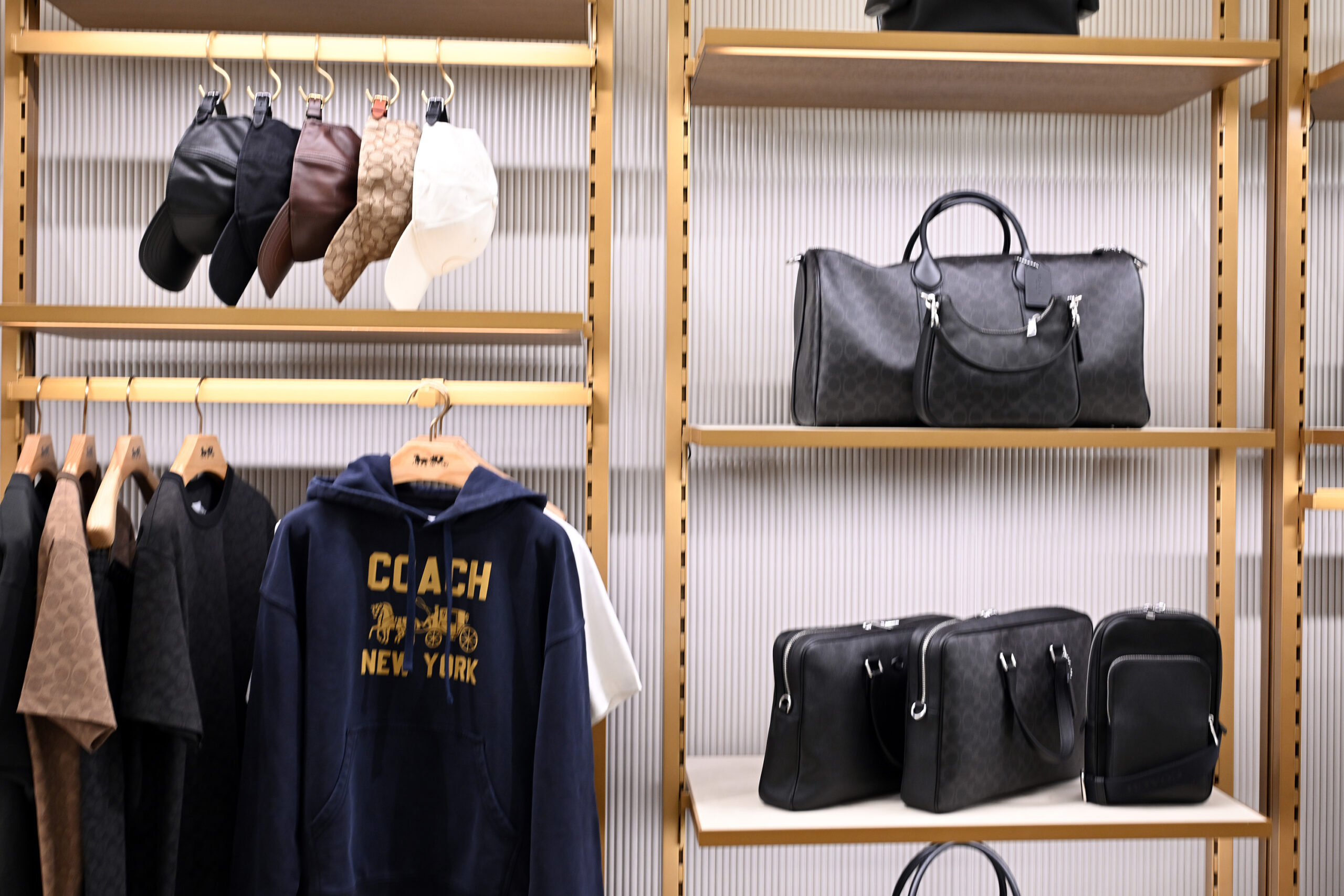
Products are displayed at the Coach store at the Cherry Hill Mall.
Cherry Hill Mall isn’t the only local shopping center to have welcomed new legacy retailers recently.
In the past six months, Abercrombie & Fitch, Columbia Sportswear, Lacoste, and New Balance have opened new stores at the King of Prussia Mall, and an Adidas outpost is also set to open there soon.
At the Philadelphia Premium Outlets, Hugo Boss, Marc Jacobs, and New Balance have opened stores in the past year, while the Gloucester Premium Outlets in Blackwood have added New Balance and Columbia locations. Like the King of Prussia Mall, both outlet malls are owned by Simon Property Group.
Typically, these re-energized brands are attracted to places where other similar companies have already set up shop, say the PREIT executives who help shape the tenant mix at the Cherry Hill Mall.
And they said this cyclical effect further cements the region’s dominant retail centers as shopping destinations.
“There is so much media out there as it relates to closed malls,” said Aristone, the chief revenue officer. Many of the surviving malls, however, are thriving, he said, thanks in part to these legacy brands.
Philadelphia is one of five cities on a list of finalists to host the 2028 Democratic National Convention, a major gathering that could generate millions of dollars in economic impact for the city.
Party officials are also considering Boston, Atlanta, Chicago, and Denver, the Democratic National Committee announced Monday.
The convention will be held from Aug. 7 to Aug. 10, 2028, according to the party. If Philadelphia is selected, the convention would likely be held at the Xfinity Mobile Arena at the South Philly stadium complex, the largest indoor event space in the city.
DNC leaders and advisers are expected to make site visits this spring before selecting a host.
The DNC said in its statement that, in picking a host city, party leaders will consider how each city uses “new and innovative approaches in response to the challenges and opportunities that arise from hosting an event of this magnitude.”
The Republican Party’s 2028 convention will take place in Houston.
Top Philadelphia Democrats and donors formed a host committee — called Pick Pennsylvania — in recent months and, in partnership with Democratic Mayor Cherelle L. Parker, submitted a bid to host the 2028 convention.
In a statement, Parker said that Philadelphia’s selection as a finalist “reflects the strength of its proposal and the broad coalition of civic, business, labor, and community leaders committed to hosting a convention that is inclusive and memorable.”
Parker, who is up for reelection next year, would no doubt play a major role in planning for an upcoming convention. So would Gov. Josh Shapiro, a Democrat currently running for reelection who is considered a contender for the 2028 presidential nomination.
The president of the Philadelphia host committee is David L. Cohen, a prominent party stalwart, and the chair is Daniel J. Hilferty, the CEO of Comcast Spectacor, which owns the Xfinity Mobile Arena.
He said in a statement that “there is no city more excited, more invested and more prepared than Philadelphia to host the 2028 Democratic National Convention.”
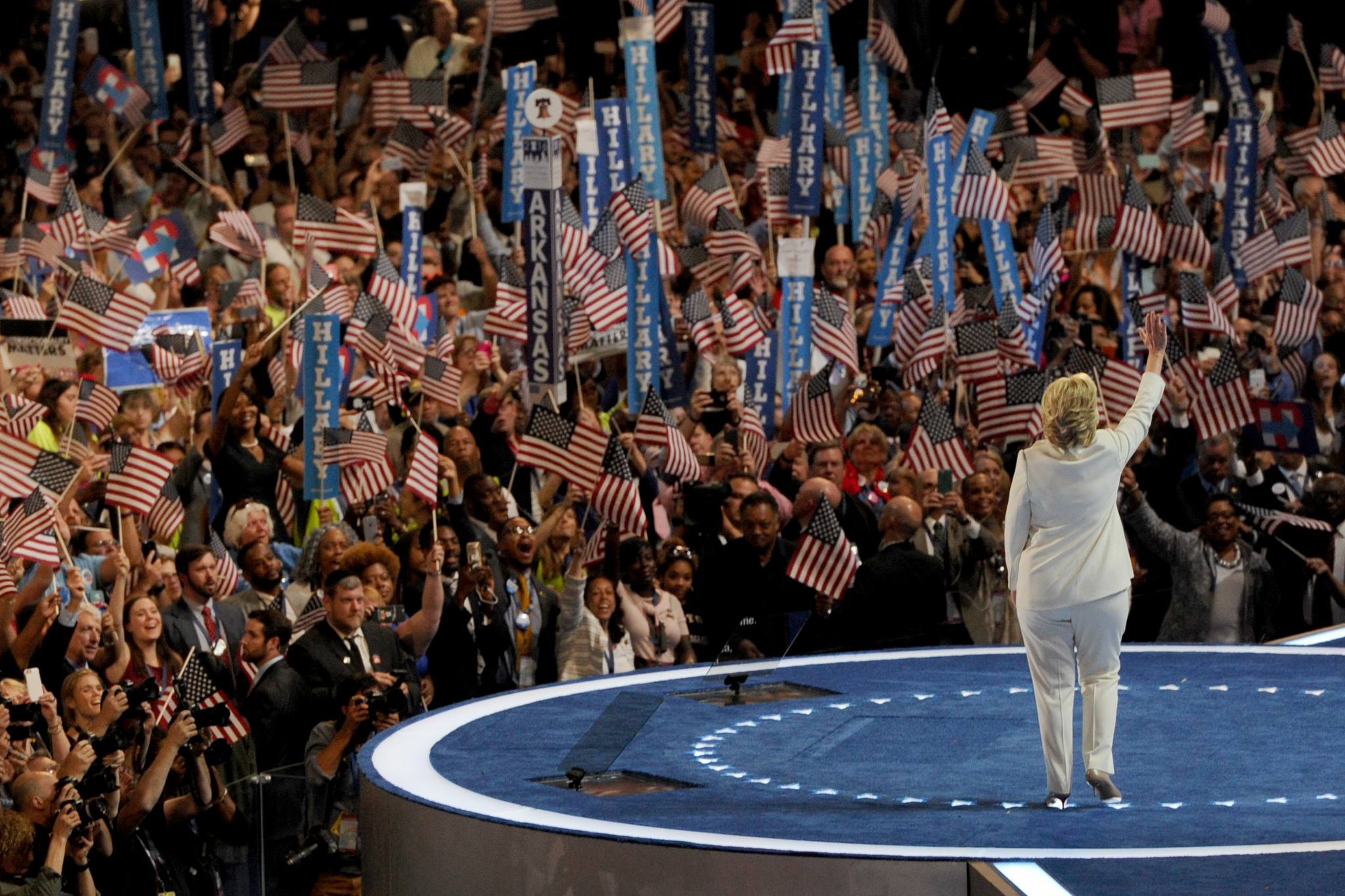
Philadelphia — the largest city in a critical swing state — last hosted a presidential nominating convention in 2016 at the South Philly arena, then called the Wells Fargo Center. Democrats that year nominated former Secretary of State Hillary Clinton, who was later defeated by Republican Donald Trump.
Before 2016, the city hosted major party conventions seven times, including the 2000 Republican National Convention. The GOP that year nominated then-Texas Gov. George W. Bush, who went on to serve two terms in the White House.
Former U.S. Rep. Bob Brady, the chair of the Philadelphia Democratic City Committee, said Monday that he had spoken multiple times to DNC leaders about the prospect of the city hosting the 2028 convention.
“We got a great reputation from the last convention we had,” Brady said. “Plus we’re going to show off the city very well this summer, which will really give us a good look.”
The news that Philadelphia is again a finalist to host the DNC is a welcome development for the city’s tourism and hospitality industry, as party conventions draw thousands of visitors and can be a boon for spending in the city.
The 2016 event generated $230.9 million in economic impact, according to the Philadelphia Convention and Visitors Bureau. Of that, about $132.9 million came from direct convention-related spending, and $11.1 million was generated by state and local taxes. That convention attracted more than 5,000 attendees and some 29,000 other visitors, leading to a record-breaking year for hotels in Center City, the bureau reported.
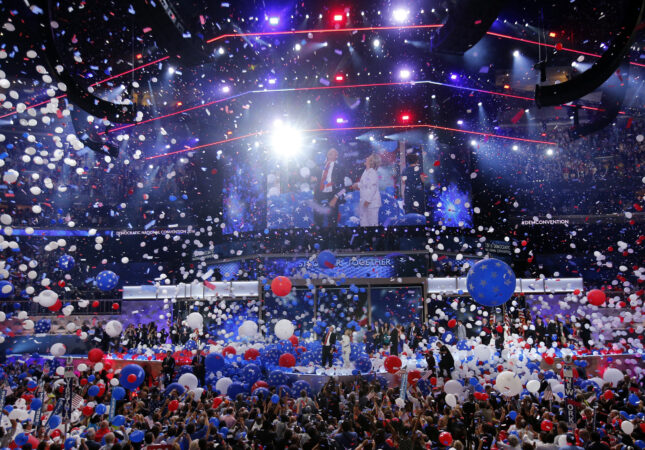
In this July 28, 2016 file photo, then-Democratic presidential nominee Hillary Clinton walks on stage at the arena in South Philly to accept the nomination of her party on the final night of the DNC.
If selected, Philadelphia may be uniquely positioned to host an influx of visitors.
The city’s hotel supply has expanded since the last time it hosted a DNC — and there are more than 19,000 hotel rooms in the city, according to Visit Philadelphia. That’s an increase from about 16,000 available in 2016.
The city has also invested millions of dollars on improvements to public spaces, transit hubs, and security ahead of several major events this year, including World Cup games, the MLB All-Star Game, and the commemoration of the 250th anniversary of America.
Conventions are also major logistical undertakings. Attendees include high-profile politicians and celebrities, and protests often form outside the events. The federal government has over the last two decades designated both parties’ nominating conventions as National Special Security Events, meaning they are deemed at high risk for terrorism and require federally led security.
In Chicago in 2024, the U.S. Secret Service led security planning alongside 16 other public safety entities, according to a local NBC affiliate. The law enforcement and security plan included designated protest zones, airspace monitoring, and traffic control.
Host committees are also responsible for raising millions of dollars to pay for parties, transportation for delegates, construction and venue upgrades, as well as other logistical services such as consultants, accountants, and communications staff.
In 2016, the Philadelphia host committee raised about $85 million — $10 million of which came from taxpayers in the form of a state grant. Other top contributions came from corporations, unions, and wealthy individual donors.