Tag: Cherelle L. Parker

  • Philadelphia firefighters blast new contract with the city that leaves them behind police on pay

    Philadelphia firefighters blast new contract with the city that leaves them behind police on pay

    The union that represents more than 2,000 Philadelphia firefighters and paramedics says its members will, for the first time in two decades, receive a wage increase lower than police officers did — a contract provision they see as the end of years of pay parity among the city’s first responders.

    Mayor Cherelle L. Parker’s administration announced Wednesday that a panel of arbitrators had issued a two-year contract award for Local 22 of the International Association of Fire Fighters after its members had gone more than a year without a contract.

    Local 22 was the last of the city’s four major municipal unions to reach a multiyear agreement with the Parker administration. The other unions agreed to their contracts last year.

    Parker said in a statement that the contract award recognizes the contributions of the city’s firefighters and emergency medical personnel “while supporting the city’s efforts to remain fiscally responsible.”

    The contract award was issued by a three-member arbitration panel, a process governed by state law because emergency workers do not have the right to strike. The deal includes 3% raises annually for the next two years, plus a 1% wage increase in recognition of mandatory physical evaluations that members must receive biannually.

    Those raises total a 7% pay increase over two years for union firefighters, paramedics, and emergency medical personnel. In the city’s contract with police inked about a year ago, members of the Fraternal Order of Police Lodge 5 received a 9% wage increase in total over the same time period, plus a $3,000 signing bonus.

    Local 22 president Mike Bresnan said Parker’s administration did not adequately advocate for pay parity between police and firefighters. He said he is lobbying members of City Council to consider legislation that would require Council approval for the mayor to appeal firefighters’ contracts in the future.

    “Mayor Parker likes to run around putting her one index finger up as ‘we’re all one,’” Bresnan said. “Well, she just put her middle finger up to every firefighter and paramedic in the city.”

    He added: “If there’s somebody out there that’s thinking about running for mayor, we’d like to have a conversation with them.”

    The firefighters union has historically played a relatively minimal role in city elections compared with more politically active labor groups like those that represent construction workers. The union did not back a candidate in the 2023 mayor’s race, which Parker won.
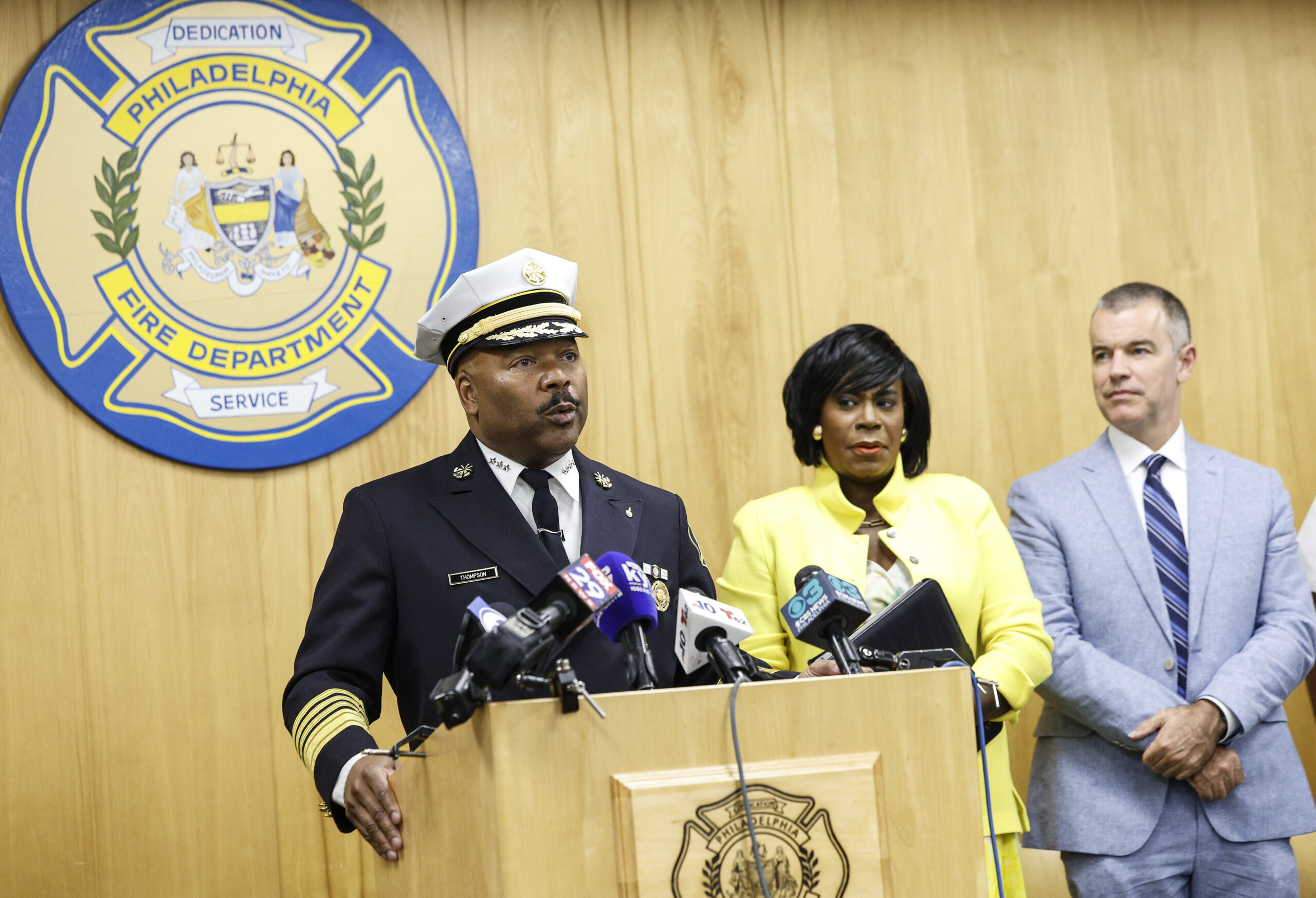
    In this 2024 file photo, Fire Commissioner Jeffrey W. Thompson stands, at left, with Mayor Cherelle L. Parker with Managing Director Adam Thiel at the fire administration building in Spring Garden.

    The FOP contract, similar to the firefighters’, included 3% annual raises. The difference was that police received an additional 1.5% annual wage increase because their union agreed to a process called “civilianization,” meaning some roles held by uniformed officers would be transitioned to ones held by civilians.

    The raise, according to the contract, was in recognition of the “operational flexibility” that the civilianization process would achieve. It did not identify the number of positions that would be civilianized or if the effort would save the city money.

    The arbitration panel that drafted the firefighters’ contract is made up of one appointee each from the city and the union, plus a neutral arbitrator. The panel wrote that while there has, in general, been pay parity in raises for police and firefighters, that “has never meant identical awards.”

    In this case, the panel reasoned, the civilianization-related raise was unique to the police department and the city did not need to match it for the firefighters.
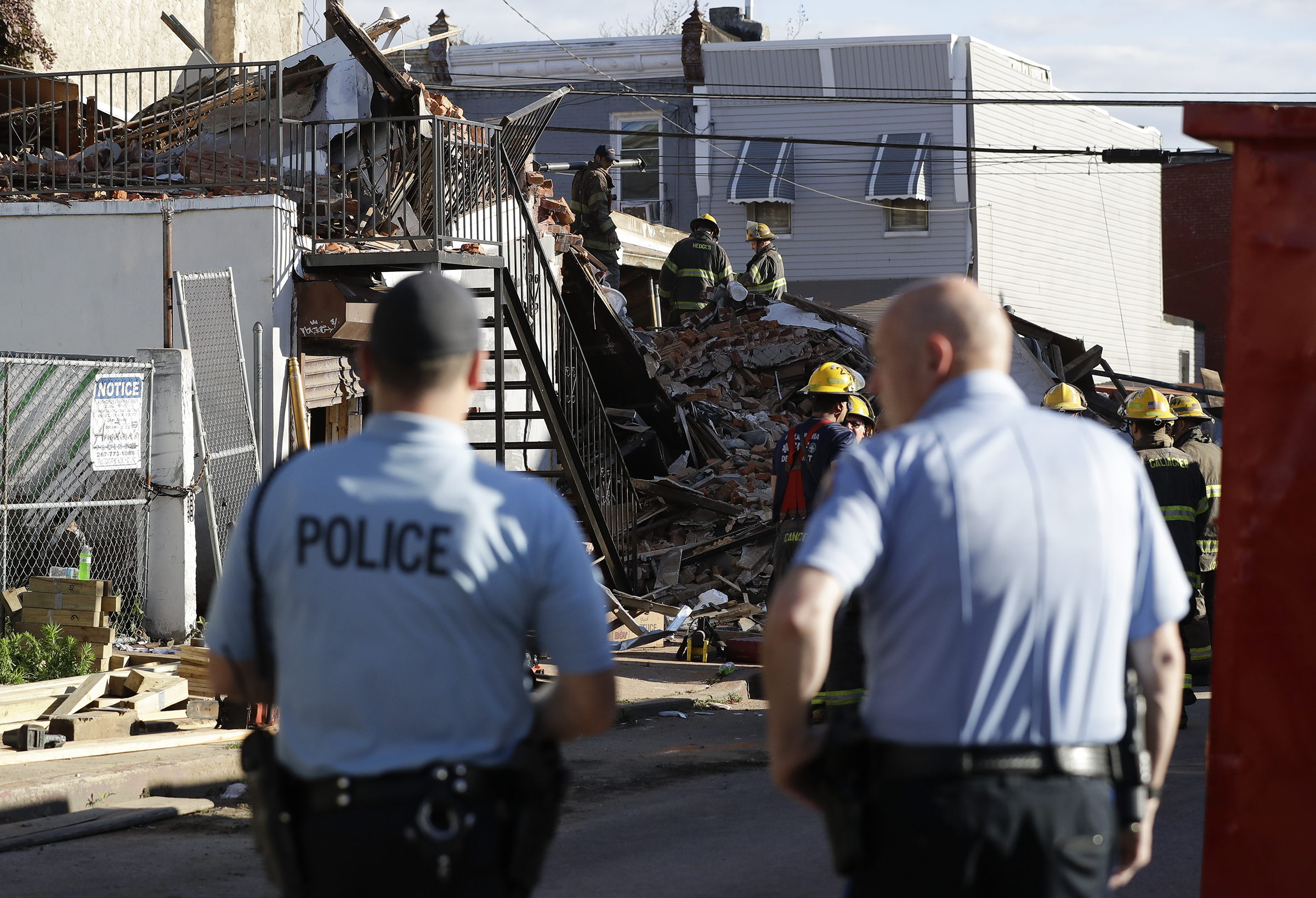
    In this 2022 file photo, Philadelphia firefighters examine the remains of a collapsed building along the 300 block of West Indiana Street in the Fairhill section of Philadelphia as Philadelphia police officers look on.

    Marc Gelman, the union’s appointed arbitrator, issued a scathing dissent, writing that the contract award was ultimately a “rubber-stamp to the city’s desired economic wishlist” and provided firefighters with “a dramatically lower wage increase than the police.”

    He argued that the city could afford a higher wage increase for firefighters because it is operating from a place of fiscal strength, citing its substantial surplus in this year’s budget.

    However, the city will have to tap into reserves or make adjustments to its existing five-year budget plan to cover the firefighters’ contract. That is because the administration already exhausted its $550 million labor reserve to cover contracts with the city’s other major municipal unions.

    The Parker administration did not estimate how much money the firefighters’ contract award will cost.

    Gelman wrote that the labor reserve was exhausted through the city’s “mismanagement and inability to plan.”

    “The city now cries poor,” he wrote, “and expects the members of Local 22 to suffer for its ineptitude.”

    Bresnan said pay parity is critical because the police and firefighters unions are unique in that “members can leave for work in the morning and not come home at night to their family.”

    “We’re out there shoulder-to-shoulder on these emergencies in the city,” he said. “Every mayor prior recognized this and kept the peace. Now they’ve created a fracture between the first responders in the city.”
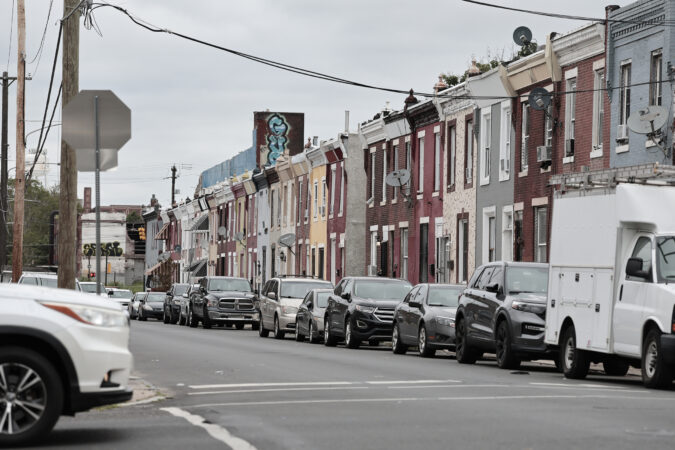
  • Property values in Kensington went up more than any other Philly neighborhood this year

    Property values in Kensington went up more than any other Philly neighborhood this year

    The biggest jump in Philadelphia’s property assessments this year occurred in Kensington, a measure that means many homeowners in the long-struggling neighborhood are likely to see higher taxes amid a concerted effort by the city to clean up the area.

    That is according to an Inquirer analysis of recently released property assessments of single-family homes, which found that, citywide, there was a 3% median change in valuations from the 2025 tax year, the last time there was a mass reassessment.

    That increase is far more modest than the widespread jump in valuations that homeowners saw two years ago, which captured multiple years of real estate growth and the volatile post-pandemic market.

    What remains the same: who will be most affected.

    The Inquirer’s analysis of this year’s property assessment data shows that low-income neighborhoods near gentrifying areas saw the sharpest jumps in valuations compared with the rest of the city.

    The four areas that saw the largest percentage increases in median assessments — Kensington, Mantua, Grays Ferry, and Kingsessing — all border more gentrified neighborhoods like Fishtown, University City, and Point Breeze. The results of the analysis are a further sign that market pressures in higher-income areas are pushing into pockets of the city that have long been primarily home to Black and brown working-class residents.

    Of the eight neighborhoods that saw the largest increases between the 2025 and 2027 tax years, five have median annual household incomes around $40,000 or less, according to an analysis of U.S. Census data. The federal poverty level is $33,000 for a family of four.

    (function(){function e(){window.addEventListener(`message`,function(e){if(e.data[`datawrapper-height`]!==void 0){var t=document.querySelectorAll(`iframe`);for(var n in e.data[`datawrapper-height`])for(var r=0,i;i=t[r];r++)if(i.contentWindow===e.source){var a=e.data[`datawrapper-height`][n]+`px`;i.style.height=a}}})}e()})();

    In a statement, officials with Mayor Cherelle L. Parker’s administration noted that many homeowners in those five neighborhoods are benefiting from a popular city tax break. The city said that the median 2027 value in those five neighborhoods is $123,600, so for many homeowners in those areas, the median taxable assessed value is just $23,600.

    That is because of the homestead exemption, a tax break for homeowners who live in their house as their primary residence that exempts the first $100,000 in home value from property taxes. Homeowners must sign up to be included in the free program.

    At least 60% of homeowners in those neighborhoods have signed up for property tax relief programs, according to the city.

    James Aros Jr., the chief assessor of the Philadelphia Office of Property Assessment, and Revenue Commissioner Kathleen McColgan said enrollment rates in property tax relief, including the homestead exemption and multiple tax freeze programs, are “encouraging.”

    They said the city will “build on this progress through extensive targeted outreach, community partnerships, and efforts to make enrollment as simple and accessible as possible.”

    The current property tax rate is 1.3998% of assessed value, which has not changed for nearly a decade. The revenue is split between the city and the Philadelphia School District.

    Rising home values in Kensington

    Citywide, the steepest increase in valuations was in Kensington, where the median property value jumped 15.3%, from $115,700 in the 2025 tax year to $133,400 now. That median increase would translate to a roughly $250 annual property tax hike.

    That comes after Parker’s administration in 2024 launched a multipronged effort to address the long-entrenched open-air drug market in Kensington, which is the epicenter of the city’s opioid crisis and a site of sprawling homelessness.

    While the administration has increased law enforcement’s staffing in the neighborhood and scaled up programs for people who are in addiction, Kensington has also for years seen creeping gentrification from Fishtown to its southeast.

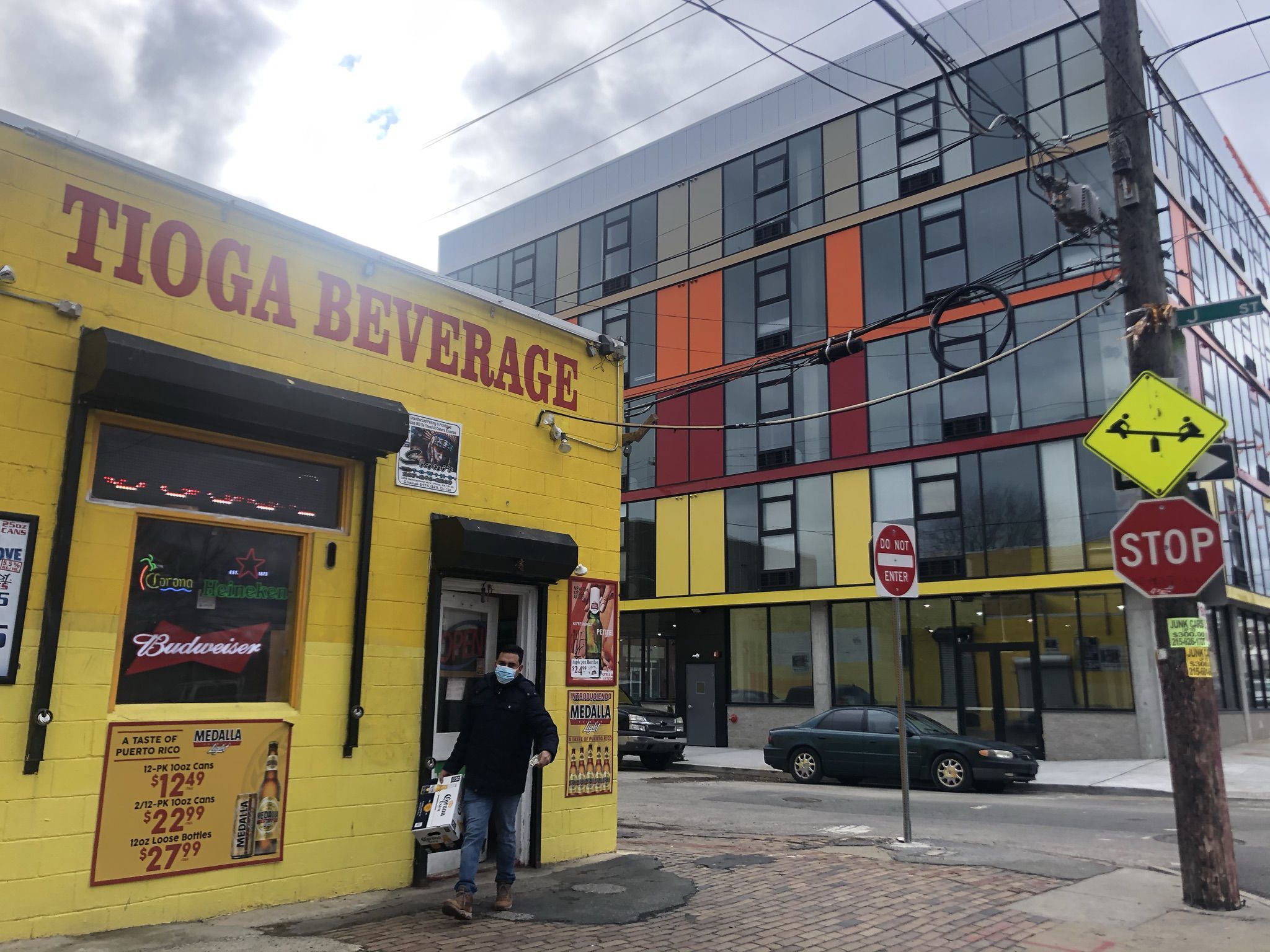
    In this 2021 file photo, a glass building at J and Tioga sits near a beer store in Kensington.

    Some neighborhood leaders have watched with anxiety as luxury housing developers and out-of-town investors gobbled up properties in the neighborhood, fearing that poorer residents and middle-class homebuyers may be priced out.

    City Councilmember Quetcy Lozada, a Democrat who represents the 7th Council District, which includes parts of Kensington, said she knew speculators from outside the area would want to make it “the next gentrified neighborhood” once the city changed its strategy to more aggressively clean up trash and improve public safety.

    But Lozada said there are not enough programs specific to Kensington aimed at preventing displacement as a result of rising property values, especially as the city is investing millions of dollars a year to improve the neighborhood. She said her office is exploring additional tax relief measures.

    “I’m going to do whatever I have to do to make sure that residents who have lived in that community can stay there, can raise their families there,” Lozada said. “We have witnessed what has happened on the southern end of the district, where there has been rapid gentrification.”

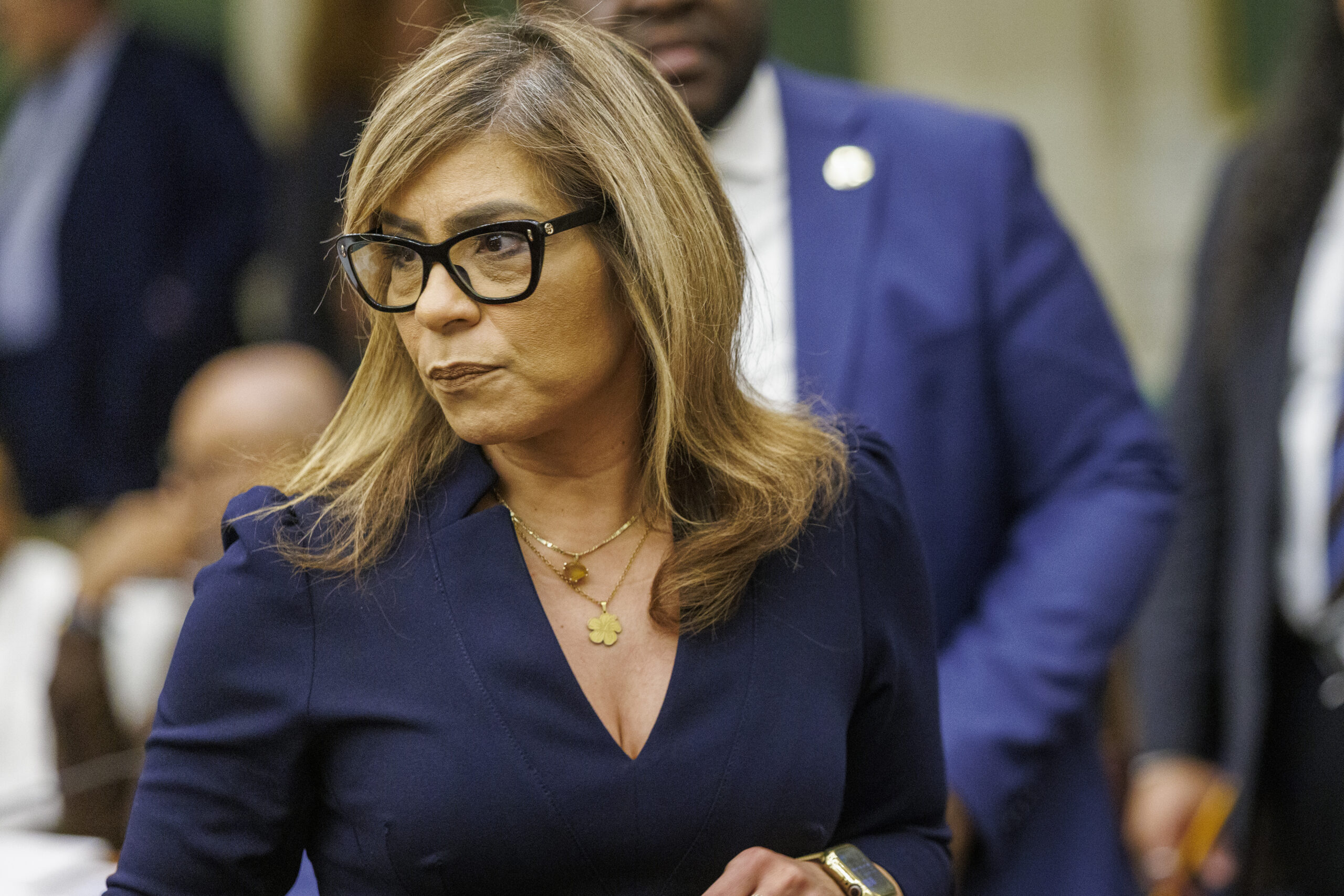
    In this March file photo, City Councilmember Quetcy Lozada stands in Council chambers during Mayor Cherelle L. Parker’s budget address.

    Lozada also said rising property values in Kensington are part of why she has been “so careful with projects presented to me” and has prioritized what she sees as equitable development in the neighborhood — at times to the chagrin of developers who think she has been too restrictive.

    “I’m all about people making a return,” she said, “but you can’t continue to do it on the backs of poor people.”

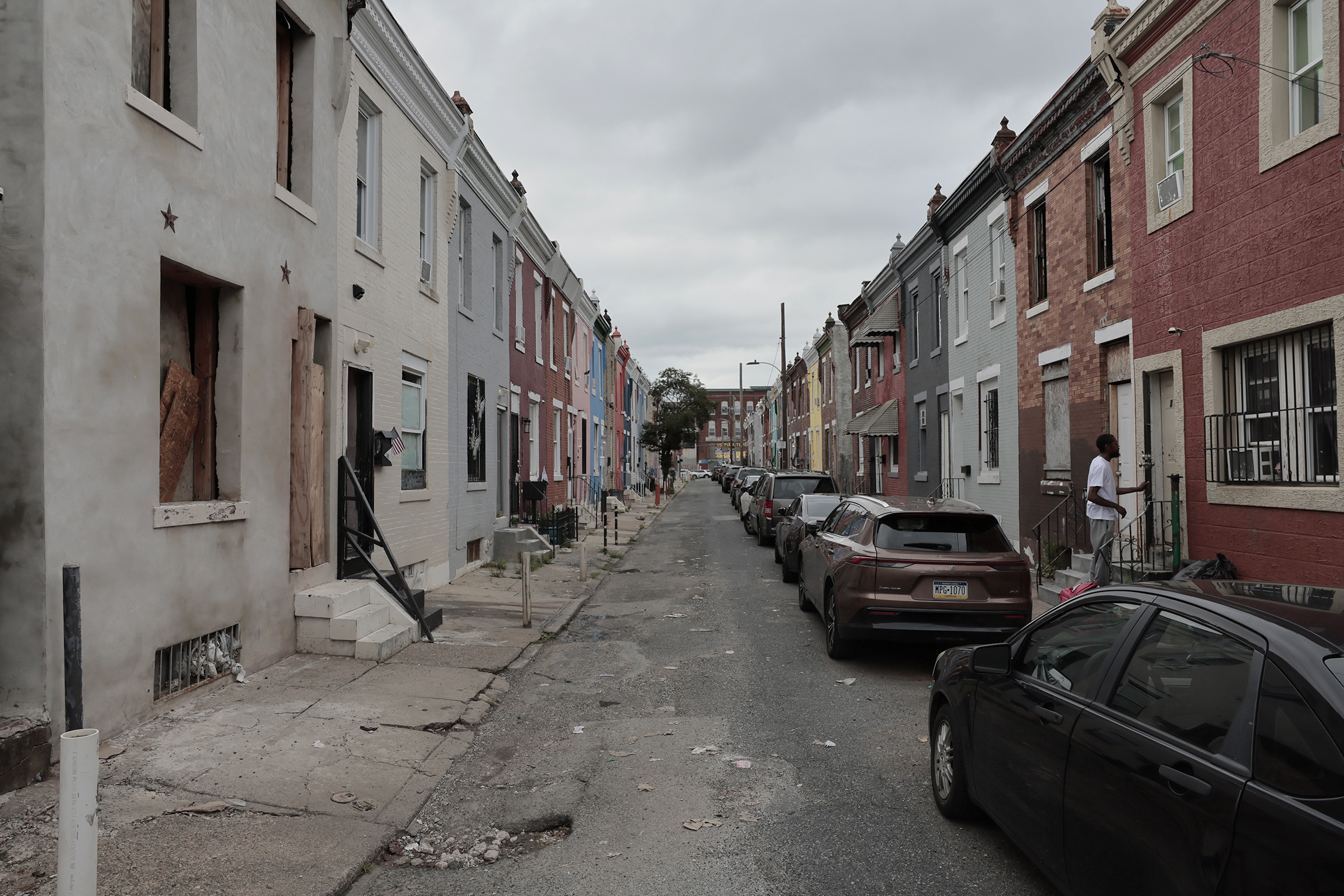
    The 3100 block of Arbor Street in Philadelphia on Tuesday, July 7, 2026.

    Continuing change in pockets of West Philly

    There were also significant property value increases in parts of West Philadelphia.

    The median increase in Mantua, the neighborhood north of University City, was the second highest in the city, at 15%, according to The Inquirer’s analysis. The median increase was 12% in Kingsessing, the neighborhood south of University City that in 2025 saw the largest jump of any neighborhood in Philadelphia.

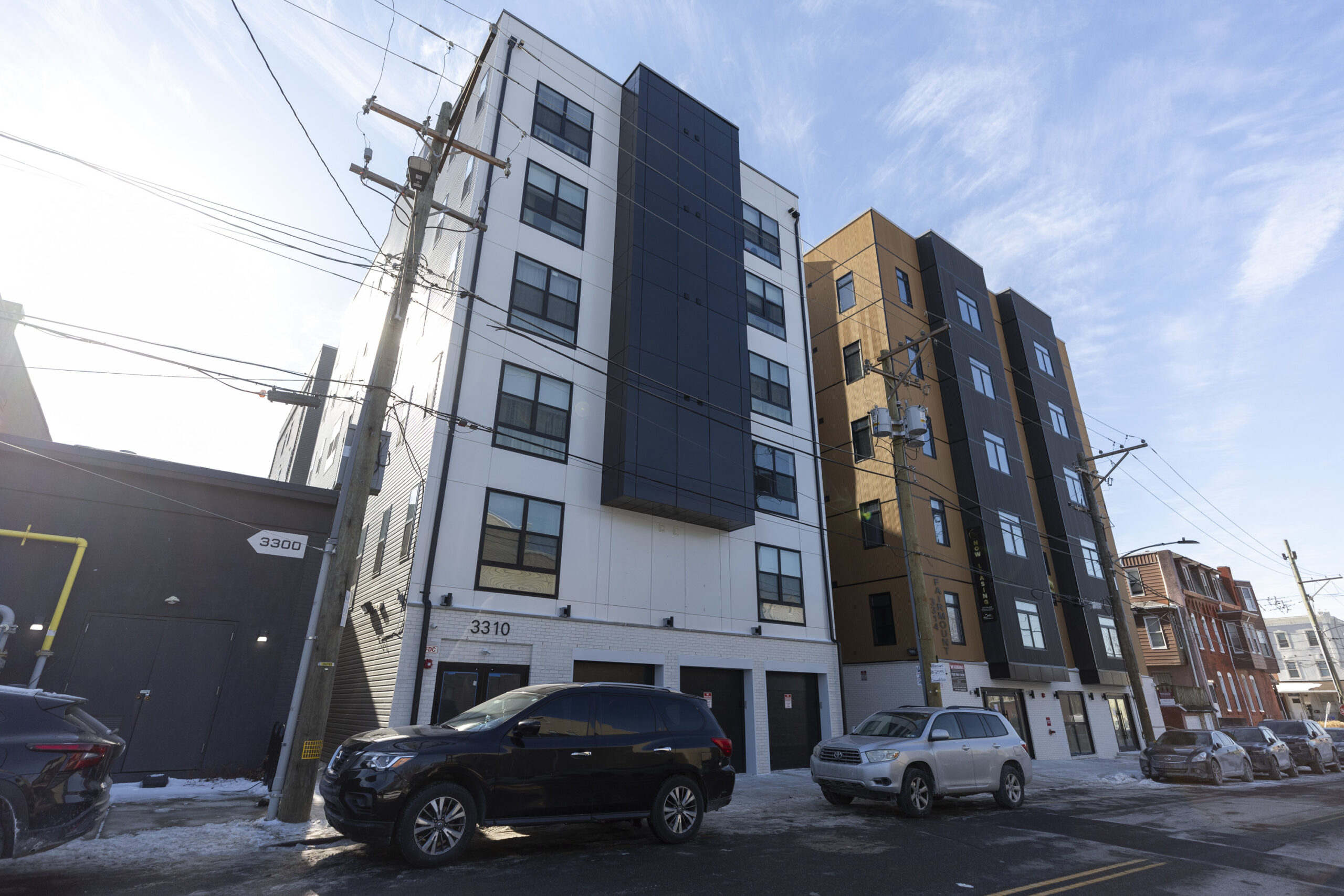
    Newly developed buildings along Fairmount Avenue in the neighborhood of Mantua in Philadelphia, Pa., on Thursday, Jan. 23, 2025.

    Councilmember Jamie Gauthier, a Democrat who represents West Philadelphia and has made preventing displacement a key initiative, said that there has long been racial bias in the city’s property assessments and that the city must “get serious” about protecting low-income homeowners by revamping its system.

    “There has to be a higher level of urgency in making sure that the city doesn’t have a hand in pushing out all of these homeowners that make Philadelphia what it is,” Gauthier said. “It’s unconscionable for us to destabilize our neighborhoods and the longtime homeowners who live there because we didn’t take enough care to make sure that our process was fair and equitable.”

    For too long, she said, city officials have said they intended to examine the property assessment practices and identify improvements. In 2024, Parker convened a task force to study the process.

    Aros told Council in April that the task force’s report was “being finalized.” He said OPA would look to implement recommendations from the report, including conducting more regular reassessments and improving property-level data such as property condition.

    The city is also planning to hire an outside consultant to examine its mass appraisal practices, according to city records. The analyst will be responsible for drafting a report by the end of this year.

    Deputy creative director John Duchneskie contributed to this article.

  • Mayor Parker’s office declined to say if the city will be refunded for Christina Aguilera’s canceled July 4th concert set

    Mayor Parker’s office declined to say if the city will be refunded for Christina Aguilera’s canceled July 4th concert set

    Mayor Cherelle L. Parker’s office on Tuesday declined to say whether the city will save money after pop star Christina Aguilera, who was scheduled to headline the city’s free July Fourth concert, ended up not taking the stage Saturday due to the weather delays that pushed much of the concert and the subsequent fireworks display into the early morning hours of Sunday.

    Parker spokesperson Joe Grace said the city had “no comment as yet” on whether the city would be refunded in light of the change in plans triggered by Saturday’s severe thunderstorms.

    Aguilera was the only artist who ended up skipping their set, and Grace emphasized Parker’s role in ensuring the rest of the performers returned to the Benjamin Franklin Parkway to restart the show around midnight after it was suspended about 9 p.m.

    “We’re focused on the performers who did return and put on a tremendous show once the storms subsided,” Grace said in a statement, noting that the Roots, Kathy Sledge, State Property, Meek Mill, Will Smith, and DJ Jazzy Jeff all performed after the concert restarted. “In the evening, those artists came back, at the request of [concert producer] ESM and Mayor Parker — and put on a great concert. … All the evening artists credited the mayor with bringing them back to perform.”

    The decision to restart the concert pushed the fireworks display to about 2:30 a.m. Sunday.

    “After the storms passed, there were a lot of people who could have called it a night,” Parker said in a statement Tuesday. “Instead, we made one more call. The Roots and the other artists, including Will Smith returned. Thousands of people returned. Our city employees never stopped working. Our first responders stayed at their posts. Together, we finished what we started. That’s who Philadelphia is.”

    Smith, in an Instagram post on Monday, said he returned to the Parkway to perform in the Independence Day concert after midnight after receiving a personal call from Parker.

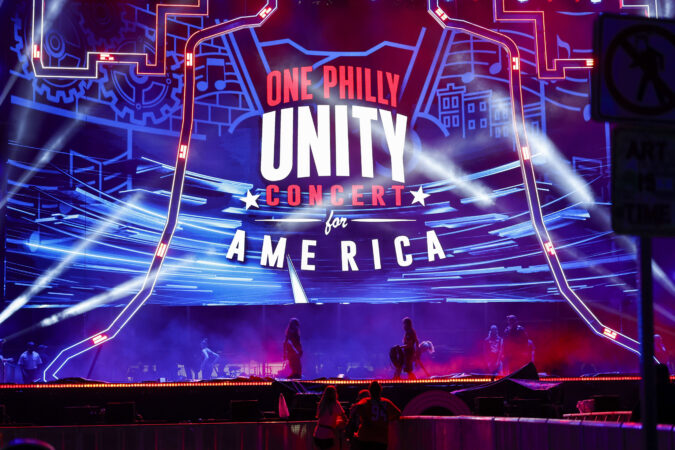
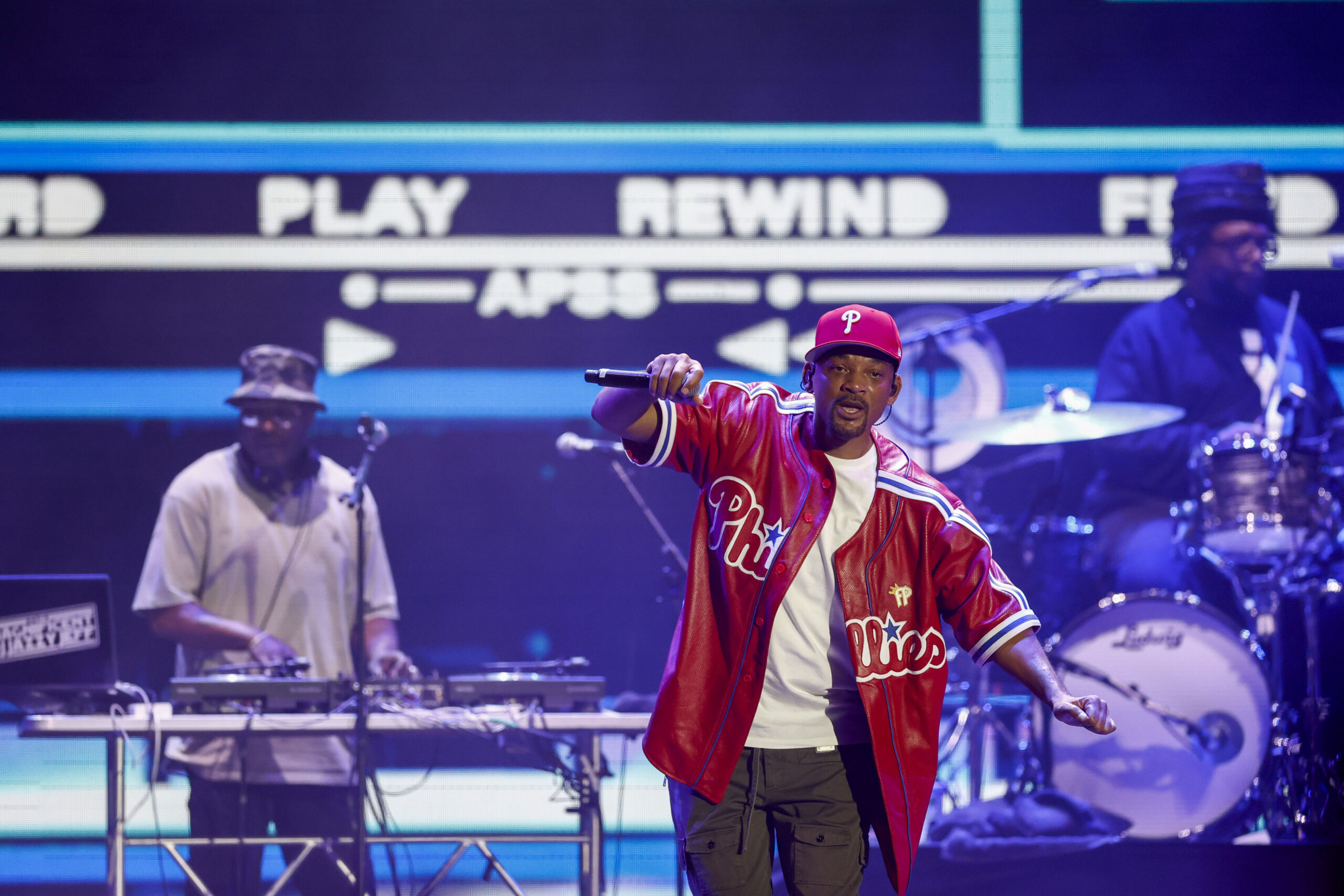
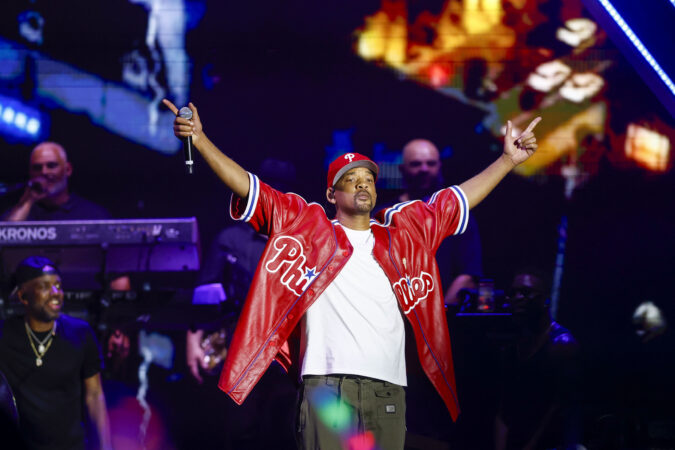
    Will Smith and DJ Jazzy Jeff (left) perform at One Philly: Unity Concert for America on the Benjamin Franklin Parkway Sunday, July 5, 2026, in Philadelphia.

    Parker’s administration this year agreed to pay $15.5 million to ESM Productions, a for-profit Philadelphia-based company known for putting on major events on the Parkway, to organize the show. The city paid ESM at least $10 million prior to July Fourth, but it is unclear if any money was paid out to performers in advance of the show.

    The annual concert was previously managed by the nonprofit Welcome America, a public-private partnership organized by the city in the 1990s, and cost taxpayers far less.

    The last July Fourth concert cost Welcome America about $3 million to produce, according to a person with knowledge of the event who was not permitted to discuss details about its costs. Welcome America’s entire budget for 2024 — its salaries and office expenses, a concert that featured Kesha and Ne-Yo, and several smaller events it organizes — totaled about $6.6 million, about $5.3 million of which came from government grants, according to the group’s most recent federal nonprofit disclosure.

    It is unclear how much Aguilera was supposed to be paid for her performance this year.

    ESM’s original $10 million contract with the city, which was obtained by The Inquirer, included a nearly $3.4 million budget for “talent.”

    The contract between the city administration and ESM did not include a breakdown on how much each artist would be paid, and it did not include details related to artists’ pay in the event of canceled performances.

    The city also signed a $5.5 million contract amendment with ESM that did not include budget details.

    ESM Productions declined to comment.

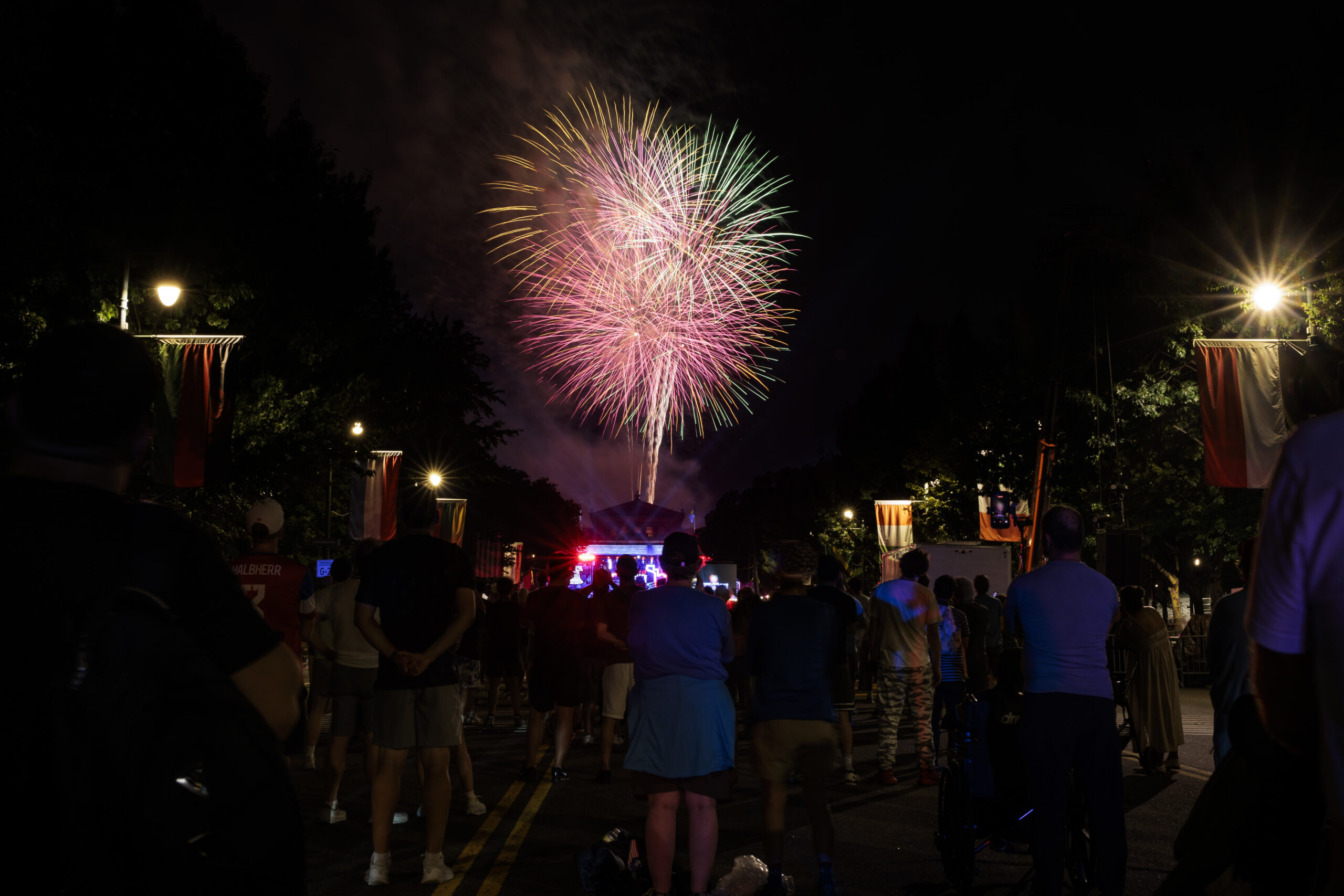
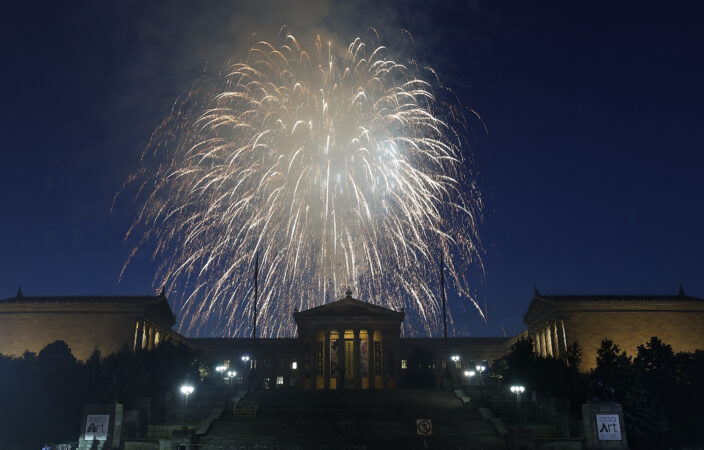
    Fireworks fill the sky at the One Philly: Unity Concert for America on the Benjamin Franklin Parkway on Sunday, July 5, 2026 in Philadelphia.

    United Talent Agency, which represents Aguilera, did not return a request for comment. The pop star on Sunday posted videos from her rehearsals prior to the show on social media.

    “Philly, we had such a special 4th of July show planned for you!! 😭😫☔️🌧️,” Aguilera wrote on Instagram. “We poured so much heart and soul into this one, but safety always comes first—and sadly, the storm meant we couldn’t give you the show we worked so hard to bring to life 💔 Thank you to everyone who came out, and to my team for all the hard work that went into building this show… I hope to be back to Philly soon! xxxx.”

    The city’s payments to ESM are only part of the taxpayer costs for putting on the annual concert. The city also increases hours for city workers such as sanitation workers and police officers to put on the event.

    Grace on Tuesday declined to share the total cost of the concert, and reiterated Parker’s previous promise to lay out all expenses related to it at a future date.

    “As we’ve said previously, we will account for all expenses associated with the concert, along with producing an analysis of economic benefits accruing to the city, and release a report at a later time,” he said. “We want the report to be comprehensive.”

  • Will Smith was ready to go home on July 4 night. Then he got a call from ‘Mrs. Mayor.’

    Will Smith was ready to go home on July 4 night. Then he got a call from ‘Mrs. Mayor.’

    Will Smith was ready to go home.

    On Saturday night, a violent storm seemed to spell the end of Philadelphia’s music and fireworks celebration of America’s 250th birthday on the Ben Franklin Parkway. The West Philly rapper and actor was back at his hotel, with his scheduled reunion with his musical partner DJ Jazzy Jeff seemingly called off.

    Then he got a phone call from “Mrs. Mayor.”

    “The mayor called and asked would we go on at midnight,” Smith said in a video posted on his Instagram account on Monday, referring to Cherelle L. Parker, whom he referred to as “Mrs. Mayor” on stage when he finally got to perform at the One Philly: Unity Concert for America.

    Of course he would go on at midnight, backed by The Roots, in a special occasion hometown show. It didn’t matter that the weather wound up delaying it from July 4 to the wee hours of July 5.

    “This is me,” he said, making a face, as if that would even be a question. “This is me!”

    Smith’s Instagram recap of his Independence Day weekend adventures included a clip from his show-closing set — which actually began after 2 a.m. — featuring a shot of the mayor rapping along to the line in The Fresh Prince of Bel Air theme song about being “West Philadelphia, born and raised.”

    During the show, which turned out to be the climactic set of the night since scheduled headliner Christina Aguilera did not perform, Smith got specific about his origins. He also spoke of the history he shares with his musical partner, whose given name is Jeffrey Townes, and Roots drummer Ahmir “Questlove’ Thompson.

    “Fifty-ninth and Woodcrest,” he said, while parading around the stage in a red Phillies cap and jersey. “I was born and raised at 59th and Woodcrest. DJ Jazzy Jeff, 57th and Rodman. Quest, 52nd and Osage.

    “And only a couple thousand yards from here, the dream of this country was born. From the City of Brotherly Love and Sisterly Affection, we sent our message out to the entire world.”

    Along with a closing performance of “Summertime,” the 1991 DJ Jazzy Jeff & the Fresh Prince hit and Philly seasonal anthem, the show also included a display of Townes demonstrating his unparalleled turntable skills.

    While Townes dazzled, Smith played air DJ, and Questlove sat on his drum throne capturing the moment on his phone, seemingly in awe. Watch that clip below.

    On Instagram, Smith also posted a photo from rehearsals with The Roots, with Townes wearing a “Respect the Architects” T-shirt.

    And the rapper and star of Ali also shared a clip of his visit to the steps of the Philadelphia Museum of Art to see the newly installed statue of Philly heavy weight champion boxer Joe Frazier.

    “Philly LEGEND ‘Smokin’ Joe Frazier right HERE!” he posted. “You kids have no CLUE about that left hook.”

  • Pa. officials mourn the death of former State Sen. Shirley Kitchen, who represented North Philly for 20 years

    Pa. officials mourn the death of former State Sen. Shirley Kitchen, who represented North Philly for 20 years

    Pennsylvania elected officials are mourning the death of former State Sen. Shirley Kitchen, the second Black woman to serve in the state Senate and a champion for progressive issues who represented parts of North Philadelphia for more than two decades. She died Saturday at 79. A cause of death was not immediately clear.

    Kitchen represented the 3rd Senatorial District, composed of parts of North Philadelphia, for 20 years. She is remembered by her former colleagues as a pillar and matriarch of her community who worked tirelessly to improve the lives of low-income people, even after she retired.

    “She did so many things for so many people. Now that I’m old enough to appreciate it, I’m not quite sure how she did it — and she did it with such force,” said State Sen. Anthony H. Williams (D., Philadelphia), who served alongside Kitchen in the Senate and had known her for decades. Kitchen was elected to the state Senate in 1996 and served five terms before retiring in 2016.

    Her former colleagues, some through tears, credited many of Pennsylvania’s recent criminal justice reforms as being born under Kitchen’s leadership, with her early legislative proposals paving the way for their passage years later. For example, Kitchen authored early drafts of what is now known as the Clean Slate Act, which automatically seals some nonviolent convictions after 10 years, hiding them from most employer and landlord background checks. She first introduced similar legislation in Harrisburg years earlier and it failed. In 2018, two years after Kitchen retired, the Clean Slate Act became law in Pennsylvania and was heralded as a first-in-the-nation model for criminal justice reform.

    Elected officials across the city shared their condolences, remembering Kitchen as an advocate who cared deeply for her community.

    Mayor Cherelle L. Parker in a social media post on Sunday recalled Kitchen as “fighting for people who often had no one else to fight for them,” and as a trailblazer for Black women in politics.

    “Shirley Kitchen cared about working people, and she cared about Philadelphia,” said Parker, the city’s first Black female mayor and a former state representative.

    City Council President Kenyatta Johnson said in a statement that Kitchen “never forgot who she was fighting for,” dedicating her life to making people’s lives better.

    State Rep. Joanna McClinton (D., Philadelphia), Pennsylvania’s first Black female speaker of the House, wrote in a social media post that Kitchen was “a mentor and her service in the state House and Senate inspired me greatly.”

    Williams added that Kitchen also sought to elevate other Black politicians, like himself, to elected office — and laid the groundwork for much of the city’s current political progressivism.

    “The reality is that a lot of the infrastructure that helps them, Shirley had everything to do with it, and more,” Williams said, noting her advocacy and experience during the Civil Rights Movement. “I would hope the progressives in this generation would tip their hat to a generation that really created the progressive movement.”

    State Sen. Sharif Street (D., Philadelphia) had known Kitchen since he was a child, and said she helped him see the power a Senate seat has in improving the lives of his neighbors. When she decided to retire, Kitchen encouraged Street, who was on her staff at the time, to run to fill the vacancy in the 3rd District following her fifth and final term in the state Senate.

    Williams and Street recalled Kitchen as a fair but demanding mentor.

    “If she told you to do something, you better do it,” Williams said, with a laugh.

    For Street, Kitchen “didn’t limit her advice. She had opinions about everything in my life, including when my wife was right and I needed to listen to her.”

    Street said he spoke with Kitchen weekly, and Williams said he remained in touch with her as recently as last month. She often had ideas or issues she wanted the senators to take up. Street spoke with her last week about a forthcoming Registered Community Organization meeting that she was leading about a new proposed development nearby, emblematic of her continued involvement in her community.

    Prior to her election to the state Senate, Kitchen was involved in the National Welfare Rights Movement, which was a progressive advocacy group for the dignified treatment of women and children, largely led by Black women, during the 1960s and 1970s, Williams said.

    Kitchen served as the minority chair of the Senate Public Health and Welfare committee, in which she often leaned on her social work experience to inform her legislative proposals.

    A Democrat in a time where Republicans controlled the state legislature, she served her entire tenure in the minority party, but was still able to garner bipartisan support for some of her legislative proposals.

    “This image of her being an urban Black woman from Philadelphia would limit her ability to get stuff done in the Senate just wasn’t true,” Williams added. “She could analyze people and figure out what way to approach them with exceptional skill.”

    Born in 1946 in Augusta, Ga., Kitchen attended the Philadelphia School District and graduated from Antioch University in 1979 with a bachelor’s degree in human services, according to her Senate Library biography. She went on to work for former Philadelphia Mayor John Street, Sharif Street’s father, before she was elected to the state House in a special election in 1987. After she lost reelection to the seat in 1989, Kitchen returned to Harrisburg a decade later after her election to represent the 3rd Senatorial District.

    “She was a transformational figure that loved her community and understood that the purpose of those of us holding elected power is to be able to make a difference in the lives of the people we serve, in a way that they can feel and see,” Sharif Street added.

    Funeral services will be announced in the coming days, he said.

    Senator Shirley Kitchen in the audience during speeches in honor of the historical marker that was unveiled at Sullivan Progress Plaza September 14, 2016. The plaza was the first black-owned and operating shopping center in America. Wednesday, Sept. 14, 2016.
  • ‘I’m on this roller coaster’: Philly teachers and school staff are stuck in limbo despite promises to save hundreds of jobs

    ‘I’m on this roller coaster’: Philly teachers and school staff are stuck in limbo despite promises to save hundreds of jobs

    When a deal was struck to save 340 classroom-based jobs in the Philadelphia School District, Mayor Cherelle L. Parker and Superintendent Tony B. Watlington Sr. declared it “Christmas in June.”

    It’s July now, but manystaffers still don’t have clarity on exactly who’s allowed to come back to positions that were almost cut and how that affects vacancies system-wide.

    “It’s a mess, and it’s getting messier,” said Alison Andrawos, a teacher at Potter-Thomas Elementary in North Philadelphia who accepted a job in another district after learning this spring that her position would be cut and still doesn’t know whether it will be restored.

    Monique Braxton, the school district spokesperson, said the system is “moving forward with restoring the approximately 340 school-based positions approved in the revised budget,” but that staffing the positions is separate from restoring them.

    “We have been meeting with our union partners on implementation and are now working with principals on school staffing,” Braxton said in a statement. “All approved positions will be restored in the district’s budget system by Wednesday, July 9.”

    The complex process is causing additional uncertainty for teachers and staff members and prolonging an already tumultuous hiring season as the district deals with fallout from 17 forthcoming school closings and the back-and-forth over millions in cuts stemming from a $300 million district budget deficit.

    Watlington this spring directed school principals to build their 2026-27 budgets factoring in the cuts, including about $50 million in school-based trims and the elimination of 340 classroom jobs. Parker then proposed a $1-per-trip rideshare tax she said would cancel the classroom cuts, but City Council balked, and for a time, the position losses appeared inevitable.

    After a breakthrough with city officials on June 10 — after the district’s deadline to pass its 2026-27 spending plan — officials triumphantly said the cuts were off the table.

    But restoring the positions was always going to be complicated.

    Schools’ hiring timeline means that many of the teachers, counselors, and climate staff who were told they were going to be force-transferred because of the cuts sought and found new jobs over the past few months, either inside the district or elsewhere. Now, those workers either must rescind their acceptance of those new jobs or say “no thanks” to returning. Either way, that creates new vacancies in July, months after most schools have filled jobs and when many people are on vacation.

    “We haven’t heard whether our positions are going to be reinstated, we don’t know what positions are available, and we don’t know what we’re doing in a few short weeks,” said Andrawos, an English as a second language specialist who began teaching in Philadelphia schools in 1997.

    ‘I’m pretty sure I’m going to be leaving’

    Andrawos said she didn’t want to leave the city, but amid the worry of the past few months, she felt she had to explore jobs outside the district. Andrawos has been offered a position at a Delaware County school that comes with a raise and a shorter commute.

    “I’m pretty sure I’m going to be leaving the School District of Philadelphia because of this,” Andrawos said.

    She said the decision is tough — she’s forged real bonds with her students’ families, and has been fielding messages saying they hope she stays at Potter-Thomas.

    It’s not clear whether Andrawos’ position at Potter-Thomas, in North Philadelphia, will be restored because of the complicated way budgets are built, and the latitude principals have to shift positions based on school need and their own judgment calls.

    Jobs are filled in city schools two ways — first, by a process called site selection, where principals hire any candidate they choose for open positions. Once the site selection window closes, district staff without positions choose from among open jobs in seniority order. Site selection closed weeks ago; force transfers without jobs have had their hiring sessions pushed back multiple times so far, and are still waiting.

    Jane Roh, a spokesperson for the Philadelphia Federation of Teachers, said the union notified members June 19 that all positions cut due to the deficit would be restored; the PFT was told that district notifications to affected employees would immediately follow. So far, that has not happened.

    That leaves staff sweating and frustrated by a lack of answers, some said.

    A roller coaster

    One K-8 teacher, who asked that his name be withheld because he feared repercussions, was on the force transfer list because of budget cuts. With no notice that’s being walked back, he’s left with the possibility of having to get emergency certified to teach in another subject area, which would mean taking more courses.

    The uncertainty is tough, and the answer to every question posed to the district and the union so far has been, we don’t know yet.

    “For this whole summer, where teachers are supposed to have the space to reflect and rest and plan, we can’t do that to any degree,” the K-8 teacher said.

    A teacher at a district high school, who also asked to remain anonymous because her employment situation is not settled, is in a similar boat. When her position was cut because of the deficit, she site selected into a job at another district high school.

    The process has been frustrating, she said. She once got an email saying her transfer was canceled, but that turned out to be incorrect, though she never got official notice from the district about its error and had to make calls herself to figure it out.

    When Parker and Watlington made their good-news announcement, she had no idea what to make of it. She still doesn’t, the teacher said.

    “I’m on this roller coaster; I literally don’t know which school I’m going to work at in the fall,” said the high school teacher, who would be teaching different classes, depending on where she lands. “I want to prepare for the upcoming school year, and that’s impossible if you don’t know what you’re teaching.”

    Staff at Olney High, the district school perhaps most affected by budget cuts, have been pressuring the district, publicly and in private, to halt the losses planned for their school — Olney had been slated to give up 17 staffers.

    The school had been overstaffed four years ago as it navigated a complicated, unprecedented transition from a charter school back to a district school. It has soared, adding programs and opportunities and building a strong school culture; the community fears weathering steep staff cuts would jeopardize its progress.

    Sarah Apt, a longtime Olney teacher active in the pushback against cuts, said Wednesday that the school was told it’s getting back three of its 17 staffers.

    “We’re happy about that, but still fighting for more,” said Apt.

    Among those still in limbo is Eric Baker, an Olney English teacher who’s been struggling with the back and forth, and the possible implications for the school he’s come to love — the school recruited students for a college prep track that’s potentially losing most of its teachers, including Baker.

    “Because of this uncertainty, I’ve had to interview other places. I don’t know where I’m going to go. I would rather have the certainty of knowing where I’m going to work than having to deal with this,” said Baker. “It’s been frustrating.”

  • Pope Leo XIV celebrates immigrants in speech to Philadelphia crowd amid clash with Trump ahead of 250th anniversary

    Pope Leo XIV celebrates immigrants in speech to Philadelphia crowd amid clash with Trump ahead of 250th anniversary

    Addressing a Philadelphia crowd live from the Vatican, Pope Leo XIV called for a “recommitment” to American ideals.

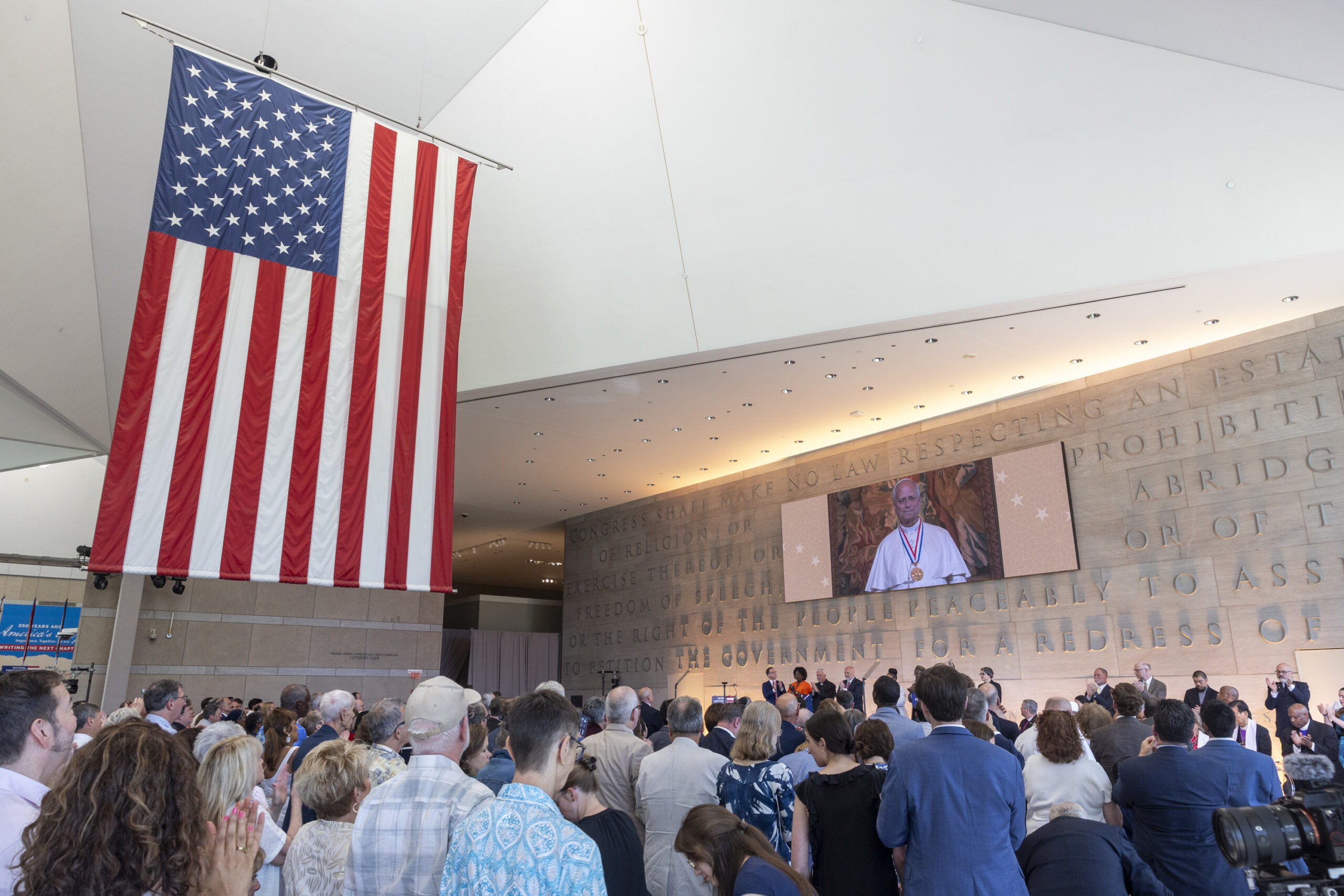
    The first U.S.-born pope delivered remarks virtually at an interfaith ceremony inside Philadelphia’s National Constitution Center on the eve of the United States’ 250th birthday to accept the center’s prestigious Liberty Medal.

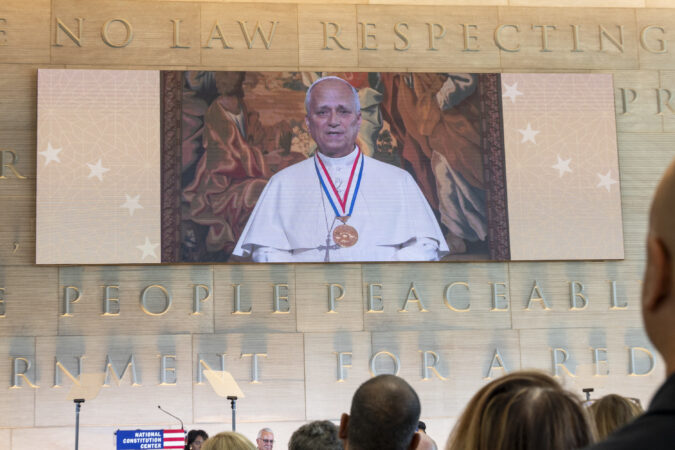
    Facing a screen showing the live, cheering Philadelphia audience, the pontiff wore his Liberty Medal along with a cross around his neck.

    Leo, who grew up in Chicago and attended Villanova University, quickly pointed out his American roots, calling himself “a son of this great country.”

    “I join you in asking God’s blessings upon America’s future that the lofty ideals enshrined at the beginning of the Declaration of Independence may continue to guide the flourishing of the nation in unity, justice, and peace,” he said.

    Leo, who was elected pope last year, spent years serving the church in Peru and has been outspoken about calling for international peace. That’s landed him at odds with President Donald Trump’s administration on the issue of migrants, the war in Iran, and more.

    The pope leaned into some of those themes in his speech, even though he did not refer to the president directly.

    He nodded to his advocacy for humane treatment of immigrants and noted that the founders of the United States “made America a byword for freedom, as the country opened its doors to successive waves of immigrants, enabling them and their children to play their part in shaping the future of the nation.”

    He said the “love of freedom” in the United States has inspired the country “to look beyond itself and at great sacrifice to champion the cause of freedom beyond its own borders.” But he acknowledged that mission hasn’t been straightforward, noting that building a society that embodies such ideals “was not always easy and, in many respects, is still a work in progress.”

    The pontiff’s speech comes the day before he plans to visit Lampedusa, an Italian island known as a stop for migrants making the dangerous journey across the Mediterranean Sea from North Africa to Europe. His predecessor Pope Francis made his first official visit outside of Rome in 2013 to the same island and condemned the “globalization of indifference” toward migrants.

    Pope Leo XIV speaks at the Liberty Medal Ceremony at the National Constitution Center in Philadelphia on Friday.

    Julie Silverbrook, the chief content and learning officer for the National Constitution Center, emphasized in a Friday interview that Leo is a “global leader who has been uniquely shaped by American ideals.”

    “He has brought together people of different faith traditions, and through his ministry really reflected his belief in the inherent dignity of all human beings,” she said.

    Leo declined an invitation from Trump to the United States to celebrate the country’s 250th birthday on July Fourth, the New York Times reported. The first American-born pope opting to visit migrants instead sends a stark message as the president pursues his mission of mass deportations.

    But the pontiff’s participation in the Philadelphia program highlights his connections to the region, which isn’t lost on the National Constitution Center.

    The Philadelphia-based private nonprofit organization chose Leo for the award due to “his lifelong work promoting religious liberty and freedom of conscience and expression around the world — ideals enshrined by America’s founders in the First Amendment to the U.S. Constitution.” That, and also because he is the first pope born in the United States, and has connections to Philadelphia, Silverbrook said.

    “He was shaped by those freedoms … in much the same way that the Declaration of Independence was shaped by the city of Philadelphia, and of course a reflection of American values that have been carried globally,” she said.

    When a delegation from Philadelphia’s National Constitution Center met with Leo at the Vatican in April to present him with the medal in person, they also bore a few local goodies: a bundle of Villanova swag, a replica of George Washington’s Acts of Congress, and a Wawa tote bag filled with Tastykakes.

    “I think he very much so feels a connection to Philadelphia, both having been educated here, and I think in this semiquincentennial moment, I think the eyes of the world are on Philadelphia, and we’re thinking about the ideals that have emanated from this place for 250 years,” Silverbrook said.

    Leo, a 1977 Villanova alum, recently passed on a surprise message to graduates of his alma mater. Vince Stango, the interim president and CEO of the National Constitution Center, also went to the Augustinian university on the Main Line, which co-sponsored the NBC10 broadcast of the event along with the archdiocese and Malvern Prep.

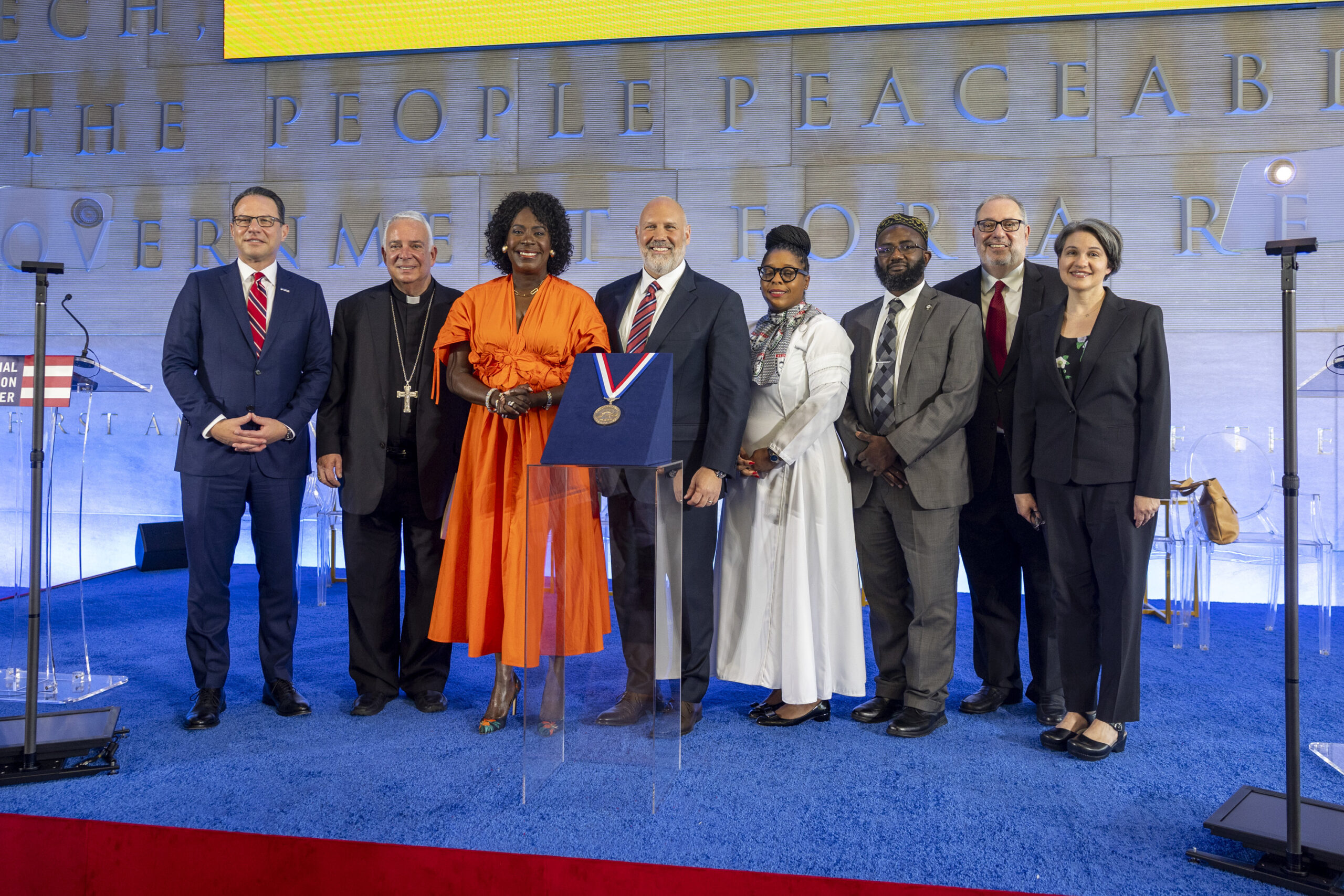
    (From left to right) Gov. Josh Shapiro, Rev. Nelson J. Pérez, Mayor Cherelle L. Parker, Interim President & CEO of National Constitutional Center Vince Stango, Rev. Carolyn C. Cavaness, Imam Quaiser D. Abdullah, Rev. Luis A. Cortés Jr., and Rabbi Jill L. Maderer, pose for a photo at the Liberty Medal Ceremony at the National Constitution Center in Philadelphia, Pa., on Friday.

    Clashing with Trump

    The pope has contended that it’s up to each country to determine how they want to accept migrants while also denouncing the Trump administration’s “extremely disrespectful” treatment of them.

    He has also spoken out against Trump’s threats against Iran, and declined to participate in the president’s “Board of Peace” for Gaza’s reconstruction.

    In an April social media rant, Trump complained that he doesn’t “want a Pope who criticizes the President of the United States.” The president called the Catholic leader weak and accused him of “catering to the Radical Left.”

    Leo told reporters that month that he has “no fear, neither of the Trump administration, nor of speaking out loudly about the message in the Gospel, and that’s what I believe I am called to do, what the church is called to do.”

    In his Friday remarks, the pope made a call for unity but warned that a country should come together with “ideals that do not fade with the passing of time.”

    He called on the United States to recognize its values of “peace and prosperity, a country characterized by generosity and nobility of heart,” and said the values of “shared human dignity, equality, and the rights laid out in the Declaration of Independence” can help unite and guide the nation.

    The Liberty Medal

    The Liberty Medal was created in 1988 and has been hosted by the National Constitution Center since 2006.

    The award has gone to storytellers, philanthropists, civil rights leaders, and politicians on both sides of the aisle, such as Ukrainian President Volodymyr Zelenskyy, former Supreme Court Justice Ruth Bader Ginsberg, the Bushes, Malala Yousafzai, and Thurgood Marshall.

    The center describes its recipients as individuals who “strive to secure the blessings of liberty to people around the globe.”

    The process of selecting Leo began about a year ago, Silverbrook said.

    The speech was initially going to be projected on Independence Mall, but the event was moved indoors due to the extreme heat and livestreamed by the center online.

    Rich Russo, 63, a Fishtown resident who attended the event in person, called the experience “once in a lifetime.”

    “How many times do you get the pope talking to you?” said Russo, who works for a bank.

    Gov. Josh Shapiro, who is Jewish, and Mayor Cherelle L. Parker, a Baptist — both Democrats who have been outspoken about their own faiths — joined Philadelphia Archbishop Nelson J. Pérez and other religious leaders who made remarks on stage prior to the pope’s speech. Pennsylvania Attorney General Dave Sunday, a Republican, rang a replica Liberty Bell outside.

    “Philly is proud that the pope is a graduate of Villanova University who spent time living and working in our region,” Pérez said on stage. “Pope Leo knows us, and we feel like we know him, too.”

    “His influence, however, extends beyond Philadelphia,” the archbishop added.

  • Philly’s fireworks won’t start until midnight on July 4th and some residents say that’s too late

    Philly’s fireworks won’t start until midnight on July 4th and some residents say that’s too late

    Fairmount residents are accustomed to annual July Fourth fireworks; it comes with the territory of living near Benjamin Franklin Parkway, where the city stages its major celebrations. With the United States’ 250th birthday, this July Fourth is no different — except that the fireworks will start closer to midnight.

    “We have the whole family coming to our home, all on their way right now,” said Fairmount resident Margo DelliCarpini. “But 11:30, midnight is just too late for some families with children. I understand that it’s the Fourth of July, but the late start for fireworks is decidedly not a family-friendly decision.”

    DelliCarpini will have her children and grandchildren visit to experience the Semiquincentennial in the city where the country began. But with young children in tow, parents along for the trip were hoping to have them in bed by midnight, she said. Instead, the large group is looking to catch one of the fireworks shows at Valley Forge or across Montgomery County, which start around 9 p.m.

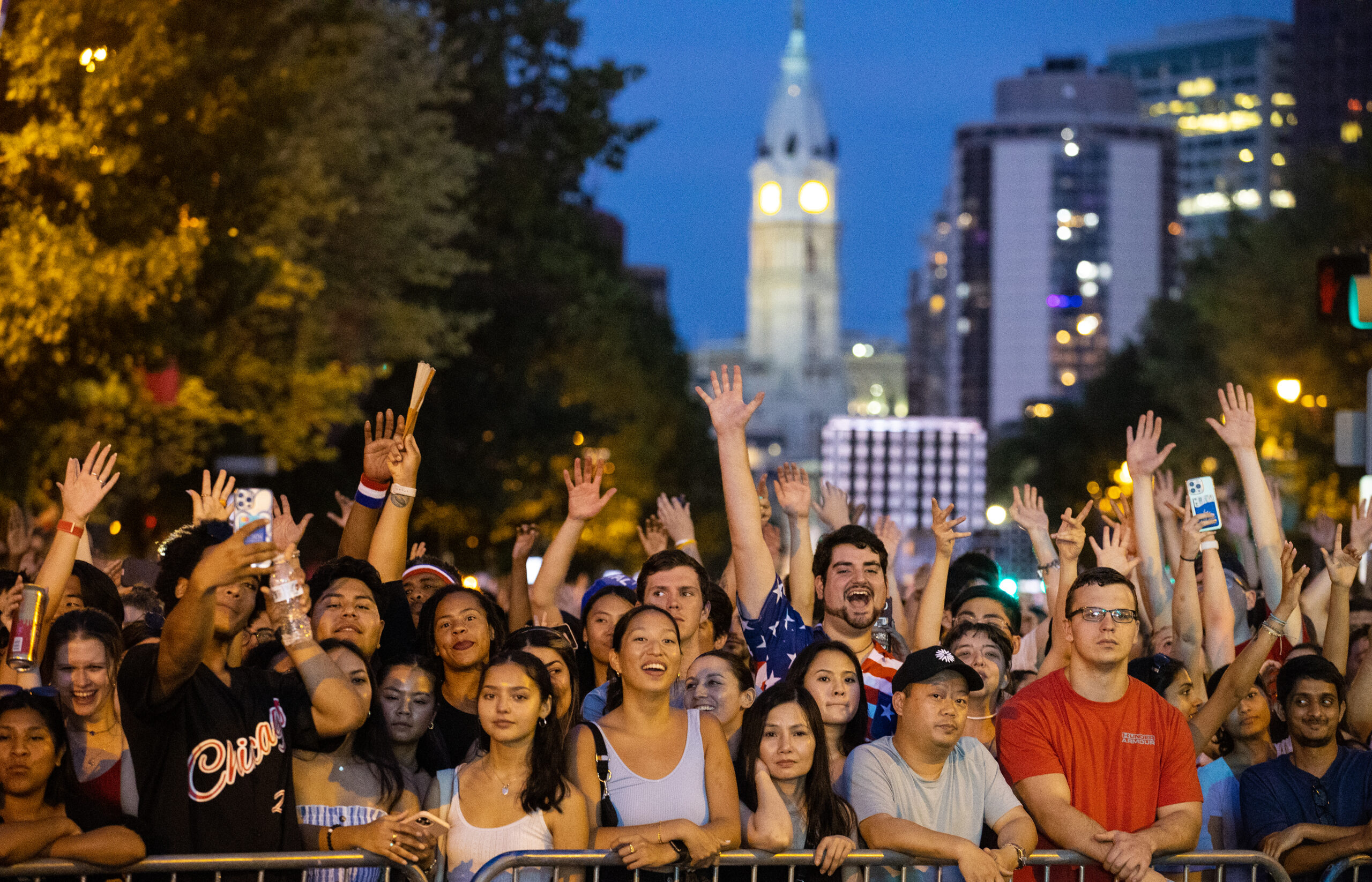
    Fans react to the music as the Wawa Welcome America Festival concluded July 4, 2023, with a free concert on Benjamin Franklin Parkway.

    Philadelphia’s July Fourth concert and fireworks show, the One City: Unity Concert for America, is expanding its lineup from two to three acts like in years past, to 10 artists, including Christina Aguilera, Will Smith, Meek Mill, and Seal. The show will also start earlier and end later, spanning into July 5 by the time people head home.

    The city did not respond to request for comment.

    Other cities, like New York, Boston, and Los Angeles, are keeping their 9-9:30 p.m. start times, while Washington, D.C. is among the cities pushing back its fireworks show to 10:30 p.m. or even 11 p.m. to allow for its expanded America 250 showcase.

    Mykola Kosyk, 36, a lifelong Fairmount resident, has been witnessing the Parkway fireworks for years. Usually he’ll catch some of the concert with his wife, head back home, have time to set off some fireworks of his own with family, and then all head back to the Parkway for the city’s grand finale. Kosyk said he’ll still likely watch the midnight fireworks on Saturday, but feels disappointed that younger Philadelphians may not get to experience it as children during 1976’s Bicentennial, Kosyk’s father recalled.

    “It is the 250th, so if there is a time to do something big, I’m open to the idea,” Kosyk said of the later show. “But I also feel bad for the youngsters coming out, because 9 p.m. is usually a pretty good time for kids to watch the show. Midnight is pushing it a little for kids.”

    For residents like Kosyk and DelliCarpini, the nuisance is less with the noise of fireworks which most Fairmount residents are used to by now, but how late the show will run, limiting access to younger kids and delaying vehicle and pedestrian traffic later into the morning.

    The Inquirer reported that this year’s event will cost more to operate after Mayor Cherelle L. Parker decided to change the management of the festival from its previous nonprofit partner to a for-profit production company. Parker defended that decision at a news conference Wednesday: Philadelphia needed to meet the moment and host a celebration that is “fitting to and for our historical significance and prominence.”

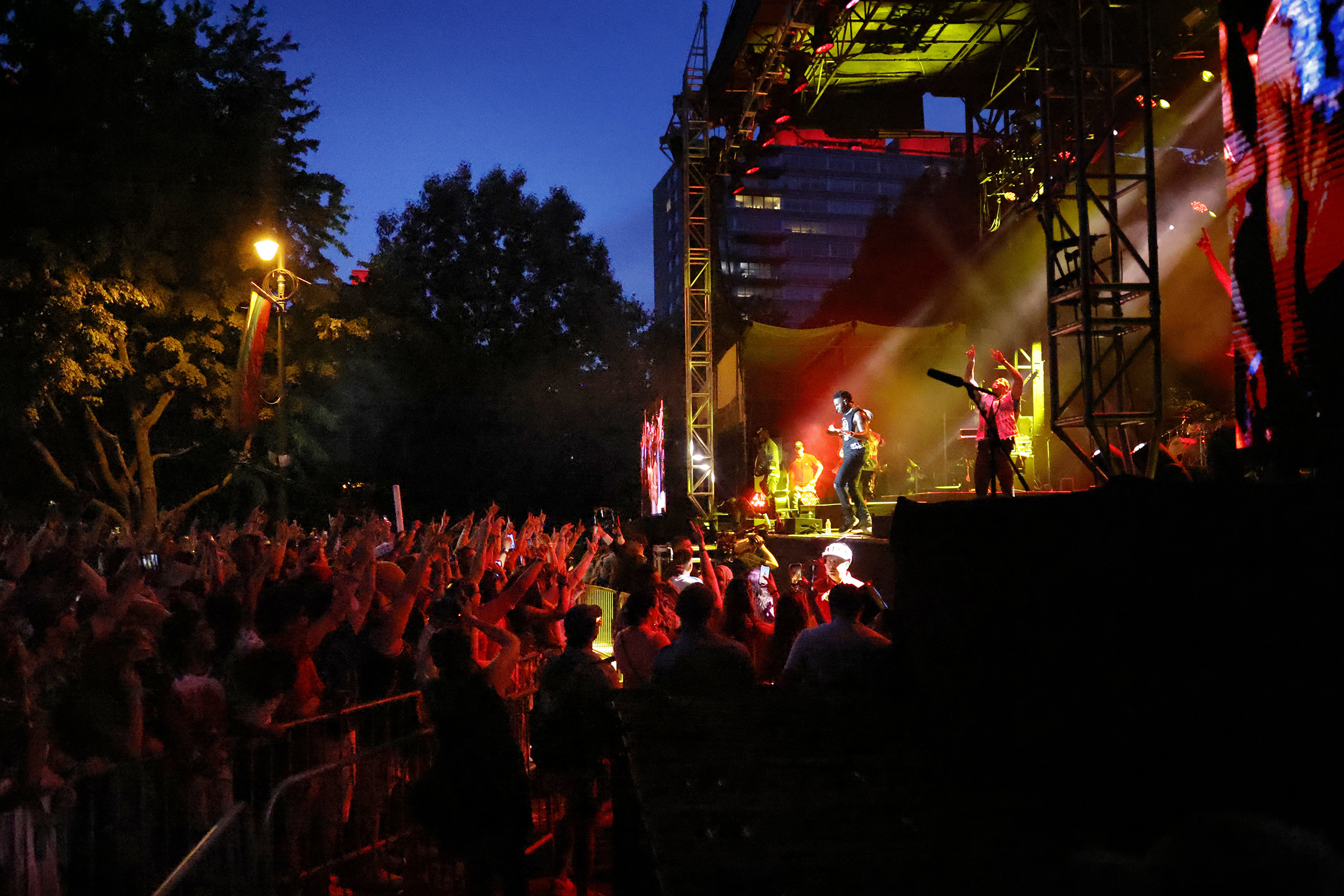
    Jason Derulo performs during the Wawa Welcome America July 4th Concert on the Parkway in 2022.

    Moving an expected 300,000 attendees and their vehicles

    Besides the hurdles for parents with younger children, there’s also the headache of moving an expected 300,000 people from the Parkway back home after the show.

    SEPTA has covered most of its bases for getting people home. Regional Rail lines will have extended service on all lines, but the Landsale/Doylestown, Paoli/Thorndale, Manayunk/Norristown, Trenton, and West Trenton lines are the only lines that will run their last train between 1 a.m. and 1:10 a.m. All other Regional Rail lines stop running before 1 a.m., and in some cases before midnight, so people traveling in from the suburbs should plan accordingly.

    Subways and trolleys will run overnight for those heading back home within the city, and bus service will run on a Sunday schedule, which usually stops operating around 2 a.m. for some routes.

    But vehicle and pedestrian traffic could use some city intervention, said Dustin Dove, president of the Fairmount Civic Association, as there is concern among local civic leaders and some residents about how the city is handling traffic leaving the Parkway.

    “It’s usually a bit of a mess near the Parkway after the fireworks and can lead to some reckless driving nearby as people are stuck,” Dove said. “Historically, after the fireworks, there are thousands of pedestrians and cars that come into the neighborhood.”

    A police presence is seen in Eakin’s Oval as people wait for the fireworks to start at the Wawa Welcome America Festival on Tuesday, July 4, 2023.

    Dove and others are hoping to see an increased police presence and traffic direction, as the event will be much later with more people this year, Dove said.

    Additionally, residents hope police manage safety accordingly on Saturday.

    “There’s going to be problems when you live in a city; it’s not like it’s the middle of nowhere with no neighbors, but this week … you’re now having people walk back home at midnight, 12:30 a.m.,” DelliCarpini said. “There needs to be a safe environment after the show.”

  • Top Trump official Sean Duffy promotes the President’s House in video with Mayor Parker

    Top Trump official Sean Duffy promotes the President’s House in video with Mayor Parker

    President Donald Trump’s administration has spent almost a year scrutinizing, and then dismantling, and then trying to rewrite history at one of Independence Mall’s most informative exhibits on slavery.

    All for one of Trump’s cabinet secretaries to promote the President’s House in a new video ahead of July Fourth.

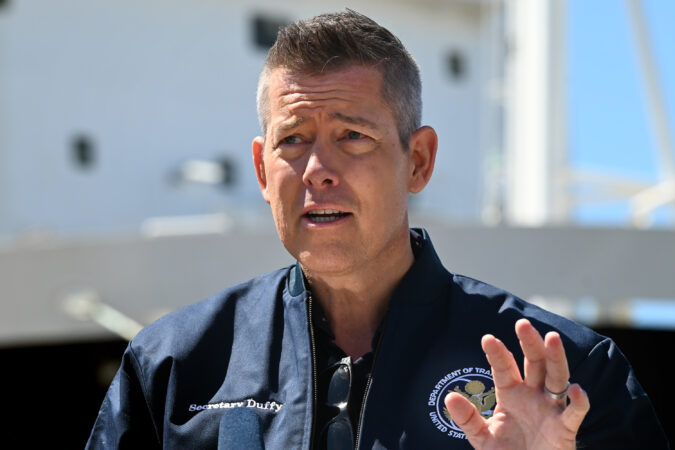
    Transportation Secretary Sean Duffy, who has been one of the Trump administration’s biggest cheerleaders for this week’s 250th anniversary celebrations, produced a video asking Mayor Cherelle L. Parker which Philadelphia historical sites visitors should see.

    Parker listed the highlights — the National Constitution Center, Independence Mall, the Liberty Bell, and ended her list of recommendations with the President’s House, which memorializes the nine people enslaved by George Washington in Philadelphia.

    “Reconnect with our history, recommit to the democratic values that we stand on, and have an amazing time,” Parker said.

    Cue Duffy showcasing pictures of the very panels at the President’s House that his boss wants to take down.

    The video, which was posted Wednesday to Duffy’s social media, appears to have been filmed in May, when Duffy visited Philadelphia while the city and the Trump administration were in the midst of a legal battle over the President’s House after the federal government removed the site’s exhibits earlier this year.

    A February court order allowed some of the panels to be reinstalled. Then, a ruling from the Third Circuit Court of Appeals in June said the Trump administration could replace the exhibits with its own materials, which are posted online.

    After the Third Circuit’s ruling, Parker said in a statement that: “I will pursue every legal action possible to reverse this decision. We cannot and WILL not rest until the full story of American history — including the existence of slavery at the President’s House here in Philadelphia — is told, for our Nation and the World to see.”

    On Thursday, a Boston-based federal appeals court removed the final legal obstacle that prevented the Trump administration from installing its own exhibits at the President’s House.

    This was not Duffy’s only visit to Philadelphia that coincided with a key event in the President’s House saga. Duffy joined Interior Secretary Doug Burgum in a visit to Independence National Historical Park in September 2025, just days after reports that the Interior Department planned to make changes to the President’s House.

    The secretaries were preparing for the Semiquincentennial celebrations. The Transportation Department, led by Duffy, has promoted road trips to a number of sites targeted by the Interior for changes, including Harpers Ferry National Historical Park in Virginia, in addition to the sites in Philadelphia.

    Duffy, a former MTV reality television star, has faced backlash for shooting a reality TV-style travel series with his family over the span of several months called The Great American Road Trip, meant to encourage celebrating the United States ahead of the 250th.

    A trailer for the series shows that he stopped in Philadelphia and visited LOVE Park and the Liberty Bell.

    In Wednesday’s video, which does not appear to be related to the series, Duffy says, “There’s no better place to go than where it all began in Philadelphia.”

    “This city is truly amazing, and the history that exists here,” Duffy said, “No one has it.”

  • Mayor Parker defends decision to host July 4th Parkway concert despite dangerous heat and high price tag

    Mayor Parker defends decision to host July 4th Parkway concert despite dangerous heat and high price tag

    Mayor Cherelle L. Parker on Wednesday defended the city’s upcoming July Fourth concert, a seven-hour outdoor spectacle featuring performances from Christina Aguilera, Jill Scott, The Roots, and more, amid concerns over the nearly 100-degree forecast and revelations that the event will cost taxpayers millions more than in years past.

    The city has dealt with high temperatures before and has battle-tested personnel and protocols prepared for the evening, Parker told reporters at a news conference in front of the stage at the foot of the Philadelphia Museum of Art steps.

    She also addressed the detractors head on.

    “I do not apologize to anyone about making sure that the city of Philadelphia, as the sixth-largest city in the nation, the birthplace of democracy, we were going to have a celebration that is fitting to and for our historical significance and prominence,” Parker said. “One that could be seen, respected, and honored, not just in our city and commonwealth and nation but in the world.”

    Parker described the concert as the largest July Fourth concert in the city’s history. For an occasion as momentous as the nation’s 250th anniversary in the city that bills itself the birthplace of America, Parker said Philadelphia must rise to the occasion and prove it can achieve ambitious undertakings.

    Parker said her administration scaled up the experience, including moving the stage back to accommodate an estimated 300,000 concertgoers, and made the stage larger.

    “We won’t get a second chance to do this over again, Philadelphia,” Parker said. “We only turn 250 years old once in a lifetime.”

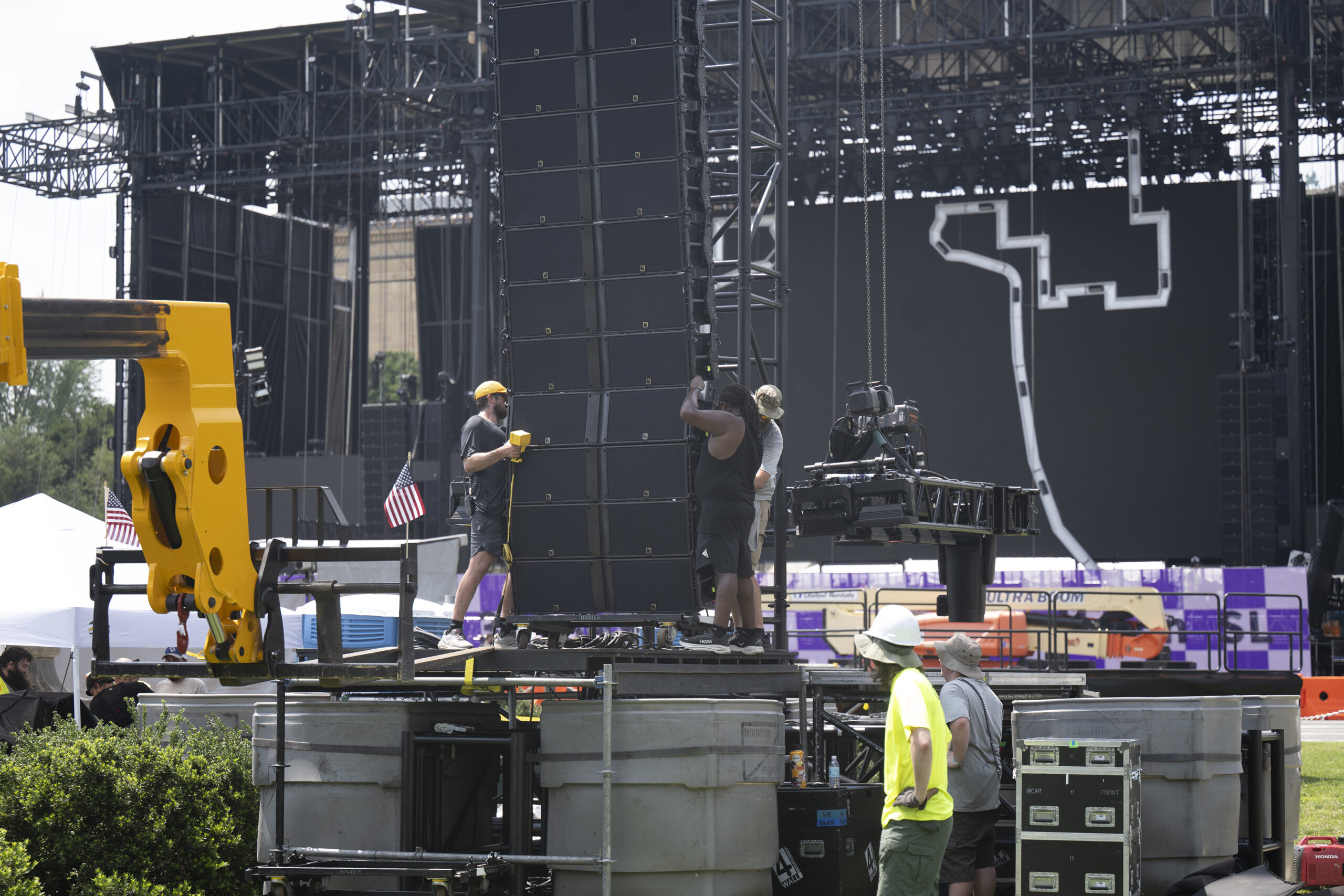
    Ground crews set up speakers on the stage on Wednesday in preparation for the July 4 concert expected to draw thousands to the Benjamin Franklin Parkway.

    Parker recalled feeling the mounting pressure to prove Philadelphia could rise to the occasion of honoring the nation’s 250th anniversary shortly after the start of her tenure as mayor.

    “‘Philadelphia lacks ambition. They’re thinking too small. We need a leader. Where is the legacy project?’” Parker recalled from the discourse of the time. “The critics were right. Philadelphia, as the birthplace, we couldn’t do what every other city was doing. We couldn’t just do something that was average, something that was mediocre. What we did had to be a reflection of this moment and our history.”

    Parker’s news conference came hours after The Inquirer reported online that this year’s July Fourth concert will cost taxpayers millions more than in years past because the mayor’s administration hired ESM Productions, a for-profit company, to put on the annual show. For years, the concert has been produced by Welcome America, a nonprofit established by the city.

    The Inquirer reported that the city is set to pay ESM $15.5 million to put on the show, and that last year’s iteration of the Welcome America concert cost the organization about $3 million.

    Parker defended ESM and its founder, Scott Mirkin, as “the gold standard in planning large-scale global events, not just in America but across the world.” And she vowed that the city would produce a “fiscal impact report” after the event to account for how much money the city spent on this year’s festivities.

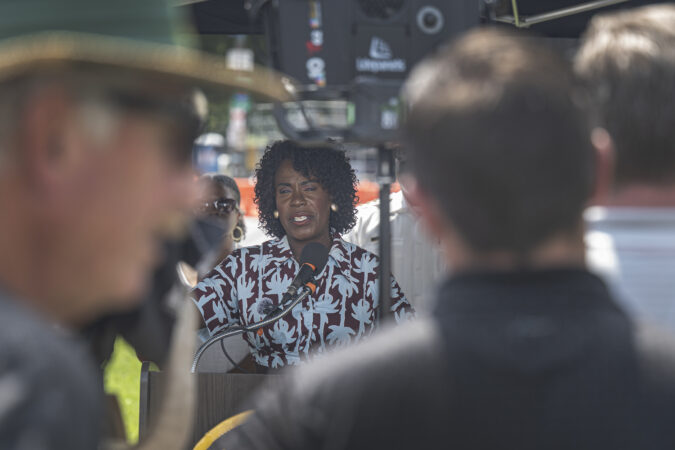
    Mayor of Philadelphia Cherelle L. Parker speaks during a news conference under a tent Wednesday, July 1, 2026, in Philadelphia, outlining public safety and transportation plans ahead of a July 4 concert expected to draw thousands to the Benjamin Franklin Parkway.

    She also noted that former Mayor Jim Kenney put his own stamp on the annual July Fourth concert when he took office in 2016 — and took some heat for it. The Roots had headlined the concert since 2009, but Kenney’s administration went a different direction and The Roots were sidelined.

    Roots drummer Ahmir “Questlove” Thompson didn’t mince words at the time, writing on Facebook that the decision was “arrogance in the HIGHEST order courtesy of your new leader.”

    When Parker took office, she knew she wanted the spotlight back on the beloved local hip-hop group.

    “I’m proud to have The Roots back home,” Parker said.

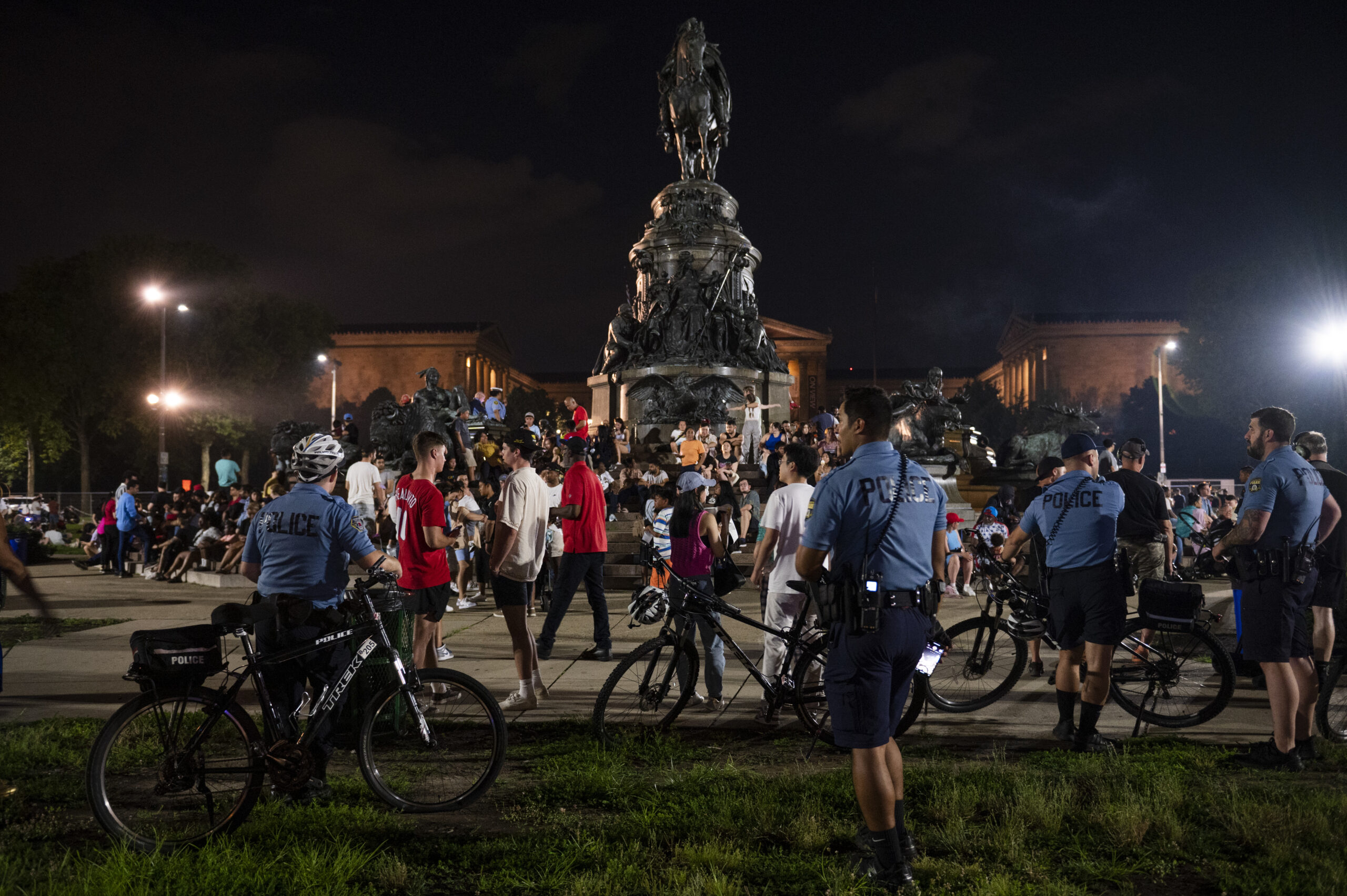
    In terms of weather and safety, the city has proven this summer that it can host large-scale events in the heat seamlessly, said Philadelphia Police Commissioner Kevin J. Bethel.

    The city has already hosted five World Cup games, which have gone off without a hitch, Bethel said. For the July Fourth event, the department will be executing one of its largest deployments since the papal visit in 2015. That will include hundreds of officers across Center City and many more at the stadium and along the Parkway.

    “I want everybody to come and have a good time. Don’t mess up the party,” Bethel said.

    In order to keep people cool, the city will run 40 air-conditioned cooling centers, 150 pools and spray grounds, enhanced homeless service outreach, and extra fire department medics, said Dominick Mireles, Philadelphia’s deputy managing director for community safety. Along the Parkway, there will be misting fans and shade structures, he added.

    Parker said she’s confident every Philadelphian interested in participating will be able to do so safely and will look back on the day fondly.

    “I want people to remember where they were when America turned 250 years old and what we did here in the place when it all happened,” Parker said.