Tag: Cherelle L. Parker

  • This Philly City Hall power couple stands to reap up to $750K by briefly retiring — then continuing to work for the city

    This Philly City Hall power couple stands to reap up to $750K by briefly retiring — then continuing to work for the city

    Councilmember Curtis Jones Jr. and City Representative Jazelle Jones, who are married, are poised to collect up to $752,000 in combined payouts from Philadelphia’s widely criticized Deferred Retirement Option Plan, an early retirement incentive that two decades ago sparked a major scandal in City Hall.

    But neither of the city officials is actually retiring.

    DROP is available to all city workers. But both of the Joneses are using the program in a way that is not available to a vast majority of municipal employees: temporarily retiring and immediately returning to their jobs, allowing them to receive their DROP payouts before the end of their city government careers.

    Curtis Jones, 68, who has represented the 4th District for 18 years, is able to access that perk because he is a long-serving lawmaker. Jazelle Jones, 70, a high-ranking appointee of Mayor Cherelle L. Parker, received an exception from the mayor to be rehired after her DROP retirement.

    Following her one-day retirement, Jazelle Jones also received a $97,000 payout for unused sick and vacation time, a benefit normally reserved for employees permanently departing from city government.
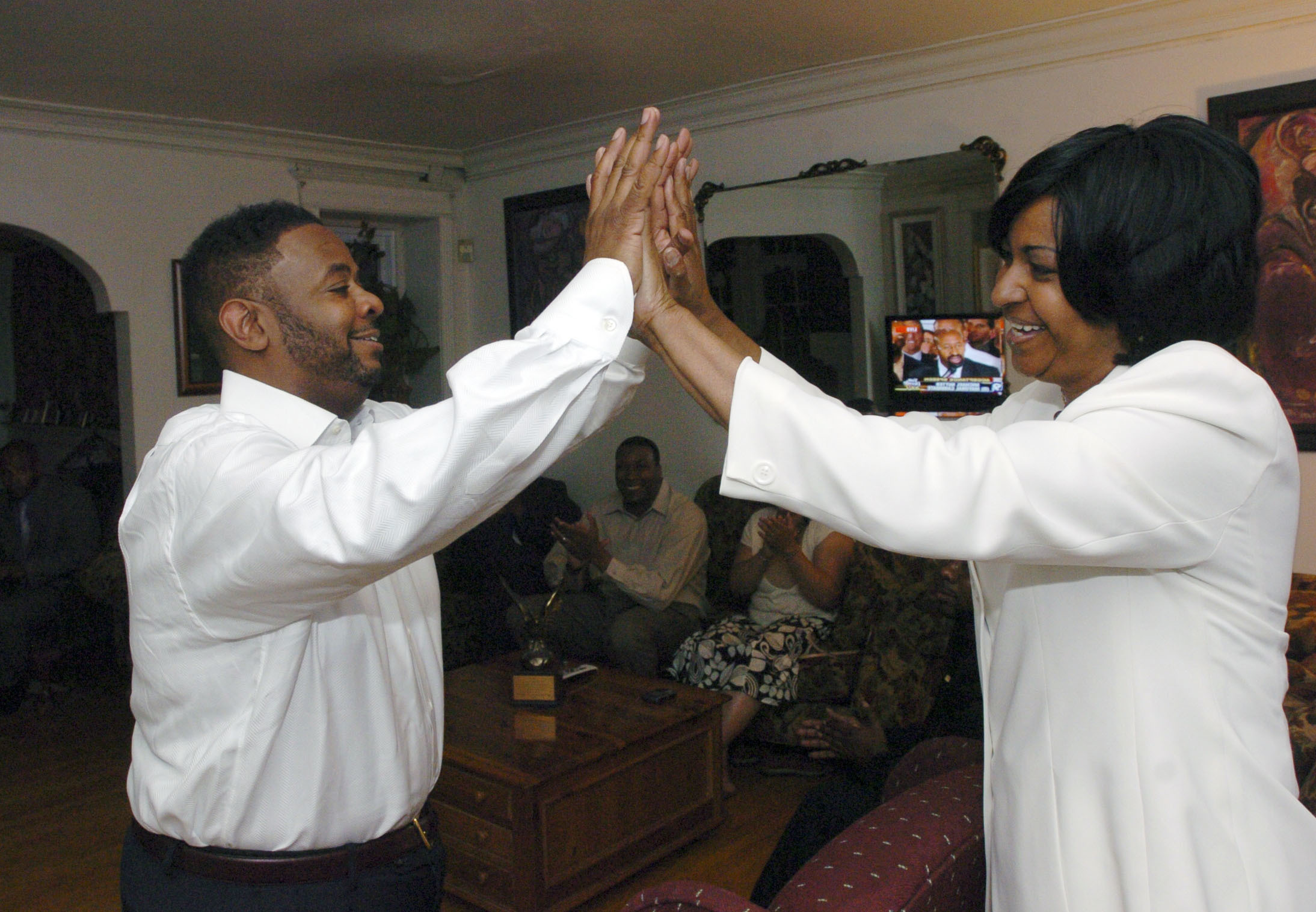
    FILE – Curtis Jones, Jr. declares victory with his wife Jazelle and his family in the Council race in his home in West Philadelphia on Tuesday, May 15, 2007.

    Lauren Cristella, president of the government watchdog group Committee of Seventy, said the administration’s handling of the situation further undermines public confidence in the DROP program.

    “Rehiring an employee to the same position the day after she collects a DROP payout defeats the purpose of the program,” Cristella said. “DROP exists to manage workforce transitions, not to serve as a bonus for employees with no intention of actually leaving.”

    Established in the late 1990s during Mayor Ed Rendell’s administration, DROP was originally pitched as a cost-neutral way to give the city predictability over retirements and entice high-earning employees to step down early.

    But the program ended up costing the city far more than expected, and voter frustration with elected officials’ enrollment in DROP was credited with ending the political careers of several Council members.

    At the height of that controversy in 2010, Curtis Jones voted to enact a law banning future elected officials from accessing DROP. But he and others already serving at that time were “grandfathered” in, Curtis Jones said.

    He would be eligible to collect a $432,000 lump-sum DROP payment in August 2028. However, Curtis Jones said he plans to run for a sixth Council term in 2027, using the loophole to briefly retire to collect the payout before resuming his post.

    In interviews, the Council member, who earns $165,000 annually, said he instead plans to retire in December 2027, collecting a reduced DROP payment closer to $350,000. If he is reelected, the maneuver would allow him to hang on to his Council seat for another four years by being sworn back into office the following month.

    He justified his enrollment in DROP by saying that times have changed since the 2010 vote — both for the city’s finances, which have dramatically improved, and for his health. He said he is suffering from glaucoma, an incurable disease that causes vision loss.

    “Over the years, I’ve had four surgeries on my eyes,” said Curtis Jones, who represents the Northwest and West Philadelphia-based Council district. “I’ve actually lost 40% of my vision.”

    Curtis Jones said he enrolled in DROP “so that if I was blind, I wouldn’t have been without resources.”

    A centrist Democrat, he endorsed Parker’s 2023 campaign for mayor and is viewed as her most reliable ally on Council.

    His wife, Jazelle Jones — who receives a $199,000 annual salary for serving as an ambassador for the city and planning special events — temporarily retired for one day last year and was then immediately rehired by the city with a $4,000 raise.

    The Philadelphia Administrative Board, which oversees personnel matters, granted her an exception to return to her job. That board is led by Parker, a staunch defender of DROP, and other top officials in her administration.

    The mayor said she personally asked Jazelle Jones to return to work, and defended the decision.

    Parker cited Jazelle Jones’ “lived experience” and the potential disruption her departure could cause for major events this year, like the city hosting World Cup games.

    “The essential nature of her role is why I asked” Jazelle Jones to continue working, Parker said Tuesday in a phone interview. “And I’m unapologetic about asking. It’s one of the most important decisions I’ve made as mayor.”

    Jazelle Jones was originally scheduled to retire in September 2024. Instead, in a departure from typical DROP procedures, she continued to work as the city representative through that date and took her one-day retirement a year later, in September 2025.

    None of those changes appear to have been approved at the time they occurred by the city’s administrative board. It was not until March 2026 when the board retroactively approved exceptions allowing Jazelle Jones to receive an extra year of DROP — resulting in the 2025 retirement date — and her rehiring, according to board minutes.

    Parker declared an emergency in order to approve the extra year of DROP for Jazelle Jones, the mayor’s office said. The move effectively increased her retirement payout by almost 20%, to nearly $320,000.

    Parker’s office did not respond to questions about the deviation in the approval timeline.

    Jazelle Jones did not respond to a request for comment through the mayor’s office.

    ‘Tools in the toolbox’

    When city employees enroll in DROP, they select a mandatory retirement date no more than four years in the future. Between the time they sign up for the program and their selected retirement date, the city pays their regular salaries and makes pension payments as if they had already retired.

    The deferred pension payments are deposited into an interest-bearing account that each city worker collects in a lump-sum payout four years after enrolling. The departing employee then begins to receive standard monthly pension checks, which are calculated based on when they entered DROP.

    City workers make contributions from their salaries to the municipal pension fund. But their contributions do not cover all of the pension fund’s liabilities, let alone the added costs associated with DROP, which ultimately come out of taxpayer coffers.

    Philadelphia’s original DROP law created a loophole in which elected officials, who generally serve four-year terms, can enter into the program, retire a day before their terms end, and rejoin the city workforce when they are sworn in again the following day.

    The revelation that many members of Council had enrolled in DROP rocked City Hall in the early 2000s. The scandal was credited for several members’ decisions to not run for new terms in 2011 and was widely seen as the reason former Councilmember Frank Rizzo Jr. lost reelection that year.

    A 2017 city controller report found that, cumulatively, the program had cost the city in excess of $277 million despite initially being projected as budget-neutral.

    While DROP programs were once common in cities across the country, the Government Finance Officers Association — a national organization that Philadelphia officials regularly cite for best practices when shaping the city budget — in 2020 warned they led to unpredictable costs and detrimental impacts on municipal pension funds.

    “Government defined benefit plans should not include deferred retirement option programs for a variety of reasons,” the GFOA said a statement.

    Parker, however, has defended the program as a valuable recruitment and retention tool.

    “Government doesn’t pay you as much as the private sector, so we offer a great benefits package,” Parker told reporters in March. “DROP, the defined-benefit pension — I’m never going to be for taking away any of the tools in the toolbox that would allow the city of Philadelphia to compete.”

    ‘Semi-hypocritical’

    In 2008, when Council was in the early stages of considering a ban on elected officials enrolling in DROP, some wanted the prohibition to apply not just to future officeholders, but current ones as well.

    Curtis Jones, a freshman legislator at the time, agreed.

    “It would be semi-hypocritical if I say [end it] for only future elected officials,” he said then.

    The bill that Council eventually passed did not prohibit current members from enrolling in DROP. Now, Curtis Jones is set to become the first lawmaker to benefit from the program in years.

    “At the time, when I was 20/20 vision, [banning lawmakers from using DROP] was my decision. And now that I’ve had some surgeries, I’ve changed that position,” Jones said Monday. “It’s an earned benefit that I contributed to that I would like to receive.”

    Cristella, of the Committee of Seventy, accused Jones of hypocrisy.

    “Being grandfathered in is not the same as acting with integrity,” she said.
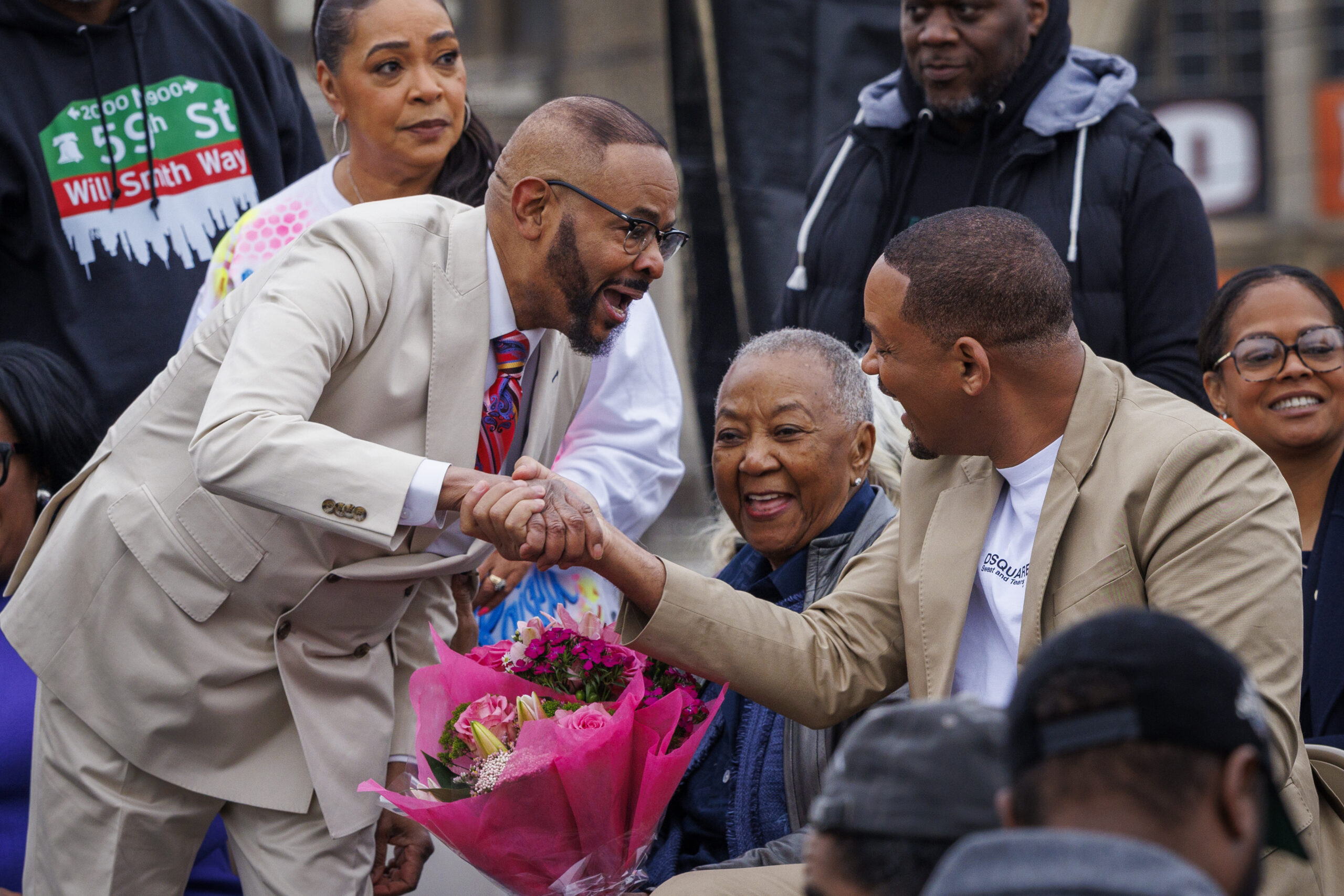
    At left is Councilmember Curtis J. Jones Jr. shaking the hand of actor and rapper Will Smith who was honored with a street naming, Will Smith Way, at N. 59th and Lancaster, across from Overbrook High School, Wednesday, March 26, 2025.

    Curtis Jones enrolled in DROP in August 2024, meaning he is required to retire no later than August 2028. He has made no secret of his intent to run for a sixth term next year, even publicly musing about delaying bridge repairs in his district so as not to subject potential voters to traffic jams.

    Were he to win reelection and collect his maximum $432,221 DROP payout, Curtis Jones’ scheduled retirement date would fall within the first year of his next four-year term.

    However, the lawmaker said in an interview that he intends to complete his next Council term. To achieve that, he said he would instead resign in December 2027, after the November election but just before he would be sworn into a new term in January 2028.

    “I am going to resign, then be sworn in [if], God willing, I’m reelected,” he said.

    In this scenario, Curtis Jones said, he would receive a reduced DROP payout by forgoing the final nine months of payments into his interest-bearing account by taking his brief retirement early. He would be effectively rehired to his city job by being sworn back into office.

    He added that he hopes State Rep. Morgan Cephas, a West Philadelphia Democrat, will succeed him in the 4th Council District after the 2031 elections.

    Cephas declined to comment.

    In 2023, Curtis Jones ran for Council president, but lost to Kenyatta Johnson. He said he is now relieved he did not win.

    “I am functional. My staff kind of helps to keep that good,” Jones said. ”I am thankful to God that I did not get elected [Council] president. Do you know how much reading they do? I could have not kept up with all of the numbers and stuff like that, so I know my limitations.”

    ‘I had heard whispers’

    During Jazelle Jones’ one-day retirement in 2025, the 25-year city employee earned a $319,757 DROP payout and cashed out nearly 1,000 hours of unused sick and vacation time, worth $97,000, as all city workers are entitled to do upon their last day of service.

    The very next day, she was back on the job, with a small raise that brought her salary to about $199,000.
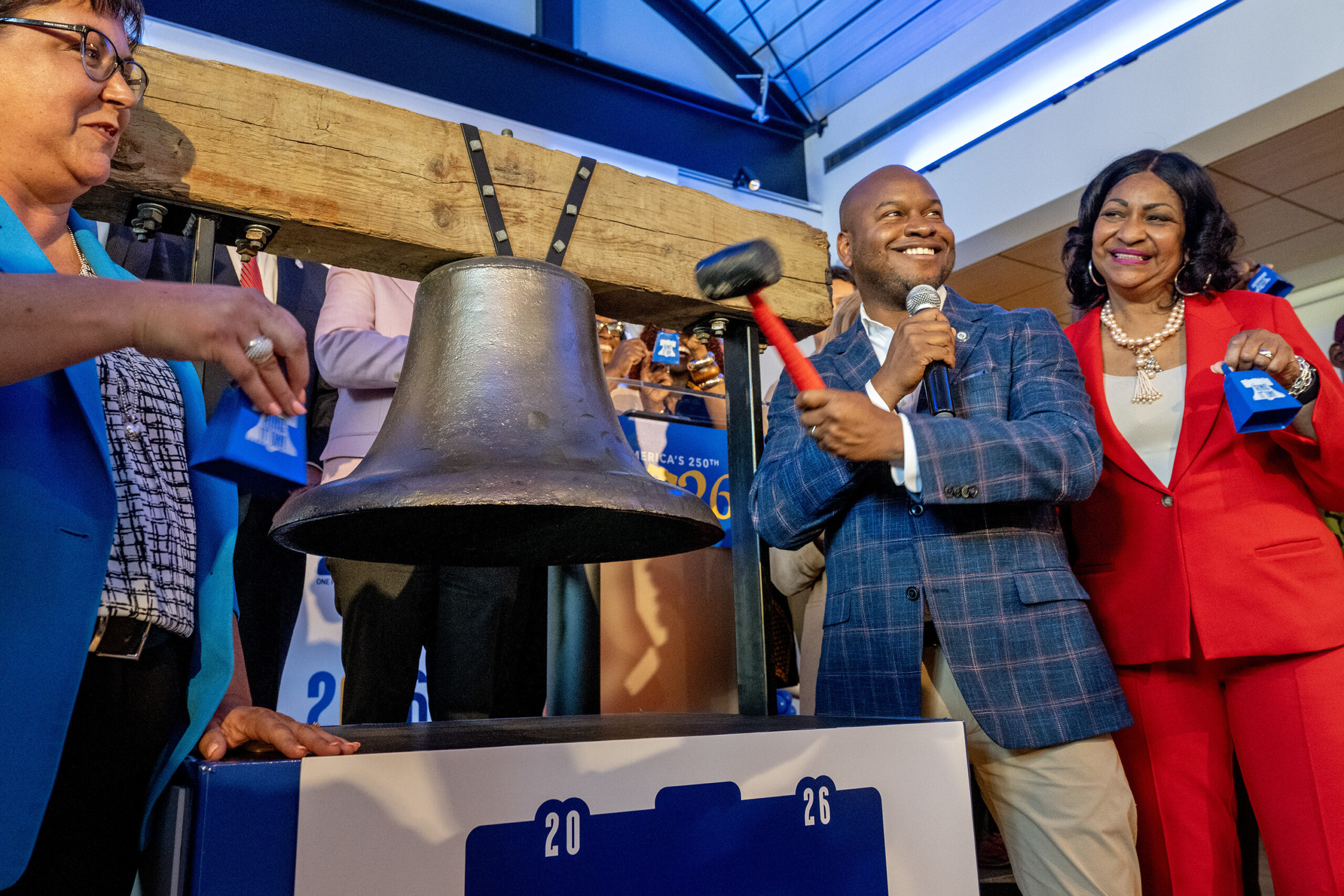
    Michael Newmuis (center), the city’s 2026 Director Philadelphia, rings the bell to kick off the city’s “Ring It On! One Philly, A United Celebration” at Independence Visitor Center Wednesday, Sept. 3, 2025. Mayor Cherelle L. Parker announced the new initiative that puts city neighborhoods at the forefront of the city celebrations of America’s 250th birthday in 2026. At right is Jazelle Jones, City Representative and Director of Special Events.

    Despite saying Jazelle Jones was needed to coordinate the city’s 2026 festivities, Parker has also appointed a separate 2026 director, Michael Newmuis, to a $175,000 position to also oversee this year’s major events.

    The mayor said Jazelle Jones was irreplaceable given her experience managing large events like the 2015 papal visit, the 2016 Democratic National Convention, the 2017 NFL Draft, and the Eagles’ Super Bowl wins.

    “Could we have hired five to 10 people to try to do the job Jazelle does?” Parker asked. “We could have tried, but there would be no reason for me to do that when I had the best person.”

    Parker indicated she was aware of the steep price tag required to keep Jazelle Jones working through 2026 when the mayor first appointed her as city representative shortly after taking office in 2024.

    “I had heard whispers,” Parker said. “They said, ‘You’re going to lose Jazelle.’”

    City personnel records show Jazelle Jones enrolled in DROP in September 2020, meaning her first planned retirement date was September 2024, just nine months after Parker appointed her to the role.

    Jazelle Jones’ $97,000 payout for unused paid time off was deposited into her account this month, four days after The Inquirer contacted the mayor’s office about her rehiring. The mayor’s office did not respond to a question about the delay in her payment.

    Unlike most newly hired city employees, who are entered into a hybrid 401(k)-style pension plan, she was granted an exception allowing her to continue paying into an older, more generous pension plan.

    Cristella, from the Committee of Seventy, said the decision to hire Jazelle Jones into a vital role months prior to her mandatory retirement date was irresponsible.

    “It is also deeply troubling that the city would retain a high-salaried senior official with full knowledge that a large DROP payout was imminent,” Cristella said. “If city leadership knew and proceeded anyway, that is a failure of fiscal stewardship that demands explanation.”

    Staff writer Max Marin contributed to this article.

  • Josh Shapiro is most popular politician among Philadelphia residents — by a long shot

    Josh Shapiro is most popular politician among Philadelphia residents — by a long shot

    Gov. Josh Shapiro is by far the most popular political figure among Philadelphia residents, a boost as he looks toward November and beyond.

    In a new Suffolk University/Philadelphia Inquirer CityView poll, 62% of Philadelphians have a favorable opinion of Shapiro, double digits above any other political figure included in the survey.

    Not only did the Democratic incumbent running for reelection win over three-quarters of his own party’s voters in the blue stronghold, he also got positive reviews from almost half the city’s independents and more than one-third of Republicans.

    “He has strong bona fides within his own party, 76% favorable and 11% unfavorable, but he’s also at least somewhat competitive among independents and even some Republicans, so that’s an amazing profile for a candidate who’s an incumbent these days,” said David Paleologos, the polling director at Suffolk.

    Just 16% of residents have an unfavorable view of Shapiro, and only 8% have never heard of the one-term governor, who was on former Vice President Kamala Harris’ short list of potential running mates in 2024.

    (function(){function e(){window.addEventListener(`message`,function(e){if(e.data[`datawrapper-height`]!==void 0){var t=document.querySelectorAll(`iframe`);for(var n in e.data[`datawrapper-height`])for(var r=0,i;i=t[r];r++)if(i.contentWindow===e.source){var a=e.data[`datawrapper-height`][n]+`px`;i.style.height=a}}})}e()})();

    The poll of 500 residents in the city, which was conducted by phone from June 16 to 20, had a margin of error of 4.4 percentage points. Pollsters reached residents in all 66 wards in the city.

    Shapiro clobbers his Republican opponent, Treasurer Stacy Garrity, whom just 9% of the poll’s respondents view favorably.

    That’s not unexpected in a city where Democrats outnumber Republicans 6-1. But it’s Garrity’s lack of name recognition that plays a larger role. A whopping 61% of those surveyed had never heard of Garrity, a glaring figure less than five months until the November election.

    Although the state GOP coalesced around her last year and she faced no challengers for her primary nomination this year, only 26% of Republicans had even heard of Garrity.

    (function(){function e(){window.addEventListener(`message`,function(e){if(e.data[`datawrapper-height`]!==void 0){var t=document.querySelectorAll(`iframe`);for(var n in e.data[`datawrapper-height`])for(var r=0,i;i=t[r];r++)if(i.contentWindow===e.source){var a=e.data[`datawrapper-height`][n]+`px`;i.style.height=a}}})}e()})();

    “She’s kind of a blank slate, and that works to the challenger’s advantage, but if you’re Stacy Garrity you want to start defining yourself quickly before someone else does,” Paleologos said.

    Shapiro can drive up his statewide total if voters in Philadelphia, an overwhelming Democratic electorate, turn out in large numbers — though that has been less reliable in recent years.

    His broad favorability could also help him stretch his bank account further. Shapiro, who hails from nearby Montgomery County, has spent the least amount of money so far in the Philadelphia television market and the most in Pittsburgh, which could show his campaign knows where he is already strong.

    Fetterman is far less popular in Philly, particularly among young voters

    Shapiro’s popularity in the city stands in stark contrast with the state’s other top Democrat: U.S. Sen. John Fetterman.

    In the swing state’s most Democratic city, the one-term senator is faring poorly.

    Less than one-quarter, 24%, of Philly residents have a favorable opinion of Fetterman, compared with 43% with an unfavorable view. The numbers are even worse within his own party, with just 17% of Democrats holding a favorable view of the senator, who has often feuded with progressives and repeatedly crossed party lines to cast key votes in support of President Donald Trump’s nominees.

    His numbers are particularly sour among voters ages 18 to 24 and 25 to 34.

    (function(){function e(){window.addEventListener(`message`,function(e){if(e.data[`datawrapper-height`]!==void 0){var t=document.querySelectorAll(`iframe`);for(var n in e.data[`datawrapper-height`])for(var r=0,i;i=t[r];r++)if(i.contentWindow===e.source){var a=e.data[`datawrapper-height`][n]+`px`;i.style.height=a}}})}e()})();

    A strong majority of Republican voters, 60%, view him favorably in the poll, but the Pennsylvania Democrat has repeatedly insisted he has no interest in switching parties heading into 2028, when he is likely to face a primary challenge if he runs for another term.

    While slightly more Philadelphians have a favorable view of Fetterman than his GOP colleague, U.S. Sen. Dave McCormick, a greater share of Philly voters have an unfavorable view of the Democrat.

    McCormick earned 17% favorable views compared with 25% unfavorable views, while the rest had not heard of the freshman senator or were undecided.

    But the least popular politician in Philly was Trump, who had just 12% favorability in the city.

    Ninety-two percent of Democrats view Trump unfavorably, and 31% of Philadelphia Republicans do, too. The poll also found that nearly 70% of Philly voters had grown less confident in American democracy under Trump’s presidency.

    Trump made inroads in the deep-blue city in 2024, but Harris still won Philadelphia handily with 78% of the vote.

    The president is a frequent target of Shapiro, who has blamed Trump’s tariffs and other policies for exacerbating the cost of living.

    Taking on Trump may be boosting Shapiro’s popularity as he pursues reelection. His numbers show opportunity as he continues building a national profile, likely with ambitions for higher office. In a city where voters favor liberal and left-leaning candidates, Paleologos said, the polling results could be somewhat extrapolated to a national Democratic primary for president in 2028.

    What Shapiro has going in his favor is high popularity among women, with 69% viewing him favorably. That is good news for the governor, since women consistently make up a large proportion of Democratic primary voters, according to exit surveys.

    “In a Democratic primary, you really want to be strong among women, and he is,” Paleologos said. “If 60% of women are voting a Democratic primary, that really plays to his strength.”

    He also ranks in the 70s for favorability among people ages 45 to 74.

    “Those are people who are bill payers, they’re raising children, they’re taking care of sick parents, they’re very stretched in terms of economics. Just terrific numbers,” Paleologos said.

    Shapiro’s favorability is far above that of other Democratic politicians in the city, including Mayor Cherelle L. Parker and State Rep. Chris Rabb, who won last month’s competitive primary to represent the 3rd Congressional District, which stretches from Northwest Philly to parts of South Philly.

    A majority of respondents had not heard of Rabb despite his recent win. But 26% of respondents said they had a favorable view of the progressive lawmaker, compared with only 7% with an unfavorable view.

    The mayor was viewed favorably by nearly 44% of respondents, compared with nearly 35% who viewed her unfavorably — a net positive rating but a much closer split than Shapiro.

    “There are there are pockets of strength that make her electorally strong, but I wouldn’t call it broad-based,” Paleologos said of Parker.

  • Why a Boston-based appeals court ruling matters for President’s House

    Why a Boston-based appeals court ruling matters for President’s House

    President Donald Trump’s administration is closer to getting its way after a Boston-based appeals court said it doesn’t have to restore exhibits it removed — at least for now.

    The Boston-based U.S. Court of Appeals for the First Circuit ruled the National Park Service does not have to restore all exhibits it removed as part of its “restoring sanity to American history” push before the nation’s 250th anniversary celebration, issuing an administrative stay on a lower court’s order.

    That order protected the historic site of George Washington’s Philadelphia residence on Sixth and Market Streets from further changes after the U.S. Court of Appeals for the Third Circuit ruled last week that Philadelphia does not have the right to dictate the content of exhibits at the President’s House. The exhibits were dismantled by the Trump administration earlier this year.

    But it remains to be seen whether the stay allows the Trump administration to install the newly proposed panels, which historians say whitewash Washington’s culpability in enslaving nine people at his Philadelphia home.

    In a statement, the Department of the Interior responded: “We are confident that as this inferior ruling from an activist lower court judge receives further scrutiny, they will be further restrained.”

    Administrative stays are common steps federal courts take to buy time while judges assess the arguments.

    The First Circuit judges intend to rule “promptly” on a request for a more permanent stay during the appeal, the order says.

    Either way, the ruling marks a second blow in a week to the City of Philadelphia and stakeholders who developed the President’s House Site.

    Michael Coard, attorney and founder of Avenging the Ancestors Coalition, which is leading efforts to protect the President’s House, emphasized that the First Circuit action was not a final decision.

    “The stories of enslaved African descendants and other historically marginalized communities are American history and deserve to be preserved and told truthfully,” he said.

    Here is what you need to know about the status of the President’s House exhibits.

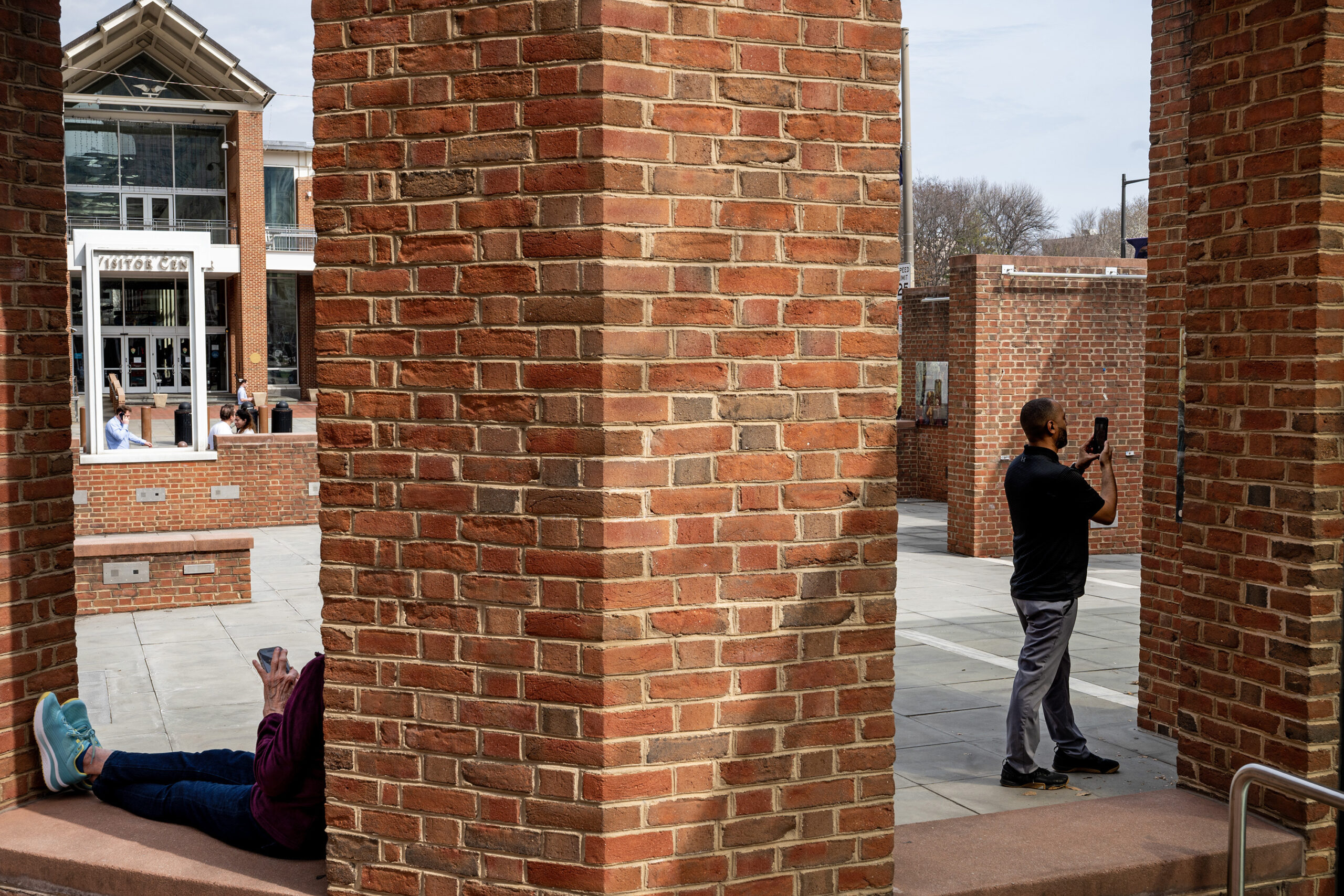
    The President’s House in Independence National Historical Park March 11, 2026.

    What do Boston-based courts have to do with the President’s House?

    Earlier this year, conservation groups sued the Trump administration in federal court in Massachusetts challenging Interior Secretary Doug Burgum’s 2025 order implementing the president’s directive to ensure that no displays at national parks “inappropriately disparage Americans past or living.”

    U.S. District Judge Angel Kelley this month temporarily blocked the National Park Service from removing or altering content at parks across the country, and required the agency to restore before July 4 all exhibits that had been removed.

    The Trump administration’s changes to exhibits “seek to rewrite the Nation’s history with a white-out pen,” wrote Kelley, a nominee of former President Joe Biden.

    At least 50 exhibits were removed from more than 30 sites nationwide, according to court records.

    Justice Department attorneys appealed the ruling to the First Circuit and asked the higher court to issue an administrative stay or a stay for the duration of the appeal.

    The three judges assigned to the case — Chief Judge David J. Barron, appointed by Barack Obama, and Biden appointees Gustavo A. Gelpí Jr. and Julie Rikelman — issued the administrative stay Tuesday pausing the majority of Kelley’s order, including the directive to restore sites such as the President’s House.

    The order is not explicit on whether the National Park Service can make changes to sites, but administrative stays are viewed as a way to preserve the status quo while the appeals court can review the facts and arguments in a case.

    “The administration’s decision not to reinstall and reinstate censored materials, particularly in advance of our nation’s upcoming 250th anniversary, is a disservice to every park visitor this summer and to the broader American public,” the conservation groups, represented by Democracy Forward, said in a statement.

    What did the Third Circuit rule?

    The First Circuit ruling comes on the heels of the Third Circuit’s reversal of a February order entered by a Philadelphia federal judge.

    Judge Cynthia M. Rufe issued an injunction that required the Trump administration to restore the President’s House to its form before the abrupt Jan. 22 removal of exhibits.

    A three-judge panel disagreed with Rufe, finding that Philadelphia gave up its rights over the President’s House when it donated the site to the National Park Service. The judges further said the federal government’s proposed replacement panels were “full of historical context.”

    Mayor Cherelle L. Parker thanks workers as the President’s House site in Independence National Historical Park Thursday, Feb, 19, 2026 during a brief visit to the site as they began to return the slavery displays.

    What are the city’s options?

    After the Third Circuit ruling, Mayor Cherelle L. Parker said she would “pursue every legal action possible in efforts to reverse this decision.”

    The city has a few options, but time is running out for a favorable ruling before July 4.

    The city could ask for a rehearing in front of the same three judges who unanimously ruled to overturn the injunction. It can also ask for a hearing in front of the full Third Circuit court, known as en banc, or ask the U.S. Supreme Court to intervene.

    Philadelphia Law Department attorney Anne Taylor argued at the Third Circuit hearing that the federal government’s attack on these exhibits has caused irreparable harm as the city tries to tell its story ahead of next month’s 250th celebrations.

    Philadelphia is expecting a flood of visitors for the Semiquincentennial celebration, Taylor said, adding: “The President’s House is at the doorway to the Liberty Bell. That history is not being told to all the people who are expected to come here.”

    It could be challenging, or even impossible, to get a new panel of circuit judges or the Supreme Court justices briefed on the case to get a ruling in less than two weeks, legal experts said.

  • In Harrisburg, Philadelphia Mayor Parker asks lawmakers to double school renovation fund to $250 million

    In Harrisburg, Philadelphia Mayor Parker asks lawmakers to double school renovation fund to $250 million

    HARRISBURG — Philadelphia Mayor Cherelle L. Parker called on Pennsylvania’s General Assembly to double what it sets aside for school districts to update their aging facilities, as the Philadelphia School District embarks on a $3.3 billion plan to modernize 169 school buildings.

    Parker hosted a two-hour news conference at the state Capitol on Monday, asking Pennsylvania’s split legislature and Gov. Josh Shapiro to increase the amount of money available for school facility renovations from its current $125 million to $250 million as part of this year’s state budget, which is due at the end of the month.

    The school district is on track to close 17 schools as part of the larger modernization efforts, following months of protest and controversy over the facilities plan.

    Parker appeared alongside City Council President Kenyatta Johnson, Philadelphia School Superintendent Tony B. Watlington Sr., and school board president Reginald L. Streater, following several weeks of tensions with state and city legislative leaders over her proposed tax plans to raise revenue for the city and the school district, which ultimately failed.

    But on Monday, the city leaders appeared as a united front in Harrisburg, showcasing their commitment to “rightsizing” Pennsylvania’s largest school district, which is the ninth-largest in the nation.

    “We are here united to let you know that we are proud that the City of Philadelphia has some skin in the game, and we are not coming here simply with our hat in hand, asking the Commonwealth of Pennsylvania to come save the School District of Philadelphia,” Parker said, noting that the city was able to stave off classroom cuts.

    “It is the General Assembly who told us last year we will not give additional funding until you come back with a facilities plan. So we went to work,” Johnson said during the news conference Monday.

    Now it is on the state to set aside additional funding to help school districts update their facilities, Parker and Johnson said.

    Shapiro, a first-term Democrat, proposed keeping the pot of money at $125 million for the coming fiscal year, as part of his $53.2 billion budget proposal.

    Pennsylvania is facing its own budget problems, as the state is on track to spend more than it brings in in revenue this year and in future years. Shapiro’s budget proposal would spend $4.3 billion more than the state’s projected revenue for the coming fiscal year, meaning Parker’s funding increase request faces an uphill battle.

    The event highlighted a coalition of advocates, from labor leaders to recent graduates to public education advocates — all calling on the state to increase the state’s capital fund, in addition to continuing to increase the city’s adequacy funding.

    The school district is facing a $300 million structural deficit and had planned to cut more than 300 school-based positions before city officials cut a deal to keep funding the positions with a yet-to-be-determined revenue source.

    Several of the speakers recalled recent times when their young children did not have access to bathrooms, or instances when schools had to shift to virtual learning because the buildings are unequipped to handle cold or hot weather.

    The speakers, including Parker, emphasized that the issue of aging school buildings is not exclusive to Philadelphia. It is an issue faced by school districts around Pennsylvania, including rural and suburban ones.

    “So goes the decision-making in this building, so goes the future of rural, urban, and suburban Pennsylvania, and all of our children,” Parker said.

    In a letter sent Monday to members of the General Assembly, top leaders from the Pennsylvania League of Urban Schools and the Pennsylvania Association of Rural and Small Schools echoed the calls.

    “Safe, modern school buildings should not depend on a community’s zip code, and we stand with Mayor Parker in calling for Harrisburg to make that needed commitment to students in every corner of the Commonwealth,” the letter said.

    In a letter to Shapiro in January, ahead of his annual budget pitch, Parker requested that the state double the amount available for school facility improvements, and she sought a revision to the guidelines to allow a single district to receive up to 25% of the total grant funding in a given year. That would open approximately $50 million to $60 million annually for the district to tap into to improve school buildings, according to the letter.

    Parker, who served as a state representative for 10 years before joining City Council and her election as mayor, received a major blow to her tax plans from Harrisburg in the final days of city budget negotiations. Three sources with knowledge of the closed-door state budget talks told The Inquirer then that lawmakers would not approve increases to the city’s hotel and long-term rental taxes she requested to help expand the city’s homelessness services.

    Only one state lawmaker joined the mayor’s event: Sen. Art Haywood (D., Philadelphia/Montgomery). Parker met separately in a private meeting with Philadelphia’s House delegation to Harrisburg.

  • With a city funding plan in place, Mayor Parker is headed to Harrisburg for help to shore up school finances

    With a city funding plan in place, Mayor Parker is headed to Harrisburg for help to shore up school finances

    Mayor Cherelle L. Parker and other top leaders of the city government and the Philadelphia School District will travel to Harrisburg on Monday for a high-stakes trip aimed at securing millions of dollars in new funding for the financially strapped public schools.

    Parker will spend much of the day advocating for increased public education dollars as state lawmakers hurtle toward their June 30 budget deadline. The mayor is slated to host an afternoon rally in the Capitol Rotunda alongside Superintendent Tony B. Watlington Sr., school board president Reginald L. Streater, and City Council President Kenyatta Johnson.

    Their trip to the Capitol comes after weeks of tension among those same leaders, who earlier this month hammered out a city budget deal that was in large part centered on finding new funding for the school district, which is facing a $300 million structural deficit and had planned to cut more than 300 school-based staff positions.

    Parker and school officials wanted the city to levy a $1-per-ride tax on rideshare services like Uber and Lyft to secure about $50 million a year in recurring funding, but Council rejected that plan, and instead voted on a one-time diversion of money to the district that came out of the existing city budget.

    City officials have pledged $216 million to the district over five years to keep funding the school workers, though the exact sources of that money is yet-to-be-determined.

    Parker, who served in the state legislature for a decade before becoming a City Council member and then taking office as mayor in 2024, said when she announced the new funding plan that city leaders would be able to travel to Harrisburg “saying we’ve made tough decisions, we’ve made sure we’ve done our best to take care of our own, and we have a plan.

    “Philadelphia is primed to travel to Harrisburg to advocate in unity to ensure that our children get access to the revenue that they deserve,” she said, “so that they can have a first-class school district here in the city.”

    Superintendent Tony B. Watlington Sr., school board president Reginald L. Streater, and Mayor Cherelle L. Parker stand together during an announcement at the School District of Philadelphia Headquarters on June 10 in Philadelphia. Philadelphia School District officials will move to restore 340 classroom-based jobs that were slated to be cut, despite top district leaders saying earlier that they did not have the recurring funding needed to keep the positions.

    The mayor’s message to lawmakers will be largely focused on securing capital dollars for the district’s $3 billion plan to modernize 169 aging school buildings over the next decade. In April, the school board adopted its controversial facilities plan — which includes an intention to close 17 schools — with the goal of bringing in $2 billion of that money from state and philanthropic sources.

    Finding that money in Harrisburg could be a tall task as the state faces its own multibillion-dollar budget shortfall. All 203 state representatives and half of the 50-member Senate are up for reelection this year, and many lawmakers gearing up to face voters in November are averse to broad-based tax increases aimed at juicing revenue.

    In addition, gridlock is commonplace in the divided legislature, where reaching a state budget deal has been a drawn-out and arduous process in recent years. Last year’s bitter negotiations stalled for more than five months, leading to mass service disruptions statewide.

    Gov. Josh Shapiro, a Democrat who is in the midst of his own reelection battle and is seen as a potential contender for president, has also said that he is generally not looking to raise taxes. Leaders in Harrisburg last month rejected a separate proposal by Parker to raise the city’s hotel tax to generate new funding for homelessness prevention programs.

    However, Shapiro has positioned himself as a champion of public education, and he proposed increasing the Philadelphia School District’s general funding allocation to about $2.2 billion in the coming fiscal year, a $151 million increase over this year’s amount.

    Statewide, Shapiro called for an additional $565 million for public schools as part of the state’s new “adequacy funding” formula, a multiyear plan developed to address the chronic underfunding of low-wealth school districts.

    The formula was adopted in 2024 after a Commonwealth Court ruling that the state had for years unconstitutionally deprived some children of an adequate education by sustaining a funding plan largely reliant on local property tax dollars. Philadelphia is the only school district in the state that can’t itself raise taxes. Instead, it depends on the city and state governments for funding.

    Parker said earlier this month that despite her own tax proposal to fund the schools falling through, she intends to “take this fight on the road.”

    “We stand in unity with our legislative leaders in Harrisburg, our legislative leaders on both sides of the aisle, [and] we stand with our governor,” she said. “And we fight until the end to ensure that we do everything we possibly can to ensure that our school district has access to the resources that it needs.”

  • Mayor Cherelle L. Parker shops for kits, American fans cheer on USMNT, and other highlights from FIFA Fan Festival

    Mayor Cherelle L. Parker shops for kits, American fans cheer on USMNT, and other highlights from FIFA Fan Festival

    The United States’ dream start to the FIFA World Cup continued with a 2-0 win over Australia in Seattle that secured the Americans’ place in the knockout round.

    Fans in Philadelphia packed the FIFA Fan Festival in Lemon Hill on Friday to take in the match.

    The crowd on hand for U.S.-Australia, the first World Cup match of the day on Friday, was in favor of the Stars and Stripes, but Haitian and Brazilian fans took in the spectacle before their squads’ scheduled meeting at Philadelphia Stadium (8:30 p.m., Fox29).

    Mayor Parker visits Fan Festival

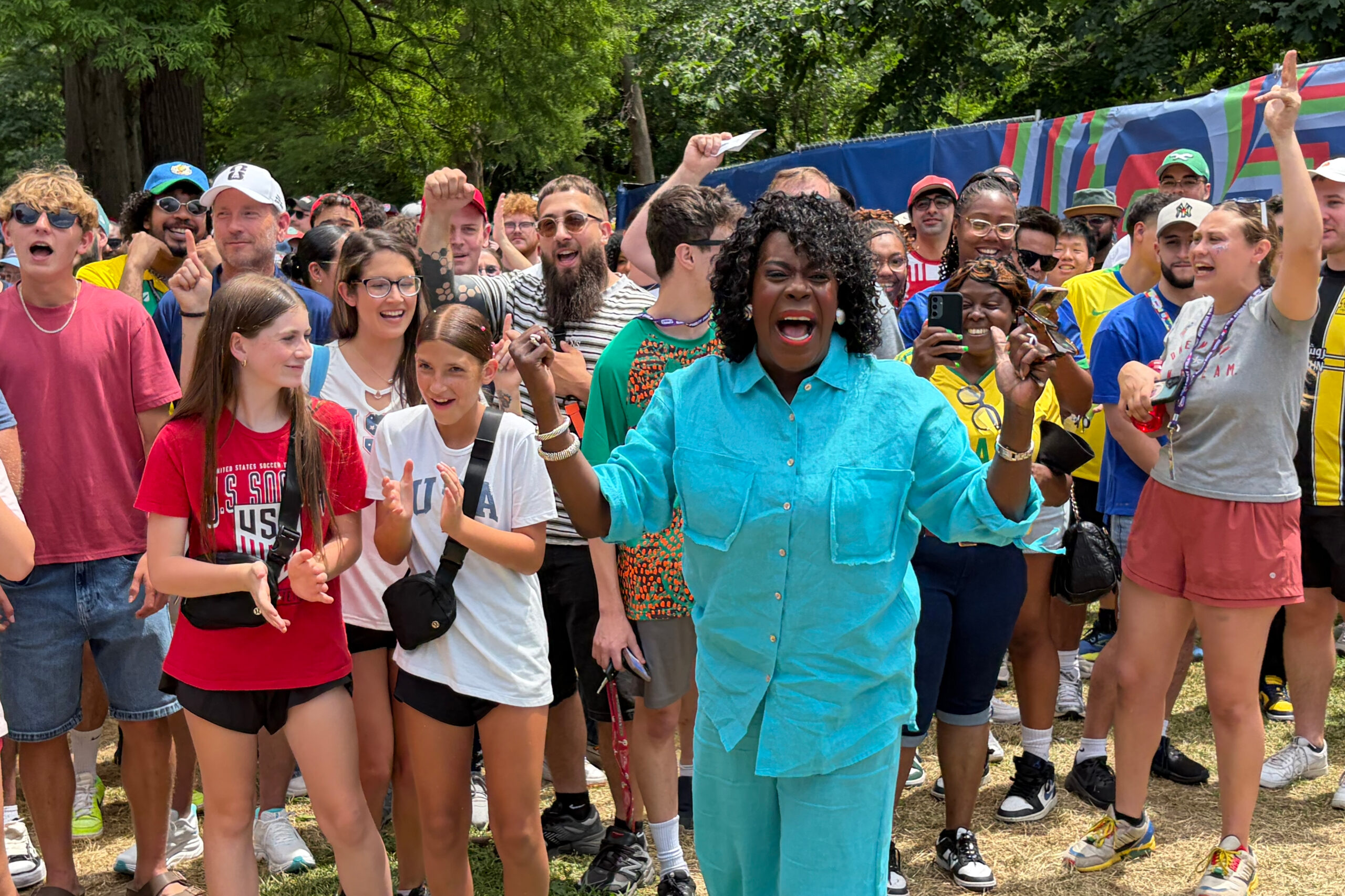
    Mayor Cherelle L. Parker helped open the gates of the fan festival before the USMNT’s clash with Australia.

    Parker walked into the crowd waiting at the festival’s main gate and posed for photos with fans waiting in line, including one with a group of traveling Scottish supporters.

    Parker said she was appreciative that fans are showing up to the city and the festival “authentically, as themselves.”

    “We are a global culture, and we are one people,” Parker said. “What makes America and the world so amazing, is that all of us, no matter the fabric, no matter the patchwork in our quilt, we make up a global humanity, and an American community that’s representative of everyone. I’m excited about it all.”

    Philadelphia Mayor Cherelle L. Parker at the opening of the FIFA Fan Festival.

    After greeting fans waiting to get into the festival on Sedgley Drive, Parker greeted a few vendors inside the festival. She stopped at the Bank of America tent to make a bracelet — she chose a black band with all the Philly-specific charms and a World Cup trophy charm — then stopped into the FIFA store on the festival grounds.

    With the help of a few store associates, Parker picked out some kits and World Cup merchandise, including both Brazil jerseys, a sea foam France away jersey, a yellow Curaçao jersey, two World Cup logo shirts, and a stripes U.S. jersey.

    Parker said she’s enjoyed seeing soccer fans out and about in the city.

    “We were on the parkway, and Brazil was turning it out and up,” Parker said. “Everywhere we’ve been, they’re like, ‘Philadelphia is beautiful, the experience is great.’ You can be a visitor one time, but they’ll feel Philadelphia.

    “You have to feel the energy here. We are not like any other city in the nation. There is something special about Philadelphia, and being able to share that Philly-ness with the world is something really exciting.”

    Moses Bango, 8, (center), playing with his friends Rudy Townsend, 8, (right), and Quinn Medaglia, 9, (left), at the FIFA Fan Festival at Lemon Hill Park on Friday.

    Early arrivals

    A line to enter the festival had already formed an hour before it opened to spectators at 2 p.m.

    Friday was the first time a U.S. match coincided with a match being played in Philadelphia, making the fan festival a watch party for American fans and a prematch hangout for Brazilian and Haitian fans.

    The festival is free to the public with registration, but only 15,000 people can be on the festival grounds at once.

    The festival did not reach full capacity during the U.S. match, but it got close. Festival organizers said attendance peaked at 14,000.

    According to the festival, more than 100,000 people entered its grounds in its first three days of operation.

    Gus Sanchez, who stood near the front of the line on Friday afternoon, said he and his family arrived around noon after biking over from Northeast Philly.

    Sanchez said he wanted to watch the U.S. men’s team take on Australia with a crowd, leading him to come over to the festival.

    “It’s something I can’t explain,” Sanchez, 53, said. “Seeing people from different countries getting together, having fun, enjoying the game.”

    Most of the fans waiting to enter the festival were wearing U.S. garb, but fans of Haiti, Brazil, and even Scotland, which kicked off with Morocco at 6 p.m., were represented.

    Alex Nelson said he traveled from Prestwick, Scotland, about 30 miles south of Glasgow, to the U.S. to experience the environment of the World Cup.

    He arrived in Philadelphia from Boston, where the Scots played Haiti last Saturday, to take in Scotland-Morocco at the fan festival on Friday.

    Nelson, sporting a tartan kilt, said he’s loved his time in Philly so far.

    “Very clean city,” Nelson said. “Everybody has been so helpful. Everybody’s mixed in — the Brazilians, the Moroccans, USA, all mixed. That’s what it’s all about.”

    Alex Nelson poses with his wife before entering the FIFA Fan Festival on Friday afternoon.

    Match moments

    The lively crowd had plenty to celebrate, as the U.S. went up, 1-0, after Cameron Burgess knocked in an Australian own goal in the 11th minute.

    The crowd erupted as the States took the lead, with chants of “U-S-A” following a frenetic celebration.

    The crowd at the Fan Festival goes wild as the U.S. goes up, 1-0, on an Australian own goal.

    [image or embed]

    — Owen Hewitt (@oyounothing.bsky.social) June 19, 2026 at 3:14 PM

    American fans celebrated again as Alex Freeman doubled the States’ lead with a goal in the 43rd minute.

    Their celebration was placed on a temporary hold, as the goal was called offside on the field and disallowed, but after a Video Assistant Referee check confirmed Freeman’s goal counted, the crowd got another opportunity to cheer.

    Double celebration for Alex Freeman’s goal to put the U.S. up 2-0 before the half — once before the VAR, and once after

    [image or embed]

    — Owen Hewitt (@oyounothing.bsky.social) June 19, 2026 at 3:48 PM

    Fans looked on nervously as Australia angled to get back into the match in its final 20 minutes, and they shouted when the game got chippy in its closing moments.

    The U.S. is through to the knockouts, and the crowd at the Fan Festival is loving it:

    [image or embed]

    — Owen Hewitt (@oyounothing.bsky.social) June 19, 2026 at 5:23 PM

    The crowd celebrated as the full-time whistle blew, marking a 2-0 victory for the Americans.

  • Mayor Parker declares public safety emergency at Bartram Village after squatters cause major damage

    Mayor Parker declares public safety emergency at Bartram Village after squatters cause major damage

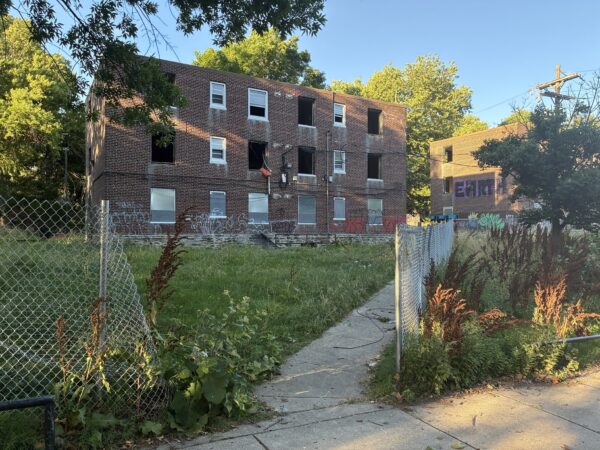
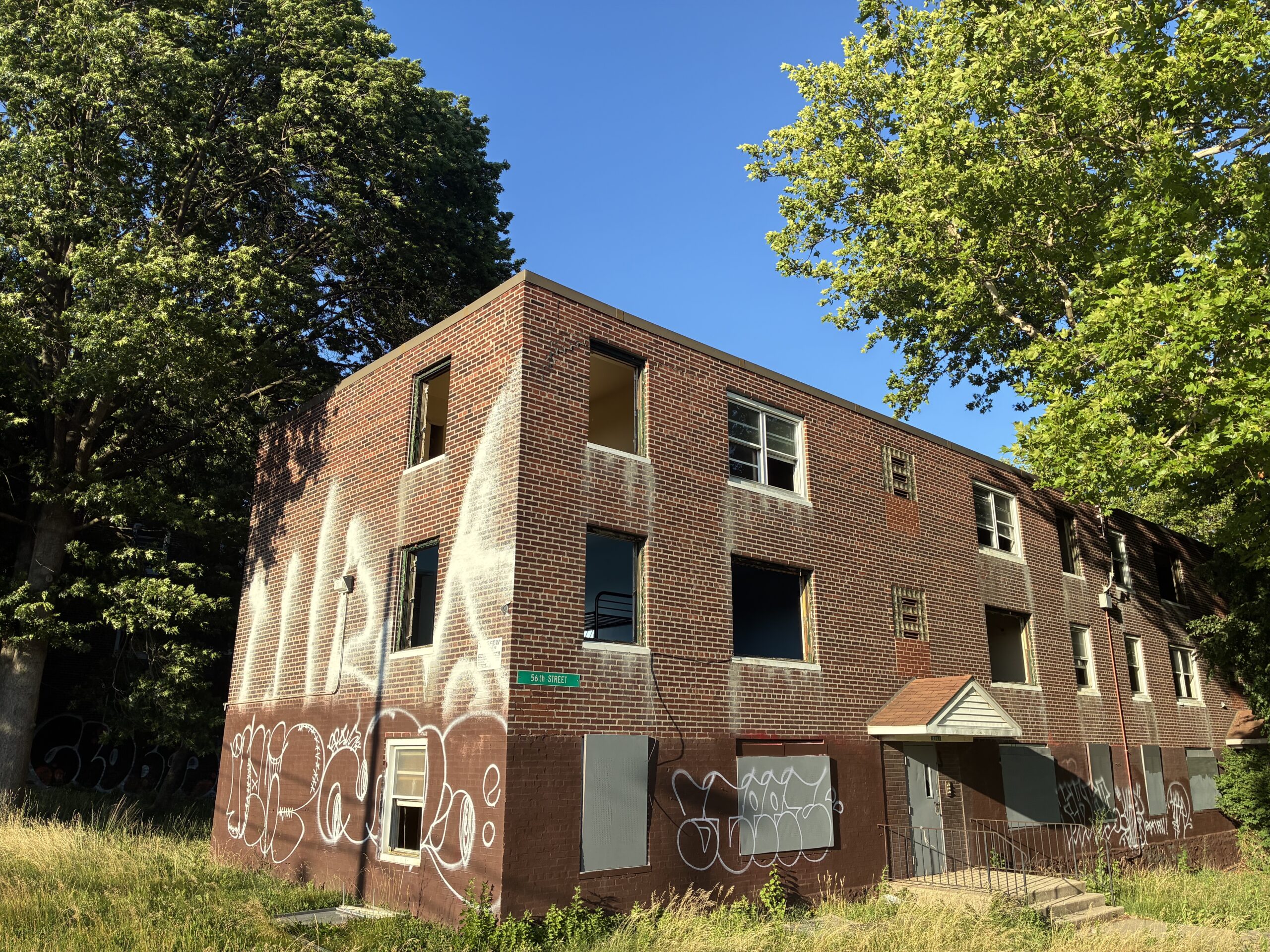
    Mayor Cherelle L. Parker has declared a public safety emergency at Bartram Village, a vacant Philadelphia Housing Authority (PHA) complex in Southwest Philadelphia, after squatters moved in and caused extensive damage.

    This declaration clears regulatory hurdles that had delayed PHA’s plans to rapidly demolish the 45-building complex, where the last tenant moved out in 2025.

    “For too long, these vacant buildings have posed serious safety risks to surrounding residents and the broader community,” Parker said in a statement Thursday. “This action clears the way to remove those hazards and replace them with new housing, new opportunity, and new investment.”

    Bartram Village dates to World War II, when it was built to host defense workers during the wartime industrial boom. The site was later transitioned to the traditional public housing program, providing affordable housing for up to 500 households.

    The complex is among the oldest in PHA’s portfolio. As federal funding for public housing declined precipitously in recent decades, the agency struggled to keep up with the maintenance of the aging structures. At the same time, drug dealing and other crime increased at Bartram Village.

    PHA has been planning a probable demolition for a major redevelopment since at least 2018, when it was estimated the buildings required repairs reaching almost $200 million in today’s dollars. Former residents would have a right to one of the 688 new units planned for the site.

    But after tenants were moved out, the 22-acre property attracted squatters despite PHA’s security patrols in the area. Beyond occupying the space, squatters tore copper wiring from the buildings and damaged the popular neighboring park and historic site of Bartram’s Garden.

    “We boarded it up, it was secured, and almost immediately we realized that folks were penetrating those areas in the back and coming in through Bartram’s Garden,” said Kelvin Jeremiah, president of the housing authority. “But because of the size … it became a real issue. The more we removed people, the more they came in.”

    Councilmember Jamie Gauthier’s office began raising alarms in February about the state of Bartram Village.

    “I warned that failing to act quickly would [exacerbate] safety issues and cost taxpayers’ money,” Gauthier said. “The buildings became hot spots for squatters and provided cover for inflicting over half a million dollars of damage to Bartram’s Garden.”

    An abandoned Bartram Village apartment, which will soon be demolished.

    Jeremiah said the housing authority couldn’t move to demolish the buildings immediately because Bartram Village is eligible for inclusion on the National Register of Historic Places. The mayor’s emergency declaration allows the agency to bypass a lengthy federal review process. The buildings are not protected by local preservation regulations.

    Following Parker’s actions Thursday, “we are now prepared to move forward on an expedited basis to have the site demolished,” Jeremiah said.

    PHA plans nine apartment buildings and over 150 townhouses for the Bartram Village site, supported in part by a $50 million grant from the federal government.

    It is a major part of Jeremiah’s aggressive plan to renovate all of the authority’s existing holdings while building 3,000 new units and buying at least 4,000 units from the private sector.

    The redevelopment has been years in the making because of tenant relocations and the federally mandated delay in demolition.

    “Southwest Philadelphians have waited far too long for promised improvements at Bartram Village,” said Gauthier, who represents the area.

    “I’m glad that Mayor Parker took the important step today of signing a public safety declaration giving PHA permission to demolish existing structures because they have been causing unsafe conditions to the community for a very long time,” Gauthier said in a statement.

  • Trump administration sues Philadelphia over ‘ICE Out’ face mask ban for law enforcement

    Trump administration sues Philadelphia over ‘ICE Out’ face mask ban for law enforcement

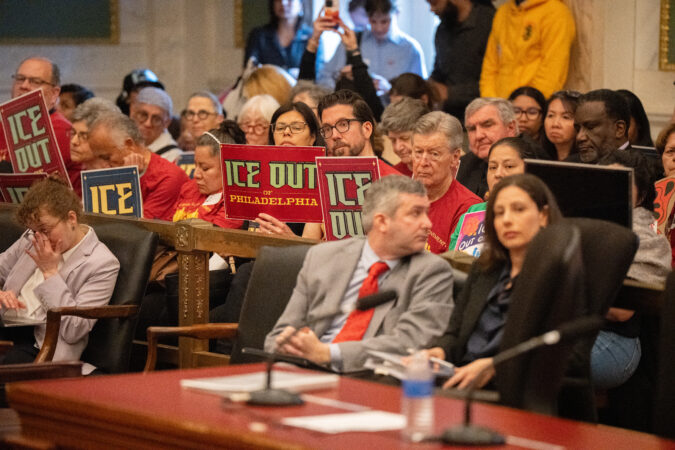
    President Donald Trump’s administration sued Philadelphia and some of its top officials Thursday over a new ordinance that bars law enforcement officers from concealing their identities and effectively bans federal immigration agents from wearing masks.

    The law, part of City Council’s recently adopted “ICE Out” package of legislation imposing some of the nation’s toughest local restrictions on immigration agents, is “blatantly unconstitutional,” the lawsuit said.

    “Such an ordinance also undermines the principles of federalism that underlie our entire constitutional order by seeking to prevent effective federal law enforcement within Philadelphia,” according to the complaint.

    The ordinance makes it a crime for any law enforcement officer, including Immigration and Customs Enforcement agents, to wear face coverings or conceal personal identifiers like badges and nameplates while carrying out their official duties in the city, and it requires officers to identify themselves. It also prohibits the use of unmarked vehicles.

    The bill includes exceptions allowing officers to wear masks in certain circumstances, such as medical emergencies or SWAT operations.

    An officer who violates the ordinance could be prosecuted, and risks up to 90 days in jail plus a fine.

    The suit, filed in the Eastern District of Pennsylvania, names as defendants the city, Mayor Cherelle L. Parker, District Attorney Larry Krasner, and City Solicitor Renee Garcia. It asks a federal judge to find the bills unconstitutional, warning that federal agents could suffer irreparable harm if the policy remains in place.

    “Protecting officers’ personal identities is particularly important during high-risk enforcement operations involving individuals with violent criminal history, gang affiliations, transnational criminal organizations, and known or suspected terrorists,” the suit says.

    The lawsuit marks the Trump administration’s most significant action targeting Philadelphia’s immigrant-friendly policies to date.

    “Today we regrettably had to sue the birthplace of this great Nation,” Associate Attorney General Stanley Woodward said in a statement. “But we will not sit by while Philadelphia flagrantly violates our Constitution, seeking to criminally punish our Nation’s law enforcement heroes merely for doing their job.”

    Philadelphia has long been known as a sanctuary city primarily because it does not comply with ICE-issued detainers, in which federal agents ask local jails to facilitate the arrest of undocumented immigrants in their custody.

    But Parker has largely avoided direct confrontation with the White House over the issue, a reversal from the combative stance of her predecessor, former Mayor Jim Kenney.

    Parker’s supporters credit her with careful, crafty management of the city’s relationship with Trump, noting Philadelphia has been spared from the surges of federal agents the president has sent to other cities. But immigration advocates say Parker has backed away from a fight at a time when strong action is most needed.

    The tension surfaced when Parker decided to let the mask bill became law without her signature, after Garcia warned the mayor that the provisions might not be legally enforceable.

    Council members, however, wanted to take a more proactive stance against Trump’s nationwide deportation campaign. And they seem to have gotten his attention.

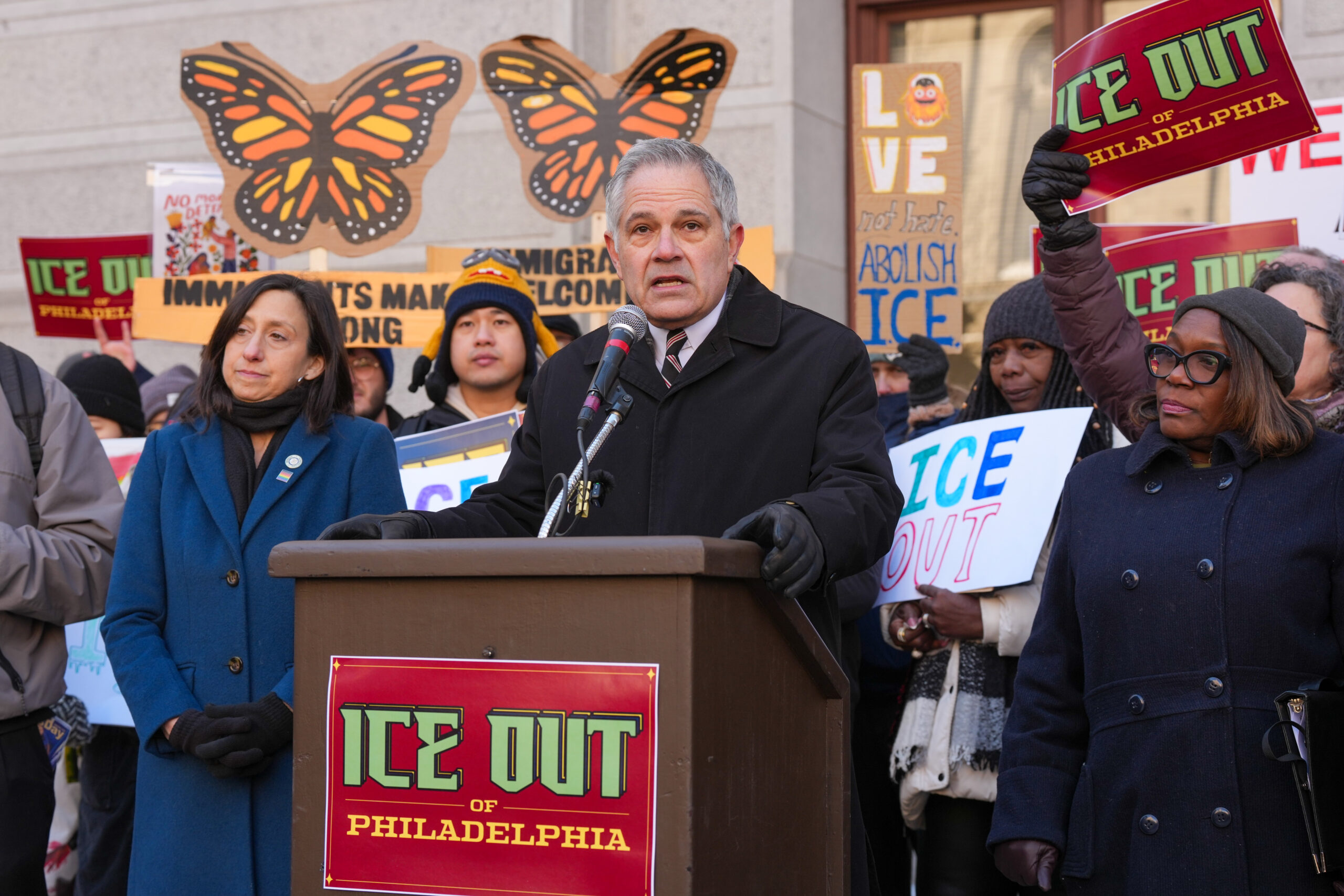
    Councilmember Kendra Brooks, who coauthored the “ICE Out” package, said she “will not back down from this fight.”

    “Philadelphia doesn’t like bullies. And we certainly don’t like masked PPD officers or ICE agents terrorizing our neighbors,” Brooks said in a statement. “The people of this city expected our leaders to fight back against Trump’s invasion. That’s what we did when we passed ICE Out.”

    Brooks noted that the lawsuit cites the Parker administration’s publicly aired concerns about the bill, and said other jurisdictions targeted by Trump after they passed legislation restraining ICE have not had to deal with that dynamic.

    “Other lawsuits aren’t dealing with the City’s own words about the laws being used against them,” Brooks said.

    The Parker administration declined to comment.

    The Pennsylvania Immigration Coalition condemned the lawsuit as a political effort to undermine local policies that keep families safe, strengthen public trust, and ensure city resources serve Philadelphians.

    “Once again the Trump administration is using the courts to wage a political campaign against immigrant communities, instead of addressing the real needs of our country,” coalition executive director Jasmine Rivera said in a statement. “Pennsylvanians have been clear, they do not want more immigration enforcement and detention centers, they want affordable education, healthcare, and housing.”

    Councilmember Rue Landau, the legislation’s other coauthor, criticized Trump for “targeting Philadelphia because our city dared to stand up and say that masked federal agents should not be able to operate in our communities and target our vulnerable neighbors without accountability.”

    ‘We will arrest you’

    In addition to banning officers from concealing their identities, the “ICE Out” package, which in April passed Council with a veto-proof supermajority, prohibits federal immigration agencies from staging raids on city-owned property, bans discrimination on the basis of citizenship status, and prohibits the city from engaging in most forms of information-sharing with ICE.

    The legislation also codified some of Philadelphia’s long-standing sanctuary city policies that had been established only through executive order — most notably a ban on city jails honoring ICE detainers not accompanied by judicial warrants.

    Parker signed six of the seven bills in May, and allowed the ban on agents hiding their identities to become law without her signature.

    Parker did not sign the bill after Garcia expressed concern about the ban’s “significant legal and operational challenges,” the suit notes. The mayor’s signature would signal the Parker administration’s intent to enforce the requirement, the solicitor said, and would send an inaccurate signal that the prohibition was enforceable.

    While Parker might have attempted to distance herself from the requirement by not signing the bill, the lawsuit quotes Krasner threatening federal agents with prosecution.

    “We will arrest you. We will put handcuffs on you. We will close those cuffs. We will put you in a cell,” Krasner said in January. “We will do everything in our power to convict you and we will make sure you serve your entire sentence because Donald Trump has no power whatsoever to pardon you.”

    Larry Krasner shown here during a press conference at City Hall to announce a package of bills aimed at pushing back against ICE enforcement in Philadelphia, January 27, 2026.

    Philly case could have national stakes

    The complaint makes clear that by bringing this lawsuit, the Department of Justice is not closing the door on challenges to other ICE Out ordinances.

    Around the country, more and more Democratic-led communities are attempting to regulate what ICE can and cannot do within their jurisdictions. And doing so with the support of immigrant communities.

    “In all the ways that ICE agents terrorize and violate the rights of our community, masked kidnappings are ones we consistently see and hear about,” said Erika Guadalupe Núñez, executive director of Juntos, the South- Philadelphia-based immigrant advocacy organization.

    She said, however, that “we’re part of a strong local movement organized to fight back, and we all embody the spirit of this city, we will not back down easily.”

    In March, the Montgomery County Board of Commissioners passed a resolution that restricted the agency from using county property or resources for civil investigations.

    Issues around masks and identification have been particularly contentious.

    Activists in Philadelphia and elsewhere say ICE arrests often look like kidnappings or muggings, where men in ordinary clothes, with no visible identification, suddenly descend on their target. The people being arrested may think they are being attacked by criminals.

    Several states, including New Jersey and New York, have passed laws to ban law enforcement officers, including ICE, from wearing facial coverings while on duty.

    In April, the U.S. Court of Appeals for the Ninth Circuit upheld a lower court’s injunction on a California law that required federal agents to “visibly display identification.” The unanimous three-judge panel ruled that the requirement violated the Constitution’s supremacy clause, which bars the states from regulating federal government activities.

    New Jersey Gov. Mikie Sherrill signed bills in March that essentially banned ICE agents and police from wearing masks on the job, drawing pushback from Republican lawmakers. The Trump administration sued New Jersey in federal court in April, and the New Jersey Monitor and others reported that ICE agents continued to cover their faces during recent clashes with demonstrators outside the Delaney Hall immigrant detention center in Newark.

    The Trump administration says federal immigration officers wear face coverings to protect themselves and their families from anti-ICE activists who may seek to identify and harm them. Assaults and death threats are on the rise, the administration said.

  • ‘Unattainable’: POWER Interfaith calls on City Hall to address affordability crisis. But Philly doesn’t have many good options.

    ‘Unattainable’: POWER Interfaith calls on City Hall to address affordability crisis. But Philly doesn’t have many good options.

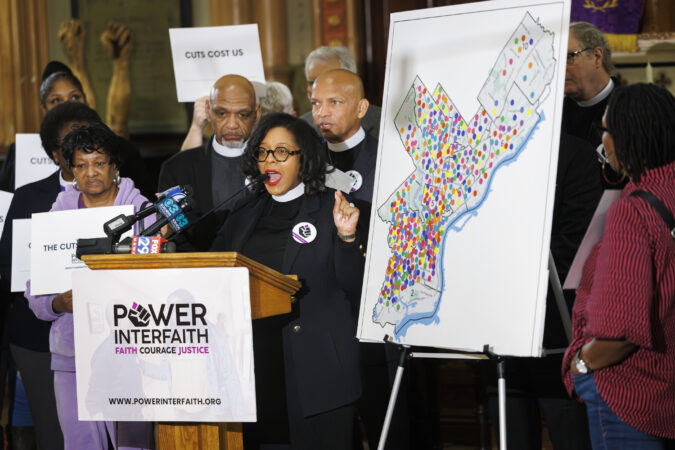
    Philadelphians are facing a growing affordability crisis, and City Hall needs to act quickly to counter the impact of funding reductions from the federal and state governments, leaders of the progressive group POWER Interfaith said Monday.

    “Living comfortably in our city is becoming unattainable,” the Rev. Cean R. James, senior pastor of the Salt + Light Church, said at the gathering at Arch Street United Methodist Church. “The mayor’s recent budget does focus on economic mobility, and that is noble. But it does not go far enough. It’s not sustainable.”

    POWER, an influential coalition that includes more than 50 congregations in the city, on Monday released a report based on interviews with 750 city residents at church meetings, neighborhood gatherings, and other events. The informal survey found:

    • About two-thirds of respondents had to forego another bill to pay mortgage or rent, and 80% struggled to afford property taxes.
    • A majority of congregations surveyed have seen the number of unhoused members in their congregations increase.
    • Ninety percent of respondents said the city hasn’t done enough to “invest in their community’s needs.”

    POWER leaders on Monday called on City Council to hold a hearing on affordability. But the report did not include policy prescriptions for addressing the crisis it described, and it’s far from clear what city lawmakers or Mayor Cherelle L. Parker can do to make it easier to get by in the city.

    Philadelphia already has a relatively small property tax burden, and the city has some of the strongest protections in the nation for people struggling to stay in their homes.

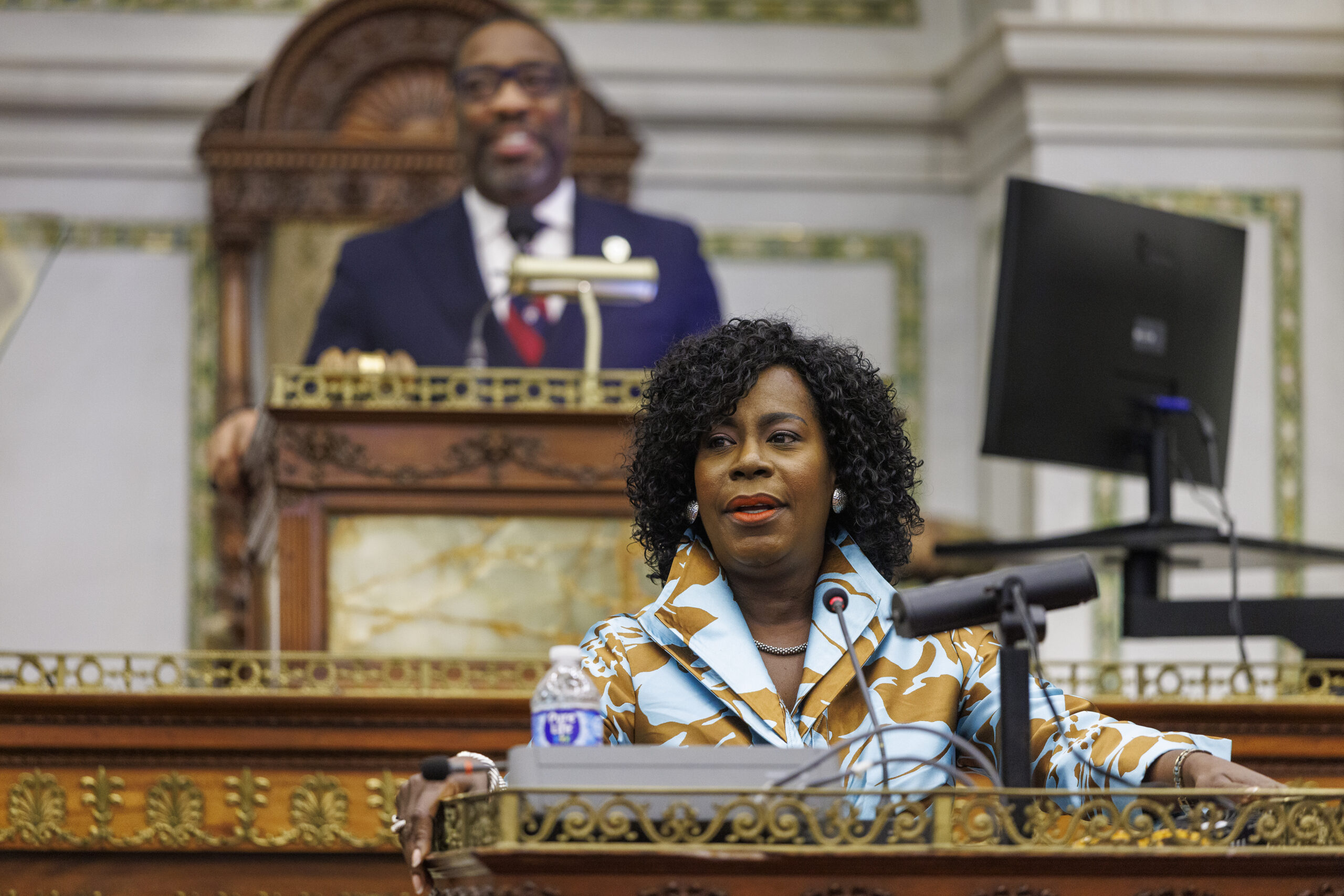
    Philadelphia Mayor Cherelle L. Parker speaks to City Council, guests, and dignitaries at start of her budget presentation in Council Chambers last Thursday.

    Parker last year unveiled her Housing Opportunities Made Easy, or H.O.M.E., initiative, which involves selling $800 million in city bonds to fund programs aimed at making housing more accessible and affordable. Last week, she unveiled a $7 billion proposal for the next city budget with a focus on economic mobility, including investments in workforce development training, internship opportunities, and financial counseling.

    But with little ability to affect the cost of goods and state-imposed restrictions on how it can collect taxes — preventing the city from imposing higher rates on wealthier residents — Philadelphia officials have limited options when it comes to addressing affordability.

    window.addEventListener(“message”,function(a){if(void 0!==a.data[“datawrapper-height”]){var e=document.querySelectorAll(“iframe”);for(var t in a.data[“datawrapper-height”])for(var r,i=0;r=e[i];i++)if(r.contentWindow===a.source){var d=a.data[“datawrapper-height”][t]+”px”;r.style.height=d}}});

    The POWER report acknowledged the predicament.

    “To be very clear: There are no easy answers to these challenges,” the report said. “We must prepare serious and sober projections about the impacts of the impending revenue losses we face, and then we must develop a menu of policy options to soften those impacts and mitigate harm to residents. And we must ensure that any actions we take do not make the current cost-of-living crisis even worse.”

    The city’s limited options on addressing affordability won’t stop it from being a major topic during this spring’s budget negotiations. Affordability has recently become a political buzzword, and Democrats are hoping to win back Congress in November in part by blaming rising costs on President Donald Trump’s administration.

    This year, thousands of Pennsylvanians are abandoning the state’s Affordable Care Act insurance exchange after congressional Republicans declined to renew expanded healthcare subsidies. Trump’s efforts to increase tariffs and the war with Iran threaten to increase inflation nationwide. SEPTA last year increased fares and is still facing a fiscal crisis due, in part, to objections by GOP lawmakers in Harrisburg.

    It’s unlikely the city could meaningfully address any of those losses without significantly increasing taxes, which would in turn make Philadelphia less affordable. And hiking any of the city’s three major sources of local revenue — the wage, property, and business taxes — all come with significant downsides or political roadblocks.

    Increasing the wage levy alone would make the city’s tax structure more regressive, meaning a greater share of the overall tax burden would be paid by poorer workers.

    Increasing the real estate tax rate could make the tax structure more progressive, because property owners tend to be wealthier than the average resident. But POWER and other left-leaning groups generally oppose that option due to concerns about displacing low-income homeowners.

    And when it comes to the business income and receipts tax, or BIRT, City Hall has recently been moving in the opposite direction of POWER’s goals. Council last year approved a proposal championed by Parker and Council President Kenyatta Johnson that will provide annual cuts to the BIRT rate over the next 12 years.

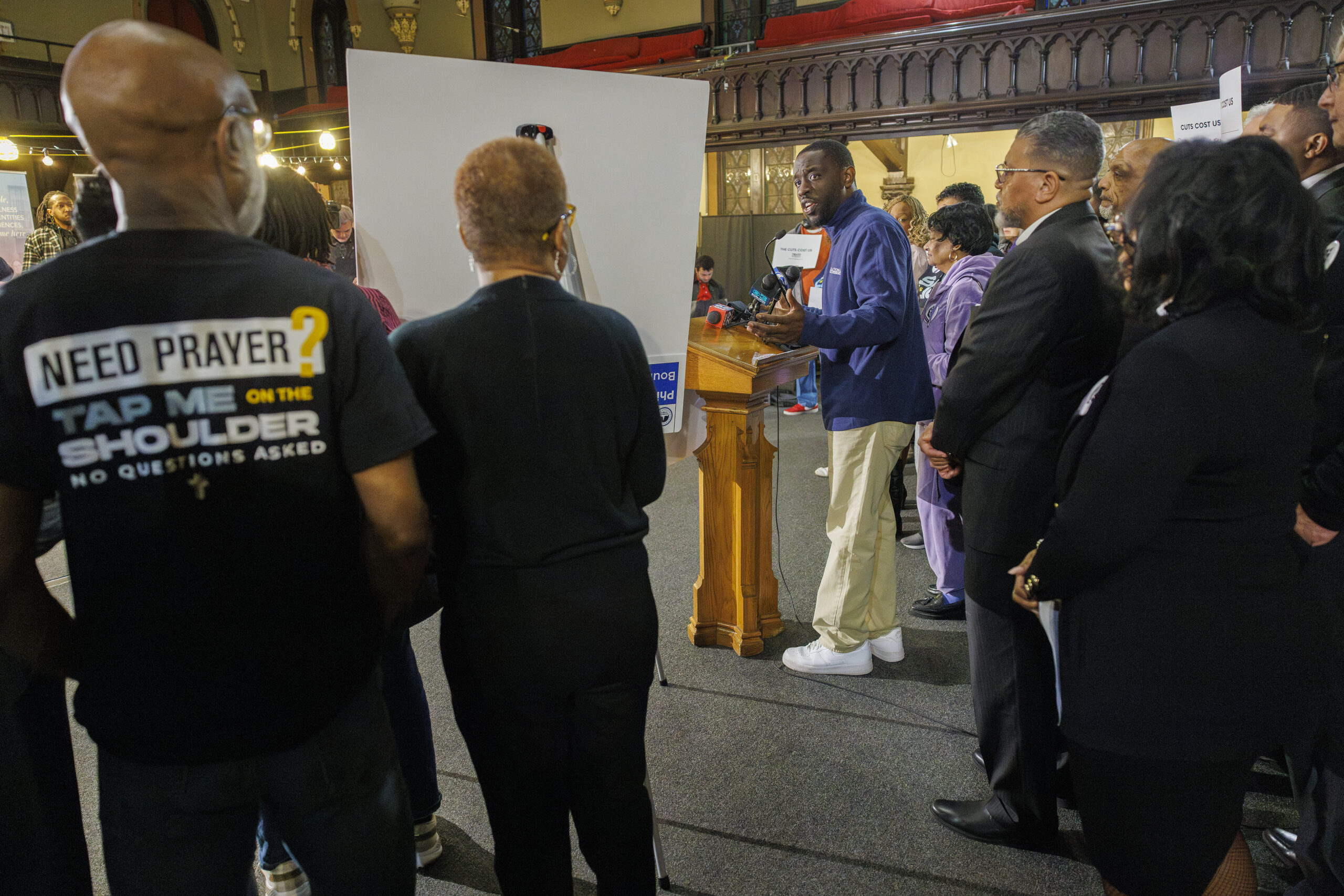
    Philadelphia City Councilmember Isaiah Thomas addresses members of POWER Interfaith during a news conference on affordability at Arch Street United Methodist Church. at Broad and Arch Streets, on Monday.

    POWER leaders have called on lawmakers to pause those reductions or even increase the tax. But the political headwinds they face in City Hall were evident at Monday’s news conference. Two of three Council members in attendance voted for the business tax cuts last year: Democrats Jamie Gauthier of West Philadelphia, and Isaiah Thomas, who represents the city at-large.

    “It’s very difficult, as we discussed in the past, for local government to be able to step up and address some of these concerns,” Thomas said at the event. “There’s not much we can do as it relates to the catastrophe that we’re seeing around healthcare. There’s not much we can do as it relates to all the tariffs and the cost of living that’s going up significantly. But there are things that we can do, that we control.”

    He pointed to efforts by Councilmember Nicolas O’Rourke to preserve a program that provides free SEPTA fares for low-income Philadelphians and to Gauthier’s advocacy to direct more housing money to the city’s poorest residents.

    The Rev. Carolyn C. Cavaness, pastor of Mother Bethel AME, said she understands that lawmakers have to deal with complicated political dynamics. But she said she hopes that POWER’s focus on the affordability crisis will reset the conversation.

    “I always think about context. … Sometimes we’re in tight spaces,” Cavaness said at the POWER event. “I think also conditions then were much different than what they are now. … We’re really back to ground zero.”

  • Philly City Council will consider limiting ICE next month as new Pa. detention centers loom

    Philly City Council will consider limiting ICE next month as new Pa. detention centers loom

    Philadelphia City Council next month will consider legislation to place some limits on immigration enforcement in the city and is planning a daylong hearing to parse the proposals.

    Council President Kenyatta Johnson, a Democrat who controls the flow of legislation in the chamber, said he has scheduled a hearing to take place at 10 a.m. on April 6 before the Committee of the Whole, which comprises all 17 Council members.

    That means every lawmaker will have the opportunity to question members of Mayor Cherelle L. Parker’s administration, as well as immigration advocates, about the package.

    The timeline means mid-April is the earliest that Council could pass the package. Fifteen of the body’s 17 members have expressed support, and that constitutes a veto-proof majority.

    City Councilmembers Rue Landau, a Democrat, and Kendra Brooks, of the progressive Working Families Party, sponsored the legislation introduced in January, which prohibits ICE agents from wearing masks, bans them from staging raids on city property, and makes it illegal to discriminate against someone based on immigration status.

    The legislation also clarifies how and when Philadelphia officials can coordinate with federal immigration enforcement.

    Parker has said an executive order signed by her predecessor remains in place, limiting some cooperation between law enforcement and ICE. But the legislation that Council is considering goes further, codifying a prohibition on city officials assisting ICE and prohibiting data-sharing agreements.

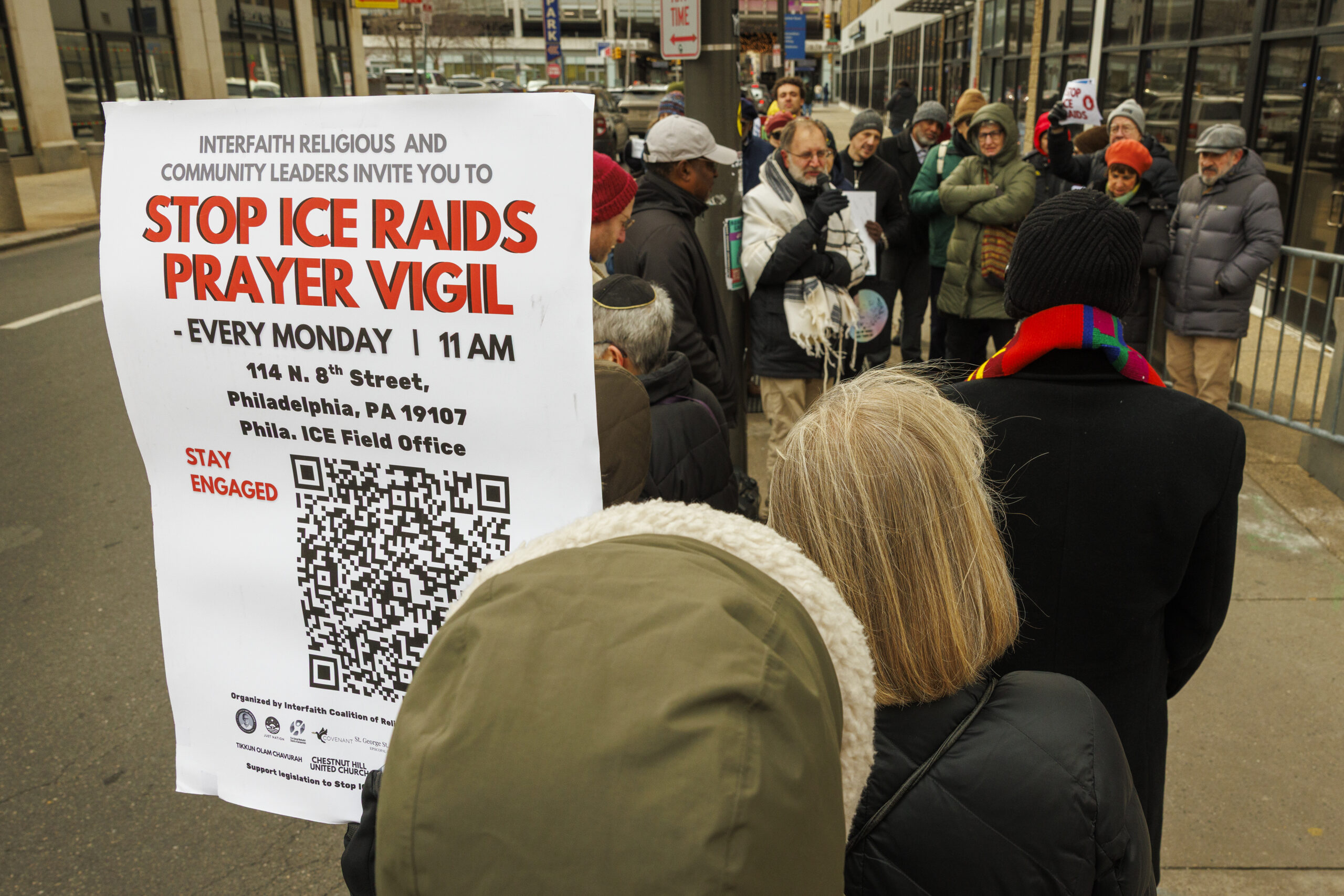
    Interfaith religious and community leaders prayer vigil outside the Philadelphia U.S. Immigration and Customs Enforcement office at 114 N. 8th Street in Center City on March 2.

    It comes as the U.S. Immigration and Customs Enforcement agency is undergoing a revamping to its leadership structure. President Donald Trump on Thursday ousted Department of Homeland Security Secretary Kristi Noem, and said he intends to nominate U.S. Sen. Markwayne Mullin (R, Okla.) to replace her.

    At the same time, Democrats across Pennsylvania, including Gov. Josh Shapiro, continue to denounce ICE, including the agency’s plans to develop two immigration detention centers outside the city.

    Several local officials said this week that they’re worried the federal government will surge enforcement efforts in Philadelphia in order to fill the centers, and that the city must move quickly to pass its legislation.

    “I’m extremely concerned,” said City Councilmember Quetcy Lozada, a Democrat whose North Philadelphia-based district has a large immigrant population. “We need to really figure out what our position is as it relates to working with ICE very closely. We have community residents that we should be protecting.”

    The Trump administration this year quietly spent millions of dollars buying warehouses in two dozen communities across the country.

    Two are in Pennsylvania and could reportedly hold about 9,000 beds in total.

    Spotlight PA reported Tuesday that ICE is referring to a facility in Tremont, located in Schuylkill County, as the “New ICE Philadelphia Mega Center” and one in Upper Bern Township in Berks County as the “New ICE Philadelphia Processing Center.”

    Landau said Council is “paying close attention to these developments and the questions they raise about the expansion of detention facilities in our area.”

    “The majority of Philadelphians are deeply disturbed by ICE’s tactics,” she said.

    Johnson said in an interview last month that the detention centers are a reason to move swiftly on the ICE-related legislation.

    The proposed laws, he said, are a means to “be out in front” of a potential surge of immigration enforcement in the city.

    “Some people say, ‘Well, they’re not even here yet.’ But they just built a warehouse in [Berks County],’” Johnson said. “I believe that was strategic. It took some planning to say ‘We want to set up shop right in your backyard.’”