Tag: Cherelle L. Parker

  • Is 2025 Philadelphia’s year of the parking garage?

    Is 2025 Philadelphia’s year of the parking garage?

    Three large stand-alone parking garages have been proposed in Philadelphia this year, unusual projects in a city where parking operators have long complained that high taxation makes it difficult to run a business.

    The latest is a 372-unit garage near Fishtown and Northern Liberties at 53-67 E. Laurel St. near the Fillmore concert hall and the Rivers Casino.

    The developers see it as a strong bet for an area of the city that has seen a surge of apartment construction, which, due to Philadelphia’s parking laws, requires developers to only build spaces to serve a fraction of the units.

    “There’s been about 2,500 units that have come online within a 5- to 10-minute walk” of the planned garage, said Aris Kufasimes, director of operations with developer Bridge One Management. “When you’re building those on 7-1 [apartments to parking spaces] ratios, that leaves a massive hole. Where is everybody going to put their vehicles?”

    Despite central Philadelphia’s walkability and high levels of transit access, two other developers have made similar calculations this year.

    In the spring, Children’s Hospital of Philadelphia (CHOP) revealed plans for a 1,005-space parking garage in Grays Ferry along with a shuttle service to spirit employees to the main campus a mile away.

    In August, University Place Associates unveiled plans for a 495-unit garage. About a fourth of it will be reserved for the use of the city’s new forensic lab, but the rest will be open to the public.

    All three projects have baffled environmentalists and urbanists, who thought Philadelphia was moving away from car-centric patterns of late 20th-century development.

    It’s also surprised parking operators in the city, who say national construction cost trends and high local taxation make it difficult to turn a profit.

    Legacy parking companies in Philadelphia like E-Z Park and Parkway Corp. have been selling garages and surface lots for redevelopment as anything other than parking. They say the city has lost 10,000 publicly available spaces in the last 15 years, bringing the total to about 40,000 in Center City.

    “I don’t think I’ll ever build another stand-alone parking facility,” said Robert Zuritsky, president of Parkway Corp. and board chair of the National Parking Association. “It doesn’t make any sense.”

    Zuritsky and other parking companies have long noted that operators in Philadelphia, who often have unionized workforces, get hit with parking, wage, property, and the Use and Occupancy Tax.

    When combined with the soaring cost of building new spaces across the nation, it’s difficult to turn a profit in Philadelphia.
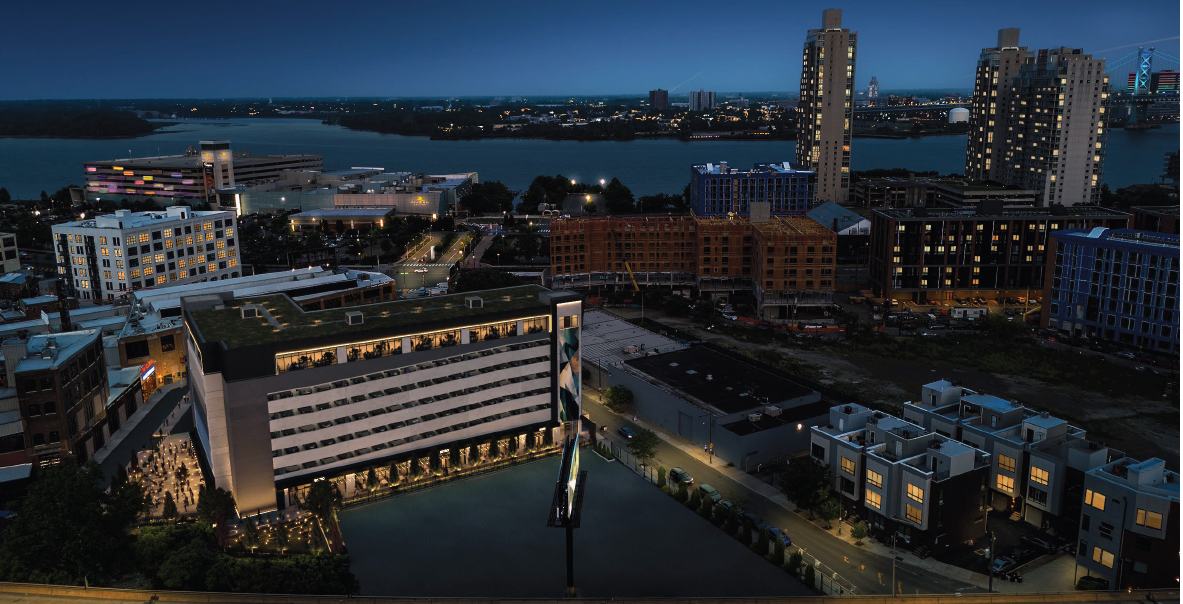
    A rendering of the Fishtown garage, looking towards the Delaware River.

    Zuritsky says it costs $60,000-$70,000 a space to build an aboveground lot in today’s environment and $100,000 to $150,000 below ground.

    “It’s like building a house for a car,” he said.

    Depending on hyperlocal peculiarities, Zuritsky says that taxation in Center City can eat up to 60% of the money they bring in and that to profit from new construction, an operator would have to charge $3,000 per space a month.

    “I wish people luck, the ones that are moving in,” said Harvey Spear, president of E-Z Park. “Between taxes, insurance, and labor, it comes to, like, 70-some percent of what we take in. We have more equipment now that does away with a lot of labor; we’re trying to compensate with that.”

    Urbanist and environmental advocates, meanwhile, have condemned the new garage projects, arguing that they will add to carbon emissions, air pollution, and traffic congestion.

    “A massive parking garage less than half a mile from the El [in Fishtown] is the wrong direction for any city that claims to take climate action seriously,” said Ashlei Tracy, deputy executive director with the Pennsylvania Bipartisan Climate Initiative. “SEPTA is already working to get more people out of cars and onto transit, but projects like this one and the one from CHOP only make that harder.”

    Here are the parking projects in the pipeline.

    Fishtown: 372 spaces

    The garage, with architecture by Philadelphia-based Designblendz, doesn’t just contain parking. It includes close to 14,000 square feet of commercial space on the first floor, which the developer hopes to rent to a restaurant — or two — on the edges of one of Philadelphia’s hottest culinary scenes.

    Another over 16,000-square-foot restaurant space is planned for the top floor, with views of the skyline and river. Both the top and bottom floors also could be used as event spaces.

    Kufasimes says that this aspect of the project could partly offset the kinds of costs that parking veterans warn of.

    “Our due diligence team went through those numbers and vetted them pretty thoroughly: The returns are what they needed to be,” Kufasimes said. “It’s got a multifunction of income streams, so we think that that really will help play a larger role.”

    Kufasimes also said a parking garage made sense in an area that’s seen more development than almost any other corner of Philadelphia. When investors purchased the land at 53-67 E. Laurel St. and approached his company for ideas, they met with other stakeholders in the neighborhood and determined parking would be appreciated.

    “It wasn’t necessarily all about the profit,” Kufasimes said. “A lot of people this day and age, that is their number-one goal. If this is a slightly lower return in the long run but can be better accepted by the community as a whole, we think that actually raises the value of the asset.”
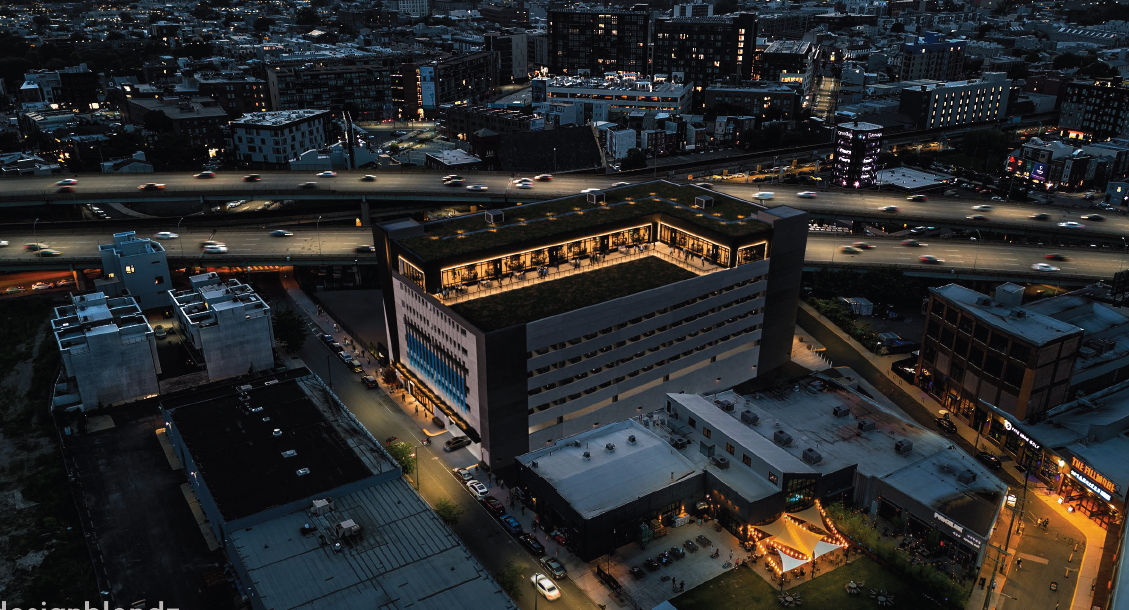
    An overhead-perspective rendering of the Fishtown garage.

    At an October meeting of the Fishtown Neighbors Association, that argument appeared to pay off. Unlike most community meetings where a large new development is proposed, there were no adamant opponents of the project. The project also includes a 20,000-square-foot outdoor space, a green roof, and a to-be-decided public art component. All of that helped, too.

    “It’s nice seeing a parking garage, of all things, be as pedestrian-friendly and thoughtful as this,” one speaker said during the Zoom meeting.

    University City: 495 spaces

    The garage at 17 N. 41st St. is part of a larger complex of developments in a corner of West Philadelphia’s University City.

    Dubbed University Place 5.0, it largely exists because of a major expansion of the municipal bureaucracy west of the Schuylkill.

    For years the city has sought a new location for its criminal forensics laboratory. The debate became heated in City Hall, with numerous Council members making the case for locations within their districts.

    Councilmember Jamie Gauthier pushed for its location in University City Place 3.0, a newly built, state-of-the-art life sciences building that was coming online just as its intended industry was slowing down in the face of higher interest rates.

    To get the crime lab, Mayor Cherelle L. Parker’s administration said the police department would need ample parking. That’s where the new garage comes in.

    In June, Gauthier passed a zoning overlay that cleared away the regulatory hurdles to the project. Six weeks later, the developers revealed University City Place 5.0, which has 29 parking spaces on the ground floor reserved for official use by forensics vehicles and 100 spaces reserved for city employees.
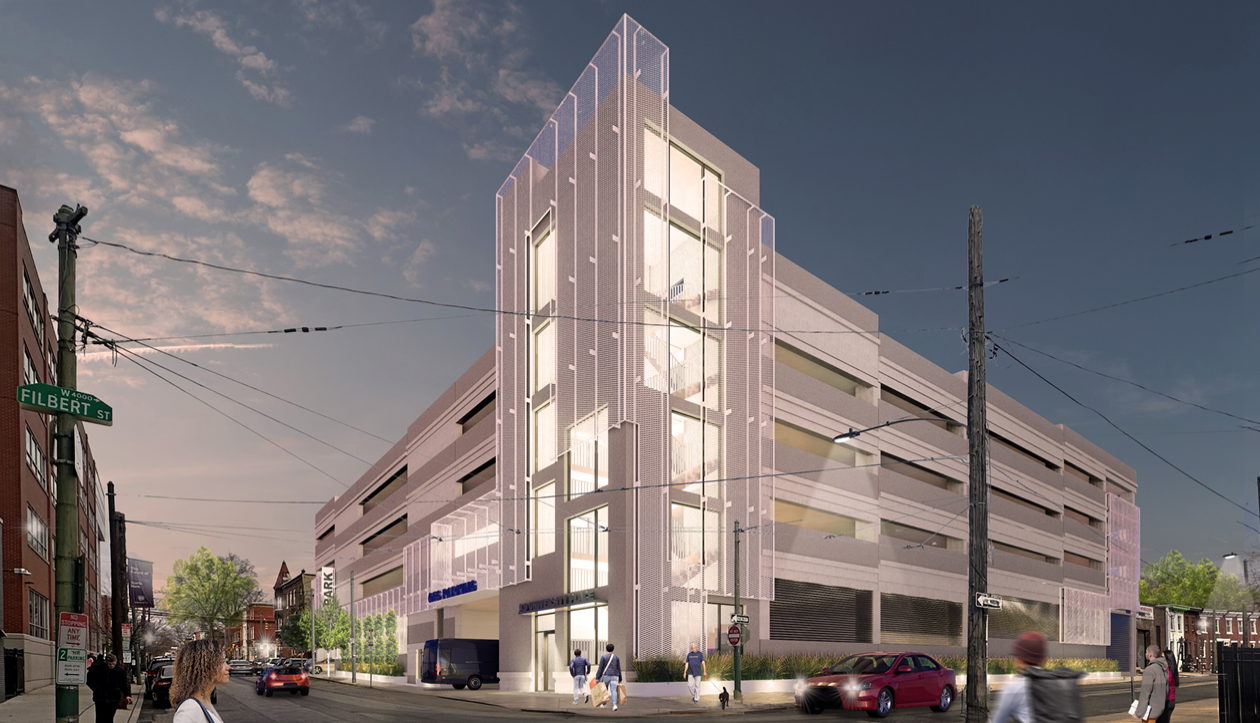
    A rendering of the proposed University City parking garage as seen from 42nd and Filbert Streets.

    Designed by Philadelphia-based ISA Architects, the garage is also meant to serve University Place Associate’s other large developments in the area. Akin to the Fishtown garage, they have also sought to make the development pedestrian friendly, with a dog park, green space, and public art.

    The local community group, West Powelton Saunders Park RCO, also embraced the proposal.

    “The community met regarding this project back in August, and … they were all in support of this project,” Pamela Andrews, president of the West Powelton Saunders Park RCO, said at the city’s September Civic Design Review meeting. “We have a tremendous problem with parking, and the community members felt this was a much needed and welcome addition.”

    Grays Ferry: 1,005 parking spaces

    CHOP’s thousand-car parking garage by far has been the most controversial of the proposals. But it also makes the most economic sense for the owner. Unlike the other garages — or those owned by Parkway and E-Z Park — it will be owned by a nonprofit and exempted from many of the taxes that make it so expensive to own parking in Philadelphia.
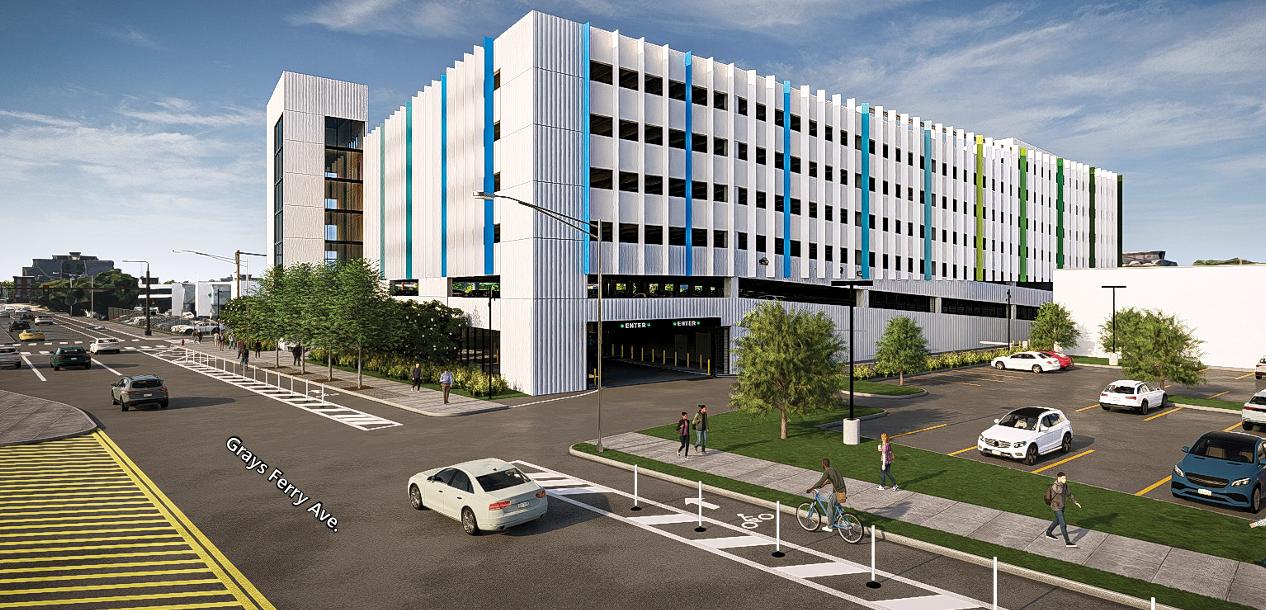
    A rendering of the new parking garage CHOP plans for Grays Ferry.

    The hospital purchased the property at 3000 Grays Ferry Ave., next to the Donald Finnegan Playground, for almost $25 million last year.

    The seven-story development, which, plans show, would have far fewer amenities than its University City and Fishtown counterparts, is meant to serve CHOP’s new research facilities in Fitler Square and the new patient tower set to open in 2028.

    “We recently secured permits and have begun construction on the new parking garage at 3000 Grays Ferry Ave.,” a CHOP spokesperson said. “The full construction is expected to go through the fall of 2026. CHOP continues to engage with the community by providing support, timely updates and addressing feedback during construction.”

    At the time of its unveiling, CHOP argued that the massive garage was needed as SEPTA threatened to become unreliable due to a political funding crisis in Harrisburg. But detractors appeared almost immediately to denounce the hospital for worsening air quality in a lower-income neighborhood that is already a hot spot for asthma.

    The project’s design was derided at the city’s advisory Civic Design Review panel and has attracted protest rallies, unlike its counterparts in University City or Fishtown.

    There are no regulatory hurdles to the development, but changes in the political or economic landscape could make it difficult to embark on a large capital project. Notably, the University of Pennsylvania proposed an 858-space garage in 2023 for the nearby Pennovation Center and has never broken ground.

  • City Controller Christy Brady is facing a challenge from Republican Ari Patrinos

    City Controller Christy Brady is facing a challenge from Republican Ari Patrinos

    City Controller Christy Brady, seeking her first full term as Philadelphia’s independently elected fiscal watchdog, is being challenged by Republican Ari Patrinos in the Nov. 4 general election.

    The controller’s office is charged with auditing the city’s finances and investigating fraud, waste, and abuse.

    But despite that critical role, there hasn’t been much drama in this year’s race.

    Patrinos, a former stockbroker and Philadelphia public school teacher, acknowledged the odds are against him in heavily Democratic Philadelphia and said he has no particular complaints about Brady’s performance.

    Instead, he said, he ran because “it was important that somebody run on the ticket.”

    “The truth is nobody wanted to run, and my ward leader asked me if I would run,” said Patrinos, who has not reported raising any money for his campaign. “I didn’t have any specific attacks on Brady. My concern is that the city is too single-party, and I think the city functions better when you have a two-party system.”

    Brady, a Democrat who has a $250,000 campaign war chest she likely won’t need to use this year, has the support of much of the local political establishment, including the Democratic City Committee and the building trades unions.

    A 30-year veteran of the controller’s office, Brady has struck a notably conciliatory tone during her tenure, striving to work collaboratively with Mayor Cherelle L. Parker’s administration rather than butt heads with the executive branch, as many of her predecessors have done.

    “Because of my experience when I took office two years ago, I hit the ground running,” she said.

    She pointed to her office’s audit that uncovered that the Philadelphia School District had made about $700,000 in payments to fake vendors as part of a cyber scam and to her investigation finding that fraudulent use of the property tax homestead exemption was costing the city and school district about $11.4 million per year.

    Brady was appointed acting controller in 2022 by then-Mayor Jim Kenney when Rebecca Rhynhart resigned from the post to run for mayor. Brady then won a 2023 special election to finish Rhynhart’s term, which ends in January.

    Seeking a full four-year term for the first time, Brady this year ran uncontested in the Democratic primary.

    “The biggest question I get [on the campaign trail] is: What does a controller do?” she said. “And so I’m getting out there and spreading the word of what we’re currently working on and what we do in the office.”

    The controller earns an annual salary of $171,000 and oversees an office with more than 120 employees and a budget of about $11.8 million.

    Patrinos also had no opponent in the May primary. He said he has been spending much of his time on the campaign trail promoting Pat Dugan’s campaign for district attorney.

    Dugan, a self-described “lifelong Democrat,” lost to District Attorney Larry Krasner in the Democratic primary but has accepted the GOP nomination to take a second swing at the incumbent in the general election.

    “I spend like half my time when I campaign advocating for Dugan because I’m very concerned about the crime,” Patrinos said.

    From Philly to Harvard and back

    Patrinos, who lives in Chestnut Hill, said he was a Democrat until about four years ago, adding that he voted for Joe Biden in the 2020 presidential election.

    His conversion was prompted primarily by his alma mater, Harvard College, which he felt had too enthusiastically embraced a “woke” stance.

    “The immediate driving factor was on the cultural front. It was what was going at Harvard,” he said. “I’m a little bit of an anti-woke warrior. … 2020 was peak woke.“

    Academia’s leftward trajectory and the Biden administration’s “terrible” handling of the pandemic combined to leave Patrinos with the feeling that he had no place in the Democratic Party, he said.

    “These Ivy League liberal types who really don’t have a sense of what’s going on in the lives of average Americans — they seemed to be so indifferent to the negative effects of their policies,” he said.

    He became involved in local Republican politics and helped boost President Donald Trump’s Philadelphia campaign in 2024.

    “I’m not a MAGA guy, so I didn’t join [the GOP] because of Trump,” he said, “but honestly I’m very happy with the higher education stuff, the hardcore stand he’s taken with Harvard.”

    Patrinos, a Central High School graduate who also has a master’s degree in political science from the University of Chicago, was a stockbroker in New York City before moving back to Philly about 15 years ago.

    He then became a math and history teacher and worked at West Philadelphia High School and Strawberry Mansion High School. Patrinos said he suffered a seizure several years ago that temporarily limited his employment opportunities, but is now seeking other jobs should he come up short against Brady.

    If elected, Patrinos said, he would audit the Philadelphia Department of Licenses and Inspections (L&I), examine whether SEPTA could do a better job preventing fare evasion, and push the school district to prepare more students for careers in information technology.

    Controller and mayor on the same page

    Brady’s approach to the mayor’s administration is the exception when it comes to the recent history of her office.

    A decade ago, then-City Controller Alan Butkovitz’s relationship with Mayor Michael A. Nutter became so toxic that Nutter at one point issued a statement calling Butkovitz “a sad and sick person.”

    Their successors, Kenney and Rhynhart, started off with widespread expectations that they might have a better working partnership, given that Rhynhart served as a top executive branch official under Nutter and, briefly, Kenney. But the relationship soured in a matter of months after Rhynhart publicly criticized the administration’s bookkeeping, prompting a call from Kenney that reportedly “got personal” and the cancellation of their planned monthly meetings.

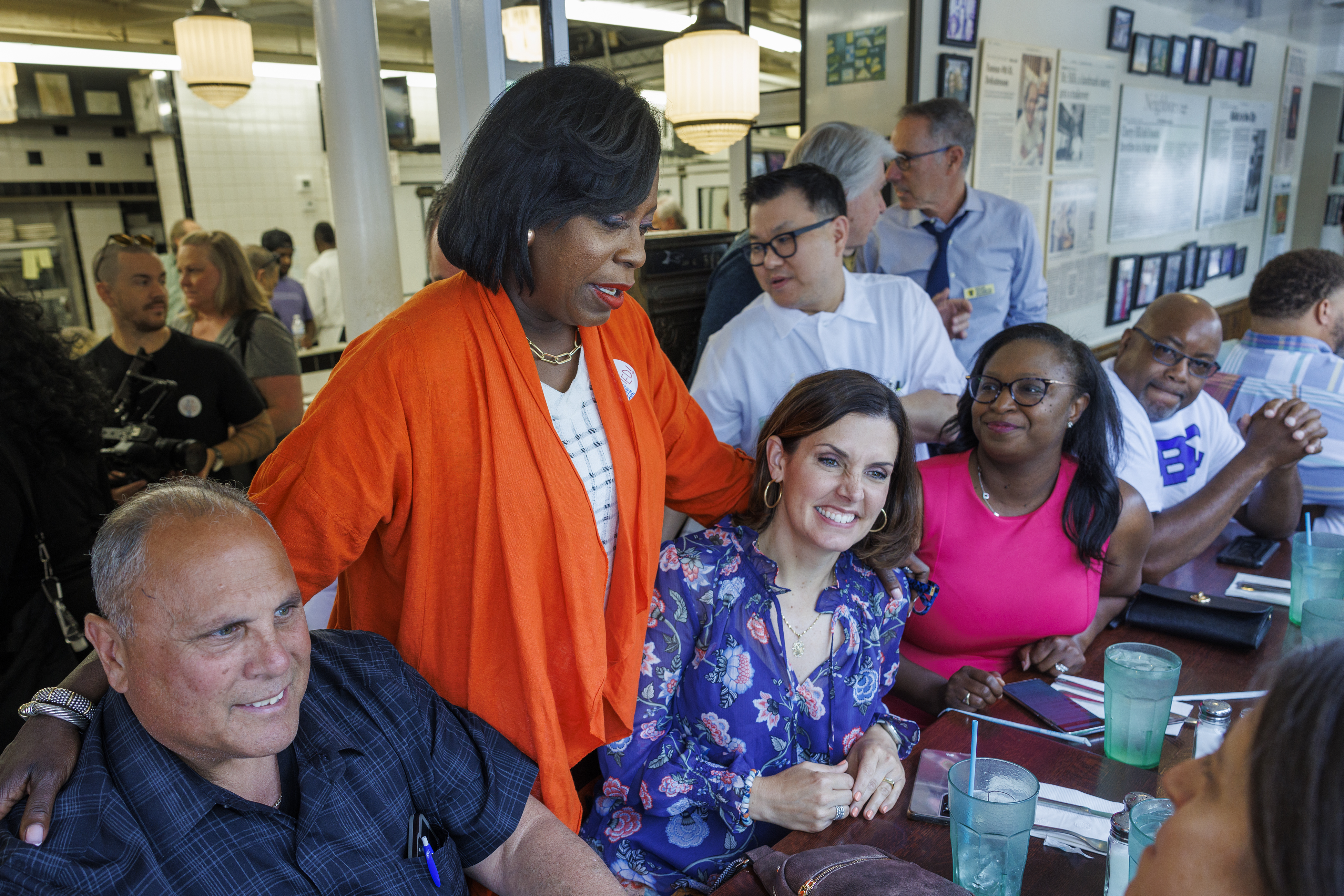
    Cherelle L. Parker, then a candidate for mayor of Philadelphia, stops to greet a group, including Christy Brady,(center seated), during election day lunch at Famous 4th Street Deli in Philadelphia on Tuesday, May 16, 2023.

    That outcome does not appear likely with Brady and Parker.

    Brady shares many political allies with Parker, especially the Philadelphia Building and Construction Trades Council, a coalition of unions that spends big on elections and has reason to be pleased with both Brady and Parker’s tenures so far.

    Brady, for instance, touts her office’s audit of L&I that revealed inspectors often failed to confirm that construction sites were being run by licensed contractors — providing ammunition to the trades unions, which often rail against “fly-by-night” contractors that do not employ their members. And the mayor last year split the department into two agencies, with one focused largely on enforcing construction regulations.

    Brady said her healthy relationship with the Parker administration should not be confused with a reticence to call out fraud and waste.

    “I am an independently elected official. I am not afraid to stand up for what’s right,” she said. “I believe in the rules and regulations in city government.”

    Her approach to the executive branch, she said, is designed to advance the aim of any auditor: ”getting management to implement your recommendations.”

    “In my experience in the controller’s office, when you fight, they’re not going to listen to your recommendation,” said Brady, a certified public accountant who graduated from the Philadelphia College of Textiles and Science, now Jefferson University. “When we issue our reports, the mayor has been thanking me for the recommendations. And I really appreciate that relationship because I believe that we can make change.”

    Staff writer Ryan W. Briggs contributed to this article.

  • Preserving older properties drives housing affordability, population growth, and investment, says study by historic preservation group

    Preserving older properties drives housing affordability, population growth, and investment, says study by historic preservation group

    For years, the Preservation Alliance for Greater Philadelphia has heard the same arguments: Preservation is a barrier to development. It reduces density. It restricts the housing supply.

    “And we knew in our gut that that wasn’t true, but we didn’t have the data to support it,” said Paul Steinke, executive director of the Preservation Alliance, which works to protect historic properties from demolition. “Now, we do.”

    The Preservation Alliance commissioned its most comprehensive analysis of how historic preservation affects the city’s economy and housing. The report, released Wednesday, found that preservation of Philadelphia’s older properties protects housing affordability, drives investment, preserves housing density, and supports population growth.

    In Philadelphia, $4 billion has been invested in historic rehabilitation projects, which have created thousands of jobs each year.

    Steinke said the Preservation Alliance commissioned this study now because of current debates about Philadelphia’s growth and affordability, the need to increase the housing supply, and development policy as Mayor Cherelle L. Parker rolls out her Housing Opportunities Made Easy, or H.O.M.E., initiative to build or preserve 30,000 homes.

    “We wanted to develop some data to demonstrate preservation’s role in those conversations,” said Steinke, who is on the H.O.M.E. advisory committee. “And the reality is the data show that historic preservation is a powerful engine … for investment, jobs, affordability, and inclusive growth.”

    The study was completed by PlaceEconomics, a Washington-based firm that analyzes the economic impacts of historic preservation in cities across the country. The purpose of the analysis in Philadelphia was to understand the economics of the preservation of older properties in general and not only those properties that are historically designated, Steinke said.

    Preservation debates

    Historic designation is a divisive topic, and preservationists have found themselves clashing not only with developers who want to demolish properties but also with homeowners and pro-housing groups.

    Historic designation shields properties from demolition and means owners have some restrictions on what they can do to the outside of their properties. Decisions about doors and windows, for example, are subject to the scrutiny of preservation officials. And owners who fight the designation of their properties argue that regulations can be a burden.

    Residents have challenged in court three historic districts that Philadelphia recently created — the most significant pushback against the city’s preservation ordinance in 15 years.

    In response to the Preservation Alliance’s study, 5th Square, a Philadelphia-based urbanist political action committee, said it supports efforts to rehabilitate older buildings and that “Philadelphia’s dense, historic neighborhoods are a beloved feature of the city.”

    “However, we remain concerned about the proliferation of historical preservation districts across the city,” Brennan Maragh, cochair of the group’s housing committee, said in an emailed statement. “These districts … impose real costs on families, small businesses, and owners attempting to maintain or improve their properties.”

    Almost 5% of Philadelphia is historically designated

    Almost 5% of the city’s land area is a historic district or is property individually designated as historic outside of historic districts, the study found.

    The share of properties historically designated by the city has increased from 2.2% to 4.4% since 2016, when the city started ramping up its historic designations. Philadelphia has caught up with other large cities.

    In 2023, about 56,000 residents lived in a local historic district.

    Tax credits have created jobs and revenue

    Between 2010 and 2024, 295 projects that used state and/or federal historic preservation tax credits were completed in Philadelphia, according to the study. This ranks Philadelphia first in the nation.

    Projects that use historic tax credits have created an average of 1,777 direct jobs and 729 indirect jobs each year in Philadelphia over the last 15 years. Each year, they have created an average of about $95 million in direct income and about $47 million in indirect income.

    If historic rehabilitation were a single industry, it would be the city’s 25th-largest employer.

    Historic tax credit activity also has generated about $8 million in local tax revenue.

    Older homes are more affordable

    Two-thirds of Philadelphia’s residential buildings and half of the city’s housing units were built before 1950, according to the study. This older housing tends to be smaller in size and lower in cost.

    So preserving older homes helps preserve housing affordability. The study did not consider the historic designation status of these homes.

    “While it is true that Philadelphia’s older housing stock remains affordable compared to new construction,” said Maragh at 5th Square, “historic preservation districts can also have the unintended consequences of excluding low-income residents from large parts of the city, raising lifetime housing costs on owners and creating unnecessary regulations that slow down the process of adaptive reuse.”

    The study found that the city’s historic districts have higher shares of high-income households and lower shares of low-income households compared to the rest of the city.

    Outsize population growth in historic districts

    Donovan Rypkema, principal and CEO at PlaceEconomics, said a “myth” of historic preservation is if “you create those historic districts, you just set neighborhoods in amber and nothing can ever change.”

    The firm’s study found that population growth in historic districts outpaced growth in the rest of the city.

    In historic districts created before 2010 — so before the recent push for more districts and ones that are more geographically and racially inclusive — the population grew by about 27% between 2010 and 2020. Over the same time, the rest of the city’s population grew by less than 5%.

    More than 79% of the homes in historic districts are in buildings with two or more units, compared to 32% in the rest of Philadelphia. Historic districts also offer a wider range of housing types.

    The densest areas of the city are in historic districts, according to the study. There are 10,000 more people per square mile in historic districts than in the rest of the city’s residential areas.

    These statistics speak to the “inherent attractiveness” of historic districts and also that “they can accommodate that growth,” Rypkema said.

  • Mayor Parker shakes up the Philadelphia Land Bank board to try to further her housing plan

    Mayor Parker shakes up the Philadelphia Land Bank board to try to further her housing plan

    Mayor Cherelle L. Parker is shaking up the board of the Philadelphia Land Bank, which helps control the sale of city-owned land but hasn’t been moving fast enough to advance her housing priorities.

    Parker’s first land bank board chair, Herb Wetzel, has been asked to step down as well as board member Majeedah Rashid, who leads the Nicetown Community Development Corp. The board has 13 members.

    Angela D. Brooks, who serves as the city’s chief housing officer, will be joining the board. Earlier this year Parker appointed Brooks to lead the mayor’s campaign, Housing Opportunities Made Easy, or H.O.M.E., to build or renovate 30,000 houses over the course of her administration.

    The mayor has long championed the Turn the Key program as part of that plan, a policy that depends on getting inexpensive city-owned land to developers so they can build houses that are affordable to working and middle-class families.

    Rashid is being replaced by Alexander Balloon, who formerly served on the Land Bank’s board and is the executive director of the Passyunk Avenue Revitalization Corp.

    “It is clear from the Land Bank’s success with its Turn The Key program: A strong and effective Land Bank is essential for reaching the H.O.M.E. initiative’s goal to produce and preserve 30,000 homes,” Parker said in a statement.

    Several Turn the Key proposals have been held up by the Land Bank board, which has been riven between factions that are either more or less friendly to private-sector developers.

    Rashid and other board members who come from a nonprofit development background have argued that scarce city-owned land should be earmarked for affordable housing, community gardens, and similar projects.

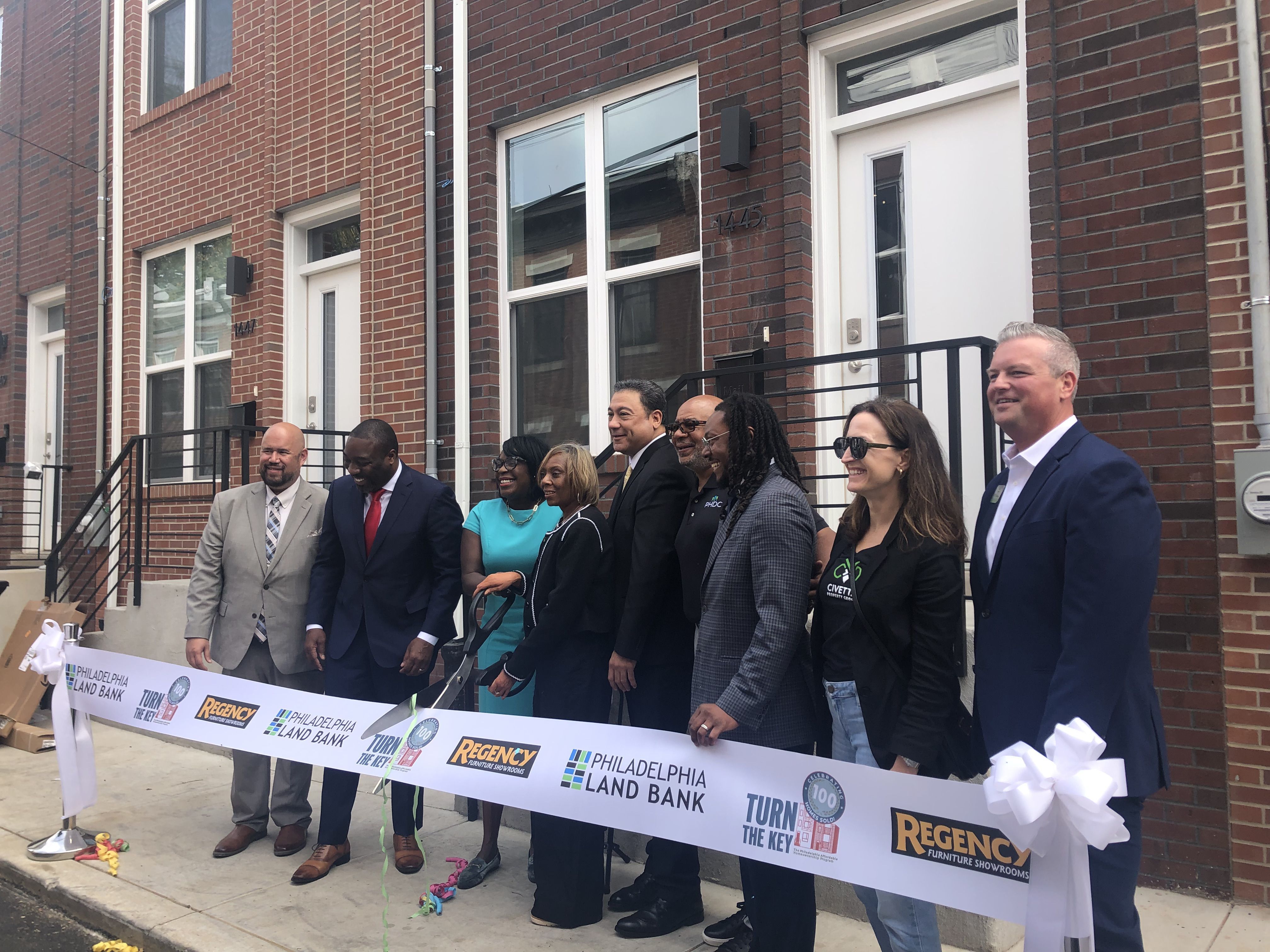
    Mayor Cherelle L. Parker and Turn the Key’s 100th homebuyer hold giant scissors as they prepare to cut a ceremonial ribbon.

    Although the Turn the Key program produces units that are more affordable than market-rate homes, many of the projects are built by private-sector developers and still unaffordable to Philadelphians with low incomes.

    “Majeedah Rashid has worked with me on economic development issues dating to my time in the Pennsylvania General Assembly, and her advice has been invaluable,” Parker said in a statement. “Our city is stronger for Herb’s and Majeedah’s public service.”

    Rashid did not respond to a request for comment.

    During Balloon’s previous tenure on the board, he was among members who pushed for vacant city-owned land to be put back into productive use as quickly as possible because empty lots attract crime and litter and are a drag on city services.

    Private-sector developers often can build more — and faster — than their nonprofit counterparts because they are less reliant on public funds, which are increasingly unreliable from the federal level.

    “I’m excited to rejoin the Philadelphia Land Bank and help Mayor Parker deliver on her bold vision to build and preserve 30,000 homes across our city,” Balloon said in an email statement. “This is an inspiring moment for Philadelphia’s growth and the success of the Turn the Key program and other initiatives.”

    Wetzel’s role as Land Board chair was the latest in a long tenure of municipal housing policy positions, including his lengthy service as a close aide to former Council President Darrell L. Clarke, who created the Turn the Key program and was one of its most enthusiastic proponents.

    “Herb Wetzel has been a subject matter expert for me on any housing issue that I’ve worked on throughout my career as an elected official, and I have always relied on his counsel,” Parker said in a statement. “He will continue to be part of my circle of advisers on housing issues, just in a different capacity.”

    But according to three City Hall sources, who did not have permission to speak to the media, Parker’s team felt Wetzel sought to play peacemaker between the factions and was not always able to get their favored Turn the Key projects moving. As a recent arrival to the city and leader of the administration’s housing initiative, Brooks is expected to pursue the mayor’s priorities.

    Brooks said in an interview that her appointment was no reflection on Wetzel’s performance and that he would continue to serve on the H.O.M.E. advisory board.

    “I don’t have any thoughts on what he didn’t do or didn’t other than he’s been a great supporter of both the mayor and me and this housing plan,” Brooks said. “He’ll continue to be a part of that as we move it forward. [It’s just that] historically, we have had a city staff person to sit on the Land Bank board, and since I’m spearheading the H.O.M.E. Initiative, it seemed to be time.”

    Frequent stalemates on the board were not the only challenge facing Turn the Key projects. Under the tradition of so-called councilmanic prerogative, the Land Bank requires action from City Council to release property for development even if the mayor backs a particular proposal.

    For example, the administration sent over a 50-unit Turn the Key proposal in North Philadelphia to City Council last November, and District Councilmember Jeffery Young simply never introduced it, effectively killing the deal.

    Or in Kensington, Councilmember Quetcy Lozada declined to endorse several Turn the Key proposals, leading developers to abandon them.

    Parker sought to loosen Council’s grip on some city-owned land during budget negotiations earlier this year, but the campaign was largely unsuccessful. National land bank experts have long argued that land banks like Philadelphia’s are much less effective than counterparts that do not have political veto checkpoints.

    During budget hearings this year, Council asked for an organization assessment of the Land Bank, and some members questioned why its staff wasn’t more robust.

    Brooks said that an assessment will be released soon from the consultant group Guidehouse and that the Land Bank “is in the process of filling positions.”

  • Philly may see a new fee on paper bags — if it can get through City Hall

    Philly may see a new fee on paper bags — if it can get through City Hall

    Philadelphia lawmakers are for the third time trying to pass legislation requiring that stores charge customers a fee for paper bags. And for the third time, it’s facing opposition from the mayor.

    A City Council committee on Monday advanced legislation requiring all grocery stores, convenience shops, and other retailers in the city charge 10 cents per nonreusable bag. The goal is to update the city’s already existing ban on the plastic variety and encourage shoppers to bring their own bags.

    The full Council could vote on the new legislation in the coming weeks. It is cosponsored by a majority of Council members, meaning it is likely to pass the chamber.

    City Councilmember Mark Squilla, the architect of the plastic bag ban that first passed in 2019, said during the hearing Monday that he’s aiming to “change behavior.” The city says the use of paper bags has skyrocketed since the plastic bag ban took effect — studies show that while they are recyclable, unlike plastic, paper bags are still less energy efficient than reusable ones.

    Squilla’s original plastic bag ban legislation included a required 15-cent fee on paper bags, but he stripped it from the bill after opposition from former Mayor Jim Kenney’s administration. In 2023, Council passed legislation to institute it, but Kenney issued a pocket veto, meaning he left office without taking action on the legislation, effectively killing it.

    It wasn’t clear at the time if Mayor Cherelle L. Parker, who was the incoming mayor, would support the legislation if it were reintroduced. She made cleaning and greening the city a top campaign promise, and environmental advocates hoped she’d support efforts to reduce single-use bag reliance.

    But one of Parker’s top officials testified in opposition to the legislation Monday.

    Carlton Williams, the director of Parker’s Office of Clean and Green Initiatives, called Squilla’s effort well-intentioned. But he said charging bag fees could disproportionately impact low-income Philadelphians experiencing high grocery costs, “especially given the current economy.” He also said the fees could push shoppers out of the city and harm mom-and-pop businesses that already operate with low margins.

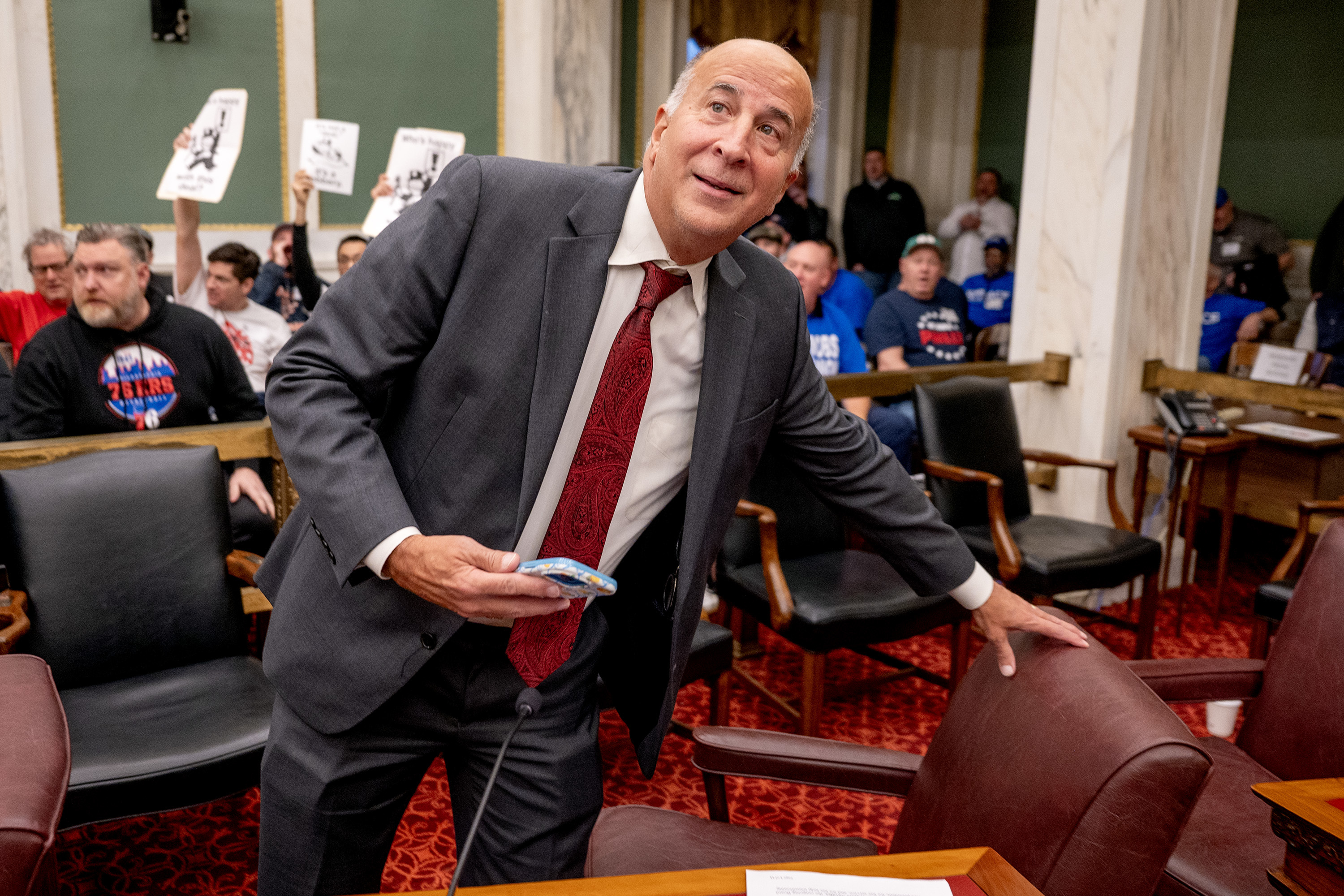
    Councilmember Mark Squilla takes his seat in Council chambers on Wednesday, Dec. 11, 2024, before a scheduled committee vote. Squilla authored legislation requiring stores charge a fee for paper bags.

    If the legislation passes Council, Parker could sign or veto it. She could also let it lapse into law without her signature. If she vetoed the legislation — it would be her first since taking office last year — Council could override her veto with 12 votes out of the 17-member chamber.

    When the paper bag bill was introduced in 2019, members of Kenney’s administration also said at the time that they were concerned that fees on paper bags would hurt the poorest Philadelphians. Former City Councilmember Maria Quiñones Sánchez similarly described it as akin to a regressive tax.

    However, proponents of the legislation said Monday that they don’t think the argument holds up.

    Maurice Sampson, the eastern Pennsylvania director of the environmental group Clean Water Action, said prices on essentials such as food could rise for everyone if stores absorb the costs of paper bags.

    “There is no foundation or basis,” he said, ”in the idea that fees on bags will hurt low-income people.”

  • Philly lawmakers want to ‘clamp down’ on smoke shops. Their landlords could be next.

    Philly lawmakers want to ‘clamp down’ on smoke shops. Their landlords could be next.

    There’s a smoke shop in North Philly peddling recreational drugs across the street from a daycare. A West Philly storefront that sells loose cigarettes on a residential block. A convenience store in Spring Garden that advertises urine to people looking to pass a drug test.

    These are among the so-called nuisance businesses that City Council members and neighborhood association leaders cited Monday as lawmakers advanced legislation to make it easier for the city to shut down stores that sell cannabis and tobacco products without licenses.

    And legislators said their next target could be the landlords who rent space to those businesses.

    “We have to work with our city departments and our state partners to clamp down on these businesses,” said City Council Majority Leader Katherine Gilmore Richardson, who represents the city at-large. “We’re just being inundated.”

    Members of Council’s Committee on Licenses and Inspections passed two bills Monday that city officials say seek to close loopholes store owners exploit to avoid being cited for failing to obtain proper permits.

    In introducing the legislation earlier this year, Gilmore Richardson cited an Inquirer report about Pennsylvania’s unregulated hemp stores, which sell products advertised as legal hemp that are often black market cannabis or contaminated with illicit toxins.

    One bill makes it easier for the city to shut down nuisance businesses by removing language that classifies some violations as criminal matters, requiring that the police investigate them as crimes rather than civil violations that are quicker to adjudicate.

    The second piece of legislation makes it illegal for businesses to essentially reorganize under a new name but conduct the same operations as a means of evading enforcement.

    Both pieces of legislation could come up for a full vote in the Democratic-dominated City Council in the coming weeks. Members of Mayor Cherelle L. Parker’s administration testified in favor of them, meaning the mayor is likely to sign both.

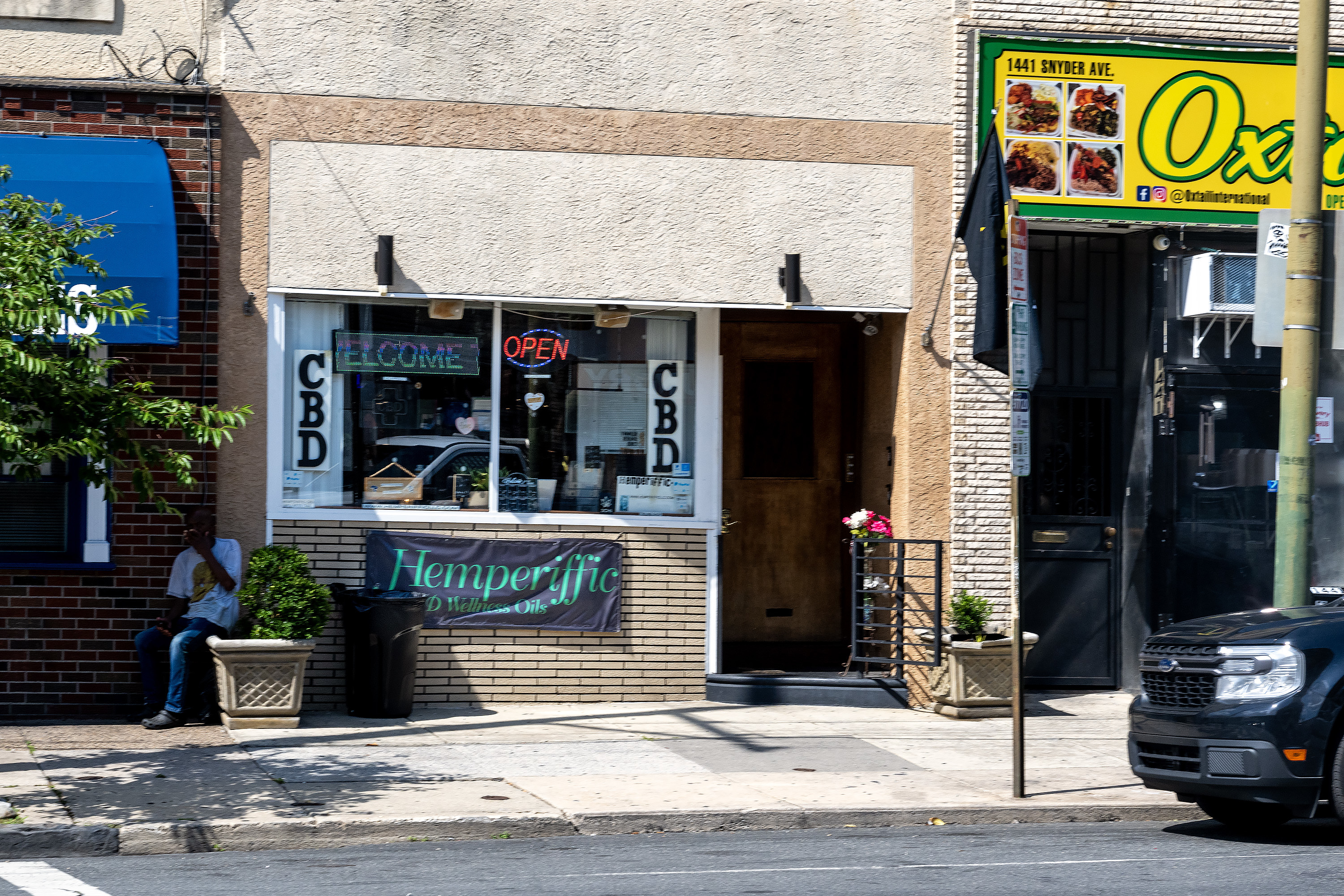
    A smoke shop in South Philadelphia.

    Neighborhood association leaders also testified Monday in favor of the changes, but several said more aggressive enforcement is needed. They said smoke shops in particular have popped up throughout their commercial corridors, as have convenience stores that don’t even have licenses to operate as businesses, let alone sell recreational drugs.

    “We’ve seen firsthand the selling of illegal drug paraphernalia and [loose cigarettes], many of which children walk past in order to get to the candy bars and seniors walk past to get to the milk,” said Heather Miller, of the Lawncrest Community Association. “We need to address this.”

    Elaine Petrossian, a Democratic ward leader in Center City and a community activist, called for “much” higher fines and penalties for landlords. She cited progress the municipal government has made in New York City, where authorities cracked down on building owners who knowingly rented space to tenants selling cannabis or tobacco without licenses to do so.

    Several lawmakers said they’d support a similar approach. Councilmember Mark Squilla, who represents a district that spans from South Philadelphia to Kensington, said landlords must be held “more accountable.”

    “If they had some skin in the game, maybe they’d think twice about renting to an illegal operation,” he said.

    Councilmember Jamie Gauthier, who represents parts of West Philadelphia, agreed. She said she recently attempted to meet with a building owner who rents space to a problematic smoke shop in her district, but was rebuffed.

    “He was like, ‘These people pay me rent, and that’s the extent to which I basically care,’” Gauthier said. “We need something that forces property owners to be more accountable than that, because neighbors are suffering.”

    Staff writers Max Marin and Ryan W. Briggs contributed to this article.

  • Judge almost shuts down the city’s Kensington wellness court over mounting frustration with Parker administration, sources say

    Judge almost shuts down the city’s Kensington wellness court over mounting frustration with Parker administration, sources say

    The city’s new Neighborhood Wellness Court initiative has been placed on hold amid growing concern from the leadership of Philadelphia‘s courts and judges’ mounting frustration with the city officials tasked with overseeing the program.

    Wellness court, which Mayor Cherelle L. Parker’s administration launched in January as a fast-track way to arrest people in Kensington for drug-related offenses and get them into treatment, has not taken any new cases over the last three weeks, city officials said.

    Supervising Municipal Court Judge Karen Simmons was nearly ready to shut the program down over frustration with the lack of coordination and communication from the Parker administration with the courts and other city agencies involved, according to sources with knowledge of conversations about the program.

    Simmons was concerned that the city was treating people arrested in some neighborhoods differently from others, and that there was inconsistency in how the program was tracking its data and determining who should be eligible for treatment, according to the sources, who spoke on the condition of anonymity to discuss private conversations.

    Simmons ultimately gave the city time to fix those issues, asking that officials put together a written manual and streamline the paperwork and intake procedures to ensure fairness, the sources said. The city is expected to make those adjustments so police can resume making arrests and bringing people through the program next week.

    A spokesperson for the courts declined to comment and referred questions to the city.

    Chief Public Safety Director Adam Geer oversees the office that runs Neighborhood Wellness Court in Kensington.

    Chief Public Safety Director Adam Geer, who oversees the city office that runs wellness court, said the delays were related to “administrative protocols” that needed to be resolved but declined to provide specifics.

    Geer said that he expects the program to return to normal operations next week and that the city “is fully committed to successfully implementing and sustaining the Neighborhood Wellness Court model.”

    Joshu Harris, the city’s deputy director of public safety, is no longer overseeing the program‘s operations, the sources said, and Deputy Mayor Vanessa Garrett Harley is now involved.

    “As with all new pilot programs of this kind, adjustments will continually be made to improve operations as time moves forward,” city spokesperson Joe Grace said Thursday.

    The pause comes amid long-simmering tension between the courts and the city over how the program was launched, sources said. Leadership of the Philadelphia District Attorney’s Office, the Defender Association of Philadelphia, and even the judges tasked with overseeing the court were largely excluded from the city’s plans for the program and how it would operate, sources said. They have felt like the Parker administration did not want their input.

    That conflict spilled into open court this month. Municipal Court Judge Henry Lewandowski III, who has presided over most of the wellness court cases so far, said at a hearing in early April that certain politicians in the city think they can “just wave a wand” and fix Kensington’s long-standing drug problems.

    “I care way more than they ever will. They’re fake,” he said, adding that officials are trying to build new programs just so they have something to take credit for.

    “If I said what I wanted to say,” he said, “I’d have to resign.”

    His frustration was clear again Thursday as he oversaw more than 100 summary offense cases, most for fare evasion amid SEPTA‘s new crackdown on turnstile jumping.

    “Who knows what program they’ll start by next week,” he said. “Every Wednesday, there’s new stuff, new programs, new procedures. … I’ve never been more confused, I’ve never been more uncertain what my job is.”

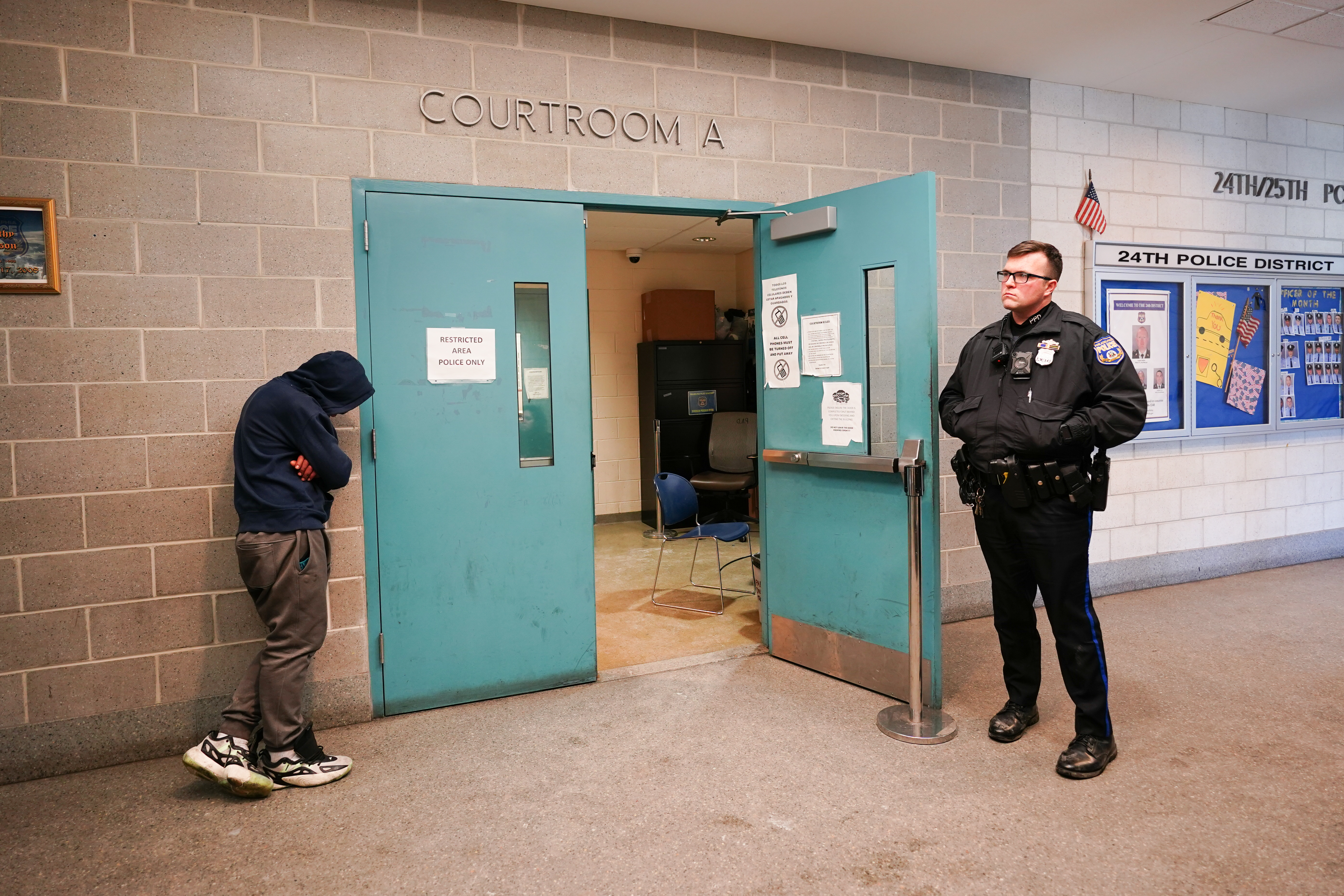
    Wellness court takes place every Wednesday inside a courtroom at the 24th / 25th Police District.

    Wellness court is a signature part of Parker’s plan to shut down Kensington’s notorious open-air drug market and restore quality of life for neighborhood residents.

    The court runs on Wednesday afternoons. First, in the morning, police conduct sweeps of the Kensington area and arrest people in addiction for offenses like sleeping on the sidewalk, gathering around an outdoor fire, or stumbling into the street. They are typically charged with summary offenses like obstructing highways.

    Those arrested are then brought to the Police-Assisted Diversion program building on Lehigh Avenue, where they are evaluated by a nurse and an addiction specialist. Officials also attempt to address any outstanding arrest warrants, and connect them with a court-appointed attorney hired by the city to discuss their rights.

    Finally, they are brought before a judge — Lewandowski has heard most cases so far — inside the nearby police district. They are offered the opportunity to immediately go to rehab or face a summary trial for their alleged crimes. Those who opt to go into treatment and complete the program and terms set by the city will later have their cases dismissed and expunged.

    Few in the program have asked for a same-day trial. Those found guilty have so far been ordered to pay fines and court fees ranging from about $200 to $500.

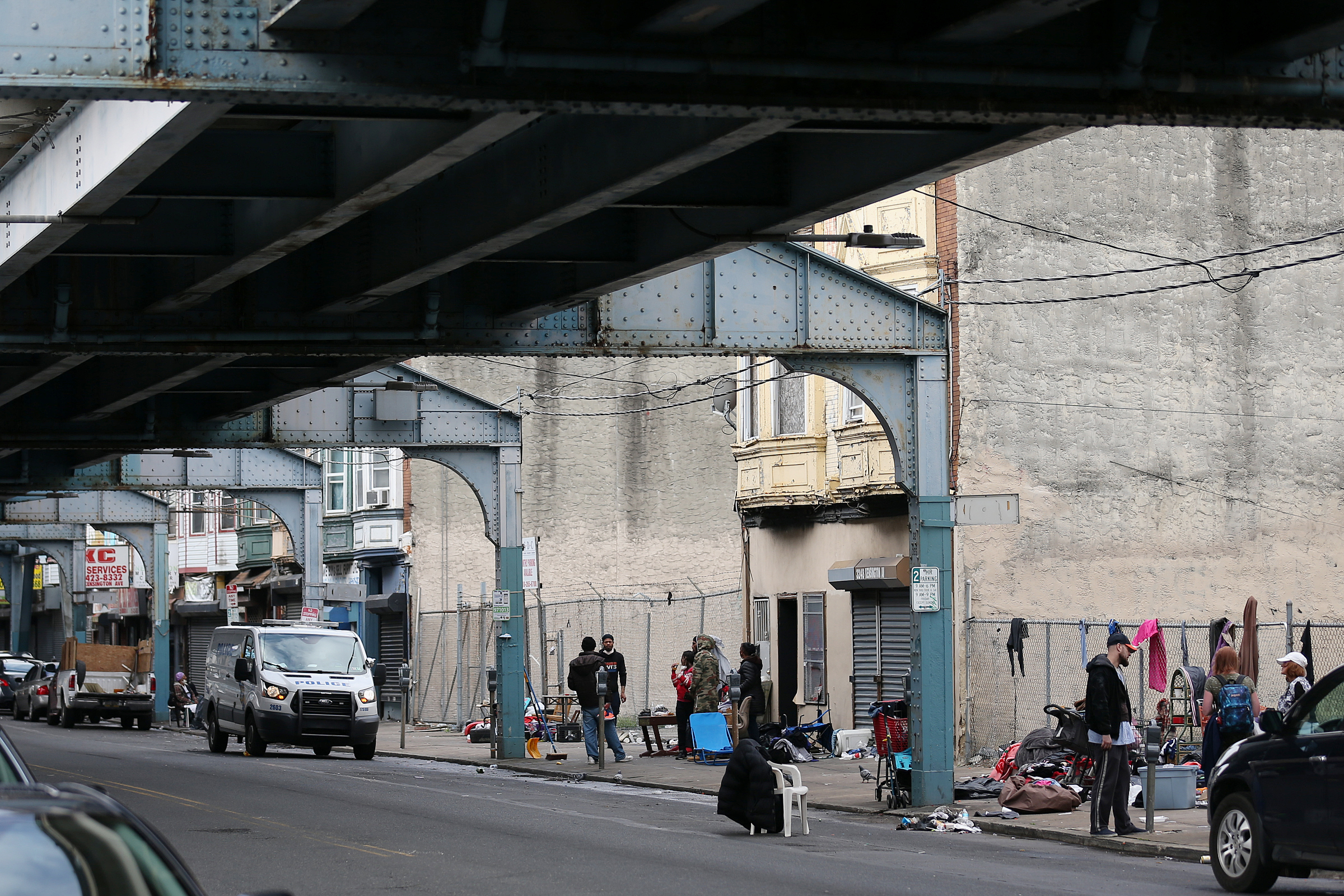
    Homelessness and public drug use is widespread in Kensington, the heart of the city’s open-air drug market.

    Of the more than 50 people who have come before the court so far, only two had successfully completed treatment as of early April, according to data collected by The Inquirer. The vast majority brought through the program almost immediately leave treatment and do not appear at follow-up hearings, the data show.

    The city has declined to share data on wellness court, including with City Council at a recent budget hearing, saying that it is too early to judge the program on numbers alone and that more time is needed to see results.

    But the Parker administration said it wants to expand the court and needs more funding for it to succeed. At a recent budget hearing, Geer asked City Council for an additional $3.7 million to operate the court five days a week and hire additional staffers.

    The goal, Geer said, is to build a system where people suffering on the streets can immediately be connected with treatment and resources, avoid going to jail, and get housing through the city’s new Riverview Wellness Village. Geer has said that the program will never have a 100% success rate, but that every “touch” the program has with people in addiction increases their likelihood to eventually go into treatment.

    But the First Judicial District has said wellness court will not be expanding anytime soon, according to sources.

    Civil rights advocates have raised constitutional concerns over the program. In a letter to the Parker administration, the Pennsylvania chapter of the American Civil Liberties Union said the program could pose a threat to drug users’ rights and questioned whether the city could force people to make consequential legal decisions while potentially under the influence of narcotics.

  • Man in addiction who died in jail was labeled an ‘emergency’ case and should have been given one-on-one support, records show

    Man in addiction who died in jail was labeled an ‘emergency’ case and should have been given one-on-one support, records show

    The 42-year-old man in addiction who died inside a Philadelphia jail days after his arrest in Kensington had been flagged as an “emergency” case by an intake worker at the jail, and should have received one-on-one supervision in the hours before he collapsed, according to records from the Department of Prisons.

    But that didn’t happen, and instead, Andrew Drury died alone inside the holding cell, without having received a formal behavioral health evaluation by the prison staff, according to the records obtained by The Inquirer. His cause of death remains under investigation, though when he was jailed in the fall, he had been hospitalized multiple times from withdrawal-related health complications.

    A spokesperson for the Philadelphia Department of Prisons declined to comment Friday.

    Drury had been picked up by Philadelphia police on the night of March 6, after officers encountered him at Kensington Avenue and Somerset Street, and learned he had outstanding bench warrants related to a drug case in Maryland and a 2022 violation of a protection-from-abuse order filed in Philadelphia.

    Police said Drury received off-site medical treatment over the next day before he was transferred to Curran-Fromhold Correctional Facility around 2:15 a.m. on March 8. Police declined to say what kind of treatment he received, where he was treated, or how he was cleared for transfer to the jail.

    Drury remained in an intake room at the jail until the next afternoon, waiting to be medically evaluated and assigned to a cell block. On March 9, around 9:30 a.m., an intake worker for the prisons assessed Drury and wrote that he was experiencing a range of physical and behavioral health issues and described him as extremely agitated and confused, according to the records.

    Andrew Drury, left, and Jennifer Barnes had been homeless and struggling with addiction in Kensington for about two years. Drury died on March 9 inside a Philadelphia jail.

    The employee labeled Drury as an emergency case, which, according to the records, should have required that he receive one-on-one supervision until he could be evaluated by a behavioral health worker.

    Instead, Drury remained in his intake cell for another six hours. A jail guard walking through the area found him unresponsive at 1:45 p.m., and despite administering two doses of Narcan and other lifesaving measures, he was pronounced dead at 2 p.m., according to a spokesperson for the prison.

    The Philadelphia Medical Examiner’s Office said Wednesday that doctors are awaiting toxicology results to determine his cause of death.

    Drury had long struggled with an opioid addiction, and had been experiencing homelessness in Kensington for about two years, said his longtime girlfriend, Jennifer Barnes.

    In an interview this week, Barnes, 44, said she believes he died from health complications related to withdrawal — something that he has been hospitalized for in the past.

    When Drury was arrested in October on bench warrants related to the same cases, he was hospitalized multiple times, including for more than a week, after suffering a mild heart attack and other issues while going through withdrawal in jail, according to Barnes and a source familiar with Drury’s care at the time.

    After Drury was released in November, Barnes said he was in and out of the hospital because of ongoing chest pains and shortness of breath.

    Barnes said she worried about his health as she watched police arrest him that night.

    “The withdrawal, it’s not good for him,” she said she told the officers. “He needs medical attention.”

    Jennifer Barnes, whose fiancee Andrew Drury died while in jail, shown here in Philadelphia on Tuesday.

    Drury’s death comes as the city ramps up enforcement efforts in Kensington, a section of the city that has long experienced concentrated violence, homelessness, and drug use in and around its massive open-air drug market. Mayor Cherelle L. Parker has said her administration would shut down the drug activity in the area and return a quality of life to the neighborhood’s residents.

    But some advocates have warned city and law enforcement officials that the withdrawal effects for people who use opioids can be life-threatening, and that the understaffed jails might struggle to respond to people’s health needs in those circumstances.

    Barnes said she and Drury were both from South Philadelphia, and had been dating since 2012 after meeting in a luncheonette in the neighborhood. They were not married, she said, but wore rings as if they were.

    Andrew Drury and Jennifer Barnes in a photo before they became homeless in Kensington.

    Barnes said she has struggled with addiction since about 2008. Drury also used drugs by the time they had met, she said, his troubles beginning after he underwent a weight loss surgery and got hooked on pain killers. For many years, they were both able to hold jobs and hide their addiction.

    They bounced between friends’ and families’ homes, she said, until they were kicked out of Drury’s mother’s house in 2021 and she got a Protection From Abuse order against him. They’ve been on the streets of Kensington since about the summer of 2023, she said.

    Drury was funny and loving, she said, and helped protect her from the dangers of living on the streets. They had both recently talked about wanting to go to rehab and getting their lives back on track.

    Jennifer Barnes holds the sweatshirt of her longtime boyfriend, Andrew Drury, who died in jail on March 9.

    Since his death, she said, she feels in a fog. She has connected with a friend who found a bed for her at a recovery house in South Jersey, and she hopes to go next week.

    “For myself, and for him, it’s the best thing to do,” she said. “This way he won’t have to worry anymore.”