Tag: Cherelle L. Parker

  • Kensington now has fewer shootings and people on the streets. But the open-air drug market persists.

    Kensington now has fewer shootings and people on the streets. But the open-air drug market persists.

    Gloria Cartagena Hart vividly remembers the scenes and sounds of her Kensington block just three years ago: The streets filled with trash. The sidewalks lined with dozens of people openly using drugs. Nightly pops of gunfire from dealers competing for turf, and the haunting screams that followed.

    It was 2022, in the heart of one of the most notorious drug markets and poorest zip codes in America.

    But Cartagena Hart, a longtime resident at Somerset and Jasper Streets, now says the neighborhood is experiencing something she once believed might never come.

    “I see some progress,” she said.
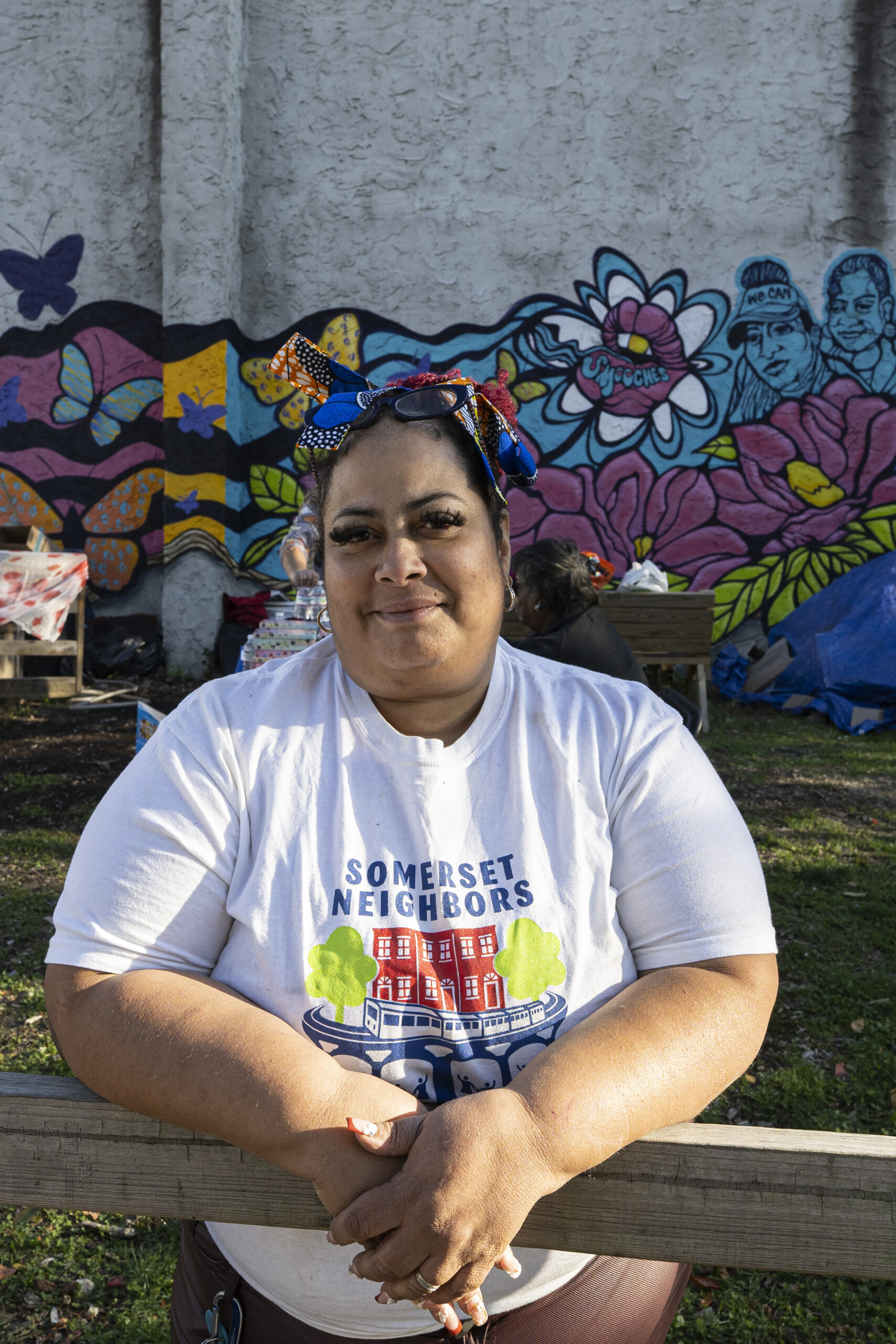
    Gloria Cartagena Hart is a community organizer in Kensington who said she will never stop fighting for resources to stabilize the area.

    For the first time in decades, under the renewed efforts of Mayor Cherelle L. Parker’s administration, some residents and city officials alike agree that many of Kensington’s most chronic challenges have been improving — albeit slowly.

    Fewer dealers dot the corners. Three times as many police officers patrol the neighborhood, disrupting their business. Half as many people are living on the streets compared with last year, police said. Some residents say quality-of-life issues — trash pickup, abandoned car removals, 311 calls — are being addressed more quickly.

    And gun violence — long a byproduct of the drug economy and fragmented crews fighting for turf — is at its lowest level in a generation.
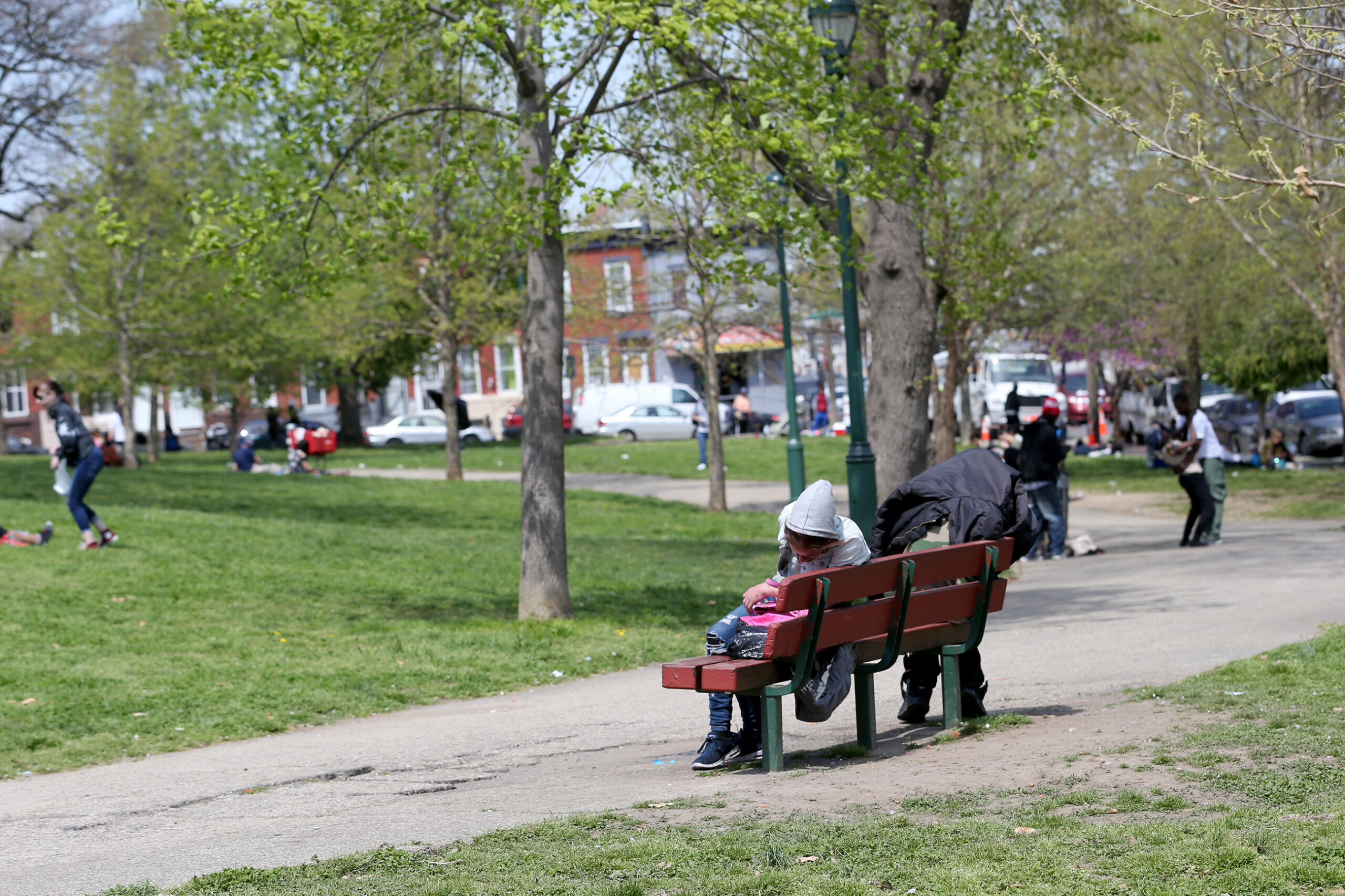
    For years, McPherson Square was typically filled with people openly using drugs, as seen in this photo from April 2021. Residents could not let their children visit the park safely.
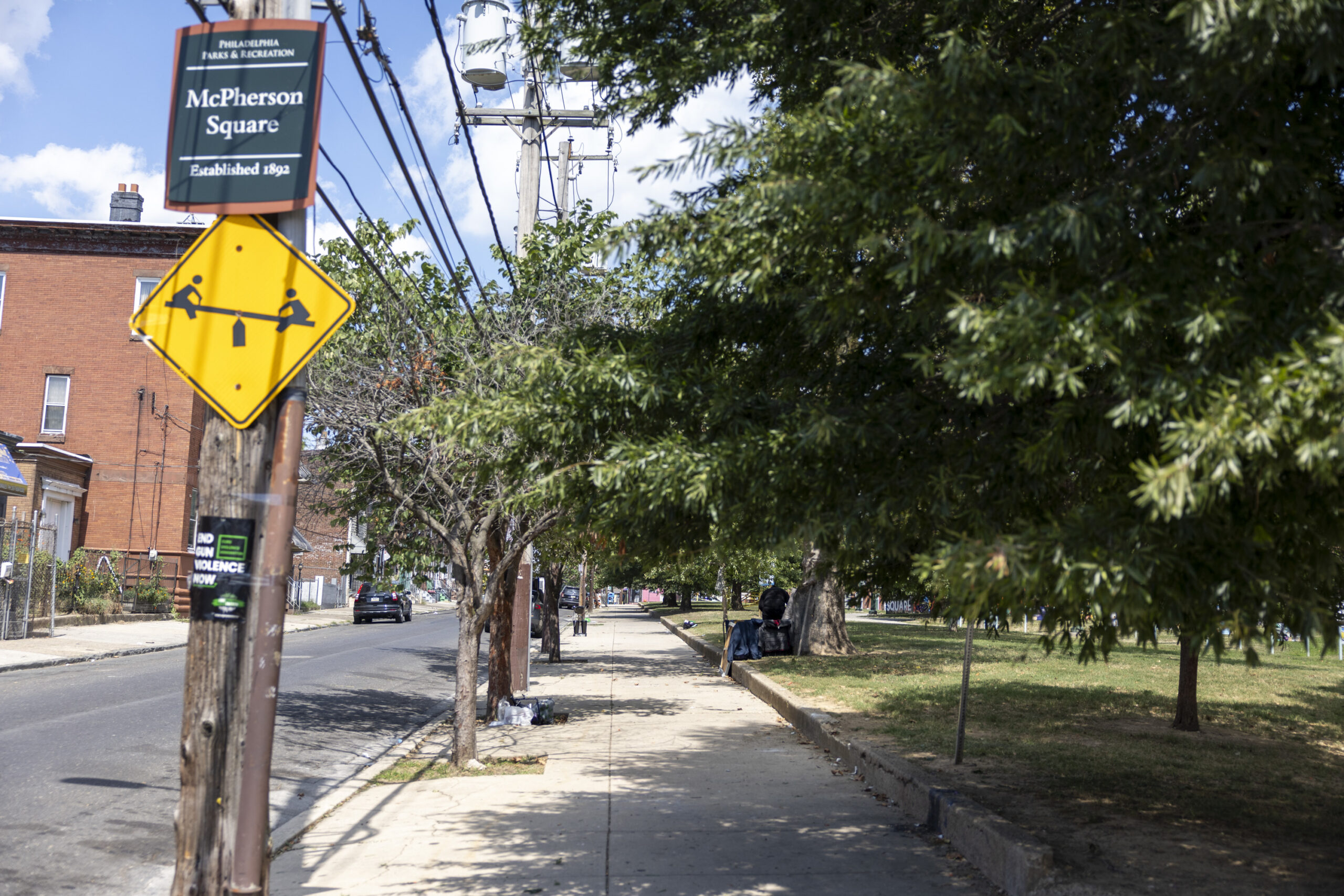
    This year, McPherson Square is a different scene. There are often a few people sitting along the edges, but police regularly sweep the park and ask people to leave.

    City agencies and healthcare groups say they have also worked to get drug users into treatment more quickly, and have started building a network of care that they hope will keep fewer people from returning to the streets. Riverview Wellness Village, Parker’s new $100 million recovery and treatment facility, now houses about 200 people.

    “Neighbors [are] telling me how many more people are sitting on their steps, how many more children are riding their bikes, how many more people may walk the commercial corridor,” Parker said this week. “To me, that’s progress. … We weren’t going to close our eyes and ignore it and walk around like it didn’t exist, or just contain it in one area.”

    She’s committed to long-term change there, she said.

    But in this stretch of Philadelphia, where the drug economy has flourished for decades, improvements are relative.
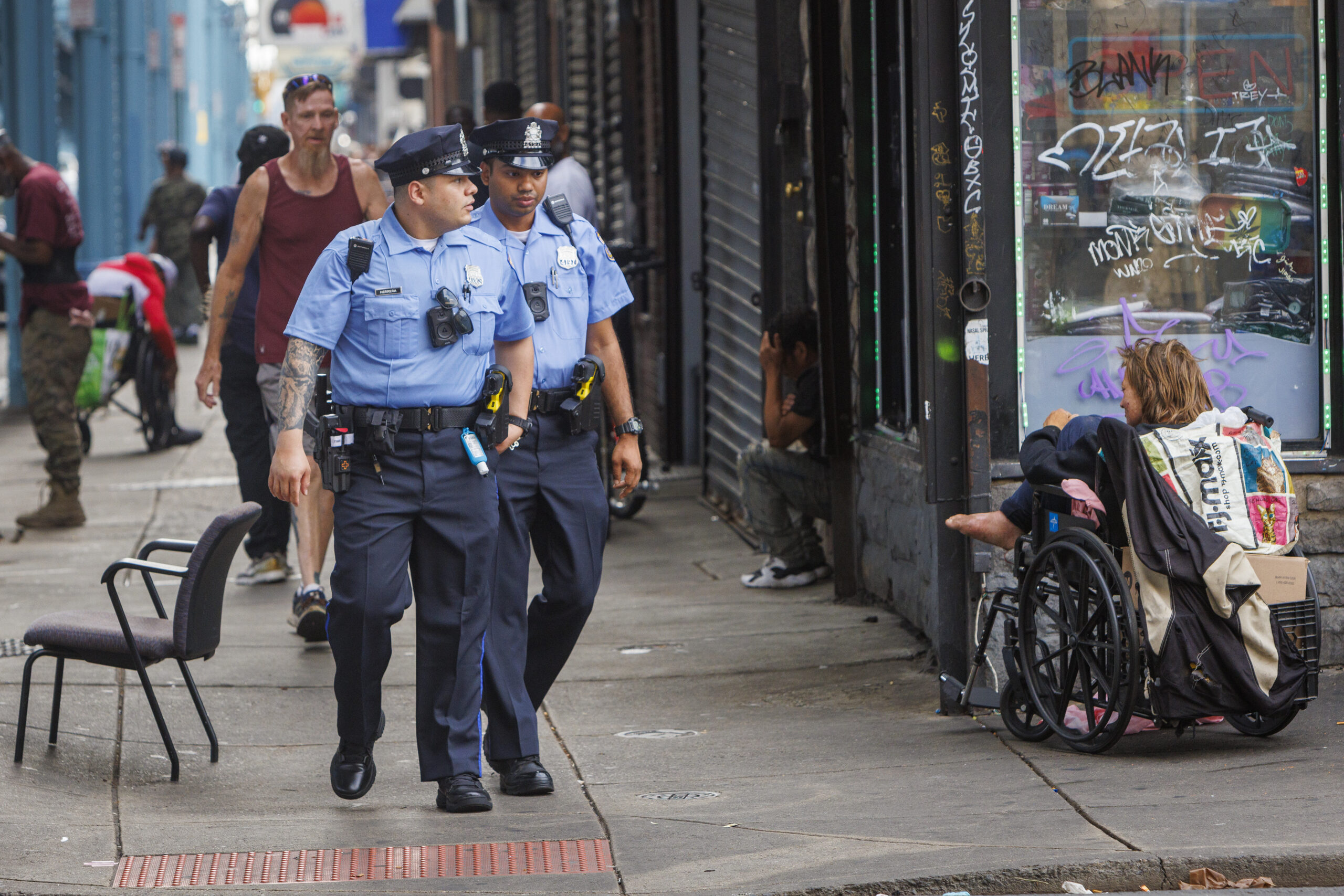
    There are now three times as many police on patrol — most on foot and bike — in Kensington as there were two years ago.

    Cartagena Hart, 54, said the disbandment of the encampments along the intersection of Kensington and Allegheny Avenues pushed more drug activity to Somerset, turning the block where she lives with her husband and seven children into the new ground zero for the open-air market.

    More dealers show up to give out free samples of drugs — and free pizza slices to go with them — in an effort to win over customers in a more competitive market, she said. She is constantly asking people to stay off her steps.

    One of Kensington Avenue’s marquee restaurants, Cantina La Martina, closed this month in part due to the instability around Somerset.

    Deputy Police Commissioner Pedro Rosario sees the ongoing challenges.

    “Am I where I want to be? No. Nowhere close to it,” said Rosario, who oversees the policing strategies in Kensington. “But ‘moving in the right direction’ is not giving us enough credit.”
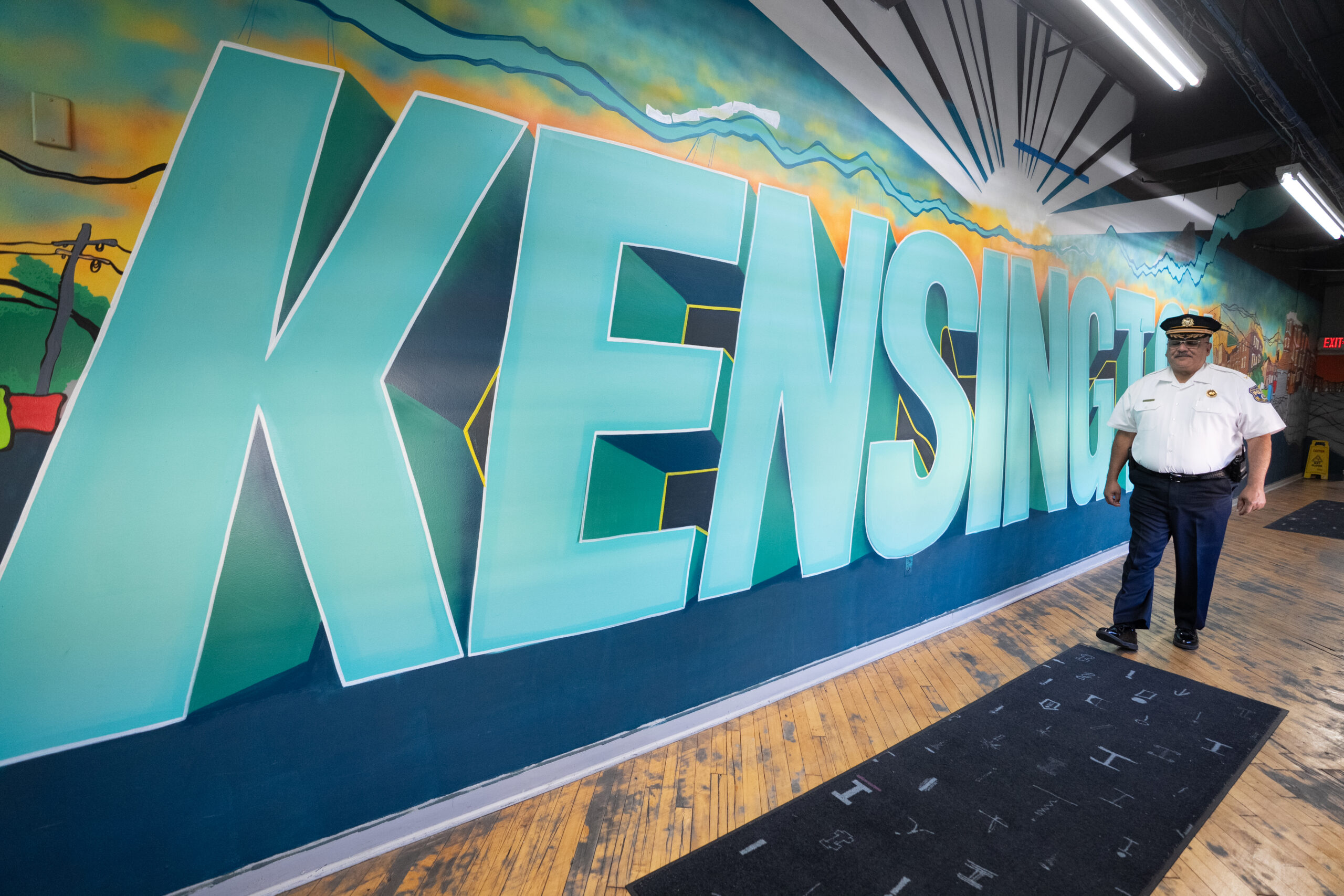
    Deputy Commissioner Pedro Rosario walks through the mini police station on Allegheny Avenue.

    Improvements in Kensington, he said, may always be limited by the depths of the drug crisis and economy.

    “It’s never gonna be as good as everyone wants it to be,” he said, but “it’s like the first time we’re all kind of rowing in the right direction.”

    Some harm-reduction groups said the progress is surface level, and criticized the city for pushing homeless people into other areas where they are harder to reach: Harrowgate, Center City, the SEPTA stops at Broad and Snyder, Erie Avenue, and 69th Street.

    “They’ve made it more difficult for people to be visibly homeless,” Sarah Laurel, who heads the harm reduction organization Savage Sisters in Kensington, said of the city’s efforts. “But have they actually resolved the dire need of community members who are unhoused?”
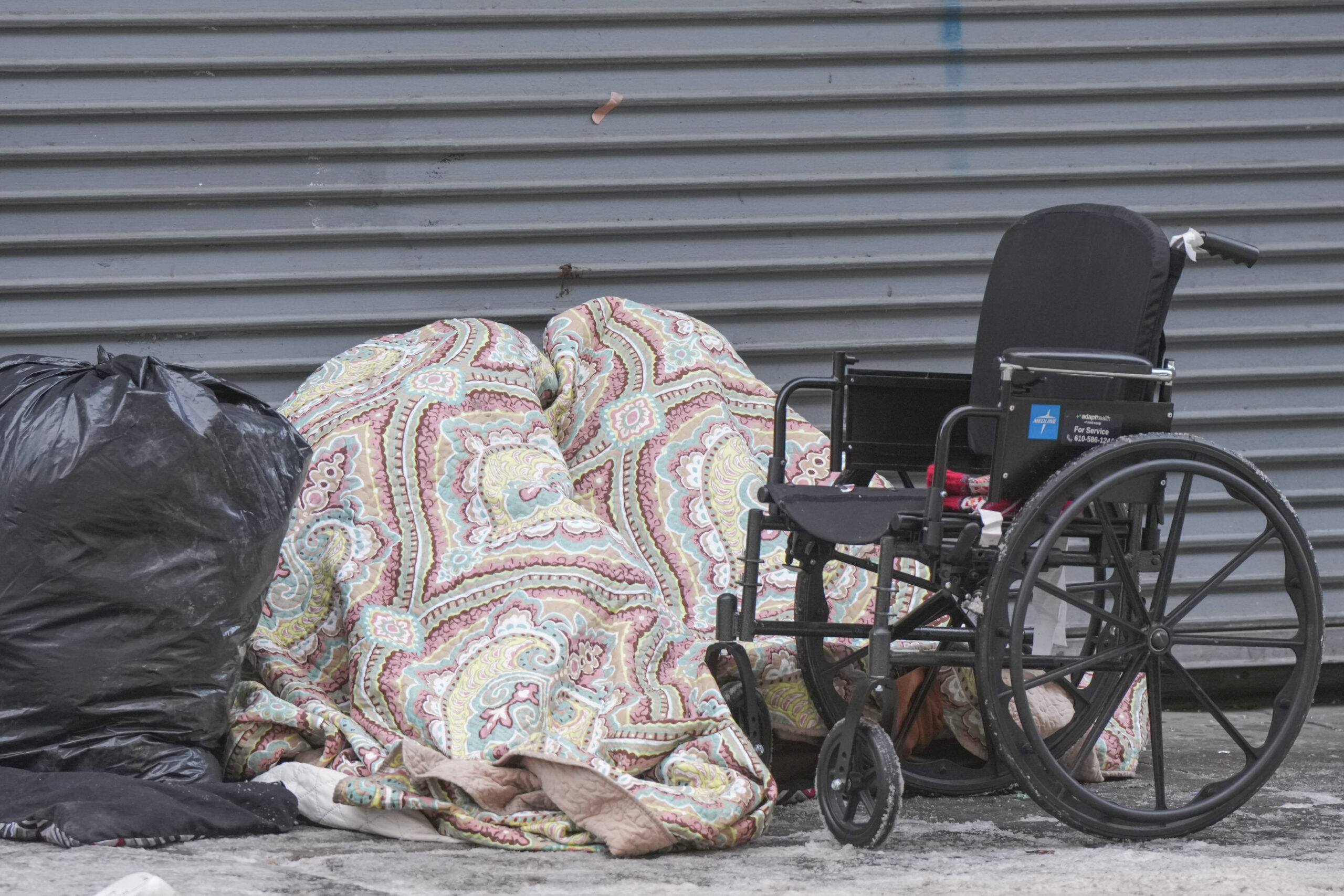
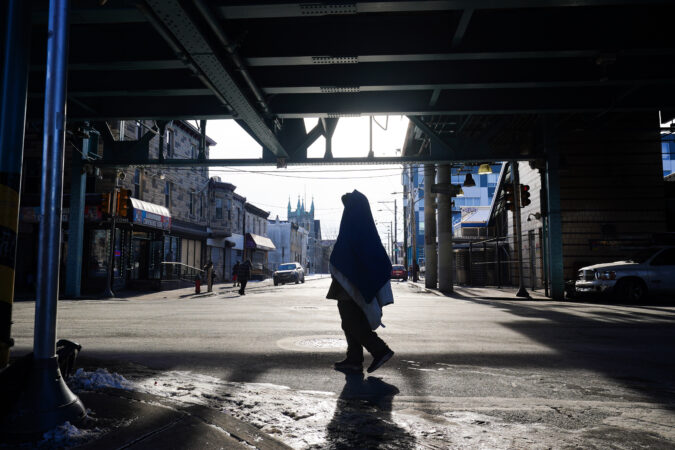
    People experiencing homelessness and addiction sleep under blankets on Kensington Avenue in January.

    Still, one woman in her 30s, who has come to Kensington on and off since she was 16, acknowledged the neighborhood is no longer the “free-for-all” it was at the height of the pandemic.

    “It has changed,” she said, clutching a crack pipe on a quiet block away from police. “You can still get high on the street, you just can’t get caught doing it.”

    And that, Rosario said, is progress.
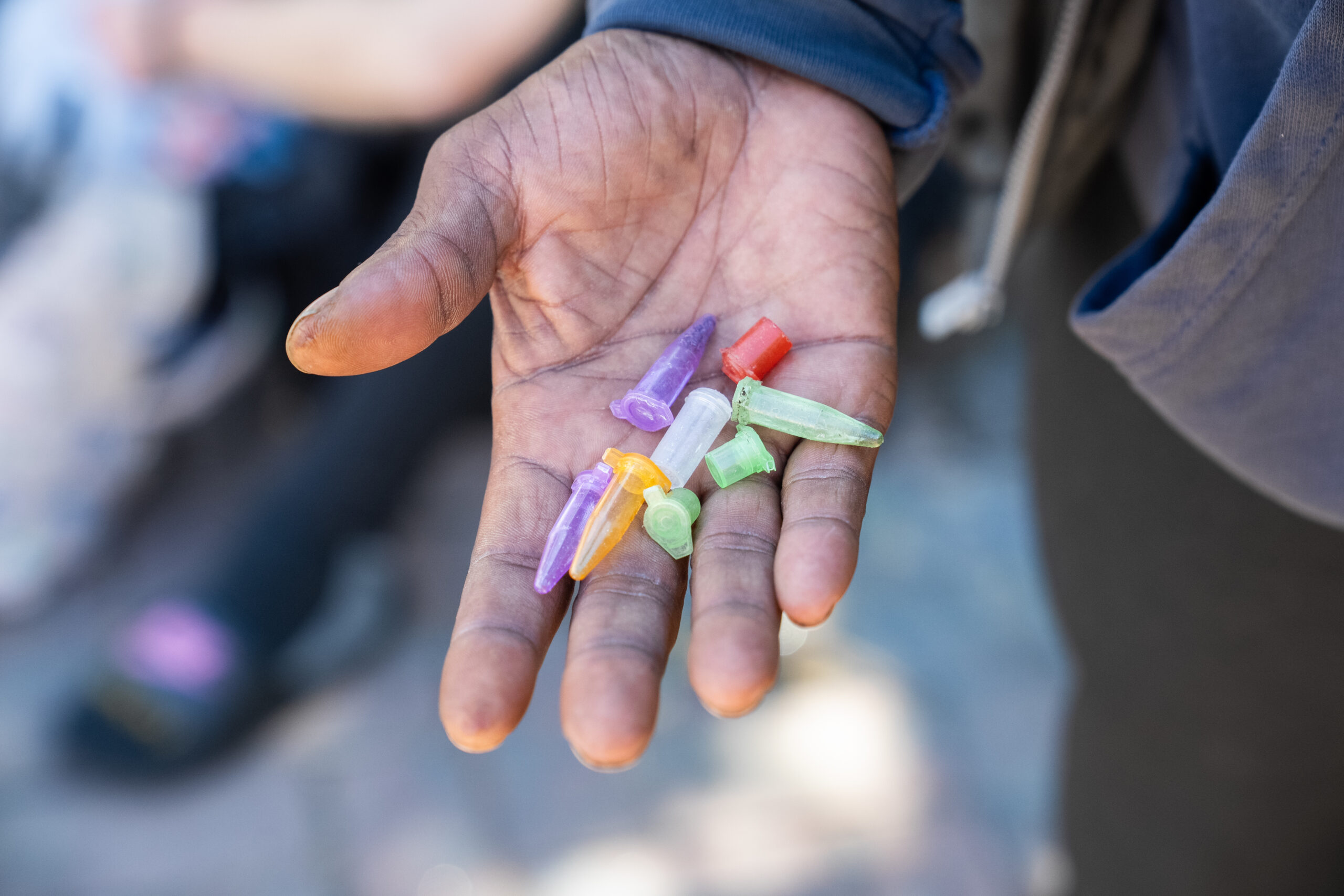
    A man who sells drugs holds a collection of empty vials that typically hold meth, crack, and other illicit substances.

    A drug ‘flea market’

    Rosario has been a police officer in Kensington for 24 years, and saw how the neighborhood became what he calls “the flea market” of the city’s billion-dollar drug economy.

    There have always been drug organizations that run specific blocks there — crews from Weymouth, Jasper, and Rosehill Streets, each with its own product, stamp, and employees to sell it.

    But in the last five years, he said, blocks have been “leased out.” Someone in New York City or the Dominican Republic will often “own” a block, Rosario said, and rent it out to a local dealer to use for a week to make a stack of money and move on. Dealers even started using drug users to sell in the last few years, he said, because they are less obvious to police, can be paid less, and are seen as “expendable.”

    That structure makes it challenging for police to identify and arrest the people in charge, he said. If a lower-level dealer is arrested — or killed — the top distributors can easily find a replacement.
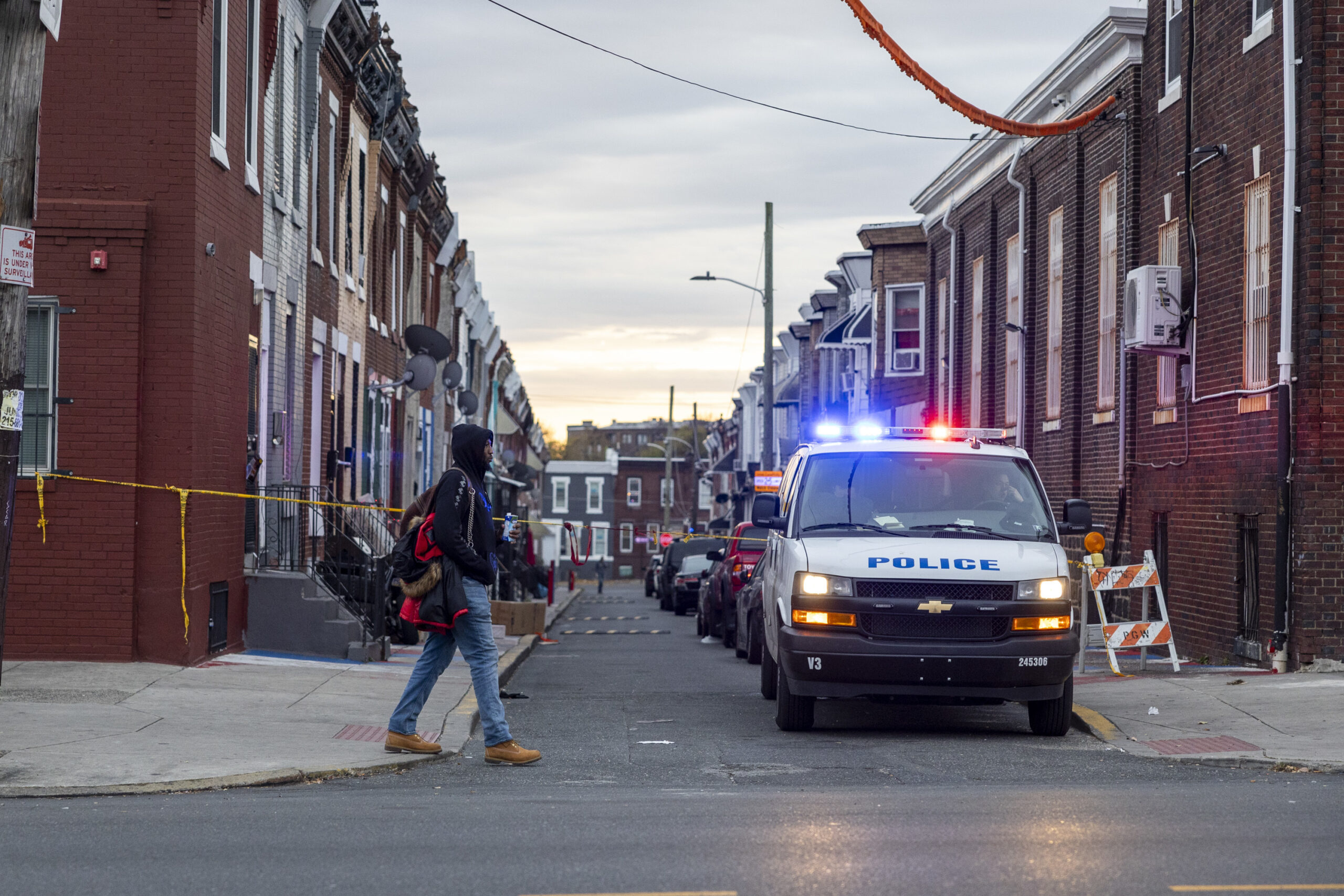
    Philadelphia police officers have a shut down the 3100 block of Weymouth Street after federal agents raided the block and arrested 30 people last month.

    Even after large-scale investigations — like the FBI’s two-year probe that led to the arrest of more than 30 members of a Weymouth Street drug gang last month — drug activity often subsides for a few weeks before another group is ready to step up. Police have shut down that stretch of Weymouth since the arrests to keep a competing crew from immediately moving in.

    And the dealers are fearless, he said. Just before the police department was set to open a mini station near F Street and Allegheny Avenue in November 2020, the building was firebombed, he said. He suspects it was dealers attempting to prevent a growing police presence. (The department has since opened a station at 1952 Allegheny Ave.)

    Deputy Commissioner Pedro Rosario faces the challenge of overseeing the policing one of Philadelphia’s poorest and most challenging neighborhoods. He sees progress so far.

    When Parker tapped Rosario to lead the police department’s plans in the neighborhood, his first order of business was to reduce the violence so that city workers felt safe enough to go into the neighborhood.

    Last summer, the department assigned about 75 rookie cops to buttress existing patrols in the neighborhood, and it has continued to send in more officers. There are now three times as many police patrolling the main drag along Kensington Avenue as there were in 2021 — most of them on foot.

    Rosario says the expanded police presence has contributed to a historic decline in violence.

    (function() {
    var l2 = function() {
    new pym.Parent(‘kensington_2025’,
    ‘https://media.inquirer.com/storage/inquirer/projects/innovation/arcgis_iframe/kensington_2025.html’);
    };
    if (typeof(pym) === ‘undefined’) {
    var h = document.getElementsByTagName(‘head’)[0],
    s = document.createElement(‘script’);
    s.type = ‘text/javascript’;
    s.src = ‘https://pym.nprapps.org/pym.v1.min.js’;
    s.onload = l2;
    h.appendChild(s);
    } else {
    l2();
    }
    })();

    While shootings citywide are down about 55% compared to three years ago, they have fallen even more in Kensington.

    Through the second week of November, 46 people had been shot in the 24th Police District — an 82% drop from 2022, when, during the same time period, 259 people were shot. And there are half as many shooting victims as there were a decade ago.

    “I cannot emphasize how important that is to resetting the norms in that community,” said Adam Geer‚ the city’s chief public safety director. “That is 82% less families dealing with the trauma. That is 82% less gunshots heard ringing in the night.”
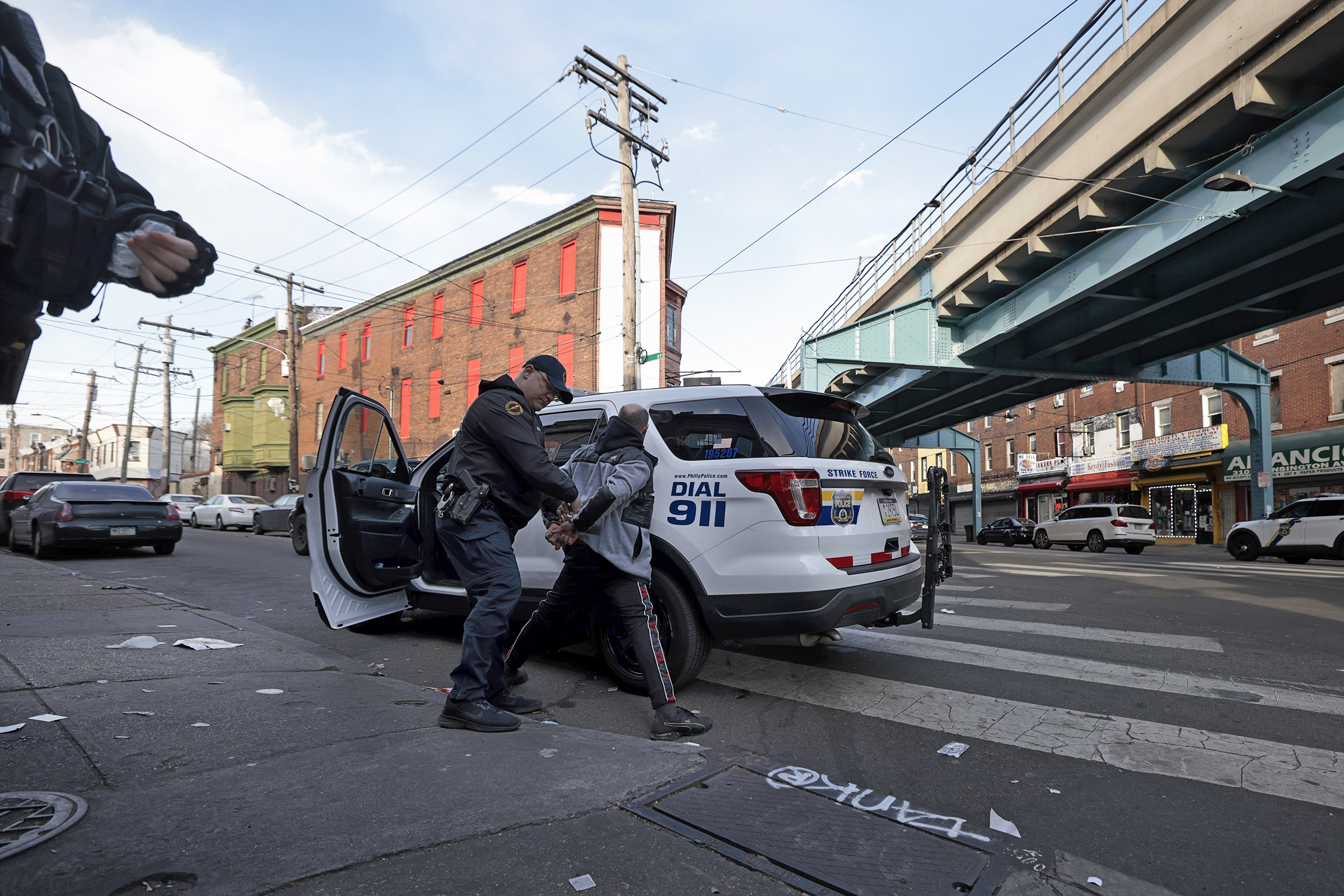
    Philadelphia police take a man into custody at Kensington Avenue and G Street on March 20, 2024. Police searched the man and said they found small plastic bags containing what was believed to be illegal drugs (top left).

    Through Nov. 15, arrests for drug dealing in the neighborhood were up 23% since Parker came into office. Still, overall, the city is on pace to see the fewest number of drug-related arrests in at least 15 years, city data show, and as law enforcement largely focuses in Kensington, arrests for selling drugs in other parts of the city are down about 34% compared with the 23 months before Parker was elected mayor.

    Geer said the city is still in the beginning phases of its efforts. Illicit drug sales will likely always persist, he said, “but what we are really, really going after is the open, blatant, in the air using drugs and selling drugs toxic to this community.”

    Rosario also said that reducing the area’s homeless population — by disbanding encampments and generally “being as disruptive as possible” — was critical to reducing the strain on the area’s services and residents, and lessening the open-air drug use and dealing.
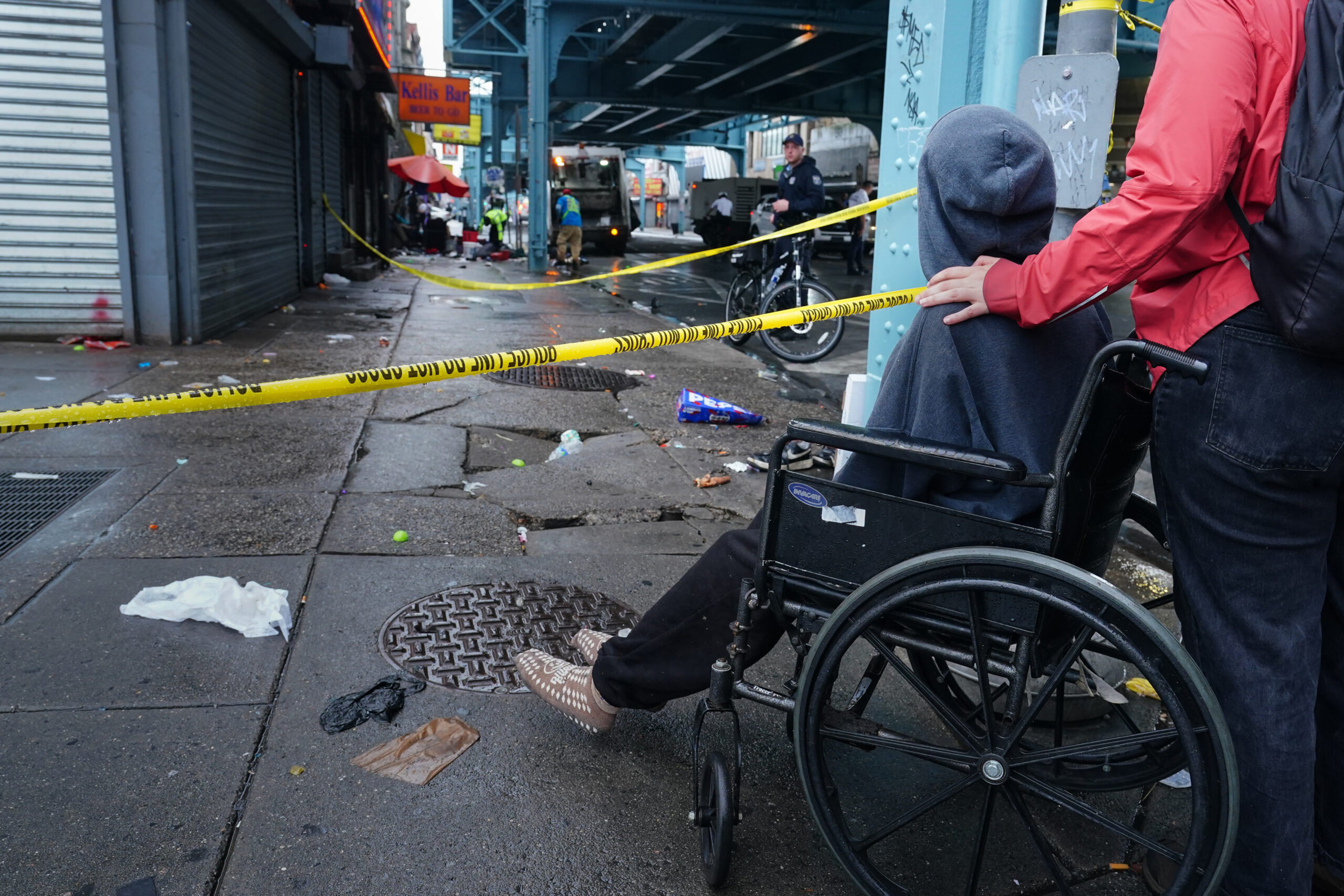
    A woman in a wheelchair looks down Kensington Avenue after police cleared a large encampment in May 2024.

    It has worked. Last September, there were about 750 people living on the streets in the area, according to a weekly count by police. During the same time this year, there were about 400.

    But homelessness in the city generally has not improved, city data show.

    There are actually about 400 more people experiencing homelessness this year than last, according to data from the Office of Homeless Services. Police and care providers believe some have simply moved to other neighborhoods to avoid the police presence.

    Rosario acknowledged the dispersal, but said Kensington didn’t deserve to bear the burden of those crowds alone.

    Because shutting down the drug market in Kensington, he said, “is like trying to stop a wave” at the beach.

    “You can disperse it,” he said. “Maybe you can reengineer to kind of push it to a different direction.”

    But you can’t stop it.
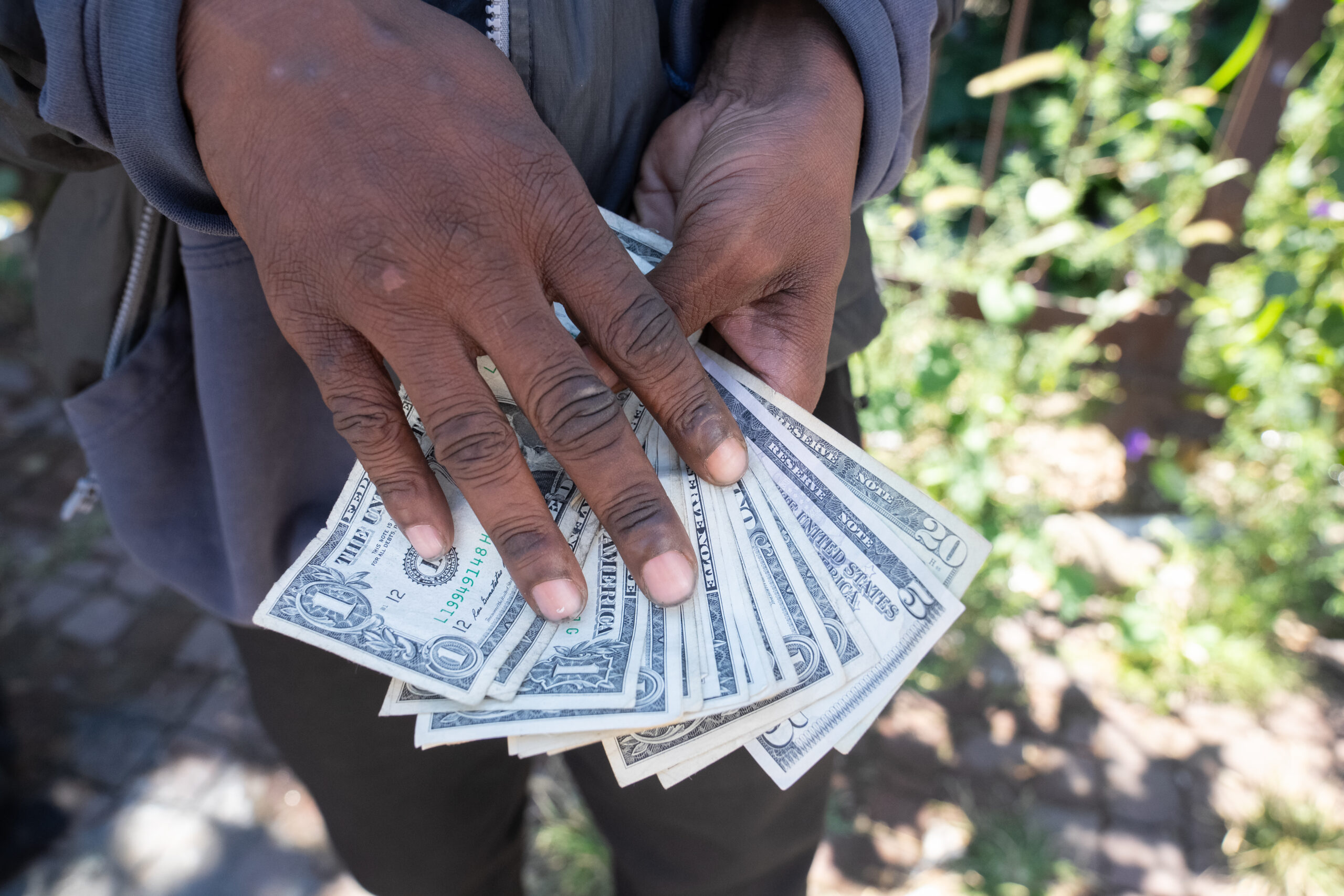
    A man fans out the cash he has made on a recent day selling drugs. It’s not much — in part, he said, because there are fewer people in Kensington buying from him.

    The view from the streets

    One drug dealer can see the shift — and feel it in his wallet.

    The 47-year-old man, who asked not to be identified because he sells illegal drugs, said he came to Kensington from New York in 2012 after serving time in prison for robbery. He’s been in the drug trade since he was 12, he said, taught by his parents, who hustled in the Bronx.

    Today, he spends his days and nights on a quiet, trash-strewn corner, smoking K2 and selling crack, meth, and dope — whatever the man in the maroon Crown Victoria drops off that day.

    During the pandemic, he said, business was booming. When he worked the overnight shift on Jasper Street, he said, he made at least $1,500 a week. Today, with more police on the corners and fewer customers on the streets, he’s lucky to clear $400.

    A 28-year-old dealer along Kensington Avenue scoffed at the police enforcement. Where does the city expect the drug economy to go if not here? he asked. The drug trade is a constant, a viable employer with a stable customer base, and it has to go somewhere.

    “They can’t put a cop on every f― block,” said the man, who asked not to be identified to discuss illegal activity.

    A woman smokes crack on a quiet street in Kensington.

    A few streets over, a 36-year-old man who smokes fentanyl and crack said that, a year or two ago, there would be five or six dealers on the corner of Jasper Street and Hart Lane.

    Now, he said, there’s one.

    “It’s harder to get drugs,” he said.

    As police have cracked down on retail theft — once an easy way for people in addiction to make quick cash by reselling the items — it’s also gotten harder to fuel his habit, he said. He usually gambles online on his phone to scrape together a few extra dollars, he said, getting paid through CashApp, which some dealers use to accept payment now.

    Many people in addiction said life overall is harder in Kensington — police clear away their tents, shoo them out of parks, and remove the often-stolen grocery carts used to carry belongings. It makes them feel subhuman, said one 36-year-old woman who has struggled with addiction since she was 13.

    “We just want to be safe and warm,” she said.

    But the biggest fear on the block these days, people said, is the withdrawal.
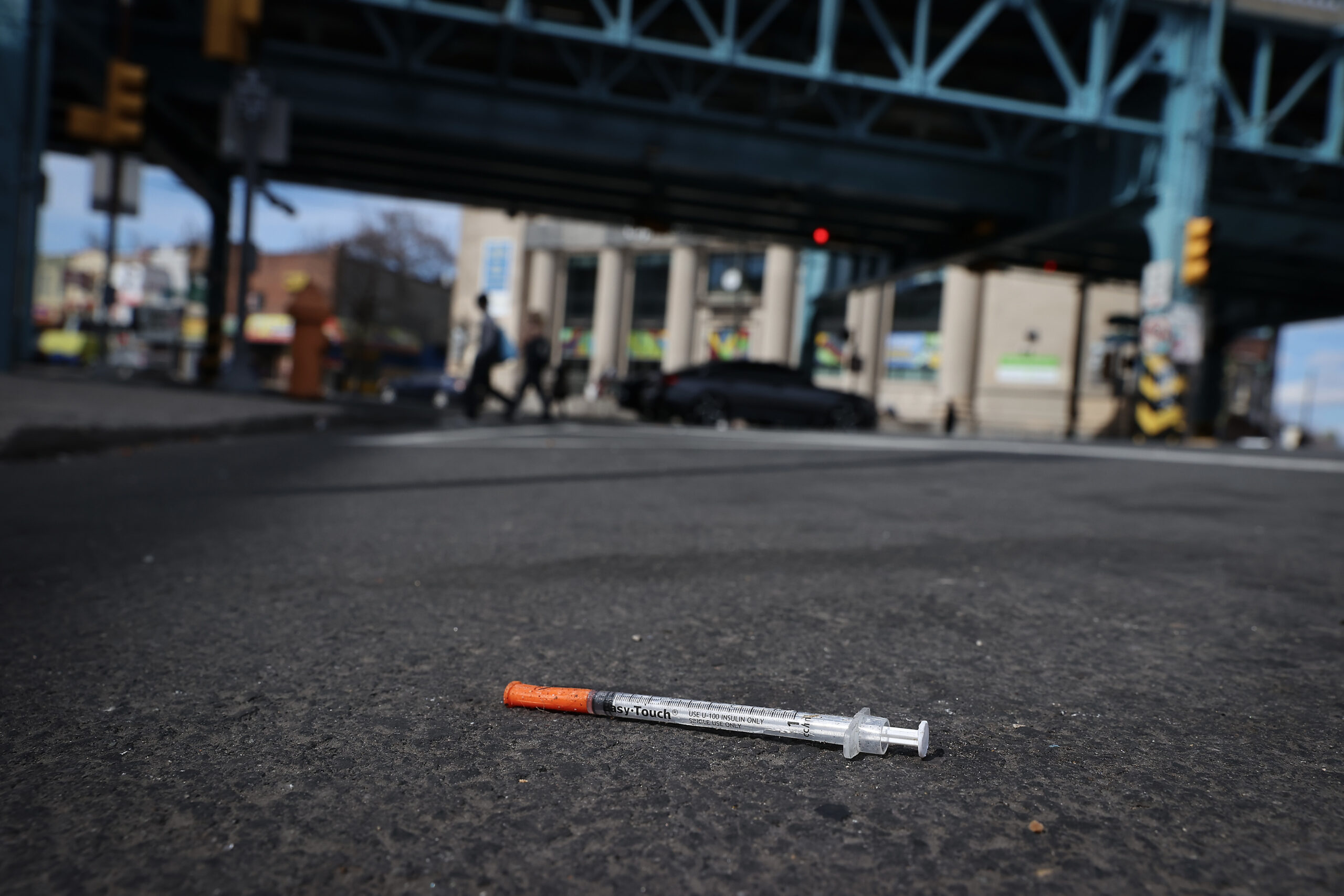
    A used hypodermic needle rests on Allegheny Avenue at Kensington Avenue on March 17, 2024.

    An expanded network of care

    As medetomidine replaces xylazine in the city’s drug supply, people who use drugs are experiencing new complications: seizures, tremors, blood pressure that skyrockets one minute, then plummets the next.

    The withdrawal symptoms, which can begin within two hours, are so intense they can send people into cardiac arrest. Only hospitals can offer the most effective treatments for medetomidine withdrawal, and more people are ending up in intensive care units.

    Dave Malloy, director of mobile services for Merakey, one of the city’s main addiction treatment providers, said the city has made strides in streamlining access to treatment in the last two years.

    Evaluations that once required a daylong wait at a hospital can now happen in the field through mobile units like Malloy’s, getting people to rehab within hours. Doctors can also start patients on medications like Suboxone or methadone, to lessen their withdrawal symptoms, in as little as 45 minutes.

    Malloy said that treatment providers, hospitals, police, and city agencies are working together better than they have in years.

    “There was a realization that everybody had been siloed,” he said.

    Only about 6% of the city’s homeless people who accepted help from outreach workers went to drug treatment and detox centers in recent years, according to city data — a statistic that, as of February, had not improved under Parker’s tenure.
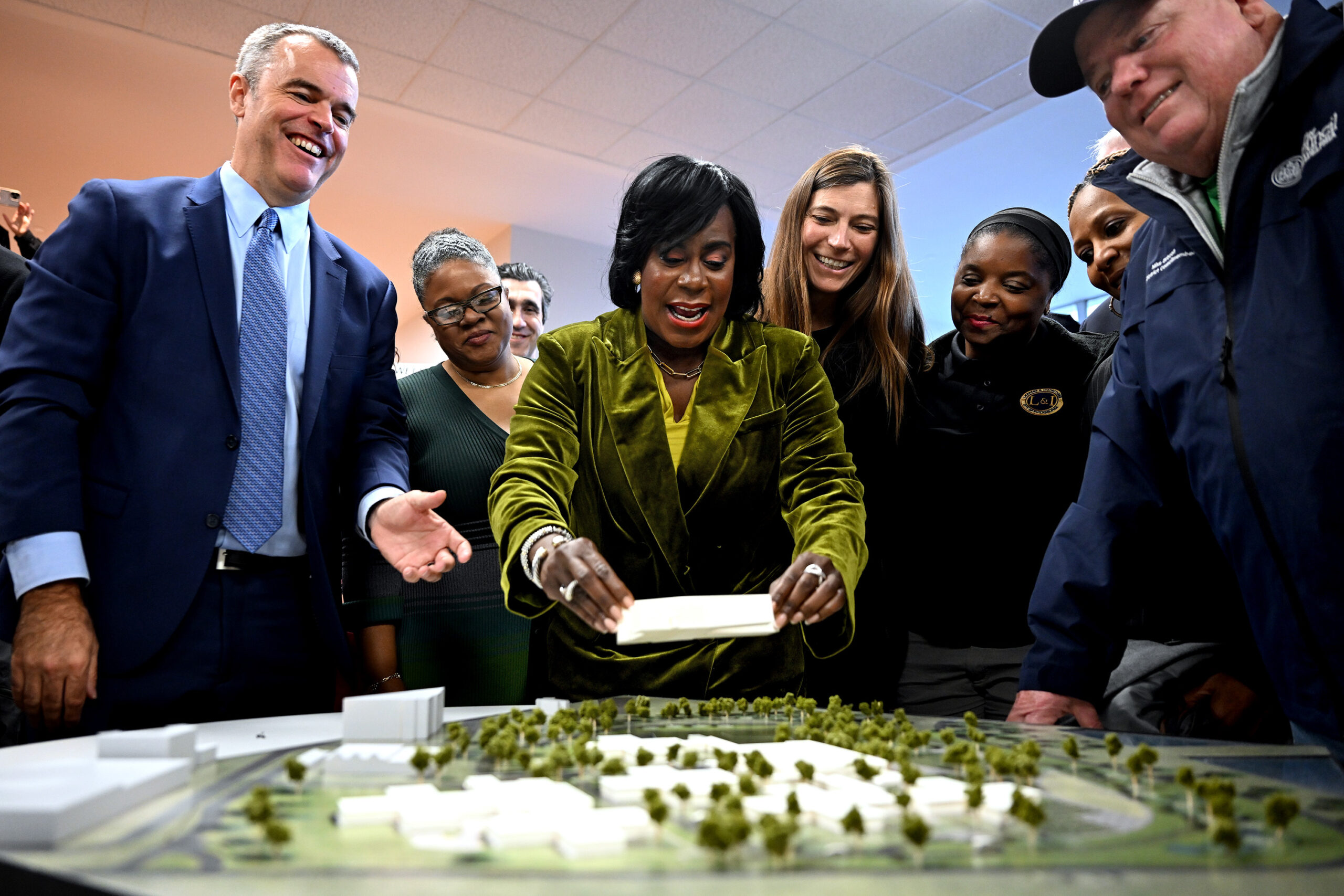
    Mayor Cherelle L. Parker places a new block on the scale model of the Riverview Wellness Village Wednesday during the January unveiling of Philadelphia’s new city-operated drug treatment facility. At left is Managing Director Adam Thiel.

    The city said it has also expanded the number of beds available for people in recovery by 66% through the opening of the Riverside Wellness Village, where people can live for up to a year after completing 30 days of inpatient drug treatment. Once construction is complete, the facility will house over 600 people.

    Another 180 people are living in a shelter at 21st Street and Girard Avenue, which the city expanded last spring.

    And the Neighborhood Wellness Court — a fast-track diversion program where people in addiction who are arrested for low-level offenses are brought before a judge the same day, in hopes of getting them into treatment more quickly — is growing.

    In the first three months of the court, which Parker’s team launched in January and runs one day per week, only two of the approximately 50 people who had come through completed the program. Most who opted to go to rehab immediately left and absconded from follow-up hearings. At one point, operations were so disjointed that court leadership threatened to shut it down.

    But Parker is committed to the court’s success and wants it to operate five days a week. The city recently hired a new director to oversee the court, and is in the process of hiring 14 additional staff members to provide better follow-up care.

    Still, through early September, of the 187 people who had come through the court, only 10 completed the program and saw their criminal cases expunged, according to city data.

    And while most people still do not come to court, the city said that it expects the situation will improve with the additional hires, and that there is success in the 130 people who have accepted some form of service through the court, even if they weren’t ready to enter recovery.
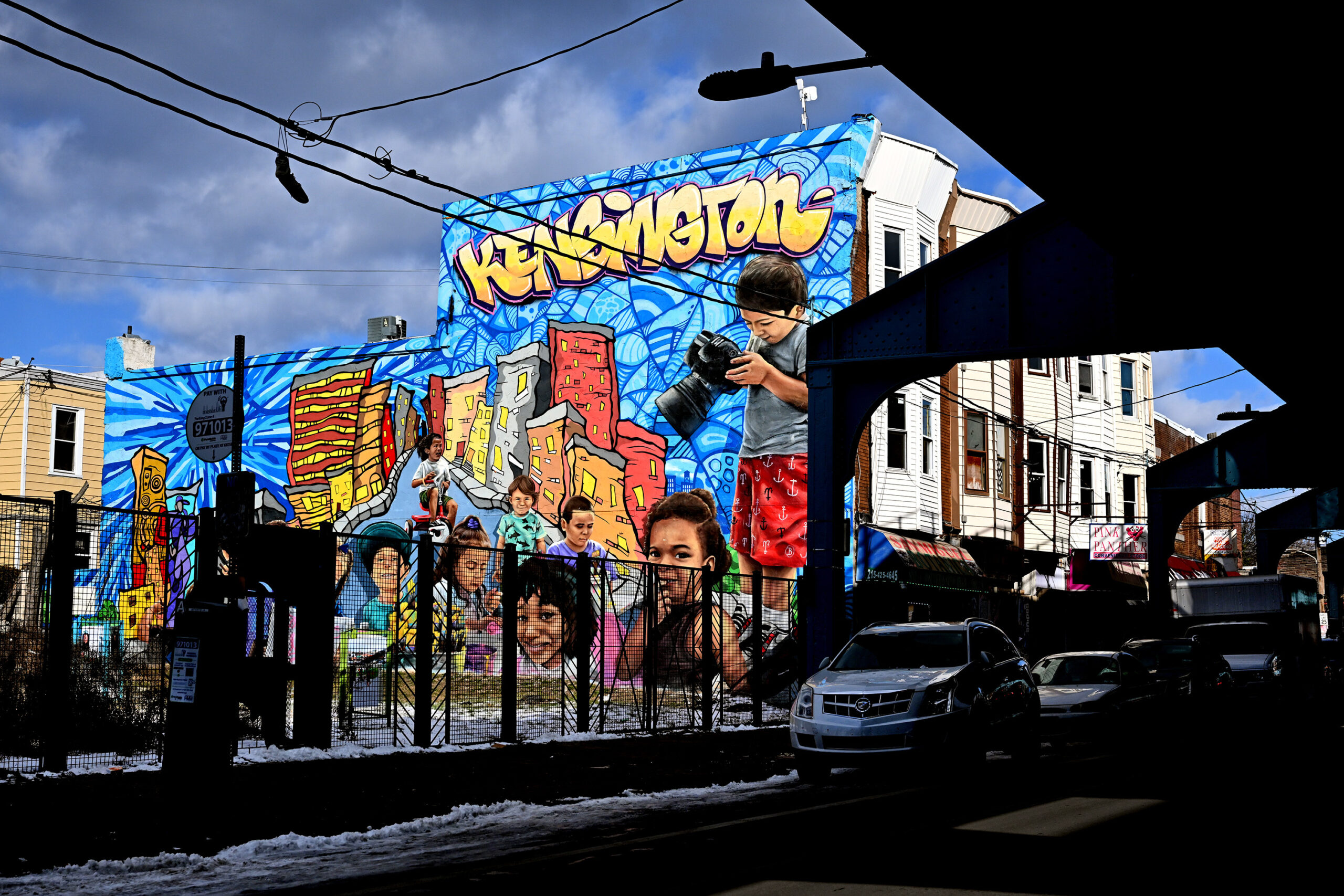
    The “Lots of Lots of Love” mural by artist J.C. Zerbe is on the 3200 block of Kensington Avenue.

    ‘Kensington is love’

    The increased police enforcement has sent more people in addiction to jail, and several people have died in police custody after they overdosed or had medical emergencies while going through withdrawal.

    And not all residents feel the progress, or see the increased police presence as a good thing.

    Theresa Grone, 41, who lives next to McPherson Square Park, said she and her children still cannot sit outside without someone in addiction asking them if they have free drug samples or clean syringes.
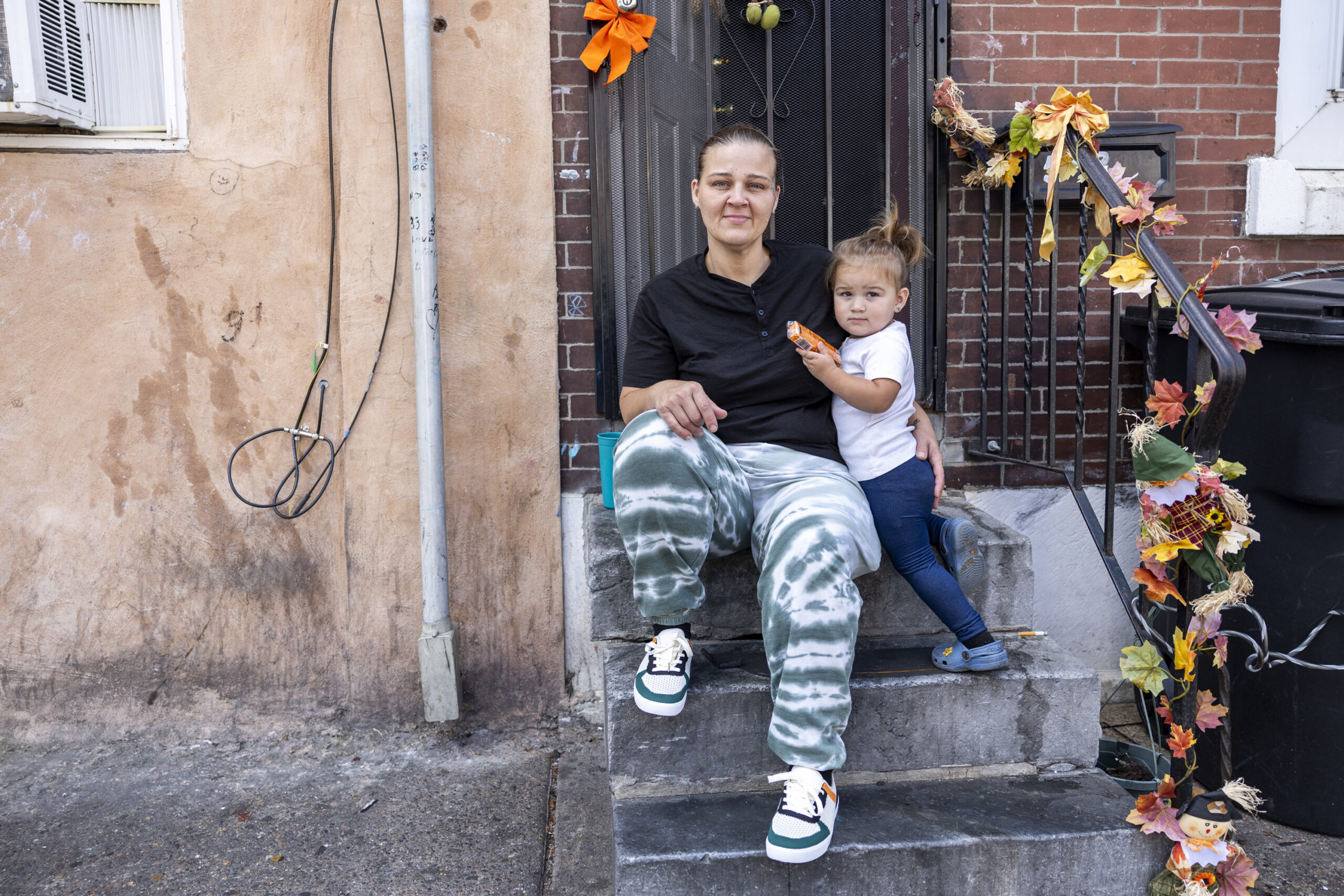
    Theresa Grone, 41, and her daughter Abagail, 2, live near McPherson Square Park in Kensington.

    And, she said, the police in the neighborhood have gotten more aggressive and harass people who aren’t doing anything wrong. Drug dealers and users still dominate the block.

    “They’re not in the places they used to be, but they’re still there,” she said — on side streets, in abandoned houses, moving to corners as soon as the police leave.

    She feels like the city is expanding resources for people in addiction more than for families like hers — a group of eight people renting a rowhouse in disrepair who want to move but can’t afford to.

    But other residents, like Cartagena Hart, hope to never leave.

    She said she has always seen the beauty and strength of Kensington, even at its lowest — the neighbors who care for each other’s children and feed the homeless, the police officers who will show up as soon as she texts them for help.

    “Kensington,” she said, “is love to me.”

    And she’s proud, she said, that her advocacy and that of her neighbors has helped city leaders finally invest in helping them.

    Staff writers John Duchneskie, Max Marin, Anna Orso, Dylan Purcell, Sean Walsh, and Aubrey Whelan contributed to this article.
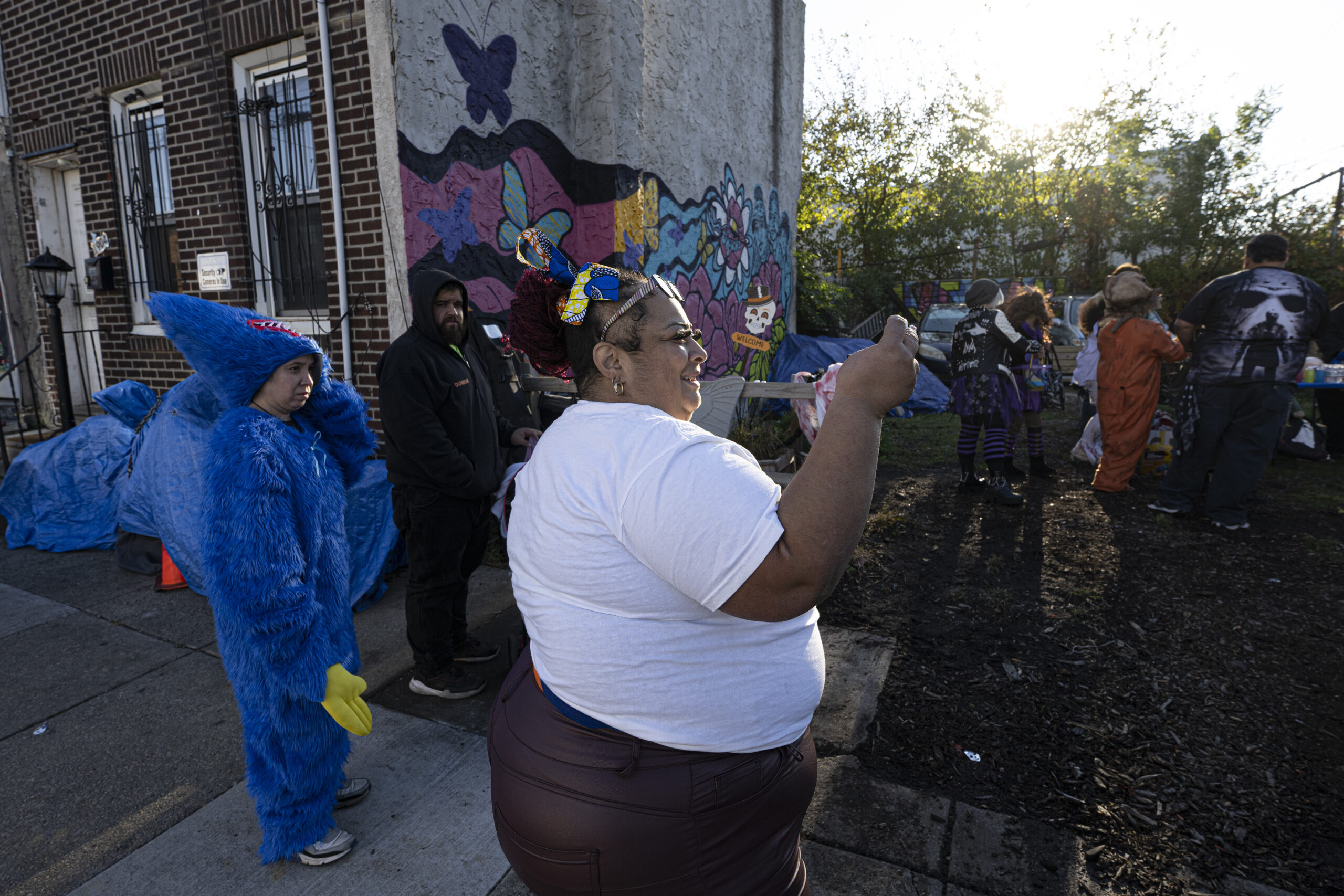
    Gloria Cartagena Hart interacts with neighbors during a Halloween party and giveaway that she organized at the Butterfly Garden in Philadelphia’s Kensington neighborhood.
  • Funding for Mayor Cherelle Parker’s H.O.M.E. initiative will be delayed until next year

    Funding for Mayor Cherelle Parker’s H.O.M.E. initiative will be delayed until next year

    Mayor Cherelle L. Parker promised to build or preserve 30,000 homes in her first term. But much of her plan to reach that goal now won’t get underway until her four-year term is more than halfway over.

    City Council this week again delayed a key piece of legislation that needs to pass before the Parker administration can sell hundreds of millions of dollars in city bonds, the primary source of funds for the myriad housing programs being created or expanded through the mayor’s Housing Opportunities Made Easy initiative, or H.O.M.E.

    The delay comes as lawmakers negotiate to amend the legislation — a resolution setting the first-year budget for H.O.M.E. — to increase spending levels beyond the currently proposed $195 million and to lower income eligibility thresholds for some programs, prioritizing poorer residents.

    The most recent setback came this week, when Council President Kenyatta Johnson canceled a Monday hearing to advance the resolution and declined to reschedule it before Thursday’s regular Council meeting, when the administration said the proposal would need to receive final approval for the first $400 million round of bonds to be sold in 2025. (The city plans to sell a second and final $400 million tranche of bonds in 2027.)

    The administration sent Johnson’s office an initial draft of the resolution in July, but the Council president has repeatedly delayed advancing the measure throughout the fall.

    “It is critically important to get the first-year spending plan right because what is agreed upon in the first year will influence all future spending for the H.O.M.E. program,” Johnson said in a statement explaining the cancellation of Monday’s hearing. “It is also essential that the final legislation include spending priorities important to City Councilmembers.”

    Parker is known as a hard-line negotiator who rarely cedes ground, and Johnson’s delays might be meant to send the signal that if she doesn’t bend on Council’s demands, he won’t meet her timelines.

    The saga marks a rare moment of discord between Parker and Johnson, who have worked hand in glove on most issues since both took office in January 2024 — including the passage of the initial package of legislation related to H.O.M.E. last spring.

    At left is Council president Kenyatta Johnson speaking with Philadelphia Mayor Cherelle L. Parker before start of her press conference regarding her first budget in Philadelphia City Hall on Thursday, June 6, 2024.

    In a hearing last week, Johnson appeared to side with lawmakers, led by Housing Committee Chair Jamie Gauthier, who were pushing for the administration to lower income thresholds for some H.O.M.E. programs, saying the city should prioritize the neediest Philadelphians.

    Parker has proposed expanding income eligibility requirements in some cases so that the programs can also be accessible to middle-class residents, saying she does not want to pit “the have-nots vs. the have-a-littles.”

    ‘Pit one against the other’

    Even with the bonds delayed until next year, the mayor does not appear to have given up the fight to maintain her vision for the housing initiative. At an unrelated Council hearing on the school district on Tuesday, Parker brought up the H.O.M.E. initiative unprompted.

    She then called out four Council members who have middle-class constituencies that are likely to benefit from increased income thresholds for housing programs: Curtis Jones Jr., whose district includes Roxborough and Overbook; Anthony Phillips, who represents East Mount Airy and West Oak Lane; Mike Driscoll, of the Lower Northeast; and Katherine Gilmore Richardson, who represents the city at large but is a Democratic ward leader for Wynnefield.

    “I am unapologetic about making sure that constituents represented by you … should not be left out of any investment that we make in the city of Philadelphia,” Parker said. “Every community can be lifted up with the work that we are doing, so I won’t let us pit one against the other.”

    The remarks, however, effectively pitted members with poorer constituencies against those with middle-class bases. Johnson represents Southwest Philadelphia and the western half of South Philly; Gauthier’s district covers much of West Philadelphia.

    Despite the dustup, it remains unlikely that a lasting fissure has emerged in Parker and Johnson’s relationship, given that they still share many policy priorities and can benefit each other politically.

    “Council President Kenyatta Johnson and I have an amazing working relationship,” Parker, a former Council member, said in an interview Monday. “Council has a right to do its due diligence. If I hadn’t been there, if I wasn’t a former staffer in there, maybe it would be foreign [to me]. No. We’re going through the process, and I have to trust the process.”

    Additionally, Johnson standing up for Council members’ concerns over the H.O.M.E. budget may help shield him from questions about whether he is overly compliant with the mayor’s agenda.

    “Both branches of government remain committed to ensuring the H.O.M.E. program is implemented transparently, equitably, and in a way that maximizes benefits to Philadelphia residents,” Johnson said in his statement. “Taking extra time to finalize these critical elements will result in a stronger, more effective program.”

    Tracking progress

    The administration is not waiting for the H.O.M.E. bonds to be sold to start notching wins for Parker’s 30,000 housing units goal. The city’s Philly Stat 360 website has already begun tallying units built and preserved during her tenure.

    To be sure, some of the mayor’s strategies for the H.O.M.E. initiative do not require bond money. For instance, Parker has led a shake-up of the Land Bank, which she hopes will accelerate the redevelopment of unoccupied city-owned parcels into housing, and she won Council approval last spring for zoning changes meant to streamline building.

    But the potential infusion of $800 million is undoubtedly the centerpiece of the initiative. The money will help launch programs like Parker’s One Philly Mortgage, which aims to provide 30-year fixed-rate loans to qualified homebuyers, and will buttress existing ones like the Basic Systems Repair Program, which has been credited with preventing the displacement of low-income residents who end up moving if they cannot afford needed home repairs.

    “It’s never been done in the history of our city, and we do that together in partnership with each other, and that’s what we’re working to do right now,” Parker said.

    Staff writers Jake Blumgart, Kristen A. Graham, and Anna Orso contributed to this article.
  • Philly City Council is advancing legislation to let members keep their jobs while running for Congress

    Philly City Council is advancing legislation to let members keep their jobs while running for Congress

    Philadelphia City Council is attempting once again to change city law to allow members to keep their jobs while running for higher office, an effort that has already failed three times in the last 20 years.

    Maybe the fourth time’s really the charm?

    This attempt is a little bit different. A Council committee on Wednesday advanced legislation to change the 70-year-old resign-to-run rule that requires city officeholders to leave their jobs while campaigning for another office.

    But the legislation — which must be approved by a majority of voters through a ballot question — doesn’t repeal the rule entirely. It merely narrows it to allow members to keep their seats if they are seeking state or federal office, such as seats in Congress or the state General Assembly.

    Under the new proposal, Philadelphia’s resign-to-run rule would remain in place for members seeking a city office, like mayor or district attorney.

    That distinction makes the rule change more likely to become reality, said Councilmember Isaiah Thomas, who sponsored the legislation even though voters rejected attempts to eliminate the rule in 2007 and 2014.

    More than a year ago, Thomas proposed that the city try again to eliminate the rule entirely. But this week, he amended his proposal to apply only to those seeking state or federal office, calling that a compromise.

    “I personally think that you should be able to run for mayor and keep your seat in City Council,” Thomas said. “But that’s not what the majority of people who I’ve talked to feel. And I don’t think that this should be about how I feel. It should be about what’s best for the city.”

    A necessary measure or a barrier to entry?

    Thomas, a Democrat in his second term who represents the city at-large, is one of several Council members rumored to have aspirations for higher office. But there is not currently an obvious seat for him or his colleagues to seek.

    The earliest a rule change could be implemented is next year — too late for a Council member to run without resigning in the crowded and closely watched race to succeed retiring U.S. Rep. Dwight Evans (D., Philadelphia).

    Thomas said he is not currently interested in serving in Washington — he has two young children — but said he has some “amazing colleagues” who may want to run for Congress in the future.

    Councilmember Isaiah Thomas speaks during a City Council Committee on Legislative Oversight hearing held at the Museum of the American Revolution in April.

    The resign-to-run rule has been codified in the Home Rule Charter since 1951 when the charter was established. Proponents have long said that public servants should not be influencing policy while campaigning for another office.

    But others contend that the rule — which applies to Council members, row office holders, and members of the mayor’s administration — creates an unnecessary barrier for people who want to run for higher office but can’t financially withstand giving up their salary.

    The rule also recently led to a handful of lawmaker vacancies. In 2022, six of City Council’s 17 members — including now-Mayor Cherelle L. Parker — resigned to run for mayor, at times making it complicated for the city’s legislative body to govern.

    Ethics questions emerge

    Multiple ethics officers said they oppose the change as it’s currently proposed. Jordana Greenwald, general counsel for the city’s Board of Ethics, said the board was not involved in drafting the rule change, and has a handful of “technical” concerns about its implementation.

    “What we don’t want is for this to be passed and then it to become something where there are unintended problems or pitfalls for people who choose to take advantage,” Greenwald said.

    Thomas said there is “plenty of time” to address the board’s concerns before passage. He is hopeful the legislation can be passed in time for a question to appear on the 2026 primary election ballot in May.

    But Lauren Cristella, CEO of the good-government group Committee of Seventy, questioned the urgency and said Council should give the Board of Ethics time to do its “due diligence.”

    While the Committee of Seventy has supported past attempts to repeal resign-to-run, Cristella said she does not understand the purpose of a carveout for members seeking state or federal office.

    And she said any repeal should be paired with a three-term limit for Council members, who are currently not term limited.

    “Philadelphians deserve comprehensive, not piecemeal, reform here,” she said.

    Several Council members said they support Thomas’ legislation, pointing out that state and federal lawmakers do not need to resign from their jobs to seek higher office.

    “It’s an issue of consistency across the board,” said Councilmember Cindy Bass, a Democrat who represents parts of North and Northwest Philadelphia. “It’s crazy when everyone’s doing something different.”

  • Philly Housing Authority plans to lay off almost 300 workers in 2026

    Philly Housing Authority plans to lay off almost 300 workers in 2026

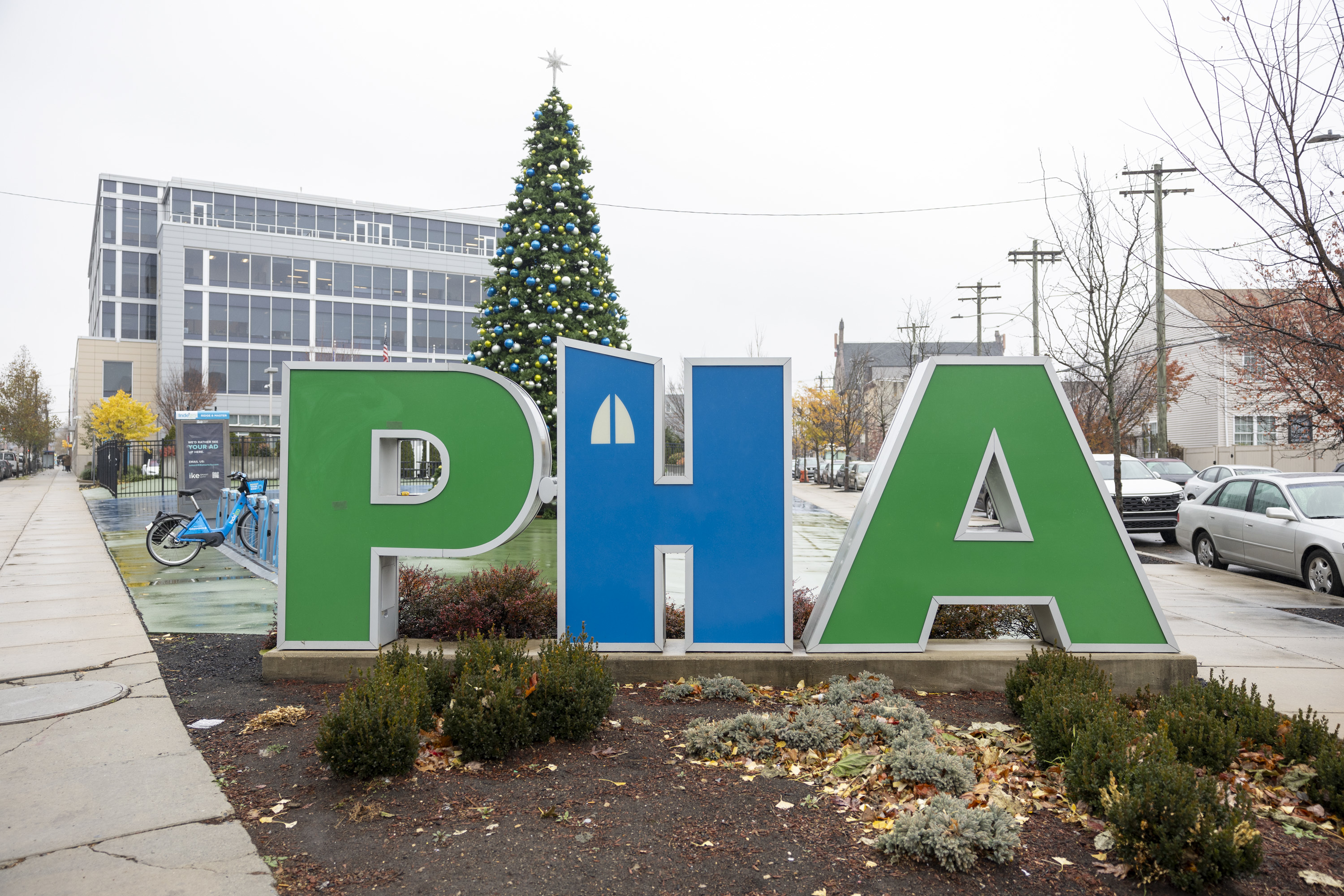
    The Philadelphia Housing Authority (PHA) is planning sweeping layoffs that will affect almost 300 of the agency’s 1,200 employees, beginning in January 2026.

    The cutbacks are the result of dramatic changes in how PHA, which provides affordable housing to thousands of families across the city, does maintenance and repair work. Instead of directly employing union electricians, carpenters, and other workers, beginning next year, the agency will contract out for those jobs as needed.

    “This is a housing program, it is not a jobs program,” said Kelvin Jeremiah, the president and CEO of PHA, in an interview.

    “Do I use the resources that we have to protect residents, to advance the availability of affordable housing to the families that are most in need? Or do I use those limited resources to fund positions that I don’t need?” Jeremiah said.

    There are 620 members of the Philadelphia Building and Construction Trades Council employed full-time by the agency as maintenance staff. Jeremiah estimates that by almost halving that number PHA will see a cost savings of $24 million annually.

    The agency said it currently costs $15,500 to maintain a single unit of traditional public housing annually, due to the agency’s complex work rules, which require many different union workers to make repairs. Most other multifamily providers have dramatically lower per-unit maintenance costs.

    “PHA has engaged the unions throughout this process and can proceed with this policy decision without additional approvals,” an agency spokesperson said in an emailed statement.

    Although in-house building trades workers will constitute the majority of lost jobs, other positions will also be affected, including 33 managerial roles in PHA headquarters. Overall, PHA’s workforce will shrink by about 20%.

    “We are going to talk and try to offer some alternatives, but this is an issue of price sensitivity and we have to understand, given the new environment, that there are less funds to do the same mission with,” said Ryan Boyer, business manager for the Philadelphia Building and Construction Trades Council, whose unions represent many of the affected workers.

    The Philadelphia Housing Authority Headquarters is planning sweeping layoffs that will affect almost 300 of the agency’s 1,200 employees, beginning in January 2026 in Philadelphia, on Wednesday, Nov. 19, 2025.

    More with less?

    The cutbacks come amid an aggressive $6.3 billion plan unveiled earlier this year, through which the agency hopes to expand its housing portfolio by 7,000 units while rehabbing the 13,000 units it already owns.

    Jeremiah said that the staff reduction should not be seen as PHA doing more with less, and that it will not limit the agency’s ability to execute his planned expansion.

    “We will not be doing less than what we’re doing now, but we have been doing too little with too much,” Jeremiah said. He said other market-rate and affordable housing multifamily operators are able to do unit repairs for far less than what PHA pays.

    “My colleagues have all been doing this at substantially less cost,” Jeremiah said. “The only difference between us is that they have an operating model that does not require six different trades to do a single thing.”

    Kelvin A. Jeremiah, PHA President & Chief Executive Officer, at PHA headquarters, in Philadelphia, May 21, 2025.

    Because PHA’s layoffs will affect hundreds of members of Philadelphia’s influential building trades unions, Jeremiah said, he has been negotiating with Boyer on the work-rule changes.

    “My reaction is one of disappointment. However, we remain partners with PHA and we will still build most of the stuff on the capital side,” Boyer said. “I don’t want it to be lost that when they build stuff, they will still be members of the Philadelphia building trades working, and there will still be members doing maintenance work.”

    Boyer is also the business manager for the Laborers’ District Council and a close ally of Mayor Cherelle L. Parker.

    Jeremiah said maintenance technicians, laborers, and painters will be the only trades that remain directly employed with the agency after the work-rule changes go into effect.

    The electricians union, IBEW Local 98, said it is still studying PHA’s new policy.

    PHA will also still work with the trades for discrete repair and maintenance jobs within the agency’s housing portfolio but will no longer directly employ as many workers full-time, Jeremiah said.

    The Trump effect?

    PHA’s layoffs, and its expansion plan, are unfolding during a period of uncertainty nationwide for affordable housing policies and organizations like PHA.

    Some housing experts were surprised to see PHA embark on its ambitious $6.3 billion plan amid President Donald Trump’s skepticism of affordable housing programs and a raft of austerity measures from his administration, which has sought to reduce public support for lower-income Americans.

    Nearly all of PHA’s funding — 93% — comes from the federal government, according to the agency.

    “If Congress and the administration coughs, it impacts us,” Jeremiah said. “If there is a reduction [in funding], it impacts us.”

    Jeremiah said he is seeking to operate within the mandates set by Trump’s administration while continuing to support PHA’s tenant base and plans.

    “Subsidizing employment … is just not the way to go at a time when we’re looking at less funding on the horizon,” Jeremiah said. “Where am I to get the funds not only to do more developments, acquire more, and preserve what we have at the same time [that] we have a workforce that is, quite frankly, I will dare to use the word bloated?”

    Waves of layoffs

    Despite the layoffs, Jeremiah believes the agency will still be a rich source of jobs for the building trades unions as the $6.3 billion plan unfolds. He points to an analysis of PHA’s 10-year plan by economic consulting firm Econsult Solutions, which said it would create 4,900 jobs annually in the city.

    The first round of 260 job losses will hit in mid-January 2026, although Jeremiah says 93 of those workers will be retained in new positions as maintenance aides, laborers, and painters. A further 116-position reduction will occur next summer.

    A vice president of development, Greg Hampson, also recently left PHA, although the agency declined to comment on that case. Jeremiah said that several vice president and director-level positions will be among the coming layoffs.

    The last major round of layoffs at PHA was in 2016, when 14% of the staff was cut. Those positions were mostly administrative roles.

    Editor’s note: A previous version of this story misstated the number of employees impacted.

  • Mayor Cherelle Parker defends ending racial diversity goals for Philly contracts: ‘Fighting the fight the way I know best’

    Mayor Cherelle Parker defends ending racial diversity goals for Philly contracts: ‘Fighting the fight the way I know best’

    Mayor Cherelle L. Parker faced criticism last week for quietly eliminating racial diversity goals from city contracting in what appeared to be a preemptive concession to the conservative legal movement’s dismantling of affirmative action.

    But this week, Parker is going on the offensive. The mayor said she was eager to eliminate the city’s racial participation targets long before the current legal threats to the policy emerged, saying the city’s 40-year-old effort to use its contracting process to boost diverse businesses had failed.

    “Did the Supreme Court ruling have anything to do with our decision-making? Absolutely,” Parker said Monday, referring to a 2023 ruling that threatened race-based affirmative action programs. “But it wasn’t the impetus for it. I ran on providing access to economic opportunity for all here in the city of Philadelphia.”

    That case, Students for Fair Admissions v. Harvard, could mark the beginning of the end for a wide variety of government programs that seek to boost diversity or aid people of color.

    In her first extensive comments since The Inquirer reported Parker’s administration had ended race- and gender-conscious contracting policies, the mayor defended her decision Monday at a last-minute “roundtable” meeting she organized in Northwest Philadelphia with business leaders.

    And she doubled down during a news conference Tuesday at the African American Chamber of Commerce headquarters, where she signed an executive order codifying the city’s shift to favoring firms that are registered as “small and local.”

    “We knew the system was broken years before,” Parker, the city’s first Black female mayor, said. “Because every time we would look at the numbers and we would want to see how many Black and brown and women and disabled business owners were growing in the city of Philadelphia, the numbers became stagnant.”

    Historically disadvantaged firms win city contracts worth more than $370 million annually, and supporters of the program criticized Parker for not fighting to preserve it.

    City Councilmember Kendra Brooks of the progressive Working Families Party said Parker was “caving” to President Donald Trump, whose administration has sought to roll back policies on diversity, equity, and inclusion.

    “People want to see leaders fighting for something,” Brooks said last week, “and right now we don’t see our city fighting for anything.”

    But Chief Deputy Mayor Vanessa Garrett Harley said Monday that the administration examined the Philadelphia Office of Economic Opportunity’s registry of disadvantaged businesses that should get a leg up in city procurement opportunities, and found that only 20% were actually winning contracts.

    “Obviously, it was not working,” Garrett Harley said.

    Deputy Mayor Vanessa Garrett Harley speaks during a press conference in Philadelphia, Pa., on Thursday, June 27, 2024.

    Parker said that setting diversity goals was not enough to grow women- and minority-owned businesses. Instead, she said, they need technical assistance, access to capital, and other tools so that they can develop to the point where they are able to regularly compete for city contracts without relying on set-asides.

    Her administration is focused on providing those resources, she said, and not just “checking boxes.”

    “I’m fighting,” Parker said. “But I’m fighting the fight the way I know best: to achieve the results and act and extract the tangible results that I need for the people who live in this city, who own businesses in the city.”

    ‘Small and local:’ A new world for city contracting

    Parker on Tuesday signed an executive order detailing city’s new contracting system. As previously detailed in The Inquirer, the city will now give preference to “small and local” firms rather than requiring participation for businesses owned by women, minorities, and people with disabilities.

    The executive order does not set a target goal for what share of city contracting dollars should go to “small and local” businesses.

    The city’s previous goal of directing 35% of contracting dollars to disadvantaged firms was similarly not enumerated in law. Instead, Parker’s order outlines a structure for setting benchmarks and providing assistance to firms seeking to do business with the city.

    For example, it charges the economic opportunity office with setting overall contracting goals, as well as establishing “participation ranges” for individual contracts. Those ranges will be used to give contractors benchmarks for money that should be set aside for subcontractors and suppliers that are considered disadvantaged businesses.

    The office is also responsible for maintaining the registry of small and local businesses. Garrett Harley said the “overwhelming majority” of businesses that are registered with the city as minority-, women-, or disabled-owned will qualify as “small and local.”

    Nadir Jones, the city’s director of business impact and economic advancement, said firms already registered with the city will be “grandfathered in” and will not need to register again as small or local.

    To qualify as “local,” a business must either be headquartered in Philadelphia city limits or meet two of three other criteria:

    • More than 60% of employees live in Philadelphia.
    • More than half of the business’ employees work in the city at least 60% of the time.
    • More than 75% of the business’ gross receipts came from Philadelphia.

    To qualify as “small,” Jones said, a business must have fewer than 750 employees.

    Parker said her administration is working with outside advisers to hone the program. That includes the African American Chamber of Commerce, which announced Tuesday it had established a Special Task Force on Economic Access and Procurement in response to the contracting changes.

    “We will continue to advocate for policies that are not only measurable and defendable, but also those that produce real impact,” said Regina Hairston, the organization’s president and CEO. “However, as we have recently learned, these policy changes are happening whether we fully support them or not.”

    A risk-averse legal strategy

    Parker’s elimination of racial diversity targets in city contracting — due in part to the hypothetical threat of litigation raised by City Solicitor Renee Garcia — in some ways parallels the mayor’s decision earlier this year to settle a lawsuit challenging a city tax break that primarily benefited small businesses.

    In both instances, critics said that the Parker administration overstated the legal jeopardy the programs faced and gave up without a fight. But there are key differences between Parker’s handling of the contracting goals and the tax break, which exempted firms’ first $100,000 in revenue from the business income and receipts tax, or BIRT.

    If anything, there was less of an immediate threat to the city’s contracting diversity goals, which are not facing any legal challenge. The administration instead preemptively abolished its racial diversity targets due to rulings on separate issues, such as affirmative action in college admissions or the city’s project labor agreements.

    The catalyst for Parker eliminating the BIRT exemption was a 2024 lawsuit filed by a Massachusetts medical device manufacturer challenging the constitutionality of the tax break. Critics of Parker’s decision argued that if the city had fought it in court, the case could have been thrown out because the company may have struggled to demonstrate harm, given that the tax break actually benefited the firm.

    Instead, the city settled with the company, and Parker pressed Council to remove the tax break from city law.

    Renee Garcia, Philadelphia City Solicitor speak on Jan 22, 2025 during a hearing exploring Philadelphia’s readiness and commitment to protecting immigrant, LGBTQ+, and other marginalized communities in preparation for the impending Trump administration.

    During the debate over the BIRT exemption, Garcia said Philadelphia could potentially lose hundreds of millions of dollars in tax revenue if it didn’t cave to the legal challenge. Critics of the city’s approach cast doubt on whether that was a realistic outcome.

    But in the case of the contracting DEI goals, the potential risks articulated by the administration are far less dire.

    Garcia said Monday the primary financial risk involved in maintaining the contracting diversity program is that if the city ever did get sued, and then lost a protracted court battle, it may have to pay the plaintiff’s attorney’s fees.

    She also cited the possibility of creating unwanted legal precedent if the hypothetical lawsuit against the city reached the U.S. Supreme Court and lost — something that could still happen if a suit is filed against any of the hundreds of jurisdictions across the country that still have racial participation goals in contracting.

    “This way, we do it on our terms,“ Garcia said. ”We have time to build it. We have a plan.”

    The most important difference between the business tax and contracting issues is that Parker was in favor of the BIRT exemption but does not support the old contracting system.

    In her budget address in March, Parker said she was begrudgingly seeking to end the tax break because state judicial rulings, in the administration’s view, had forced the city’s hand. But when it comes to the city’s contracting practices, Parker’s aims in some ways align with those seeking to undo longstanding city policy on diversity in contracting.

    The administration’s messaging on the issue has become somewhat mixed. On one hand, Garcia said Parker was “anguished” when she realized she had to make changes to the contracting system due to the legal environment.

    “She did not want to do this,” Garcia said.

    On the other hand, Parker said she has long planned to reform the contracting system. Asked if her policy goals or new legal rulings were driving the decision, Parker said: “It’s both. It’s not either/or.”

    “We are building something that does not exist here in the city of Philadelphia,” she said. “We are asking you to join the fight with us.”

  • School closings are coming to Philly. Here are four themes that are emerging as leaders come closer to decisions.

    School closings are coming to Philly. Here are four themes that are emerging as leaders come closer to decisions.

    Sweeping changes are coming to the Philadelphia School District, with officials promising large-scale school closings, co-locations, grade reconfigurations, and new construction over the next several years.

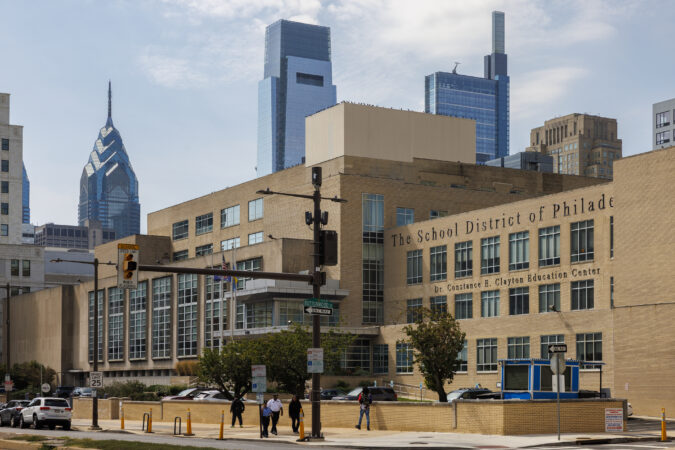
    The district is launching a survey this week to gain more input into that plan after Superintendent Tony B. Watlington Sr. pushed back a November deadline to announce his recommendations amid concerns from school communities.

    But those working closely on the facilities planning process said Monday that four themes are emerging that will shape the recommendations: strengthening K-8 schools, reinvesting in neighborhood schools, reducing school transitions for students, and expanding access to grades 5-12 criteria-based schools.

    Here’s what to know about each of the themes:

    Strengthening K-8 schools

    “Many school programs with declining enrollment, or which operate in aging buildings, struggle to offer a full range of high-quality classes, activities, enrichment opportunities, and supports,” the district said.

    Students and teachers in K-8 schools need better spaces and staffing and more resources, and the district cannot achieve that in its current configuration — the district has 216 schools but about 300 buildings, many of which are in poor shape. And enrollment is unevenly distributed — some schools, particularly those in the Northeast, are overcrowded, while others have thousands of empty seats.

    Citywide, there are 70,000 excess seats in district schools.

    The district might merge two schools or co-locate multiple schools in a single building, said Claire Landau, a senior adviser to Watlington tasked with steering the facilities planning process. It might also invest in “more suitable buildings.”

    Reinvesting in neighborhood high schools

    “Some neighborhood high schools lack a full range of academic enrichment and post-high school preparation pathways, while some smaller magnet high schools lack extracurricular programs and diverse enrichment opportunities,” the district said.

    Possible outcomes for reinvesting in neighborhood high schools include “targeted building improvements,” partnerships, and theme-based or career-connected programs in the district’s traditional neighborhood high schools.

    Reducing school transitions for students

    “Transitions for schools can be disruptive to learning and community connection. Research supports that students do better when they have fewer transitions between school programs during their pre-K-12 experience,” the district said.

    There are currently 13 different grade configurations in the district; the aim is to shrink that. To achieve this, the district could increase pre-K-8 schools and adjust grade configurations.

    Expanding access to grades 5-12 criteria-based schools

    “Philadelphia community desires schools that allow students to learn in one community from middle grades through high school,” the district said. (Some of those already exist — Masterman, for instance, and GAMP.)

    To achieve that goal, the district could create more seats at existing 5-12 schools, or create new 5-12 pathways, with an eye toward neighborhood equity.

    “This is not going to be a plan that erases or proposes to move away from all of our more traditional middle school grade spans, but we will be looking for opportunities to provide more access to pre-K-through-8 programming and 5-through-12 programming — because of how much support we’ve heard for it from communities across this process as well as what the research shows as far as students doing better in these environments,” said Landau.

    The mayor weighs in

    Mayor Cherelle L. Parker weighed in on the matter at a district hearing before City Council on Tuesday, saying she was in lockstep with Watlington and the school board president.

    “We need to recreate a comprehensive plan for repurposing every underutilized school building in the city of Philadelphia,” Parker said.

    But, the mayor said, “that plan will have to include housing, and that includes housing for public servants and educators who deserve to live in the communities that they serve, along with thinking about access to the repurposing of those buildings, to aid us in our desire to build affordable and workforce housing in the city of Philadelphia.”

  • New Jersey will vote for a new governor. But the stakes go far beyond the Garden State.

    New Jersey will vote for a new governor. But the stakes go far beyond the Garden State.

    The eyes of the nation are on the Garden State.

    New Jersey voters will head to the polls tomorrow as America watches whether Republican Jack Ciattarelli pulls off an upset or Democratic U.S. Rep. Mikie Sherrill holds the line and gives her party something to celebrate ahead of the 2026 midterm elections.

    The results of the tight race could be a barometer, nationally, for which party has an edge, and signal the type of messaging and candidate that can win over New Jersey voters in an increasingly purple state.

    The race has attracted national attention and resources from both parties — especially Democrats who see the seat as a critical opportunity to build momentum and safeguard the state from the policies of President Donald Trump.

    Republicans, meanwhile, see potential for a huge pickup in Ciattarelli’s third run for the office — this time buoyed by the momentum of a grassroots MAGA movement after Trump’s 2024 win — and the hope that some Democrats uninspired by Sherrill stay home or give the Republican a shot.

    Ciattarelli spent his final campaign week rallying with Puerto Rican voters in Passaic County and taking his “It’s Time” bus tour around the state. He held meet-and-greets, rallies, and diner stops over the weekend in Monmouth, Ocean, Union, and Bergen Counties.

    Sherrill, who would be only the second woman elected governor in the state should she prevail on Tuesday, rallied with former President Barack Obama on Saturday in Newark and with Sens. Cory Booker and Andy Kim on Sunday in Camden and Mount Laurel Township. The events followed a week that included a “Driving Down Costs” bus tour and appearances with former Transportation Secretary and presidential candidate Pete Buttigieg and Philadelphia Mayor Cherelle L. Parker.

    Along with her promise to take on landlords “colluding to raise rents” and to tackle pharmaceutical prices, Sherrill reiterated her campaign promise to freeze utility rate hikes on her first day in office at the rally with Obama on Saturday.

    “New Jersey, I’m not playing,” she told the audience. “I’m not writing a strongly worded letter and I’m not starting up a working group. I am not doing a 10-year study. I’m declaring a state of emergency.”

    For decades, New Jerseyans had voted blue at the national level while electing Republicans to the governor’s mansion. Democrats have a voter registration advantage of about 850,000 voters in New Jersey, but 2.2 million voters are registered unaffiliated. And GOP registrations have outpaced Democratic ones since the 2024 presidential election, when Trump swung the state significantly redder, losing by only 6 points.

    The last gubernatorial battle in 2021 shocked many in the state when Democratic Gov. Phil Murphy won reelection by a slim, 3-point margin.

    A record amount of money has poured into the race in the expensive media market that overlaps with Philadelphia and New York City.

    Most polls have shown Sherrill with a single-digit edge, a lead that is within the margin of error in many of the surveys. However, a Quinnipiac University poll released Oct. 30 showed Sherrill leading by 8 points, outside of the survey’s margin of error. Emerson College, a respected firm found the race tied in two separate polls, one from September and another released on Thursday.

    Ashley Koning, the director of the Rutgers Center for Public Interest Polling, said either candidate has a “very plausible path to victory.”

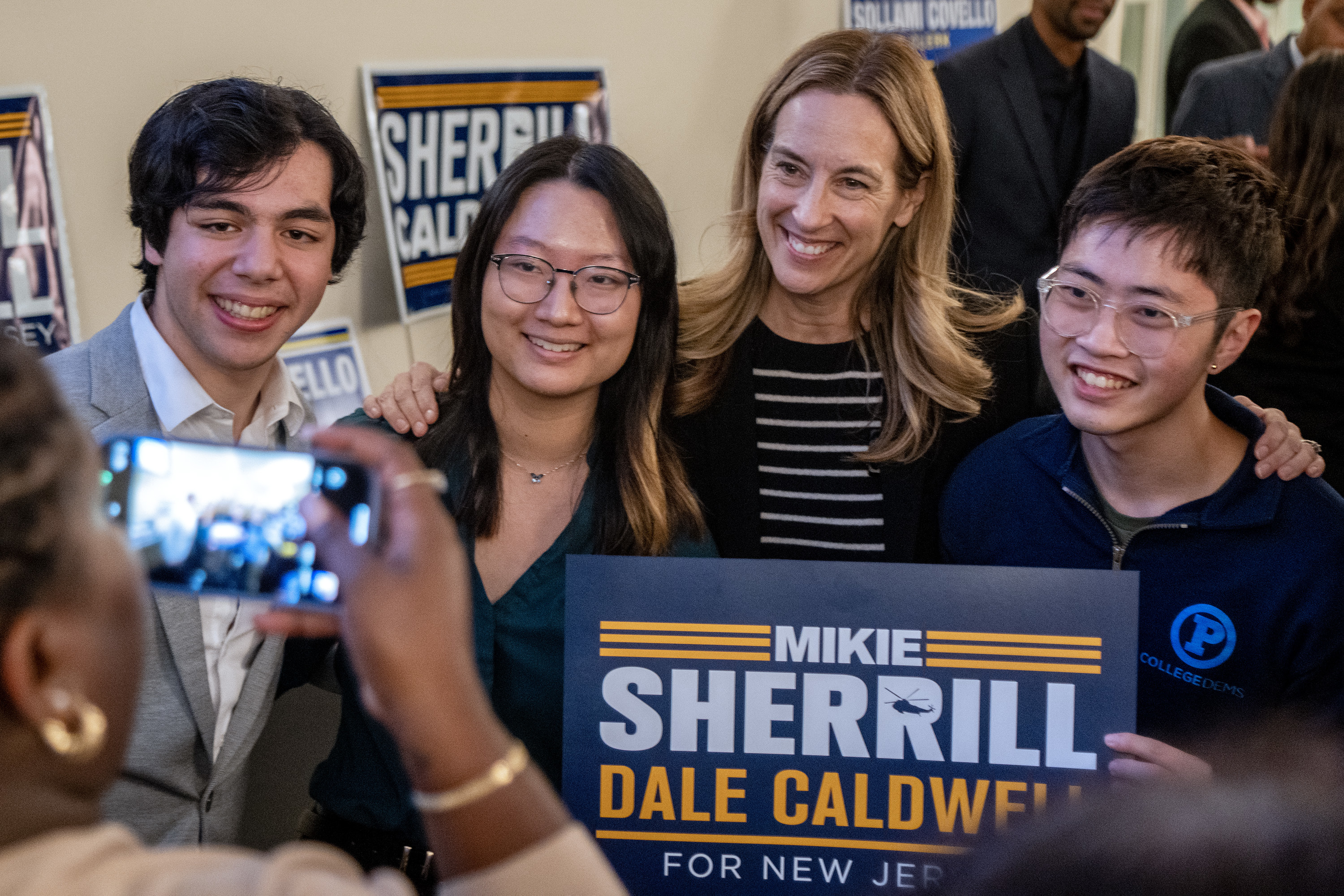
    Democratic candidate for governor U.S. Rep. Mikie Sherrill poses with members of the Princeton College Democrats as she appears at a Mercer County Democrats GOTV Rally at the Mercer Oaks Golf Course in West Windsor Thursday, Oct. 23, 2025. From left are: Julian Danoff; Michelle Miao; and Paul Wang. (The group’s motto: “Bringing blue values to the Orange Bubble.”)

    Dueling headwinds

    There are dueling headwinds at play in the contest for New Jersey governor, too. Both Trump and Murphy are unpopular with about half of New Jersey voters. New Jersey hasn’t elected the same party to a third term for the governorship since 1961, but Republicans have also not won the office while their party has held the White House since 1985.

    Once the votes are tallied in Tuesday’s election, New Jersey political history will be made either way.

    Democratic leaders have projected confidence despite tight polls and some concern Sherrill’s cautious campaign could fail to motivate voters.

    Ken Martin, the chair of the Democratic National Committee, said he expects the race to be a close win for Democrats, noting “a win is a win.”

    He resisted the critiques from some fellow Democrats that Sherrill played her campaign too safe, “in an era of brash bravado, machismo, and Donald Trump, and these candidates basically saying whatever the hell they want.”

    “I think what she’s been doing is putting out a pretty compelling message to New Jerseyans and campaigning everywhere to make sure that they understand what she’s focused on,” he said.

    The party’s vice chair, Pa. State Rep. Malcolm Kenyatta (D., Philadelphia) predicted a good night for Democrats in New Jersey. “There’s that famous saying that ‘Trenton makes, the world takes,’ and I think Trenton is going to make a lot of momentum that we are going to take into 2026 and beyond.”

    “I feel it, you know, I feel it on the ground,” said Sen. Andy Kim (D., N.J.) who campaigned with Sherrill in between fielding questions from fellow Democrats in Washington about what the race looks like back home.

    “Everyone I talked to knows what’s at stake,” Kim said.

    Chris Russell, Ciattarelli’s political strategist, argued that Ciattarelli has garnered support from voters who have traditionally supported Democrats by delivering them a clearer message on affordability.

    “We put a significant amount of time and resources, driven and led by Jack, to be present in minority communities like the Hispanic community and the Black community, and we believe that effort is going to pay off,” he said.

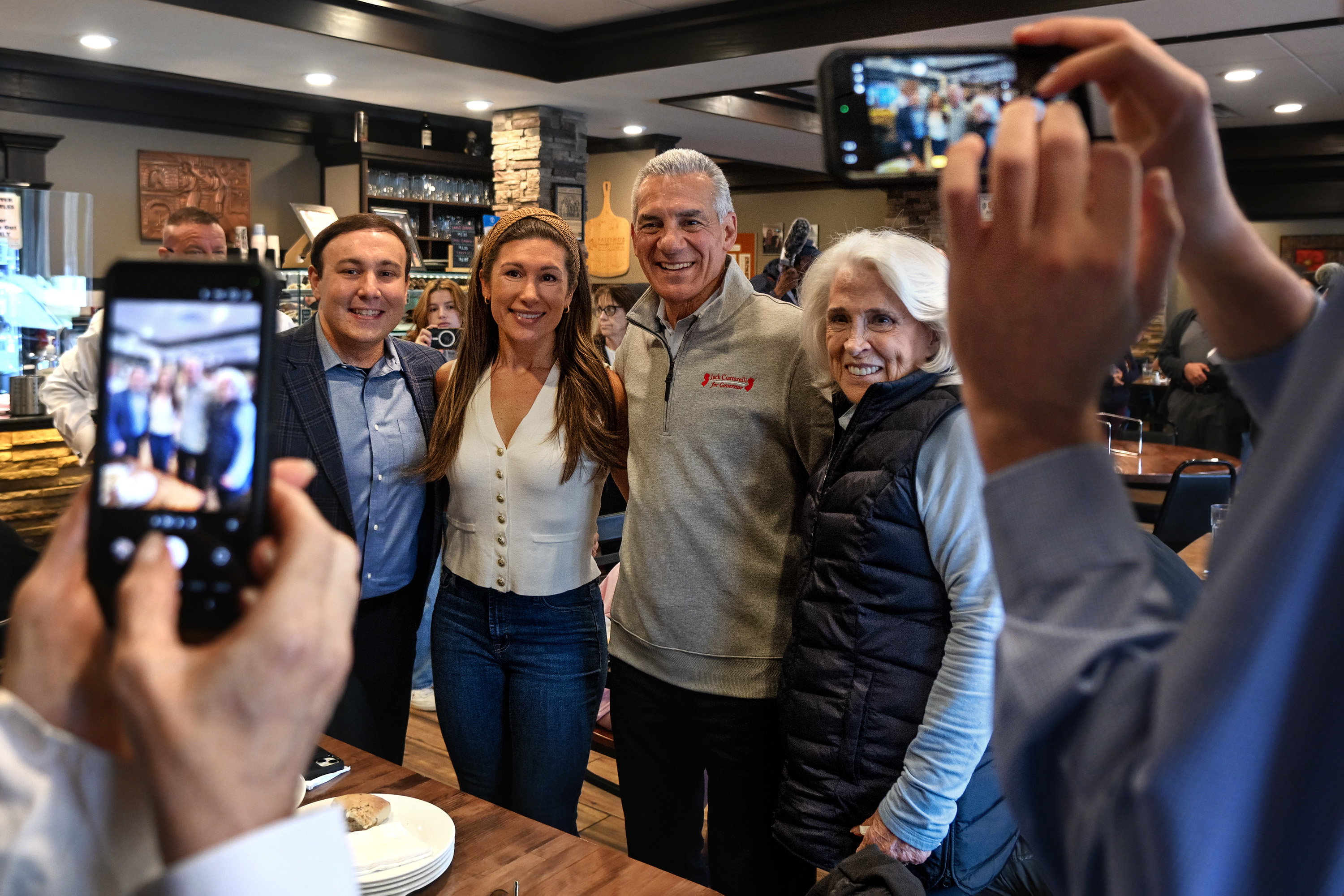
    Republican candidate for governor Jack Ciattarelli poses with members of the Pascucci family as he greets supporters at Palermo’s Pizza in Bordentown Monday, Oct.13, 2025 while campaigning in South Jersey.

    ‘A totally different vibe’

    As the candidates made their final burst of media appearances in the countdown to Election Day, Ciattarelli, in a town hall with Fox News’ Sean Hannity on Thursday night, said the Republican campaign energy “is electric.” Ciattarelli said he was encouraged by early-vote and vote-by-mail numbers, which, while trailing Democrats, had surpassed 2021 GOP turnout numbers.

    “We go after those one out of four Republicans … who typically only vote in presidential years,” Ciattarelli said on Hannity’s program. “We’ve done a magnificent job, our local Republican organizations have, in getting those people to vote by mail or vote early.”

    State Sen. Latham Tiver, a South Jersey Republican, said Ciattarelli’s campaign stops are a “totally different vibe” than his last run in 2021. He recalls Ciattarelli introducing himself table to table, but now, Tiver said when the candidate enters the room, people flock to him.

    “Jack’s doing everything he can. … He’s pounding the pavement, he’s meeting more and more people, and we’re all out there doing the same thing for him,” Tiver said.

    In an otherwise sleepy election cycle, New Jersey and Virginia, also electing a governor this month, have the spotlight. Pennsylvania’s Supreme Court retention races have also garnered an outsized amount of attention for a judicial race and could be a bellwether for one of the nation’s largest battlegrounds.

    As the candidates make their final push to lead New Jersey, the outcome will likely depend on who shows up at the polls Tuesday.

    Both campaigns have motivated bases, but the election could come down to the less engaged and whether they decide to vote. Despite a record amount of spending in the state, only about 2% of voters remained undecided in polls.

    “I don’t think people give enough credit — pollsters, political wonks — to just how burnt out the average American is,” said Jackie Cornell, who previously ran field operations for Obama’s campaign in New Jersey.

    “They just don’t want to hear anything about any of this any more, and I worry that will be the deterrent more so than anything else.”

  • Philly has had a ‘soda tax’ since 2017. One lawmaker wants the city to consider repealing it.

    Philly has had a ‘soda tax’ since 2017. One lawmaker wants the city to consider repealing it.

    City Councilmember Jimmy Harrity wants to revisit the contentious debate that led to the 2017 creation of Philadelphia’s sweetened beverage tax, arguing that the levy has cost the city jobs and will eventually prove insufficient to pay for the programs it was enacted to support, such as subsidized prekindergarten.

    “We‘re going to keep on pulling more money out of the general fund each year, taking away from other programs,” Harrity, a Democrat, said Monday at a hearing of Council’s Labor and Civil Service Committee, which he chairs. “If we were in business and these numbers were the numbers of the business, we wouldn’t be in business long.”

    The tax, which is paid by distributors of sweetened beverages sold in Philadelphia, is 1.5 cents per ounce. Council approved it in 2016 despite vociferous opposition from the beverage industry and Teamsters Local 830, which testified Monday the tax has led to 1,000 of its members who drove trucks for distributors losing work.

    Harrity, an ally of the Teamsters, noted that revenue from the tax has declined as Philadelphians either drink fewer sweetened beverages or find ways to purchase them outside the city. The tax produced about $73.4 million in the 2023 fiscal year, but only $64.4 million last year, he said.

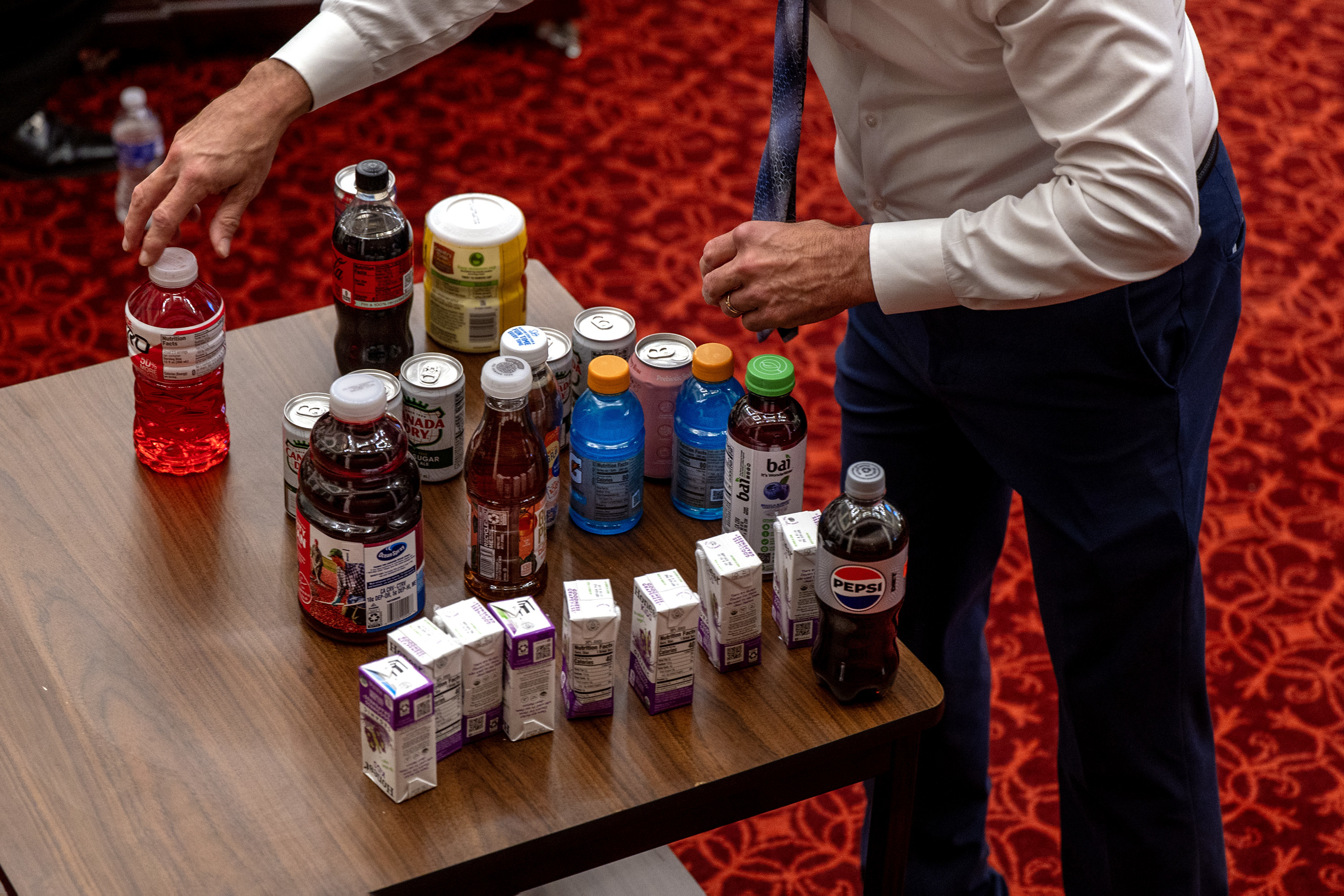
    A Council staffer arranges a table of sugary drinks before Councilmember Jimmy Harrity (not shown) holds a hearing in City Council Monday, Oct. 27, 2025 on former Mayor Jim Kenney’s tax on sweetened beverages.

    For Harrity, that means that the city should consider eliminating the “soda tax,” as it is widely known, in favor of a more “sustainable” funding stream. He did not offer any alternatives.

    But based on his colleagues’ reactions, it is unlikely the tax will be reconsidered in a serious way any time soon.

    Several Council members, public health advocates, and childcare industry representatives defended the tax, which was championed by former Mayor Jim Kenney. They noted that research by the University of Pennsylvania indicates it has been a public health success story that has helped to keep down obesity rates.

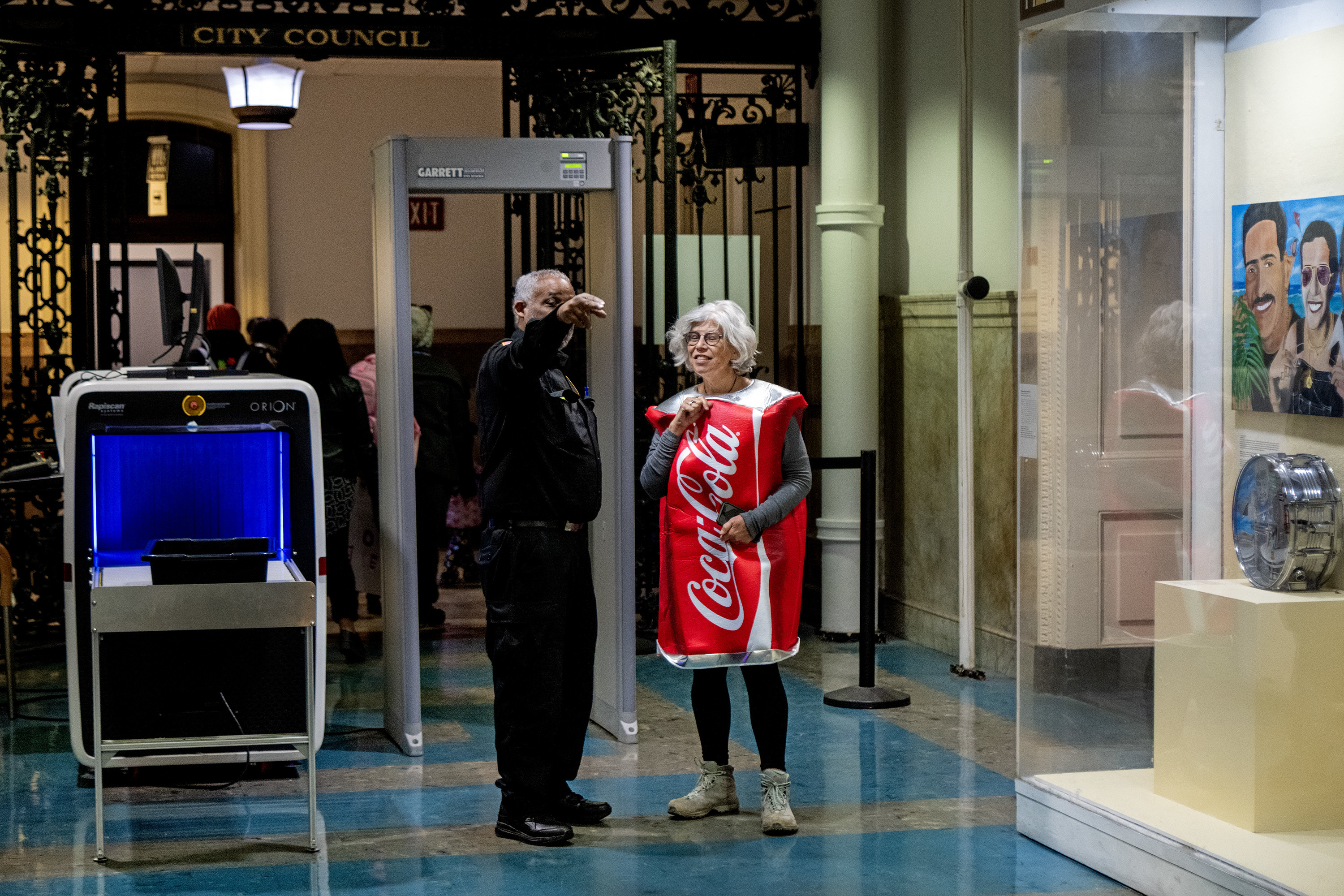
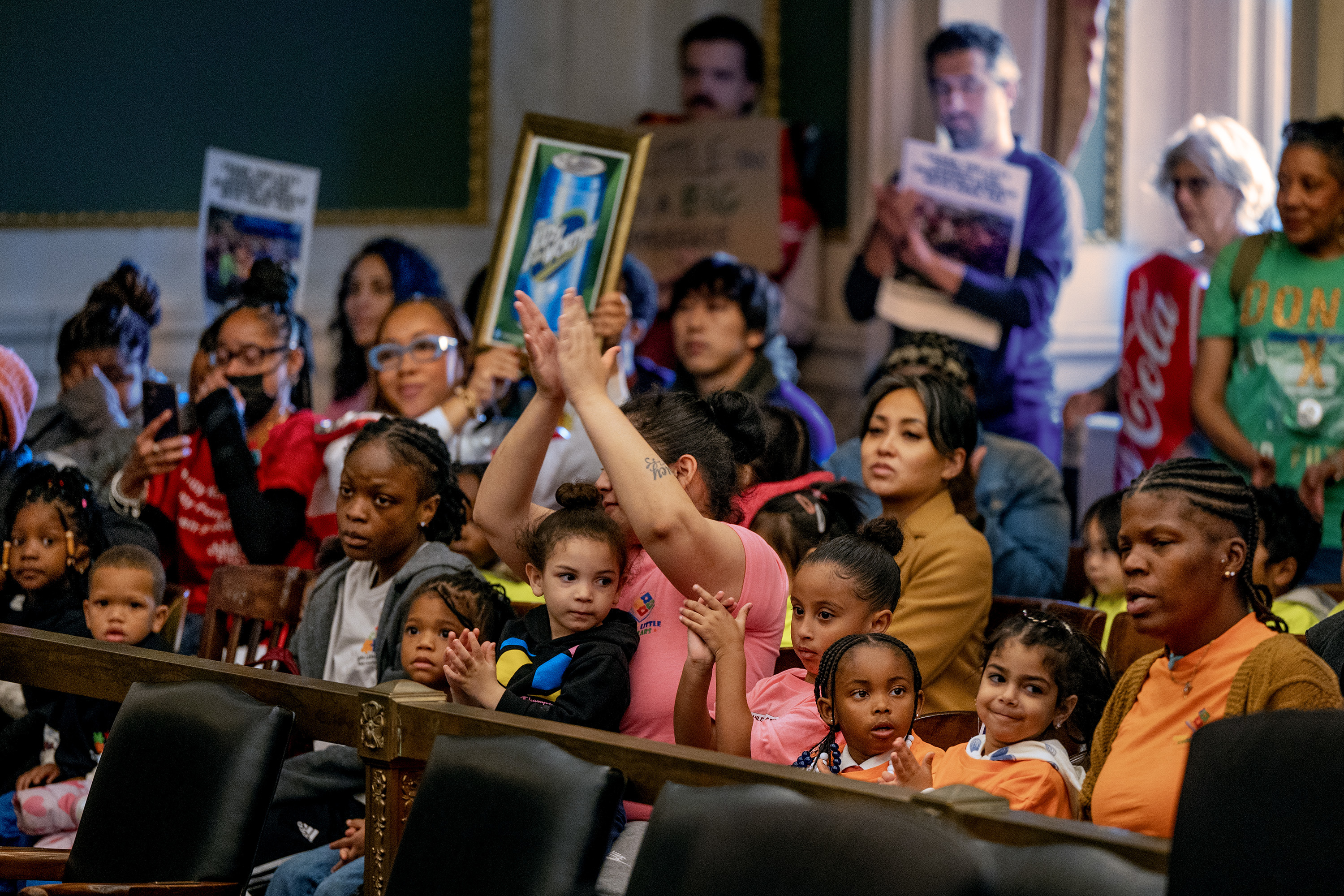
    Marcy Boroff with Children First dresses as a coke can for a City Council hearing Monday, Oct. 27, 2025 on former Mayor Jim Kenney’s tax on sweetened beverages. She was there to support the tax. Children First advocates for policy changes to improve child health, education, and welfare, especially for low-income children. .

    And they stressed its critical role in paying for the three initiatives that Kenney launched alongside the tax: PHL Pre-K, which provides free childcare to 5,250 kids; community schools, which offer a multitude of services to families in 20 Philly schools; and the Rebuild program, which renovates and improves recreation centers and playgrounds.

    “We have to make tough decisions that will actually benefit the greater good, and that’s what we did here,” Democratic Councilmember Rue Landau said during the hearing, adding that “the majority of us up here on this panel think this is a great investment.”

    ‘What we always intended’

    Mayor Cherelle L. Parker, a Democrat who voted for the tax as a Council member, also remains supportive of it.

    “We would not have been able to fund these programs without that beverage tax money,” said city Finance Director Rob Dubow, who has held his role under Parker, Kenney, and former Mayor Michael A. Nutter. Nutter twice tried unsuccessfully to implement a “soda tax” before Kenney succeeded.

    Dubow told lawmakers that the decline in the tax’s revenue over time was always part of the plan and that city leaders intended for the regular city budget to make up the difference for funding Rebuild, pre-K, and community schools when they created the tax. The moment when the soda tax began taking in less money than the city pays out for the three programs it helped launch was the 2024 fiscal year, he said.

    “We pay for it out of the general fund, which is what we always intended we would do,” Dubow said.

    This year, Rebuild, pre-K, and community schools are projected to cost $110 million, Dubow said. Of that, $73 million pays for the 5,250 slots in the city’s pre-K program.

    Preschoolers and their caregivers attend a City Council hearing held by Councilmember Jimmy Harrity Monday, Oct. 27, 2025 on former Mayor Jim Kenney’s tax on sweetened beverages. The tax funds the city’s universal pre-kindergarten program

    ‘Why not Taj Mahals?’

    Councilmember Brian O’Neill was the only other Council member besides Harrity to vocally criticize the tax at Monday’s hearing.

    O’Neill, Council’s lone Republican, noted that Council members have traditionally had control over capital funding for Philadelphia Parks and Recreation projects in their districts. That money, he noted, is split evenly among the 10 district Council members.

    Rebuild, he lamented, instead gives the power to decide which projects move forward to the mayor’s administration. Consequently, he said, the program has produced uneven results and overbudget and unnecessarily ambitious playground and recreation center renovations.

    “This program — Rebuild, they call it — they didn’t decide to bring playgrounds up to some minimum level where people over the years may not have spent their money well,” O’Neill said. “They decided to build Taj Mahals in many cases. … You know what happens when you build a playground and spend tons of money on it? … All the playgrounds around it look terrible.“

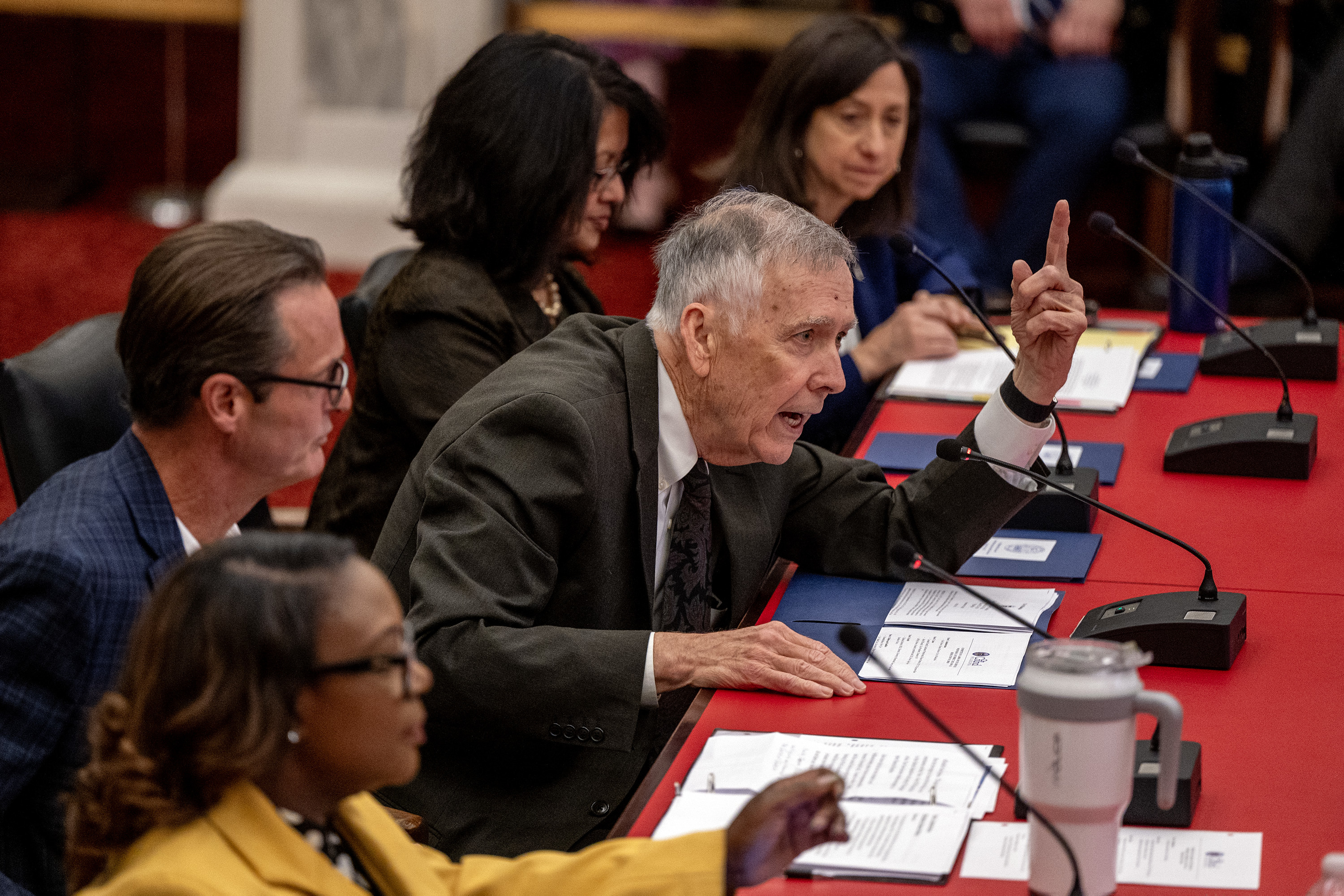
    Councilmember Brian J. O’Neill (center) speaks during a hearing in City Council Monday, Oct. 27, 2025 on former Mayor Jim Kenney’s tax on sweetened beverages. Behind him, front to rear, are: Councilmembers Kendra Brooks, Jimmy Harrity, Nina Ahmad, and Rue Landau.

    That comment did not go over well with some of his colleagues.

    “My community benefited from a rec center that was through the Rebuild program,” said Councilmember Kendra Brooks, a member of the progressive Working Families Party who lives in Nicetown. “It’s not a Taj Mahal. It’s a quality rec center in the middle of North Philadelphia. It does not have everything, because I personally went and bought a refrigerator.”

    And Councilmember Nina Ahmad, a Democrat, questioned why building grandiose rec centers would be a problem in the first place.

    “Why not Taj Mahals for all our folks? Why not have the best-quality rec centers so our children want to go there, our children want to spend time there?” Ahmad said. “We live in a first-world country and yet we are begging for scraps for our youngest citizens.”

  • Philly school board member Joyce Wilkerson was named the nation’s top urban educator

    Philly school board member Joyce Wilkerson was named the nation’s top urban educator

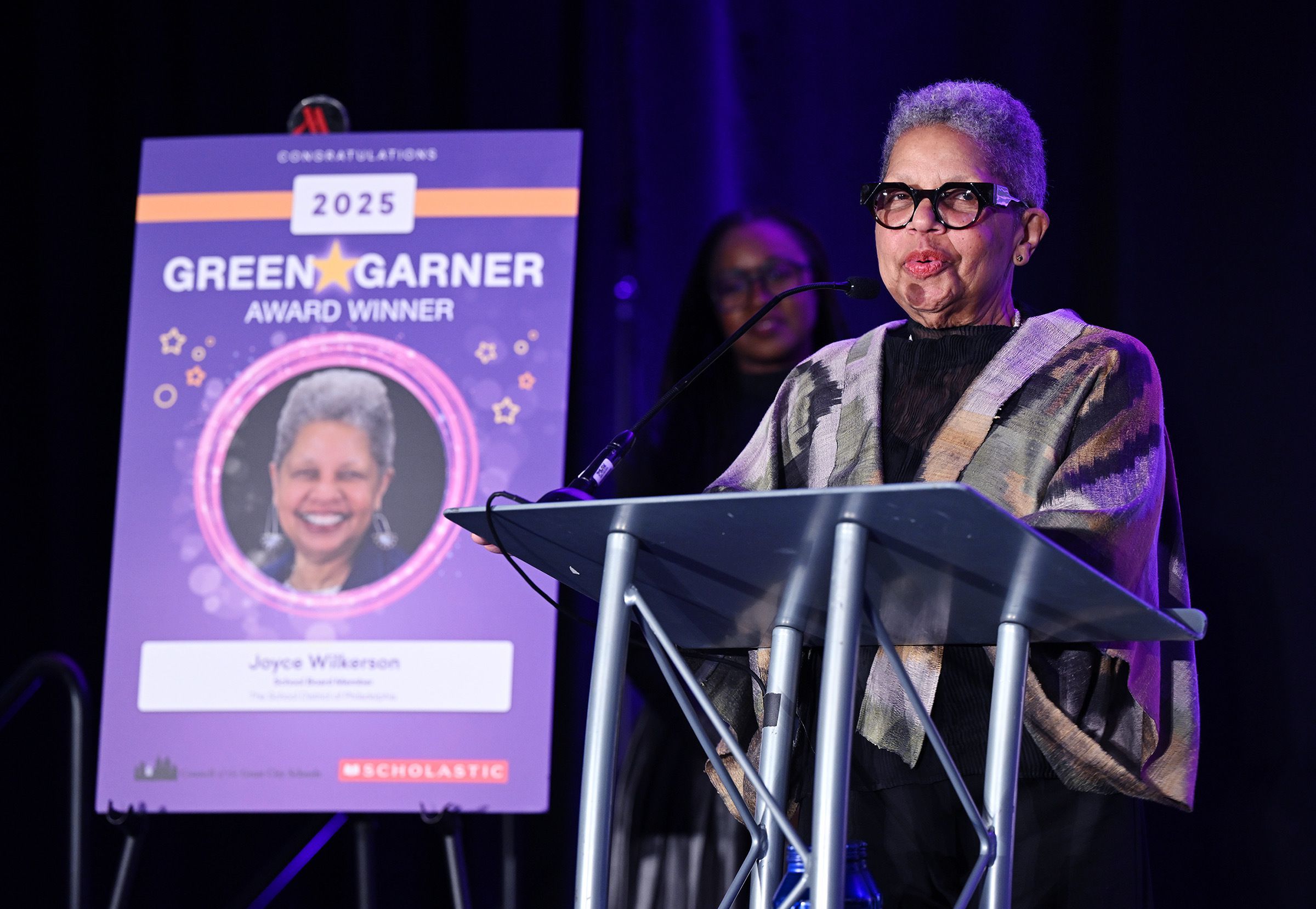
    Joyce Wilkerson, Philadelphia’s longest-serving school board member, was named 2025 Urban Educator of the Year on Thursday night.

    The Council of Great City Schools — in town for its annual conference — selected Wilkerson for “the nation’s highest honor in urban education leadership.” The award is presented in alternate years to either an outstanding school superintendent or school board member from 81 of the largest urban public-school systems in the country.

    The prize comes at a curious time for Wilkerson — when her very membership on the school board has been legally questioned, after a public battle with some members of City Council on her re-appointment by Mayor Cherelle L. Parker to the board.

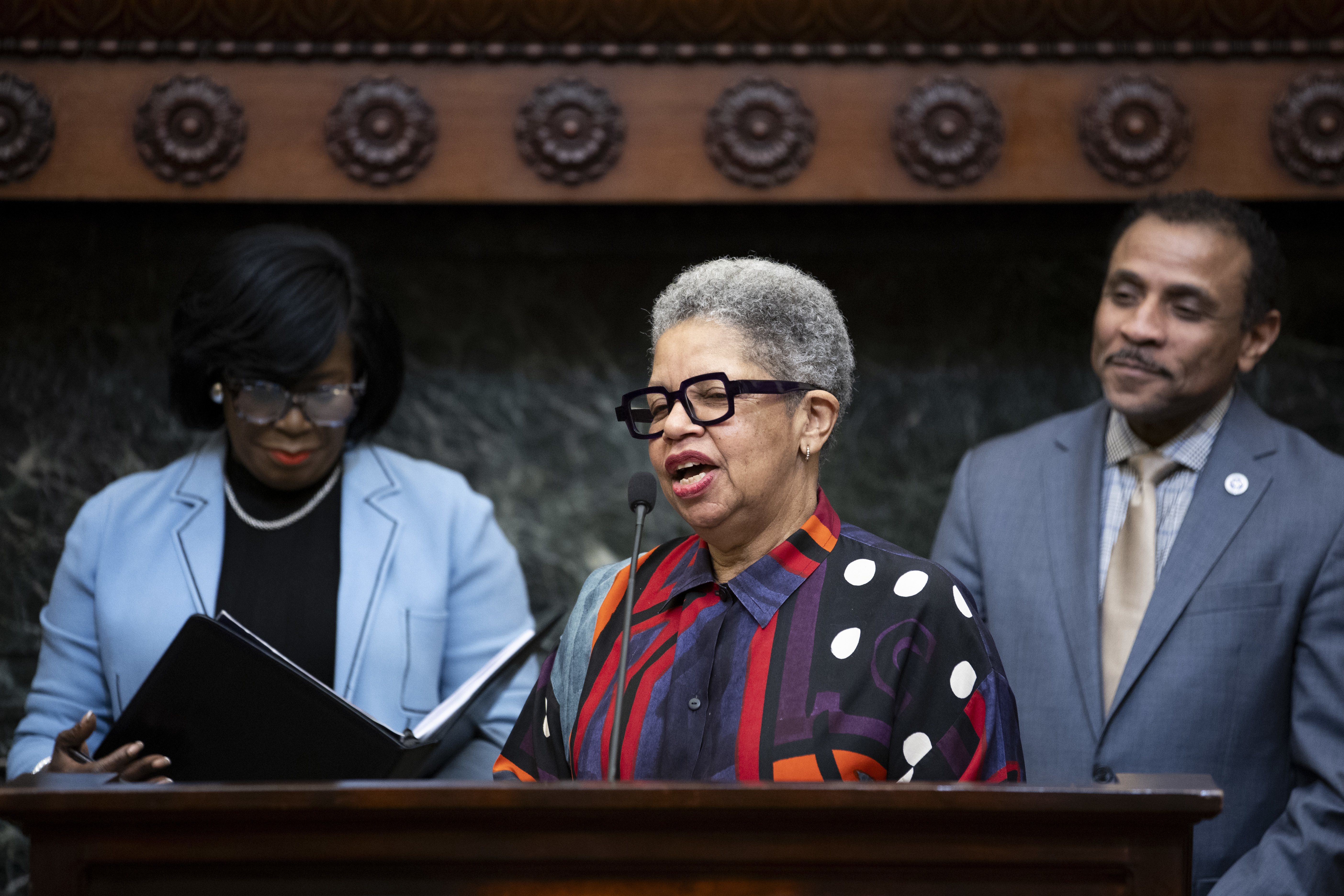
    Flanked by Mayor Cherelle L. Parker, left, and Superintendent Tony Watlington, right, Joyce Wilkerson, center, speaks during the announcement of the School District of Philadelphia Board of Education nominees at City Hall last year.

    People for People Charter School filed a lawsuit in Philadelphia Common Pleas Court in September calling Wilkerson an “illegally and unlawfully seated member of the BOE” and asking for her ouster.

    Wilkerson is not an educator by profession — she’s a lawyer who served as former Mayor John Street’s chief of staff. But she was named to the former School Reform Commission in 2016 and became the inaugural school board president in 2018, when the district returned to local control after nearly two decades of state oversight.

    Wilkerson, who also serves as a Council for Great City Schools board member, was hailed by the organization for steady leadership that helped end the Philadelphia School District’s state takeover, and for work that led the board to refocus its efforts on student outcomes. Ray Hart, who leads the Council, called those efforts “a national model.”

    Wilkerson, Hart said in a statement, “has reshaped the educational landscape in Philadelphia through her unwavering advocacy for students, along with her commitment to equity and excellence. Wilkerson’s dedication to strengthening public education has made her one of the most effective school board members in the nation.”

    As part of the prize, Wilkerson receives a $10,000 college scholarship to award to a district student.

    Joyce Wilkerson, Philadelphia’s longest-serving school board member, received the 2025 Urban Educator of the Year award from the Council of Great City Schools, a national organization whose annual conference is being held in Philadelphia this year.

    The People for People case — which came after the board voted to nonrenew the school’s charter over academic concerns — is still pending.

    It stems from a 2024 public fight over Wilkerson’s reappointment to the board. Several key Council members, including Council President Kenyatta Johnson and education committee chair Isaiah Thomas, took issue with Wilkerson.

    Her stance on charters in particular — no new charters were approved during Wilkerson’s school board presidency — rankled some on City Council.

    Council ultimately approved eight of Parker’s nine nominees, but did not act on Wilkerson’s candidacy. The mayor, though, did an end run, asking Wilkerson to serve on the board — essentially filling the seat Council denied her — until she named a successor.

    Parker ‘s administration argues the city charter allows Wilkerson to fully serve as a board member until her replacement is named, and it’s clear that the mayor is in no hurry to pick someone to replace her.

    The Parker administration, when the People for People suit was filed, said Wilkerson remains a full school board member, and said she still has the mayor’s support.

  • A new effort to catch illegal dumpers is underway in Philadelphia

    A new effort to catch illegal dumpers is underway in Philadelphia

    Four tires, twenty grand.

    That’s the message Philadelphia city officials want to send to people considering illegally dumping garbage in the city as a new enforcement unit hits the streets.

    The officers are armed with violation notices that could cost dumpers $5,000 per item. That means that tossing four tires into a vacant lot — which several years ago would have resulted in a ticket for a couple of hundred bucks, max — can now run a violator the price of a Honda and result in arrest.

    The new unit of 40 officers focused on identifying the people who dump is part of an expanded task force that Mayor Cherelle L. Parker announced on Thursday. The group also includes a dozen people who monitor 400 surveillance cameras placed near frequent dumping sites, as well as partners in the police department who investigate severe cases.

    “Part of the reason why people think it’s open season to illegally dump in the city of Philadelphia … it’s because they never thought that enforcement would occur,” Parker said. “Besides it being unsightly and unhealthy for people, it’s a crime.”

    City officials said they have brought 17 cases against people who dumped waste illegally so far this year, resulting in more than $3.7 million in collected fines.

    The mayor said her administration would ramp up that effort with the initiation of the task force.

    “Philly ain’t playin’,” she said.

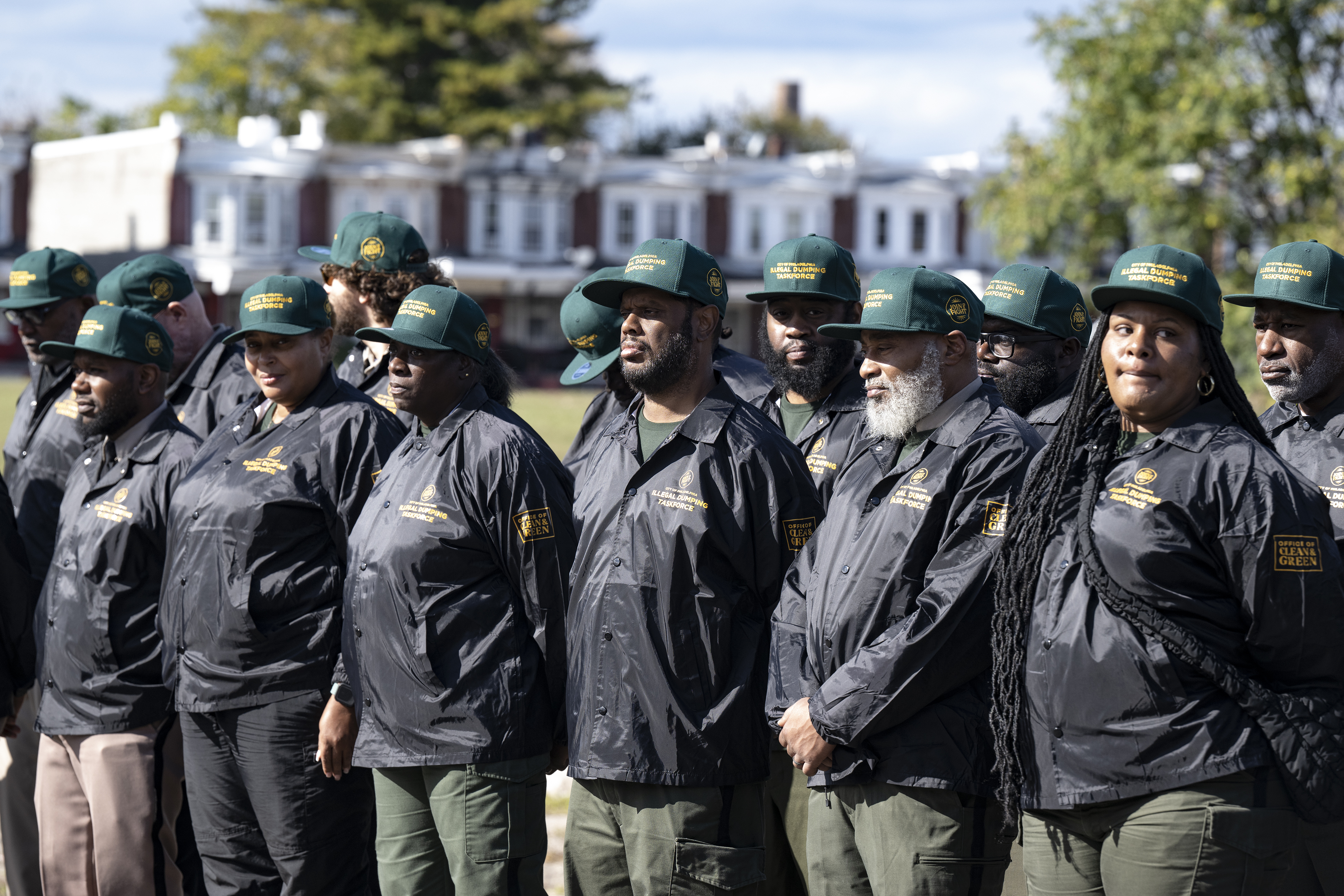
    Members of the new Illegal Dumping Task Force stand during an introductory press conference with Philadelphia Mayor Cherelle Parker and the Office of Clean and Green Initiatives on Thursday, Oct. 23, 2025, at 10th and Courtland Streets in Philadelphia.

    The program is one tenet of Parker’s plan to clean up the city, which was a key campaign promise when she ran for mayor in 2023. Since she took office last year, the administration has implemented a variety of strategies, including twice-weekly trash collection in parts of the city, block-by-block street cleanups on a semiannual basis, and bolstered graffiti abatement.

    Parker made the announcement while standing in North Philadelphia’s infamous Logan Triangle, the 35-acre plot that has been an eyesore for the better part of 50 years. It was once home to hundreds of rowhouses, but the families moved out in the 1980s when it became clear their homes were sinking into the bed of the Wingohocking Creek.

    Today, the triangle is a cautionary tale of failed redevelopment — a place where ideas like a basketball center or a dirt bike track or an apple orchard have never been realized. It is now, and has long been, a dumping site.

    It’s also the site where, last week, two people were arrested for unloading trash, said Carlton Williams, the city’s director of clean and green initiatives.

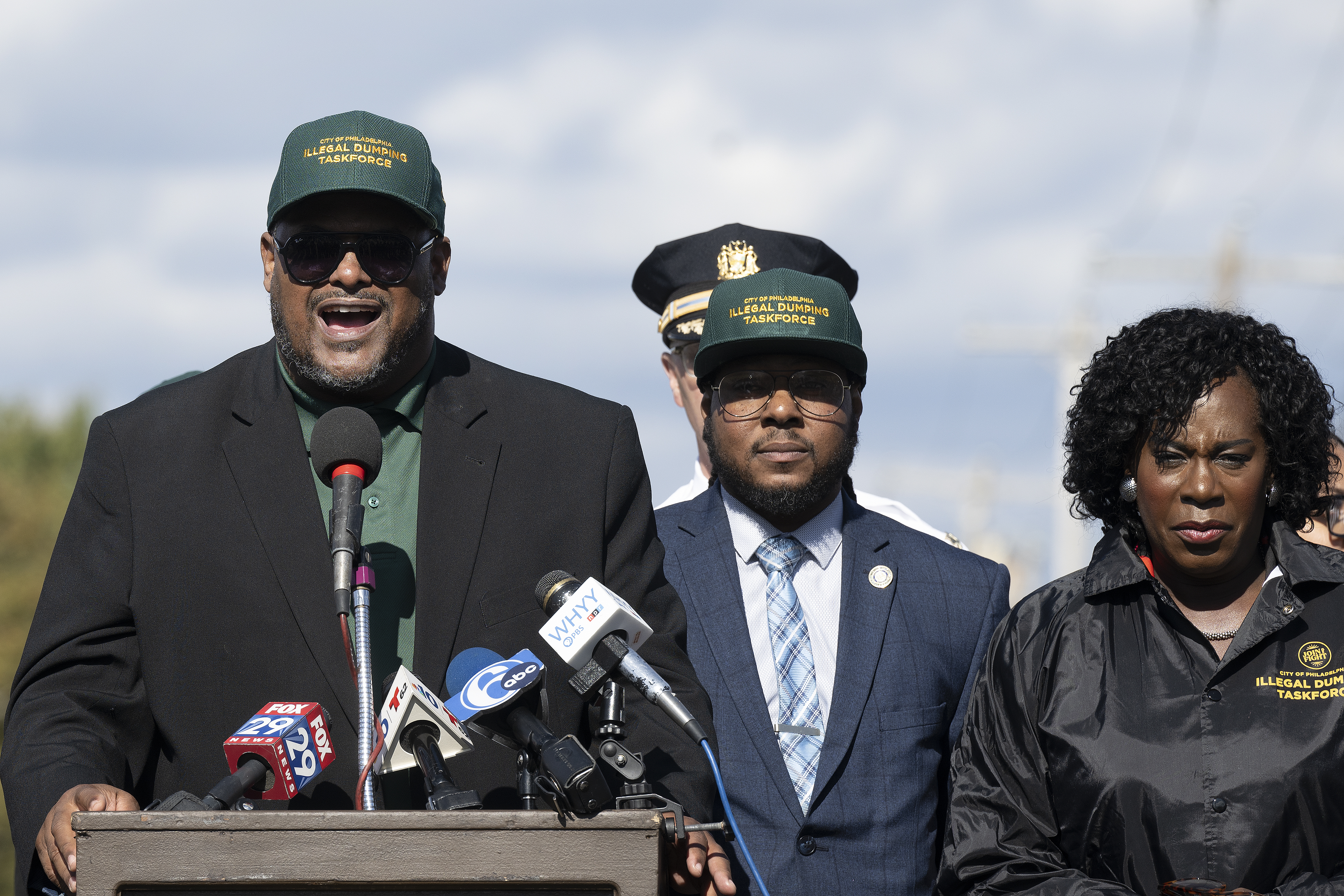
    Philadelphia Mayor Cherelle L. Parker (right) and Carlton Williams (left) of the Office of Clean and Green Initiatives announce stricter laws to combat illegal dumping during a news conference at Logan Triangle, a frequent dumping site at 10th and Courtland Streets, on Thursday in Philadelphia.

    Not only could those people face criminal penalties, but the administration is focused on levying hefty fines and holding dumpers responsible for cleanup costs. The city is also newly fining people who hire contractors to short dump.

    “We’re gonna hit you where it hurts: in the pocketbook,” Parker said.

    Tackling the city’s notoriously bad illegal dumping problem will be a multiyear effort, and Parker has made stronger enforcement a priority. A study conducted in 2019, prior to her tenure, estimated that the city was spending nearly $50 million annually to address illegal dumping, but 90% of that was for cleanup and not prevention.

    Despite the spending, many in the city say dumping sites are a major problem. A 2023 Lenfest Institute for Journalism/SSRS poll of 1,200 Philadelphians found that six in 10 residents believed reducing dumping should be a top priority for the mayor. Concern was most acute among residents who are low-income, Black, and Latino.

    City Councilmember Quetcy Lozada, a Democrat and a Parker ally whose district borders Logan Triangle, said the administration’s focus on illegal dumping can begin to remedy what she described as “extremely stressful” situations for residents who have long watched waste pile up near their homes without abatement.

    “Our residents have done their part, and those calls for help went unanswered for a really, really long time,” Lozada said. “But today feels different.”

    How to report illegal dumping

    Anyone who sees illegal dumping happening can call 911. Residents who want to report illegal dumping after the fact can file a complaint through 311.