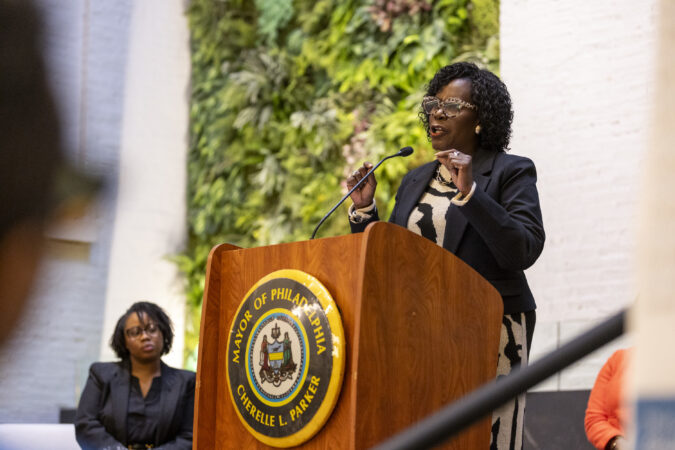
Tag: Cherelle L. Parker

  • Mayor Cherelle Parker defends ending racial diversity goals for Philly contracts: ‘Fighting the fight the way I know best’

    Mayor Cherelle Parker defends ending racial diversity goals for Philly contracts: ‘Fighting the fight the way I know best’

    Mayor Cherelle L. Parker faced criticism last week for quietly eliminating racial diversity goals from city contracting in what appeared to be a preemptive concession to the conservative legal movement’s dismantling of affirmative action.

    But this week, Parker is going on the offensive. The mayor said she was eager to eliminate the city’s racial participation targets long before the current legal threats to the policy emerged, saying the city’s 40-year-old effort to use its contracting process to boost diverse businesses had failed.

    “Did the Supreme Court ruling have anything to do with our decision-making? Absolutely,” Parker said Monday, referring to a 2023 ruling that threatened race-based affirmative action programs. “But it wasn’t the impetus for it. I ran on providing access to economic opportunity for all here in the city of Philadelphia.”

    That case, Students for Fair Admissions v. Harvard, could mark the beginning of the end for a wide variety of government programs that seek to boost diversity or aid people of color.

    In her first extensive comments since The Inquirer reported Parker’s administration had ended race- and gender-conscious contracting policies, the mayor defended her decision Monday at a last-minute “roundtable” meeting she organized in Northwest Philadelphia with business leaders.

    And she doubled down during a news conference Tuesday at the African American Chamber of Commerce headquarters, where she signed an executive order codifying the city’s shift to favoring firms that are registered as “small and local.”

    “We knew the system was broken years before,” Parker, the city’s first Black female mayor, said. “Because every time we would look at the numbers and we would want to see how many Black and brown and women and disabled business owners were growing in the city of Philadelphia, the numbers became stagnant.”

    Historically disadvantaged firms win city contracts worth more than $370 million annually, and supporters of the program criticized Parker for not fighting to preserve it.

    City Councilmember Kendra Brooks of the progressive Working Families Party said Parker was “caving” to President Donald Trump, whose administration has sought to roll back policies on diversity, equity, and inclusion.

    “People want to see leaders fighting for something,” Brooks said last week, “and right now we don’t see our city fighting for anything.”

    But Chief Deputy Mayor Vanessa Garrett Harley said Monday that the administration examined the Philadelphia Office of Economic Opportunity’s registry of disadvantaged businesses that should get a leg up in city procurement opportunities, and found that only 20% were actually winning contracts.

    “Obviously, it was not working,” Garrett Harley said.
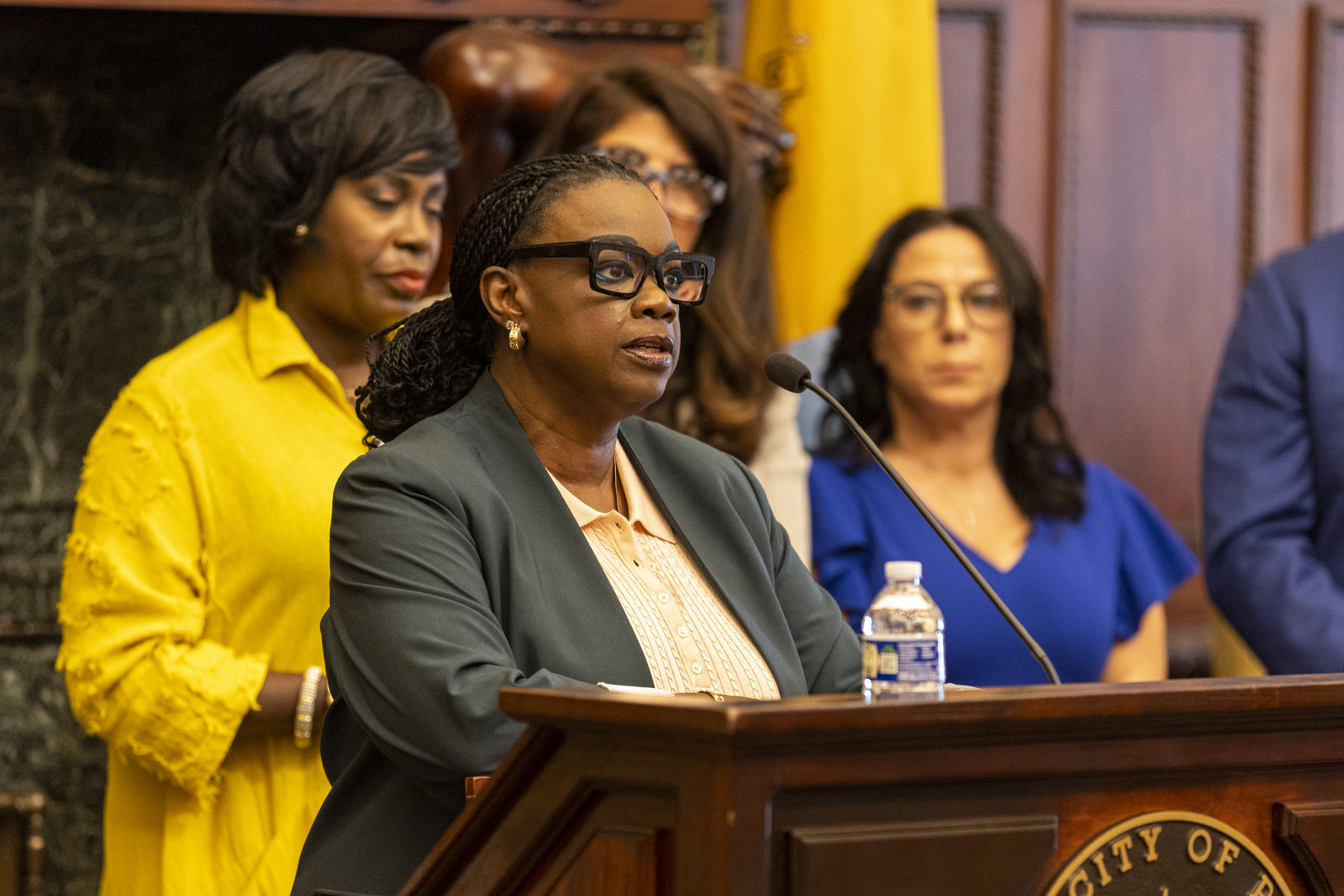
    Deputy Mayor Vanessa Garrett Harley speaks during a press conference in Philadelphia, Pa., on Thursday, June 27, 2024.

    Parker said that setting diversity goals was not enough to grow women- and minority-owned businesses. Instead, she said, they need technical assistance, access to capital, and other tools so that they can develop to the point where they are able to regularly compete for city contracts without relying on set-asides.

    Her administration is focused on providing those resources, she said, and not just “checking boxes.”

    “I’m fighting,” Parker said. “But I’m fighting the fight the way I know best: to achieve the results and act and extract the tangible results that I need for the people who live in this city, who own businesses in the city.”

    ‘Small and local:’ A new world for city contracting

    Parker on Tuesday signed an executive order detailing city’s new contracting system. As previously detailed in The Inquirer, the city will now give preference to “small and local” firms rather than requiring participation for businesses owned by women, minorities, and people with disabilities.

    The executive order does not set a target goal for what share of city contracting dollars should go to “small and local” businesses.

    The city’s previous goal of directing 35% of contracting dollars to disadvantaged firms was similarly not enumerated in law. Instead, Parker’s order outlines a structure for setting benchmarks and providing assistance to firms seeking to do business with the city.

    For example, it charges the economic opportunity office with setting overall contracting goals, as well as establishing “participation ranges” for individual contracts. Those ranges will be used to give contractors benchmarks for money that should be set aside for subcontractors and suppliers that are considered disadvantaged businesses.

    The office is also responsible for maintaining the registry of small and local businesses. Garrett Harley said the “overwhelming majority” of businesses that are registered with the city as minority-, women-, or disabled-owned will qualify as “small and local.”

    Nadir Jones, the city’s director of business impact and economic advancement, said firms already registered with the city will be “grandfathered in” and will not need to register again as small or local.

    To qualify as “local,” a business must either be headquartered in Philadelphia city limits or meet two of three other criteria:

    • More than 60% of employees live in Philadelphia.
    • More than half of the business’ employees work in the city at least 60% of the time.
    • More than 75% of the business’ gross receipts came from Philadelphia.

    To qualify as “small,” Jones said, a business must have fewer than 750 employees.

    Parker said her administration is working with outside advisers to hone the program. That includes the African American Chamber of Commerce, which announced Tuesday it had established a Special Task Force on Economic Access and Procurement in response to the contracting changes.

    “We will continue to advocate for policies that are not only measurable and defendable, but also those that produce real impact,” said Regina Hairston, the organization’s president and CEO. “However, as we have recently learned, these policy changes are happening whether we fully support them or not.”

    A risk-averse legal strategy

    Parker’s elimination of racial diversity targets in city contracting — due in part to the hypothetical threat of litigation raised by City Solicitor Renee Garcia — in some ways parallels the mayor’s decision earlier this year to settle a lawsuit challenging a city tax break that primarily benefited small businesses.

    In both instances, critics said that the Parker administration overstated the legal jeopardy the programs faced and gave up without a fight. But there are key differences between Parker’s handling of the contracting goals and the tax break, which exempted firms’ first $100,000 in revenue from the business income and receipts tax, or BIRT.

    If anything, there was less of an immediate threat to the city’s contracting diversity goals, which are not facing any legal challenge. The administration instead preemptively abolished its racial diversity targets due to rulings on separate issues, such as affirmative action in college admissions or the city’s project labor agreements.

    The catalyst for Parker eliminating the BIRT exemption was a 2024 lawsuit filed by a Massachusetts medical device manufacturer challenging the constitutionality of the tax break. Critics of Parker’s decision argued that if the city had fought it in court, the case could have been thrown out because the company may have struggled to demonstrate harm, given that the tax break actually benefited the firm.

    Instead, the city settled with the company, and Parker pressed Council to remove the tax break from city law.
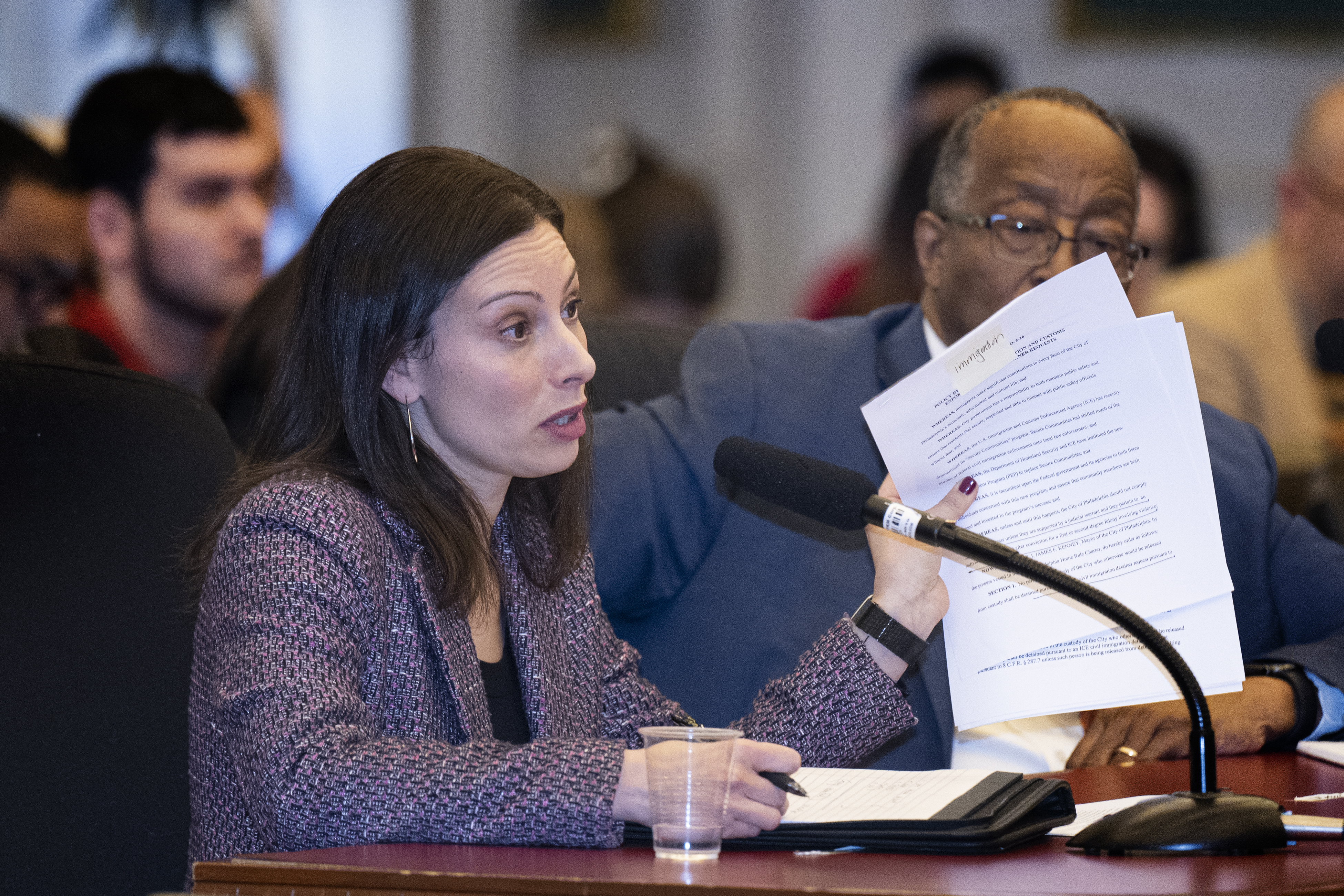
    Renee Garcia, Philadelphia City Solicitor speak on Jan 22, 2025 during a hearing exploring Philadelphia’s readiness and commitment to protecting immigrant, LGBTQ+, and other marginalized communities in preparation for the impending Trump administration.

    During the debate over the BIRT exemption, Garcia said Philadelphia could potentially lose hundreds of millions of dollars in tax revenue if it didn’t cave to the legal challenge. Critics of the city’s approach cast doubt on whether that was a realistic outcome.

    But in the case of the contracting DEI goals, the potential risks articulated by the administration are far less dire.

    Garcia said Monday the primary financial risk involved in maintaining the contracting diversity program is that if the city ever did get sued, and then lost a protracted court battle, it may have to pay the plaintiff’s attorney’s fees.

    She also cited the possibility of creating unwanted legal precedent if the hypothetical lawsuit against the city reached the U.S. Supreme Court and lost — something that could still happen if a suit is filed against any of the hundreds of jurisdictions across the country that still have racial participation goals in contracting.

    “This way, we do it on our terms,“ Garcia said. ”We have time to build it. We have a plan.”

    The most important difference between the business tax and contracting issues is that Parker was in favor of the BIRT exemption but does not support the old contracting system.

    In her budget address in March, Parker said she was begrudgingly seeking to end the tax break because state judicial rulings, in the administration’s view, had forced the city’s hand. But when it comes to the city’s contracting practices, Parker’s aims in some ways align with those seeking to undo longstanding city policy on diversity in contracting.

    The administration’s messaging on the issue has become somewhat mixed. On one hand, Garcia said Parker was “anguished” when she realized she had to make changes to the contracting system due to the legal environment.

    “She did not want to do this,” Garcia said.

    On the other hand, Parker said she has long planned to reform the contracting system. Asked if her policy goals or new legal rulings were driving the decision, Parker said: “It’s both. It’s not either/or.”

    “We are building something that does not exist here in the city of Philadelphia,” she said. “We are asking you to join the fight with us.”
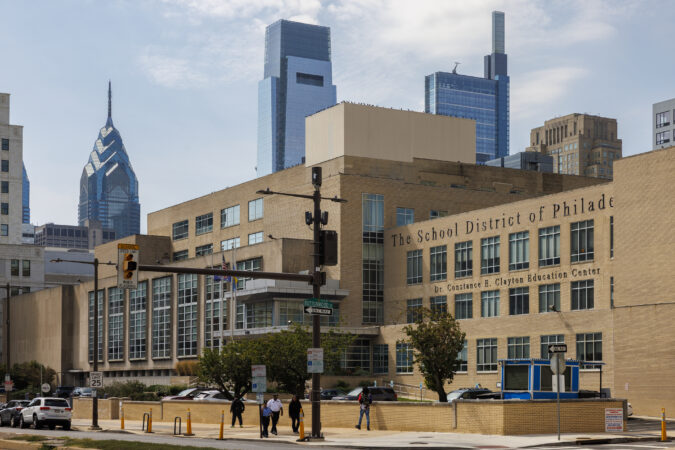
  • School closings are coming to Philly. Here are four themes that are emerging as leaders come closer to decisions.

    School closings are coming to Philly. Here are four themes that are emerging as leaders come closer to decisions.

    Sweeping changes are coming to the Philadelphia School District, with officials promising large-scale school closings, co-locations, grade reconfigurations, and new construction over the next several years.

    The district is launching a survey this week to gain more input into that plan after Superintendent Tony B. Watlington Sr. pushed back a November deadline to announce his recommendations amid concerns from school communities.

    But those working closely on the facilities planning process said Monday that four themes are emerging that will shape the recommendations: strengthening K-8 schools, reinvesting in neighborhood schools, reducing school transitions for students, and expanding access to grades 5-12 criteria-based schools.

    Here’s what to know about each of the themes:

    Strengthening K-8 schools

    “Many school programs with declining enrollment, or which operate in aging buildings, struggle to offer a full range of high-quality classes, activities, enrichment opportunities, and supports,” the district said.

    Students and teachers in K-8 schools need better spaces and staffing and more resources, and the district cannot achieve that in its current configuration — the district has 216 schools but about 300 buildings, many of which are in poor shape. And enrollment is unevenly distributed — some schools, particularly those in the Northeast, are overcrowded, while others have thousands of empty seats.

    Citywide, there are 70,000 excess seats in district schools.

    The district might merge two schools or co-locate multiple schools in a single building, said Claire Landau, a senior adviser to Watlington tasked with steering the facilities planning process. It might also invest in “more suitable buildings.”

    Reinvesting in neighborhood high schools

    “Some neighborhood high schools lack a full range of academic enrichment and post-high school preparation pathways, while some smaller magnet high schools lack extracurricular programs and diverse enrichment opportunities,” the district said.

    Possible outcomes for reinvesting in neighborhood high schools include “targeted building improvements,” partnerships, and theme-based or career-connected programs in the district’s traditional neighborhood high schools.

    Reducing school transitions for students

    “Transitions for schools can be disruptive to learning and community connection. Research supports that students do better when they have fewer transitions between school programs during their pre-K-12 experience,” the district said.

    There are currently 13 different grade configurations in the district; the aim is to shrink that. To achieve this, the district could increase pre-K-8 schools and adjust grade configurations.

    Expanding access to grades 5-12 criteria-based schools

    “Philadelphia community desires schools that allow students to learn in one community from middle grades through high school,” the district said. (Some of those already exist — Masterman, for instance, and GAMP.)

    To achieve that goal, the district could create more seats at existing 5-12 schools, or create new 5-12 pathways, with an eye toward neighborhood equity.

    “This is not going to be a plan that erases or proposes to move away from all of our more traditional middle school grade spans, but we will be looking for opportunities to provide more access to pre-K-through-8 programming and 5-through-12 programming — because of how much support we’ve heard for it from communities across this process as well as what the research shows as far as students doing better in these environments,” said Landau.

    The mayor weighs in

    Mayor Cherelle L. Parker weighed in on the matter at a district hearing before City Council on Tuesday, saying she was in lockstep with Watlington and the school board president.

    “We need to recreate a comprehensive plan for repurposing every underutilized school building in the city of Philadelphia,” Parker said.

    But, the mayor said, “that plan will have to include housing, and that includes housing for public servants and educators who deserve to live in the communities that they serve, along with thinking about access to the repurposing of those buildings, to aid us in our desire to build affordable and workforce housing in the city of Philadelphia.”

  • New Jersey will vote for a new governor. But the stakes go far beyond the Garden State.

    New Jersey will vote for a new governor. But the stakes go far beyond the Garden State.

    The eyes of the nation are on the Garden State.

    New Jersey voters will head to the polls tomorrow as America watches whether Republican Jack Ciattarelli pulls off an upset or Democratic U.S. Rep. Mikie Sherrill holds the line and gives her party something to celebrate ahead of the 2026 midterm elections.

    The results of the tight race could be a barometer, nationally, for which party has an edge, and signal the type of messaging and candidate that can win over New Jersey voters in an increasingly purple state.

    The race has attracted national attention and resources from both parties — especially Democrats who see the seat as a critical opportunity to build momentum and safeguard the state from the policies of President Donald Trump.

    Republicans, meanwhile, see potential for a huge pickup in Ciattarelli’s third run for the office — this time buoyed by the momentum of a grassroots MAGA movement after Trump’s 2024 win — and the hope that some Democrats uninspired by Sherrill stay home or give the Republican a shot.

    Ciattarelli spent his final campaign week rallying with Puerto Rican voters in Passaic County and taking his “It’s Time” bus tour around the state. He held meet-and-greets, rallies, and diner stops over the weekend in Monmouth, Ocean, Union, and Bergen Counties.

    Sherrill, who would be only the second woman elected governor in the state should she prevail on Tuesday, rallied with former President Barack Obama on Saturday in Newark and with Sens. Cory Booker and Andy Kim on Sunday in Camden and Mount Laurel Township. The events followed a week that included a “Driving Down Costs” bus tour and appearances with former Transportation Secretary and presidential candidate Pete Buttigieg and Philadelphia Mayor Cherelle L. Parker.

    Along with her promise to take on landlords “colluding to raise rents” and to tackle pharmaceutical prices, Sherrill reiterated her campaign promise to freeze utility rate hikes on her first day in office at the rally with Obama on Saturday.

    “New Jersey, I’m not playing,” she told the audience. “I’m not writing a strongly worded letter and I’m not starting up a working group. I am not doing a 10-year study. I’m declaring a state of emergency.”

    For decades, New Jerseyans had voted blue at the national level while electing Republicans to the governor’s mansion. Democrats have a voter registration advantage of about 850,000 voters in New Jersey, but 2.2 million voters are registered unaffiliated. And GOP registrations have outpaced Democratic ones since the 2024 presidential election, when Trump swung the state significantly redder, losing by only 6 points.

    The last gubernatorial battle in 2021 shocked many in the state when Democratic Gov. Phil Murphy won reelection by a slim, 3-point margin.

    A record amount of money has poured into the race in the expensive media market that overlaps with Philadelphia and New York City.

    Most polls have shown Sherrill with a single-digit edge, a lead that is within the margin of error in many of the surveys. However, a Quinnipiac University poll released Oct. 30 showed Sherrill leading by 8 points, outside of the survey’s margin of error. Emerson College, a respected firm found the race tied in two separate polls, one from September and another released on Thursday.

    Ashley Koning, the director of the Rutgers Center for Public Interest Polling, said either candidate has a “very plausible path to victory.”

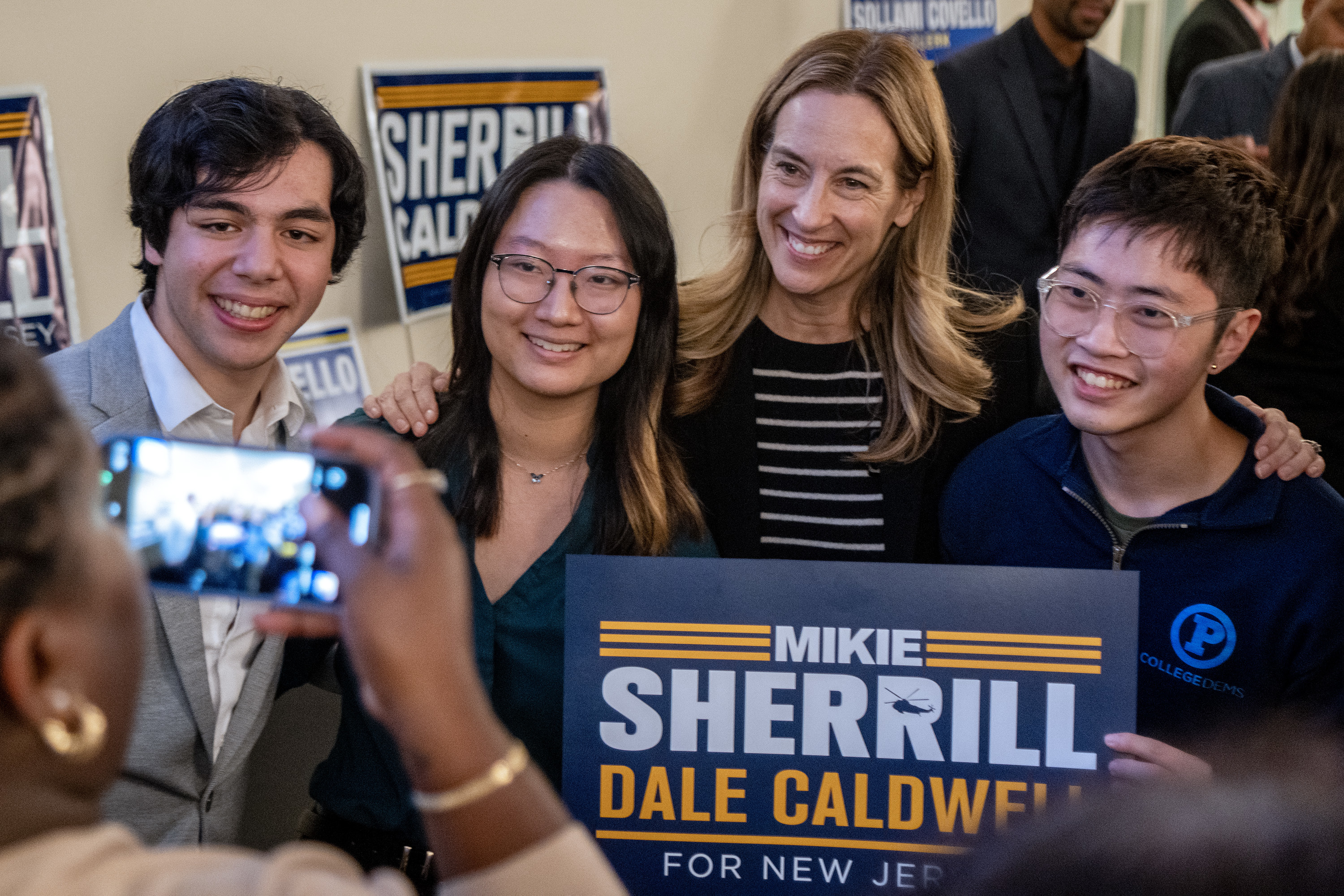
    Democratic candidate for governor U.S. Rep. Mikie Sherrill poses with members of the Princeton College Democrats as she appears at a Mercer County Democrats GOTV Rally at the Mercer Oaks Golf Course in West Windsor Thursday, Oct. 23, 2025. From left are: Julian Danoff; Michelle Miao; and Paul Wang. (The group’s motto: “Bringing blue values to the Orange Bubble.”)

    Dueling headwinds

    There are dueling headwinds at play in the contest for New Jersey governor, too. Both Trump and Murphy are unpopular with about half of New Jersey voters. New Jersey hasn’t elected the same party to a third term for the governorship since 1961, but Republicans have also not won the office while their party has held the White House since 1985.

    Once the votes are tallied in Tuesday’s election, New Jersey political history will be made either way.

    Democratic leaders have projected confidence despite tight polls and some concern Sherrill’s cautious campaign could fail to motivate voters.

    Ken Martin, the chair of the Democratic National Committee, said he expects the race to be a close win for Democrats, noting “a win is a win.”

    He resisted the critiques from some fellow Democrats that Sherrill played her campaign too safe, “in an era of brash bravado, machismo, and Donald Trump, and these candidates basically saying whatever the hell they want.”

    “I think what she’s been doing is putting out a pretty compelling message to New Jerseyans and campaigning everywhere to make sure that they understand what she’s focused on,” he said.

    The party’s vice chair, Pa. State Rep. Malcolm Kenyatta (D., Philadelphia) predicted a good night for Democrats in New Jersey. “There’s that famous saying that ‘Trenton makes, the world takes,’ and I think Trenton is going to make a lot of momentum that we are going to take into 2026 and beyond.”

    “I feel it, you know, I feel it on the ground,” said Sen. Andy Kim (D., N.J.) who campaigned with Sherrill in between fielding questions from fellow Democrats in Washington about what the race looks like back home.

    “Everyone I talked to knows what’s at stake,” Kim said.

    Chris Russell, Ciattarelli’s political strategist, argued that Ciattarelli has garnered support from voters who have traditionally supported Democrats by delivering them a clearer message on affordability.

    “We put a significant amount of time and resources, driven and led by Jack, to be present in minority communities like the Hispanic community and the Black community, and we believe that effort is going to pay off,” he said.

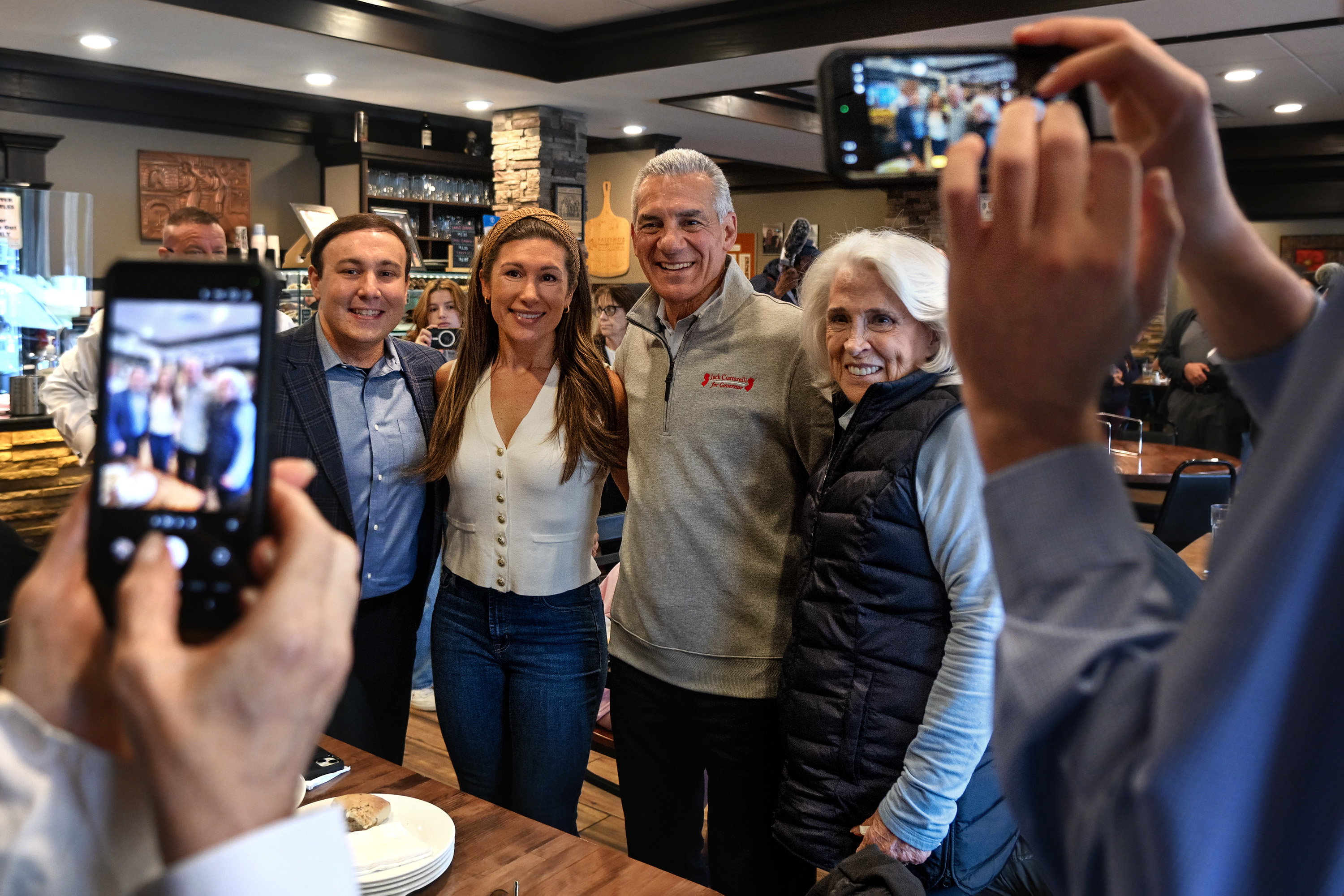
    Republican candidate for governor Jack Ciattarelli poses with members of the Pascucci family as he greets supporters at Palermo’s Pizza in Bordentown Monday, Oct.13, 2025 while campaigning in South Jersey.

    ‘A totally different vibe’

    As the candidates made their final burst of media appearances in the countdown to Election Day, Ciattarelli, in a town hall with Fox News’ Sean Hannity on Thursday night, said the Republican campaign energy “is electric.” Ciattarelli said he was encouraged by early-vote and vote-by-mail numbers, which, while trailing Democrats, had surpassed 2021 GOP turnout numbers.

    “We go after those one out of four Republicans … who typically only vote in presidential years,” Ciattarelli said on Hannity’s program. “We’ve done a magnificent job, our local Republican organizations have, in getting those people to vote by mail or vote early.”

    State Sen. Latham Tiver, a South Jersey Republican, said Ciattarelli’s campaign stops are a “totally different vibe” than his last run in 2021. He recalls Ciattarelli introducing himself table to table, but now, Tiver said when the candidate enters the room, people flock to him.

    “Jack’s doing everything he can. … He’s pounding the pavement, he’s meeting more and more people, and we’re all out there doing the same thing for him,” Tiver said.

    In an otherwise sleepy election cycle, New Jersey and Virginia, also electing a governor this month, have the spotlight. Pennsylvania’s Supreme Court retention races have also garnered an outsized amount of attention for a judicial race and could be a bellwether for one of the nation’s largest battlegrounds.

    As the candidates make their final push to lead New Jersey, the outcome will likely depend on who shows up at the polls Tuesday.

    Both campaigns have motivated bases, but the election could come down to the less engaged and whether they decide to vote. Despite a record amount of spending in the state, only about 2% of voters remained undecided in polls.

    “I don’t think people give enough credit — pollsters, political wonks — to just how burnt out the average American is,” said Jackie Cornell, who previously ran field operations for Obama’s campaign in New Jersey.

    “They just don’t want to hear anything about any of this any more, and I worry that will be the deterrent more so than anything else.”

  • Philly has had a ‘soda tax’ since 2017. One lawmaker wants the city to consider repealing it.

    Philly has had a ‘soda tax’ since 2017. One lawmaker wants the city to consider repealing it.

    City Councilmember Jimmy Harrity wants to revisit the contentious debate that led to the 2017 creation of Philadelphia’s sweetened beverage tax, arguing that the levy has cost the city jobs and will eventually prove insufficient to pay for the programs it was enacted to support, such as subsidized prekindergarten.

    “We‘re going to keep on pulling more money out of the general fund each year, taking away from other programs,” Harrity, a Democrat, said Monday at a hearing of Council’s Labor and Civil Service Committee, which he chairs. “If we were in business and these numbers were the numbers of the business, we wouldn’t be in business long.”

    The tax, which is paid by distributors of sweetened beverages sold in Philadelphia, is 1.5 cents per ounce. Council approved it in 2016 despite vociferous opposition from the beverage industry and Teamsters Local 830, which testified Monday the tax has led to 1,000 of its members who drove trucks for distributors losing work.

    Harrity, an ally of the Teamsters, noted that revenue from the tax has declined as Philadelphians either drink fewer sweetened beverages or find ways to purchase them outside the city. The tax produced about $73.4 million in the 2023 fiscal year, but only $64.4 million last year, he said.

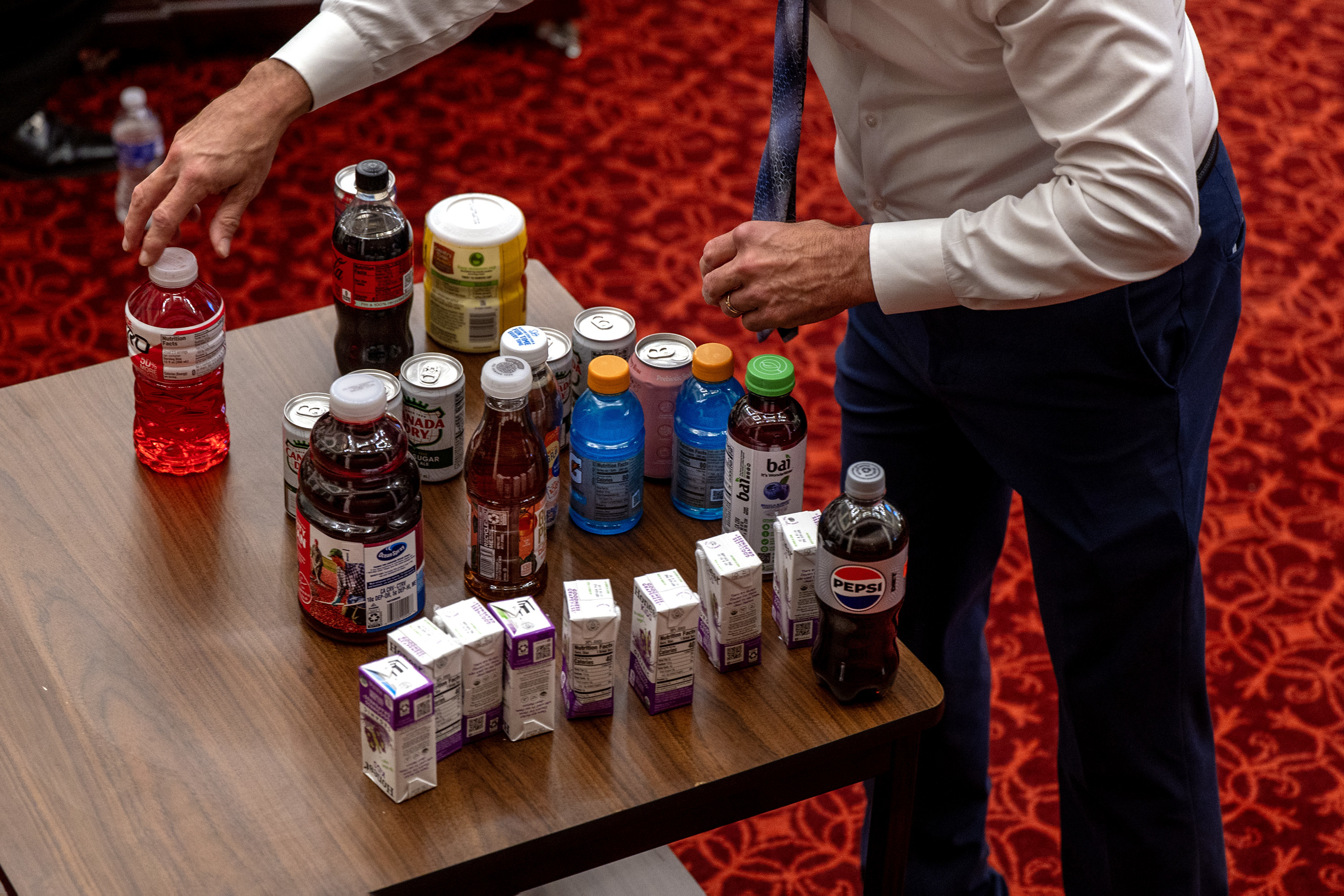
    A Council staffer arranges a table of sugary drinks before Councilmember Jimmy Harrity (not shown) holds a hearing in City Council Monday, Oct. 27, 2025 on former Mayor Jim Kenney’s tax on sweetened beverages.

    For Harrity, that means that the city should consider eliminating the “soda tax,” as it is widely known, in favor of a more “sustainable” funding stream. He did not offer any alternatives.

    But based on his colleagues’ reactions, it is unlikely the tax will be reconsidered in a serious way any time soon.

    Several Council members, public health advocates, and childcare industry representatives defended the tax, which was championed by former Mayor Jim Kenney. They noted that research by the University of Pennsylvania indicates it has been a public health success story that has helped to keep down obesity rates.

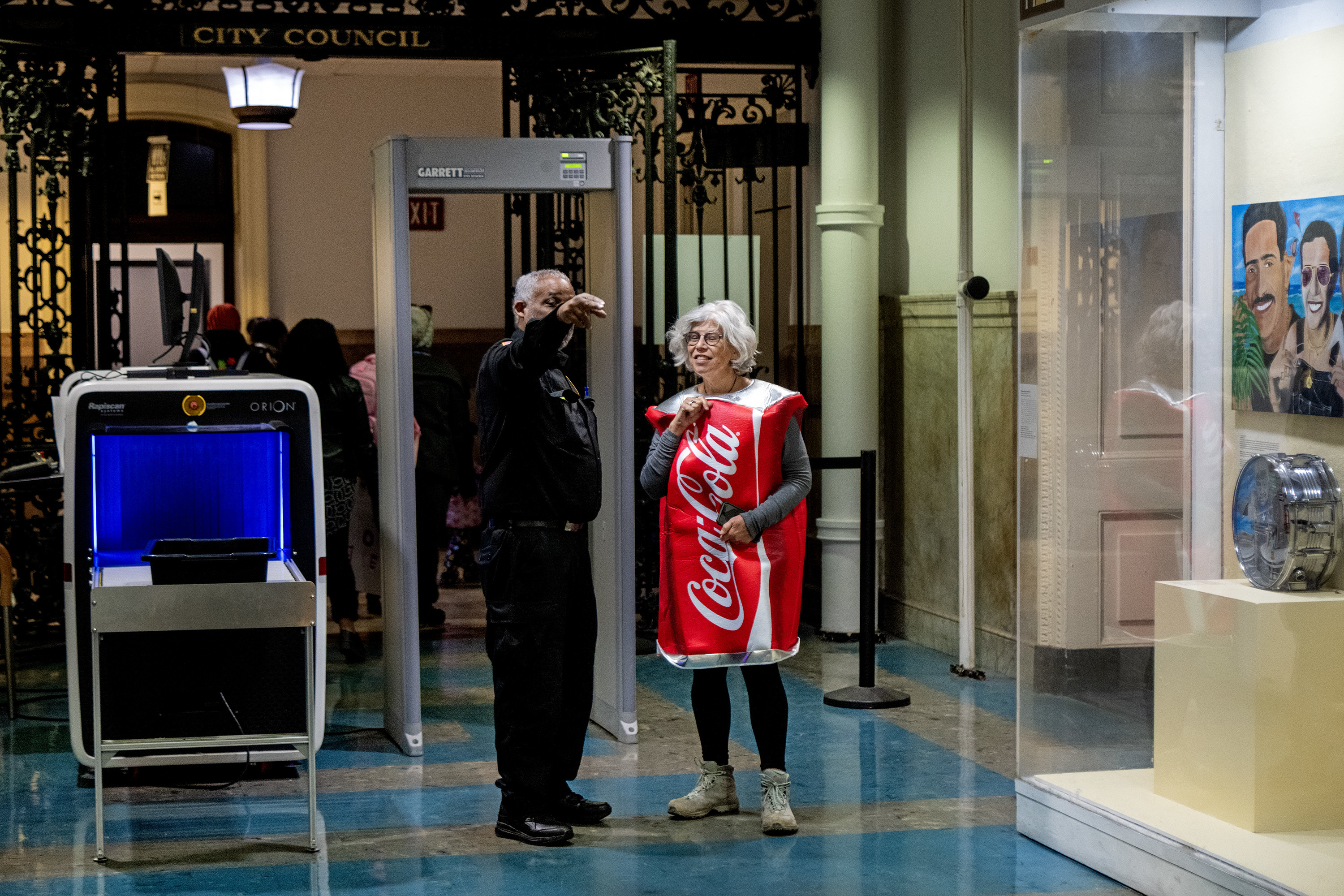
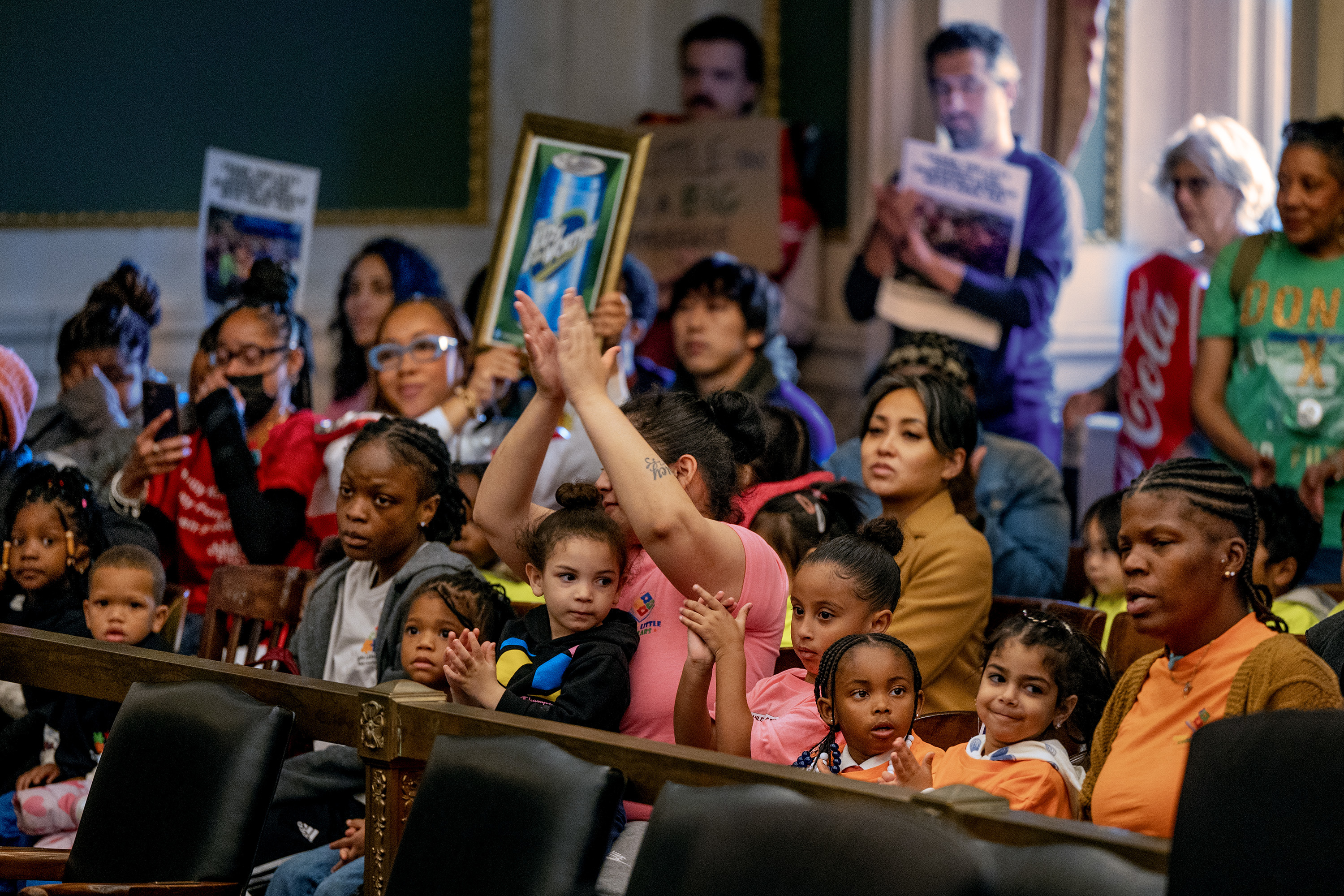
    Marcy Boroff with Children First dresses as a coke can for a City Council hearing Monday, Oct. 27, 2025 on former Mayor Jim Kenney’s tax on sweetened beverages. She was there to support the tax. Children First advocates for policy changes to improve child health, education, and welfare, especially for low-income children. .

    And they stressed its critical role in paying for the three initiatives that Kenney launched alongside the tax: PHL Pre-K, which provides free childcare to 5,250 kids; community schools, which offer a multitude of services to families in 20 Philly schools; and the Rebuild program, which renovates and improves recreation centers and playgrounds.

    “We have to make tough decisions that will actually benefit the greater good, and that’s what we did here,” Democratic Councilmember Rue Landau said during the hearing, adding that “the majority of us up here on this panel think this is a great investment.”

    ‘What we always intended’

    Mayor Cherelle L. Parker, a Democrat who voted for the tax as a Council member, also remains supportive of it.

    “We would not have been able to fund these programs without that beverage tax money,” said city Finance Director Rob Dubow, who has held his role under Parker, Kenney, and former Mayor Michael A. Nutter. Nutter twice tried unsuccessfully to implement a “soda tax” before Kenney succeeded.

    Dubow told lawmakers that the decline in the tax’s revenue over time was always part of the plan and that city leaders intended for the regular city budget to make up the difference for funding Rebuild, pre-K, and community schools when they created the tax. The moment when the soda tax began taking in less money than the city pays out for the three programs it helped launch was the 2024 fiscal year, he said.

    “We pay for it out of the general fund, which is what we always intended we would do,” Dubow said.

    This year, Rebuild, pre-K, and community schools are projected to cost $110 million, Dubow said. Of that, $73 million pays for the 5,250 slots in the city’s pre-K program.

    Preschoolers and their caregivers attend a City Council hearing held by Councilmember Jimmy Harrity Monday, Oct. 27, 2025 on former Mayor Jim Kenney’s tax on sweetened beverages. The tax funds the city’s universal pre-kindergarten program

    ‘Why not Taj Mahals?’

    Councilmember Brian O’Neill was the only other Council member besides Harrity to vocally criticize the tax at Monday’s hearing.

    O’Neill, Council’s lone Republican, noted that Council members have traditionally had control over capital funding for Philadelphia Parks and Recreation projects in their districts. That money, he noted, is split evenly among the 10 district Council members.

    Rebuild, he lamented, instead gives the power to decide which projects move forward to the mayor’s administration. Consequently, he said, the program has produced uneven results and overbudget and unnecessarily ambitious playground and recreation center renovations.

    “This program — Rebuild, they call it — they didn’t decide to bring playgrounds up to some minimum level where people over the years may not have spent their money well,” O’Neill said. “They decided to build Taj Mahals in many cases. … You know what happens when you build a playground and spend tons of money on it? … All the playgrounds around it look terrible.“

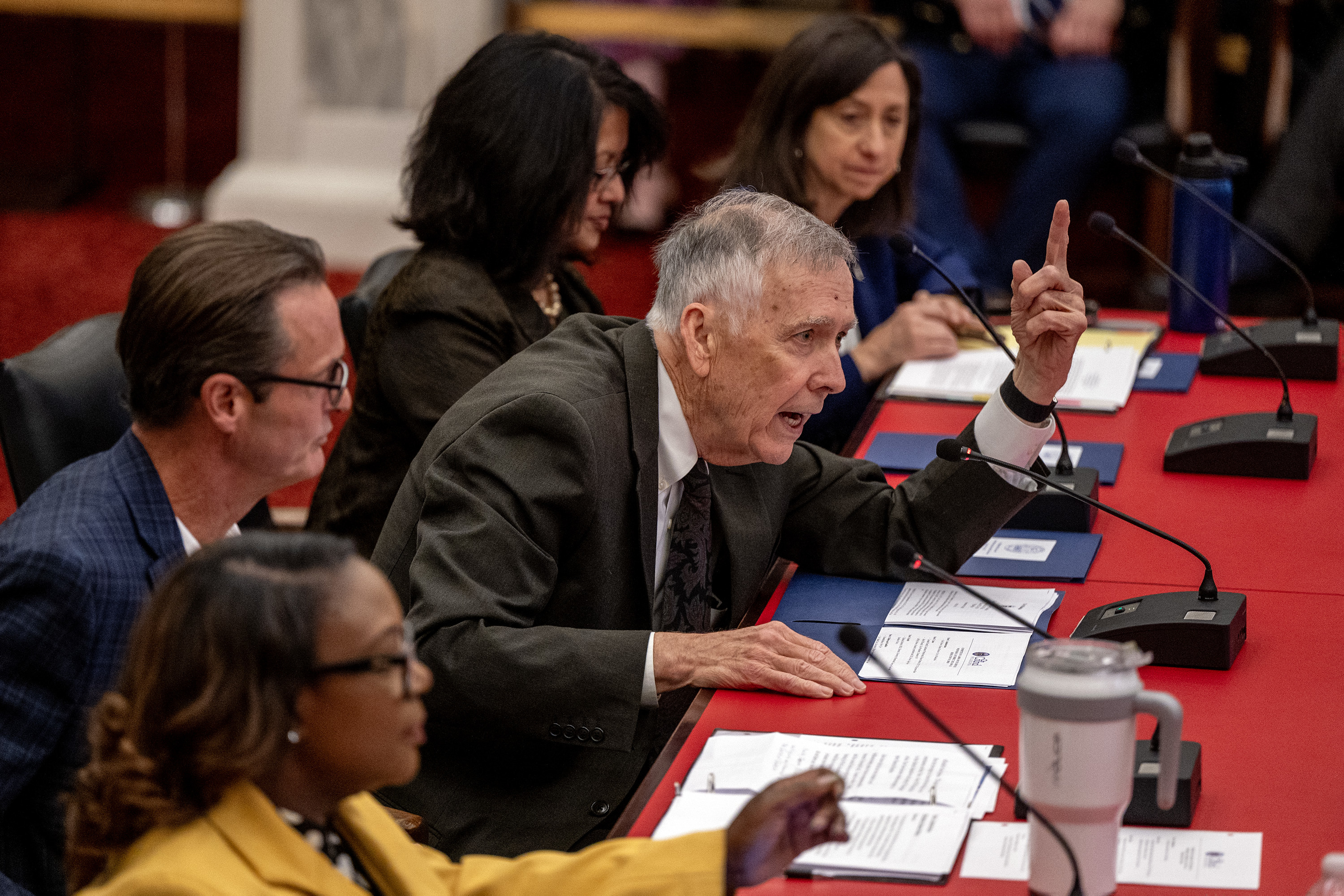
    Councilmember Brian J. O’Neill (center) speaks during a hearing in City Council Monday, Oct. 27, 2025 on former Mayor Jim Kenney’s tax on sweetened beverages. Behind him, front to rear, are: Councilmembers Kendra Brooks, Jimmy Harrity, Nina Ahmad, and Rue Landau.

    That comment did not go over well with some of his colleagues.

    “My community benefited from a rec center that was through the Rebuild program,” said Councilmember Kendra Brooks, a member of the progressive Working Families Party who lives in Nicetown. “It’s not a Taj Mahal. It’s a quality rec center in the middle of North Philadelphia. It does not have everything, because I personally went and bought a refrigerator.”

    And Councilmember Nina Ahmad, a Democrat, questioned why building grandiose rec centers would be a problem in the first place.

    “Why not Taj Mahals for all our folks? Why not have the best-quality rec centers so our children want to go there, our children want to spend time there?” Ahmad said. “We live in a first-world country and yet we are begging for scraps for our youngest citizens.”

  • Philly school board member Joyce Wilkerson was named the nation’s top urban educator

    Philly school board member Joyce Wilkerson was named the nation’s top urban educator

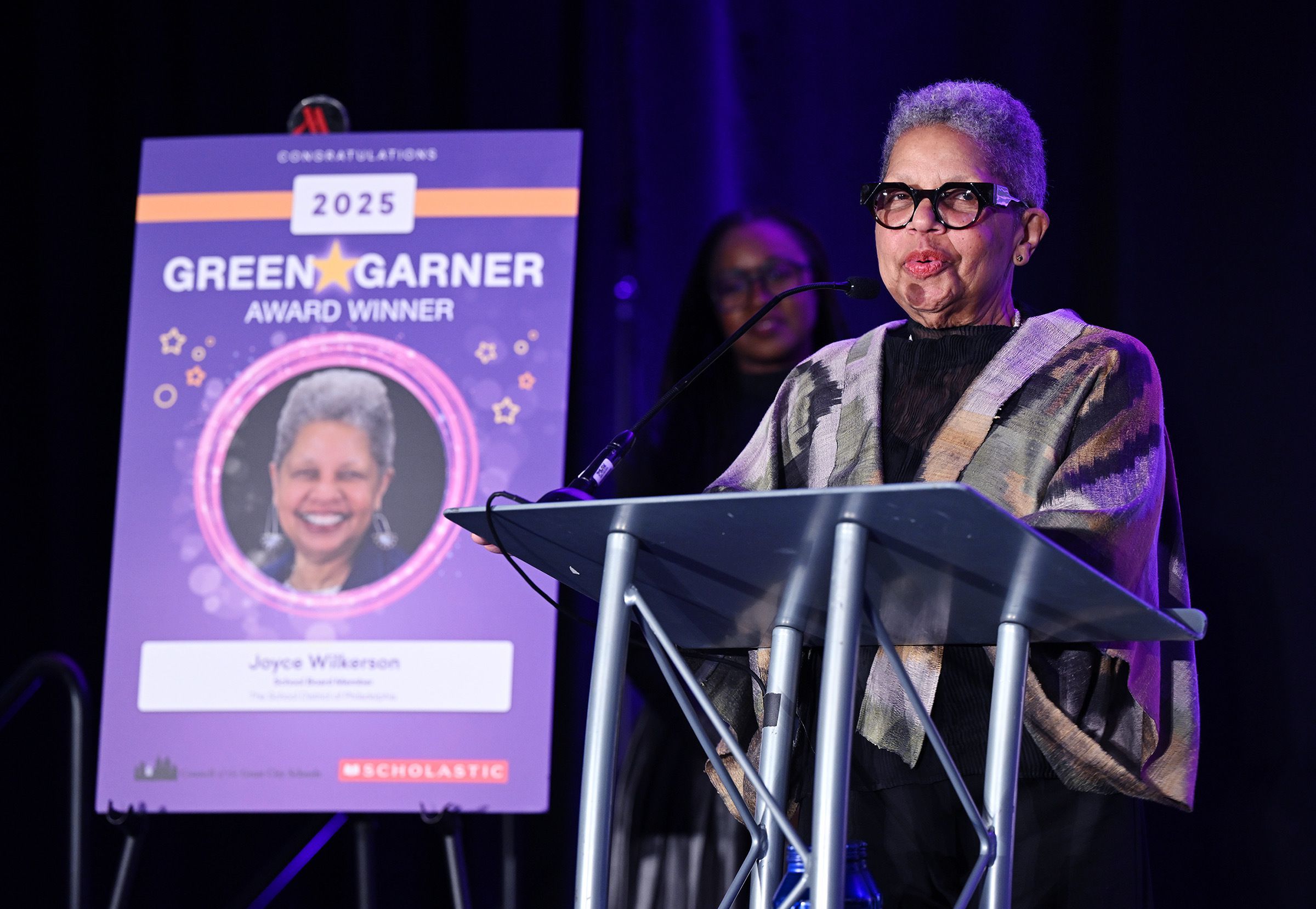
    Joyce Wilkerson, Philadelphia’s longest-serving school board member, was named 2025 Urban Educator of the Year on Thursday night.

    The Council of Great City Schools — in town for its annual conference — selected Wilkerson for “the nation’s highest honor in urban education leadership.” The award is presented in alternate years to either an outstanding school superintendent or school board member from 81 of the largest urban public-school systems in the country.

    The prize comes at a curious time for Wilkerson — when her very membership on the school board has been legally questioned, after a public battle with some members of City Council on her re-appointment by Mayor Cherelle L. Parker to the board.

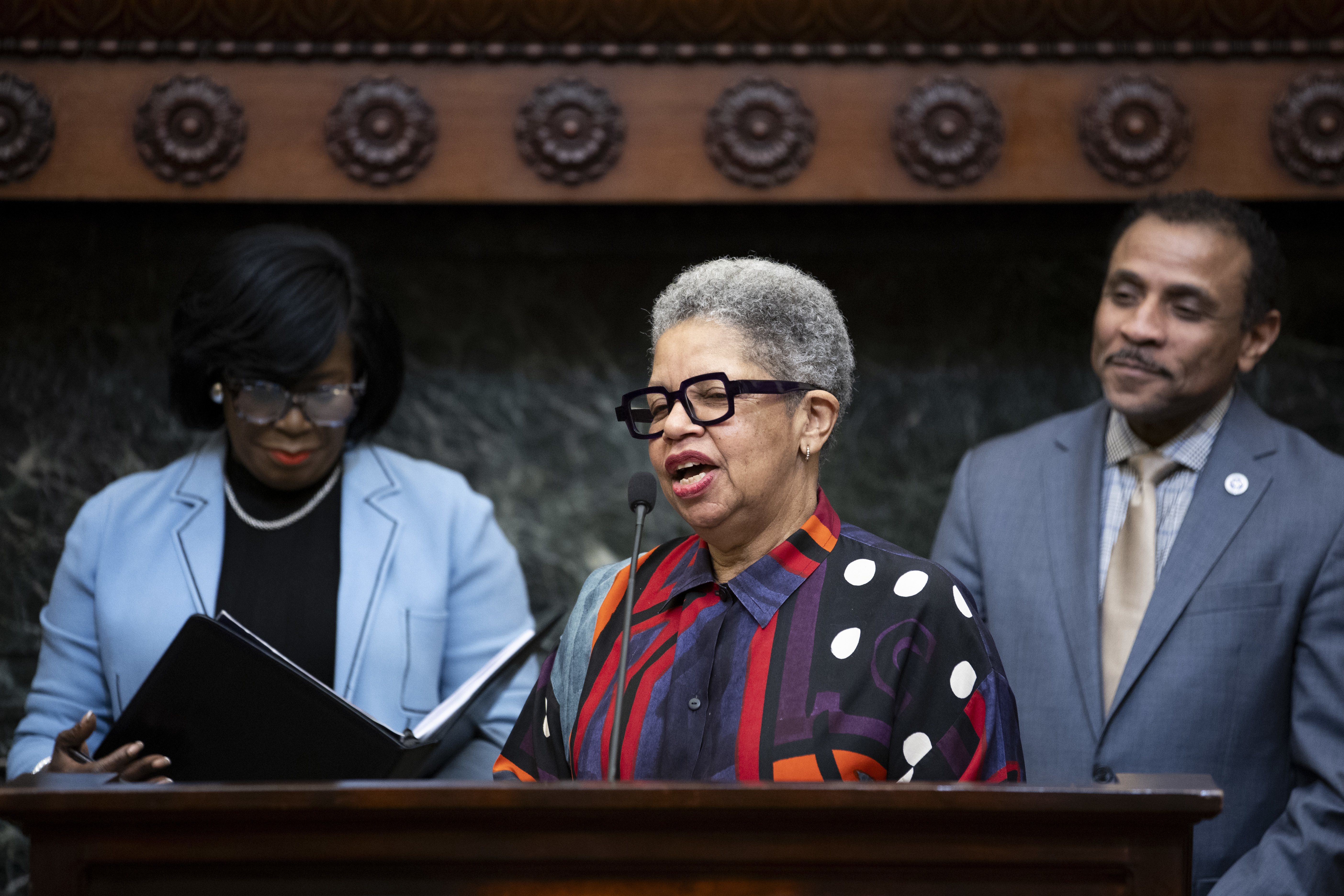
    Flanked by Mayor Cherelle L. Parker, left, and Superintendent Tony Watlington, right, Joyce Wilkerson, center, speaks during the announcement of the School District of Philadelphia Board of Education nominees at City Hall last year.

    People for People Charter School filed a lawsuit in Philadelphia Common Pleas Court in September calling Wilkerson an “illegally and unlawfully seated member of the BOE” and asking for her ouster.

    Wilkerson is not an educator by profession — she’s a lawyer who served as former Mayor John Street’s chief of staff. But she was named to the former School Reform Commission in 2016 and became the inaugural school board president in 2018, when the district returned to local control after nearly two decades of state oversight.

    Wilkerson, who also serves as a Council for Great City Schools board member, was hailed by the organization for steady leadership that helped end the Philadelphia School District’s state takeover, and for work that led the board to refocus its efforts on student outcomes. Ray Hart, who leads the Council, called those efforts “a national model.”

    Wilkerson, Hart said in a statement, “has reshaped the educational landscape in Philadelphia through her unwavering advocacy for students, along with her commitment to equity and excellence. Wilkerson’s dedication to strengthening public education has made her one of the most effective school board members in the nation.”

    As part of the prize, Wilkerson receives a $10,000 college scholarship to award to a district student.

    Joyce Wilkerson, Philadelphia’s longest-serving school board member, received the 2025 Urban Educator of the Year award from the Council of Great City Schools, a national organization whose annual conference is being held in Philadelphia this year.

    The People for People case — which came after the board voted to nonrenew the school’s charter over academic concerns — is still pending.

    It stems from a 2024 public fight over Wilkerson’s reappointment to the board. Several key Council members, including Council President Kenyatta Johnson and education committee chair Isaiah Thomas, took issue with Wilkerson.

    Her stance on charters in particular — no new charters were approved during Wilkerson’s school board presidency — rankled some on City Council.

    Council ultimately approved eight of Parker’s nine nominees, but did not act on Wilkerson’s candidacy. The mayor, though, did an end run, asking Wilkerson to serve on the board — essentially filling the seat Council denied her — until she named a successor.

    Parker ‘s administration argues the city charter allows Wilkerson to fully serve as a board member until her replacement is named, and it’s clear that the mayor is in no hurry to pick someone to replace her.

    The Parker administration, when the People for People suit was filed, said Wilkerson remains a full school board member, and said she still has the mayor’s support.

  • A new effort to catch illegal dumpers is underway in Philadelphia

    A new effort to catch illegal dumpers is underway in Philadelphia

    Four tires, twenty grand.

    That’s the message Philadelphia city officials want to send to people considering illegally dumping garbage in the city as a new enforcement unit hits the streets.

    The officers are armed with violation notices that could cost dumpers $5,000 per item. That means that tossing four tires into a vacant lot — which several years ago would have resulted in a ticket for a couple of hundred bucks, max — can now run a violator the price of a Honda and result in arrest.

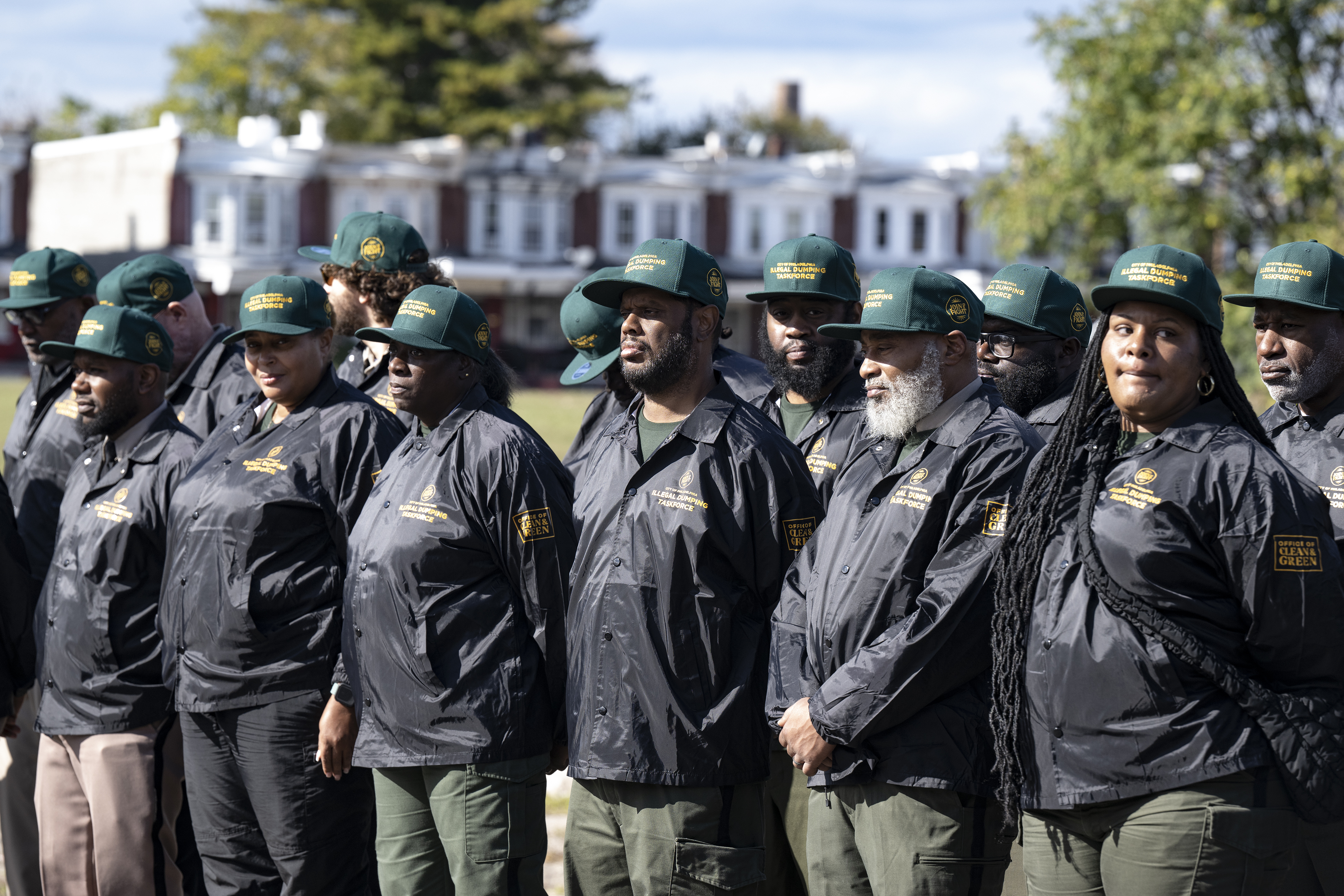
    The new unit of 40 officers focused on identifying the people who dump is part of an expanded task force that Mayor Cherelle L. Parker announced on Thursday. The group also includes a dozen people who monitor 400 surveillance cameras placed near frequent dumping sites, as well as partners in the police department who investigate severe cases.

    “Part of the reason why people think it’s open season to illegally dump in the city of Philadelphia … it’s because they never thought that enforcement would occur,” Parker said. “Besides it being unsightly and unhealthy for people, it’s a crime.”

    City officials said they have brought 17 cases against people who dumped waste illegally so far this year, resulting in more than $3.7 million in collected fines.

    The mayor said her administration would ramp up that effort with the initiation of the task force.

    “Philly ain’t playin’,” she said.

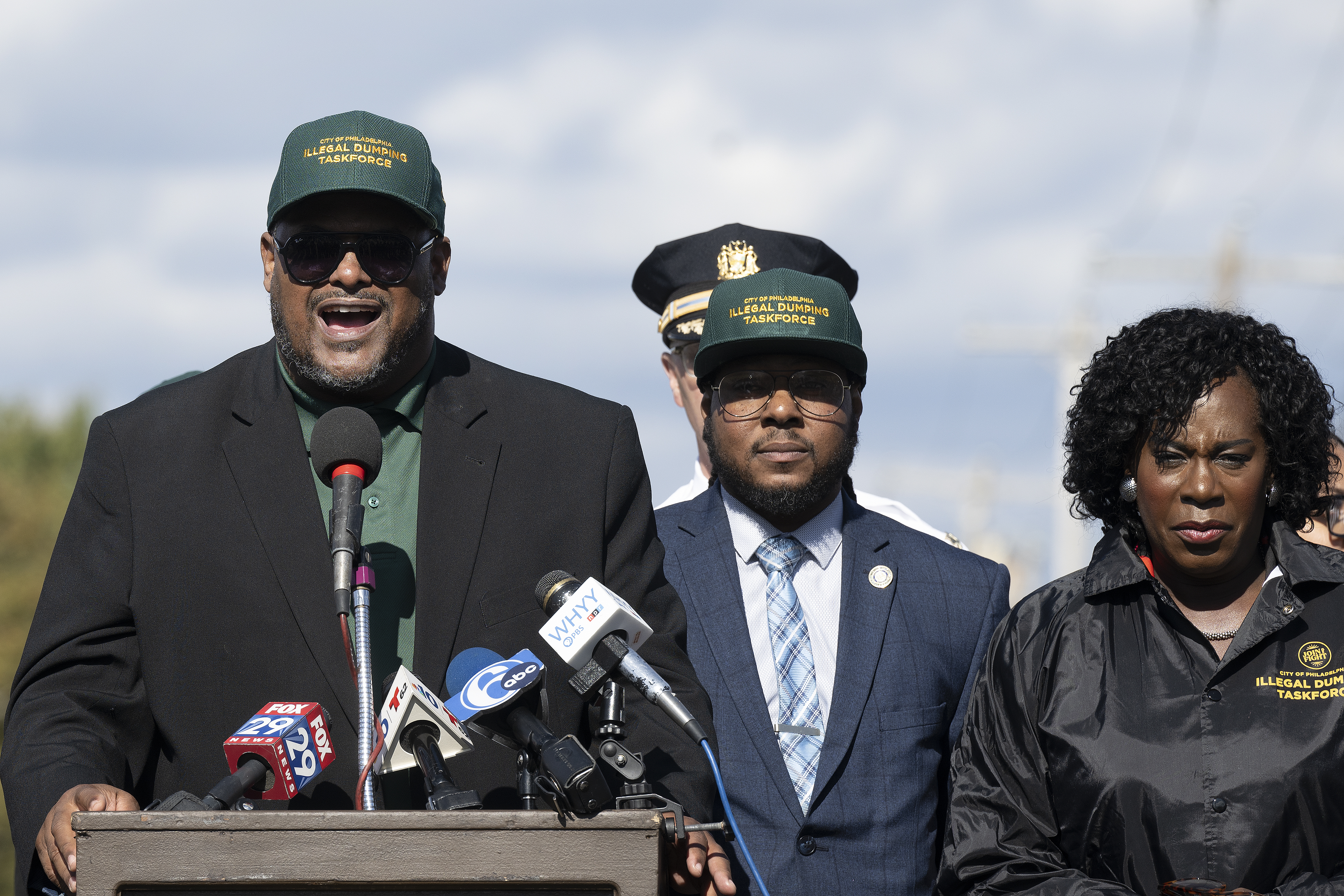
    Members of the new Illegal Dumping Task Force stand during an introductory press conference with Philadelphia Mayor Cherelle Parker and the Office of Clean and Green Initiatives on Thursday, Oct. 23, 2025, at 10th and Courtland Streets in Philadelphia.

    The program is one tenet of Parker’s plan to clean up the city, which was a key campaign promise when she ran for mayor in 2023. Since she took office last year, the administration has implemented a variety of strategies, including twice-weekly trash collection in parts of the city, block-by-block street cleanups on a semiannual basis, and bolstered graffiti abatement.

    Parker made the announcement while standing in North Philadelphia’s infamous Logan Triangle, the 35-acre plot that has been an eyesore for the better part of 50 years. It was once home to hundreds of rowhouses, but the families moved out in the 1980s when it became clear their homes were sinking into the bed of the Wingohocking Creek.

    Today, the triangle is a cautionary tale of failed redevelopment — a place where ideas like a basketball center or a dirt bike track or an apple orchard have never been realized. It is now, and has long been, a dumping site.

    It’s also the site where, last week, two people were arrested for unloading trash, said Carlton Williams, the city’s director of clean and green initiatives.

    Philadelphia Mayor Cherelle L. Parker (right) and Carlton Williams (left) of the Office of Clean and Green Initiatives announce stricter laws to combat illegal dumping during a news conference at Logan Triangle, a frequent dumping site at 10th and Courtland Streets, on Thursday in Philadelphia.

    Not only could those people face criminal penalties, but the administration is focused on levying hefty fines and holding dumpers responsible for cleanup costs. The city is also newly fining people who hire contractors to short dump.

    “We’re gonna hit you where it hurts: in the pocketbook,” Parker said.

    Tackling the city’s notoriously bad illegal dumping problem will be a multiyear effort, and Parker has made stronger enforcement a priority. A study conducted in 2019, prior to her tenure, estimated that the city was spending nearly $50 million annually to address illegal dumping, but 90% of that was for cleanup and not prevention.

    Despite the spending, many in the city say dumping sites are a major problem. A 2023 Lenfest Institute for Journalism/SSRS poll of 1,200 Philadelphians found that six in 10 residents believed reducing dumping should be a top priority for the mayor. Concern was most acute among residents who are low-income, Black, and Latino.

    City Councilmember Quetcy Lozada, a Democrat and a Parker ally whose district borders Logan Triangle, said the administration’s focus on illegal dumping can begin to remedy what she described as “extremely stressful” situations for residents who have long watched waste pile up near their homes without abatement.

    “Our residents have done their part, and those calls for help went unanswered for a really, really long time,” Lozada said. “But today feels different.”

    How to report illegal dumping

    Anyone who sees illegal dumping happening can call 911. Residents who want to report illegal dumping after the fact can file a complaint through 311.

  • Is 2025 Philadelphia’s year of the parking garage?

    Is 2025 Philadelphia’s year of the parking garage?

    Three large stand-alone parking garages have been proposed in Philadelphia this year, unusual projects in a city where parking operators have long complained that high taxation makes it difficult to run a business.

    The latest is a 372-unit garage near Fishtown and Northern Liberties at 53-67 E. Laurel St. near the Fillmore concert hall and the Rivers Casino.

    The developers see it as a strong bet for an area of the city that has seen a surge of apartment construction, which, due to Philadelphia’s parking laws, requires developers to only build spaces to serve a fraction of the units.

    “There’s been about 2,500 units that have come online within a 5- to 10-minute walk” of the planned garage, said Aris Kufasimes, director of operations with developer Bridge One Management. “When you’re building those on 7-1 [apartments to parking spaces] ratios, that leaves a massive hole. Where is everybody going to put their vehicles?”

    Despite central Philadelphia’s walkability and high levels of transit access, two other developers have made similar calculations this year.

    In the spring, Children’s Hospital of Philadelphia (CHOP) revealed plans for a 1,005-space parking garage in Grays Ferry along with a shuttle service to spirit employees to the main campus a mile away.

    In August, University Place Associates unveiled plans for a 495-unit garage. About a fourth of it will be reserved for the use of the city’s new forensic lab, but the rest will be open to the public.

    All three projects have baffled environmentalists and urbanists, who thought Philadelphia was moving away from car-centric patterns of late 20th-century development.

    It’s also surprised parking operators in the city, who say national construction cost trends and high local taxation make it difficult to turn a profit.

    Legacy parking companies in Philadelphia like E-Z Park and Parkway Corp. have been selling garages and surface lots for redevelopment as anything other than parking. They say the city has lost 10,000 publicly available spaces in the last 15 years, bringing the total to about 40,000 in Center City.

    “I don’t think I’ll ever build another stand-alone parking facility,” said Robert Zuritsky, president of Parkway Corp. and board chair of the National Parking Association. “It doesn’t make any sense.”

    Zuritsky and other parking companies have long noted that operators in Philadelphia, who often have unionized workforces, get hit with parking, wage, property, and the Use and Occupancy Tax.

    When combined with the soaring cost of building new spaces across the nation, it’s difficult to turn a profit in Philadelphia.

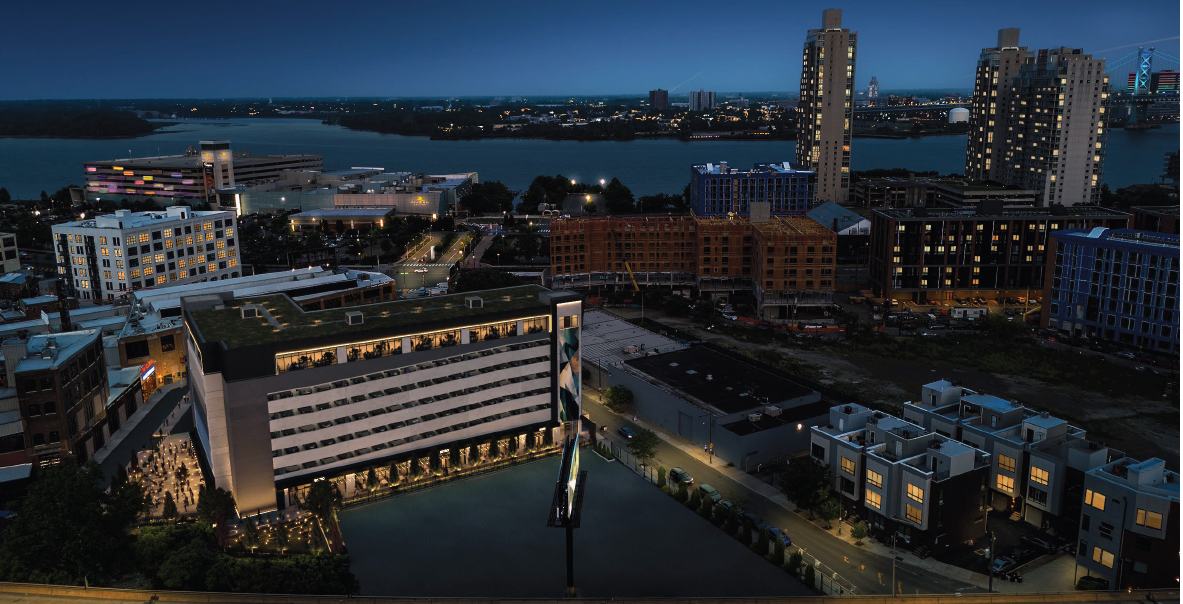
    A rendering of the Fishtown garage, looking towards the Delaware River.

    Zuritsky says it costs $60,000-$70,000 a space to build an aboveground lot in today’s environment and $100,000 to $150,000 below ground.

    “It’s like building a house for a car,” he said.

    Depending on hyperlocal peculiarities, Zuritsky says that taxation in Center City can eat up to 60% of the money they bring in and that to profit from new construction, an operator would have to charge $3,000 per space a month.

    “I wish people luck, the ones that are moving in,” said Harvey Spear, president of E-Z Park. “Between taxes, insurance, and labor, it comes to, like, 70-some percent of what we take in. We have more equipment now that does away with a lot of labor; we’re trying to compensate with that.”

    Urbanist and environmental advocates, meanwhile, have condemned the new garage projects, arguing that they will add to carbon emissions, air pollution, and traffic congestion.

    “A massive parking garage less than half a mile from the El [in Fishtown] is the wrong direction for any city that claims to take climate action seriously,” said Ashlei Tracy, deputy executive director with the Pennsylvania Bipartisan Climate Initiative. “SEPTA is already working to get more people out of cars and onto transit, but projects like this one and the one from CHOP only make that harder.”

    Here are the parking projects in the pipeline.

    Fishtown: 372 spaces

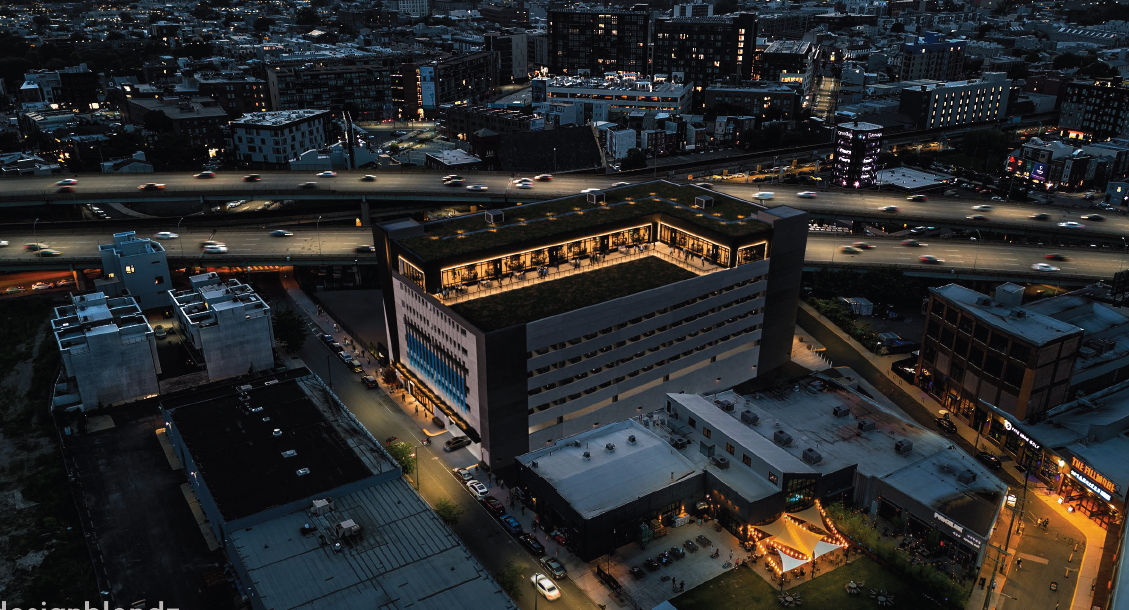
    The garage, with architecture by Philadelphia-based Designblendz, doesn’t just contain parking. It includes close to 14,000 square feet of commercial space on the first floor, which the developer hopes to rent to a restaurant — or two — on the edges of one of Philadelphia’s hottest culinary scenes.

    Another over 16,000-square-foot restaurant space is planned for the top floor, with views of the skyline and river. Both the top and bottom floors also could be used as event spaces.

    Kufasimes says that this aspect of the project could partly offset the kinds of costs that parking veterans warn of.

    “Our due diligence team went through those numbers and vetted them pretty thoroughly: The returns are what they needed to be,” Kufasimes said. “It’s got a multifunction of income streams, so we think that that really will help play a larger role.”

    Kufasimes also said a parking garage made sense in an area that’s seen more development than almost any other corner of Philadelphia. When investors purchased the land at 53-67 E. Laurel St. and approached his company for ideas, they met with other stakeholders in the neighborhood and determined parking would be appreciated.

    “It wasn’t necessarily all about the profit,” Kufasimes said. “A lot of people this day and age, that is their number-one goal. If this is a slightly lower return in the long run but can be better accepted by the community as a whole, we think that actually raises the value of the asset.”

    An overhead-perspective rendering of the Fishtown garage.

    At an October meeting of the Fishtown Neighbors Association, that argument appeared to pay off. Unlike most community meetings where a large new development is proposed, there were no adamant opponents of the project. The project also includes a 20,000-square-foot outdoor space, a green roof, and a to-be-decided public art component. All of that helped, too.

    “It’s nice seeing a parking garage, of all things, be as pedestrian-friendly and thoughtful as this,” one speaker said during the Zoom meeting.

    University City: 495 spaces

    The garage at 17 N. 41st St. is part of a larger complex of developments in a corner of West Philadelphia’s University City.

    Dubbed University Place 5.0, it largely exists because of a major expansion of the municipal bureaucracy west of the Schuylkill.

    For years the city has sought a new location for its criminal forensics laboratory. The debate became heated in City Hall, with numerous Council members making the case for locations within their districts.

    Councilmember Jamie Gauthier pushed for its location in University City Place 3.0, a newly built, state-of-the-art life sciences building that was coming online just as its intended industry was slowing down in the face of higher interest rates.

    To get the crime lab, Mayor Cherelle L. Parker’s administration said the police department would need ample parking. That’s where the new garage comes in.

    In June, Gauthier passed a zoning overlay that cleared away the regulatory hurdles to the project. Six weeks later, the developers revealed University City Place 5.0, which has 29 parking spaces on the ground floor reserved for official use by forensics vehicles and 100 spaces reserved for city employees.

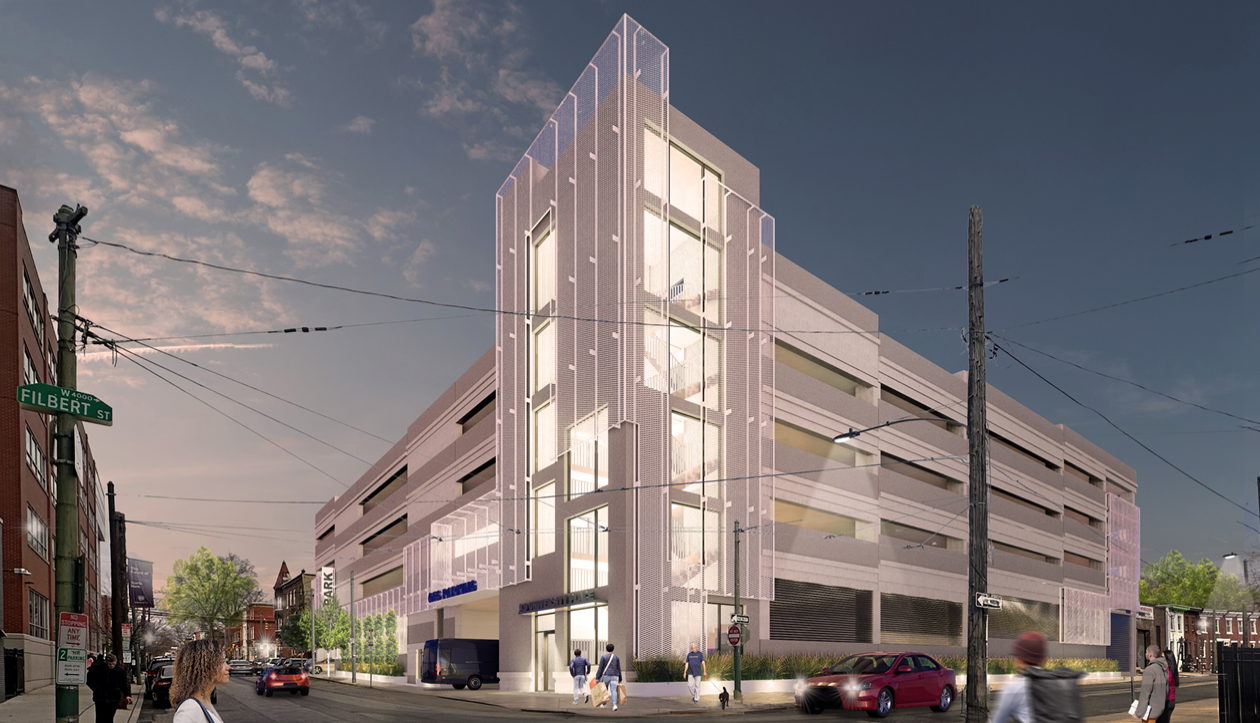
    A rendering of the proposed University City parking garage as seen from 42nd and Filbert Streets.

    Designed by Philadelphia-based ISA Architects, the garage is also meant to serve University Place Associate’s other large developments in the area. Akin to the Fishtown garage, they have also sought to make the development pedestrian friendly, with a dog park, green space, and public art.

    The local community group, West Powelton Saunders Park RCO, also embraced the proposal.

    “The community met regarding this project back in August, and … they were all in support of this project,” Pamela Andrews, president of the West Powelton Saunders Park RCO, said at the city’s September Civic Design Review meeting. “We have a tremendous problem with parking, and the community members felt this was a much needed and welcome addition.”

    Grays Ferry: 1,005 parking spaces

    CHOP’s thousand-car parking garage by far has been the most controversial of the proposals. But it also makes the most economic sense for the owner. Unlike the other garages — or those owned by Parkway and E-Z Park — it will be owned by a nonprofit and exempted from many of the taxes that make it so expensive to own parking in Philadelphia.

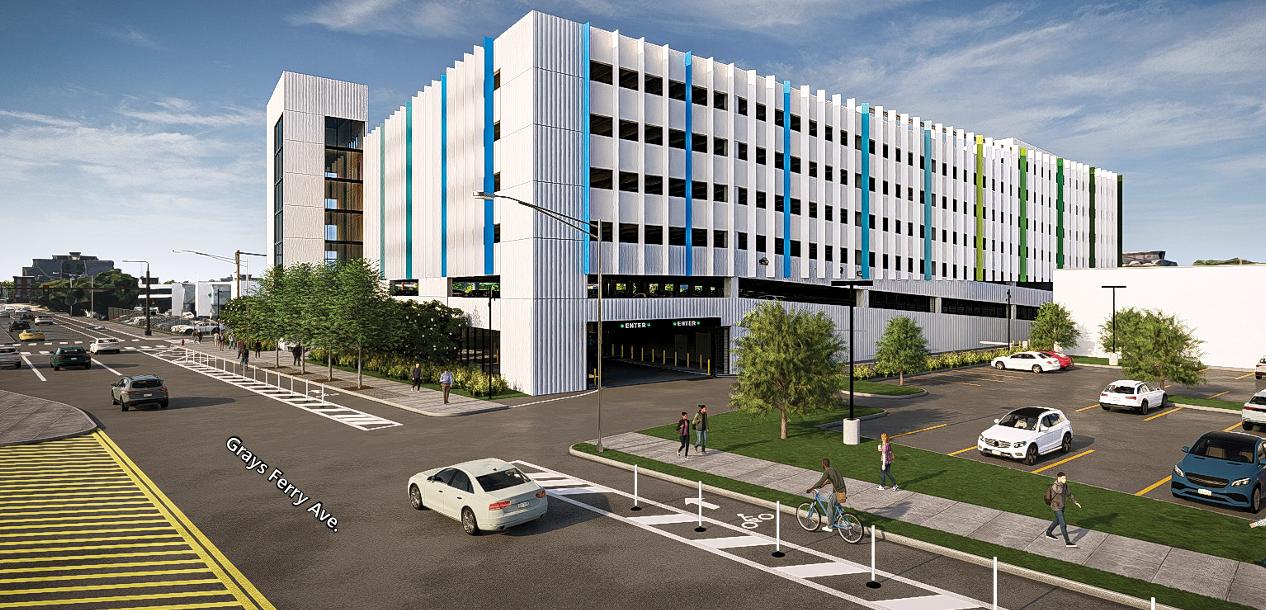
    A rendering of the new parking garage CHOP plans for Grays Ferry.

    The hospital purchased the property at 3000 Grays Ferry Ave., next to the Donald Finnegan Playground, for almost $25 million last year.

    The seven-story development, which, plans show, would have far fewer amenities than its University City and Fishtown counterparts, is meant to serve CHOP’s new research facilities in Fitler Square and the new patient tower set to open in 2028.

    “We recently secured permits and have begun construction on the new parking garage at 3000 Grays Ferry Ave.,” a CHOP spokesperson said. “The full construction is expected to go through the fall of 2026. CHOP continues to engage with the community by providing support, timely updates and addressing feedback during construction.”

    At the time of its unveiling, CHOP argued that the massive garage was needed as SEPTA threatened to become unreliable due to a political funding crisis in Harrisburg. But detractors appeared almost immediately to denounce the hospital for worsening air quality in a lower-income neighborhood that is already a hot spot for asthma.

    The project’s design was derided at the city’s advisory Civic Design Review panel and has attracted protest rallies, unlike its counterparts in University City or Fishtown.

    There are no regulatory hurdles to the development, but changes in the political or economic landscape could make it difficult to embark on a large capital project. Notably, the University of Pennsylvania proposed an 858-space garage in 2023 for the nearby Pennovation Center and has never broken ground.

  • City Controller Christy Brady is facing a challenge from Republican Ari Patrinos

    City Controller Christy Brady is facing a challenge from Republican Ari Patrinos

    City Controller Christy Brady, seeking her first full term as Philadelphia’s independently elected fiscal watchdog, is being challenged by Republican Ari Patrinos in the Nov. 4 general election.

    The controller’s office is charged with auditing the city’s finances and investigating fraud, waste, and abuse.

    But despite that critical role, there hasn’t been much drama in this year’s race.

    Patrinos, a former stockbroker and Philadelphia public school teacher, acknowledged the odds are against him in heavily Democratic Philadelphia and said he has no particular complaints about Brady’s performance.

    Instead, he said, he ran because “it was important that somebody run on the ticket.”

    “The truth is nobody wanted to run, and my ward leader asked me if I would run,” said Patrinos, who has not reported raising any money for his campaign. “I didn’t have any specific attacks on Brady. My concern is that the city is too single-party, and I think the city functions better when you have a two-party system.”

    Brady, a Democrat who has a $250,000 campaign war chest she likely won’t need to use this year, has the support of much of the local political establishment, including the Democratic City Committee and the building trades unions.

    A 30-year veteran of the controller’s office, Brady has struck a notably conciliatory tone during her tenure, striving to work collaboratively with Mayor Cherelle L. Parker’s administration rather than butt heads with the executive branch, as many of her predecessors have done.

    “Because of my experience when I took office two years ago, I hit the ground running,” she said.

    She pointed to her office’s audit that uncovered that the Philadelphia School District had made about $700,000 in payments to fake vendors as part of a cyber scam and to her investigation finding that fraudulent use of the property tax homestead exemption was costing the city and school district about $11.4 million per year.

    Brady was appointed acting controller in 2022 by then-Mayor Jim Kenney when Rebecca Rhynhart resigned from the post to run for mayor. Brady then won a 2023 special election to finish Rhynhart’s term, which ends in January.

    Seeking a full four-year term for the first time, Brady this year ran uncontested in the Democratic primary.

    “The biggest question I get [on the campaign trail] is: What does a controller do?” she said. “And so I’m getting out there and spreading the word of what we’re currently working on and what we do in the office.”

    The controller earns an annual salary of $171,000 and oversees an office with more than 120 employees and a budget of about $11.8 million.

    Patrinos also had no opponent in the May primary. He said he has been spending much of his time on the campaign trail promoting Pat Dugan’s campaign for district attorney.

    Dugan, a self-described “lifelong Democrat,” lost to District Attorney Larry Krasner in the Democratic primary but has accepted the GOP nomination to take a second swing at the incumbent in the general election.

    “I spend like half my time when I campaign advocating for Dugan because I’m very concerned about the crime,” Patrinos said.

    From Philly to Harvard and back

    Patrinos, who lives in Chestnut Hill, said he was a Democrat until about four years ago, adding that he voted for Joe Biden in the 2020 presidential election.

    His conversion was prompted primarily by his alma mater, Harvard College, which he felt had too enthusiastically embraced a “woke” stance.

    “The immediate driving factor was on the cultural front. It was what was going at Harvard,” he said. “I’m a little bit of an anti-woke warrior. … 2020 was peak woke.“

    Academia’s leftward trajectory and the Biden administration’s “terrible” handling of the pandemic combined to leave Patrinos with the feeling that he had no place in the Democratic Party, he said.

    “These Ivy League liberal types who really don’t have a sense of what’s going on in the lives of average Americans — they seemed to be so indifferent to the negative effects of their policies,” he said.

    He became involved in local Republican politics and helped boost President Donald Trump’s Philadelphia campaign in 2024.

    “I’m not a MAGA guy, so I didn’t join [the GOP] because of Trump,” he said, “but honestly I’m very happy with the higher education stuff, the hardcore stand he’s taken with Harvard.”

    Patrinos, a Central High School graduate who also has a master’s degree in political science from the University of Chicago, was a stockbroker in New York City before moving back to Philly about 15 years ago.

    He then became a math and history teacher and worked at West Philadelphia High School and Strawberry Mansion High School. Patrinos said he suffered a seizure several years ago that temporarily limited his employment opportunities, but is now seeking other jobs should he come up short against Brady.

    If elected, Patrinos said, he would audit the Philadelphia Department of Licenses and Inspections (L&I), examine whether SEPTA could do a better job preventing fare evasion, and push the school district to prepare more students for careers in information technology.

    Controller and mayor on the same page

    Brady’s approach to the mayor’s administration is the exception when it comes to the recent history of her office.

    A decade ago, then-City Controller Alan Butkovitz’s relationship with Mayor Michael A. Nutter became so toxic that Nutter at one point issued a statement calling Butkovitz “a sad and sick person.”

    Their successors, Kenney and Rhynhart, started off with widespread expectations that they might have a better working partnership, given that Rhynhart served as a top executive branch official under Nutter and, briefly, Kenney. But the relationship soured in a matter of months after Rhynhart publicly criticized the administration’s bookkeeping, prompting a call from Kenney that reportedly “got personal” and the cancellation of their planned monthly meetings.

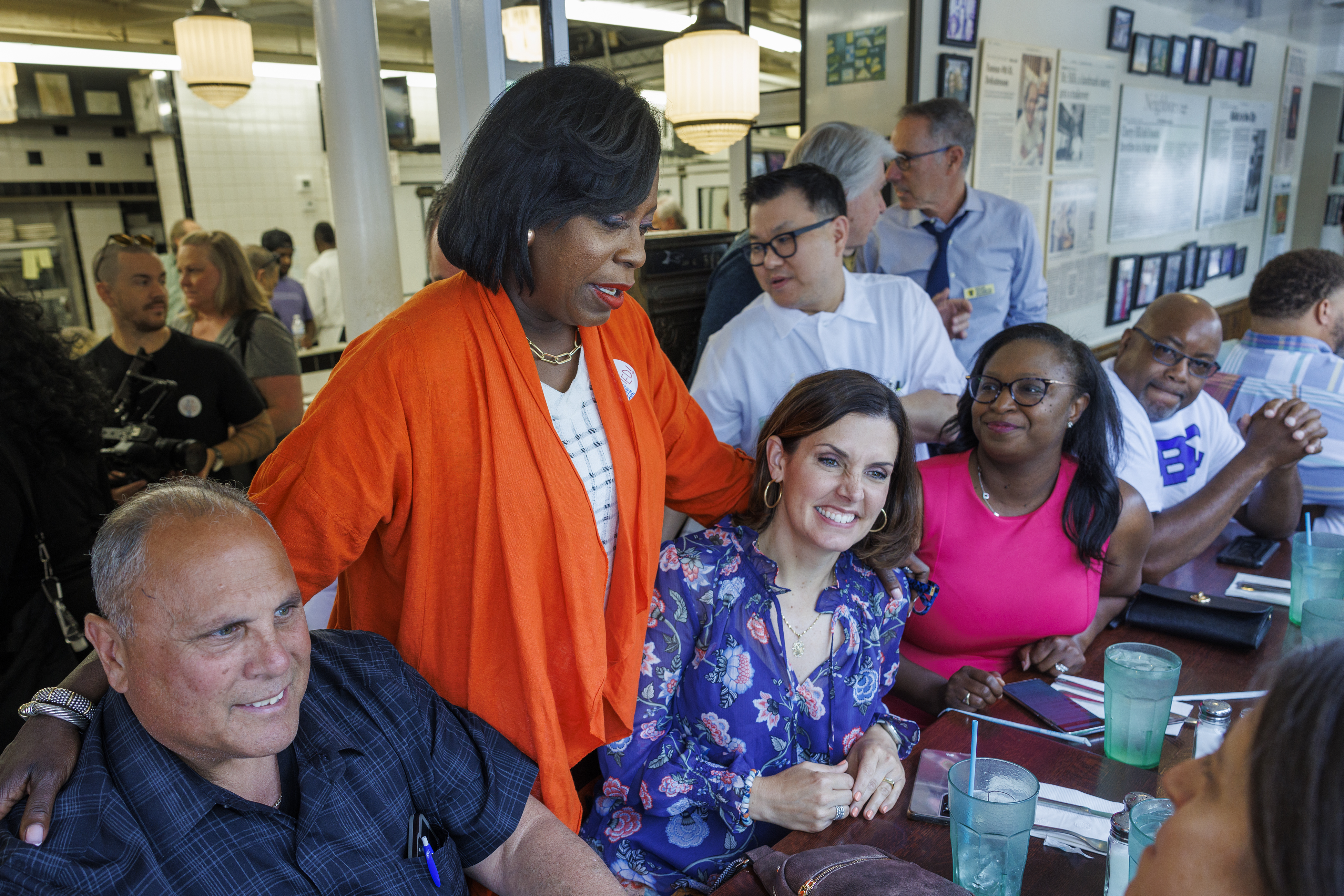
    Cherelle L. Parker, then a candidate for mayor of Philadelphia, stops to greet a group, including Christy Brady,(center seated), during election day lunch at Famous 4th Street Deli in Philadelphia on Tuesday, May 16, 2023.

    That outcome does not appear likely with Brady and Parker.

    Brady shares many political allies with Parker, especially the Philadelphia Building and Construction Trades Council, a coalition of unions that spends big on elections and has reason to be pleased with both Brady and Parker’s tenures so far.

    Brady, for instance, touts her office’s audit of L&I that revealed inspectors often failed to confirm that construction sites were being run by licensed contractors — providing ammunition to the trades unions, which often rail against “fly-by-night” contractors that do not employ their members. And the mayor last year split the department into two agencies, with one focused largely on enforcing construction regulations.

    Brady said her healthy relationship with the Parker administration should not be confused with a reticence to call out fraud and waste.

    “I am an independently elected official. I am not afraid to stand up for what’s right,” she said. “I believe in the rules and regulations in city government.”

    Her approach to the executive branch, she said, is designed to advance the aim of any auditor: ”getting management to implement your recommendations.”

    “In my experience in the controller’s office, when you fight, they’re not going to listen to your recommendation,” said Brady, a certified public accountant who graduated from the Philadelphia College of Textiles and Science, now Jefferson University. “When we issue our reports, the mayor has been thanking me for the recommendations. And I really appreciate that relationship because I believe that we can make change.”

    Staff writer Ryan W. Briggs contributed to this article.

  • Preserving older properties drives housing affordability, population growth, and investment, says study by historic preservation group

    Preserving older properties drives housing affordability, population growth, and investment, says study by historic preservation group

    For years, the Preservation Alliance for Greater Philadelphia has heard the same arguments: Preservation is a barrier to development. It reduces density. It restricts the housing supply.

    “And we knew in our gut that that wasn’t true, but we didn’t have the data to support it,” said Paul Steinke, executive director of the Preservation Alliance, which works to protect historic properties from demolition. “Now, we do.”

    The Preservation Alliance commissioned its most comprehensive analysis of how historic preservation affects the city’s economy and housing. The report, released Wednesday, found that preservation of Philadelphia’s older properties protects housing affordability, drives investment, preserves housing density, and supports population growth.

    In Philadelphia, $4 billion has been invested in historic rehabilitation projects, which have created thousands of jobs each year.

    Steinke said the Preservation Alliance commissioned this study now because of current debates about Philadelphia’s growth and affordability, the need to increase the housing supply, and development policy as Mayor Cherelle L. Parker rolls out her Housing Opportunities Made Easy, or H.O.M.E., initiative to build or preserve 30,000 homes.

    “We wanted to develop some data to demonstrate preservation’s role in those conversations,” said Steinke, who is on the H.O.M.E. advisory committee. “And the reality is the data show that historic preservation is a powerful engine … for investment, jobs, affordability, and inclusive growth.”

    The study was completed by PlaceEconomics, a Washington-based firm that analyzes the economic impacts of historic preservation in cities across the country. The purpose of the analysis in Philadelphia was to understand the economics of the preservation of older properties in general and not only those properties that are historically designated, Steinke said.

    Preservation debates

    Historic designation is a divisive topic, and preservationists have found themselves clashing not only with developers who want to demolish properties but also with homeowners and pro-housing groups.

    Historic designation shields properties from demolition and means owners have some restrictions on what they can do to the outside of their properties. Decisions about doors and windows, for example, are subject to the scrutiny of preservation officials. And owners who fight the designation of their properties argue that regulations can be a burden.

    Residents have challenged in court three historic districts that Philadelphia recently created — the most significant pushback against the city’s preservation ordinance in 15 years.

    In response to the Preservation Alliance’s study, 5th Square, a Philadelphia-based urbanist political action committee, said it supports efforts to rehabilitate older buildings and that “Philadelphia’s dense, historic neighborhoods are a beloved feature of the city.”

    “However, we remain concerned about the proliferation of historical preservation districts across the city,” Brennan Maragh, cochair of the group’s housing committee, said in an emailed statement. “These districts … impose real costs on families, small businesses, and owners attempting to maintain or improve their properties.”

    Almost 5% of Philadelphia is historically designated

    Almost 5% of the city’s land area is a historic district or is property individually designated as historic outside of historic districts, the study found.

    The share of properties historically designated by the city has increased from 2.2% to 4.4% since 2016, when the city started ramping up its historic designations. Philadelphia has caught up with other large cities.

    In 2023, about 56,000 residents lived in a local historic district.

    Tax credits have created jobs and revenue

    Between 2010 and 2024, 295 projects that used state and/or federal historic preservation tax credits were completed in Philadelphia, according to the study. This ranks Philadelphia first in the nation.

    Projects that use historic tax credits have created an average of 1,777 direct jobs and 729 indirect jobs each year in Philadelphia over the last 15 years. Each year, they have created an average of about $95 million in direct income and about $47 million in indirect income.

    If historic rehabilitation were a single industry, it would be the city’s 25th-largest employer.

    Historic tax credit activity also has generated about $8 million in local tax revenue.

    Older homes are more affordable

    Two-thirds of Philadelphia’s residential buildings and half of the city’s housing units were built before 1950, according to the study. This older housing tends to be smaller in size and lower in cost.

    So preserving older homes helps preserve housing affordability. The study did not consider the historic designation status of these homes.

    “While it is true that Philadelphia’s older housing stock remains affordable compared to new construction,” said Maragh at 5th Square, “historic preservation districts can also have the unintended consequences of excluding low-income residents from large parts of the city, raising lifetime housing costs on owners and creating unnecessary regulations that slow down the process of adaptive reuse.”

    The study found that the city’s historic districts have higher shares of high-income households and lower shares of low-income households compared to the rest of the city.

    Outsize population growth in historic districts

    Donovan Rypkema, principal and CEO at PlaceEconomics, said a “myth” of historic preservation is if “you create those historic districts, you just set neighborhoods in amber and nothing can ever change.”

    The firm’s study found that population growth in historic districts outpaced growth in the rest of the city.

    In historic districts created before 2010 — so before the recent push for more districts and ones that are more geographically and racially inclusive — the population grew by about 27% between 2010 and 2020. Over the same time, the rest of the city’s population grew by less than 5%.

    More than 79% of the homes in historic districts are in buildings with two or more units, compared to 32% in the rest of Philadelphia. Historic districts also offer a wider range of housing types.

    The densest areas of the city are in historic districts, according to the study. There are 10,000 more people per square mile in historic districts than in the rest of the city’s residential areas.

    These statistics speak to the “inherent attractiveness” of historic districts and also that “they can accommodate that growth,” Rypkema said.

  • Mayor Parker shakes up the Philadelphia Land Bank board to try to further her housing plan

    Mayor Parker shakes up the Philadelphia Land Bank board to try to further her housing plan

    Mayor Cherelle L. Parker is shaking up the board of the Philadelphia Land Bank, which helps control the sale of city-owned land but hasn’t been moving fast enough to advance her housing priorities.

    Parker’s first land bank board chair, Herb Wetzel, has been asked to step down as well as board member Majeedah Rashid, who leads the Nicetown Community Development Corp. The board has 13 members.

    Angela D. Brooks, who serves as the city’s chief housing officer, will be joining the board. Earlier this year Parker appointed Brooks to lead the mayor’s campaign, Housing Opportunities Made Easy, or H.O.M.E., to build or renovate 30,000 houses over the course of her administration.

    The mayor has long championed the Turn the Key program as part of that plan, a policy that depends on getting inexpensive city-owned land to developers so they can build houses that are affordable to working and middle-class families.

    Rashid is being replaced by Alexander Balloon, who formerly served on the Land Bank’s board and is the executive director of the Passyunk Avenue Revitalization Corp.

    “It is clear from the Land Bank’s success with its Turn The Key program: A strong and effective Land Bank is essential for reaching the H.O.M.E. initiative’s goal to produce and preserve 30,000 homes,” Parker said in a statement.

    Several Turn the Key proposals have been held up by the Land Bank board, which has been riven between factions that are either more or less friendly to private-sector developers.

    Rashid and other board members who come from a nonprofit development background have argued that scarce city-owned land should be earmarked for affordable housing, community gardens, and similar projects.

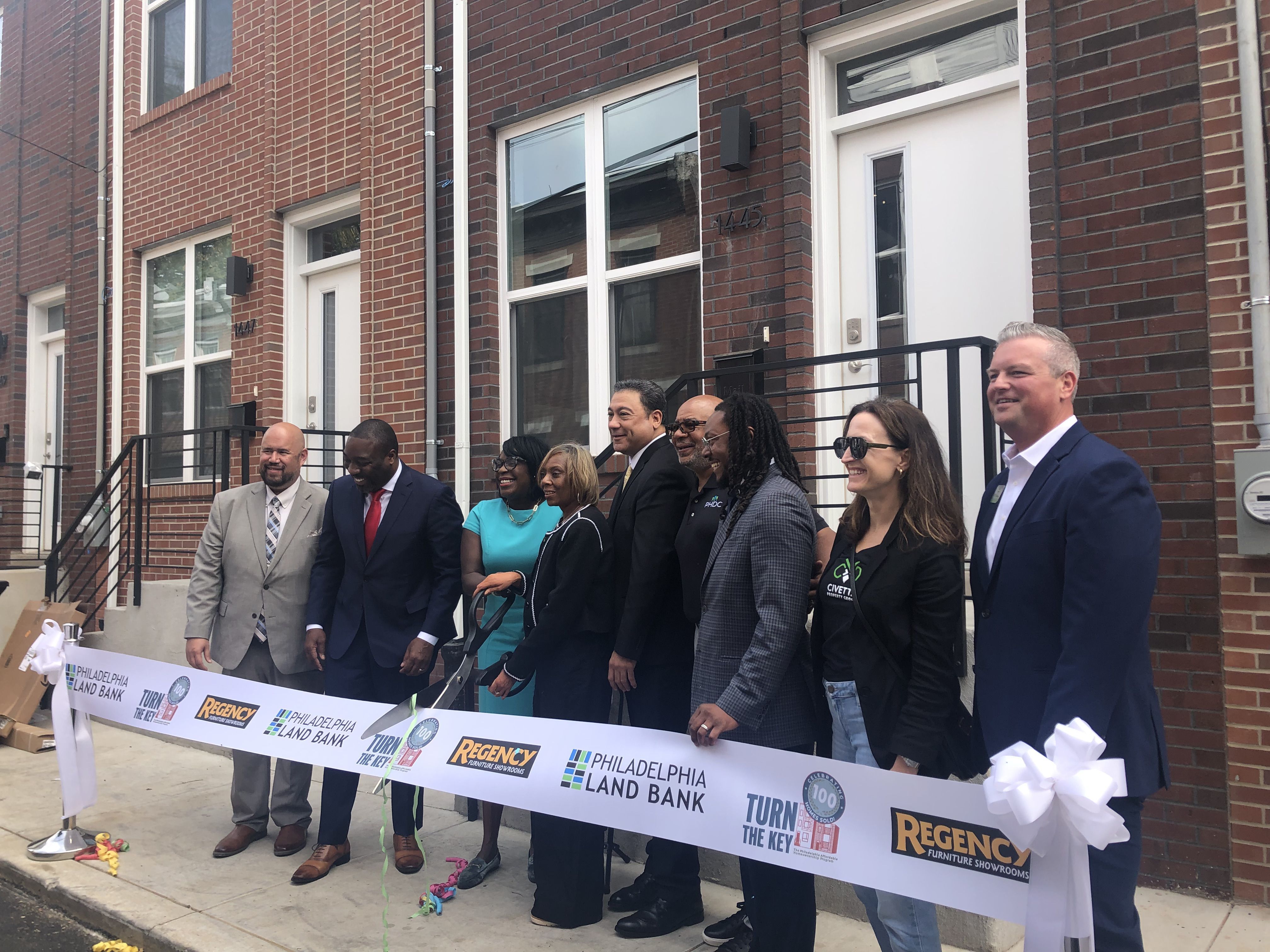
    Mayor Cherelle L. Parker and Turn the Key’s 100th homebuyer hold giant scissors as they prepare to cut a ceremonial ribbon.

    Although the Turn the Key program produces units that are more affordable than market-rate homes, many of the projects are built by private-sector developers and still unaffordable to Philadelphians with low incomes.

    “Majeedah Rashid has worked with me on economic development issues dating to my time in the Pennsylvania General Assembly, and her advice has been invaluable,” Parker said in a statement. “Our city is stronger for Herb’s and Majeedah’s public service.”

    Rashid did not respond to a request for comment.

    During Balloon’s previous tenure on the board, he was among members who pushed for vacant city-owned land to be put back into productive use as quickly as possible because empty lots attract crime and litter and are a drag on city services.

    Private-sector developers often can build more — and faster — than their nonprofit counterparts because they are less reliant on public funds, which are increasingly unreliable from the federal level.

    “I’m excited to rejoin the Philadelphia Land Bank and help Mayor Parker deliver on her bold vision to build and preserve 30,000 homes across our city,” Balloon said in an email statement. “This is an inspiring moment for Philadelphia’s growth and the success of the Turn the Key program and other initiatives.”

    Wetzel’s role as Land Board chair was the latest in a long tenure of municipal housing policy positions, including his lengthy service as a close aide to former Council President Darrell L. Clarke, who created the Turn the Key program and was one of its most enthusiastic proponents.

    “Herb Wetzel has been a subject matter expert for me on any housing issue that I’ve worked on throughout my career as an elected official, and I have always relied on his counsel,” Parker said in a statement. “He will continue to be part of my circle of advisers on housing issues, just in a different capacity.”

    But according to three City Hall sources, who did not have permission to speak to the media, Parker’s team felt Wetzel sought to play peacemaker between the factions and was not always able to get their favored Turn the Key projects moving. As a recent arrival to the city and leader of the administration’s housing initiative, Brooks is expected to pursue the mayor’s priorities.

    Brooks said in an interview that her appointment was no reflection on Wetzel’s performance and that he would continue to serve on the H.O.M.E. advisory board.

    “I don’t have any thoughts on what he didn’t do or didn’t other than he’s been a great supporter of both the mayor and me and this housing plan,” Brooks said. “He’ll continue to be a part of that as we move it forward. [It’s just that] historically, we have had a city staff person to sit on the Land Bank board, and since I’m spearheading the H.O.M.E. Initiative, it seemed to be time.”

    Frequent stalemates on the board were not the only challenge facing Turn the Key projects. Under the tradition of so-called councilmanic prerogative, the Land Bank requires action from City Council to release property for development even if the mayor backs a particular proposal.

    For example, the administration sent over a 50-unit Turn the Key proposal in North Philadelphia to City Council last November, and District Councilmember Jeffery Young simply never introduced it, effectively killing the deal.

    Or in Kensington, Councilmember Quetcy Lozada declined to endorse several Turn the Key proposals, leading developers to abandon them.

    Parker sought to loosen Council’s grip on some city-owned land during budget negotiations earlier this year, but the campaign was largely unsuccessful. National land bank experts have long argued that land banks like Philadelphia’s are much less effective than counterparts that do not have political veto checkpoints.

    During budget hearings this year, Council asked for an organization assessment of the Land Bank, and some members questioned why its staff wasn’t more robust.

    Brooks said that an assessment will be released soon from the consultant group Guidehouse and that the Land Bank “is in the process of filling positions.”