Tag: Chester County

  • David J. Farber, celebrated Penn professor emeritus and pioneering ‘uncle’ of the internet, has died at 91

    David J. Farber, celebrated Penn professor emeritus and pioneering ‘uncle’ of the internet, has died at 91

    David J. Farber, 91, formerly of Landenberg, Chester County, celebrated professor emeritus of telecommunication systems at the University of Pennsylvania, former professor of computer science at Carnegie Mellon University and the University of Delaware, professor at Keio University in Japan, award-winning pioneer in pre-internet computing systems, entrepreneur, and known by colleagues as the “uncle” and “grandfather” of the internet, died Saturday, Feb. 7, of probable heart failure at his home in Tokyo.

    A longtime innovator in programming languages and computer networking, Professor Farber taught and collaborated with other internet pioneers in the 1970s, ’80s, and ’90s. He helped design the world’s first electronic switching system in the 1950s and ’60s, and the first operational distributed computer system in the 1970s.

    His work on the early Computer Science Network and other distributive systems led directly to the modern internet, and he taught many influential graduate students whom he called the “fathers of the internet.” He was thinking about a World Wide Web, he said in a 2013 video interview, “actually before the internet started.”

    “Farber may not be the father of the internet. But he is, at least, its uncle,” Penn English professor Al Filreis told the Daily News in 1998. “Few have paid such close attention for so long to new trends in the information age.”

    Colleagues called him “part of the bedrock of the internet” and a “role model for life” in online tributes. Nariman Farvardin, president of the Stevens Institute of Technology in Hoboken, N.J., said: “Professor Farber did not just witness the future, he helped create it.”

    In 1996, Wired magazine said Professor Farber had “the technical chops and the public spirit to be the Paul Revere of the Digital Revolution.”

    He joined Penn as a professor of computer science and electrical engineering in 1988 and was named the endowed Alfred Fitler Moore professor of telecommunication systems in 1994. He left Penn for Carnegie Mellon in 2003 and joined Keio in 2018.

    Gregory Farrington, then dean of Penn’s School of Engineering and Applied Science, told The Inquirer in 1996: “He’s one of the most engaging, imaginative guys who sometimes alternates between great ideas and things that sound nuts. And I love them both. His life is an elaboration on both.”

    He was a professor at Delaware from 1977 to 1988 and at the University of California Irvine from 1970 to 1977. Among other things, he created innovative computer software concepts at UC Irvine, studied the early stages of internet commercialization at Delaware, and focused on advanced high-speed networking at Penn. He also directed cyber research laboratories at every school at which he worked.

    He earned lifetime achievement awards from the Association for Computing Machinery, the Board of Directors of City Trusts of Philadelphia, and other groups, and was inducted into the Internet Society’s Hall of Fame in 2013 and the Stevens Institute of Technology Hall of Achievement in 2016.

    Stevens Institute also created a “societal impact award” in 2003 to honor Professor Farber and his wife, Gloria. “I think the internet has just started,” he said in 2013. “I don’t think we’re anywhere near where it will be in the future. … I look forward to the future.”

    Professor Farber earned grants from the National Science Foundation and other organizations. He received patents for two computer innovations in 1994 and earned a dozen appointments to boards and professional groups, and an honorary master’s degree from Penn in 1988.

    He advised former President Bill Clinton on science and engineering issues in the 1990s and served a stint in Washington as chief technologist for the Federal Communications Commission. Clinton called him a “pioneer of the internet” in a 1996 shoutout, and Professor Farber testified for the government in a landmark technology monopoly court case against Microsoft Corp.

    Professor Farber (left) worked with Professor Jiro Kokuryo at the Keio University Global Research Institute in Tokyo.

    He championed free speech on the internet, served on technical advisory boards for several companies, and wrote or cowrote hundreds of articles, papers, and reports about computer science.

    He was featured and quoted often in The Inquirer and Daily News, and lectured frequently at seminars and conferences in Japan, Europe, Australia, and elsewhere around the world. He wrote an email newsletter about cutting-edge technology that reached 25,000 subscribers in the 1990s, and he liked to show off his belt that held his cell phone, pager, and minicomputer.

    He cofounded Caine, Farber, & Gordon Inc. in 1970 to produce software design tools and worked earlier, from 1957 to 1970, on technical staffs for Xerox, the Rand Corp., and Bell Laboratories. In a recent video interview, he gave this advice: “Learn enough about technology so that you know how to deal with the world where it is a technology-driven world. And it’s going to go faster than you ever imagined.”

    David Jack Farber was born April 17, 1934, in Jersey City, N.J. Fascinated by gadgets and early computers in the 1940s, he built radios from wartime surplus components as a boy and helped make a unique relay device with a punch card in college. “The card reader was three feet big, but it worked,” he told the Daily News in 1998.
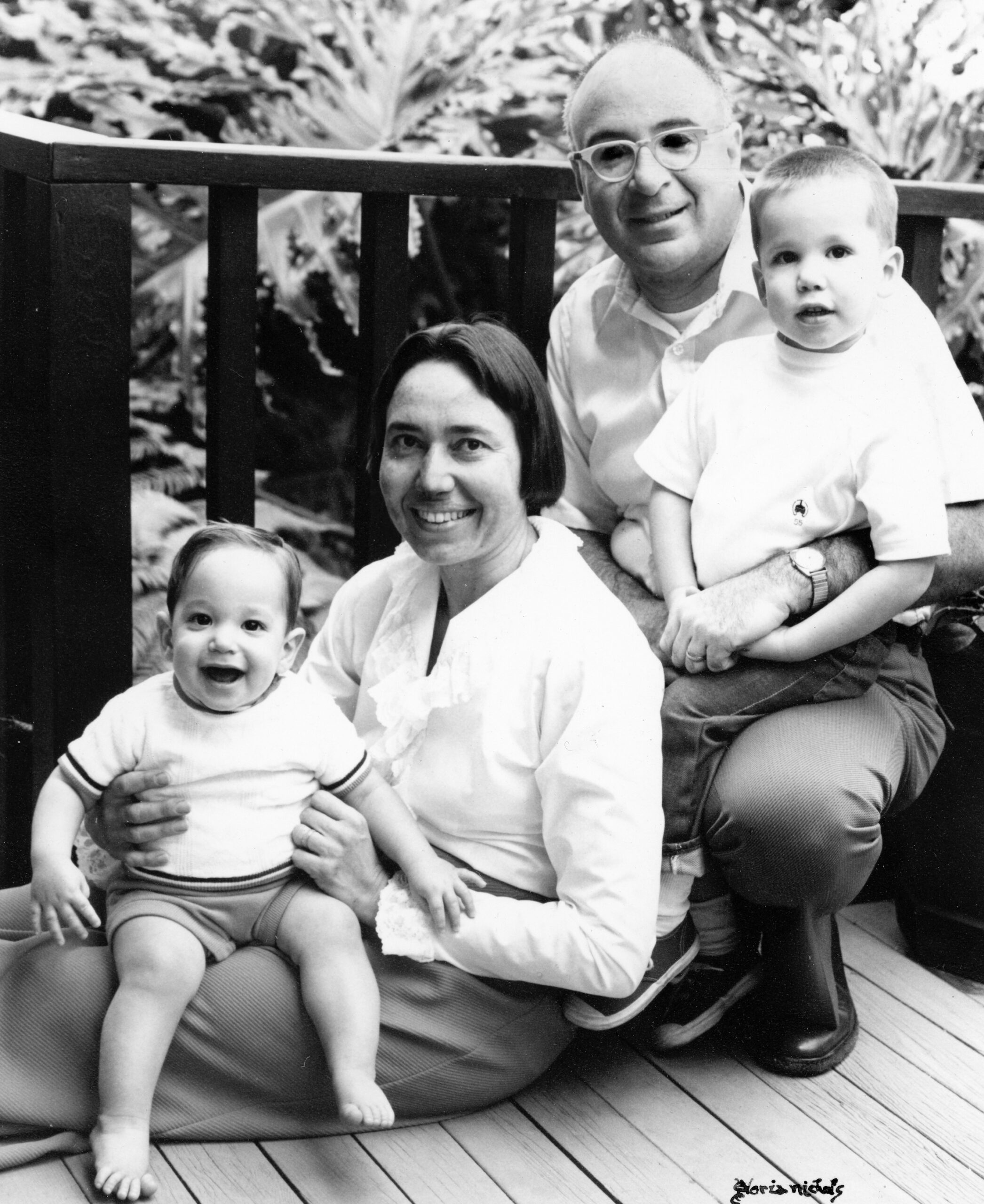
    Professor Farber enjoyed time with his family

    He considered being a cosmologist at first but instead earned a bachelor’s degree in electrical engineering and a master’s degree in math at Stevens.

    He met Gloria Gioumousis at Bell Labs, and they married in 1965. They had sons Manny and Joe, and lived in Landenberg from 1977 to 2003. His son Joe died in 2006. His wife died in 2010.

    Professor Farber enjoyed iced coffee and loved gadgets. He was positive and outgoing, and he mixed well-known adages into humorous word combinations he called “Farberisms.”

    He was an experienced pilot and an avid photographer. In 2012, to honor his son, he established the Joseph M. Farber prize at the Stevens Institute for a graduating senior.

    Mr. Farber was an experienced pilot who could fly solely on cockpit instruments.

    “He was bold,” his son Manny said. “He connected to a lot of people and was close to his friends. He worked on big projects, and it wasn’t just theoretical. He built things that work.”

    In addition to his son, Professor Farber is survived by his daughters-in-law, Mei Xu and Carol Hagan, two grandsons, and other relatives.

    A memorial service is to be held later.
  • Murray Wolf, Avalon’s legendary beach patrol captain, has died at 87

    Murray Wolf, Avalon’s legendary beach patrol captain, has died at 87

    Murray Wolf, 87, of Avalon, the legendary no-nonsense beach patrol captain whose half-century reign inspired and guided generations of lifeguards, while aggravating some famous and not-so-famous beachgoers along the way, died Monday, Feb. 16, at AtlantiCare Regional Medical Center in Atlantic City following a stroke.

    “He was probably the most loyal person I’ve known in my life,” said his wife of 43 years, Vicki Wolf. “Anybody who came into contact with him, he made them a better person, no question about it.”

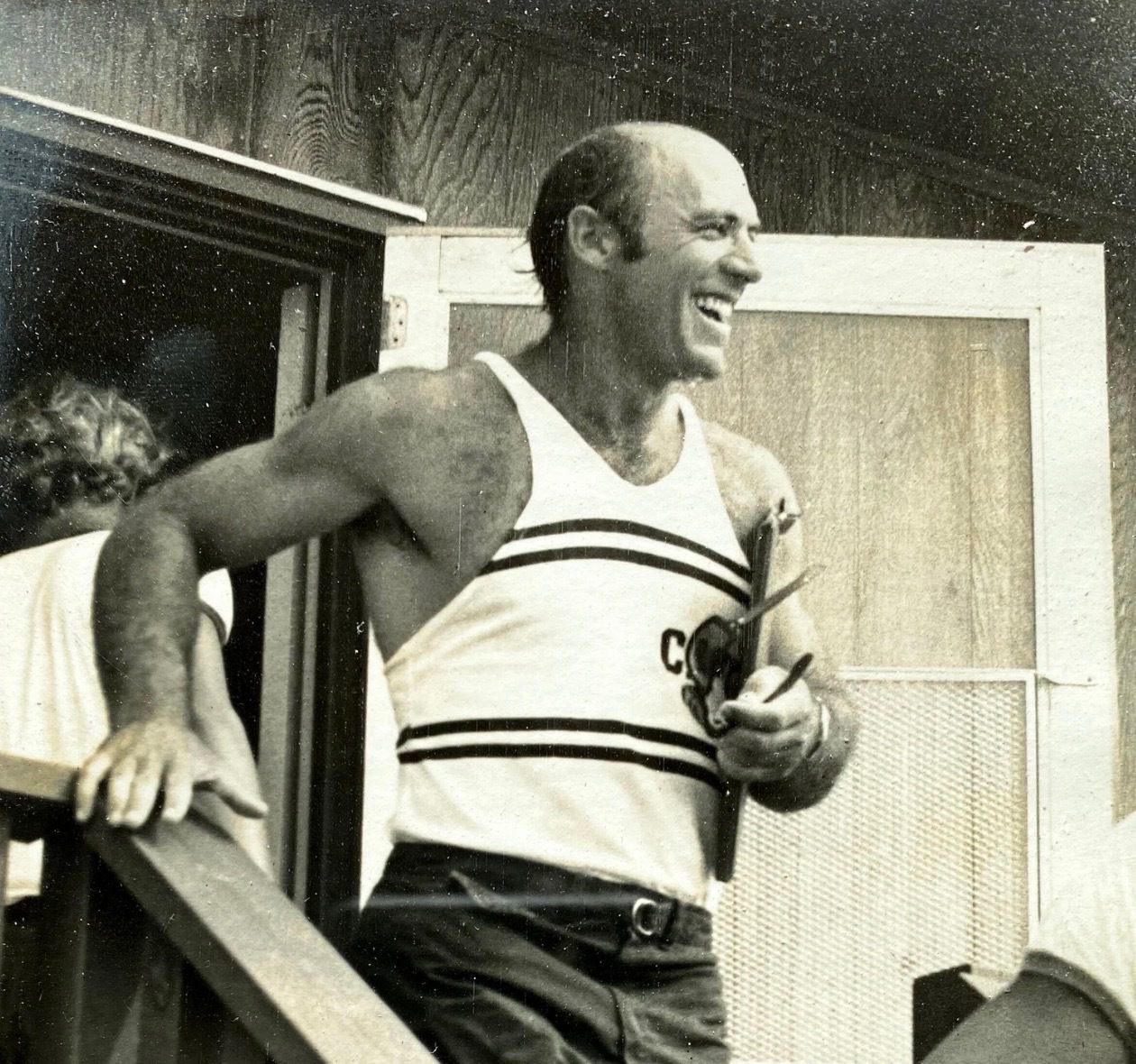
    Murray Wolf was captain of the Avalon Beach Patrol for more than a half-century and spent 65 years on the patrol. “He had the highest of standards,” said John Glomb, who served under him for decades.

    “He had the highest of standards,“ said John Glomb, who served under him for decades. ”When the conditions were not favorable, he drove around the beaches and made sure the guards were on top of their bathers, making sure that nobody was in harm’s way. He had a record where in his 65 years, there was never a drowning. That’s a record that is absolutely spectacular.”

    Not everyone appreciated Mr. Wolf’s brand of beach enforcement. In 1999, he famously tangled with then-WIP sports radio personality Angelo Cataldi over a beach tag, showing him no mercy. Cataldi endlessly railed about it on air, and never truly got over it, saying in 2016, as Wolf entered his 61st year on the beach patrol, “I do harbor ill will toward Murray Wolf, and I always will.” Cataldi did not respond to an email following news of Mr. Wolf’s passing.

    Mr. Wolf brushed off the Cataldi encounter like he did most of his encounters on the beach, a place he patrolled with military precision, complete with nightly wave-offs, stand by stand, from his jeep. Rules were meant to be enforced. But he could laugh about it, even if Cataldi couldn’t.

    There was also Frank Wilson, formerly of Chester County, who sued Avalon in 2001 and won $175,000, driven arguably mad after being repeatedly whistled out of the water when he tried to swim after 5 p.m. “We have the right to protect our bathers,” Mr. Wolf said at the time.

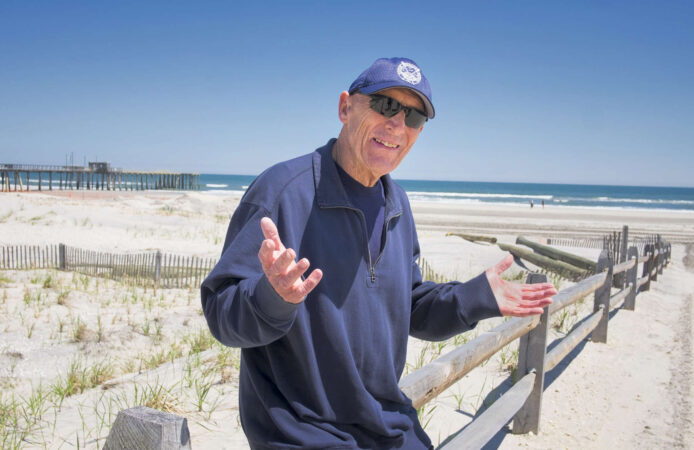
    Murray Wolf, shown here rowing with his son, Tyler, during his final year on the Avalon Beach Patrol.

    Within the ranks of his family — wife Vicki, sons Matthew, Erich, and Tyler, and his 10-year-old black Lab, Ruger — Mr. Wolf’s loyalty, kindness, and appreciation for Avalon’s simple pleasures were deeply admired. The same was true for the ranks of lifeguards, wrestling teams, his Pleasantville school district physical education classes, and the multiple championship South Jersey beach patrol teams he coached in Avalon with the utmost of pride.

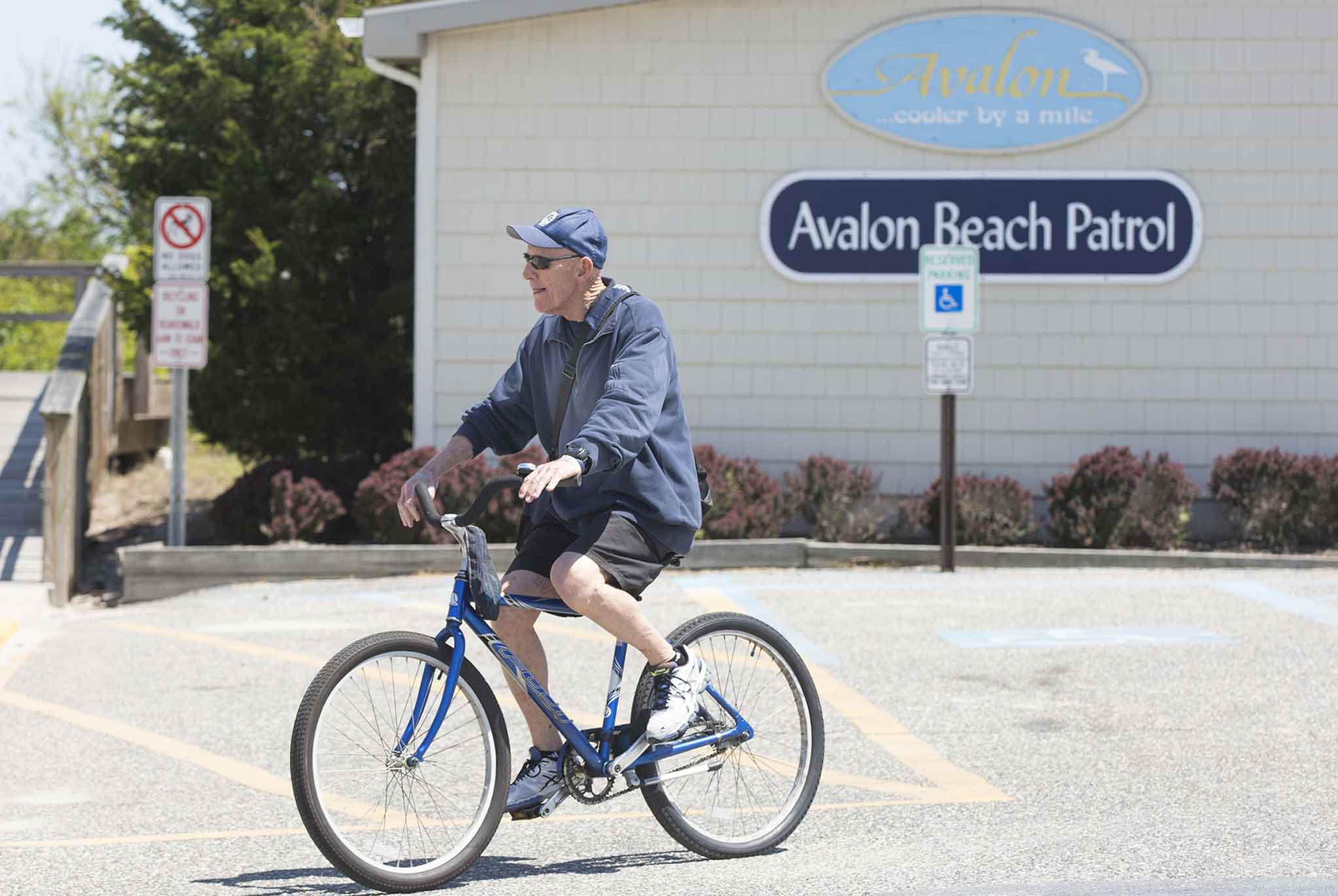
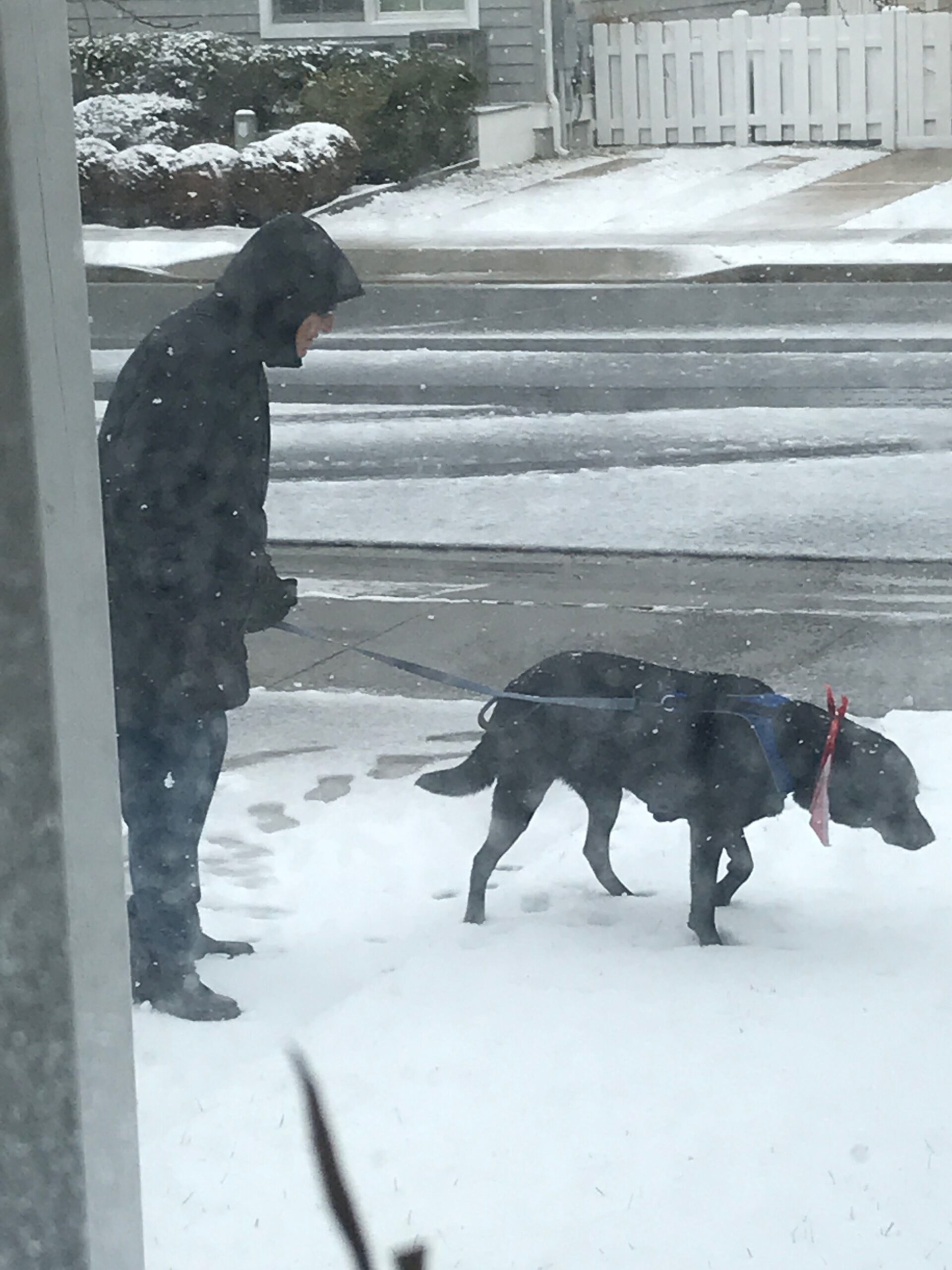
    Mr. Wolf rode his bike around Avalon almost to the end, and walked Ruger in the deepest of snows.

    Murray Wolf, pictured here at age 77, longtime captain of the Avalon Beach Patrol. Here, King takes a break from preseason preparations to watch his son coach his baseball team.

    “He was happy to sit home and watch the football game, sit on the couch, yell at the dog for running in and out,” his wife said. “He loved his Avalon. There wasn’t one time we rode over the bridge into town when he didn’t say, ‘Oh, that was the best decision I made, moving to Avalon.’ He was just a content man, satisfied.”

    His blunt style could rub some the wrong way. Vicki Wolf, who met her husband at the Princeton, Avalon’s iconic bar, spotting at first his muscular arms, she recalled, said she always knew when someone in town had had an uncomfortable encounter with Mr. Wolf when they would veer away from her in the supermarket. He led his patrols through a pandemic, hurricanes, and new technology: He vowed to fire any guard caught with a cell phone on the stand. “It says Lifeguard on Duty,” he said in 2016. “It’s a duty.”

    “There was nothing phony about him,” Vicki Wolf said. “He was never one to take low blows about him. Not everybody liked him. He had enemies, but they respected him.”

    “He took a lot of pride in Avalon doing well — that was in everything Murray did,” Glomb said. “He ran a tight ship. He ran a tight beach.”

    In the offseason, Mr. Wolf coached championship wrestling teams and was a physical education teacher in the Pleasantville school district for 50 years. His son, Matt, took his place as Avalon beach patrol captain in 2021, and also coaches wrestling in Middle Township.

    Murray Wolf, longtime captain of the Avalon Beach Patrol pictured here in 2016 with some of his lifeguards at the patrol’s headquarters. ED HILLE / Staff Photographer

    Matt Wolf said his father had a stroke on Nov. 11 and was hospitalized until his Feb. 16 death. It seemed to so many that he might live forever, given his lifelong physical fitness and vigor, the devotion to his routines of bike riding and dog walking through town. “I think people saw him as very serious when he was in that public spotlight,” Matt Wolf said. “He had a great sense of humor. He didn’t need to be out with a bunch of people. He was happy to be home with his family.”

    The generations of guards who worked under him paid tribute to Capt. Wolf following his passing. “It was an honor to work with The Captain — there’s nobody quite like him,” Ryan Finnegan wrote on Facebook. “He taught his guards countless life lessons over the decades. Thousands of lives were saved because of him. The beaches in heaven are much safer now! Rest easy Capt.”

    Murray Wolf was captain of the Avalon Beach Patrol for more than a half-century and spent 65 years on the patrol. “He had the highest of standards,” said John Glomb, who served under him for decades.

    George Murray Wolf III was born Aug. 16, 1938, in Philadelphia to Elizabeth Gerhard and George Murray Wolf II and was raised on the Main Line. He and his family vacationed in Avalon from the time he was a child.

    He graduated from Conestoga High School and, after briefly working in a steel mill, Mr. Wolf attended Western State College in Gunnison, Colo., where he competed in wrestling and won a team national championship. He graduated with a degree in physical education and later earned a master’s in educational administration from Rider University.

    Mr. Wolf spent more than 50 years teaching physical education in Pleasantville. As head wrestling coach, he led the Pleasantville High School Greyhounds to the 1974 District 32 Championship. “He loved his job working with students and his colleagues at Leeds Avenue School,” his son wrote in the family obituary.

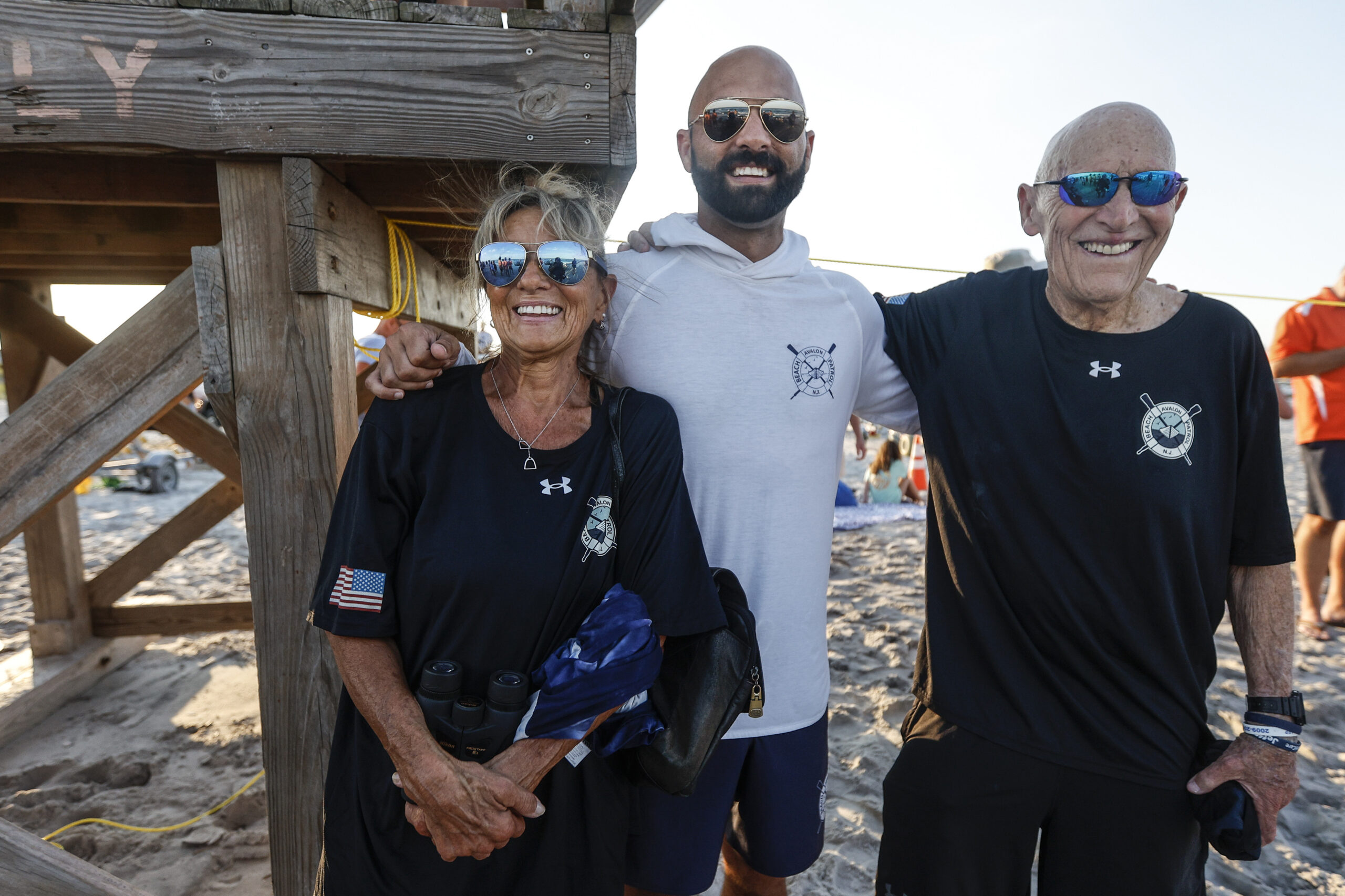
    Avalon Beach Patrol Chief Matt Wolf center, with his dad Murray and mom Vicky at the . Lifeguard Championships in Brigantine New Jersey. Monday, August 12, 2024.

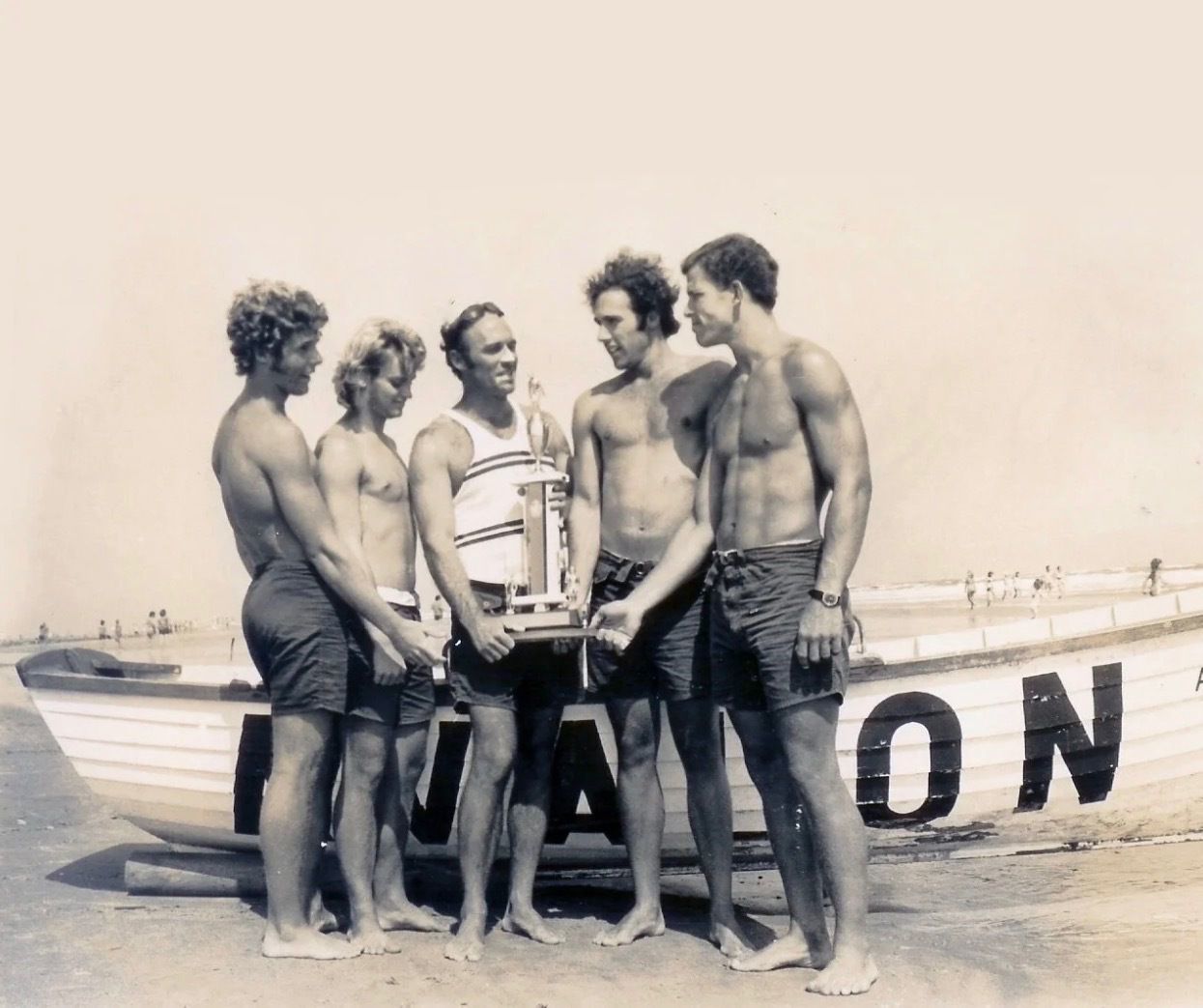
    Mr. Wolf served as captain of the Avalon Beach patrol from 1967 to 2020, and served a total of 65 years on the patrol. His teams, competing in the storied lifeguard races every summer, won nine South Jersey Lifeguard Championships, and Mr. Wolf had the joy of coaching his sons in winning boats.

    Mr. Wolf and his wife were fixtures at their sons’ football, wrestling, baseball, and track and field games and meets, when their sons were competitors and, later, when their sons became coaches themselves.

    Ventnor’s retired beach patrol chief Stan Bergman, himself a legendary chief and coach, has called Mr. Wolf “a warrior.” “He’s battle-tested,” Bergman said in a 2016 interview. “They have a tough beach.”

    Murray Wolf was captain of the Avalon Beach Patrol for more than a half-century and spent 65 years on the patrol. “He had the highest of standards,” said John Glomb, who served under him for decades. He took great pride in his teams winning the South Jersey Lifeguard Championships.

    “He was a very staunch competitor,” said Ed Schneider, chief of Wildwood’s beach patrol and also a wrestling coach. “I was always nervous going up against his teams. He commanded a presence around him. He made people push themselves to be the best.”

    After Matt Wolf took his place as captain of the patrol, he would include his dad as much as possible, taking him in the jeep along the beach. Murray Wolf always attended the lifeguard races, talking to the guards about the David J. Kerr Memorial Races, a competition he began in 1984 to honor a guard who died of cancer.

    In his final weeks, when the family came into his hospital room, his wife said, he would look for his boys, and “always blow a kiss and say I love you.”

    “Every night I would get home, the dog would go sit on the deck and look down the street,” Vicki Wolf said. “It broke my heart. He was looking for Murray.”

    In addition to his wife and their three sons, he is survived by another son, George Murray IV, and a sister. A son, Michael, died earlier.

    Services will be at noon Friday, Feb. 27, at our Savior Lutheran Church, 9212 Third Ave., Stone Harbor, N.J. Visitation will be 10 to 11:45 a.m.

    Donations may be made to the Middle Township Wrestling Program or the Helen L. Diller Vacation Home for Blind Children.

    Murray Wolf was devoted to his three black labs, including Ruger.
  • Chester County man pleads guilty to killing a 9-month-old baby

    Chester County man pleads guilty to killing a 9-month-old baby

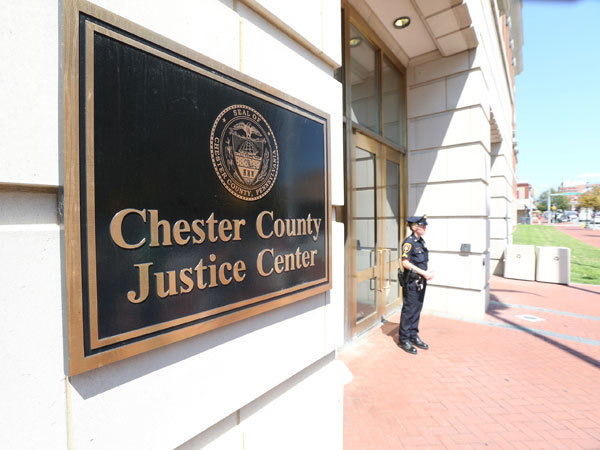
    A Chester County man pleaded guilty to murder and related crimes earlier this month after he punched a 9-month-old infant and did not seek medical care for the child, prosecutors said Wednesday.

    Enrique Lopez-Gomez, 32, of West Grove, pleaded guilty to third-degree murder and endangering the welfare of a child on Feb. 11, according to prosecutors.

    He remains incarcerated in the Chester County Prison and awaits sentencing.

    Announcing the charges, Chester County District Attorney Christopher de Barrena-Sarobe called the crime “unthinkable.”

    Prosecutors say Lopez-Gomez was the child’s caregiver at the time of the 2024 incident, when he fell on the infant at a residence in Kennett Square. As the baby began to cry in pain, Lopez-Gomez punched the child in the abdomen, prosecutors said.

    He did not seek help or tell anyone about the child’s injuries, according to prosecutors, nor did he offer medical care as the child’s condition worsened that evening.

    First responders who were later called to the scene removed the baby from the home, and the child was pronounced dead at Nemours/A.I. DuPont Hospital for Children.

    Medical examiners determined that the child had died from blunt force trauma, leading to an intestinal rupture and soft tissue bleeding, prosecutors said.

    The baby had also suffered large bruises around the abdomen.

    Prosecutors have yet to set a date for Lopez-Gomez’s sentencing. He is being held on $10 million bail.

  • Township should deny data center project proposed for Pennhurst, planning commissioners say

    Township should deny data center project proposed for Pennhurst, planning commissioners say

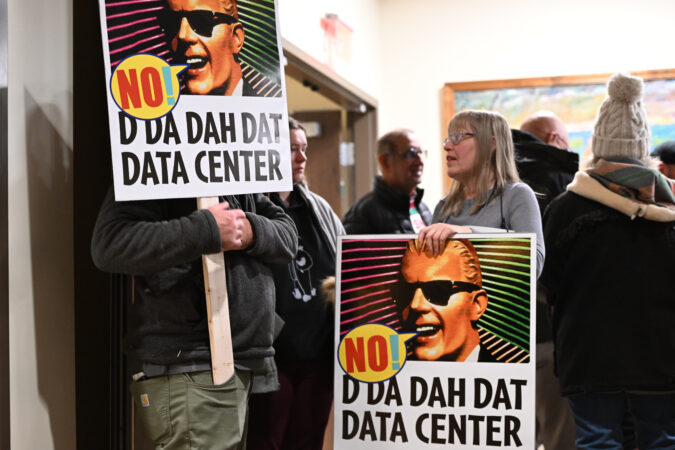
    Calling a developer’s plan for a data center at the historic Pennhurst site “technically deficient” and not in compliance with the zoning ordinance, East Vincent’s planning commission voted Tuesday to recommend that the township’s board of supervisors deny the proposal.

    The decision, which passed the commission unanimously and saw enthusiasm from residents who had been vehemently pushing back against the project for months, doesn’t hit the brakes completely. The township’s board of supervisors will still have a hearing for the project in March.

    The developer declined to appear at the meeting Tuesday, instead sending a letter indicating they intended to revise the submitted plan and pressing the commission for a positive vote.

    Their absence rankled the commission.

    “I take exception to the fact that the applicant and the applicant’s lawyers have declined to present this evening, and they informed us by letter” that morning, said vice chairman Lawson Macartney. “This is especially germane, given the lamentably poor technical quality of detail presented in the plans.”

    The commission’s vote is a win for the residents in the township — and surrounding municipalities — who have decried the plan that would bring five two-story data center buildings, a sixth building, an electrical substation, and a solar field, totaling more than 1.3 million square feet, according to sketch plans.

    The data center would sit on the property of the former Pennhurst State School and Hospital — known as Pennhurst Asylum during the Halloween season. It’s situated near the Schuylkill and borders Spring City, and would be a close neighbor to the Southeastern Veterans’ Center.

    “Based on the materials presently before the township, there is no factual or legal basis to conclude that the proposed development would create impacts greater than those ordinarily associated with a permitted conditional use,” Matthew McHugh, the developer’s attorney, wrote in the letter.

    But the commission found the plans lacking in detail and explanation of what impact it’d have on water, trees, employment, and more, saying the materials were “significantly technically deficient and do not comply with our zoning ordinance in some major ways.”

    The letter indicated the developer would submit a revised plan that would add private power generation consisting of natural gas and battery storage installation, and relocate the proposed substation. The overall square footage and building heights wouldn’t change, the letter said.

    “I just think this is the biggest, most impactful development that’s been proposed in our community since I’ve been on the planning commission,” said the commission’s chairwoman, Rachael Griffith. “I’m just shocked at the minimal detail that has been provided and just doing the absolute bare minimum, especially when data centers are just such a hot topic these days…I’m just sort of dumbfounded as to why they thought we might be interested in recommending this in the first place.”

    Residents praised the commission’s decision.

    “This is the kind of stuff that keeps people up at night, especially those of us who are impacted,” resident Larry Shank told the board. “You really made my night. Thank you.”

    State Sen. Katie Muth, who represents the township and is a resident, said commissioners protected the community.

    “I think that you all made the right decision tonight on a multitude of fronts,” she told them.

    In a statement, Kevin A. Feeley, a spokesperson who represents the developer, rejected the commission’s assertions, saying that they had “exchanged information about the development on a regular basis throughout this period.”

    He added that the developer would submit revised plans to “address some of the review comments, particularly with respect to onsite power generation and water usage.”

    East Vincent’s proposed data center comes as Democratic Gov. Josh Shapiro has championed data center development, promoting a 10-year plan that includes cutting regulatory “red tape” to make it easier to approve them. The governor’s office also announced Amazon would spend $20 billion to develop data centers and other artificial-intelligence campuses across Pennsylvania.

    Despite pushes at the federal and state level, 42% of Pennsylvanians say they would oppose the centers being built in their area, according to a recent survey.

    With the state’s strong private property rights, it creates a bind for township officials, who are struggling with residents’ pushback and zoning allowances.

    “Pennhurst LLC owns the land, so they can do what they want with it, as long as it aligns with our ordinances and what they’re allowed to do,” Griffith told attendees Tuesday. “They’re trying to do something that is not really allowed. It’s our role to uphold our zoning ordinance so that they stick to that.”

    In December, the township’s board of supervisors declined to move forward with a draft ordinance it had been penning for months that would govern data center development in the township, allowing the application to come before the planning commission and continue on to the conditional use hearings.

    The township’s solicitor said the scheduled March 16 conditional use hearing for the project would move forward. If the developer submits an updated plan, the proposal could come back before the planning commission.

  • How a 911 dispatcher helped a woman save her husband | Inquirer Chester County

    How a 911 dispatcher helped a woman save her husband | Inquirer Chester County

    Hi, Chester County! 👋

    A 911 dispatcher has been recognized for helping a Willistown woman save her husband’s life when he went into cardiac arrest. Also this week, work to rehab the Downingtown Trestle is set to get underway, a Netflix series with West Chester ties is getting a tax credit for its latest season, plus, Tredyffrin officials are addressing residents’ concerns about a Department of Homeland Security lease.

    If someone forwarded you this email, sign up for free here.

    How a 911 dispatcher guided a woman through saving her husband’s life

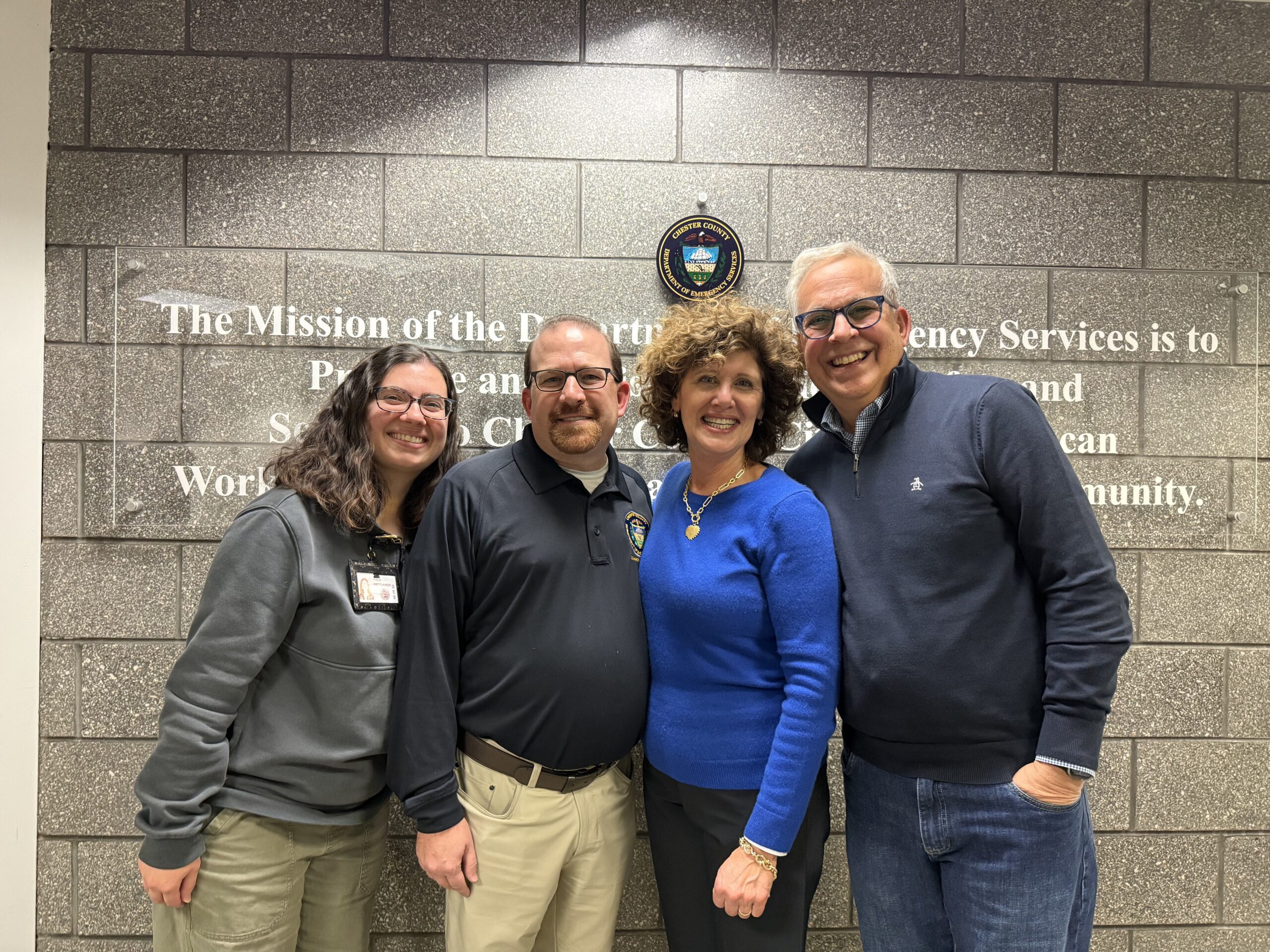
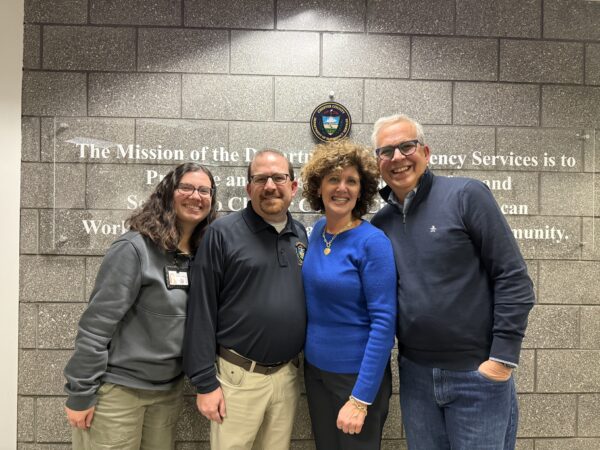
    Chester County 911 dispatcher Kayla Wettlaufer (left) guided Terri Borzillo (center right) through CPR on the phone when Bob Borzillo (right) went into cardiac arrest in November.

    When Willistown residents Terri and Bob Borzillo returned from a trip to Barcelona last fall, neither had expected that Terri would soon be holding “the balance of his life” in her hands.

    But that’s what happened one November evening when Bob, 65, went into cardiac arrest. With guidance from county dispatcher Kayla Wettlaufer, Terri, also 65, was able to perform compressions on her husband of more than 40 years years while she waited for EMTs to arrive.

    Wettlaufer’s direction helped saved Bob’s life in an often fatal situation, earning her honors from the county this month.

    The Inquirer’s Brooke Schultz spoke with the couple about the harrowing evening and why the experience made them proud to be longtime Chesco residents.

    ❤️ Plus, we’ve put together a guide for how to help someone in cardiac arrest.

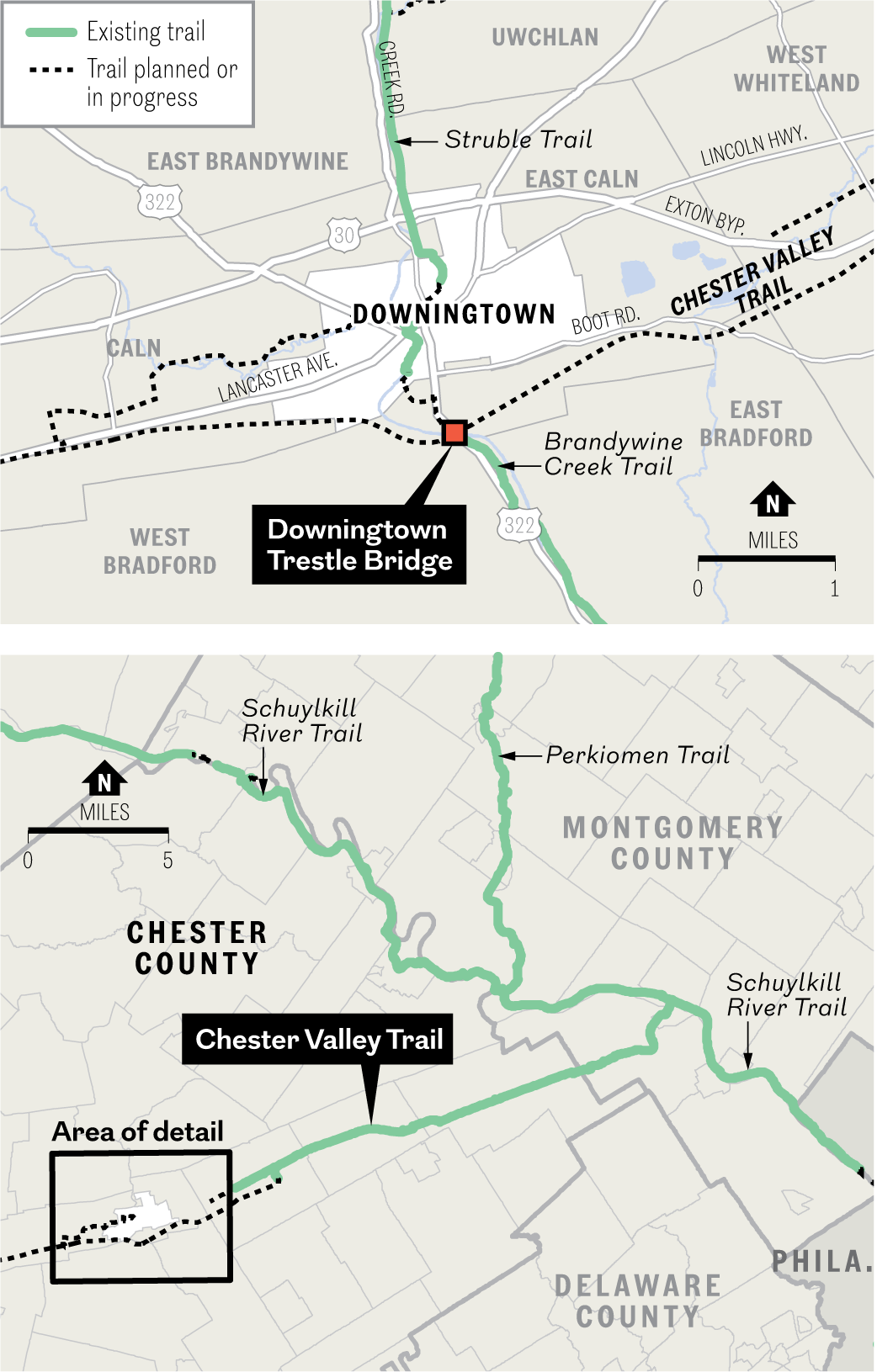
    The Downingtown Trestle Bridge will be rehabbed, extending the Chester Valley Trail

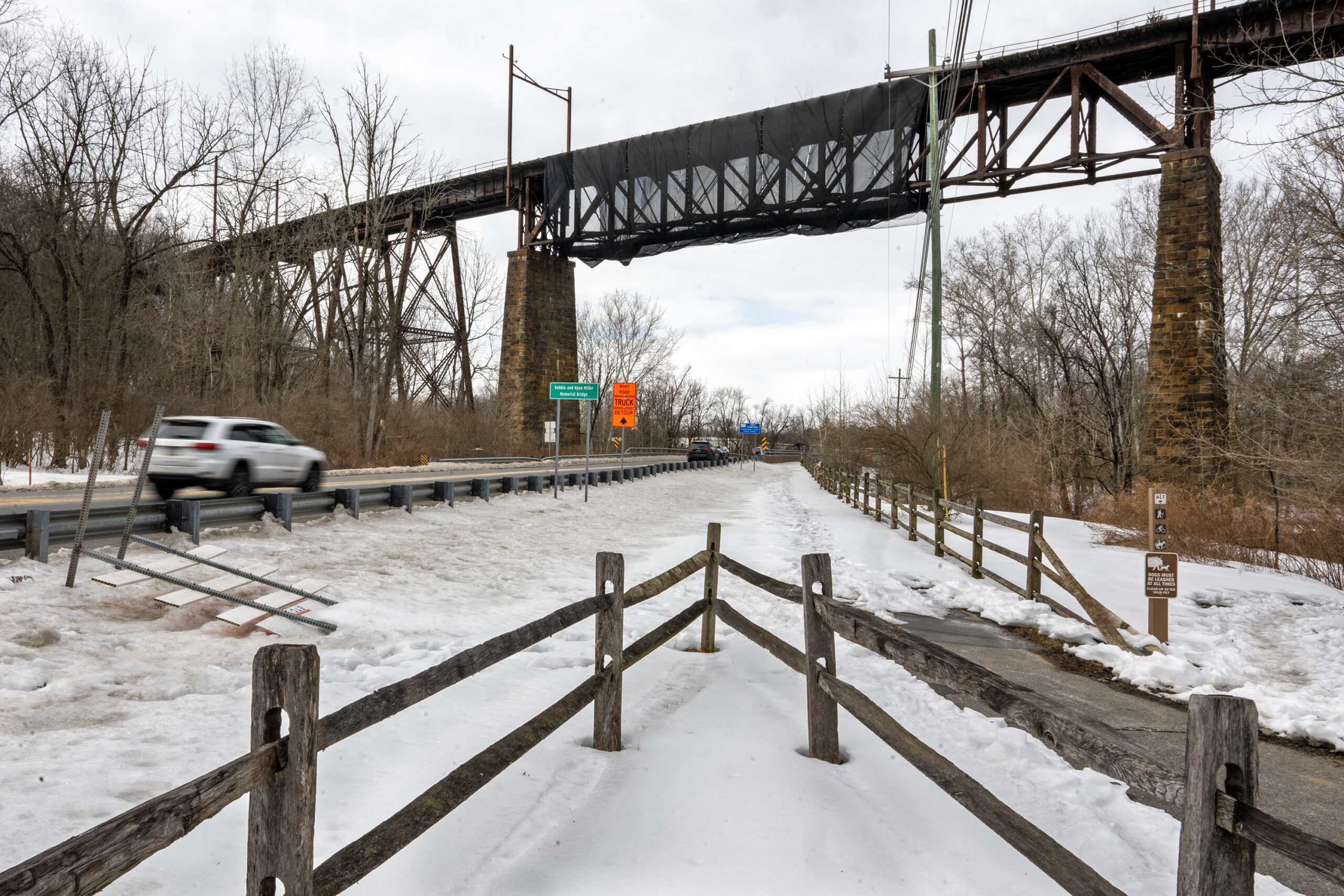
    The Brandywine Valley Viaduct, better known as the Downingtown Trestle Bridge, will eventually help extend the Chester Valley Trail.

    The more than century-old bridge known as the Downingtown Trestle is set to be rehabilitated, a move that will eventually help extend the Chester Valley Trail. Work on the overall extension project is estimated to take five to seven years, with the design phase starting next year.

    The nearly 19-mile multi-use trail currently runs from Atglen to Exton and the trestle bridge is a “keystone” of the extension project, said Chester County’s director of facilities and parks department.

    Read more about how officials say the bridge and extended trail will benefit the community.

    📍 Countywide News

    • In case you missed it, an unknown number of annual mail ballot applications went out to county residents with the first and last names reversed earlier this month. Officials said the error won’t affect processing of the forms, but it comes at a time when some voters have expressed concerns after tens of thousands of independent and unaffiliated voters were left off November’s poll books.
    • In an address to the Senate floor, Sen. Dave McCormick used the county’s recent poll book blunder as an example of why there should be nationwide rules mandating proof of citizenship and photo identification for voters, like those outlined in the proposed SAVE Act. But the senator painted an incomplete and inaccurate picture of what happened in November and the SAVE Act wouldn’t have solved those problems, The Inquirer’s Katie Bernard reports.

    💡 Community News

    • Michael Phillips, a 44-year-old Coatesville man, was taken into custody last week after allegedly stabbing his 3-month-old son and then throwing him into the snow. The infant was taken to Children’s Hospital of Philadelphia for surgery and was later listed in critical but stable condition. Phillips faces charges of attempted homicide and aggravated assault.
    • Tredyffrin Township officials have responded to community concerns after the Department of Homeland Security, which oversees ICE, leased about 10,000 square feet of space at the Westlakes Office Complex. In a statement, they reiterated that local law enforcement agents don’t enforce immigration orders or work with ICE. The space “will not house ICE agents or support their operations. It is strictly for back-office officials, such as lawyers and analysts,” a spokesperson for the property told Wired.
    • Last week, shareholders approved the merger of American Water Works and Essential Utilities, which serves customers in parts of Chester County, including Phoenixville and West Chester. More details about the merger are expected in the coming weeks.
    • There have been recent leadership changes at two area police departments. Brian Barber, who previously spent over 26 years with the Pennsylvania State Police, is the new deputy police chief of Caln Township. In Uwchlan Township, James Fisher has been appointed as the department’s new head following Chief of Police Scott Alexander and Lieutenant Maureen P. Evans’ recent retirements.
    • The Netflix comedy show Tires has been awarded $6 million in tax credits for production of its third season. The Shane Gillis-led show takes place in a fictional West Chester auto shop and is expected to generate $24 million in the local economy.
    • Alisan Road Mercantile, a new general store stocking Pennsylvania-made goods, is now open at 89 N. Main St. in Spring City.
    • A new bookstore opened over the weekend in Kennett Square. Located at 121 W. State St., Forage Books also offers a selection of gifts.
    • Heads up for drivers: There are several construction projects causing delays around the county. In Uwchlan Township, there will be traffic restrictions on Route 113 between Gordon Drive and Lionville Station Road today from 9 a.m. to 3 p.m. for utility work. In East Pikeland Township, Rapps Dam Bridge will be closed today for maintenance. In West Whiteland Township, there’s a temporary new traffic pattern in effect for the next three weeks on Valley Creek Boulevard between Swedesford Road and the entrance of the Church Farm School. The southbound lanes will be closed from 7 a.m. to 5 p.m. for sewer line construction. In Easttown Township, Chester Road between South Fairfield and South Waterloo Roads is expected to be closed to non-local traffic from 9 a.m. to 3 p.m. through Friday for sewer improvements. And in and around East Marlborough Township, there may be delays on U.S. 1 between Schoolhouse Road and the Kennett Oxford Bypass tomorrow from 7 p.m. until 5 a.m. Friday as PennDot installs overhead signage.
    • After multiple power outages in East Marlborough and Pocopson Townships, Peco will be upgrading and installing new equipment as well as trimming trees over the next month. The $1.5 million project includes work along Folly Hill Road, East Doe Run Road, East Street Road, Brooks Road, Huntsman Lane, Schilling Drive, Windovr Way, Gideon Drive, and Valley Road.

    🏫 Schools Briefing

    • Kennett Consolidated School District’s finance committee is considering a 4.17% real estate tax hike in its 2026-27 preliminary budget, which would cost homeowners of the average assessed home an extra $268 annually. The hike would help to fund special education and student services, according to the finance committee. The proposed hike requires a referendum exception and could change between now and June when the board is expected to approve the final budget.
    • A Westtown School teenager is balancing being a kid with a burgeoning collegiate athletic career. As Jordyn Palmer looks ahead to college ball, the 6-foot-2 junior guard who’s averaged 23 points and 12 rebounds this season, “has not even scratched her full potential,” one coach said. Joseph Santoliquito recently profiled Palmer for The Inquirer.
    • Palmer scored 19 points in Westtown’s victory over Friends’ Central on Friday, clinching the team’s sixth Friends Schools League title. Westtown’s boys’ team similarly won its game against Academy of the New Church, giving the Moose its first league title in four years.

    🍽️ On our Plate

    • The Original Hot Bagels, a Delaware eatery specializing in bagels, breakfast sandwiches, and omelets, is opening its first Pennsylvania location in Landenberg. It will take over the former home of The Landenberg Store, at 100 Landenberg Rd., which closed in September.
    • West Chester Restaurant Week kicks off on Sunday and runs through March 1. Over two dozen restaurants will offer $40 to $60 specials during the eight-day event. See the full list of participating restaurants and their menus here.

    🎳 Things to Do

    🏠 Cabin Fever: This family-friendly event includes arts and crafts as well as a mobile zoo, where you can get up close to animals. Registration is requested. ⏰ Saturday, Feb. 21, 1-4 p.m. 💵 Free 📍 Malvern Borough Hall

    🎤 The Best of Carole King and James Taylor: Listen and sing along to hits from these iconic musicians at this benefit for Marvin’s Home, an organization that supports youth after foster care. ⏰ Saturday, Feb. 21, 7 p.m. 💵 $15 📍 Steel City Coffeehouse and Brewery

    🎶 Mad Dogs and Englishmen: A 20-piece band will recreate Joe Cocker’s live album and tour, Mad Dogs and Englishmen. ⏰ Saturday, Feb. 21, 8 p.m. 💵 $41.78-$83.18 📍 The Colonial Theatre, Phoenixville

    🏡 On the Market

    A sprawling Paoli home with a wet bar and wine storage

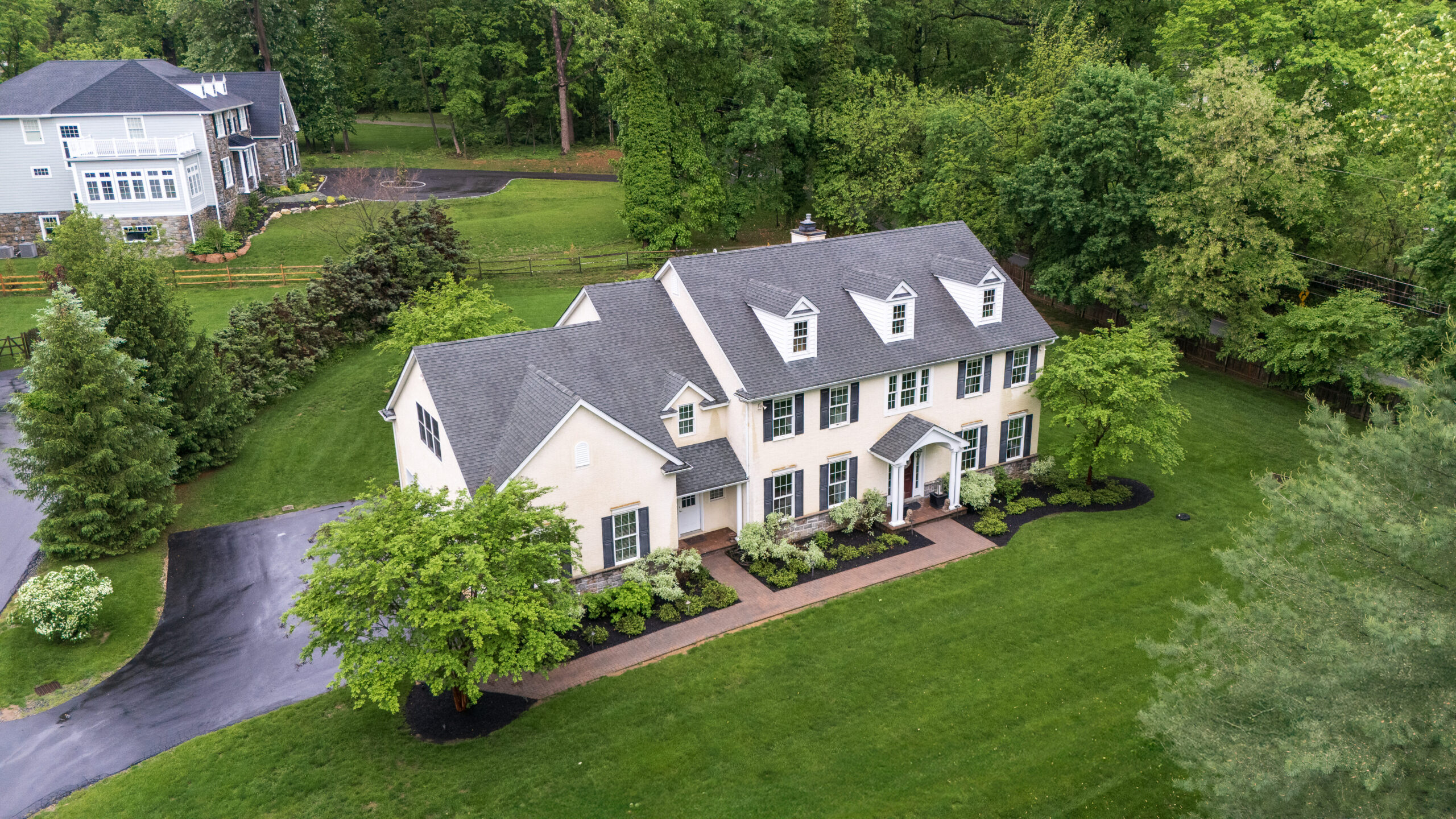
    The home sits on a nearly 1-acre lot.

    This spacious five-bedroom Paoli home is a blend of classic details and modern amenities. Its first floor features a two-story foyer flanked by dining and living rooms; an office; an eat-in kitchen with cherry cabinetry, an island, and a butler’s pantry; and a family room with vaulted ceilings and a gas fireplace. There are four bedrooms upstairs, including the primary suite, which has a sitting area, two walk-in closets, and a bathroom with a soaking tub. Other features include a finished basement with a wet bar, wine storage, a full bathroom, a fifth bedroom, and another office. Outside, there’s a fenced yard and a brick patio with a firepit. There’s an open house Saturday from noon to 2 p.m.

    See more photos of the home here.

    Price: $1.55M | Size: 5,800 SF | Acreage: 0.94

    🗞️ What other Chester County residents are reading this week:

    By submitting your written, visual, and/or audio contributions, you agree to The Inquirer’s Terms of Use, including the grant of rights in Section 10.

    This suburban content is produced with support from the Leslie Miller and Richard Worley Foundation and The Lenfest Institute for Journalism. Editorial content is created independently of the project donors. Gifts to support The Inquirer’s high-impact journalism can be made at inquirer.com/donate. A list of Lenfest Institute donors can be found at lenfestinstitute.org/supporters.

  • Sen. Dave McCormick says Chester County proves the need for national election rules. But the GOP proposal wouldn’t have solved the county’s problems.

    Sen. Dave McCormick says Chester County proves the need for national election rules. But the GOP proposal wouldn’t have solved the county’s problems.

    When Sen. Dave McCormick stood on the Senate floor to call for nationwide rules mandating proof of citizenship and photo identification for voters, he invoked a drama that had played out three months earlier in Chester County.

    The county had mistakenly left all third-party and unaffiliated voters off the Election Day voter rolls, creating a chaotic scene in which more than 12,000 voters were forced to cast provisional ballots, which take more time to count as officials must verify the eligibility of each voter. A subsequent investigation by a law firm hired by the county attributed the issue to human error and insufficient oversight.

    “Every time Americans hear about election problems like Chester County’s, they rightly question the integrity of our electoral process,” McCormick said.

    But in his recounting of events, the Pennsylvania Republican gave incomplete and inaccurate information about Chester County’s election error.

    What did McCormick say about Chester County?

    Americans, he said, overwhelmingly believe there are problems with U.S. elections, and he argued that has been demonstrated for them on multiple occasions, including in November when Chester County omitted more than 70,000 third-party and unaffiliated voters from its Election Day pollbooks.

    “Registered voters were turned away at the polls. And an unknown number of unverified voters cast regular ballots,” McCormick claimed.

    But there is no evidence that voters were turned away or that ineligible voters cast ballots. McCormick’s office did not respond to questions.

    Were voters turned away?

    According to county officials, no voter who wanted to vote was turned away.

    Instead, for most of the day voters were offered the opportunity to vote by provisional ballot while county and state officials worked to get supplemental pollbooks distributed to polling places across the county.

    Some voters did testify at county election board meetings that they voluntarily left their polling place when their name was not in the pollbook but that they returned later in the day when they could vote on machines.

    Did unverified voters cast ballots?

    There is no evidence that ineligible voters cast ballots. The identity and eligibility of all voters who cast ballots were verified, county officials said.

    When the pollbook issue was discovered on Election Day, Chester County officials initially recommended that poll workers ask voters not included in the pollbook to sign the pollbook manually and vote as normal, according to the independent investigation of the incident.

    To ensure those voters were eligible to vote, county officials said, poll workers were instructed to follow a detailed process that included verifying voters’ eligibility in the full voter list and verifying their identity with photo identification.

    The Chester County Republican Committee has disputed the county’s version of events, contending that photo ID was not checked for all voters who wrote their names into pollbooks and that poll workers were unable to verify voters’ identities using signature matching.

    Around 7:40 a.m., less than an hour after polls opened, Pennsylvania Department of State officials recommended the county shift to asking voters to cast provisional ballots to eliminate the risk of an ineligible voter casting a ballot, thereby invalidating the election.

    A county spokesperson said there is no evidence that ineligible voters cast ballots during November’s election.

    Whether voters wrote their names into a pollbook or cast a provisional ballot, “the identity and eligibility of each individual was verified by the poll workers,” said Chester County spokesperson Andrew Kreider.

    Would the SAVE Act have changed anything?

    The SAVE Act is a collection of election policies proposed by congressional Republicans that would require proof of citizenship to register to vote and mandate all voters show photo ID at the polls.

    Such requirements would not have prevented Chester County’s error, which investigators determined was a clerical error resulting from inexperienced staff with insufficient training and oversight.

    “Sen. McCormick was ignoring the facts and feeding into this larger narrative that our elections can’t be trusted and just feeding into the president’s narrative that there’s something wrong with Pennsylvania elections,” said Lauren Cristella, the CEO of the Committee of Seventy, a Philadelphia-based civic engagement and good-government organization.

    In addition to Chester County, McCormick pointed to his own experience in close elections — both his 2022 primary loss and his 2024 general election win — as a reason he supports the bill’s proof of citizenship and voter ID requirements.

    The policy, which passed the Republican-led U.S. House, still faces an uphill battle in the U.S. Senate, where it would need 60 votes to advance. It has faced significant opposition from Democrats who say it would needlessly make it harder for people to vote.

    The proof of citizenship requirement, critics say, would place a higher burden on married people whose last names no longer match their birth certificates.

    Speaking to reporters last week, Democratic Gov. Josh Shapiro said he was “vehemently opposed” to the policy, arguing it would nationalize elections.

    “We are not going to turn our elections over to Donald Trump,” he said.

  • A historic Chesco bridge will be rehabbed to extend a scenic trail

    A historic Chesco bridge will be rehabbed to extend a scenic trail

    A project to expand the Chester Valley Trail and repair the historic Downingtown Trestle Bridge, which has spent decades largely untouched, will kick off soon, Chester County officials said.

    It’s part of a larger effort to expand the sprawling Chester Valley Trail, a 19-mile rail trail that runs through Chester and Montgomery Counties, from Exton to Atglen.

    “The bridge is a really key part of it, because it’s multimodal,” said George Martynick, director of Chester County’s facilities and parks department. “Without that bridge, I really don’t know what we’d do with this project. It is the keystone of that project. It’s a big job.”

    As the county kicks off the project, people can expect to see inspections taking place on the bridge in the coming months. The trestle will get a full inspection to make sure it meets federal standards, Martynick said. Design is slated to begin in the next year, and the rehabilitation and extension should be completed in five to seven years, he said.

    The bridge stretches 1,450 feet long and more than 130 feet high over the east Brandywine River. Known as the “Brandywine Valley Viaduct,” “Downingtown High Bridge,” or “Pennsylvania Railroad Freight Bridge”— but colloquially called the Downingtown Trestle Bridge — it was constructed in the early 1900s, according to the Downingtown Area Historical Society.

    “This is taking on something much bigger than I think a lot of people understand,” Martynick said.

    Map of the Downingtown Trestle Bridge and the Chester Valley Trail in Chester County.

    The Trestle Bridge has been out of commission since the 1980s, with the track removed. Since then, the bridge has sat abandoned, and has had a troubled history. Security measures were added to prevent people from accessing it, and netting was put on it to keep debris from falling off it.

    The county completed a drone inspection before it took ownership of the bridge last year.

    In May, the county commissioners voted to purchase a portion of the former Philadelphia and Thorndale railroad corridor from the Pennsylvania Department of Transportation for $1.

    Other than some growth and weeds, “it’s in fairly good shape,” Martynick said.

    The county has received three grants for the project — two from the state department of conservation and natural resources, each for $500,000, and a Delaware Valley Regional Planning Commission grant for $200,000, said Brian Styche, the multimodal transportation planning director for the county’s planning commission.

    The county is matching both of the conservation and natural resources grants, for a total of $2.2 million in funding toward the bridge’s design.

    “It’s a good project. It’s going to take a lot of time and effort and a lot of patience, but it will be a pretty impressive project for the community,” Martynick said.

    It’s a personally important project, too: Martynick applied to work in the county’s parks department because of his love of the trail.

    “I love it,” he said. “It’s a very, very special trail.”

  • Sheetz wants to move into Delaware County, home of Wawa

    Sheetz wants to move into Delaware County, home of Wawa

    Sheetz could soon stake a claim in Delaware County, extending its reach into the Philadelphia region.

    The Altoona-based convenience store chain, which opened its first store in the Philly suburbs last week, has submitted a sketch plan application to build a 6,000-square-foot location in Chadds Ford.

    It would be Sheetz’s first outpost in Wawa’s home county.

    A Sheetz and Wawa now sit across the street from each other in Limerick Township, Montgomery County.

    If approved, the store would be constructed about five miles down the road from Wawa’s corporate headquarters, and across the county from the site of Wawa’s first store, in Folsom.

    The Sheetz would be in the Village at Painters’ Crossing shopping center near the intersection of U.S. Routes 1 and 202, according to the application. Sheetz would take over a parcel in the northeast corner of the complex that is currently occupied by a vacant former bank and a closed Carrabba’s Italian restaurant.

    Along with Sheetz’s usual offerings of made-to-order food, grab-and-go snacks, and drinks, the outpost would include indoor and outdoor seating, two mobile-order pickup windows, and six gas pumps, according to the application. It would not include a drive-through.

    Customers crowd into the indoor dining area at the new Sheetz in Limerick Township that opened last week.

    Nick Ruffner, Sheetz public affairs manager, declined to provide additional information about the proposal, saying in a statement that “it is still very early in the process.”

    Zoning changes and other approvals would be required before anything is built, Chadds Ford Township solicitor Michael Maddren said. As of Tuesday, Sheetz had only submitted the sketch plan, which was discussed at a planning commission meeting earlier this month, Maddren said.

    At the meeting, township officials did not express strong opinions about the sketch, Maddren said: “We need a little more detail.”

    Craig Scott (left) of Wayne and Dave Swartz (right) of Collegeville had breakfast at last week’s grand opening of the first Sheetz in the Philadelphia suburbs.

    If the Chadds Ford project moves forward, Sheetz could establish a foothold in three of Philly’s four collar counties: Along with its new Limerick, Montgomery County location, Sheetz also has expressed interest in building a store in Chester County.

    In the fall, company officials submitted a sketch plan to Caln Township officials, proposing a location at the site of a shuttered Rite Aid on the 3800 block of Lincoln Highway in Downingtown, according to the township website.

    After years of Sheetz opening stores in Western and central Pennsylvania, and Wawa expanding closer to Philly, Sheetz and Wawa’s footprints have increasingly overlapped in recent years.

    A Wawa opened outside Harrisburg in 2024, marking the chain’s first central Pennsylvania location. It is down the street from a Sheetz.

    Wawa made the first move: In 2024, it opened its first central Pennsylvania location within eyesight of a Sheetz. Since then, Wawa has opened 10 stores in the region, with plans to add 40 more there in the next five years.

    Both chains also have expanded beyond Pennsylvania.

    Sheetz now has more than 800 stores in seven states. Wawa has nearly 1,200 stores in 13 states.

  • A Chesco man’s heart stopped. His wife’s fast response — and a steady 911 dispatcher — saved him.

    A Chesco man’s heart stopped. His wife’s fast response — and a steady 911 dispatcher — saved him.

    Bob Borzillo has a deal with his wife Terri: She puts everything in the dishwasher, but he has to unload it.

    That’s what he was doing on a night in November, after the couple had arrived back home in Willistown from Barcelona. He was putting the very last thing — a wine glass — away. That’s where the 65-year-old’s memory stops.

    But for Terri Borzillo, also 65, that’s where a terrifying ordeal began.

    She had been just a few feet away, writing in her journal as her husband unloaded the dishwasher in the background. She heard him groan and glass shatter. She got up to help him, expecting to find him picking up glass shards. Instead she found him on the floor, unresponsive.

    What they did not know then was that a piece of plaque had broken off, completely blocking his artery. He was in cardiac arrest — not breathing, no pulse. After having walked around Barcelona, averaging 18,000 steps a day, he had no symptoms, no warning signs, until he collapsed in their kitchen.

    More than 350,000 people annually experience cardiac arrest outside hospitals, and only one in 10 survives, said Jeffrey Salvatore, the vice president of community impact for the American Heart Association of Greater Philadelphia.

    The association has been leading a campaign to teach more teens and adults hands-only CPR to increase bystander response rates. Nationally, 40% of those who experience cardiac arrest each year are helped by a bystander. The rate in the Philadelphia region is significantly lower: less than 26%.

    The association also holds telecommunicator CPR training, so dispatchers can instruct people over the phone on how to provide CPR, said Salvatore.

    “Cardiac arrest is 100% fatal without any intervention. If nobody does anything for the person, there’s no chance of survival,” he said. “By just calling 911 and just doing compressions, you can still double someone’s chance of survival.”

    Terri Borzillo immediately went into action, calling 911.

    “I think my husband’s having a heart attack,” she remembers screaming to the dispatcher.

    Calmly, the Chester County dispatcher, Kayla Wettlaufer, had Borzillo describe her husband’s condition.

    “She said, ‘OK, lady, get control of yourself. We’re going to do this together,’” Borzillo recalls. “By the command in her voice, and because there was no option, I had to do this.”

    Wettlaufer led Borzillo through CPR over the phone — telling her where to place her hands, when to compress. Wettlaufer even told her when it was time to unlock the front door so the nearby first responders could get in.

    “It was horrible to watch my husband in that condition, and it was horrible to know that I had the balance of his life in my hands,” Borzillo said.

    With Wetlaufer guiding her — and, she swears, every doctor in heaven — she did compressions until the EMTs arrived, using paddles to restart his heart.

    As the EMTs wheeled Bob Borzillo out, Terri Borzillo retrieved the bottles of holy water they had picked up at Our Lady Lourdes in Barcelona. She sprayed her husband and the EMTs.

    It got her an odd look, but, she said, “For somebody who has deep faith, I know all the angels and saints were there with us, and we’re smiling today instead of crying,” she said.

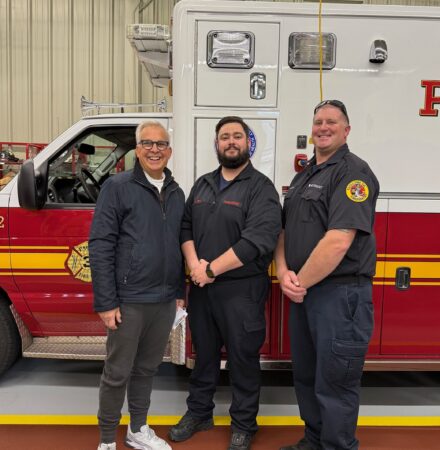
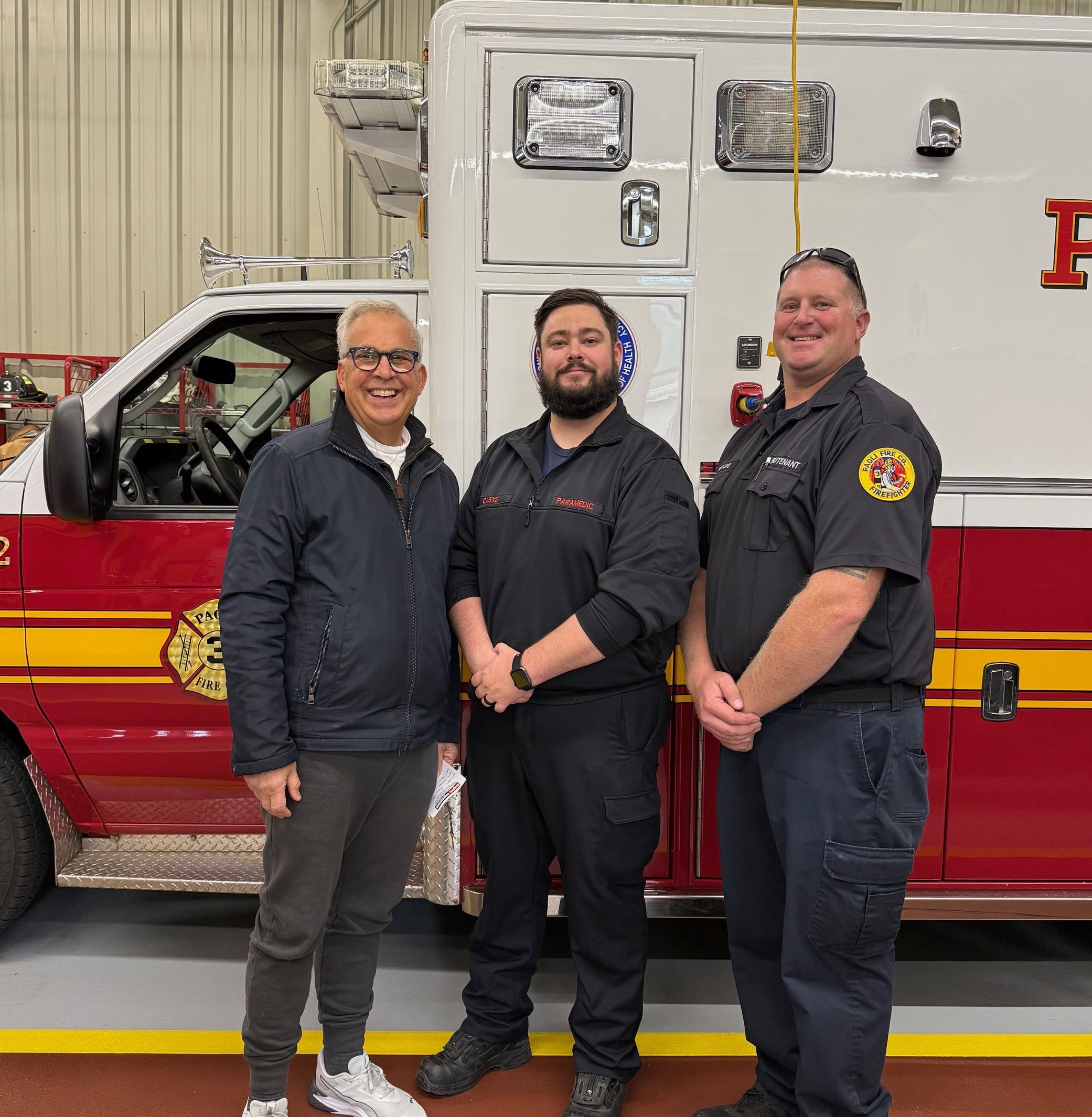
    Bob Borzillo, left, takes a photo with two first responders who arrived to his home in November when he was in cardiac arrest.

    Terri Borzillo’s faith runs back to their first date, more than 40 years ago. It was 1982, she was single, and her coworker asked her if she’d like to meet a nice guy. What do I have to lose? she thought. Acting as an intermediary, that colleague — a friend of Bob Borzillo’s family — told Bob about Terri. The young man’s father happened to know Terri’s father. He told his son, “Call that girl.” Bob listened.

    On their blind date, Terri Borzillo knew he was the one. There was something to how he talked, explaining — of all things — turbine generators.

    He really was a nice guy, she thought. (“I was a nerd,” he said.) She felt something click. Dear God, she thought, let him ask me out again.

    One big Italian wedding, three sons, and seven grandchildren later, the two have lived in Chester County for more than 40 years.

    This experience has made him proud to be a county resident, Bob Borzillo said. After he was released from the hospital a few days later, Borzillo went to the firehouse and met the first responders. He and his wife met Wettlaufer, and toured her workplace.

    Wettlaufer, an operator who has been with the county for almost five years and was honored by the county this month, was the start of a well-oiled machine, Borzillo said. Their proximity to the firehouse and Paoli Hospital helped get him professional care quickly.

    “If the Eagles offense executed that efficiently, we would have been in the Super Bowl,” he said.

    Terri Borzillo said meeting Wetlaufer helped ease the trauma of the situation.

    “She’s beautiful. And what they do there is amazing, and they get all of the credit,” she said.

    Saturday marks three months since Bob Borzillo’s cardiac arrest. He and his wife are in Florida while he recovers, and will celebrate Valentine’s Day with friends from Chester County.

    “Certainly the heart and what Valentine represents has a special meaning this year, and I am blessed to be here to celebrate it,” he said in an email.

    This suburban content is produced with support from the Leslie Miller and Richard Worley Foundation and The Lenfest Institute for Journalism. Editorial content is created independently of the project donors. Gifts to support The Inquirer’s high-impact journalism can be made at inquirer.com/donate. A list of Lenfest Institute donors can be found at lenfestinstitute.org/supporters.

  • Only 1 in 10 people survive cardiac arrest. Here’s how to help if you’re a bystander.

    Only 1 in 10 people survive cardiac arrest. Here’s how to help if you’re a bystander.

    When Bob Borzillo collapsed a few months ago, he could have become a statistic: More than 350,000 people go into cardiac arrest each year, with a 90% fatality rate. But his wife’s quick response — and a calm 911 dispatcher — saved his life.

    Bystanders could do this too, advocates say.

    But in the Philadelphia region, only 26% of people suffering cardiac arrest receive bystander intervention, said Jeffrey Salvatore, the vice president of community impact for the American Heart Association of Greater Philadelphia. That’s much lower than the national average of 40%.

    Though often used interchangeably, a heart attack and a cardiac arrest are not the same, and they warrant (slightly) different responses.

    A heart attack is a “plumbing issue,” where there’s some blockage in the arteries that supply blood to the heart, Salvatore said.

    But a cardiac arrest is an “electrical problem;” the heart pumps through an electrical system, and when something misfires or stops, that’s when a cardiac arrest occurs. It necessitates CPR.

    “When the heart stops doing its job, we have to take over, and that’s when CPR comes into play,” he said.

    That’s what happened to Borzillo.

    Someone in cardiac arrest is unresponsive, and requires immediate intervention to prevent death.

    You can check for unresponsiveness by tapping someone on the shoulder, rubbing their chest, or yelling loudly. If they don’t respond, call 911, and begin hands-only CPR, pressing hard and fast in the center of the chest.

    In many cases, 911 operators have been trained to walk callers through delivering CPR.

    A heart attack can lead to cardiac arrest, but it can also happen separately, and never result in the heart stopping, Salvatore said.

    If someone is exhibiting signs of a heart attack — chest discomfort; or discomfort in other areas of the upper body, such as arms, back, neck, jaw and stomach; shortness of breath; cold sweats; light-headedness; rapid or irregular heartbeat — call 911, Salvatore said.

    The American Heart Association is seeking to expand training in hands-only CPR for adults and teens, to increase low bystander-intervention rates.

    Just doing chest compressions — no mouth-to-mouth contact required — and calling 911 can double someone’s chance of survival, Salvatore said.

    “They are the first responder before EMS gets to the scene,” he said.

    For more information, or to get CPR certified, you can go to cpr.heart.org