Tag: Donald Trump

  • Trump’s strong support in the Lehigh Valley and Northeast Pa. is splintering: ‘He left nothing for the working man’

    Trump’s strong support in the Lehigh Valley and Northeast Pa. is splintering: ‘He left nothing for the working man’

    Scowling under a wool cap and a hood, Robert DeJesus stood in the bitter wind outside the Sunrise Diner in Allentown last week and confessed his “big mistake”: voting for President Donald Trump in 2024.

    “The guy makes ‘cookie promises,’” said DeJesus, 57, a retired construction worker and independent voter from Allentown in Lehigh County. “They’re easy made and easy broken.”

    Trump’s biggest gains in the state in 2024 were concentrated in the Lehigh Valley and in Northeastern Pennsylvania. But a year into his second presidency, there are signs that his winning coalition is splintering. In interviews across five counties in the region, some voters shared their disappointment with rising grocery prices and what they see as Trump’s failure to keep his commitments.

    Even while hailing some of Trump’s policies, several Republicans interviewed said they were put off by his manner as well as his stance on key issues. That disillusionment could spell trouble for Pennsylvania Republicans as they look to hold onto two key swing congressional seats in this region in November.
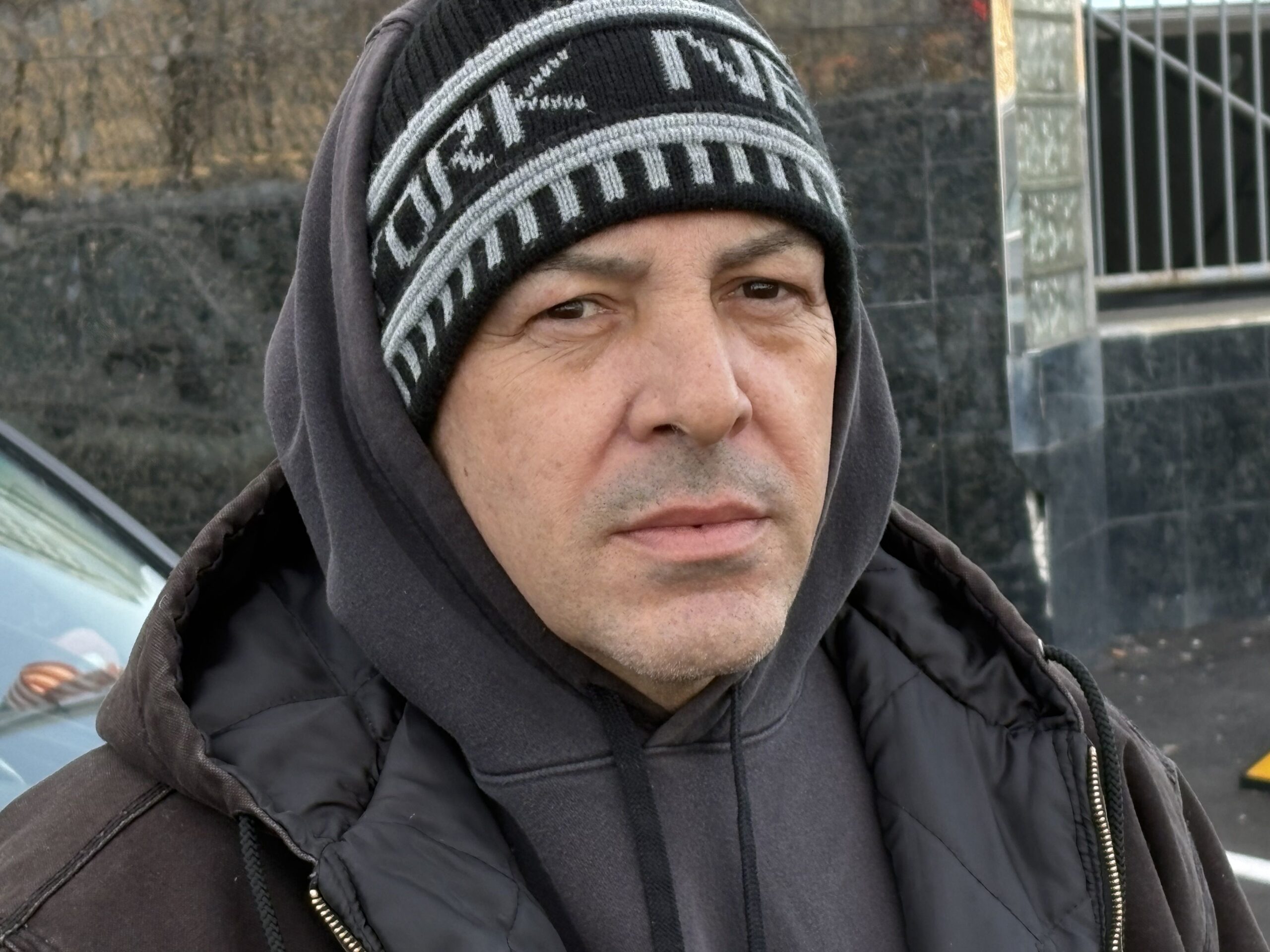
    Robert DeJesus of Allentown voted for President Donald Trump in 2024, but he now regrets that decision.

    Explaining his problems with Trump, DeJesus said the president pledged “but didn’t deliver” lower grocery prices. And at the same time DeJesus and his family are contending with “insane” supermarket costs, he said, Trump cut taxes for billionaires with the sweeping domestic policy package he signed last year. It has made DeJesus feel overlooked and overwhelmed.

    “He left nothing for the working man,” DeJesus said. “People say it’s good the price of gas went down under Trump. But how we have to live, with high food and high rent, makes no sense.”

    Diana Kird, 58, a Republican who also pulled the lever for Trump, is experiencing buyer’s remorse much like DeJesus.

    “I don’t know what we’re doing in Venezuela,” said the nurse from Lehighton in Carbon County as she stood outside a Giant supermarket in town.

    “We need to stop getting into foreign wars,” a promise Trump made and “ignored,” Kird added.

    Kird said she has not seen Trump come through on his commitments. “He’s wash-rinse-repeat for me,” she said, “saying the same things over again,” such as promising cheaper groceries, “yet doing nothing.”

    Trump’s “refusal to release all the Epstein files” after saying he would was another disappointment that makes her wish she had not supported the president, she added.
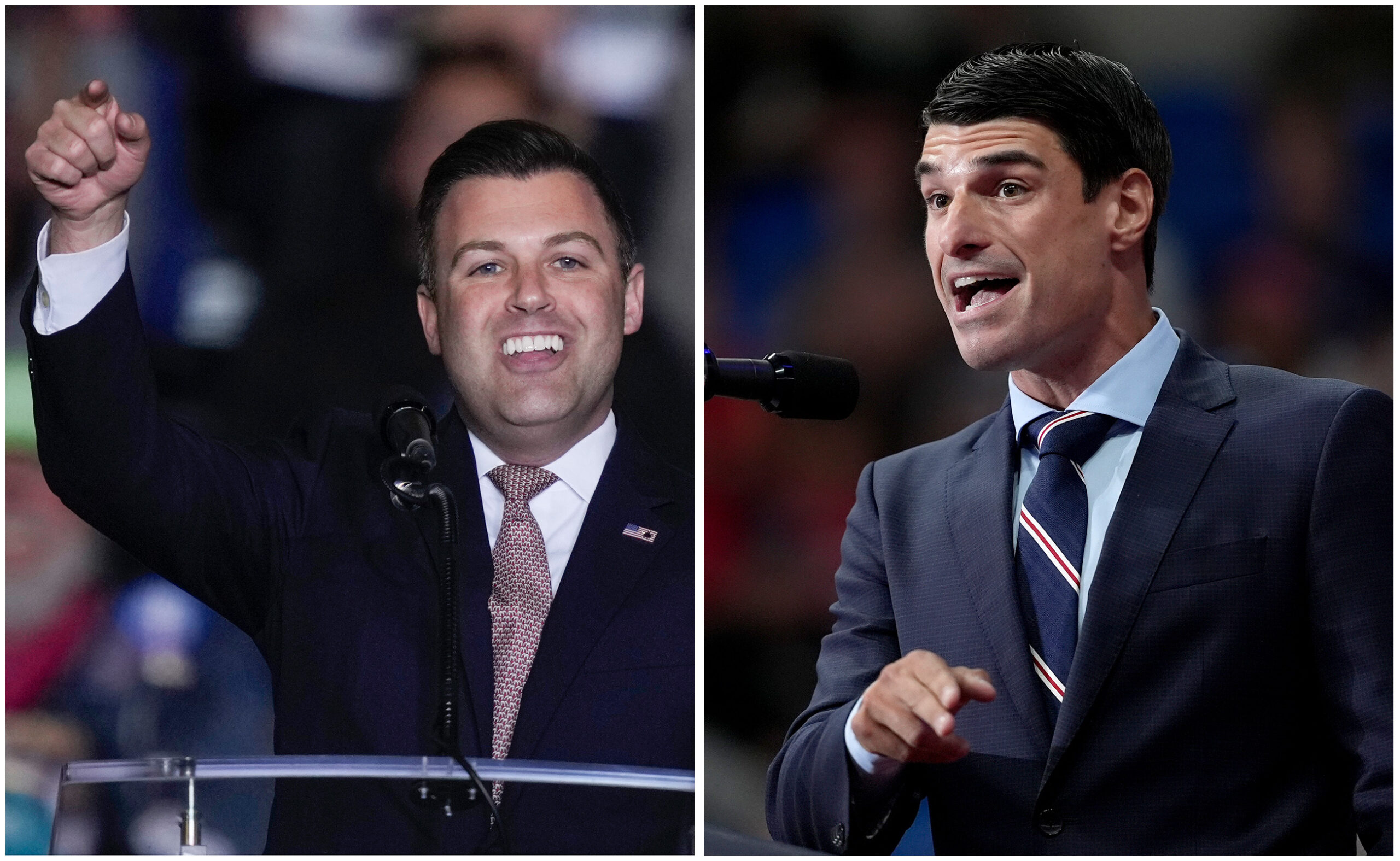
    Republican U.S. Reps. Ryan Mackenzie (left) and Rob Bresnahan (right)

    Trump won’t be on the ballot this year, but Kird plans to take her frustration out on U.S. Rep. Ryan Mackenzie, the freshman Republican who won the Lehigh Valley seat by a single percentage point.

    Mackenzie and fellow freshman U.S. Rep. Rob Bresnahan, a Republican who won his neighboring Northeastern Pennsylvania district by less than a point, are among the top targets for Democrats in November as the party hopes it can win back the House with a focus on affordability.

    In a statement Wednesday, Mackenzie blamed the Biden administration for high prices and described Trump as “a vital partner” in efforts to improve the cost of living.

    “We have made real progress,” he said, “reducing gas prices to their lowest level since COVID, keeping inflation below 3%, and delivering real tax relief for every American.”

    Bresnahan’s office did not respond to a request for comment.

    Both Trump and Vice President JD Vance barnstormed through the region last month, seeking to counteract Democrats’ affordability message, which Trump has bemoaned as a “hoax.”

    But recent moves by Mackenzie and Bresnahan show the two Republicans are giving the issue more weight and seeking to distance themselves from Trump on the high cost of living ahead of tough contests in November.

    Both were among the 17 Republicans who crossed the aisle this month to support a Democratic bill to restore recently expired healthcare subsidies in the wake of a national spike in insurance premiums.

    “The break with the president on healthcare wasn’t surprising. Both men are feeling the heat from constituents,” said Chris Borick, director of the Muhlenberg College Institute of Public Opinion.

    Borick noted that Trump’s 2024 win in the state was due in large part to his gains with voters of color, younger voters, and independents. Those same voters could be crucial to determining how Pennsylvania votes in the next election.

    “But now they’re disappointed.”

    Trump is ‘fearless’ and ‘honest’

    There were warm feelings for Trump at the Coop, a popular diner in Coopersburg, a town just outside Allentown in Lehigh County.

    “Trump’s a confident and honest man who knows business, and made a lot of money. I so admire him. And we need him,” said Tiffany Osmun, 27, who works as a host at the restaurant.

    “He’s fearless, and not afraid of what he has to do,” Osmun said.

    She plans to vote for Mackenzie in November, she said, adding, “I won’t be voting for any Democrat in the midterms.”

    And if Trump ever popped up in another election, Osmun said, “I’d vote for him again.” In his Pennsylvania speech last month, Trump referenced running for a third term, despite constitutional barriers.

    (function() {
    var l2 = function() {
    new pym.Parent(‘TRUMP_NE_PA.html’,
    ‘https://media.inquirer.com/storage/inquirer/projects/innovation/arcgis_iframe/TRUMP_NE_PA.html’);
    };
    if (typeof(pym) === ‘undefined’) {
    var h = document.getElementsByTagName(‘head’)[0],
    s = document.createElement(‘script’);
    s.type = ‘text/javascript’;
    s.src = ‘https://pym.nprapps.org/pym.v1.min.js’;
    s.onload = l2;
    h.appendChild(s);
    } else {
    l2();
    }
    })();

    Other Trump voters, however, acknowledged frustrations with the first year of his second presidency — even if they are pleased with most of Trump’s policies.

    “I don’t like his personality,” said Bud Hackett, 72, a semiretired construction business owner who lives in Bethlehem.

    Hackett praised Trump’s moves to curtail immigration and shrink the size of the federal workforce, but he bristled at other actions.

    “I’d say over the last year, he’s done maybe 100 things, 70 of which will result in people’s lives being better off. The other 30 have to do with stuff like building a huge ballroom [after tearing down the East Wing of the White House] for his giant, weird ego that I can’t buy into.”

    Trump may have generated a few problems on the home front, conceded soft-drink merchandiser Bobby Remer, a 31-year-old resident of Palmerton in Carbon County. But the president more than compensates by reminding the world just how powerful the United States can be, he said.

    Remer supports the president’s attacks on boats allegedly carrying drugs from Venezuela, as well as Trump’s capture of Venezuelan President Nicolás Maduro and his wife.

    “He’s done great militarily, throwing our swag around,” Remer said. “It’ll show China, which floods America with fentanyl to wipe out our military-aged men with addiction, that we have a hammer that we’ll use against any nation trying to destroy us.”

    But pocketbook issues could matter more in November to other voters — especially after Trump made attacking Democrats on inflation a major theme of his 2024 campaign.

    An October poll from Franklin and Marshall College asked voters in the Lehigh Valley and Northeastern Pennsylvania how they would compare their financial status with a year ago. Around 29% of Republicans said they were better off, while 34% said they were worse off, with 37% saying they were in the same position.

    Among voters listed as independents “or something else” (such as a third party), 14% said they were better off, 32% said they were worse off, and 55% said they remained the same. Nearly half of Democrats said they were worse off, with 9% saying things were better and 43% saying they were the same.

    “Things definitely got bad under Trump. He’s heading us toward dictatorship,” said Malinda Brodt, 65, a Democrat who lives in Saylorsburg in Monroe County, which had the biggest shift to Trump in the state in 2024.

    Several Trump voters who were interviewed heaped praise on the president for lowering prices — despite mixed results — and a few quoted Trump’s speech in Mount Pocono that referred to affordability as a hoax.

    “He’s gotten down the cost of living, that’s for sure,” said Carol Solt, 80, retired from working in a bait-and-tackle shop in Lehighton. “He keeps his promises.”

    While gas and egg prices have decreased in the last year, the cost of food overall rose 3.1% last month compared with December 2024. Increased prices for beef (1%), coffee (1.9%), and fruits and vegetables (0.5%) led the way, according to consumer price index data released earlier this month.

    Ultimately, Kird, the Lehighton voter, concluded before she entered her Giant supermarket that the good times the president assured Americans they would see have yet to materialize.

    “Life is just more expensive under Trump,” she said.

  • Trump cancels tariff threat over Greenland, says NATO agreed to ‘framework’ of future Arctic deal

    Trump cancels tariff threat over Greenland, says NATO agreed to ‘framework’ of future Arctic deal

    DAVOS, Switzerland — DAVOS, Switzerland — President Donald Trump on Wednesday scrapped the tariffs that he threatened to impose on eight European nations to press for U.S. control over Greenland, pulling a dramatic reversal shortly after insisting he wanted to get the island “including right, title and ownership.”

    In a post on his social media site, Trump said he had agreed with the head of NATO on a “framework of a future deal” on Arctic security, potentially defusing tension that had far-reaching geopolitical implications.

    He said “additional discussions” on Greenland were being held concerning the Golden Dome missile defense program, a multilayered, $175 billion system that for the first time will put U.S. weapons in space.

    Trump offered few details, saying they were still being worked out. But one idea NATO members have discussed as part of a compromise with Trump was that Denmark and the alliance would work with the U.S. to build more U.S. military bases on Greenland.

    That’s according to a European official familiar with the matter but not authorized to comment publicly. The official, who spoke on condition of anonymity, said it was not immediately clear if that idea was included in the framework Trump announced.

    Trump has backed off tariffs before

    The president has threatened tariffs before only to back away. In April, after first saying he would slap massive import levies on nations from around the world, which prompted a sharp negative market reaction, Trump eased off.

    But his change of heart this time came only after he used his speech at the World Economic Forum in the Swiss Alps to focus on Greenland and threatened to upend NATO, an alliance that has been among the globe’s most unshakable since the early days of the Cold War.

    In his address, Trump said he was asking for territory that was “cold and poorly located” and that the U.S. had effectively saved Europe during World War II while declaring of NATO: “It’s a very small ask compared to what we have given them for many, many decades.”

    “We probably won’t get anything unless I decide to use excessive strength and force, where we would be frankly unstoppable. But I won’t do that, OK?” Trump said.

    But Trump has also said repeatedly that, while the U.S. will defend NATO, he wasn’t convinced the alliance will backup Washington, if needed, and suggested that was at least part of the reason for his aggressive stance toward Greenland. That prompted NATO Secretary General Mark Rutte, in a post-speech event with Trump, to say that the alliance would stand with the U.S. if it is attacked.

    “You can be assured, absolutely,” Rutte said. A short time later came Trump’s post canceling the tariffs.

    Danish Foreign Minister Lars Løkke Rasmussen said he welcomed Trump ruling out taking “Greenland by force” and pausing ”the trade war with Europe.”

    “Now, let’s sit down and find out how we can address the American security concerns in the Arctic while respecting the red lines of the Kingdom of Denmark,” he said in a statement.

    President cites national security

    Trump argues that the U.S. needs Greenland for national security and to counter threats from Russia and China in the Arctic region, despite America already having a large military base there. He threatened to impose steep U.S. import taxes on Denmark and seven other allies unless they negotiate a transfer of the semi-autonomous territory.

    The tariffs were to have started at 10% next month and climb to 25% in June.

    Trump often tries to increase pressure on the other side when he believes it can lead to a favorable agreement. His threats at Davos appeared on the verge of rupturing NATO, which was founded by leading European nations, the U.S. and Canada to counter the Soviet Union.

    The alliance’s other members were steadfast in saying Greenland is not for sale and cannot be wrested from Denmark, while angrily rejecting Trump’s promised tariffs.

    A Danish government official told The Associated Press after Trump’s speech that Copenhagen was ready to discuss U.S. security concerns. But the official, who was not authorized to comment publicly and spoke on condition of anonymity, underscored the government’s position that “red lines”— namely Denmark’s sovereignty — must be respected.

    It was not immediately clear how Trump’s canceling of tariffs might change such calculations.

    Greenland tells citizens to prepare

    In the meantime, Greenland’s government responded by telling its citizens to be prepared. It has published a handbook in English and Greenlandic on what to do in a crisis that urges residents to ensure they have sufficient food, water, fuel and supplies at home to survive for five days.

    “We just went to the grocery store and bought the supplies,” said Tony Jakobsen in Greenland’s capital Nuuk said, showing off the contents of bags that included candles, snacks and toilet paper.

    Jakobsen said he thought Trump’s rhetoric toward Greenland was “just threats… but it’s better to be ready than not ready.”

    Before backing down, Trump had urged Denmark and the rest of NATO to stand aside, adding an ominous warning.

    “We want a piece of ice for world protection, and they won’t give it,” Trump said. “You can say yes, and we will be very appreciative. Or you can say no, and we will remember.”

    He also called for opening “immediate negotiations” for the U.S. to acquire Greenland. In subsequent comments to reporters, he declined to name a price that might be paid, saying only, “There’s a bigger price, and that’s the price of safety and security and national security and international security.”

    His arrival in Davos was delayed after a minor electrical problem on Air Force One forced a return to Washington to switch aircraft. As Trump’s motorcade headed down a narrow road to the speech site, onlookers — including some skiers — lined the route, some making obscene gestures.

    Financial markets that had fallen sharply on Trump’s threatened tariffs bounced back Wednesday. Also breathing a sigh of relief were a number of U.S. officials who had also been concerned that Trump’s hard-line stance and bellicose rhetoric toward Greenland, Denmark and other NATO allies could harm other foreign policy goals.

    Trump’s Davos speech was originally supposed to focus on how to lower U.S. housing prices — part of a larger effort to bring down the cost of living. Greenland instead carried the day, though Trump mistakenly referred to it as Iceland four times during his speech.

    “This enormous unsecured island is actually part of North America,” Trump said. “That’s our territory.”

    When he finally did mention housing, Trump suggested he did not support a measure to encourage affordability. He said bringing down rising home prices hurts property values and makes homeowners who once felt wealthy because of the equity in their houses feel poorer.

    ‘Now there’s another threat’

    Before Trump announced that he was abandoning the tariffs and potentially easing international pressure, his speech left people in Nuuk preparing for the worst.

    Resident Johnny Hedemann said it was “insulting” that Trump “talks about the Greenlandic people and the Greenlandic nation as just an ice cube.” He spoke while heading out to buy a camping stove and instant mashed potatoes.

    “Living in this nature, you have to be prepared for almost anything. And now there’s another threat — and that’s Trump,” Hedemann said.

  • RFK Jr. holds a Harrisburg rally to promote health agenda

    RFK Jr. holds a Harrisburg rally to promote health agenda

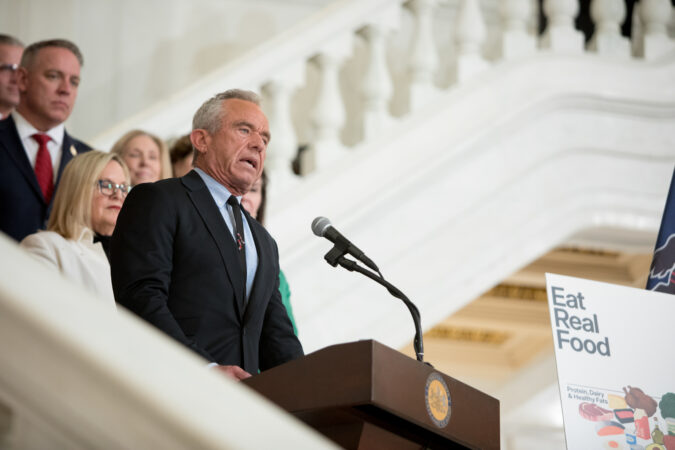
    Health and Human Services Secretary Robert F. Kennedy Jr. touted his new nutritional guidelines and pushed back against criticism of his vaccine policy Wednesday at a rally in Harrisburg.

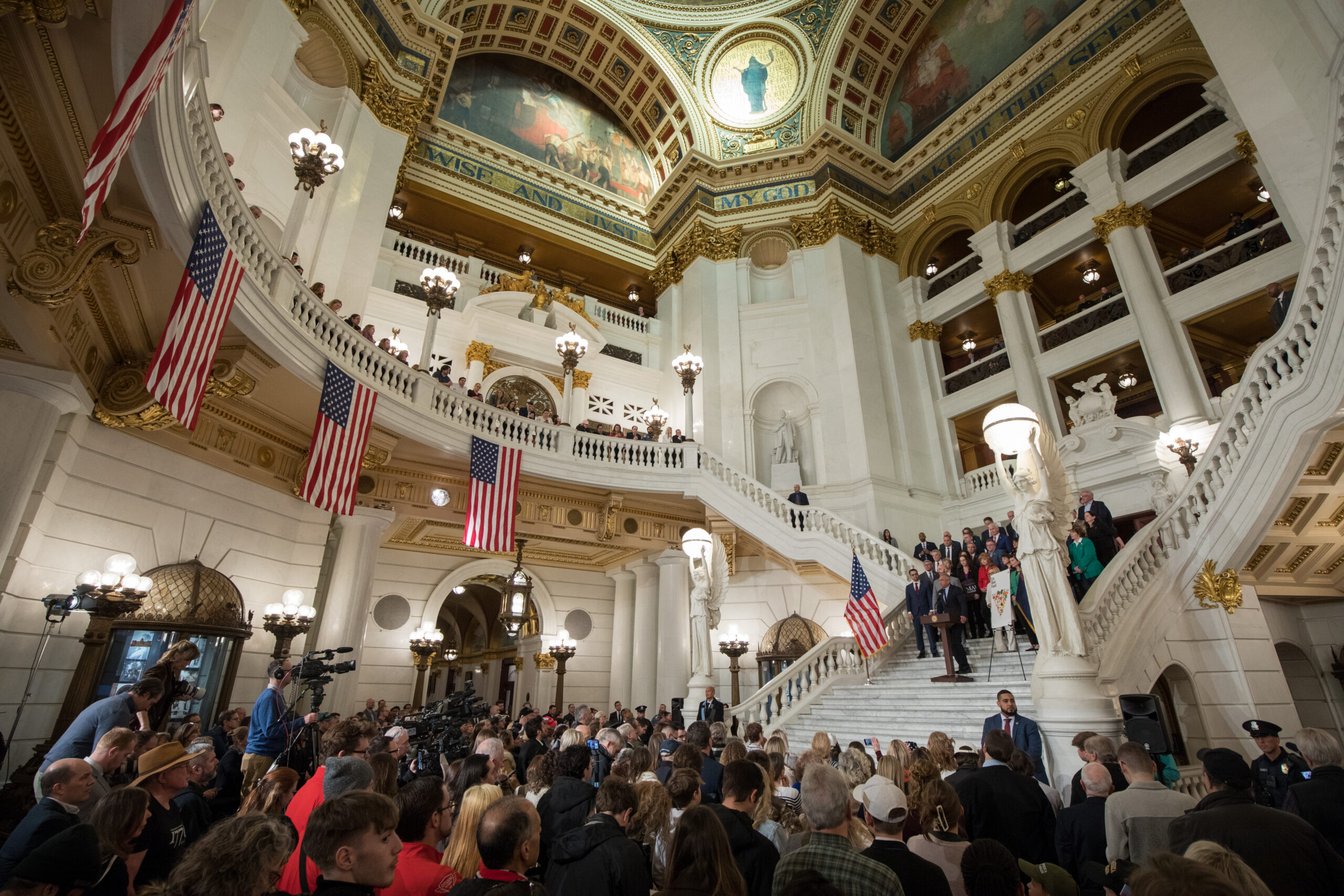
    Speaking from the rotunda of the state Capitol, Kennedy declared that Americans are sicker than their European counterparts and blamed “bad policy choices” by his predecessors for turning a “once-exemplary healthcare system into a sick care system.”

    Doctors, hospitals, insurers, and pharmaceutical companies, he said, are incentivized to keep Americans ill instead of preventing diseases.

    It was an echo of remarks Kennedy has made over the last year advancing his “Make America Healthy Again” agenda. A longtime anti-vaccine activist before his appointment as top health leader under President Donald Trump, Kennedy has overhauled major aspects of U.S. health policy, including the long-standing childhood vaccine schedule, drawing intense criticism from public health officials who say the move will increase preventable illnesses and death.

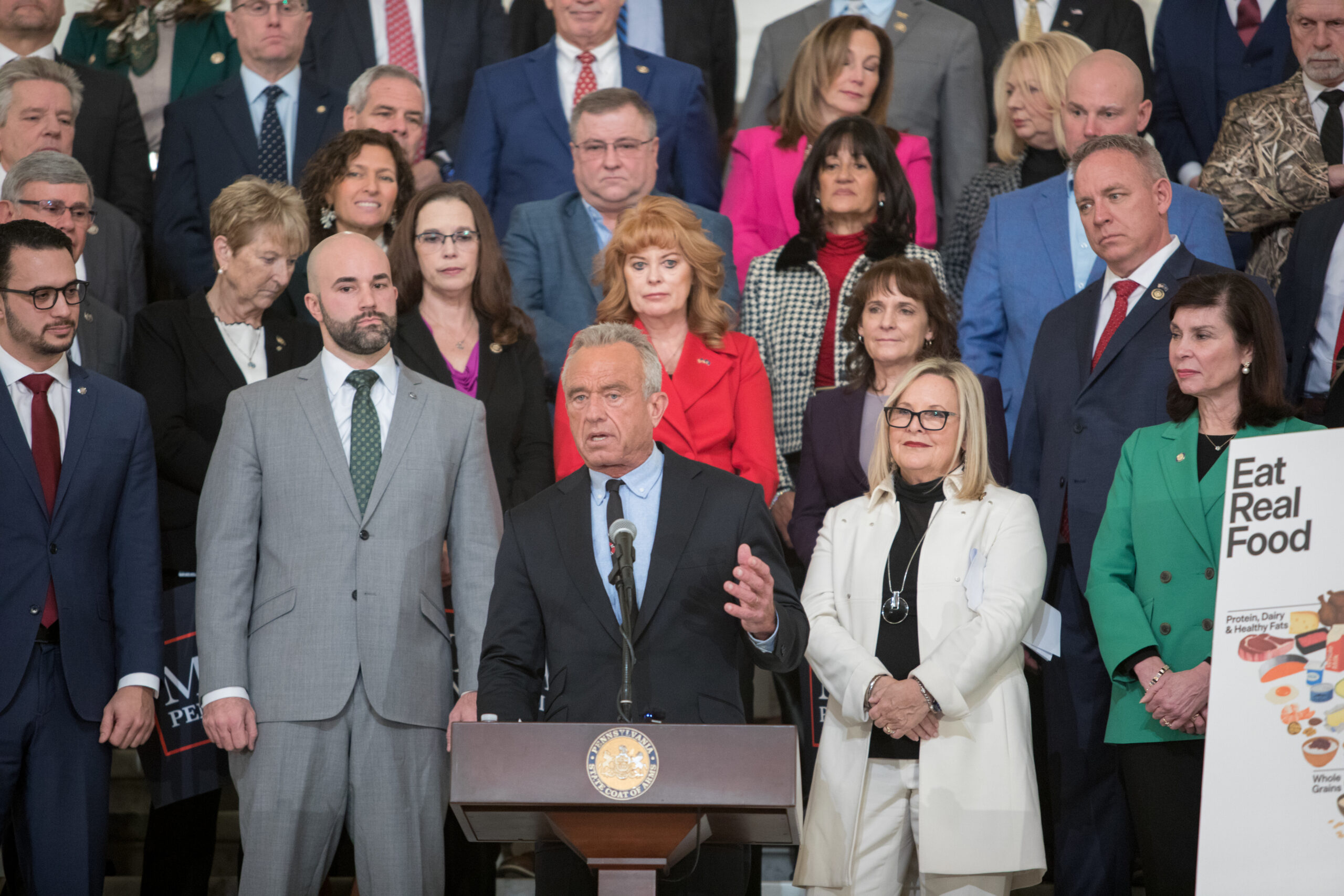
    In Harrisburg, Kennedy was joined by a crowd of nearly 200, as well as two dozen Republican lawmakers. Some spoke in praise of his efforts to overhaul dietary recommendations and decried what they described as waste and fraud in the state’s Medicaid and food assistance systems.

    State Treasurer Stacy Garrity, a Republican who hopes to challenge Gov. Josh Shapiro in this year’s gubernatorial election, stood near Kennedy at the rally but did not deliver remarks.

    Kennedy touted his new dietary guidelines, announced earlier this month, that flipped the traditional food pyramid on its head to promote consumption of whole foods, proteins, and some fats.

    He is encouraging Americans to prioritize eating proteins and vegetables and reduce eating “highly processed foods” with “refined carbohydrates.” This marks the first time U.S. dietary guidelines have explicitly called out what are also known as ultra-processed foods, a move supported by the American Medical Association and some other medical societies.

    “Big food processing companies” influenced American dietary guidelines “for too long,” Kennedy told the crowd.

    “They told us, for the last 40 years, to eat as much as we could of refined carbohydrates, of ultra-processed foods, to stuff ourselves with sugar and salt,” he said. “We are now cutting through the red tape, and we’re telling Americans it’s time to start eating real food.”

    But his dietary plan’s emphasis on foods high in saturated fats and its vague guidance on alcohol consumption have received pushback.

    HHS’s newest food guidelines recommend limiting saturated fats, but also encourage Americans to eat food with high levels of such fats, including red meat and beef tallow, a New York Times reporter noted at a news conference after his speech.

    The revised recommendations are “not perfect,” Kennedy replied.

    “They give guidelines. They’re going to be very useful to people, and they are going to be much, much better for public health than what we were working with,” he said.

    Health and Human Services Secretary Robert F. Kennedy, Jr. was flanked by state lawmakers at a rally in the Pennsylvania State Capitol Wednesday.

    Upending vaccine policy

    Nechel Shoff of Middletown, Dauphin County, came to the Capitol to advocate on behalf of her son, Squale, 24, who has autism. She said she believes her son’s autism was due to vaccinations he had as a 9-month-old baby that led to encephalitis and a high fever for six weeks. (There is no evidence that vaccinations cause autism.)

    She supports Kennedy’s efforts to change federal vaccine recommendations and said his efforts have not resulted in changes at the state level.

    “We need him desperately,” Shoff said of Kennedy.

    Kennedy’s comments about vaccines were the highlight for many in the crowd, who vigorously nodded their heads in agreement and cheered.

    But critics were also in attendance, after staging a protest prior to Kennedy’s appearance outside the Capitol in support of vaccine access.

    One interrupted Kennedy’s speech by yelling “Restore Medicaid!” before being escorted away.

    Federal officials announced in December that they will decrease the number of recommended childhood immunizations from 17 to 11. Some vaccines that protect against serious illnesses like rotavirus and hepatitis B are now recommended only for children at higher risk of health complications.

    Several states, including Pennsylvania, have changed their own policies around vaccine distribution to ensure continued access to vaccines no longer recommended by the Centers for Disease Control and Prevention.

    In a statement posted on X before the rally, Shapiro said that Kennedy has “made our country less healthy and less informed.”

    “He’s spent his entire time as Secretary causing chaos and spreading misinformation. Every step of the way, we’ve stood up to his efforts to endanger public health — protecting vaccine access and families’ freedom to make their own health care decisions,” the Democratic governor wrote.

    Kennedy told reporters at a news conference that he is not limiting access to vaccines and that people who want certain vaccines can still get them. “Some states may take a different pathway, and I think we envisioned that different people would be doing different things, but it ends the coercion,” he said.

    Decades of evidence show vaccination itself presents little risk of harm to patients, and forgoing them carries high risks of spreading preventable diseases.

    Naomi Whittaker, an obstetrics and gynecology doctor, attended Wednesday’s rally with her children, all sporting “Make America Healthy Again” hats.

    She’s a UPMC-affiliated ob-gyn who specializes in “restorative reproductive medicine” to help women with fertility issues.

    Her practice often includes diet changes, lifestyle changes, hormone support, and endometriosis surgery. She sees Kennedy’s work to change the food pyramid and question big pharmaceutical companies as critical dialogues the public should have.

    “I really want to balance the public health and individual health,” Whittaker said. “There’s some middle ground of vaccines.”

    Secretary of Health and Human Services Robert F. Kennedy Jr. speaks at a Harrisburg rally Wednesday.

    State Rep. Tarik Khan (D., Philadelphia), who attended the event, said it was what went unsaid by Kennedy that stood out to him the most: that the Trump administration is making it harder for some people to access food assistance and healthcare, creating barriers to the healthy lifestyles that Kennedy touts.

    “We’ve known for years that we need to eliminate processed foods,” said Khan, a nurse practitioner. “We know that you need to eat more fruits and vegetables. We know that proteins are critical. We know that refined carbohydrates, you should try to avoid as much as possible.”

    “This is not groundbreaking information,” Khan added.

  • The madness of King Trump threatens U.S. and global security

    The madness of King Trump threatens U.S. and global security

    Donald Trump now believes he is the master of the universe, not just of the United States and the Americas. This is not hyperbole.

    The president’s determination to seize Greenland from Denmark by bullying or force, his threats to NATO allies, his obsession with the Nobel Peace Prize, the ego-driven list goes on. His speeches and posts reveal a man convinced he is the world’s most brilliant leader, who can split control of the world with Vladimir Putin and Xi Jinping and best both.

    The madness of King Donald has metastasized to the point where it threatens U.S. and global security — unless GOP members of Congress, sane business leaders, and five sober Supremes move to curb him.

    Don’t take my word for how dangerous Trump has become. Take Trump’s.

    “We are going to do something on Greenland whether they like it or not,” he told the press this month. “One way or the other, we’re going to have Greenland.” Never mind that taking Greenland would put the U.S. at war with its NATO allies, including the island’s owner, Denmark.

    Trump has already pledged to slap new tariffs on Copenhagen and seven European allies who support the Danes.

    This is nuts. A 1951 treaty basically lets the U.S. put as many troops and bases in Greenland as it wishes. The island’s government is eager for U.S. investment to mine rare minerals. Yet, the president is ready to destroy NATO, and possibly fight with our closest allies, whose help and Arctic experience are essential to protecting Greenland from Russia and China.

    The only ones to benefit from Trump’s Greenland obsession are Putin and Xi, as they sit back and watch him destroy the NATO alliance they have been eager to shred for decades.

    Indeed, Russian officials and talking heads are exulting over America’s self-destruction, which shifts attention away from Moscow’s ongoing, massive attacks on Ukraine’s urban centers, trying to destroy all electricity and heating during a brutal winter.

    “It would have been difficult to imagine something like this happening before,” Russian Foreign Minister Sergey Lavrov told journalists this week, gloating that Trump’s actions diminished the “prospects of preserving NATO as a unified Western military-political bloc.”

    In other words, Trump’s Greenland mania is undermining U.S. security at a rapid clip. His foolishness raises the possibility of NATO allies shooting at each other, rather than working together to block Russia’s desire for territorial expansion. The White House is putting America in league with Moscow as an aggressor willing to invade or coerce a neighbor into handing over territory.

    And for what reason? So that Trump can boast he has made the best land grab since the Louisiana Purchase?

    The president hints at this with a doctored photo on Truth Social, which shows European leaders in his office looking raptly at a map of Canada, Greenland, and Venezuela covered with American flags.

    People protest against Donald Trump’s policy toward Greenland in front of the U.S. Consulate in Nuuk, Greenland, on Saturday.

    Buoyed by the U.S. military’s kidnapping of Nicolás Maduro (a one-off extraction bearing no resemblance to seizing a NATO ally’s territory), Trump acts as if he believes he can grab anything he wants.

    For the 79-year-old president, the signs of dementia — or an ego gone wild — are expanding.

    Boiling with frustrated desire for the Nobel Peace Prize, Trump wrote the Norwegian foreign minister that Oslo’s decision “not to give me the Nobel Peace Prize for having stopped 8 Wars PLUS” was to blame for his aggression toward Denmark. Due to this insult, the president claimed, “I no longer feel an obligation to think purely of Peace … but can now think about what is good and proper for the United States of America.”

    When the Norwegian leader replied that the Nobel was awarded by an independent committee, not the government, Trump insisted this was false. He appeared oblivious to how this churlish behavior makes him and our country look idiotic. All the more so because Trump’s repeated claim about stopping eight wars is a complete falsehood.

    Trump achieved several temporary ceasefires in outbreaks of border violence in Africa, the Caucasus, and Asia, but ended no wars. And the best-known of those ceasefires, in Gaza, is already falling apart.

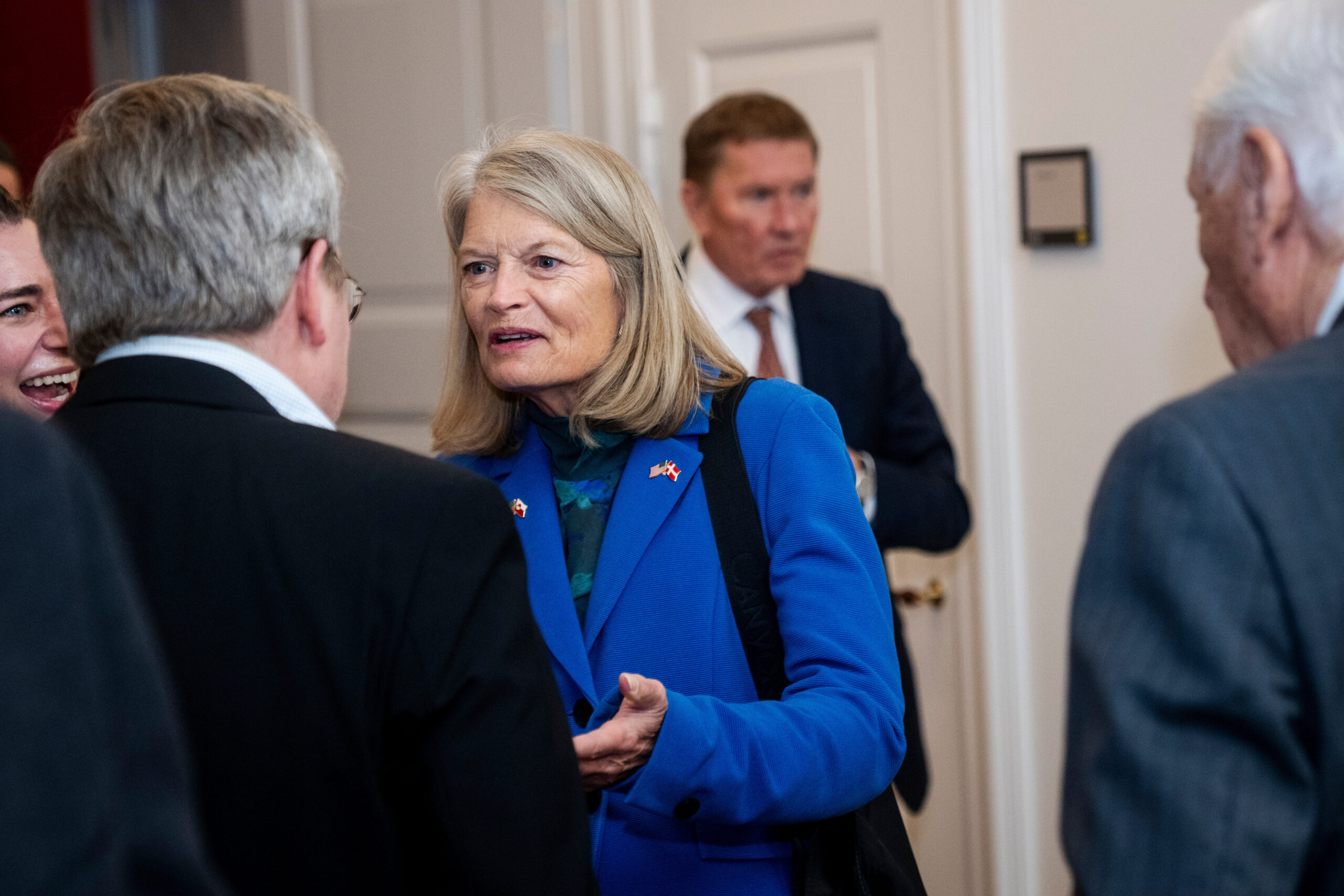
    Sen. Lisa Murkowski (R., Alaska) arrives as members of the Danish Parliament and a Greenlandic committee meet with American members of Congress at the Danish Parliament in Copenhagen, Denmark, on Friday.

    Yet, this week at the World Economic Forum in Davos, Switzerland, the president will unveil his putative “Board of Peace,” a proposed group of top global leaders who would preside over an unwieldy, as yet nonexistent series of subordinate structures tasked with rebuilding and setting up a government for Gaza.

    This concept was endorsed by the U.N. Security Council specifically to deal with Gaza. But in a bait-and-switch, the White House has crafted a charter that ignores Gaza; instead, this aspirational board appears aimed at replacing the United Nations in dealing with global hot spots. At every turn, according to the charter, its players and committees would be subject to Trump’s final control.

    The president has already invited Putin, that great Russian peacemaker, to join the board.

    The top level of the group is supposed to consist “exclusively of heads of state and government” under Trump’s leadership. It’s unclear how many will join. Consider that the entrance fee for full membership is $1 billion, apparently creating a slush fund with no visible rules on whether it will be spent at Trump’s sole discretion.

    What is clear is that Trump’s war on NATO allies and his embrace of Putin — along with his affection for the dog-eat-dog system that led to two world wars — are the work of a president who has lost all moorings. Add to that the economic blindness of a man who, when warned of the grave cost of subordinating the independent Federal Reserve Bank to his political will, responded, “I don’t care.”

    Trump’s behavior is that of a self-appointed Sun King, who is not only convinced that “L’État, c’est moi” but “Le monde, c’est moi.” Unless this madness is checked soon by the other government branches, America may be reverting to the kind of world most of us never imagined we’d face.

  • Trump’s Greenland threats spark outrage and defiance from EU, testing longtime NATO alliances

    Trump’s Greenland threats spark outrage and defiance from EU, testing longtime NATO alliances

    WASHINGTON — President Donald Trump‘s pledge to provoke a sweeping tariff fight with Europe to get his way in taking control of Greenland has left many of America’s closest allies warning of a rupture with Washington capable of shattering the NATO alliance that had once seemed unshakable.

    The European Union’s top official on Tuesday called Trump’s planned new tariffs over Greenland a “mistake” and questioned Trump’s trustworthiness. French President Emmanuel Macron said the EU could retaliate by deploying one of its most powerful economic tools, known colloquially as a trade “bazooka.”

    The rising tensions concerning Greenland, and threats of a deepening trade war between the U.S. and Europe, caused global investors to shudder Tuesday, as stocks on Wall Street slumped.

    Trump prides himself on ratcheting up pressure to try to negotiate through a position of strength. He was leaving Tuesday — the anniversary of his inauguration — for the World Economic Forum in Davos, Switzerland, a venue that offers Trump the chance to defuse tensions as quickly as he stirred them up.

    But European leaders — digging in and vowing to defend Denmark and its control over semiautonomous Greenland — may be seeking just as hard to meet an extraordinary moment with a show of their fierce resolve.

    That could hurt the chances of Trump finding a quick way to turn around the crisis. Greenland’s leader insisted on respect for its territorial integrity and said recognition of international law is “not a game.”

    ‘We will work something out’

    Trump made an unusual appearance in the White House briefing room and spoke at length while stocks fell. Asked how far he’d be willing to go to acquire Greenland, Trump said only, “You’ll find out.” He also mistakenly referred to Greenland as Iceland at one point.

    Still, the president predicted there could be a deal in the making with allies. “I think that we will work something out where NATO is going to be very happy, and where we’re going to be very happy,” he said, without providing specifics.

    Trump said he’d been encouraged that NATO had increased military spending, but he also belittled the alliance, saying other members may not protect Washington’s interests. The president suggested NATO members expect the U.S. to come to their rescue but “I just really do question whether or not they’ll come to ours.”

    European Commission President Ursula von der Leyen pushed back against Trump’s announcement that, starting February, a 10% import tax will be imposed on goods from eight European nations that have rallied around Denmark. Greenland is a semiautonomous territory of Denmark, a NATO member.

    “The European Union and the United States have agreed to a trade deal last July,” von der Leyen said in Davos. “And in politics as in business — a deal is a deal. And when friends shake hands, it must mean something.”

    “We consider the people of the United States not just our allies, but our friends. And plunging us into a downward spiral would only aid the very adversaries we are both so committed to keeping out of the strategic landscape,” she added.

    She vowed that the EU’s response “will be unflinching, united and proportional.”

    Taking firmer stances defied the approach that many European leaders have offered since Trump returned to office. It had mostly entailed saying nice things about the president to try to stay in his good graces, while working furiously through other avenues to find compromise.

    Trump says the U.S. needs Greenland to deter possible threats from China and Russia. But his continued insistence in recent weeks that anything short of the U.S. owning Greenland is unacceptable is testing the limits of the softer strategy.

    Danish Prime Minister Mette Frederiksen said “the worst may still be ahead of us.” Speaking to parliament, she said “we have never sought conflict. We have consistently sought cooperation.”

    ‘Not a game’

    Greenland’s Prime Minister Jens-Frederik Nielsen said at a news conference in the island’s capital, Nuuk, that “we need to have respect for international law and territorial integrity.” He said those principles should unite Western democratic countries, and said he was grateful for support from EU allies.

    “International law, it’s not a game,” he said. “We have been a close and loyal ally to the United States, to NATO, through many, many, many years. We can do lots more in that framework. We are willing to cooperate much more, but of course in mutual respect, and if we cannot see that, it will be very difficult to have a good and reliable partnership.”

    Trump’s threats have sparked outrage and a flurry of diplomatic activity across Europe, as leaders consider possible countermeasures, including retaliatory tariffs and the first-ever use of the European Union’s anti-coercion instrument.

    Unofficially known as the “trade bazooka,” the anti-coercion instrument could sanction individuals or institutions found to be putting undue pressure on the EU. The EU has two other major economic tools it could use to pressure Washington: new tariffs, or a suspension of the U.S.-EU trade deal.

    Macron warned in Davos that the additional tariffs could force the EU to use its anti-coercion mechanism for the first time against the United States.

    “Can you imagine that?” he said, arguing that allied countries should be focusing instead on bringing peace to Ukraine. “This is crazy.”

    In general, he said, the mechanism “is a powerful instrument and we should not hesitate to deploy it in today’s tough environment.”

    Trump earlier posted a text message from Macron in which the French president suggested a meeting of members of the Group of Seven industrialized democracies in Paris after the Davos gathering. An official close to Macron, who spoke anonymously in line with the French presidency’s customary practices, confirmed the message shared by Trump is genuine.

    In his latest threat of tariffs, Trump indicated that the import taxes would be retaliation for last week’s deployment of symbolic numbers of troops from the European countries to Greenland — though he also suggested that he was using the tariffs as leverage to negotiate with Denmark.

    ‘In the midst of a rupture’

    Canadian Prime Minister Mark Carney, whose country is a founding NATO member, warned of global fissures beyond Greenland, suggesting it was an “illusion” and “fiction” that there remains a rules-based international order.

    “Let me be direct: We are in the midst of a rupture, not a transition,” Carney said during a speech in Davos.

    Belgian Prime Minister Bart De Wever said at Davos that Europe cannot be a “miserable slave’ to Trump.”

    Others encouraged NATO leaders to stand up to Trump. Speaking on the sidelines of Davos, California Gov. Gavin Newsom slammed Europe’s response to Trump’s tariff threats as “pathetic” and “embarrassing,” and urged continental leaders to unite and stand up to the United States.

    “It’s time to stand tall and firm, have a backbone,” Newsom, a Democrat, told reporters.

    Greenland’s European backers have also looked at establishing a more permanent military presence to help guarantee security in the Arctic region, a key demand of the United States, Swedish Defense Minister Pål Jonson said.

    In Moscow, meanwhile, Russian Foreign Minister Sergey Lavrov strongly denied any intention by Russia and China to threaten Greenland, while also describing Greenland as a “colonial gain” for Denmark.

    Trump was asked Tuesday what would happen to his tariff threats related to Greenland if the Supreme Court rules against his ability to impose import tariffs as part of a case it is considering.

    “Well, I’ll have to use something else,” Trump said. “We have other alternatives.” He didn’t respond when asked about using force.

  • Disabled Delaware immigrant ordered back to Ecuador at climactic hearing on Tuesday

    Disabled Delaware immigrant ordered back to Ecuador at climactic hearing on Tuesday

    A disabled Ecuadorian immigrant who was arrested and detained by ICE after he flagged down an officer in September was ordered back to his homeland on Tuesday.

    Victor Acurio Suarez, who is 52 but childlike and unable to live on his own, was issued an order of voluntary departure by Immigration Judge Dennis Ryan.

    That is not the same as an order of deportation, but for migrants in detention it has the same practical effect. If Acurio Suarez were to refuse to leave voluntarily, the order would convert to a deportation order, which carries consequences including fines and a bar on reentry.

    “It’s not good news,” his attorney, Kaley Miller-Schaeffer, said shortly after the video hearing concluded.

    She plans to quickly appeal to the Board of Immigration Appeals, which can review decisions by immigration judges. It is uncertain if an appeal would be successful.

    The judge denied her client’s request for asylum, which can be granted to migrants who could face persecution in their home countries because of their race, religion, nationality, politics, or membership in a particular social group. Acurio Suarez was beaten by gangs who preyed upon his disabilities, his attorney said.

    Miller-Schaeffer said she was not able to speak with her client after the ruling. His brother, Lenin Acurio Suarez, was still processing the decision, she said.

    Lenin Acurio Suarez holds a photograph of his brother, Victor, at his home on Wednesday, Dec. 10, 2025 in Seaford. Victor was arrested by ICE in Seaford, De.

    Victor Acurio Suarez’s case drew support from Delaware Gov. Matt Meyer, who wrote to the judge that it would be “cruel” and “egregious” to deliver the Seaford resident to gang violence. Meyer also advocated for Acurio Suarez in social media posts, calling his arrest and detention “deeply disturbing” and arguing that with no criminal history, not even a traffic violation, Acurio Suarez “poses no threat to public safety.”

    The governor’s office did not immediately reply to a request for comment on Tuesday.

    Acurio Suarez has long been cared for by his brother, Lenin Acurio Suarez, who said in an interview last month that Victor Acurio Suarez did not realize he was in immigration custody when he was taken to the Moshannon Valley Processing Center in Pennsylvania. He thought he was on vacation, provided with three free meals a day and allowed to buy snacks and kick a soccer ball.

    He was arrested on Sept. 22 in a Lowe’s parking lot near the brothers’ home in Seaford when he tried to flag down a U.S. Immigration and Customs Enforcement agent, apparently thinking the officer could help him find work.

    In the past, someone with Acurio Suarez’s profile might have been allowed to live at home as the case moved forward in immigration court. That has changed as President Donald Trump has pressed his mass-deportation agenda, and mandatory detention policies have swelled the number of people in custody.

    His case, Miller-Schaeffer said earlier, is a prime example of how Trump administration policy shifts have encouraged ICE to detain even the most vulnerable and to treat potential discretionary relief as irrelevant in a bid to boost deportations. Her Sept. 30 request to have Acurio Suarez released to the care of his brother while his immigration case went forward was denied.

    A medical assessment submitted for his asylum application said Acurio Suarez has autism and aphasia, a language disorder that affects his ability to produce or understand speech.

    David W. Baron, the doctor who did the assessment, said Acurio Suarez cannot safely live on his own. He requires supervision to perform daily hygiene activities or cook and has a hard time communicating his needs to others, a condition made worse by being in an unfamiliar setting while in detention, where he does not have access to the support needed for his neurocognitive disabilities.

    At an earlier court hearing, Miller-Schaeffer said, she watched as Acurio Suarez struggled to answer basic questions. He told the judge he didn’t know if he had an attorney or know what an attorney does.

    His ability to testify was so limited, she said, that the judge allowed his brother to take the stand to explain his sibling’s experience and situation.

    Acurio Suarez can recall big events in his life, she said. He remembers being beaten by gangs, but he couldn’t tell you exactly when that occurred.

    He worked at odd jobs in Ecuador before coming to this country.

    Records show that on Aug. 2, 2021, the brothers were stopped by the U.S. Border Patrol as they tried to enter the United States near Eagle Pass, Texas.

    Lenin Acurio Suarez was issued a notice to appear in court and released, and his immigration case was later dismissed.

    Victor Acurio Suarez was ordered deported and subsequently returned to Ecuador on Sept. 24. Three days later, for reasons that are unclear, the deportation order was found to have been issued incorrectly, and Acurio Suarez was brought back by authorities to the U.S.

    In October 2021, he was granted temporary permission to stay in the country. He had filed his asylum case by the time that permission expired a year later.

    Last year, according to an ICE report, on Sept. 22 an ICE team was conducting operations in Seaford, a southern Delaware city of 9,000 where 13% of the population is foreign-born.

    The ICE officer wrote that he was looking for a place to park in the Lowe’s lot when a man in paint-stained clothing, Acurio Suarez, approached him. Acurio Suarez waved his hand, signaling the officer to come to him, according to the ICE report.

    The officer kept going, then stopped his car and watched Acurio Suarez from another lot. Acurio Suarez tried to hail other cars, and could be seen talking to people who were loading lumber onto a trailer in the parking lot, he said.

    It looked as if Acurio Suarez was trying to find daily work, which is why he tried to get the ICE officer to stop his vehicle, the report said.

    It is common for undocumented immigrants seeking a day’s pay to wait in the parking lots of big home-improvement stores like Lowe’s and Home Depot, hoping to connect with building contractors who need laborers.

    Lenin Acurio Suarez said his brother cannot hold a full-time job, and is able only to handle small tasks, provided someone is beside him giving directions.

    A second ICE officer arrived, and both parked their cars near where Acurio Suarez had left his lunch box. Acurio Suarez walked back toward the officers, and one of the agents approached and questioned him.

    Acurio Suarez told the agents he had no identification or immigration documents and was placed in handcuffs.

  • Trump and Greenland: All the questions you’re scared to ask your friends

    Trump and Greenland: All the questions you’re scared to ask your friends

    If you’re starting to absorb the headlines, or embarking on your early-week doomscroll, you’re probably seeing a lot about Greenland.

    President Donald Trump’s longtime interest in the Arctic island seems to be louder — and bolder — than ever, sparking a major geopolitical standoff.

    But how did it all start? And where do things stand? Here are all your questions answered, so you’re prepared the next time someone asks you about Greenland.

    How did Denmark acquire Greenland?

    Greenland has been home to native peoples who crossed the Arctic from what is now Canada, Norse settlers, Lutheran missionaries, and U.S. military personnel who used it as a base to protect the United States from Nazi Germany and the Soviet Union.

    As for when Denmark stepped in, the short answer is that Denmark’s control started with a colonial settlement, was formalized in 1953, and the agreement has since evolved into a self-governing structure with the Danish.

    In the 1700s, a Danish missionary arrived in Greenland and started lining up settlements and establishing Danish colonization. Through most of the 18th and 19th centuries, Greenland was controlled by the Danish. The relationship was formally recognized by Denmark after World War II. In 1953, the island was fully incorporated as a Danish territory, giving Greenlanders Danish citizenship.

    Things changed in the late 1970s. In 1979, Greenlanders voted in favor of home rule, establishing a local government. In 2009, Greenland earned even more autonomy, achieving self-government status. This stands today, with Greenland remaining part of Denmark but overseeing its own internal affairs. Denmark oversees defense and diplomacy issues, unless the regions opt to partner on an issue.

    Is Greenland bigger than the United States?

    Greenland is pretty big, but not bigger than the United States

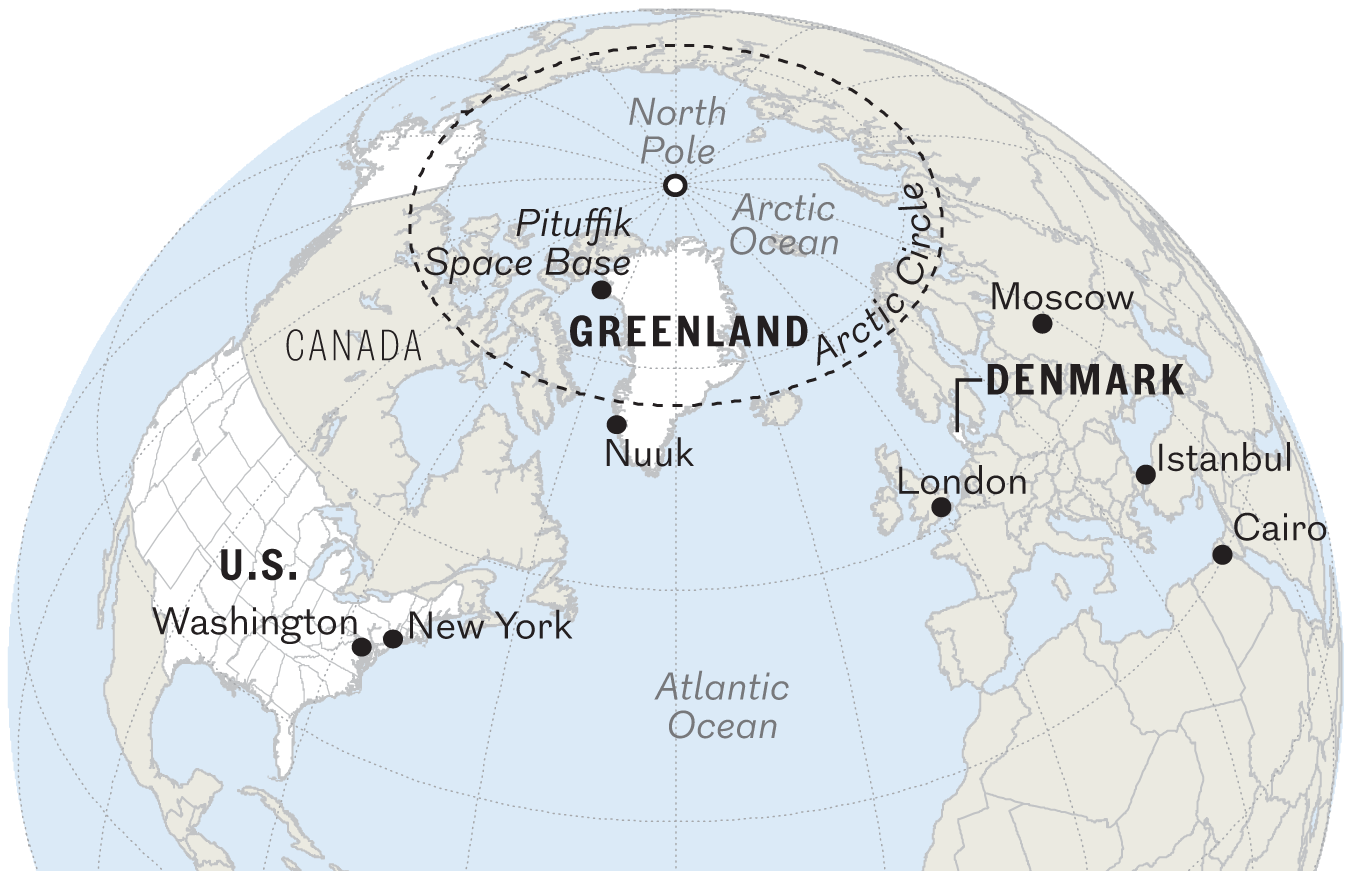
    It is considered one of the biggest places in the world by geography and is about 20 times the size of Denmark, according to the territory’s tourism website. The island stretches about 836,000 square miles.

    Map of Greenland, the U.S., and Denmark.

    It is the world’s largest island that isn’t a continent and is larger than France, Germany, Spain, and the United Kingdom combined. It is also larger than the state of Alaska.

    But, no, it’s smaller than the contiguous United States. All in all, the United States is about 4.5 times larger than Greenland.

    Still, a lot of people ask this question (it’s a top Google result surrounding Greenland) because map distortions make it appear a lot bigger than it is.

    The island has a population of roughly 56,480, according to the CIA. It is among the least densely populated countries in the world.

    What natural resources does Greenland have?

    Greenland is home to a bounty of natural resources, including oil, gas, and rare earth minerals. Those minerals are used for making batteries, electric vehicles, and other high-tech items, according to the New York Times. Currently, China dominates the global market for those minerals, meaning there is a reliance on China to source them.

    Vice President JD Vance has touted Greenland’s “incredible natural resources” in the past. Last year, Republican senators held a hearing focused on Greenland’s importance and its rare earths.

    But Greenland has only a few roads and ports, and environmentalists are opposed to developing on the island. That means mining and oil extraction in Greenland may not be productive.

    Does the U.S. military have a base in Greenland?

    Yep.

    Formerly known as the Thule Air Base, the Pituffik (pronounced bee-doo-FEEK) Space Base was renamed in 2023 during the Biden administration to honor the native Greenlandic community and history.

    It is the northernmost U.S. military installation and serves as an early warning missile detection site for North America. It is currently undergoing major upgrades.

    How long has Trump talked about wanting Greenland?

    It’s been awhile.

    Trump first floated the idea of “buying Greenland” during his first term, comparing it to a “real estate deal.” When Danish leaders rejected his idea, he canceled a scheduled visit to Denmark in 2019.

    When Trump began his second term, he spoke increasingly about his interest in the United States controlling Greenland, citing national security reasons.

    But critics say his real intentions stem from personal feelings.

    Is this really about Trump not winning the Nobel Prize?

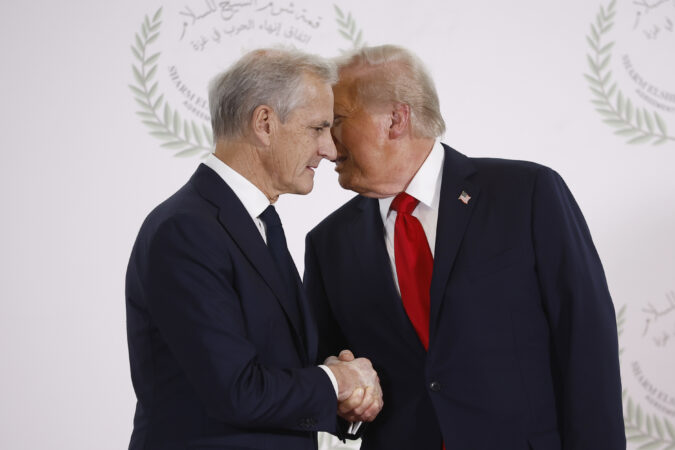
    Trump linked his aggressive stance on Greenland to last year’s decision not to award him the Nobel Peace Prize, telling Norway’s prime minister that he no longer felt “an obligation to think purely of Peace,” in a text message released Monday and verified by the White House.

    Trump’s text to Jonas Gahr Støre, which he sent on Sunday, came a day after the president announced a 10% import tax on goods from the eight nations that have rallied around Denmark and Greenland, including Norway.

    The text exchange, which was released by the Norwegian government, said in part: “Considering your Country decided not to give me the Nobel Peace Prize for having stopped 8 Wars PLUS, I no longer feel an obligation to think purely of Peace.” He concluded, “The World is not secure unless we have Complete and Total Control of Greenland.”

    The Norwegian leader said Trump’s message was a reply to an earlier missive sent on behalf of himself and Finnish President Alexander Stubb, in which they conveyed their opposition to the tariff announcement, pointed to a need to de-escalate, and proposed a telephone conversation among the three leaders.

    White House deputy press secretary Anna Kelly said of the text exchange that Trump “is confident Greenlanders would be better served if protected by the United States from modern threats in the Arctic region.”

    Norway has since reaffirmed its support for Denmark and Greenland.

    Also, for what it’s worth, the Nobel Peace Prize is awarded by an independent committee, not the Norwegian government.

    Trump has openly coveted the peace prize, which the committee awarded to Venezuelan opposition leader María Corina Machado last year. Last week, Machado presented her Nobel medal to Trump, who said he planned to keep it, though the committee said the prize cannot be revoked, transferred, or shared with others.

    Speaking Monday night to reporters before boarding Air Force One on his way back from Florida to Washington, Trump backtracked and said he didn’t “care about the Nobel Prize.”

    What is Trump saying about Greenland now?

    He’s doubling down.

    Monday night, Trump took to his Truth Social platform and made a series of posts about how there was “no going back” when it comes to his push to take control of the island. He also posted private text messages he received from French President Emmanuel Macron and the head of NATO, and an AI-generated image of the American flag over Greenland and Canada.

    Following Macron’s questioning of Trump’s approach, Trump suggested he could impose a 200% tariff on French wines.

    Trump also announced he would meet with “various parties” to discuss Greenland during the World Economic Forum in Davos, Switzerland, this week.

    On Tuesday, Trump held a nearly two-hour news conference, but largely did not acknowledge his stance on Greenland until asked by reporters.

    He repeated his position that the U.S. needs to take control of the territory for the sake of national security.

    “I think that we will work something out where NATO is going to be very happy and where we’re going to be very happy,” Trump said toward the end of the news conference.

    Macron this week called for an emergency meeting in Paris with European leaders to address tensions with the U.S. over Trump’s pursuit to acquire Greenland in addition to increasing tariffs.

    Trump told reporters he did not plan to attend the meeting and mentioned that Macron would not be leading France for much longer. Macron’s term ends in May 2027.

    Do other politicians agree with Trump?

    There is widespread disagreement over how Trump wants to handle Greenland.

    Secretary of State Marco Rubio said the president wants to buy it, while top aide Stephen Miller suggested the U.S. could seize it by force. Vice President Vance’s discussion with Danish leaders last week ended in “fundamental disagreement.”

    Several lawmakers across party lines have criticized Trump’s approach. GOP members, including Sen. Rand Paul of Kentucky and Rep. Mike Turner of Ohio, say the raised tariff threats could harm NATO and U.S. interests.

    Rep. Don Bacon (R., Neb.) said last week that he would consider impeaching Trump if the U.S. invaded Greenland, describing the idea as “utter buffoonery.”

    Sen. Lisa Murkowski (R., Alaska) called Trump’s coercive threats dangerous for alliances and “bad for America.” She and Sen. Jeanne Shaheen (D., N.H.) introduced bipartisan legislation that would prohibit the use of U.S. Defense or State Department funds to take control of Greenland or the sovereign territory of any NATO member state without that ally’s consent or authorization from the North Atlantic Council.

    How are Greenland residents responding?

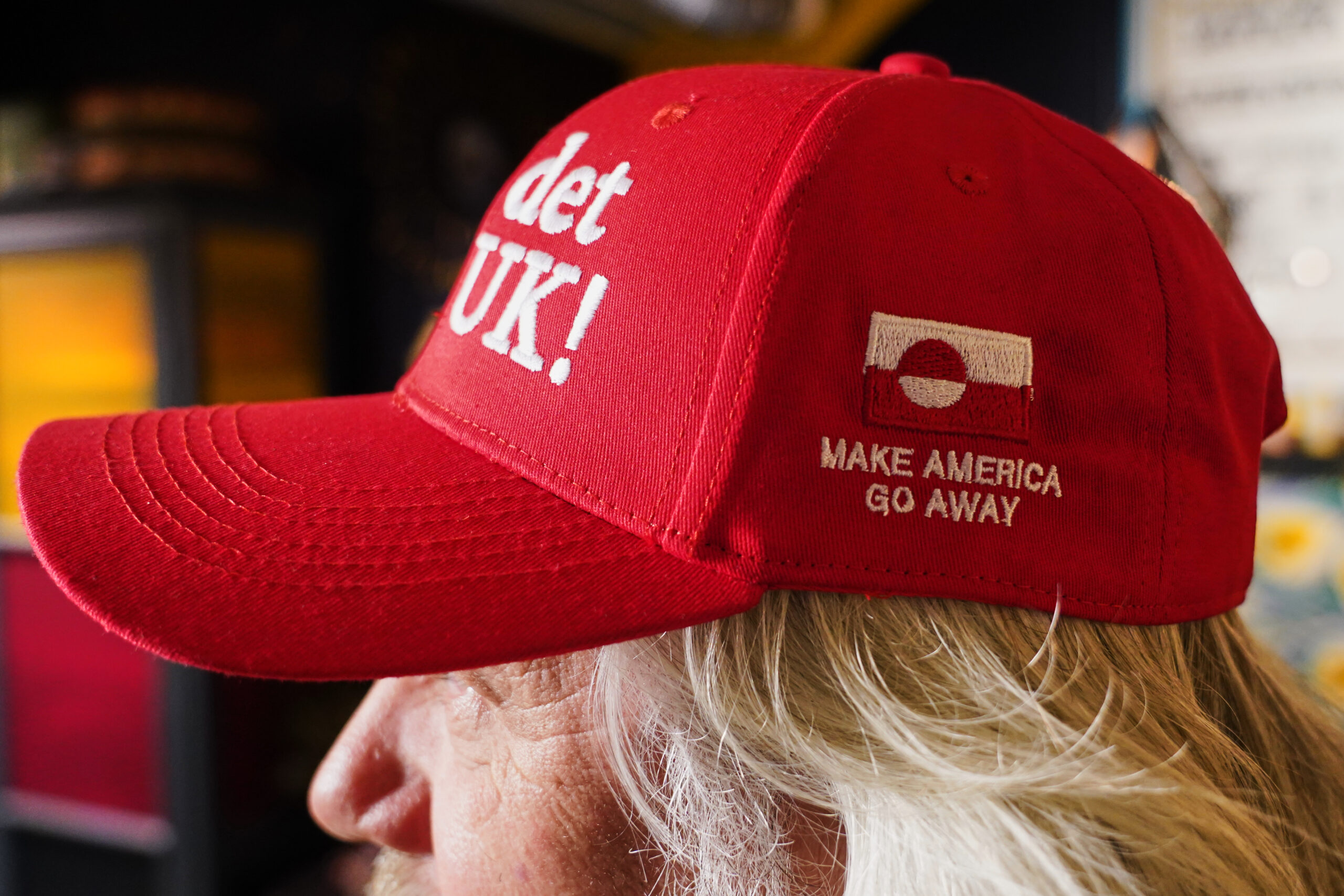
    Copenhagen store owner Jesper Rabe Tonnesen wears a red cap for sale that he created with the slogans “Make America go away,” on the side, and on the front: “Nu det NUUK!,” a twist on the Danish phrase “Nu det nok,” meaning “Now it’s enough.”

    Unsurprisingly, they’re not happy!

    Over the weekend, hundreds of people in Greenland’s capital, Nuuk, braved near-freezing temperatures, rain, and icy streets to march in a rally in support of their own self-governance.

    Thousands of people also marched through Copenhagen, many of them carrying Greenland’s flag. Some held signs with slogans such as “Make America Smart Again” and “Hands Off.”

    A spoof Make America Go Away red cap in the style of Trump’s original MAGA campaign hat is surging in popularity in Denmark and has become a symbol of Danish and Greenlandic resistance.

    “This is important for the whole world,” Danish protester Elise Riechie told the Associated Press as she held Danish and Greenlandic flags. “There are many small countries. None of them are for sale.”

    The rallies occurred hours after a bipartisan delegation of U.S. lawmakers, while visiting Copenhagen, sought to reassure Denmark and Greenland of their support.

    This article contains information from the Associated Press.

  • Josh Shapiro’s new book: Why Trump told him he shouldn’t be president, disagreements over COVID-19 closures, and more

    Josh Shapiro’s new book: Why Trump told him he shouldn’t be president, disagreements over COVID-19 closures, and more

    “Hey, Josh, it’s Donald Trump.”

    It was the start of a voicemail from the president to Pennsylvania Gov. Josh Shapiro, received one week after a man firebombed the governor’s residence in Harrisburg in an attempt to kill Shapiro while his family slept inside on the first night of Passover.

    Shapiro hadn’t recognized the number Trump was calling from, and at first didn’t answer.

    When Shapiro called back, Trump offered well wishes to the governor’s family, his usual braggadocio, and some advice: he shouldn’t want to be president, Shapiro recalls in his new memoir, set to be released later this month.

    The book, Where We Keep the Light, which comes out on Jan. 27, has attracted a flood of attention as it signals Shapiro’s potential presidential aspirations and also serves as a retort to the unflattering portrayal of the governor in former Vice President Kamala Harris’ recent memoir.

    In the 257-page book, Shapiro details his early life in Montgomery County, his two decades in elected office, his connection to his faith, and his pragmatic leadership approach.

    And for the political observers who have watched Shapiro’s rise: He delves into his brief consideration of whether he should run for president after Joe Biden dropped out of the race in 2024, the whirlwind experience of being vetted to be Harris’ running mate, and the unfair scrutiny he felt he faced during that process.

    Here are six takeaways from Shapiro’s forthcoming memoir, obtained by The Inquirer.

    Trump to Shapiro: ‘He cautioned that I shouldn’t want to be president’

    When Shapiro, 52, returned Trump’s call in April 2025, he received the president’s support and some unprompted compliments from Trump, he writes.

    “[Trump] said he liked the way I talked to people and approached problems,” Shapiro retells, as Trump went through the list of potential 2028 Democratic Party presidential candidates. “He cautioned that I shouldn’t want to be president, given how dangerous it had become to hold the office now.”

    Gov. Josh Shapiro speaks during a news conference, in Butler, Pa., Sunday, July 14, 2024, following an assassination attempt on President Donald Trump.

    (It is unclear whether Shapiro tried to call Trump after he experienced his own assassination attempt in Butler, Pa., the previous summer, though Shapiro publicly vehemently denounced the violence.)

    Throughout the book, Shapiro details his approach to Trump. He picks his battles to be ones he is sure he will win, he writes, and is sympathetic to the struggles that led some voters to support Trump.

    He’s proud of his disagreements with fellow Dems

    Shapiro sells himself as a pragmatist and writes proudly of the times in which he has disagreed with his party or changed his positions.

    For example, he recalls being asked by Harris’ vetting team about his past comments criticizing Democrats in federal, state, and local offices for how they handled COVID-19 closures. He stood by his criticism of former Gov. Tom Wolf at the time over business and school closures, and of the mask and vaccine mandates implemented by the Biden administration, he writes.

    “I respectfully pushed back, asking if they believed that we had gotten everything right, to which they generally agreed that we had not,” Shapiro writes about his conversation with Harris’ vetting team. “I just had been willing to say the quiet part out loud, even if it wasn’t easy or popular or toeing the line to do so.”

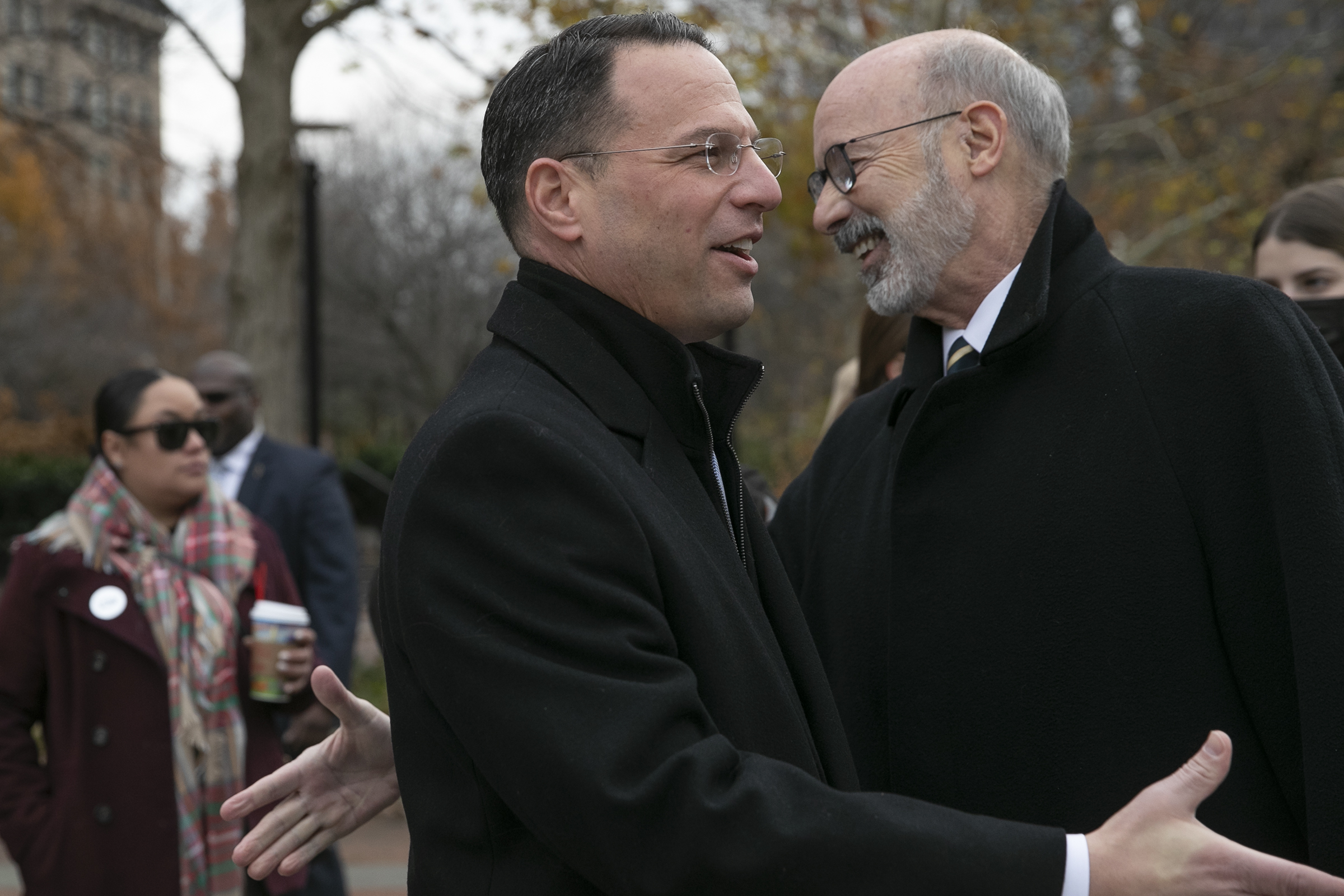
    Then-Attorney General Josh Shapiro and Then-Gov. Tom Wolf both go in for handshakes before the start of a press conference on the harmful effects of anti-abortion policies at 5th and Market in Philadelphia on Thursday, Dec. 9, 2021.

    He also writes about his journey to change his position on the death penalty over the years. In the days after the Tree of Life synagogue massacre in Pittsburgh, in which 11 Jewish people were killed while worshipping, he had initially supported the death penalty for the suspect. Since then, his views have evolved and he no longer supports capital punishment and called on the legislature to end the practice.

    Lori Shapiro is behind most of her husband’s good ideas

    Lori Shapiro, 53, mostly avoids her husband’s frequent appearances in the limelight.

    The former Clinton administration official works mostly behind the scenes, except on a few issues important to her, including those relating to people with intellectual disabilities and ensuring girls have access to menstrual products in schools.

    But in his book, Shapiro writes that his wife has challenged him as she has supported his political rise, pushing him to question what he really wants, do the right thing, or even help him shape his messaging to voters. She discouraged him from running for U.S. Senate in 2016 after top Democrats approached him, which led him to run for attorney general instead. She was also his first call when Biden dropped out and he briefly considered whether he should run for president, and his voice of reason during the veepstakes.

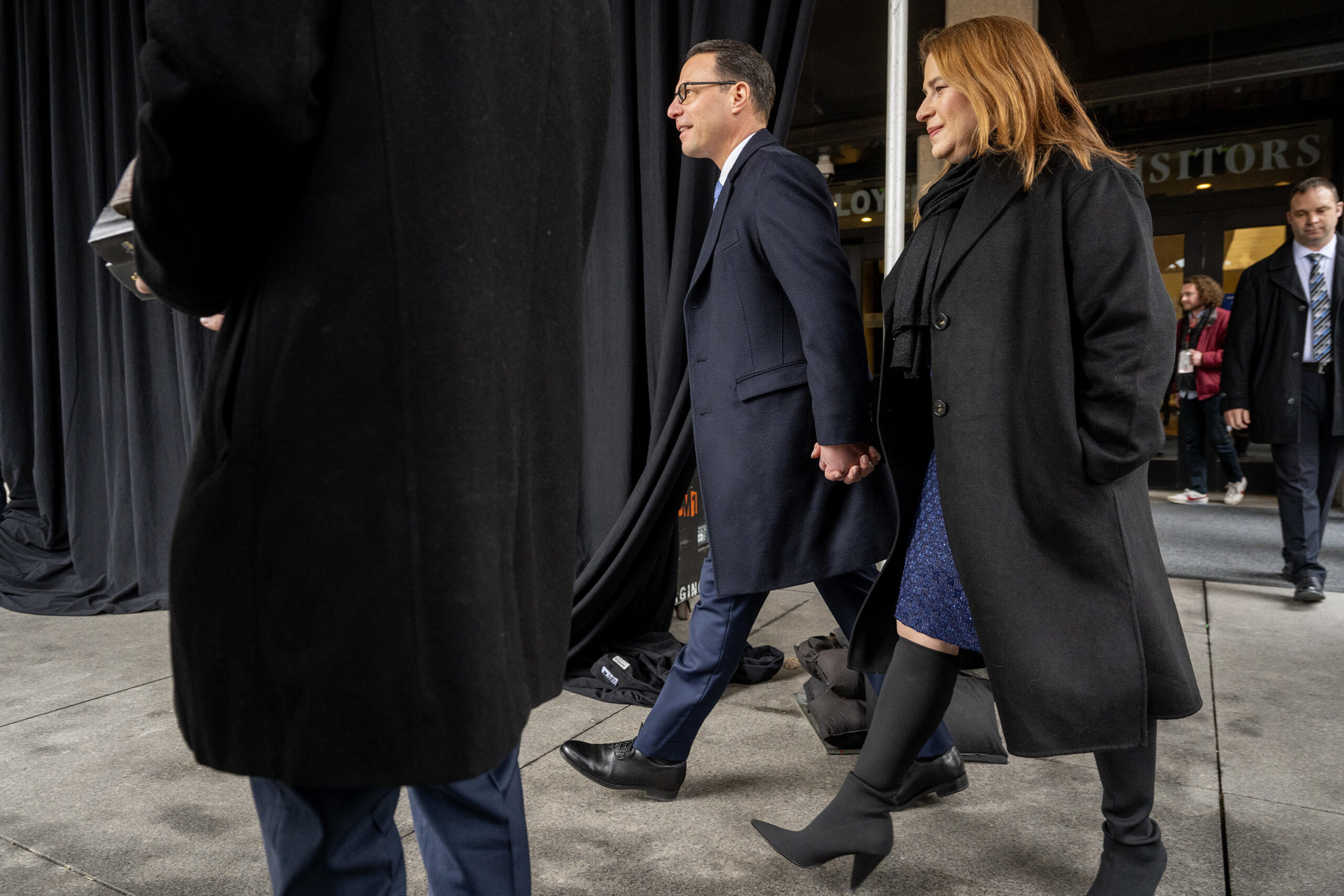
    Josh Shapiro and his wife Lori leave the state Capitol in Harrisburg Tuesday, Jan. 17 2023, on his way to the stage to be sworn in as the 48th Governor of Pennsylvania.

    The couple started dating in high school, before breaking up during college when they went to different universities in New York — he attended the University of Rochester, while she went to Colgate University. Shapiro writes that he quickly realized he missed her, and wrote her a letter in an effort to win her back.

    “So I cracked my knuckles, and wrote my heart out. I was Shakespeare composing a sonnet. I was Taylor Swift before Taylor Swift. I was Lloyd Dobler in Say Anything, in a trench coat with the boom box over my head,” Shapiro writes. “I was getting the girl back.”

    This earned Shapiro the title of “Mr. Lori” from her hall mates at Colgate. He did not win her back until years later, when the two reconnected in Washington after college, and quickly became engaged. The two married and had four children together, who each make frequent appearances throughout the book.

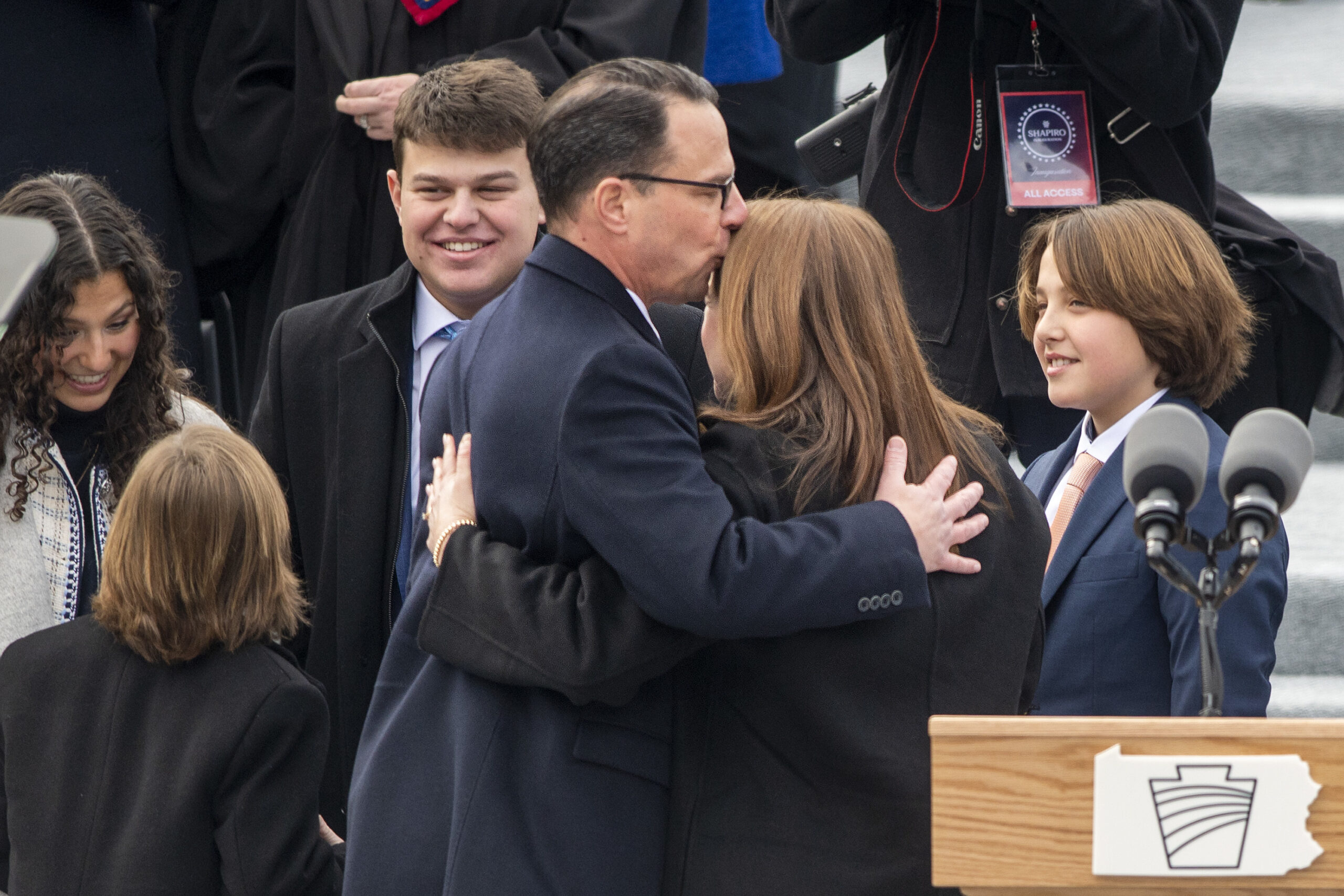
    Surrounded by his four children, Gov. Josh Shapiro kisses his wife Lori after his is sworn in as the 48th Governor of Pennsylvania during inauguration ceremonies at the state Capitol in Harrisburg Tuesday, Jan. 17 2023.

    Shapiro grapples with an early career move that kicked off his reputation as disloyal

    Shapiro is not without regret for how some of his career moves and ambitions affected the people who helped him get where he is today, he writes.

    Shapiro got his start in politics on the Hill under then-U.S. Rep. Joe Hoeffel, a Montgomery County Democrat. He quickly worked his way up to be Hoeffel’s chief of staff before returning to Abington Township to run for state representative.

    But when Shapiro was done with frequent trips to Harrisburg and ready for his next rung on the ladder, Hoeffel was in the way. Shapiro had a plan to run for county commissioner and flip the board for the first time in more than 150 years — making Montco the first Philadelphia collar county to swing into Democratic control. Now all of the Philly suburban counties are controlled by Democrats, and Shapiro is credited for starting the trend. But Hoeffel was not a part of that calculation.

    Shapiro writes that Hoeffel was “struggling politically.” He says he told him he would not run against him, but he also would not run with him.

    “I knew that I couldn’t win with him, and I knew that it wasn’t the right thing for the party or the county, even if we could somehow eke out the victory,” Shapiro writes.

    Hoeffel eventually decided not to run, and was quoted in The Inquirer in 2017 as saying that loyalty is not Shapiro’s “strong suit,” comments he has since stood by, in addition to praising Shapiro for his successes ever since.

    “I’d hear about [Hoeffel] talking to the press or to people behind my back about how he thought I lacked loyalty, that I was someone who needed to be watched,” Shapiro writes. “It felt terrible, and of course, I never intended to hurt him in any way and I would never have run against him. I wanted the Democrats to have a shot, and I knew that I could get it done.”

    Shapiro initially said antisemitism didn’t play into Kamala Harris’ running mate decision. Now he has more to say

    In the days after Harris passed over Shapiro to be her running mate in favor of Minnesota Gov. Tim Walz, Shapiro said “antisemitism had no impact” on her decision.

    Now, Shapiro questions whether he was unfairly scrutinized by Harris’ vetting team as the only Jewish person being considered as a finalist, including a moment when a top member of Harris’ camp asked him if he had “ever been an agent of the Israeli government.”

    “I wondered whether these questions were being posed to just me — the only Jewish guy in the running — or if everyone who had not held a federal office was being grilled about Israel in the same way,” he writes.

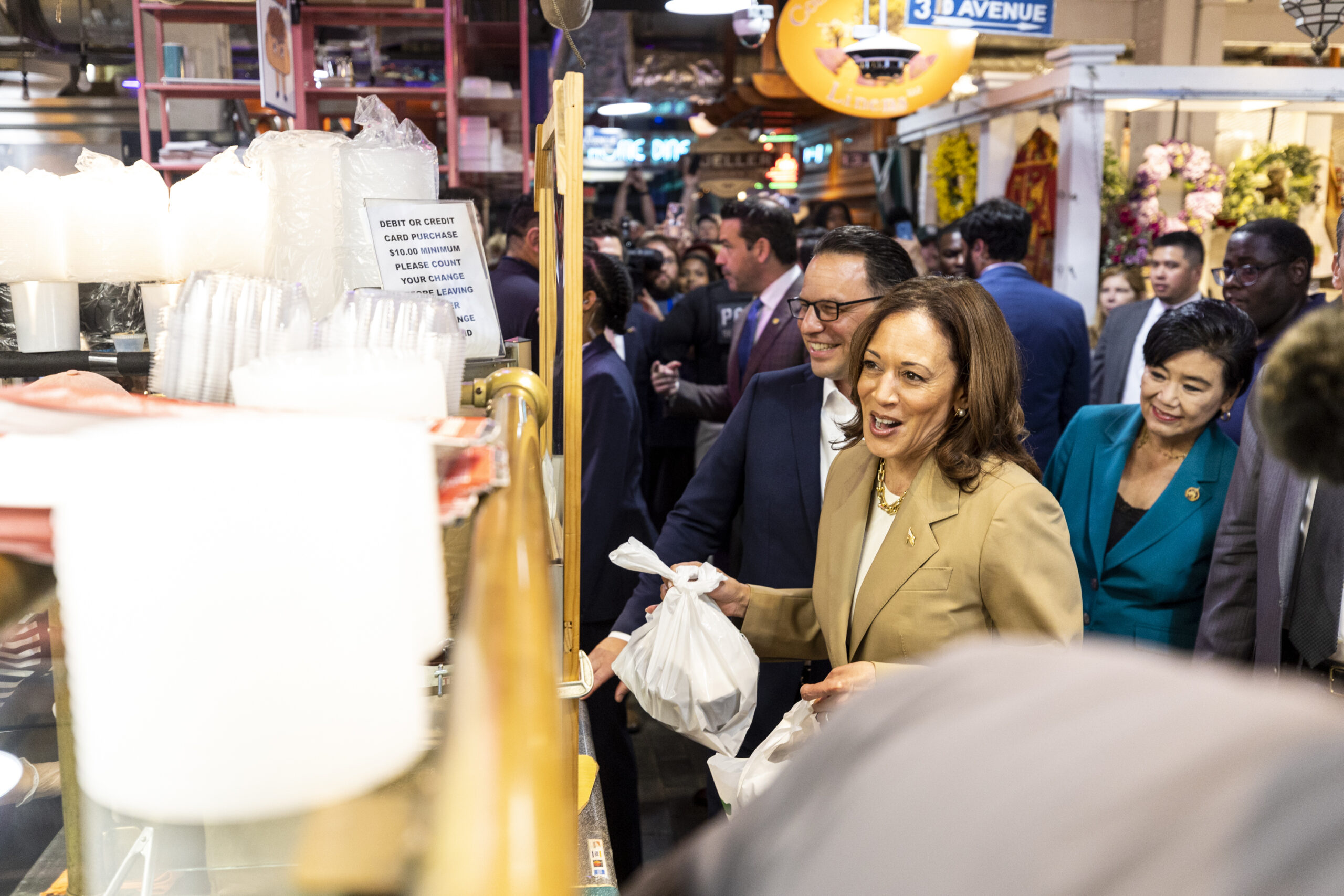
    Vice President Kamala Harris visits Little Thai Market at Reading Terminal Market with Gov. Josh Shapiro after she spoke at the APIA Vote Presidential Town Hall at the Pennsylvania Convention Center in Philadelphia, Pa., on Saturday, July 13, 2024. The photo was taken eight days before President Joe Biden’s decision to exit the race.

    He details his broader concerns with how he was treated during the process, including some perceived insults about his family’s lack of wealth or Lori Shapiro’s appearance.

    Since Shapiro’s book was leaked to the media over the weekend, sources close to Walz confirmed to ABC News that the Minnesota governor was also asked whether he was an agent of a foreign government, due to his multiple trips to China.

    Shapiro, for his part, has written about his time in Israel, including a high school program in which he completed service projects on a farm, on a fishery at a kibbutz, and at an Israeli army base. He once described himself in his college student newspaper as a “past volunteer in the Israeli army” — a characterization that circulated widely after it was reported by The Inquirer during the veepstakes.

    The missing character: Mike Vereb

    There is one person who had been influential during Shapiro’s many years of public service who is not mentioned once in the book: Mike Vereb.

    Vereb, a former top aide to Shapiro, left the governor’s office shortly into his term after he was accused of sexual harassment of a female employee. The state paid the female employee $295,000 in a settlement over the claim.

    Vereb had been along for the ride for Shapiro’s time in the state House as a fellow state representative from Montgomery County (though he was a Republican), as a top liaison to him in the attorney general’s office, and eventually a member of his cabinet in the governor’s office until his resignation in 2023.

  • Justice Department weighs rollback of gun regulations

    Justice Department weighs rollback of gun regulations

    The Justice Department is considering loosening a slate of gun regulations as it seeks to bolster support from ardent Second Amendment advocates, according to three people familiar with the changes who spoke on the condition of anonymity to discuss plans that have not been made public.

    Some of the changes are expected to ease restrictions on the private sale of guns and loosen regulations on shipping firearms.

    Other changes to Bureau of Alcohol, Tobacco, Firearms and Explosives regulations under consideration would change the types of firearms that can be imported and make licensing fees refundable. Officials are also expected to change the form required to purchase guns to have applicants list their biological sex at birth. The current form asks applicants to list their sex.

    Federal officials had considered announcing the changes to coincide with the National Shooting Sports Foundation gun trade show in Las Vegas, which began on Tuesday. Deputy Attorney General Todd Blanche is scheduled to speak at the annual show. The NSSF SHOT Show is one of the nation’s largest firearm trade shows, and Justice Department officials in both Democratic and Republican administrations have regularly attended it.

    But officials are still finalizing their new regulations and the timing of the announcement, the people familiar with the matter said.

    The back-and-forth over the rollout of the new gun rules highlights the Justice Department’s challenges as it seeks to placate a part of the president’s base that believes the administration has not been aggressive enough in easing firearm restrictions — while also preserving the law enforcement capabilities of ATF, which some gun rights advocates have sought to abolish.

    The Trump administration has installed prominent gun rights advocates in senior political positions, and the president has allied himself with conservative advocacy groups, such as Gun Owners of America. The administration has pushed to slash about 5,000 law enforcement officers from ATF, cutting the number of inspectors who ensure gun sellers are in compliance with federal laws.

    But some gun rights advocates have publicly expressed disappointment with Attorney General Pam Bondi, who as attorney general of Florida supported gun restrictions after the 2018 school shooting in Parkland.

    Bondi and the Trump administration have faced criticism for not going as far as some lawmakers and gun rights advocates have demanded.

    “The Biden Administration waged war against the Second Amendment, but that era has come to an end under Attorney General Bondi, who has led the Justice Department’s effort to protect the Second Amendment through litigation, civil rights enforcement, regulatory reform, and by ending abusive enforcement practices,” a Justice Department spokesperson said in a statement.

    “Whenever law-abiding gun owners’ constitutional rights are violated, the Trump Administration will fight back in defense of freedom and the Constitution.”

    Because ATF crafts regulations based on its interpretation of laws passed by Congress, Justice Department officials are allowed to amend its rules, though any changes risk legal challenges. ATF is part of the Justice Department, responsible for regulating the sales and licensing of firearms and working with local law enforcement to solve gun crimes. Federal and local law enforcement officials tout ATF’s gun tracing capabilities with helping to combat violent crime.

    In the first months of the Trump administration, the Justice Department proposed merging the Drug Enforcement Administration with ATF — a move that ATF’s backers feared would leave the agency powerless. Opponents of ATF, meanwhile, feared that the merger would give the agency too much power. The merger plans have not come to fruition and, instead, the Trump administration in November quietly nominated a respected ATF veteran to lead the agency.

    The nominee, Robert Cekada, is scheduled to have his hearing next month, and administration officials are worried about how the announcement of the new regulations could boost or hurt his nomination chances, according to one person familiar with the nomination process. Announcing the loosening of regulations ahead of his nomination hearing could risk the support of moderate Republicans, said the people, who spoke on the condition of anonymity to discuss personnel issues.

    Winning confirmation to serve as ATF director is notoriously difficult. Only two people have won Senate approval as director since the position began requiring Senate confirmation in 2006. During his first term, President Donald Trump had to pull a nominee, Chuck Canterbury, the former head of the national Fraternal Order of Police, because some conservative Republicans thought he would restrict gun rights.

    Trump had originally tapped FBI Director Kash Patel to simultaneously serve as ATF director. The Washington Post reported at the time that Patel never showed up to ATF headquarters and had scarce interaction with staff. The administration replaced Patel in early April with Army Secretary Dan Driscoll, who holds the two roles simultaneously. Cekada has been running the day-to-day operations of ATF since the ousting of the second-in-command at ATF in April.

    The nomination of Cekada was considered a win for Bondi, who had wanted a law enforcement veteran leading the agency. Some Second Amendment groups had pushed for an advocate at the head of the organization.

    Bondi pushed out ATF’s longtime general counsel and replaced her with a political appointee, Robert Leider — a former law professor who believes in a strict interpretation of the Second Amendment and has publicly written about how ATF too heavily regulates firearms.

    The Post reported this past summer that the U.S. DOGE Service sent staff to ATF with the goal of revising or eliminating at least 47 rules and gun restrictions — an apparent reference to Trump’s status as the 47th president — by July 4, according to multiple people with knowledge of the efforts. Those plan hit roadblocks, in part, because the political appointees failed to realize how complicated and legally cumbersome it is to amend regulations, according to one person familiar with the process.

    In addition to the regulatory changes, Leider and his team have been working to shrink the legally mandated 4473 Form that most buyers are required to fill out when purchasing a firearm, making it quicker to read and fill out the paperwork required to purchase and sell firearms.

    In December, Assistant Attorney General Harmeet K. Dhillon, who heads the Civil Rights Division, announced creation of a new Second Amendment group within her division focused on expanding gun rights. In its first days, the newly created group filed a lawsuit challenging an assault weapon ban in D.C.

    It’s unclear how much support Dhillon’s new group has received. Top Justice Department officials have not fully backed it, in part because Congress needs to approve the creation of a new section within the Civil Rights Division, according to people familiar with the group.

    Dhillon so far has not hired many attorneys with legal expertise in the Second Amendment to work in the group, the people said. Instead, she has used existing attorneys within the Civil Rights Department to staff some of the group’s projects.

    Top Democratic lawmakers on the Senate Judiciary Committee have questioned the creation and legality of Dhillon’s group.

    “Since President Trump took office, you have decimated the Division’s nonpartisan workforce and changed the Division’s enforcement priorities to serve the President’s agenda in lieu of our federal civil rights laws,” Sens. Peter Welch (D., Vt.) and Dick Durbin (D., Ill.) wrote in a letter to Dhillon this month. “The creation of the Second Amendment Section is another example of this profound retreat from the core mission of the Civil Rights Division.”

    Last week, the Justice Department’s Office of Legal Counsel issued an opinion saying that a federal ban on mailing firearms through Postal Service is unconstitutional. An OLC opinion is not binding, but it provides legal guidance across the federal government on how federal prosecutors view laws and signals the Justice Department’s future stances in court.

  • Sharif Street could become Pa.’s first Muslim member of Congress. But don’t make assumptions about his politics.

    Sharif Street could become Pa.’s first Muslim member of Congress. But don’t make assumptions about his politics.

    When State Sen. Sharif Tahir Street converted to Islam 30 years ago, he already had a Muslim name.

    His father, John F. Street, who would go on to become Philadelphia’s mayor, gave his son a Muslim name when he was born in 1974 despite raising him in the Seventh-day Adventist Church, an evangelical Christian sect in which members of the Street family hold leadership roles to this day.

    As the senator tells it, his father initially considered adopting the name Sharif himself — not because he was considering converting to Islam but because he wanted to embrace the movement of Black Americans reclaiming pre-slavery identities.

    Instead, the elder Street, who had already built a reputation as a rabble-rousing activist, kept his name and dubbed his son Sharif, which in Arabic means noble or exalted one.

    The story would be surprising if it weren’t from the idiosyncratic Street family, which has played a unique outsider-turned-insider role in Philly politics for decades. The late State Sen. Milton Street was the senator’s uncle, and Common Pleas Court Judge Sierra Thomas Street is his ex-wife.

    This year, with Sharif Street a frontrunner in the crowded Democratic primary to replace retiring U.S. Rep. Dwight Evans, the family could make more history: If elected, Sharif Street would become the first Muslim member of Congress from Pennsylvania.

    A Street win would mark another milestone in political representation for Philadelphia’s large Muslim community, an influential constituency that already includes numerous elected officials and power players.

    But in characteristic Street fashion, that potential comes with a twist. Street has relatively moderate views on the conflict in Gaza and would likely stand out from Muslim colleagues in Congress like U.S. Reps. Ilhan Omar (D., Minn.) and Rashida Tlaib (D. Mich.), progressives who regularly denounce Israeli aggression.

    To be sure, Sharif Street, 51, is highly critical of Israeli Prime Minister Benjamin Netanyahu and the war in Gaza. But he is also quick to defend Israel’s right to exist as a Jewish state, favors the two-state solution, and counts many prominent Philadelphia-area Jews among his friends and political supporters.

    “Guess what? Benjamin Netanyahu is not the only leader of a major country in the world that’s committed war crimes, because Donald Trump has done the same thing,” Street said last week at a Muslim League of Voters event. ”But none of us would talk about getting rid of the United States of America as a country.”

    For Muslim voters who view the Middle East crisis as a top political concern, this year’s 3rd Congressional District race sets up a choice between one of their own and a candidate whose politics may more closely align with their views on Gaza: State Rep. Chris Rabb, a progressive who has been endorsed to succeed Evans by the national Muslims United PAC.

    “F— AIPAC,” Rabb said at a recent forum, referring to the American Israeli Public Affairs Committee, which has spent large sums and wielded aggressive tactics to unseat lawmakers it views as antagonistic to Israel. “They are destroying candidates’ lives because they don’t like that we’re standing up to them, that we are actively and consistently acknowledging that there is a genocide in Gaza.”

    Rabb, who is not religious and said he respects all faiths, is hoping that Muslim voters will embrace his stance on the issues.

    “Making history is not the same as being on the right side of history,” Rabb said in a statement.

    ‘Embrace all of the texts’

    Street said his Adventist upbringing immersed him in an Old Testament-rooted Christianity that led to a growing curiosity about all the Abrahamic faiths. As he got older and read more, he realized that he didn’t view Judaism, Christianity, and Islam “as separately as other people do.”

    “I do believe that the Abrahamic religions were all correct. In no way were they all supposed to be separate religions,” he said. “Islam allowed me to embrace all of the texts, which I had already decided to do.”

    Before converting, Street said he was embraced by the Muslim community in Atlanta when he was a student at Morehouse College. He officially converted after returning to Philly to earn his law degree at the University of Pennsylvania.

    Street’s Shahada, the creed Muslims take when joining the faith, was administered by Imam Shamsud-din Ali, his father’s friend. (Years later, Ali was one the elder Street’s associates being targeted by federal investigators when an FBI listening device was discovered in the mayor’s office in 2003. The episode created a firestorm around John Street’s ultimately successful reelection campaign that year, and Ali was later convicted on fraud and racketeering charges.)

    For many Muslim converts, the religion’s dietary strictures, such as abstaining from pork and eating Halal food, take some getting used to, Sharif Street said. That wasn’t a problem for him.

    “Islam has a lot of rules — unless you were Seventh-day Adventist,” he said, referring to the denomination discouraging followers from eating pork, shellfish, and numerous other foods.

    Street said his faith has guided him as an individual and public servant.

    “Islam, for me, focuses on my personal responsibility,” he said, and “the idea that man’s relationship with God is and always was.”

    His views on the unity of the Abrahamic religions also guide his perspective on the Middle East, he said.

    “I recognize that there won’t be peace for the state of Israel without peace for the Palestinian people, but there won’t be peace for the Palestinian people unless there’s peace for the state of Israel at some point,” he said.

    Sharif Street participates in Friday prayer at Masjidullah mosque recently.

    Like elected officials of other religions, Street’s politics do not perfectly align with the teachers of Muslim leaders.

    On a recent Friday, Street attended Jumu’ah, the weekly afternoon prayer service, at Masjidullah in Northwest Philadelphia. A sign at the entrance reminded Muslims that abortion and homosexuality are against Islam’s teachings.

    “Almost every one of Philadelphia’s Muslim political leaders … are all pro-civil rights, including LGBTQ [rights] and pro-choice,” he said. The sign, he said, represented “some members of the faith leadership who are reminding us … that is not the stance of the official religious community.”

    For Street, that type of dissidence hits close to home.

    His father, he said, became Baptist after being “kicked out” of the Seventh-day Adventist Church for officiating a same-sex marriage in 2007 between Micah Mahjoubian, a staffer for Sharif Street, and his husband, Ryan Bunch.

    The Seventh-day Adventist Church in North Philadelphia did not respond to a request for comment.

    ’One of the most Muslim urban spaces’

    Ryan Boyer, who heads the Philadelphia Building and Construction Trades Council and is Muslim, likes to say he’s proud that members of his faith are so integrated into local politics that their religious identities are often overlooked.

    “We’re a part of the fabric,” said Boyer, whose politically powerful coalition of unions has endorsed Street. ”To me, it’s not that big of a deal. We’re here.”

    For Boyer, that means Muslim candidates like Street are judged based on their merits, not their identities.

    “He’s Muslim,” Boyer said of Street. “Well, is he smart? Does he present the requisite skills and abilities to do the job? … The answer is yes.”

    Other Muslim leaders in the city include: Sheriff Rochelle Bilal; City Councilmembers Curtis Jones Jr. and Nina Ahmad; former Police Commissioner Sylvester Johnson; and City Commissioner Omar Sabir, who is Boyer’s brother.

    Philly has also sent several Muslim lawmakers to Harrisburg, including current State Reps. Keith Harris, Jason Dawkins, and Tarik Khan.

    Although the community is less well-known nationally than those in Michigan or Minnesota, Philadelphia has one of the nation’s oldest and largest Muslim populations, with about 250,000 faithful in a city of 1.6 million, according to Ahmet Tekelioglu, executive director of the Council on American-Islamic Relations’ Philadelphia branch.

    By some estimates, Philly’s Muslim community has the highest percentage of U.S.-born followers of any major American city, thanks to the conversion of thousands of Black Philadelphians in recent decades. While many came to the faith through the Nation of Islam movement, a vast majority of Black Muslims in Philadelphia now practice mainstream Sunni Islam, Tekelioglu said.

    Add in thriving immigrant communities from West Africa and the Middle East, and Philadelphia is “one of the most Muslim urban spaces” in the country, he said.

    “Within a few minutes of walking in the city, you come across a visibly Muslim individual,” said Tekelioglu, whose nonprofit group does not make political endorsements. “Halal cheesesteak, ‘the Philly beard,’ and such — these also have overlap with the Muslim community and [the city’s] popular culture.”

    The Middle East and the 3rd Congressional District

    As a lawmaker, Street has been instrumental in forcing the Pennsylvania Interscholastic Athletic Association to allow Muslim girls competing in sports to wear hijabs and in leading the School District of Philadelphia to recognize Eid al-Adha and Eid al-Fitr as official holidays.

    That record is part of why he bristles at the Muslims United PAC’s endorsement of Rabb.

    “We cannot allow other people to hijack our community and hijack our issue because it’s Black people, it’s Muslims dying in Philadelphia right now, and some of these candidates don’t have anything to say about that,” Street said at the Muslim League of Voters event. “Some of them even got some fugazi Muslim organizations to endorse them.”

    State Sen. Sharif Street appearing at a forum hosted by the 9th Ward Democratic Committee in December.

    At another recent forum, the 3rd District Democratic candidates were asked whether they support legislation stopping U.S. weapons shipments to Israel after more than two years of conflict that has seen an estimated 70,000 Palestinians die in Gaza.

    Street, who traveled to Israel and Palestine in 2017, said the one-minute response time wasn’t enough to unpack the complicated issues, and none of the other candidates gave straightforward answers — except Rabb, who said he supported the proposal.

    “There are no two sides in this when we see the devastation,” Rabb said.

    In an interview, Street said his comparatively moderate views on the crisis and his relationships with Jewish supporters will allow him to “play a really constructive role” in Congress.

    “We need more people who can talk to both the Jewish and Muslim communities,” he said. “We need people who can have a nuanced conversation and do it with some real credibility.”

    Tekelioglu said he has observed Muslim voters moving away from “identity politics” and toward “accountability-based political stance.” That evolution has accelerated during Israel’s war in Gaza following the Hamas attacks on Oct. 7, 2023, he said.

    “Oct. 7 and everything that’s going on has made everything a bit more clear,” he said. “This doesn’t make it such that the Palestine issue is the main dealbreaker, but overall I see a trend of moving away from the identity politics.”

    The real question, he said, is, “Are they going to represent our interests?”

    Staff writer Anna Orso contributed this article.