Tag: Donald Trump

  • After backlash, an Allentown GOP senator stands by the expletive he used to describe Philly

    After backlash, an Allentown GOP senator stands by the expletive he used to describe Philly

    A Pennsylvania Republican state senator doubled down Thursday on remarks denigrating Philadelphia, despite backlash from prominent Philly Democrats.

    “Philadelphia wouldn’t be such a shithole” if District Attorney Larry Krasner prosecuted more crimes, State Sen. Jarrett Coleman, a Republican from Allentown, told Fox News on Wednesday.

    Asked to elaborate Thursday, Coleman cited Philadelphia’s crime rates, which are higher than the national average.

    “My statement stands. The people of Philadelphia deserve better,” Coleman said in a written statement.

    He was met with condemnation from Democrats who defended the city, which last year recorded its lowest number homicides in more than half a century.

    “Now just imagine the outcry if I, a Democrat from an urban area, said exactly the same thing about a rural area?” U.S. Rep. Brendan Boyle, a Philadelphia Democrat, posted to X Thursday morning. “But I wouldn’t because I believe all in our society are of equal worth and deserve our respect.”

    Coleman’s comments came in a broader piece in which he threatened to use a Senate committee he chairs to push back against Krasner and Philadelphia Sheriff Rochelle Bilal if they interfered with President Donald Trump’s administration’s immigration enforcement.

    Last week Krasner and Bilal promised to prosecute any U.S. Immigration and Customs Enforcement agents who committed crimes in the city. Bilal’s comments, made after an ICE agent fatally shot Renee Nicole Good in Minneapolis, went viral and earned the ire of Trump-aligned social media accounts and public officials across the country.

    Coleman criticized the Philadelphia officials Wednesday, narrowing in on Krasner, a progressive who has been a frequent target of Republican ire since he was first elected in 2017.

    His comments were reminiscent of Trump’s notorious remarks in his first term when he was reported to have used the same term to describe some countries in Africa, the Caribbean, and Central America during a meeting. Trump confirmed his use of the term nearly eight years later during a recent visit to Pennsylvania, where he recounted it a cheering crowd in Mount Pocono.

    State Sen. Tony Williams, a Democrat from Philadelphia, echoed Boyle’s criticism and demanded an apology from Coleman, arguing the senator’s comments had degraded not just Philly but the country.

    “He should unfortunately be ashamed of the manner in which he described Philadelphia,” Williams said.

    “I have that part in me as well, I just don’t think it’s productive in these times to add fuel to the fire of stupidity,” he added.

    State Sen. Nikil Saval, a Philadelphia Democrat, said he would be happy to give Coleman a tour of Philly, which he described as “safe, connected, vibrant.”

    “The biggest threat to the safety of Philadelphians is the chronic underfunding perpetuated by Pennsylvania Senate Republicans,” he said.

  • Jewish students and faculty at Penn ask that their names not be turned over in federal antisemitism investigation

    Jewish students and faculty at Penn ask that their names not be turned over in federal antisemitism investigation

    Several groups at the University of Pennsylvania representing Jewish students, faculty, and staff are seeking to protect their names and personal information from being turned over to the U.S. Equal Employment Opportunity Commission, which is suing Penn for the data.

    The EEOC filed suit in November after the Ivy League university refused to comply with a subpoena seeking information for an investigation it began in 2023 over the school’s treatment of Jewish faculty and other employees regarding antisemitism complaints.

    In its quest to find people potentially affected, the commission demanded a list of employees in Penn’s Jewish Studies Program, a list of all clubs, groups, organizations, and recreation groups related to the Jewish religion — including points of contact and a roster of members — and names of employees who lodged antisemitism complaints.

    In a legal filing in federal court this week, several groups argued that their personal information should be kept private.

    “In effect, these requests would require Penn to create and turn over a centralized registry of Jewish students, faculty, and staff — a profoundly invasive and dangerous demand that intrudes deeply into the freedoms of association, religion, speech, and privacy enshrined in the First Amendment,“ the groups charged in the filing.

    The motion was filed on behalf of the American Academy of Jewish Research — the oldest organization of Jewish studies scholars in North America — Penn Carey Law School’s Jewish Law Students Association, the national and Penn chapters of the American Association of University Professors, and the Penn Association of Senior and Emeritus Faculty. All the groups include Jewish students, faculty, and staff whose information could be affected, according to lawyers involved in filing the motion.

    No matter the EEOC’s motives, “creating a list of Jews in an era where data security is questionable, against the backdrop of rising antisemitism … and white supremacy, is terrifying,“ Amanda Shanor, a Penn associate professor of legal studies and business ethics and one of the lawyers who filed the motion, said in an interview.

    The groups argued that providing the personal information to the commission could harm future membership.

    “The prospect that the subpoena or a similar future subpoena could be enforced will chill the Jewish community members’ willingness to join and participate in these organizations for years to come,” the filing said.

    And while Penn has resisted compliance, the groups worry that could change if President Donald Trump’s administration applies financial or other pressure, according to the filing.

    Penn last summer entered into an agreement with the Trump administration over transgender athletes after $175 million in federal funding was paused. Penn agreed to apologize to members of its women’s swim team who were “disadvantaged” by transgender swimmer Lia Thomas’ participation on the team in the 2021-22 season and remove Thomas’ records, giving them instead to swimmers who held the next-best times. The school also agreed to abide by Title IX — the civil rights law that prohibits sexual harassment and discrimination — “as interpreted by the Department of Education” in regard to athletics and state that all its practices, policies, and procedures in women’s athletics will comply with it.

    Lawyers for the groups in the EEOC case pointed to that settlement in their filing.

    “The proposed intervenors cannot leave their rights to chance and must be permitted to protect their rights,” lawyers for the groups said in their filing this week.

    Shanor said while Penn “has been very firm on this in a way that I am very struck by and impressed with,” it is important for the faculty and students to “assert those interests directly and explain to the court from the people who actually would be harmed by this why this is unconstitutional.”

    Steven Weitzman, a professor of religious studies at Penn, said he got involved in part because the EEOC was seeking the names of faculty and staff who participated in confidential listening sessions as part of Penn’s task force on antisemitism.

    “We promised the participants it would be confidential,” said Weitzman, who, as a member of the task force, helped set up the listening sessions.

    Penn provided notes from the sessions, but not participants’ identities, he said.

    As part of the Jewish studies program, his information also would have been vulnerable to the EEOC’s demand. He said even though Penn did not provide the information, the commission somehow got his personal cell number and called last week. He does not intend to call back, he said.

    Asking the university to compile a list of Jewish faculty and staff is wrong, he said.

    “Even if their motives are perfectly benign, they can’t guarantee they will always control that information, and it’s setting a dangerous precedent,” he said.

    Penn declined to comment on the groups’ filing, but in a statement in November, the school said it had cooperated extensively with the EEOC, including providing more than 100 documents and over 900 pages.

    But the private university refused to disclose the personal information.

    “Violating their privacy and trust is antithetical to ensuring Penn’s Jewish community feels protected and safe,” Penn said.

    Penn provided information on employees who complained and agreed to be contacted, the school said, and offered to reach out to employees and make them aware of the EEOC’s request to speak with them.

    The original complaint was launched by EEOC Commissioner Andrea Lucas, now chair of the body, on Dec. 8, 2023, two months after Hamas’ attack on Israel that led to unrest on college campuses, including Penn, and charges of antisemitism. It was also just three days after Penn’s then-president, Liz Magill, had testified before a Republican-led congressional committee on the school’s handling of antisemitism complaints; the testimony drew a bipartisan backlash and led to Magill’s resignation days later.

    Lucas, whom Trump appointed chair last year, also brought similar antisemitism charges against Columbia University that resulted in the school paying $21 million for “a class settlement fund.”

    EEOC complaints typically come from those who allege they were aggrieved. Lucas, according to the complaint, made the charge in Penn’s case because of the “probable reluctance of Jewish faculty and staff to complain of harassing environment due to fear of hostility and potential violence directed against them.“

    The EEOC’s investigation ensued after Lucas’ complaint to the commission’s Philadelphia office that alleged Penn was subjecting Jewish faculty, staff, and other employees, including students, “to an unlawful hostile work environment based on national origin, religion, and/or race.”

    The allegation, the complaint said, is based on news reports, public statements made by the university and its leadership, letters from university donors, board members, alumni, and others. It also cited complaints filed against Penn in federal court and with the U.S. Department of Education over antisemitism allegations and testimony before a congressional committee.

    “Penn has worked diligently to combat antisemitism and protect Jewish life on campus,” Penn said in its November statement about the EEOC lawsuit.

  • Trump threatens to use the Insurrection Act to ‘put an end’ to protests in Minneapolis

    Trump threatens to use the Insurrection Act to ‘put an end’ to protests in Minneapolis

    MINNEAPOLIS — President Donald Trump on Thursday threatened to invoke the Insurrection Act and deploy troops to quell persistent protests against the federal officers sent to Minneapolis to enforce his administration’s massive immigration crackdown.

    The threat comes a day after a man was shot and wounded by an immigration officer who had been attacked with a shovel and broom handle. That shooting further heightened the fear and anger that has radiated across the city since an Immigration and Customs Enforcement agent fatally shot Renee Good in the head.

    Trump has repeatedly threatened to invoke the rarely used federal law to deploy the U.S. military or federalize the National Guard for domestic law enforcement, over the objections of state governors.

    “If the corrupt politicians of Minnesota don’t obey the law and stop the professional agitators and insurrectionists from attacking the Patriots of I.C.E., who are only trying to do their job, I will institute the INSURRECTION ACT, which many Presidents have done before me, and quickly put an end to the travesty that is taking place in that once great State,” Trump said in social media post.

    Presidents have indeed invoked the Insurrection Act more than two dozen times, most recently in 1992 by President George H.W. Bush to end unrest in Los Angeles. In that instance, local authorities had asked for the assistance.

    Minnesota Attorney General Keith Ellison responded to Trump’s post by saying he would challenge any deployment in court. He’s already suing to try to stop the surge by the Department of Homeland Security, which says it has made more than 2,000 arrests in the state since early December. ICE is a DHS agency.

    Protests, tear gas, and another shooting

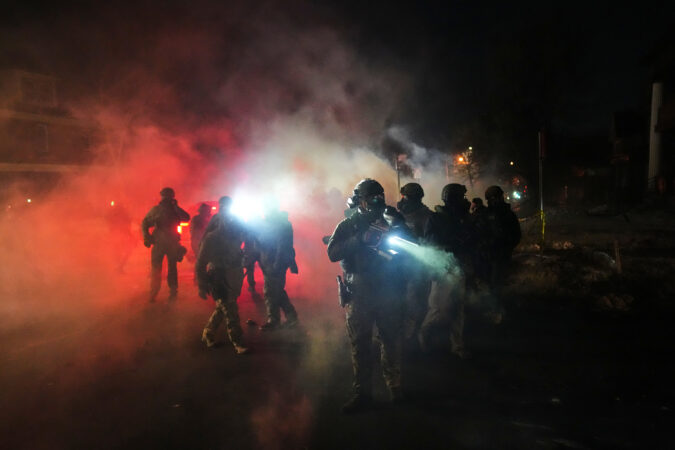
    In Minneapolis, smoke filled the streets Wednesday night near the site of the latest shooting as federal officers wearing gas masks and helmets fired tear gas into a small crowd. Protesters responded by throwing rocks and shooting fireworks.

    Demonstrations have become common in Minneapolis since Good was fatally shot on Jan. 7. Agents who have yanked people from their cars and homes have been confronted by angry bystanders demanding they leave.

    “This is an impossible situation that our city is presently being put in and at the same time we are trying to find a way forward to keep people safe, to protect our neighbors, to maintain order,” Minneapolis Mayor Jacob Frey said.

    Frey said the federal force — five times the size of the city’s 600-officer police force — has “invaded” Minneapolis, and that residents are scared and angry.

    The American Civil Liberties Union of Minnesota filed a lawsuit on behalf of three people who said they were questioned or detained in recent days. The lawsuit says two are Somali and one is Hispanic; all three are U.S. citizens. The lawsuit seeks an end to what the ACLU describes as a practice of racial profiling and warrantless arrests. The government did not immediately comment.

    Shooting followed chase

    Homeland Security said in a statement that federal law enforcement officers on Wednesday stopped a driver from Venezuela who is in the U.S. illegally. The person drove off then crashed into a parked car before fleeing on foot, DHS said.

    Officers caught up, then two other people arrived and the three started attacking the officer, according to DHS.

    “Fearing for his life and safety as he was being ambushed by three individuals, the officer fired a defensive shot to defend his life,” DHS said. The confrontation took place about 4.5 miles from where Good was killed.

    Police chief Brian O’Hara said the shot man was being treated for a non-life-threatening injury. The two others are in custody, DHS said. O’Hara’s account of what happened largely echoed that of Homeland Security.

    Earlier Wednesday, Gov. Tim Walz described Minnesota said what’s happening in the state “defies belief.”

    “Let’s be very, very clear: this long ago stopped being a matter of immigration enforcement,” he said. “Instead, it’s a campaign of organized brutality against the people of Minnesota by our own federal government.”

    Clashes in court as well

    Earlier Wednesday, a judge gave the Trump administration time to respond to a request to suspend its immigration crackdown in Minnesota, while the Pentagon looked for military lawyers to join what has become a chaotic law enforcement effort in the state.

    “What we need most of all right now is a pause. The temperature needs to be lowered,” state Assistant Attorney General Brian Carter said during the first hearing in a lawsuit filed by Minnesota and the cities of Minneapolis and St. Paul.

    Local leaders say the government is violating free speech and other constitutional rights with the surge of law enforcement. U.S. District Judge Katherine Menendez gave the U.S. Justice Department until Monday to file a response to a request for a restraining order.

    Justice Department attorney Andrew Warden suggested the approach set by Menendez was appropriate.

    The judge is also handling a separate lawsuit challenging the tactics used by Immigration and Customs Enforcement and other federal officers when they encounter protesters and observers. A decision could be released this week.

    During a televised speech before Wednesday’s shooting, Gov. Tim Walz described Minnesota as being in chaos, saying what’s happening in the state “defies belief.”

    “Let’s be very, very clear, this long ago stopped being a matter of immigration enforcement,” he said. “Instead, it’s a campaign of organized brutality against the people of Minnesota by our own federal government.”

    Military lawyers may join the surge

    CNN, citing an email circulating in the military, says Defense Secretary Pete Hegseth is asking the military branches to identify 40 lawyers known as judge advocate general officers or JAGs, and 25 of them will serve as special assistant U.S. attorneys in Minneapolis.

    Pentagon spokesperson Kingsley Wilson appeared to confirm the CNN report by posting it on X with a comment that the military “is proud to support” the Justice Department.

    The Pentagon did not immediately respond to emails from The Associated Press seeking more details.

    It’s the latest step by the Trump administration to dispatch military and civilian attorneys to areas where federal immigration operations are taking place. The Pentagon last week sent 20 lawyers to Memphis, U.S. Attorney D. Michael Dunavant said.

    Mark Nevitt, an associate professor at Emory University School of Law and a former Navy JAG, said there’s concern that the assignments are taking lawyers away from the military justice system.

    “There are not many JAGs but there are over one million members of the military, and they all need legal support,” he said.

    An official says the agent who killed Good was injured

    Jonathan Ross, the Immigration and Customs Enforcement officer who killed Good, suffered internal bleeding to his torso during the encounter, a Homeland Security official told The Associated Press.

    The official spoke to AP on condition of anonymity in order to discuss Ross’ medical condition. The official did not provide details about the severity of the injuries, and the agency did not respond to questions about the extent of the bleeding, exactly how he suffered the injury, when it was diagnosed or his medical treatment.

    There are many causes of internal bleeding, and they vary in severity from bruising to significant blood loss. Video from the scene showed Ross and other officers walking without obvious difficulty after Good was shot and her Honda Pilot crashed into other vehicles.

    She was killed after three ICE officers surrounded her SUV on a snowy street a few blocks from her home.

    Bystander video shows one officer ordering Good to open the door and grabbing the handle. As the vehicle begins to move forward, Ross, standing in front, raises his weapon and fires at least three shots at close range. He steps back as the SUV advances and turns.

    Homeland Security Secretary Kristi Noem has said Ross was struck by the vehicle and that Good was using her SUV as a weapon — a self-defense claim that has been deeply criticized by Minnesota officials.

    Chris Madel, an attorney for Ross, declined to comment on any injuries.

    Good’s family, meanwhile, has hired a law firm, Romanucci & Blandin, that represented George Floyd’s family in a $27 million settlement with Minneapolis. Floyd, who was Black, died after a white police officer pinned his neck to the ground in the street in May 2020.

    The firm said it would conduct its own investigation and publicly share what it learns.

  • Is ICE still in Philly? As Bucks ends its alliance, here’s how local officials are (or aren’t) working with federal agents.

    Is ICE still in Philly? As Bucks ends its alliance, here’s how local officials are (or aren’t) working with federal agents.

    Top officials across the Philadelphia region are taking a stand against partnerships with ICE.

    On Wednesday, newly inaugurated Bucks County Sheriff Danny Ceisler terminated a 287(g) agreement with ICE initiated by his Republican predecessor that enabled deputies to act as immigration enforcement officers. Haverford Township also passed a resolution barring participation in a 287(g) agreement.

    And in Philadelphia, elected officials in the so-called sanctuary city have been continuously pushing back against ICE’s presence, with some on Wednesday calling for federal immigration agents to get out of the city.

    These developments come as protests escalate against President Donald Trump’s deployment of U.S. Immigration and Customs Enforcement agents to U.S. cities, after an agent shot and killed Renee Nicole Good in Minneapolis last week. Good, a poet and mother of three, was in her SUV when the agent fired into the vehicle.

    Also on Wednesday, Trump said on his social media platform, Truth Social, that federal funding would be cut from any states that have sanctuary cities. These jurisdictions, which limit local law enforcement cooperation with ICE, have been increasingly targeted by the president’s administration.

    As local leaders continue to grapple with the ever-changing and escalating Trump immigration policy, here’s what to know about how local governments are interacting with federal immigration authorities:

    Philadelphia

    Is ICE still in Philadelphia?

    Yes, ICE is still active in Philadelphia, but Trump has not sent troops or a large swaths of federal immigration agents as he has to other major, Democratic-led cities across the U.S.

    Everyone has a theory as to why that might be: Could Trump be avoiding the largest city in the most important swing state? Has Mayor Cherelle L. Parker’s decision to refrain from publicly criticizing Trump played a role?

    Is Philadelphia still a sanctuary city?

    Yes, but city officials have formally started calling Philadelphia a “welcoming city,” as sanctuary has become an increasingly toxic word because of Trump’s intention to target cities with that label.

    But regardless of the name, a 2016 executive order signed by former Mayor Jim Kenney on ICE cooperation remains in place under Parker’s administration. The directive orders city authorities to not comply with ICE-issued detainer requests to hold people in custody unless there is a judicial warrant.

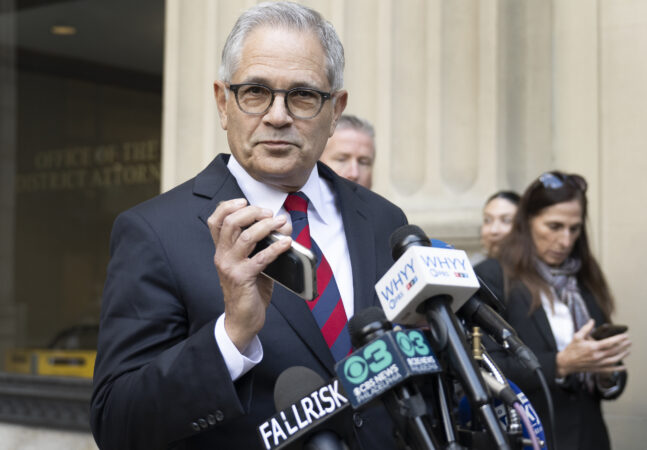
    Philadelphia District Attorney Larry Krasner speaks at a news conference outside the Philadelphia Field Office for Immigration Customs Enforcement in Center City in August.

    What are local leaders saying about ICE?

    District Attorney Larry Krasner, a progressive in his third term, and members of Philadelphia City Council have been among the most routinely outspoken opponents of ICE deployments. But comments by Sheriff Rochelle Bilal went viral last week when she called ICE “fake, wannabe law enforcement.”

    Bucks County

    The sheriff terminated a 287(g) agreement with ICE — what does that mean?

    Essentially, it means that sheriff deputies are no longer allowed to act as immigration authorities.

    Last April, Ceisler’s predecessor, Fred Harran, a Trump-aligned Republican, signed on to the partnership with ICE, stirring up controversy in the swing county. Ceisler, a Democrat who defeated Harran in November, made terminating the agreement a focal point of his campaign.

    No one in Bucks had been detained under the 287(g) agreement, Ceisler said.

    On Wednesday, Ceisler signed another order that prohibits deputies from asking crime victims, witnesses, and court observers their immigration status.

    Does Bucks County still work with ICE?

    Yes. Bucks County is not a sanctuary county and, in the words of Ceisler, “will never be.”

    The Bucks County Department of Corrections will continue to share information with law enforcement agencies, including ICE. The federal agency will also continue to have access to county jails and Bucks will honor judicial warrants from immigration enforcement.

    Bucks County Sheriff Danny Ceisler announces the termination of the county’s partnership with ICE, an agreement formally known as 287(g), during a press conference at the Bucks County Justice Center in Doylestown, Pa., on Wednesday, Jan. 14, 2026.

    “It’s sporadic, it’s reports,” Ceisler said of ICE’s presence in Bucks.

    “I can’t get ICE out of Bucks County,” he added. “I have no authority over them. All I can do is prevent 16 deputies from participating in a program that enables them to perform immigrant enforcement in the community.”

    Bucks County was the only county in the Philadelphia region that did not appear on an initial list published by the Trump administration of sanctuary jurisdictions that could have federal funding at risk. That list was later deleted. The most recent list, published by the administration in August, also does not feature Bucks.

    Haverford Township

    Will Haverford Township participate in a 287(g) agreement?

    On Monday evening, township commissioners in the Delaware County suburb approved a resolution that said Haverford police officers and resources would not be used to give local law enforcement immigration authority. Other municipalities in the county, like Radnor, have also passed resolutions limiting cooperation with ICE.

    While the police department has not requested to enter an alliance with ICE, township commissioners passed the resolution as a preventive measure.

    Montgomery County

    What is Montgomery County’s policy on immigration?

    Montgomery County’s Democratic commissioners have not passed a formal ordinance or a resolution labeling Montco a sanctuary or welcoming county, citing limits to their power, concerns about creating a false sense of security, and a preference for internal policy changes.

    In early 2025, county officials approved a policy that limits communication between county employees and ICE officials and said they would not answer prison detainer requests without warrants.

    Montgomery County activists hold a news conference about ICE incidents in the county last month.

    What do Montco residents think about it?

    County residents have urged individual municipalities within the county to limit collaboration with ICE, especially as the county has become a hot spot for immigration enforcement. Norristown, a heavily Latino community, has specifically become a target for ICE.

    “ICE has created a crisis in our neighborhoods, and we cannot afford silence, mixed signals, or leadership that only reacts once harm has already happened,” Stephanie Vincent, a resident and leader of Montco Community Watch, said last month during a news conference at a West Norriton church.

    As of early December, local organizers estimated that only six out of 62 municipalities had enacted policies, though they consider some to be lackluster.

    Staff writer Katie Bernard contributed to this article.

  • From Spotify to Avelo, economic pressure is melting ICE — but we can do more

    From Spotify to Avelo, economic pressure is melting ICE — but we can do more

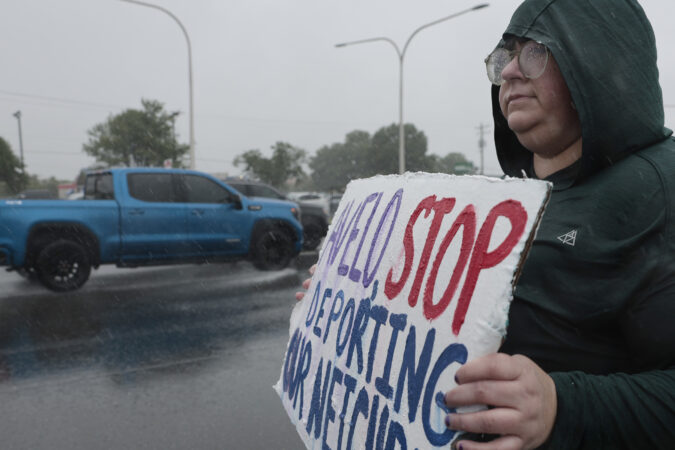
    When the Rev. Jack Perkins Davidson and other parishioners in his socially active Spring Glen Church in Connecticut learned last year that budget carrier Avelo Airlines — with a major hub at nearby Tweed New Haven Airport — was also operating U.S. government deportation flights, the pastor kept thinking about one thing.

    What would the Rev. Dr. Martin Luther King Jr. do?

    Davidson said King’s 1955 Montgomery bus boycott against segregation — the iconic protest that launched the civil rights movement of the mid-20th century — was an inspiration as he and a coalition of activists pressured Avelo to stop aiding U.S. Immigration and Customs Enforcement and its mass deportation campaign.

    “I often think about how the Montgomery bus boycott was a very local action, but it became national news,“ Davidson told me by phone recently. ”Sometimes when I feel so overwhelmed by the state of the world, I take hope in that example — that acting in the local level is a way to create national impact.”

    Davidson and his congregation’s allies, like Connecticut Students for a Dream and the New Haven Immigrant Coalition, spent nine months pressuring Avelo to drop ICE — staging noisy protests, but also doing what the minister called “the unglamorous work” of gathering petition signatures and attending airport board meetings. Last summer, New Haven’s mayor signed their petition as the city banned official travel on Avelo.

    The Connecticut crusaders were joined by activists at other Avelo hubs, including Wilmington. It’s impossible to know exactly how much boycotting air travelers hurts the bottom line of the private, Texas-based corporation, but earlier this month, Avelo made a U-turn. A spokesperson said the airline would halt working with ICE, which “ultimately did not deliver enough consistent and predictable revenue to overcome its operational complexity and costs.”

    Avelo’s exit from the ugly business of flying often handcuffed and shackled migrants out of the United States was a huge win for the growing movement against the Trump regime’s mass deportation raids — but it was not an isolated incident.

    In recent days, the leading music streamer Spotify announced it was no longer running recruitment ads for new ICE agents. The spots urged would-be applicants to “fulfill your mission to protect America,” but sparked outrage among listeners opposed to the agency’s masked goons and its violent raids that have roiled cities from New Orleans to Minneapolis.

    As with Avelo, Spotify’s ties to ICE — the U.S. Department of Homeland Security paid the Swedish-based streamer $74,000, according to Rolling Stone — sparked a nationwide campaign for a boycott that was led by Indivisible, a leading organizer of the massive “No Kings” protests.

    Thousands canceled their paid subscriptions, and some artists pulled their music from Spotify to protest both the ICE ads and the company’s ties to a defense contractor.

    These economic wins come amid a deadly and chaotic start to 2026 that has battered America’s already damaged national psyche. The stunning Jan. 7 Minneapolis murder of Renee Nicole Good, a 37-year-old poet and mother of three, by an ICE agent has only upped the anxiety and the stakes.

    Tuesday night, the shooting of a Venezuelan refugee by federal agents in north Minneapolis triggered a chaotic night of protest that has Donald Trump now threatening to invoke the Insurrection Act and send in troops, escalating a constitutional crisis.

    Although the immigration raids are exactly what Trump promised the nation before his narrow 2024 election victory, Good’s murder and daily viral videos of federal agents smashing windows or flash-banging peaceful citizens have turned a majority of Americans against ICE and everything it stands for.

    A new Quinnipiac Poll released this week showed that 57% of Americans now disapprove of the way ICE and other federal agencies are enforcing immigration laws, with 53% saying Good’s killing was not justified. A separate Economist/YouGov survey found respondents favoring the abolition of ICE by a 46%-43% majority — a first for that political hot-button question.

    So, as you can imagine, in a healthy functioning democracy like the United States, the opposition party Democrats are forming a united front in working to abolish ICE, including the withholding of money in the latest budget battle on Capitol Hill, right?

    Right?

    Um, not exactly. To be sure, Good’s murder and the appalling scenes in Minnesota have triggered a more radical response from some Democrats, including more than 50 members, so far, who’ve signed on for the impeachment of DHS Secretary Kristi Noem. But many in Congress are insisting ICE can somehow be reformed — including an utterly bizarre proposal to put scannable QR codes on immigration agents so the public can identify them. It’s an echo of the tepid reform ideas that failed to stop police brutality after George Floyd’s 2020 murder.

    “Clearly, significant reform needs to take place as it relates to the manner in which ICE is conducting itself,” House Minority Leader Hakeem Jeffries of New York told MS Now on Tuesday night — minutes before agents in Minneapolis reportedly shot a flash-bang grenade into a moving car and injured six children, including a baby.

    You don’t significantly reform the brand of fascism that we can all see on the icy streets of the Twin Cities. You fight it like the existential crisis for American democracy that it is. Millions of everyday Americans are both feeling that urgency and dismayed that the institutions they thought would oppose autocracy — Congress, the media, the U.S. Supreme Court — aren’t standing with them.

    No wonder people are fighting with the only real ammunition they have under late-stage capitalism: their dollars.

    Nearly one year into the second coming of Trump, many of the major victories by citizens resisting his regime have come through the fingertips of everyday folks clicking on a “cancel” button.

    The best-known example came last summer when Disney-owned ABC briefly suspended late-night host Jimmy Kimmel in a flap over some (fairly tame) comments he made after the assassination of right-wing activist Charlie Kirk. The network raced to put Kimmel back on the air after the cancellation rates for two lucrative Disney-owned streaming services, Disney+ and Hulu, doubled. And Disney recently extended the contract of Trump’s least-favorite comic by another year.

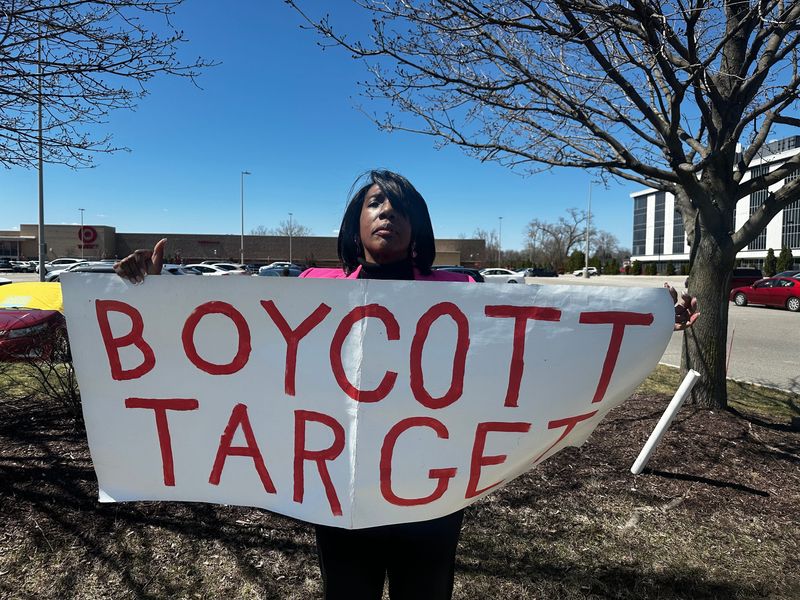
    Other economic pressure campaigns have badly damaged U.S. brands without getting results … yet. The best example is the giant retailer Target, whose decision to end its diversity initiatives after Trump’s inauguration sparked calls for a boycott by prominent Black activists and some labor unions. Since then, foot traffic at Target stores has dropped (while increasing at more “woke” rival Costco), and the stock price of the Minnesota-based company has plunged by 33%.

    This hasn’t yet inspired Target’s management to fully restore its diversity initiatives, and it more recently has angered some activists by insisting it has no power to stop ICE agents from using its parking lots and even entering its stores to make arrests. None of this should deter the public from keeping the pressure on Target.

    Allison Folmar of West Bloomfield joined the protesters who advocated for a boycott against Target in April.

    The weeks of Minnesota mayhem have focused attention on a new corporate bête noire: Hilton Worldwide Holdings. Two of the hotel chain’s properties in Greater Minneapolis have been the scene of noisy, all-night protests after reports that out-of-town ICE agents are staying there. And Hilton further infuriated activists and sparked calls for a boycott by delisting a third Minneapolis hotel after an employee said ICE was not welcome.

    I will not stay at any Hilton hotel as long as the company thinks it’s OK to host masked thugs who are snatching laborers off the street and shooting or tear-gassing anyone who objects to that, and I hope you would consider doing the same.

    As New Haven’s Davidson rightly said, using economic pressure to end injustice takes time and hard work that isn’t always glamorous or made for the cable-TV cameras. Some 71 years ago in Montgomery, Ala., the King-led bus boycott took 381 days and a lot of sacrifice from unsung heroes like Claudette Colvin, who died this week at age 86, and working-class Black people who walked or carpooled to their jobs until claiming victory.

    The bottom line has not changed since MLK’s time. The color that matters most to corporate America is the color of money. The pursuit of profit is why cowardly law firms or TV networks like CBS are aiding American dictatorship instead of fighting it. But it’s also what makes them reverse course when they realize that hate is actually bad for business in a consumer society.

    Boycotts aren’t the only solution, but in a world where feckless institutions have given up, they have become an essential tool. Spend your dollars with any company that still believes in a decent, diverse America, and put the collaborators out of business. Consider it an early birthday present for Dr. King.

  • Two Pa. lawmakers were in a video critical of Trump. Now, they say, they are under federal investigation.

    Two Pa. lawmakers were in a video critical of Trump. Now, they say, they are under federal investigation.

    U.S. Reps. Chrissy Houlahan of Chester County and Chris Deluzio of Allegheny County are among the Democrats who say they are being investigated by President Donald Trump’s administration for appearing in a video that calls on service members not to follow “illegal orders.”

    Deluzio, a Navy veteran, said in a Thursday interview that the investigation is “part of a harassment or intimidation campaign against me and my colleagues.”

    “The fact that you’ve got members of Congress, all who’ve served the country, being targeted in this way because we stated the law shouldn’t just worry but terrify the American people, and I’m not going to be intimidated or back down in the face of that,” he told The Inquirer.

    The Democratic lawmakers who appeared in the Nov. 18 video were contacted late last year by the FBI for interviews. They say they have now been contacted by the U.S. Attorney’s Office for the District of Columbia, a significant escalation in the investigation.

    “The six of us are being targeted not because we said something untrue, but because we said something President Trump and Secretary [of Defense Pete] Hegseth didn’t want anyone to hear,” Houlahan, a former Air Force officer, said in a statement Wednesday.

    “This investigation is ridiculous on any day but especially so on a day the President is considering launching airstrikes against Iran in retaliation for their crackdown on free speech,” Houlahan said.

    The four representatives and two senators, all of whom served in the military or intelligence agencies, said in the video that the Trump administration is “pitting uniformed military and intelligence community professionals against American citizens.”

    In response, Trump posted on social media two days later that the lawmakers were engaging in “SEDITIOUS BEHAVIOR, punishable by DEATH!” along with a string of hostile messages toward the lawmakers.

    Houlahan said at the time she was disappointed in a lack of support from her GOP colleagues.

    U.S. Sen. Elissa Slotkin (D., Mich.), a former CIA analyst who appeared in the video, said Wednesday that representatives for U.S. Attorney Jeanine Pirro, the top federal prosecutor in Washington, had contacted her last week requesting an interview.

    Houlahan told reporters that prosecutors want to “sit down” with all the lawmakers who were involved in the video.

    U.S. Reps. Jason Crow (D., Colo.), a former paratrooper and Army Ranger, and Maggie Goodlander (D., N.H.), a former intelligence officer, also appeared in the video, as did U.S. Sen. Mark Kelly (D., Ariz.), a former Navy captain.

    Sen. Mark Kelly sues the Pentagon

    Kelly filed a lawsuit Monday against the Pentagon and Hegseth over the defense secretary’s attempts to punish Kelly in particular for his participation in the November video.

    Kelly claims the Trump administration is violating his constitutional rights to free speech after Hegseth censured the Arizona senator. Hegseth said the Jan. 5 censure was “a necessary process step” to proceedings that could result in a demotion from Kelly’s retired rank of captain and subsequent reduction in retirement pay.

    “The First Amendment forbids the government and its officials from punishing disfavored expression or retaliating against protected speech,” Kelly’s lawsuit says. “That prohibition applies with particular force to legislators speaking on matters of public policy.”

    Although all six lawmakers served in the military or intelligence agencies, only Kelly served long enough to formally retire from the military, which means the senator still falls under the Pentagon’s jurisdiction. The Pentagon opened its own investigation into Kelly in November after he appeared in the video.

    Deluzio said that Trump and Hegseth’s pursuit of Kelly is about more than just the senator.

    “They are trying to intimidate retired service members to signal to them that if you speak up and say something that the Trump administration or Pete Hegseth doesn’t like, that they’re going to target your retirement and your pension that you’ve earned after 20 years of service,” he said.

    A 2016 video circulated last month of Hegseth citing the same military law the legislators refer to in their video: Don’t follow unlawful orders. As a member of Trump’s administration, Hegseth has pointed to other aspects of military law that emphasize following orders and that say orders should be presumed lawful.

    When asked whether he also would sue the Trump administration over how officials have handled the lawmakers’ video, Deluzio said he was “not going to detail my legal strategy in all of this.”

    “But I will just be crystal clear that I am not intimidated by what they’re trying to do,” he added.

    This article contains information from the Associated Press.

  • Danish official says there’s a ‘fundamental disagreement’ with Trump over Greenland

    Danish official says there’s a ‘fundamental disagreement’ with Trump over Greenland

    WASHINGTON — Disagreement” over Greenland remains with President Donald Trump after holding highly anticipated White House talks with Vice President JD Vance and Secretary of State Marco Rubio.

    The two sides, however, agreed to create a working group to discuss ways to work through differences as Trump continues to call for a U.S. takeover of the semiautonomous territory of NATO ally Denmark.

    “The group, in our view, should focus on how to address the American security concerns, while at the same time respecting the red lines of the Kingdom of Denmark,” Danish Foreign Minister Lars Løkke Rasmussen told reporters after joining Greenland’s foreign minister, Vivian Motzfeldt, for the talks. He added that it remains “clear that the president has this wish of conquering over Greenland.”

    Trump is trying to make the case that NATO should help the U.S. acquire the world’s largest island and says anything less than it being under American control is unacceptable.

    Denmark, meanwhile, announced plans to boost the country’s military presence in the Arctic and North Atlantic as Trump tries to justify his calls for a U.S. takeover of the vast territory by repeatedly claiming that China and Russia have their designs on Greenland, which holds vast untapped reserves of critical minerals.

    The president, who did not take part in Wednesday’s meeting, told reporters he remained committed to acquiring the territory.

    “We need Greenland for national security,” Trump said. “We’ll see how it all works out. I think something will work out.”

    Trump named Louisiana Gov. Jeff Landry as a special envoy to Greenland last month. Landry did not attend Wednesday’s meeting, but was scheduled to travel to Washington on Thursday and Friday for meetings that include the topic of Greenland, his spokesperson said.

    Landry, following Trump’s latest comments, posted on X that Trump was “absolutely right” about acquiring Greenland and the territory “is a critical component of our nation’s national security portfolio.”

    Before the meeting, Trump took to social media to make the case that “NATO should be leading the way” for the U.S. to acquire the territory. NATO Secretary General Mark Rutte has sought to keep an arms-length away from the dispute between the most important power and the other members of the 32-country alliance unnerved by the aggressive tack Trump has taken toward Denmark.

    Both Løkke Rasmussen and Motzfeldt offered measured hope that the talks were beginning a conversation that would lead to Trump dropping his demand and create a path for tighter cooperation with the U.S.

    “We have shown where our limits are and from there, I think that it will be very good to look forward,” Motzfeldt said.

    Denmark bolstering presence in Arctic

    In Copenhagen, Danish Defense Minister Troels Lund Poulsen announced a stepped-up military presence in the Arctic “in close cooperation with our allies,” a necessity in a security environment in which “no one can predict what will happen tomorrow.”

    Several of the country’s allies, including Germany, France, Norway and Sweden, announced they were arriving in Greenland along with Danish personnel to take part in joint exercises or map out further military cooperation in the Arctic.

    NATO is also looking at how members can collectively bolster the alliance’s presence in the Arctic, said a NATO official who was not authorized to comment publicly and spoke on condition of anonymity.

    Greenlanders want the US to back off

    Greenland is strategically important because, as climate change causes the ice to melt, it opens up the possibility of shorter trade routes to Asia. That also could make it easier to extract and transport untapped deposits of critical minerals which are needed for computers and phones.

    Trump says Greenland is also “vital” to the United States’ Golden Dome missile defense program. He also has said Russia and China pose a threat in the region.

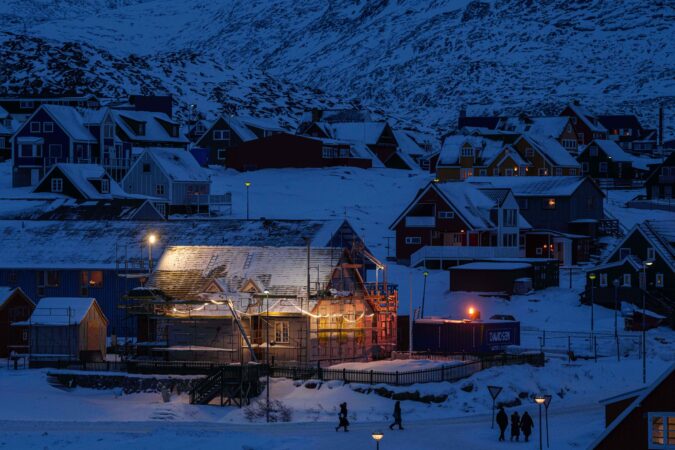
    But experts and Greenlanders question that claim, and it has become a hot topic on the snow-covered main street in Greenland’s capital, where international journalists and camera crews have descended as Trump continues his takeover talk.

    In interviews, Greenlanders said the outcome of the Washington talks didn’t exactly evince confidence that Trump can be persuaded.

    “Trump is unpredictable,” said Geng Lastein, who immigrated to Greenland 18 years ago from the Philippines.

    Maya Martinsen, 21, said she doesn’t buy Trump’s arguments that Greenland needs to be controlled by the U.S. for the sake maintaining a security edge in Arctic over China and Russia. Instead, Martinsen said, Trump is after the plentiful “oils and minerals that we have that are untouched.”

    Greenland “has beautiful nature and lovely people,” Martinsen added. ”It’s just home to me. I think the Americans just see some kind of business trade.”

    Denmark has said the U.S., which already has a military presence, can boost its bases on Greenland. The U.S. is party to a 1951 treaty that gives it broad rights to set up military bases there with the consent of Denmark and Greenland.

    Bipartisan concern from U.S. senators

    Løkke Rasmussen and Motzfeldt also met with a bipartisan group senators from the Arctic Caucus. The senators said they were concerned Trump’s push to acquire Greenland could upend NATO and play into the hands of Russian President Vladimir Putin.

    Republican Sen. Lisa Murkowski of Alaska, who has introduced legislation to try to block any U.S. action in Greenland, said it was “stunning” to her that they were even discussing the matter. “We are operating in times where we are having conversations about things that we never even thought possible,” Murkowski said.

    Sen. Angus King, I-Maine, said it is “nonsense” to say that the U.S. needs to control Greenland to protect national security. The officials were “very open to additional national security assets in Greenland in order to meet whatever risks there are.”

    A bipartisan delegation of U.S. lawmakers plans to show their solidarity by traveling to Copenhagen this week.

  • Sen. Chris Coons and U.S. Rep. Madeleine Dean are headed to Denmark as Trump pushes to acquire Greenland

    Sen. Chris Coons and U.S. Rep. Madeleine Dean are headed to Denmark as Trump pushes to acquire Greenland

    As President Donald Trump threatens to acquire Greenland, Sen. Chris Coons is boarding a plane to Denmark to push back.

    Coons (D., Del.), who opposes the president’s takeover proposal, is bringing a bipartisan group of House and Senate members on a mission to highlight the longstanding relationship between the U.S. and Denmark, which has control over defense and foreign policy in the semi-autonomous territory, located northeast of Canada.

    Coons said in an interview Wednesday that the delegation will meet with Danish and Greenlandic government and business leaders to discuss issues including Arctic security and strengthening trade relations.

    “Denmark has been a strong close and trusted ally for decades and this is a chance for a bipartisan and bicameral delegation from Congress to go and communicate our respect and appreciation for their close partnership,” he said.

    He said he hopes the visit clarifies “there are folks in Congress who do not support an aggressive engagement.”

    Coons noted Danish soldiers fought alongside Americans in Iraq and Afghanistan and suffered some of the highest casualties per capita. The delegation will lay a wreath to commemorate that sacrifice on their trip.

    Joining Coons will be Democratic U.S. Reps. Sarah McBride of Delaware, Madeleine Dean of Pennsylvania, Gregory Meeks of New York, and Republican Sen. Thom Tillis from North Carolina. The delegation will be in Copenhagen Friday and Saturday. Some members of the delegation will continue on to the World Economic Forum in Davos, Switzerland.

    Trump has threatened to annex Greenland, a self-governing territory of Denmark, into the United States, contending it’s an issue of national security to prevent Russia or China from taking it over.

    Coons called that rationale “puzzling,” given leaders of Greenland and Denmark have assured him on previous visits that they are happy to collaborate with the U.S. to amp up American military presence in the country and work together on arctic security issues or to explore investments in mineral resources.

    “I asked are you aware of any foreign threats, cyber, or other incursions?” Coons said of a previous conversation with Denmark Minister of Foreign Affairs Lars Løkke Rasmussen. “Nope, none.”

    Leaders in Greenland this week said they wanted the territory to remain part of the kingdom of Denmark.

    “Greenland does not want to be owned by the USA,” Greenland’s Premier Jens-Frederik Nielsen said at a news conference Tuesday in Copenhagen. “Greenland does not want to be governed by the USA. Greenland will not be part of the USA. We choose the Greenland we know today, which is part of the Kingdom of Denmark.”

    Denmark officials have warned an attack on Greenland, which is part of Denmark and thus under the protection of the North Atlantic Treaty Organization, would destroy the alliance, which has been a pillar of U.S.-European relations since 1949.

    Trump has been seemingly undeterred by foreign protestations. He said on social media Wednesday that “anything less” than U.S. control of Greenland is “unacceptable,” arguing the United States needs the territory for national security purposes, which could in turn strengthen NATO.

    “NATO becomes far more formidable and effective with Greenland in the hands of the UNITED STATES,” Trump wrote in a Truth Social post. “Anything less than that is unacceptable.”

    Dean, who also went on a trip to Denmark in April, said in an interview she hopes to convey “the president’s notion is wrongheaded, dangerous, inane and not something we support.”

    Dean said if the president wants to boost security in Denmark he might consider increasing the number of U.S. military bases there, which has precipitously declined, rather than trying to take control of the country.

    Dean also encouraged her Republican colleagues to speak out against the president’s comments.

    “If somehow this president unleashes military action against Greenland, against the kingdom of Denmark — it will destroy 80 years of a NATO partnership that has kept the world in a more peaceful place,” she said. “It’s just a sick irony that this is the same president who so wishes he could win the Nobel Peace Prize.”

    Vice President JD Vance and Secretary of State Marco Rubio hosted the foreign ministers of Denmark and Greenland Wednesday, a meeting that ended with plans for a working group but also highlighted the “fundamental disagreements” between the nations.

    Coons and Dean’s trip comes as tensions have risen internationally.

    The government of Greenland and Denmark’s Ministry of Defense said there would be an increased military presence in the territory starting Wednesday due to “security tensions,” CNN reported.

    Elsewhere, European leaders continue to reject Trump’s calls to control the semi-autonomous territory. French President Emmanuel Macron warned Wednesday that the consequences of the US trying to seize Greenland from Denmark would be “unprecedented.”

  • It’s time to address ICE activity at the Philly courthouse, elected and community leaders say

    It’s time to address ICE activity at the Philly courthouse, elected and community leaders say

    Some elected city officials and community leaders called for ICE to get out of Philadelphia on Wednesday, saying agents had become a threat to safety and to the orderly administration of justice.

    They asked the court system to establish rules and protections for immigrants seeking to attend proceedings at the Criminal Justice Center ― which advocates say has been allowed to become an ICE “hunting ground.”

    They asked for state court administrators to meet with the district attorney, the sheriff, the chief public defender, City Council members and others, and suggested that in the meantime, court staff must be better trained to understand the difference between court- and ICE-issued orders, that they do not carry equal weight nor require equal obedience.

    “People should be able to come to court without fear,” said Keisha Hudson, chief defender of the Defender Association of Philadelphia. “Without fear that doing what the law requires will put them at risk.”

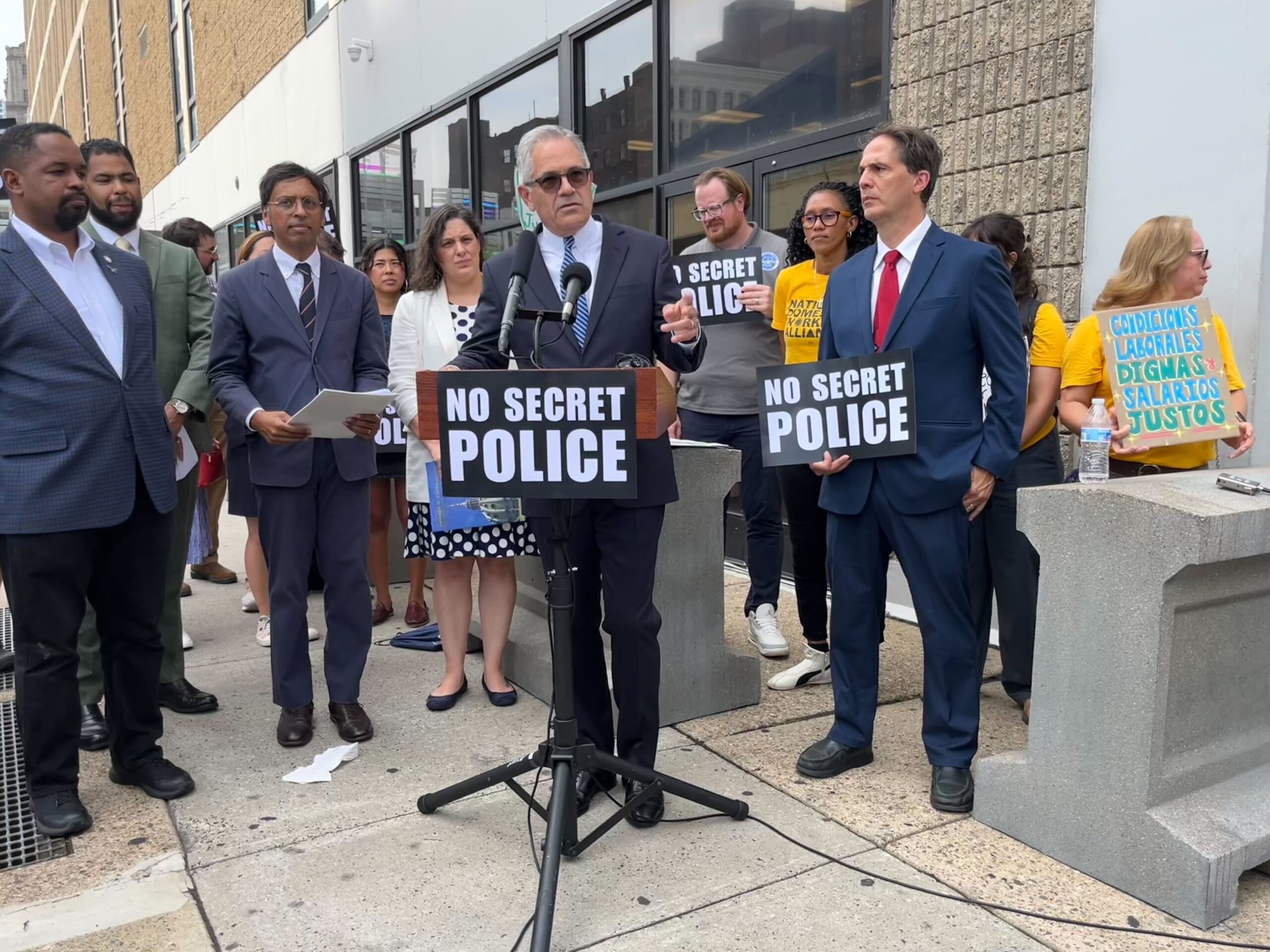
    District Attorney Larry Krasner ― whose office led the news conference, and who reiterated his pledge to prosecute ICE agents who commit crimes ― said victims and witnesses are not showing up for cases. And community leaders said residents’ lives were being diminished.

    “Across Philadelphia, the increase in ICE raids is tearing the fabric of our community,” said Thi Lam, deputy director of the Southeast Asian Mutual Assistance Association Coalition, which serves refugees and immigrants, leaving people afraid to go to work, to seek medical care, and to take their children to school.

    “As Philadelphians, we demand policies that protect due process,” he said. “We object to the violent way that this immigrant process has turned. We invite all Philadelphians to speak up. Speak up, Philadelphians!”

    ICE officials did not immediately reply to a request for comment.

    The news conference at the Salt and Light Church in Southwest Philadelphia came as protests and confrontations continue in Minnesota and other cities over the fatal ICE shooting of a Minneapolis wife and mother, Renee Good. Daily ICE activity and arrests in Philadelphia and surrounding towns continue to rile and frighten immigrant communities and those who support them.

    Krasner called the shooting of Good “murder,” and said “that collection of people who left their Klan hoods in the closet” to become ICE agents will face prosecution for any crimes committed in Philadelphia.

    Meanwhile, in Atlantic City on Wednesday, Mayor Marty Small and other officials gathered to support local immigrant communities, and to assert their willingness to ensure that ICE agents “continue to do the job under the legal letter of the law.

    “Some of the footage that we’ve seen has been horrifying, and I understand, and I empathize with that community. And as your mayor, this city has your back,” Small said, flanked by Atlantic City Police Chief Jim Sarkos, Director of Public Safety Sean Riggin, and Cristian Moreno-Rodriguez from the immigrant advocacy organization El Pueblo Unido of Atlantic City.

    Atlantic City police, they noted, do not assist ICE in immigration enforcement. Under the 2018 Immigrant Trust Directive, New Jersey state and local police agencies are limited in how they can cooperate with ICE.

    Riggin clarified, however, that local police will assist ICE in cases where agents are in danger or a crime is being committed.

    “We will respond, we’re going to assess the situation, and we’re going to act accordingly in compliance with that directive,” Riggin said. “So, just because somebody sees us with ICE does not mean we’re doing immigration enforcement.”

    In Philadelphia, immigrant advocates have made the courthouse and Sheriff Rochele Bilal a target of protest, insisting that ICE has wrongly been given free roam of the property.

    The group No ICE Philly has castigated Bilal, saying that by not barring U.S. Immigration and Customs Enforcement from the courthouse — as judges and lawmakers in some other jurisdictions have done — she has helped enable the arrest of at least 90 immigrants who were trailed from the building and arrested on the sidewalk.

    That group and others say ICE agents have been allowed to essentially hang out at the Center City courthouse, waiting in the lobby or scouring the hallways, then making arrests outside, a pattern they say has been repeated dozens of times since President Donald Trump took office in January 2025.

    Many people who go to the courthouse are not criminal defendants ― they are witnesses, crime victims, family members, and others already in diversionary programs.

    The sheriff says her office does not cooperate with ICE, does not assist in ICE operations and does not share information with ICE. Last week she garnered national headlines and condemnation for calling ICE “fake, wannabe law enforcement” and for sending a blunt warning to its officers.

    “If any [ICE agents] want to come in this city and commit a crime, you will not be able to hide, nobody will whisk you off,” Bilal said in now-viral remarks. “You don’t want this smoke, cause we will bring it to you. … The criminal in the White House would not be able to keep you from going to jail.”

    On Wednesday she said her office follows the law, and would obey orders from judges or statues from lawmakers concerning courthouse security.

    The news conference followed an announcement of the Defender Association of Philadelphia’s new initiative to help people facing immigration consequences both inside and outside the justice system.

    The agency’s Immigration Law Practice is expected to grow to up to 11 staff members, arriving as the Trump administration pursues aggressive new enforcement and even minor legal cases can put undocumented city residents at risk of detention, family separation, or deportation.

    Councilmember Jamie Gauthier told news reporters that guardrails must be set around ICE behavior at the Criminal Justice Center, and that the agency “is making us less safe by scaring away witnesses.”

    Councilmember Kendra Brooks said constituents were phoning her office, asking how to get ICE out of their neighborhoods.

    “ICE needs to get out of our city, for the safety of all of us,” Brooks said, calling on the city government and the court system to act. “Something needs to be done. … People can’t safely come to courts ― that’s a threat to all of us.”

    Councilmember Rue Landau asked people to imagine a domestic-violence case, where victims and witnesses were afraid to go near the courthouse.

    “We will not have some masked, unnamed hooligans from out of town come here and attack Philadelphians,” she said. “We are saying ICE out of Philadelphia. … Out of our courts, out of our city.”

  • Women in tight uniforms and maggots in the soft serve: Two ex-employees sue Trump’s N.J. golf club

    Women in tight uniforms and maggots in the soft serve: Two ex-employees sue Trump’s N.J. golf club

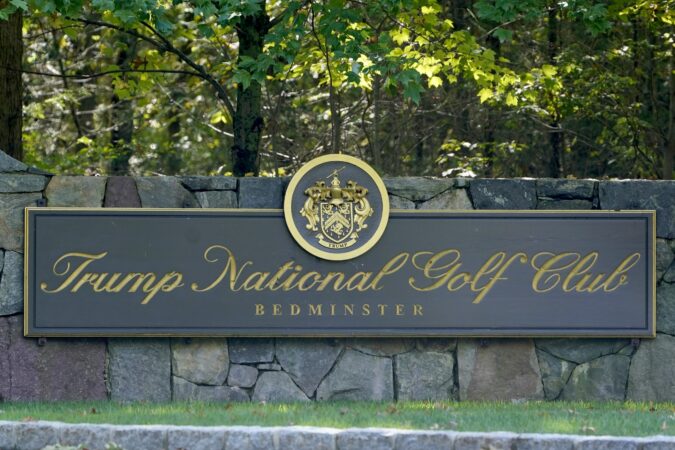
    Women working at Trump National Golf Club in New Jersey were required to wear tight uniforms that were too small and told to “smile more,” as they endured “sexist remarks about their bodies and menstruation,” according to two lawsuits by former employees.

    Both complaints describe a similar pattern: A female employee at the Bedminster club, working in a culture hostile to women, reported safety issues and was penalized for doing so.

    Maria Hadley, a former banquet server who worked at the private club, owned by President Donald Trump, from February until she resigned in August, says she suffered from a retaliation campaign after she reported a manager who spiked the drink of an underage employee with vodka. And Justine Sacks, who was hired as clubhouse manager in 2023, says that she was demoted and ultimately fired in May for reporting health and safety violations, including maggots and mold in the soft-serve machine.

    The lawsuits describe a hyper-sexualized work environment, in which female staffers were expected to endure sexual harassment from workers and guests.

    Both Hadley and Sacks are represented by the New Jersey-based McOmber McOmber & Luber law firm. Their attorneys did not respond to a request for comment.

    The Bedminster club is operated by the Trump Organization, which is led by the president’s sons Eric Trump and Donald Trump Jr. Neither the club nor general manager David Schutzenhofer responded to requests for comment.

    In this July 15, 2017 file photo, President Donald Trump turns to wave to the people gathered at the clubhouse as his walks to his presidential viewing stand during the U.S. Women’s Open Golf tournament at Trump National Golf Club in Bedminster, N.J.

    Vodka-spiked Shirley Temple

    Hadley, a banquet server, says women were treated as “a prop” andwere expected to look pleasing, work without complaint, and stay quiet,” according to the lawsuit filed Monday in New Jersey Superior Court in Camden. Male managers and coworkers harassed their female peers, and called teenage guests “sexy.” When a guest inappropriately touched Hadley, a manager advised “they pay a lot of money to come here, just ignore it.”

    Hadley reported in June that a bartender poured vodka into the Shirley Temple of an underage employee without the employee’s consent, saying it would give her energy.

    The bartender was temporarily fired, but the club’s management launched a retaliation campaign against Hadley, the complaint says. She was denied a $1,000 bonus, isolated by her peers, and received worse hours and assignments.

    Hadley resigned via email in August, the suit says, writing to the club’s human resources representative that her employment became “unbearable.” The club accepted her resignation, which the suit calls “effectively forcing her out,” and rehired the fired bartender.

    That man went on to make sexual comments about 12-year-old guests with braces in September, according to a message Hadley sent to Eric Trump, the executive vice president of Trump National, which is included in the complaint.

    Maggots and mold

    Sacks joined Trump National in January 2023 and was told from the onset to expect “gender differences” in treatment, according to the suit, which was filed last month in Monmouth County Superior Court. She was instructed to hire women based on their looks, and received complaints from multiple direct reports about offensive, gender-based comments from male managers and peers.

    The complaints were dismissed by Schutzenhofer, who told Sacks to “vote the mean girls off the island,” the suit says.

    The club’s management slowly stripped Sacks’ authority and stopped inviting her to leadership meetings, in what the suit says was retaliation for elevating the complaints of female staffers.

    People play golf next to the Trump National Golf Club Bedminster’s clubhouse in Bedminister on Friday, June 9 , 2023, in New Jersey.

    Sacks was also retaliated against for reporting unsanitary conditions at the club’s kitchens, which included expired and unlabeled food, and the bistro operating without running water, the complaint says. There were flies all over the clubhouse in the fall of 2023, which even Donald Trump complained about, according to the lawsuit.

    Management told Sacks that she was new to working at golf clubs and was “wrapped too tight” when she complained about the sanitation conditions, as well as employees drinking and vaping on the job. But even Eric Trump asked the club’s management team to make sanitation a “huge focus” because a few health inspectors are “eager and politically motivated to try and embarrass us,” according to a copy of an email sent by the executive vice president in January 2024.

    The clubhouse’s bistro-area became more unsanitary, and by September 2024 the soft-serve machine was filled with maggots and mold, the suit says.

    Sacks was placed on a 90-day performance improvement plan in December 2024 for, among other issues, being “off-putting,” the complaint says. In April, Sacks was reassigned from clubhouse manager to managing the bistro, which the lawsuit calls a clear demotion.

    Schutzenhofer terminated Sacks in May, the lawsuit says, shortly after the club “failed miserably” a state health inspection.