Tag: Donald Trump

  • Trump administration jails migrant teens in Pa. facility known for child abuse

    Trump administration jails migrant teens in Pa. facility known for child abuse

    MORGANTOWN, Pa. — The Trump administration says it is focused on protecting unaccompanied migrant children. It imposed strict new background checks on those seeking custody of young migrants and cut ties with a chain of youth shelters accused of subjecting children in its care to pervasive sexual abuse.

    “This administration is working fearlessly to end the tragedy of human trafficking and other abuses of unaccompanied alien children who enter the country illegally,” said Health Secretary Robert F. Kennedy Jr., who oversees the Office of Refugee Resettlement, or ORR, which cares for unaccompanied migrant children.

    But for the last three months, that office has also locked some teenage migrant boys inside a secure juvenile prison about 50 miles west of Philadelphia with a long and publicly documented history of staff physically and sexually abusing juvenile offenders in its care, a Washington Post investigation has found.

    “ORR is sending children to a juvenile detention center who should not be there,” said Becky Wolozin, a senior attorney at National Center for Youth Law.

    ORR awarded $9 million to Abraxas Alliance in August to hold up to 30 young immigrants deemed a danger to themselves or others in its facility in Morgantown, Berks County. At various times since early October, between five and eight migrant teenage boys have been held inside a dedicated wing of the juvenile detention center, sleeping inside locked cells the size of walk-in closets, according to lawyers who met with them.

    Pennsylvania state inspectors have documented at least 15 incidents since 2013 in which they said staff physically mistreated minors at the Morgantown facility, which holds principally juveniles facing or convicted of criminal offenses. In at least two incidents, officials documented allegations of staff sexually harassing or sexually abusing young residents. The most recent reported abuse occurred in November.

    In a lawsuit filed in 2024, six former residents of the facility allege they were sexually abused by staff between 2007 and 2016, accusing management of enabling a “culture of abuse.”

    A spokesperson for Abraxas Alliance, the Pittsburgh nonprofit that operates the facility, did not respond to a long list of questions about its treatment of children. After some of the incidents cited by inspectors, Abraxas suspended or fired staff members and submitted correction plans to state regulators, promising to retrain workers on proper restraining techniques and install more surveillance cameras.

    ORR has wide latitude over the types of facilities it uses to house children, though federal rules require it to use “the least restrictive setting that is in the best interests of the child.” The rules say ORR may place minors in secure facilities if they have been charged with a crime, or if the agency determines they could harm themselves or others.

    HHS spokesman Andrew Nixon said decisions on where to place migrant children “are based on each child’s specific circumstances, behavior-based risk assessments, and legal criteria.” All the teens at the Morgantown facility were provided a notice with “specific details as to why they are placed there,” he added.

    Some of the migrant boys have no pending criminal charges, and several have parents or close relatives in the U.S. asking to be reunited with them, said Becky Wolozin, a senior attorney at National Center for Youth Law who visited the facility and spoke to some of the boys in November.

    The Post was unable to identify any of the boys or verify Wolozin’s claims about their circumstances, because neither their immigration lawyers nor government officials would share details about their cases due to strict rules protecting the records of minors.

    License revoked

    In November, Pennsylvania revoked one of the three licenses held by different units within the Morgantown facility, Abraxas Academy. The state accused Abraxas of “gross incompetence, negligence, and misconduct” following a Nov. 4 incident of staff violence against a child, state records show. According to those documents, a staff member put his hand on a child’s neck and shoved his face into a table, an incident the facility’s operator did not report to local authorities.

    Ali Fogarty, a spokeswoman for Pennsylvania’s Department of Human Services, said state law prevented her from commenting on the incident, including whether the child was a migrant placed by ORR or another juvenile held in the facility. The state increased its monitoring of the Morgantown facility and reduced its maximum capacity under one license by 25 residents while the company appeals the revocation. Its two other licenses were unaffected, and it is still permitted to hold more than 100 individuals, Fogarty said.

    Nixon, the HHS spokesman, said ORR “will make any necessary adjustments to its use of the facility based on the outcome of the state’s licensing process” and its own review of the incident, adding that “ORR has zero tolerance for sexual abuse and harassment of children in our care.”

    The problems at the nation’s only secure jail for migrant youths are unfolding as the Trump administration pushes measures it says are aimed at safeguarding the 2,300 unaccompanied migrant children in its custody, as well as those it releases to sponsors within the country.

    In March, ORR ended its use of shelters operated by Southwest Keys — a Texas nonprofit which the Justice Department sued in 2024, alleging its workers repeatedly sexually abused children in the nonprofit’s shelters from 2015 to at least 2023. The company said in a 2024 statement that the lawsuit did not “present the accurate picture of the care and commitment our employees provide to the youth and children.” The department dropped the lawsuit last year.

    Around the same time, ORR also began requiring people to provide income documents and submit to DNA testing, fingerprinting and interviews before regaining custody of young migrants, including their own children, which agency officials say will help ensure they are not being claimed by traffickers.

    The Trump administration said President Joe Biden had released tens of thousands migrant children to sponsors with little or no vetting, including to some adults with a history of violent crimes. U.S. Immigration and Customs Enforcement says it’s enlisting the help of local law enforcement agencies to locate the children and verify their safety.

    Jen Smyers, a former deputy director of ORR under Biden, said this population has faced abuse for decades, across several administrations. She said stricter vetting cannot always prevent mistreatment.

    Partly as a result of the Trump administration’s new vetting procedures, the average child remains in ORR custody about six months — nearly three times longer than at the beginning of 2025, government data shows.

    A history of abuse allegations

    By jailing migrant children in a secure detention center, especially one with a recent history of abuse, the administration is exposing these young people to some of the same risks it says it wants to eliminate, said Jonathan White, a former career HHS official who managed the unaccompanied children program during part of Trump’s first term.

    Under any previous administration, a track record of physical or sexual abuse would be “instantly disqualifying” for federal contracts involving the care of minors, White said. “This is the kind of thing under Republican and Democratic administrations you terminate existing grants for — you don’t give new grants to places like that.”

    Abraxas Academy, part of a chain of 10 youth detention and treatment centers, holds dozens of teenage boys from surrounding areas, many of whom are serving sentences for violent crimes or awaiting court hearings. Rob Monzon, a former director of the Morgantown facility, calls it “the most extreme setting in juvenile detention.” Its young inmates, some who claim to be from gangs, frequently lash out at one another, vandalize the building and attack staff members, he said.

    State inspection records show that staff members have at times responded with violence.

    One staff member “picked up [a child] by the shirt and threw the child to the ground, holding the child down with a knee, and banging the child into the wall,” a 2013 report on the state’s website said. Another threw punches at a different minor and yet another bit an incarcerated child in the abdomen, other reports said. The reports noted that one staff member “frequently escalates situations” by applying restraint holds that are “known to cause pain to the child.”

    Workers have been trained to defend themselves by placing inmates into restrictive holds, waiting for them to calm down and calling for help from other employees, according to Shamon Tooles, who worked as a supervisor at Abraxas Academy for eight months in 2023. But due to a lack of training, supervision, and frequent short-staffing, he said, some workers resorted to fighting back.

    “A lot of the staff were just scared,” said Tooles, who said he does not condone any mistreatment of children.

    In December 2016, Pennsylvania state inspectors said they found “a preponderance of evidence” that a staff member sexually harassed a child at the Morgantown facility. The staff member, who was not identified, was put on leave and subsequently resigned.

    One of the former detainees who is suing Abraxas Alliance claimed a staff member took away his food or gym privileges or locked him in his room if he did not comply with sexual requests.

    In court records, attorneys for Abraxas Alliance denied any wrongdoing and said they would need the names of all the abusers to confirm details of the alleged abuse. The lawsuit, which covers allegations lodged by 40 former residents from five Abraxas facilities, is still active and no trial date has been set.

    Nixon, the HHS spokesman, said Abraxas Academy was the only state-licensed facility that submitted a bid on the ORR contract that “operated a secure care facility for youth between the ages of 13 to 17.” He said the contract is part of an effort to “restore” the government’s capacity to hold “children whose needs cannot be safely supported” in less restrictive settings.

    Fresh paint

    Abraxas Academy sits at the end of a three-mile road, deep in the farmlands of Amish country. It’s so remote that when nine boys escaped through a hole in the barbed wire fence in 2023, they were quickly discovered a few miles away, lost and shivering in the rain, ready to go back, according to Paul Stolz, the police chief of nearby Caernarvon Township.

    When Wolozin visited Nov. 5, she said the walls smelled like fresh paint and workers were still renovating the floors of the wing designated for immigrant boys, separate from the teens serving criminal sentences. At that time, there were eight migrant boys; at least two have since been transferred to less restrictive facilities, and another was moved to an adult detention center upon turning 18, according to their lawyers. At least two new detainees arrived in December.

    Wolozin’s group advocates for children in the foster care, juvenile detention and immigration detention systems and has special permission to meet with them per the terms of a landmark 1997 legal agreement. She has personally supported Democratic politicians and causes.

    According to Wolozin, the conditions for migrant boys at Abraxas Academy mirror those of children serving criminal sentences. The boys are woken from their cells and counted every morning. Their use of a “family room,” with TVs, board games and bean bag chairs, is restricted to certain times, as is their access to an outdoor recreation area with farm animals and an indoor gym. Some have told lawyers and advocates they have been limited to two 15-minute phone calls to family members per week. Federal rules require at least three calls per week.

    Wolozin, who interviewed five of the migrant boys but has not reviewed their files, said one appeared to have severe cognitive disabilities. Another had completed his sentence for a criminal charge and was set to be released to his family but was instead transferred to ORR custody. Others had never been in jail before.

    “What became very apparent to me is that ORR is sending children to a juvenile detention center who should not be there,” she said.

    The vast majority of the migrant children in government custody live in shelters where they move freely around a campus. But the government can place children in more restrictive settings if they are deemed a risk — a broad authority that former child welfare officials say ORR has misused.

    In 2018, ORR found it had “inappropriately placed” 18 of the 32 minors who were in secure facilities at the time, according to the court deposition of a former agency official. One child, the official said, had been placed in a jail because they were an “annoyance” and not an actual danger.

    ORR had moved away from juvenile detention centers since 2023, after the government settled lawsuits that claimed children in these facilities were subjected to inhumane punishments or illegally locked up based on being mislabeled gang members. As part of the settlements, ORR agreed to implement new rules providing stronger legal protections for migrant children in custody.

    Now, the administration is expanding the practice of secure detention once more. Along with the 30 beds for migrant teens at Abraxas Academy, ORR is exploring a second secure facility that would hold up to 30 additional migrant children in Texas, government procurement records show.

    Advocates for migrant youths say these jails are unnecessary and harmful — and evident from the government’s tumultuous history with ORR detention centers before the Abraxas contract.

    ‘I just went on myself’

    Young people detained at Virginia’s Shenandoah Valley Juvenile Center said in 2018 court declarations that they had been locked in small rooms for most of the day. Some said they were beaten by guards. If they acted out, some said, they were put in a restraint chair, with straps around their head, elbows, legs and feet, and wheeled into a room where they were left to sit alone for hours with their head covered in a white mesh hood so they couldn’t spit on the guards.

    “This is embarrassing, but on one occasion, I had to pee, and they wouldn’t let me, so I just went on myself,” a child identified as “R.B.” said in a court filing. “I know one or two other kids this happened to as well; they peed on themselves while they were in the chair.”

    Shenandoah’s operators said their use of the restraint chair was not abuse. ORR policies permit such restrains as a last resort. A federal judge ruled in 2018 that the government had improperly placed minors in secure facilities including Shenandoah but did not determine whether its use of restraints constituted abuse.

    California’s Yolo County Juvenile Detention Center commonly used chemical agents and physical force to control children, the state’s attorney general found in 2019. A spokeswoman for Yolo County said in an emailed statement that the facility took measures to reduce its reliance on chemical agents, including staff training on nonviolent crisis intervention.

    Community activists pressured city and state officials to stop jailing migrant children there, citing lawsuits and the growing costs of defending against them. One Salvadoran teen alleged in court papers he was shipped across the country to the facility simply because New York police claimed he was a member of MS13. A federal judge found no unequivocal evidence of the boy’s ties to any gang.

    By 2023, Shenandoah, Yolo and another juvenile detention center in Alexandria, Va., had all opted not to renew their contracts with ORR.

    “Nobody wants these contracts,” said Holly S. Cooper, co-director of the Immigration Law Clinic at UC Davis, who was involved in the effort to end the Yolo contract. “There was a massive public outcry.”

    According to Smyers, ORR’s No. 2 official at the time, the agency in late 2023 solicited proposals for a new kind of facility where children could have restrictions increased or reduced depending on their behavior. ORR has not awarded this contract, but Nixon said it is still a priority.

    Fights, an escape attempt

    The Abraxas chain of youth detention and treatment centers has changed ownership at least twice. At the time of many of the abuse incidents in the inspection reports, it was owned by private prison firm Geo Group, which purchased the chain for $385 million in 2010. Geo has said in court records it is not aware of any sexual abuse.

    The company sold parts of the Abraxas business to a nonprofit group run by Jon Swatsburg, the unit’s longtime executive, for $10 million in 2021. At the time, Geo was losing federal contracts and being shunned by major banks in response to community activism against its business. Geo still owns the building in Morgantown and leases it out to Abraxas Alliance, securities filings show.

    A spokesman for Geo did not respond to requests for comment.

    Swatsburg, who has overseen the properties for more than two decades, was paid $752,000 by Abraxas and related entities in 2022, according to the most recent tax filings available. Inperium, an investor in the nonprofit group, said Swatsburg was departing in 2023, but he continued to list himself as president and chairman of Abraxas in corporate filings in 2024 and 2025. As of last year, Swatsburg was also listed as a vice president of Geo Group.

    Last year alone, police responded to at least 34 incidents at the facility, local records show, including inmate fights, at least one attempted escape, a suicidal detainee, an incident that left three police officers with minor injuries and another incident in which a staff member’s finger was partly amputated by a door.

    Meanwhile, the migrant boys at Abraxis have told advocates that they feel stuck.

    “They had plans and family, and lives and school and girlfriends, and things going on that they planned to do,” Wolozin said. “Instead, they are in this place.”

  • The killing of Renee Nicole Good and the moral rot of Trump’s reckless immigration enforcement plan | Editorial

    The killing of Renee Nicole Good and the moral rot of Trump’s reckless immigration enforcement plan | Editorial

    Renee Nicole Good, 37, was shot and killed by U.S. Immigration and Customs Enforcement agents on Wednesday in Minneapolis. She is the second person killed after the Trump administration unleashed masked, armed, and increasingly unaccountable federal forces upon U.S. cities.

    Unless the government immediately changes course, she will not be the last.

    Several videos posted to social media show the deadly encounter. If you believe your eyes, Good was fatally shot as she attempted to drive away from agents who were yelling obscenities at her and violently trying to open her vehicle’s door.

    If you believe the U.S. Department of Homeland Security, Good was part of a group of “violent rioters” who “weaponized her vehicle” and tried to “run over our law enforcement officers in an attempt to kill them.” Good, according to DHS spokesperson Tricia McLaughlin, was engaged in an act of “domestic terrorism.”

    The stark disconnect is telling. The administration’s reflexive lying is emblematic of the moral rot at the heart of President Donald Trump’s militarized mass deportation efforts. It reflects a worldview where all immigrants are criminals, and all dissenters are rioters or terrorists.

    By all accounts, Good was neither. She was a mother, a neighbor, a self-described poet, writer, and poor guitar player. In death, she joins Silverio Villegas-Gonzalez, a 38-year-old Chicago resident who was killed by ICE in September during a similar incident. The Mexican immigrant was shot in the neck shortly after he dropped off one of his children at school and another at daycare.

    These deaths were as preventable as they were foreseeable.

    People gather for a vigil after a U.S. Immigration and Customs Enforcement agent shot and killed a motorist earlier in the day.

    In her Nov. 20 ruling ordering federal agents to limit aggressive tactics in Chicago, U.S. District Judge Sara Ellis wrote that “agents have used excessive force in response to protesters’ and journalists’ exercise of their First Amendment rights, without justification, often without warning, and even at those who had begun to comply with agents’ orders.”

    Dozens of videos, from cities around the nation, have shown federal agents engaging in violent behavior during their enforcement duties. Any one of those incidents could have turned deadly. That more people have not been killed in the administration’s reckless and ill-advised efforts can best be attributed to providence.

    Reported close calls in California include Border Patrol agents smashing windows and firing on a truck as it drove away during a traffic stop, a man who claimed he wanted to warn agents there were children nearby was shot in the back by an ICE agent, and a TikTok streamer was shot as ICE agents smashed his car window.

    In Chicago, a woman was shot multiple times after she allegedly rammed the vehicle of a U.S. Customs and Border Protection agent. The charges against her were dismissed in the face of glaring inconsistencies in the government’s story.

    Federal agents confront protesters outside the Bishop Henry Whipple Federal Building on Thursday in Minneapolis.

    On Thursday, a day after Good’s killing, two people were reportedly shot by Border Patrol agents in Portland, Ore., after a vehicle stop. DHS once again claimed the driver “weaponized his vehicle” and attempted to run over the agents.

    The conduct of too many federal agents involved in immigration enforcement not only violates the norms of decency and order but also goes against the various agencies’ use-of-force policies and rights enshrined in the Constitution.

    All of that is meaningless, however, to an administration that has repeatedly shown disdain for the law and which has overtly condoned violence as an acceptable response to nonviolent behavior.

    It may be too late for Congress to use its power of the purse to rein in these out-of-control agencies. Republicans have already given the president $30 billion to recruit thousands more ICE agents, even as hiring requirements are lowered and training time is reduced — a recipe for disaster.

    Legislators not in thrall to the Trump administration must use every oversight opportunity they can muster to shine the spotlight on abuse and hold rogue officials accountable.

    Local and state governments must lawfully push back and protect their residents — including investigating and charging federal law enforcement with crimes. In the Good case, the former is already proving to be a challenge, as Minnesota’s attorney general notes that state law enforcement officials are being pushed aside, and that the investigation will be conducted solely by the FBI.

    Even as the president puts his thumb on the scales, the courts must stand firm and uphold the law.

    And in communities across the country, everyday Americans like Renee Nicole Good must continue to peacefully exercise and defend our civil rights against those who would use fear and intimidation to gain control. The risk has never been greater, but the stakes have never been higher.

  • Minneapolis ICE murder is Trump’s Waterloo in America’s war for the truth

    Minneapolis ICE murder is Trump’s Waterloo in America’s war for the truth

    “You might murder a freedom fighter … but you can’t murder the freedom fight.”

    Fred Hampton shortly before his own assassination by the U.S. government in 1969

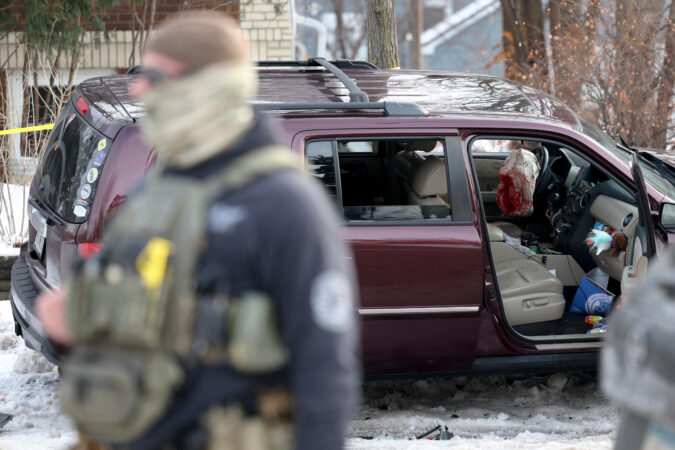
    The Honda Pilot family SUV with the glove compartment crammed with a 6-year-old’s adorable stuffed toys and its deployed airbag and headrest drenched in fresh red blood hadn’t even been towed from the Minneapolis murder scene on Wednesday before the full force of the U.S. government attacked Renee Nicole Good a second time.

    After the three deadly bullets came a fusillade of outrageous and morally reprehensible lies.

    Tricia McLaughlin, the already notoriously fact-averse spokesperson for the U.S. Department of Homeland Security, didn’t even know the identity of the 37-year-old Colorado native — let alone any details of her intricate life or her beautiful, award-winning poetry — when the DHS flack smeared Good as “one of the violent rioters” who’d “weaponized” her SUV against the U.S. Immigration and Customs Enforcement (ICE) agent who shot and killed her, and called it “an act of domestic terrorism.”

    Just moments later, DHS Secretary Kristi Noem — the absurdity of her words only ratcheted up by her ridiculously oversized cowboy hat at a Texas border press hit — joined the verbal pile on and amplified the “domestic terrorism” angle, even though the investigation of what had actually happened on snowy Portland Avenue had barely begun. This was all just a warm-up for America’s prevaricator-in-chief.

    President Donald Trump took to his so-called Truth Social to offer his own, further-embellished version — insisting to the nation that the still-at-that-moment unidentified woman had “violently, willfully, and viciously ran over” ICE officers, blaming “the Radical Left,” and even claiming that the ICE gunman was recovering in the hospital.

    A deployed airbag and blood stains are seen in a crashed vehicle on at the scene of a shooting in Minneapolis on Wednesday.

    In reality, the violent, reckless actions by masked agents of an American secret police were nothing new, and neither was the government’s massive assault on the truth of what happened in Minneapolis, ripped from the pages of a fascist playbook.

    But this time, millions of Americans could see what really happened to Good, thanks to multiple videos taken on that south Minneapolis street by everyday citizens with a righteous distrust of their own government. It’s the deep skepticism that began with three gunshots and a blurry home movie in Dallas’ Dealey Plaza on Nov. 22, 1963. Now, the digital clarity of three gunshots at 9:30 a.m. on Jan. 7, 2026, may have marked a kind of Waterloo, a righteous turning point in our existential war over the truth.

    Americans could believe their elected president, or the completely different reality they could see with their own eyes.

    The citizen videos showed Good — it’s unclear whether she was a volunteer observer of the amped-up ICE raids in Minneapolis, or just filming the agents on a whim — parked at an angle across Portland Avenue when an ICE SUV approached. Two agents hopped out and approached Good’s Honda while a third — the soon-to-be shooter — moved in from the opposite side. One agent screamed, “Get out of the f— car,” but Good, with her window now open and her partner in the passenger seat, slowly backed up and then started a sharp right turn, seeking to leave the scene.

    But the third federal officer, seen adjacent to the left front fender, had already drawn his gun and fired a shot through the windshield as Good turned her Honda away from him. The videos then show the agent — now a few feet from the vehicle and clearly not in danger — firing two more times into the open window, as the vehicle and the mortally wounded Good traveled halfway down the block and into a parked car.

    The shooter — the agent the president claimed had been run over and hospitalized — was filmed walking around the murder scene, apparently unharmed. Meanwhile, the government’s crusade to dehumanize Good was already well underway, as agents were shown blocking a physician who pleaded to aid the dying woman before they finally dragged her away by her limbs.

    The senseless killing of Good was exactly the tragedy that state and city officials had feared when DHS declared at the start of the new year that it was flooding Minnesota — whose large community of Somali American refugees had been viciously slurred by Trump as “garbage” — with some 2,000 armed, masked immigration agents.

    The national spotlight ensured wall-to-wall cable news coverage when agents killed a white U.S. citizen and a mother of three on the second day of the surge in and around Minneapolis, but all of this has happened before. In the last four months, according to the New York Times, federal agents have fired their weapons in nine separate incidents — each time into a vehicle. And often the initial story from DHS collapses under the weight of truth.

    In October, U.S. Customs and Border Protection agents involved in Chicago’s “Operation Midway Blitz” claimed they were boxed in by as many as 10 cars — again, not supported by video — and fired at least five shots at Mirimar Martinez, who was not seriously injured, but was then indicted, along with her passenger, on assault and attempted murder charges. Martinez was not charged with a gun crime — despite an initial DHS claim that she’d brandished a semiautomatic weapon — and soon the entire case crumbled, and now all charges have been dismissed.

    Federal agents are only allowed to fire into a moving car when they believe the driver is trying to kill or maim them or other bystanders. As videos of Good’s killing circulated Wednesday afternoon, an unnamed DHS official told NBC News that the agents’ actions — from approaching the vehicle from the front to firing the fatal shots — went against their training. But how can the public expect sound decision-making from a surge of inexperienced new hires that ICE recruits on social media, or in slick ads during NFL games, with plans to target gun shows and military enthusiasts?

    People gather for a vigil on Wednesday evening after a U.S. Immigration and Customs Enforcement officer shot and killed a woman hours earlier in Minneapolis.

    What’s more, why would the Trump regime tell the truth about killing Good when its entire Minnesota operation — along with everything else about its immoral mass deportation drive — is built atop a foundation of despicable lies, from the White House racist slander of Somali refugees seeking a better life in Minnesota to the gross exaggerations (spiked by a dishonest viral video) about a childcare fraud scandal?

    GOOD MORNING MINNEAPOLIS,” DHS tweeted from its official account Monday as it began an unwarranted, unwelcome operation that is making no one safer, especially not the children of Minnesota. A local coalition of childcare operators called Kids Count on Us reported Wednesday that ICE agents have been swarming their facilities as operators report that little kids are frightened, adding, “We are terrified.” After Good’s death, protesting students at nearby Roosevelt High School were pepper-sprayed by federal agents. And now a 6-year-old child, whose military veteran father had already died in 2023, is an orphan.

    Exactly who are the violent rioters committing acts of domestic terrorism here?

    Minneapolis is a great American city that has been bombarded with needless tragedies throughout the 2020s, beginning on May 25, 2020, when George Floyd was murdered under the knee of police officer Derek Chauvin, just 0.7 miles from where Good was killed. That homicide also began with official lies that were absurdly false, until a brave citizen’s video showed America what really happened.

    Wednesday’s ICE murder carried the grim echoes of past government killing across the upper Midwest — an icy wind that blows from the massacre at Wounded Knee through the 1969 assassination of Black Panther Fred Hampton and over Floyd’s senseless demise. Yet, there is also reason to feel that, this time, a change is in the air.

    For one thing, true leaders like Minneapolis Mayor Jacob Frey — who stunned a national TV audience when he bluntly told ICE, “Get the f— out of Minneapolis” — and Minnesota Gov. Tim Walz made it clear they are fed up with the performative violence and the blatant lies. “Maybe we’re at their McCarthy moment,” Walz told a news conference. “Do you have no decency? Do you have no decency? We have someone dead in their car for no reason whatsoever. Enough. Enough is enough.”

    But there was something even more critical on this frigid prairie morning: brave everyday citizens willing to put their lives on the line for neighbors they don’t even know, and to risk everything in pursuit of the truth. America knows what really happened to Good because courageous people ran toward the scene with their phones aloft to bear witness, not knowing if ICE would kill again.

    It’s the revolutionary spirit we’ve been seeing all across America for months — regular folks from the community blowing whistles, filming ICE raids, and telling the world that our citizens will defend their communities even when all the big institutions and their overpaid leaders will not. Authoritarian governments only thrive in their own manufactured reality, gaslighting the masses that their hardworking, brown-skinned neighbor is a rapist, or that an uninjured federal agent is instead in the emergency room.

    Mark down Jan. 7, 2026, as the day America started turning off the gas, and the masks came off. No wonder it came out Thursday morning that the FBI is not cooperating with Minnesota state authorities on the investigation, in a pathetic, too-late effort at covering this mess up.

    I was one of many on Wednesday who couldn’t stop thinking about another unprovoked government killing: the Kent State Massacre and the murder of four college students on May 4, 1970. That moment caused Neil Young to write these words that still feel so relevant: “What if you knew her and found her dead on the ground?/ How can you run when you know?”

    Good Americans who still believe in truth and justice ran into the danger on Portland Avenue, and we are a better place for that. Some day, and probably soon, there will be a statue on that spot in honor of Renee Nicole Good, an American hero whose bigger freedom fight could not be murdered by tyrants.

  • Health officials urge vaccination as flu cases surge in Pennsylvania

    Health officials urge vaccination as flu cases surge in Pennsylvania

    More Philadelphians are visiting emergency departments with the flu than a year ago, as cases are surging across Pennsylvania.

    Flu cases in late December hit higher counts locally and statewide than at this time last year, according to city and state data. It’s too early to say whether flu has peaked for the season, or whether cases will continue to rise, health officials say.

    window.addEventListener(“message”,function(a){if(void 0!==a.data[“datawrapper-height”]){var e=document.querySelectorAll(“iframe”);for(var t in a.data[“datawrapper-height”])for(var r,i=0;r=e[i];i++)if(r.contentWindow===a.source){var d=a.data[“datawrapper-height”][t]+”px”;r.style.height=d}}});

    Philadelphia-area physicians say they’re dealing with an increased flu caseload, including patients suffering from severe complications.

    COVID-19 and respiratory syncytial virus (RSV) cases are also rising, but flu is the biggest concern right now, said Brett Gilbert, Main Line Health’s infectious disease chief.

    “We’ve been fighting COVID for the last five years, while flu took a back seat,” he said. “But flu is in the driver’s seat this year.”

    One reason for the high number of flu cases this early in the flu season, which runs from winter to early spring and typically peaks in December to February, is a new flu variant that emerged this summer.

    World health experts meet twice a year to determine which flu variants are circulating and recommend seasonal flu shots to target them.

    The variant causing the most cases right now, subclade K, was detected after flu shots for the Northern Hemisphere had already been selected this year, Gilbert said. “There is some degree of vaccine-disease mismatch,” he said.

    window.addEventListener(“message”,function(a){if(void 0!==a.data[“datawrapper-height”]){var e=document.querySelectorAll(“iframe”);for(var t in a.data[“datawrapper-height”])for(var r,i=0;r=e[i];i++)if(r.contentWindow===a.source){var d=a.data[“datawrapper-height”][t]+”px”;r.style.height=d}}});

    But that doesn’t mean that the current flu vaccine is not effective, especially in preventing hospitalizations and deaths.

    “It may not be so great at preventing the illness itself, but [with a vaccine], it may be a mild illness, easily treatable with antivirals or supportive care,” Gilbert said.

    Flu in children

    Just over half of Pennsylvania children were vaccinated for the flu this season, according to federal surveys, slightly up from last year’s rates.

    Childhood flu vaccination rates in Philadelphia were even higher than the statewide rate, with about 56% of children vaccinated this season.

    Some of the most serious cases of flu that pediatrician Daniel Taylor sees are among unvaccinated children.

    At St. Christopher’s Hospital for Children, where Taylor sees patients, the outpatient sick clinic is filled with children with severe cases of flu and RSV.

    Some are suffering from dehydration and require care in the ER at the North Philadelphia hospital.

    Taylor stresses the risk of serious complications from the flu in conversations with parents about vaccination. (Taylor also regularly writes about his experiences as a physician for The Inquirer.)

    The flu can trigger severe health crises that can cause brain damage or temporary paralysis from inflammation of the spinal cord. Taylor has seen two children this flu season with benign acute childhood myositis, a rare complication of an upper respiratory infection that causes swelling and muscle damage in the legs, and in even rarer cases can lead to kidney failure.

    “They’re not able to walk, and in so much pain from the swelling of the legs,” he said.

    Nine children have died nationwide from the flu this season. The season before, flu deaths among children were the highest since 2004, when the Centers for Disease Control and Prevention began tracking them, the American Academy of Pediatrics noted. Among Americans of all ages, the CDC has estimated 5,000 total flu deaths so far this season.

    Taylor said that President Donald Trump’s chaotic upheaval of longstanding vaccine policy — with the CDC changing recommendations around flu vaccines and slashing six vaccines from the routine childhood immunization list — makes it harder for physicians to help patients.

    He said he had recently met with a mother who told him she’d previously vaccinated her children, but now was avoiding vaccines because she was “scared of giving her kid vaccines with everything going on in the government.”

    “They hear something different from the government and the CDC, and they question the relationship” with their doctor, Taylor said.

    He said parents can find trustworthy information about vaccination at websites run by the American Academy of Pediatrics and the Children’s Hospital of Philadelphia.

    ‘It’s never too late to get a flu vaccine’

    Anyone who hasn’t been vaccinated for the flu still has time to get immunized. Flu season runs through May, and cases can occur year-round.

    About 40% of Pennsylvanian adults and about 42% of New Jersey adults have been vaccinated for the flu so far this season, lower than in previous years and slightly below the national rate for the first time.

    About 47% of Philadelphians have been vaccinated so far this season, above the national rate.

    Patients who are feeling sick can get tested for the flu at a hospital or a doctor’s office, and home tests are also available. Antiviral treatments can help ease symptoms. Wearing a mask can also protect others from contracting the flu.

    window.addEventListener(“message”,function(a){if(void 0!==a.data[“datawrapper-height”]){var e=document.querySelectorAll(“iframe”);for(var t in a.data[“datawrapper-height”])for(var r,i=0;r=e[i];i++)if(r.contentWindow===a.source){var d=a.data[“datawrapper-height”][t]+”px”;r.style.height=d}}});

    In Philadelphia, residents can get free flu and COVID vaccines at five health centers, and the health department regularly conducts vaccine outreach in the city, said Gayle Mendoza, a spokesperson for the Philadelphia Department of Public Health.

    “People might say ‘We’re past the holidays, what’s the point in getting vaccinated?’” she said. “Sure, winter break is behind us, but the influenza virus is still forging ahead.”

  • Avelo stops deportation flights in Arizona; protesters in Delaware applaud

    Avelo stops deportation flights in Arizona; protesters in Delaware applaud

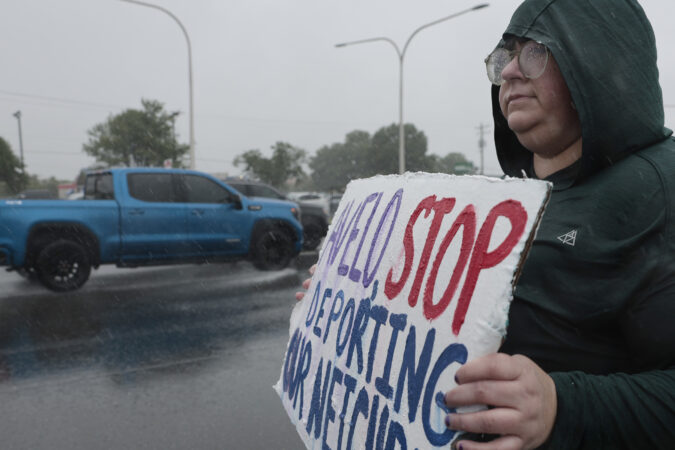
    Avelo, the only commercial airline serving Wilmington’s airport, has ended its contract flights to carry foreign nationals detained by U.S. immigration agents. The change takes place amid a larger consolidation of Avelo’s routes.

    The Delaware Stop Avelo Coalition of groups critical of President Donald Trump’s deportation policies hailed the airline’s move. They had been leading pickets at the Wilmington airport in New Castle, Del., since last spring, when Avelo joined several charter airlines transporting deportees for the Department of Homeland Security.

    For Avelo, the latest move was part of a cost-cutting reorganization “streamlining its network” to four of its regional bases: Wilmington; New Haven, Conn.; Charlotte/Concord, N.C.; and Lakeland, Fla. Among the regional bases it is closing is Mesa, Ariz., which handled deportation flights.

    “Avelo will close the base” in Arizona, where it had managed what the airline called “removal flights” for the government, “and will conclude participation in the DHS charter program” by Jan. 27, Avelo spokesperson Courtney Goff said in a statement. The airline said earlier that it had not moved deportees through Delaware.

    Avelo also said it has gotten rid of six Boeing jets. Airline industry information sites are reporting DHS has picked up at least some of those former Avelo airliners, as if moving deportation capacity in-house.

    Avelo plans a new base at the McKinney National Airport, near Dallas, later this year.

    Avelo CEO Andrew Levy last year said the DHS contract was part of the airline’s plans for growing and maintaining operations. Levy started the airline in 2020 and has rapidly increased its route network, but also has acted quickly to cut and shift unprofitable service.

    The coalition, a group including local Democratic Party activists in chapters of the Indivisible organization, Working Families Party affiliates, the Delaware Democratic Socialists of America, and Unitarian-Universalists, said in a statement that it welcomed Avelo’s decision to end deportation flights, “especially those without due process.”

    “We don’t know, to be honest, but we have indications from behind the scenes that we had some effect. Sometimes these things build and build,” said Gayle Gibson, an engineer who serves as coalition spokesperson.

    The coalition also coordinated some of the sign-waving picketing with actions at other airports Avelo serves around the country.

    Gibson noted that Wilmington City Council passed a resolution calling on Avelo to stop flying deportees rushed into custody without due process. State legislators drafted similar bills, which had not yet advanced to a vote, and “hundreds” of protesters had turned out to airport picket lines, local-government meetings, and University of Delaware rallies to pressure Avelo. Leaders also met with Gov. Matt Meyer and other top state officials.

    Safety concerns raised by Avelo employees also had an impact, Gibson said. “This shows Delaware stands behind businesses that operate according to laws and value people and due process.”

    The organizers in their statement took credit for making Avelo’s deportation flights “politically and reputationally radioactive,” leading to the company’s decision to stop.

    Avelo cited poor financial returns. The program did not pay Avelo enough “to overcome its operational complexity and costs,” according to Goff’s statement.

    State and local officials in Connecticut, New York, and other states had called on Avelo to stop the deportation-related flights.

    Meyer, who welcomed Avelo to the airport when he was New Castle County executive in the early 2020s, had said he personally boycotted Avelo after the protests began.

    Activists said they couldn’t measure the effect of any customer boycott.

    “We did not see an impact regarding customers choosing to fly,” said Goff, the airline spokesperson. Customer flights rose to 2.6 million last year, up 11% from 2024, as planes were fuller. She credited low fares and on-time reliability.

    The protests put Meyer and other Democratic officials in a quandary. They had encouraged Avelo to begin service from the airport, which formerly managed only charter, corporate, and general-aviation flights, as a way of boosting Delaware’s corporate employment sector as the state economy turns from heavy and chemical manufacturing toward biotech and other developing industries.

    Meyer did not act on protesters’ demands that the state cancel tax incentives and other Avelo financial benefits to pressure the airline to end the flights.

    The airport is operated by the Delaware River and Bay Authority, which also controls the Delaware Memorial Bridge and Cape May-Lewes ferry. The authority’s board represents the Democratic-led states of Delaware and New Jersey.

    Like the governor, the authority declined activist requests to pressure Avelo, saying the airline had the right to conduct its business the way it sees fit.

    “We’re aware of the community concerns regarding Avelo’s past operations at other airports,“ James Salmon, the authority’s spokesperson, said in a statement after Avelo announced an end of the flights. “We’ve consistently maintained a neutral position” and focused on keeping the airport accessible to customers for Avelo’s flights to Florida and other destinations. The airline’s flights from other airports were “outside the scope” of the agency’s authority.

    “This decision proves that public pressure really works,” the coalition said in its statement. It said it would keep pushing proposed laws to prevent airlines receiving state benefits from “quietly” resuming flights or other deportation contractors from winning government support.

  • The ICE agent in Minneapolis was not in the vehicle’s path when he fired at Renee Good, video shows

    The ICE agent in Minneapolis was not in the vehicle’s path when he fired at Renee Good, video shows

    A deadly encounter in Minneapolis on Wednesday between federal Immigration and Customs Enforcement agents and a 37-year-old woman escalated in a matter of seconds.

    In the aftermath, Homeland Security Secretary Kristi L. Noem said the woman had committed an act of “domestic terrorism,” first disobeying officers’ commands and then weaponizing her SUV by attempting to “run a law enforcement officer over.” President Donald Trump said the woman “violently, willfully and viciously ran over the ICE officer.”

    A frame-by-frame analysis of video footage, however, raises questions about those accounts. The SUV did move toward the ICE agent as he stood in front of it. But the agent was able to move out of the way and fire at least two of three shots from the side of the vehicle as it veered past him, according to the analysis.

    Video taken by a witness shows Renee Nicole Good’s vehicle, a burgundy Honda Pilot SUV, stopped in the middle of a one-way road in a residential area of south Minneapolis on Wednesday morning. That footage and other videos examined by The Washington Post do not show the events leading up to that moment.

    The agent, who has not been publicly identified, can be seen standing behind Good’s SUV, holding up a phone and pointing it toward a woman who also has her phone out. The two appear to be recording each other.

    The agent then walks around the passenger side of Good’s vehicle.

    A pickup truck pulls up, and two additional agents exit the vehicle and approach Good, the video shows. A voice can be heard saying to “get out” of the car at least two times. One of the agents puts a hand on the opening of the driver’s side window and with his other hand tugs twice quickly on the door handle, but the driver’s door does not open.

    That same agent puts his hand farther in the opening of Good’s window, and almost simultaneously, the SUV begins to back up.

    The agent who was first seen behind Good’s SUV reemerges in front of the vehicle, still appearing to hold up a phone. The SUV quickly pulls forward, and then veers to the right, in the correct direction of traffic on the one-way street.

    As the vehicle moves forward, video shows, the agent moves out of the way and at nearly the same time fires his first shot. The footage shows that his other two shots were fired from the side of the vehicle.

    Videos examined by The Post, including one shared on Truth Social by Trump, do not clearly show whether the agent is struck or how close the front of the vehicle comes to striking him. Referring to the officer, Trump wrote in his post that it was “hard to believe he is alive.” Video shows the agent walking around the scene for more than a minute after the shooting.

    Good’s SUV travels a short distance before crashing into a car parked on the opposite side of the street.

    The FBI and Minnesota’s Bureau of Criminal Apprehension are investigating the shooting. The White House and the Department of Homeland Security did not immediately respond to a request seeking comment for this story.

  • Josh Shapiro’s reelection campaign in Pennsylvania starts now — but 2028 looms large

    Josh Shapiro’s reelection campaign in Pennsylvania starts now — but 2028 looms large

    He’s running.

    Gov. Josh Shapiro officially announced his widely expected reelection bid for Pennsylvania governor Thursday, as speculation over a 2028 run for president continues to build. The question now: How will the Democrat’s rumored presidential ambitions bolster or detract from his must-win election at home in 2026?

    Shapiro will kick off his reelection campaign with not one but two rallies — first stopping in Pittsburgh, then in Philadelphia. In a campaign video posted to social media Thursday morning, he touted his three years of leading a divided legislature and his bipartisan achievements in a politically split state, via a campaign that has already amassed a record $30 million war chest.

    He coasted to victory in 2022, elevating his profile within the national Democratic Party, and is not expected to face a primary challenger. In the general election, he will likely face Republican State Treasurer Stacy Garrity, who largely consolidated GOP support early.

    But that’s not the only race on the line in November.

    Shapiro, whose campaign declined to comment for this article, has been elusive when asked directly about plans to run for president. But in the last year, he’s taken bold steps to build a national profile, while quietly making moves behind the scenes that signal bigger political aspirations. He’s expanded his public affairs team, planned a book tour for the end of January, and sat for interviews with national magazines like the Atlantic, which published an extensive feature on him late last year. Last month, he and Democratic presidential candidate kingmaker U.S. Rep. Jim Clyburn (D., S.C.) discussed the pioneering Black lawmakers’s new book on a stage in Philadelphia. Earlier in December, he and Utah Gov. Spencer Cox, a Republican, discussed curbing political violence with NBC News host Savannah Guthrie, a conversation that highlighted Shapiro’s emphasis on bipartisanship.

    At home, he’s a local political celebrity, boasting approval ratings between 52% and 60%. But outside the Keystone State, he has yet to become a household name.

    As Shapiro looks to potential parallel runs, he’ll need to continue to build a national profile without outwardly focusing too much on the presidential picture.

    Gov. Josh Shapiro is interviewed by TV news in the spin room at the Convention Center following the debate between former President Donald Trump and Vice President Kamala Harris Tuesday, Sept. 10, 2024.

    “The challenge, of course, is you have to take care of your next election first,” said Christopher Borick, a pollster at Muhlenberg College. “Of anything he does, he knows this is the most important thing for his potential success in 2028 if he was to run.”

    The former Pennsylvania attorney general, Montgomery County commissioner, and state representative has never in 20 years suffered an electoral defeat. Being passed over for Vice President Kamala Harris’ running mate in 2024 kept that winning streak alive.

    In the governor’s race, Shapiro will likely face a more formidable opponent in Garrity than he did in state Sen. Doug Mastriano (R., Franklin) in 2022, but he’ll also be running in a far more favorable political atmosphere for Democrats amid souring attitudes toward President Donald Trump and the GOP. If he can retain the governor’s mansion decisively and bring a ticket of Democrats vying for the statehouse and Congress to victory with him, that’s a narrative that could be strong in a Democratic presidential primary.

    “Having a win, and maybe an impressive one in Pennsylvania, the key swing state heading into that cycle, is about as big of a boost as any that you can have,” Borick added.

    Running local

    The 2028-curious Democrats include several other sitting governors generating buzz: California’s Gavin Newsom, Kentucky’s Andy Beshear, Maryland’s Wes Moore, Michigan’s Gretchen Whitmer, and Illinois’ JB Pritzker. Shapiro has formed alliances with several of them.

    But unlike some of his peers, Shapiro hasn’t been a frequent guest on cable news or podcasts with national reach.

    That’s not to say he hasn’t made moves toward a potential presidential run.

    On Oct. 4, 2024, nearly a month before Harris lost the presidential election to Trump, Shapiro confidentially requested that the state ethics commission determine whether he would violate any state ethics laws for accepting royalties from a book about his life in public service, according to the filing.

    Pennsylvania Gov. Josh Shapiro (right) and Michigan Gov. Gretchen Whitmer before the Eagles played the Detroit Lions at Lincoln Financial Field on Sunday, Nov. 16, 2025, in Philadelphia, PA.

    His book, Where We Keep the Light, will publish later this month, recounting his political upbringing, his vice presidential vetting, and the firebombing of his home last year. He’s not alone. Harris published a memoir about the 2024 election last year, and Newsom is due out with Young Man in a Hurry: A Memoir of Discovery in February.

    But in the coming months, several Democratic strategists predict Shapiro will be squarely focused on the governor’s race he has to win in Pennsylvania — simultaneously proving he has what it takes to capture the vote of the nation’s most important swing state.

    “He’s such a careful politician. He’s not taking anything for granted,” said former Gov. Ed Rendell, a Democrat who also once faced scrutiny for having potential presidential ambitions.

    Shapiro is likely to follow the same campaign playbook in Pennsylvania as he did in 2022: Stump in every region of the state, including areas where Democrats don’t usually show up. That helped him run down the margins in longtime GOP strongholds like Lancaster or Schuylkill Counties toward his resounding victory over Mastriano. Those stops in most of Pennsylvania’s 67 counties won’t give him as much time to visit South Carolina, Iowa, and New Hampshire, as the other Democratic presidential hopefuls start their sojourns.

    Pennsylvania Governor Josh Shapiro waves goodbye to the crowd after speaking during graduation ceremonies at Pennsbury High School in Fairless Hills on Thursday, June 12, 2025.

    “The No. 1 caveat is stay focused on the race you’re running,” echoed Alan Kessler, a national fundraiser based in Philadelphia who has supported and fundraised for Shapiro.

    Still, the campaign is likely to generate attention beyond the Keystone State.

    Shapiro will still court donors in blue states as he fundraises for reelection, Kessler added.

    Come November, he will be the only governor with rumored 2028 aspirations up for reelection in a swing state. And his brand as a popular, moderate Democratic governor trying to restore trust in government — as well as his potential to help boost Democrats down ballot — will easily capture a wider audience and bring national media into Pennsylvania.

    As Democrats seek to flip control of the U.S. House in 2026, targeting several congressional districts in the state, the election may once again come down to Pennsylvania, and in turn, increase the spotlight on Shapiro. The governor is widely seen as someone who can boost the congressional Democratic candidates also on the ballot, having won three of the four districts that Democrats are targeting in the state by double digits in 2022.

    “Every single Democrat that I know that’s running for office in 2026 in Pennsylvania wants the governor to campaign with them,” Democratic state party chair Eugene DePasquale said.

    Preparing for an onslaught

    Republicans have targeted several weaknesses to try to erode Shapiro’s popularity in Pennsylvania and boost Garrity. They point to a lack of rigorous electoral challengers in his past. They question his record of “getting stuff done” — his oft-repeated motto — including three late state budgets. And they’ve harped on a lack of transparency as governor, including claims he used tax dollars for political benefit as well as a sexual harassment scandal involving a former top aide. They’ve also criticized his support for Minnesota Gov. Tim Walz, who recently dropped his third gubernatorial bid following a fraud scandal among the state’s Somali refugee population totaling $1 billion, according to federal prosecutors.

    Among the emerging attacks: Republicans want to highlight Shapiro’s presumed presidential ambitions, as they try to cast him as an opportunist more interested in a future White House bid than the problems of everyday Pennsylvanians.

    “Josh Shapiro is more concerned with a promotion to Pennsylvania Avenue than serving hardworking Pennsylvanians,” Garrity said in a statement, noting the state fared poorly in U.S. News and World Report rankings on the economy and education. “In the military, I learned the importance of putting service before self. Pennsylvanians are the hardest-working, most compassionate, strongest people in the nation, and together we will return Pennsylvania to our rightful place as a national and global leader.”

    State Treasurer and Republican candidate for governor Stacy Garrity holds a rally in Bucks County Sept. 25, 2025 at the Newtown Sports & Events Center.

    There are lingering missteps that could come up in a reelection campaign or afterward. He was unable to secure a long-term funding stream for mass transit, requiring him to use capital funds to keep SEPTA operating. He has yet to follow through on his support for school vouchers, a GOP-selling point for him that angered the powerful teachers’ unions in the state. And he’s faced questions over a number of actions his administration has taken, including $1.3 million in security improvements to his personal home following the attack on the governor’s residence in Harrisburg, his use of the state plane, and his transparency in open records requests, among others.

    Mastriano, the far-right Republican state senator who announced Wednesday he won’t run for governor, said in a statement earlier this week that Shapiro “owes [Pennsylvanians] straight answers” over his use of the state plane, security updates to his personal home in Abington Township, and more.

    “Pennsylvanians deserve accountability, not ambition,” he added, making a nod to Shapiro’s potential longer-term plans.

    House Speaker Joanna McClinton, back center left, Gov. Josh Shapiro, front center, and State Rep. La’Tasha D. Mayes, right, celebrate the signing of the CROWN Act, which prohibits discrimination based on a person’s hair type, during a press conference at Island Design Natural Hair Studio, in West Philadelphia, November 25, 2025.

    Borick, the pollster, was skeptical that attacks on Shapiro’s potential wider ambitions could reverse his largely positive public sentiment.

    “If that’s all they got, they don’t got a lot.”

    Republicans insist they see a path to victory for Garrity in a politically divided state with months to go until the election. But behind the scenes, some Republicans are already acknowledging the goal is to lose by less and prevent big losses in state legislature or congressional races.

    If Shapiro does look poised to cruise to victory, it might mean less media attention on the race, and it could mean he’s less vetted ahead of a much bigger stage.

    “I think Josh is better served if the [Republican Governors Association] puts $100 million into this race because then it’s nationalized,” said a Democratic political strategist based in Pennsylvania who did not want to be named speculating on Shapiro’s presidential run. “If it’s a cakewalk, CNN’s not gonna cover it …If he wants to be governor for another four years, he should pray for a cakewalk. If he wants to be president, he should pray for a difficult campaign.”

    Florida Gov. Ron DeSantis, for example, the strategist noted, cleaned up in his 2022 reelection, but failed to gain traction in the GOP presidential primary that Trump dominated.

    Beyond 2026

    Shapiro speaks Pennsylvanian very well. Raised in Montgomery County, he’s lived here almost all of his life, and has built an image as a popular moderate focused on problem-solving in a purple state. That’s earned him the support of about 30% of Trump voters in the state.

    But winning a general election in Pennsylvania is different than winning a Democratic presidential primary.

    He’s tried not to alienate the MAGA base, focusing on issues with bipartisan appeal like funding for apprenticeship and vocational-training programs. He’s taken on Trump in court, but has picked his personal battles with the president more carefully.

    But being a strategic, self-described “progressive pragmatist” can end up alienating voters on both sides.

    Gov. Josh Shapiro leaves after an event at the Port of Philadelphia Thursday, Apr. 10, 2025, the day after President Trump paused some tariffs.

    Becky Carroll, a Democratic political consultant in Chicago who has worked with Pritzker, said Shapiro seems less on the radar of voters in the Midwest. As she’s followed Shapiro’s career, she said she sees a “damn fine governor,” but someone who’s taken a more muted approach to Trump than blue state governors like Pritzker and Newsom.

    When it comes to a Democratic primary, candidates may be judged in part on their pushback to Trump, she said. “I think we’re in a moment where you can sulk in a corner and hope it’ll all go away or fight …,” Carroll said. “And if you’re gonna put yourself out there for a primary battle, you better show you have battle scars to prove you can fight for the most vulnerable in the country right now.”

    Gov. Josh Shapiro is interviewed by TV news in the spin room at the Convention Center following the debate between former President Donald Trump and Vice President Kamala Harris Tuesday, Sept. 10, 2024.

    But other national strategists see Shapiro’s moderate appeal as a potential asset in 2028. Jared Goldberg-Leopold, a former communications director for the Democratic Governors Association, thinks Shapiro’s biggest asset is his electoral track record in a state the nation knows is critical on the path to the White House. Primaries have previously been won by moderates whom the party thinks have the best chance at winning the general.

    But the first step, Goldberg-Leopold stressed, is the governor’s race ahead.

    “It would be easy for the Eagles to look past the 49ers to the next week of playoffs, but they’ve gotta focus on only one thing. And the same is true for the governor,” he said. “You can only prepare for what’s ahead of you, and the way people get in trouble in politics is planning too many steps ahead.”

    Staff writer Katie Bernard contributed to this article.

  • Pa. and N.J. lost thousands of jobs after federal workers signed up for Trump resignation program

    Pa. and N.J. lost thousands of jobs after federal workers signed up for Trump resignation program

    The number of federal government employees in the Philadelphia region plunged in October, according to new employment data that appear to reflect the departure of thousands who opted into President Donald Trump’s resignation program.

    Trump’s cuts to the federal workforce over his first year in office became clearer Wednesday with the release of new employment data from the U.S. Bureau of Labor Statistics (BLS). Across Pennsylvania and New Jersey, thousands of federal jobs were cut from September to October.

    It was the first time the government’s deferred resignation program has been reflected in local employment data. First offered in January 2025, this program allowed federal employees to resign from their jobs while continuing to receive pay. For many, the program ended Sept. 30. While it may have been months since they had completed duties related to their federal jobs, the end of the deferred resignation period is when they officially stopped being employed by the government for purposes of employment data.

    window.addEventListener(“message”,function(a){if(void 0!==a.data[“datawrapper-height”]){var e=document.querySelectorAll(“iframe”);for(var t in a.data[“datawrapper-height”])for(var r,i=0;r=e[i];i++)if(r.contentWindow===a.source){var d=a.data[“datawrapper-height”][t]+”px”;r.style.height=d}}});

    “The federal workforce is …in communities like Philadelphia, and we are part of the economy,” said Philip Glover, a union leader with AFGE District 3, which represents federal workers in Pennsylvania and Delaware. The recent local job loss will have ripple effects, he said. It “affects stores, transit, it affects tax bases, all of those things are affected,” he said.

    Federal agencies in the Philadelphia metro area — a region that includes Camden and Wilmington — shed about 2,900 jobs in October, down 5.3% from September. It was the steepest month-over-month decline since July 2010 and the fourth biggest since at least 1990.

    Pennsylvania lost overall about 4,800 federal jobs in October, a 4.8% drop and the largest month-over-month decrease since October 2020.

    New Jersey lost about 1,200 federal jobs in October.

    In nearly five years, employment overall has grown 12.6% in the Philadelphia metro area, but regional gains in federal employment have now been completely wiped out by job losses in the past year.

    window.addEventListener(“message”,function(a){if(void 0!==a.data[“datawrapper-height”]){var e=document.querySelectorAll(“iframe”);for(var t in a.data[“datawrapper-height”])for(var r,i=0;r=e[i];i++)if(r.contentWindow===a.source){var d=a.data[“datawrapper-height”][t]+”px”;r.style.height=d}}});

    The handful of larger prior declines in federal employment for Pennsylvania and Philadelphia came during the recessions of the early 1990s and 2000s, the Great Recession and its aftermath, or the COVID-19 pandemic — periods during which economic activity slowed and the federal government experienced a decline in tax revenue.

    The deferred resignation would have been reflected in a November release, but it was delayed because of the federal government shutdown, which stretched through early November.

    The federal employment figures include all full- and part-time civilian employees, including those of the Postal Service. But it does not include armed forces and intelligence agencies such as the CIA and NSA.

    Why federal workers resigned

    Paul Kenney spent almost 30 years at the National Park Service in Philadelphia — more than two decades in the Northeast Regional Office on Market Street in river protection and six years at Independence National Historical Park.

    All that came to a halt in March 2025. Kenney decided the Trump administration’s efforts to significantly reduce the federal workforce was too much. He felt demoralized and also concerned that a bill in Congress at the time would impact his pension.

    The 59-year-old decided to retire three years early, despite wanting to stay in the workforce. He had just scored some highly coveted grants for restoration efforts in the parks. He remains involved with his union, AFGE Local 2058, as a vice president.

    By the end of May, five people from Kenney’s 11-person team at the Northeast Regional Office left; almost all had opted to take an early retirement.

    “The pressure really was all DOGE,” Kenney said, referring to the Department of Government Efficiency Trump launched soon after taking office. It was a “grim” experience for those in the federal workforce, he added.

    Kenney is one of the thousands no longer on government payroll. Federal employees were laid off, took early retirements, and resigned in 2025 amid Trump’s workforce overhaul.

    Beyond layoffs earlier in 2025, the Trump administration sent termination notices during the government shutdown that started on Oct. 1. Those firings were ordered to be reversed under the deal to end the shutdown.

    Where are federal workers employed?

    In Pennsylvania, federal employment represented about 1.52% of all jobs as of November, down from around 1.69% for the same month in 2024, according to the new data.

    In New Jersey, federal workers represented about 1.05% of jobs overall as of November, down from around 1.13% in November 2024.

    The most recent BLS data are not broken down by agency or department, but data from March 2025 from Pennsylvania’s Department of Labor and Industry indicate that in Southeastern Pennsylvania, the largest employers of federal workers are the U.S. Postal Service, the Department of Defense, and the Department of the Treasury.

    window.addEventListener(“message”,function(a){if(void 0!==a.data[“datawrapper-height”]){var e=document.querySelectorAll(“iframe”);for(var t in a.data[“datawrapper-height”])for(var r,i=0;r=e[i];i++)if(r.contentWindow===a.source){var d=a.data[“datawrapper-height”][t]+”px”;r.style.height=d}}});

    Nationally, the federal government shed about 162,000 jobs in October, down 5.6% from September and 8.7% from the previous October. The government lost a further 6,000 jobs in November.

    There were about 2.74 million federal employees nationwide as of November, compared with about 3.02 million at the start of 2025. The country experienced a loss of 271,000 federal jobs from January through November.

    That’s not far off the 300,000 federal jobs that the Trump administration had said would be cut by the end of 2025. Data for the remainder of the year will be available later this month.

    “What it’s doing is putting a strain on the remainder of the workforce to continue operations,” said Glover. “That increases stress levels, it doesn’t increase efficiency.”

    Meanwhile, the federal government could shut down again, albeit partially, if legislators don’t reach a funding deal by Jan. 30.

    And with that in mind, Glover said, additional federal workers may be thinking about quitting. “I think people are making decisions now whether they’re gonna stay if that happens again.”

  • Rubio plans to meet with Danish officials next week to talk about U.S. interest in Greenland

    Rubio plans to meet with Danish officials next week to talk about U.S. interest in Greenland

    U.S. Secretary of State Marco Rubio said he plans to meet with Danish officials next week after the Trump administration doubled down on its intention to take over Greenland, the strategic Arctic island that is a self-governing territory of Denmark.

    Since the capture of former Venezuelan leader Nicolás Maduro, President Donald Trump has revived his argument that the United States needs to control the world’s largest island to ensure its own security in the face of rising threats from China and Russia in the Arctic.

    Danish Foreign Minister Lars Løkke Rasmussen and his Greenland counterpart, Vivian Motzfeldt, had requested a meeting with Rubio, according to a statement posted Tuesday to Greenland’s government website. Previous requests for a meeting were not successful, the statement said.

    Rubio told a select group of U.S. lawmakers that it was the Republican administration’s intention to eventually purchase Greenland, as opposed to using military force.

    The remarks, first reported by The Wall Street Journal, were made in a classified briefing Monday evening on Capitol Hill, according to a person with knowledge of his comments who was granted anonymity because it was a private discussion.

    On Wednesday, Rubio told reporters in Washington that Trump has been talking about acquiring Greenland since his first term. “That’s always been the president’s intent from the very beginning,” Rubio said. “He’s not the first U.S. president that has examined or looked at how we could acquire Greenland.”

    European leaders express concern

    The leaders of France, Germany, Italy, Poland, Spain and the United Kingdom joined Danish Prime Minister Mette Frederiksen in issuing a statement this week reaffirming that the mineral-rich island, which guards the Arctic and North Atlantic approaches to North America, “belongs to its people.” Frederiksen warned that a U.S. takeover would amount to the end of NATO.

    “The Nordics do not lightly make statements like this,” Maria Martisiute, a defense analyst at the European Policy Centre think tank, told The Associated Press on Wednesday. “But it is Trump whose very bombastic language bordering on direct threats and intimidation is threatening the fact to another ally by saying, ‘I will control or annex the territory.’”

    Rubio, who was on Capitol Hill for a classified briefing Wednesday with the entire U.S. Senate and House, did not directly answer reporters’ questions about whether the administration was willing to risk the NATO alliance by potentially moving ahead with a military option regarding Greenland.

    “I’m not here to talk about Denmark or military intervention, I’ll be meeting with them next week, we’ll have those conversations with them then, but I don’t have anything further to add to that,” Rubio said. He added that every president retains the option to address national security threats to the United States through military means.

    White House press secretary Karoline Leavitt said Tuesday that using the military to acquire Greenland was an option, though she told reporters Wednesday that “the president’s first option always has been diplomacy.”

    Some Republican senators said they saw strategic value in Greenland, but they stopped short of supporting military action to acquire it.

    Kansas Sen. Roger Marshall said he hoped “we can work out a deal,” while North Dakota Sen. John Hoeven said some of the discussion about taking Greenland by force has been “misconstrued.”

    “One of the things about President Trump, you may have noticed, is he keeps our adversaries off balance by making sure they don’t know what we’re going to do,” Hoeven said.

    But Alaska Sen. Lisa Murkowski said she hated “the rhetoric around either acquiring Greenland by purchase or by force,” adding, “I think that it is very, very unsettling.”

    Democratic Sen. Jeanne Shaheen of New Hampshire and Republican Sen. Thom Tillis of North Carolina, co-chairs of the bipartisan Senate NATO Observer Group, said the U.S. needs to honor its treaty obligations to Denmark.

    “Any suggestion that our nation would subject a fellow NATO ally to coercion or external pressure undermines the very principles of self-determination that our Alliance exists to defend,” the senators said in a joint statement.

    ‘This is America now’

    Thomas Crosbie, an associate professor of military operations at the Royal Danish Defense College, said an American takeover would not help Washington’s national security.

    “The United States will gain no advantage if its flag is flying in Nuuk versus the Greenlandic flag,” he told the AP. “There’s no benefits to them because they already enjoy all of the advantages they want. If there’s any specific security access that they want to improve American security, they’ll be given it as a matter of course, as a trusted ally. So this has nothing to do with improving national security for the United States.”

    Denmark’s parliament approved a bill in June to allow U.S. military bases on Danish soil. It widened a previous military agreement, made in 2023 with the Biden administration, in which U.S. troops had broad access to Danish air bases in the Scandinavian country. Denmark’s foreign minister has said that Denmark would be able to terminate the agreement if the U.S. tries to annex all or part of Greenland.

    In the event of military action, the U.S. Department of Defense operates the remote Pituffik Space Base, in northwestern Greenland, and the troops there could be mobilized.

    Crosbie said he believes the U.S. would not seek to hurt the local population or engage with Danish troops.

    “They don’t need to bring any firepower. They don’t need to bring anybody,” Crosbie said Wednesday. “They could just direct the military personnel currently there to drive to the center of Nuuk and just say, ‘This is America now,’ right? And that would lead to the same response as if they flew in 500 or 1,000 people.”

    The danger in an American annexation, he said, lies in the “erosion of the rule of law globally and to the perception that there are any norms protecting anybody on the planet.”

    He added: “The impact is changing the map. The impact I don’t think would be storming the parliament.”

  • U.S. seeks to assert its control over Venezuelan oil with tanker seizures and sales worldwide

    U.S. seeks to assert its control over Venezuelan oil with tanker seizures and sales worldwide

    WASHINGTON — President Donald Trump’s administration on Wednesday sought to assert its control over Venezuelan oil, seizing a pair of sanctioned tankers transporting petroleum and announcing plans to relax some sanctions so the U.S. can oversee the sale of Venezuela’s petroleum worldwide.

    Trump’s administration intends to control the distribution of Venezuela’s oil products globally following its ouster of President Nicolás Maduro in a surprise nighttime raid. Besides the United States enforcing an existing oil embargo, the Energy Department says the “only oil transported in and out of Venezuela” will be through approved channels consistent with U.S. law and national security interests.

    That level of control over the world’s largest proven reserves of crude oil could give the Trump administration a broader hold on oil supplies globally in ways that could enable it to influence prices. Both moves reflect the Republican administration’s determination to make good on its effort to control the next steps in Venezuela through its vast oil resources after Trump pledged the U.S. will “run” the country.

    Vice President JD Vance said in an interview the U.S. can “control” Venezuela’s “purse strings” by dictating where its oil can be sold.

    “We control the energy resources, and we tell the regime, you’re allowed to sell the oil so long as you serve America’s national interest,” Vance said in an interview to air on Fox News Channel’s “Jesse Watters Primetime.”

    The vice president added, “And that’s how we exert incredible pressure on that country without wasting a single American life.”

    Secretary of State Marco Rubio suggested that the oil taken from the sanctioned vessels seized in the North Atlantic and the Caribbean Sea would be sold as part of the deal announced by Trump on Tuesday under which Venezuela would provide up to 50 million barrels of oil to the U.S.

    Venezuela’s interim authorities “want that oil that was seized to be part of this deal,” Rubio told reporters after briefing lawmakers Wednesday about the Maduro operation. “They understand that the only way they can move oil and generate revenue and not have economic collapse is if they cooperate and work with the United States.”

    Seizing 2 more vessels

    U.S. European Command said on social media that the merchant vessel Bella 1 was seized in the North Atlantic for “violations of U.S. sanctions.” The U.S. had been pursuing the tanker since last month after it tried to evade a blockade on sanctioned oil vessels around Venezuela.

    Homeland Security Secretary Kristi Noem revealed U.S. forces also took control of the M Sophia in the Caribbean Sea. Noem said on social media that both ships were “either last docked in Venezuela or en route to it.”

    The two ships join at least two others that were taken by U.S. forces last month — the Skipper and the Centuries.

    The Bella 1 had been cruising across the Atlantic nearing the Caribbean on Dec. 15 when it abruptly turned and headed north, toward Europe. The change in direction came days after the first U.S. tanker seizure of a ship on Dec. 10 after it had left Venezuela carrying oil.

    When the U.S. Coast Guard tried to board the Bella 1, it fled. U.S. European Command said a Coast Guard vessel had tracked the ship “pursuant to a warrant issued by a U.S. federal court.”

    As the U.S. pursued it, the Bella 1 was renamed Marinera and flagged to Russia, shipping databases show. A U.S. official, who spoke on the condition of anonymity to discuss sensitive military operations, said the ship’s crew had painted a Russian flag on the side of the hull.

    The Russian Foreign Ministry said it had information about Russian nationals among the Marinera’s crew and, in a statement carried by Russia’s state news agencies Tass and RIA Novosti, demanded that “the American side ensure humane and dignified treatment of them, strictly respect their rights and interests, and not hinder their speedy return to their homeland.”

    Separately, a senior Russian lawmaker, Andrei Klishas, decried the U.S. action as “blatant piracy.”

    The Justice Department is investigating crew members of the Bella 1 vessel for failing to obey Coast Guard orders and “criminal charges will be pursued against all culpable actors,” Attorney General Pam Bondi said.

    “The Department of Justice is monitoring several other vessels for similar enforcement action — anyone on any vessel who fails to obey instructions of the Coast Guard or other federal officials will be investigated and prosecuted to the fullest extent of the law,” Bondi said on X.

    The ship had been sanctioned by the U.S. in 2024 on allegations of smuggling cargo for a company linked to Lebanese militant group Hezbollah, which is backed by Iran.

    Easing some sanctions to sell Venezuela’s oil

    The Trump administration, meanwhile, is “selectively” removing sanctions to enable the shipping and sale of Venezuelan oil to markets worldwide, according to an outline of the policies published Wednesday by the Energy Department.

    The sales are slated to begin immediately with 30 million to 50 million barrels of oil. The U.S. government said the sales “will continue indefinitely,” with the proceeds settling in U.S.-controlled accounts at “globally recognized banks.” The money would be disbursed to the U.S. and Venezuelan populations at the “discretion” of Trump’s government.

    Venezuelan state-owned oil company PDVSA said it is in negotiations with the U.S. government for the sale of crude oil.

    “This process is developed under schemes similar to those in force with international companies, such as Chevron, and is based on a strictly commercial transaction, with criteria of legality, transparency and benefit for both parties,” the company said in the statement.

    The U.S. plans to authorize the importation of oil field equipment, parts and services to increase Venezuela’s oil production, which has been roughly 1 million barrels a day.

    The Trump administration has indicated it also will invest in the electricity grid to increase production and the quality of life for people in Venezuela, whose economy has been unraveling amid changes to foreign aid and cuts to state subsidies, making necessities, including food, unaffordable to millions.

    Meanwhile, Trump abruptly changed his tone about Colombian President Gustavo Petro. Trump said Wednesday that they had exchanged a friendly phone call and he had invited the leader of the South American country to the White House. Trump had said earlier this week that “Colombia is very sick too” and accused Petro of “making cocaine and selling it to the United States.”

    Ships said to be part of a shadow fleet

    Noem said both seized ships were part of a shadow fleet of rusting oil tankers that smuggle oil for countries facing sanctions, such as Venezuela, Russia and Iran.

    After the seizure of the now-named Marinera, which open-source maritime tracking sites showed was between Scotland and Iceland earlier Wednesday, the U.K. defense ministry said Britain’s military provided support, including surveillance aircraft.

    “This ship, with a nefarious history, is part of a Russian-Iranian axis of sanctions evasion which is fueling terrorism, conflict, and misery from the Middle East to Ukraine,” U.K. Defense Secretary John Healey said.

    The capture of the M Sophia, on the U.S. sanctions list for moving illicit cargos of oil from Russia, in the Caribbean was much less prolonged.

    The ship had been “running dark,” not having transmitted location data since July. Tankers involved in smuggling often turn off their transponders or broadcast inaccurate data to hide their locations.

    Samir Madani, co-founder of TankerTrackers.com, said his organization used satellite imagery and surface-level photos to document that at least 16 tankers had left the Venezuelan coast since Saturday, after the U.S. captured Maduro.

    The M Sophia was among them, Madani said, citing a recent photo showing it in the waters near Jose Terminal, Venezuela’s main oil export hub.

    Windward, a maritime intelligence firm that tracks such vessels, said in a briefing to reporters the M Sophia loaded at the terminal on Dec. 26 and was carrying about 1.8 million barrels of crude oil — a cargo that would be worth about $108 million at current price of about $60 a barrel.