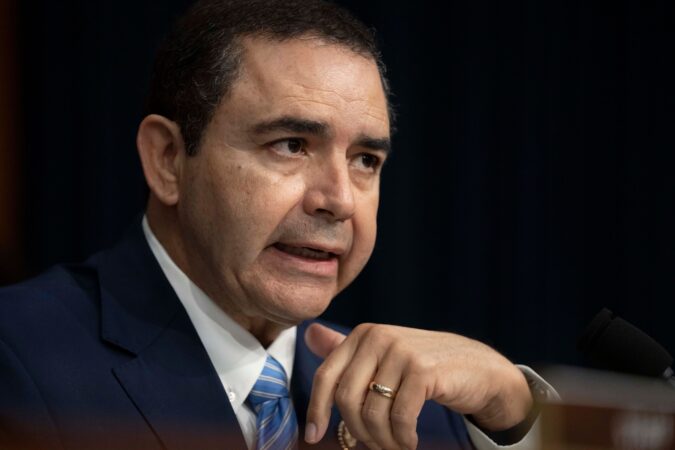
President Donald Trump pardoned Texas Democratic Rep. Henry Cuellar and his wife in a federal bribery and conspiracy case on Wednesday, citing what he called a “weaponized” justice system.
Trump, who has argued that his own legal troubles were a partisan witch hunt, said on social media without presenting evidence that Cuellar and his wife, Imelda Cuellar, were prosecuted because the congressman had been critical of President Joe Biden’s immigration policies.
Trump, a Republican, said in a social media post that Cuellar “bravely spoke out against Open Borders” and accused Biden, a Democrat, of going after the congressman and his wife “for speaking the TRUTH.”
Federal authorities had charged Cuellar and his wife with accepting thousands of dollars in exchange for the congressman advancing the interests of an Azerbaijan-controlled energy company and a bank in Mexico. Cuellar is accused of agreeing to influence legislation favorable to Azerbaijan and deliver a pro-Azerbaijan speech on the floor of the U.S. House.
Cuellar has said he and his wife are innocent. The couple’s trial had been set to begin next April.
“Henry, I don’t know you, but you can sleep well tonight,” Trump wrote in his social media post announcing the pardon. “Your nightmare is finally over!”
Cuellar thanks Trump for the pardon
Cuellar, who spoke to reporters outside his congressional office on Wednesday, thanked Trump in a brief statement.
“I think the facts have been clear about this, but I would also say I want to thank God for standing during this very difficult time with my family and I,” he said. ”Now we can get back to work. Nothing has changed. We will continue working hard.”
Cuellar was asked if he was changing parties and said, “No, like I said, nothing has changed.”
A spokesperson for Biden did not immediately respond to messages seeking comment.
The Constitution gives the president broad power to grand pardons for federal crimes. The pardons don’t erase a recipient’s criminal record but can be seen as act of mercy or justice, often in cases that further public welfare.
Trump’s pardons this year have included a string of unlikely beneficiaries who are boldfaced names and frequently politically aligned with the president. He pardoned dozens of Republicans accused of participating in his efforts to overturn his 2020 election loss to Biden. He gave clemency to all of 1,500-plus people charged in the Jan. 6, 2021, attack on the U.S. Capitol. He’s also pardoned a former Republican governor of Connecticut, an ex-GOP congressman and reality TV stars who had been convicted of cheating banks and evading taxes.
Cuellar’s daughters sought a pardon for him
In Trump’s social media post, he included a copy of a letter that Cuellar’s two daughters, Christina and Catherine, had sent to him on Nov. 12 asking that he pardon their parents.
“When you and your family faced your own challenges, we understood that pain in a very human way,” Cuellar’s daughters wrote in their letter. ”We watched from afar through the eyes of daughters who knew what it felt like to see parents under fire.”
One of Henry Cuellar’s lawyers, Eric Reed, said Wednesday that his legal team made a “pretty substantive presentation” to the Justice Department several months ago seeking dismissal of the charges. He declined to comment on what specifically Cuellar’s legal team discussed with the department but said the arguments made were not political in nature.
In a statement, Imelda Cuellar’s lawyers said Wednesday they were gratified by Trump’s pardon of their client.
“She has always maintained her innocence,” the statement said.
Henry Cuellar still faces an Ethics Committee investigation in the House. It began in May 2024 shortly after his indictment and was reauthorized in July. The committee said it was in contact with the Justice Department about mitigating the risks associated with dual investigations while still meeting its obligations to safeguard the integrity of the House.
Cuellar, who has served in Congress for more than 20 years, is a moderate Democrat who represents an area on the Texas-Mexico border and has a history of breaking with his party when it comes to immigration and firearms.
He was among the most vocal critics of the Biden administration’s response to a record number of migrants crossing the U.S.-Mexico border. He also is one of the last Democrats in Congress who opposes abortion rights.
Cuellar is not the only Democrat Trump has pardoned this year. In February, he pardoned former Illinois Gov. Rod Blagojevich, five years after he had commuted his sentence in a political corruption case.
Like in Cuellar’s case, Trump suggested that New York City Mayor Eric Adams, a Democrat, faced federal corruption charges because he made comments critical of Biden’s immigration policies.
Trump did not pardon Adams, but after Trump took office, the Justice Department moved to drop the case against the mayor, who had begun working with the Republican administration on immigration issues.
A top Justice Department official, who was also Trump’s defense lawyer in several of his cases, stepped in to seek dismissal in the case.
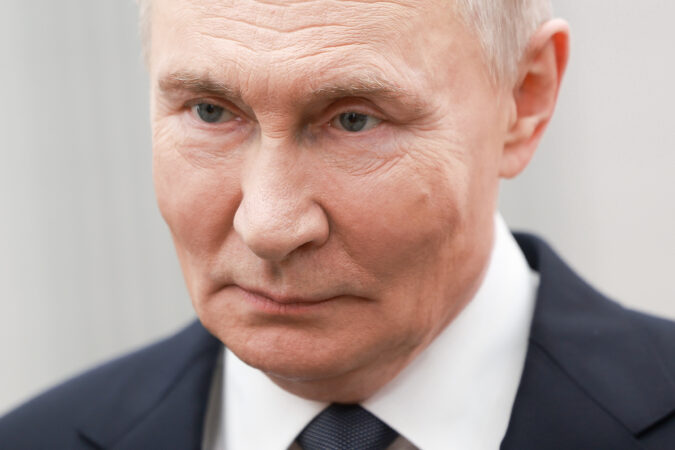
KYIV, Ukraine — Ukraine and its European allies accused Russian President Vladimir Putin on Wednesday of feigning interest in peace efforts after five hours of talks with U.S. envoys at the Kremlin produced no breakthrough.
The Russian leader “should end the bluster and the bloodshed and be ready to come to the table and to support a just and lasting peace,” said U.K. Foreign Secretary Yvette Cooper. Ukrainian Foreign Minister Andrii Sybiha urged Putin to “stop wasting the world’s time.”
The remarks reflect the high tensions and gaping gulf between Russia on one side and Ukraine and its European allies on the other over how to end a war that Moscow started when it invaded its neighbor nearly four years ago.
A day earlier, Putin accused the Europeans of sabotaging the U.S.-led peace efforts — and warned that, if provoked, Russia would be ready for war with Europe.
Since the 2022 invasion, European governments, along with the U.S., have spent billions of dollars to support Kyiv financially and militarily. Under President Donald Trump, however, the U.S. has tempered its support — and instead made a push to end the war.
Putin’s foreign affairs adviser Yuri Ushakov said Tuesday’s talks at the Kremlin between Putin and U.S. envoy Steve Witkoff and Trump’s son-in-law Jared Kushner were “positive” but wouldn’t release any details.
Where the peace talks go from here depends largely on whether the Trump administration decides to increase the pressure on Russia or on Ukraine to make concessions.
A U.S. peace proposal that became public last month was criticized for being tilted heavily toward Moscow because it granted some of the Kremlin’s core demands that Kyiv has rejected as nonstarters.
Many European leaders worry that if Putin gets what he wants in Ukraine, he will have free rein to threaten their countries, which already have faced incursions from Russian drones and fighter jets, and an alleged widespread sabotage campaign.
The Russian and American sides agreed Tuesday not to disclose the substance of their Kremlin talks, but at least one major hurdle to a settlement remains — the fate of four Ukrainian regions Russia partially seized and occupies and claims as its own.
After the talks, Ushakov told reporters that “so far, a compromise hasn’t been found” on the issue of territory, without which the Kremlin sees “no resolution to the crisis.”
Ukraine has ruled out giving up territory that Russia has captured.
Asked whether peace was closer or further away after the talks, Ushakov said: “Not further, that’s for sure.”
“But there’s still a lot of work to be done, both in Washington and in Moscow,” he said.
Kremlin spokesman Dmitry Peskov said Wednesday it was “not correct” to say that Putin had rejected the U.S. peace plan. He declined to elaborate on the talks.
“We’re deliberately not going to add anything,” he said. “It’s understood that the quieter these negotiations are conducted, the more productive they will be.”
Europeans step up assistance for Ukraine
Foreign ministers from European NATO countries, meeting in Brussels on Wednesday, showed little patience with Moscow.
“What we see is that Putin has not changed any course. He’s pushing more aggressively on the battlefield,” Estonian Foreign Minister Margus Tsahkna said. “It’s pretty obvious that he doesn’t want to have any kind of peace.”
Finnish Foreign Minister Elina Valtonen struck the same note. “So far we haven’t seen any concessions from the side of the aggressor, which is Russia, and I think the best confidence-building measure would be to start with a full ceasefire,” she said.
NATO Secretary-General Mark Rutte said Ukraine’s partners will keep supplying military aid to ensure pressure is maintained on Moscow.
“The peace talks are ongoing. That’s good,” Rutte said.
“But at the same time, we have to make sure that whilst they take place and we are not sure when they will end, that Ukraine is in the strongest possible position to keep the fight going, to fight back against the Russians,” he said.
Canada, Germany, Poland and the Netherlands announced they will spend hundreds of millions of dollars more together to buy U.S. weapons to donate to Ukraine.
This year, European countries in NATO and Canada began buying U.S. weapons for Ukraine under a financial arrangement known as the Prioritized Ukraine Requirements List, or PURL.
The war claims more lives
Russia and Ukraine are engaged in a grim war of attrition on the battlefield and are using drones and missiles for long-range strikes behind the front line. Many analysts have noted that the slow slog favors Russia’s larger military, especially if disagreements between Europe and the U.S. or among Europeans hampers weapons delivery to Ukraine.
Russian drones hit the town of Ternivka in Ukraine’s Dnipropetrovsk region, killing two people and injuring three more, according to the head of the regional military administration, Vladyslav Haivanenko. Two people were in critical condition, he said, after the attack destroyed a house and damaged six more.
Overall, Russia fired 111 strike and decoy drones overnight, Ukraine’s air force said.
Meanwhile, Russia’s Defense Ministry said it destroyed 102 Ukrainian drones overnight.
Falling drone debris sparked a fire at an oil depot in the Tambov region, about 200 kilometers (120 miles) south of Moscow, Gov. Yegveniy Pervyshov said.
“These are serious charges, and that’s the reason we’re going to have special oversight,” said Sen. Roger Wicker of Mississippi, the Republican chair of the Senate Armed Services Committee.
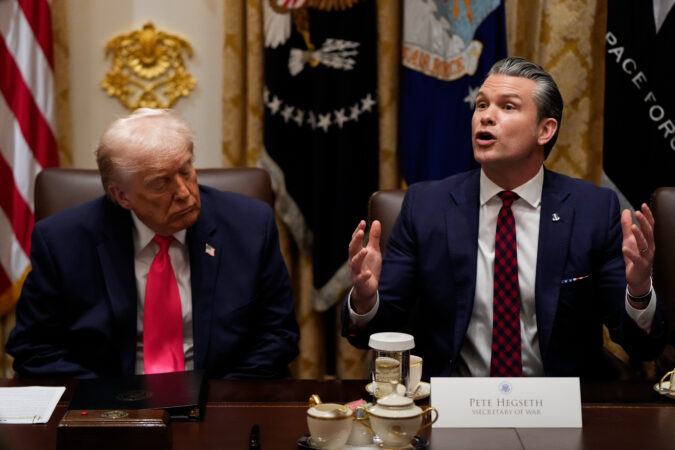
The scrutiny surrounding Hegseth’s brash leadership style is surfacing what has been long-building discontent in Congress over President Donald Trump’s choice to helm the U.S. military. And it’s posing a potentially existential moment for Hegseth as the congressional committees overseeing the military launch an investigation amid mounting calls from Democratic senators for his resignation.
Hegseth vowed a ‘warrior culture,’ but lawmakers take issue
Since working to become defense secretary, Hegseth has vowed to bring a “warrior culture” to the U.S. government’s most powerful and expensive department, from rebranding it as the Department of War to essentially discarding the rules that govern how soldiers conduct themselves when lives are on the line.
Hegseth on Tuesday cited the “fog of war” in defending the follow-up strike, saying that there were explosions and fire and that he did not see survivors in the water when the second strike was ordered and launched. He chided those second-guessing his actions as being part of the problem.
Yet the approach to the operation was in line with the direction of the military under Hegseth, a former infantry officer with the Army National Guard, part of the post-Sept. 11 generation, who was deployed to Iraq and Afghanistan and earned Bronze Stars.
During a speech in September, he told an unusual gathering of top military brass whom he had summoned from all corners of the globe to the Quantico Marine Corps Base in Virginia that they should not “fight with stupid rules of engagement.”
“We untie the hands of our warfighters to intimidate, demoralize, hunt and kill the enemies of our country,” he said. “No more politically correct and overbearing rules of engagement, just common sense, maximum lethality and authority for warfighters.”
But now lawmakers and military and legal experts say the Sept. 2 attack borders on illegal military action.
“Somebody made a horrible decision. Somebody needs to be held accountable,” said Sen. Thom Tillis, a North Carolina Republican who in January held out support for Hegseth until only moments before casting a crucial vote for his confirmation.
“Secretary Talk Show Host may have been experiencing the ‘fog of war,’ but that doesn’t change the fact that this was an extrajudicial killing amounting to murder or a war crime,” said Sen. Chris Van Hollen, D-Md. “He must resign.”
Rep. Don Bacon, a Republican who served 30 years active duty in the Air Force, finishing his career at the rank of brigadier general, said he hasn’t been a fan of Hegseth’s leadership. “I don’t think he was up to the task,” Bacon said.
Trump, a Republican, has largely stood by his defense secretary, among the most important Cabinet-level positions. But the decisions by Wicker, alongside House Armed Services Chair Mike Rogers of Alabama and the top Democrats on the committees, to open investigations provide a rare moment of Congress asserting itself and its authority to conduct oversight of the Trump administration.
Senate Majority Leader John Thune, R-S.D., who shepherded the defense secretary’s nomination to confirmation, has said the boat strikes are within Trump’s authority as commander in chief — and he noted that Hegseth serves at the pleasure of the president.
“I don’t have, at this point, an evaluation of the secretary,” Thune said at the start of the week. “Others can make those evaluations.”
But Hegseth also has strong allies on Capitol Hill, and it remains unclear how much Republicans would actually be willing to push back on the president, especially when they have spent the first year in his administration yielding to his various demands.
Vice President JD Vance, who cast a rare tiebreaking vote to confirm Hegseth, has vigorously defended him in the attack. And Sen. Eric Schmitt, another close ally to Trump, dismissed criticism of Hegseth as “nonsense” and part of an effort to undermine Trump’s focus on Central and South America.
“He’s not part of the Washington elite,” said Schmitt, R-Mo. “He’s not a think tanker that people thought Trump was going to pick. … And so, for that reason and others, they just, they don’t like him.”
Tension between some Republican lawmakers and the Pentagon has been rising for months. Capitol Hill has been angered by recent moves to restrict how defense officials communicate with lawmakers and the slow pace of information on Trump’s campaign to destroy boats carrying drugs off the coast of Venezuela.
As he defends his job, Hegseth has spoken to both Wicker and Rogers, the top lawmakers overseeing the military. Rogers said he was “satisfied” with Hegseth after that conversation, while Wicker said that he told Hegseth that he would like him to testify to Congress.
Hegseth at first tried to brush aside the initial report about the strike by posting a photo of the cartoon character Franklin the Turtle firing on a boat from a helicopter, but that only inflamed criticism of him and angered lawmakers who felt he was not taking the allegations seriously.
Senate Democratic leader Chuck Schumer of New York called Hegseth a “national embarrassment,” adding the defense secretary’s social media post of the cartoon turtle is “something no serious leader would ever think of doing.”
What information will Congress get?
Later this week, the chairs of the armed services committees, along with the top Democrats on the committees, will hear private testimony from Navy Vice Adm. Frank “Mitch” Bradley, who the White House has said ordered the second strike on the survivors.
Republicans have been careful to withhold judgment on the strike until they complete their investigation, but Democrats say that these problems with Hegseth were a long time coming.
Sen. Tim Kaine, a Virginia Democrat, pointed back to Hegseth’s tumultuous confirmation hearing, at which issues were raised with his management of nonprofits, as well as allegations of a sexual assault and abuse, and drinking on the job. Hegseth had vowed not to consume alcohol if confirmed.
“You don’t suddenly change your judgment level or change your character when you get confirmed to be secretary of defense,” Kaine said. “Instead, the things that have been part of your character just become much more dire and existential.”
A special election in a safely Republican district in Tennessee became must-watch TV for political observers Tuesday night, the latest sign of anti-Trump sentiment ahead of the 2026 midterms.
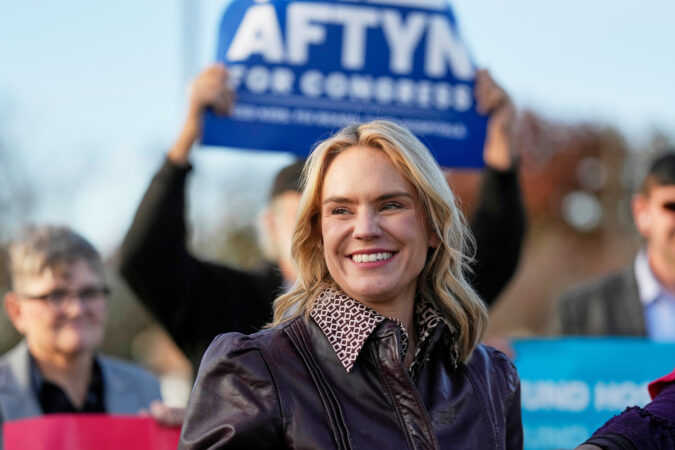
The Associated Press called the race in Tennessee’s 7th Congressional District for Republican Matt Van Epps, who was leading Democrat Aftyn Behn by about 9 percentage points with about 99% of the vote in. That was a steep decline from the 22-point win President Donald Trump recorded in the same district just last year, and from his 39-point victory in 2016.
It was the latest sign of a Democratic blue wave forming, following Election Day sweeps in Virginia, New Jersey, and Virginia last month. It also was the third straight special election in a deeply Republican district where voters swung toward the Democratic candidate by double-digit margins.
“Sometimes in politics, what is happening is clear and in front of you,” David Chalian, CNN’s Washington bureau chief and political director, said Tuesday night. “Democrats are significantly, significantly over-performing what Kamala Harris did last year vs. Donald Trump in all of these places.”
While Trump celebrated Van Epps’ victory on social media, Democratic National Committee chairman Ken Martin called the results “a flashing warning sign for Republicans heading into the midterms.”
“What happened tonight in Tennessee makes it clear: Democrats are on offense and Republicans are on the ropes,” Martin said in a statement.
What is the Republican majority in the House?
Speaker of the House Mike Johnson (R., La.) is dealing with a shrinking majority.
Van Epps’ victory means Republicans will hold 220 seats, while Democrats have 214 seats; 218 are needed to control the majority.
Two seats remain vacant, and both are expected to go to Democrats, further reducing the already slim majority of House Speaker Mike Johnson (R., La.).
The first is in Texas, where a runoff will be held Jan. 31 to fill the seat vacated by the death of Democratic Rep. Sylvester Turner. The race is down to two Democrats — Christian Menefee and Amanda Edwards.
The second open seat is in New Jersey’s 11th Congressional District, which will hold a special election April 16 to fill the spot vacated by New Jersey Gov.-elect Mikie Sherrill. While the district was represented by a Republican as recently as 2018, it has been safely blue since maps were redrawn following the 2020 Census and is expected to remain in Democratic control.
Not surprisingly, there are a lot of Democrats vying to replace Sherrill. At least 13 have entered the race or are about to do so, a lengthy list that includes former Rep. Tom Malinowski, progressive activist Analilia Mejia, Obama White House alum Cammie Croft, Essex County Commissioner Brendan Gill, and current Lt. Gov. Tahesha Way.
Just one Republican has announced a bid to replace Sherrill — Randolph Mayor Joe Hathaway.
Then there is the Georgia seat of GOP Rep. Marjorie Taylor Greene, which is set to become vacant following her resignation on Jan. 5. It is unclear when Georgia will hold a special election to replace Greene, but Gov. Brian Kemp is required to set a date within 10 days of her departure.
The seat is considered safely Republican, but that is hardly definitive after what happened in Tennessee on Tuesday night.
Why was there a special election in Tennessee?
Former Rep. Mark Green (R., Tenn.) left Congress suddenly to launch his own business.
Tuesday’s special election was held to replace the seat vacated by Republican Mark Green, who resigned in July to launch a new business called Prosimos.
Green’s decision to leave Congress, and his role as the chair of the Homeland Security Committee, came in the middle of his fourth term.
So what is Prosimos? According to Green, it’s a development and strategy firm designed to help U.S. businesses better compete against the influence of China. The company’s website says it provides “tailored strategies and expert guidance to navigate the complexities of global business development.”
What does this mean for Republicans in Pennsylvania and New Jersey?
Rep. Ryan Mackenzie (R., Pa.) is one of four Pa. Republicans facing a tough reelection battle.
If there has been a trend since Trump’s inauguration, it’s that voters are keen on punishing Republicans at the ballot box.
In four previous special elections for House seats held in 2025, Democrats significantly outperformed Harris’ margins in 2024. That was also true of Election Day victories in Pennsylvania, New Jersey, Virginia, and Georgia, where two Republicans were booted off the state’s Public Service Commission.
Closer to home, there are five House seats — four in Pennsylvania, one in New Jersey — that Democrats hope to flip during the 2026 midterms, potentially deciding the balance of power during the final two years of Trump’s presidency.
PA-01: In Bucks County, Republican Rep. Brian Fitzpatrick is used to close races, but next year could be particularly challenging for the five-term moderate. In addition to nationwide trends, Democrats won each countywide office by around 10 percentage points last month, and Bucks County District Attorney Joe Khan is the first member of their party ever elected to the office.
PA-07: In the Lehigh Valley, Republican Rep. Ryan Mackenzie is the biggest target for Democrats after ousting Susan Wild by just 1 percentage point in 2024. Cook Political Report lists the district as a true “toss up” and five Democrats have already entered the race.
PA-08: Farther north, in Scranton and Wilkes-Barre, Republican Rep. Rob Bresnahan is also looking to win reelection to a seat he flipped by just 1 percentage point in 2024. The district leans Republican — Trump won it by nearly 9 percentage points — and so far Bresnahan’s only challenger is Scranton Mayor Paige Cognetti.
PA-10: Another of Cook’s “toss up” districts. Republican Rep. Scott Perry, an outspoken Trump supporter who supported the president’s efforts to overturn the 2020 election, is seeking his eighth term. Perry narrowly won reelection in 2024, defeating former news anchor Janelle Stelson by less than 1 percentage point. She is running against Perry again in 2026 and has already received an endorsement from Gov. Josh Shapiro.
NJ-07: The northwestern New Jersey district is currently represented by Republican Tom Kean Jr., a moderate who won reelection by about 5 percentage points in 2024. Cook lists Kean’s district as a “toss up,” and he faces a crowded field of Democrats in what would otherwise be a safely Republican seat.
Chester County may be the only county in Philadelphia’s suburbs that will avoid a property tax hike next year.
In the proposed 2026 budget, released last month, Chester County’s commissioners projected $666.3 million in operational spending, roughly 4.7% more than the county budgeted for 2025. The budget is expected to pass the three-member board of commissioners with bipartisan support.
Despite the increased spending and more limited state and federal resources, county officials said, they expected to avoid a tax increase next year thanks to budget cuts across nearly every department and delayed projects.
“This budget was really difficult for us, but we did what we had to to keep it at zero,” said Chester County Commissioner Marian Moskowitz, a Democrat.
David Byerman, the county’s CEO, described the county as being in a “defensive crouch” financially.
“We are in a very unpredictable environment in which we have a lot of conflicting information that we’re dealing with,” Byerman said, citing federal funding uncertainty under President Donald Trump. “We were charged by our commissioners in Chester County with crafting a budget that held the line in terms of tax increases.”
How does Chester County compare with the rest of the region?
The decision sets Chester County apart from its peers in a year that has been marked by budget uncertainty at the state and federal levels. In recent weeks, Delaware County’s executive director proposed a 19% property tax hike to address the county’s structural deficit. Montgomery County’s commissioners are proposing a 4% increase. Bucks County’s commissioners have floated a tax increase to address a deficit in next year’s budget.
“This is a pared-down budget because we didn’t know what the federal and state government were going to do,” said Josh Maxwell, a Democrat, who chairs the county board of commissioners.
The biggest cost increases, he said, came in the form of employee and inmate healthcare.
How did Chester County cut its budget?
In the first quarter of this year, Chester County officials asked each county department to reduce non-personnel spending by 5% for the 2026 budget. By and large, officials said, they responded to the call, freeing up significant funds even as overall personnel costs increased.
“We asked them to cut back, and some of them really did,” said Eric Roe, the lone Republican on the board of commissioners. “I’m really happy with how they helped us get to this point.”
In this year’s budget, officials said, they opted to delay projects like park maintenance and computer system upgrades that could be put off.
“The cuts are giving us an opportunity to prioritize and rethink our discretionary spending,” Maxwell said. “They may have to go to some of the things that the federal and state government used to do that they’re getting out of the business of doing.”
Additionally, Byerman said, the county instituted a soft hiring freeze by requiring all new hires to be approved by top-level management.
Can Chester County avoid tax increases in future years?
Heading into next year, Maxwell said, he is bracing for cuts to federal social service programs that will result in larger expenditures from the county to serve its neediest residents.
“This is a year where we’re going to look at all of our programs and make sure that we’re investing in the areas that the community wants us to,” Maxwell said.
This suburban content is produced with support from the Leslie Miller and Richard Worley Foundation and The Lenfest Institute for Journalism. Editorial content is created independently of the project donors. Gifts to support The Inquirer’s high-impact journalism can be made at inquirer.com/donate. A list of Lenfest Institute donors can be found at lenfestinstitute.org/supporters.
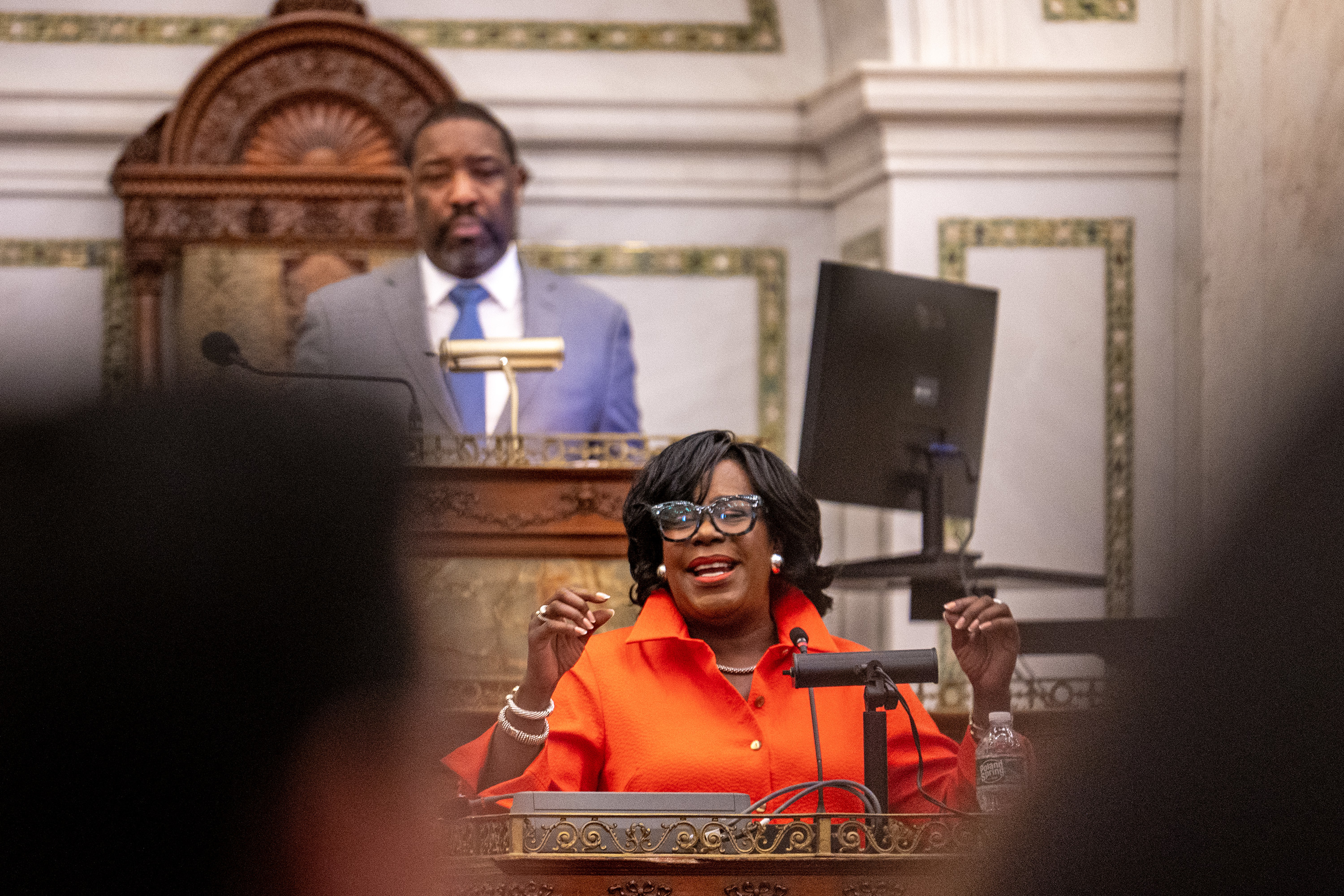
Philadelphia City Council on Tuesday amended the initial budget for Mayor Cherelle L. Parker’s signature housing initiative to direct more money to programs that will help the lowest-income Philadelphians, a move that sparked one of the most notable confrontations between Parker and city lawmakers since she took office almost two years ago.
The amendment, which followed a weekslong standoff between the executive and legislative branches, represents a rare act of defiance for a Council that has otherwise been largely compliant with Parker’s agenda, and it appeared at first to be a major win for Philly progressives.
But Parker is not giving up the fight, and she said Tuesday night that the amendment may have had unintended consequences that could hold up much of the housing initiative for months.
The changes to the legislation, she said, may trigger additional procedural steps that will prevent the city from issuing $400 million in bonds to fund the initiative until March or later. The mayor did not hold back from laying the blame for the delays at Council’s feet.
“The resolution that City Council passed out of the Committee of the Whole today contained language that our bond lawyers have repeatedly advised would prevent the administration from being able to issue the bonds,” Parker said in a statement. “That means homes are not being restored. It means homes are not being built or repaired.”
In an unusually blunt statement late Tuesday night, Council President Kenyatta Johnson pushed back against the administration’s analysis of the situation.
“Council’s responsibility is not to rubber-stamp legislation, but to ensure that any multi-billion-dollar public investment is legally sound and targeted to the Philadelphians who need it most,” Johnson said.
But he also vowed to have Council quickly introduce new legislation that could ameliorate the procedural problem Parker identified, tacitly conceding that additional legislation was needed hours after lawmakers approved the resolution with no mention of that possibility.
Johnson said Council would “resolve remaining legal and policy issues swiftly,” and that a new measure to legalize lawmakers’ most recent changes could be introduced this week.
Council wants “shovels in the ground” and “homes repaired,” he said, but ”refuses to rush into issuing $800 million in debt without iron-clad legal protections and clear guarantees.”
“Council members repeatedly raised concerns — directly and in good faith — about accountability, neighborhood equity, homeowner protections, and the long-term impact of the H.O.M.E legislation,” he said. “Council’s action today strengthened the H.O.M.E resolution, not sabotaged it.”
The late-night war of words between Parker and Johnson came hours after a celebratory Council committee meeting in which lawmakers took a victory lap for standing up to the administration.
After the vote, Councilmember JamieGauthier and Councilmember Rue Landau, respectively the chair and vice chair of the Committee on Housing, Neighborhood Development and the Homeless, said the amended resolution means “working and low-income families will finally be able to get the support they need sooner.”
“With roughly $30 million in federal homelessness funding at risk, it is more important than ever that this multiyear, $800 million investment begins by prioritizing the more than 200,000 Philadelphia households on the brink of losing their homes,” Gauthier and Landau said in a joint statement, referring to a federal policy change proposed by President Donald Trump’s administration that could cost the city millions in funding for anti-homelessness programs.
Council pushes for policy changes
Parker, who has long championed the city’s “middle neighborhoods,” structured her sweeping Housing Opportunities Made Easy, or H.O.M.E, initiative to ensure that the myriad programs funded or created by the program would be available to homeowners and renters at a variety of income levels.
But Johnson — in an unexpected break from his usual alignment with Parker — stood with Gauthier and other progressives who fought to ensure the neediest city residents were prioritized in the budget resolution, which sets the first-year spending allocations for H.O.M.E. The distribution of funding must be approved by Council before the administration can issue the first of two planned $400 million tranches of city bonds that will finance much of the initiative.
Council’s Committee of the Whole, which includes all members, approved the amendment and advanced the resolution in a pair of unanimous voice votes Tuesday afternoon following hours of testimony.
The measure would now head to the Council floor for a final passage vote in the next two weeks. Parker’s statement, however, could mean Council has additional work to do before getting the measure over the finish line. Johnson’s office said the vote is still scheduled for Dec. 11.
“The majority of the members of City Council want to focus on the issues of those who are poor here in the city of Philadelphia when it comes to housing and equality,” Johnson told reporters after the vote.
It’s unclear whether the vote represents a serious rupture in the tight relationship between Parker and Johnson, who have worked closely together since both took office in January 2024. Council approved the most important pieces of legislation Parker proposed as part of the H.O.M.E initiative earlier this year, and the changes adopted Tuesday do not alter the fundamentals of the program, which Parker hopes will achieve her goal of creating or preserving 30,000 units of housing in her first four-year term.
“We support the H.O.M.E. plan,” Johnson said. “And I think the mayor did a good job in investing close to $1 billion … in supporting the issue of housing inequality here in the city of Philadelphia. This amendment represents the will of the members. … We want to specifically focus on those who are the most least well-off, those who are poor.”
But after reading about Parker’s statement in the evening, Johnson’s attitude toward the administration sharpened. His lengthy statement included the most critical language the Council president has directed at the mayor since they were inaugurated.
Mayor Cherelle L. Parker unveils her long-awaited plan to build or preserve 30,000 units of housing during a special session of City Council Monday, Mar. 24, 2025. Council President Kenyatta Johnson is behind her.
Johnson rejected Parker’sclaim that the legislative delays could cause the popular Basic Systems Repair Program to temporarily run out of funding, saying that there is plenty of money in the current city budget to cover shortfalls.
“Threatening residents with a shutdown of the Basic Systems Repair Program and assigning blame does not move this process forward,” he said. “Collaboration and working together does.”
The amendment increases the first-year budget for spending the bond proceeds from $194.6 million to $277.2 million. The increased price tag, however, does not represent new money in the housing budget; it merely allows the administration to spend more of the $400 million in bond proceeds in the initiative’s first year.
The changes include increases in funding for housing preservation from $29.6 million to $46.2 million, and housing production from $24.3 million to $29.5 million. Additionally, the amendment boosted funding for homelessness prevention programs from $3.8 million to $8.8 million.
But perhaps more importantly, Council altered the income eligibility levels for several programs.
Parker, for instance, had proposed that the H.O.M.E. funding for the Basic Systems Repair Program, which subsidizes critical home improvements to prevent residents from being displaced by the costs of needed repairs, be open to any homeowner who makes Philadelphia’s area median income, or AMI, which is about $119,400 for a family of four.
Council’s amendment, however, requires 90% of the new funding to go to families making 60% of AMI or less, about $71,640 for a family of four.
The administration initially planned to issue the first $400 million in bonds this fall, and Parker sent Johnson’s office a first draft of the budget resolution in July. Council then delayed the committee vote on the resolution several times as Johnson negotiated with Parker on potential changes.
The amendment adopted Tuesday appears to largely mirror Gauthier’s priorities for the spending plan, rather than a negotiated compromise, the first sign that Johnson had moved forward despite not reaching a deal with Parker.
Parker’s plan to sell the initial round of bonds this fall appeared to be on schedule when Council in June approved the most important pieces of legislation associated with the H.O.M.E. initiative, including an $800 million bond authorization.
But lawmakers at that time inserted a provision into the bond legislation that required the administration to get Council approval of its H.O.M.E. budget each year before it can spend the bond proceeds. For the initiative’s first year, that provision means the city cannot take the bonds to market at all without Council signing off on the budget resolution, city Finance Director Rob Dubow has said.
The latest potential delay, which could set Parker’s schedule back months more, stems from the amendment approved in committee Tuesday.
Parker did not elaborate on the procedural issue that could cause the latest delay, but her comments indicated what it may be: Because the resolution, which dictates how the bond proceeds can be spent, now includes significant differences from the bond authorization bill Council approved months ago, the city may not be able to rely on the original bill as its legal basis for taking out debt and selling the bonds.
To make them align, Council may have to approve a new bond authorization bill, or abandon some of its changes to the spending resolution.
In his statement Tuesday night, Johnson indicated Council has chosen the former route.
“City Council is preparing to introduce an amendment to the H.O.M.E bond ordinance as early as this week’s Council session,” he said.
It’s unclear if the resolution could pass by the end of the year. But Johnson’s reference to the potential of the current city budget’s surplus covering shortfalls in housing programs indicates that might not be possible.
Council’s last meeting is scheduled for Dec. 11. Lawmakers can vote to suspend Council rules and fast-track legislation as needed.
This story was updated to include Council President Kenyatta Johnson’s response to Mayor Cherelle L. Parker’s statement.
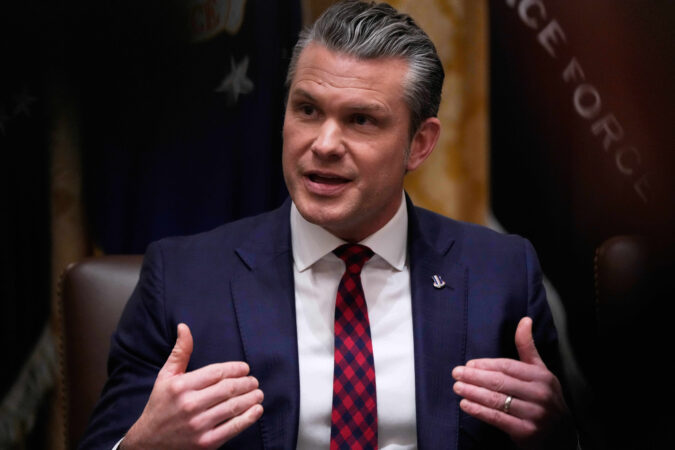
Defense Secretary Pete Hegseth previously emphasized the samemilitary law that the Trump administration has been calling Pennsylvania lawmakers seditious for citing.
Hegseth notedthe military rule not to obey unlawful orders during a forum in 2016,when he was a Fox News contributor, in recorded remarks CNN unearthed on Tuesday.
Hegseth spoke at length about his views on the military — and criticism of former President Barack Obama — in a talk titled “The US Military: Winning Wars, Not Social Engineering.” The talk was shared online by the Liberty Forum of Silicon Valley and was marked as taking place on April 12, 2016. Hegseth, an Army veteran, had a book coming out that he promoted at the event.
The moderator asked him a question from an attendee: “Can you comment on soldiers who are being held at Leavenworth Prison for being soldiers?”
Hegseth argued that some prisoners at the facility did not deserve to be there but that others were facing the consequences for their unlawful actions.
“There are some guys at Leavenworth who made really bad choices on the battlefield, and I do think there have to be consequences for abject war crimes,” he said. “If you’re doing something that is just completely unlawful and ruthless, then there is a consequence for that.”
“That’s why the military said it won’t follow unlawful orders from their commander in chief,” he added. “There’s a standard, there’s an ethos, there’s a belief that we are above what so many things that our enemies or others would do.”
It is the same policy that a group of six Democratic members of Congress cited in a video that enraged President Donald Trump.
On his social media website, Truth Social, Trump said they were committing sedition “punishable by DEATH” and shared other posts attacking the lawmakers, including one calling for them to be hanged. Hegseth called them the “seditious six.”
“Encouraging our warriors to ignore the orders of their Commanders undermines every aspect of ‘good order and discipline,’” Hegseth said in a social media post. “Their foolish screed sows doubt and confusion — which only puts our warriors in danger.”
When asked for comment by CNN, spokespersons for the Pentagon and the White House further criticized the Democratic lawmakers who made the video.
Pentagon spokesperson Kingsley Wilson also told CNN that the military “has clear procedures for handling unlawful orders” and defended Trump’s orders as legal.
White House spokesperson Anna Kelly told CNN that Hegseth’s position has remained consistent and that his remarks were “uncontroversial.”
Sean Timmons, a Houston-based attorney specializing in military law who served as an active-duty U.S. Army captain in the U.S. Army Judge Advocate General (JAG) program, told The Inquirer that service members can get in trouble for refusing orders and that it is largely up to commanders to determinewhether orders are lawful or not. While the military rules specify not to follow obviously illegal orders, such as war crimes, they also say to presume orders are lawful.
Houlahan expressed disappointment in her Republican colleagues for largely not defending the Democratic lawmakers, though U.S. Rep. Brian Fitzpatrick, a Bucks County Republican, said he stood by his Democratic colleagues when asked by The Inquirer.
The fallout from the video has gone beyond rhetoric on X and Truth Social.
Hegseth also said in his 2016 talk that he believed U.S. Sen. Ted Cruz (R., Texas), Trump’s top rival for the GOP nomination that year, would be the best president at fighting wars, but that he believed Cruz and Trump would both “unleash war fighters and get the lawyers out of the way, which is really a big impediment to how we fight wars.”
The Democratic lawmakers did not cite specific orders in their video announcement, but Trump’s involvement of the National Guard in U.S. cities and the Pentagon’s strikes in the Caribbean have drawn legal debate.
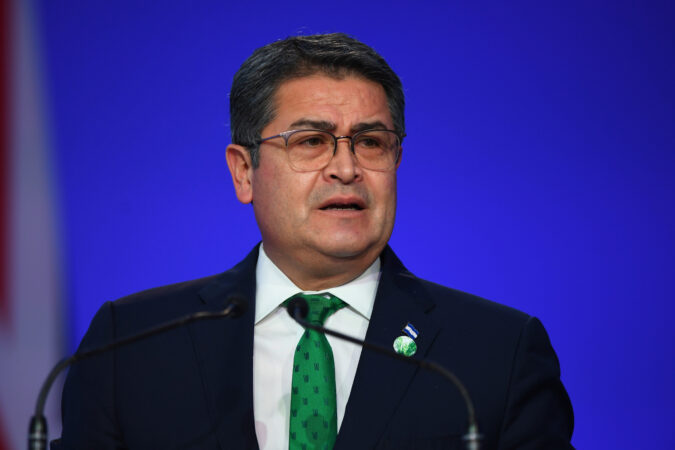
TEGUCIGALPA, Honduras — Former Honduras President Juan Orlando Hernández, sentenced last year to 45 years in prison for his role in a drug trafficking operation that moved hundreds of tons of cocaine to the United States, was released from prison following a pardon from President Donald Trump, officials confirmed Tuesday.
Hernández was released Monday from U.S. Penitentiary Hazelton in West Virginia, a spokesperson for the Federal Bureau of Prisons told the Associated Press. The bureau’s online inmate records also reflected his release.
The release of Hernández — a former U.S. ally whose conviction prosecutors said exposed the depth of cartel influence in Honduras — comes just days after the country’s presidential election. Trump defended the decision aboard Air Force One on Sunday, saying Hondurans believed Hernández had been “set up,” even as prosecutors argued he protected drug traffickers who moved hundreds of tons of cocaine through the country.
The pardon also unfolds against the backdrop of Trump’s aggressive counter-narcotics push that has triggered intense controversy across Latin America. In recent months, U.S. forces have repeatedly struck vessels they say were ferrying drugs north, a series of lethal maritime attacks that the administration argues are lawful acts of war against drug cartels — and that critics say test the limits of international law and amount to a pressure campaign on Venezuela’s President Nicolás Maduro.
The Trump administration has carried out 21 known strikes on vessels accused of carrying drugs, killing at least 83 people. The administration has justified the attacks as a necessary escalation to stem the flow of drugs into the United States and asserted the U.S. is engaged in an “armed conflict” with drug cartels, similar to the war against al-Qaida following the Sept. 11 attacks.
Hernández’s wife applauds his release
Ana García thanked Trump for pardoning her husband via the social platform X early Tuesday.
Speaking to reporters Tuesday outside her home in Tegucigalpa, she thanked Trump for pardoning her husband and drew a parallel between the two men.
“Today the whole world realizes that, like they did with President Donald Trump, the same Southern District, the same prosecutor created a political case,” García said.
She said Hernández called her Monday evening to say he was in the office of the prison head and had been told he will be released. García said Hernández is in an undisclosed location for his safety, but that he plans to address the Honduran people on Wednesday.
Hernández’s attorney Renato Stabile said in an emailed statement he also would not share the former president’s current location.
García said the process to seek a pardon began several months ago with a petition to the office of pardons. Then on Oct. 28, Hernández’s birthday, he wrote a letter to Trump. He announced he was pardoning Hernández last Friday.
“My husband is the president who has done the most for Honduras in the fight against organized crime,” Garcia said.
Trump’s rationale for the pardon
Trump was asked Sunday why he pardoned Hernández.
“I was asked by Honduras, many of the people of Honduras,” Trump told reporters traveling with him on Air Force One.
“The people of Honduras really thought he was set up, and it was a terrible thing,” he said.
“They basically said he was a drug dealer because he was the president of the country. And they said it was a Biden administration setup,” Trump said. ”And I looked at the facts and I agreed with them.”
Stabile, the attorney, said Hernández is glad the “ordeal” is over.
“On behalf of President Hernández and his family I would like to thank President Trump for correcting this injustice,” Stabile said.
Democratic lawmakers expressed condemnation and disbelief that Trump issued the pardon.
“They prosecute him, find him guilty of selling narcotics through these cartels into the United States. Can you think of anyone more reprehensible than that? Selling drugs to this country, finding more victims by the day,” said Sen. Dick Durbin of Illinois in a speech on the Senate floor.
“This is not an action by a President trying to keep America safe from narcotics,” Durbin added.
The Trump administration has declared drug cartels to be unlawful combatants and has carried out strikes in the Caribbean against boats the White House says were carrying drugs.
The case against the former president
Hernández was arrested at the request of the United States in February 2022, weeks after current President Xiomara Castro took office.
Two years later, Hernández was sentenced to 45 years in prison in a New York federal courtroom for taking bribes from drug traffickers so they could safely move some 400 tons of cocaine north through Honduras to the United States.
Hernández maintained throughout that he was innocent and the victim of revenge by drug traffickers he had helped extradite to the United States.
During his sentencing, federal Judge P. Kevin Castel said the punishment should serve as a warning to “well educated, well dressed” individuals who gain power and think their status insulates them from justice when they do wrong.
Hernández portrayed himself as a hero of the anti-drug trafficking movement who teamed up with American authorities under three U.S. presidential administrations to reduce drug imports.
But the judge said trial evidence proved the opposite and that Hernández employed “considerable acting skills” to make it seem that he strongly opposed drug trafficking while he deployed his nation’s police and military to protect the drug trade.
Hernández is not guaranteed a quick return to Honduras.
Immediately after Trump announced his intention to pardon Hernández, Honduras Attorney General Johel Zelaya said via X that his office was obligated to seek justice and put an end to impunity.
He did not specify what charges Hernández could face in Honduras. There were various corruption-related investigations of his administration across two terms in office that did not lead to charges against him. Castro, who oversaw Hernández’s arrest and extradition to the U.S., will remain in office until January.
The pardon promised by Trump days before Honduras’ presidential election injected a new element into the contest that some said helped the candidate from his National Party Nasry Asfura as the vote count proceeded Tuesday.
BRUSSELS – However Donald Trump’s latest push to end the war in Ukraine pans out, Europe fears the prospect of a deal – sooner or later – that will not punish or weaken Russia as its leaders had hoped, placing the continent’s security in greater jeopardy.
Europe may well even have to accept a growing economic partnership between Washington, its traditional protector in the NATO alliance, and Moscow, which most European governments – and NATO itself – say is the greatest threat to European security.
Although Ukrainians and other Europeans managed to push back against parts of a 28-point U.S. plan to end the fighting that was seen as heavily pro-Russian, any deal is still likely to carry major risks for the continent.
Yet Europe’s ability to influence a deal is limited, not least because it lacks the hard power to dictate terms.
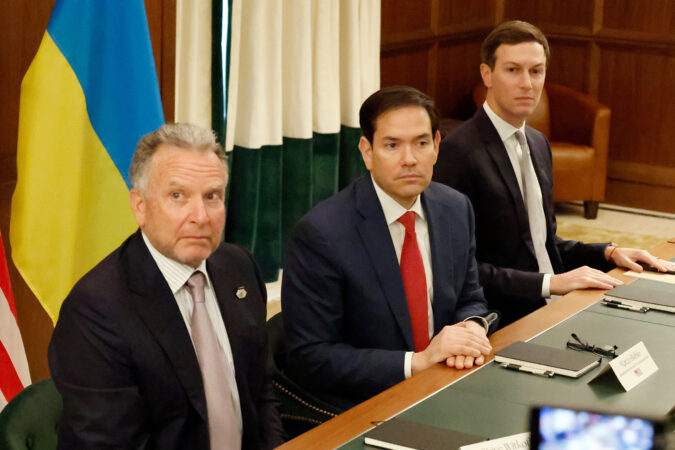
It had no representatives at talks between U.S. and Ukrainian officials in Florida at the weekend, and will only watch from afar when U.S. Special Envoy Steve Witkoff visits Russian President Vladimir Putin on Tuesday.
“I get the impression that, slowly, the awareness is sinking in that at some point there will be an ugly deal,” said Luuk van Middelaar, founding director of the Brussels Institute for Geopolitics think tank.
“Trump clearly wants a deal. What is very uncomfortable for the Europeans…is that he wants a deal according to great-power logic: ‘We’re the U.S., they are Russia, we are big powers’.”
Rubio seeks to reassure Europeans
U.S. Secretary of State Marco Rubio has said Europeans will be involved in discussions about the role of NATO and the European Union in any peace settlement.
But European diplomats take limited comfort from such reassurances. They say that just about every aspect of a deal would affect Europe – from potential territorial concessions to U.S.-Russian economic cooperation.
The latest initiative has also triggered fresh European worries about the U.S. commitment to NATO, which ranges from its nuclear umbrella through numerous weapons systems to tens of thousands of troops.
German Defence Minister Boris Pistorius said last week that Europeans no longer know “which alliances we will still be able to trust in future and which ones will be durable.”
Despite Trump’s previous criticism of NATO, he affirmed his commitment to the alliance and its Article 5 mutual defense clause in June in return for a pledge by Europeans to ramp up their defense spending.
But Rubio’s plans to skip a meeting of NATO foreign ministers in Brussels this week may only fan European jitters, amid fears that an eastern member of the alliance may be Moscow’s next target.
“Our intelligence services are telling us emphatically that Russia is at least keeping open the option of war against NATO. By 2029 at the latest,” German Foreign Minister Johann Wadephul said last week.
Europeans fear territorial concessions will embolden Putin
European officials say they see no sign that Putin wants to end his invasion of Ukraine. But if he does, they worry that any deal that does not respect Ukraine’s territorial integrity could embolden Russia to attack beyond its borders again.
Yet it now seems likely any peace accord would let Moscow at least keep control of Ukrainian land that it has taken by force, whether borders are formally changed or not.
The Trump administration has also not rejected out of hand Russian claims to the rest of the Donbas region that Moscow has been unable to capture after nearly four years of war.
Moreover, Trump and other U.S. officials have made clear they see great opportunities for business deals with Moscow once the war is over.
European officials fear that ending Russia’s isolation from the Western economy will give Moscow billions of dollars to reconstitute its military.
“If Russia’s army is big, if their military budget is as big as it is right now, they will want to use it again,” EU foreign policy chief Kaja Kallas told reporters on Monday.
Europe struggles to exert leverage
But European leaders have struggled to exert a strong influence on any peace settlement, even though Europe has provided some 180 billion euros ($209.23 billion) in aid to Ukraine since Russia’s invasion in February 2022.
The EU has a big potential bargaining chip in the form of Russian assets frozen in the bloc. But EU leaders have so far failed to agree on a proposal to use the assets to fund a 140-billion-euro loan to Ukraine that would keep Kyiv afloat and in the fight for the next two years.
To try to show they can bring hard power to bear, a “coalition of the willing” led by France and Britain has pledged to deploy a “reassurance force” as part of postwar security guarantees to Ukraine.
Russia has rejected such a force. But even if it did deploy, it would be modest in size, intended to bolster Kyiv’s forces rather than protect Ukraine on its own, and it could only work with U.S. support.
“The Europeans now are paying the price for not having invested in military capabilities over the last years,” said Claudia Major, senior vice president for transatlantic security at the German Marshall Fund of the United States think tank.
“The Europeans are not at the table. Because, to quote Trump, they don’t have the cards,” she said, referring to the U.S. president’s put-down of Ukrainian President Volodymyr Zelenskiy in February.
($1 = 0.8603 euros) (Additional reporting by Lili Bayer, John Irish and Sabine Siebold; writing by Andrew Gray; editing by Mark Heinrich)
Wholesale retail giant Costco has sued the federal government to ensure it will receive a “complete refund” on import duties if the Supreme Court rules against President Donald Trump’s sweeping tariffs.
The lawsuit, filed in the U.S. Court of International Trade in New York on Nov. 28 and reviewed by USA TODAY, asked the court to find Trump’s use of the International Emergency Economic Powers Act to impose tariffs as unlawful.
Costco, the largest warehouse club operator in the United States, said it has been the “importer of record” for products affected by the tariffs, but did not provide a specific dollar amount it is seeking in damages. The corporation noted in the filing that the suit was necessary because importers are not guaranteed to receive a refund if the high court strikes down the tariffs, unless they sue.
Costco also claims in the lawsuit that Customs and Border Protection (CBP) denied its request to delay the calculation of the total tariffs that it owes. The lawsuit claims that Costco’s ability to receive a refund will be significantly impacted if those calculations are completed.
The suit is separate from the larger case challenging Trump’s tariffs that the Supreme Court heard on Nov. 5.
Other companies have sued to preserve refund rights, but the Issaquah, Washington-based retail warehouse club operator is among the largest to sue the administration so far. Others that have sought to protect tariff refunds include Bumble Bee Foods, eyeglass giant EssilorLuxottica, Kawasaki Motors, Revlon, and Yokohama Tire, court records show.
Costco and the CBP did not immediately respond to USA TODAY’s requests for comment on Dec. 1.
During nearly three hours of debate on Nov. 5, Supreme Court justices questioned whether Trump has the power to impose sweeping tariffs on most imports using the 1977 International Emergency Economic Powers Act. Several legal experts said the justices’ questions reveal a lot about where they stand on Trump’s policy.
Ashley Akers, a former Justice Department attorney now with the law firm Holland & Knight, previously told USA TODAY that she heard a “notable skepticism from justices across the ideological spectrum.”
“Overall, it felt like a strong day for the tariff challengers, though it feels like this will be a razor-close case,” Akers said.
Several justices were concerned that if they sided with Trump, Congress would lose control over tariffs, even though the Constitution gives that power to lawmakers, said Curtis A. Bradley, an expert on foreign relations law at the University of Chicago Law School.
Oliver Dunford, an attorney with the libertarian Pacific Legal Foundation, said the case is complicated enough without a majority of the court focusing on just one legal argument.
“If I had to guess,” Dunford said, “I’d guess that the court will rule against the president without agreeing on the reason.”
The Supreme Court took the tariff case on an accelerated basis, but has not said when it will rule.
Contributing: Maureen Groppe, Bart Jansen, and Aysha Bagchi, USA TODAY; Reuters
This article originally appeared on USA TODAY: Costco sues US to preserve tariff refunds if Trump loses appeal