Tag: Donald Trump

  • What does sedition actually mean? Here’s what to know about Trump’s accusation against Democratic lawmakers.

    What does sedition actually mean? Here’s what to know about Trump’s accusation against Democratic lawmakers.

    President Donald Trump accused six Democratic members of Congress of committing sedition, a claim that his administration has stuck to amid a fierce national debate that began when the lawmakers urged military and intelligence personnel to “refuse illegal orders.”

    The Democratic members, who are all veterans or members of the intelligence community, shared a video online last week in which they accused Trump’s administration of pitting service members against American citizens and warned against orders that would violate the Constitution.

    The lawmakers did not reference specific orders, but members have spoken against strikes in the Caribbean and Trump’s deployment of the National Guard in American cities — both of which have faced legal scrutiny — as cause for concern.

    Trump first responded to the video with a string of posts on his social media platform, Truth Social, calling for the lawmakers to be arrested and put on trial for sedition, “punishable by DEATH,” and sharing posts against them, including one that called for them to be hanged.

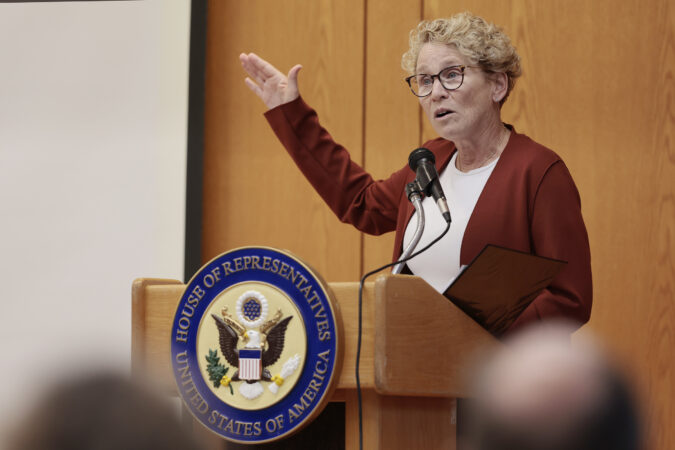
    Two of the members represent Pennsylvania: U.S. Reps. Chrissy Houlahan (D., Chester), an Air Force veteran, and Chris Deluzio (D., Allegheny), a Navy veteran.

    While Democrats denounced the president’s rhetoric, Houlahan was dismayed by a lack of support from congressional Republicans.

    On Monday, the Department of Defense announced that it would investigate Sen. Mark Kelly (D., Ariz.), a former naval officer and the one veteran in the video who is still obligated to follow military laws because he served long enough to become a military retiree. The announcement threatened to call Kelly back to active duty for court-martial proceedings.

    On Tuesday, a Justice Department official told Reuters that the FBI has requested interviews with the Democrats who appeared in the video, which some of the lawmakers publicly corroborated. The FBI declined to comment when reached by The Inquirer.

    As the debate over the video escalates in the wake of Trump’s sedition accusation and his administration’s actions, a rarely used charge and the intricacies of military law have been thrown into the spotlight.

    What is sedition, and is it punishable by death?

    Sedition is an incitement of a rebellion or encouragement of attacking authority, or, in other words, the intent to overthrow the government, according to legal and military experts. When acting with others, it is called seditious conspiracy.

    Members of the Proud Boys and Oath Keepers were convicted of seditious conspiracy for the attack on the U.S. Capitol on Jan. 6, 2021, but within hours of beginning his second term, Trump granted sweeping pardons and commutations for those charged in the riot.

    For civilians, sedition is a violation of federal law and carries prison time. It is not punishable by death.

    Active-duty military, however, must follow the Uniform Code of Military Justice (UCMJ). While the military law has overlap with civilian law, it is more expansive, controlling, and strict, said Sean Timmons, a Houston-based attorney specializing in military law who previously served as an active-duty U.S. Army captain in the U.S. Army Judge Advocate General (JAG) program.

    “In the civilian world you have a lot more defenses, and you have full First Amendment protections,” said Timmons, a managing partner at Tully Rinckey PLLC. “Whereas in the military, your First Amendment rights are quite limited.”

    The maximum punishment for active military is death, but it can be far lower, he said.

    Service members must be on active duty to be prosecuted under the UCMJ, but the conduct does not have to have taken place during active duty. This means that retirees like Kelly can be recalled for active duty to face UCMJ prosecution over their behavior while they were not on active duty.

    What is an illegal order?

    Members of Trump’s administration have pointed to the UCMJ rule that says members must follow lawful orders and orders should be presumed to be lawful. Service members can be punished for not following orders.

    However, military rules also prohibit service members from following orders that are undoubtedly illegal — a point the lawmakers get at in their video — and they can be punished for doing so.

    But whether orders are legal is supposed to be up to officers, not rank-and-file members, Timmons said.

    “If you don’t comply, you could be charged with failure to follow orders and other crimes,” he said.

    The exceptions (those obviously illegal crimes) would be war crimes like raping prisoners, deliberating killing civilians without justification, or torture, not day-to-day acts that would break the law, he explained.

    Take the example of burning down an enemy’s structure.

    “If your military unit says to burn it down because it’s part of the military objective, that’s a lawful order, even though it’s an illegal act,” he said. “It’s a war crime if it’s to burn down a daycare with kids inside.”

    The boat strikes in the Caribbean have been in a legal gray area, he said, but “if your command says it’s legal, you’re supposed to execute.”

    “The military system is harsh, cruel, and unfair … but it’s the system we have in place, and it’s designed that way to ensure discipline, obedience, and compliance,” he added.

    Did the lawmakers commit sedition?

    Claire Finkelstein, founder and faculty director of the Center for Ethics and the Rule of Law at the University of Pennsylvania’s Carey Law School and an expert in military ethics, said accusing the lawmakers of sedition “makes absolutely no sense, especially in a case in which they’re just reminding servicemen of their obligation not to follow illegal orders, which is a fundamental part of the UCMJ.”

    “One has to really work hard to fill in the blanks here,” she said.

    Timmons said five out of the six lawmakers have their freedom of speech to rely on as a protection.

    “Just having divergent political views that the commander-in-chief doesn’t like, for civilians, there’s no liability, there’s no repercussions,” he said.

    That doesn’t mean Trump’s administration cannot investigate them for “seditious behavior” anyway.

    Kelly, on the other hand, was “on thin ice” by participating in a video that seems to undermine Trump’s authority, he said, and it’s not “totally crazy” to argue he engaged in seditious behavior under military law.

    That being said, prosecutors would have to prove that his intent was to “cause a revolt within the ranks,” which would be “very hard,” he said.

    “But could they make him miserable and humiliate him and charge him? Yes,” he said.

    “Is that politically wise? Absolutely not. Is it reckless? Of course. But, technically, can they do it? Yes,” he added.

    What are members of Trump’s administration saying?

    White House press secretary Karoline Leavitt told reporters on Monday the White House supports the investigation into Kelly and accused him of trying to “intimidate” active-duty members with the video.

    “Sen. Mark Kelly well knows the rules of the military and the respect that one must have for the chain of command,” she said.

    “You can’t have a functioning military if there is disorder and chaos within the ranks, and that’s what these Democrat members were encouraging,” she added.

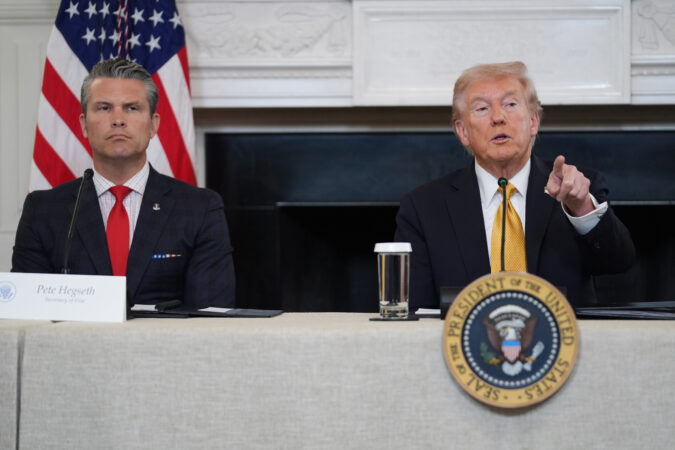
    In a social media post on Monday, Defense Secretary Pete Hegseth called the lawmakers the “seditious six.”

    “Encouraging our warriors to ignore the orders of their Commanders undermines every aspect of ‘good order and discipline,’” he wrote. “Their foolish screed sows doubt and confusion — which only puts our warriors in danger.”

    How has Kelly responded?

    Kelly, also a former astronaut, played down the impact of the threats against him on The Rachel Maddow Show Monday night.

    “Is it stressful? I’ve been stressed by, you know, things more important than Donald Trump trying to intimidate me into shutting my mouth and not doing my job,” he said. “He didn’t like what I said. I’m going to show up for work every day, support the Constitution, do my job, hold this administration accountable.”

    He also denounced the president’s rhetoric, calling it “inciteful.”

    “He’s got millions of supporters,” Kelly said. “People listen to what he says more so than anybody else in the country, and he should be careful with his words. But I’m not going to be silenced here.”

    He said he and his wife, former U.S. Rep. Gabby Giffords (D., Ariz.), who survived a 2011 assassination attempt in which she was shot in the head, “know what political violence is, and we know what causes it, too.”

    What response have Houlahan and Deluzio gotten?

    Houlahan and Deluzio, the two Pennsylvania lawmakers in the video, both reported bomb threats at their district offices on Friday following the president’s posts.

    But they have also gotten messages of support.

    Houlahan shared voice recordings of veterans from all over the country who left messages of support for her office and thanked her for her advocacy.

    “Keep pushing it,” one said. “I’m with you, I’m behind ya,” another said.

    “I am so proud of all six of you for making that video,” said another.

  • Trump’s pro-Kremlin ‘peace’ plan for Ukraine will encourage Putin to wage more war

    Trump’s pro-Kremlin ‘peace’ plan for Ukraine will encourage Putin to wage more war

    The made-in-Moscow 28-point “peace” plan President Donald Trump has been trying to force on Ukraine will never bring peace.

    Even the revisions after last week’s international uproar over the outrageously pro-Russian document haven’t resolved key issues. Putin has already made clear this week that he won’t accept less than Ukrainian surrender.

    Trump is ready to press Ukraine to bow to a plan that guarantees further Russian destruction. Let’s hope the backlash to the proposal stiffens the backbone of GOP supporters of Ukraine against the pro-Russian White House crowd.

    The drama hasn’t ended yet.

    The 28-point plan was cooked up by Trump’s feckless negotiator, Steve Witkoff, and first son-in-law Jared Kushner. Two real estate moguls with zero knowledge of Ukraine wrote a draft plan based heavily on input from Kremlin insider Kirill Dmitriev.

    Dmitriev is Putin’s representative for economic cooperation and has wooed Witkoff and Kushner with fantasies of joint U.S.-Russian investment. The three men met for secret talks in October in Miami, at Witkoff’s home.

    The resulting document reads like Kremlin talking points; some Russia experts point out that the English syntax sounds as if it were google translated directly from the Russian text.

    “Even Neville Chamberlain would blush at this,” said Rep. Don Bacon (R-NE), referencing the British prime minister who infamously appeased Adolph Hitler. “It’s embarrassing to our country.”

    Painfully true.

    The deal demands suicidal concessions from Ukraine, the victim of Russian aggression, but none from the Russia invader. The points echoed a Putin wish list, and green-light Moscow’s complete subordination of Ukraine, by shrinking Kyiv’s army, limiting its alliances and weapons, and leaving it wide-open to future Russian attacks.

    Trump was — and still is — ready to sell out Kyiv in pursuit of an imaginary Nobel Peace Prize along with lucrative business deals with Moscow and predatory deals for Ukrainian minerals (both are touted in the plan).

    In clear evidence of Russian untrustworthiness, Dmitriev leaked the proposal last week to journalist Barak Ravid of Axios in order to box in the Americans before consultations with Ukraine. Yet Trump quickly endorsed this capitulation document.

    Dmitriev’s betrayal alone should disqualify him from further negotiations, but there’s no sign Witkoff will abandon his new Russian pal. As for Witkoff and Kushner, Trump is rewarding their blunders by sending them to meet Putin next week.

    Russian President Vladimir Putin’s envoy Kirill Dmitriev (left) and President Donald Trump’s special envoy Steve Witkoff attend talks in St. Petersburg, Russia, in April.

    How do we know for sure that Dmitriev was the leaker? Because Witkoff posted on X, “He [Axios’ Ravid] must have got this from K …,” meaning Kirillov. Apparently, Witkoff thought he was sending a private message, another sign he isn’t up to the job.

    Equally egregious, Secretary of State Marco Rubio, who does know something about Russia, was kept out of the loop by Witkoff. After the leak, he got a firestorm of complaints from upset European counterparts and GOP supporters of Ukraine. That led him to call Sen. Mike Rounds (R., N.D.), who was at an international security conference in Halifax, Nova Scotia, along with a bipartisan Senate delegation.

    Rounds recounted to journalists that Rubio described Witkoff’s plan as a Russian “wish list” and not an actual U.S. proposal. Under White House pressure, Rubio soon reversed himself and posted online that the senators were mistaken. A State Department spokesperson falsely accused the senators of lying

    I spoke to Sen. Chris Coons (D., Del.), who was with the delegation during the call (although not on the phone). “I heard what [my colleagues] said immediately after the call,” he told me. “They couldn’t have been clearer about what Marco said, and what the complications were. I hope after today we’ll see a proposal which enables Ukraine to remain free and sovereign and defend itself in the future.”

    With this White House, don’t hold your breath.

    The pushback from GOP backers of Ukraine, as well as from the EU and Kyiv, was so intense, however, that Rubio rushed to “update” the document in weekend negotiations with Ukrainian officials in Geneva.

    Very sensitive issues remain unresolved, yet Trump is still pressuring Kyiv to sign on this month. There is an acute danger that he and Vice President JD Vance may try again to bushwhack Ukraine’s Volodymyr Zelensky, who will probably visit the White House this month.

    European allies, who were not consulted on the deal, have been desperately trying to bolster Zelensky and get Trump’s ear.

    In this image taken from video provided by Russian Presidential Press Service on Nov. 20, Russian President Vladimir Putin speaks as he visits one of the command posts of the West group of Russian Army in an undisclosed location.

    But given the president’s eagerness for a “deal” — any deal, no matter how fatal to Ukraine — Trump is more likely to squeeze Kyiv than press Putin for concessions. Russian Foreign Minister Sergey Lavrov made clear this week that Putin is only interested in the original pro-Russian points, and not any revision that protects Ukraine from future attack.

    It’s important for Americans to understand why the Putin-Trump 28-point deal wouldn’t stop Russian aggression and would only encourage Moscow to continue the war.

    As former Ukrainian Defense Minister Andriy Zagorodnyuk pointed out: “Ukraine has never attempted to seize Russian territory. Russia, on the other hand, has repeatedly invaded Ukraine and continues to strike Ukrainian cities daily.”

    The bottom line for achieving peace is that any plan must strengthen Ukraine’s defenses and provide concrete U.S. guarantees that Russia won’t destroy the Ukrainian state in the future. The 28-point plan does just the opposite (and the revisions aren’t strong enough.)

    The Kirillov proposal shrinks the size of the Ukrainian army by a third while putting no limits on Russia’s army, which is roughly twice the size of Ukraine’s. It prevents Ukraine from ever joining NATO and forbids NATO peacekeepers on its soil.

    Imagine if Franklin Delano Roosevelt had endorsed a peace plan between Winston Churchill and Hitler in 1940 that left Hitler free to expand his army while demanding Churchill halve his forces, ground his Spitfires, and promise never to ask the Yanks for help.

    Which brings us to the ugliest part of Trump’s fake peace efforts. There is a lot of loose verbiage about “guarantees” against a future Russian invasion in the 28 points, and in a side letter offering Kyiv a “security assurance modeled on the principles of [NATO’s] Article 5.” Note the weasel words.

    Let me assure you, I have read and reread the texts, and they offer Ukraine no firm U.S. or allied commitment to intervene if Russia attacks again.

    The real hint of the worthlessness of this Kremlin-born document comes with point 16, which proclaims: “Russia will enshrine in law its policy of non-aggression toward Europe and Ukraine.”

    Does Trump not know Putin has violated every accord he or his predecessors signed with Kyiv. That includes the 1994 Budapest Memorandum by which Ukraine surrendered its nuclear weapons in exchange for guarantees of sovereignty from the U.S., the U.K., and Russia? We know how much those paper assurances have been worth.

    POTUS refuses to face reality: Putin respects only strength; there will be no peace until the costs of war are more than the Russian economy and military can bear.

    Peace negotiations are worthless unless backed by tougher U.S. sanctions and sales of U.S. air defense systems and missiles to Ukraine.

    By his continual concessions to Moscow, Trump has convinced the Russian leader that he is a weak pushover. That guarantees that Russia will continue the war.

  • Josh Shapiro signs CROWN Act into law, prohibiting discrimination based on hair type, texture, or style

    Josh Shapiro signs CROWN Act into law, prohibiting discrimination based on hair type, texture, or style

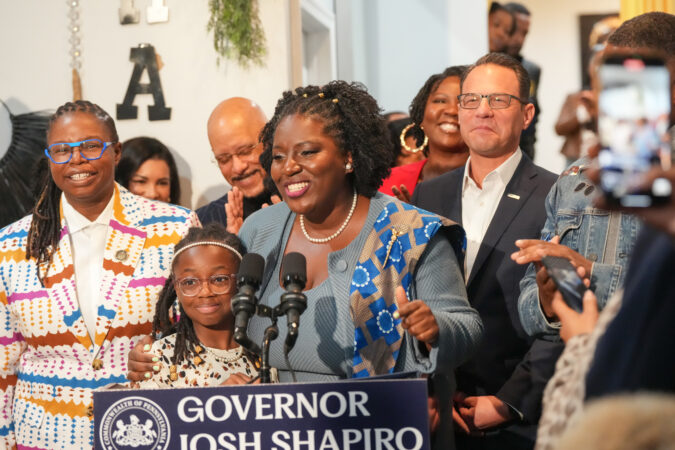
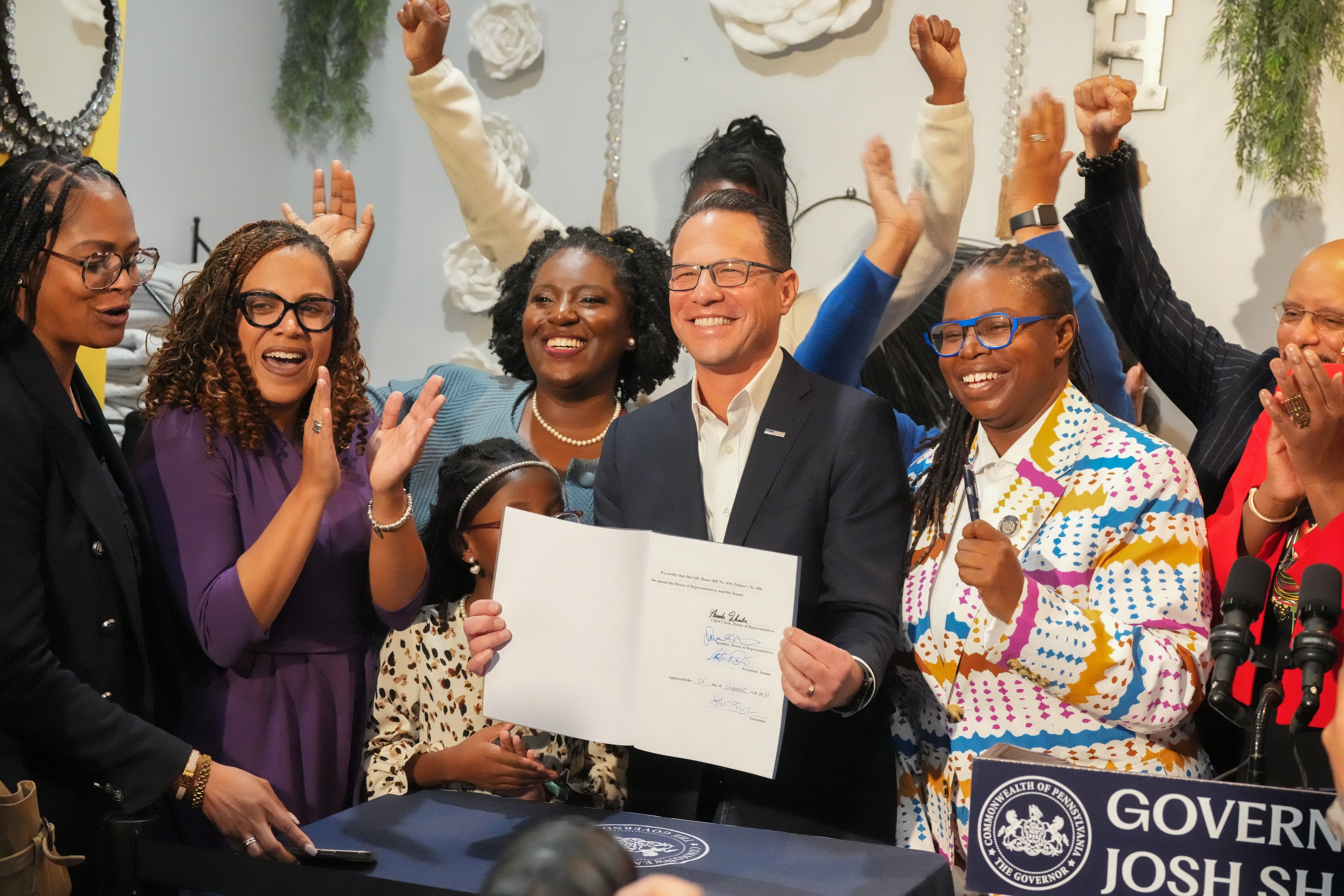
    Gov. Josh Shapiro signed the CROWN Act into law Tuesday, a landmark bill that prohibits discrimination based on a person’s hair type, texture, or style.

    The act, which stands for Create a Respectful and Open World for Natural Hair, applies to every Pennsylvanian, but is especially impactful to Black men and, particularly, women who have been discouraged from or marginalized by wearing natural or protective styles at school or in their places of work.

    At the Island Design Natural Hair Studio Tuesday, where Shapiro signed the bill into law, studio owner Lorraine Ruley said her clients have asked to change their hairstyles because of their workplace or upcoming job interviews. In one instance, Ruley said she had a client who asked to cut their locks because their workplace deemed it “unprofessional.”

    “The experience has been really heartbreaking, but I thank God for the opportunity to be here,” Ruley said. “And I just want to say natural hair rock.”

    At the West Philly salon, Shapiro was flanked by prime state sponsor of the CROWN Act, state Rep. La’Tasha D. Mayes (D., Allegheny), and prime cosponsor House Speaker Joanna McClinton (D., Phila), who were overjoyed that their years of fighting for these protections were finally paying off and supported in a bipartisan fashion. The Pennsylvania Senate passed the bill 44-3 last week after it was stuck in committee for years.

    Gov. Josh Shapiro (front center) holds up the signed CROWN Act during a news conference at Island Design Natural Hair Studio, in West Philadelphia Tuesday.

    “This is going to help people by making sure that wherever you work, or wherever you’re applying for a job, they can’t look at your hair and size you up, not based on your qualifications and all of the professional development you have and all of your education,” McClinton said. “They will not look at your hair and decide you can’t work here.”

    Shapiro said the bill is about delivering “real freedom” for Pennsylvanians to protect them against hair discrimination that may at times be subtle.

    Pennsylvania is the 28th state to pass anti-hair discrimination laws. New Jersey signed the CROWN Act into law in 2019. And both Philadelphia and Pittsburgh passed ordinances in 2020 to ban such discrimination, but this law will ensure protections for all Pennsylvanians. Incidents of discrimination can be reported to the Pennsylvania Human Relations Commission.

    For some Black women, the price of trying to conform to a prejudiced setting could come at a risk to their health. There have been some concerns in recent years that frequent use of chemical straighteners, which some women use to more permanently straighten their hair, could increase the risk of cancers of the reproductive system.

    “With an undeniable correlation between the use of chemical relaxers and the increased likelihood of developing uterine fibroids and cancer, the cost of conformity is simply too expensive,” said Adjoa B. Asamoah, a Washington, D.C.-based Temple graduate and architect of the CROWN Act, at the bill signing Tuesday.

    The CROWN Act amends the Human Relations Act to clarify the term race to include traits like hair texture and protective styles. The House bill passed in 2020 and again in 2023. It was later assigned to the Senate where it had been dormant.

    The state House passed the bill once again in March, and McClinton worked with Republican Senate president pro tempore Kim Ward to get the bill to the Senate.

    When asked about the prospects of a bill similar to the CROWN Act becoming federal law, especially under the Trump administration, which has railed against diversity, equity, and inclusion practices, Asamoah said she is hopeful that it will become the law of the land and she “will not rest” until it does. Asamoah added that the bill is crafted carefully to “withstand any judicial scrutiny.”

    Shapiro, for his part, said: “This is law. I don’t care what Donald Trump says. We make the laws here in the Commonwealth of Pennsylvania, and we will protect the Crown Act.” Those gathered clapped and interjected with affirmations.

    And it became clear at the beginning of Tuesday’s bill signing event that the salon likes it when Shapiro wades into national political discourse.

    “We talk about you being president,” Ruley said.

  • The FBI wants to question the lawmakers who called on troops to refuse unlawful orders, including Chester County’s Chrissy Houlahan

    The FBI wants to question the lawmakers who called on troops to refuse unlawful orders, including Chester County’s Chrissy Houlahan

    The FBI is seeking interviews with the six Democratic members of Congress, including two from Pennsylvania, who released a video calling on members of the military and intelligence community to “refuse illegal orders.”

    A U.S. Justice Department official said the FBI has requested interviews with the six Democratic lawmakers, who are all veterans or members of the intelligence community.

    The move came a day after the Pentagon threatened to recall Sen. Mark Kelly (D., Ariz.), a Navy veteran and one of the six lawmakers, to active duty potentially to face military charges. Defense Secretary Pete Hegseth on Monday described the video as “seditious” and “despicable, reckless, and false” after President Donald Trump went on a social media rant against the lawmakers last week.

    U.S. Reps. Chrissy Houlahan of Chester County, an Air Force veteran, and Chris Deluzio of Allegheny County, a Navy vet, both took part in the video.

    Houlahan said in a statement Tuesday that Trump “is using the FBI as a tool to intimidate and harass Members of Congress.”

    She said the FBI contacted the House and Senate sergeants at arms on Monday to request the interviews.

    “No amount of intimidation or harassment will ever stop us from doing our jobs and honoring our Constitution,” Houlahan said.

    The lawmaker said that members of Congress took an oath to the Constitution that “lasts a lifetime, and we intend to keep it.”

    “We will not be bullied. We will never give up the ship,” she added.

    The six members of Congress urged service members not to “give up the ship” in their video released last week, which drew fierce attacks from Trump. They did not refer to specific orders as illegal in the video, but some have cited military strikes against boats in the Caribbean that experts have questioned as well as Trump’s efforts to deploy the National Guard in U.S. cities.

    In a string of posts last week on his social media platform, Truth Social, Trump called the Democrats “traitors” who committed sedition “punishable by DEATH.” He reshared similarly aggressive posts from supporters, including one calling for the lawmakers to be hanged.

    Houlahan and Deluzio both reported bomb threats at their district offices on Friday following the president’s attacks.

    The Department of Defense announced Monday that it “has received serious allegations of misconduct” against Kelly, a retired Navy captain, and that “a thorough review of these allegations has been initiated.”

    Kelly is subject to military rules while the other veterans who partook in the video are not because he retired from the military. That means he earns a pension and can be recalled to active duty.

    His colleagues in the video did not serve long enough to qualify for retirement, so they are not subject to military laws, as he is.

    This article contains information from Reuters.

  • The FBI is seeking interviews with congressional Democrats who warned the military about illegal orders, official says

    The FBI is seeking interviews with congressional Democrats who warned the military about illegal orders, official says

    WASHINGTON – The FBI has requested interviews with six Democrats from the U.S. Congress who told members of the military they must refuse any illegal orders, a Justice Department official told Reuters on Tuesday.

    The move, reported earlier by Fox News, comes a day after the Pentagon threatened to recall Senator Mark Kelly, a Navy veteran and one of the six lawmakers, to active duty potentially to face military charges over what Secretary of Defense Pete Hegseth described as “seditious” acts on social media.

    The other lawmakers, who made the comments in a video released last week, include Senator Elissa Slotkin, a former CIA analyst and Iraq war veteran, and Representatives Jason Crow, Maggie Goodlander, Chris Deluzio and Chrissy Houlahan, all military veterans.

    The legislators created the video amid concerns from Democrats — echoed privately by some U.S. military commanders — that the Trump administration is violating the law by ordering strikes on vessels purportedly carrying suspected drug traffickers in Latin American waters.

    The Pentagon has argued the strikes are justified because the drug smugglers are considered terrorists.

    Trump accused Democratic lawmakers of sedition

    President Donald Trump accused the six Democrats of sedition, saying in a social media post that the crime was punishable by death.

    His administration has shattered longstanding norms by using law enforcement, including the Justice Department, to pursue his perceived enemies.

    The Justice Department official, who spoke on condition of anonymity, said the interviews were to determine “if there’s any wrongdoing and then go from there.”

    The FBI did not immediately respond to a request for comment.

    In a statement on Monday, Kelly dismissed the Pentagon’s threat as an intimidation tactic.

  • Ukraine backs ‘essence’ of peace deal with Russia but sensitive issues linger

    Ukraine backs ‘essence’ of peace deal with Russia but sensitive issues linger

    WASHINGTON/KYIV — Ukraine on Tuesday signaled support for the framework of a peace deal with Russia but stressed that sensitive issues needed to be fixed at a meeting between President Volodymyr Zelensky and U.S. President Donald Trump.

    Kyiv’s message hinted that an intense diplomatic push by the Trump administration could be yielding some fruit but any optimism could be short-lived, especially as Russia stressed it would not let any deal stray too far from its own objectives.

    U.S. and Ukrainian negotiators held talks on the latest U.S.-backed peace plan in Geneva on Sunday. U.S. Army Secretary Dan Driscoll then met on Monday and Tuesday with Russian officials in Abu Dhabi, a spokesperson for Driscoll said.

    U.S. and Ukrainian officials have been trying to narrow the gaps between them over the plan to end Europe’s deadliest and most devastating conflict since World War Two, with Ukraine wary of being strong-armed into accepting a deal largely on the Kremlin’s terms, including territorial concessions.

    “Ukraine — after Geneva — supports the framework’s essence, and some of the most sensitive issues remain as points for the discussion between presidents,” a Ukrainian official said.

    Zelensky could visit the United States in the next few days to finalize a deal with Trump, Kyiv’s national security chief Rustem Umerov said, though no such trip was confirmed from the U.S. side.

    White House press secretary Karoline Leavitt said on X that over the past week the U.S. had made “tremendous progress towards a peace deal by bringing both Ukraine and Russia to the table.” She added: “There are a few delicate, but not insurmountable, details that must be sorted out and will require further talks between Ukraine, Russia, and the United States.”

    Oil prices extended an earlier decline after reports of Ukraine potentially agreeing to a war-ending deal.

    Underlining the high stakes for Ukraine, its capital Kyiv was hit by a barrage of missiles and hundreds of drones overnight in a Russian strike that killed at least seven people and again disrupted power and heating systems. Residents were sheltering underground wearing winter jackets, some in tents.

    Zelensky will discuss sensitive issues with Trump

    U.S. policy towards the war has zigzagged in recent months.

    A hastily arranged summit between Trump and Russian President Vladimir Putin in Alaska in August raised worries in Kyiv and European capitals that the Trump administration might accept many Russian demands, though the meeting ultimately resulted in more U.S. pressure on Russia.

    The 28-point plan that emerged last week caught many in the U.S. government, Kyiv and Europe alike off-guard and prompted fresh concerns that the Trump administration might be willing to push Ukraine to sign a peace deal heavily tilted toward Moscow.

    The plan would require Kyiv to cede territory beyond the almost 20% of Ukraine that Russia has captured since its February 2022 full-scale invasion, as well as accept curbs on its military and bar it from ever joining NATO — conditions Kyiv has long rejected as tantamount to surrender.

    The sudden push has raised the pressure on Ukraine and Zelensky, who is now at his most vulnerable since the start of the war after a corruption scandal saw two of his ministers dismissed, and as Russia makes battlefield gains.

    Zelensky could struggle to get Ukrainians to swallow a deal viewed as selling out their interests.

    He said on Monday the latest peace plan incorporated “correct” points after talks in Geneva. “The sensitive issues, the most delicate points, I will discuss with President Trump,” Zelensky said in his nightly video address.

    Zelensky said the process of producing a final document would be difficult. Russia’s unrelenting attacks on Ukraine have left many skeptical about how peace can be achieved soon.

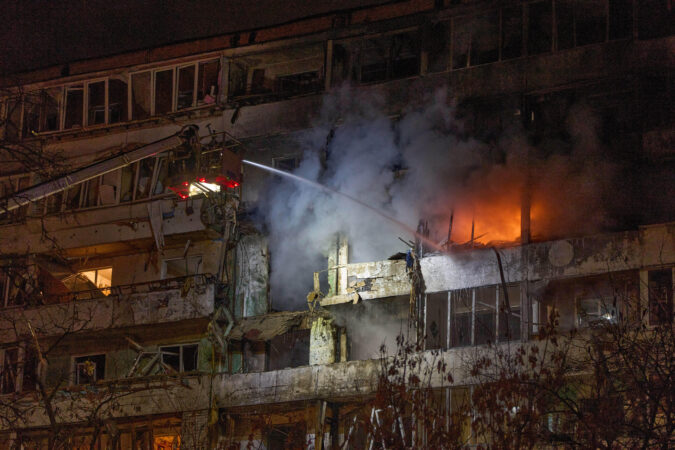
    “There was a very loud explosion, our windows were falling apart, we got dressed and ran out,” said Nadiia Horodko, a 39-year-old accountant, after a residential building was struck in Kyiv overnight.

    “There was horror, everything was already burning here, and a woman was screaming from the eighth floor, ‘Save the child, the child is on fire!’”

    Macron warns against European capitulation

    Russian Foreign Minister Sergei Lavrov said an amended peace plan must reflect the “spirit and letter” of an understanding reached between Putin and Trump at their Alaska summit.

    “If the spirit and letter of Anchorage is erased in terms of the key understandings we have established then, of course, it will be a fundamentally different situation (for Russia),” Lavrov warned.

    A group of countries supporting Ukraine, which is known as the coalition of the willing and includes Britain and France, was also set to hold a virtual meeting on Tuesday.

    “It’s an initiative that goes in the right direction: peace. However, there are aspects of that plan that deserve to be discussed, negotiated, improved,” French President Emmanuel Macron told RTL radio regarding the U.S.-proposed plan. “We want peace, but we don’t want a peace that would be a capitulation.”

    In a separate development, Romania scrambled fighter jets to track drones that breached its territory near the border with Ukraine early on Tuesday, and one was still advancing deeper into the NATO-member country, the defense ministry said. (Reporting by Idrees Ali, Phil Stewart, Devika Nair, Tom Balmforth, Pavel Polityuk, Alessandro Parodi, Michel Rose, Luiza Ilie and Sergiy Karazy; writing by Matthias Williams; editing by Frances Kerry and Mark Heinrich)

  • SEPTA won $43 million for diesel-electric hybrid buses from the Trump administration

    SEPTA won $43 million for diesel-electric hybrid buses from the Trump administration

    Since taking office for his second term, President Donald Trump has moved to cancel tax incentives and spending for clean-energy technology and prioritized expanded production of oil and natural gas.

    But the federal government apparently is not 100% out of the green fuels business.

    Last week, SEPTA won a $43 million grant from the Federal Transit Administration to replace 35 diesel-powered 30-foot buses with an equal number of cleaner diesel-electric hybrid buses that are 32 feet long.

    The money comes from the FTA’s Bus Low- and No-Emission grant program.

    When the new buses are delivered, expected to be in 2028, SEPTA no longer will have diesel-only buses in its fleet.

    Most SEPTA buses are 40 feet long or 60-foot articulated models (the ones with the accordion in the middle). The shorter hybrids will be used on the LUCY Loop in University City and Routes 310, 311, 312, and Route 204, which runs from Eagleville to Paoli Station.

    “These new hybrid buses will increase operational efficiency and help ensure that SEPTA can continue to provide reliable service for customers,” general manager Scott Sauer said.

    SEPTA applied for the grant in July, a spokesperson said.

    “This is a major win for Philadelphia,” U.S. Rep. Brendan Boyle of Philadelphia said. “These new hybrid buses will mean more reliable service, a stronger transit system, and cleaner air for the hundreds of thousands of riders who depend on SEPTA every day.”

    Boyle, a Democrat, said the money came from President Joe Biden’s bipartisan infrastructure law, which Boyle helped champion. The grants were given from the fiscal year 2025 federal budget.

    “Delivering new-and-improved bus infrastructure is yet another example of how America is building again under President Trump,” U.S. Transportation Secretary Sean P. Duffy said in a statement. “More people travel by bus than any other form of public transportation.”

    SEPTA’s grant was part of $1.1 billion distributed from the fiscal year 2025 federal budget. The U.S. Department of Transportation said in the announcement that $518 million would be added to the low- and no-emission bus grant program from the fiscal 2026 budget.

  • The Catch-22 around Trump’s illegal orders | Will Bunch Newsletter

    There’s an old saying — well, there ought to be one — that the surest way to jinx something is to write, “I don’t want to jinx it…” My Border Patrol tornado-chasing trip to Charlotte was doomed the moment I posted about it here — frantically canceled when I learned 17 hours before takeoff that the BP had abruptly ditched North Carolina. There is a Plan B but no way will I jinx it a second time.

    If someone forwarded you this email, sign up for free here.

    It’s better to stop Trump’s illegal orders than hope troops will disobey them

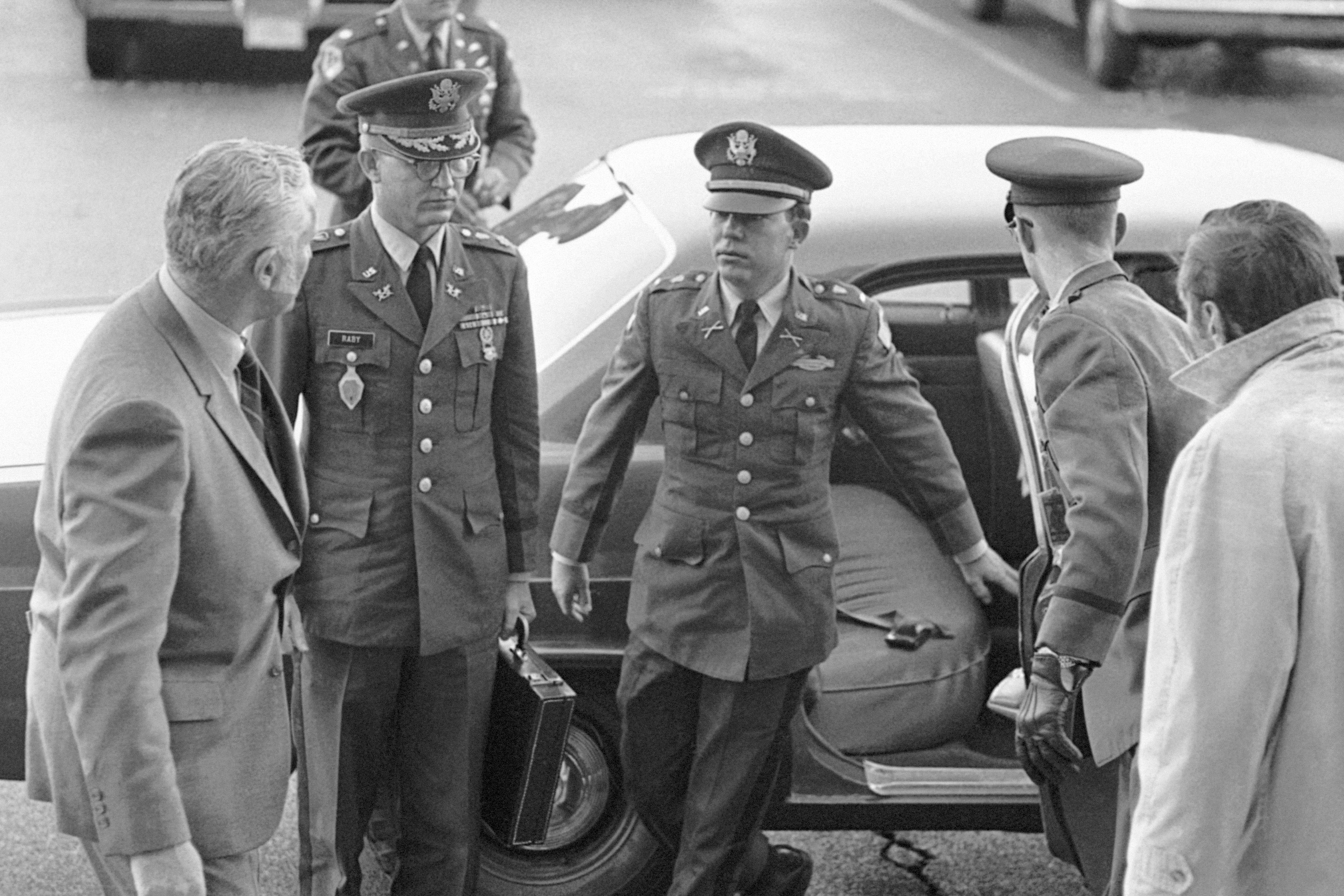
    Lt. William L. Calley Jr., center, and his military counsel, Maj. Kenneth A. Raby, left, arrive at the Pentagon for testimony before an Army board of investigation hearing into the My Lai Massacre in December 1969. Calley led the U.S. soldiers who killed hundreds of Vietnamese civilians in the most notorious war crime in modern American military history.

    A U.S. Army helicopter pilot named Hugh Thompson Jr. may be the greatest American hero you’ve probably never heard of. On March 16, 1968, Thompson — a warrant officer serving in Vietnam — and his crew were dispatched to support a “search and destroy” mission supposedly targeting the Viet Cong in a tiny hamlet called My Lai.

    Instead, the Georgia-born soldier came up upon arguably the most notorious war crime in U.S. history — with thatch hutches ablaze and countless villagers, including women and children, laying dead or dying in an irrigation ditch.

    Thompson landed and found the commander on the ground, Lt. William Calley. “What is this?” he asked. “Who are these people?”

    “Just following orders,” Calley replied. After some more back and forth, the flustered Thompson replied: “But, these are human beings, unarmed civilians, sir.”

    What Thompson and his helicopter crew did next was truly remarkable. Holding Calley and their other U.S. comrades at bay, they shielded a group of Vietnamese women, children and old men as they fled. Eventually, he loaded 11 villagers into the helicopter, and then Thompson and his men thought they detected movement in the ditch. Two fellow solders found a boy, just 5 or 6, hiding under the corpses, “covered in blood and obviously in a state of shock.” After safely evacuating the boy to a military hospital, Thompson reached a lieutenant colonel who ordered Calley to stop the killings.

    Near the end of his life, Thompson — who died in 2006 — and two comrades were recognized for their courage and the many lives they saved at My Lai, awarded the Army’s highest award for bravery not in conflict with an enemy (the Soldier’s Medal), as well as the the Peace Abbey Courage of Conscience Award. He even returned to My Lai for an emotional reunion in 1998.

    But it wasn’t like that in real time. During the war, a prominent congressman demanded that Thompson be court-martialed. “I’d received death threats over the phone,” he told CBS’ 60 Minutes in 2004. “Dead animals on your porch, mutilated animals on your porch some mornings when you get up.”

    A generation after Thompson’s death, the kind of bold action he took that day in 1968 — disobeying what he correctly understood as an illegal order — is yet again on America’s front burner. This time, the debate is fueled by a video from six veterans who now serve as Democrats in Congress ― reminding today’s soldiers about their sworn duty to disobey unlawful commands.

    That every expert in military law agrees with this principle hasn’t stopped President Donald Trump or his defense secretary, Pete Hegseth, from going ballistic — calling the Democrats “traitors” or even reposting calls for their death by hanging.

    On Monday, Hegseth kicked things up a notch by endorsing a plan for one of the six — Arizona Sen. Mark Kelly, a former astronaut and decorated Navy fighter pilot — to return to active duty, so that he can be court-martialed for taking part in the video. A statement from the Pentagon, which Trump and Hegseth call “the Department of War,” insisted that “orders are presumed to be lawful. A servicemember’s personal philosophy does not justify or excuse the disobedience of an otherwise lawful order.”

    Even as the growing controversy dominates the headlines, there is one aspect to the illegal-orders debate that practically no one is talking about. Actions like Thompson’s refusal at My Lai don’t only stand out for the soldier’s gumption. It is also the stuff of peace prizes and 60 Minutes profiles because it is so incredibly rare.

    Do your own research. It’s very difficult to find examples in America’s 249-year history of troops disobeying orders because they are believed to be illegal. To be sure, there are famous incidents of soldiers who disobeyed an order and heroically saved lives — but almost all of them were because the command was reckless or just plain stupid, which isn’t the same as illegal or unconstitutional.

    It’s not like there haven’t been opportunities. There have been American war crimes from Wounded Knee to Abu Ghraib, what Barack Obama famously called “dumb wars” like the 2003 assault on Iraq, and moments of intense moral agony, like dropping atomic bombs on Hiroshima and Nagasaki. These did produce a few whistleblowers or conscientious objectors, of course, but cases of actually refusing an order are few.

    It’s not hard to understand why. Most military orders — even ones later reviled by history — come with some veneer of legality, whether it’s an opinion from a military lawyer or a congressional authorization vote, as happened with Vietnam, Iraq, and other conflicts.

    The video recorded by Kelly and the others (including Pennsylvania Reps. Chrissy Houlahan and Chris Deluzio) focuses only on the widely accepted principle that military men and women must follow the law and the Constitution above all else, and doesn’t mention Trump or any specific disputed orders. In interviews, though, Democrats like Kelly and Houlahan have criticized Trump’s ongoing attacks on boats off South America that the regime claims are smuggling drugs.

    While almost every expert on military laws describes these attacks — which have killed at least 83 people— as extrajudicial killings lacking legal justification, the Office of Legal Counsel in Trump’s Justice Department has nonetheless written a secret classified memo to justify them. Any officer or lower-level troop ordered to blow up these boats and kill all the people on board hasn’t seen the memo. And they won’t get a medal for saying “no” — at least not in 2025. They will be court-martialed and vilified by MAGA.

    New York Times opinion writer David French, a Harvard Law grad who served as an Army lawyer in Iraq, notes the congressional video didn’t advise troops on what exactly is an illegal order, and adds: “Individual service members don’t have sufficient knowledge or information to make those kinds of judgments. When time is of the essence and lives are on the line, your first impulse must be to do as you’re told.”

    Not always, as Thompson showed at My Lai, but military matters are rarely that black and white. The Trump regime’s sending of National Guard units and even active-duty military into cities such as Los Angeles may be an unnecessary and inflammatory violation of democratic norms, but experienced judges continue to debate its legality. Expecting the rank-and-file troops to decide is asking a lot.

    It is very much in the spirit of Joseph Heller’s World War II novel and its legendary Catch-22: A soldier must disobey an illegal order, yet orders, in the heat of the moment, are almost never illegal.

    That doesn’t mean Trump and Hegseth threatening Kelly and the other Democrats with jail and possibly the noose isn’t utterly outrageous. After all, they did nothing more than remind soldiers of their obligation to the law in the same language their drill sergeants use in boot camp.

    I do also think — understanding the limitations of a MAGA-fed Congress — that good people of both parties on Capitol Hill should be doing a lot more to invoke the War Powers Act, hold hearings, debate impeachment, and do whatever else they can to prevent Trump’s reckless acts in the Caribbean and elsewhere. In other words, stop illegal orders before they’re given.

    That said, as the Trump regime deteriorates, there may come a day when right and wrong feels as obvious as it did that 1968 day in the rice paddies of Vietnam. If, heaven forbid, this government ever ordered troops to put down a protest by firing on citizens, we will need a platoon full of Hugh Thompsons and no William Calleys, “just following orders.”

    Yo, do this!

    • The writer Anand Giridharadas is the best of today’s public intellectuals, with a laser focus on the 1 Percent and the devastating role of income inequality in works such as Winners Take All, which rips apart the facade of modern philanthropy. So who better to pour through the late financier-and-sex-fiend Jeffrey Epstein’s emails and find the true meaning? His recent, masterful New York Times essay — “How the Elite Behave When No One Is Watching: Inside the Epstein Emails” — parses the small-talk and atrocious grammar of America’s rich and powerful to decipher how they rule. It is a must read.
    • Saturday was the 62nd anniversary of the day that changed America, for bad: the assassination of President John F. Kennedy as his motorcade rolled through downtown Dallas. It was also the day I was savaged by several dozen people on Bluesky for expressing an opinion shared by 65% of Americans: that we haven’t been told the whole truth about what really happened on Nov. 22, 1963. Kudos to ABC News for a new special that aired Monday looking at both sides of the endless controversy — Truth and Lies: Who Killed JFK? — that included skeptics like veteran journalist Jefferson Morley of the excellent site JFK Facts. The one hour-special is now streaming on Hulu.

    Ask me anything

    Question: Why is the Trump administration uncritically regurgitating the Russian “peace plan”? — @kaboosemoose.bsky.social via Bluesky

    Answer: That’s a great question as our president has consistently told us that the “Russia! Russia! Russia!” scandal around Vladimir Putin’s U.S. election interference and his seeming sway over the 45th and 47th president is all a massive hoax. How to explain, then, that the supposedly-Trump-drafted 28-point peace plan to end the fighting in Ukraine was translated from its original Russian, with its details hashed out in Florida by corrupt and contented Trump son-in-law Jared Kushner and Kirill Dmitriev, a U.S.-sanctioned Russian envoy? It’s probably true that liberals were naive during Trump’s first term to believe the strange ties between MAGA and the Kremlin would bring down his presidency, but it’s also true that where there’s smoke, there’s fire. We all want peace in Ukraine, but Trump and his U.S. government simply are not honest brokers.

    What you’re saying about…

    Last week’s question about the Jeffrey Epstein files, and whether they’ll ever see the light of day despite enactment of the law calling for their release, was kind of open-ended, and thus it drew an array of responses. But most agreed with my view that it’s highly unlikely we’ll see the files, or see very much. “They won’t release them because they are now investigating the Democrats in the files, thus they won’t be able to release them due to the investigation,” Rosann McGinley wrote. “Also they’d be heavily redacted, ‘nothing to see here.’” Added Judy Voois: “I would not be surprised if he declared war on Venezuela just to steer the media and public interest away from continued scrutiny of the Epstein saga.”

    📮 This week’s question: The heated reaction I received online about the JFK assassination now has me wondering what newsletter readers think. Do you believe Lee Harvey Oswald was the lone killer of John F. Kennedy, or do you think there was a conspiracy? Please email me your answer and put the exact phrase “JFK assassination” in the subject line.

    Backstory on Pennsylvania’s budget deal with the devil

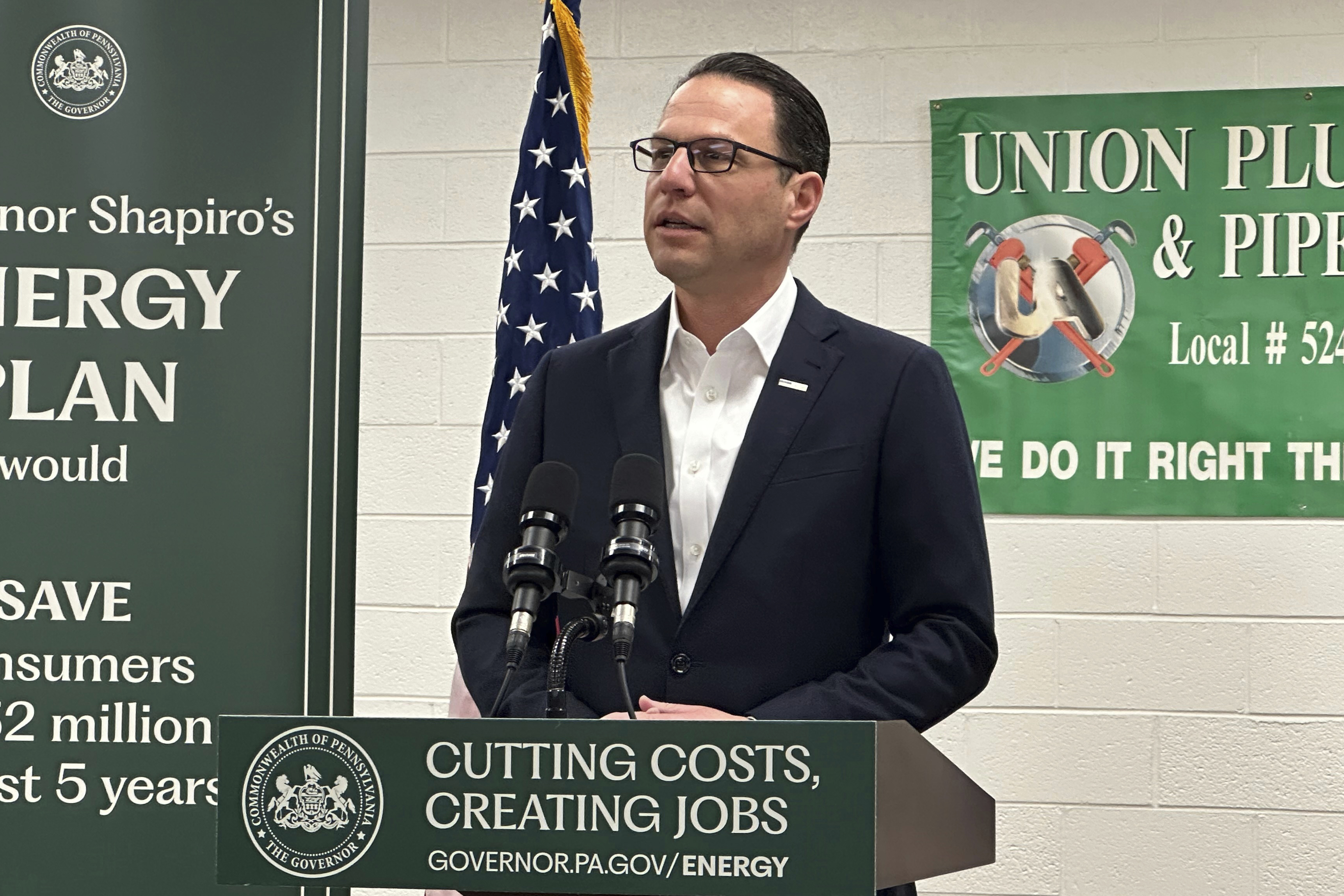
    Pennsylvania Gov. Josh Shapiro speaks at a news conference at the United Association Local 524 union building in Scranton, Pa. in March 2024.

    Saturday was the 62nd anniversary of the JFK assassination, but on Nov. 22, 2025 it was the entire planet that was under fire. One researcher declared that globally it was the hottest Nov. 22 ever recorded. It didn’t feel that way at my windswept dog park in Delco, but it did from the American Southeast — experiencing a record heat wave — to Tehran, where an epic drought has seen water fountains run dry. And yet the world’s leaders were on a full-fledged retreat from climate action, from the White House, where U.S. CEOs toasted the oil dictatorship of Saudi Arabia at a posh dinner, to Brazil, where a global summit on climate change failed to take on the hegemony of fossil fuels, to Harrisburg.

    In a state that’s kowtowed to Big Oil and Gas interests since the days of John D. Rockefeller, Pennsylvania Republicans used the shame of the nation’s longest state-budget impasse to finally ram home their most cherished agenda item: gutting efforts in the Keystone State to work with our neighbors to control the greenhouse-gas pollution behind climate change. The GOP-run state Senate backed Democratic Gov. Josh Shapiro into a corner. Pennsylvania had to withdraw from Regional Greenhouse Gas Initiative (RGGI), a regional pollution-control system, or the money wouldn’t resume flowing to schools and other vital services.

    To be clear, the drivers of this giant step backward were state lawmakers who’ve been swimming in Big Oil’s tainted campaign cash for a couple of decades now. But the capitulation, even at political gunpoint, was not Shapiro’s finest hour — especially as the Democrat with apparent ambition for higher office continues to push for polluting and energy-devouring data centers that he claims will boost the economy. As the American Prospect noted in a new piece, Pennsylvania’s environmental retreat came at the same time Virginia was electing a Democratic governor in Abigail Spanberger who’d promised to restore her state to the RGGI. If Shapiro does run for president in 2028, he may struggle to explain this deal to climate-minded voters.

    The real problem, though, is that the best way to tackle climate change is by going on offense, with aggressive programs to promote alternative energy such as wind (there seems to be a lot of that around here) and solar that aren’t not only cleaner but a better deal for beleaguered consumers. While Pennsylvania — second only to Texas in natural-gas production — went all in on fracking, a 2024 survey found the commonwealth was 49th on expanding wind power and energy efficiency. With RGGI in the rearview mirror, the Shapiro administration needs to work a lot harder on green energy. That would be good for our governor’s White House dreams, but it would be a lot better for the planet.

    What I wrote on this date in 2020

    In the late fall of 2020, when I wasn’t trying to warn people that Donald Trump was planning a coup, I turned my attention to the incoming president, Joe Biden — and it’s both fascinating and sad to read how naive we were in the giddy aftermath of Trump’s defeat. In writing about Biden’s early Cabinet picks, the subhead read: “America is seeing the start of something it’s not used to: A White House that’s experienced, qualified … and boring. Could Biden’s ploy work?” NO! The answer turned out to be “no.” But still read the rest: “Biden’s Cabinet is ‘delightfully boring.’ Can reality-TV-addled America deal with it?”

    Recommended Inquirer reading

    • Only one column last week as I spent time both preparing for and then canceling the Charlotte trip that never happened. In that piece, I vented my rage at the lavish White House shindig for a monster: Saudi Crown Prince Mohammed bin Salman, who was behind the brutal bone-saw murder of Washington Post journalist Jamal Khashoggi. The man that Joe Biden all too briefly promised to make “a global pariah” was feted by the CEOs of Apple, Nvidia, GM and just about any big business entity you can think of, in a stunning embrace of corruption that should end the myth of “woke corporations.”
    • There are two things, more than anything else, that keep local news in America alive: Hometown sports teams, and restaurants. Here in Philly, it was a lousy week for the former but a remarkable moment for the latter, as restaurants in the City of Brotherly Love competed for the very first time for recognition from the world’s ultimate dining survey, the Michelin Guide. In a glitzy ceremony at the Kimmel Center, Michelin bestowed its coveted star on three Philadelphia restaurants and honored more than 30 others — and Inquirer readers were obsessed. Four of the newsroom’s top seven most-read articles online last week were about the Michelin madness — including the bittersweetness of one eatery cited just before its closing, the cheesesteak shop that was honored but not invited, and other various snubs and surprises. The Inquirer has amped up its food coverage this year, and if you live and eat in this region I don’t know how you’d survive without it. If you don’t subscribe, please sign up today.

    By submitting your written, visual, and/or audio contributions, you agree to The Inquirer‘s Terms of Use, including the grant of rights in Section 10.

  • How law enforcement built a sprawling case against a longstanding Kensington drug gang

    How law enforcement built a sprawling case against a longstanding Kensington drug gang

    Ramon Roman-Montanez knew the police were watching.

    One day last April, as Roman-Montanez prepared to hand out free drug samples to users on Weymouth Street — a common tactic that dealers use to attract customers — he stood in the middle of the Kensington block and spotted a problem.

    The cops had put up a pole camera.

    Using binoculars, Roman-Montanez scouted out the new device at the end of the block, prosecutors said in court documents. But he had a business to run — and so, after talking with a few associates in the street, he decided that giveaway day would move forward as planned.

    Shortly after dawn, prosecutors said, customers were recorded on the new surveillance camera crowding onto the 3100 block of Weymouth to receive their samples.

    And in the weeks to come, business continued to boom.

    A pole camera placed near Weymouth Street captured potential drug customers coming to the block to receive free samples handed out by the gang that ran the block, prosecutors said.

    The camera, however, was just one hint of what authorities now say was a sprawling, multiyear investigation into the gang Roman-Montanez helped lead — a group that sold thousands of doses of heroin, fentanyl, crack, and cocaine over the course of more than a decade, and effectively took over a residential block in a neighborhood that has long suffered from crime, open-air drug dealing, and neglect.

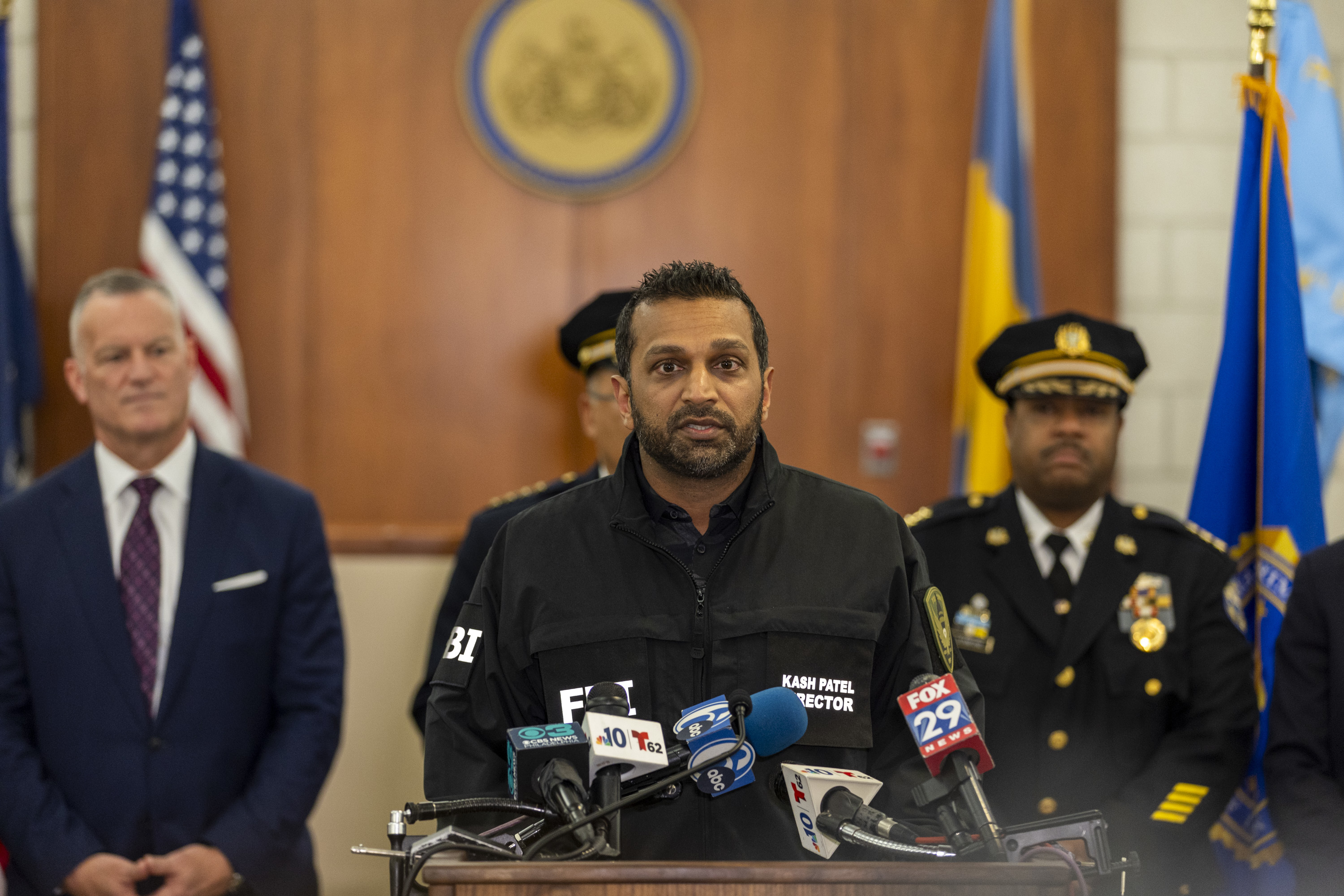
    The results of the probe came to light last month, when FBI Director Kash Patel came to Philadelphia to announce that 33 people, including Roman-Montanez, had been indicted on drug charges. Patel called the case a model for law enforcement across the country, and an example of how to take out a drug gang terrorizing a community.

    FBI Director Kash Patel speaks to press at the 24th Police District Headquarters in Philadelphia on Oct. 24.

    To understand the scope of the case — which U.S. Attorney David Metcalf described as the region’s largest single prosecution in a quarter-century — The Inquirer reviewed hundreds of pages of court records, examined social media accounts and videos connected to the group, and interviewed law enforcement officials and Weymouth Street residents.

    The review revealed previously unreported details about the investigation, including that authorities ran monthslong wiretaps on about a half-dozen phones tied to gang members, placed a recording device in a vacant lot the gang used as a meeting place, employed at least seven confidential informants, and believe that over the course of nine years, the group trafficked tens of thousands of doses of drugs into the city — worth millions of dollars.

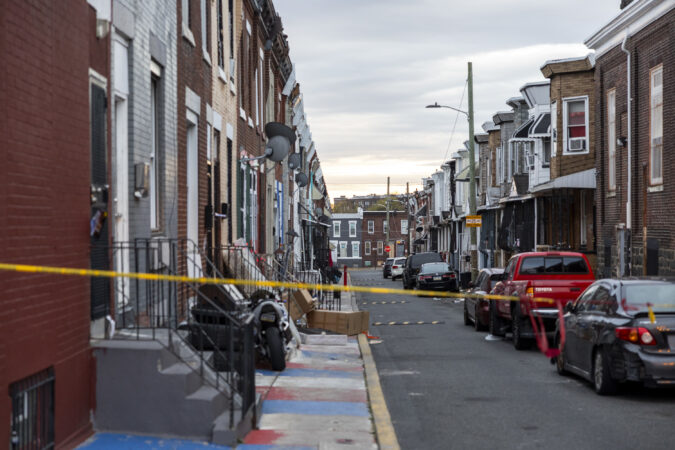
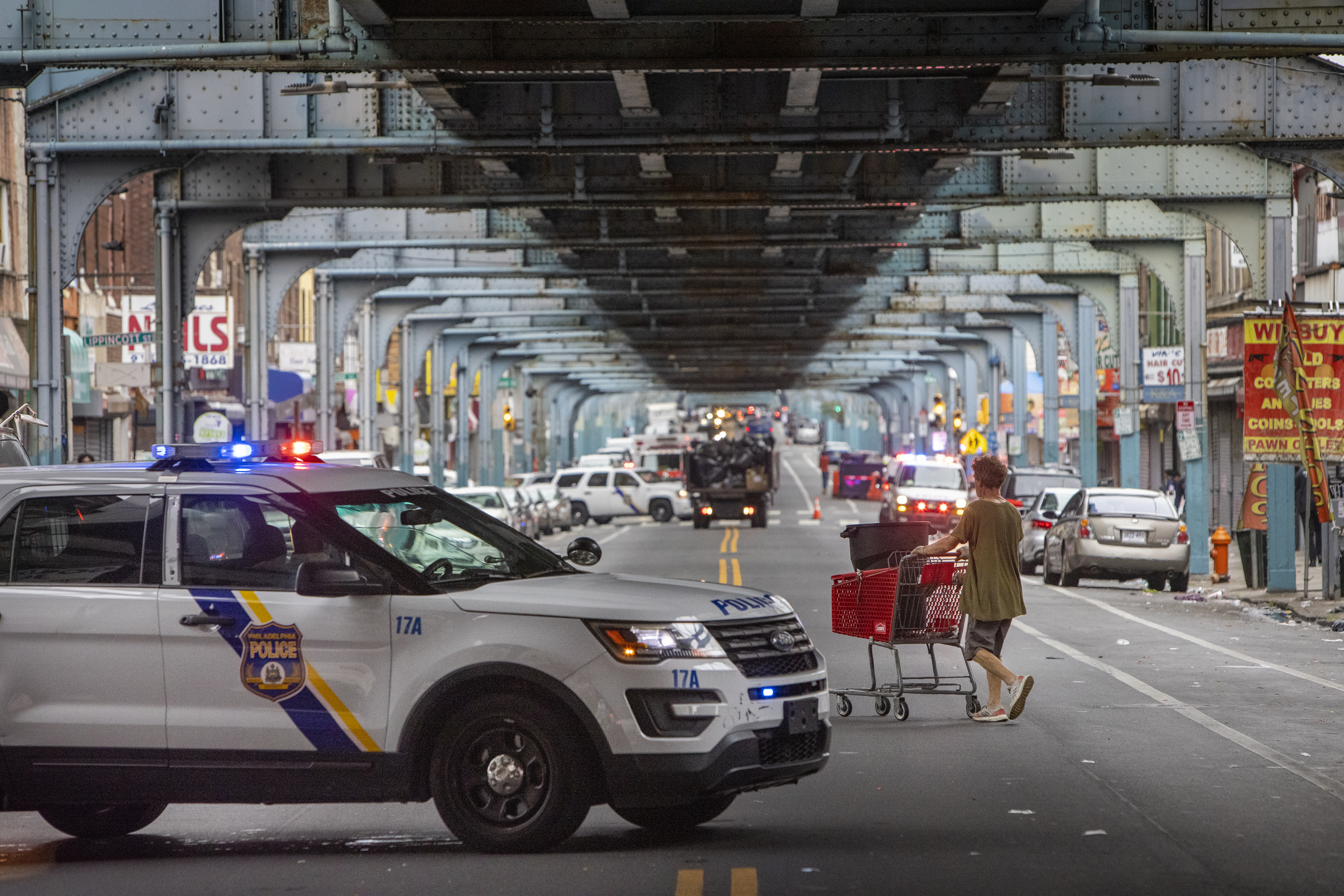
    Philadelphia police this month continued to restrict access to Weymouth Street long after gang members had been arrested, a highly unconventional approach that officials said was aimed at sustaining the block’s newfound sense of quiet. Several residents said they didn’t mind the unusual tactic, in part because it helped prevent their block from quickly returning to its status as a marketplace for round-the-clock drug deals.

    Those tactics underscored the depth of the investigation, which unfolded in the heart of Kensington — where law enforcement has employed a variety of approaches over the years to try to address crime, drug dealing and violence, sometimes with mixed results.

    Philadelphia officials have for years tried a variety of tactics to try and address crime and quality-of-life concerns along Kensington Avenue.

    But the review also showed that even as the investigation was underway, the gang continued to operate in the open — and some of law enforcement’s attempts to hold people accountable as the probe was unfolding were unsuccessful.

    In August, for example, Roman-Montanez was charged in state court with drug possession and related crimes after police found fentanyl, crack, and $20,000 in cash in his house — the result of a raid on Weymouth Street that was part of the investigation into his gang.

    But a few weeks later, his attorneys persuaded a Philadelphia judge to reduce his bail and he walked out of jail. The 40-year-old — who federal prosecutors now say was the de facto chief operating officer of one of the city’s biggest drug conspiracies — was taken back into custody only this month, when federal authorities unsealed his indictment.

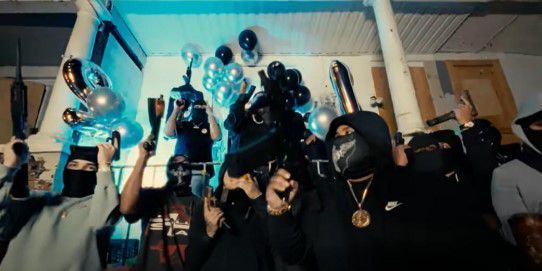
    Even as investigators were continuing to collect evidence against the gang, members routinely appeared in videos and songs on social media in which they boasted about their gang affiliation, brandished guns, and threatened acts of violence against rivals.

    Some of the videos made modest Weymouth Street look more like a nightclub. Men wearing shimmering gold chains can be seen carrying designer bags and waving guns with extended clips at the camera. Others smoke blunts, or mix soda and a purple liquid together to make what appears to be the codeine-infused drink “lean.”

    A video for the song “Philly Boy,” uploaded to YouTube last spring, made clear where the debauchery was taking place: It opens with a shot of the Weymouth street sign.

    Beyond the fact that people who remained on the street could continue to sell drugs, prosecutors said the gang used threats to maintain control over their territory. And at least two suspected coconspirators were killed as the investigation wore on — sparking the potential for more retaliatory violence. Prosecutors have not yet charged any gang members with any shootings or homicides, but have said their investigation is continuing.

    Metcalf, through a spokesperson, declined an interview request to discuss the case in more detail. But while announcing the takedown last month, he said there is always a tension in long-running investigations between making quick arrests and taking time to gather evidence for broader or stronger cases. And in this instance, he said, the goal was clear: Prosecutors were seeking to “eliminate the organization.”

    “We could obviously just prosecute individual seizures of guns and drugs. But the organizational prosecution … that’s what’s going to make a difference in the community,” he said. “This neighborhood will be a lot safer than it [would’ve been] if we didn’t take our time to do that.”

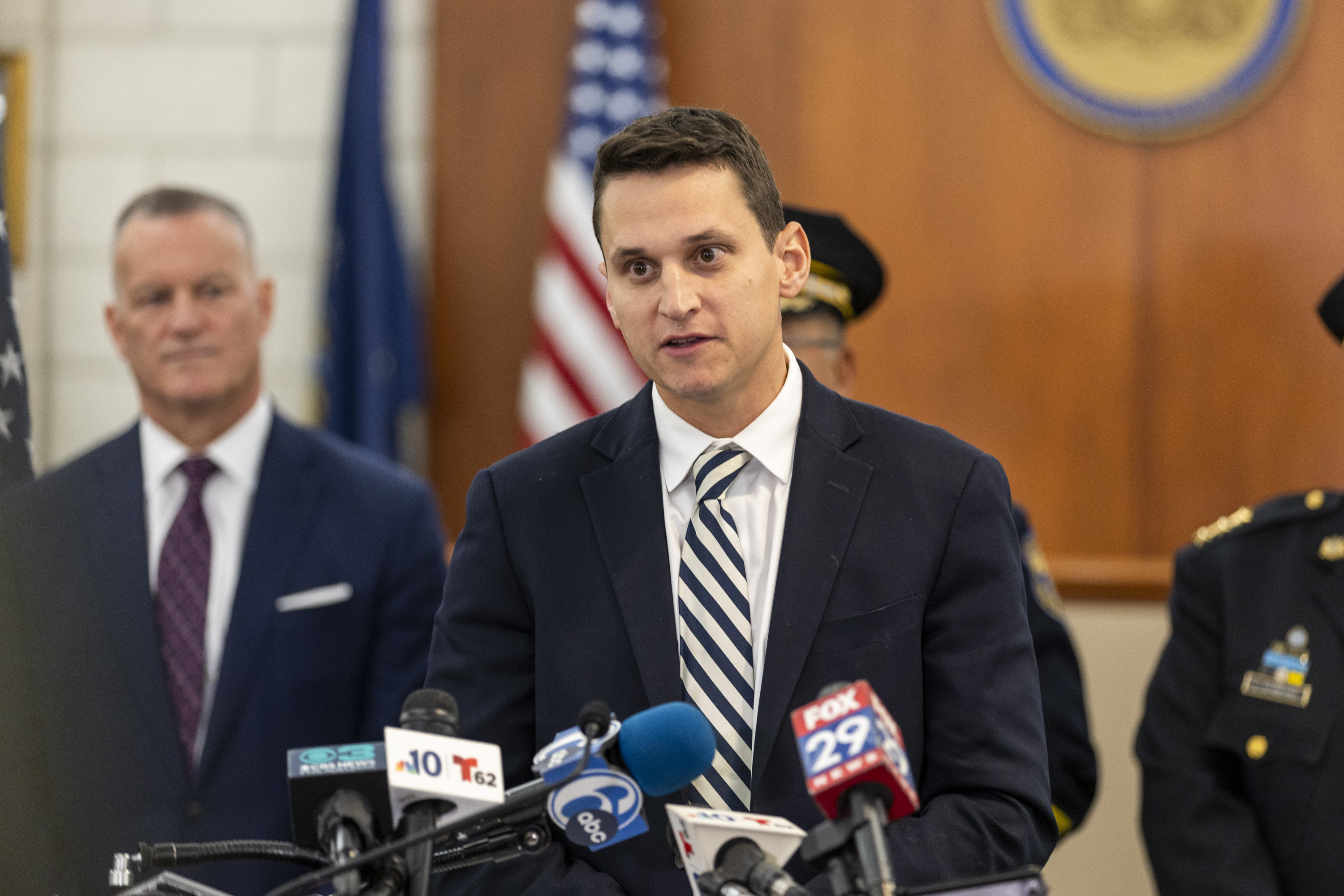
    U.S. Attorney David Metcalf speaks to press at the 24th Police District Headquarters on Oct. 24.

    A sophisticated operation

    Weymouth Street is one of a series of narrow, rowhouse-lined blocks in Kensington just a few steps from McPherson Square and near the intersection of Kensington and Allegheny Avenues — long the epicenters of a bustling narcotics bazaar.

    Some corners in the area can pull in tens of thousands of dollars a day in drug sales, authorities say. And the competition among dealers has often led to violence, with shootings and homicides in Kensington historically outpacing the rest of Philadelphia.

    The crew on Weymouth Street thrived in that environment, prosecutors said, and developed a sophisticated system for seeking to build and protect a business that sold fentanyl, crack, and cocaine 24 hours a day, seven days a week.

    Their drugs were branded with unique stamps or names like Ric Flair, Horse Power, Gucci, or Donald Trump. Bags were sold for $5 each, prosecutors said, while “bundles” of about a dozen packets went for between $55 and $75.

    The group maintained an internal hierarchy, prosecutors said, with key figures at the top overseeing layers of workers who engaged in hand-to-hand sales, watched out for police, managed the drug supply, or used violence to protect the operation. Many members were related to one another, prosecutors said, and some families had people from multiple generations working for the group.

    The leader was Jose Antonio Morales Nieves, prosecutors said, who “owned” the block and allowed people to deal there in exchange for payments he called “rent.”

    His top deputies ran the day-to-day operations, prosecutors said, and included Roman-Montanez, nicknamed Viejo, and Roman-Montanez’s paramour, Nancy Rios-Valentin.

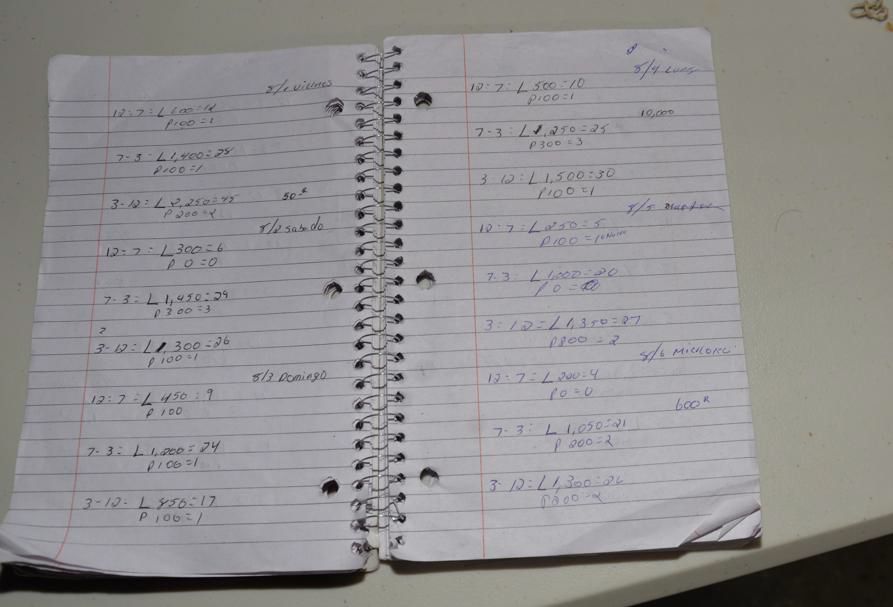
    The two set and distributed schedules for lower-level employees, kept track of how and when drug stashes needed to be refilled, and maintained handwritten ledgers tracking sales per shift.

    Prosecutors said leaders of the Weymouth Street drug trafficking organization kept detailed schedules on which members would work which shifts.

    The first episode in the indictment dates to January 2016, when, prosecutors said, Angel Rios-Valentin — the brother of Nancy Rios-Valentin — stood watch as someone sold drugs to a confidential informant.

    A few months later, the indictment said, police conducted a traffic stop on the block, and gang leader Morales-Nieves — also known as Flaco — responded by approaching the officers in a threatening manner carrying a shovel.

    As the gang continued to build its business on Weymouth, prosecutors said, several members took up residence on the block, including Roman-Montanez, and members used a variety of houses or abandoned lots to store or sell drugs.

    Among them, prosecutors said, was a vacant lot with a tent they labeled the “bunker.” It was next door to the house Roman-Montanez shared with Rios-Valentin, they said, and served as a meeting place, stash location, and place to cook crack.

    Last May, prosecutors said, it also served as a site for violence, when Roman-Montanez dragged a man into the bunker, and another gang member — who is not named in court documents — beat him with a rod.

    Crimes involving violence

    Much of the 170-page indictment revolves around individual episodes in which members of the gang conducted operations that would be considered routine if they weren’t illegal, such as selling drugs to users, managing the block’s supply, or handling illicit proceeds.

    The document includes detailed quotes from those accused of taking part in the operation and describes their actions with unusual precision, the result of what prosecutors said were a series of wiretapped phones, cameras — including one inside the bunker — interactions with informants, and seizures of drugs by police.

    Police found handwritten ledgers detailing drug activities inside Ramon Roman-Montanez’s house on Weymouth Street, prosecutors said.

    Some incidents, however, went well beyond the everyday rhythm of drug sales, prosecutors said.

    In November 2024, several gang members ran after a car that had sped down Weymouth, then fired shots at the vehicle after they caught up to it around the corner, the indictment said. The document does not say if anyone in the car was struck.

    Six months later, prosecutors said, the pole camera captured footage of two members of the gang — John David Lopez-Boria and Luis Williams — laughing at someone sitting on a front step across the street, then beating the person and dragging the victim into an abandoned lot to continue the assault.

    The gang’s violent nature was also captured on YouTube, where gang members appeared in videos taunting rivals and flaunting guns.

    In one video, the rapper Sombra PR — whom prosecutors described in court documents as an unindicted coconspirator — made clear that he and a Weymouth Street gang member known as Panza would use a Draco gun to come after anyone who threatened them.

    “I’ll get you with Panza with Draco and you’re stiff,” he rapped.

    Prosecutors said Weymouth Street members often flaunted guns and boasted about their gang affiliation in YouTube videos.

    Panza, whose given name was Heriberto Torres Gual, was described by prosecutors in court documents as one of the group’s enforcers, and he appeared in some of Sombra PR’s videos.

    But last month, Gual, 31, was gunned down while riding an electric bike on the 3000 block of Kensington Avenue, just a few blocks from Weymouth, according to police. Surveillance footage showed a torrent of shots being fired out of an SUV that had pulled up beside him.

    In all, police recovered 35 spent shell casings from the scene and said it was a targeted attack.

    Gual was the second high-ranking gang member to be killed in the last year, authorities said. Last November, Felix Rios-Valentin — the brother of Nancy and Angel Rios-Valentin — was fatally shot in Mayfair.

    Police have made no arrests in either case.

    After Gual’s death, an Instagram account for a record label dubbed “Weymouth Family” made a post referencing the title of a new song that memorialized Gual. The post tagged Pressure 9X19, the artist behind “Philly Boy.”

    And on another account associated with Weymouth-tied rappers was an illustration of an unmistakable street sign: the marker for the intersection of Allegheny Avenue and Weymouth Street.

    Evading accountability

    During their long investigation, law enforcement did sometimes disrupt the gang’s drug operations and make arrests.

    In 2020, Angel Rios-Valentin was convicted in federal court of illegal gun possession after officers found him carrying a loaded handgun that he had taken from Roman-Montanez’s house. He was sentenced to five years in prison and was on supervised release when he was arrested again last month.

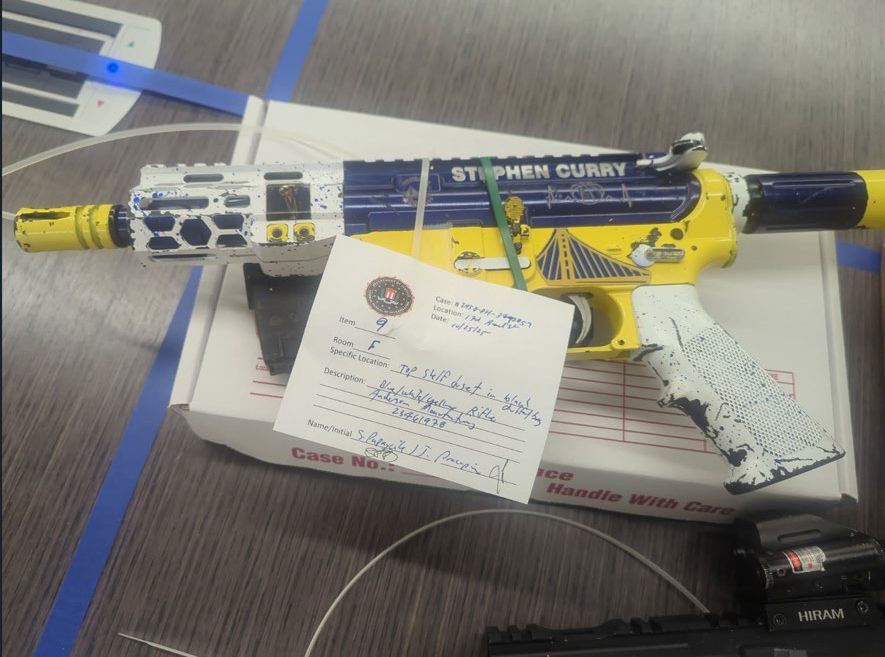
    Police found four guns in Rios-Valentin’s house, a discovery that prosecutors said showed his ongoing commitment to the gang.

    When Angel Rios-Valentin was arrested, prosecutors said, responding officers found several guns in his house, including this assault rifle.

    Roman-Montanez, meanwhile, was arrested twice in the last three years, court documents show — but in both cases managed to avoid significant consequences.

    In October 2022, police searched his house and found 96 grams of fentanyl, four loaded guns, and nearly $125,000 in cash, prosecutors said. Roman-Montanez was charged in state court, but the case was withdrawn.

    Federal prosecutors did not explain the withdrawal in court documents, and because the case did not result in a conviction, the records are now sealed under Pennsylvania law. The district attorney’s office did not respond to a request for comment.

    A source familiar with the case said it collapsed because scheduling issues with lawyers and witnesses delayed the preliminary hearing for more than a year and prosecutors ultimately withdrew the charges.

    The second arrest was in August, when police, acting on a search warrant, again searched Roman-Montanez’s house and found more fentanyl, crack, and cash inside, court records show. He was charged with crimes including conspiracy and possession with intent to deliver, and his bail was set at $750,000.

    But a month later, his lawyers persuaded a judge to lower his bail.

    The prosecutor argued against that, according to a transcript of the bail hearing, saying the sheer amount of drugs and cash involved made clear that Roman-Montanez was “not a minor player.”

    But Common Pleas Court Judge Elvin Ross III said details about Roman-Montanez’s role in the conspiracy were lacking. He reduced bail to $300,000, and a few weeks later, Roman-Montanez was back on the street.

    Will the quieter aftermath last?

    On the morning of Oct. 24, dozens of federal agents and city police officers swarmed Weymouth Street to arrest suspected gang members and gather additional evidence to use in their court case. Some targets were taken into custody elsewhere — the group’s leader, Morales Nieves, was arrested in Luquillo, Puerto Rico.

    Patel, the FBI director, said at a news conference afterward that the case “is not just one instance of removing a couple of people — it is an example of how you remove an entire organization that has corrupted not just the city of Philadelphia but the state of Pennsylvania as well.”

    Roman-Montanez has pleaded not guilty, as has Nancy Rios-Valentin. Her attorney wrote in court documents that she maintains her innocence, that the case against her was “not strong,” and that she “cannot be convicted on a theory of ‘guilt by association.’” A federal judge on Monday ordered that Rios-Valentin — who has four children — be released from jail and placed in home confinement at her sister’s house while awaiting trial.

    On Weymouth Street, residents said in interviews that life has been quieter in the weeks since the raids. Some of that is the result of the ongoing police presence, which began to relax this week as officers resumed allowing passersby to walk or drive through the street.

    One resident, who asked not to be identified for fear of retaliation, said he appreciated law enforcement’s attempt to help clean up a struggling area.

    But he was skeptical that one prosecution — even one as ambitious as this — would reverse a persistent and neighborhood-wide problem.

    “I don’t see it making a big difference any time soon, and it’s nobody’s fault,” he said. “This is not an overnight fix.”

  • A year after Trump’s inroads with Latinos in Pennsylvania, a majority nationwide disapprove of his job performance and policies

    A year after Trump’s inroads with Latinos in Pennsylvania, a majority nationwide disapprove of his job performance and policies

    A majority of Latino adults disapprove of President Donald Trump’s job performance and his policies on immigration and the economy, according to a new Pew Research Center report that offers insight on the shifting opinions of a key voter demographic that Trump made inroads with in 2024.

    The study, published Monday, offers a glimpse into how a majority of Latino adults nationwide have a negative view of Trump’s performance and policies that were important to them during the 2024 election. However, a majority of Latinos who voted for Trump in 2024 remain supportive of the president.

    Pew Research Center based its analysis on two nationwide surveys conducted this fall. The center surveyed almost 5,000 Latino adults from Oct. 6 to Oct. 16 as part of its National Survey of Latinos. A prior survey of U.S. adults, including 629 Hispanic respondents, was conducted from Sept. 22 to 28.

    The report includes the opinions of Latino residents in the United States, including people both eligible and ineligible to vote. A strong majority of Latino voters who supported former Vice President Kamala Harris in 2024 are critical of Trump’s performance, according to the report.

    Among the highlights of the survey, 70% of Latino adults disapprove of Trump’s handling of the presidency, 65% disapprove of the Trump administration’s immigration policies, and 61% say the president’s economic initiatives “have made economic conditions worse,” according to the report.

    Additionally, approximately four in five Latinos say that Trump’s policies “harm Hispanics, a higher share than during his first term.”

    Latinos are among the fastest growing demographic groups in the United States and were a key voting bloc during the 2024 presidential election. Though Trump significantly improved his support among Latino voters in 2024, he did not win the demographic overall. In Pennsylvania, some Latino voters set aside his incendiary rhetoric about their community in favor of his promises to help the economy.

    (function() { var l = function() { new pym.Parent( ‘pew-latino__graphic’, ‘https://media.inquirer.com/storage/inquirer/ai2html/pew-latino/index.html’); }; if(typeof(pym) === ‘undefined’) { var h = document.getElementsByTagName(‘head’)[0], s = document.createElement(‘script’); s.type = ‘text/javascript’; s.src = ‘https://pym.nprapps.org/pym.v1.min.js’; s.onload = l; h.appendChild(s); } else { l(); } })();

    In Philadelphia, Trump won nearly 22% of the vote in majority Latino precincts, compared to more than 6% in 2016 and more than 15% in 2020.

    It remains to be seen how the pessimism with Trump reflected in the report will impact the 2026 midterms, said Luis Noé-Bustamante, a research associate at the Pew Research Center and an author of the report.

    But Latino voters swung back to Democrats during the elections earlier this month, including for Democratic Gov.-elect Mikie Sherrill, whose margins over Republican Jack Ciattarelli ranged from 57 to 71 percentage points in majority Latino municipalities, according to data from Nov. 5.

    Her campaign made efforts to reengage Black and Latino voters, including those who were turned off by Trump’s immigration and economic policies. Sherrill’s campaign was largely focused on affordability and combating Trump.

    “Similar to how the economy and affordability was a top issue among Latinos in the lead up to the 2024 election, it continues to be a priority among them and something in which they continue to have generally pessimistic views,” Noé-Bustamante said. “But that could change. Conditions on the ground could change and of course that could shift opinions of the president and his administration.”

    In the Pew Research Center survey, about two-thirds of Latinos say their situation in the United States is worse today than it was a year ago, the first time in nearly two decades of the Pew Research Center Hispanic surveys.

    Latinos have become increasingly concerned about their belonging in the United States, increasing from 48% in 2019 to 55% in 2025, according to the report. And when it comes to their personal finances, approximately one-in-three Latinos have struggled to pay for groceries, medical care, or their rent or mortgage in the last year. However, half believe their financial situation will improve over the next year and some have had beneficial financial experiences in the last year.

    On immigration, slightly more than half — 52% — of Latino adults say they worry constantly about the prospect that they, or someone they are close to, could be deported amid the Trump administration’s surge of immigration enforcement. About 71% say the administration is “doing too much” when it comes to deporting immigrants who have not legally entered the U.S, according to the report.

    U.S. Immigration and Customs Enforcement has aggressively targeted immigrants in the Philadelphia area, raiding communities and carrying out arrests, which members and allies of the Latino community continue to protest.

    Though a vast majority of Latinos have a critical perspective of Trump, Latinos who voted for Trump in 2024 have largely remained loyal to the president and his ideals, while Latino Republicans who did not vote for him have less favorable views of the president.

    As an example, Trump has an 81% job approval rating among Latinos who voted for him, though this has declined from 93% at the beginning of his term.

    Similarly, a smaller share of Latino Trump voters say their situation has worsened in the United States, that Trump’s policies are harmful to Hispanics, and that they’re worried about their belonging in the U.S.

    That loyalty to Trump has remained among some in places, like Hazleton, the only one of Pennsylvania’s three largest majority-Latino cities to vote for Trump in 2024. Hazleton residents told The Inquirer in August that there was some skepticism around Trump’s economic and immigration policies even as some continued to support him.

    Staff writer Julia Terruso contributed to this article.