Tag: Donald Trump

  • Two Philly men accused of ‘fraud tourism’ in a Minnesota scandal that has drawn criticism from President Donald Trump

    Two Philly men accused of ‘fraud tourism’ in a Minnesota scandal that has drawn criticism from President Donald Trump

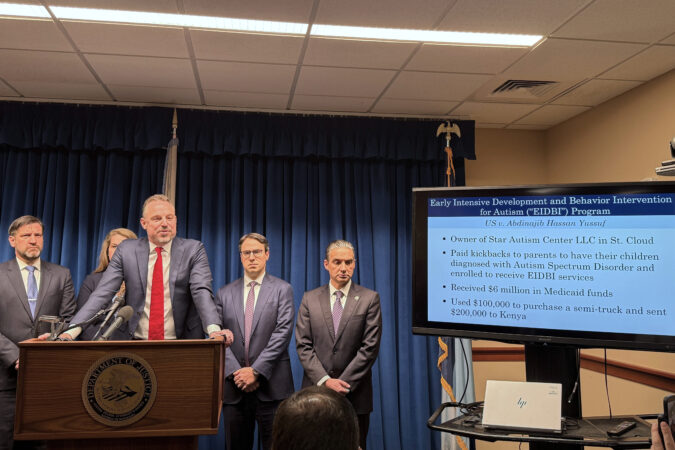
    Two Philadelphia men are facing federal charges in Minnesota after authorities said the men had learned of the state’s lax controls around a government-funded housing program, then traveled there to learn how to exploit it — the latest development in a long-running fraud scandal that has enveloped Minnesota and drawn the ire of President Donald Trump.

    Anthony Waddell Jefferson, 37, and Lester Brown, 53, were accused of fraudulently obtaining more than $3.5 million in government proceeds — funds that should have gone to Minnesota’s Housing Stabilization Services Program, prosecutors said, but were instead diverted to two companies the men oversaw in Philadelphia.

    Jefferson and Brown “came [to Minnesota] not to enjoy our lakes, our beautiful summers, or our warm people,” Joseph H. Thompson, Minnesota’s first assistant U.S. attorney, said Thursday. “They came here because they knew and understood that Minnesota was a place where taxpayer money could be taken with little risk and few consequences.”

    Jefferson and Brown each face one count of wire fraud and were charged by information, prosecutors said, which typically means a defendant intends to plead guilty.

    Court records for their cases were not immediately available, and it was not clear if either man had retained an attorney.

    Thompson cast their case as a novel twist in a scandal that he said was “swamping Minnesota” and had likely bilked taxpayers out of hundreds of millions of dollars intended for daycares, hunger programs, autism support, and other endeavors.

    The state had become such a magnet for fraudsters, Thompson said, that Jefferson and Brown had effectively performed “fraud tourism,” visiting the state purely to learn how to take advantage of its reputation for having programs that were ripe for abuse.

    The broader issues over the state’s lax disbursements have burst into national view in recent months as Trump and other Republicans have taken interest in the situation. Trump on social media called Minnesota a “hub of fraudulent money laundering activity” and, because many of those charged have ties to Minneapolis’ Somali community, said “Somali gangs are terrorizing the people of that great state.”

    Republicans have also blamed Minnesota Gov. Tim Walz — the 2024 Democratic vice presidential nominee — for allowing the situation to unfold on his watch. And right-wing groups have questioned whether some funds were being disbursed to terrorist groups in Somalia or elsewhere in Africa.

    Thompson said Thursday that he did not believe that was being done at a large scale, but that the exploitation of the programs was troubling and a phenomenon that had become uniquely common in Minnesota.

    Fraud scandals targeting government programs date back at least a decade in that state. But they received renewed attention in 2022, when the FBI raided the offices of Feeding Our Future, a food relief nonprofit that had rapidly expanded through pandemic relief efforts.

    Investigators later pointed to about $250 million in federal funding the group had received as part of the Department of Human Services’ Child Nutrition Program, some of which had allegedly been funneled into fraudulent claims for the Medicaid-backed meals program.

    Prosecutors did not have evidence to show exactly how much they said had been misspent, but said last month 78 people had been charged in connection with the scheme, which they called one of the largest pandemic-related frauds in the country.

    The Feeding Our Future investigation is just one of several schemes that have been fueling discourse over Minnesota’s government disbursements. The discussion has taken a dark turn in recent weeks, as Trump used the situation to insult Walz with a slur for people with intellectual disabilities, and to lash out at Somali immigrants, saying, “I don’t want them in our country.” During a speech in Pennsylvania this month, he called Somalia “about the worst country in the world.”

    As for the Philadelphia defendants, prosecutors said the men created two companies — Chozen Runner LLC and Retsel Real Estate LLC — in order to submit “fake and inflated bills” for housing services that were never provided. The program they ripped off was intended to create housing for people with disabilities or substance abuse issues, prosecutors said.

    Jefferson and Brown “repeatedly flew together from Philadelphia to Minneapolis,” purportedly to recruit beneficiaries for their LLCs from Section 8 housing or shelters, prosecutors said. But Jefferson and his employees created fake paperwork, sometimes listing bogus employees, to dupe insurance companies into reimbursing them.

    In all, prosecutors said, they submitted $3.5 million worth of claims for services they said they provided to 230 people.

    Thompson said the men and their companies had virtually no connections to Minnesota other than viewing the state housing funds as “easy money.”

    Jefferson, a Brewerytown resident according to voter registration data, describes himself in social media profiles and an online biography as a serial entrepreneur — selling a line of perfumes, working as a gospel musician, while also serving as the CEO of “The Housing Guys,” a group that says it provides housing stabilization services. In a photo posted to social media last summer, Jefferson was pictured being presented with an honorary citation from City Council President Kenyatta Johnson.

    Contacted Thursday by an Inquirer reporter, Jefferson hung up.

    He was pursued earlier this year in Philadelphia courts over a $103,000 federal tax lien.

    Brown formed Retsel — “Lester” spelled backward — in 2021, according to Pennsylvania corporate documents, using a mailing address in the West Oak Lane neighborhood.

    Attempts to reach Brown for comment Thursday were unsuccessful.
  • Trump signed an order to reclassify marijuana as a less-dangerous drug. It’s not full legalization.

    Trump signed an order to reclassify marijuana as a less-dangerous drug. It’s not full legalization.

    President Donald Trump announced he would advise federal agencies to reschedule marijuana from a Schedule I controlled substance to Schedule III, easing federal restrictions on the plant.

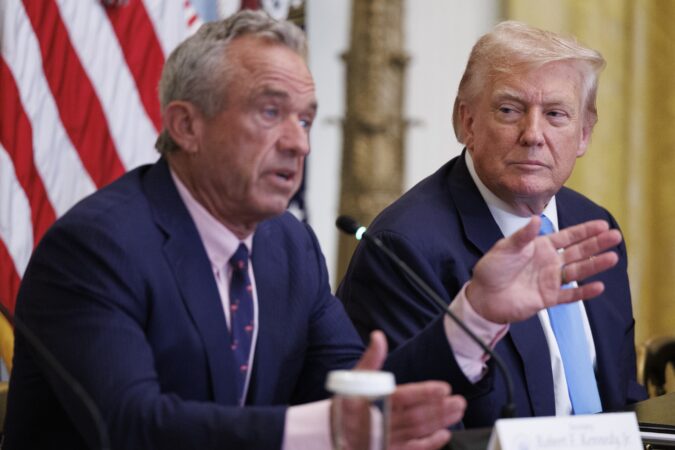
    Trump announced the executive order Thursday in the Oval Office, alongside Health and Human Services Secretary Robert F. Kennedy Jr. and a line of medical workers in white coats and scrubs. The president does not have the direct authority to reschedule marijuana but can request his federal agencies to do so.

    Jeff Hodgson smokes a pre-roll at his home in Cape May, NJ on Thursday, May 2, 2024. Hodgson mostly uses medical marijuana to help him sleep.

    Marijuana has been a Schedule I controlled substance since the 1970 Controlled Substances Act, meaning the federal government considers marijuana to have no accepted medical use, with a high risk of abuse. Schedule I drugs, such as heroin, cocaine, and LSD, are illegal and strictly regulated, making medical research on these drugs, including cannabis, nearly impossible.

    A reclassification would be the most significant reform on marijuana in more than half a century, opening the doors for medical research. But it would not be full legalization, said Adam Smith, executive director of the Marijuana Policy Project. It could also pave the way to federal intervention in the state-run medical and recreational marijuana industries, something stakeholders fear.

    “There is a possibility that in moving cannabis to Schedule III, instead of opening up access, what it will do is incentivize federal agencies to clamp down control on the availability of cannabis,” Smith said. “Treating it as other Schedule III substances, which virtually all require prescriptions, is not how this works in medical cannabis and could really create chaos and a lot of economic pain in the industry.”

    Frank Burkhauser of Woodbury displays the legal marijuana purchase that he just made at Cannabist in Deptford, N.J. on April 21, 2022. Burkhauser said he has been working for the legalization of marijuana since the early 90’s.

    Smith said stakeholders are unsure what this might mean for the wider industry but remain optimistic, as rescheduling of marijuana has been a priority for decades.

    Former President Joe Biden’s administration had moved to reschedule marijuana as a Schedule III drug; however, those plans stalled in bureaucratic limbo.

    This executive order has plenty of positives, said Joshua Horn, a Philadelphia cannabis lawyer at Fox Rothschild. Loosening restrictions could clear the way for the IRS to allow cannabis businesses to deduct business expenses (which they currently cannot do). Additionally, more traditional banking options might become available to entrepreneurs.

    “It could also rectify the criminal injustice that has been ongoing since the passage of the Controlled Substances Act, where people of color have been disproportionately impacted by the ‘war on drugs,’” Horn said. “In the end, rescheduling should reinvigorate these businesses out of their current tax and financial struggles.”

    This federal rescheduling of marijuana would come on the heels of Congress’ banning all intoxicating hemp products, which are derived from cannabis plants. While this may seem like a policy flip-flop, Smith said, these are two different issues at hand.

    Hemp products photographed at the Philadelphia Inquirer, November 21, 2025.

    “The hemp ban is the result of the fact that the market was chaotic and, in many cases, unsafe. Without regulation, that market was rife with pesticides, heavy metals, and products that should not be on shelves,” Smith said.

    But he contends there is a movement to push back against wider marijuana legalization. “There’s always pushback when there’s big change,” Smith said. “But also because of the instability created when we have state-regulated markets operating in a federally illegal area.”

    Industry folks are hoping this move better aligns the federal government and state markets, opens the doors to research, and provides better clarity to states that are hesitant to legalize marijuana, Smith said.

    In this July 19, 2019, file photo, Pierce Prozy examines a Yolo! brand vape oil cartridge marketed as a CBD product at Flora Research Laboratories in Grants Pass, Ore.

    Reducing restrictions on commercially available cannabis is “a key missing ingredient toward making clinical breakthroughs,” said Stephen Lankenau, director of Drexel University’s Medical Cannabis Research Center.

    “A key issue is that any reclassification efforts need to reduce restrictions for university-based researchers to have access to cannabis-derived THC — commercially available products in particular — for clinical studies, whether laboratory or human subjects,” Lankenau said.

    Researchers now are only able to examine hemp-derived nonpsychoactive cannabinoids like CBD or CBC. However, Lankenau said, it is unclear whether Trump’s proposal would give them the green light.

  • Can the Brown University tragedy bring the left and the right together?

    Can the Brown University tragedy bring the left and the right together?

    Let’s start with the easy part. There is absolutely no evidence so far to suggest that the shooter at Brown University targeted Alabama native Ella Cook — one of two students who died in the massacre last Saturday — because of her political opinions.

    That’s what several right-wing commentators said, noting that Cook had been vice president of the College Republicans at Brown. Cook “was targeted for her conservative beliefs, hunted, and killed in cold blood,” the national chairman of the College Republicans wrote in a post on X, which has garnered nearly two million views.

    Please. We still don’t know who opened fire in a classroom building at Brown, or why. It’s reckless — and cynical — to pretend that we do.

    But behind every crazed conspiracy theory lies a small grain of truth. Conservative students are not in danger for their lives, but they do experience ostracism and discrimination. People who claim otherwise are like climate change deniers, except in this case the naysayers are on the left.

    I’m on the left, too. And it’s time for us to come clean about the biased environments we have created.

    I feel that every time I hear a colleague say all Trump voters are white supremacists or fascists. I feel it when students email me to complain about the left-wing groupthink in their classes.

    And I feel it, most of all, when they come out to me as Trump supporters in my office, with the door closed. I plead with them to share their views with others, which is the only way we learn anything. But they tell me the cost would be too high: They’d be vilified and canceled.

    A poster seeking information about the shooting suspect is seen on the campus of Brown University on Wednesday.

    That’s why so many Republicans disdain higher education. They know that we abhor their views, and they return the favor.

    Now they’re trying to impose their will upon us. Start with President Donald Trump’s “compact,“ which is really just an act of extortion: Do what we say, or we’ll cut off your funding. I’m glad that Brown — like Penn — rejected it, but schools with smaller endowments might face a more difficult choice when deciding whether to do so.

    Then there are state measures restricting instruction about race and gender. The logic goes like this: You taught things we didn’t like, so we’re going to prevent you from teaching about them at all.

    Remember the adage about two wrongs? We seem to have forgotten it. Liberals created an intolerant atmosphere on our campuses. In response, conservatives are taking political measures to silence us.

    It’s time to end this madness. And perhaps we can use the Brown tragedy to do just that.

    The other student who was murdered was a naturalized U.S. citizen from Uzbekistan, Mukhammad Aziz Umurzokov. He survived a serious childhood illness and wanted to become a doctor, so he could assist other people who had suffered like he did.

    You haven’t heard a lot about Umurzokov in right-wing media, which has been busy memorializing Ella Cook. But neither have my fellow liberals made much mention of Cook; instead, they have been commemorating the remarkable life of Mukhammad Umurzokov.

    Imagine a national day of mourning, where we switched all of that up. In Congress and in statehouses, Democratic leaders would hoist large blow-up pictures of Cook — the kind you see in sports stadiums — to memorialize her. And GOP officials would do the same for Umurzokov.

    That would require courage on both sides, which is in short supply these days.

    Democrats would need to celebrate a brave churchgoing conservative who bucked the dominant liberal consensus on campus. And Republicans would need to challenge their party’s nativist and anti-Islamic rhetoric by praising a young Muslim immigrant who wanted to do good in and for America.

    They would also have to call out the conspiracy theorists in their midst. Political violence is real, but there’s no evidence that Ella Cook was killed because of her politics. Honest Republicans know that. They need to say it.

    And maybe, just maybe, that can begin the healing that our battered nation so desperately needs. We simply cannot make anything better by hating on each other.

    At our schools and universities, we’ll resolve to welcome all points of view. Instead of maligning the other side — or trying to censor it — we’ll bring different sides together.

    And we will educate a new generation of citizens, who have both the will and the skill to converse across their differences. That will be a great way to remember Ella Cook and Mukhammad Umurzokov. And it will make America great, too. For all of us.

    Jonathan Zimmerman teaches education and history at the University of Pennsylvania. He is the author of “Whose America? Culture Wars in the Public Schools”.

  • A Main Line man who brought guns to a ‘No Kings’ protest and had bombs at his house pleaded guilty in federal court

    A Main Line man who brought guns to a ‘No Kings’ protest and had bombs at his house pleaded guilty in federal court

    A Malvern man who brought a gun and other weapons to a “No Kings” protest in West Chester over the summer — and who was rearrested days later after police found homemade bombs at his house — pleaded guilty in federal court Thursday morning.

    Kevin Krebs, 32, said little while pleading guilty to a charge of possessing an unregistered firearm or explosive device. Krebs had been taken into federal custody this fall, and the U.S. Attorney’s Office charged him earlier this month by information, a process that typically indicates a defendant plans to plead guilty.

    The charges against him relate to his conduct in West Chester six months ago. On June 14, Krebs was arrested by local police after other attendees at a “No Kings” protest in the borough told authorities they thought they had seen Krebs carrying a gun.

    When police stopped Krebs and searched him, they found a loaded Sig Sauer handgun along with extra rounds of ammunition, a knife, a bayonet, pepper spray, and other weapons, prosecutors said. He also had an AR-15 rifle in his car nearby.

    Krebs did not have a concealed carry permit for his handgun, and he was charged with illegal gun possession.

    Two days later, police searched his home on Conestoga Road and found 13 homemade pipe bombs, prosecutors said, as well as components used to make detonators, tactical vests, and bullet-resistant armor. Some of the bombs had nails and screws inside, which are often added to improvised explosive devices to increase the amount of shrapnel they can generate.

    Krebs was initially charged by Chester County prosecutors, who said his political beliefs or potential motives were not straightforward.

    Krebs was a registered Democrat but had previously been registered as a Republican and said online that he voted for President Donald Trump. In online postings, he later said he came to regret that vote, and in the weeks preceding the “No Kings” protest he had been posting violent rhetoric aimed at Trump and police officers.

    Before his arrest, Krebs was a licensed electrician and onetime Home Depot employee. His attorneys and relatives previously said he had been diagnosed with autism and Asperger’s syndrome.

    Krebs is scheduled to be sentenced in March by U.S. District Judge Mary Kay Costello. He faces a maximum penalty of 10 years in prison.

  • U.S. consumer prices slowed unexpectedly in November but are still up 2.7% from last year

    U.S. consumer prices slowed unexpectedly in November but are still up 2.7% from last year

    WASHINGTON — U.S. inflation slowed unexpectedly last month, the government said in a report that was delayed and likely distorted by the government shutdown.

    The Labor Department reported Thursday that its consumer price index rose 2.7% in November from a year earlier. Yet, year-over-year inflation remains well above the Federal Reserve’s 2% target, and Americans are complaining loudly about the high cost of living.

    The report was delayed eight days by the federal government’s 43-day shutdown, which also prevented the Labor Department from compiling overall numbers for consumer prices and core inflation in October. Thursday’ report gave investors, businesses and policymakers their first look at CPI since the September numbers were released on Oct. 24.

    Consumers prices had risen 3% in September from a year earlier, and forecasters had expected the November CPI to match that year-over-year increase.

    Energy prices, driven up by sharply higher fuel oil prices, rose 4.2% in November. Excluding volatile food and energy prices, so-called core inflation rose 2.6%, compared with a 3% year-over-year gain in September and the lowest since March 2021.

    U.S. inflation is still stubbornly high, partly because of President Donald Trump’s decision to impose double-digit taxes on imports from almost every country on earth along with targeted tariffs on specific products like steel, aluminum and autos.

    The president’s tariffs have so far proved less inflationary than economists feared. But they do put upward pressure on prices and complicate matters at the Fed, which is trying to decide whether to keep cutting its benchmark interest rate to support a sputtering job market or whether to hold off until inflationary pressures ease. The central bank last week decided to reduce the rate for the third time this year, but Fed officials signaled that they expect just one cut in 2026.

    Kay Haigh, global co-head of fixed income and liquidity solutions at Goldman Sachs Asset Management, warned that the November numbers were “noisy … The canceling of the October report makes month-on-month comparisons impossible, for example, while the truncated information-gathering process given the shutdown could have caused systematic biases in the data.

    “The Fed will instead focus on the December CPI released in mid-January, just two weeks before its next meeting, as a more accurate bellwether for inflation.’’

    Trump delivered a politically charged speech Wednesday carried live in prime time on network television, seeking to pin the blame for economic challenges on Democrats.

    The speech was a rehash of his recent messaging that has so far been unable to calm public anxiety about the cost of groceries, housing, utilities and other basic goods. Trump has promised an economic boom, yet inflation has stayed elevated and the job market has weakened sharply in the wake of his import taxes.

  • You may not have healthcare but you can get into a national park for free on Trump’s birthday

    Soon, you may no longer be able to afford healthcare since Republicans have once again blocked efforts to subsidize the Affordable Care Act.

    The most recent government shutdown became the longest in history because Democrats insisted on continuing to fund healthcare while the GOP balked. The Republicans won. America lost.

    But don’t despair.

    When President Donald Trump’s 80th birthday rolls around on June 14 — which happens to coincide with Flag Day — you will be able to visit a national park for free.

    See? Trump really is making America great again.

    Kidding aside, most of us aren’t going to mark Trump’s birthday — he hasn’t earned that from us. He can accept all the fake awards he wants, but he’s no hero. He’s a billionaire who has the nerve to claim that “the word affordability is a Democrat scam.” Remember that the next time you’re at the grocery store. Trump promised to bring down costs. It hasn’t happened.

    President Donald Trump picks up his FIFA Peace Prize medal before the draw for the 2026 soccer World Cup at the Kennedy Center in Washington, in December.

    Trump also said he would fix healthcare. That hasn’t happened either. He said he was going to fix the situation at the border. We now have masked ICE agents terrorizing undocumented immigrants and U.S. citizens alike. Entry into America is for sale y’all. As long as you have $1 million to pay for a green card. Make that a gold car with Trump’s image on it. Next up, a Trump platinum card.

    The president’s actions remind me of a narcissist whose world begins and ends with himself. This nation, however, is expansive and needs a president who puts the American people first. That’s not what we have with Trump. He demonstrates that over and over again.

    His administration’s decision to make entrance at national parks free on his birthday wouldn’t be quite as egregious if it hadn’t also revoked free admission for visitors on not one, but two federal holidays that honor Black history — Juneteenth and the Rev. Dr. Martin Luther King Jr.’s birthday. It feels like just another way to antagonize African Americans who still haven’t gotten over his calling Somalis “garbage” and saying they should leave the country.

    But wait, there’s more.

    The Trump administration has ordered the Park Service to clear the shelves of its gift shops, bookstores, and concession stands of any merchandise that runs afoul of its anti-diversity, equity, and inclusion policies. Employees have until Dec. 19 to get rid of any of the so-called offending merchandise. (Note: Let us know when the fire sale is and we’ll take it off your hands.)

    Trump only wants to present a sanitized version of American history: So no mention of slavery and Jim Crow and that sort of thing. But lots of red, white, and blue like he sells in his Trump store.

    As with practically everything else he sticks his suspiciously bruised hand into, he’s making a mess of things at the National Park Service.

    And I’m not just talking about the way officials have slapped the president’s scowling face on the prized annual park pass. An environmental group is suing him for that. I hope the lawsuit wins. I’d love to get one to give as a present for Christmas but I’m not doing it if his face is on it.

    A 2026 America the Beautiful National Park Service annual pass features President Donald Trump’s portrait. The Center for Biological Diversity sued the Trump administration, saying the pass must have a contest winner photo taken in federal lands, as deemed by federal law.

    The Trump administration also has cut numerous jobs and services at national parks, imposed a $100 fee for foreign visitors to certain parks, and stripped conservation protections for public land. I shudder to think about what could be next. Selling off national parks to the highest bidder? I wouldn’t put it past him to try it. We’ve seen what he did to the East Wing of the White House.

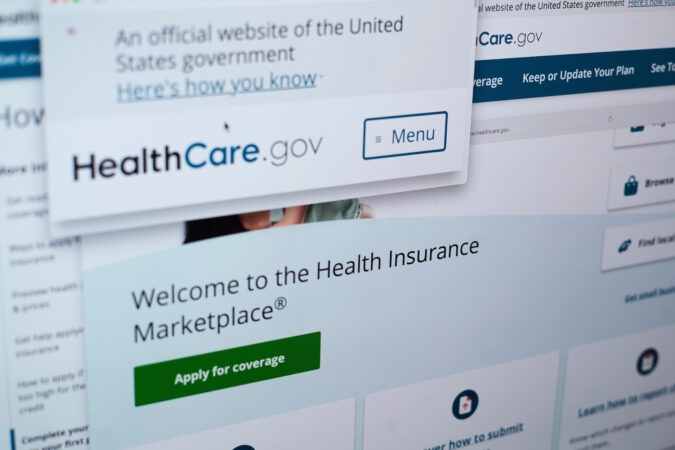
    Healthcare premiums for more than 24 million Americans may soon skyrocket without government subsidies to bring down costs for everyday people. Remember who is to blame when your insurance premiums suddenly spike.

    The day can’t come soon enough when Trump is finally out of office for good. That’s when we, the people, can set about undoing all the damage he has done.

    And that includes reinstating admission fees at national parks on Trump’s birthday.

  • Trump gives a partisan prime-time address insisting the economy is stronger than many voters feel

    Trump gives a partisan prime-time address insisting the economy is stronger than many voters feel

    WASHINGTON — President Donald Trump delivered a politically charged speech Wednesday carried live in prime time on network television, seeking to pin the blame for economic challenges on Democrats while announcing he is sending a $1,776 bonus check to U.S. troops for Christmas.

    The remarks came as the nation is preparing to settle down to celebrate the holidays, yet Trump was focused more on divisions within the country than a sense of unity. His speech was a rehash of his recent messaging that has so far been unable to calm public anxiety about the cost of groceries, housing, utilities and other basic goods.

    Trump has promised an economic boom, yet inflation has stayed elevated and the job market has weakened sharply in the wake of his import taxes. Trump suggested that his tariffs — which are partly responsible for boosting consumer prices — would fund a new “warrior dividend” for 1.45 million military members, a payment that could ease some of the financial strains for many households. The amount of $1,776 was a reference to next year’s 250th anniversary of the signing of the Declaration of Independence.

    “The checks are already on the way,” he said of the expenditure, which would total roughly $2.6 billion.

    Presidential addresses to the nation carried on network television are traditionally less partisan than rally speeches, but Trump gave a condensed version of his usual political remarks.

    Flanked by two Christmas trees with a portrait of George Washington behind him in the White House’s Diplomatic Reception Room, Trump sought to pin any worries about the economy on his predecessor, Joe Biden.

    “Eleven months ago, I inherited a mess, and I’m fixing it,” Trump said. “We’re poised for an economic boom, the likes of which the world has never seen.”

    Trump seeking to stop the slump in his approval ratings

    His holiday wishes came at a crucial time as he tries to rebuild his steadily eroding popularity. Public polling shows most U.S. adults are frustrated with his handling of the economy as inflation picked up after his tariffs raised prices and hiring slowed.

    In 2026, Trump and his party face a referendum on their leadership as the nation heads into the midterm elections that will decide control of the House and the Senate.

    The White House remarks were a chance for Trump to try to regain some momentum after Republican losses in this year’s elections raised questions about the durability of his coalition. He openly leaned into the politics despite television networks’ past reluctance to broadcast presidential addresses loaded with campaign-style rhetoric.

    For example, in September 2022, networks declined to give the Biden White House a prime-time slot for a speech the then-president gave about democracy because it was viewed as too political.

    Trump spoke at a rapid-fire clip with a tone that bordered at times on anger. He responded to the public frustration this year over the economy by making even bolder promises on growth next year, saying that mortgage rates would be coming down and that he “would announce some of the most aggressive housing reform plans in American history.”

    Trump brought charts with him to make the case that the economy is on an upward trajectory. He made claims about incomes growing, inflation easing and investment dollars pouring into the country as foreign leaders, he claimed, have assured him that “we’re the hottest country anywhere in the world,” a statement he has frequently repeated at public events.

    If the argument seemed familiar, that’s because it has echoes of the case that Biden made about the U.S. economy with little success. He, too, in the face of inflation pointed to the enviable rate of U.S. economic growth compared to other nations.

    The public sees the economy differently from Trump

    The hard math internalized by the public paints a more complicated picture of an economy that has some stability but few reasons to inspire much public confidence.

    The stock market is up, gasoline prices are down and tech companies are placing large bets on the development of artificial intelligence.

    But inflation that had been descending after spiking to a four-decade high in 2022 under Biden has reaccelerated after Trump announced his tariffs in April.

    The consumer price index is increasing at an annual rate of 3%, up from 2.3% in April.

    The affordability squeeze is also coming from a softening job market. Monthly job gains have averaged a paltry 17,000 since April’s “Liberation Day,” when Trump announced import taxes that he later suspended and then readjusted several months later.

    The unemployment rate has climbed from 4% in January to 4.6%.

    Trump said that investment commitments for new factories will boost manufacturing jobs and that consumer activity will improve dramatically as people receive increased tax refunds next year.

    While emphasizing the economy, he also faces challenges on other policy fronts.

    Trump’s mass deportations of immigrants have proved unpopular even as he is viewed favorably for halting crossings along the U.S. border with Mexico. The public has generally been unmoved by his globe-trotting efforts to end conflicts and his attacks on suspected drug boats near Venezuela.

    Trump sought to blame Democrats for the likely increase in health insurance premiums as the subsidies tied to the 2010 Affordable Care Act are expiring. Democratic lawmakers and some Republicans have sought to address that issue, but Trump has pushed back and suggested instead that payments should go directly to the buyers of health insurance instead of the companies. The president has yet to commit to a specific legislative fix.

    After his speech ended and the video was no longer being broadcast, Trump turned to his gathered aides and asked them how his address to the nation went. The aides assured him it was great.

    Trump then indicated that White House chief of staff Susie Wiles had told him he needed to address the nation. After some back and forth, he asked Wiles how he had done.

    “I told you 20 minutes and you were 20 minutes on the dot,” Wiles said.

  • Three Pa. Republicans are siding with Democrats in a last-ditch effort to save healthcare tax credits

    Three Pa. Republicans are siding with Democrats in a last-ditch effort to save healthcare tax credits

    Four moderate Republicans — including three who are in the hot seat for reelection in swing districts in Pennsylvania — joined Democrats to sign a discharge petition Wednesday to force a vote on a proposal to extend pandemic-era expanded Obamacare subsidies.

    While the move may not save the subsidies from expiring, given that Republican-controlled Senate has indicated resistance to the plan, the votes mark the sharpest rebuke of party leadership from within the GOP since President Donald Trump started his second term.

    U.S. Rep. Brian Fitzpatrick, who has represented Bucks County since 2017, and two GOP freshmen from elsewhere in the state, U.S. Reps. Rob Bresnahan and Ryan Mackenzie, joined New York moderate Mike Lawler to give Democrats the votes they needed to push a vote on a clean extension of the subsidies to the floor.

    The move comes on the heels of other high-profile examples of rank-and-file Republicans bucking Trump and House Speaker Mike Johnson, including last month’s bipartisan vote to release the Jeffrey Epstein files, following a discharge petition after Johnson had slow-walked the legislation.

    The “dam is breaking,” U.S. Rep. Marjorie Taylor Greene (R., Ga.) told CNN on Tuesday in reference to the string of incidents in which members of the party had defied the president and speaker ahead of next year’s midterms.

    The Republicans who defected on the healthcare bill had favored a compromise that they hoped might have a chance of passing Congress, but that was rejected by Johnson (R., La.), who sided with conservatives against expanding the subsidies, on Tuesday night.

    That left them supporting a vote on a bill that extends the program as is, with far fewer restrictions and concessions than the compromise bills included.

    “Despite our months-long call for action, leadership on both sides of the aisle failed to work together to advance any bipartisan compromise, leaving this as the only way to protect the 28,000 people in my district from higher costs,” Bresnahan said in a statement posted on X.

    “Families in NEPA cannot afford to have the rug pulled out from under them. Doing nothing was not an option, and although this is not a bill I ever intended to support, it is the only option remaining. I urge my colleagues to set politics aside, put people first, and come together around a bipartisan deal.”

    Later Wednesday, House Republican leaders pushed to passage a healthcare bill that does not address the soaring monthly premiums that millions of people will soon endure. The bill passed on a mostly party-line vote of 216-211. U.S. Rep. Thomas Massie (R., Ky.) joined with Democrats in voting against the measure.

    Fitzpatrick and Lawler tried to add a temporary extension of the subsidies to the bill, but were denied.

    “Our only request was a floor vote on this compromise, so that the American People’s voice could be heard on this issue. That request was rejected. Then, at the request of House leadership I, along with my colleagues, filed multiple amendments, and testified at length to those amendments,” Fitzpatrick said in a statement. “House leadership then decided to reject every single one of these amendments.

    “As I’ve stated many times before, the only policy that is worse than a clean three-year extension without any reforms, is a policy of complete expiration without any bridge,” Fitzpatrick said.

    Bresnahan’s vote for the discharge petition came a little more than a week after he welcomed Trump to his Northeast Pennsylvania district for a rally, which was meant to address voter concerns about affordability ahead of next year’s midterms.

    The coming spike in healthcare premiums will be a central part of Democrats’ messaging in swing districts like Bresnahan’s.

    Bresnahan won his election last year by about 1 percentage point. He was also one of just 20 House Republicans to sign a successful discharge petition earlier this month to force a vote for collective bargaining to be restored for federal workers.

    “At the end of the day that might have been going against party leadership, but it was what’s right for northeastern Pennsylvania,” he told The Inquirer of the vote at the Pennsylvania Society last weekend.

    Rep. Brian Fitzpatrick (R-Pennsylvania) speaks at a hearing on Capitol Hill on Dec. 3.

    Mackenzie, in an interview with The Inquirer, blamed Democrats for not signing on to one of the compromise proposals, leaving him and the other three Republicans with no alternative but to sign onto a discharge for a plan he doubts will pass.

    “But if you send the Senate anything at this point, I’m of the opinion it will continue the conversation and they’ll consider what their options are,” Mackenzie said. “If they would like to do additional reforms, I welcome those.”

    While Republicans who have opposed the extension argue the subsidies were meant to be temporary and affect only about 7% of Americans, Mackenzie said he has been hearing from constituents constantly.

    “Healthcare and the current system is unaffordable for many people,” he said. “We recognize the current system is broken for millions of Americans, so to actually get to some kind of better position, you need both short-term and long-term solutions.”

    He called the Affordable Care Act subsidy extension a needed short-term solution “to do something for people struggling right now.”

    Like Bresnahan, Mackenzie won his Lehigh Valley seat by 1 percentage point last year. And the district will be a top priority for both parties in next year’s election — as shown by Vice President JD Vance’s visit there Tuesday.

    U.S. Rep. Scott Perry, a staunch Trump ally, represents a swing district in Central Pennsylvania but voted against the discharge petition. Janelle Stelson, a Democrat seeking Perry’s seat, called him “extreme” for voting against the measure.

    “While other Republicans are working across party lines to lower costs, Perry is yet again refusing to do anything to make life more affordable,” said Stelson, who narrowly lost to Perry last year.

    Fitzpatrick had been leading the moderate push for a solution on the ACA tax credits with his own compromise bill in the House. His bill would extend the subsidies by two years and implement a series of changes, including new income eligibility caps and a minimum monthly premium payment. Fitzpatrick has bucked his party and Trump several times, voting against final passage of Trump’s One Big Beautiful Bill, though he voted for an earlier version that passed the House by only one vote.

    Some Republicans do not want to extend the credits at all, while others want abortion restrictions included.

    Democrats hoping to unseat Fitzpatrick argue he has a record of pushing back on Trump and GOP leaders only in ways that do not actually damage the party or its priorities. In this case, though, the three Pennsylvanians were critical in getting the petition through, even if the future of ACA tax credits remains uncertain.

    “The only thing Brian Fitzpatrick has perfected in his 9 years in Congress is the art of completely meaningless gesture, designed to protect his political future not the people he serves,” his Democratic challenger, Bucks County Commissioner Bob Harvie, wrote on X.

    Harvie had previously called on Fitzpatrick to sign the Democrats’ discharge petition.

    Not all ACA tax credits are under threat. Under the ACA, people who earn less than 400% of the federal poverty level — about $60,000 — are eligible for tax credits on a sliding scale, based on their income, to help offset the monthly cost of an insurance premium.

    That tax credit is part of the law, and therefore not expiring. But what will expire is an expansion passed in 2021 when Congress increased financial assistance so that those buying coverage through an Obamacare marketplace do not pay more than 8.5% of their income.

    This article includes information from the Associated Press.

  • Four Republicans, including Pa. Reps. Fitzpatrick, Bresnahan and Mackenzie, defy Speaker Johnson to force House vote on ACA subsidies

    Four Republicans, including Pa. Reps. Fitzpatrick, Bresnahan and Mackenzie, defy Speaker Johnson to force House vote on ACA subsidies

    WASHINGTON — Four centrist Republicans broke with Speaker Mike Johnson on Wednesday and signed onto a Democratic-led petition that will force a House vote on extending for three years an enhanced pandemic-era subsidy that lowers health insurance costs for millions of Americans.

    The stunning move comes after House Republican leaders pushed ahead with a health care bill that does not address the soaring monthly premiums that millions of people will soon endure when the tax credits for those who buy insurance through the Affordable Care Act expire at year’s end.

    Democrats led by Minority Leader Hakeem Jeffries of New York needed 218 signatures to force a floor vote on their bill, which would extend the subsides for three years.

    Republican Reps. Brian Fitzpatrick, Robert Bresnahan and Ryan Mackenzie, all from Pennsylvania, and Mike Lawler of New York signed on Wednesday morning, pushing it to the magic number of 218. A vote on the subsidy bill could come as soon as January under House rules.

    “Unfortunately, it is House leadership themselves that have forced this outcome.” Fitzpatrick said in a statement.

    Johnson told reporters Wednesday that “I have not lost control of the House” and he noted that Republicans have a razor-thin majority that allows a small number of members to employ procedures that would not usually be successful in getting around leadership.

    “These are not normal times,” said Johnson, R-La.

    Origins of a Republican revolt

    The revolt against GOP leadership came after days of talks centered on the health care subsidies.

    Johnson had discussed allowing more politically vulnerable GOP lawmakers a chance to vote on bills that would temporarily extend the subsidies while also adding changes such as income caps for beneficiaries. But after days of discussions, the leadership sided with the more conservative wing of the party’s conference, which has assailed the subsidies as propping up a failed marketplace through the ACA, which is widely known as “Obamacare.”

    House Republicans pushed ahead Wednesday a 100-plus-page health care package without the subsidies, instead focusing on long-sought GOP proposals designed to expand insurance coverage options for small businesses and the self-employed.

    Fitzpatrick and Lawler tried to add a temporary extension of the subsidies to the bill, but were denied.

    “Our only request was a floor vote on this compromise, so that the American People’s voice could be heard on this issue. That request was rejected. Then, at the request of House leadership I, along with my colleagues, filed multiple amendments, and testified at length to those amendments,” Fitzpatrick said. “House leadership then decided to reject every single one of these amendments.

    “As I’ve stated many times before, the only policy that is worse than a clean three-year extension without any reforms, is a policy of complete expiration without any bridge,” Fitzpatrick said.

    Lawler, in a social media post, similarly said that “the failure of leadership” to permit a vote had left him with “no choice” but to sign the petition. He urged Johnson to bring the plan up for an immediate floor vote.

    Jeffries, for several weeks, had called on Republicans to sign his discharge petition. He particularly challenged Republicans in competitive congressional districts to join the effort if they really wanted to prevent premium increases for their constituents.

    “Mike Johnson needs to bring the bill to the floor today,” Jeffries said. “Our position from the very beginning was that we are standing on the right side of the American people who want to see the Affordable Care Act tax credits extended, and we’re appreciative that we now have the bipartisan coalition to get that done.”

    Path ahead is uncertain

    Even if the subsidy bill were to pass the House, which is far from assured, it would face an arduous climb in the Republican-led Senate.

    Republicans last week voted down a three-year extension of the subsidies and proposed an alternative that also failed. But in an encouraging sign for Democrats, four Republican senators crossed party lines to support their proposal.

    Senate Majority Leader John Thune, R-S.D., argued against the Democratic extension as “an attempt to disguise the real impact of Obamacare’s spiraling health care costs.”

  • SS United States set to sink, despite 11th-hour efforts to intervene

    SS United States set to sink, despite 11th-hour efforts to intervene

    The 990-foot SS United States could be making waves as an artificial reef at the bottom of the Florida Panhandle coast as early as March, according to a tentative timeline from its new owners in Florida.

    Even so, hope still springs eternal for the most ardent swath of ship enthusiasts who would rather see it restored to its former glory than swimming with the fishes.

    As tourism officials in Okaloosa County report being about 80% done with the remediation work required to meet state and federal requirements for sinking, the New York Coalition to Save the SS United States has urged the New York City Council to intervene to the best of its abilities: a move that appeared to be gaining some traction in recent weeks, until it wasn’t.

    A resolution introduced by NYC council member Gale A. Brewer last year finally got a committee hearing in late November.

    The symbolic gesture calls on Congress to pass legislation that would allocate funds for restoration and to bring the ship to New York City’s Gowanus Bay Terminal. It also appeals to President Donald Trump, a fellow New Yorker, to sign the legislation.

    Okaloosa County, respectfully, is hearing none of it.

    “We purchased the vessel specifically to become the world’s largest artificial reef,” said county spokesperson Nick Tomecek. “Anybody that thinks otherwise, that’s just pipe dreams.”

    Brewer is aware the odds are against those hoping to reacquire the ship. She acknowledged the resolution was a “Hail Mary” during last month’s committee hearing.

    Though the resolution moved to the full council, it has not been put on the calendar for a vote — the last session of the year was Thursday.

    The SS United States is pulled out into the Delaware River and ready to bid its farewell from Philadelphia as people gather to watch it leave in the Delaware River in Gloucester City, N.J., on Wednesday, Feb. 19, 2025.

    Brewer could not speak to why the resolution did not get a hearing until a year after she introduced it, but she understands how, despite support on the 51-member council, it has not been put to a vote in the full body.

    “Just like in Philly, we got everything under the sun — restaurants, small business, parking, it’s just endless,” Brewer said. “I think there’s lots of support, but it’s not like number one on anybody’s list.”

    Brewer said the priority would be to stop the sinking of the ship. Once the SS United States was in New York City, preservationists, donors, and lawmakers could figure out the best way to redevelop the ship, though she could see it as a restaurant.

    If this figure-it-out-as-we-go approach sounds familiar, it’s because that was the path the SS United States Conservancy, the ship’s previous owner, took when it bought the vessel in 2011. The conservancy aimed to save the ship from the scrapyard and spent years courting potential developers while it sat parked in Philadelphia, even publishing a 2023 feasibility study for a mixed-use development that would cost about $400 million.

    In many ways, the New York City resolution is also a tried-and-tested approach. As the SS United States faced eviction from its berth along the Delaware River, the conservancy launched public campaigns calling on Florida Gov. Ron DeSantis, New York Gov. Kathy Hochul, and Pennsylvania Gov. Josh Shapiro to step in and help the vessel find a new home.

    Passenger ship aficionados take a last look at the SS United States docked at pier 80 in South Philadelphia Wednesday, Feb. 19, 2025 before it is towed away to Alabama

    The conservancy sent its pleas to then-President Joe Biden, as well as members of Congress on both sides of the aisle.

    Much to the chagrin of preservationists, no politico ever came, despite the conservancy’s assurances that whoever championed the ship would be rewarded with all the jobs redevelopment would create.

    Whether Trump, his administration, or this iteration of Congress would intervene at the eleventh hour is anyone’s guess.

    The New York Coalition to Save the SS United States, which launched as a nonprofit in October 2024, wrote to Trump this year asking him to intervene shortly before the ship left Philadelphia, to no avail.

    In a lawsuit filed in U.S. District Court in Pensacola after the ship’s departure, the coalition said it had “no means of knowing whether the Executive Branch of the United States is even aware of the Letter, let alone whether it is being considered.”

    The White House did not immediately respond to questions about whether the ship’s saga had reached Trump’s desk and if the administration would be inclined to step in.

    Either way, time is working against the coalition.

    The suit warned of how some of the prep work in Mobile, Ala., could hinder preservation efforts.

    “… the twin stacks of SSUS will be removed, as will other parts of her superstructure,” read the suit. “Once this is done, any hope of preserving the Ship afloat and intact will be lost forever.”

    Those smokestacks were indeed removed at the end of summer.

    So were all portholes and windows, along with the ship’s radar mast and propeller, according to an Okaloosa County update last week.

    Despite the coalition’s fears laid out in the suit, Dan Sweeney, who cofounded the group, hit a more optimistic note, saying it was not too late to stop a reefing.

    “The Big U remains an important symbol of America,” he said of the SS United States. “It could also prove to be a robust economic development engine. These two reasons are more than enough for us to continue the effort, and many people across the country agree. For us, it’s ‘damn the torpedoes.’”

    Okaloosa County officials, meanwhile, say the months ahead will be used to finish cleaning the ship, removing nonmetal items, cutting holes throughout the ship because the sinking will not be able to be done with explosives, and coordinating with state and local agencies on a sink date.

    Should work continue at its current pace and no delays in inspections, the SS United States could be sunk as early as March.

    Alex Fogg, the natural resources chief for Destin-Fort Walton Beach, said weather delays, of course, are always possible.

    Tomecek reiterated that the county was working with the SS United States’ previous owners to build a land-based museum, which would feature the eye-catching smokestacks and other preserved ship memorabilia and artifacts.

    He understands the renewed interest in “saving” the ship, though it would have been turned into scrap had Okaloosa officials not stepped in. In any case, Tomecek said, these efforts come too little, too late.

    “I think that when [the SS United States] was sold to the county, a lot of folks kind of woke up and realized what was going on, when, in fact, they should have been worried about her the past 30 years, when she was sitting in Philadelphia,” Tomecek said.