Tag: Donald Trump

  • Penn faculty group says faculty, students facing ‘unfounded accusations of antisemitism’ from the university

    Penn faculty group says faculty, students facing ‘unfounded accusations of antisemitism’ from the university

    One University of Pennsylvania faculty member was called into a university office to answer for assigning “a pedagogically-relevant reading about conflict in Palestine,” others for political posts on personal social media accounts.

    One faced questions for wearing a stole with the Palestinian flag at an off-campus event.

    These are among “unfounded accusations of antisemitism” that Penn’s chapter of the American Association of University Professors said faculty and students have endured in the last year. Chapter representatives accompanied faculty to meetings at Penn’s Office of Religious and Ethnic Interests, which called the faculty in for questioning, according to a statement the group released Wednesday.

    The religious and ethnic interests office oversees the implementation of Title VI of the Civil Rights Act, which prohibits discrimination based on race, color, national origin, or shared ancestry. It was formed following accusations of antisemitism on campus in the aftermath of Hamas’ Oct. 7, 2023, attack on Israel, when Penn was roiled by dueling complaints of unfairly treating Jewish and pro-Palestinian members of its community.

    Then-Penn president Liz Magill resigned in December 2023 following a bipartisan backlash over her congressional committee testimony regarding antisemitism complaints, and the following spring, pro-Palestinian protesters erected an encampment on the College Green that ultimately was dismantled by police.

    Since January, President Donald Trump’s administration has targeted universities that it asserts have failed to respond adequately to antisemitism complaints, and the group of Penn professors said they are worried that the university is following the president’s lead.

    “We are concerned that Penn’s own Title VI office may be responding to these external pressures in a manner that risks chilling faculty speech and potentially discriminating against faculty in violation of the law,” the group asserted in a statement published on its website Wednesday. “… Faculty members, who in some cases had already been subject to targeted harassment, felt that they were expected to take unsubstantiated accusations of antisemitism at face value and to express contrition or offer some concession to their unidentified accuser, or face the possibility of disciplinary action.”

    Penn did not respond to a request for comment. Neither did the religious and ethnic interests office.

    Penn announced the creation of the office in September 2024, noting it was the first of its kind nationally and saying it would ensure a consistent response across all of its schools.

    “Over the past year, our campus and our country witnessed a disquieting surge in antisemitism, Islamophobia, and other forms of religious and ethnic intolerance,” J. Larry Jameson, who was then interim president and was named president six months later, said at the time. “The Office of Religious and Ethnic Inclusion (Title VI) is being formed to confront this deeply troubling trend, and to serve as a stand-alone center for education and complaint resolution.”

    The office formally opened in December with the foundational goals of educating, investigating, mediating, and evaluating. Its codirectors are Steve Ginsburg, who had served over a decade as an executive of the Anti-Defamation League, and Majid Alsayegh, founder of Alta Management Services LLC, which helped clients with criminal justice reform. The office’s chief investigator is Deborah Frey, who previously served as an assistant U.S. attorney in the Eastern District of Pennsylvania, working on discrimination complaints.

    “Because of our own lived experiences as targets of bigotry, we know this work is not going to be easy,” Ginsburg had told Penn Today. “These issues are complex and require deep thought and sensitivity for those who are impacted.”

    Faculty and students were not named in Wednesday’s statement and declined to comment through an AAUP executive committee member out of fear of retribution or harassment. The AAUP did not disclose the number of faculty and students involved.

    But the reports “come almost exclusively from faculty who are Palestinian, Arab, Muslim, and/or Black,” the group said, giving rise to concerns about potential discrimination.

    The faculty and students referred to in the letter were not sanctioned or punished for their activities, but the mere act of being called in and questioned has “a chilling effect” on research, teaching, and speech, said the AAUP executive committee member, who asked not to be identified because the chapter wanted to speak with one voice.

    “For instance, in one meeting, a faculty member whose peer-reviewed research was subject to a complaint was pressured to make a modification to the presentation of that research, although their work had the support of their colleagues and dean,” the AAUP chapter said.

    In that case, the faculty member had been called in because the research “referenced a third-party resource that a complainant claimed, without evidence, promoted hatred of Israel and of Jews in the United States,” the letter stated.

    The chapter called on the office to “clarify and modify its procedures to ensure the transparency, consistency, and fairness essential to carrying out the office’s mission.”

    And it asked the office to respond to a series of questions, including about the criteria it uses to decide whether to pursue a complaint.

  • Charles Barkley and Shaq mock Joel Embiid, praise VJ Edgecombe in ESPN debut

    Charles Barkley and Shaq mock Joel Embiid, praise VJ Edgecombe in ESPN debut

    In their ESPN debut, Charles Barkley and Shaquille O’Neal didn’t waste any time mocking Sixers star Joel Embiid.

    “What’d your boy do tonight, Chuck?” Shaq asked.

    “Not a lot,” Barkley dryly responded.

    While the Sixers topped the Boston Celtics Wednesday night, Embiid struggled during his 20 minutes on the court, finishing with just four points and six rebounds.

    The stars of the night were Tyrese Maxey and first-round pick VJ Edgecombe, who scored 34 points, the third-best debut for a rookie in NBA history.

    Barkley used Edgecombe’s eye-opening debut to jokingly take a shot at his college coach, Baylor’s Scott Drew. In reality, the two are close, and Barkley played with Drew’s brother, Bryce Drew, with the Houston Rockets.

    “Scott Drew can’t coach. He’s been holding this kid back,” Barkley joked.

    Barkley and Shaq have been hard on Embiid over the years, including blasting him at the start of last season for not playing in back-to-back games. But Barkley’s expectations have shifted due to Embiid’s injury struggles, including two knee surgeries over the past 14 months.

    “I was asked a thousand times this summer about the Sixers. I said I can’t give a fair prediction,” Barkley said. “As much as I love Edgecombe and Maxey, if Embiid and Paul George can’t play, [the Sixers] are not a contender.”

    “He only gave your four points,” Shaq added.

    So yeah, while Barkley, Shaq, Ernie Johnson and Kenny Smith have jumped from TNT to ESPN, nothing changed about the chemistry of Inside the NBA, one of the most beloved sports shows in TV history.

    Who else would ESPN let compare new Wizards guard CJ McCollum to convicted felon and former New York U.S. Rep. George Santos, who was released from prison by President Donald Trump?

    “Man, I don’t know what CJ McCollum did to someone” to end up on the Wizards, Barkley said. “We freed George Santos, let’s free CJ McCollum.”

    The foursome, now in their 15th season working together, mocked their new home relentlessly, joking that Barkley will appear on every ESPN show, from Get Up to First Take to NFL Live.

    “One thing I’m not going to be is Stephen A. Smith — everywhere,” Barkley said.

    Much later in the evening — ESPN let Inside the NBA roll past 1 a.m. Philly time — Johnson quizzed Barkley on which networks a handful of NBA personalities worked for. Barkley got two right, but missed on TNT colleague Allie LaForce.

    And for those keeping score, Barkley picked the New York Knicks to win the Eastern Conference, a prediction that will likely change at least seven times before the end of the season.

    TNT had broadcast NBA games since 1989, but the NBA rejected the network’s offer in favor of new 11-year deals NBC and Amazon. Despite that, the show is still produced by TNT out of their Atlanta studio. It’s just the name on front of the desk that’s ultimately different.

    Barkley and company will be back on the network tonight for another doubleheader: Oklahoma City Thunder at Indiana Pacers at 7:30 p.m. Philly time, followed by Denver Nuggets and Golden State Warriors at 10 p.m.

    “Ernie, that’s today!” Barkley said shortly after midnight.

    Once the NFL season is over, Amazon will stream NBA games on Prime Video Thursday nights. Until then, the evening is wide-open, allowing ESPN to swoop in to broadcast two national games tonight.

    After that, Inside the NBA will have a light schedule on ESPN until the end of the year, though they’ll appear more frequently during the second half of the season.

    Here’s when Inside the NBA will appear on ESPN though the end of December:

    • Thursday, Oct. 23: ESPN
    • Wednesday, Oct. 29: ESPN
    • Wednesday, Nov. 12: ESPN
    • Thursday Dec. 25: ESPN and ABC

    Mark Sanchez still recovering from stabbing as trial date set

    Mark Sanchez has called NFL games for Fox since 2021.

    Mark Sanchez won’t be returning to a broadcast booth anytime soon.

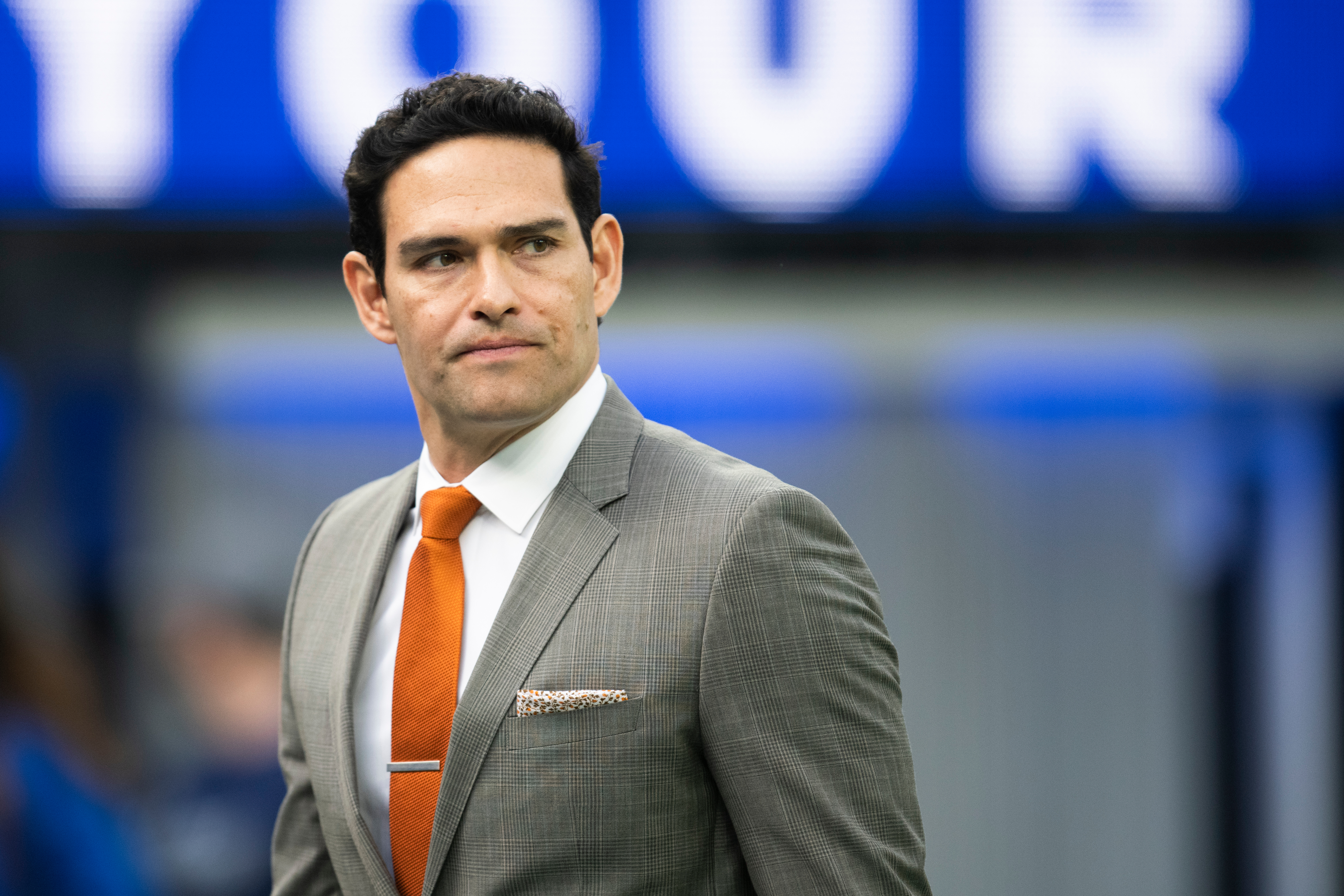
    The Fox Sports announcer and former Eagles quarterback is scheduled to go on trial next month to face accusations he attacked and injured a delivery driver in Indianapolis Oct. 4 ahead of calling an NFL game.

    Sanchez, 38, was also seriously injured in the assault, and his recovery could force a delay in the trial, which is scheduled to begin Dec. 11.

    Sanchez is accused of drunkenly assaulting a delivery driver in a fight stemming from an argument over a parking space. Police said the driver, Perry Tole, 69, pepper sprayed Sanchez, then pulled out a knife and stabbed him multiple times in self-defense.

    “We are literally talking about people fighting over a parking space and-or a dispute about where people are parking, and it resulted in someone receiving just incredibly significant injures,” Marion County prosecutor Ryan Mears told reporters a few days after the incident.

    In a lawsuit filed against both Sanchez and Fox Sports, Tole claimed the fight left him with “severe permanent disfigurement, loss of function” and other injuries.

    Fox Sports has declined any further comment on the incident beyond a brief statement issued in the immediate aftermath of the fight: “Our thoughts and prayers are with Mark, and we ask that everyone please respect his and his family’s privacy during this time.”

    Quick hits

    Sixers rookie VJ Edgecombe impressed the Celtics’ announcers.
    • Barkley and Shaq weren’t the only ones impressed by Edgecombe’s debut — announcers on NBC Sports Boston were amazed by his first-quarter jam:
    • Amazon announced the Eagles’ Black Friday matchup against the Chicago Bears on Nov. 28 will stream for free on its Prime Video platform, welcome news for Birds fans that live around the world (unless you live in Canada, where it will remain behind the paywall). The game will air for free in the Philadelphia TV market on Fox 29.
    • Tom Brady is back to broadcast his third Eagles game of the season Sunday, when the Birds take on the New York Giants at 1 p.m. on Fox. It won’t be his last — Brady is slated to call the Eagles Week 12 matchup against the Dallas Cowboys and the Birds Week 17 trip to Buffalo to play the Bills.
    • Say goodbye to ESPN’s Monday Night Football doubleheaders. NFL owners approved the league’s deal to sell the NFL Network to Disney Wednesday. As a result, the four extra games slotted to ESPN will return to the NFL, according to Sports Business Journal’s Ben Fischer.
  • The clash between the federal government and states over vaccine policy is ‘unprecedented,’ Villanova health law professor says

    The clash between the federal government and states over vaccine policy is ‘unprecedented,’ Villanova health law professor says

    Villanova professor Ana Santos Rutschman would describe the current state of vaccine policy as a game of chess.

    When the federal government does something, some states — primarily Democratic-led states including Pennsylvania respond immediately to counter.

    A prime example followed the federal government’s move, through the Food and Drug Administration, in August to limit eligibility for the updated COVID-19 vaccine. Previously, the annual shot was recommended for all Americans 6 months and older. The new guidance was for people 65 or older and those at high risk of complications from COVID-19.

    Pennsylvania’s regulatory body for pharmacists opened up access by allowing pharmacists to follow the broader recommendations of professional medical societies.

    “It’s kind of [like] ‘Harry Potter’ chess. Remember when they climb on the gigantic pieces and then try to kill one another?” Rutschman said, referring to the fictional scene where chess pieces violently smash the opposing side’s pieces.

    “There’s a certain violence to this from a political perspective,” she added.

    States are allowed to diverge from the federal government on vaccine policy because our system of government, known as federalism, divides power between the federal government and the states.

    With vaccines, states historically have chosen to align in large part with the federal government’s recommendations.

    Rutschman says recent actions by Health and Human Services Secretary Robert F. Kennedy Jr. have ushered in a new era of what’s being called “vaccine federalism.” Kennedy is a longtime anti-vaccine activist now serving as President Donald Trump’s top health official.

    Many states, especially those with Democratic governors, including Pennsylvania and New Jersey, saw recent changes under his leadership as a sign that they “need to do something in direct opposition to the federal government,” Rutschman said.

    Now it’s a “head-on collision,” she added.

    The Inquirer spoke with Rutschman, who researches vaccine federalism as a health law professor and director of the Health Innovation Lab at Villanova University, to learn more about this new era and its possible consequences in a conversation lightly edited for length and clarity.

    What is vaccine federalism?

    For vaccination and everything else, our system is split in two. You have the states and then you have the federal government.

    There is room for tension between the federal level and the state level. Historically, that tension has been, I would argue, limited. It has existed, but it’s not been the defining feature. Now, particularly in the context of vaccines, it has become probably the most salient feature.

    How are states allowed to differ from the federal government as far as vaccine policy?

    States don’t have the power to authorize a new vaccine to come to market.

    But then you have a lot of things that the Centers for Disease Control have done that are more informational. The federal government recommends which shots children or adults should get, and the time frame for most children to get these shots.

    The federal government offers this kind of informational support, and then states set their own policy.

    How has vaccine federalism played out in the past?

    Examples from the past are not as salient or blatant as the ones you’re seeing right now.

    There was a lot of variability around the country, but the overall message was harmonious. Everybody was trying to get, by and large, most of the population vaccinated past herd immunity.

    What is happening now?

    Now it’s a head-on collision.

    States are saying, ‘We’re not going to implement requirements to restrict access to these vaccines.’ The Board of Pharmacy in Pennsylvania decided not to be bound by the CDC’s recommendations. This is a direct clash. We hadn’t had this before between the federal government and the states in the field of vaccines.

    What are examples of this new era of vaccine federalism?

    One example would be the formation of state clusters. These are a lot of neighboring states in agreement. They’re trying to share data and think of best practices, which is almost that informational function that traditionally fell to the [federal health agencies].

    The states are saying, ‘Well, you’re not doing that, so we will.’

    ‘We will pull resources and information to come up with our own advisory role.’ That’s unprecedented.

    You have sort of two speeds in the country. Some states are collaborating and very active in setting regional vaccine policy. And then you have a bunch of states that go completely the other way. You have the, for now, isolated case of Florida saying, ‘We’re going to just basically do away with all vaccination mandates,’ which is going further than the federal government.

    Now it’s a much messier situation, legally, philosophically, politically, etc.

    How effective are these regional coalitions?

    They are accomplishing something. You see fewer restrictions in access to vaccines in a place like Pennsylvania than other states.

    Whereas states who are not part of these kinds of coalitions — typically excluding the likes of Florida — a lot of them are waiting to see what happens, because this has never happened in the history of vaccination in the United States.

    In the meantime, there are a lot of people falling through the cracks who would have been indicated for a vaccine last year. Now they’re wondering what to do, and their providers are not entirely sure.

    There’s a lot of confusion about what happens now that federal policy has taken a completely different direction.

    What impacts do you see coming from this new era of vaccine federalism?

    People hearing one thing out of the CDC and another one out of the state of Pennsylvania may think, ‘Who’s correct? Who should I listen to?’ You start aggregating all the people who might forgo vaccination just because they don’t understand what’s going on.

    I think it continues to accelerate the overall phenomenon of vaccine mistrust, and we’re already seeing levels of herd immunity come down for many vaccine-preventable diseases.

    If I were a provider, I would be similarly confused and concerned, because nobody takes lightly the idea that from now on, ‘I’ll be doing something that’s in direct opposition to what the federal regulators are suggesting I should be doing.’ So I think there’s a fear factor and confusion.

    Lastly, I think there’s an overall chilling effect with regard to vaccines. Yes, some vaccines make money, but they don’t make a whole lot of money to begin with. They’ve never been one of the preferred products for manufacturers. These are not the most profitable things they can be doing.

    I think that we will see much less focus on vaccine development in years to come, because that’s the logical position for pharmaceutical companies, and for some funders even to take, which is unfortunate.

    What do you think of Pennsylvania’s response?

    I think it’s to Pennsylvania’s credit, and I think it’s to some degree reassuring for Pennsylvanians. Although it obviously makes me sad that we have sort of this two-speed mode in the country. Some part of this national fabric has ruptured.

    For now, Pennsylvania has protected itself as it can, but states alone don’t control everything. You have Pennsylvanians going to other states where you may have an outbreak of a vaccine-preventable disease. We don’t have real borders. We cross them all the time.

  • Gov. Josh Shapiro will campaign for Democratic governor hopefuls Mikie Sherrill and Abigail Spanberger this weekend

    Gov. Josh Shapiro will campaign for Democratic governor hopefuls Mikie Sherrill and Abigail Spanberger this weekend

    Gov. Josh Shapiro is hitting the campaign trail in two key states this weekend.

    With less than two weeks left until Election Day, Shapiro will campaign and raise cash for U.S. Reps. Mikie Sherrill (D., N.J.) and Abigail Spanberger, (D., Va.), two Democratic hopefuls in high-stakes gubernatorial races that could preview the national mood ahead of next year’s midterms.

    Shapiro will campaign with Sherrill Saturday morning in Monroe Township at an event to mark the start of early in-person voting in the Democratic-leaning state which has grown increasingly red. The pair will then attend a Souls to the Polls event at a church in New Brunswick, Shapiro For Pennsylvania spokesperson Manuel Bonder said.

    The governor is also expected to hold a fundraiser for the New Jersey Democratic State Committee to benefit Sherrill’s campaign later in the day.

    On Sunday, Shapiro will head to Virginia to attend events in Portsmouth and Norfolk with Spanberger.

    Sherrill has amped up her campaigning in recent weeks, and she’s brought out big Democratic names to help her. In the last three weeks, she’s campaigned with New Jersey Sens. Cory Booker and Andy Kim, and with Maryland Gov. Wes Moore. Former Secretary of Transportation Pete Buttigieg is planning a visit to New Jersey next weekend, and Sherrill’s campaign curtain call the Saturday before Election Day will feature a rally with former President Barack Obama.

    National Democrats see the Garden State governor’s race as a must-win, and despite polling showing Sherrill up in the race, nerves are high after President Donald Trump lost the state by only four points in November.

    This combination photo shows candidates for governor of New Jersey Republican Jack Ciattarelli, left, and Democrat Mikie Sherrill during the final debate in governors race, Oct. 8, 2025, in New Brunswick, N.J. (AP Photos/Heather Khalifa)

    Why Shapiro is involved in the New Jersey governor’s race

    Shapiro is a big draw on the campaign trail as he continues to build a national profile, and gears up for his own reelection campaign next year. The first-term governor, who is seen as a potential 2028 presidential candidate, announced the 2026 release of a memoir this week.

    His multi-state gubernatorial stumping follows investments in races in Pennsylvania. He donated $250,000 from his campaign fund to the Pennsylvania Democratic Party last month. And he’s appeared in ads for the judicial races in Pennsylvania, in which Democrats hope to retain three judges there.

    In a September poll by Quinnipiac University, 61% of respondents said they viewed Shapiro favorably, an unprecedented figure among recent Pennsylvania governors at the same point in their terms, pollsters noted.

    The poll also found that Shapiro is viewed favorably by some Republicans, an across-the-aisle appeal that appears to extend across the Delaware River.

    Shapiro’s been lauded by Sherrill’s Republican opponent in the New Jersey race, Jack Ciattarelli, a trend chronicled recently by Politico.

    Ciattarelli commended Shapiro’s willingness to criticize New York City mayoral candidate Zohran Mamdani’s past comments on Israel, and praised his handling of small businesses, energy and property taxes in Pennsylvania, contrastingly saying New Jersey faces a “crisis” in all three.

    Sherrill has said frequently that she wants to mimic Pennsylvania’s success in cutting the time it takes business owners to get permits from state government.

    This story has been updated to correct the location of Gov. Josh Shapiro’s first stop with U.S. Rep. Mikie Sherrill on the campaign trail Saturday.

  • Protesters rally outside Philly ICE office as Catholics launch ‘One Church, One Family’ campaign for immigrants

    Protesters rally outside Philly ICE office as Catholics launch ‘One Church, One Family’ campaign for immigrants

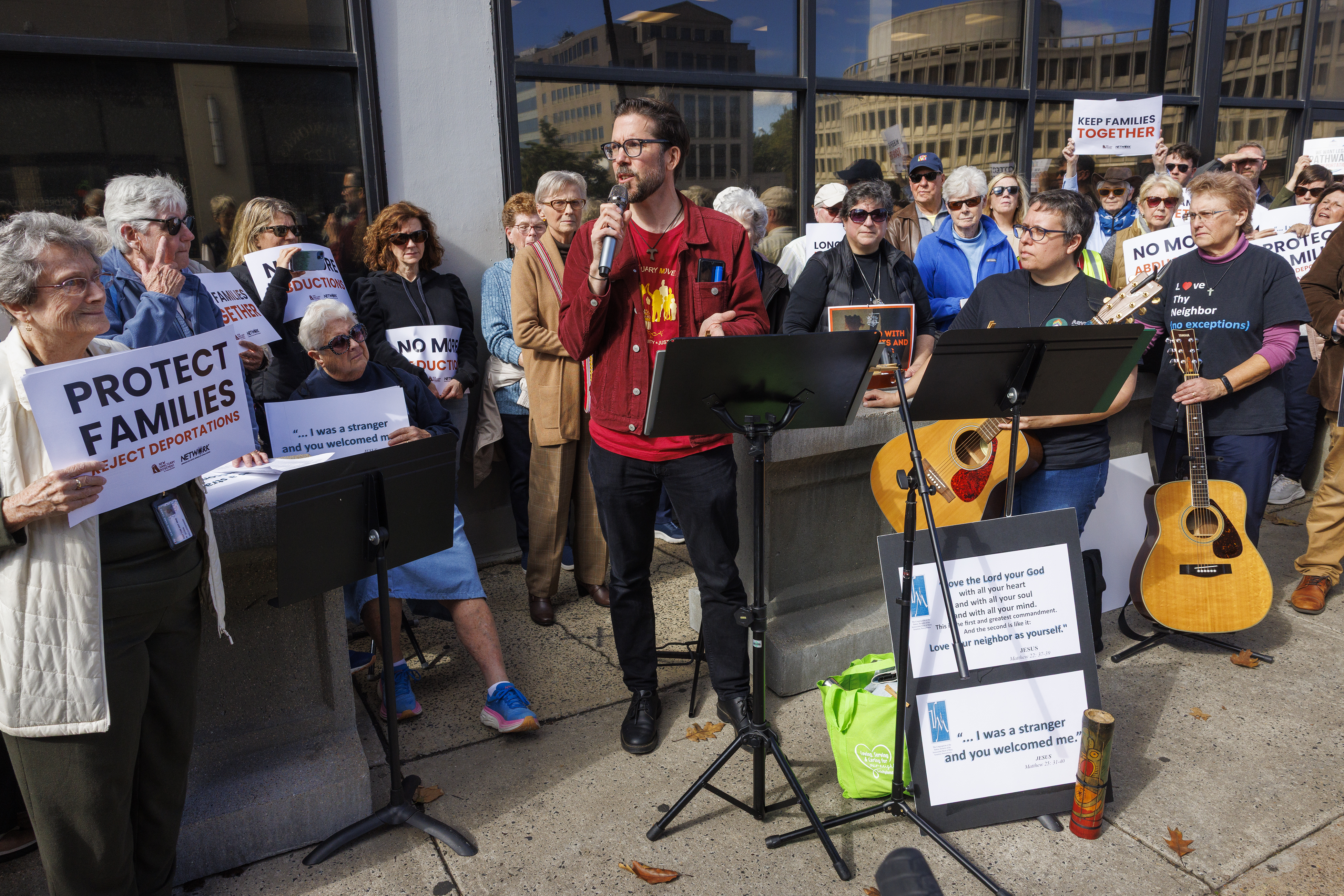
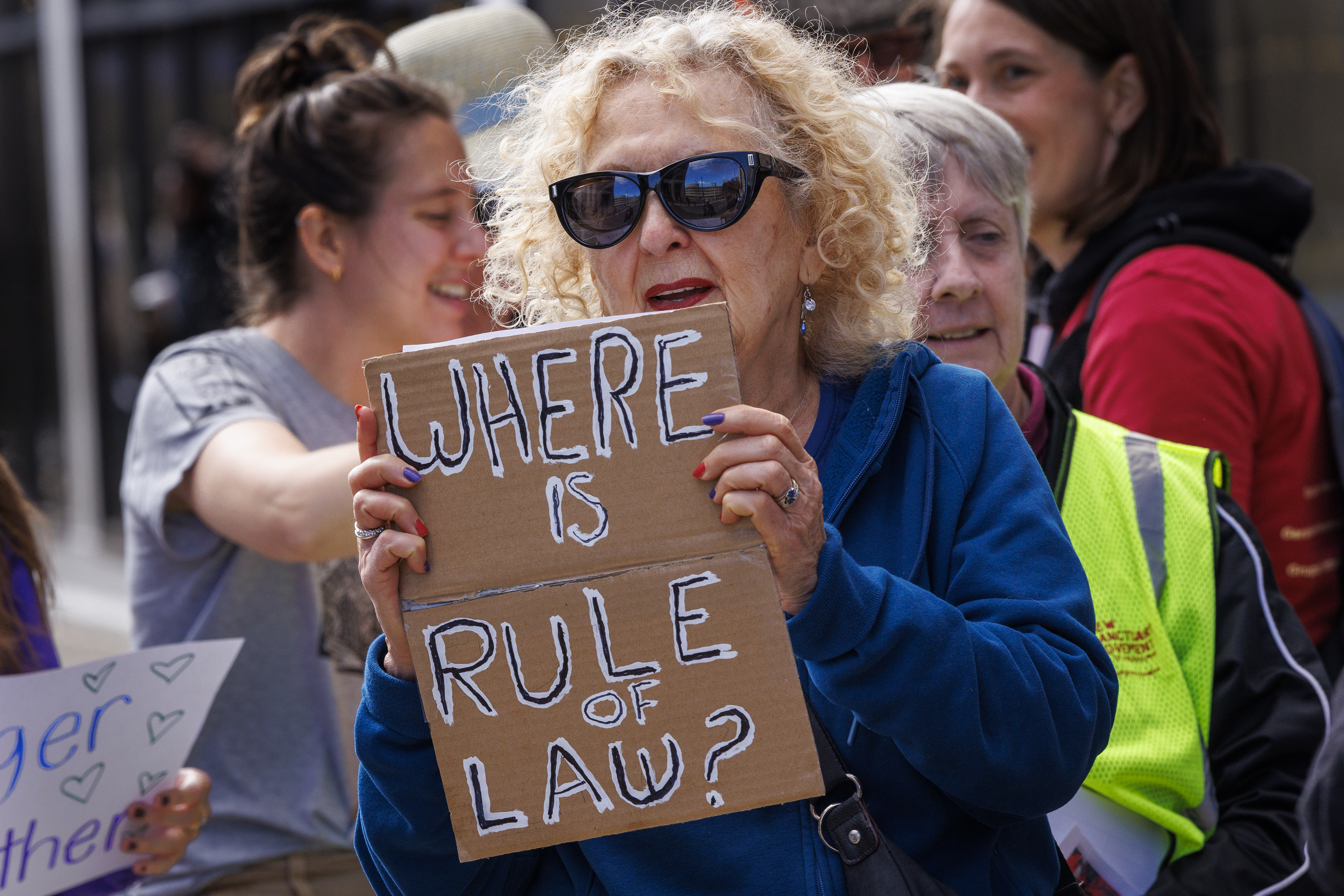
    Lifted by song, prayer, and Scripture, dozens of Philadelphia-area Catholics rallied outside the Center City ICE office on Wednesday, joining a pro-immigrant push undertaken by fellow church groups around the country.

    Catholic priests, nuns, and other supporters prayed and sang outside the field office near Eighth and Cherry Streets, joining a nationwide show of solidarity with migrant families, refugees, and asylum-seekers.

    “We reject the culture of fear that dehumanizes,” Michelle Cimaroli of Handmaids of the Sacred Heart of Jesus, an international community of Catholic women, told the crowd of about 50 people. “As Catholics, we stand with immigrants.”

    Speakers called on people to see the face of God in every human face. And to be as confident as Jesus in sharing the truth.

    Catholic organizations across the country are taking part in a campaign called One Church, One Family: Catholic Public Witness for Immigrants. The movement invites parishes, schools, and faith-based groups to host prayerful public events that proclaim the dignity of every person.

    U.S. Immigration and Customs Enforcement officials said in a statement: “ICE respects the rights of individuals to peacefully protest.”

    A second day of prayer is planned for Nov. 13, timed to coincide with the feast of St. Frances Xavier Cabrini, an Italian immigrant who became the first U.S. citizen to be declared a saint, according to the National Catholic Reporter.

    Peter Pedemonti of the New Sanctuary Movement addressing Catholics gathered outside ICE office at Eighth and Cherry Streets on Wednesday. They are protesting against the detaining and incarceration of immigrants.

    “I want us to take a moment to just let our hearts break,” Peter Pedemonti, codirector of New Sanctuary Movement of Philadelphia, told the crowd in Center City. “That we don’t let the daily barrage of bad news harden us.”

    He and other advocates said they believed ICE arrested four people in Philadelphia on Wednesday, including a man at the Italian Market.

    “We’re trying to get Catholics across the country to listen to Pope Leo’s message: Migrants lead us, they lead us to a true set of values,” said Jerry Zurek, who serves as local co-organizer of NETWORK, the Catholic social-justice group, and who took part in the Philadelphia rally.

    This month the pope described migrants and refugees as “privileged witnesses of hope through their resilience and trust in God,” maintaining their strength while seeking a better future “in spite of the obstacles that they encounter,” Catholic News Service reported.

    Big and small protests continue to take place in the Philadelphia area and around the county in opposition to President Donald Trump’s effort to deport millions of people. The number of people arrested by ICE in Delaware, New Jersey, and Pennsylvania has surged since the agency reportedly implemented a 3,000-arrests-a-day quota in late May.

    Arrests doubled from an average of 26 a day since Trump took office through May 21, to an average of 51 a day between May 22 and June 26 for the three states. At the same time, the proportion of people arrested without a criminal record or pending criminal charges soared, up two-thirds since the directive to ICE was issued.

    “As Catholics and people of deep faith, we reject the culture of fear and silence that dehumanizes, and we choose instead to stand with migrants,” local organizers said in a statement, pledging “to defend the dignity of our neighbors, family members, fellow parishioners, classmates, coworkers, and friends.”

    Vicki Guinta-Abbott, a concerned citizen and a Catholic, gathers with others outside the ICE office at Eighth and Cherry Streets on Wednesday.

    The body of U.S. bishops, individual bishops, and Catholic organizations have been speaking out against what they call inhumane policies that go against church teachings on immigration.

    Local leaders said the campaign is sponsored by the United States Conference of Catholic Bishops Migration and Refugee Services, the Leadership Conference of Women Religious, Jesuit Refugee Service/USA, and many others.

  • Democratic vets in Congress blast Scott Perry’s comment that Democrats ‘hate the military’

    Democratic vets in Congress blast Scott Perry’s comment that Democrats ‘hate the military’

    Democratic veterans in Congress, including two from Pennsylvania, are taking personally comments U.S. Rep. Scott Perry made to a conservative radio station asserting that Democrats in Congress “hate the military” — and the lawmakers are hitting back.

    “That’s only a credential that they get when they want to run for office,” Perry said, of Democrats, during an interview last week on The Chris Stigall Show.

    ”They join the military, they serve a little bit, they get the credential and then they run for office and wear the uniform and say, ‘Look at me — I support America.’ But let’s face it, all their votes say they don’t support America.”

    Perry made the comments last week, but a report this week from the New York Times prompted backlash from Perry’s colleagues on the other side of the aisle, including U.S. Rep. Chris Deluzio, a Democrat who represents the Pittsburgh suburbs and served six years in the Navy.

    On Wednesday, members of the Democratic Veterans Caucus, cochaired by Deluzio and U.S. Rep. Pat Ryan (D., N.Y.) called the remarks “insulting to their service,” in a statement shared with The Inquirer.

    “It’s disgusting to see a sitting member of Congress attack the integrity and honor of veterans and servicemembers due to their political party,” the veterans wrote. “He should immediately apologize to his constituents for insulting their service and questioning their patriotism.”

    The statement blasted Perry as an “oathbreaker,” noting he was part of an effort to throw out Pennsylvania’s electoral votes after President Donald Trump’s loss in the 2020 election. The lawmakers also criticized Perry’s unwillingness to hold in-person town halls, something very few Republican lawmakers have been doing since Trump’s first administration.

    “If he had a spine he’d stand in front of the Democratic veterans he represents and say this garbage to their faces, but Scott Perry doesn’t have the guts,” his House colleagues wrote.

    The statement from the caucus was co-signed by 13 other Democratic veterans in the House, including U.S. Rep. Chrissy Houlahan, a Democrat who represents Chester County. The Air Force Veteran has challenged the Trump administration’s rhetoric and policies regarding female service members.

    Perry, in a statement, pushed back clarifying his remarks were not about “all Democrats,” but “Leftists in Congress who served in the military and use that as a shield to insulate themselves from accountability for their radial and corrosive ideologies.”

    He said the Times story “cherry-picked” one line in a broader six-minute interview with Stigall about the government shutdown and funding the Pentagon.

    “The leftists now stomping their feet about my response are the same leftists who caused our government to shut down,” Perry said in his response.

    Still, the comments from Perry about his colleagues and their jilted response illustrate the ways in which political insults have accelerated. Lawmakers who have served in the military had long been one of the few bipartisan groups bonded through service. A group of Democratic and Republican former service members serving in Congress called For Country Caucus still meets for early morning breakfasts on the Hill.

    Perry, a House member since 2013, served in the U.S. Army and has been a staunch conservative voice, unabashed with his criticism of Democrats. Perry retired from the Army National Guard in 2019 with the rank of brigadier general after 39 years of service.

    He could face a tight reelection contest next year after narrowly winning his Central Pennsylvania district by just one point in 2024. Democrat Janelle Stelson, a former local news anchor who narrowly lost to Perry that year, is running again. She is currently the top-funded House challenger in the country.

  • As Trump limits federal college loans, a new private lender specializes in lending to families desperate for a student to graduate

    As Trump limits federal college loans, a new private lender specializes in lending to families desperate for a student to graduate

    Colleges and universities expect the Trump administration’s new limits on government-backed student loans will drive more families to higher-cost private lenders. John Witter, CEO of industry leader Sallie Mae, expects his company will attract around $5 billion in new private loans, thanks to lifetime limits on taxpayer-backed student borrowing in President Donald Trump’s Big Beautiful Bill.

    Investors, meanwhile, are betting that private college loans will balloon under the Trump rules. But less than half of families who apply qualify for mainstream lenders’ private student loans.

    So a group of executives who used to work at Sallie Mae, which is based in Wilmington, have organized a start-up company, GradBridge, to make loans at higher interest rates to students who max out on scholarships and government loans but still hope to finish college or graduate school.

    On Wednesday, GradBridge said it had raised $20 million to speed its growth before the new loan limits begin next summer.

    The money was raised from private investors led by Acorn Investment Partners, which is managed by Los Angeles-based Oaktree Capital Management. Oaktree’s investors include the Pennsylvania public schoolteachers’ (PSERS) and state workers’ (SERS) pension funds.

    GradBridge will be a “second-look” lender for families turned down by mainstream private college lenders, said Jen O’Donald, GradBridge founder and CEO.

    O’Donald, who lives in Chester County, is a former head of products for Sallie Mae and the mother of two college students. Her top lieutenants include chief financial officer Brian Carp and chief operations officer Lisa Kaplan, also Sallie Mae veterans. Advisers include Sallie Mae Bank’s former president, Paul Thome, and former chief credit officer Dan Hill.

    After Trump’s election last year, O’Donald said, she and former colleagues reviewed the “massive disruption” the Trump platform promised in college financing and looked for business opportunities.

    Even if only some of the changes were enacted, “only about 35% to 45% of private college loans get approved,” and many students’ families are not able to get a private student loan after they have exhausted federal grant and loan programs, she said in an interview.

    With the lifetime limits on student loans enacted by the Trump administration, O’Donald sees an “overwhelming shift” away from government programs to private loans over the next few years, as students grandfathered under earlier programs graduate and new students borrow up to the new program limits.

    GradBridge expects to get referrals from colleges and mainstream lenders of borrowers who don’t fit the high-end ability-to-pay profile.

    While mainstream lenders could charge an annual interest rate from the mid-single digits to as much as 18% a year, GradBridge might charge less-bankworthy borrowers an additional 3% or 4% on top of the mainstream rate, driving monthly payment up by $30 or $40 for every $10,000 owed.

    O’Donald said GradBridge offers an alternative to “credit cards, personal loans, parents’ 401(k) accounts, home equity loans” and other costly alternatives families use to help their children stay in college.

    Federal student loans are made to applicants who apply to government-approved, mostly four-year colleges, without the kind of traditional loan underwriting used to evaluate if borrowers are likely to repay home, auto, or small-business loans.

    Not surprisingly, those student loans suffer a high loss rate, the justification lenders used to get the government to agree to prevent federal student loan debtors from having their loans discharged in bankruptcy.

    But private lenders like Sallie Mae and GradBridge consider family income and other factors that affect whether the loan will likely be paid, O’Donald said.

    Most private college loans require adult cosigners. Because they rely mostly on family income to ensure they get paid back, lenders typically don’t worry about what majors or graduate degrees a borrower pursues, she added.

    “GradBridge’s approach addresses a real market gap” for students who “fall just outside of traditional credit underwriting models,” Yadin Rozov, Acorn’s chief investment officer, said in a statement.

    GradBridge employs around half a dozen people. It plans to increase to around 30 by 2027.

    O’Donald said the Wilmington area is a national center for student lending and a good place to hire for a loan start-up.

    Besides Sallie Mae, it is home to College Avenue, another student lender founded by Sallie Mae veterans; Navient, a student-loan servicing company; and other consumer payment companies.

    With college enrollments flat or declining, O’Donald said schools are eager to forge ties with private lenders.

    “The first big impact will be next summer,“ she said. ”It will take a few years before the full impact will be seen, but schools are starting to be concerned about how they will keep kids enrolled.”

  • Why Delaware County’s council race is focused around rising property taxes

    Why Delaware County’s council race is focused around rising property taxes

    Democrats have dominated Delaware County government since the 2019 election.

    As suburban communities across the nation flipped from red to blue, Democrats took control of the county council for the first time since the Civil War — the result of long-term shifts accelerated by President Donald Trump’s first administration. The party has held all five seats on the governing board ever since, easily retaining seats in 2021 and 2023.

    But on the heels of a double-digit property tax increase last year, Republicans see an opening to regain representation.

    Two seats on the five-member board are on the ballot in November. Democrats argue tax increases were necessary to make up for decades of underinvestment by Republicans.

    But Republicans insist spending is out of control. While they cannot take control of the board this year, they are asking voters to give them a voice to push back against the Democrats.

    “The money tree in the backyard does not exist,” said Brian Burke, one of two Republicans running for council.

    Who is running?

    Republicans nominated Burke, the former president of the Upper Darby Township Council, and Liz Piazza, a former county employee, for the two seats.

    Burke, a union steamfitter, was first elected to Upper Darby’s township council in 2019 as a Democrat. He became a Republican to unsuccessfully run for mayor of the township in 2023 following years of feuds with the Democratic administration. While on the township council, Burke worked in conjunction with Republicans on the board as well as two other Democrats to challenge Democratic leadership in Upper Darby. He said this experience would aid him as he worked to hold Democratic leadership in Delaware County accountable.

    Piazza worked for decades in Delaware County Court’s domestic relations department, where she ran the warrant division and served as a liaison for judges and attorneys. Running for council, Piazza has been vocal about wanting to devote opioid settlement funds toward grandparents caring for the children of those struggling with addiction.

    Democrats nominated incumbent Councilmember Richard Womack and County Controller Joanne Phillips.

    Womack was first elected to the council in 2021 after spending 10 years on the Darby Township Board of Commissioners. Womack spent years as an advocate in the labor movement, including serving as an adviser on community and religious affairs for the national AFL-CIO.

    Phillips was elected controller in 2017, the first year Democrats swept county-level positions. In the controller role, she has been responsible for auditing county offices and advising on council spending matters.

    What is the Republican platform?

    Burke and Piazza are urging voters to elect them to “stop the spend.”

    After the council raised property taxes by 23% last year, the pair of Republicans argued the taxes were a result of out-of-control spending in the county. They say there needs to be a voice on the council acting as a check on spending.

    “There’s a lot that needs to be cut. There’s a lot of spending,” Piazza said.

    If elected, the two Republicans would not have control over county spending, but they would have votes on the five-member board to oppose new spending and work to sway their Democratic counterparts.

    What is the Democratic platform?

    Womack and Phillips are largely defending the actions of the Democratic council over the last five years. Republican leadership, they argue, did not raise taxes for 12 years and allowed county infrastructure to fall into disrepair. As a result, they say, Democrats had to increase taxes to fund county services and infrastructure improvements.

    No one wanted to increase taxes, Womack said, but it was unavoidable.

    “Our county has really been underserved for many decades,” Womack said. “In the long run, it costs you a lot more money to repair than if you had taken care of things gradually.”

    If elected, Phillips says she would like to do more public vetting of contracts and work to increase development in Delaware County so that the local tax base can be increased without more tax hikes. Womack has said he wants to work on expanding affordable housing options in the county.

    Why were taxes raised? Will there be another hike?

    The county council voted last year to increase property taxes by 23%, which comes out to roughly $185 annually for the owner of a home assessed at the county average. The county had used pandemic relief funds to stave off significant tax increases in prior years, but those funds were running dry and additional dollars were needed to cover employee salaries amid inflation, council members said at the time.

    Piazza and Burke insist that another double-digit tax increase is on the way. Too much of the current budget, they argue, still depends on short-term federal pandemic relief funds or transfers from other county funds.

    “They’re going to come out after November 4th election and basically tell the residents of Delaware County, ‘You’ve got another 20% increase,’” Burke said.

    Womack, the sole member of the county council who voted against the increase, said that he anticipated another tax hike but that he could not imagine it would reach 20%.

    The incumbent spearheaded a citizens budget task force that has spent the year seeking areas to cut spending.

    “It’s kind of hard to really project what we’re looking at right now,” Womack said. He noted that, amid a federal government shutdown, details on state and federal aid are unclear.

    However, the county is not expecting to release its preliminary budget until mid-November, after the election. Last year, the county did not release its proposed budget until Dec. 3.

    Where do Republicans want to cut?

    Republicans have identified three primary areas they argue represent overspending: the county health department, the prison, and outside legal assistance.

    Delaware County, the largest county in Pennsylvania without a health department at the onset of COVID-19, launched its health department in 2022.

    Republicans in the county have long argued it was an unnecessary expense. Though the $18 million department is currently funded entirely by state and federal grant dollars, Burke argued it will eventually cost taxpayers.

    “In my eyes, that [money] could have been used somewhere else,” Burke said.

    In 2020, the council voted to explore options to retake control of the county prison from the private firm that had run it. Phillips, who was controller at the time, argued the decision was in the county’s best interest and has better served inmates and staff.

    The prison was de-privatized after a series of complaints of mismanagement and mistreatment of prisoners. The prison’s superintendent resigned in 2019 after an Inquirer investigation revealed allegations of racism and abuse of employees.

    But Republicans argued that the county’s costs have gone up too much and that the county opened itself up to litigation that it would not have been vulnerable to if the prison had remained privately run. The union representing prison employees often clashed with the first warden the county chose to lead the prison.

    In an interview, Burke argued the county could find significant savings if it put the prison back in private hands. In 2025, the prison cost the county over $59 million. The county’s last contract with GEO, which managed the prison privately, paid the company $259 million over five years.

    Phillips said the health department and public prison, while significant expenses, will save the county and its residents in the long run. Even when the prison was run privately, she said, infrastructure repairs were on the county and the private operators sought to maximize the number of inmates in the building.

    “Government should take care of its people,” Phillips said.

    Finally, Republicans point to the ballooning cost of legal counsel to the county. Last year, the county paid more than $4.4 million to outside legal counsel, including a firm that once employed Phillips and County Councilwoman Christine Reuther. Republicans argue this represents misuse of funds and political cronyism.

    Phillips and Womack instead point to the county’s small in-house legal team and the growing number of cases brought against the county, including defending against frivolous suits filed by election deniers, as well as managing complex legal issues, such as the Prospect Medical Holdings bankruptcy filing that closed two major hospitals in the county.

    Even if they won both seats, Republicans would hold the minority on the council for at least the next two years. This means they would have to persuade Democrats to come along with them on any policy changes or budget cuts.

    “I would love to win the seat and get in there and get into the nitty-gritty and kind of see what goes on behind closed doors and have a voice for the residents and be there for them,” Piazza said.

    This suburban content is produced with support from the Leslie Miller and Richard Worley Foundation and The Lenfest Institute for Journalism. Editorial content is created independently of the project donors. Gifts to support The Inquirer’s high-impact journalism can be made at inquirer.com/donate. A list of Lenfest Institute donors can be found at lenfestinstitute.org/supporters.

  • Republicans could end the government shutdown tomorrow

    Republicans could end the government shutdown tomorrow

    The Republican Party controls the federal government. It holds the majority in the House and the Senate, and controls the White House, as well.

    Republicans could end the government shutdown tomorrow. A quick vote by the majority in the House and, after a rules change, by the majority in the Senate, followed by a presidential signature, would pass a budget into law and reopen the government.

    Yet, absurdly, President Donald Trump and his followers are blaming congressional Democrats for the shutdown. This is ridiculous. The Democrats have little power in Washington these days.

    Their only sway comes in the ability to filibuster in the Senate, but that can be easily taken away by a simple majority vote by the Republicans.

    No, as President Trump might say, the Republicans hold all the cards.

    The president, for months, has been openly targeting Democrats as he uses and misuses his presidential powers.

    Threatening Democrats

    He states, on the record, that he will defund what he considers Democratic programs, agencies, and communities. He brags about using federal law enforcement and even the military in American cities, even though their Democratic leaders object.

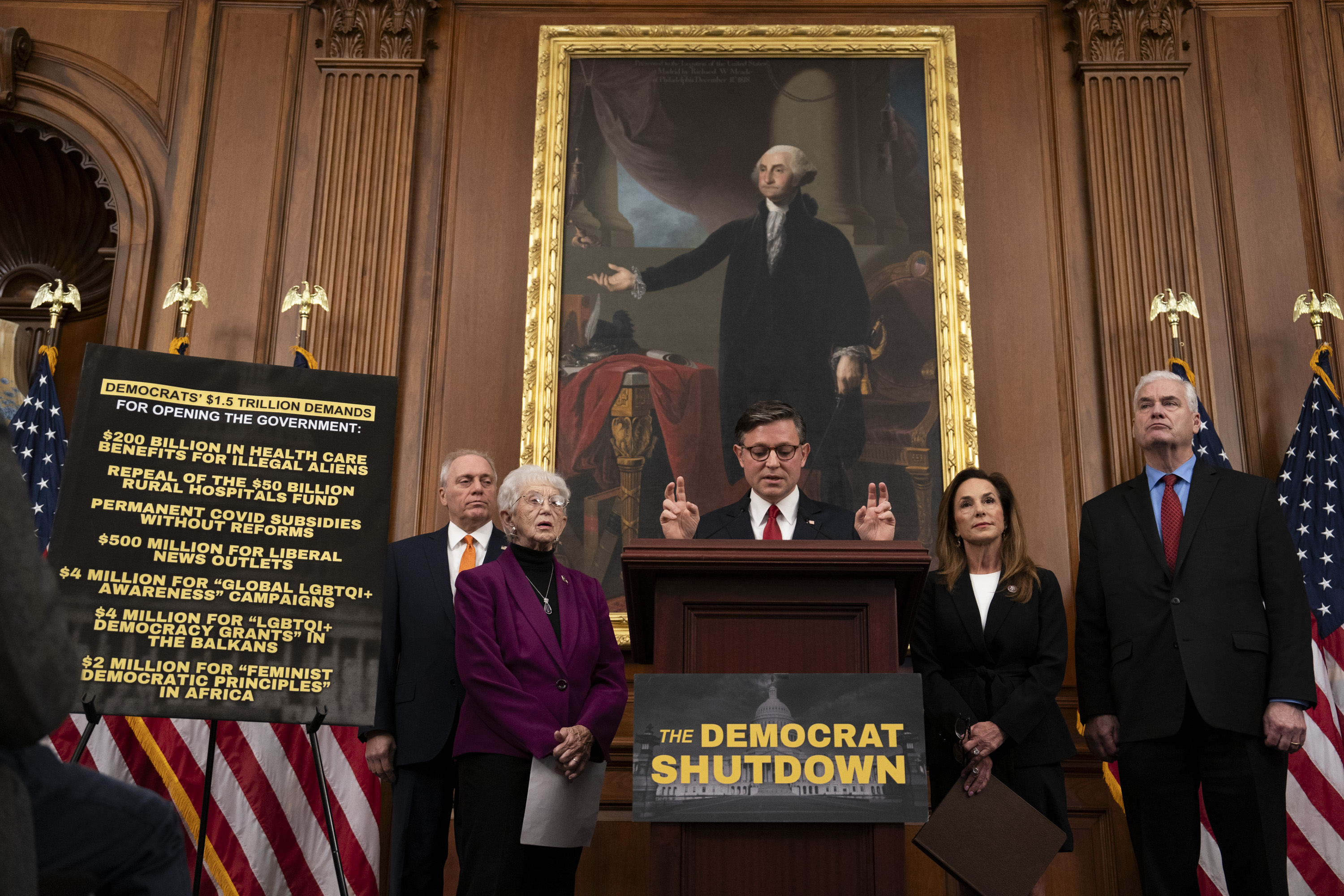
    House Speaker Mike Johnson gathers Republican leaders at a news conference last week to blame Democrats for the government shutdown. That’s ridiculous, writes Joseph Hoeffel.

    The country has never seen such presidential partisanship, overreach, and lawlessness.

    Now, Kristi Noem, the secretary of Homeland Security, is abusing her powers and playing politics regarding the shutdown.

    Last week, she produced a video for the Transportation Security Administration, which she supervises, to show at TSA security checkpoints in airports across the country. In the video, Noem blames congressional Democrats for the government shutdown and any related travel delays.

    She says, in part, “Democrats in Congress refuse to fund the federal government, and because of this, many of our operations are impacted … our hope is that Democrats will soon recognize the importance of opening the government.”

    Congress created the U.S. Department of Homeland Security in 2002 with strong majority votes in each chamber.

    No member suspected that a future secretary would so blatantly engage in partisanship on the job. Petty politics should never infect this particular department and its critical national security responsibilities.

    A number of airports around the country, including Los Angeles, Phoenix, Cleveland, and Charlotte, N.C., are refusing to run the TSA video, citing the political nature of its content.

    Any airport, public or private, that receives federal or state funding could be breaking the laws against political activity by recipients of government money if they show the video.

    I doubt this legal jeopardy Noem is creating through her avid partisanship will give her any pause. Nor will any worries about her job security.

    She is doing exactly what Trump wants her to do: Blame the Democrats at every opportunity for anything that is not working in the federal government.

    But the Republicans could pass a budget and reopen the government tomorrow.

    They need only to suspend the Senate rule that permits the Democrats to filibuster. Any Senate rule can be changed at any time by a simple majority vote.

    Elections have consequences

    In fact, the Senate Republicans just suspended such a rule last month so they could approve a large group of military and civilian appointees by a single en bloc vote, rather than the regular process of individual committee hearings and separate votes on each appointee.

    I am sure I would not like the budget priorities that unfettered congressional GOP majorities and Trump would produce.

    But elections have consequences.

    A single party controls our federal government by the will of the voters. I accept that and will fight it out at the next election.

    Why won’t the Republicans pass a budget and end the government shutdown? Do they think playing the political blame game is more important than governing?

    Let them use the power the voters gave them and accept the responsibility to govern. Let them accept the credit or the blame for the actions they take.

    And stop blaming the Democrats because the Republicans will not do their job.

    Joseph Hoeffel is a former Democratic member of Congress from Montgomery County (13th Congressional District, 1999-2004). He lives in Abington.

  • John Fetterman sides with Republicans on ending the filibuster to reopen the government: ‘The only losers are the American people now’

    John Fetterman sides with Republicans on ending the filibuster to reopen the government: ‘The only losers are the American people now’

    Sen. John Fetterman (D., Pa.) said he would back a Republican plan to override the Senate filibuster if it meant passing a bill to reopen the government.

    In an interview with The Inquirer on Tuesday, Fetterman admonished fellow Democrats who balk at the notion of using the so-called nuclear option to end the filibuster: “When I ran for Senate, everyone, including myself, said we’ve got to get rid of the filibuster. I don’t want to see any Democrats clutching their pearls about it now.

    “If we’d had our way, the filibuster wouldn’t have been around for years.”

    A staple of the Senate that has long been debated, the filibuster requires 60 votes to pass most legislation in the chamber.

    Republicans have long vowed to protect the filibuster, noting that the 60-vote threshold presents a check on Democrats when they have the majority, but it’s now the rule standing in the way of their government funding bill. And in recent months, leaders have made moves to further weaken the minority party’s power, including bypassing the need to get Democratic support to confirm a slate of President Donald Trump’s nominees last month. Senate Majority Leader John Thune (R., S.D.) has thus far said he won’t use the same tactic to reopen the government.

    Fetterman’s comments on Tuesday followed several Republicans floating the idea of getting rid of the filibuster in recent days.

    Fetterman is one of three members of the Democratic caucus who voted with Republicans to reopen the government earlier this month, joining Sens. Catherine Cortez Masto of Nevada and Angus King, a Maine independent.

    “If you look at my record, I’ve been voting the Democratic line, but this is different now. The tactic is wrong,” Fetterman said.

    He said his main concern is the possibility that people in the state and across the country would face hunger if the federal government shutdown continues and Americans lose their Supplemental Nutrition Assistance Program (SNAP) benefits beginning Nov. 1.

    “Nobody checks their political party when they’re hungry,” he said. “It’s not about a political side blinking. The only losers are the American people now.”

    Fetterman added that he is in favor of extending tax credits, as Democrats are demanding during the shutdown. With those tax credits set to expire, people are going to start seeing higher prices when they sign up for health insurance come open enrollment in November, experts say.

    “I don’t want people clobbered,” Fetterman said. “But Democrats designed them to expire this year. We passed these things when we were in the majority.”

    Seeing room for dialogue, Fetterman said Thune “is an honorable man, and I believe a productive conversation to extend tax credits can be had with him.”

    Sen. Andy Kim (D., N.J.) said he had multiple conversations with Senate Republicans on Tuesday who said they would “adamantly oppose” ending the filibuster.

    “That’s been a huge part of how they’ve been able to lock down power here in D.C. before,” Kim said.

    He said from his perspective, Senate Democrats are focused on getting the House back to work to negotiate a deal that includes the extended healthcare subsidies in a government funding bill.

    “This is not an issue of Senate procedure. This is an issue of just doing our job.” Kim did not comment on Fetterman’s support for a filibuster carveout to end the shutdown.

    In 2022, according to the media and politics site Mediaite, every Senate Democrat with the exceptions of then-Sens. Joe Manchin of West Virginia and Kyrsten Sinema of Arizona voted to eliminate the filibuster in a failed effort to pass former President Joe Biden’s elections overhaul.

    A sometimes contrary figure, Fetterman has taken controversial stands in the past and is one of few Democrats who actively works with Republicans.

    He has been criticized by progressives for his unwavering support of Israel in its war against Hamas.

    And Fetterman garnered the enmity of some Democrats (and the praise of President Donald Trump) when he defended Immigration and Customs Enforcement by saying fellow Democrats’ calls to abolish the agency were “inappropriate and outrageous.”